
A beautiful backyard and a happy dog can absolutely go together. You don’t have to choose between pretty flower beds and muddy paws, or between a stylish patio and enough space for a good game of fetch.
The trick is to design your backyard around the things your dog already loves to do.
Some dogs race along the fence. Others spend twenty minutes sniffing one corner, dig holes in the softest flower bed, or head straight for the coolest patch of shade. Once you notice those habits, it’s much easier to create a space that works for both of you.
These 25 dog-friendly backyard ideas include simple weekend upgrades, practical landscaping choices, and a few bigger projects. Whether you have a tiny fenced patio or a large grassy yard, you’ll find plenty of inspiration for creating a comfortable, attractive, and easy-to-maintain outdoor space.
1. Install a Secure Backyard Fence
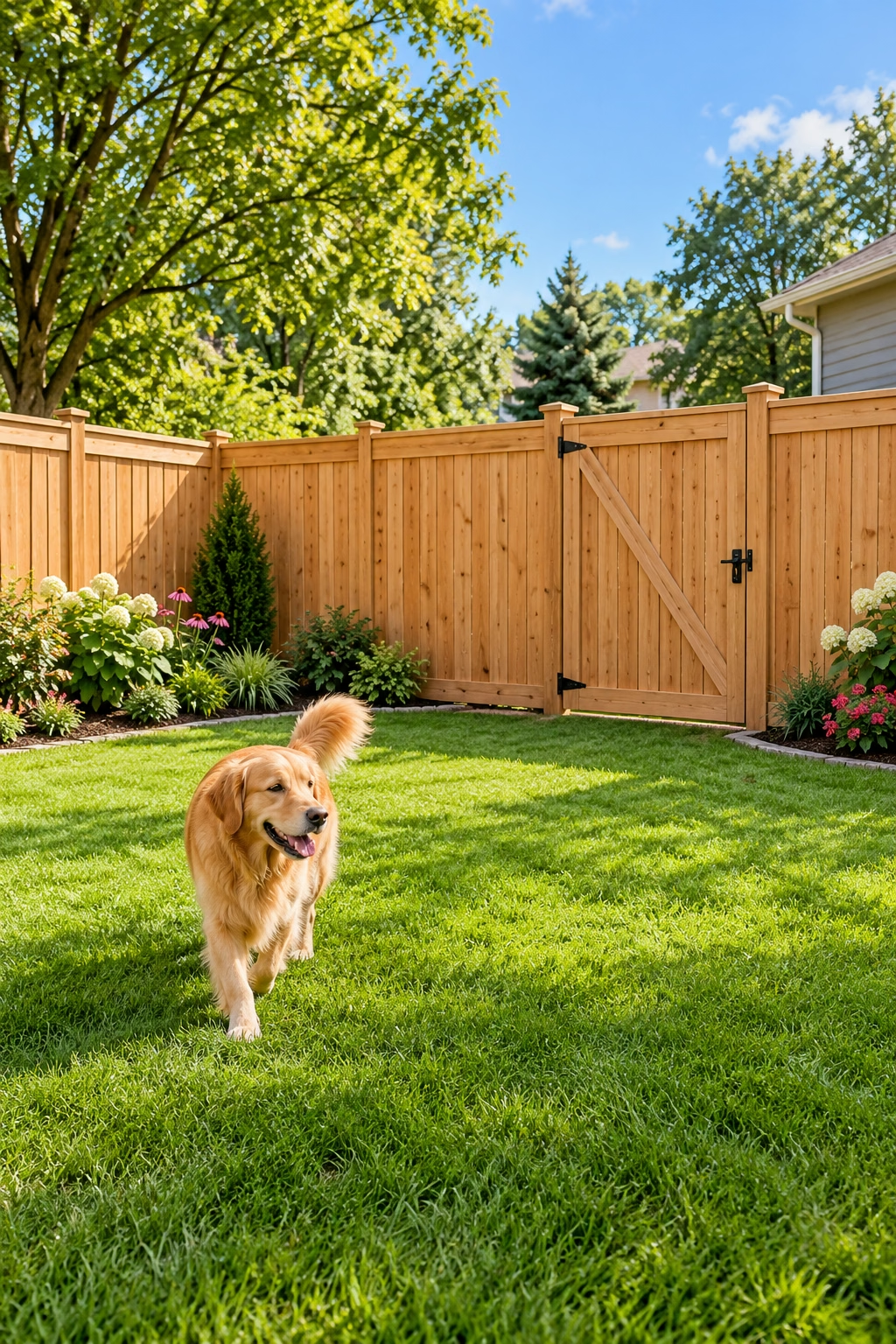
Start with a boundary that suits your dog
A beautiful yard won’t feel relaxing if you’re constantly worried about your dog slipping out. A sturdy fence gives your pet room to explore while making the whole space feel more private and finished.
Wood privacy fences look warm and natural beside garden beds. Metal or mesh fencing can work well where you want to keep an open view.
The important part is choosing a height and construction that suit your dog’s size, jumping ability, and digging habits.
Check gates, latches, loose panels, and spaces beneath the fence regularly. For determined diggers, have a safe buried barrier or other escape-resistant solution installed without leaving sharp edges exposed.
2. Turn the Fence Line Into a Dog Path
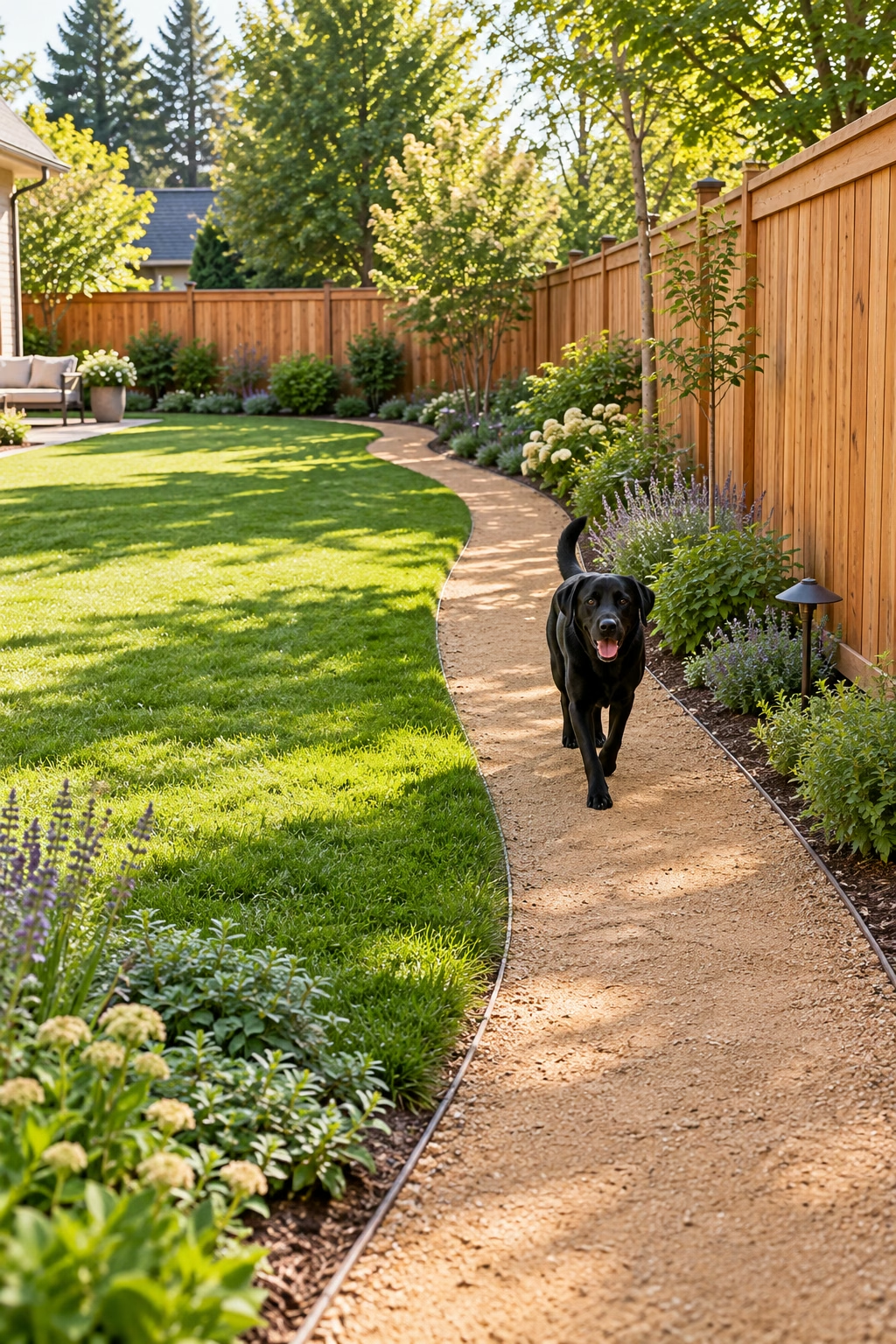
Work with the route your dog already uses
If your dog has worn a trail around the edges of the lawn, don’t rush to cover it with new grass. That pathway is probably part of their daily routine. Instead, give it a neat, intentional finish.
A defined strip of compacted, paw-comfortable material can turn a muddy track into a useful perimeter path.
Frame the route with planting beds set far enough back to avoid trampling. The result looks like thoughtful landscaping, even though your dog helped choose the layout.
Keep the path wide enough for easy turning, and avoid loose stones if your dog tends to pick them up or swallow them.
3. Leave an Open Lawn for Running and Fetch
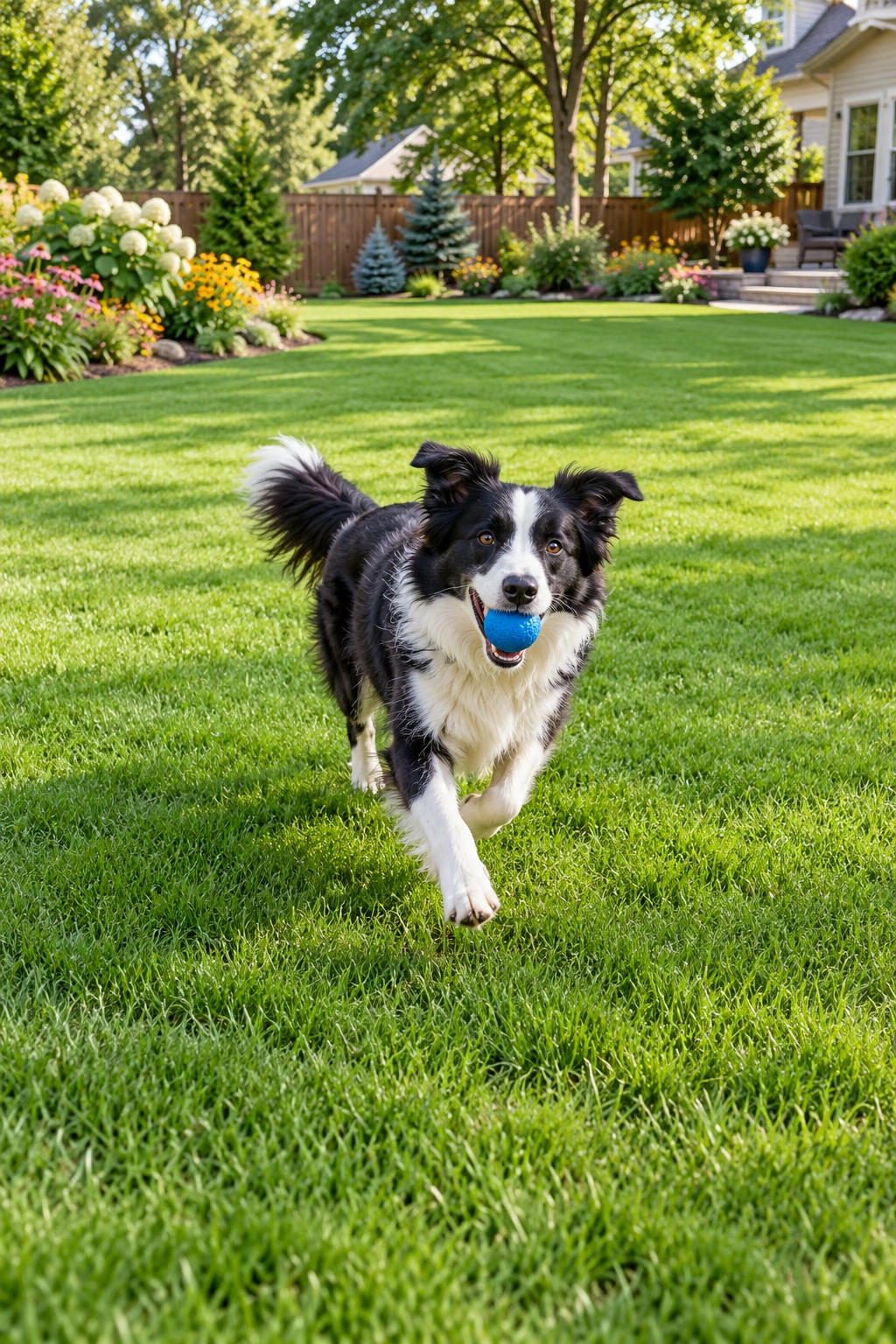
Give active dogs a simple space to move
Sometimes the best backyard feature is an uncluttered patch of grass. Dogs who love chasing toys, doing zoomies, or rolling in the sunshine appreciate room to move without dodging pots and furniture.
Keep the main play area open, then arrange flower beds, seating, and decorative features along the edges.
Choose a lawn grass suited to your climate, sun, soil, and level of foot traffic. Durable options vary by region, so ask a local garden center which varieties recover well from active use.
Even a modest rectangle of lawn can feel generous when the layout is simple.
4. Build a Dog Run Along the Side Yard
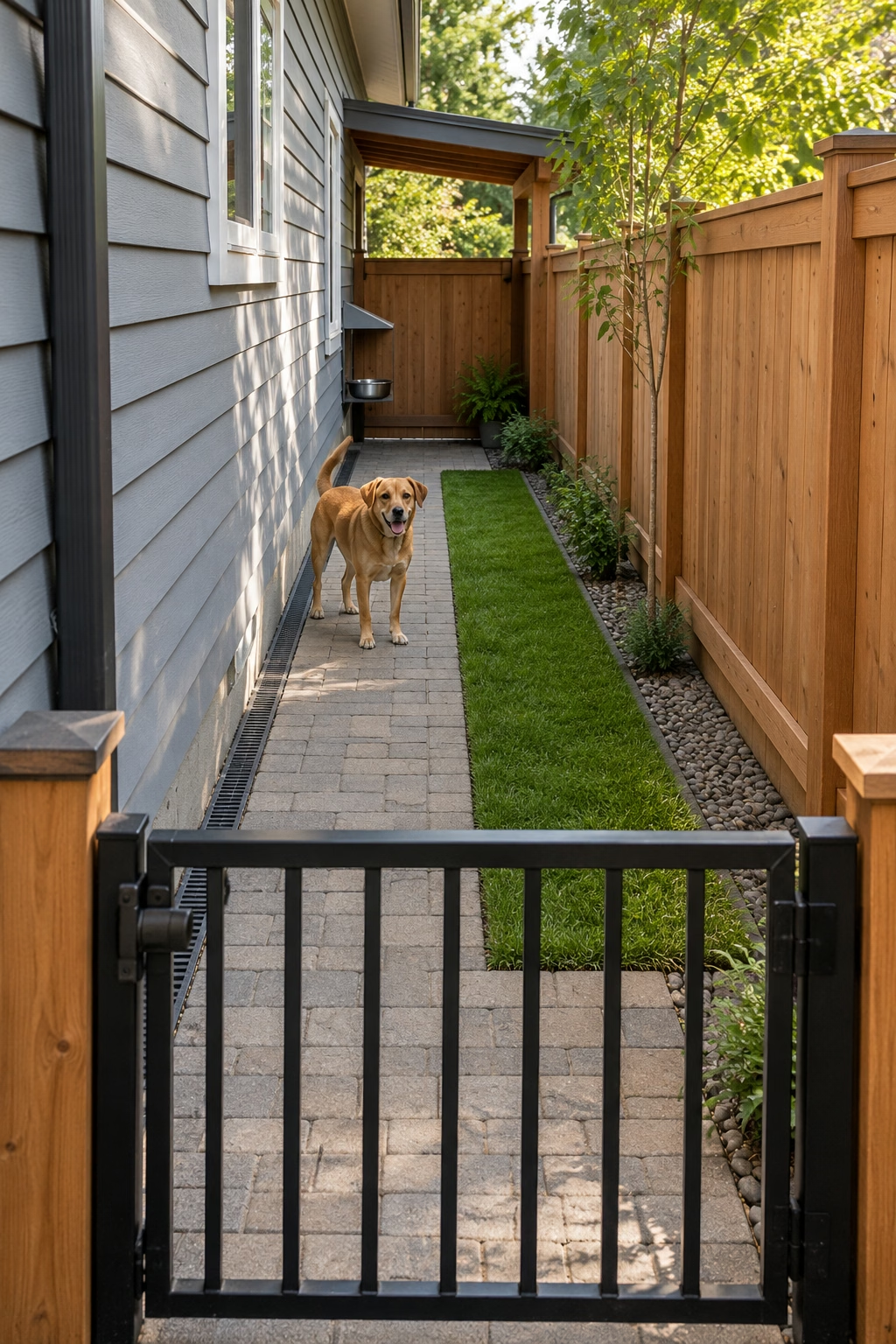
Put an overlooked strip of space to work
A narrow side yard can become a surprisingly useful dog run.
Add secure fencing or gates at the ends and create a level surface with good drainage. It becomes a designated place for play, sniffing, and supervised outdoor breaks without taking over the main backyard.
This is especially helpful if you want to keep a large patio, dining area, or vegetable garden separate.
Choose a surface you can clean easily, and remember to include both shade and fresh water. A dog run should add flexibility to your yard, not become a place where your dog spends long periods isolated from the family.
5. Create a Shady Retreat Beneath a Tree
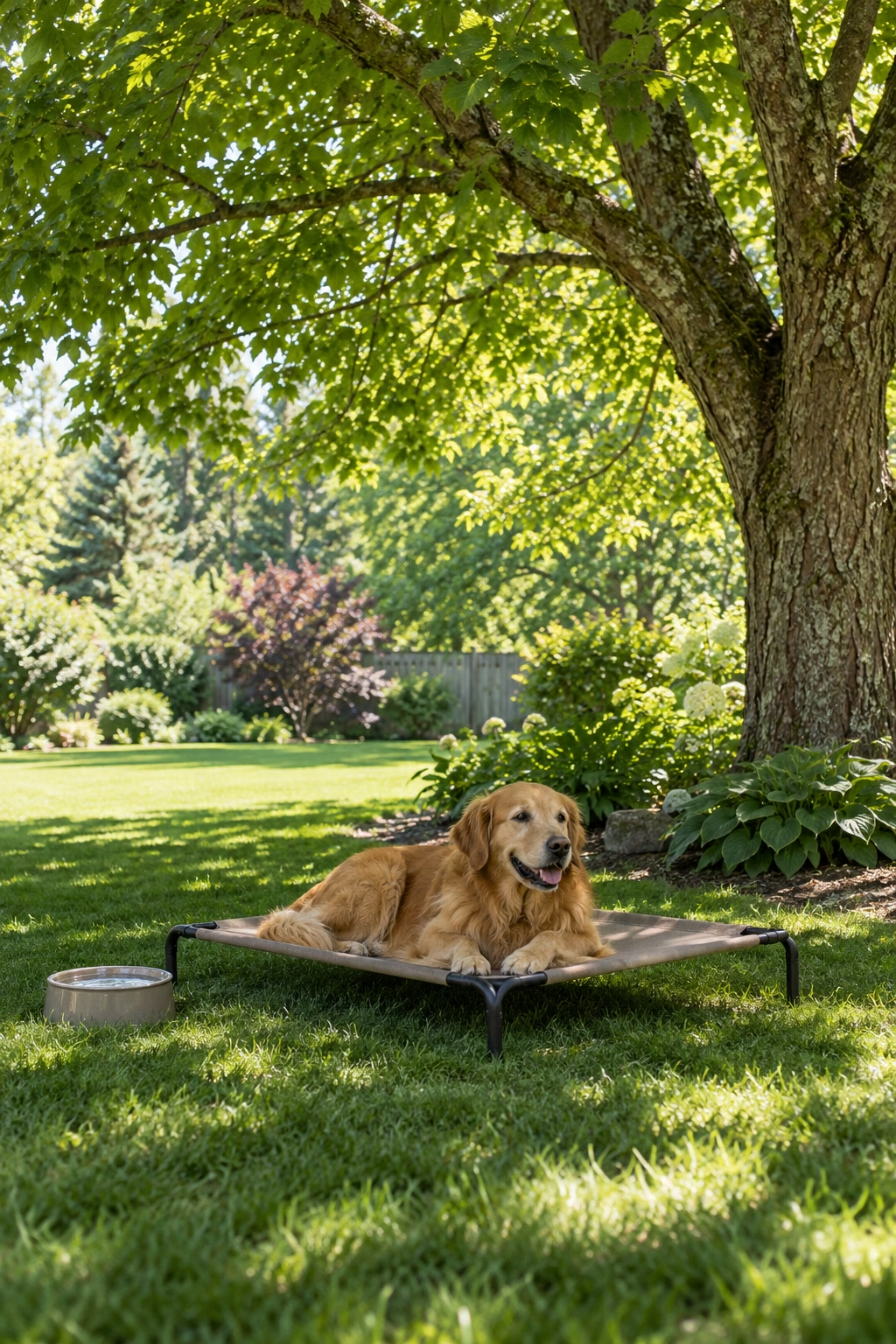
Give your dog a cool place to rest
A patch of natural shade is one of the nicest features in a dog-friendly backyard.
Under a healthy, established tree, place a washable outdoor mat or dog bed on a level surface. Add a water bowl nearby, and you have a restful corner that blends right into the garden.
Keep the area free of fallen fruit, toxic plant debris, and sharp twigs.
Watch how the shade moves throughout the day, because a comfortable morning spot may be in full sun by afternoon.
On hot days, outdoor shade is helpful but isn’t a substitute for access to a cool indoor space.
6. Add a Pergola or Shade Sail Over the Patio
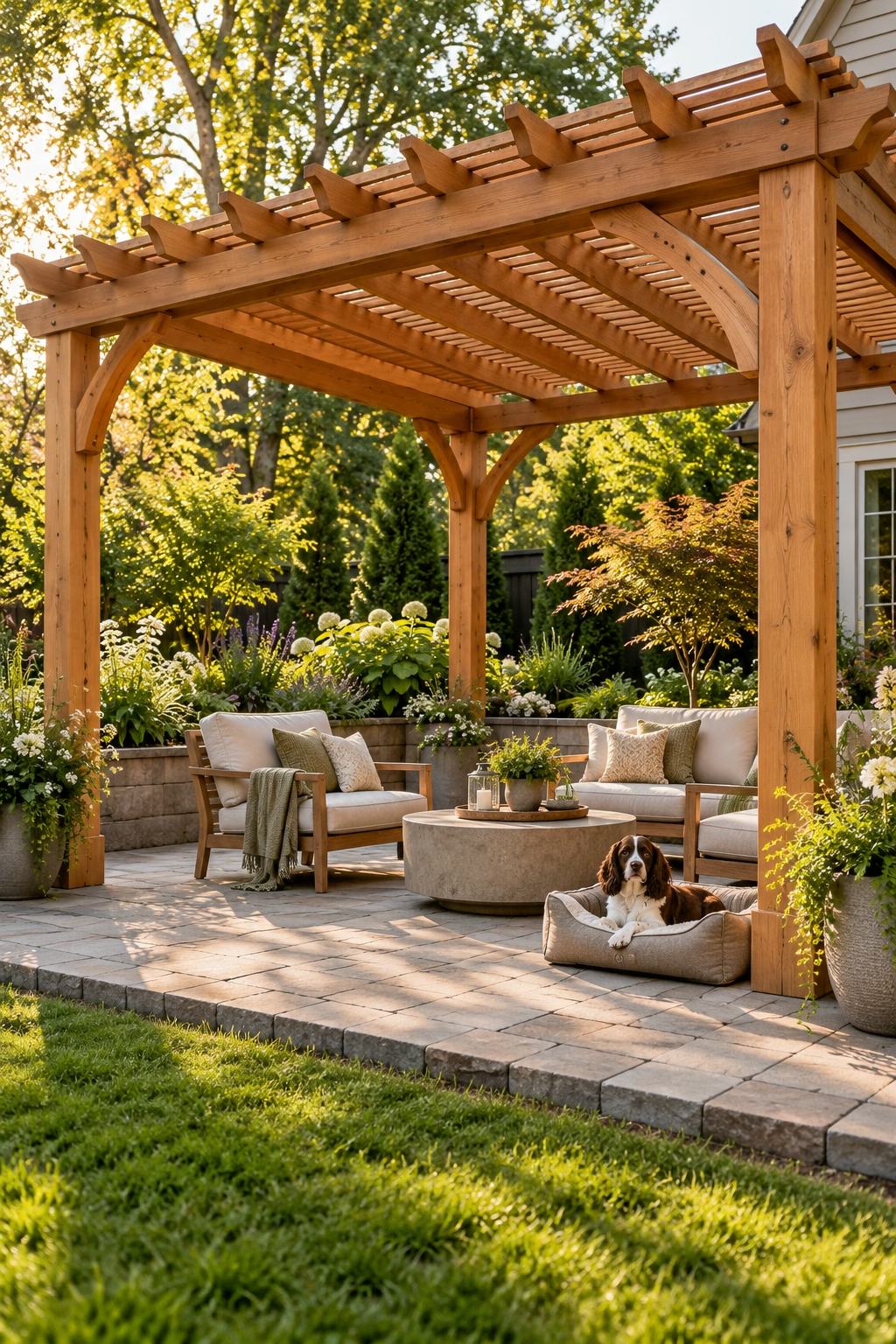
Make a shared lounging spot for people and pets
No mature trees? A pergola, retractable awning, or properly installed shade sail can make a sunny yard far more inviting.
Position it over a seating area where your dog already likes to lie near you.
Try a simple outdoor rug, a few easy-care pots placed out of chewing range, and a washable dog bed beside your chair.
This approach works especially well in small backyards because one sheltered area serves the whole family.
Use stable structures, secure fastenings, and furniture with enough space that your dog can move out of the sun whenever they want.
7. Set Up a Fresh Water Station
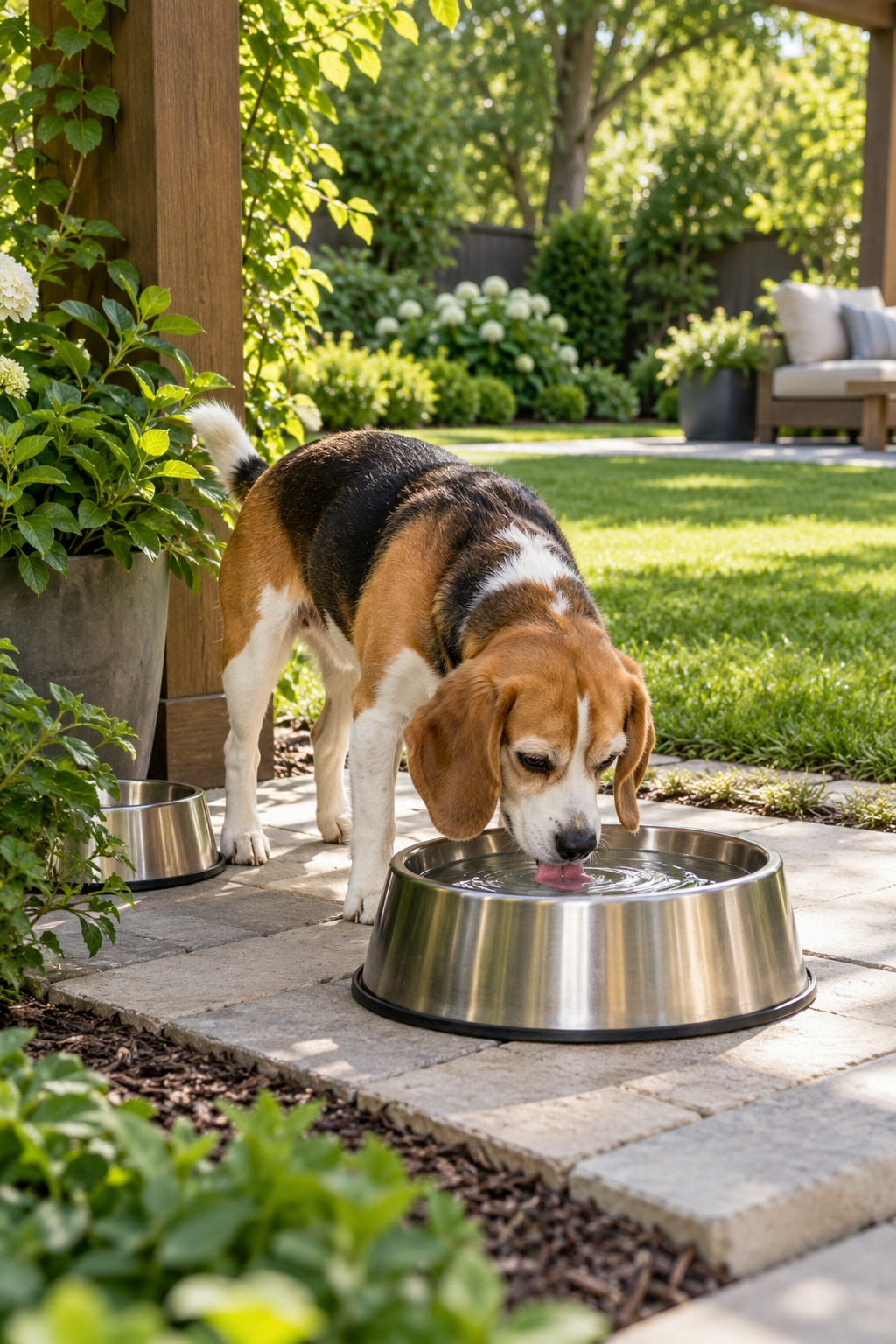
Make drinking water easy to find
A dedicated water spot is a small change with a big everyday benefit.
Place a tip-resistant bowl on a flat, shaded surface near the area where your dog plays. A simple ceramic or stainless-steel bowl can look tidy on a little paver pad.
For larger yards, consider more than one drinking spot.
Refill with fresh water often, wash the bowl, and keep it free of leaves and insects.
A pet drinking fountain is another option if it is designed for outdoor use and can be safely maintained. Avoid placing the station where the water will sit in direct sun for hours.
8. Add a Shallow Dog Splash Pool
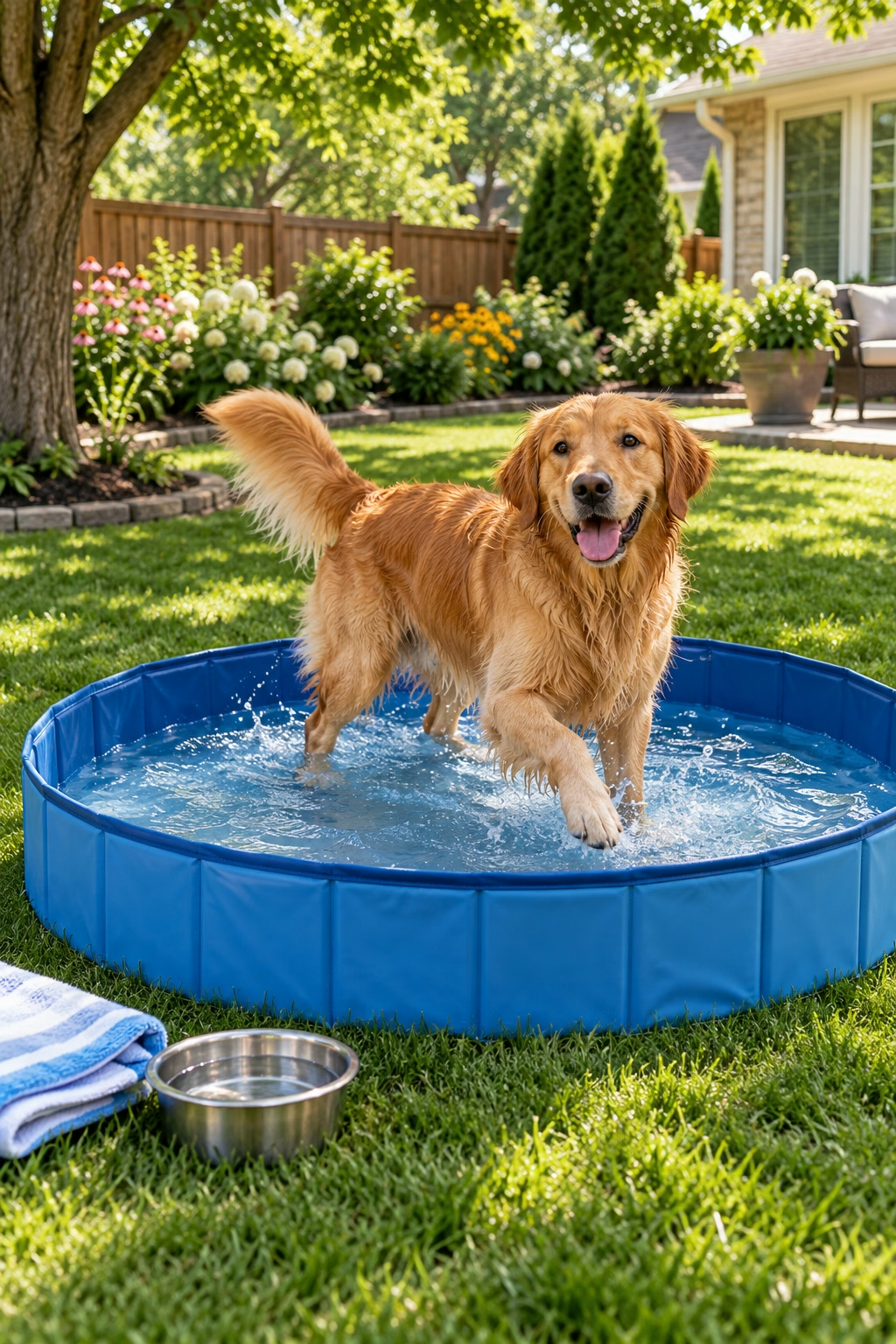
Bring some summer fun into the backyard
For water-loving dogs, a sturdy, shallow splash pool can be the highlight of the yard.
Set a dog-appropriate wading pool on a level, non-slip area, ideally where there is some shade. Keep a towel and fresh drinking water nearby.
Choose a pool your dog can enter and exit easily, and supervise every water session.
Empty and clean it after use rather than leaving standing water for days.
If you already have a full-size swimming pool, a secure barrier and a clear exit route are essential.
A splash area is especially photogenic beside a grassy play space, but safety matters more than the photo.
9. Give Digging Dogs Their Own Sandbox
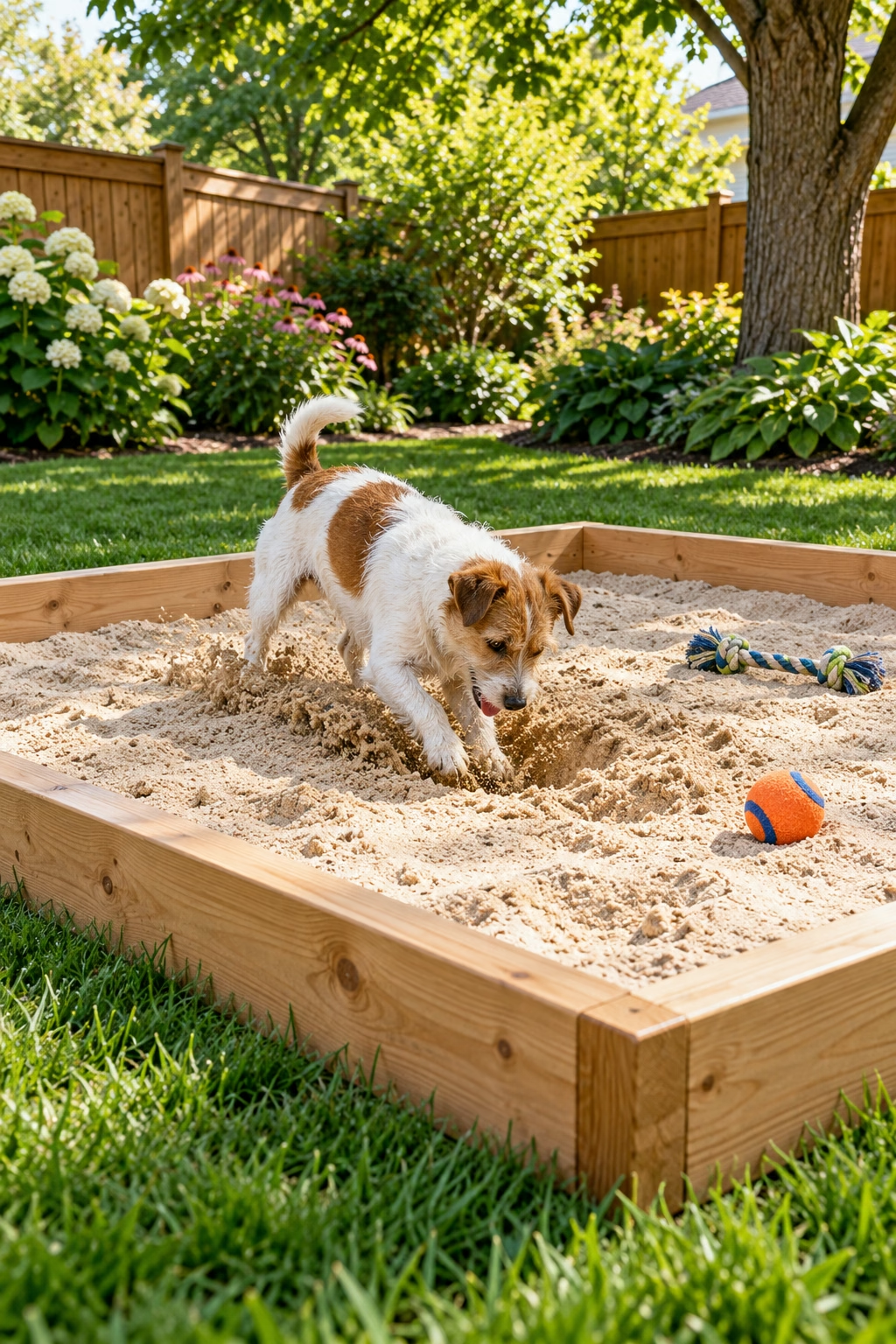
Save the flower beds by offering a better digging spot
Some dogs simply love digging.
Instead of repeatedly filling holes in the garden, designate a spot where digging is welcome.
A basic wooden-framed box filled with suitable clean play sand can work beautifully in a quiet corner.
Show your dog how to use it through play and praise, then redirect digging away from planted beds.
Put the box in partial shade, use smooth edges, and cover it when not in use to help keep wildlife and debris out.
Keep an eye on dogs who eat sand or other materials; this project won’t suit every pet.
10. Designate a Neat Potty Area
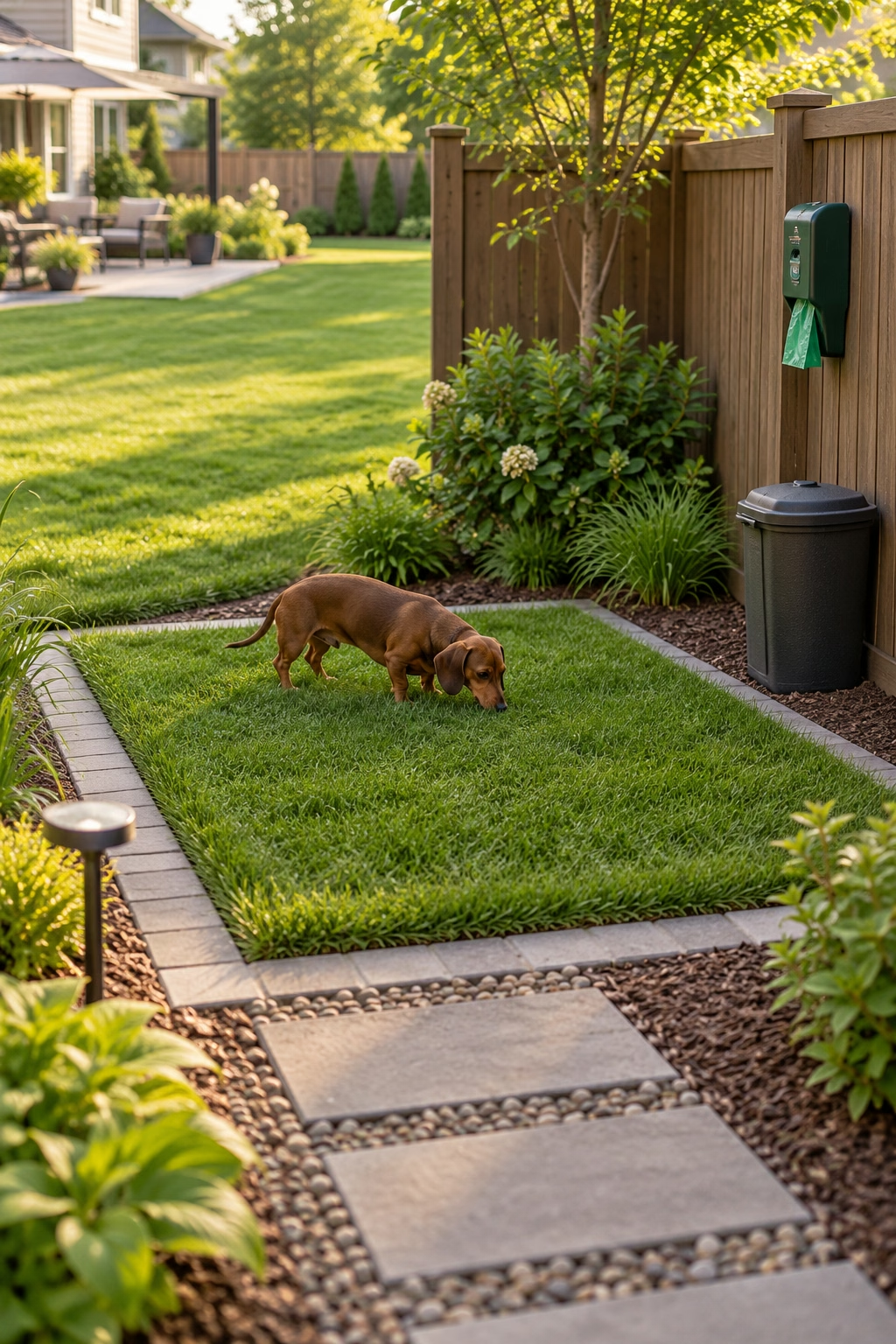
Make routine cleanup less of a chore
A dedicated bathroom corner can protect the main play lawn and simplify daily cleaning.
Place it somewhere convenient to reach but away from outdoor dining and children’s play areas.
A small patch of natural turf or another dog-appropriate, cleanable surface is often enough.
Border it with pavers or edging for a tidy look, and keep a covered waste bin and bags nearby.
Some owners use gravel, but loose stones may be uncomfortable or unsafe for dogs that chew or swallow them.
Train the habit patiently, remove waste promptly, and plan for rinsing and drainage rather than assuming rain will clean it.
11. Protect Your Flowers With Raised Beds
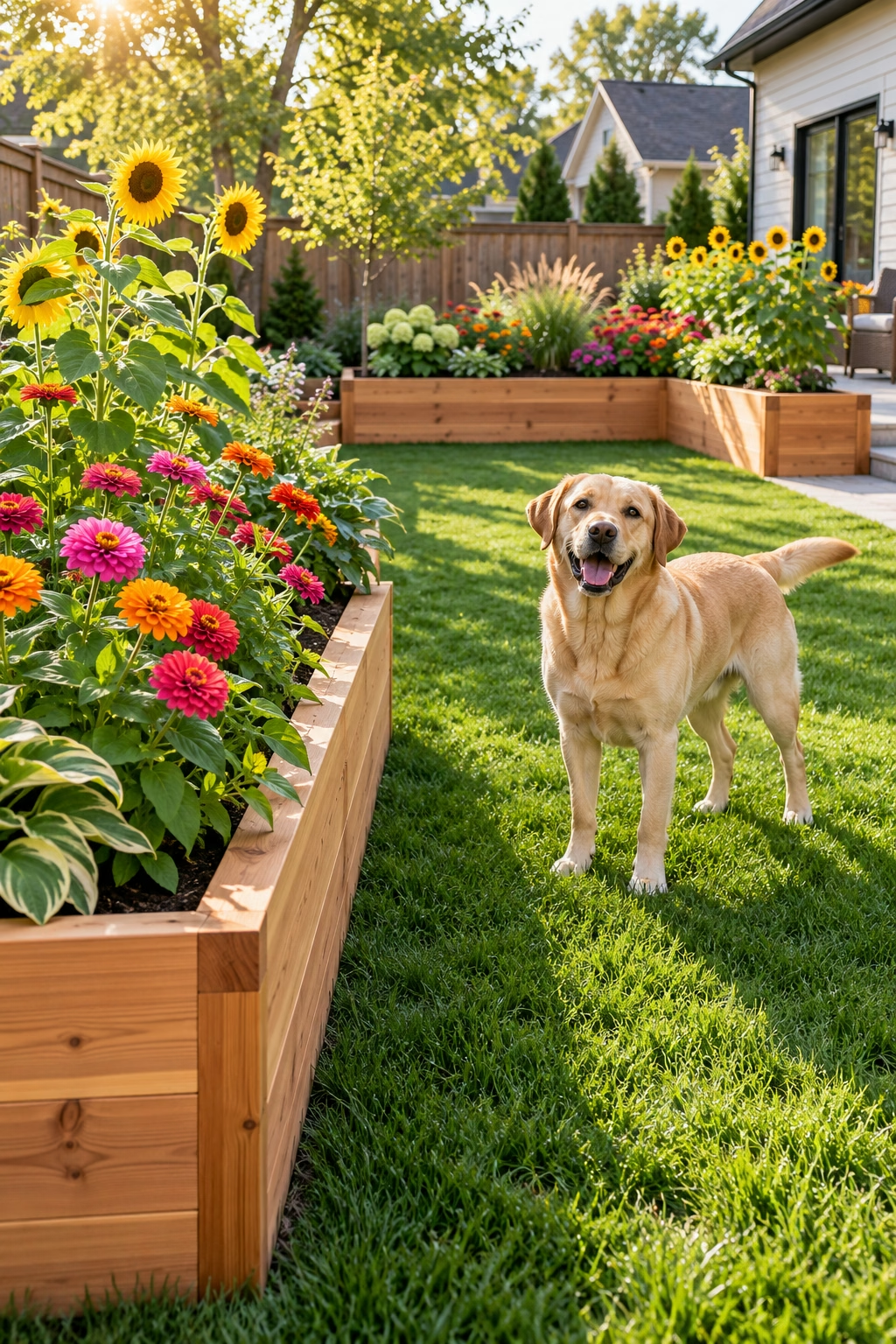
Enjoy beautiful planting without constant trampling
Raised beds give your garden a clear shape and help separate delicate plants from energetic paws.
Timber, brick, or stone beds look attractive along the fence or patio, especially when you repeat the same edging material throughout the yard.
You can grow colorful flowers, ornamental greenery, or a small collection of herbs while keeping the main lawn open for your dog.
However, raised beds aren’t automatically dog-proof. A determined jumper may still get inside.
Choose pet-safe plants, avoid exposed sharp corners, and add a low protective fence if needed.
Try placing taller planters at the back and lower greenery toward the front for a beautiful, layered garden.
12. Fill Borders With Dog-Safe Plants
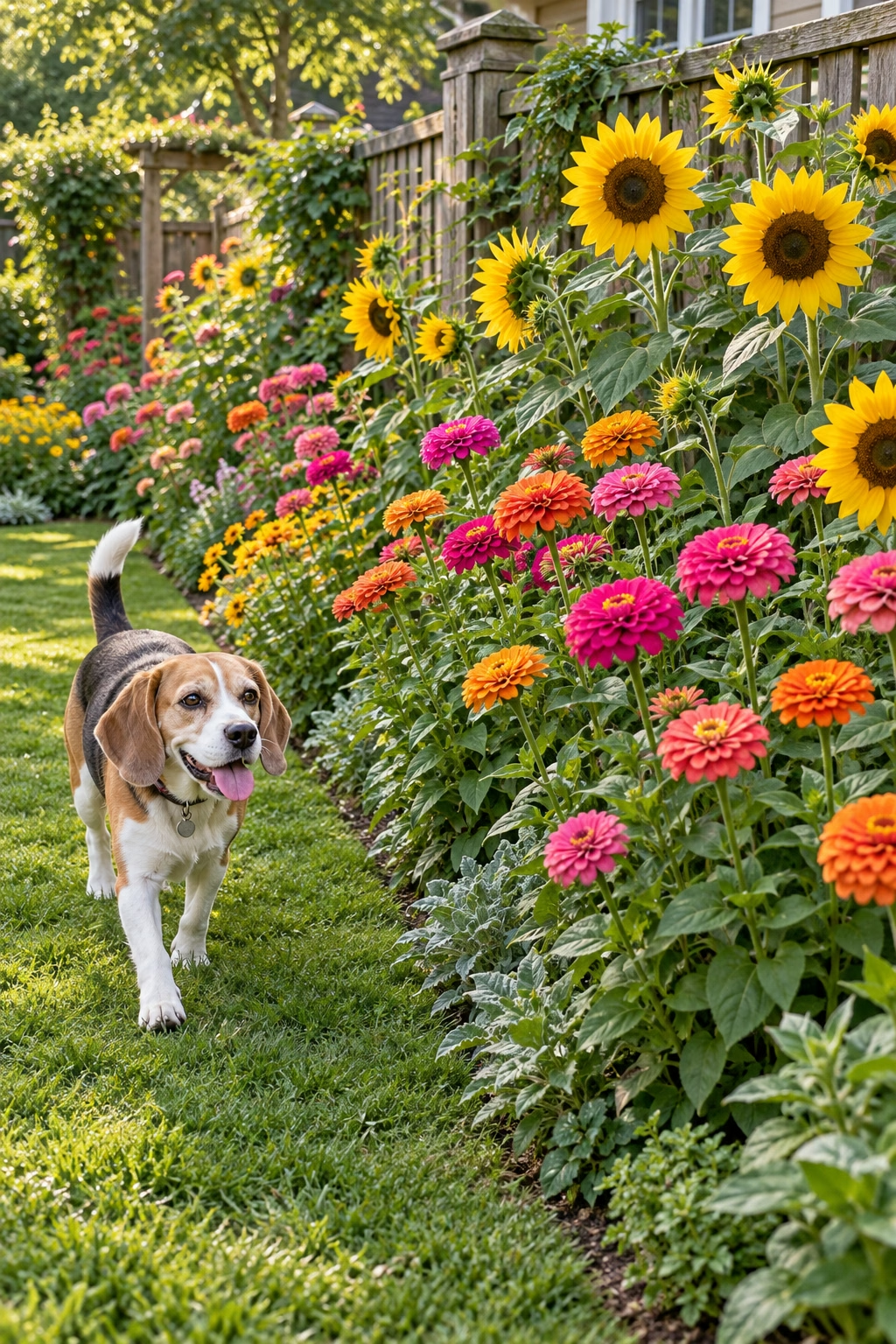
Choose greenery that is lovely and appropriate for pets
The most charming dog-friendly gardens still have color, texture, and plenty of greenery.
Sunflowers, for example, can create a cheerful summer backdrop, while suitable ornamental grasses and shrubs add movement and structure to the landscape.
Before planting, look up the exact species and variety in a reliable plant-toxicity resource. Common names can sometimes be misleading.
Place fragile plants behind edging and avoid thorny or spiky varieties near active running routes.
Remember that even plants classified as non-toxic may upset a dog’s stomach if eaten.
For a garden that’s both beautiful and safe, plan the planting areas carefully and keep hazardous bulbs, berries, and chemicals out of reach.
13. Plant a Sensory Sniffing Garden
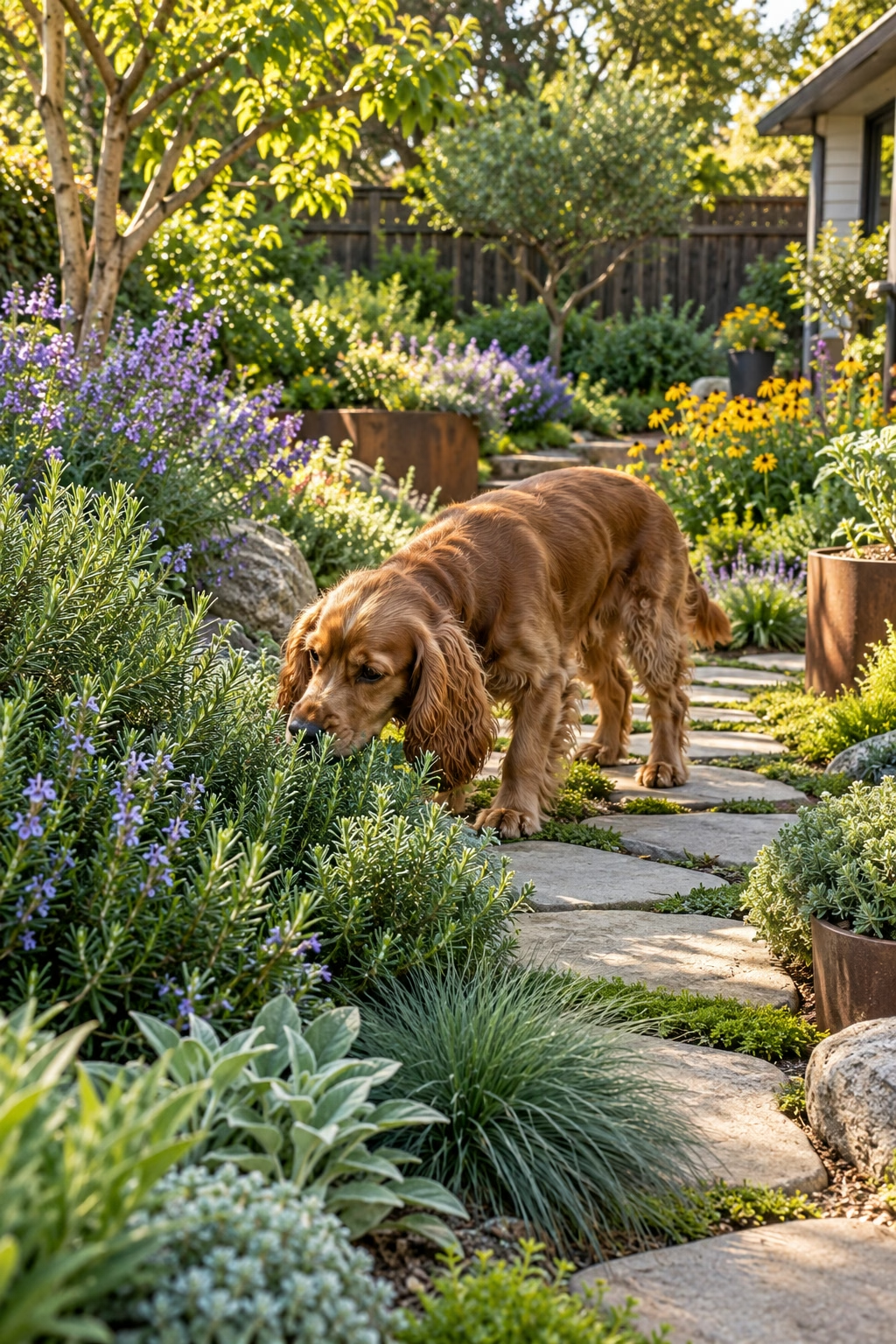
Give curious noses something new to explore
Dogs experience gardens through scent as much as sight.
You can make a gentle sensory corner with dog-safe plants, different soft textures, and a winding route that invites slow exploration.
Use a mix of low greenery, a few sturdy ornamental plants, and open patches where your dog can pause to investigate.
You might even include a small resting area along the route.
Keep anything irritating, thorny, or toxic away from nose level.
There’s no need for essential oils or strong added fragrances. Ordinary outdoor scents provide plenty of interest.
This is a lovely option for dogs who prefer sniffing and exploring to running around the lawn.
14. Make a Curved Path Through the Garden
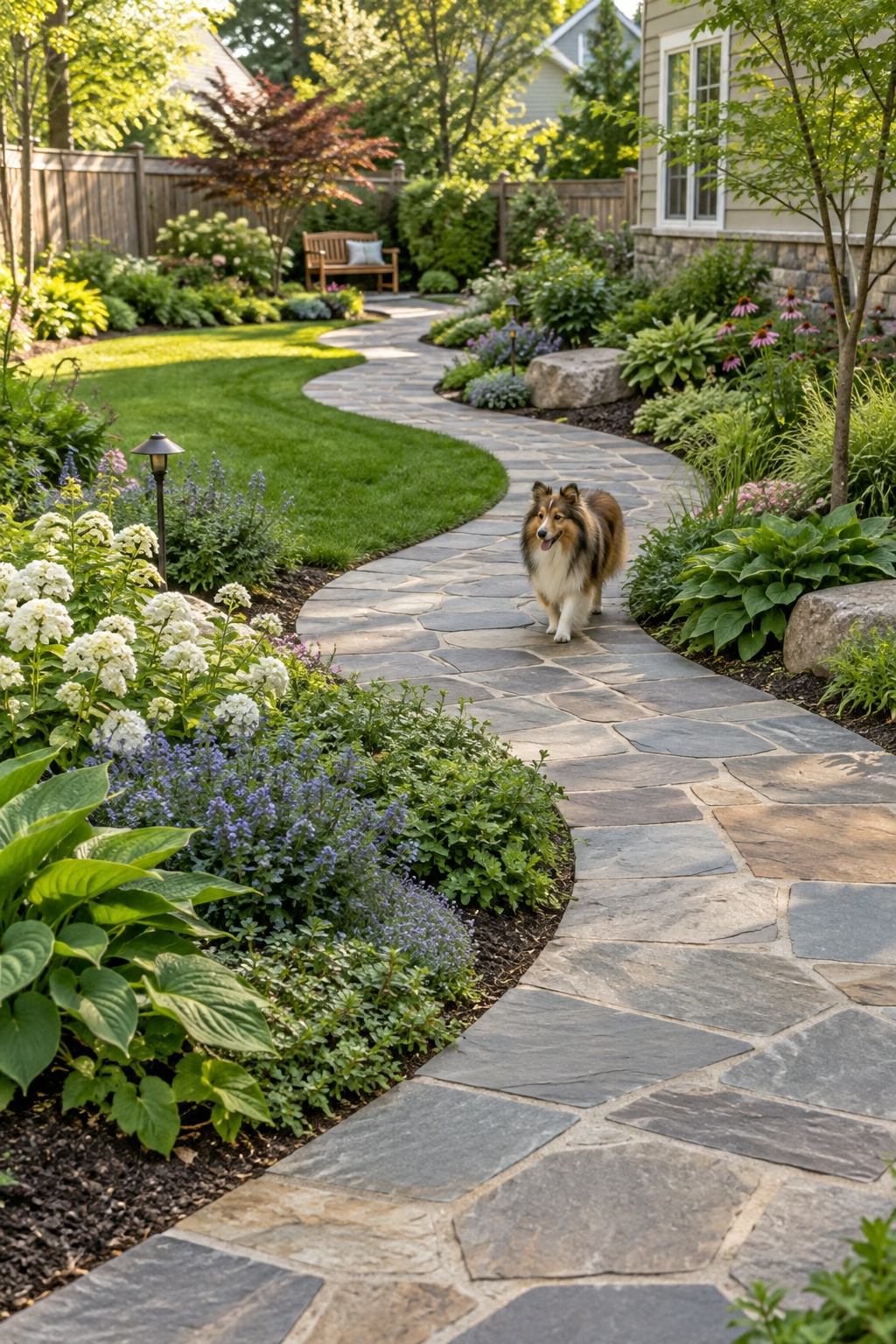
Turn an ordinary yard into an interesting walk
Even a small backyard can feel more engaging with a short, gently curving path.
Let it wind between planting beds, a bench, and a quiet shady corner. The journey itself becomes part of the garden design.
Use flush, non-slip paving or another stable surface that feels comfortable under paws.
Avoid abrupt changes in level and slick stones that become slippery when wet.
Keep plants far enough from the edges that the path remains easy to use.
This kind of landscaping works particularly well when you want a lush, cottage-garden look without sacrificing space for your dog.
15. Use Paw-Friendly Pavers Near the Back Door
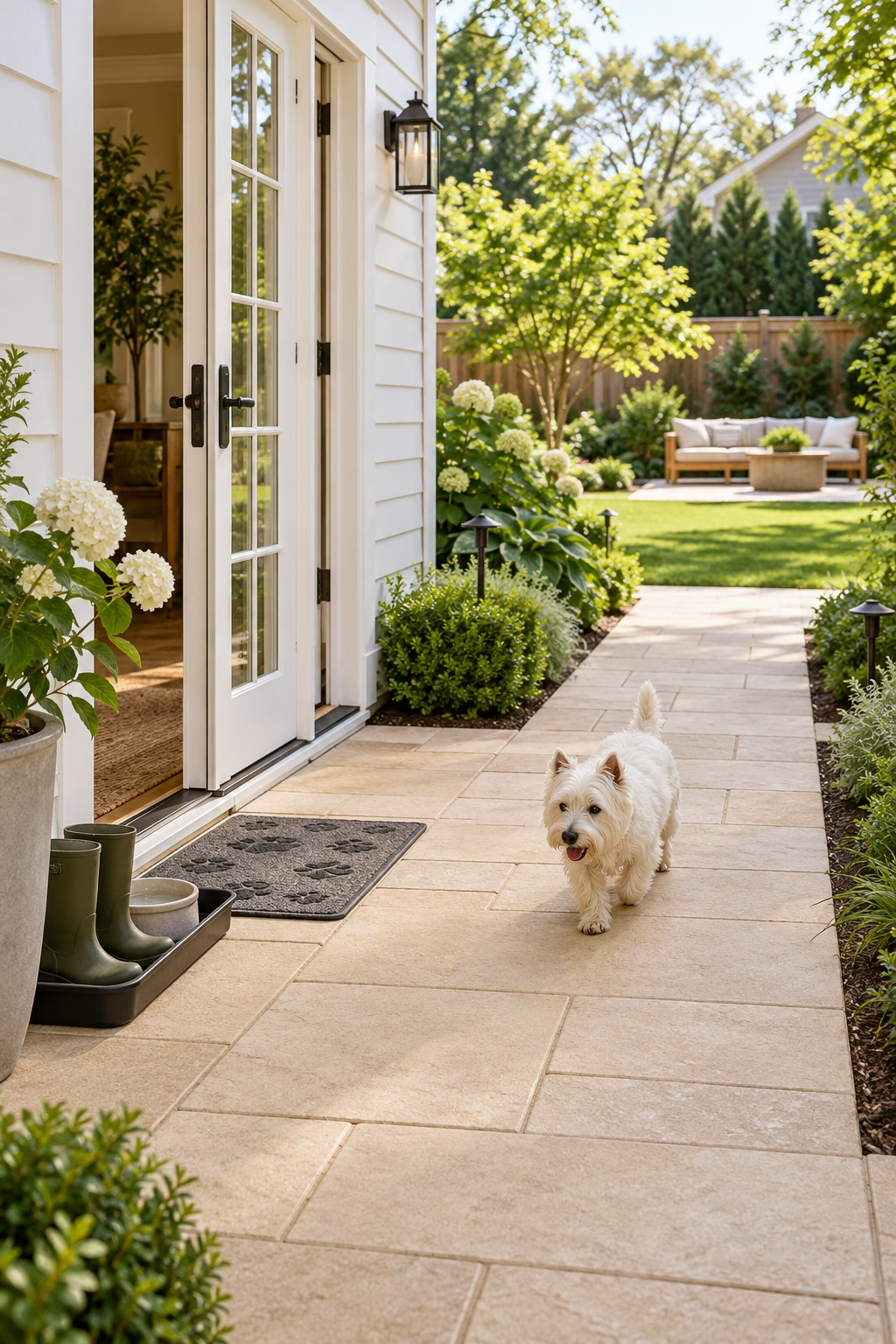
Create a cleaner transition between indoors and out
The space immediately outside the back door takes a lot of wear.
A short walkway of textured, non-slip pavers can keep that high-traffic spot looking finished and prevent the lawn from turning into a worn, muddy patch.
Choose a light-colored, appropriately textured material, fit the pavers level, and leave enough room for your dog to turn comfortably.
Dark stone, concrete, and even artificial turf can become uncomfortably hot in direct sunlight.
Check surface temperatures before allowing your dog to walk or lounge on them.
A soft planting strip alongside the path makes this practical area feel like a thoughtful part of the landscape.
16. Set Up a Simple Backyard Agility Course
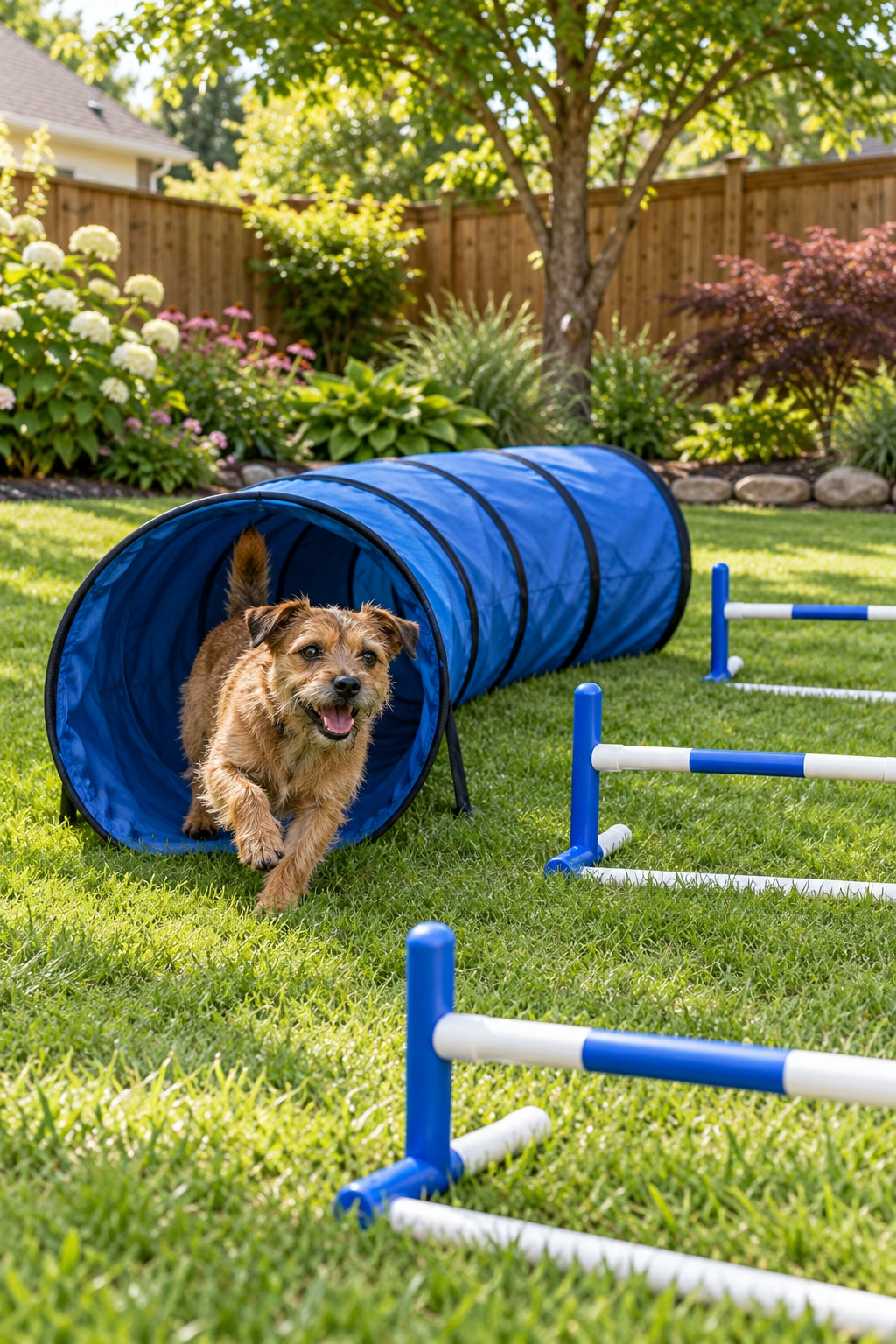
Keep playtime active and interesting
You don’t need a full dog park to add a little activity to your backyard.
Start with a low, stable tunnel or widely spaced ground-level poles that your dog can explore at their own pace.
Choose equipment made for dogs, with no sharp fasteners or pieces that could collapse.
Keep sessions short, positive, and supervised.
Skip high jumps and difficult balancing challenges unless your veterinarian or a qualified trainer says they’re appropriate for your dog’s age, health, and ability.
When playtime ends, move portable equipment to the side so the lawn remains open and attractive.
17. Add a Toy-and-Treasure Hunt Corner
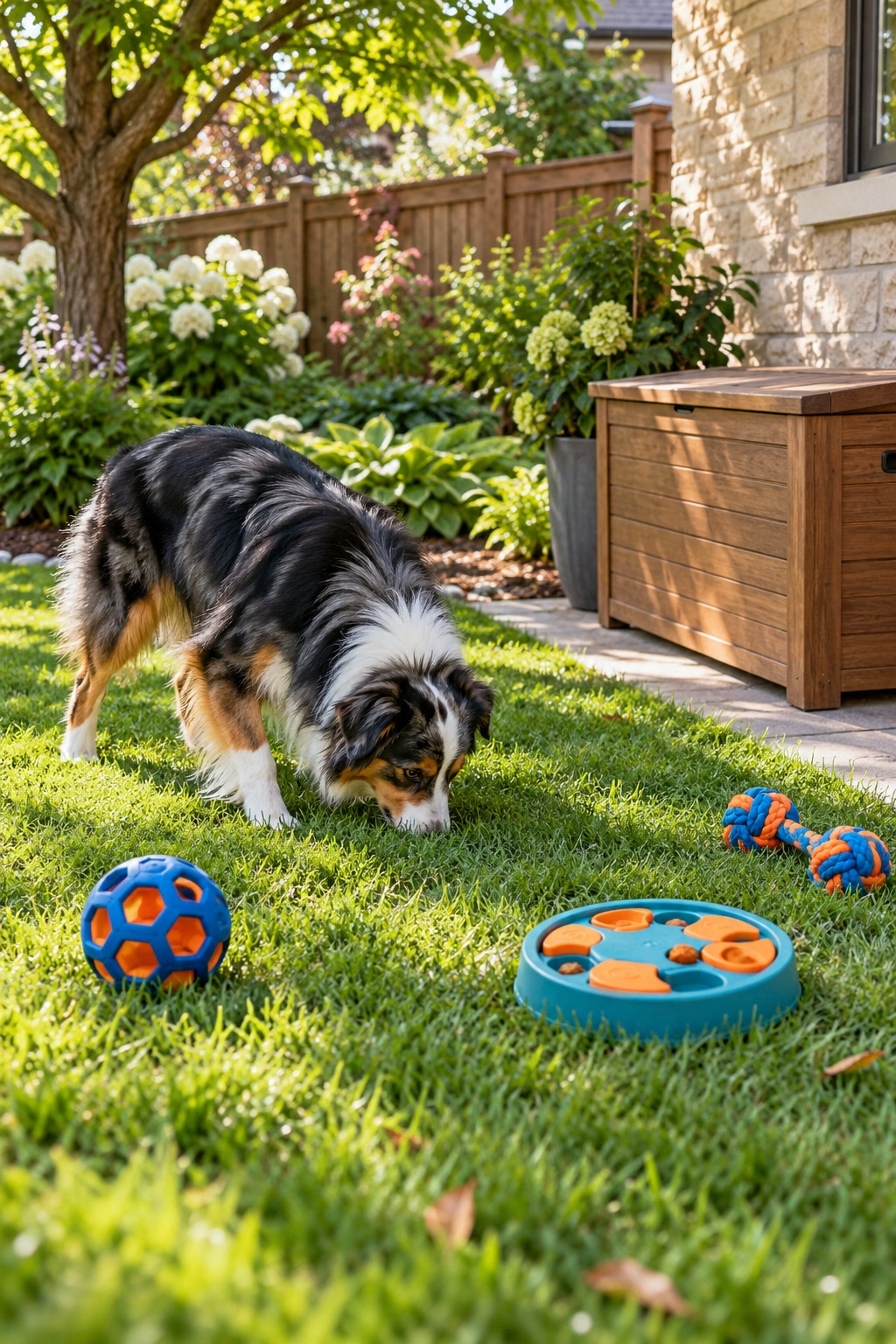
Make enrichment easy to rotate
Set aside a small piece of the yard for supervised games.
Scatter a few treats in clean grass for a simple sniffing activity, hide a favorite toy in an easy spot, or bring out a dog-safe puzzle toy.
A weatherproof storage box nearby keeps the patio neat and makes it easy to rotate activities.
You can change the game throughout the week to keep the space interesting.
Remove toys that are worn, too small, or likely to be swallowed.
This idea is especially useful in a compact backyard where a large agility setup won’t fit.
The appeal comes from fresh activities and time spent together, not expensive equipment.
18. Build a Low, Stable Lookout Platform
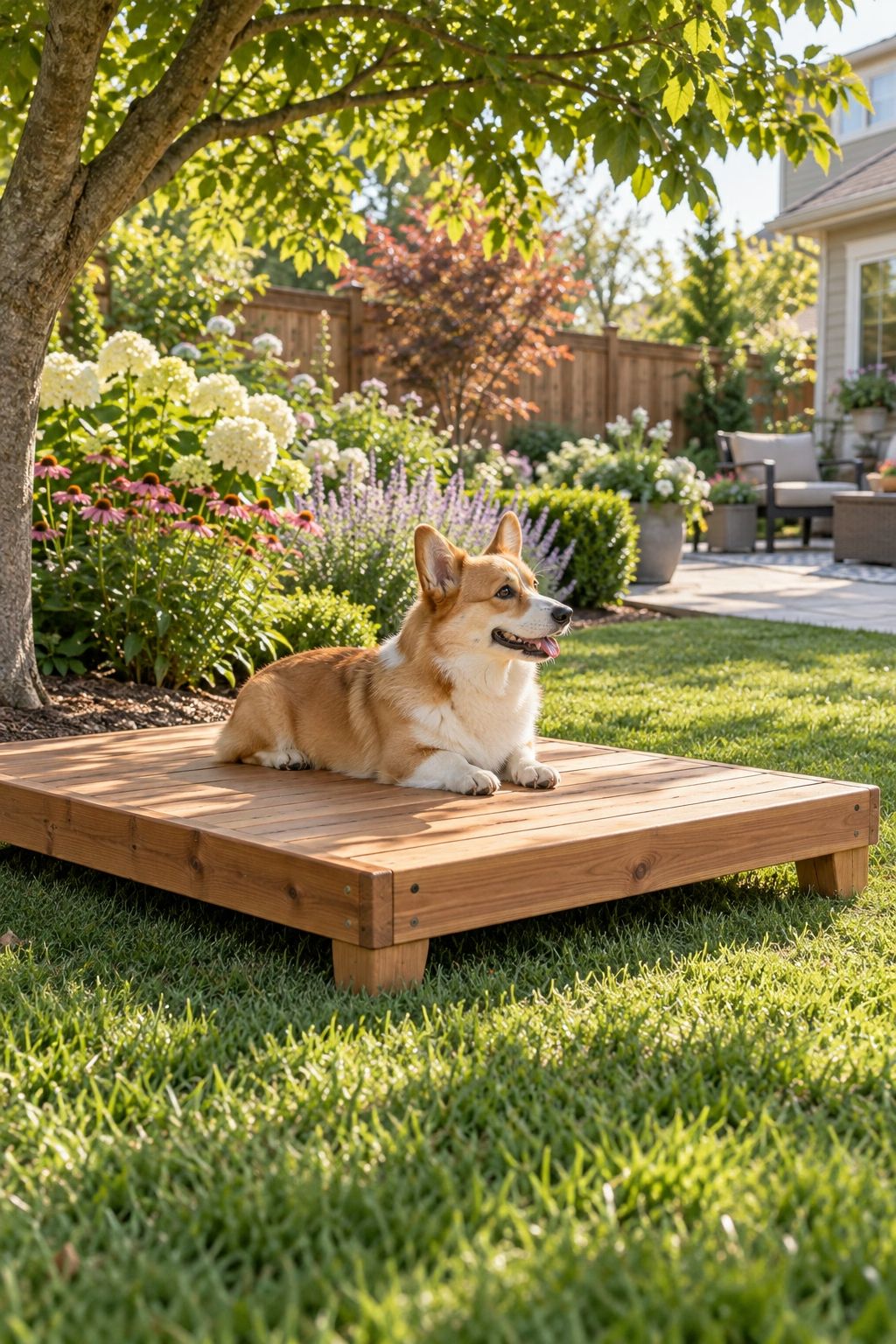
Give observant dogs a place to perch
Some dogs enjoy watching the yard from a slightly raised spot.
A low wooden platform with a wide, non-slip surface can serve as a rest area or viewing place, particularly when positioned under shade.
It can also become an attractive feature in a landscaped dog run or a quiet garden corner.
Keep the platform low enough for comfortable step-on access, round off the edges, and make sure it can’t wobble.
For older dogs or those with joint problems, a ground-level bed is often the better choice.
Don’t put a lookout beside the fence if your dog becomes stressed or barks constantly at people and animals passing by.
19. Install a Simple Paw-Rinsing Station
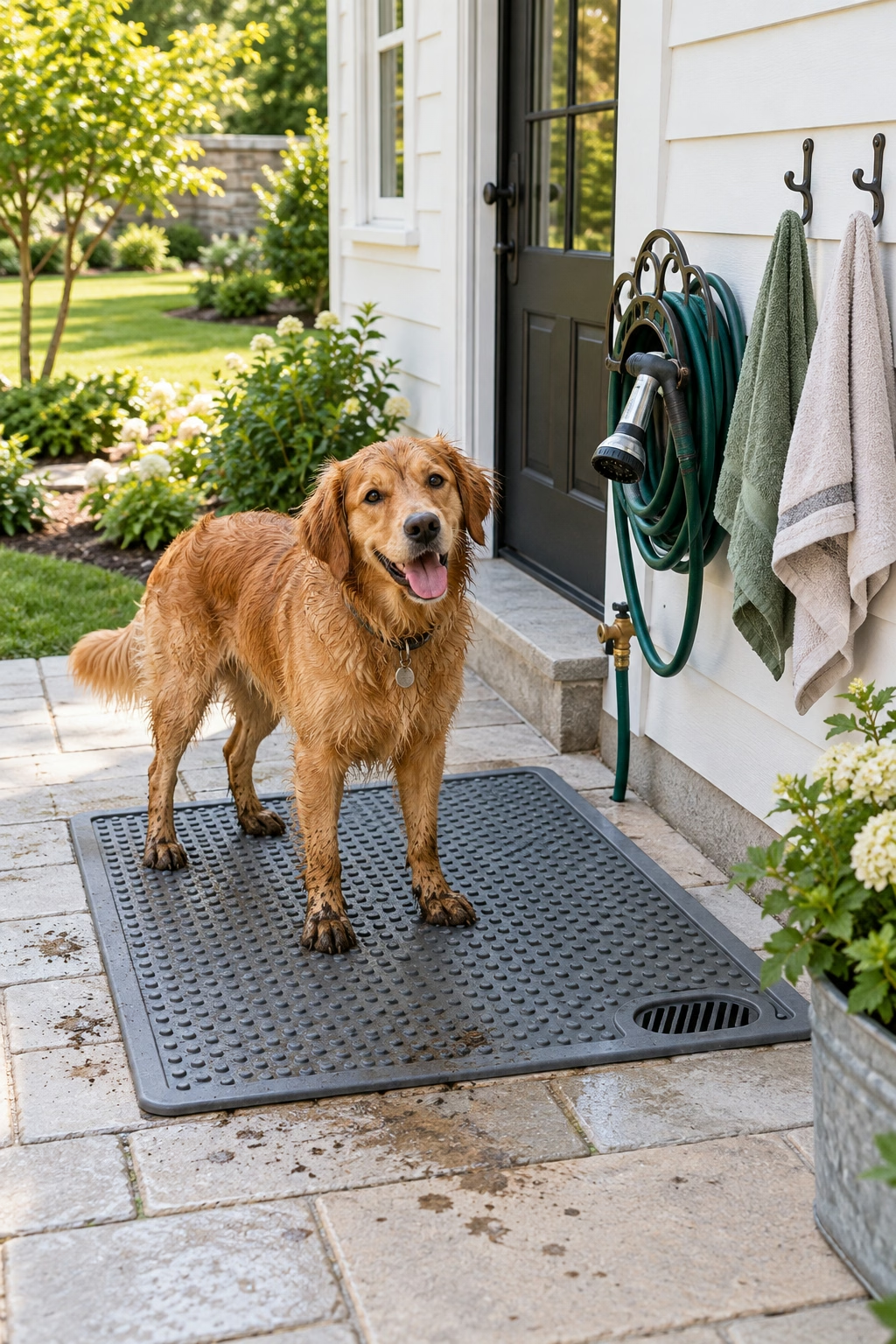
Keep the fun outside and the floors cleaner
If muddy paws are part of everyday life, put a small rinsing area near the backyard entry.
A short outdoor hose with a gentle spray, a non-slip mat, and a hook for towels make post-play cleanup much easier.
You don’t need a built-in dog shower to make the setup useful.
A portable water container or hose attachment can work in a modest backyard.
Direct runoff to a suitable drainage area, use comfortably cool water, and keep cleaners out of your dog’s reach.
Finish with a covered basket for clean towels to make the station look neat and organized.
20. Tackle Muddy Spots With Better Drainage
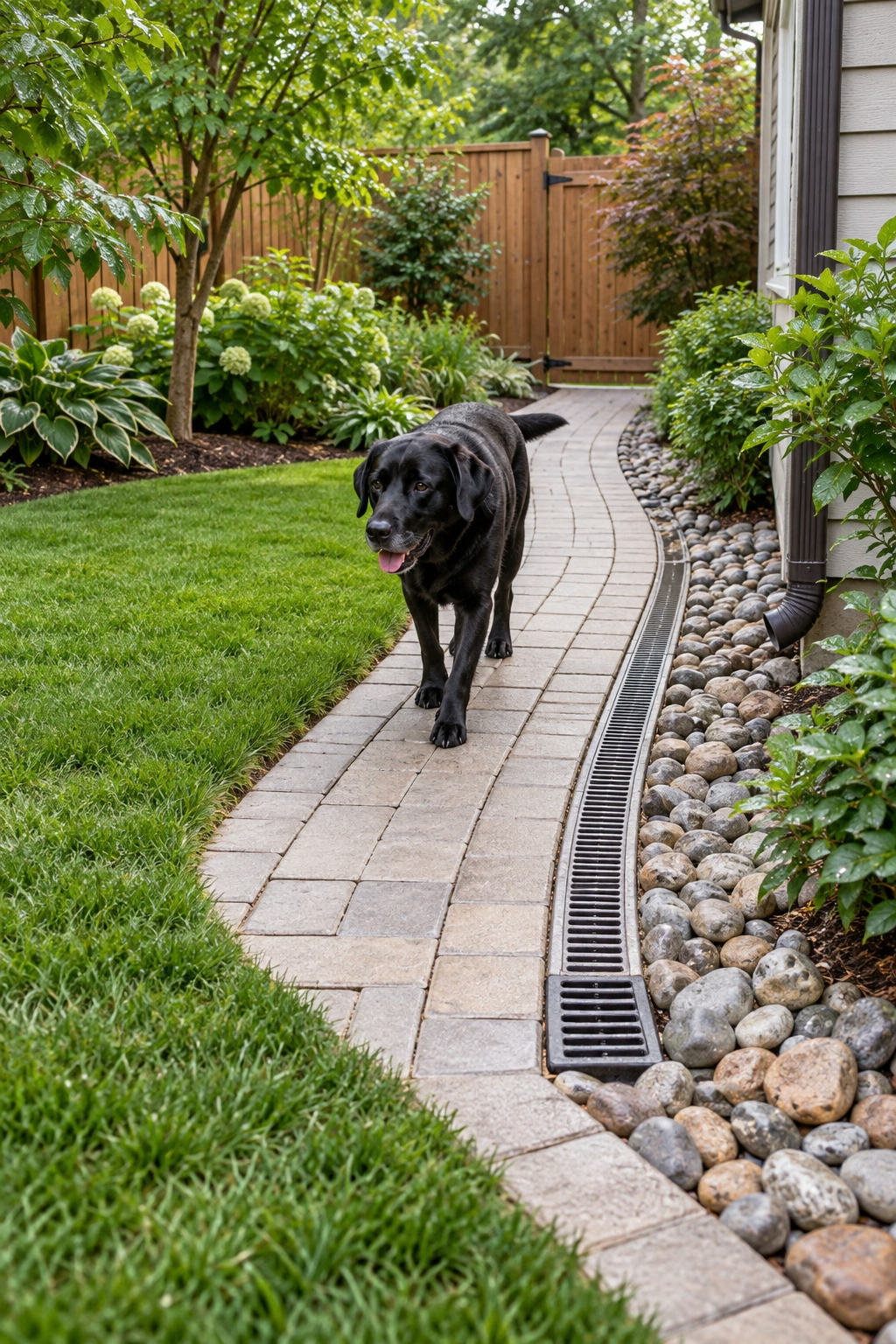
Fix the places that stay wet after rain
Every backyard seems to have that one patch that stays muddy.
If your dog uses it as a shortcut, a little planning can save both the lawn and your floors.
Start by figuring out whether the problem is heavy foot traffic, compacted soil, or water collecting in a low spot.
For a small traffic area, stable permeable pavers or a properly built path may help.
Larger puddling problems may require grading or a drainage solution planned by a professional.
Avoid simply pouring loose gravel into wet soil. It can sink, scatter, or create paw problems without fixing the underlying drainage issue.
21. Create a Cozy Outdoor Dog Nook
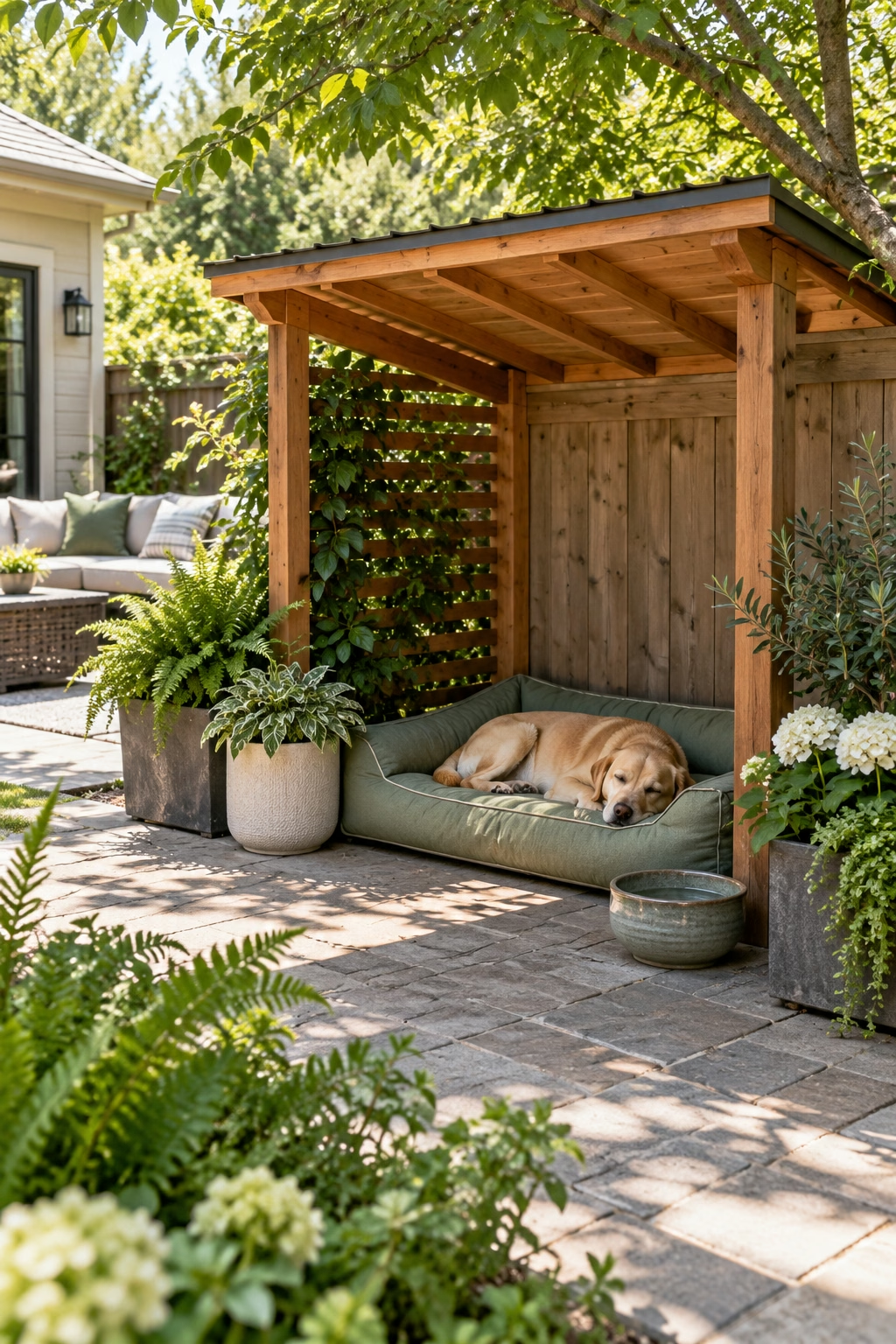
Offer a quiet place to settle near the family
A little resting nook can be as simple as a breathable outdoor dog bed in a protected corner of the patio.
Add a washable cushion and position it where your dog can see you without feeling surrounded by foot traffic.
If you prefer a doghouse, choose one that is appropriately sized, ventilated, weather-resistant, and easy to clean.
It should never trap heat.
Your dog still needs indoor access, attention, and supervision in unsuitable weather.
Decorate the surrounding area with safe planters or a small screen to make the nook feel like part of your backyard design.
22. Add a Visual Screen Along a Busy Fence
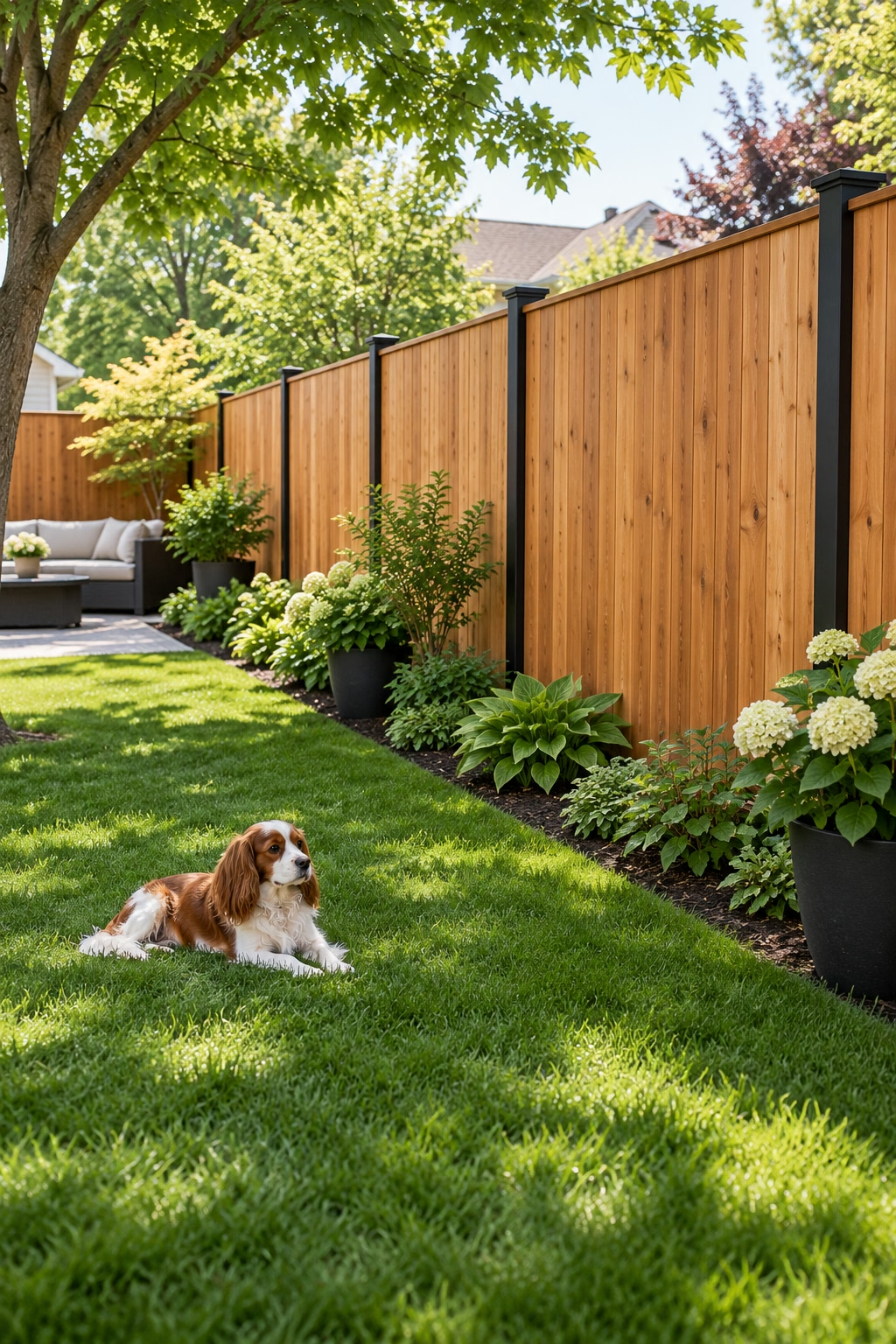
Make the yard feel calmer and more private
Some dogs become overexcited when they can watch every passerby.
A solid fence panel or securely fitted visual screen may help reduce constant fence-line stimulation while adding privacy to your seating area.
Keep the barrier smooth, stable, and out of chewing range.
Check that it doesn’t create footholds for climbing or gaps for escape.
If you prefer a living screen, research plant toxicity before choosing shrubs or vines.
A privacy screen isn’t a cure for barking or reactivity, but it can be a useful part of a broader training and management plan.
23. Try a Grass-Free Backyard With Mixed Surfaces
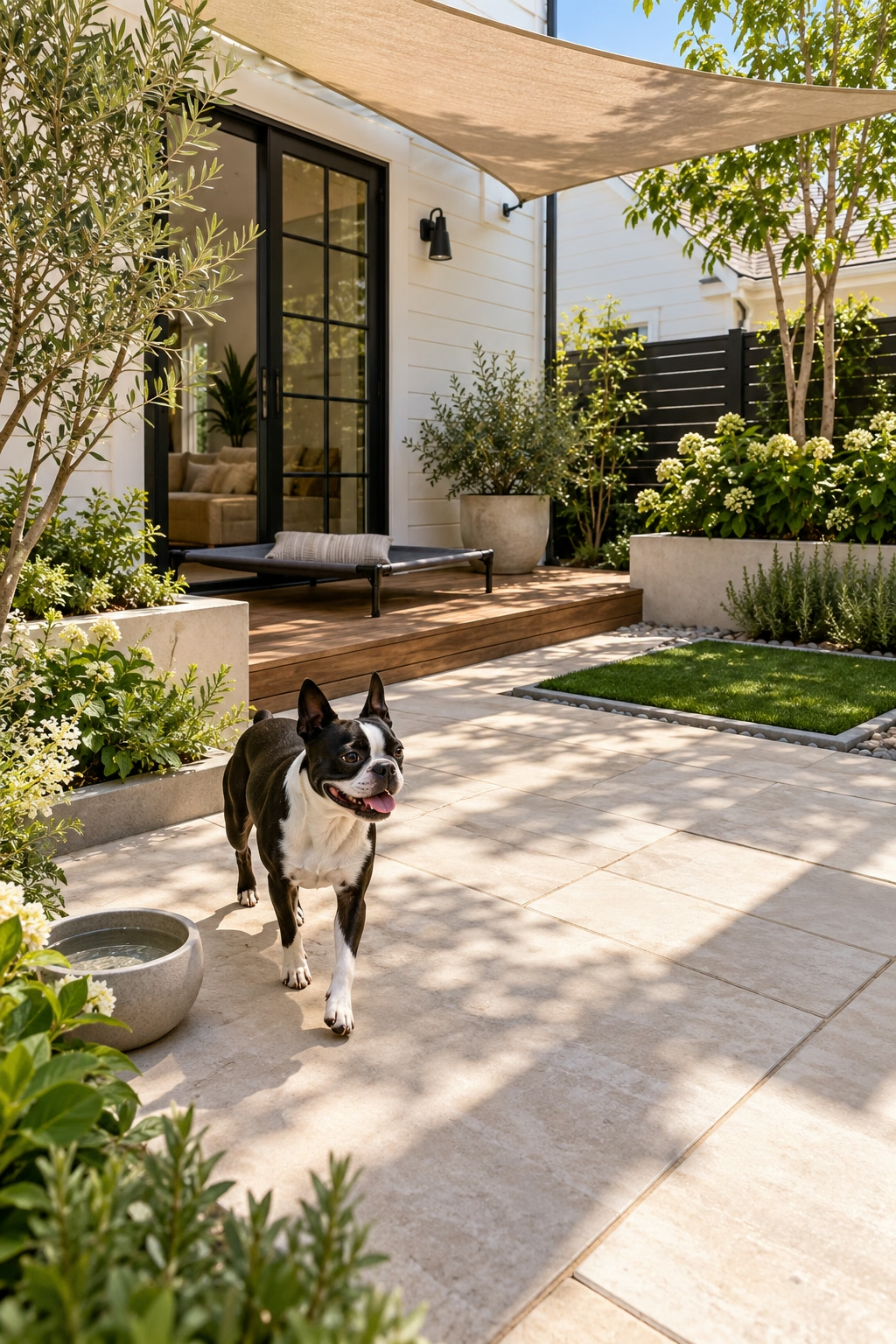
Make a small courtyard practical for dogs
A lawn isn’t essential for every dog-friendly backyard.
In a small urban space, you can combine non-slip pavers, a comfortable shaded lounging patch, a designated potty area, and carefully placed planters to create a tidy courtyard.
Keep some soft, paw-comfortable surface available for rest.
Avoid covering every inch with hard paving that becomes hot in the sun.
Artificial grass is another design choice, but it requires cleaning and can become extremely hot.
Think about shade, heat, traction, drainage, and your dog’s habit of chewing materials before deciding what to install.
24. Fence Off the Vegetable Garden
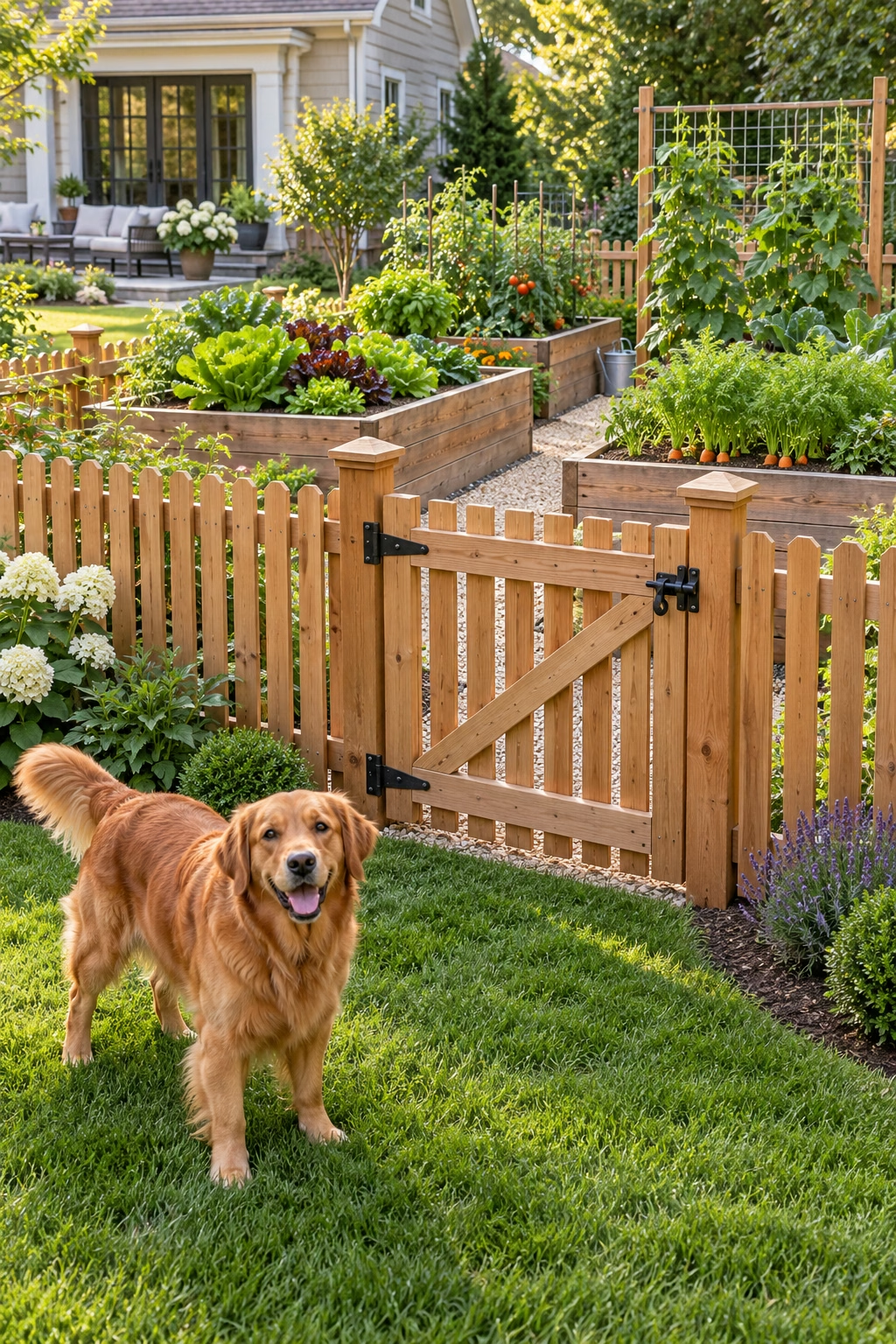
Keep edible crops and curious pets separate
If you love growing vegetables, it makes sense to give the kitchen garden its own little boundary.
A secure garden fence with a gate can protect seedlings from digging and prevent your dog from reaching potentially harmful crops, compost, tools, and garden treatments.
This creates a charming garden-within-a-garden look, especially with raised wooden beds and a narrow paved working path.
You can still enjoy growing fresh produce while keeping the main backyard available for play.
Don’t assume homegrown food is harmless to pets. Onions and parts of tomato plants, for example, can be dangerous.
Keep fertilizers and compost securely stored, too.
25. Divide the Yard Into Play, Rest, and Garden Zones
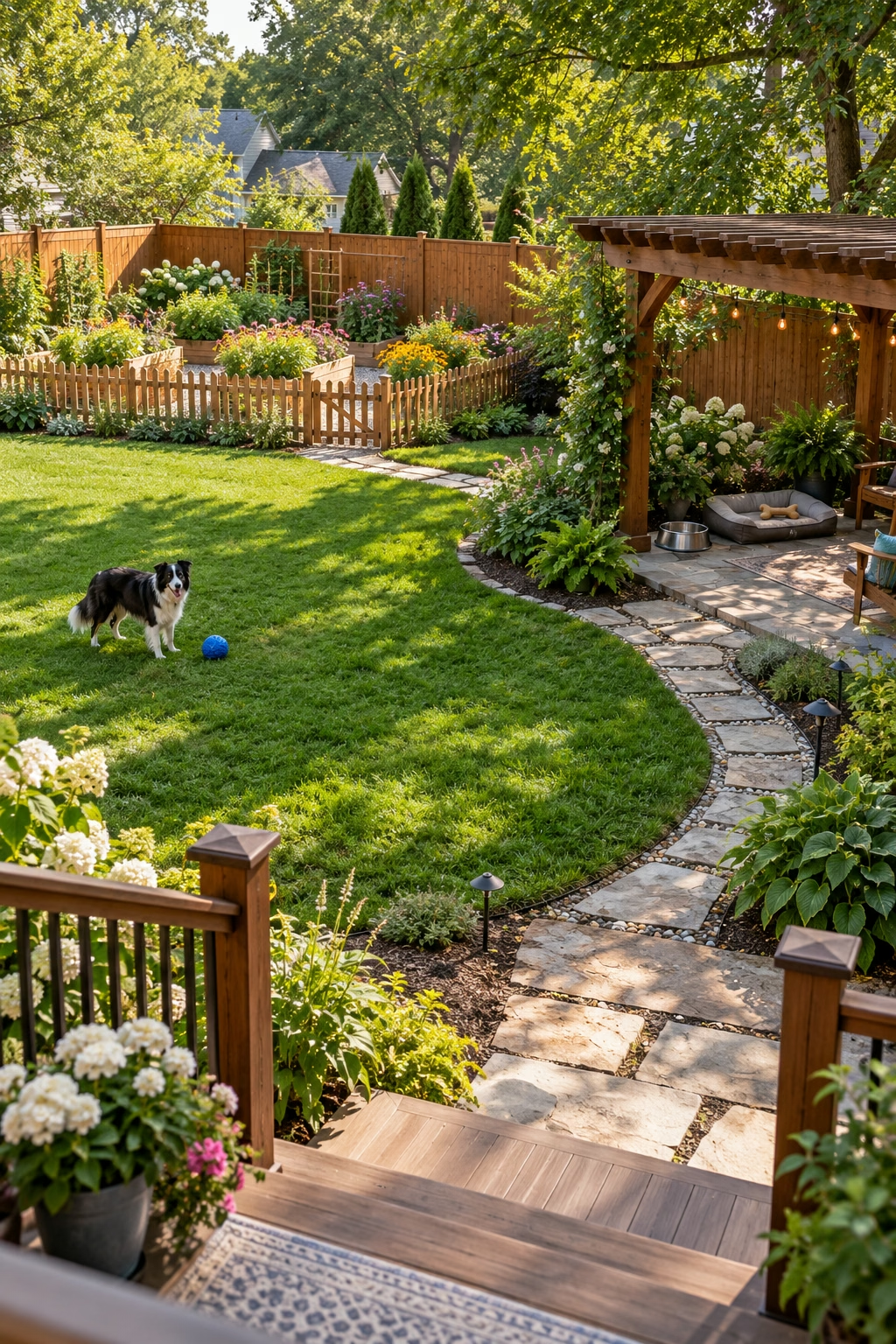
Bring all your favorite ideas together
One of the smartest dog-friendly backyard ideas is also the simplest: give every activity a place.
Keep an open area for play, a quiet shaded corner for resting, and a protected planting zone for flowers or vegetables.
Use paths and low borders to connect the spaces naturally.
You don’t need a huge yard.
In a small backyard, one patch of lawn, a compact bench, a water bowl, and a narrow planting bed may be all you need.
In a larger yard, a side dog run and a curved walking path add variety.
Start with your dog’s actual habits, then build the design around them so the finished yard looks beautiful and gets used.
How to Choose the Best Dog-Friendly Backyard Ideas
Before you start shopping for plants or laying pavers, spend a few days watching how your dog uses the space.
Notice where they run, which places they avoid, where they rest in the afternoon, and whether they prefer active games or slow sniffing.
Those clues will help you decide what to build first.
For most yards, begin with these priorities:
- Safety first: Secure fences and gates, inspect plants, and remove access to hazardous chemicals, compost, tools, and unsafe water.
- Comfort next: Add dependable shade, clean drinking water, and at least one comfortable resting surface.
- Room to be a dog: Allow space for movement, sniffing, play, and, if appropriate, a designated digging area.
- Easy maintenance: Plan for waste pickup, rinsing, durable routes, and drainage before investing in decorative extras.
A well-designed backyard can enrich your dog’s day, but it doesn’t replace walks, training, social contact, or time together indoors.
Frequently Asked Questions
What is the most dog-friendly backyard ground cover?
There isn’t one perfect option for every dog.
Suitable natural lawn grass is comfortable for many pets, while non-slip pavers work well in high-traffic paths.
Some owners use mulch, gravel, or artificial turf in specific zones, but those come with trade-offs such as ingestion risk, paw discomfort, cleaning needs, or high surface temperatures.
Choose based on your dog and climate rather than appearance alone.
How can I make a small backyard dog-friendly?
Focus on a secure boundary, one clear walking route, a comfortable shaded spot, clean water, and a washable potty area.
A small sniffing garden or rotating puzzle toys can make the space more interesting without filling it with equipment.
Which backyard plants are safe for dogs?
Plant safety depends on the exact species and sometimes the plant part.
Start with the ASPCA’s toxic and non-toxic plant database, and verify every plant you want to grow.
Even non-toxic vegetation can cause an upset stomach if eaten in quantity.
Avoid introducing plants with unknown identities where dogs can reach them.
How do I stop my dog from ruining the lawn?
Try defining a running path where your dog naturally travels, providing a separate potty spot, and repairing high-traffic grass with a variety suited to your region.
More frequent cleanup, proper drainage, and a dedicated digging box can also help.
Look for the reason behind the damage instead of relying on one miracle lawn product.
Is artificial grass good for dogs?
It can be practical in some small or heavily used areas, provided it is installed with appropriate drainage and cleaned regularly.
However, artificial turf can heat up in direct sun, and some dogs chew synthetic materials.
Shade and an alternative cool resting surface are important.
Final Thoughts
The best dog-friendly backyard isn’t necessarily the biggest or most expensive one.
It’s a space where your dog can move, investigate, rest, and stay safe—and where you can still enjoy the garden you love.
Begin with one practical change, such as a better path, shade, or a digging corner.
Small improvements can add up to a beautiful yard that both of you use every day.


