
A backyard does not need to be huge to benefit from water. Even a small fountain, bubbling pot, or compact pond can completely change how an outdoor space feels.
The best backyard water feature ideas do more than fill an empty corner. Moving water adds gentle sound and movement, while still water can reflect the sky, plants, and surrounding garden. A well-placed feature can also become the focal point that ties a patio, seating area, lawn, or garden bed together.
There are plenty of options, too. You can create a natural-looking pond surrounded by plants, build a waterfall that disappears into a bed of stones, add a simple water bowl beside the patio, or use a narrow rill for a more modern landscape.
The right choice depends on your available space, garden style, budget, and how much maintenance you want to handle.
If you are planning a new outdoor space or simply want to make your existing yard feel more peaceful, these 25 backyard water feature ideas offer plenty of realistic inspiration.
1. Create a Small Natural Backyard Pond
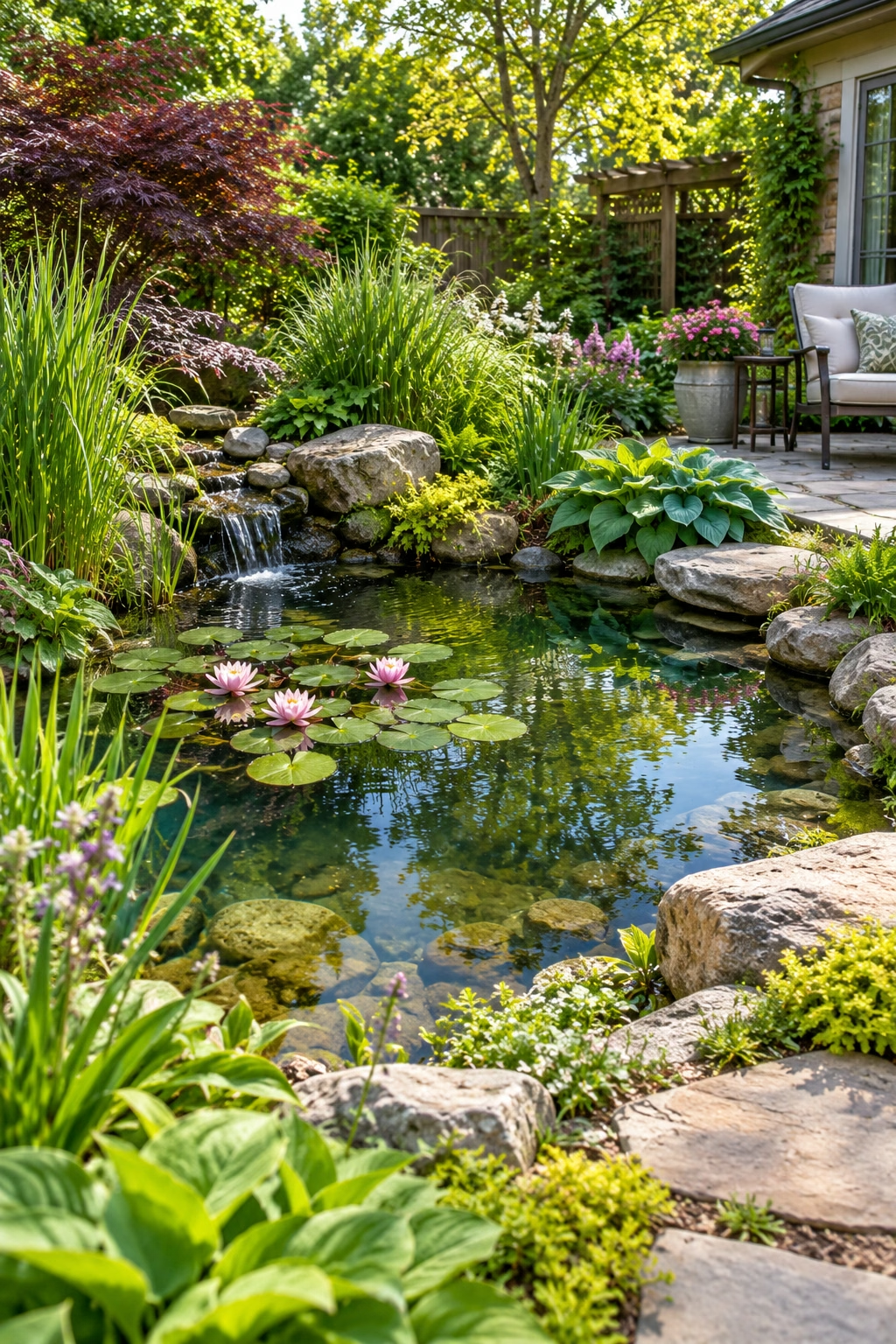
A small pond is one of the most timeless backyard water feature ideas because it can look as though it has always been part of the landscape.
Instead of making the pond perfectly round, consider a softer, irregular outline. Edge it with a mixture of natural stones, low-growing plants, ornamental grasses, and a few larger rocks.
Aquatic plants can add another layer of interest to the water itself.
Place the pond where you can see it from a patio, deck, window, or favorite garden chair. You do not necessarily need an enormous pond. A thoughtfully landscaped small pond can become one of the most attractive features in the entire yard.
2. Add a Pondless Waterfall
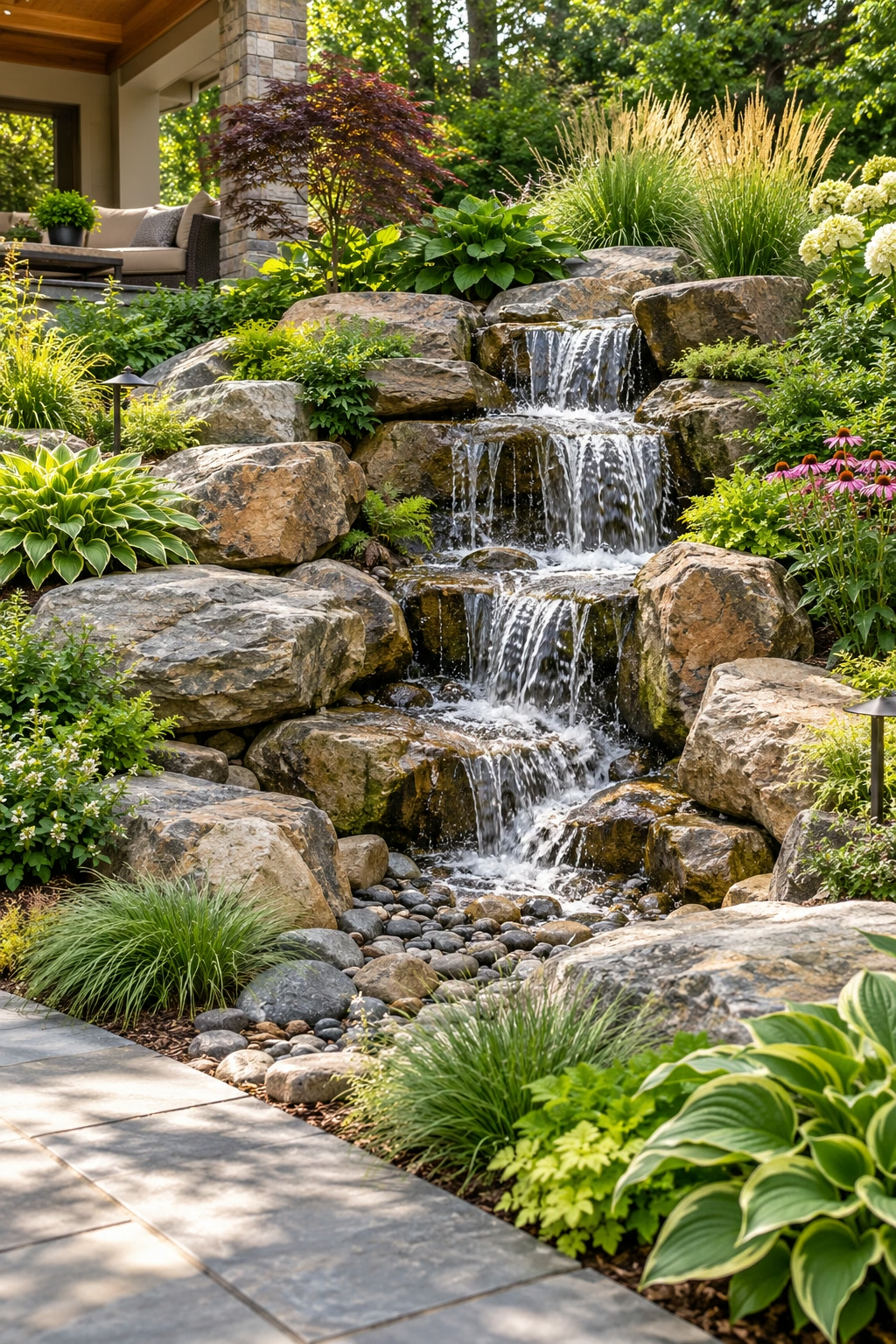
If you love the sound of a waterfall but do not want a visible pond, a pondless waterfall is a practical alternative.
Water runs down a series of stones before disappearing into a hidden reservoir beneath a layer of gravel or river rock. A pump then recirculates the water back to the top.
The result gives you the movement and sound of a backyard waterfall without a large area of open water.
Use several sizes of rock instead of arranging identical stones. Larger boulders can form the main structure, while smaller river rocks help soften the edges and make the feature look more natural.
This design works especially well beside patios, walkways, and garden seating areas.
3. Make a Bubbling Urn Fountain
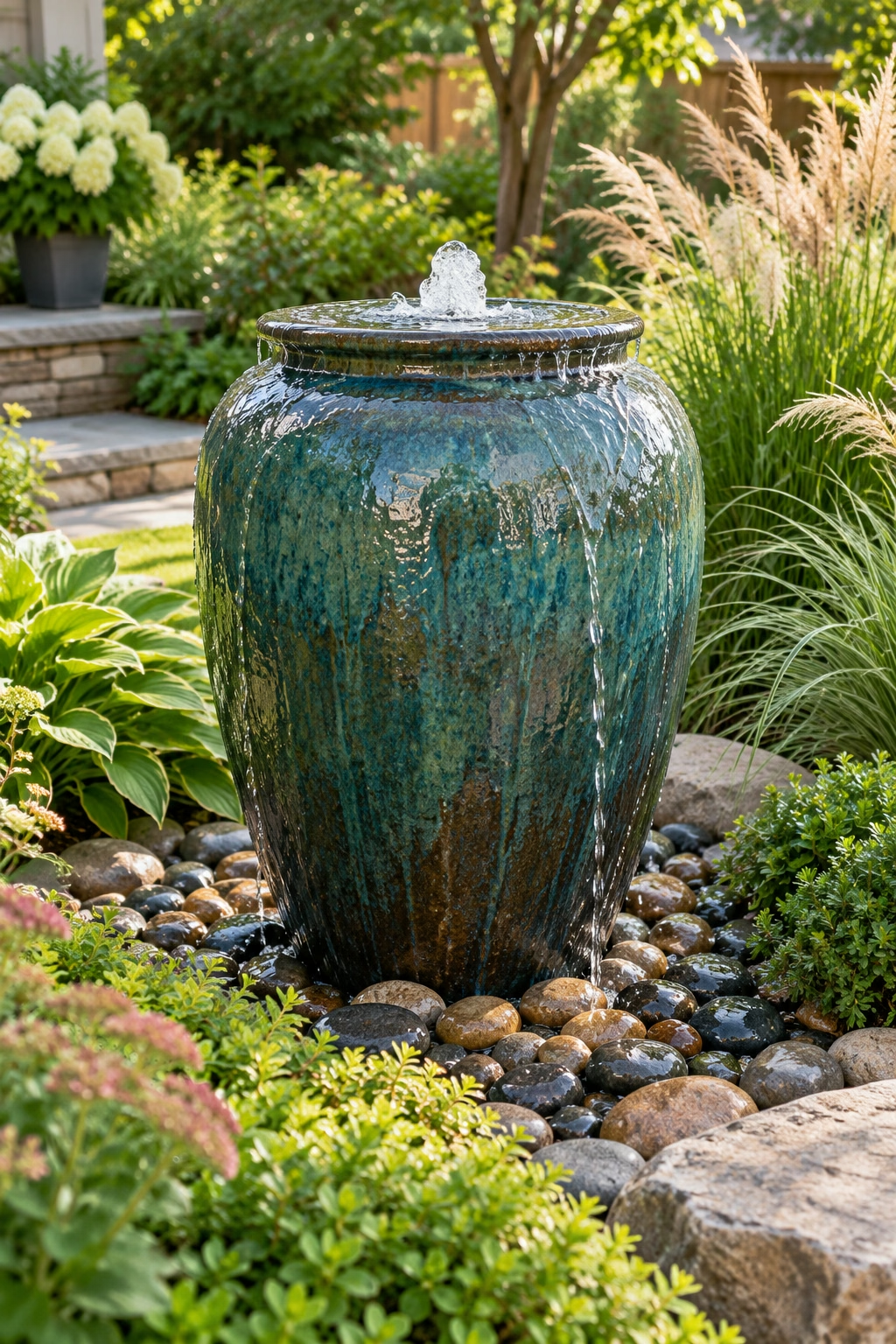
A large ceramic urn can become a beautiful focal point without taking up much ground space.
Water gently bubbles from the top of the urn and flows down the sides before returning to a hidden reservoir underneath.
Choose an urn with enough height to stand out among nearby plants. Deep blue, green, earthy brown, or neutral stone finishes can all work depending on your garden style.
Surround the base with smooth pebbles and low plants so the fountain feels connected to the landscape rather than simply placed on top of it.
A bubbling urn looks particularly attractive at the end of a garden path or in a planting bed where the eye naturally travels toward it.
4. Build a Simple Rock Waterfall
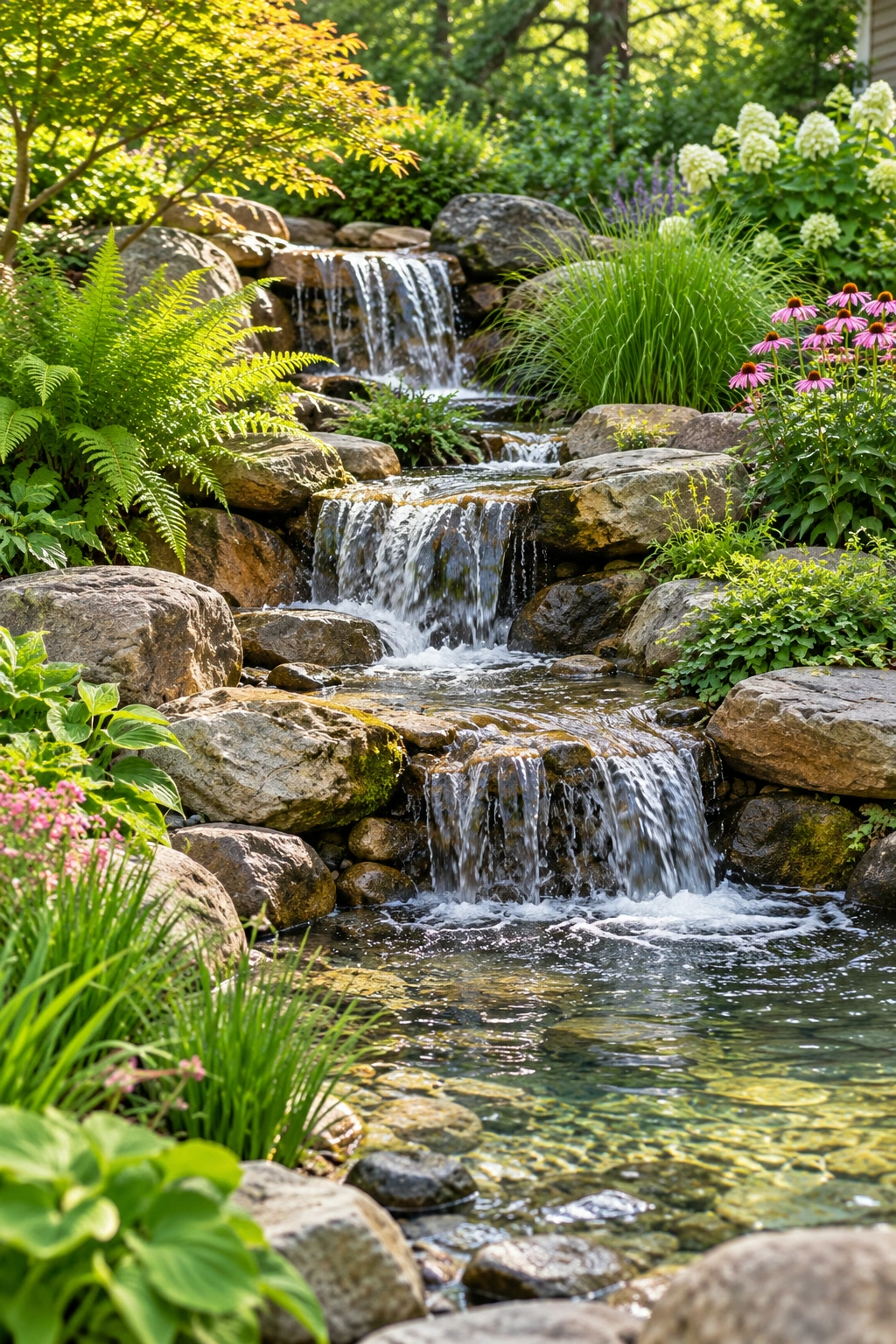
Natural stone waterfalls remain popular because they fit comfortably into many backyard styles.
Rather than creating one large vertical drop, arrange rocks in several levels so the water moves gradually from one stone to another.
This creates more texture and can produce a softer water sound.
Plants around the waterfall are just as important as the rocks. Ferns, ornamental grasses, flowering perennials, and groundcovers can help hide hard edges and make the feature feel established.
If your property already has a slight slope, use that change in elevation to make the waterfall appear more natural within the landscape.
5. Use a Large Water Bowl
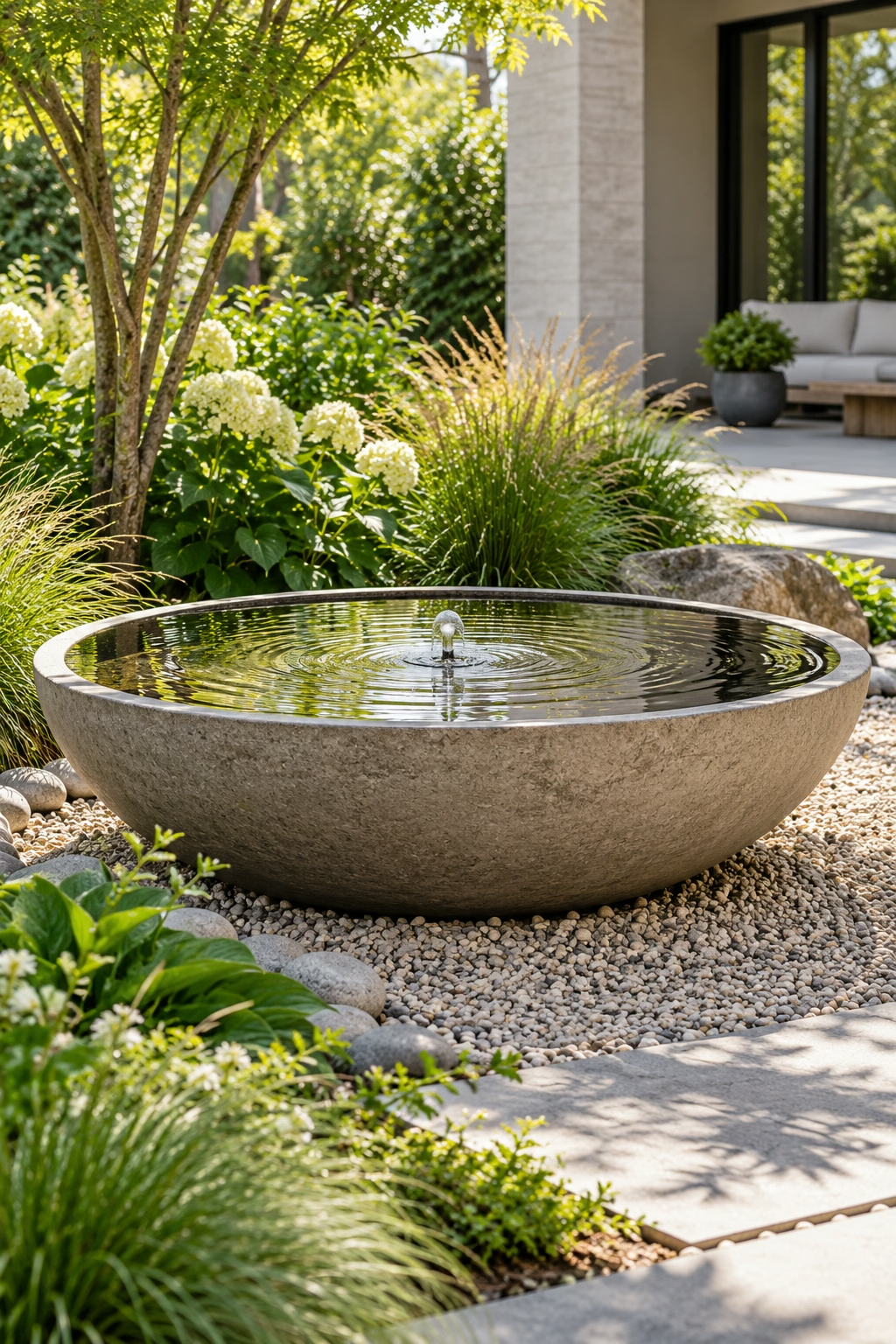
One of the simplest backyard water feature ideas is also one of the most elegant.
A wide water bowl creates a quiet reflective surface without requiring a large pond. Place it among garden plants, beside a patio, or at the intersection of two paths.
Stone, concrete, metal, and weather-resistant ceramic bowls can all work.
You can leave the water mostly still for a calm appearance or add a small bubbler for gentle movement.
Keep the surrounding design simple. A few grasses, leafy plants, or smooth stones are often enough. The simplicity of the bowl is what makes this idea especially suitable for contemporary and minimalist gardens.
6. Design a Wildlife Pond
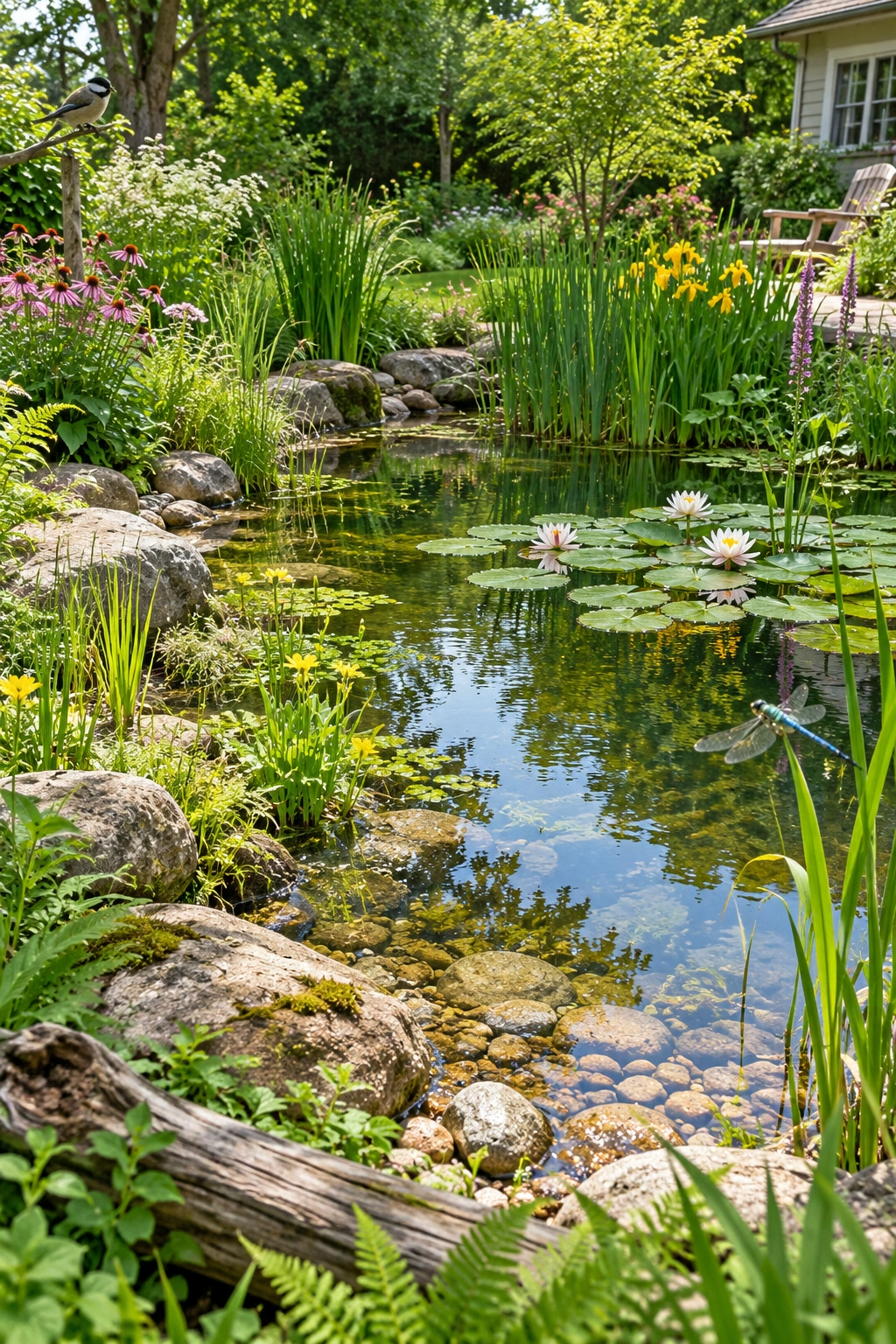
If you want your water feature to support the garden as well as decorate it, consider a wildlife pond.
These ponds are designed with plants, shallow areas, rocks, and easy access points that can be useful to birds, insects, frogs, and other visiting wildlife.
Avoid making every edge steep. A sloping section or strategically placed stones can create easier access to the water.
Native aquatic and marginal plants can also provide shelter and help the pond blend naturally into its surroundings.
A wildlife pond does not need to look untidy. With a clear outline, thoughtful planting, and a small seating area nearby, it can become one of the most interesting places to watch the garden throughout the year.
7. Add a Classic Tiered Fountain
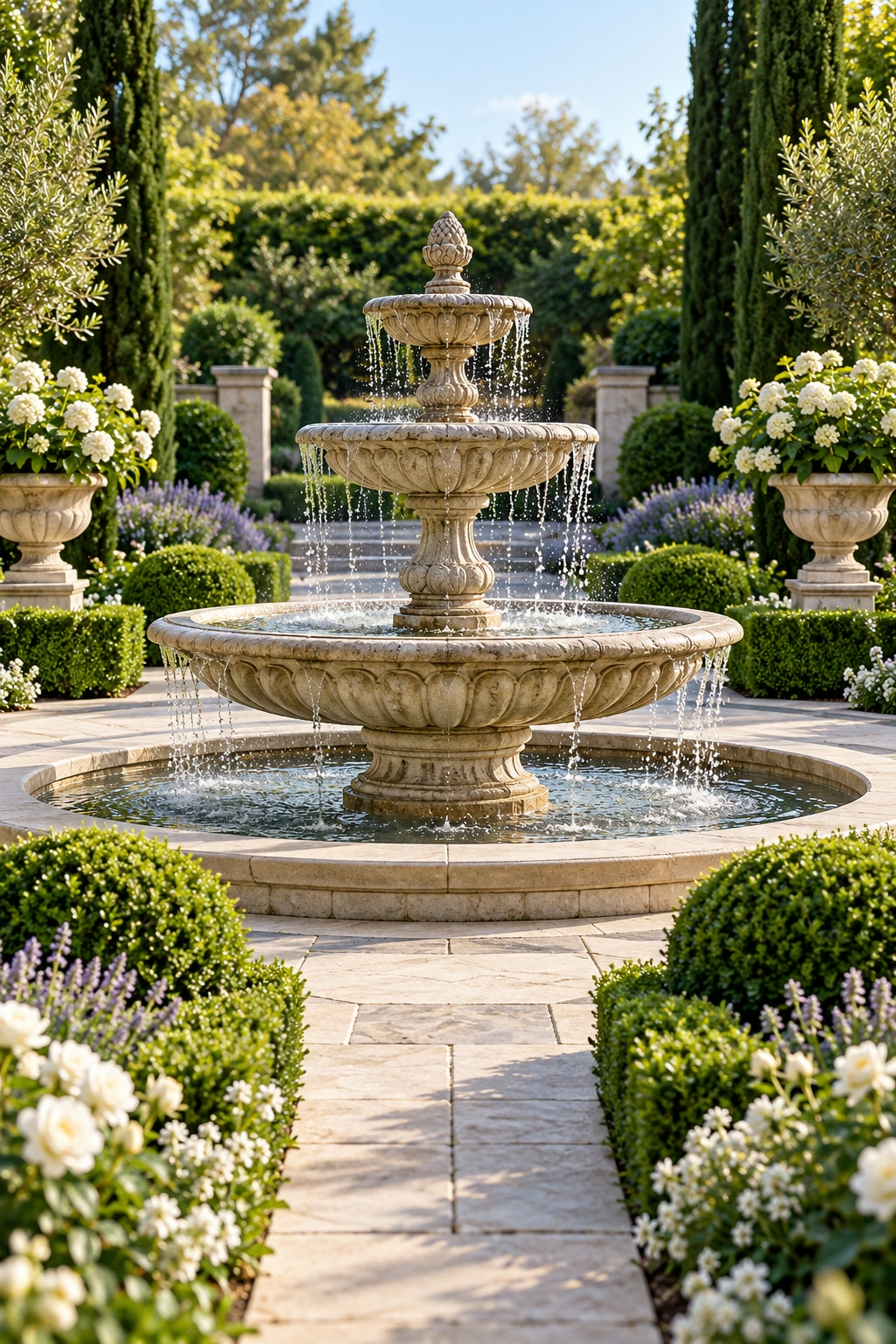
For a more traditional backyard, a tiered fountain is difficult to beat.
Water spills from one level into the next, creating constant movement and a recognizable fountain sound.
The key is choosing a fountain that matches the scale of the space. A large multi-tiered piece can dominate a small patio, while a tiny fountain may disappear in a large lawn.
Try placing the fountain at the center of a circular garden bed, at the end of a pathway, or where several garden views meet.
Surrounding it with neatly shaped shrubs, flowering plants, or stone paving can reinforce the formal appearance.
8. Create a Modern Water Rill
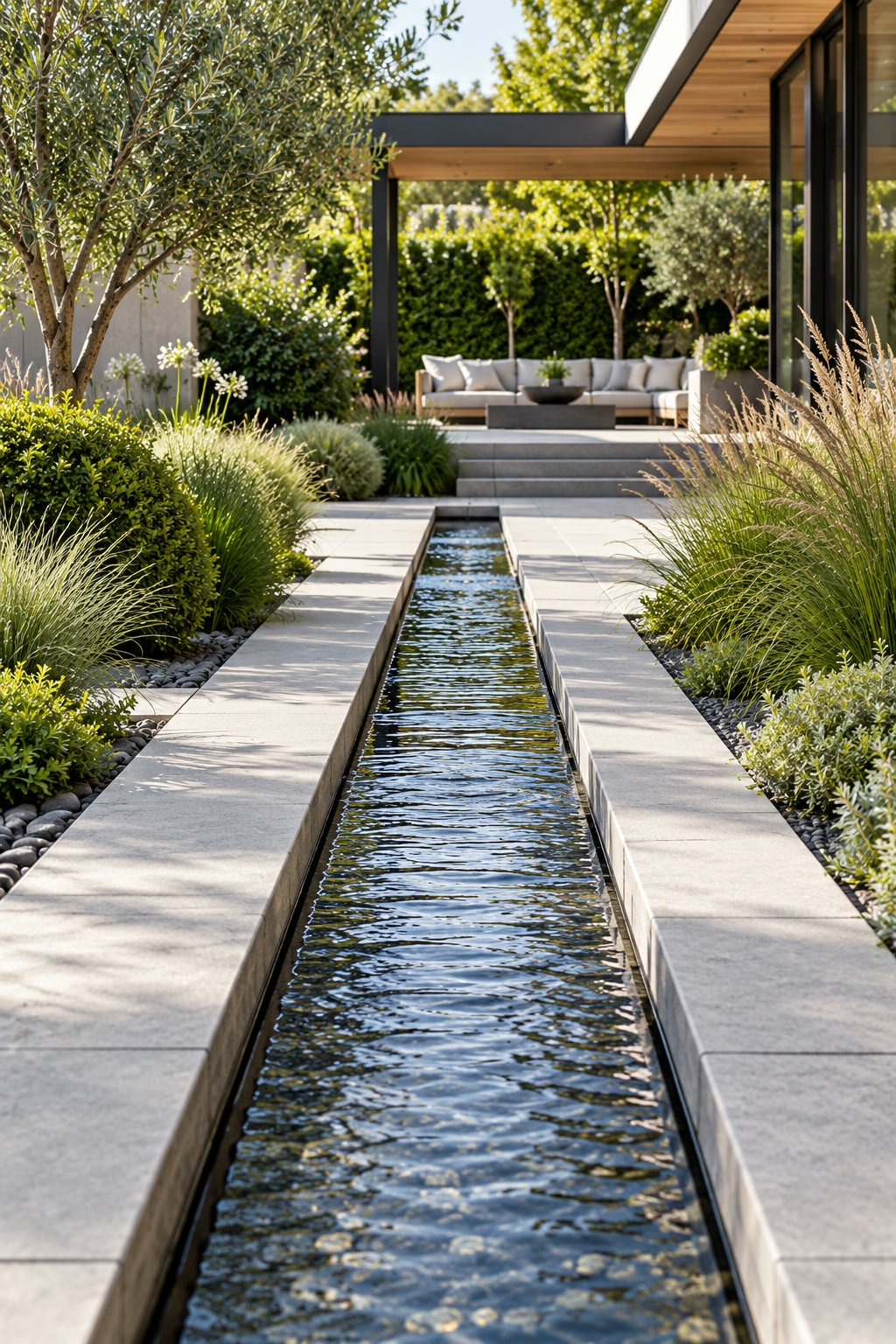
A water rill is a long, narrow channel that carries water through the landscape.
It is an excellent option for modern or structured backyard designs because its straight lines can echo patios, pathways, garden walls, and raised beds.
A rill does not need to be very wide. Even a narrow channel can create a strong visual line through the garden.
You can keep the design sleek with stone or concrete edging, or soften it slightly by planting ornamental grasses beside the water.
Run the rill toward a seating area, fountain, or small pool so it feels connected to another destination rather than ending randomly in the yard.
9. Turn a Large Container Into a Mini Pond
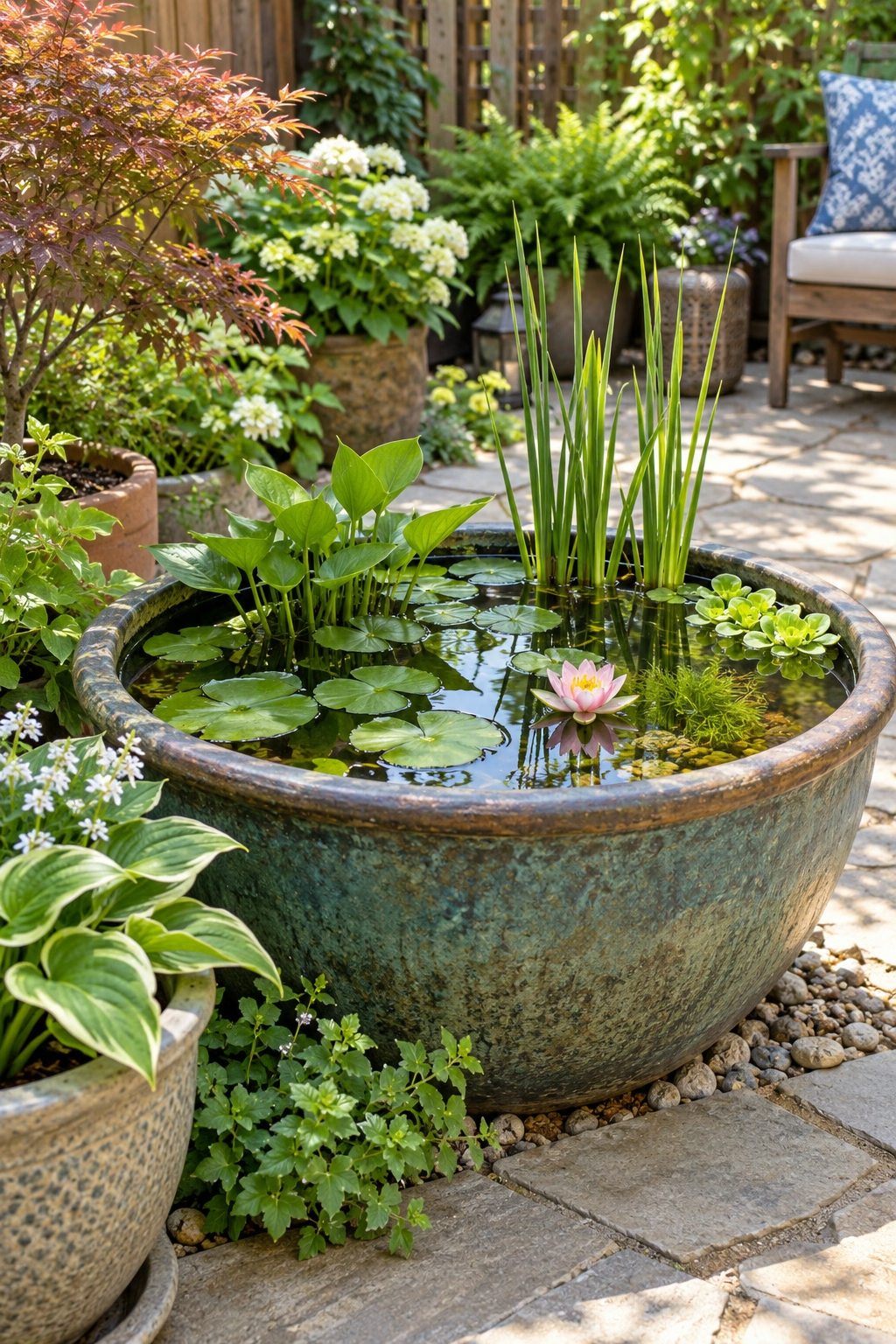
You do not need to dig into the ground to enjoy a backyard pond.
A watertight container can become a small patio pond filled with aquatic plants. Large ceramic pots, half barrels, and suitable trough-style containers are common choices.
The design works particularly well for small backyards, patios, and paved areas where excavation is not practical.
Choose plants that suit the depth and amount of sunlight available. Leave part of the water surface visible instead of filling the container completely with foliage.
A mini pond can also be moved or redesigned more easily than a permanent in-ground water feature.
10. Install a Wall Fountain
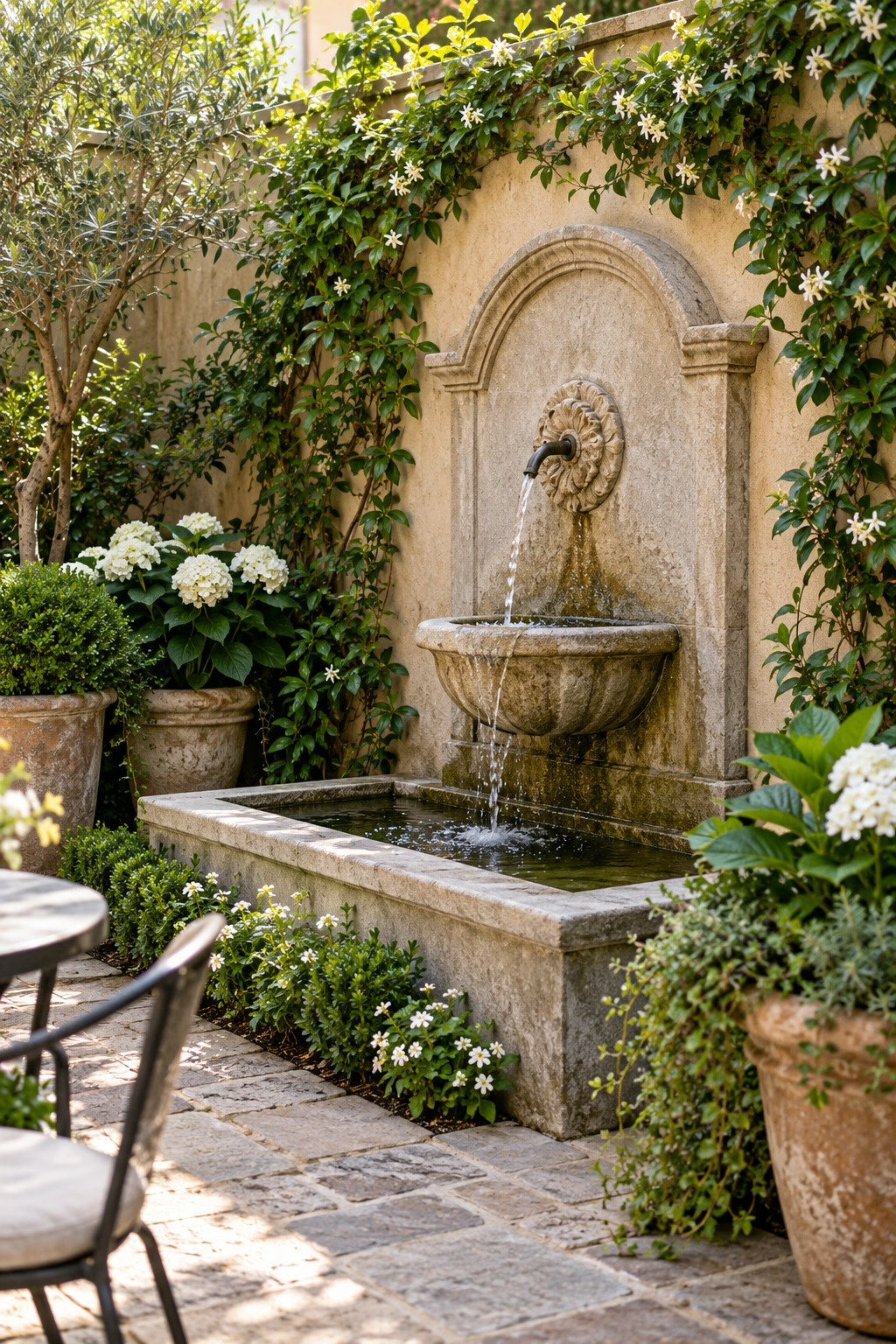
A wall fountain is a smart way to add water where floor space is limited.
Mount the fountain against a garden wall, privacy wall, courtyard boundary, or sturdy fence structure. Water can flow from a simple spout into a basin below.
Traditional stone-style wall fountains work beautifully in Mediterranean or cottage-inspired gardens, while clean rectangular designs suit more contemporary spaces.
Plant around the lower basin to soften the transition between the fountain and surrounding landscape.
Because this type of backyard water feature uses vertical space, it can create a surprisingly strong focal point without taking over a small patio.
11. Build a Bubbling Rock Fountain
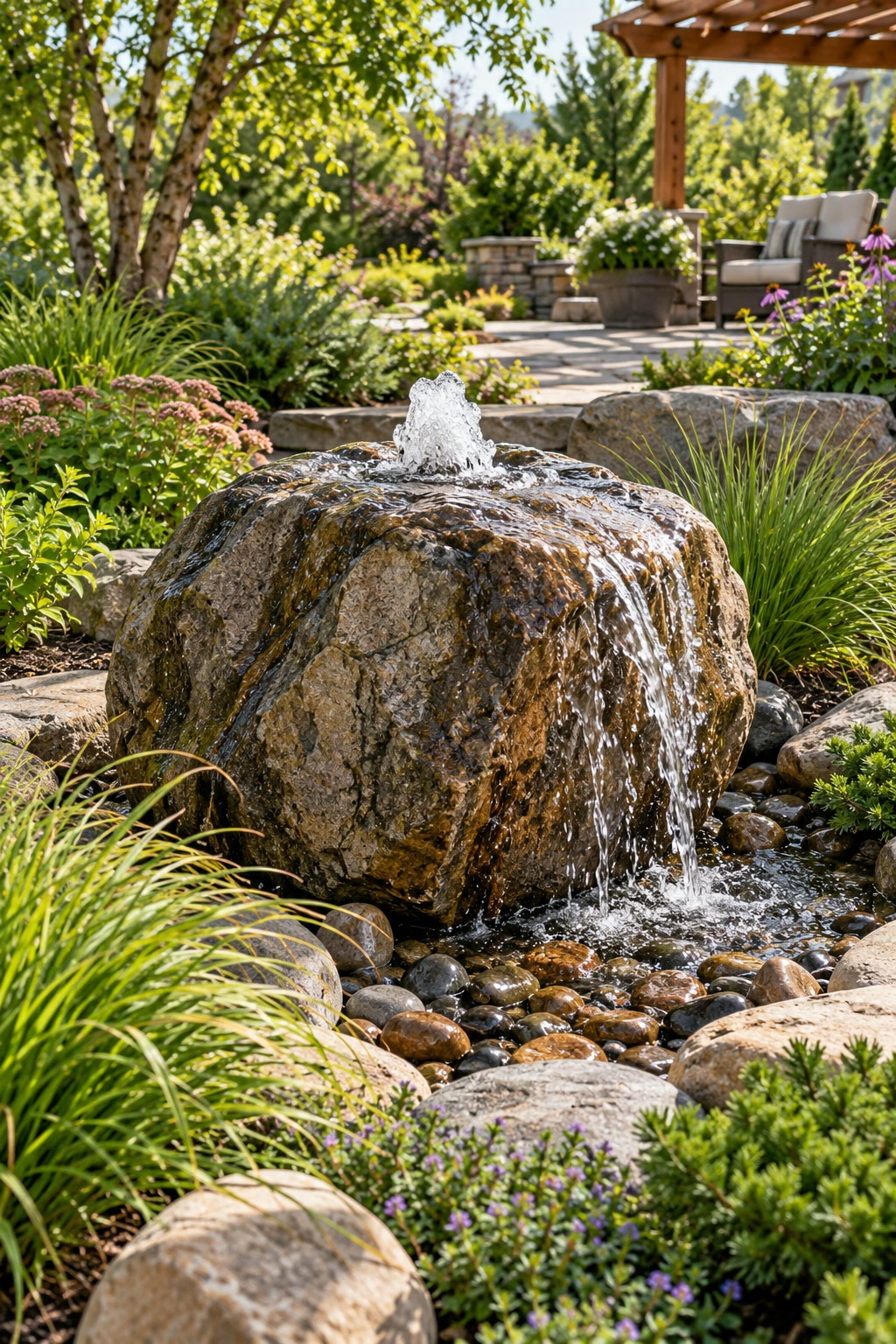
For a water feature that feels natural and uncomplicated, use a large boulder or stone as the centerpiece.
Water is pumped through the rock and bubbles from an opening at the top before flowing across the surface.
The reservoir and equipment can be hidden beneath surrounding stones.
Use a mixture of river rock, gravel, and a few larger stones around the base rather than placing the boulder alone in the lawn.
Planting low grasses and groundcovers nearby can help the feature blend into the garden.
This idea works especially well when you want moving water without building a full waterfall or pond.
12. Create a Narrow Reflecting Pool
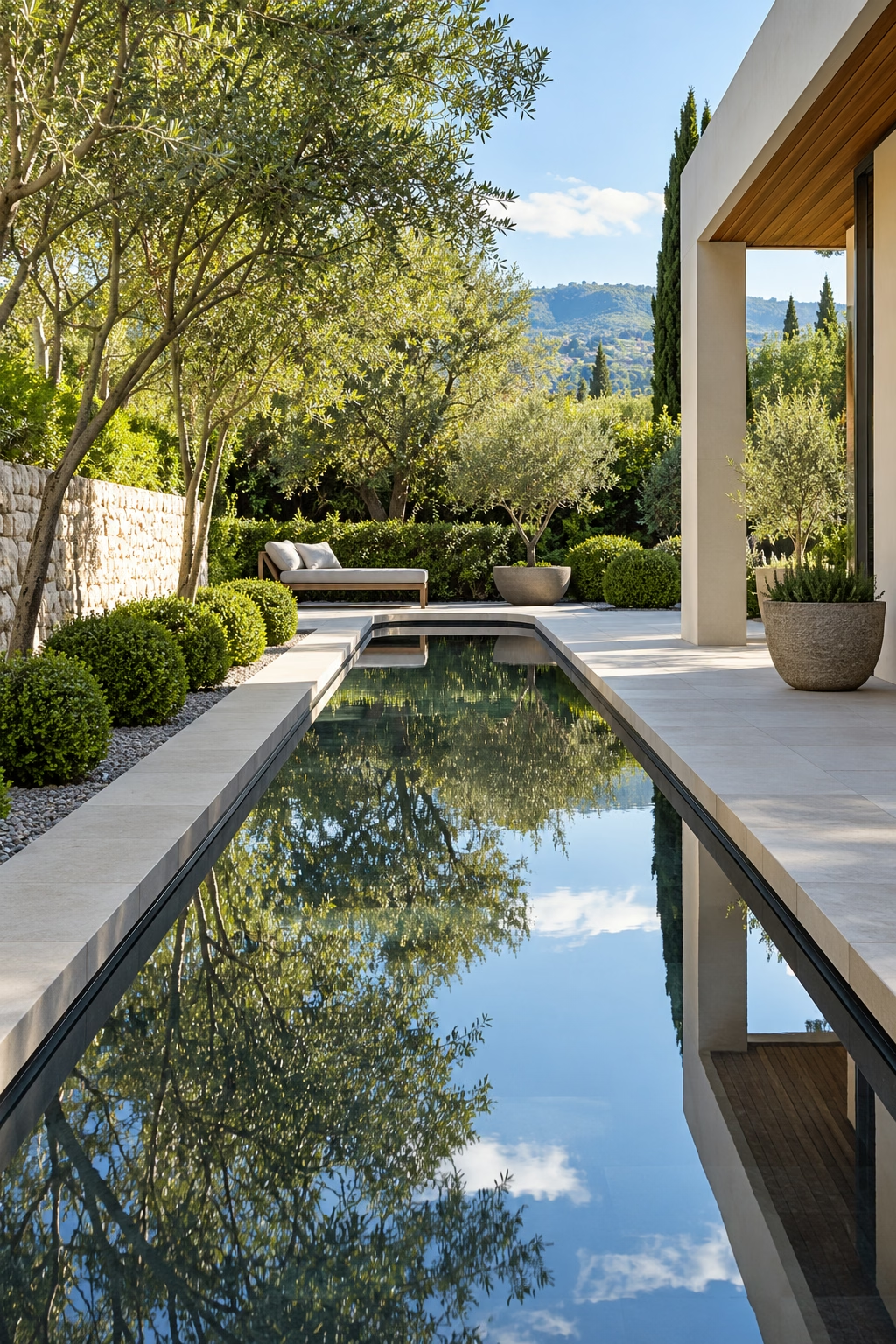
Not every backyard water feature needs splashing or rushing water.
A narrow reflecting pool can introduce a calm, architectural element to the garden. Its smooth surface reflects nearby trees, plants, walls, and the sky.
Rectangular pools usually work best for this style because the clean geometry emphasizes the reflective surface.
Position one beside a patio, garden walkway, or modern seating area.
Keep the edges simple so the water remains the main attraction. Large paving slabs, dark stone, concrete, or neatly clipped planting can frame the pool without making the area feel busy.
At night, subtle nearby lighting can make the reflections even more noticeable.
13. Add a Small Fountain to an Existing Pond
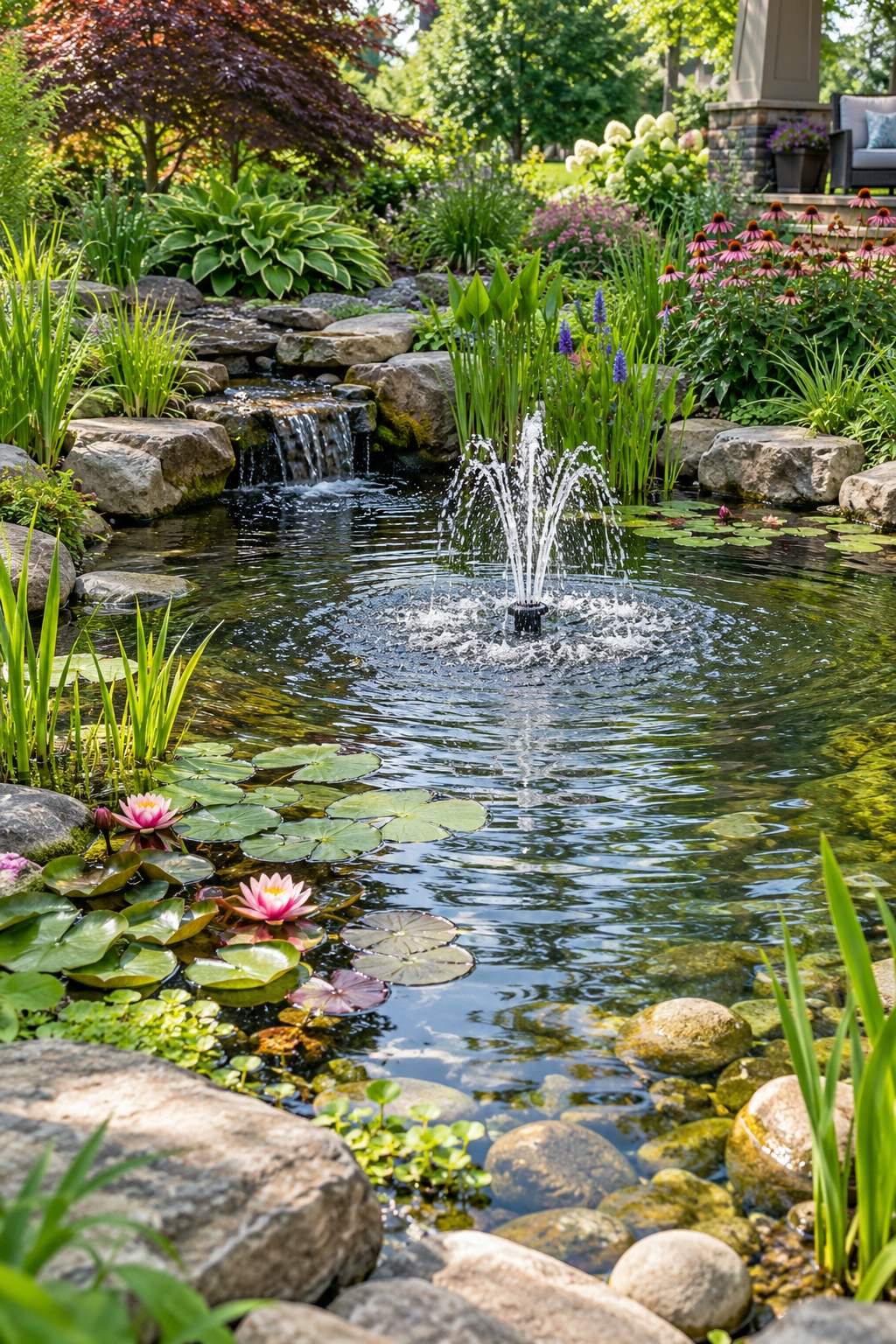
If you already have a backyard pond, you may not need to redesign the entire feature to give it more movement.
A small fountain can instantly add another layer of visual interest.
Choose a spray or bubbler that is appropriate for the size of the pond. An oversized fountain can overwhelm a small body of water and send too much spray beyond the edges.
For a softer look, select a low bubbling fountain rather than a tall jet.
The moving water can become especially attractive when surrounded by water lilies and natural stone edging.
This is a simple way to refresh an existing pond without starting again from scratch.
14. Build a Meandering Backyard Stream
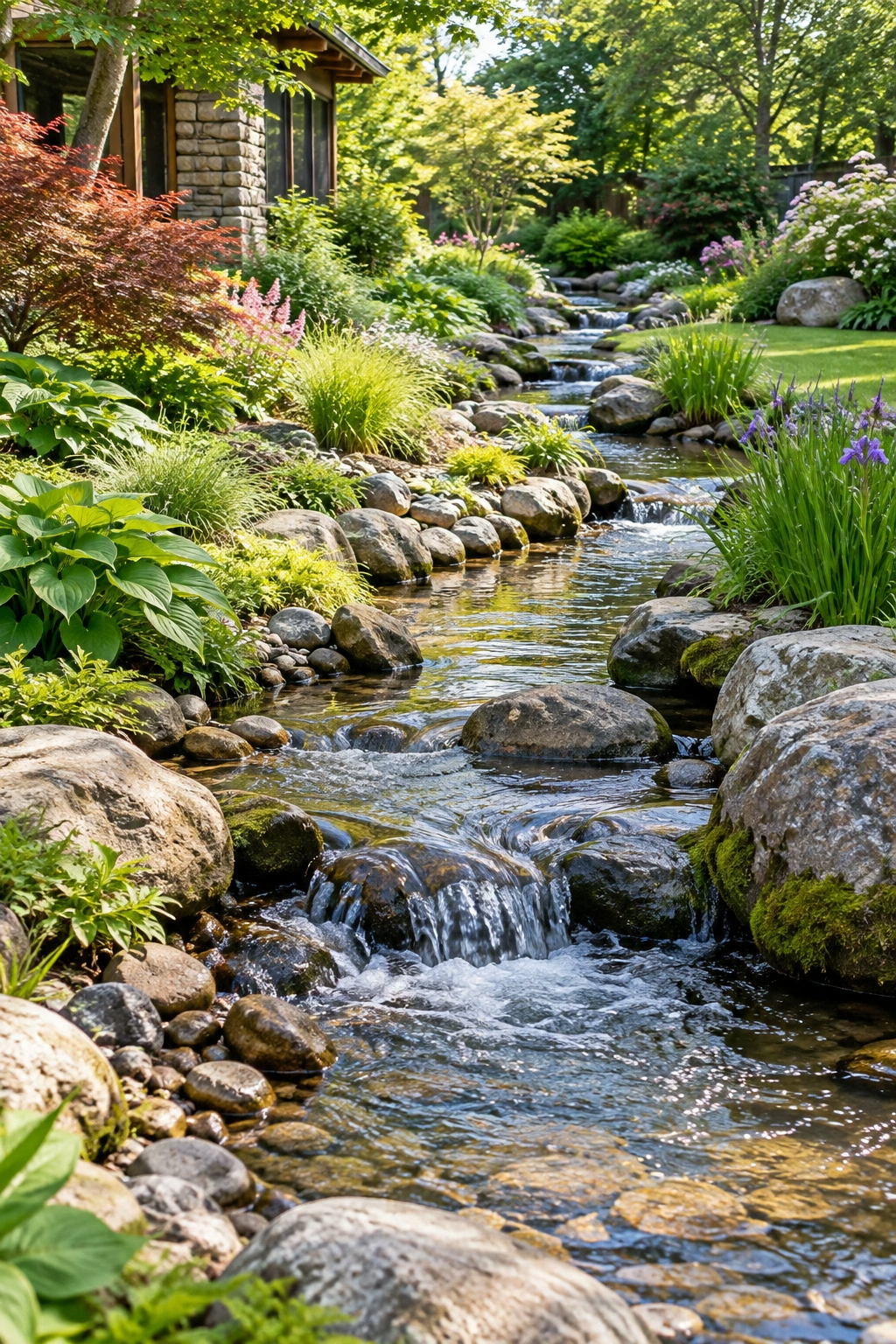
A narrow stream can make a backyard feel larger because the eye naturally follows its path.
This idea works best where the property has enough room for water to move gradually through the landscape.
Instead of making the stream perfectly straight, allow it to curve around plants and rocks.
Use larger stones at important bends and smaller pebbles along calmer areas. Plant grasses, ferns, or other suitable garden plants along the banks to soften the edges.
The stream can finish in a small pond or hidden reservoir.
If your backyard already has a natural slope, it may provide an ideal starting point for this type of design.
15. Use a Stock Tank as a Water Garden
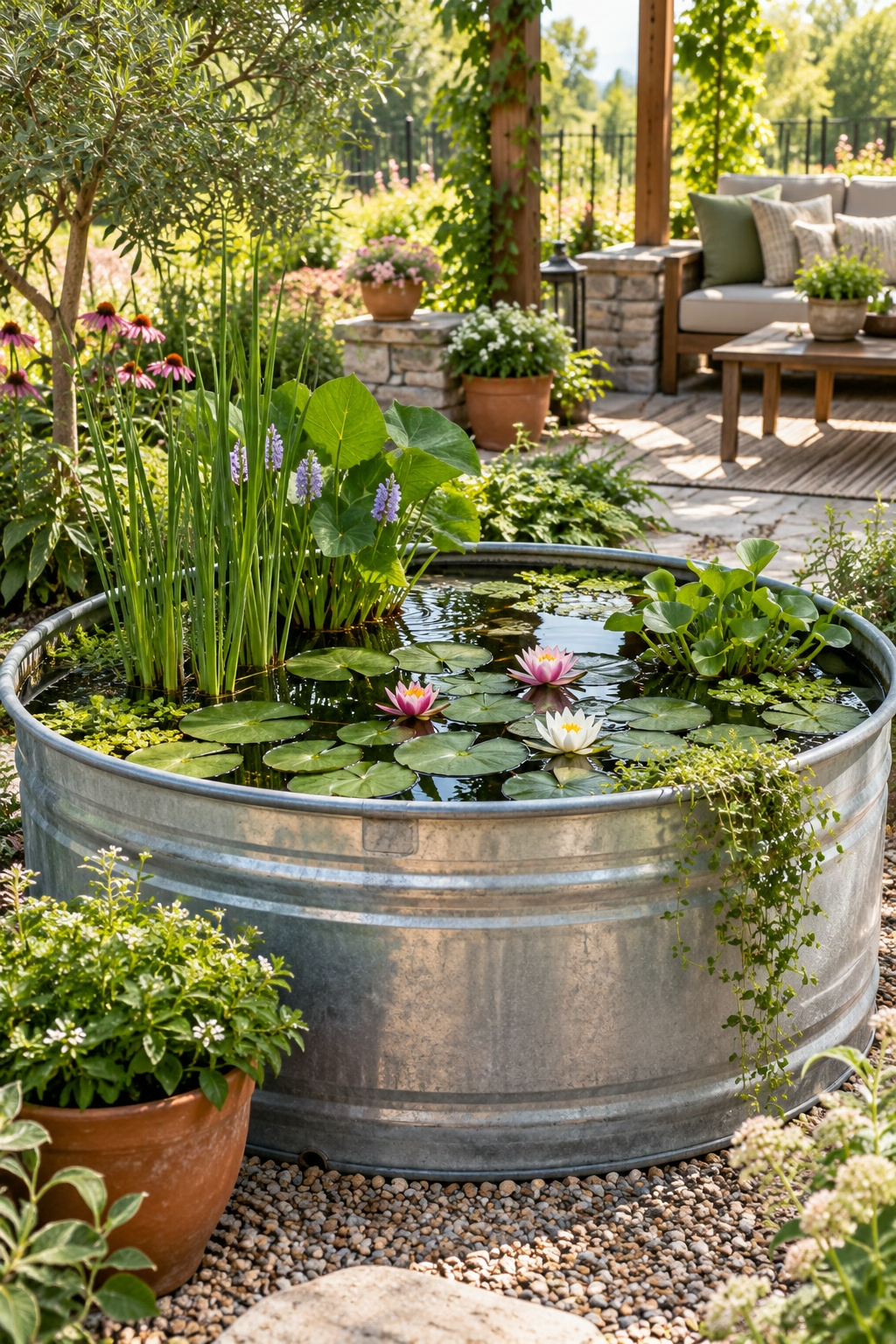
A metal stock tank can create a simple water garden with a slightly rustic or modern-farmhouse appearance.
Rather than hiding the container, make its shape part of the design.
Place it against a planted garden bed, beside a deck, or in a sunny corner surrounded by gravel and ornamental grasses.
Aquatic plants can soften the hard metal edge and make the tank feel more integrated with the garden.
This approach is useful for homeowners who want a larger container pond without excavating a permanent hole.
Just make sure the chosen container is suitable for holding water long term and plan easy access for cleaning and maintenance.
16. Add a Water Blade to a Raised Wall
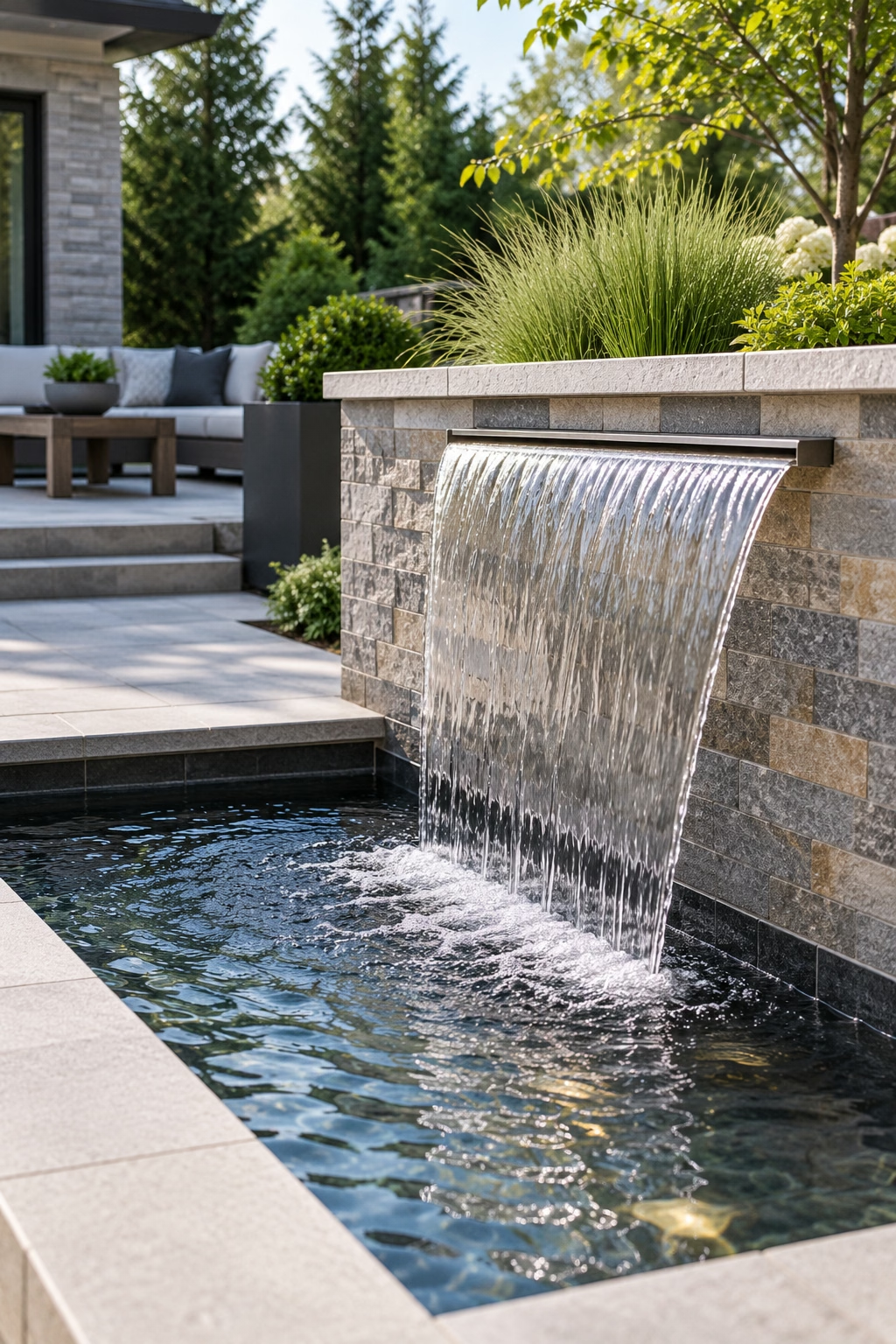
A water blade creates a thin sheet of water that falls from a narrow outlet.
It looks particularly effective in modern backyard designs.
Install the blade into a raised wall and allow the water to fall into a rectangular basin or pond below. The wall can be finished with stone, tile, concrete, or another outdoor material that complements your patio.
Keep the surrounding landscaping restrained. Clean paving, architectural grasses, and simple evergreen plants often work better than crowded planting around this type of feature.
The strong horizontal line of the falling water can also visually connect different areas of a patio or outdoor living space.
17. Create a Corner Pond
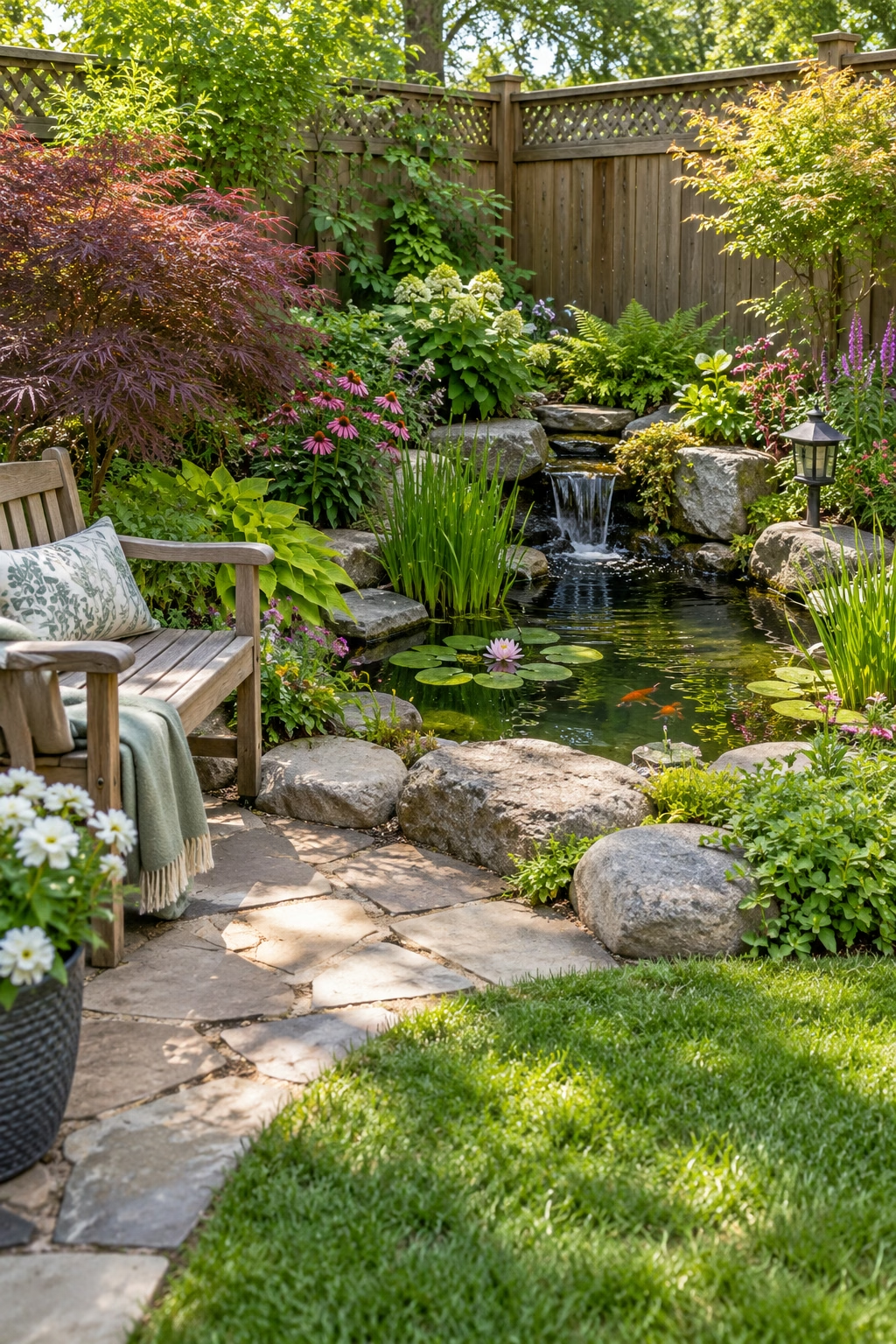
Unused backyard corners often make excellent locations for water features.
A small pond placed where two fences or garden borders meet can turn an overlooked space into a destination.
Use rocks and planting to soften the straight boundary lines around it. Taller plants toward the back can help disguise fencing, while lower plants around the front keep the water visible.
A small waterfall or bubbler can add movement without requiring much additional space.
Place a bench, chair, or stepping-stone path nearby so the corner feels intentionally connected to the rest of the yard rather than hidden away.
18. Place a Fountain Beside an Outdoor Seating Area
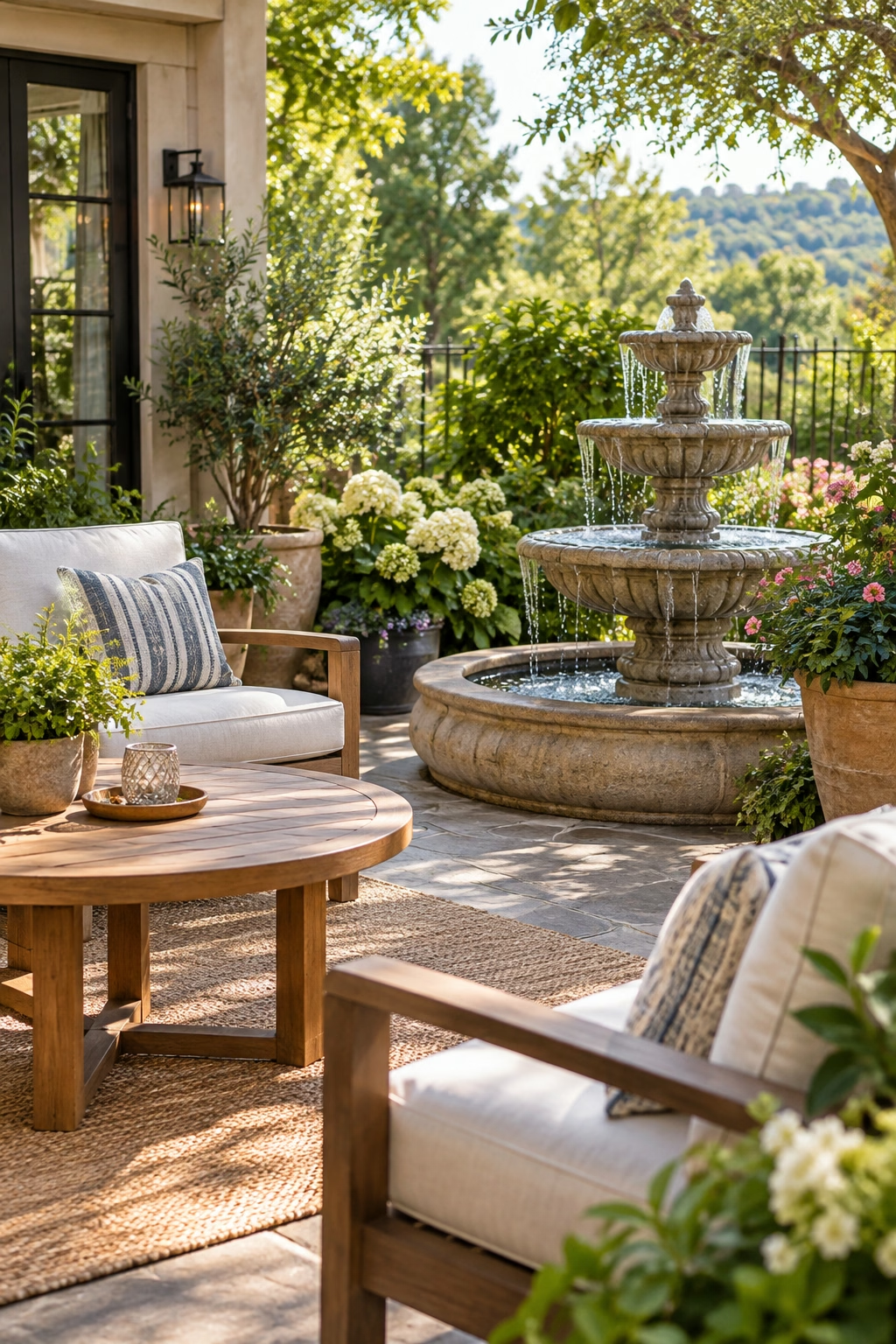
Water features are most enjoyable when they are located where people actually spend time.
Instead of placing a fountain at the far end of the yard simply because space is available, consider positioning one close to a patio, dining area, or garden bench.
A bubbling pot, compact tiered fountain, or low waterfall can add pleasant background sound while you relax outside.
Make sure the water remains far enough from furniture to avoid unwanted splash.
Surrounding plants can help the feature feel private and established.
This simple placement decision can make a relatively small fountain feel much more important to the overall backyard.
19. Add Stepping Stones Across a Pond
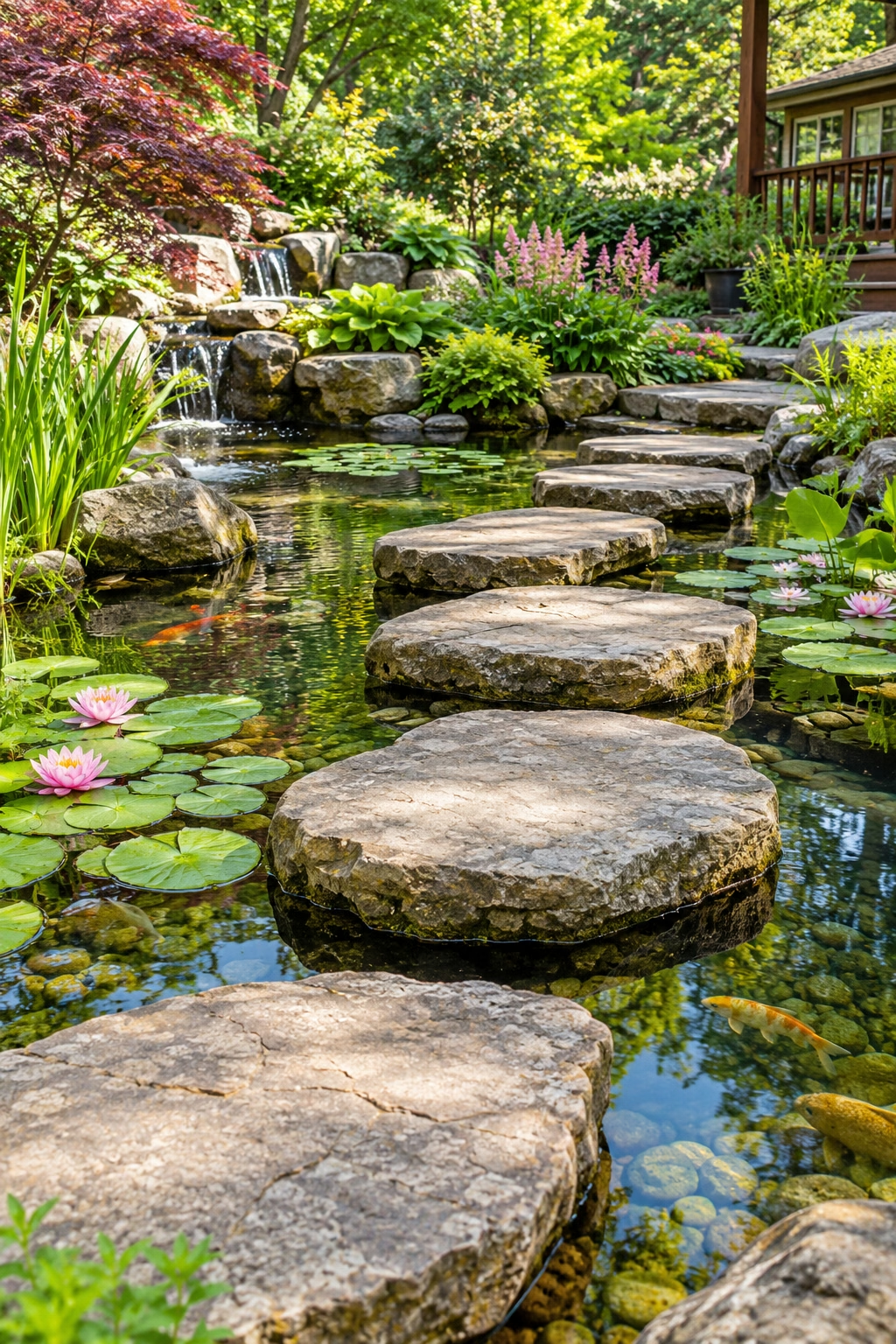
For a larger pond, stepping stones can make the water feature more interactive.
Broad, flat stones placed across a narrow section of water create a path while also adding strong visual structure.
This type of feature is especially effective in contemporary, Japanese-inspired, or naturalistic gardens.
The stones should look substantial enough to visually belong in the pond rather than appearing like small pieces floating on the surface.
Plant water lilies or marginal plants away from the main crossing so the path remains clear.
Because walking over water introduces important construction and safety considerations, the stones and supporting structure should be properly designed and securely installed.
20. Create a Millstone or Stone Disc Fountain
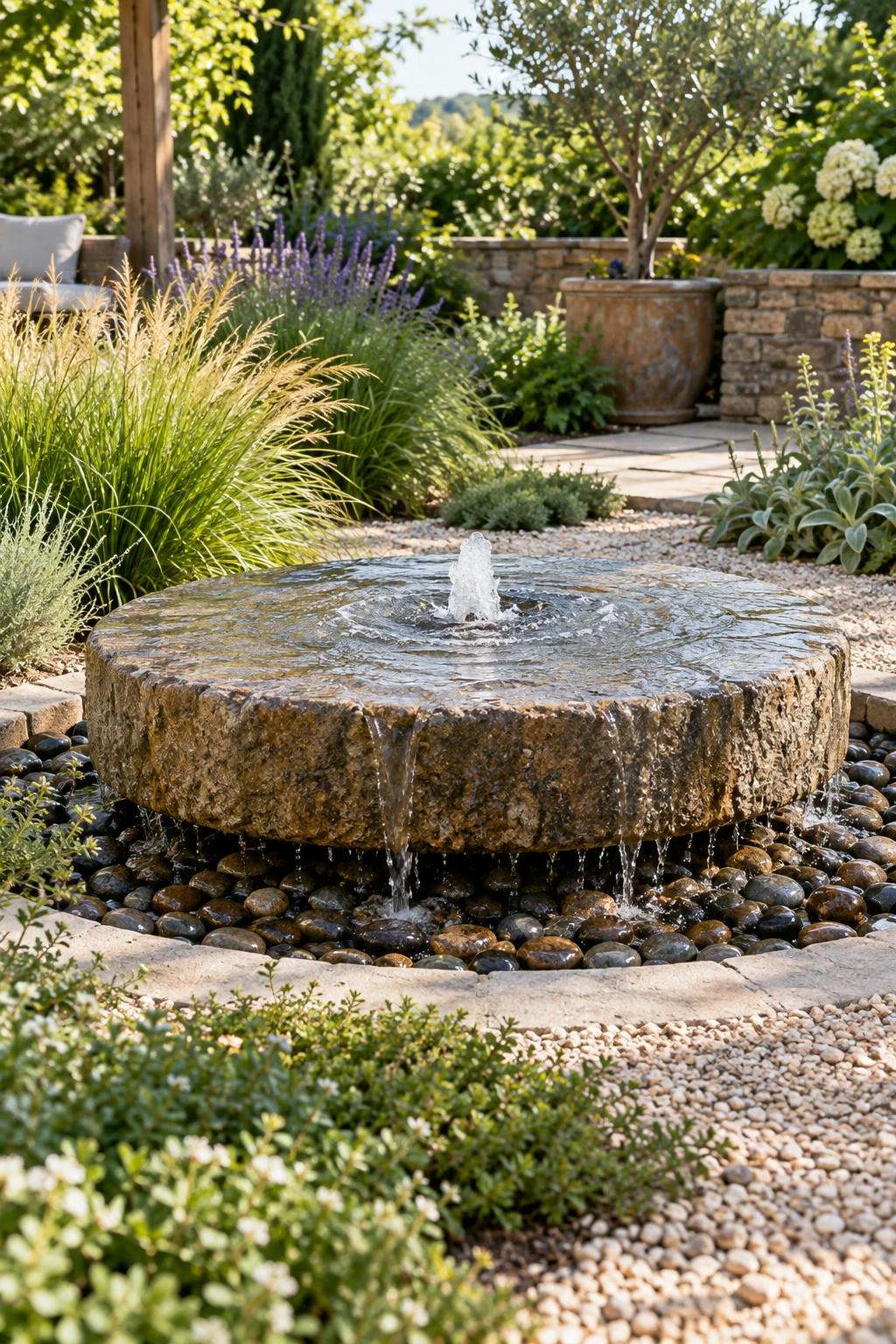
A circular millstone-style fountain offers an attractive middle ground between rustic and modern design.
Water rises through the center opening and spreads across the stone before falling into a concealed reservoir below.
Surround the stone with smooth pebbles so the water seems to disappear into the ground.
This is a good choice for a pathway intersection, courtyard, gravel garden, or quiet seating corner.
Because the feature stays relatively low to the ground, it does not block views across the backyard.
It also pairs beautifully with ornamental grasses, lavender-style planting, clipped shrubs, or simple green groundcover.
21. Make a Solar Fountain Bowl
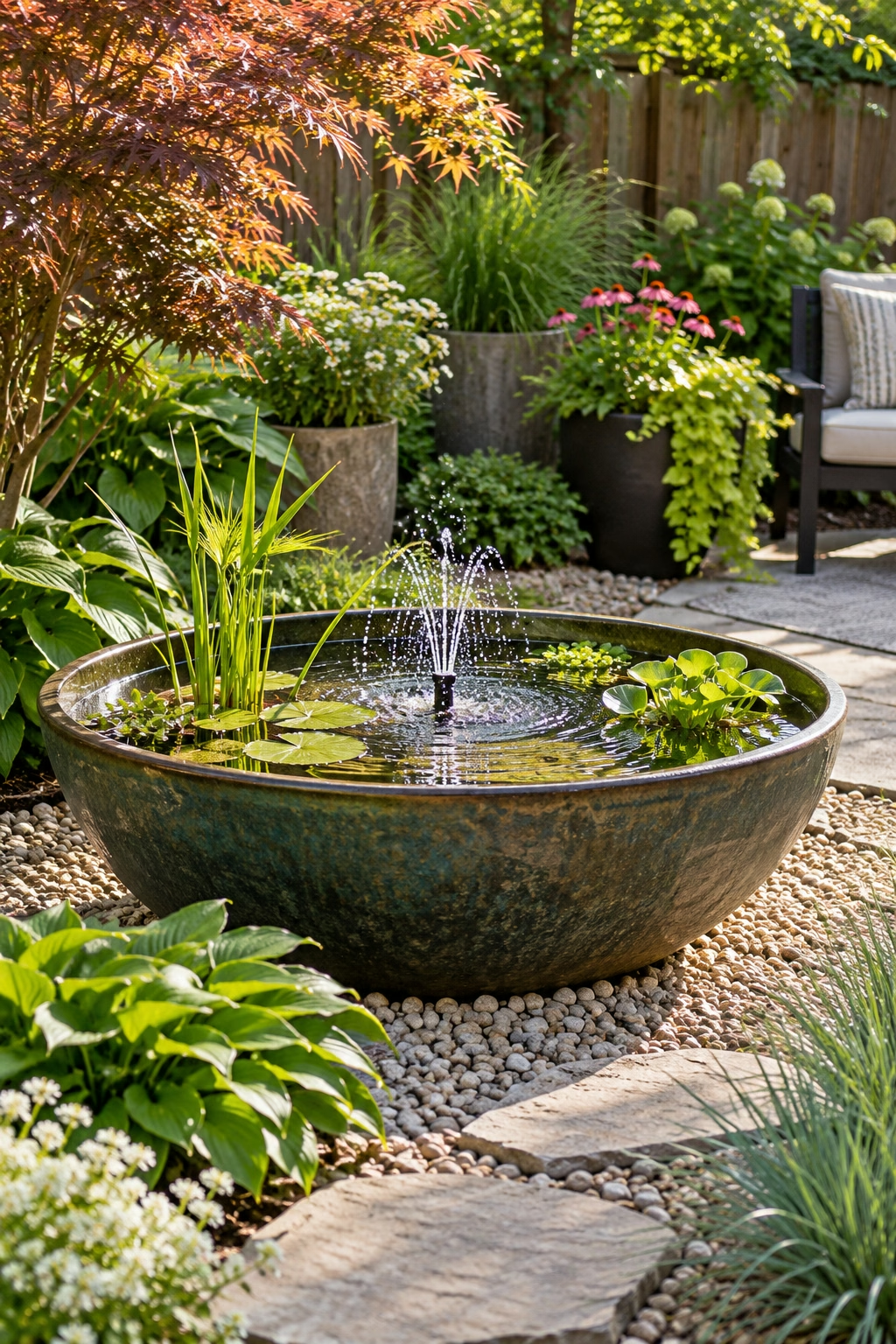
If you want a straightforward small-space water feature, consider adding a compact solar fountain to a large bowl or suitable container.
This can work on a patio, beside a garden path, or among container plants.
Choose a fountain with gentle movement rather than a very high spray, particularly in exposed areas where wind could push water outside the bowl.
A few aquatic plants can make the container look more established, but keep enough open water for the fountain to operate freely.
This idea is especially useful when you want to experiment with a water feature before committing to a permanent pond or larger fountain installation.
22. Build a Pond Beside the Deck
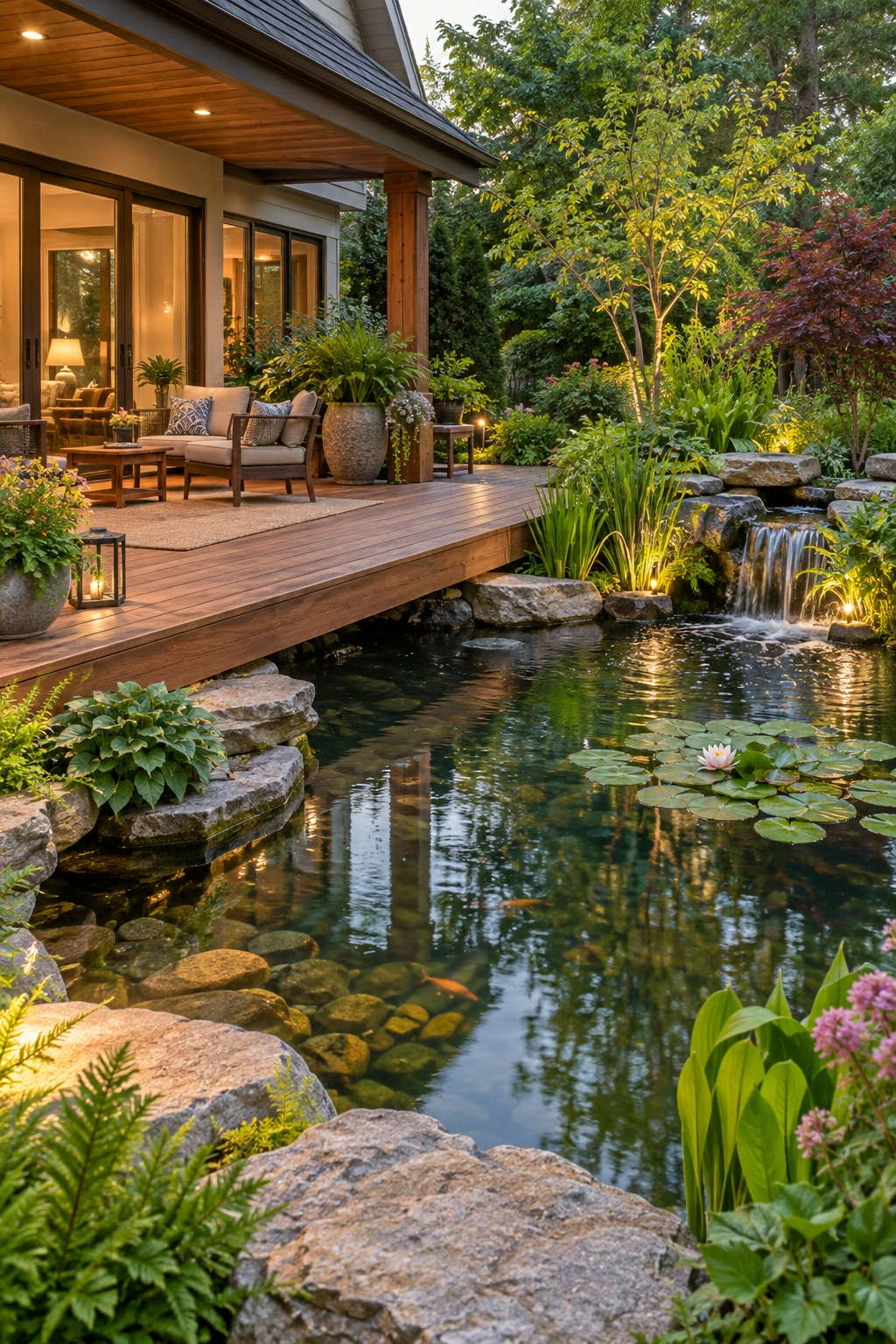
Bringing water close to a deck can make it feel like part of the outdoor living space instead of a feature viewed from a distance.
A pond can sit immediately beside the decking, with the edge of the deck slightly overhanging the water.
Keep the nearest section relatively open so people sitting on the deck can see the water easily. Place taller aquatic plants farther from the main viewing area.
A gentle bubbler or small waterfall can provide movement without constantly splashing the deck surface.
This design works particularly well when the pond can also be seen through doors or windows from inside the house.
23. Add a Small Bridge Over the Pond
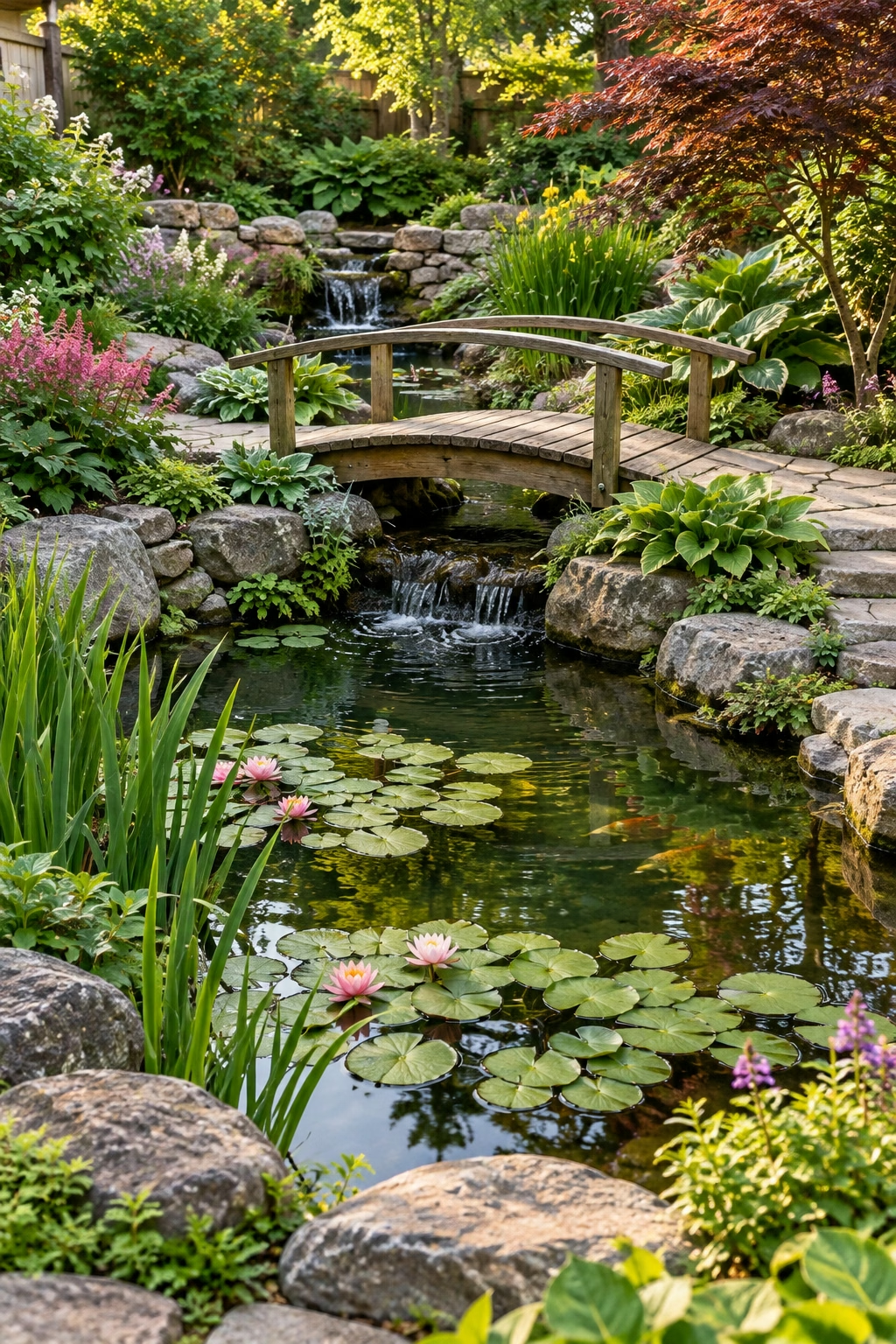
A bridge can transform a larger backyard pond from something you simply look at into part of the garden journey.
It does not need to be elaborate.
A straightforward timber or stone crossing over a narrow section of the pond can connect two paths or garden areas.
Use planting around both ends of the bridge so it feels integrated rather than decorative.
If you already have a stream or pond with an irregular shape, look for the natural point where people would want to cross.
The bridge should always be designed with secure footing and appropriate construction for outdoor use.
24. Illuminate a Waterfall for Evening Interest
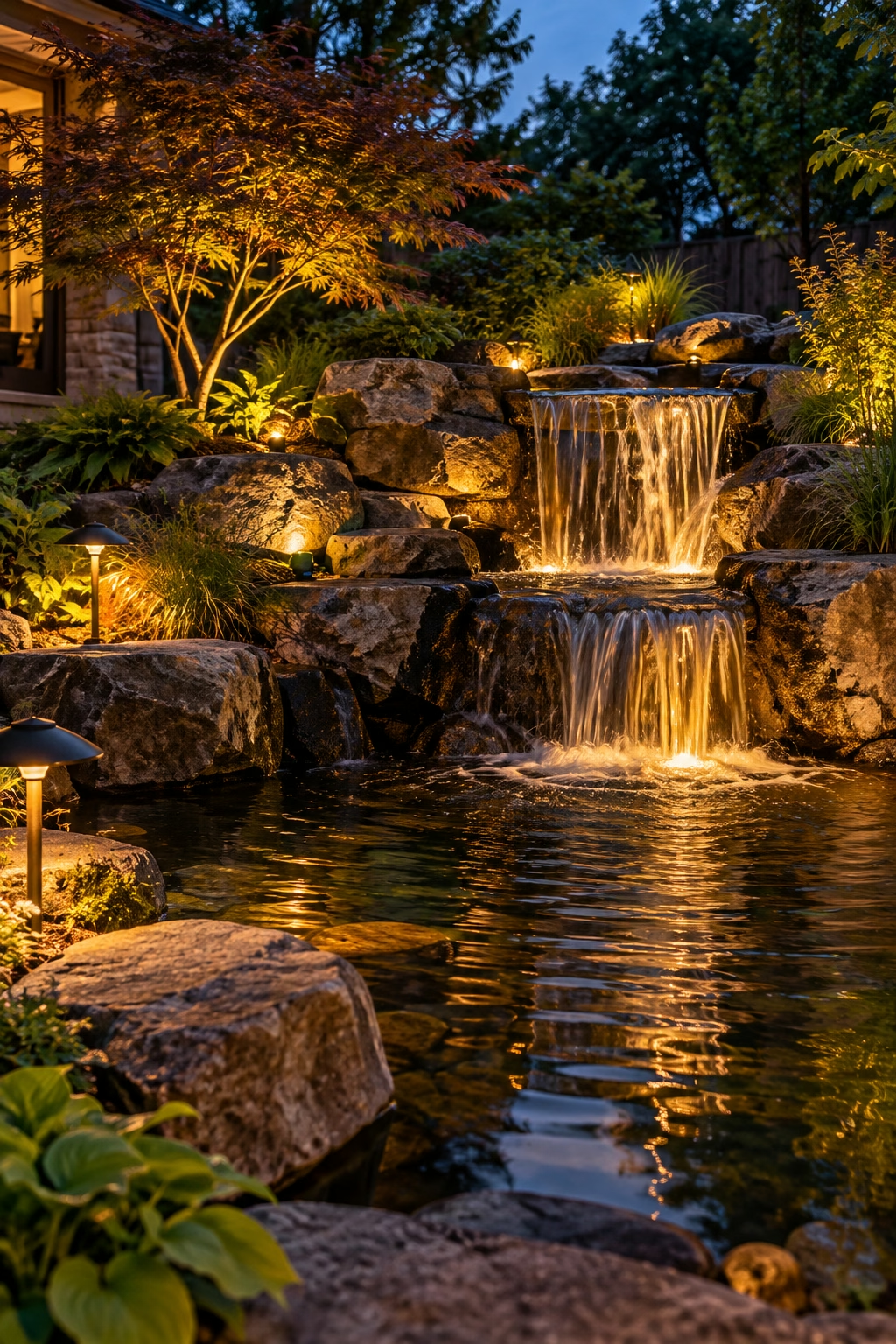
A backyard water feature should not disappear as soon as the sun goes down.
Thoughtfully positioned outdoor lighting can highlight the movement of water and make a pond or waterfall part of the evening landscape.
For a natural effect, use subtle lighting rather than flooding the entire feature with brightness.
Lights can emphasize the point where water falls over stone or gently illuminate nearby planting.
Avoid placing lights where they shine directly into the eyes of people sitting nearby.
When done well, the reflection of light on moving water can make even a simple waterfall look dramatically different at night.
Use fixtures specifically designed and installed for their intended outdoor or water-related application.
25. Combine a Pond, Waterfall, and Garden Seating Area
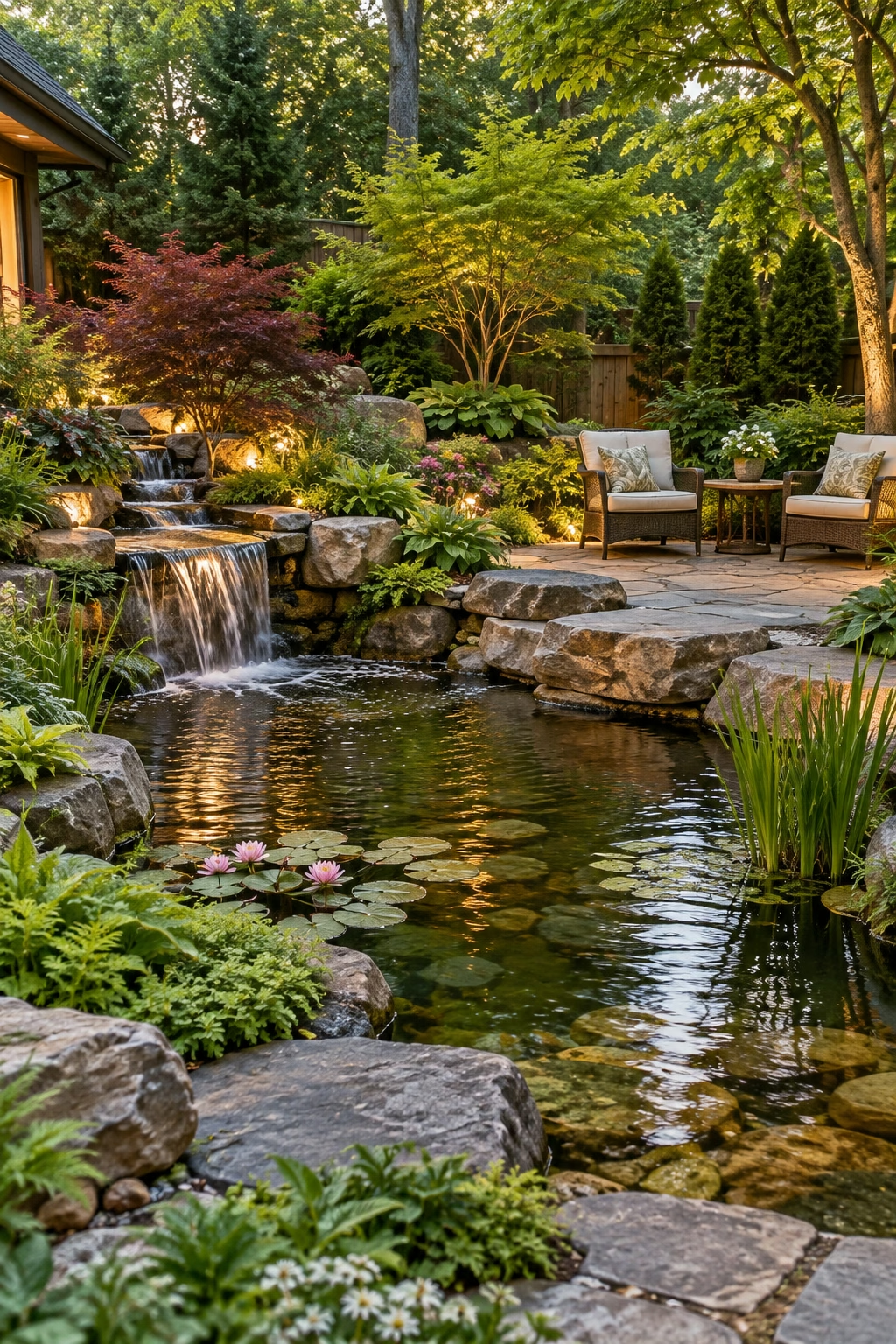
If you have enough room, combine several simple ideas into one complete backyard retreat.
A natural pond can form the main feature, with a short waterfall entering from one side and a patio, bench, or pair of chairs positioned nearby.
The important part is making the elements feel connected.
Repeat the same types of stone around the waterfall, pond edge, and pathway. Use planting to soften transitions and keep the seating close enough to see and hear the water.
You do not need an enormous landscape. Even a modest pond with a small cascade and carefully positioned chair can create a space that feels separate from the rest of the backyard.
Final Thoughts
The best backyard water feature is not necessarily the largest or most complicated one.
Start by thinking about what you want water to add to your yard. If sound is most important, a pondless waterfall, bubbling rock, or fountain may be ideal. If you prefer a peaceful view, a pond, reflecting pool, or water bowl might suit the space better. For a wildlife-friendly garden, a planted pond with accessible edges can become a valuable part of the landscape.
Also consider where the feature will be seen and heard. Water placed close to a deck, patio, window, or garden bench usually becomes a much more enjoyable part of everyday life.
Whether you choose a small container pond or a full backyard waterfall, keep the design proportional to the yard, make maintenance accessible, and use surrounding plants and stones to connect the water naturally with the rest of the landscape.


