
You step outside with your morning coffee, settle into your favorite chair, and notice the neighbor’s kitchen window staring straight at you. Or maybe it’s the second-story deck next door, the busy alley behind the garage, or the dog walkers who can see right over the fence. Suddenly your backyard feels more like a stage than a retreat.
Privacy changes how a yard gets used. When you feel tucked away, you linger longer, entertain more easily, and actually relax. The best part is that a private backyard rarely requires a towering wall around the whole lot. A few well-placed screens, plants, and overhead touches can block the views that matter most while keeping the space open and inviting.
These 25 backyard privacy ideas cover vine-draped pergolas, slatted wood screens, bamboo, outdoor curtains, planters, living walls, layered shrubs, sound-masking water features, and budget-friendly fixes for renters and small lots. Mix and match them to create a backyard that finally feels like your own.
1. Wrap a Pergola in Flowering Vines
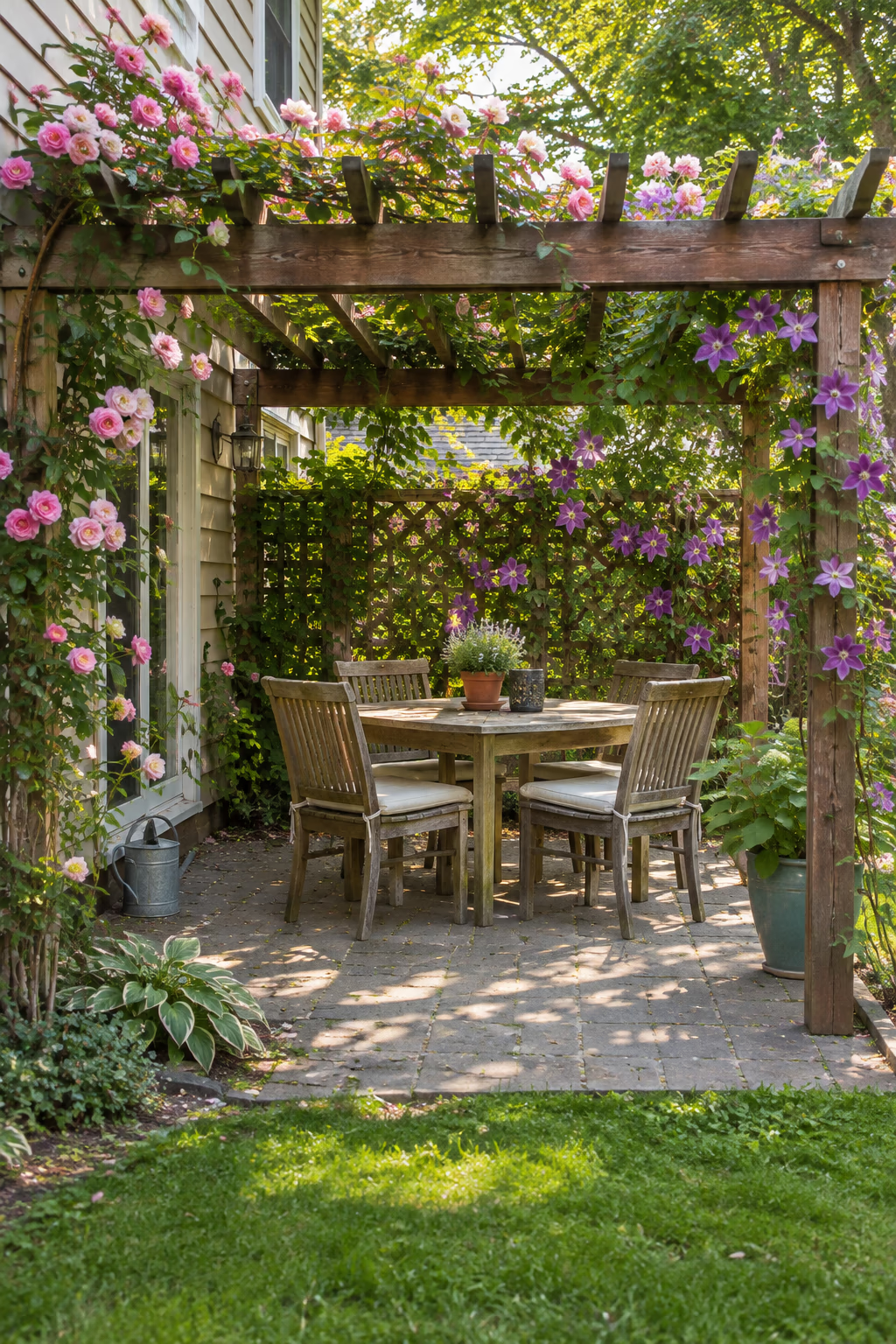
A leafy outdoor room that screens from every side
A pergola over a patio or deck gives you a frame, and climbing vines turn that frame into soft, green walls and a dappled ceiling. Run galvanized wire or attach wood lattice panels to the posts on the sides that face neighbors, then plant vines at the base of each post. Climbing roses, clematis, American wisteria, hardy kiwi, and grapevines are all reliable choices in many regions.
This works because it blocks views from the side and from above at the same time, which is especially helpful when nearby houses have upstairs windows. It also makes a seating area feel like a destination rather than a spot in the open lawn.
Most vines need two to three seasons to fill in. Skip Chinese and Japanese wisteria, which are invasive in many states and heavy enough to strain a light pergola, and choose a structure built from 6×6 posts if you plan on vigorous growers.
2. Build a Freestanding Cedar Slat Screen
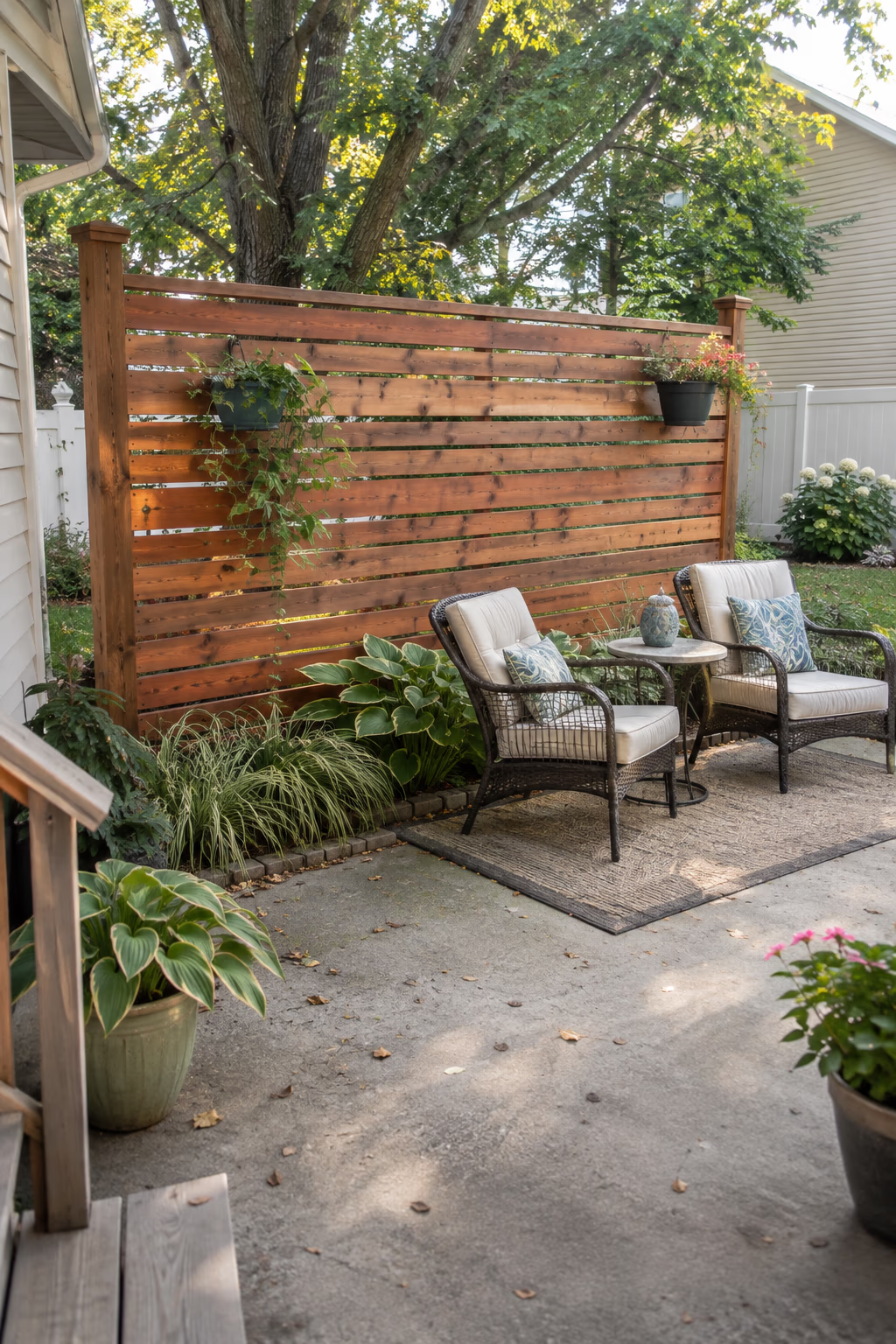
Modern, warm privacy exactly where you sit
Instead of fencing the entire yard, build a single screen right beside the patio or hot tub where you need it most. Set 4×4 posts in concrete about 6 to 8 feet apart, then attach horizontal 1×4 or 1×6 cedar boards with gaps of a half inch to an inch. A 6-foot height usually blocks the view of someone standing in the next yard.
Slatted screens filter sightlines while letting breezes and some light through, so the space doesn’t feel boxed in. The warm tone of cedar also looks good against green plants and pairs nicely with black metal or charcoal-painted trim.
Use stainless steel or coated exterior screws to avoid black streaks on the wood. Cedar will weather to silver gray unless you apply a penetrating oil sealer every year or two, and wide screens need sturdy posts to resist wind.
3. Plant a Clumping Bamboo Screen in a Narrow Bed
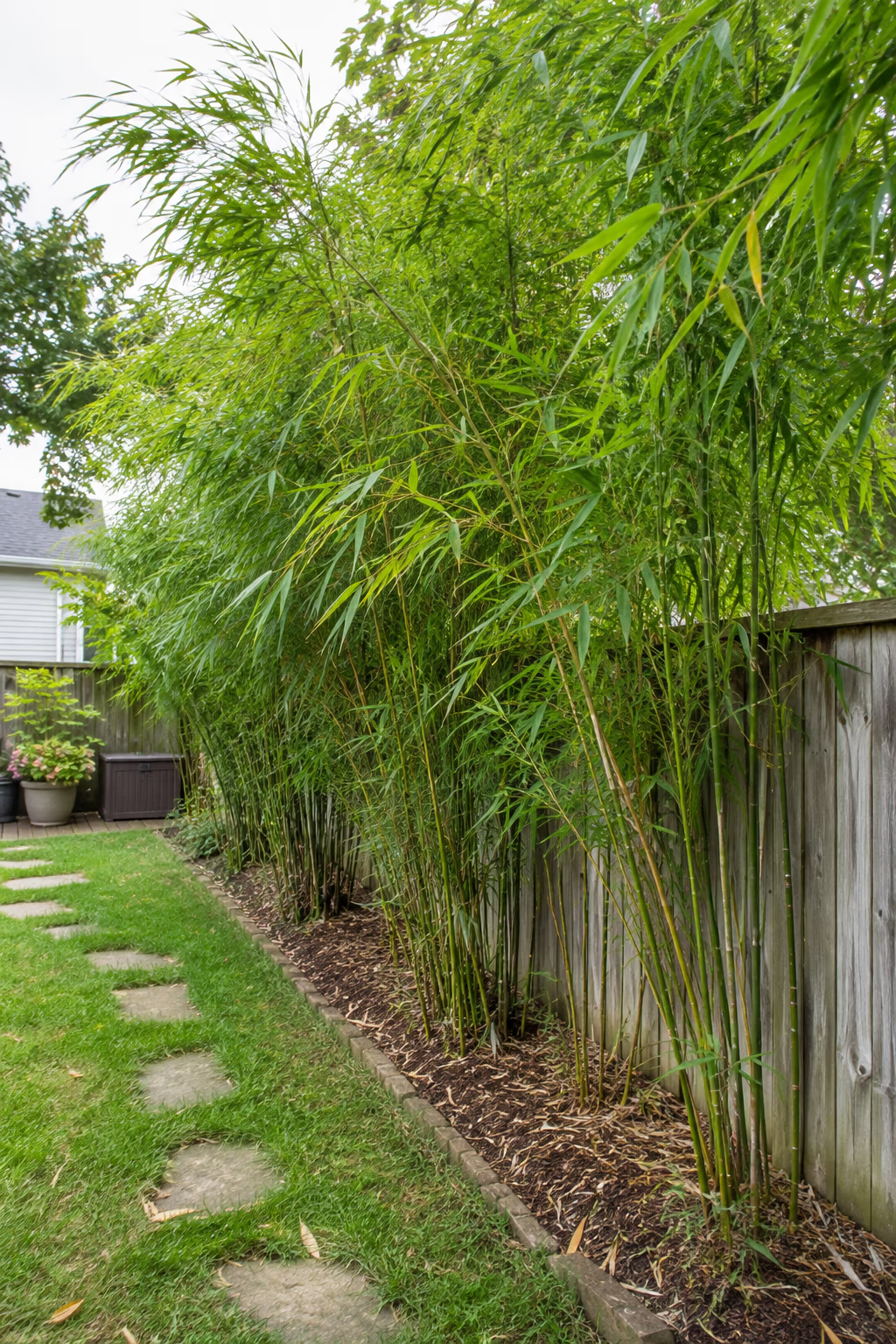
Fast, swaying green privacy in a tight strip
Bamboo grows tall quickly and fits into beds as narrow as 2 to 3 feet, which makes it ideal along a side fence or behind a patio. Clumping types such as Fargesia are hardy in many northern zones and do best with some afternoon shade, while warm-climate gardeners can choose clumping Bambusa varieties that tolerate full sun.
A bamboo screen has movement and sound that a fence can’t match. The canes rustle in the breeze, and the dense foliage creates a light-filtering wall that feels calm rather than heavy.
Avoid running bamboo unless you install a deep root barrier, since it can spread into lawns and neighboring yards. Even clumping kinds widen over time, so leave room at the base and water regularly during the first year.
4. Hang Outdoor Curtains Around a Patio Frame
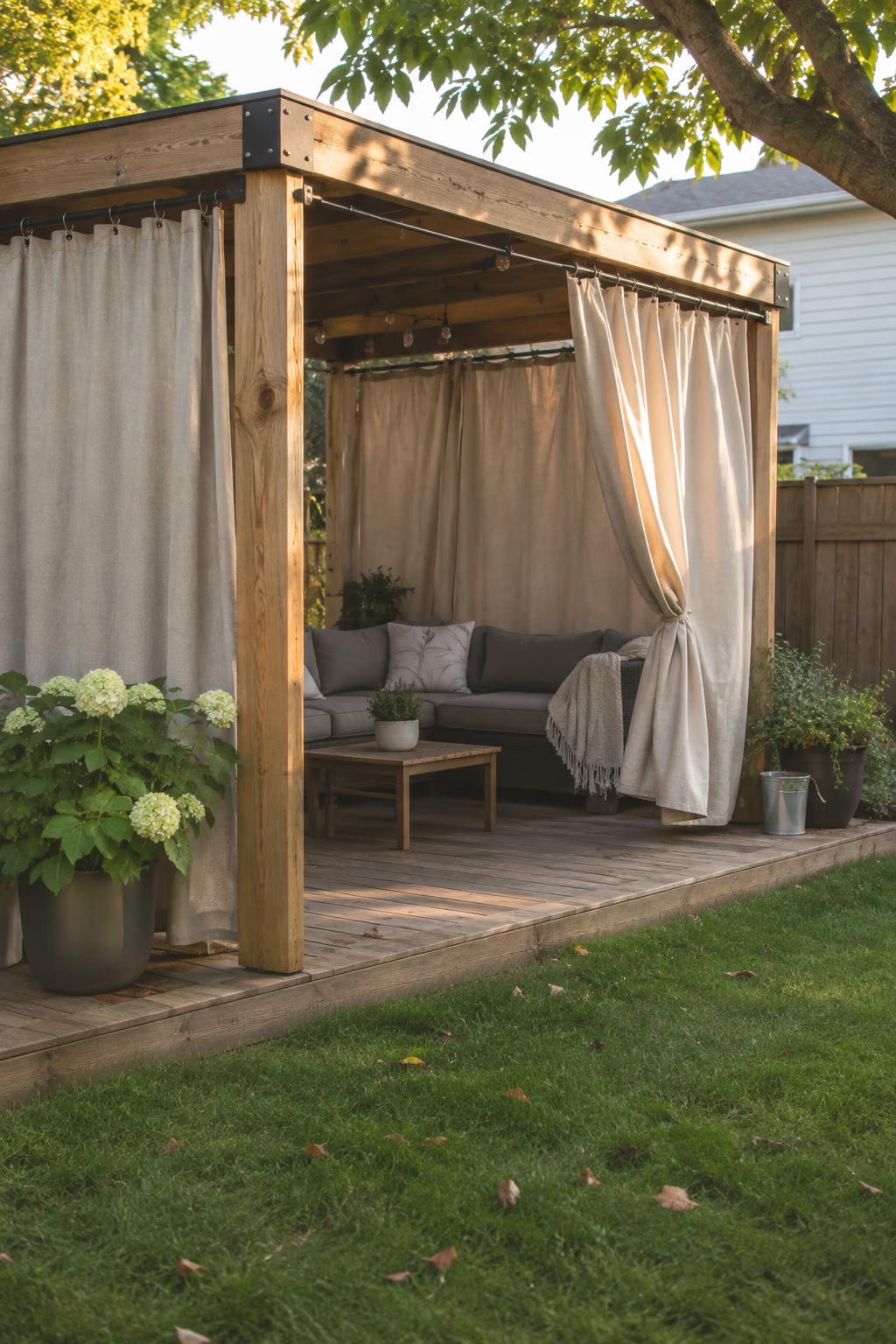
Privacy you can open and close in seconds
Outdoor curtains hung from a pergola beam, a covered porch, or a simple frame of posts and a pipe rail create a cozy cabana feeling. Choose solution-dyed acrylic or polyester outdoor panels in soft white, sand, sage, or charcoal, and mount them on a sturdy rod or a stainless cable with rings.
Curtains are flexible. Close them on the side facing the neighbors for a quiet dinner, pull them back on breezy afternoons, or draw them fully to block late-day sun. They also soften hard materials like concrete and wood.
Add tiebacks or weighted hems so panels don’t whip around in wind. Take them down or store them during long wet or snowy seasons to prevent mildew and extend their life.
5. Line the Patio With Tall Planters and Ornamental Grasses
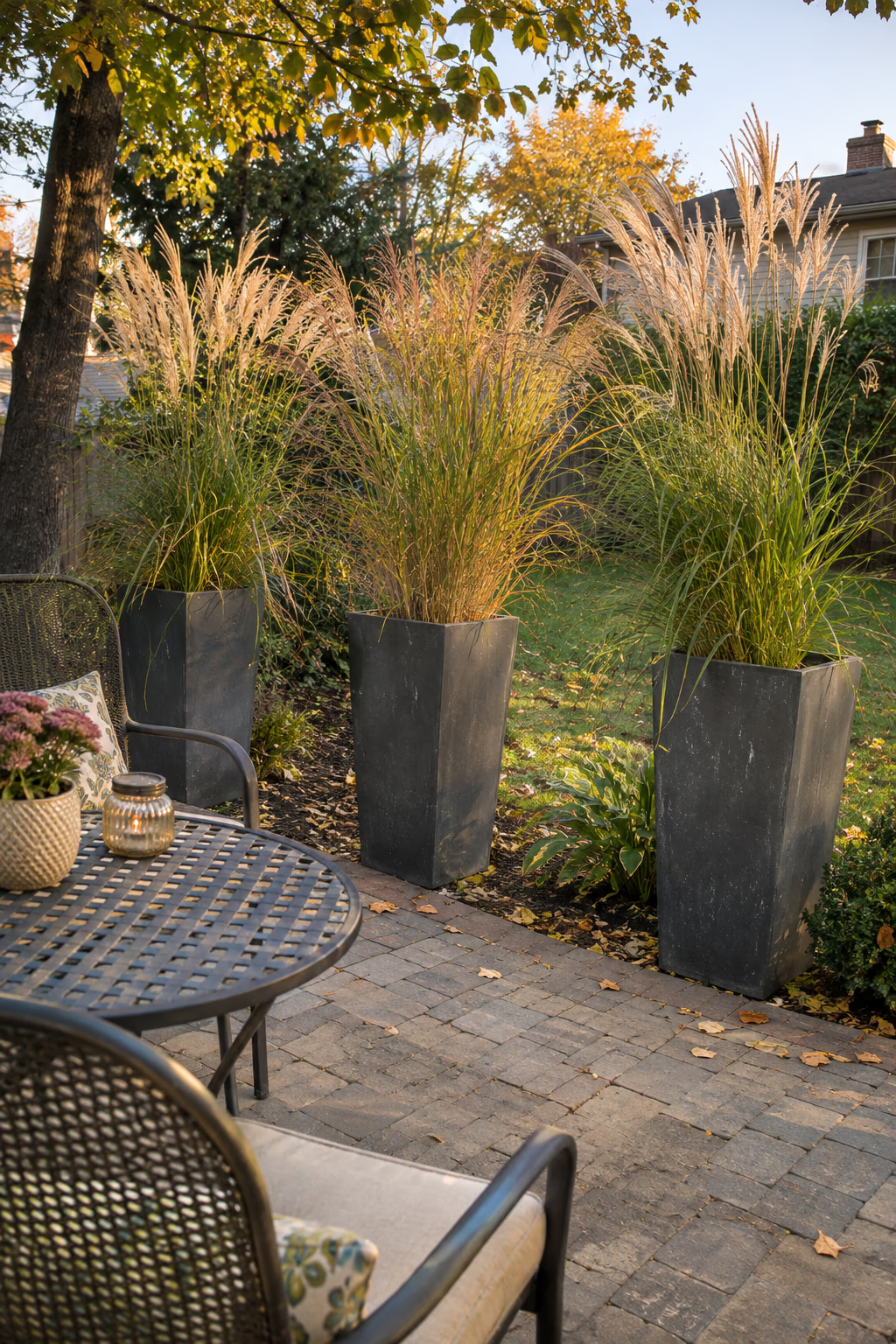
A movable green edge without digging
Long rectangular planters about 30 to 36 inches tall, filled with tall grasses, create an instant screen around a patio. Switchgrass, feather reed grass, and maiden grass can reach 4 to 6 feet, so the combined height of planter and foliage blocks views from a seated position and often beyond.
This approach is perfect when the patio is concrete or pavers and planting in the ground isn’t possible. The grasses sway, catch the evening light, and stay attractive into fall and winter when left standing.
Large planters filled with soil are very heavy, so place them before filling and make sure they have drainage holes. Cut grasses back to a few inches in late winter so fresh growth can come in.
6. Add a Lattice Topper to an Existing Fence
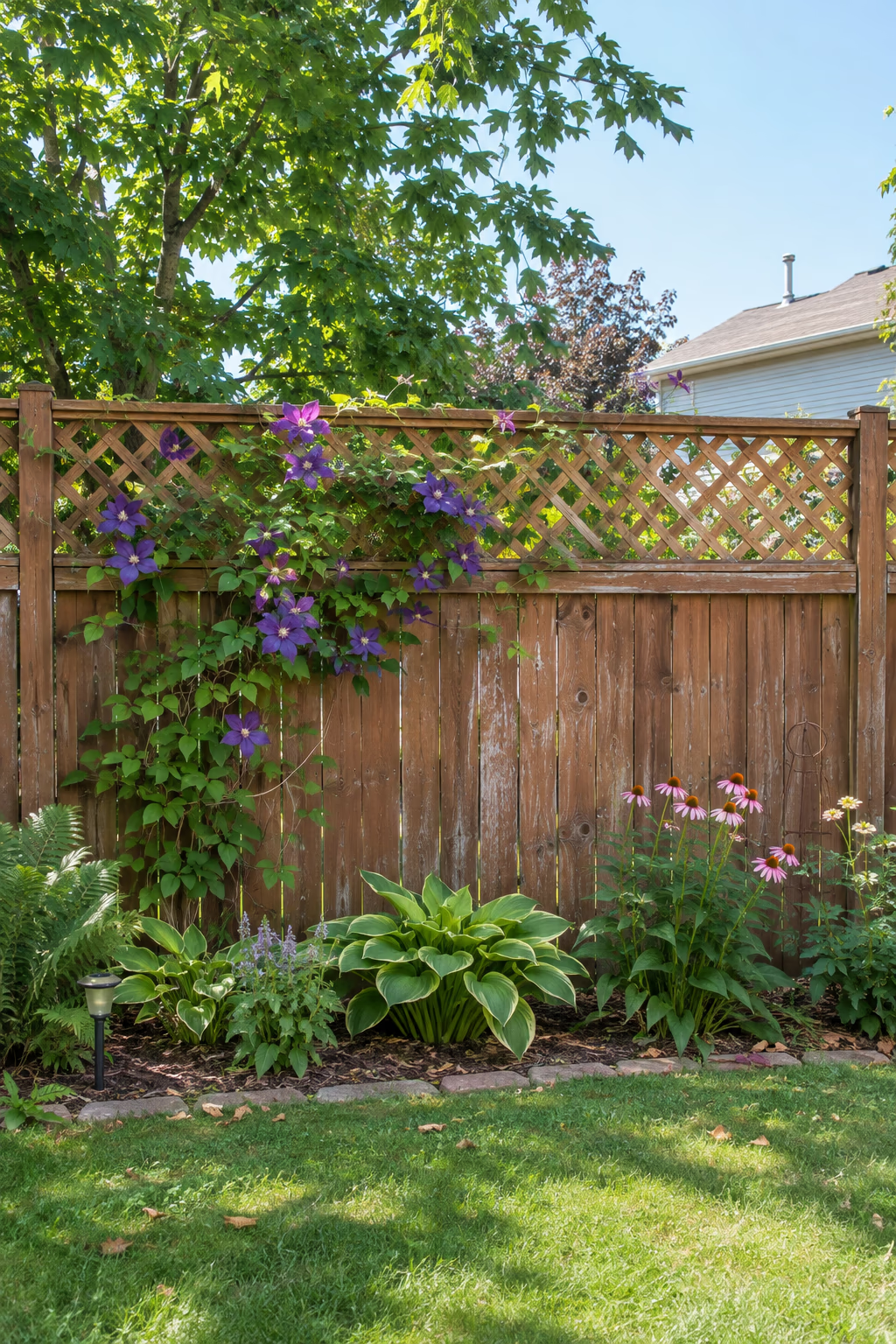
Gain extra height without replacing the fence
If your fence is 4 or 5 feet tall and neighbors can still see over it, a lattice extension can add 1 to 2 feet of screening. Attach 2×4 extensions to the existing posts, frame the top with a cap rail, and set square or diagonal lattice panels into the frame.
Lattice blocks a good portion of the view while still looking light and decorative. It also gives climbing plants like clematis or morning glory something to grab, which fills in the gaps over a season or two.
Check local codes and HOA rules before you build, since many areas cap backyard fences at 6 feet. Make sure the old posts are solid, because a taller fence catches more wind.
7. Grow a Living Wall on the Back Fence
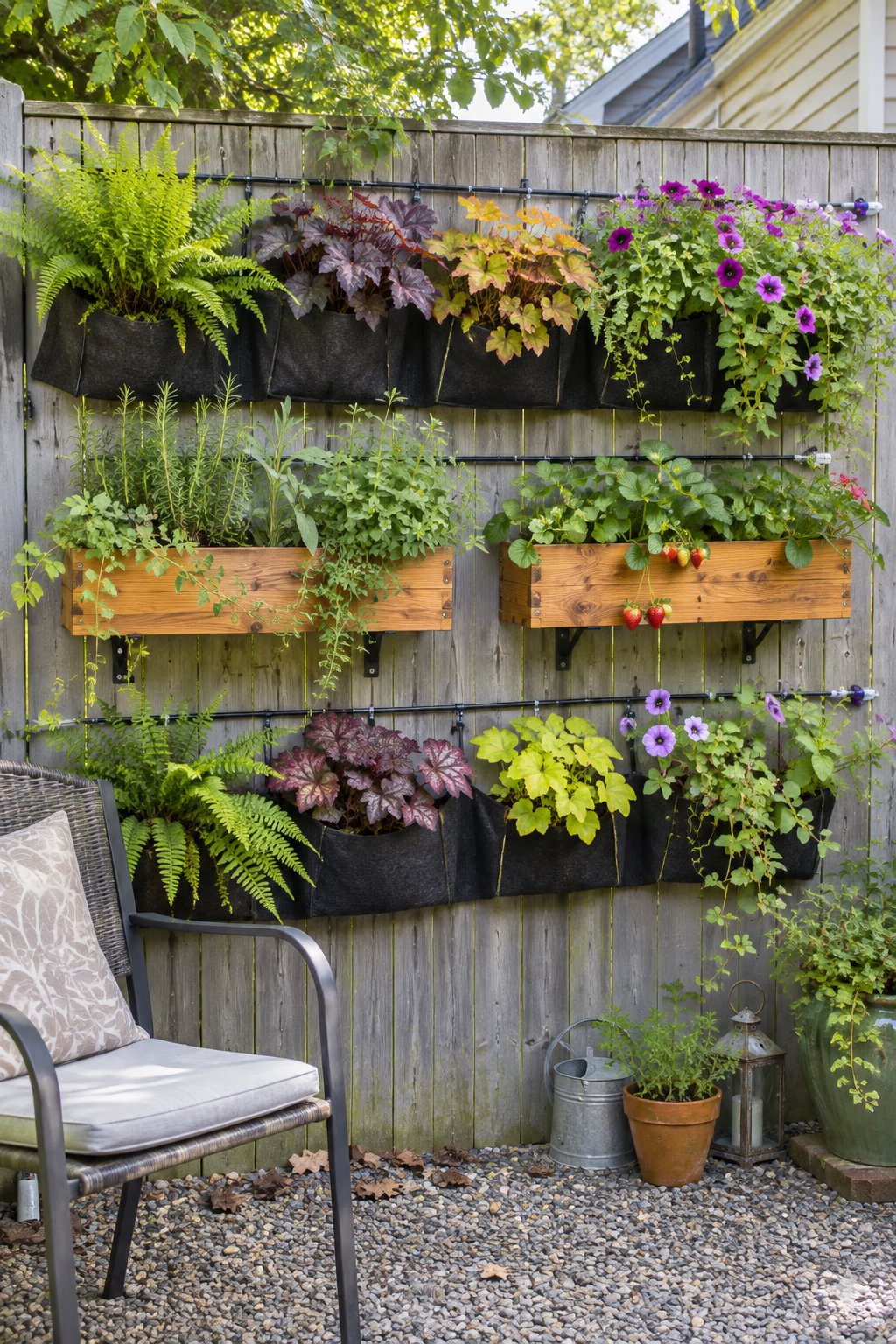
Turn a plain fence into a vertical garden
A living wall uses stacked pocket planters, mounted boxes, or a grid of hanging pots to cover a fence with greenery. Herbs, trailing strawberries, ferns, heuchera, and trailing annuals work well depending on sun. In shade, ferns and begonias thrive; in sun, try herbs and petunias.
This idea adds privacy height on a fence that’s a bit short and makes the view from your patio far more interesting. It’s especially useful in small yards where there’s no room for a planting bed.
Vertical planters dry out quickly. A simple drip line with a timer makes upkeep much easier, and a moisture barrier behind the planters helps protect a wood fence from rot.
8. Stretch a Shade Sail to Block Views From Above
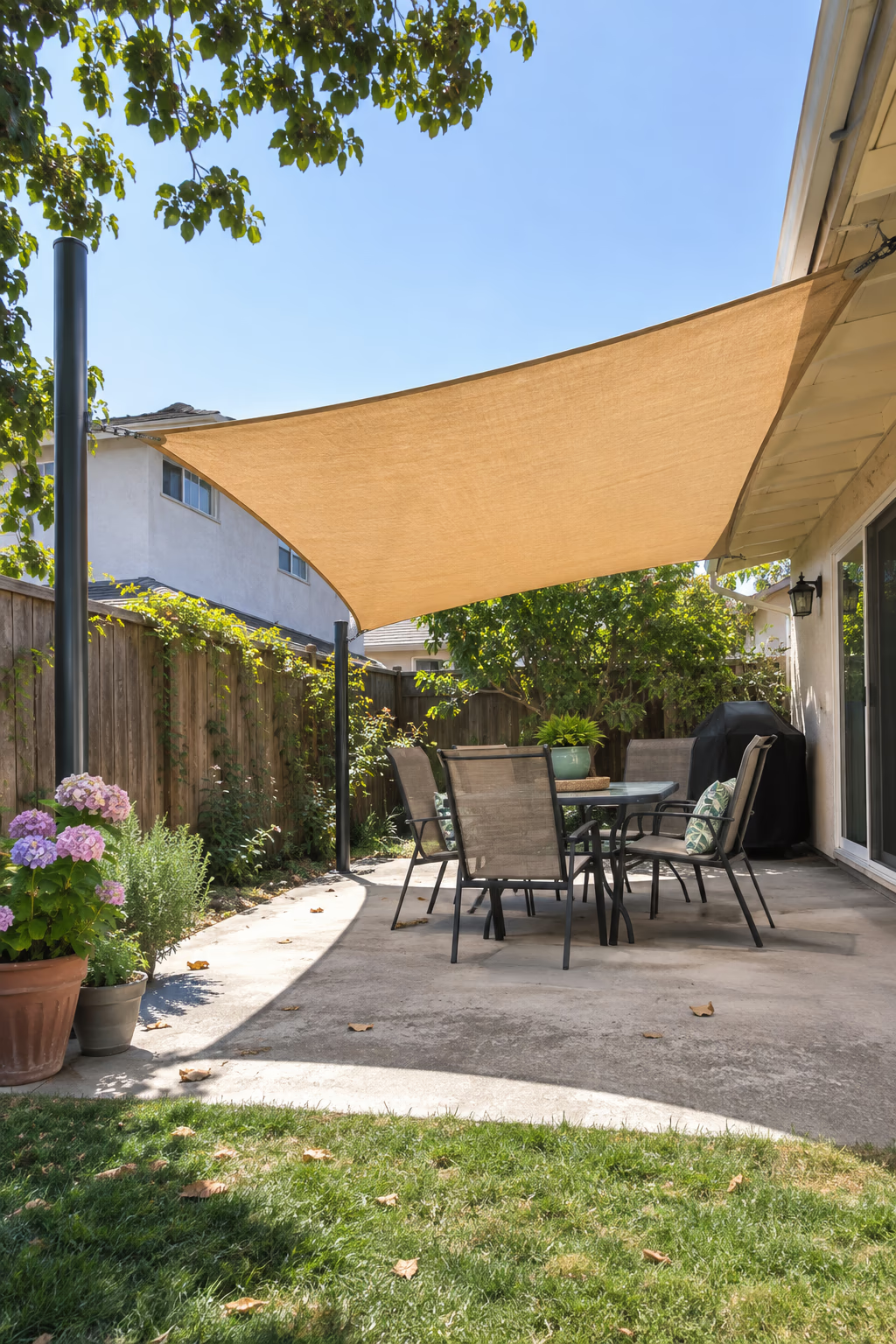
Overhead privacy from two-story neighbors
When neighbors look down from upstairs windows or decks, side screens don’t help much. A shade sail stretched over the patio blocks that downward view while cutting glare. Triangular and square sails come in many sizes, and colors like sand, gray, and terracotta blend easily into most yards.
Sails are lighter and far less expensive than a solid roof, and they create a strong, modern look. Angling one corner lower than the others helps the sail shed rain and can tilt the cover toward the side where the view comes from.
The sail pulls hard on its anchors in wind. Use heavy steel posts or 6×6 wood posts set deep in concrete, or anchor to solid framing, and take the sail down before storms or heavy snow.
9. Cover Hog Wire Panels With Evergreen Vines
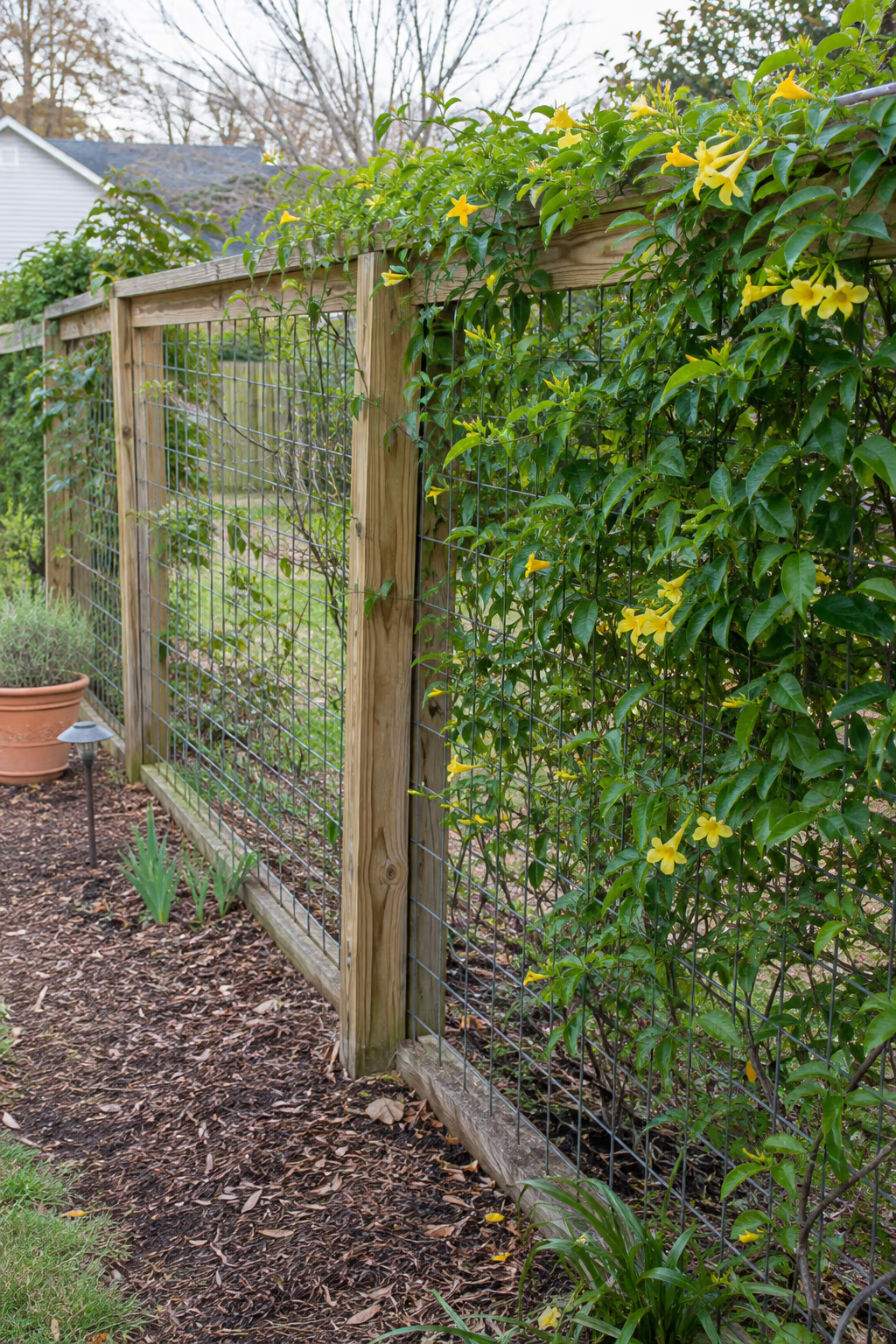
A sturdy, rustic frame that fills in year-round
Hog wire panels framed in wood make an affordable, open fence that works beautifully as a vine support. Build a frame from 4×4 posts and 2×6 rails, then staple welded wire panels into the openings. Plant evergreen vines such as Carolina jessamine, star jasmine, or evergreen clematis in warmer zones.
The wire disappears behind foliage as the vines grow, leaving a soft green wall that stays covered in winter. It also costs less than a solid wood fence of the same length.
Evergreen vines are mostly suited to milder climates, so check your hardiness zone before buying. Avoid English ivy, which is invasive in many areas and can damage structures.
10. Roll Movable Planter Screens Into Place
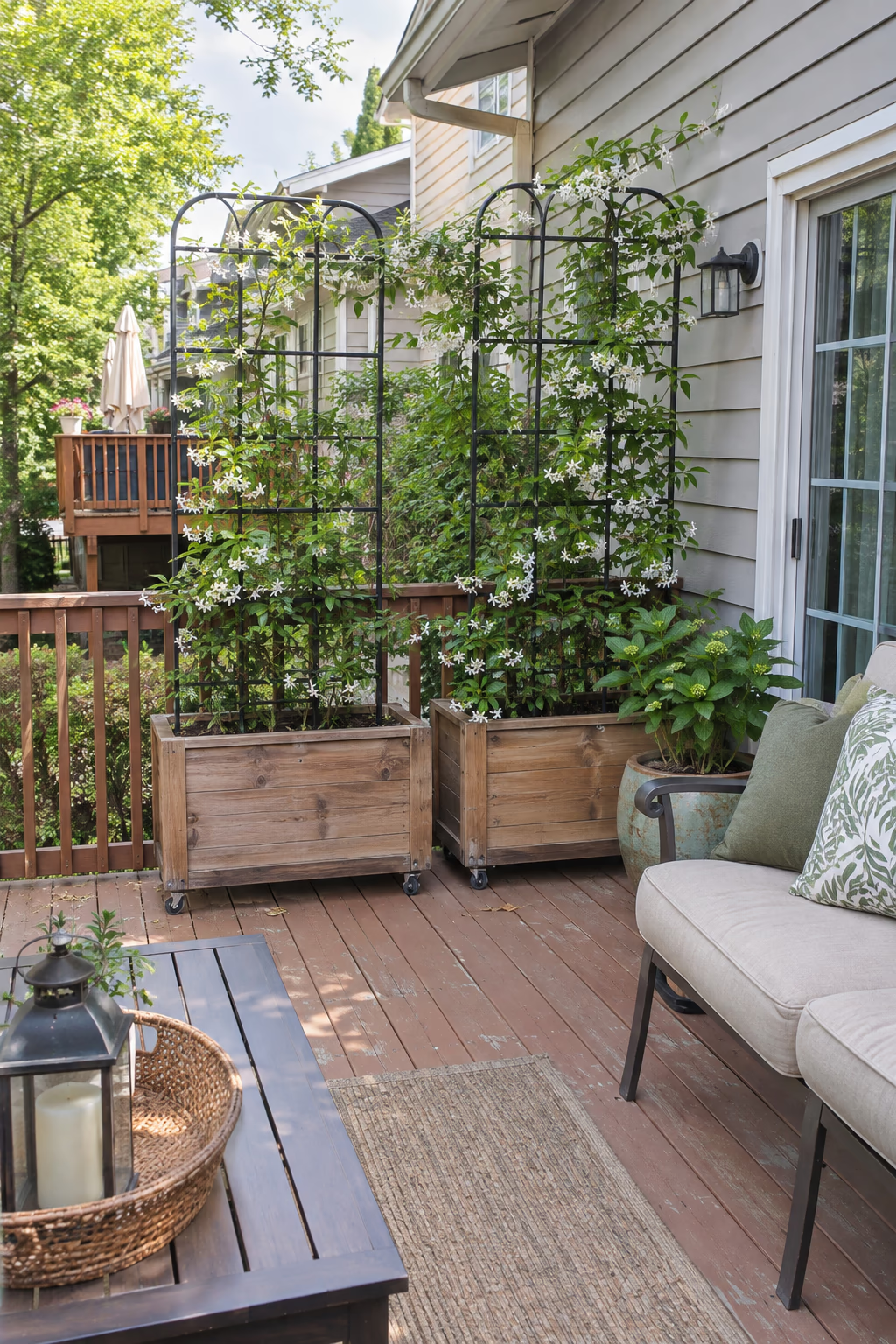
Flexible privacy for renters and small lots
A planter box with a trellis attached to the back makes a portable privacy screen, and adding locking caster wheels lets you shift it as needed. Fill the box with climbing roses, mandevilla, or jasmine, or plant tall grasses and let the trellis serve as a decorative backdrop.
Movable screens are ideal if you rent, rearrange furniture often, or need privacy in different places at different times of day. Several units lined up can create an entire wall of green.
Choose heavy-duty casters rated for the weight of wet soil. Place the screens away from strong gusts or anchor them to the deck to prevent tipping.
11. Stagger Fast-Growing Evergreens Along the Back Lot Line
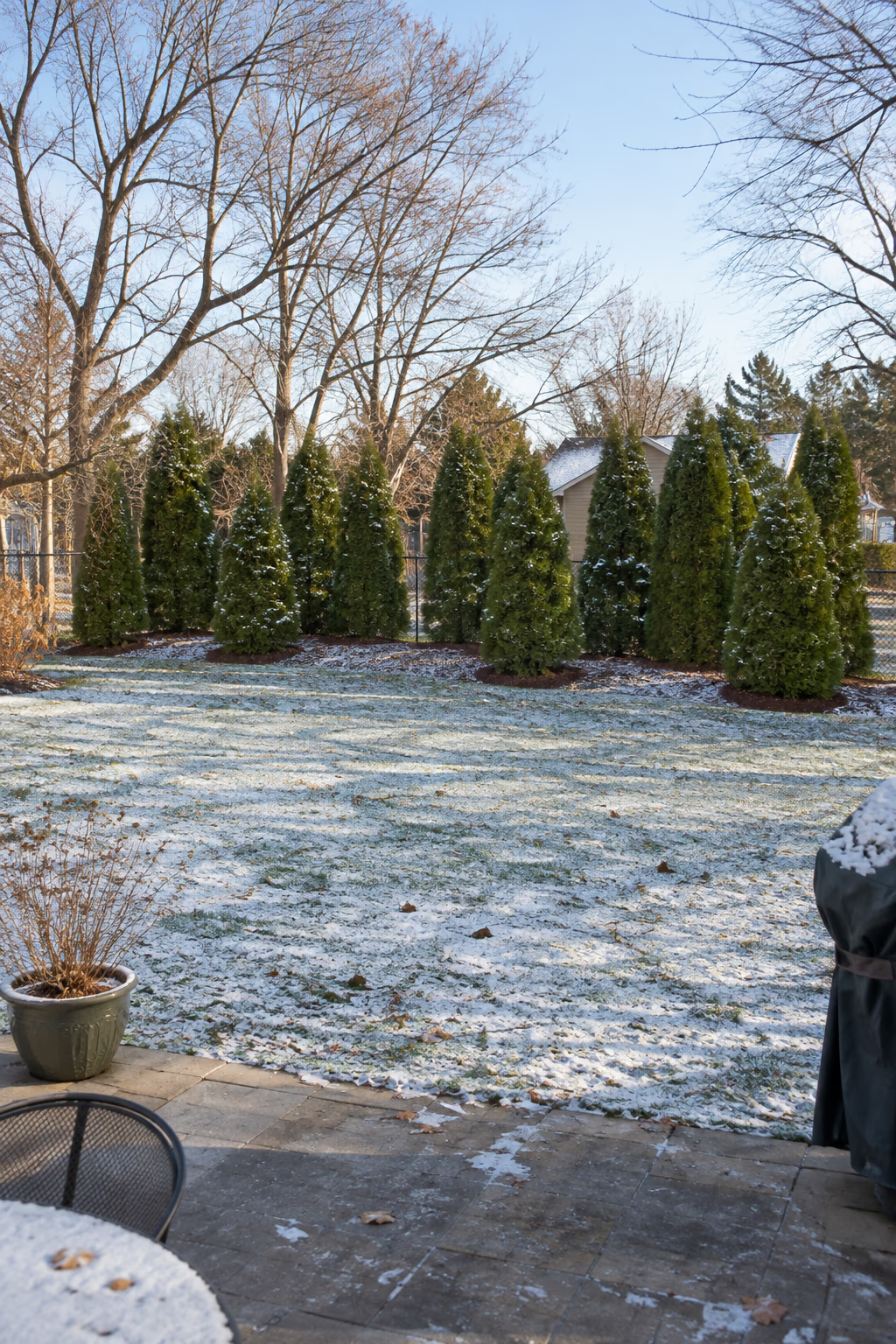
A natural boundary that blocks the view in winter, too
For a long back property line, a staggered double row of evergreens creates a thicker screen than a single straight hedge. Fast growers such as Green Giant arborvitae, Leyland cypress in milder zones, or native eastern red cedar can be planted in a zigzag about 5 to 8 feet apart.
Staggering lets each plant reach its full width while closing the gaps between them, so the screen looks natural and fills in faster. Evergreens also keep their foliage through winter when deciduous plants are bare.
Check the mature spread before planting near a fence or neighbor’s property, since many of these trees grow 10 to 15 feet wide. Water deeply through the first two summers to help them establish.
12. Layer a Mixed Shrub Border for Year-Round Cover
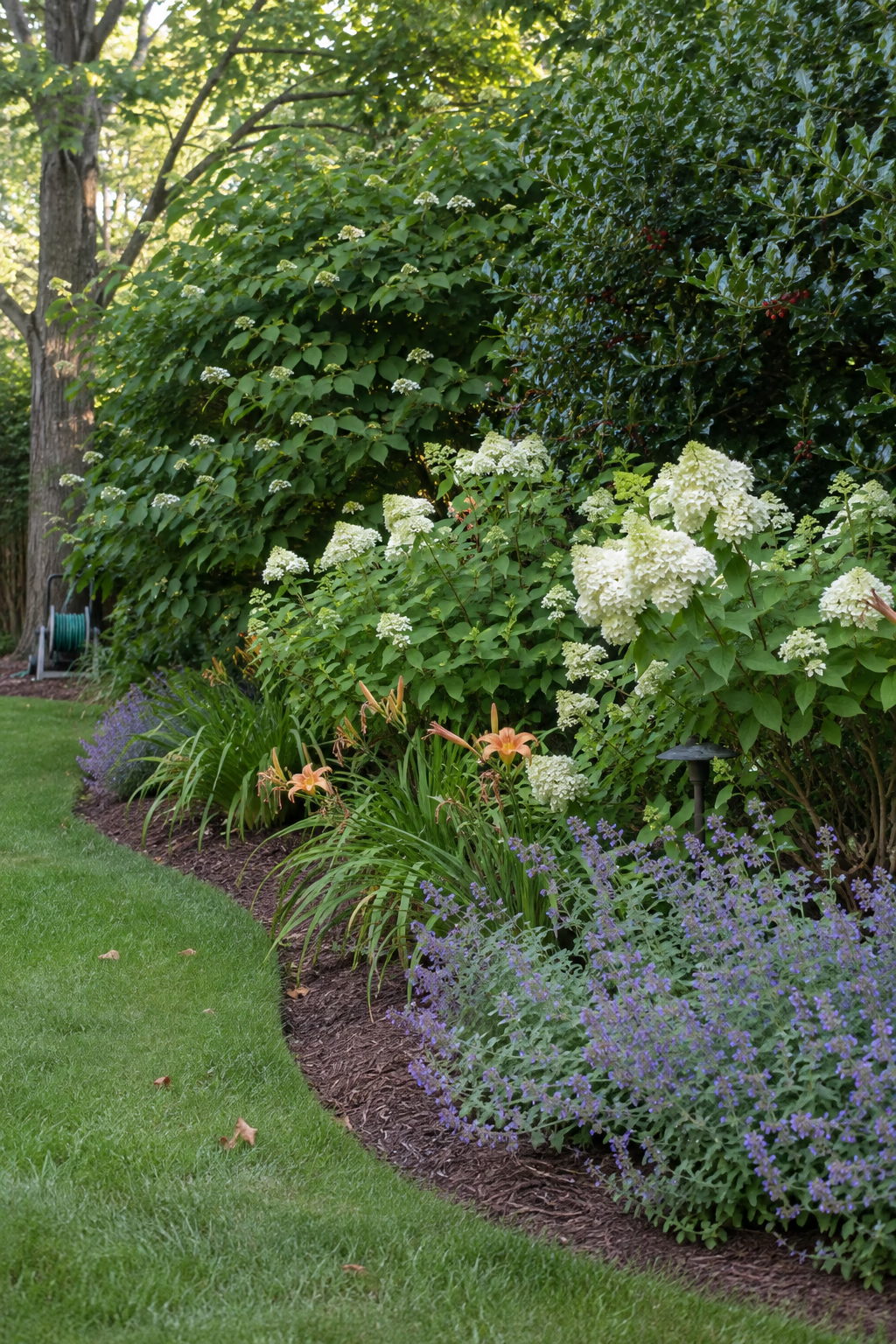
Depth and color that block views naturally
A border that combines tall shrubs in back, mid-size flowering shrubs in front, and perennials along the edge creates privacy with far more interest than a single row. Try viburnum, holly, or ninebark in back, hydrangea or spirea in the middle, and catmint or daylilies at the front.
Layering makes the eye stop at several levels, so the yard feels screened even if no single plant is very tall. A mix of evergreen and deciduous shrubs also keeps some cover in winter while offering seasonal flowers and fall color.
Give the border at least 6 to 8 feet of depth so plants have room to mature. Mulch well and plan for annual pruning to keep the layers balanced.
13. Plant a Multi-Stem Tree to Screen an Upstairs Window
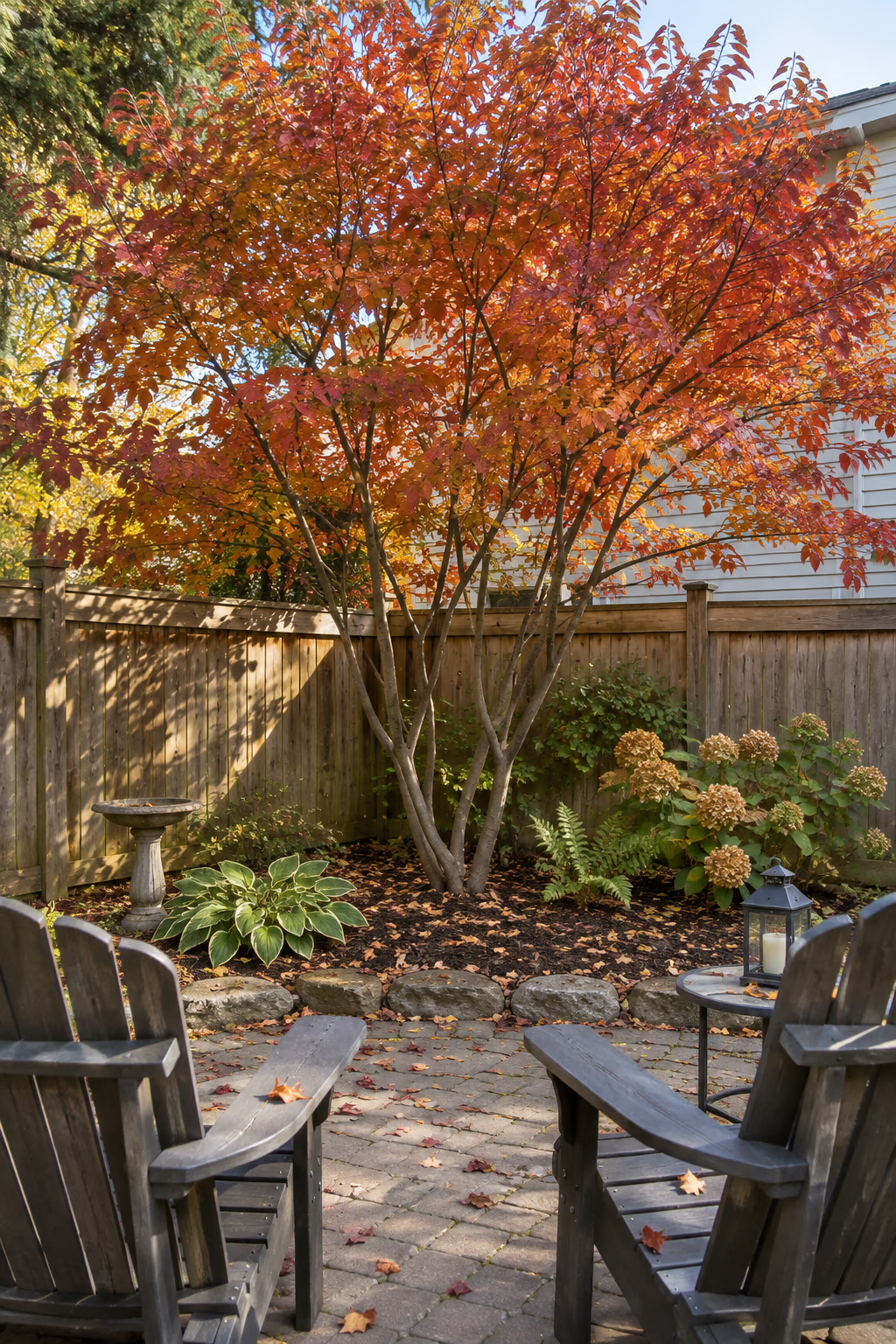
Block one problem view with one smart tree
Sometimes privacy only means hiding a single window or deck. A multi-stem tree such as serviceberry, river birch, crape myrtle, or Japanese tree lilac planted between you and that view can block it with a canopy at just the right height.
Multi-stem trees have a wide, airy form that screens a lot more than a single trunk, and they bring flowers, bark texture, and fall color. Standing at your seating spot while someone holds a pole at the planned location helps you find the exact placement.
Deciduous trees lose their leaves in winter, which may be acceptable when you spend less time outside. Plant at least 10 to 15 feet from the house and away from sewer lines.
14. Build a Gabion Wall Filled With Stone
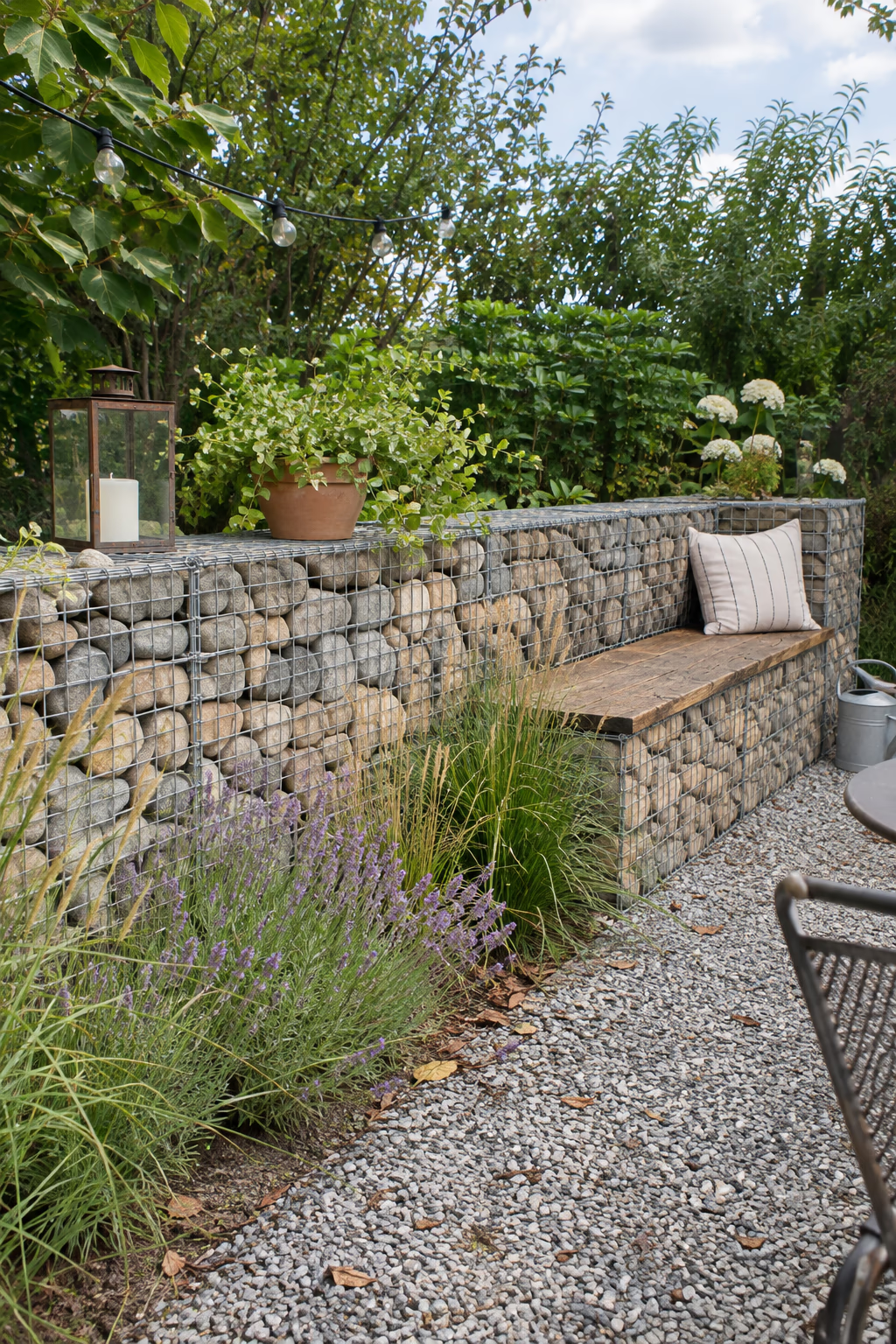
A solid, sculptural barrier with texture
Gabions are wire mesh baskets filled with stone, and stacked units make a sturdy privacy wall with a modern, natural look. Baskets are commonly 3 feet tall and come in various widths. Fill them with river rock, local fieldstone, or broken concrete, placing the best-looking stones along the visible faces.
The weight and density of a gabion wall block both views and some noise, and the wall needs almost no maintenance once built. You can also top it with a wood bench or planter.
Gabions are extremely heavy and need a level, compacted gravel base. Tall walls may require engineering or permits, so check local rules before stacking higher than about 4 feet.
15. Frame Corrugated Metal Panels in Wood
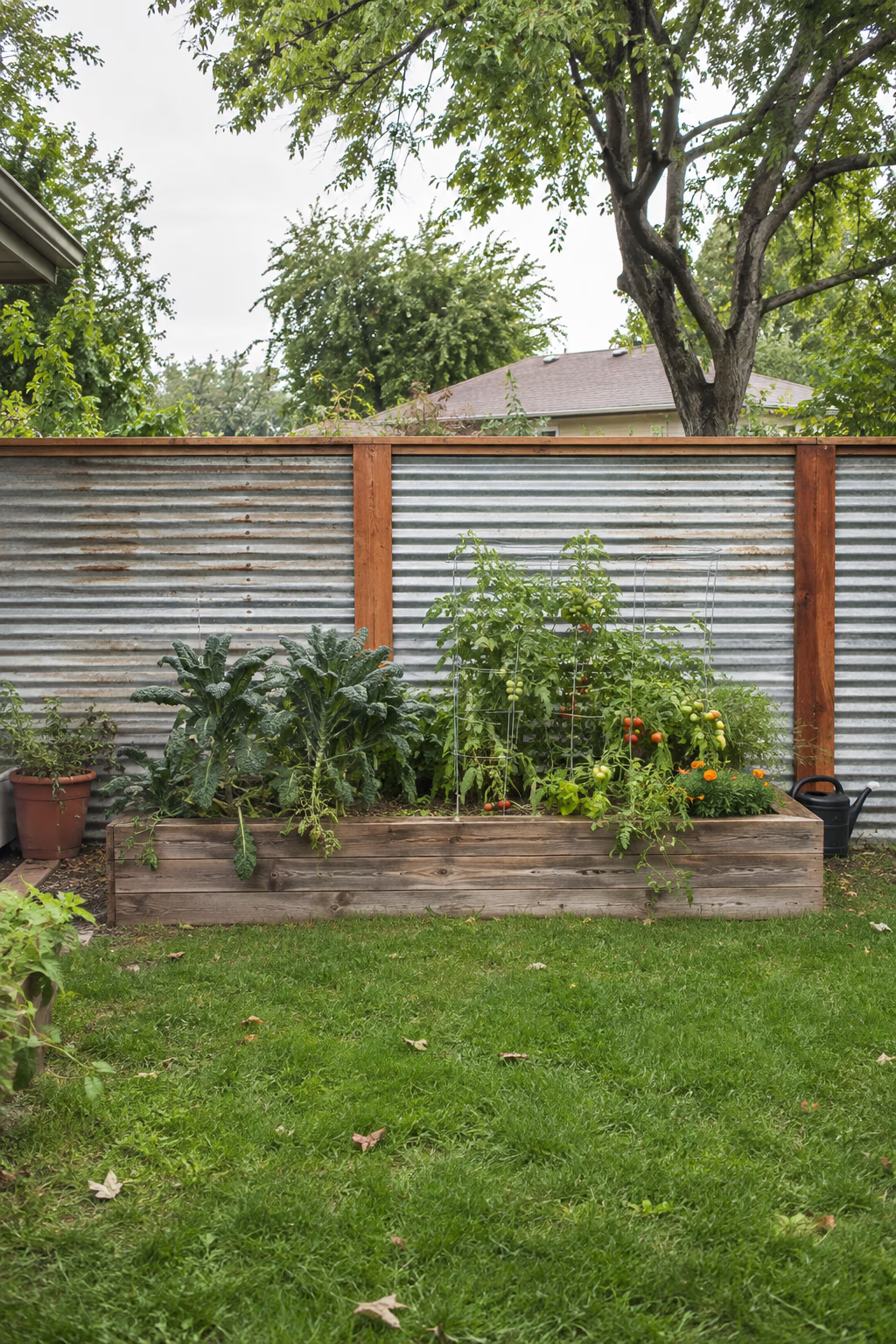
Industrial edge at a budget-friendly price
Galvanized corrugated metal panels framed with pressure-treated or cedar lumber make a solid privacy screen with a crisp, modern farmhouse look. Run panels horizontally between posts for a clean line, and add a wood cap along the top to finish the edges.
Metal panels are durable, inexpensive per foot, and block views completely. Their silvery finish weathers gradually and pairs well with warm wood, black hardware, and bold green foliage in front.
Cut edges are sharp, so wear gloves and cover the edges with trim. Metal reflects heat and sun, which may matter in hot climates, and it can get noisy in heavy rain.
16. Mask Voices With a Bubbling Water Feature
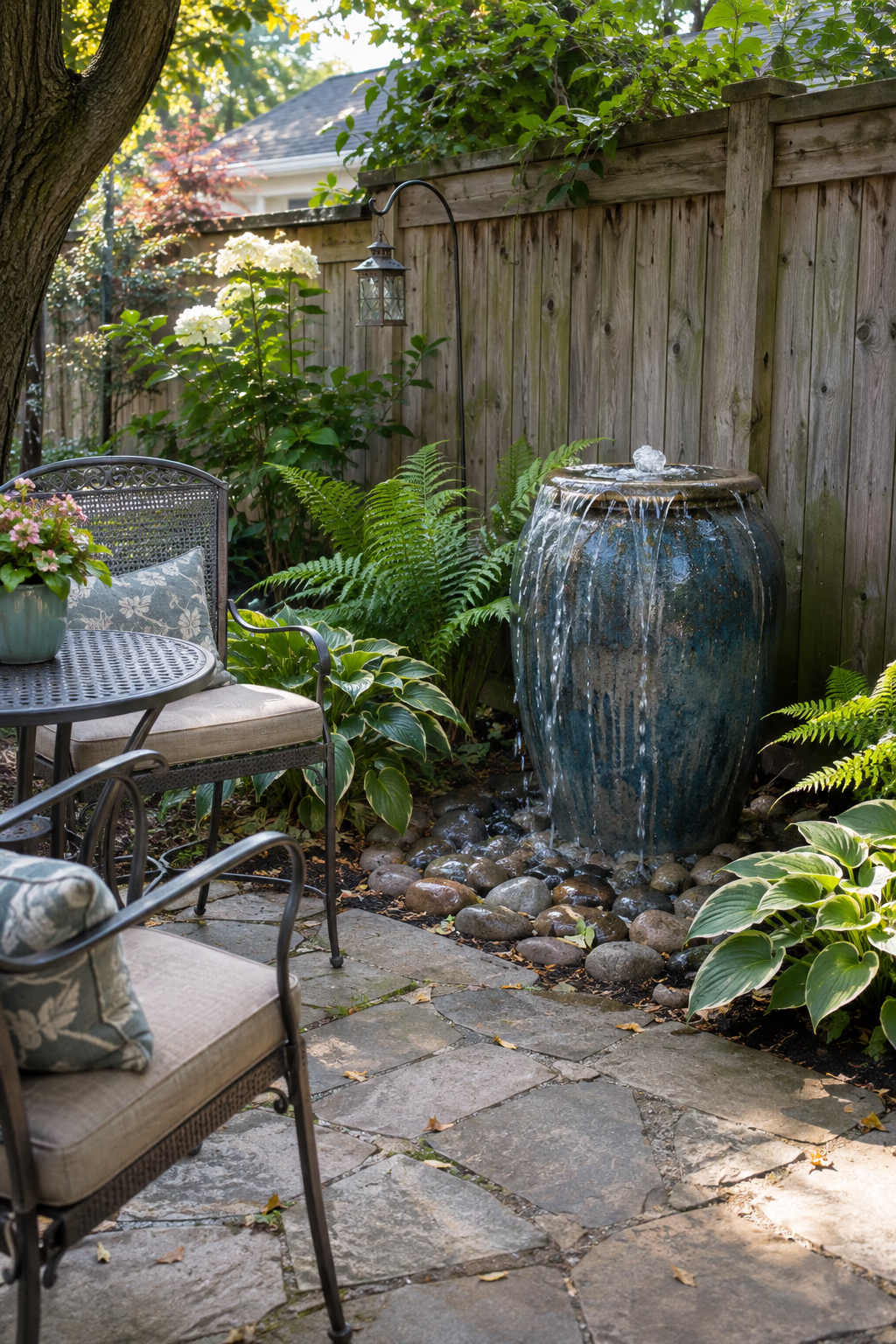
Sound privacy for conversations and traffic
Privacy isn’t only about what others see. A fountain, bubbling urn, or small wall waterfall near your seating area masks nearby voices, traffic, and air conditioner hum, making the space feel calmer.
A bubbling urn fountain on a gravel-covered basin is one of the simplest options, needing just a pump, a buried reservoir, and power. The steady sound draws your attention inward and helps conversations feel more private.
Plug pumps into a GFCI-protected outdoor outlet and keep cords buried or covered. Top off water regularly during hot weather and clean the pump intake each season.
17. Install Roll-Down Shades on a Covered Patio
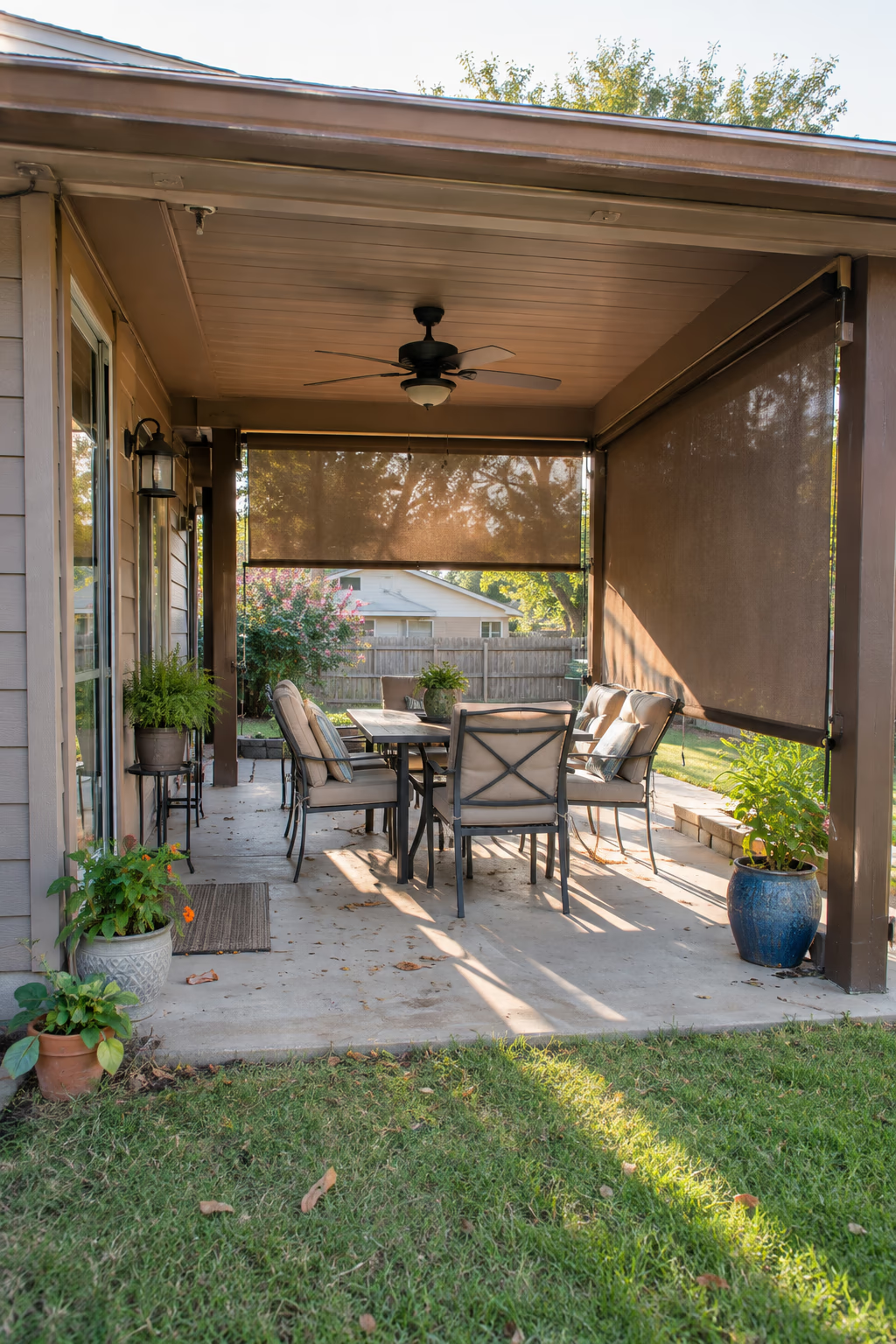
Instant walls for porches and covered decks
Exterior roll-down shades mounted under a patio cover or porch roof drop down to create privacy on demand. Solar screen fabric lets you see out while limiting visibility in during the day, and heavier fabric blocks views more completely.
These shades turn a covered patio into a flexible outdoor room. Lower them on the side facing the neighbors, or lower all sides for afternoon sun control and bug reduction.
Solar screens become more see-through at night when interior lights are on. Raise shades during high winds to avoid damage, and consider motorized versions for wide openings.
18. Curve a Low Stone Wall Around a Seating Nook
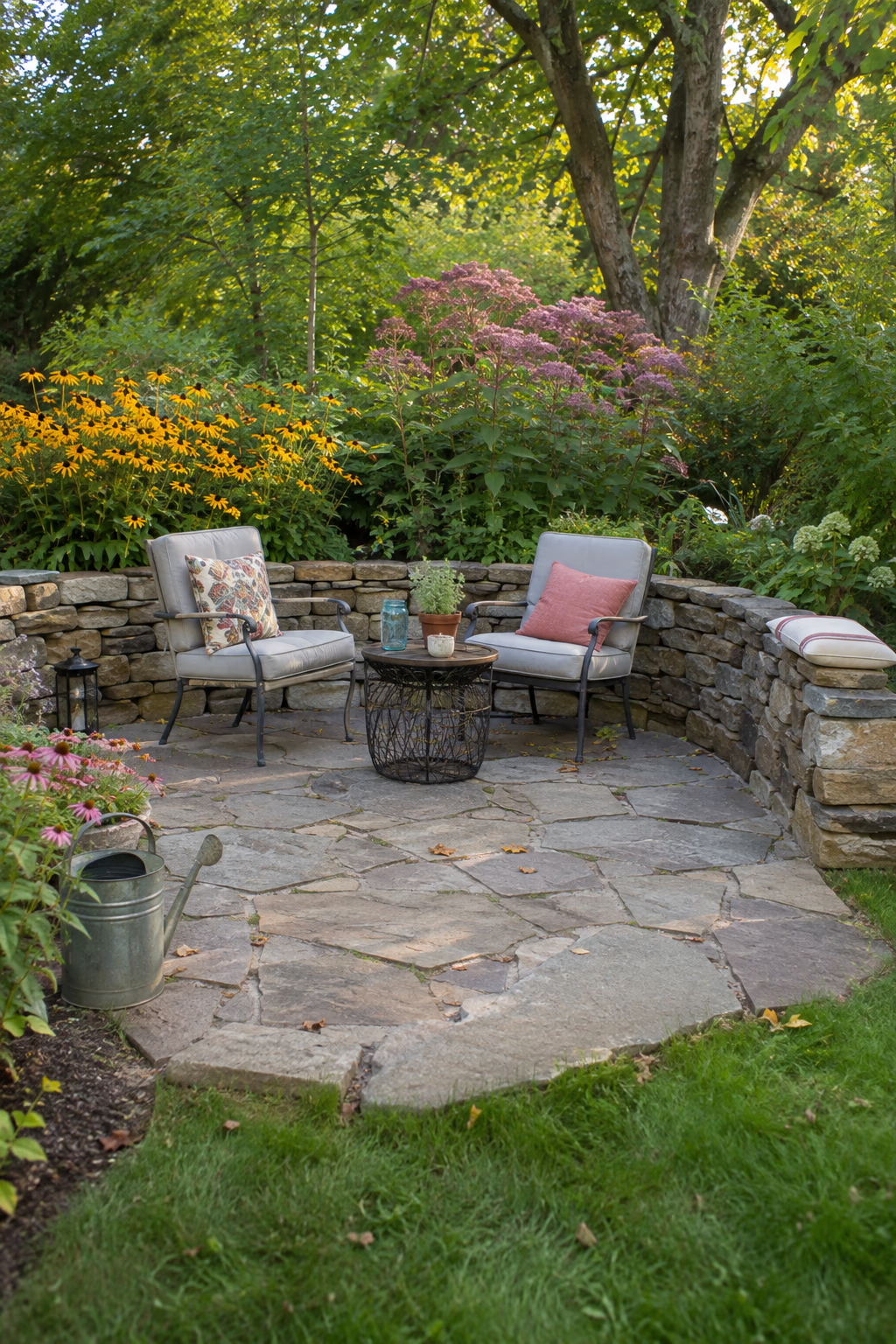
A sense of enclosure at sitting height
A curved wall 2 to 3 feet tall built from stacked stone or segmental block can wrap a small seating area and make it feel tucked away. Plant tall perennials or shrubs behind the wall to raise the screen to eye level while seated.
The curve naturally blocks long sightlines and creates a cozy, embracing shape. The top of the wall doubles as extra seating for guests.
Low dry-stacked walls are a manageable DIY project with a compacted gravel base. Walls that retain soil or exceed local height limits may need engineering, and calling 811 before digging is always required.
19. Lower a Gravel Lounge a Step Below the Yard
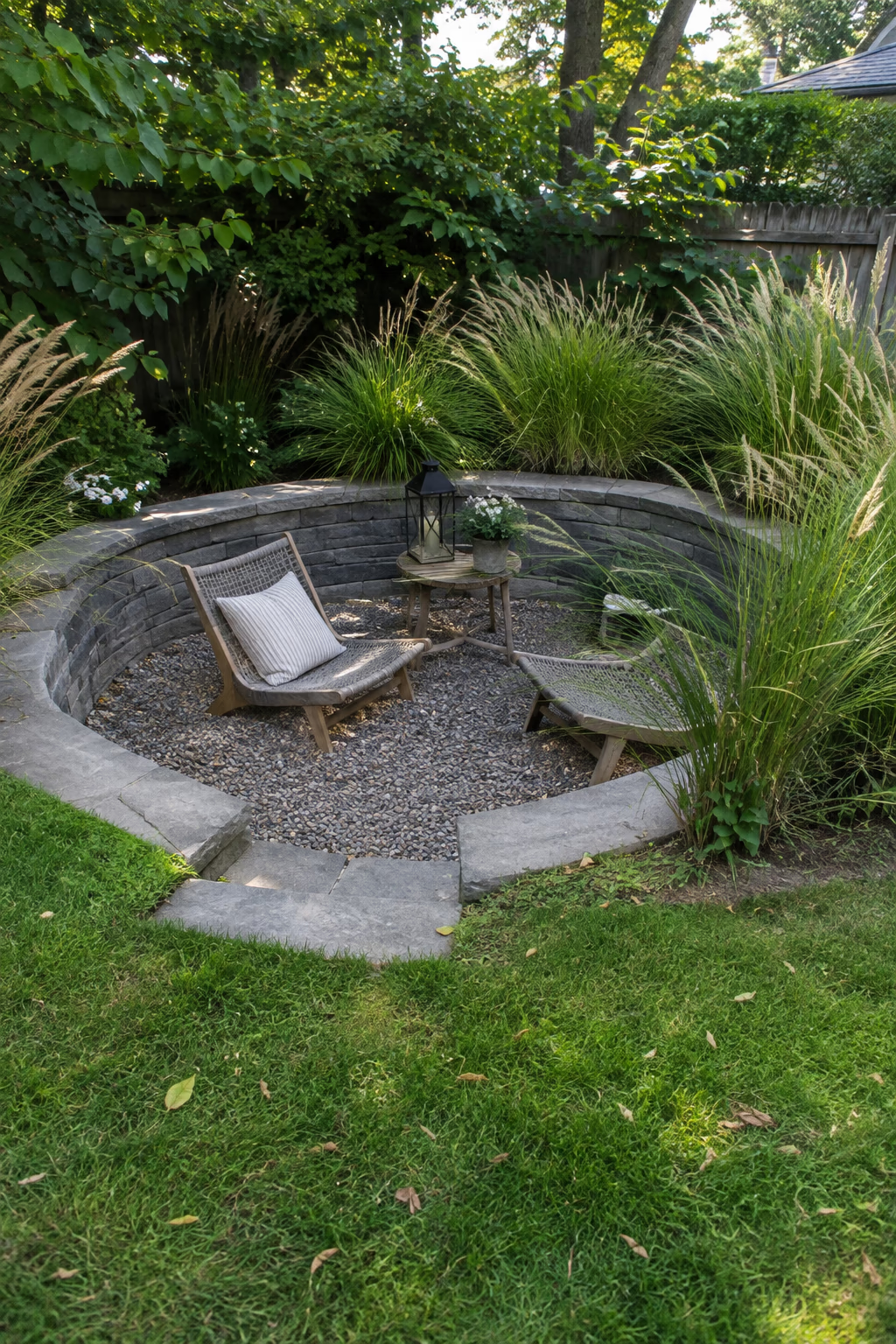
Drop the seating and the screen rises
Setting a lounge area 12 to 18 inches below the surrounding yard makes the plants around it feel taller and hides seated people from many neighboring views. Excavate the area, build a retaining edge of stone, block, or timber, and finish the floor with compacted gravel.
Sunken seating feels sheltered and intimate. Planting ornamental grasses or shrubs at the upper edge gives instant extra screening around the recessed space.
Drainage is the key challenge. Add a gravel base and a drain or outlet so the area doesn’t fill with water after heavy rain, and check for buried utilities before digging.
20. Tuck a Two-Chair Hideaway Into a Shrub Corner
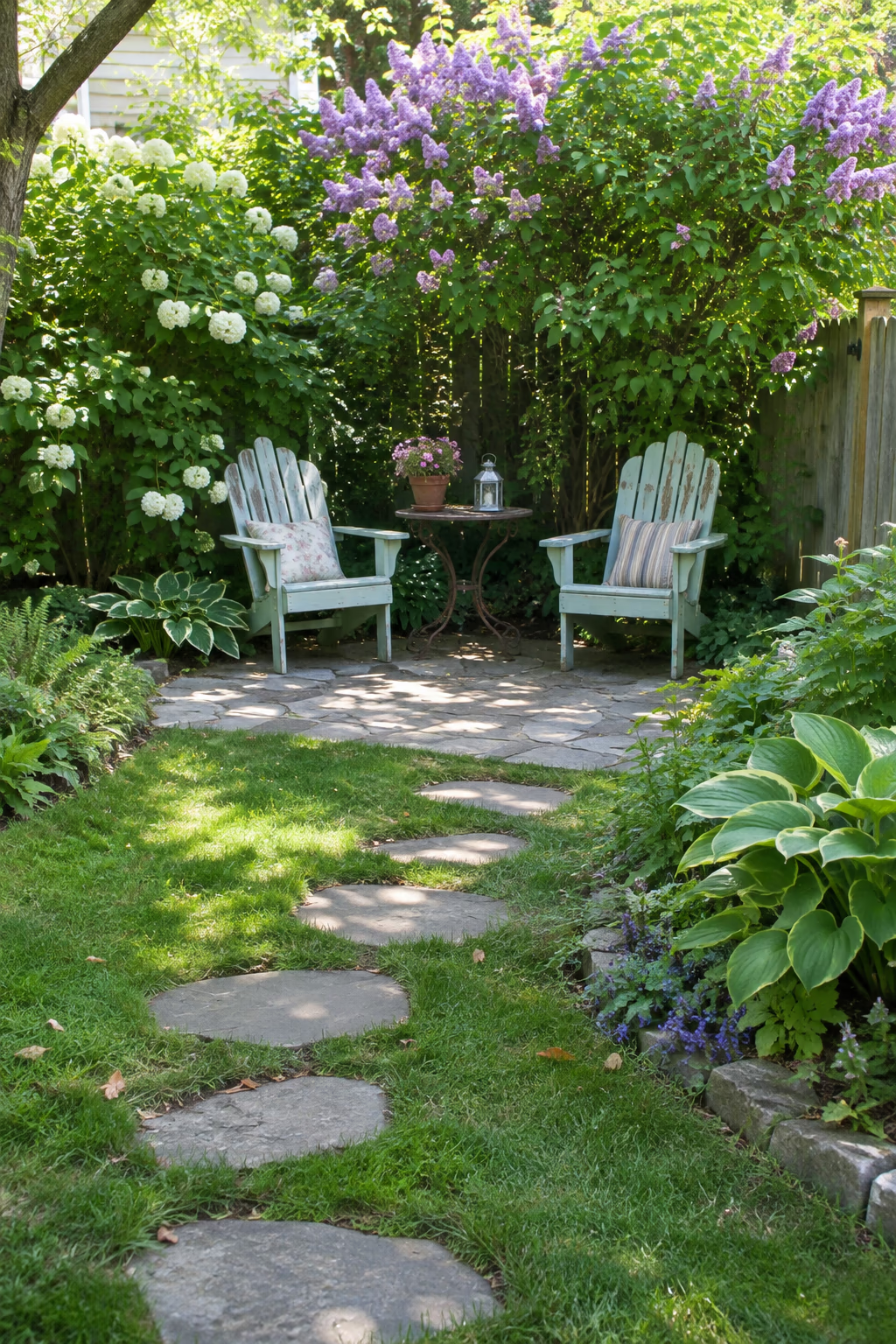
A secret spot that feels miles away
Choose a back corner, clear a small gravel or flagstone pad about 8 by 8 feet, and surround it on two or three sides with tall shrubs. Add two chairs and a small side table, and you have a private retreat for reading or quiet talks.
A small, enclosed nook is easier to screen than an entire yard. Shrubs like viburnum, lilac, or tall ornamental grasses on the open sides make it feel hidden from both the house and the neighbors.
Give shrubs space to reach full width without crowding the seating area. A narrow stepping-stone path leading there adds a sense of discovery.
21. Fit Frosted Glass Panels Into a Deck Railing
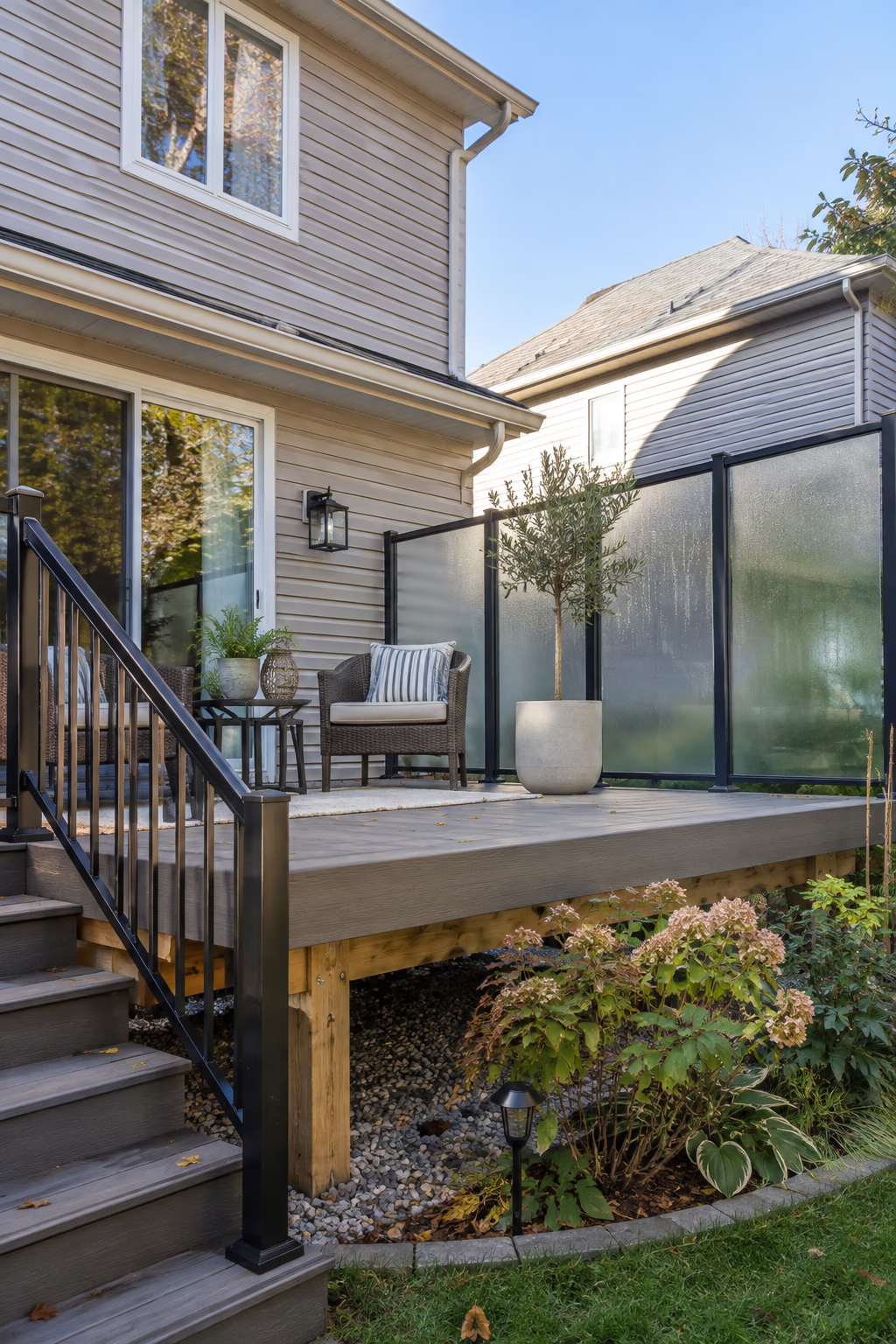
Privacy that keeps light and openness
Frosted or reeded tempered glass panels set into deck railings or a freestanding screen block clear views while still letting light through. They work well on raised decks where a solid wall would feel heavy or block too much sun.
Glass suits modern homes and small spaces, keeping a bright, open feel. Panels framed in black aluminum or wood look clean and pair nicely with simple furniture.
Always use tempered or laminated safety glass rated for outdoor railings. Glass panels need occasional cleaning, and railing installations usually must meet local building code requirements.
22. Divide a Shared Patio With Folding Screens
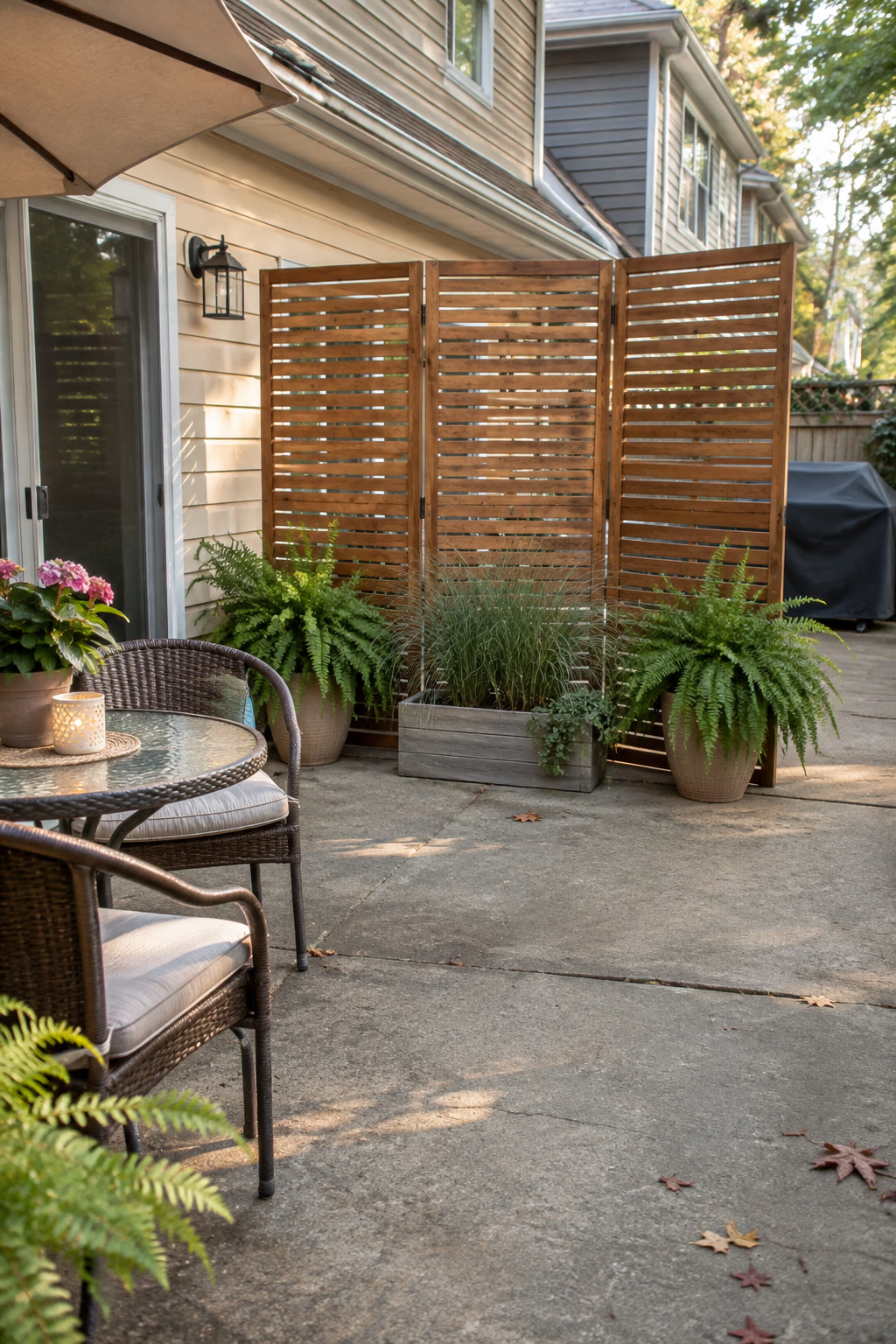
Quick separation for townhomes and duplexes
When you share a patio, deck, or yard with a neighbor, a freestanding folding screen creates a boundary without permanent construction. Choose outdoor-rated screens made from wood slats, rattan-look resin, or metal panels about 6 feet tall.
Folding screens set up and come down in minutes, so they suit renters and anyone who needs privacy only some of the time. Add potted plants at the base to soften the look and steady the screen.
Lightweight screens can blow over, so anchor them with sandbags, stakes, or brackets. Talk with the neighbor first so the divider feels friendly rather than abrupt.
23. Train Espaliered Fruit Trees Along a Fence
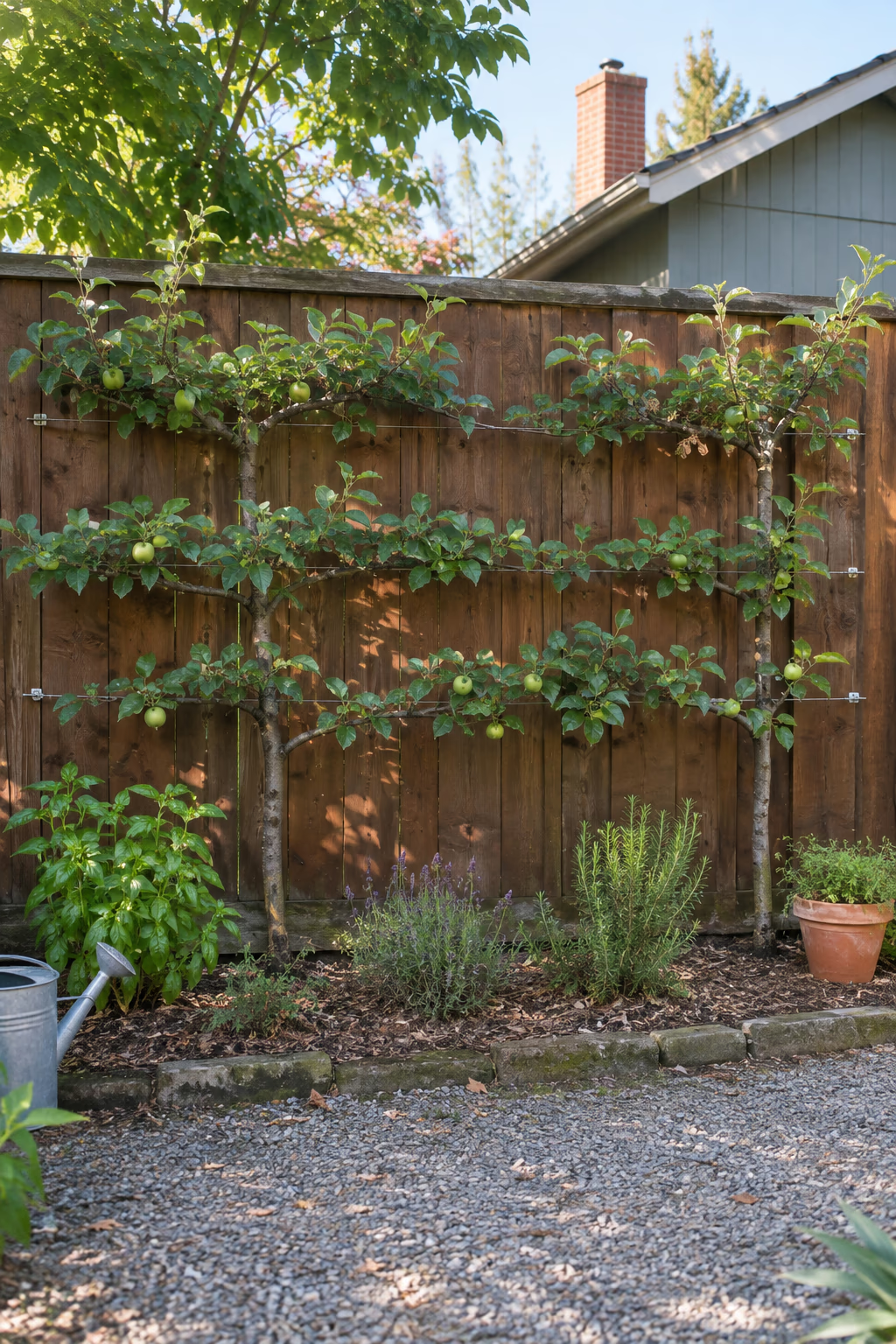
A slim, edible screen for narrow spaces
Espalier trains fruit trees flat against a fence or wire frame, making a living screen just a foot or so deep. Apples and pears are classic choices, trained into horizontal tiers or a diamond lattice using tensioned wires about 18 inches apart.
This idea combines privacy with harvest and adds an artful, structured look to the yard. It is a great option where there’s no space for a wide hedge.
Espalier takes several years to fill in and needs regular summer and winter pruning. Buy young whips or pre-trained trees and choose varieties suited to your climate.
24. Build a Dead Hedge From Yard Trimmings
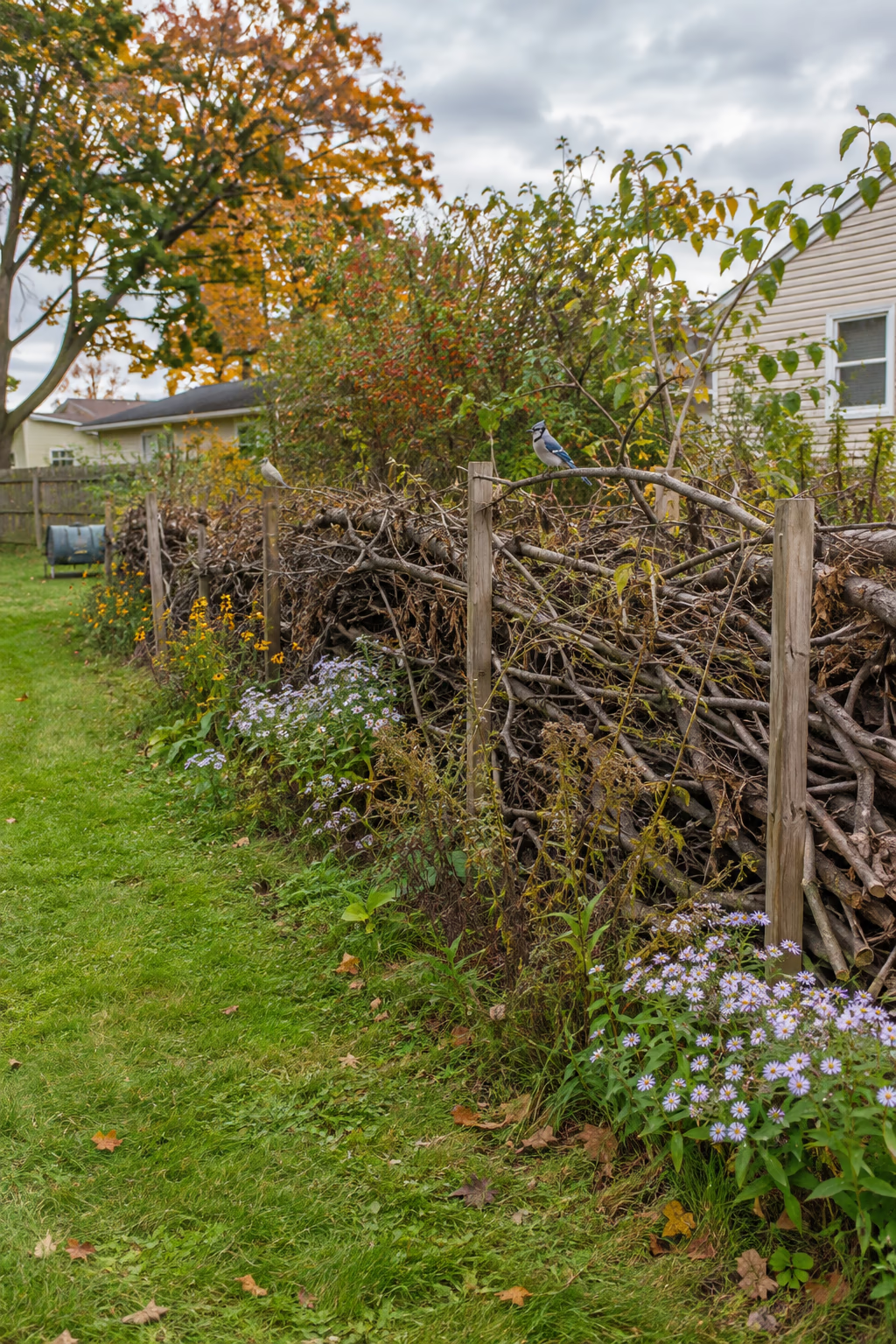
A free, wildlife-friendly screen made from branches
A dead hedge is made by driving pairs of sturdy stakes into the ground and stacking pruned branches, sticks, and brush between them. Over time it becomes a dense, natural barrier that birds and pollinators love.
It turns yard waste into a useful privacy feature and costs almost nothing. Adding new trimmings each season keeps it full as older material settles and decays.
A dead hedge has a wild look that may not suit every neighborhood, so check HOA rules first. Keep it away from the house and fire pits, especially in areas prone to wildfire.
25. Grow a Summer Screen of Sunflowers and Tall Annuals
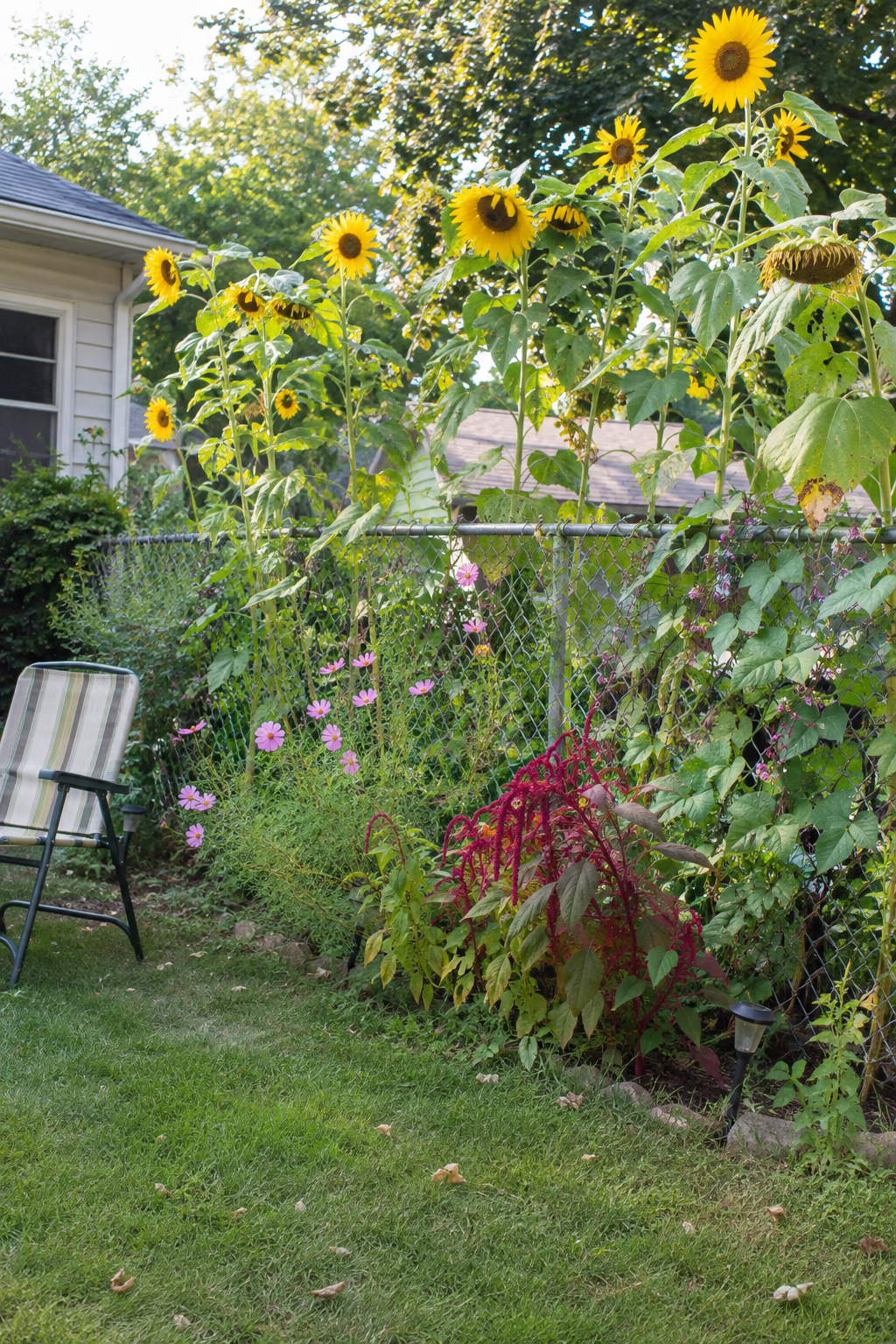
Seasonal privacy that costs just a few seed packets
Tall sunflowers, amaranth, cosmos, and hyacinth bean vines can create a cheerful privacy screen in a single season. Mammoth-type sunflowers can reach 8 to 12 feet, while cosmos and amaranth fill in lower gaps with color.
This is an easy, inexpensive way to test where you want permanent screening. It’s also a fun project that brings pollinators and birds into the yard.
Sow seeds after the last frost and give them full sun. Annual screens disappear by fall, so pair them with permanent plantings if you need privacy year-round.
How to Plan Your Backyard Privacy
Good backyard privacy starts with knowing exactly what you want to block and from where. A little planning keeps you from overbuilding or spending money on screens in the wrong spot.
- Map your sightlines. Sit in your favorite chairs and note which windows, decks, or paths can see you. Screen those specific views first instead of enclosing the whole yard.
- Layer different heights. Combine a fence or screen with shrubs, planters, and overhead elements so privacy feels natural instead of like a wall.
- Check codes and HOA rules. Fence height limits, setbacks, and material rules vary, and permits may be needed for walls, sails, or structures.
- Choose plants for your zone. Match trees, shrubs, and vines to your USDA hardiness zone, sun exposure, and mature size, and avoid invasive species.
- Balance speed and permanence. Use quick fixes like curtains, planters, or annuals while slower hedges and trees grow in.
- Call 811 before digging. Setting posts or planting trees can hit buried utility lines, so have lines marked first.
Frequently Asked Questions
What is the cheapest way to get privacy in a backyard?
Annual screens like sunflowers, outdoor curtains, lattice panels, and dead hedges are among the least expensive options. Planting small shrubs and letting them grow is also affordable, though it takes patience.
How can I block a neighbor’s view from a second-story window?
Overhead elements work best. A shade sail, a vine-covered pergola, a patio umbrella, or a well-placed tree with a wide canopy can block downward views that a fence can’t.
What plants grow fastest for backyard privacy?
Clumping bamboo, Green Giant arborvitae, Leyland cypress in mild climates, and fast vines like clematis or hyacinth bean fill in relatively quickly. Growth depends on climate, soil, and watering.
How tall can a backyard privacy fence be?
Many communities allow fences up to 6 feet in backyards, but rules vary widely. Check local zoning codes and any HOA guidelines before building or adding height to an existing fence.
Can I create backyard privacy if I rent?
Yes. Freestanding screens, rolling planters, outdoor curtains, and large potted plants offer privacy without permanent changes. Always ask your landlord before installing anything anchored to the house or ground.
Final Thoughts
The most effective backyard privacy ideas focus on where you actually spend time. A vine-covered pergola, a single slatted screen, or a row of tall planters can make a busy yard feel peaceful without closing it off completely.
Start with the view that bothers you most, choose materials and plants suited to your climate, and add layers over time. With a little patience, your backyard can become a quiet, private space you look forward to using every day.


