
Step out the back door on a summer evening and there they are: tidy beds of tomatoes, basil, and zinnias, warm soil under your fingers, and something ready to pick for dinner. A good garden bed turns a plain patch of grass into the part of the yard you actually visit every day.
Garden beds are worth the effort because they give plants better soil, give you clear edges to work within, and give the whole yard some structure. Whether you want to grow food, flowers, or both, the shape and placement of your beds matter as much as what you put in them.
These 23 backyard garden bed ideas cover layouts, materials, and planting plans for all kinds of yards, from formal potager grids and stone-walled beds to slim side-yard strips, no-dig beds, and classic three sisters plots. Pick one to start this season or combine a few into a full backyard garden.
1. Lay Out a Four-Square Potager With Gravel Paths
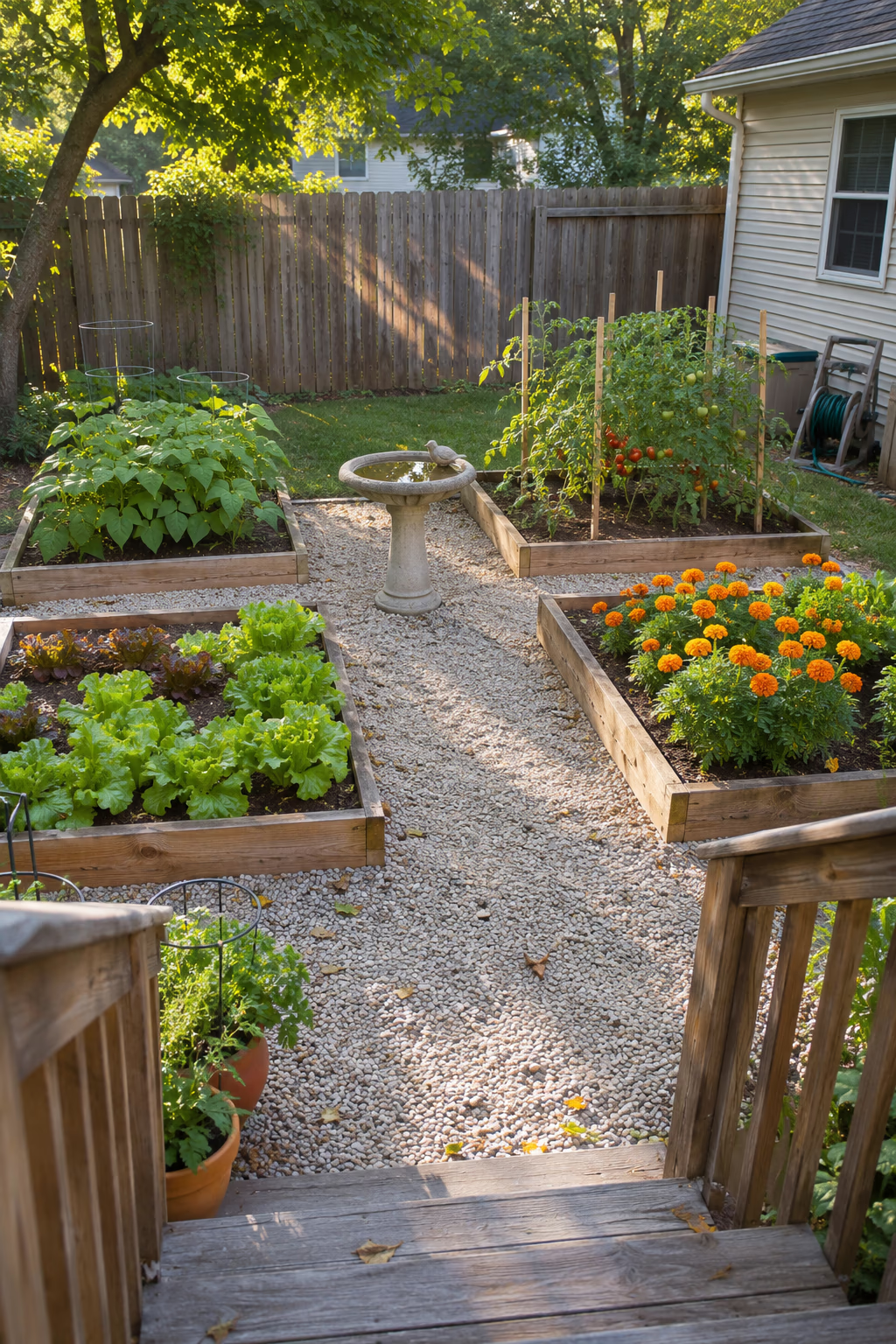
A kitchen garden that looks as good as it grows
A potager is a French-style kitchen garden arranged in a neat, symmetrical pattern. The simplest version uses four beds of about 4 by 8 feet set around a cross of paths, with a small center feature such as a birdbath, a potted bay tree, or a round bed of herbs.
Make the paths at least 3 feet wide so a wheelbarrow fits, and surface them with pea gravel or crushed stone over landscape fabric. The repeated shapes make even a mix of lettuce, beans, and marigolds look planned, and the four beds make crop rotation easy: shift each group one bed over every year.
Give the potager a spot with at least 6 to 8 hours of sun. A low edge of boxwood, lavender, or steel keeps gravel out of the soil and sharpens the lines.
2. Mix Vegetables and Flowers in the Same Bed
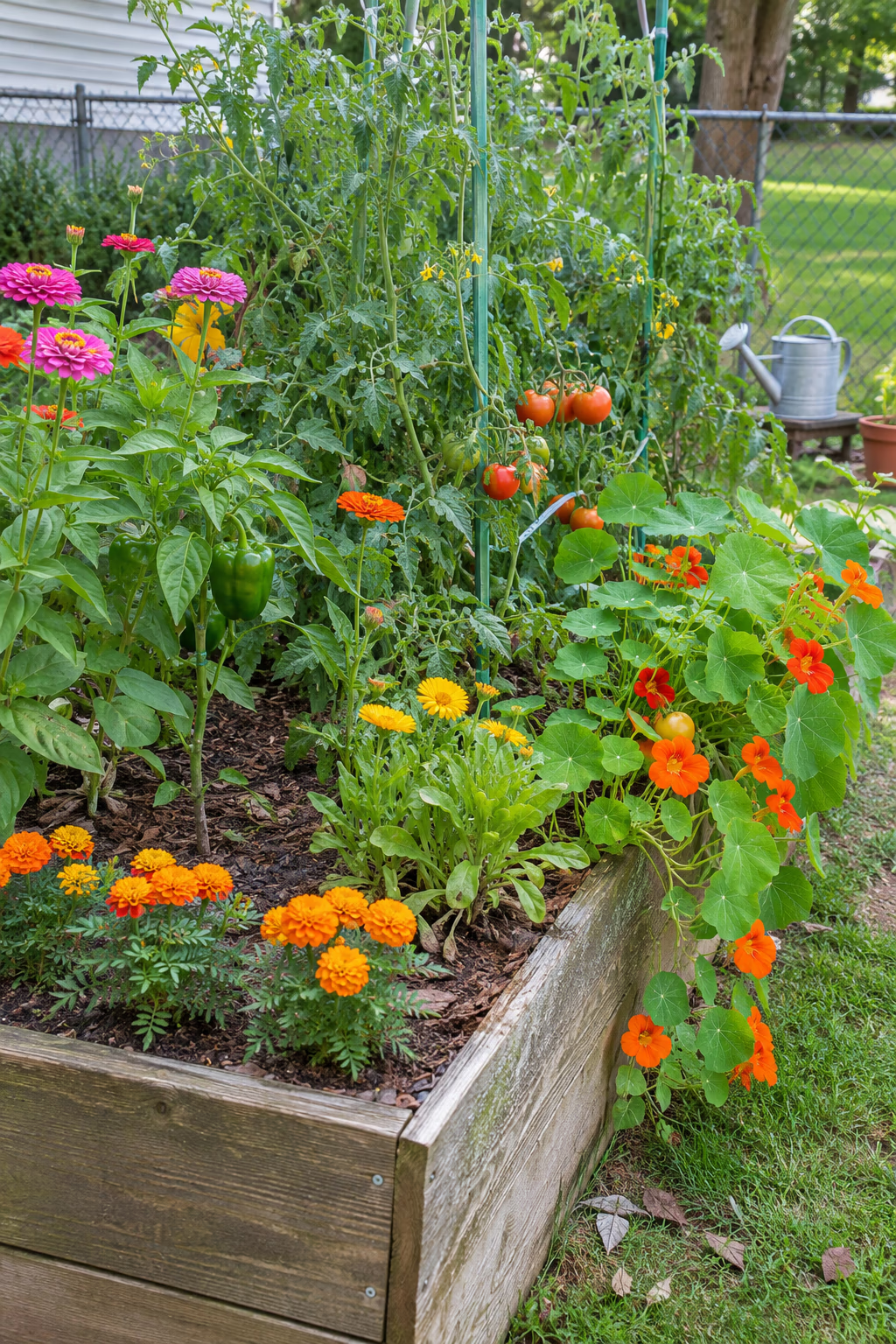
More color, more pollinators, better harvests
Instead of keeping edibles and ornamentals apart, plant them together. Tuck zinnias, calendula, and nasturtiums between tomatoes and peppers, edge the bed with marigolds or sweet alyssum, and let a few borage plants bloom near the squash.
The flowers bring in bees and beneficial insects that help with pollination and pest control, and the bed stays colorful when the vegetable plants are between harvests. It also suits yards where a bare vegetable patch would look out of place.
Leave room for airflow. Tall flowers can shade out sun-loving crops, so put them on the north side of the bed and keep low edging flowers along the south side.
3. Stack a Fieldstone Wall Into a Raised Bed
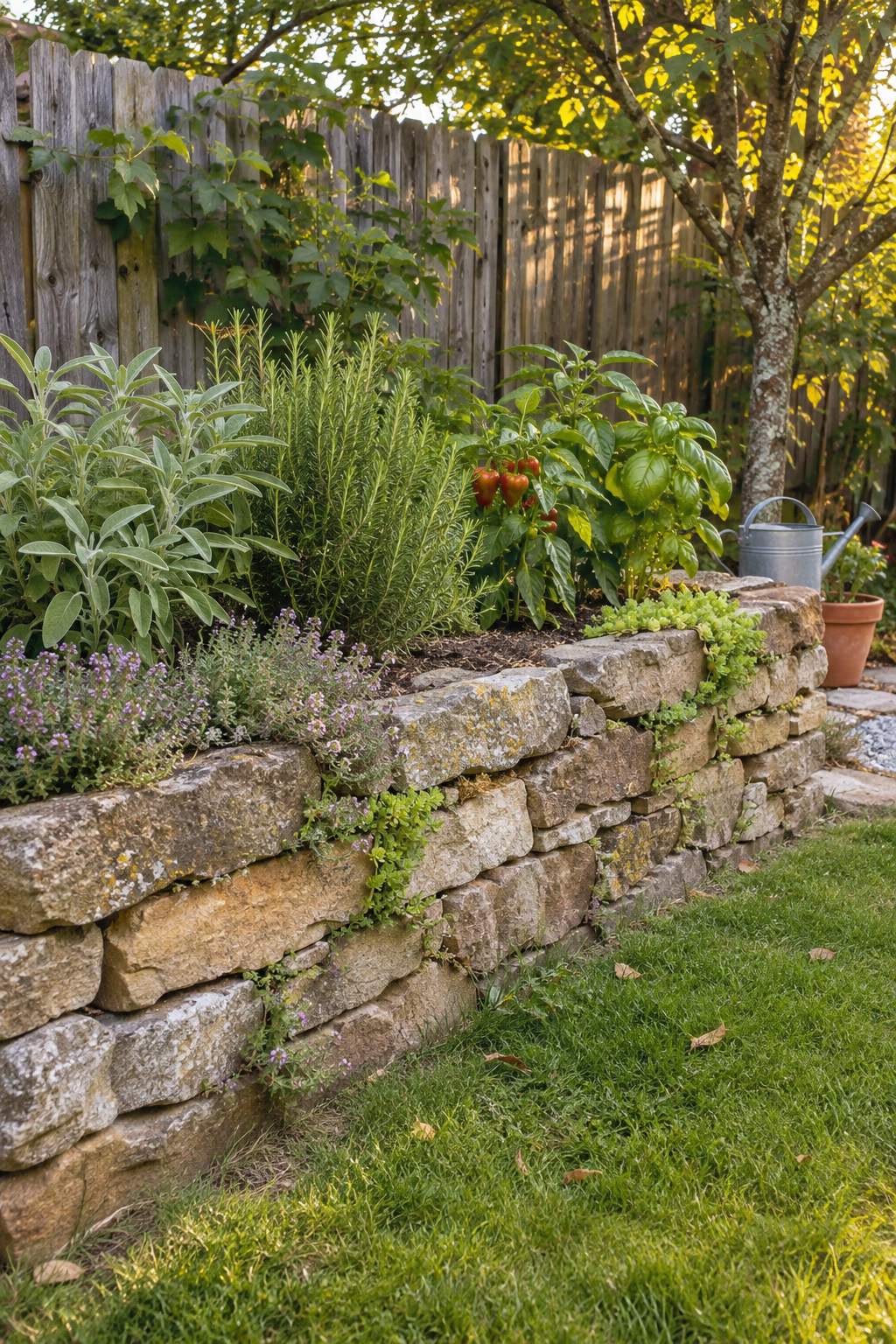
A timeless bed that only gets better with age
A dry-stacked stone bed uses flat fieldstone or wallstone laid without mortar. Set the first course on a few inches of compacted gravel, stagger the joints like brickwork, and lean each course slightly back into the soil for stability.
Stone soaks up daytime heat, which helps warm-season crops and Mediterranean herbs, and the gaps between stones make good homes for creeping thyme or sedum. Stone beds hold up for decades without rotting the way wood can.
Keep dry-stacked walls around 18 to 24 inches tall unless you have experience; higher walls need a deeper base and careful building. Stone is heavy and costs more than lumber, so have it delivered close to the site.
4. Line Up Galvanized Metal Beds in Neat Rows
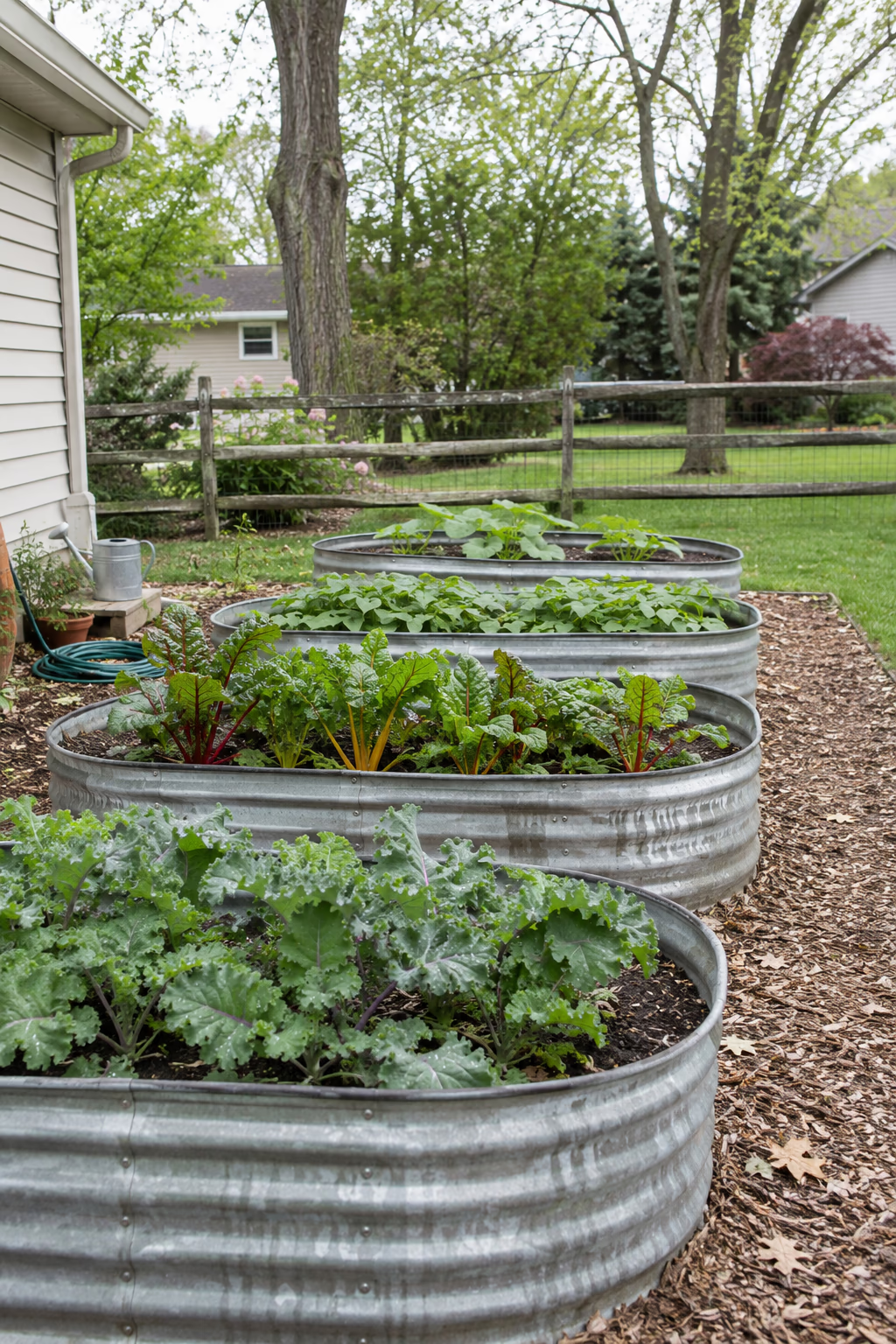
A clean farmhouse look that lasts for years
Corrugated galvanized steel beds, either kits or panels framed with cedar posts, give a backyard a crisp, modern farmhouse feel. Line up three or four oval or rectangular beds about 17 to 24 inches tall with mulched or gravel aisles between them.
Metal doesn’t rot, holds its shape, and keeps soil from washing out. The tall sides also mean less bending and fewer weeds creeping in from the lawn.
Metal warms up quickly in hot climates, so keep beds well mulched and watered, and consider lighter-colored finishes in the South. Wear gloves when assembling, because cut panel edges can be sharp.
5. Wrap the Fire Pit With a Curved Planting Bed
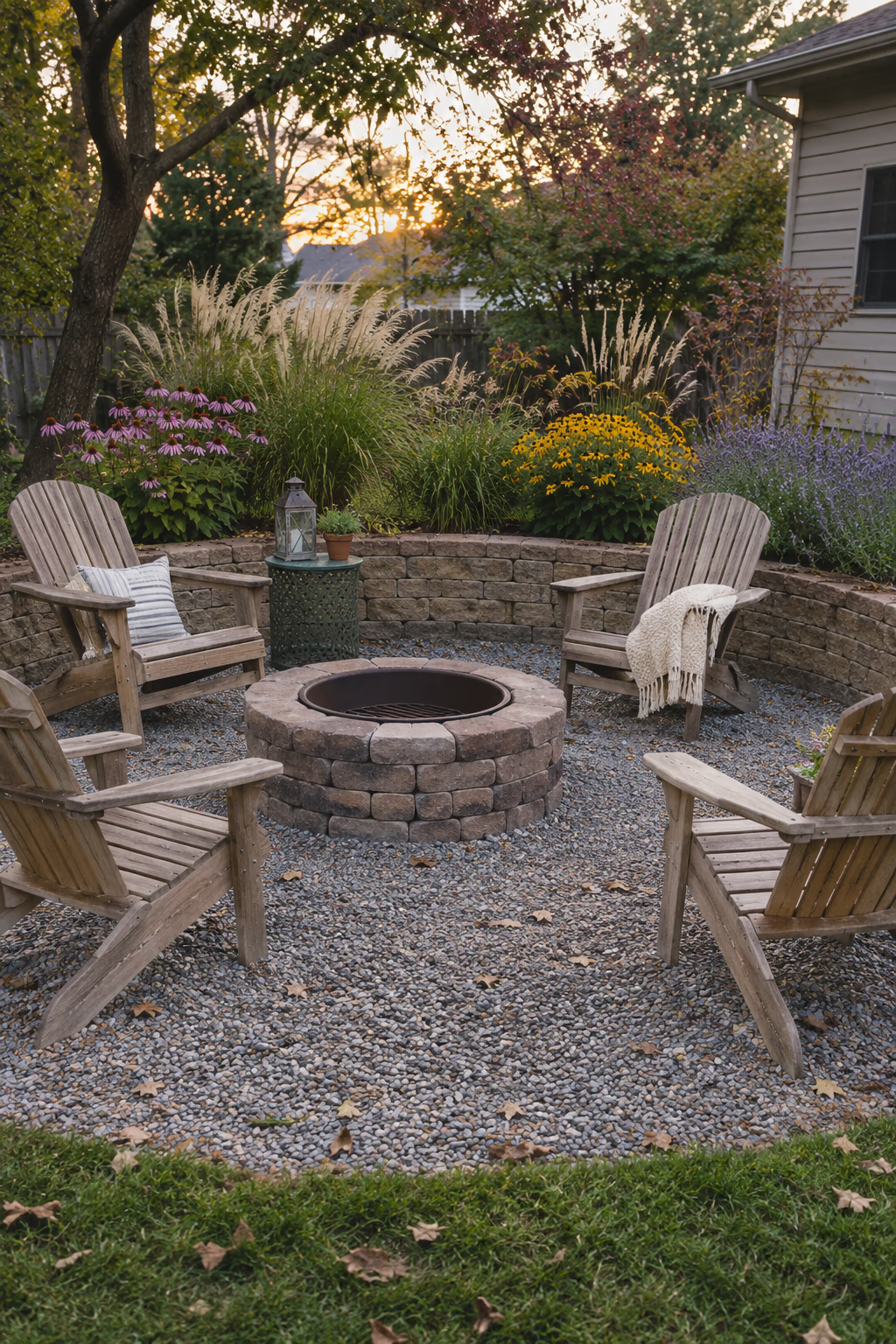
Turn the gathering spot into a garden room
A low, curved bed that follows the outer edge of a fire pit seating area makes the space feel enclosed and finished. Build it from stone or block about 12 to 18 inches tall and fill it with ornamental grasses, coneflowers, and other tough perennials.
The bed defines the circle, hides the base of chairs, and gives you something to look at even when the fire isn’t lit. Adding fragrant plants such as lavender or nicotiana makes evenings around the fire even better.
Keep plants several feet back from the fire bowl and skip anything resinous or dry, like junipers. Check local burn rules and HOA guidelines before building any fire feature.
6. Plant a Kitchen Herb Bed Near the Back Door
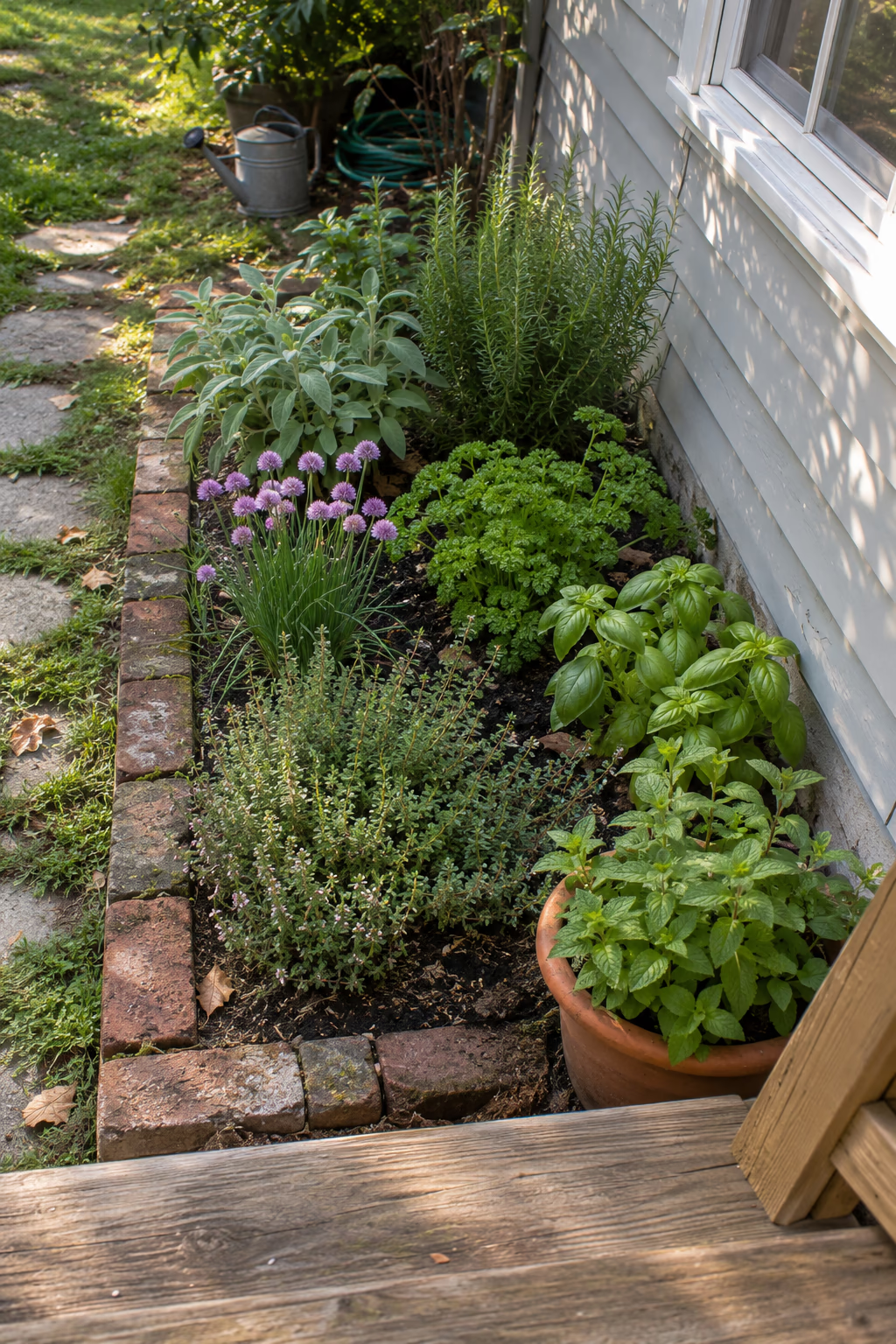
Fresh flavor just a few steps away
Herbs get used most when they’re close to the kitchen. A small bed of about 3 by 6 feet beside the back steps can hold rosemary, thyme, sage, oregano, chives, parsley, and basil.
Most culinary herbs like full sun and sharp drainage, so mix grit or fine gravel into the soil and avoid overwatering. Group the Mediterranean herbs at the sunniest, driest end and keep thirstier basil and parsley where you can water them easily.
Plant mint in a buried pot or a separate container, since it spreads aggressively. In colder zones, rosemary is often treated as an annual or brought indoors for winter.
7. Build a Tiered Bed Against the Back Fence
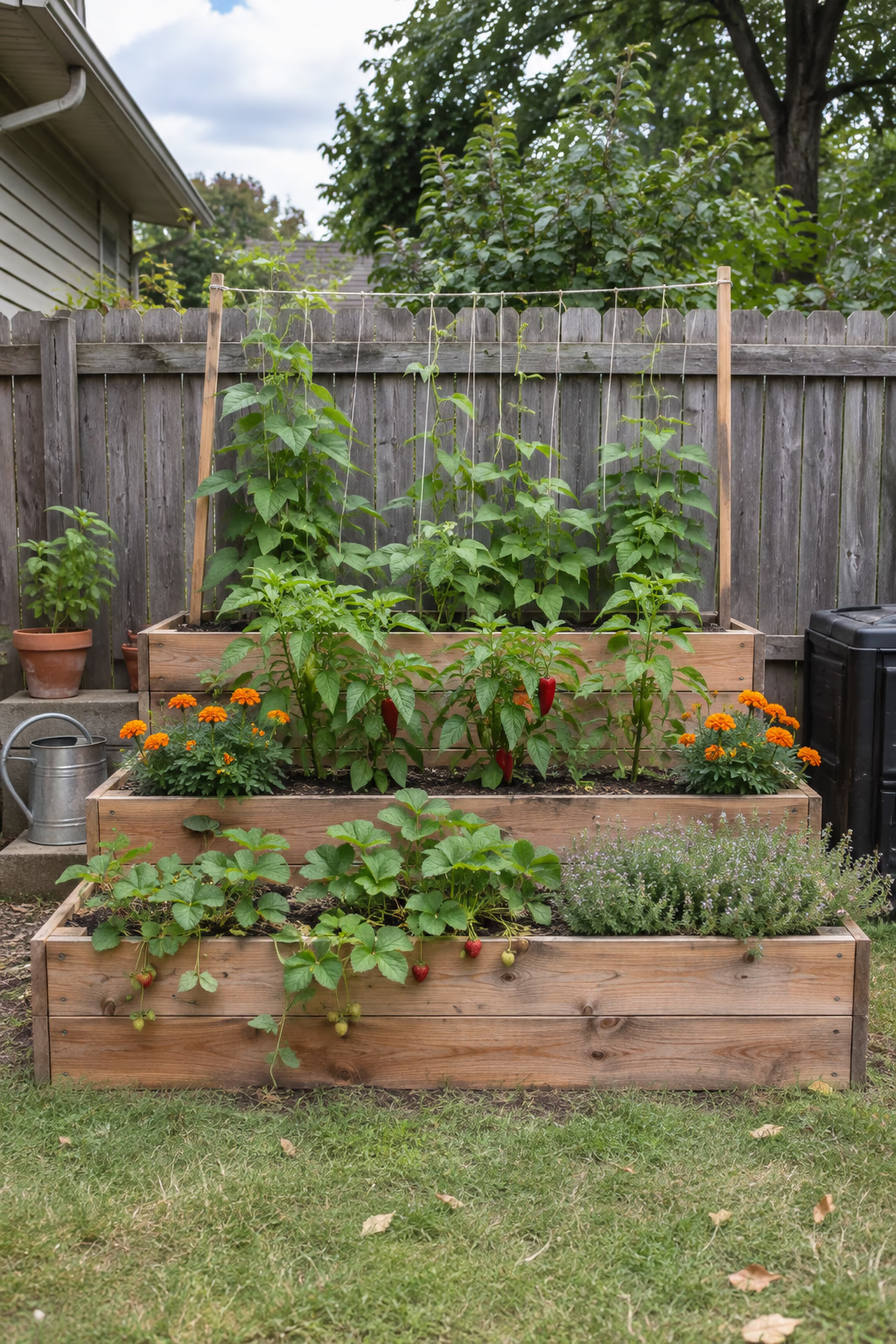
Triple the planting room on a small footprint
A tiered bed stacks two or three wooden boxes in steps, each one narrower than the one below. A typical setup has a 12-inch-deep back tier, a middle tier, and a shallow front tier, all about 18 inches deep from front to back.
Taller plants such as pole beans or cosmos go in the back, mid-size crops like peppers in the middle, and trailing strawberries or herbs in front. Every plant gets light, and the steps make the bed easy to reach.
Leave a gap between the bed and the fence, or add a rot-resistant backing board, so wet soil doesn’t sit against fence boards and shorten their life.
8. Fit a Slim Bed Along the Side Yard
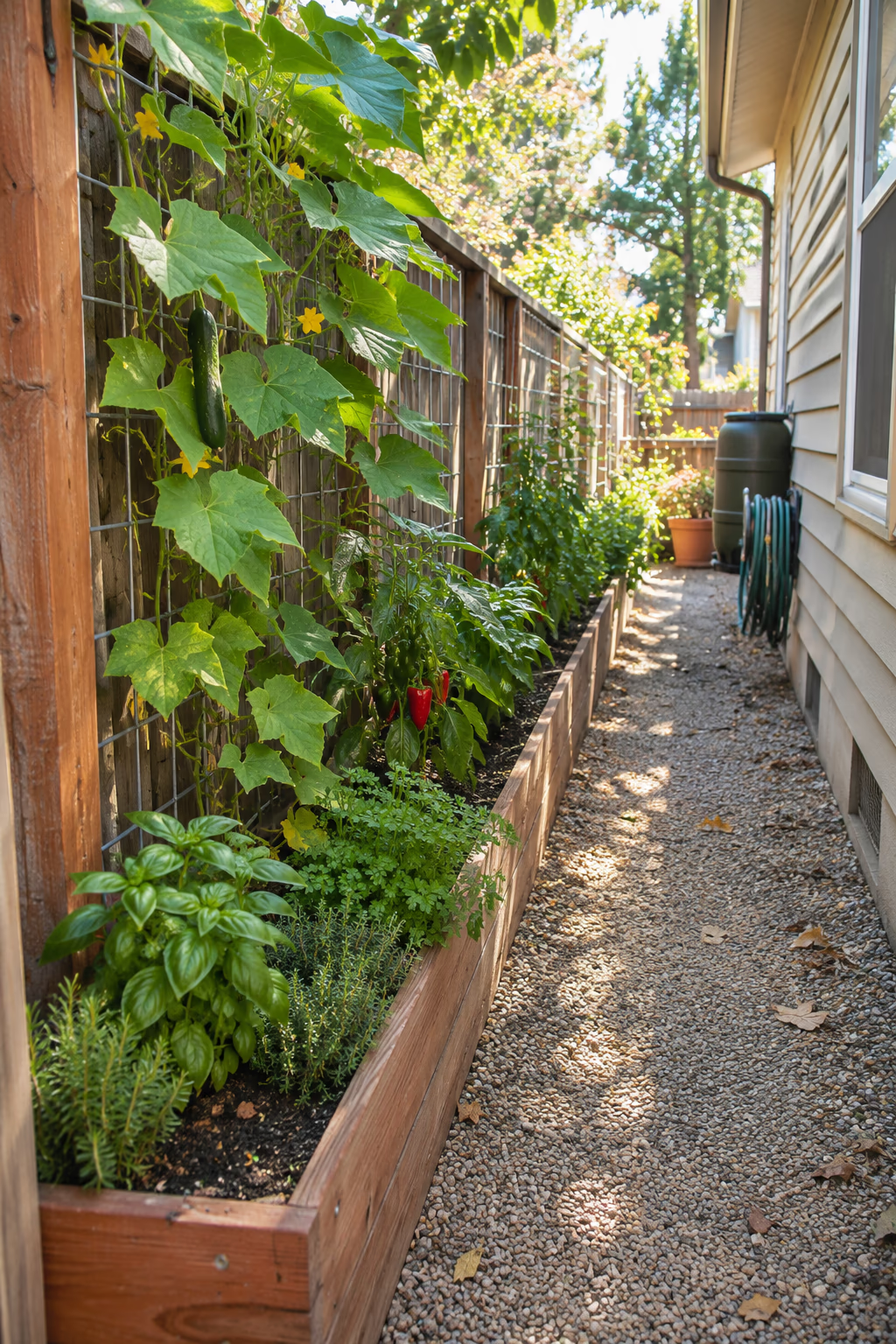
Put that skinny strip of yard to work
Side yards are often just a narrow passage, but a bed 18 to 24 inches wide along the fence can still grow plenty. Build a long, low cedar box or simply edge an in-ground strip, and leave at least 3 feet clear for the walkway.
Choose plants for the light you actually get. A sunny side yard can handle cucumbers on a fence trellis, peppers, and herbs, while a shady one is better for ferns, hostas, lettuce, and other greens.
Keep soil and mulch several inches below siding and away from foundation vents, and make sure water drains away from the house.
9. Shape an L-Shaped Bed Into a Back Corner
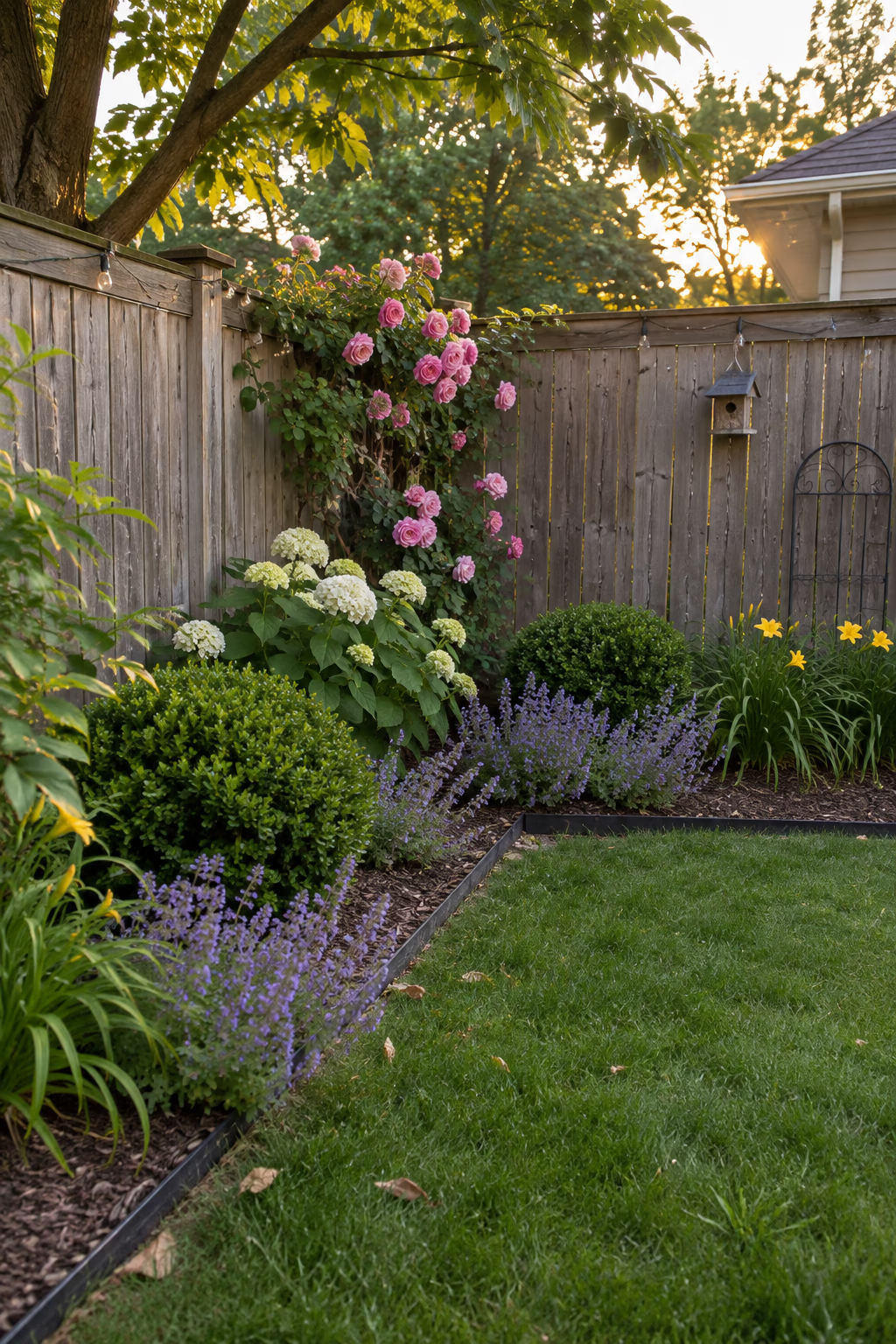
Soften an awkward corner with planting
Fence corners tend to collect weeds and clutter. An L-shaped bed that runs a few feet along each fence line fills that dead space and makes the corner look intentional.
Use the corner itself for something tall, such as a climbing rose on the fence, a dwarf fruit tree, or tall sunflowers, then step down to shrubs and perennials or vegetables along each arm. Keep each arm no deeper than 3 to 4 feet so you can reach the back.
Check how much sun the corner really gets. Fences and neighboring trees can shade corners for much of the day, which matters a lot for vegetables.
10. Edge the Patio With a Built-In Bench Planter
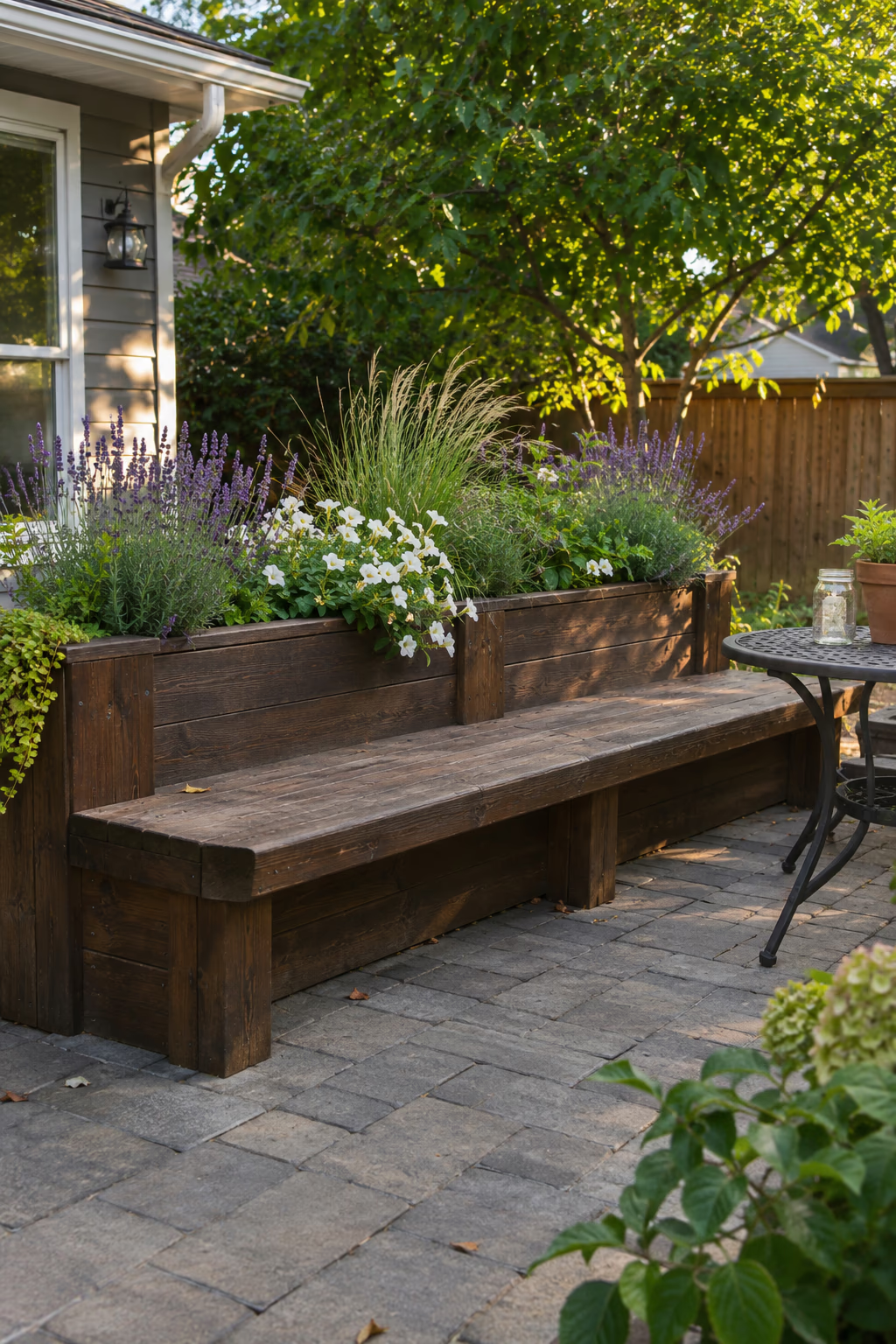
Seating and planting in one simple build
A bench planter combines a raised bed with a wide wooden seat along its front edge. Build a bed about 18 inches tall and cap it with 2-by-6 or 2-by-8 boards so you can sit right next to the plants.
It gives a patio a built-in edge, adds seating without extra furniture, and puts fragrant herbs or flowers at nose height. Dark stain or natural cedar looks good next to concrete or pavers.
Use rot-resistant lumber, line the inside walls with heavy plastic to protect the wood, and make sure the bed has drainage at the bottom so water doesn’t pool against the patio.
11. Plant a Keyhole Bed Around a Compost Basket
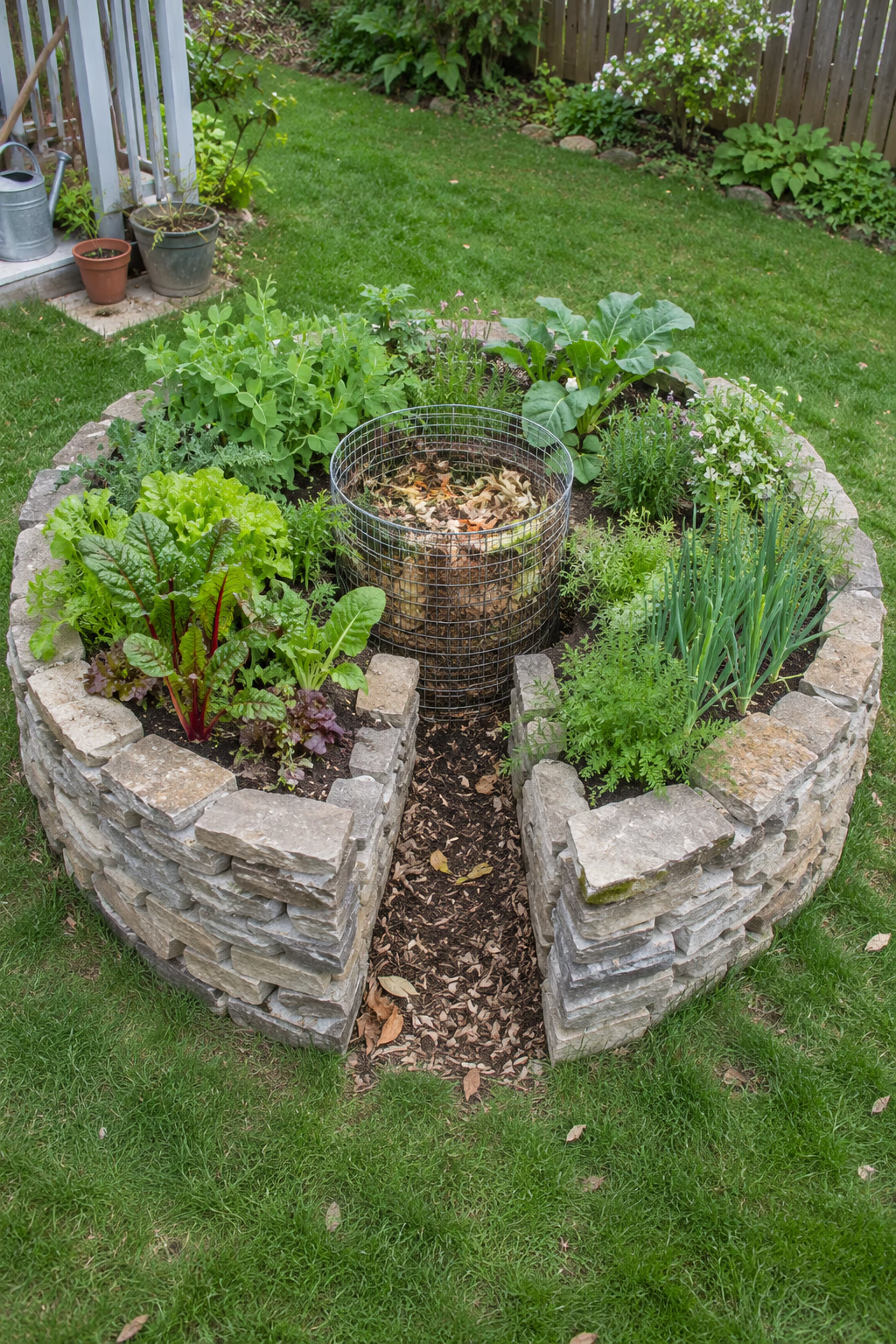
A self-feeding bed that saves steps
A keyhole bed is a circle about 6 feet across with a narrow notch cut into one side, so you can walk in and reach the center. In the middle sits a wire or wooden basket where kitchen scraps and yard trimmings break down.
As you water the compost basket, nutrients soak into the surrounding soil, feeding nearby greens, herbs, and vegetables. The round shape lets you reach every part of the bed without stepping on the soil.
Build the outer wall from stone, brick, or block about 2 to 3 feet tall. Keep meat and dairy out of the basket to avoid odors and pests.
12. Carve a Curved Island Bed Out of the Lawn
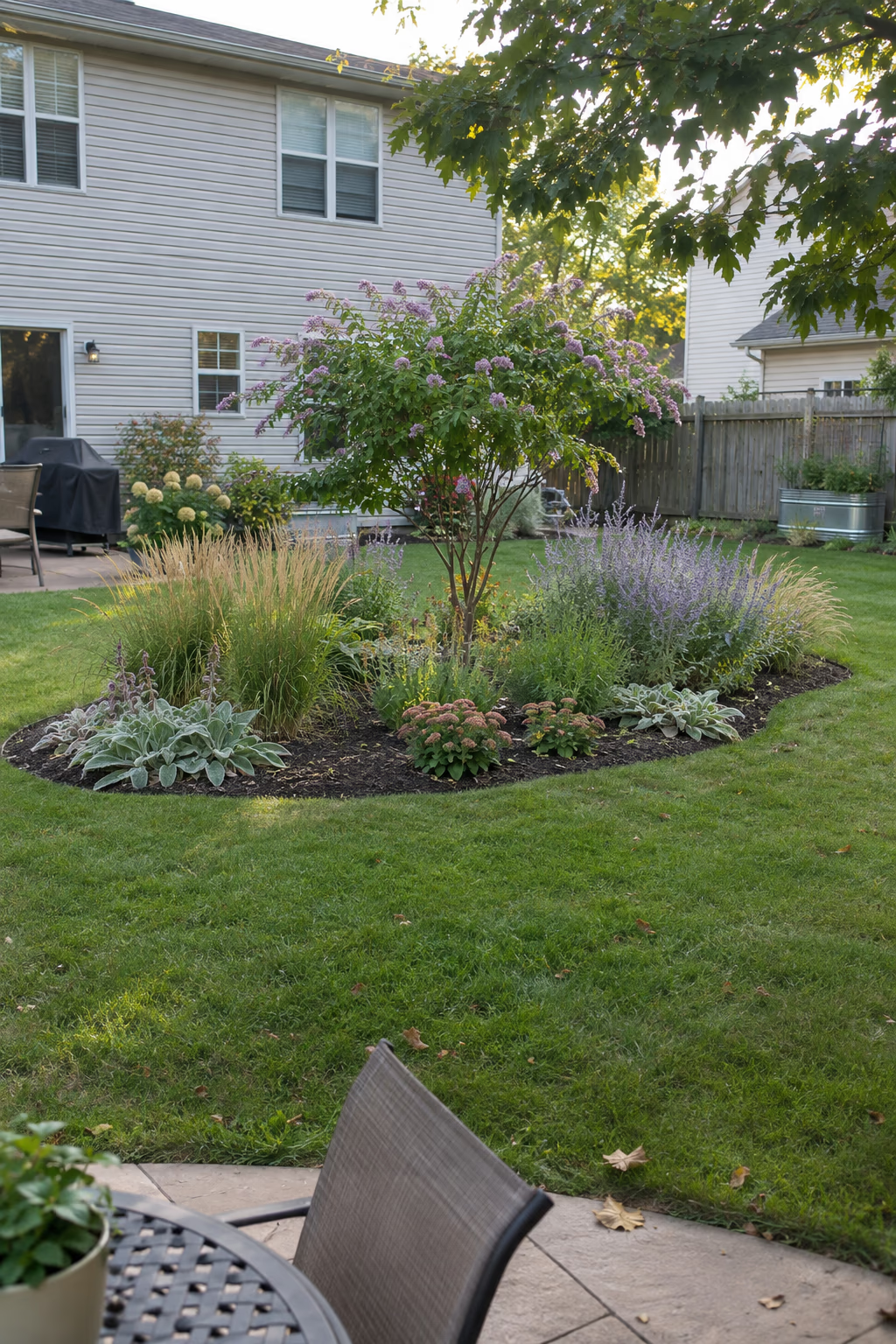
Break up a big lawn with a free-floating bed
An island bed sits on its own in the middle of the yard, often with a soft kidney or teardrop shape. Lay out the outline with a garden hose, check it from the house and patio, then cut the edge and remove the sod.
Because it’s visible from all sides, plant the tallest material in the center, such as a small tree, ornamental grass, or shrub, then work down to mid-height perennials and low edging plants. It adds depth to a flat yard and cuts down on mowing.
Keep the bed no more than 6 to 8 feet across, or add a few stepping stones for access. A clean spade-cut edge or steel edging keeps grass from creeping in.
13. Smother Turf With a No-Dig Lasagna Bed
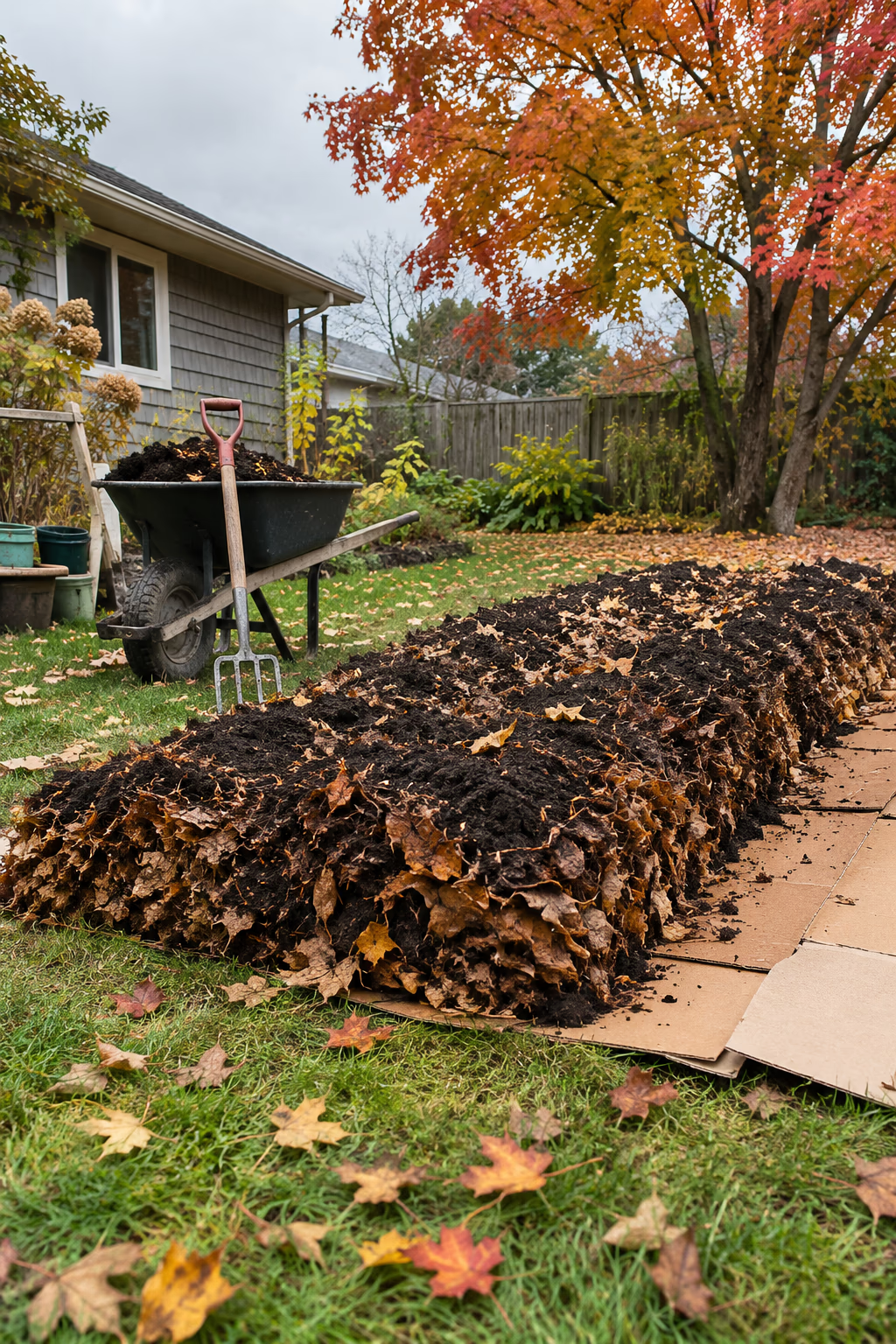
Make a new bed without digging up the lawn
A lasagna bed builds soil in layers right on top of the grass. Mow the area short, cover it with overlapping plain brown cardboard, soak it, and pile on alternating layers of compost, shredded leaves, and grass clippings until the stack is 8 to 12 inches high.
The cardboard smothers the grass while worms and microbes break everything down into rich, loose soil. There’s no tilling, no sod to haul away, and far less back strain.
Fall is the ideal time to build one so it’s ready by spring. If you plant right away, top the stack with a few inches of finished compost and plant into that layer. Remove any tape and glossy labels from the cardboard first.
14. Grow a Cut-and-Come-Again Salad Bed
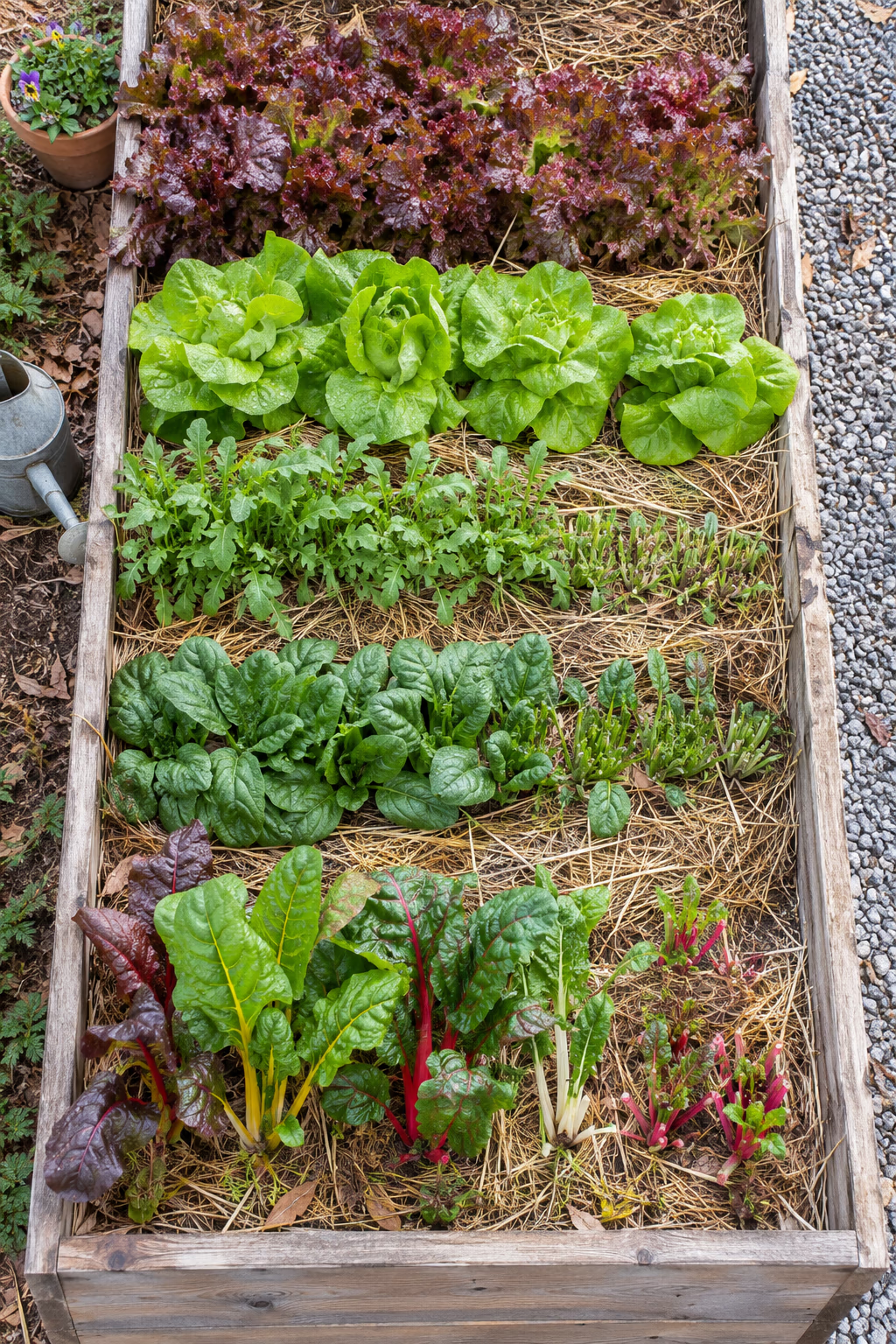
Fresh greens for months from one small bed
Dedicate a 4-by-4 or 4-by-8 bed to leafy greens: loose-leaf lettuce, arugula, spinach, mizuna, chard, and kale. Sow short rows every two weeks and harvest outer leaves or shear the plants about an inch above the base so they regrow.
Salad greens are fast, compact, and expensive to buy, so a small bed pays off quickly. Rows of red and green lettuce also look surprisingly ornamental.
Most greens are cool-season crops that bolt in hot weather. Plant them in spring and fall, and give the bed afternoon shade or shade cloth in summer.
15. Terrace a Slope With Timber Retaining Beds
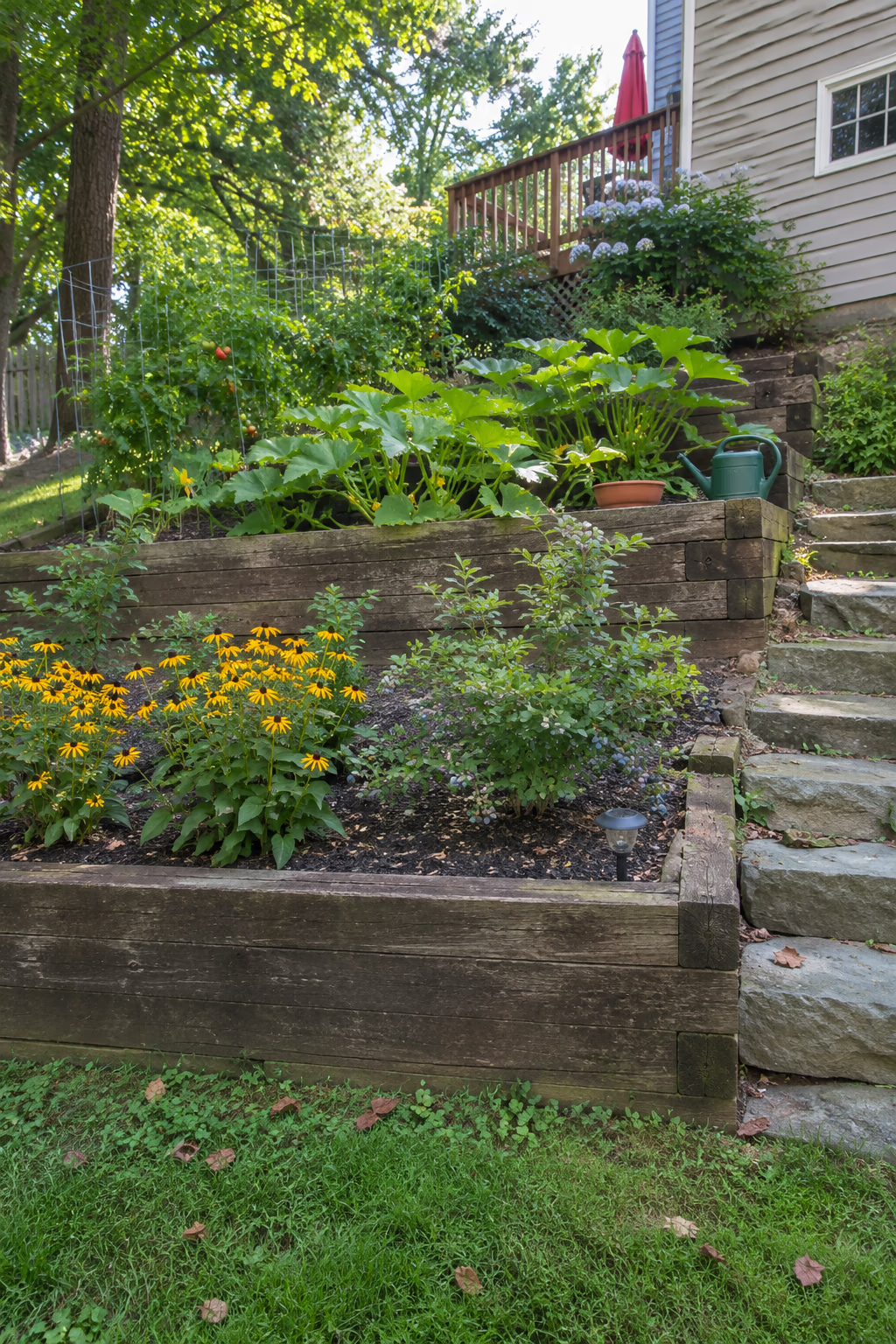
Turn a hard-to-mow hill into level planting
On a sloped yard, a series of low terraced beds creates flat planting areas and slows down runoff. Use rot-resistant 6-by-6 timbers, pinned together with rebar or long landscape spikes, and keep each step about 12 to 24 inches high.
Level beds hold water and soil much better than a slope, and the stepped look adds depth to the backyard. Use the upper, sunnier terraces for vegetables and the lower ones for perennials or berries.
Walls over about 3 to 4 feet tall usually need engineering and may require a permit, so check local codes. Add gravel and a perforated drain pipe behind taller walls, and call 811 before digging.
16. Stack Cinder Blocks for a Budget Bed
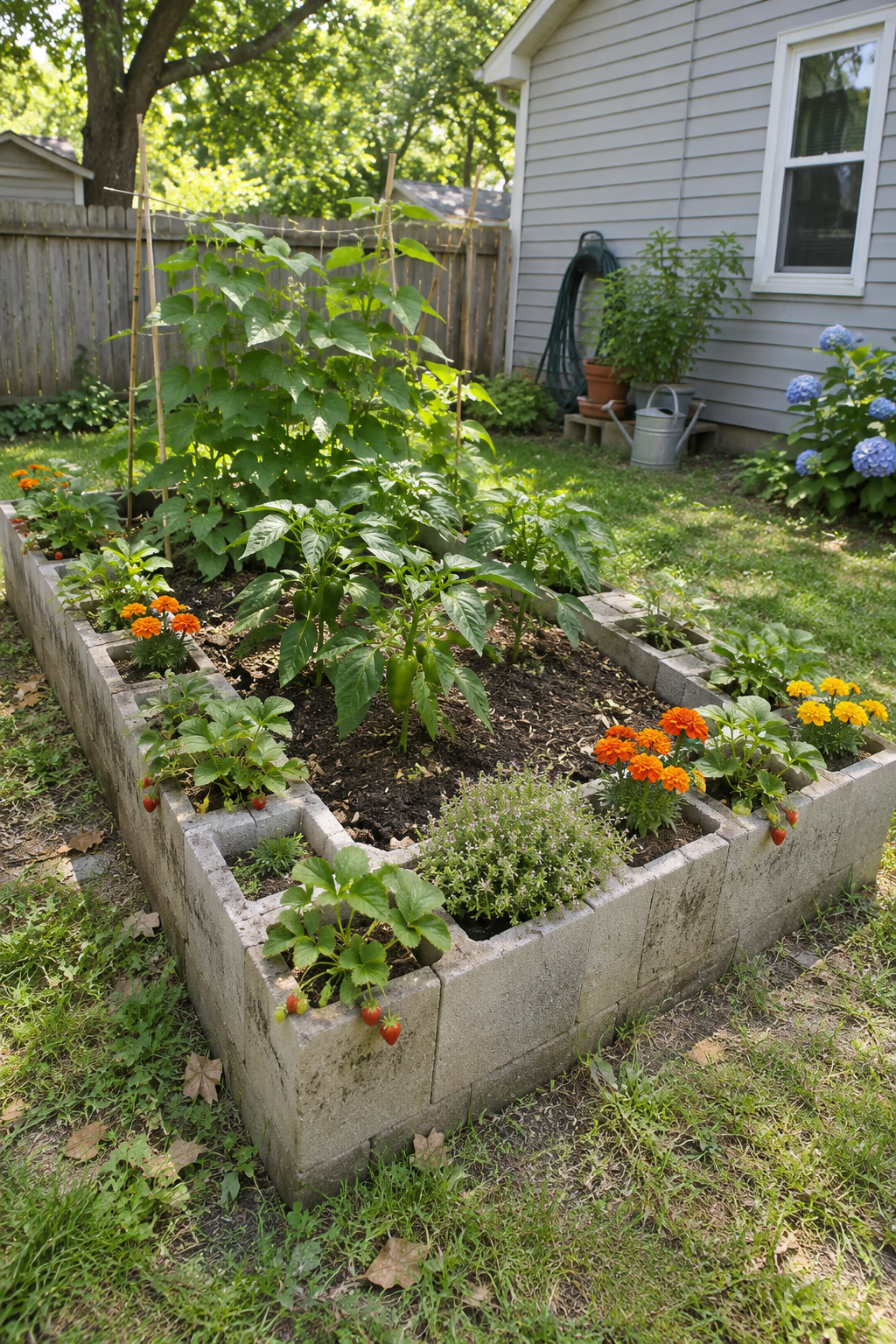
A sturdy bed for very little money
Concrete blocks are one of the cheapest ways to build a durable bed. Lay standard 8-by-8-by-16-inch blocks on level ground in a single course, holes facing up, and fill the bed and the block cores with soil.
The holes become planting pockets for herbs, strawberries, marigolds, or succulents, so the edge does double duty. Blocks don’t rot and can be rearranged whenever your layout changes.
Most blocks sold today are standard concrete. If you’re unsure what yours are made of, use them for flowers or line the inside walls. Painting the outside a soft color can make the bed look more finished.
17. Cover a Bed With Hoops to Stretch the Season
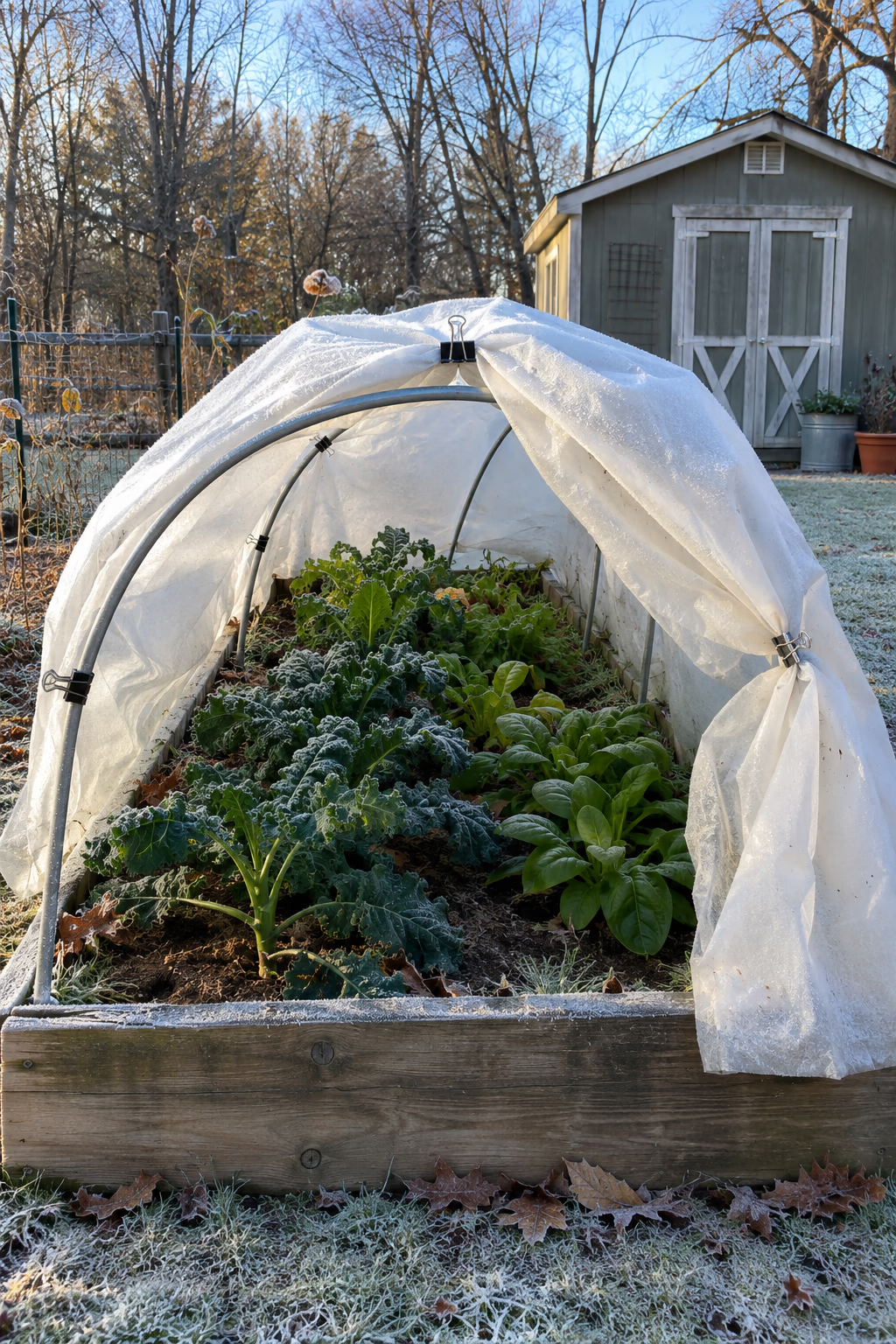
Start earlier and harvest later
Bend half-inch PVC pipe or galvanized metal conduit into arches and slide the ends over short rebar stakes along the sides of a bed. Drape lightweight row cover or clear greenhouse plastic over the hoops and clip it in place.
The cover traps warmth, protects plants from light frost, and keeps out many flying pests. It can add several weeks to each end of the growing season for greens, carrots, and other cool-season crops.
Open the ends on sunny days, since temperatures under plastic can climb fast. Weigh down the edges with sandbags or clips so wind doesn’t lift the cover.
18. Raise a Planter on Legs for Easy Reach
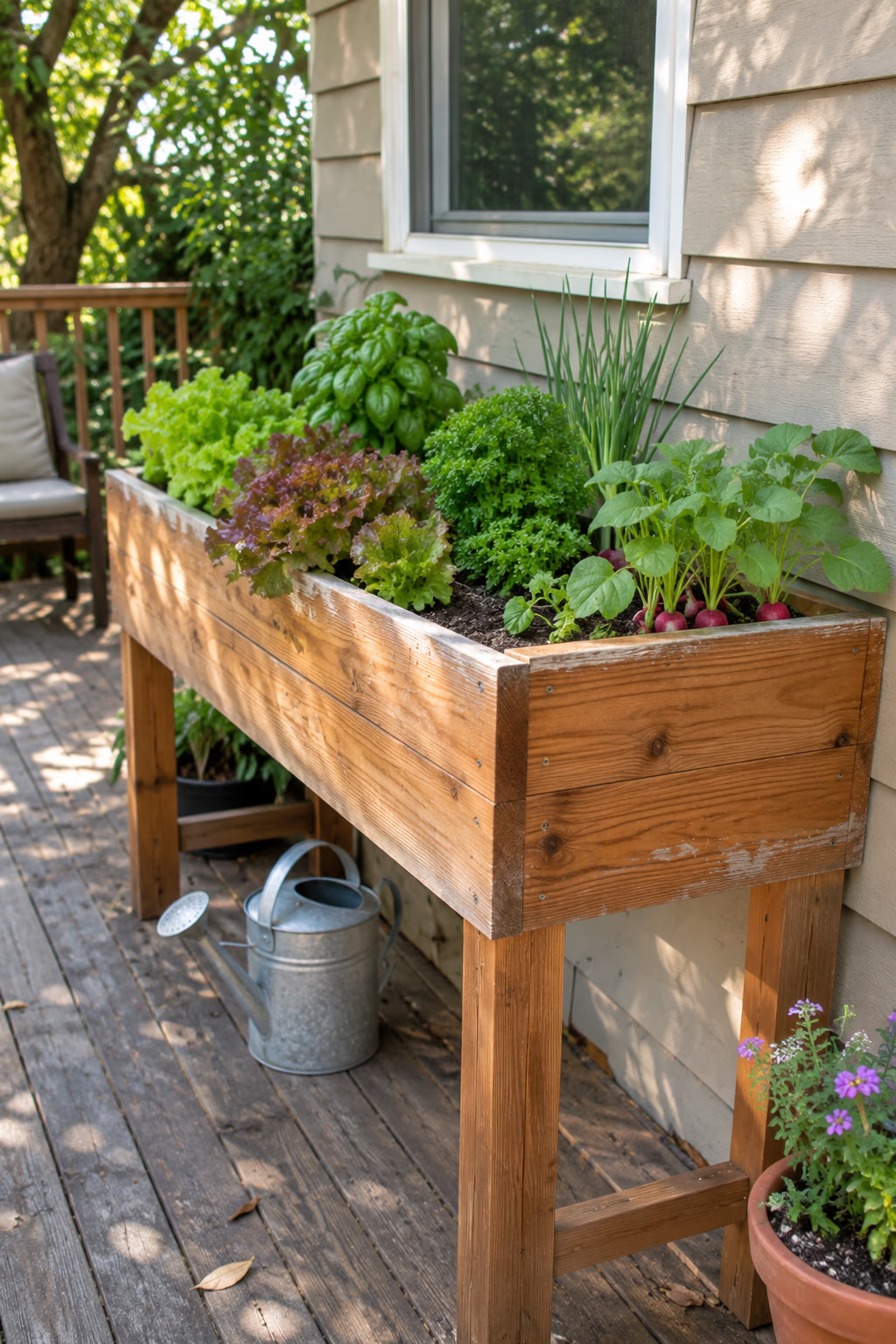
No bending, no kneeling, no back strain
An elevated planter is a shallow box, usually 8 to 12 inches deep, set on legs so the soil sits around waist height. It’s a great fit for patios, decks, and gardeners with bad knees, and it can be built or bought at a height that works from a chair or wheelchair.
Lettuce, herbs, radishes, green onions, and compact flowers grow well in this depth. Pests like rabbits can’t reach, and weeds are rare.
The shallow soil dries quickly, so water often in summer or add a drip line. Check how much weight your deck can support before filling a large planter with wet soil.
19. Fence a Bed Against Rabbits and Deer
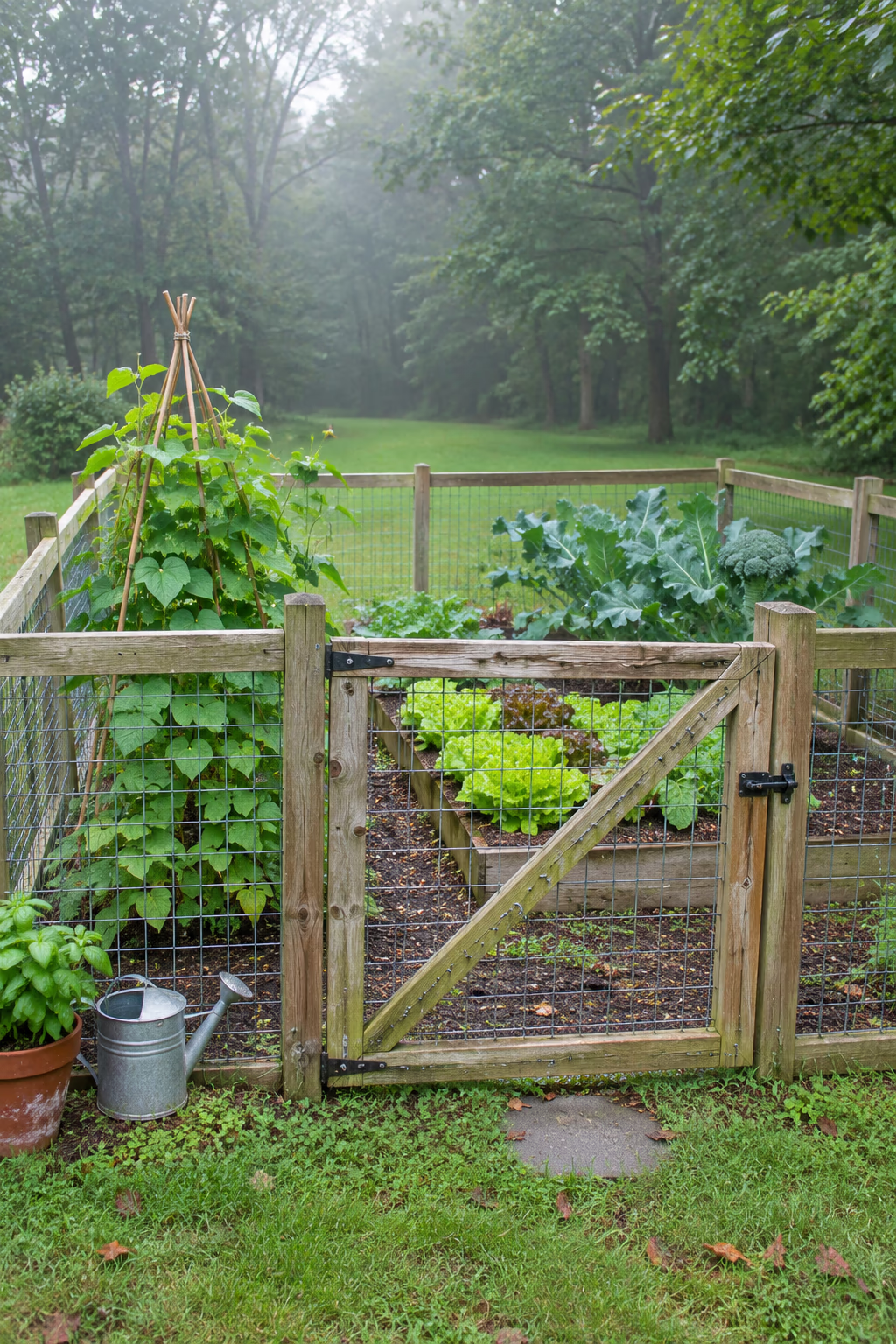
Protect your harvest before the critters find it
If wildlife keeps eating your plants, build the protection into the bed. For rabbits, attach 2- to 3-foot-tall hardware cloth or chicken wire around the bed and bury the bottom 6 inches to stop digging. For gophers and voles, staple hardware cloth across the bottom of a raised bed before filling it.
A simple wood frame with a hinged wire panel can make a tidy, walk-in enclosure that looks like part of the garden instead of an afterthought.
Deer can jump much higher, so a deer fence usually needs to be about 8 feet tall, or you can cover beds with netting on hoops. Check HOA rules on fence height and materials.
20. Plant a Woodland Bed Beneath a Shade Tree
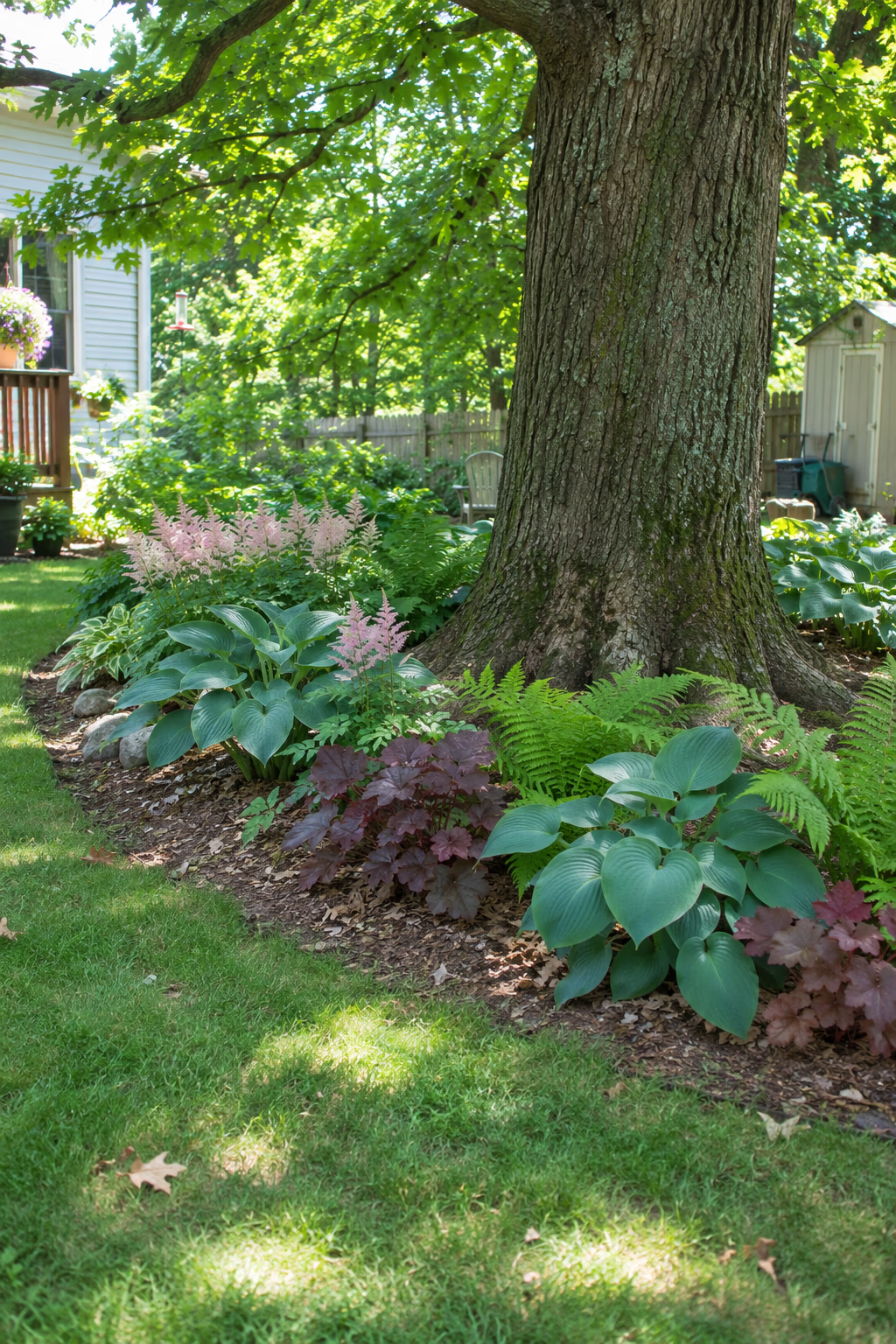
Grow something lovely where grass won’t
The ground under a mature tree is usually too shady and dry for lawn. Turn it into a woodland bed with shade lovers such as hostas, ferns, heuchera, hellebores, astilbe, and native woodland plants like wild ginger.
A ring of planting softens the base of the tree, keeps mowers from nicking the trunk, and creates a cool, layered spot in summer. Shredded leaf mulch gives it a natural forest-floor look.
Be gentle with the tree. Don’t pile more than an inch or two of soil over the roots, plant small plugs between roots rather than digging big holes, and keep mulch pulled back from the trunk.
21. Frame a Bed With Woven Willow Edging
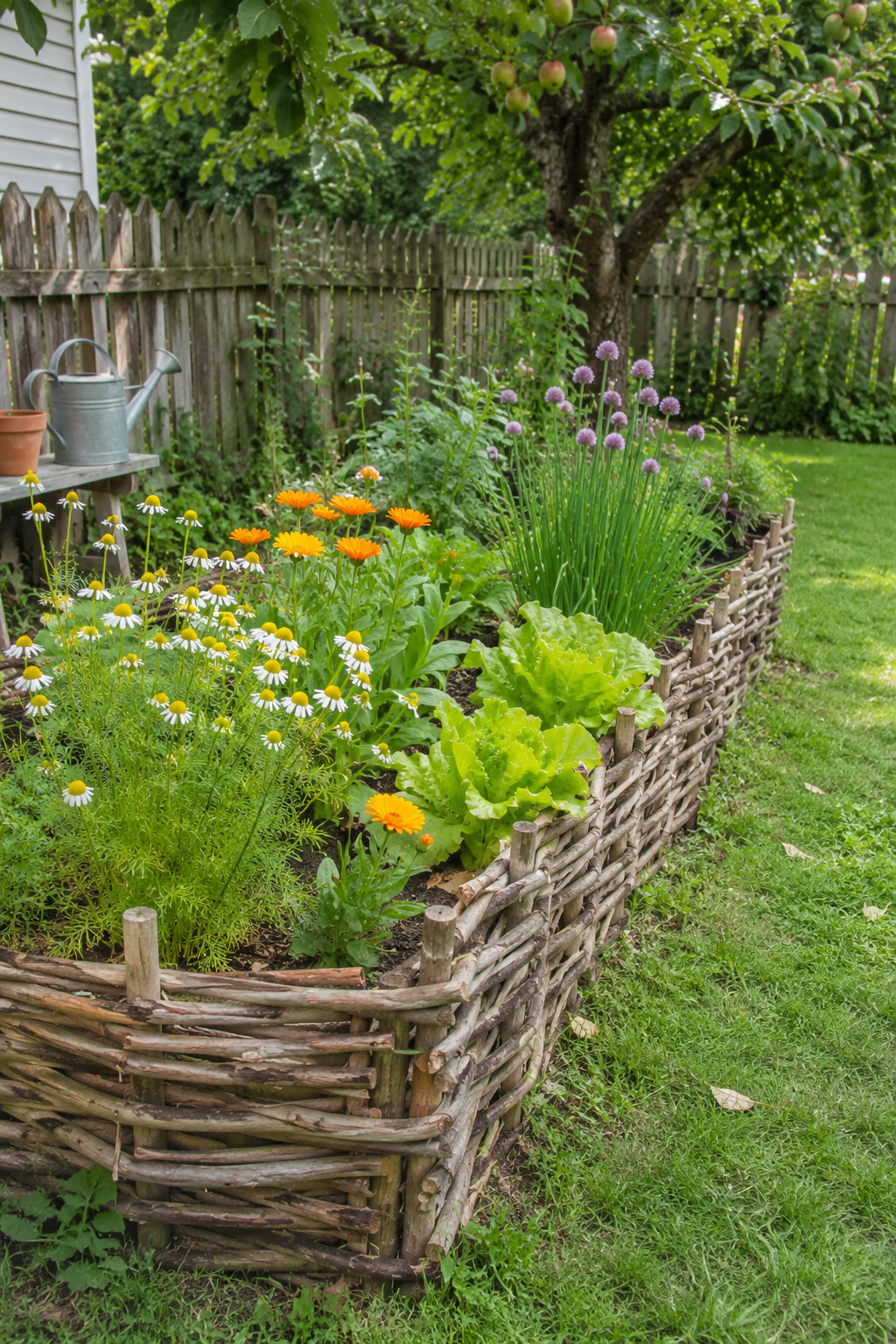
A rustic, handmade edge with old-world charm
Wattle edging is made by weaving flexible willow or hazel stems between upright stakes. You can weave it yourself on site or buy ready-made panels, then use it to frame a low bed of vegetables, herbs, or cottage flowers.
The natural texture blends into the garden and gives a bed a charming, storybook look that works especially well in informal yards.
Woven edging is decorative more than permanent. Expect a few years of life before it needs replacing, and line the inside with landscape fabric if you want to slow soil from sifting through.
22. Mound a Hugelkultur Bed Over Buried Logs
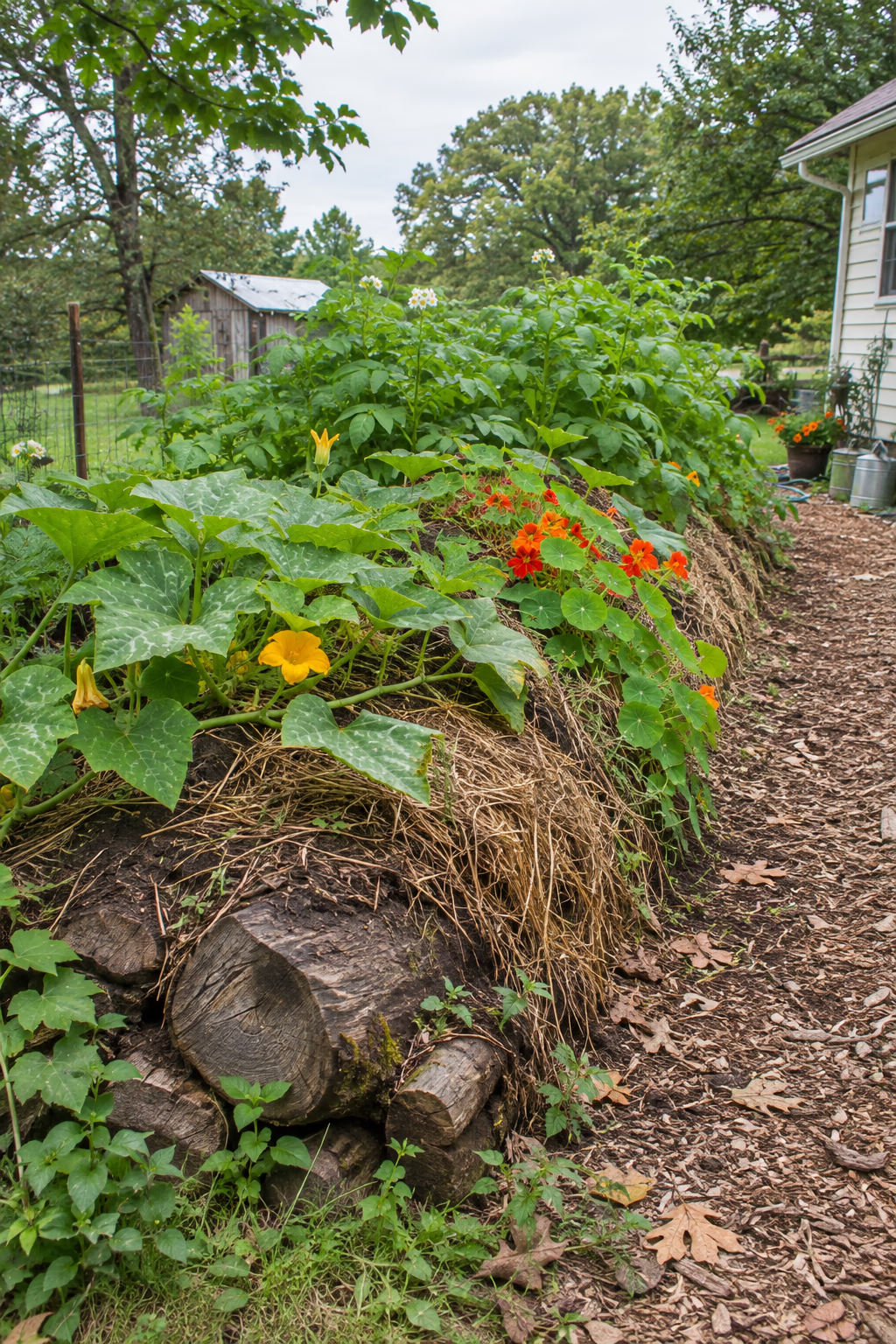
Turn fallen wood into rich, water-holding soil
Hugelkultur is a mounded bed built over a core of rotting logs and branches. Lay logs in a shallow trench, cover them with smaller branches, leaves, and grass clippings, then top the pile with several inches of compost and soil.
As the wood breaks down, it acts like a sponge, holding moisture and slowly releasing nutrients. The mound shape also adds planting surface and works well for squash, potatoes, and other hungry crops.
Use hardwoods such as oak, maple, or fruitwood. Avoid black walnut, which can harm many plants, and rot-resistant woods like cedar that break down too slowly. Expect the mound to settle over the first couple of years.
23. Plant a Three Sisters Bed of Corn, Beans, and Squash
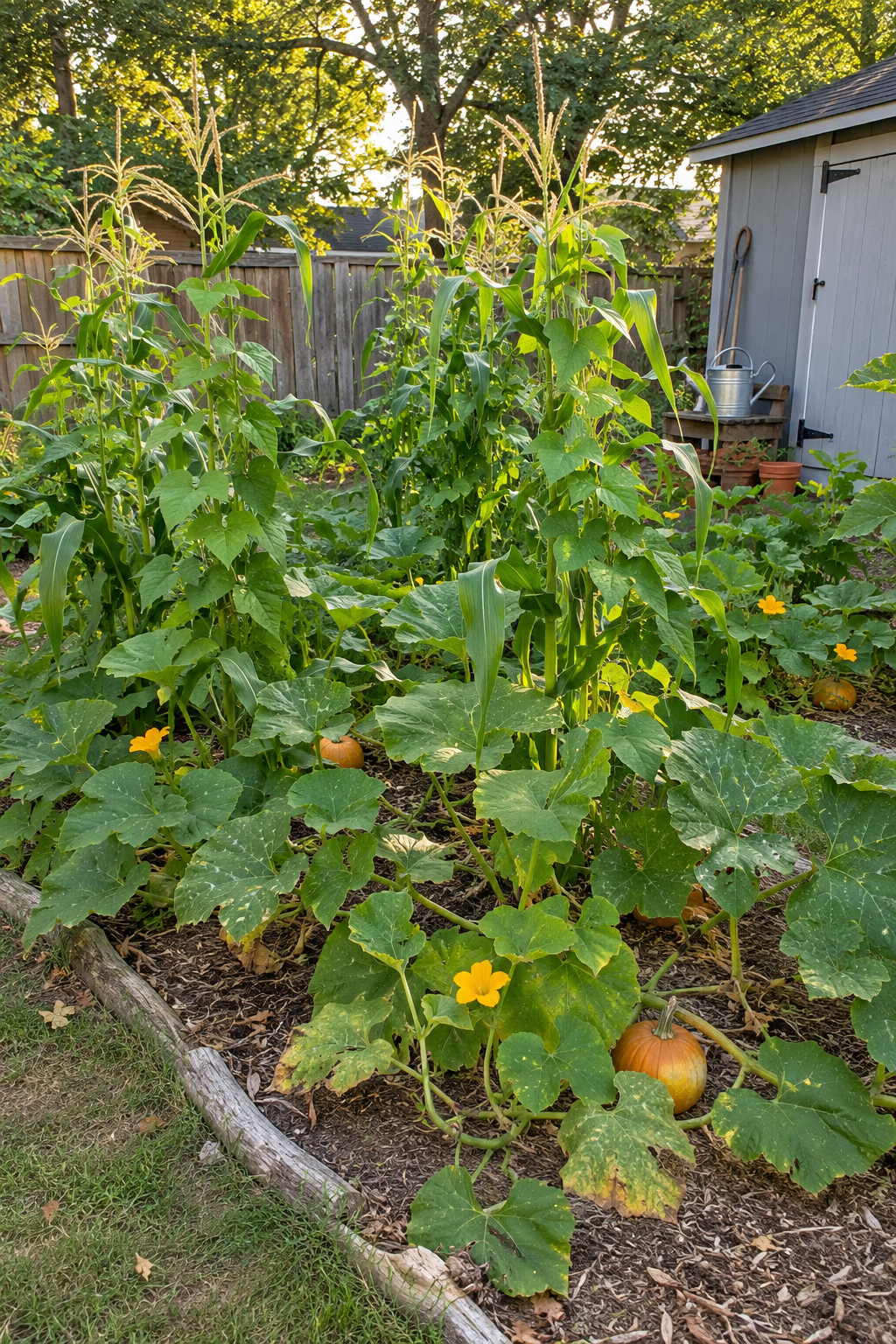
A traditional planting that works as a team
The three sisters method, developed by Native American farmers, grows corn, pole beans, and winter squash together. Plant corn in small mounds about 4 feet apart, sow beans around each stalk once the corn is several inches tall, and plant squash between the mounds.
The corn gives the beans something to climb, the beans add nitrogen to the soil, and the broad squash leaves shade out weeds and hold moisture. It’s a fun, productive bed and a great way to involve kids in the garden.
This bed needs space, at least 10 by 10 feet, and full sun. Plant corn in a block rather than a single row so it pollinates well.
How to Plan Your Backyard Garden Beds
A little planning before you buy lumber or soil will save money and make your beds easier to care for for years.
- Follow the sun. Track light for a full day before choosing a spot. Most vegetables need 6 to 8 hours of direct sun, while shade beds suit ferns, hostas, and greens.
- Keep beds within reach. Make beds no wider than 4 feet if you can reach from both sides, or about 2 to 3 feet against a fence, so you never have to step on the soil.
- Plan paths first. Leave 2 to 3 feet between beds for walking and kneeling, and wider paths where a wheelbarrow or mower needs to pass.
- Invest in soil. Fill beds with a blend of quality topsoil and compost, and top them up with fresh compost every year as the soil settles.
- Put water close by. Place beds within easy reach of a spigot, and consider drip lines or soaker hoses on a timer to save water and time.
- Check the rules and the ground. Review HOA guidelines for front-visible beds and fences, and call 811 before digging deep or building retaining walls.
Frequently Asked Questions
What is the best size for a backyard garden bed?
A bed 4 feet wide and 8 feet long is a popular, practical size because you can reach the middle from either side and standard lumber fits it well. Narrower beds of 2 to 3 feet work best along fences and walls.
Should a garden bed be raised or in the ground?
Both work. Raised beds warm up earlier, drain better, and help with poor soil or bad backs, while in-ground beds cost less, hold moisture longer, and suit large plantings. Your soil, budget, and climate should guide the choice.
What should I put in the bottom of a new garden bed?
For most beds, start with loosened native soil or a layer of cardboard to smother grass, then add a mix of topsoil and compost. Add hardware cloth at the bottom if gophers or voles are a problem in your area.
What is the best time of year to build a garden bed?
Fall is ideal because the soil has time to settle and layered materials can break down over winter. Early spring also works if you fill the bed with finished soil and compost so it’s ready to plant right away.
How deep should a garden bed be for vegetables?
Most vegetables grow well in 8 to 12 inches of good soil, especially if the ground below is loosened. Deep-rooted crops such as tomatoes, carrots, and potatoes do best with 12 to 18 inches.
Final Thoughts
The best backyard garden bed ideas fit your space, your light, and the way you like to garden. A four-square potager, a stone-walled bed, or a single herb bed by the back door can make the whole yard feel more alive and useful.
Start with one or two beds, learn what thrives in your conditions, and add more as your confidence grows. Before long you’ll have a backyard full of fresh food, bright flowers, and a few favorite spots to enjoy them.


