
Step out the back door on a June evening and the first thing you notice is the flower bed: soft pink roses near the patio, a little water splashing somewhere, and bees working the last open blooms. A plain backyard starts to feel like a place you want to stay a while.
A backyard flower bed works differently from the beds out front. It doesn’t need to impress people driving by. It’s for you, so it can frame the patio, hide a bench, draw birds to the window, or turn a slope nobody uses into the prettiest part of the yard. It can also grow with you, one season and one bed at a time.
These 23 backyard flower bed ideas start with the most popular showpieces, like fountain beds, secret garden seating, and rose arbors, and then cover practical options for shade, heat, slopes, small budgets, and evening use. Each one includes plant suggestions, sizes, and an honest note on upkeep.
1. Build a Flower Bed Around a Tiered Fountain
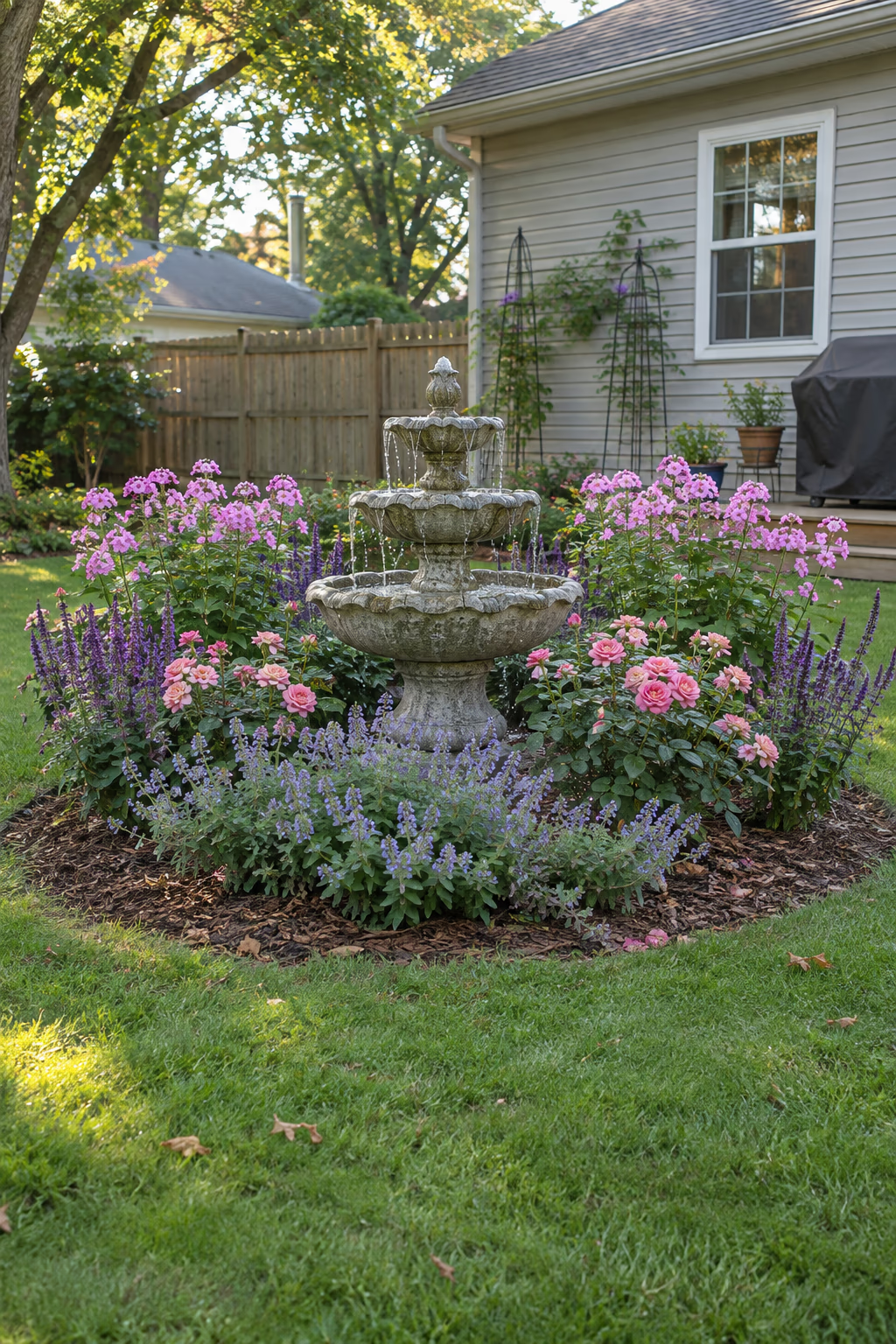
A splashing centerpiece that pulls you outside
Set a two- or three-tier cast stone or resin fountain in the middle of a round or square bed about 8 to 10 feet across, then ring it with plants that bloom at different heights. Low catmint or sweet alyssum can hug the basin, shrub roses or salvia can fill the middle, and a few taller phlox can rise near the outer edge.
Moving water gives the bed sound and motion, and the fountain stays a focal point even in winter when most of the flowers are cut back. Most backyard fountains recirculate water with a small pump, so they don’t need a water line.
You will need an outdoor GFCI outlet nearby, and many areas require a licensed electrician for a new circuit. Set the fountain on a compacted gravel pad so it stays level, and plan to drain or cover it before hard freezes.
2. Tuck a Bench Into a Secret Garden Bed
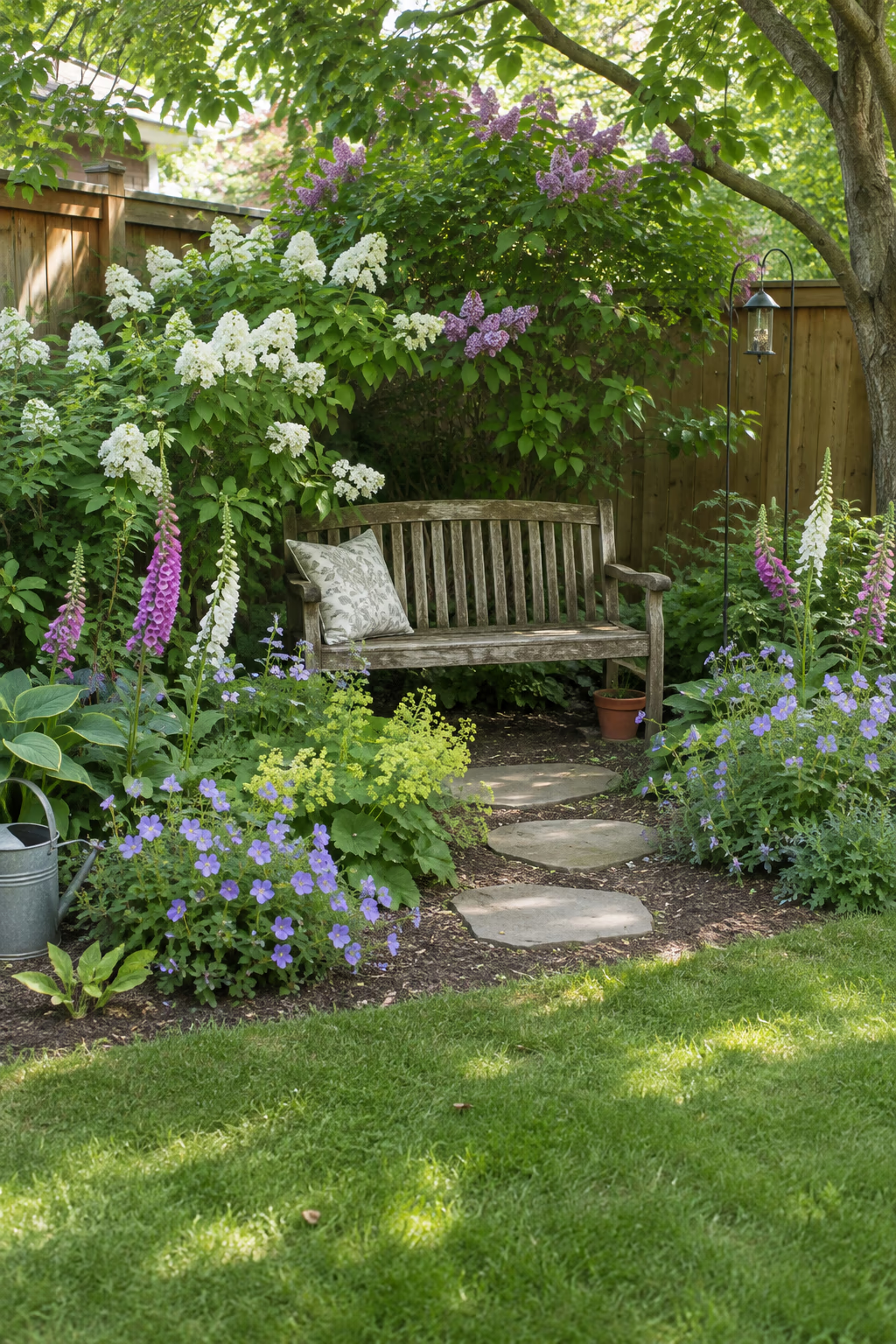
A hidden seat surrounded by blooms
Pick a back corner or a spot along the property line and shape a deep, U-shaped bed around a simple wooden or metal bench. Place shrubs like lilac, viburnum, or panicle hydrangea at the back to enclose the seat, then fill the front with foxglove, hardy geranium, and lady’s mantle.
Partly hiding the bench is what makes it feel special. You see a glimpse of it from the patio, then discover the whole nook when you walk over. A short stepping stone path through the bed adds to the effect.
Leave at least 3 feet of open space in front of the bench so plants don’t brush your legs when wet. Shrubs take two or three years to fill in, so use tall annuals like cosmos to close gaps early on.
3. Frame the Bed Entrance With a Rose Arbor
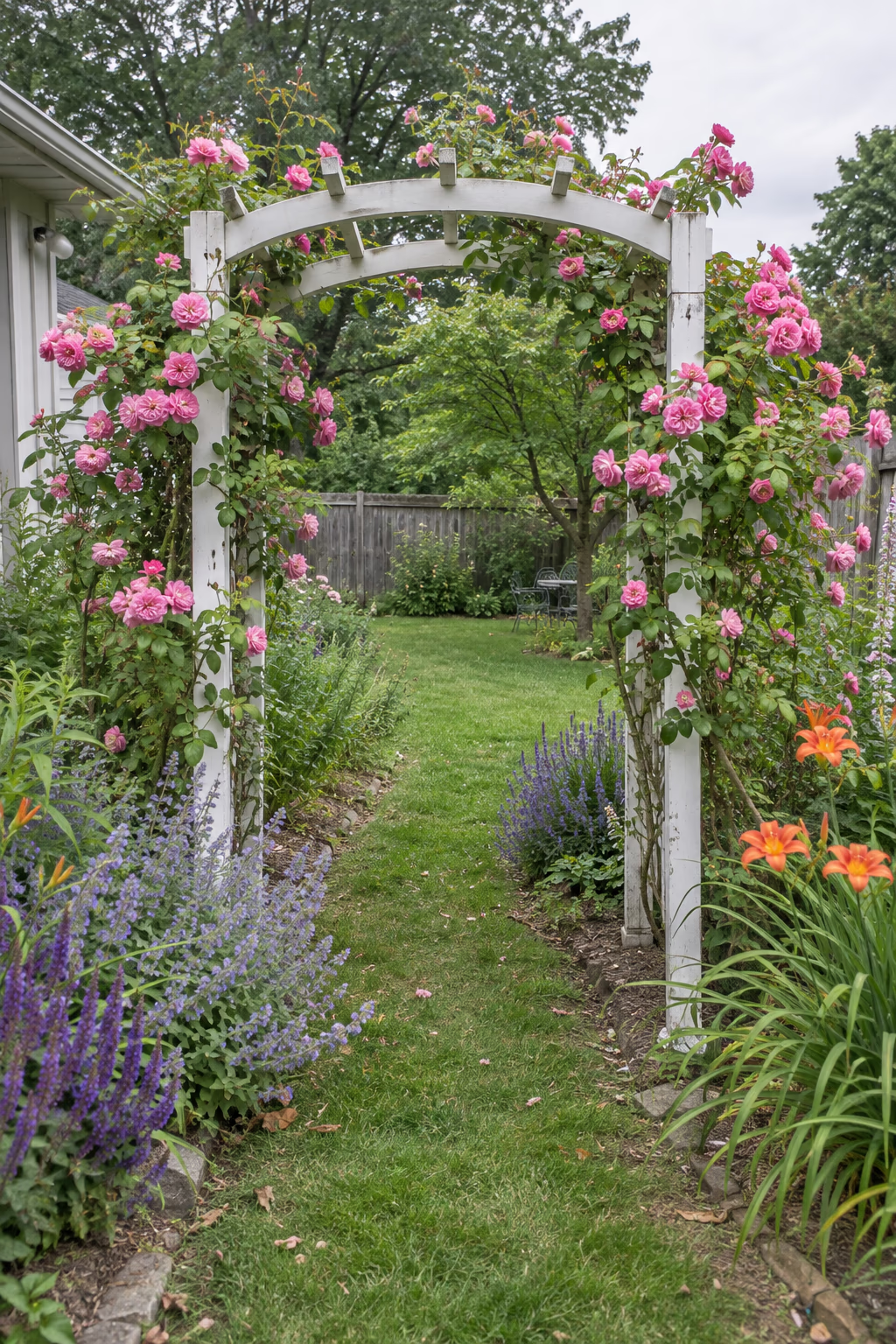
Instant height and romance at the bed’s edge
A painted wood or powder-coated steel arbor, roughly 4 feet wide and 7 to 8 feet tall, turns a flower bed into a place you walk into instead of past. Plant a climbing rose at each post and let a looser mix of perennials, such as nepeta, salvia, and daylilies, spread out on both sides.
The arch gives the eye a frame to look through, so even a modest bed behind it seems more layered. Disease-resistant climbers suited to your zone will save you a lot of spraying and frustration.
Anchor the arbor posts in concrete or with ground spikes, since a rose-covered arch catches a lot of wind. Tie new canes loosely and train some sideways, which encourages more flowers along the stems.
4. Cascade Blooms Over a Stacked Stone Retaining Wall
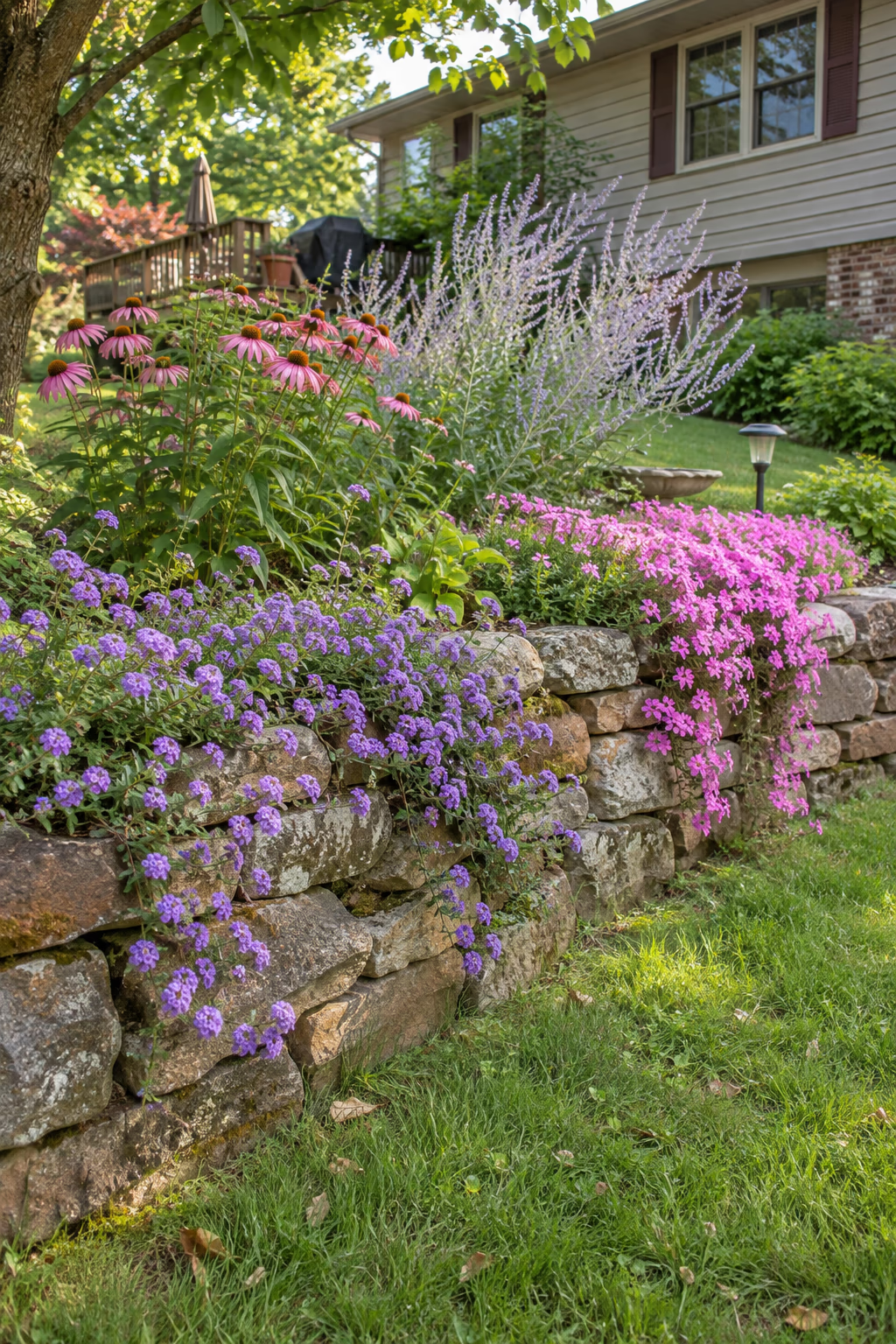
Turn an awkward slope into a flower display
If part of your backyard slopes, a low stacked stone or segmental block wall 18 to 30 inches tall can create a level bed above it. Plant trailing plants like creeping phlox, aubrieta, or trailing verbena along the top edge, then add upright perennials such as coneflower or Russian sage behind them.
Flowers spilling down stone soften the wall, and the raised bed is easier to reach than ground-level soil. The wall also slows runoff and keeps soil from washing onto the lawn.
Walls taller than about 3 to 4 feet often need engineering or a permit, so check local rules. Even short walls need a gravel base, gravel backfill, and drainage behind them so water pressure doesn’t push them over.
5. Wrap the Patio in a Deep Mixed Border
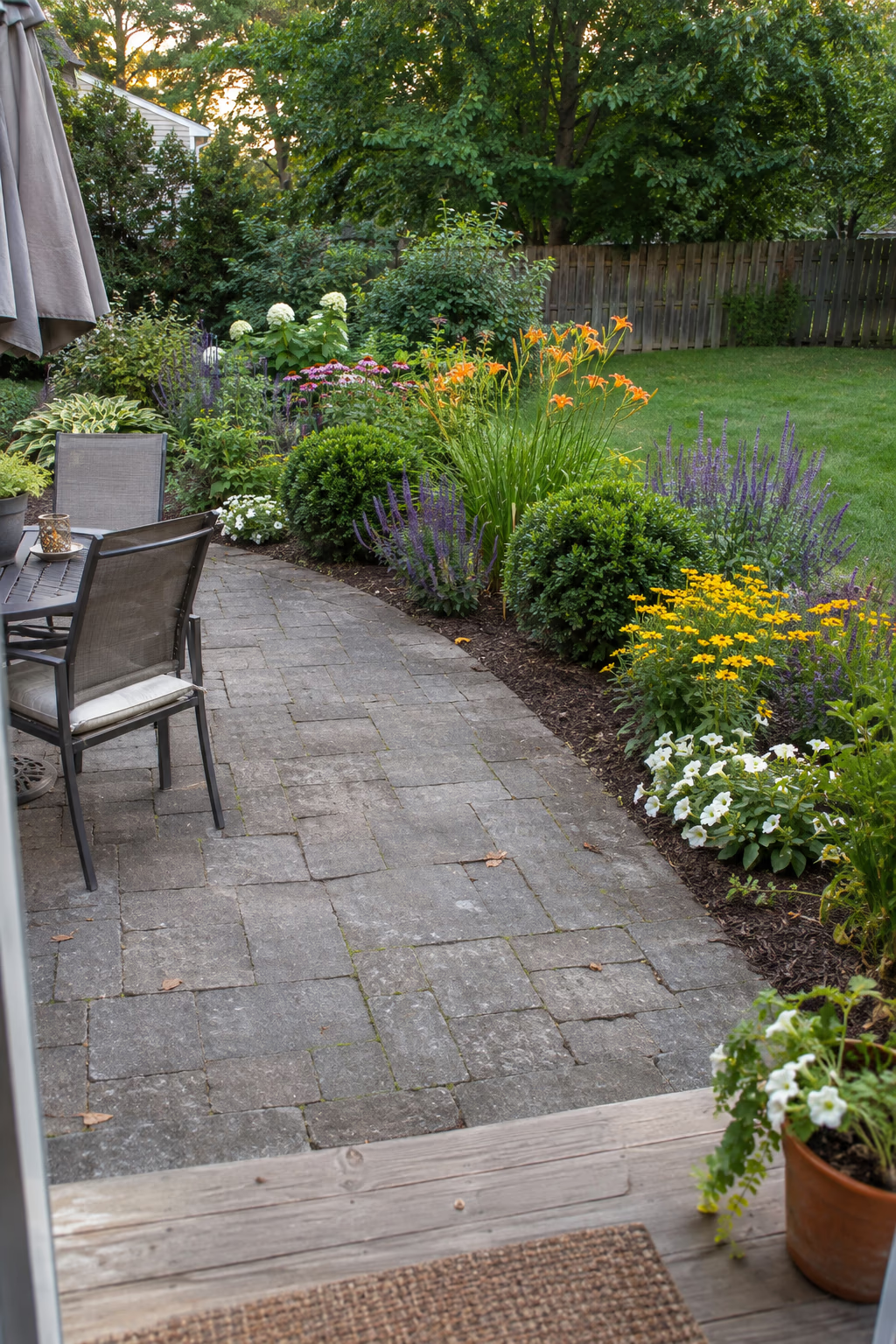
Flowers right where you sit every day
Instead of letting the lawn run straight up to the patio, carve a bed 4 to 6 feet deep along one or two sides. Mix a few small evergreen shrubs for winter structure with long-blooming perennials like coreopsis, salvia, and daylilies, and tuck in annuals for nonstop color.
A bed against the patio makes the seating area feel enclosed and finished, and you’ll enjoy the flowers every time you eat or relax outside. It also gives you a place for fragrant plants where you’ll actually smell them.
Keep taller plants toward the far side so they don’t block your view of the yard. Leave a 6-inch mulched strip next to the pavers so soil doesn’t splash onto the patio when it rains.
6. Carve a Kidney-Shaped Island Bed Into the Lawn
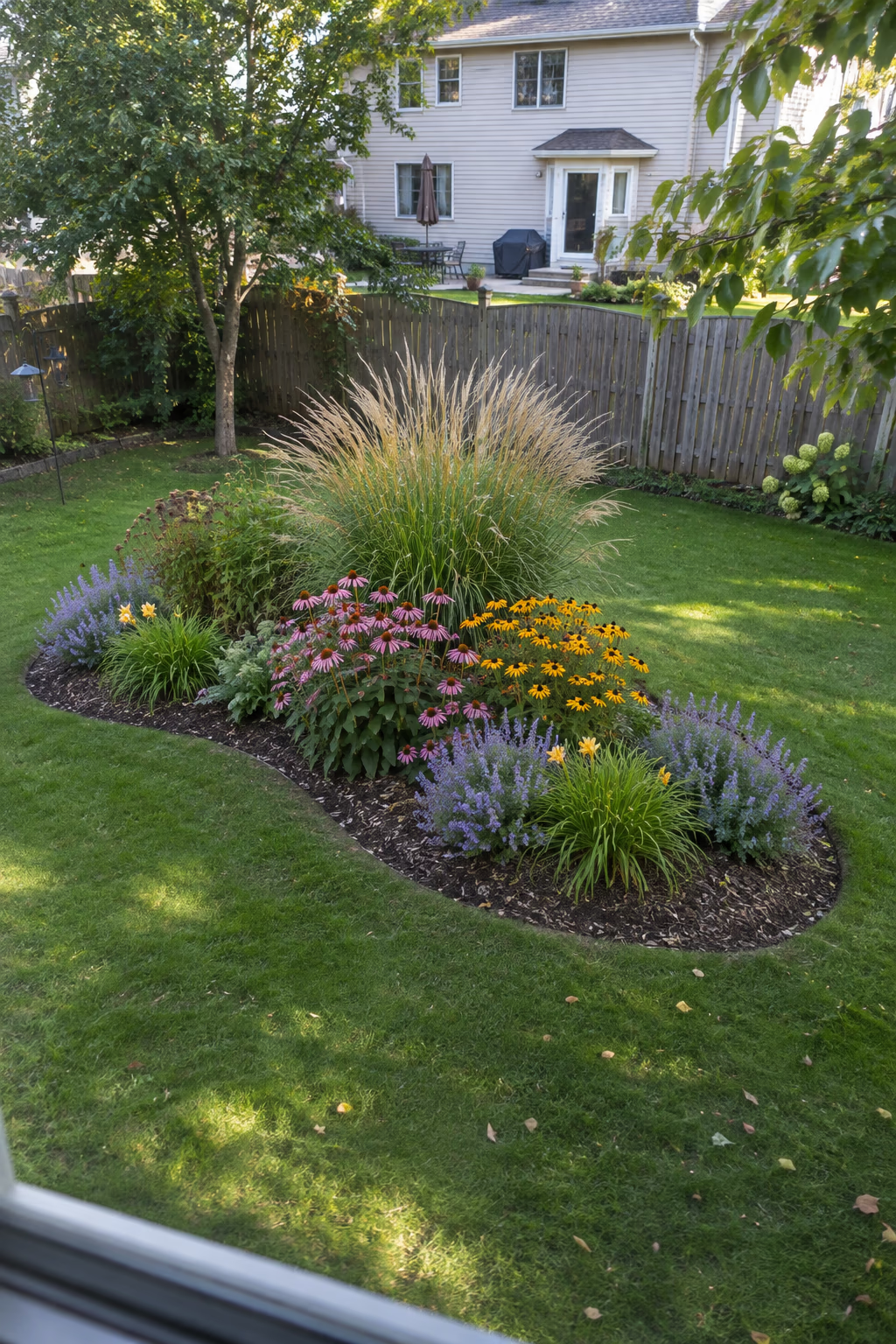
A free-floating bed you can view from all sides
Use a garden hose to lay out a soft kidney or bean shape in an open stretch of lawn, around 6 by 14 feet. Put the tallest plants, like ornamental grasses or a small flowering shrub, near the center line and step down to medium perennials and low edging plants on every side.
An island bed breaks up a big, flat lawn and gives the yard depth without building anything. Since it can be seen from all around, it looks good from the patio, the kitchen, and the far fence.
Smother the grass with cardboard and several inches of compost a few months before planting, or strip the sod with a flat spade. A crisp edge cut every few weeks keeps lawn grass from creeping in.
7. Plant an Evening White Garden Beside the Deck
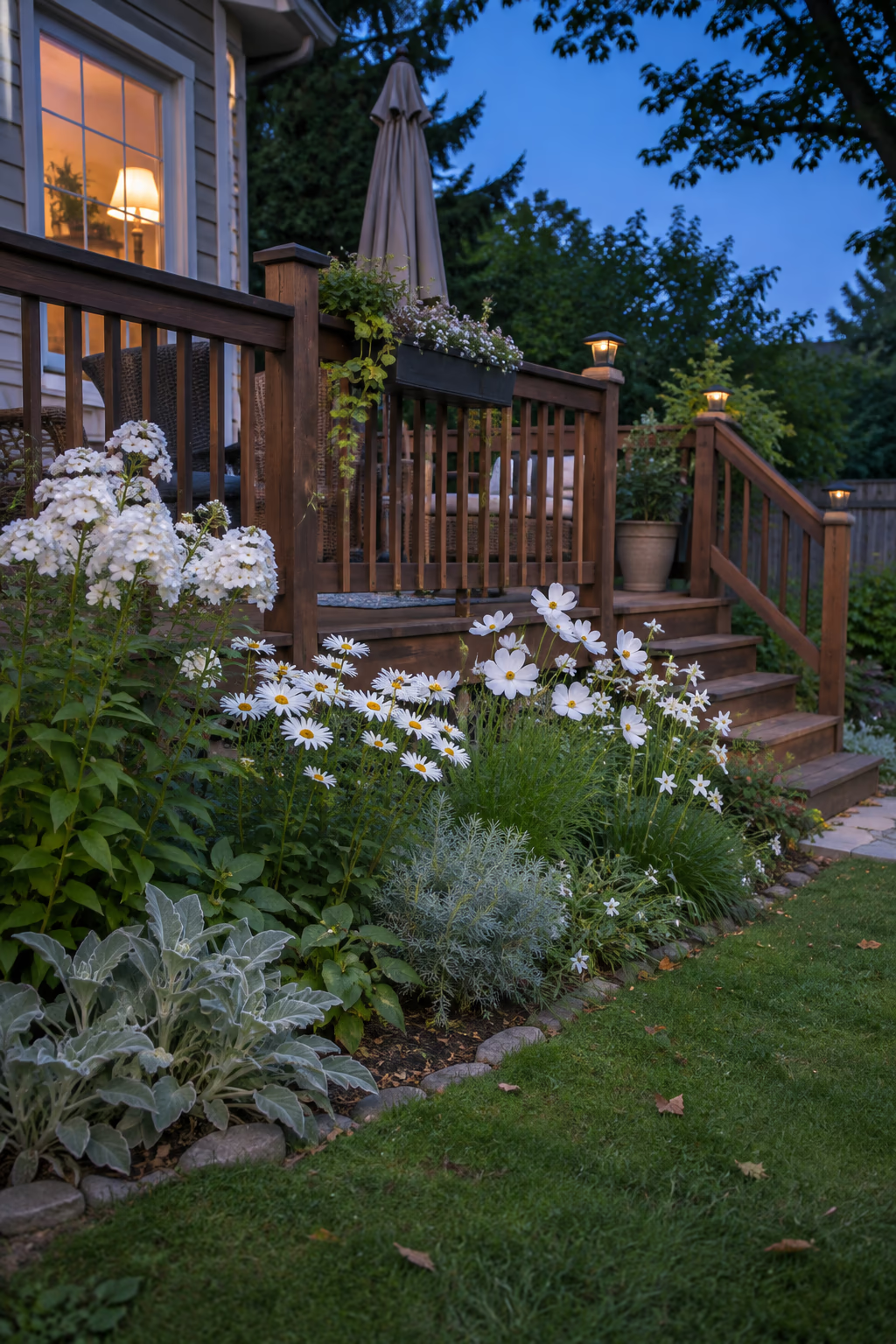
Flowers that glow after the sun goes down
White and pale flowers seem to light up at dusk, so a bed near the deck or back steps is the perfect place for them. Combine white phlox, Shasta daisies, white cosmos, and nicotiana with silver foliage like lamb’s ears or artemisia.
When most colors fade in low light, pale blooms stay visible, which makes this bed ideal for people who are mostly outside after work. Several white flowers, such as nicotiana and moonflower, are also fragrant in the evening.
White blooms show browning quickly, so deadhead often. Add plenty of green and silver foliage between the flowers or the bed can look flat during the day.
8. Fill a Bed With Hydrangeas for Big Summer Volume
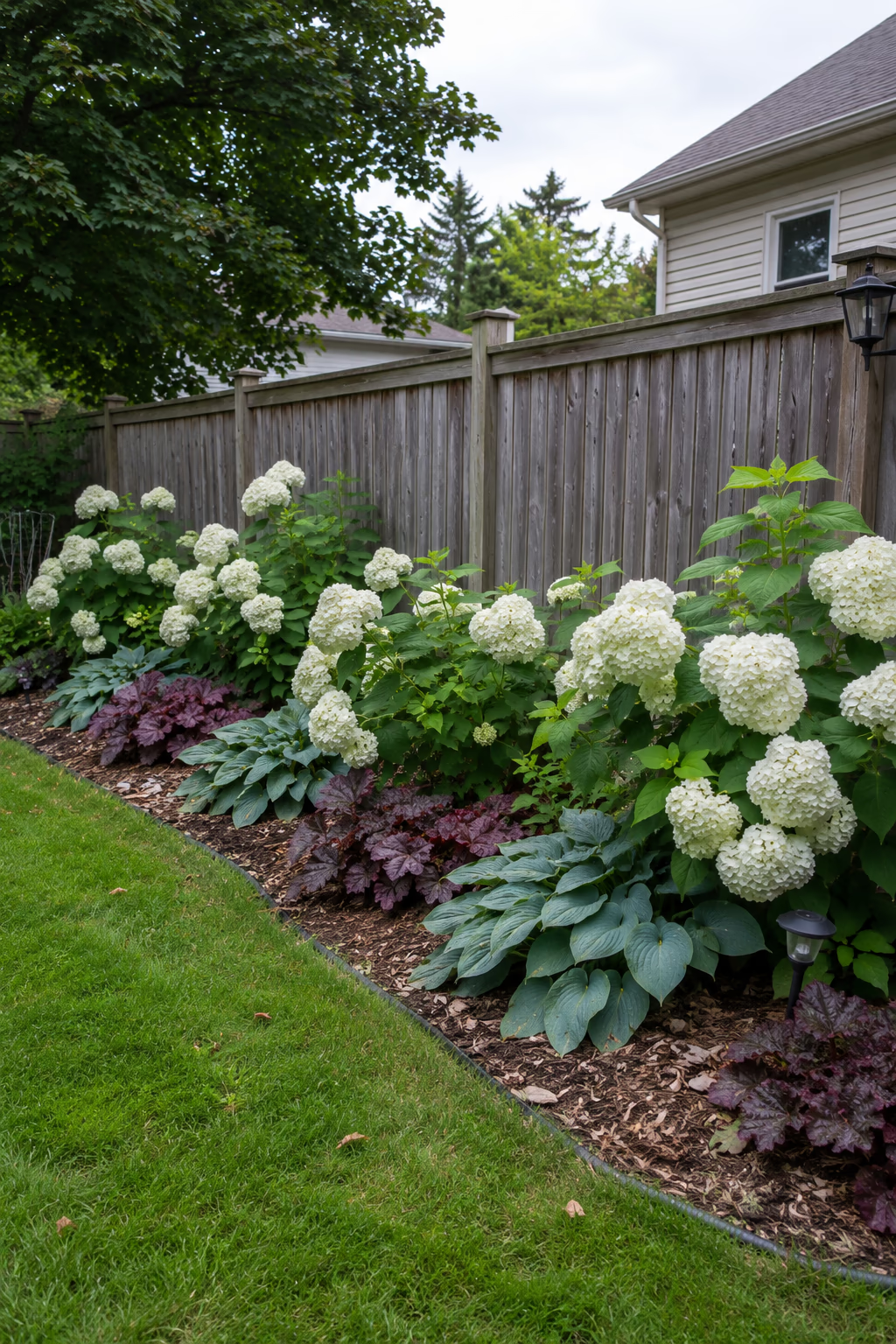
Huge blooms with very little fuss
Smooth hydrangeas and panicle hydrangeas are some of the most forgiving shrubs for a backyard bed. Plant three or five of them about 4 to 5 feet apart along the back of a bed, and edge the front with hostas, heuchera, or creeping jenny for contrast.
These types bloom on new wood, so a late frost or hard winter rarely wipes out the flowers. Their big heads also last for weeks and can be dried for indoor arrangements.
Smooth hydrangeas like some afternoon shade and steady moisture, while panicle types handle more sun. Their heavy heads can flop after rain, so look for sturdy-stemmed varieties or add a simple grow-through support.
9. Set a Birdbath as the Bed’s Centerpiece
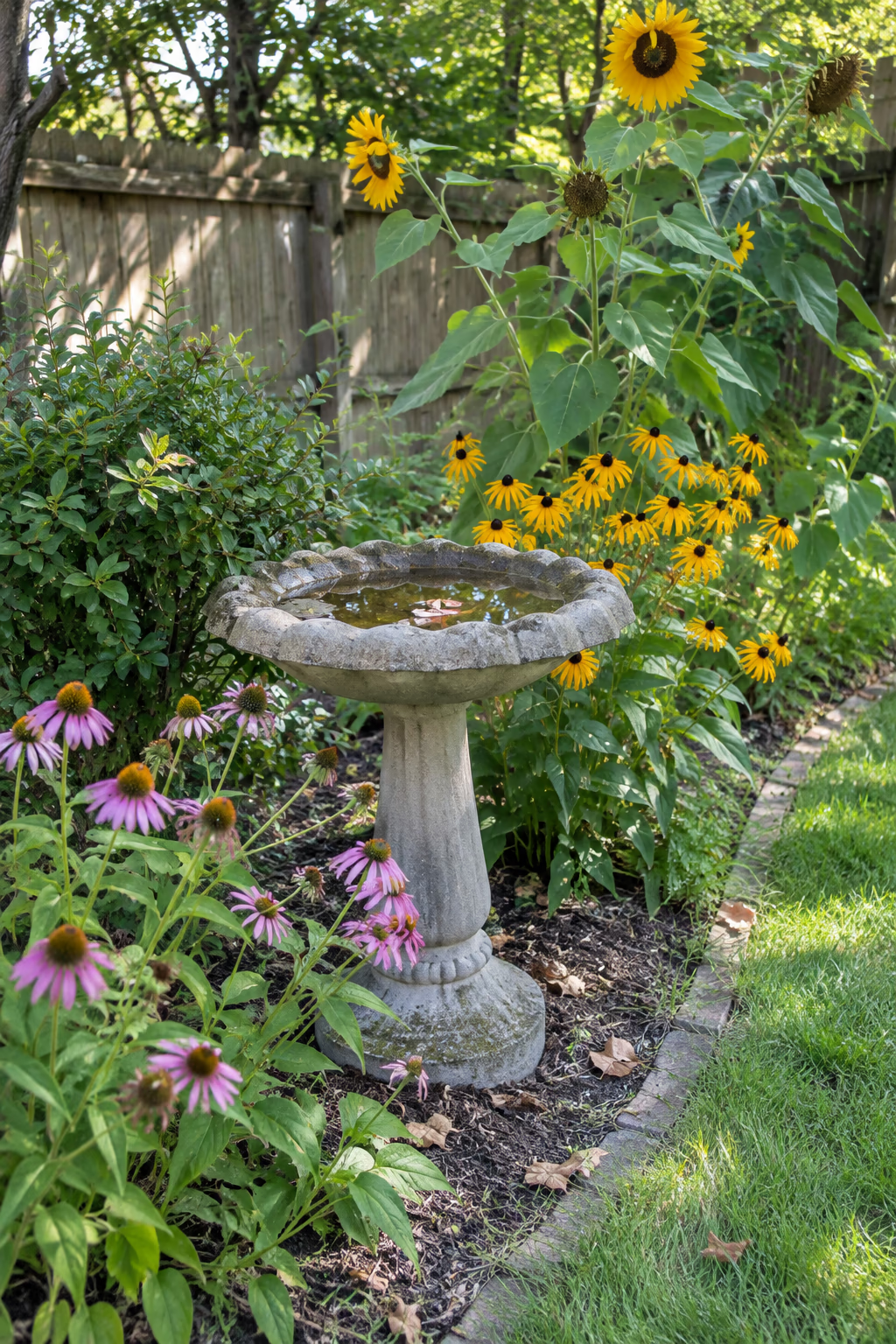
A focal point that brings the garden to life
A concrete, stone, or glazed ceramic birdbath on a pedestal gives a flower bed instant structure. Place it slightly off center and surround it with seed-producing flowers like coneflower, black-eyed Susan, and sunflowers that birds will visit later in the year.
Birds need water as much as food, and a reliable bath draws far more visitors than flowers alone. Their activity adds movement and makes the bed fun to watch from indoors.
Keep the water no deeper than about 2 inches, and scrub and refill it every few days to discourage mosquitoes and algae. Placing it near a shrub, but not right next to dense cover, gives birds an escape route from cats.
10. Edge a Formal Rose Bed With Boxwood and Pea Gravel
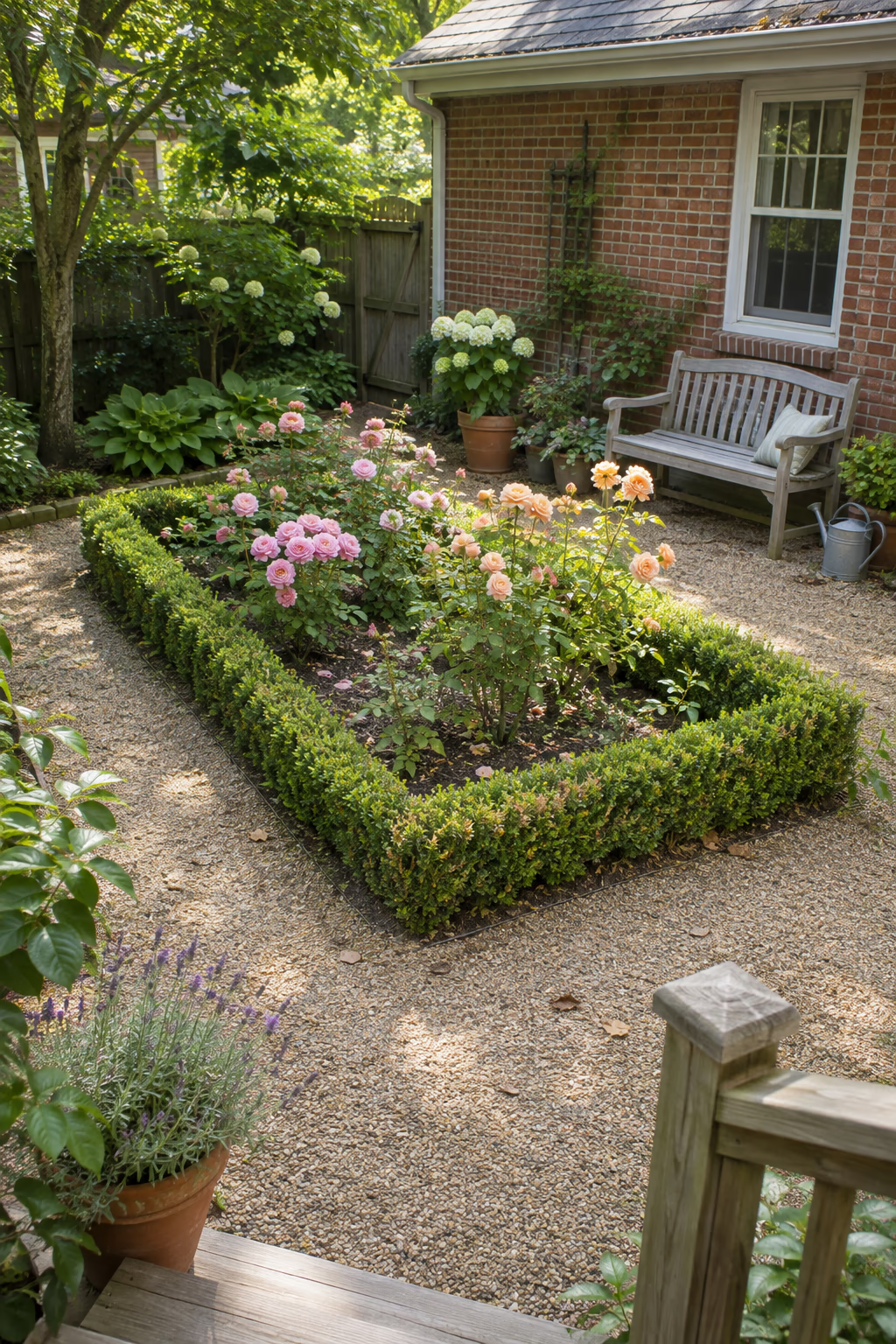
Classic structure for rose lovers
Lay out a rectangular bed and outline it with a low boxwood hedge planted about 12 inches apart. Fill the inside with shrub or hybrid tea roses spaced 2 to 3 feet apart, and surround the whole bed with a 3-foot-wide path of pea gravel.
The clipped green frame keeps the bed looking tidy even when roses are between flushes of bloom. The gravel path drains well, keeps feet dry, and makes deadheading easier.
Give roses at least six hours of sun and good air circulation to limit black spot. In areas with boxwood blight, try a resistant variety or a dwarf alternative such as compact holly or Japanese yew.
11. Warm Up a Bed With Sunset Orange, Coral, and Gold
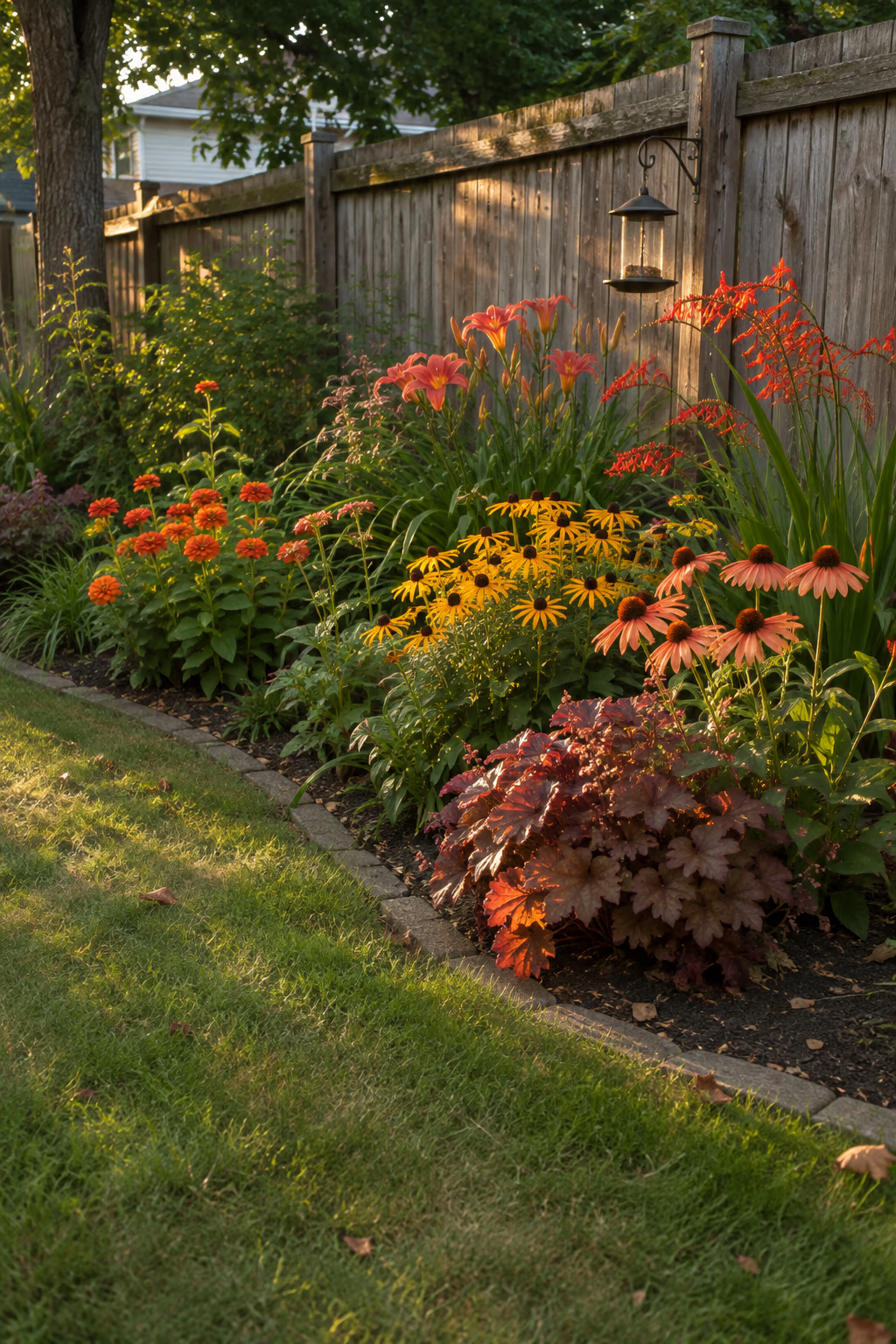
A bold palette that glows in late-day light
Group warm-toned flowers together for a bed that seems to catch fire at sunset. Try orange zinnias, coral daylilies, golden rudbeckia, red-orange crocosmia, and peach coneflowers, with bronze foliage from coral bells or a few bronze fennel plants mixed in.
Warm colors look brighter and closer than cool ones, so this palette works well at the far end of the yard where you want the bed to stand out. Late afternoon sun makes these shades especially rich.
Add a few deep purple or blue flowers, like salvia, if the bed looks too intense. Crocosmia can spread in mild climates, so check whether it’s a concern where you live.
12. Plant a Hummingbird Bed Within View of the Kitchen Window
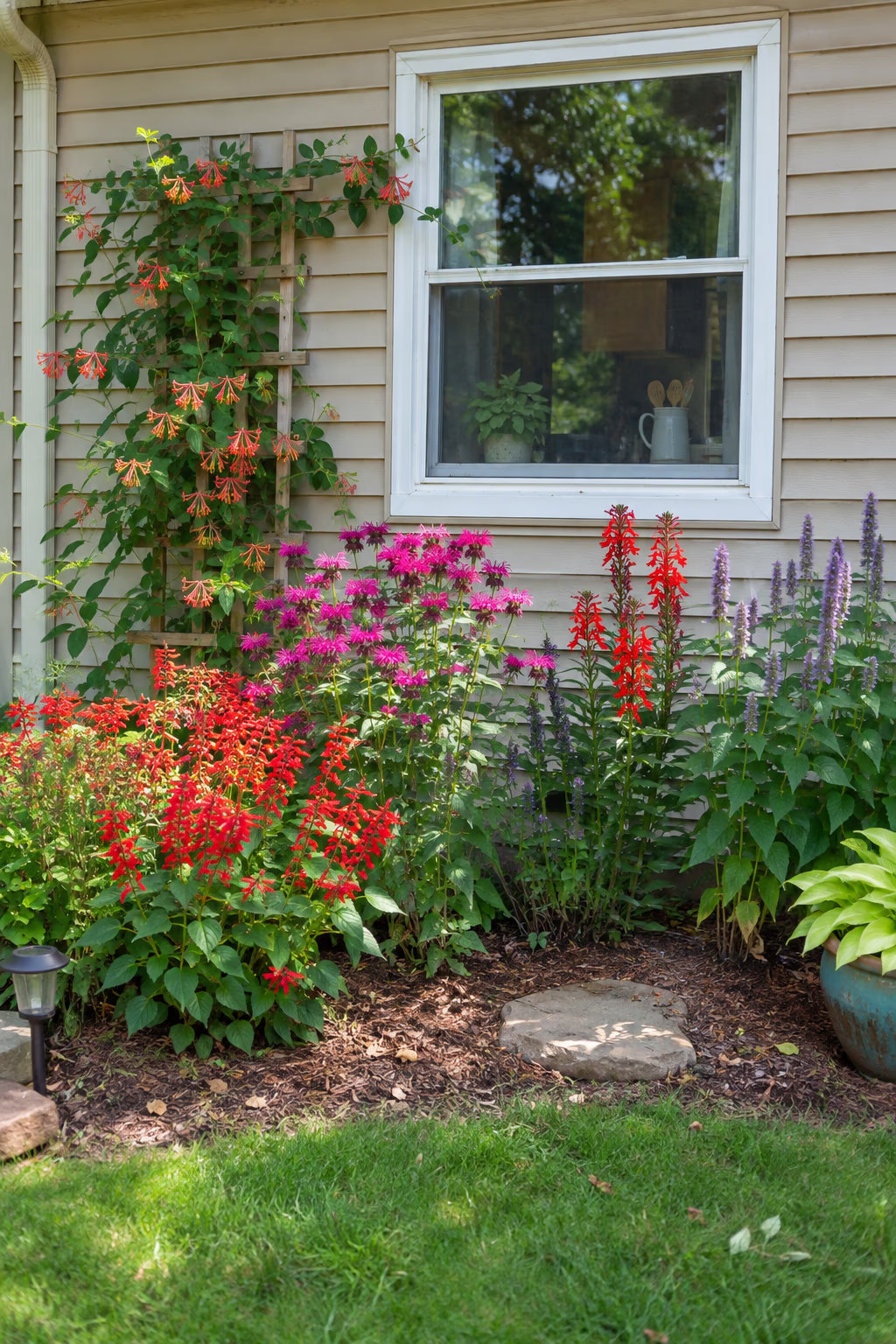
Watch the visitors while you do the dishes
Hummingbirds look for tubular flowers, especially in reds and purples. Fill a bed near a window you use often with salvia, bee balm, cardinal flower, agastache, and native honeysuckle on a small trellis.
A bed in your daily line of sight gets far more attention than one at the back of the yard, and you’ll notice every visitor. Planting flowers with staggered bloom times keeps food available from spring into fall.
Skip pesticides in this bed, since hummingbirds also eat small insects. Cardinal flower needs consistently moist soil, so put it in the lowest or best-watered spot.
13. Spill Flowers From a Tipped Urn
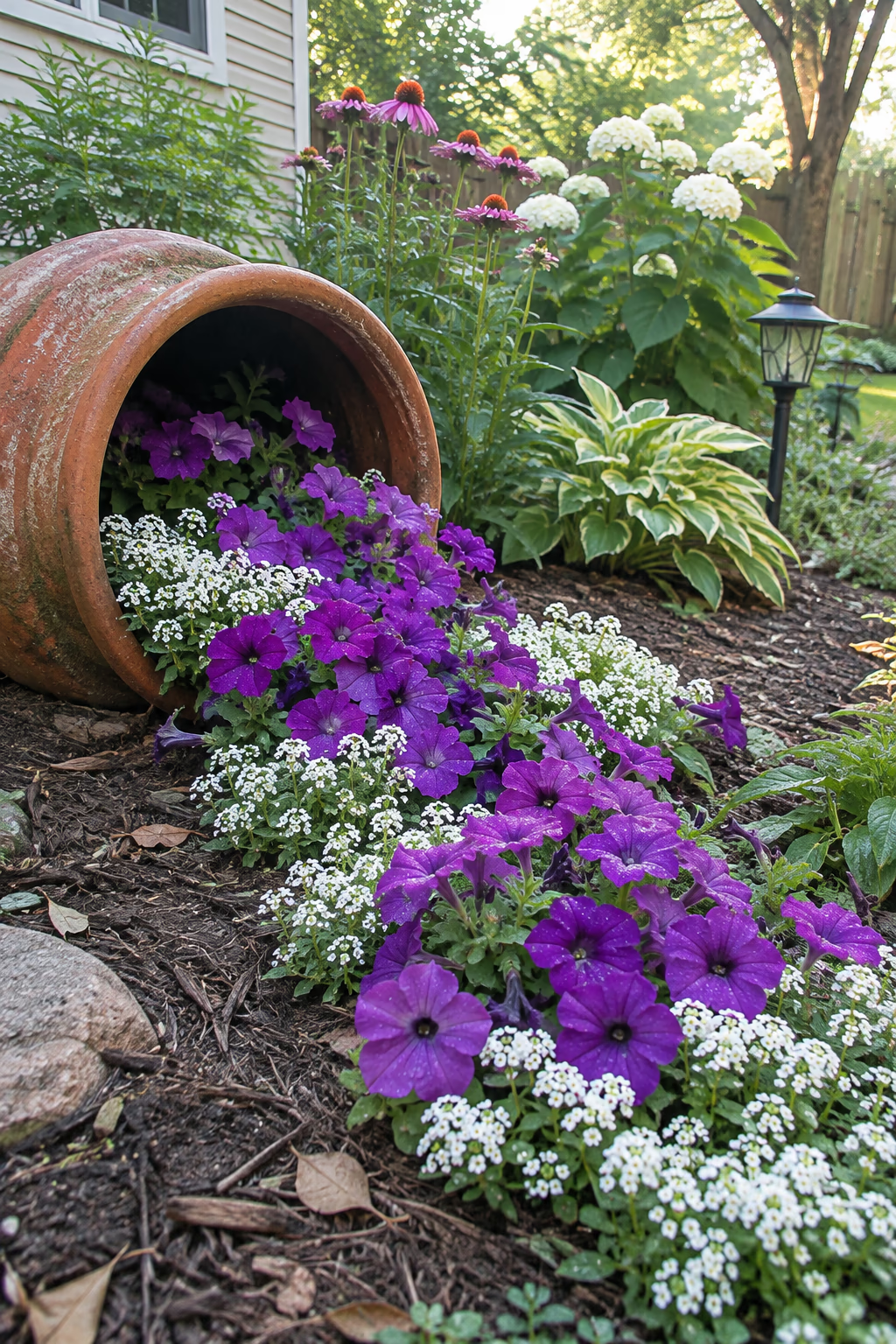
A playful touch that looks like an accident
Partly bury a large terracotta or glazed pot on its side in the bed, with the opening facing out. Then plant a river of low flowers, such as sweet alyssum, creeping zinnia, petunias, or sedum, so they appear to pour out of the pot and across the soil.
It’s a cheap, easy project that adds personality and works well with chipped or cracked pots that can’t hold soil properly anymore. Kids and guests always notice it.
Bury the bottom third of the pot so it doesn’t roll. In cold areas, terracotta can crack over winter when soil inside freezes, so a frost-resistant pot lasts longer.
14. Trim the Bed With a Sawtooth Brick Edge
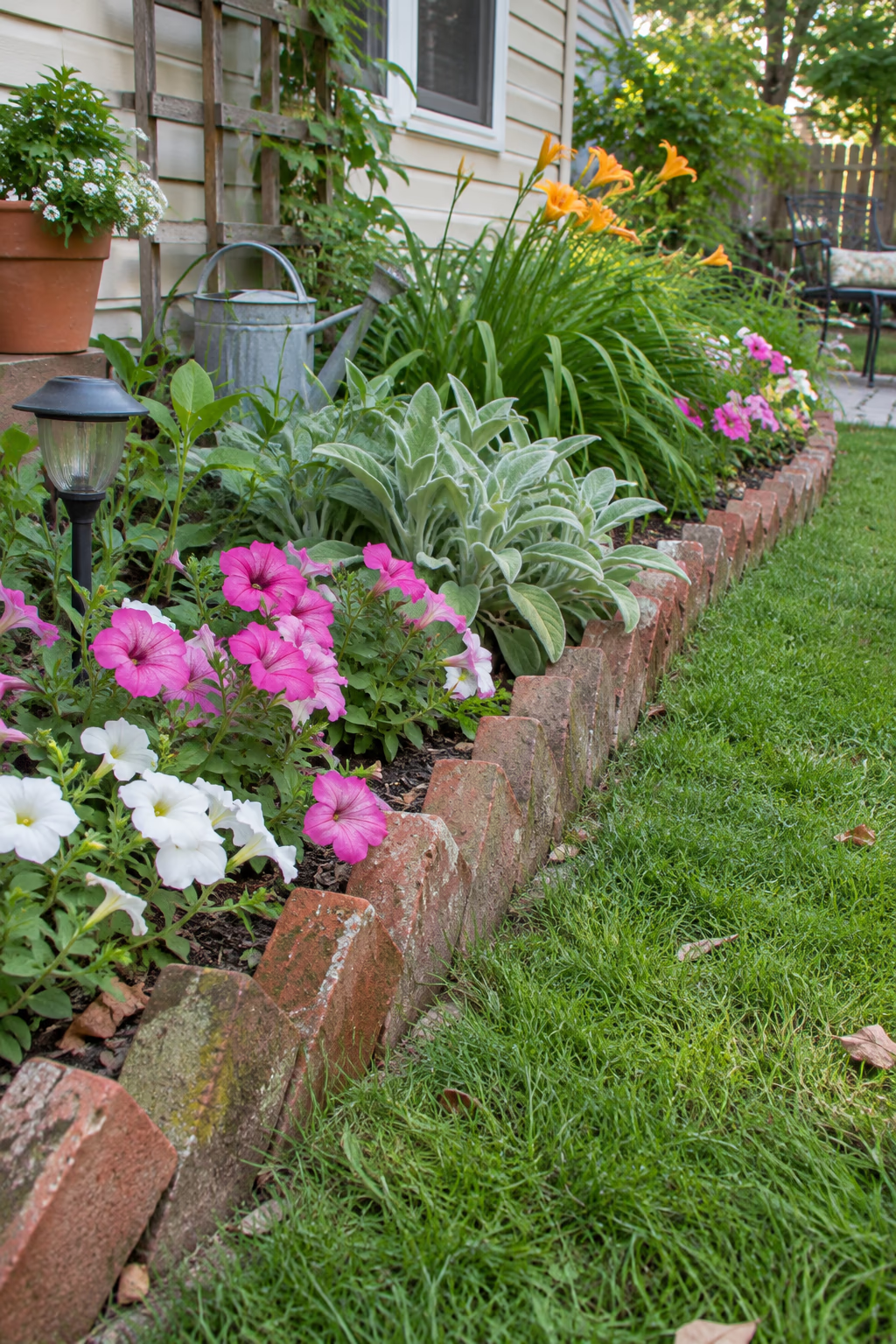
Old-fashioned edging with lots of charm
Set bricks on a 45-degree angle, one leaning against the next, so the tops form a zigzag along the edge of a bed. Dig a narrow trench about 4 inches deep, add a little sand, and tap each brick in so roughly half its length sits below grade.
The pattern gives a crisp line between lawn and bed and suits older homes, cottages, and brick houses. Reclaimed bricks often come cheap or free from renovation projects and look aged right away.
Use solid bricks rated for ground contact if your winters freeze, since soft or old bricks can flake. Leave a small gap between the bricks and the lawn so a string trimmer can reach the grass.
15. Swap Mulch for Gravel in a Hot, Dry Bed
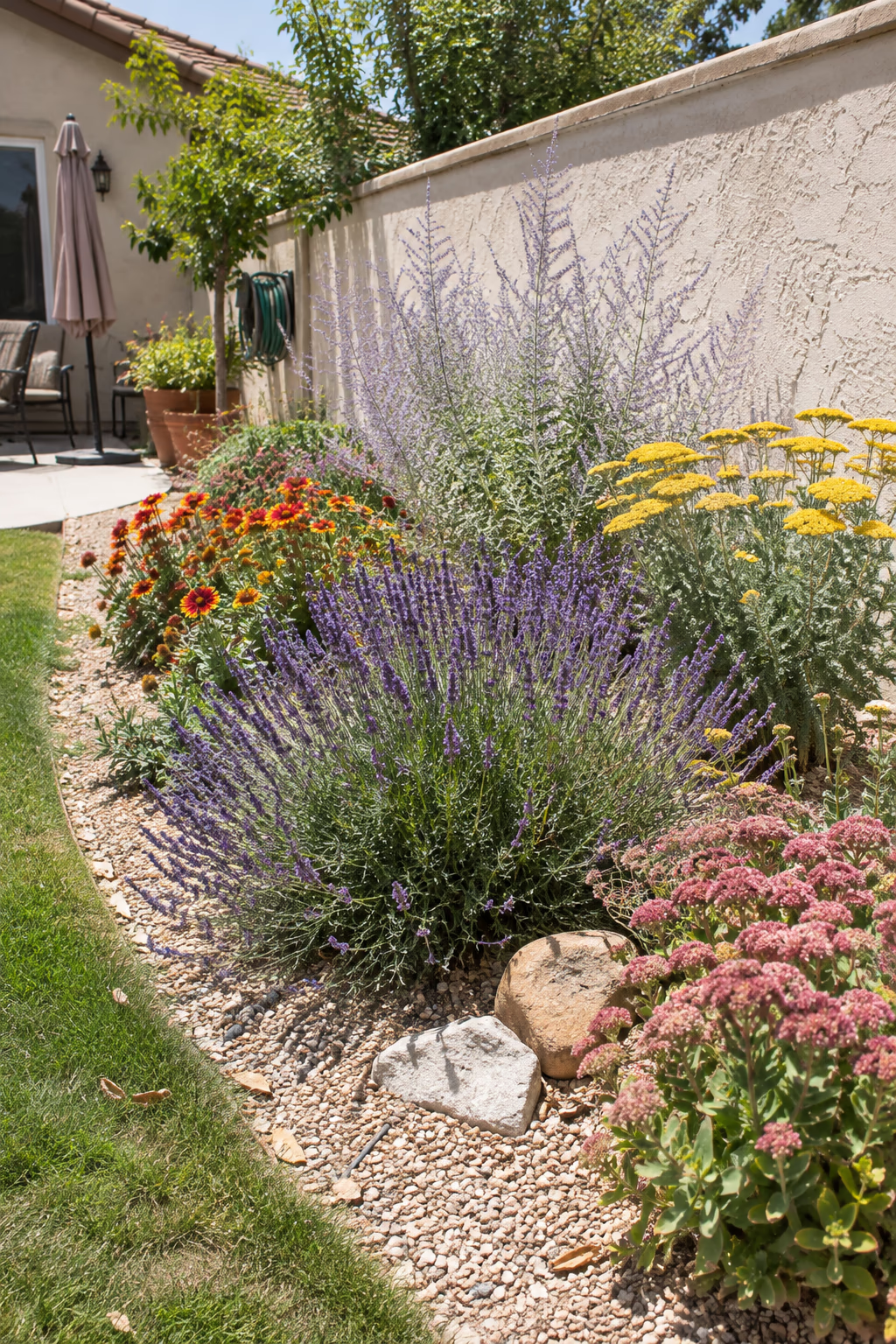
A tough bed for the sunniest corner
In a spot that bakes all afternoon, plant drought-tolerant flowers like lavender, Russian sage, salvia, yarrow, gaillardia, and sedum, then top the soil with 2 to 3 inches of pea gravel or crushed stone instead of wood mulch.
Gravel keeps the crowns of these plants dry, reflects heat, and doesn’t wash away in summer storms. Once established, the bed needs far less watering than a typical border, which suits hotter, drier summers.
Make sure the soil drains well first; mix in coarse grit if you have heavy clay. Skip landscape fabric under the gravel in planted areas so the plants can spread and self-seed a little.
16. Brighten a Shady Bed With Hostas, Ferns, and Astilbe
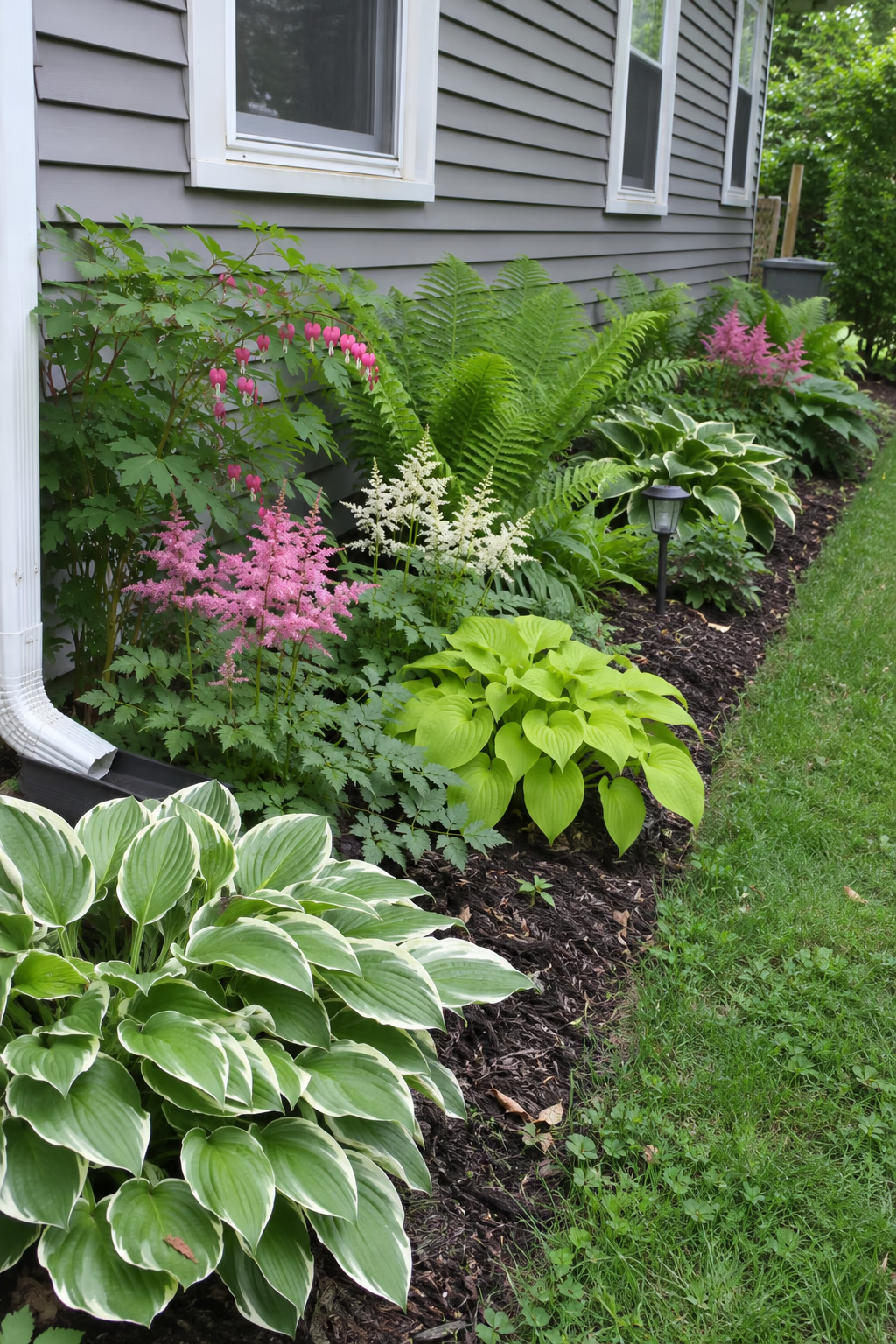
Color and texture where grass won’t grow
The north side of the house or a fence line that gets only morning sun is perfect for a shade bed. Combine bold hostas, lacy ferns, feathery astilbe, and bleeding heart, then use chartreuse or variegated leaves to light up the dark spots.
Shade beds rely on foliage contrast more than constant bloom, so they look good from spring through fall. They also turn a bare, mossy strip into something worth looking at.
Deer and slugs love hostas, so use deer-resistant choices like ferns and hellebores if deer visit your yard. Shady beds still need watering, especially under eaves where rain doesn’t reach.
17. Raise a Cedar Flower Bed Beside the Deck
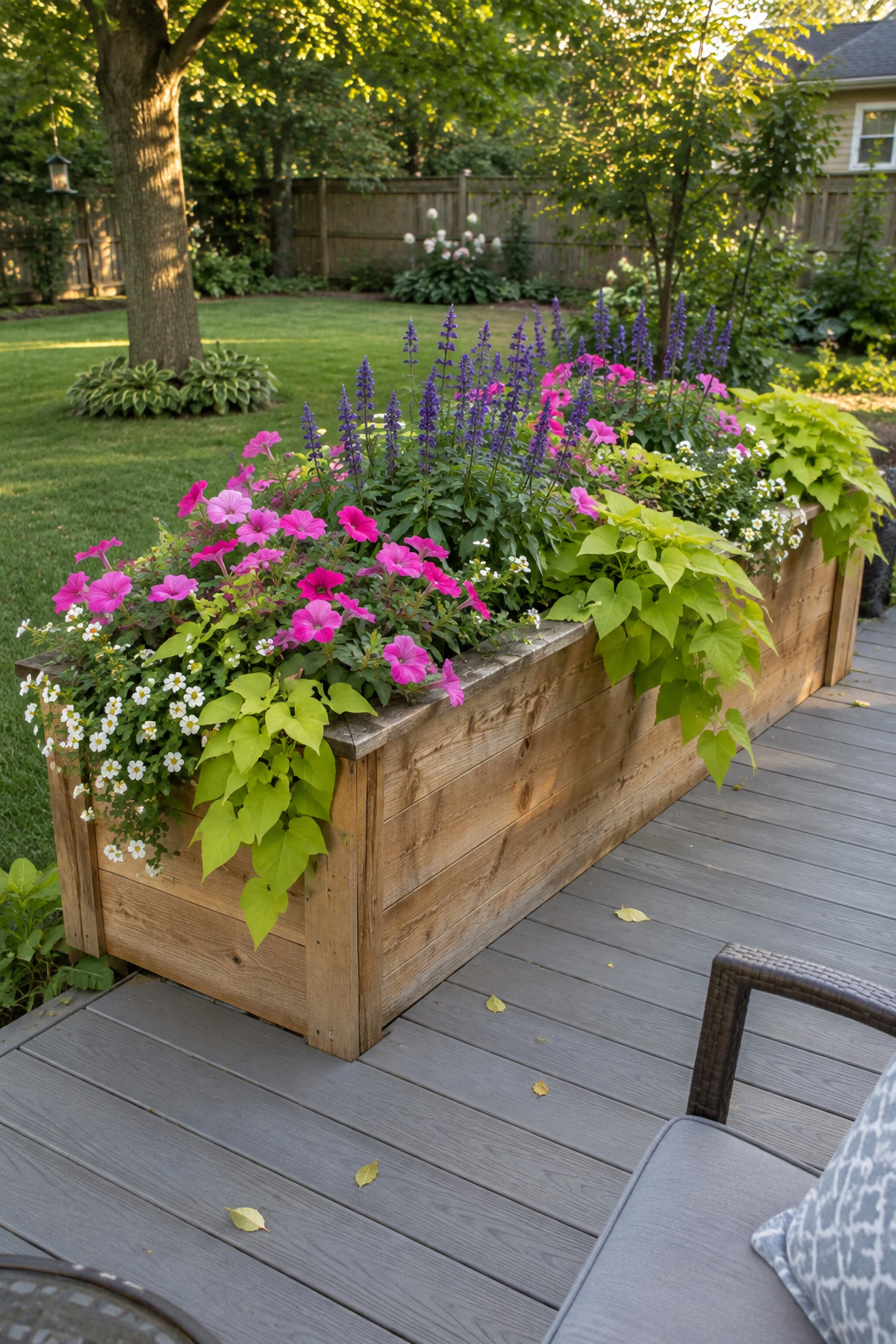
Blooms at a comfortable height
Build a simple rectangular frame from rough cedar boards, about 4 feet by 8 feet and 18 to 24 inches tall, and set it along the edge of the deck or patio. Fill it with a mix of topsoil and compost and plant compact perennials, annuals, and trailing plants that spill over the sides.
A raised bed puts flowers closer to eye level when you’re sitting down, and it’s much easier on knees and backs. It also solves problems like rocky soil, heavy clay, or a spot over tree roots.
Raised beds dry out faster than the ground, so plan on more frequent watering or run a drip line. Cedar holds up for years, but lining the inside walls helps it last even longer.
18. Turn an Old Tree Stump Into a Planter Bed
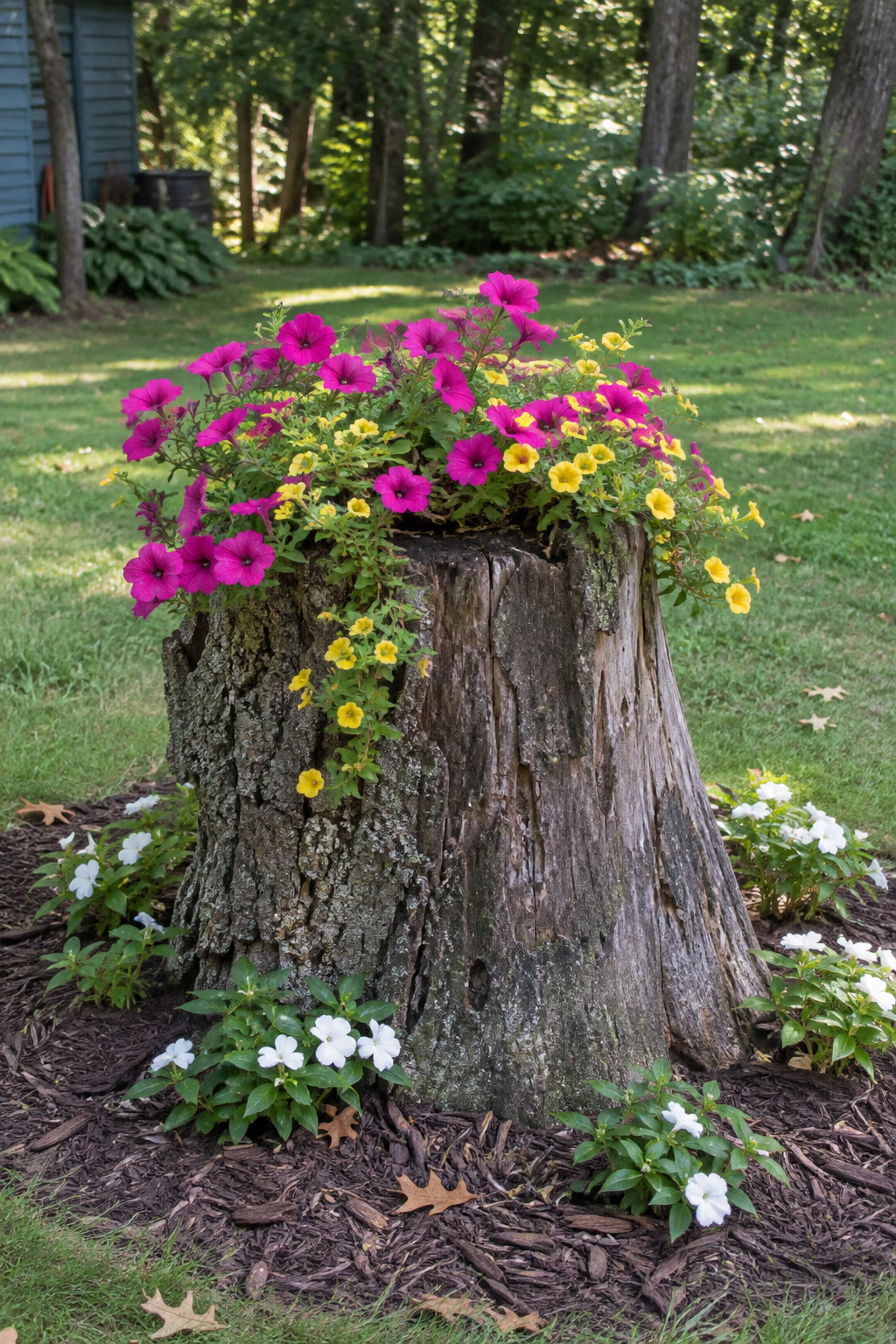
Make use of a stump you can’t remove
Instead of paying to grind out a stump, hollow out the top with a chisel or drill and fill the cavity with potting mix. Plant trailing annuals like petunias or calibrachoa in the top, and surround the base with a ring of low flowers and mulch.
The stump becomes a raised natural planter with real character, and it hides an eyesore for very little money. It works especially well in a woodland or cottage-style backyard.
The stump will slowly rot over the years, which is fine, but it can attract carpenter ants or fungus near the house. Keep stump planters at least several feet from your foundation and deck.
19. Stand an Obelisk in the Bed for Vertical Color
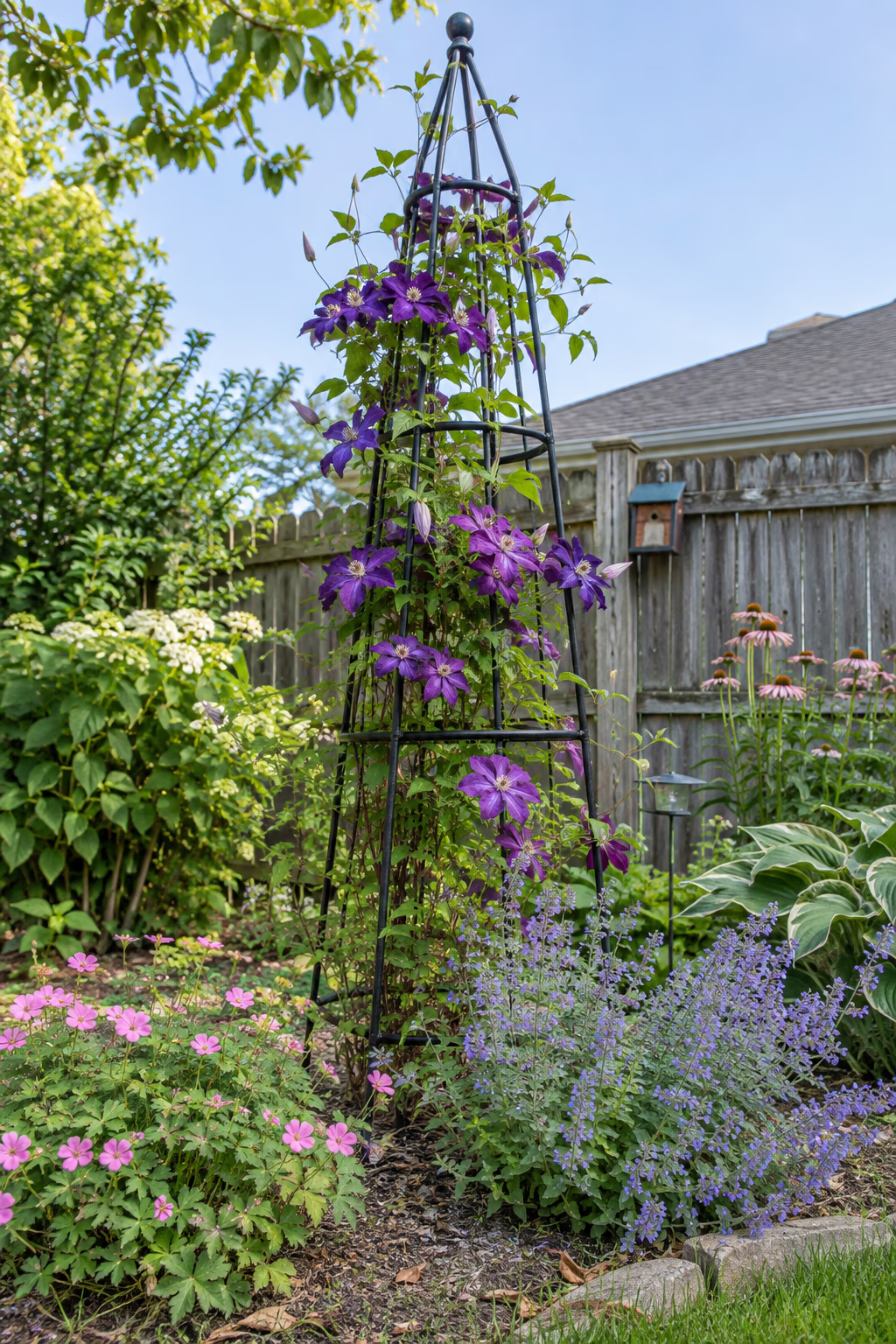
Give climbers a place to shine
A 5- to 7-foot obelisk made of wood, metal, or willow adds height to a bed that otherwise feels flat. Grow clematis, sweet peas, morning glories, or a compact climbing rose up it, and plant low perennials around the base.
Vertical structures draw the eye up and make even a narrow bed feel bigger. A pair of matching obelisks can also set up a sense of symmetry on either side of a path.
Push the legs at least 12 inches into the soil or anchor them with rebar stakes. Annual vines like morning glory can reseed heavily, so pull extra seedlings in spring.
20. Weave Flowering Herbs Along the Front Edge
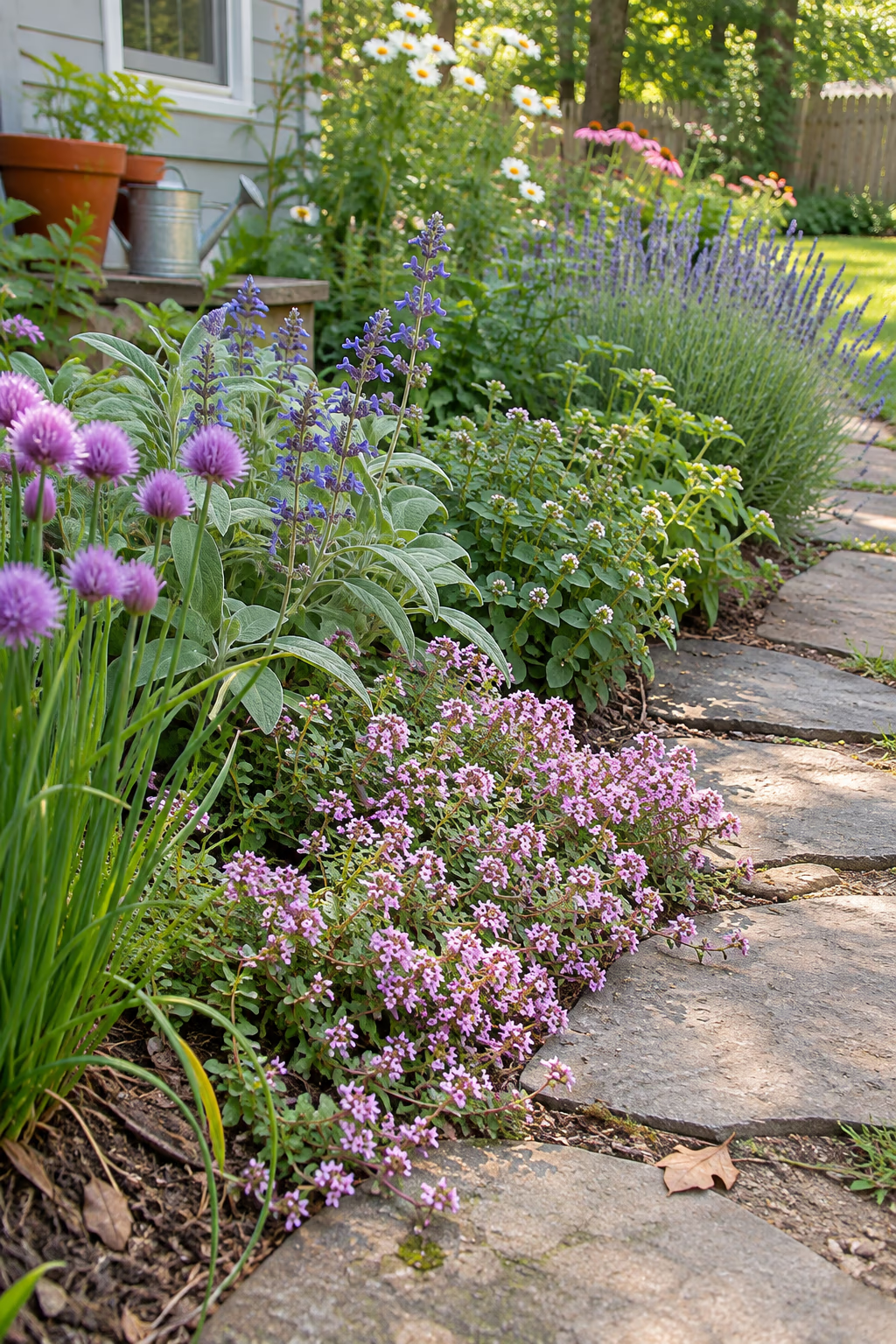
Pretty, fragrant, and useful too
Run a ribbon of flowering herbs along the front of a sunny bed. Chives, creeping thyme, oregano, sage, and lavender all bloom in purple and pink, stay fairly low, and release fragrance when you brush past them.
Herbs fit the growing trend of edible landscaping without turning your flower bed into a vegetable garden. Bees love their small flowers, and you can snip a handful for dinner on the way inside.
Mint and lemon balm spread aggressively, so keep them in buried containers or leave them out. Most herbs prefer lean, well-drained soil and don’t need much fertilizer.
21. Uplight the Bed for Evening Views
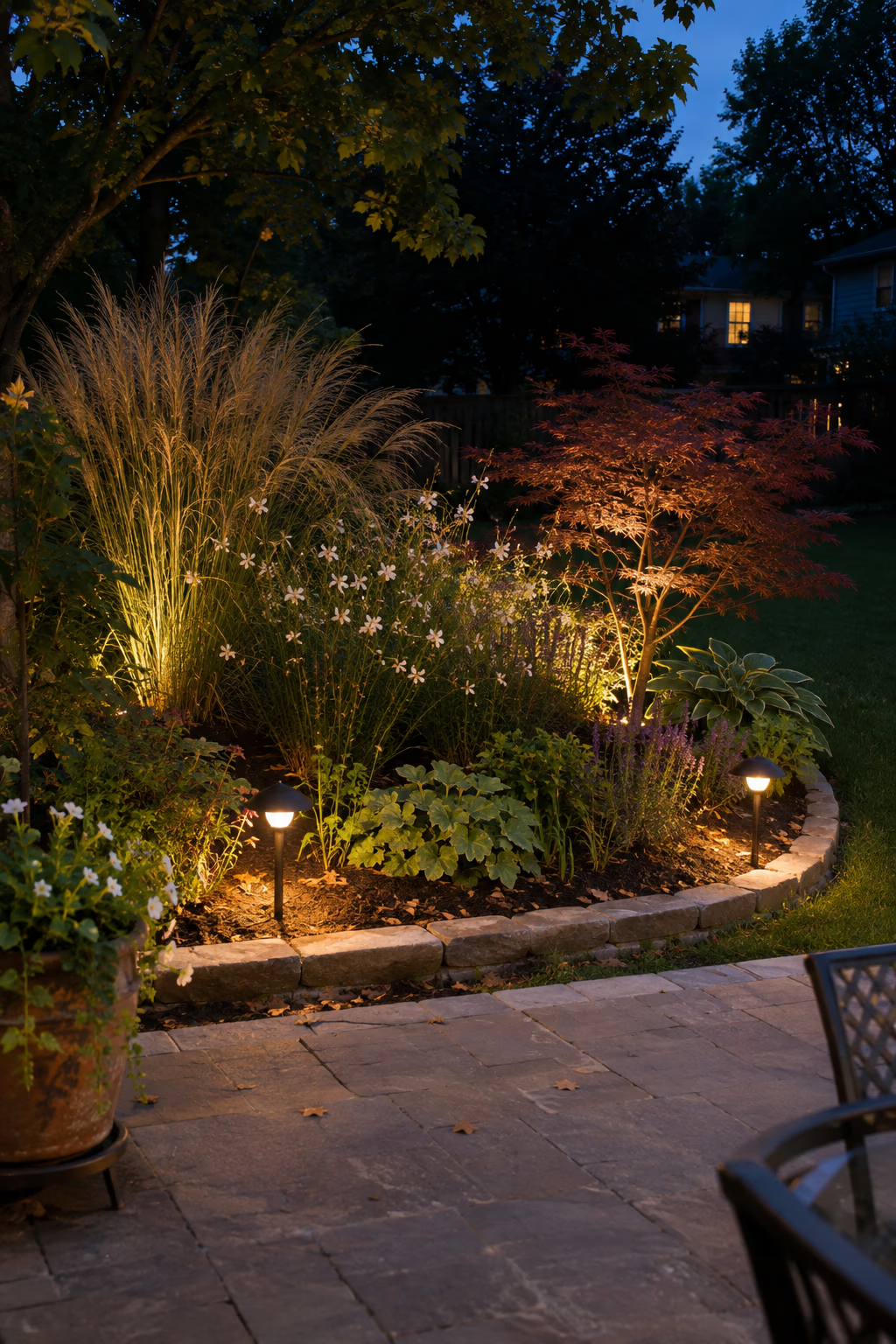
Enjoy the flowers long after dark
Tuck a few low-voltage LED spotlights into the bed to wash light up through ornamental grasses, a small tree, or a tall shrub. Add a couple of short path lights along the front edge to show the shape of the bed.
Lighting makes the garden part of your evening view from the patio and the house. Grasses and airy plants like gaura look especially pretty when lit from below.
Warm white bulbs look more natural than cool white. Solar lights are cheaper and easy to move, but low-voltage systems are brighter and more reliable, especially in shady spots.
22. Sow a Bed of Annuals From Seed on a Budget
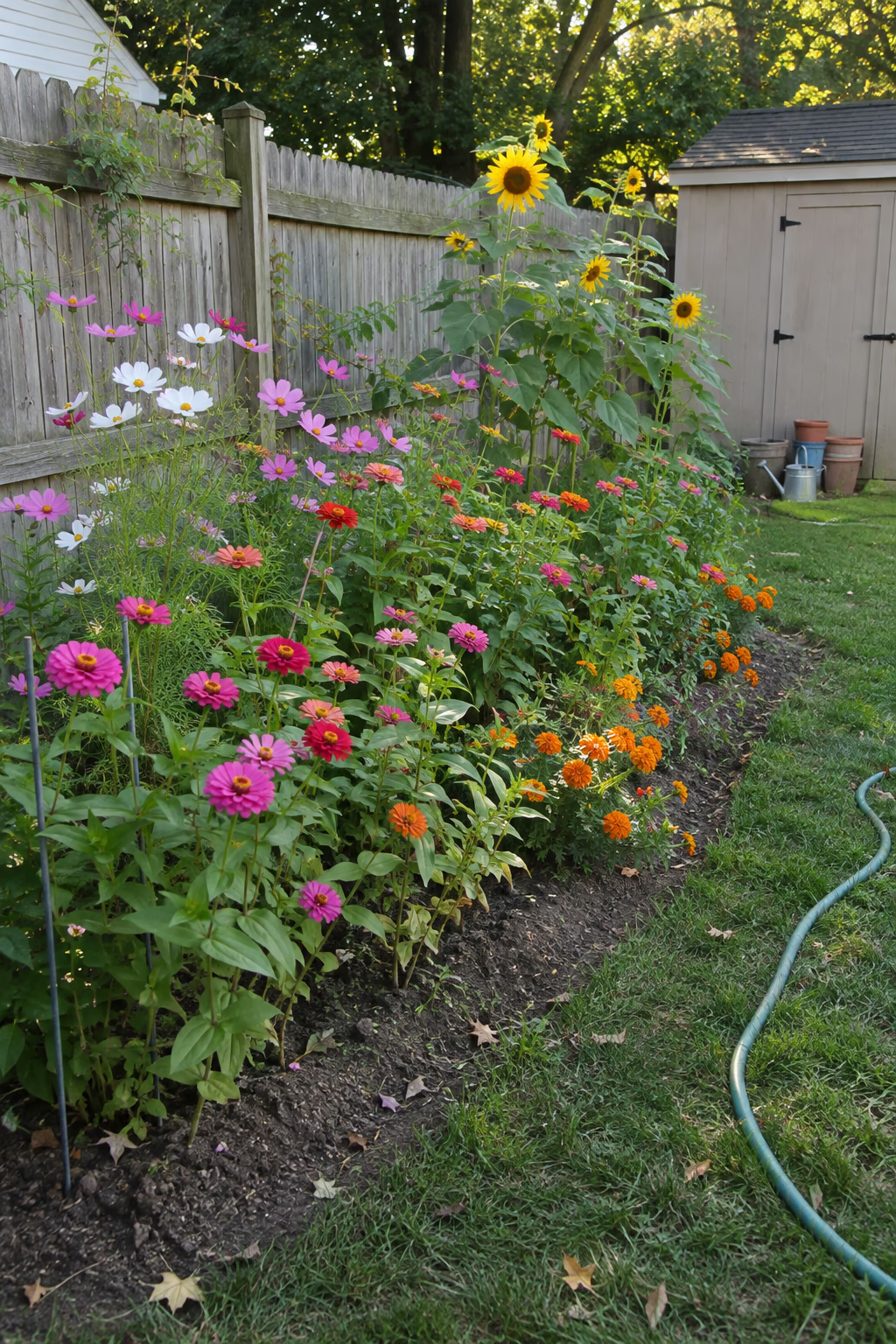
Lots of color for a few seed packets
For a new bed or a tight budget, direct-sow easy annuals like zinnias, cosmos, marigolds, sunflowers, and nasturtiums after your last frost date. Rake the soil smooth, scatter seeds in drifts, and keep them moist until they sprout.
Within about eight to ten weeks, you’ll have a full bed of flowers that keeps blooming until frost if you deadhead. It’s also a good way to test a spot before committing to pricier perennials.
Thin seedlings to the spacing on the packet, or they will crowd each other and bloom poorly. Mark where you sowed so you don’t pull up young seedlings by mistake.
23. Park a Vintage Wheelbarrow in the Bed
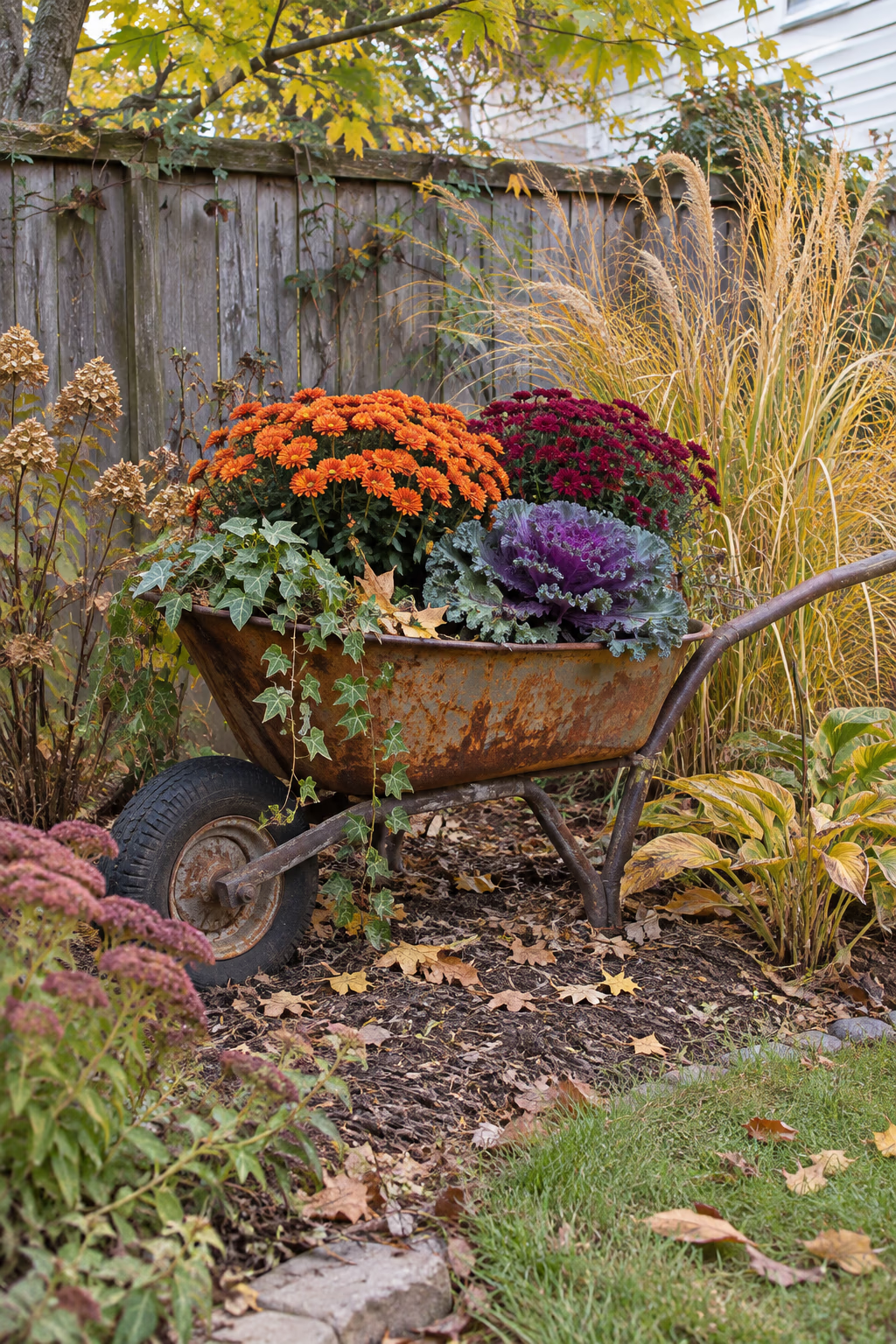
A rustic accent that you can move around
An old metal or wooden wheelbarrow makes a charming mobile planter. Drill a few drainage holes, fill it with potting mix, and plant a mix of upright flowers, mounding plants, and trailers, then set it in a gap in the bed.
It adds height and a bit of farmhouse character, and you can roll it to a new spot or swap in seasonal plants like mums in the fall. It’s also a great way to fill a bare spot while perennials grow.
Container soil dries out fast, so water it more often than the surrounding bed. Rusty metal can stain pavers, so keep it on soil or mulch.
How to Plan Your Backyard Flower Bed
A little planning before you dig saves money and helps the bed look good for years. Use these tips to get the basics right.
- Watch the sun first. Track how many hours of direct sun the spot gets in summer, then pick plants labeled for full sun, part shade, or shade to match.
- Make it deep enough. Beds less than 3 feet deep look thin. Aim for 4 to 6 feet so you have room for back, middle, and front layers.
- Improve the soil. Work 2 to 3 inches of compost into the top several inches of soil, and consider a soil test through your local extension service.
- Plant in groups. Plant perennials in groups of three or five, and repeat a few favorites through the bed so it looks planned instead of random.
- Plan for water. A soaker hose or drip line under the mulch puts water at the roots and makes summer care much easier.
- Check before you dig. In the United States, call 811 before digging, and check HOA rules if you’re adding walls, fountains, or lighting.
Frequently Asked Questions
What flowers bloom all summer in a backyard bed?
Good long-blooming choices include coneflower, black-eyed Susan, catmint, salvia, coreopsis, and reblooming daylilies, plus annuals like zinnias and petunias. Mixing perennials with annuals gives you the most continuous color.
When is the best time to start a new flower bed?
Early fall is ideal in most of the country because the soil is warm and the weather is cooler, which helps roots settle in. Spring also works well; just plant after your last frost date and water often during the first summer.
How deep should mulch be in a flower bed?
About 2 to 3 inches of shredded bark or wood chips is plenty. Keep mulch a few inches away from plant stems, and don’t pile it against shrubs or tree trunks.
How much does it cost to create a backyard flower bed?
A small DIY bed planted from seed and small perennials can cost under a hundred dollars. Adding edging, compost, and larger plants can raise the cost to several hundred, while stone walls, fountains, and lighting can run into the thousands.
How do I keep weeds out of my flower bed?
Plant closely enough that the plants shade the soil, add a layer of mulch, and pull weeds early before they set seed. A clean edge between the lawn and the bed also stops grass from creeping in.
Final Thoughts
The best backyard flower bed ideas make the space feel like an extension of your home. A fountain ringed with roses, a bench hidden in blooms, or a simple seed-sown bed can make you want to spend more time outside.
Start with the spot you see most often, choose plants that suit your sun and climate, and add to it a little each season. Over time, your backyard will fill with color, fragrance, and the birds and butterflies that come with it.


