
Garden seating ideas can turn a plain outdoor area into a place where you genuinely want to spend time. A thoughtfully placed bench may encourage you to enjoy your flowers more often, while a comfortable dining set can make outdoor meals part of your regular routine.
The best seating arrangement depends on how you use your garden. You may want a peaceful reading corner, a large space for entertaining, or a simple chair where you can enjoy your morning coffee. Before buying furniture, notice where the sunlight falls, which direction offers the best view, how close the area is to your home, and whether people can reach it comfortably. Garden designers also recommend considering circulation, drainage, surface stability, and the relationship between the seating area and the house.
How to Choose the Best Garden Seating Ideas for Your Space
Start by deciding what you want to do outside. Dining furniture needs a different layout from a reading bench or fire pit conversation area. Measure the available space, including the room needed to pull out chairs and walk around the furniture.
Observe the garden at different times of day. A sunny morning corner may become uncomfortable in the afternoon, while a shaded area could feel cold during cooler months. Also think about privacy, nearby doors, views from inside the house, and whether falling leaves or water runoff could make the location difficult to maintain.
Once you understand the space, choose one of these practical garden seating ideas.
1. Place a Classic Bench Among the Flowers
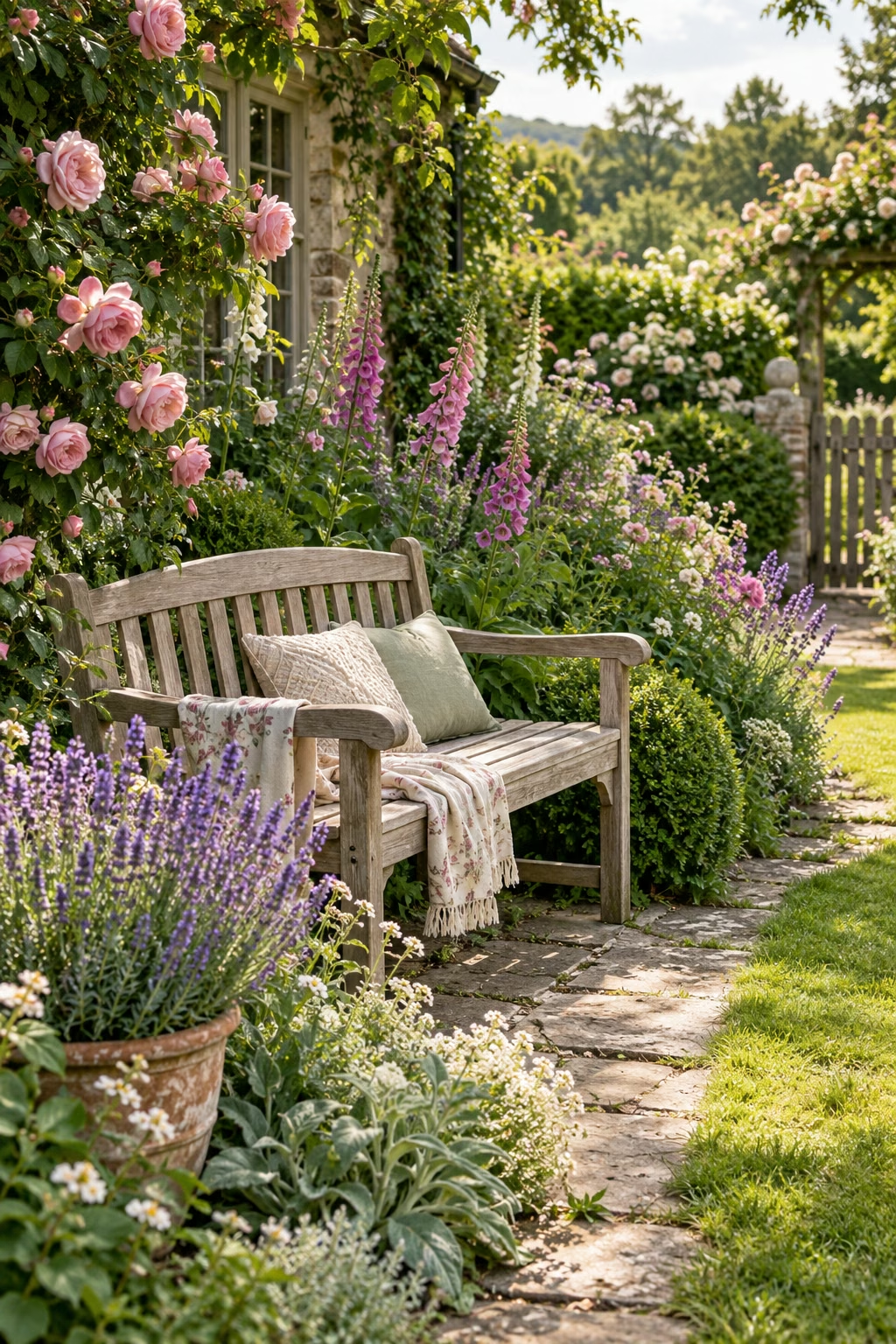
A traditional garden bench is one of the easiest ways to create a peaceful place to sit. Position it beside a flower border, at the end of a path, or beneath a small tree where it feels connected to the planting.
Try facing the bench toward something worth looking at, such as flowering shrubs, ornamental grasses, a birdbath, or a favorite part of the garden. Leave enough space around it so plants can soften the edges without making the seat difficult to reach.
A small side table can make the area more useful for coffee, books, or gardening gloves. Classic benches are especially effective in reading gardens and quiet planting areas.
2. Tuck a Bistro Set Into a Small Corner
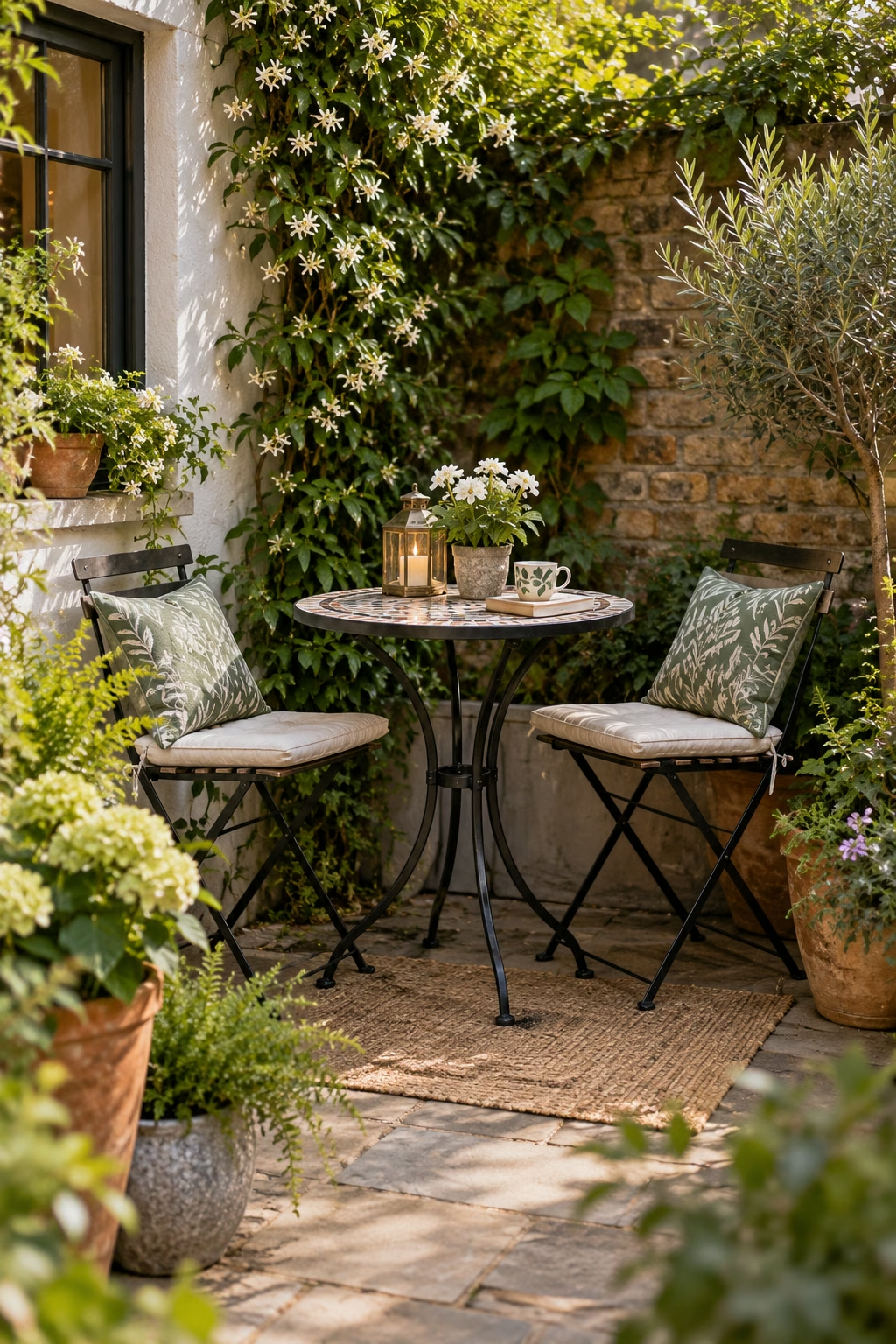
A compact bistro set can create a useful seating area without taking over a small garden. It works well on a narrow patio, balcony, paved corner, or level area near the kitchen.
A round table often feels less bulky than a square one and makes it easier to move around in a limited space. Look for folding or stackable chairs when you need the area to remain flexible.
Add a few containers around the furniture rather than crowding the tabletop. Herbs, scented flowers, and compact shrubs can make the corner feel like a tiny outdoor café. Bistro sets are regularly recommended for small gardens because they provide both seating and a dining surface within a modest footprint.
3. Build an L-Shaped Bench Along Two Walls
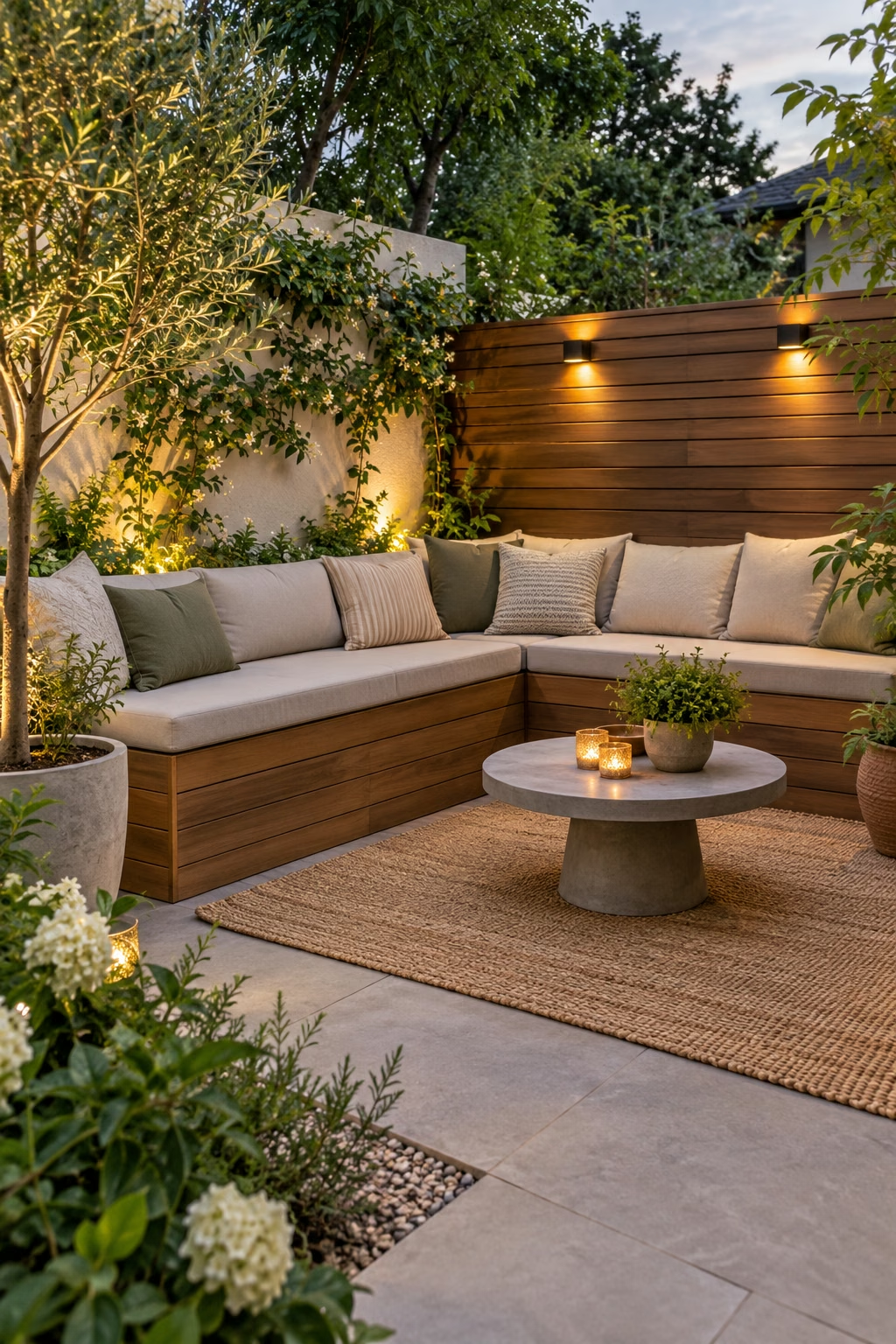
An L-shaped corner bench makes excellent use of an area that might otherwise remain empty. Because the seating follows the edges of the garden, the center stays open for a table, plants, or easier movement.
This layout works particularly well in small courtyards, enclosed patios, and gardens with boundary walls. A built-in bench can also be designed to fit an awkward corner more neatly than freestanding furniture.
Use deep seat cushions and supportive back cushions to make the bench feel like an outdoor sofa. A small round or rectangular table can complete the conversation area without blocking access. Built-in corner seating is commonly used to increase capacity while preserving valuable floor space.
4. Combine Seating With Built-In Planters
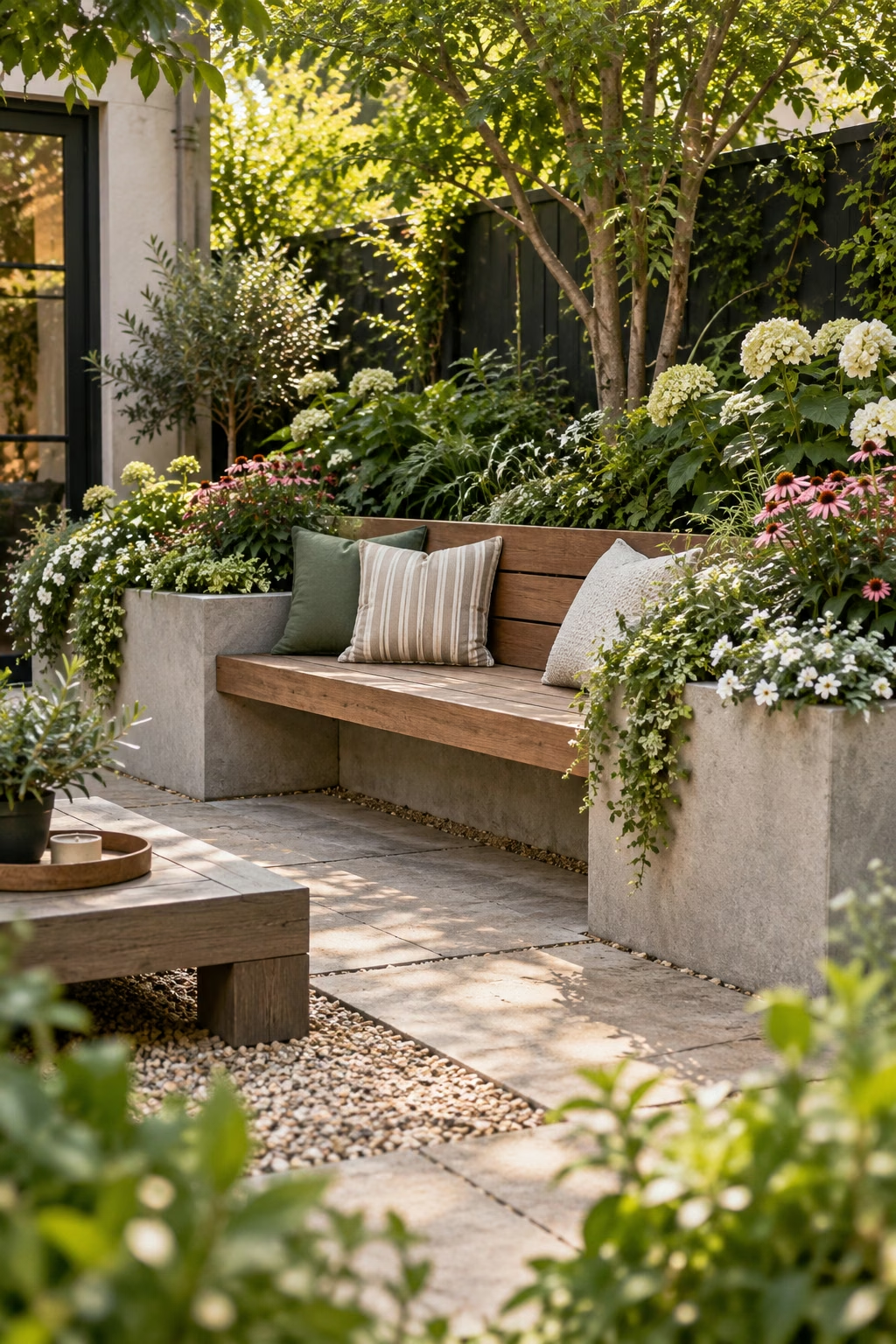
A planter bench combines two useful garden features in one design. Planter boxes can be placed at both ends of the seat or behind the backrest, allowing flowers and foliage to frame the seating area.
Choose plants that will not constantly spill wet soil, thorns, or sticky flowers onto the cushions. Ornamental grasses, compact evergreen shrubs, lavender, and soft trailing plants can create an attractive backdrop.
Make sure excess water can drain away from the seating materials. If the planters are made from wood, line the planting sections properly while keeping drainage holes open. Integrated planter benches are especially useful where there is not enough room for separate furniture and planting beds.
5. Create an Outdoor Living Room Under a Pergola
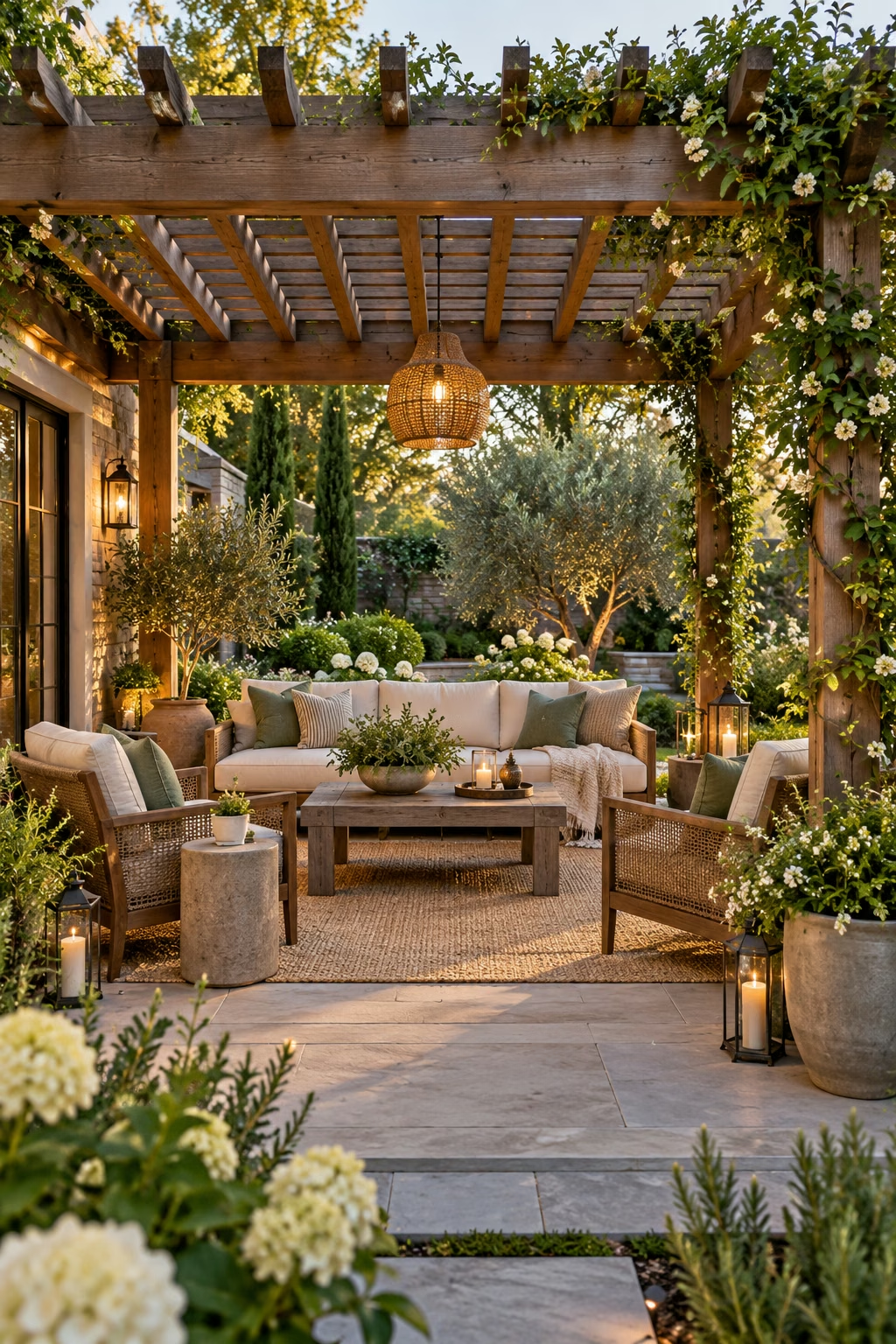
A pergola can visually define a seating area and make it feel like a separate outdoor room. Place a sofa, two chairs, and a low table beneath the structure to create a comfortable place for conversation.
The overhead beams can support climbing plants, outdoor curtains, lighting, or an appropriate retractable covering. These additions can provide more privacy and make the area feel softer and more welcoming.
Keep the furniture in proportion to the pergola. A small structure may only need two lounge chairs, while a larger pergola can hold a full modular outdoor sofa. Pergolas are widely used to organize seating, introduce shade, and connect outdoor furniture with the surrounding garden.
6. Choose an Arbor Bench for a Romantic Nook
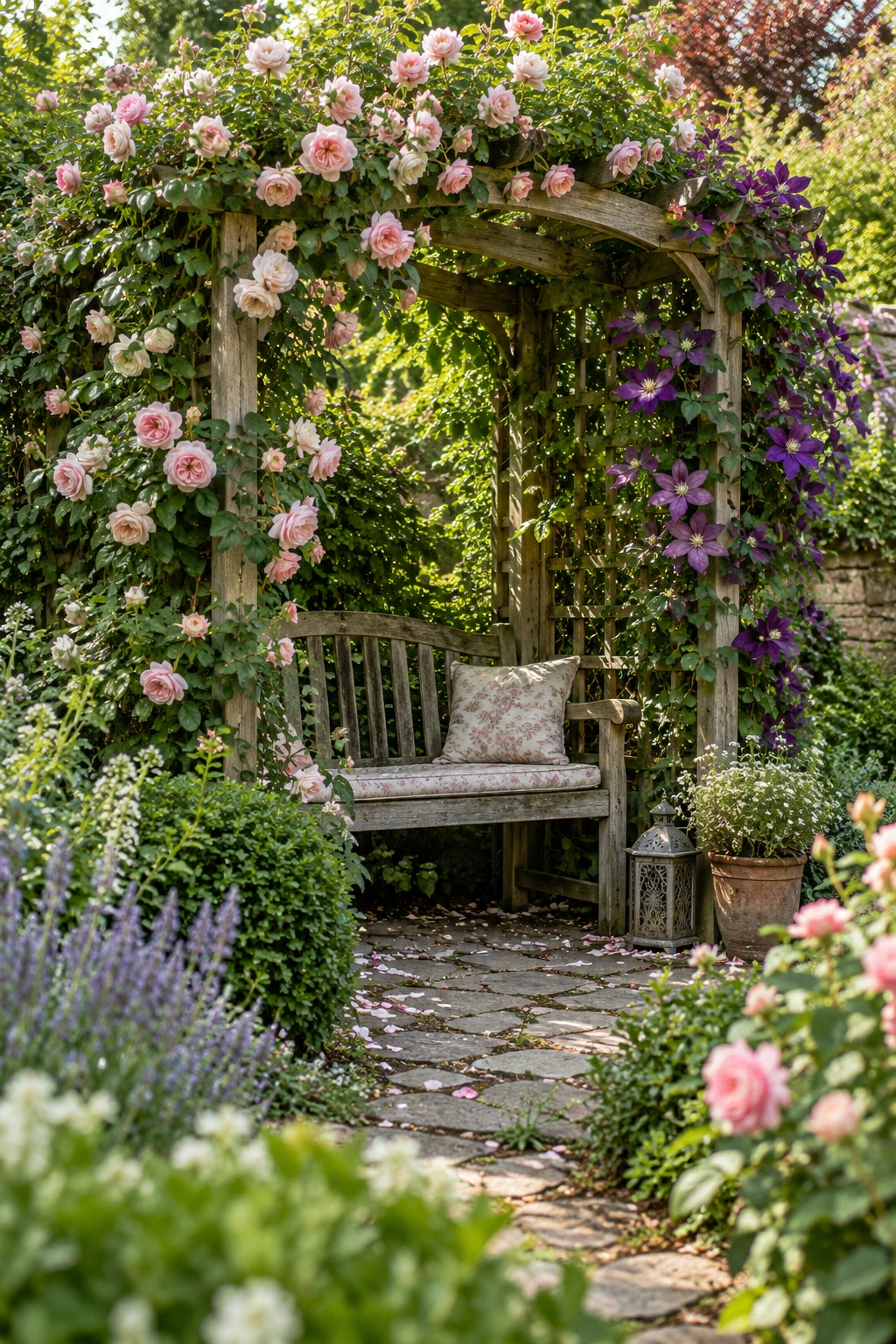
An arbor bench creates a small destination within the garden. Unlike a large pergola, an arbor usually frames one bench, making it suitable for narrow paths and compact planting areas.
Place it at the end of a walkway or between two garden sections. Climbing roses, clematis, jasmine, or honeysuckle can gradually soften the structure, although plant suitability will depend on your climate and growing conditions.
The bench does not need elaborate decoration. A simple wooden structure surrounded by layered planting can feel private and inviting. Arbor seating is commonly used to frame views, support climbers, and create a quiet resting point inside the landscape.
7. Make a Simple Gravel Seating Area
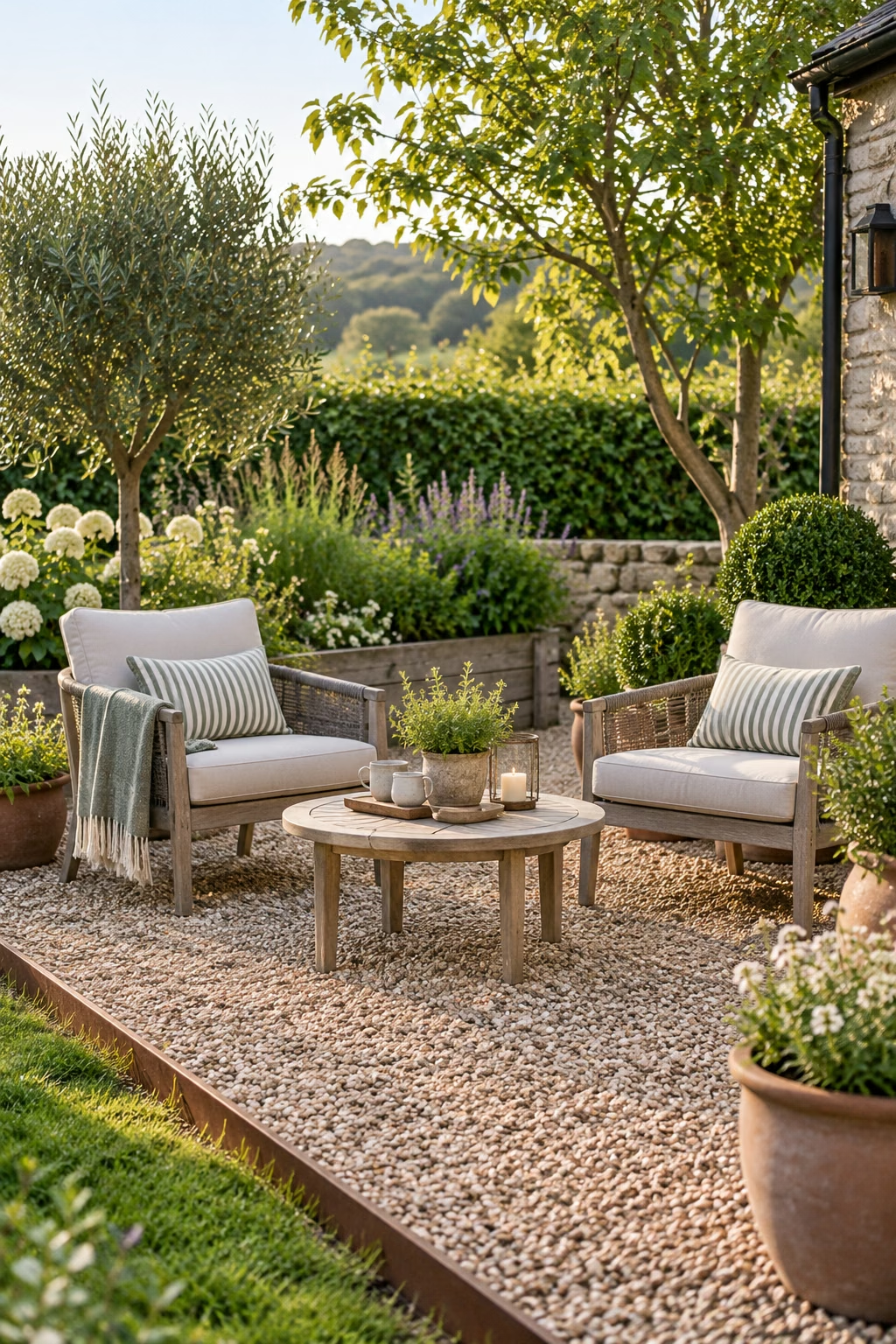
A gravel seating area can be an affordable alternative to building a full patio. It looks especially natural in cottage gardens, informal backyards, and spaces surrounded by raised beds.
Prepare the base carefully and install edging so the gravel stays contained. Furniture with very narrow legs may sink or feel unstable, so choose pieces with broad feet or place small paving slabs beneath the legs.
A table, two chairs, and several large containers may be all you need. You can also add stepping stones to create a firmer route to the seating area. Gravel is valued for its informal appearance and drainage, but thoughtful furniture placement is important for stability.
8. Arrange Chairs Around a Fire Pit
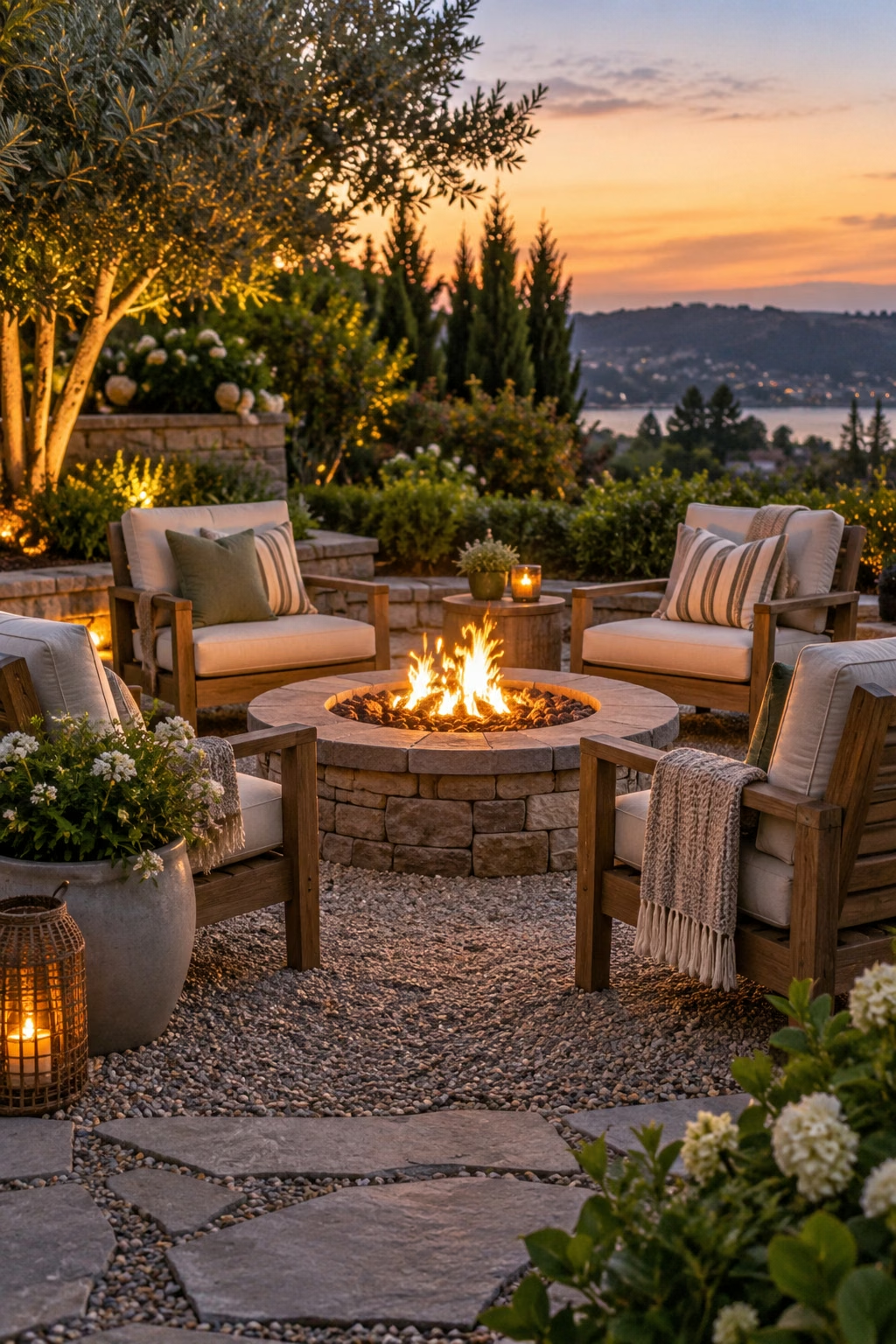
Fire pit seating naturally encourages people to face one another. Arrange chairs in a circle or gentle curve so guests can talk comfortably while still having a clear view of the fire.
Adirondack chairs are a popular option, but a curved bench, sectional sofa, or combination of chairs and stools can also work. Avoid squeezing too many seats into the area. People should be able to enter and leave without stepping too close to the fire feature.
Choose nonflammable or manufacturer-approved surfaces around the fire pit and follow the required clearances, local rules, and product instructions. Curved and circular layouts appear frequently in practical fire pit seating designs.
9. Put an Outdoor Dining Area Close to the Kitchen
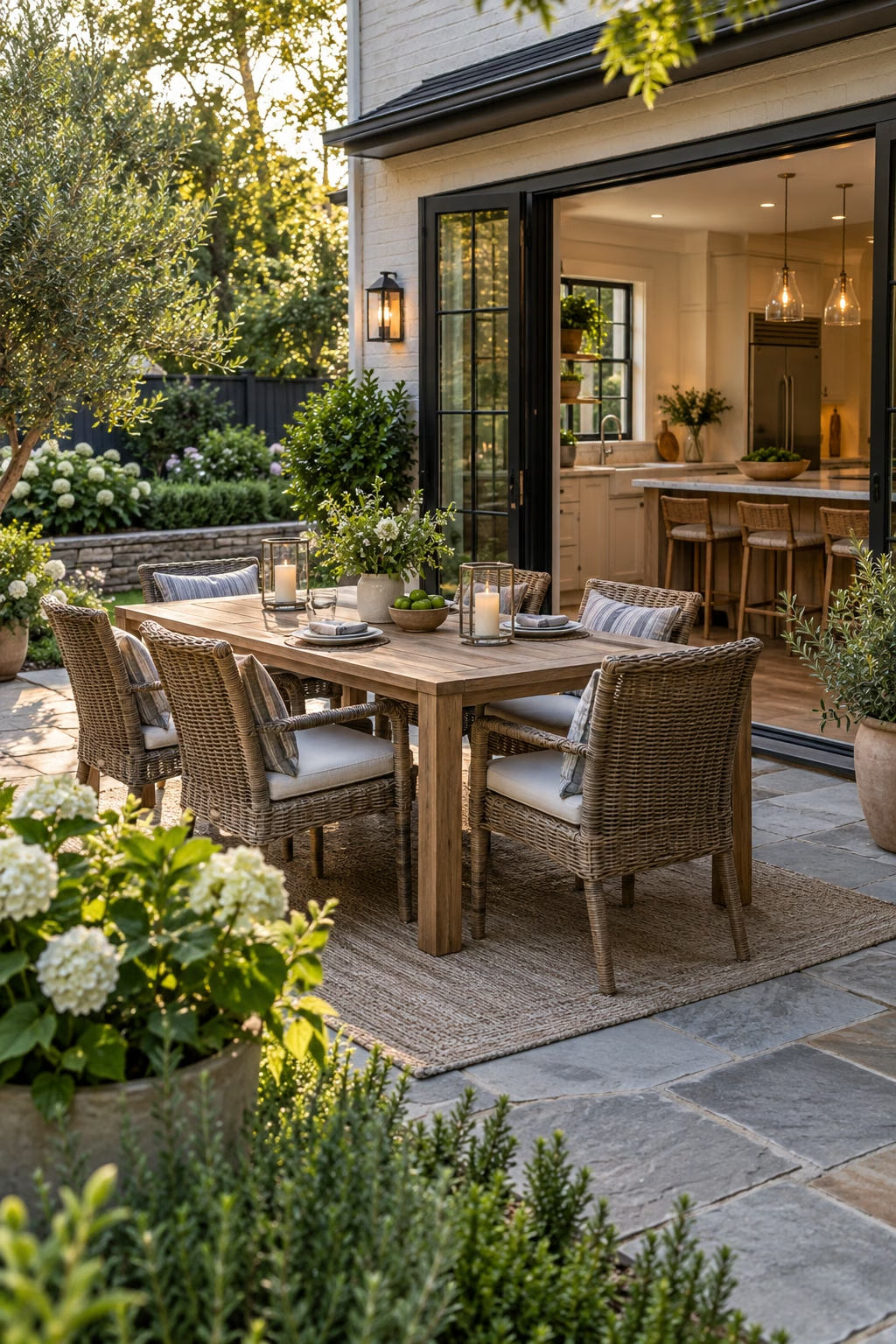
An outdoor dining area is easier to use when it is reasonably close to the kitchen or back door. Carrying plates, drinks, and serving dishes becomes less complicated, which may encourage you to eat outside more often.
Choose a table that fits the number of people you regularly host rather than buying the largest set that will fit. Leave comfortable walking space around the chairs, especially along the route between the door and the table.
A parasol, pergola, or nearby shade tree can make lunchtime seating more comfortable. Garden-design guidance often recommends considering the connection between the house and primary seating areas before developing more distant garden destinations.
10. Use a Garden Sofa for Everyday Lounging
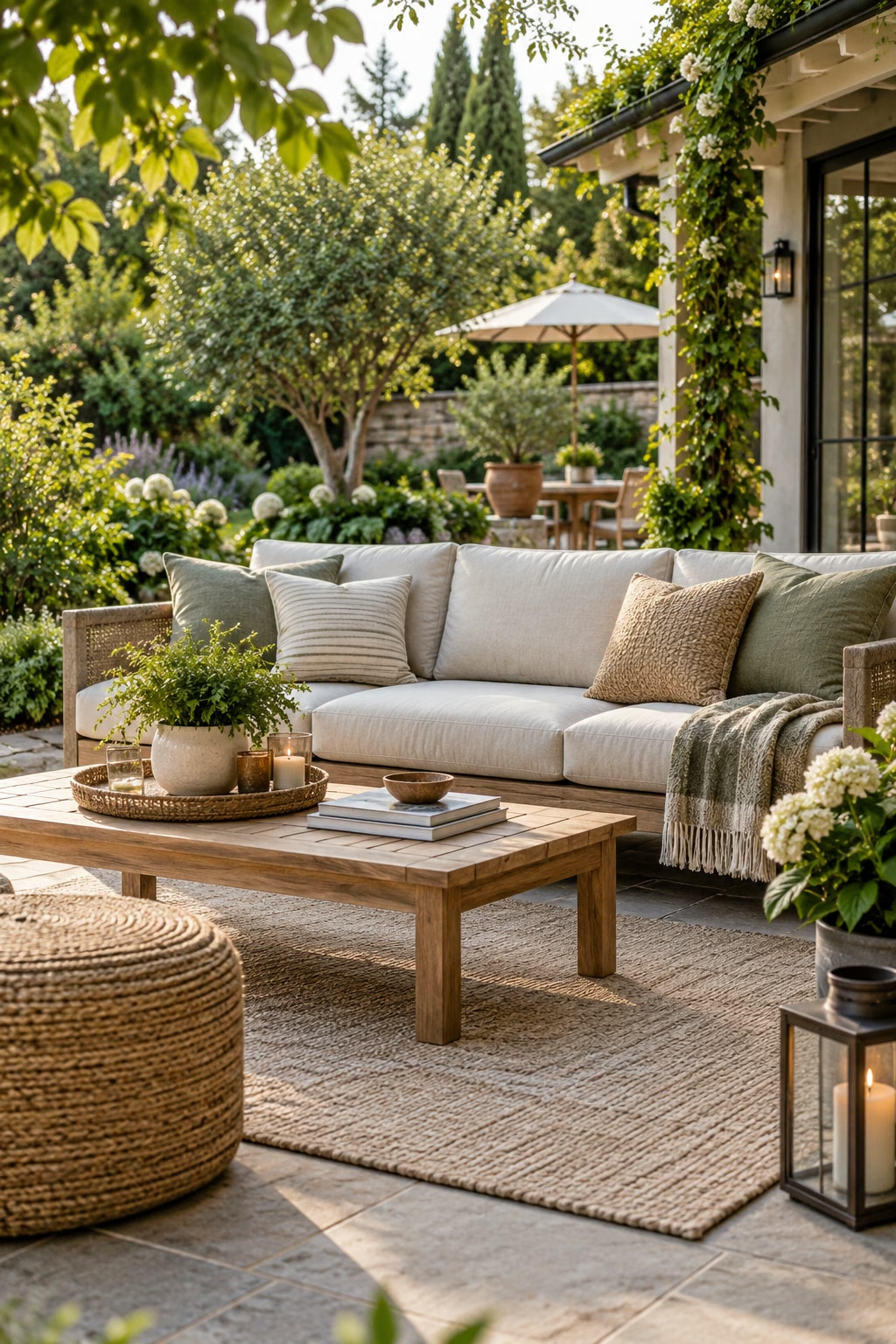
A garden sofa can make an outdoor space feel as comfortable as an indoor living room. It is a good choice for families who spend more time relaxing and talking outside than sitting at a formal dining table.
Measure the space carefully before choosing the sofa. Large furniture can overwhelm a narrow patio, while a small two-seat sofa may disappear in a very large garden.
Modular pieces are useful because they can be separated, rearranged, or expanded as your needs change. Add a coffee table and one or two lightweight chairs for a balanced layout. Outdoor living spaces increasingly use weather-appropriate sofas and modular seating to create flexible conversation areas.
11. Point Adirondack Chairs Toward the Best View
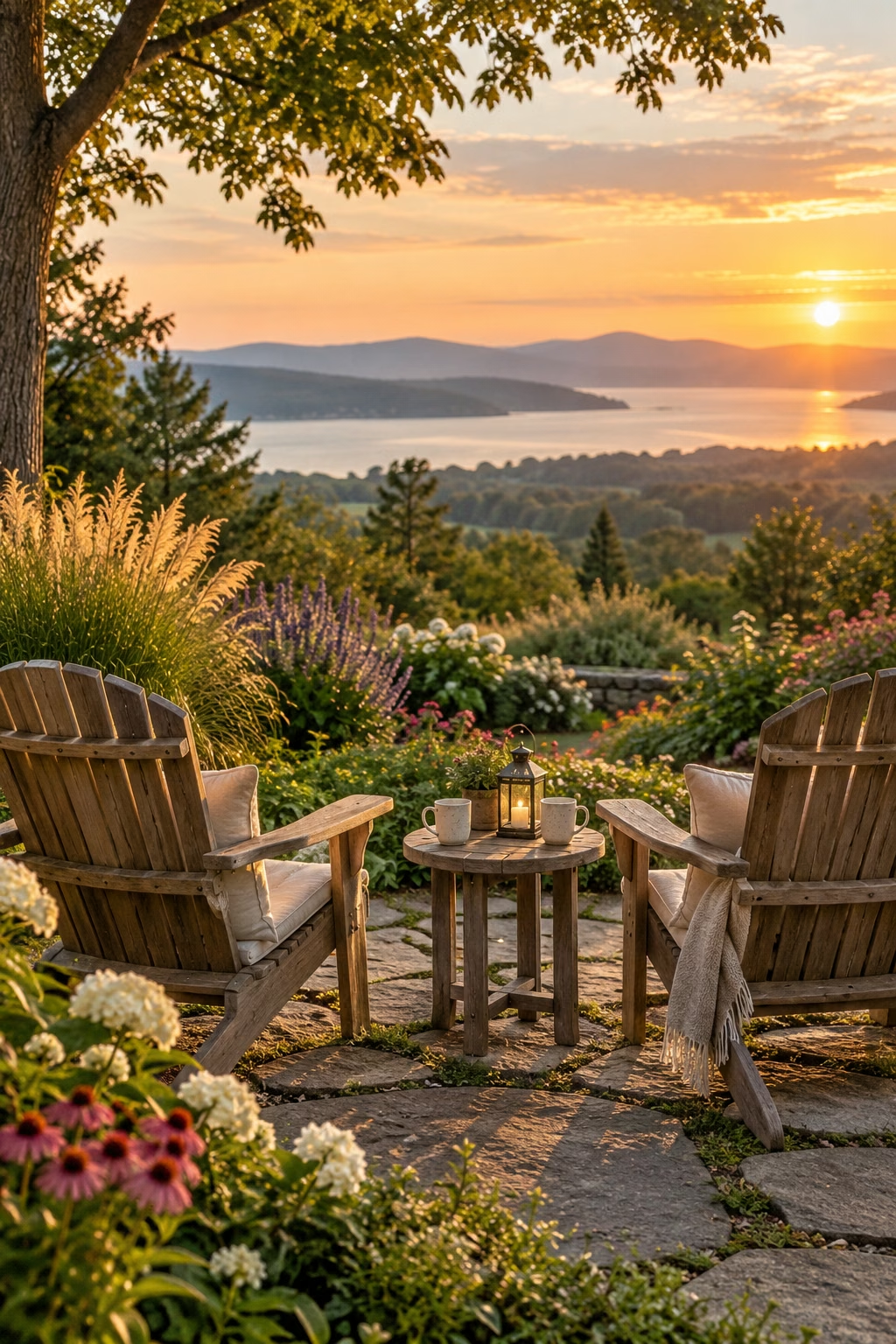
Two Adirondack chairs and a small table can create a complete seating area without requiring complicated construction. Their wide arms are useful for resting a drink, and their recognizable shape works well in relaxed garden settings.
Point the chairs toward a view you already enjoy. This might be a flower bed, pond, fire pit, sunset, vegetable garden, or mature tree. Slightly angling the chairs toward each other allows conversation without losing the view.
This setup can be placed on a patio, deck, gravel area, or level section of lawn. Adirondack chairs regularly appear in both view-facing and fire pit seating arrangements because they provide an informal, recognizable garden look.
12. Add a Swing Bench for Gentle Movement
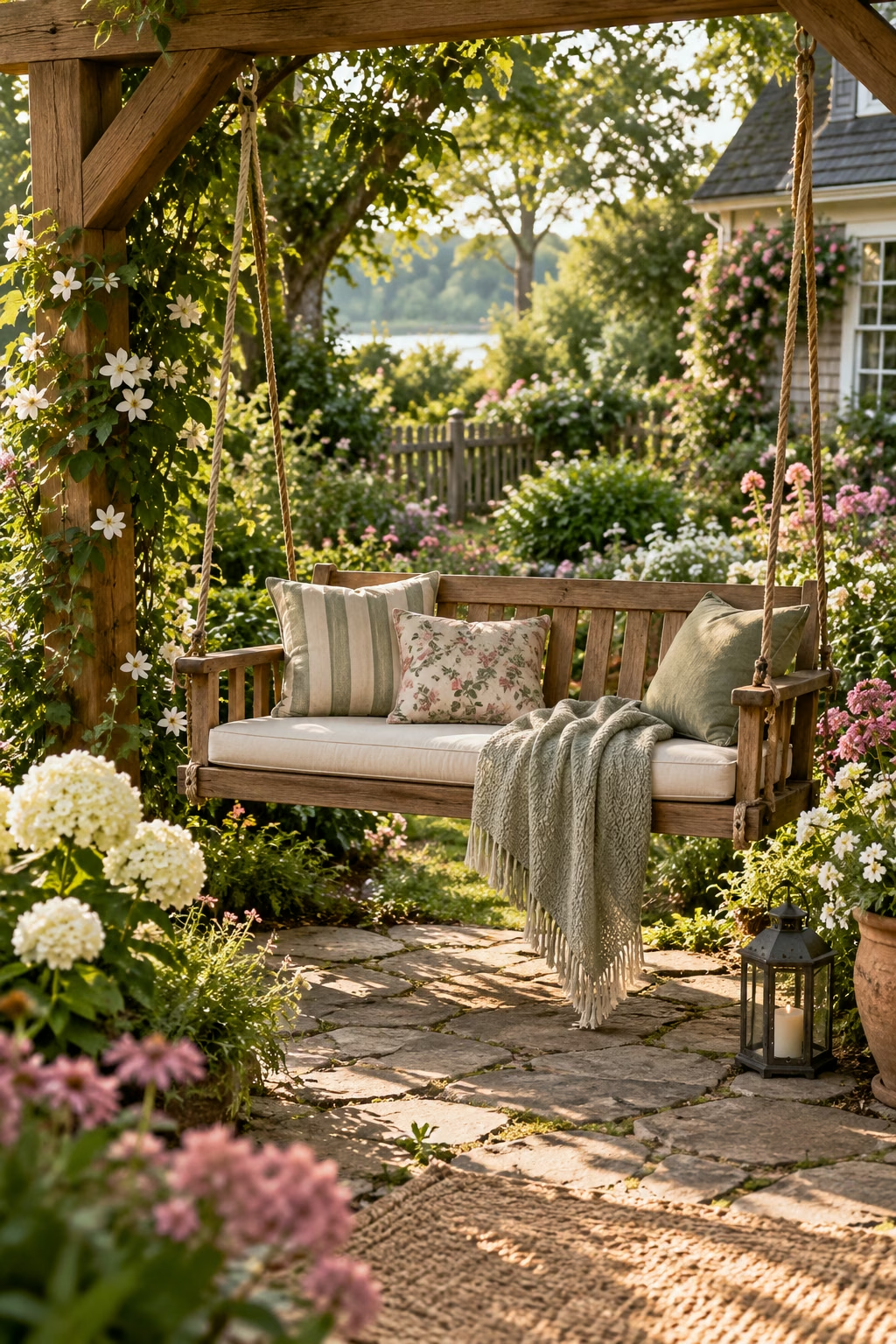
A swing bench adds a playful, relaxing element to the garden. It can hang from a suitable porch roof or purpose-built frame, or you can choose a freestanding model that does not require an existing structure.
Place the swing where it has enough room to move without hitting walls, branches, planters, or other furniture. Before installation, confirm that the frame, beam, fixings, and surrounding surface are appropriate for the swing and its expected load.
A cushion and a small nearby table can turn it into a comfortable reading or conversation spot. Garden swing designs are often used as both functional seating and a visual focal point.
13. Use a Hanging Egg Chair as a Cozy Accent
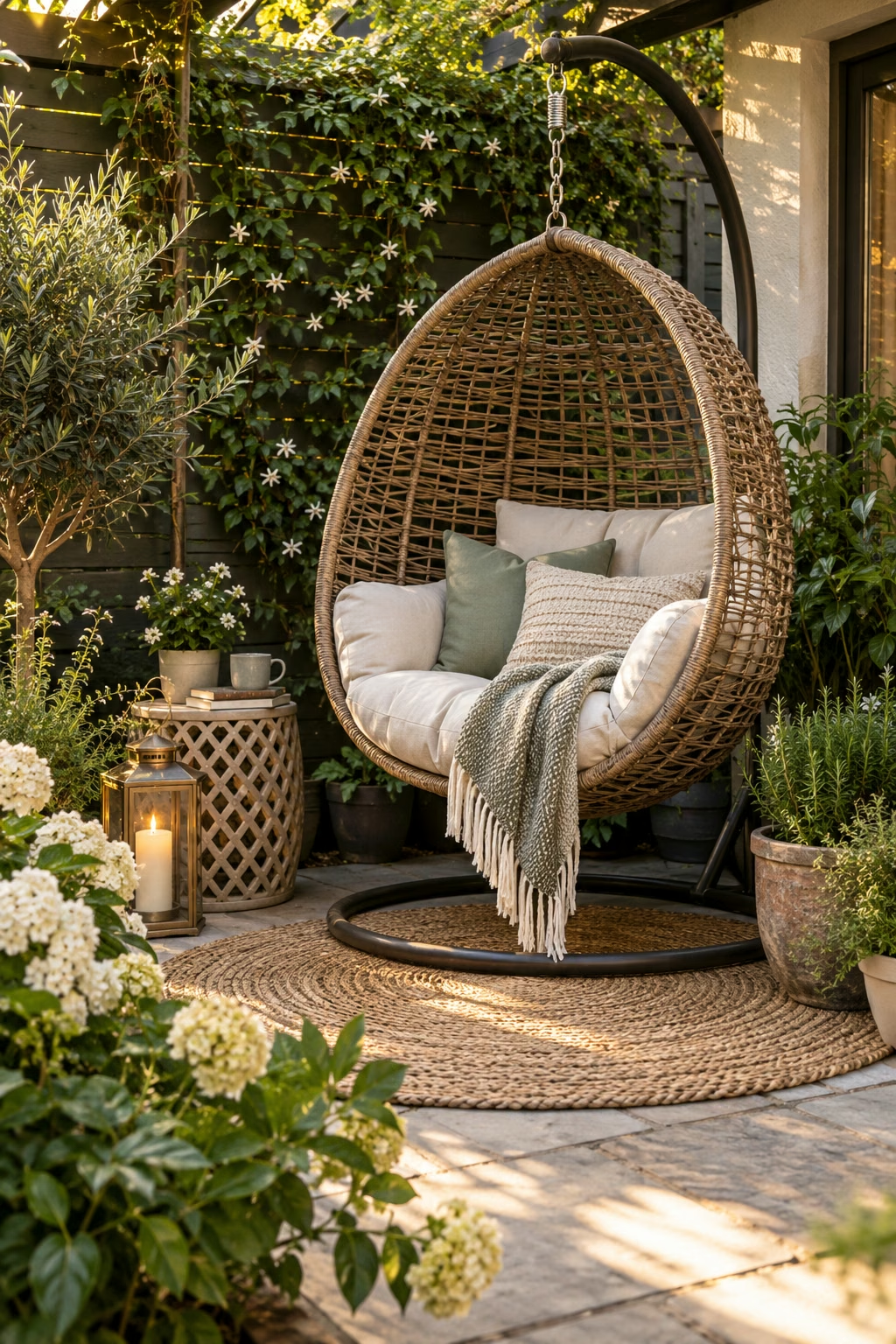
A hanging egg chair is useful when you want one especially comfortable seat rather than a large furniture arrangement. Its enclosed shape can make the sitter feel slightly sheltered, which suits reading corners and private patios.
A freestanding chair with its own support may be the simplest option because it can be repositioned. Place it beneath a covered patio, near a leafy border, or in a courtyard corner where it does not block the main path.
Add one supportive cushion instead of filling the chair with too many accessories. Hanging chairs and egg chairs are frequently suggested for creating compact, individual garden retreats.
14. Hang a Hammock in a Quiet Part of the Garden
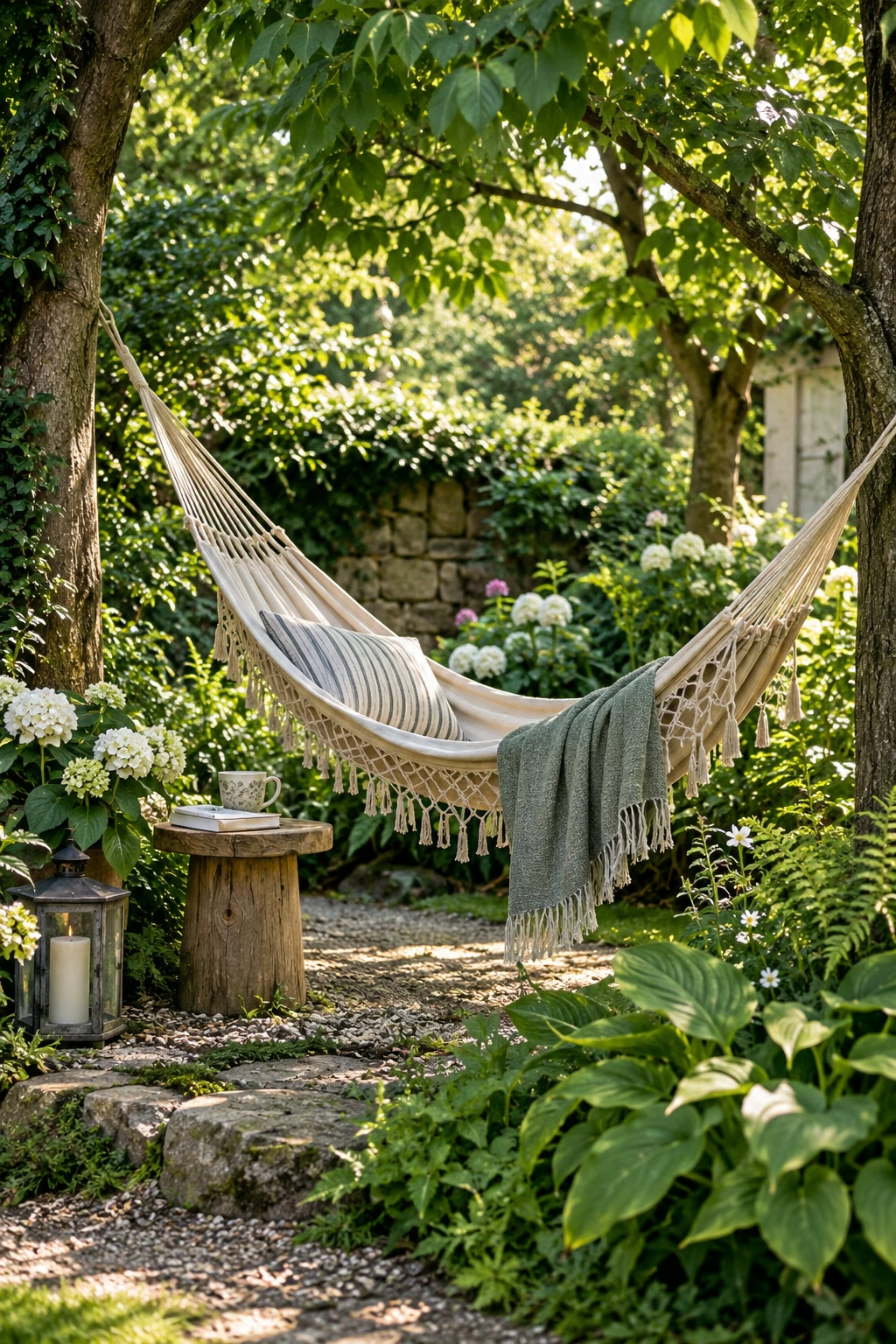
A hammock can turn a quiet garden corner into a place for naps, reading, or simply watching the trees move. It does not need to occupy the central patio.
Where suitable trees or structural supports are unavailable, use a properly designed freestanding hammock frame. This also makes it easier to move the hammock into shade or store it during poor weather.
Surround the area with soft planting, but keep prickly plants and frequently used paths away from the sides. A small stool nearby can hold a book or drink. Hammocks are commonly positioned near greenery, pergolas, and gentle water features to create restful garden destinations.
15. Wrap a Bench Around a Mature Tree
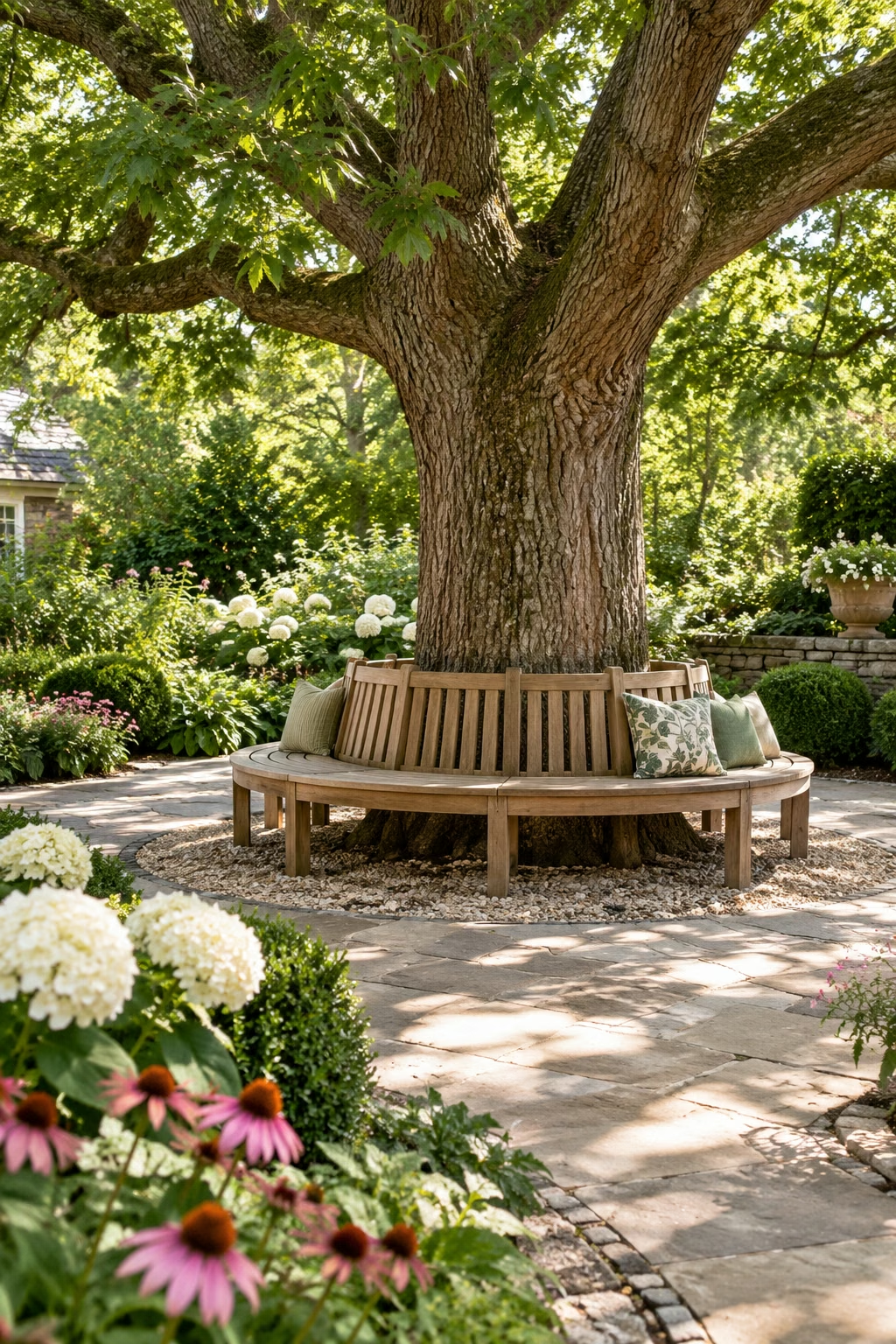
A circular or semicircular tree bench can provide useful seating while making a mature tree the center of the design. It works particularly well where the tree already provides welcome shade.
Choose a bench with enough space around the trunk so it does not press tightly against the bark. The ground beneath a tree may also be uneven, so make sure the seating remains stable and comfortable.
You do not need to surround the entire trunk. A half-circle bench may be more practical and can direct attention toward the best part of the garden. Tree benches are widely used to combine shade, seating, and an existing natural focal point.
16. Turn a Low Wall Into Extra Seating
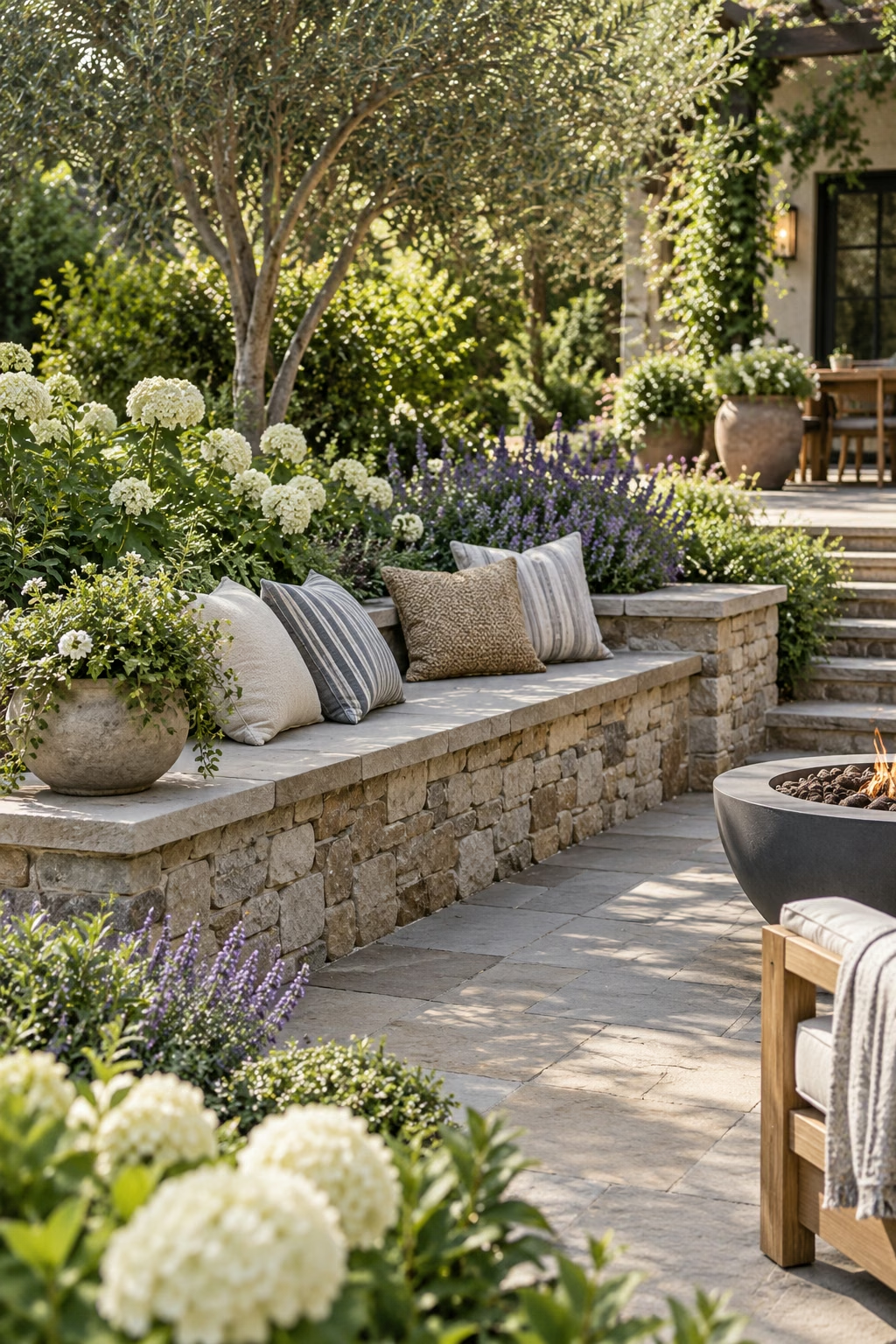
A retaining wall or raised-bed edge can sometimes double as occasional seating. This reduces the need for additional chairs and can be especially helpful when guests visit.
The top should be wide, level, smooth, and comfortable enough to sit on. A purpose-made cap or removable outdoor cushion can improve the surface. Avoid relying on a wall that is too narrow, unstable, sharply edged, or positioned beside a dangerous drop.
Seat walls work particularly well beside patios, fire pits, and planting beds because they create a clear boundary while adding informal seating. Landscape designers often use low walls to define separate zones and provide additional places to sit.
17. Design a Sunken Conversation Area
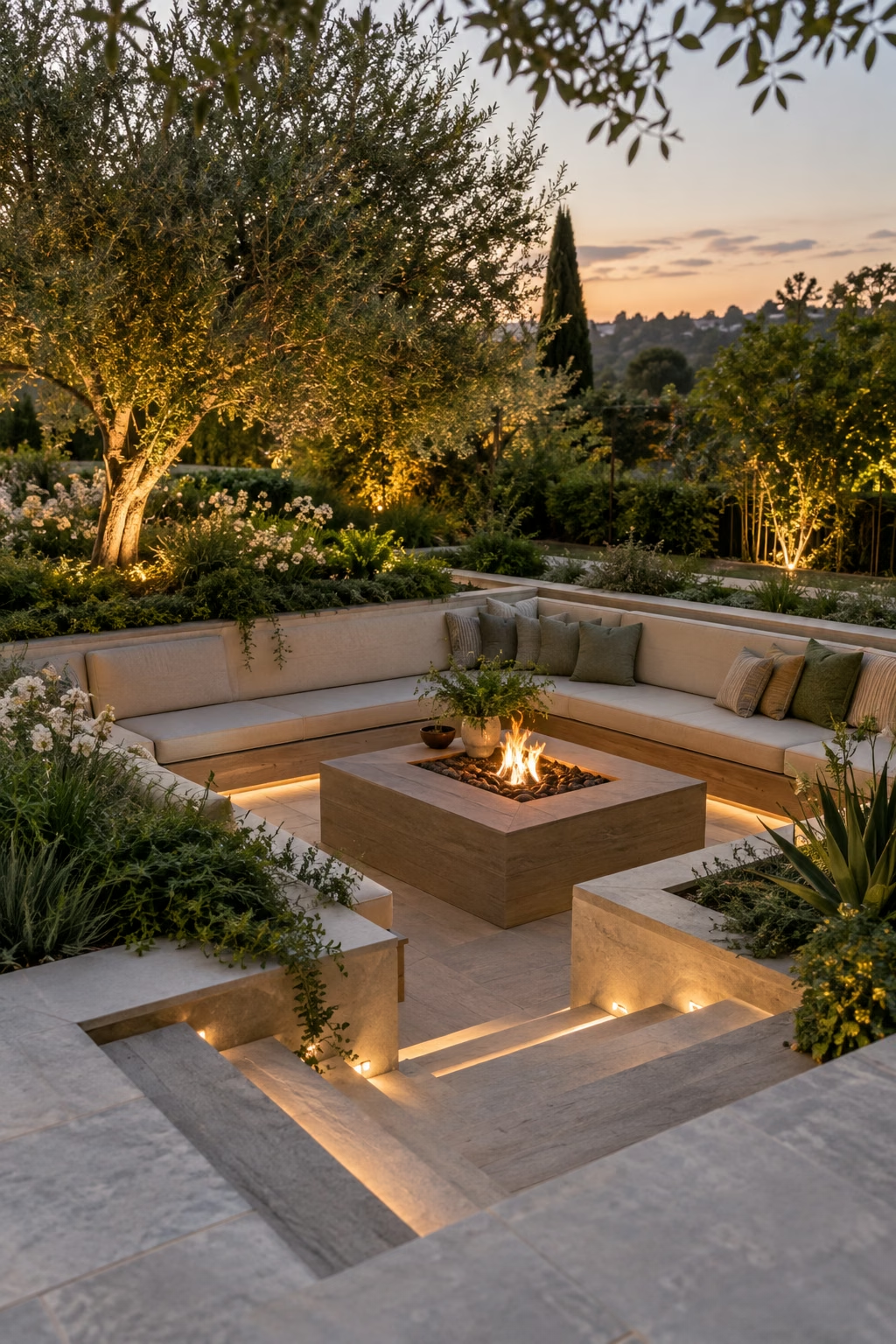
A sunken seating area can make a large garden feel more intimate. Lowering the seating slightly helps separate the conversation space from nearby lawns, pathways, or dining areas.
This design works best when planned as part of a larger landscaping project. Steps, retaining structures, lighting, and water management all need careful attention. In wet climates, drainage should be considered from the beginning rather than added after construction.
The finished area can contain a built-in bench, modular sofa, or fire table. Keep the layout simple so the change in level remains the main design feature. Professional landscape guidance emphasizes that sunken seating requires early planning, particularly for drainage and construction.
18. Raise the Seating Area on a Deck
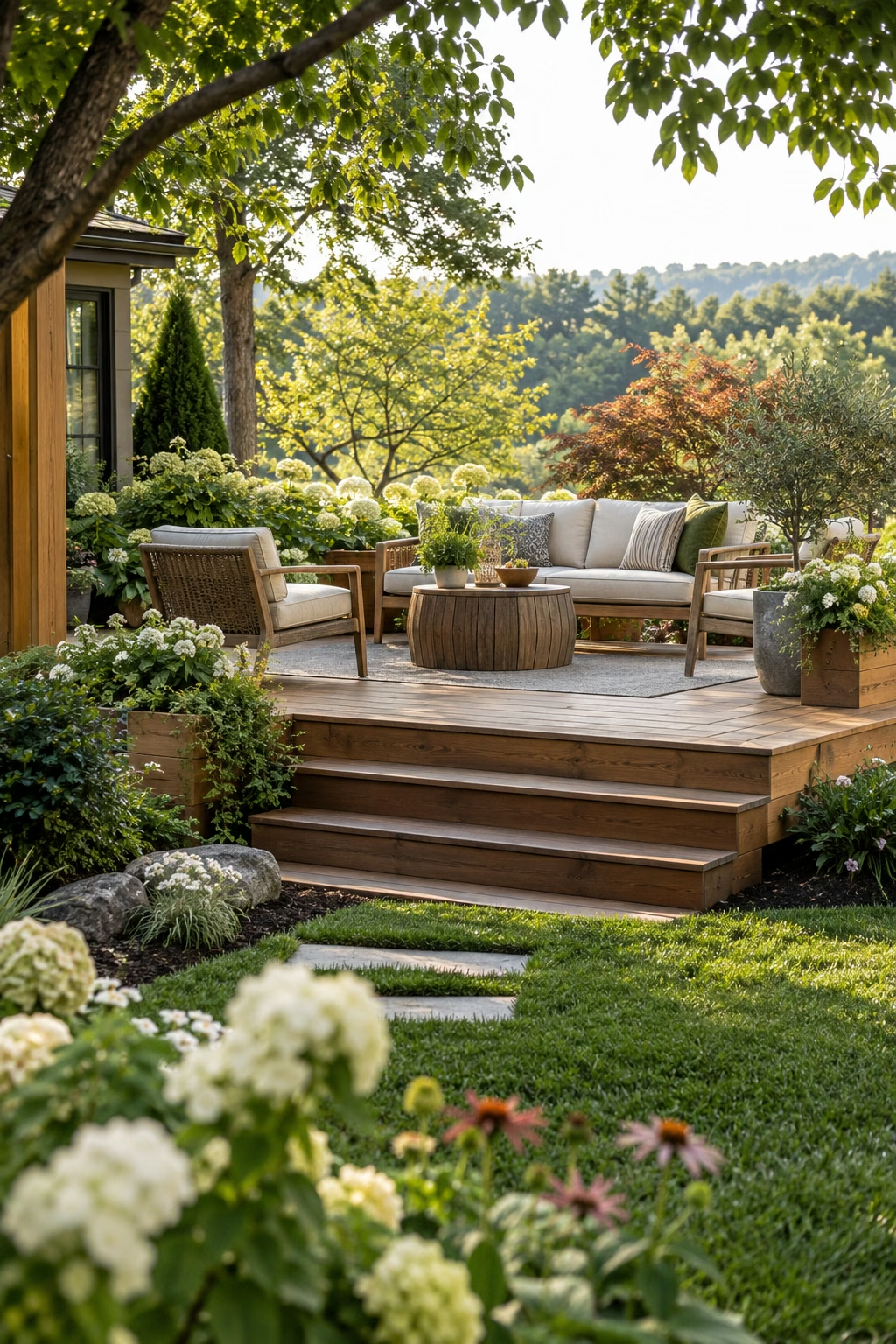
A slightly raised deck can establish a clear outdoor room without enclosing it with walls. The change in material and level visually separates the seating area from a lawn or planted garden.
Use the deck for a sofa arrangement, dining set, or pair of lounge chairs. Plan the furniture layout before deciding the final deck dimensions so chairs and walking routes are not squeezed against the edges.
Where possible, make access comfortable and avoid unnecessary changes in level. You can soften the edges with container plants, grasses, or a nearby border. Raised decks and contrasting surfaces are commonly used to define separate seating zones in open gardens.
19. Soften a Courtyard With Vertical Greenery
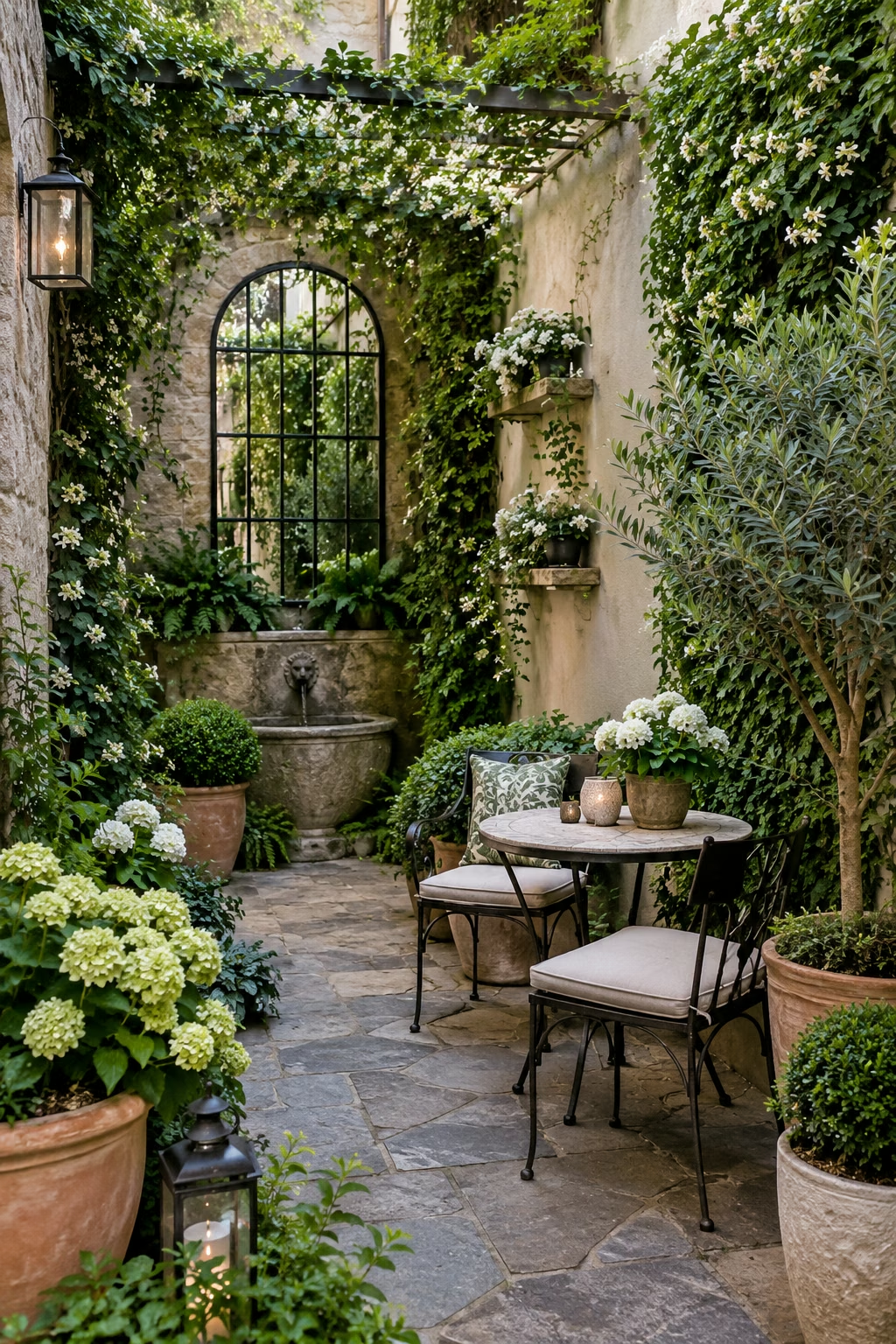
Courtyards often have limited planting space, but their walls provide opportunities for vertical greenery. A trellis, climbing plant, wall planter, or group of tall containers can create a more comfortable backdrop for seating.
Place a compact bench or bistro set against the least-used wall, leaving the main route through the courtyard open. Plants can then surround the furniture without filling the center of the space.
A mirror or pale wall may make the area feel brighter, but use decorative features sparingly. Courtyard design advice regularly emphasizes vertical planting, privacy, and careful use of corners when ground space is limited.
20. Add Color With a Tiled Built-In Bench
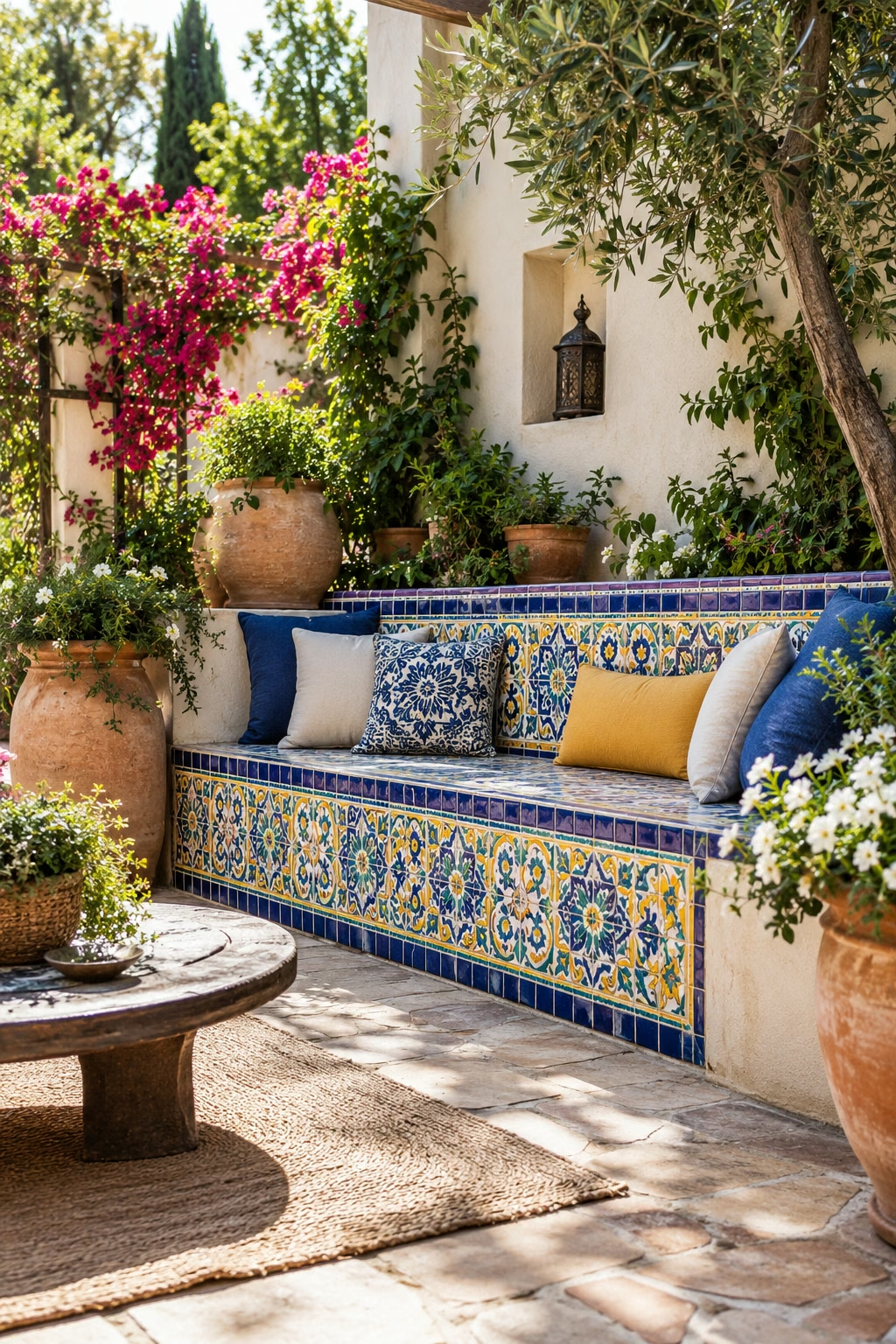
A tiled bench can bring pattern and color into a garden without relying on fabric that needs frequent storage. It works especially well in Mediterranean-inspired courtyards, pool areas, and colorful patios.
You can tile the entire structure or use tile only on the seat, front edge, or back panel. Choose materials intended for outdoor conditions. The installation should account for water, temperature changes, sealing, and suitable grout.
Keep the surrounding furniture simple so the bench remains the focal point. Removable cushions can make the hard surface more comfortable without covering the decorative finish. Outdoor design guidance recommends using exterior-rated materials and appropriate installation details for tiled garden benches.
21. Keep the Layout Flexible With Folding Chairs
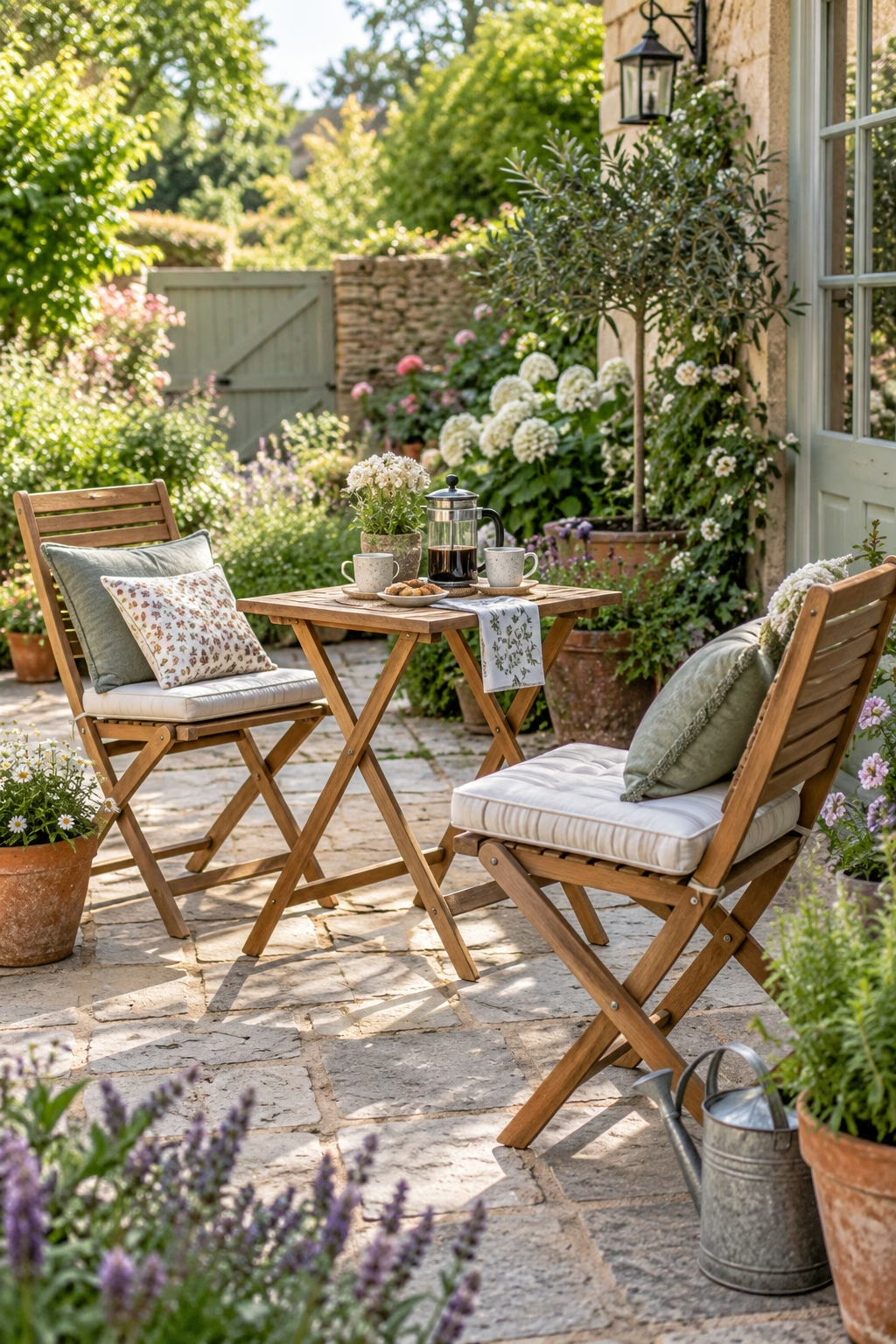
Folding garden chairs are useful when sunlight, shade, and guest numbers change throughout the day. You can move them beside a flower border in the morning, under a tree in the afternoon, and onto the patio for evening drinks.
Choose chairs that are comfortable enough for regular use rather than treating them only as emergency seating. When folded, they should fit inside a shed, storage bench, garage, or covered area.
A lightweight folding table can create a temporary dining space without permanently filling the garden. Portable furniture is frequently recommended for small spaces because it allows the same area to support several activities.
22. Hide Clutter Inside a Storage Bench
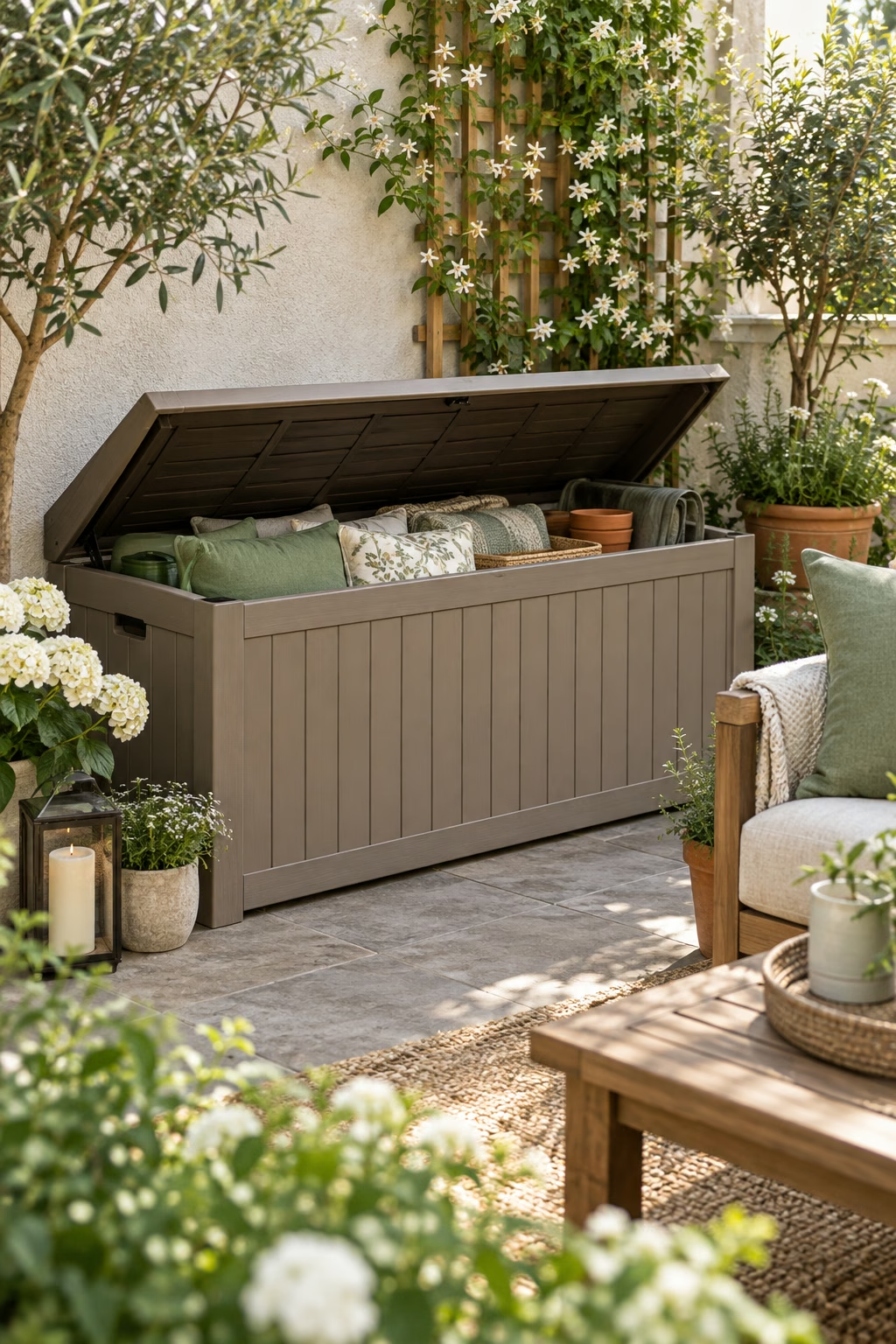
A storage bench provides seating while giving cushions, small tools, children’s toys, or outdoor accessories a designated home. It is especially helpful on compact patios where a separate storage box would take up valuable space.
Choose a bench made for outdoor use and check whether the storage compartment is designed to resist rain. Items that must stay completely dry may still need sealed containers or indoor storage.
Place the bench against a wall or fence so the lid can open fully. Add cushions only if they can be removed easily. Built-in and freestanding storage seating is commonly recommended for making small outdoor areas more functional.
23. Save Floor Space With a Wall-Mounted Bench
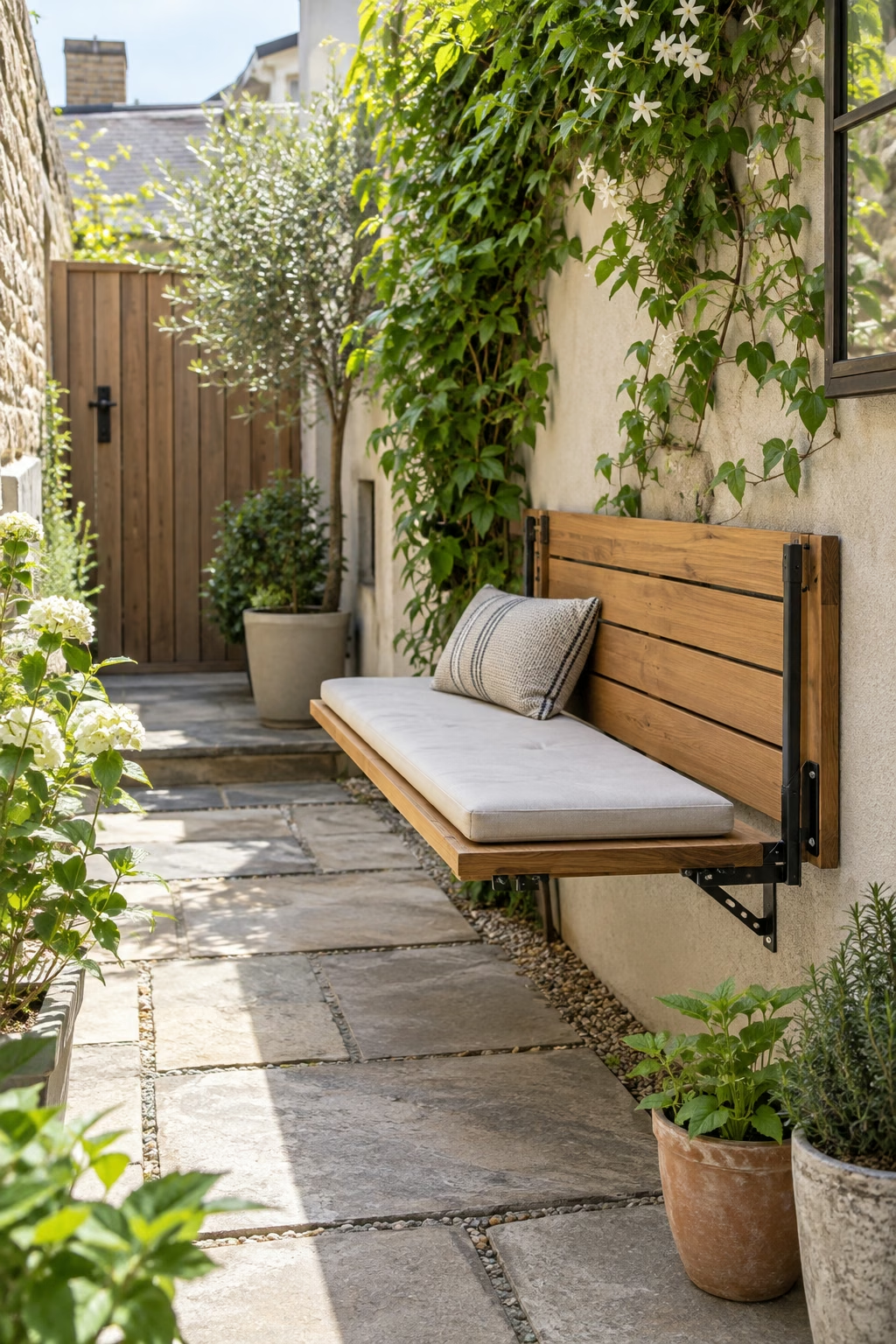
A fold-down wall bench can provide seating in a narrow side yard, tiny courtyard, or small balcony-style garden. When the bench is not needed, it folds upward and leaves more room for walking or gardening.
Install it only on a wall or structure that can safely support the seat and its users. The surrounding ground should also be level enough for comfortable use.
Pair the bench with a small folding table or movable stool. Keep nearby planters narrow so they do not interfere with opening and closing the seat. Fold-down outdoor benches are particularly useful where permanent furniture would block an important path.
24. Create a Conversation Area With Outdoor Wicker
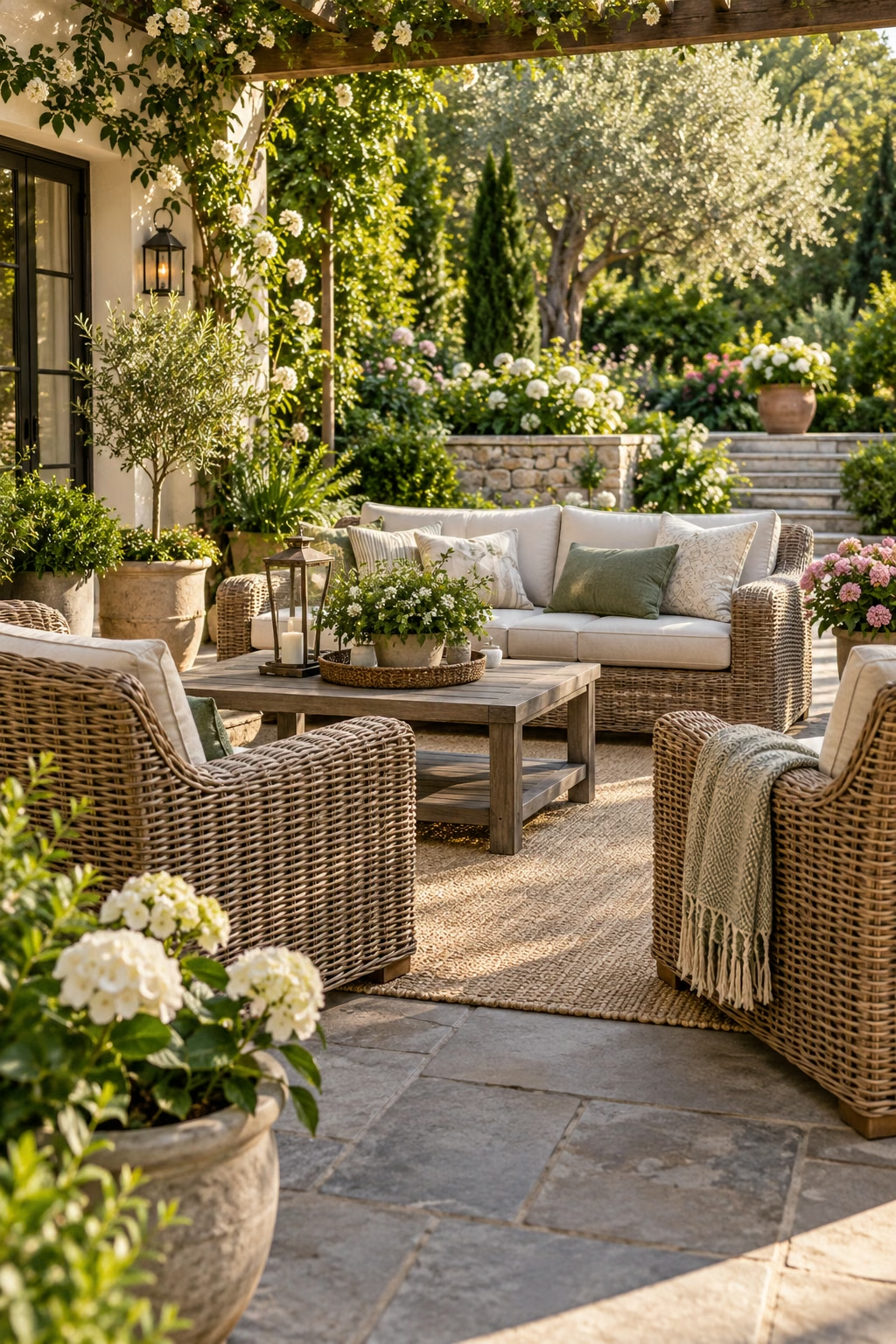
Outdoor wicker furniture can make a patio feel warm and relaxed. A small sofa with two matching chairs creates a balanced conversation area, while a compact two-chair set may be better for a narrow space.
Choose furniture specifically rated for outdoor use rather than moving delicate indoor wicker into the garden. Add washable, weather-appropriate cushions and leave enough space around the coffee table for people to move comfortably.
A neutral furniture set can be refreshed with different cushion covers, containers, and outdoor rugs. Wicker-style conversation sets appear frequently in garden seating guidance because they offer the appearance of indoor furniture in an outdoor arrangement.
25. Add a Lounger or Daybed for Slow Afternoons
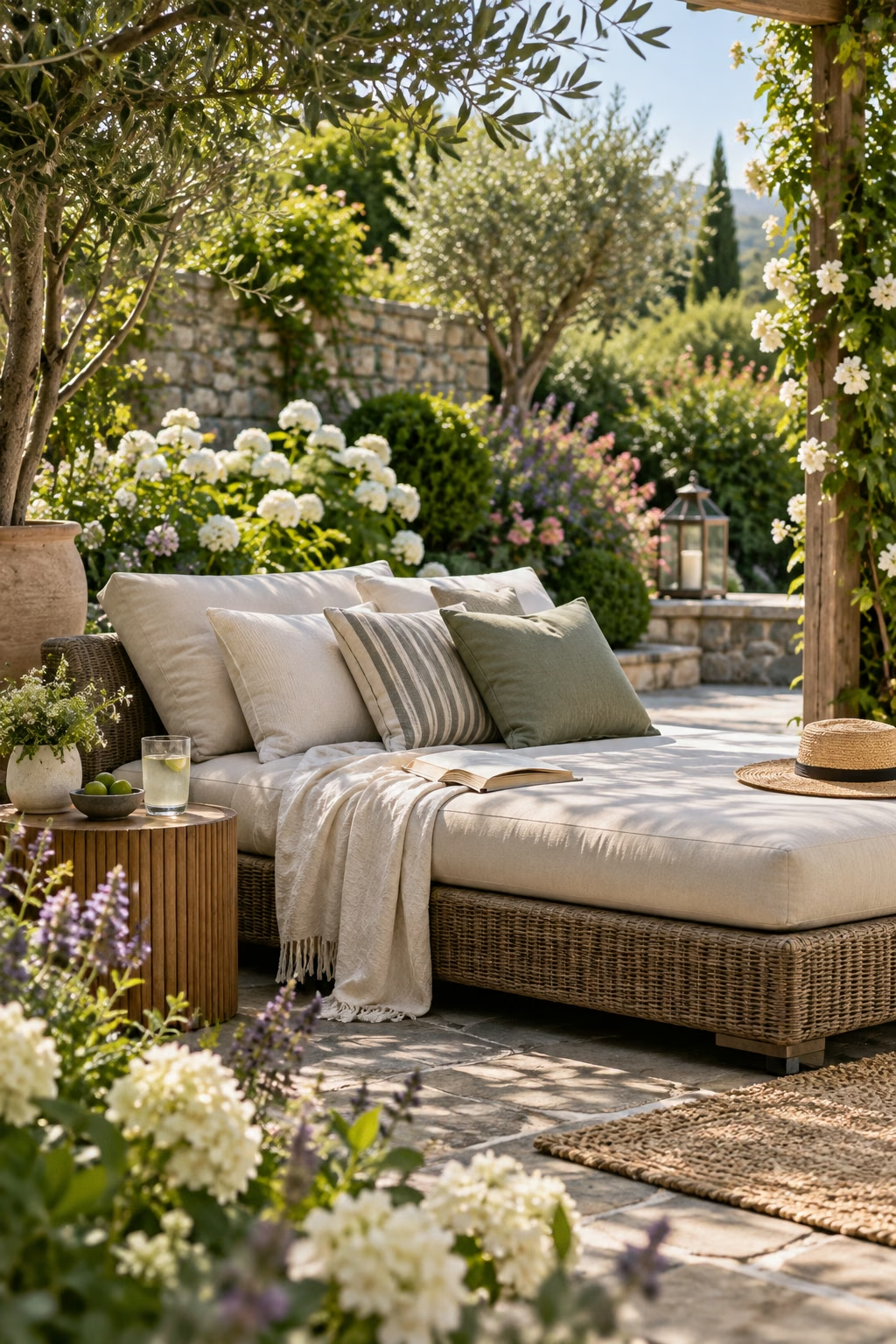
A lounger or outdoor daybed creates a place for stretching out rather than sitting upright. It works well beside a pool, on a sunny deck, beneath a covered patio, or in a private section of the garden.
Before choosing one, consider how much room is needed to walk around it. A large daybed can dominate a small garden, while a single adjustable lounger may provide the same relaxation with less visual weight.
Wheeled loungers are useful when you want to follow the sun or move into shade. Outdoor daybeds, chaise lounges, and reclining chairs are regularly recommended for gardens designed around relaxation.
26. Face the Seating Toward Water
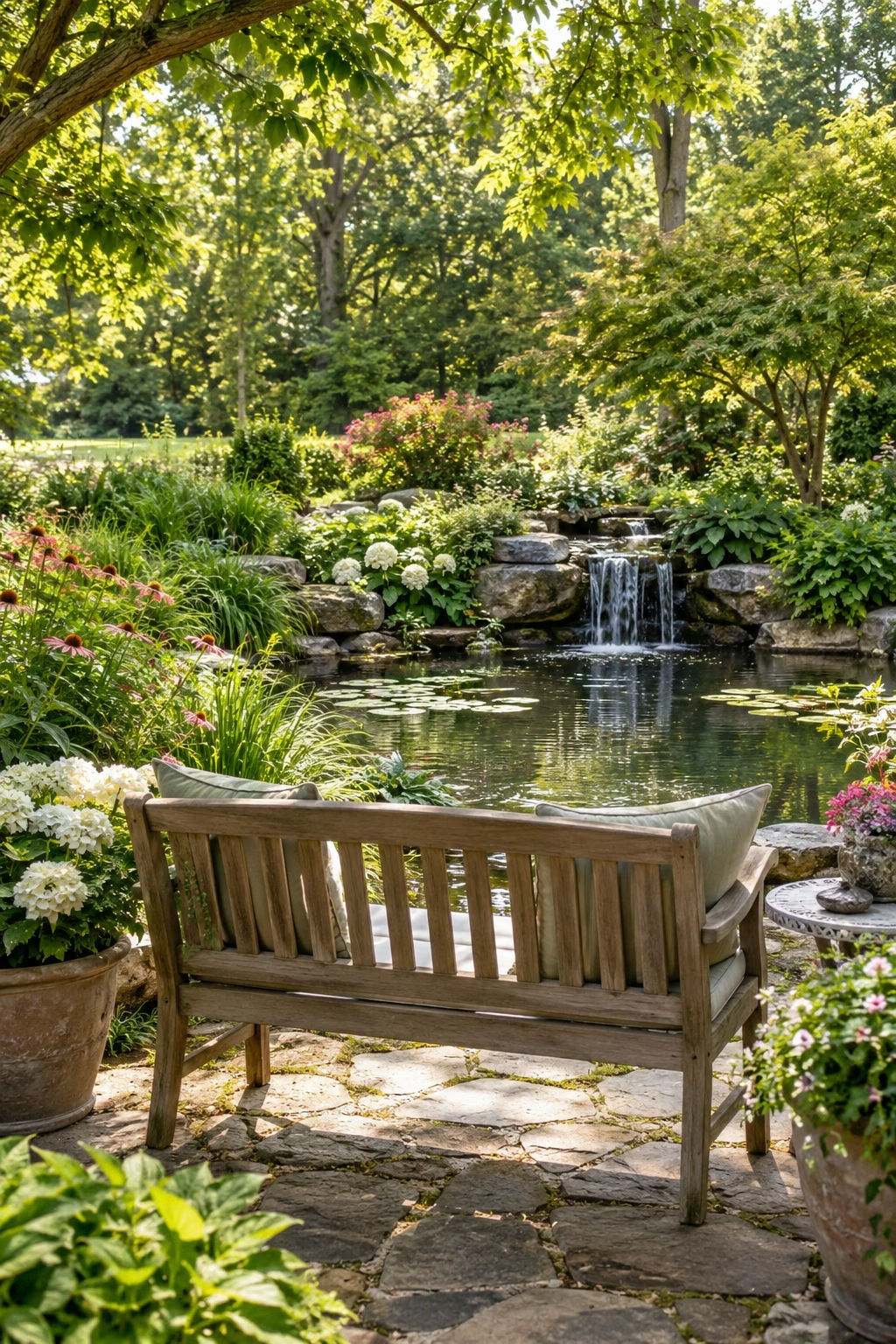
A pond, fountain, or small bubbling water feature can give a seating area a clear focal point. Position a bench or pair of chairs where you can see and hear the water without being affected by constant splash.
The seating does not have to sit directly beside the feature. A view across a planting bed may feel more natural and allow surrounding plants to frame the water.
Keep the route between the house and seating area safe and easy to follow. Garden seating examples frequently orient benches, hammocks, and chairs toward ponds or fountains because water adds visual movement and a sense of separation from busier areas.
27. Use a Picnic Table for Casual Family Seating
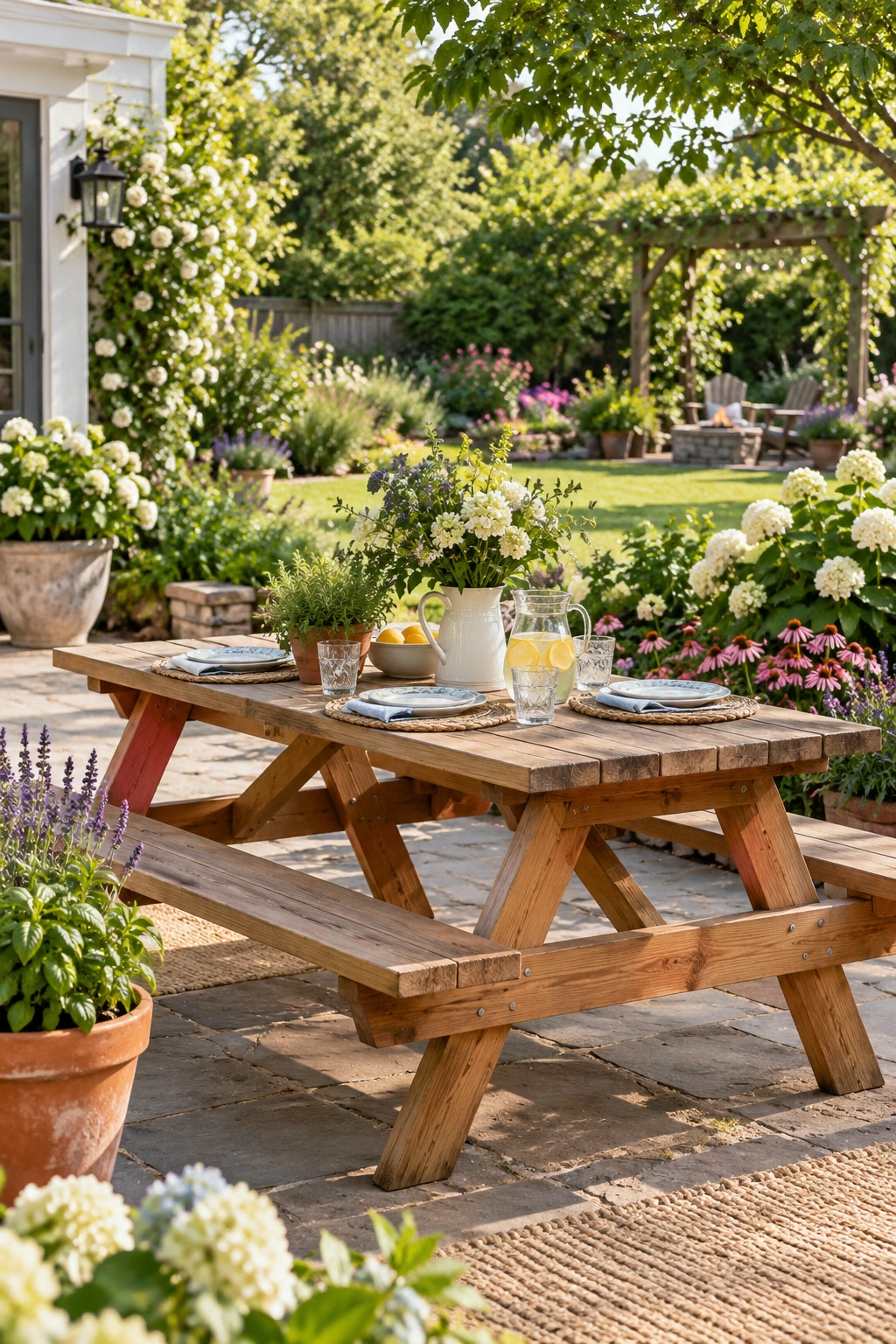
A picnic table is a practical choice for family meals, children’s activities, potting projects, and informal gatherings. Because the benches and tabletop form one unit, the arrangement stays organized and does not require many separate pieces of furniture.
Place it on a stable, level surface with enough room for people to step over or slide onto the benches. A nearby parasol or shade structure can make the table more comfortable during hot weather.
For a softer appearance, surround the area with herbs, flowering containers, or ornamental grasses. Picnic-style seating naturally encourages people to share the same table and works particularly well in social garden areas.
28. Make a Hidden Garden Reading Nook
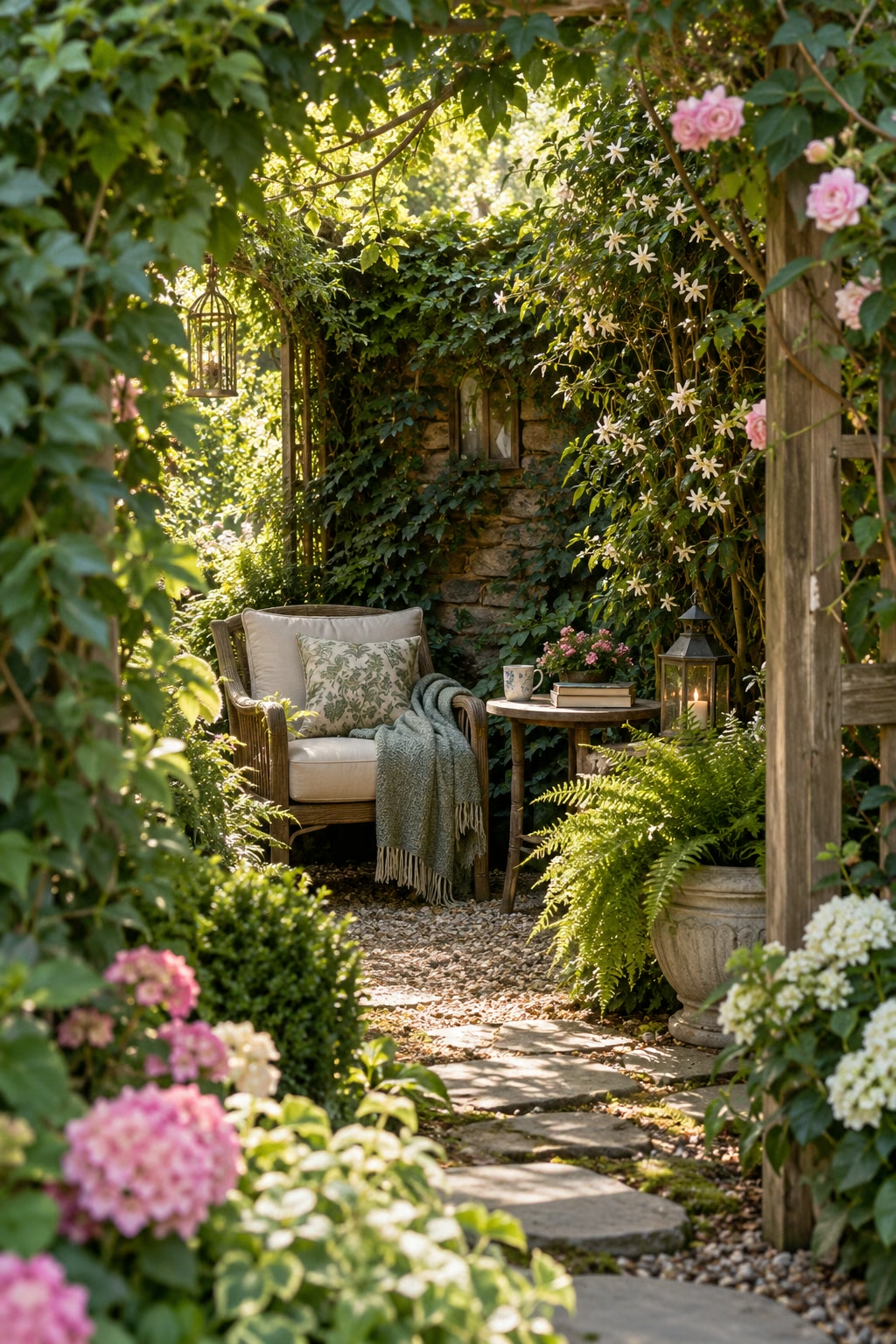
A reading nook should feel slightly separated from the busiest part of the yard. Look for a quiet corner behind a hedge, beside tall ornamental grasses, under a tree, or at the end of a winding path.
Add one comfortable chair or bench, a small table, and enough shade for the time of day when you usually read. You may also want a cushion box or covered basket for storing blankets and books temporarily.
Avoid overdecorating the space. Its privacy and planting should create most of the atmosphere. Garden reading nooks commonly use secluded placement, comfortable seating, and layered plants to create a restful retreat.
29. Add a Welcoming Seat to the Front Garden
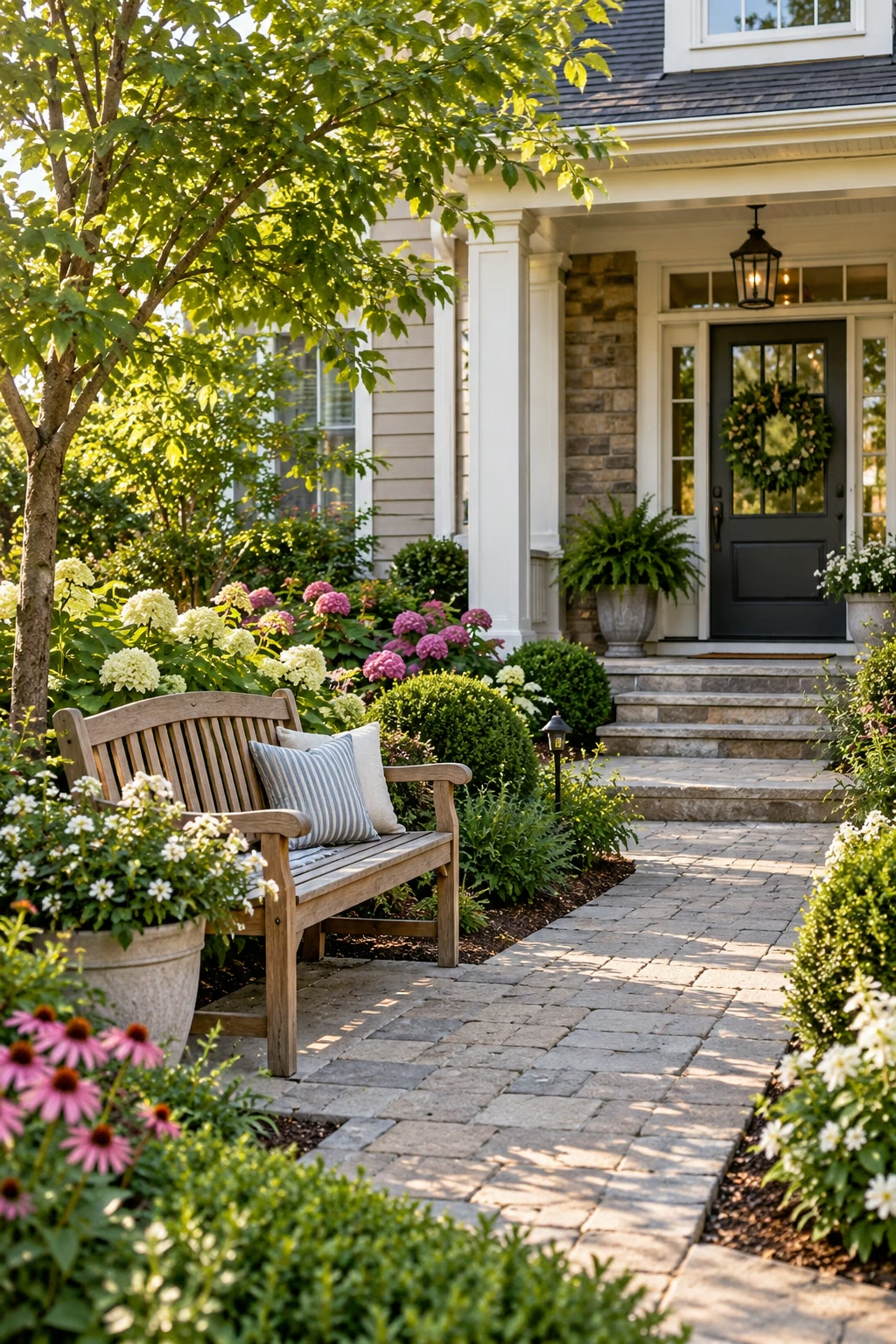
A bench or pair of chairs in the front garden can make the entrance feel friendlier. It also provides a place to greet neighbors, remove muddy shoes, wait for family members, or enjoy a different view of the street.
Position the furniture where it does not block the walkway, gate, driveway, or front door. Use surrounding shrubs or tall containers to create some separation without completely hiding the seating.
Choose materials and colors that relate to the house exterior. Front-yard seating designs often combine clear access, welcoming planting, and a degree of privacy to create a social space that still feels connected to the home.
30. Create an All-Weather Retreat Under a Gazebo
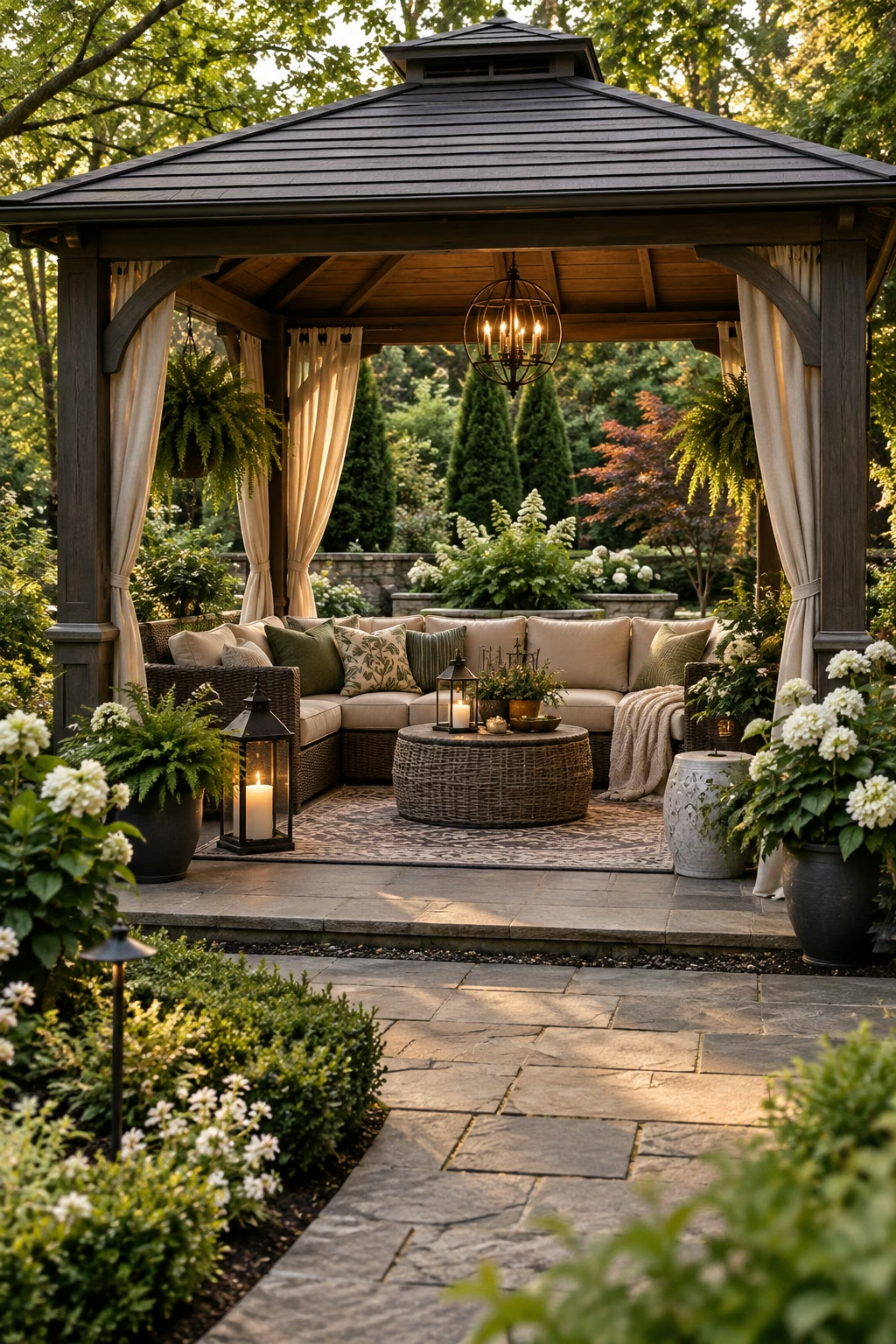
A gazebo can protect a seating area from direct sun and light rain while giving the garden a strong architectural feature. Depending on its size, it may hold a dining table, sectional sofa, or several lounge chairs.
Use outdoor curtains, screens, or climbing plants to control privacy, but avoid closing every side so tightly that the interior feels dark. Lighting can make the gazebo more useful during the evening.
Plan the structure around the furniture rather than buying furniture after the available space has been reduced by posts and railings. Gazebos and pavilions are widely used to create sheltered outdoor rooms for dining and relaxation.
31. Mix Permanent Seats With Movable Extras
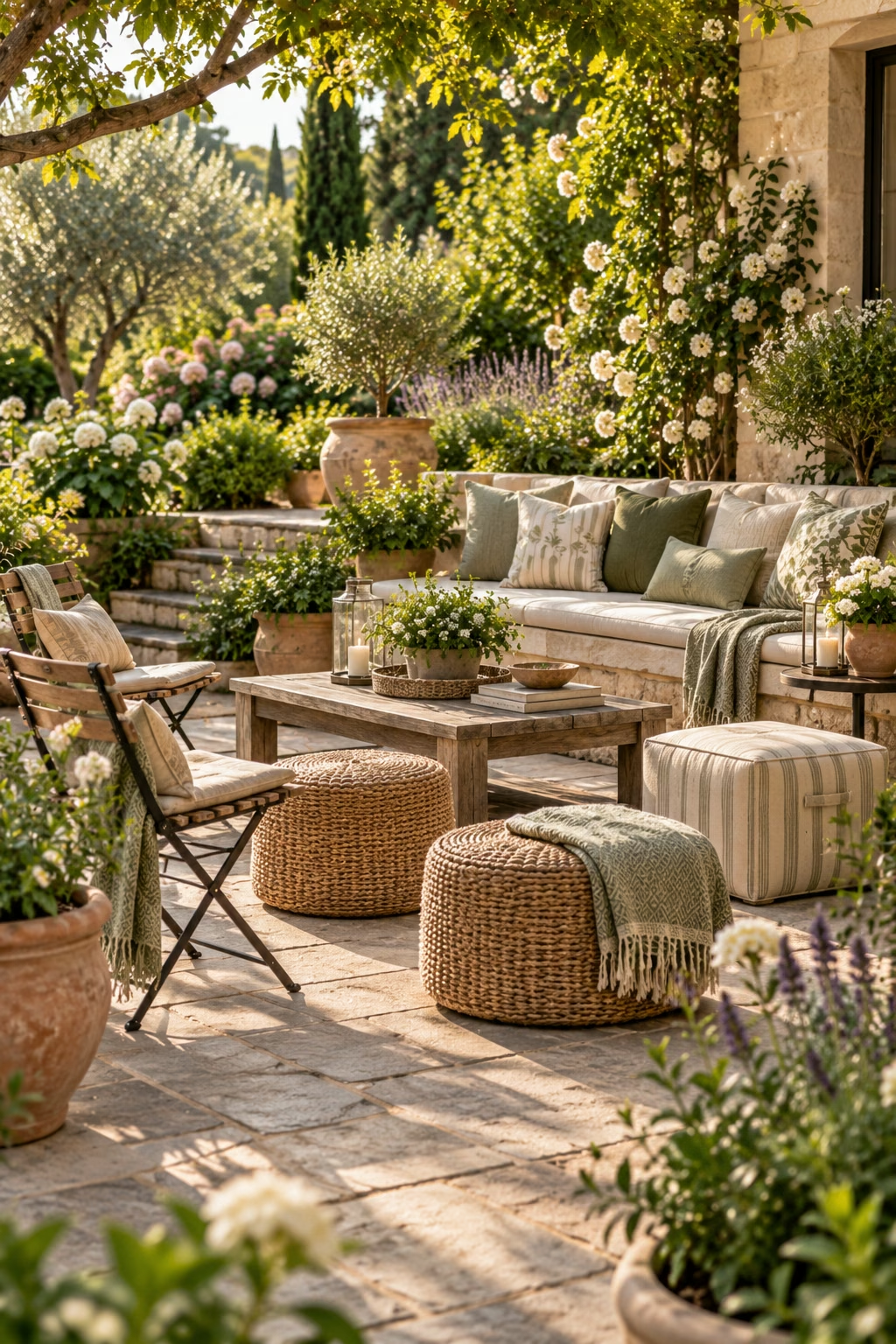
A garden does not need enough permanent furniture for every possible guest. Start with the seating you use regularly, then keep a few movable options available for larger gatherings.
Outdoor poufs, lightweight stools, folding chairs, and small ottomans can be brought out when needed. Some can also serve as footrests or temporary side tables. Keeping the additional pieces visually related through similar materials or cushions will help the arrangement feel intentional.
This flexible approach prevents the garden from looking crowded during everyday use. Compact poufs and modular furniture are often recommended because they can support multiple layouts and functions.
Final Thoughts
A successful seating area does not have to be large or expensive. One well-positioned bench can be more enjoyable than a crowded patio filled with furniture that does not suit the way you live.
Begin with the activity that matters most, whether that is reading, eating, entertaining, watching wildlife, or relaxing in the shade. Then choose a stable location, protect comfortable walking space, and use plants to connect the furniture with the rest of the landscape. The best garden seating ideas are the ones that make stepping outside feel easy, comfortable, and worth repeating.


