
A small patio does not have to feel like a compromise. In fact, some of the best small patio garden ideas work precisely because the limited space encourages you to be selective. A few well-chosen pots, a wall covered with greenery, or a corner filled with herbs can make a plain paved area feel like a genuine garden.
The secret is not to squeeze as many plants as possible into the space. Start by noticing where the sun falls, where people need to walk, and which parts of the patio are currently unused. Then build upward and around the edges.
Container gardening is particularly useful on patios because pots can support everything from seasonal flowers and herbs to vegetables, shrubs, and even small trees. Just remember that containers need adequate drainage and usually require more frequent watering than plants growing directly in the ground.
1. Create a Layered Container Garden Corner
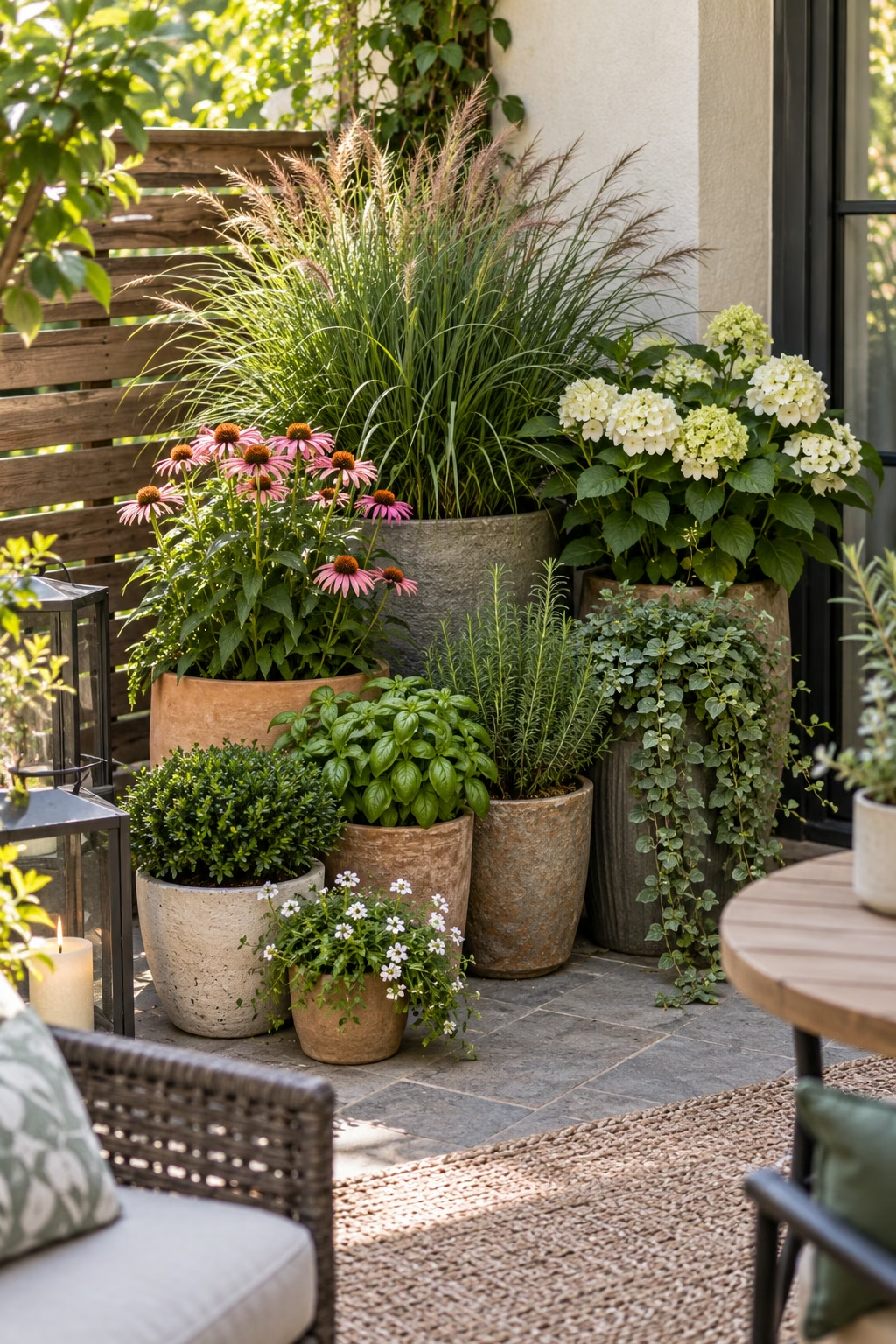
Turn one empty corner into a miniature garden with pots at different heights.
Instead of scattering individual pots across your patio, bring several together in one corner. Start with one or two larger containers at the back, add medium-sized pots around them, and place smaller plants toward the front.
The change in height makes the planting feel much fuller without requiring a large amount of floor space. You might combine an upright ornamental grass or small shrub with flowering plants, trailing foliage, and herbs.
Repeating one or two pot materials, such as terracotta or dark ceramic, will stop a large collection from looking cluttered. Grouped container arrangements appear repeatedly in professional container-garden designs because they create the effect of a complete garden in a surprisingly small footprint.
2. Grow a Vertical Garden on a Trellis
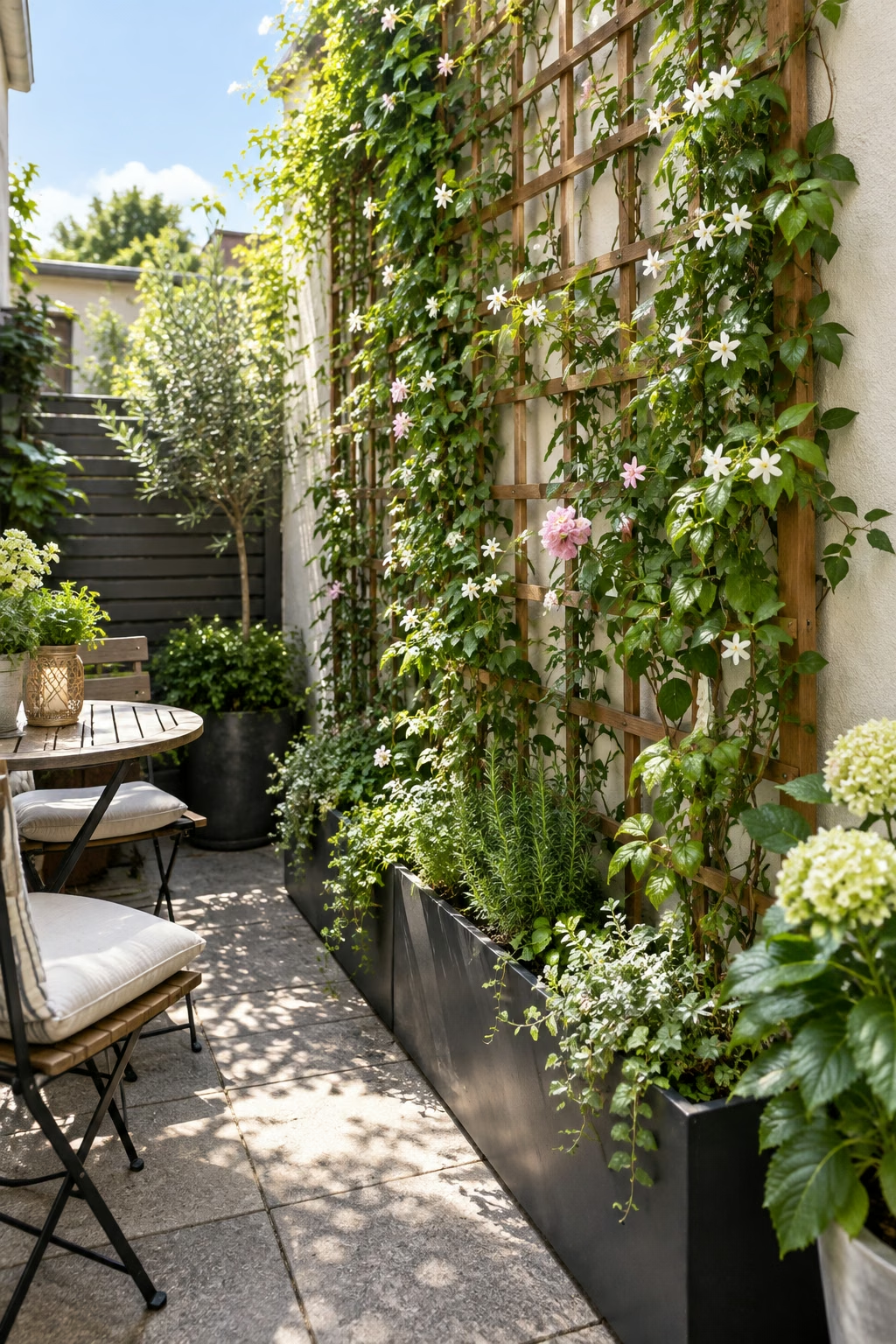
When there is no room to spread outward, let your garden climb upward.
A bare patio wall or fence is valuable gardening space. Position a narrow planter against it and add a wooden or metal trellis.
Climbing plants can then cover the structure while occupying very little floor area. Depending on your climate and sunlight, you could grow flowering vines, compact clematis varieties, climbing vegetables, or annual climbers.
You do not need to cover the entire wall. Even a narrow trellis behind a chair can introduce enough greenery to make the patio feel surrounded by plants.
Vertical gardens and trellis-covered walls are especially common in small-patio inspiration because they provide a large visual impact while preserving usable floor space.
3. Use a Tiered Plant Stand
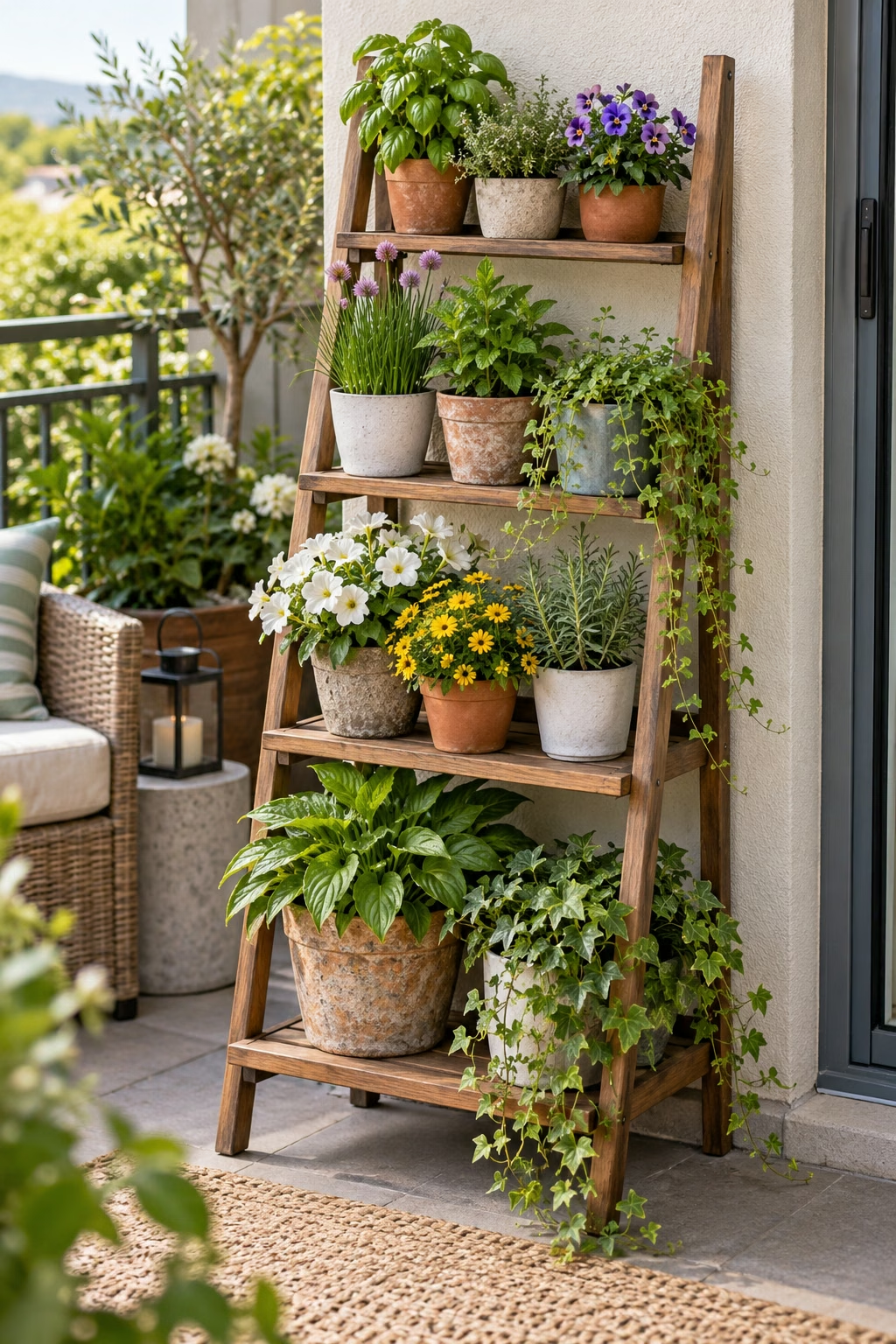
Turn the footprint of one planter into space for several.
A narrow ladder shelf or tiered plant stand is one of the easiest ways to fit more plants onto a small patio.
Place larger or heavier pots on the lower shelves and smaller herbs, flowers, or trailing plants higher up. Plants such as thyme, oregano, parsley, compact begonias, succulents, and small annuals all work well in this type of display.
A tiered stand can also make plant care easier because the containers are grouped together instead of being spread around the patio.
Pinterest small-space gardens frequently use ladder-style herb displays because they combine storage, planting space, and vertical interest in one narrow structure.
4. Plant a Small Patio Herb Garden
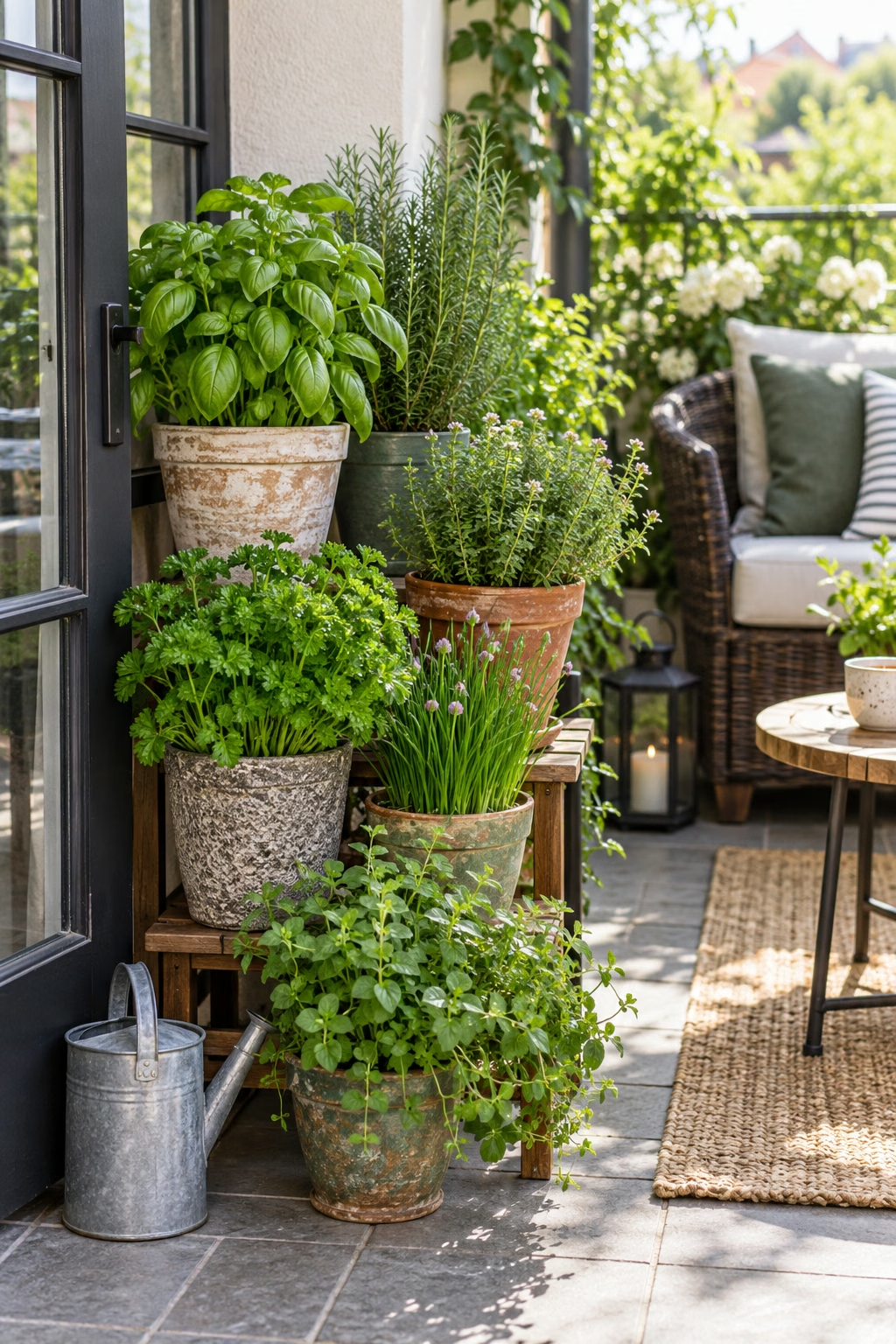
Create a garden that looks good and gives you something useful to harvest.
Herbs are particularly well suited to small patios because many varieties perform happily in containers.
Try separate pots of basil, parsley, chives, rosemary, thyme, oregano, or sage. Keeping them near the door or outdoor dining area makes harvesting easy when you are cooking.
You can either arrange several individual herb pots together or combine compatible varieties in a larger planter.
Containers are also useful for plants that you may not want spreading through a garden bed. Mint, for example, is commonly kept contained because of its vigorous growth habit.
5. Grow a Tiny Patio Vegetable Garden
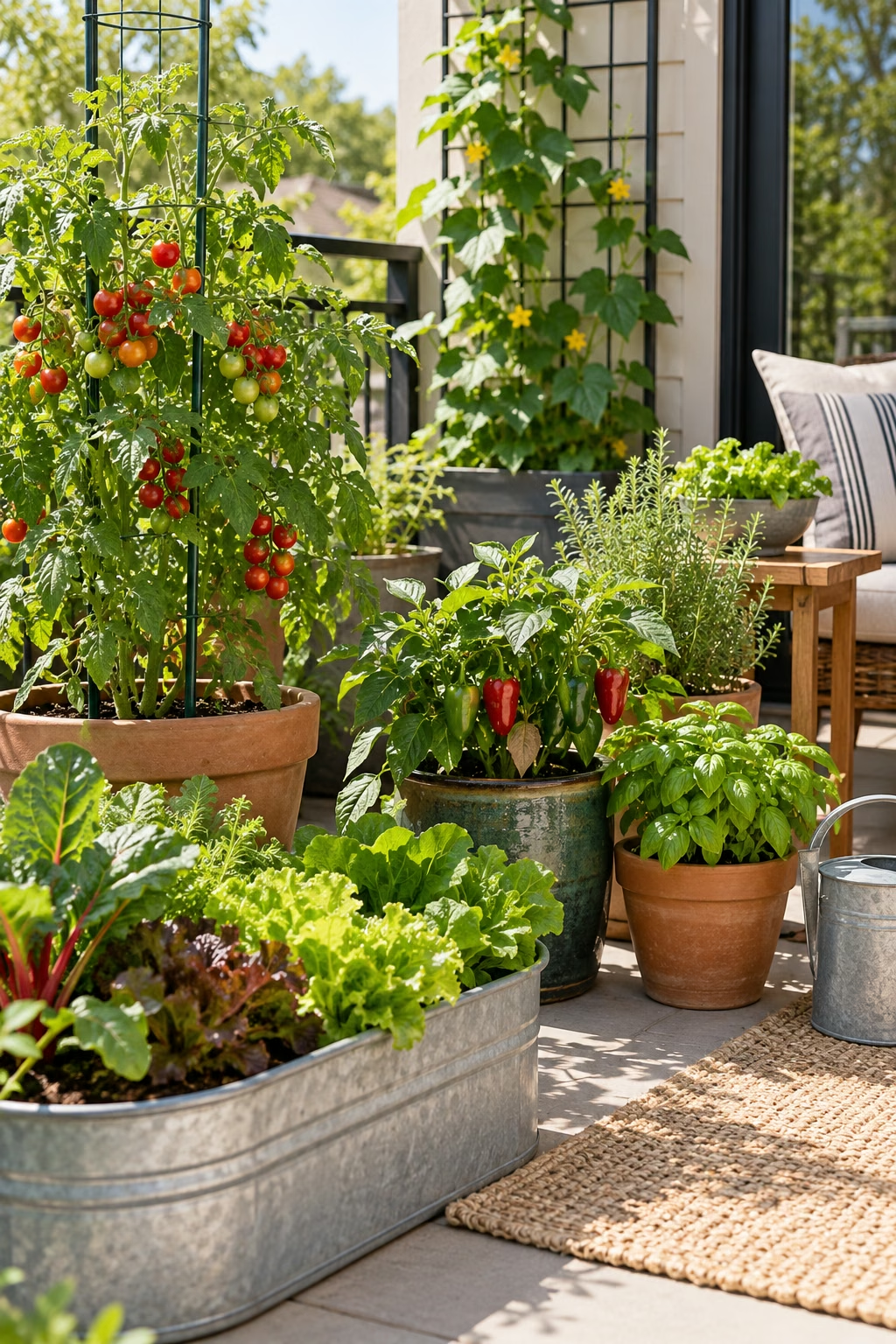
You do not need a traditional vegetable plot to grow food.
Give the sunniest part of your patio to a few productive edible plants.
Cherry tomatoes, salad greens, compact peppers, herbs, radishes, and other container-friendly crops can produce food without taking over the entire outdoor space. Vertical supports can help tomatoes or climbing vegetables use height rather than floor area.
Instead of trying to grow everything, concentrate on two or three vegetables that you actually enjoy eating.
Container vegetable gardening is a practical option for patios and other places where traditional garden beds are unavailable.
6. Make One Large Mixed Planter the Star
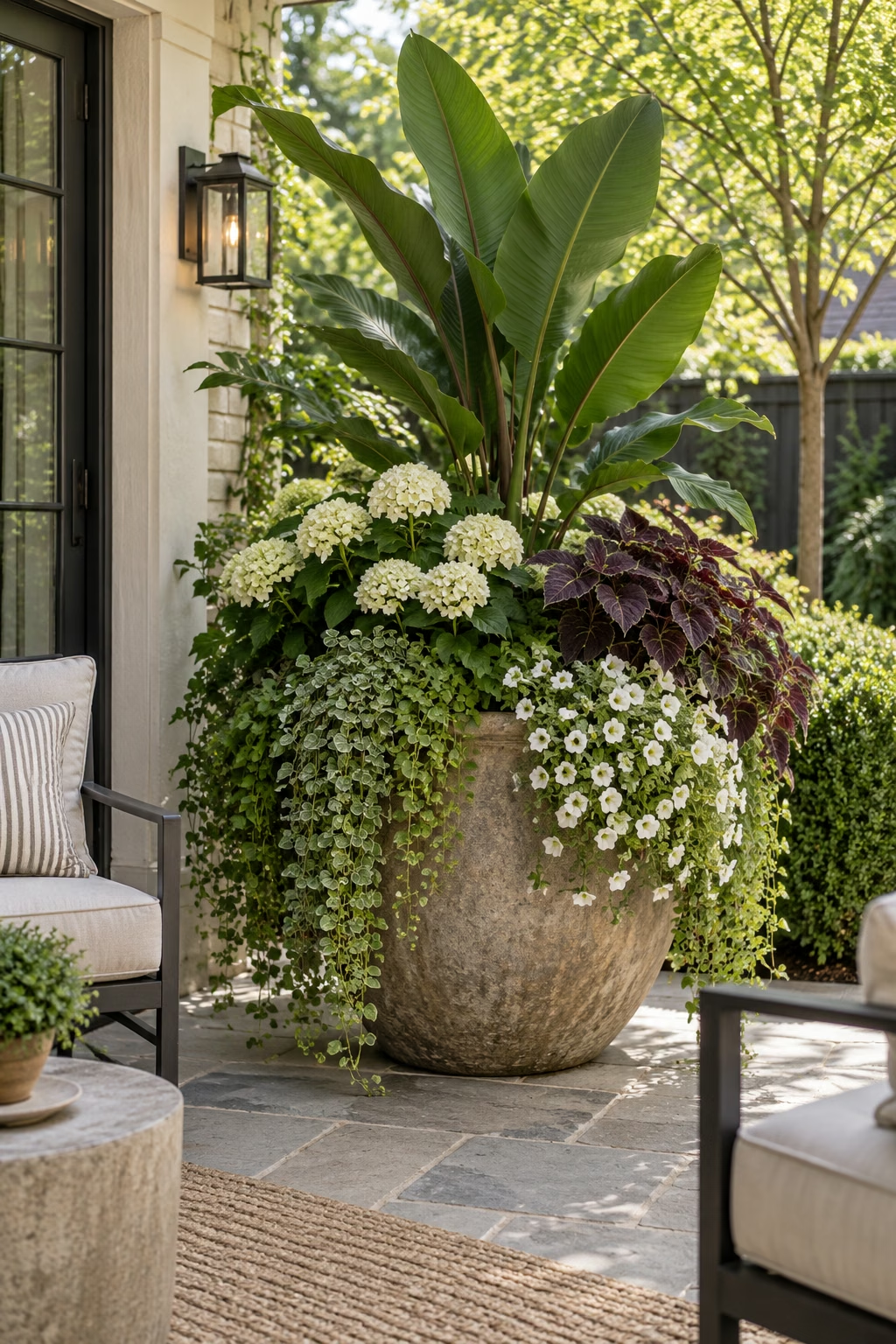
Sometimes one beautiful container works better than ten tiny pots.
If your patio feels cluttered, reduce the number of containers and create one larger statement planter.
A simple approach is the classic thriller, filler, spiller combination. Use an upright plant for height, mounding plants to fill the middle, and a trailing variety around the edge.
The plants should share similar light and moisture requirements, but their different heights and leaf shapes will make the arrangement look much richer.
Larger containers also tend to hold moisture longer than tiny pots, which can make maintenance easier during warm weather.
7. Add a Small Tree in a Container
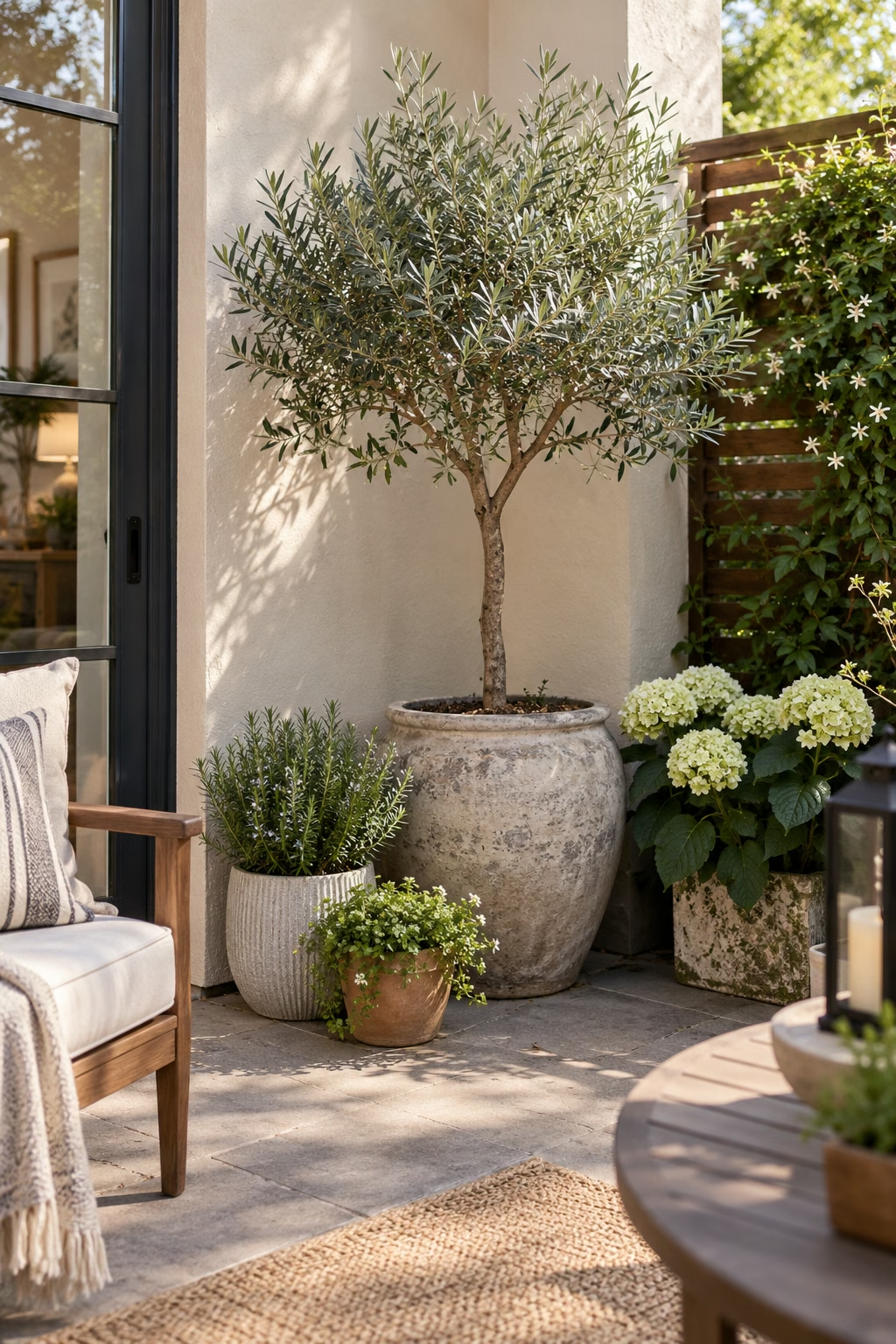
One potted tree can give a tiny patio the structure of a much larger garden.
You do not need a lawn to enjoy a tree.
Depending on your climate, compact options can include Japanese maples, bay trees, olives, dwarf conifers, or fruit trees grown on suitable rootstocks.
Position the tree in a substantial planter near a patio corner rather than directly in the middle of the space. Add smaller containers around its base to visually connect it with the rest of the garden.
Trees grown in containers require suitable pot size, drainage, watering, and long-term root management, but they can provide height, shade, seasonal color, and a strong focal point.
8. Create a Living Privacy Screen
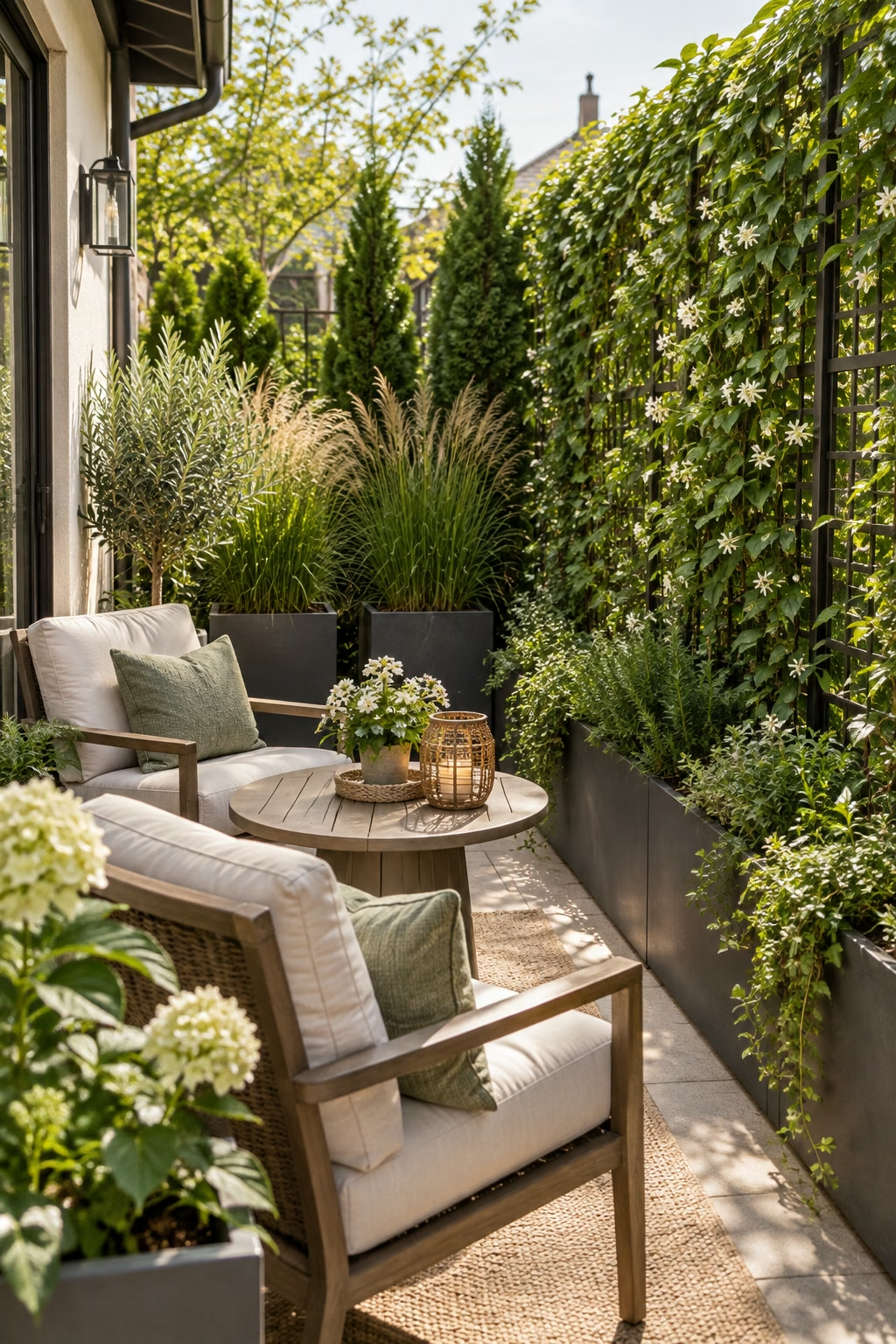
Use plants to soften the view instead of building a heavy solid wall.
If neighboring patios or windows feel too close, use the garden itself for privacy.
A long planter with a trellis can support leafy climbers while still occupying only a narrow strip of patio. Tall ornamental grasses or upright shrubs in containers can also provide partial screening.
Complete privacy is not always necessary. Breaking up the sightline can make a seating area feel much more secluded while still allowing light and air through.
Keep the mature size of each plant in mind so your privacy planting does not eventually overpower the patio.
9. Hang Plants Instead of Using More Floor Space
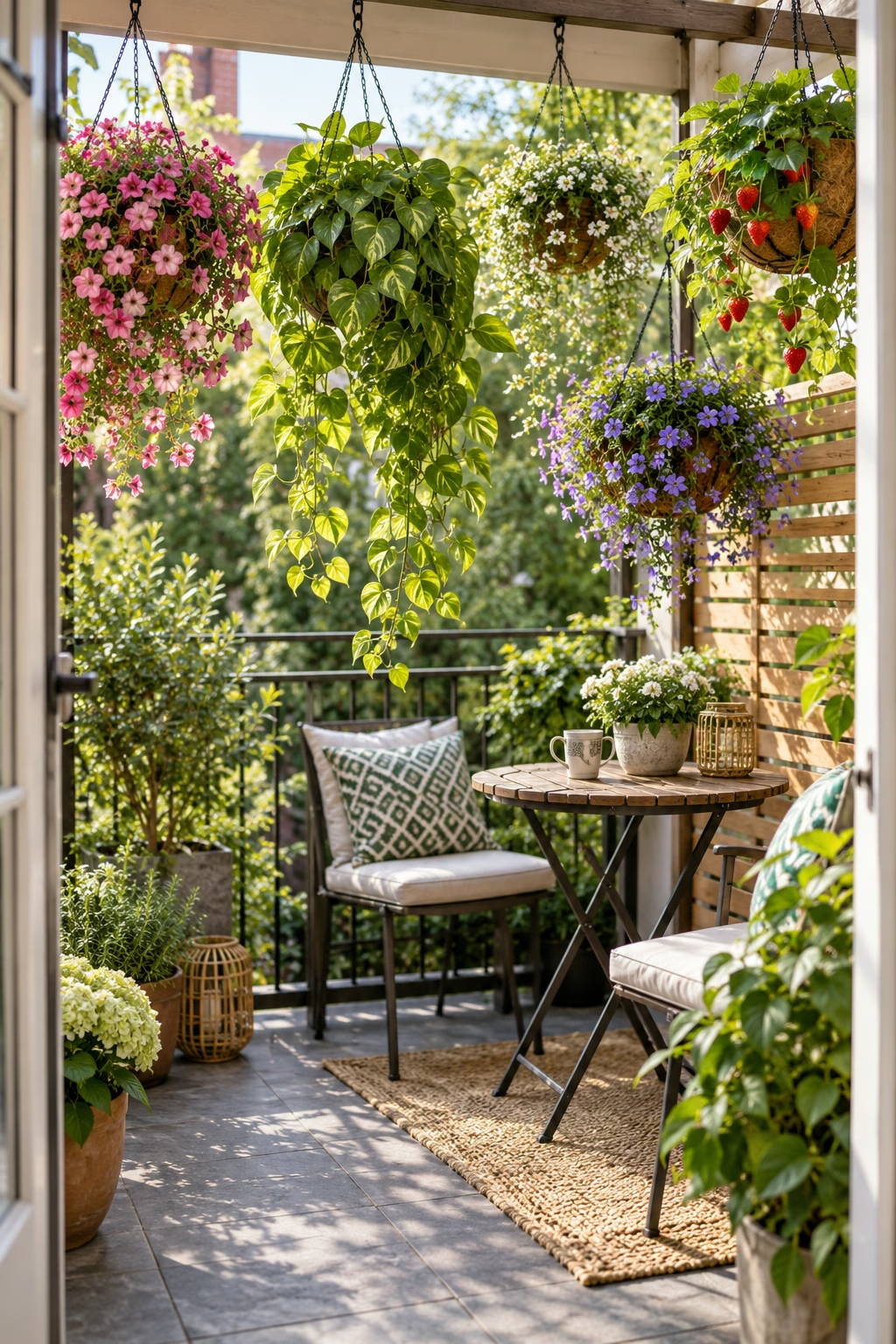
Take advantage of the area above eye level.
Hanging baskets are ideal when your floor is already occupied by seating, a table, or larger planters.
Use them for trailing flowers, strawberries, compact herbs, or foliage plants suited to your conditions. One or two well-positioned baskets usually look better than covering every available hook.
Place them where you can comfortably reach them for watering.
Hanging containers are frequently recommended for apartment and small-space gardens because they create an additional growing layer without occupying valuable walking space.
10. Add a Narrow Raised Planter Along the Edge
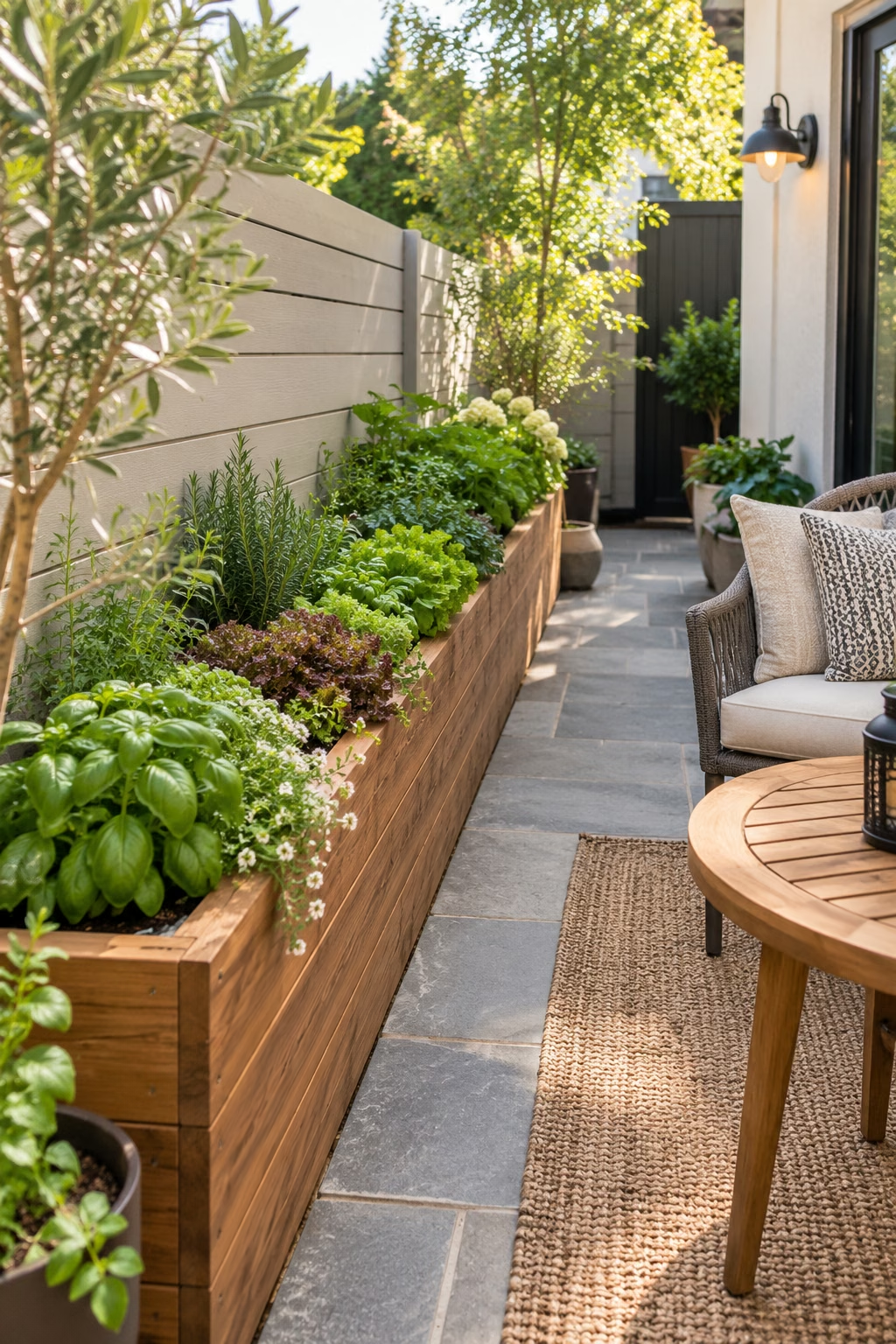
Turn an unused patio boundary into productive growing space.
A long rectangular planter can fit neatly against a fence, railing, or wall.
Because it occupies a narrow strip instead of a wide circle, it leaves considerably more usable patio space than several round containers.
Fill it with herbs, salad greens, flowers, or a repeated row of ornamental plants. A taller planter also raises plants closer to eye level, which can make caring for them more comfortable.
For an especially clean design, allow the planter to follow the same line as the patio edge.
11. Make a Pollinator-Friendly Patio Garden
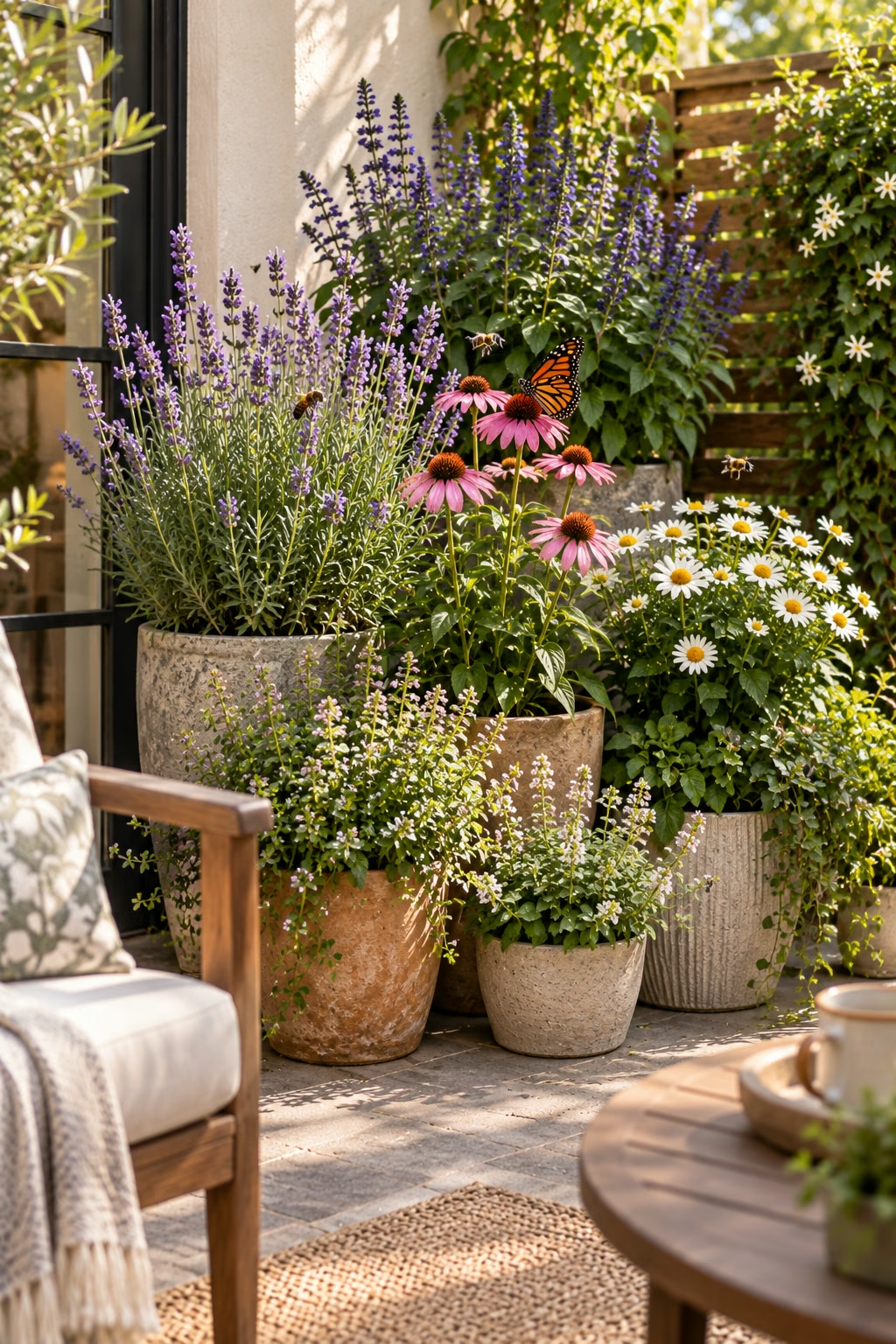
Even a container garden can provide flowers for visiting insects.
Choose several flowering plants that bloom at different times and group them together in a sunny part of the patio.
Single flowers that allow easy access to nectar and pollen can be especially useful. Depending on local growing conditions, suitable container plants can include lavender, chives, marjoram, zinnias, calendula, snapdragons, and other pollinator-friendly flowers.
Do not worry if the arrangement looks slightly informal. Flowers moving above the containers can make a rigid paved patio feel considerably softer.
The RHS specifically recommends a range of flowering herbs and container plants for supporting wildlife in small spaces.
12. Create a Low-Water Mediterranean-Style Corner
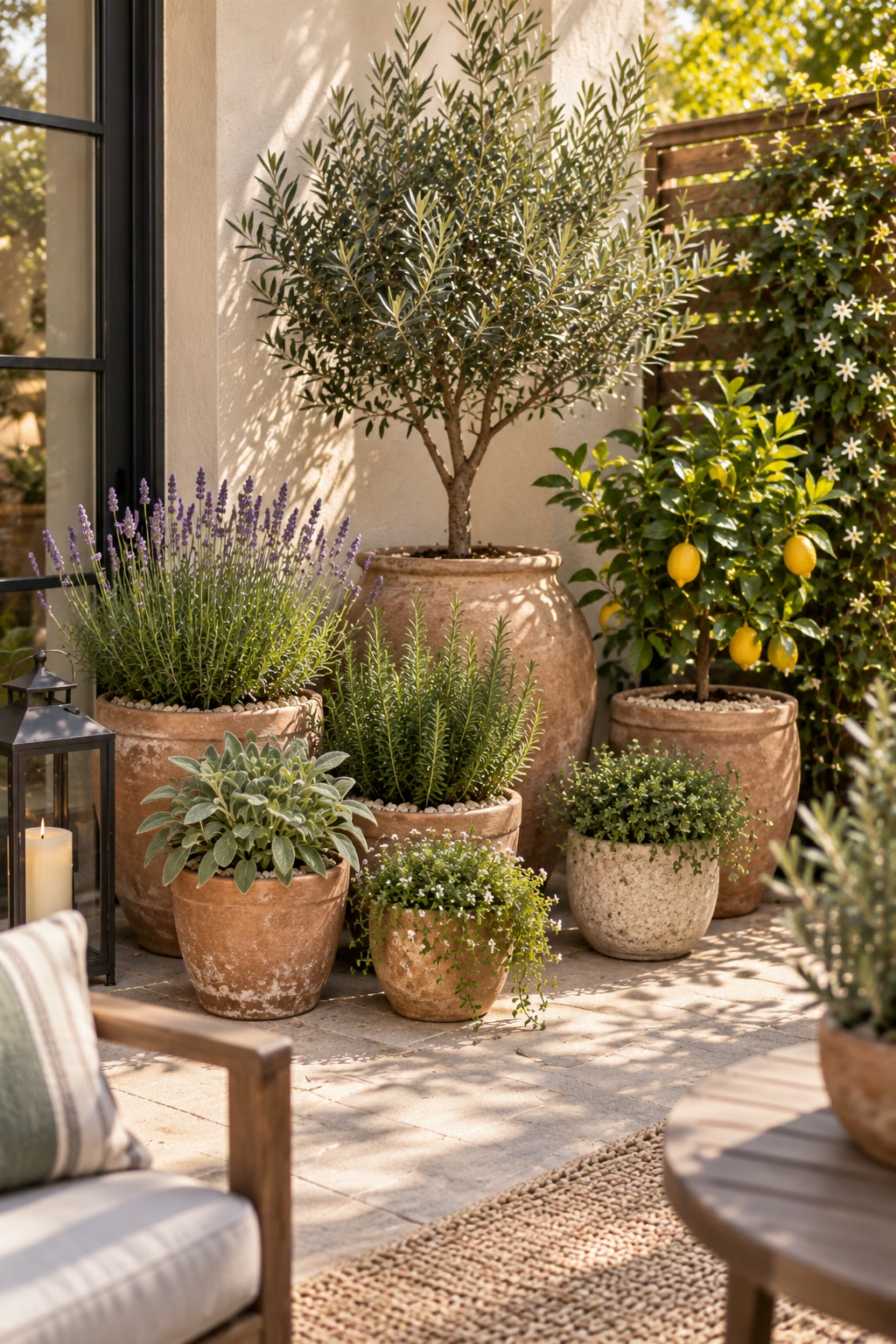
Use sun-loving plants and warm terracotta pots for an easygoing garden.
If your patio gets plenty of direct sunlight, try a simple Mediterranean-inspired container grouping.
Rosemary, lavender, thyme, sage, and other plants suited to well-drained conditions can look beautiful together. Add terracotta pots, pale gravel mulch, and perhaps one larger structural plant to complete the effect.
The result feels relaxed rather than overly formal and works particularly well beside stone, brick, or neutral patio furniture.
Just match plants according to climate and watering requirements rather than choosing them only for their appearance.
13. Build a Shade-Loving Foliage Corner
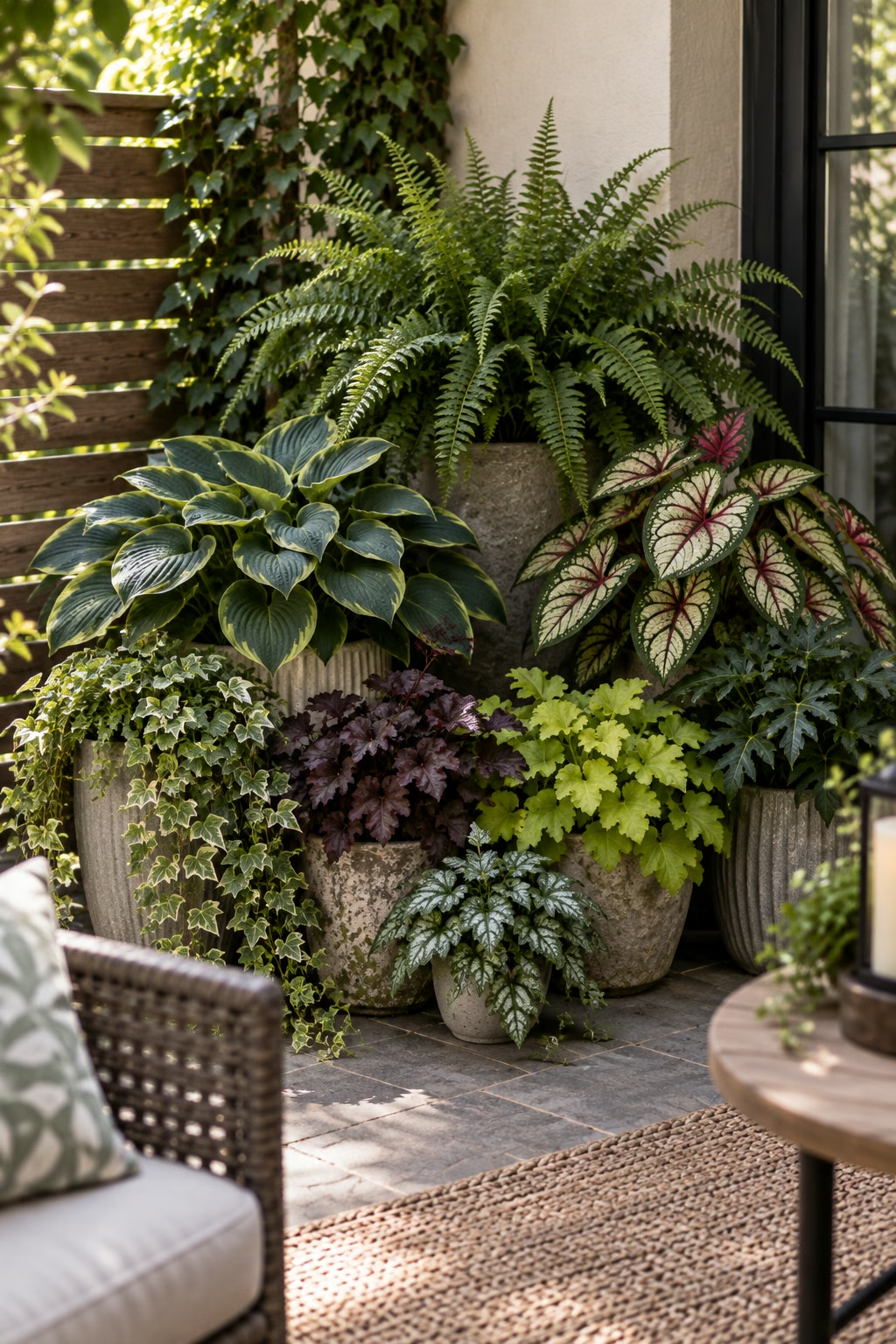
No direct sun does not mean no garden.
A shaded patio may not be the best location for sun-loving tomatoes or lavender, but it can still be full of interesting plants.
Use foliage to create the drama instead of relying completely on flowers. Depending on your climate, container-grown hostas, heucheras, begonias, fuchsias, ivy, and other shade-tolerant plants can provide different leaf shapes and colors.
Mix large leaves with finer foliage and allow a trailing plant to soften the container edges.
This type of garden can look especially lush in a protected patio corner.
14. Grow Strawberries in a Vertical Planter
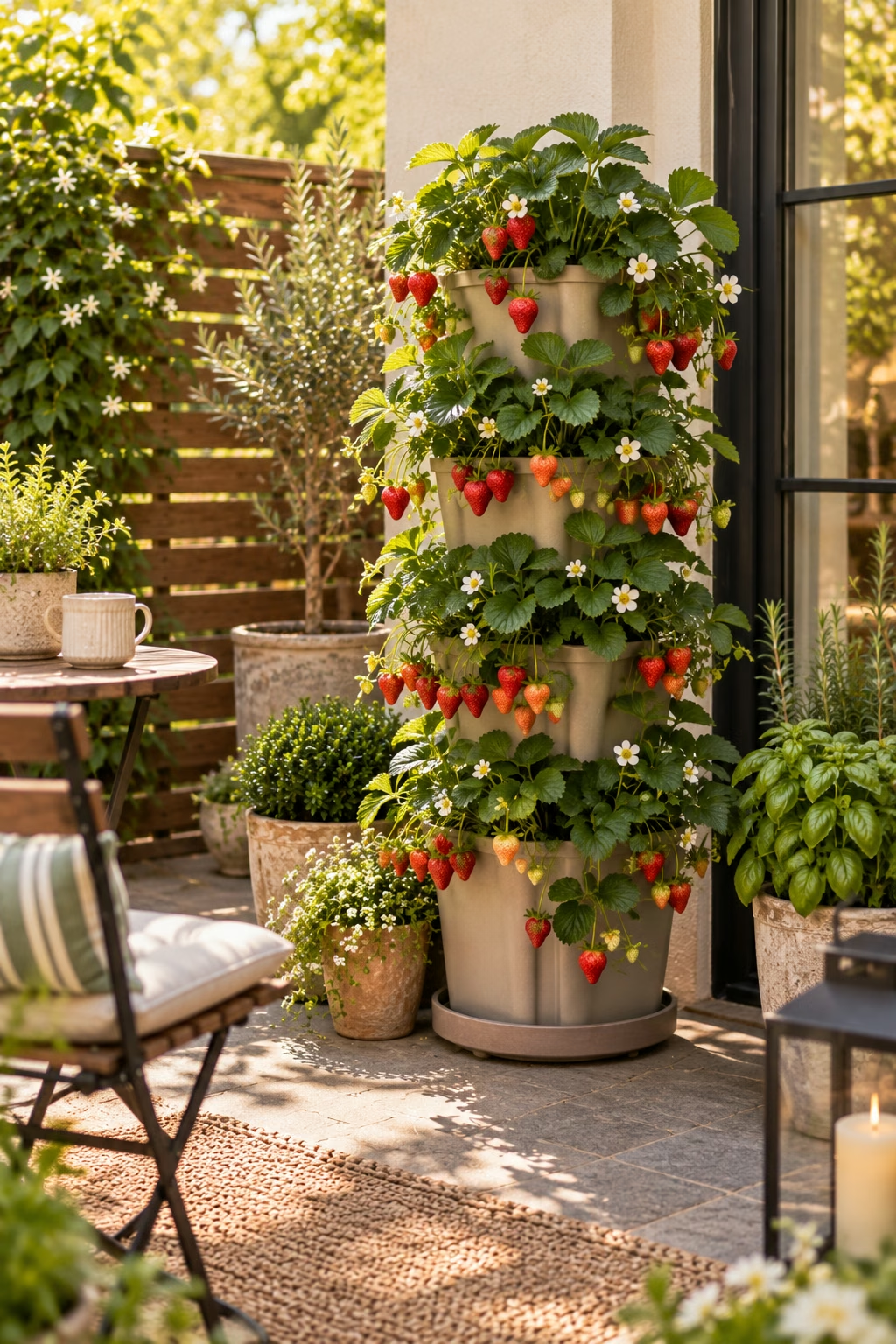
Turn a favorite fruit into a decorative part of the patio.
Strawberries work particularly well where horizontal space is limited.
A vertical planter, strawberry pot, tiered container, or hanging basket allows several plants to grow within a small footprint while keeping fruit accessible for harvesting.
Place the planter where the plants receive appropriate sunlight and make sure every planting pocket gets enough water.
The combination of green leaves, white flowers, and red fruit also makes strawberry planters attractive enough to sit beside ornamental patio plants.
15. Try a Dwarf or Trained Fruit Tree
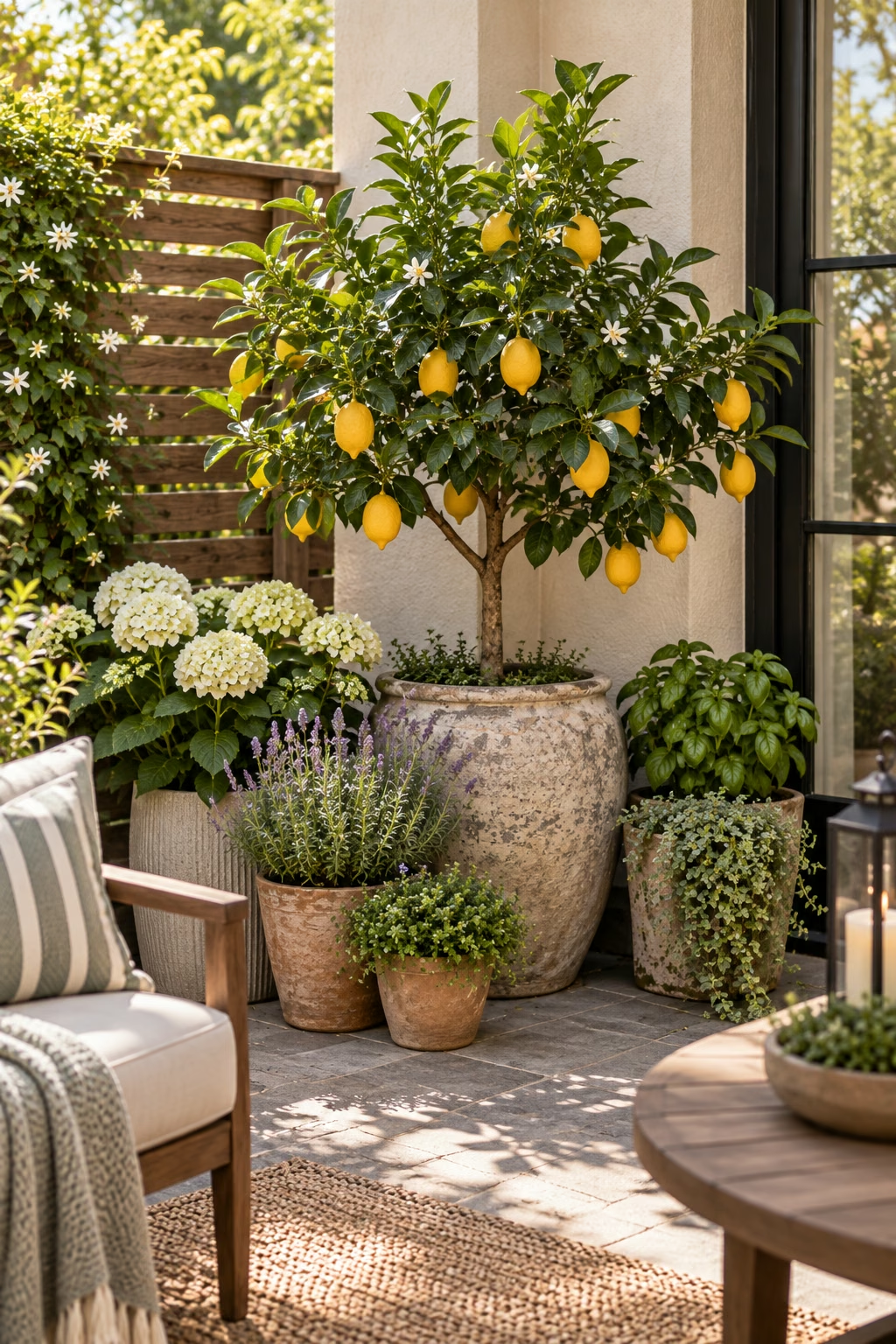
Make one container earn its space by producing fruit as well as greenery.
A small patio can sometimes accommodate a carefully selected apple, pear, fig, citrus, blueberry, or other container-suitable fruit.
Dwarfing rootstocks and trained forms such as cordons or espaliers can keep some fruit trees much narrower than traditional trees.
An espalier positioned against a sunny wall is particularly space-efficient because most of the growth stays within a relatively flat plane.
Container-grown fruit does require more attention to watering, feeding, pot size, and pollination requirements, so choose varieties suited to both your region and your space.
16. Put Large Planters on Casters
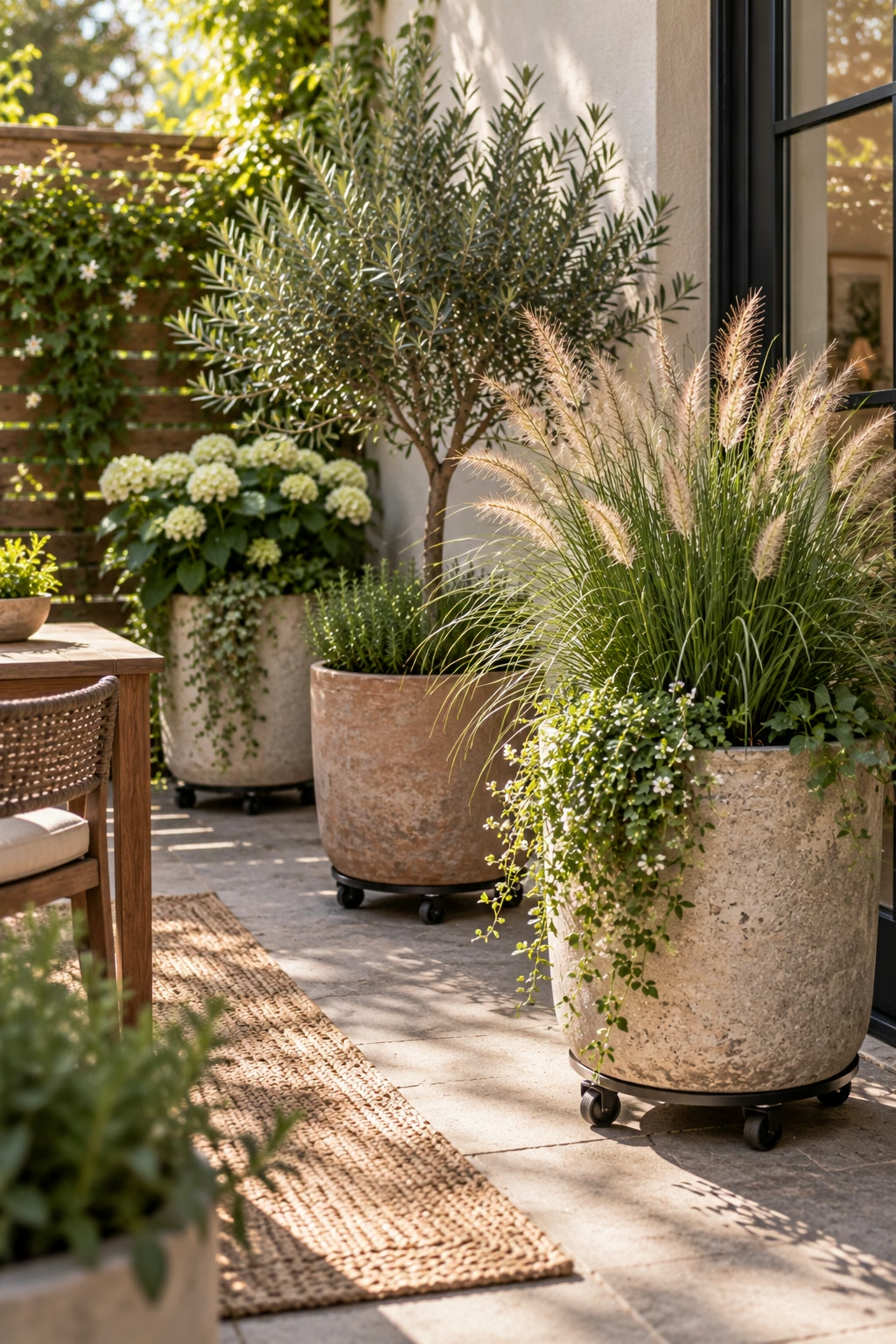
Give yourself permission to rearrange the garden.
A patio changes throughout the year. Sun angles shift, plants grow, and sometimes you simply need more room for guests.
Planters placed on sturdy wheeled bases can be moved when needed. You might roll a container toward better sunlight, move tender plants to shelter, or temporarily clear part of the patio.
Mobile containers are especially useful for larger plants that would otherwise be difficult to lift.
Just make sure the wheels and supporting platform are rated for the fully watered weight of the pot. HGTV demonstrates the same basic mobile-container concept for flexible patio gardening.
17. Repeat One Pot Style for a Calmer Look
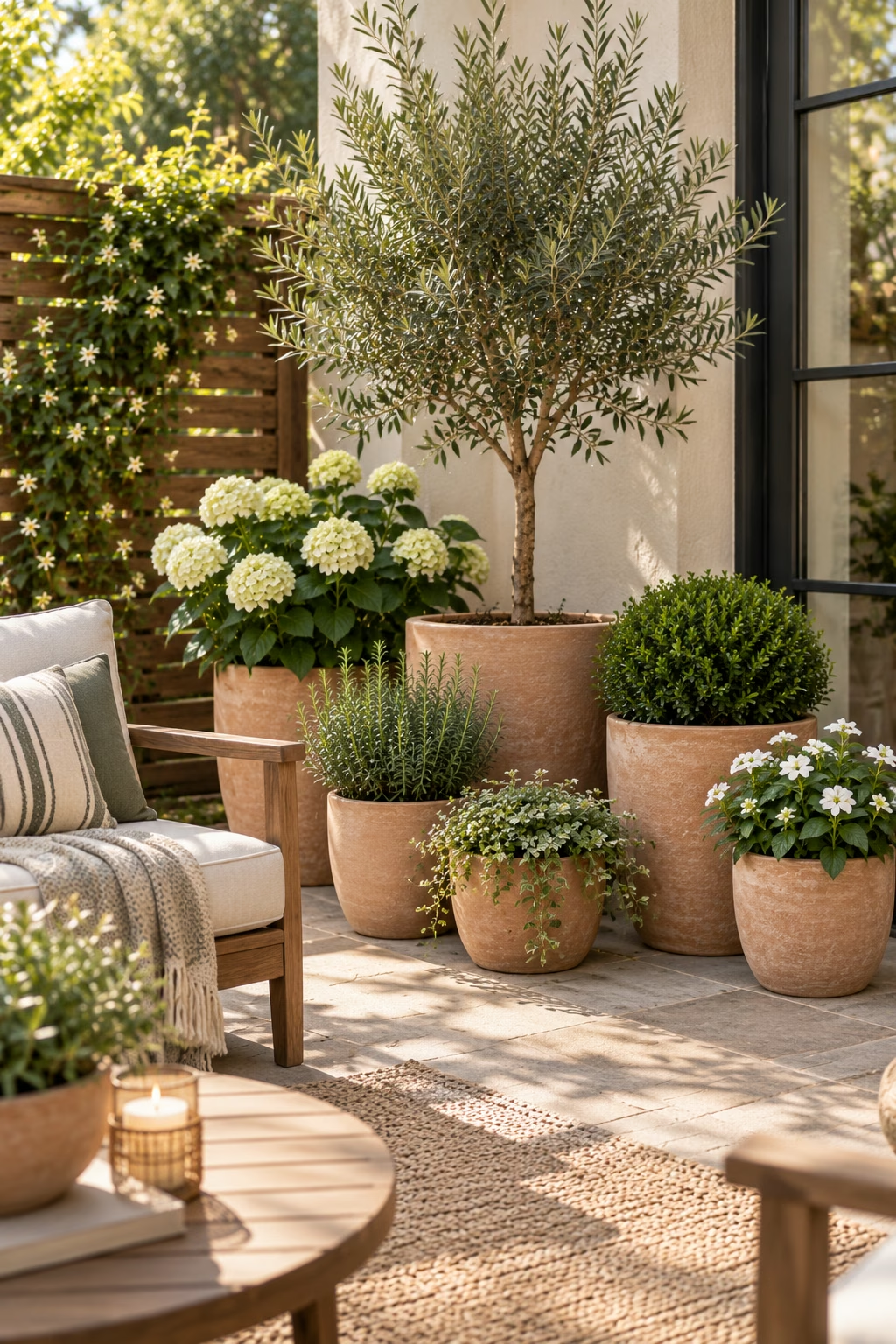
Consistency can make a crowded patio feel larger.
Pinterest is full of patios with dozens of plants, but the most successful examples usually have something visually connecting them.
One simple trick is to repeat the same pot material or a limited color family.
For example, a collection of different-sized terracotta pots feels intentional because the color ties everything together. The same approach works with charcoal, cream, or natural wood containers.
You do not need every pot to match perfectly. A little repetition is enough to prevent the garden from looking like a random collection of plants.
18. Plant Fragrant Herbs and Flowers Near Your Chair
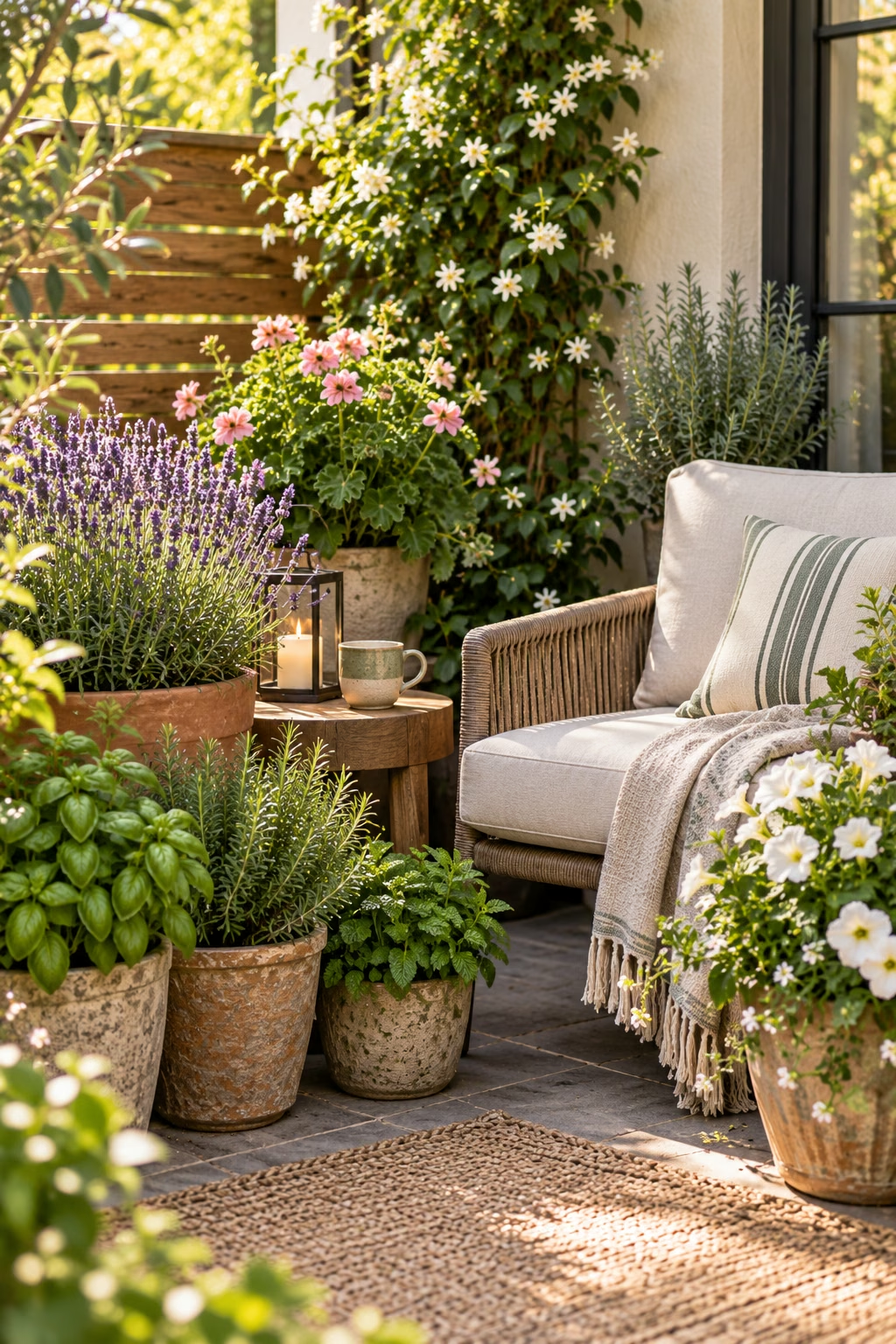
Design the garden for the person sitting in it, not just the person looking at it.
On a small patio, plants can be close enough to touch and smell, which is an advantage larger gardens sometimes lack.
Place fragrant plants around your favorite chair, dining table, or doorway. Rosemary, thyme, lavender, mint, scented pelargoniums, and other fragrant plants can make spending time outside noticeably more enjoyable.
Rather than hiding these plants in the farthest corner, put them where brushing a leaf or harvesting a sprig happens naturally.
The result is a patio garden that appeals to more than just the eyes.
19. Mix Herbs and Flowers in the Same Containers
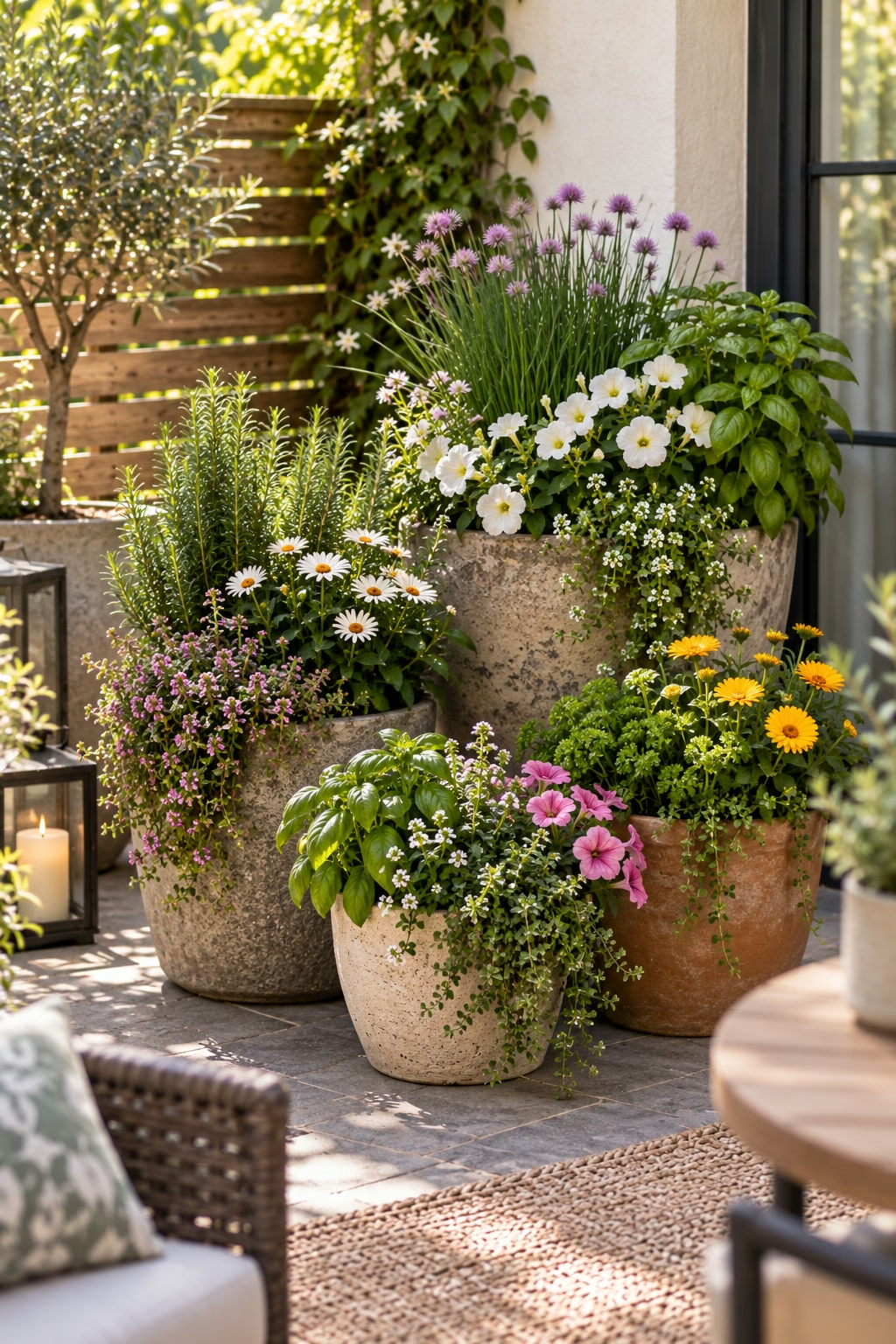
Your edible garden does not need to look like a vegetable plot.
Combining ornamental and edible plants can make a small garden work harder.
For example, herbs can provide texture around flowering annuals, while trailing thyme can soften the rim of a planter. Chives can offer edible leaves as well as flowers, and parsley adds bright green foliage.
The important part is pairing plants with compatible sunlight, water, and soil preferences.
University of Illinois Extension specifically notes that herbs can be combined with flowers in containers, allowing a small planting to serve both ornamental and culinary purposes.
20. Build the Garden Around a Few Permanent Plants
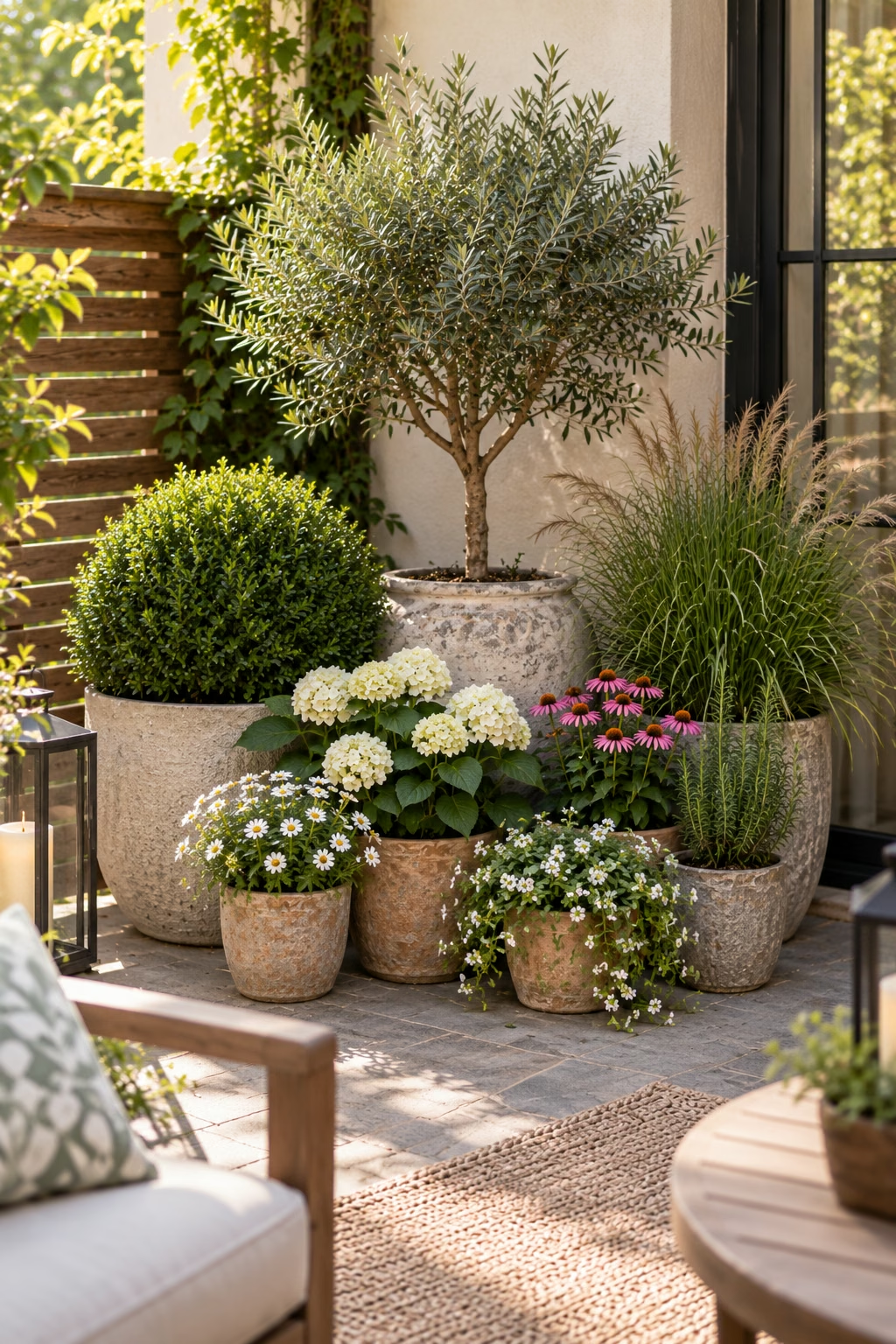
You do not need to redesign the entire patio every season.
Choose two or three structural plants that stay in place for much of the year, then change smaller containers around them.
Your permanent layer might be a compact evergreen, rosemary plant, dwarf shrub, ornamental grass, or small tree. In spring and summer, add colorful annuals. Later, replace them with plants or decorative materials appropriate to your local season.
This gives the patio a consistent backbone while still allowing you to refresh its appearance.
It is also much easier than replacing every container several times a year.
21. Keep the Middle Open and Garden Around the Edges
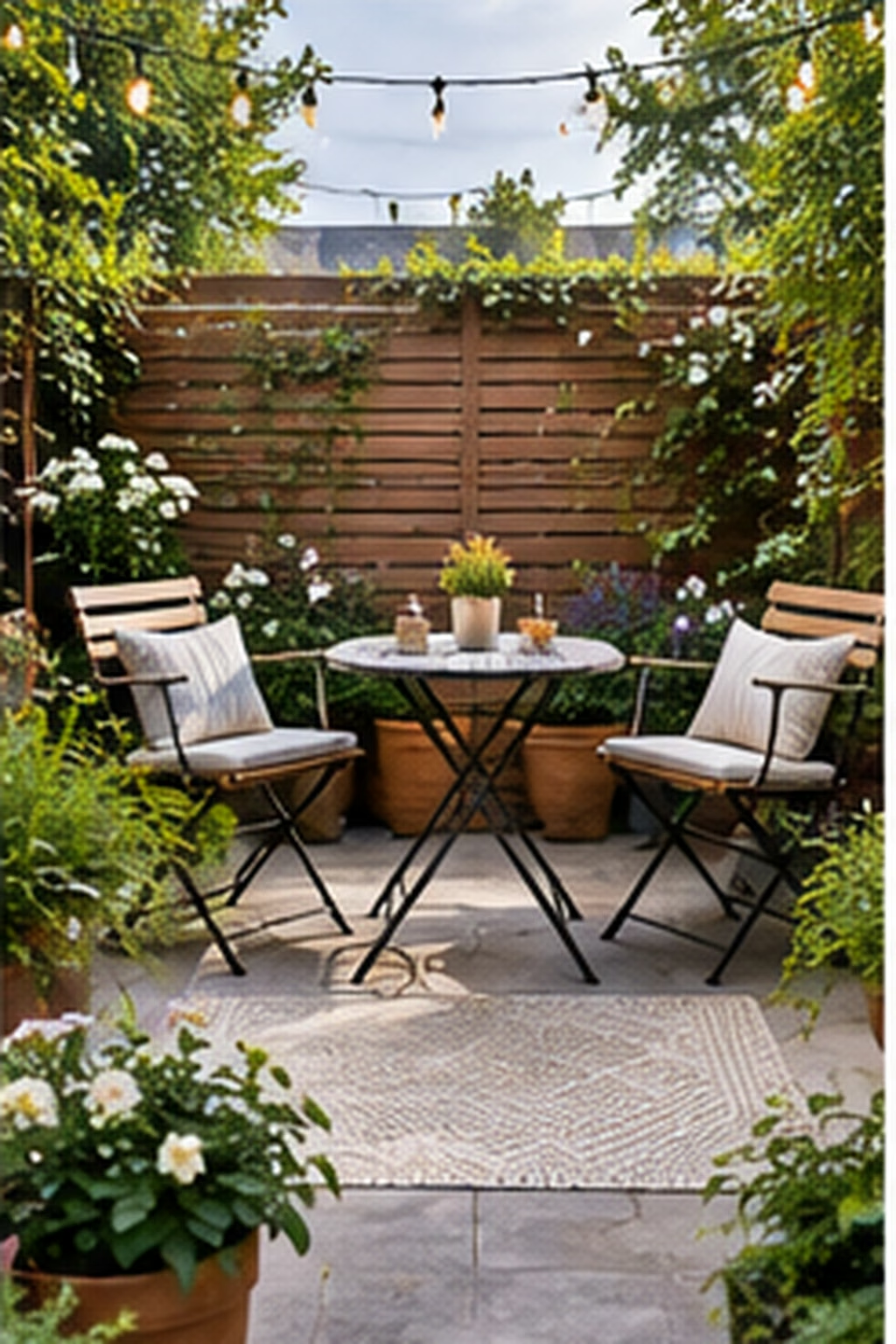
The easiest way to make a tiny patio feel larger is to leave somewhere to stand.
It is tempting to fill every available space with plants. Resist that temptation.
Push taller planters, trellises, and plant stands toward the perimeter. Use corners for container clusters and keep the central walking or seating area relatively open.
A compact folding chair or bistro table can then sit inside a ring of greenery rather than competing with it.
Designers frequently warn that oversized furniture and too many disconnected objects can make a small patio feel even smaller. A simpler layout with defined edges allows both the plants and the living area to breathe.
Final Thoughts
The most successful small patio garden ideas are not necessarily the ones with the most plants. They are the ones that make every part of the space useful.
Grow vertically when the floor is limited. Place herbs and vegetables where you can easily reach them. Use large containers to create focal points, group smaller pots instead of scattering them, and leave enough open space to actually enjoy the patio.
Most importantly, choose plants for the conditions you really have. A beautiful Pinterest garden can provide inspiration, but matching your plants to your sunlight, climate, container size, drainage, and watering routine is what will turn that inspiration into a small patio garden that continues looking good long after you plant it.


