
Imagine walking up a narrow path lined with lavender and catmint, past a picket fence with hollyhocks leaning over it, toward a door framed by climbing roses. Bees drift between the flowers, and every corner holds something new to notice.
That’s the charm of a cottage garden. It’s relaxed, generous, and a little bit wild, with flowers, herbs, and climbers packed closely together. Best of all, the style works beautifully in small spaces, because a tiny yard filled with layered planting feels abundant rather than cramped.
These 25 small cottage garden ideas include classic plant combinations, budget-friendly tricks, front-yard makeovers, vertical growing ideas, and simple projects that bring old-fashioned charm to even the smallest yard, patio, or entryway.
1. Layer Tall, Medium, and Low Plants
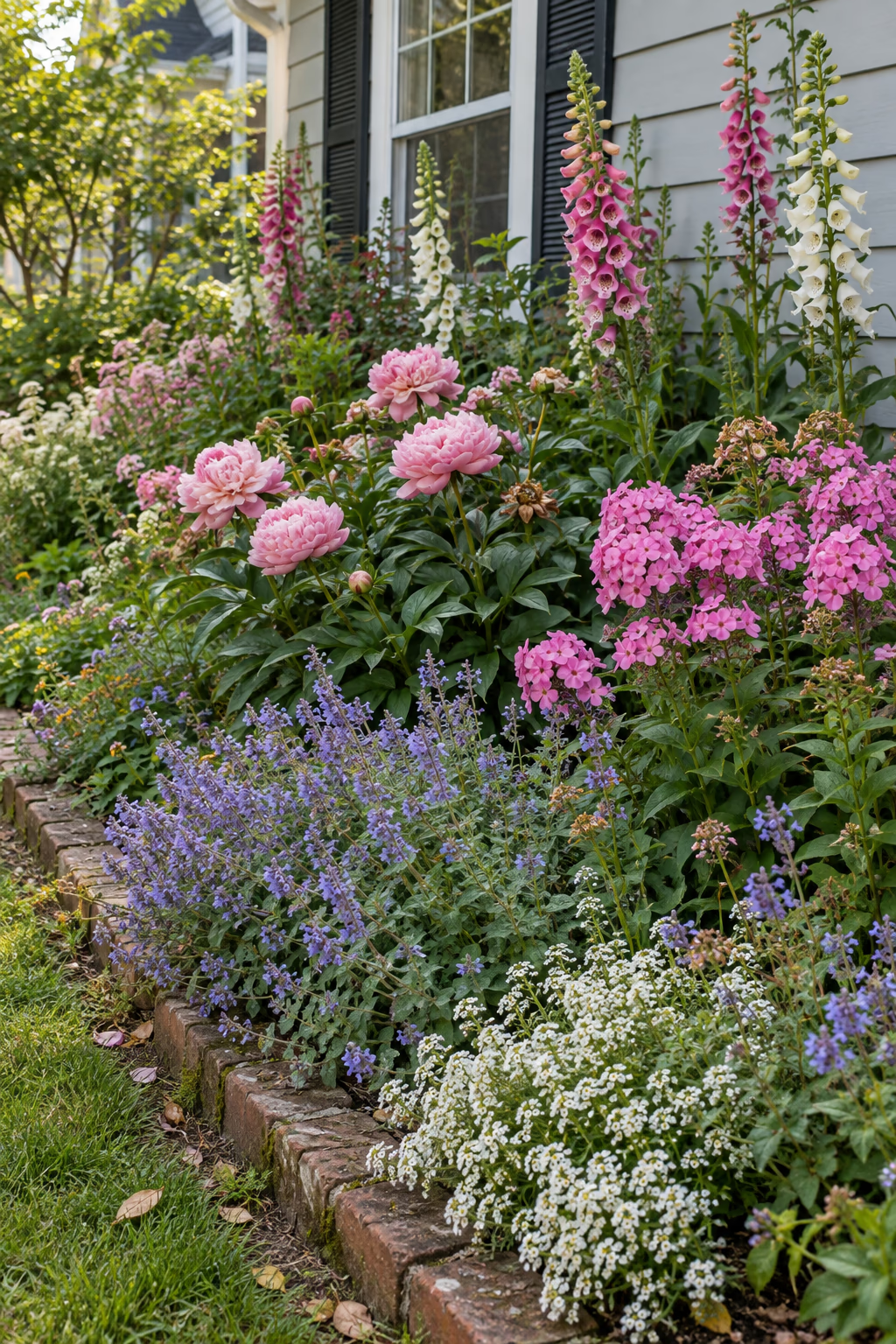
The secret to that overflowing cottage look
Cottage gardens look full because plants are layered by height. Place tall spires such as foxgloves or delphiniums at the back, medium plants like peonies, phlox, and salvia in the middle, and low, spreading plants such as catmint, sweet alyssum, and thyme along the front.
Plant more closely than you would in a formal border so the foliage knits together by midsummer. Little bare soil means fewer weeds and a lush, generous look.
To keep costs down, start with smaller perennials and fill the gaps with annuals grown from seed during the first year while the perennials grow in.
2. Line a Narrow Path With Overflowing Catmint
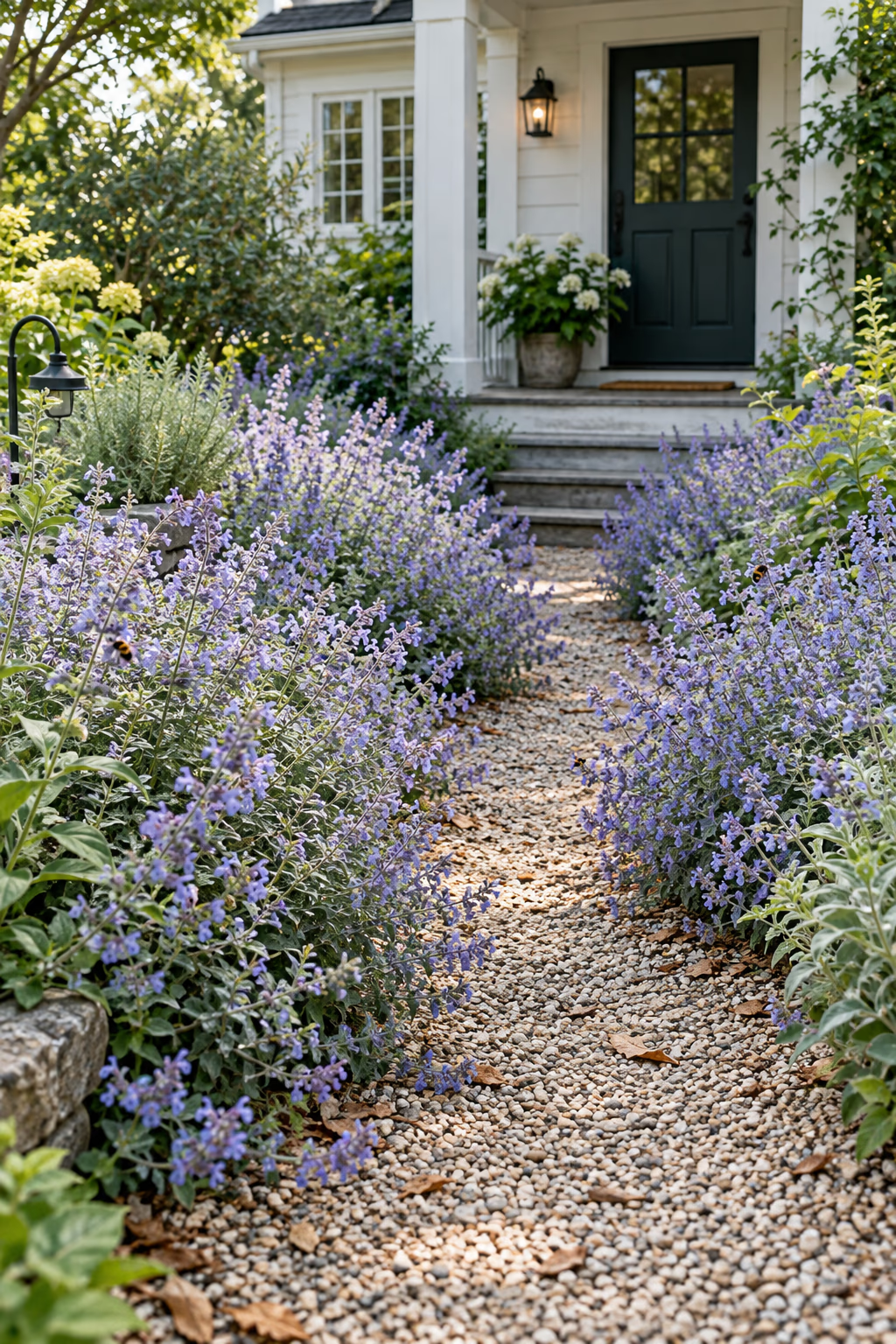
Soft lavender-blue edges with a long bloom season
Catmint (Nepeta x faassenii) is one of the easiest plants for softening a cottage garden path. Its gray-green foliage and lavender-blue flowers spill gently over brick, gravel, or stone, making even a short front walk feel romantic.
Catmint is generally hardy in USDA zones 3 to 8 and prefers full sun. Varieties such as ‘Walker’s Low’ can reach 2 to 3 feet wide, so space plants so they just meet along the path edge.
After the first big flush of flowers, shear the plants back by about half to encourage a second round of blooms. Bees love it, and deer usually leave it alone.
3. Train Climbing Roses Over an Entry Arch
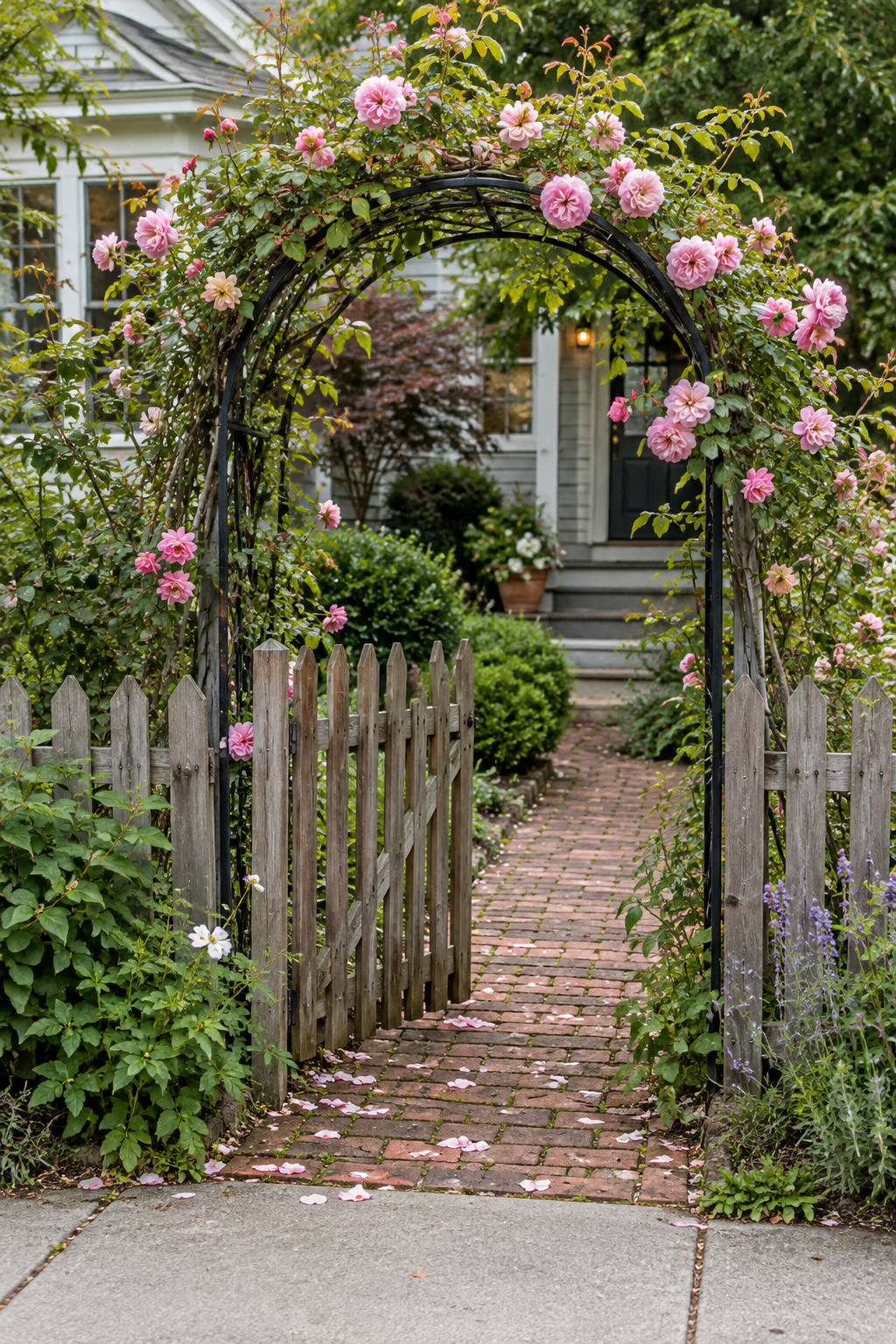
The most classic cottage garden welcome
A rose-covered arch over a gate or path is the picture of cottage charm. Even a modest metal or wooden arch can become the most memorable feature of a small yard.
Climbing roses don’t attach themselves, so tie the canes loosely to the arch with soft ties. Training the main canes more horizontally encourages more flowering side shoots and a fuller display.
Choose a disease-resistant climber suited to your climate and plant it where it gets at least six hours of sun. Young climbers need very little pruning for the first few years.
4. Pair Clematis With Roses on a Trellis
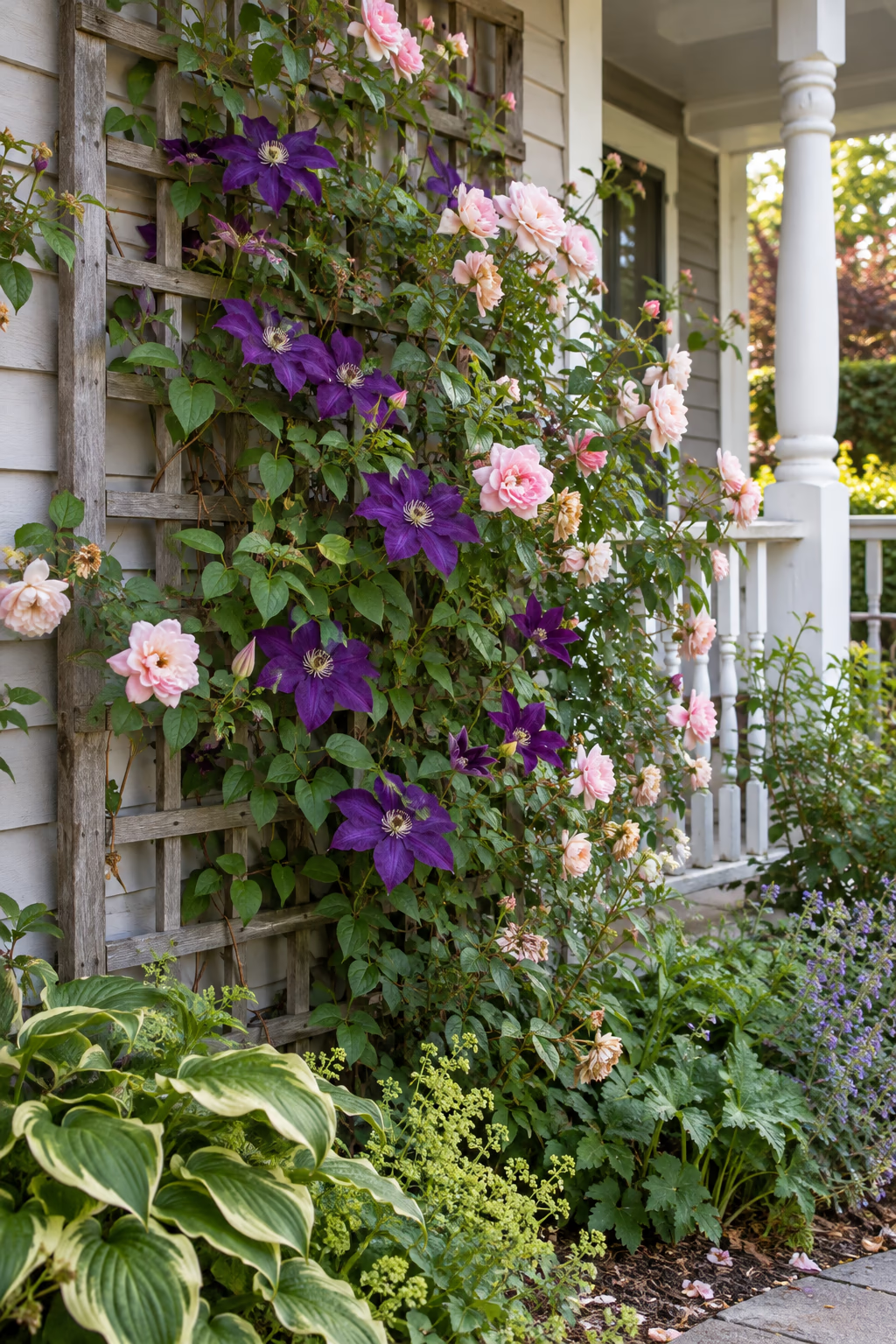
Two climbers, twice the color
Clematis and roses are a classic cottage pairing. Purple or blue clematis threading through pink or white roses creates layered color on a wall, fence, or porch trellis.
Clematis likes its top in the sun and its roots cool. Plant it a little deeper than it sat in the pot, then mulch or tuck low plants around the base to shade the roots.
For beginners, late-flowering clematis types such as Jackmanii and viticella varieties are the easiest to manage because they can be cut back hard in late winter.
5. Frame the Yard With a Low Picket Fence
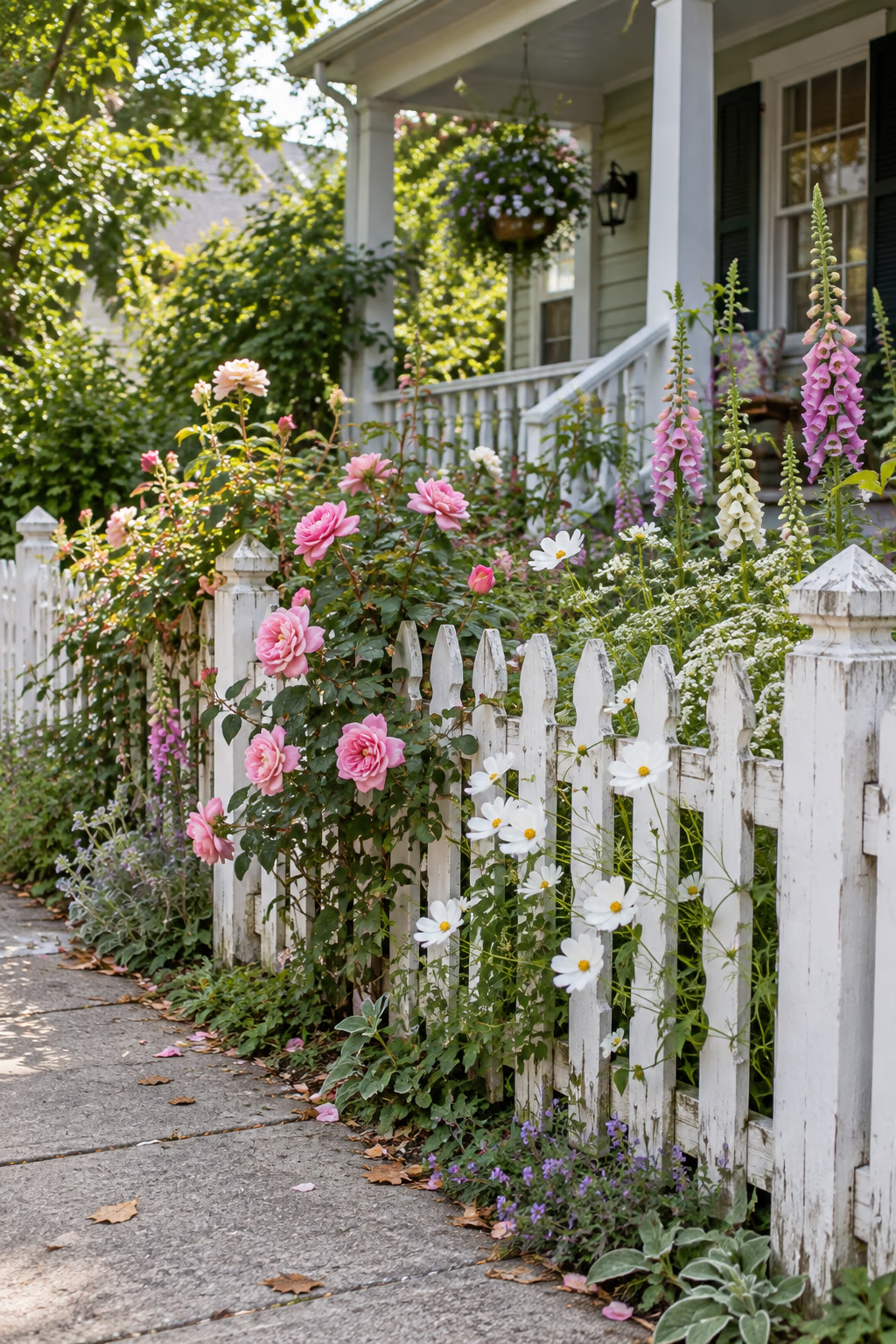
Structure that lets the flowers take center stage
A low white picket fence instantly says “cottage.” It gives a small front yard a clear boundary while letting flowers lean through the pickets and spill over the top.
Pre-built cedar or vinyl picket panels about 3 to 4 feet tall make this a manageable DIY project. Plant roses, cosmos, or catmint along the inside so the fence looks softened rather than stark.
Before you build, check local front-yard fence height limits, property lines, and any HOA guidelines.
6. Plant Hollyhocks Along a Fence or Wall
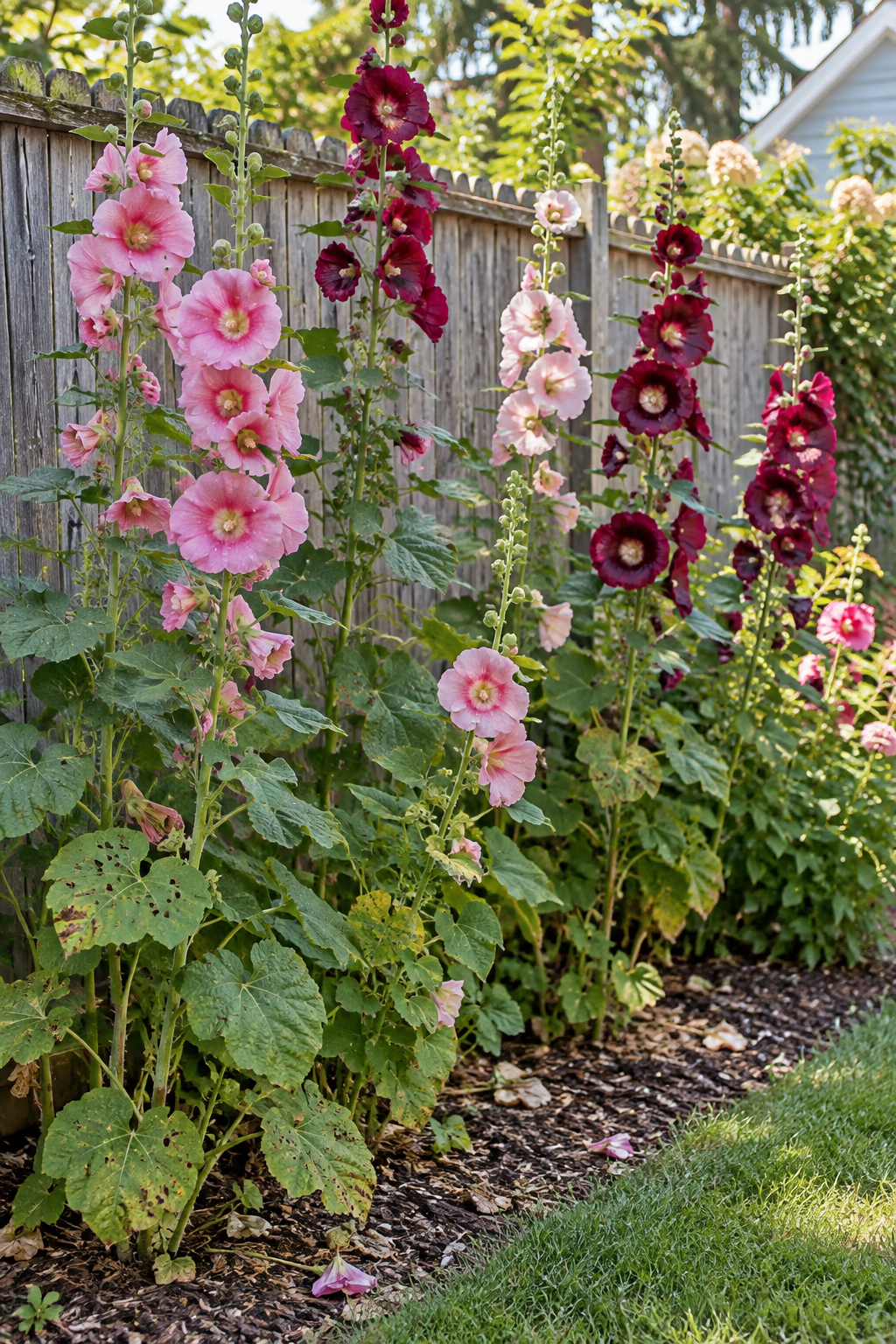
Old-fashioned height for a sunny boundary
Few flowers are as nostalgic as hollyhocks (Alcea rosea). Their tall flower spikes, often 5 feet or more, look wonderful against a fence, shed, or sunny house wall.
Hollyhocks are usually hardy in USDA zones 3 to 9 and need full sun. Many old-fashioned types are biennials or short-lived perennials, but they often reseed and return year after year.
Planting against a fence or wall gives the tall stems natural support. Rust is a common problem, so clean up and remove infected leaves at the end of the season.
7. Let Foxgloves Fill a Partly Shaded Corner
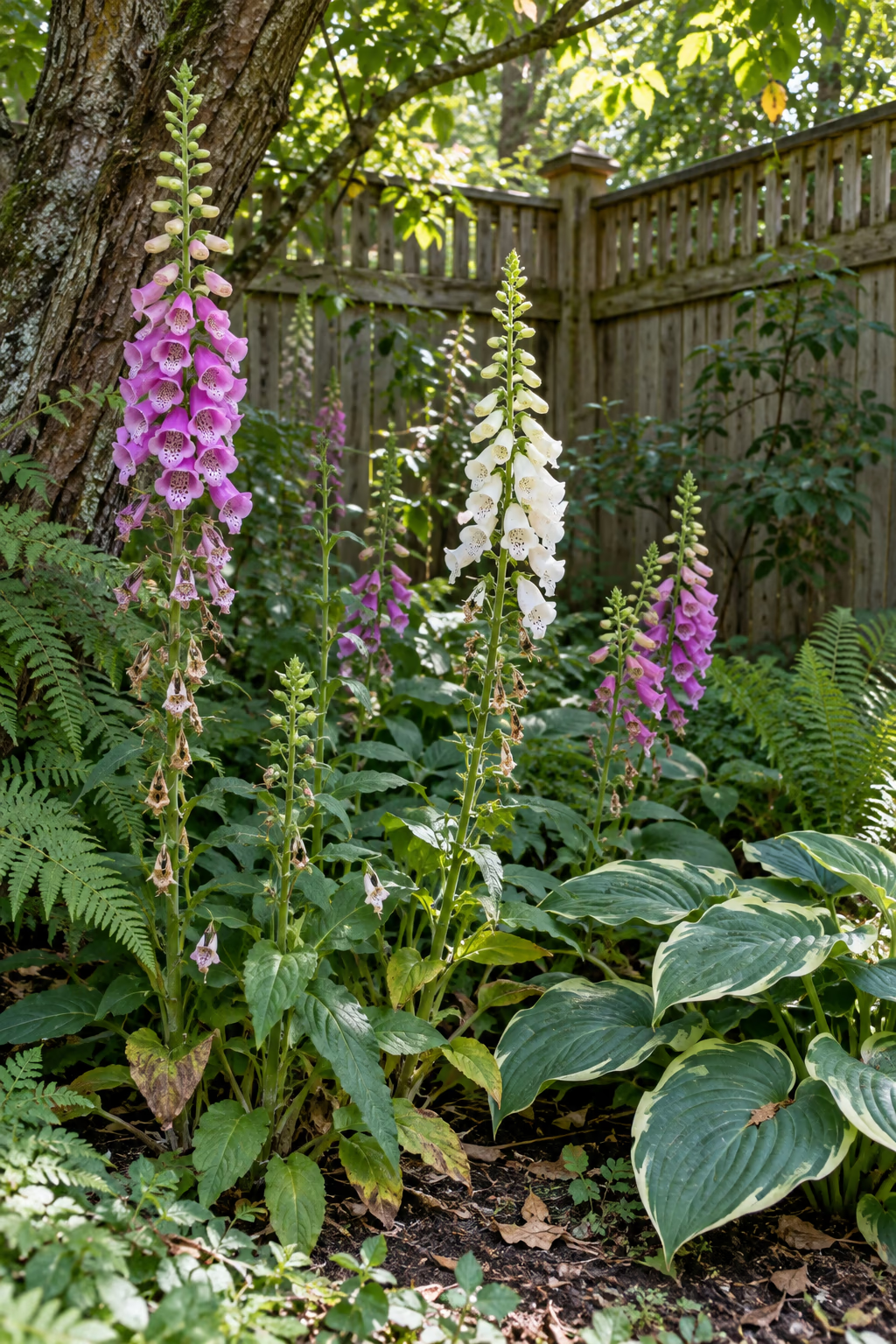
Tall spires for spots that don’t get full sun
Common foxglove (Digitalis purpurea) brings height and romance to cottage gardens, and it’s one of the few classic cottage flowers that tolerates partial shade. Its bell-shaped flowers bloom on spires that can reach 3 to 5 feet.
Most foxgloves are biennials, forming leaves in the first year and flowering in the second. Letting a few plants drop seed, or sowing two years in a row, helps keep flowers coming every year.
All parts of foxglove are toxic if eaten. Wear gloves when handling it, and plant it away from areas where young children or pets play.
8. Grow Lavender Beside a Sunny Gravel Path
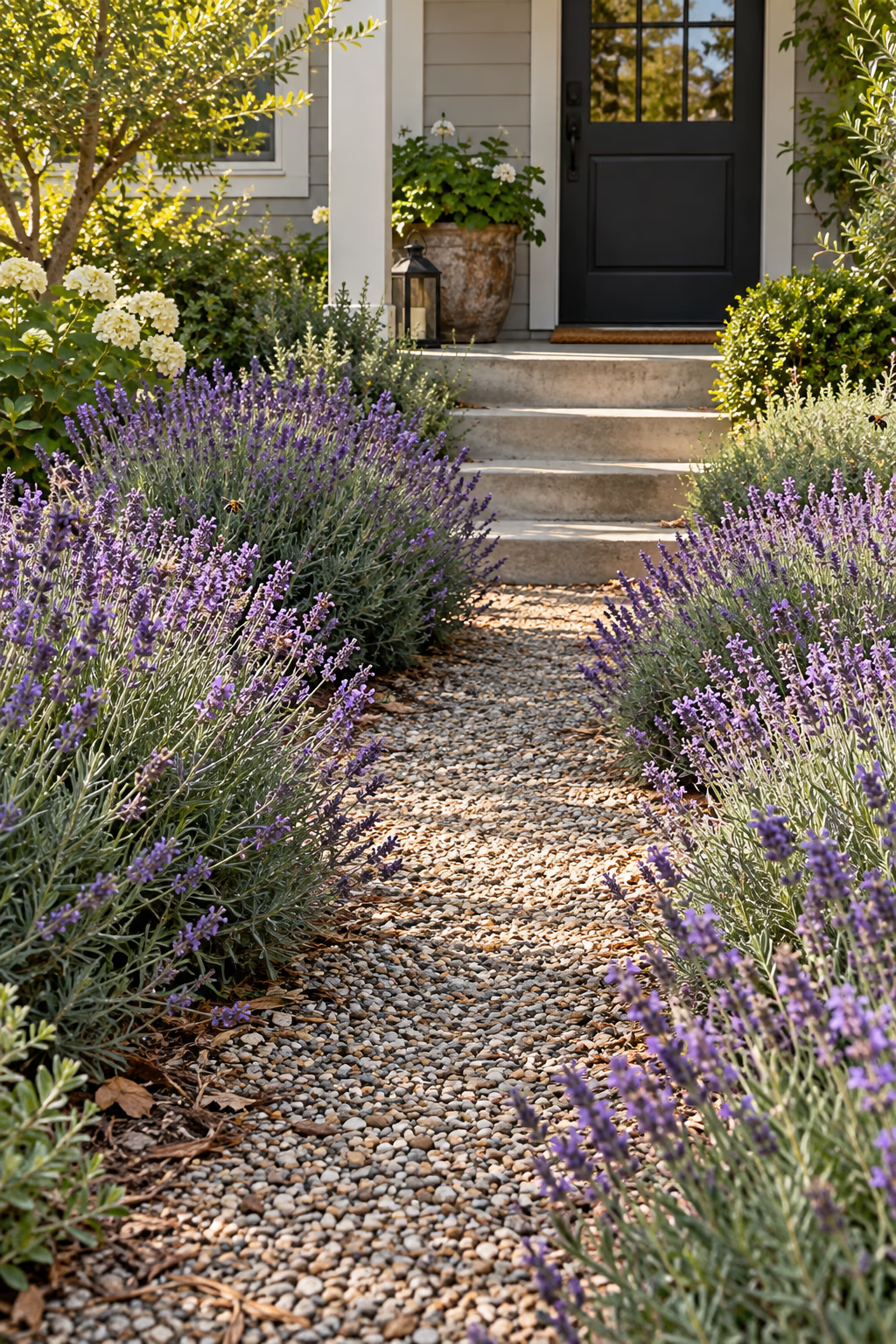
Fragrance every time you walk by
Lavender is a natural fit beside a sunny path, where you can brush its fragrant foliage as you pass. A gravel path suits it especially well because lavender needs excellent drainage.
English lavender (Lavandula angustifolia) is the hardiest choice for many US gardens and is typically grown in zones 5 to 9. Give it full sun and space plants about 2 to 3 feet apart.
Trim lavender lightly after flowering or in spring, but avoid cutting into old, leafless wood. In heavy clay soil, plant on a slight mound or in a raised edge.
9. Build a Soft-Edged Brick Path
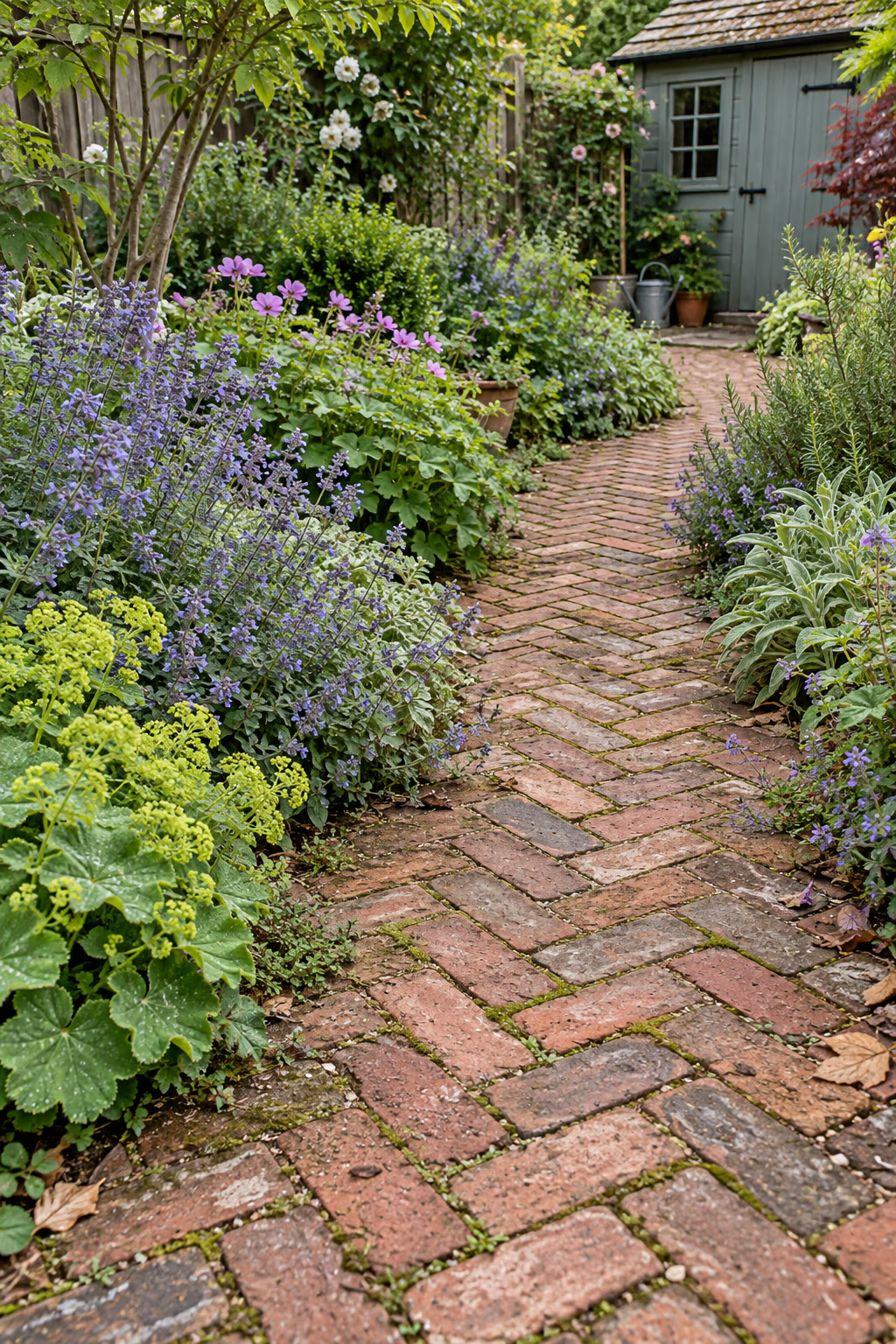
A timeless walkway with plants spilling over
Old brick is one of the most charming path materials for a cottage garden. Laid in a simple running bond or herringbone pattern, it adds warmth and a sense of age.
Salvaged bricks are often available inexpensively through local listings. Lay them on a compacted base of gravel and sand so the path stays level and drains well.
Let plants overlap the edges by a few inches to soften the lines. A gentle curve, even in a small yard, makes the walk feel more inviting.
10. Tuck Creeping Thyme Between Stepping Stones
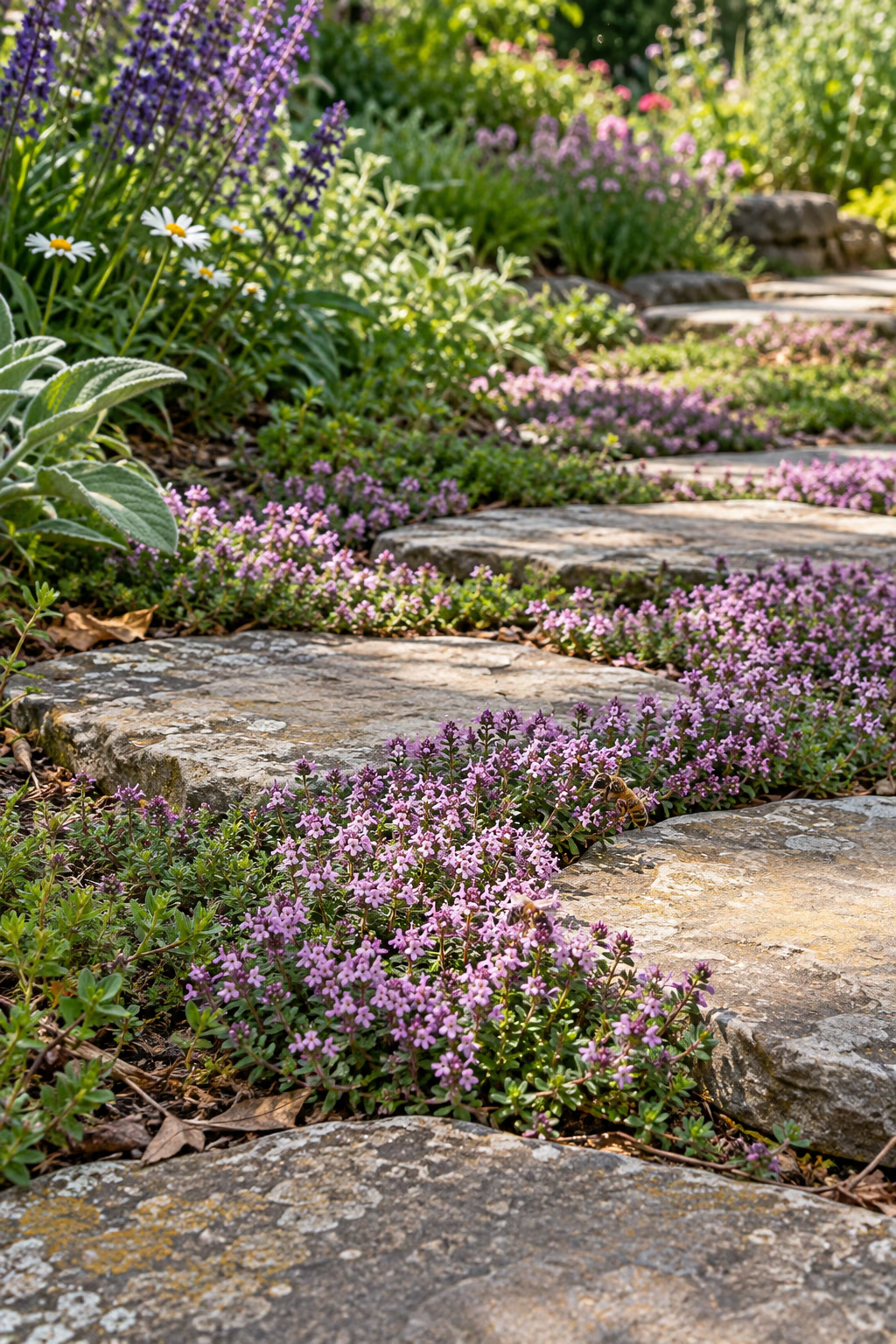
A living carpet that blooms underfoot
Creeping thyme fills the gaps between stepping stones with low green foliage and tiny pink or purple flowers. It softens the path and releases a light fragrance when brushed.
Plant small plugs about 6 to 12 inches apart in full sun and well-drained soil. Thyme spreads slowly at first but fills in nicely over a couple of seasons.
Creeping thyme tolerates light foot traffic, so it’s ideal between stones rather than as the main walking surface. Hardiness varies by type, so check the plant label for your zone.
11. Turn a Front Lawn Into a Cottage Border
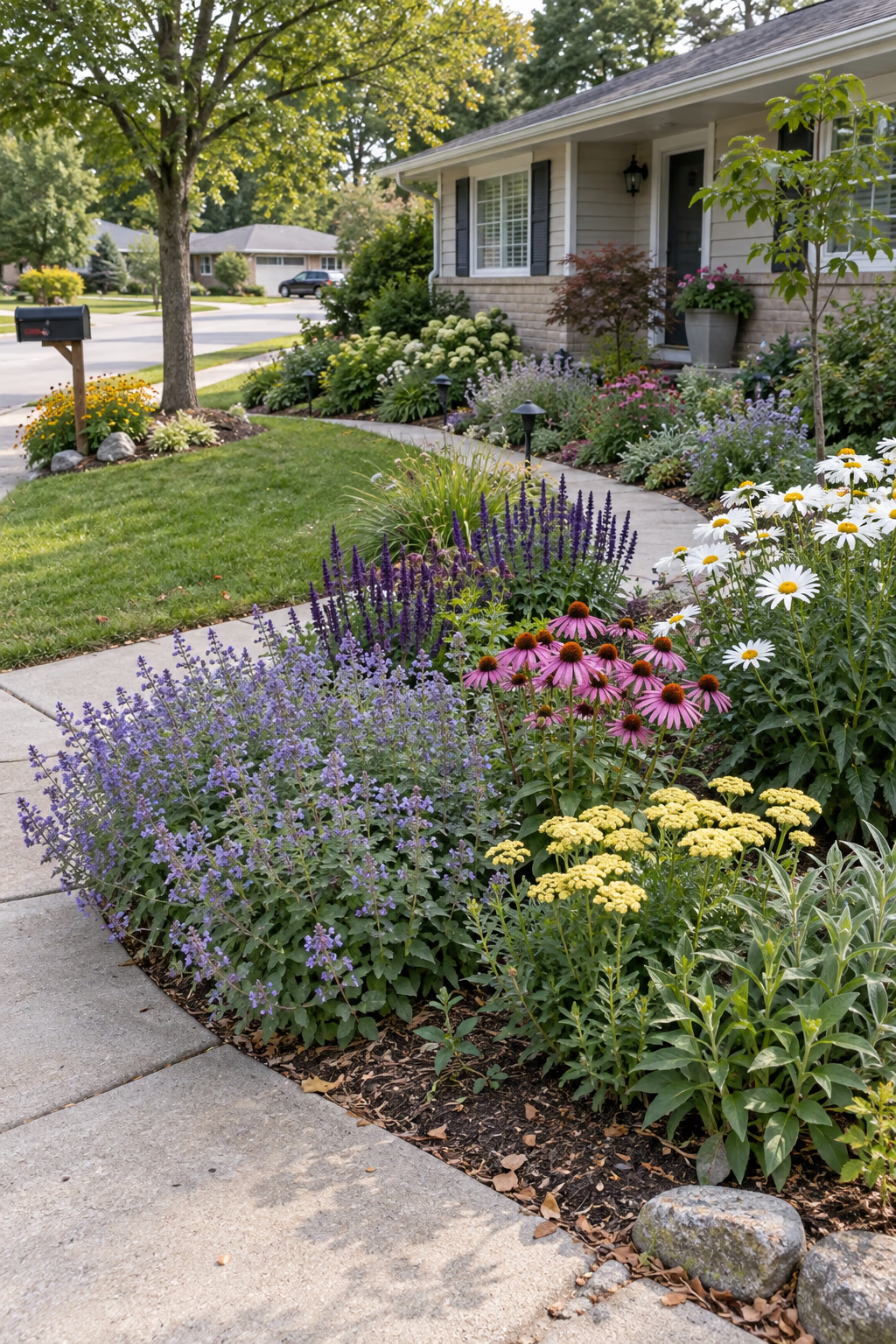
Swap grass for flowers along the front walk
Traditional cottage gardens have little lawn. Replacing even a strip of front grass with a deep flower border can transform your home’s curb appeal.
Sheet mulching is a low-cost way to remove grass without digging. Cover the turf with cardboard, top it with several inches of compost or mulch, and give it time to break down before planting.
Choose tough sun lovers such as catmint, salvia, coneflower, yarrow, and Shasta daisy. Check HOA rules before making major changes to a front yard.
12. Frame Windows With Overflowing Window Boxes
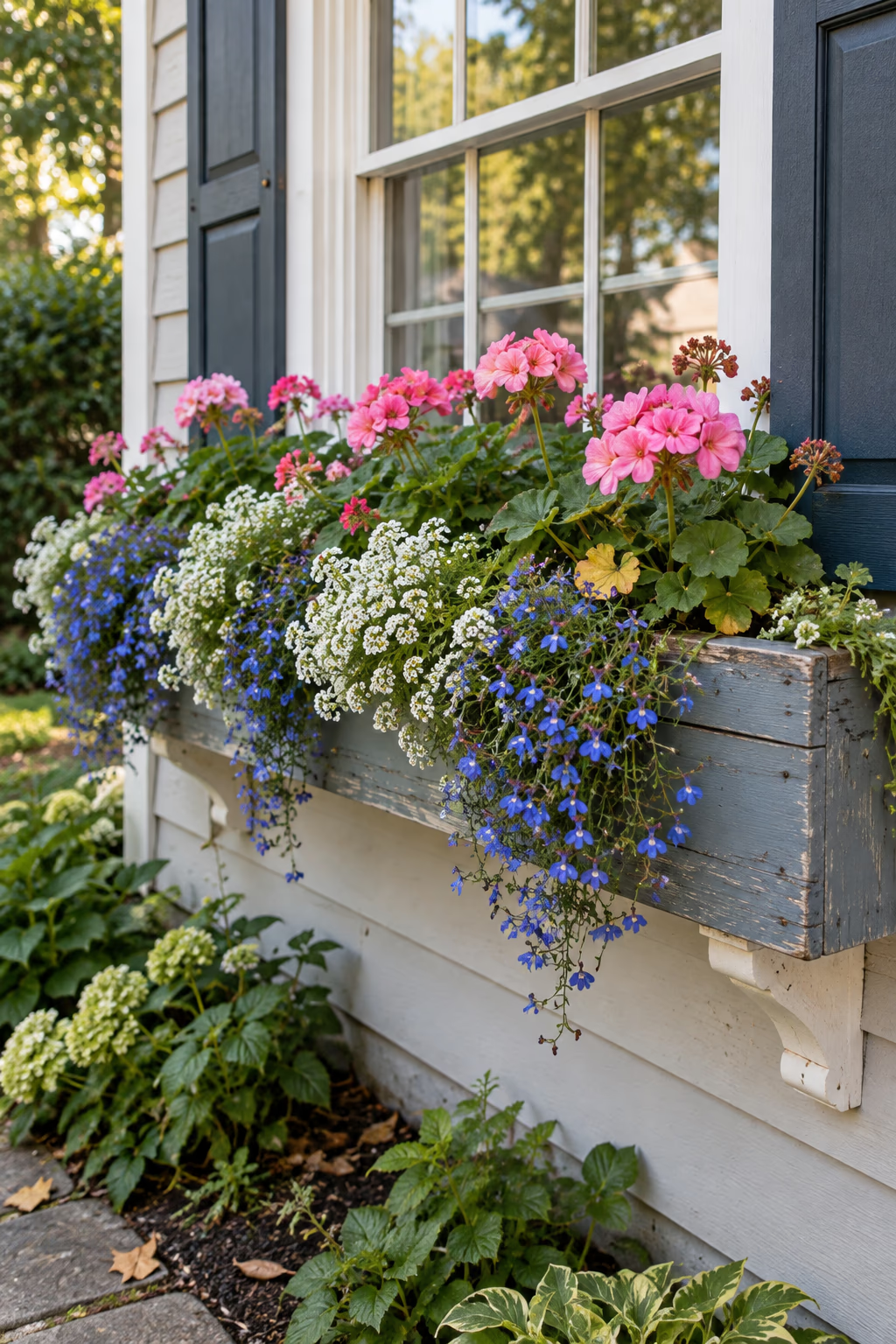
Cottage charm right at eye level
Window boxes bring cottage style up to the house itself. A box overflowing with geraniums, trailing lobelia, and sweet alyssum makes a simple facade look cheerful and lived-in.
Choose boxes with drainage holes and enough depth for roots. Use a quality potting mix and combine one upright plant, a few fillers, and trailing plants that spill over the front.
Window boxes dry out quickly, especially in sun. Plan to water often during hot weather and feed regularly to keep plants blooming.
13. Plant Up a Vintage Wheelbarrow or Galvanized Tub
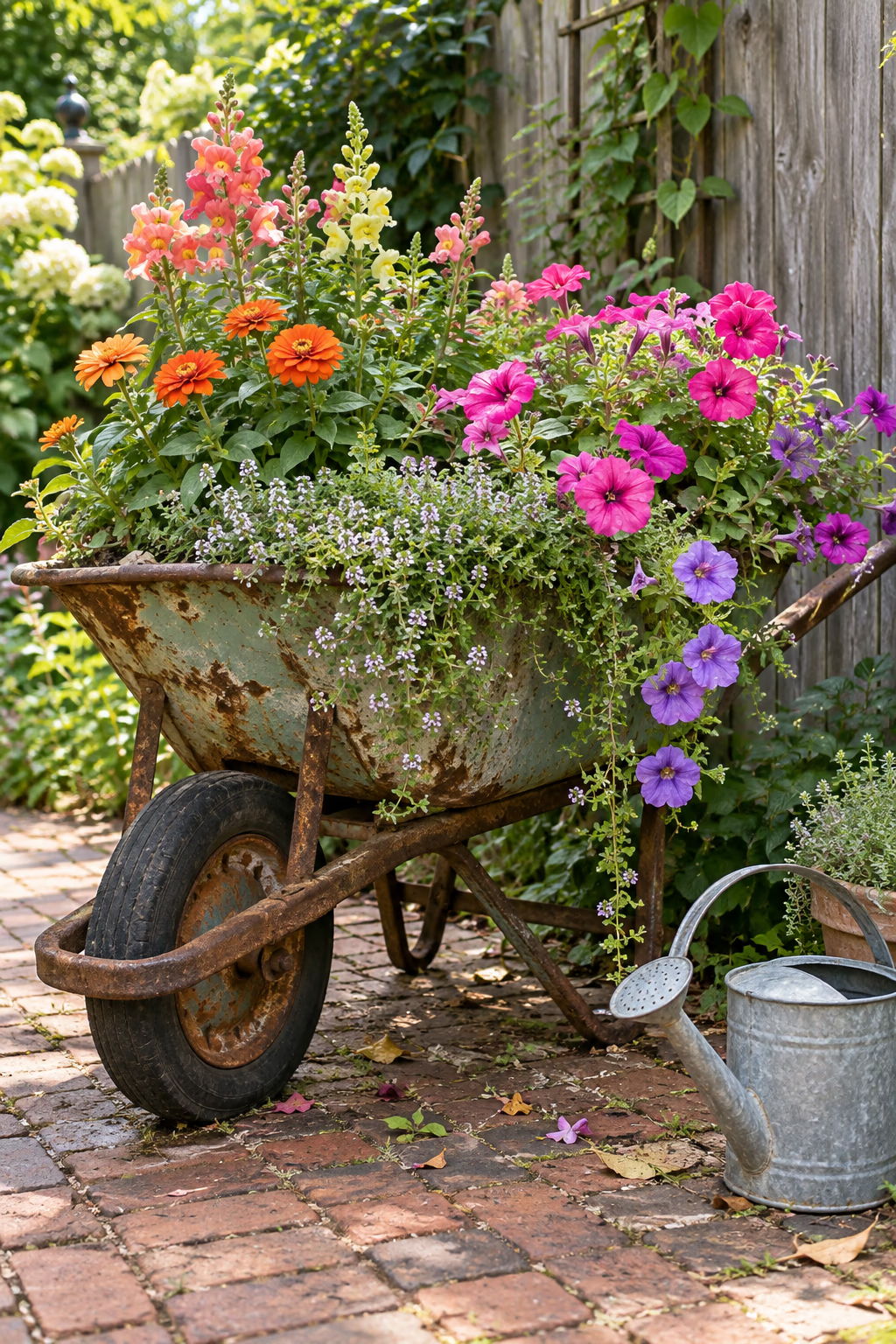
Repurposed containers with plenty of character
An old wheelbarrow, galvanized washtub, or weathered wooden crate makes a charming cottage planter. Filled with trailing petunias, zinnias, snapdragons, or herbs, it becomes an instant focal point on a patio or in a bed.
Drill drainage holes in the bottom, then fill the container with potting mix rather than garden soil. Lifting it slightly on bricks or pot feet helps water drain freely.
Yard sales and secondhand shops are good places to find inexpensive vintage containers with plenty of patina.
14. Create a Bench Nook Surrounded by Fragrance
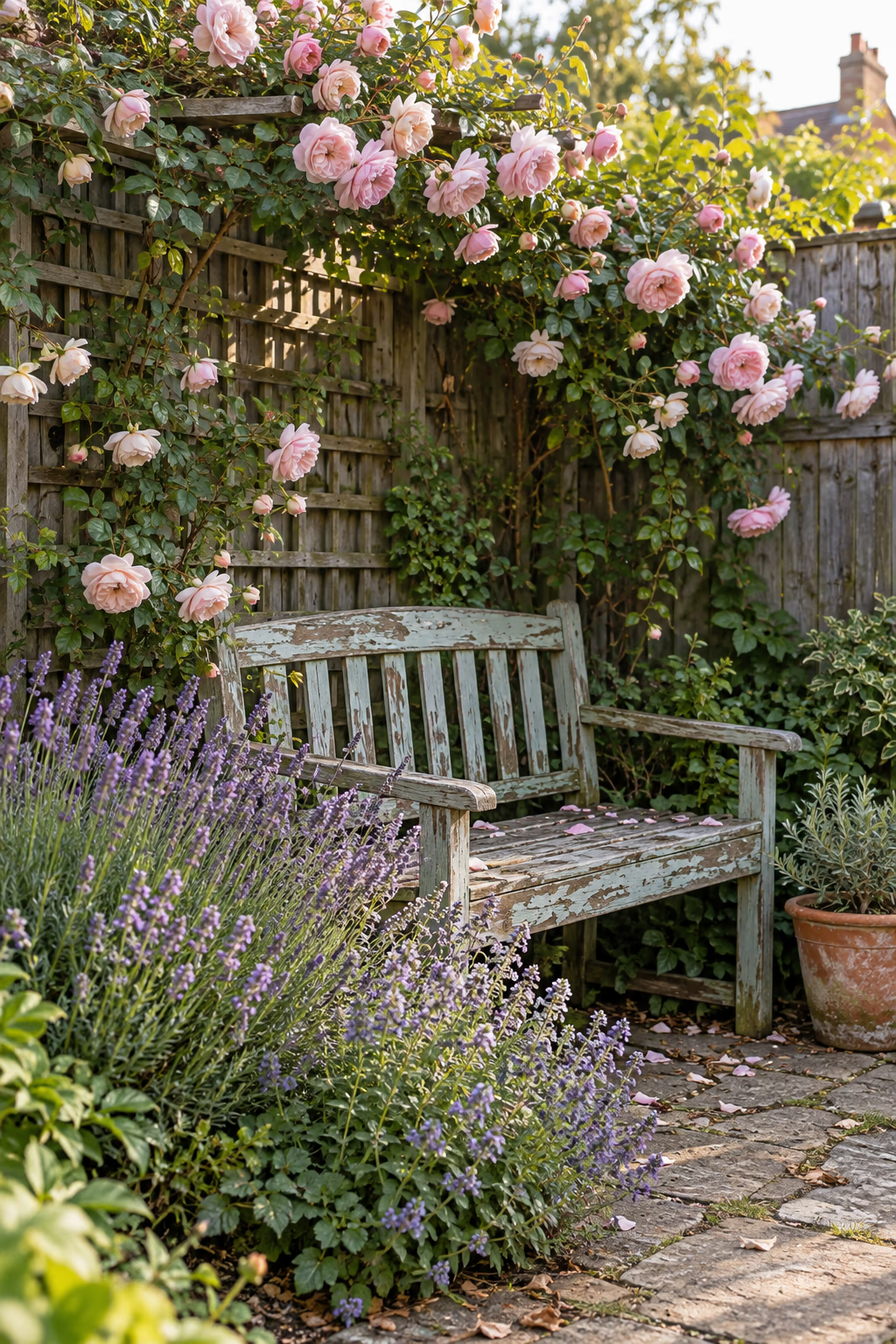
A cozy spot to sit and enjoy the garden
Every cottage garden needs a place to pause. Tuck a weathered wooden bench into a corner, beneath an arch, or against a fence, then surround it with fragrant plants.
Lavender, roses, and sweet peas planted near the bench let you enjoy their scent up close. A climbing rose overhead adds a sense of enclosure.
A secondhand bench refreshed with exterior paint fits the style perfectly. Leave enough open space in front of the seat to stretch out your legs.
15. Add a Birdbath as a Focal Point
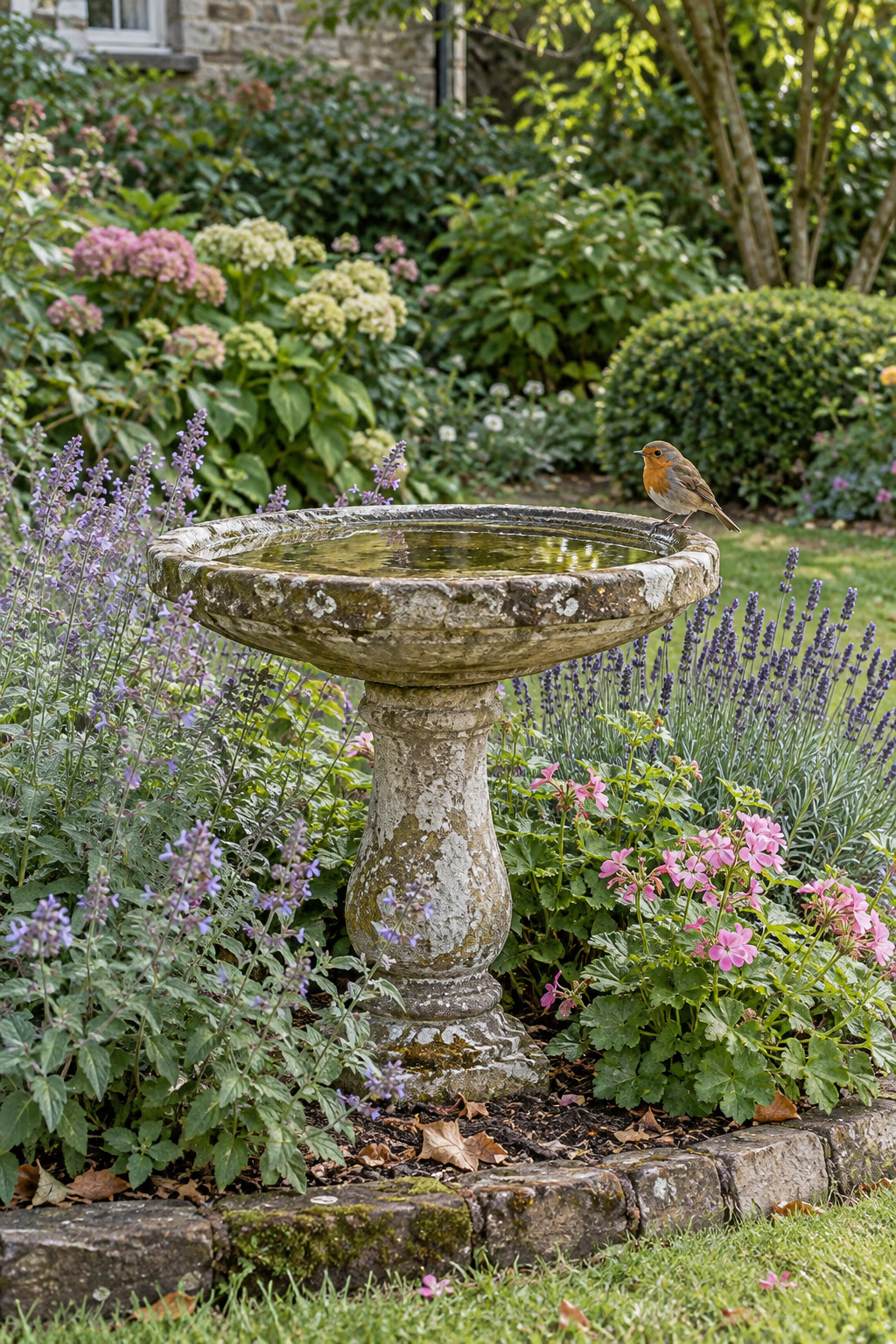
Bring movement and life to the garden
A stone or concrete birdbath set among flowers is a classic cottage garden feature. It gives the eye a place to rest and attracts birds you can watch from the window.
Surround the birdbath with lower plants such as catmint and lavender so it stays visible. Placing it near shrubs or trees gives birds cover to escape predators.
Change the water every few days and scrub the basin regularly. Fresh water keeps birds healthy and prevents mosquitoes from breeding.
16. Make a Round Flower Bed the Center of a Small Yard
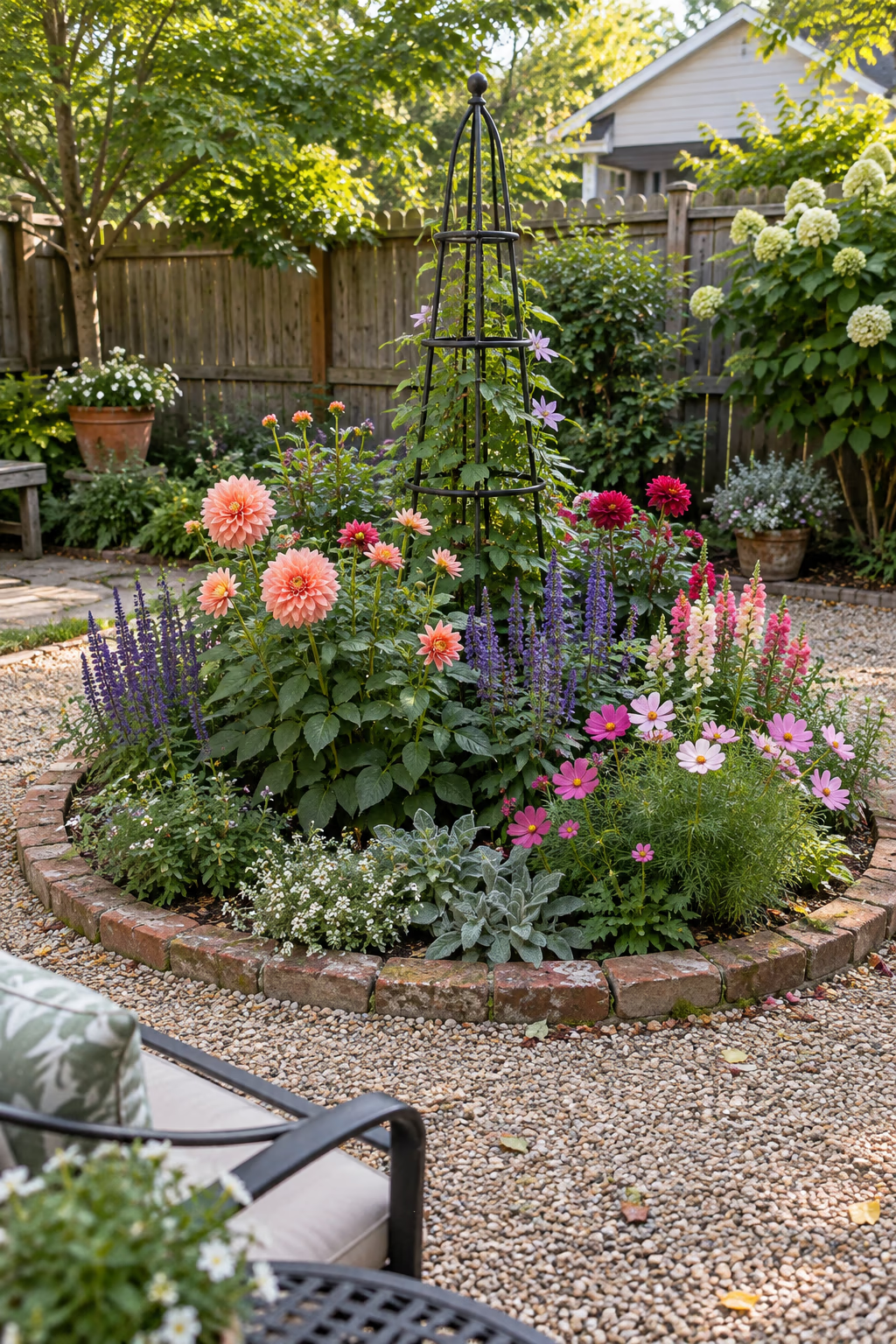
A focal point that makes a tiny space feel designed
In a small square backyard, a circular flower bed can become the centerpiece. Edge it with brick or surround it with gravel, then fill it with cottage flowers.
Place the tallest plants or an obelisk in the middle and step plants down in height toward the edge. Dahlias, salvia, snapdragons, and cosmos work well together.
Dahlia tubers aren’t winter hardy in many US gardens, so dig and store them for winter in colder zones.
17. Use Obelisks for Instant Vertical Interest
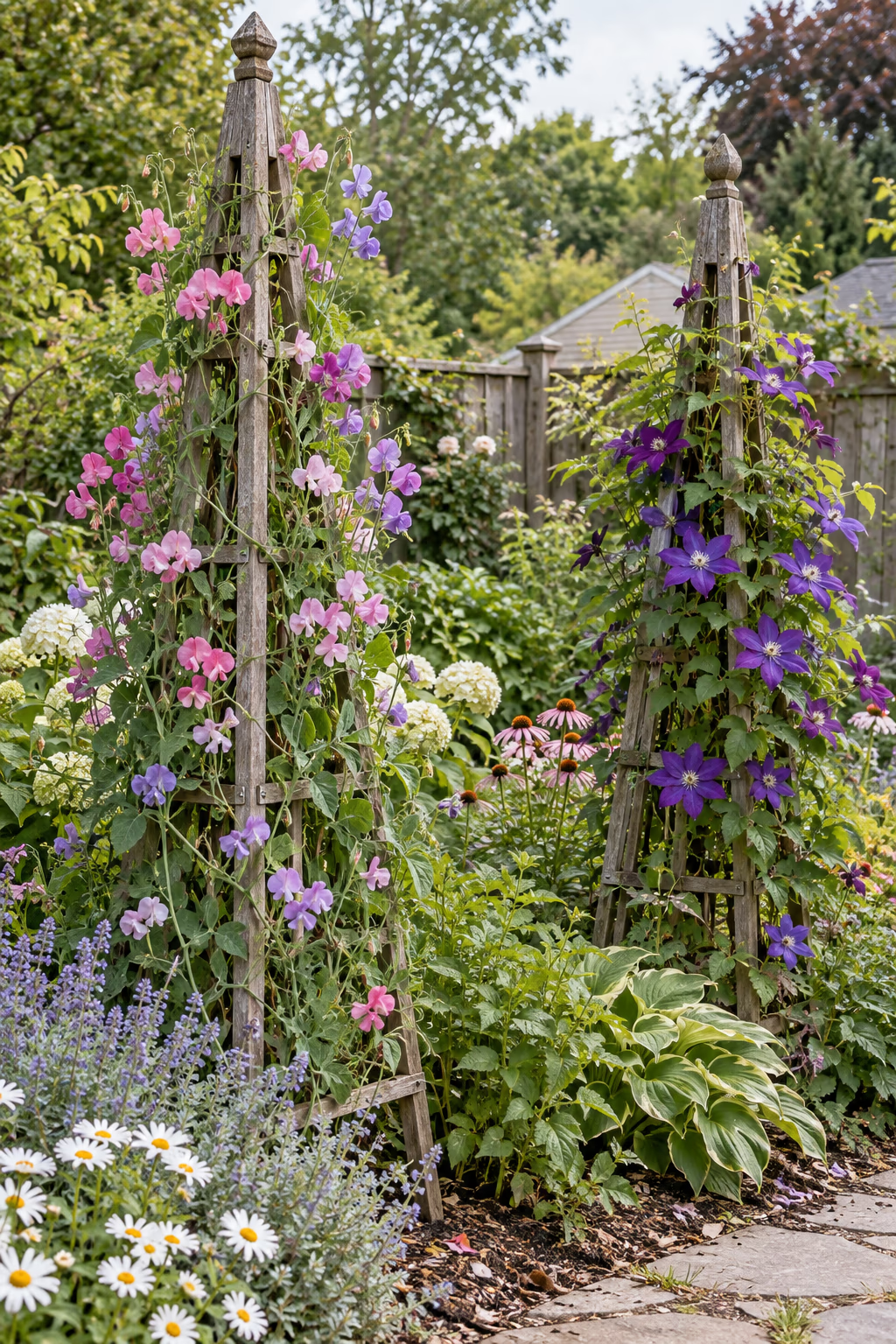
Height and structure in the smallest beds
Garden obelisks, also called tuteurs, support climbing plants and give a cottage border height, even in a small yard. They also add shape when few plants are blooming.
Use wood or metal obelisks for clematis, sweet peas, or compact climbing roses. A simple bamboo teepee tied at the top is an inexpensive alternative.
Push the legs well into the soil or anchor them so the support doesn’t topple when it’s covered with heavy growth.
18. Grow Sweet Peas on a Simple Trellis
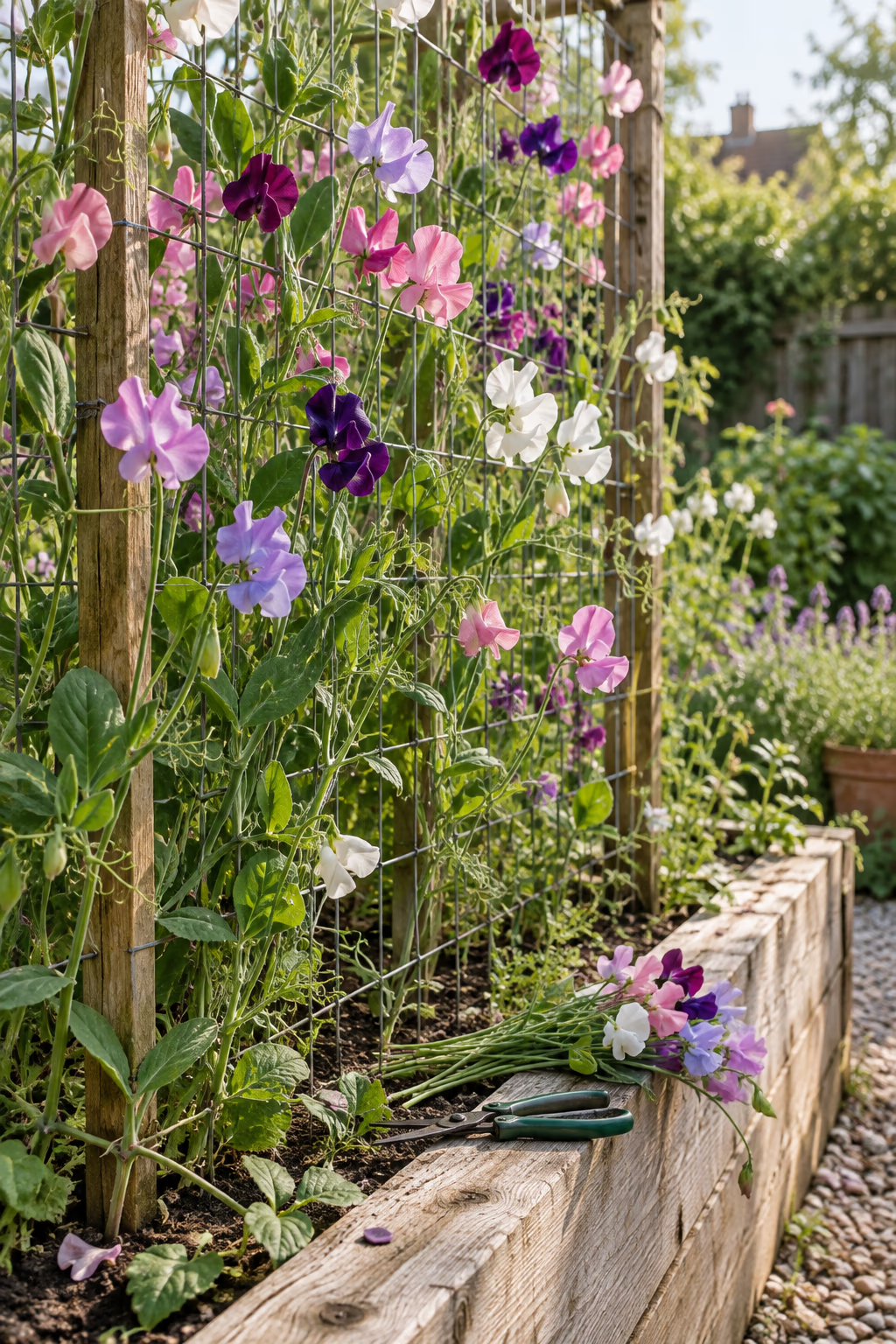
Old-fashioned fragrance from a single seed packet
Sweet peas are a cottage garden favorite for their ruffled flowers and sweet scent. One packet of seeds can cover a fence panel, wire trellis, or teepee.
They prefer cool weather and full sun. In colder regions, sow them in early spring as soon as the soil can be worked. In mild-winter areas, many gardeners sow them in fall.
Pick the flowers often to keep more coming. Ornamental sweet peas are not edible, so keep seeds and plants away from children and pets.
19. Sow Cosmos and Nigella for Budget-Friendly Blooms
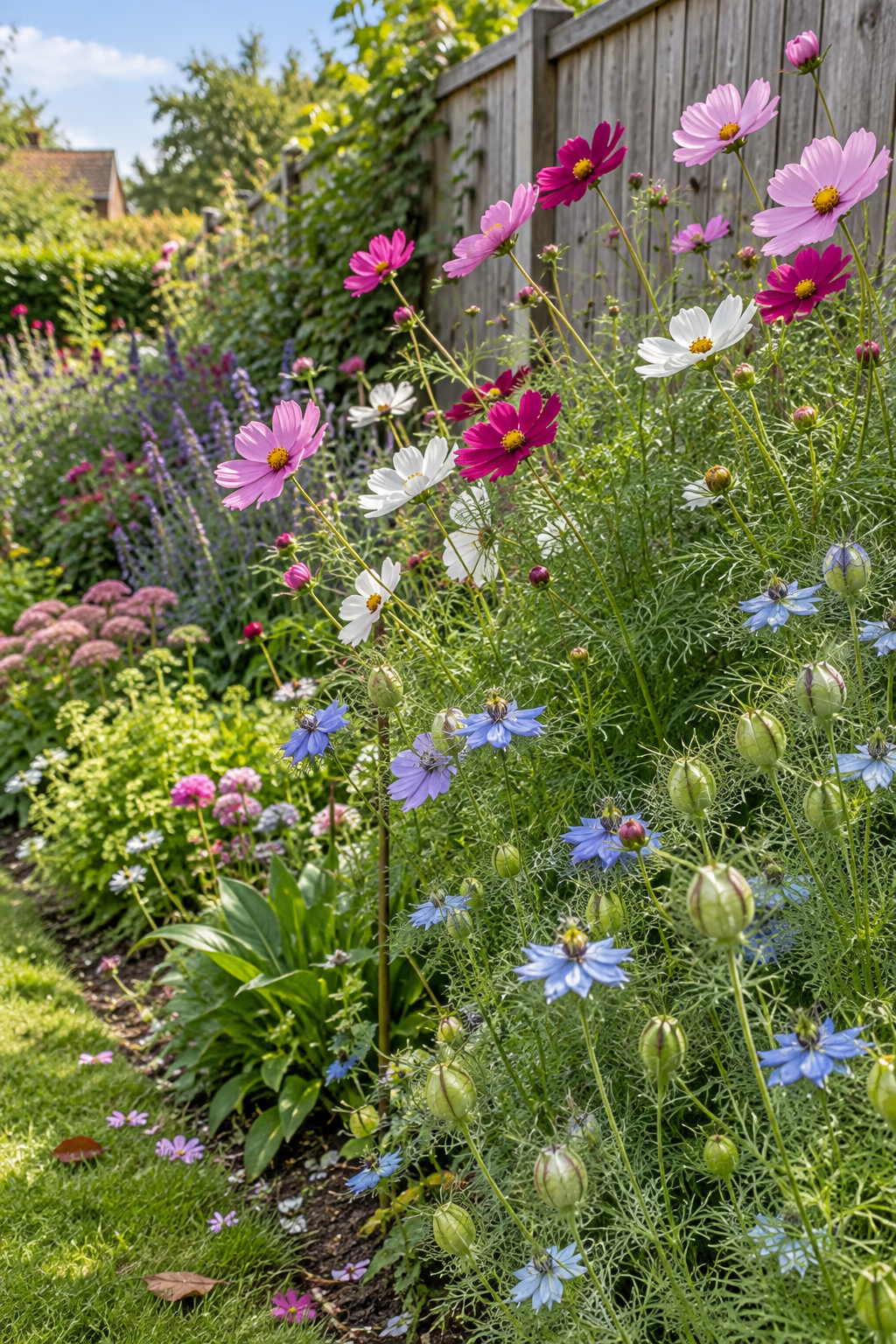
Fill gaps quickly with easy annuals
Cosmos and nigella, also called love-in-a-mist, are easy annuals that bring a soft, airy texture to cottage gardens. They’re perfect for filling gaps between young perennials.
Sow cosmos directly in the garden after the last frost in full sun. Nigella can be sown in early spring or, in many areas, in fall.
Both readily reseed, so you may find them returning on their own in following years. Nigella’s decorative seed pods are also lovely in dried arrangements.
20. Plant Peonies for a Classic Late-Spring Show
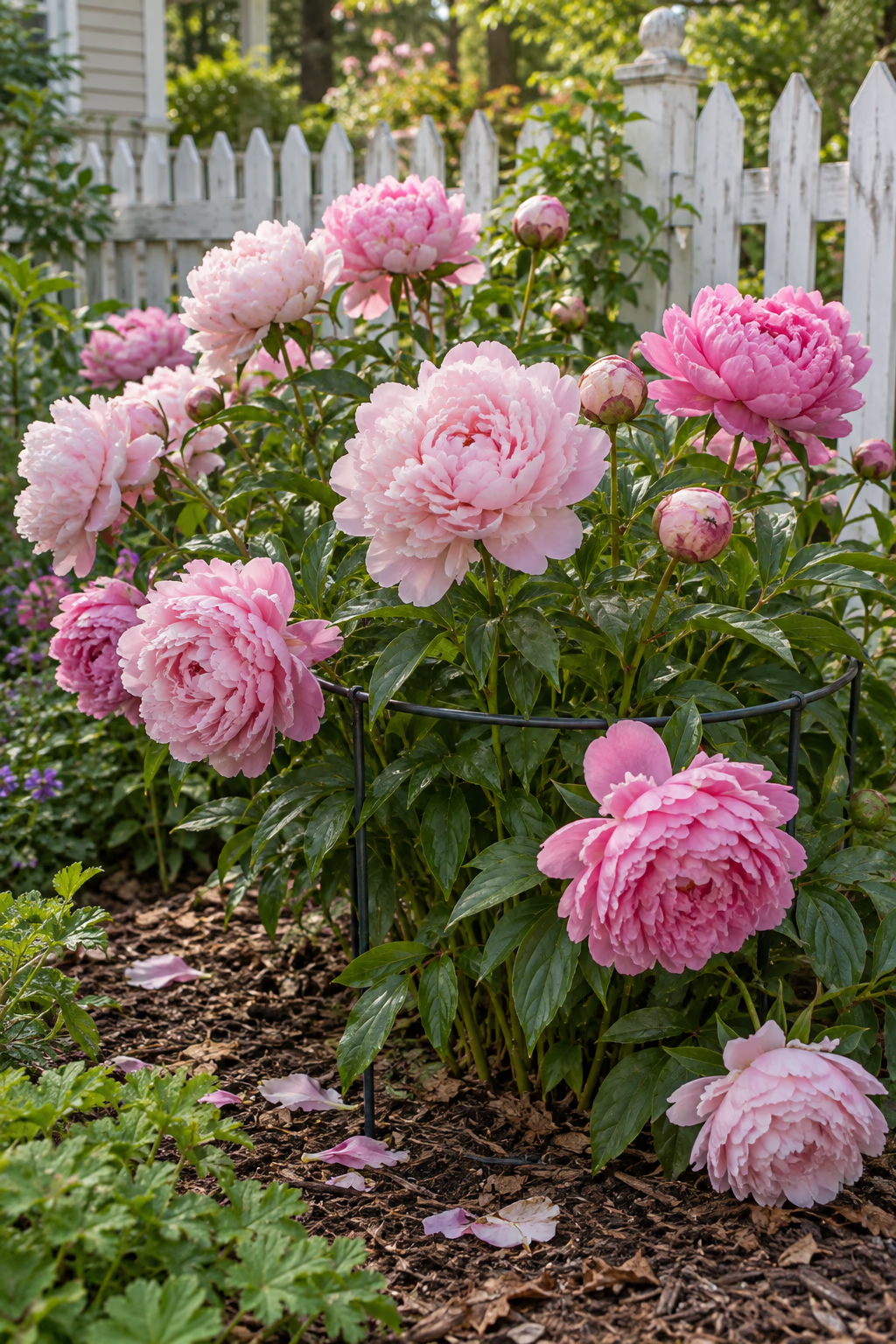
Lush, fragrant blooms that can last for decades
Peonies are a beloved cottage flower, with huge, fragrant blooms in late spring and early summer. Once established, they can thrive in the same spot for many years.
Plant them in full sun, with the eyes about 2 inches below the soil surface in cold regions. Planting too deep is a common reason peonies fail to bloom.
Use a peony ring or support to hold up heavy flowers. Ants on the buds are common and harmless.
21. Mix Herbs and Edibles With Flowers
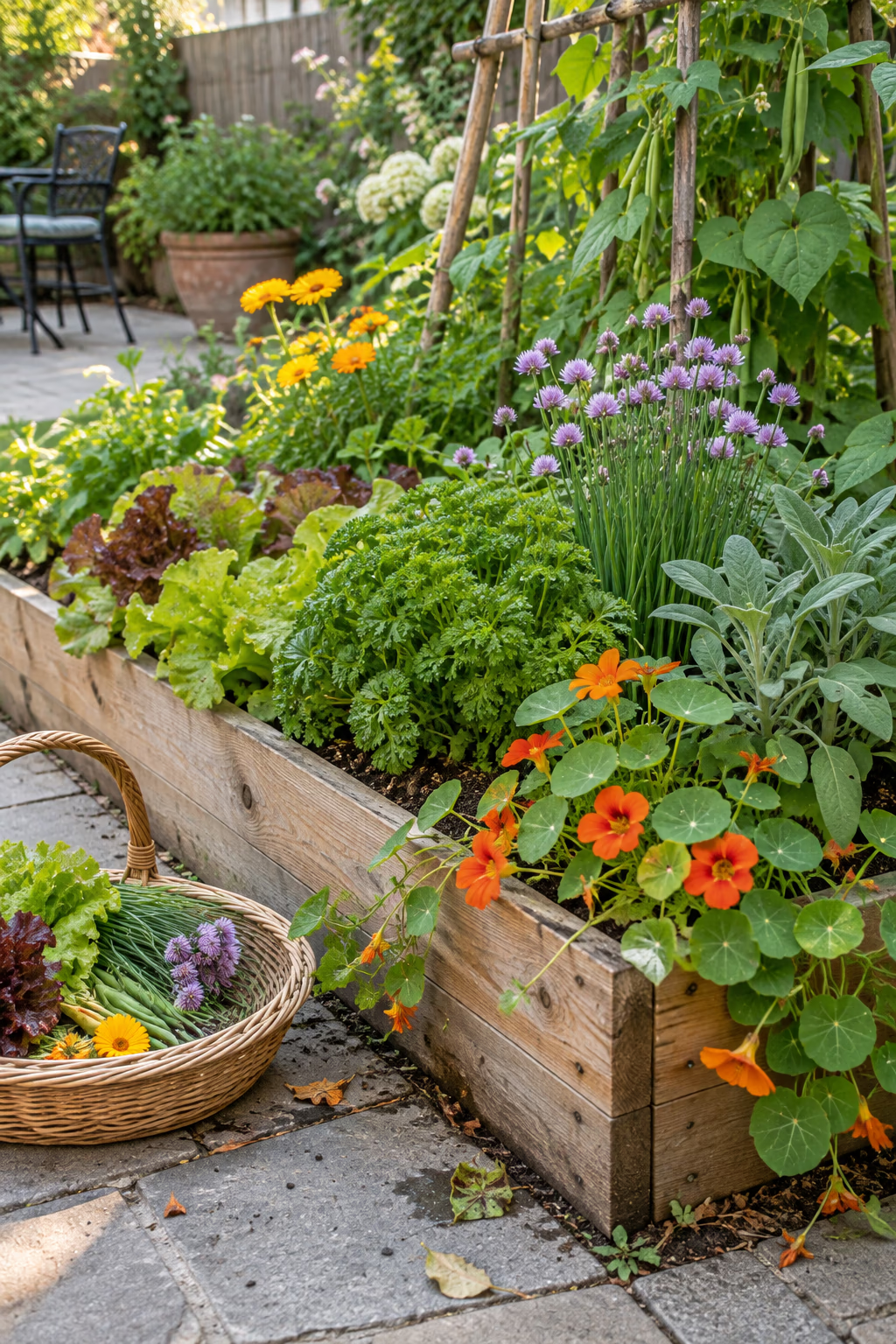
Pretty and productive in the same space
Traditional cottage gardens mixed vegetables, herbs, and flowers rather than separating them. A small raised bed with lettuce, parsley, chives, nasturtiums, and calendula looks charming and gives you something to harvest.
Edge beds with thyme, sage, or chives, and tuck marigolds or nasturtiums between vegetables for color. A small trellis can support beans or peas.
Keep edible plants clearly separated from toxic ornamentals such as foxglove, delphinium, and sweet peas.
22. Plant a Pollinator Strip With Native Flowers
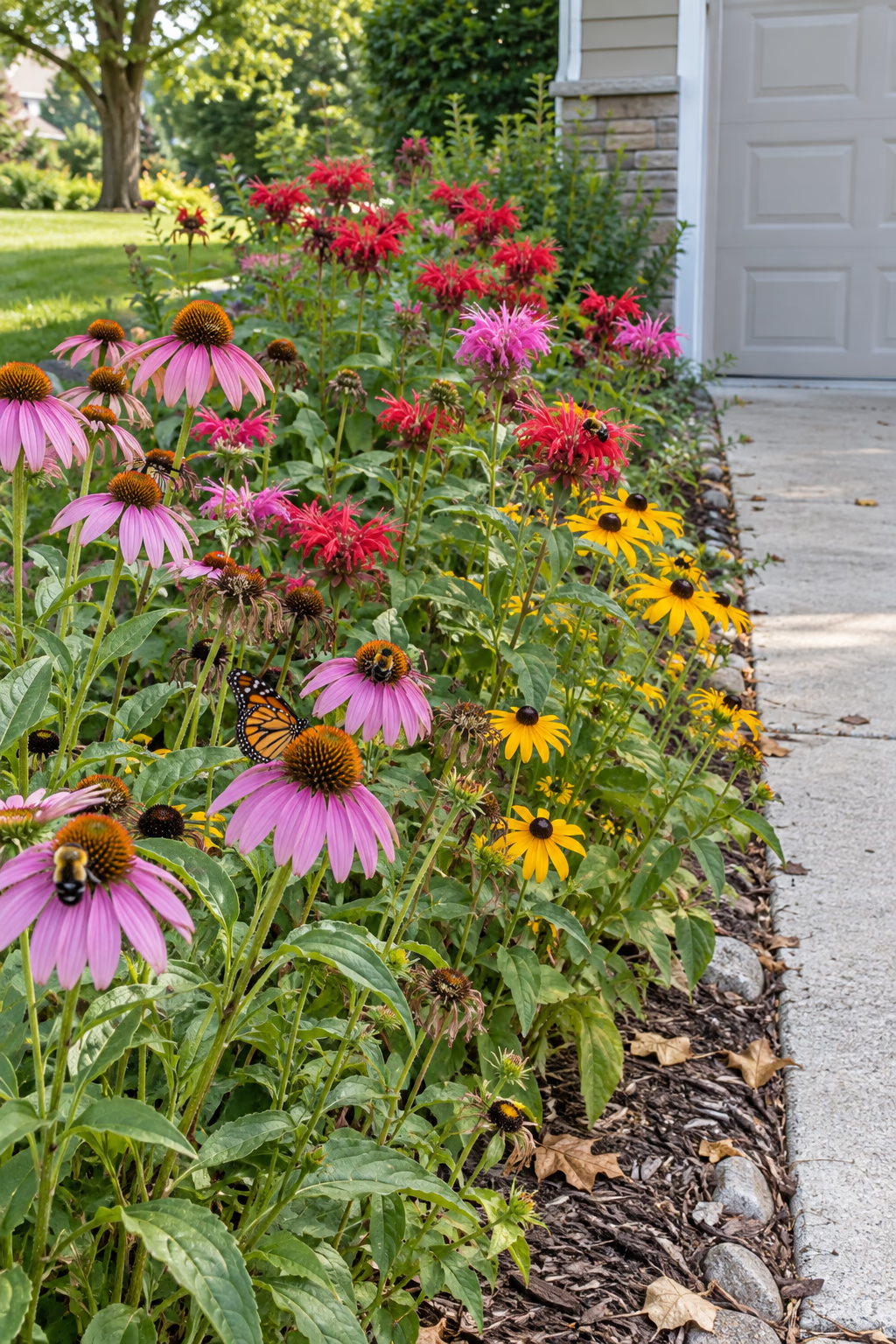
Cottage style that supports bees and butterflies
Many native flowers have a relaxed cottage look. Purple coneflower, bee balm, and black-eyed Susan make a cheerful, low-fuss strip beside a driveway, fence, or sidewalk.
These plants feed pollinators and often handle summer heat better than some traditional cottage favorites. Check which species are native to your region.
Leave some seed heads standing into winter. They add texture and provide food for birds.
23. Start a Mini Cutting Garden
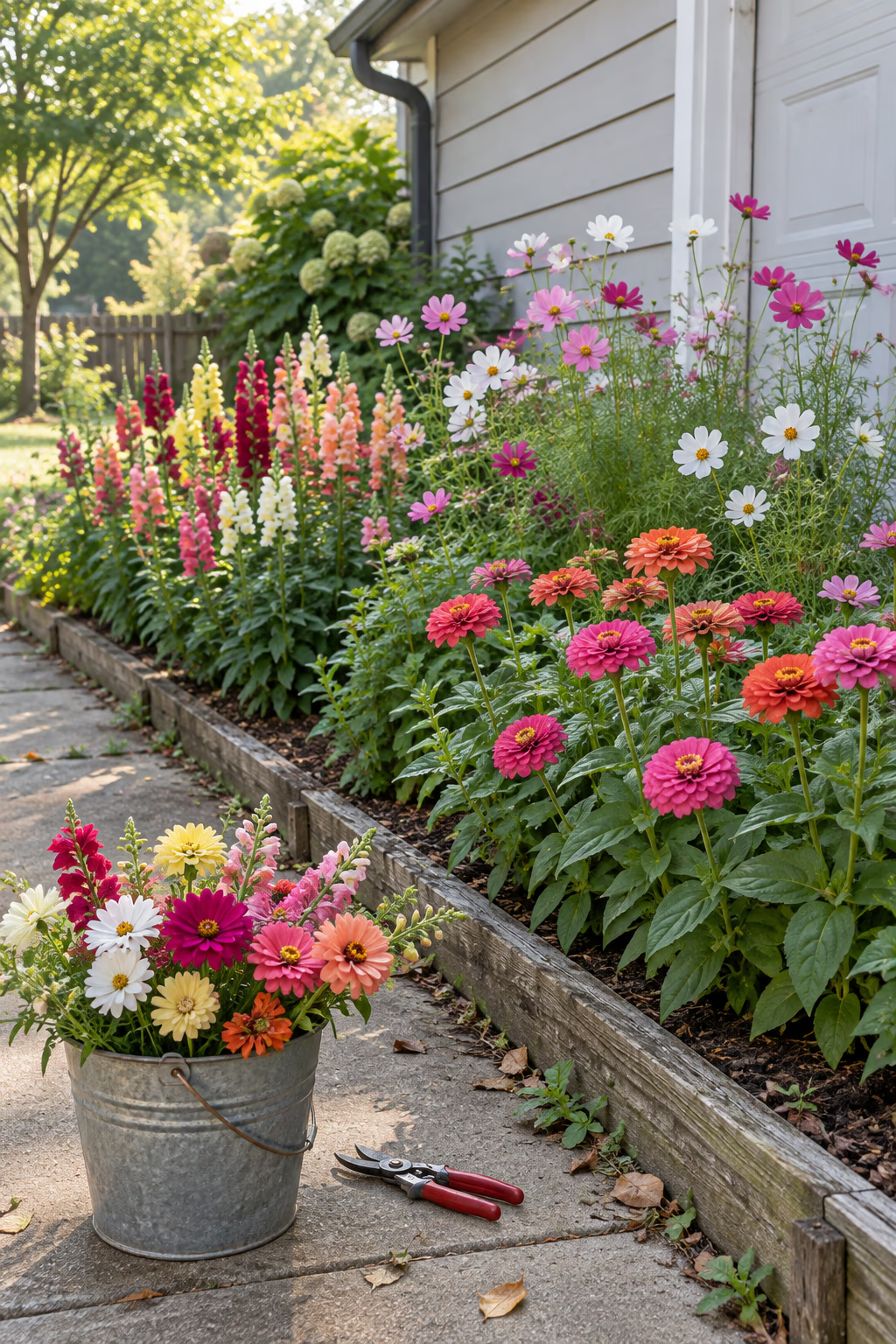
Fresh bouquets from a tiny bed
A small cutting garden lets you enjoy cottage flowers indoors too. A 3 by 6 foot bed planted with zinnias, cosmos, snapdragons, and sweet peas can produce armfuls of flowers.
Plant in simple rows so it’s easy to harvest. Many cut flowers produce more blooms the more you pick, so cutting doubles as deadheading.
Put the bed somewhere sunny but out of the main view, such as beside a garage or behind the vegetable garden, so harvesting doesn’t leave gaps in your best border.
24. Paint a Garden Shed and Cover It With Climbers
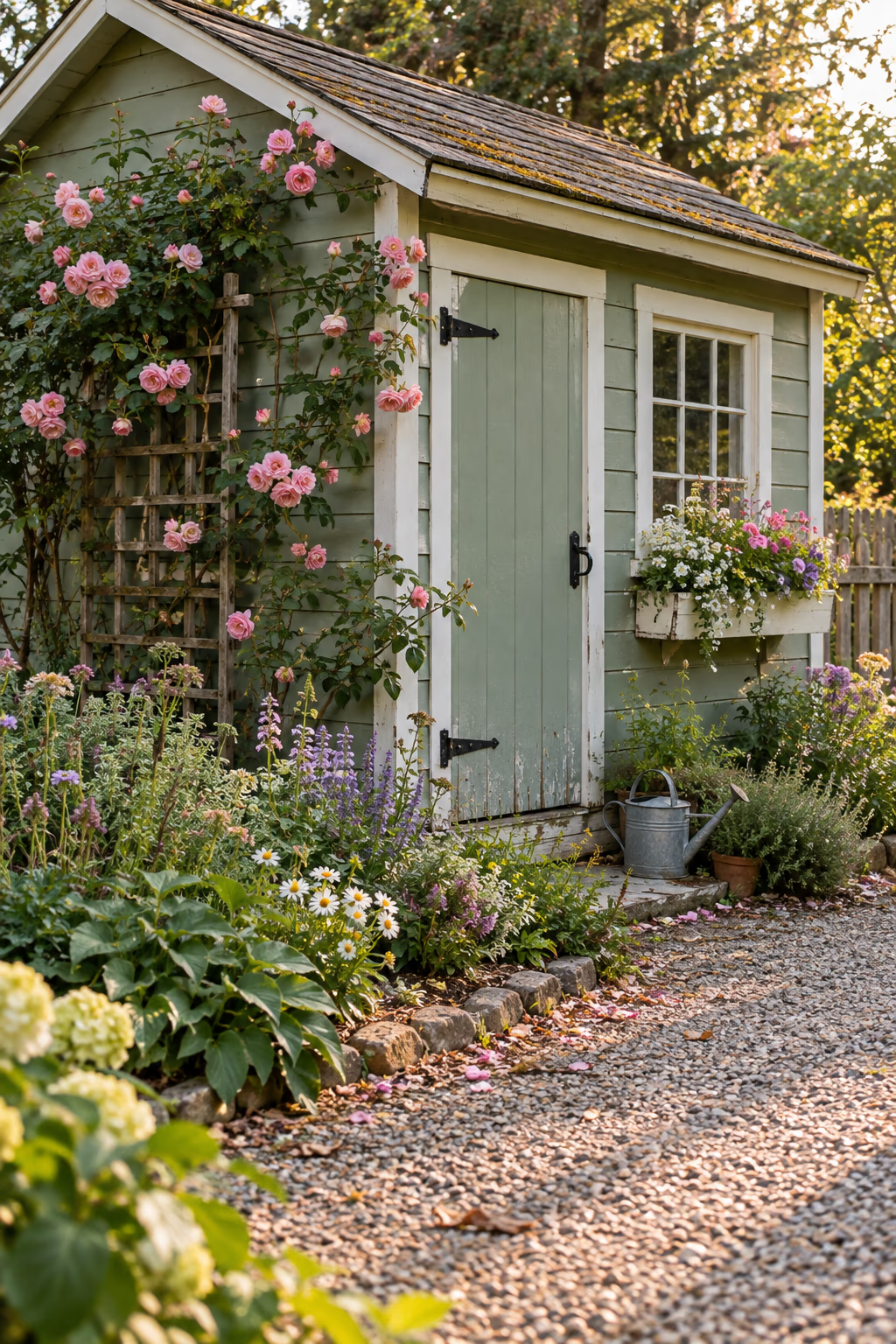
Turn a plain storage shed into a cottage feature
A small shed painted soft sage green, pale blue, or cream can become a charming backdrop for the garden. Add a window box and a climbing rose or clematis, and it starts to look like a tiny cottage.
Fix a trellis to the wall with a small gap behind it, rather than letting plants climb directly on the siding. That makes painting and maintenance easier.
Plant a border of flowers around the base of the shed so it blends into the garden.
25. Add Evergreen Structure for Year-Round Shape
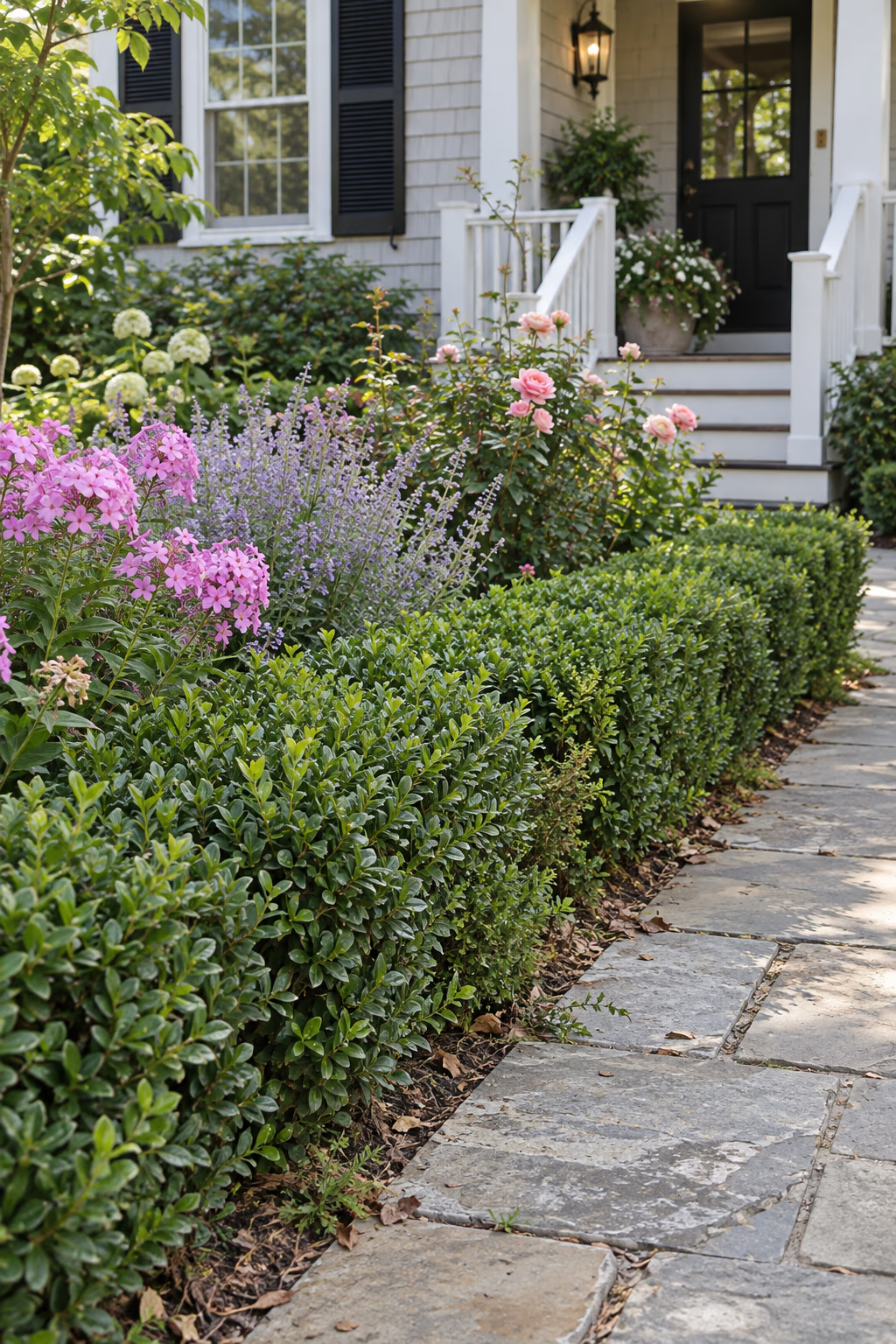
Keep the garden attractive through winter
Cottage gardens can look bare in winter once perennials die back. A low evergreen hedge or a few rounded shrubs provide shape and structure all year.
Boxwood is traditional, but boxwood blight and box tree moth are problems in many areas. Inkberry holly and dwarf yaupon holly are popular alternatives for low hedges.
Plant evergreens along a path edge or at the corners of beds, then let flowers spill around them in summer.
How to Plan a Small Cottage Garden
A cottage garden looks relaxed, but a little planning helps it look full and charming instead of messy.
- Know your growing conditions. Check your USDA hardiness zone and how many hours of sun each area receives. Roses, lavender, catmint, and peonies need sun, while foxgloves and ferns tolerate part shade.
- Start with structure. A path, fence, arch, or a few evergreens give the garden shape, especially in winter.
- Plant densely and in layers. Tall plants in back, medium in the middle, and low spillers in front create the classic overflowing look.
- Mulch and water wisely. A 2 to 3 inch layer of mulch helps retain moisture and suppress weeds. Keep mulch away from plant crowns.
- Keep up with simple care. Deadhead, shear catmint after flowering, and stake tall plants early.
- Plant toxic flowers thoughtfully. Foxglove, delphinium, and sweet peas are beautiful but should be kept away from young children, pets, and edible crops.
Frequently Asked Questions
What plants are used in a cottage garden?
Classic cottage garden plants include roses, foxglove, hollyhocks, delphinium, peonies, lavender, catmint, cosmos, sweet peas, phlox, and salvia. Herbs and vegetables are also traditional additions.
Can you have a cottage garden in a small yard?
Yes. Small yards are ideal for cottage gardens. Use vertical supports like arches and obelisks, layer plants closely, and add containers or window boxes.
Are cottage gardens high maintenance?
They need moderate care. Dense planting reduces weeding, but plants may need deadheading, staking, and occasional dividing. Self-seeding flowers may also need thinning.
How do you make a cottage garden on a budget?
Grow annuals from seed, divide perennials from friends or neighbors, use salvaged brick for paths, and repurpose old containers as planters.
What cottage garden plants grow in shade?
Foxglove tolerates partial shade, and ferns, hostas, and astilbe can provide lush foliage and texture in shadier areas.
Final Thoughts
The best small cottage garden ideas celebrate abundance in a relaxed, personal way. A rose arch, a catmint-lined path, or a window box overflowing with flowers can make even the smallest yard feel welcoming.
Start with a few favorite plants and one or two structural features, then let the garden grow and fill in over time. Within a season or two, your small space can become a charming cottage retreat.


