
A backyard fire pit can turn an ordinary patch of lawn or patio into one of the most inviting places around your home. It gives people a natural place to gather, makes cool evenings more enjoyable, and can become an attractive focal point even when there is no fire burning.
The best backyard fire pit ideas are not necessarily complicated. A simple gravel circle with comfortable chairs can look just as welcoming as an elaborate built-in fire pit. What matters most is how the fire feature, seating, hardscape, pathways, lighting, and landscaping work together.
Whether you have a small backyard, a large lawn, an existing patio, or an empty corner that needs a purpose, these ideas can help you create a fire pit area that feels comfortable and intentional.
Before choosing a location, always check local fire regulations and the instructions for your specific fire pit. Keep the area away from combustible structures and materials, and use an appropriate non-combustible surface beneath or around the fire feature.
1. Create a Classic Pea Gravel Fire Pit Circle
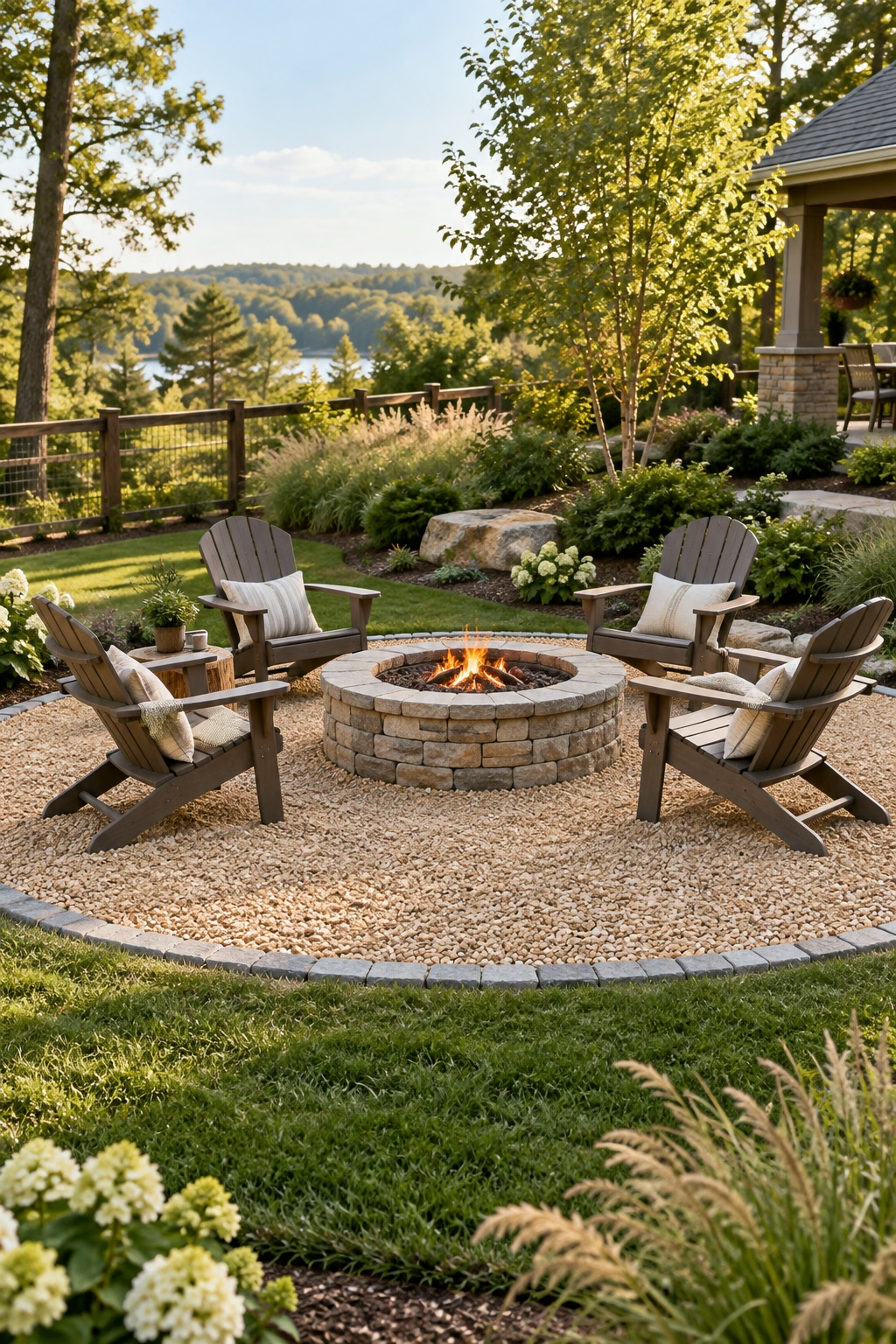
A circular pea gravel area is one of the most timeless ways to design a backyard fire pit. The circle immediately defines the gathering space, while the gravel provides a casual surface that works beautifully with stone, steel, or concrete fire pits.
Arrange four to six outdoor chairs around the center and use landscape edging to give the gravel a clean boundary. Adirondack chairs are especially well suited to this look because their relaxed shape works naturally with the informal setting.
The result feels like a permanent backyard destination without requiring the visual weight of a large paved patio. Gravel-circle layouts also appear repeatedly in professional designs and popular DIY makeovers.
2. Build a Paver Patio Around the Fire Pit
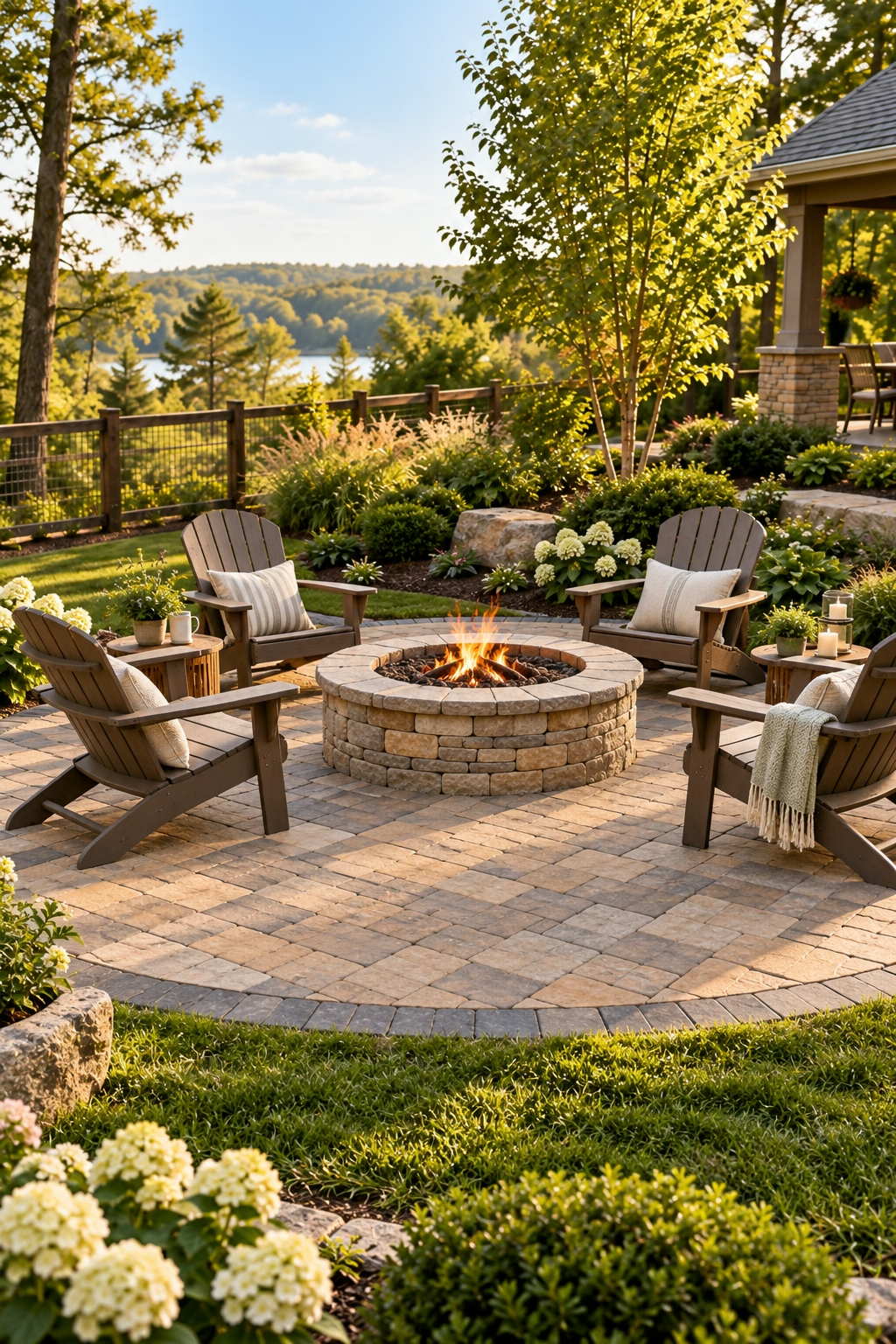
If you want the fire pit area to feel polished and permanent, pavers are an excellent choice.
Create a round, square, or rectangular patio and place the fire feature near the center. Pavers provide a stable surface for chairs and side tables while helping the fire pit area connect visually with walkways, patios, or other hardscaping around the yard.
For a traditional backyard, consider warm-toned or slightly textured pavers. Large-format gray pavers can give the same concept a cleaner, more contemporary appearance.
Paver fire-pit patios are particularly useful when you want your gathering area to feel like another outdoor room rather than a temporary seating arrangement.
3. Use Flagstone for a Natural Look
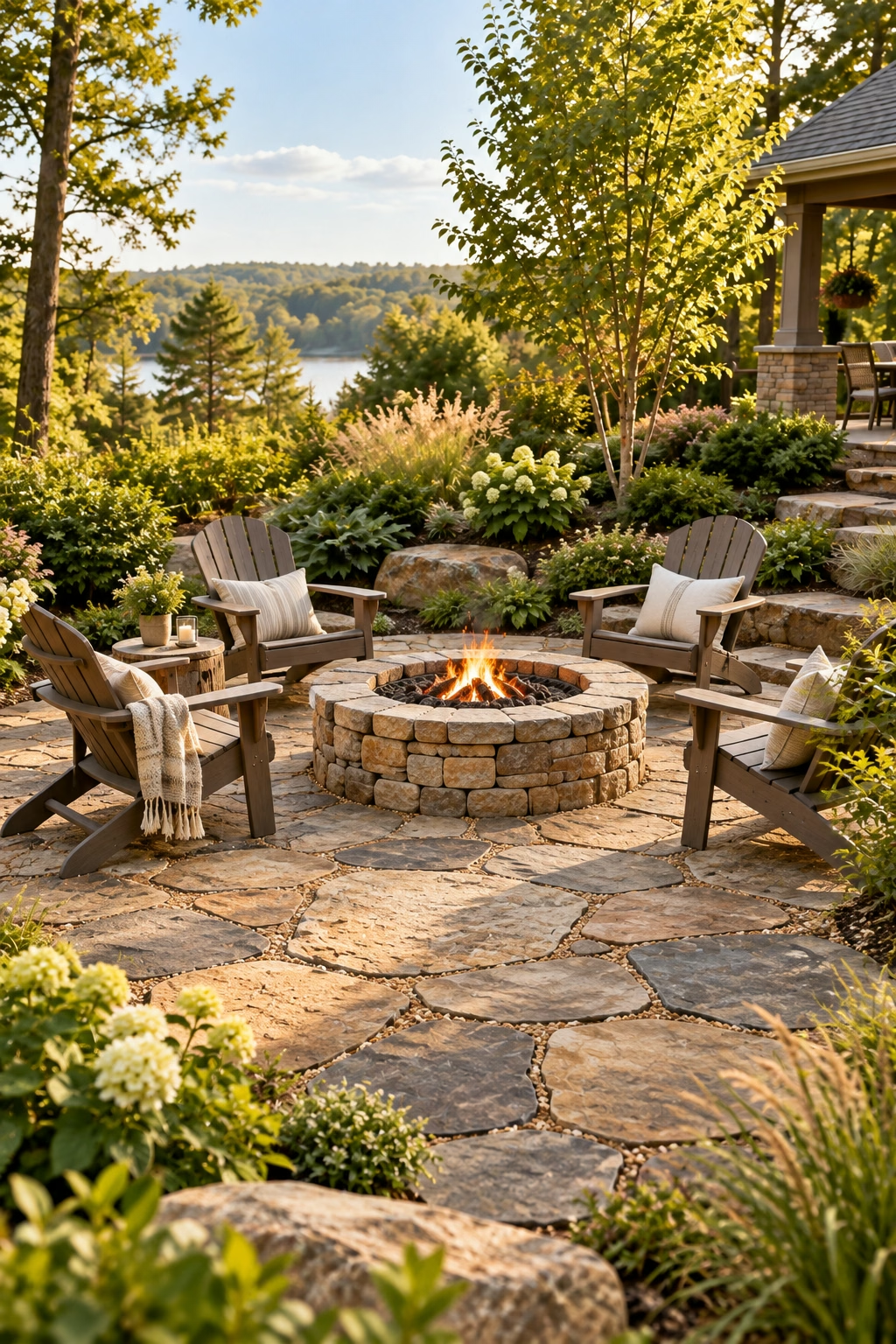
Flagstone works beautifully when you want the fire pit to blend into the surrounding landscape.
Its irregular shapes and subtle color variations create a relaxed look that feels especially appropriate in gardens with mature trees, natural planting, stone walls, or rustic architecture.
You can create a full flagstone patio or combine larger stones with gravel between them. Add simple wood or neutral-colored outdoor furniture so the texture of the stone remains one of the main features.
Landscape designers frequently pair natural stone with fire-pit seating because it provides both usable hardscaping and a softer visual connection with the garden.
4. Add a Curved Built-In Seating Wall
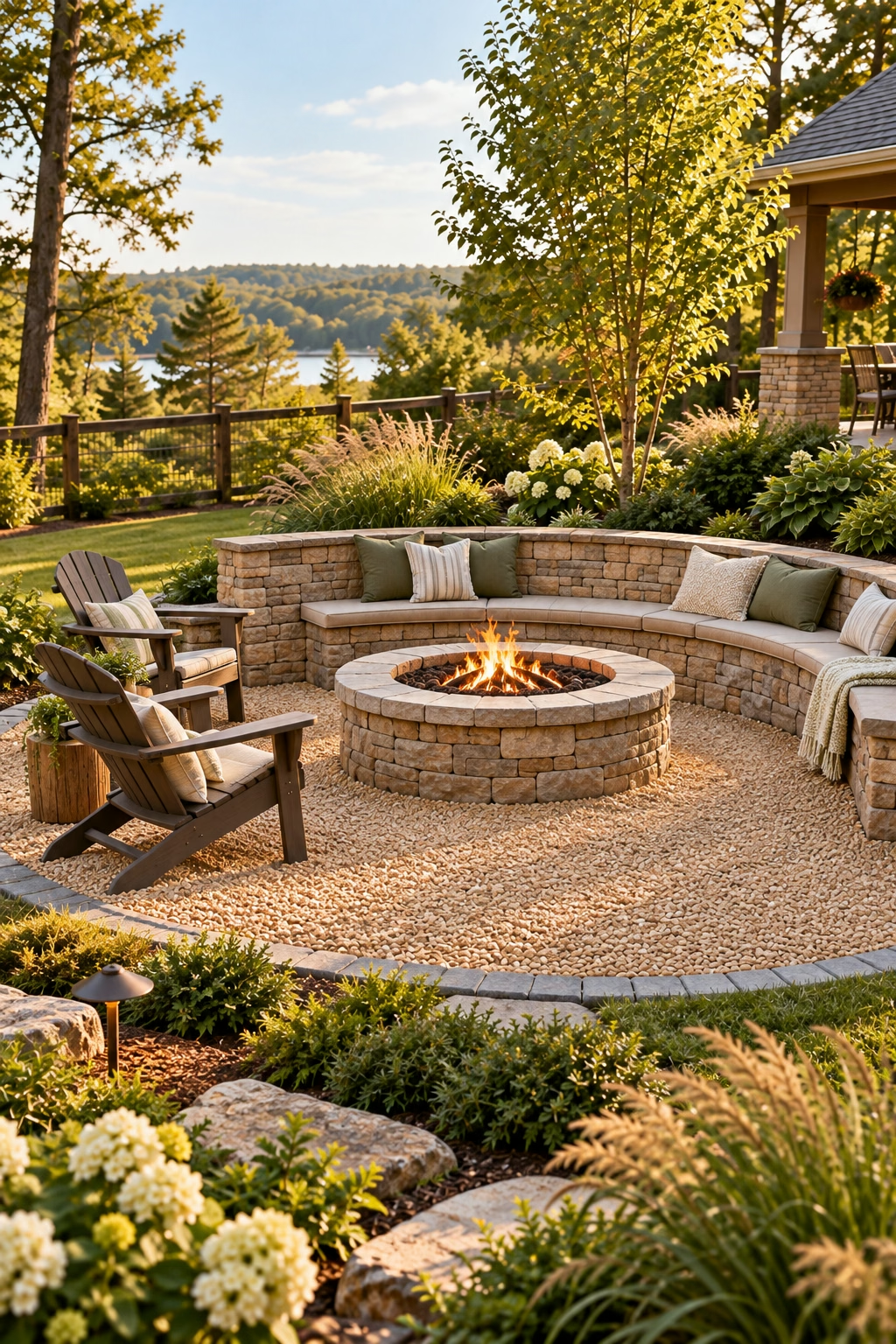
Instead of placing individual chairs all the way around the fire pit, use a low curved wall to define part of the seating area.
A stone or masonry seating wall gives the backyard structure while providing extra places for guests to sit. Add outdoor cushions where appropriate, then place a few movable chairs opposite the wall.
This combination works particularly well because the permanent bench gives the fire pit a finished appearance while loose furniture keeps the arrangement flexible.
A similar strategy is often used when retaining walls are already part of the landscape, allowing one feature to provide both structure and seating.
5. Make the Fire Pit Area Sunken
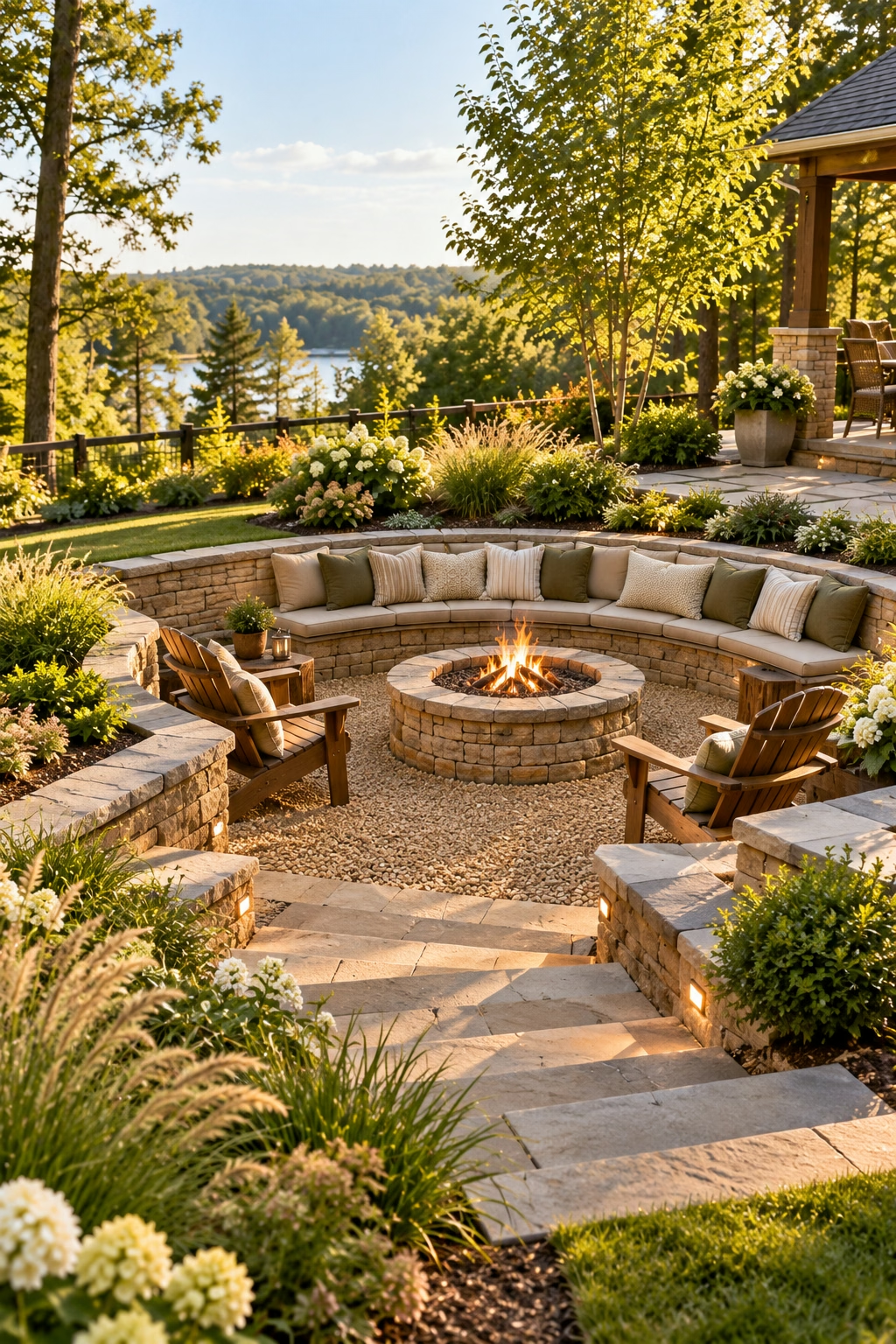
A sunken fire pit can create one of the most dramatic gathering areas in a backyard.
Instead of placing the fire feature at the same level as the surrounding patio, lower the conversation area slightly and surround it with integrated seating or walls. The change in elevation helps the space feel separate from the rest of the yard.
This design works particularly well in larger landscapes where the fire pit needs enough visual presence to become a destination.
Drainage, steps, construction, and fire safety require much more planning with a sunken area, however, so this is generally a project to design carefully rather than improvise.
6. Choose a Modern Concrete Fire Bowl
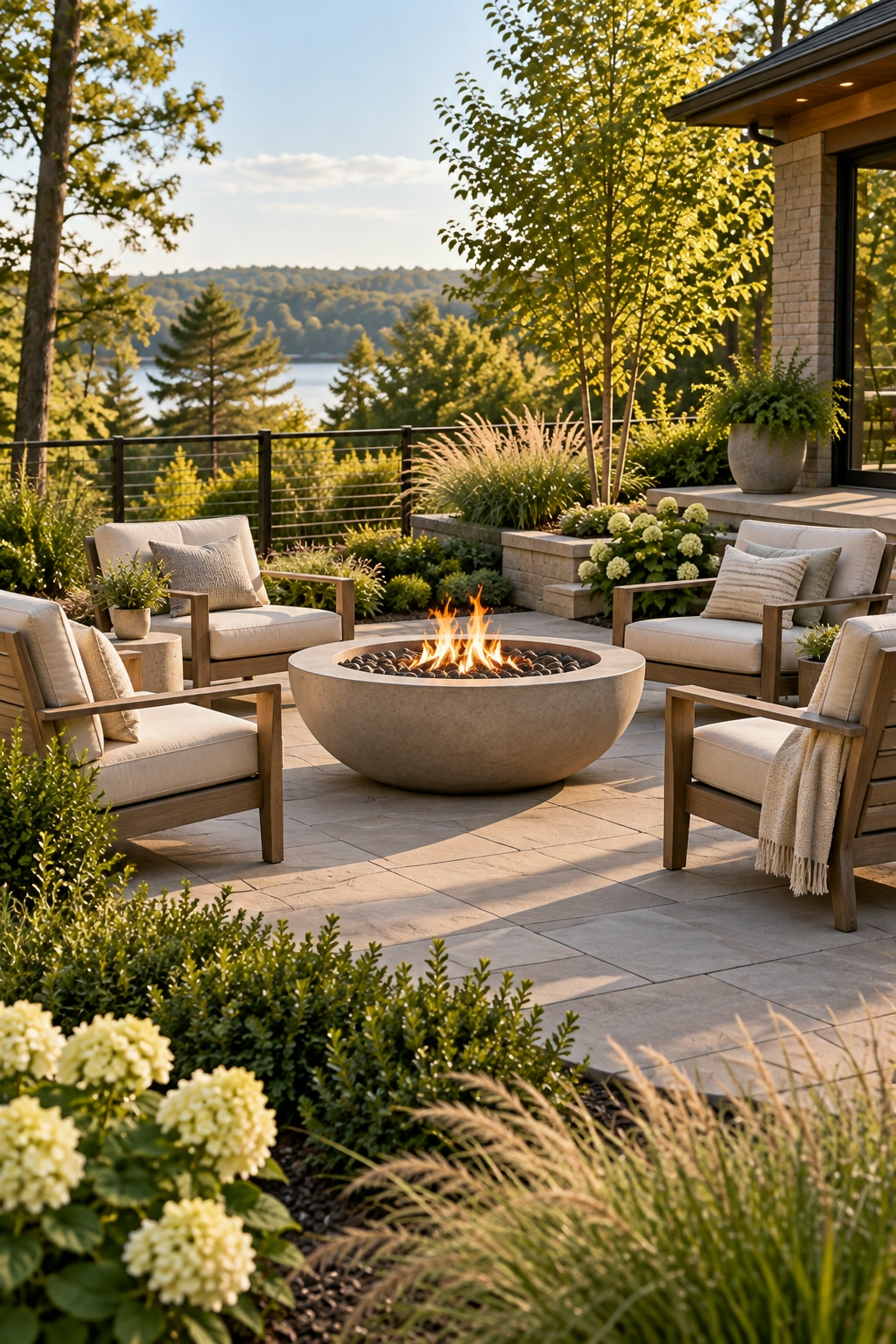
For a clean contemporary backyard, keep the fire feature itself simple.
A round concrete fire bowl offers strong shape without adding excessive decoration. Surround it with low outdoor chairs or a streamlined sectional and repeat similar neutral materials elsewhere in the patio.
The combination of concrete, gravel, large pavers, wood, and simple greenery works particularly well for this style.
Because the fire bowl remains attractive when it is not burning, it can act as a sculptural centerpiece throughout the day as well as at night.
7. Make a Corten Steel Fire Pit the Focal Point
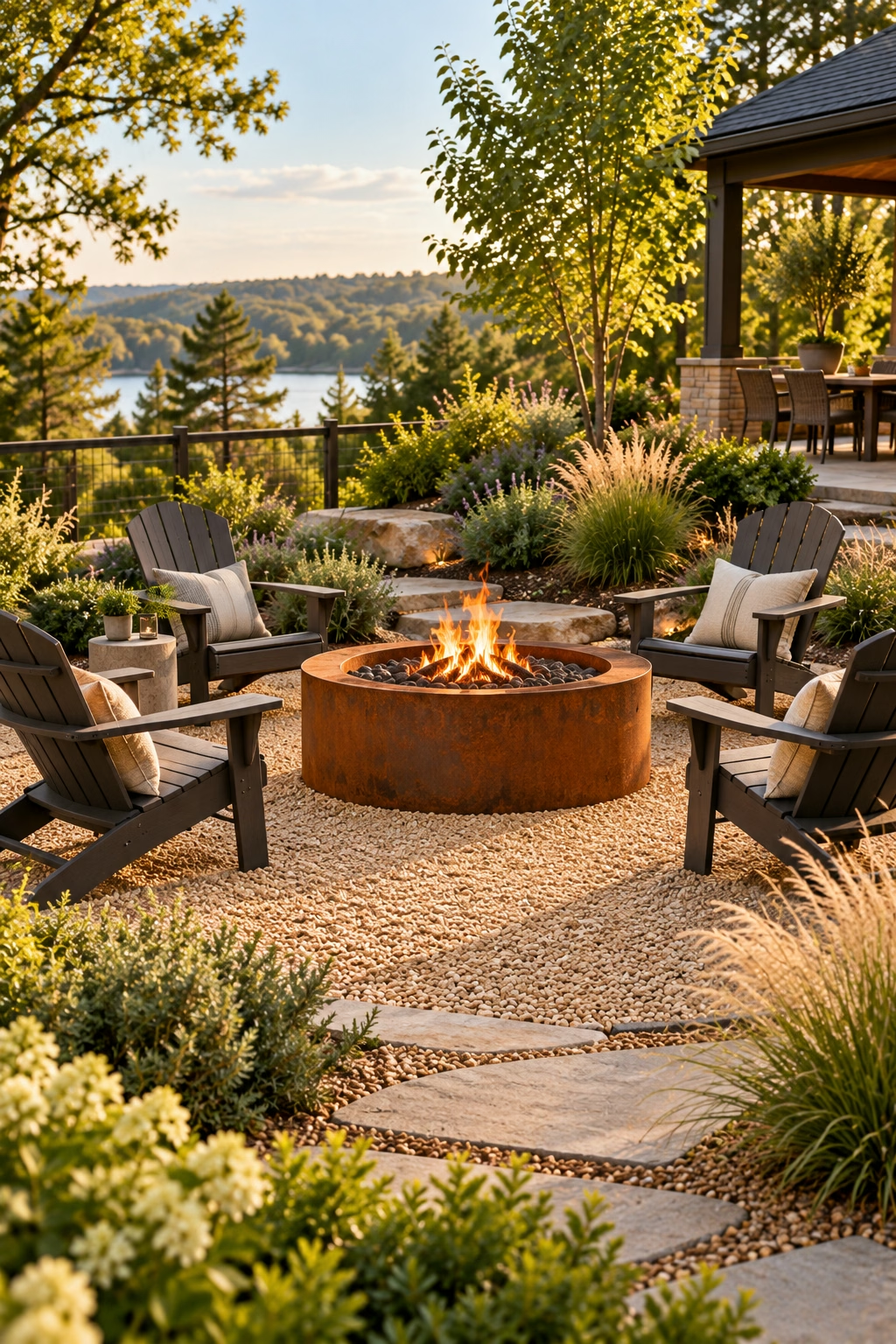
Corten steel brings warm rust-colored tones into a backyard without making the space feel overly rustic.
A simple round or square Corten fire pit pairs especially well with gravel, decomposed granite, concrete pavers, and drought-tolerant landscaping.
Keep the surrounding furniture relatively simple and allow the steel to become the visual focus.
This approach works beautifully in modern landscapes because the material provides both strong geometry and natural-looking color. Corten steel also appears frequently in professionally designed fire-pit landscapes and contemporary seating areas.
8. Use a Square Fire Pit for a Clean-Lined Patio
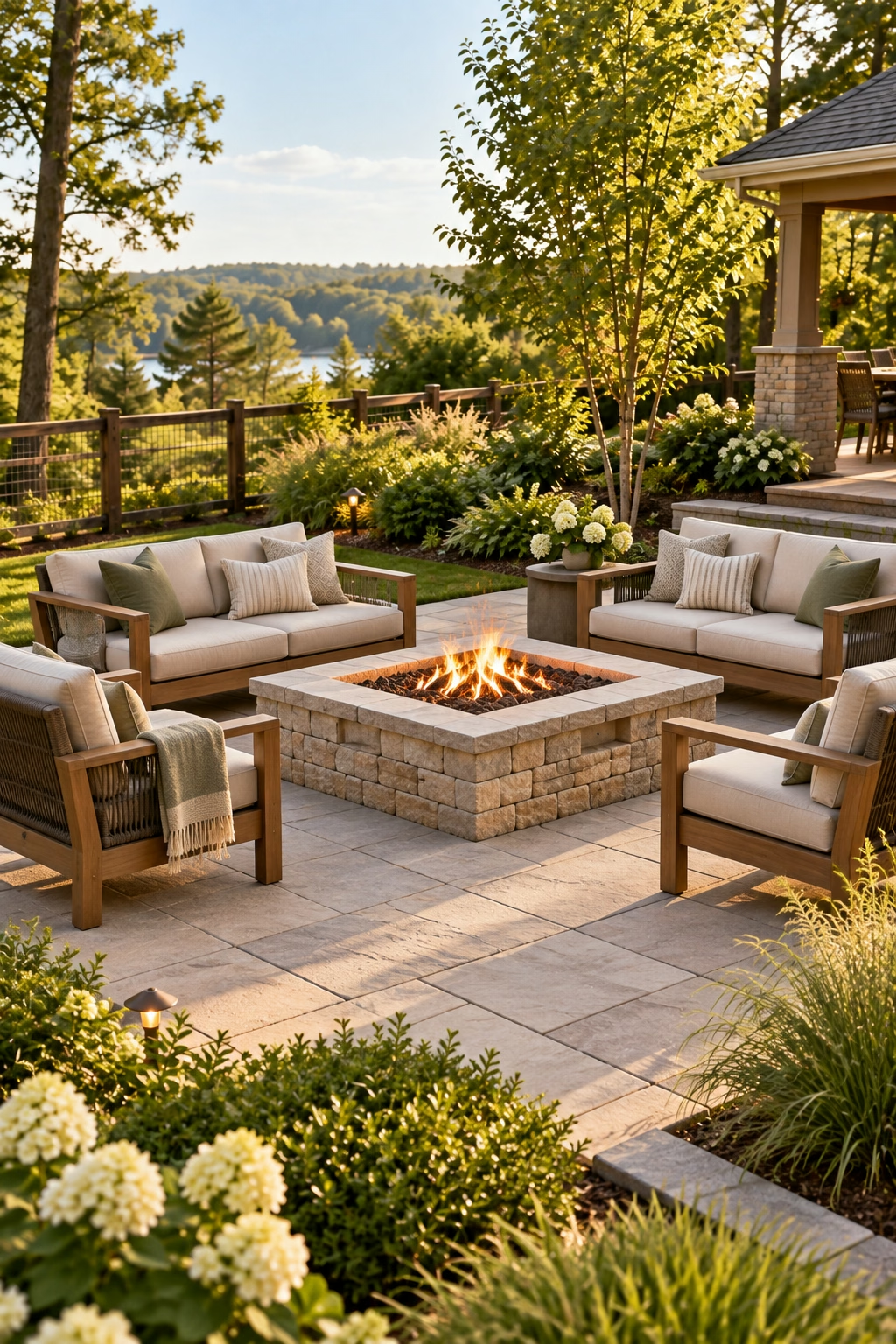
A round fire pit encourages circular seating, but it is not your only option.
A square fire pit can work better when your backyard already contains straight lines from fences, patios, retaining walls, or modern architecture.
Place four substantial chairs around it for a balanced arrangement, or use a sofa on one side with two chairs opposite.
Repeating the geometry of the fire pit through square pavers or rectangular planting beds can make the entire backyard look more cohesive.
9. Turn the Fire Feature Into a Fire Table
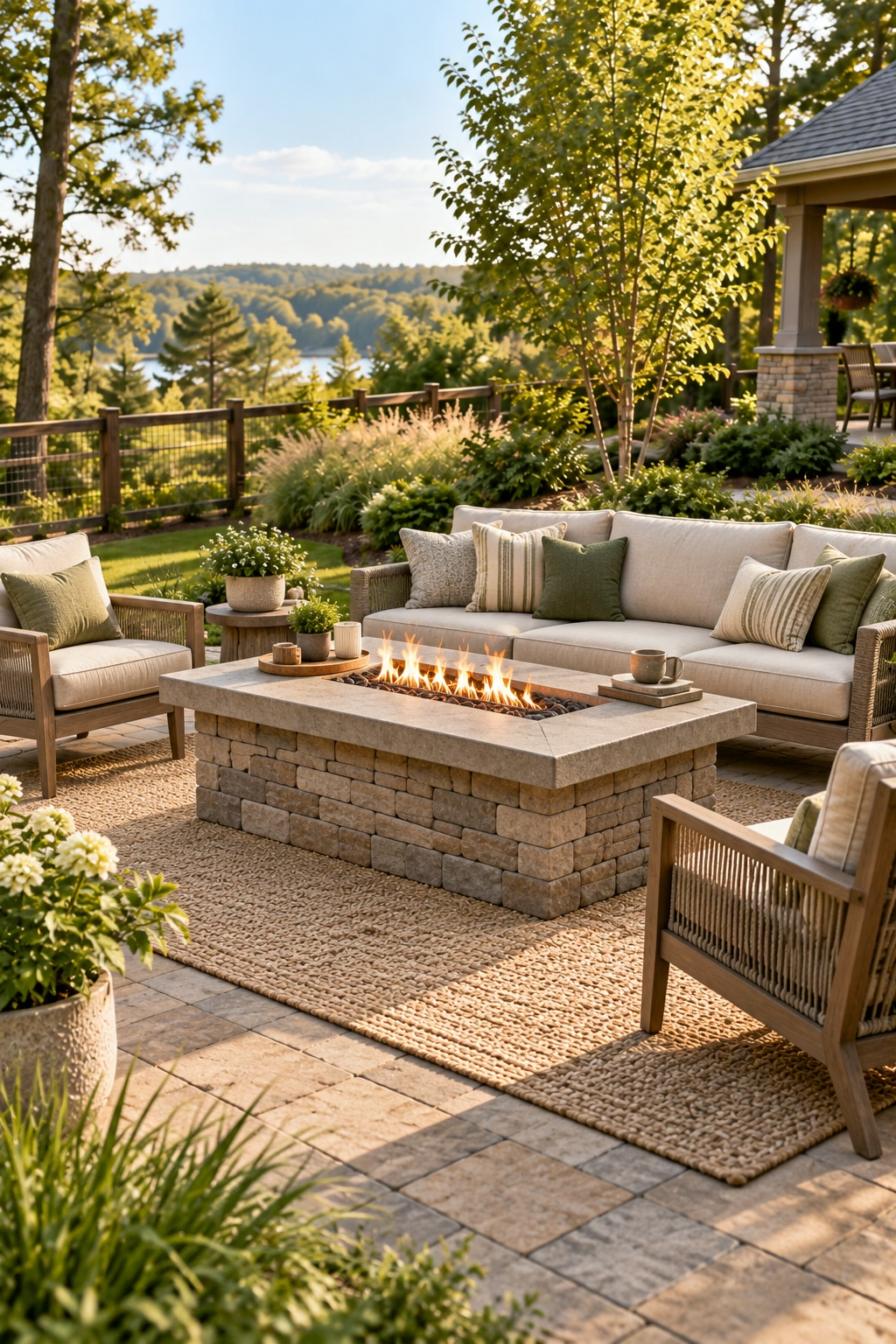
A fire table combines a flame feature with usable surface space around it.
This makes it particularly suitable for outdoor lounge areas where people want somewhere to place drinks or small items while sitting around the fire.
Pair a rectangular fire table with an outdoor sofa and lounge chairs rather than arranging everything in a perfect circle. The result feels closer to an outdoor living room.
This arrangement is a good choice for contemporary patios where comfort and entertaining are more important than creating a traditional campfire atmosphere.
10. Use a Compact Fire Pit in a Small Backyard
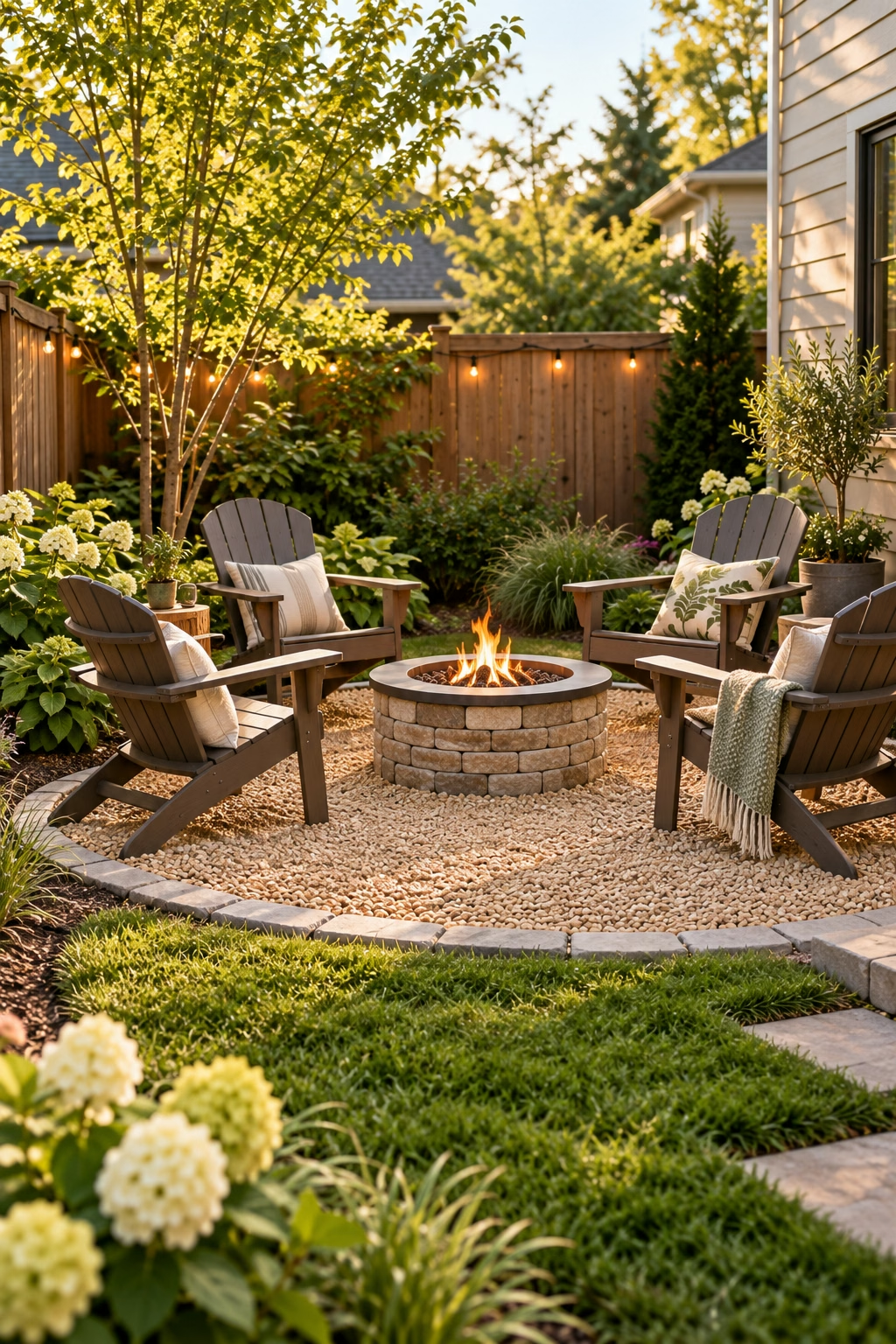
You do not need a huge yard to create a comfortable fire pit area.
In a compact space, the key is choosing a fire feature that is appropriately scaled instead of trying to reproduce a large circular gathering area.
A smaller fire bowl or appropriately rated portable fire pit can sit within a paved or gravel section with three or four chairs. Keep furniture visually light and avoid filling every available inch.
Small backyard designs often look better when the fire pit becomes one clearly defined zone rather than competing with several oversized features.
11. Turn an Unused Backyard Corner Into a Fire Pit Nook
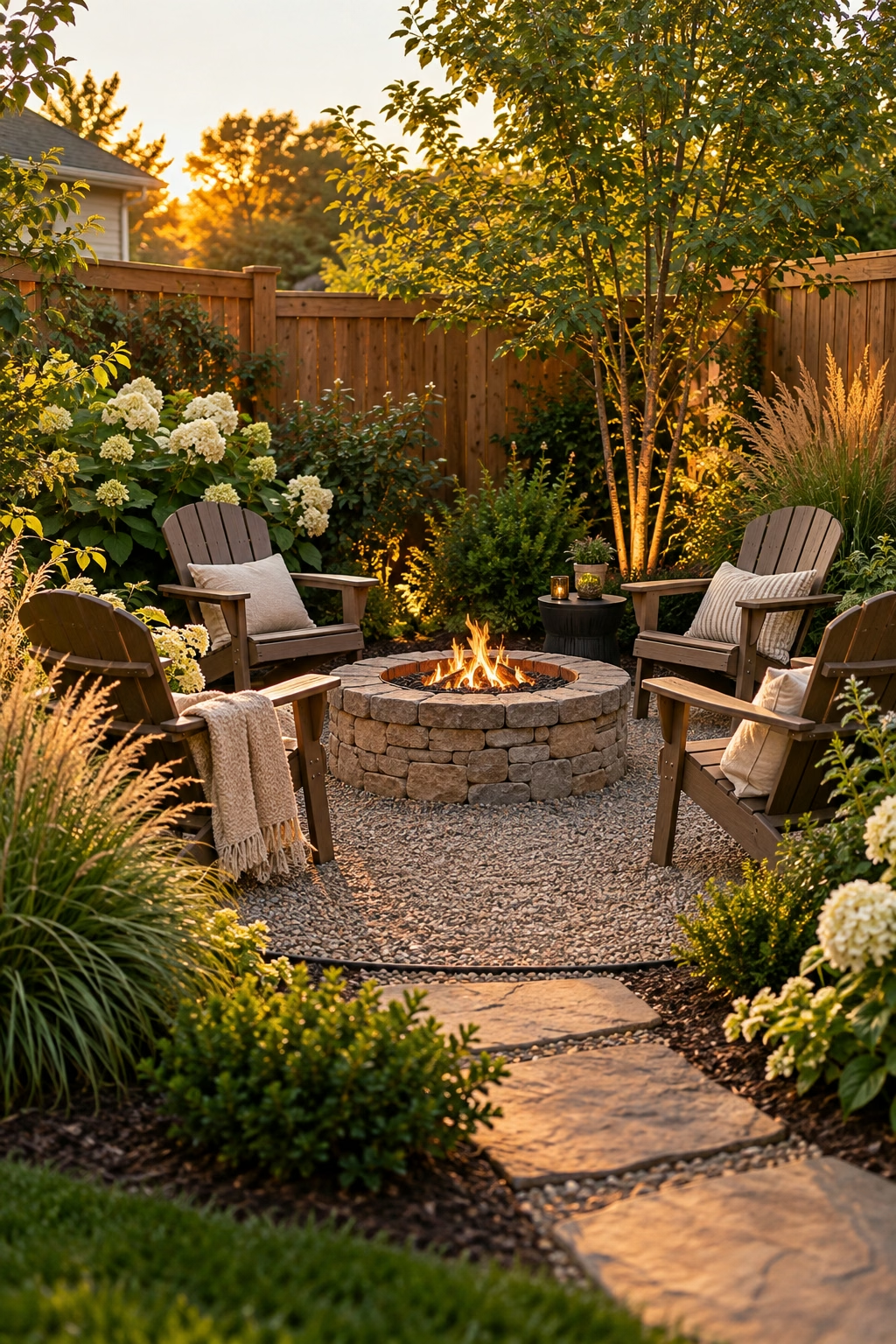
An empty corner of the yard can become a surprisingly good fire pit location, provided it meets the required safety clearances.
Define the corner with gravel or pavers, add comfortable seating, and soften the outer edges with landscaping.
A fence or privacy screen can help make the space feel enclosed, while a few carefully positioned shrubs can keep the corner from looking bare during the day.
This works particularly well when you do not want the fire pit to dominate the main patio.
12. Frame the Fire Pit With a Pergola
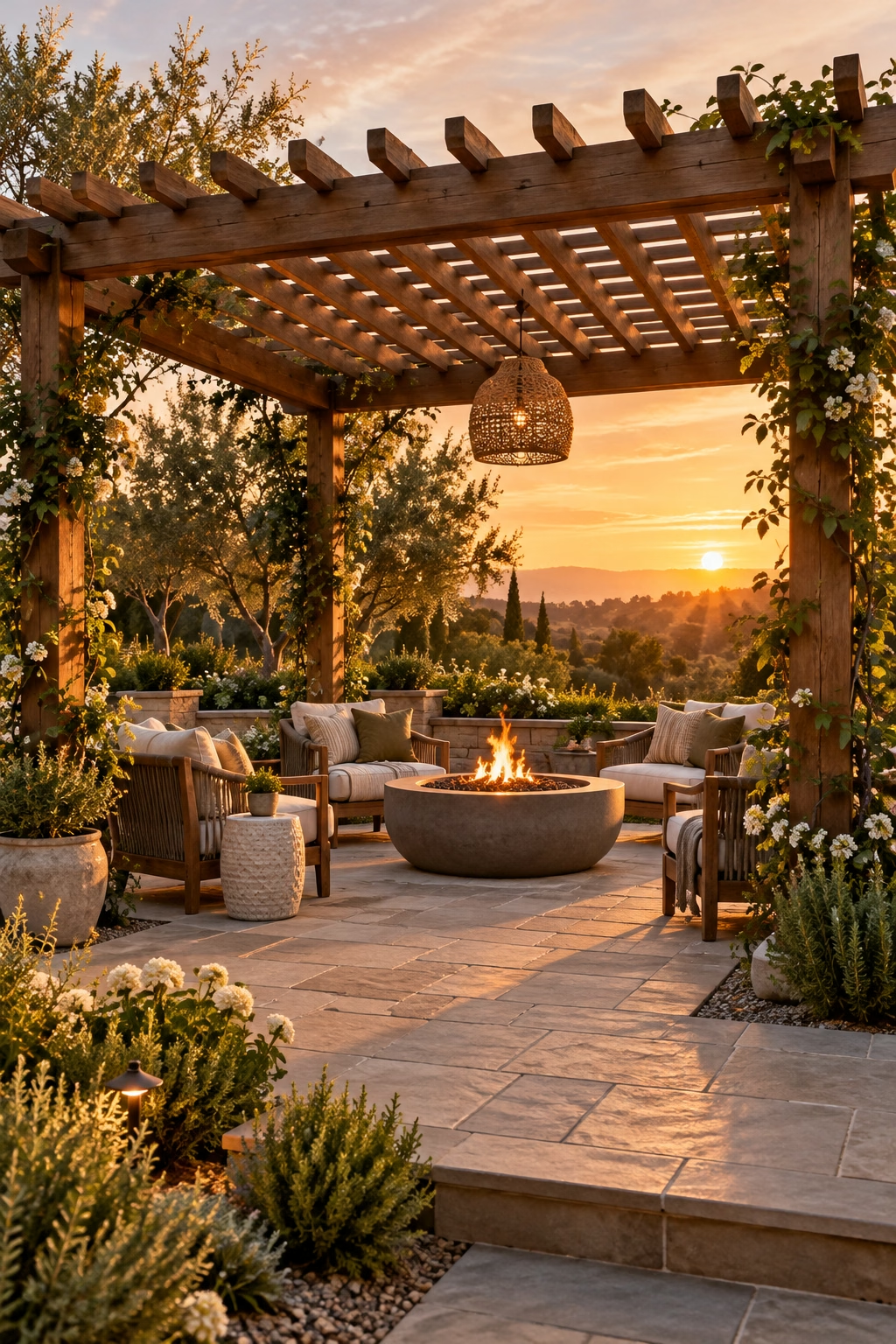
A pergola can visually turn a simple fire pit patio into a defined outdoor room.
Use the structure to frame the seating zone rather than treating the fire pit as an isolated object in the lawn. The posts create clear boundaries, while the overhead structure gives the area a sense of enclosure.
Pergola-and-fire-pit combinations appear frequently in patio inspiration because they create a strong destination within a larger backyard.
Any overhead structure needs to be compatible with the particular fire feature and its manufacturer’s clearance requirements, so do not assume every fire pit can safely sit beneath a pergola.
13. Create Ambience With String Lights
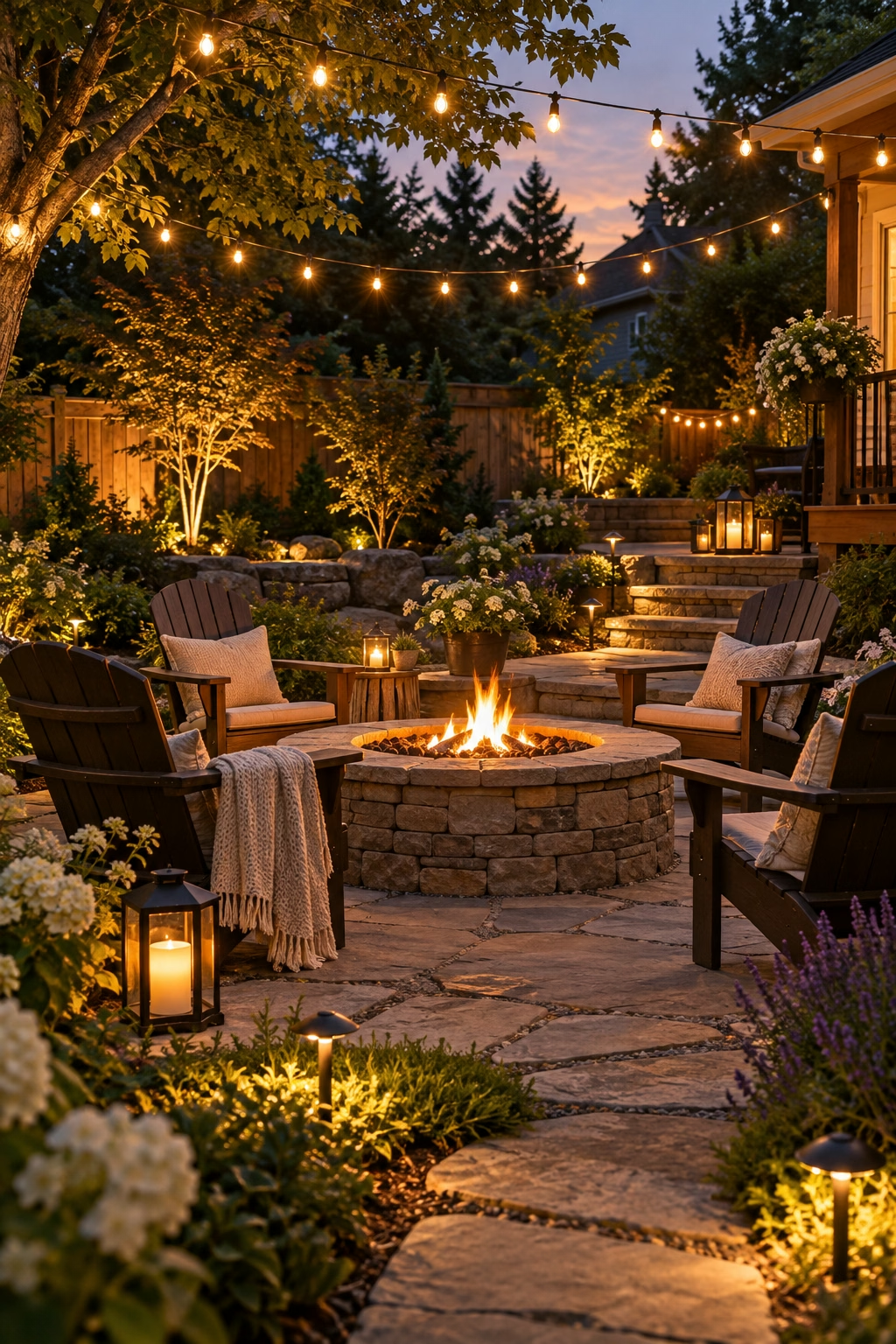
One of the easiest ways to make a backyard fire pit area feel more inviting after sunset is to add lighting beyond the flame itself.
String lights can visually outline the gathering area, while low pathway lights make the route from the house easier to follow.
Keep the lighting warm and relatively simple. The goal is not to make the backyard as bright as an indoor room. Instead, allow the fire to remain the main focal point while the additional lighting softly defines the surroundings.
String lights combined with fire-pit seating are especially popular for creating a warm, cozy atmosphere.
14. Build the Layout Around Adirondack Chairs
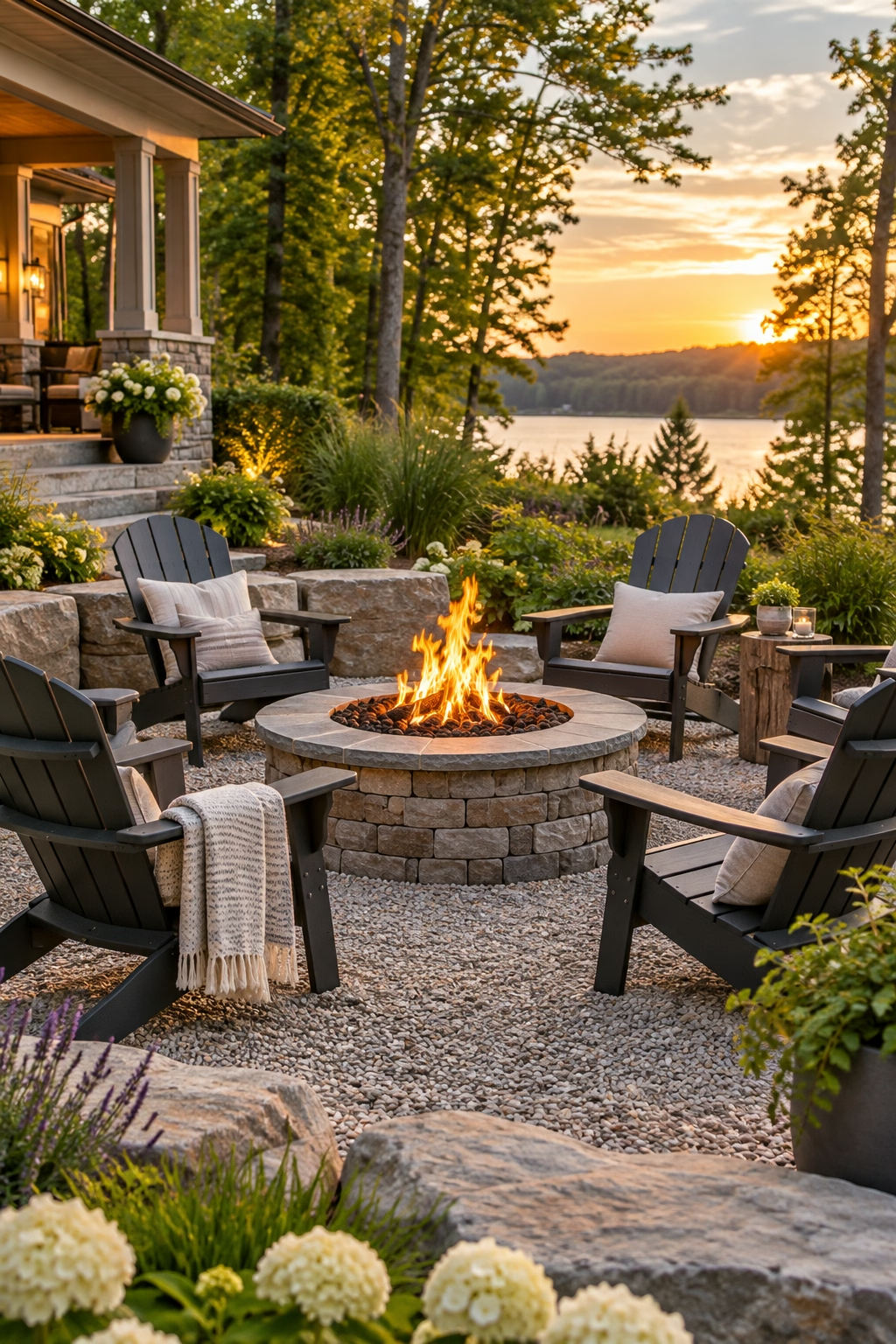
Sometimes the furniture can define the whole design.
Place matching Adirondack chairs around a round fire pit and you immediately create the relaxed feeling of a lakeside retreat or backyard campfire.
Use gravel, crushed stone, natural stone, or simple pavers beneath them. Small side tables between a few chairs can make the space more functional without overcrowding it.
This is one of the easiest backyard fire pit ideas to understand visually, which may also explain why the combination appears so frequently in fire-pit inspiration and DIY projects.
15. Mix Built-In and Movable Seating
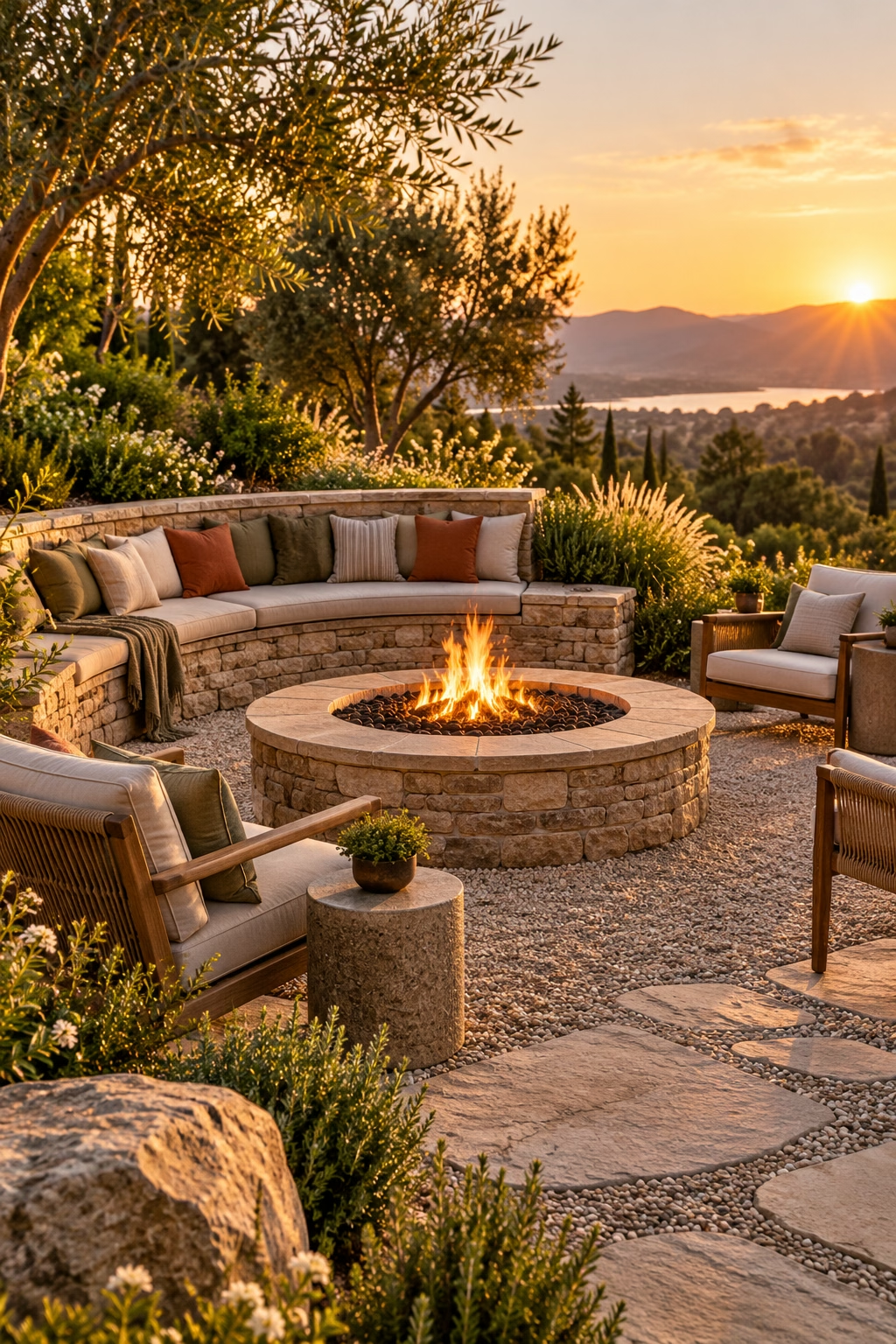
You do not have to choose between a permanent bench and individual chairs.
Combining the two often creates a more useful gathering area.
Build a bench along one edge of the patio, then place two or three movable chairs around the remaining sides of the fire pit. The bench can handle larger gatherings, while the chairs can be repositioned depending on the number of people using the space.
The mix also prevents a circular fire pit area from looking overly symmetrical or formal.
16. Add a Stepping-Stone Path to the Fire Pit
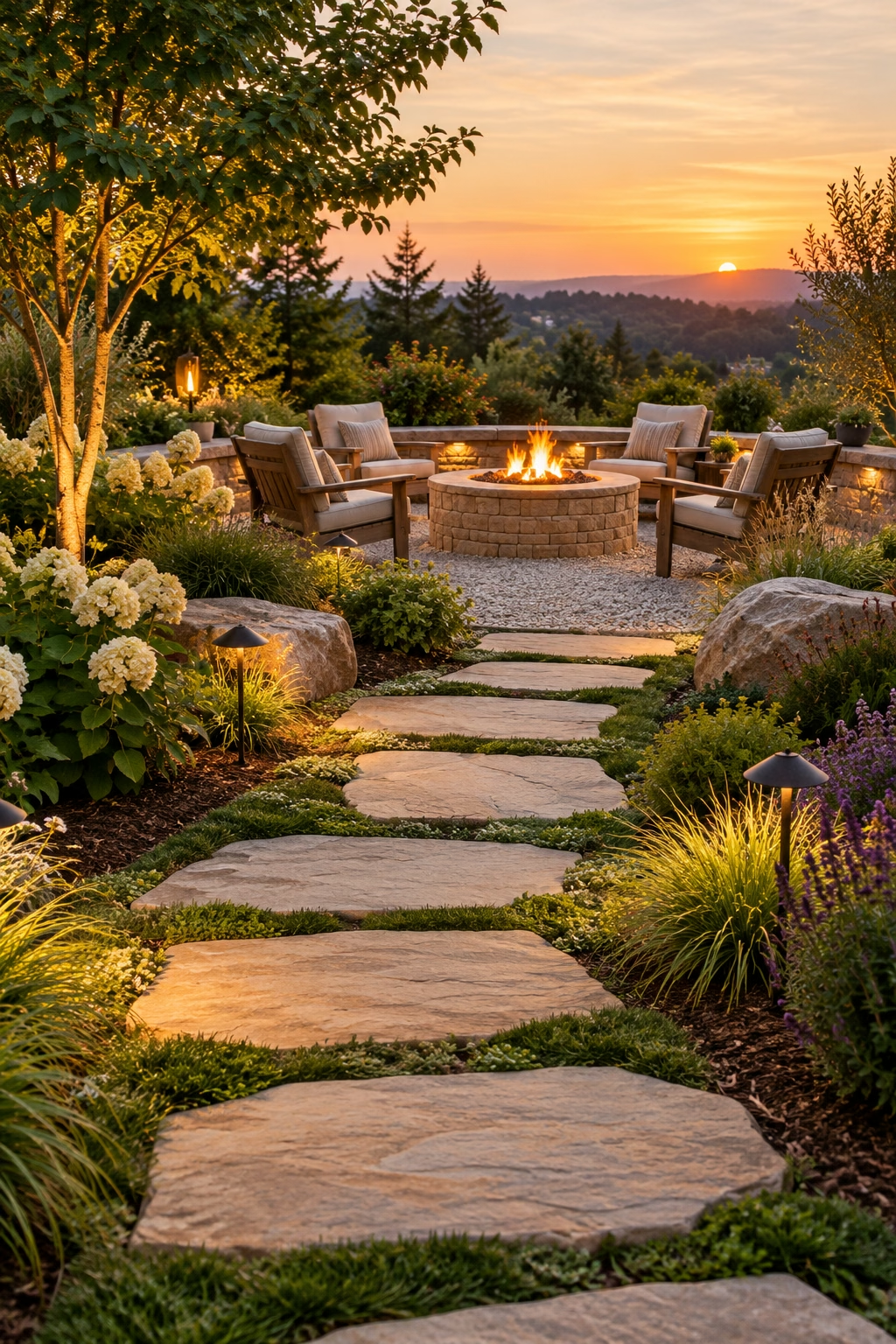
A fire pit feels more intentional when there is a clear route leading to it.
Instead of simply placing a fire bowl at the far end of the lawn, connect the area to the house with stepping stones or a gravel walkway.
The path helps the fire pit feel like a planned destination and can visually pull people through the landscape.
For a natural garden, use irregular stones. For a modern backyard, large rectangular stepping stones set into gravel can create a cleaner appearance.
17. Use Decomposed Granite for a Relaxed Patio
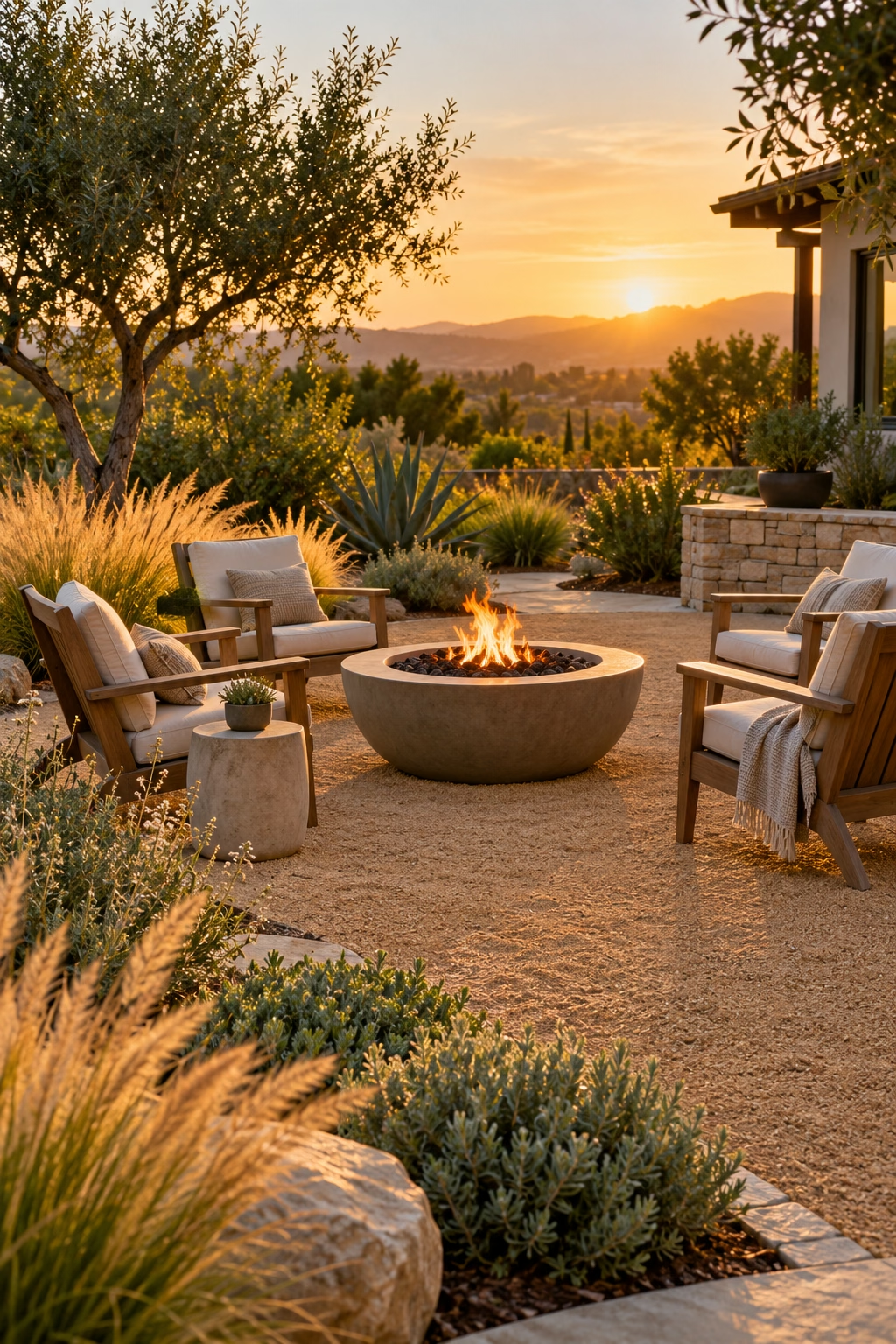
Decomposed granite can create a simple, understated ground plane around a fire pit.
Its fine texture works especially well with contemporary, Southwestern, Mediterranean, and drought-conscious landscapes. Pair it with steel or concrete edging to create a defined boundary.
A few substantial chairs, a simple fire bowl, and restrained planting are often enough to complete the area.
Decomposed granite works equally well with both contemporary and Craftsman-style patios, demonstrating how flexible the material can be.
18. Use a Retaining Wall to Handle a Sloped Yard
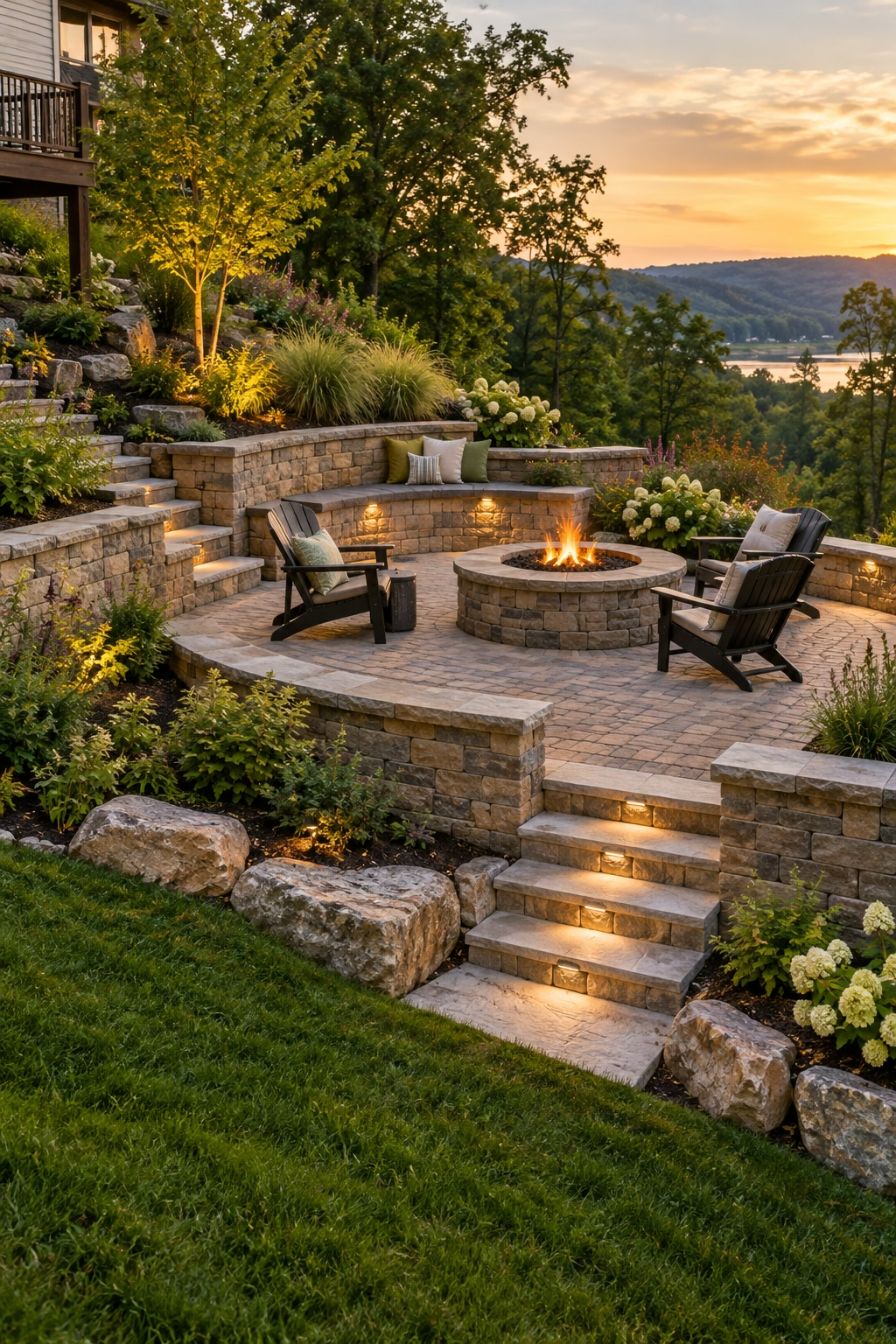
A sloped backyard does not automatically rule out a fire pit.
A properly designed retaining wall can create a level gathering area while also becoming part of the visual design.
The wall might sit behind the seating area, curve around one side, or double as additional seating where appropriate. Add steps or a defined pathway so the area feels connected to the rest of the yard.
Because retaining walls can have structural and drainage requirements, substantial installations are worth planning professionally.
19. Create a Rustic Stone Fire Pit Area
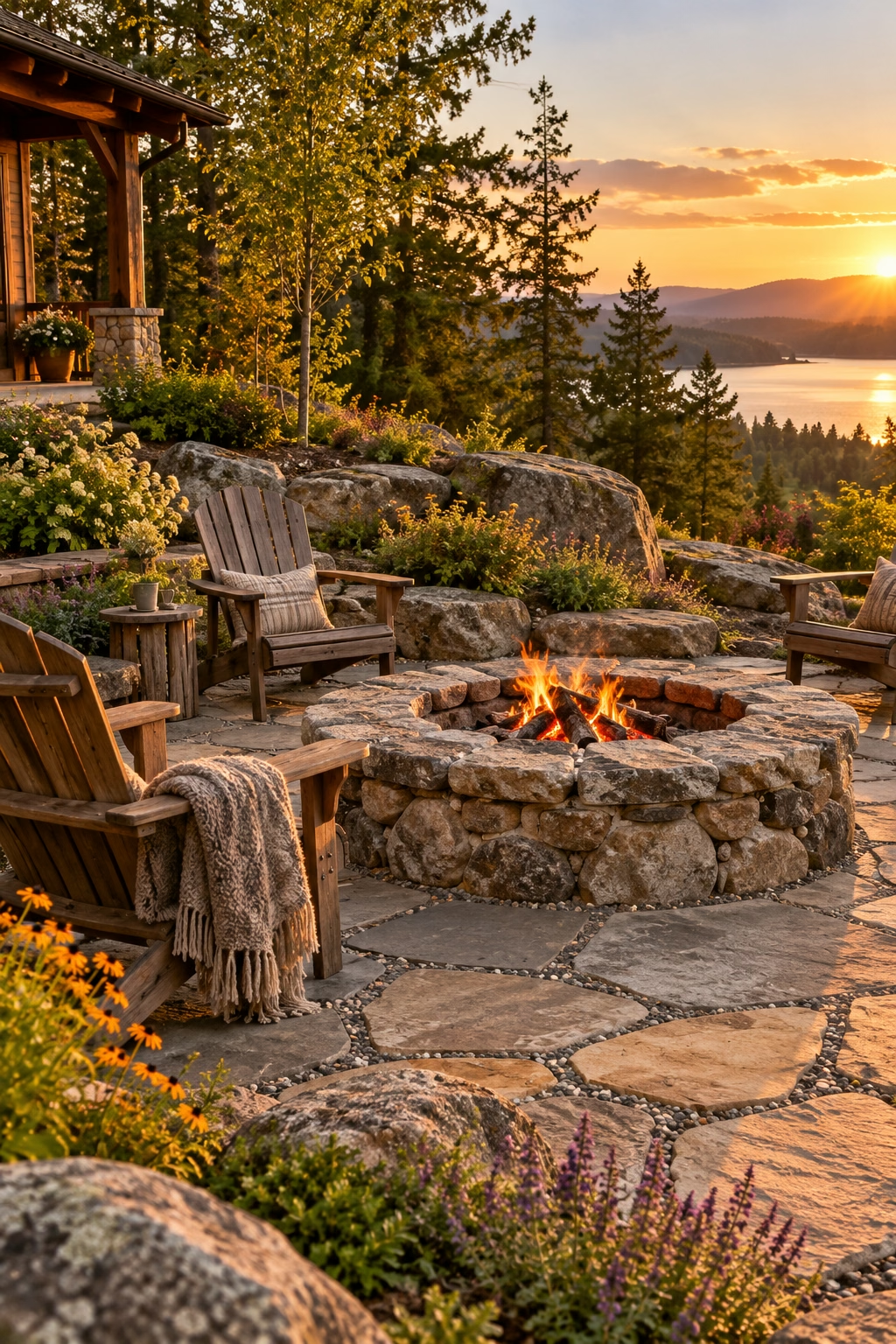
For a backyard with a woodland, farmhouse, cabin, or cottage feel, natural stone is difficult to beat.
Use a simple stone fire pit surrounded by gravel or flagstone, then add wood seating or classic outdoor chairs.
Avoid adding too many rustic decorations. The stone, wood, fire, and surrounding garden already provide plenty of texture.
The most successful rustic fire pit designs tend to feel connected to the existing landscape rather than decorated with a long list of themed accessories.
20. Surround the Area With Soft Landscaping
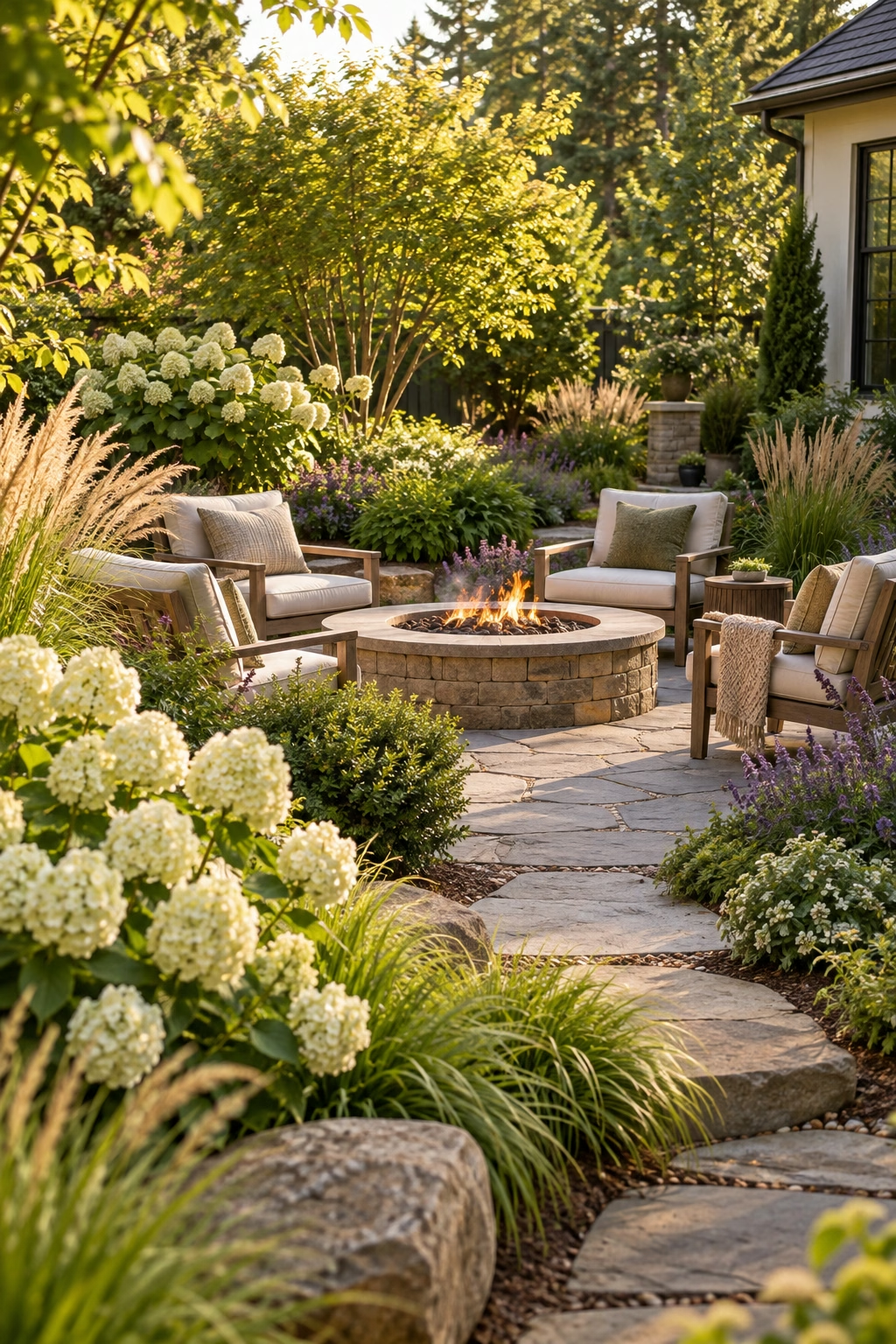
Hardscape is important around a fire pit, but too much stone can make a backyard feel harsh.
Use landscaping farther beyond the required fire-safe area to soften the edges.
Ornamental grasses, evergreen shrubs, flowering perennials, or drought-tolerant plants can frame the gathering zone and help it blend into the rest of the yard.
Repeating a small selection of plants usually creates a calmer result than filling the border with many unrelated varieties.
Always keep combustible vegetation outside the clearance required for your fire feature and local regulations.
21. Connect the Fire Pit to an Outdoor Dining Area
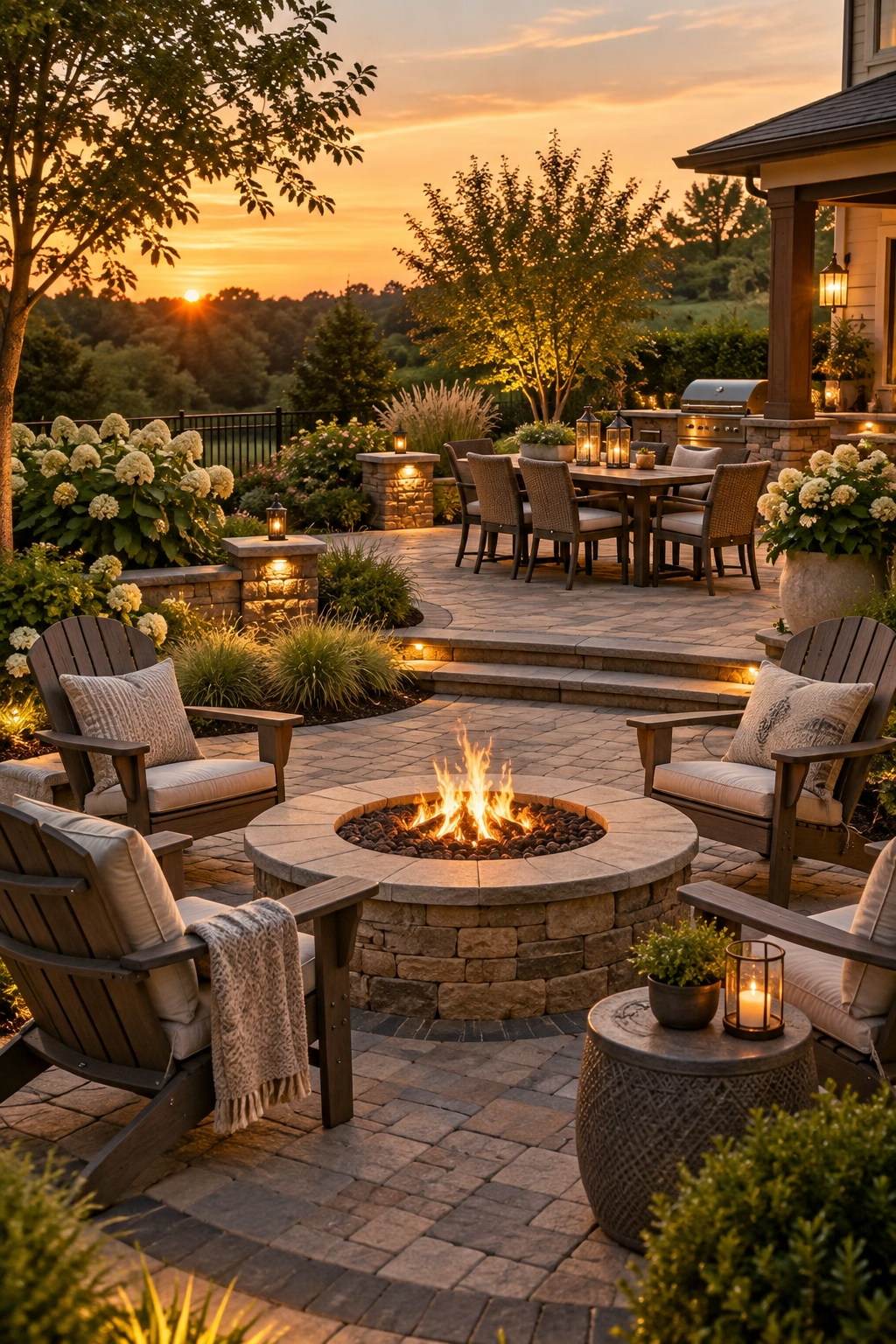
A fire pit does not have to be an isolated feature.
If your backyard already includes an outdoor dining table or kitchen, create the fire pit as a nearby second zone.
Use one area for meals and the other for relaxed conversation afterward. Repeating paving materials, furniture finishes, or landscaping between the two areas will help them feel connected.
This type of zoning is especially useful in medium and large backyards because it gives different activities their own space without making the overall landscape feel disconnected.
22. Create a Separate Fire Pit Lounge Near the Pool
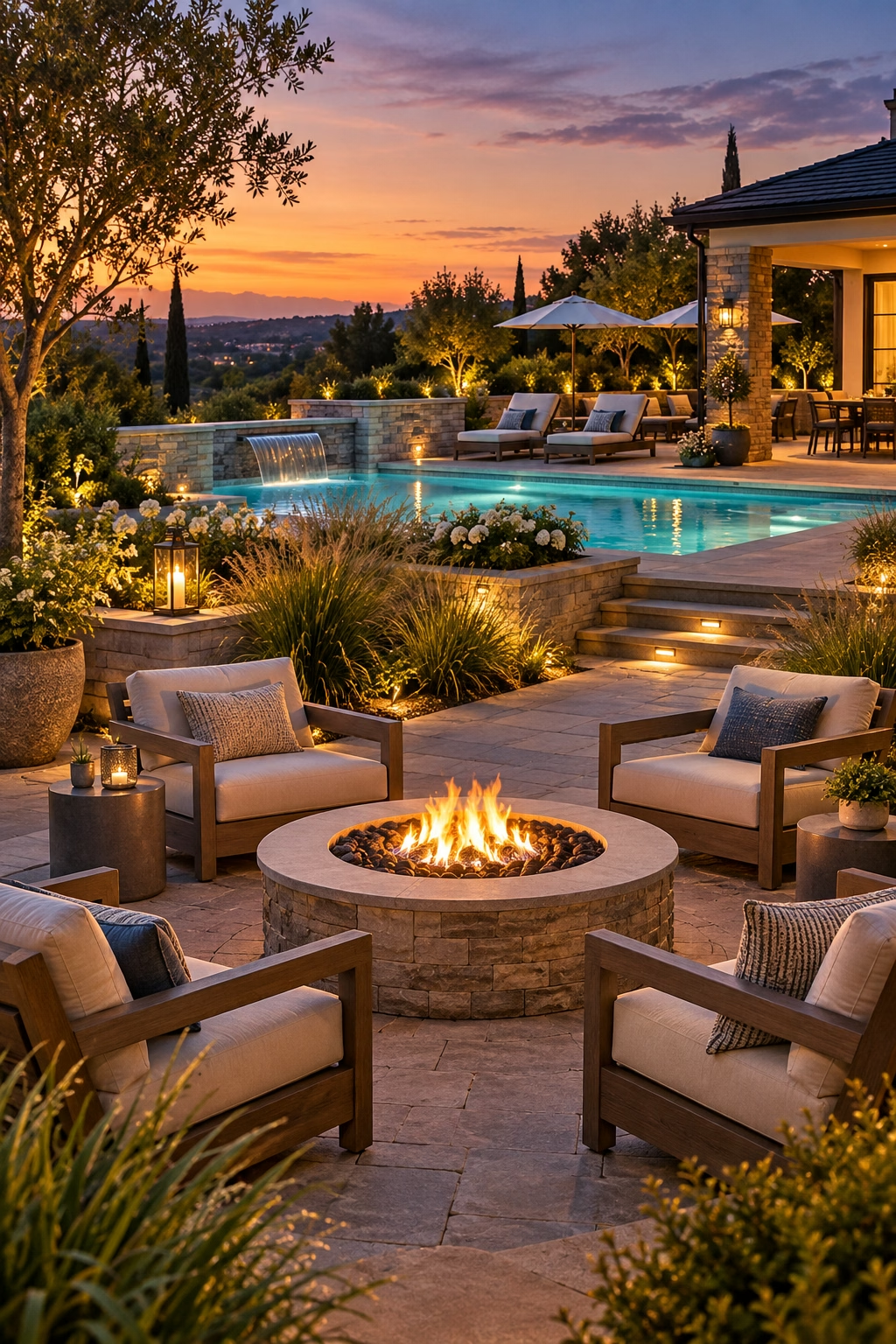
A fire feature can provide a warm visual contrast to a swimming pool, especially in larger backyards.
Rather than squeezing the fire pit into the pool deck, create a separate conversation area nearby. Use coordinated pavers and furniture so the two areas still belong to the same overall design.
Professional pool landscapes often use fire features as a second focal point after sunset, but positioning and construction around pools require careful planning.
Keep the fire area out of primary pool traffic routes and follow all relevant product, pool, building, and fire-safety requirements.
23. Create a Destination Fire Pit at the End of the Yard
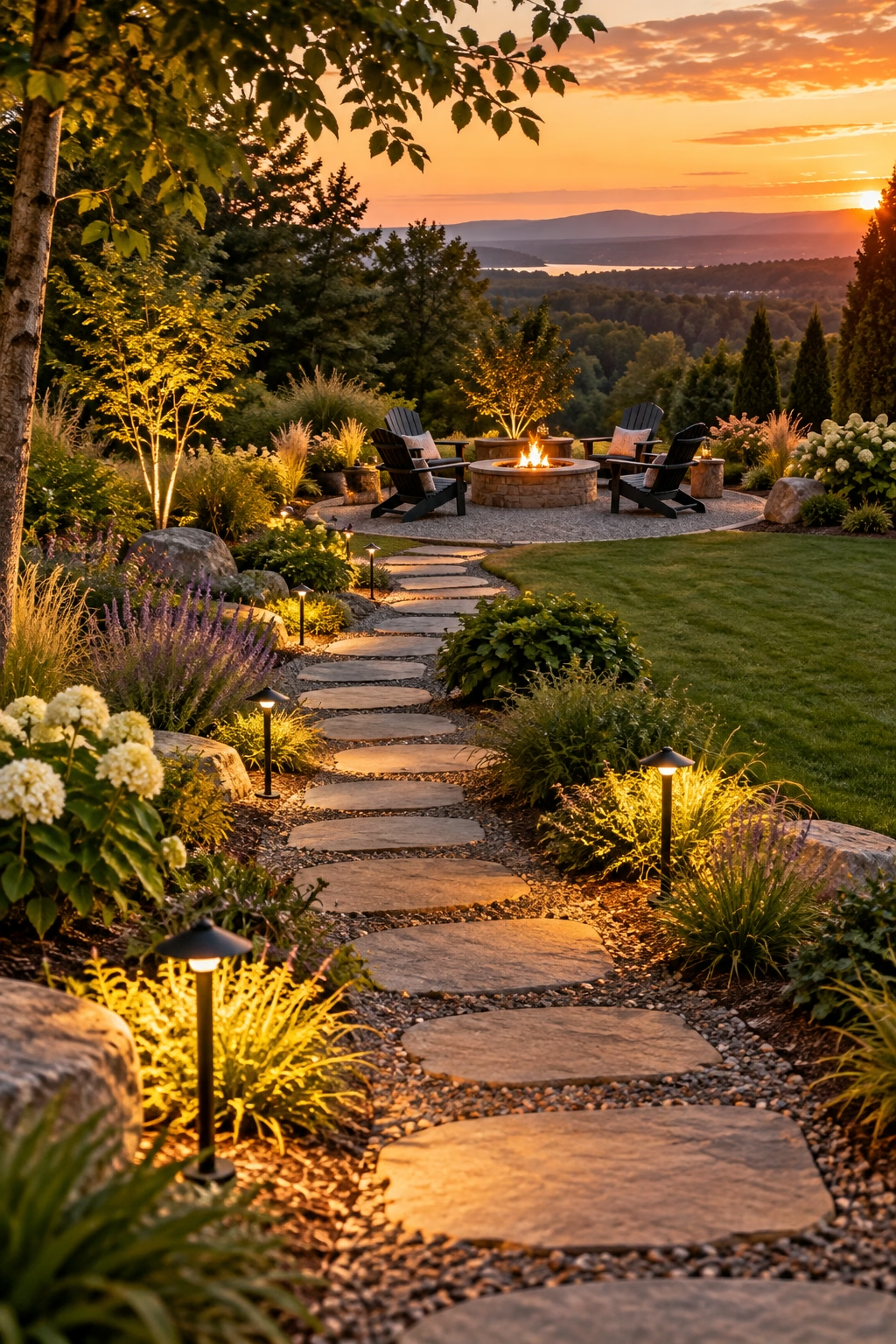
One of the most appealing ways to use a large backyard is to place the fire pit away from the main patio.
Instead of seeing unused lawn at the far end of the property, create a gravel or stone gathering area surrounded by landscaping.
Connect it with a clear path and add subtle path lighting. The short walk from the house helps the space feel like its own little retreat.
Landscape designers often use this idea because a fire pit can either become a focal point visible from the house or a tucked-away destination within the garden.
Final Thoughts
The best backyard fire pit ideas begin with the space around the fire rather than the fire pit alone. Think about where people will sit, how they will reach the area, what surface will be beneath their feet, and what they will see when the fire is not burning.
For a simple backyard makeover, a gravel circle, comfortable chairs, edging, and a pathway may be all you need. For a more permanent outdoor living space, pavers, built-in seating, retaining walls, landscaping, or a sunken conversation area can create something more architectural.
Most importantly, choose a design that fits the scale and style of your actual backyard. A well-planned small fire pit area will usually feel more inviting than a complicated design filled with features that do not serve a purpose.


