
Backyard fence ideas can completely change how an outdoor space feels. A fence may start as something practical, perhaps you need more privacy, want to keep pets inside the yard, or simply need to define your property. But because a fence usually covers such a large part of the backyard, it also becomes one of the biggest design features in the space.
The good news is that you do not need an unusual or overly complicated fence to make a backyard look beautiful. Simple cedar boards, horizontal slats, classic pickets, lattice panels, black metal frames, climbing plants, and thoughtfully placed garden beds can all turn an ordinary boundary into part of the landscape.
Current backyard inspiration also shows a strong move toward combining fencing with planting rather than treating the two separately. Trellises, vines, layered flower beds, raised planters, and strategically placed screens can provide privacy while keeping a yard softer and more inviting.
Before installing anything permanent, check your local fence rules, HOA requirements if applicable, property lines, utilities, easements, and allowed fence height. Rules can vary considerably from one location to another.
1. Classic Vertical Cedar Privacy Fence
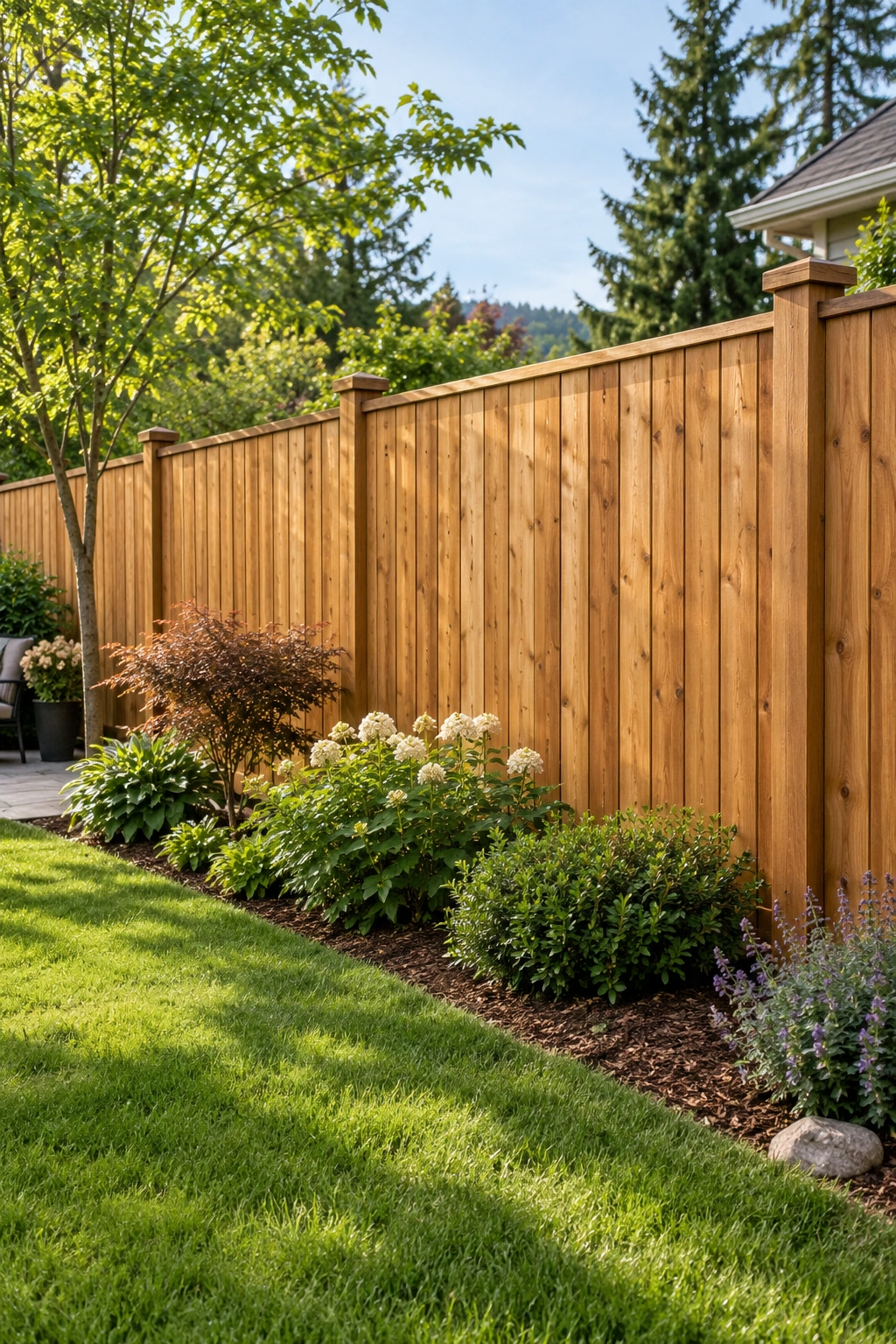
A vertical cedar fence is one of the easiest backyard fence ideas to work into almost any landscape. It feels natural, gives the yard a clean backdrop, and can provide substantial privacy when the boards are installed close together.
The warm color of cedar looks especially good next to green lawns, shrubs, ornamental grasses, hydrangeas, and perennial flower beds. For a simple design, keep the top straight and use evenly spaced posts with understated post caps.
You can leave cedar close to its natural color or stain it to coordinate with a deck, pergola, or outdoor furniture. Cedar is commonly used outdoors because it naturally resists moisture, insects, rot, and decay, although any wood fence will still benefit from appropriate care.
This is a particularly good choice if you want privacy but still want the backyard to feel warm and garden-friendly.
2. Modern Horizontal Slat Fence
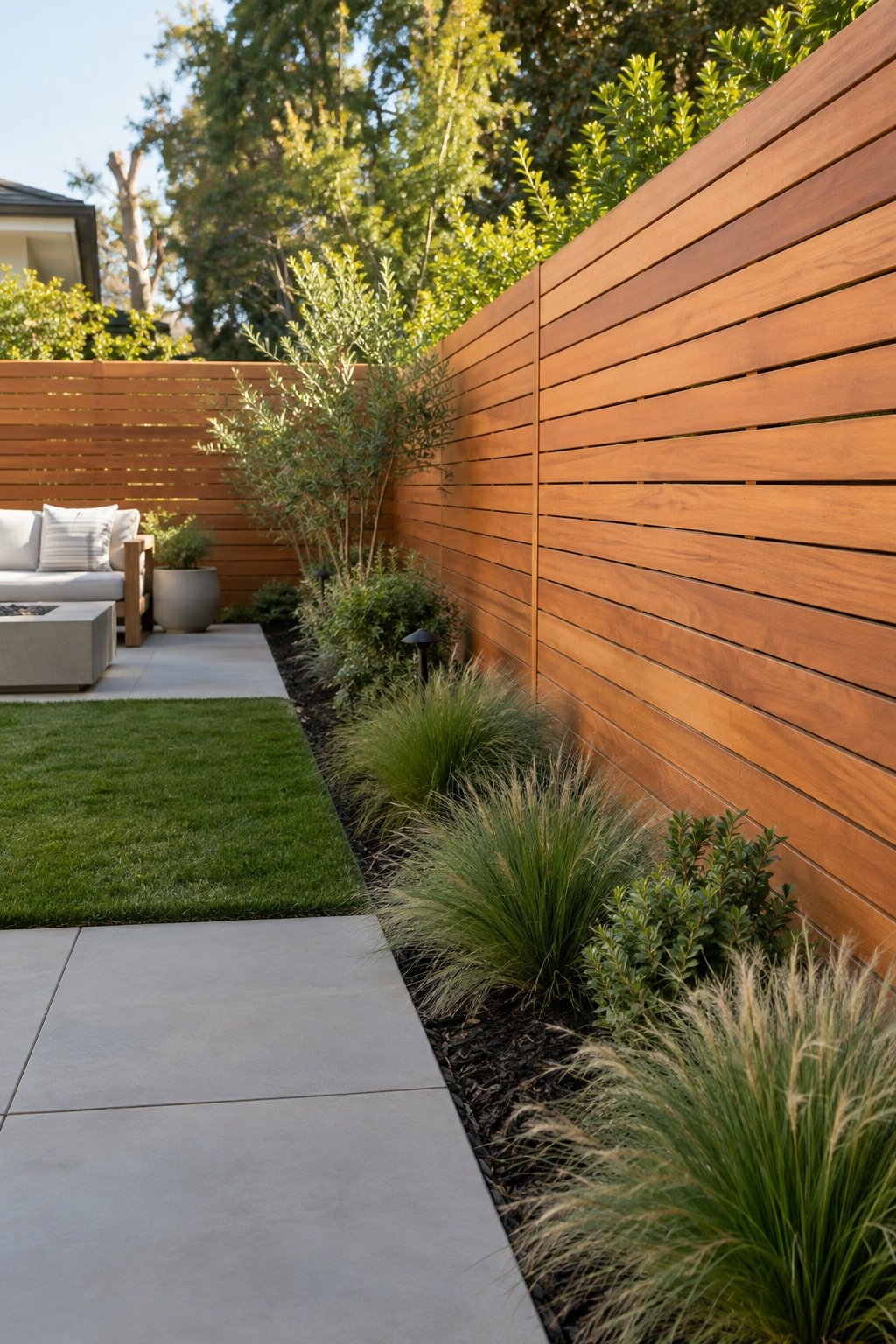
For a more contemporary yard, turn the boards sideways.
Horizontal fence boards create long, clean lines that pair beautifully with modern patios, rectangular pavers, simple lawns, and minimal landscaping. This style appears repeatedly in contemporary backyard design and Pinterest inspiration because even an uncomplicated fence can look very polished when the board spacing and framing are consistent.
Natural cedar is probably the easiest look to use, but medium brown, gray, or dark stains can also work.
For more privacy, keep the gaps between boards minimal. If your yard already feels enclosed, slightly wider gaps can allow more air and glimpses of greenery through the fence.
A narrow planting bed filled with ornamental grasses or low shrubs along the bottom keeps the strong horizontal lines from looking too hard.
3. Board-on-Board Wood Privacy Fence
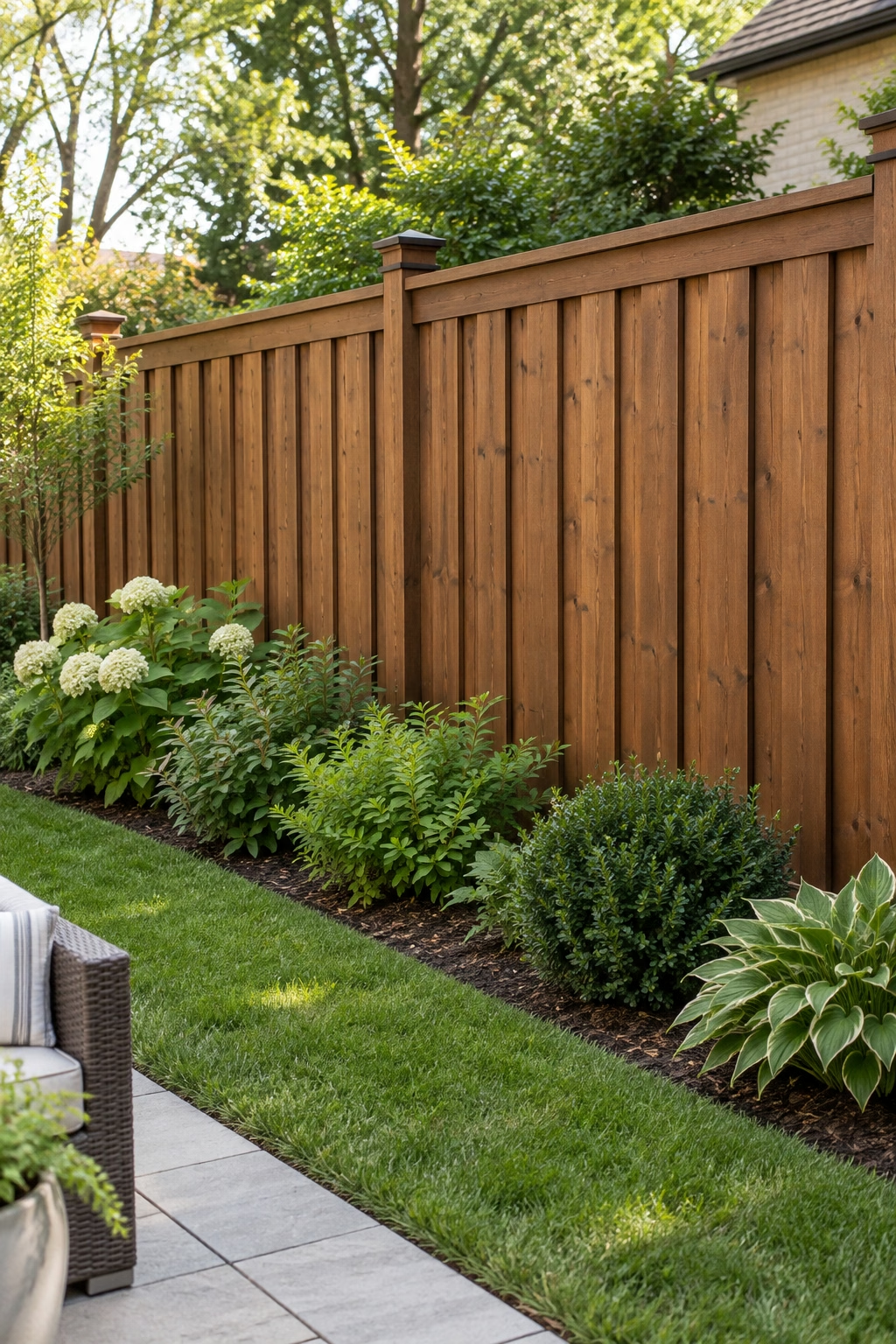
If privacy is your main goal, a board-on-board fence is worth considering.
Instead of relying on one row of boards with visible gaps, overlapping boards help block direct views through the fence. Lowe’s specifically includes board-on-board fencing among wood designs suited to backyard privacy.
Visually, it still feels like a classic wooden fence, so it is easy to combine with traditional, farmhouse, rustic, and suburban homes.
Try a warm medium-brown stain if you want the grain of the wood to remain visible. Then add a simple mulched border with evergreen shrubs or flowering perennials along the bottom.
The extra depth created by the overlapping boards also gives the fence more texture than a completely flat panel, which helps a long fence line look less like a blank wall.
4. Shadowbox Fence for Privacy With More Airflow
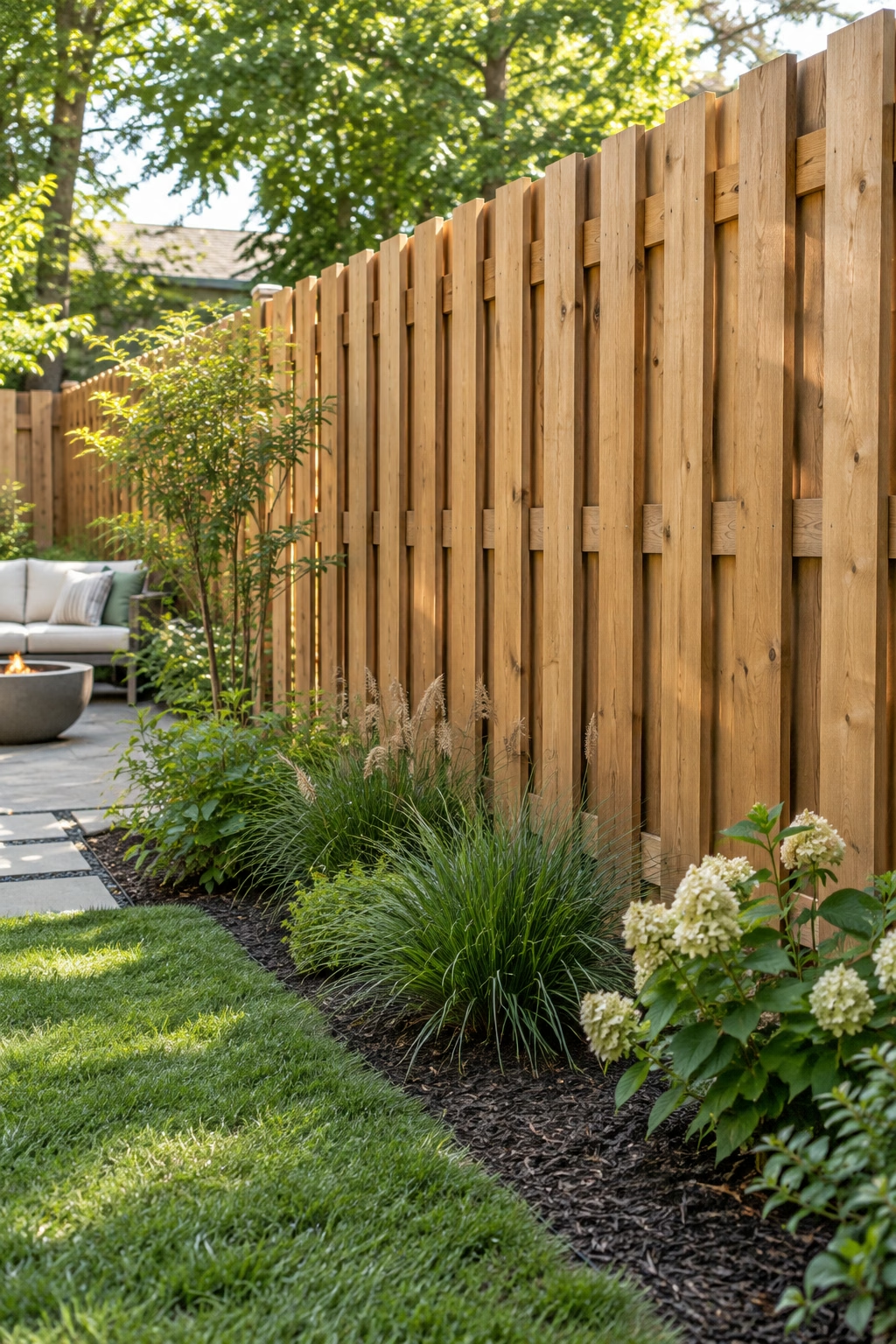
A shadowbox fence alternates boards on opposite sides of the rails rather than placing all of them on one flat surface.
The result is a fence that blocks much of the straight-on view while allowing more air to move through the gaps. Another nice feature is that the design looks finished from both sides, which can be useful along a shared property line.
It works especially well in yards where a completely solid wall would feel too heavy.
Use natural cedar or stained pressure-treated lumber and keep the top line simple. In front, plant small shrubs, ornamental grasses, or a narrow perennial border rather than hiding the entire fence.
This option gives you a useful middle ground between an open decorative fence and a completely solid privacy fence.
5. Wood Fence With a Lattice Top
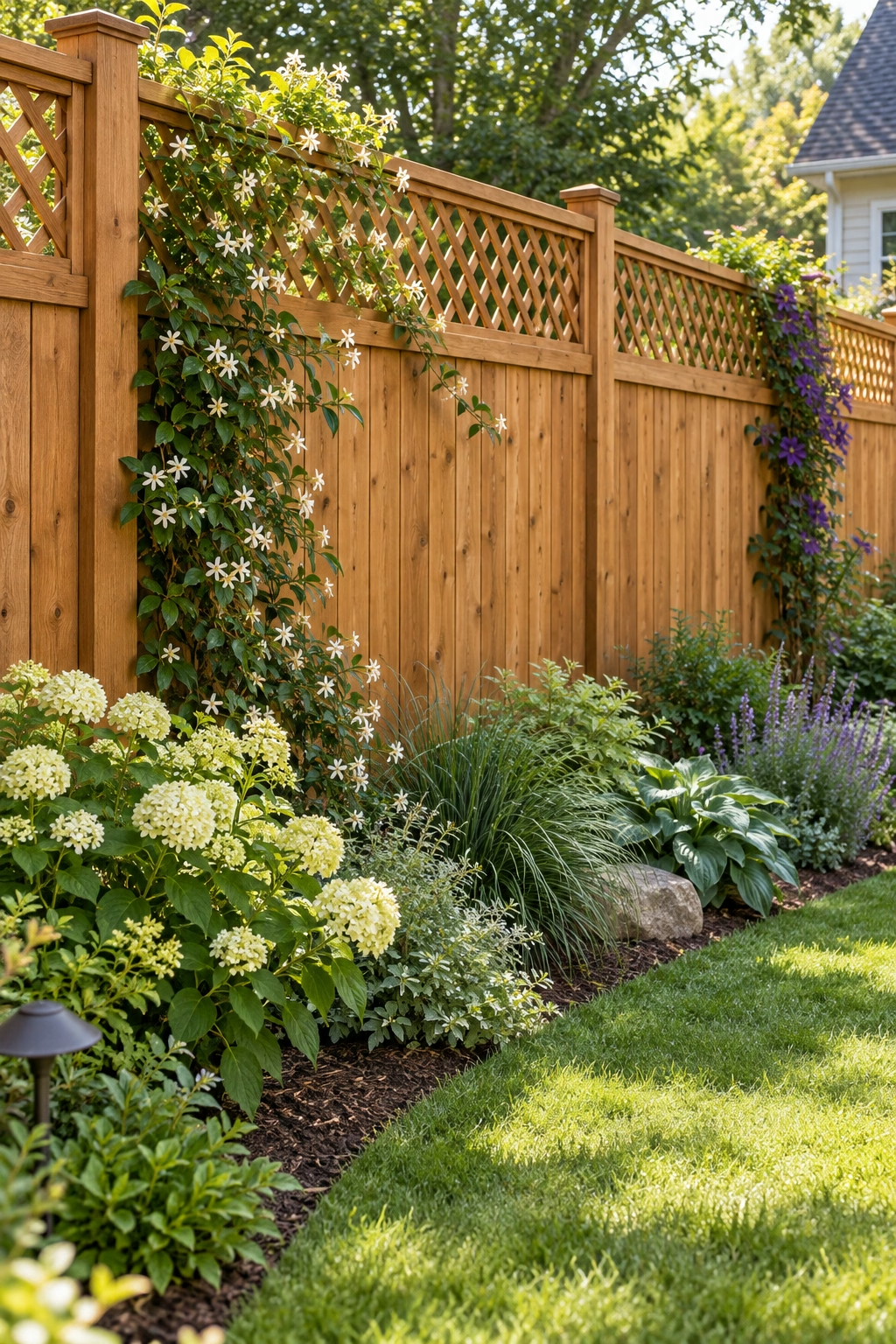
A solid wood fence with lattice across the top is a classic way to combine privacy and openness.
The solid lower portion blocks views where privacy matters most, while the lattice allows light and air through near the top. This arrangement is widely used for backyard fences, patios, and garden screening.
Keep the lattice simple. Square lattice often feels slightly more modern, while diagonal lattice can give the yard a traditional garden look.
The real opportunity comes with planting. A flowering vine or leafy climber can gradually move through the lattice and soften the upper edge of the fence.
You do not have to cover every panel. Letting plants climb across only one or two sections usually creates a more relaxed effect than turning the entire fence into one solid wall of foliage.
6. Black-Stained Wood Fence
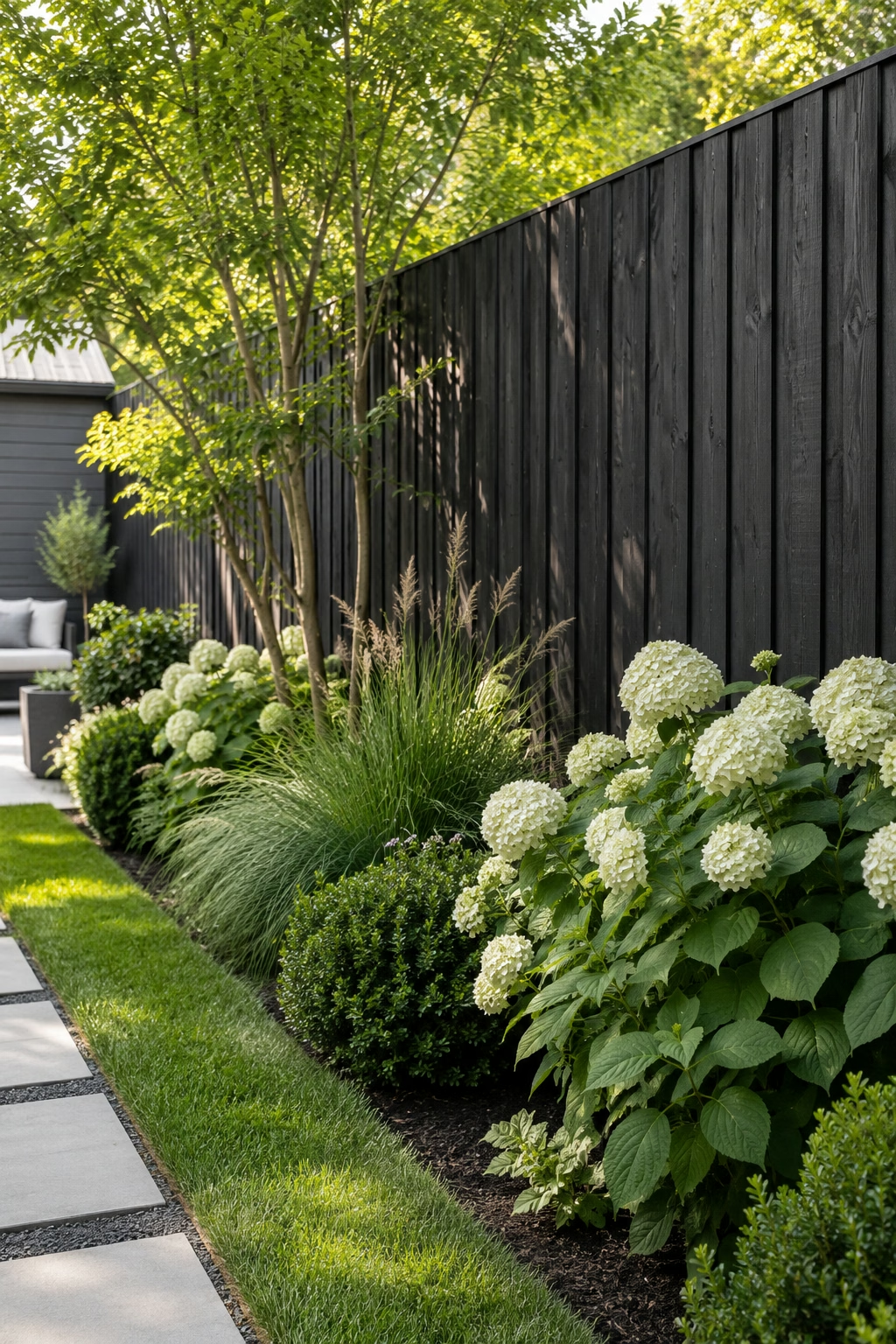
Sometimes the easiest way to make a basic wood fence look dramatically different is to change its color.
A black or deep charcoal fence creates a strong background against green plants. Foliage, ornamental grasses, pale flowers, and even simple lawn edges tend to stand out more clearly against a dark surface.
Pinterest inspiration shows this look frequently in modern gardens, particularly when black fencing is paired with natural wood, concrete, gravel, and structured planting.
You do not need to make the rest of the backyard dark. In fact, the contrast works best when the fence is balanced by lighter paving, natural timber furniture, or plenty of greenery.
Before painting or staining, use a finish designed for exterior wood and prepare the surface correctly so you are not simply hiding an aging fence under a coat of color.
7. Wood Fence With Black Metal Frames
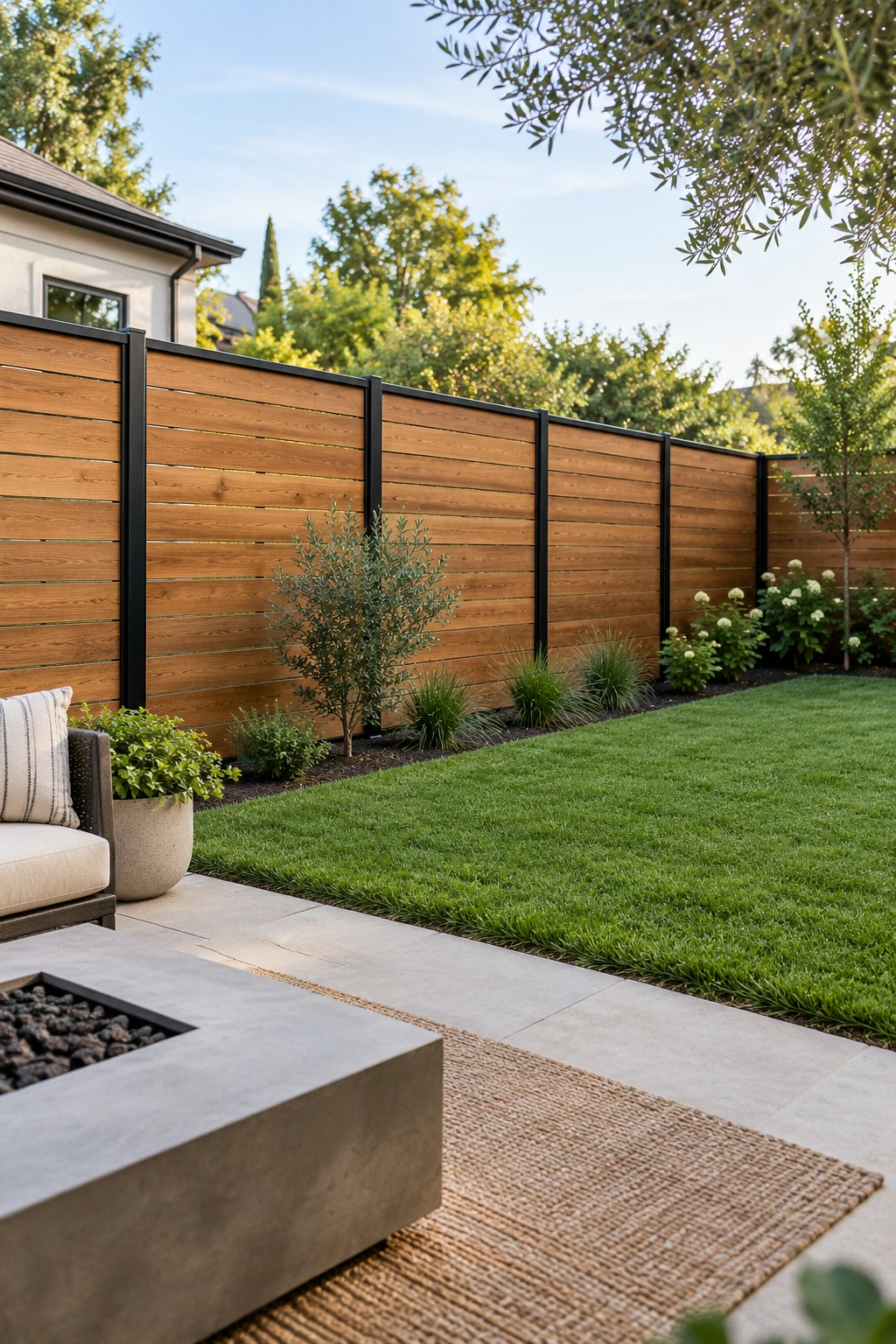
This is one of the strongest contemporary fence combinations.
Warm horizontal wood boards sit between slim black posts or metal frames. The wood keeps the yard from feeling cold, while the dark framing makes every panel look neat and intentional.
This mixed-material style shows up repeatedly in current Pinterest and modern fence inspiration.
Carry the same combination into the rest of the yard. For example, use black metal patio chairs with a wood dining table, black planters beside a cedar deck, or dark outdoor lights mounted near the fence.
You can create a very finished-looking space without adding complicated decorative details.
It works particularly well beside modern homes, renovated ranch houses, and simple backyard patios.
8. Clean White Vinyl Privacy Fence
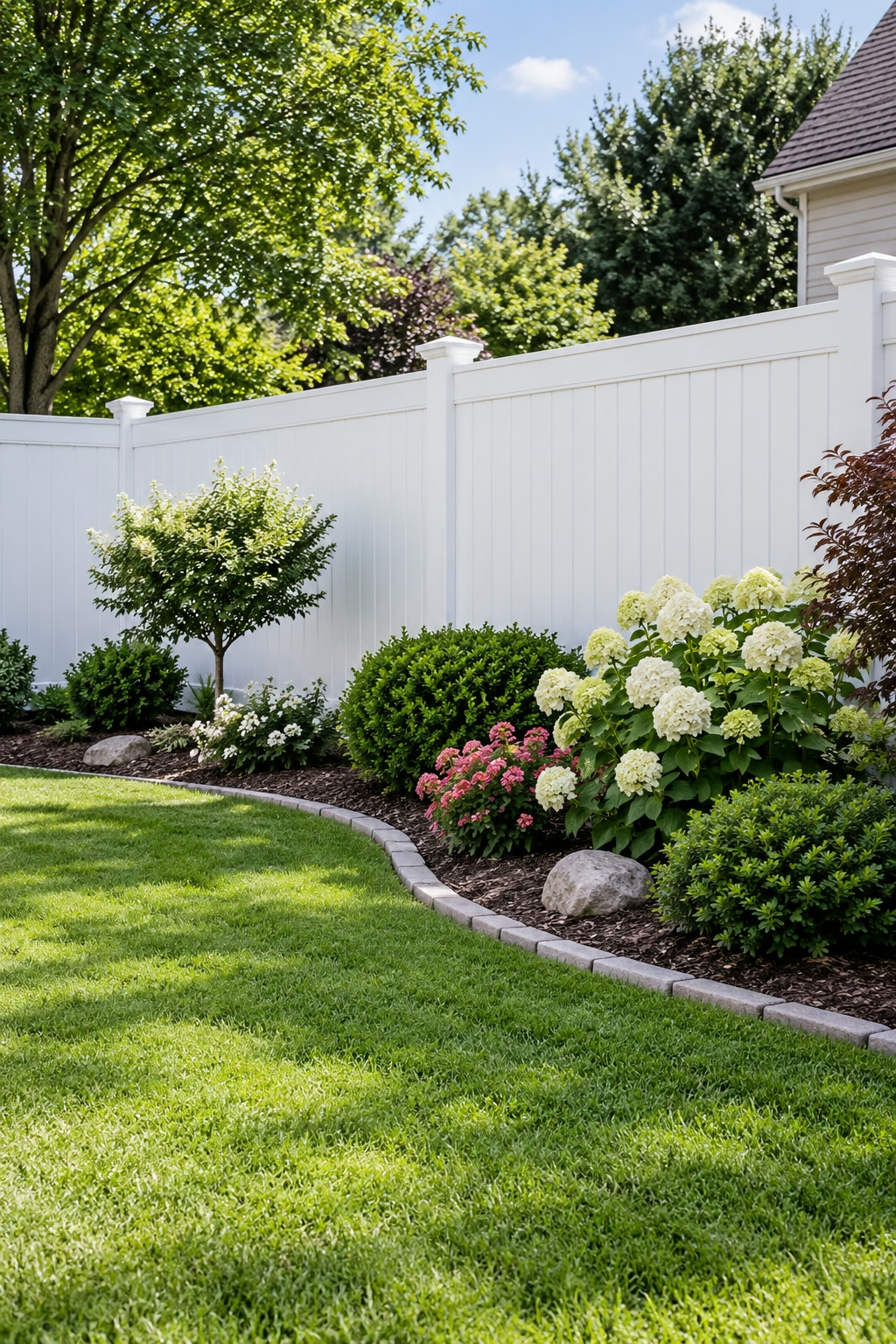
A white vinyl fence can create a bright, tidy background for a backyard.
Unlike wood, vinyl does not require regular painting or staining, and quality vinyl fencing is designed to resist moisture, rot, and common weather exposure. Routine cleaning is generally the main maintenance requirement.
The key is to keep the surrounding landscape soft enough that the white panels do not feel too stark.
A curved planting bed with hydrangeas, flowering shrubs, ornamental grasses, or colorful perennials works especially well. Another option is to place a narrow row of evergreen shrubs along part of the fence.
White vinyl can suit traditional suburban homes, pool areas, light-colored patios, and cottage-inspired backyards.
If you prefer something less traditional, gray and other neutral vinyl colors are also available.
9. Warm-Tone Composite Fence
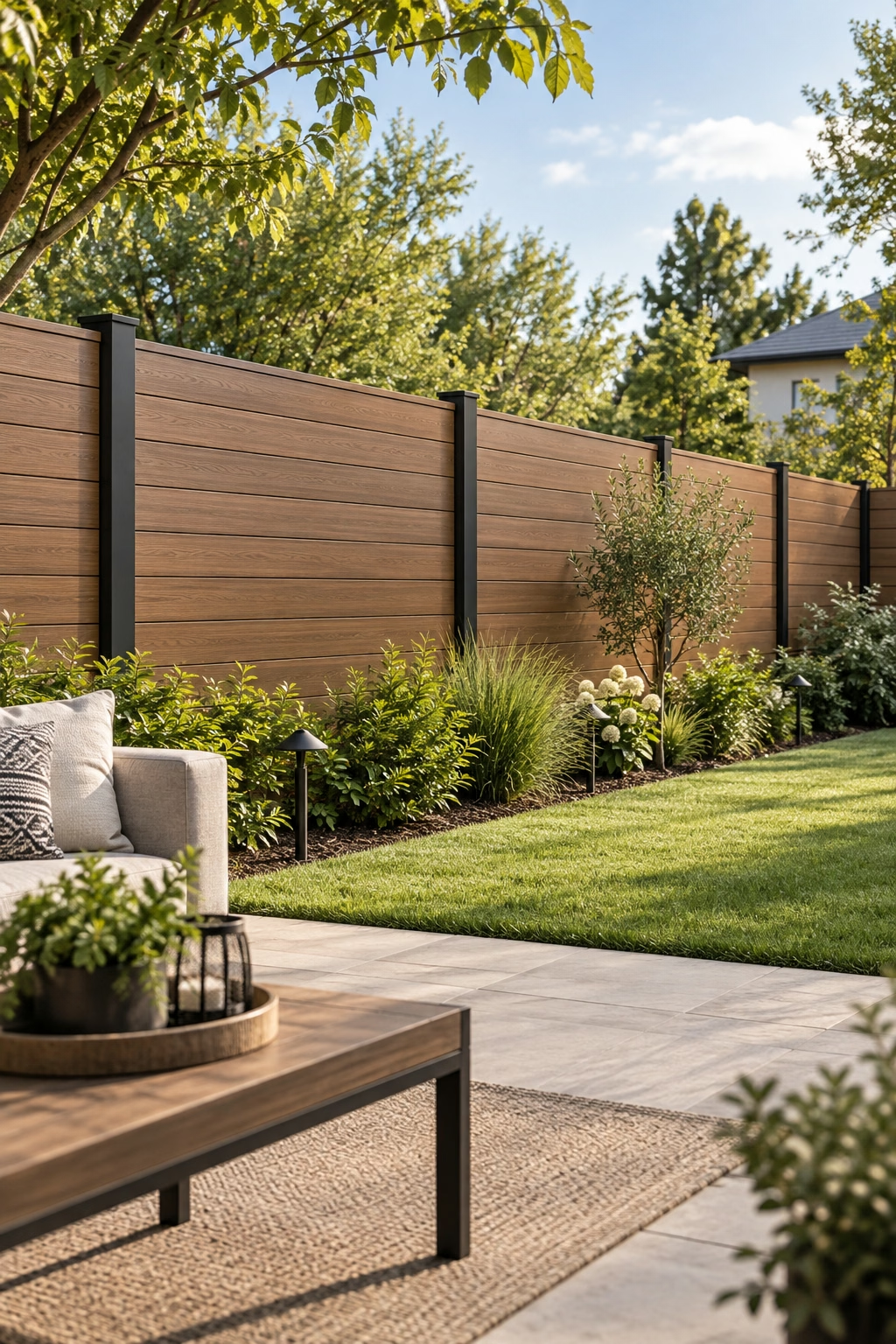
Composite fencing is a useful option when you like the appearance of clean wood panels but prefer a more uniform contemporary finish.
Look for warm brown or wood-look panels rather than making the fence too gray or industrial. Pair the panels with black posts, dark edging, and simple green planting.
This style works particularly well in a backyard where the deck, seating area, and fence are meant to read as one coordinated outdoor room.
Keep the design straightforward. Long fence lines already have plenty of visual impact, so you usually do not need decorative patterns everywhere.
One interesting approach is to use composite fencing for the main perimeter but add natural planting in front. The combination of manufactured panels and soft foliage prevents the space from feeling overly polished.
10. Corrugated Metal and Wood Fence
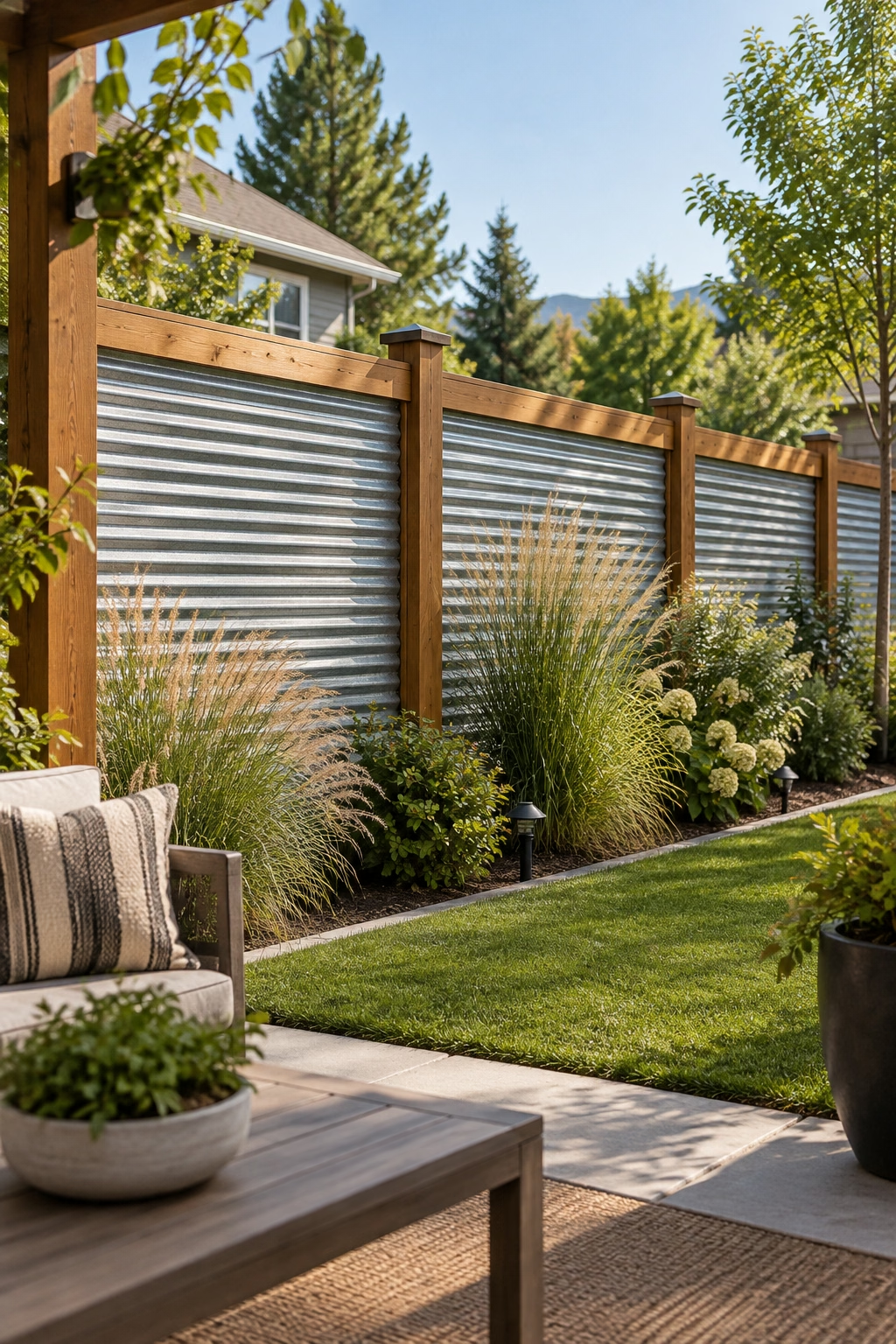
Corrugated metal becomes much easier to use in a residential backyard when it is framed with wood.
Instead of an uninterrupted wall of metal, create individual galvanized or dark metal panels surrounded by substantial timber posts and rails. This brings together an industrial material and a warmer natural one.
Home Depot includes corrugated metal among practical privacy-fence materials and notes that metal can require less routine care than traditional wood fencing.
Use this idea where the architecture can support it, such as a modern farmhouse, rustic backyard, workshop garden, or contemporary landscape.
Plants are especially important here. Ornamental grasses, shrubs, raised beds, or small trees placed near the fence prevent the corrugated panels from dominating the entire yard.
11. Slim Black Aluminum Fence
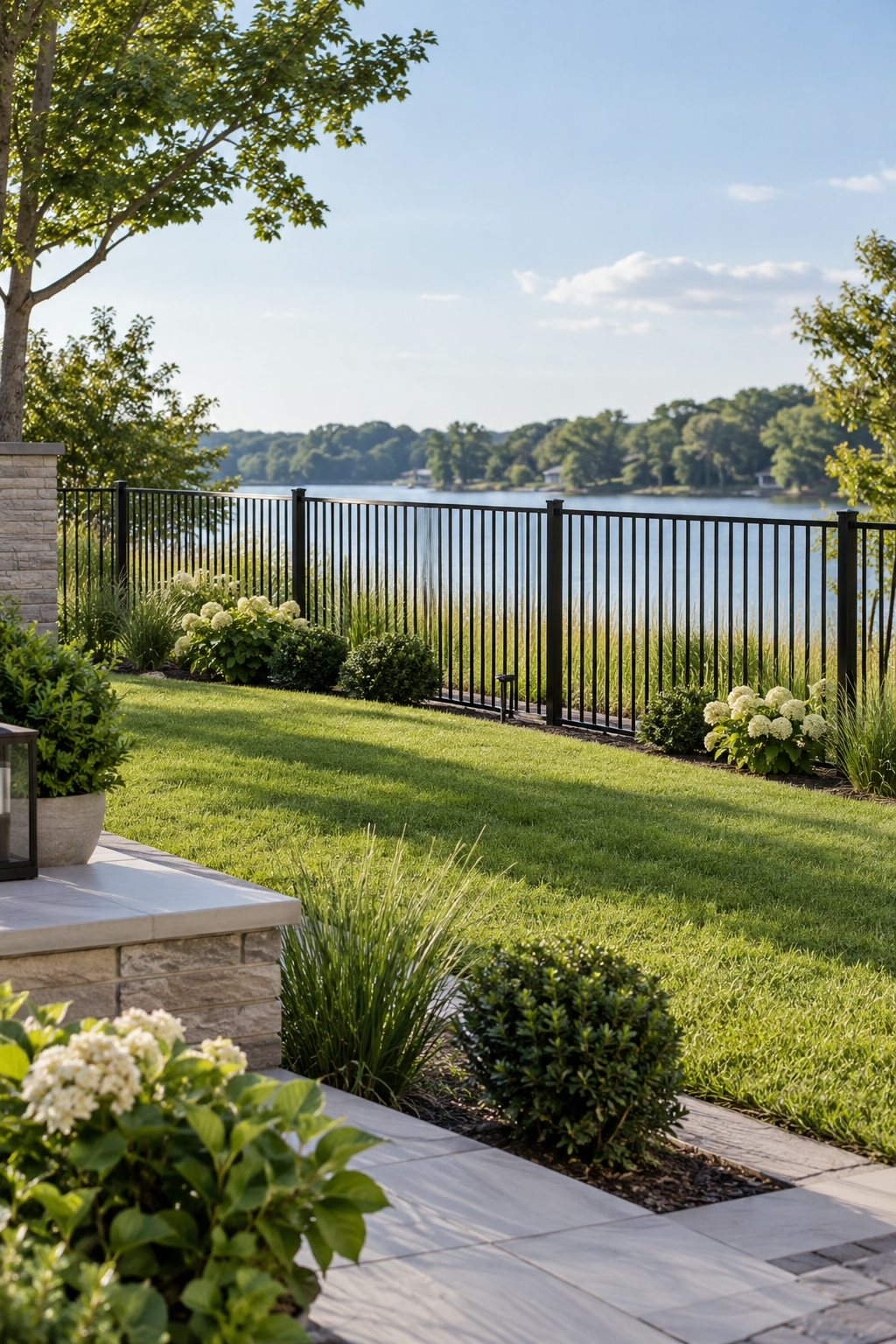
Not every backyard needs a solid privacy fence.
If you have a wooded property, attractive view, large garden, or open green space beyond the boundary, a black aluminum fence can define the yard without visually closing it.
The thin vertical bars almost disappear against darker plants and distant landscaping. This makes the backyard feel larger because you can still see through the boundary.
Use it around a lawn, garden, or landscape where visibility is more valuable than complete privacy.
If privacy is needed in only one part of the yard, combine the open fence with shrubs or a separate privacy screen near the patio instead of blocking the entire perimeter.
For pool areas, however, fence height, openings, gates, latches, and other safety requirements need to follow the applicable local rules.
12. Wood-and-Wire Garden Fence
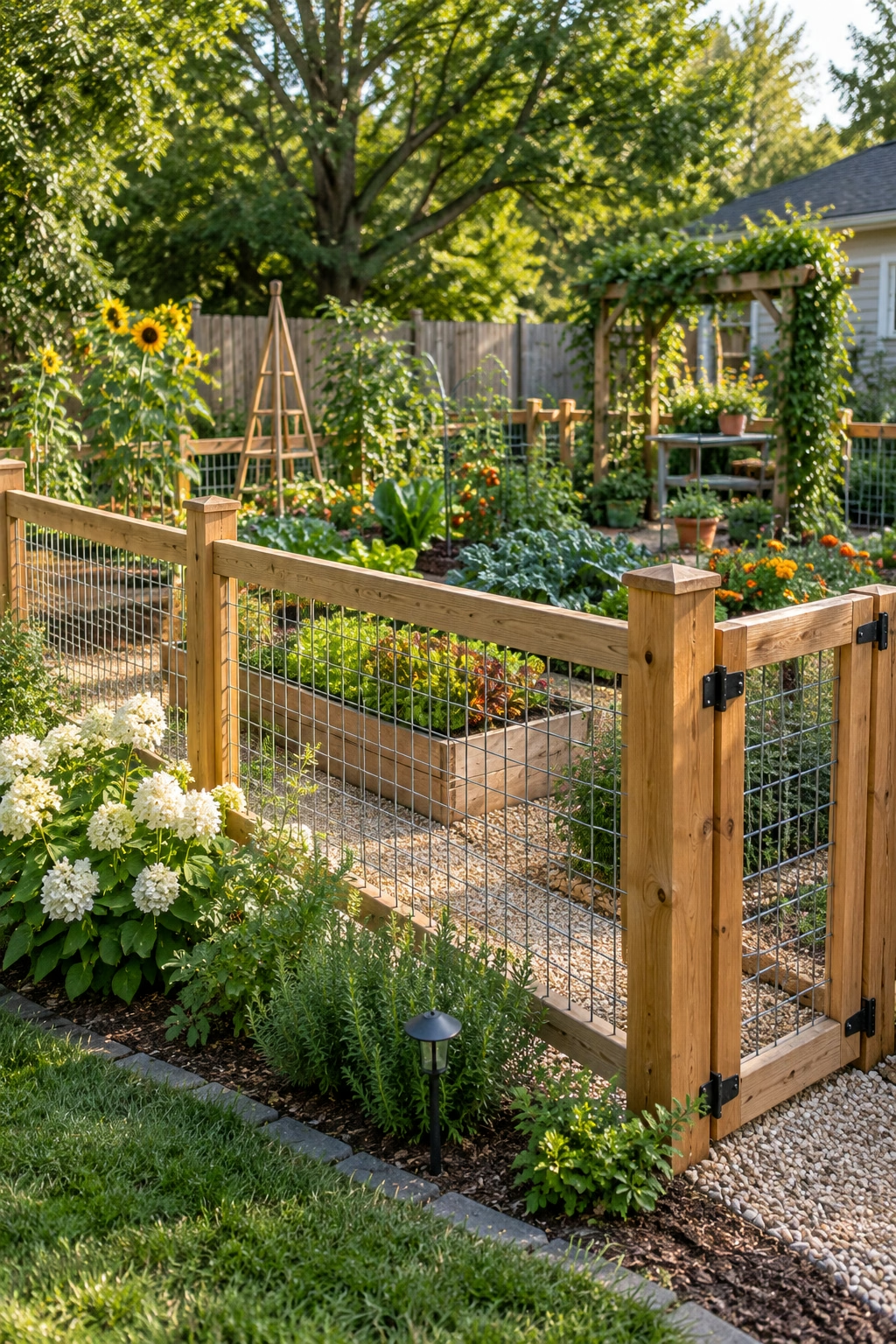
A wood frame filled with welded wire or hog-wire style panels is a great choice when you want to see into the garden rather than hide it.
Use sturdy wooden posts and rails to create the structure, then fill the center with dark or galvanized wire panels.
This design works especially well around vegetable gardens, large backyards, rustic properties, and yards where you want to keep a boundary without blocking the landscaping.
The contrast between natural timber and the thin wire grid has a simple farmhouse look, but it can also feel quite modern when the wood is stained dark.
Plant herbs, flowers, berry bushes, or ornamental grasses near the fence. In a productive garden, you can also use appropriate sections of the grid as support for climbing plants, provided the fence construction can handle them.
13. Rustic Split-Rail Fence With Wire Mesh
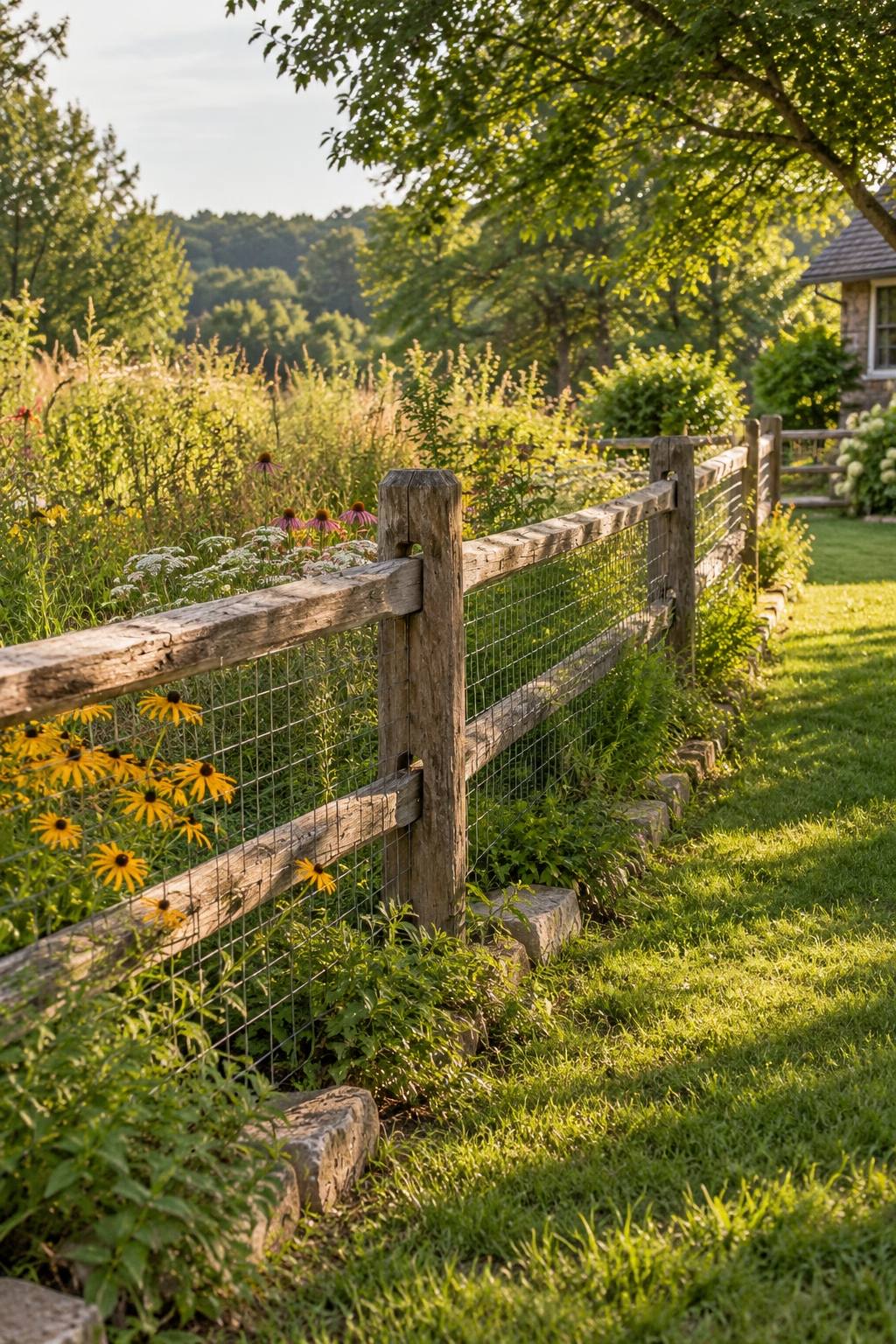
A split-rail fence immediately gives a backyard a relaxed country feel.
By itself, the open rails are mostly decorative. Adding discreet welded wire or mesh can make the boundary more functional while preserving the rustic appearance.
This works beautifully around larger yards, cottage gardens, wooded properties, and meadow-style planting.
Instead of installing a perfectly straight flower border in front of it, keep the landscaping loose. Native grasses, coneflowers, black-eyed Susans, shrubs, or other plants appropriate for your region can make the fence feel like part of the landscape.
The open style also allows views beyond the yard, which is useful when privacy is not the main concern.
It is a much better choice for a casual naturalistic yard than trying to force a six-foot solid fence into the same setting.
14. White Picket Fence Around a Cottage Garden
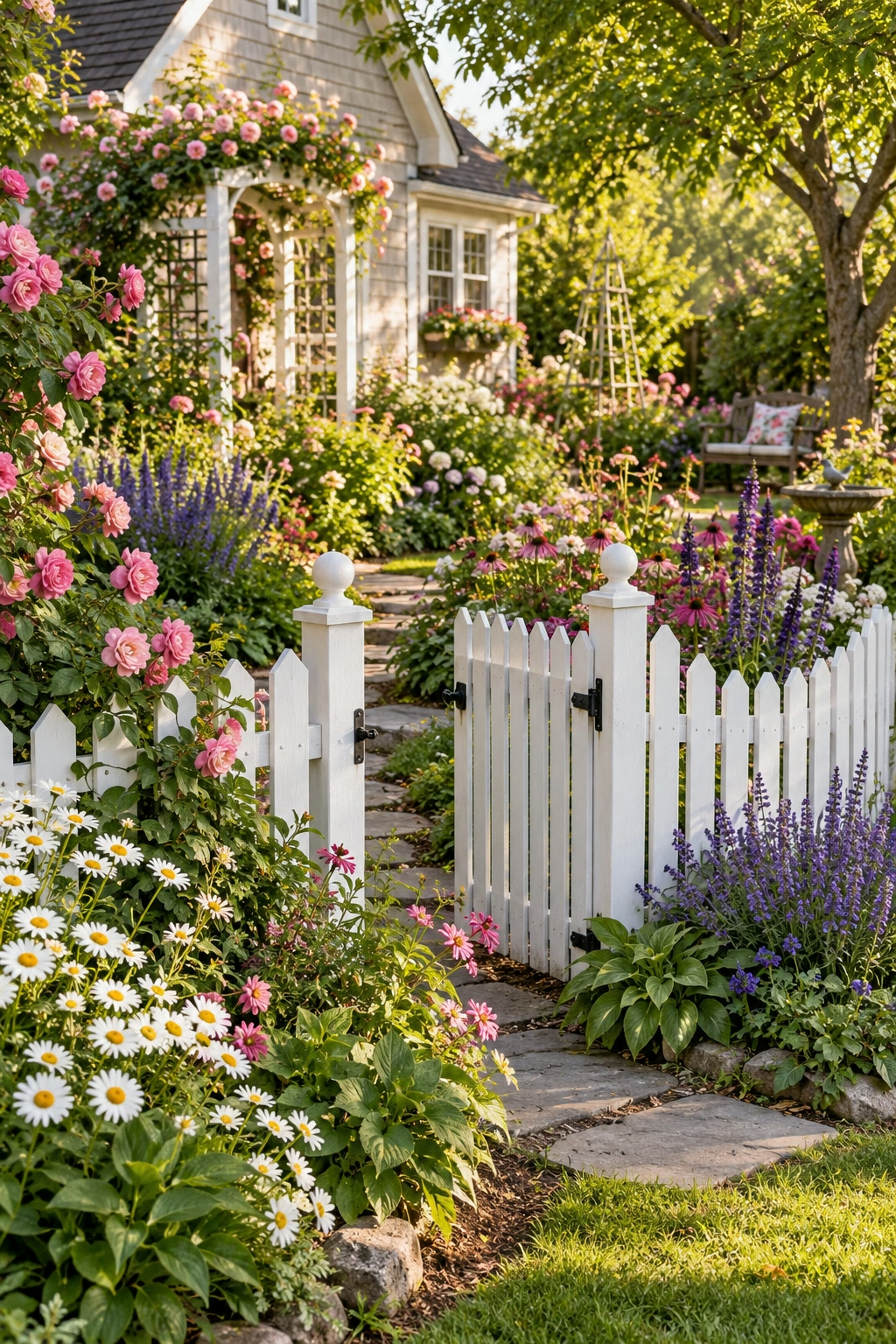
Few fence designs are more recognizable than a white picket fence.
It does not provide much privacy, but that is not really its purpose. A low picket fence creates definition while allowing flowers and greenery to remain visible.
Pinterest and Houzz inspiration repeatedly pair white pickets with cottage gardens, perennial beds, garden paths, and flowering plants.
This can work in a backyard just as easily as it does in a front yard. Use it around a vegetable garden, cutting garden, patio garden, or section of lawn.
A small matching gate makes the design even more charming.
For the planting, avoid making everything perfectly symmetrical. Roses, salvia, catmint, coneflowers, daisies, lavender, and other region-appropriate flowering plants can spill gently toward the fence and create the relaxed cottage look people usually want from this style.
15. Natural Wood Picket Fence
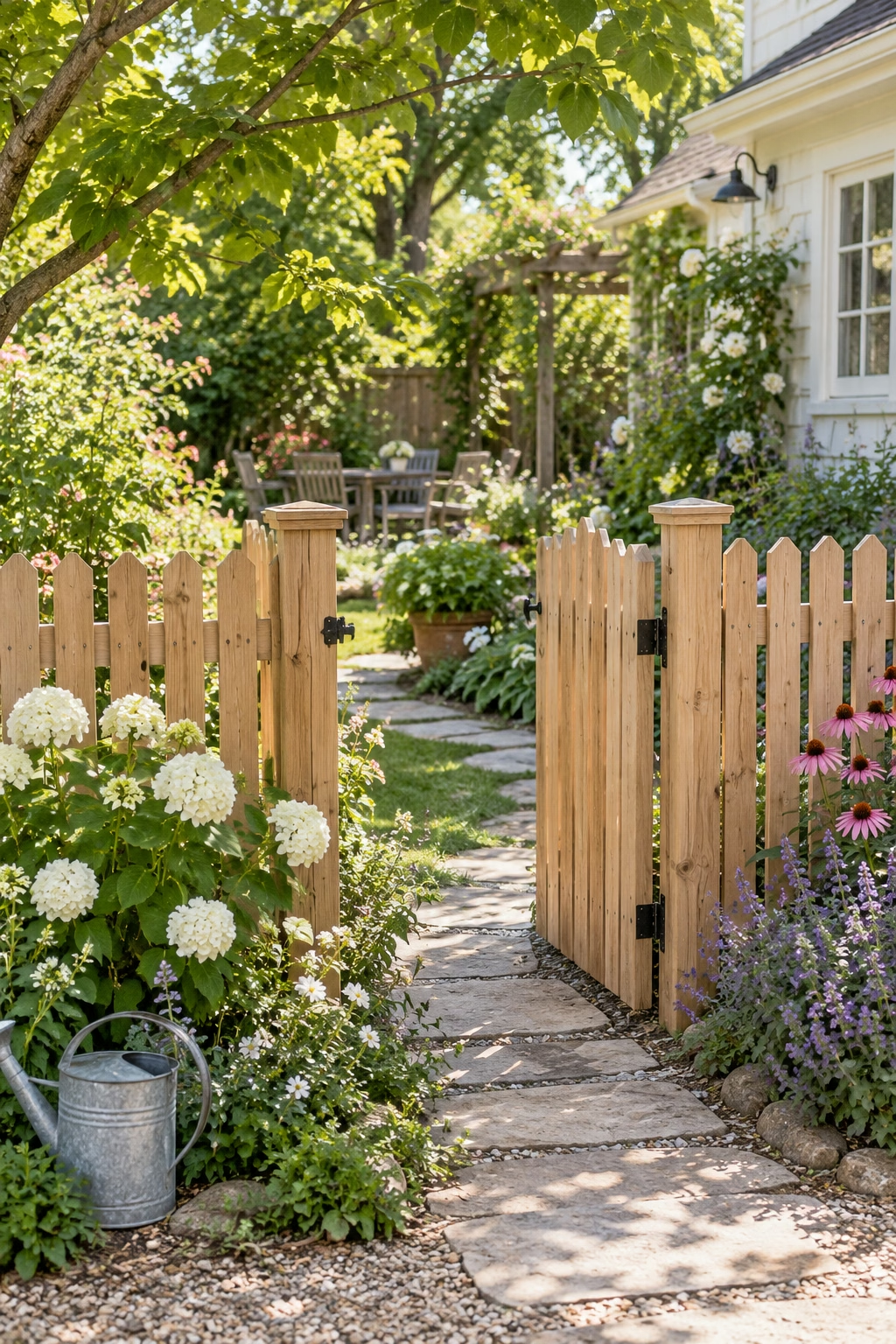
If white feels too formal or too traditional, leave the pickets in a natural wood tone.
A simple cedar or stained-wood picket fence blends more quietly into the landscape and works well with cottage, farmhouse, woodland, and casual backyard gardens.
The gaps keep the fence light and airy, which is useful for separating different zones rather than creating complete privacy.
For example, use it to divide a vegetable garden from the lawn, protect a flower garden, or create a small enclosure around a backyard shed.
Keep the fence relatively simple and let the plants supply the color.
A matching wood gate, gravel path, and informal planting nearby can turn a basic functional fence into a feature without requiring any elaborate construction.
16. Bamboo Privacy Screen
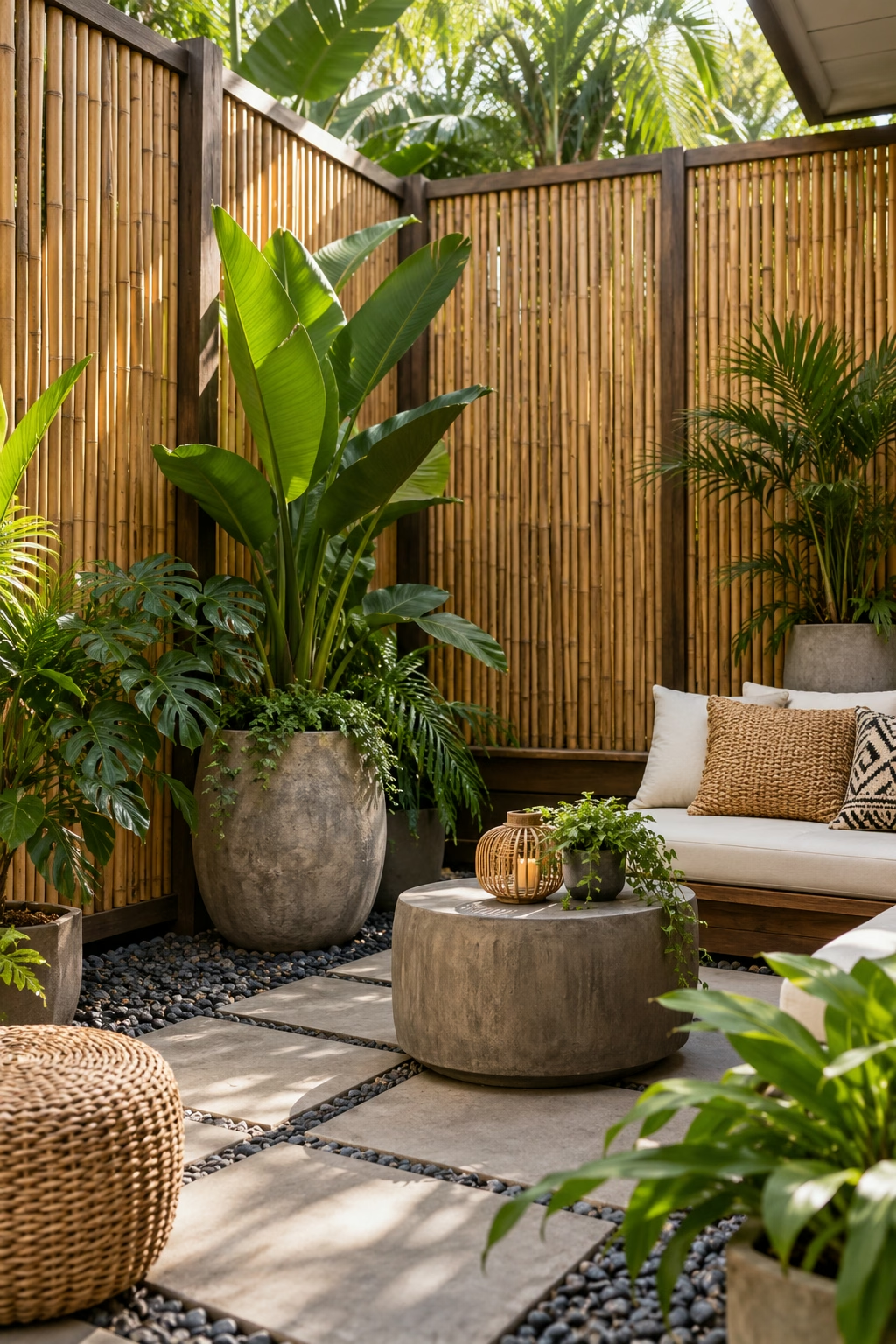
Bamboo screening can bring a relaxed, tropical feeling to a patio or garden.
The easiest way to use it is as prepared bamboo fencing or screening panels rather than planting an aggressive running bamboo variety directly along the property line.
Bamboo panels appear frequently in privacy-fence guides as an alternative to standard wood boards, particularly for smaller garden spaces and patios.
Frame the bamboo with timber so the screen looks intentional and supported. Then add large leafy container plants, simple gravel, natural furniture, or a small seating area.
This is especially effective when you need to screen one section of the backyard rather than build an entire perimeter fence.
If you actually want living bamboo, research the species and local growing conditions carefully first. Some bamboo can spread aggressively and become difficult to remove.
17. Trellis Fence Covered With Climbing Vines
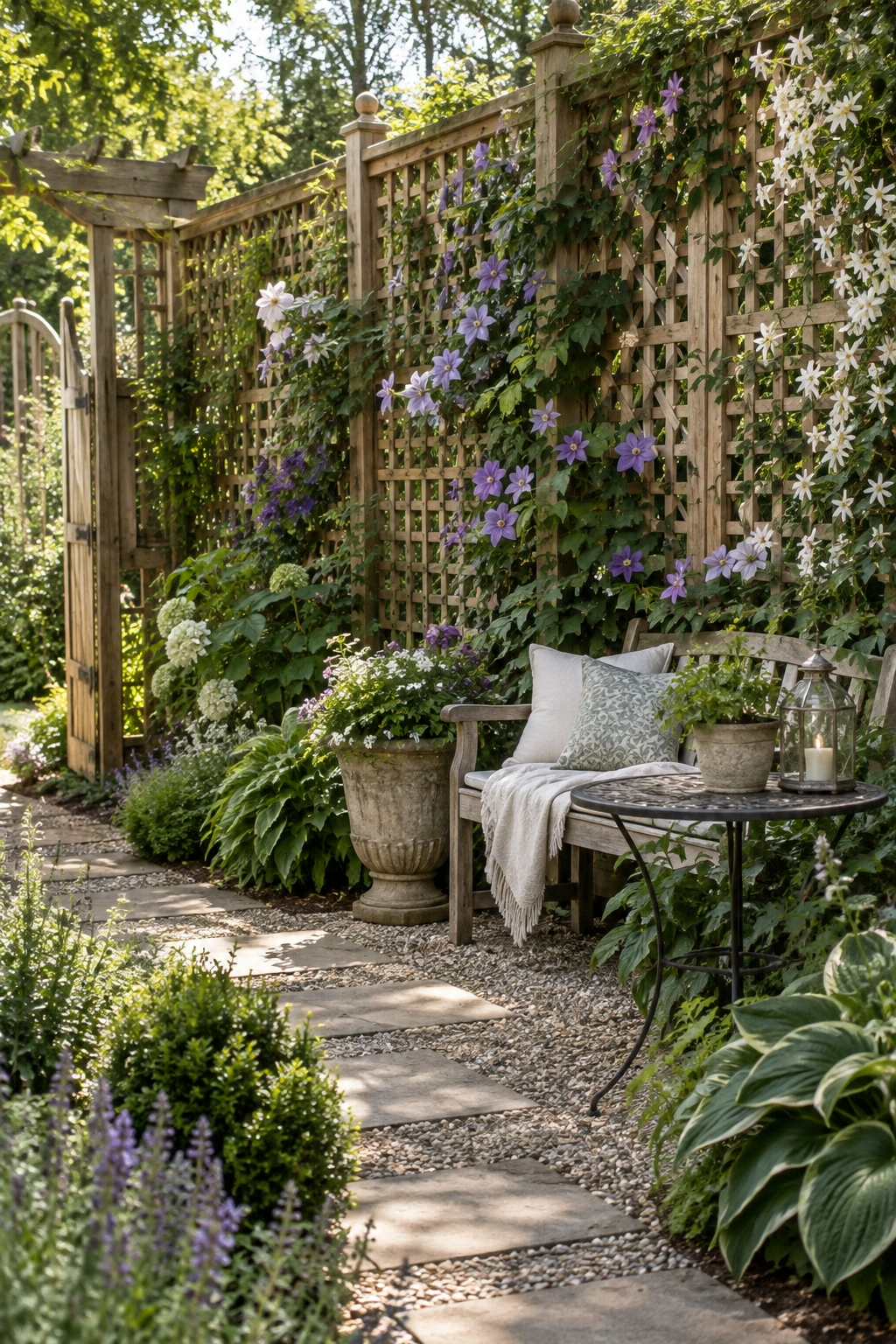
A trellis fence gives you structure first and greenery later.
The open grid can support climbing plants while allowing light through, making it useful beside patios, small gardens, and areas where a solid fence would feel too enclosed. Gardenista, Home Depot, and university extension resources all note the usefulness of trellises and vines for screening and privacy.
Choose climbing plants based on your climate, sunlight, mature size, and the strength of the support. Not every vine belongs on every fence.
You can also keep some sections uncovered. A combination of bare trellis, foliage, and flowers usually gives the design more depth.
Put a small bench, gravel path, or flower border in front and the fence starts feeling like a garden feature rather than simply a boundary.
18. Living Hedge Along a Simple Fence
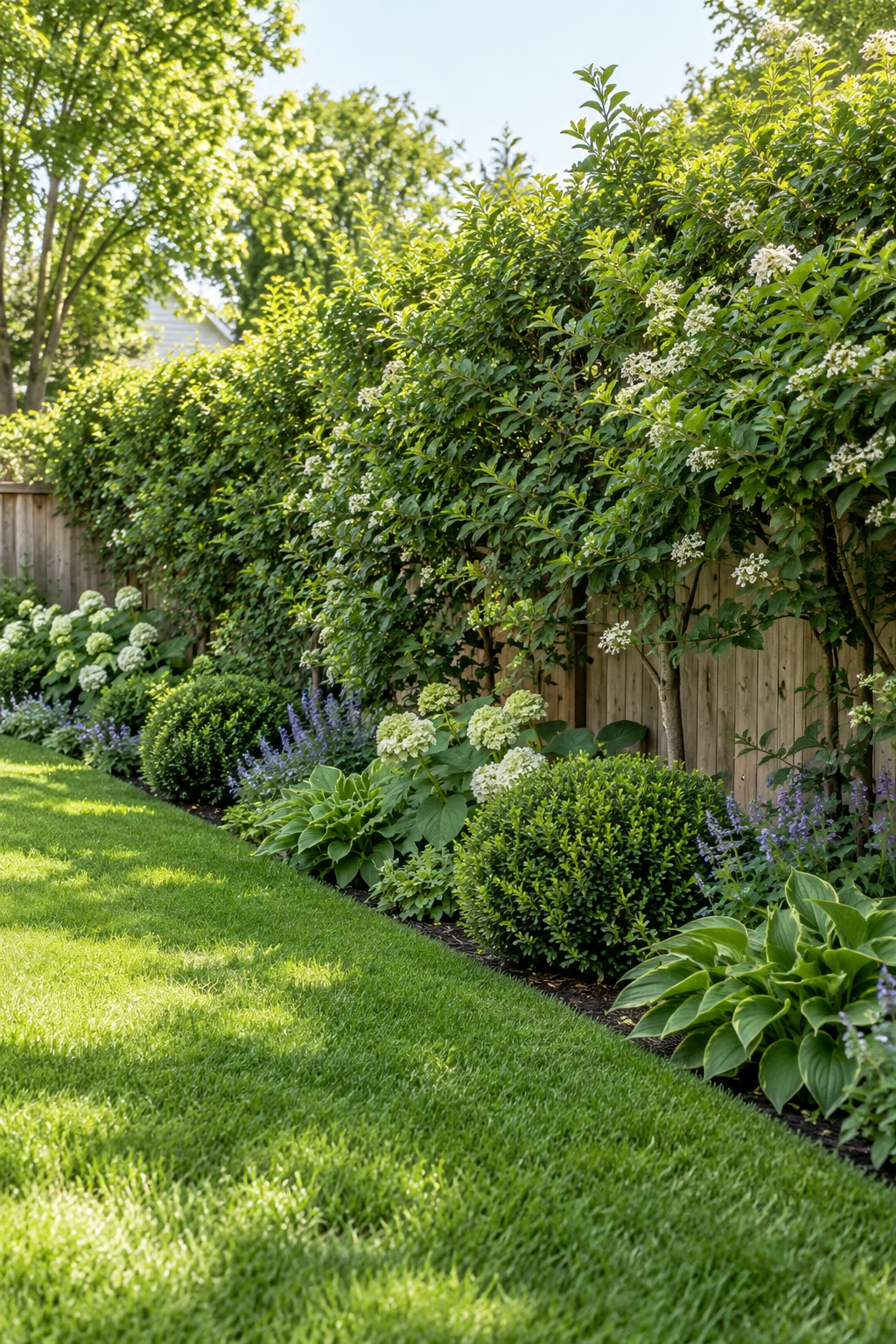
Sometimes the most attractive fence is the one you barely notice.
Install a straightforward fence for security or property definition, then use shrubs or hedging in front to provide a softer visual screen.
This layered approach works particularly well in larger backyards. Architectural Digest notes that natural greenery can sometimes provide privacy without relying entirely on solid fencing.
Choose plants according to your climate, soil, sun, desired mature height, and available width. Remember that a hedge that looks narrow at the garden center may become much wider as it matures.
You can also mix shrubs rather than planting one long identical row. A combination of evergreen structure and flowering shrubs can feel more like a garden.
Allow enough space between plants and the fence for growth, air movement, pruning, and maintenance.
19. Fence With Raised Garden Beds
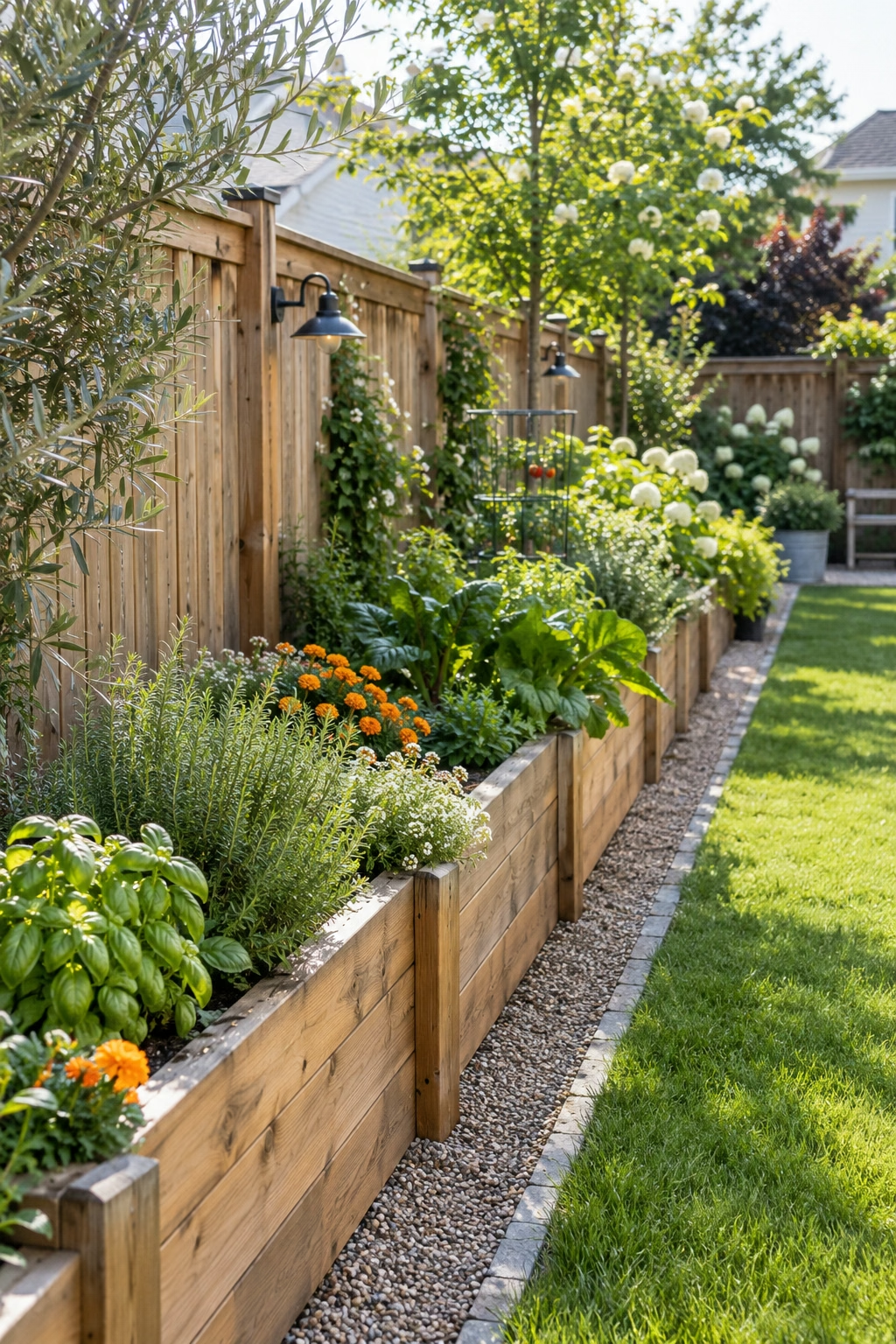
A long fence can become much more useful when raised beds are built nearby.
Run a simple wood or metal raised bed parallel to the fence and fill it with herbs, flowers, vegetables, ornamental grasses, or compact shrubs depending on the amount of sun.
Visually, the raised bed creates a strong horizontal line at the bottom of the fence and helps connect the boundary to the rest of the garden. Pinterest landscaping inspiration frequently uses this combination because it makes an otherwise blank fence line look intentional.
Do not simply pile wet soil directly against wooden fence boards. Design the bed as its own structure and leave appropriate separation where needed so moisture, repairs, staining, and access do not become problems.
Match the bed material to the fence for a calm look, or use a contrasting material for more definition.
20. Fence-Mounted Planter Boxes
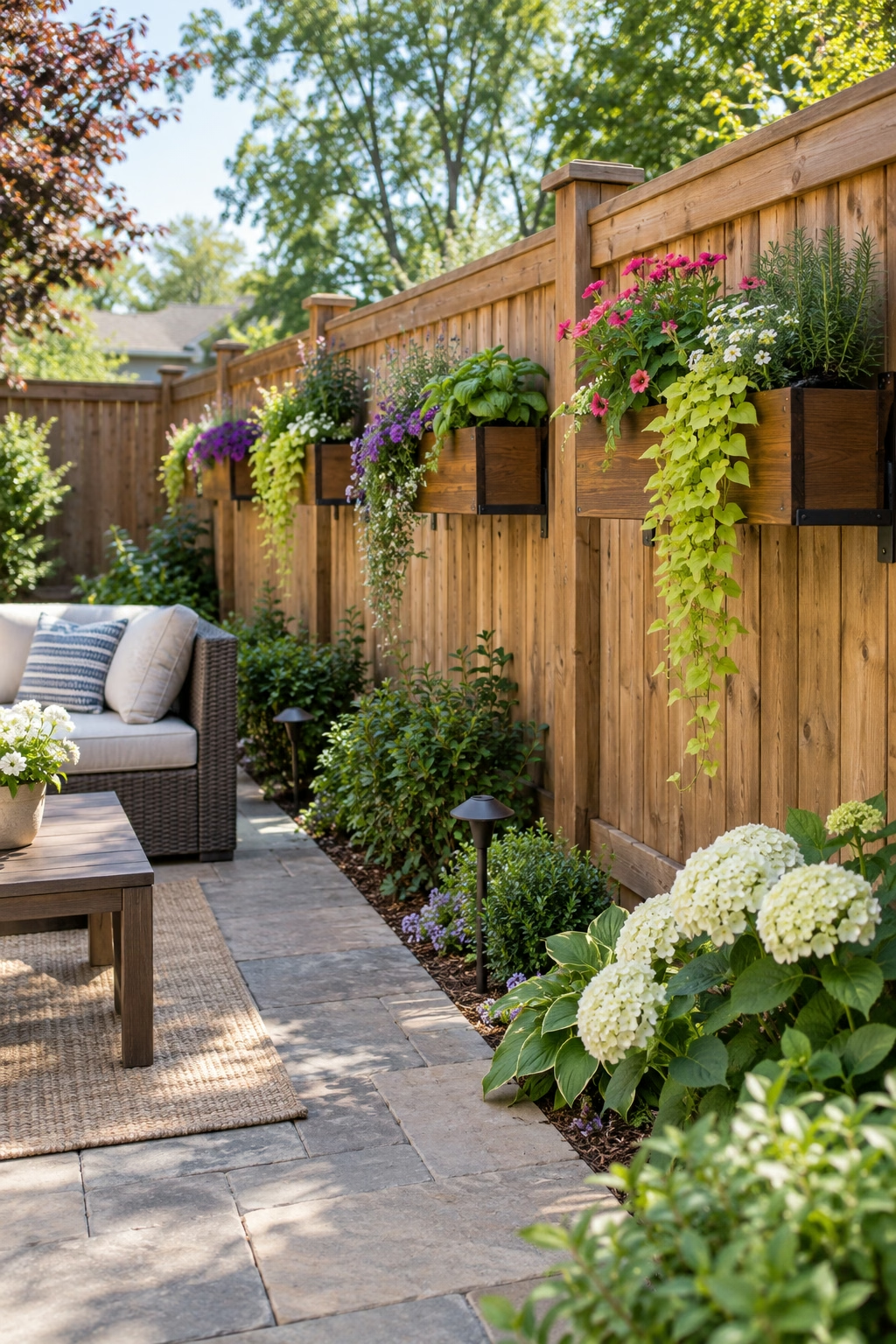
Small yards often have more usable vertical space than ground space.
Mounted planter boxes let you take advantage of the fence without sacrificing lawn or patio area. Pinterest boards devoted to fence planters show everything from simple repeating flower boxes to herb planters and small vertical gardens.
For a polished design, repeat the same planter two or three times rather than attaching many unrelated containers.
Dark planters look great against warm wood, while galvanized containers suit rustic fences. A white fence can work well with natural wood or muted green planters.
Consider the combined weight of the planter, wet soil, and mature plants before attaching anything to a fence. Drainage also matters because constant moisture against wooden boards can shorten their life.
Used carefully, planters can make a very plain fence surprisingly attractive.
21. Fence With Layered Flower Beds
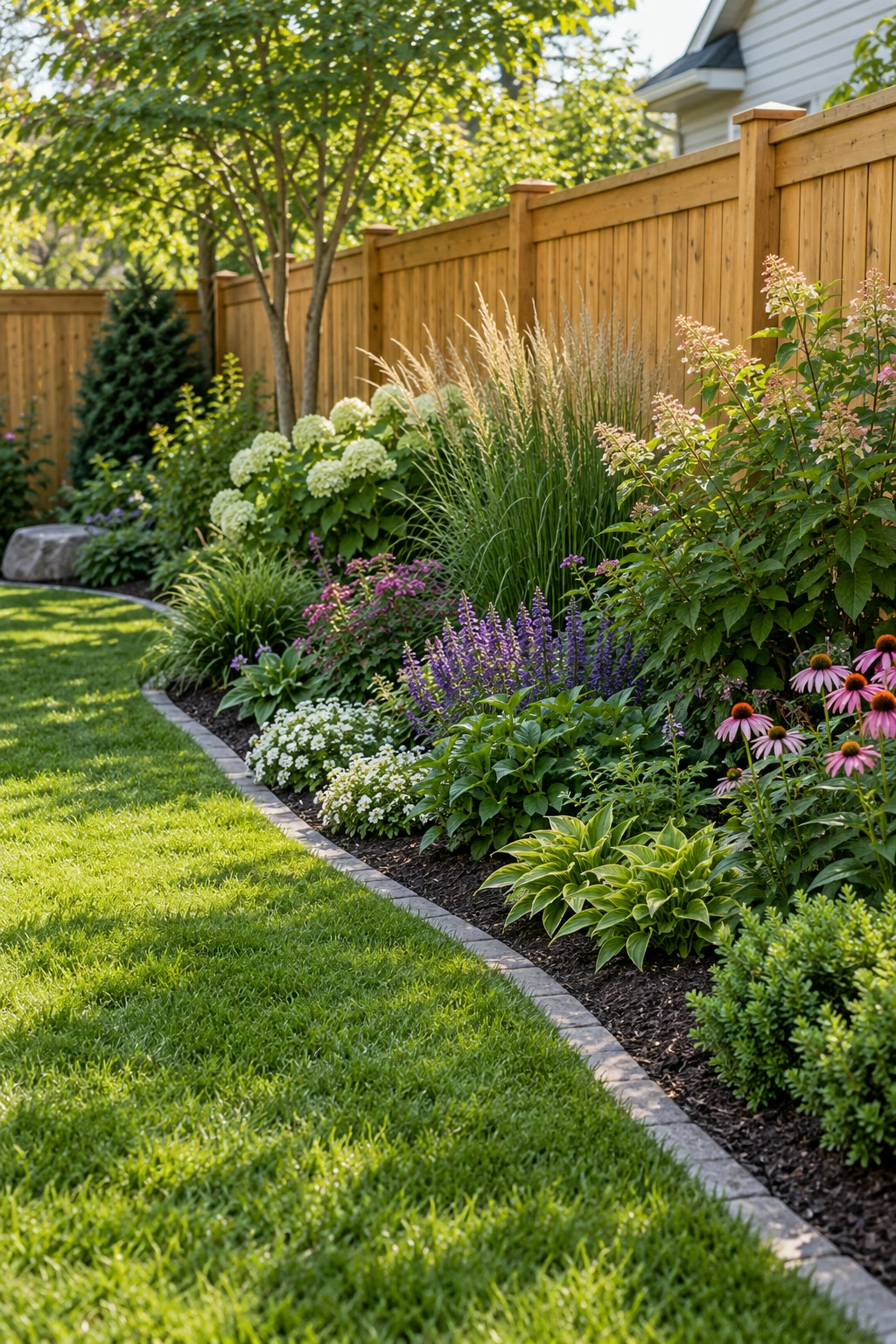
One of the easiest ways to improve an existing fence is to landscape in front of it.
Use taller shrubs or ornamental grasses toward the back, medium-height flowering plants in the middle, and shorter flowers or groundcover near the front edge.
This layering adds depth and can visually soften a large wooden or vinyl surface. Fence-landscaping guides consistently recommend planting borders as a way to make property lines feel more integrated with the garden.
You do not need dozens of plant varieties. Repeating three or four reliable plants often looks more deliberate and is easier to maintain.
Pay attention to sunlight because a bed beside a north-facing fence can behave very differently from one beside a hot, sunny boundary.
Finish with clean edging and mulch so the whole fence line looks intentional.
22. Fence With Warm Outdoor Lighting
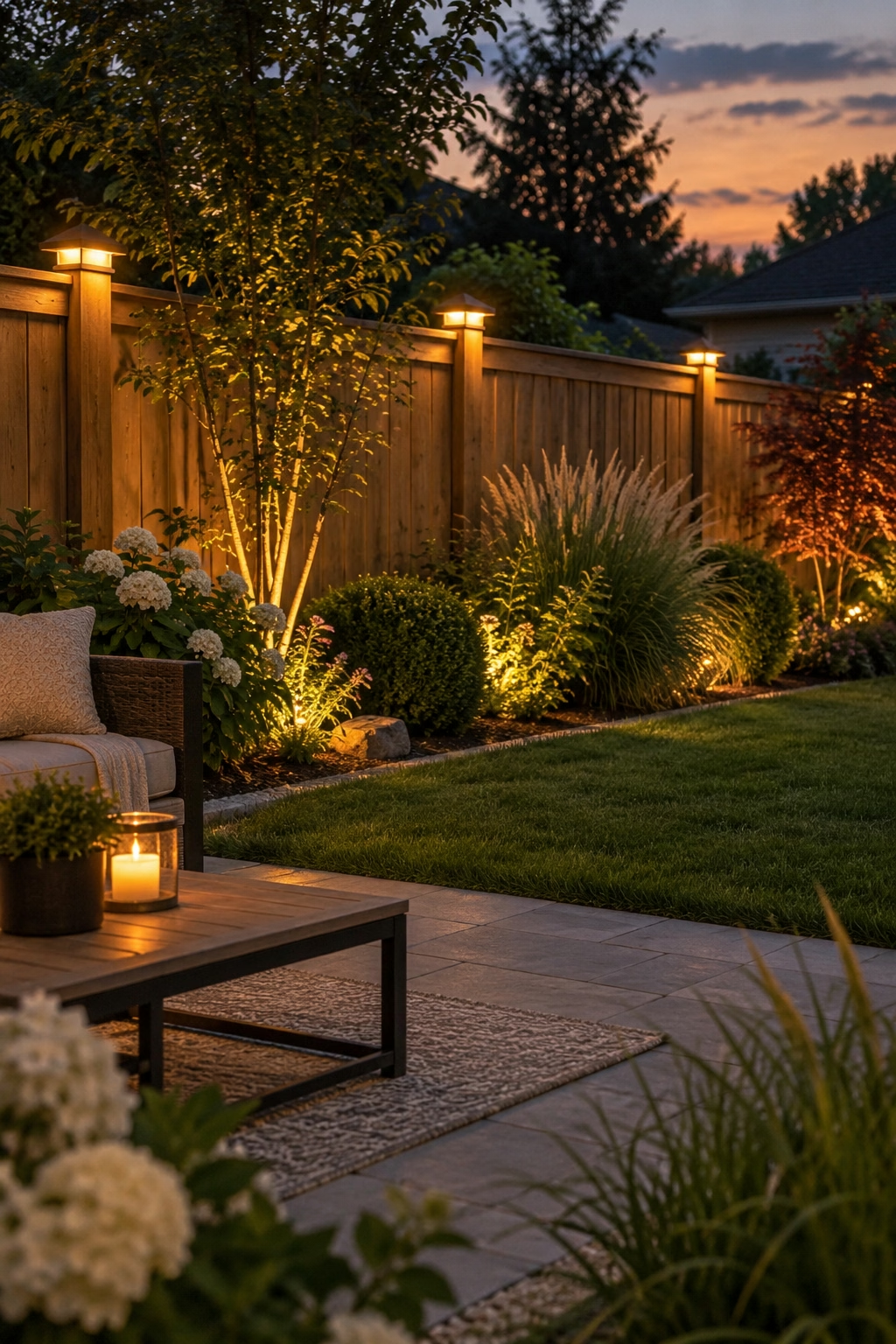
A fence does not have to disappear when the sun goes down.
Small downlights, post-cap lights, or restrained string lights can give the perimeter a warm glow and make the backyard feel more comfortable in the evening. Lighting guides commonly use fences as a surface for creating soft boundary and accent light.
The biggest mistake is usually using too much.
You do not need a bright light on every fence panel. Space fixtures evenly, highlight a few plants, or illuminate the area around a gate or seating zone.
Solar fixtures can make simple installations easier, while a properly designed low-voltage system can produce a more permanent landscape-lighting effect.
Warm, subtle light generally works better beside a patio than harsh, bright illumination.
23. Stone Columns With Wood Fence Panels
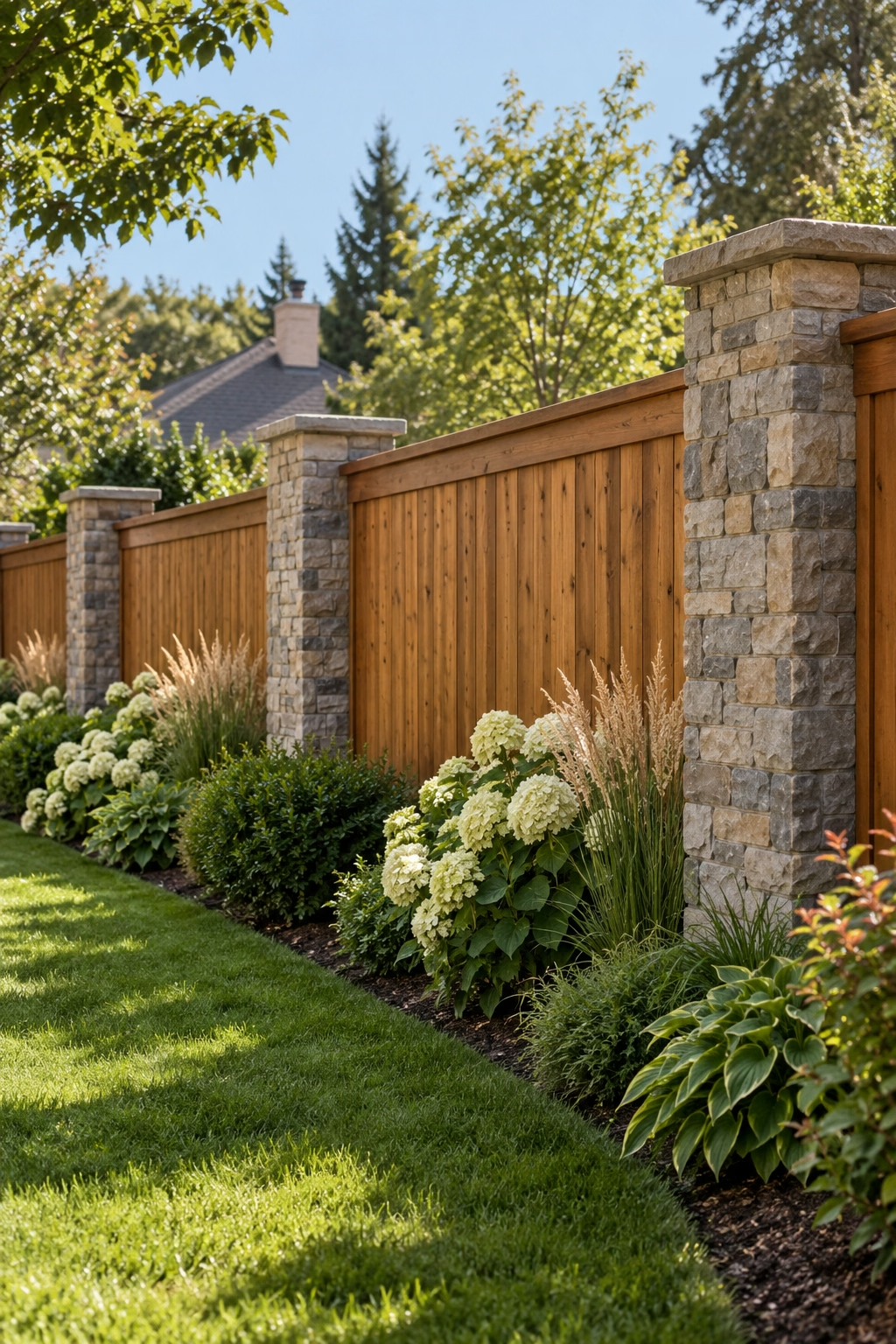
Combine masonry columns with wood panels when you want a backyard fence to feel more substantial.
Stone or brick posts can divide a long run of wood fencing into smaller sections, adding texture and making the boundary feel connected to the architecture of the house.
Choose stone that repeats something already found in the backyard, such as a retaining wall, patio fireplace, outdoor kitchen, house foundation, or paving.
Between the columns, keep the wood panels relatively simple. Vertical cedar boards work well for traditional homes, while horizontal boards give the same concept a more contemporary appearance.
This is usually more expensive and construction-heavy than a standard wood fence, so it makes the most sense when the fence is intended to become a long-term architectural part of the property.
24. Gabion and Wood Accent Fence
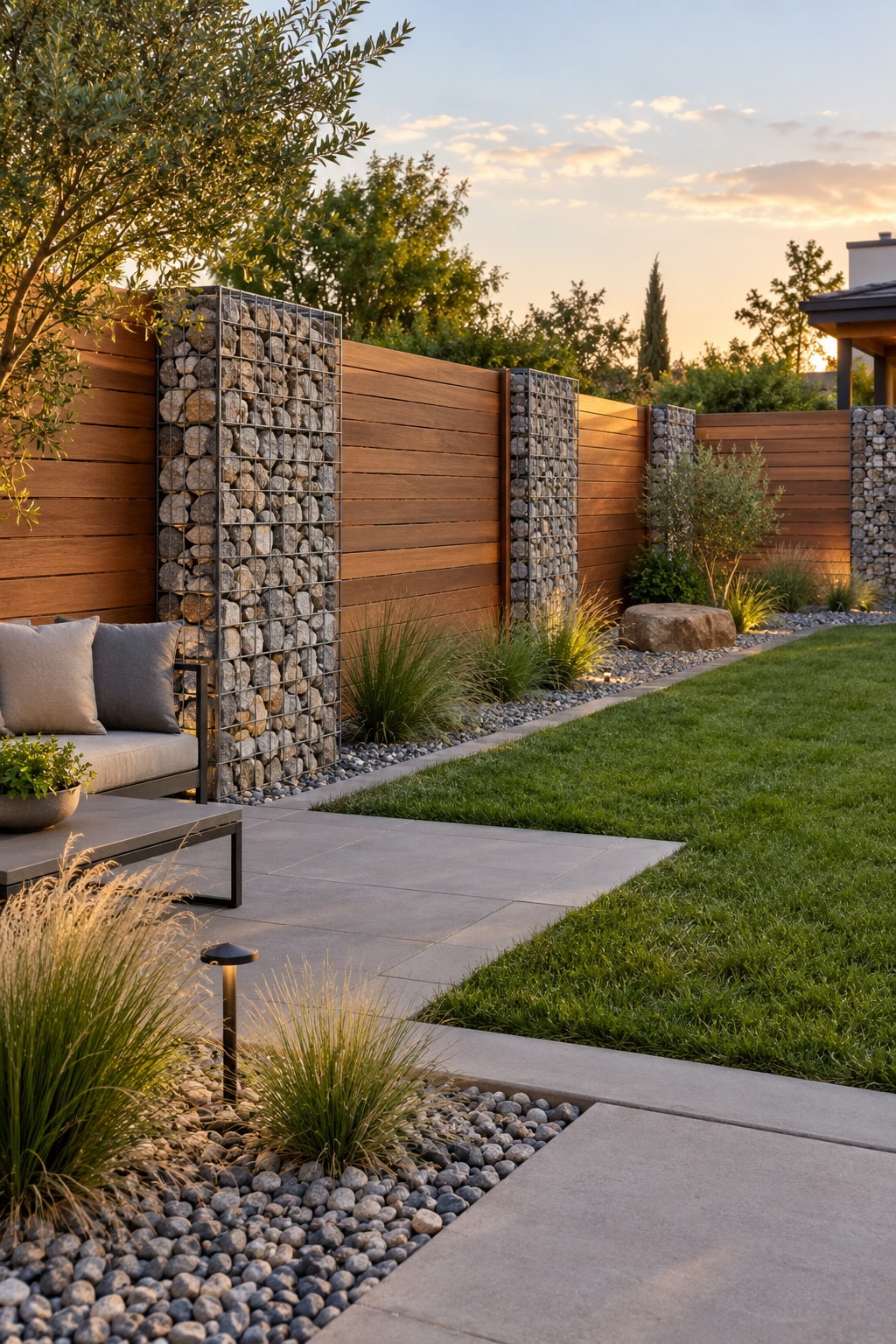
A gabion is essentially a metal cage filled with stone. Used carefully, a short gabion section can become a striking part of a modern or rustic fence.
Instead of building the entire boundary from stone cages, use them as occasional columns or feature sections between wood panels.
The contrast is what makes this idea work. Rough stone provides weight and texture, while wood keeps the fence from feeling industrial.
Horizontal wood boards, gravel paths, ornamental grasses, and simple native planting all pair nicely with this design. Contemporary fence inspiration often combines gabion elements with timber for the same reason.
Because filled gabions are very heavy, their construction, foundation, drainage, and location need to be properly planned rather than treated as lightweight decorative panels.
25. Stepped Fence for a Sloped Backyard
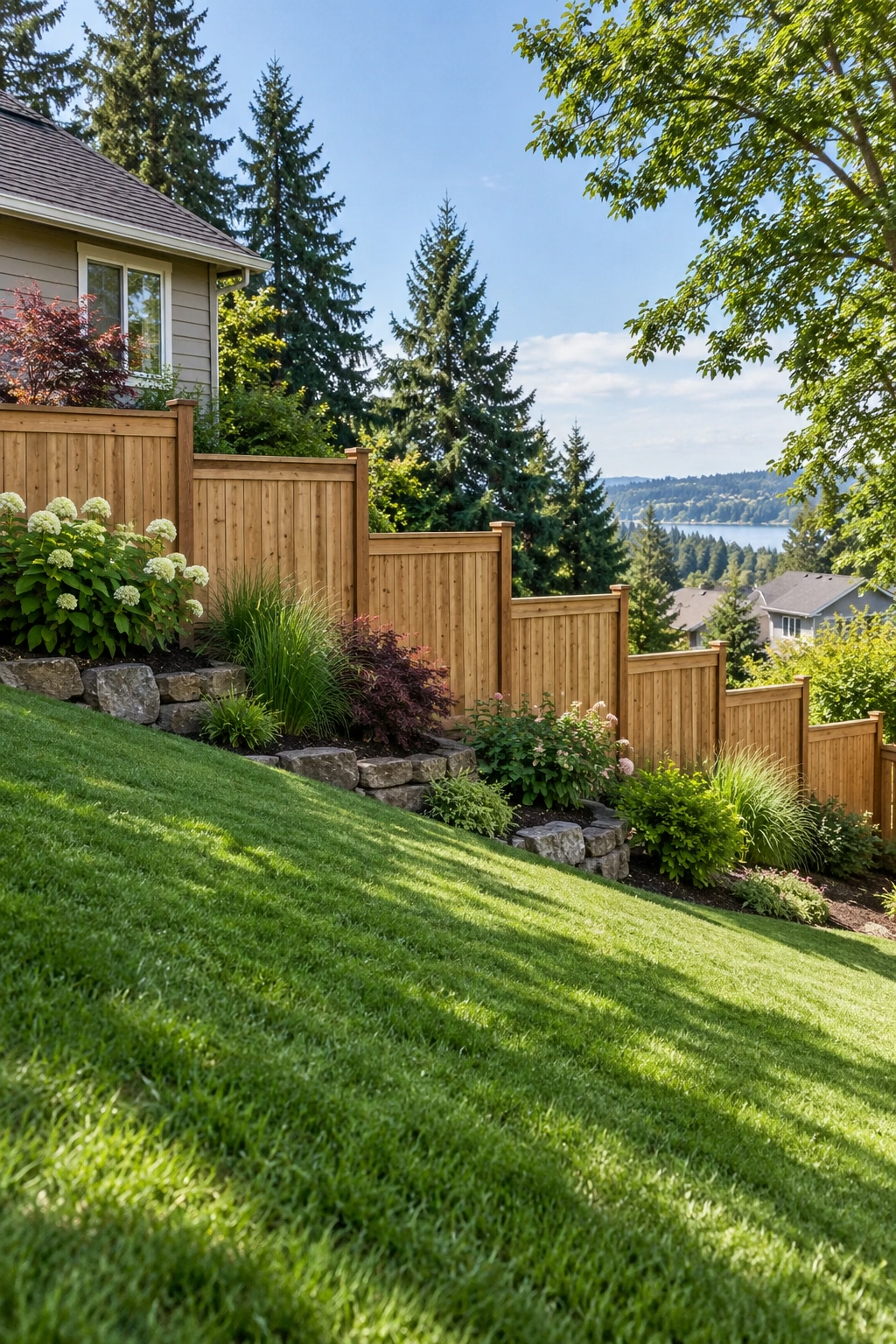
A sloping yard does not mean the fence has to look awkward.
One common solution is a stepped fence. Each panel remains level, but the panels drop gradually as the ground slopes downward, creating a staircase effect.
Another approach is racking, where compatible fencing follows the slope more continuously while the pickets remain vertical. Which method works best depends on the fence material, slope, layout, and how much space can remain beneath the panels.
The stepped look can actually become a design feature. Plant low shrubs, grasses, or perennial beds alongside the changing levels so the garden visually connects the steps.
If pets need to remain inside the yard, pay special attention to triangular gaps that can form below stepped panels.
A good slope installation should respond to the terrain rather than pretending the yard is flat.
26. Privacy Fence Around the Patio Instead of the Whole Yard
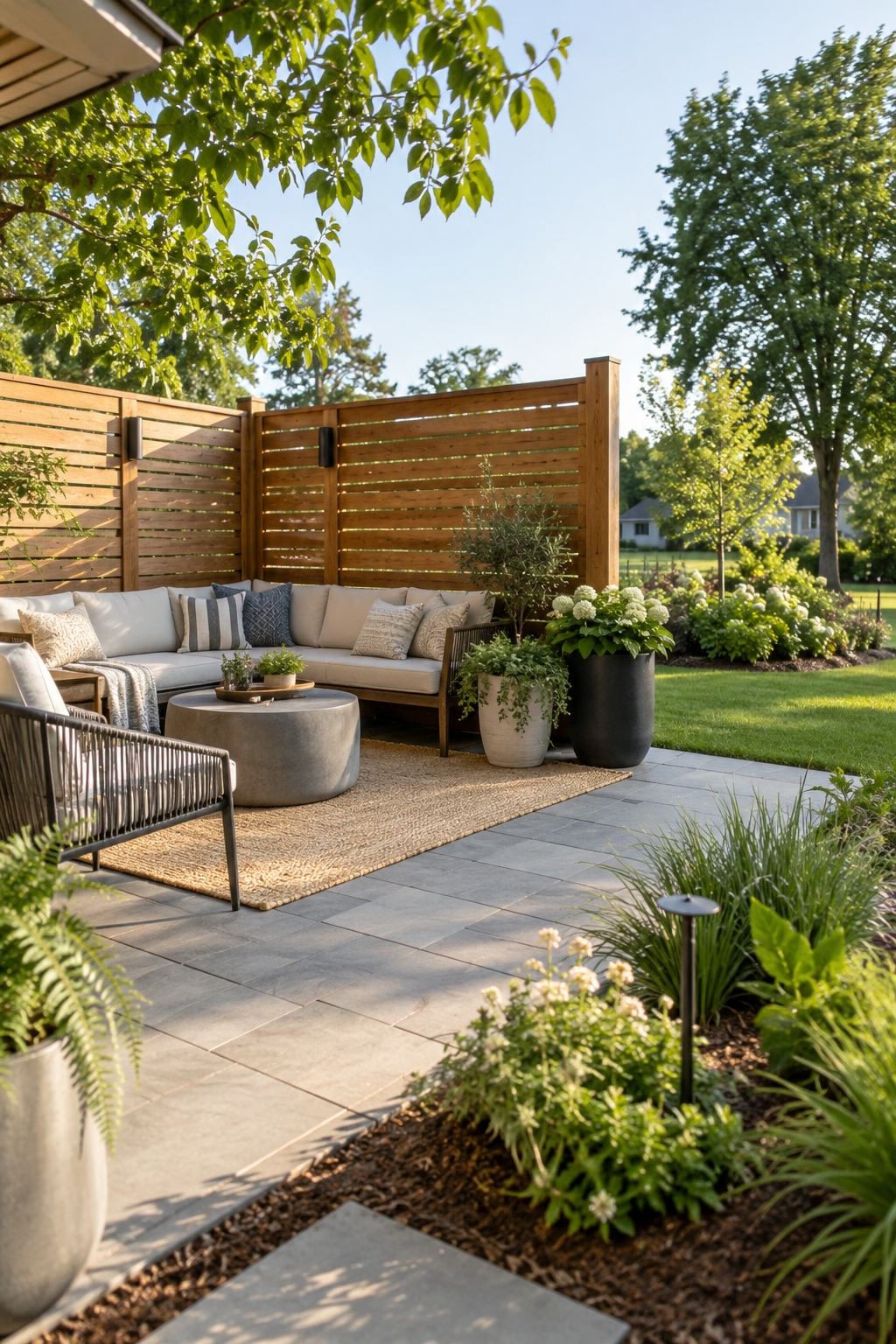
You may not need six-foot privacy fencing around the entire property.
If the real problem is that your patio or dining area is visible from one neighbor’s window, create a targeted privacy screen around that space instead.
A few horizontal wood panels, lattice screens, slatted panels, or trellises can form a protected corner while leaving the rest of the backyard open.
This strategy is especially useful in small yards because it addresses the unwanted sightline without enclosing every side of the property. Privacy-design guidance increasingly emphasizes screening specific views rather than automatically creating one continuous wall.
Add climbing plants, large planters, or a narrow planting bed around the screen to help it blend into the garden.
The result can feel like an outdoor room instead of a fenced-in box.
27. Match the Fence With a Beautiful Garden Gate
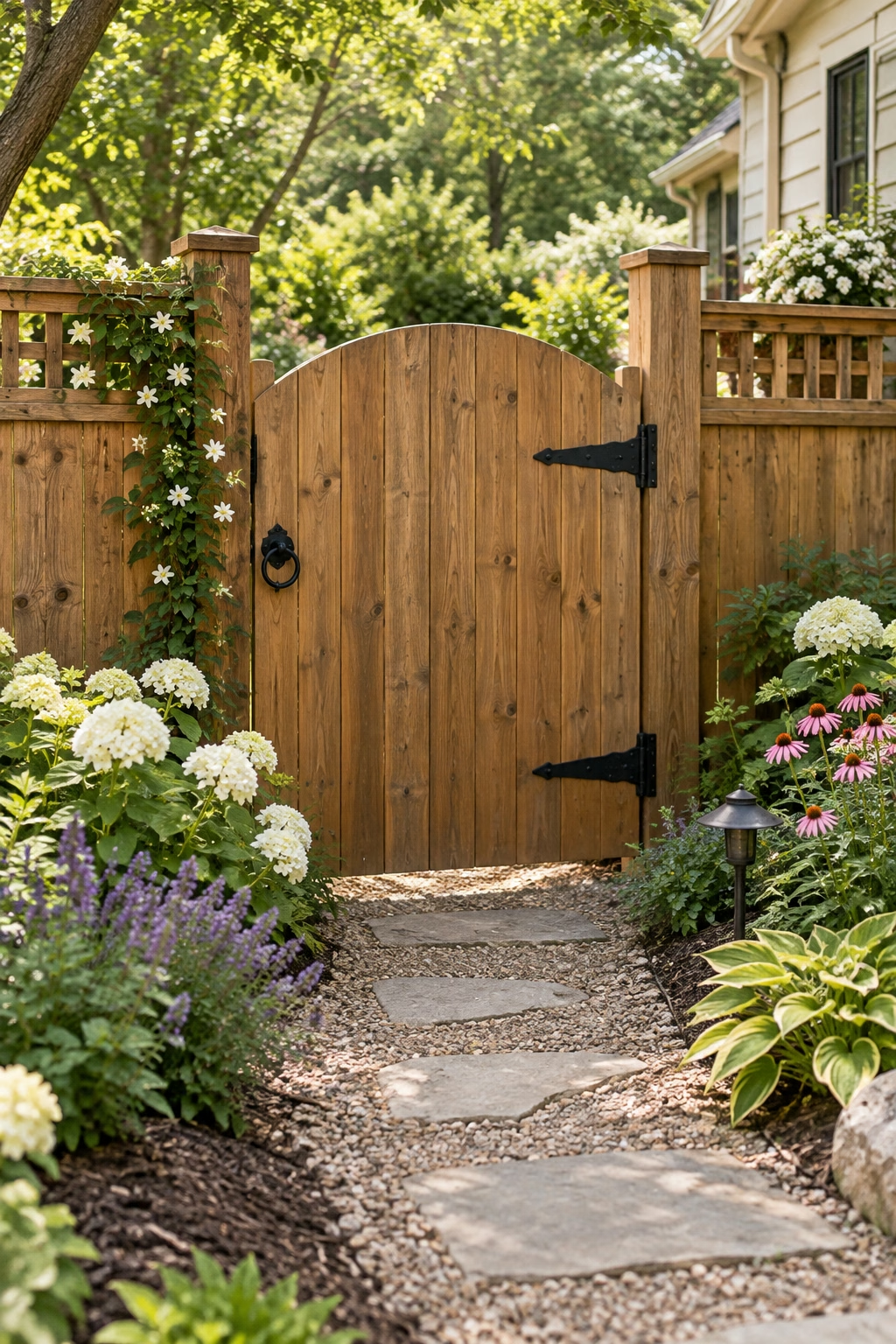
The gate is often the part of the fence you see and use most, so it deserves the same attention as the panels.
A simple matching gate is usually better than adding something completely unrelated.
With horizontal fencing, continue the same horizontal boards across the gate. With a cottage picket fence, use a matching picket gate. For a cedar privacy fence, a sturdy framed wood gate with black hardware creates a clean finish.
You can make the entrance more inviting with a short path, two pots, low planting, or a small arbor if it suits the garden.
Pay attention to the hardware too. Hinges, handles, and latches should feel substantial enough for the size and weight of the gate.
When the gate, fence, landscaping, and path all feel connected, the backyard looks planned rather than assembled one project at a time.
How to Choose Between These Backyard Fence Ideas
Start with what the fence actually needs to do. Complete privacy may point you toward board-on-board wood, solid cedar, vinyl, composite, or another closed-panel design. If you want privacy without completely blocking air and light, a shadowbox fence, lattice top, trellis, or strategically placed screen may work better. If the view beyond your property is attractive, an open aluminum, wire, picket, or split-rail fence may make more sense than a solid wall.
Then look at the house. Modern homes usually work naturally with horizontal boards, black metal frames, composite panels, and simple landscaping. Cottage and traditional homes are easier to pair with vertical wood, lattice, pickets, climbing plants, and flower borders. Rustic properties can handle split rail, wire, stone, natural cedar, and corrugated metal.
Finally, think beyond the fence itself. Some of the most attractive backyard fence ideas are actually simple fences surrounded by good landscaping. A narrow planting bed, two or three climbing plants, repeating planters, raised beds, or subtle lights can turn an ordinary property boundary into one of the best-looking parts of your backyard.


