
Walk down almost any street in late spring and one house stands out: the one where a sweep of color curves along the lawn, tall blooms sway above low mounds, and a clean edge makes the whole yard look cared for. That kind of bed rarely happens by accident.
A good flower bed does more work than its size suggests. It frames the house, hides awkward corners, feeds bees and butterflies, and gives you something new to notice every few weeks. Better yet, most of the magic comes from smart choices about shape, edging, plant pairings, and color rather than from expensive plants.
These 27 flower bed ideas cover all of that, from stone edging and texture-rich plant combinations to spring bulb layers, color schemes, wildlife beds, and fixes for shade, slopes, and soggy spots. Pick one to refresh an existing bed or combine a few to plan a brand-new one.
1. Edge a Curving Bed With Natural Stone
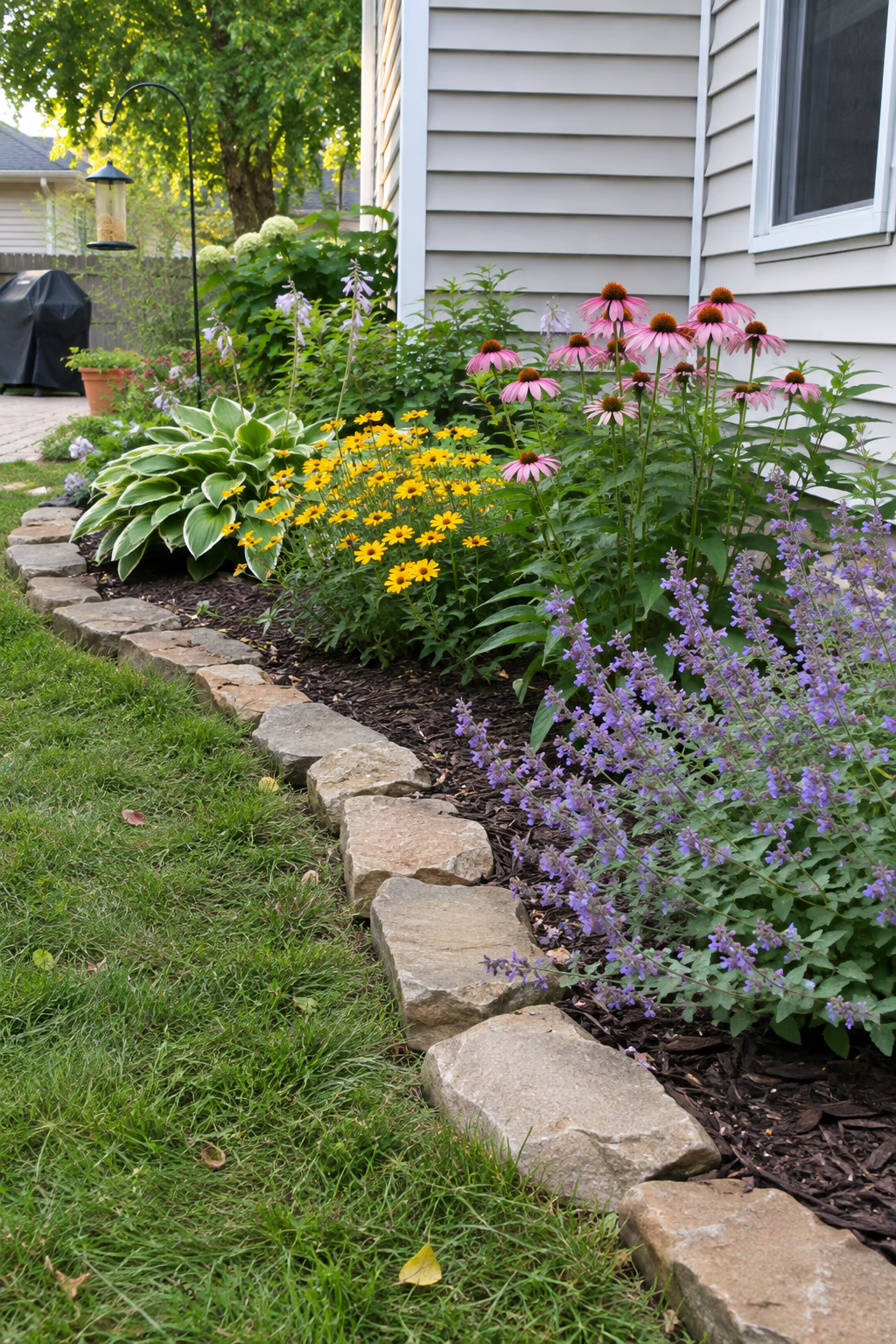
A soft line that looks finished from day one
Lay a garden hose on the lawn to sketch a gentle, flowing curve, then mark it with landscape paint and dig a shallow trench about 4 inches deep along the line. Set flat fieldstone, flagstone, or rounded river stones into the trench on a thin bed of sand so each piece sits snug against its neighbor.
Broad, lazy curves look natural and are easy to mow along, while tight wiggles look fussy. Natural stone also ages well, picking up moss and weathering in a way plastic or metal edging never does.
Stone is heavy and priced by the ton, so buy from a local stone yard and ask for pieces roughly the same thickness. Leave a narrow mowing strip or set stones flush with the soil if you want to run the mower wheel right over them.
2. Pair Coneflowers With Swaying Ornamental Grasses
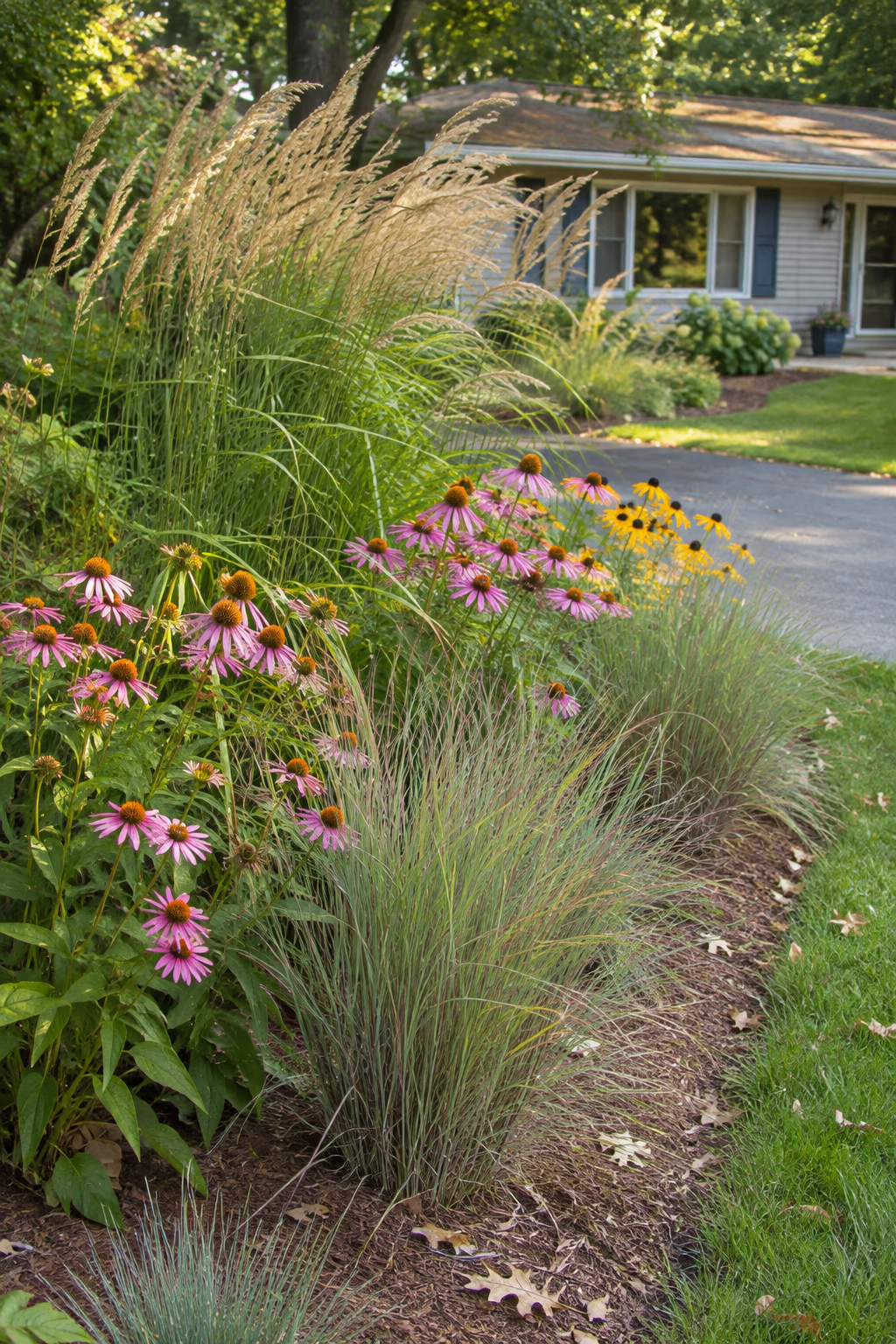
Bold daisies and fine blades make perfect partners
Plant purple coneflower in groups of three or five, then weave clumps of little bluestem, prairie dropseed, or feather reed grass between them. Add black-eyed Susan or a few drumstick alliums if you want more color, keeping the palette to two or three hues.
The combination works because of contrast. Coneflowers bring big, flat flowers and strong stems, while grasses add fine texture and movement that catches the light on breezy afternoons. Both are tough in full sun and tolerate summer heat once established.
Leave the seed heads standing in fall. Goldfinches pick at the coneflower cones, and the tan grasses look striking with frost on them. Cut everything back in late winter, before new growth starts. Skip Mexican feather grass in regions where it self-seeds aggressively.
3. Layer Tulips and Daffodils for a Big Spring Show
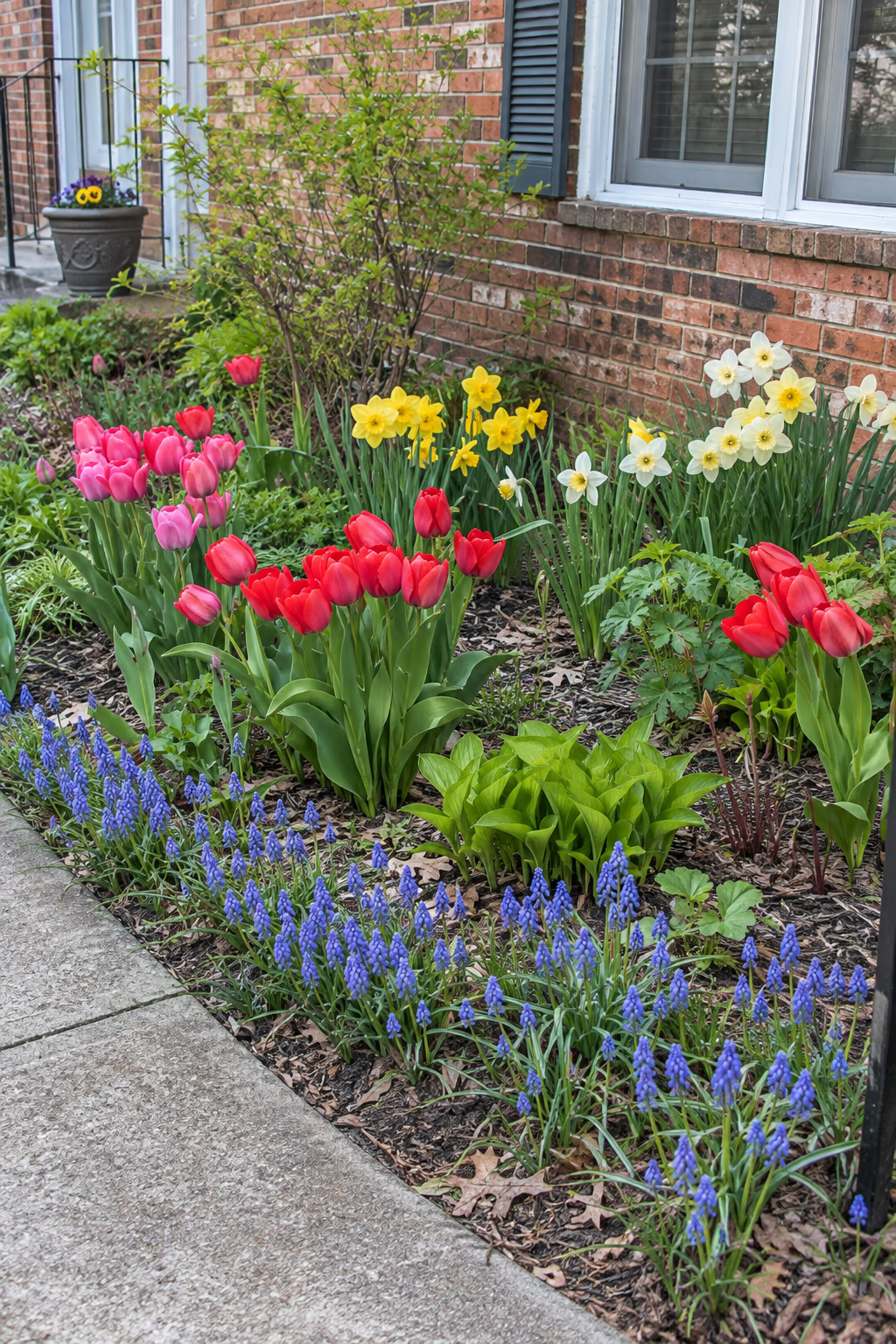
One fall planting session, weeks of spring color
Bulb layering, sometimes called lasagna planting, stacks several types in the same hole. Dig out an area about 8 inches deep, set daffodils or large tulips at the bottom, cover with a few inches of soil, add hyacinths, then finish with crocus or grape hyacinth just 3 to 4 inches down.
Each layer blooms in turn, so the bed flowers from early spring into May instead of peaking for a single week. Planting dozens of bulbs close together, rather than in single-file rows, gives that full, generous look you see in public gardens.
Plant in fall once soil cools, usually October or November in much of the country. Deer and squirrels love tulips but tend to leave daffodils alone, so lean on daffodils if wildlife is a problem, and let the foliage yellow naturally before cutting it back.
4. Turn Up the Heat With a Red, Orange, and Gold Bed
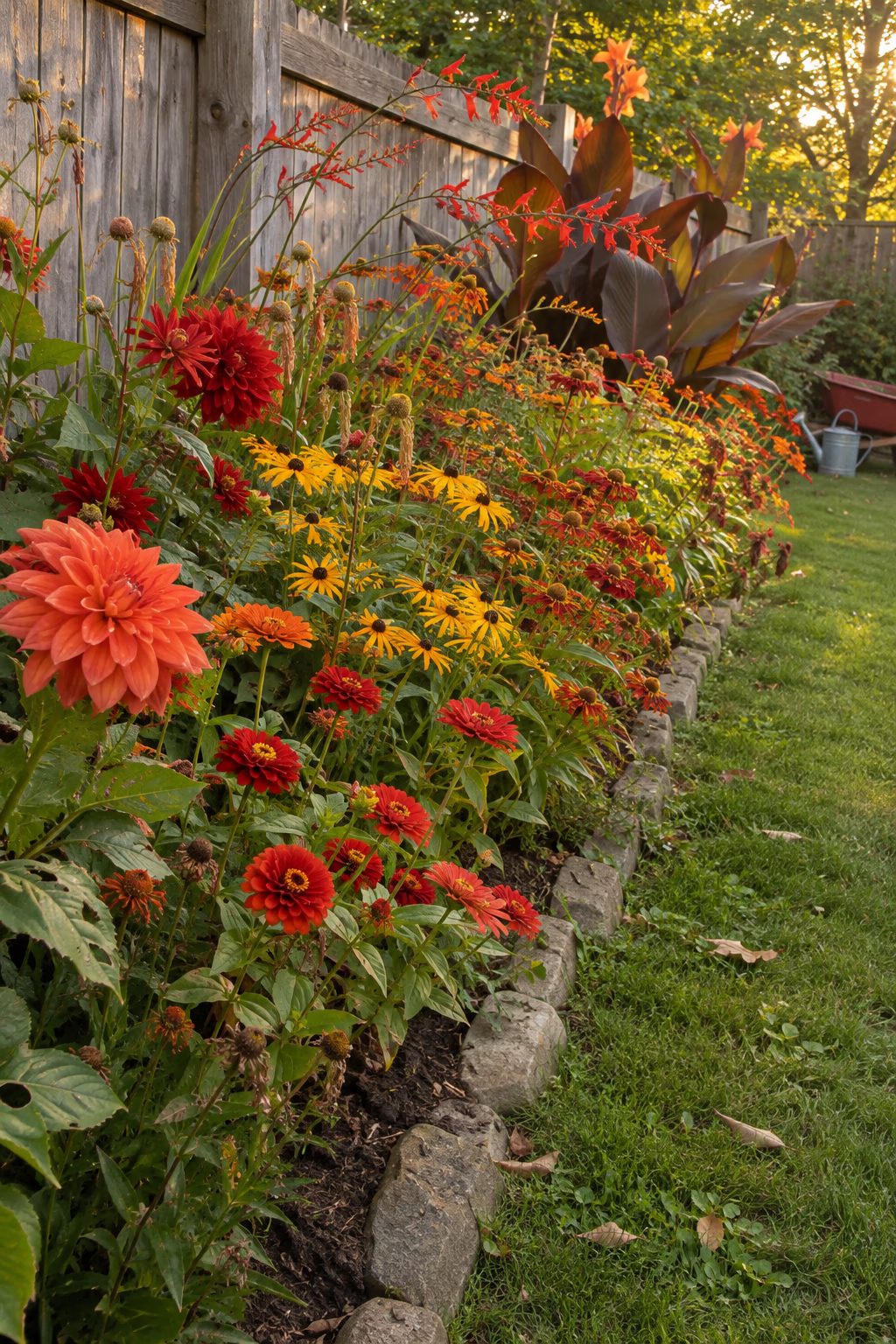
A sunny bed that glows from midsummer into fall
Build a hot-color scheme with dahlias, zinnias, helenium, rudbeckia, crocosmia, and lantana. Bronze-leaved plants such as canna or dark-leaved dahlias deepen the look and keep it from feeling flat.
Warm colors advance visually, so a hot bed reads boldly from across the yard and makes a large lawn feel cozier. Many of these plants peak in the second half of summer, just when spring-flowering beds start to fade.
Dahlias, cannas, and crocosmia are not winter hardy in colder zones. North of roughly Zone 7, dig the tubers or corms after the first frost and store them in a cool, dry spot, or treat them as annuals.
5. Set Deep Purple Blooms Against a Charcoal Fence
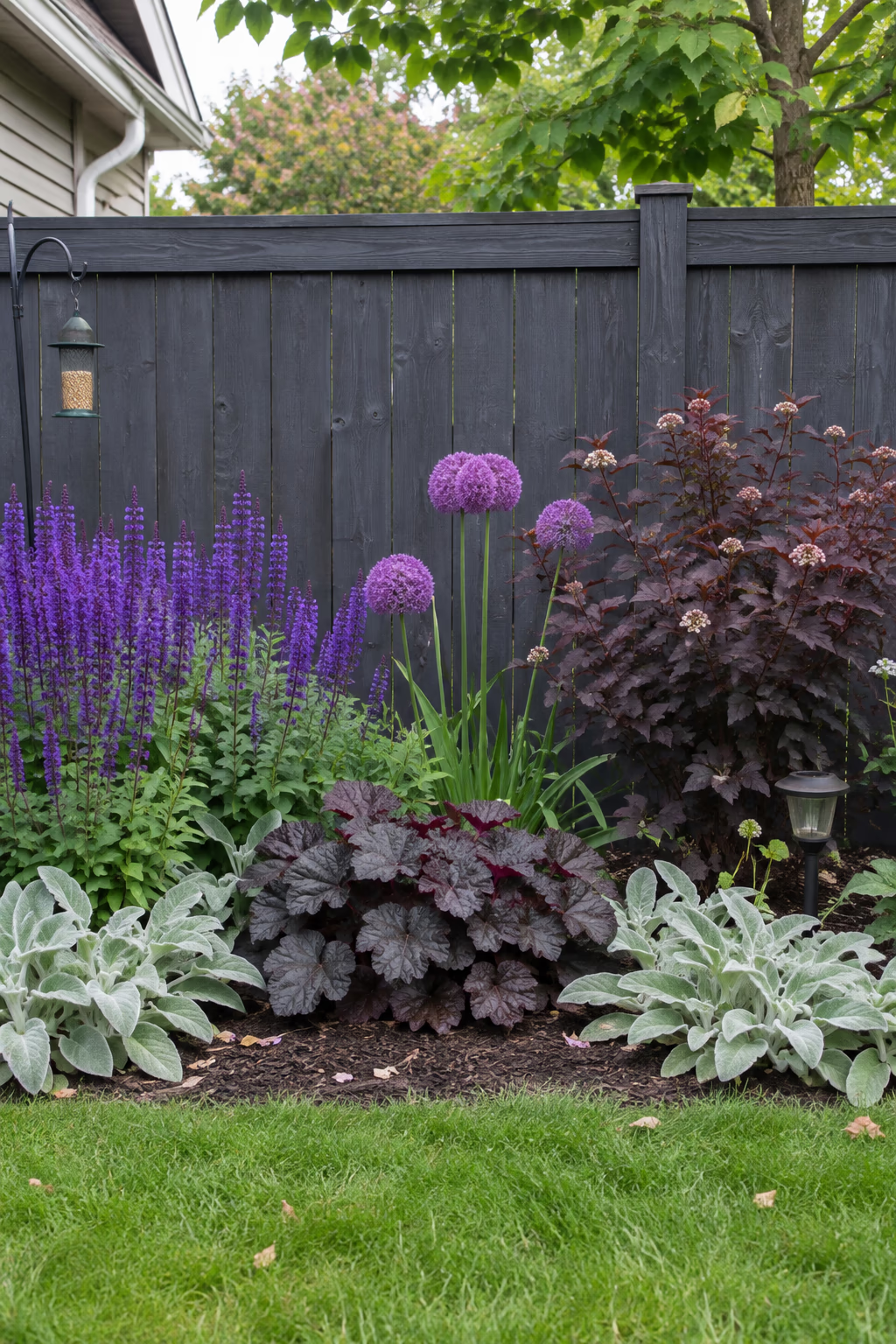
Moody colors with a modern edge
Paint a plain wood fence or shed wall in a dark charcoal or soft black, then fill the bed in front with deep purple salvia, dark-leaved ninebark, purple smoke bush, near-black heuchera, and allium. A few silver plants like lamb’s ears or artemisia keep the scheme from getting too dark.
A dark backdrop makes greens look richer and makes bright or deep flowers pop forward, much like a black picture frame. It also hides an aging fence and gives an ordinary yard a designer feel for the cost of a few gallons of exterior stain.
Very dark colors can disappear in deep shade, so this idea works best in sun or part sun. Check HOA rules before painting a fence that faces the street or a neighbor.
6. Punctuate a Perennial Bed With Clipped Evergreen Balls
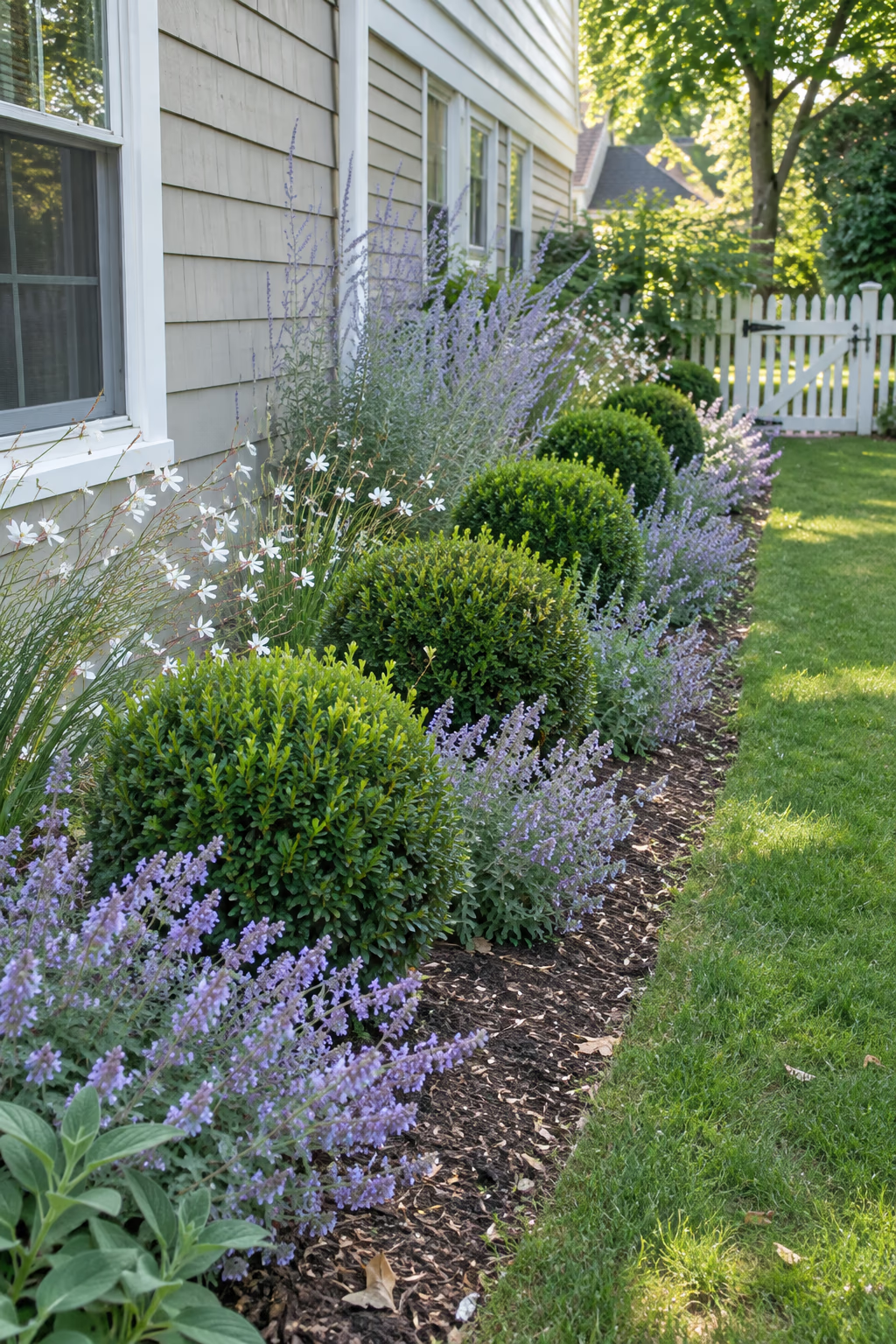
Year-round structure that tames loose planting
Space three to five small, rounded evergreens through a bed of airy perennials such as catmint, salvia, gaura, and Russian sage. Repeat the same shrub at regular intervals so the eye moves along the bed in a steady rhythm.
The clipped shapes give the bed a backbone that holds up in winter when the perennials are cut back, and they make a relaxed planting look intentional rather than messy. This structured look fits right in with the shift toward tidier, more organized beds.
Boxwood is the classic choice, but boxwood blight and box tree moth are problems in some areas. Inkberry holly, dwarf yaupon holly, or compact Japanese holly can be sheared into similar mounds. Trim once or twice a year with sharp hand shears.
7. Terrace a Slope With a Stone Retaining Wall Bed
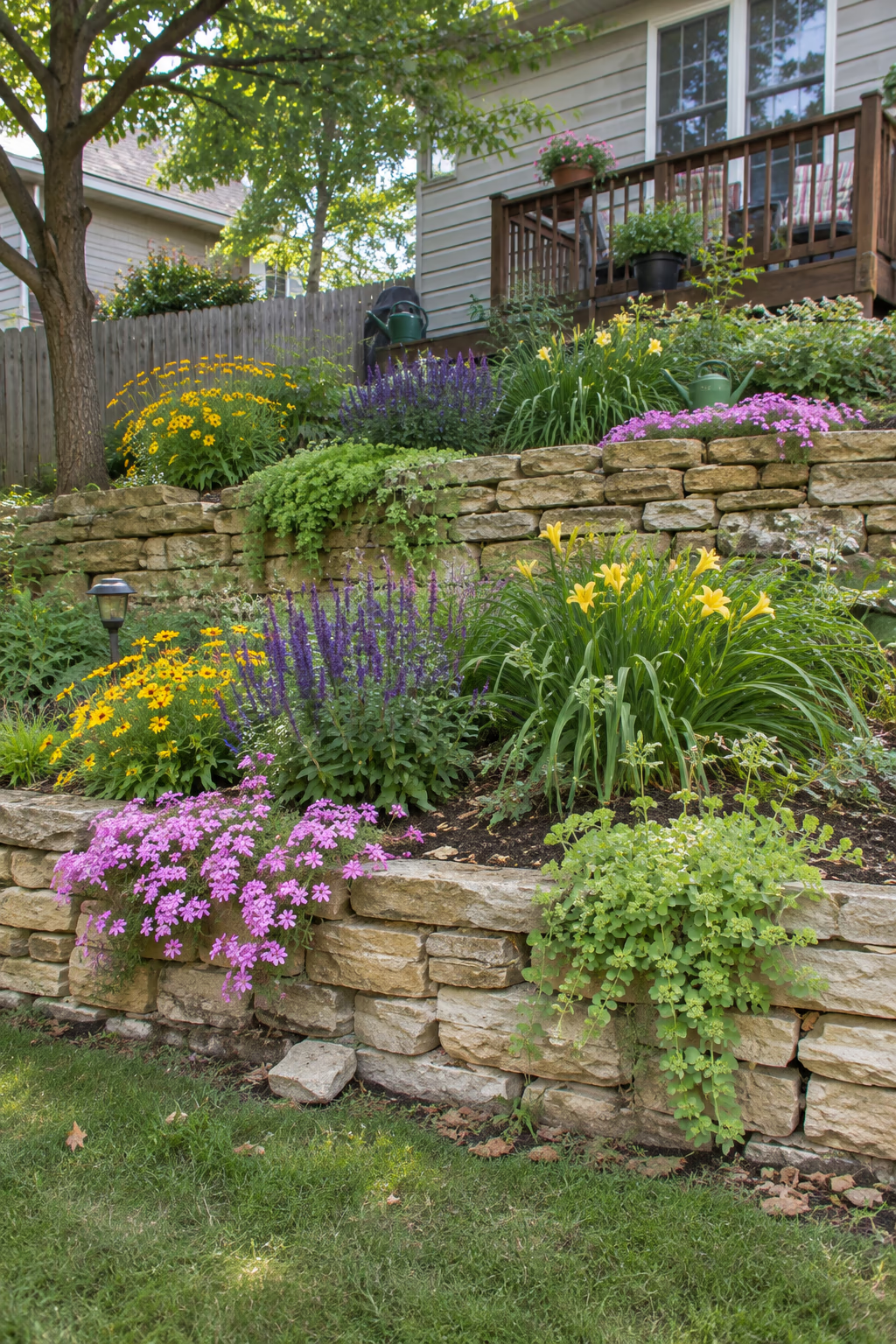
Turn a hard-to-mow hill into tiers of color
On a sloped yard, build one or two low retaining walls from natural stone or interlocking concrete wall block and backfill behind each with good soil to create level planting shelves. Trailing plants like creeping phlox, sedum, or catmint can spill over the face of the wall.
Terraces stop soil and mulch from washing downhill, make planting and weeding easier, and turn a slope that was a chore to mow into the most eye-catching part of the yard.
Keep walls low, generally under 3 feet, and include gravel backfill and drainage behind them. Taller walls often need permits and engineering, and in the US you should call 811 before digging to locate buried utility lines.
8. Plant a Fragrant Bed Beside the Patio
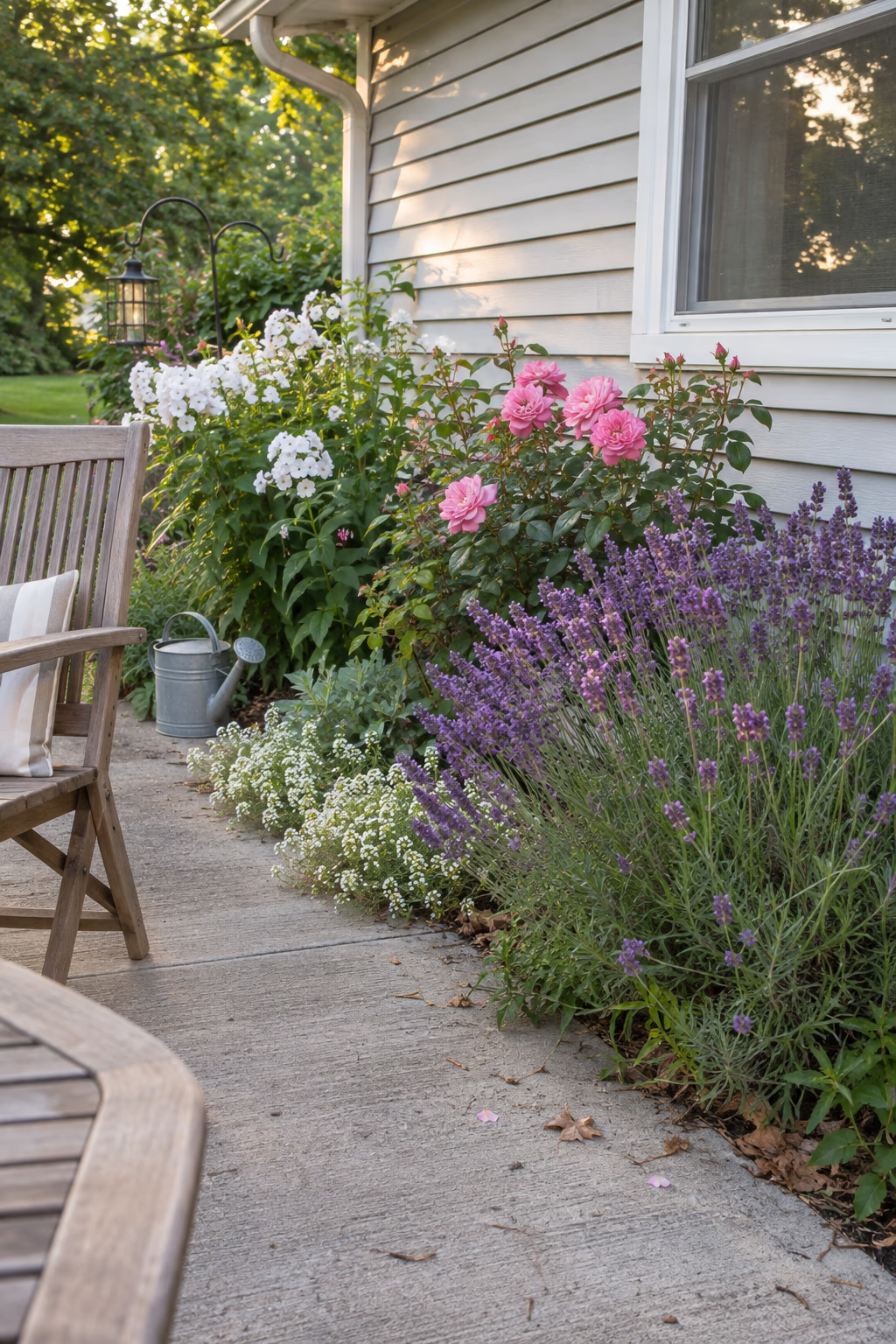
Put the scent where you actually sit
Line the edge of a patio or deck with plants that smell as good as they look: lavender, garden phlox, peonies, old-fashioned roses, and sweet alyssum, with flowering tobacco or stock for evening fragrance.
Scent travels only a few feet on a still day, so a fragrant bed far out in the yard is easy to miss. Placing it beside seating, a doorway, or a path means you brush past the plants and enjoy them every time you step outside.
Lavender needs full sun and very sharp drainage and often struggles in heavy clay or humid summers. Plant it in a raised edge or gritty soil, and avoid plants that draw lots of bees right beside a dining table if anyone in the family is allergic to stings.
9. Light Up Evenings With a White Moon Garden Bed
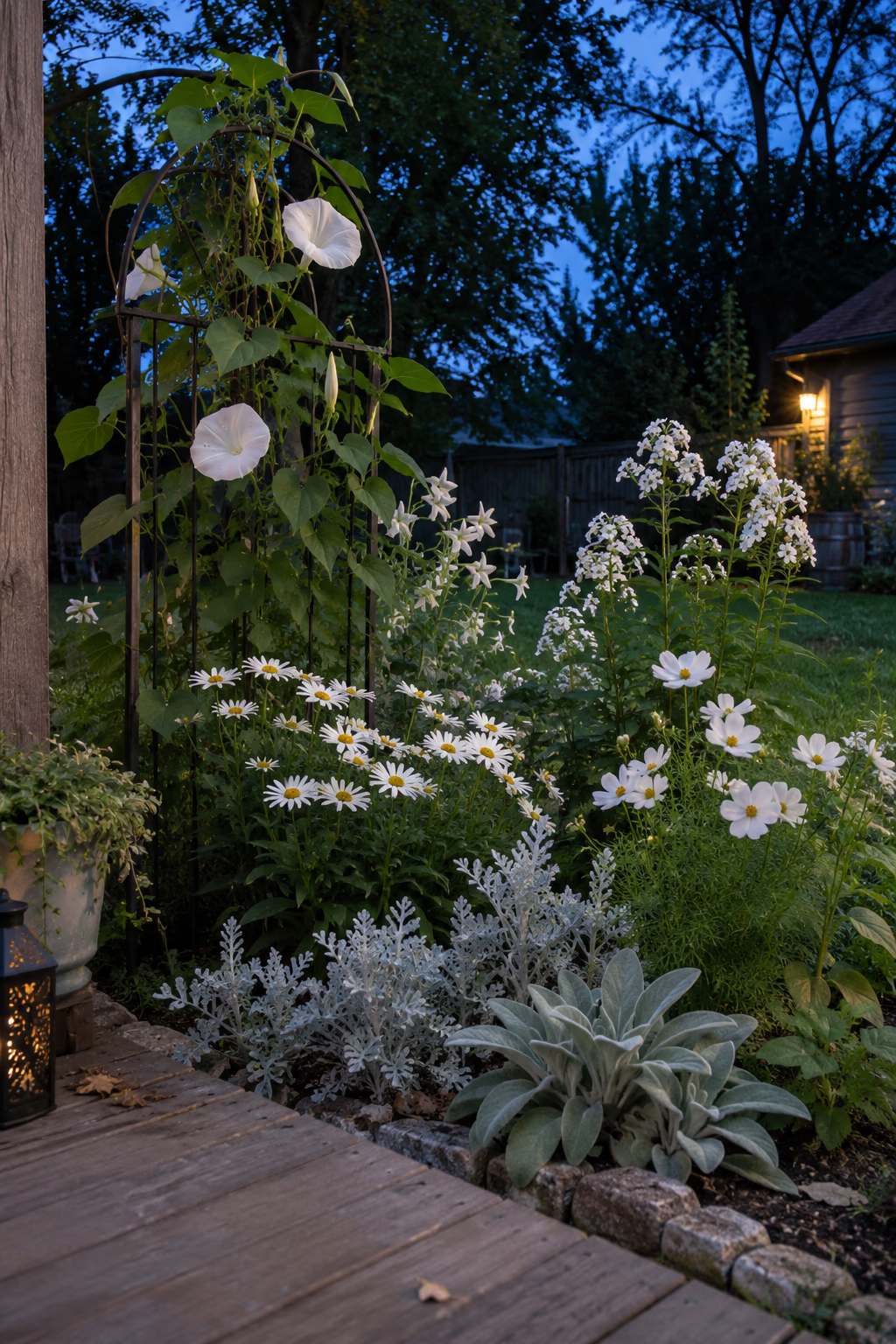
Blooms that glow after the sun goes down
Choose white and pale flowers like Shasta daisy, white garden phlox, white cosmos, flowering tobacco, and moonflower vine on a simple support, then add silver foliage such as dusty miller or lamb’s ears.
White and silver reflect the last of the daylight and any moonlight, so the bed seems to float in the dark long after colorful flowers fade to gray. It is ideal near a patio where you spend summer evenings.
Moonflower is a tender annual vine in most of the US and its seeds are toxic, so keep it away from children and pets. Deadhead white blooms often, since spent white flowers turn brown and show quickly.
10. Fill a Shady Bed With Hostas, Ferns, and Bold Foliage
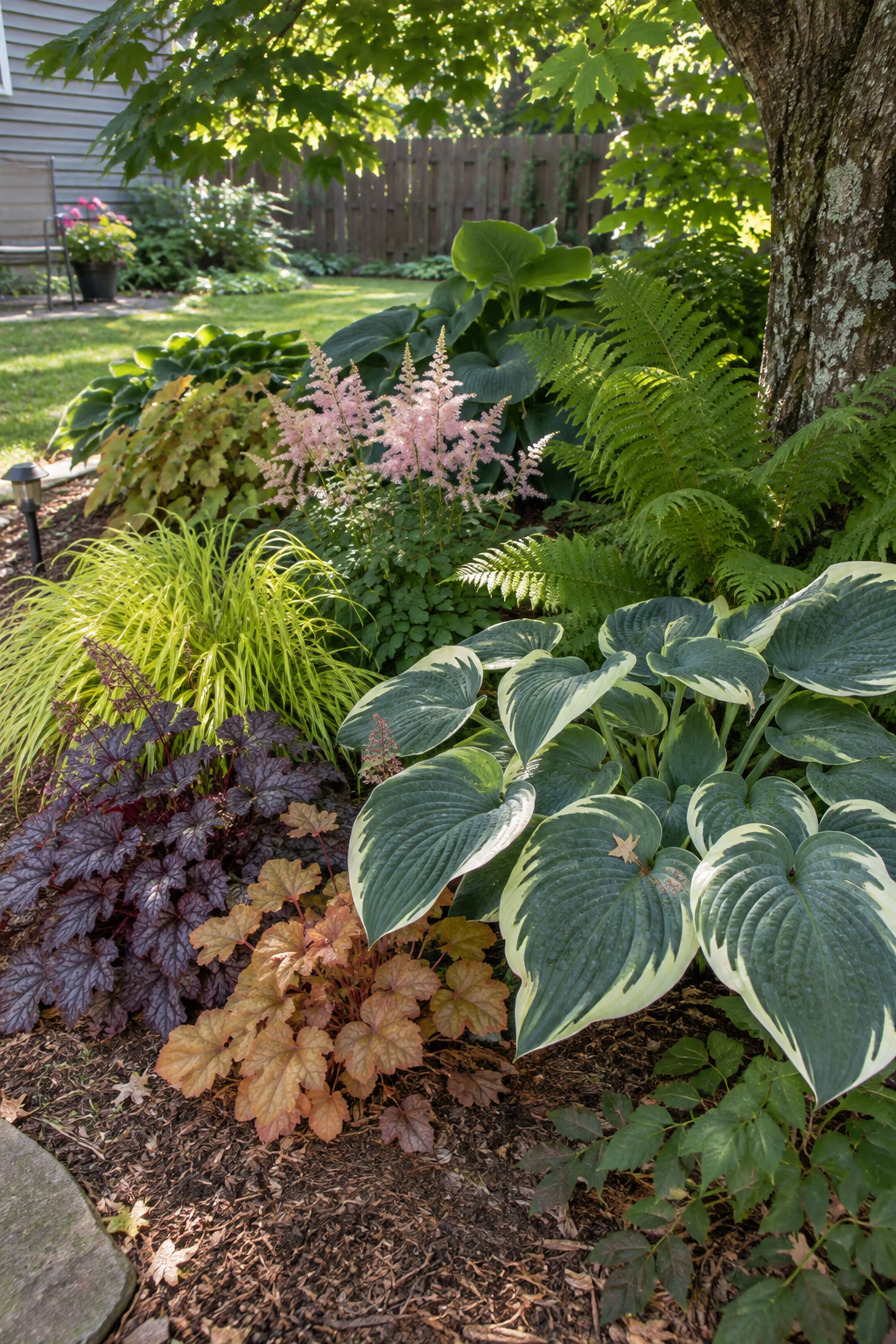
Texture carries the show when flowers are scarce
In a bed that gets less than four hours of sun, combine large-leaved hostas with lacy ferns, ruffled heuchera, golden Japanese forest grass, and spring-flowering brunnera or hellebores. Astilbe adds feathery plumes in early summer.
Shade beds rely on contrast in leaf size, shape, and color. Chartreuse and variegated leaves brighten dim corners, and the layered foliage looks good from spring through fall even when little is blooming.
Deer and slugs both love hostas. If deer visit your yard, lean more on ferns, hellebores, and brunnera. Under mature trees, soil is often dry and root-filled, so water new plants faithfully during their first summer.
11. Plant in Big Drifts Instead of Single Plants
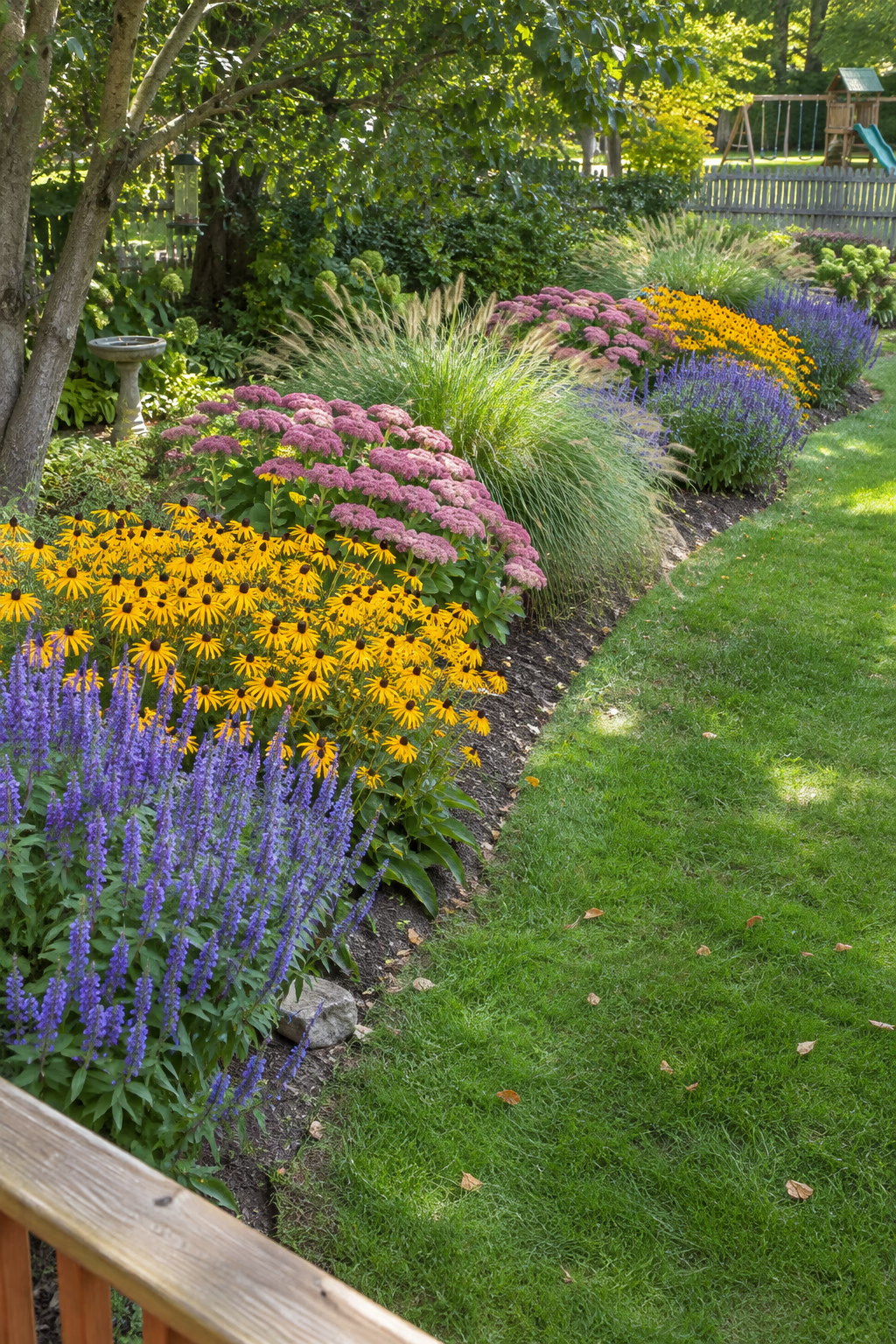
Fewer kinds of plants, much bigger impact
Instead of buying one of everything, choose five to seven varieties and plant each in a sweeping group of 5, 7, or more. Let the drifts overlap slightly at their edges, like brushstrokes, and repeat one or two of them further down the bed.
Repetition is what makes a bed look designed. Large masses of one color read clearly from the street and from inside the house, while a scattered mix of single plants often looks spotty.
Drifts mean buying more of each plant, which can add up. Start with small pots or bare-root perennials, divide clumps as they mature, and fill gaps with inexpensive annuals the first year.
12. Grow a Butterfly Bed Around Native Host Plants
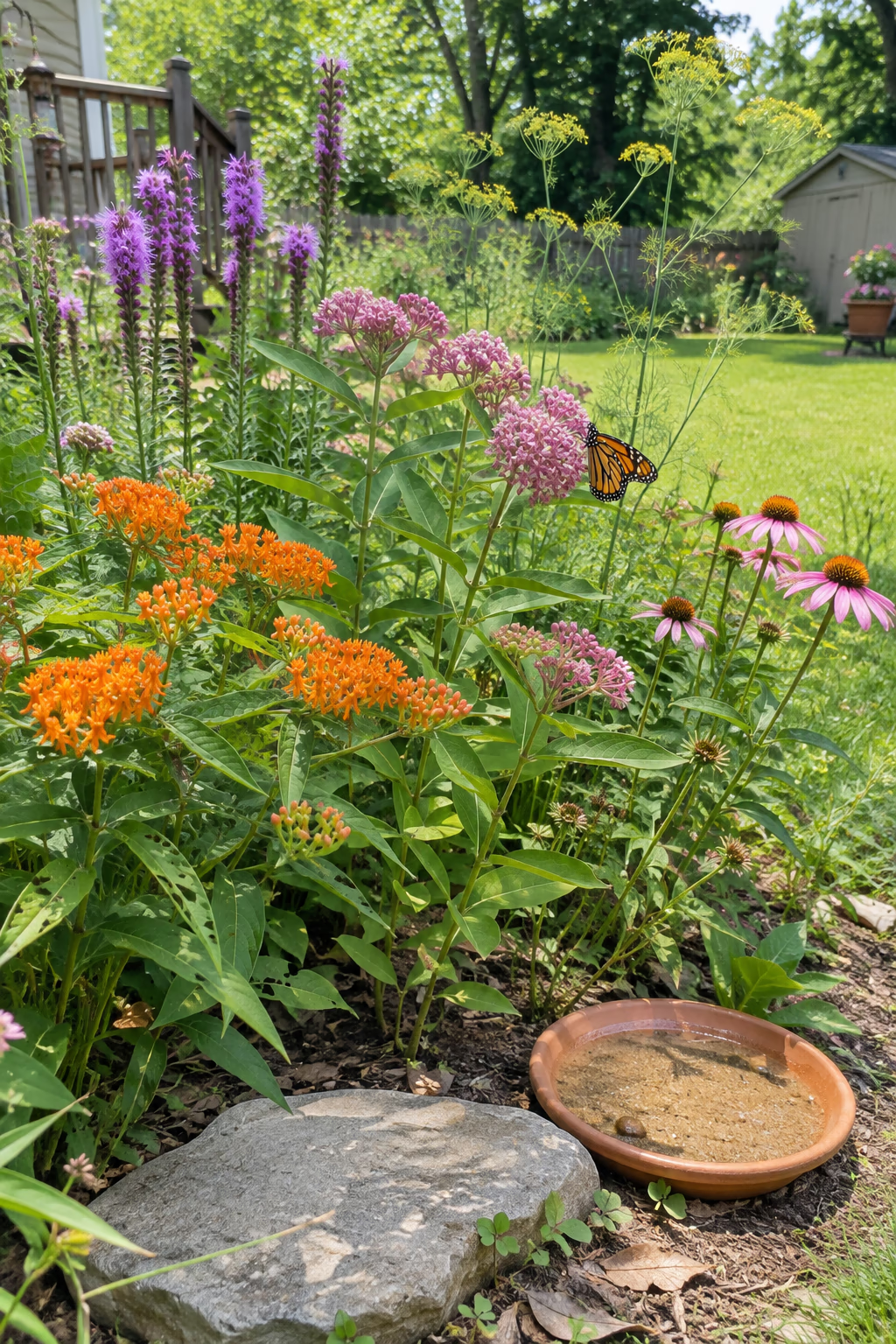
Feed the caterpillars, not just the adults
Combine nectar flowers like blazing star, coneflower, aster, and goldenrod with host plants that caterpillars eat: milkweed for monarchs, and parsley, dill, or golden Alexanders for swallowtails. A flat stone in the sun and a shallow dish of wet sand give butterflies a place to bask and sip.
Many butterflies can only lay eggs on specific plants, so a bed with host plants supports their entire life cycle instead of simply attracting visitors for a day.
Expect chewed leaves; that damage means the bed is working. Avoid insecticides, and choose milkweed species native to your region rather than tropical milkweed, which can cause problems for monarchs in warm areas.
13. Mound a Berm Into a Sunny Rock Garden Bed
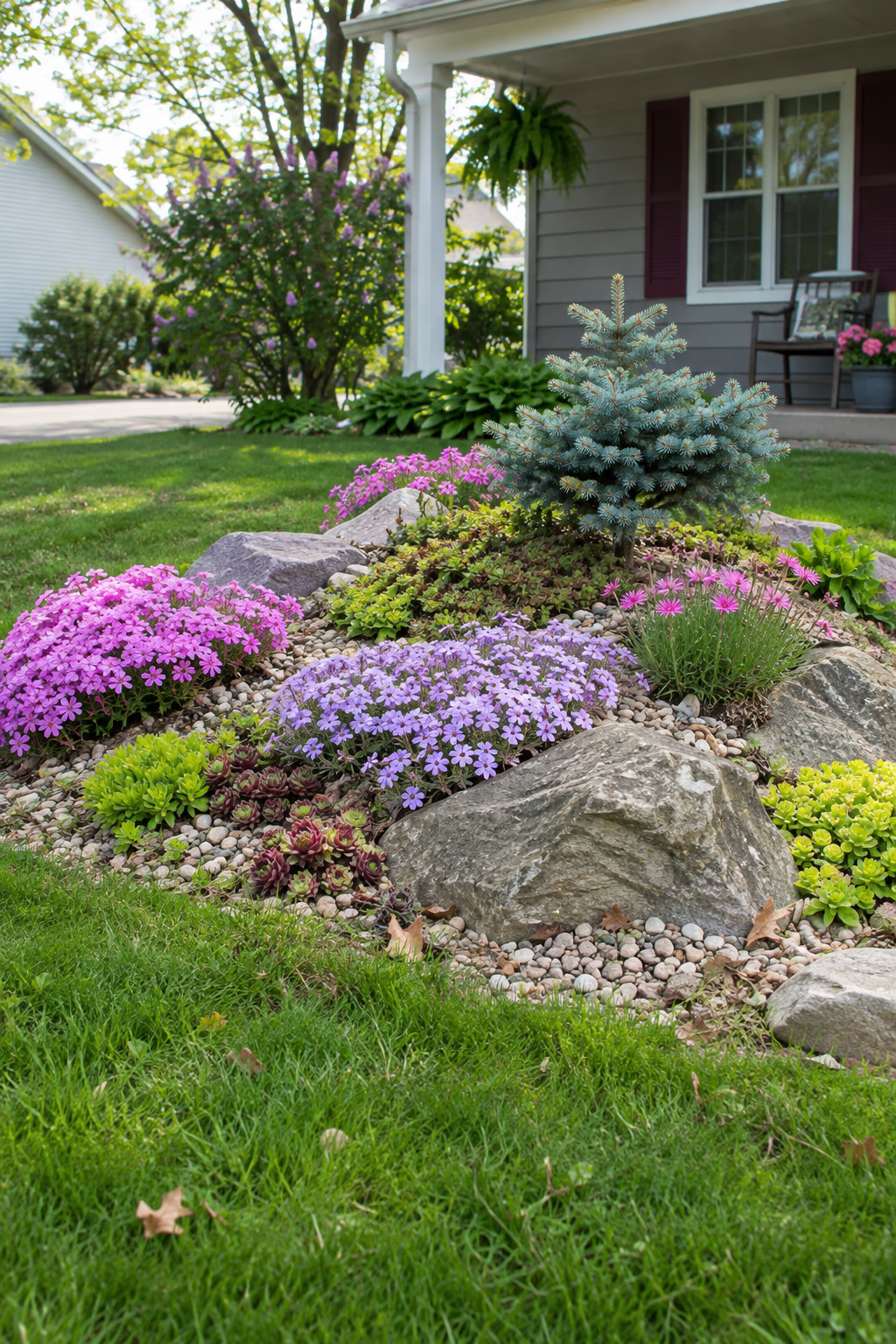
Raise the soil, add rocks, and grow tiny treasures
Build a low mound of soil mixed with coarse sand and gravel, about 18 to 24 inches high at the center, and settle a few weathered boulders into it so they look half-buried. Plant creeping phlox, hens and chicks, sedum, dianthus, and dwarf conifers in the pockets between stones.
The raised, gritty soil drains quickly, which suits low-growing alpine and drought-tolerant plants that rot in heavy, wet ground. A berm also adds height to a flat lawn and helps screen a view.
Shape the berm with long, gentle slopes so it looks natural rather than like a pile of dirt, and top it with a gravel mulch instead of wood chips to keep the crowns of small plants dry.
14. Edge the Bed With Reclaimed Brick Set on an Angle
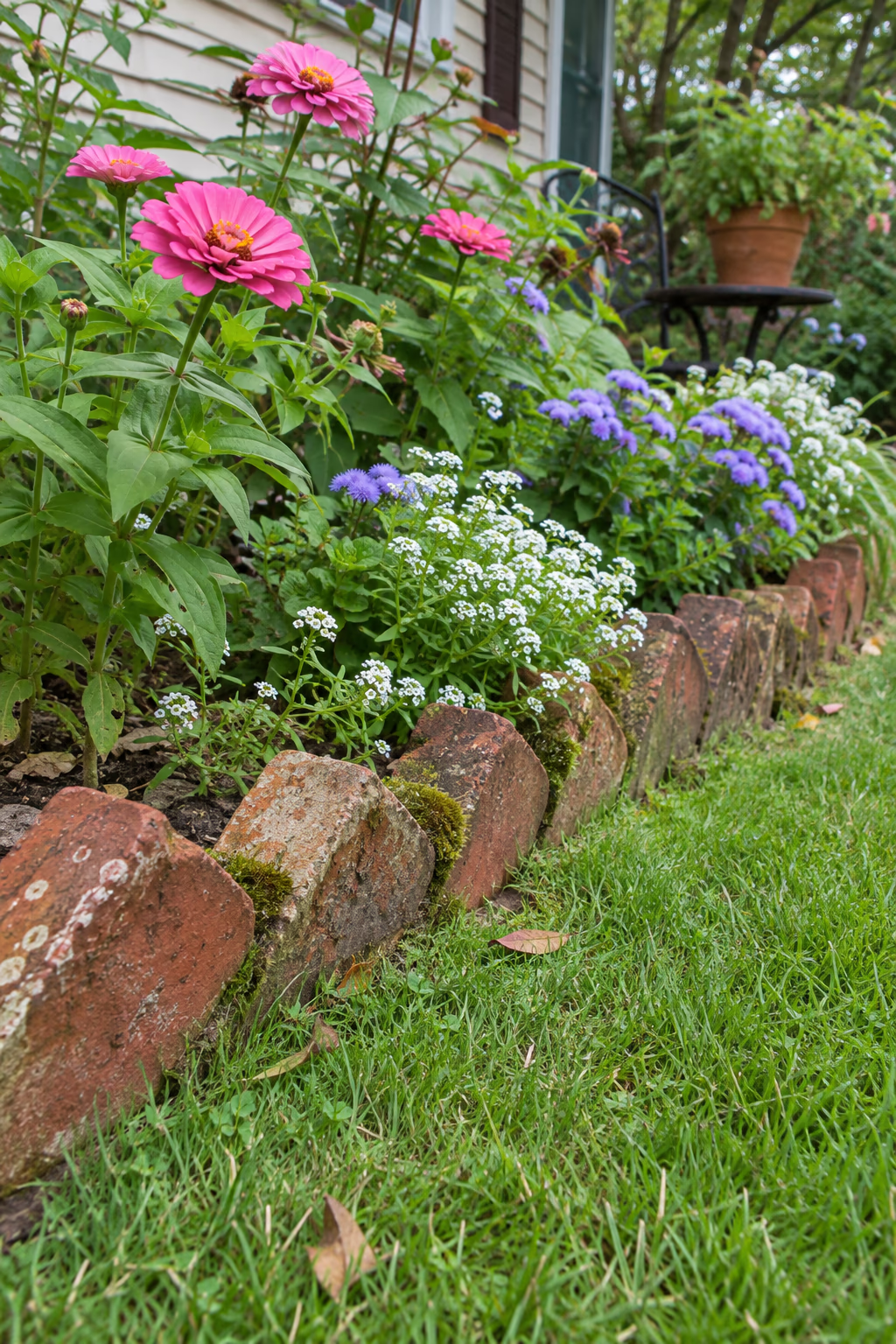
Old-fashioned charm for very little money
Dig a narrow trench along the bed and stand bricks on end, tilted at about 45 degrees so they lean against each other in a sawtooth row. Bury roughly half of each brick and backfill tightly so they stay put.
Salvaged brick has warm, uneven color that looks at home beside older houses and cottage-style planting. It is often free or cheap from renovation projects, building salvage stores, or online marketplaces.
In cold climates, frost can heave bricks over the winter, so plan to reset a few each spring. Use solid, hard-fired bricks rather than soft ones, which can crumble after a few freeze-thaw cycles.
15. Cut a Crisp Spade Edge Between Lawn and Bed
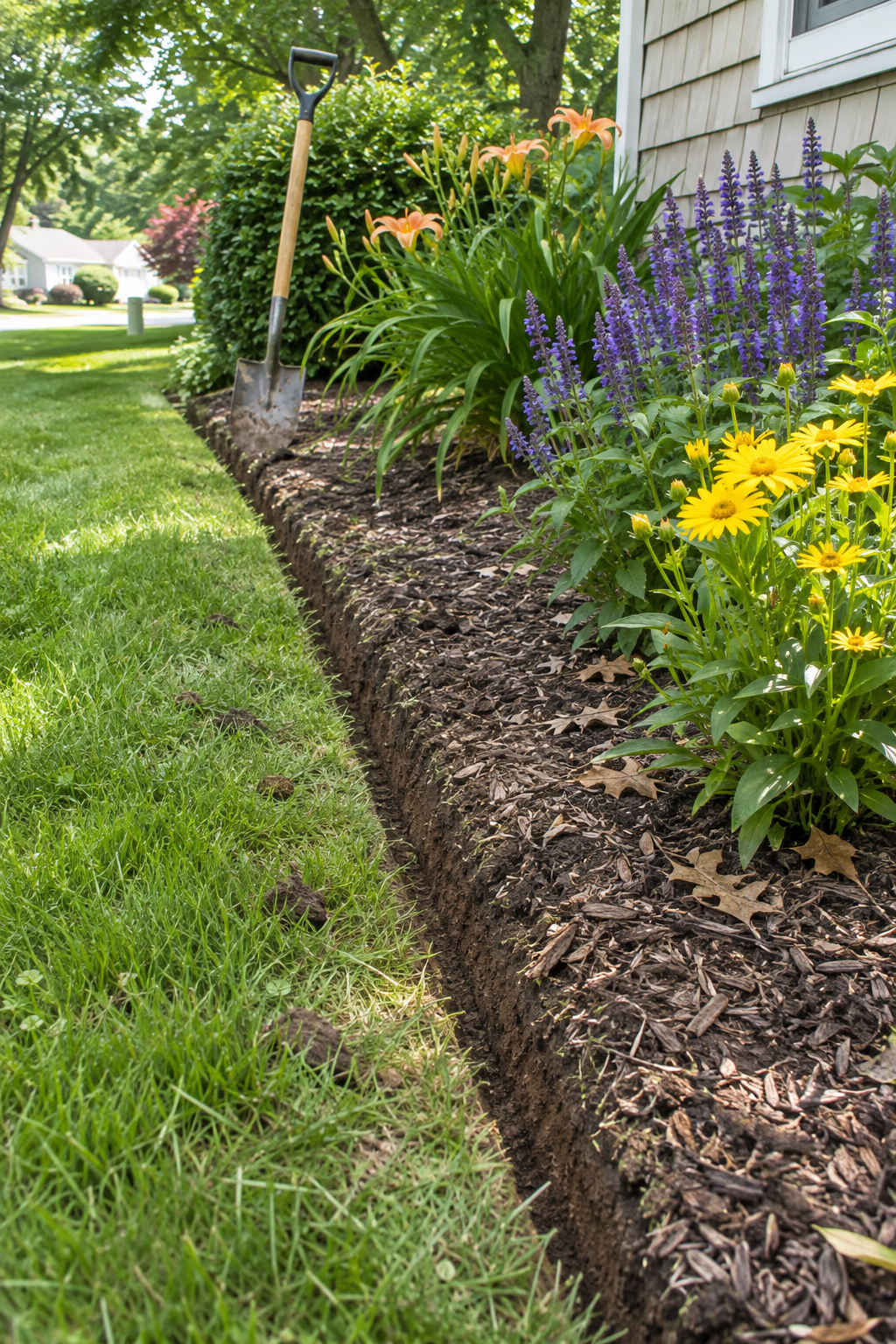
The free edging professionals swear by
Use a flat spade or half-moon edger to cut straight down 4 to 6 inches along the bed line, then angle the soil back toward the plants to form a small V-shaped trench. Toss the removed turf onto the compost pile.
This simple trench stops grass from creeping into the bed, gives mulch a place to settle, and creates a sharp, clean outline that makes the whole yard look freshly tended.
A spade edge is not permanent. Plan to recut it two or three times a season, especially with spreading grasses like Bermuda or zoysia, which can run across the gap quickly.
16. Anchor the Bed With a Small Flowering Tree
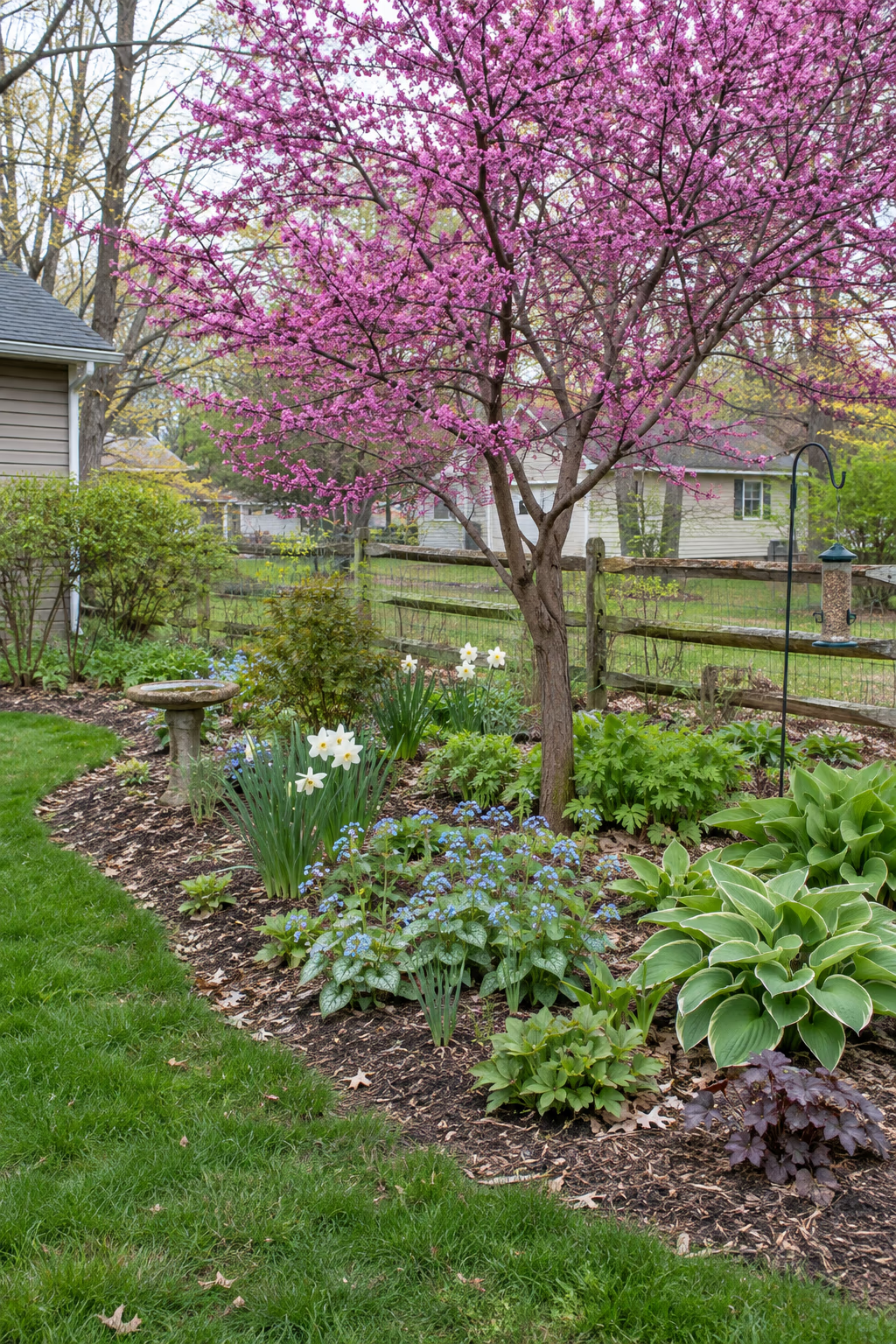
Height and spring blossoms in one plant
Plant a compact flowering tree such as redbud, serviceberry, dogwood, or crape myrtle near the back or end of a large bed, then fill around it with shade-tolerant perennials that will appreciate its dappled light as it grows.
A tree gives a bed vertical scale that perennials alone cannot, along with spring flowers, summer shade, and often fall color or berries. It becomes the focal point that the rest of the planting is arranged around.
Check the mature spread on the tag and plant far enough from the house, usually at least 10 to 15 feet for small trees, and away from overhead wires. Crape myrtle is best in warmer zones, and it should never be topped into stubs.
17. Add an Obelisk for Climbing Clematis
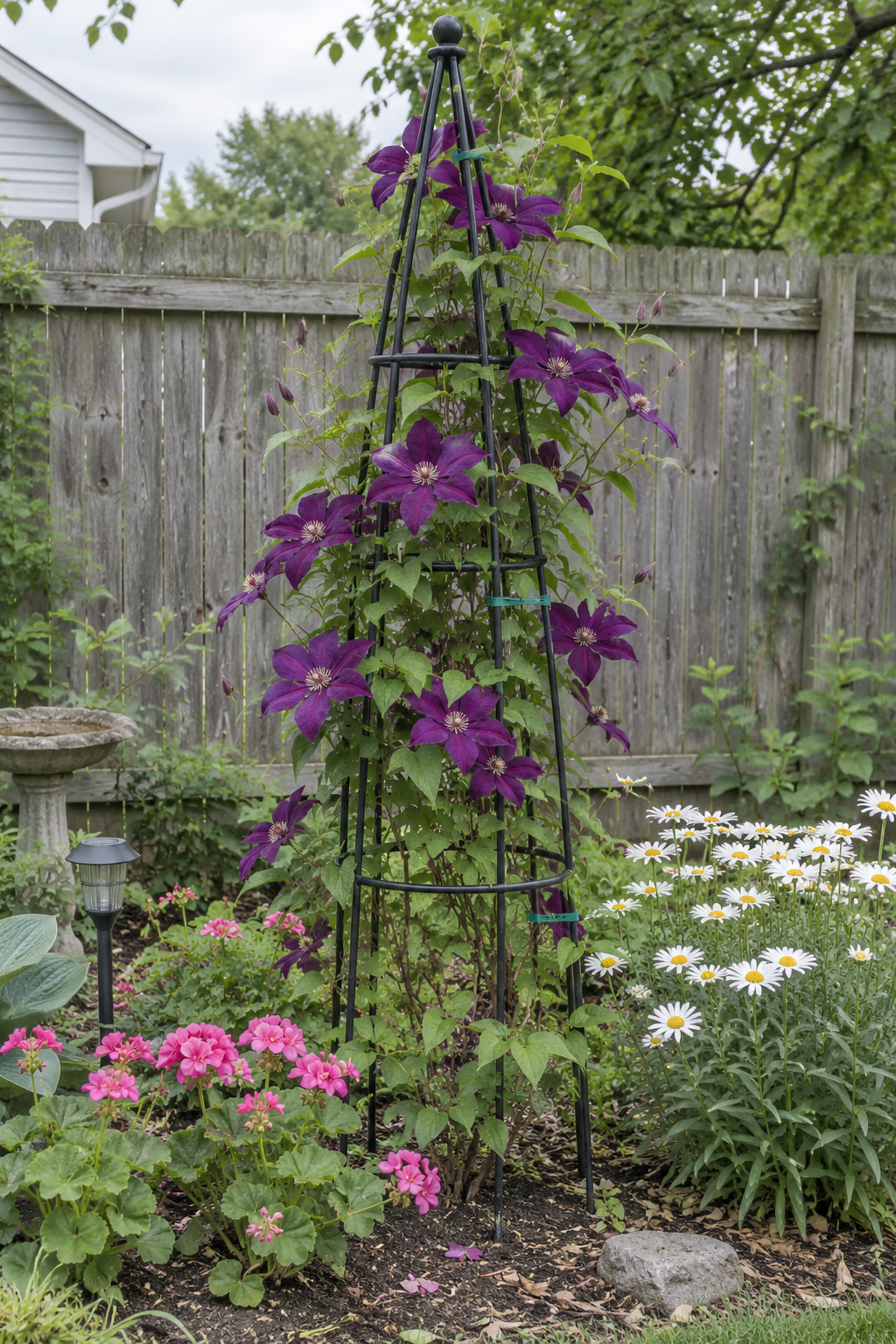
Instant height in the middle of a flat bed
Set a 5- to 7-foot metal or wooden obelisk in the middle or back of the bed and train a clematis, sweet peas, or a compact climbing rose up its sides. Tie young stems loosely until they start gripping on their own.
A vertical accent breaks up a flat, low bed and draws the eye upward. It also lets you grow more flowers in less ground space, which is handy in a smaller yard.
Clematis likes its roots cool and its vines in sun, so shade the base with low perennials or a flat stone. Anchor the obelisk deeply or with stakes, since a vine-covered frame catches a lot of wind.
18. Plant an Island Bed You Can Walk Around
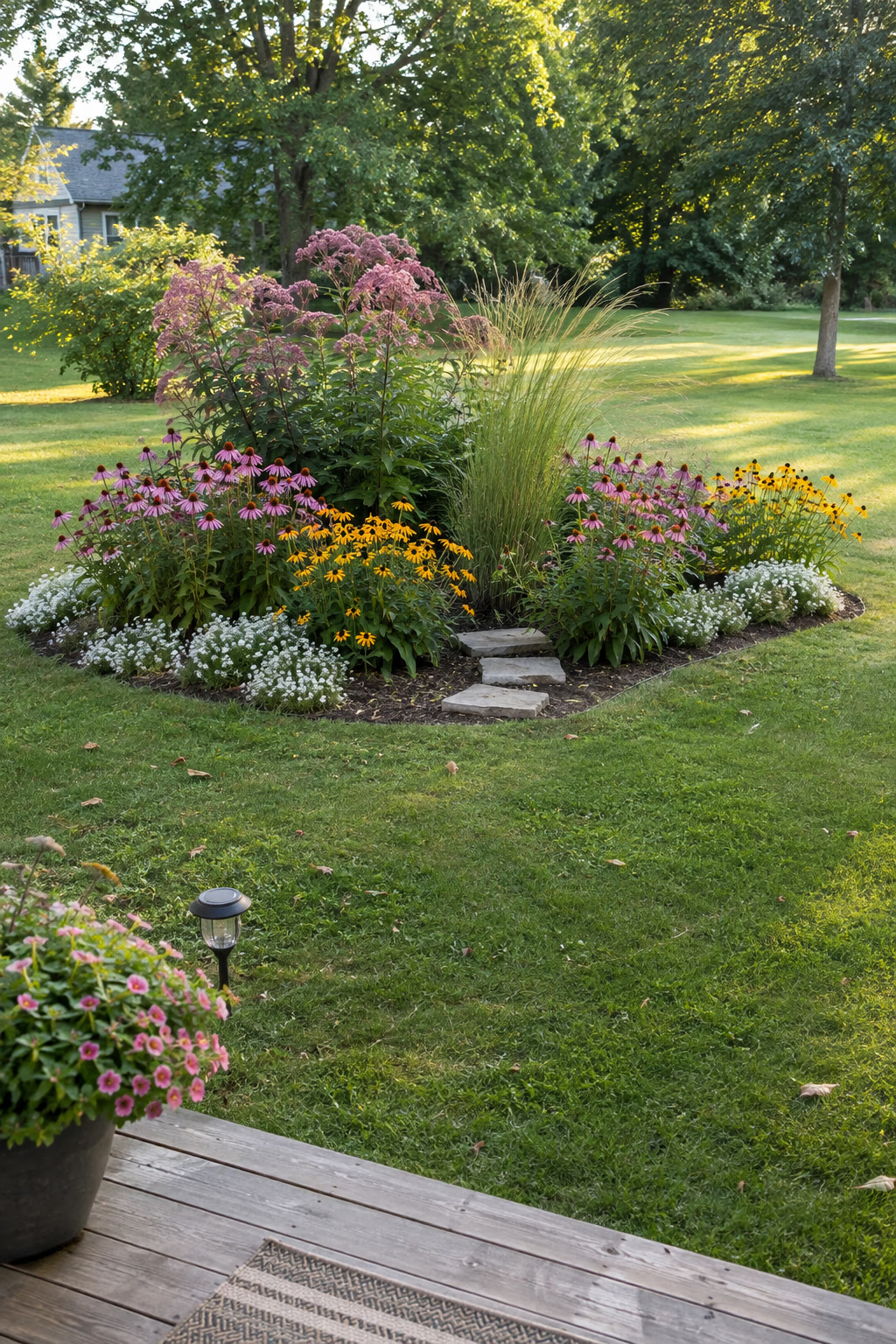
A freestanding bed that looks good from every side
Cut a kidney- or teardrop-shaped bed into the open lawn, away from fences and walls. Put the tallest plants near the center, medium plants around them, and low edgers all the way around the outside.
Island beds break up a large, empty lawn, reduce the area you need to mow, and give you a fresh view from the patio, the kitchen window, and the street.
A good rule of thumb is to make the bed at least twice as wide as the height of the tallest plant so it does not look top-heavy. For a bed wider than about 6 feet, tuck in a few stepping stones so you can reach the middle without trampling plants.
19. Plant a Desert-Style Bed of Succulents and Yucca
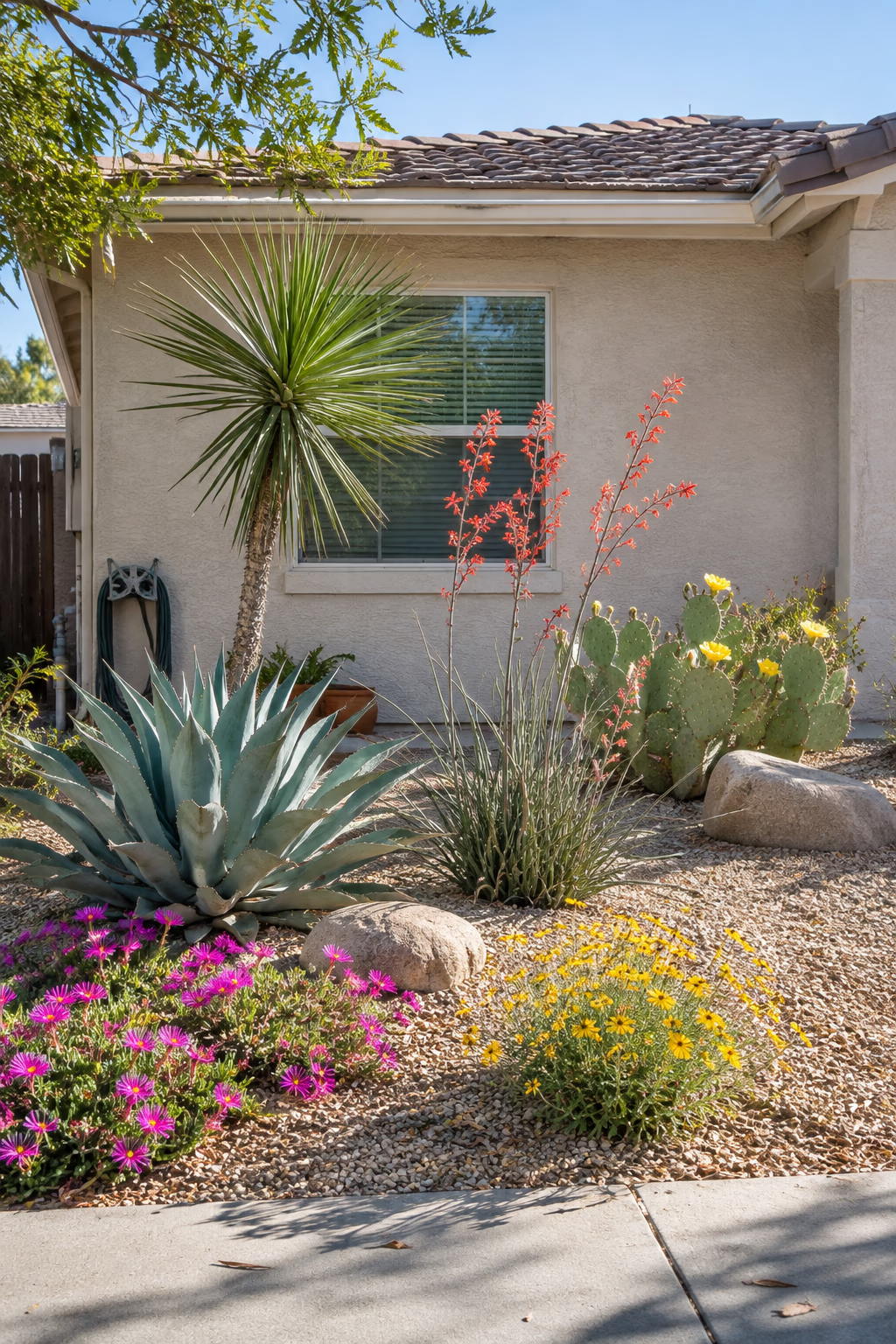
Sculptural plants that shrug off heat and drought
Combine spiky yucca or agave with red yucca, prickly pear, hardy ice plant, blackfoot daisy, and ornamental grasses in a bed topped with crushed gravel and a few boulders. Group plants with space between them, the way they grow in nature.
Bold shapes look striking year-round, and once established these plants need little supplemental water, which is a real advantage in hot, dry regions or where water restrictions apply.
Many agaves are not cold hardy, so in colder zones rely on hardy yucca, native prickly pear, and ice plant. Keep spiny plants well back from walkways and play areas, and make sure the bed drains fast, since soggy winter soil kills succulents.
20. Mix Edible Flowers Into a Kitchen-Door Bed
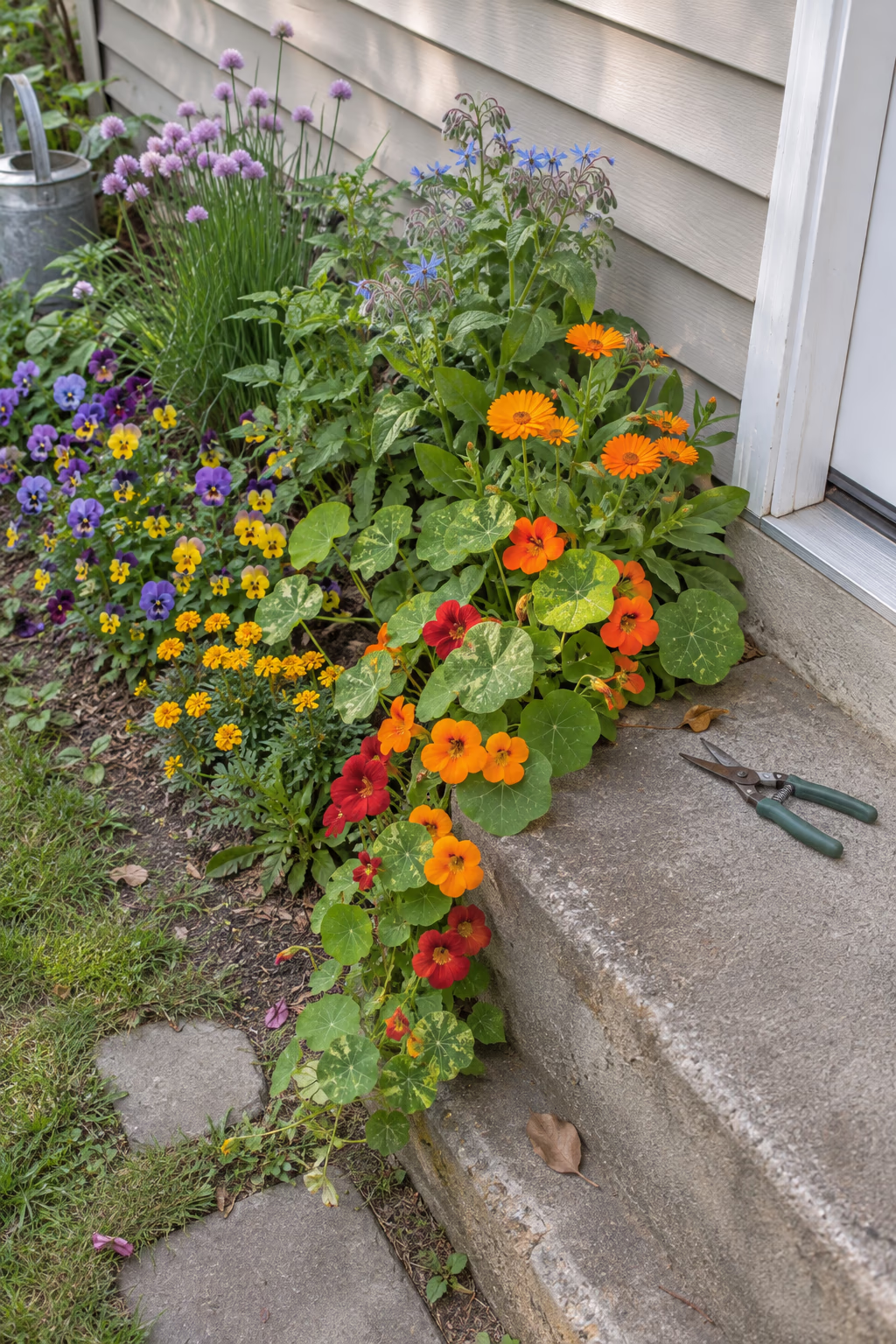
Pretty enough for the yard, handy for the plate
Fill a small sunny bed near the kitchen door with nasturtiums, calendula, signet marigolds, borage, violas, and flowering chives. They come in cheerful oranges, yellows, blues, and purples and bloom for months.
Keeping these flowers close to the house makes it easy to snip a few petals for salads, cakes, or drinks, and they attract pollinators that help nearby vegetables and herbs.
Only eat flowers you can identify with certainty, and only from plants that have never been sprayed. Plants from garden centers may have been treated, so grow your own from seed or wait for new, untreated growth before harvesting.
21. Plan a Four-Season Bed With Winter Structure
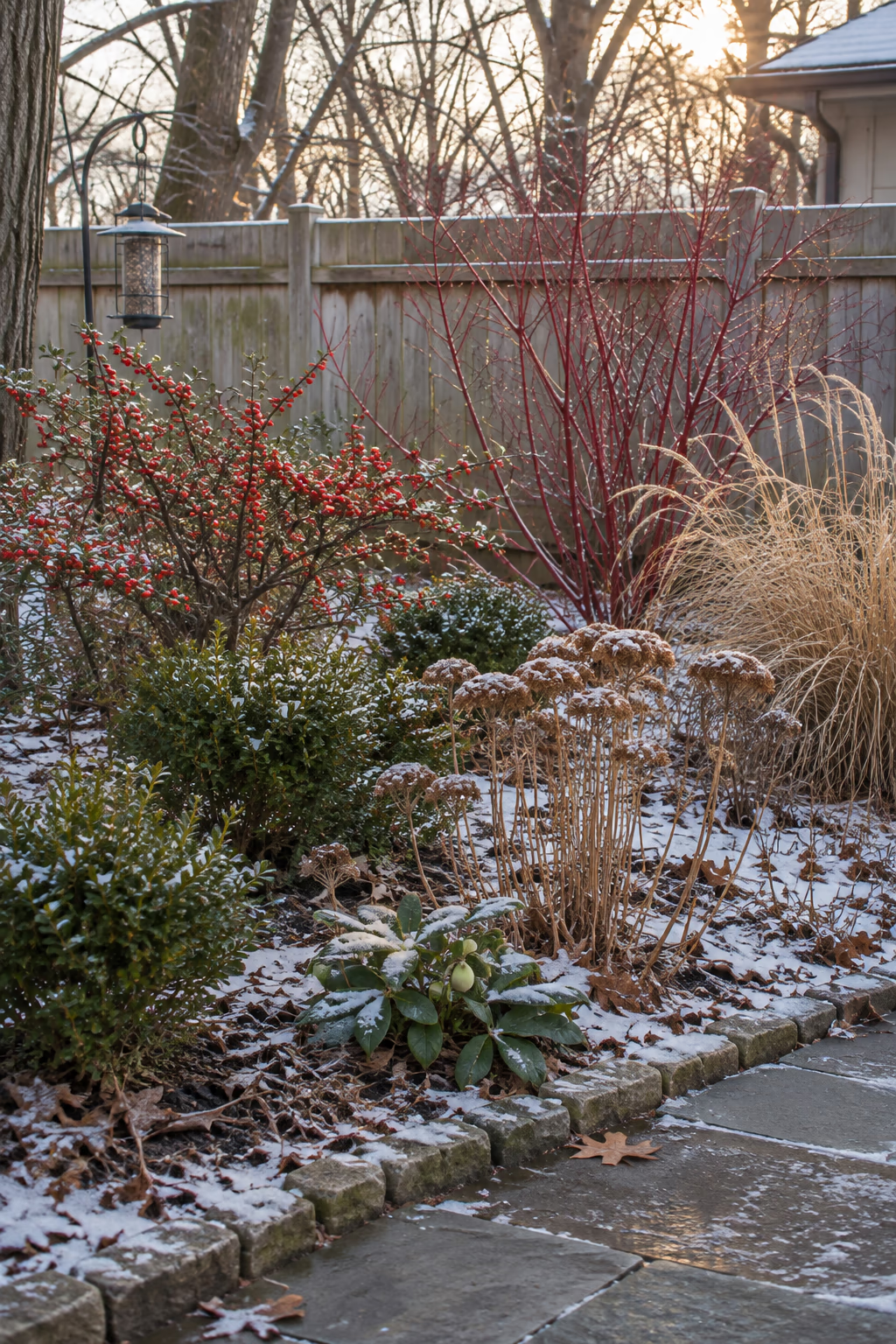
Something worth looking at in every month
Mix spring bulbs and hellebores with summer perennials, then add fall stars like asters and sedum and a backbone of winter interest: red-twig dogwood, winterberry holly, small evergreens, and grasses left standing.
Many beds look bare from November to March. Planning for winter means the view from your window still has color, berries, and shapes that hold snow even when nothing is blooming.
Winterberry needs a male pollinator plant nearby to produce berries, so buy at least one male along with the females. Cut back perennials and grasses in late winter instead of fall to keep that winter structure.
22. Center the Bed on a Simple Garden Sculpture
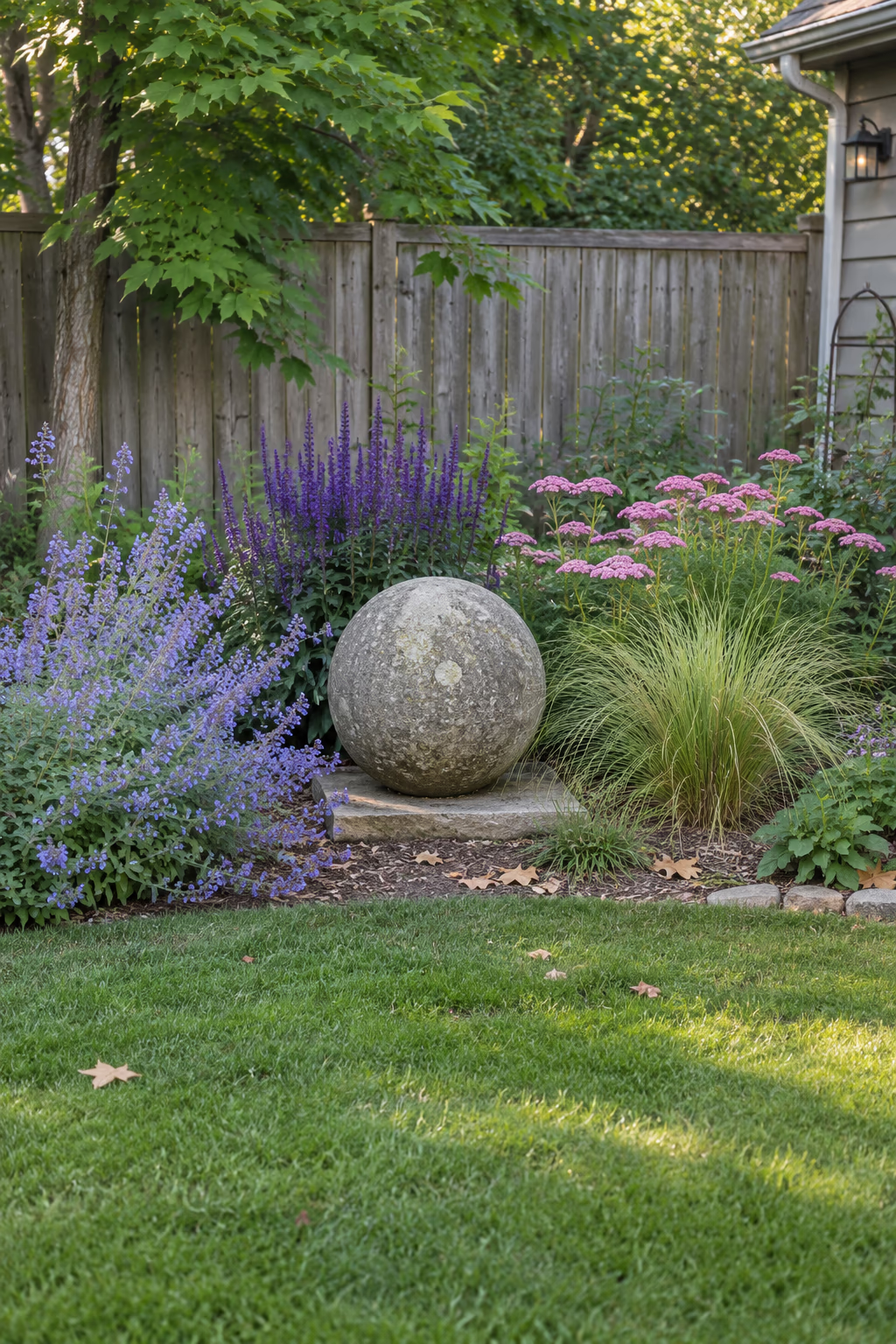
A focal point that stays put all year
Place one sculptural piece, such as a stone sphere, a glazed ceramic urn, a weathered metal form, or a birdbath, where the eye naturally lands when you look at the bed. Let plants grow up around it so it looks settled in rather than perched on top.
A focal point gives the planting something to frame and keeps the bed interesting in winter or between bloom times. It also helps a busy mix of plants feel organized.
One larger piece usually looks better than several small ones. Set heavy items on a level paver base so they do not tilt, and bring glazed pots indoors or empty them in freezing weather so they do not crack.
23. Try Chocolate and Bronze Blooms for Something Different
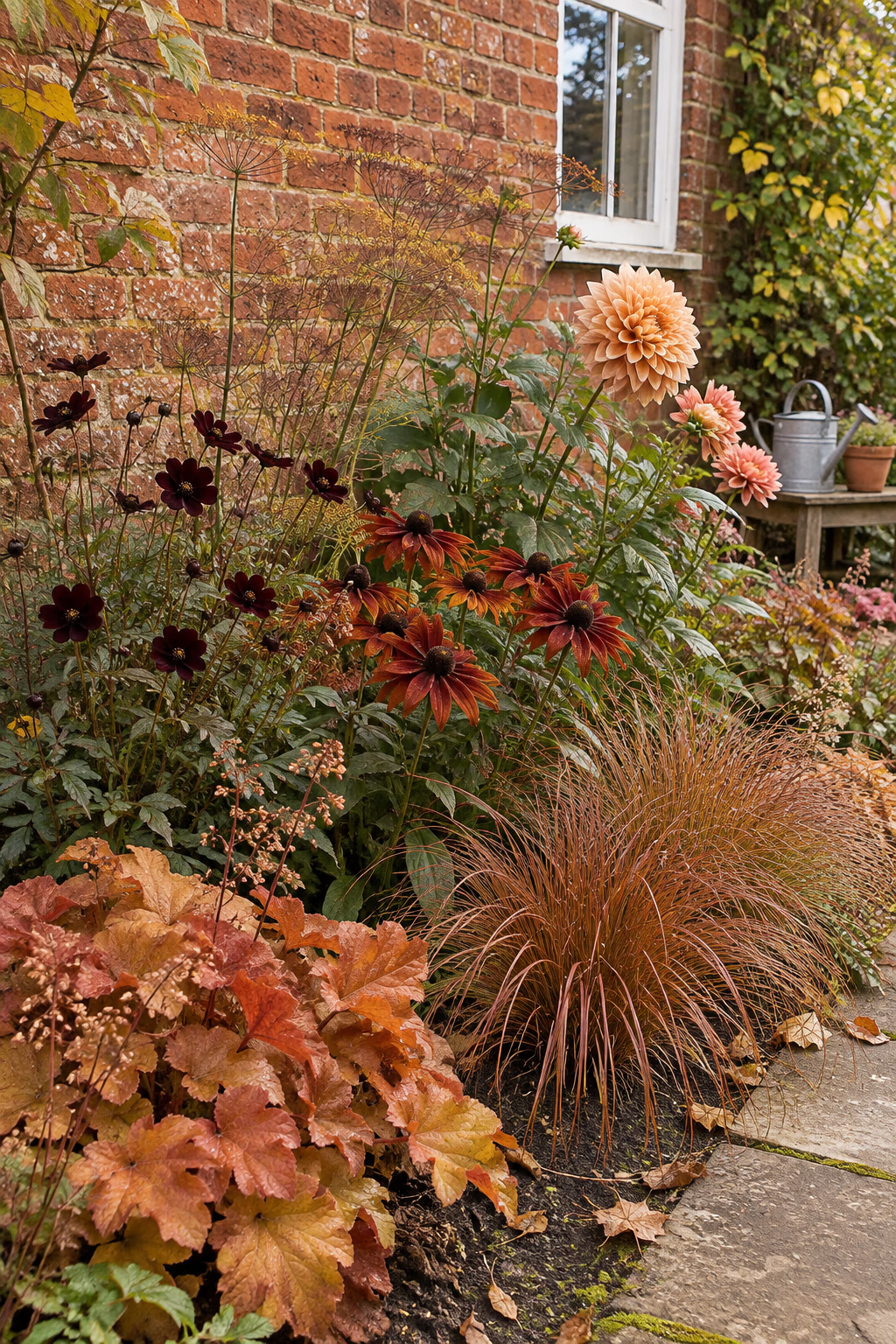
Unexpected colors that make visitors look twice
Build a bed around rich brown, bronze, and coffee tones: chocolate cosmos, rust-colored rudbeckia, bronze fennel, caramel heuchera, coppery carex, and tan or cafe-au-lait dahlias. Peach and apricot flowers bridge the browns to the rest of the garden.
These earthy colors are unusual enough to feel fresh and sophisticated, and they pair beautifully with warm brick, cedar fences, and fall foliage.
Chocolate cosmos is only perennial in mild winters and is usually grown as an annual or lifted and stored like a dahlia. Brown flowers can blend into mulch, so set them against green or silver foliage so they stand out.
24. Sow an Annual Seed Bed for Budget Color
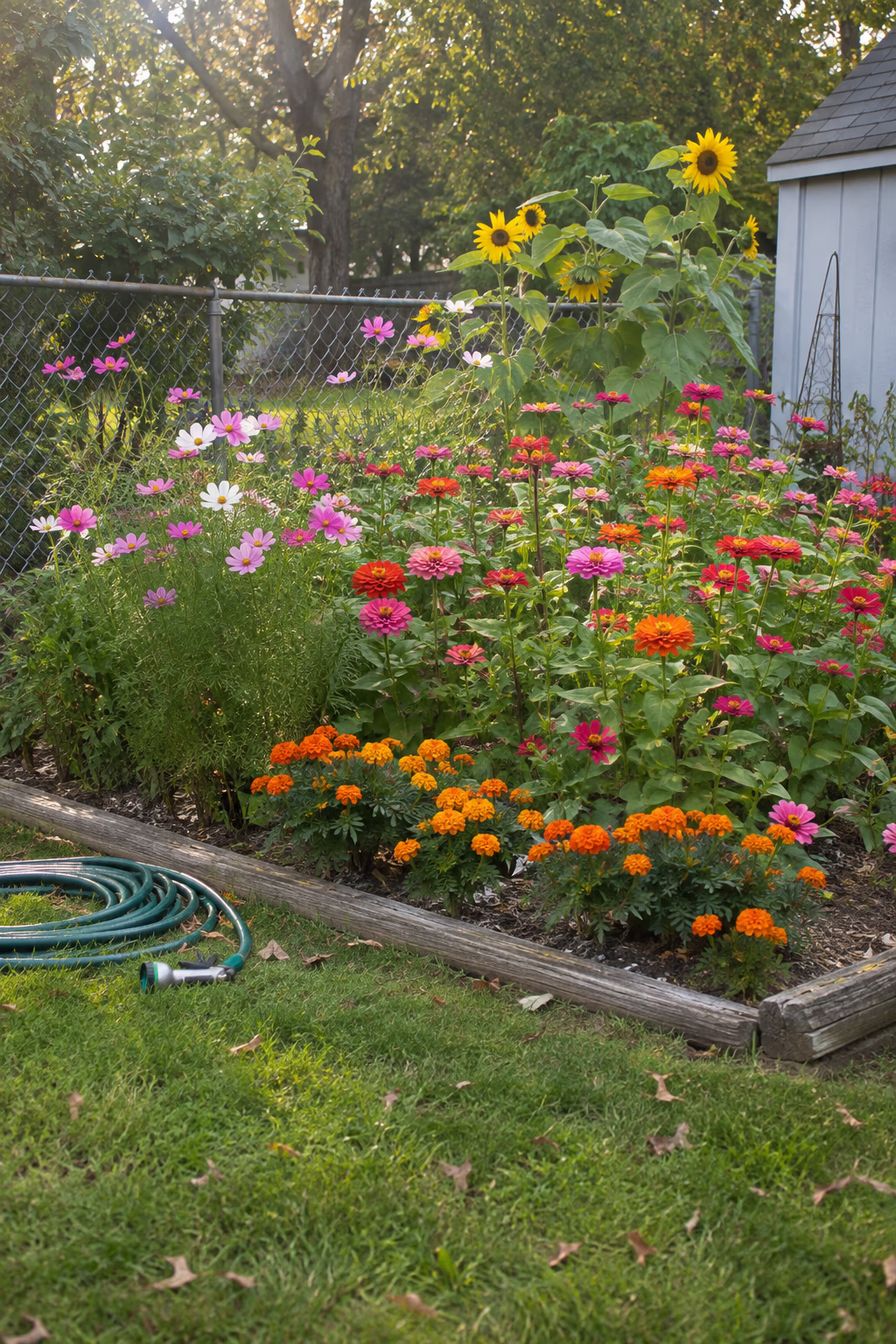
A whole summer of flowers for the price of a few seed packets
Prepare a sunny bed, rake it smooth, and direct-sow zinnias, cosmos, sunflowers, marigolds, and cleome after your last frost date once the soil has warmed. Thin seedlings to the spacing on the packet so each plant has room to branch.
Annuals grow fast and bloom from midsummer until frost, so a bare patch becomes a bed of color in weeks. It is also a low-risk way to test colors and heights before investing in perennials.
Seedlings need steady moisture for the first couple of weeks, and slugs or rabbits can wipe out tender sprouts overnight. Sow a few extra and keep a watering can handy.
25. Soften a Patio Edge With Low Flower Pockets
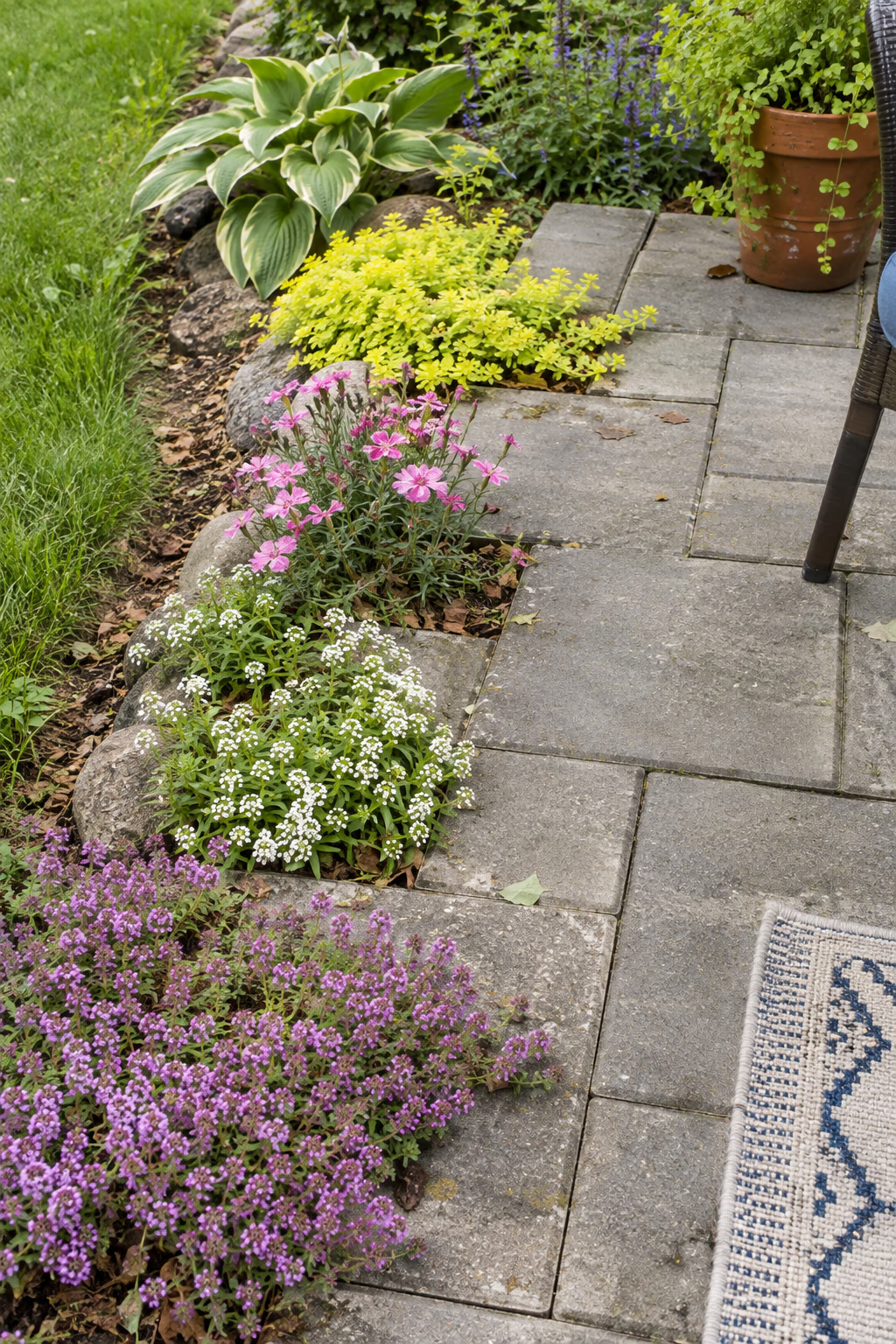
Tiny beds that blur hard lines
Lift a few pavers or leave small gaps along the edge of a patio or path and fill them with good soil. Plant creeping thyme, low sedum, sweet alyssum, dianthus, or creeping phlox so they spill across the stone.
These small pockets take a stiff expanse of paving and make it feel like part of the garden. Many of the plants release scent when brushed, and they need very little soil to thrive.
Keep pockets out of the main walking line and away from where chairs and tables sit. Creeping thyme handles light foot traffic, but most flowering plants do not.
26. Turn a Soggy Low Spot Into a Rain Garden Bed
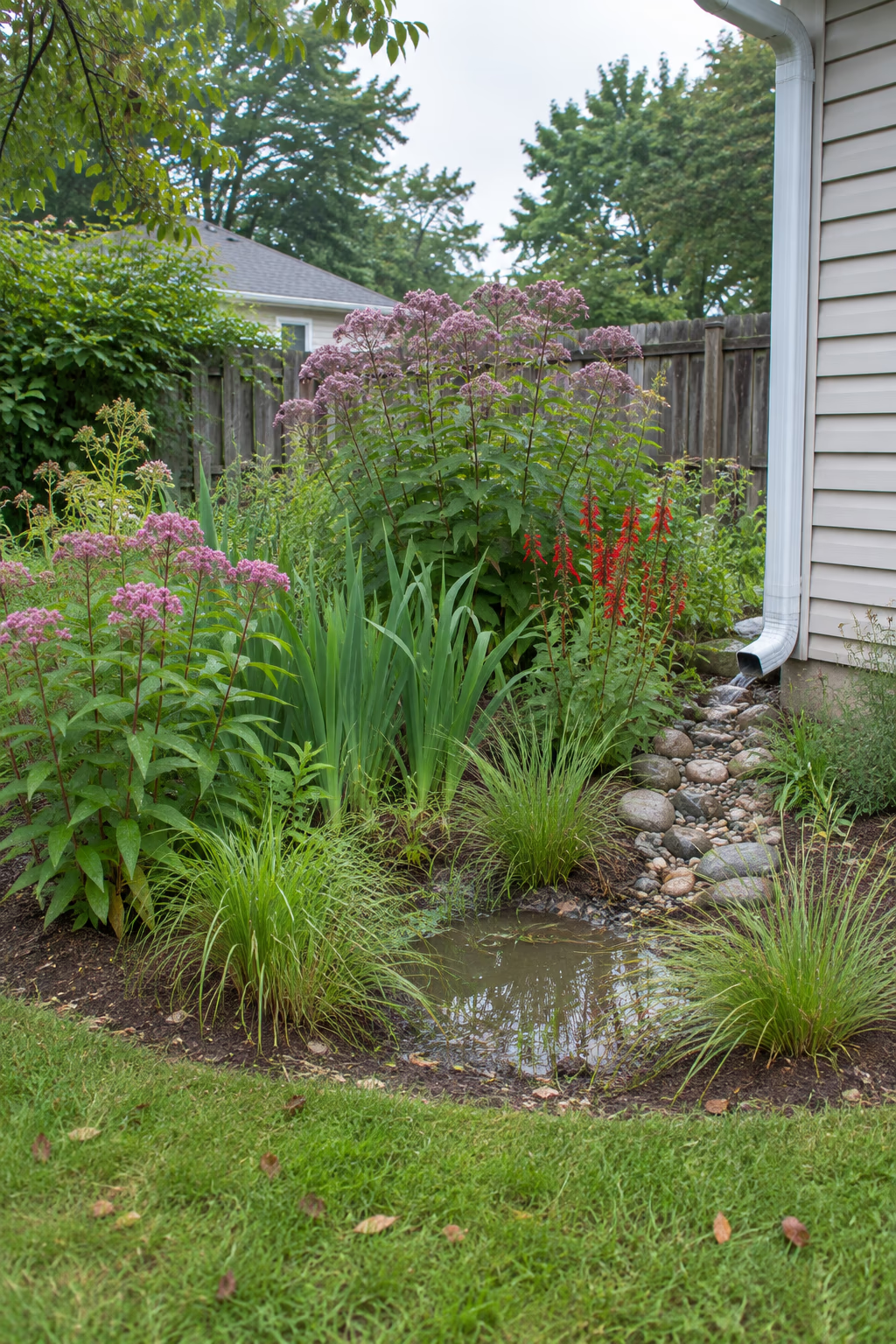
Solve a drainage problem with flowers
Dig a shallow, saucer-shaped bed 4 to 8 inches deep where downspout water or runoff naturally collects, and plant moisture-tolerant natives like swamp milkweed, blue flag iris, Joe Pye weed, cardinal flower, and sedges.
A rain garden slows runoff, lets water soak into the ground instead of pooling on the lawn, and creates a bed of flowers that thrives in conditions most plants dislike.
Site it at least 10 feet from the house foundation and away from septic systems. Do a simple soak test first; the area should drain within a day or two so it does not breed mosquitoes. Some towns offer rebates or guidelines for rain gardens.
27. Frame a Bed With Woven Willow Wattle Edging
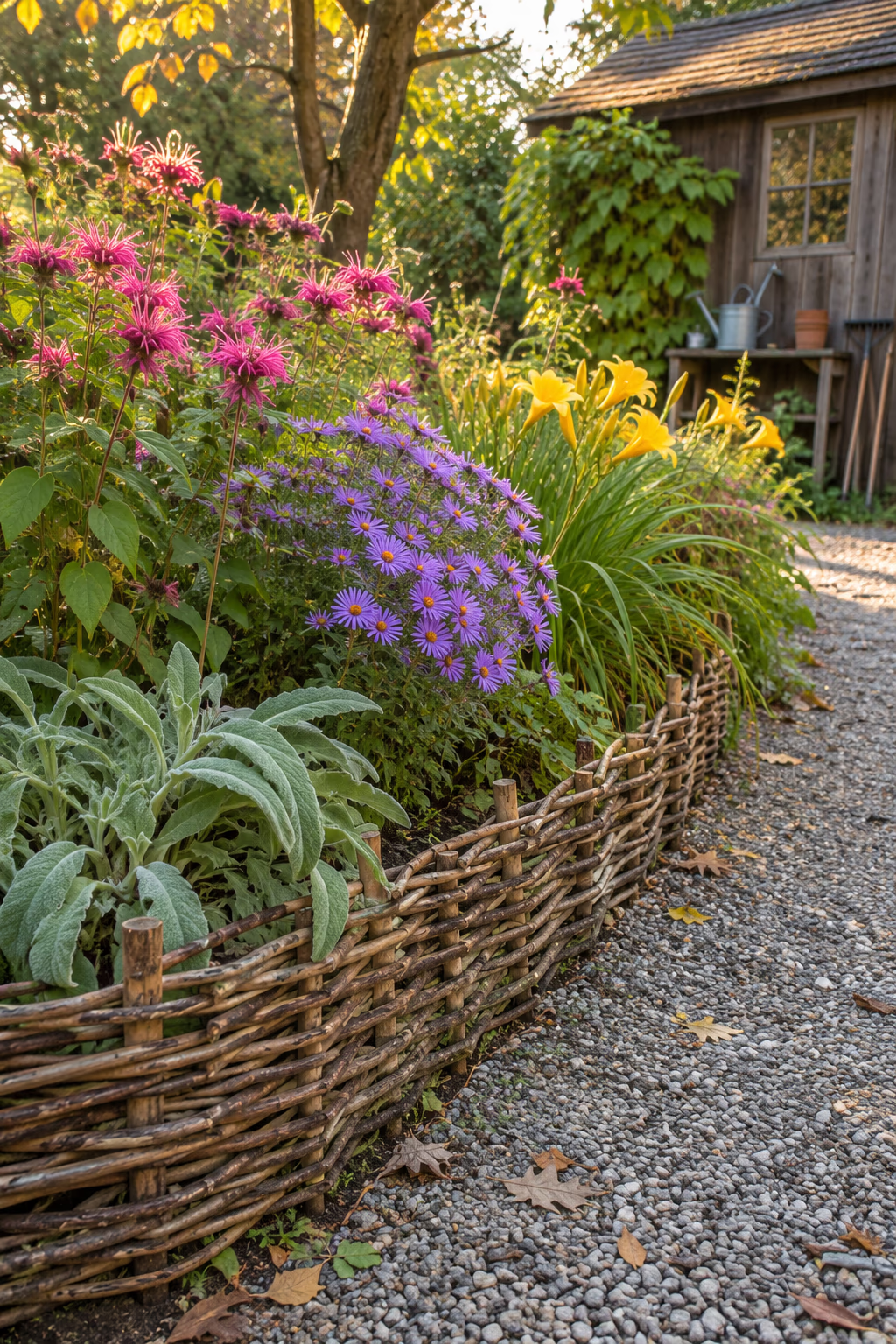
A handmade rustic border with real character
Drive sturdy stakes into the ground every 12 to 18 inches along the bed edge, then weave long, flexible willow or hazel stems in and out between them to form a low woven fence about 6 to 12 inches high. Ready-made wattle panels and rolls are also available.
Wattle gives a natural, cottage-meets-farmhouse look and holds back mulch and soil in a slightly raised bed. It is a satisfying weekend project if you have access to pruned branches.
Woven wood breaks down in a few years, especially where it touches wet soil. Use dried rods if you do not want them to sprout, since fresh willow often roots and grows.
How to Plan Your Flower Bed
A beautiful bed starts with a little homework before the first plant goes in the ground. These planning steps save money and help the bed look better faster.
- Watch the sun first. Track how many hours of direct sun the spot gets in summer, then choose plants labeled for full sun, part shade, or shade to match.
- Test and improve the soil. A simple soil test from your local extension office shows pH and nutrients. Work in a few inches of compost before planting, especially in clay or sandy ground.
- Size the bed generously. Beds at least 3 to 4 feet deep give room for layers of plants. Narrow strips along a house or fence often look skimpy.
- Layer by height. Put tall plants at the back or center, medium plants in the middle, and low growers in front so nothing is hidden.
- Plan for bloom succession. Choose plants that flower in spring, summer, and fall so the bed never goes completely quiet.
- Mulch and water wisely. Spread 2 to 3 inches of shredded bark or leaf mulch, keep it off plant stems, and water deeply but less often to encourage strong roots. Call 811 before digging large new beds.
Frequently Asked Questions
What is the best time of year to start a new flower bed?
Fall and early spring are both good. In fall, you can kill grass by smothering it with cardboard and mulch, plant bulbs, and let the bed settle over winter. In spring, prepared soil is ready for perennials and annuals as soon as the frost danger passes.
How do I get rid of grass to make a flower bed?
You can dig out the sod with a flat spade or sod cutter, or smother it by covering the area with overlapping cardboard and 4 to 6 inches of compost or mulch. Smothering takes a few months but requires no heavy digging or chemicals.
How deep should flower bed soil be?
Most perennials and annuals do well with 8 to 12 inches of loose, well-drained soil. Shrubs and small trees need deeper preparation, so loosen a wider area for them and avoid planting too deep.
How far apart should I space plants in a flower bed?
Follow the mature width on each plant tag. Perennials usually go 12 to 24 inches apart. The bed will look sparse the first year, but crowding leads to disease and constant dividing later. Fill gaps temporarily with annuals.
What flowers bloom the longest in a flower bed?
Long bloomers include catmint, salvia, coneflower, black-eyed Susan, threadleaf coreopsis, and reblooming daylilies, along with annuals like zinnias, lantana, and marigolds. Regular deadheading helps many of them keep flowering.
Final Thoughts
The most memorable flower beds combine a clean shape, a clear color story, and plants that suit the conditions they grow in. Whether you start with a stone edge, a coneflower and grass combination, or a fall bulb planting, each improvement builds on the last.
Start with one bed you can care for easily, watch how it performs through the seasons, and expand from there. With a few years of growth, even a modest yard can be filled with color, texture, and life.


