
It’s a 95-degree afternoon, the grill is warming up, and a round galvanized tank full of clear, cool water sits a few steps from the back door. You lower yourself in, rest your arms on the rim, and the heat of the day simply melts away.
That’s why stock tank pools have spread from Texas ranches to suburban backyards all over the country. They cost a fraction of an inground pool, go up in a weekend, and take far less space than a traditional above-ground pool. With a little styling, a plain farm tank can look like a deliberate design feature rather than a quick fix.
These 21 stock tank pool ideas cover decks, paint, built-in seating, heaters, cladding, landscaping, lighting, and smart small-space layouts. Some take an afternoon and a can of paint, while others are weekend carpentry projects, so you can start simple and keep upgrading over time.
1. Build a Wraparound Wood Deck Around the Tank
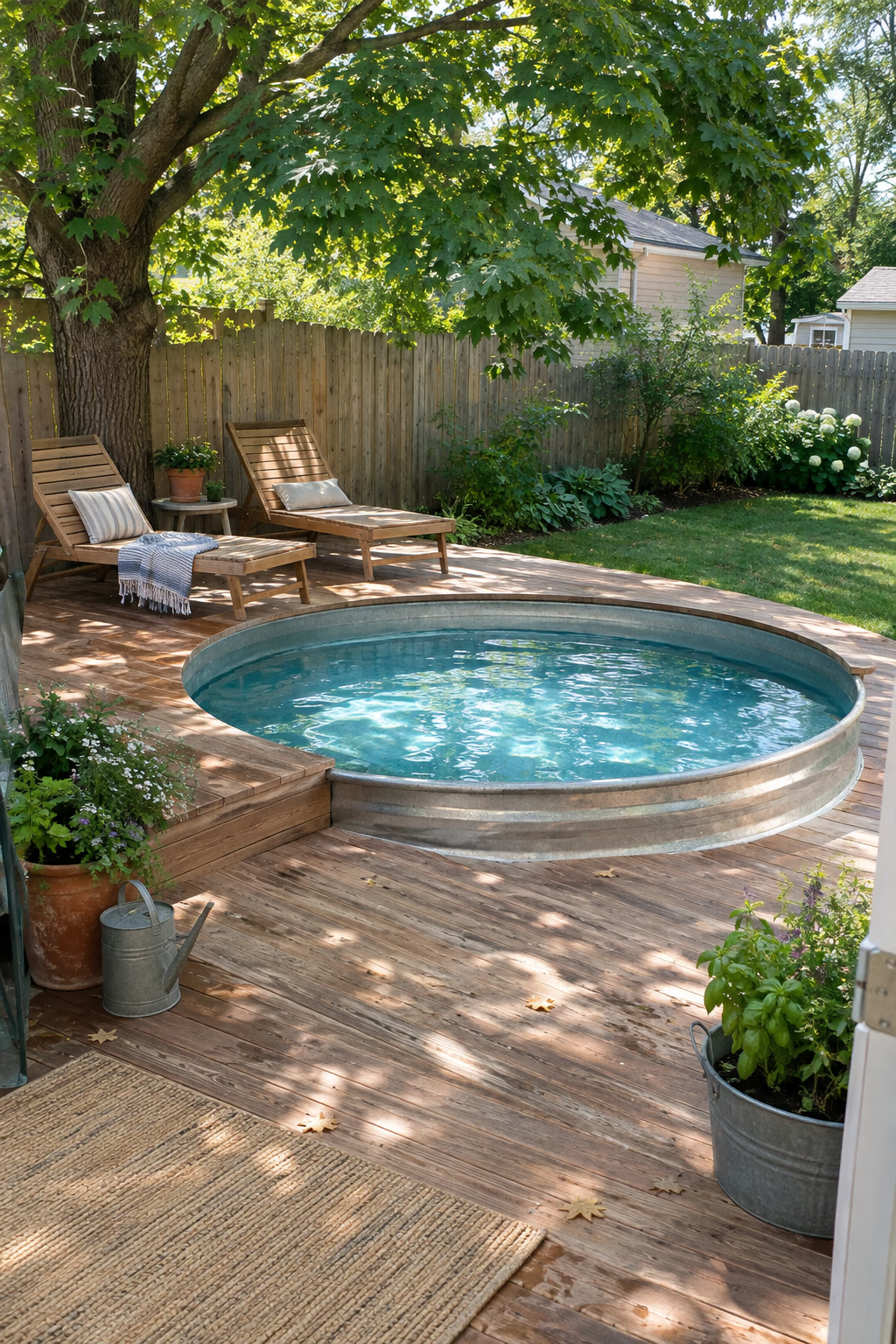
Make a farm tank look like a real pool
A deck that surrounds the tank, or wraps around two or three sides in an L or U shape, is the single upgrade that changes everything. Build the deck so its surface sits roughly 6 to 8 inches below the rim, leaving enough metal exposed to keep the water in but hiding the rest. Pressure-treated framing with cedar or composite boards works well, and a curved edge cut to follow the tank looks especially polished.
The key detail is that the tank should sit on its own leveled pad of compacted sand or crushed stone, with the deck built around it rather than under it. An 8-foot round tank filled 2 feet deep holds about 700 gallons, which weighs close to 6,000 pounds, far more than a typical deck is designed to carry.
Leave a removable section or access hatch near the pump and drain plug. You’ll need to reach them for cleaning, winterizing, and the occasional repair.
2. Paint the Tank a Bold Summer Color
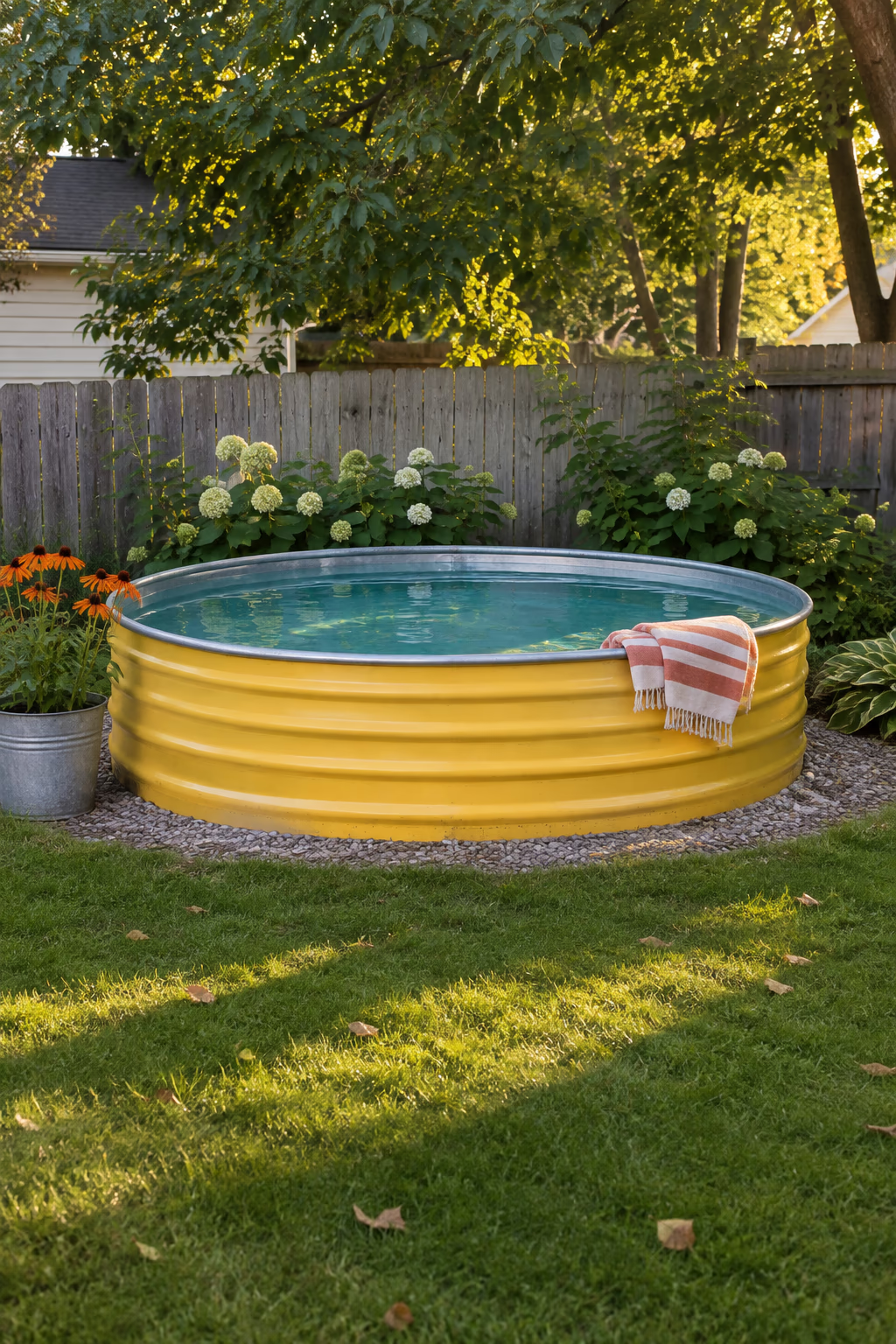
Turn a utility tank into a cheerful focal point
A coat of color instantly gives a galvanized tank personality. Sunny yellow, coral, robin’s egg blue, sage green, and deep navy all look great against green grass or a wood fence. Paint only the outside walls and leave the interior alone or covered by a liner.
Galvanized steel needs prep for paint to stick. Clean the surface with a degreaser, scuff it lightly, and use a primer labeled for galvanized metal before applying an exterior metal enamel. Skipping the primer is the most common reason paint peels within one season.
Dark colors absorb more sun and make the metal rim hotter to the touch. In hot climates, a lighter shade or a white tank keeps both the water and the edges more comfortable.
3. Wrap the Rim With a Built-In Bench
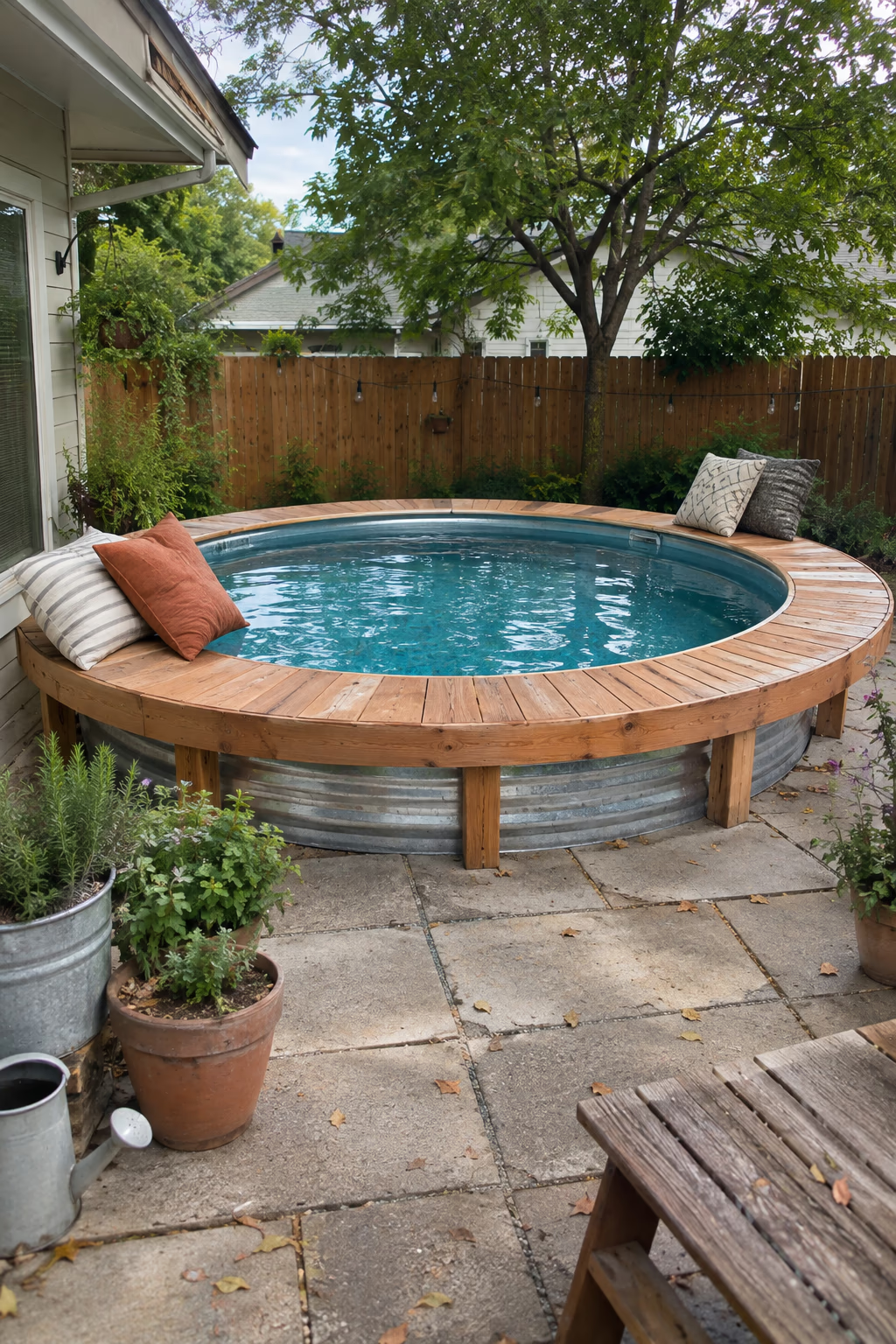
Give non-swimmers a front-row seat
A wooden bench ledge that circles the tank at seat height, roughly 17 to 20 inches off the ground, gives everyone a place to sit and dangle their feet in the water. It also hides most of the corrugated metal and covers the hot, sharp-feeling rim with a comfortable wood cap.
Build it as a freestanding ring of short posts and 2×6 boards so it doesn’t rely on the tank for support. Cedar or composite boards resist moisture better than untreated pine, and rounding over the edges with sandpaper or a router keeps bare legs splinter free.
Plan a gap or hinged section in the bench so you can still reach the pump, hose connections, and drain plug without taking the whole thing apart.
4. Convert the Tank Into a Heated Soaking Tub
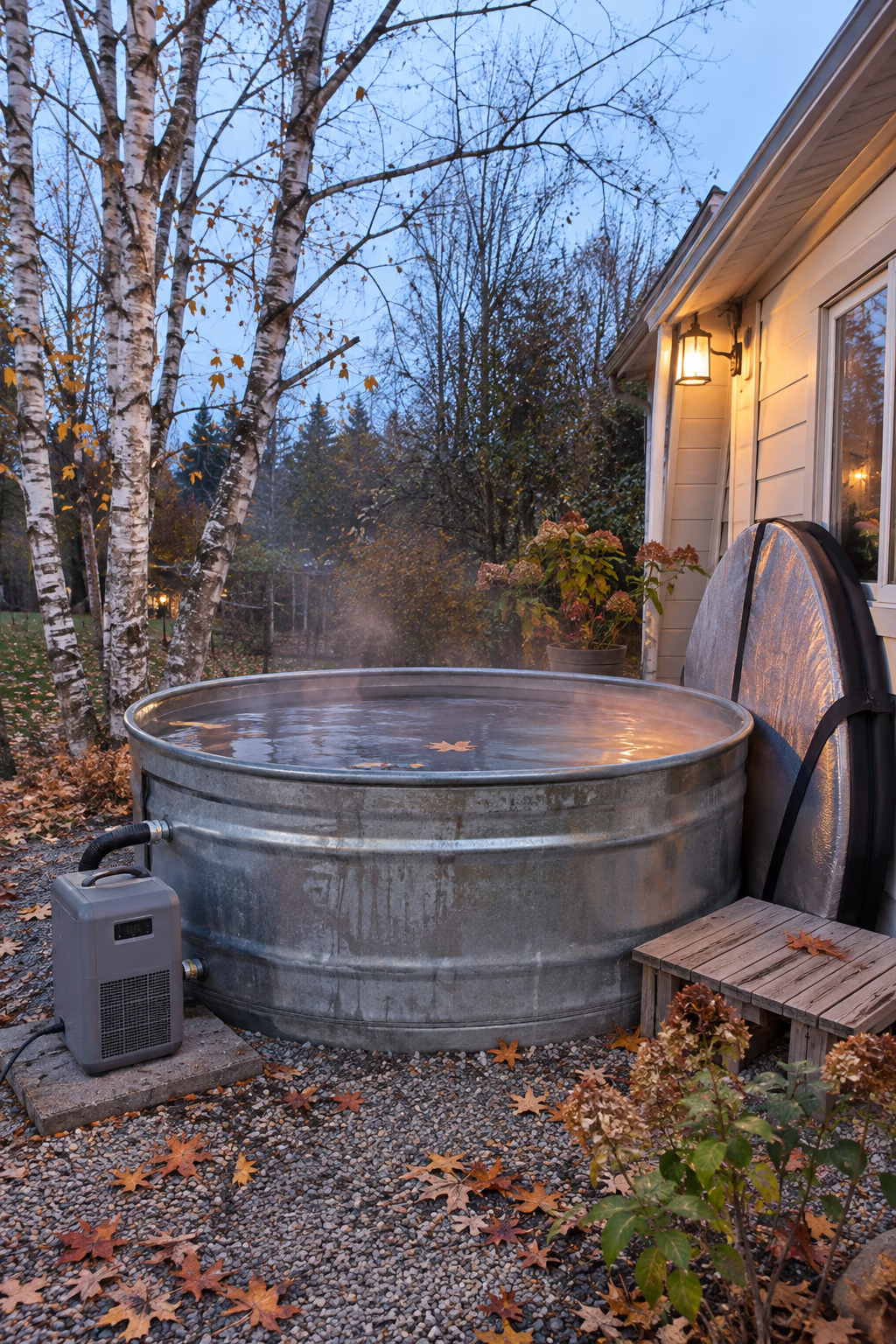
Stretch the season into spring and fall
A small electric pool or spa heater turns a stock tank into a warm soaking tub on cool evenings. A 6- or 8-foot tank is the easiest size to heat, and a fitted insulated cover keeps that warmth from escaping overnight. Some homeowners also use wood-fired heaters designed for outdoor tubs.
Warm water lets you enjoy the tank long after the swimming season ends, and it turns the pool into a relaxing spot for stargazing in October.
Electric heaters usually need a dedicated 240-volt circuit with GFCI protection, so hire a licensed electrician and check local permit rules. Warm water also grows algae faster, so keep the filter running and test the water more often.
5. Paint a Graphic Mural Wall Behind the Pool
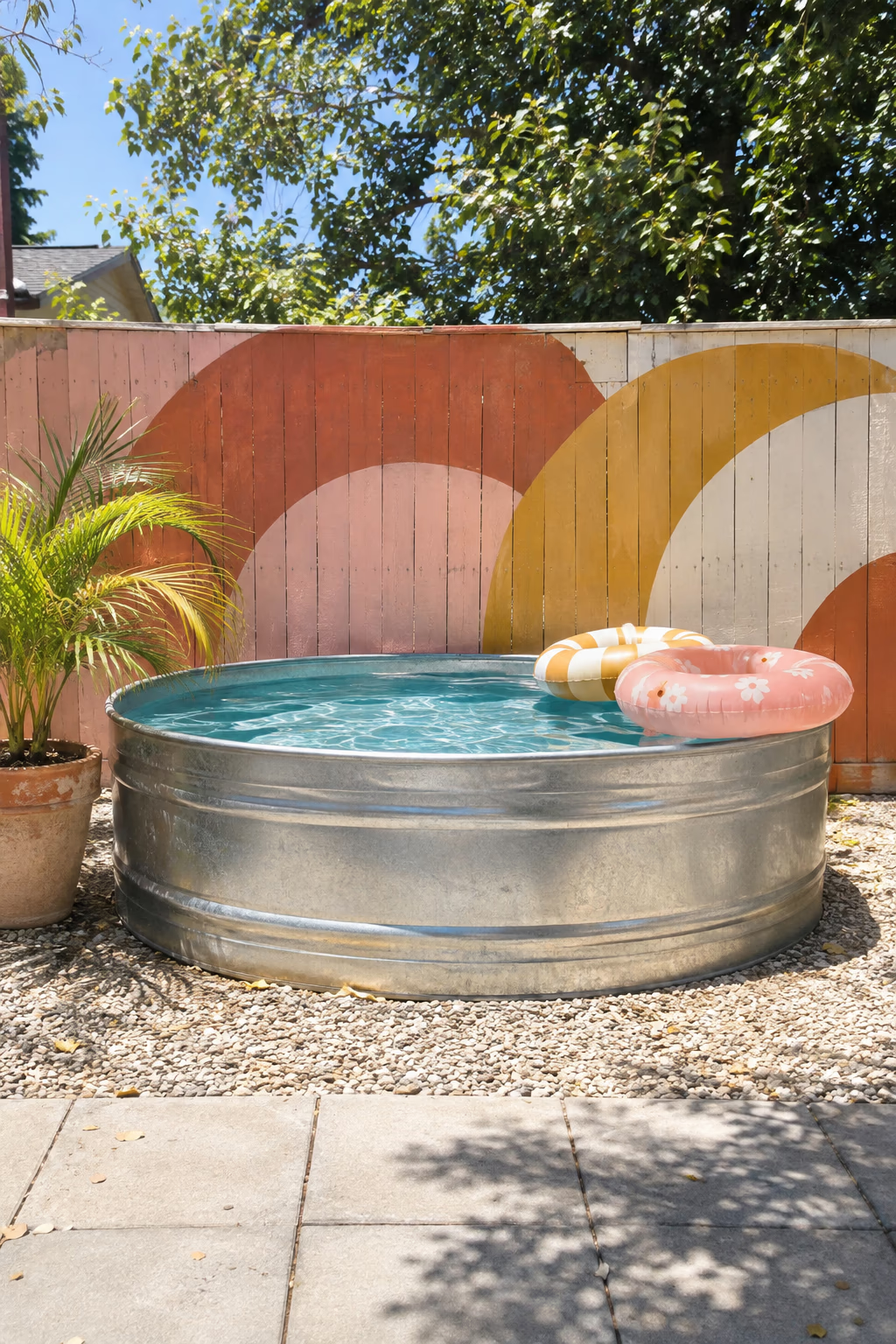
Create a backdrop worth photographing
If the tank sits against a fence, garage, or shed wall, use that surface as a canvas. Bold arches, color-blocked shapes, wavy stripes, or simple geometric patterns turn the whole corner into a designed space. Exterior latex paint and painter’s tape are all you need.
A mural works especially well when the tank itself stays plain galvanized silver, since the shiny metal reads as a neutral against the color. Pull one or two shades from the mural into towels or cushions to tie the look together.
Check with your HOA before painting a fence that faces a street or neighbor, and use a paint rated for the material, whether it’s wood, stucco, or metal siding.
6. Clad the Tank in Cedar Planks
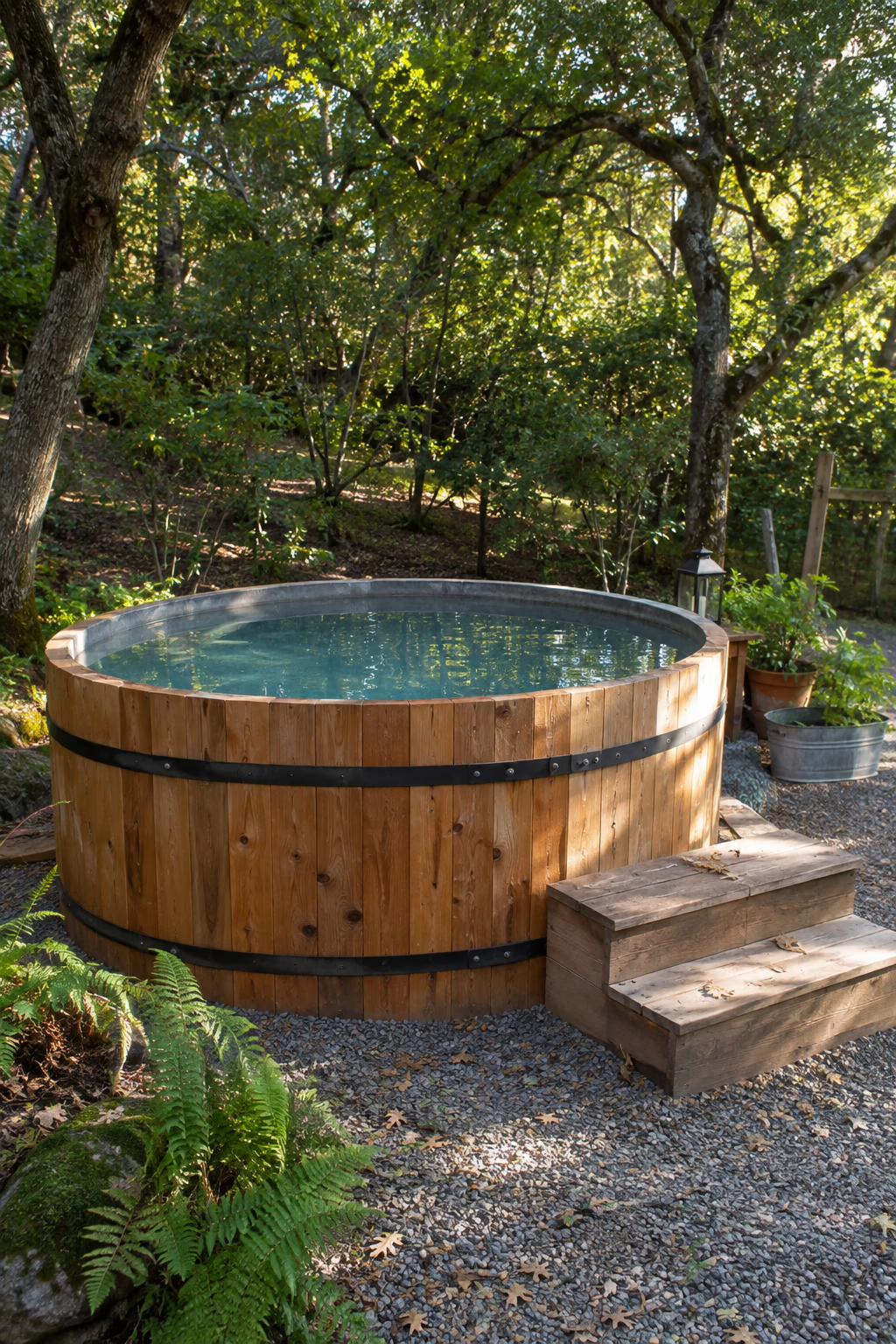
Warm up the metal with natural wood
Vertical cedar boards wrapped around the outside of a round tank give it the look of a Japanese soaking tub or an old wooden barrel. Cut 1×4 or 1×6 cedar boards to the height of the tank, and hold them in place with two or three galvanized steel straps or ratchet bands.
Wood cladding softens the industrial look, blends beautifully with gardens and wooded lots, and shields the metal from direct sun so the sides stay cooler.
Leave a small gap between the boards and the tank wall so water can drain and air can circulate. Trapped moisture against galvanized steel speeds up rust, and wet wood rots faster.
7. Surround the Pool With Pavers and a Stepping-Stone Walk
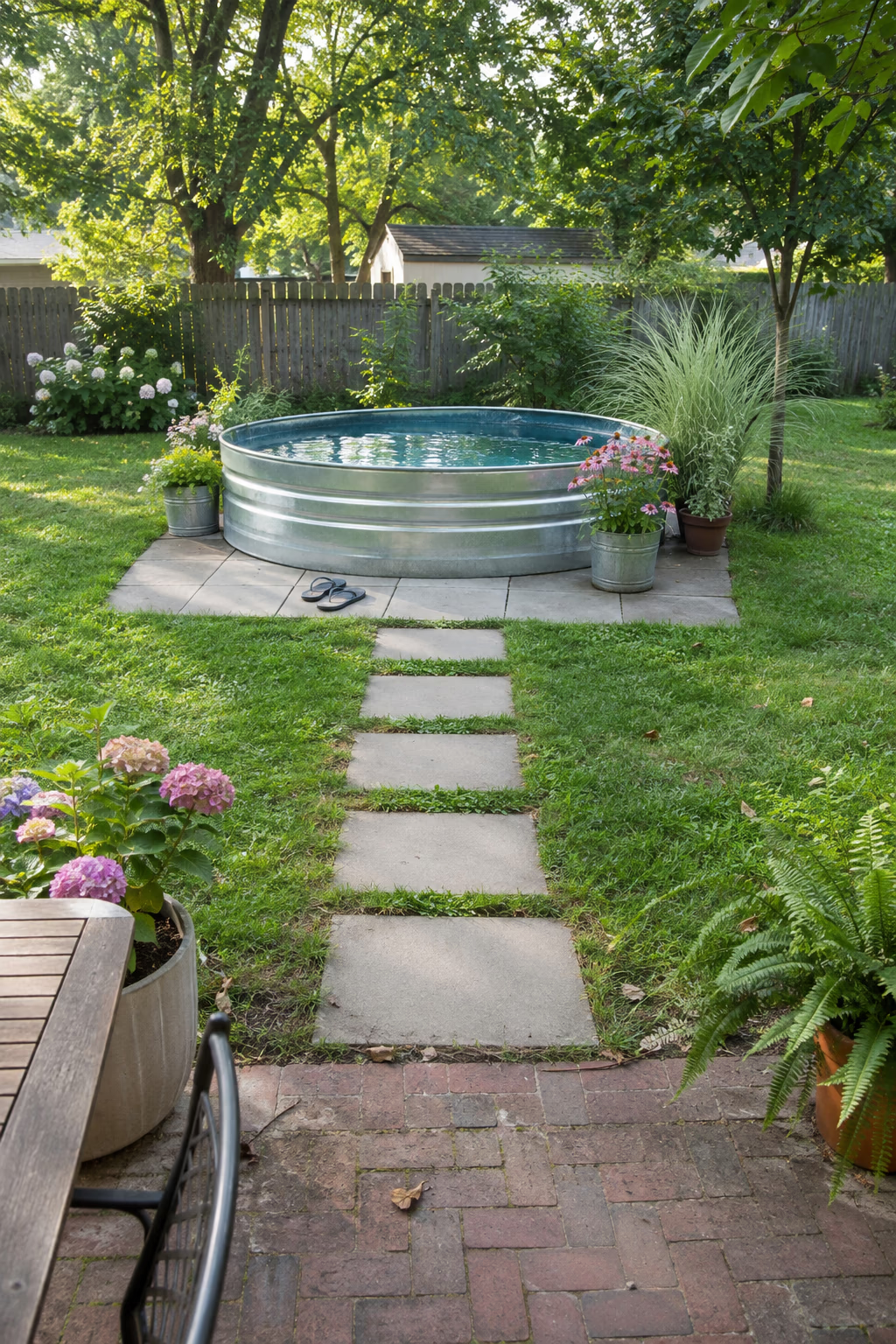
Keep feet clean and the lawn intact
A ring of concrete or natural stone pavers around the tank, with a short stepping-stone path back to the patio, gives the pool a finished, inground look. It also solves a very real problem: grass around a stock tank quickly turns to mud with dripping swimmers and splashing kids.
Set pavers on a 4-inch base of compacted gravel topped with an inch of leveling sand. Large-format pavers in gray, tan, or white keep the look clean, while flagstone suits cottage and rustic yards.
Choose pavers with a textured, slip-resistant finish. Wet, smooth stone can be very slick, especially around children.
8. Set the Tank in a Clean Gravel Courtyard
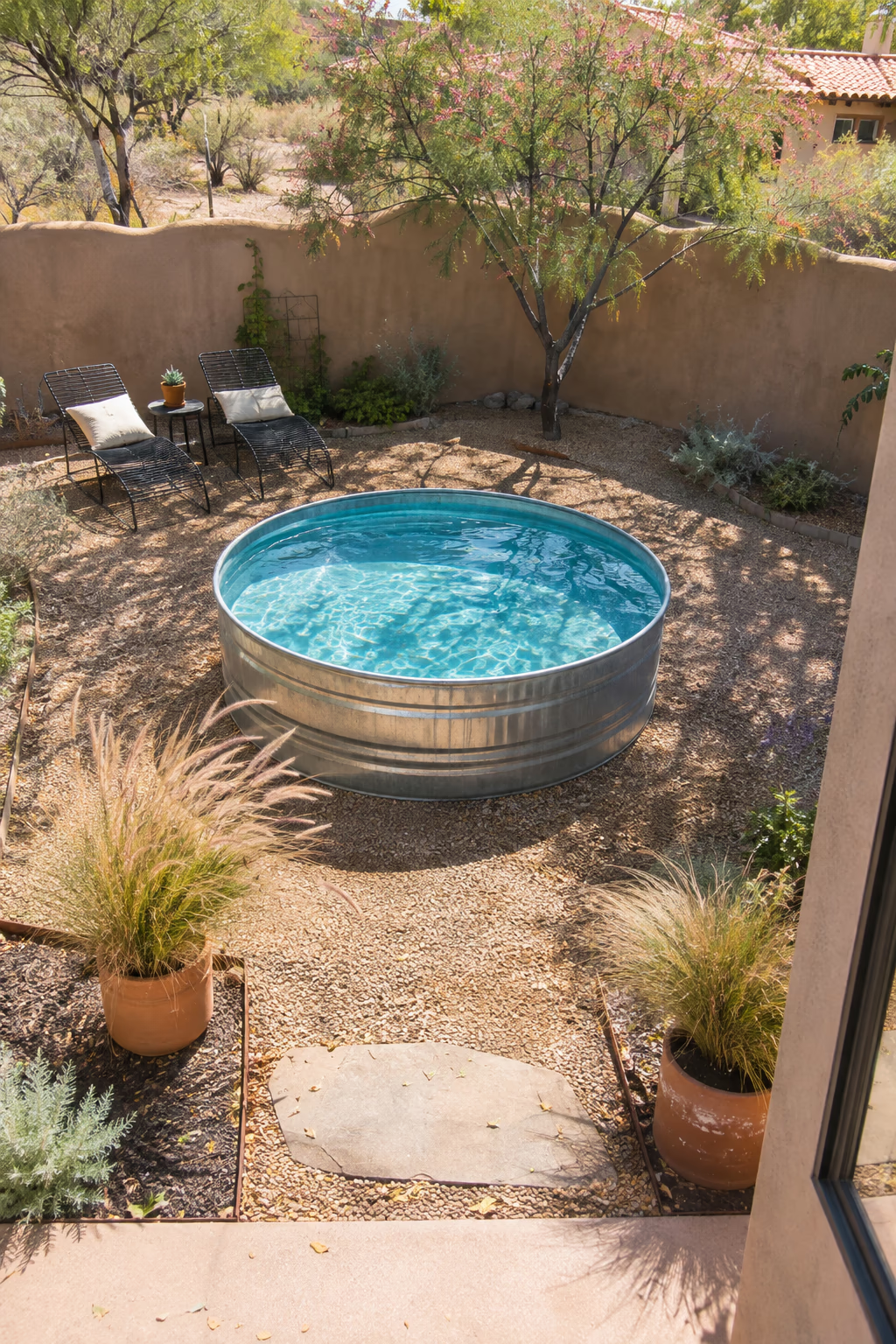
Low-cost hardscape with a modern edge
A simple courtyard of pea gravel or crushed granite around the tank is one of the least expensive ways to make it feel intentional. Edge the area with steel or plastic landscape edging, lay heavy-duty landscape fabric, and spread 2 to 3 inches of gravel.
Gravel drains quickly, never needs mowing, and pairs well with a few lounge chairs and potted grasses. It’s especially popular in dry Western and Southwestern yards.
Small stones can stick to wet feet and end up in the water, clogging the filter basket. Add a doormat or a few large stepping stones at the entry point to keep gravel out of the pool.
9. Shade the Pool With a Sail or Pergola
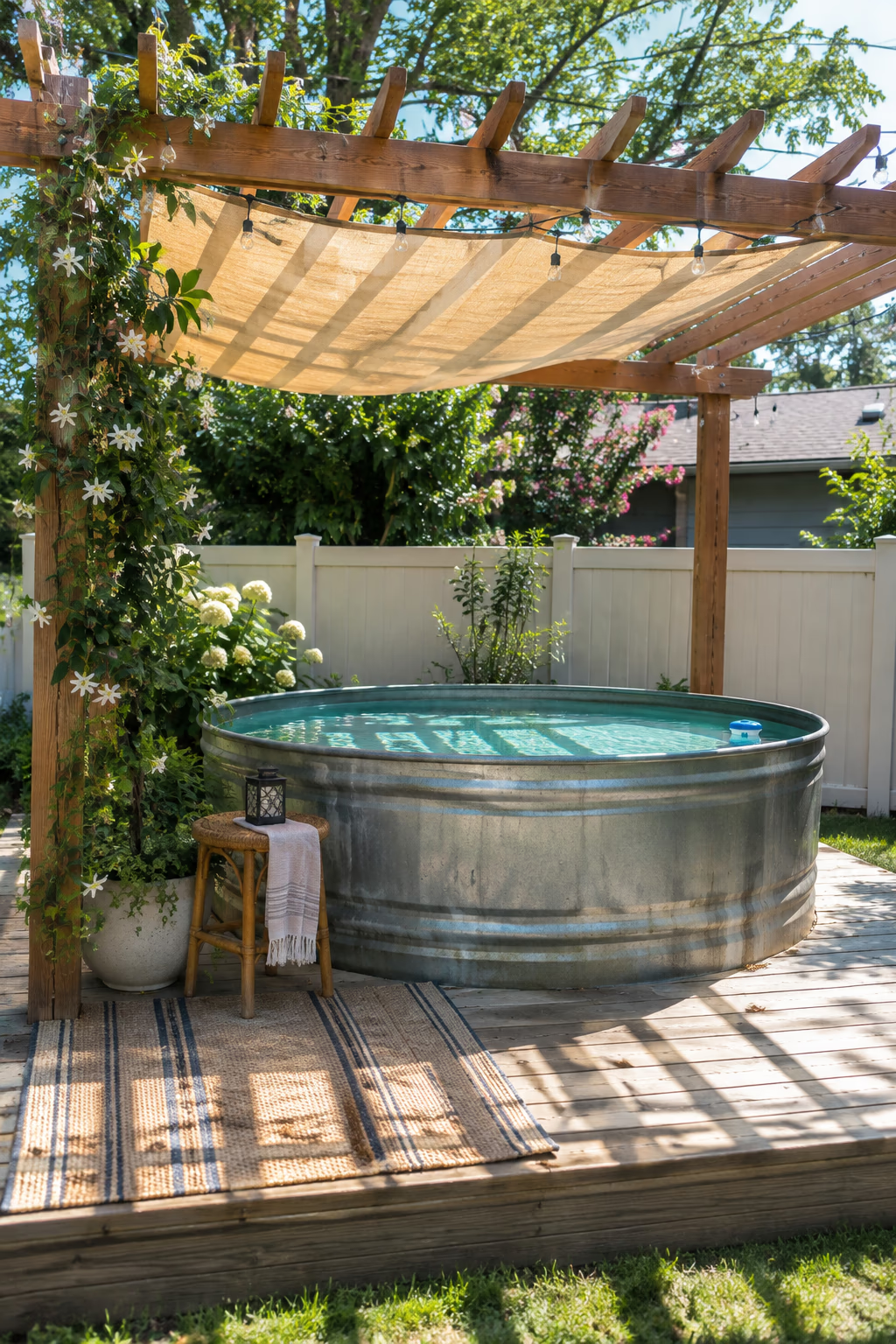
Protect skin and keep the water cool
Stock tanks are shallow, so the sun warms the water quickly and the metal rim can get hot. A triangular shade sail stretched between posts, a simple cedar pergola with a fabric canopy, or a large cantilever umbrella makes midday swims much more pleasant.
Shade also slows algae growth and reduces chlorine loss, which means less time balancing the water chemistry.
Shade sails catch a lot of wind, so anchor posts in concrete footings at least 2 to 3 feet deep and take the fabric down before major storms.
10. Sink the Tank Partway Into the Ground
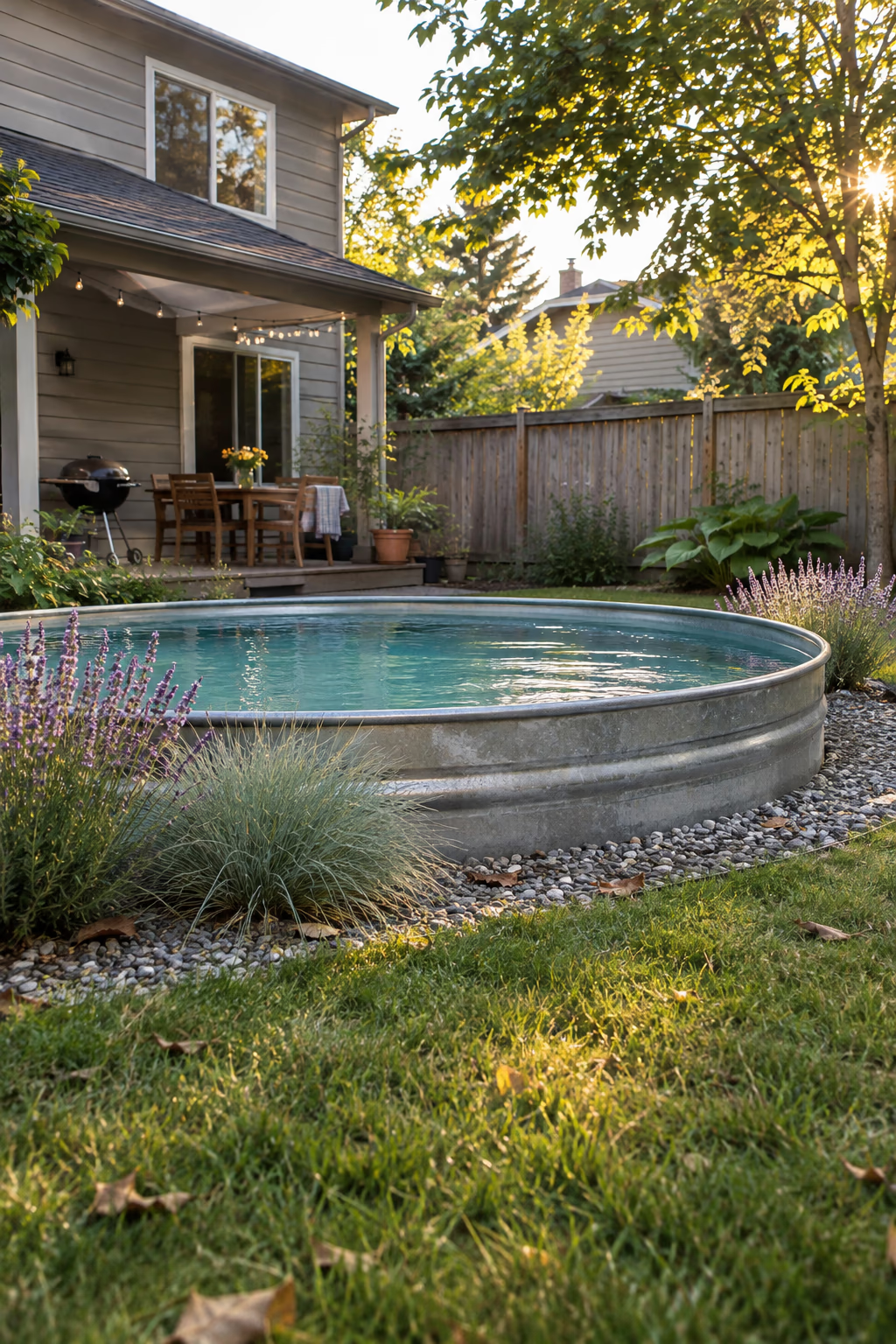
A lower profile with easier entry
Setting the tank 8 to 12 inches into the ground makes it easier to step into and gives it the look of a small inground plunge pool. Dig a level hole slightly wider than the tank, add a base of compacted sand or gravel, and backfill the sides with gravel rather than soil so water drains away from the metal.
The result is sleek and modern, and it works well in yards with a gentle slope where one side can sit lower than the other.
Not every tank is made to be buried. Check the manufacturer’s guidance first, since soil pressure can bend walls when the tank is drained, and buried galvanized steel tends to rust faster. In the United States, call 811 before digging.
11. Add Painted Stripes for a Retro Pool Look
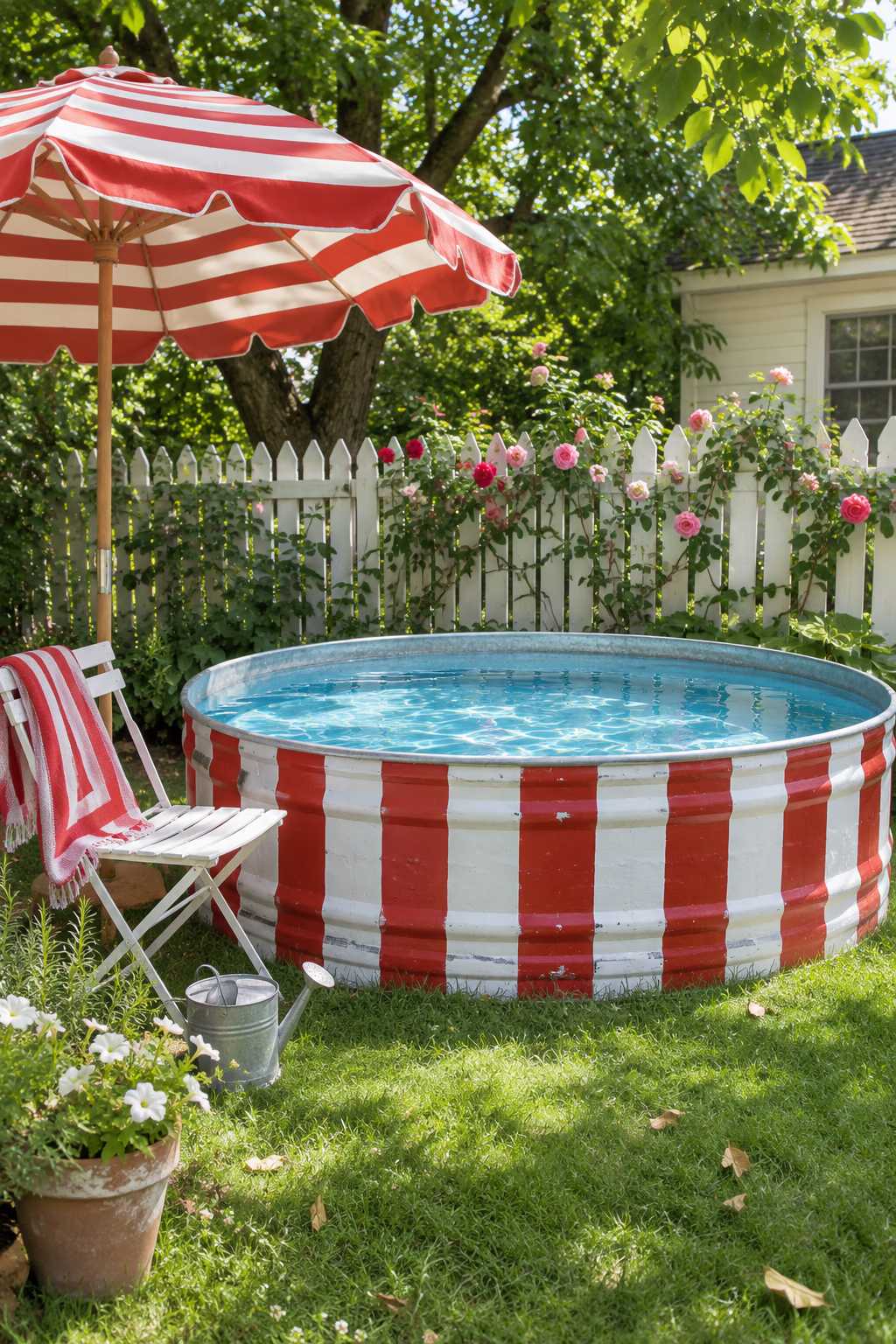
A playful, vintage-cabana vibe
Wide horizontal or vertical stripes recall old-fashioned beach cabanas and striped umbrellas. Classic combinations include white with red, navy with cream, or pink with mint. Mark the lines with painter’s tape after priming, then roll on the colors one at a time.
Stripes are an easy way to tie the pool to striped cushions, towels, or an umbrella. Even a single band of color around the top of the tank looks fun.
Vertical stripes on a corrugated tank are easier to keep straight because the ridges act as guides. Horizontal stripes look great too but take more careful taping.
12. Choose an Oval Tank for a Cozy Two-Person Soak
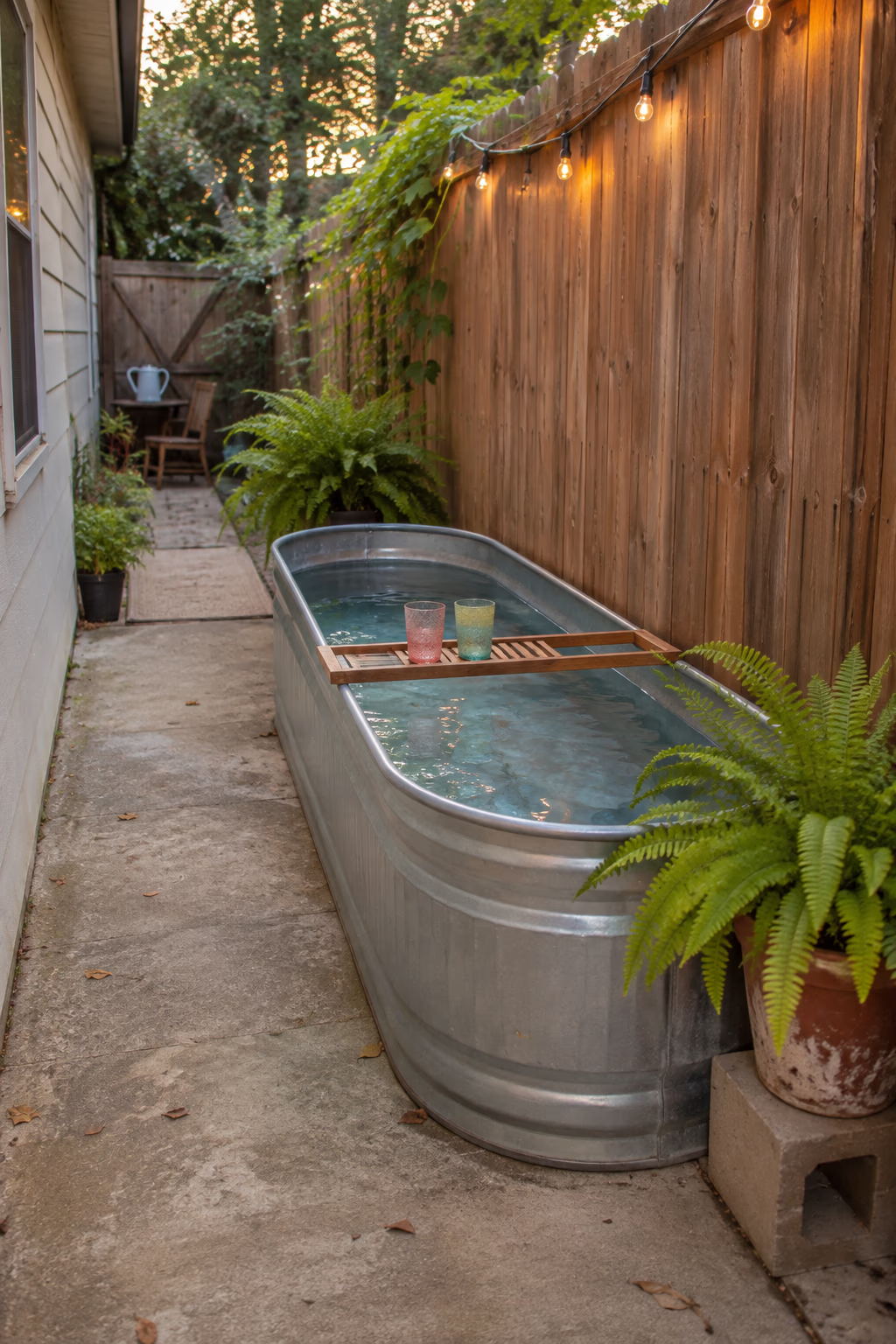
Perfect for small yards and quiet evenings
Oval and bathtub-style tanks, often around 3 by 8 feet, are a natural choice for one or two people who want to stretch out and relax. They fit along a fence line, a narrow side yard, or a corner of the patio where a round tank would feel crowded.
A smaller tank means less water to filter and treat, and it heats faster if you add a heater later.
Even smaller tanks are heavy when full, so place them on level ground or a concrete pad. A small floating tray or a side table within arm’s reach makes the setup feel like a real outdoor bath.
13. Screen the Pool With a Slatted Privacy Fence
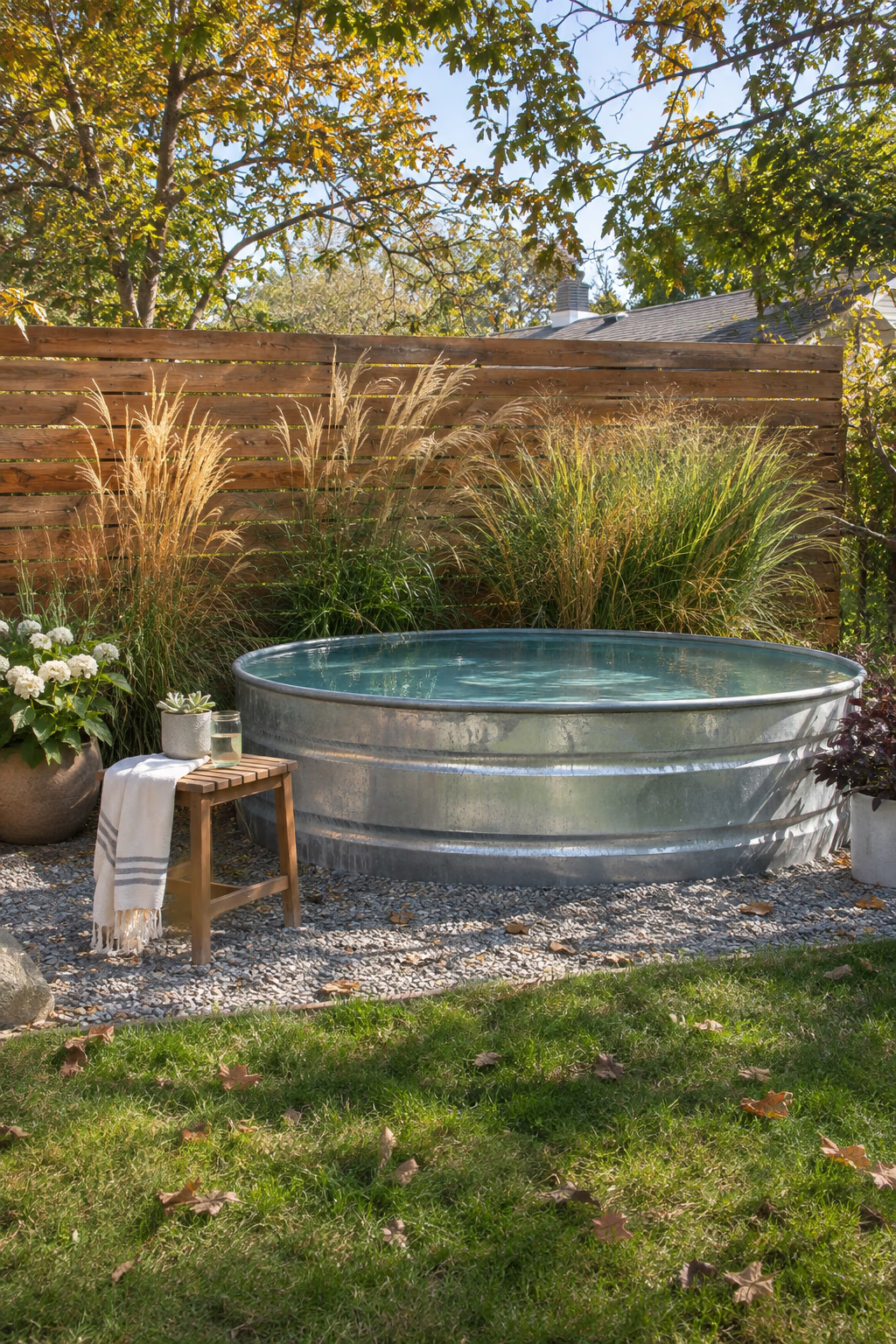
Swim without feeling on display
Horizontal slat fencing in cedar or stained pine creates a modern backdrop and blocks views from neighbors or the street. A partial screen, only 6 to 8 feet long, can be enough to shelter one side of the tank.
Narrow gaps between boards let breezes through while still giving a sense of enclosure. Paired with tall ornamental grasses like switchgrass or maiden grass, the space feels private and calm.
Fence height limits vary by town and HOA, often 6 feet for backyards. Check your local rules before building, and remember that a privacy screen is not the same as a code-compliant safety barrier.
14. Ring the Pool With Desert Plants in Terracotta Pots
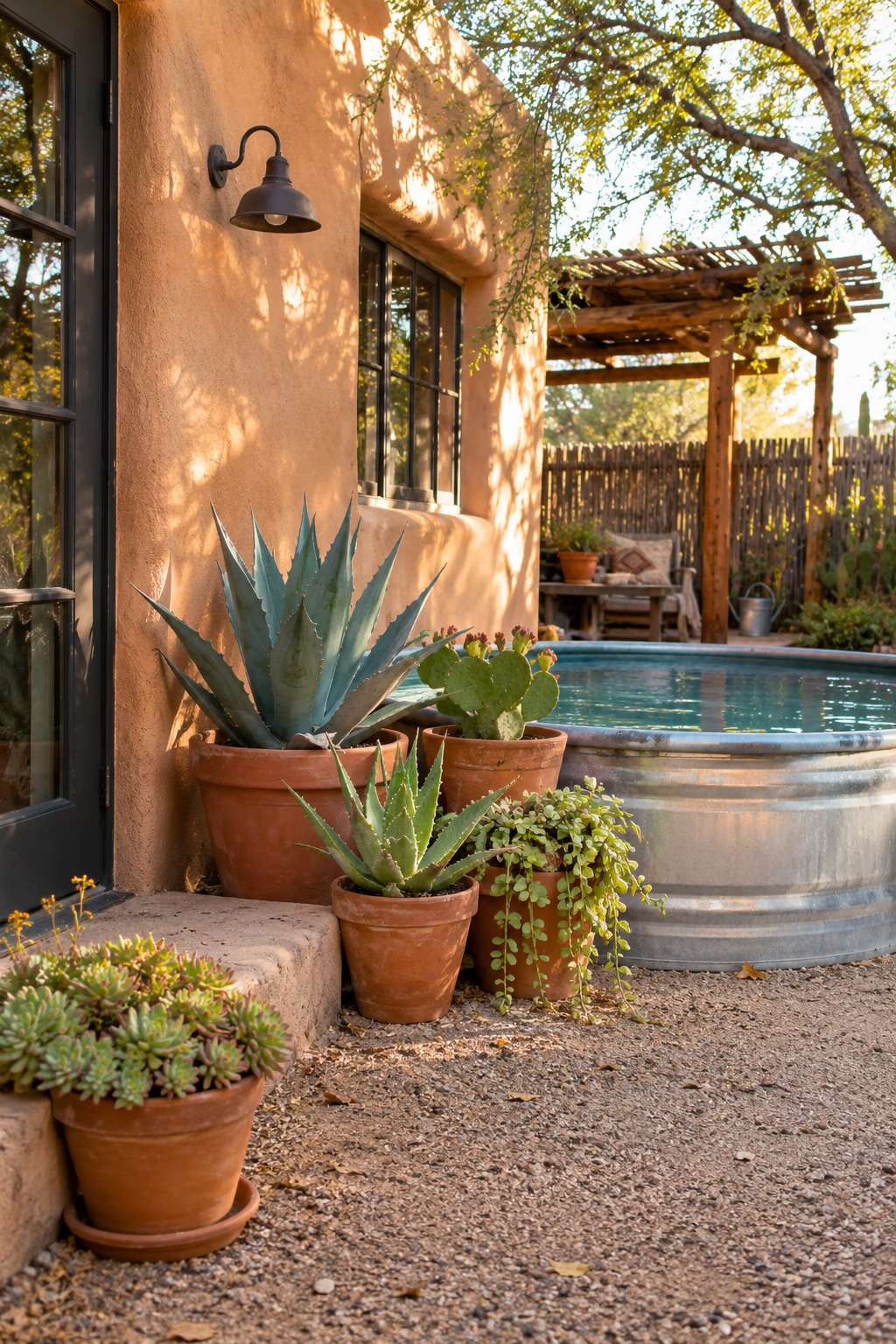
A sun-loving, low-water garden look
Cluster terracotta pots of agave, yucca, aloe, prickly pear, and trailing succulents around the tank for a laid-back Southwestern feel. Varying the pot sizes from 10 to 24 inches creates depth and keeps the arrangement looking natural.
Containers make it easy to rearrange the space and move tender plants into a garage or sunroom for winter in colder regions.
Keep spiny plants like agave and cactus several feet away from walkways and the pool entry. Use softer options like blue fescue or sedum closer to where people step in and out.
15. Add an Outdoor Shower Beside the Tank
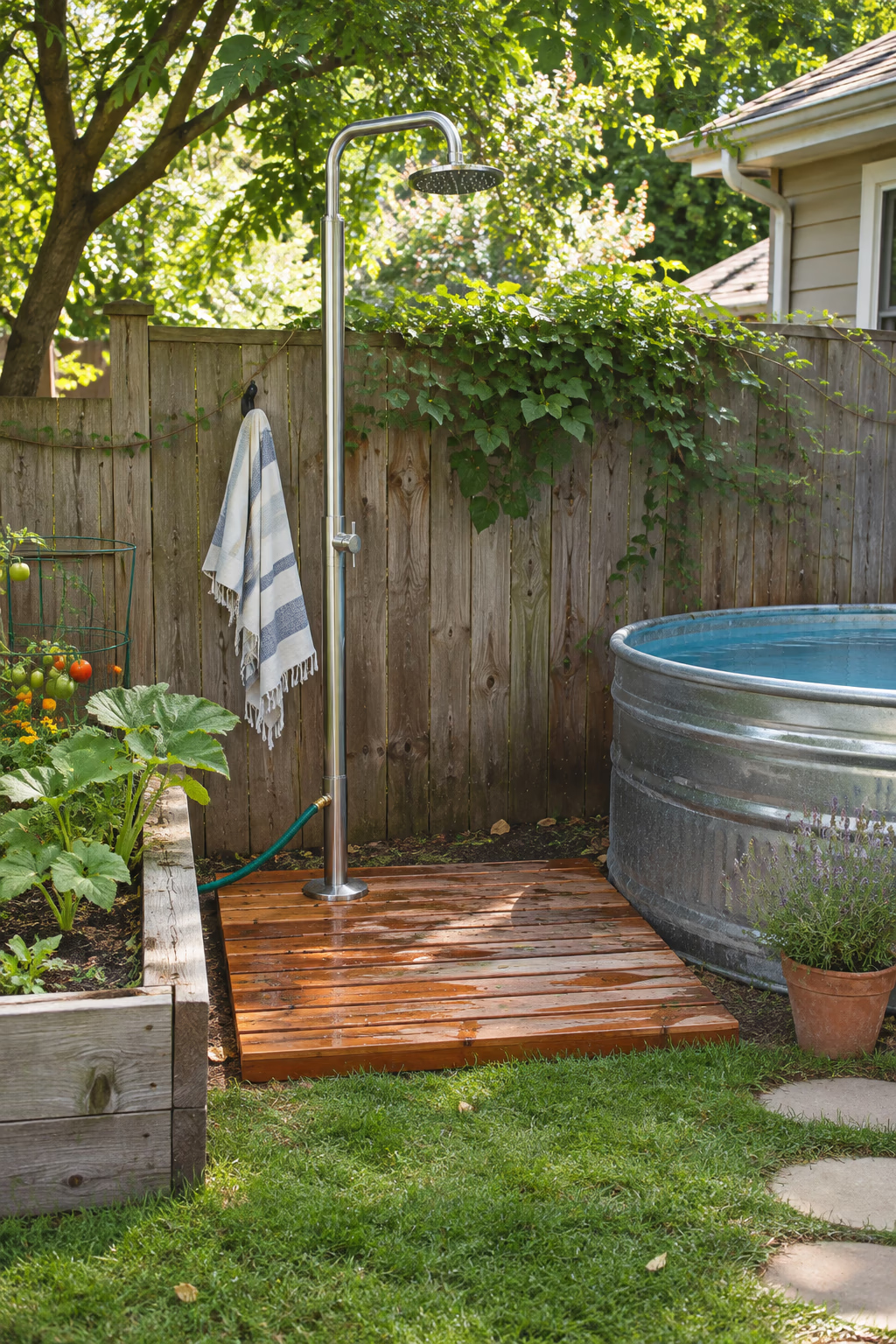
Rinse off and keep the water cleaner
A simple outdoor shower next to the pool encourages everyone to rinse off sunscreen, dirt, and grass clippings before getting in. That means clearer water and less work for the filter.
The easiest version is a freestanding shower post connected to a garden hose, set on a pad of pavers or a slatted cedar platform so the area doesn’t turn muddy. For a more permanent setup with hot water, hire a plumber to run a line from the house.
In freezing climates, choose a model that can be drained or disconnected before winter to prevent cracked pipes.
16. Light the Pool for Evening Dips
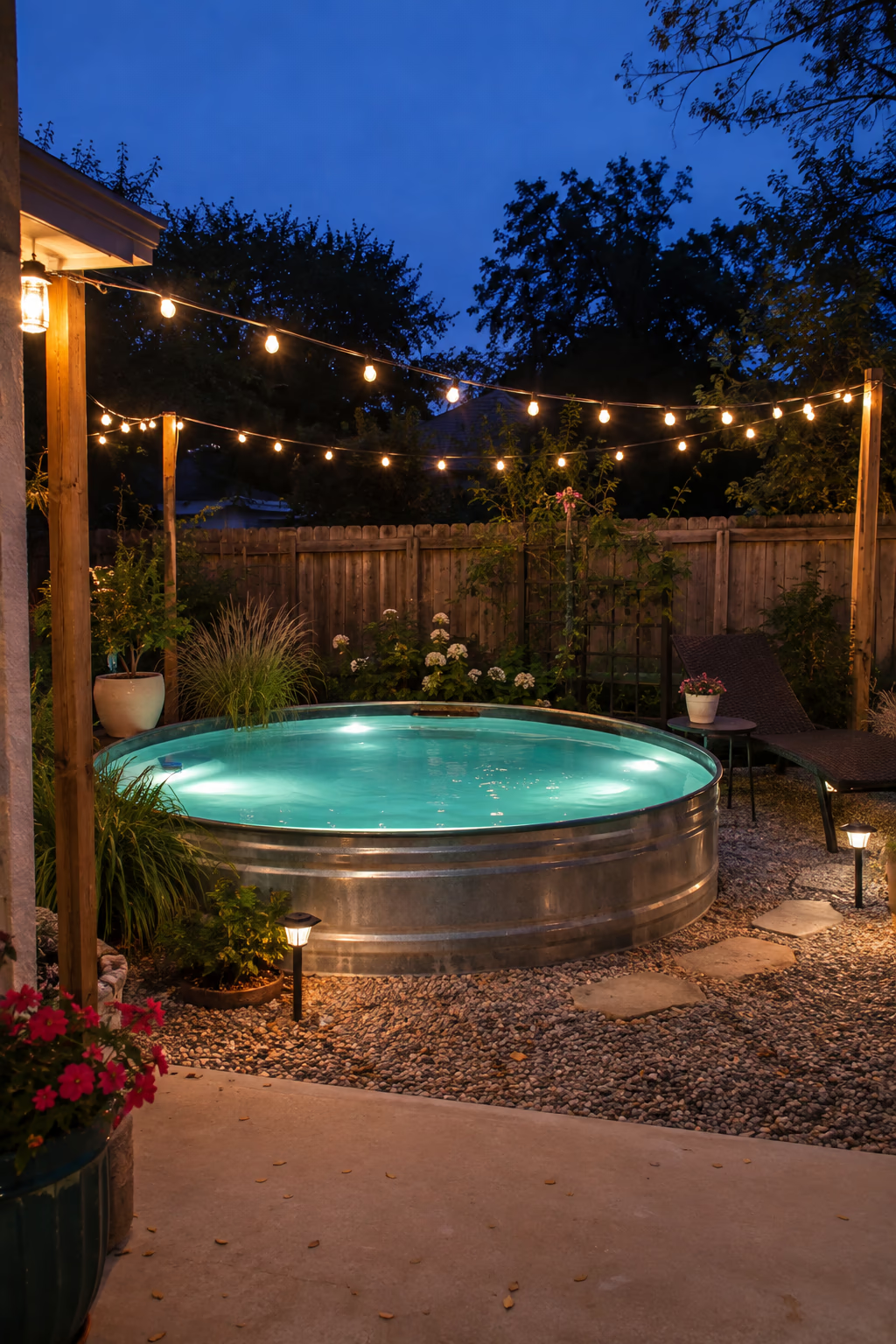
Make the tank glow after sunset
Battery-powered or solar submersible LED lights placed in the water give the pool a soft glow at night. Add a strand of warm white bistro lights overhead or solar path lights around the edge, and the space becomes an evening hangout.
Lighting also makes nighttime swims safer by showing the edges, steps, and paths clearly.
Only use lights rated for underwater or outdoor wet locations, and plug any electrical cords into GFCI-protected outlets well away from the water.
17. Tuck a Round Tank Into a Small Patio Corner
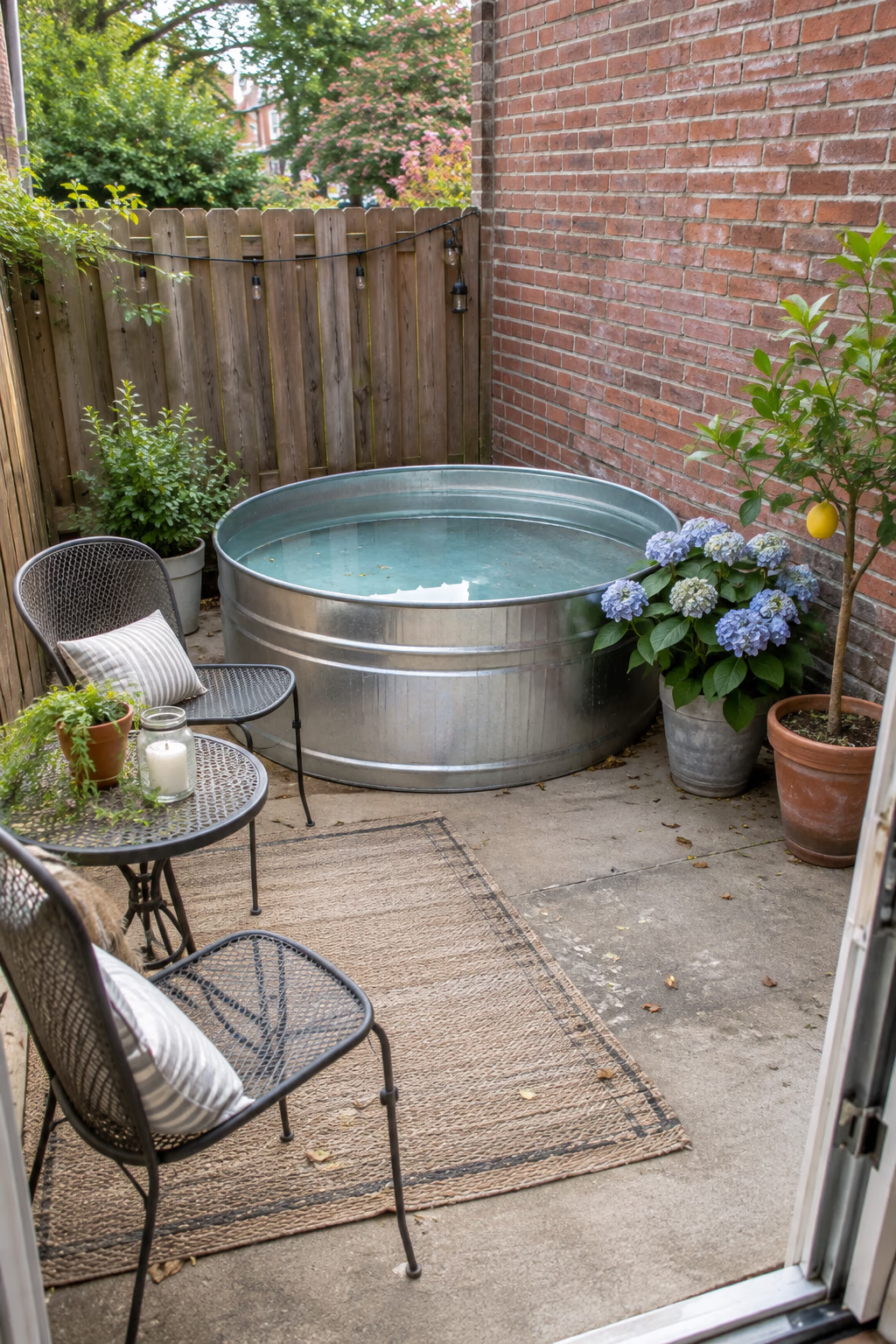
Big relief in a tiny footprint
A 6-foot round tank fits neatly into the corner of a concrete patio or courtyard, making it ideal for townhouses and small urban lots. Place it against two walls or fences and add a couple of chairs and potted plants to finish the space.
Because the patio is already level and hard, setup is quick, and there’s no lawn to protect.
Make sure water drains away from the house when you empty the tank, and confirm the patio slab is solid and level. Cracked or sinking slabs can shift under the weight.
18. Build a Tiled Surround for a Spa Look
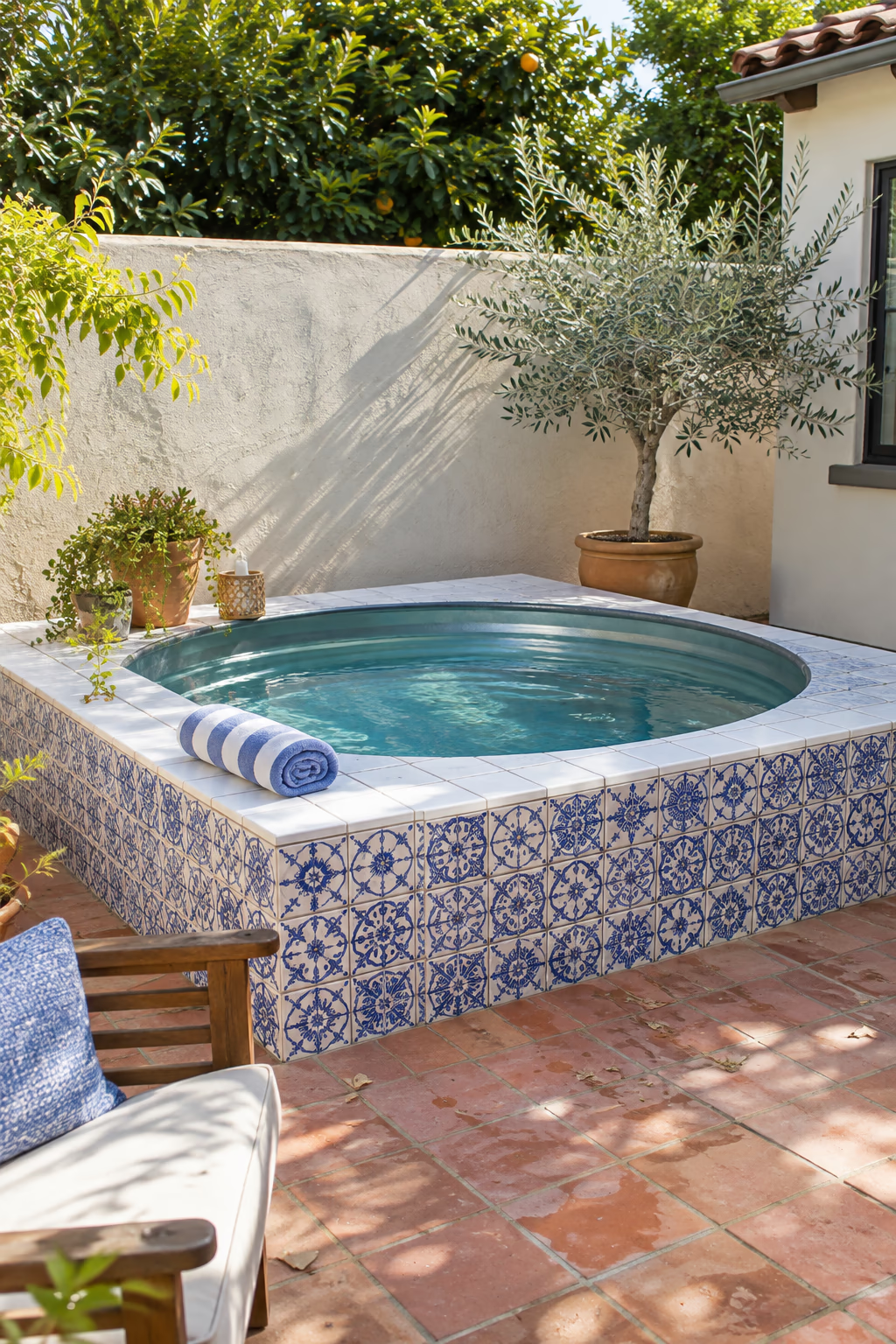
Add pattern and polish
Instead of tiling the curved metal directly, build a square or octagonal wooden or cement-board box around the tank and finish the outside with outdoor-rated porcelain tile. Blue-and-white patterned tiles, terracotta, or simple white subway tiles all create a resort-style feel.
The surround hides the corrugated metal completely, and the flat top makes a handy ledge for drinks and towels.
Use cement board, thinset, and grout rated for exterior use. Tile can crack where winters freeze, so choose frost-resistant porcelain and seal the grout.
19. Set Up a Poolside Bar Cart and Lounge Zone
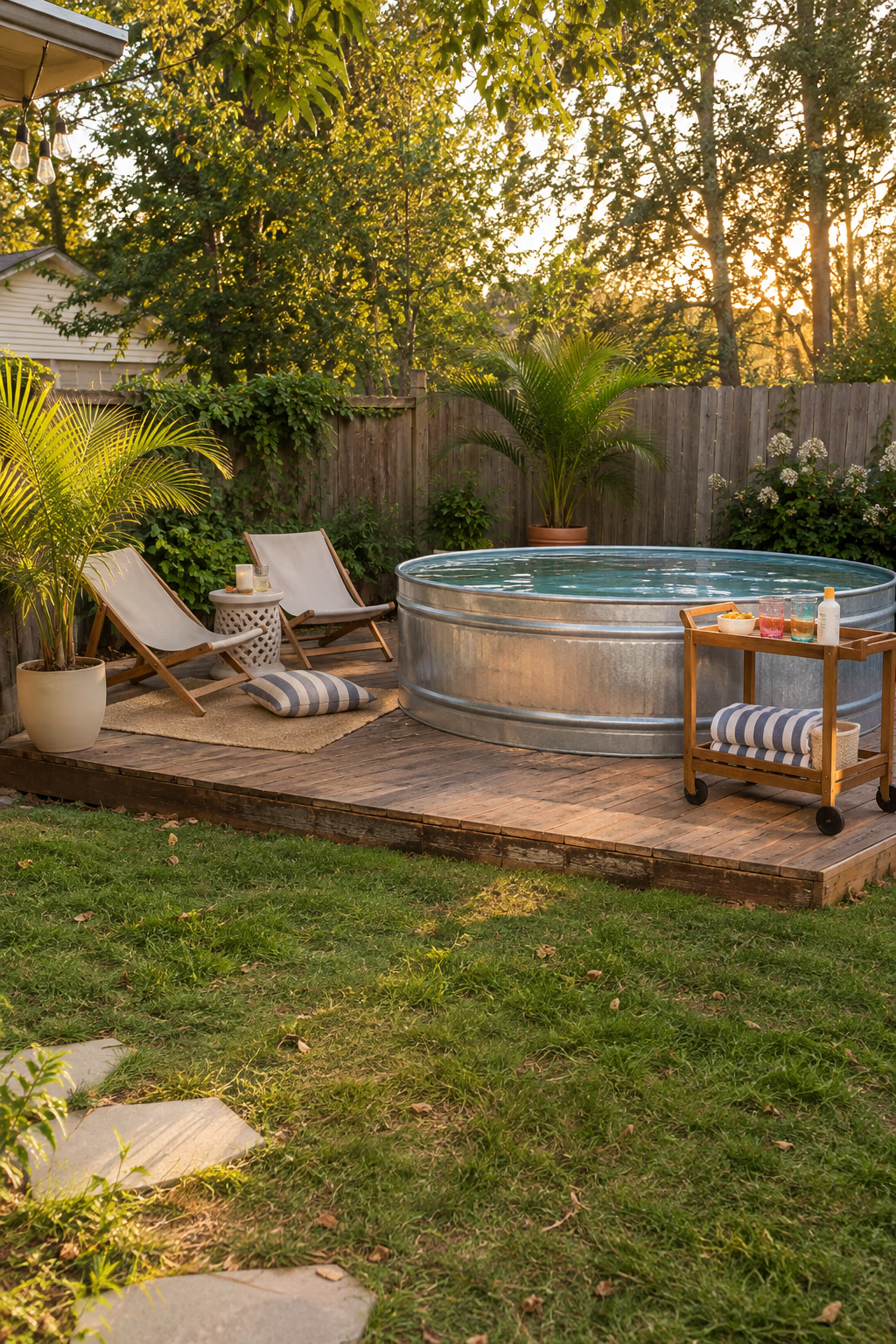
Turn the pool into the backyard hangout
A rolling outdoor bar cart, a couple of low lounge chairs, and a small side table beside the tank create a dedicated relaxing zone. Fill the cart with towels, sunscreen, and plastic cups so everything you need is close by.
Defining a lounge area makes the pool feel like part of a larger outdoor living space rather than a stand-alone tank.
Stick with shatterproof drinkware near the water. Broken glass in a pool means draining and cleaning the whole tank.
20. Use the Tank as a Year-Round Cold Plunge
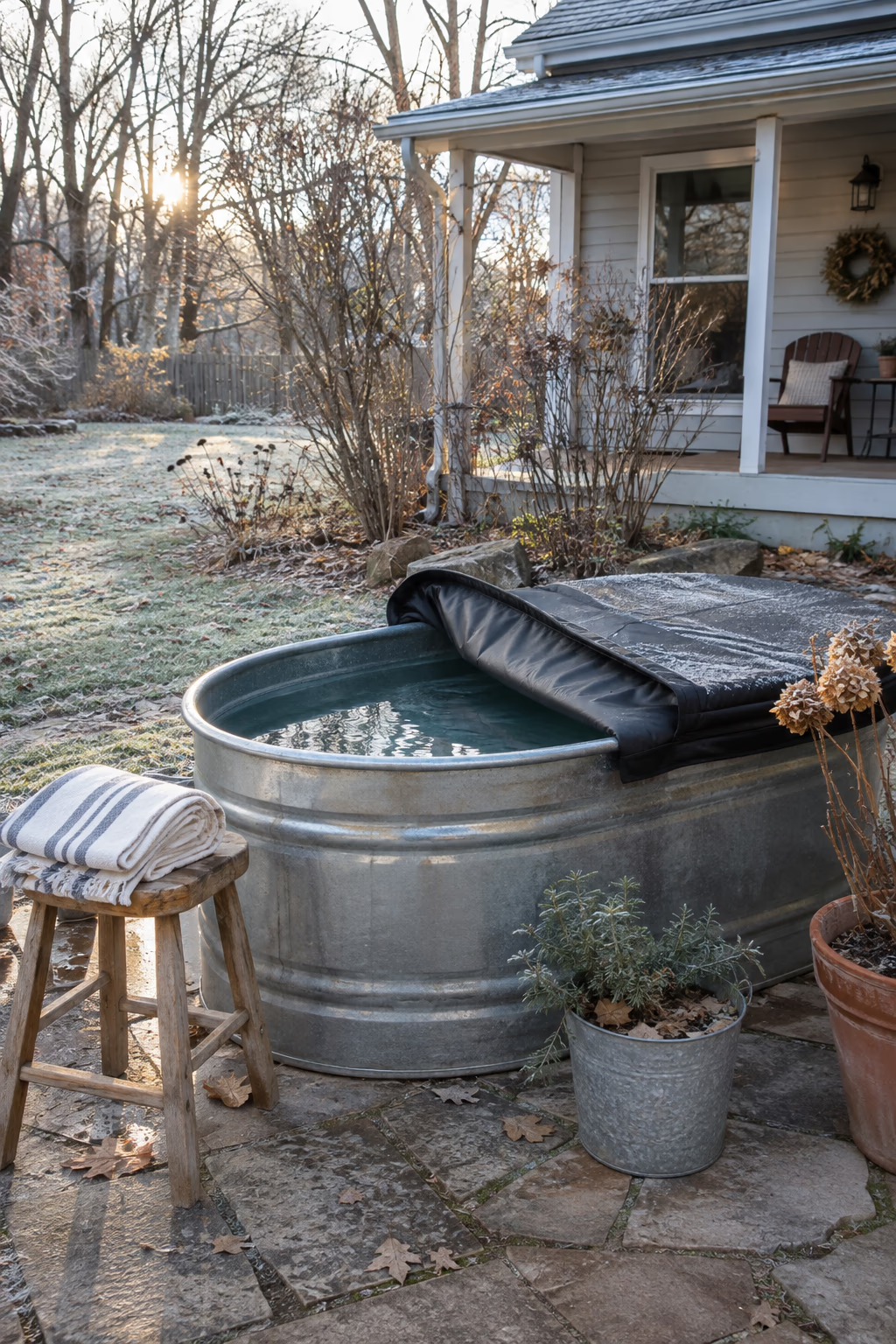
A wellness ritual in the off-season
Cold plunges have become a popular wellness routine, and a small stock tank works well for brief dips in cool weather. A 4- to 6-foot round or oval tank with a tight-fitting cover is easiest to maintain.
The same tank you swim in during summer can be used in the cooler months if you keep the water clean and filtered.
Cold-water immersion isn’t right for everyone, so talk with a doctor first if you have heart or blood pressure concerns. In freezing climates, ice can damage pumps and plumbing, so disconnect equipment or use a pump rated for cold temperatures.
21. Revive a Secondhand Tank With a Pool Liner
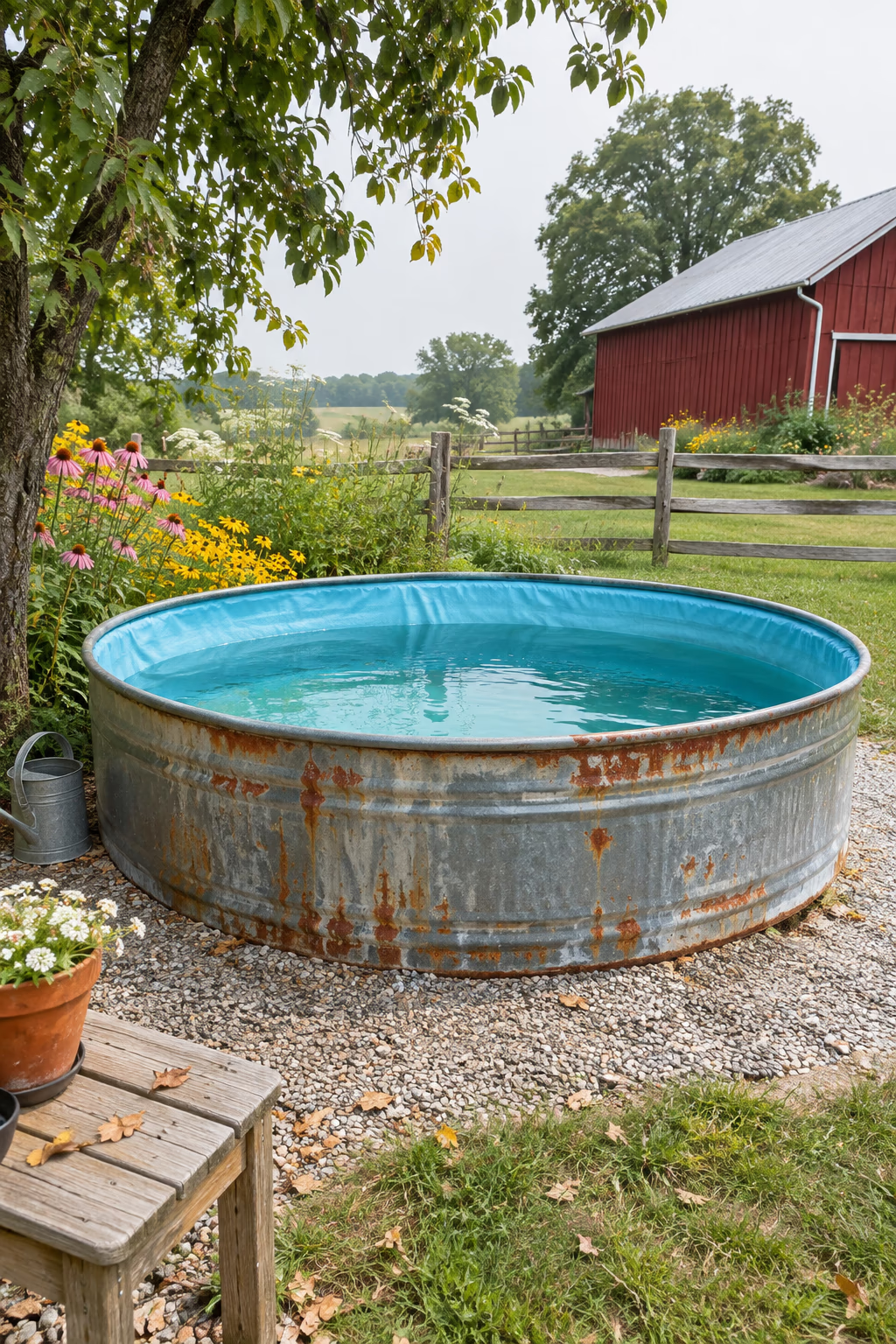
Save money and give an old tank new life
Used stock tanks often turn up on farm auctions and online marketplaces for much less than new ones. If the walls are solid but the interior shows rust or pinhole leaks, a fitted above-ground pool liner or a custom vinyl liner can make it watertight again.
Weathered, rusty exteriors have a rustic charm that many people love, especially in farmhouse and cottage-style yards.
Inspect the seams, bottom, and drain fitting carefully before buying, and avoid tanks that held chemicals or fertilizer. Sand down sharp rust spots so they don’t puncture the liner.
How to Plan Your Stock Tank Pool
A stock tank pool is simple, but a bit of planning makes it safer, cleaner, and more enjoyable for years.
- Pick a level, solid spot. Prepare a compacted base of sand, crushed stone, or concrete, away from overhead power lines, septic systems, and low areas where water collects.
- Choose the right size. An 8-foot round tank comfortably fits a few adults, while a 6-foot round or oval tank suits one or two people and small yards.
- Plan for filtration. Use an above-ground pool pump and cartridge filter or a saltwater system sized for your tank, and test the water regularly.
- Protect the metal. Avoid letting chlorine tablets touch galvanized steel, and consider a floating dispenser or a liner to reduce corrosion.
- Check local rules. Many towns treat water deeper than 18 to 24 inches as a pool that needs a permit, fence, or self-latching gate. Check with your building department and HOA.
- Think about safety. Supervise children at all times, use a locking cover when the pool isn’t in use, and keep electrical equipment on GFCI-protected outlets.
Frequently Asked Questions
How much does a stock tank pool cost?
A basic setup with a tank, pump, filter, and supplies often runs from a few hundred dollars to around $1,500, depending on size and region. Decks, heaters, cladding, and professional installation can add considerably more, but the total is still far less than an inground pool.
What size stock tank is best for a pool?
Round 8-foot tanks that are 2 feet deep are the most popular because they fit several adults and still work in average backyards. A 6-foot round tank or oval tank suits smaller spaces, and 10-foot tanks give more room for families.
Do stock tank pools need a filter?
Yes. A pump and filter keep the water moving and clean, which helps prevent algae and mosquito breeding. Most people use an above-ground pool pump with a cartridge filter and add sanitizer to keep the water safe.
Can a stock tank pool sit on a wood deck?
It’s not recommended unless a structural engineer designs the deck for the load. A full 8-foot tank can weigh around 6,000 pounds, so it’s safer to place the tank on the ground and build the deck around it.
How do you keep a stock tank pool from rusting?
Keep chlorine tablets from touching the walls, maintain balanced water chemistry, and drain and dry the tank before winter. A liner or a sealant designed for metal tanks can add another layer of protection.
Final Thoughts
The best stock tank pool ideas take a simple farm tank and make it feel like a real backyard retreat. A wraparound deck, a bold coat of paint, or a comfortable bench around the rim can transform a plain metal tank into a summer centerpiece.
Start with a level base and good filtration, then add style one project at a time. Whether you go bright and playful or rustic and natural, a stock tank pool can bring cool, easy fun to almost any yard.


