
Imagine walking out on a hot August afternoon and finding coneflowers, grasses, and silver sage looking fresh while the lawn next door has gone brown. The ground underneath crunches softly, nothing needs watering, and there’s barely a weed in sight.
That’s the quiet promise of a gravel garden. A layer of stone keeps plant crowns dry, holds moisture in the soil below, and smothers many weed seeds before they sprout. It also looks clean and intentional in every season, which is why more American homeowners are trading thirsty turf and wood mulch for crushed stone and tough, drought-tolerant plants.
These 23 gravel garden ideas cover everything from planting prairie perennials straight into stone to building fire pit circles, dry creek beds, crevice gardens, herb beds, and practical fixes for slopes and shady side yards. Pick one corner to start, or use several ideas together to reshape the whole yard.
1. Plant Drought-Tolerant Perennials Directly Into Gravel
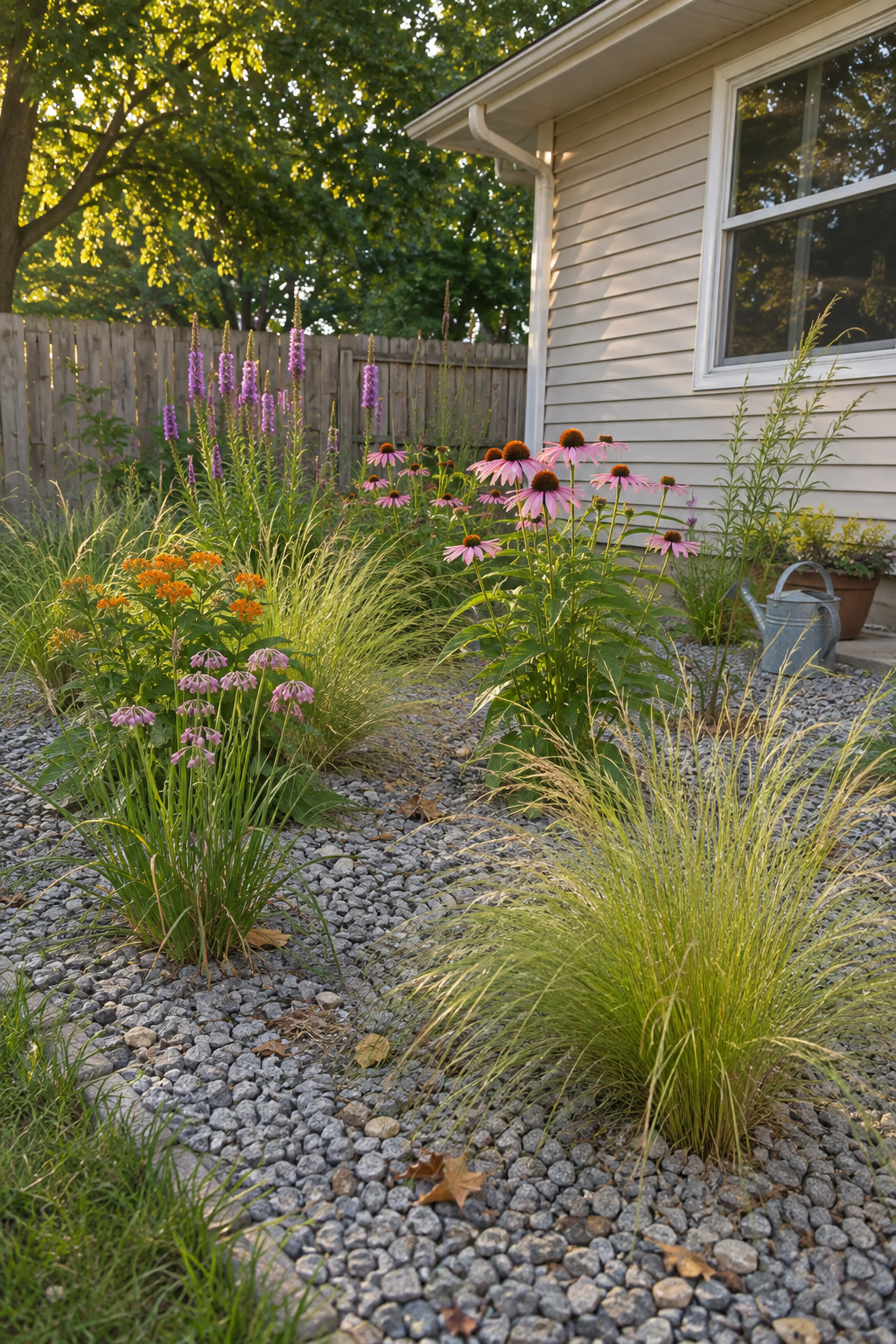
The low-water method behind the trend
True gravel gardening goes beyond using stone as mulch. You spread a deep layer, about 4 to 5 inches of washed 3/8-inch crushed stone, directly over weeded, loosened soil, then plant into it so the roots reach the ground below. No landscape fabric goes underneath, because the plants need to spread and self-sow.
Prairie natives shine here: prairie dropseed, little bluestem, purple coneflower, blazing star, butterfly milkweed, and nodding onion. Small plugs establish faster than big potted plants. Shake off most of the potting mix so roots meet real soil, and keep crowns at the gravel surface rather than buried.
Water deeply through the first growing season. After that, most established plants survive on rainfall in much of the country, and the dry gravel surface makes it hard for weed seeds to get started.
2. Build a Round Gravel Fire Pit Lounge
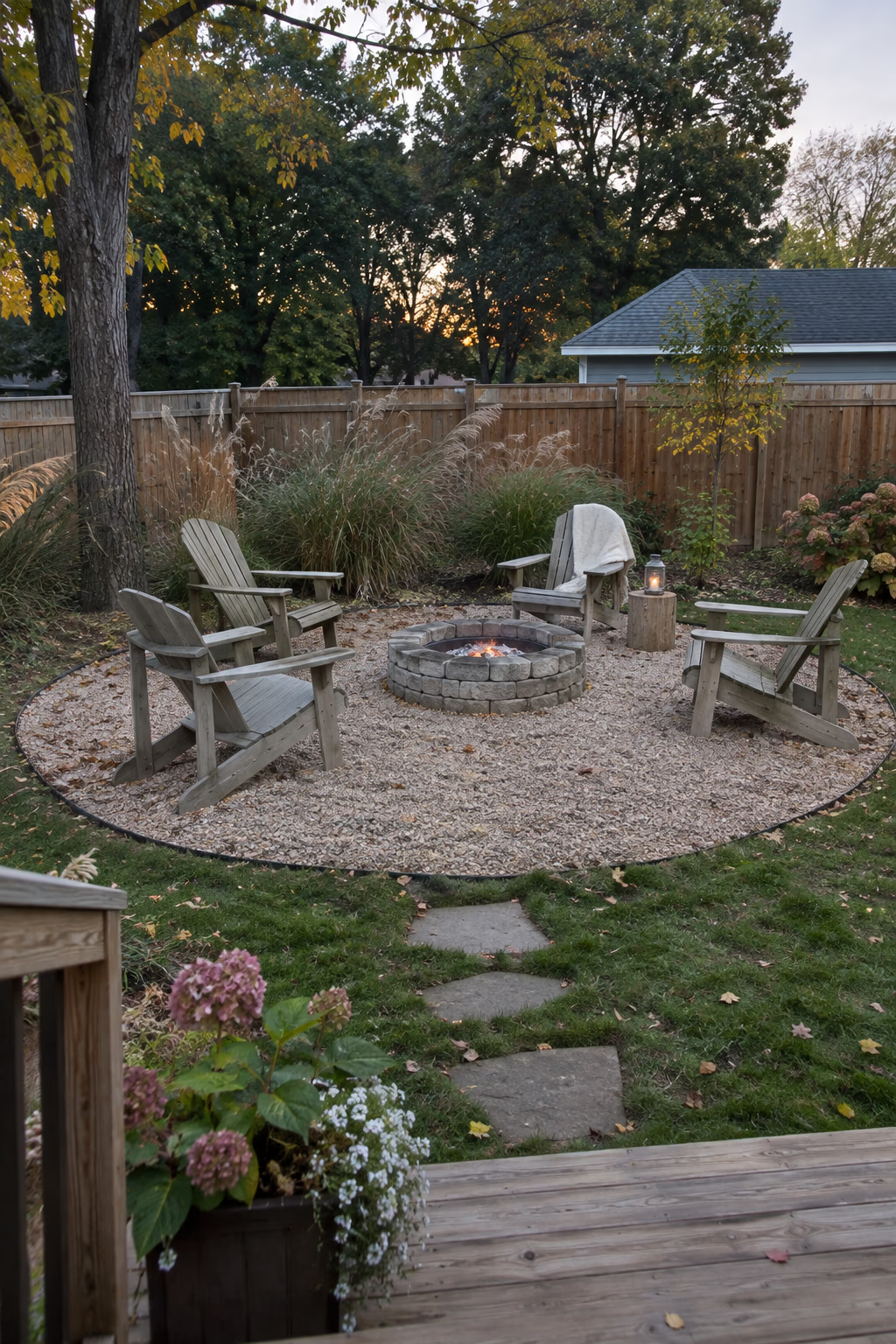
An easy outdoor room without a concrete pour
A circle of gravel 12 to 16 feet across gives enough room for a fire pit in the center and four to six chairs around it. Dig out about 4 inches, compact a base of crushed stone, and top it with 2 inches of 3/8-inch crushed gravel or decomposed granite. A steel, brick, or paver ring keeps the circle crisp.
Gravel is ideal near fire because it won’t burn, drains instantly after rain, and costs far less than a paver patio. Angular stone locks together better than rounded pea gravel, so chair legs don’t sink or wobble as much.
Check local burn rules before you build, and place the pit well away from the house, fences, and overhanging branches. Many communities require at least 10 to 25 feet of clearance from structures.
3. Replace the Front Lawn With a Gravel Garden
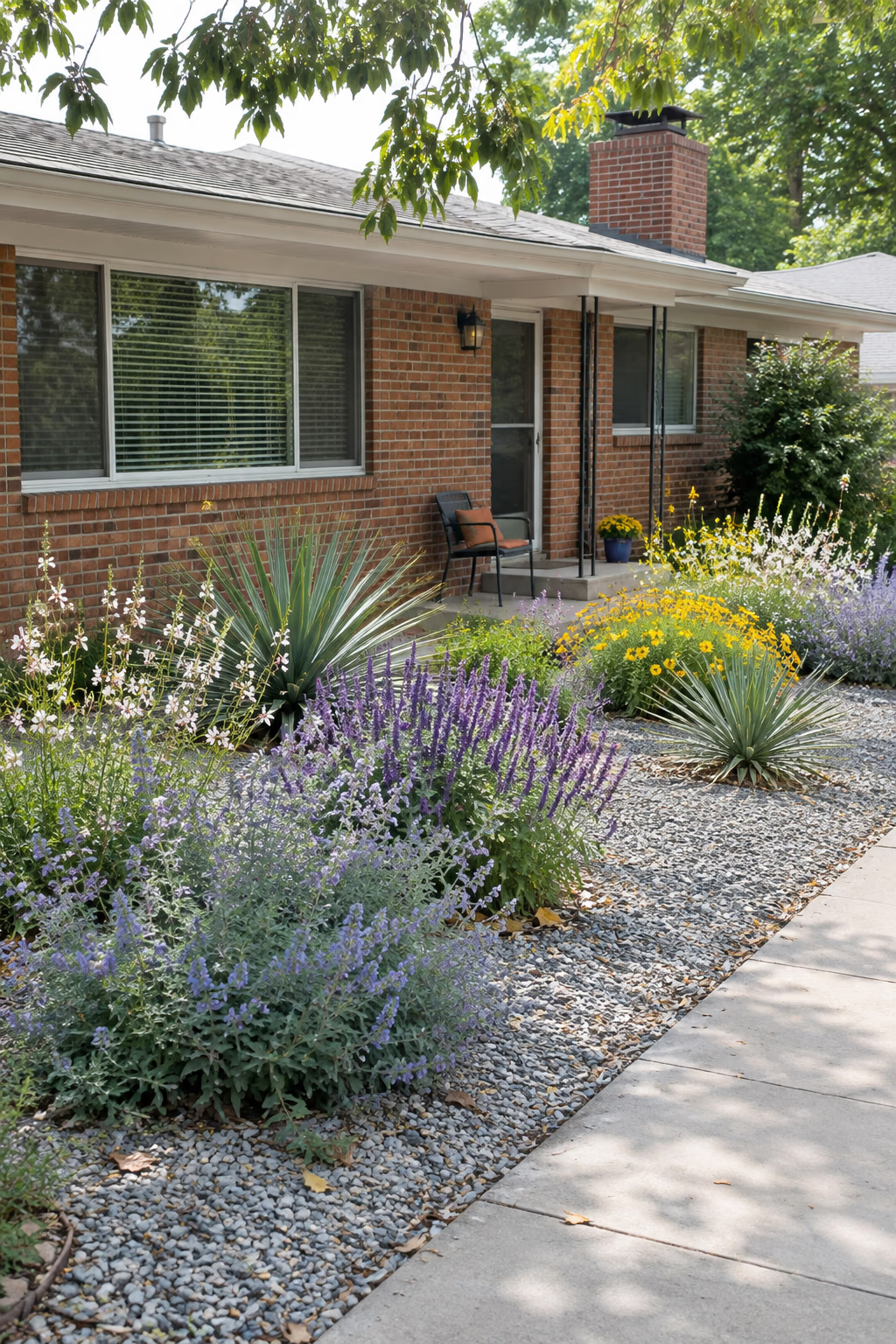
Curb appeal that doesn’t need mowing or sprinklers
A front yard of pale crushed stone planted with catmint, salvia, gaura, blanket flower, coreopsis, and a few yuccas for structure looks lively from spring through fall. Leave generous gravel between clumps at first; plants fill in and self-sow over two or three seasons.
The swap cuts water bills and weekly mowing, and the gravel gives the bed a tidy, finished look even in winter. Keep a clean band of stone or a low edge along the sidewalk and driveway so passersby can see it’s a designed garden, not neglect.
Read your HOA rules and any city landscape ordinances before removing turf. Some communities limit how much of the front yard can be stone or require a certain amount of plant cover.
4. Create a Mediterranean Bed With Lavender and Santolina
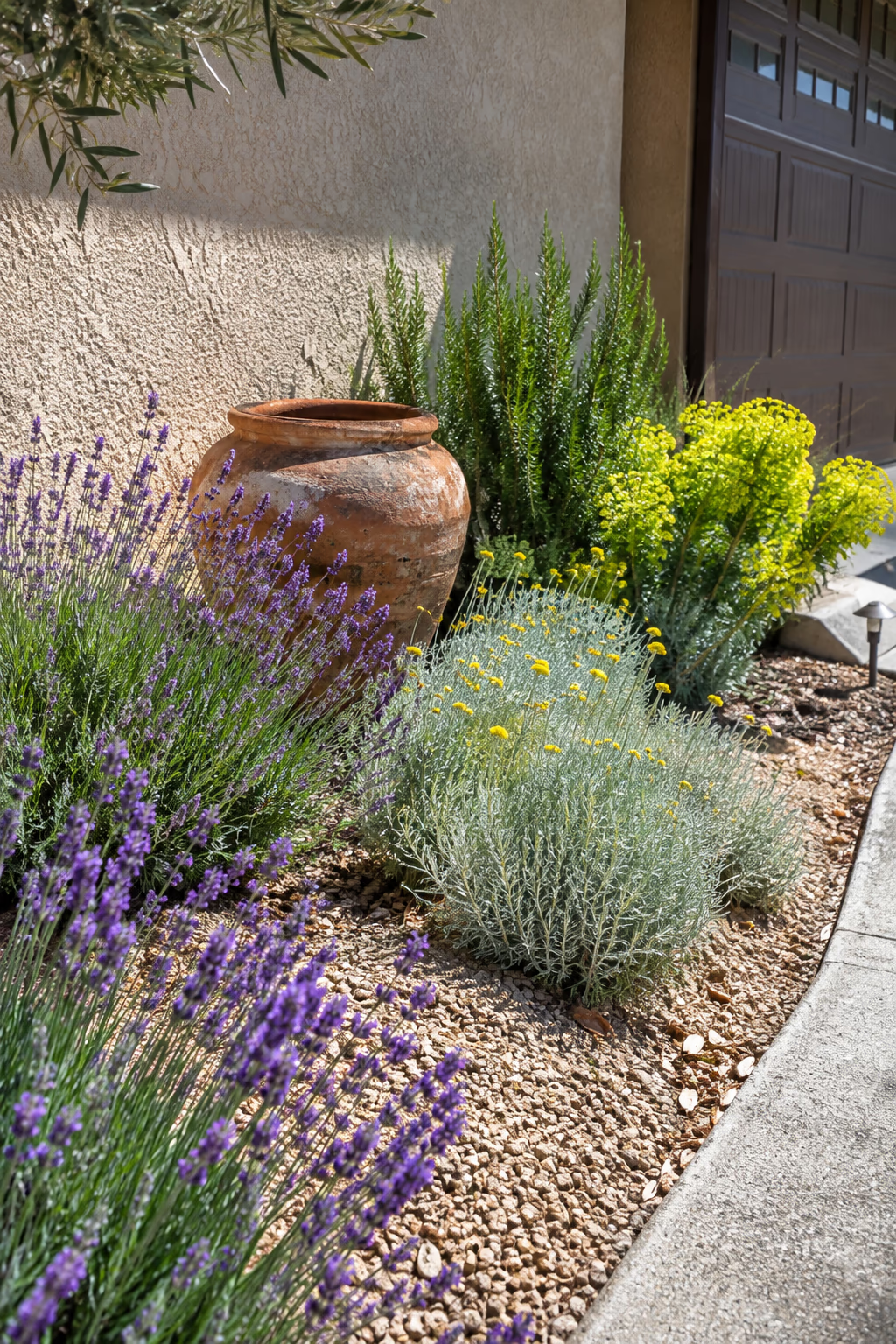
Sun-baked fragrance on the hottest side of the house
Plant drifts of lavender, gray santolina, upright rosemary, and Mediterranean spurge in a sunny bed topped with warm tan or buff gravel. A large terra-cotta urn, left empty or planted with a single agave, finishes the look.
These plants come from rocky, dry hillsides, and they hate wet roots in winter far more than cold. Gravel keeps their crowns dry, reflects warmth, and lets water drain away quickly.
Check hardiness before buying. Rosemary and many spurges are only reliable in roughly USDA Zones 7 or 8 and warmer, while hardier lavenders handle Zone 5. In heavy clay, mound the soil a few inches higher to help drainage.
5. Set a Dining Table on Gravel Under a Pergola
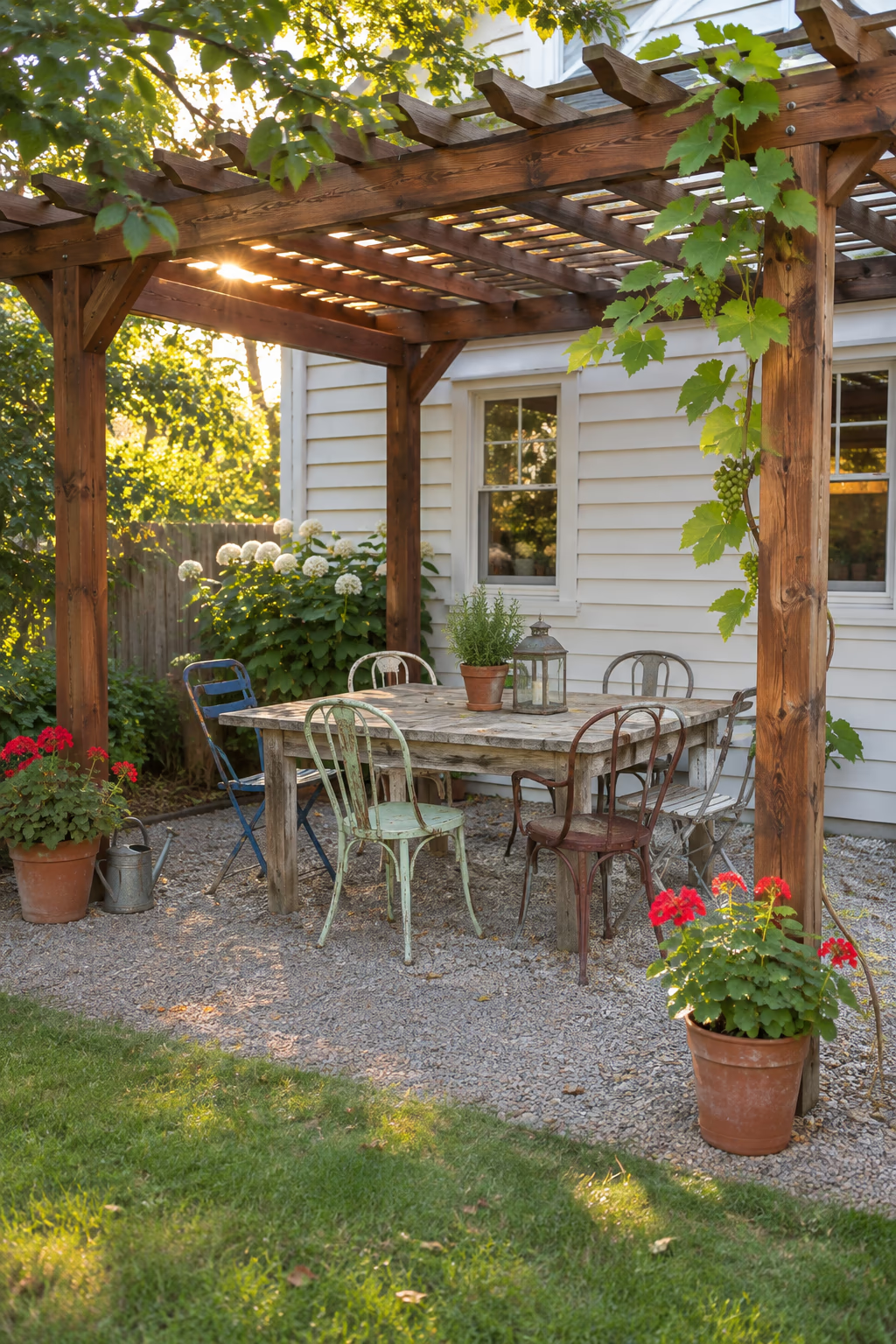
Relaxed alfresco meals with a crunch underfoot
A simple wood pergola over a gravel floor creates a dining room that feels like a European courtyard. Size the space at least 12 by 12 feet for a six-person table so chairs can slide back without hitting posts.
Use a compacted base and a thin top layer of small crushed stone or decomposed granite rather than deep, loose pea gravel, which lets chair legs sink. Gravel drains instantly, so the table is usable soon after a summer storm.
Plant a grapevine, climbing rose, or clematis at the posts for dappled shade over time. Larger pergolas or those attached to the house may need a permit, so check with your building department first.
6. Run a Dry Creek Bed Through the Planting
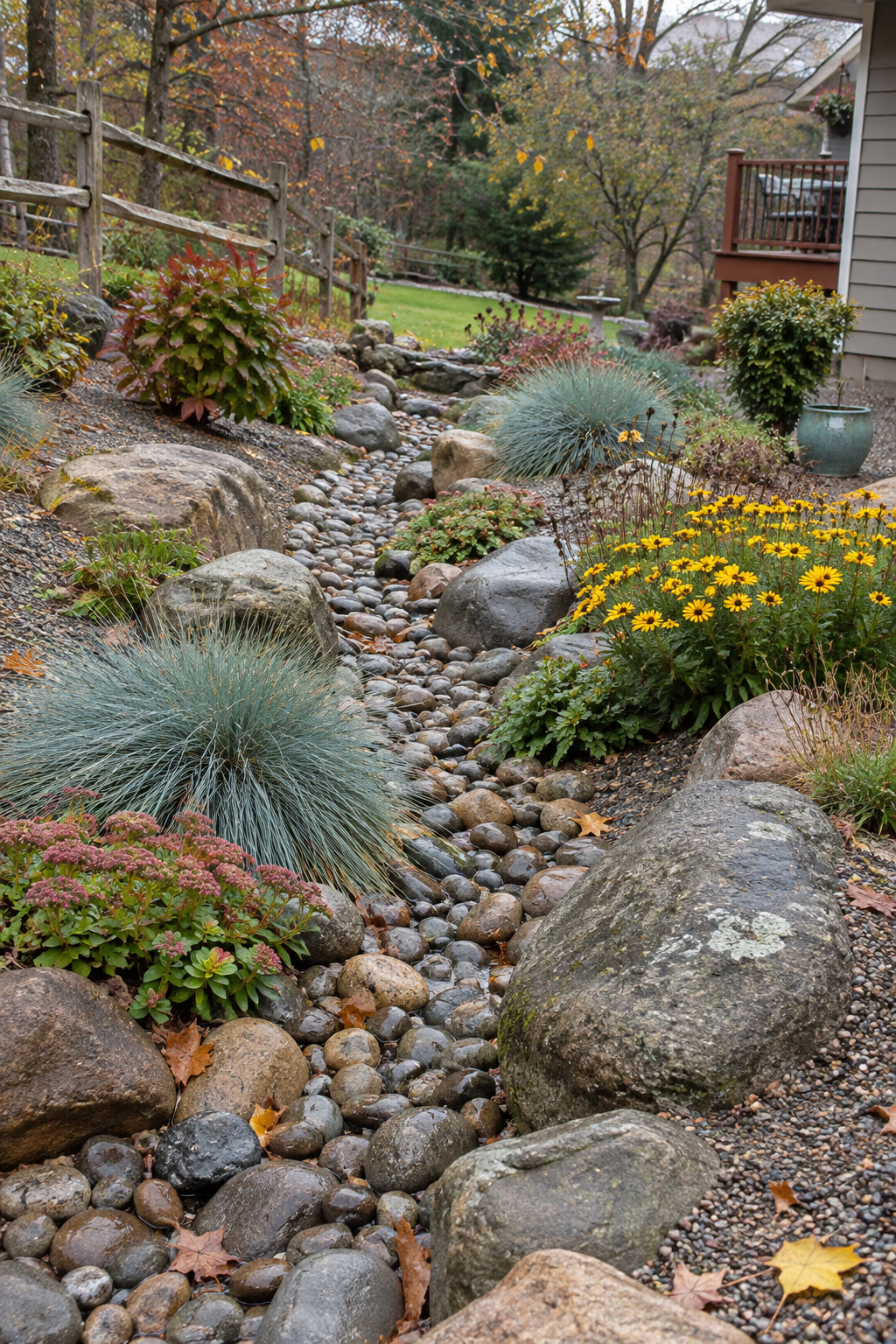
Natural-looking drainage that doubles as a feature
Dig a shallow, curving channel 6 to 12 inches deep and 2 to 4 feet wide, line it with landscape fabric, and fill it with river rock in mixed sizes from 1 to 6 inches. Set a few larger boulders along the banks and let the gravel garden planting run right up to its edges.
Following the path water already takes through the yard makes the creek look believable and gives runoff somewhere to go. Blue fescue, sedum, coreopsis, and small grasses soften the banks.
Make sure the channel directs water away from the foundation and not onto a neighbor’s property. In heavy storms, larger stones at bends help keep smaller rock from washing out.
7. Weave Ornamental Grasses Along a Winding Gravel Walk
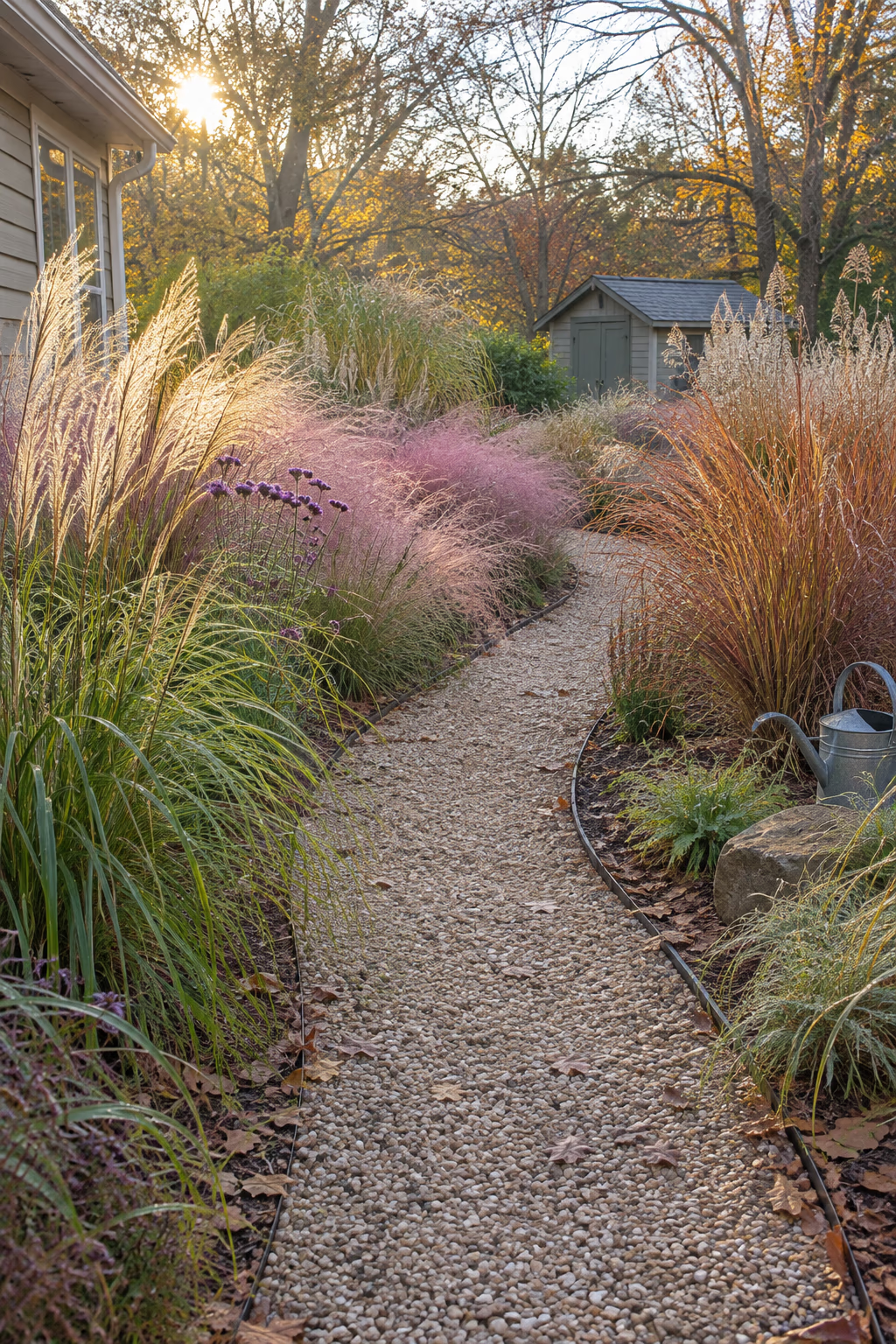
Movement and soft texture beside every step
Let a 3- to 4-foot-wide gravel walk curve through clumps of switchgrass, feather reed grass, blue grama, and little bluestem, with pink muhly in warmer regions. Tuck in airy perennials such as verbena or gaura so you can see through the planting.
Grasses catch light and breeze, and their tan winter stems look beautiful against gray stone. The gravel keeps their bases dry and makes the path feel like part of the garden rather than a separate strip.
Cut grasses back in late winter before new growth starts. Avoid Mexican feather grass where it’s listed as invasive, especially in parts of California and the West.
8. Edge Gravel Beds With Rusty Steel
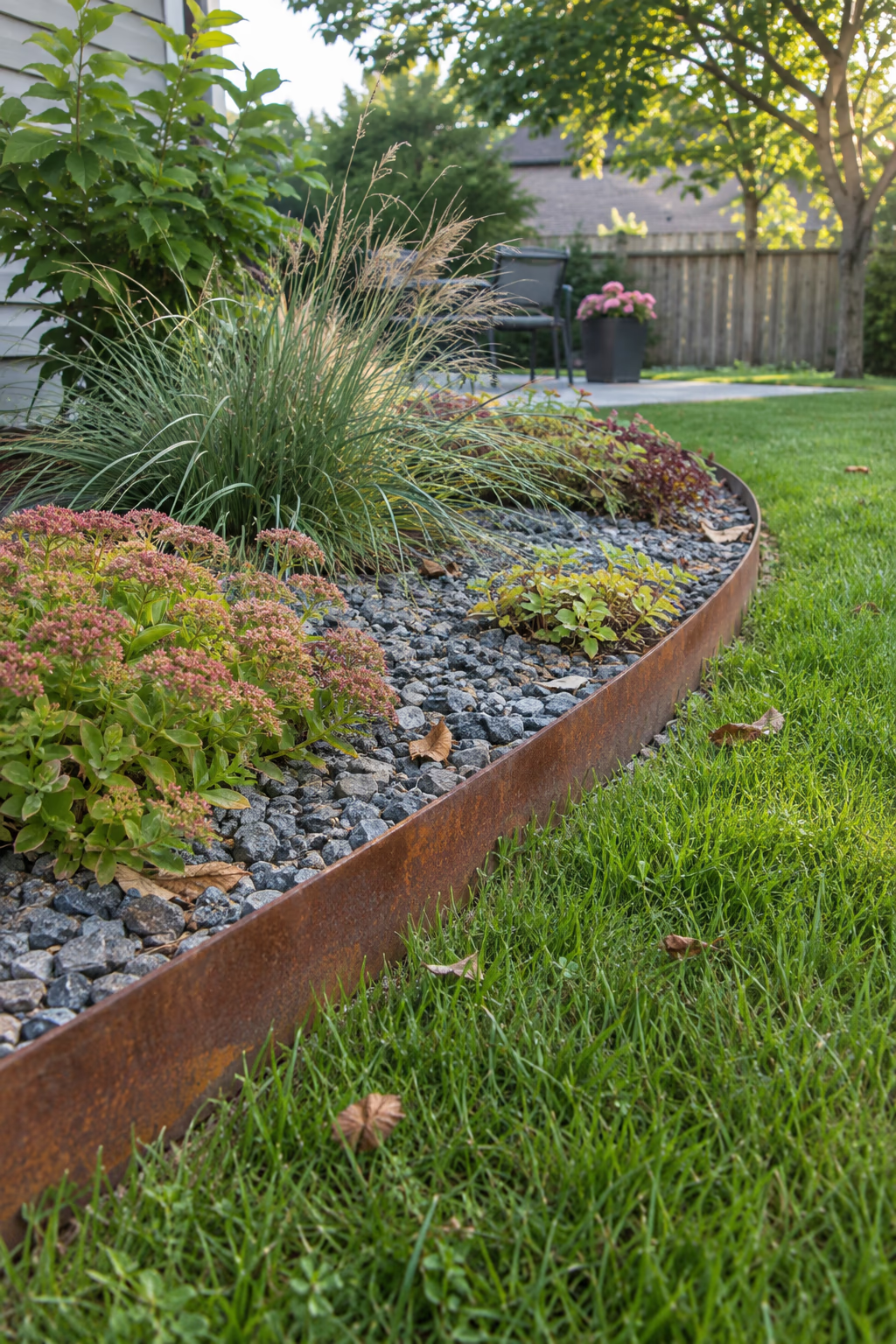
Crisp, modern lines that hold the stone in place
Weathering steel edging, usually sold in 4- to 6-inch-tall strips, forms a thin rust-brown line between gravel and lawn, paths, or planting. Curves are easy to shape, and the warm color flatters both gray and tan stone.
Good edging is what keeps gravel from drifting into the grass, where it dulls mower blades. Set the top of the steel about half an inch above the lawn so the mower can pass without catching it.
New steel releases rust as it weathers, which can stain light concrete or pavers. Keep it a few inches off pale hardscape for the first year, and wear gloves when handling the sharp edges.
9. Pair White Gravel With Black Accents
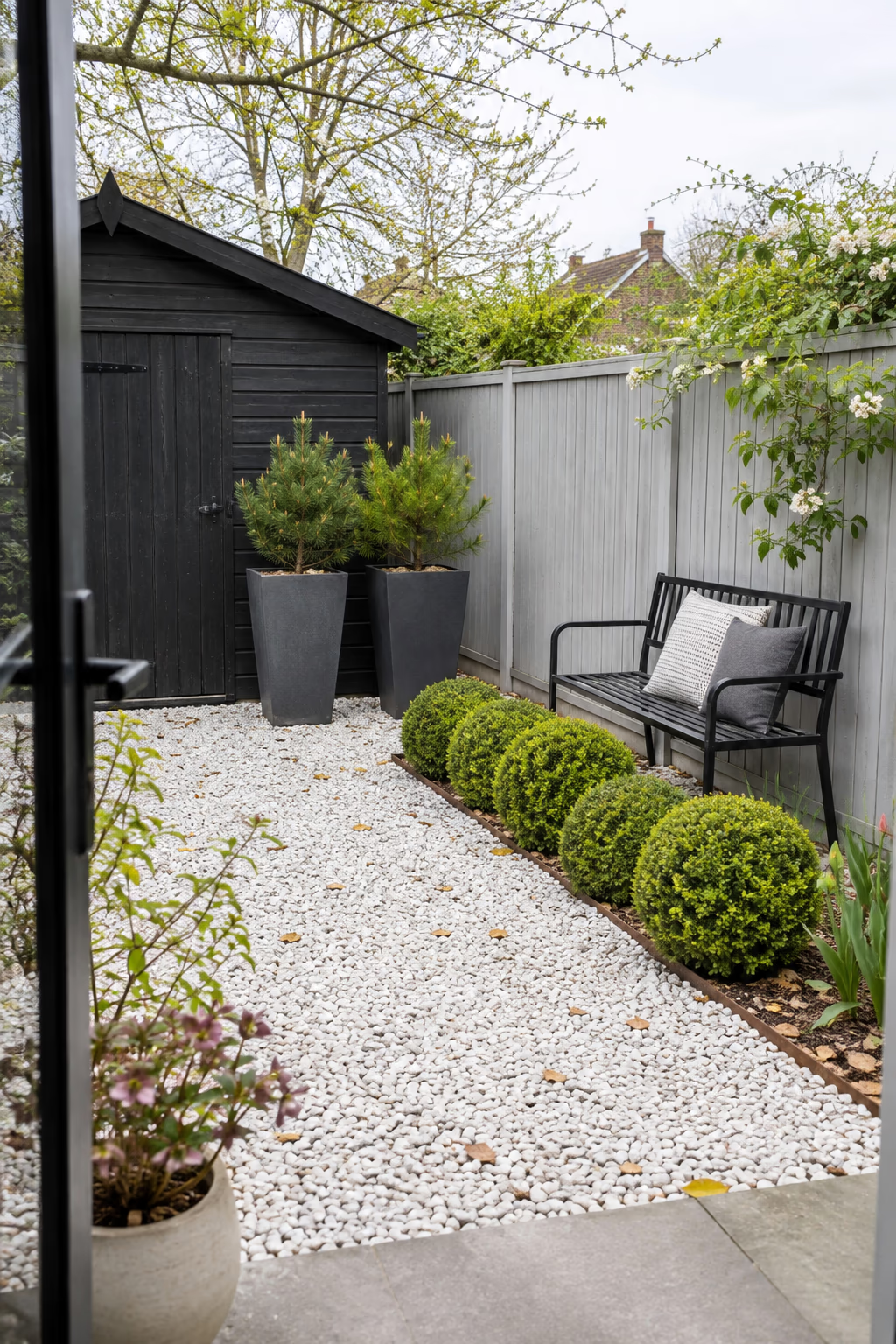
A bold monochrome look for modern homes
Bright white gravel next to a black-painted shed, charcoal planters, and a black metal bench creates a crisp, graphic scheme. Deep green plants such as boxwood, dwarf pine, and ornamental grass keep it from feeling stark.
The strong contrast works especially well in small yards and around modern or farmhouse-style homes with black trim. It also photographs beautifully.
White stone shows leaves and dirt easily and can be glaring in full sun. White marble chips can also raise soil pH, so choose white quartz or granite near acid-loving plants.
10. Sink a Stock Tank Pool Into a Gravel Patio
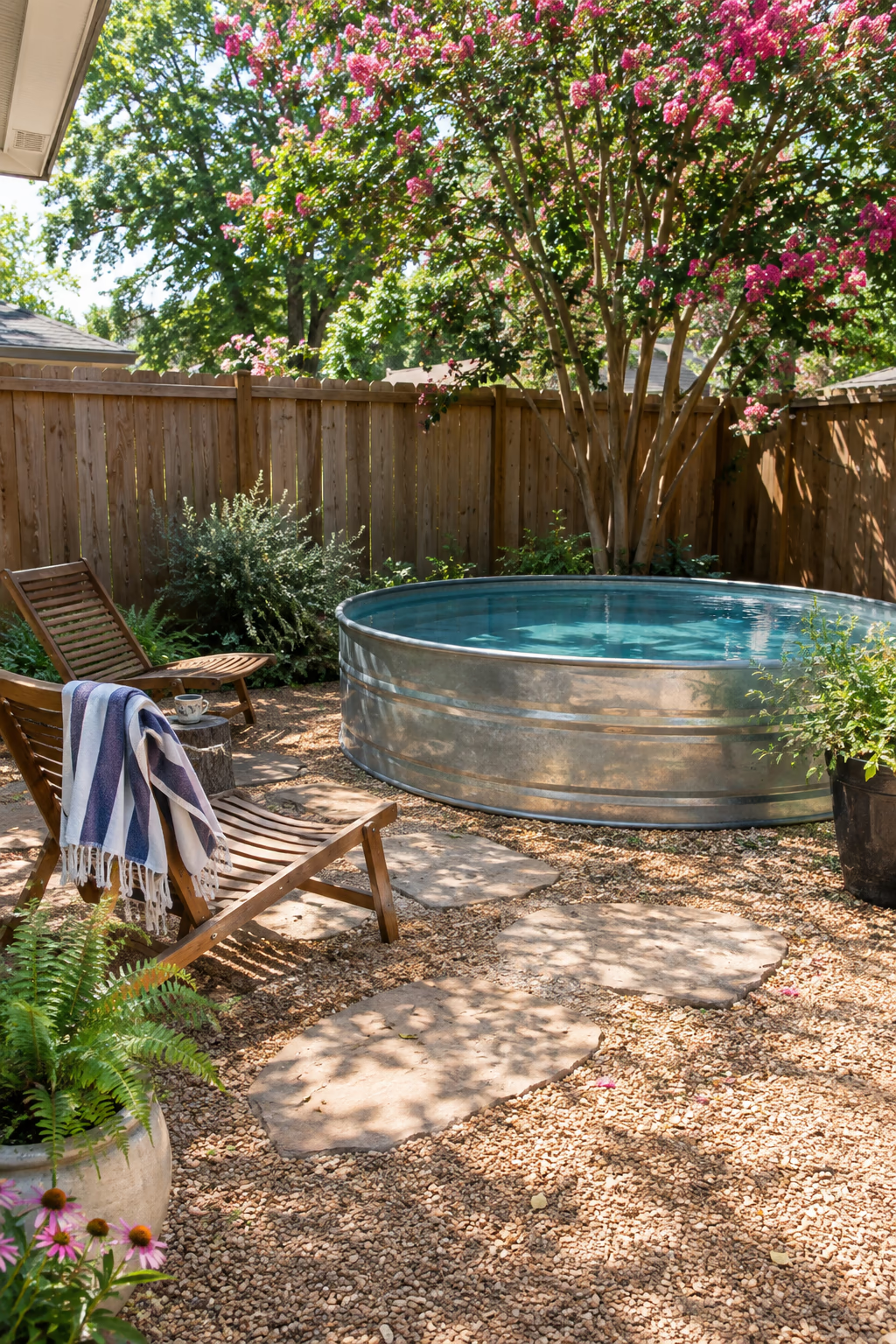
A budget plunge pool with a casual farm feel
An 8-foot round galvanized stock tank about 2 feet deep, surrounded by a gravel patio, makes a cool-off spot for hot afternoons. Add a few large flat stones as stepping pads and a pair of lounge chairs on the gravel.
The tank must sit on a perfectly level, compacted base, since water weighs more than 8 pounds per gallon and an uneven tank will flex. Gravel around it drains splashes instantly and stays cooler underfoot than concrete.
You’ll need a small pump and filter or regular water changes. Many towns treat stock tank pools like any other pool, which can mean fencing or a locking cover, so check local codes first.
11. Build a Crevice Garden From Upright Stone Slabs
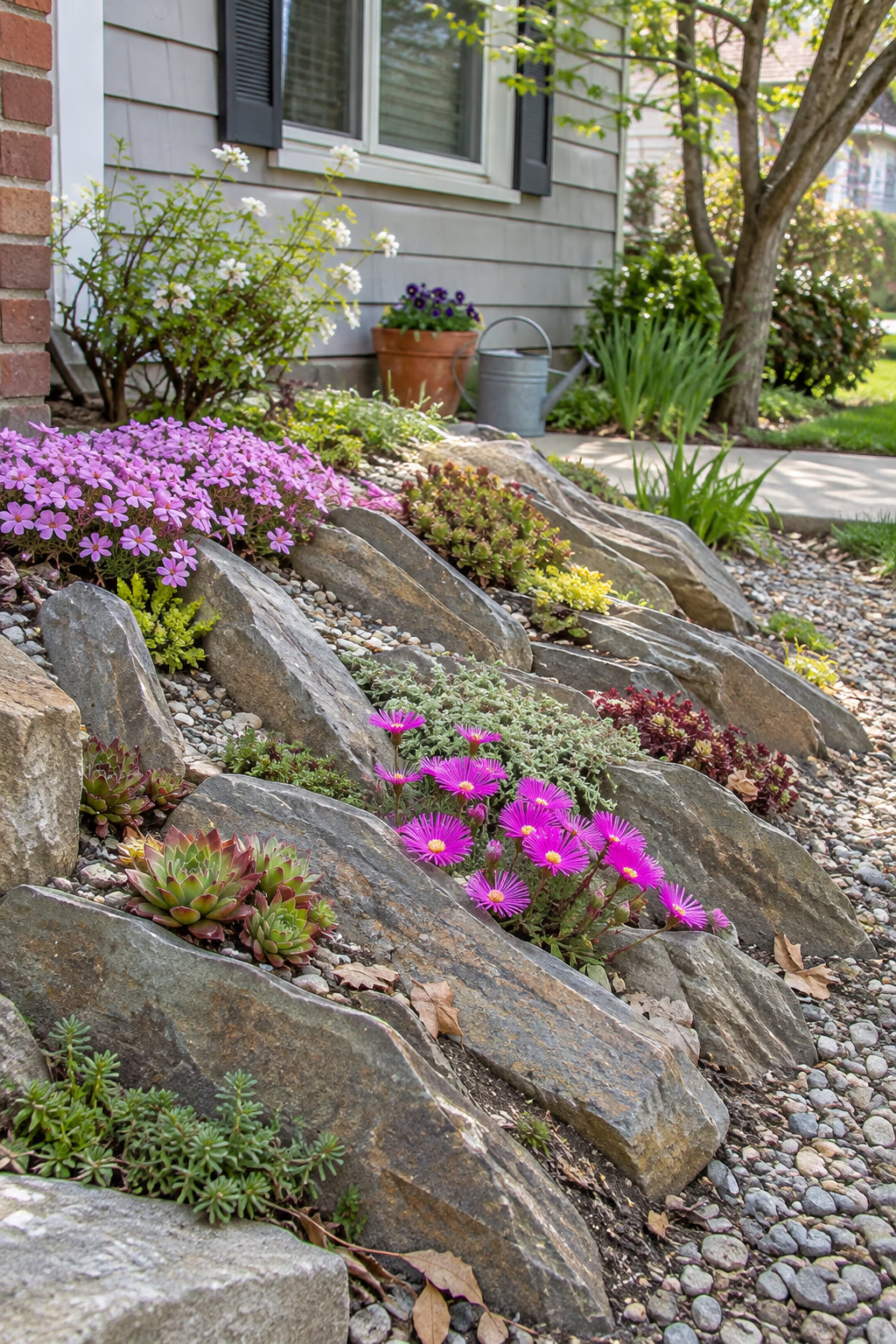
A sculptural rock feature for tiny alpine plants
A crevice garden uses flat stone slabs set on edge, like books leaning on a shelf, with 1- to 2-inch gaps filled with a gritty mix of sand and fine gravel. Bury each slab at least a third of its height for stability.
Plants tucked into the cracks get deep, cool root runs and perfect drainage. Hens and chicks, ice plant, dwarf penstemon, creeping phlox, and small sedums all thrive in these conditions.
A low mound about 4 by 6 feet is plenty for a first try. Flagstone slabs are heavy, so plan the layout on paper and work with a helper.
12. Center a Single Tree in a Square of Gravel
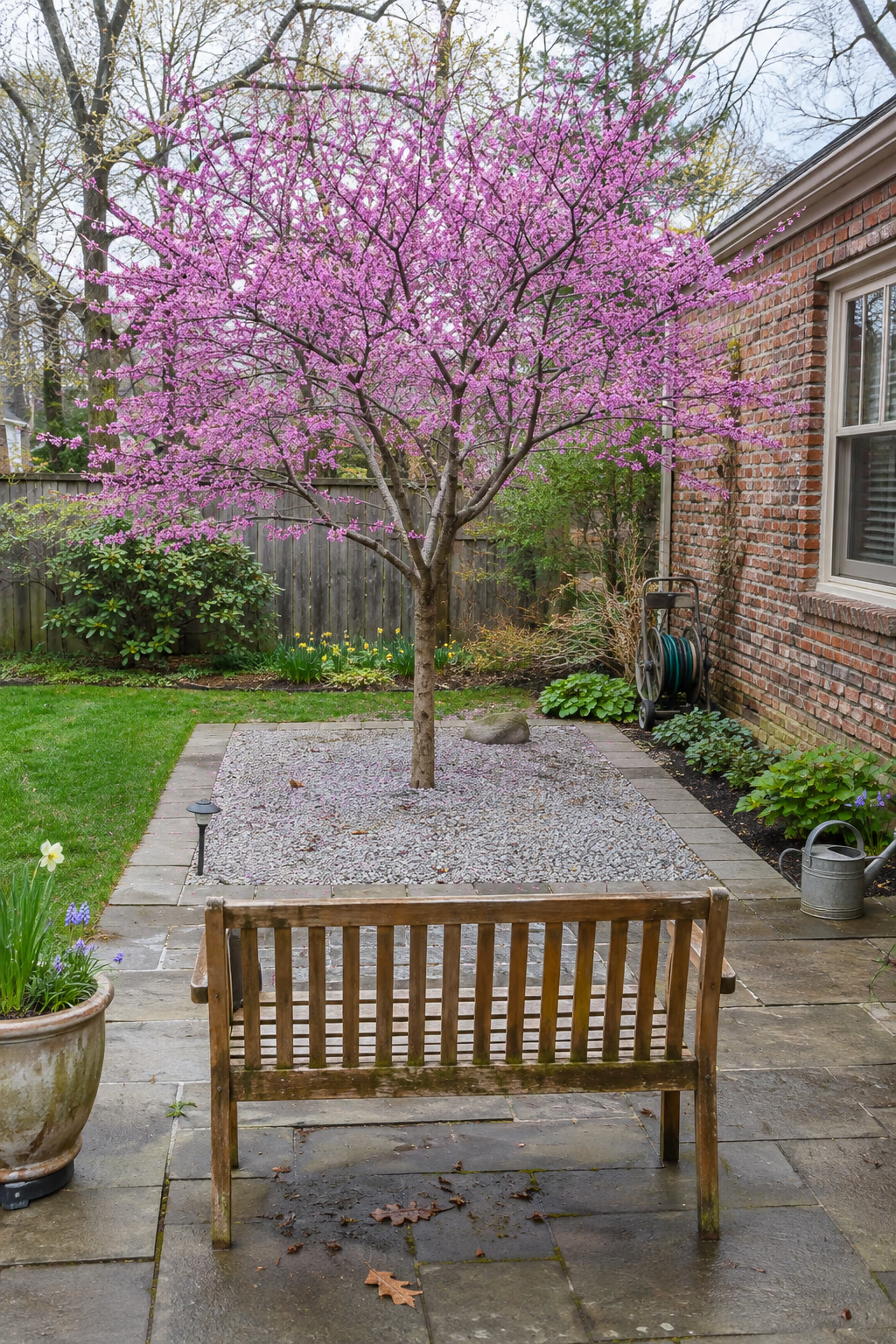
A simple courtyard focal point
Plant one small tree, such as a redbud, crape myrtle in warm regions, or Japanese tree lilac, in the middle of a square gravel bed bordered by pavers or lawn. A bench facing it turns the spot into a calm courtyard.
The plain gravel ground lets the tree’s trunk, bark, and seasonal flowers stand out. It’s an easy way to give a small yard structure without busy planting.
Pull gravel a few inches back from the trunk and keep the root zone well watered for the first two summers while the tree establishes.
13. Group Potted Plants on a Gravel Terrace
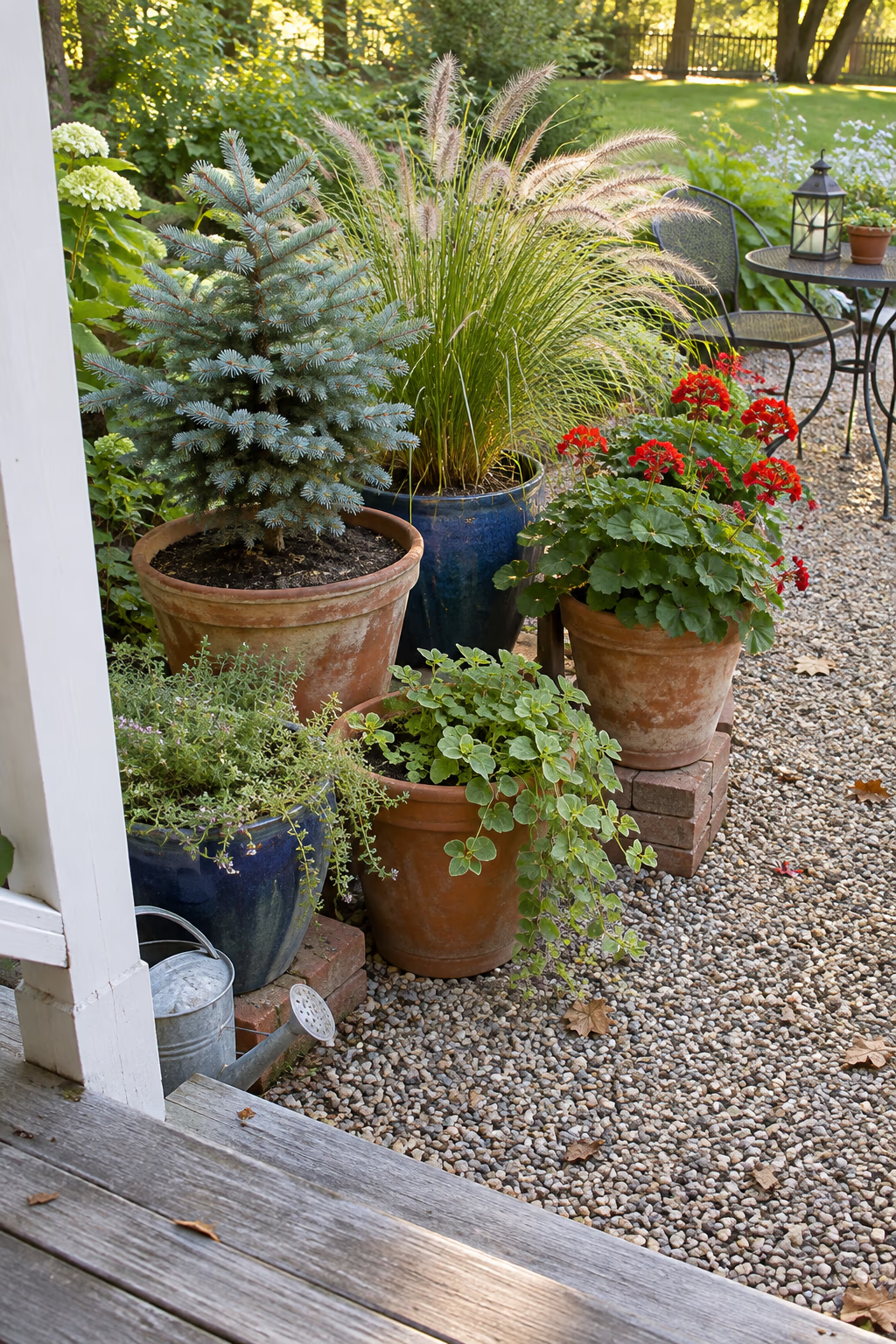
A movable garden you can restyle every season
Cluster terra-cotta and glazed pots of different heights on a gravel terrace: a dwarf conifer, an ornamental grass, geraniums, and trailing herbs. Groups of three or five look more natural than pots lined up in a row.
Gravel gives containers a neutral, tidy backdrop and lets drainage water disappear instead of staining a patio. Pots also sit level more easily on gravel than on uneven ground.
Raise pots slightly on feet or bricks so drainage holes don’t clog. In cold zones, move terra-cotta into a garage over winter to prevent cracking.
14. Set Oversized Concrete Pavers Into Loose Gravel
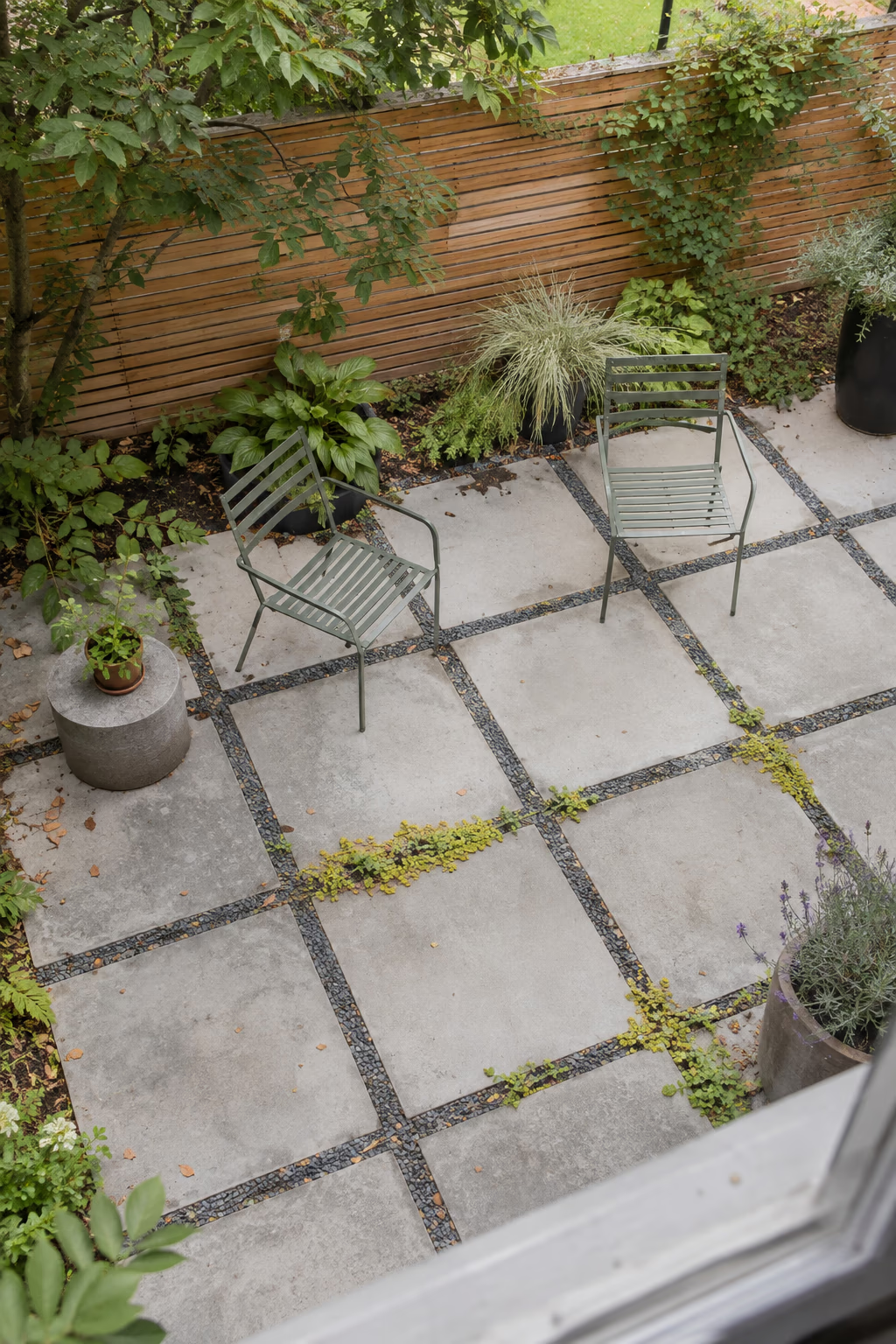
Clean geometry with comfortable footing
Large square or rectangular concrete pavers, 24 inches or bigger, set in a field of dark gray gravel create a modern, grid-like patio or walkway. Leave 3 to 6 inches of gravel between pavers for a floating effect.
The big slabs give firm footing for chairs and heels, while the gravel keeps the overall surface permeable and inexpensive. Low sedums or thyme can creep into the joints over time.
Bed each paver on compacted crushed stone so it sits about half an inch above the surrounding gravel. That keeps loose stone from washing onto the slabs.
15. Plant Silver Foliage to Glow Against Gray Stone
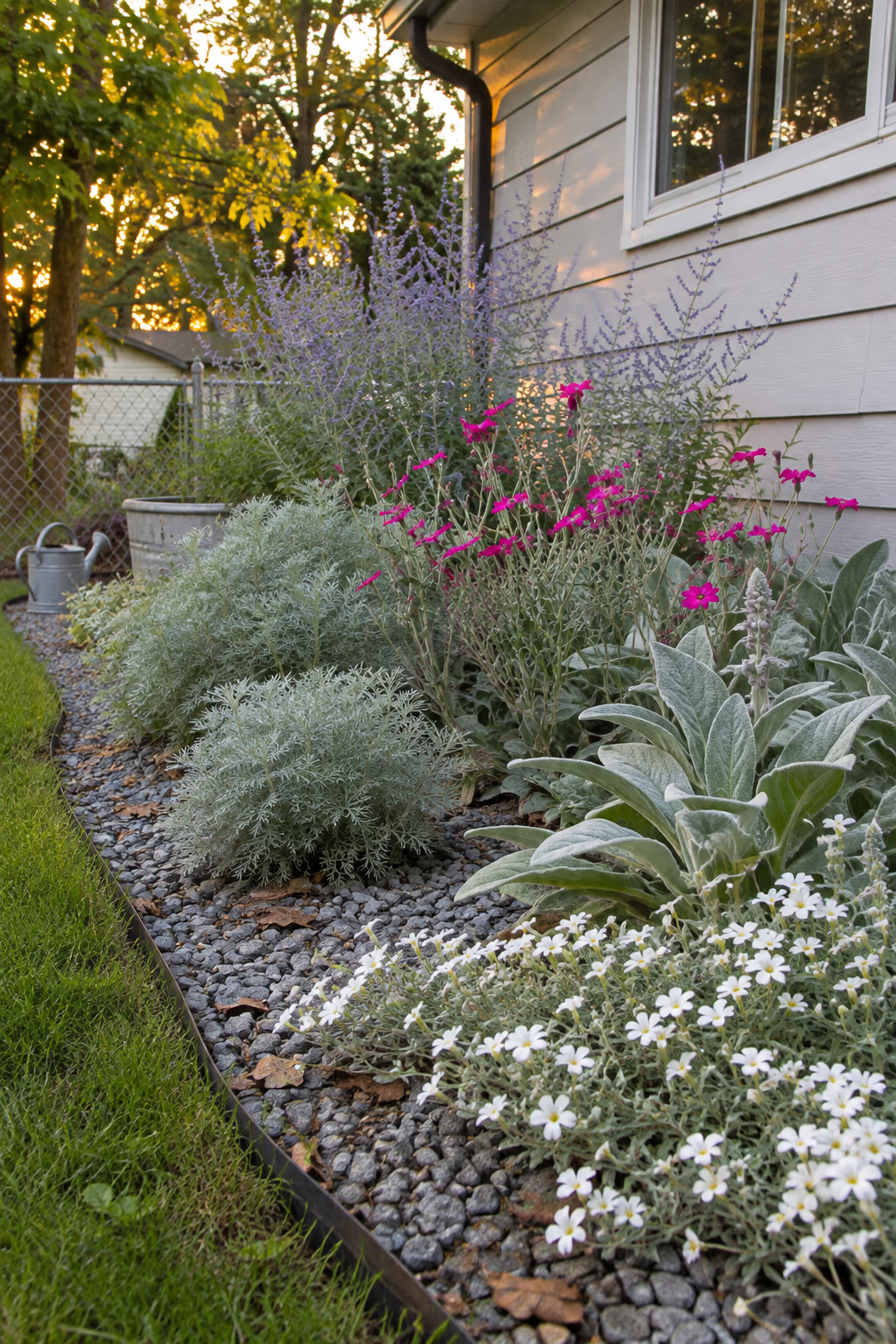
Soft, shimmering color that thrives in dry heat
Silver and gray-leaved plants look wonderful on gravel: lamb’s ears, artemisia, rose campion, snow-in-summer, Russian sage, and lavender cotton. Mix in a few purple or magenta flowers for contrast.
Fine hairs and pale leaves help these plants reflect sun and save water, so they’re naturally suited to a hot gravel bed. They also glow at dusk when green foliage fades into shadow.
Many silver plants rot in rich, wet soil, so skip the compost and fertilizer. Some, like snow-in-summer and certain artemisias, spread quickly, so give them room or edge them in.
16. Plant Spring Bulbs to Rise Through the Gravel
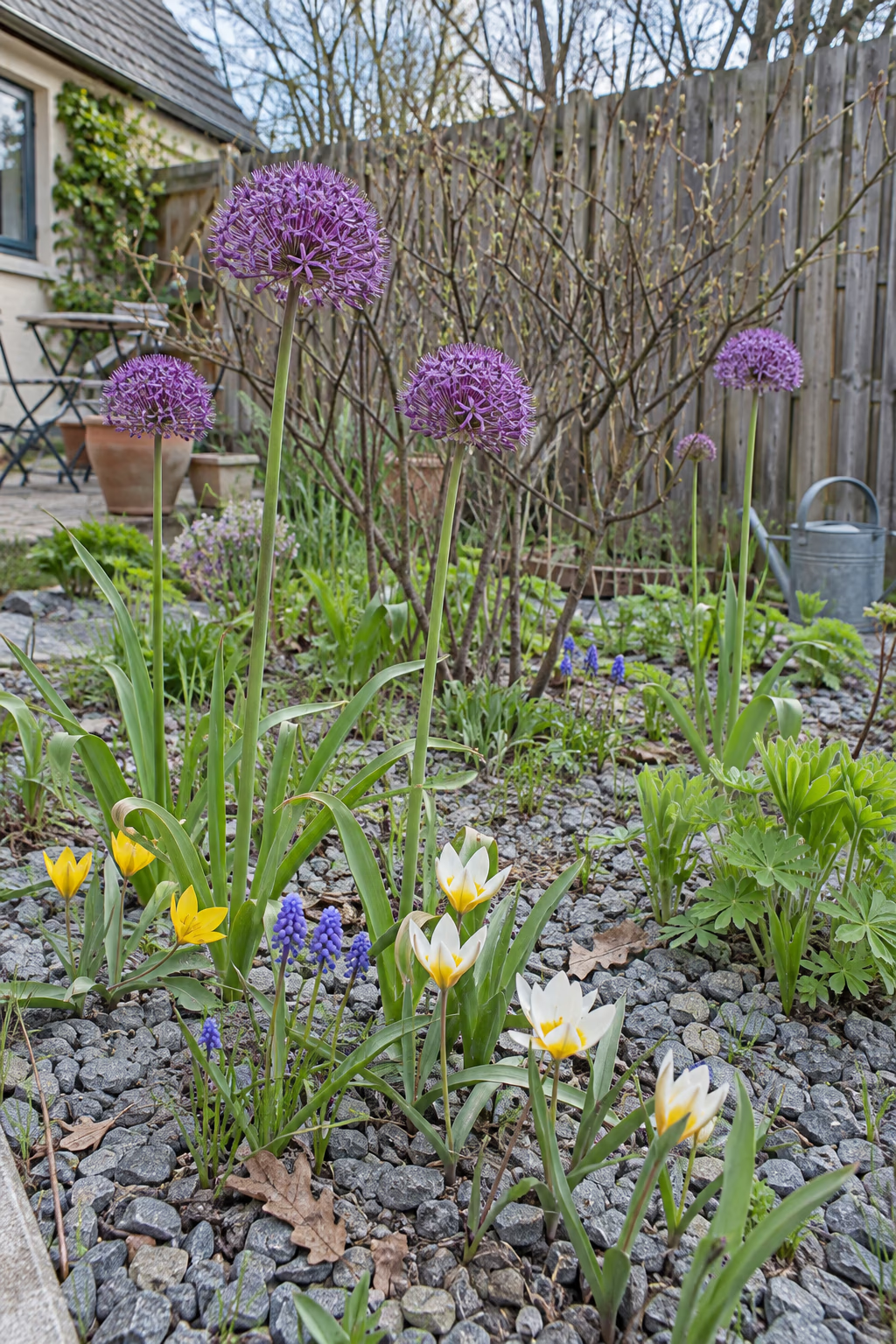
Early color before the perennials wake up
Ornamental alliums, species tulips, crocus, and grape hyacinth all love the sharp drainage of a gravel bed. Plant them in fall among your perennials for flowers from March through June, depending on your zone.
Rake the stone aside, plant in the soil beneath, and replace the gravel. Count the gravel layer as part of the recommended planting depth so bulbs aren’t buried too deep.
Species tulips tend to return year after year in dry, sunny spots, unlike many large hybrids. Let the foliage yellow naturally before tidying it away.
17. Terrace a Slope With Gravel Steps and Timber Risers
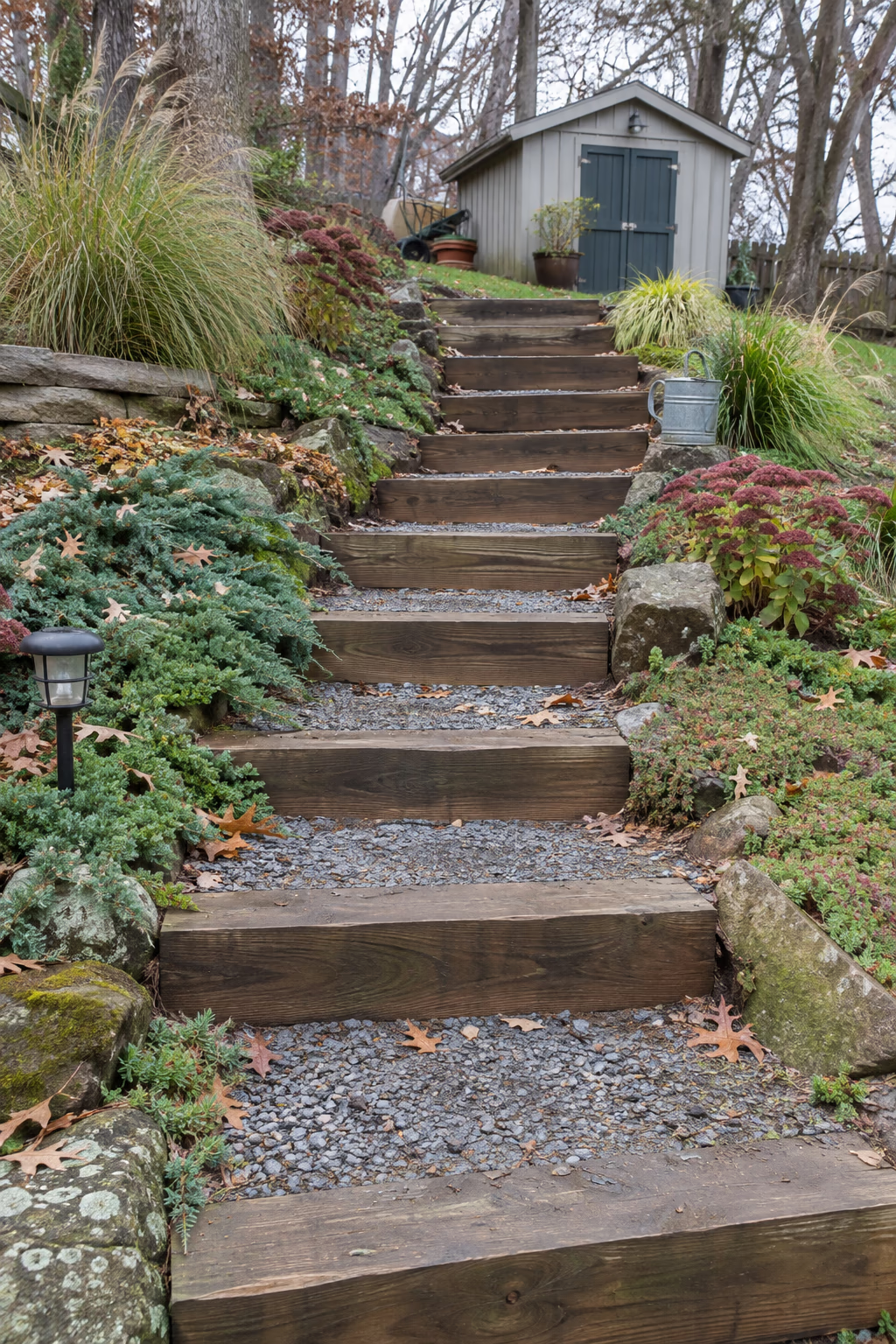
A safe, affordable way up a hillside
Pressure-treated 6-by-6 timbers pinned with rebar make sturdy risers, with compacted crushed stone filling each tread. Aim for risers of 6 to 7 inches and treads at least 14 to 16 inches deep for a comfortable stride.
Gravel steps cost far less than stone or concrete and blend into a planted bank. Low creeping plants on either side help hold the soil.
Use angular crushed stone with fines, not round pea gravel, which rolls underfoot and washes downhill. Steep or long slopes may call for a landscape contractor.
18. Brighten a Shady Side Yard With Gravel and Ferns
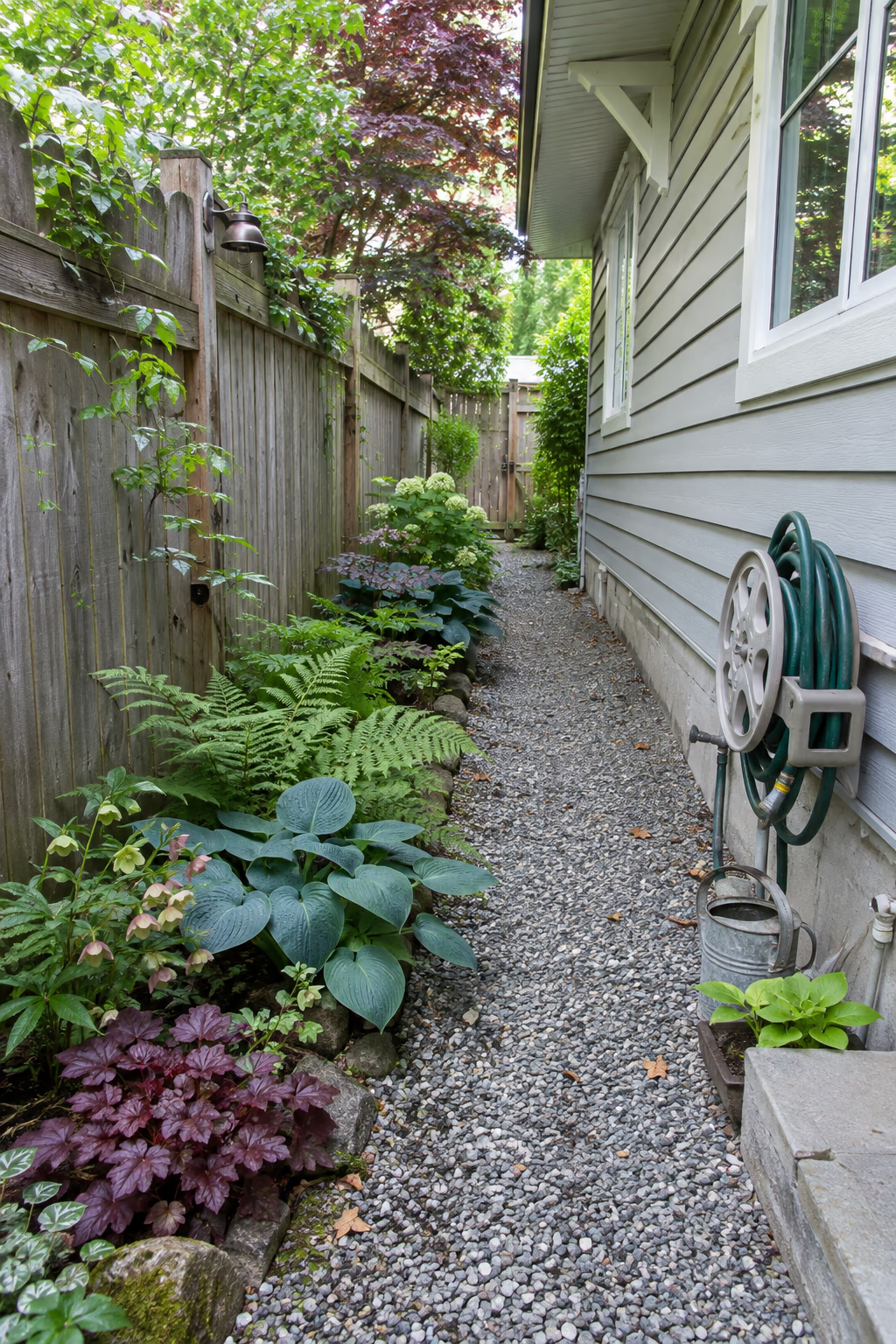
Turn a dim, muddy strip into a cool walkway
Narrow side yards often stay too shady for grass. Light gray gravel bounces daylight into the space, and pockets of ferns, hostas, hellebores, and heuchera along the fence add soft green texture.
Gravel solves mud, keeps trash cans and garden carts off soggy soil, and makes the strip feel like part of the garden instead of a forgotten passage.
Shady gravel collects leaves and can grow moss. A quick pass with a leaf blower in fall keeps it tidy, and good grading keeps water flowing away from the house.
19. Grow Culinary Herbs in a Gravel Bed by the Kitchen Door
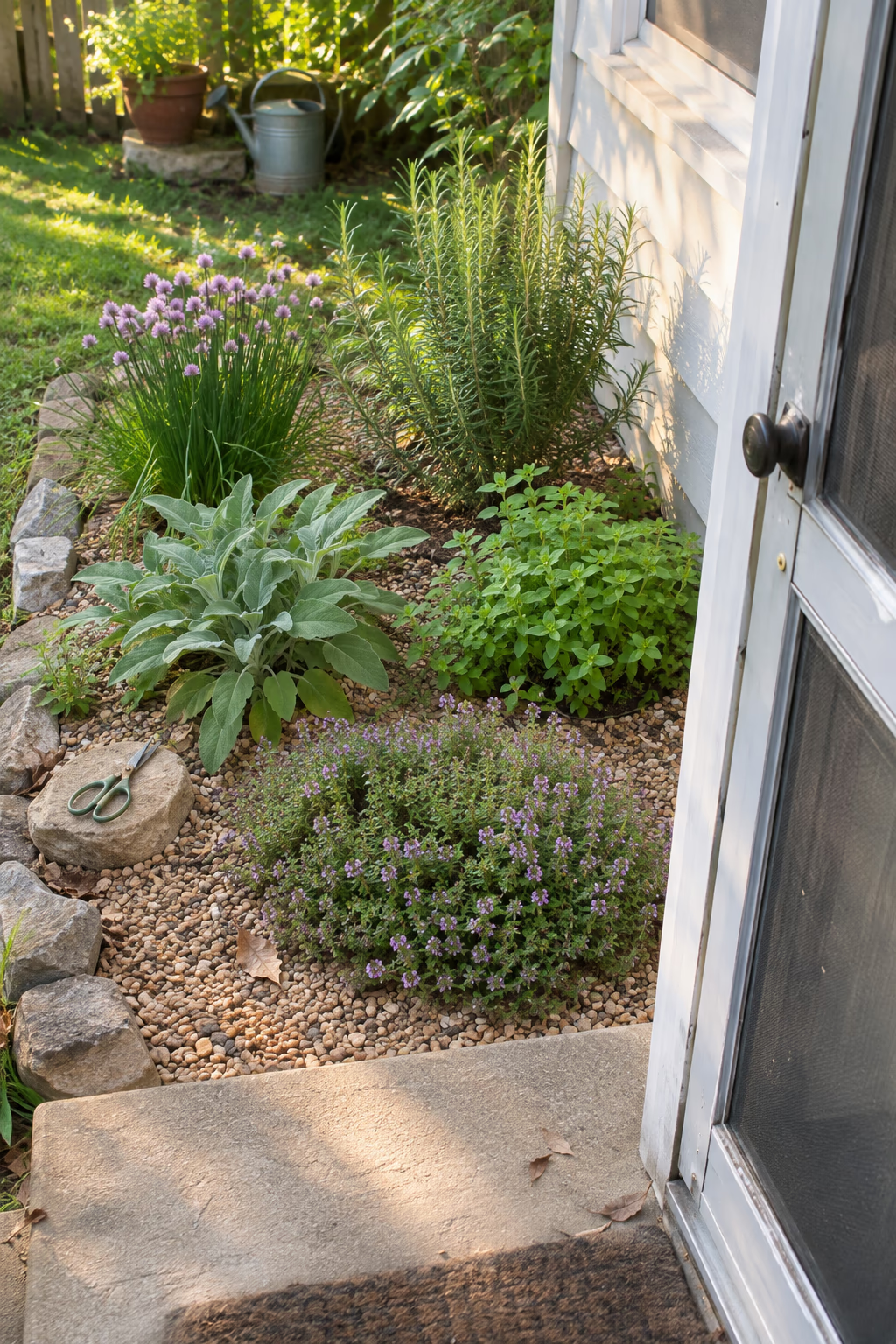
Fresh flavor a few steps from the stove
A small sunny bed of thyme, oregano, sage, chives, and rosemary mulched with pea gravel makes an easy kitchen garden. A bed about 4 by 6 feet holds a generous supply for cooking.
Most of these herbs are Mediterranean natives that prefer lean, dry soil. Gravel keeps their leaves free of splashed mud and helps prevent rot at the crown.
Parsley and basil prefer richer soil and more water, so grow them in pots nearby. In cold zones, treat rosemary as an annual or bring it indoors for winter.
20. Soften a Gravel Driveway Edge With Tough Perennials
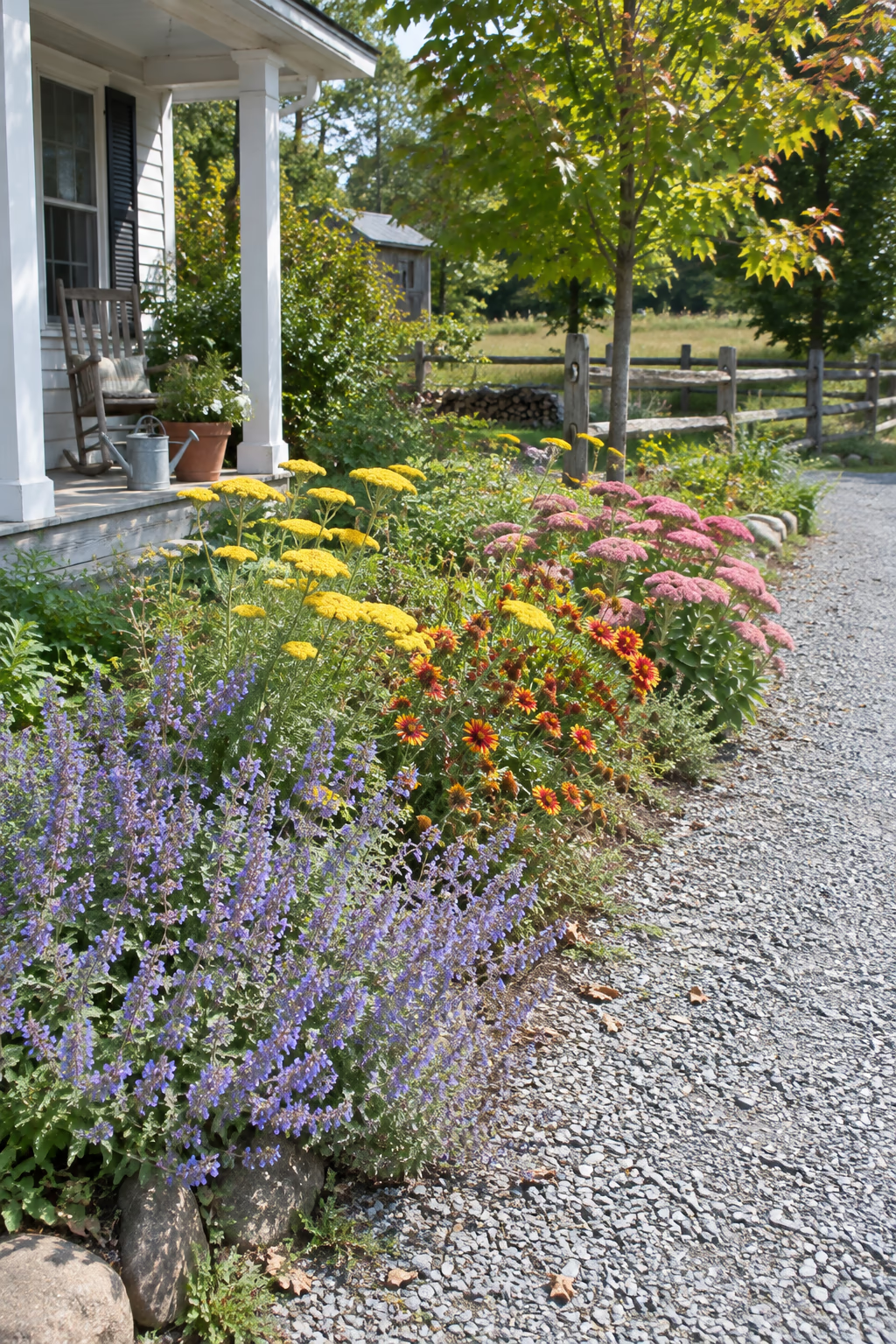
Color along the harshest strip of the yard
The strip beside a gravel driveway gets reflected heat, dust, and sometimes snow piles. Catmint, sedum, yarrow, blanket flower, and little bluestem handle those conditions and spill attractively over the edge.
Using the same gravel in the bed as on the drive blends the two, so the driveway looks like part of the landscape rather than a hard border.
Leave a few feet clear where snow is plowed or shoveled, and favor salt-tolerant plants if road salt reaches the edge. A buried edge keeps drive gravel out of the bed.
21. Mix Two Gravel Colors Into a Simple Pattern
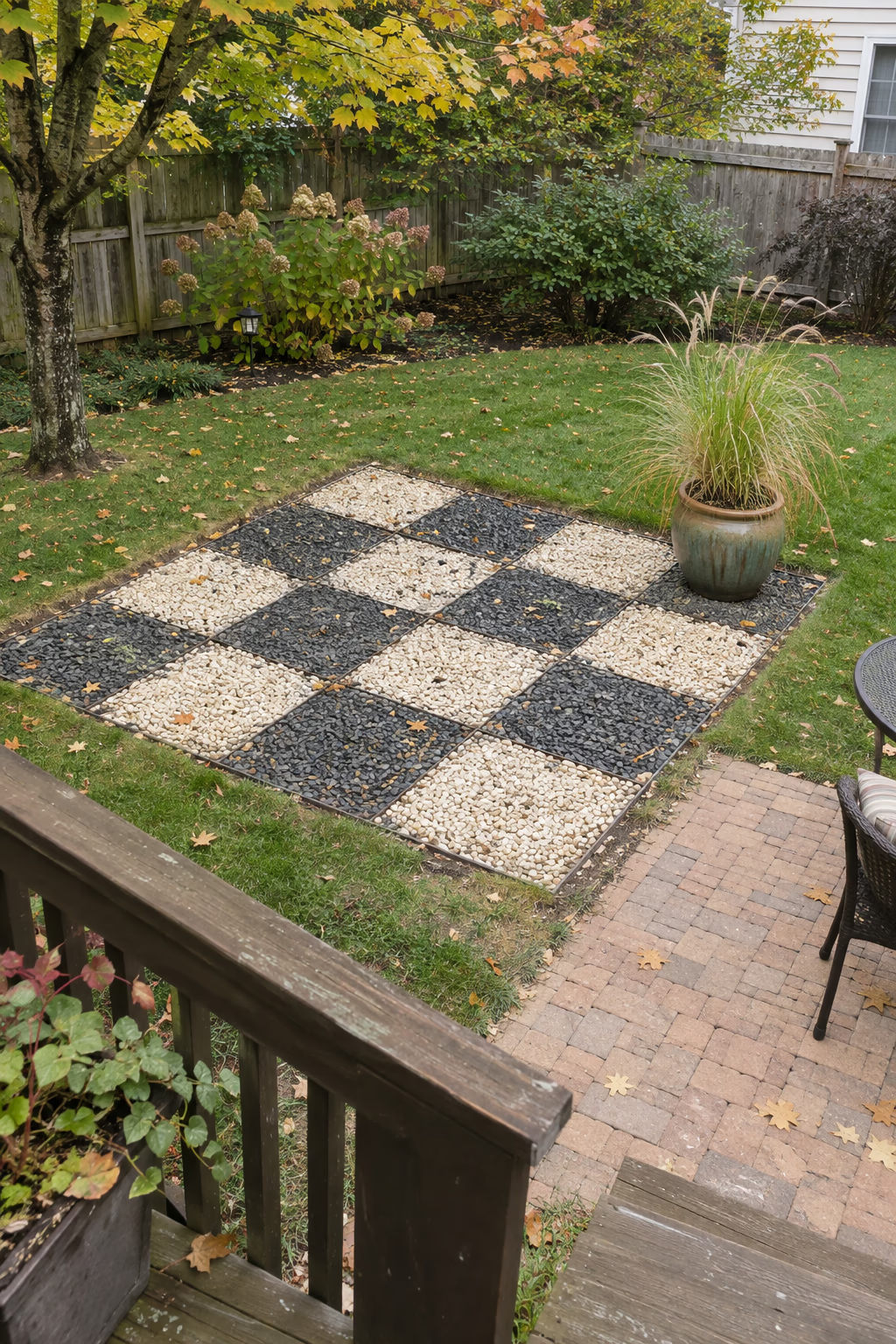
Artful ground cover for small spaces
Divide a patch of ground into squares, stripes, or a spiral using thin metal or plastic edging strips, then fill alternate sections with pale and charcoal gravel. A checkerboard about 8 feet square makes a striking feature.
Contrasting colors add interest without any plants to maintain, and the pattern can echo the lines of a house, fence, or patio.
Without dividers, the colors will mix over time from foot traffic and raking. Use stones of similar size so neither color settles faster than the other.
22. Lay a Crushed-Stone Bocce Court
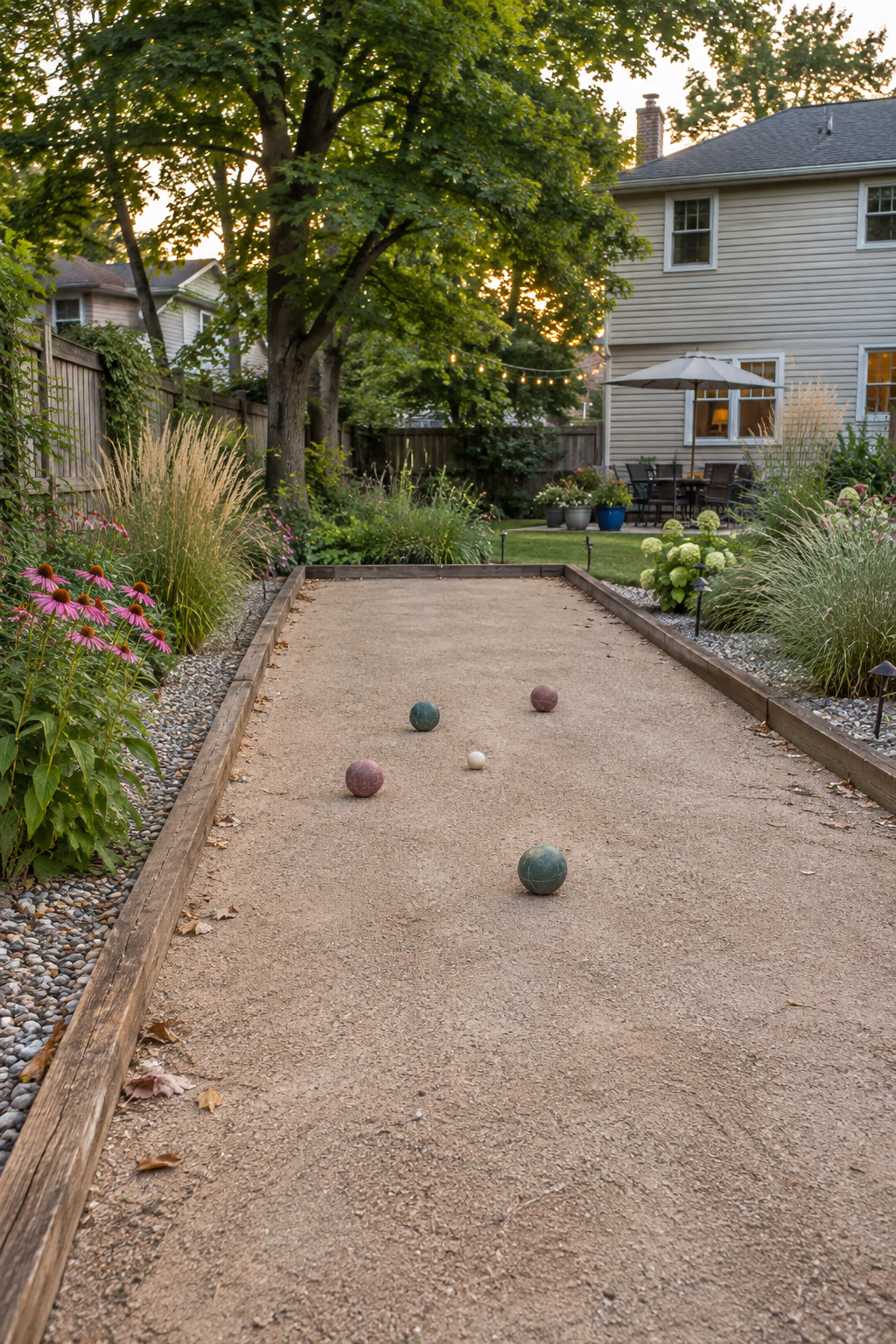
A backyard game area that drains after rain
A backyard court about 10 by 60 feet is a good fit for most lots. Frame it with 2-by-8 or 4-by-6 timbers, add 3 to 4 inches of compacted crushed stone, and finish with a thin, well-rolled layer of fine stone dust.
The firm, fine surface lets balls roll true, and the stone drains quickly so games can resume shortly after showers. Planted gravel beds along the sides frame the court nicely.
Level and roll the surface carefully during installation, since dips affect play. Expect to rake and re-roll it a couple of times each season.
23. Stabilize Gravel With Honeycomb Grid Panels
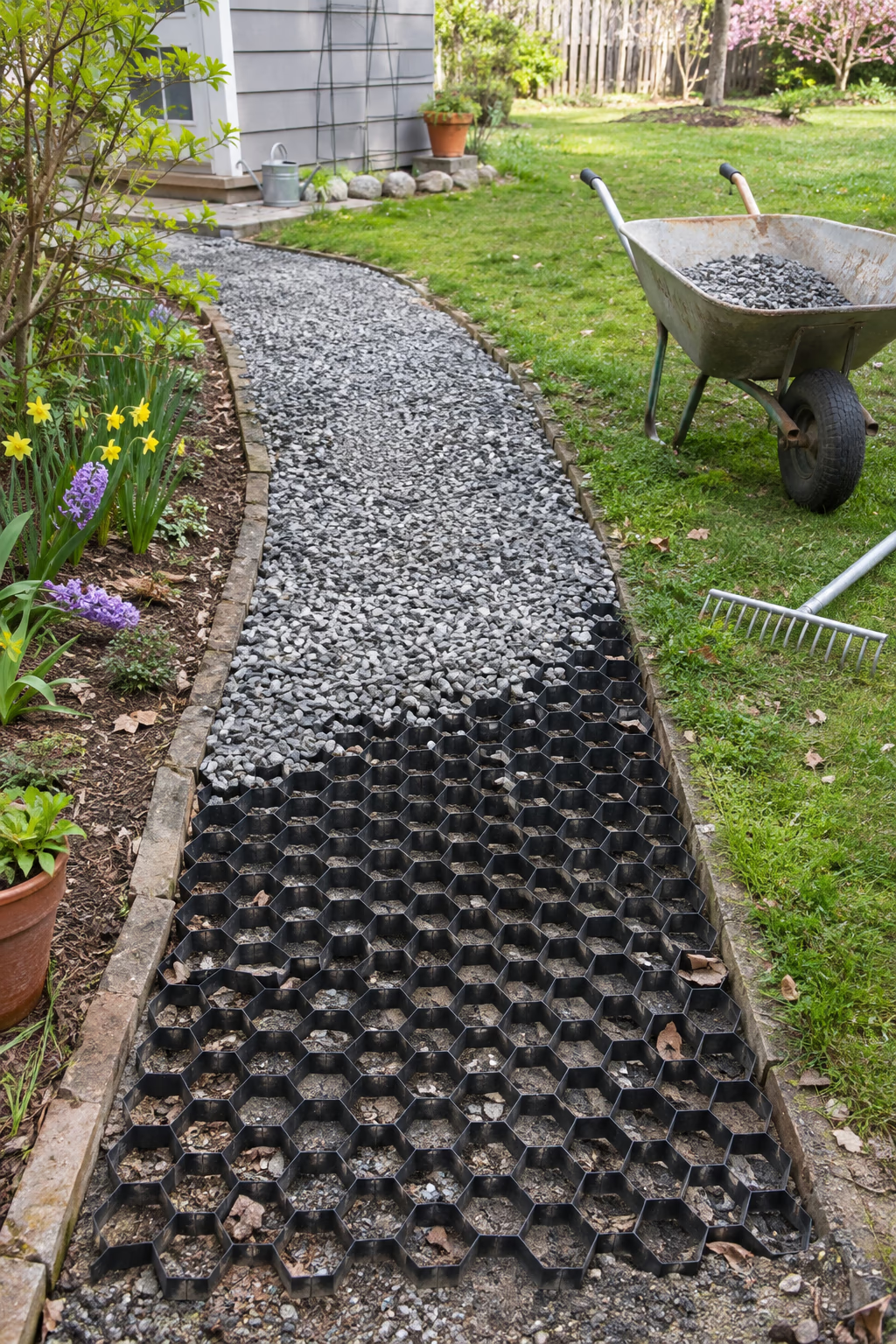
Firmer footing for wheelbarrows, strollers, and chairs
Plastic honeycomb grid panels, roughly 1.5 to 2 inches deep, snap together over a compacted base and get filled with gravel. The cells hold each stone in place, so the surface stays smooth and level.
Stabilized gravel stops ruts, keeps stone from migrating onto lawns, and makes a gravel patio or path much easier for wheels, walkers, and high heels.
Fill the cells slightly above the rim so the plastic stays hidden. The panels add cost per square foot, so many homeowners use them only in high-traffic areas.
How to Plan Your Gravel Garden
A gravel garden is simple to maintain, but the work you do before the stone arrives determines how well it looks for years. Keep these points in mind as you plan.
- Start with sun and drainage. Most gravel garden plants want at least six hours of sun and soil that drains. Watch where water puddles after rain and fix grading first.
- Remove weeds completely. Dig out or smother perennial weeds such as bindweed and quackgrass before you add stone, because they are much harder to pull once covered.
- Choose stone by use. Angular crushed stone packs firmly for patios and paths, while rounded pea gravel is softer looking but rolls underfoot. Washed stone works best for planted areas.
- Calculate before ordering. One cubic yard of gravel covers about 160 square feet at 2 inches deep or about 80 square feet at 4 inches deep. Bulk delivery is usually much cheaper than bags.
- Plan edges early. Steel, stone, brick, or timber borders keep gravel where it belongs and should go in before the stone is spread.
- Check rules and utilities. Review HOA guidelines and local codes for front-yard changes, fire pits, and pools, and call 811 before digging.
Frequently Asked Questions
What size gravel works best for a planted gravel garden?
Small angular stone around 3/8 inch is a popular choice because it settles firmly, drains well, and is easy to plant through. Rounded pea gravel also works but shifts more underfoot. Avoid large decorative rock in planted areas, since seedlings and small plants struggle between big stones.
How deep should the gravel layer be?
For planting directly into gravel, 3 to 5 inches over prepared soil gives the best weed suppression. For a simple decorative mulch around plants, 2 inches is usually enough. Patios and paths need a compacted base layer plus 1 to 2 inches of top gravel.
Should I put landscape fabric under gravel?
It helps under paths, patios, and dry creek beds where nothing will be planted. In a planted gravel garden it’s usually skipped, because fabric blocks self-sowing plants, makes adding new plants harder, and eventually collects soil on top that weeds grow in anyway.
Will weeds still grow in a gravel garden?
Some will, mostly from seeds that blow in and lodge in debris on the surface. A deep layer of clean stone keeps them few and easy to pull. Removing fallen leaves and pulling young weeds a few times a season keeps the garden tidy.
Is a gravel garden cheaper than lawn?
Upfront costs for stone, delivery, edging, and plants can be higher than seeding a lawn, especially for large areas. Over time, savings on water, mowing, fertilizer, and equipment usually make up the difference, and doing the work in phases spreads out the expense.
Final Thoughts
Gravel gives a garden a clean, finished foundation while doing much of the hard work for you. Whether you plant prairie natives straight into stone, carve out a fire pit circle, or tame a muddy side yard, the result is a space that looks good with far less watering and weeding.
Start with one well-prepared area, choose plants that match your sun, soil, and climate, and give them a season to settle in. As they spread and self-sow across the stone, your gravel garden will feel more natural and more rewarding every year.


