
On a hot August afternoon, while the lawn next door turns brown and crunchy, a rock garden just keeps looking good. Tufts of blue grass poke out between sun-warmed stones, sedum spills into gravel, and a big boulder gives the whole yard a sense of permanence.
Rock gardens are having a real comeback because they solve problems ordinary beds can’t. They handle slopes, poor soil, and dry spells, they look structured even in winter, and once the plants settle in, they need far less watering, mowing, and fussing than turf or a traditional flower border.
These 27 rock garden ideas range from terraced hillsides and trendy crevice gardens to mailbox beds, alpine troughs, boulder fountains, and shady woodland rockeries. Whether you have a steep front yard or a single sunny corner, there’s a project here you can start this season.
1. Turn a Sloped Yard Into a Terraced Rock Garden
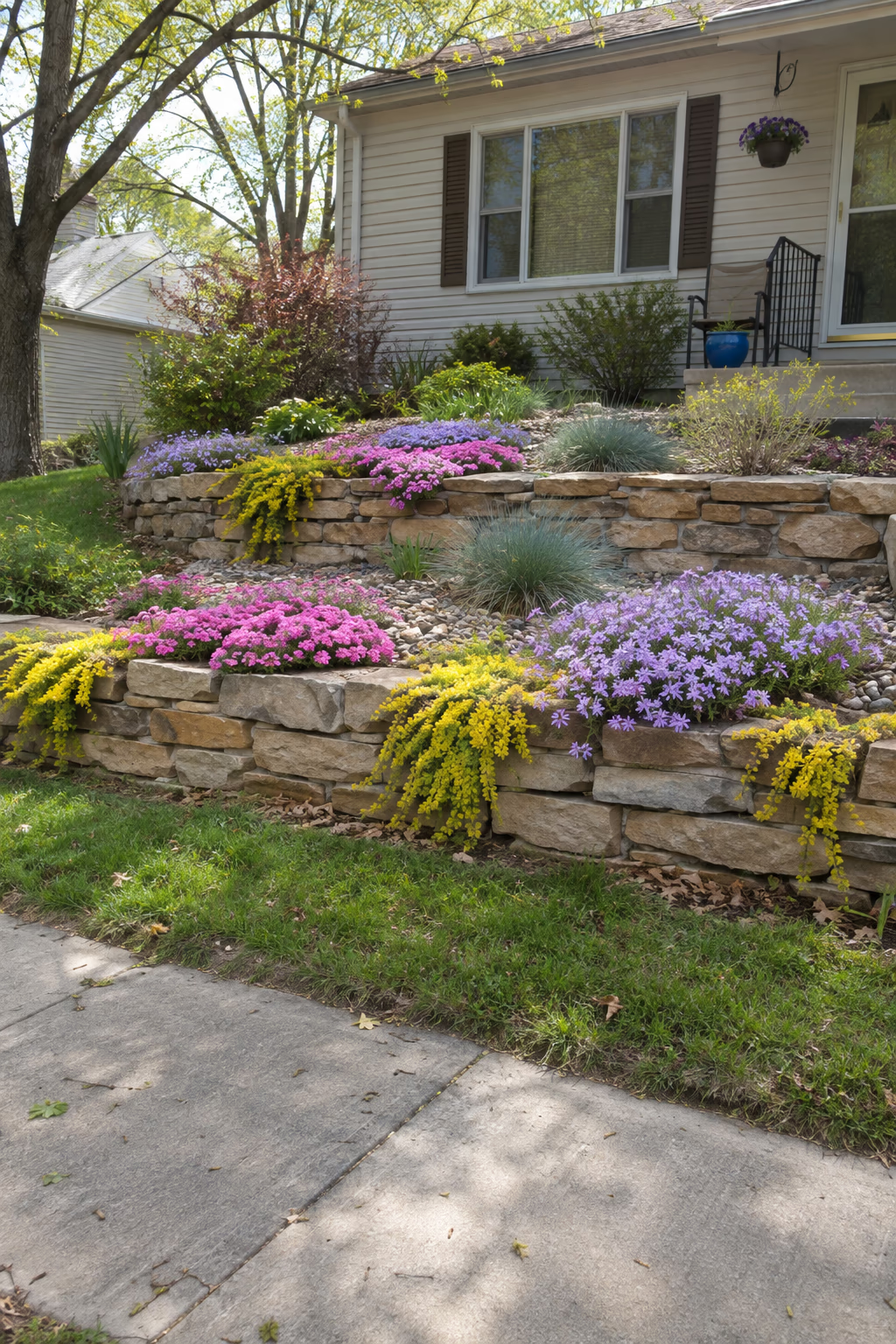
Tame a hard-to-mow hill and stop erosion
A slope that’s awkward to mow is the perfect place for a rock garden. Build two or three low terraces with stacked fieldstone or boulders, each about 12 to 24 inches high, and backfill behind them with a gritty mix of topsoil and crushed gravel.
The level shelves slow runoff, give plants a flat place to root, and create a layered display you can see from the street. Fill each tier with creeping phlox, rock cress, blue fescue, and sedum so the color cascades over the stone faces.
Keep each wall short and lean the stones slightly back into the hill. Walls taller than about 3 to 4 feet often need engineering and a permit, so check local rules before going big.
2. Build a Crevice Garden From Upright Stone Slabs
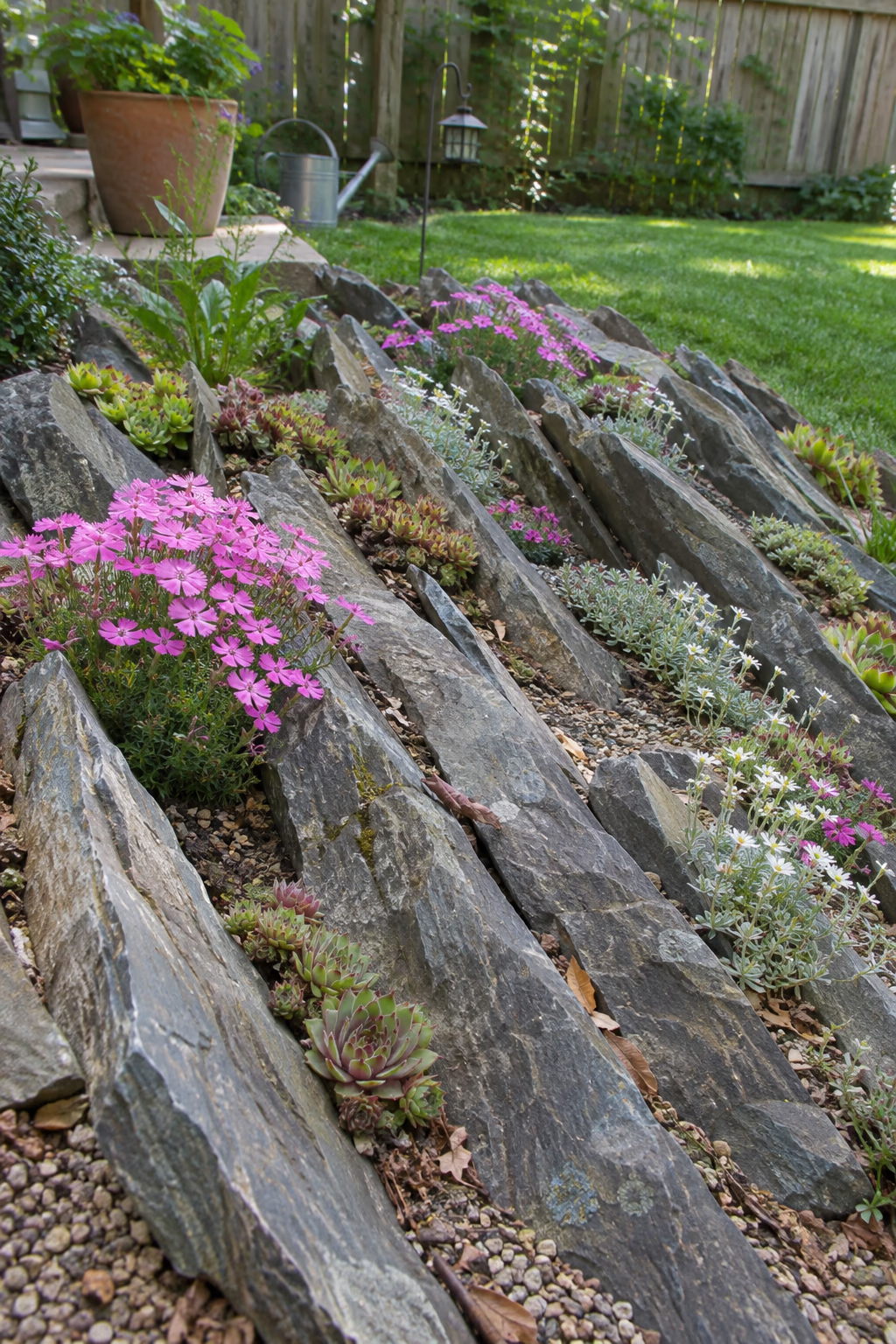
The modern twist on alpine gardening
A crevice garden uses flat slabs of stone set on edge in parallel rows, with gaps of about 1 to 2 inches between them. The narrow cracks are filled with a lean mix of sand and fine gravel, and small plants grow right in the seams.
Plant roots follow the cool, moist stone deep underground, so tough little plants like hens and chicks, saxifrage, dwarf dianthus, and pineleaf penstemon thrive with very little water. The tilted slabs also look like a miniature mountain ridge, which is why the style photographs so well.
Bury each slab at least a third of its height for stability, and lean all of them at the same angle so the bed reads as one rock formation. Flagstone or broken slate from a stone yard works well and keeps costs reasonable.
3. Tuck Succulents and Sedum Between Weathered Boulders
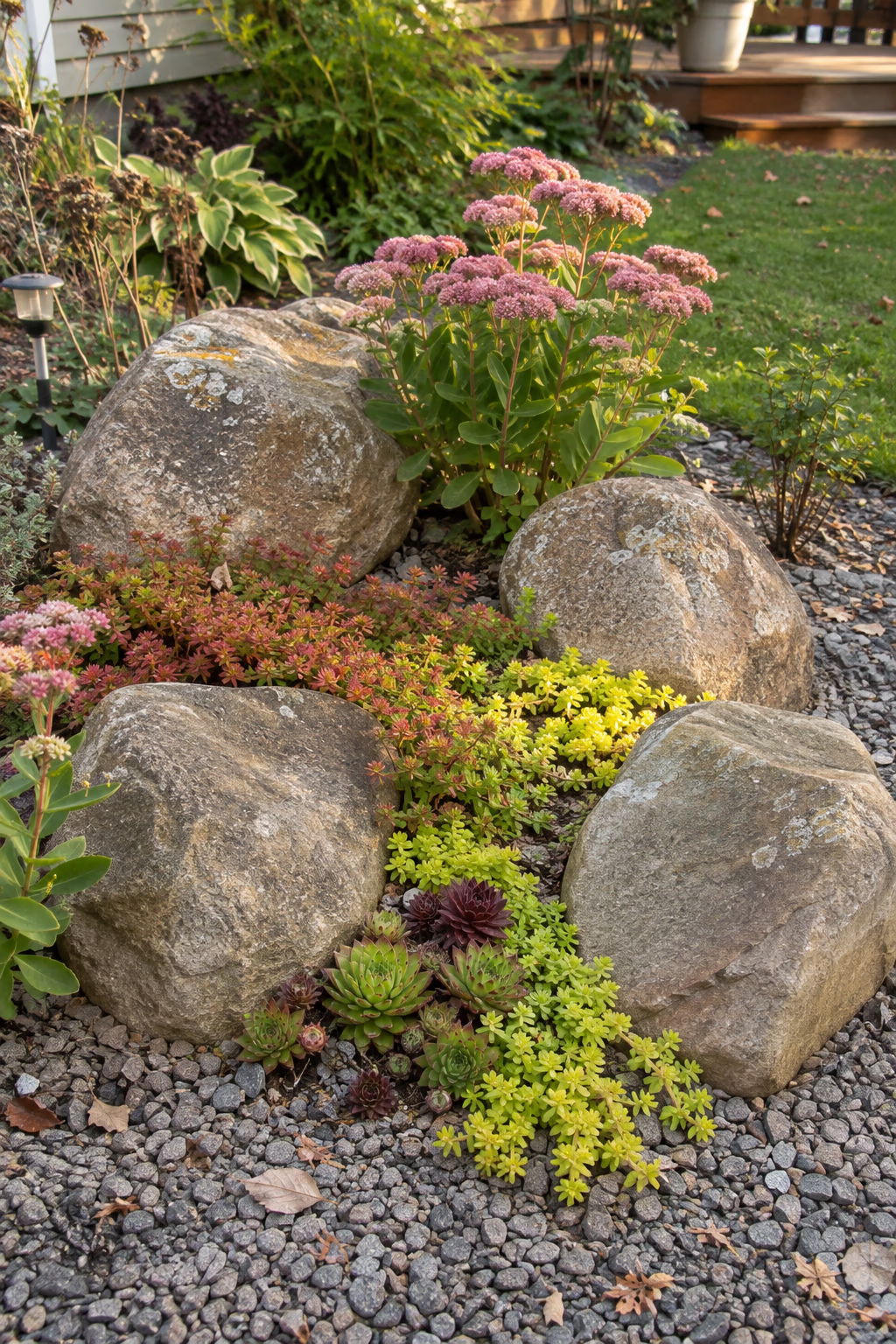
Easy color that shrugs off drought
Few combinations are as foolproof as rough stone and fleshy succulents. Set a cluster of medium boulders, then plant hardy sedums, hens and chicks, and ice plant in the soil pockets between them, letting the low growers creep toward the rock bases.
The soft rosettes and chunky leaves contrast beautifully with hard stone, and many sedums blush red, orange, or burgundy in fall. Mix trailing types with upright ones such as Autumn Joy for layers of height.
In cold regions, stick with winter-hardy succulents rated for your USDA zone. Good drainage matters more than water, so add grit to heavy clay before planting or the roots may rot.
4. Make One Statement Boulder the Star
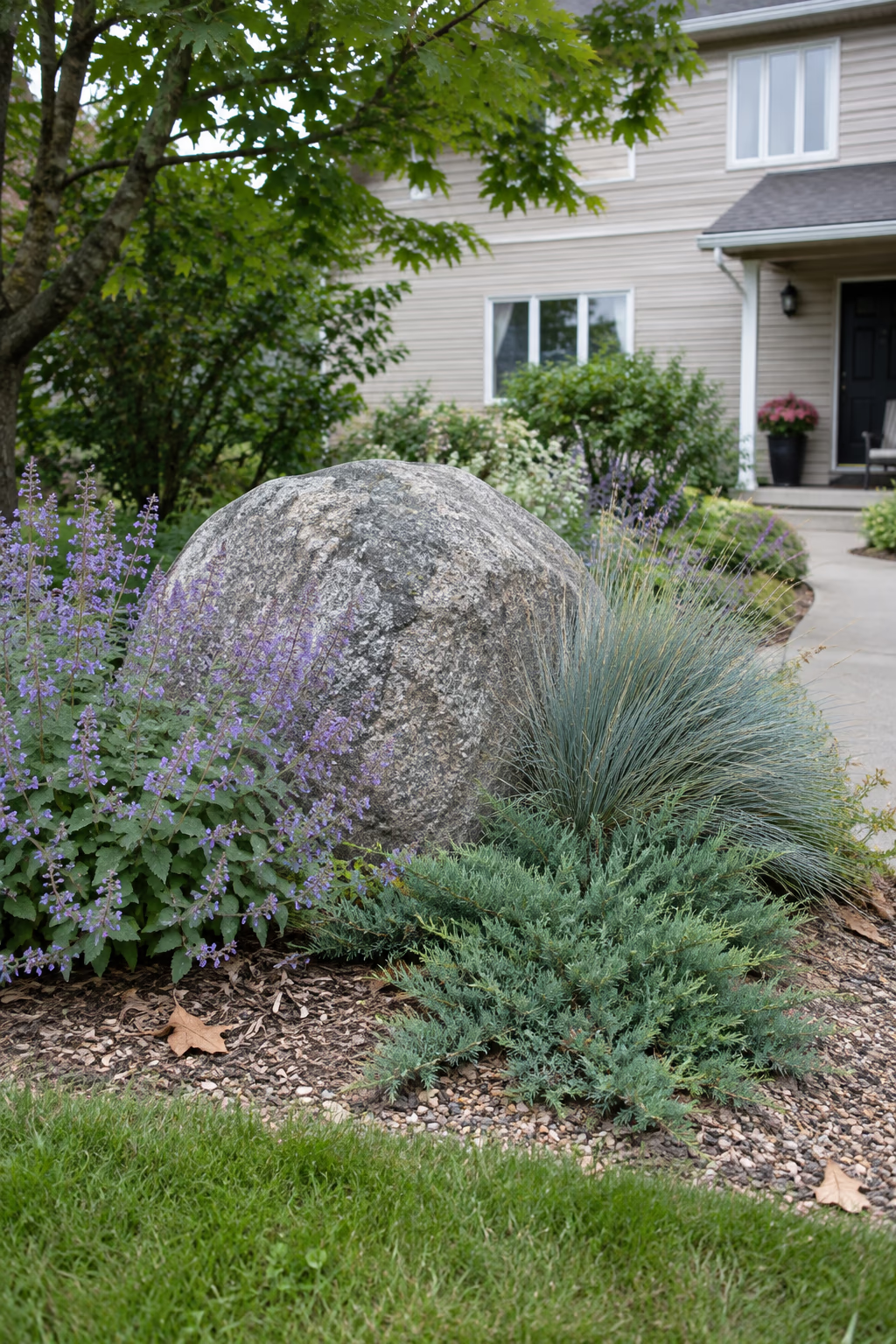
Fewer, bigger rocks look more natural
Instead of scattering dozens of fist-size rocks, choose one large boulder, roughly 2 to 4 feet across, and make it the anchor of the bed. Partly bury it so it looks as if it has been there for centuries.
A single strong rock gives the eye a resting place and makes the planting around it feel intentional. Surround it with low mounds of blue oat grass, catmint, and creeping juniper so the stone stays the focal point.
Large boulders can weigh well over a ton. Most stone yards deliver and place them with a skid steer or crane truck for a fee, which is far safer than trying to move one yourself.
5. Swap a Thirsty Lawn Patch for a Water-Wise Rock Bed
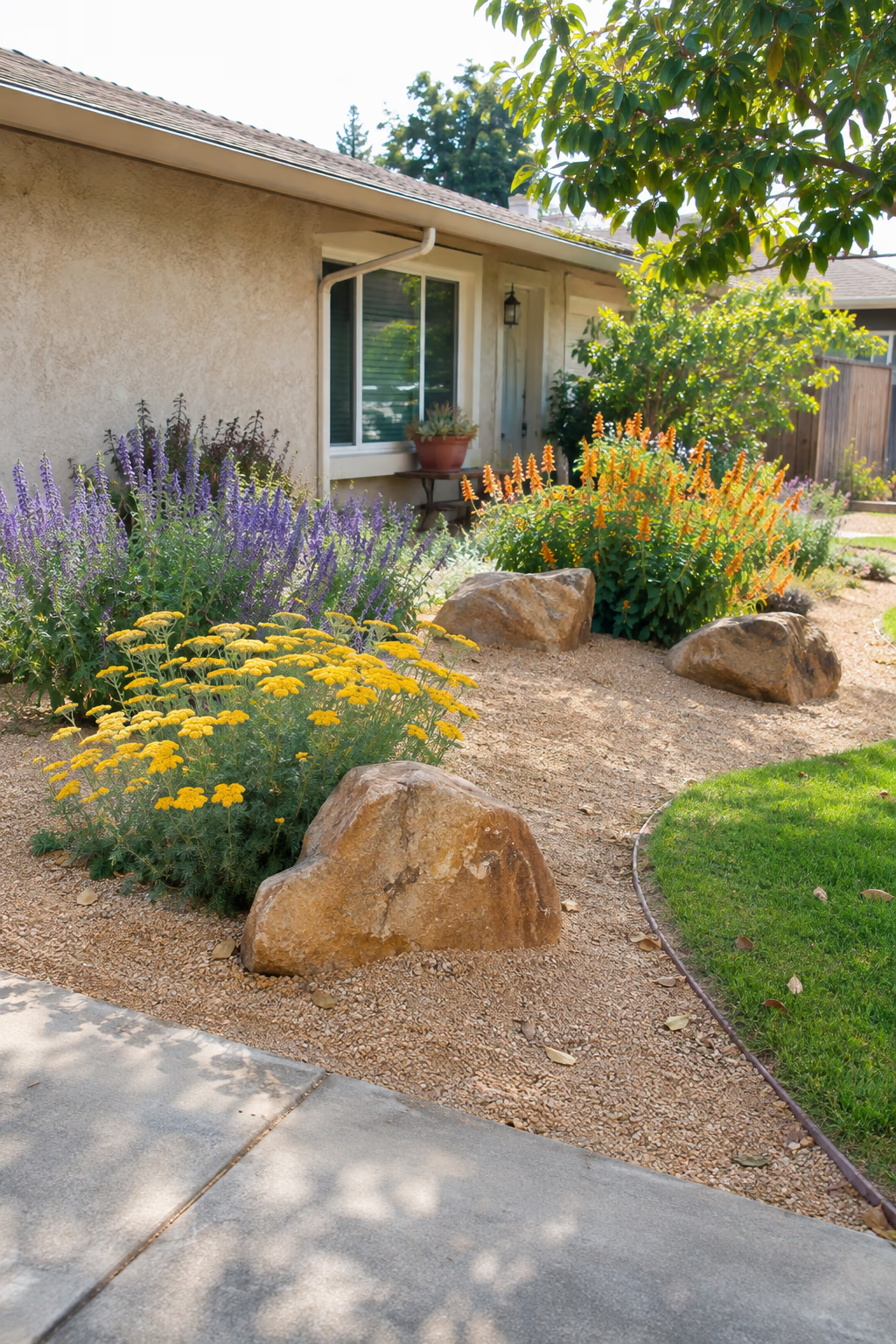
Less mowing, lower water bills
Pick a sunny section of lawn that struggles every summer, strip the sod, and replace it with a rock bed of decomposed granite, a few boulders, and islands of drought-tolerant plants like yarrow, salvia, and agastache.
Once established, the plants need only occasional deep watering, and there’s nothing to mow. Many water utilities in dry Western states offer rebates for turf replacement, so check before you start.
Avoid wall-to-wall plastic sheeting, which bakes the soil and traps runoff. A permeable landscape fabric or simply a thick layer of gravel lets rain soak in while still slowing weeds.
6. Ring the Mailbox With a Curbside Rock Garden
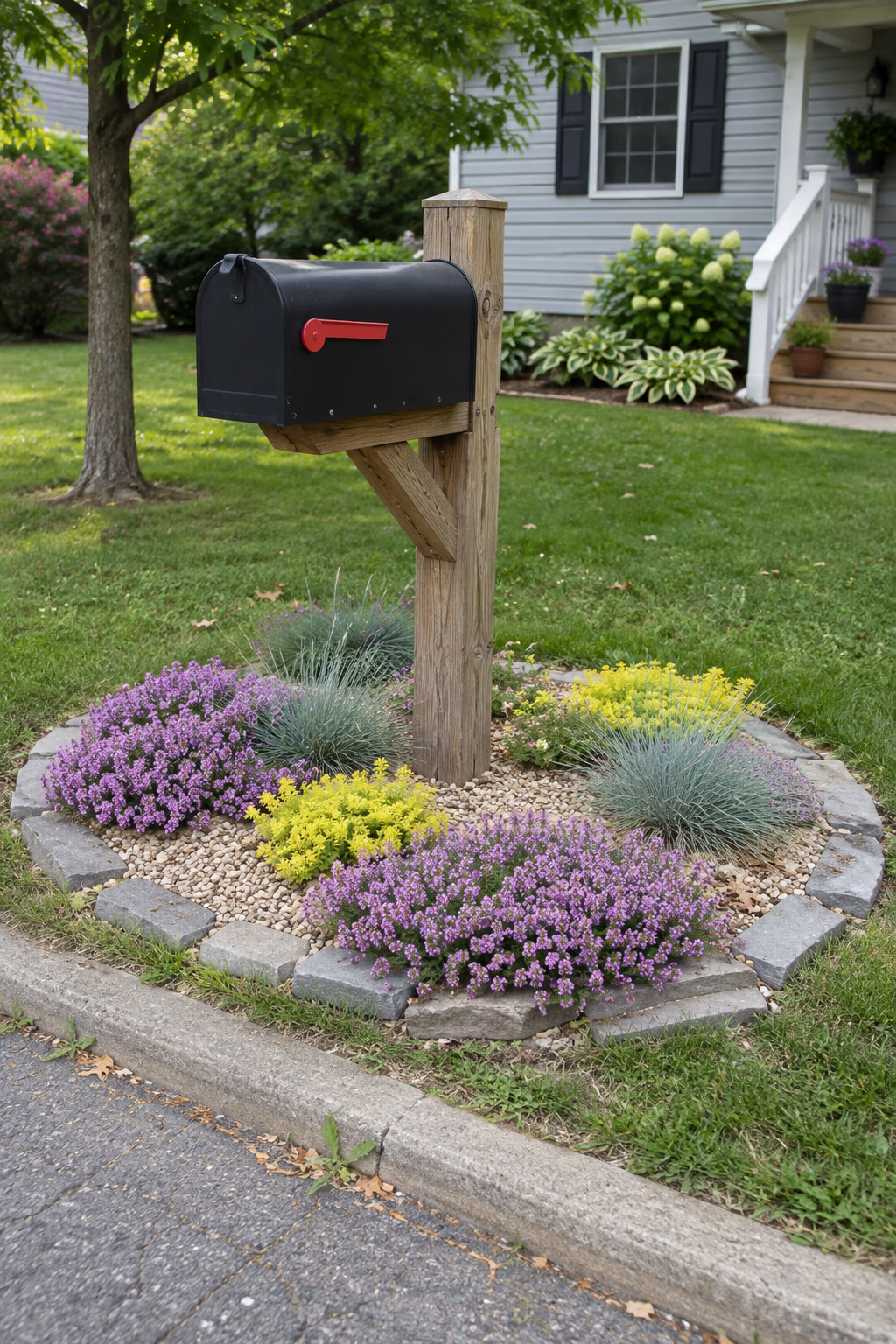
Instant curb appeal in a tiny footprint
The strip around a mailbox post is often bare dirt or scraggly grass that’s hard to trim. Edge a 3- to 4-foot circle with flat stones, fill it with pea gravel, and plant short, tough perennials like creeping thyme, dwarf sedum, and blue fescue.
A mailbox bed greets visitors, frames the house number on the box, and eliminates string-trimming around the post. Because it’s small, it’s an inexpensive weekend project.
Keep rocks low and rounded near the street so they won’t damage cars or snowplows, and leave the area in front of the box clear for your carrier. Some towns limit what can sit in the public right-of-way.
7. Edge the Driveway With a Narrow Rock Garden Strip
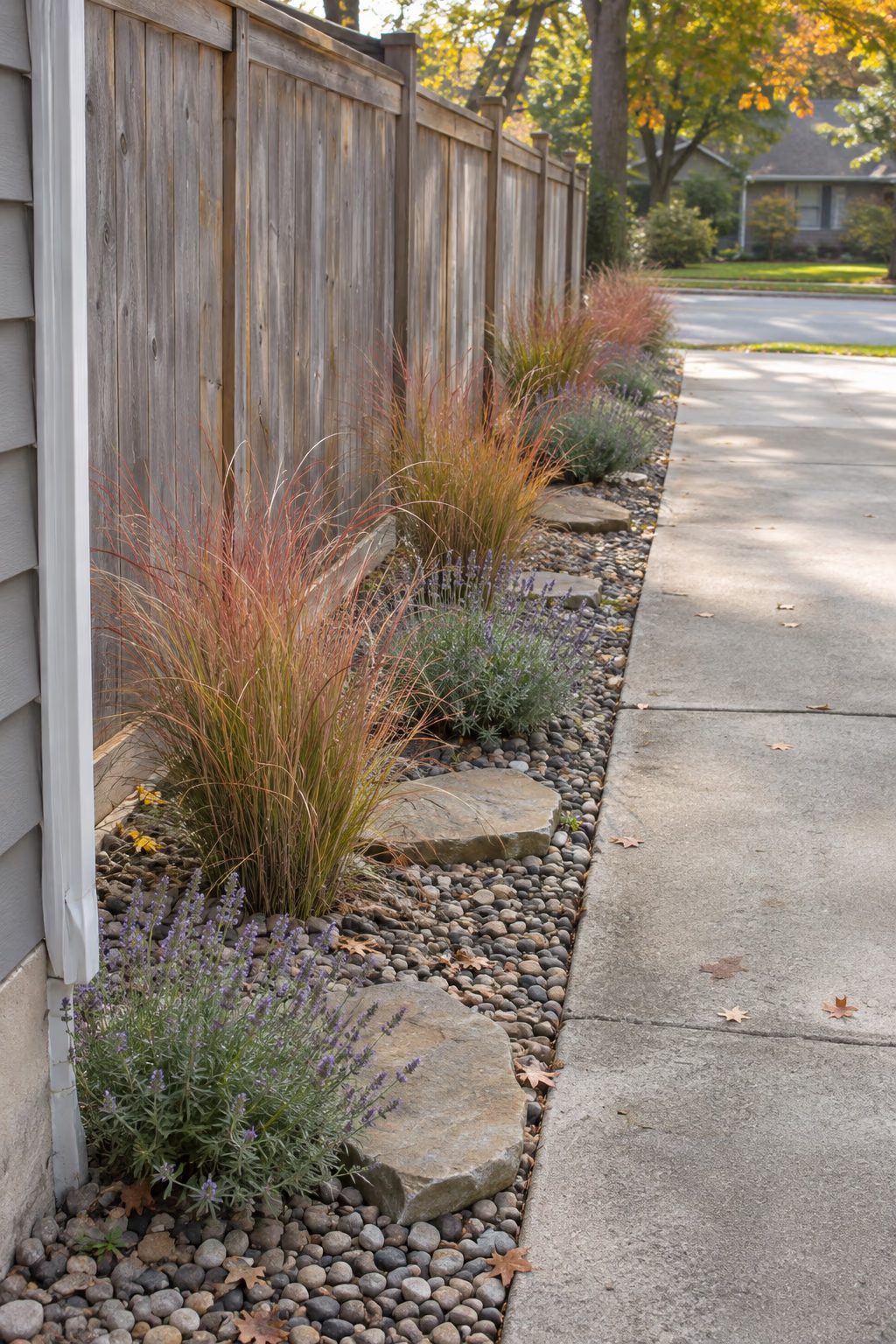
Turn a dead zone into a tidy border
The thin strip between a driveway and a fence or property line is often too narrow for lawn. A 2- to 3-foot-wide band of river gravel with a staggered line of flat-topped stones and clumps of ornamental grass makes it look finished.
Repeating the same two or three plants down the length creates rhythm and keeps the look clean. Little bluestem, lavender, and stonecrop handle the reflected heat from pavement well.
Leave a few inches of plain gravel next to the pavement for car doors and snow piles, and choose rocks too heavy to roll into the drive.
8. Pair Dwarf Conifers With Lichen-Covered Stone
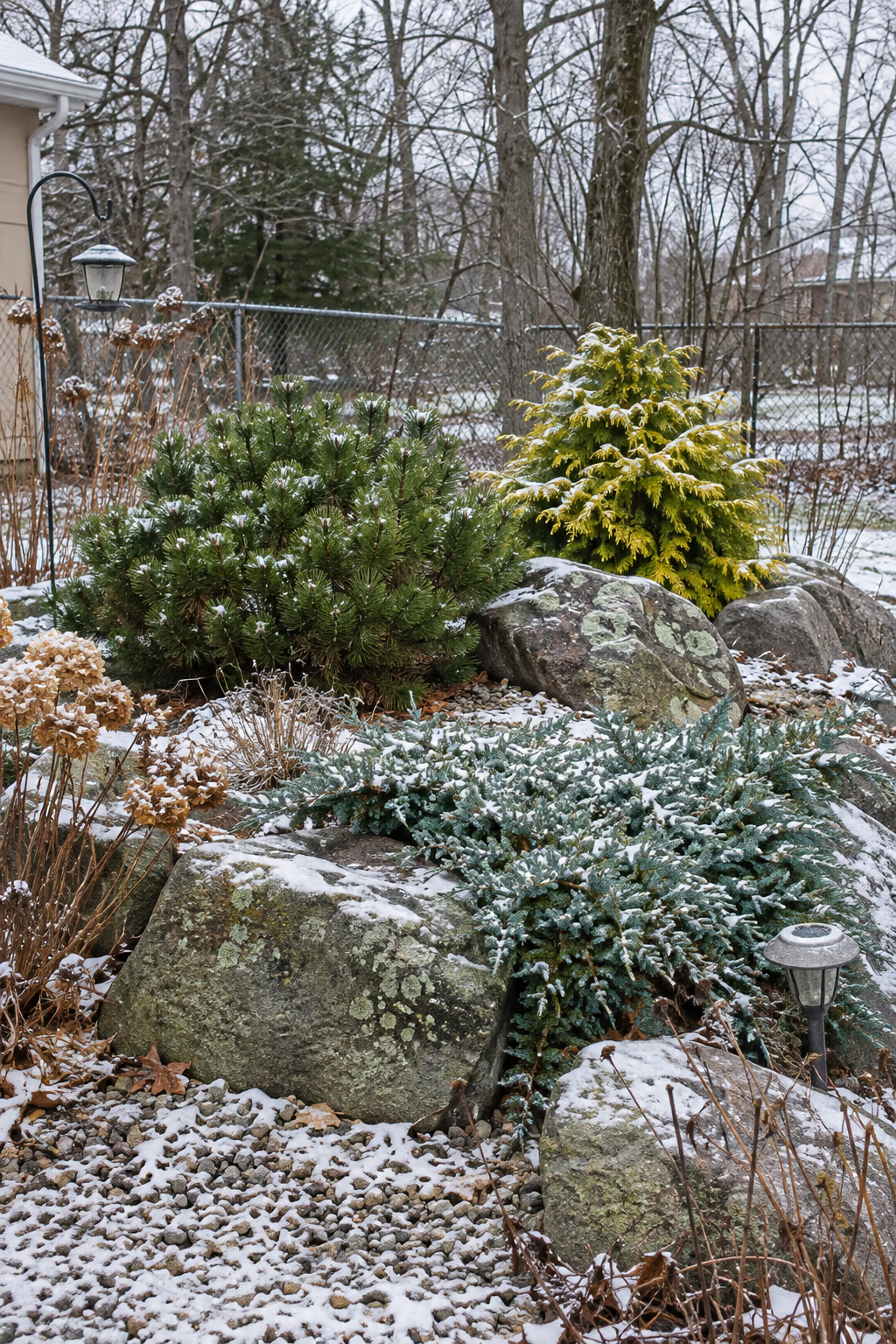
Evergreen structure that looks good all winter
Slow-growing conifers are a classic rock garden partner. Plant a dwarf mugo pine, a dwarf Hinoki cypress, and a blue creeping juniper among weathered stones, spacing them so each has room to reach its mature size.
Their year-round color and tidy shapes give the garden backbone when perennials die back, and they look especially handsome dusted with snow. Mixing gold, blue, and deep green needles adds variety without any flowers at all.
Read plant tags carefully. “Dwarf” can still mean 4 to 6 feet tall after a decade, so choose miniature or slow-growing cultivars for small beds.
9. Raise an Old-School Alpine Rockery Mound
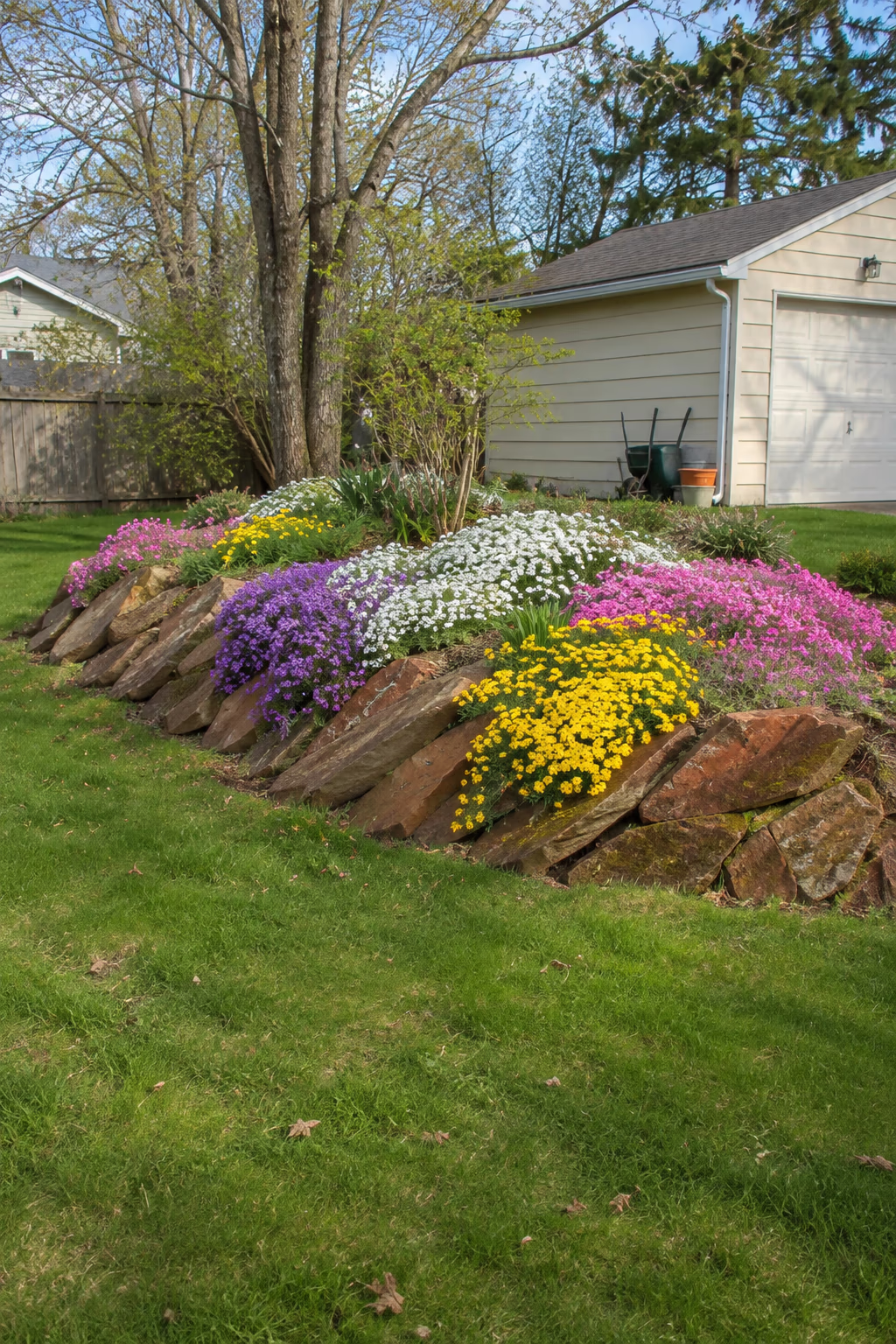
A retro look built for perfect drainage
On flat ground, build a gentle berm about 2 to 3 feet high using a base of rubble topped with gritty soil. Set stones into the mound at a consistent tilt, as if a single rock layer is poking out of a hillside.
The raised mound drains quickly, which is exactly what alpine plants such as basket-of-gold, moss phlox, aubrieta, and snow-in-summer need. It also lifts small flowers closer to eye level.
Make the berm wide rather than tall so it doesn’t look like a pile of rocks. A width of at least three times the height usually looks natural.
10. Let Creeping Thyme Spill Over the Rock Edges
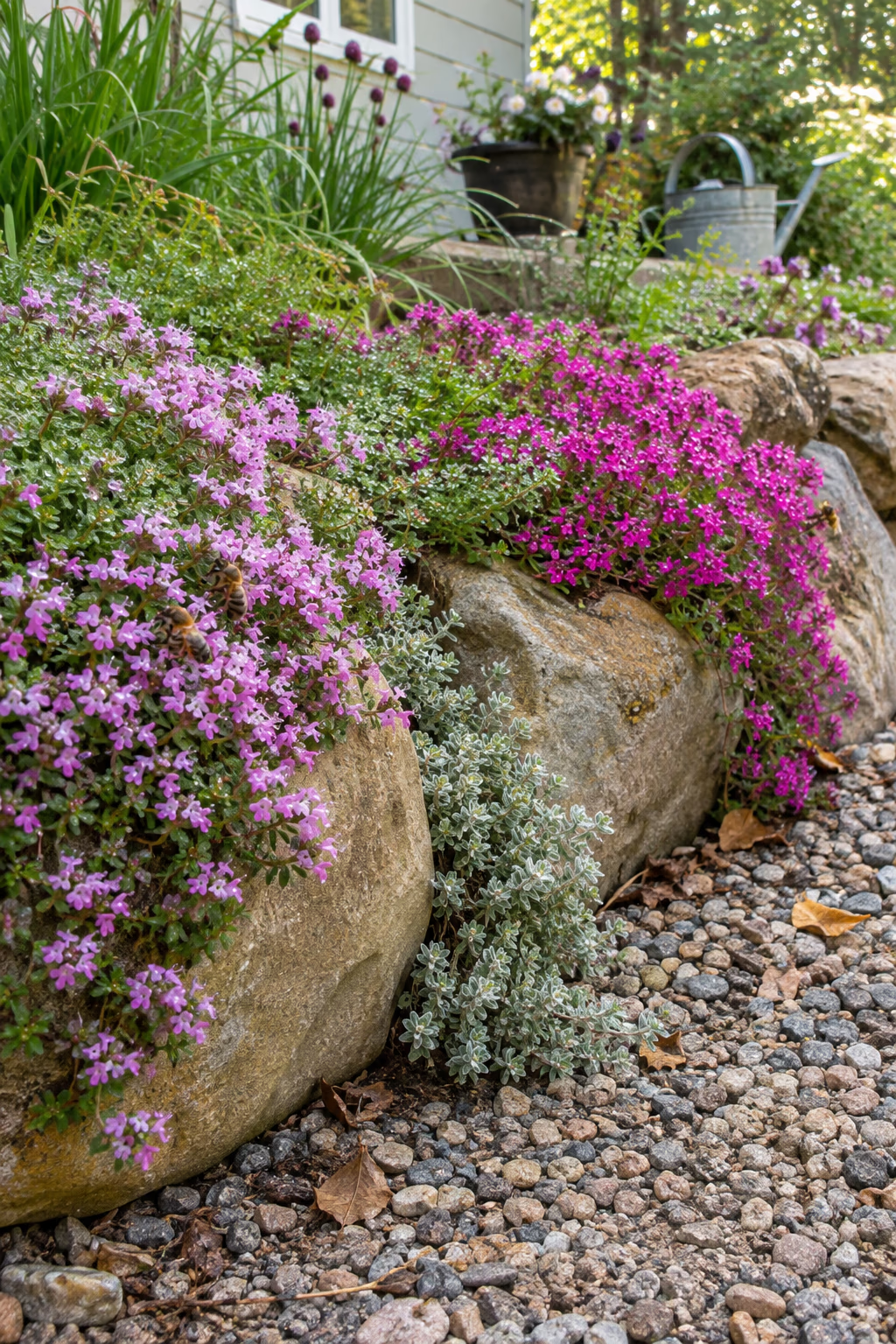
Soft, fragrant carpets that blur hard lines
Plant creeping thyme, woolly thyme, or mother-of-thyme along the top edges of rocks and in the cracks of a stone border. Within a season or two, the mats will drape over the stone in a cushion of tiny leaves.
Thyme softens the rock garden, blooms pink or purple in early summer, and smells wonderful when brushed. Bees love the flowers, and the plants tolerate heat, drought, and light foot traffic.
Thyme dislikes wet, heavy soil and humid shade. Give it full sun and sharp drainage, and shear lightly after bloom to keep it dense.
11. Plant a Desert Rock Garden With Cactus and Agave
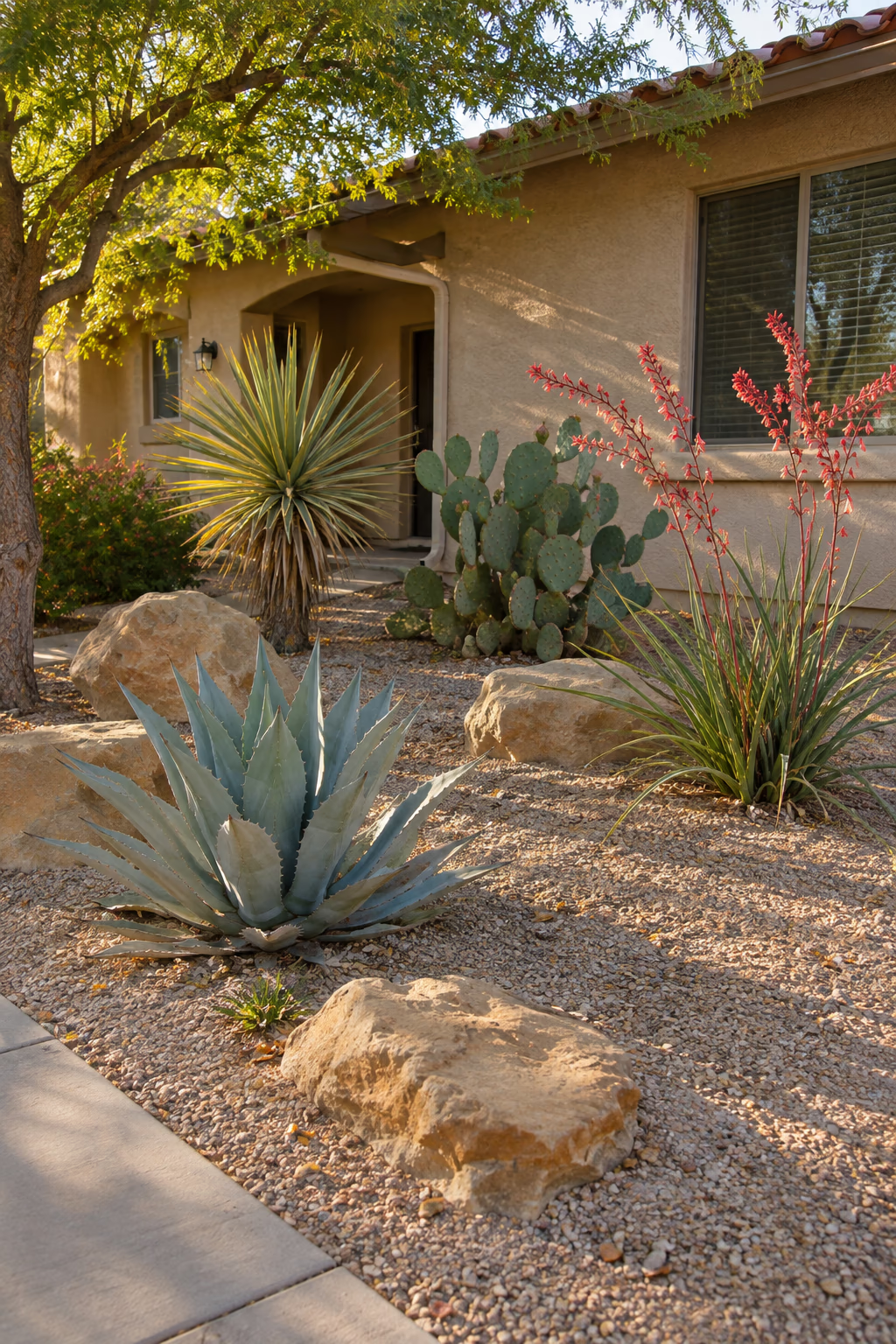
Bold shapes for hot, dry sun
For a full-sun yard in a warm or arid climate, combine tan boulders, gravel mulch, and architectural plants like agave, yucca, prickly pear, and red hesperaloe. Space them widely so each silhouette stands out against the stone.
A desert-style rock garden thrives on heat and almost no supplemental water once established. Even in colder regions, hardy prickly pear and some yuccas survive winter if the soil drains well.
Place spiny plants well back from walkways, play areas, and driveways. Wear thick gloves and use folded newspaper or tongs when planting cactus.
12. Dress Up a Porch Corner With a Mini Rockery
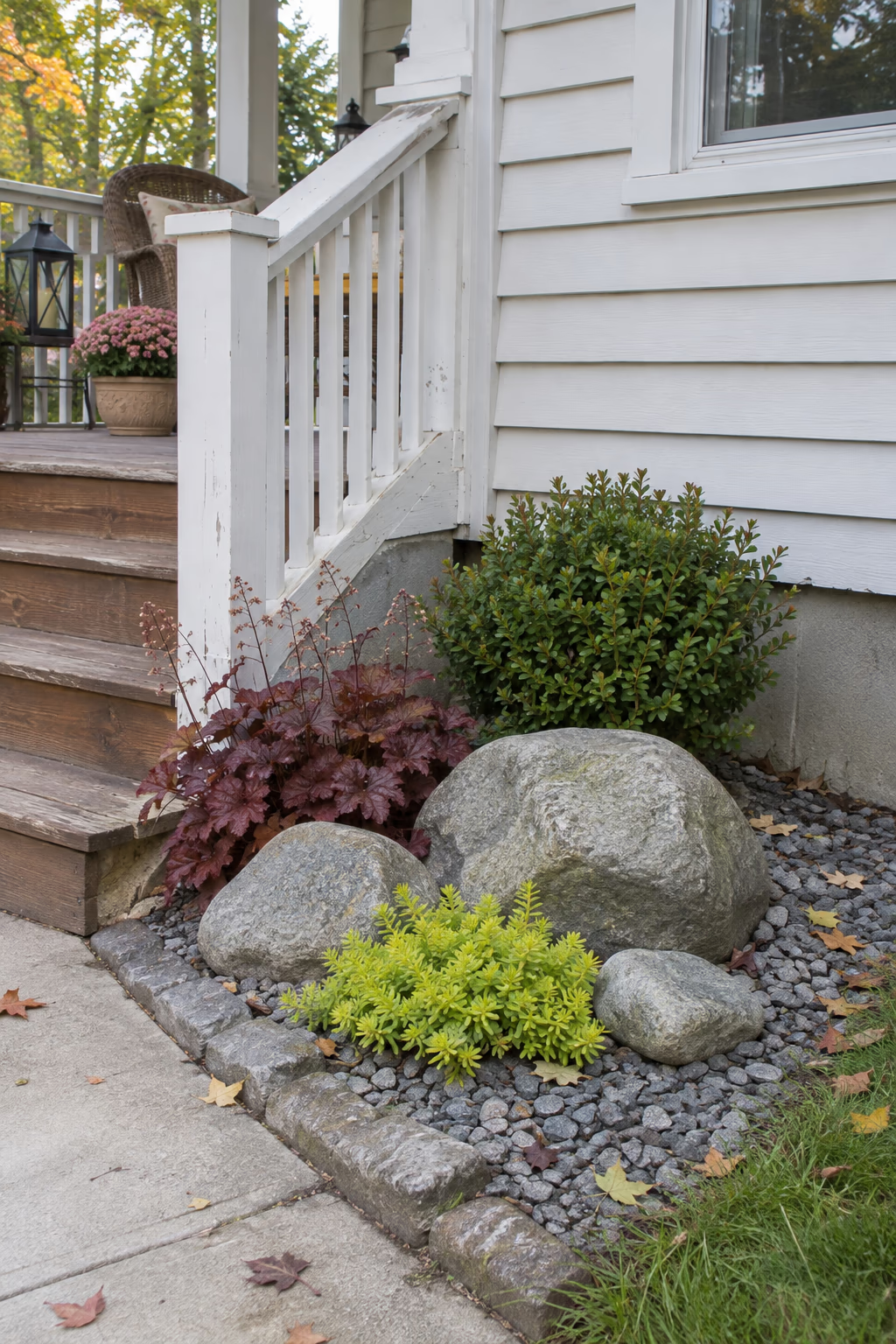
A small bed that frames your front steps
The corner where porch steps meet the foundation is a natural spot for a compact rock bed. Group three stones of different sizes, then add a dwarf shrub, a few clumps of coral bells or sedum, and a mulch of gray gravel.
A small rockery near the door gives the entry a polished look with very little upkeep, and the stones hide the awkward bare corner that’s tough to plant.
Keep the gravel and rock a few inches below the siding, and make sure the soil slopes away from the foundation so rain doesn’t pool against the house.
13. Bubble Water Through a Drilled Boulder Fountain
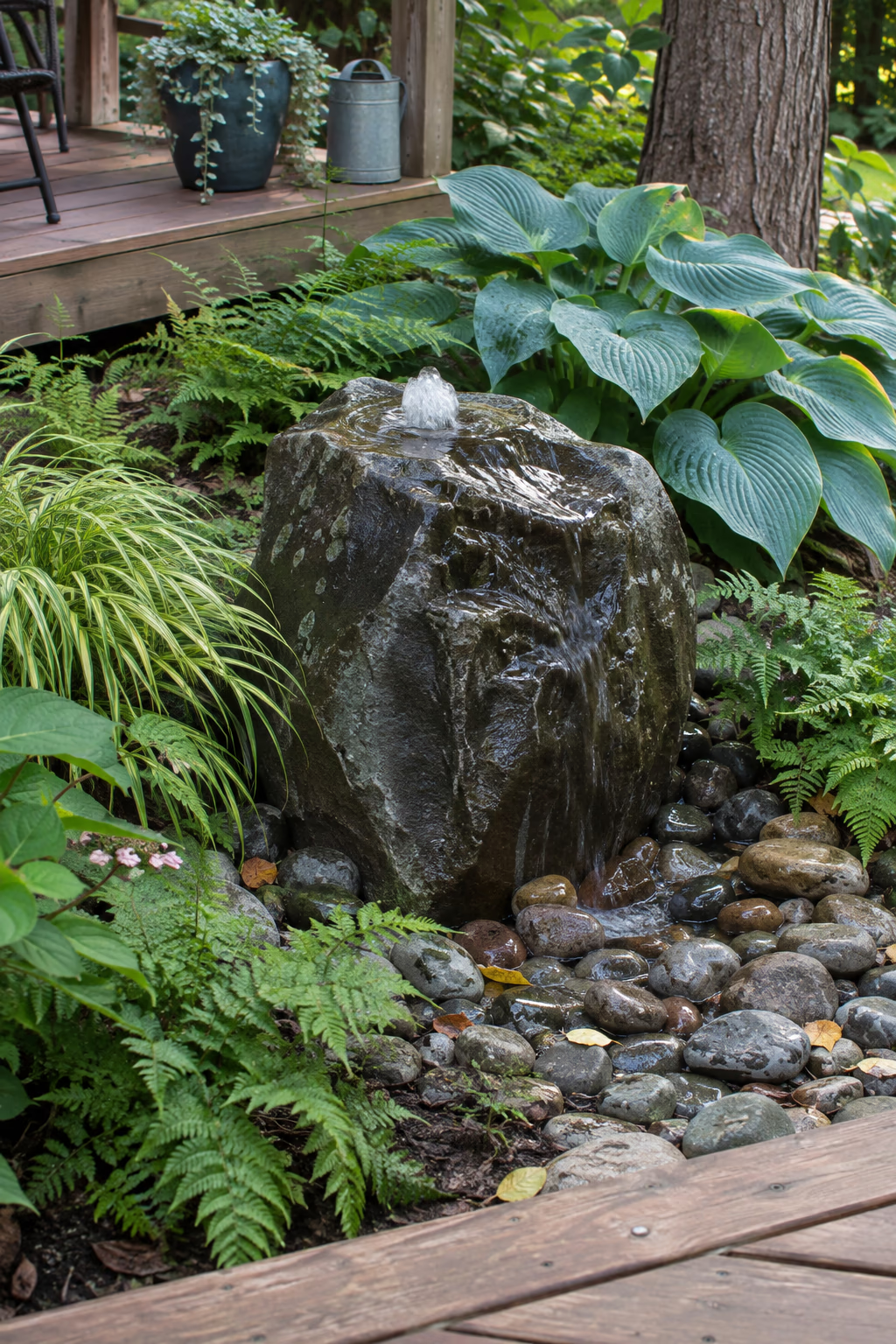
The sound of water without a pond
A boulder fountain uses a stone with a hole drilled through its center, set over a buried reservoir basin. A small submersible pump pushes water up through the rock, where it bubbles out and trickles back down into the gravel.
There’s no open water, so it’s safer for small children and simpler to maintain than a pond. The gentle sound masks road noise, and birds love the wet stone.
The pump needs a GFCI-protected outdoor outlet. Plan the cord route before you set the rock, and top off the reservoir regularly in hot weather.
14. Edge a Backyard Pond With Flat Stones and Rock Plants
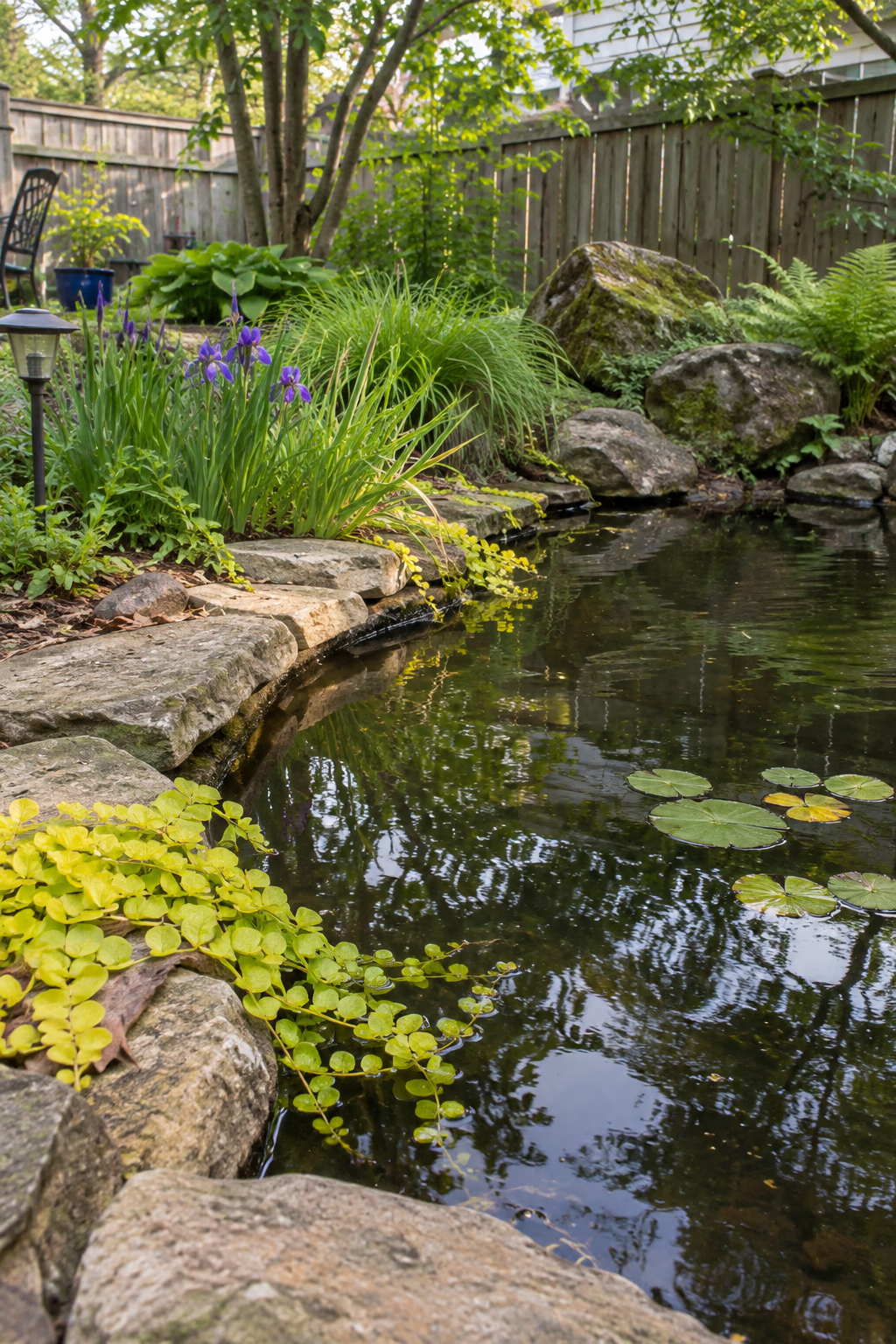
Hide the liner and blend water into the garden
If you have or are planning a small pond, lay flat fieldstone around the rim so the stones overhang the water by a couple of inches. Then plant the soil behind them with creeping Jenny, dwarf iris, sedge, and low ferns.
The overhang hides the liner edge, and the plants soften the transition from water to dry rock garden. Larger stones placed farther back make the pond look as if it sits in a natural rock basin.
Bed edging stones in mortar or compacted gravel so they don’t tip into the pond, and check local rules on fencing for water features deeper than about 18 to 24 inches.
15. Grow Tiny Alpines in a Hypertufa Trough
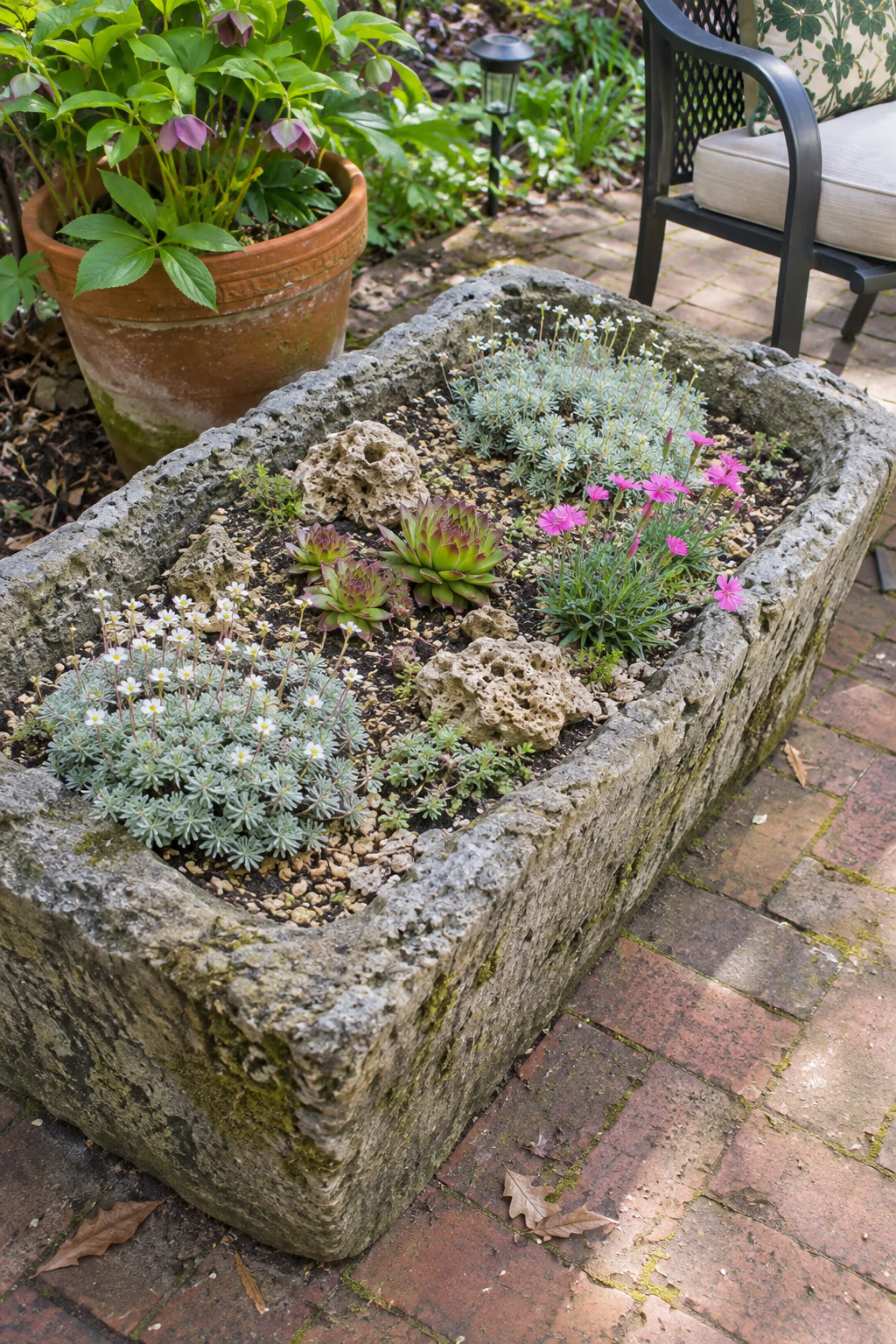
A complete rock garden on a patio or step
Hypertufa is a lightweight, stone-like mix of portland cement, peat or coir, and perlite. Molded into a trough about 18 by 24 inches, it becomes a miniature rock garden for a patio, deck, or front step.
Fill it with a gritty mix, set a few small stones in the surface, and plant tiny treasures like hens and chicks, dwarf saxifrage, and miniature dianthus. Everything stays at eye level where you can enjoy the details.
Let a new trough cure for several weeks and rinse it before planting, since fresh cement is very alkaline. Drill or mold drainage holes in the bottom.
16. Shade a Woodland Rock Garden With Ferns and Hellebores
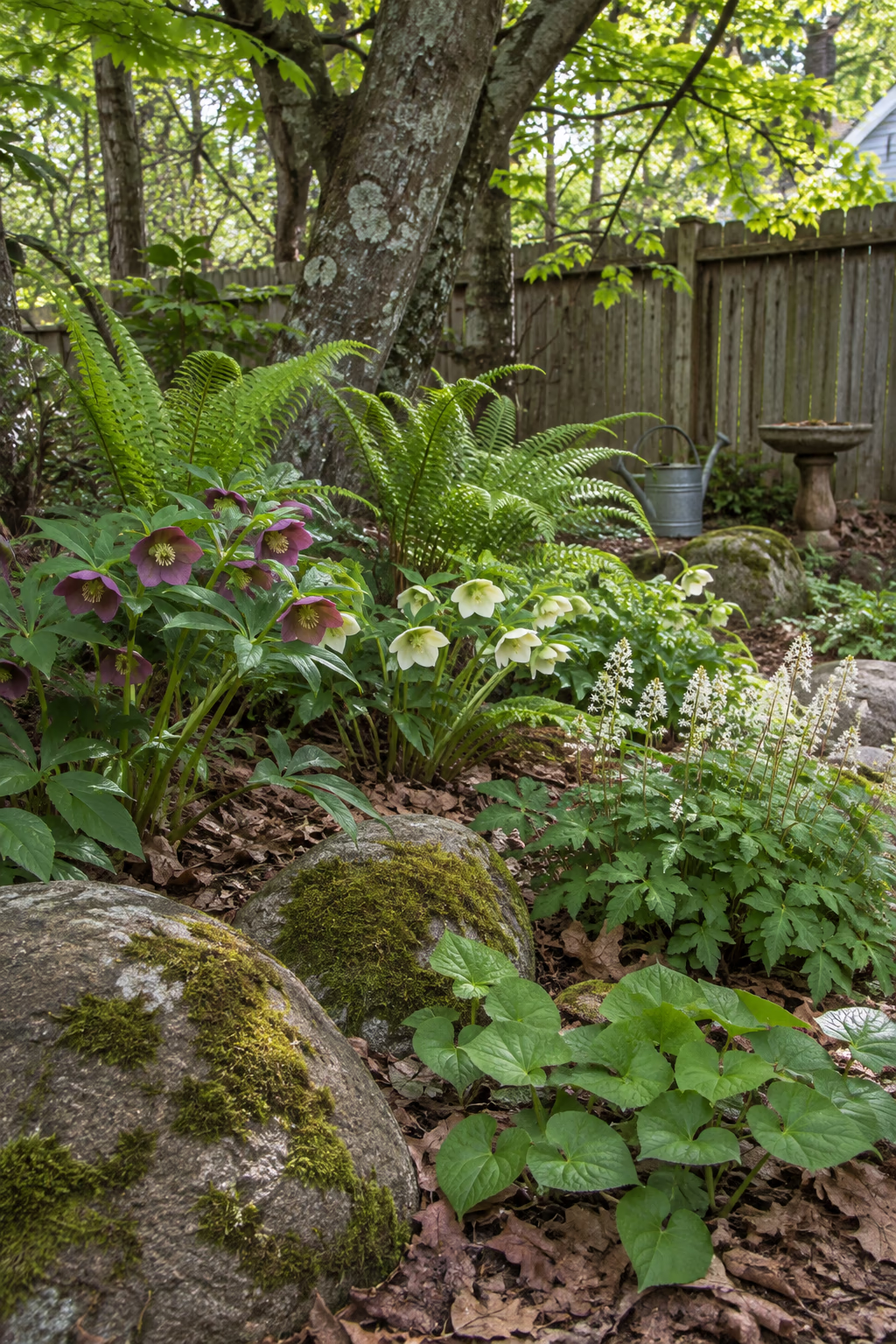
A rock garden for spots without full sun
Rock gardens aren’t just for sunny slopes. Under deciduous trees, combine mossy boulders with ferns, hellebores, foamflower, wild ginger, and spring bulbs for a cool, forest-floor feel.
The stones hold moisture and keep roots cool, while the plants supply texture from early spring into fall. A woodland rock garden often succeeds where grass refuses to grow.
Avoid piling soil or heavy stones over tree roots, which can harm mature trees. Set rocks in existing gaps and use a light mulch of shredded leaves instead of gravel.
17. Plant the Pockets of a Dry-Stacked Stone Wall
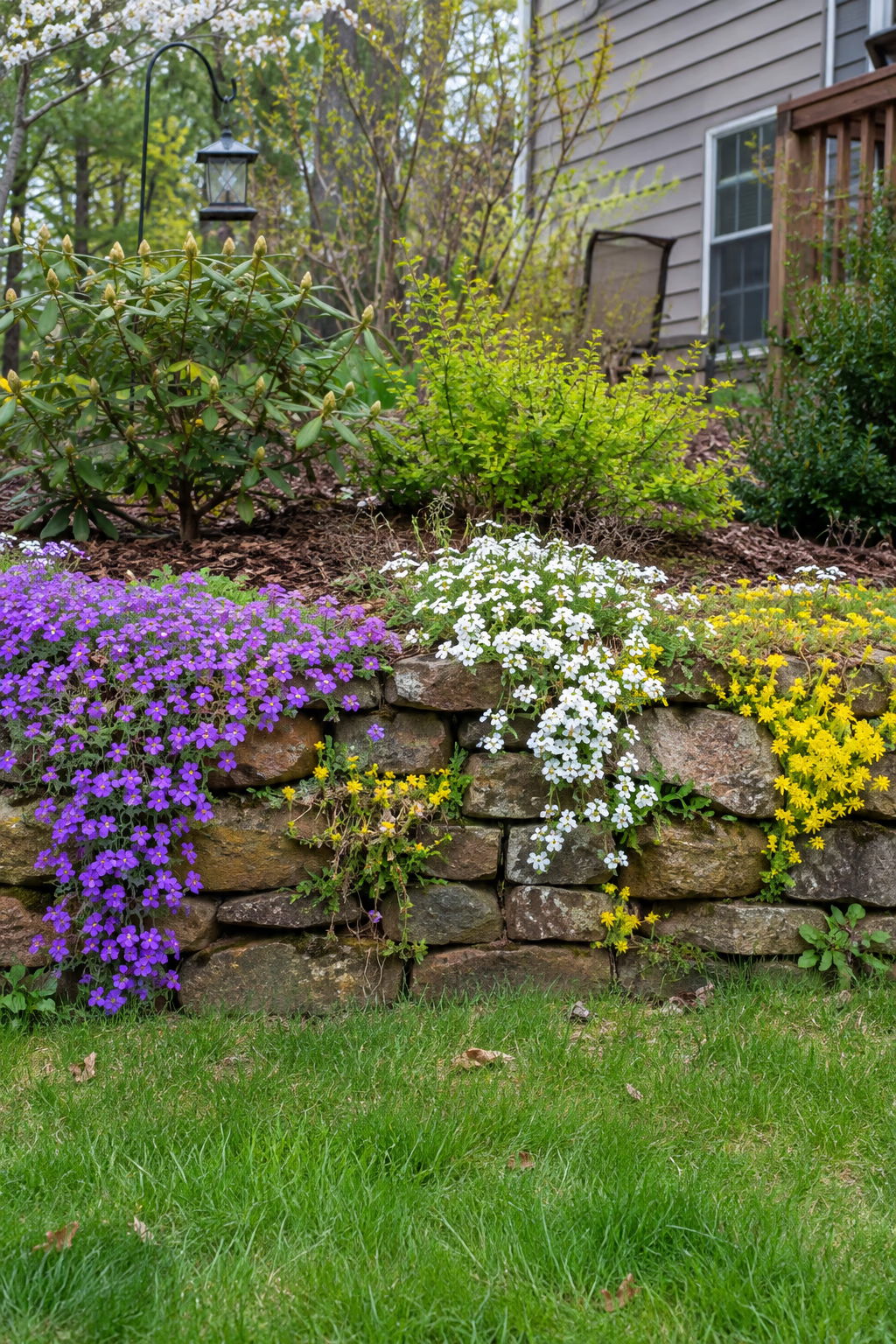
A garden growing right out of the wall
A low retaining wall built without mortar has natural gaps between stones. As you stack it, tuck small plants like aubrieta, rock cress, sedum, and creeping phlox into the joints with a handful of soil behind each one.
Within a year, cascades of flowers and foliage soften the stone face and turn a purely practical wall into one of the prettiest features in the yard.
Planting is far easier while the wall is being built than afterward. Keep the wall low and well drained with gravel backfill so roots and frost don’t push stones loose.
18. Stick to Warm Gold, Tan, and Gray Stone Tones
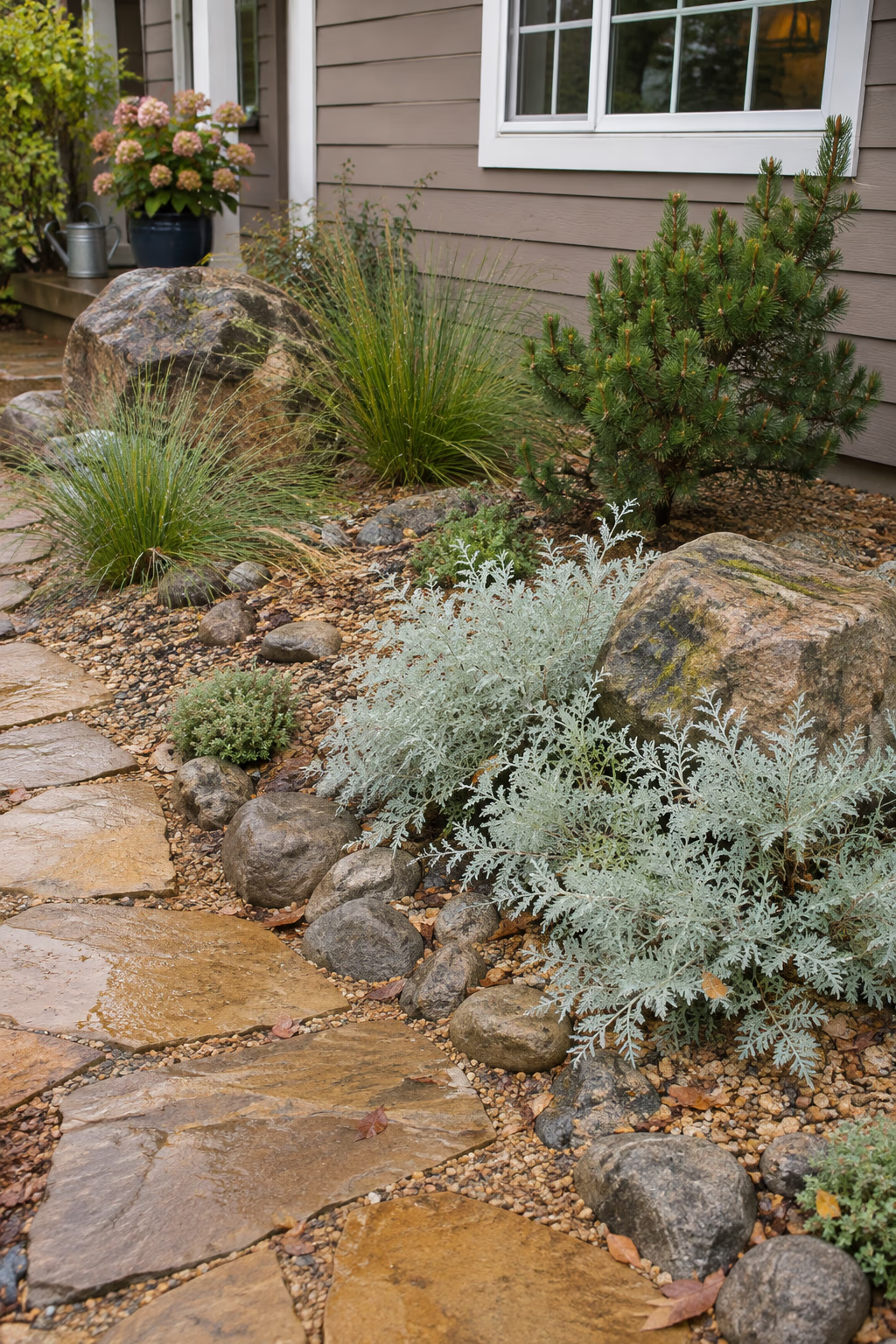
A calm palette that feels current
Rather than mixing white marble chips, red lava rock, and black pebbles, choose one family of earthy colors. Gold flagstone, tan crushed granite, and gray-brown boulders look natural together and complement most siding colors.
Muted stone lets the plants provide the accents, and it ages gracefully as lichen and weathering set in. Vary the texture, from fine gravel to chunky cobble, so the bed stays interesting without clashing colors.
Look at stone samples in full sun and when wet before you buy. Colors shift a lot between the yard pile and your own garden.
19. Tuck a Bench Into a Rock Garden Nook
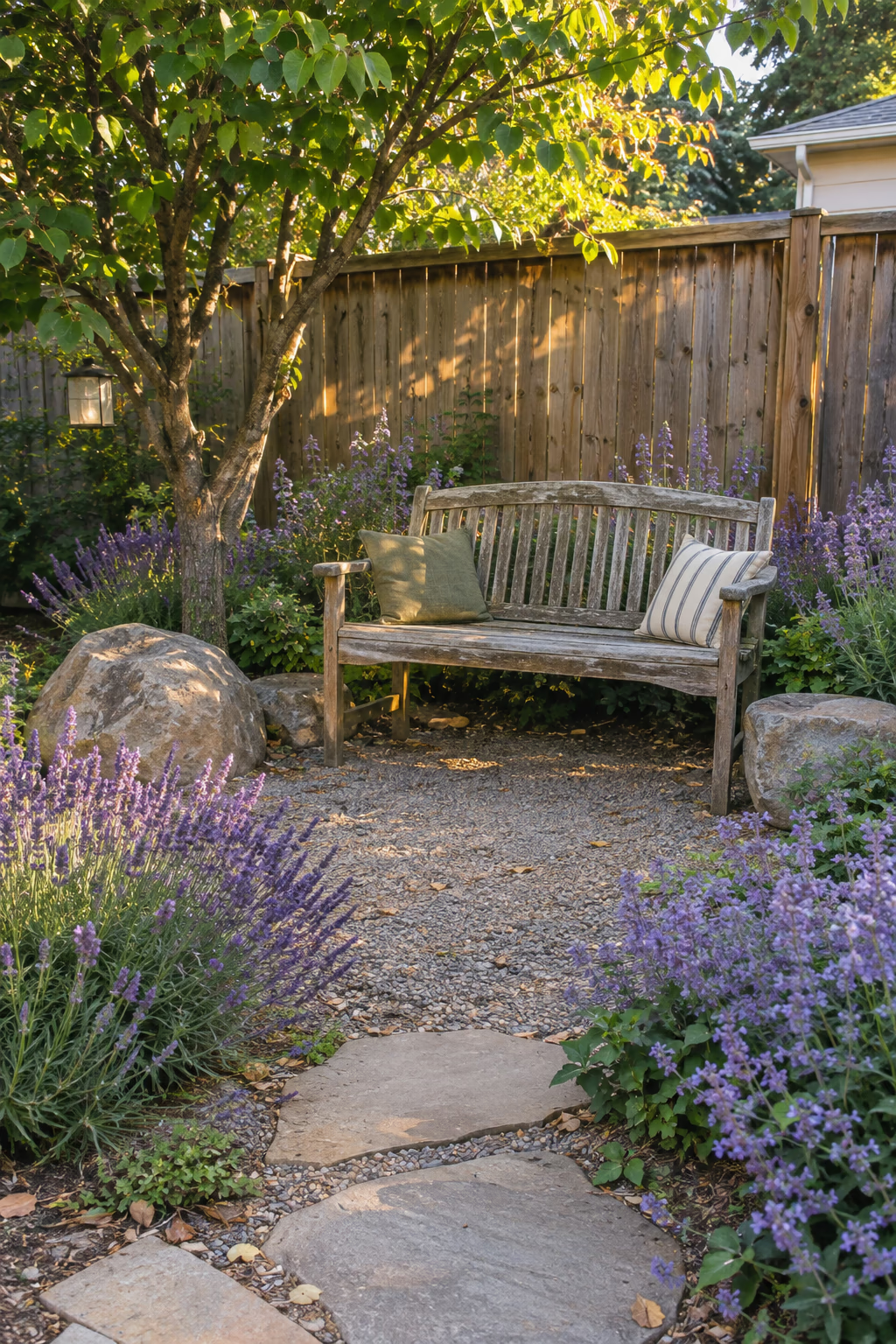
Give yourself a reason to sit and look
Carve out a small level pad of compacted gravel within the rock garden and add a simple bench, or use a long flat slab set on two sturdy stones as built-in seating. Surround it with fragrant plants like lavender and catmint.
A seat turns the rock garden from something you walk past into a place you actually use, whether for morning coffee or watching bees work the flowers.
Make sure stone seats are truly stable and set on a compacted base. Sunny stone gets very hot in summer, so a spot with afternoon shade is more comfortable.
20. Plant a Mediterranean Rock Garden With Lavender and Rosemary
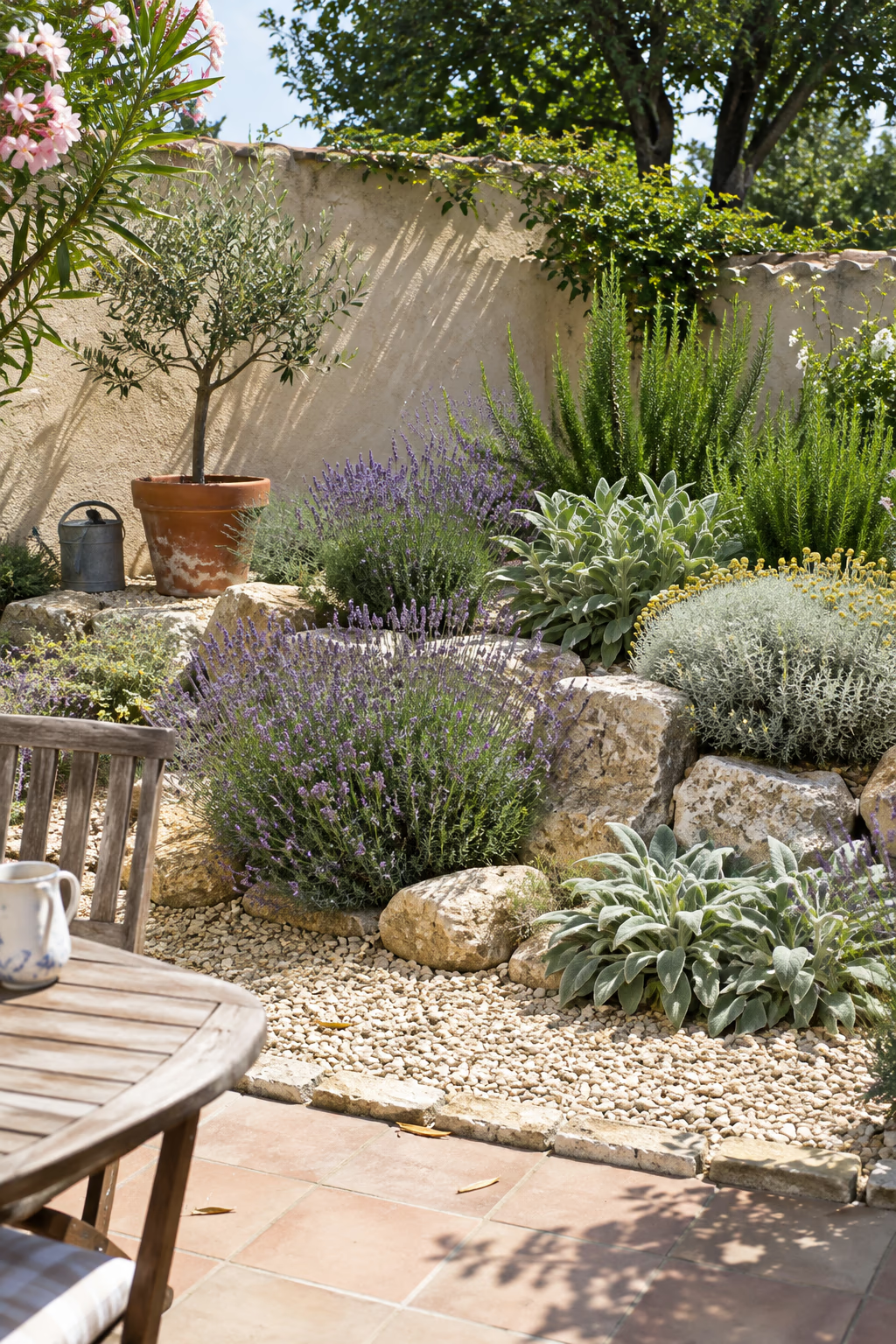
Sun-loving herbs that thrive in lean soil
Combine pale limestone or tan rocks with silver-leaved plants such as lavender, rosemary, santolina, sage, and lamb’s ear. Add a potted olive or a dwarf fig as a centerpiece in warm zones.
These plants love heat, poor soil, and drainage, exactly what a rock garden provides. The silvery foliage glows against warm stone, and the whole bed smells wonderful on a summer evening.
Rosemary is reliably hardy only in mild-winter areas, so grow it in a pot or treat it as an annual in colder zones. English lavender handles cold better than Spanish types.
21. Light Up Boulders With Low-Voltage Spotlights
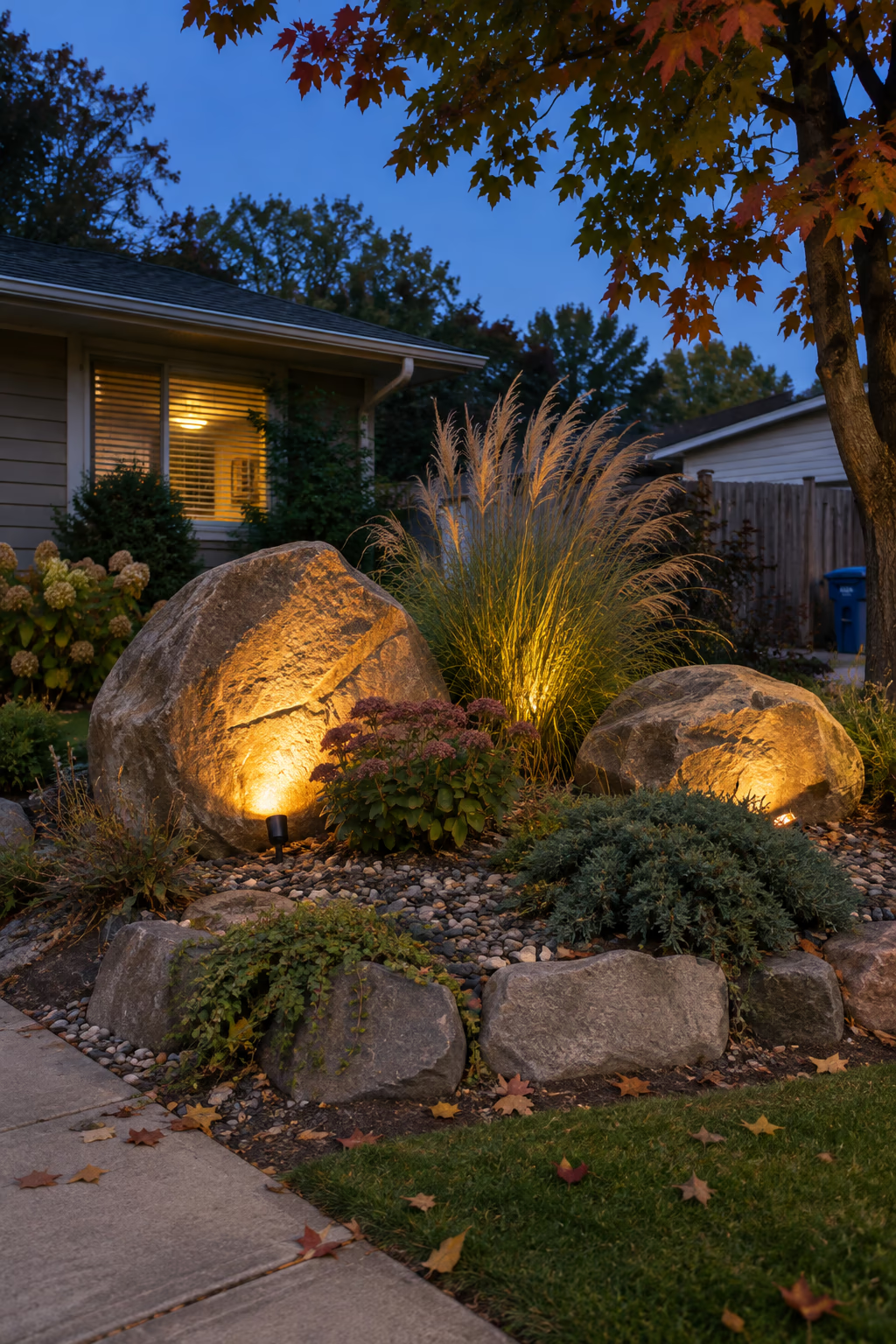
Rock gardens look dramatic after dark
Place a few small low-voltage spotlights at the base of your biggest boulders and aim them up across the stone face. Add a well light under an ornamental grass or a small tree for a soft glow.
Grazing light picks up every crack and texture in the rock, and the garden becomes a feature you can enjoy from the patio or front window at night.
Use warm white bulbs rather than cool blue, and hide fixtures behind plants or stones. A 12-volt kit with a plug-in transformer is a manageable DIY job.
22. Fill Rock Pockets With Native Wildflowers
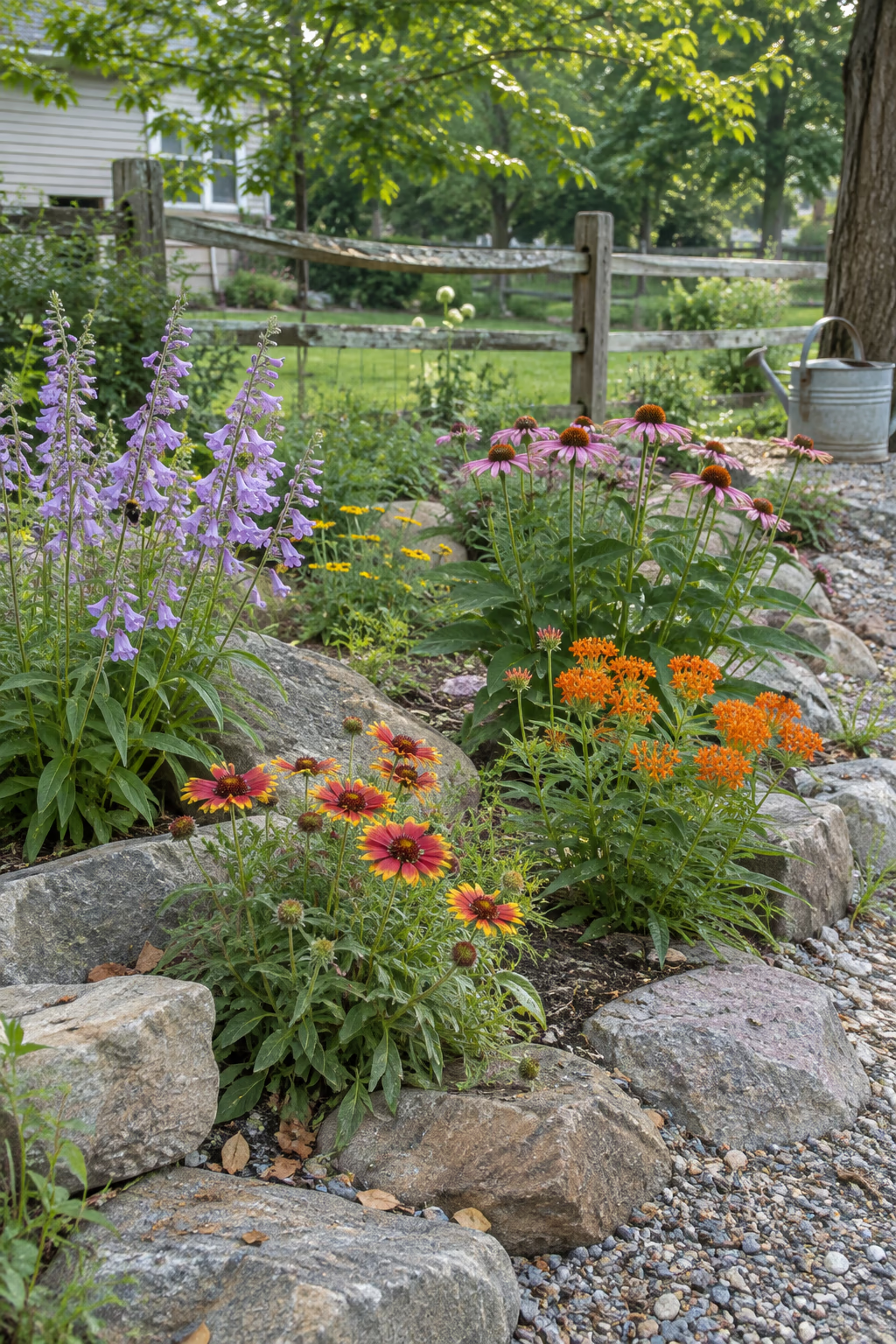
Color that feeds bees and butterflies
Choose regional native plants that naturally grow in rocky, well-drained ground. Depending on your area, that could include penstemon, blanket flower, prairie smoke, butterfly weed, purple coneflower, or prickly poppy.
Natives are adapted to local rainfall and winters, so they settle in with little coddling. They also bring pollinators to your rock garden, adding movement and life to the stone.
Check with your local extension office or native plant society for a list of species suited to your soil and region, and buy plants from reputable nurseries rather than digging from the wild.
23. Set Flat Stepping Stones Through the Planting
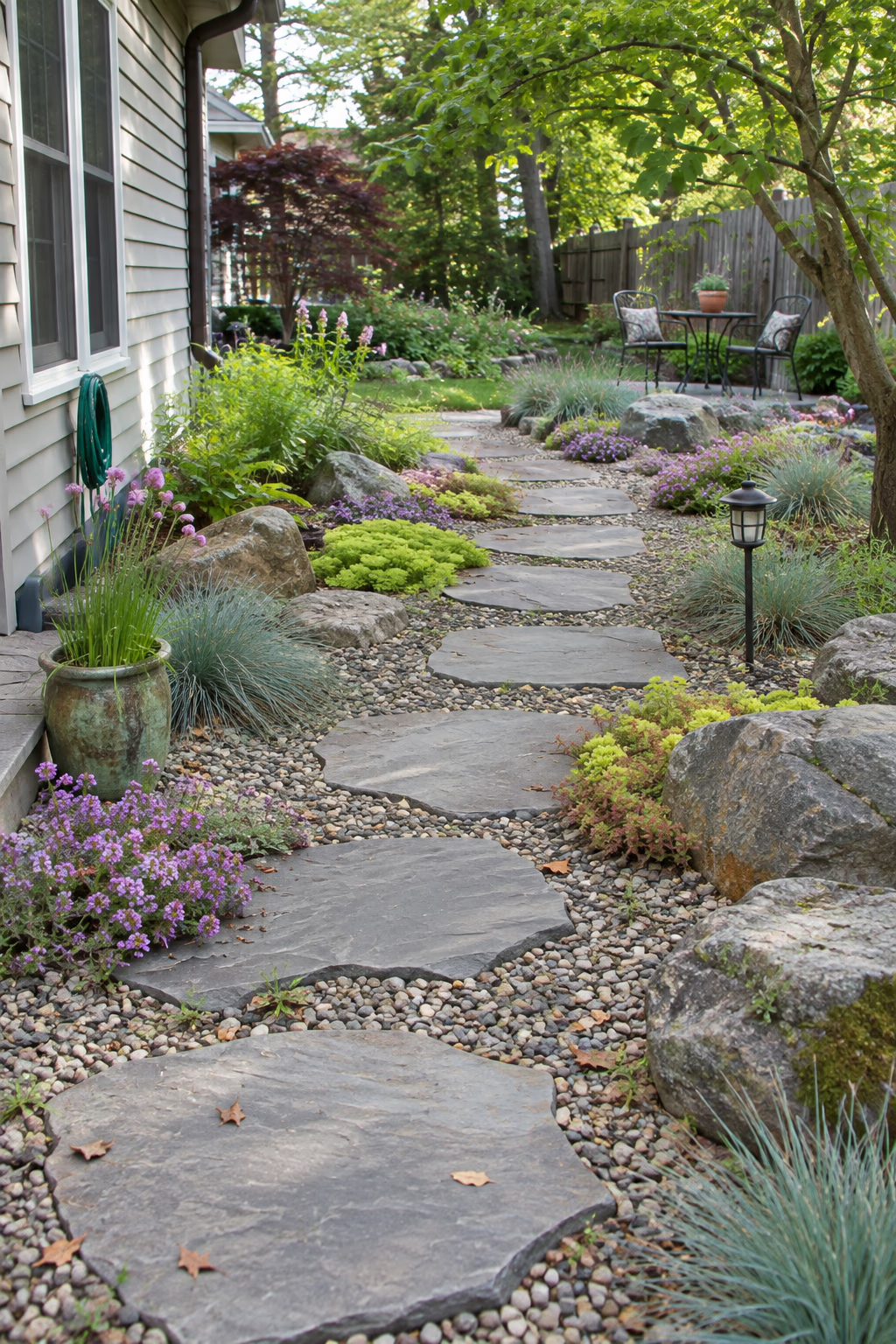
Reach every corner without crushing plants
Lay a meandering line of flat flagstones, spaced about 24 inches center to center, through the middle of a wide rock bed. Set each one level and slightly above the surrounding gravel.
Stepping stones make weeding, deadheading, and dividing plants much easier, and they invite visitors to wander in for a closer look at tiny alpines.
Use stones at least 2 inches thick so they won’t crack or rock underfoot, and bed them on a few inches of compacted gravel or sand.
24. Carve a Dry Creek Bed Through the Rock Garden
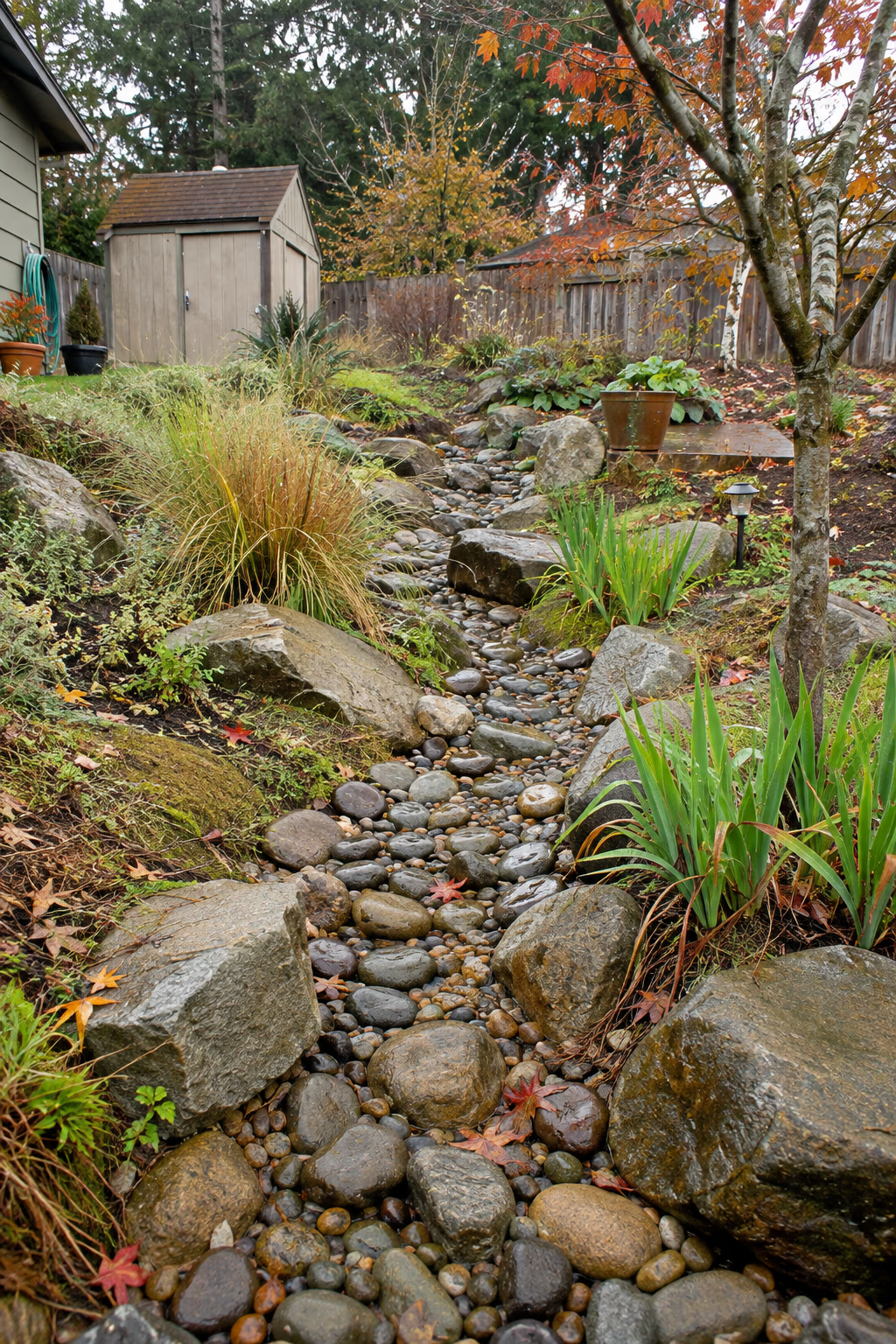
Handle stormwater and add movement
If water already runs through part of your yard during storms, dig a shallow, winding channel along that path, line it with fabric, and fill it with river cobbles of mixed sizes. Place larger stones along the banks.
A dry creek looks like a natural stream in a dry season and carries runoff away from beds and the foundation when it rains. Plant grasses and irises along the edges to complete the effect.
Make sure the creek drains to a safe spot on your property, not onto a neighbor’s yard. In the U.S., call 811 before digging any trench.
25. Show Off Your Own Rock Collection in a Small Bed
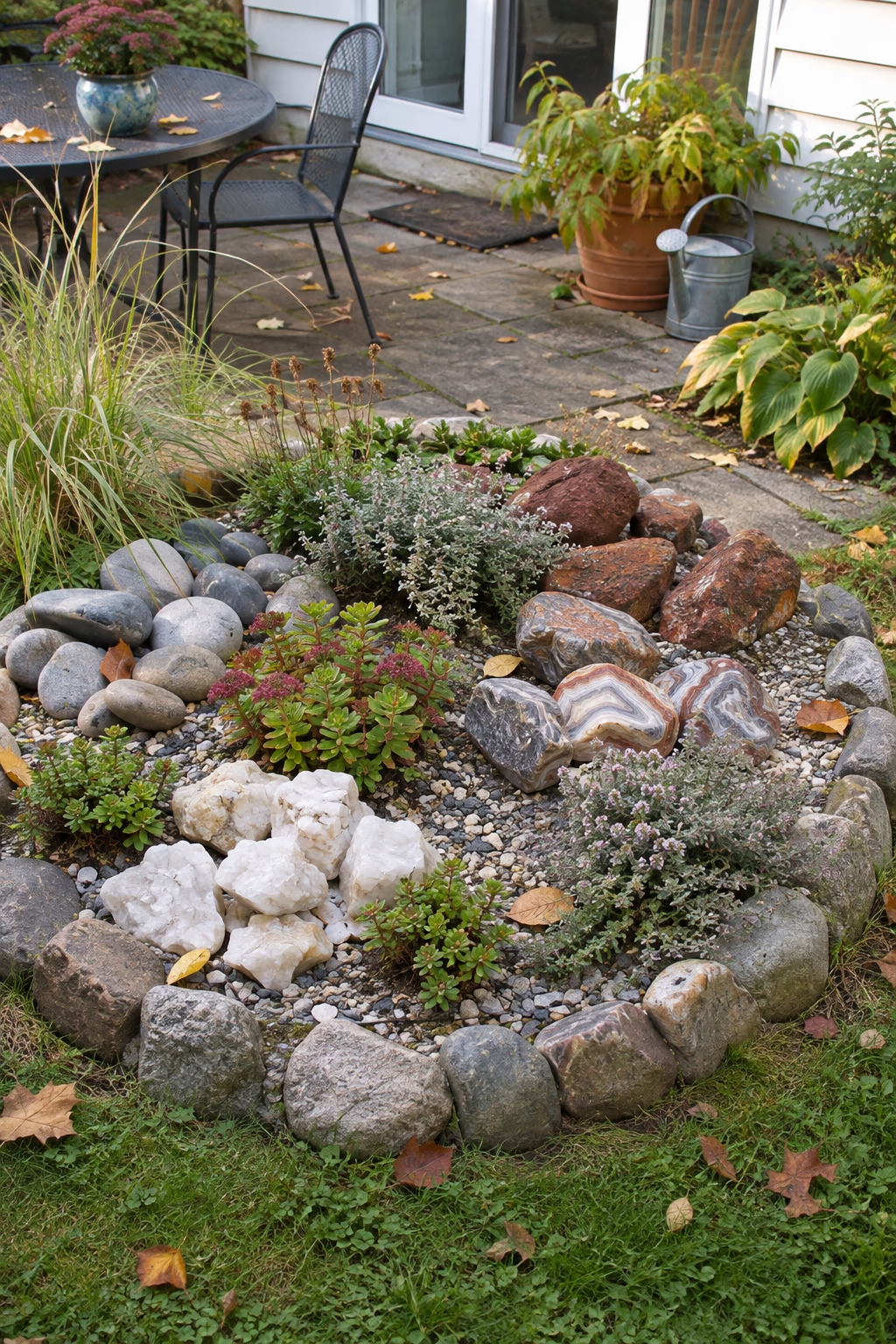
Give vacation finds and dug-up stones a home
Many households have a bucket of interesting stones collected from hikes, beaches, or the garden itself. Arrange them in a small raised bed or circle with gravel mulch and a few low plants like sedum and woolly thyme.
It’s a personal, budget-free rock garden, and it gives children a place to add their own finds. Group stones by color or size so the display looks curated rather than random.
Remember that collecting rocks is prohibited in national parks and many other public lands, so stick to stones from your own property or places where gathering is permitted.
26. Mix Ornamental Grasses Among Low Boulders
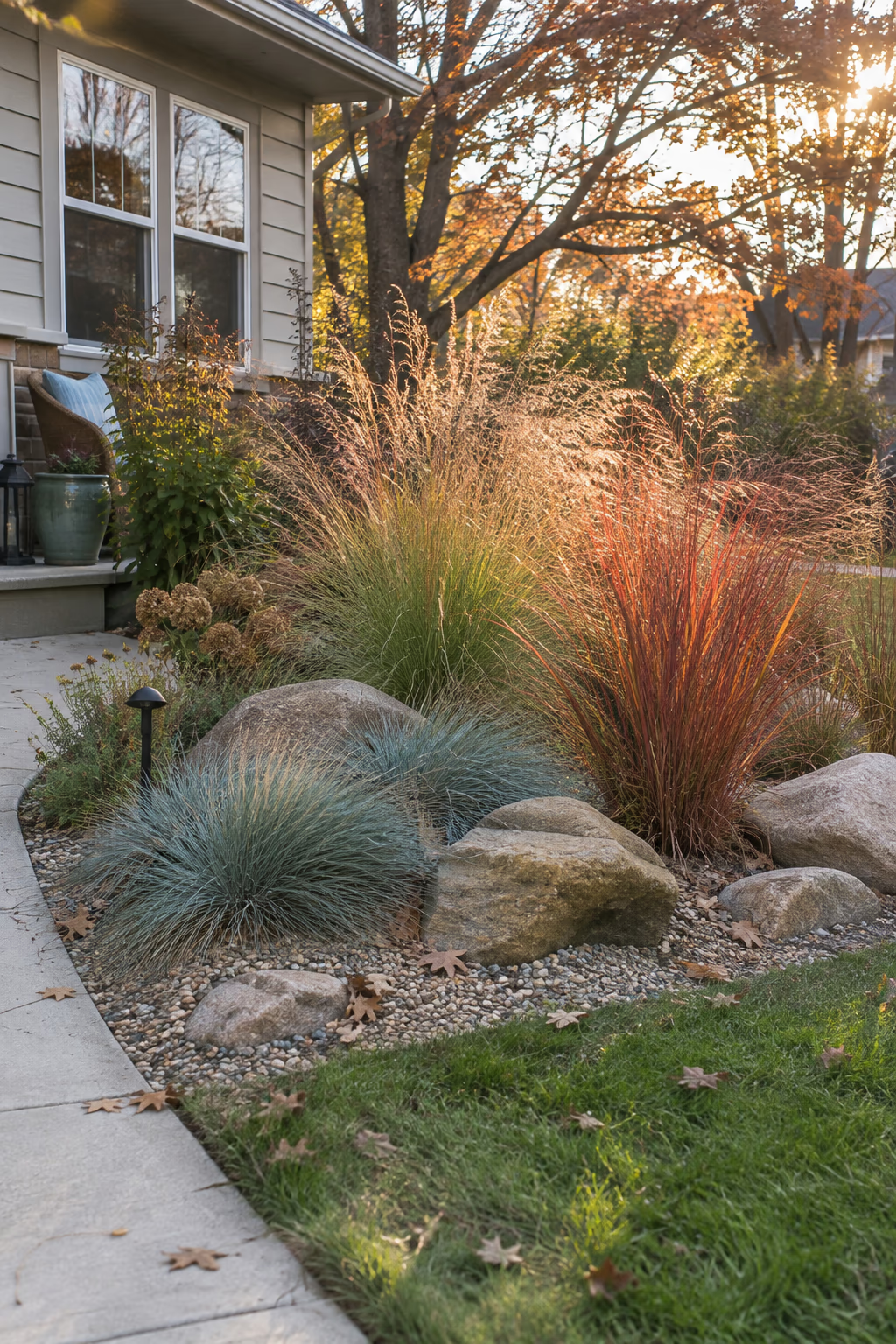
Movement and texture in every season
Ornamental grasses and stone are a natural match. Plant clumps of blue fescue, prairie dropseed, little bluestem, and Mexican feather grass between low, rounded boulders.
The fine leaves sway in the breeze and soften the hard stone, while dried seed heads add interest through fall and winter. Grasses also need very little water once established.
Cut back warm-season grasses in late winter before new growth starts. Mexican feather grass self-seeds aggressively and is invasive in some Western areas, so check local guidance first.
27. Create a Hands-On Sensory Rock Garden for Kids
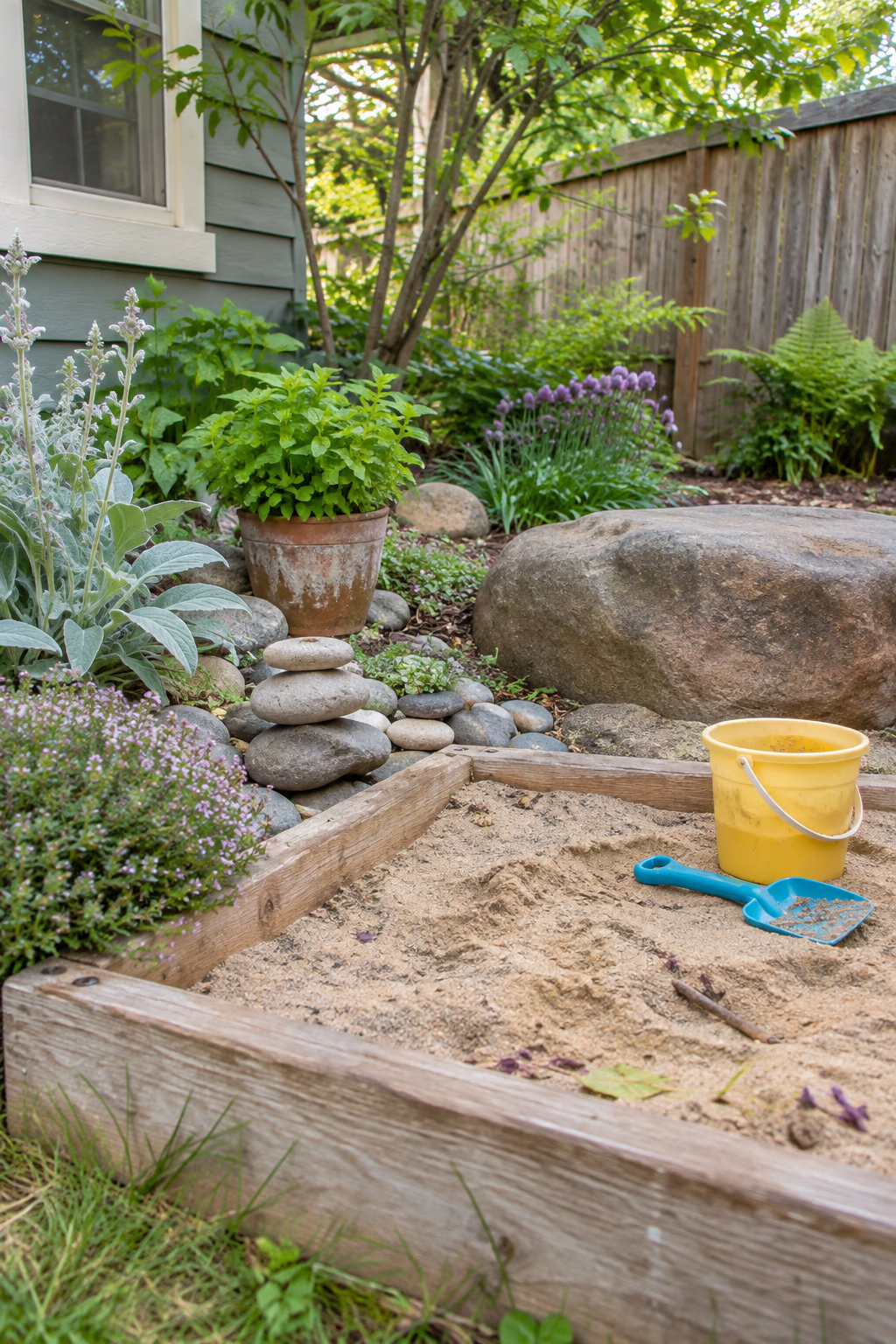
A play-friendly spot that’s still beautiful
Design a small rock garden with things kids can touch: smooth river stones to stack, a flat warm boulder to sit on, a patch of sand for digging, and soft plants like lamb’s ear, woolly thyme, and mint in a container.
Children learn about textures, bugs, and plants while you get a tidy, low-maintenance corner. It’s also a great way to use extra stones from other projects.
Skip sharp-edged rocks, spiny plants, and anything toxic if eaten. Use stones large enough that they can’t be a choking hazard for toddlers.
How to Plan Your Rock Garden
A rock garden looks effortless when it’s done well, but the best ones start with good site choices and the right foundation. Keep these points in mind before you order a truckload of stone.
- Pick a sunny, well-drained site. Most rock garden plants want at least six hours of sun and hate soggy roots, so avoid low spots where water collects unless you plan a woodland design.
- Fix the soil first. Pull weeds and grass by the roots, then mix in coarse sand or crushed gravel to improve drainage, especially in clay soil.
- Use local stone when you can. Regional rock costs less to deliver and looks more natural in your landscape. Buy a little more than you think you need.
- Bury rocks partway. Set every stone at least a third into the soil and tilt them in the same direction so the bed looks like a natural outcrop.
- Match plants to your zone. Check USDA hardiness zones, mature sizes, and local invasive plant lists before buying.
- Plan for safety and rules. Call 811 before digging, hire help for heavy boulders, and check HOA guidelines or local codes for retaining walls and front-yard landscaping.
Frequently Asked Questions
What is the best time of year to build a rock garden?
Early spring and early fall are ideal. The soil is workable, temperatures are mild for heavy lifting, and new plants can root before summer heat or winter freezes.
Which plants grow well in a rock garden?
Good choices include sedum, hens and chicks, creeping thyme, creeping phlox, rock cress, basket-of-gold, dianthus, penstemon, blue fescue, lavender, and dwarf conifers. Choose plants suited to your sun, soil, and hardiness zone.
How do I keep weeds out of a rock garden?
Remove all perennial weeds before building, use a weed-free gritty soil mix, and top-dress with 2 to 3 inches of gravel. Pull young weeds promptly, before they root deep between the stones.
How much does a rock garden cost?
A small DIY bed using local stone and nursery plants can cost a few hundred dollars. Large boulders, delivery, retaining walls, and water features can push a project into the thousands, so building in phases helps.
Do rock gardens attract snakes or rodents?
Rock piles with deep gaps can offer shelter to wildlife. Setting stones firmly in soil, avoiding loose heaps, and keeping the area free of tall weeds and debris makes it less inviting.
Final Thoughts
The best rock gardens combine a few well-placed stones with tough, well-chosen plants. Whether you terrace a slope, try a crevice bed, or simply ring the mailbox with sedum, rock brings structure and calm to the yard all year long.
Start with one area, get the drainage right, and add plants a little at a time. As the creepers spread and the stones weather, your rock garden will look more settled and natural with every season.


