
Imagine floating on a warm afternoon while palm fronds rustle overhead, water splashes over a stack of rough boulders, and a red bird of paradise flower glows against dark green leaves. For a moment, the backyard feels like a beach resort, not a place a few steps from the laundry room.
A pool already gives you the water. The landscaping around it decides whether it feels like a plain concrete rectangle or a private getaway. Tropical style works especially well because big leaves, natural stone, and warm light soften hard edges and make even a modest yard feel lush and secluded.
These 23 tropical pool landscaping ideas cover palms, waterfalls, stone edging, lighting, privacy planting, shade, containers, and smart practical touches. Many work in warm Southern climates as well as colder regions, and most can be added one at a time as your budget allows.
1. Frame the Pool With Clustered Palm Trees
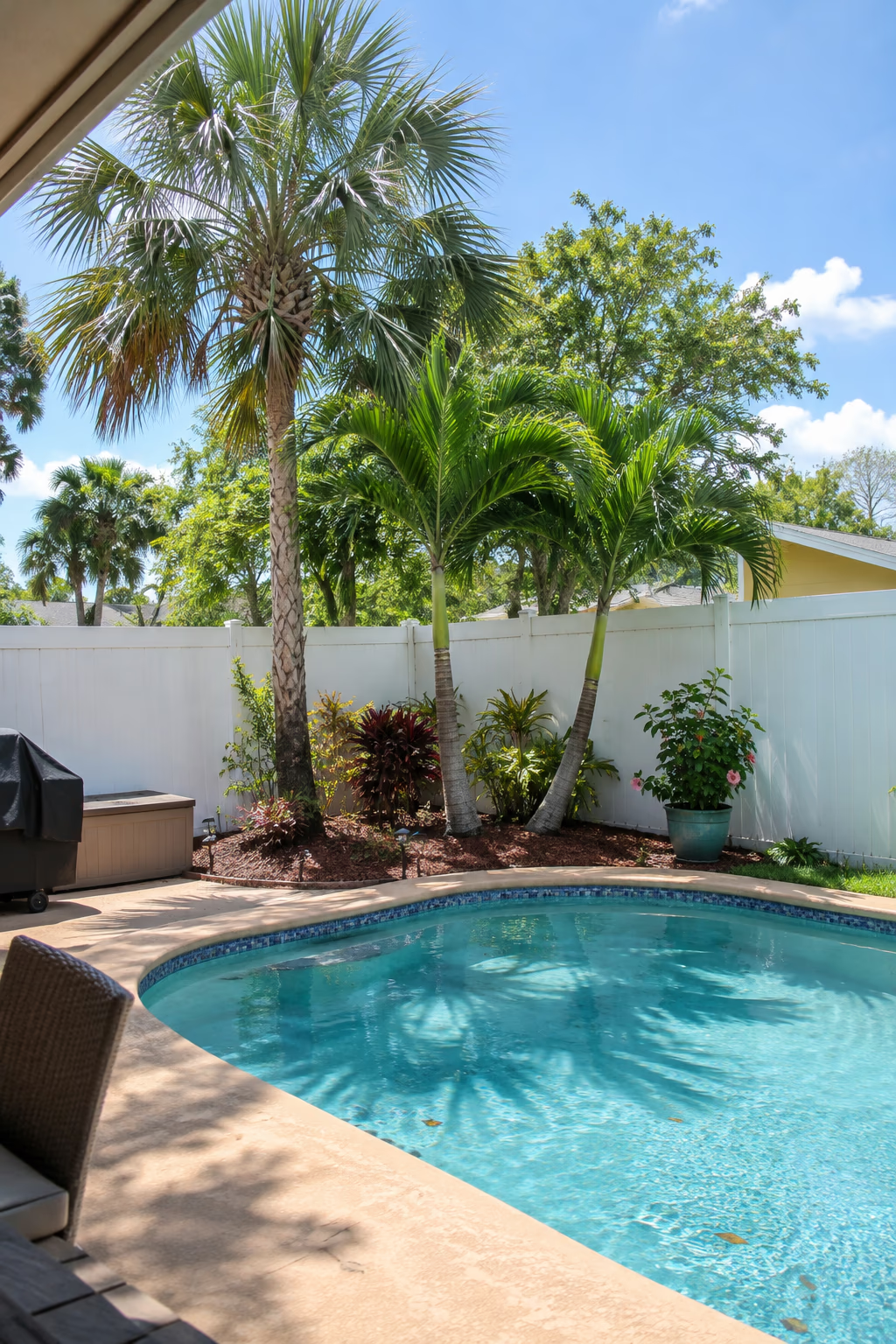
Instant island feel and soft, filtered shade
Nothing says tropical faster than palms. Instead of spacing single trees evenly around the deck, plant them in groups of three with different heights, such as one tall palm and two shorter ones, so they look like they grew there naturally. Foxtail, Christmas, and cabbage palms are tidy choices in warm zones, while pindo and windmill palms handle cooler winters.
Groupings create layered shade that moves across the water during the day, and their slim trunks take up little deck space. Set palms at least 6 to 10 feet back from the pool edge so their roots stay clear of the shell and plumbing.
Avoid spiny species like pygmy date palms right next to walkways, and skip queen palms if you dislike cleaning up dropped fruit. Check your USDA zone before buying; a palm that dies back each winter is an expensive disappointment.
2. Build a Boulder Waterfall That Spills Into the Pool
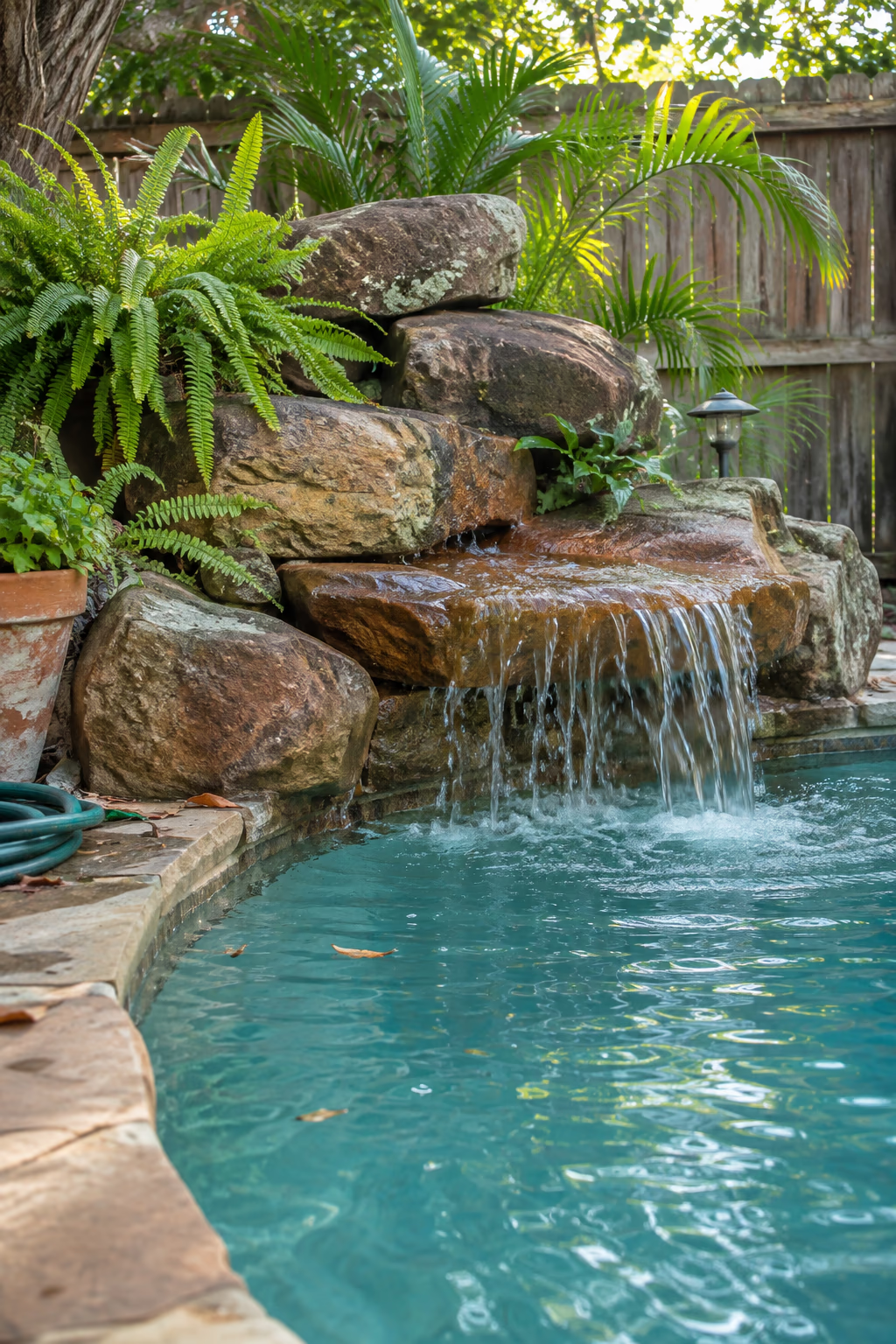
The sound and movement of a lagoon
A rock waterfall stacked at one end of the pool is the centerpiece of many tropical backyards. A simple version uses three to five large boulders, set on a solid base behind the coping, with a narrow spillway stone that sends a sheet of water back into the pool. Tuck ferns, liriope, and small palms into the pockets between rocks so the stack looks like part of a hillside.
The steady splash masks traffic and neighbor noise, and the falling water helps circulate the pool. If real boulders are too heavy or costly, molded faux rock can look convincing when it is tinted in natural browns and grays.
Plan for a dedicated pump or valve, an electrical circuit, and a professional installer who understands waterproofing. A small waterfall can run a few thousand dollars, and larger rockwork can climb well past that.
3. Edge the Pool With Natural Stone Coping and Boulders
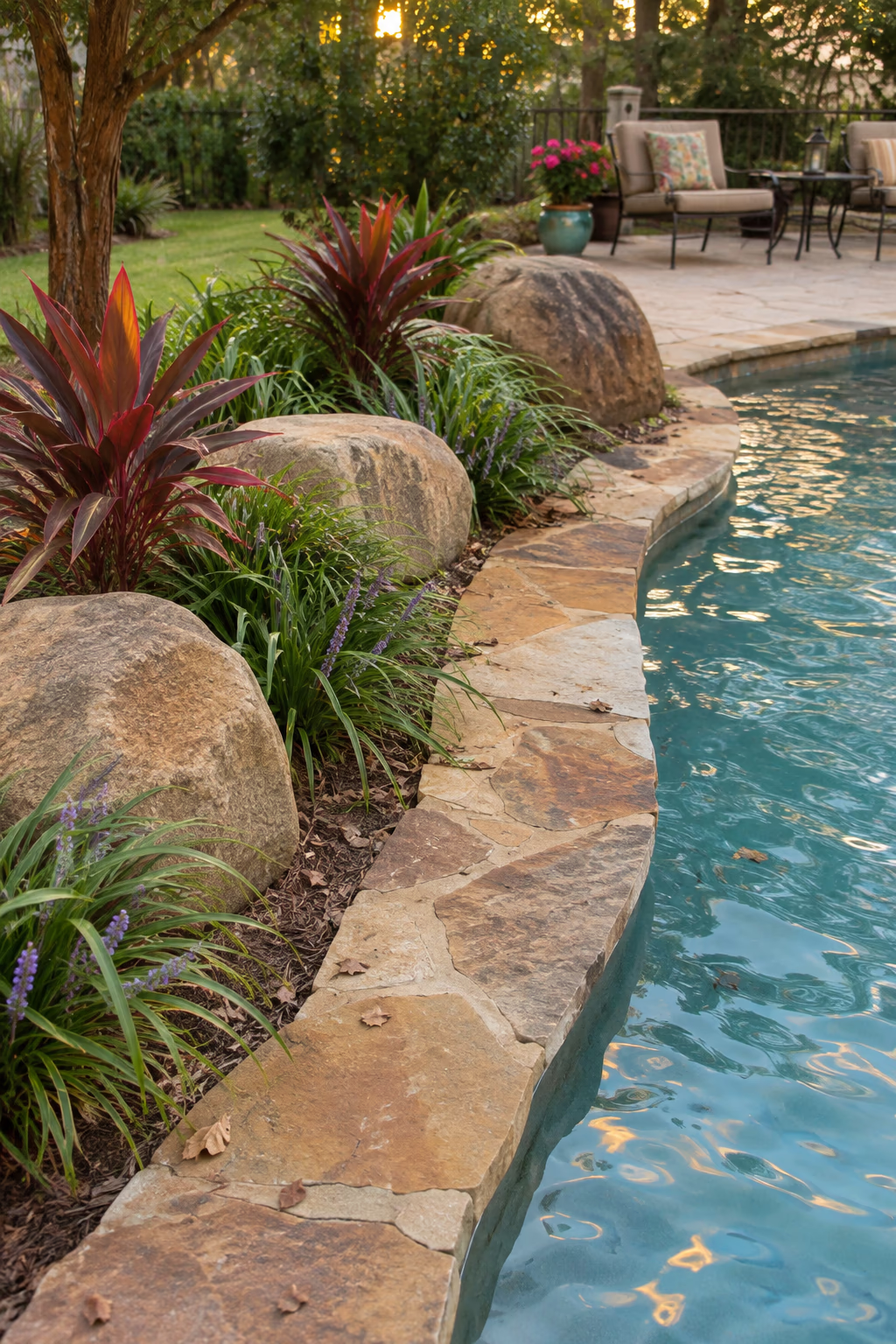
Softens hard edges into a natural shoreline
Swapping plain concrete or brick coping for natural stone instantly changes the look of a pool. Flagstone, travertine, and quartzite in warm tan, gray, or honey tones feel more organic than bright white edging. Along one side, set a few partly buried boulders directly behind the coping, with low plantings around their bases.
Stone with a textured or tumbled finish gives better grip on wet feet, and light-colored travertine stays cooler underfoot in hot sun. The boulders double as perches for drinks or a quick seat between swims.
Natural stone needs sealing to resist chlorine and stains, and soft stones may need resealing every year or two. Any boulder intended for climbing or jumping should be set and anchored by a pool professional.
4. Uplight Palms and Plantings for a Glowing Night Pool
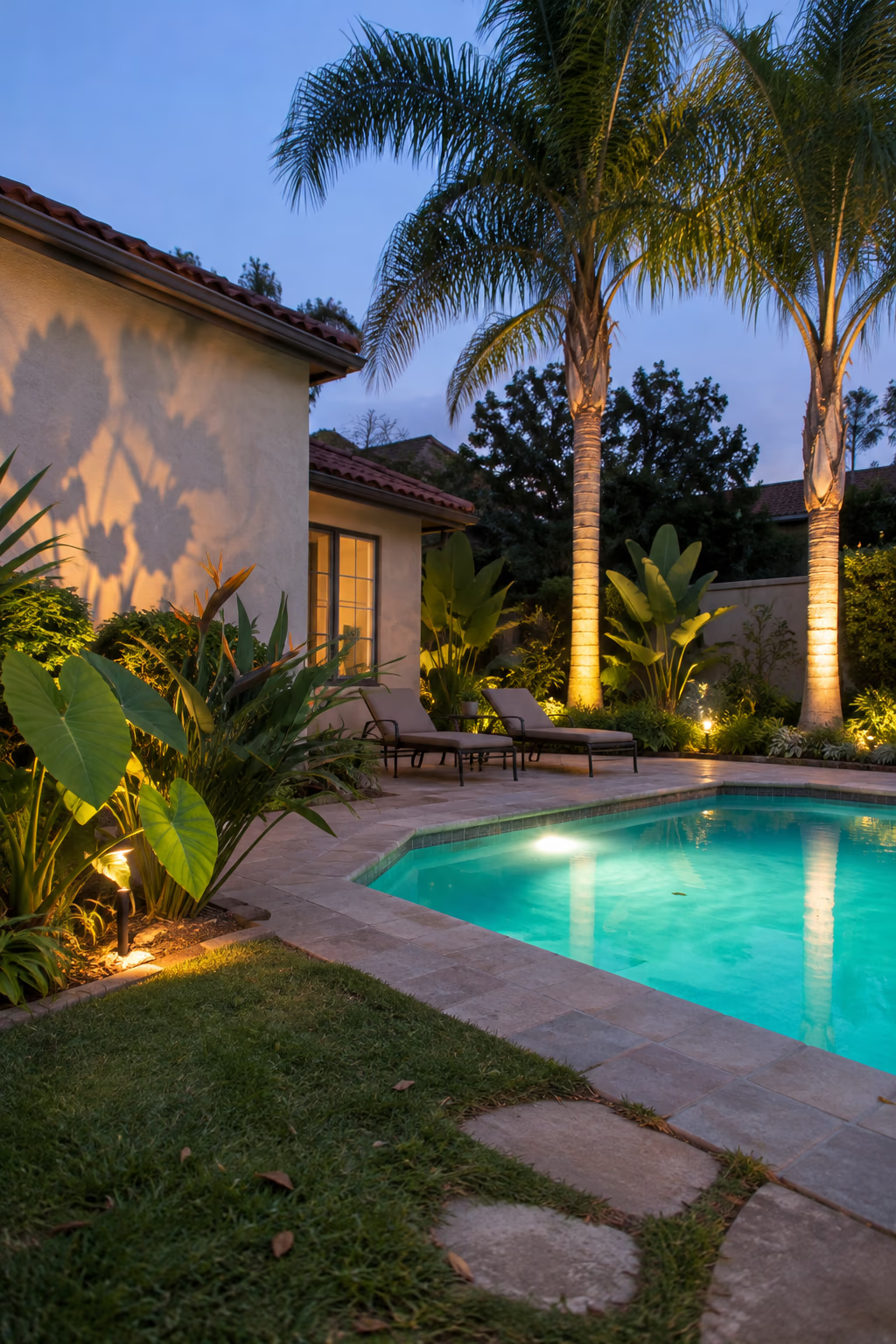
Turns the yard into a resort after sunset
Tropical landscapes look even better at night when the leaves glow. Aim warm white spotlights up the trunks of palms, place a few low well lights under large-leaf plants, and let underwater pool lights add a soft turquoise glow. Warm color temperatures around 2700K to 3000K keep the scene inviting rather than harsh.
Uplighting creates dramatic shadows on fences and house walls, which makes the space feel larger and more layered. It also helps people see steps and pathways after dark.
Low-voltage landscape lighting is DIY-friendly in many areas, but anything wired near the pool must follow electrical code for distance and grounding. Have a licensed electrician handle pool lights and any new outlets.
5. Line the Deck With Low-Litter Tropical Bloomers
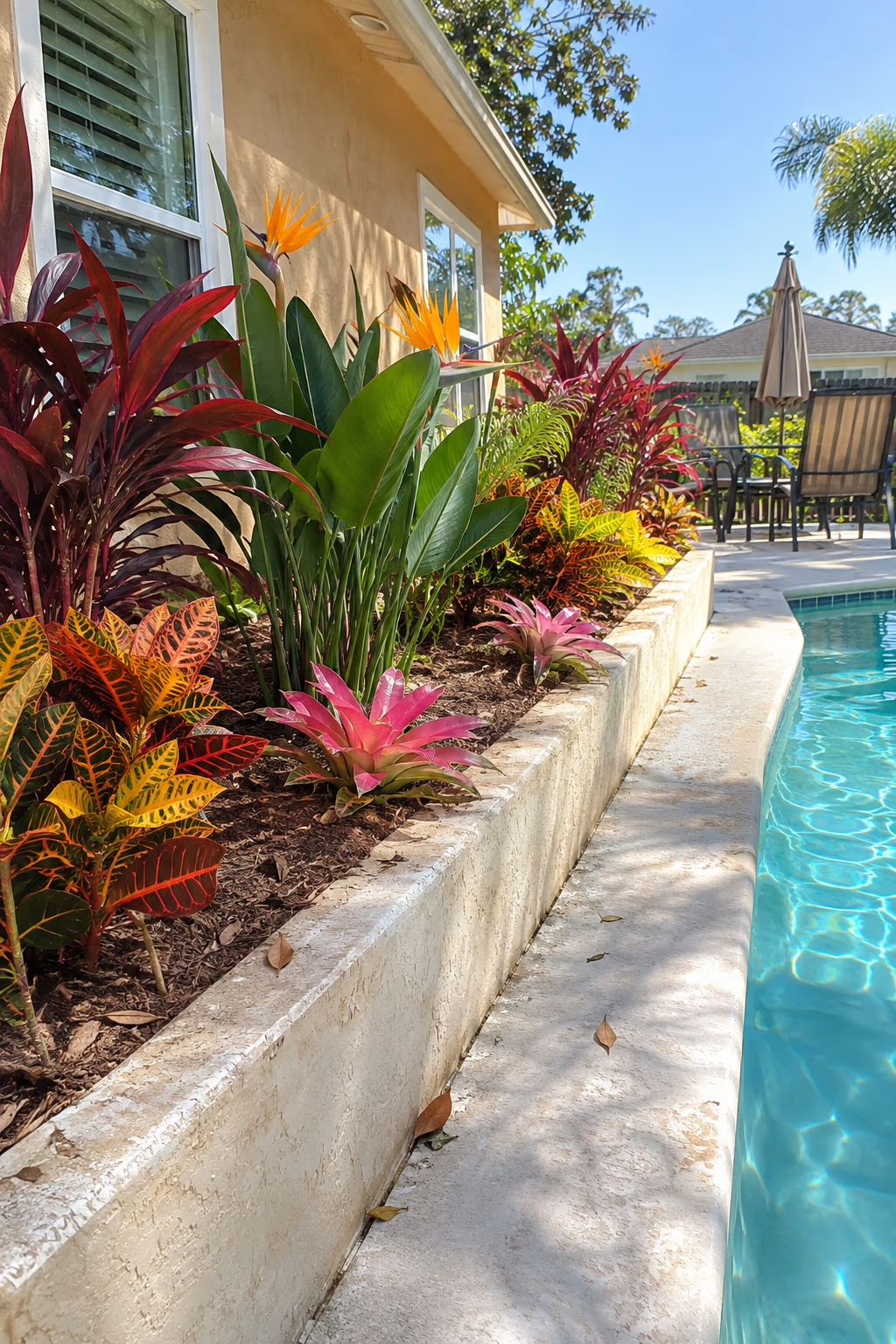
Bold color without a clogged skimmer
Plants nearest the water should be showy but tidy. Birds of paradise, cordylines, crotons, bromeliads, and agapanthus hold onto their leaves and flowers far better than shedding trees or shrubs. Plant them in a raised bed or border about 3 feet wide along the deck, with taller plants in back and compact ones in front.
These plants deliver the big leaves and hot oranges, reds, and purples people associate with the tropics, while keeping petals and debris out of the pool. Many also tolerate the occasional splash of chlorinated water.
In zones colder than about 9 or 10, treat crotons and bromeliads as summer annuals or grow them in pots you can move inside. Keep thorny or toxic plants, such as sago palms, away from areas where kids and pets play.
6. Screen the Pool With Clumping Bamboo and Evergreen Hedges
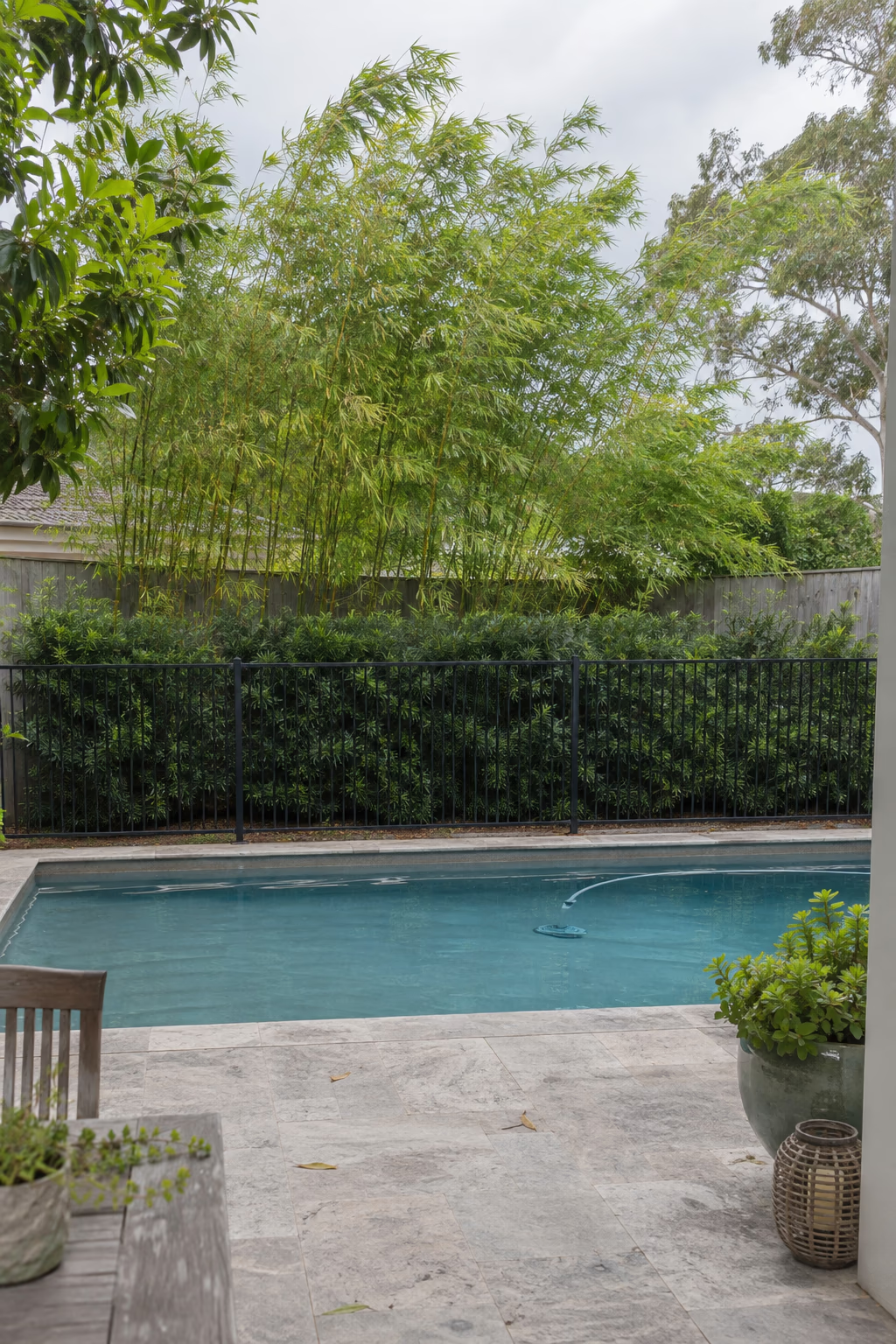
Private swimming without a tall wall
A living screen along the property line makes the pool feel secluded. Clumping bamboo such as Bambusa multiplex varieties forms a tall, airy screen in warm regions, and Fargesia types handle colder winters. Mix them with evergreen hedges like podocarpus, cherry laurel, or viburnum for a layered green wall.
Plantings look softer than fencing and grow taller than most HOAs allow for fences. Stagger plants in two offset rows if you need dense coverage quickly.
Only use clumping bamboo, never running types, and install a root barrier if you are unsure. Keep the screen separate from the required pool safety fence, and do not plant anything that makes the barrier easier to climb.
7. Shade the Lounge Chairs With a Thatched Palapa Umbrella
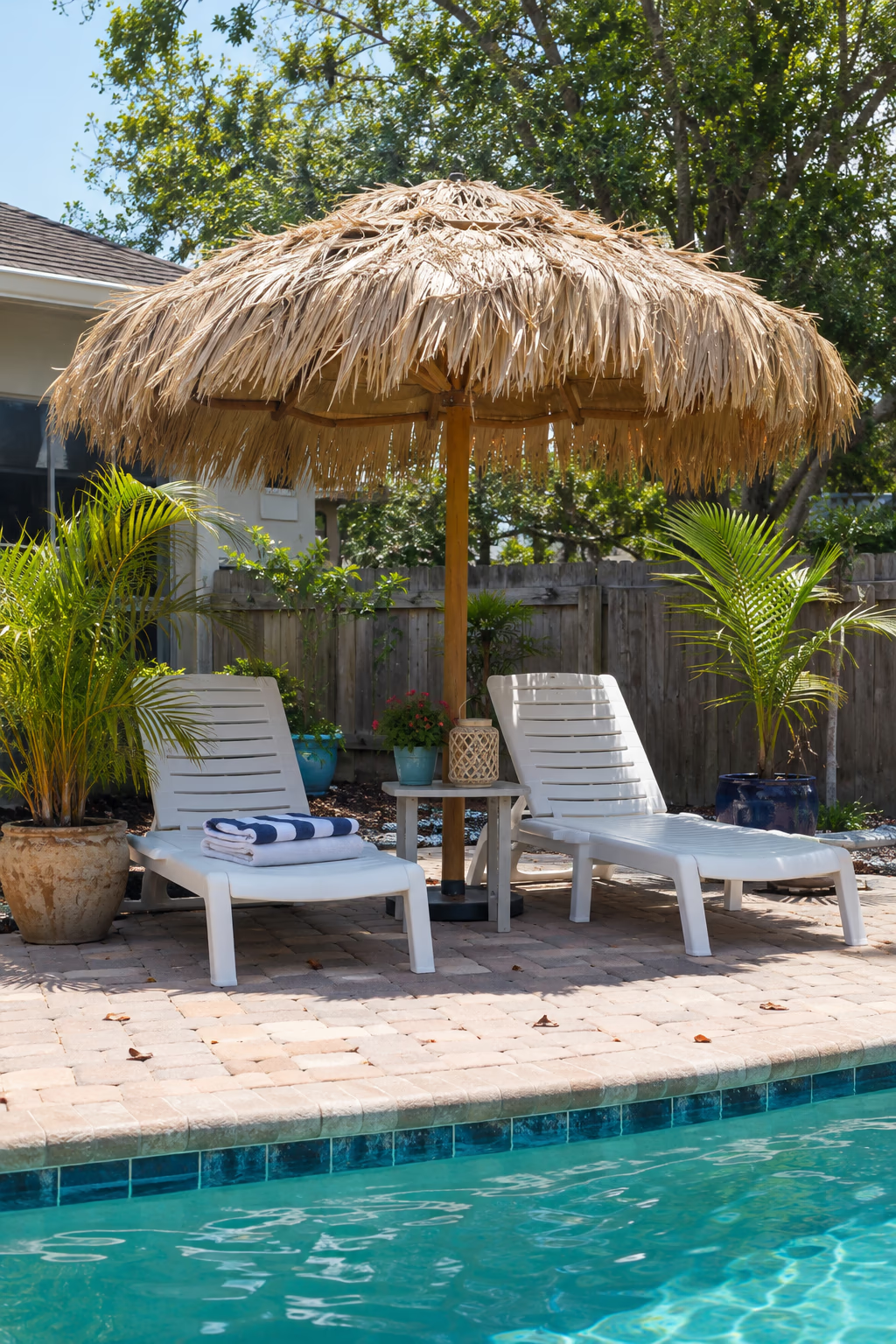
Beach-bar shade right beside the water
A thatched umbrella over a pair of chaise lounges brings a vacation vibe without building a full structure. Look for umbrellas covered in synthetic thatch, which mimics palm leaves but resists mold, fading, and pests better than natural grass. A 7- to 9-foot canopy shades two loungers and a side table.
The texture of the thatch contrasts beautifully with smooth stone and blue water, and the shade is a relief on hot afternoons. Set the umbrella on a weighted base or an in-ground sleeve so it stays put in wind.
Close or remove the umbrella before storms, and check local fire rules if you live in a wildfire area, since natural thatch can be flammable.
8. Cluster Glazed Pots of Tropicals Around the Deck
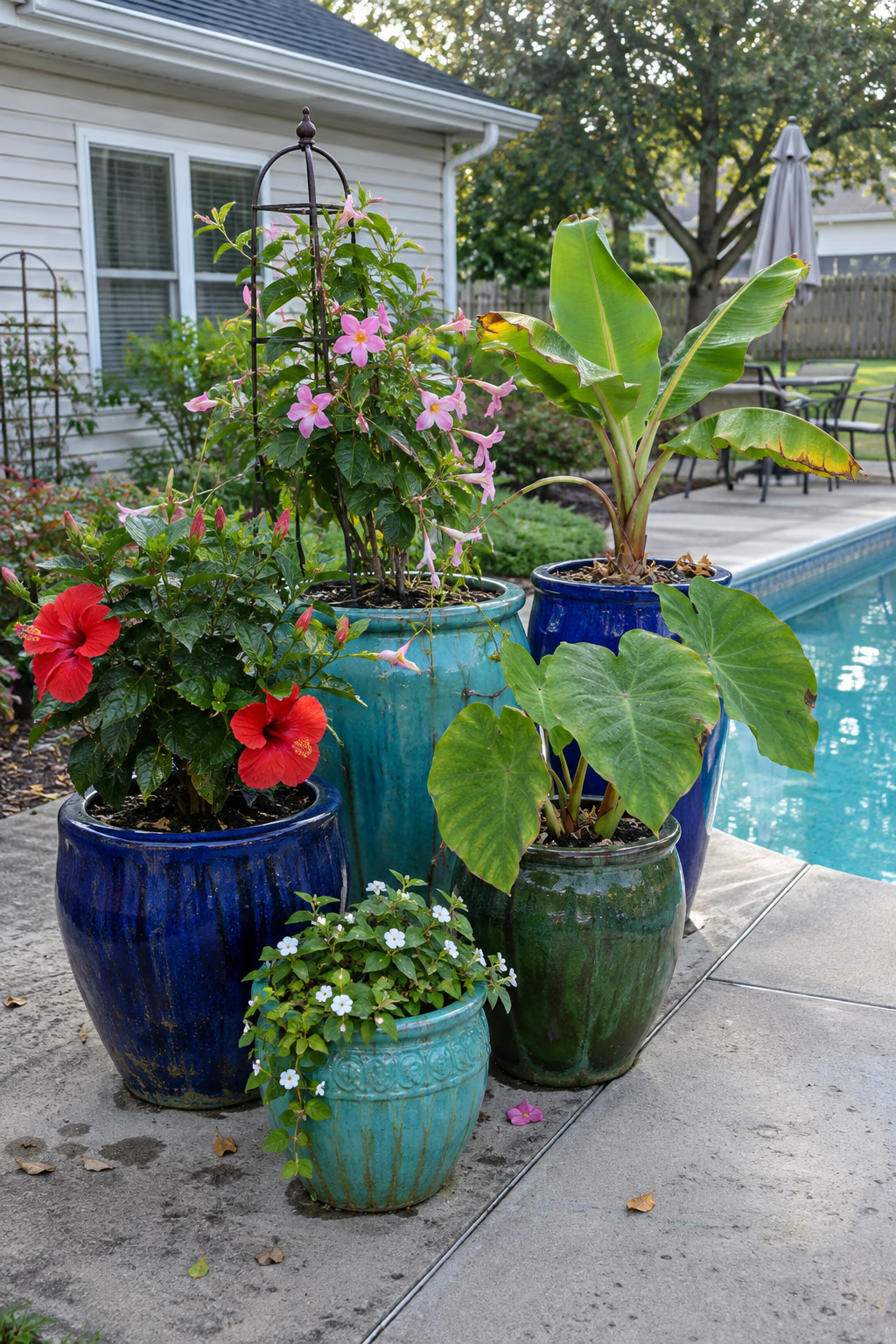
Flexible color you can move or overwinter
Containers let you add lush tropical plants anywhere, even on a concrete deck with no planting beds. Group three or five glazed pots in cobalt, turquoise, or deep green, and fill them with mandevilla, hibiscus, elephant ears, dwarf banana, or a small palm. Vary the pot heights so the grouping looks layered.
Pots are the easiest way to enjoy tender tropicals in colder climates, since you can roll them into a garage or sunroom before frost. They also let you rearrange the deck for parties.
Large pots dry out quickly in sun and pool-reflected heat, so plan to water daily in summer or add drip irrigation. Use pot feet or saucers to prevent stains on stone or concrete.
9. Build a Raised Planter Wall With Water Scuppers
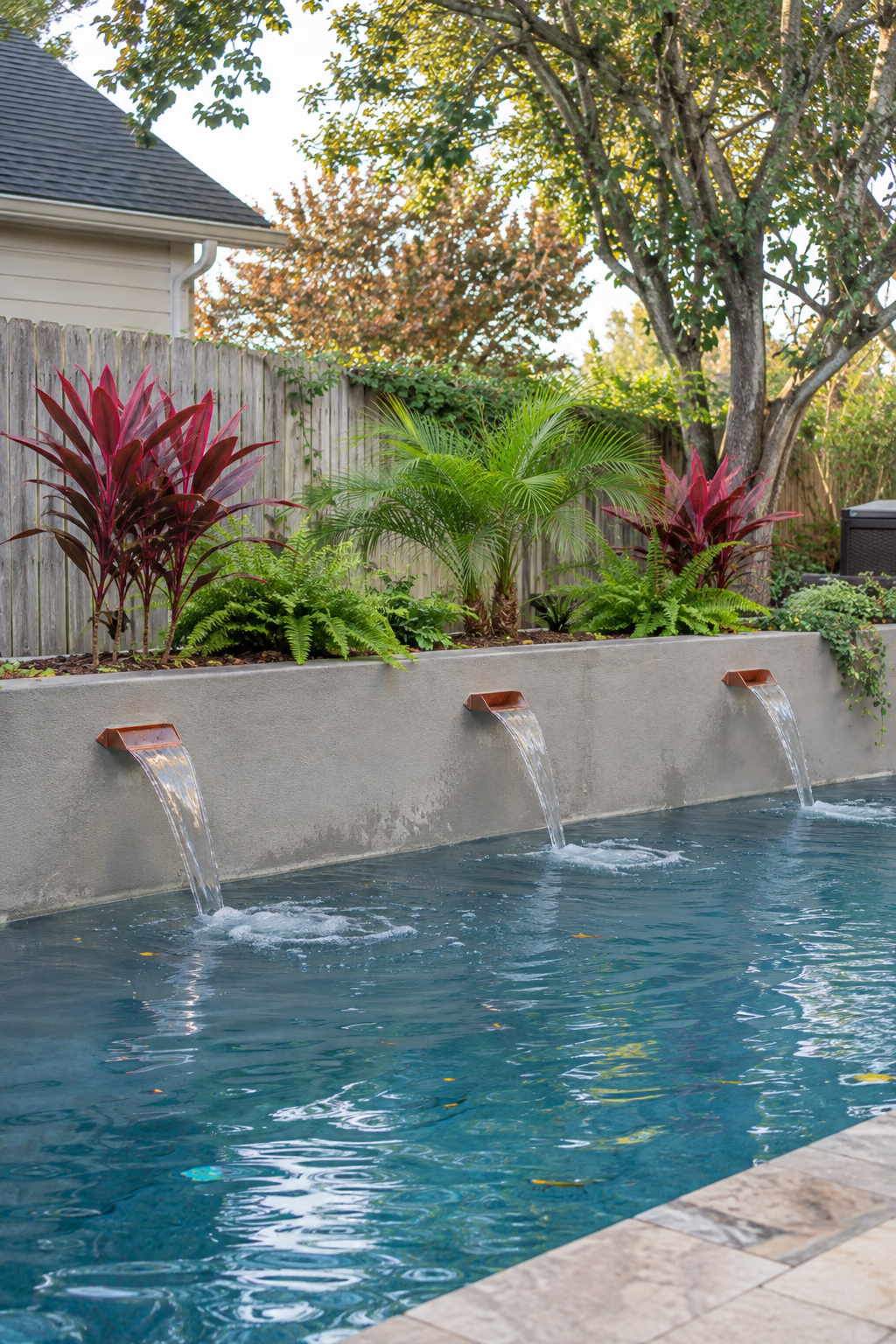
A modern tropical feature with gentle splashes
A raised planter wall 18 to 30 inches tall along one side of the pool gives you a place for plants and a built-in water feature. Copper or stainless steel scuppers set into the wall pour arcs of water into the pool, while the planter on top holds cordylines, ferns, or a row of small palms.
The wall adds height and structure to a flat yard, and the soothing sound of falling water carries across the deck. Stucco, stacked stone, or smooth concrete all suit different house styles.
The planter needs proper waterproofing and drainage so soil and fertilizer never wash into the pool. This is a job for a pool builder or experienced mason, and costs vary with wall length and materials.
10. Set a Fire Bowl at the Pool’s Edge
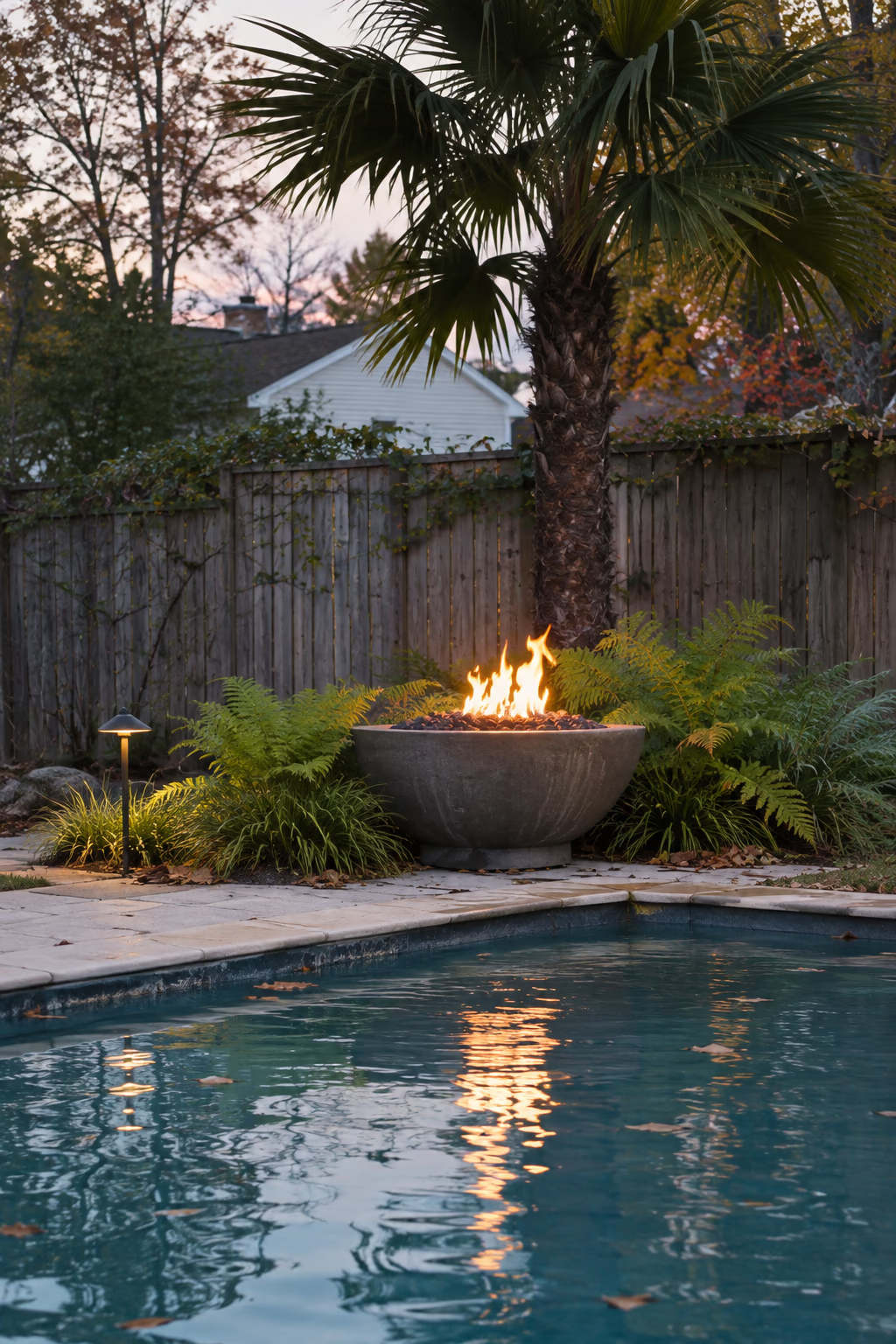
Fire and water in one dramatic view
A concrete or copper fire bowl set on a pedestal near the pool creates a striking contrast of flame and water. Place one or two bowls at the corners of the pool or beside a waterfall, and surround them with low plantings or river-washed gravel.
The flickering light reflects across the water and extends the tropical feel into cool evenings. Gas-fueled bowls turn on with a switch or key, which makes them easy to use often.
Gas lines should be installed by a licensed professional, and local codes may set clearances from structures and plants. Keep nearby leaves trimmed back and never leave flames unattended.
11. Create a Beach-Style Lounge With Sand-Colored Pavers
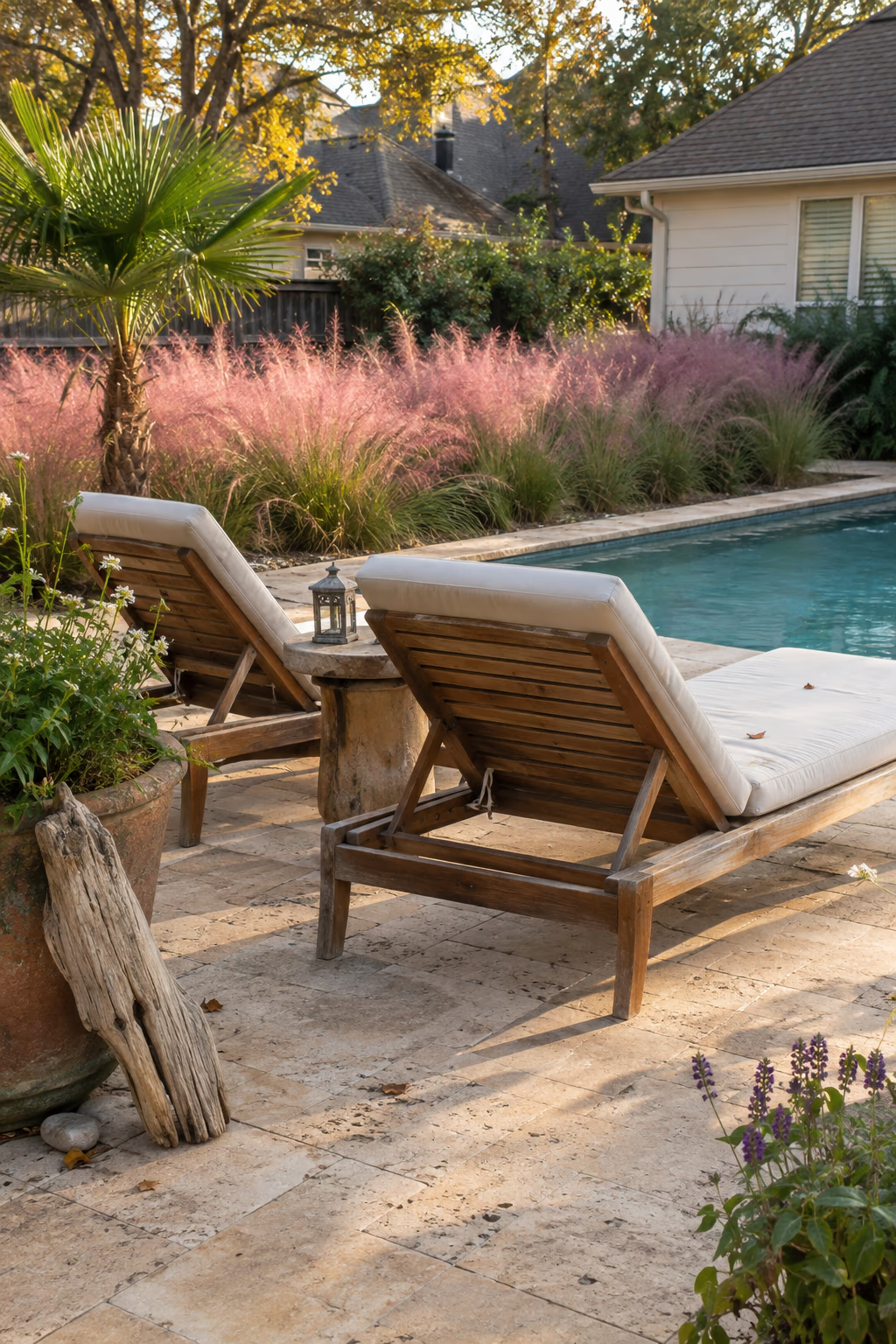
The seaside look without sand in the filter
Real sand next to a pool tends to end up in the water and the filter. A smarter way to get the beach feel is a lounge area paved in pale, sand-toned pavers or travertine, edged with ornamental grasses, a few pieces of driftwood, and a pair of wooden loungers.
Light colors reflect heat and stay cooler for bare feet. Adding a strip of beach-inspired plants such as pink muhly grass, blue fescue, or other dune-style grasses makes the space feel like a shoreline.
Use permeable joints or polymeric sand to keep weeds down. If you still want a little real sand, contain it in a raised box well away from the pool edge.
12. Lay Stepping Stones Through Planting Beds to the Pool
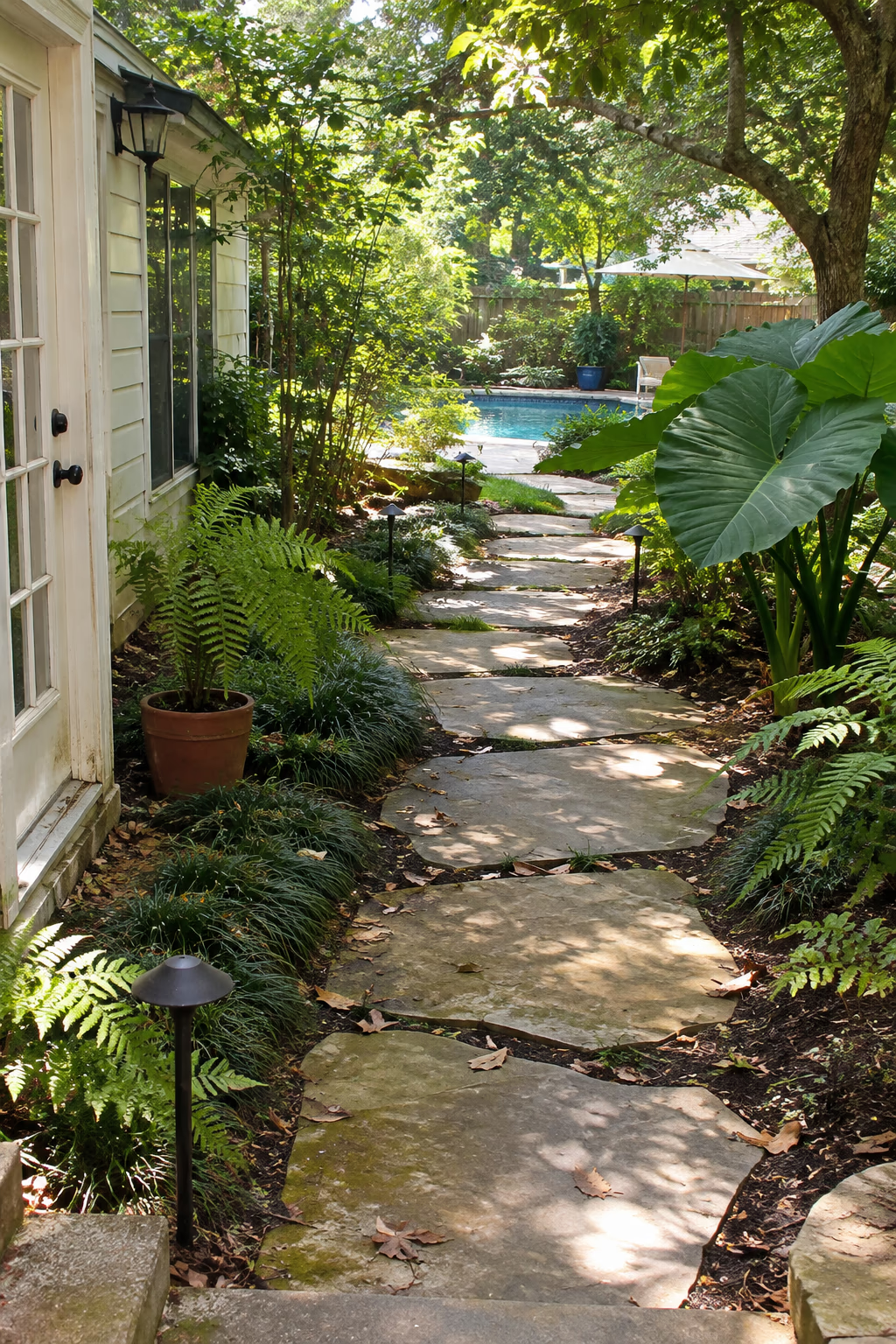
A jungle-walk entrance to the water
Instead of a straight concrete walk from the house, lead the way to the pool with large flagstone or concrete stepping stones winding through planting beds. Set stones about 24 inches apart, center to center, so the spacing matches a natural stride, and fill around them with mondo grass, ferns, or creeping groundcover.
The path makes the trip to the pool feel like a small adventure, and the plantings filter views of the water until you arrive.
Choose stones with a textured surface for wet feet, and set them on a compacted gravel base so they stay level. Keep low-voltage path lights along the route for safe nighttime walks.
13. Hang Outdoor Curtains From a Poolside Pergola
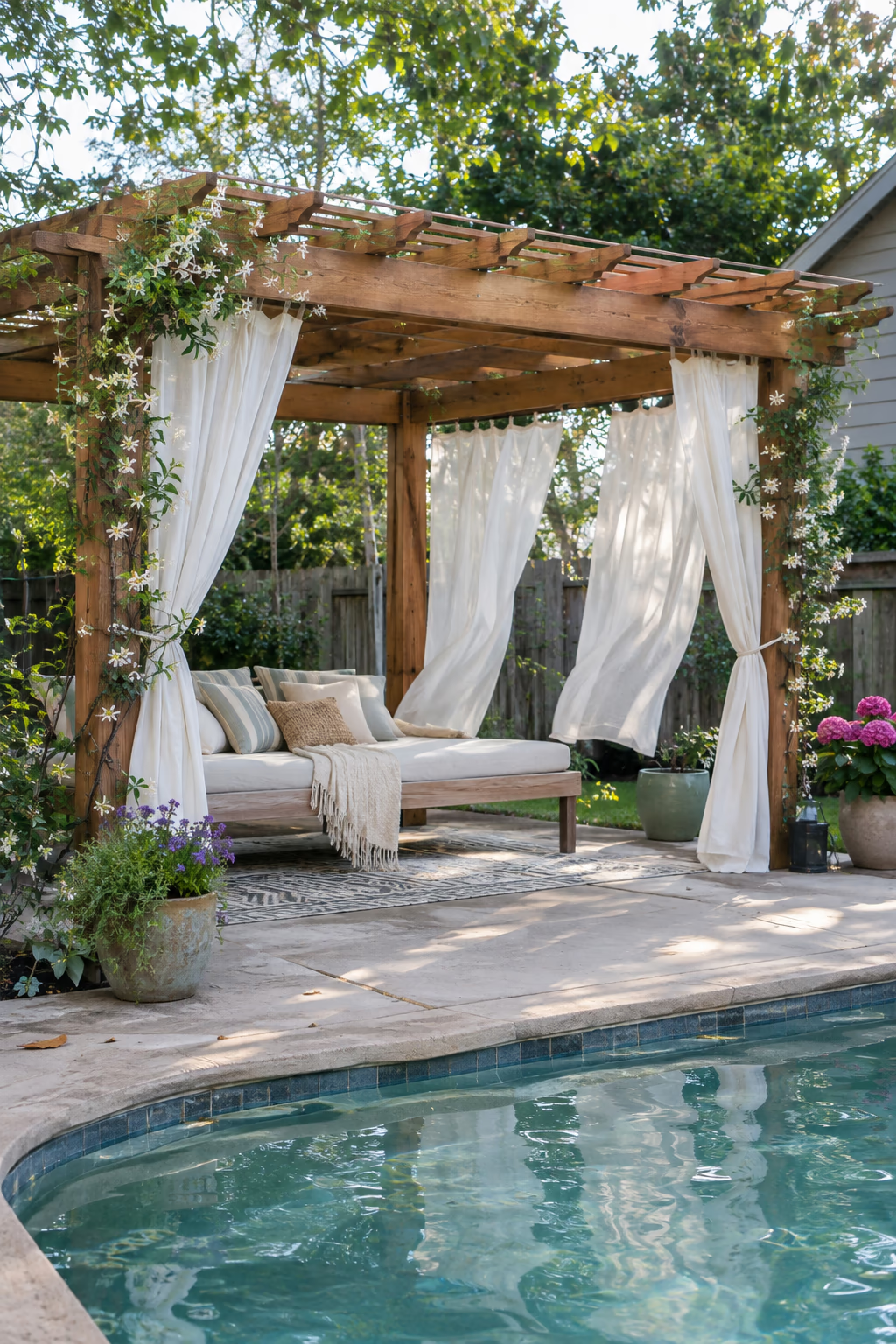
A private cabana for daytime shade
A simple cedar or aluminum pergola beside the pool becomes a resort-style cabana when you add outdoor curtains. White or soft sand-colored fabric looks classic, while stripes add a beach-club feel. Tie the curtains back on calm days and close them for shade or privacy.
Flowing fabric softens the hard lines of a pool deck and creates a shaded spot for a daybed or a pair of chairs. Training a vine such as star jasmine up the posts adds fragrance.
Choose solution-dyed outdoor fabric that resists fading and mildew, and take curtains down before storms. Check whether your town requires a permit for a pergola of your size.
14. Grow a Living Green Wall Behind the Pool
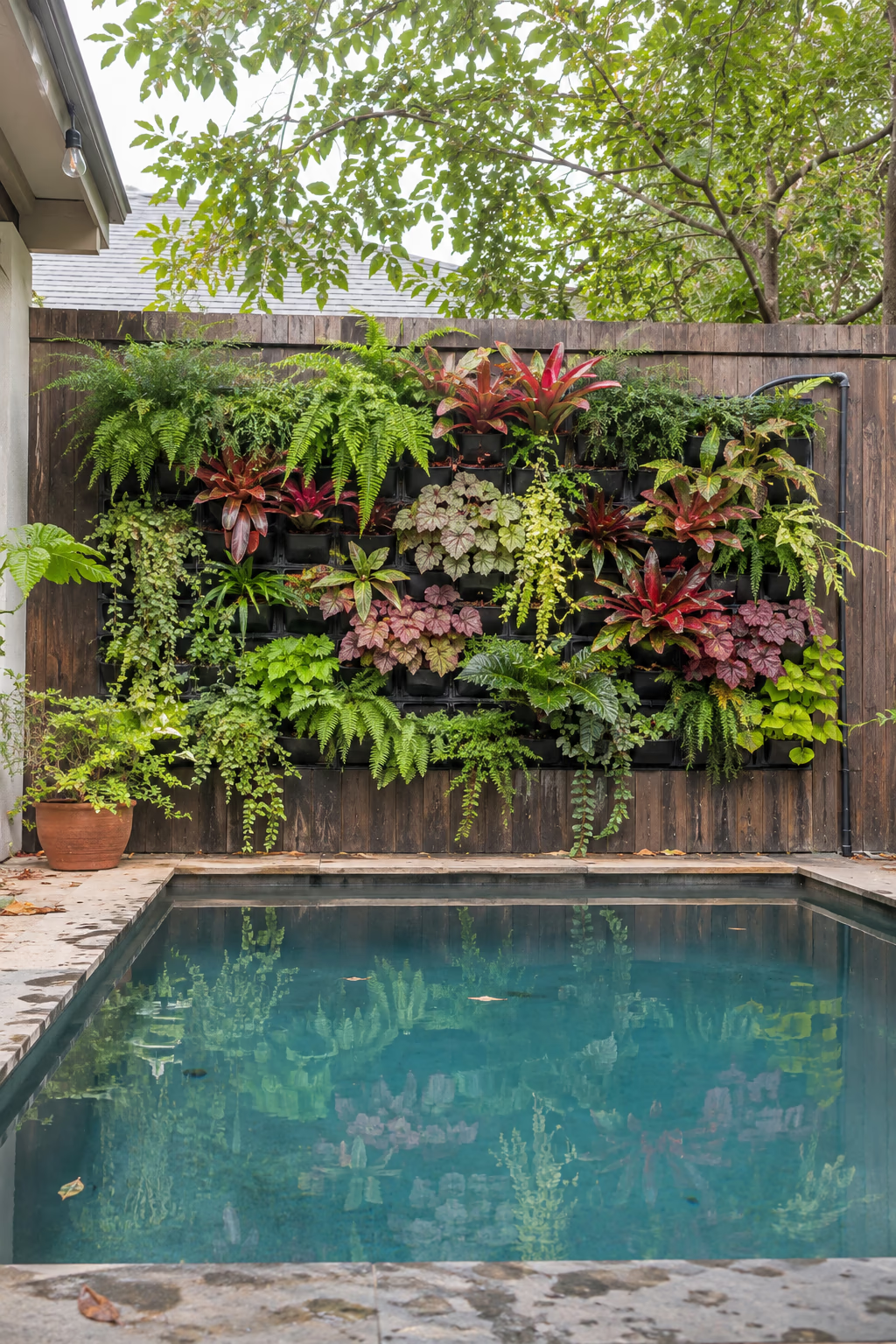
Covers a blank wall with lush texture
A plain garage wall or fence behind the pool can become a living backdrop. Install a modular wall planter system or a series of sturdy trellis panels, then fill it with ferns, bromeliads, heucheras, or trailing plants in warm climates. Climbing vines like star jasmine work well on trellis panels.
A vertical garden adds greenery without taking up deck space, and it looks especially striking when lit from below at night.
Living walls need drip irrigation and regular checks, since soil pockets dry out quickly. Keep the system on a fence or wall that can handle moisture, and avoid aggressive clinging vines that can damage siding.
15. Plant Tropical Fruit Trees Away From the Water
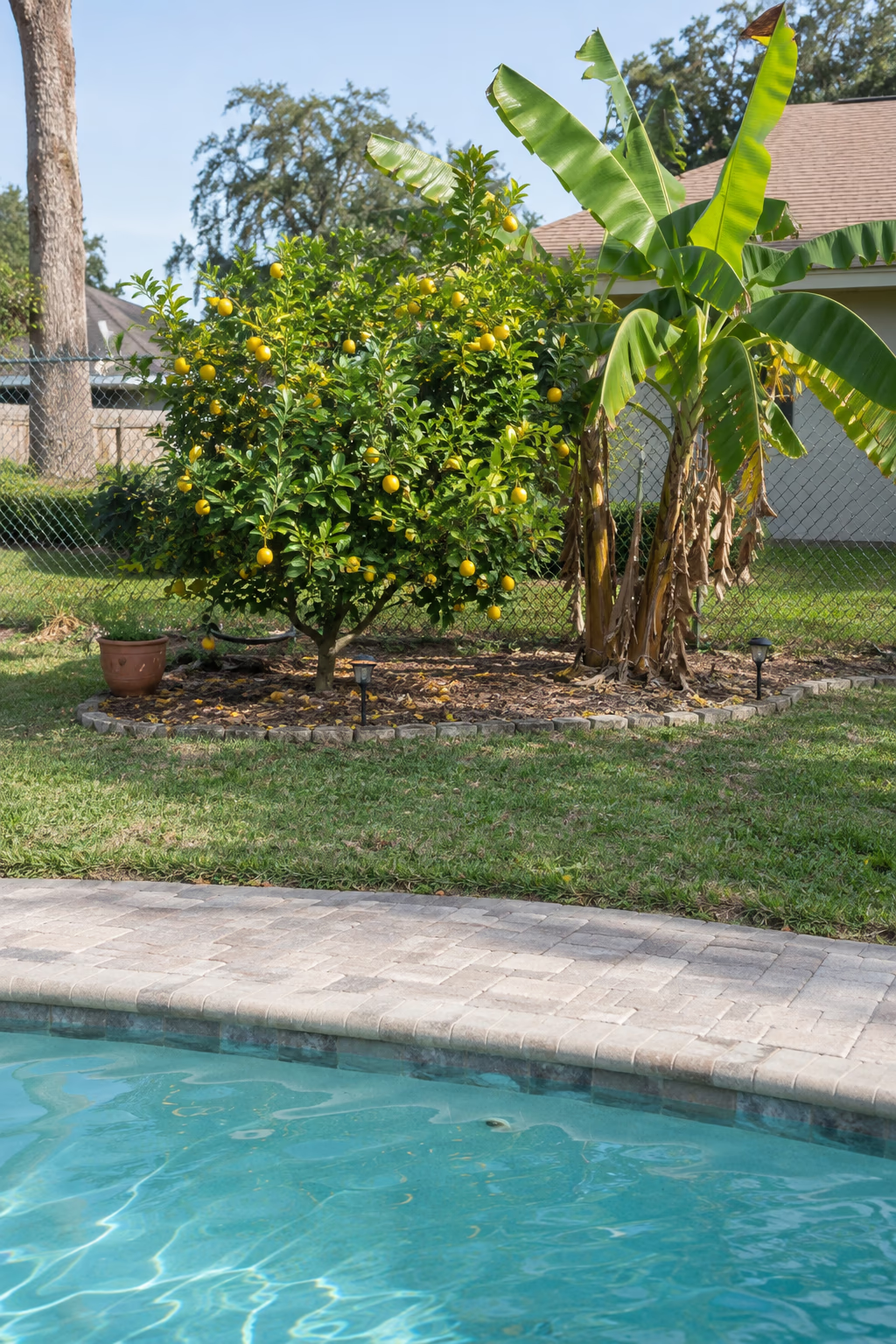
Shade, greenery, and snacks between swims
Fruit trees add big leaves and a genuine island feel. In zones 10 and 11, try mango, avocado, or dwarf banana; in zones 9 to 11, choose citrus such as Meyer lemon or key lime. In cooler areas, figs give tropical-looking leaves and survive cold winters in many regions.
A fruit tree turns the pool area into a productive garden, and dwarf varieties stay small enough for ordinary yards. Citrus blossoms also bring a sweet fragrance.
Plant fruit trees at least 15 feet from the pool edge so falling leaves and fruit don’t end up in the water, and remember that fruit attracts bees and wildlife. Potted citrus can be moved inside for winter.
16. Tuck a Hammock Nook Into the Greenery
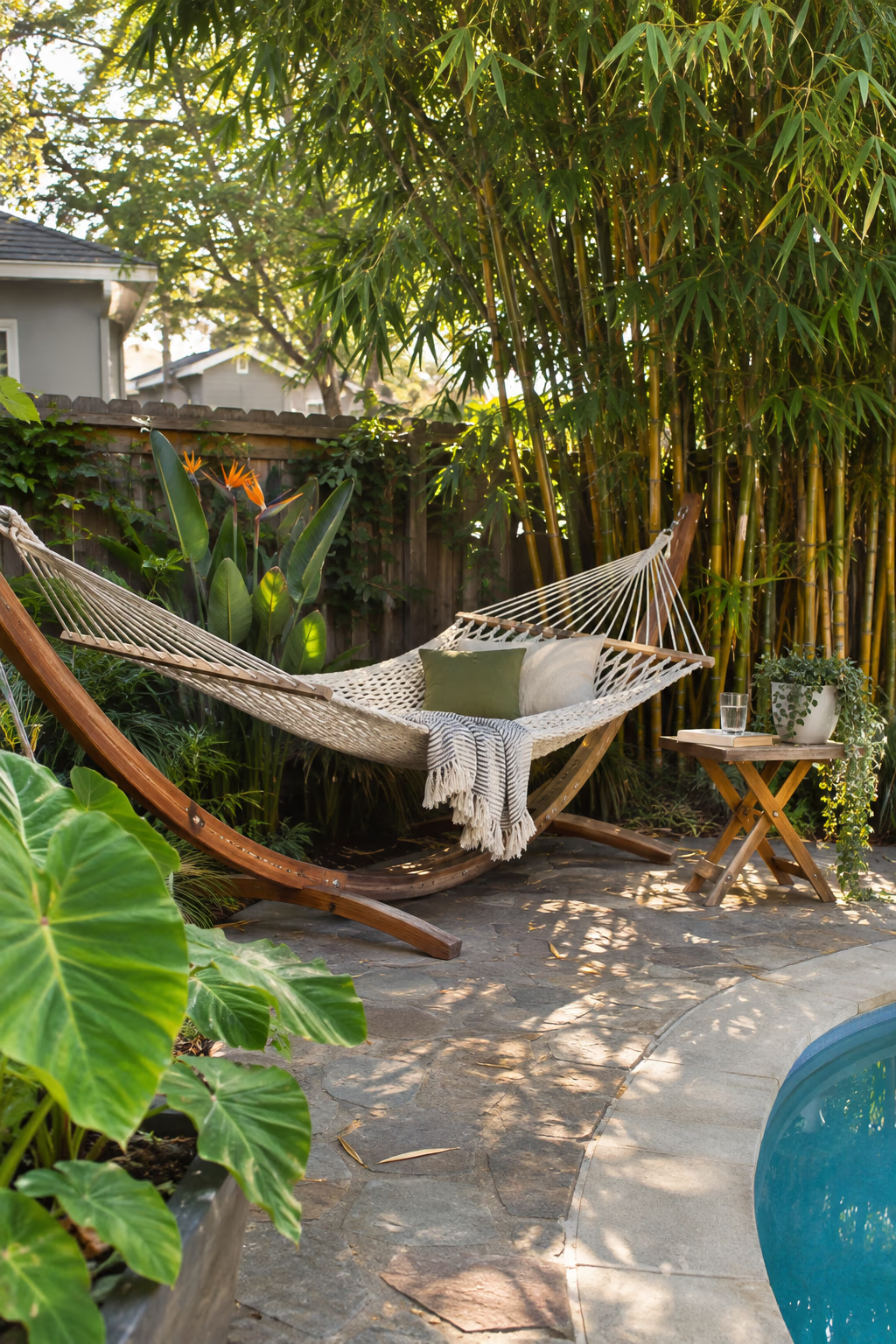
A quiet hideaway steps from the pool
A hammock in a shaded corner near the pool invites lazy afternoons. Hang a cotton rope or quick-drying fabric hammock from a freestanding steel or wooden stand, and frame it with tall plants such as bamboo, elephant ears, or bird of paradise for a jungle-camp feel.
The nook gives swimmers a separate spot to rest, and the tall plants block sun and views. A small side table holds drinks and sunscreen.
Avoid tying hammocks to palm trunks, since palms can’t heal wounds the way other trees do. Choose fabrics that dry quickly and bring the hammock in during wet seasons to prevent mildew.
17. Add a Band of Patterned Tile at the Waterline
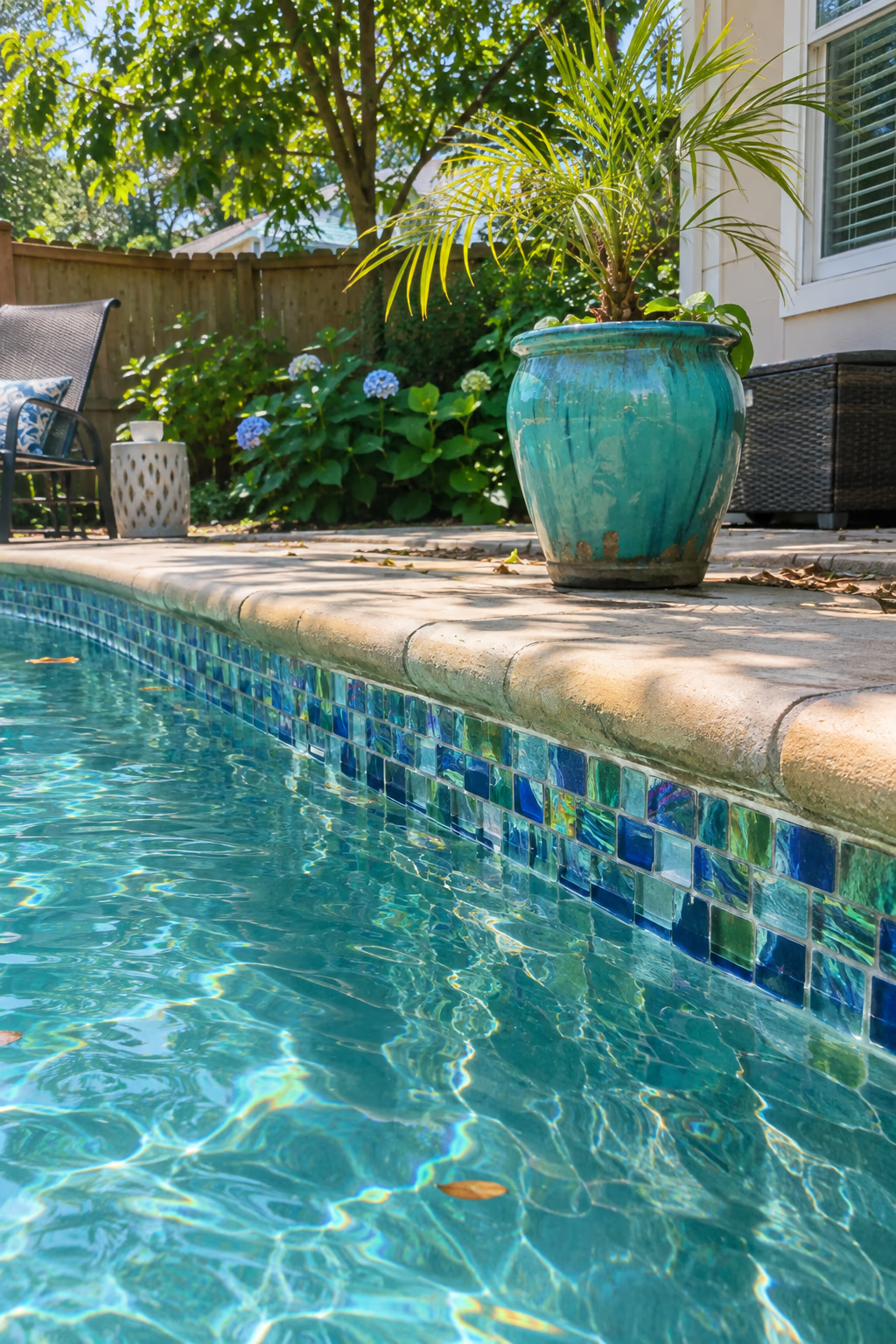
A splash of color that ties the scene together
The waterline tile is a small strip with a big impact. Choose glass or porcelain tile in ocean blues, greens, or a tropical pattern such as a leaf or wave motif. Repeat the color in pots, cushions, or a tiled step riser so the design feels coordinated.
Patterned tile catches light at the water’s surface and gives the pool a custom, resort-style look without a full remodel.
Tile is usually replaced when the pool is drained or resurfaced, so plan it alongside other repairs. In freezing climates, choose tile rated for freeze-thaw cycles and installed with appropriate mortar.
18. Fake the Tropics With Cold-Hardy Plants
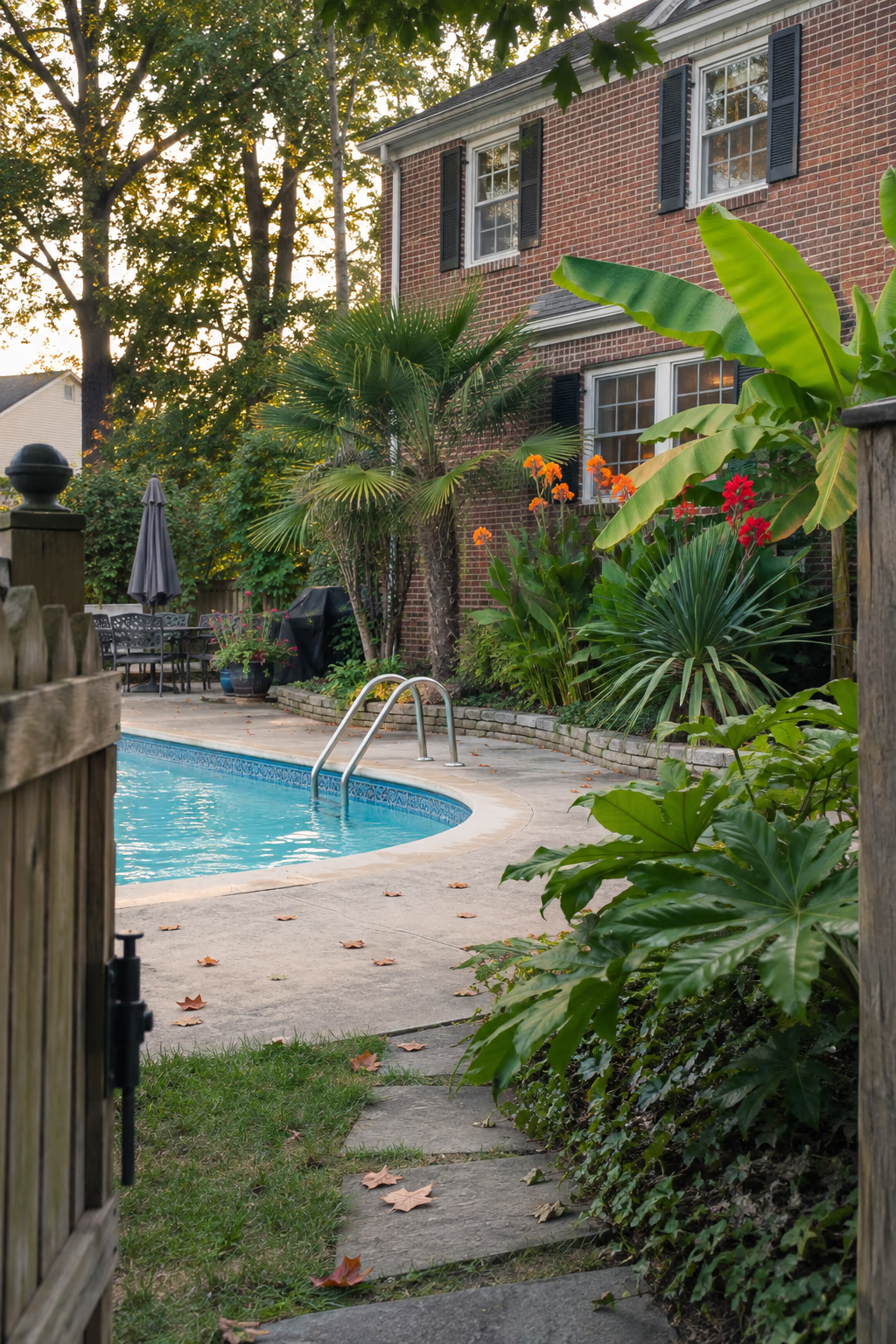
Tropical style for colder climates
You don’t need to live in Florida to get the look. Windmill palms survive winters in many zone 7 and 8 gardens, while needle palms handle even colder temperatures. Hardy bananas such as Musa basjoo die back in winter but return with huge leaves each summer. Add cannas, hardy hibiscus, yucca, and fatsia for bold shapes.
These plants give the big leaves and lush texture of the tropics while surviving cold winters, so your pool area feels like a getaway each summer.
Mulch heavily around roots in late fall, and dig up canna and elephant ear tubers in colder zones. Read plant tags carefully, since hardiness varies by variety.
19. Create a Bali-Inspired Corner With a Stone Water Bowl
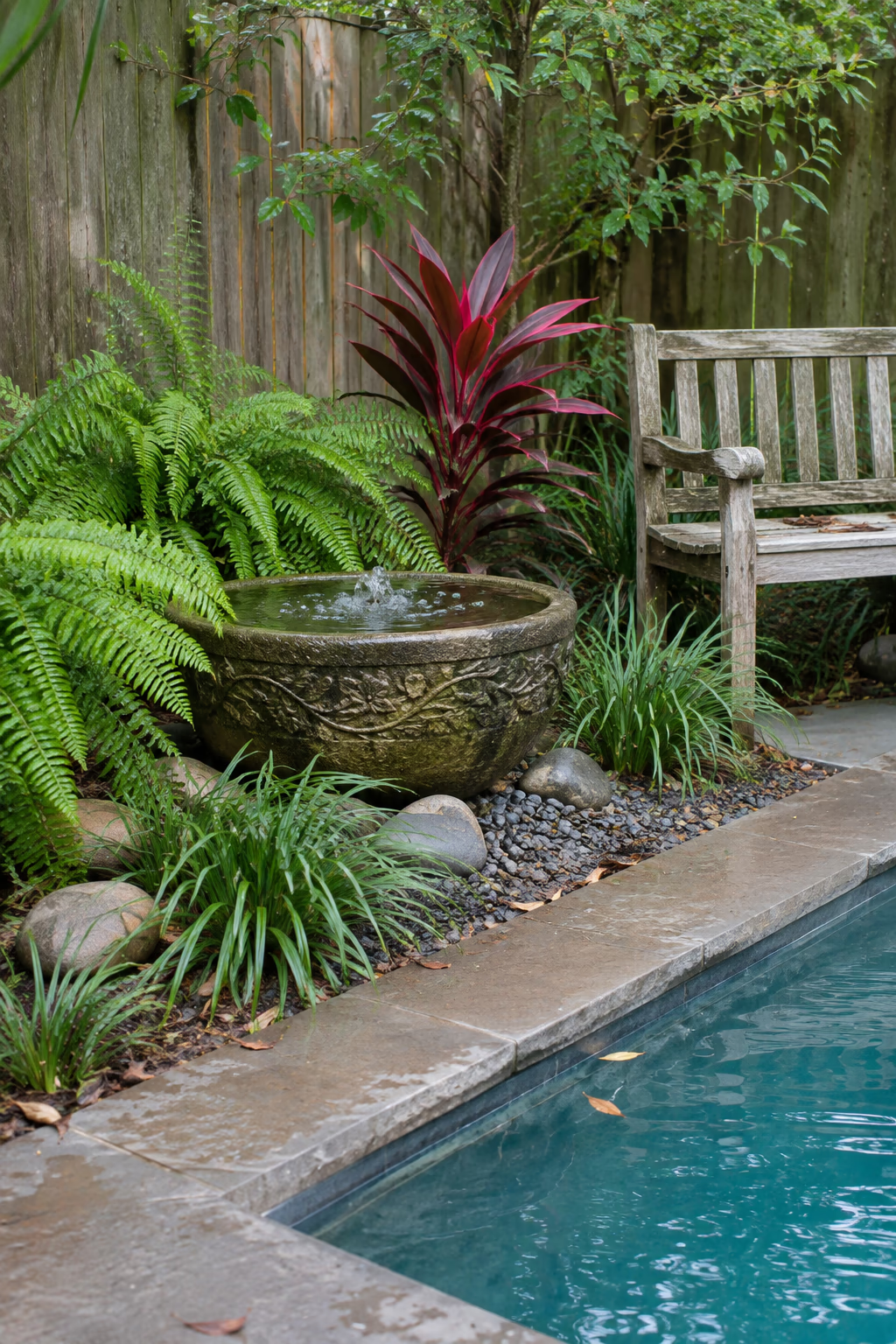
A calm, spa-like retreat next to the pool
A small corner inspired by Balinese gardens adds calm to an active pool area. Set a carved stone water bowl or bubbling basin on a bed of dark gravel, add a few smooth stones, and surround it with ferns, mondo grass, and a single cordyline or small palm. A teak bench completes the look.
This quiet corner balances the busy pool deck and gives you a place to read or meditate.
Water bowls need occasional cleaning to prevent algae and mosquitoes, so choose a recirculating basin with a pump or refresh standing water every few days.
20. Add a Poolside Bar Counter Wrapped in Greenery
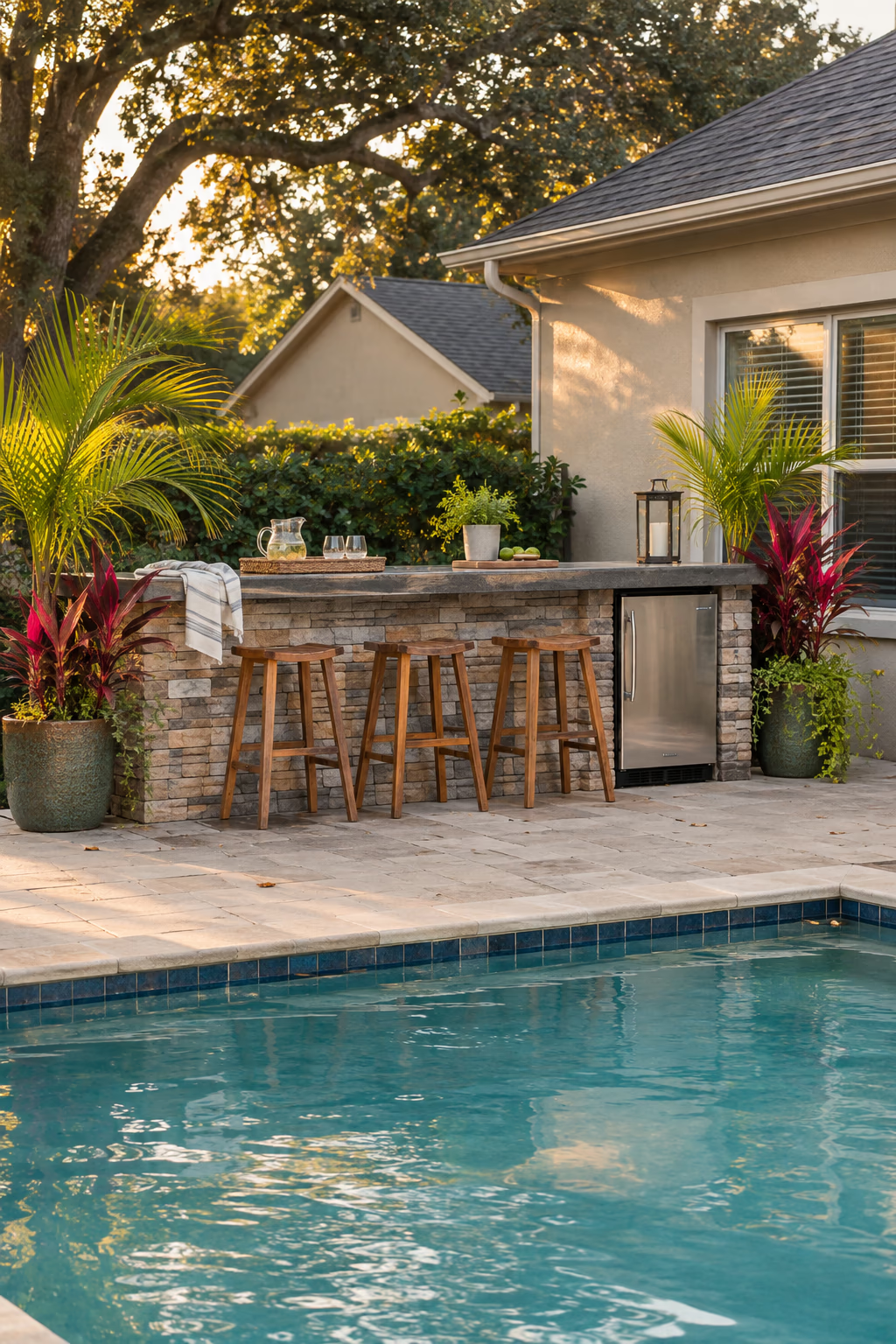
Resort-style drinks and snacks at the water’s edge
A simple outdoor bar counter makes it easier to entertain by the pool. Build a counter of stucco, stone veneer, or cedar with a durable concrete or granite top, and add a mini fridge or ice bin. Surround it with planters of palms, cordylines, or tropical vines.
The counter keeps drinks and snacks out of the house and becomes a natural gathering spot. Bar stools under a pergola or umbrella make it comfortable all afternoon.
Use outdoor-rated appliances and GFCI-protected outlets installed by a licensed electrician. Choose materials that can handle splashes and sun without warping.
21. Run Turf Strips Between Large Concrete Pavers
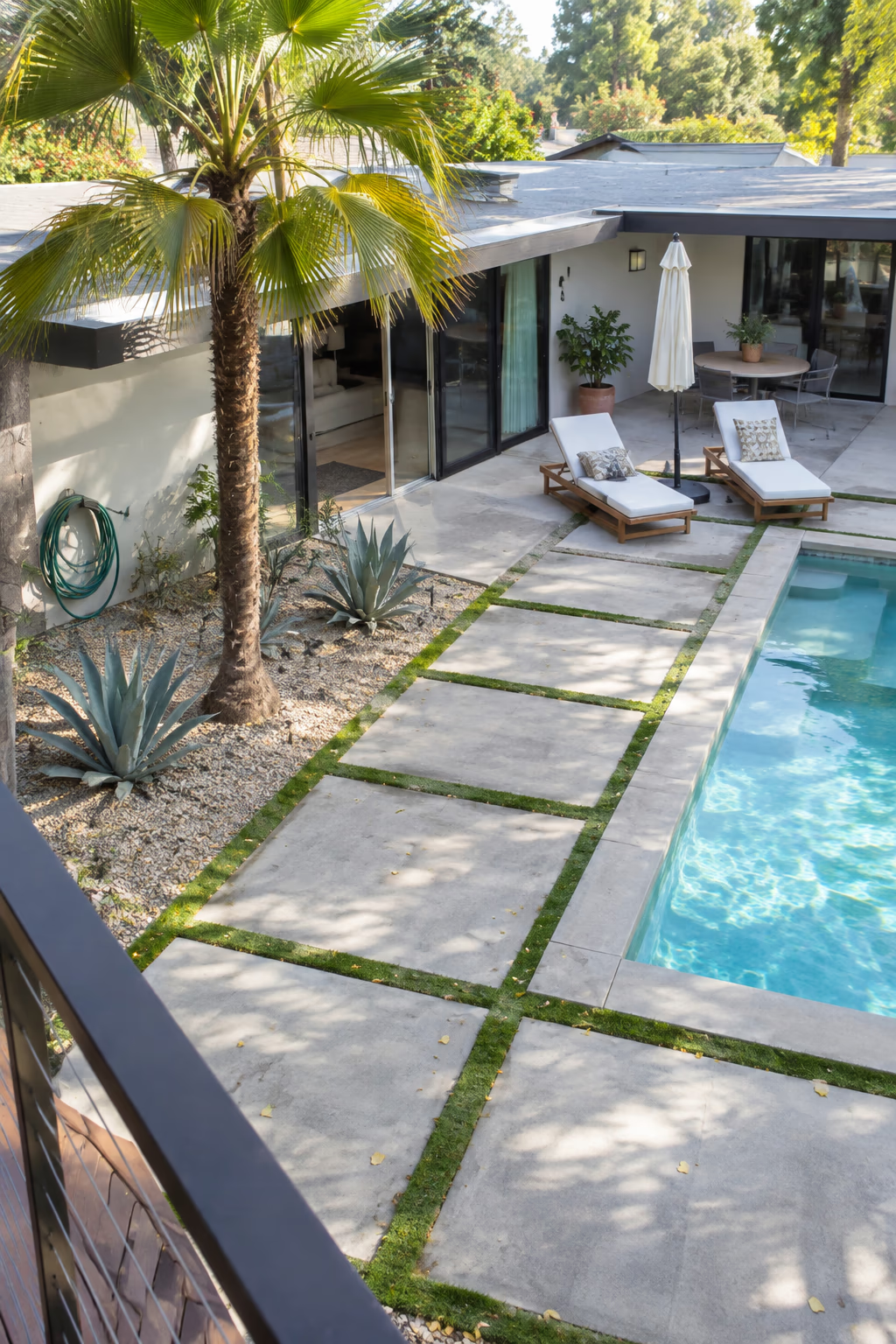
A clean, modern tropical deck
Large concrete pavers separated by strips of grass or artificial turf create a modern, graphic deck that pairs well with palms and bold-leaf plants. Use pavers about 24 by 24 inches or larger, spaced 3 to 4 inches apart, with green strips running between them.
The green lines soften a large concrete area and help rainwater drain into the soil. The look suits mid-century and contemporary homes especially well.
Artificial turf can get very hot in direct sun, so consider real grass or low groundcovers like dwarf mondo for strips near loungers. Keep edges trimmed so grass doesn’t creep onto pavers.
22. Plant a Rain Garden to Catch Deck Runoff
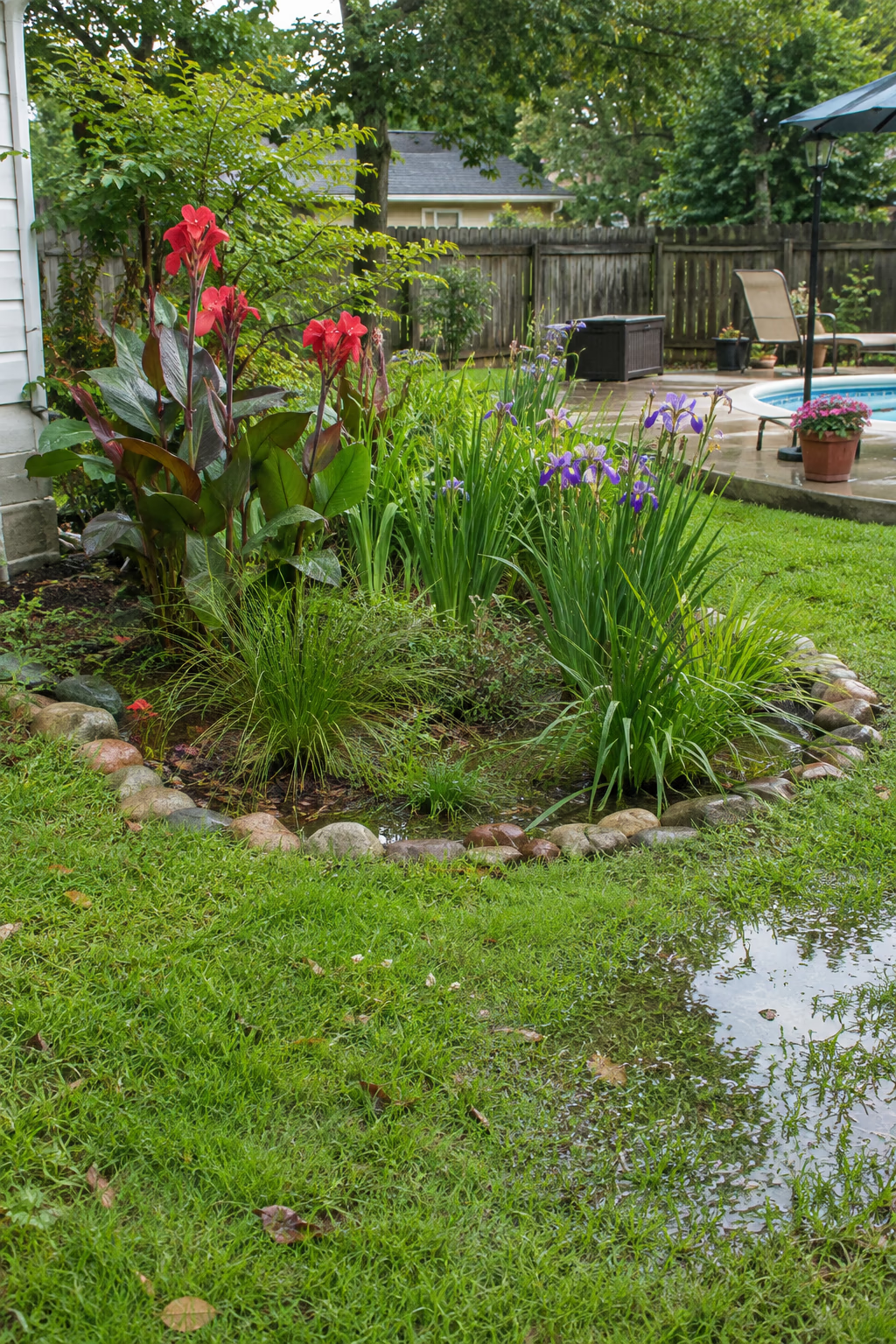
Lush planting that handles stormwater
Heavy tropical downpours can flood pool decks and lawns. A rain garden, a shallow planted basin placed where water naturally collects, absorbs runoff and filters it before it reaches storm drains. Fill it with moisture-loving plants like canna, Louisiana iris, and sedges for a lush look.
The rain garden handles drainage problems while adding another layer of greenery to the pool area.
Keep the basin at least 10 feet from your home’s foundation and away from the pool itself. Never drain chlorinated pool water into the rain garden, and check local rules on discharging pool water.
23. Hide Pool Equipment Behind a Planted Screen
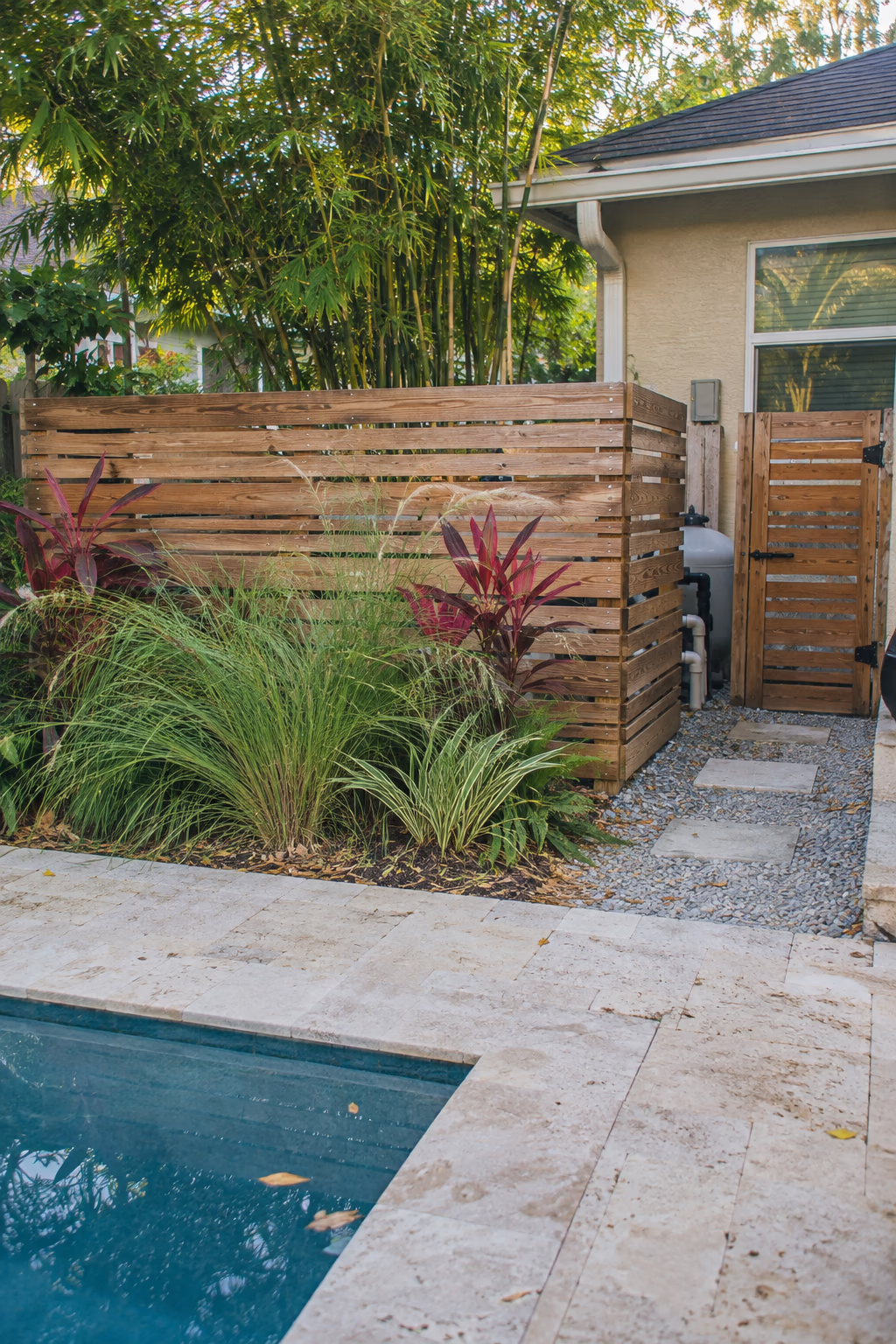
Keeps the view tropical, not mechanical
Pumps, filters, and heaters rarely look good. Surround the equipment pad with a slatted wood or composite screen, then soften it with tall grasses, ti plants, or clumping bamboo. A small trellis with a flowering vine adds color.
The screen keeps attention on the landscaping and can slightly reduce equipment noise.
Leave at least 3 feet of clearance for service access and airflow, especially around heaters. Use a removable panel or gate so technicians can reach equipment easily.
How to Plan Your Tropical Pool Landscape
A tropical pool landscape looks effortless when it’s finished, but it works best when you plan ahead for safety, climate, and maintenance.
- Check pool barrier rules first. Most communities require a safety fence or barrier at least 4 feet tall with self-closing gates. Keep plants and structures from making it easier to climb.
- Know your hardiness zone. Choose palms and tropical plants that survive your winters, or plan on containers and annuals for tender varieties.
- Keep messy plants back from the water. Trees that drop leaves, flowers, or fruit should stay well away from the pool to reduce cleaning.
- Plan drainage and slope. Decks should slope away from the pool, and planting beds should never drain soil or mulch into the water.
- Budget in phases. Start with structure like stone edging and palms, then add lighting, water features, and accessories over time.
- Call 811 before digging. Utility lines, pool plumbing, and gas lines can be close to the surface, so locate them before planting or building.
Frequently Asked Questions
What are the best plants to grow near a pool?
Choose plants that drop very little debris, tolerate sun and splashes, and don’t have spines or aggressive roots. Birds of paradise, cordylines, bromeliads, agapanthus, ornamental grasses, and many palms are good choices in warm zones.
How far from a pool should palm trees be planted?
A distance of about 6 to 10 feet works for most small and medium palms, while larger species need more space. Check mature size and root habits before planting.
Can I create a tropical pool landscape in a cold climate?
Yes. Use cold-hardy palms, hardy bananas, cannas, and hardy hibiscus in the ground, and grow tender tropicals in pots you can move indoors for winter.
How much does tropical pool landscaping cost?
Costs vary widely. Potted plants and simple lighting may cost a few hundred dollars, while boulder waterfalls, stone coping, and mature palms can cost several thousand or more. Phasing projects makes them easier to afford.
How do I keep plant debris out of the pool?
Choose low-litter plants near the water, keep trees farther back, and use a pool cover during heavy leaf-drop seasons. Regular skimming and pruning also help.
Final Thoughts
The right landscaping can turn an ordinary backyard pool into a tropical escape. A cluster of palms, a splashing boulder waterfall, or a few glowing uplights can make a dramatic difference.
Start with the ideas that suit your climate and budget, and build the look over time. Before long, your pool area will feel like a vacation spot you can enjoy every day.


