
Step outside on a warm evening and imagine palm fronds rustling over your chair, a little fountain murmuring nearby, and a soft glow of lanterns hanging from a vine-covered beam overhead. For a moment, your ordinary concrete slab feels like the terrace of a small island hotel.
That vacation feeling is exactly why tropical style is so appealing for outdoor living. It mixes big green leaves, natural textures, relaxed furniture, and splashes of warm color into a space that invites you to slow down. Best of all, you don’t need to live in Florida or Hawaii to pull it off. Smart plant choices and a few well-placed details can bring the look to patios in almost any part of the country.
These 21 tropical patio ideas cover shade, seating, privacy, plants, lighting, and finishing touches, from potted palms and rattan lounges to hammocks, tiki bars, and outdoor showers. Pick one weekend project or layer several together to build your own backyard getaway.
1. Frame the Seating Area With Potted Palms
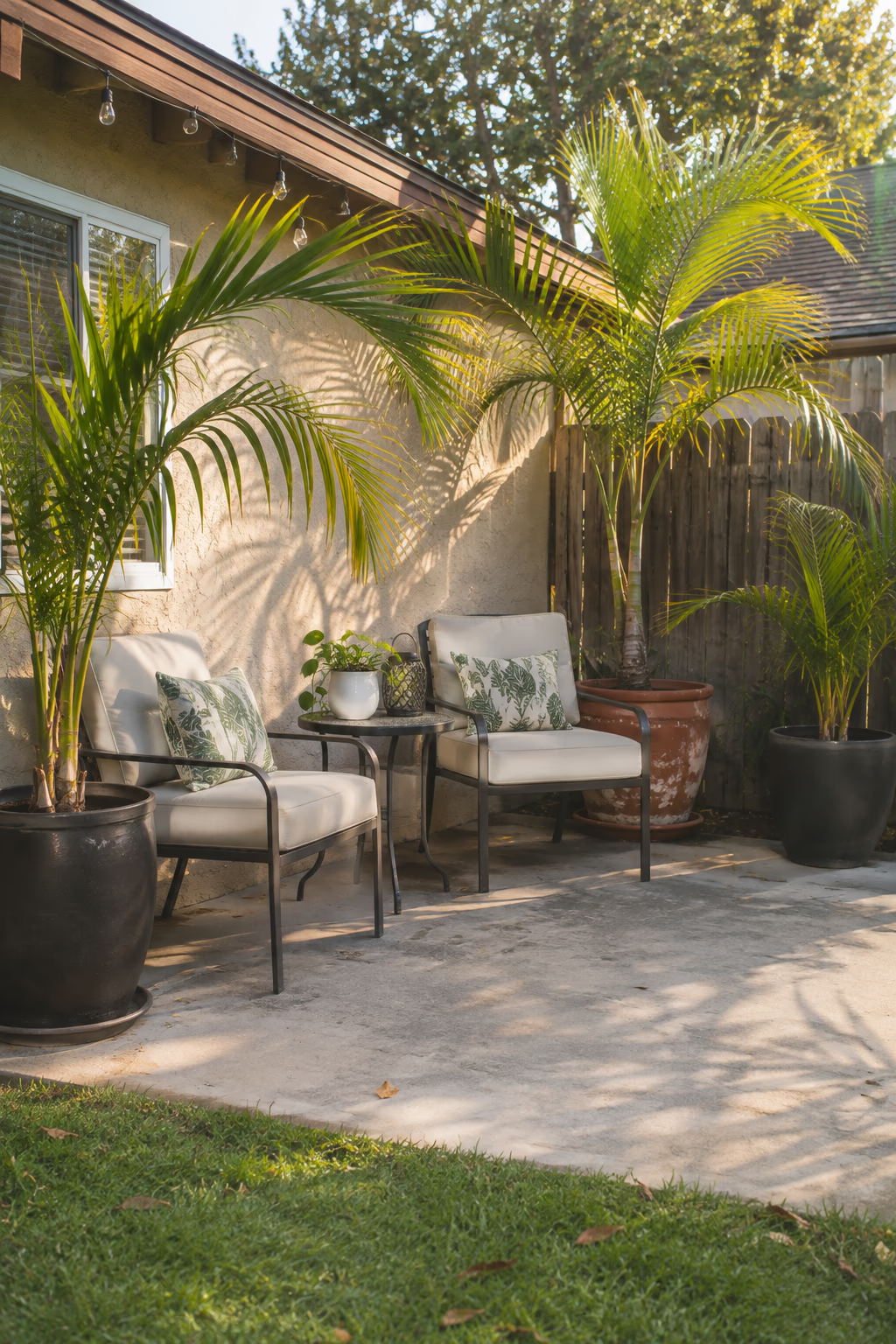
Instant island atmosphere around your chairs
Nothing says tropical faster than palms. Place two or three large palms in pots at least 18 to 24 inches wide around the corners of your seating area so their fronds arch over the chairs. Mix heights, such as one 6-foot palm with two shorter ones, so the grouping looks natural rather than lined up.
In frost-free areas, pygmy date palm, areca, and kentia palm are good patio choices. Where winters get cold, windmill palm tolerates more cold than most and can stay outside year-round in many zone 7b and 8 areas, while tender palms can be rolled indoors before the first frost.
Use pot dollies with locking wheels for anything you plan to move, because a big palm in damp soil can easily weigh more than 100 pounds. Palms in containers dry out quickly in summer, so check soil moisture every few days.
2. Shade the Patio With a Vine-Covered Pergola
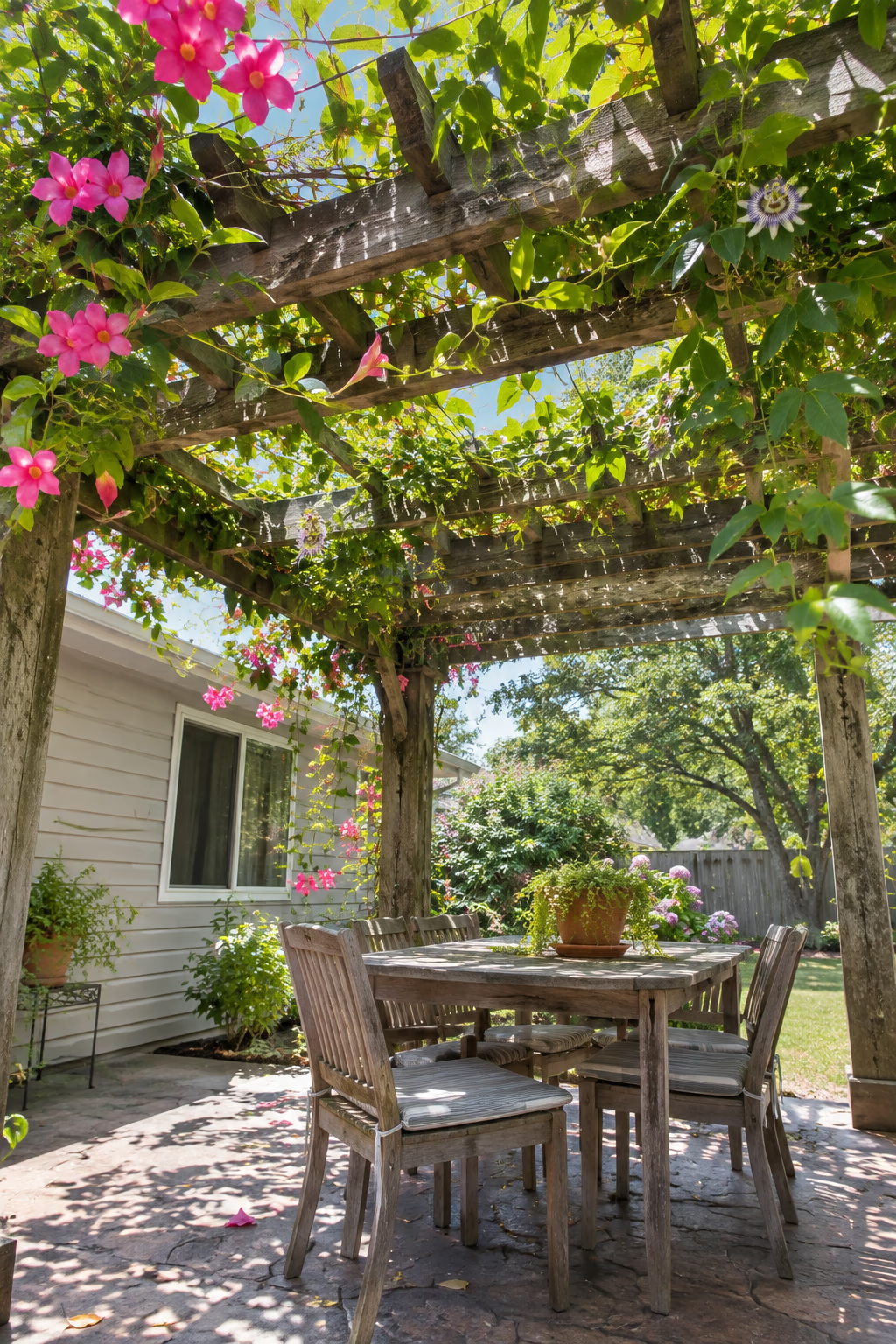
Filtered shade that looks like a jungle canopy
A wood or vinyl pergola over the patio gives you a frame for climbing vines that soften the space and cast dappled shade. Plant a vine at the base of each post in a prepared bed or a large planter, and guide new stems up with wire or a simple trellis panel.
For warm climates, mandevilla, passionflower, and allamanda bring big, colorful blooms. In cooler regions, native maypop passionflower and trumpet honeysuckle return each year and still feel lush. Annual vines like hyacinth bean can fill a new pergola in a single summer while slower perennials get established.
Check with your city or HOA before building, since some structures need permits or must sit a set distance from property lines. Avoid aggressive vines such as wisteria on light pergolas, as their weight can strain the frame.
3. Create a Resort-Style Lounge With Rattan and a Daybed
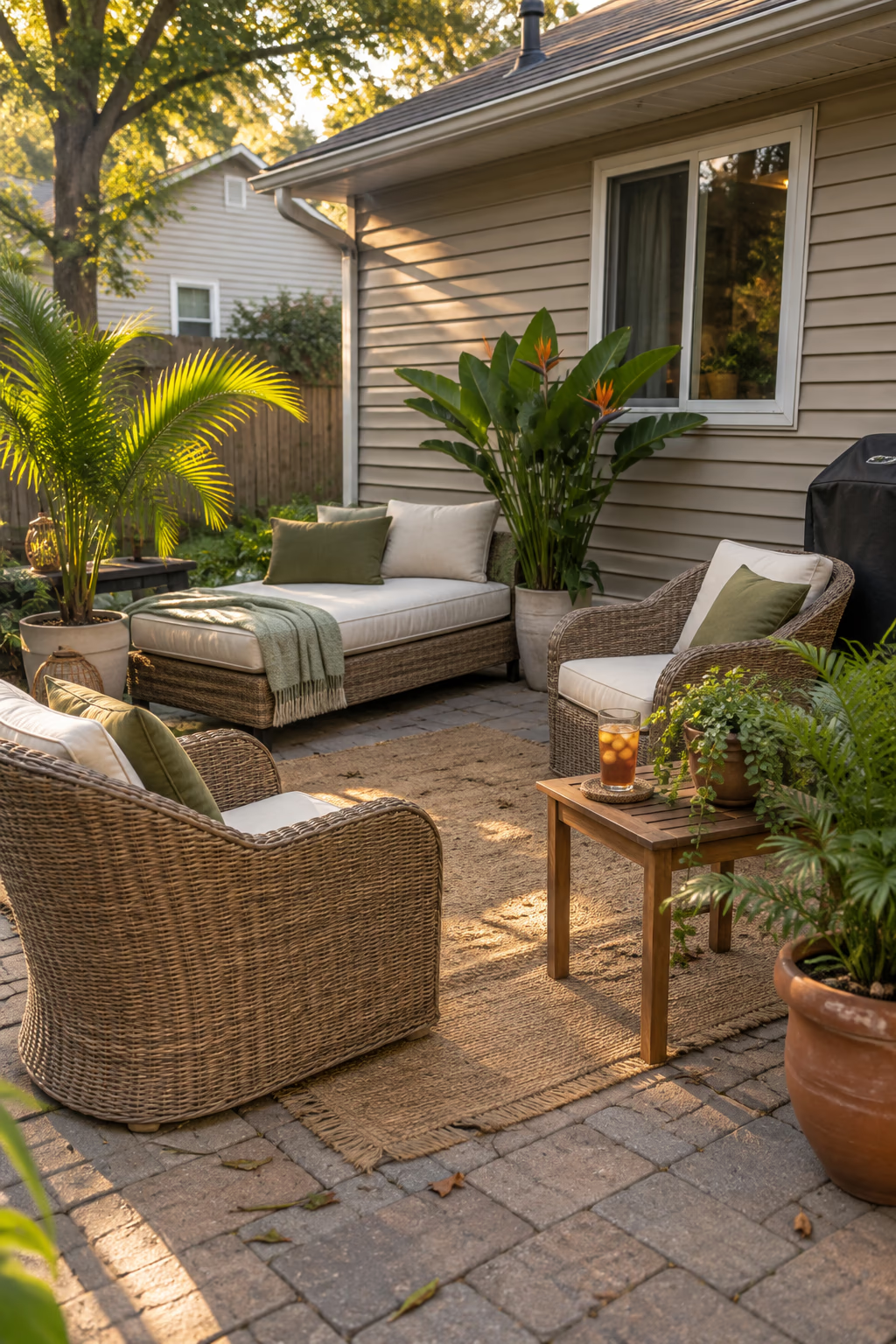
The vacation lounge look without the hotel bill
Woven furniture instantly says “beach resort.” Set two natural-toned rattan or resin wicker lounge chairs with a low outdoor daybed or a deep chaise topped with thick white or sand-colored cushions. A small teak side table holds drinks and a book.
Natural rattan looks beautiful but breaks down quickly in rain and sun, so for open patios choose all-weather resin wicker over a powder-coated aluminum frame. It gives the same texture and handles moisture far better.
Choose cushion covers made from solution-dyed acrylic or similar outdoor fabric that resists fading and mildew. Even then, storing cushions in a deck box during long rainy spells will help them last several more seasons.
4. Screen the Patio With Bamboo Panels
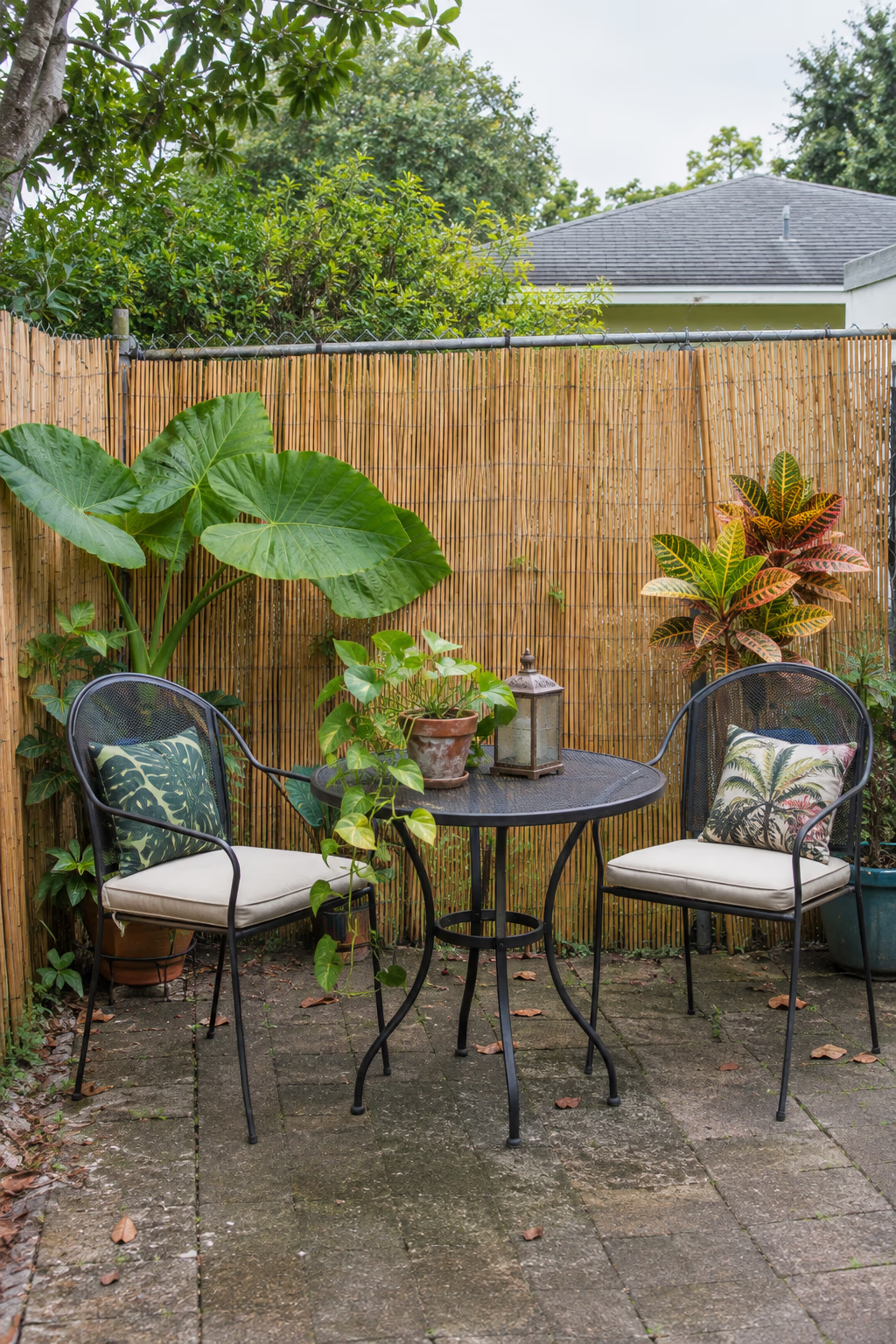
Privacy with a warm, natural texture
Rolled bamboo fencing or framed bamboo panels can turn an exposed patio into a private hideaway in an afternoon. Attach rolls to an existing chain-link or wood fence with galvanized wire, or build simple 4-by-6-foot frames from cedar and staple the bamboo inside to create freestanding screens.
The golden tone of the bamboo pairs beautifully with green foliage and makes a calm backdrop for plants. A folding bamboo screen also works on a small patio or condo terrace where you can’t attach anything permanent.
Dried bamboo screening usually lasts several years before it grays and splits, especially in wet climates. A clear exterior sealer can slow weathering. If you want living bamboo instead, choose clumping types only, since running bamboo spreads aggressively and is restricted in some areas.
5. Add a Bubbling Fountain Beside the Seating
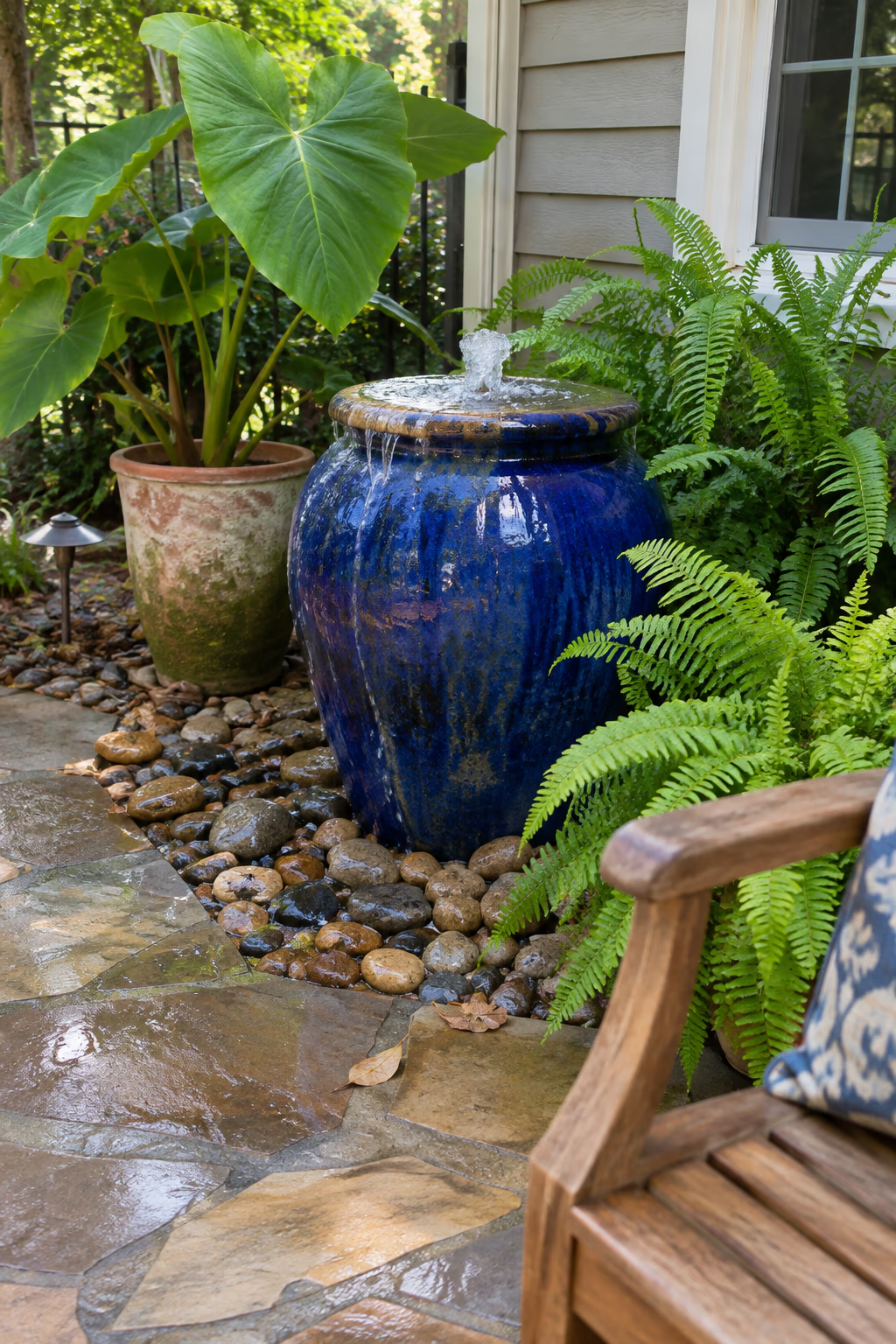
Soothing water sounds in a compact footprint
Moving water helps a patio feel like a retreat and masks traffic or neighbor noise. A bubbling urn, a glazed ceramic jar, or a stacked stone basin needs only a few square feet and fits neatly into a corner beside chairs or a planting bed.
Most of these fountains are self-contained, with a small pump recirculating water from a hidden reservoir. Surround the base with river rock and a few ferns or a potted elephant ear so it blends into the greenery.
Plug the pump into a GFCI-protected outdoor outlet with a weatherproof cover, and top up the water often during hot weather so the pump never runs dry. In freezing climates, drain the fountain and bring the pump inside for winter.
6. Cool a Covered Patio With a Ceiling Fan
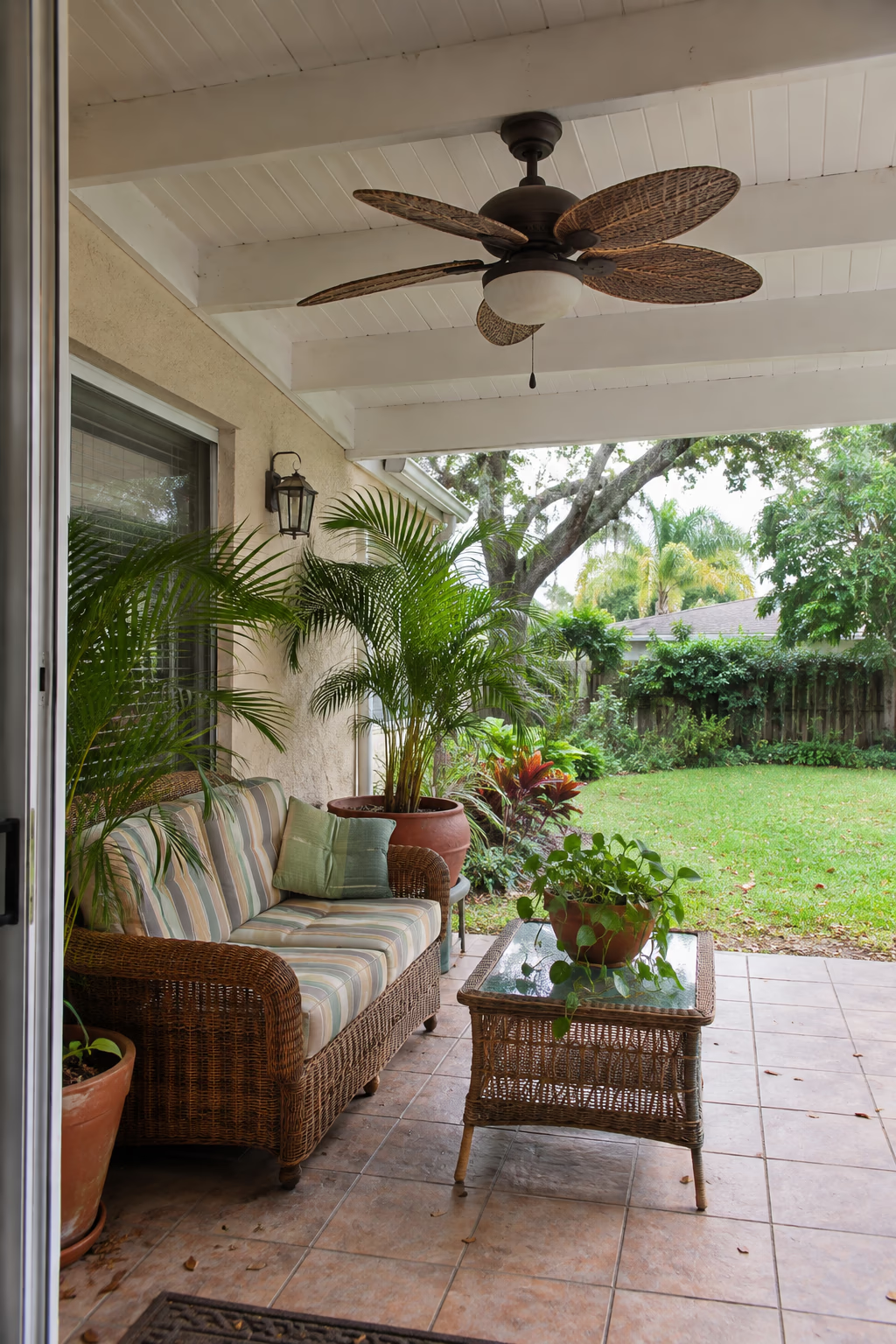
A steady breeze for humid afternoons
If your patio has a solid roof or a covered extension, a ceiling fan with wide, leaf-shaped or woven blades adds both comfort and island character. Look for a fan with a 52-inch or larger span for a typical 12-by-14-foot covered area.
A gentle breeze makes muggy evenings far more pleasant and also helps keep mosquitoes and other small flying insects away from the seating area, since they struggle in moving air.
Buy a fan labeled damp-rated for fully covered, protected spaces or wet-rated for areas exposed to blowing rain. Wiring a new fan often requires an electrician and a permit, so plan for that in your budget.
7. Hang a Hammock in a Shady Corner
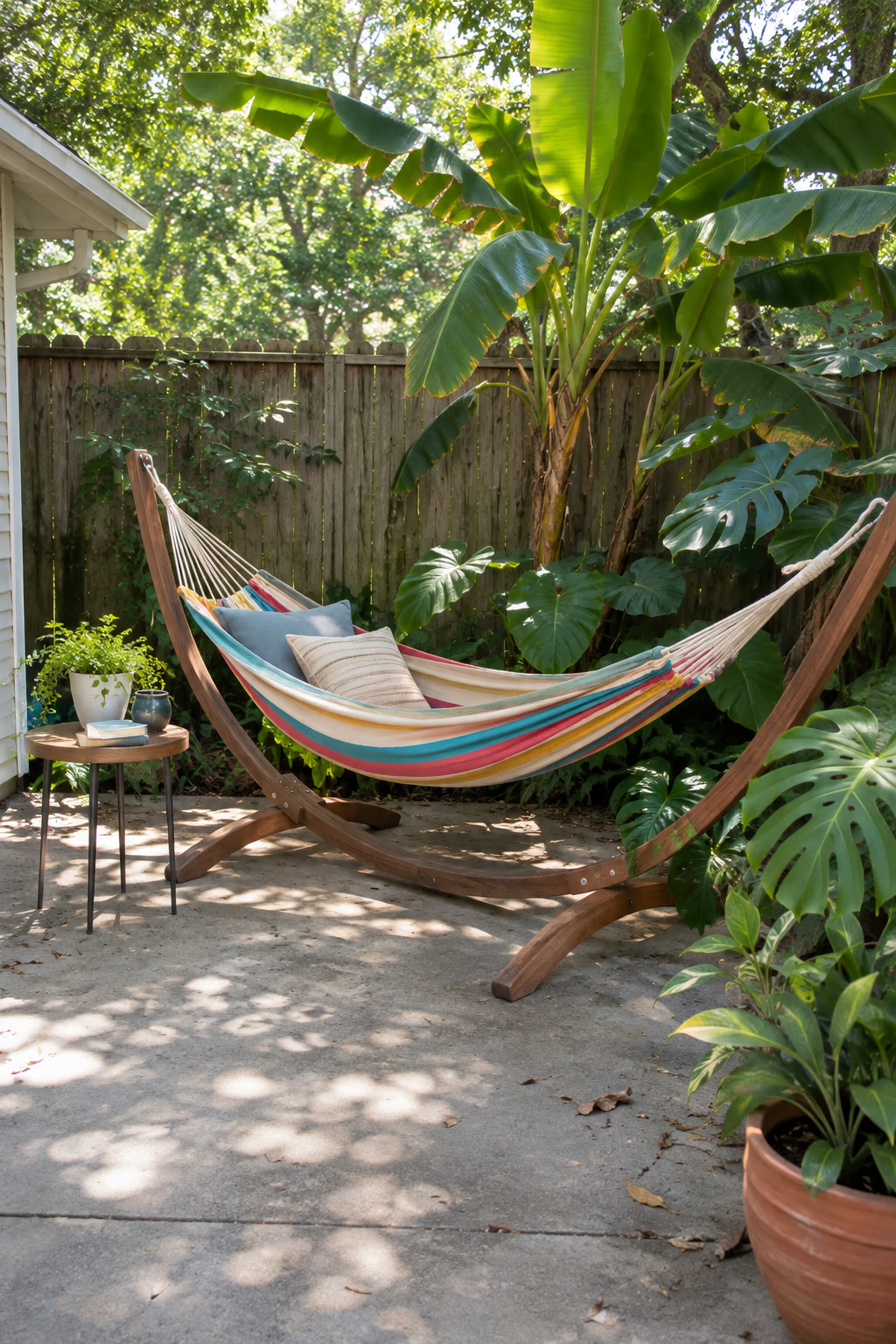
The ultimate spot for a lazy afternoon
A colorful woven hammock is a classic symbol of tropical relaxation. Hang a cotton rope or Mayan-style hammock between two sturdy posts, a pair of mature trees, or from a freestanding steel or wood stand at the edge of the patio.
A hammock stand is the simplest option because it needs no drilling and can move to follow the shade. Place it where large-leaf plants or a pergola will shelter you from midday sun.
Make sure anchor points can carry the weight; never tie a hammock to a pergola post or porch beam that wasn’t built for the load. Bring fabric hammocks indoors during long rainy spells to prevent mildew and fading.
8. Mix Leaf-Print Cushions With Bright Solids
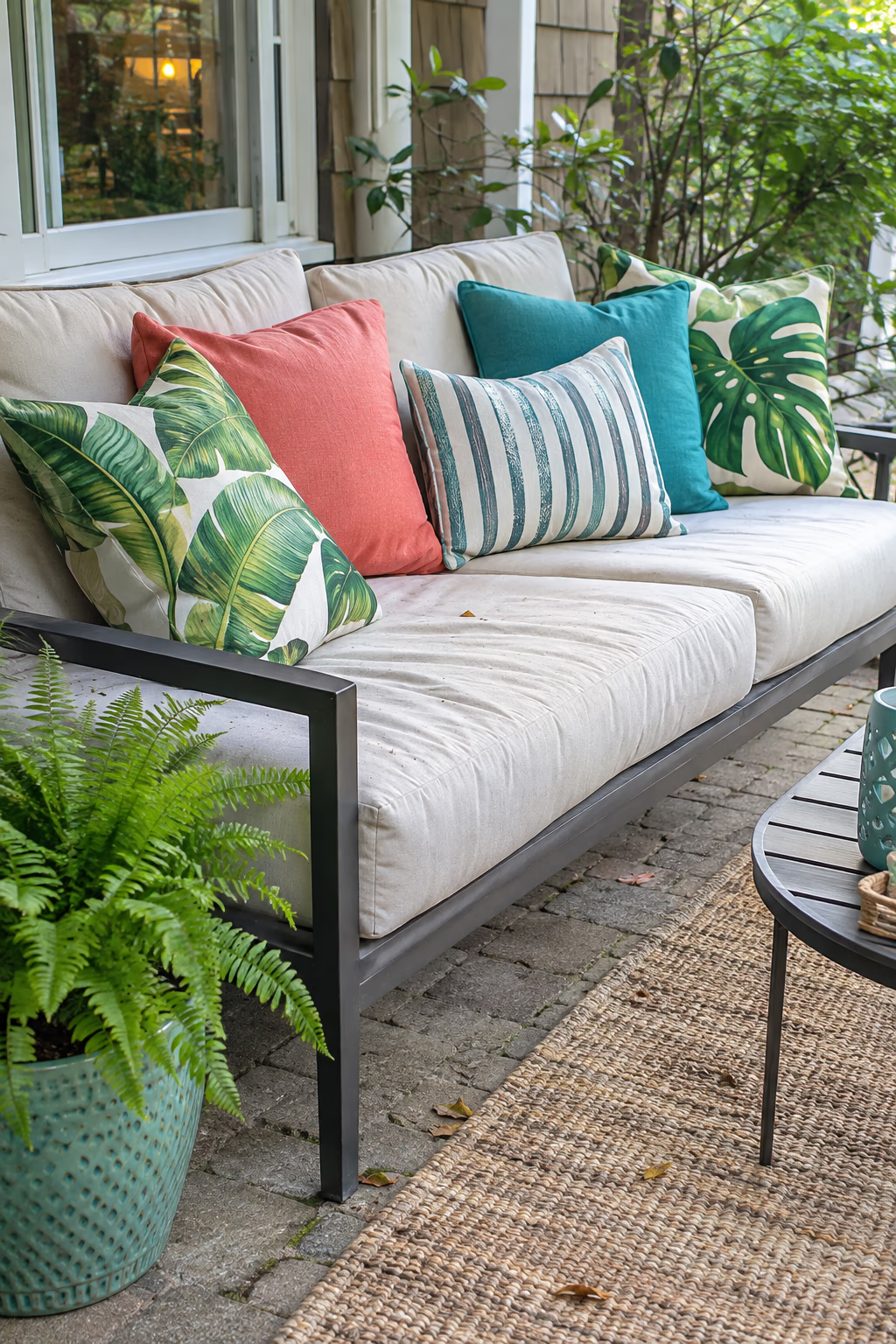
An easy, budget-friendly style refresh
Textiles are one of the cheapest ways to make a patio feel tropical. Choose throw pillows with banana leaf, monstera, or palm frond prints, then balance them with solid cushions in coral, mango, turquoise, or lime.
A simple rule keeps it from looking busy: pick one bold print, one smaller pattern such as stripes, and one or two solid colors pulled from the print. Repeat those colors in a tablecloth or a planter for a pulled-together look.
Use outdoor-rated fabrics with UV-resistant dyes. Even the best fabrics fade over time in full sun, so swapping pillow covers every few seasons is a quick way to keep the space looking fresh.
9. Back the Patio With a Hardy Banana Plant
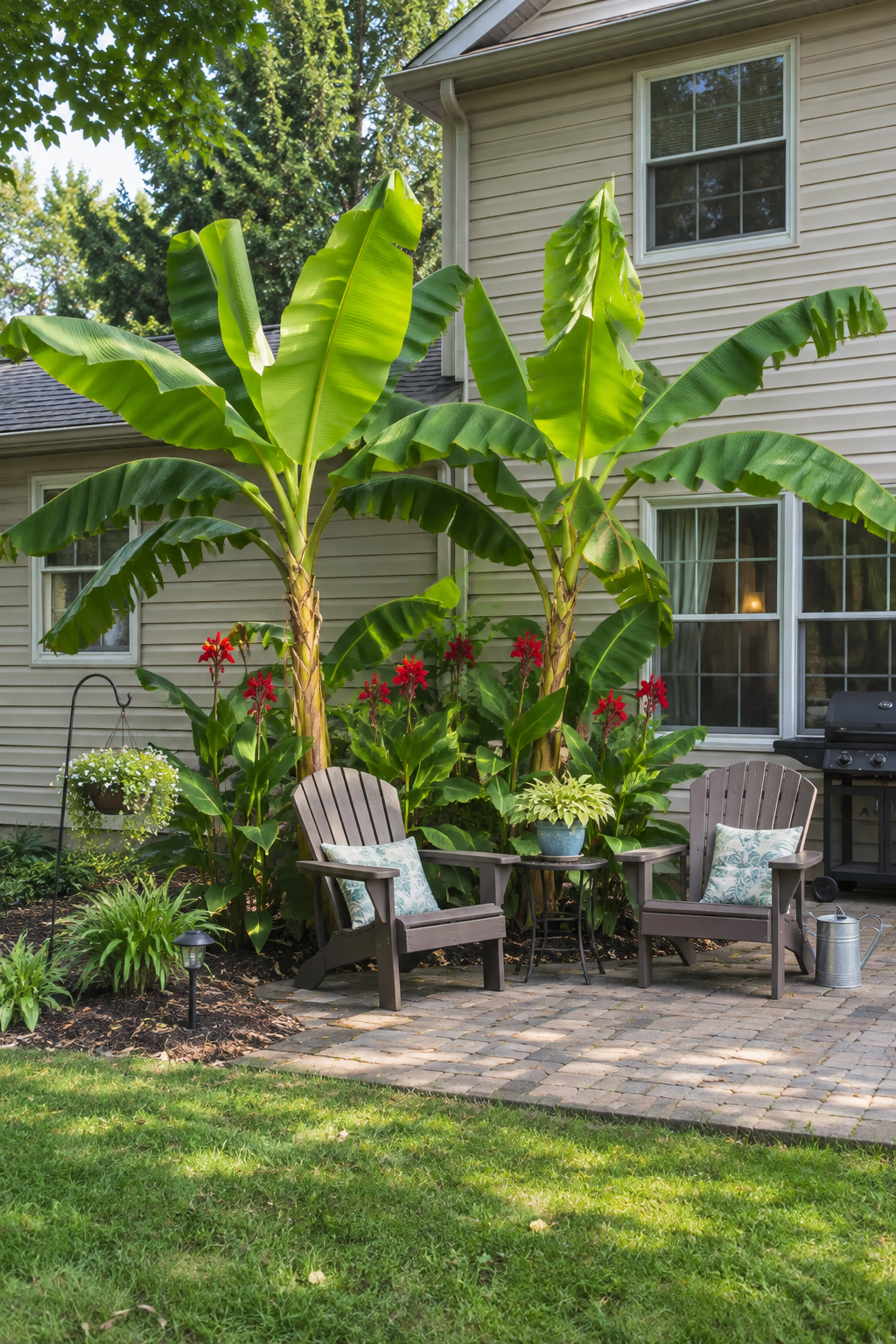
Huge leaves even in cold-winter regions
Plant one or two hardy bananas in a sheltered bed beside the patio and their 6-foot paddle-shaped leaves will make a dramatic backdrop by midsummer. The hardy Japanese banana can return from its roots in many areas down to about zone 5 or 6 with heavy winter mulch.
Bananas grow fast and love rich soil, regular water, and plenty of fertilizer during warm months. A spot that blocks strong wind will keep the leaves from shredding into ribbons.
Frost turns the leaves brown and mushy, so cut the stems back in fall and cover the crown with a thick layer of straw or shredded leaves. In frost-free areas, edible banana varieties and bird of paradise make striking alternatives.
10. Build a Small Tiki-Style Bar
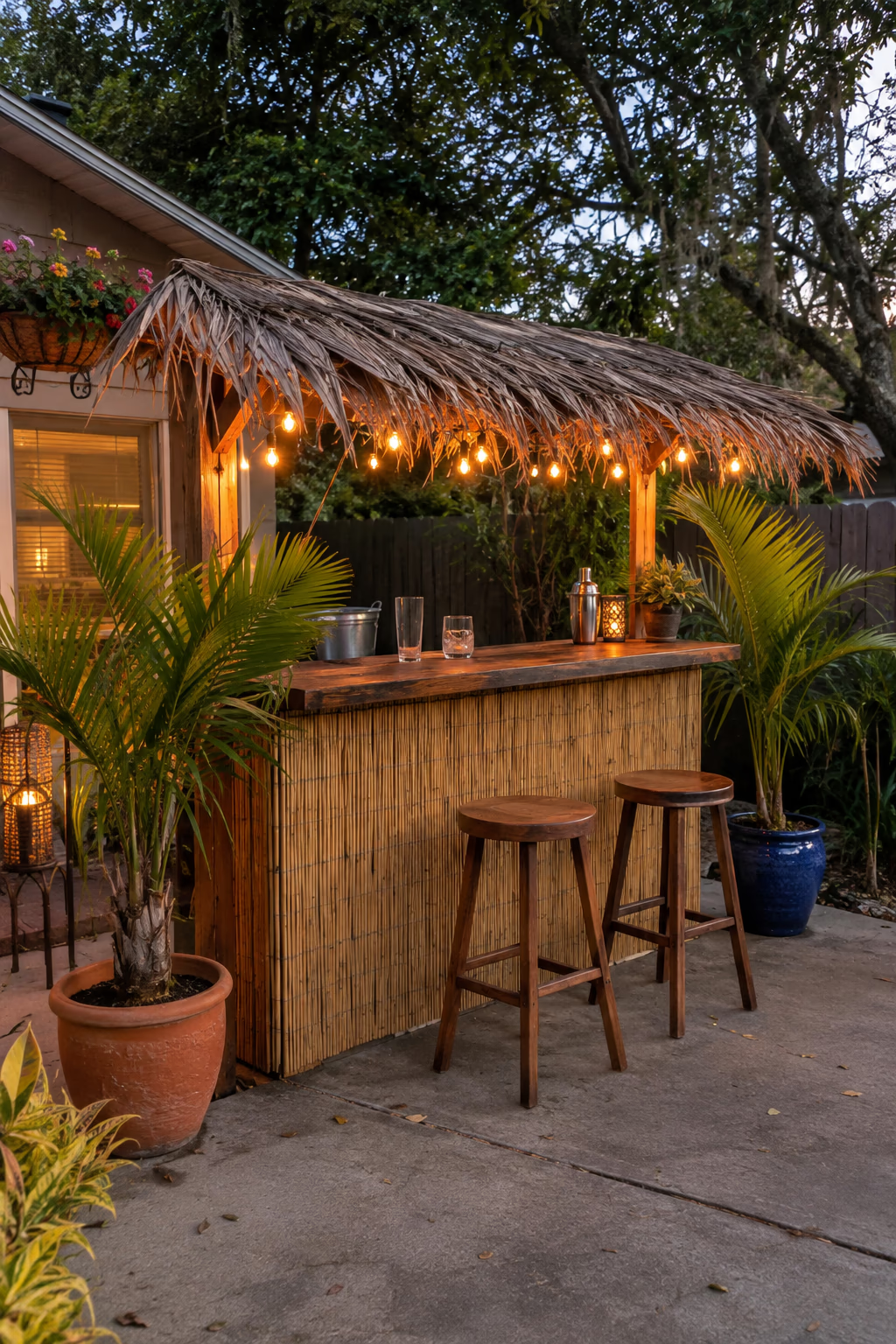
A fun gathering spot for summer drinks
A compact outdoor bar turns your patio into a place to host friends. Build a simple counter from pressure-treated lumber, then wrap the front in bamboo matting or rough-sawn cedar. Add a sloped roof with faux thatch and a pair of rattan or wood bar stools.
Even a 5-foot counter is enough to hold a cooler, a blender, and a few glasses. A narrow shelf under the top keeps supplies handy, and a string of lights along the roof edge sets the mood.
Use exterior-grade screws and sealers, and keep bars well away from grills or open flames if you use natural thatch. If you add a sink, refrigerator, or new outlet, plumbing and electrical work may require permits.
11. Open a Thatched Umbrella Over the Table
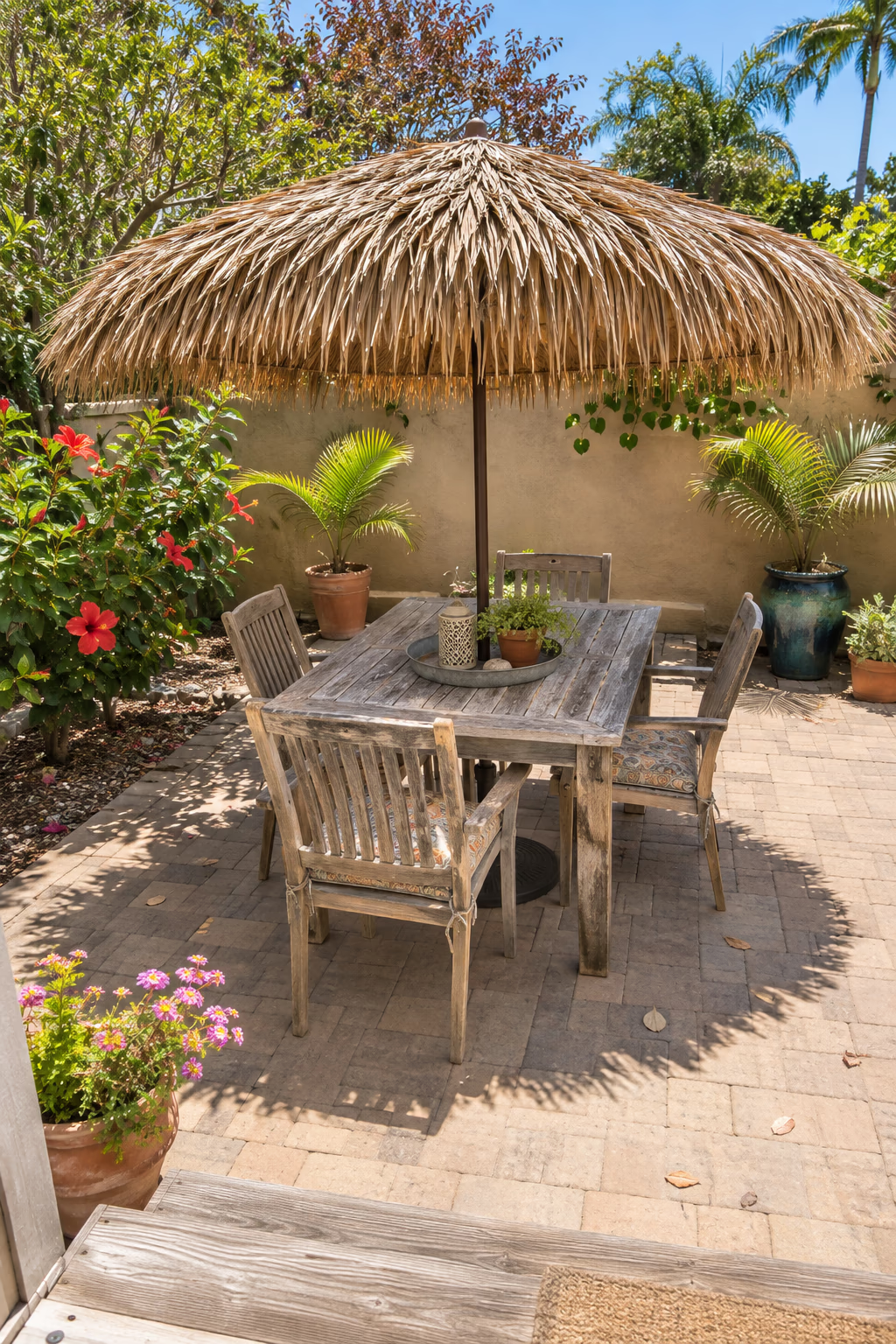
Beach-hut shade that’s easy to install
A palapa-style thatched umbrella over a dining or bistro table brings beach-bar charm without building a full structure. Most are 7 to 9 feet wide and fit into a standard heavy umbrella base or a ground sleeve set in concrete.
Synthetic thatch has become popular because it holds its color, resists mold, and stays put in wind better than natural palm leaf or reed. Natural thatch looks authentic but sheds fibers and needs replacing more often.
Close or remove any umbrella before storms, and choose a base heavy enough for the canopy size. Keep thatch away from grills, heaters, and fire pits, since dry natural thatch catches fire easily.
12. Hang Breezy Outdoor Curtains for a Cabana Feel
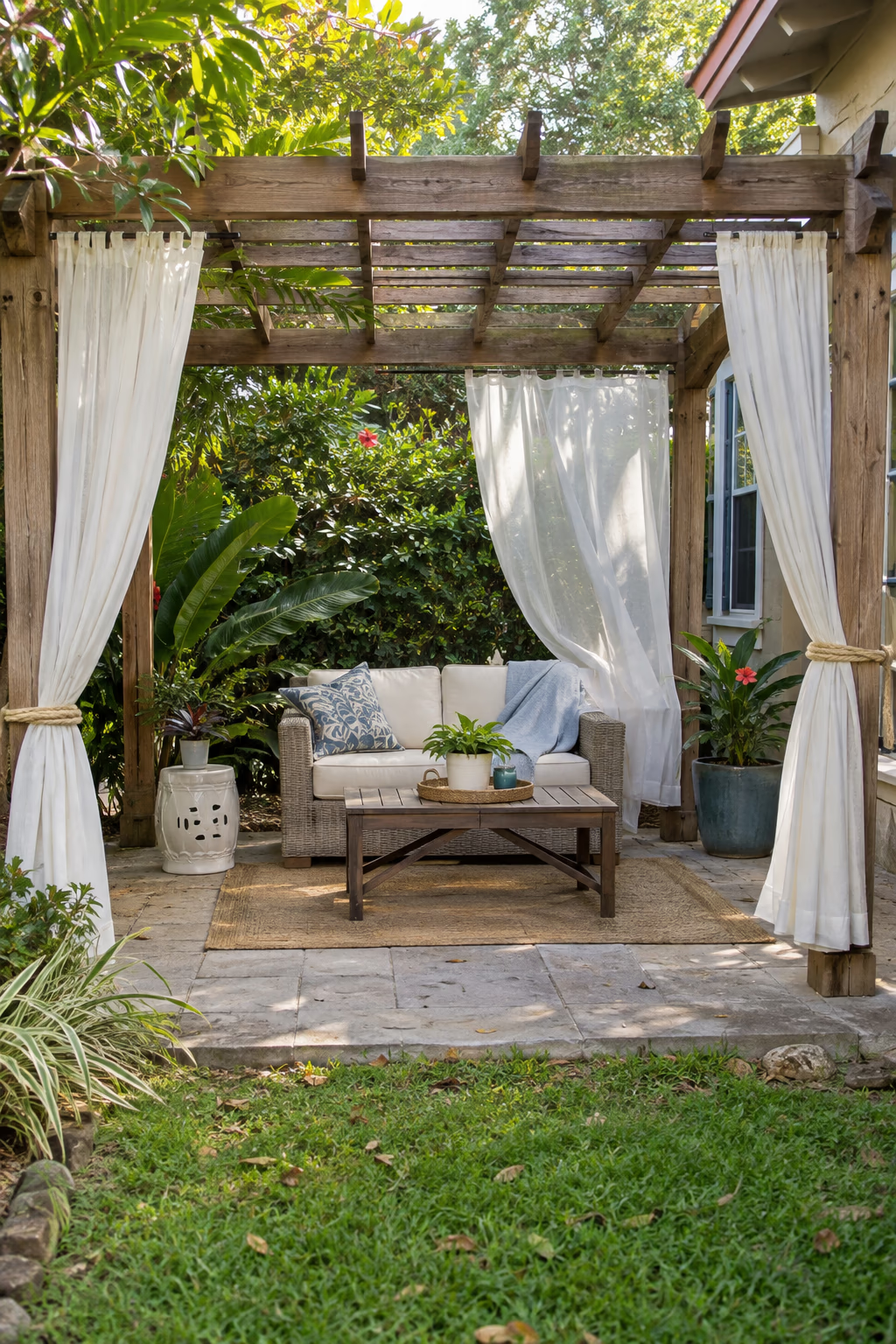
Soft enclosure, shade, and privacy
White or cream outdoor curtains hung from a pergola or covered patio beam instantly create the look of a resort cabana. Mount a sturdy rod or tension cable along the edges and let the panels pool slightly or stop just above the floor.
Curtains soften hard lines, block low afternoon sun, and add privacy from neighbors when drawn. Tied back with rope, they frame the view of your plants and give the space a relaxed, airy feel.
Choose solution-dyed acrylic or polyester outdoor panels with grommets, which handle sun and moisture better than indoor fabrics. Weighted hems or tiebacks keep them from whipping in strong wind.
13. Grow a Living Wall of Ferns and Bromeliads
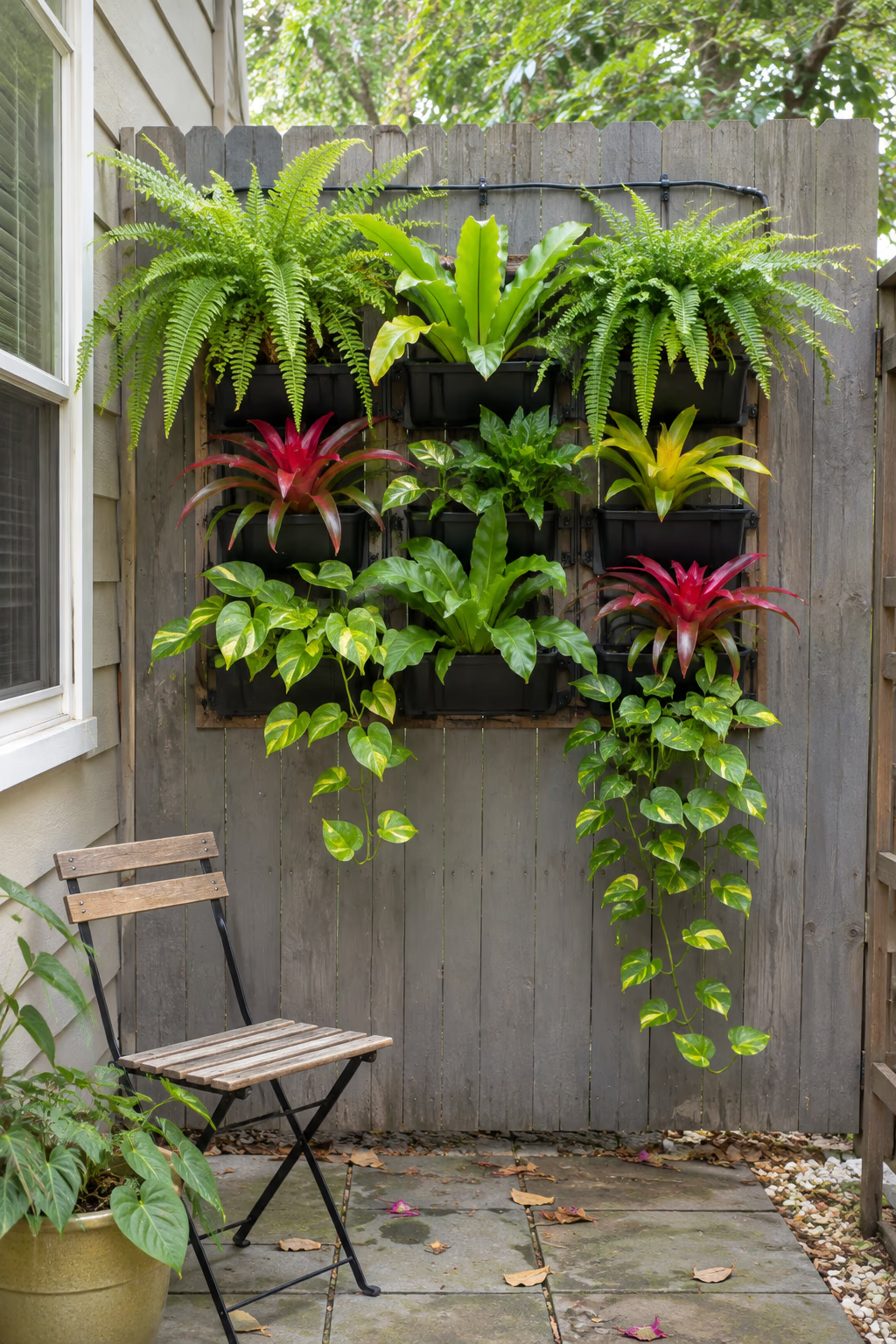
Lush greenery that saves floor space
When your patio is small, go vertical. Mount a modular wall planter system or a series of pocket planters on a fence or exterior wall and fill it with Boston ferns, bird’s nest ferns, bromeliads, pothos, and philodendron for a layered rainforest effect.
Vertical gardens bring green to eye level, cover a plain wall, and make even a narrow patio feel surrounded by plants. They work best in part shade, where foliage plants won’t scorch.
Wall planters dry out quickly, so a simple drip irrigation line with a timer makes a huge difference. Protect walls from moisture with a waterproof backing, and treat most of these plants as annuals or bring them inside where temperatures drop below about 50°F.
14. Gather Around a Fire Bowl on Cool Evenings
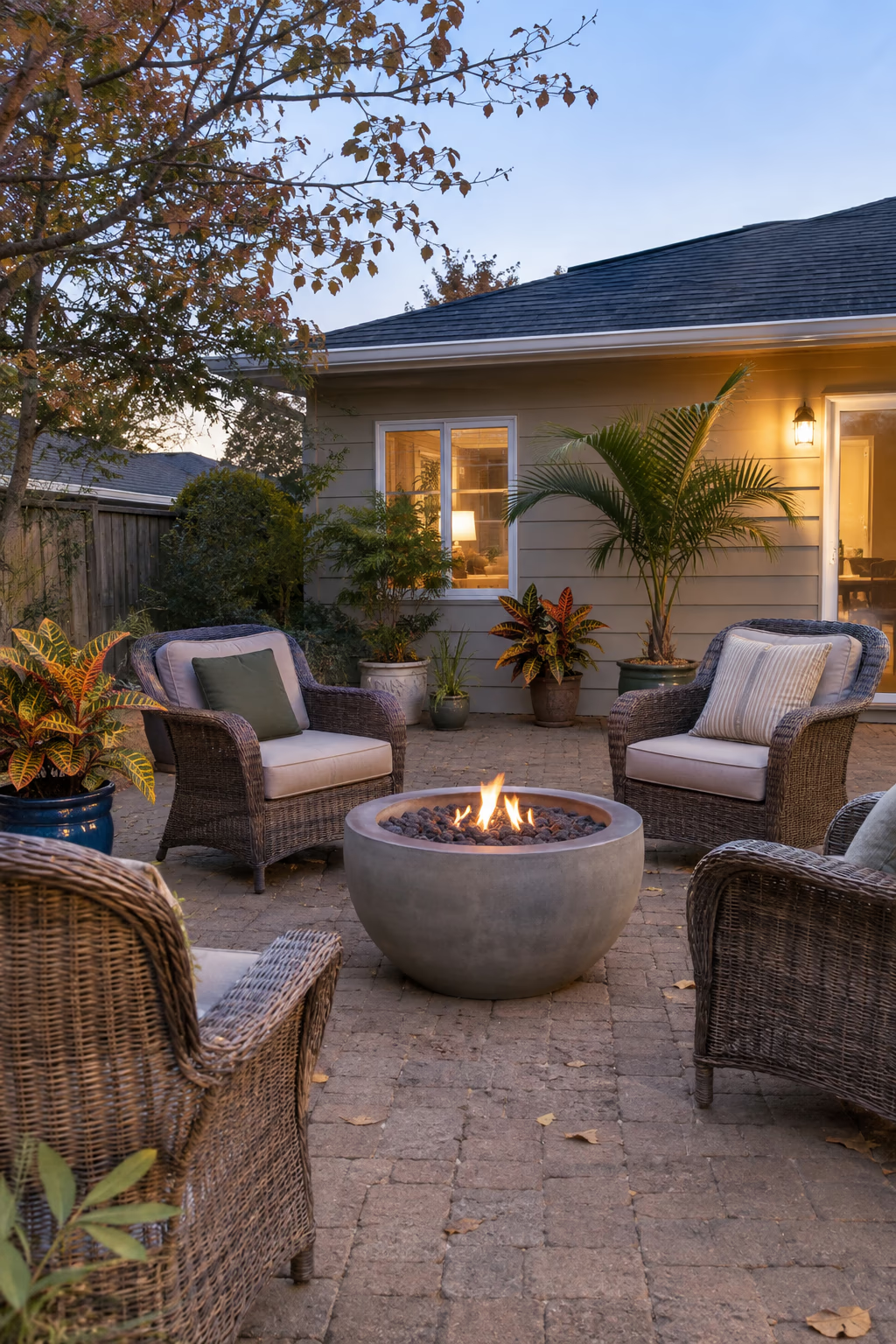
Warm island nights all year round
A low concrete or metal fire bowl surrounded by a few chairs extends tropical evenings well into spring and fall. Gas fire bowls are clean and easy to use, while wood-burning versions give a campfire crackle and glow.
Place the fire bowl on stone, concrete, or pavers and surround it with plants that won’t overhang the flames. A ring of low ornamental grasses or potted crotons placed at a safe distance keeps the tropical feel without adding a fire risk.
Check local codes, HOA rules, and seasonal burn bans before buying. Keep fire features out from under pergolas, umbrellas, and roof extensions, and follow the manufacturer’s required clearances.
15. Lay Natural Stone Pavers Underfoot
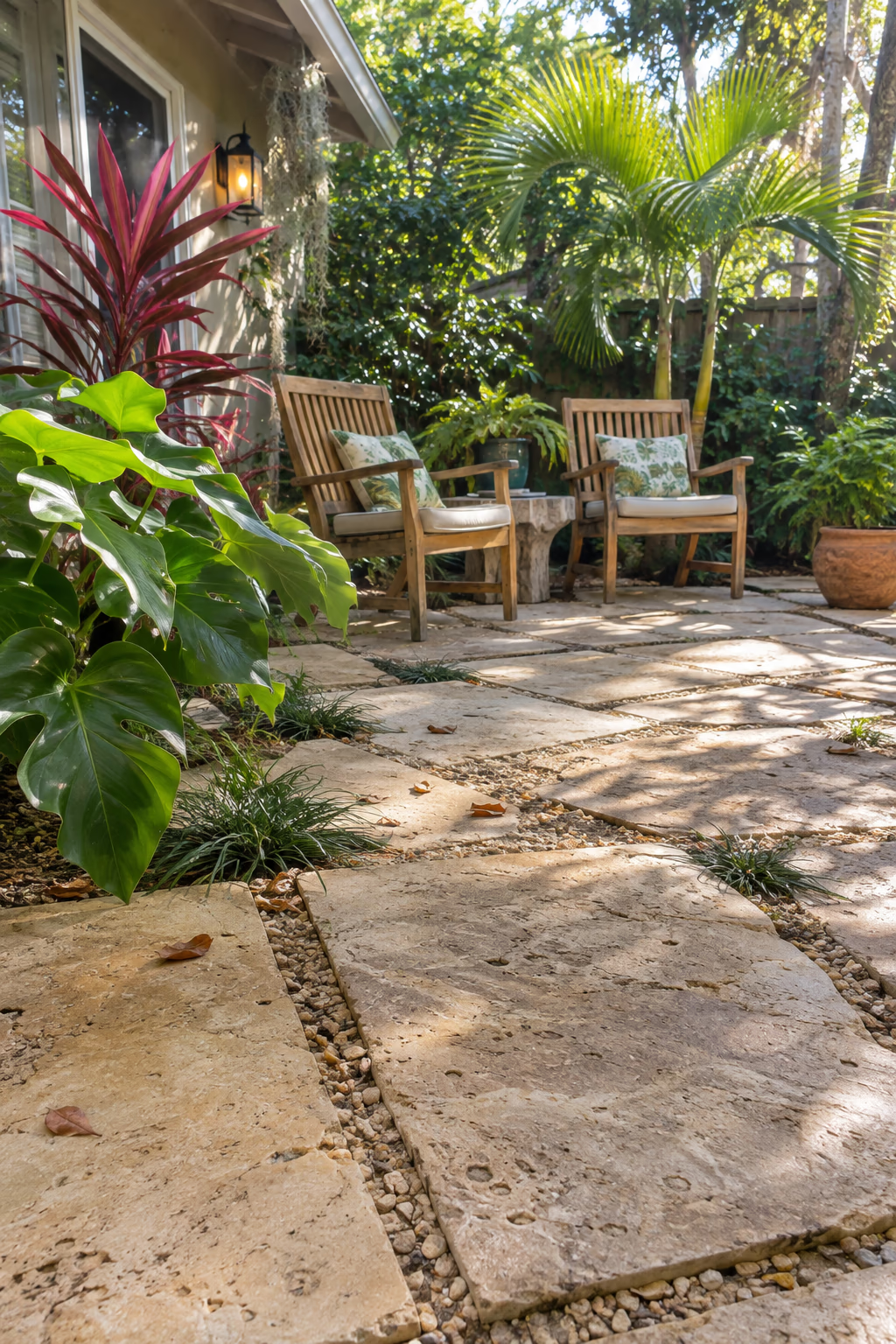
A cool, earthy base for lush plants
Natural stone gives a tropical patio a relaxed, timeless base. Travertine, light limestone, or flagstone in sandy beige and soft gray reflects heat better than dark materials and looks right at home next to green foliage.
Set pavers with wide joints filled with gravel or creeping groundcover, or leave small gaps for plants such as mondo grass for a softer, garden-like effect. Irregular flagstone suits a casual look, while large rectangles feel more modern.
Stone patios cost more than concrete and need a properly compacted gravel base to stay level. Choose a textured or tumbled finish that is less slippery when wet, especially around showers or fountains.
16. Weave Warm Lights Through the Greenery
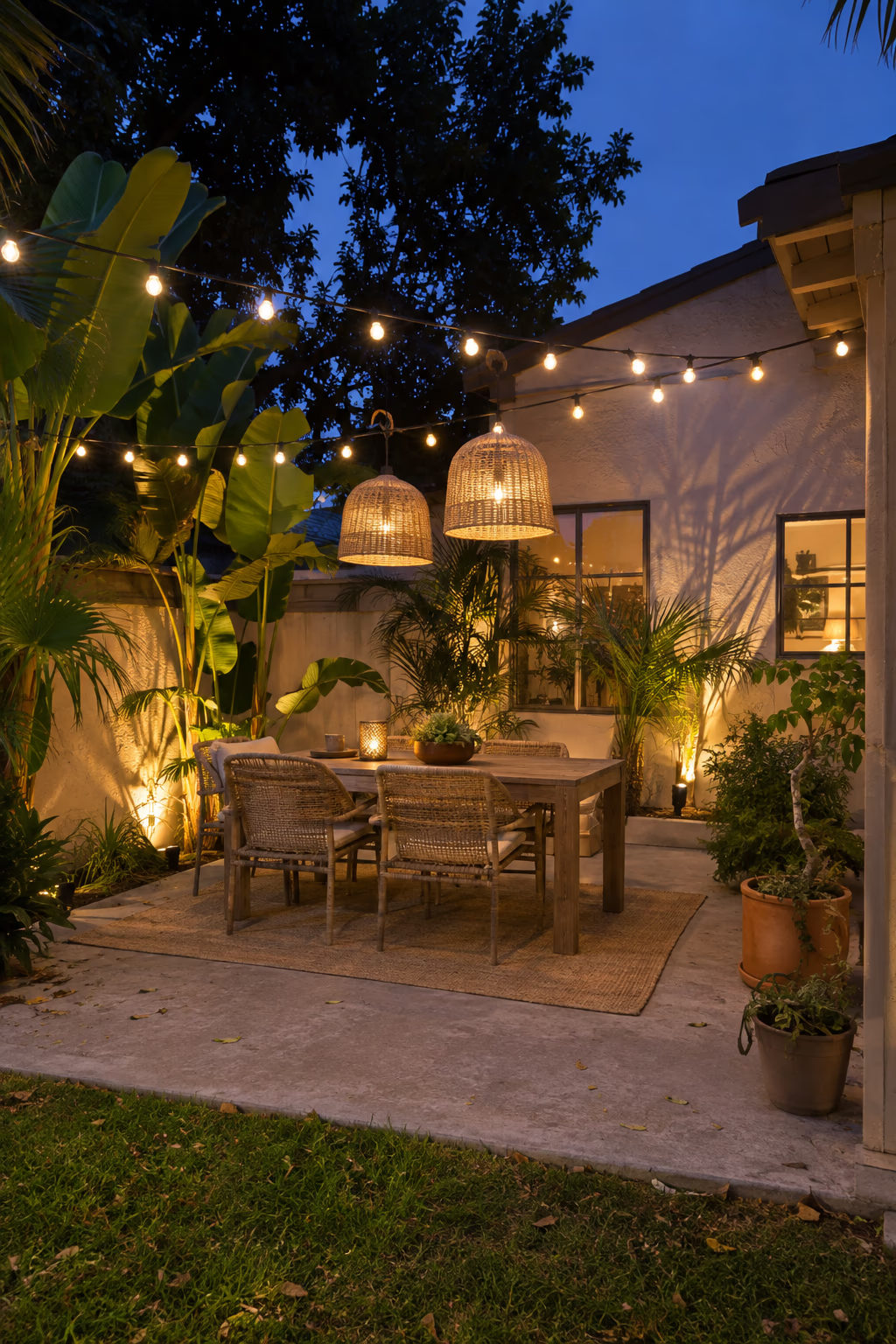
A magical glow after sunset
Layered lighting makes a tropical patio feel enchanting at night. Drape warm white string lights across the patio, hang woven or rattan pendant lanterns over the table, and tuck a few small uplights at the base of palms and bananas to cast leaf shadows on walls.
Warm color temperatures around 2,700K look cozy and flattering, while cooler lights can feel harsh. Solar lanterns and battery candles are easy add-ons where there’s no outlet.
Use outdoor-rated fixtures and cords, plug them into GFCI-protected outlets, and avoid stapling cords to living trees. Low-voltage landscape lighting is a safe, efficient option for permanent uplighting.
17. Add an Outdoor Shower Off the Patio
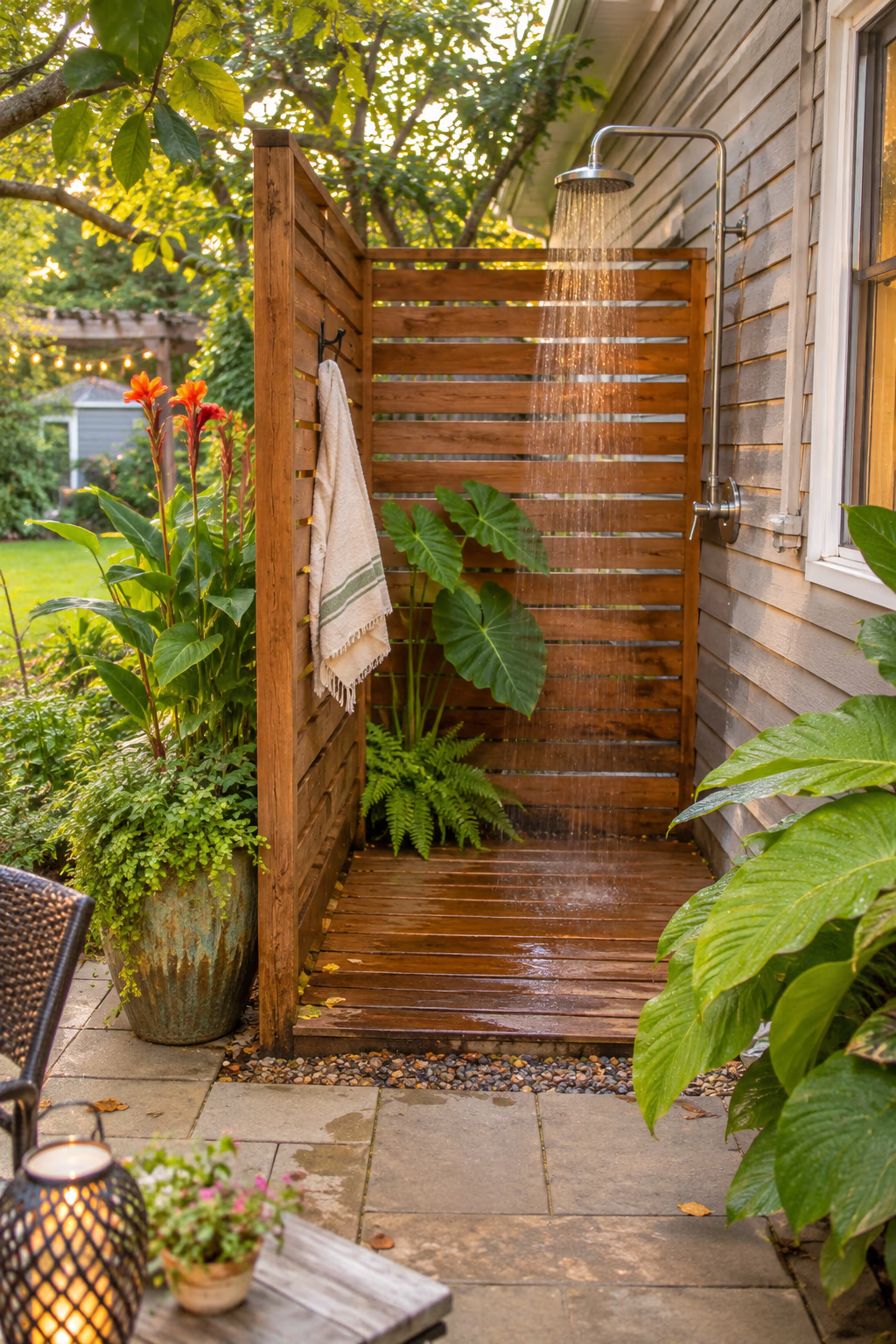
A resort-style rinse after yard work or swimming
An outdoor shower brings real island vacation flair. A simple version can be a wall-mounted shower head connected to an exterior water line, with cedar slat walls or bamboo screening for privacy and a teak or stone floor that drains well.
Surround the shower with moisture-loving plants such as ferns, elephant ears, and cannas, which will appreciate the extra water. A hook for towels and a small shelf for soap complete the setup.
Hot-water plumbing and drainage usually require a licensed plumber and may need a permit, and some areas limit where gray water can go. In freezing climates, add a shutoff valve and drain the lines before winter.
18. Paint a Bold Tropical Accent Wall
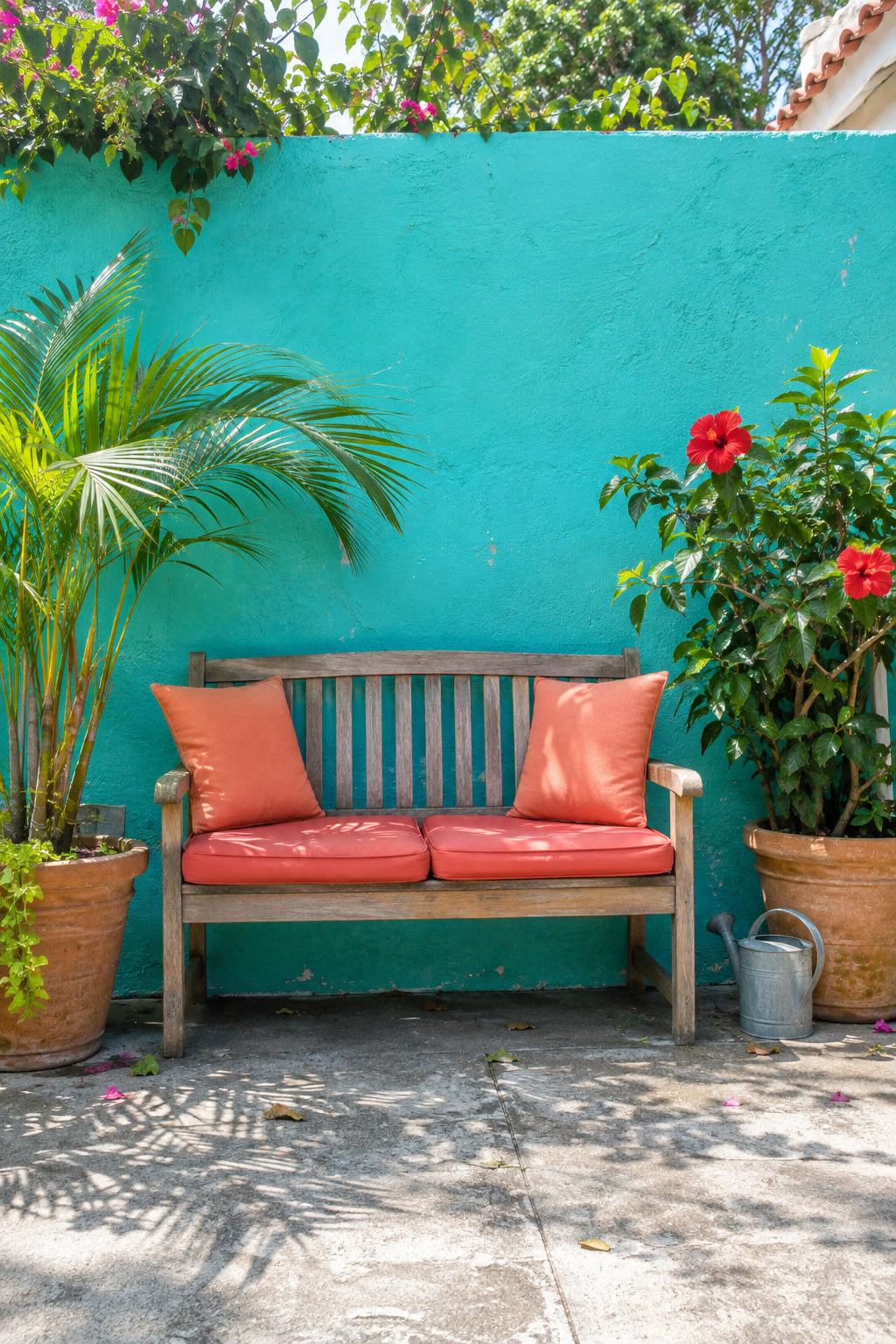
A burst of color behind the plants
A painted wall can transform a dull patio. Turquoise, coral, terracotta, or deep green on a stucco wall, fence, or garage side makes green leaves and bright flowers pop like a postcard from the Caribbean or Mexico.
Pick a color that suits your home’s exterior and repeat it in pillows or planters so it looks intentional. Pair a hot wall color with cooler green and white elsewhere so the space feels balanced rather than overwhelming.
Use exterior acrylic paint and prepare the surface properly. Very saturated colors fade faster in full sun, so expect to touch them up every few years, and check HOA rules if the wall is visible from the street.
19. Ground the Space With a Woven Outdoor Rug
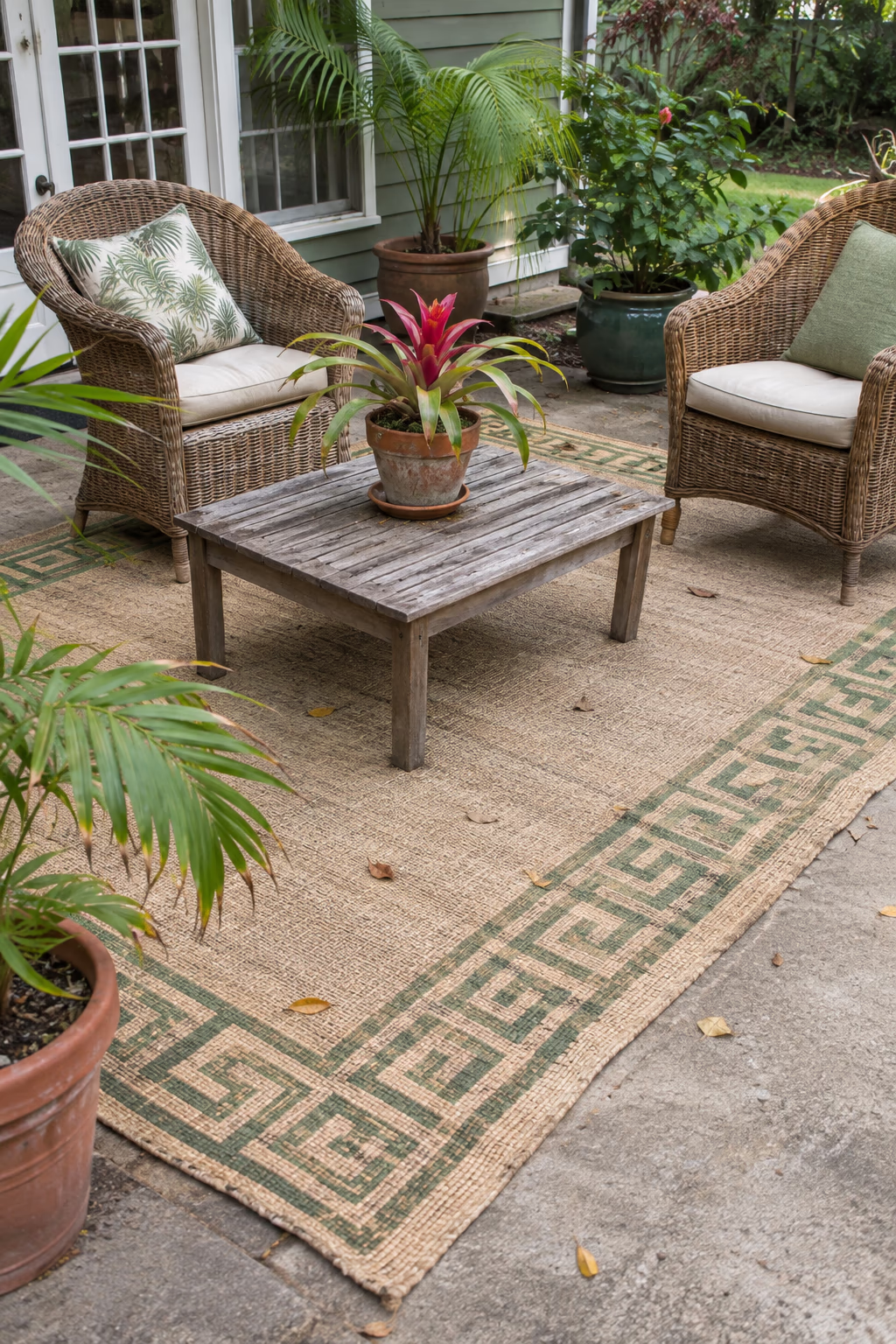
A soft layer that ties furniture together
An outdoor rug defines the seating area and softens concrete or pavers. Choose a flat-woven polypropylene rug in natural jute tones, or a two-color design in sand and green, sized so at least the front legs of the furniture sit on it.
Natural texture underfoot reinforces the relaxed beach-house mood and makes the patio feel more like an extension of your living room.
True jute and sisal break down quickly outdoors, so stick with synthetic outdoor rugs that resist mildew. Hose them off occasionally and let them dry fully, or roll them up during long wet spells to protect the patio surface underneath.
20. Edge the Patio With Hummingbird Flowers
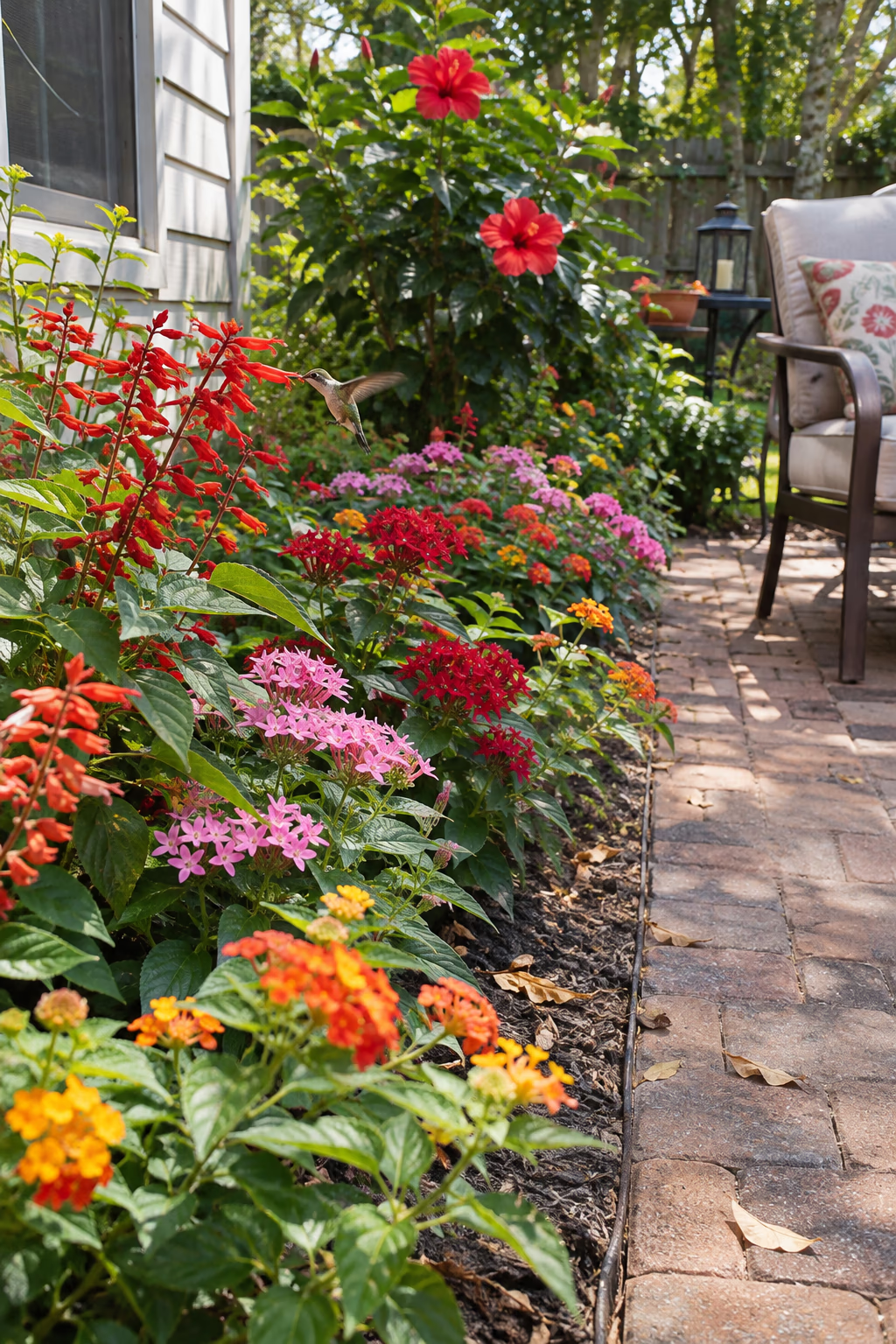
Color and movement right beside your chair
Plant a strip of bright, tubular flowers along the patio edge and you’ll soon have hummingbirds and butterflies visiting while you relax. Pentas, salvia, cuphea, lantana, firespike, and hibiscus all thrive in sun and bring vivid red, pink, and orange.
A bed about 2 to 3 feet deep gives enough room for a few layers, with taller salvia or cannas at the back and lower pentas or lantana along the front. Group several plants of each color so they stand out from a distance.
Many of these are tender perennials grown as annuals outside the warmest zones. Skip pesticides in this bed to protect pollinators, and check that lantana is not considered invasive in your area before planting it in the ground.
21. Grow a Dwarf Citrus Tree for Fresh Fruit
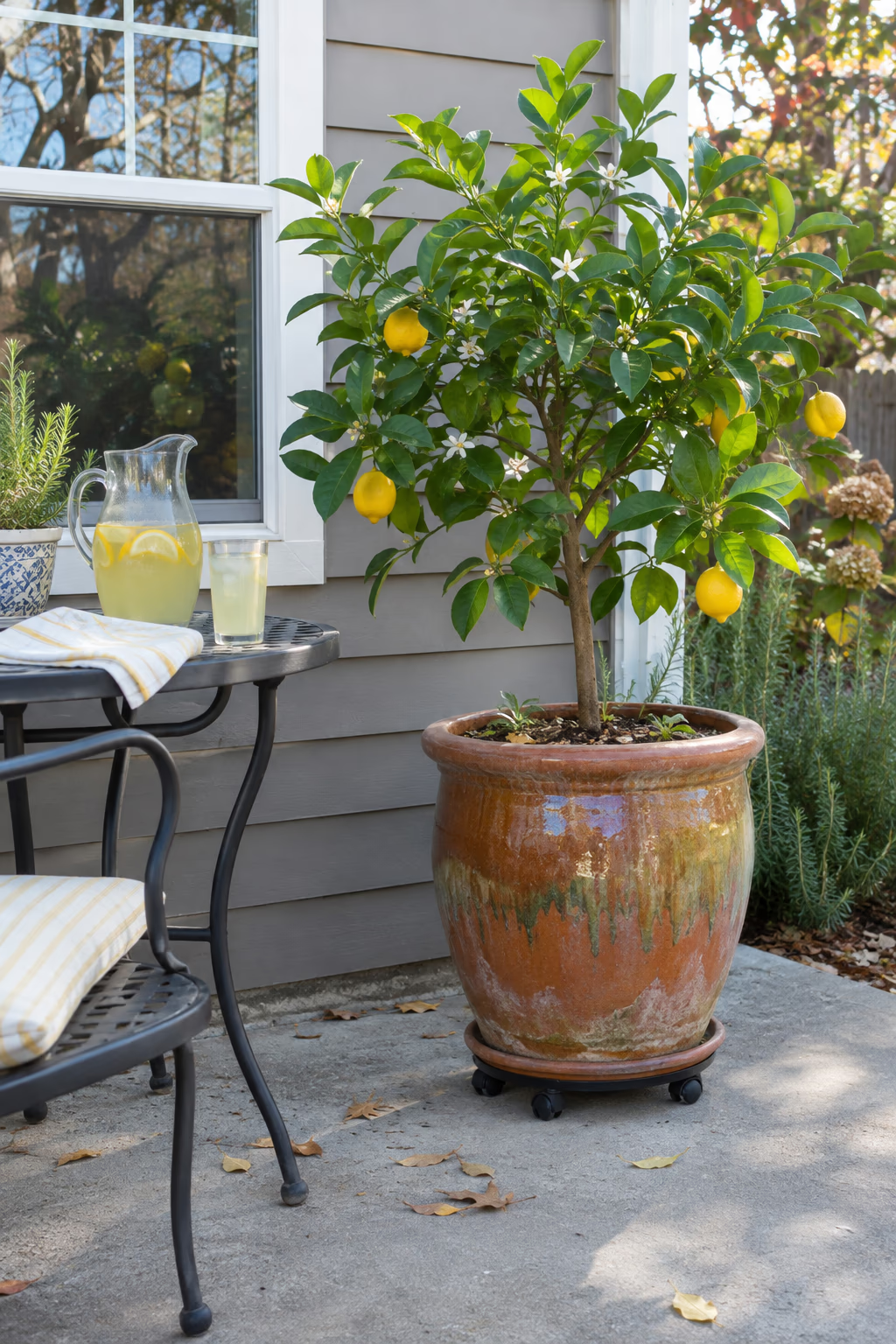
Fragrant blooms and homegrown fruit
A dwarf lemon, lime, or kumquat in a large container adds glossy evergreen leaves, sweet-scented blossoms, and fruit for drinks or desserts. Meyer lemon and Bearss lime are among the easiest for patios.
Give the tree a sunny spot with at least 6 to 8 hours of direct light, a fast-draining citrus potting mix, and regular feeding with a citrus fertilizer during the growing season.
Citrus is sensitive to frost, so bring it into a bright garage or sunroom when temperatures dip below about 32°F. Some states restrict moving citrus across state lines to prevent disease, so buy from a local nursery.
How to Plan Your Tropical Patio
A tropical patio looks best when it feels lush and relaxed rather than cluttered. Think through climate, shade, and upkeep before you start buying plants and decor.
- Know your zone. Check your USDA hardiness zone and lowest winter temperature, then choose plants that can survive outdoors or plan where tender plants will spend the winter.
- Start with shade. A pergola, umbrella, sail, or covered roof shapes how you’ll use the space, so plan overhead cover first and add plants around it.
- Layer heights. Combine tall palms or bananas, medium shrubs, and low flowers or groundcovers so the patio feels wrapped in green instead of lined with a single row of pots.
- Pick a color story. Choose two or three accent colors and repeat them in textiles, paint, and flowers so the space looks cohesive.
- Plan for water. Tropical-looking plants are thirsty, so place a hose bib or install drip irrigation with a timer before your summer heat arrives.
- Check rules and safety. Confirm permits, HOA guidelines, and burn rules for structures, wiring, plumbing, and fire features, and call 811 before digging footings or trenches.
Frequently Asked Questions
Can I have a tropical patio in a cold climate?
Yes. Use cold-hardy plants with a tropical look, such as hardy banana, windmill palm, canna, elephant ear, and hosta, and grow tender tropicals in containers you move indoors before frost. Textiles, bamboo, and warm lighting carry the style all year.
What are the best low-maintenance plants for a tropical patio?
Snake plant, ZZ plant, bird’s nest fern, bromeliads, philodendron, and many palms tolerate some neglect. In cold areas, cannas and elephant ears are easy summer performers. Grouping plants with similar water needs makes care much easier.
How do I make a small patio feel tropical?
Focus on vertical space and a few strong pieces. A living wall, one large potted palm, a woven chair, leaf-print pillows, and string lights can transform even a balcony without crowding it.
What furniture works best for a tropical patio?
All-weather wicker, teak, eucalyptus, and powder-coated aluminum handle sun and humidity well. Light, natural finishes and cushions in outdoor fabrics fit the relaxed resort mood.
How much does it cost to create a tropical patio?
A simple refresh with plants, pillows, a rug, and lights can cost a few hundred dollars. Pergolas, new pavers, outdoor showers, and built-in bars can add thousands, so many homeowners build the look in phases.
Final Thoughts
The best tropical patio ideas combine lush plants, comfortable seating, and a few playful island touches. Whether you start with a couple of potted palms, a vine-covered pergola, or a hammock in the corner, each change brings you closer to that easygoing vacation feeling.
Choose plants that suit your climate, invest in weather-ready materials, and add new elements as your budget allows. Over time, your patio will become the place everyone wants to gather, from slow summer mornings to warm, glowing nights.


