
Step out the back door and you’re surrounded by banana leaves taller than your head, a hammock swaying in dappled shade, and the soft trickle of water somewhere behind a wall of ferns. For a moment, it feels like a week off on an island instead of a regular Tuesday at home.
That vacation feeling is exactly why tropical yards are so popular. Big, glossy leaves, hot flower colors, and natural materials like bamboo, rattan, and stone make even a modest suburban lot feel lush and private. And you don’t need to live in Florida or Hawaii to pull it off. Plenty of tropical-looking plants handle colder winters, and many others can spend summer outside in pots.
These 23 tropical backyard ideas cover jungle-style borders, thatched shade huts, outdoor showers, ponds, hardy palms, lighting, and clever tricks for cold-climate gardeners. Pick one project for this season, or combine several to build your own backyard escape over time.
1. Layer Bananas, Cannas, and Elephant Ears Into a Jungle Border
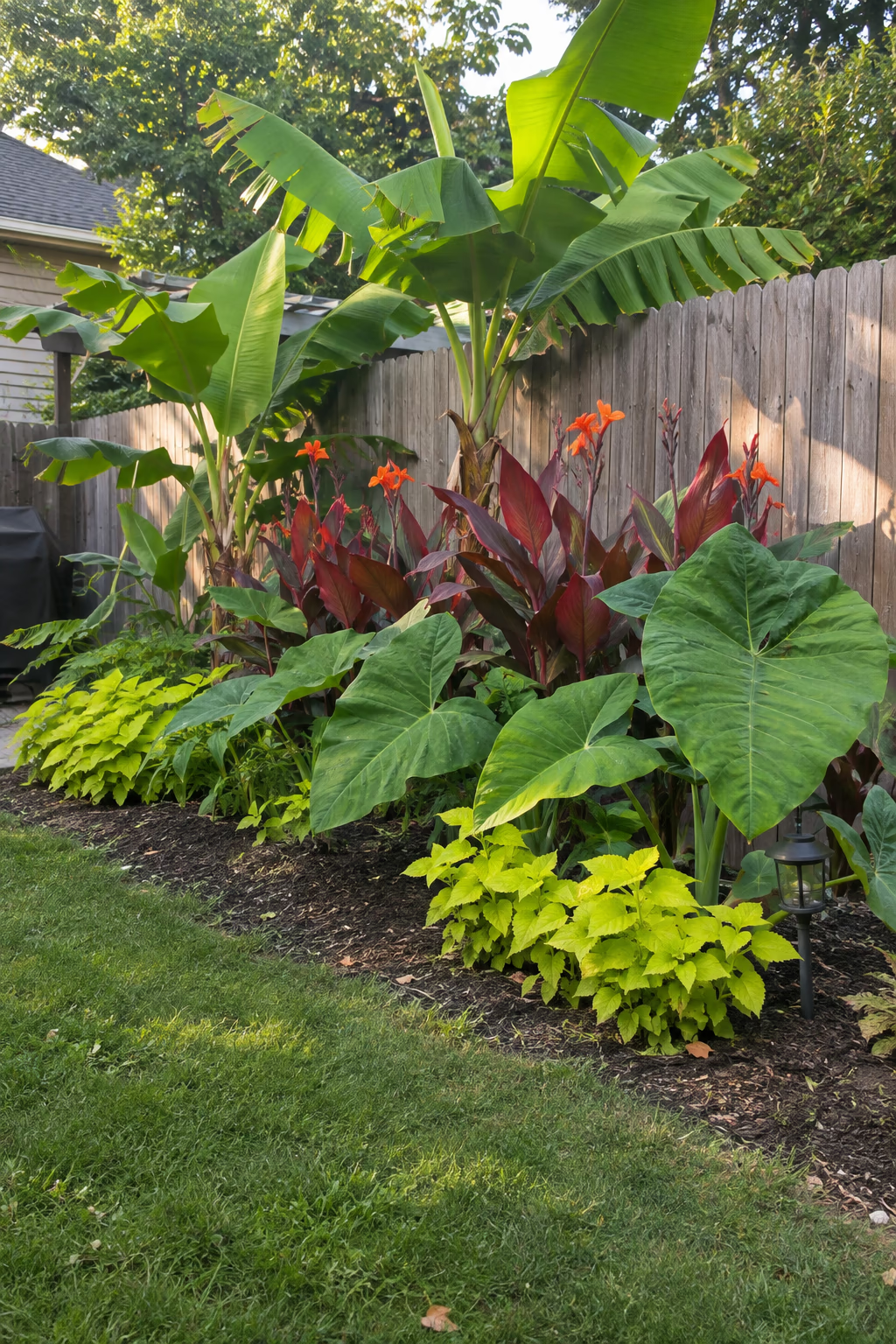
The fastest way to make a yard look tropical
Nothing says tropical like huge leaves stacked at different heights. Plant a deep border, ideally 6 to 8 feet from front to back, with hardy bananas at the rear, cannas in the middle, and elephant ears in front. Fill the gaps with coleus, caladiums, or sweet potato vine for color at ground level.
This trio works because each plant has a different leaf shape and size, so the bed reads as a dense, layered jungle instead of a flat row. Bananas and cannas also grow remarkably fast, reaching full size in a single summer when they get rich soil, full sun, and steady water.
In zones colder than about 7, dig canna rhizomes and elephant ear tubers after the first frost and store them in a cool, dry place. Hardy bananas can stay in the ground in many areas if you cut them back and pile on a foot or more of mulch. In parts of the Gulf Coast and Florida, common elephant ear spreads aggressively along waterways, so check your local invasive list first.
2. Build a Thatched Tiki Hut for Shady Lounging
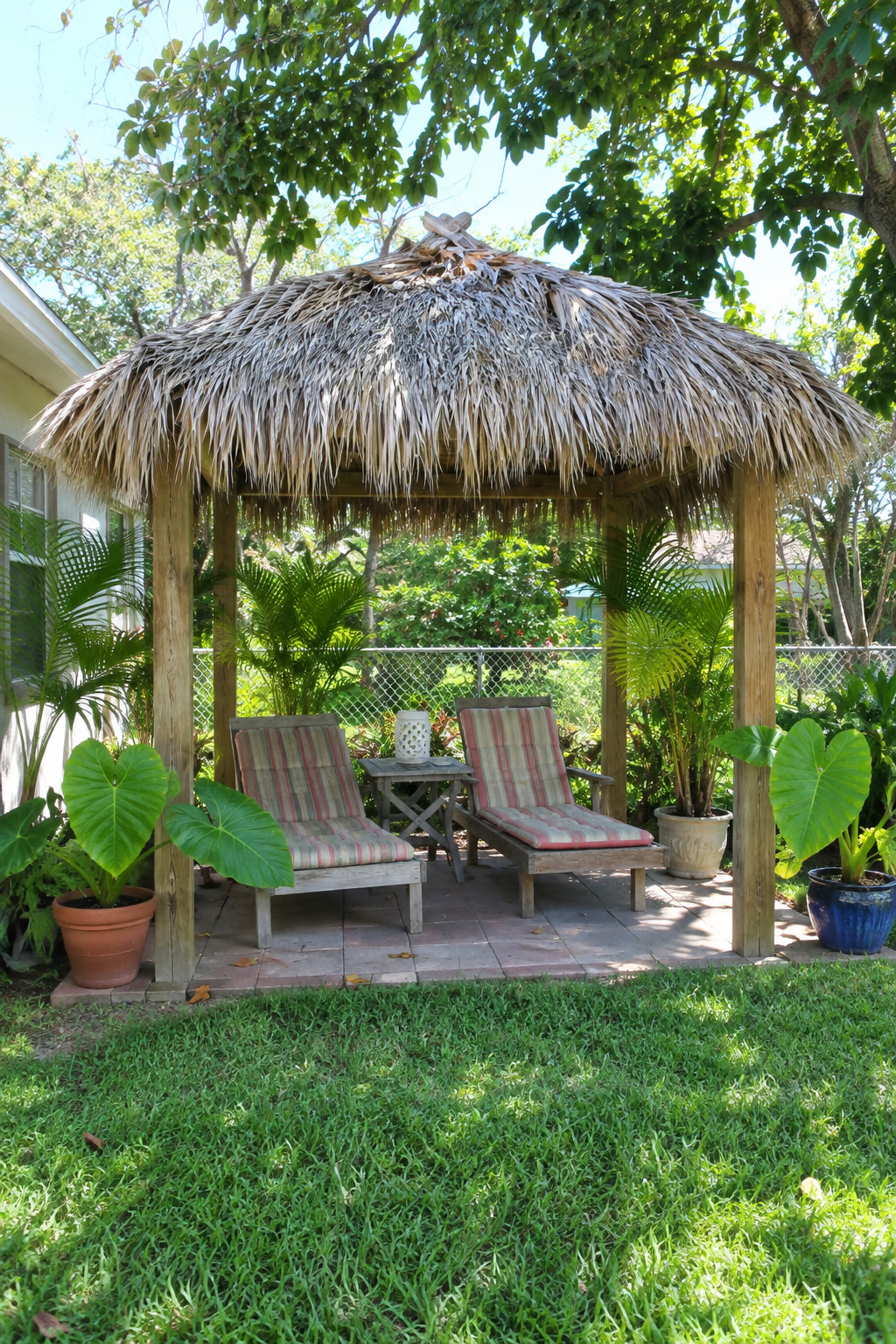
Instant resort shade with island character
A simple four-post hut topped with palm thatch turns any corner of the yard into a beach-bar hideaway. A 10-by-10-foot frame of pressure-treated or cedar posts set in concrete footings is enough to shelter a pair of lounge chairs or a small table. Thatch panels attach over a plywood or slatted roof deck.
The hut works as a focal point and a destination. Once it’s surrounded by bold foliage, the structure ties the whole tropical theme together and gives you a cool place to sit during the hottest part of the day.
Natural thatch is flammable and breaks down in a few years in wet climates. Synthetic thatch lasts much longer and is often available with a fire rating. Keep grills and fire pits well away, and check with your building department or HOA, since many areas require a permit for structures above a certain size.
3. Install a Cedar Outdoor Shower Wrapped in Greenery
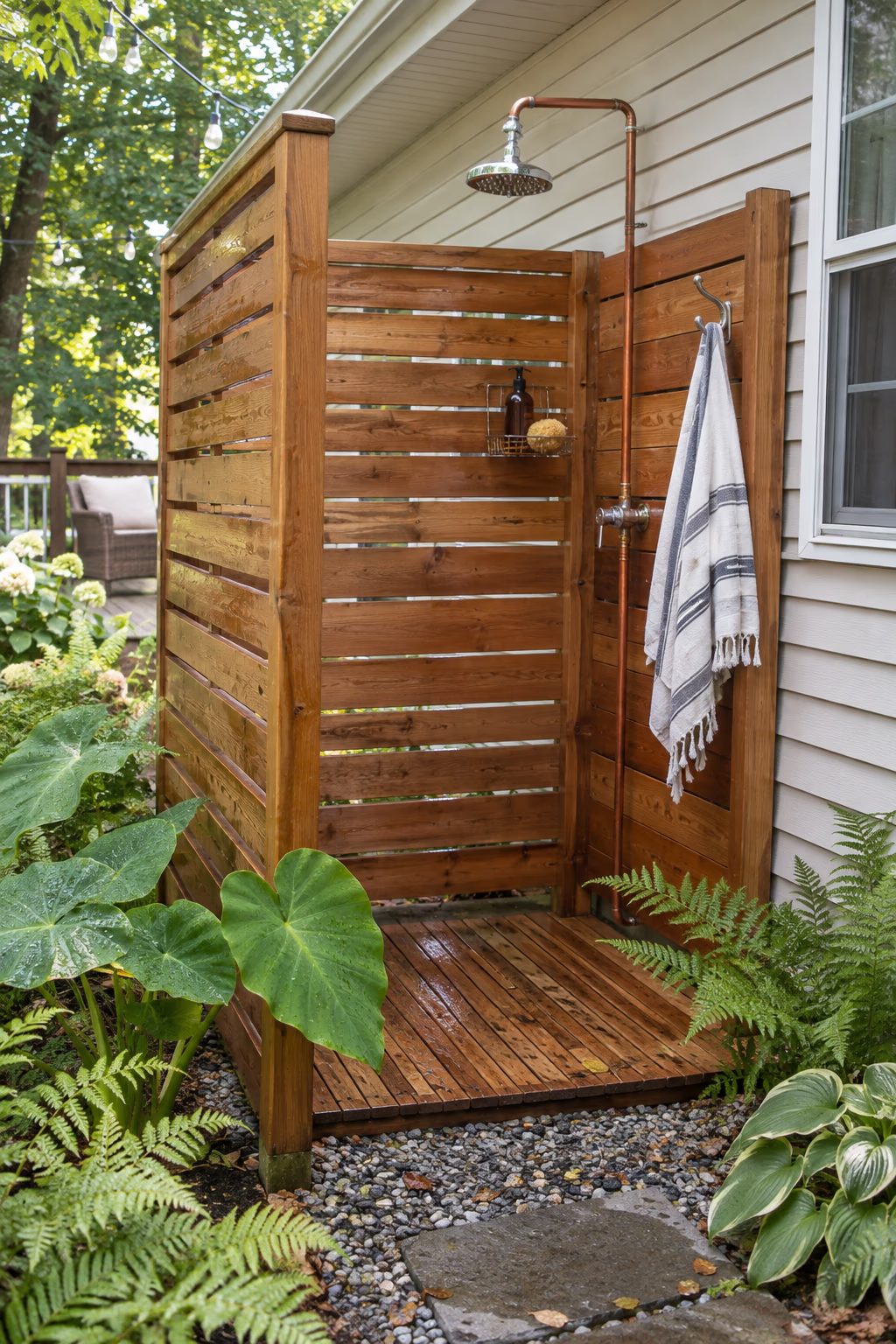
A daily dose of vacation right outside the door
An outdoor shower feels like pure luxury, yet it can be fairly simple. Mount a showerhead on an exterior wall or a sturdy post, enclose it with a three-sided cedar slat screen about 6 feet tall, and set a slatted teak or cedar floor over a bed of gravel so water drains away quickly.
Planting around the enclosure is what makes it feel tropical. Ferns, hostas, elephant ears, and potted palms enjoy the extra moisture, and they soften the screen so it looks like part of the garden rather than an add-on.
A cold-water-only shower fed by a hose bib is the easiest version. Hot water requires running a line from the house and may need a plumber and a permit. Some towns also have rules about where shower runoff can go, so use plant-friendly soap and check local codes before you build.
4. Carve a Winding Jungle Path Under Oversized Leaves
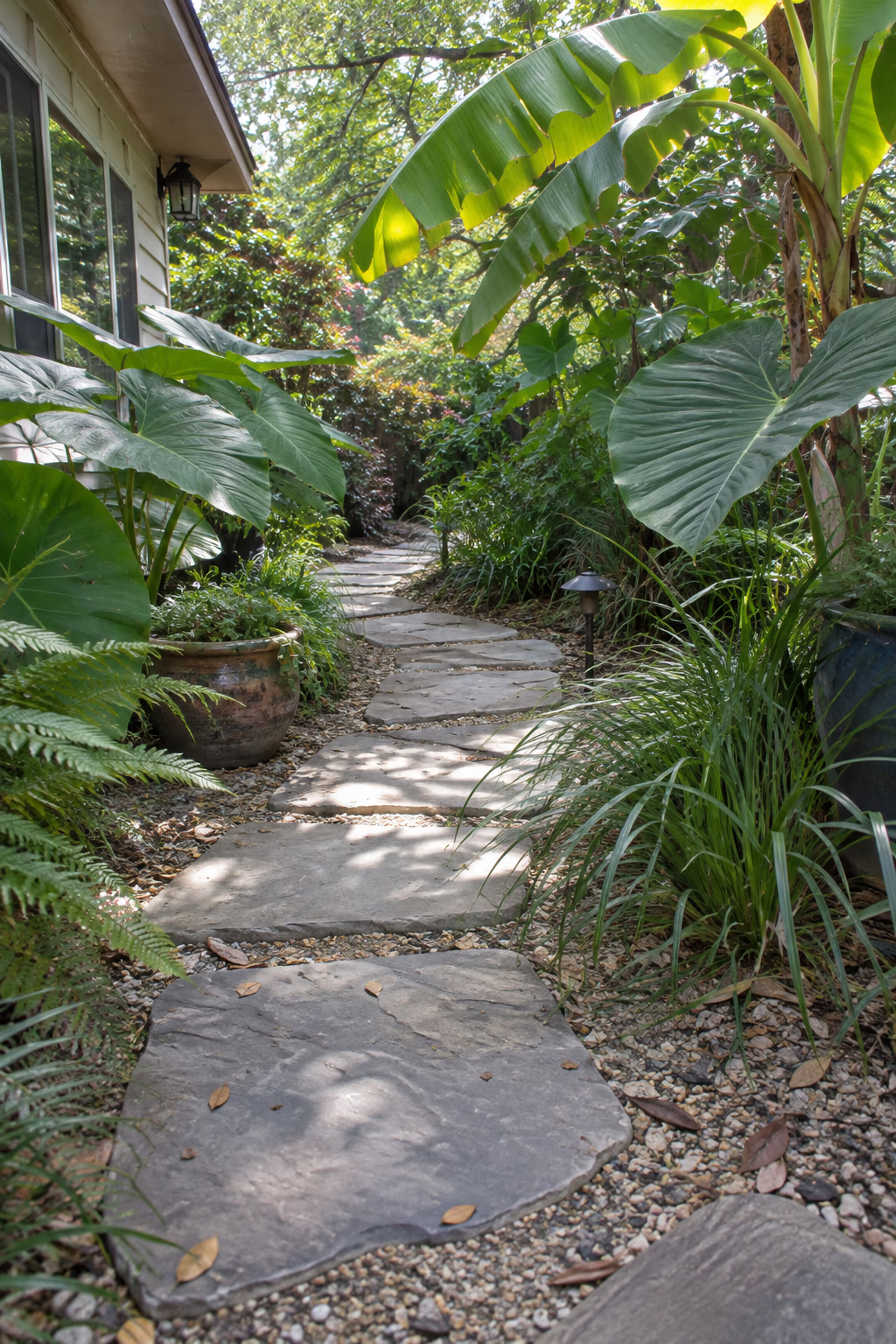
Make the yard feel bigger and more mysterious
A path that curves out of sight is a classic tropical-garden trick. Lay large flat stones or concrete pavers in a loose S-curve through a planted area, then crowd the edges with ferns, elephant ears, and arching grasses so leaves brush against you as you walk.
Because you can’t see where the path ends, even a small yard feels deeper and more like exploring a rainforest trail. It also creates a reason to walk through the garden instead of only looking at it from the patio.
Keep the walkable width at least 3 feet, since plants will lean in as they grow. Set stones on a few inches of compacted gravel so they stay level, and trim back anything thorny or scratchy near the path.
5. Dig a Small Lagoon-Style Pond With Lush Edges
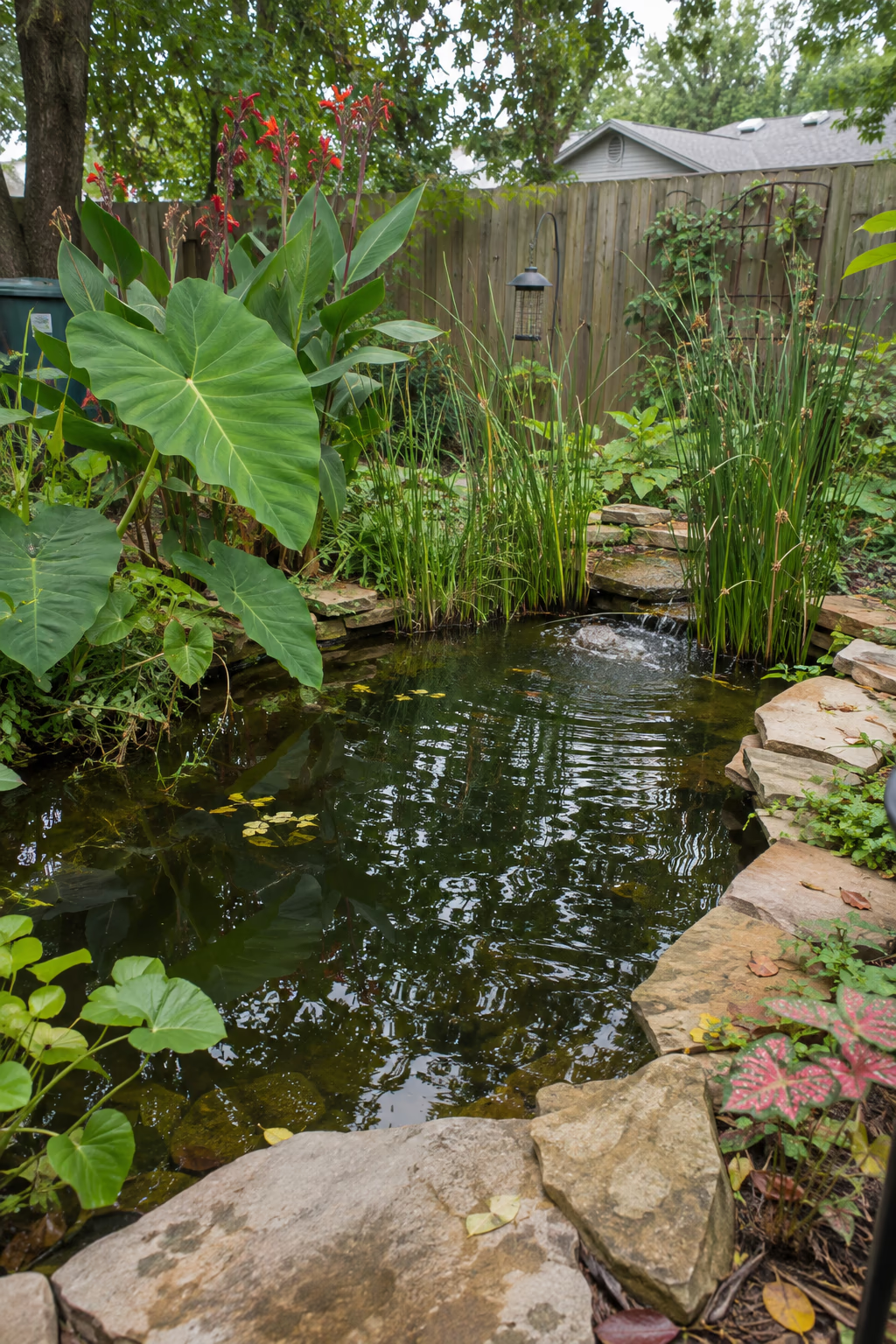
Cool water and reflections in a compact footprint
A small freeform pond, roughly 6 by 8 feet and 18 to 24 inches deep, can feel like a hidden lagoon when its edges disappear under plants. Use a flexible pond liner, edge it with irregular flat stones, and plant elephant ears, cannas, and rushes right up to the waterline.
Water instantly cools the feel of a hot yard, and it draws birds, dragonflies, and frogs. A small recirculating pump keeps the surface moving, which helps prevent mosquitoes from breeding.
The pump needs a GFCI-protected outdoor outlet. Some communities require a fence or barrier around water beyond a certain depth, so ask before you dig, and always call 811 to locate buried utility lines first.
6. Frame the Garden Entry With a Bougainvillea Arch
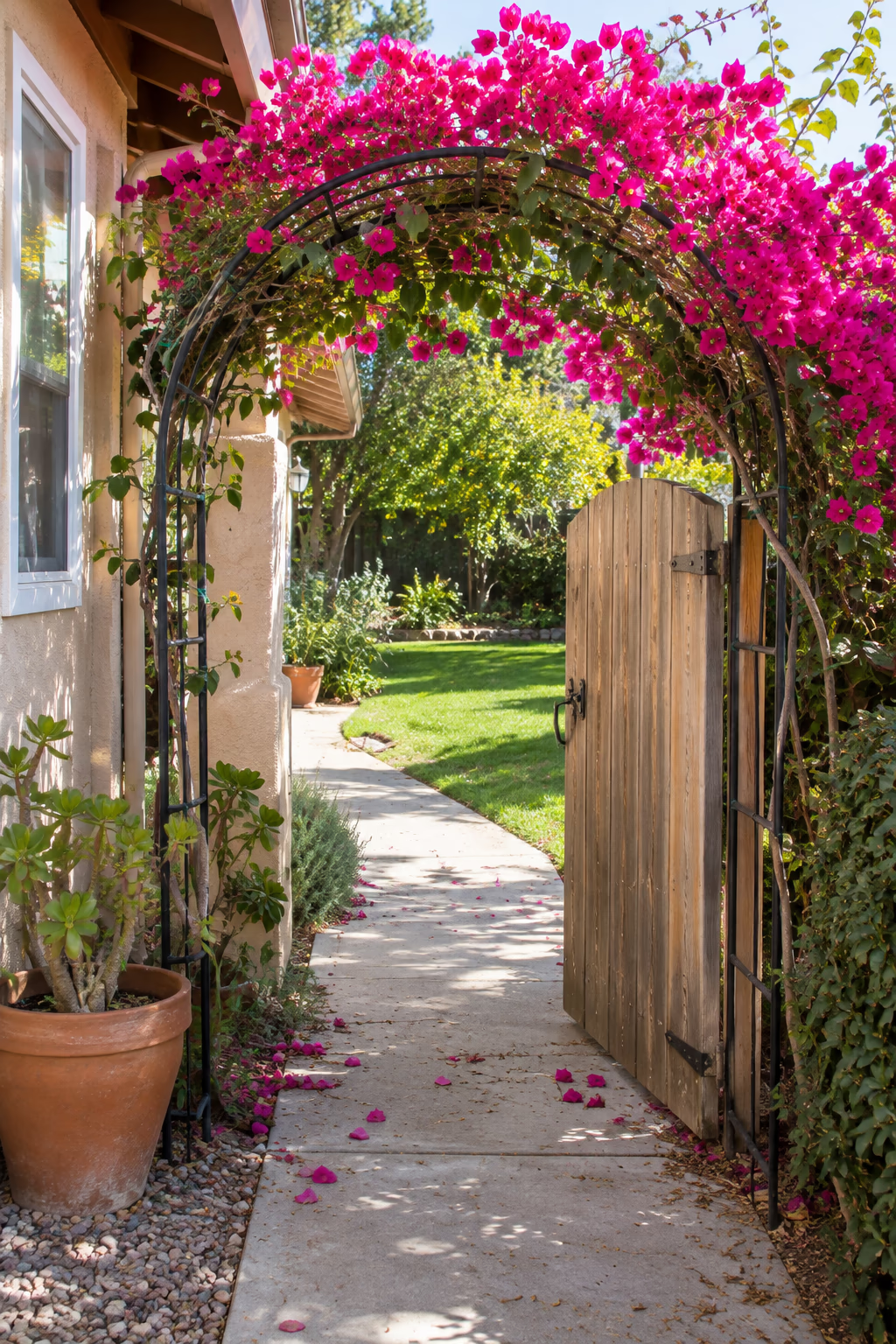
A burst of hot pink at the gateway
Few plants deliver tropical color like bougainvillea. Set a sturdy metal arch over a garden gate or path entrance and train one plant up each side. Tie the long, flexible canes to the frame as they grow, and they’ll cover the top in magenta, coral, or orange bracts.
An arch creates a sense of arrival and frames the view into the rest of the garden. The color is especially striking against green foliage and white or stucco walls.
Bougainvillea is reliably hardy only in about zones 9b to 11. In colder regions, grow it in large pots on either side of the arch and move them into a bright garage or sunroom before frost. Wear gloves when pruning, since the stems have sharp thorns.
7. Cluster Potted Palms Into an Instant Grove
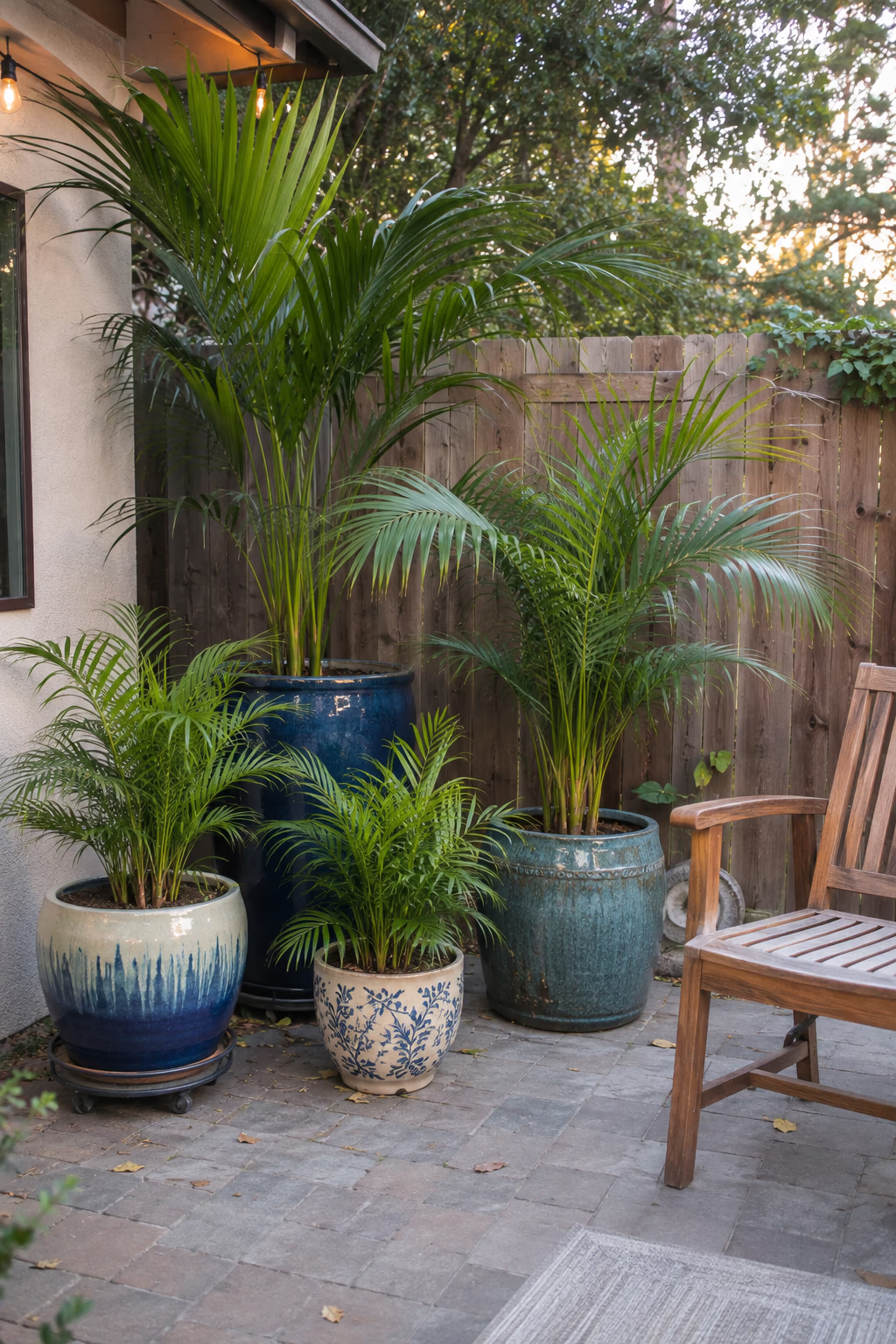
Tropical height without digging a single hole
Group three to five palms in large containers, at least 18 to 24 inches across, in a corner of the yard or around a seating area. Mix heights by pairing a tall kentia or majesty palm with shorter parlor or pygmy date palms, and use pots in varied but related finishes.
A grouping looks far more intentional and lush than a single palm on its own. Because everything is in containers, you can rearrange the grove whenever you like and roll it indoors when the weather turns.
Large pots get heavy once they’re filled with soil. Set them on plant caddies with wheels before planting, and water deeply whenever the top inch of soil is dry, which may be daily in midsummer heat.
8. Hang a Rope Hammock in a Shady Corner
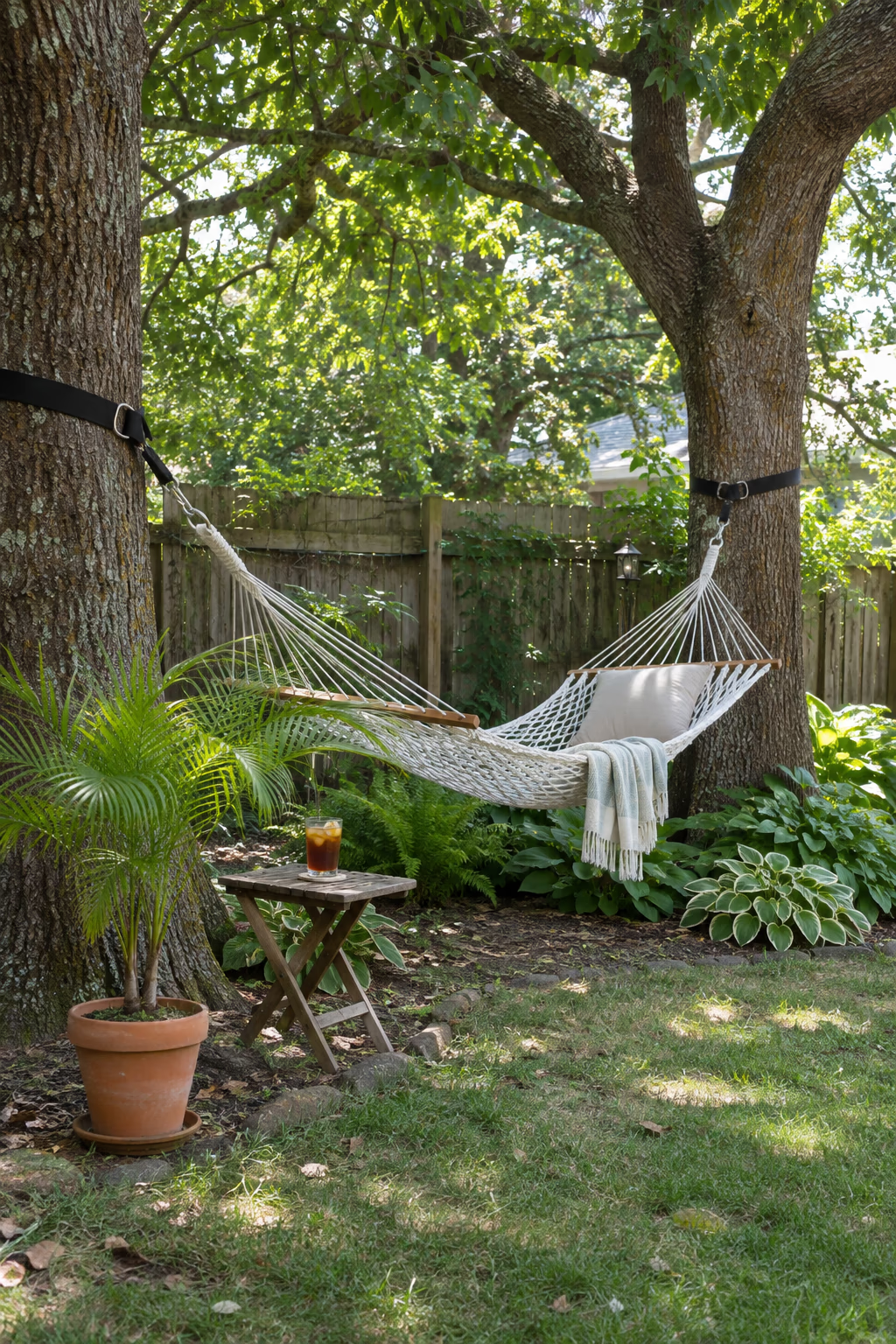
The ultimate invitation to slow down
A cotton rope or woven hammock strung between two sturdy trees is about as close to a beach vacation as a backyard gets. If you don’t have trees in the right spot, set two pressure-treated 6-by-6 posts in concrete or use a freestanding hammock stand.
Surround the hammock with ferns, hostas, and potted palms so you look up into leaves instead of at the neighbor’s siding. A small side table for a drink and a book completes the scene.
Use tree-friendly straps rather than wrapping chain or wire around trunks, and choose healthy trees at least 8 inches in diameter. Bring fabric hammocks inside during long rainy stretches so they don’t mildew.
9. Plant Cold-Hardy Palms for a Year-Round Tropical Look
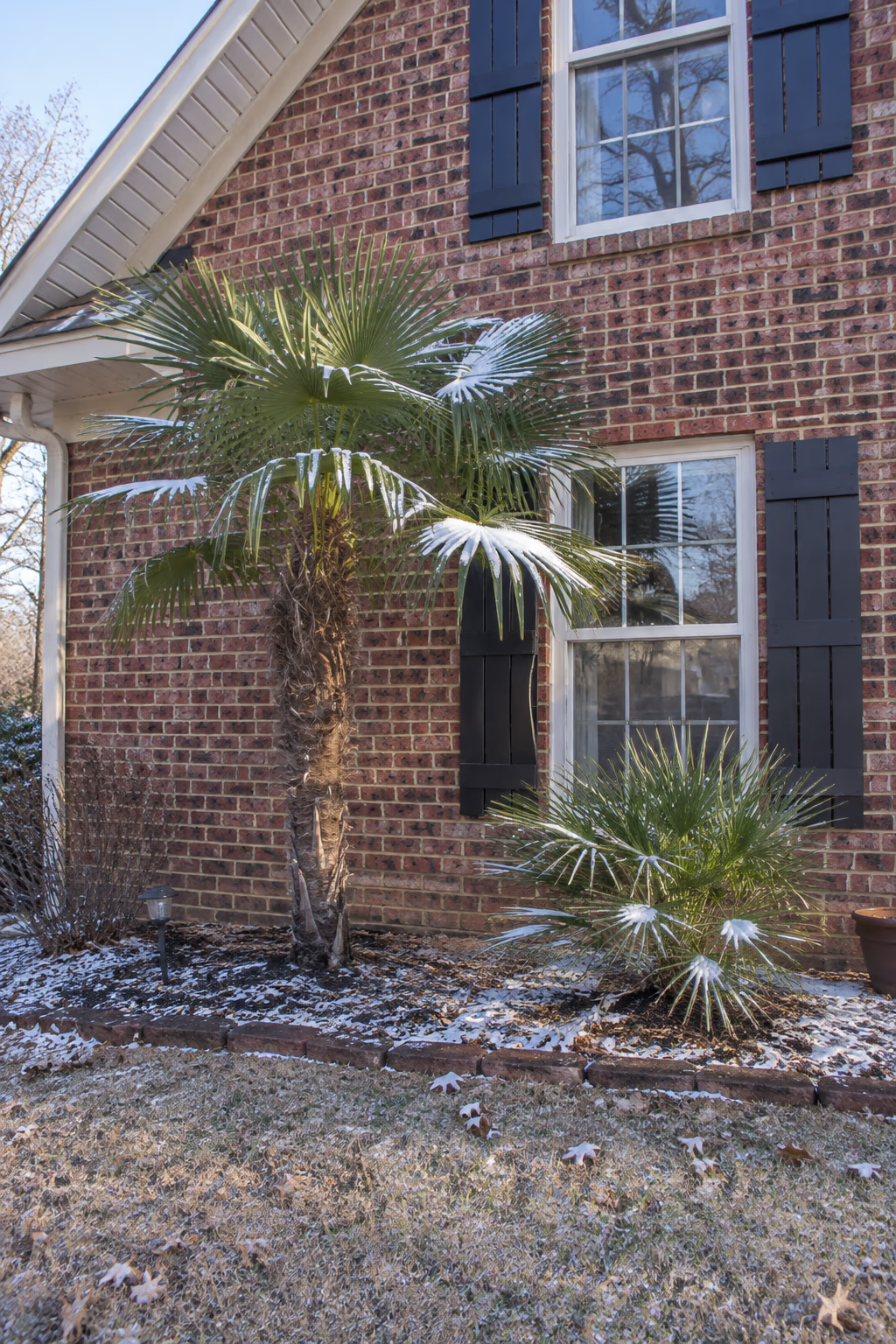
Real palms that shrug off winter
Several palms handle much colder weather than people expect. Windmill palm grows well in about zones 7b to 10 and slowly reaches 10 to 20 feet. Needle palm and dwarf palmetto stay shrubby and can survive winters into zone 7, and sometimes zone 6 with a protected spot.
Unlike tender tropicals that disappear each fall, these palms keep the yard looking tropical even in January. They make an excellent permanent backbone for seasonal plants like cannas and bananas.
Plant in spring so roots establish before winter, and choose a site sheltered from harsh winter wind, such as near a south-facing wall. Young palms benefit from a burlap wrap and extra mulch during unusual cold snaps.
10. Paint the Fence Black to Make Bold Leaves Pop
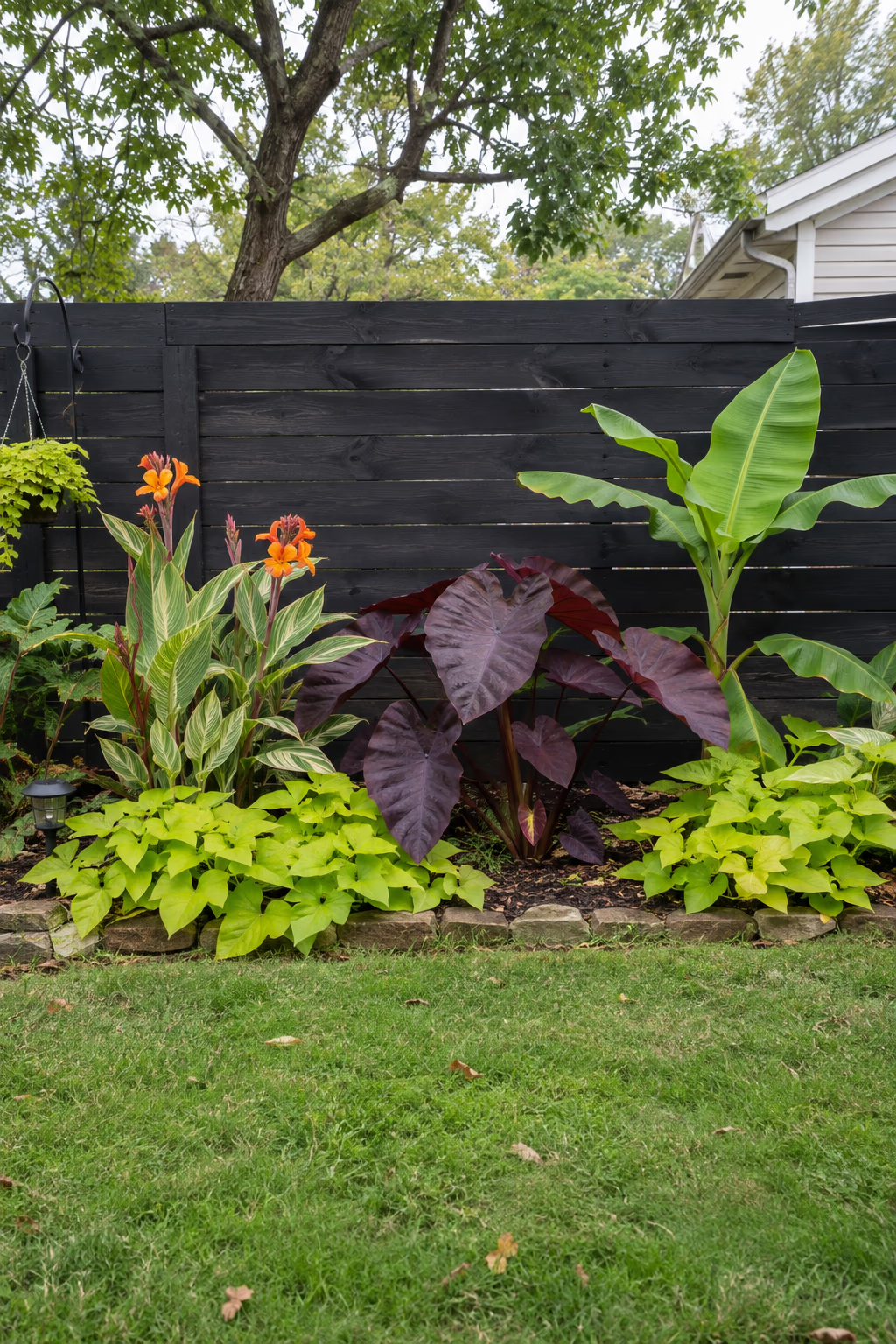
A dark backdrop that makes every green glow
A plain wood fence fades into the background, but painted or stained a deep black or charcoal, it becomes a dramatic stage for tropical foliage. Use a solid exterior stain or paint made for fences, and apply it on a dry day before planting along the base.
Dark colors visually recede, which makes the boundary feel farther away and the yard feel larger. Lime-green, variegated, and burgundy leaves stand out sharply against it, especially in photos.
Check HOA rules before changing a fence color, and talk with your neighbor if it’s a shared fence. Dark finishes can show fading over time in strong sun, so plan on touching up every few years.
11. Cover a Plain Fence With Rolled Bamboo Screening
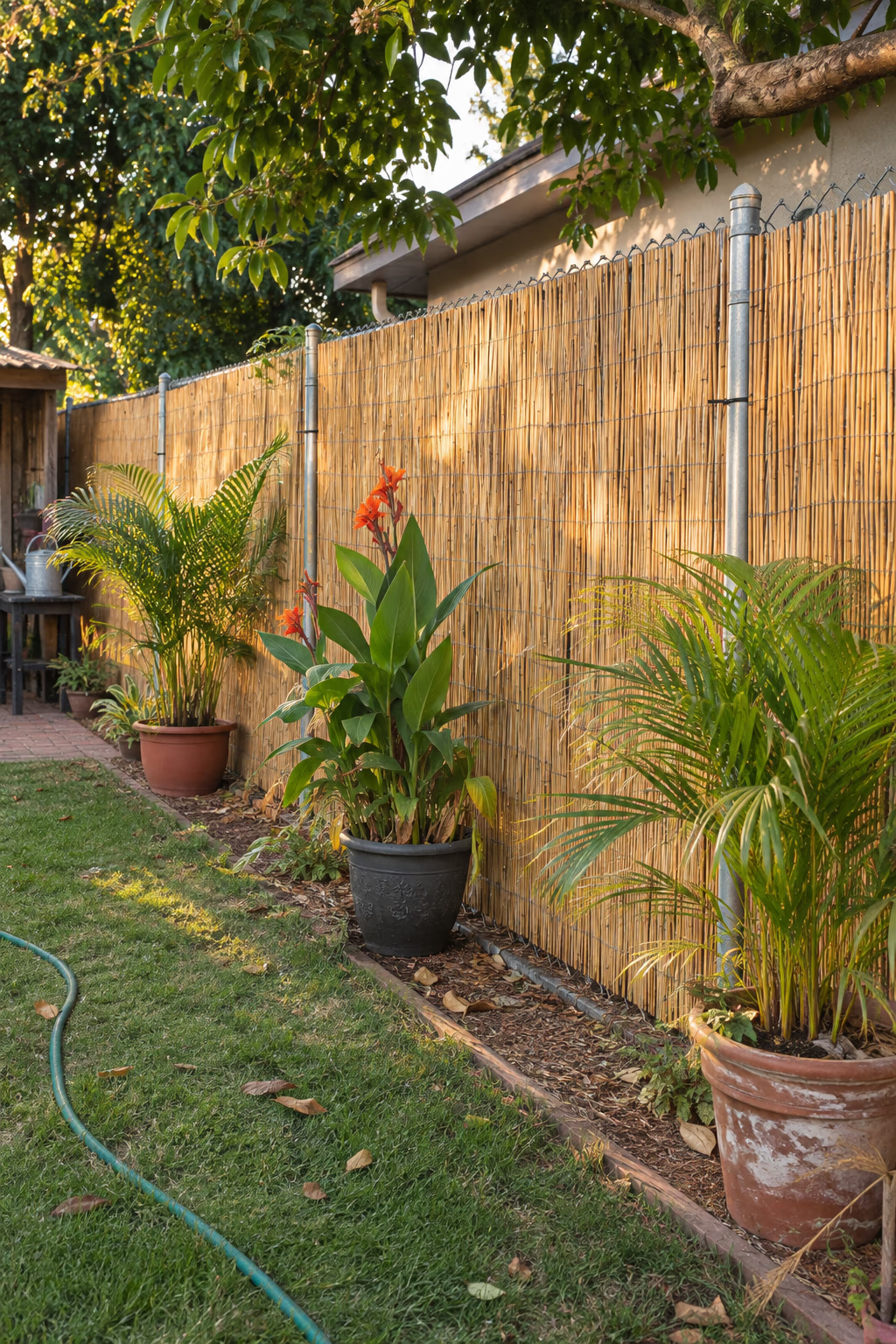
Island texture and privacy in a weekend
Rolled bamboo fencing, sold in rolls about 6 feet tall, can be zip-tied or wired over an existing chain-link fence or screwed onto a wood one. The warm golden color and natural texture instantly shift the mood from suburban to beach cottage.
It’s one of the cheapest ways to add both privacy and tropical character, and it pairs well with almost any plant palette. You can also cut it into shorter panels to hide trash cans or an AC unit.
Bamboo screening weathers to silver-gray and eventually breaks down, usually lasting several years depending on sun and moisture. Keep the bottom edge a couple of inches above soil and mulch so it doesn’t stay wet.
12. Shrink the Lawn Into a Green Clearing Framed by Palms
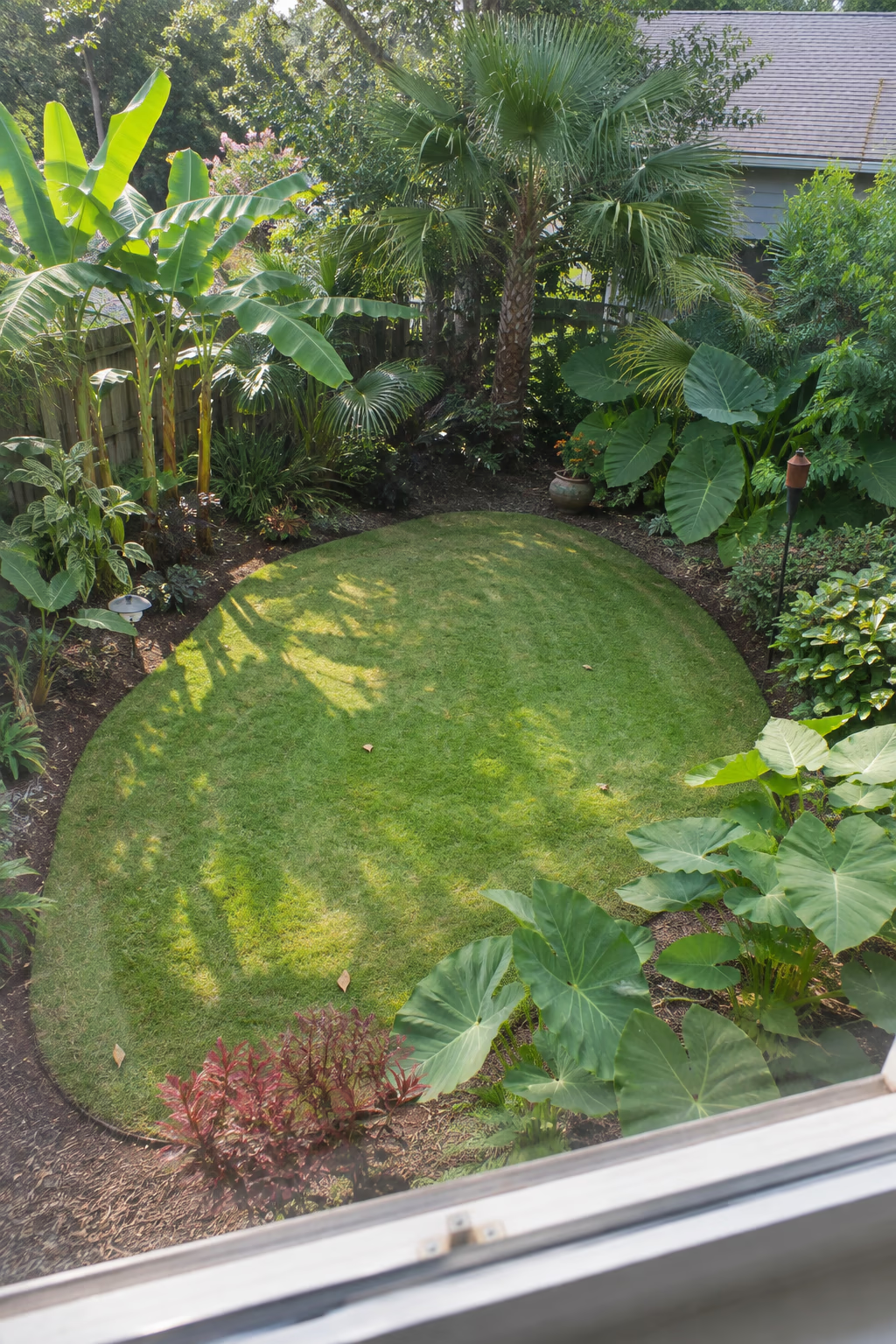
Less mowing, more jungle
Instead of a lawn that runs fence to fence, cut it down to a simple oval or rounded clearing and widen the planting beds around it. Fill the new beds with palms, bananas, and large-leaved shrubs so the grass reads like a sunny glade inside a jungle.
The contrast between open, smooth grass and dense, tall foliage is what makes tropical gardens feel so lush. A smaller lawn is also easier to keep green during hot, dry spells.
Mark the new shape with a garden hose, then edge it cleanly with a spade or a flexible edging strip. Smother the removed turf with cardboard and mulch for a few weeks before planting to save on digging.
13. Plant a Hummingbird Bed in Hot Tropical Colors
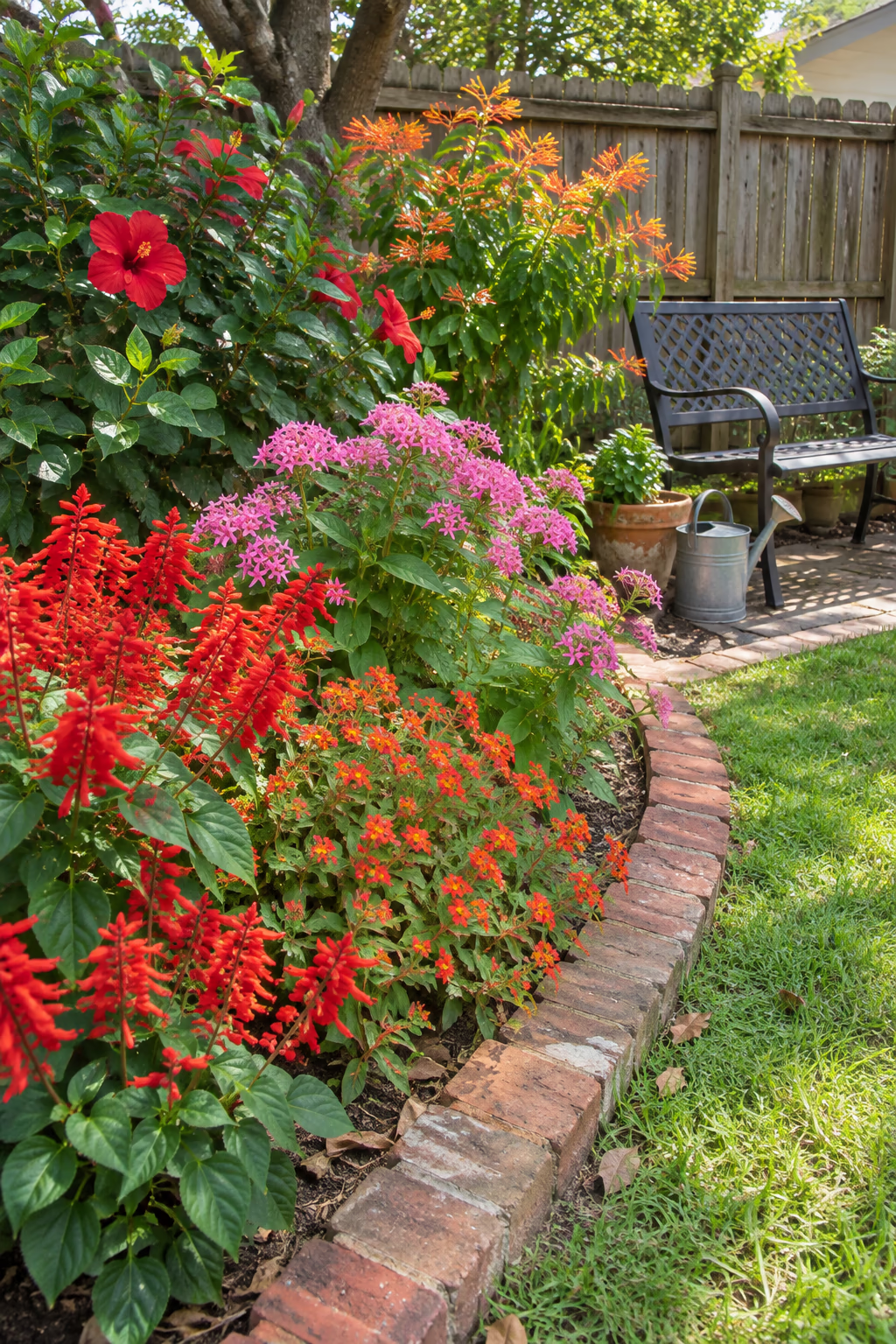
Color and wildlife in one sunny spot
Group tubular red, orange, and pink flowers in a sunny bed: cuphea, salvia, pentas, firebush, and tropical hibiscus are all hummingbird favorites. Plant in drifts of three to five of each so the colors read boldly from across the yard.
Hot colors are a big part of the tropical look, and this bed adds movement too, as hummingbirds and butterflies visit all summer. Place it near seating so you can actually watch the action.
Most of these are grown as annuals in colder zones but can be perennials in the Deep South. Skip pesticides in this area, since they can harm the pollinators you’re trying to attract. Lantana is another option, but it is invasive in parts of Florida and Hawaii.
14. Bring Your Houseplants Outside for the Summer
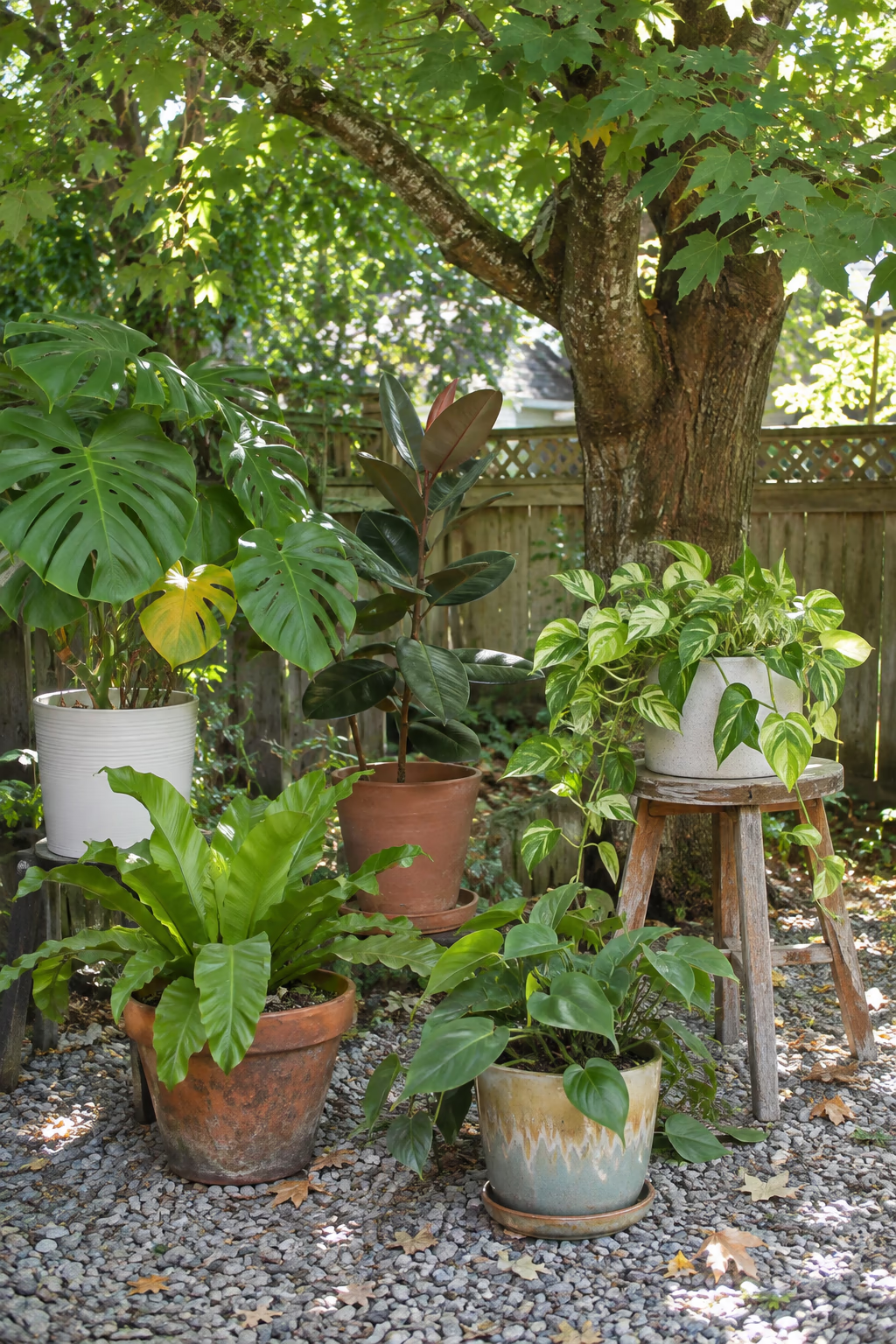
Free tropical plants you already own
Monstera, philodendron, rubber plant, bird’s nest fern, and pothos are true tropicals, and many grow faster outside in warm months. Arrange them on a shaded porch edge, under a tree, or along a covered wall once nighttime temperatures stay above about 55°F.
This is the most budget-friendly tropical idea on the list. A cluster of indoor plants in decorative pots creates a jungle corner immediately, and the plants usually come back indoors fuller and healthier.
Ease plants outdoors over a week or two, starting in full shade, because direct sun can scorch leaves that are used to indoor light. Check for pests before bringing them back inside in early fall.
15. Light Palms and Big Leaves From Below
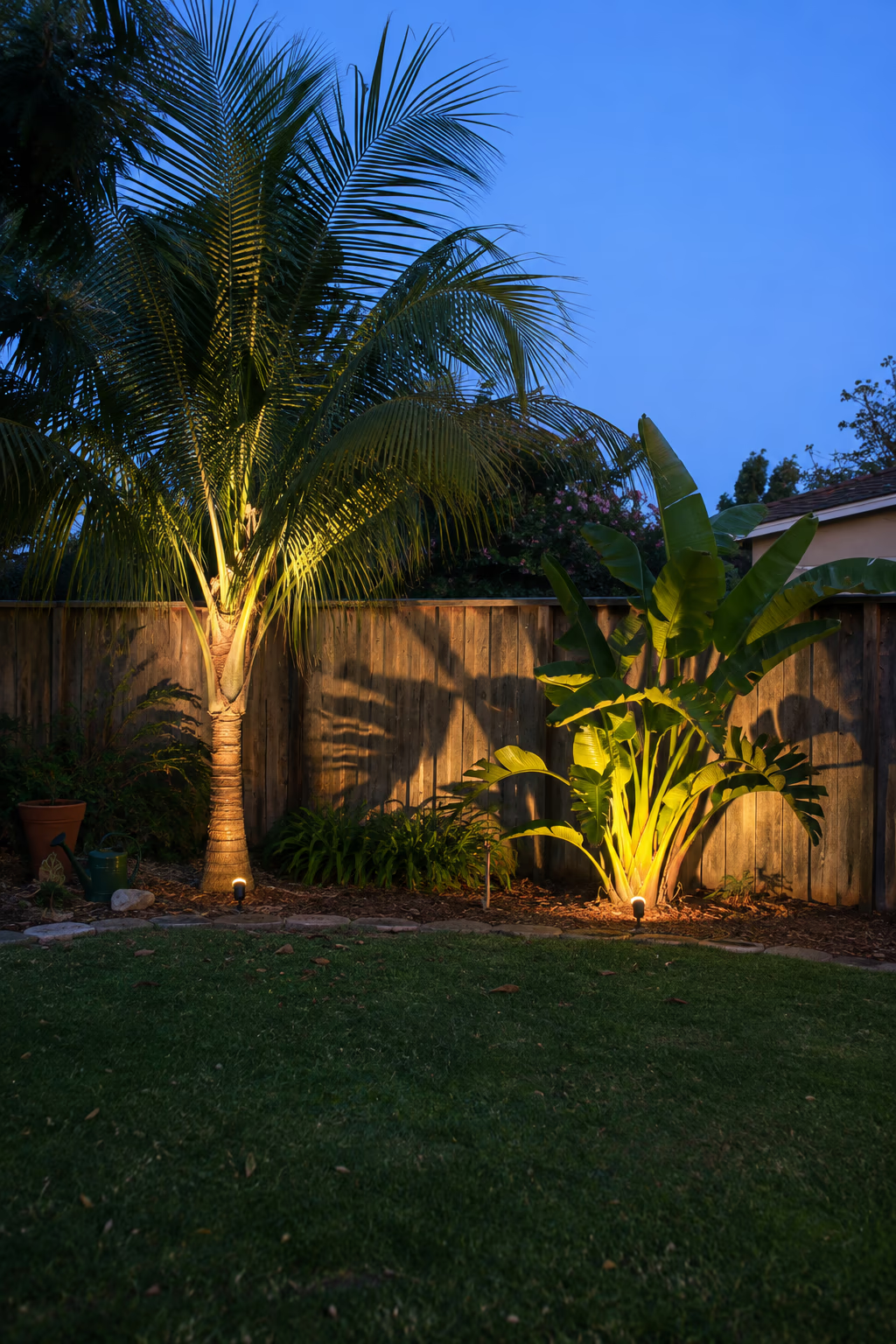
Dramatic shadows that keep the party going
Low-voltage LED uplights placed at the base of palms, bananas, and large-leaved plants cast striking silhouettes and leaf shadows on fences and walls. Choose warm white bulbs around 2700K to 3000K for a soft, resort-like glow.
Lighting extends the life of the garden into the evening, when temperatures are more comfortable in summer. Big tropical leaves are especially beautiful lit from beneath, since light shines through them and shows off their veins.
Plug-in transformers with timers make a DIY system manageable. Bury cables a few inches deep or tuck them under mulch, and hire an electrician if you need a new outdoor outlet.
16. Mount Staghorn Ferns and Bromeliads on a Tree Trunk
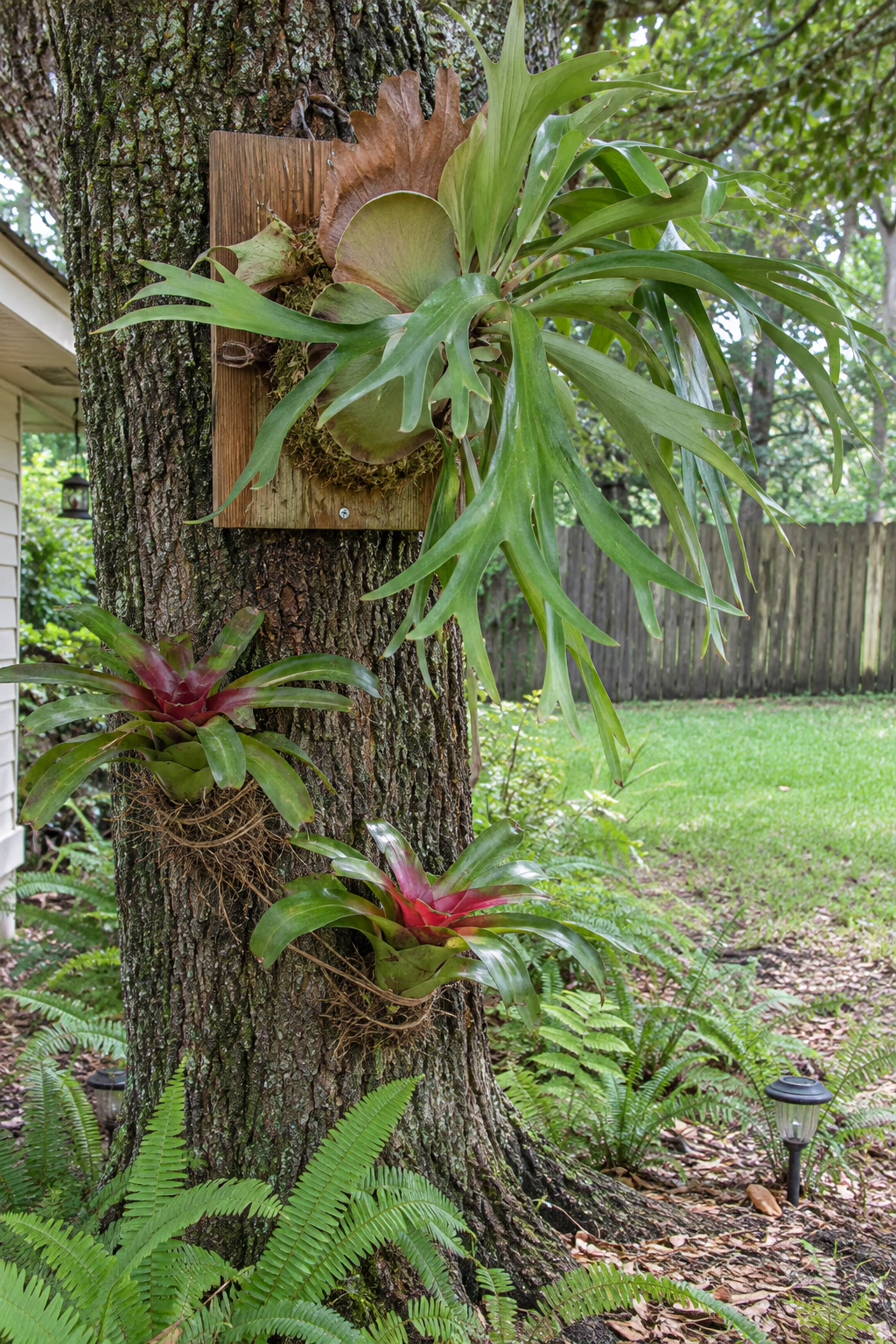
Turn an ordinary tree into a living jungle display
In the wild, many tropical plants grow on tree trunks rather than in soil. Mimic that by attaching staghorn ferns and bromeliads to wood boards or directly to a shady trunk, wrapping their roots in sphagnum moss and securing them with soft plant ties or wire.
This adds a vertical layer that most yards are missing, and it gives a plain oak or palm trunk an instantly exotic look. Water by misting or soaking the moss once or twice a week in dry weather.
Both plants are frost-tender. In most of the country, mount them on removable boards so you can hang them on the tree for summer and bring them indoors when nights drop toward 50°F.
17. Turn a Shady Side Yard Into a Fern Gully
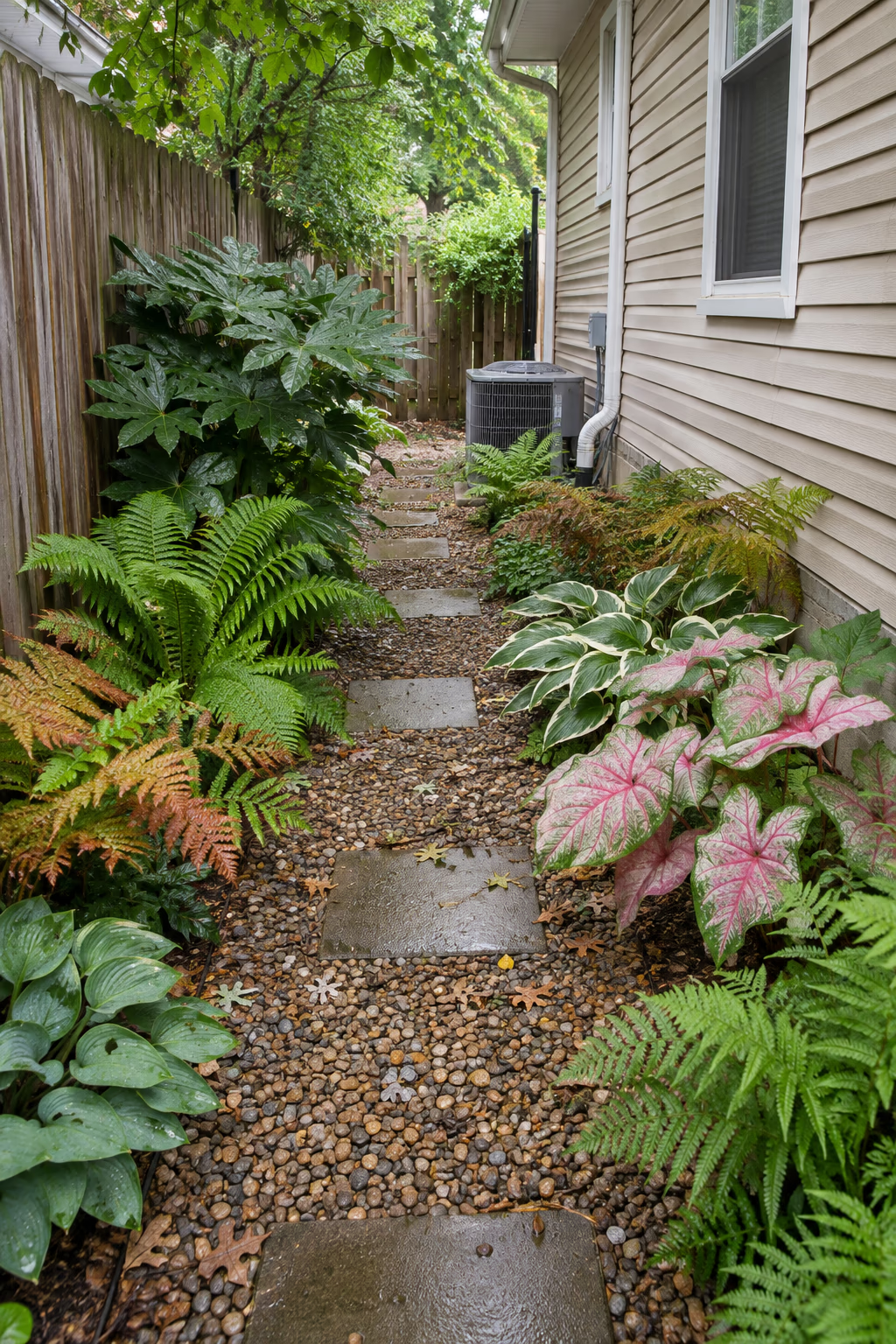
Lush green life for the spot nothing else likes
Narrow side yards are often shady and damp, which is perfect for ferns. Plant hardy ostrich ferns, autumn ferns, and Japanese painted ferns along both sides of a gravel or stepping-stone walk, then add fatsia, hostas, and summer caladiums for bigger leaves and color.
A planted side yard turns a forgotten corridor into a cool, green passage that feels like a rainforest trail. Ferns also fill space quickly and need very little care once established.
Improve the soil with compost, since side yards are often compacted. Keep plants at least a foot away from the house foundation and make sure gutters and downspouts drain away from the walkway.
18. Hang a Stone Wall Fountain Among the Ferns
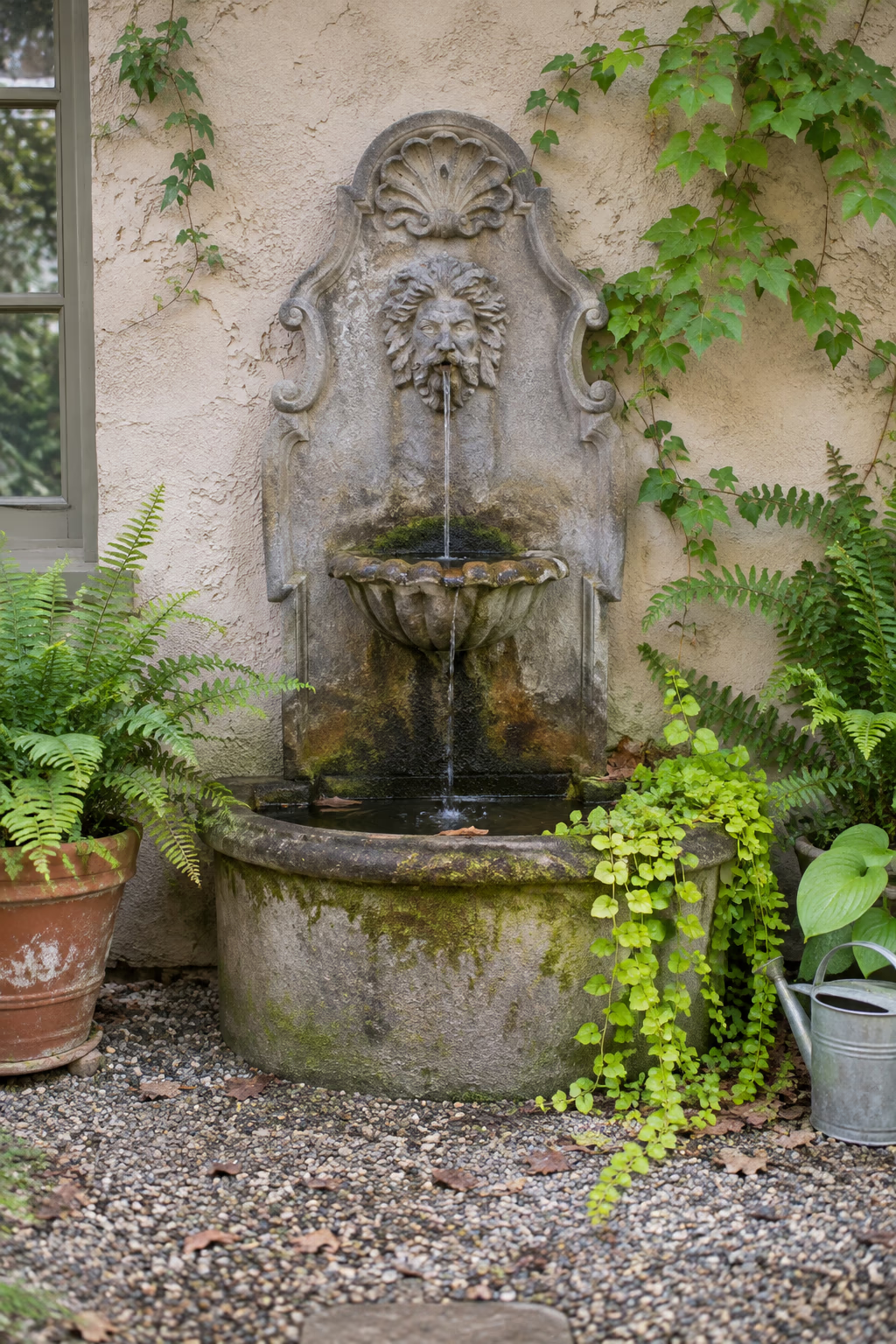
The sound of water without a pond
A wall-mounted fountain made of stone, cast concrete, or a carved basin brings the trickle of a tropical stream to a small space. Mount it on a sturdy wall or fence post, hide the tubing behind the piece, and set the reservoir on a level gravel pad.
Water sound masks road noise and makes the garden feel calmer and cooler. Surrounding the fountain with ferns and trailing plants helps it blend in, so it looks like water spilling out of the jungle.
Stone fountains are heavy, so check that your wall or fence can support the weight before hanging one. Top off the water regularly in hot weather so the pump never runs dry.
19. Grow Tropical Fruit in a Sunny Corner
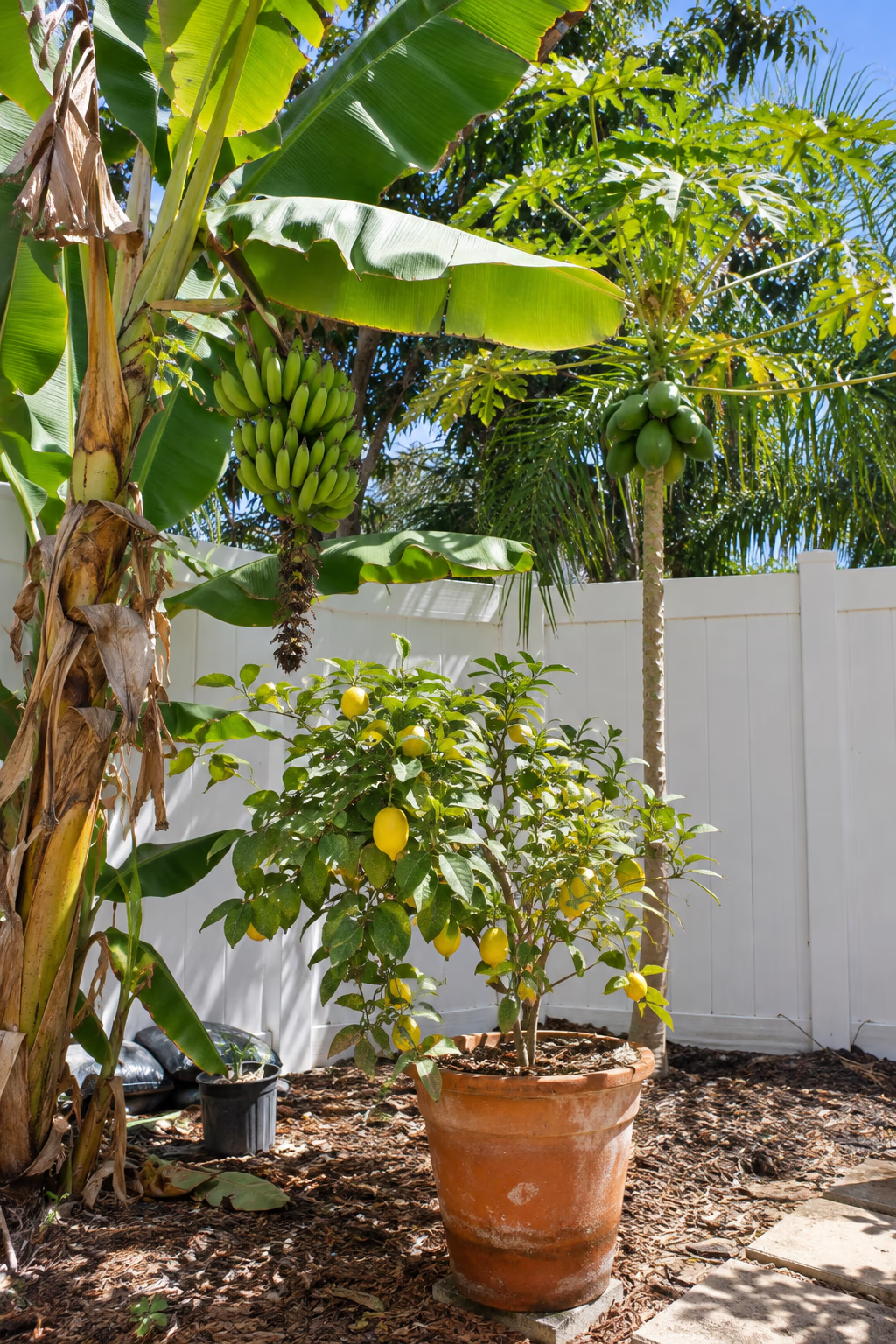
A backyard that looks good and tastes good
In zones 10 and 11, bananas, papayas, and mangoes can produce real harvests in a sunny, sheltered corner. In cooler areas, grow dwarf citrus such as Meyer lemon in large pots and move them inside for winter, or plant figs and native pawpaws, which have a tropical look and flavor but handle cold winters.
A fruiting corner adds another layer of interest, with big leaves, fragrant blossoms, and something to pick. It also makes the tropical theme feel useful, not just decorative.
Fruit trees need at least six to eight hours of sun and regular feeding. Check the mature size before planting, and keep trees far enough from fences and roofs that you can reach the fruit.
20. Set Up a Rattan Bar Cart for Island-Style Drinks
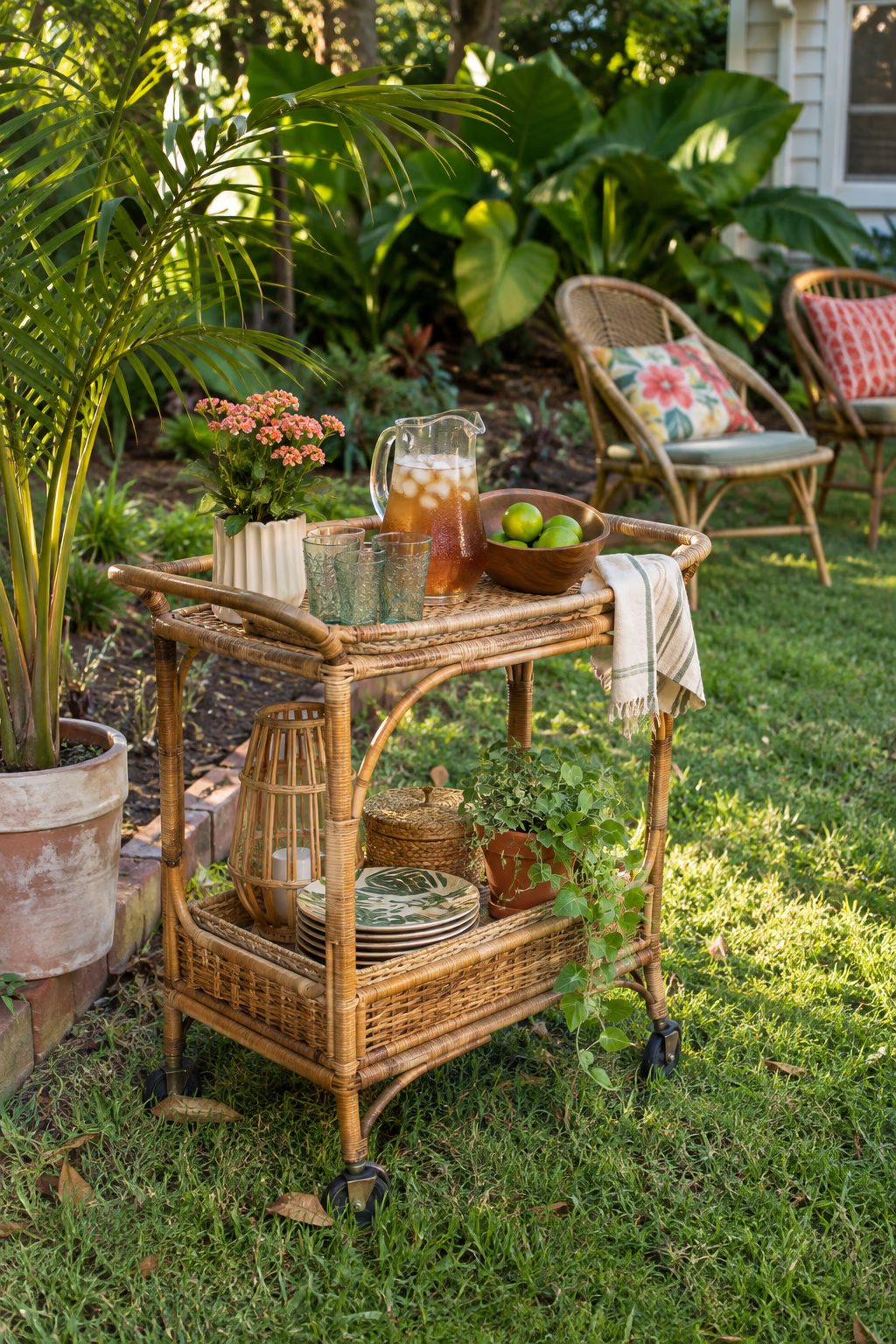
A movable mini bar for summer evenings
A rattan or bamboo bar cart parked near the garden, stocked with a pitcher, glasses, and a bowl of limes, is an easy way to add a playful vacation touch. Add a potted palm beside it and a few colorful cushions on nearby chairs to finish the look.
Unlike a built-in bar, a cart costs little, needs no construction, and can roll to wherever you’re hosting. It also brings natural woven texture, which pairs perfectly with green leaves.
Natural rattan doesn’t love rain or harsh sun. Choose an all-weather resin wicker version for constant outdoor use, or store the cart under cover between gatherings.
21. Feature Bird of Paradise as a Living Sculpture
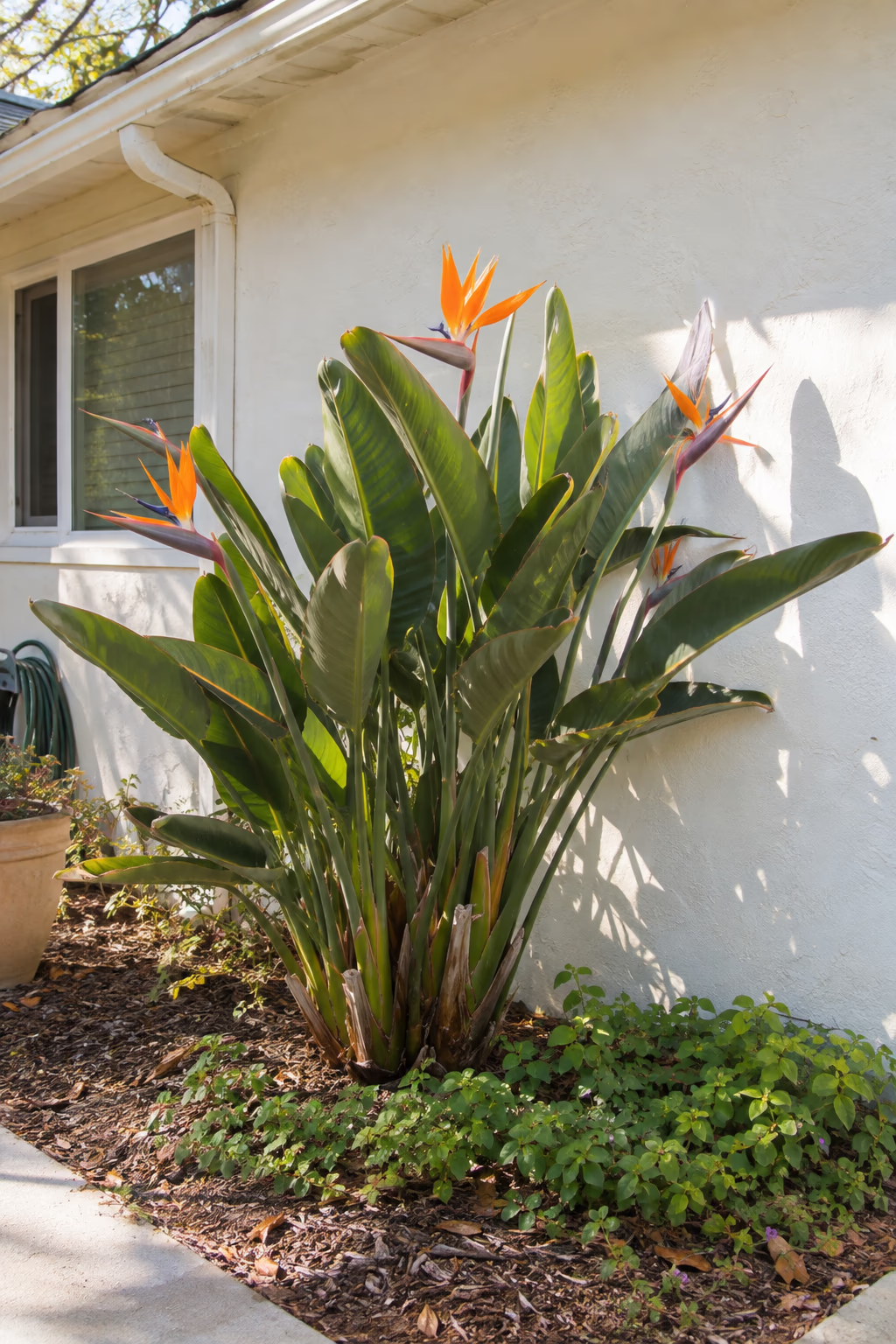
One bold plant that steals the show
Bird of paradise has stiff, paddle-shaped leaves and orange-and-blue flowers that look like a tropical bird in flight. Plant a single clump where it can stand alone, such as at a bed corner or in a large pot against a plain wall, so its shape gets full attention.
A strong focal plant gives the eye a place to land in a busy garden. Its upright form contrasts nicely with soft ferns and mounding groundcovers.
It’s hardy in about zones 10 and 11 and may survive in 9b with protection. Elsewhere, grow it in a container and bring it into a bright room for winter. Be patient, since young plants may take a few years to bloom.
22. Run a Dry Creek Bed to Handle Heavy Rain
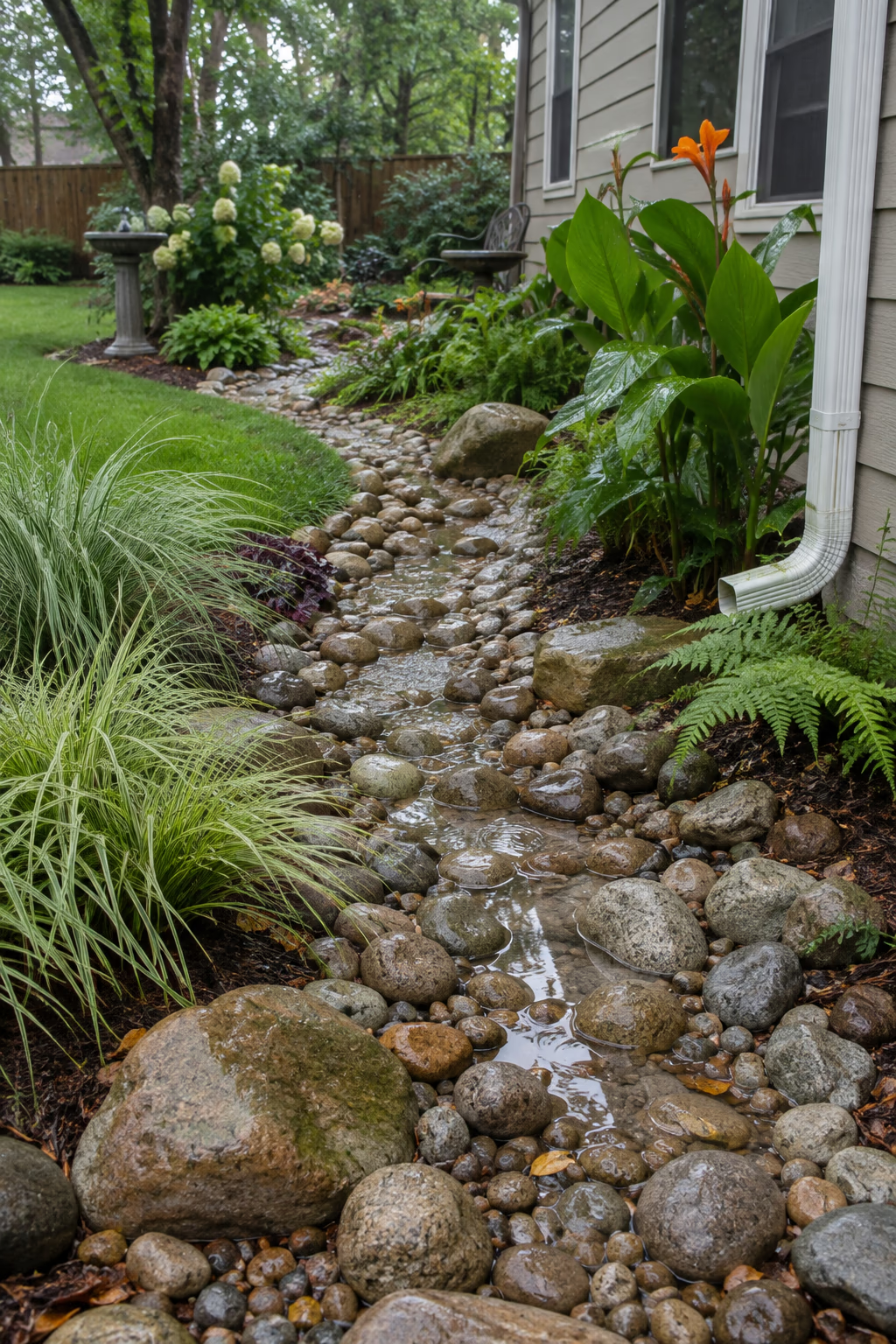
A practical fix that looks like a jungle stream
A dry creek bed lined with river rock channels storm runoff away from the house and through the garden. Dig a shallow trench, 2 to 4 feet wide and gently sloped, line it with landscape fabric, and fill it with mixed rounded stones from small pebbles to larger cobbles.
When planted along its edges with grasses, ferns, and cannas, it looks like a natural streambed winding through the plants. It’s especially useful in yards that see summer downpours, since many tropical plants dislike sitting in soggy soil.
Make sure the creek drains toward an appropriate spot, not onto a neighbor’s property. Call 811 before digging, and use a mix of stone sizes so it looks natural instead of like a gravel ditch.
23. Plant Papyrus in a Container Water Garden
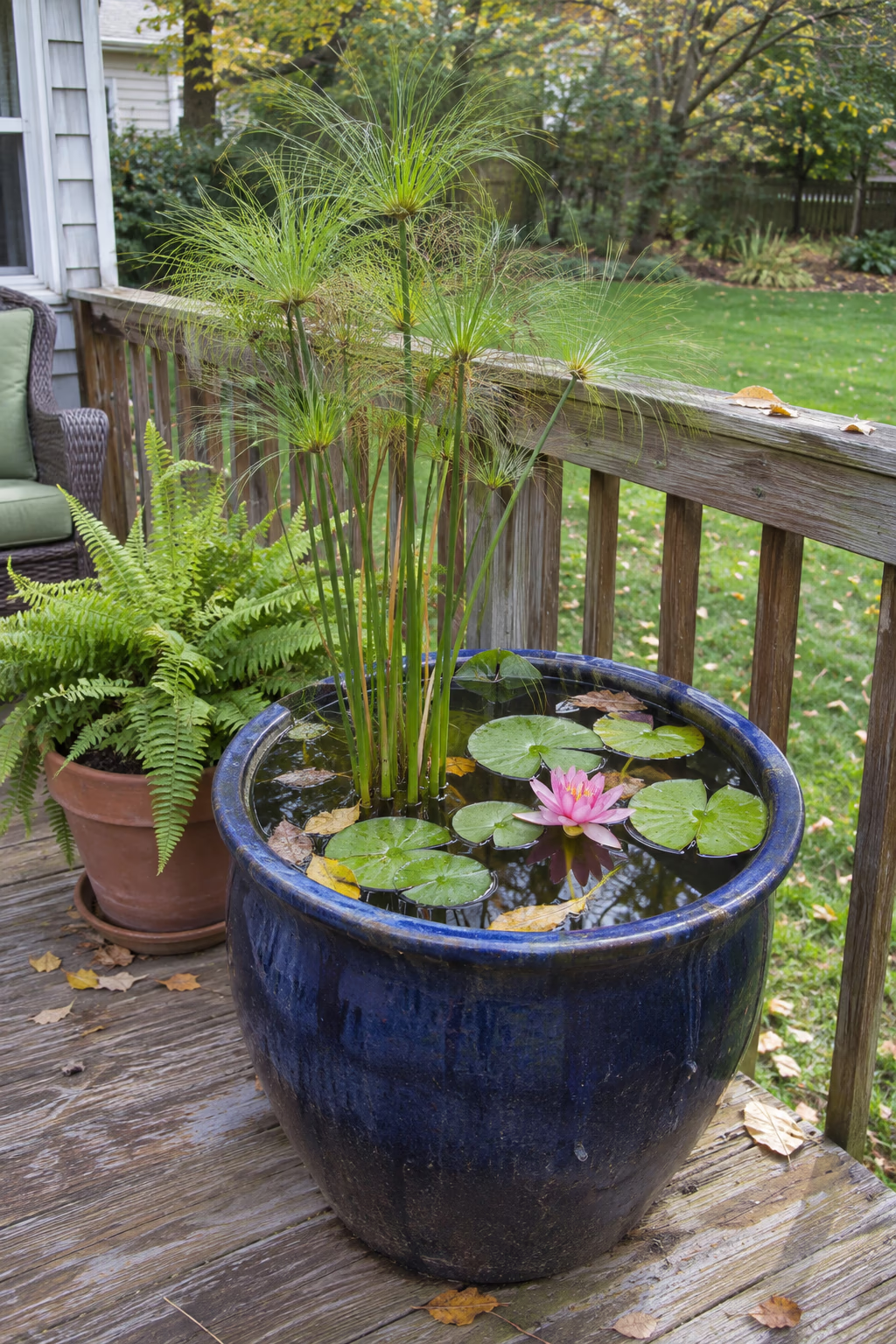
A mini wetland for small yards and decks
Fill a large glazed pot without drainage holes, a half barrel with a liner, or a galvanized tub with water, then add papyrus in its nursery pot along with a water lily or floating plants. Dwarf papyrus varieties stay in scale for containers about 20 inches across or larger.
Papyrus has feathery, firework-like heads on tall stems, adding height and movement to a small space. A container water garden gives you the look of a lush pond without digging.
Papyrus is frost-tender outside about zones 9 to 11, so treat it as an annual or move it indoors to a sunny window. Add mosquito larvae control made with Bti, which is safe for plants, birds, and pets, and top off evaporated water often.
How to Plan Your Tropical Backyard
A tropical backyard looks effortless when it’s finished, but it pays to think through climate, water, and layout first. These tips help you build a lush yard that comes back strong year after year.
- Know your hardiness zone. Check your USDA zone and decide which plants will be permanent, which will be lifted or brought inside, and which you’ll treat as annuals.
- Build a permanent backbone. Start with hardy palms, evergreen shrubs, ferns, and bamboo screening so the yard still looks structured in winter.
- Layer by height. Arrange tall plants at the back, medium plants in the middle, and low groundcovers in front so the garden looks dense from every angle.
- Plan for water. Tropical plants need consistently moist soil. Drip irrigation, soaker hoses, and self-watering pots save time and keep leaves looking their best.
- Feed generously. Fast-growing tropicals such as bananas and cannas are heavy feeders, so amend beds with compost and use a balanced fertilizer during the growing season.
- Check rules before you build. Huts, showers, ponds, and fences may need permits or HOA approval, and you should call 811 before any digging.
Frequently Asked Questions
Can I have a tropical backyard in a cold climate?
Yes. Combine hardy tropical-looking plants such as hardy banana, needle palm, windmill palm, ferns, and fatsia with tender plants grown in pots or lifted each fall. Houseplants moved outdoors for summer also add a lot of tropical character.
What are the easiest plants for a tropical look?
Cannas, elephant ears, caladiums, coleus, hardy bananas, and ferns are reliable and grow quickly. Most need rich soil, regular water, and warm temperatures to look their best.
How do I keep a tropical garden from becoming too high maintenance?
Rely on a framework of perennial and hardy plants, mulch beds to hold moisture, and install drip irrigation. Limit the number of plants you need to dig or move indoors each fall.
How much does a tropical backyard makeover cost?
Costs range widely. Planting a border and adding bamboo screening can cost a few hundred dollars, while ponds, outdoor showers with hot water, and permanent structures can run into the thousands. Working in phases spreads out the expense.
Do tropical plants attract mosquitoes?
Plants themselves don’t cause mosquitoes, but standing water does. Empty saucers, keep ponds circulating with a pump, treat still water with Bti, and avoid areas where rainwater collects.
Final Thoughts
The best tropical backyard ideas start with big leaves and layered planting, then add a few vacation-style touches like a thatched hut, a hammock, or an outdoor shower. Even one bold border or a cluster of potted palms can change the whole mood of your yard.
Match your plants to your climate, give them plenty of water and food, and build on the look each season. Before long, you’ll have a lush, private escape that feels like a getaway every time you step outside.


