
Imagine stepping off the back stoop into a wall of green: banana leaves as long as your arm, elephant ears catching the afternoon light, and a splash of hot pink spilling over a sunny wall. The air feels a few degrees cooler, and the rest of the neighborhood seems to disappear.
That feeling of escape is why tropical style keeps winning gardeners over. It is generous, colorful, and full of texture, and it doesn’t require living in Florida or Hawaii. With the right mix of hardy plants, summer annuals, and containers that can come indoors, you can get a lush, vacation-like look in most of the country.
These 27 tropical garden ideas cover big-leaf borders, water features, bold flowering vines, palms, living walls, shade plantings, and cold-climate tricks that fake the tropics convincingly. Use one as a starting point or layer several together to build your own backyard jungle.
1. Layer Big-Leaf Plants Into a Jungle-Style Border
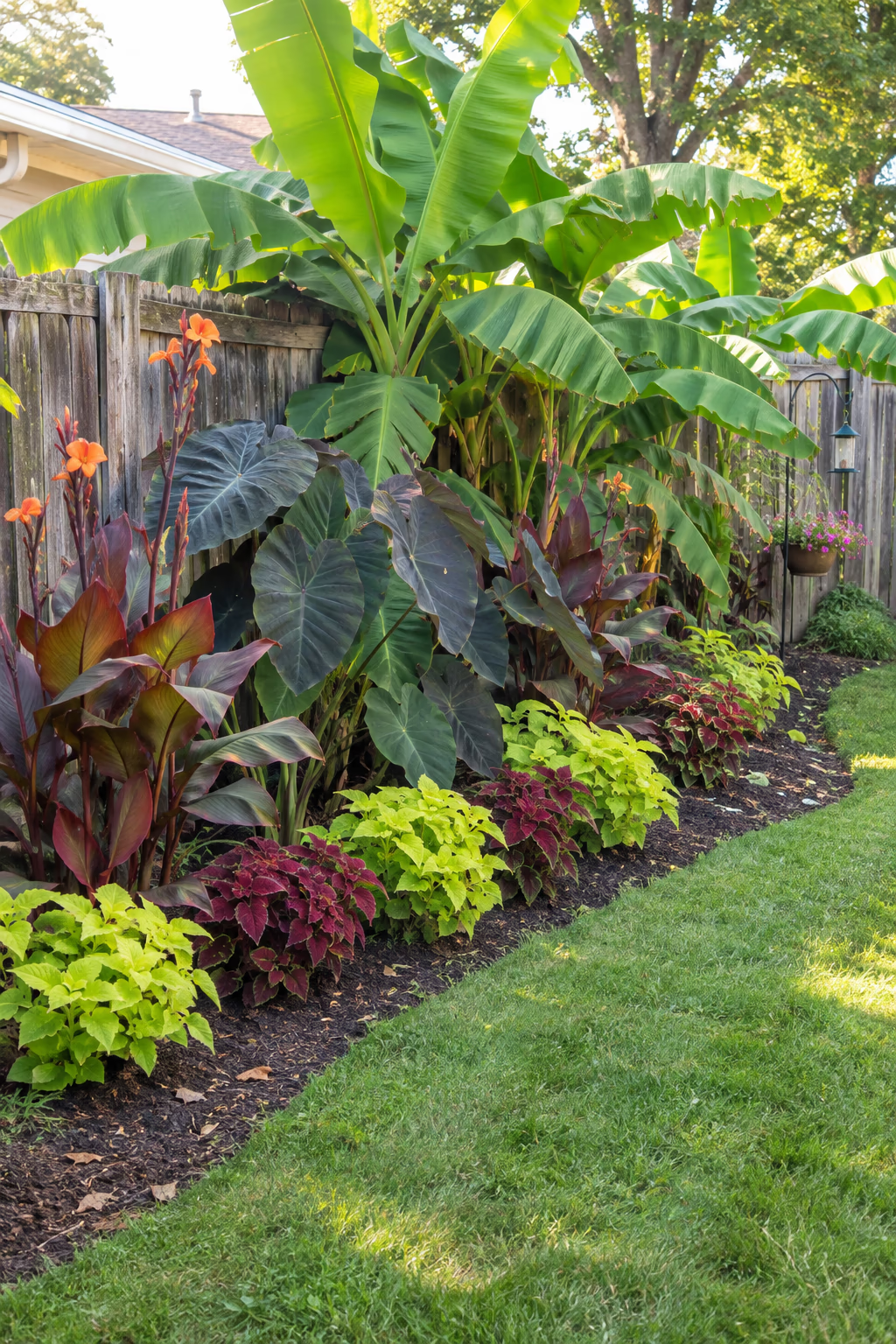
The fastest way to make a yard feel lush
The heart of any tropical garden is oversized foliage stacked in tiers. Put the tallest plants, such as bananas or tall cannas, at the back, mid-height elephant ears and colocasia in the middle, and low hostas, coleus, or sweet potato vine at the front. A border 6 to 8 feet deep gives you room for at least three layers.
Mix leaf shapes and finishes: broad paddles, deeply cut fronds, glossy hearts, and strappy blades. Contrast is what keeps all that green from blending into one flat mass.
Big leaves lose a lot of water on hot days, so amend the soil with compost and plan on deep watering at least once or twice a week in summer. A soaker hose under the mulch makes this much easier.
2. Tuck a Rock Waterfall Pond Among Ferns and Elephant Ears
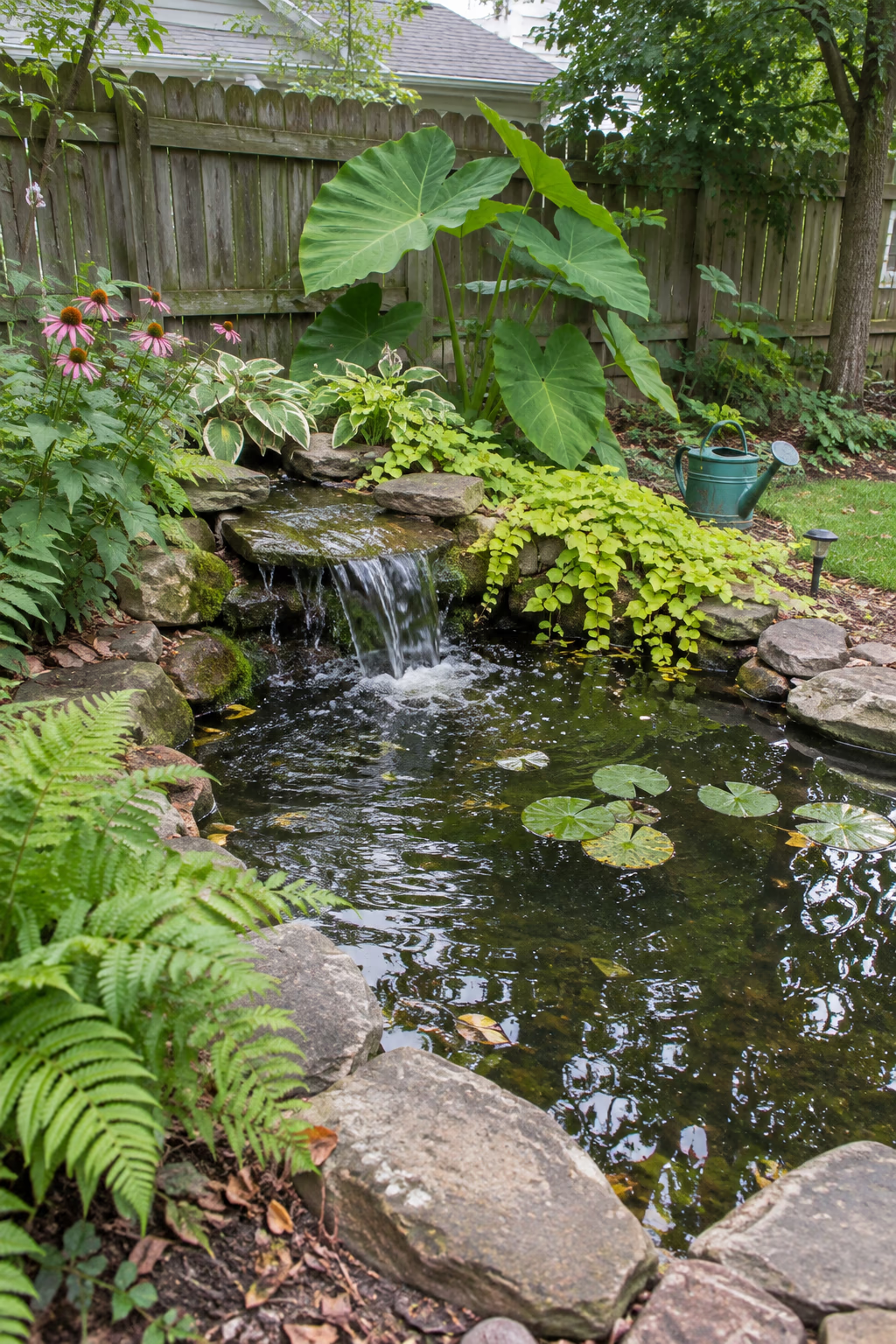
Moving water adds sound and a cooling effect
A small preformed or flexible-liner pond about 4 by 6 feet, with a short rock spillway on one side, brings instant rainforest atmosphere. Stack flat fieldstone or river rock so the water drops 12 to 18 inches, and let ferns, elephant ears, and creeping jenny soften the edges.
The sound of falling water masks traffic noise and makes a modest yard feel secluded. Birds and dragonflies will find it quickly.
Plan an outdoor GFCI outlet for the pump, and call 811 before digging. Some towns require a fence or cover for ponds deeper than 18 or 24 inches, so check local rules if you have young children nearby.
3. Drape Bougainvillea Over a Sunny Garden Wall
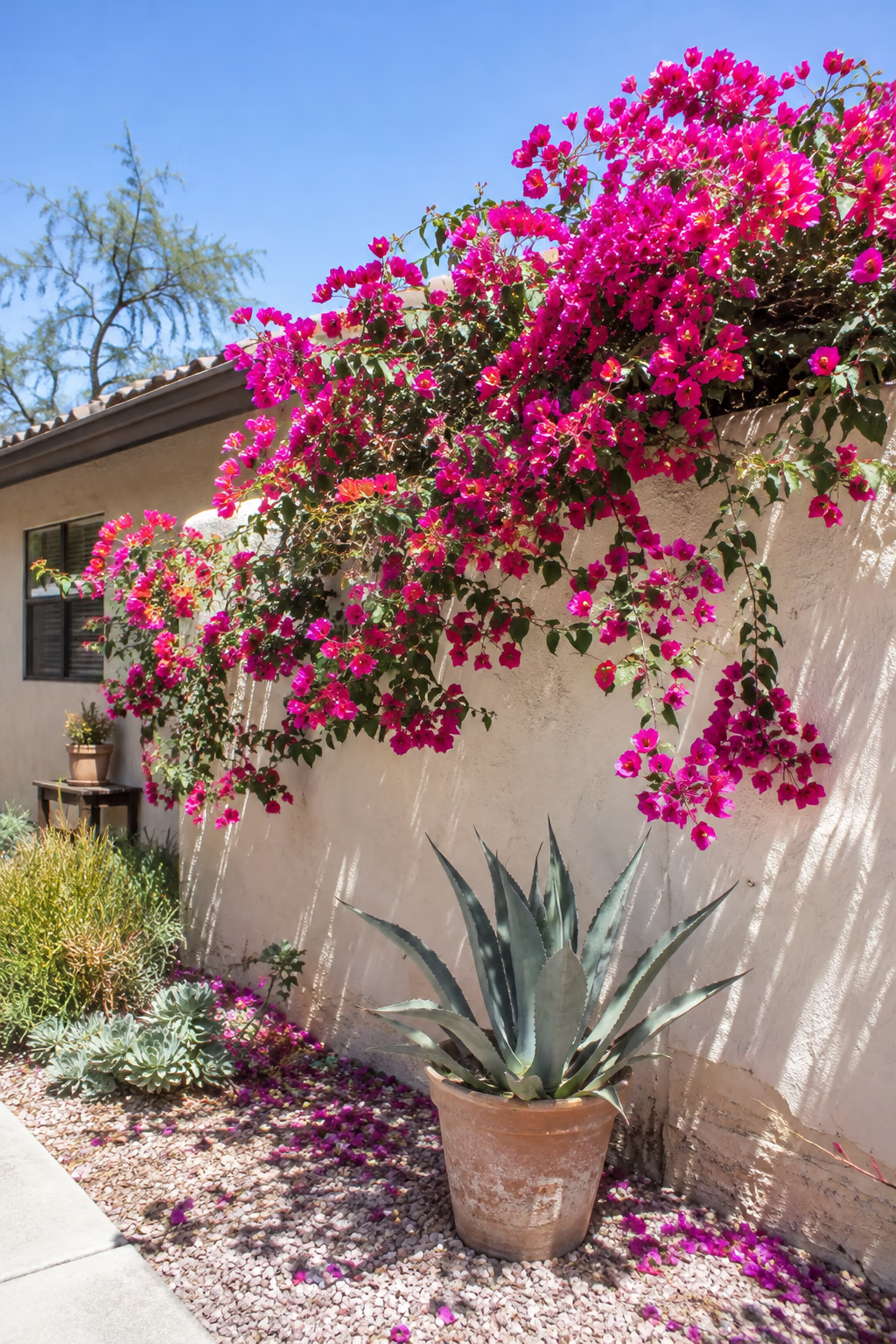
Vivid color that reads as pure vacation
Few plants say tropics like a wall covered in magenta, coral, or orange bougainvillea. In USDA Zones 9 to 11, plant it at the base of a stucco or block wall in full sun and tie the long canes to sturdy eye hooks or wire as they grow.
It blooms best when slightly stressed, so go easy on water and nitrogen once it is established. The colorful parts are actually papery bracts, which hold their color for weeks.
The canes have sharp thorns, so wear thick gloves when pruning. In colder zones, grow it in a large pot on a sunny wall and bring it into a bright, cool spot before the first frost.
4. Plant Hardy Bananas for Instant Tropical Height
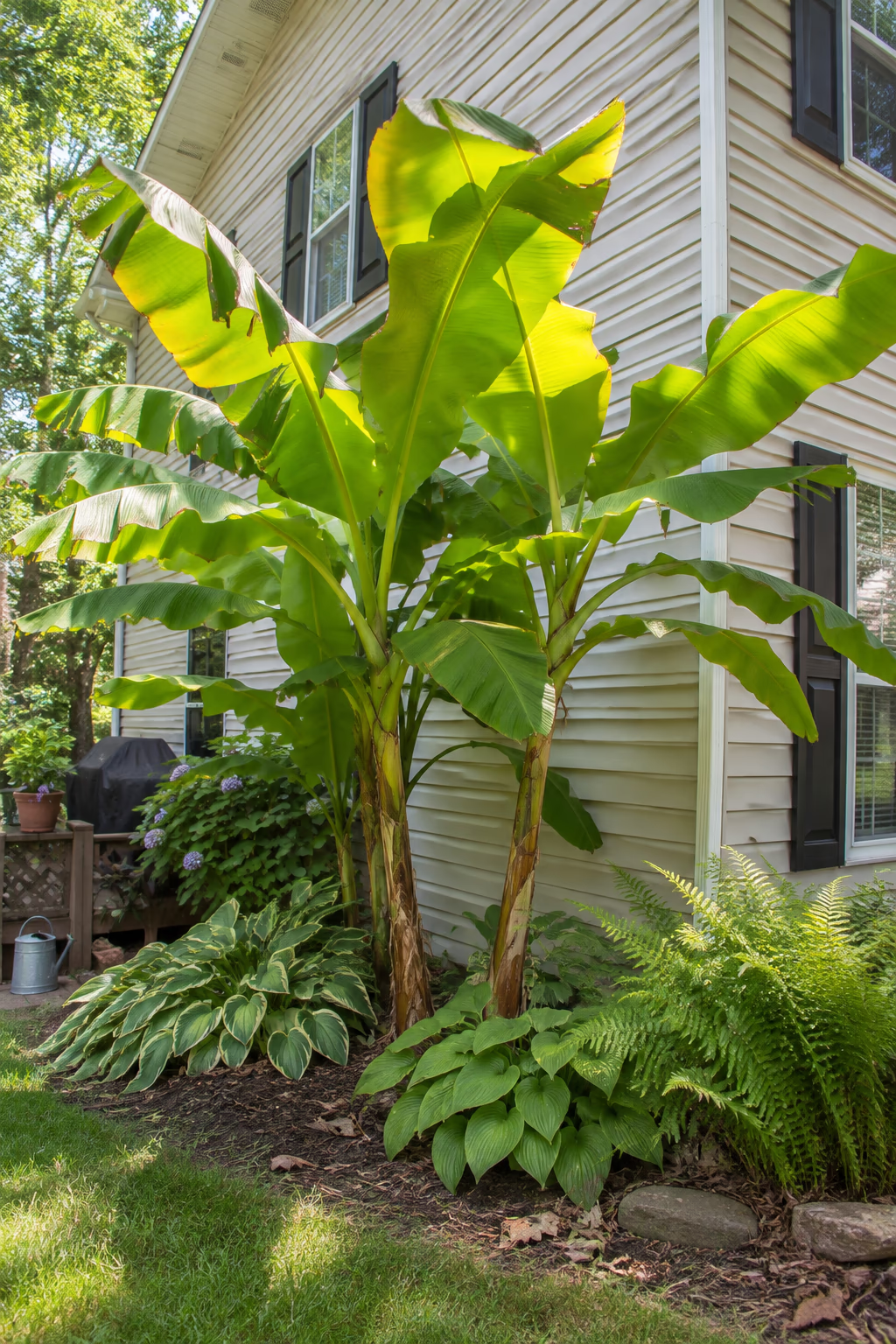
Huge leaves that survive cold winters
The hardy banana, Musa basjoo, can shoot up 8 to 12 feet in a single summer, giving even northern gardens a true tropical silhouette. Its roots survive winters down to roughly Zone 6, and in some sheltered Zone 5 sites, when protected by a thick mulch layer.
Plant it in rich soil in a spot out of strong wind, which shreds the leaves. Feed it generously in summer, because bananas are heavy eaters.
After frost blackens the leaves, cut the stems down to about a foot and pile 12 to 18 inches of shredded leaves or straw over the clump. It will regrow from the base each spring, and it won’t produce edible fruit in most of the US.
5. Fill a Sunny Bed With Cannas and Hardy Hibiscus
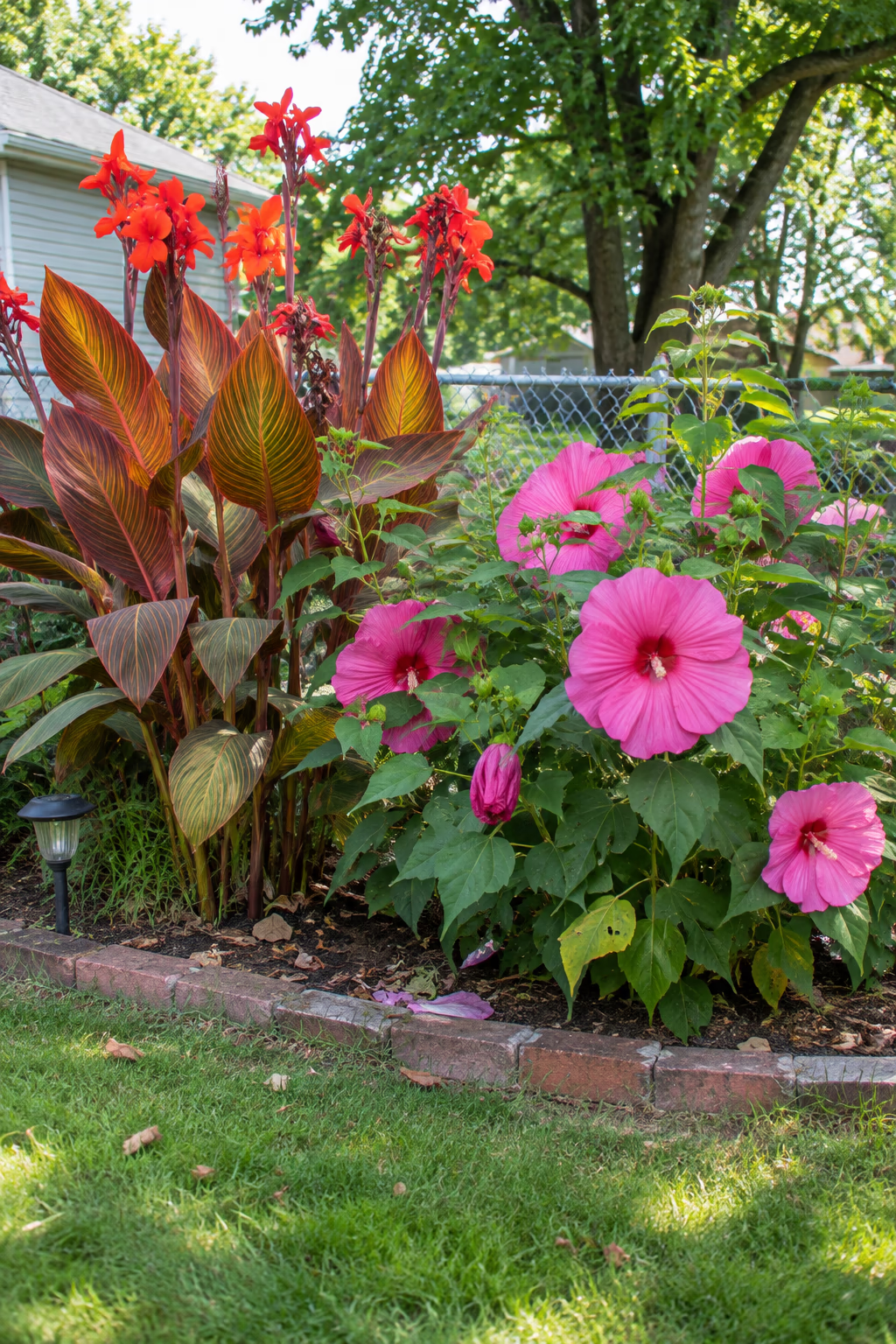
Hot color with dinner-plate blooms
Cannas bring paddle leaves in bronze, striped, or burgundy tones plus red, orange, or yellow flowers. Pair them with hardy hibiscus, a perennial that grows 4 to 6 feet tall and opens blooms up to 10 inches across in late summer.
Both love full sun and moist soil, so they grow happily side by side. Hardy hibiscus survives winters in Zones 4 to 9, making it one of the best cold-climate stand-ins for its tropical cousin.
Hardy hibiscus is very slow to wake up in spring, so mark its spot to avoid digging into it. Watch cannas for leaf rollers and Japanese beetles in midsummer.
6. Cluster Potted Palms in a Bright Corner
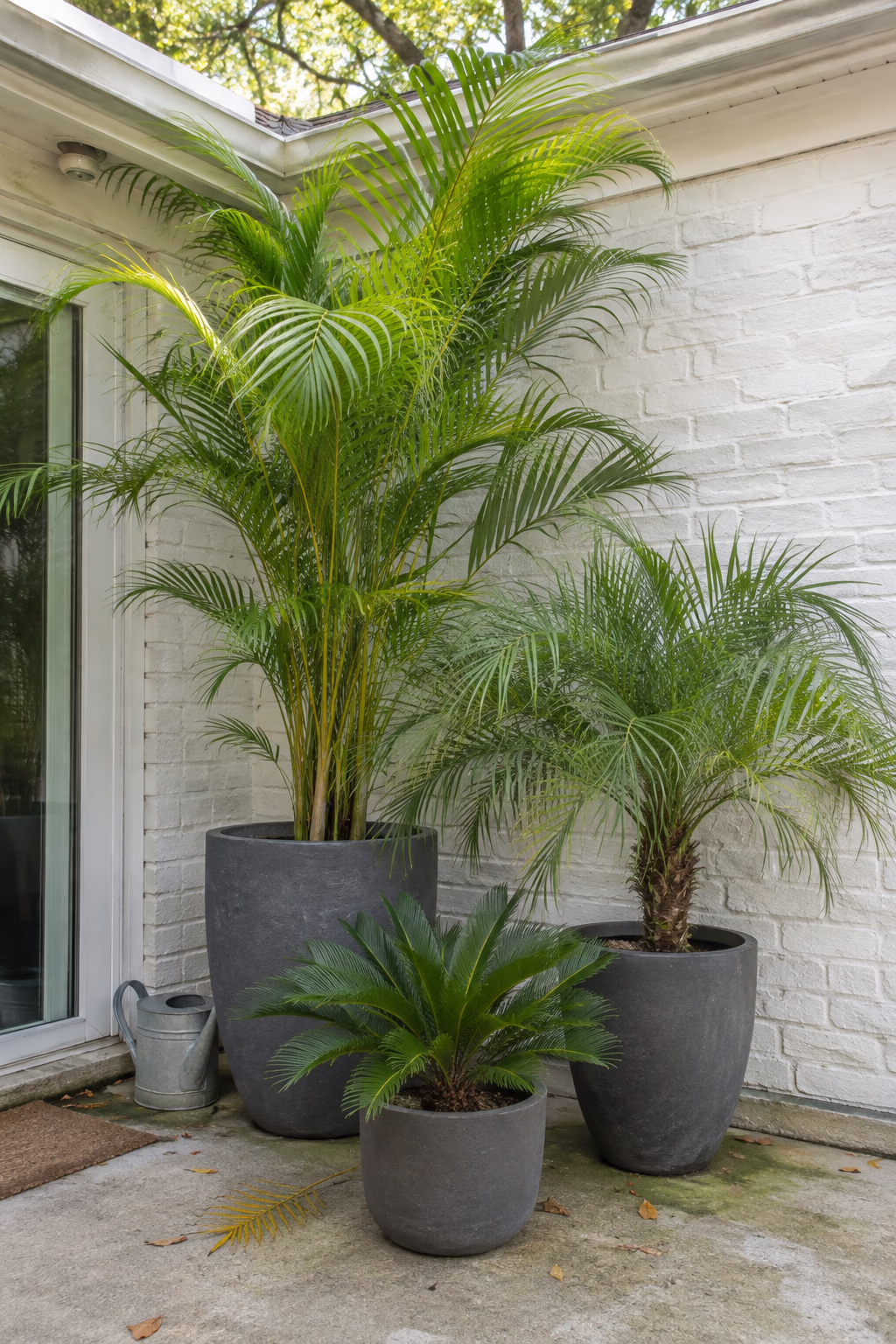
Portable palms for any climate
A grouping of three palms in large pots instantly signals tropical style. Try a tall areca or majesty palm in back, a pygmy date palm in the middle, and a low sago palm in front, all in containers at least 18 inches wide.
Grouping pots creates a fuller look than spacing them out, and the plants shade each other’s roots. Matching or tonal pots keep the arrangement looking intentional.
Most palms sold in pots are tender, so plan to move them indoors when nights fall below about 45°F. Sago palms are toxic to pets, so skip them if dogs share the yard.
7. Mount a Living Wall of Ferns and Bromeliads
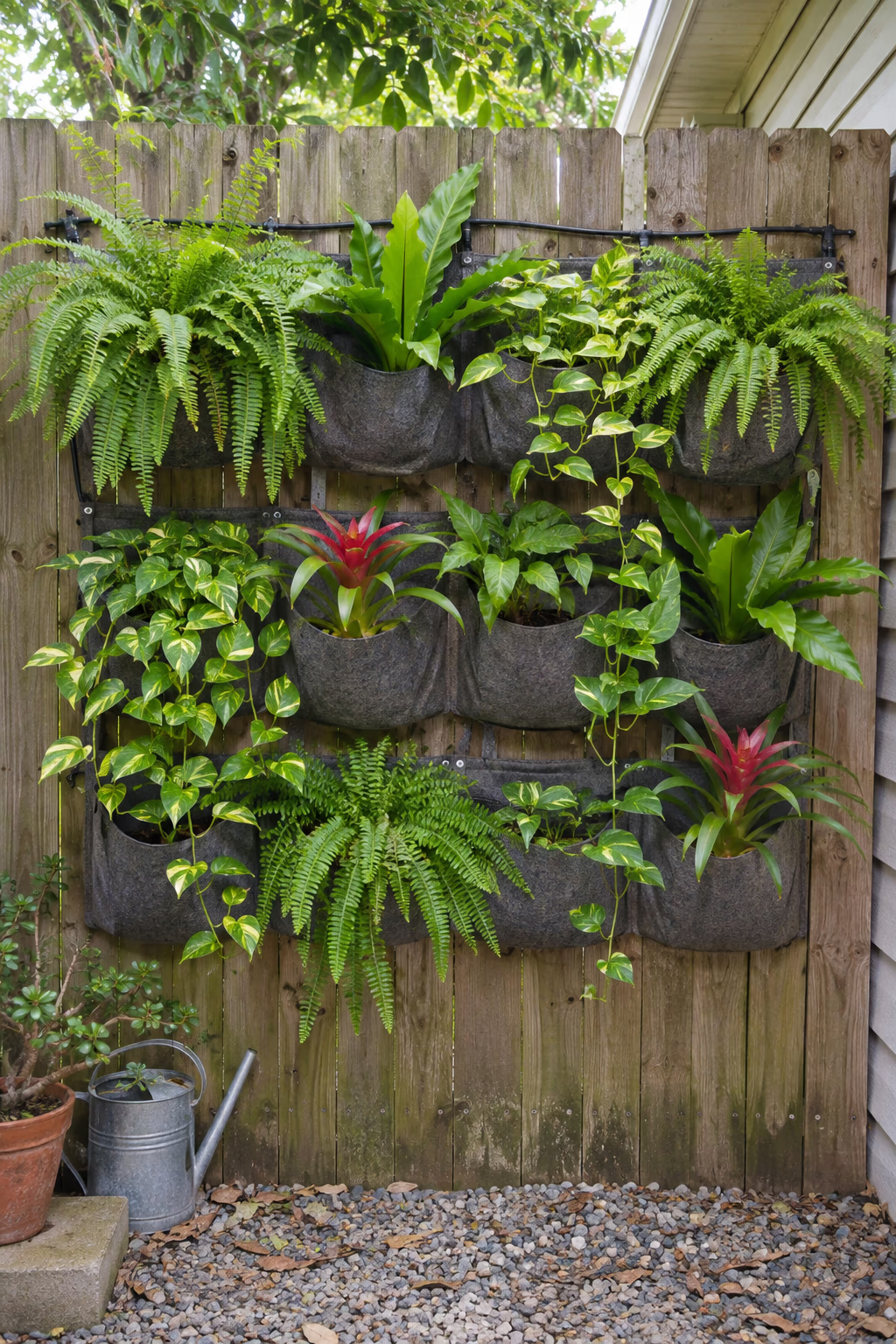
Lush green where there’s no room for a bed
A living wall turns a blank fence panel or garage wall into a vertical jungle. Felt pocket planters or modular plastic panels can be screwed to a frame, then filled with Boston ferns, bird’s nest ferns, pothos, small bromeliads, and trailing string-of-pearls.
This is a smart solution for narrow side yards and small spaces, and it puts lush foliage right at eye level.
Wet soil is heavy, so mount panels on a sturdy frame with a gap behind them to protect the wall. A simple drip line on a timer is almost essential, because vertical pockets dry out fast. In cold zones, treat the plants as annuals or bring them inside.
8. Grow a Shady Fern Garden Under Existing Trees
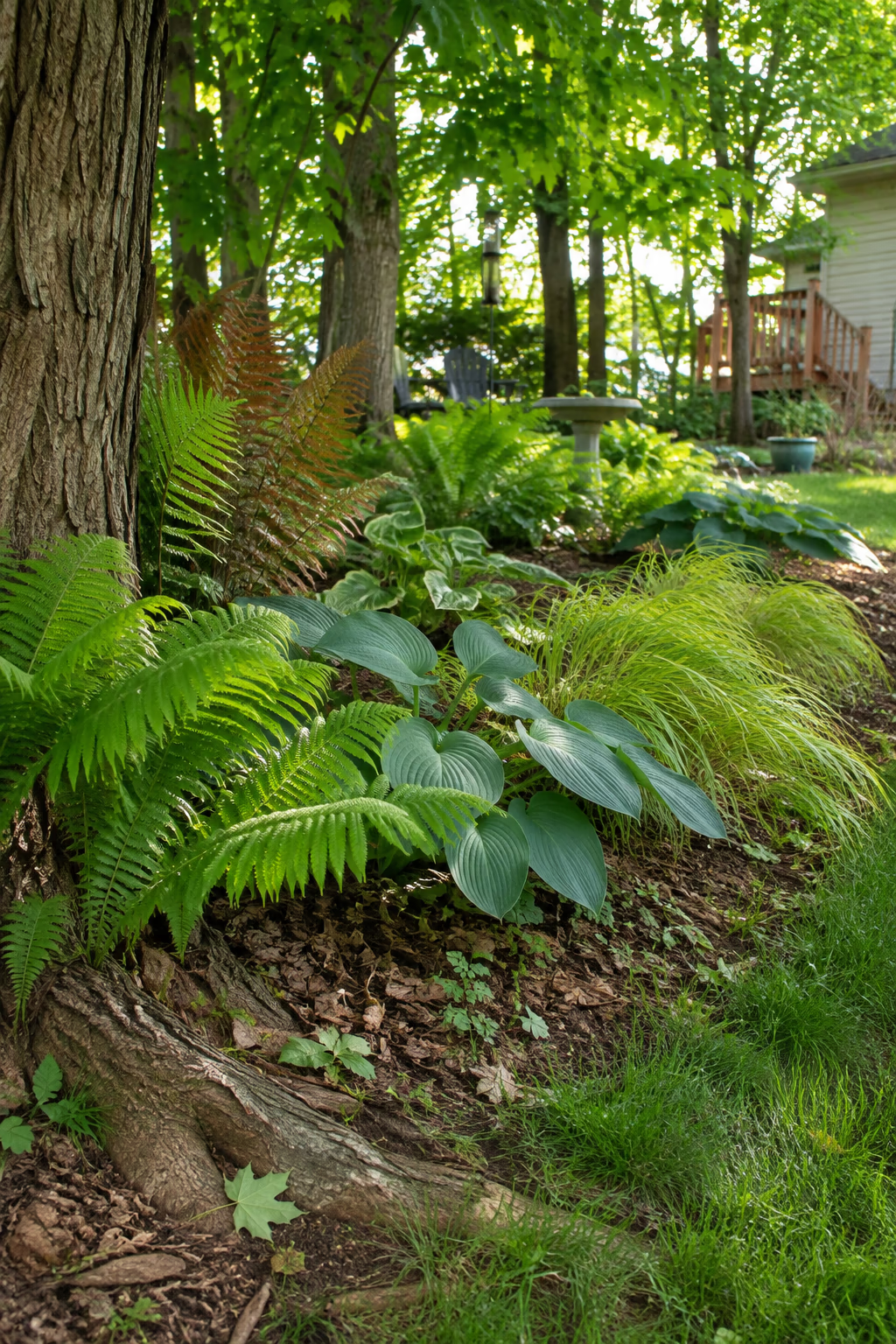
A rainforest floor in the shade
Dappled shade under maples or oaks is the perfect place for a lush understory. Plant large ferns such as ostrich fern, autumn fern, and giant wood fern in drifts, then add bold hostas, ligularia, and Japanese forest grass for contrast.
Ferns create the layered, primitive look of a jungle floor, and many are fully hardy across most of the US, so you get the effect year after year.
Tree roots compete for water, so plant smaller divisions in pockets between roots rather than piling soil over them. A 2-inch layer of shredded leaves keeps moisture in and feeds the soil.
9. Brighten Shady Edges With Caladiums
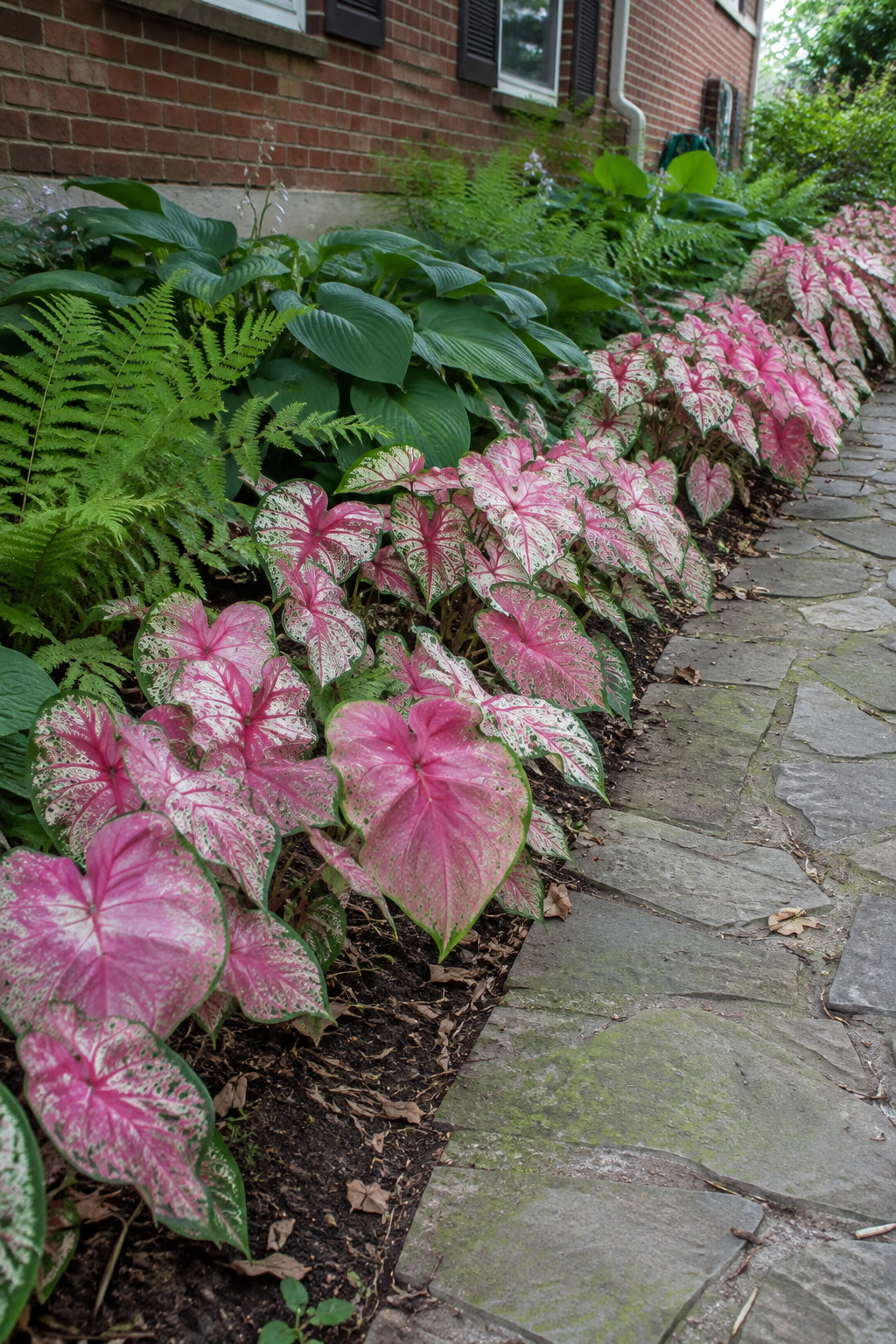
Painted leaves that light up dark corners
Caladiums have heart-shaped leaves splashed in pink, red, white, and green, and they glow in shade where flowers struggle. Line the front of a shady bed with a single variety for a bold ribbon of color, or mix two that share a color.
They pair beautifully with ferns and dark green hostas, adding a tropical touch without any blooms to deadhead.
Caladiums sulk in cold soil, so wait until the ground is about 70°F before planting tubers, or buy started plants. North of Zone 9, dig the tubers in fall or simply replant each year.
10. Fake the Tropics With Cold-Hardy Lookalikes
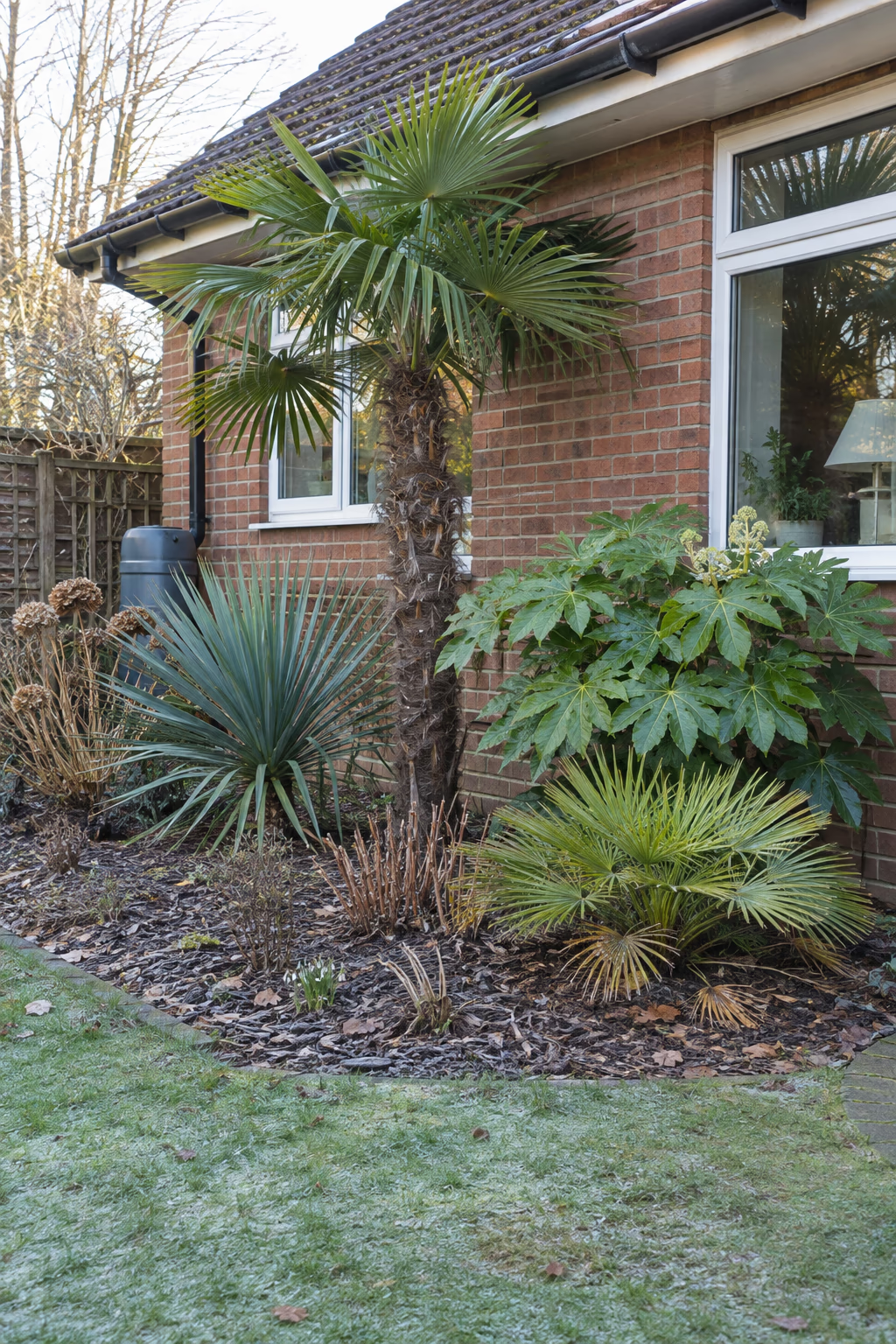
Year-round structure in colder zones
You can build a tropical framework that survives real winters. Windmill palms handle Zone 7, needle palms survive in parts of Zone 6, and yucca, fatsia, hardy agave, and big-leaf magnolia add bold, exotic shapes.
These plants keep the garden from looking empty in the off season, while summer annuals fill in around them. Evergreen structure is what separates a convincing tropical look from a seasonal one.
Site borderline plants against a south-facing wall or near the house, where it stays a few degrees warmer. Good drainage matters as much as cold tolerance, since soggy winter soil kills many palms.
11. Screen the Yard With Clumping Bamboo
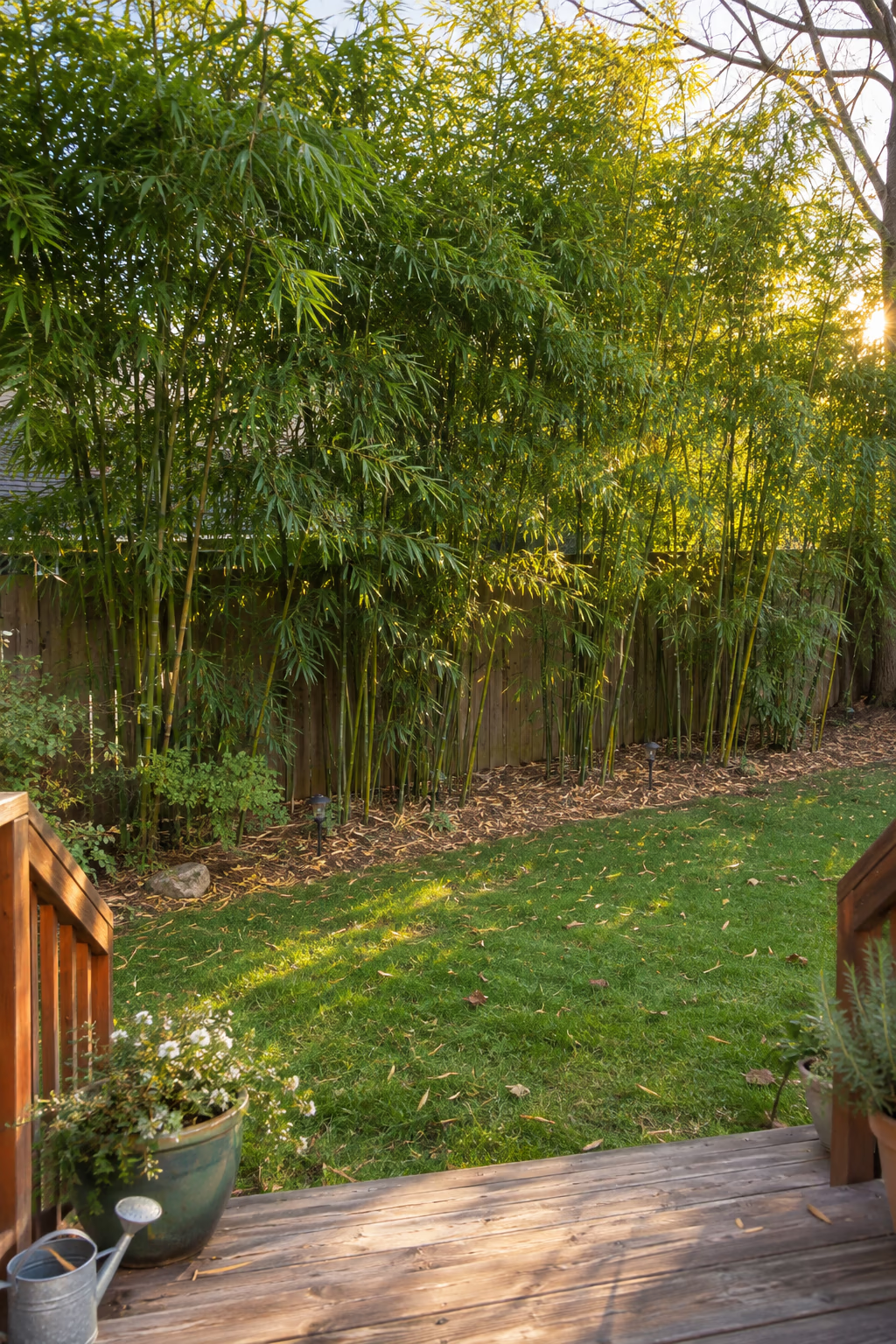
Rustling privacy with a resort feel
A row of bamboo makes a tall, airy screen that sways and rustles in the breeze. Clumping types are the right choice: Fargesia handles cold winters and part shade, while Bambusa varieties suit warm, sunny southern yards.
Plant them 3 to 5 feet apart along a property line, and they will fill into a dense screen within a few seasons.
Avoid running bamboo, which spreads aggressively and is restricted in some towns and HOAs. Even clumpers widen slowly over time, so leave a few feet between the screen and a fence or path.
12. Train Passionflower Vines Up a Cedar Arbor
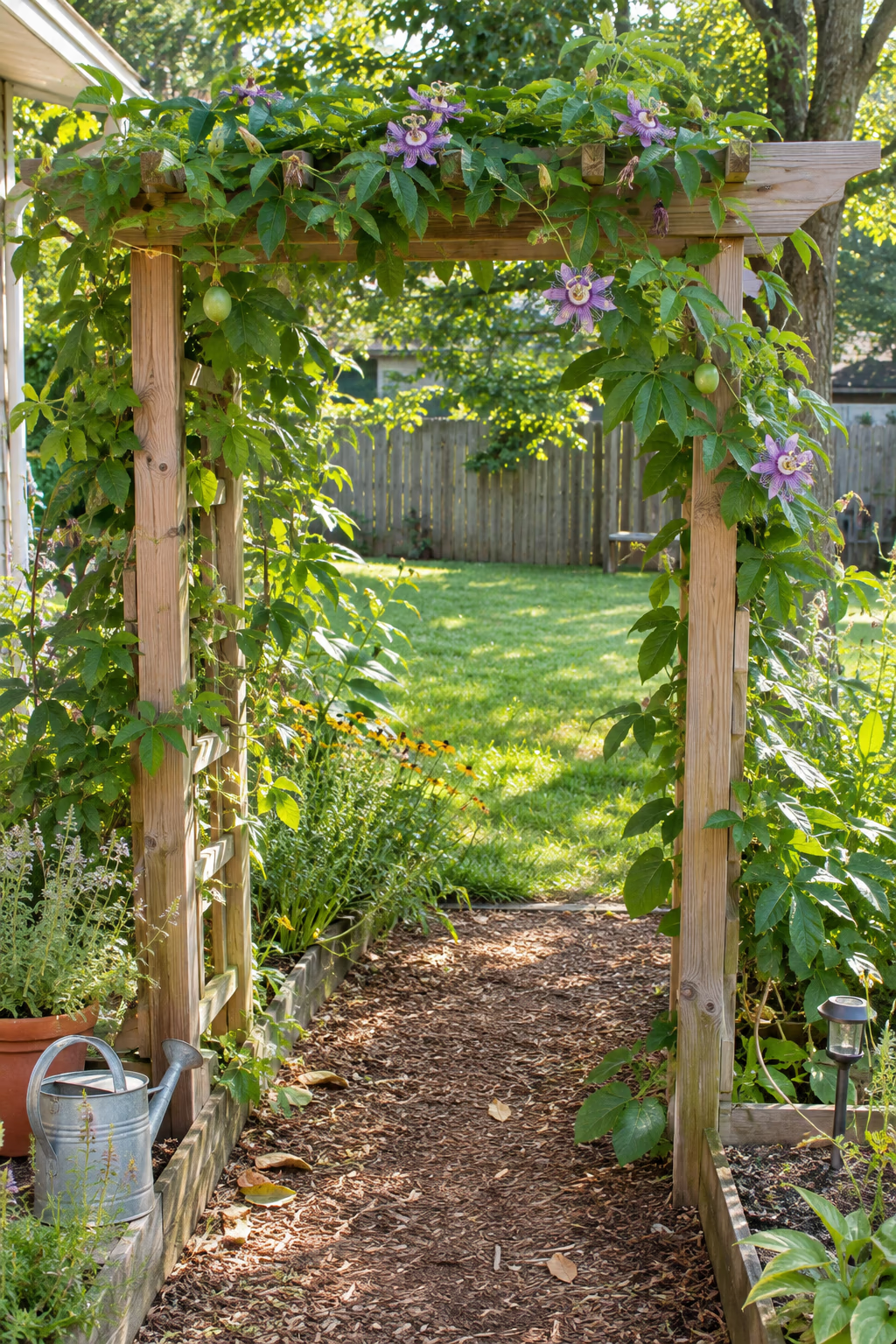
Exotic blooms on a simple structure
Passionflower blooms look almost unreal, with frilly purple filaments radiating from the center. Maypop, a native passionflower, is hardy in Zones 5 or 6 through 9 and can cover a 7-foot cedar arbor in a single season.
The vine also feeds gulf fritillary and other butterfly caterpillars, and in warm zones it produces edible fruit.
Maypop can sucker into nearby beds, so plant it where you can mow or pull stray shoots. For tender tropical passionflowers, grow them in a pot at the base of the arbor and move them inside for winter.
13. Showcase Bromeliads in a Lava Rock Bed
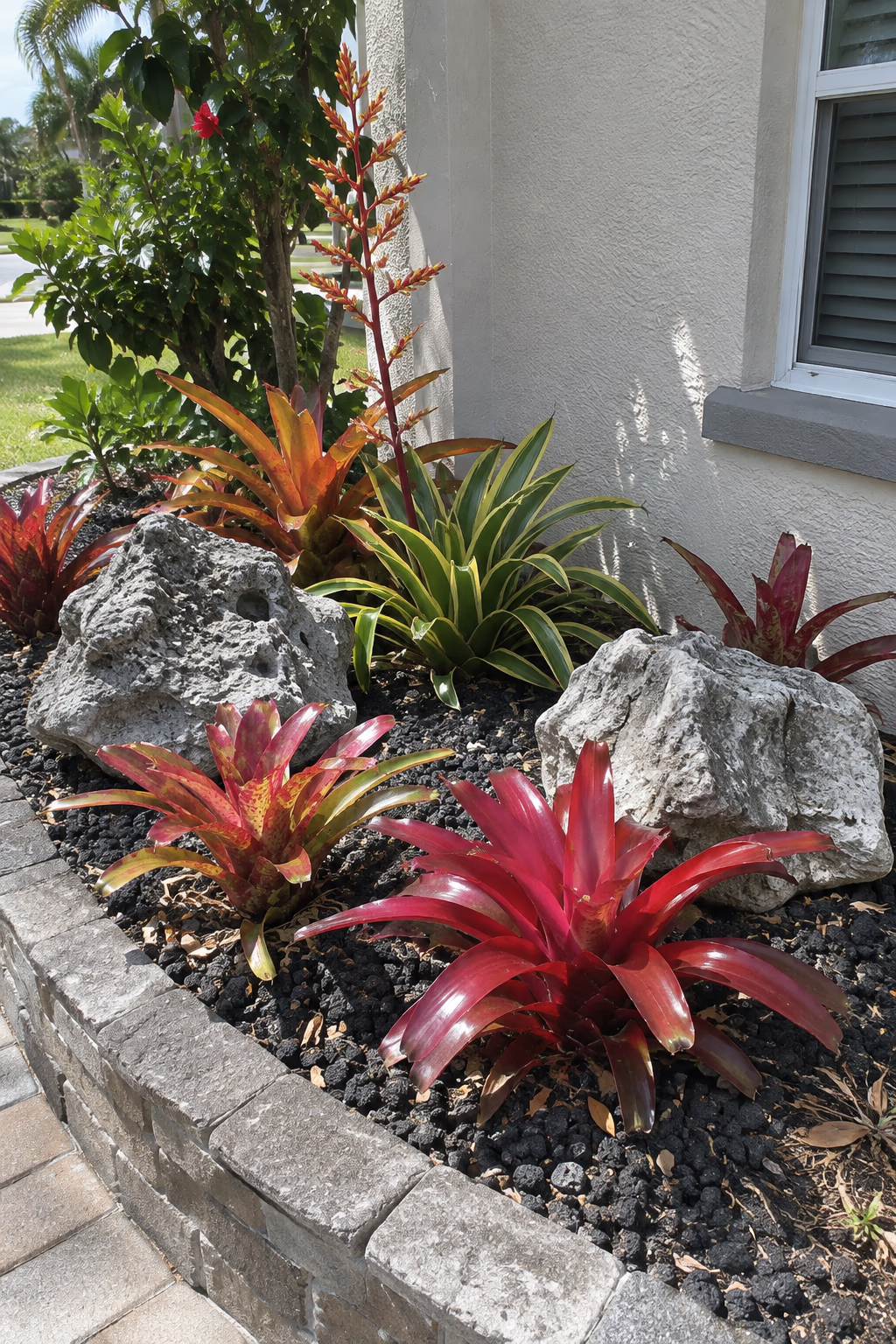
Sculptural color with very little water
Bromeliads form rosettes in red, orange, burgundy, and striped green, and many bloom with striking spikes. Set them in a raised bed topped with red or black lava rock, with a few larger boulders for contrast.
The dark, porous rock sets off the bright leaves and drains quickly, which these plants prefer. It also reads as volcanic and island-like.
In ground beds, bromeliads are only reliable in Zones 10 and 11. Elsewhere, sink them in their pots so you can lift them easily before cold weather. Keep a little water in the central cup during dry spells.
14. Plant a Hummingbird Bed of Pentas, Salvia, and Cuphea
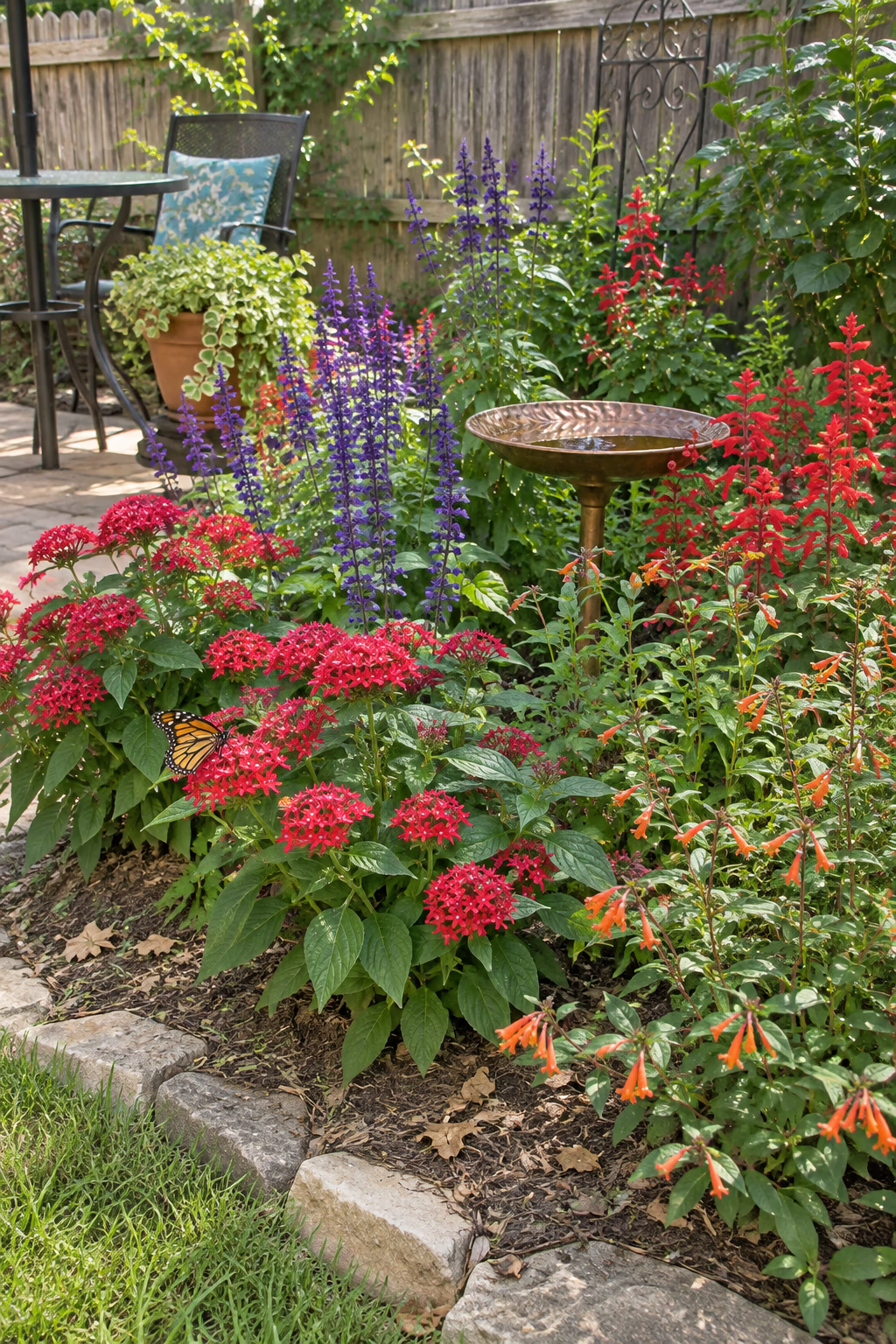
Bright tubular flowers that bring wildlife
Red and orange tubular flowers are hummingbird magnets. Combine red pentas, tall red or purple salvia, and fiery cuphea in a sunny bed, adding a few stems of firespike or red yucca in warm zones.
The constant buzz of hummingbirds and butterflies makes the garden feel alive in the way a tropical forest does. These plants also bloom from early summer until frost.
Skip insecticides in this bed, since they harm the pollinators you are trying to attract. Most of these plants are grown as annuals north of Zone 9, so budget to replant each spring.
15. Pair Crotons and Coleus for Painted Foliage
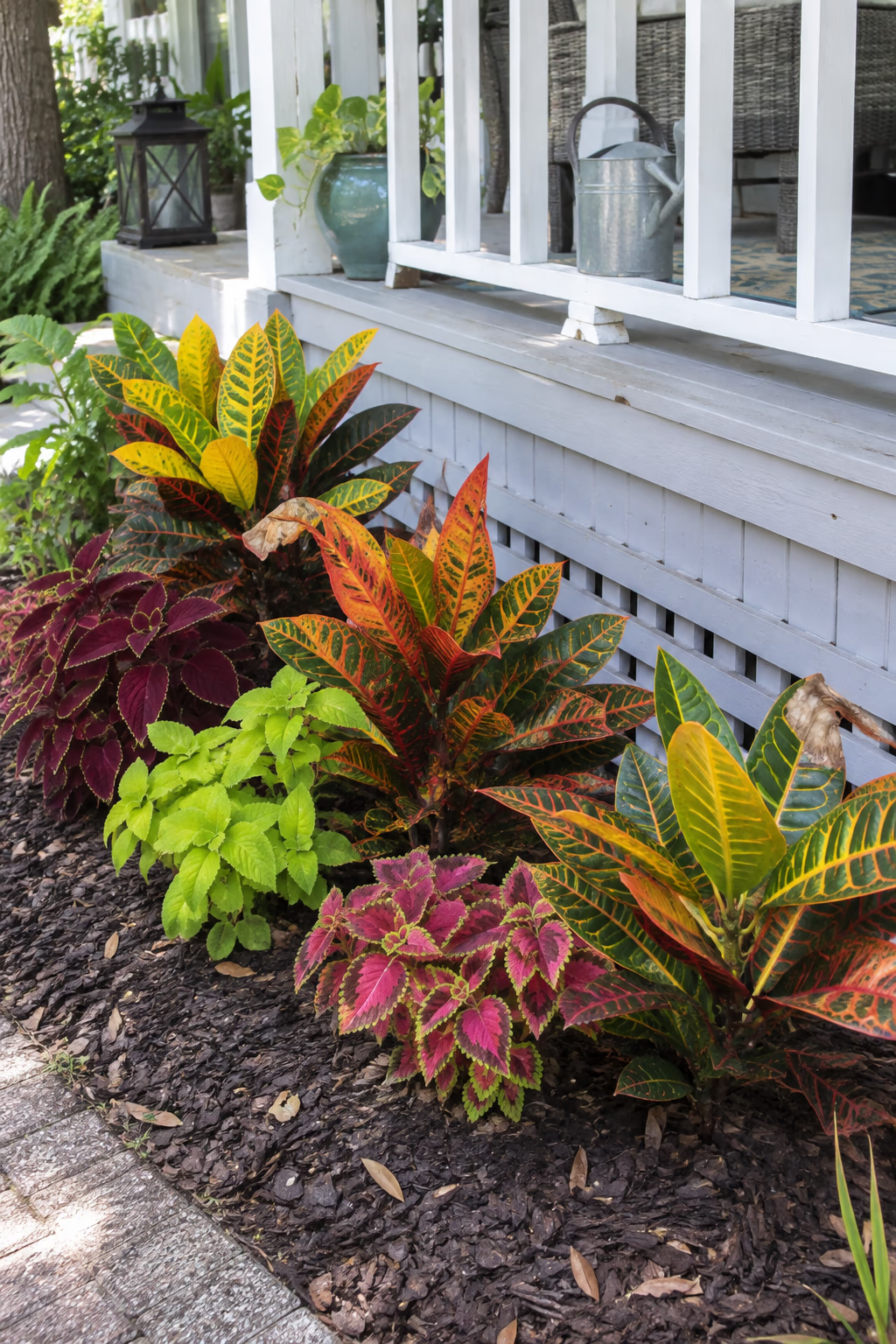
Color that lasts all season without blooms
Crotons have leathery leaves splashed with yellow, orange, red, and green, while coleus comes in nearly every color from lime to near-black. Planted together, they create a multicolored tapestry that stays bright from spring to frost.
Foliage color doesn’t fade the way blooms do, so the bed looks consistent with almost no deadheading.
Crotons need bright light and warmth and will drop leaves below about 50°F. Coleus prefers some afternoon shade in hot climates, so give the combination morning sun and filtered light later in the day.
16. Set Up a Container Water Garden With Papyrus
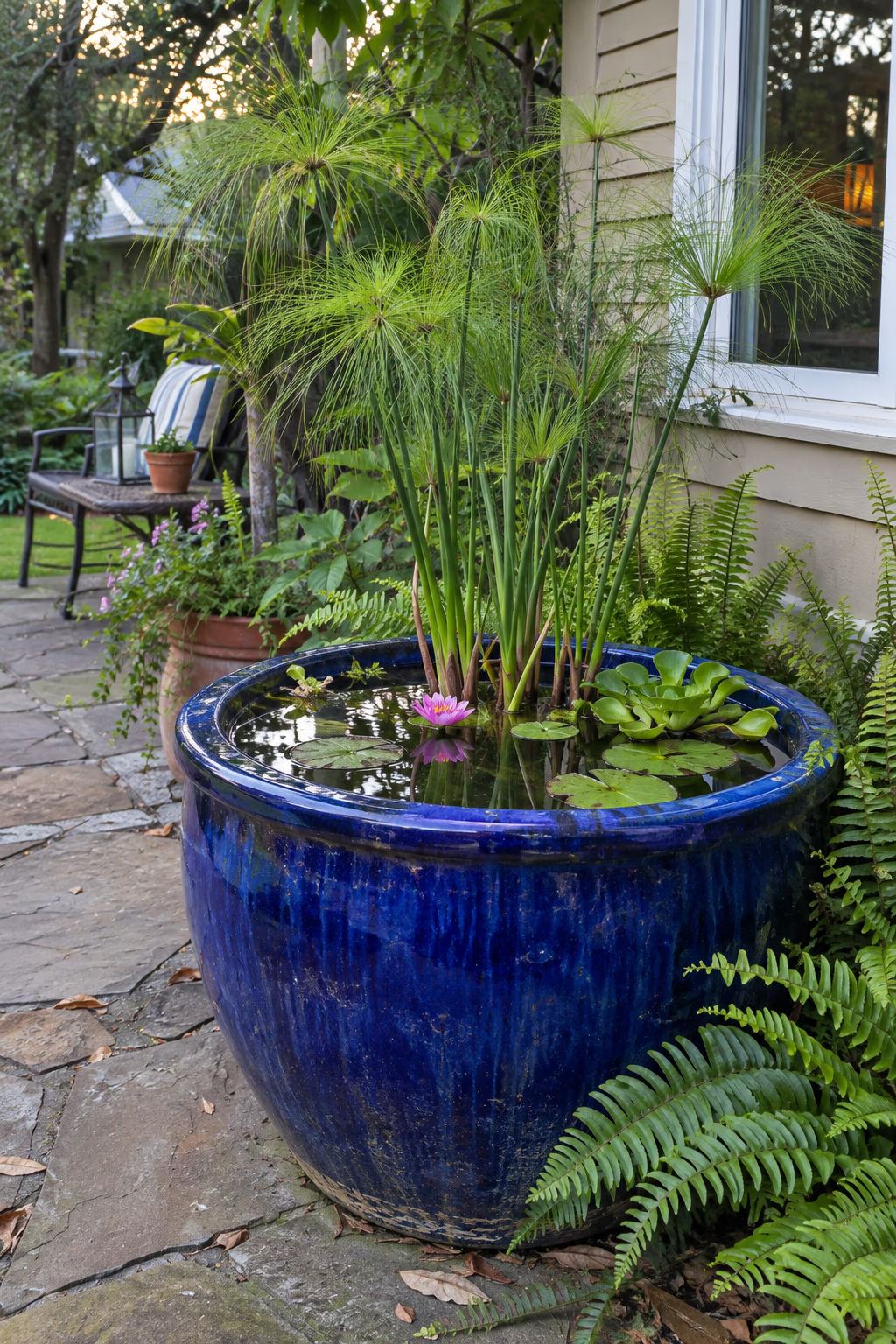
A pond look without digging
A glazed pot or half barrel 24 inches or wider makes a small water garden for a patio or bed. Plug any drainage hole, fill it with water, and set a tall papyrus, a dwarf water lily, and a few floating plants inside on bricks to adjust their depth.
Papyrus adds airy, fireworks-like heads that move with every breeze, and the still water adds reflections and calm.
Add mosquito dunks or a small solar fountain to keep mosquitoes from breeding. Avoid releasing water plants into local waterways, since some, like taro and water hyacinth, are invasive in parts of the South.
17. Uplight Palms and Big Leaves at Night
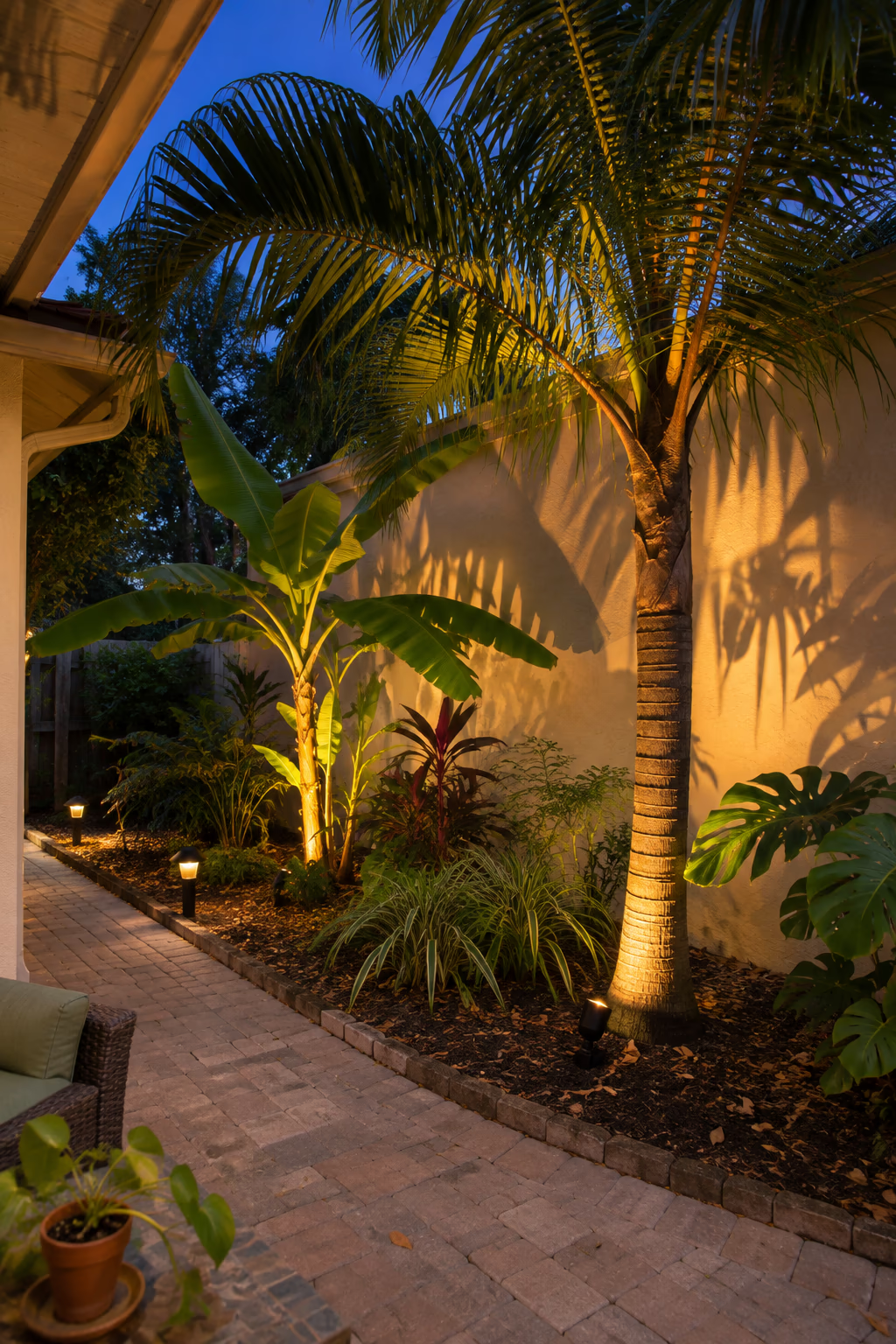
Dramatic shadows after sunset
Low-voltage LED spotlights aimed up through palm fronds or banana leaves turn the garden into a dramatic evening scene. Set one or two fixtures at the base of each feature plant and a few path lights along walkways.
Lighting from below shows off leaf texture and casts big, jungle-like shadows on fences and walls. Warm white bulbs around 2700K feel more natural than cool blue tones.
Low-voltage kits are DIY-friendly and plug into a transformer on an outdoor outlet. Bury the cable a few inches deep and keep fixtures where they won’t be kicked or hit by mowers.
18. Hang a Hammock in a Shady Planted Nook
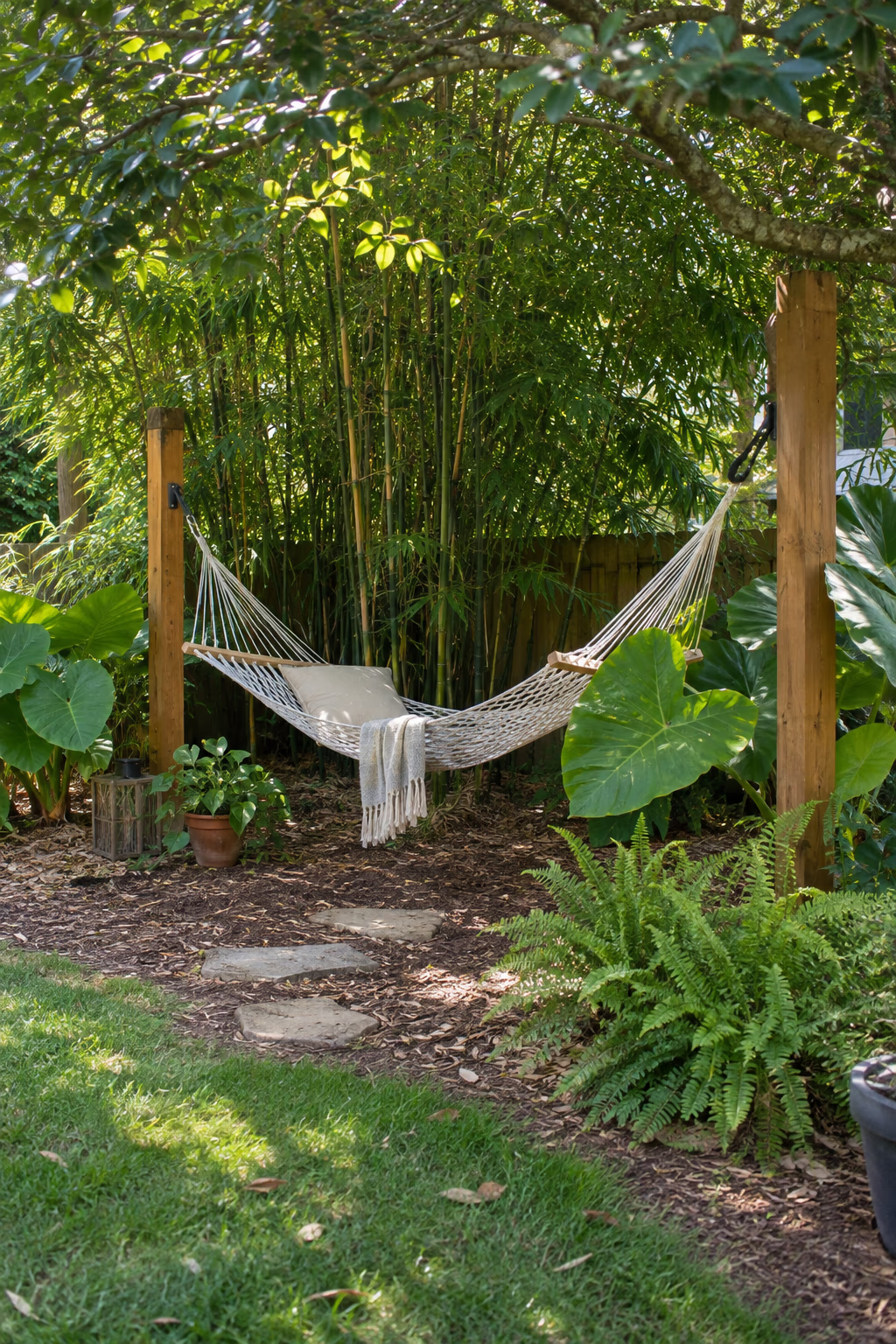
A place to actually enjoy the jungle
A rope or fabric hammock slung between two sturdy posts or mature trees, surrounded by tall foliage, is the ultimate tropical retreat. Plant elephant ears, ferns, and bamboo around it so you feel tucked into the greenery.
A hammock gives the garden a purpose beyond looking good, inviting you to stay outside longer.
Posts should be 4×4 or larger set in concrete, and the hammock usually needs 12 to 15 feet between anchors. Hammock straps protect tree bark better than ropes or screws.
19. Paint Planters in Bold Tropical Colors
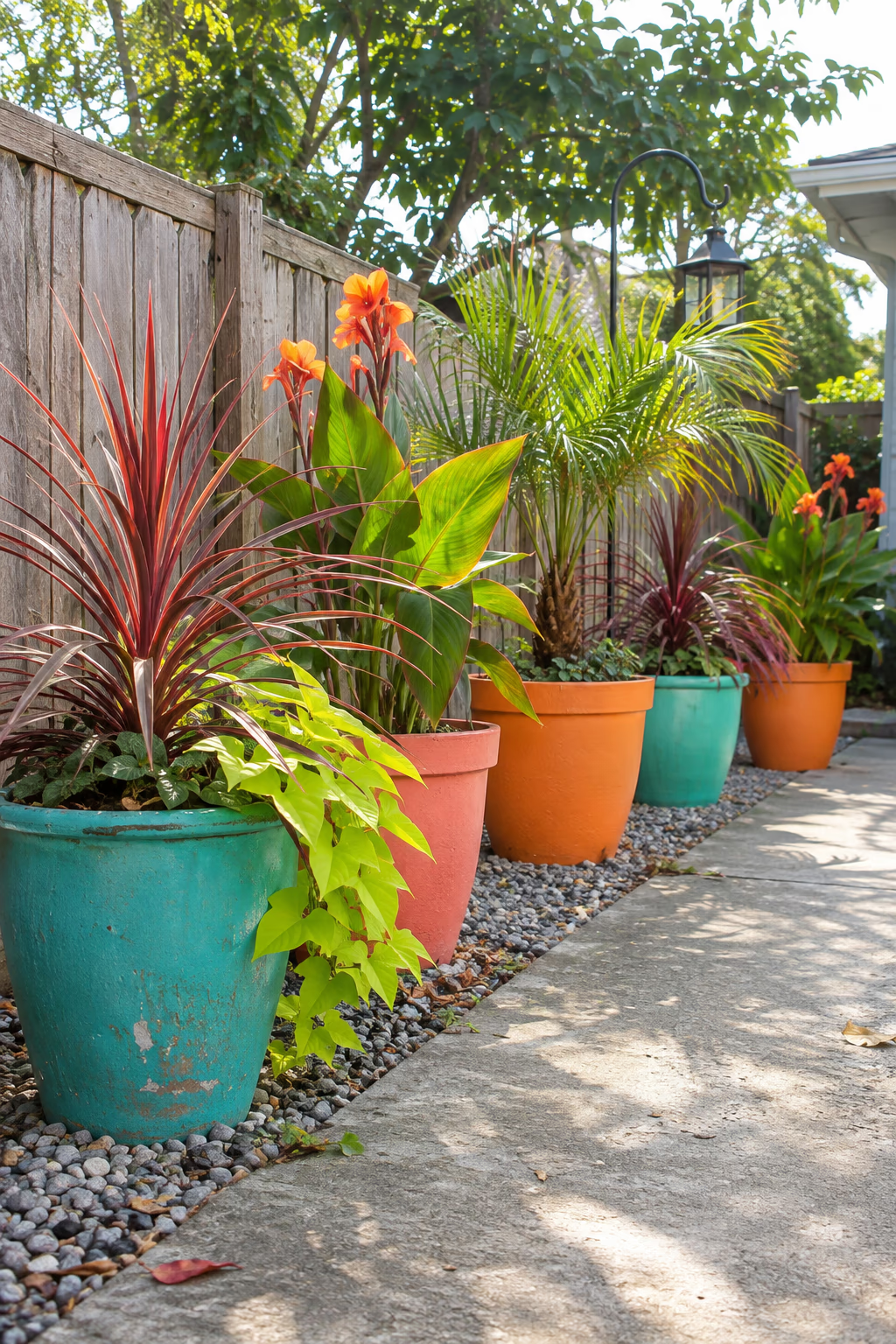
An easy color boost that lasts all year
Bright pots in turquoise, coral, mango, or cobalt blue add island color even when plants aren’t blooming. Repaint old terracotta or plastic planters with exterior paint, or buy glazed ceramic in a few coordinating shades.
Colored pots make green foliage pop and help tie a planting scheme together. Repeating one or two colors through the garden looks more deliberate than a rainbow.
Paint only the outside of terracotta, and seal it with a clear exterior coat. In freezing climates, empty glazed pots or move them under cover so they don’t crack.
20. Grow Mandevilla on an Obelisk in a Large Pot
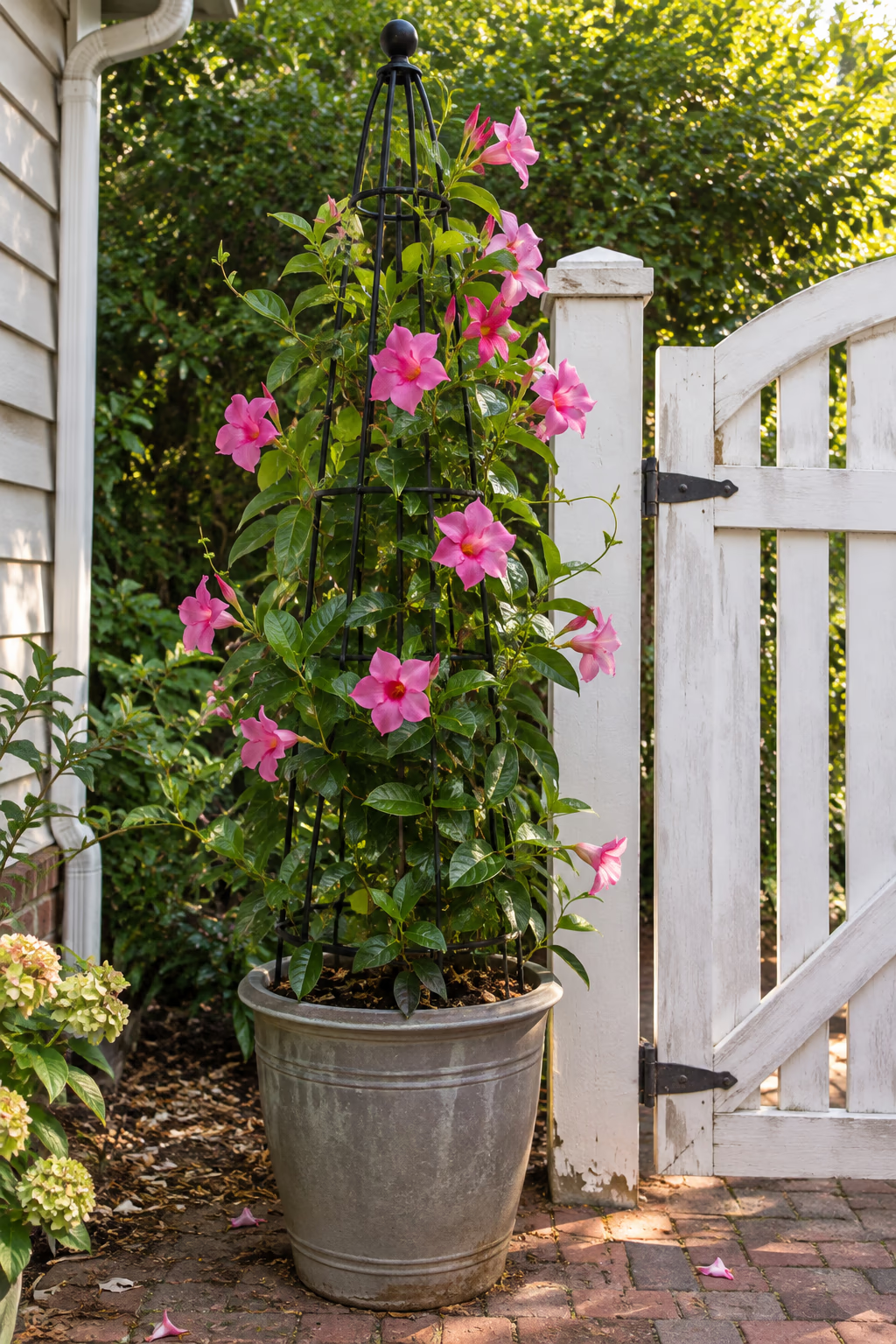
Nonstop trumpet flowers in a small footprint
Mandevilla produces glossy leaves and big pink, red, or white trumpet flowers from late spring until frost. Plant one in a pot at least 16 inches wide and add a 4- to 5-foot metal or wood obelisk for it to twine around.
It gives tropical vertical interest in places where you can’t plant a vine in the ground, such as beside a gate or at the corner of a bed.
Mandevilla is hardy only in Zones 10 and 11. It can be overwintered indoors in a sunny window, but many gardeners simply buy a new one each spring.
21. Plant an Edible Corner With Citrus, Ginger, and Lemongrass
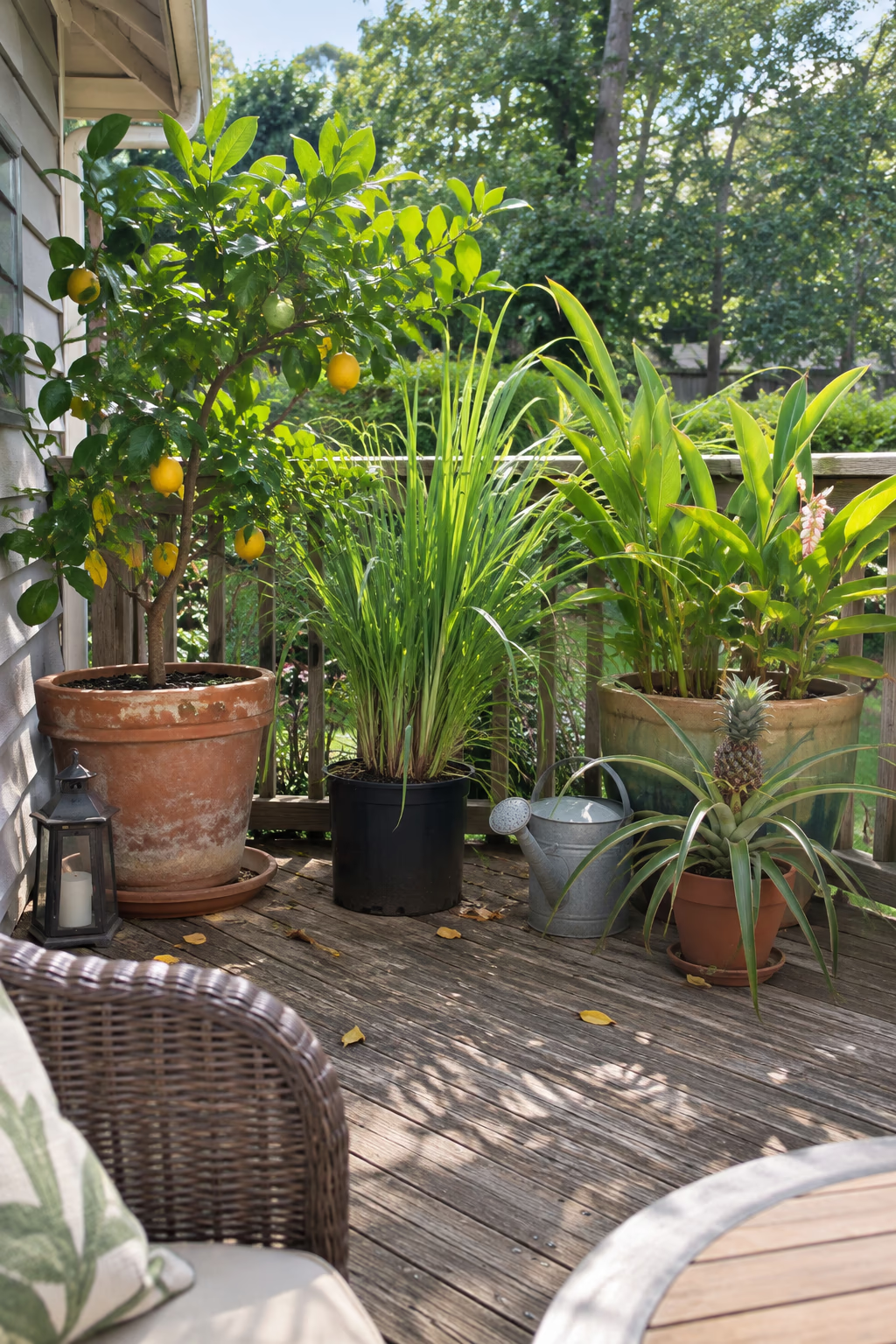
A tropical look you can harvest
A dwarf lemon or lime tree in a large pot, a clump of lemongrass, and potted ginger together create a fragrant, useful corner. Add a pineapple top rooted in a pot for a fun conversation piece.
Edible tropicals look just as lush as ornamentals, and you can snip leaves and fruit for drinks, teas, and cooking.
Lemongrass and ginger grow as annuals in most zones. Citrus needs full sun, a well-drained citrus mix, and a move indoors to a bright room when nights drop near freezing.
22. Spill Chartreuse Sweet Potato Vine Along Bed Edges
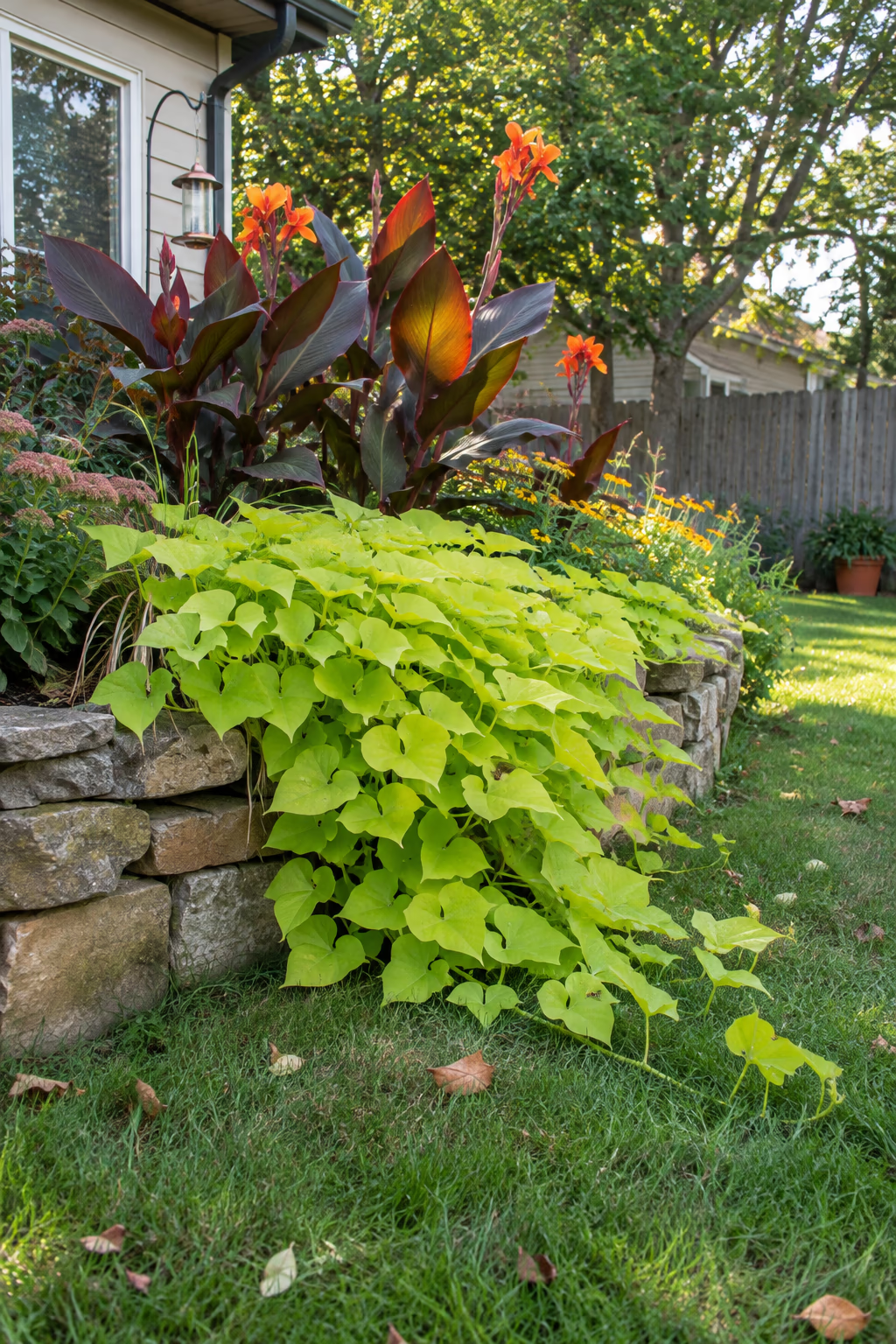
A bright ribbon that softens hard lines
Ornamental sweet potato vine in lime green or deep purple spreads fast, cascading over walls and bed edges. Plant it 18 to 24 inches apart along the front of a border, or tuck it into pots to trail down the sides.
Chartreuse leaves light up the base of dark foliage plants, while purple varieties look rich against cannas and orange flowers.
It can get aggressive by late summer, so trim the runners to keep it from smothering smaller plants. It is grown as an annual and is not frost-tolerant.
23. Hang Staghorn Ferns and Orchids From a Tree
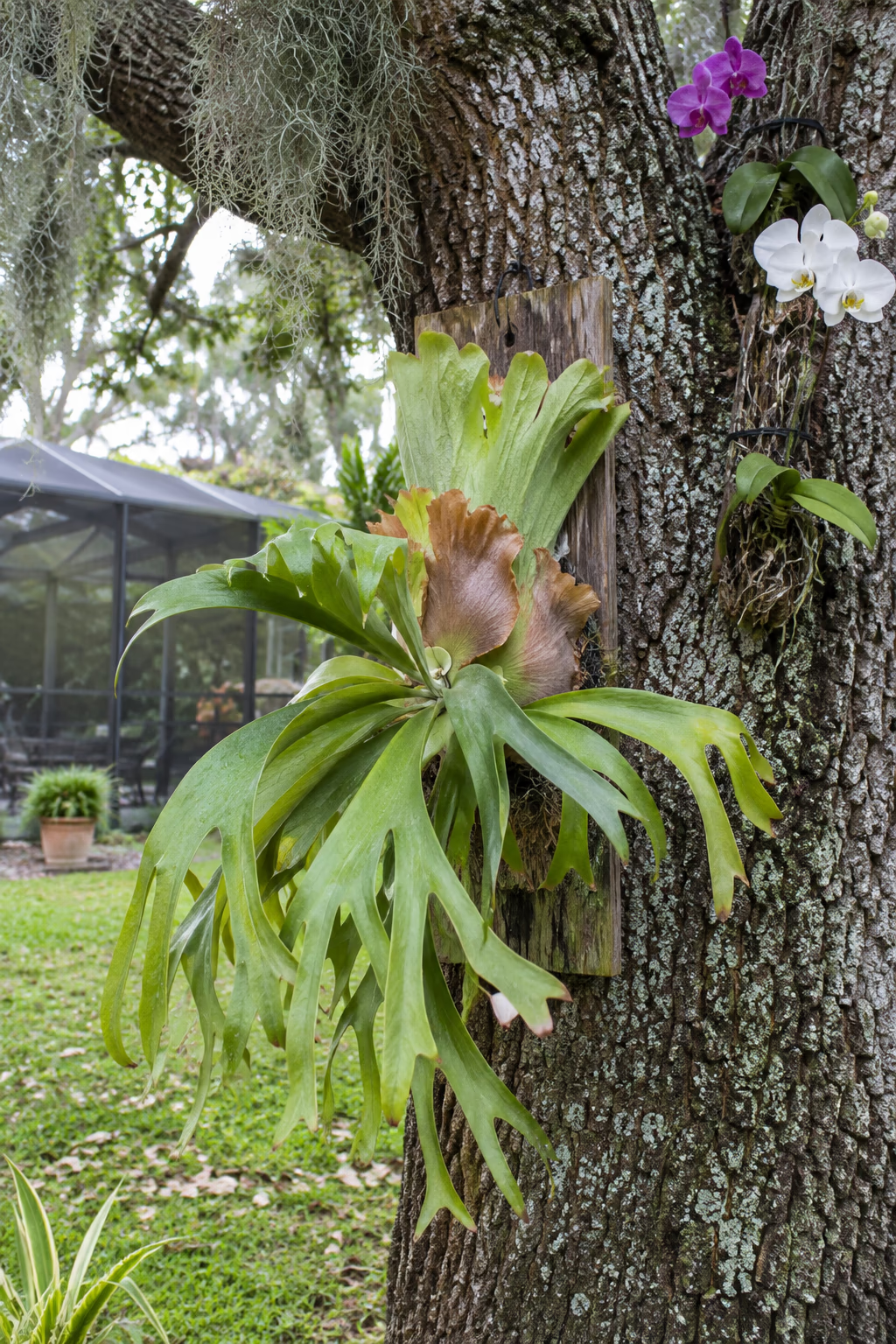
Bring the rainforest canopy down to eye level
In warm, humid areas, staghorn ferns mounted on wood boards and orchids tied to branches mimic how these plants grow in the wild. Hang boards on a shaded tree trunk at eye level so the antler-like fronds are easy to admire.
Epiphytes add a layer that most gardens lack, filling the space between ground plants and the tree canopy.
This idea suits Zones 10 and 11 or a covered porch in summer. Mist or soak the mounts often in dry weather, and bring them indoors whenever temperatures dip below about 50°F.
24. Mulch With Dark Bark to Make Foliage Glow
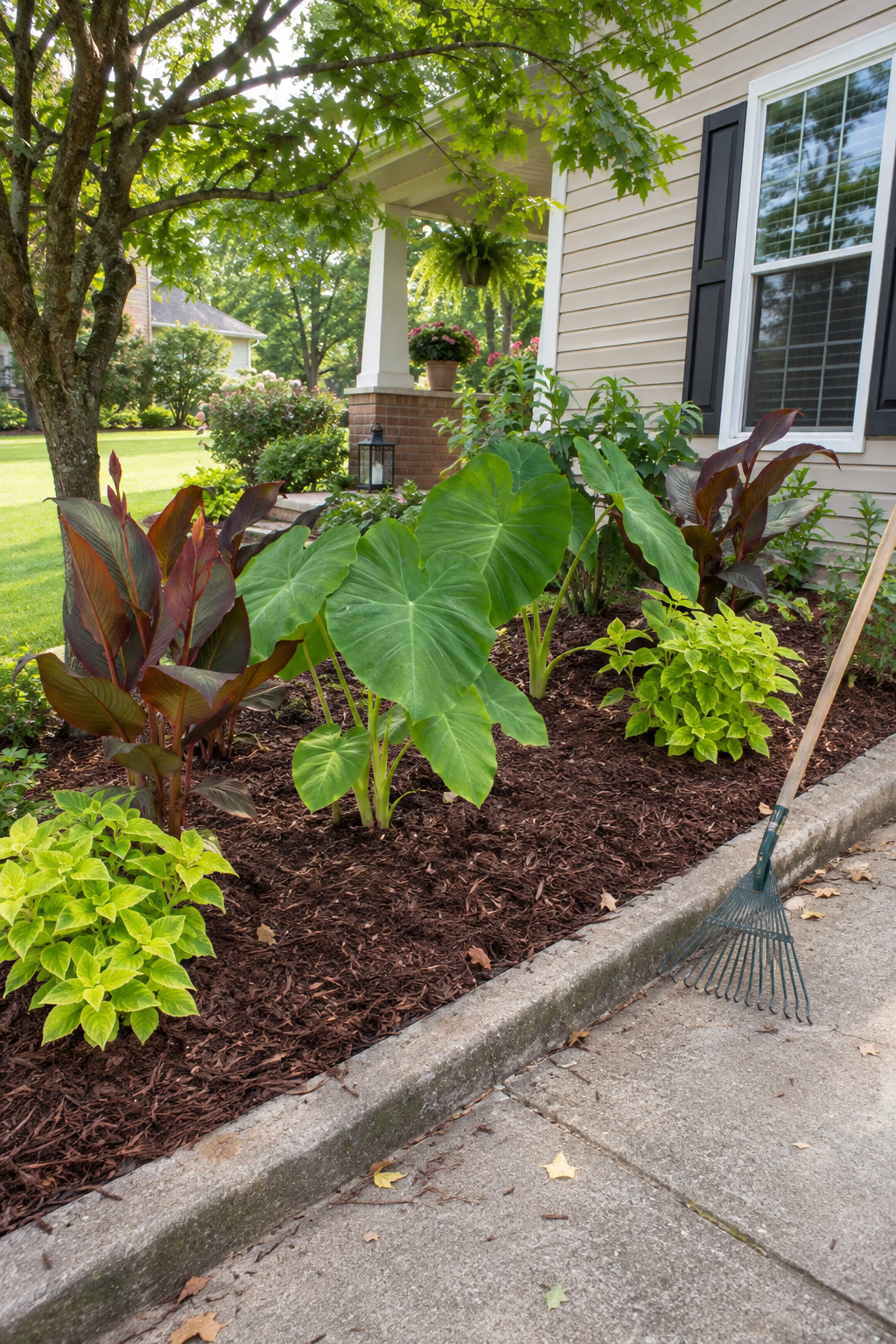
A simple backdrop that makes colors pop
Dark brown or black shredded bark mulch makes green and colorful leaves stand out sharply. Spread it 2 to 3 inches deep across beds, keeping it a few inches away from stems and trunks.
Besides looking good, mulch holds moisture, suppresses weeds, and keeps soil temperatures steadier, all of which thirsty tropicals appreciate.
Choose natural-colored or vegetable-dyed mulch, and top it up each spring as it breaks down. Avoid piling it high against the house siding.
25. Add an Outdoor Shower Wrapped in Greenery
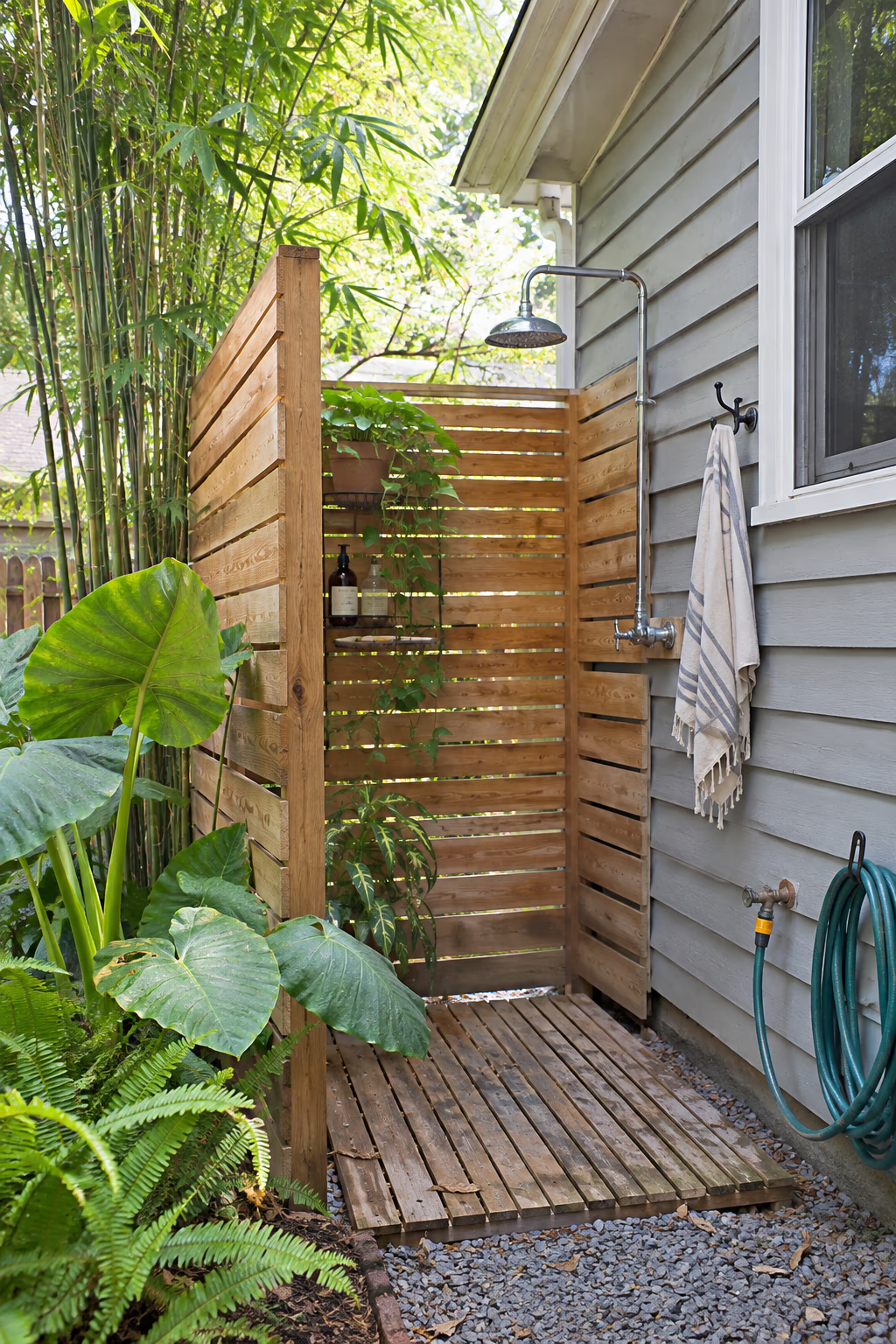
Resort-style rinsing after yard work or the pool
A simple cedar enclosure with a wall-mounted shower head, a gravel or slatted wood floor, and lush plantings around it feels like a beach resort. Surround it with elephant ears, ferns, and bamboo that love the extra water.
An outdoor shower keeps sand and dirt out of the house and makes summer evenings feel like vacation.
Plumbing usually requires a permit, and gray-water drainage rules vary by town. A basic hose-connected shower is a cheaper way to try the idea first.
26. Add Movement With Purple Fountain Grass
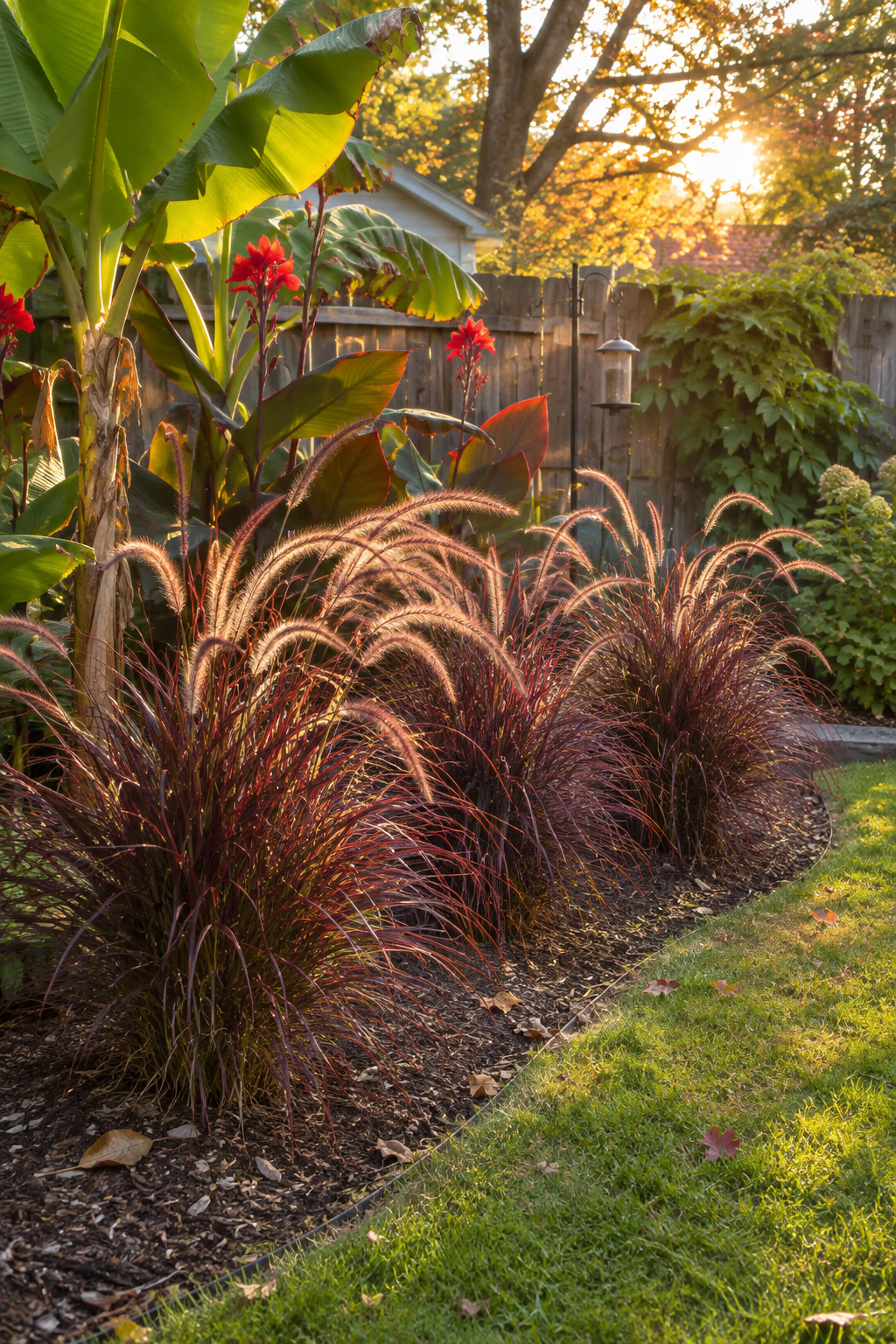
Soft texture between big leaves
Purple fountain grass forms burgundy mounds about 3 to 4 feet tall with fuzzy, arching plumes. Plant it in groups of three among cannas or bananas to soften the bold shapes and add motion in the breeze.
Fine-textured grasses balance heavy foliage and catch the light beautifully in late afternoon.
It is grown as an annual in most zones. The green species form is invasive in some warm states, so choose the purple variety and check local invasive plant lists.
27. Dig and Store Tender Bulbs Each Fall
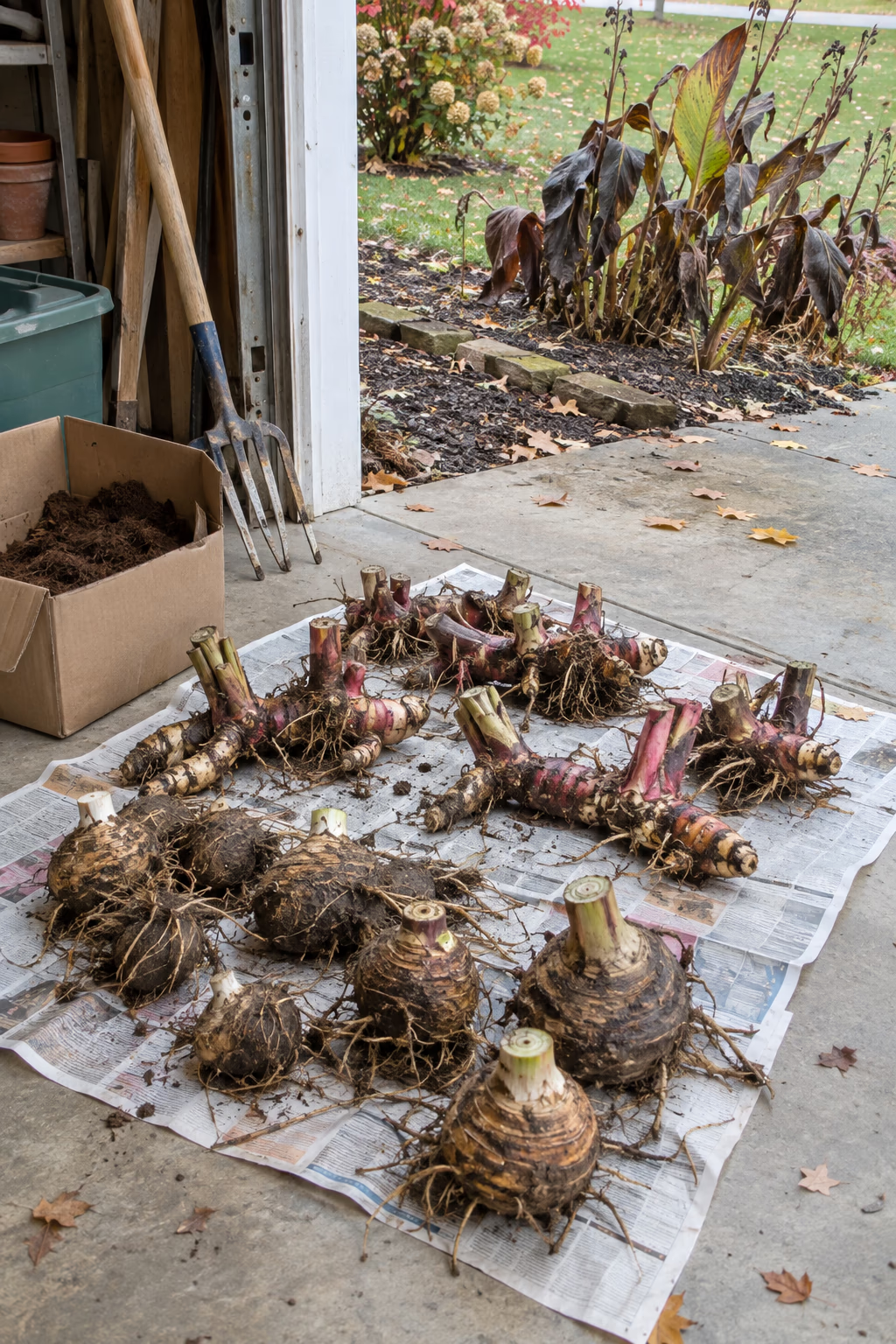
Save money and grow bigger plants each year
Cannas, elephant ears, and caladiums can be saved from year to year in cold climates. After the first light frost, cut back the leaves, dig the rhizomes or tubers, let them dry for a few days, and store them in peat moss or wood shavings in a cool basement.
Saved clumps often grow larger each year, so your tropical bed gets fuller without repeated costs.
Keep them between about 45 and 55°F and check monthly for rot. Label each box so you know what you’re replanting in spring.
How to Plan a Tropical Garden
A tropical garden looks effortless when it’s lush, but a few planning decisions make the difference between a jungle and a struggle.
- Know your zone. Check your USDA hardiness zone and decide which plants will be permanent and which will be annuals or overwintered.
- Start with structure. Use hardy palms, bamboo, shrubs, or bananas as a backbone, then fill in with seasonal color.
- Plan for water. Most tropicals need consistently moist soil, so install soaker hoses or drip irrigation before planting.
- Plant densely. Space plants a little closer than usual for a lush look, but leave room for mature size.
- Watch for invasive species. Check local lists before planting bamboo, taro, fountain grass, or water plants.
- Build in phases. Begin with one bed or corner and expand as you learn which plants thrive. Call 811 before any digging.
Frequently Asked Questions
Can I have a tropical garden in a cold climate?
Yes. Combine hardy plants such as hardy bananas, hardy hibiscus, needle palms, and ferns with tender tropicals in pots that can move indoors for winter, and replant summer annuals each spring.
What are the easiest tropical plants for beginners?
Cannas, elephant ears, coleus, caladiums, sweet potato vine, and hardy hibiscus are forgiving and fast-growing, giving a lush look in a single season.
How much sun does a tropical garden need?
It depends on the plants. Cannas, bananas, and bougainvillea want full sun, while ferns, caladiums, and many foliage plants prefer partial shade. Most yards can support a mix.
Are tropical gardens high maintenance?
They need more water and feeding than drought-tolerant gardens, and tender plants may need to be moved or stored each fall. Mulch and drip irrigation cut down on the work considerably.
How much does a tropical garden cost?
A small bed of annual tropicals can cost under a few hundred dollars, while palms, water features, and lighting can add significantly more. Saving bulbs and overwintering pots reduces costs over time.
Final Thoughts
The best tropical garden ideas combine big leaves, bold color, and a sense of being surrounded by greenery. Whether you plant one hardy banana or build a full jungle border, every layer adds to that vacation feeling.
Start with plants that suit your climate, add tender favorites in pots, and let the garden grow fuller each season. Before long, your backyard can feel like a lush escape right outside your door.


