
Imagine walking past a bed so full of flowers that you can barely see the soil. Pink roses lean on blue spires, soft mounds of purple spill onto the lawn, and bees drift from one bloom to the next. Nothing looks forced, yet everything seems to belong together.
That relaxed abundance is why cottage flower beds never go out of style. They mix perennials, annuals, bulbs, and herbs in a loose, generous way that feels personal and welcoming. They also forgive mistakes, since a gap or a plant in the wrong spot simply becomes part of the charm, and dense planting leaves less room for weeds.
These 25 cottage flower bed ideas cover classic plant pairings, soft color schemes, edging, focal points, shade and dry-spot solutions, and practical tricks for keeping tall flowers upright. Use one idea to refresh an existing bed or combine several to build a new one from scratch.
1. Pair Roses With Foxgloves and Delphiniums
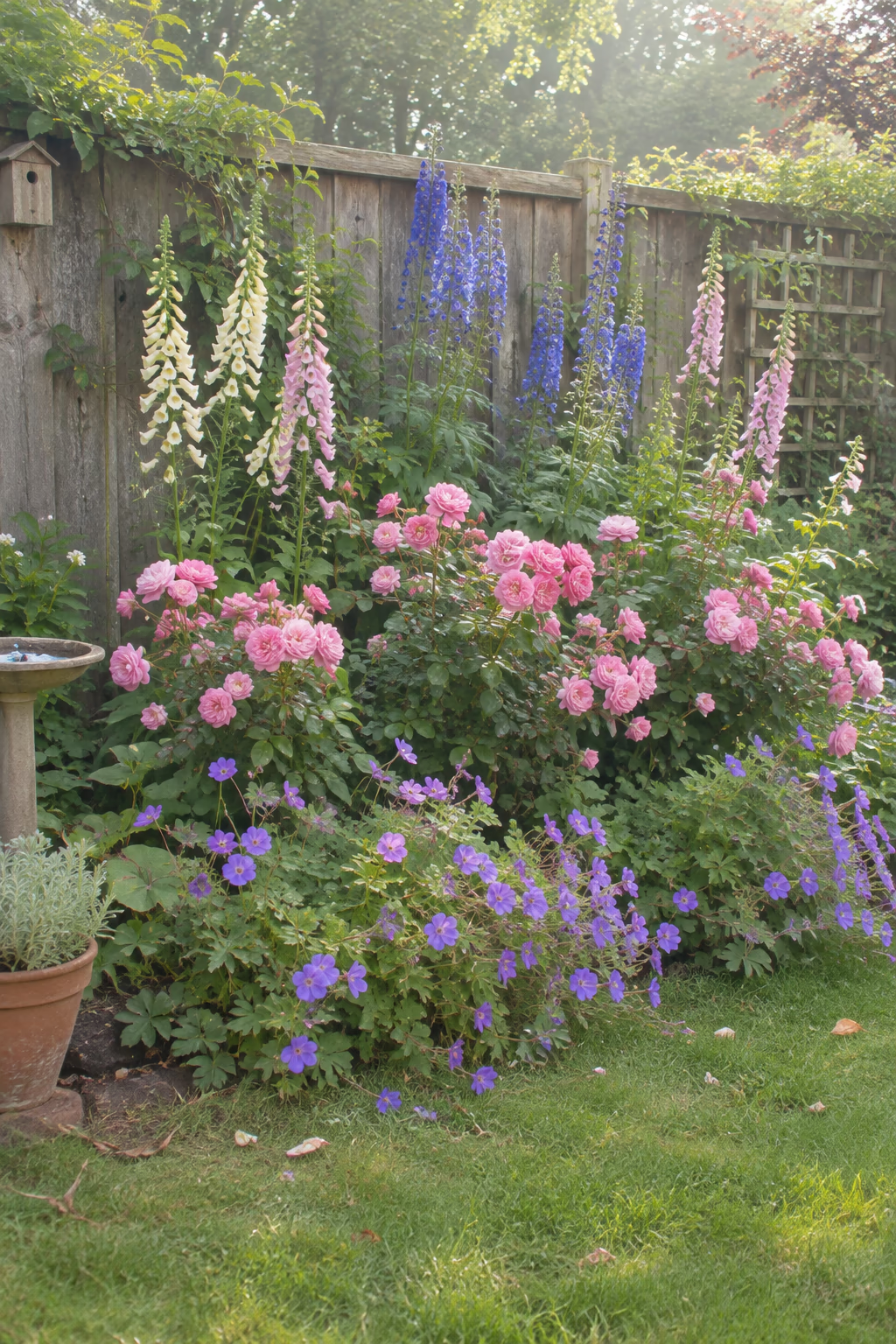
The classic early-summer cottage picture
Few combinations say cottage garden as clearly as shrub roses surrounded by tall flower spires. Plant two or three repeat-blooming shrub roses about 3 feet apart in the middle of the bed, then tuck foxgloves and delphiniums behind and between them so the spikes rise 4 to 6 feet above the rounded rose shrubs.
The contrast of shapes is what makes it work. Round, full rose blooms sit against narrow vertical columns of bells and florets, and pink, white, and blue are colors that never clash. Hardy geraniums or catmint along the front hide the bare lower stems of the roses.
Delphiniums prefer cool summers and usually struggle in hot, humid southern gardens, where tall salvias or larkspur make better substitutes. Foxgloves are biennials and highly toxic if eaten, so plant them away from areas where small children or pets play.
2. Plant a Soft Pastel Bed in Pink, Lilac, and White
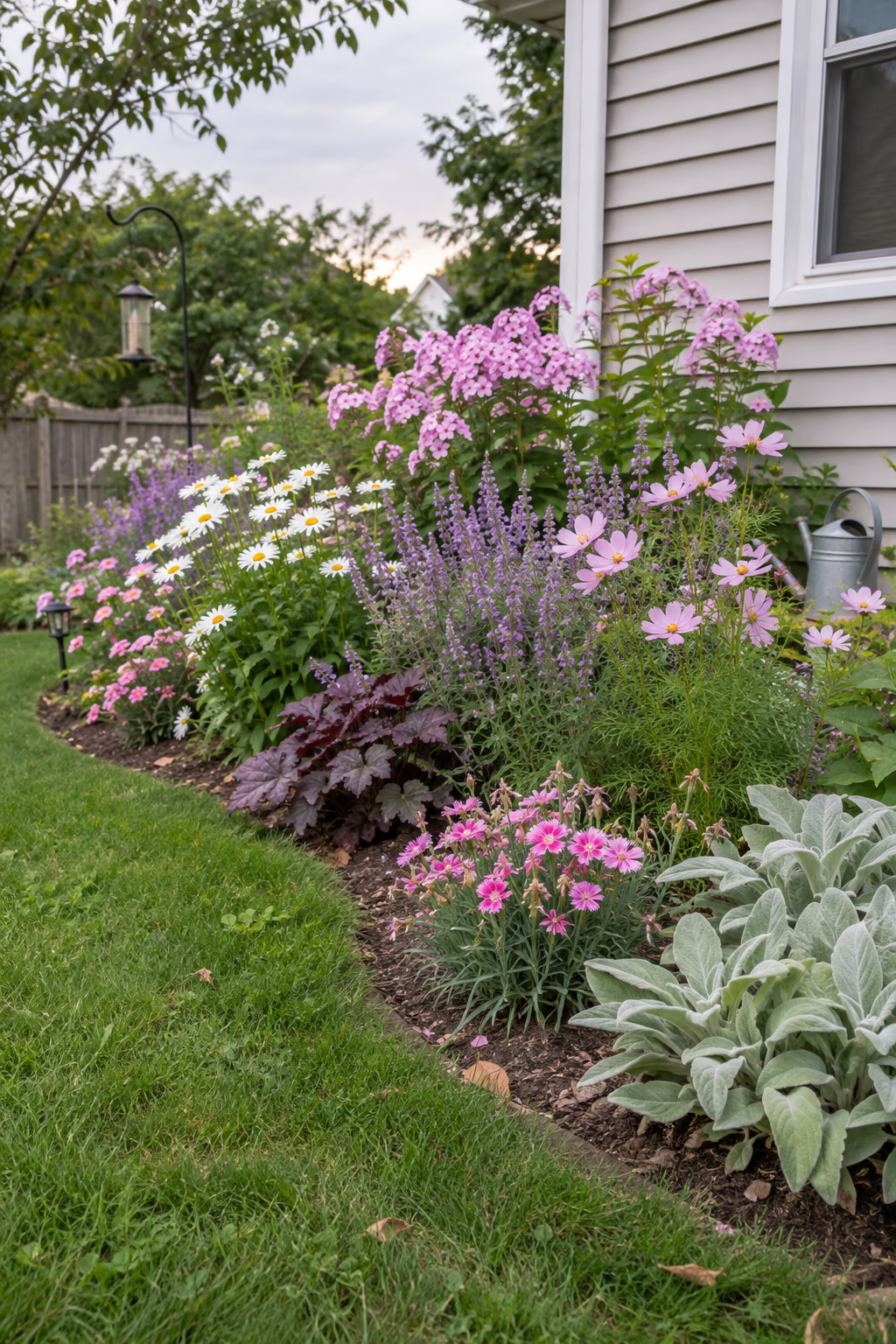
A romantic palette that always looks calm
Limit the whole bed to pale pink, lilac, and white, with silver foliage as the glue. Good choices include pink phlox, lilac salvia, white Shasta daisies, pale pink cosmos, pink dianthus, and lamb’s ear or artemisia for silver leaves.
A restrained color range lets you pack in many different flower shapes without the bed looking chaotic. Pastels also glow in the evening and on overcast days, when bright reds and oranges tend to look flat.
Repeat each color in at least three spots across the bed so your eye moves along it. If the scheme starts to feel too sweet, add a few deep plum or burgundy accents, such as dark-leaved heuchera, for contrast.
3. Line a Sunny House Wall With Towering Hollyhocks
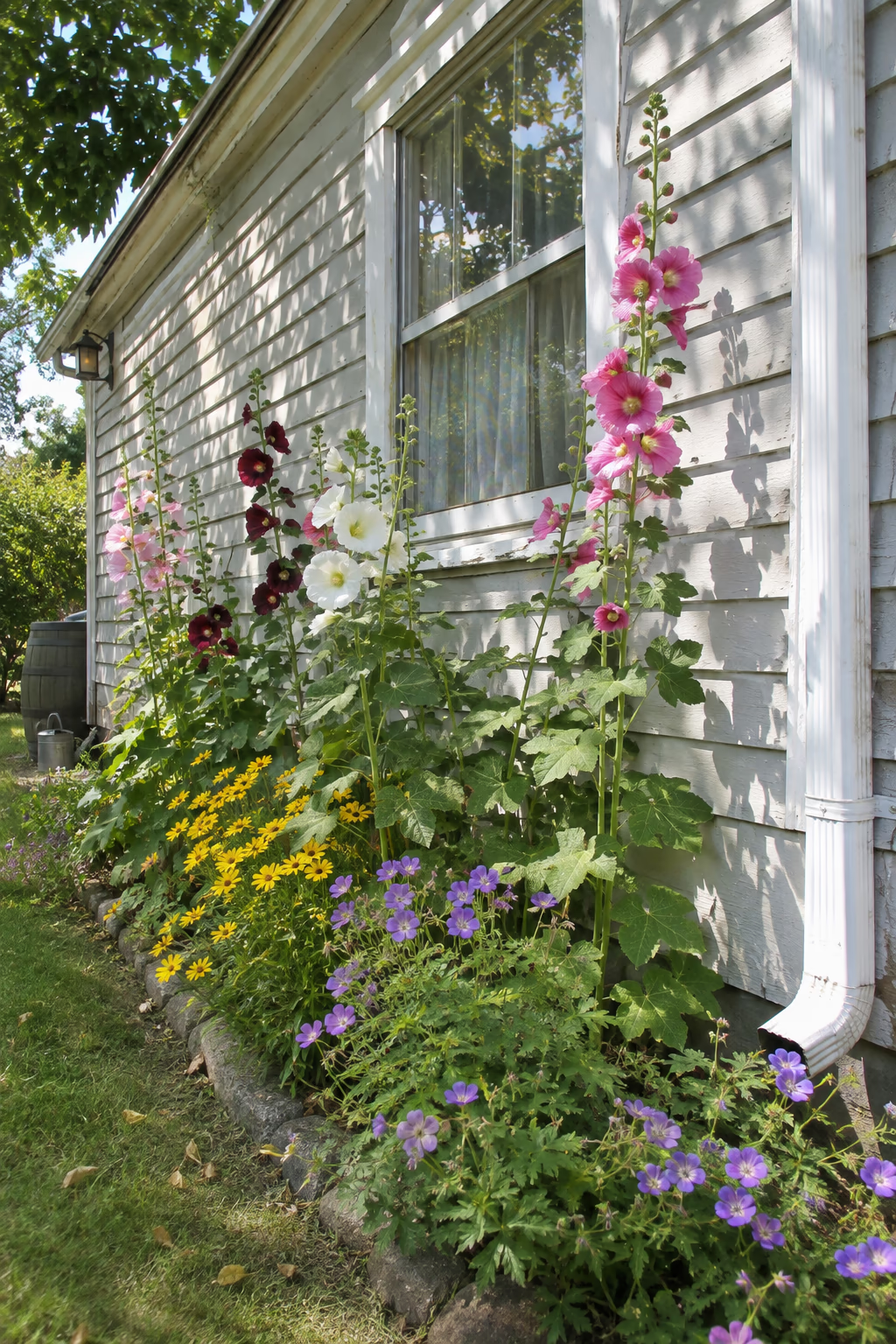
Instant height and old-fashioned charm
Hollyhocks reach 5 to 8 feet and look their best in a narrow bed against a sunny wall, garage, or shed. Plant them 18 to 24 inches apart in a strip at least 2 feet wide, with shorter plants such as coreopsis or hardy geraniums in front to hide their lower leaves.
The wall shelters the tall stems from wind and reflects warmth, which suits these sun lovers. Their stacked, saucer-shaped blooms in pink, white, apricot, or deep maroon instantly give a plain wall a storybook look.
Hollyhocks are short-lived and often behave as biennials, so let a few drop seed to keep the stand going. They are prone to rust, a fungal disease that spots the leaves; good air flow, watering at the soil line, and removing affected leaves help keep it in check.
4. Edge the Bed With Lavender and Sweet Alyssum
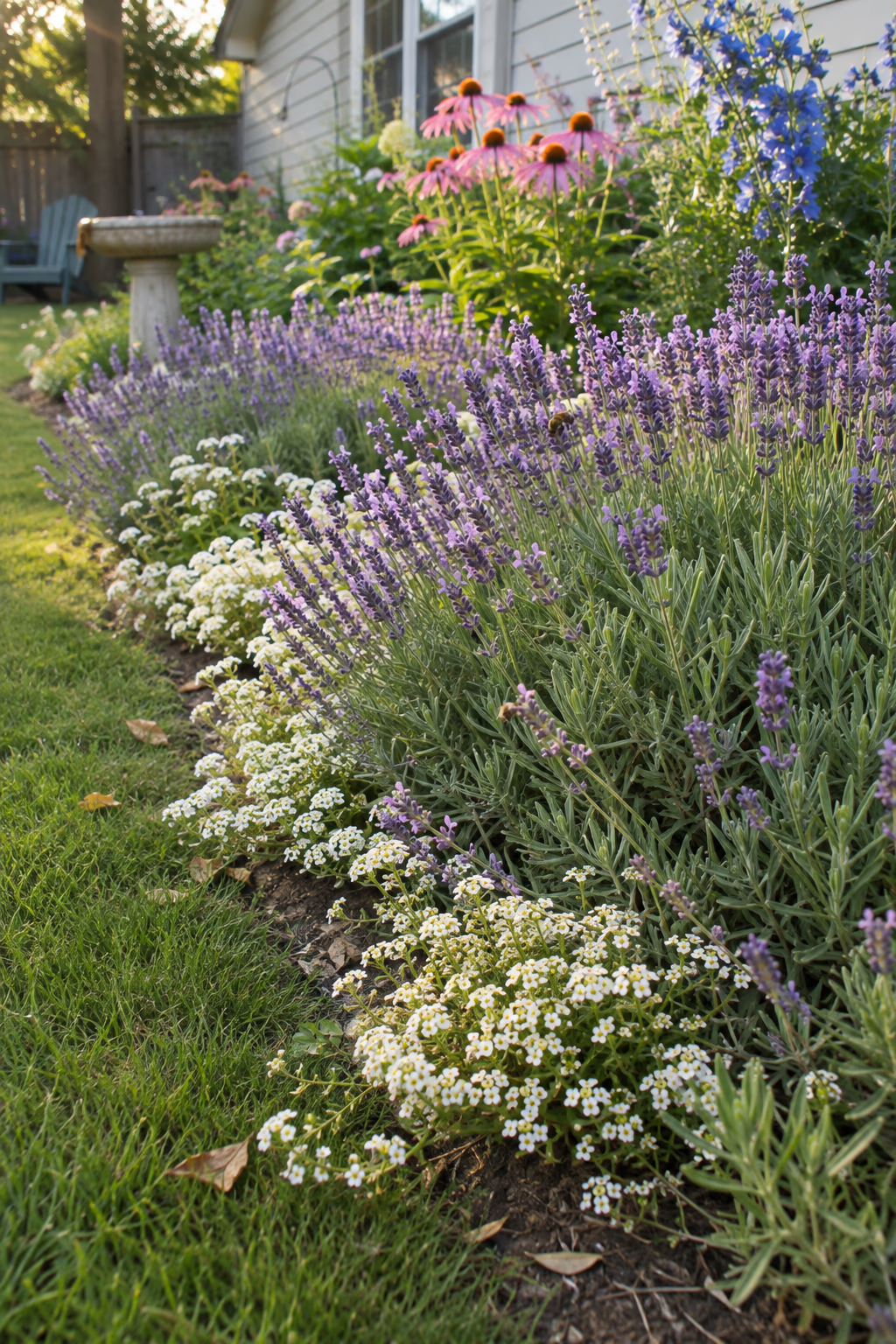
A fragrant front row that softens the line
Run a row of compact lavender plants about 18 inches apart along the front of the bed, then fill the spaces at their feet with white sweet alyssum. The lavender forms gray-green mounds with purple wands in early summer, while the alyssum makes a low, honey-scented froth that spills onto the edge.
A fragrant edge rewards anyone who brushes past it and gives a loose cottage bed a tidy, finished front. The gray foliage also stays attractive long after the flowers fade.
Lavender needs full sun and sharp drainage and often rots in heavy clay or humid summers, so mix grit into the soil or build the edge slightly higher. Sweet alyssum fades in midsummer heat; shear it back by half and it usually reblooms when nights cool.
5. Shape the Bed Into a Generous Curve
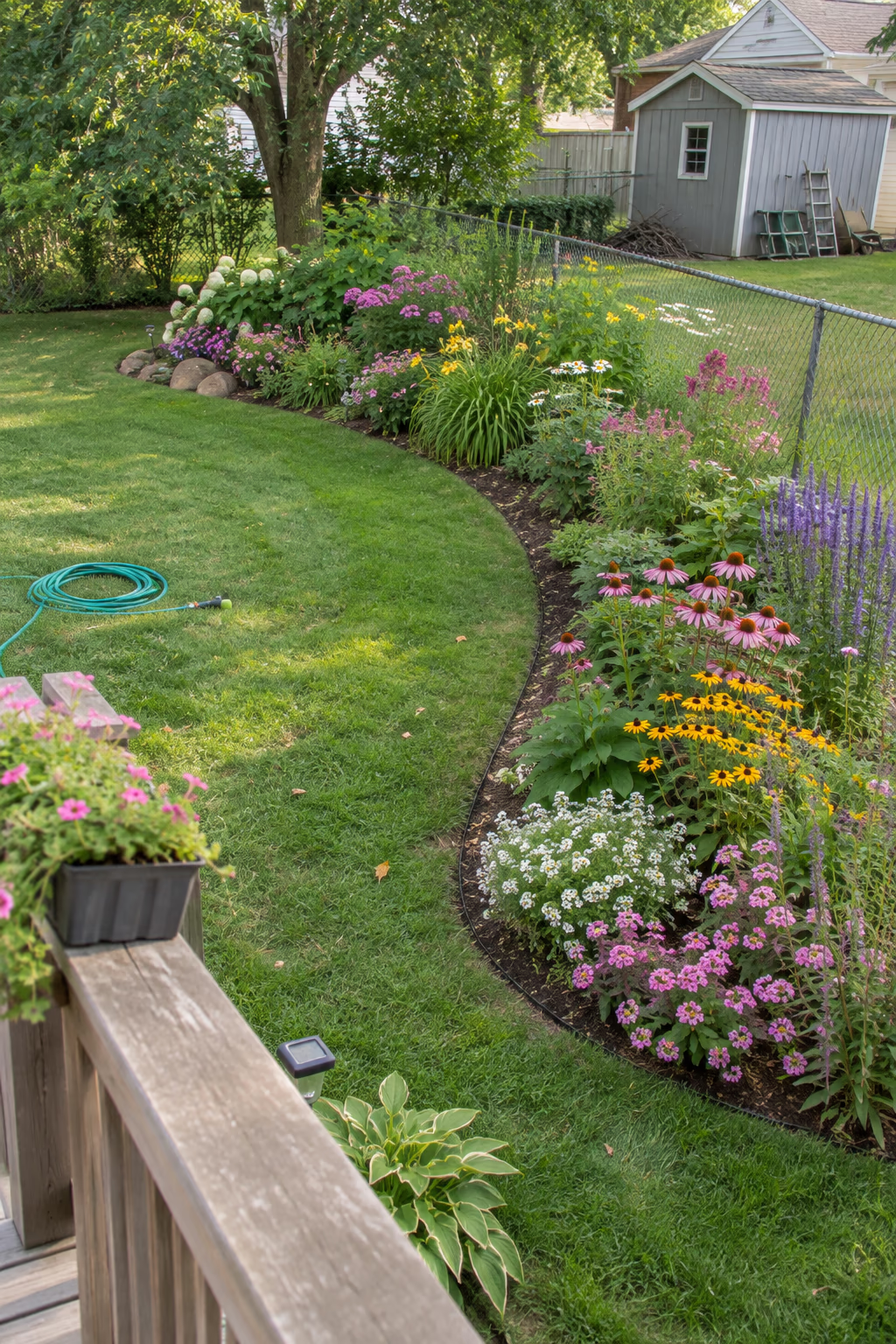
Soft lines that feel natural and relaxed
Swap straight rectangles for a long, sweeping curve. Lay a garden hose on the lawn to test shapes, view them from the house and patio, and then cut the edge with a half-moon edger. Wide, lazy curves look better and are easier to mow around than tight wiggles.
Curves suit the informal spirit of cottage planting. They create deep pockets for tall plants and narrow points where low flowers can spill out, which adds depth even in a small yard.
Keep the curve gentle enough for your mower to follow in one pass. A shallow trench edge or a strip of metal edging stops lawn grass from creeping into the planting.
6. Fill First-Year Gaps With Cosmos and Zinnias
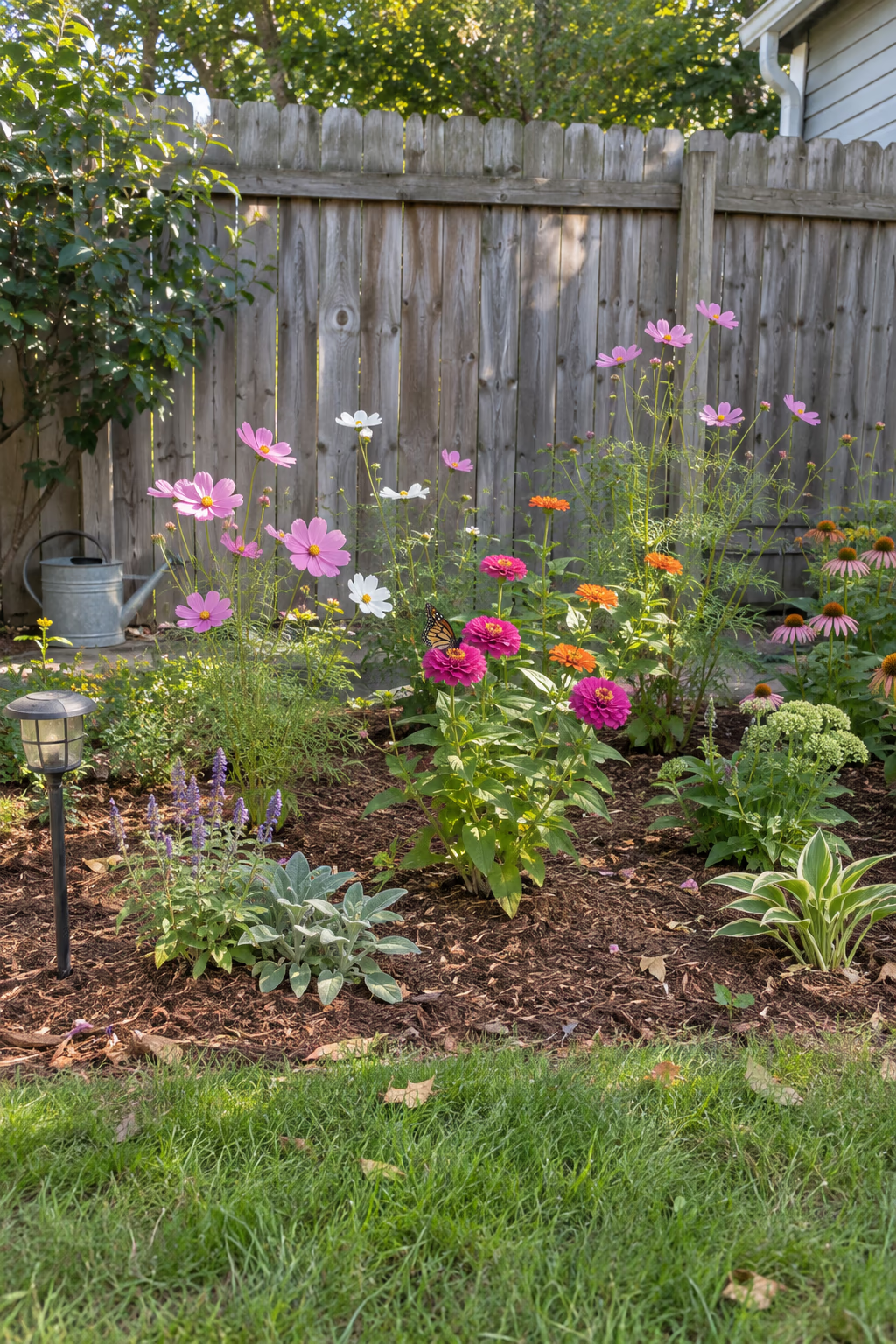
Fast color while perennials settle in
New perennial beds look sparse for the first season or two. Direct-sow cosmos and zinnias into the open spaces after your last frost date, and within about eight weeks you will have 2- to 4-foot plants covered in blooms.
These annuals are cheap, grow quickly from seed, and bloom nonstop until frost if you keep cutting them. They also bring in butterflies and give you plenty of flowers for small kitchen bouquets.
Leave enough room around young perennials so the annuals do not shade them out. Choose mildew-resistant zinnia types if your summers are humid, and pull the annuals back each year as your perennials fill in.
7. Build a Late-Spring Bed Around Peonies and Bearded Iris
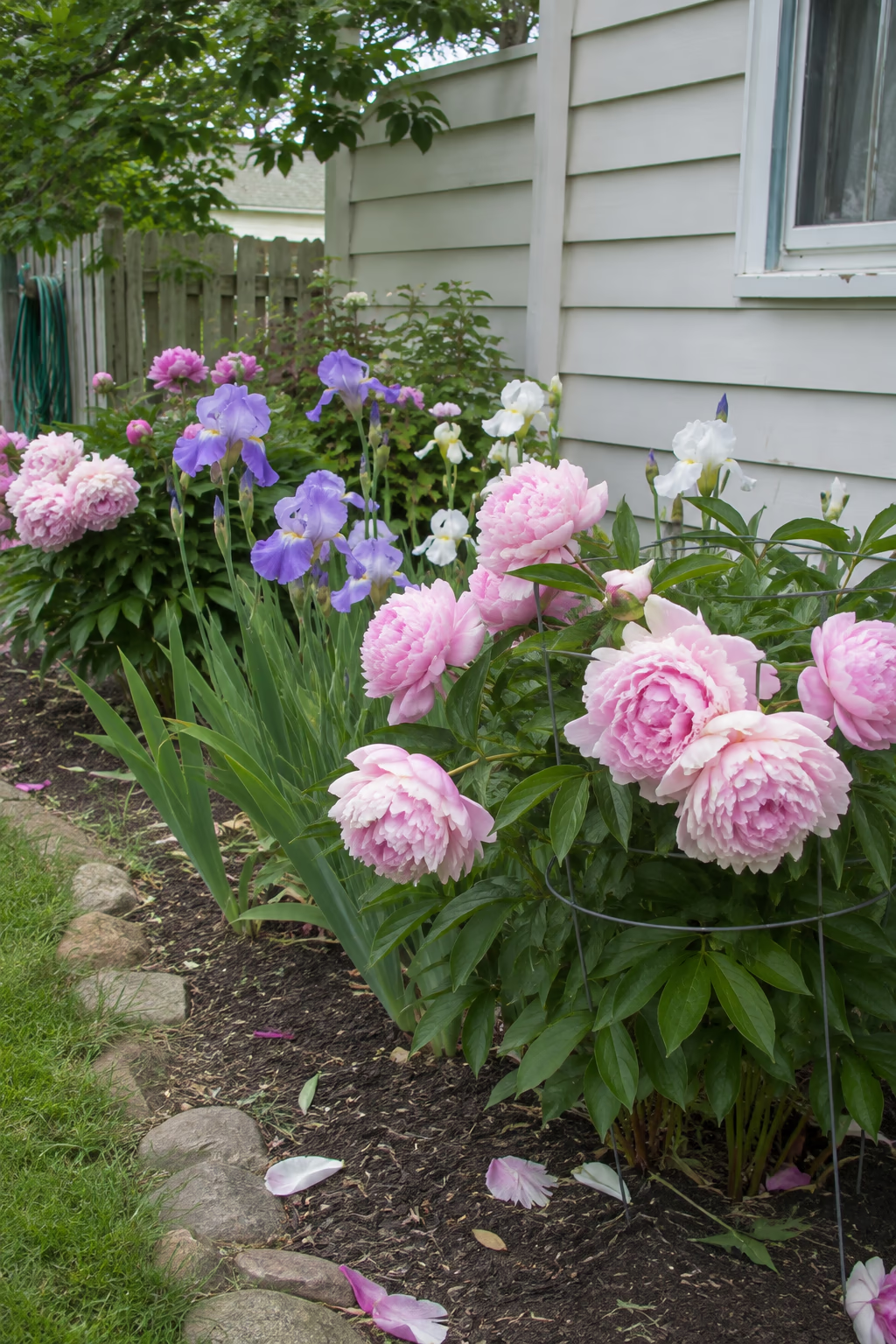
Big blooms that come back for decades
Peonies and bearded iris bloom around the same time in late spring and make a lush, old-fashioned pairing. Space peonies about 3 feet apart and set clumps of iris between them, using colors such as soft pink peonies with lavender-blue or white iris.
Both are long-lived and need little care once established. After the flowers fade, the peony foliage stays green and tidy all summer, providing a backdrop for later bloomers.
Plant peony eyes no more than about 2 inches deep or they may refuse to flower. Iris rhizomes should sit at the soil surface with their tops exposed to sun, and clumps usually need dividing every three to four years. Peonies prefer climates with real winter chill.
8. Raise a Rustic Obelisk for Clematis or Sweet Peas
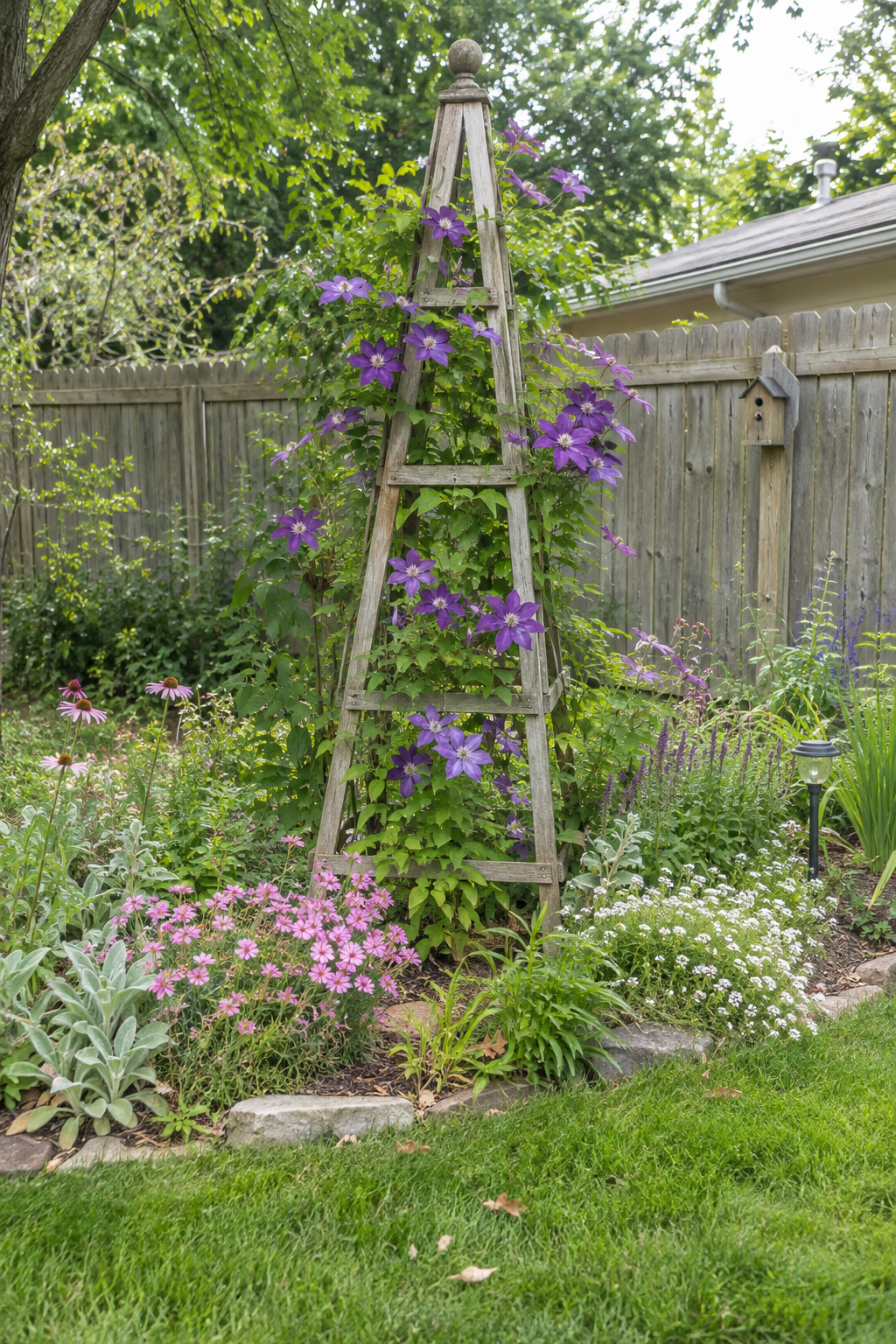
Vertical interest right in the middle of the bed
Set a 5- to 7-foot wooden or metal obelisk in the center of a bed and train a climber up it. A small-flowered clematis gives years of bloom, while sweet peas offer a fragrant, cheaper option you sow each year.
An obelisk adds height without blocking the view the way a solid trellis can. It also gives a sense of structure in winter, when the rest of the bed is bare.
Clematis likes its roots shaded and its vines in sun, so surround the base with low perennials. Sweet peas are cool-season plants; sow them in early spring in the North or in fall in mild southern areas, as they stop flowering in summer heat.
9. Brighten a Shady Bed With Bleeding Heart and Astilbe
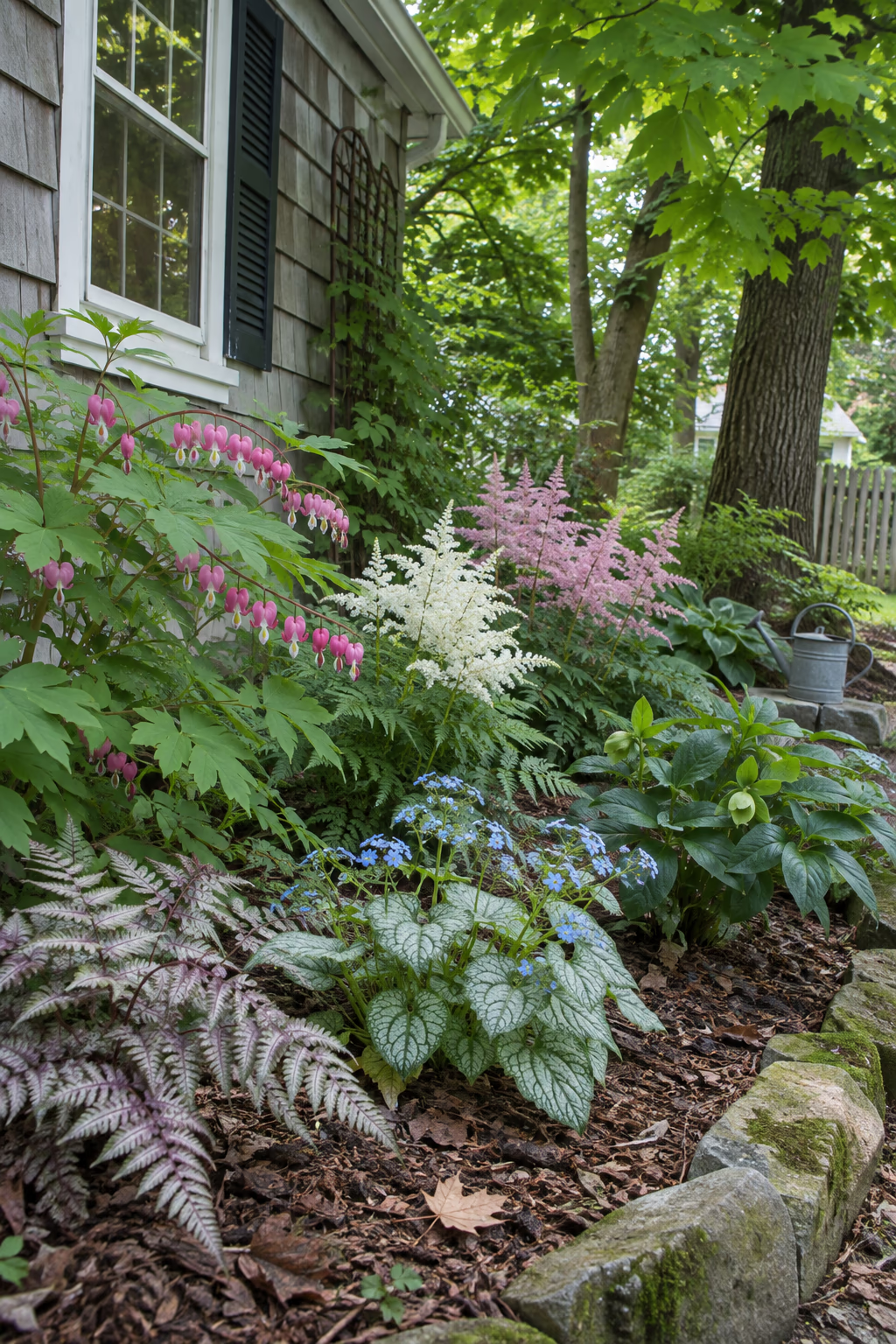
Cottage style for spots with little sun
A bed on the north side of the house or under high trees can still feel cottage-like. Combine bleeding heart, feathery astilbe, hellebores, brunnera, and Japanese painted ferns for soft pinks, whites, and blues with plenty of leaf texture.
These plants thrive in partial shade and moist soil, and their arching stems and plumes give the same loose, abundant feel as a sunny border. Light-colored flowers also brighten dim corners.
Bleeding heart often goes dormant in summer heat, so plant ferns or hostas nearby to cover the gap. Astilbe browns quickly if it dries out, so mulch well and water during dry spells.
10. Weave Ornamental Alliums Through the Planting
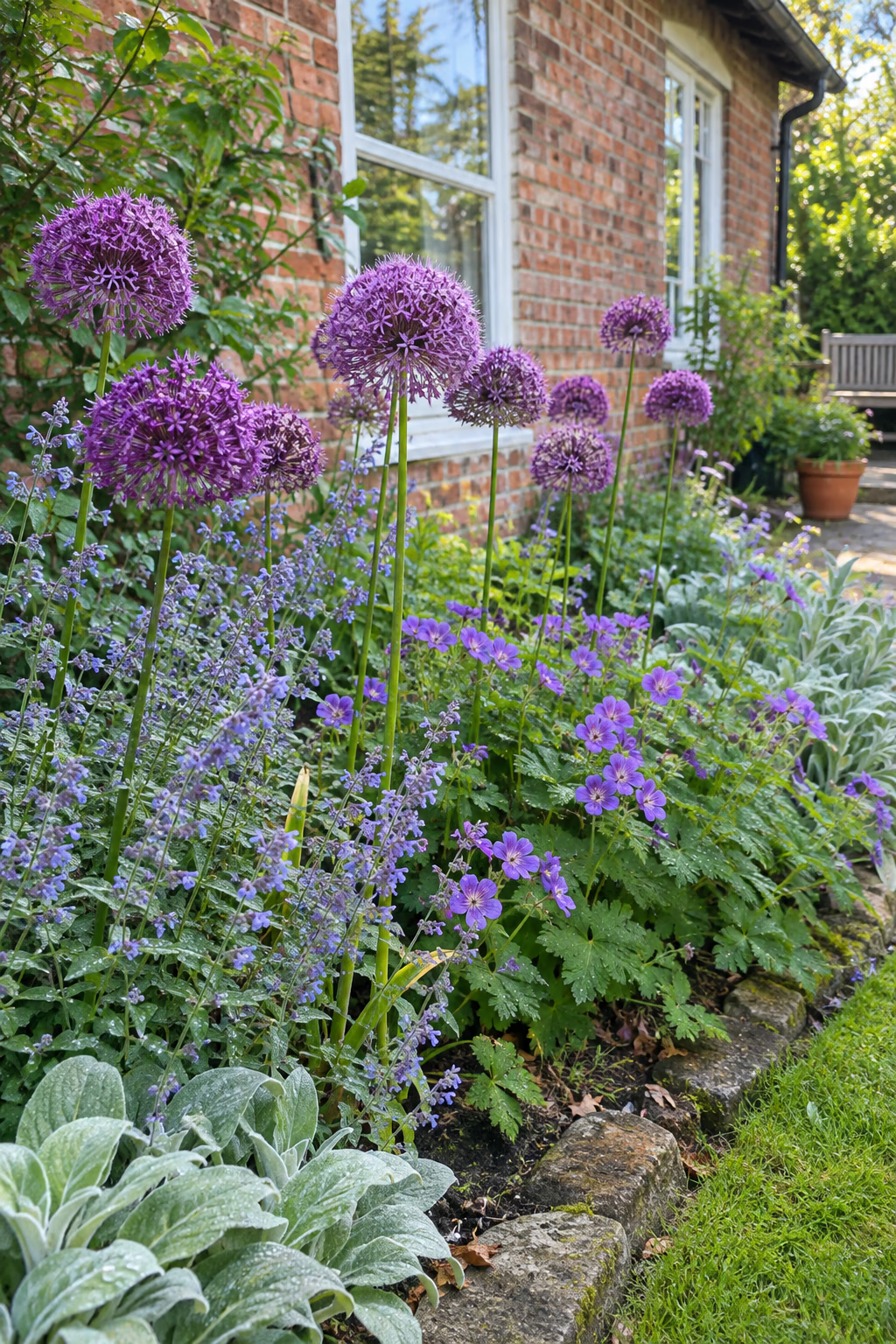
Floating purple globes above the crowd
Plant ornamental allium bulbs in fall in loose drifts of 5 to 15, about 6 inches deep, among mid-height perennials. In late spring their purple, pink, or white globes rise on bare stems and seem to float over the foliage.
Alliums add a playful round shape that contrasts with spires and daisies, and they bridge the gap between spring bulbs and summer perennials. Deer and rodents tend to leave them alone.
Allium leaves often yellow while the flowers are still open, so place the bulbs behind leafy plants such as catmint or hardy geraniums. Leave the dried seed heads standing for extra interest.
11. Tuck Kitchen Herbs Between the Flowers
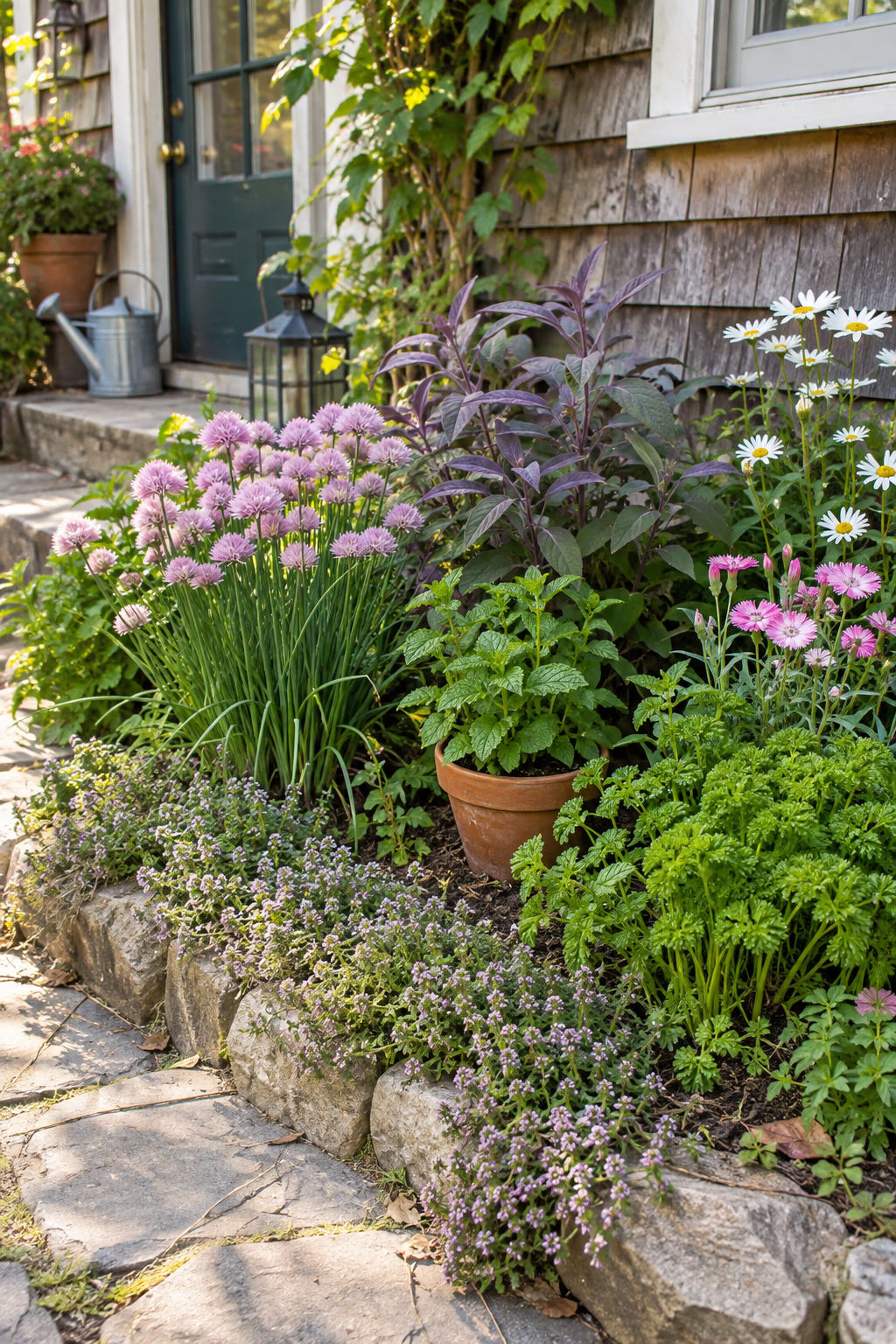
Pretty, useful, and true to cottage roots
Traditional cottage beds mixed flowers with plants the household used. Add chives, purple sage, thyme, oregano, and parsley along the front and middle of the bed, and let some of them flower.
Many herbs have attractive foliage and blooms that pollinators love. Chive flowers are pink pom-poms, sage has soft gray or purple leaves, and creeping thyme fills cracks along the edge.
Keep mint and lemon balm in buried pots, since they spread aggressively. Avoid spraying anything near herbs you plan to eat.
12. Let Self-Seeding Annuals Fill the Gaps
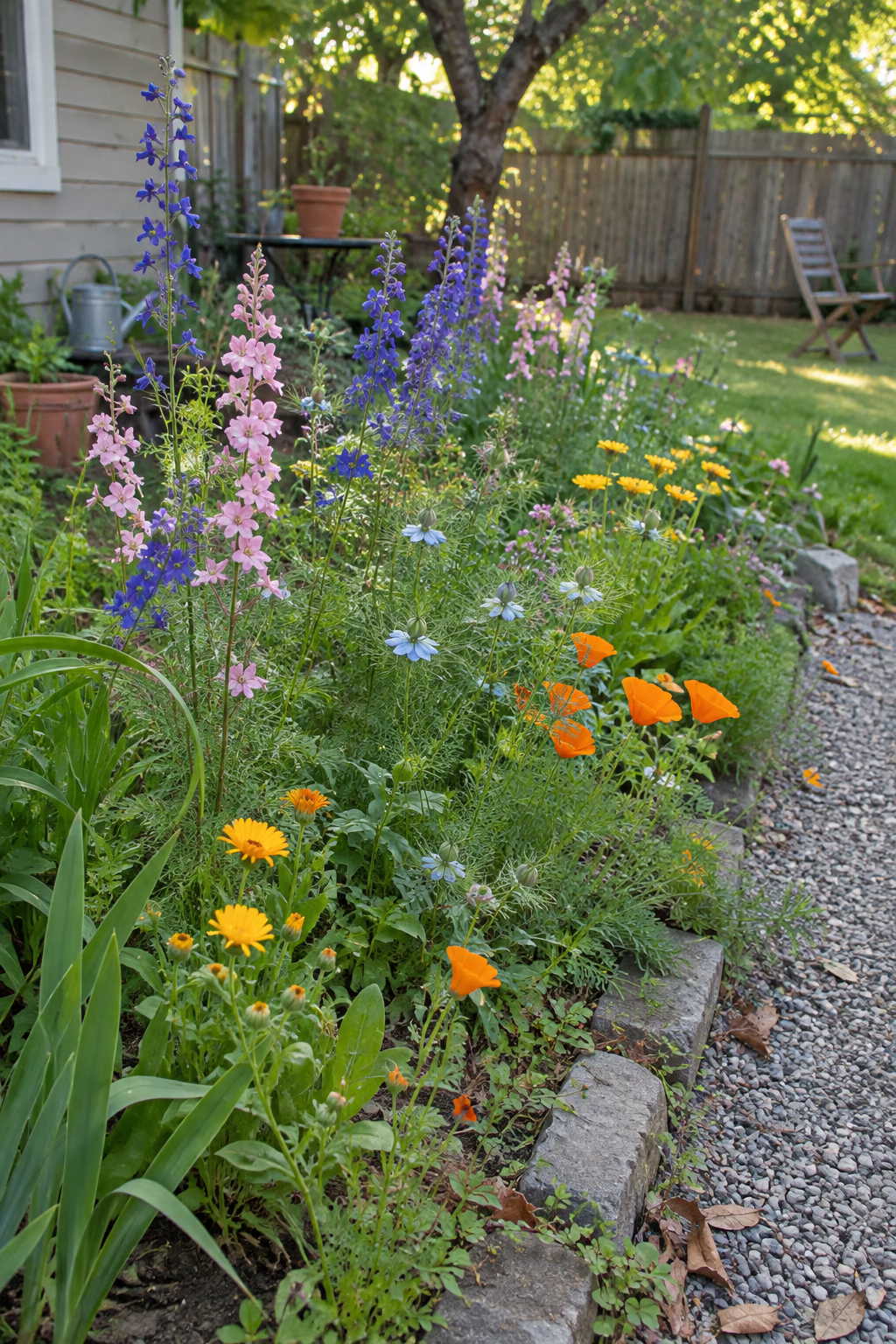
A bed that replants itself each year
Scatter seed of larkspur, love-in-a-mist, California poppies, calendula, and forget-me-nots in fall or very early spring. Rake lightly, water, and let them sprout wherever they land.
Self-seeders create the happy, unplanned look that defines cottage style. Once established, they return year after year at no cost and weave color between your perennials.
Learn what the seedlings look like so you do not weed them out, and thin crowded patches to 6 to 12 inches apart. Larkspur is toxic if eaten, and some self-seeders can become a nuisance, so check local invasive plant lists before sowing.
13. Border the Bed With Reclaimed Brick Laid on Edge
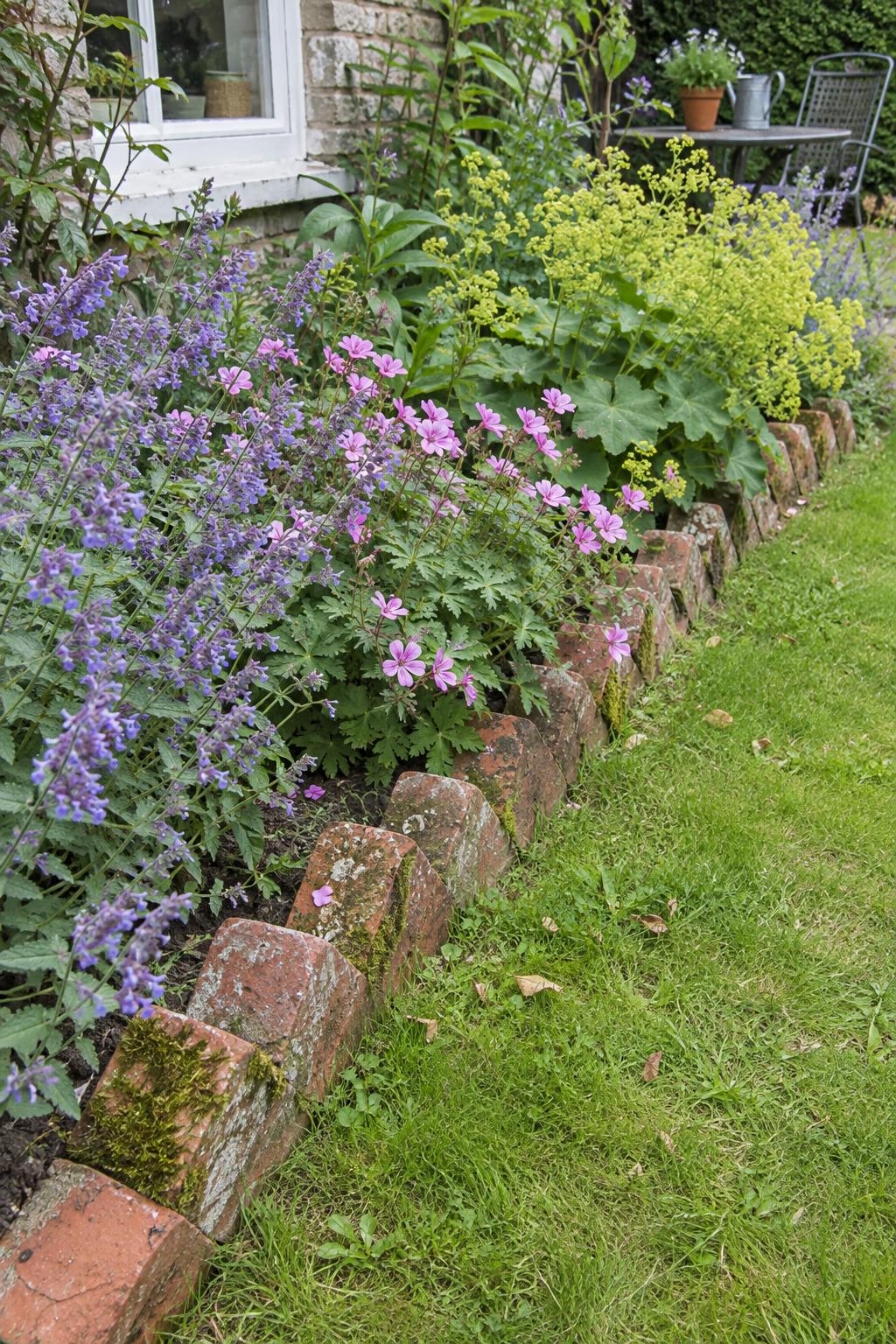
A weathered edge that looks like it has always been there
Dig a narrow trench along the bed line, add an inch of sand, and set old bricks on their long edge or at a 45-degree angle in a sawtooth pattern. Tap them level with a rubber mallet and backfill with soil.
Worn red brick has the aged character that suits cottage beds, and it creates a clean line for plants to flop over without vanishing into the lawn. Salvaged brick is often inexpensive from local resale listings.
Brick edging alone will not stop spreading grass roots, so keep the edge trimmed. In cold regions, frost can heave bricks out of line; resetting a few each spring is normal.
14. Center the Bed on a Simple Birdbath
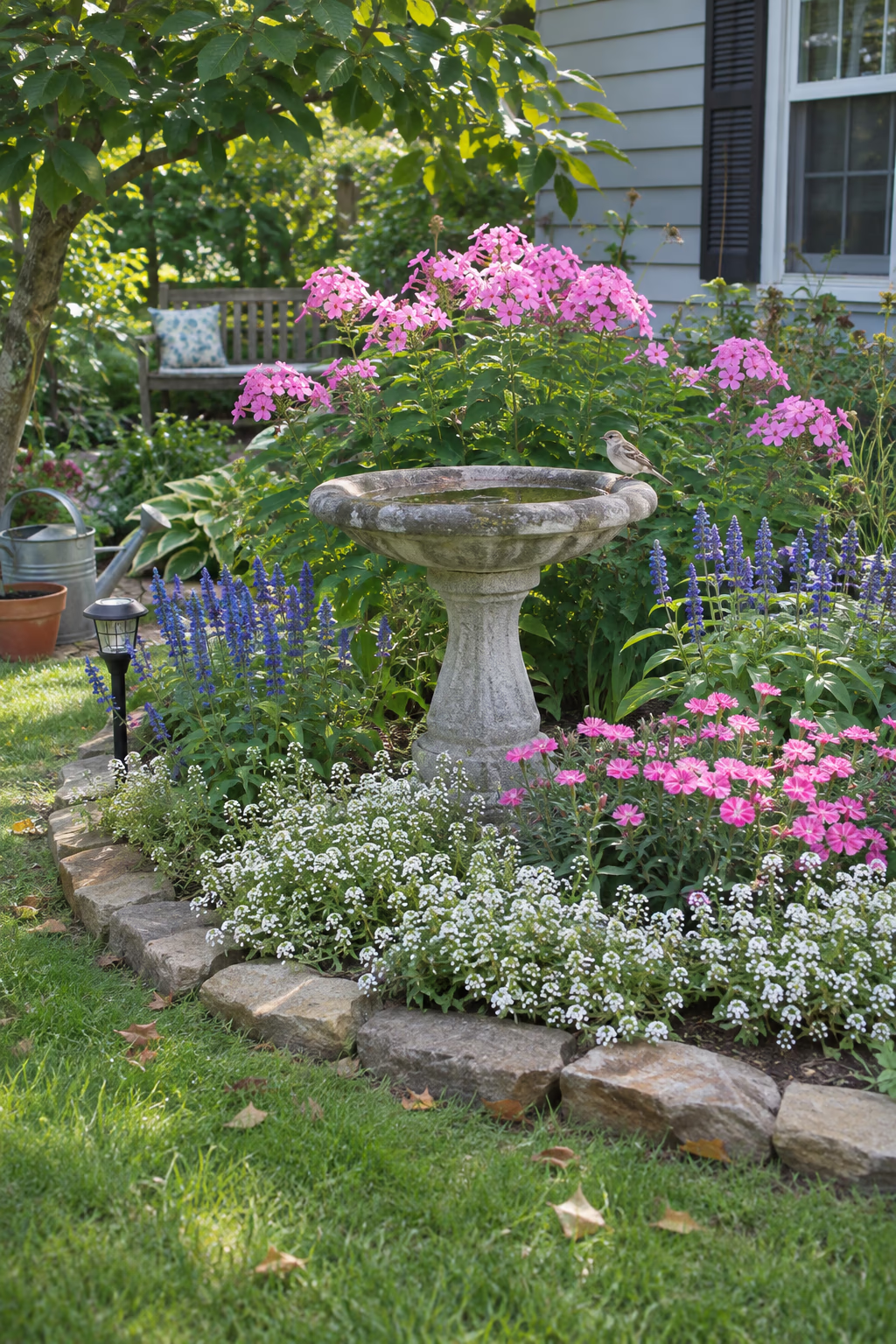
A focal point that brings the bed to life
Place a concrete or stone birdbath where the eye naturally lands, such as the widest part of a curved bed or the end of a view from a window. Surround it with low plants so the bowl stays visible and birds can see approaching cats.
A focal point gives a busy planting somewhere to rest the eye, and the visitors it attracts add movement and sound. A gray or weathered finish blends with any color scheme.
Keep the water no deeper than 2 to 3 inches and refresh it every couple of days to prevent mosquitoes. Scrub the bowl regularly, and bring concrete basins in or empty them before hard freezes to prevent cracking.
15. Plant a Late-Summer Bed of Coneflowers and Black-Eyed Susans
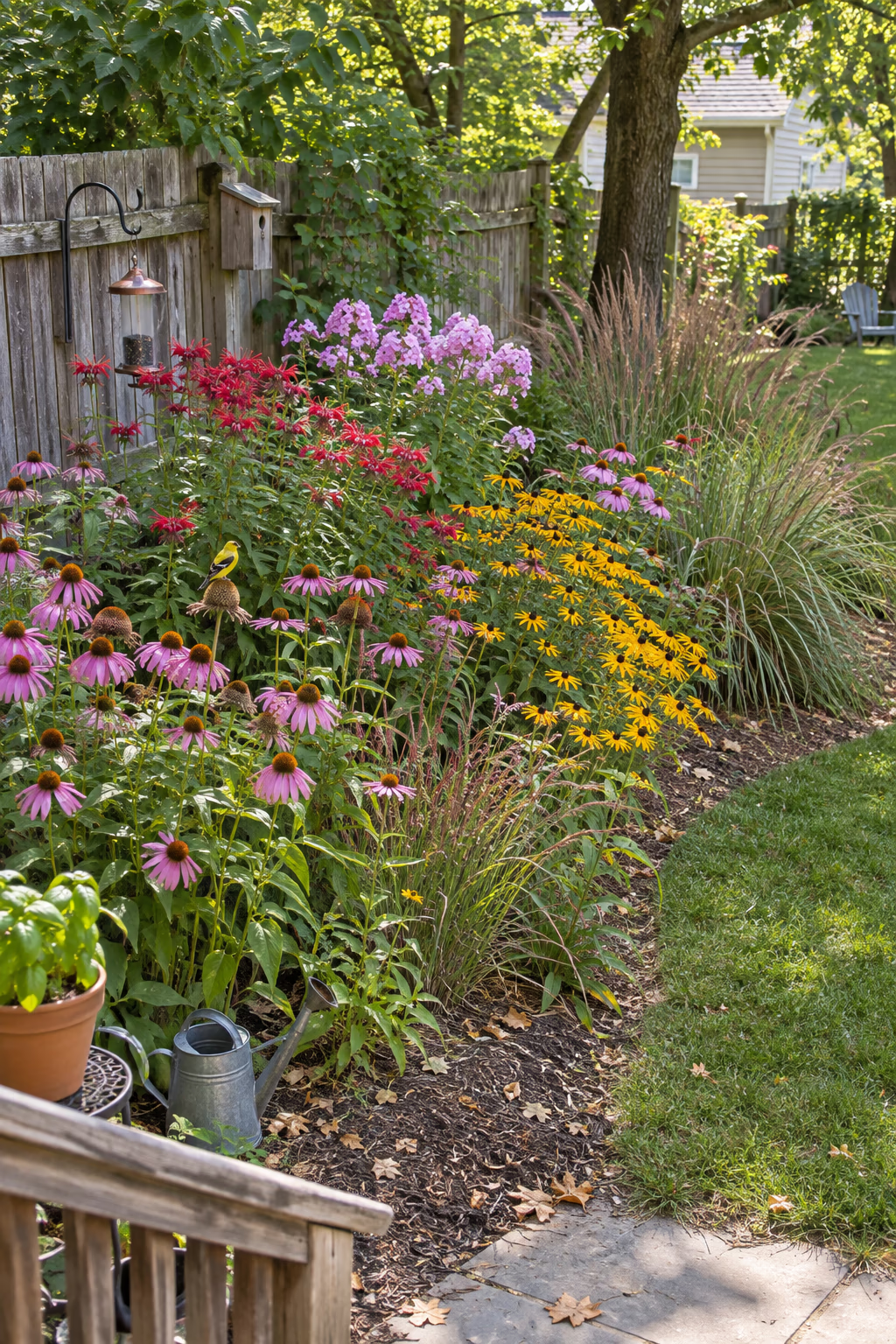
Tough color when the heat sets in
Many cottage favorites fade by July, so dedicate a bed to heat-loving bloomers. Mix purple coneflowers, black-eyed Susans, garden phlox, bee balm, and a few clumps of little bluestem grass for a warm, meadow-tinted cottage look.
These plants are native to North America, handle heat and summer dry spells well, and feed bees and butterflies. Leave seed heads standing in fall and goldfinches will visit.
Choose mildew-resistant phlox and bee balm, give them good air flow, and divide crowded clumps every few years. Black-eyed Susans reseed freely, so pull extras in spring.
16. Hide Spring Bulbs Beneath the Perennials
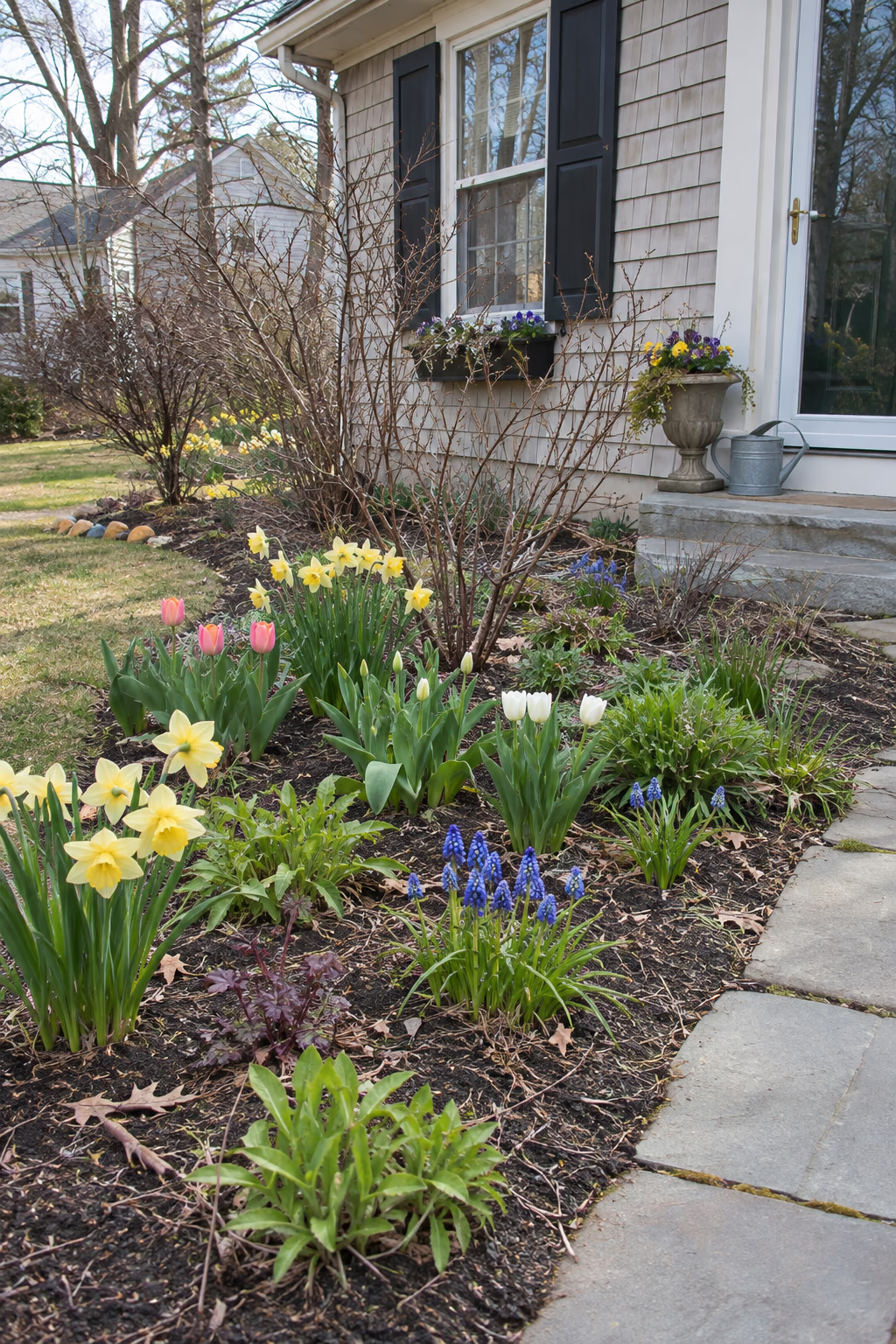
Color months before the summer show
In fall, plant tulips, daffodils, and grape hyacinths between perennial clumps, about three times as deep as each bulb is tall. They bloom while the perennials are just waking up, then the growing foliage hides their fading leaves.
Layering bulbs under perennials doubles the bloom season of the same patch of soil. Soft yellow daffodils and pink or white tulips fit the cottage palette well.
Let bulb foliage die back naturally for about six weeks so it can feed next year’s flowers. Daffodils are deer- and rodent-resistant, while tulips are often eaten, so favor daffodils if wildlife is a problem.
17. Plant a Fragrant Bed Under an Open Window
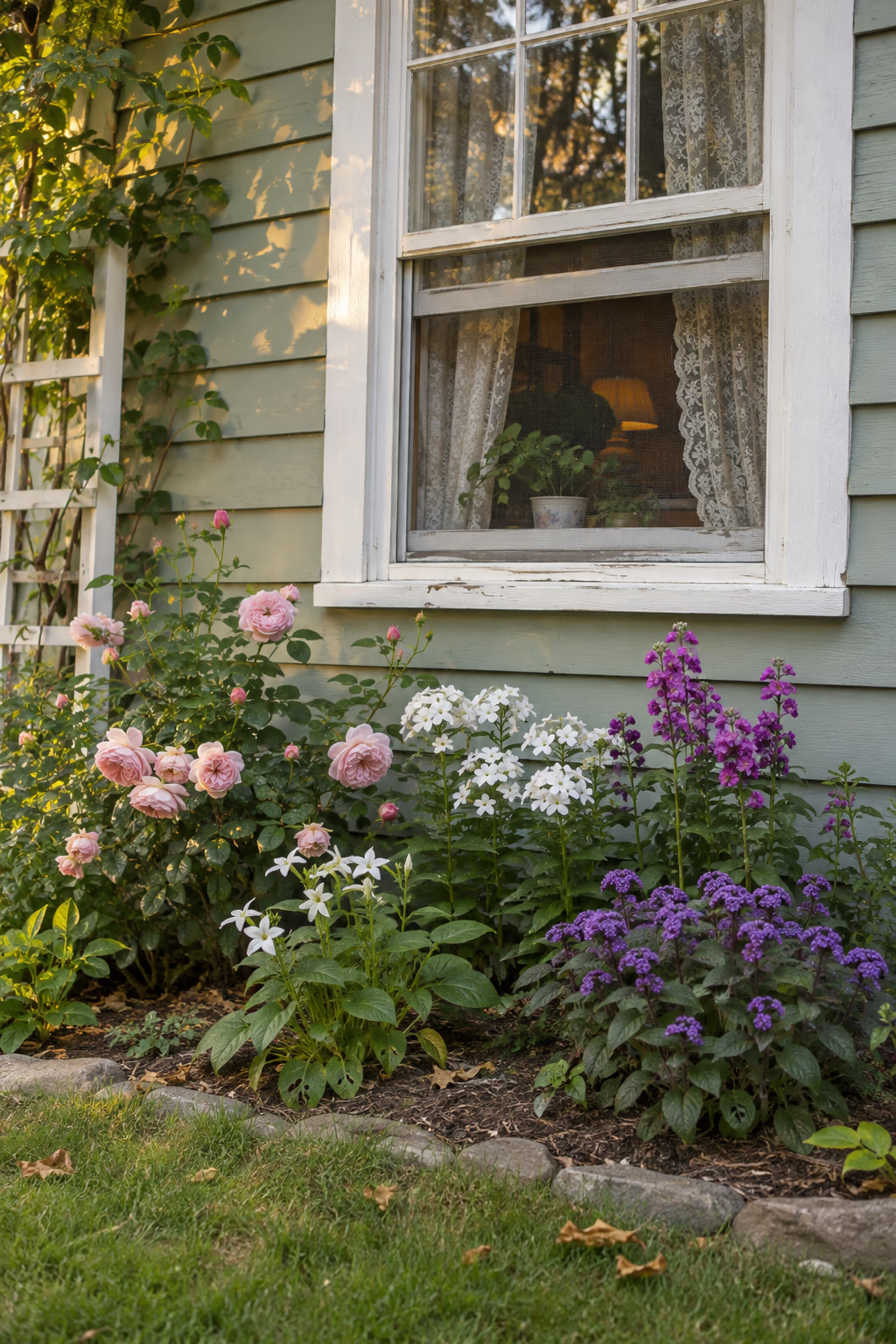
Bring the scent of the garden indoors
A bed below a bedroom or kitchen window is the perfect place for scented flowers. Combine fragrant old-fashioned roses, garden phlox, stock, heliotrope, and flowering tobacco (nicotiana), which releases its strongest perfume in the evening.
Scent is a big part of the cottage experience, and placing it near a window lets you enjoy it on summer nights without stepping outside. The mix of annuals and perennials keeps something fragrant blooming for months.
Keep plants at least 18 inches from the foundation for air flow and painting access, and make sure gutters or roof runoff do not flood the bed. Avoid tall shrubs that will block the window as they mature.
18. Frame the Bed With Woven Willow Edging
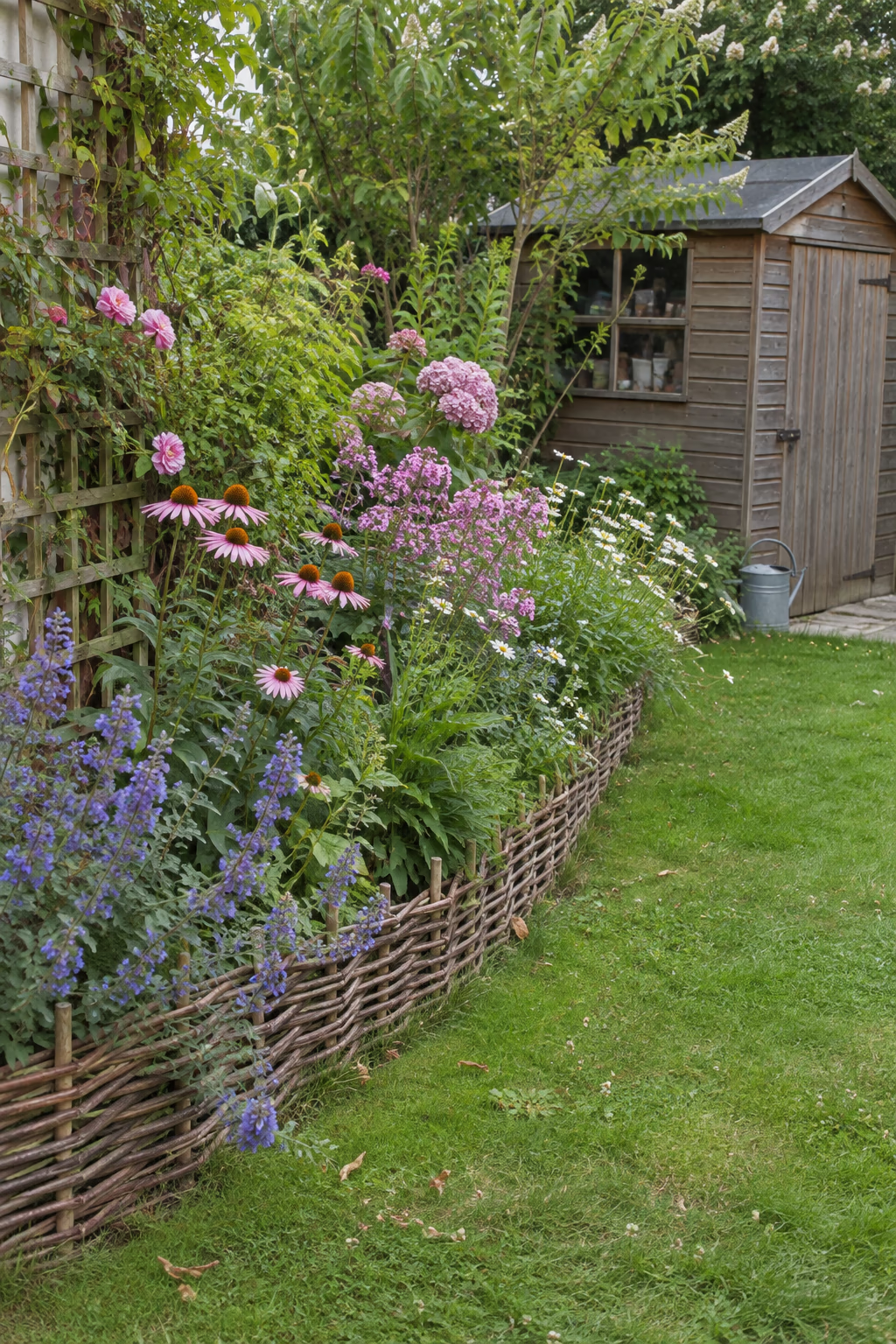
A handmade, rustic border
Woven willow or hazel edging comes in ready-made rolls or panels about 6 to 12 inches tall, or you can weave your own between short stakes. Push it into soft soil along the front of the bed.
The natural, slightly uneven texture matches the informal style of cottage planting and keeps sprawling plants from flopping onto the lawn or path.
Natural woven edging breaks down over time, often within a few years, especially where it touches wet soil. Treat it as a charming, temporary feature and budget for replacing it.
19. Plant a Dry Gravel Cottage Bed for Hot Spots
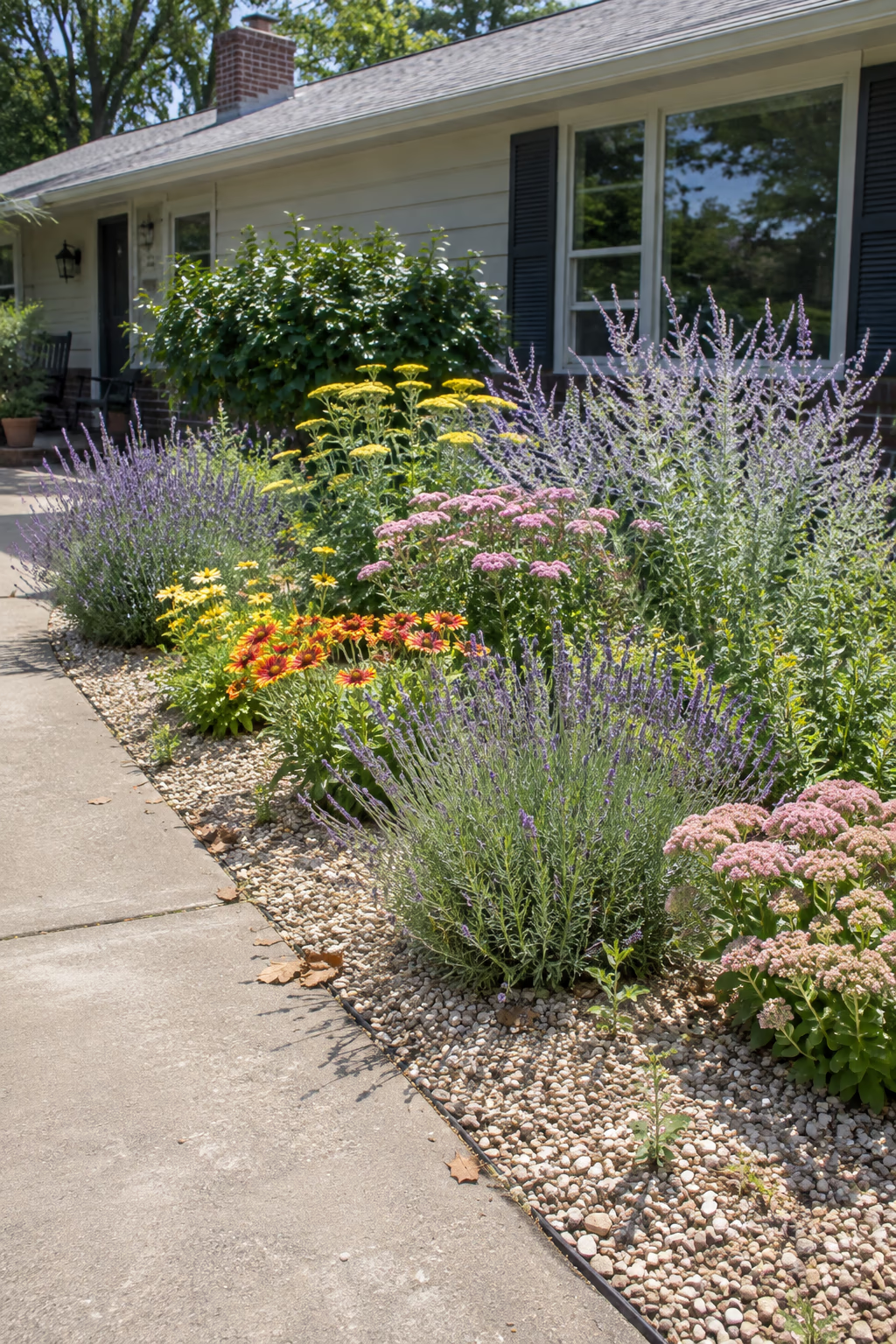
Cottage abundance with far less watering
For a sunny strip that bakes in summer, plant drought-tolerant perennials such as lavender, salvia, yarrow, Russian sage, blanket flower, and sedum, then mulch with 2 to 3 inches of pea gravel instead of bark.
Gravel keeps crowns dry, reflects heat, and lets many plants self-seed into it, creating a loose, cottage feel. Once established, the bed needs only occasional deep watering.
Water regularly during the first season while roots establish. Gravel can migrate onto lawns and paths, so use a firm edge, and rake out fallen leaves so they do not break down into soil that weeds love.
20. Set Stepping Stones Into Deep Beds for Easy Access
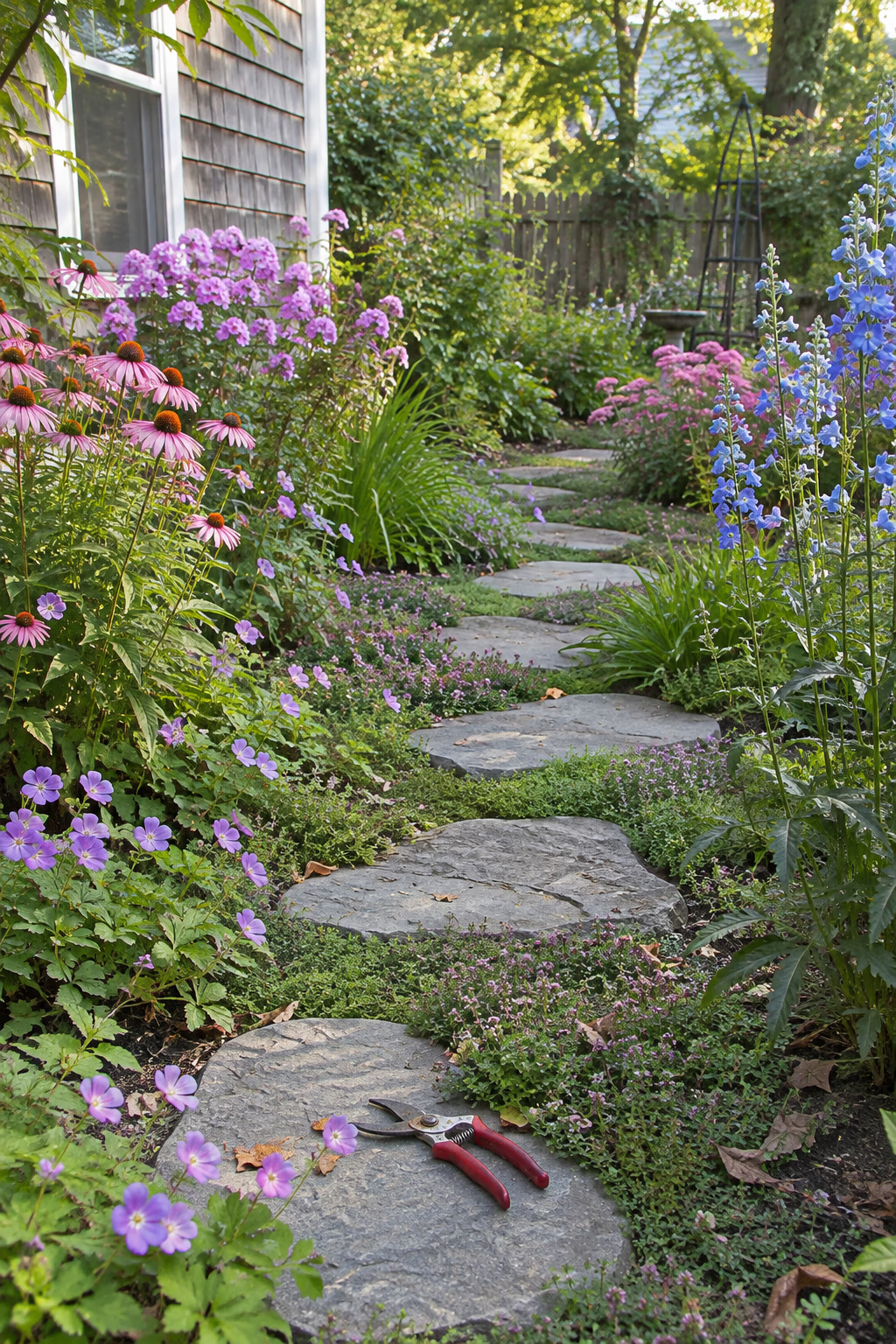
Tend the back of the bed without trampling it
Deep cottage beds are lovely but hard to reach. Lay a few flat stones or 12- to 16-inch pavers in a loose line through the middle of the bed, about 2 feet apart, so you can step in to deadhead, stake, and weed.
Stepping stones protect the soil from compaction and plant roots from your boots. Once low plants grow around them, they almost disappear into the planting.
Set each stone on a layer of sand so it sits level and does not rock. Choose textured stone rather than smooth tile, which can be slippery when wet.
21. Turn a Vintage Wheelbarrow Into a Bed Accent
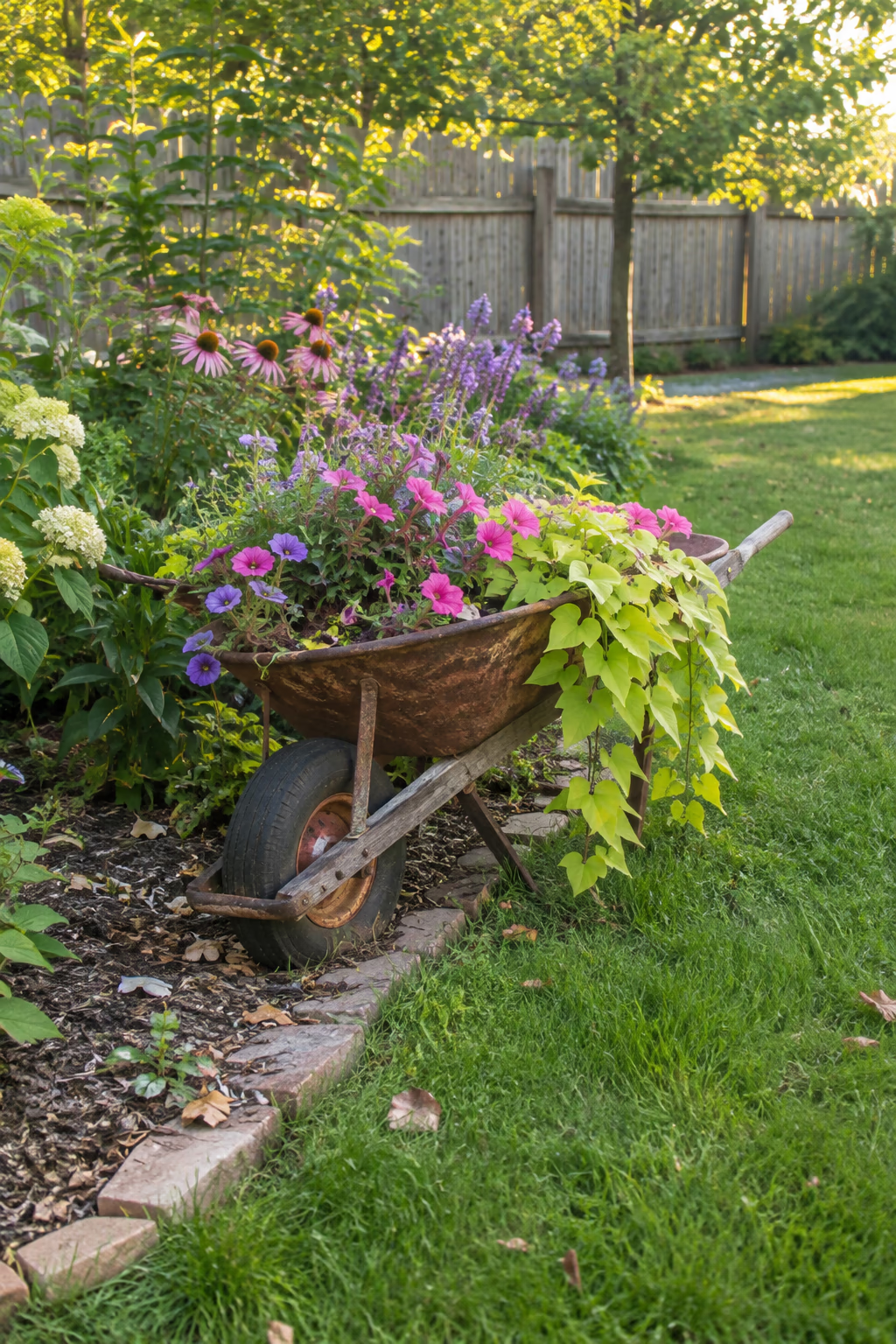
A dash of whimsy among the flowers
Park an old wheelbarrow, galvanized tub, or watering can at the edge of the bed and plant it with trailing petunias, calibrachoa, or sweet potato vine. Tilt it slightly so the plants appear to spill out onto the ground.
Repurposed containers are a cottage tradition and add height and personality to a flat spot. They are easy to move, so you can change the scene each season.
Drill drainage holes in the bottom before filling with potting mix. Small containers dry out quickly in summer and may need water every day during hot spells.
22. Stake Tall Flowers With Twiggy Branches
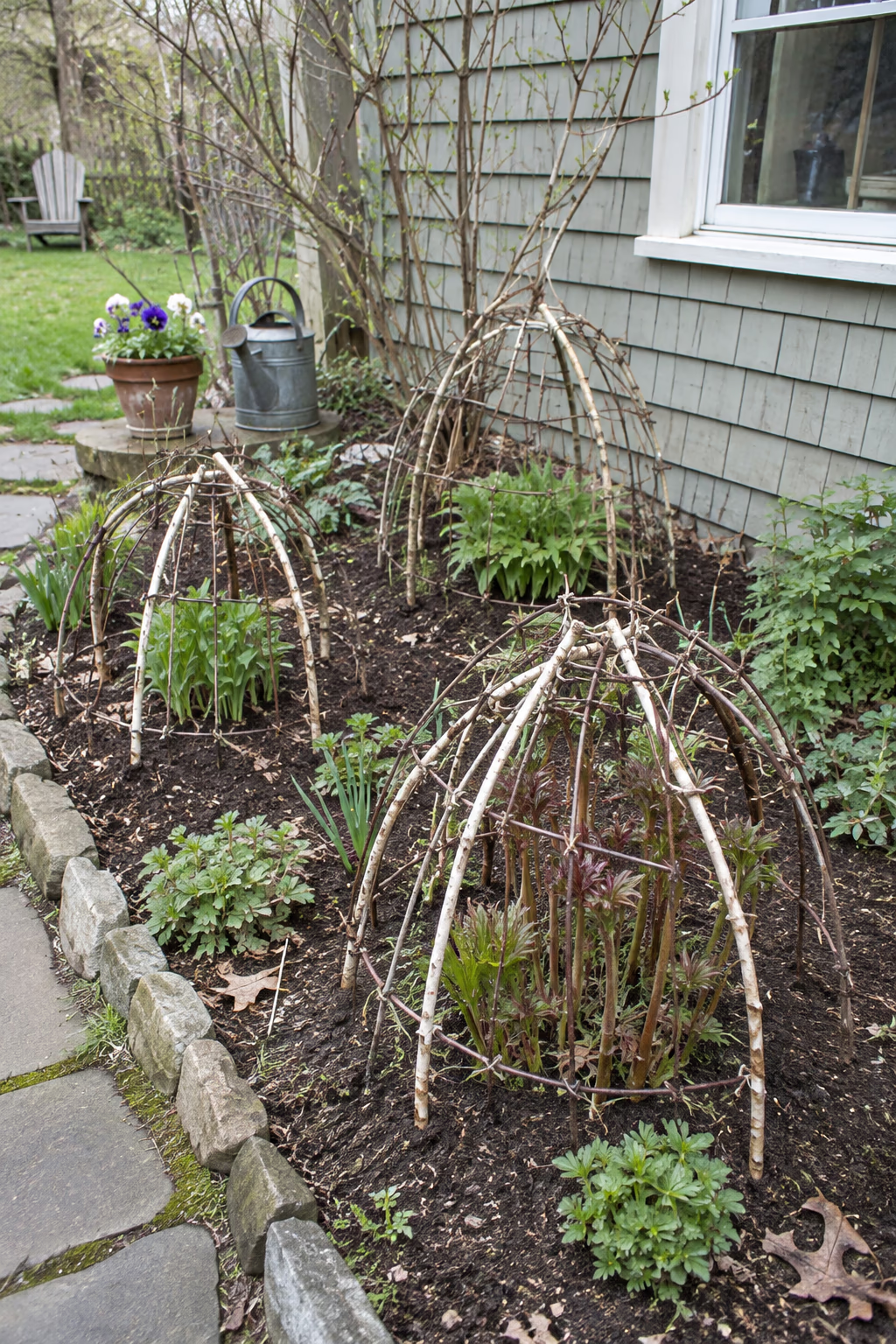
Invisible support that looks natural
In early spring, push twiggy branches from pruned shrubs or trees into the ground around clumps of peonies, asters, delphiniums, and phlox. Bend the tops inward to form a loose cage about two-thirds of the plant’s final height.
The plants grow up through the twigs and soon hide them completely. Unlike bright green plastic stakes, natural branches look right in a cottage bed and cost nothing.
The key is timing: install supports before plants need them, because trying to prop up flopped stems in July rarely looks good. Birch, hazel, or pruned fruit tree branches work well.
23. Wrap the Mailbox Post in a Mini Cottage Bed
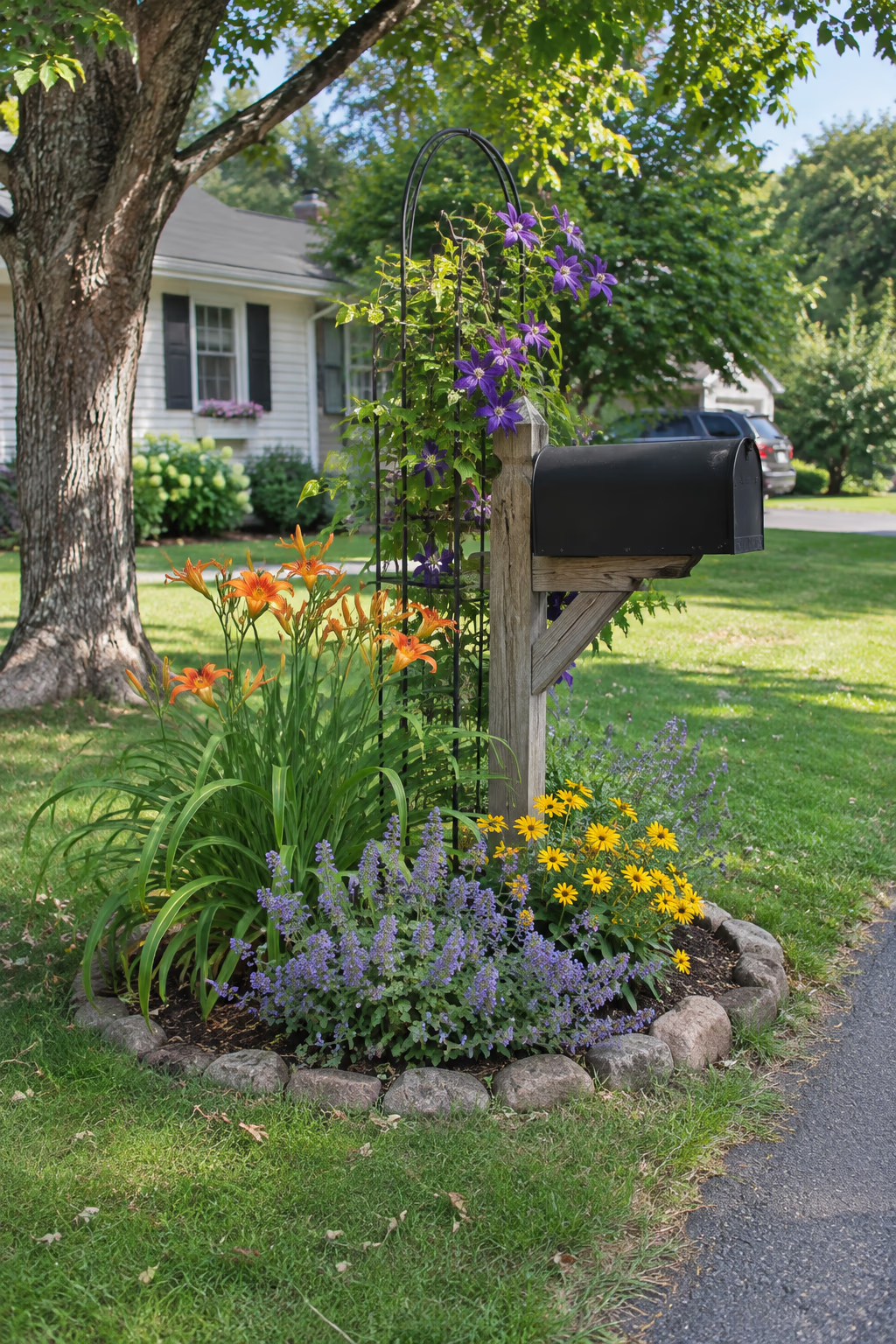
A small project with big curb appeal
Create a round or square bed about 3 to 4 feet wide around the mailbox post and plant it with daylilies, coreopsis, catmint, and a small climbing clematis on a slim trellis behind the post.
A compact bed is a quick way to test cottage planting before committing to a larger area, and it turns a utilitarian spot into something charming.
Keep plants low and thornless near the front of the box so the carrier can reach it, and choose tough plants that tolerate road salt and heat from pavement. Call 811 before digging, since utility lines often run near the street.
24. Extend the Season With Asters and Japanese Anemones
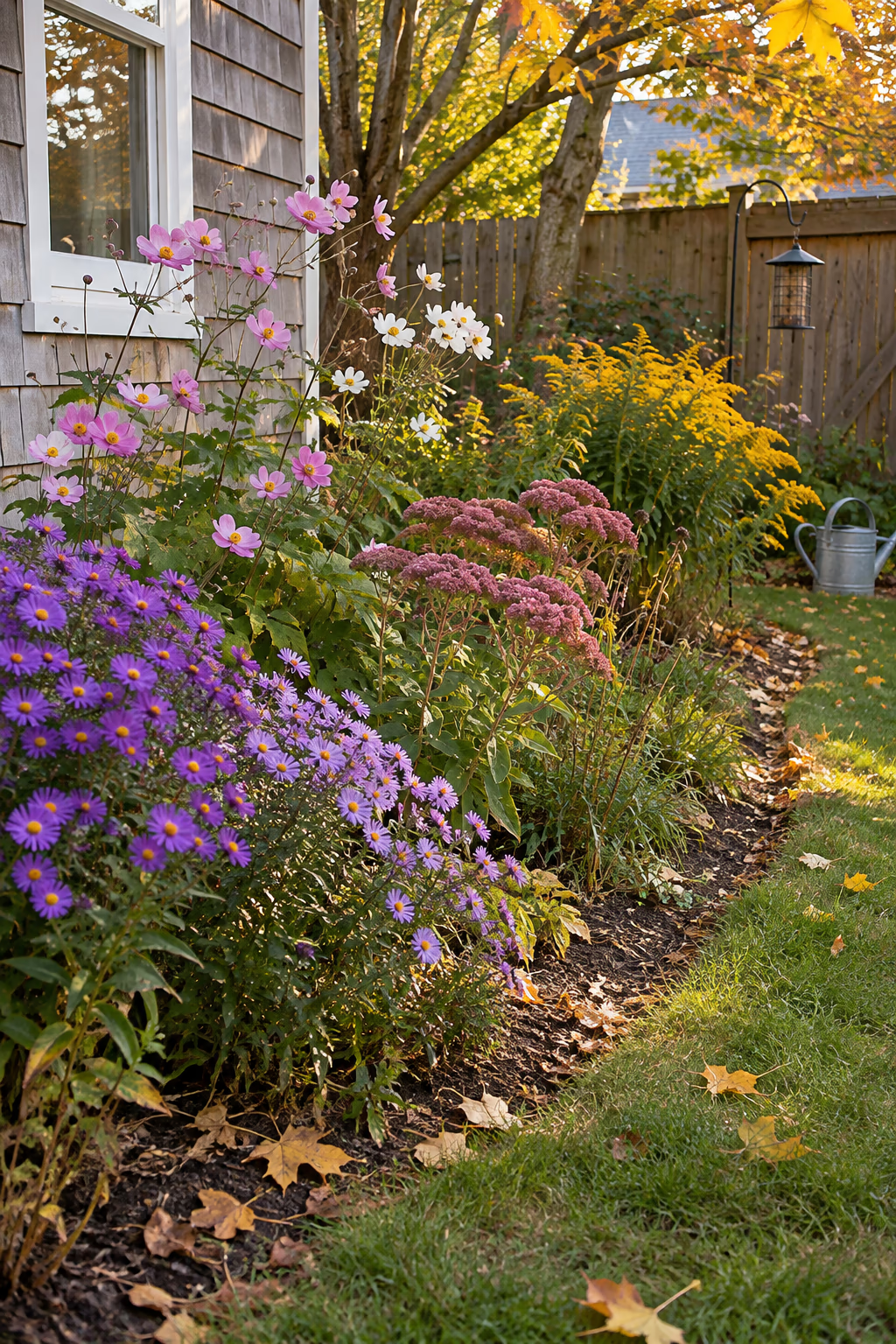
Fall flowers that keep the bed going
Plant asters, Japanese anemones, sedum, and goldenrod in the middle of the bed for color from late summer into fall. Purple and lavender asters with pink or white anemones extend the soft cottage palette into cooler months.
Fall bloomers feed late-season pollinators and keep the bed from looking finished in August. Their flowers glow in low autumn light.
Japanese anemones can spread aggressively in rich, moist soil, so give them room or plant them where they cannot overrun neighbors. Pinch tall asters back by half in early summer to keep them compact.
25. Widen a Skinny Bed Into a Deep Border
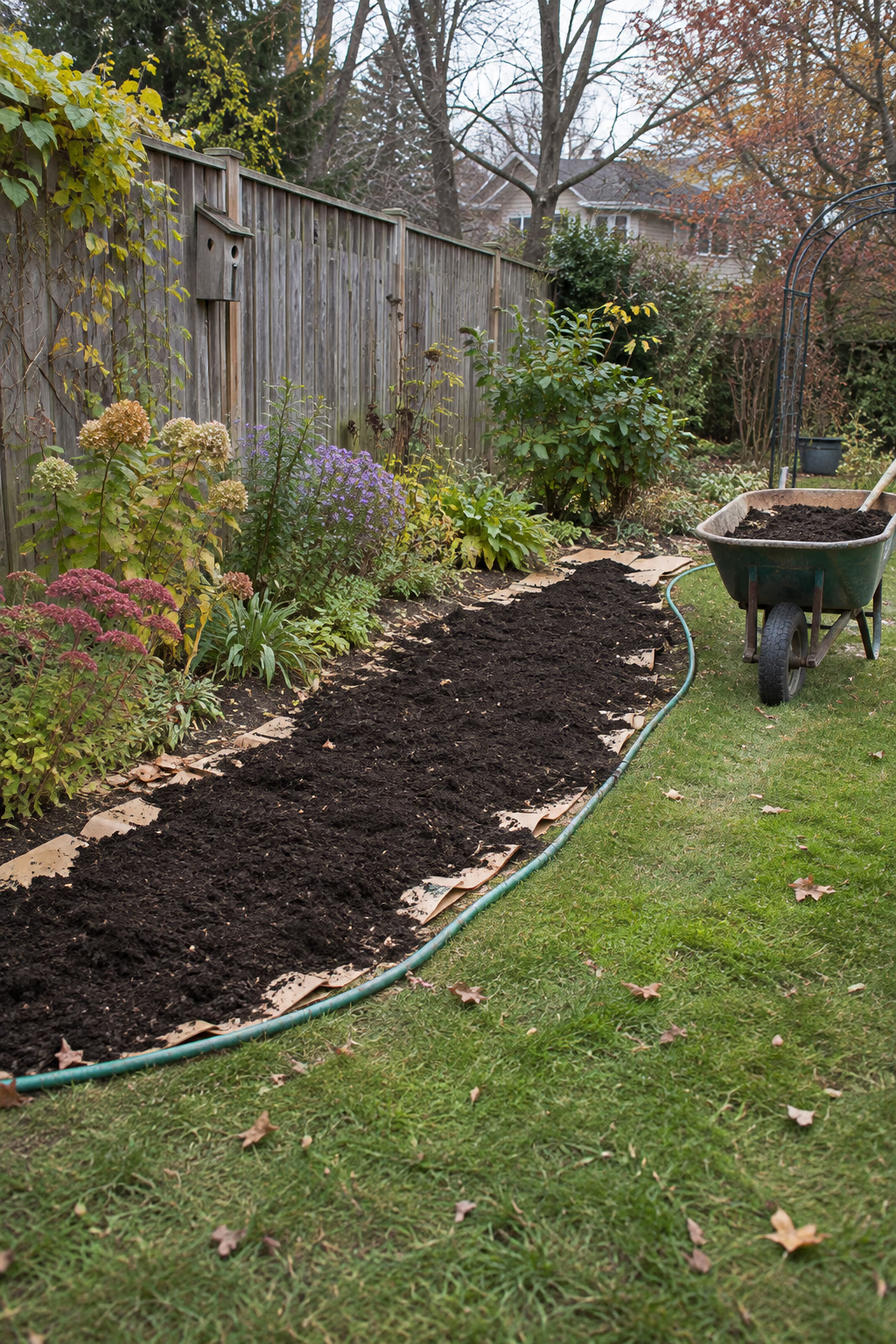
More room for layers and abundance
Many yards have narrow 2-foot beds along the house or fence that cannot hold more than a single row of plants. Widening them to 5 to 8 feet deep gives you room for tall, medium, and low plants and the overflowing look cottage beds are known for.
Smother the extra lawn by laying cardboard and covering it with several inches of compost and mulch in fall, then plant through it in spring. Alternatively, remove sod with a flat spade.
A wider bed needs more plants, compost, and mulch, so budget accordingly and fill it in stages. Check local codes or HOA rules if the bed approaches property lines or sidewalks.
How to Plan Your Cottage Flower Bed
A cottage bed looks spontaneous, but the best ones are planned with care. These tips help you get the abundant look without the frustration.
- Check sun and soil first. Most cottage flowers need at least six hours of direct sun and well-drained soil enriched with compost. Test drainage and amend heavy clay before planting.
- Plant in drifts and repeats. Group plants in odd numbers and repeat key colors and shapes across the bed to tie the design together.
- Mix bloom times. Combine spring bulbs, early-summer perennials, late-summer bloomers, and fall flowers so the bed is never bare.
- Pick plants for your zone. Check USDA hardiness zones, heat tolerance, and deer pressure, and substitute tougher plants for fussy classics where needed.
- Plant closely, but not too closely. Space plants a little tighter than tag recommendations to crowd out weeds, while leaving enough air flow to prevent mildew.
- Plan for upkeep. Budget time for deadheading, staking, dividing, and mulching, and call 811 before digging any new bed.
Frequently Asked Questions
What flowers belong in a cottage flower bed?
Classic choices include roses, foxgloves, delphiniums, hollyhocks, peonies, iris, lavender, phlox, cosmos, zinnias, hardy geraniums, and self-seeding annuals such as larkspur and poppies. Mix perennials, annuals, and bulbs for long-lasting color.
How do I keep a cottage bed from looking messy?
Use a clean edge, repeat a few colors throughout, and keep a clear front row of low plants. Deadhead spent flowers and remove plants that flop or spread too much.
Can I create a cottage flower bed in a hot or dry climate?
Yes. Swap moisture-loving plants for heat- and drought-tolerant ones such as salvia, yarrow, lavender, blanket flower, coneflowers, and Russian sage, and mulch with gravel to keep crowns dry.
When is the best time to plant a cottage flower bed?
Spring and early fall are ideal for perennials, while bulbs go in during fall. Sow tender annuals such as cosmos and zinnias after your last frost date.
How much does it cost to plant a cottage flower bed?
Costs depend on size and plant sizes. Starting from seed and small perennials keeps a modest bed affordable, while larger potted plants, edging, and decorative features add to the total. Building the bed over several seasons spreads out the expense.
Final Thoughts
The best cottage flower beds feel generous, a little wild, and full of personal choices. Whether you start with roses and foxgloves, a pastel palette, or a simple bed around the mailbox, each idea brings that relaxed, flower-filled charm closer to home.
Begin with plants suited to your sun, soil, and climate, then add layers each season. Over time, self-seeders, perennials, and small accents will knit together into a bed that looks like it has been there for years.


