
Early morning, before the neighborhood wakes up, a zen garden is at its best. Soft light skims across raked gravel, a single stone casts a long shadow, and a thin stream of water ticks into a basin somewhere nearby. Nothing asks for your attention, and that is exactly the point.
A zen garden works because it strips a yard down to a few honest materials: stone, gravel, moss, wood, water, and a handful of well-placed plants. With so little going on, every line and texture matters, and the space feels restful instead of busy. It also tends to use less water and mowing than a lawn, which makes it practical as well as calming.
These 25 zen garden ideas focus on the details that give the style its quiet character, from raked ripples and red maples to bamboo water spouts, moss islands, moon gates, and tabletop sand trays. Some suit a full backyard, while others fit a balcony, a side yard, or a corner of the patio, so you can start wherever you have room.
1. Rake Concentric Ripples Around a Single Stone
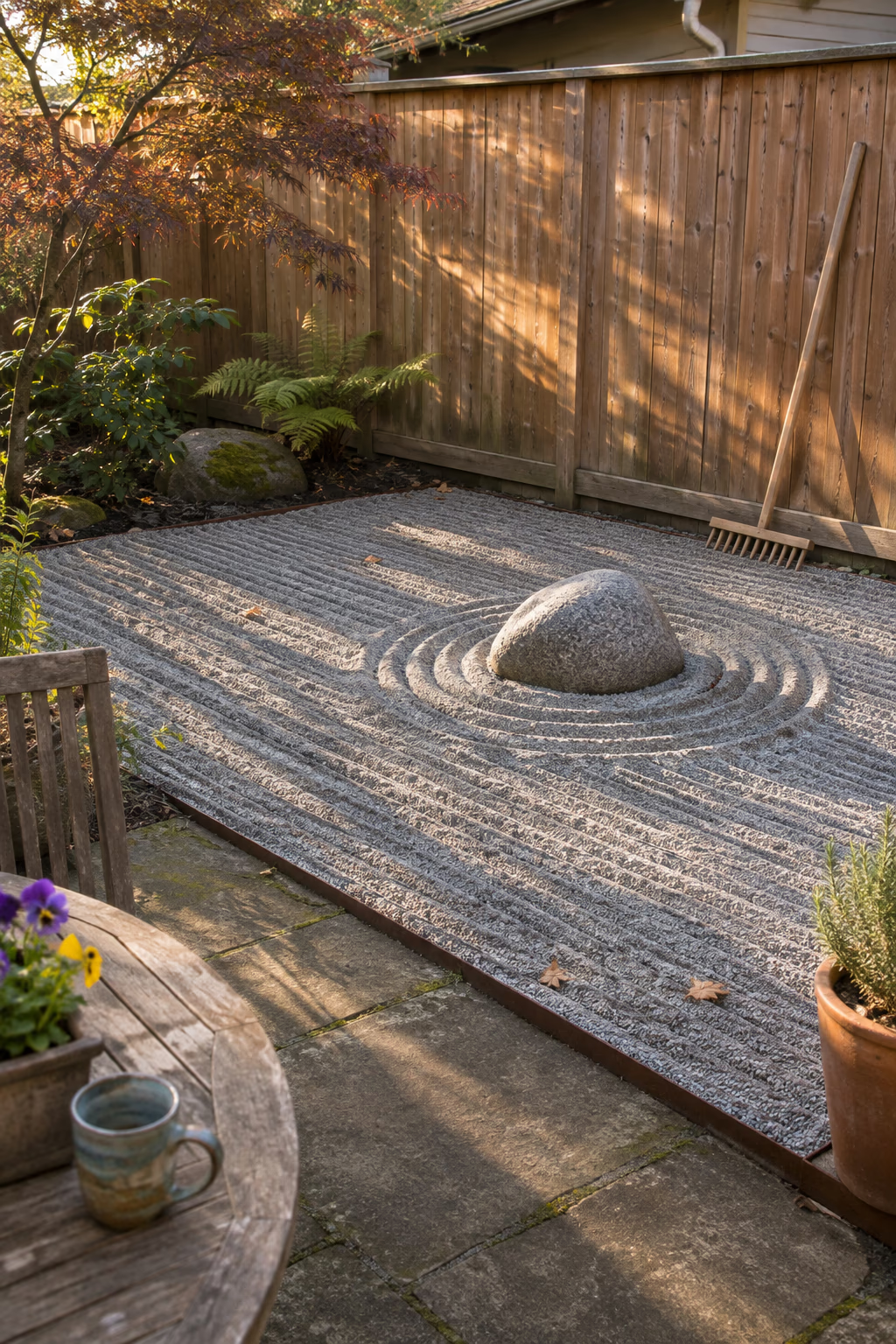
The signature pattern that defines the style
Nothing says zen garden faster than rings of raked gravel spreading out from a stone, like ripples around an island. Choose one rounded or upright boulder roughly 18 to 30 inches tall, set it slightly off center in a bed of fine crushed granite or small pea gravel about 2 to 3 inches deep, and rake three to five tight circles around its base. Then fill the rest of the bed with straight parallel lines.
The contrast between curves and straight lines suggests calm water meeting an obstacle, and the eye naturally settles on the stone. A wooden rake with wide, blunt teeth works better than a metal leaf rake, and gravel in the 1/8- to 1/4-inch range holds lines best.
Expect to re-rake after storms, leaf drop, or curious wildlife. Many people find that weekly touch-up becomes a small, relaxing ritual rather than a chore.
2. Set a Red Japanese Maple Against Pale Gravel
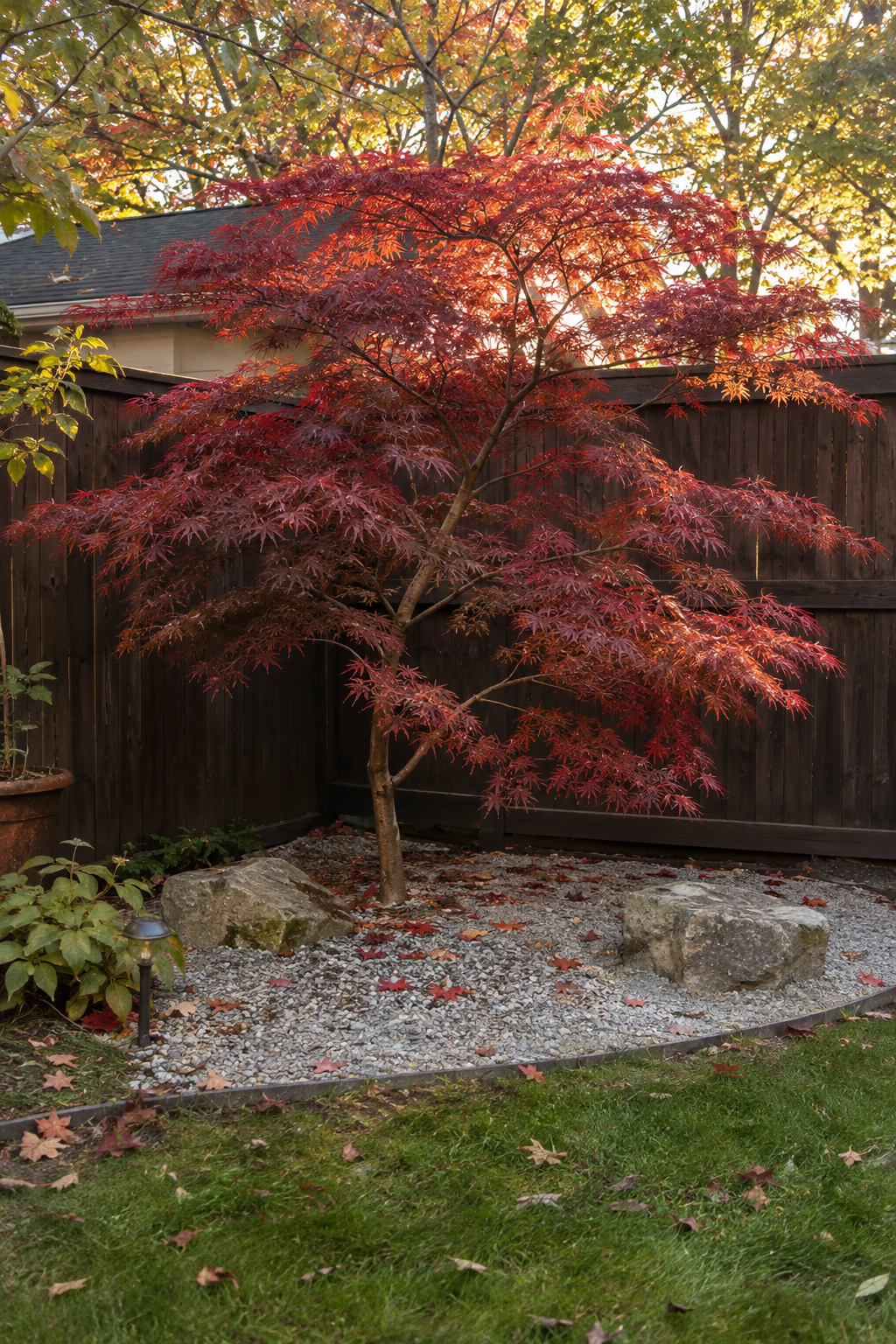
One bold splash of color in a quiet palette
A zen garden is mostly gray, green, and brown, so a single red-leaf Japanese maple becomes a living focal point. Plant it at the back or side of a pale gravel bed, where its lacy leaves and layered branches stand out against light stone and a dark fence or wall.
Japanese maples generally grow well in USDA zones 5 through 8 and prefer morning sun with afternoon shade, especially in hotter regions where leaves can scorch. Dwarf and weeping forms that stay 6 to 10 feet tall suit most small yards better than upright varieties that can reach 20 feet or more.
Keep gravel pulled back a few inches from the trunk and mulch the root zone with shredded bark under the stone layer. Water deeply during the first two summers while roots establish.
3. Add a Bamboo Water Spout Over a Stone Basin
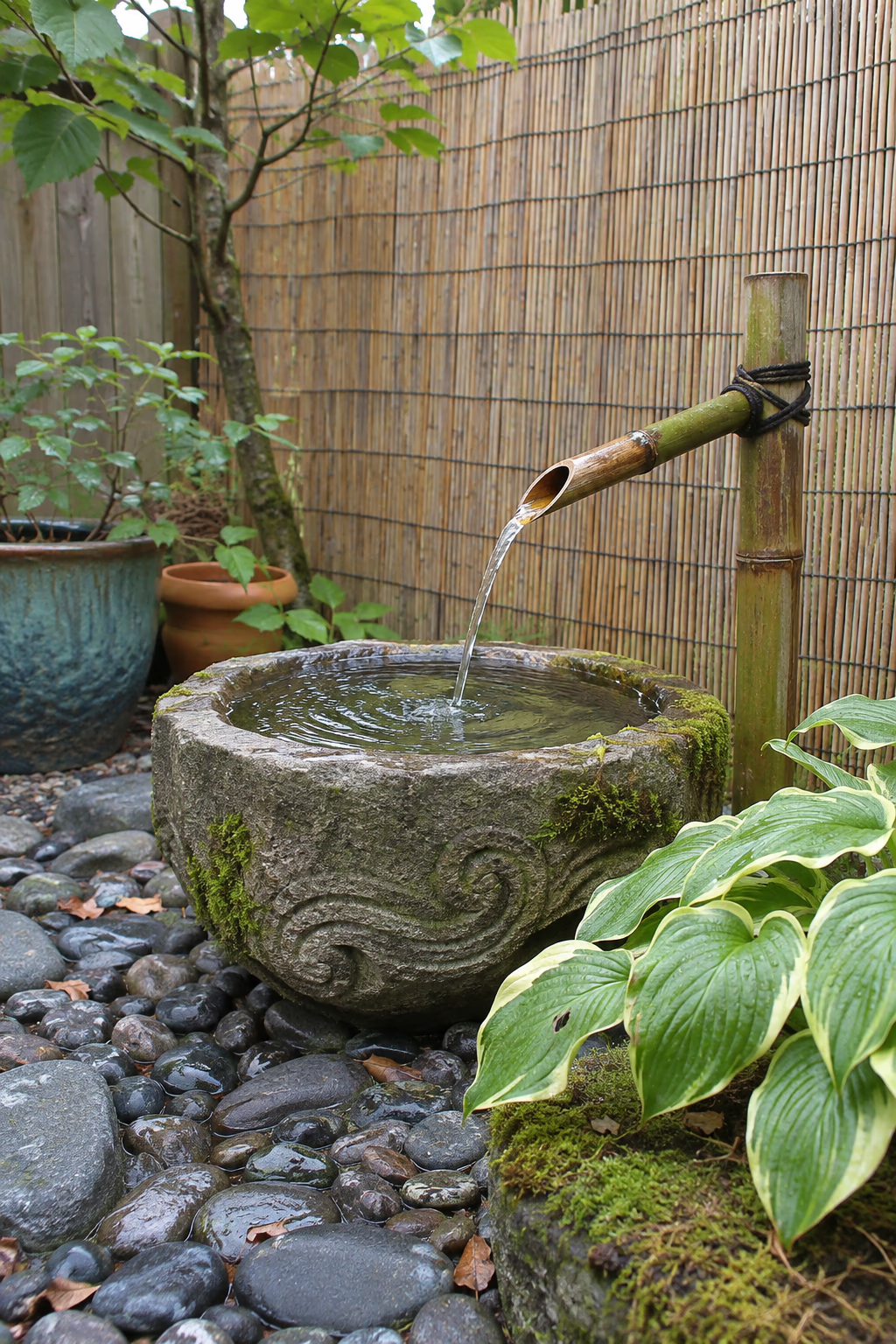
Gentle sound that masks street noise
A low stone basin fed by a bamboo spout brings movement and a soft trickling sound into an otherwise still garden. The basin sits on a bed of river pebbles that hides a buried reservoir and small submersible pump, which recirculates the water up through tubing inside the bamboo.
Water sound is one of the most effective ways to soften traffic and neighbor noise, and the setup takes up only about 3 feet square. A rocking bamboo version that tips and clacks against a stone adds a rhythmic beat if you enjoy that sound.
Plan for a GFCI-protected outdoor outlet within reach, and top off the reservoir during hot, dry weeks. In freezing climates, drain the pump and store it indoors over winter so ice does not crack the basin.
4. Grow Moss Islands in a Sea of Gravel
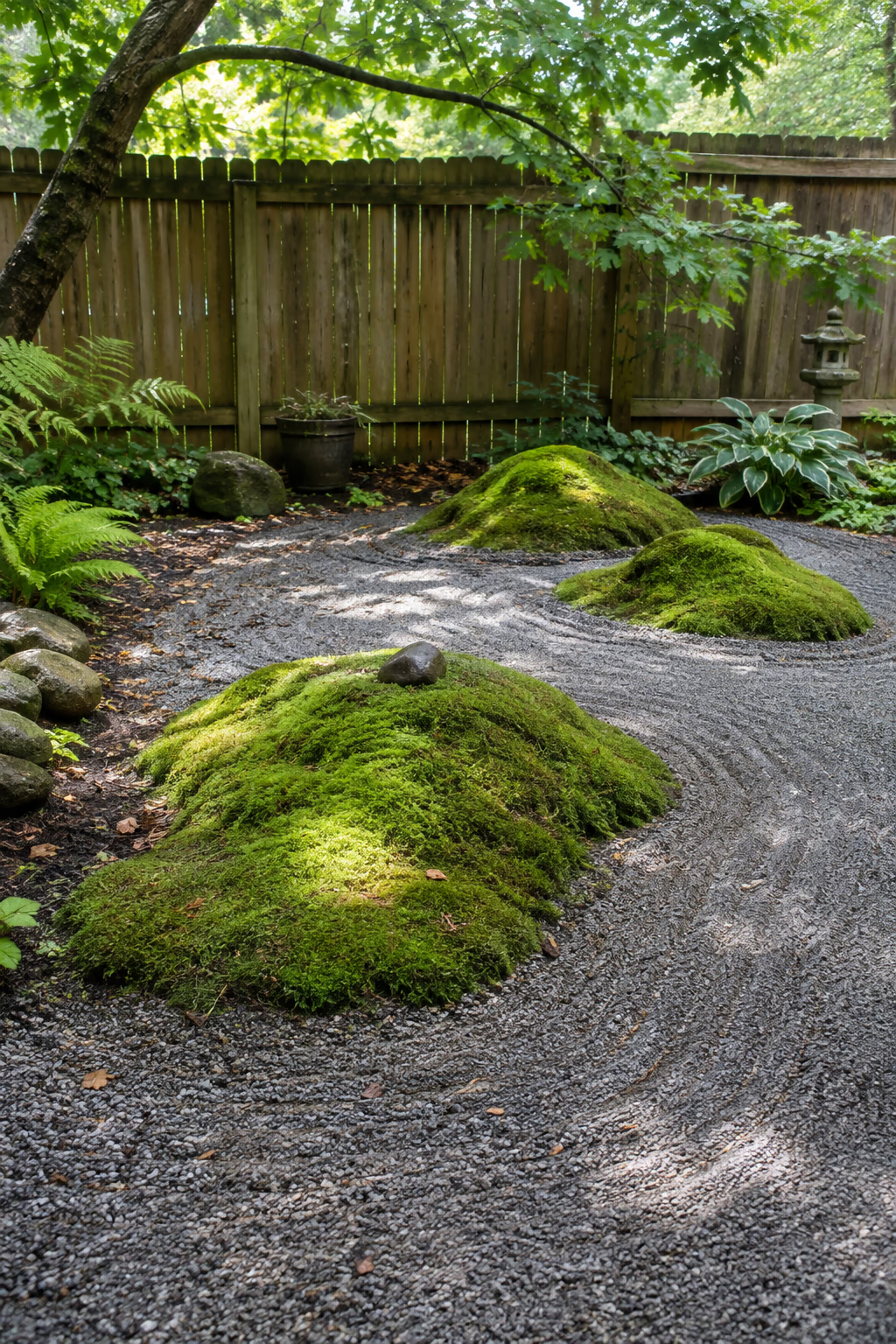
Soft green mounds that feel ancient
Instead of covering the whole garden in gravel, sculpt a few low soil mounds 3 to 5 feet across and carpet them with moss, then rake gravel around them like water around islands. The rounded green forms balance the hard edges of stone and make the space feel established.
Moss thrives in shade, steady moisture, and slightly acidic, compacted soil. Press transplanted patches firmly into place and mist them daily for the first few weeks. In sunnier spots, low groundcovers such as creeping thyme or sedum can mimic the look with less fuss.
Keep fallen leaves off moss with a soft broom or leaf blower on low, since a wet layer of leaves can smother it within a season.
5. Lay a Dry Streambed That Mimics Flowing Water
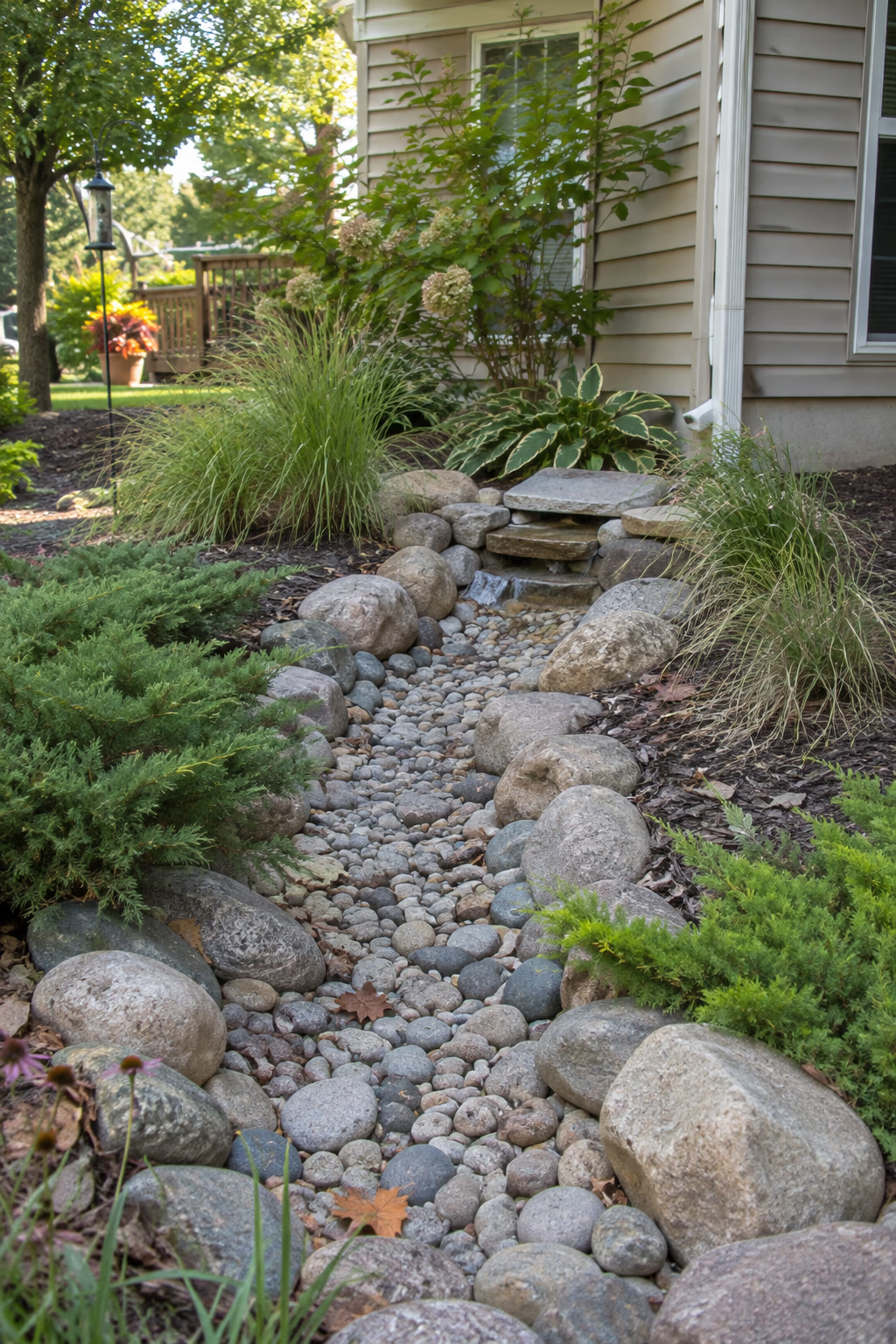
The feeling of a creek without the upkeep
A dry stream suggests water using stone alone. Dig a shallow, winding channel 2 to 4 feet wide and 6 to 10 inches deep, line it with landscape fabric, and fill it with smooth river rock that grades from larger stones at the edges to smaller pebbles down the center. A few flat stones placed on edge near the top can suggest a little waterfall.
The curving line leads the eye through the garden and adds a sense of motion without pumps or maintenance. It can also double as a practical drainage swale that carries runoff away during heavy rain.
Make sure the channel slopes away from your foundation and does not send water onto a neighbor’s lot. River rock is heavy, so order it delivered by the ton rather than hauling bags.
6. Light a Quiet Corner With a Stone Lantern
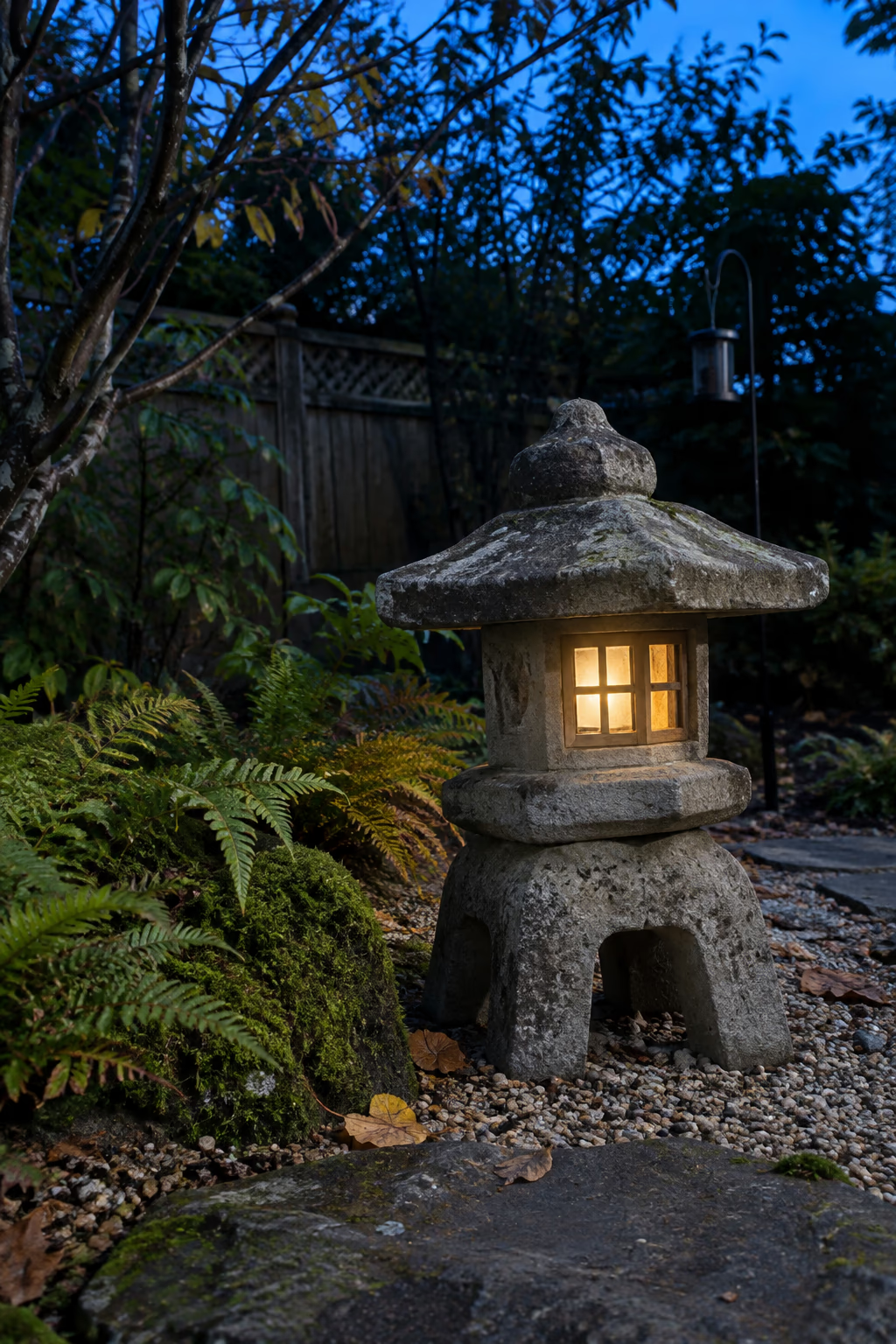
A traditional accent that glows at dusk
A squat cast-stone or carved granite lantern, about 2 to 3 feet tall, adds instant character when tucked beside a path, at the edge of a moss mound, or next to a water basin. Its weathered gray form looks right even in daylight, when it acts as a sculpture.
At night, a small battery candle or low-voltage LED inside casts a warm, soft glow rather than bright floodlight. That restraint keeps the evening garden peaceful and lets the surrounding shadows do the work.
Cast concrete lanterns are much cheaper than carved stone and age nicely as moss and lichen settle in. Set the base on compacted gravel so the lantern stays level and cannot tip.
7. Cloud-Prune an Evergreen Into Soft Layers
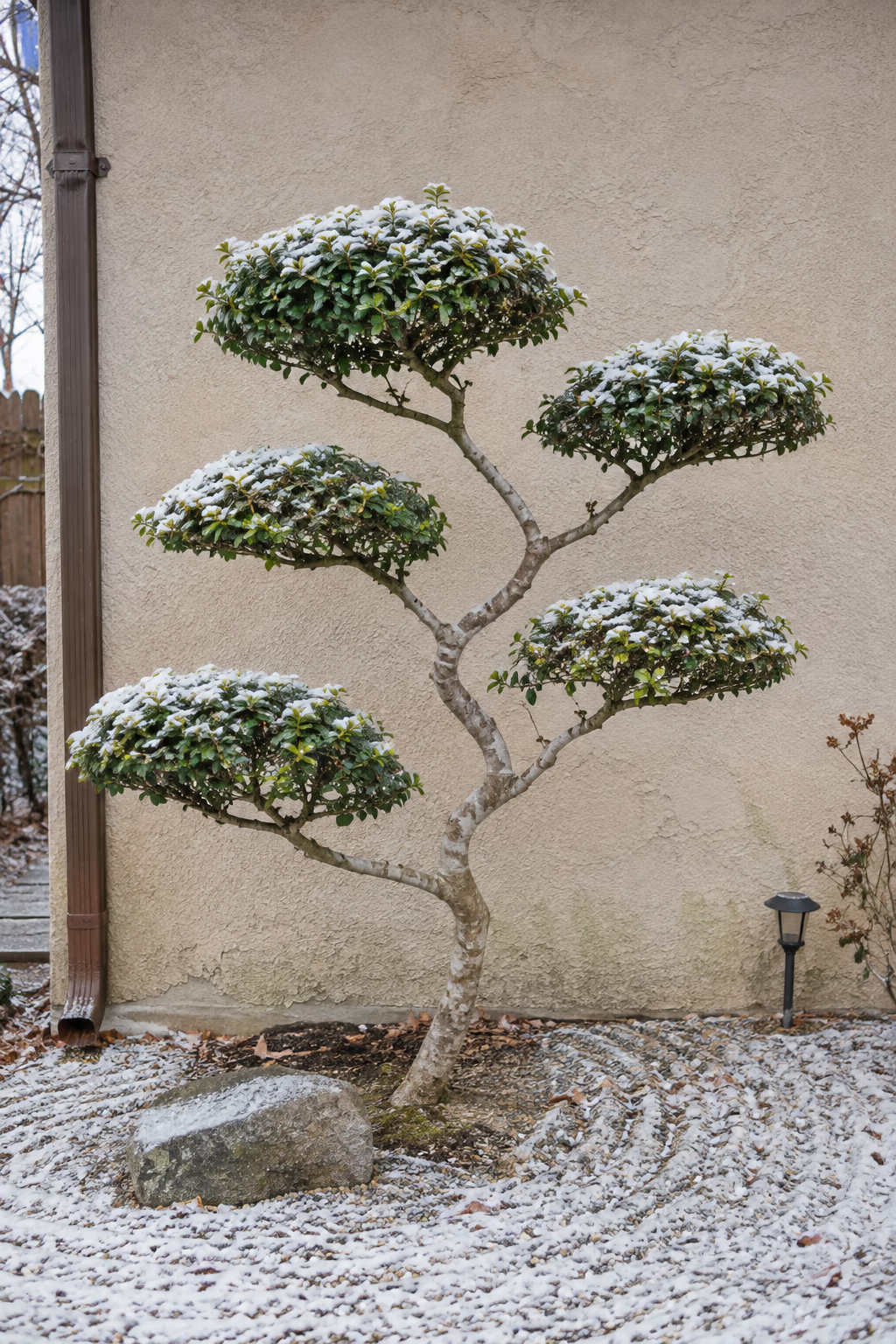
Living sculpture with year-round structure
Cloud pruning shapes a shrub or small tree into rounded pads of foliage on bare, gently curving branches. Japanese holly, juniper, mugo pine, and boxwood all respond well. Start by removing inner clutter to reveal the main branches, then clip the remaining foliage into loose, rounded clusters.
These shapes give the garden a strong evergreen backbone that looks good in snow as well as summer. One sculpted specimen near the gravel bed is usually more striking than several competing shapes.
Shaping takes a few seasons and needs light trimming once or twice a year. If you want a head start, some nurseries sell pre-trained specimens, though they cost considerably more than young plants.
8. Span a Dry Stream With a Small Wooden Bridge
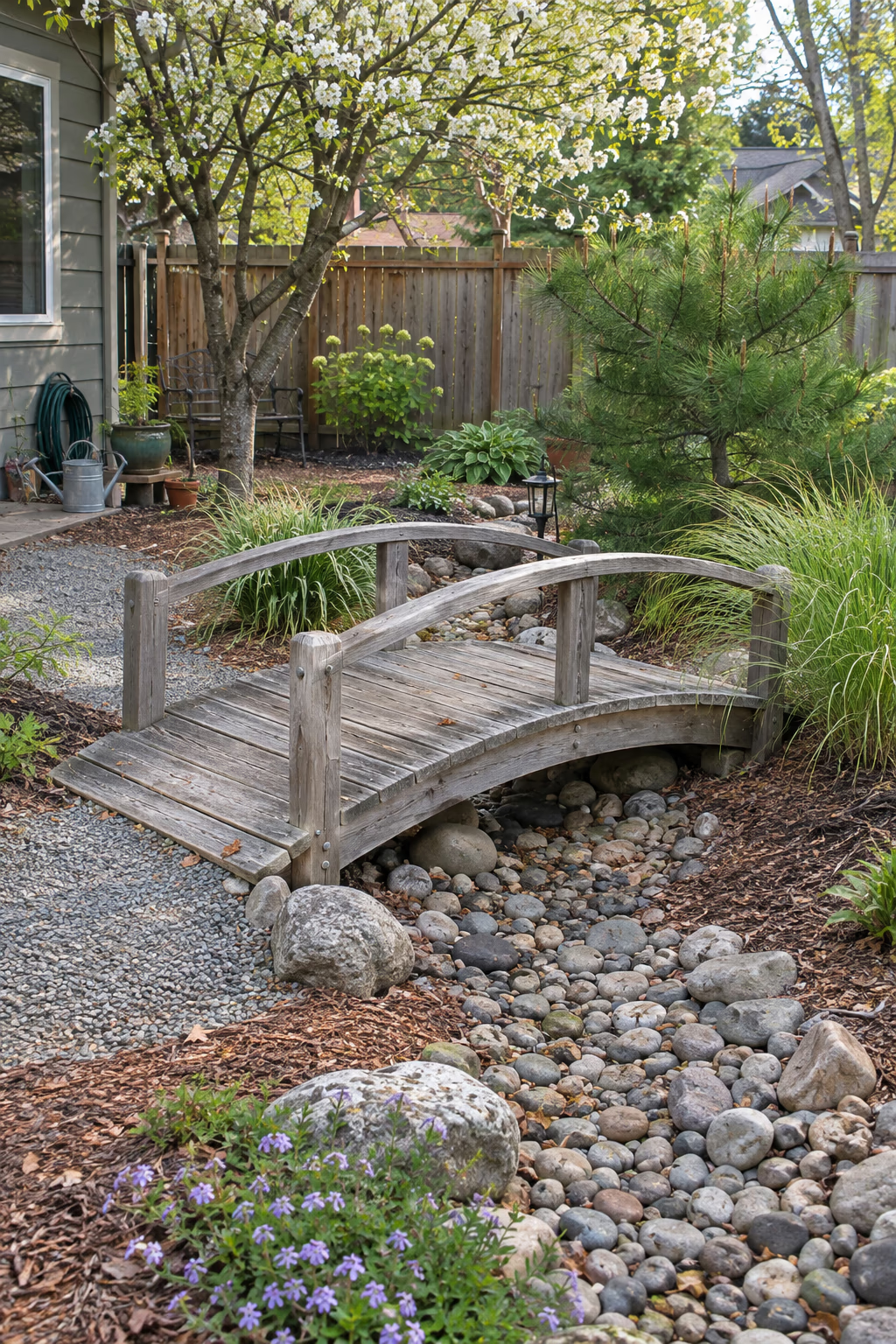
A simple crossing that adds a sense of journey
A low flat or gently arched bridge about 4 to 6 feet long turns a dry streambed into a destination. Cedar or another rot-resistant wood left to weather silver blends naturally with gravel and stone, while a dark stain gives a more modern look.
Crossing a bridge, even a symbolic one over stones, slows you down and marks a shift from one part of the yard to another. It also gives the stream a clear purpose in the overall design.
Set the bridge ends on buried concrete pads or flat stones so the wood stays off wet soil. Keep it low to the ground for safety, and add a grippy finish if the boards stay damp in shade.
9. Shape a Gravel Cone Inspired by Temple Gardens
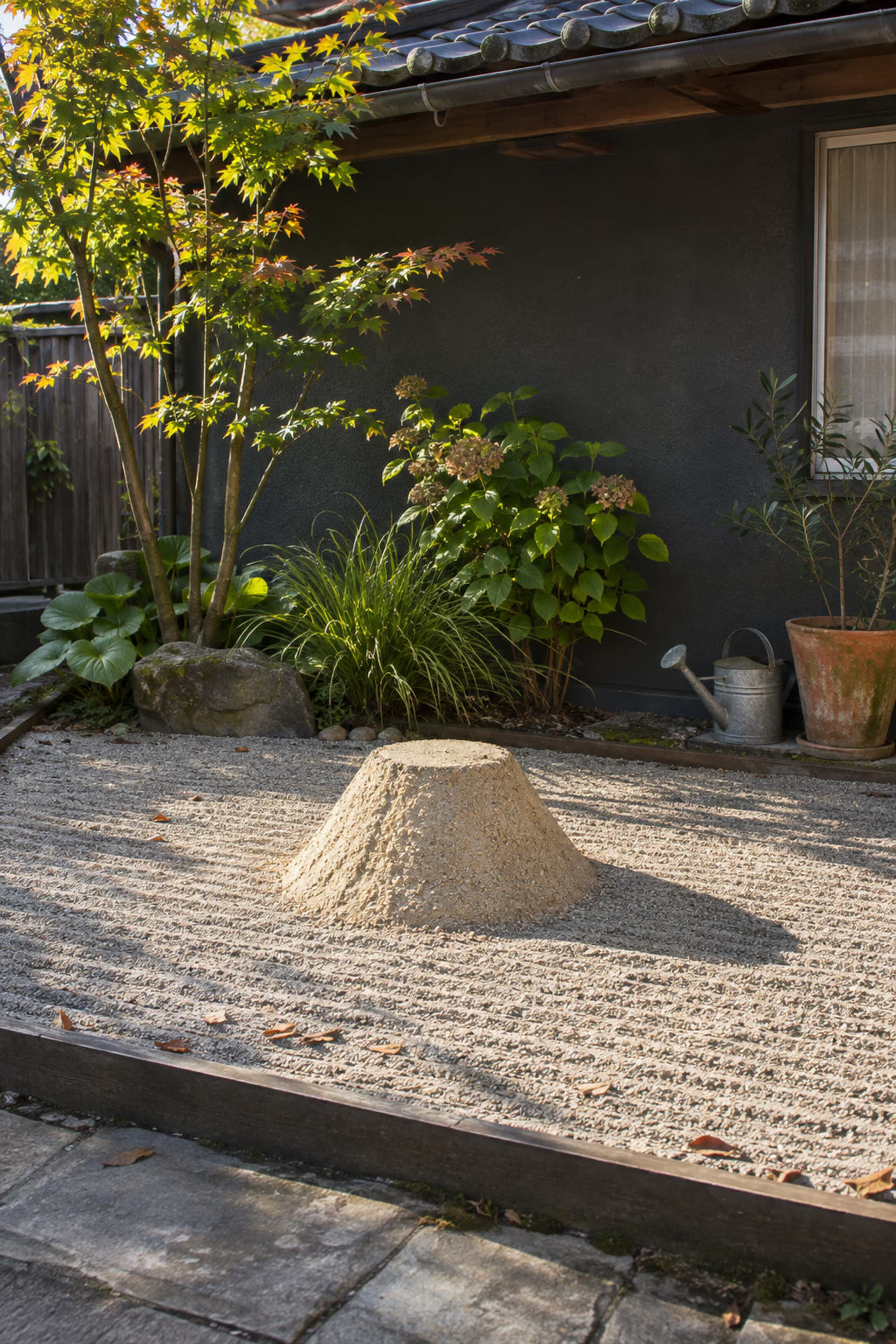
A bold, sculptural moment made from gravel
Some famous temple gardens in Kyoto feature a flat-topped cone of pale sand that has inspired gardeners for centuries. A home version can be much smaller: a mound 2 to 3 feet across and 12 to 18 inches high, made from stabilized decomposed granite packed over a soil core, set in an area of raked gravel.
The unexpected geometric form catches moonlight and morning sun beautifully and feels more like art than landscaping. It works best in a simple, open setting where nothing else competes with it.
Rain will soften the edges, so mist and tamp the surface after storms or use a binder product made for pathways. A sheltered spot under eaves helps the shape last longer.
10. Frame the View With a Round Moon Gate
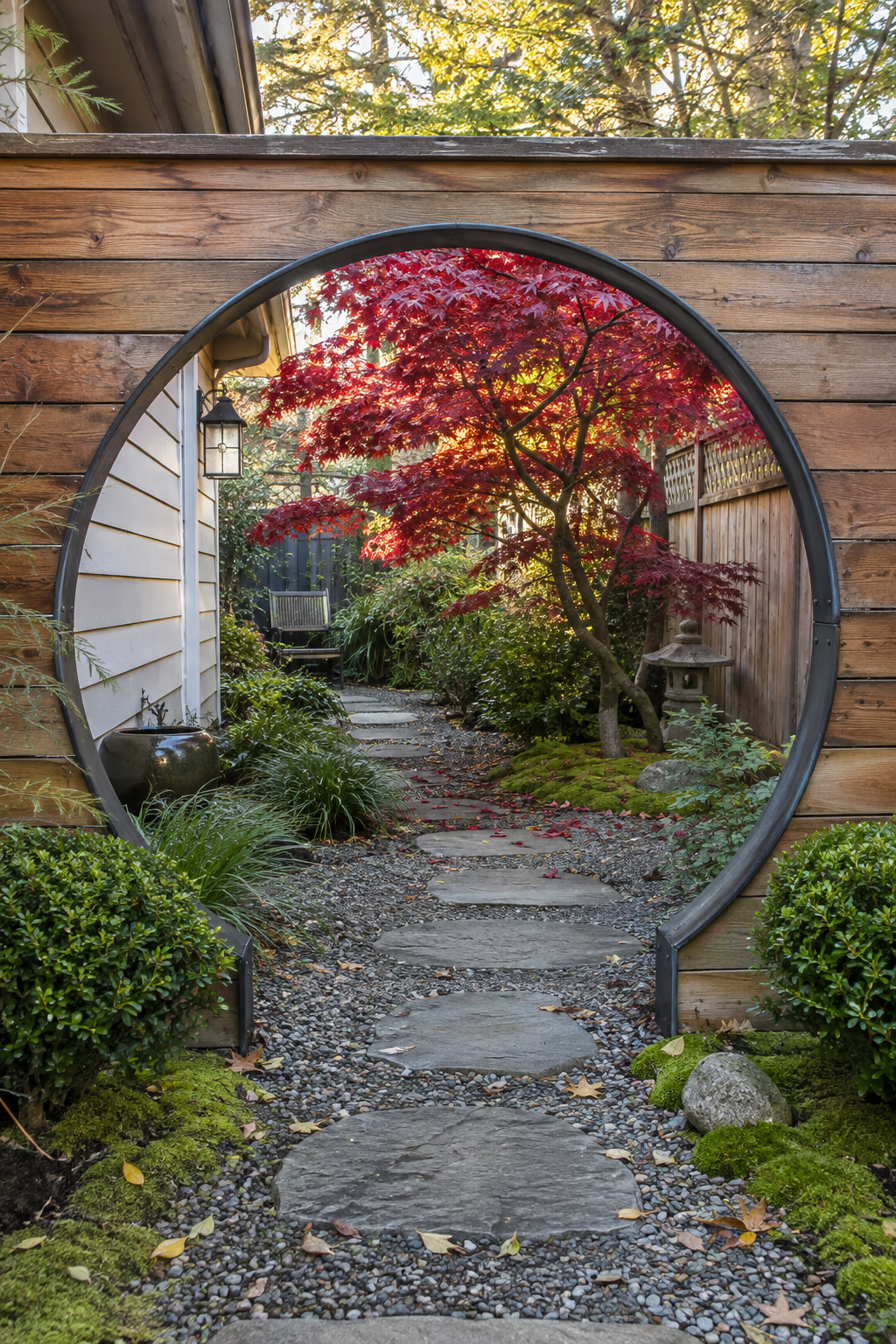
A circular opening that turns a view into a picture
A moon gate is a round arch, usually 6 to 7 feet tall, set in a fence, hedge, or freestanding frame. Steel versions are slim and modern, while wooden or bamboo frames feel softer. Position it so the circle frames something worth seeing, such as a maple, lantern, or raked bed.
The perfect circle contrasts with the irregular shapes of stone and plants, and it gives a narrow lot a strong sense of entry. Even a small yard feels layered when you look through one space into another.
Anchor the posts in concrete footings, especially in windy areas. If it attaches to a shared fence, check HOA rules and talk with your neighbor first.
11. Place a Meditation Bench Facing the Gravel
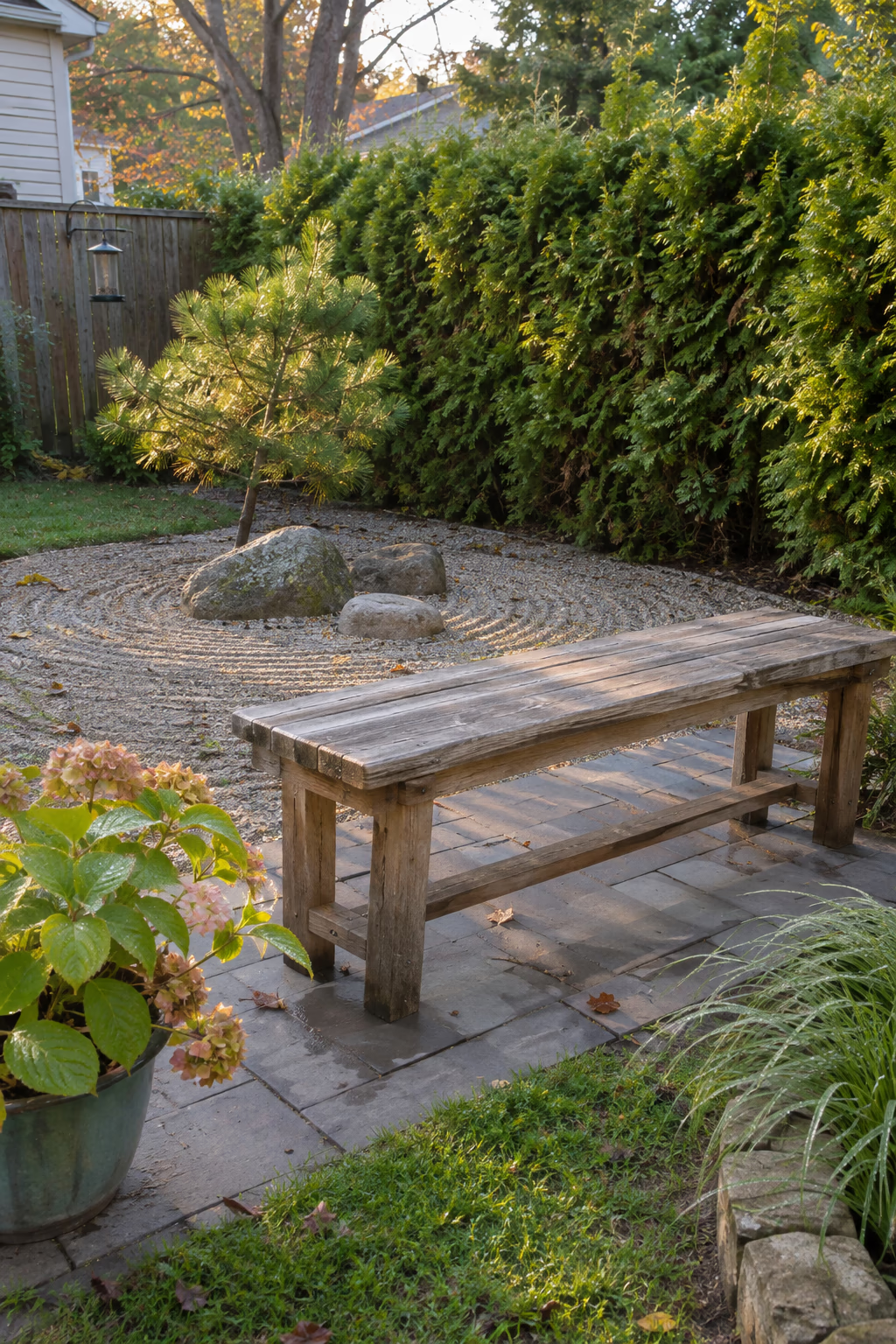
A reason to sit and actually enjoy the view
A zen garden is meant to be looked at, so give yourself a place to do that. A simple backless bench in weathered wood or a slab of stone set on two blocks is enough. Face it toward your main focal point, ideally with a wall, hedge, or fence behind you for a sense of shelter.
Low, plain seating keeps the eye on the garden rather than the furniture. Positioning it where you get morning light or evening shade makes it far more likely you will use it every day.
Set the bench on a level pad of compacted gravel or flat pavers so legs do not sink. Skip cushions that need to be brought in when it rains and choose a surface that dries quickly instead.
12. Build a Low Wooden Viewing Deck at the Edge
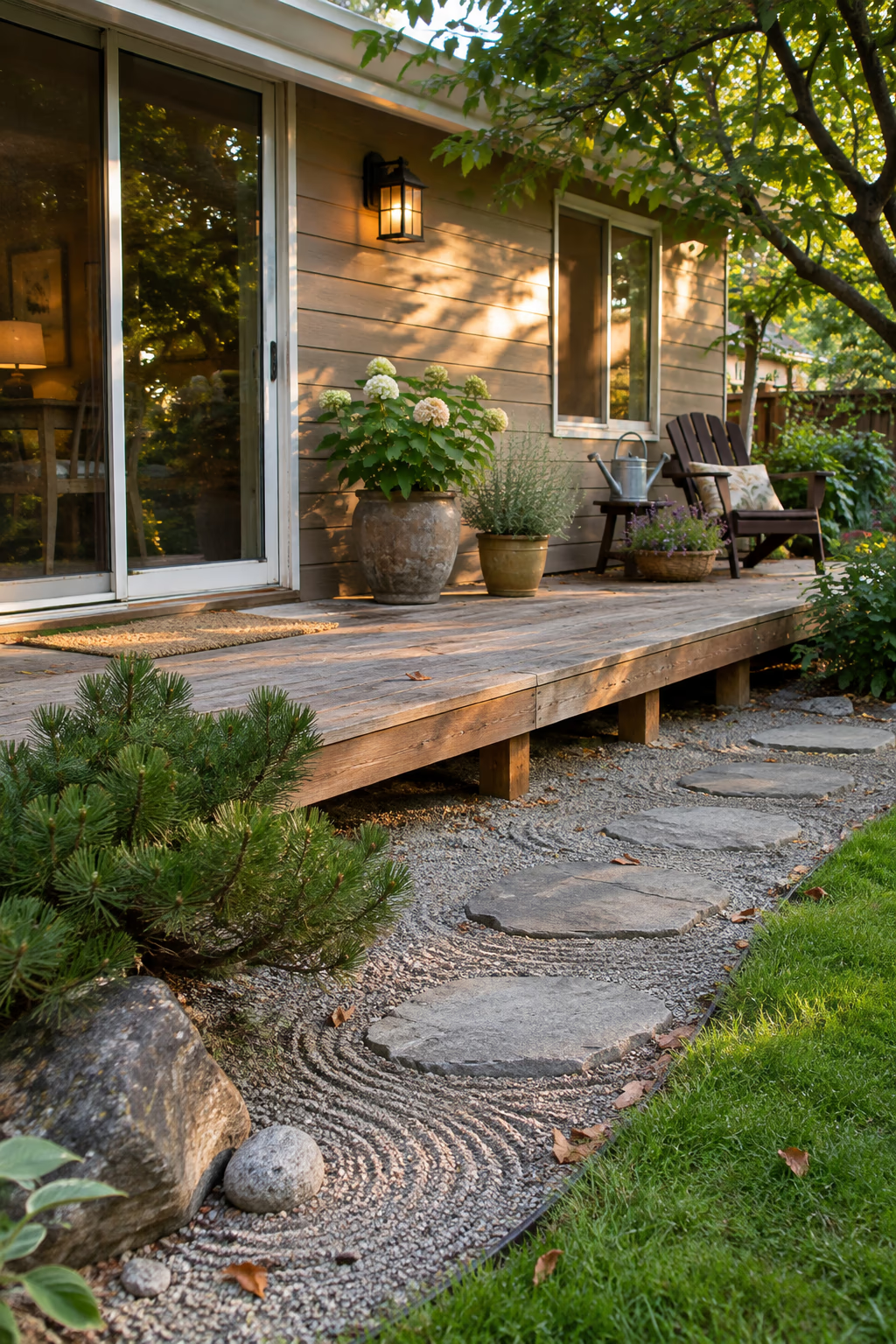
A traditional platform for sitting close to the stones
Japanese houses often have a narrow wooden veranda for sitting beside the garden. A simple version is a low platform 3 to 4 feet deep running along the edge of the gravel, built about 12 to 16 inches above grade so you can sit on the edge with your feet resting on stepping stones.
It creates a clean, linear border for the garden and turns it into an extension of the house. It also gives you a dry spot to sit after rain when benches are wet.
Use rot-resistant lumber or composite boards, and leave gaps for drainage. Low decks may not need a permit, but rules vary, so check with your local building department before building.
13. Turn a Shady Side Yard Into a Narrow Zen Strip
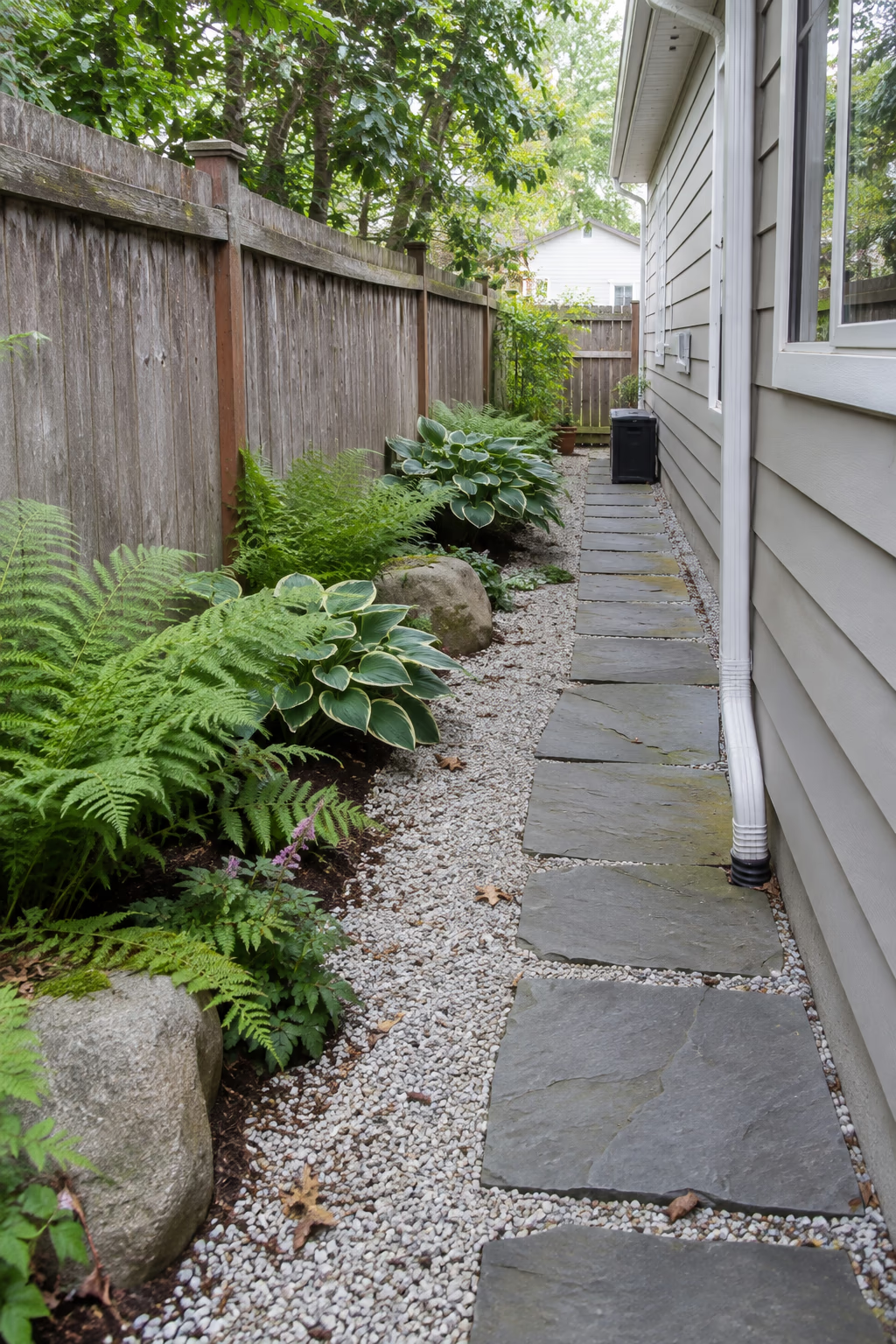
Calm in the space most people ignore
That 5- to 8-foot strip between houses is often just a passage for trash cans, but it makes a lovely linear zen garden. Run a straight band of raked gravel down one side, set a line of large stepping stones down the other, and place two or three stones and shade plants along the fence.
Narrow spaces suit the style because restraint is built in. A long view down raked lines makes the strip feel intentional and even a little longer than it is.
Keep a clear walkway for maintenance and utility access, and make sure gutters and downspouts still drain away from both foundations.
14. Create a Balcony Zen Garden in Low Troughs
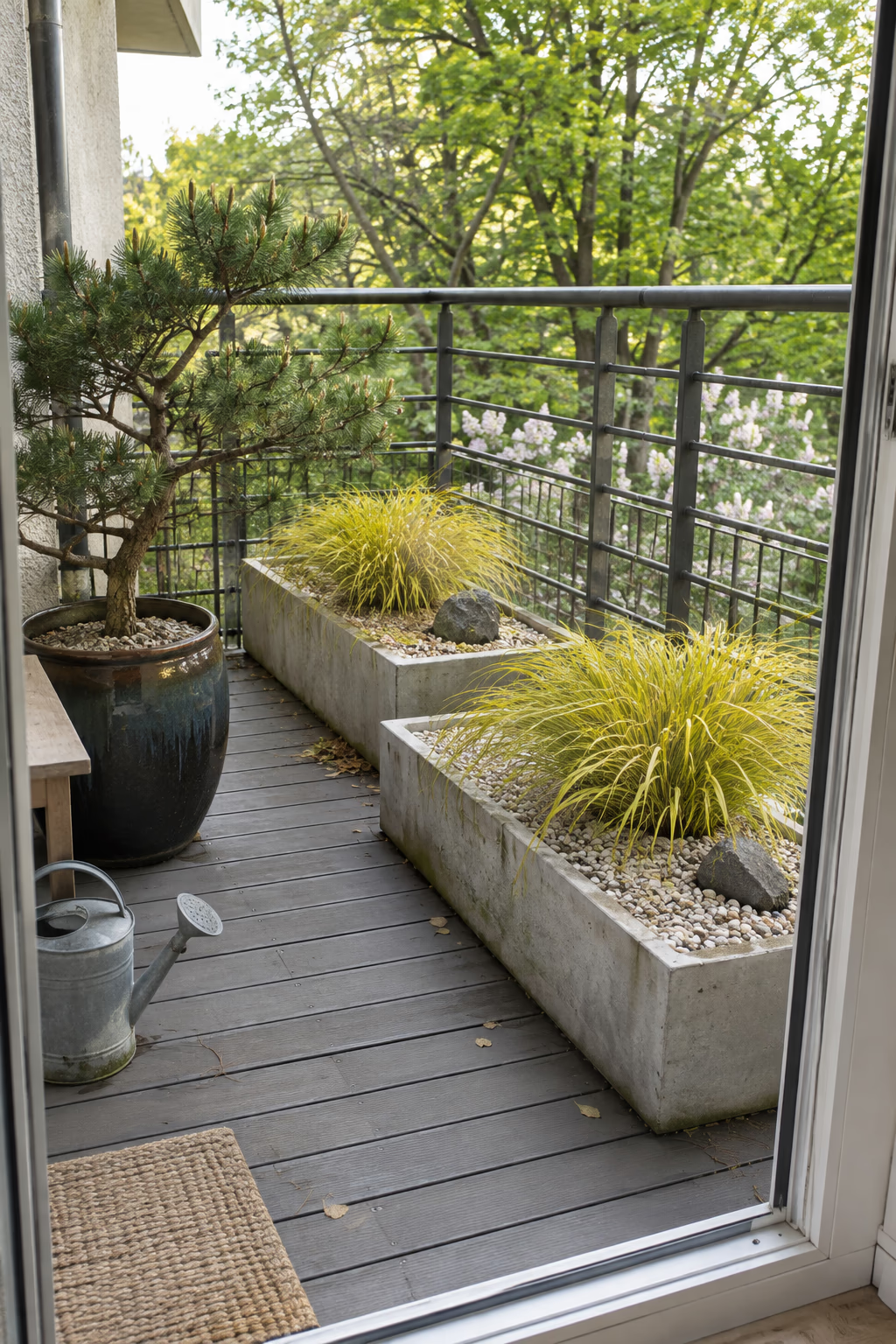
The look without a yard
Long, shallow troughs of fiberglass or lightweight concrete, filled with gravel, a few stones, and one or two small plants, bring the style to an apartment balcony. A dwarf pine, a mound of Japanese forest grass, or a small maple in a deeper pot pairs well with them.
Low containers keep sightlines open and make a tight space feel calm rather than crowded. A small tabletop fountain adds sound without plumbing.
Weight is the main concern. Wet gravel and stone are heavy, so check your building’s load limits and lease rules, use lightweight fillers below the top layer, and make sure containers drain without dripping onto the unit below.
15. Make a Tabletop Sand Garden in a Wooden Tray
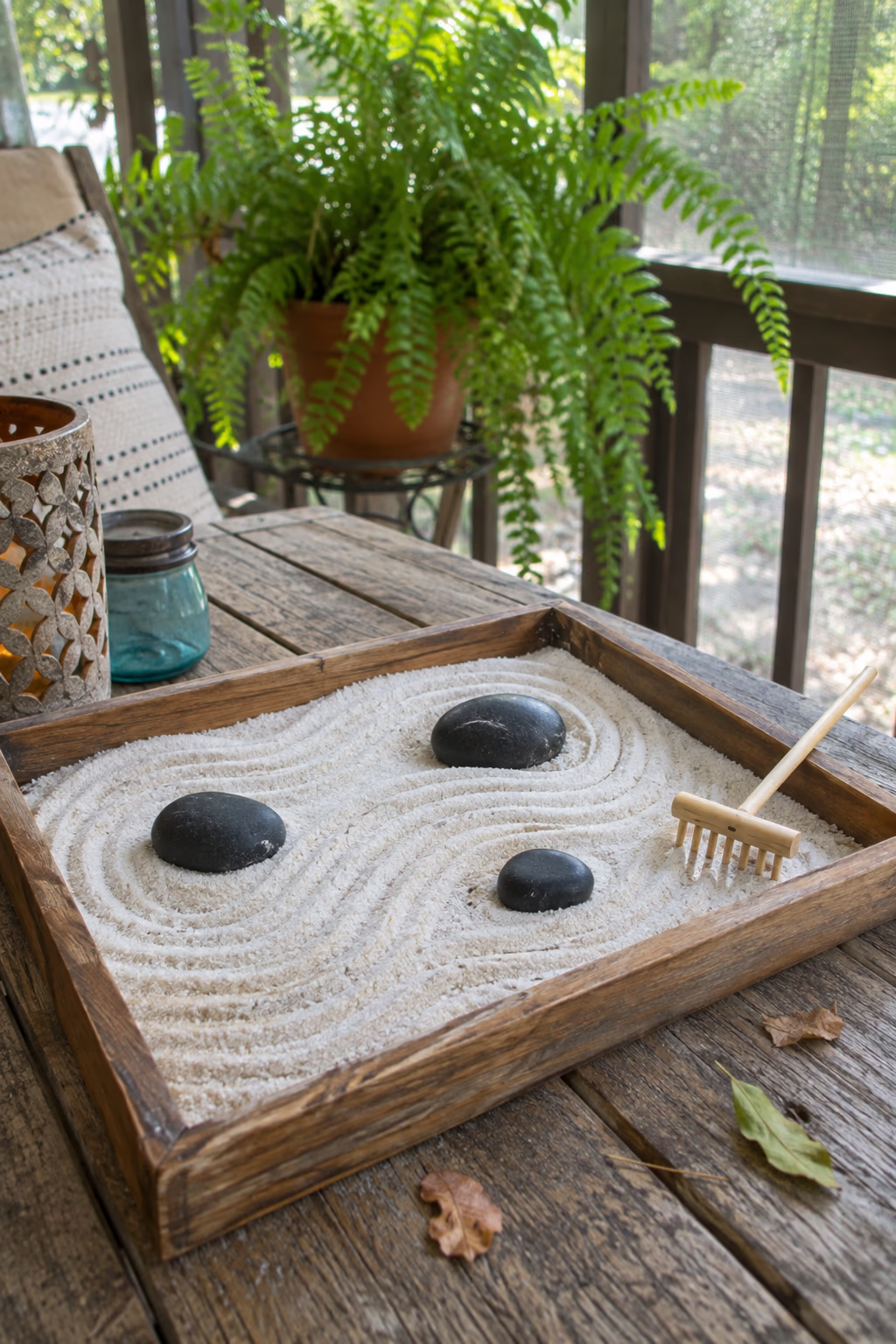
A pocket-sized version for the patio table
A shallow wooden tray about 12 by 18 inches, filled with fine white sand and a few small stones, makes a calming centerpiece for a covered patio, screened porch, or sunroom. A small wooden rake or even a fork lets you draw new patterns whenever you like.
It is the easiest and cheapest way to try the style, and it is a nice entry point for kids or renters. Changing the pattern takes seconds and can be a surprisingly soothing habit.
Keep it under cover, because rain will wash out the sand and swell the wood. Seal the tray with an outdoor finish if it lives on a porch.
16. Map Islands With Two Shades of Gravel
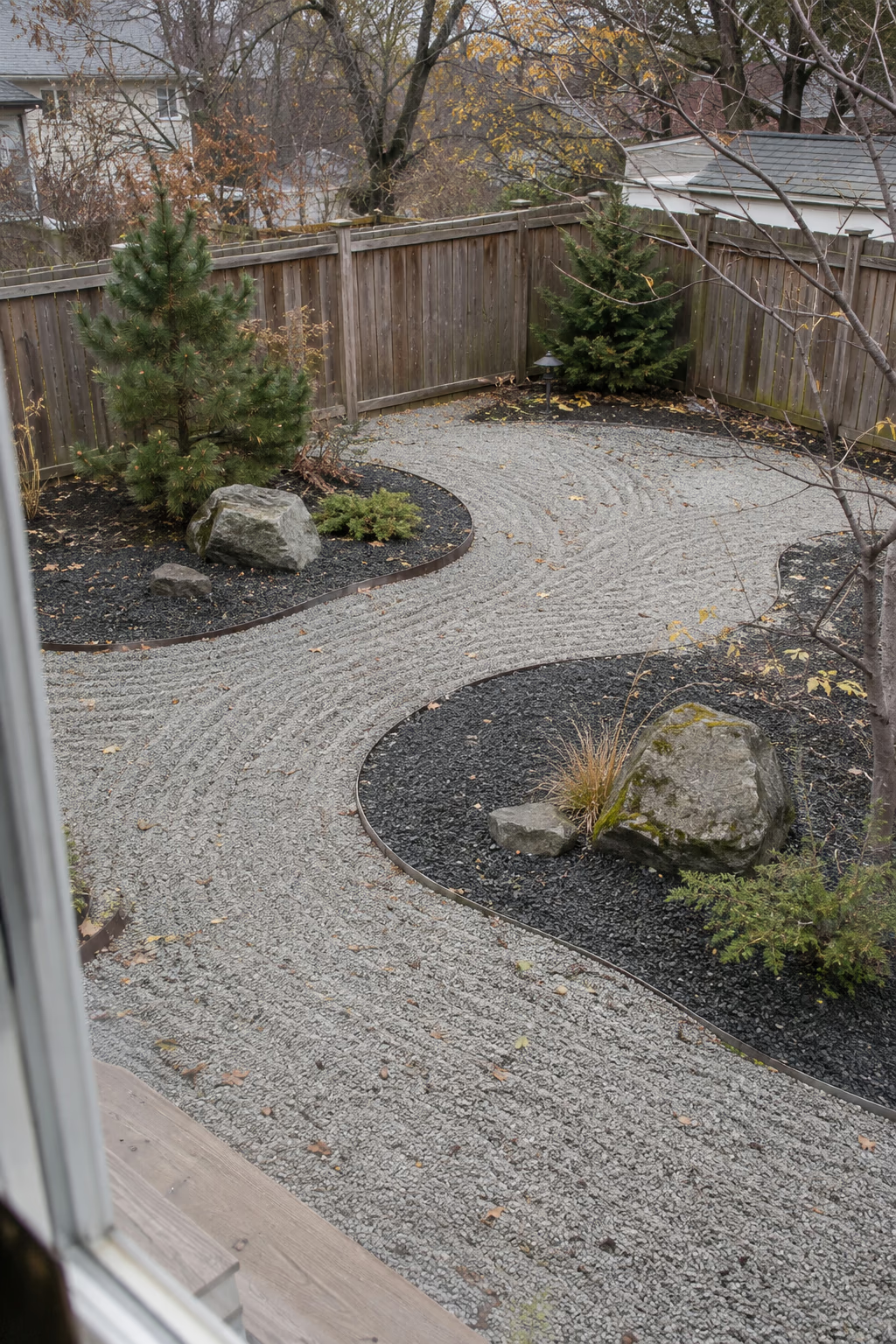
Contrast that creates shape without plants
Two gravel colors, such as pale gray granite and darker charcoal basalt, let you draw shapes on the ground. Use the dark stone to suggest islands, mountains, or a winding river and the light gravel for water, separating them with flexible steel or stone edging.
The contrast reads clearly from a window or upper deck, making it a smart choice where you look down on the garden. It also adds interest in winter when plants are dormant.
Without edging, the colors will mix over time, especially where people walk. Choose similar-sized stone for both colors so they settle evenly.
17. Tuck Ferns Between Rocks for a Woodland Edge
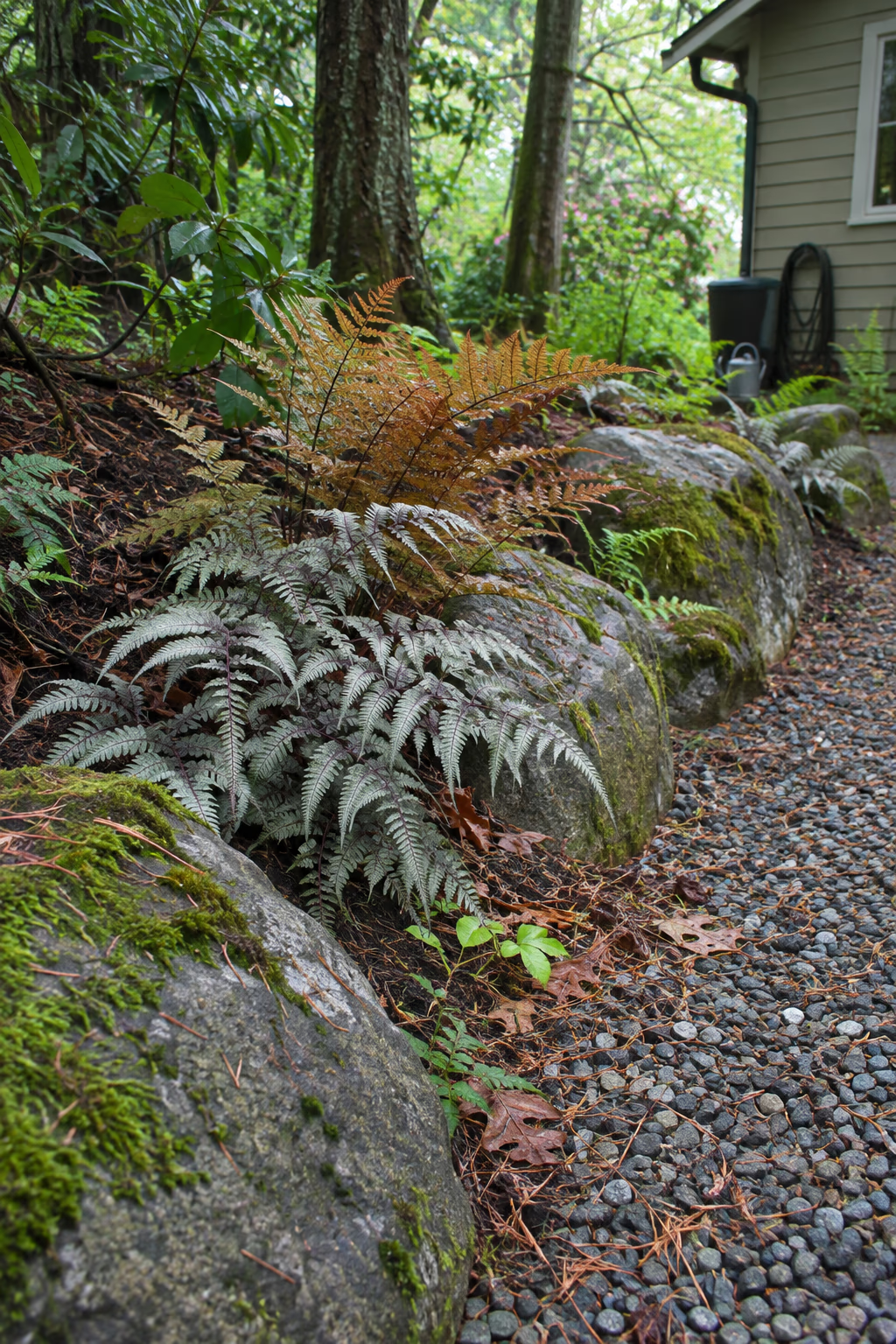
Soft fronds against hard stone
Ferns planted in the pockets between boulders soften the edges of a zen garden and make the stones look as if they have been there for decades. Japanese painted fern, autumn fern, Christmas fern, and lady fern all handle shade and grow in most of the US.
Their fine texture contrasts beautifully with heavy rock, and evergreen types like autumn fern and Christmas fern hold their color through much of winter.
Ferns need moisture-retentive soil, so add compost to each pocket and water during dry spells. Keep them along the edges so they frame the gravel instead of spreading into it.
18. Soften the Edges With Japanese Forest Grass
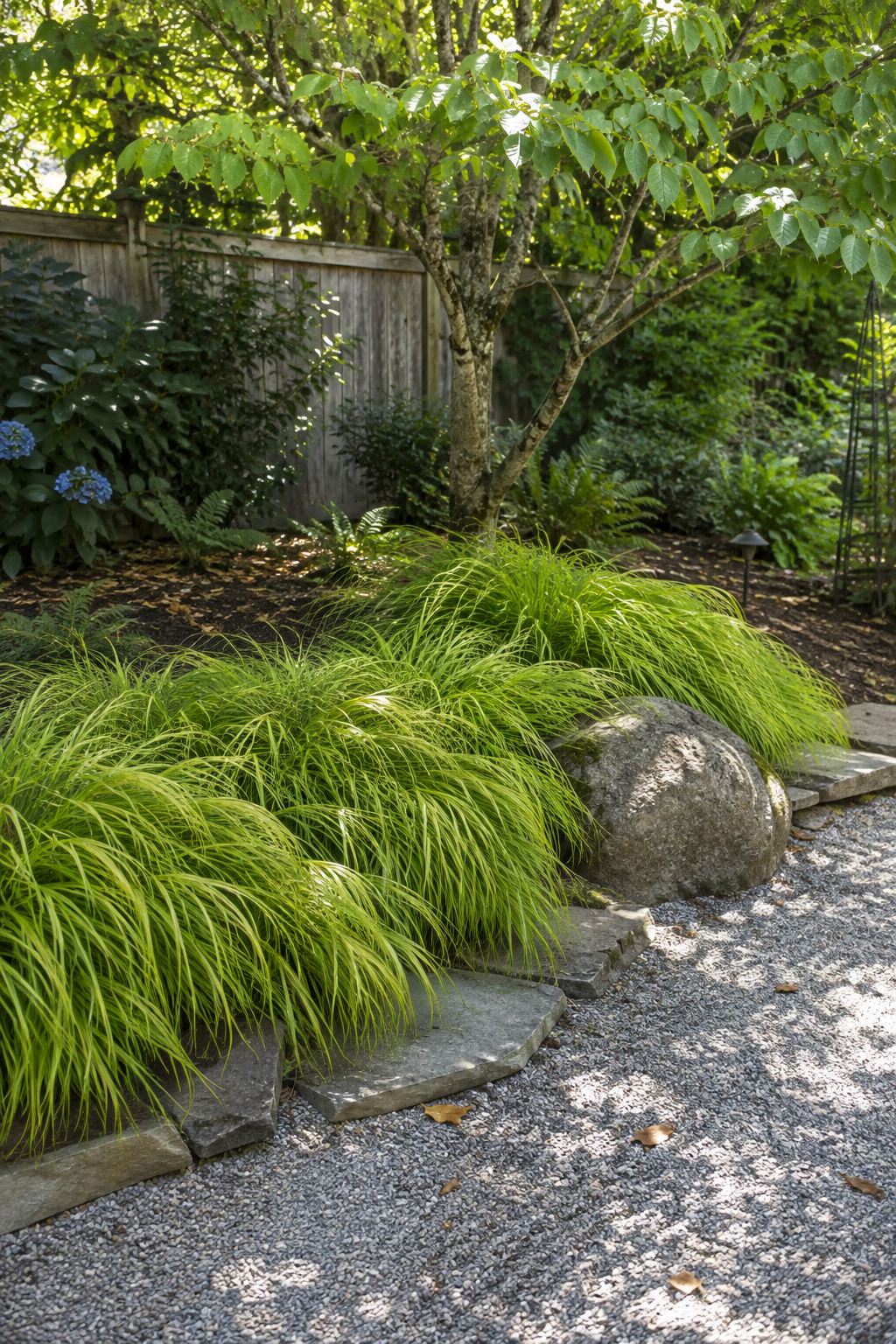
Cascading color for partial shade
Japanese forest grass forms low, flowing mounds about 12 to 18 inches tall that look like water spilling over a stone edge. Golden-leaf forms brighten shady corners, while green forms feel more traditional. It grows best in zones 5 to 9 with partial shade and moist soil.
Planted in a sweep along a path or around a boulder, it adds gentle movement that responds to every breeze. It is clump-forming, so it stays where you put it.
It grows slowly at first, so plant it closer than you think, about 12 to 15 inches apart. Cut back the old foliage in late winter before new shoots appear.
19. Back the Garden With a Reed or Bamboo Screen
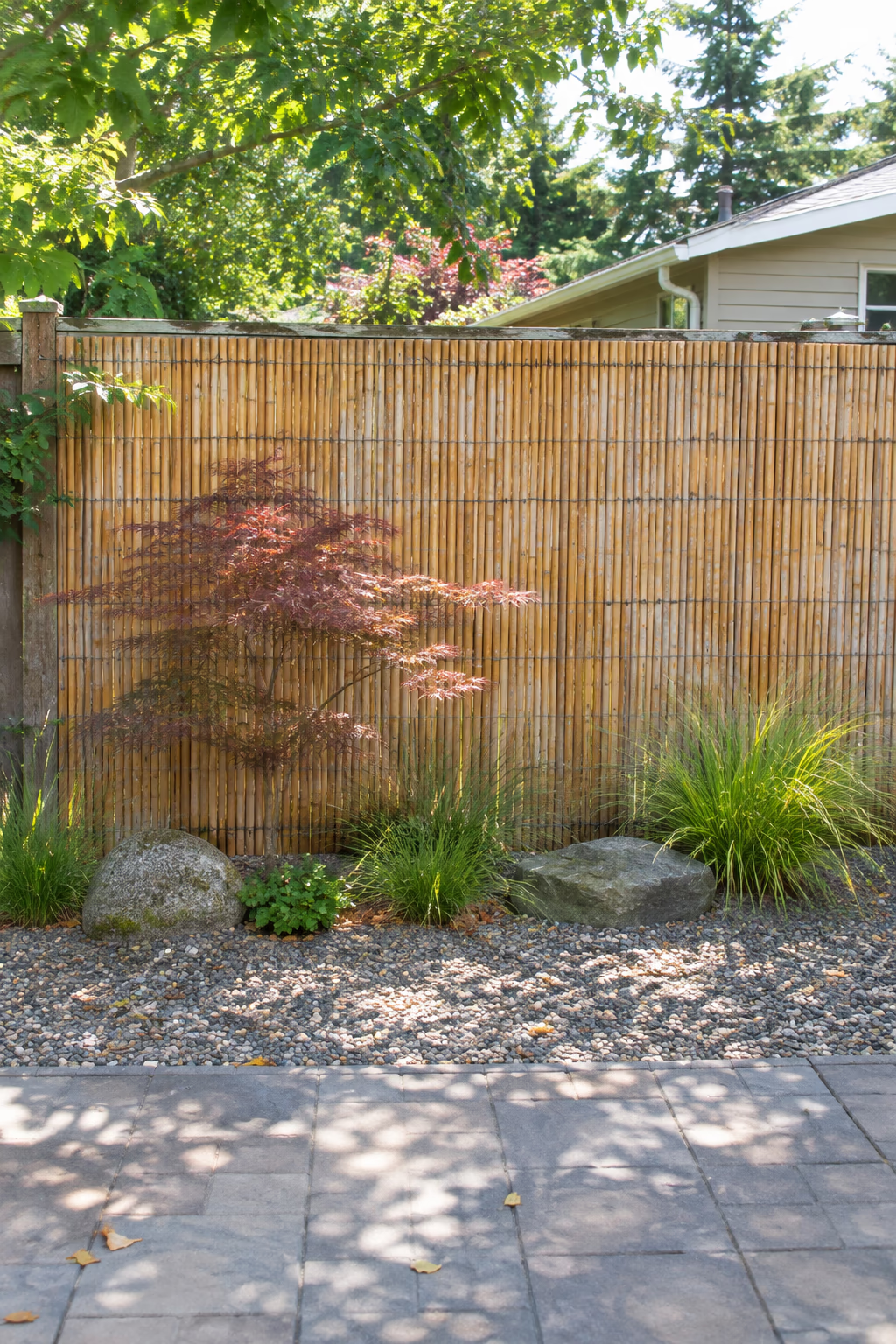
A quiet backdrop that hides the neighbors
Rolled reed or split bamboo screening attached to an existing chain-link or wooden fence instantly creates a natural backdrop for stones and plants. It is affordable and can be installed in an afternoon with stainless steel wire or screws.
A plain, textured backdrop makes everything in front of it stand out, especially maple leaves and pale gravel. It also blocks clutter like sheds or neighbors’ patios that would break the mood.
Expect natural screening to fade and weather in three to five years, depending on sun. If you want living bamboo instead, choose clumping types and avoid running bamboo, which spreads aggressively.
20. Set Out a Still Water Bowl to Reflect the Sky
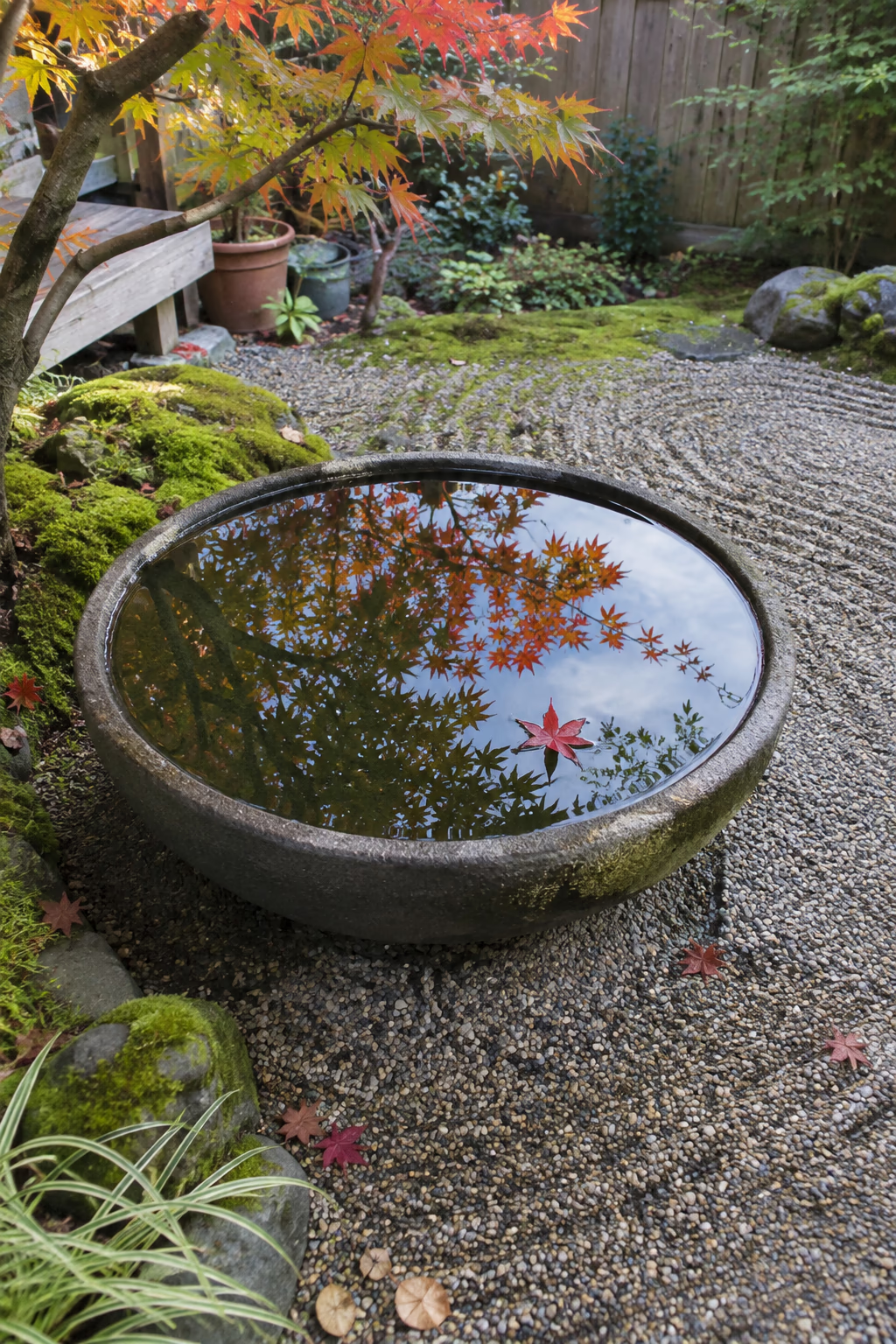
A mirror for clouds, branches, and moonlight
A wide, shallow bowl of dark stone, concrete, or glazed ceramic filled to the brim turns into a mirror on a calm day. Place it on a flat stone or directly in gravel where it can catch reflections of a tree canopy or open sky.
Still water is the quietest form of a water feature: no pump, no power, and no noise, just a changing reflection. Floating a single leaf or blossom on the surface adds a seasonal touch.
Change the water every few days in warm weather to prevent mosquito breeding, or add a mosquito dunk safe for birds. Empty or cover the bowl before a hard freeze.
21. Hang a Rain Chain Into a Gravel-Filled Basin
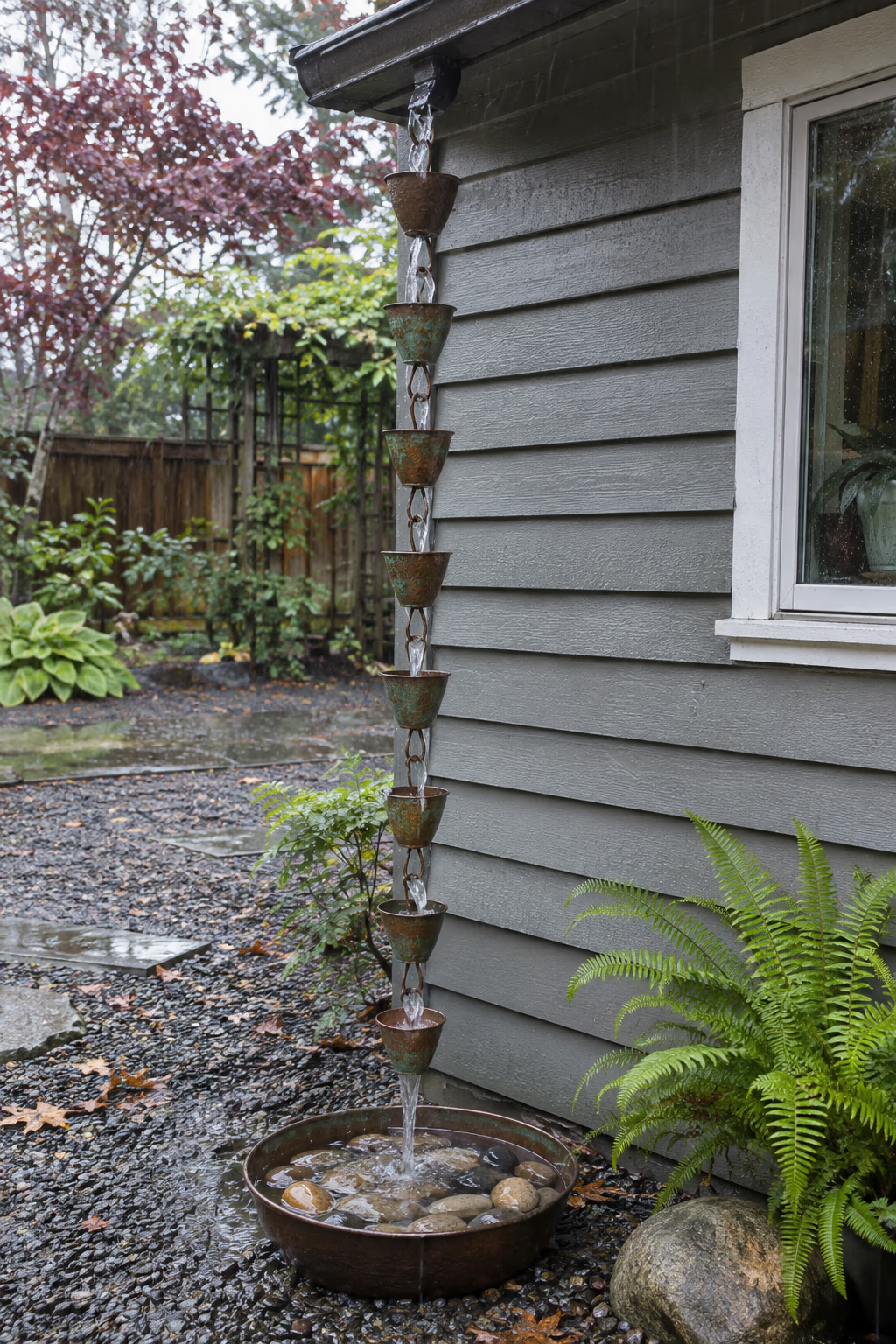
Turn every rainstorm into a water feature
Swap a downspout for a copper or steel rain chain, and let it run into a stone basin or a shallow pit filled with river rock. Rainwater flows down the links with a soft, musical sound and splashes into the stones below.
It turns a plain gutter outlet into a focal point and fits the zen garden’s love of natural sound and simple materials. Copper ages to a pleasant brown-green patina.
Rain chains handle less water than downspouts, so they suit lighter roof runoff. Make sure the basin overflows away from the foundation, and anchor the chain at the bottom so wind does not swing it against the house.
22. Uplight One Tree for Evening Shadows
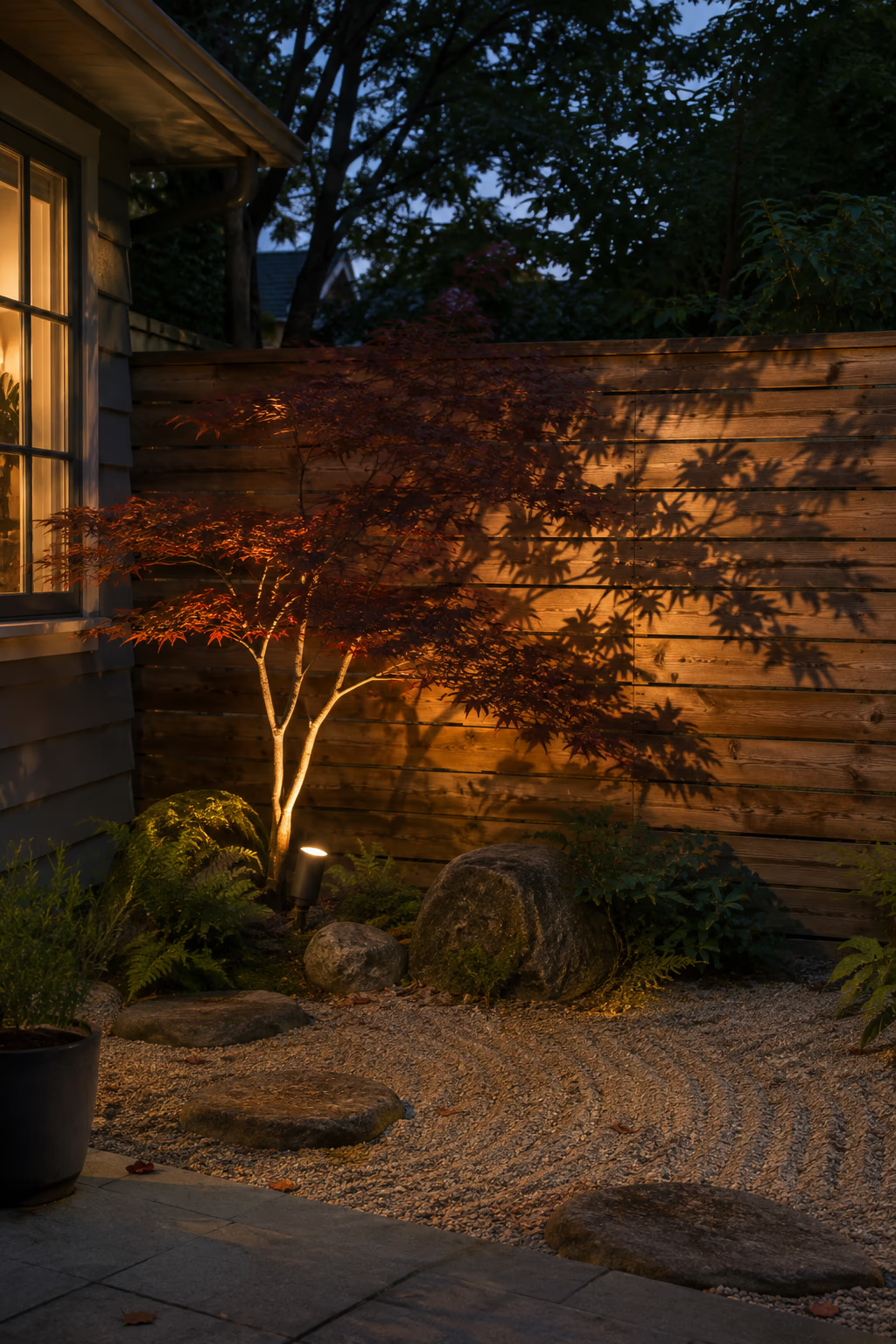
Soft drama after dark
A single low-voltage LED spotlight aimed up into a maple, pine, or cloud-pruned shrub casts branch patterns onto a fence or wall at night. Warm white light around 2700K looks natural and avoids the harsh glare of cooler bulbs.
Lighting just one feature keeps the garden peaceful and creates depth after sunset, when the rest of the space falls into gentle shadow.
Low-voltage systems are DIY-friendly, but plug the transformer into a GFCI outlet and bury cable lightly so rakes and shovels do not cut it. Point fixtures away from neighbors’ windows.
23. Plant a Desert Zen Garden for Hot, Dry Climates
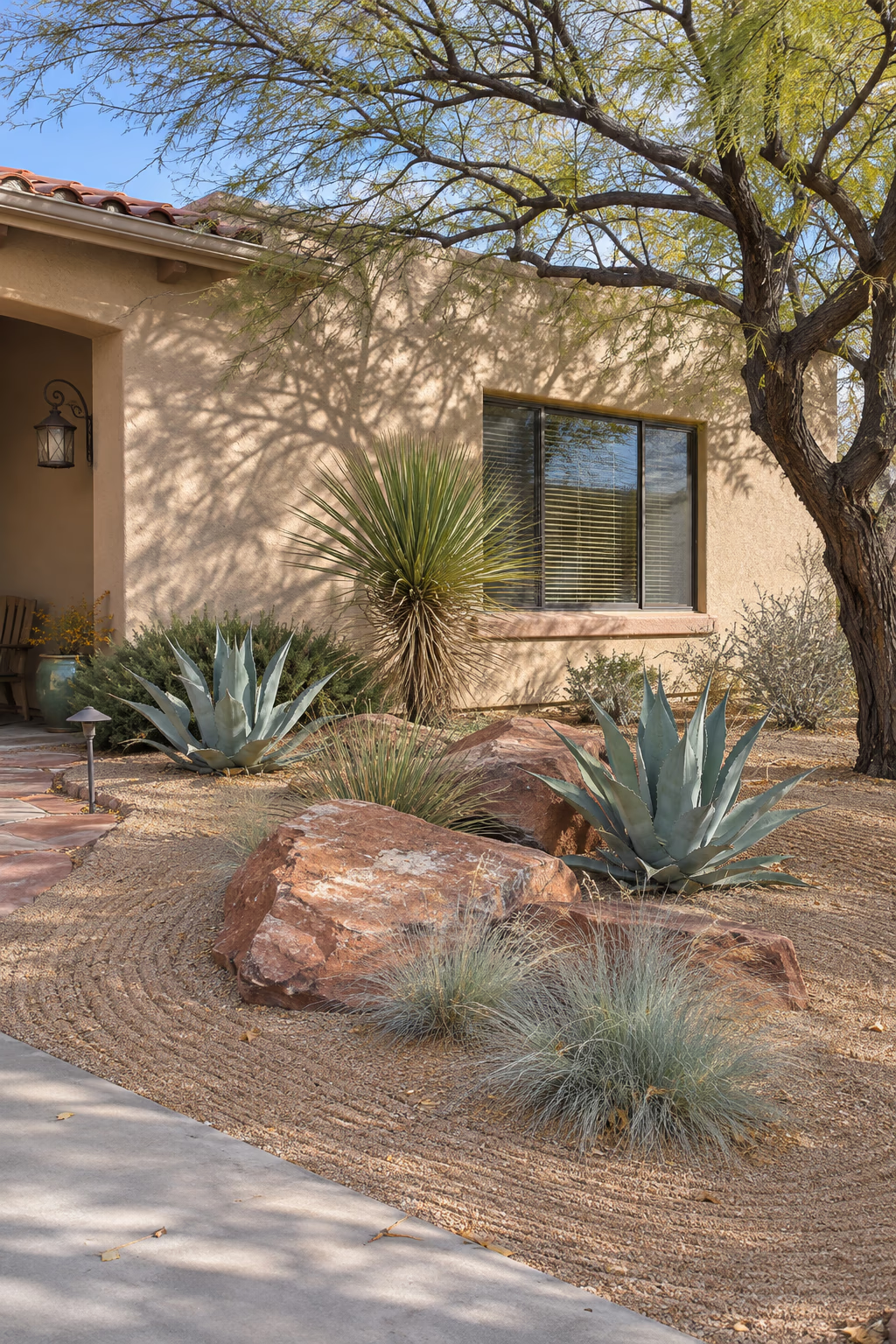
The same calm with water-wise plants
In the Southwest and other dry regions, a zen garden can swap moss and maples for sculptural agave, yucca, blue grama grass, and smooth river stone. Use warm-toned decomposed granite raked into patterns and a few red or tan boulders for a look that suits the local landscape.
These plants thrive on little water, and the bold, simple forms fit naturally with the minimal style. It is a good fit for places with watering restrictions.
Pale gravel reflects heat, so place seating where it gets afternoon shade. Plant spiny agaves away from paths and play areas, and check whether your city offers rebates for lawn replacement.
24. Mark the Entrance With a Simple Wooden Gate
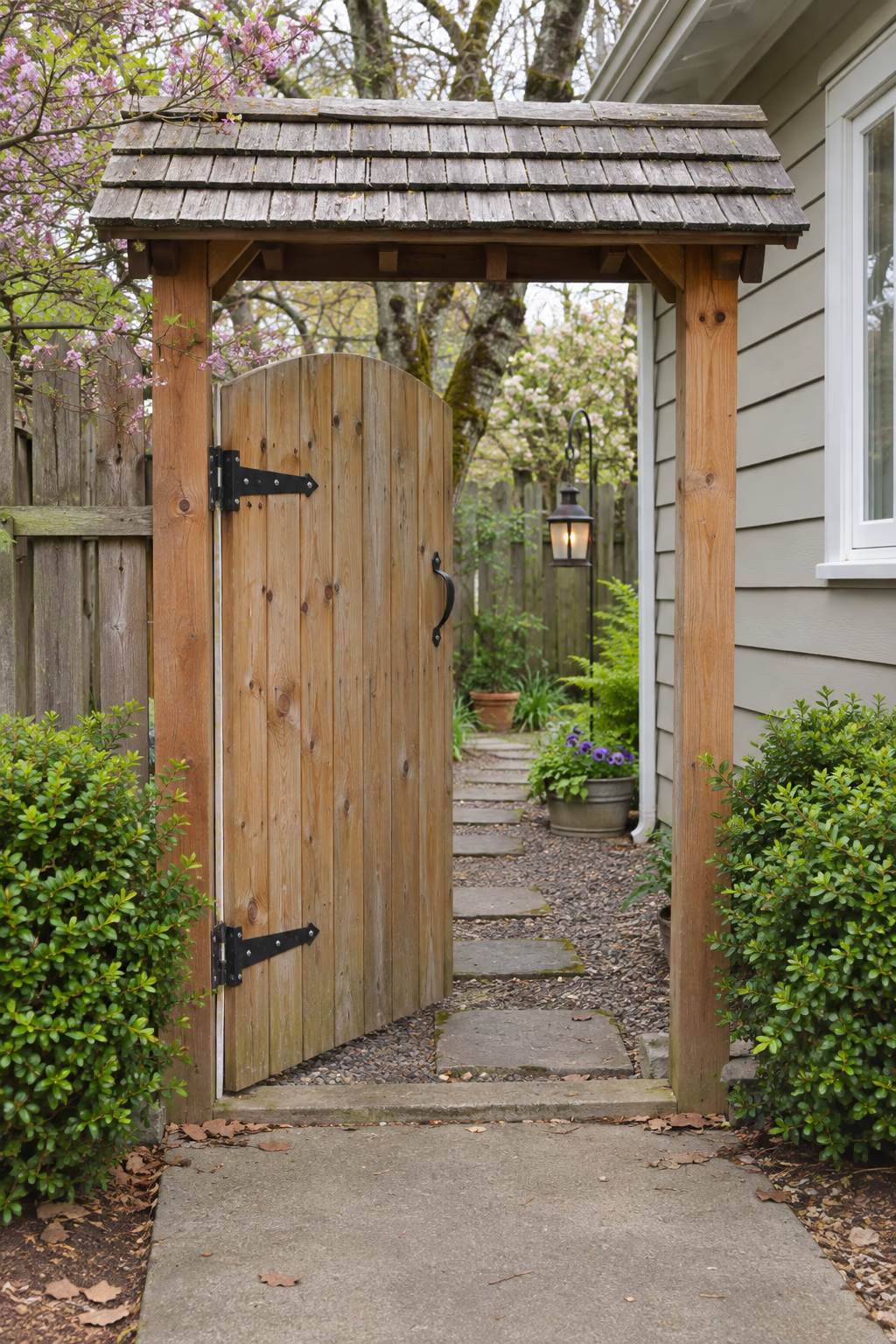
A threshold that sets the mood
A low wooden gate with a small roof or simple post-and-beam frame signals that you are stepping into a different kind of space. Cedar with clean lines, slatted panels, and black hardware fits the style without looking like a theme park.
Entering through a gate creates a moment of pause and separates the garden from the driveway or play area. It works especially well at the start of a side yard or between the patio and back garden.
Set the posts at least 2 feet deep in concrete and use exterior-grade hardware. Gates in front yards may need HOA approval, so check guidelines first.
25. Add a Weathered Stone Figure to a Quiet Nook
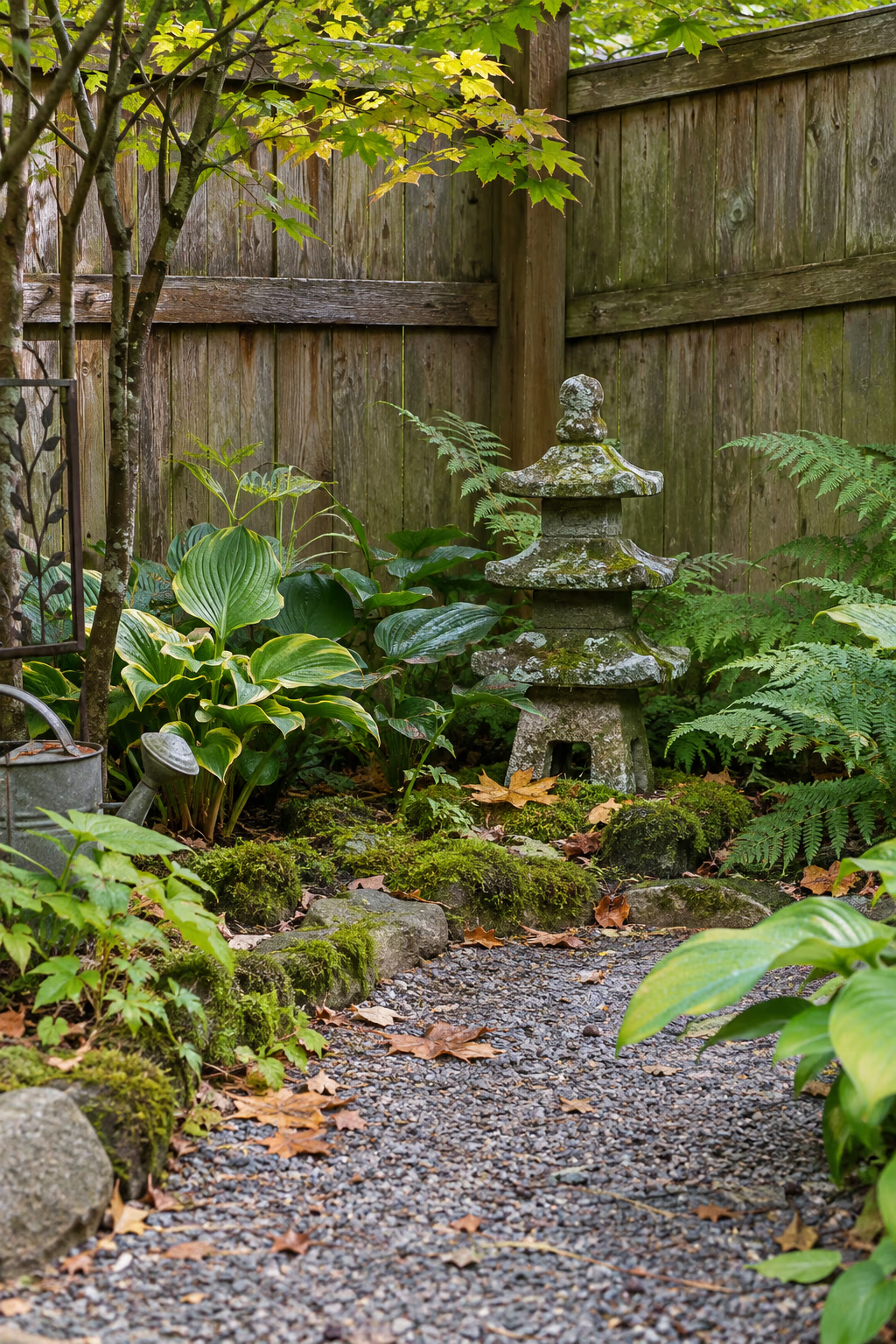
A small, contemplative focal point
A small cast stone figure, rounded water-worn stone, or simple pagoda sculpture tucked into a shady corner with moss and ferns gives the eye a place to rest. Keep it modest in size, around 12 to 24 inches, so it feels discovered rather than displayed.
Weathered surfaces with lichen or moss look more at home than glossy new pieces. You can speed aging by brushing on yogurt or buttermilk and keeping the piece in shade.
Choose one figure rather than a collection, and place it at the end of a path or beside a basin where it rewards a quiet walk.
How to Plan Your Zen Garden
A good zen garden comes from editing more than adding. Before you buy stone or plants, spend some time thinking about the view, the light, and how much care you are willing to give.
- Decide where you will view it from. Plan the layout around a window, patio, or bench so the best composition faces the spot where you spend the most time.
- Pick one focal point. A single stone, maple, lantern, or basin should lead, with everything else playing a supporting role.
- Prepare the base properly. Remove sod, grade the area for drainage, lay landscape fabric, and use edging so gravel stays clean and weed-free.
- Choose plants for your zone and light. Moss and ferns need shade and moisture, while sunny, dry sites call for grasses, junipers, or desert plants.
- Budget for heavy materials. Gravel and boulders are inexpensive per ton but costly to move, so factor in delivery and placement.
- Call 811 before digging. Have utility lines marked before installing boulders, posts, lighting, or water features, and check HOA rules for visible structures.
Frequently Asked Questions
What does the raked gravel in a zen garden represent?
Raked gravel or sand traditionally represents water, such as an ocean, river, or pond. Straight lines suggest calm water, while curves and ripples around stones suggest waves meeting islands.
What kind of gravel is best for raking patterns?
Fine, angular stone in the 1/8- to 1/4-inch range, such as crushed granite, holds raked lines best. Round pea gravel is cheaper but tends to roll and blur patterns. Light gray or white tones show shadows and lines most clearly.
Does a zen garden need a lot of maintenance?
It is usually less work than a lawn, but not maintenance-free. Plan on raking, clearing leaves, pulling occasional weeds, light pruning, and seasonal care for any water features.
Can a zen garden be built in full sun?
Yes. Swap shade-loving moss and ferns for sun-tolerant plants such as junipers, dwarf pines, ornamental grasses, or desert plants, and provide shade for seating since pale gravel reflects heat.
How do I keep weeds out of a zen garden?
Start with a weed-free base, use quality landscape fabric, and keep gravel at least 2 inches deep. Pull seedlings while they are small and remove leaves regularly so they do not break down into soil on top of the stone.
Final Thoughts
The most memorable zen gardens are simple: a few stones, a ribbon of raked gravel, the sound of water, and one tree that changes with the seasons. You do not need every idea on this list, only the few that suit your space and the way you like to unwind.
Start with a small area and a single focal point, add moss, lighting, or a bench as time and budget allow, and let weather and age soften everything. With a little patience, your yard can become a place that helps you slow down every day.


