
Imagine walking out the back door with a colander and coming back five minutes later with a handful of warm cherry tomatoes, a few crisp snap peas, and enough lettuce for dinner. And all of it came from a patch of ground smaller than a parking space.
A small food garden is popular for good reason. It costs less to build, it takes less time to water and weed, and it’s much easier to keep tidy than a big backyard plot. With good soil, plenty of sun, and smart planting choices, a small space can produce more food than most people expect.
These 23 small vegetable garden ideas cover clever layouts, fenced kitchen plots, kid-friendly snack crops, season-stretching tricks, and simple watering setups. Each one suits ordinary yards, side yards, and front beds. Mix and match the ones that fit your space, climate, and schedule.
1. Lay Out a 4-by-4 Square Foot Garden Grid
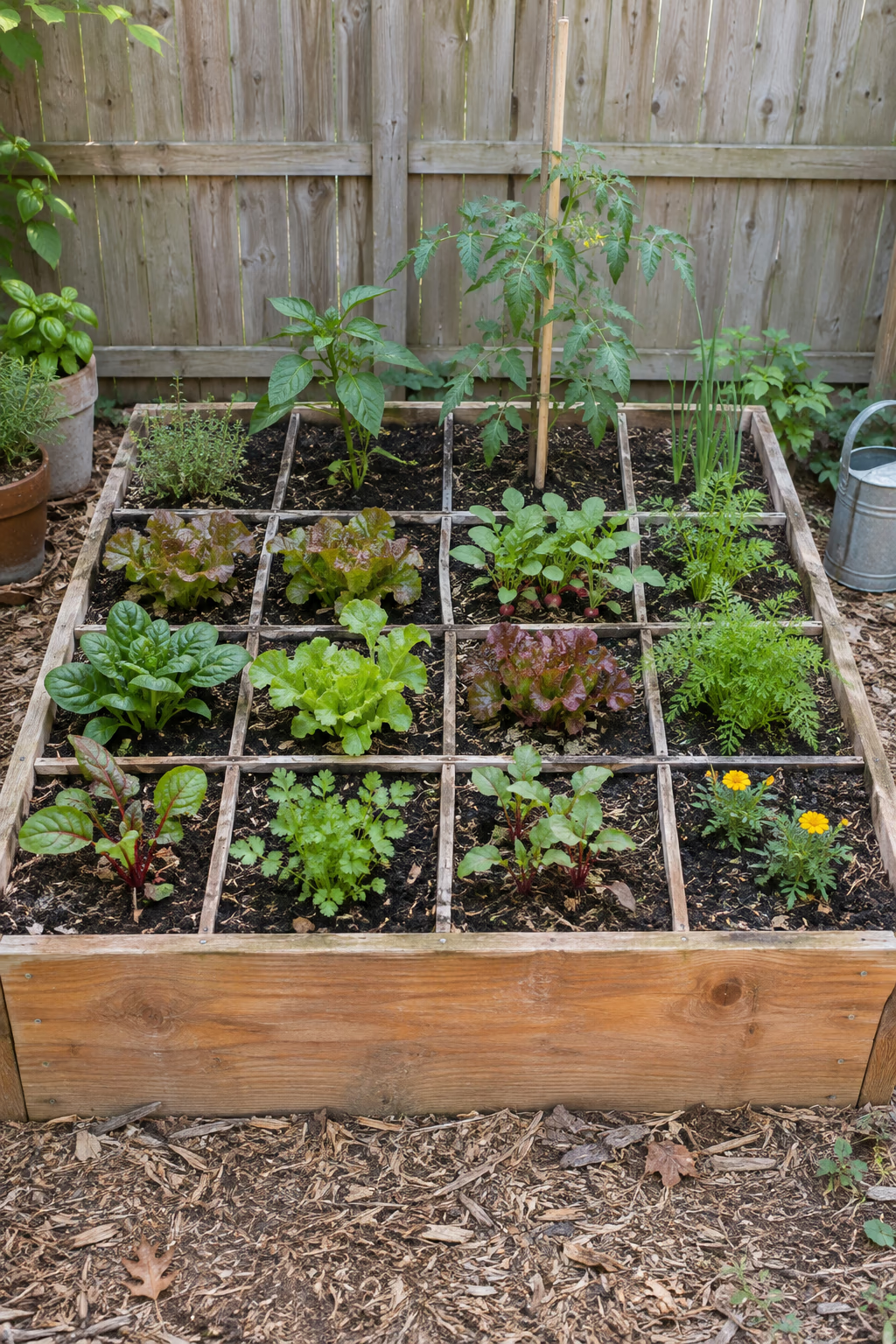
A tidy plan that removes the guesswork
Square foot gardening divides a 4-by-4-foot bed into 16 one-foot squares, each planted with a set number of plants based on their size. A rough guide is one tomato or pepper per square, four lettuces, nine bush beans or spinach plants, and sixteen carrots or radishes. Mark the grid with thin wood lath, twine, or old mini blind slats screwed to the frame.
The grid makes planning easy and keeps you from overplanting. When one square finishes, you replant just that square, so the bed stays full all season instead of having big empty gaps.
Because plants grow so close together, the soil needs to be loose and rich. Start with a blend high in compost, and add a fresh inch or two every spring. Put tall crops on the north side so they won’t shade the rest.
2. Fence a Mini Kitchen Garden With White Pickets
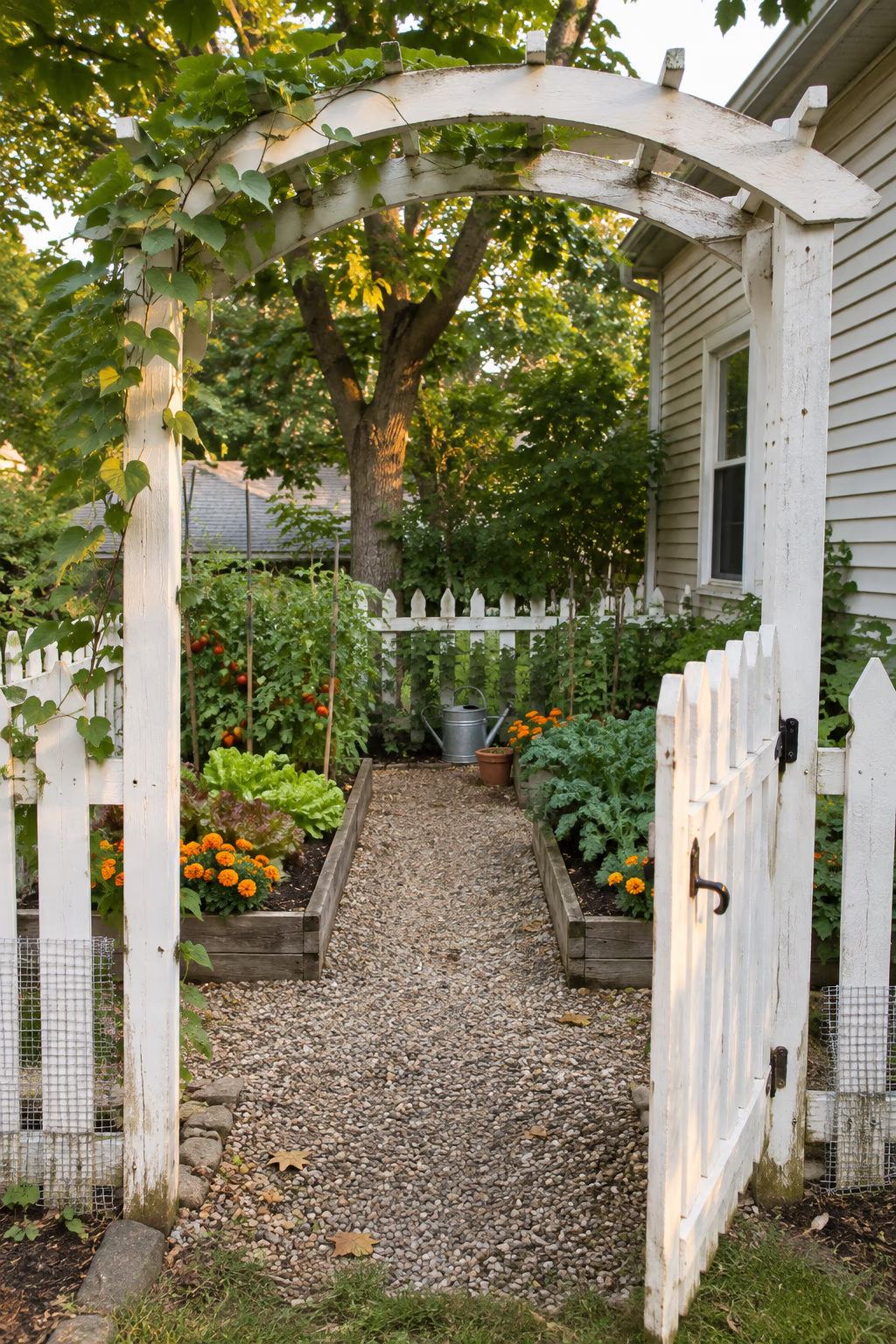
Charm and critter control in one
A short picket fence around a 10-by-12-foot plot turns a few vegetable beds into a small kitchen garden with its own entrance. Add a simple arched gate, a gravel or mulch path down the middle, and a pair of beds on each side. White pickets look classic, while gray-stained cedar gives a softer farmhouse look.
The fence gives the garden a defined edge, so even a small plot looks planned rather than squeezed in. It also helps keep out dogs, kids’ balls, and some rabbits.
Pickets alone won’t stop small animals. Line the lower 2 feet with hardware cloth or welded wire, and bury it a few inches deep to stop digging. Deer can jump a 3- or 4-foot fence, so in deer country you may need taller netting. Check HOA rules and local fence height limits before you build.
3. Grow a Bite-Size Snack Garden
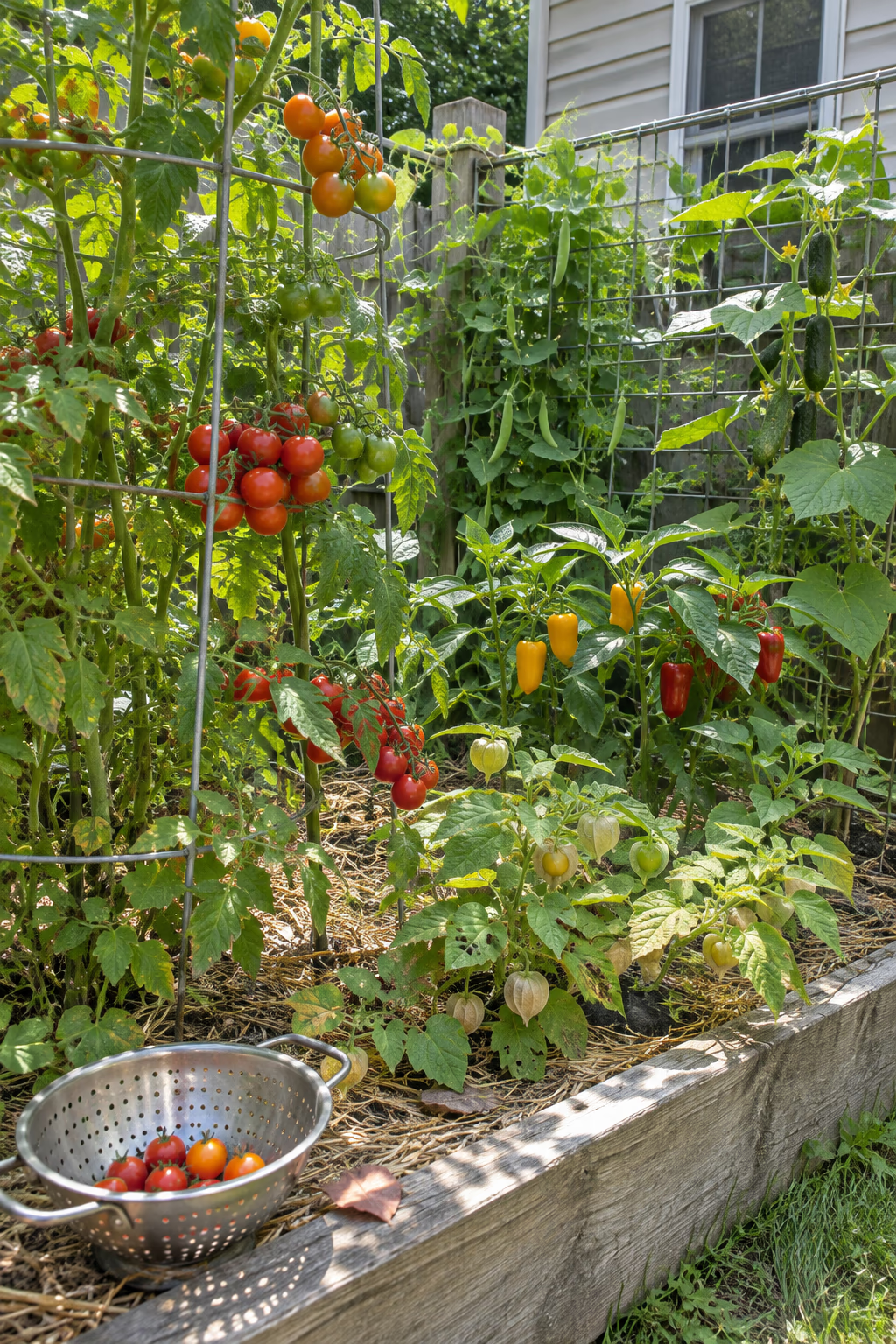
Crops you can eat right off the plant
Fill one small bed with vegetables you can eat raw, right off the plant: cherry and grape tomatoes, sugar snap peas, mini cucumbers, small sweet peppers, round baby carrots, and ground cherries. A 4-by-6-foot space can hold a few of each, with peas and cucumbers climbing a short panel at the back.
A snack garden is especially fun for kids and anyone who likes to graze. Small fruits ripen quickly and keep coming, so there’s usually something ready to pick every day from midsummer on.
Pick often. Cucumbers and peppers slow down if mature fruit stays on the plant, and cherry tomatoes split after heavy rain if you leave them too long. Ground cherries drop when ripe, so a layer of straw underneath keeps them clean.
4. Build a Keyhole Bed Around a Compost Basket
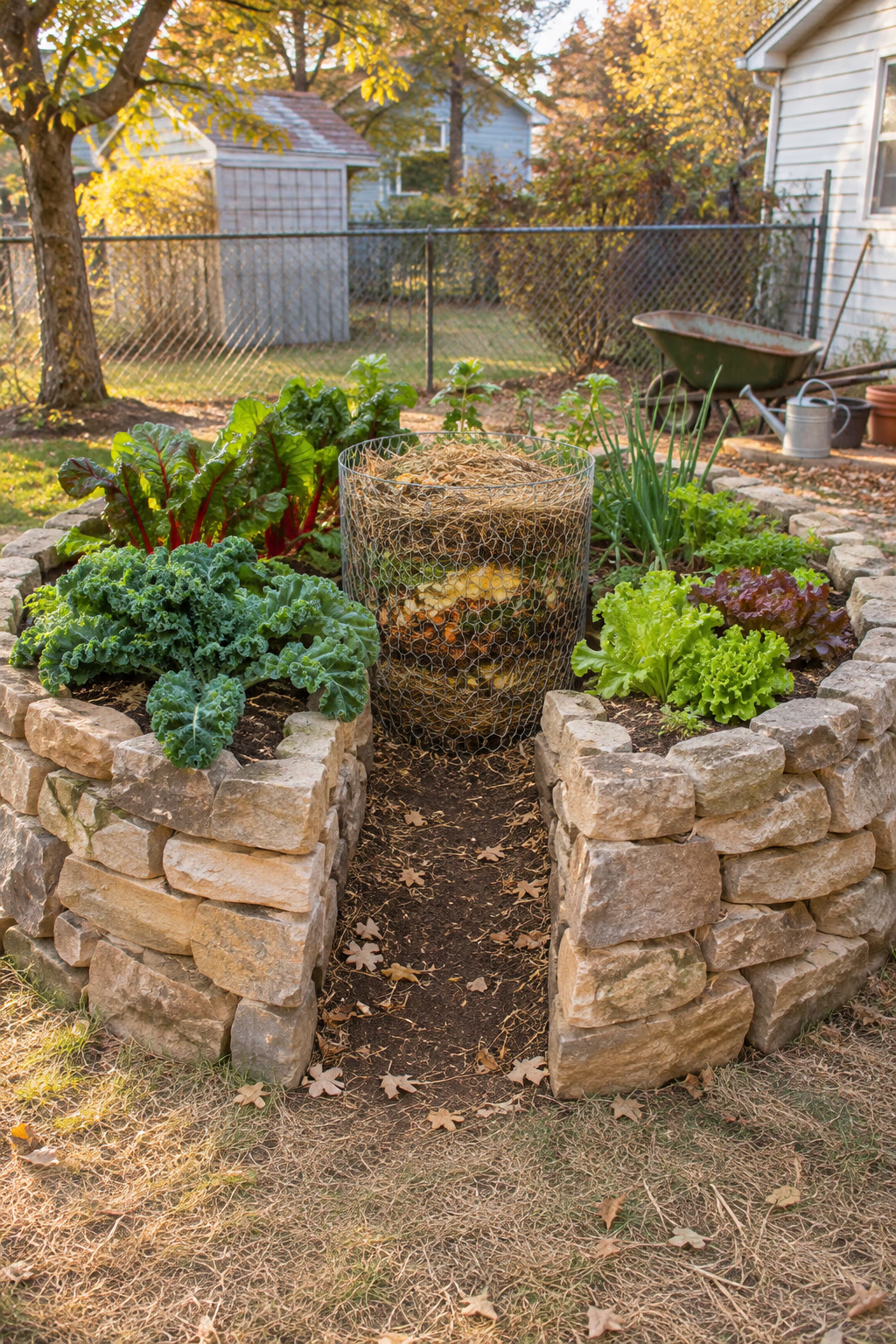
Feed the soil while you garden
A keyhole bed is a round bed about 6 feet across with a narrow notch cut into one side so you can step in and reach the middle. In the center sits a wire or stick basket, roughly 1 to 2 feet wide, that you fill with kitchen scraps and garden trimmings. Build the walls from stone, brick, or salvaged blocks about 2 to 3 feet high.
As you water the basket, nutrients seep into the surrounding soil. The circle shape also keeps every plant within arm’s reach, which makes it a smart use of a small sunny spot.
Keep meat, dairy, and oily foods out of the basket to avoid smells and pests. A keyhole bed takes a good deal of soil and material to fill, so expect a weekend of work and plan to top it up as it settles.
5. Set Up a Salad Table on Legs
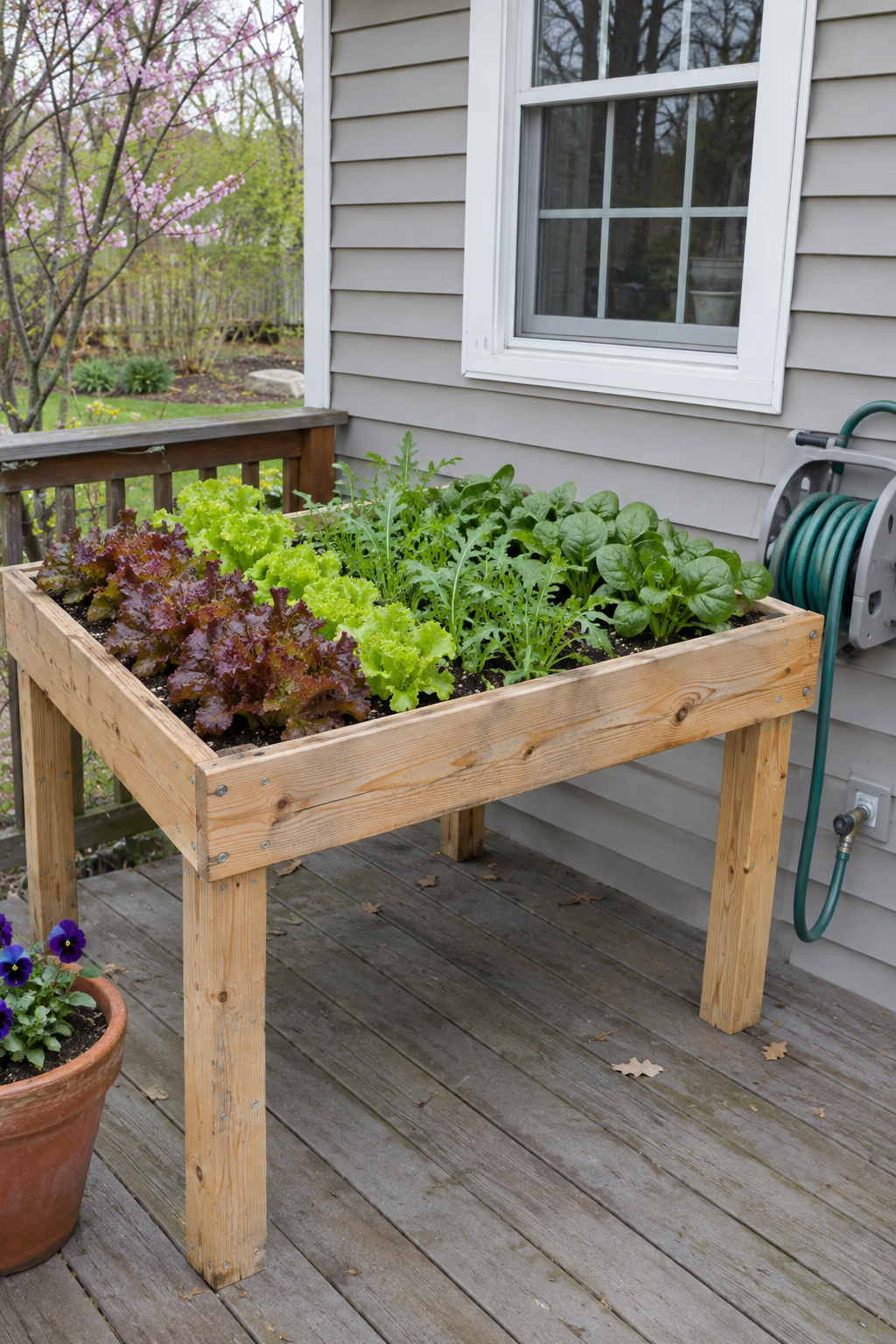
Waist-high greens with no bending
A salad table is a shallow tray, about 3 by 5 feet and 3 to 4 inches deep, set on legs at waist height. The bottom is usually hardware cloth or a slatted base lined with landscape fabric so water drains freely. Fill it with potting mix and sow lettuce, arugula, spinach, and baby kale in rows.
Shallow-rooted greens grow well in just a few inches of soil, and the height keeps them away from slugs and rabbits. It’s also easy on your back and perfect for a deck or patio corner.
The thin soil layer dries out fast in hot weather, so check it daily in summer. Many gardeners move the table into afternoon shade once temperatures climb into the 80s.
6. Plant a Round Pizza Garden in Wedges
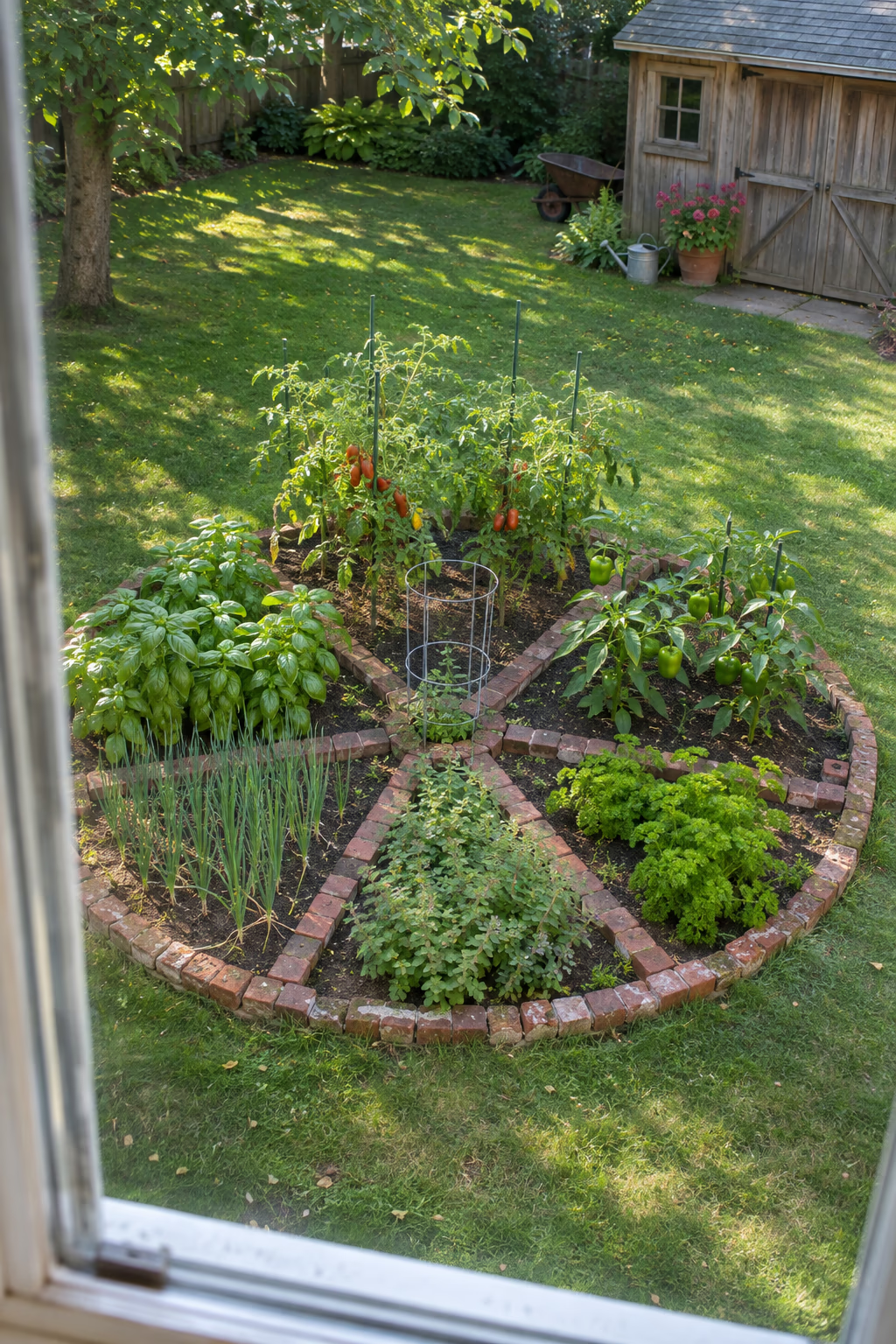
A themed bed that grows dinner
Lay out a circular bed about 8 feet across and divide it into six or eight wedge-shaped “slices” with brick, stone, or narrow paths. Plant each slice with a pizza topping: paste tomatoes, sweet peppers, onions, basil, oregano, and parsley. A small birdbath or tomato cage in the center makes a natural hub.
The theme makes planning simple and gets the whole household interested. Every crop is a familiar favorite that grows well in a sunny backyard.
Tomatoes and peppers need at least six to eight hours of direct sun, so put the bed in your brightest spot. Oregano spreads over time, so trim it back or give it the smallest wedge.
7. Brighten Beds With Rainbow Chard and Purple Kale
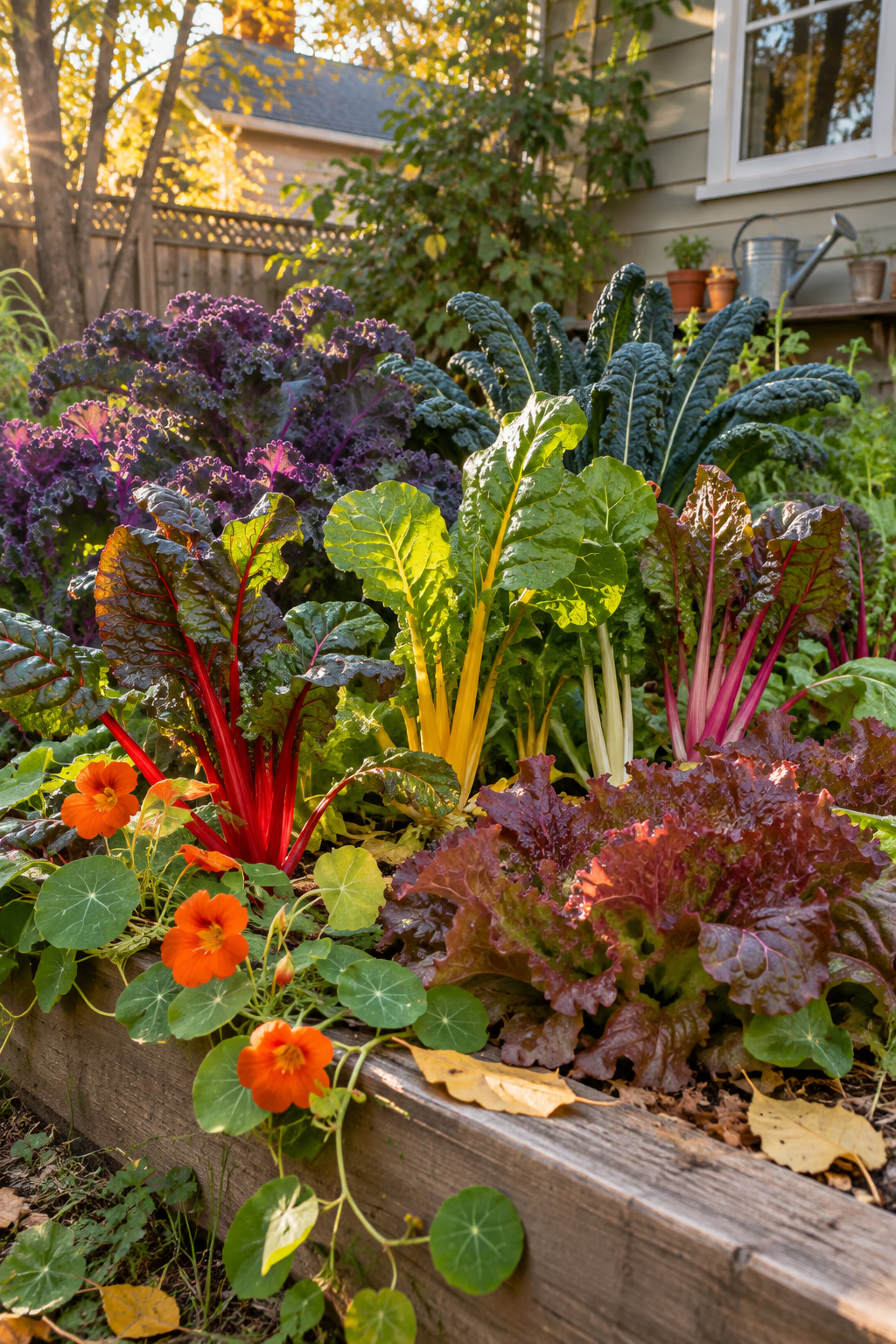
Vegetables that look as good as flowers
Some vegetables are attractive enough to carry a small garden on looks alone. Rainbow Swiss chard has stems in red, gold, pink, and white, while purple and blue-green kales add rich, textured leaves. Pair them with red-leaf lettuce, purple basil, and bright nasturtiums for a bed that looks good from spring through fall.
In a small yard, the vegetable garden is often in full view, so good looks matter. Chard and kale also keep producing for months if you pick the outer leaves and leave the center growing.
Kale gets sweeter after a light frost, so it’s a great fall crop. Watch for cabbage worms in summer, and cover young plants with lightweight insect netting if moths are active.
8. Slip Edibles Into the Front Foundation Bed
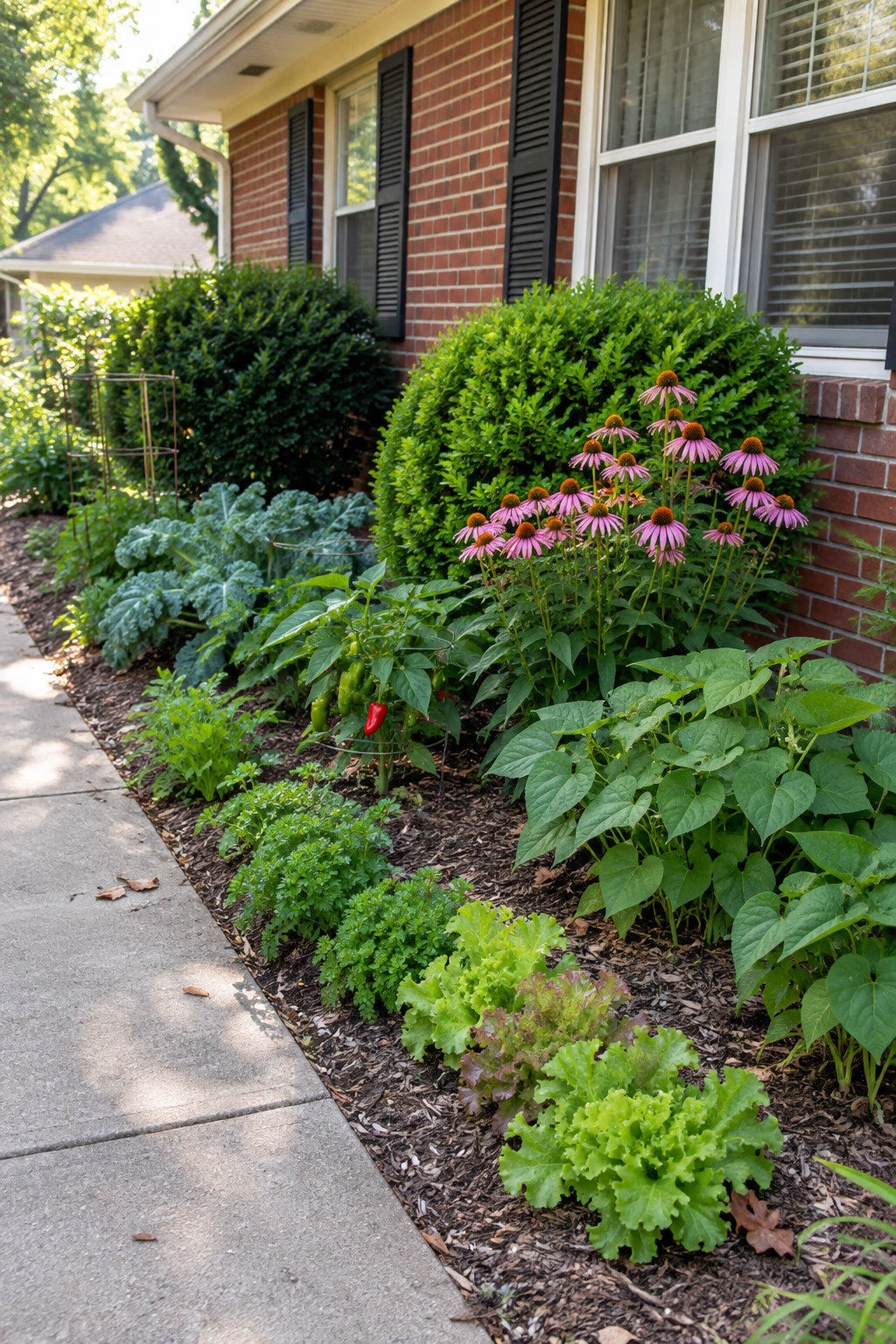
Use the sunny spot you already have
If your front yard gets the most sun, treat the bed along the house as a mixed edible border. Tuck compact peppers, bush beans, parsley, curly kale, and leaf lettuce between existing shrubs and perennials. Keep the edges neat with a low herb or lettuce border so the bed still looks planned from the street.
Many homes have a sunny strip by the walk that goes unused. Growing food there doubles its purpose without taking up any more of the yard.
Older homes may have lead in the soil near the foundation from old exterior paint, so get the soil tested before you grow food there. Leave a gap of at least 12 inches from the siding for airflow, and check HOA rules on front-yard vegetables.
9. Tuck Lettuce Under Tomatoes to Double Up
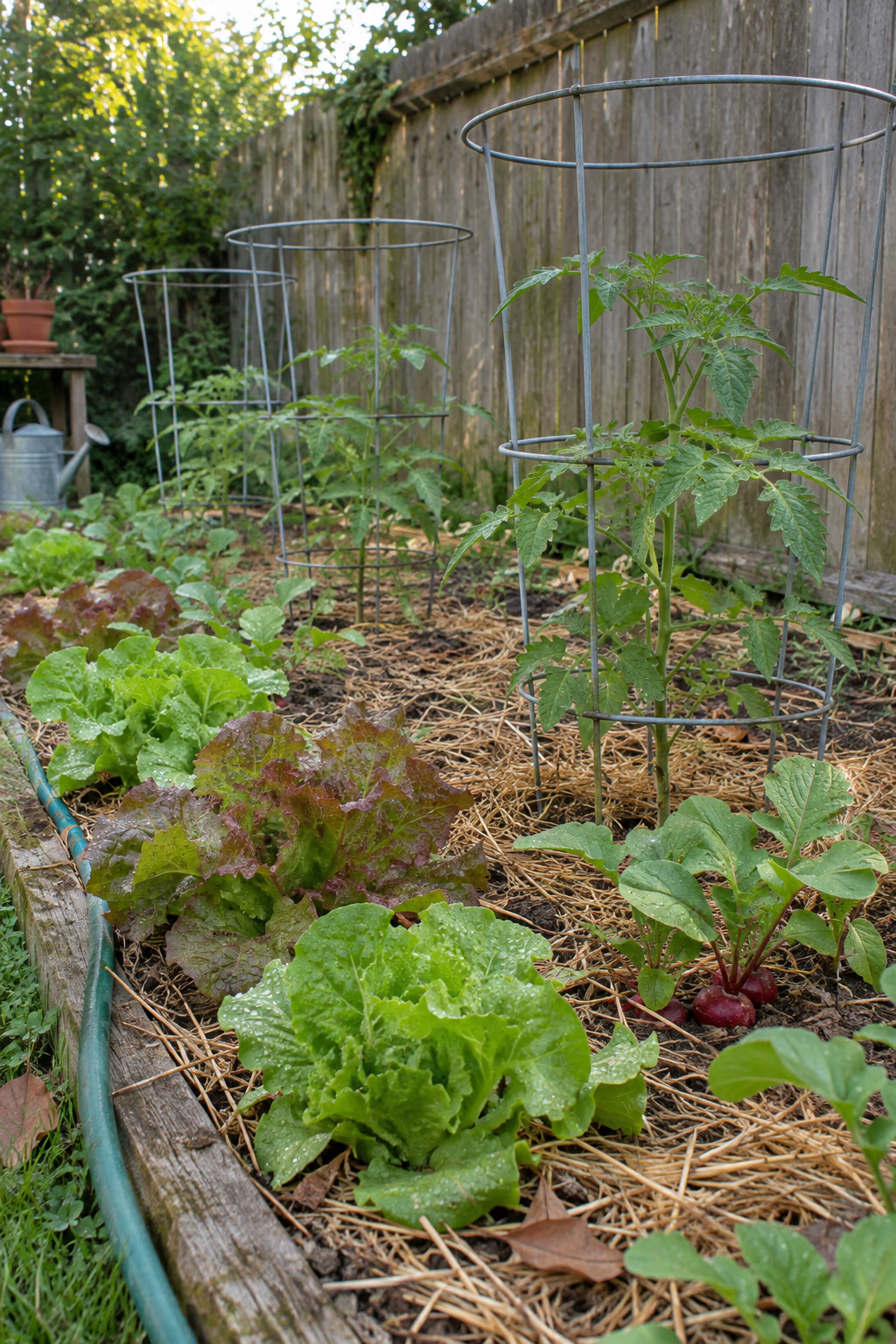
Two crops from the same patch of soil
Interplanting pairs a slow, tall crop with a quick, low one. Set tomato plants 2 feet apart on stakes or in cages, then sow lettuce, spinach, or radishes in the open soil around them. The fast crops are ready to pick in four to eight weeks, before the tomatoes fill in.
As the tomato plants grow, their leaves give the lettuce some afternoon shade, which can delay bolting in early summer. You get an extra harvest from soil that would otherwise sit empty.
Don’t crowd the tomato stems. Keep the low crops a few inches away, and pull them once the tomatoes need the space and airflow to stay healthy.
10. Raise Pole Beans on a Bamboo Teepee
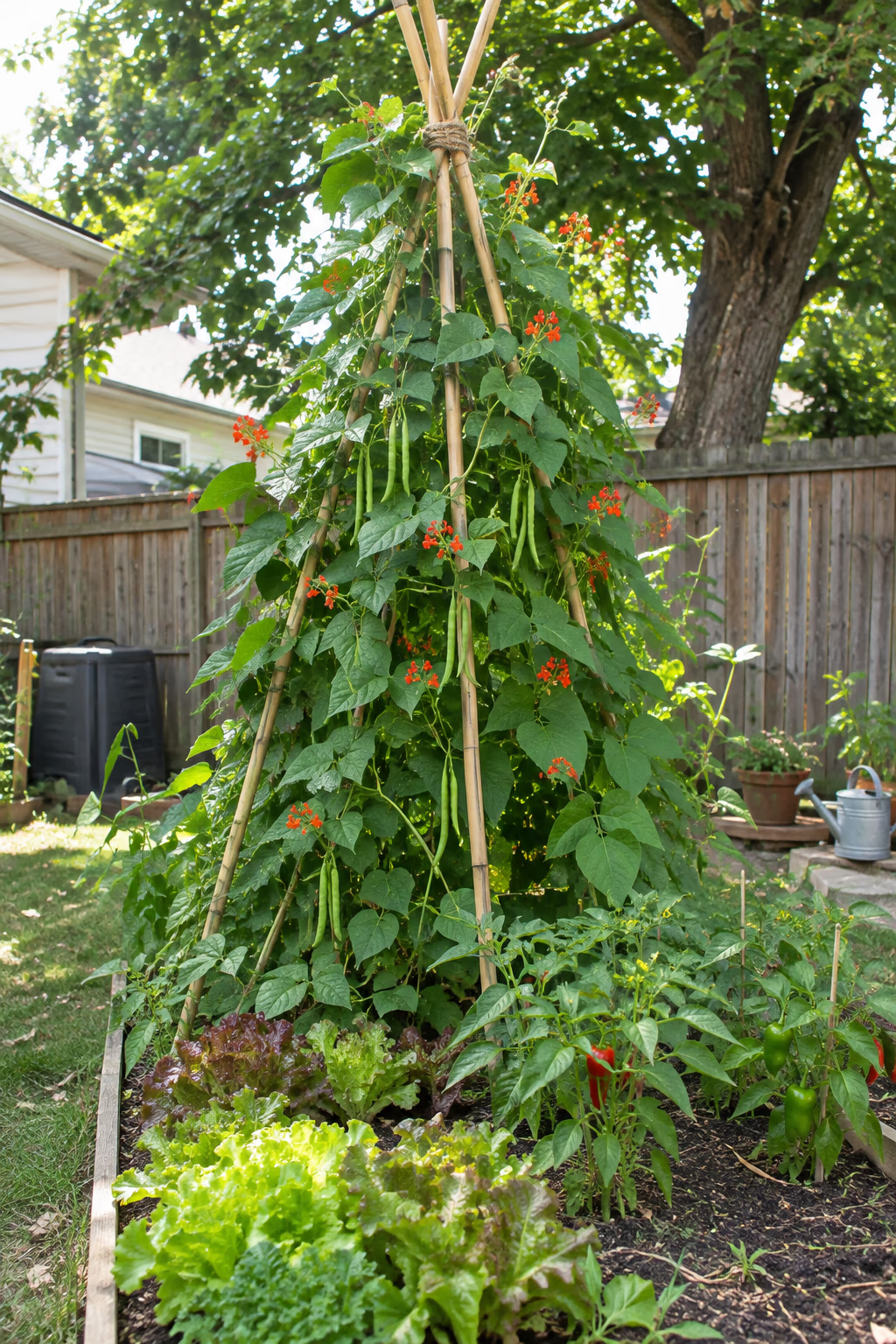
More beans from a tiny footprint
Lash four to six bamboo poles, each 7 to 8 feet long, together at the top with twine and spread the bases in a circle about 3 feet across. Plant three or four pole bean seeds at the foot of each pole after the soil warms in late spring. Scarlet runner beans add red flowers that hummingbirds love.
Pole beans keep producing for weeks longer than most bush types, and growing upward means a small circle of soil yields a big harvest. A teepee also adds height and structure to a small garden bed.
Push the poles at least 8 inches into the ground, because a fully loaded teepee catches the wind. Put it on the north side of the bed so it doesn’t shade shorter crops.
11. Turn a Sunny Side Yard Into a Narrow Veggie Strip
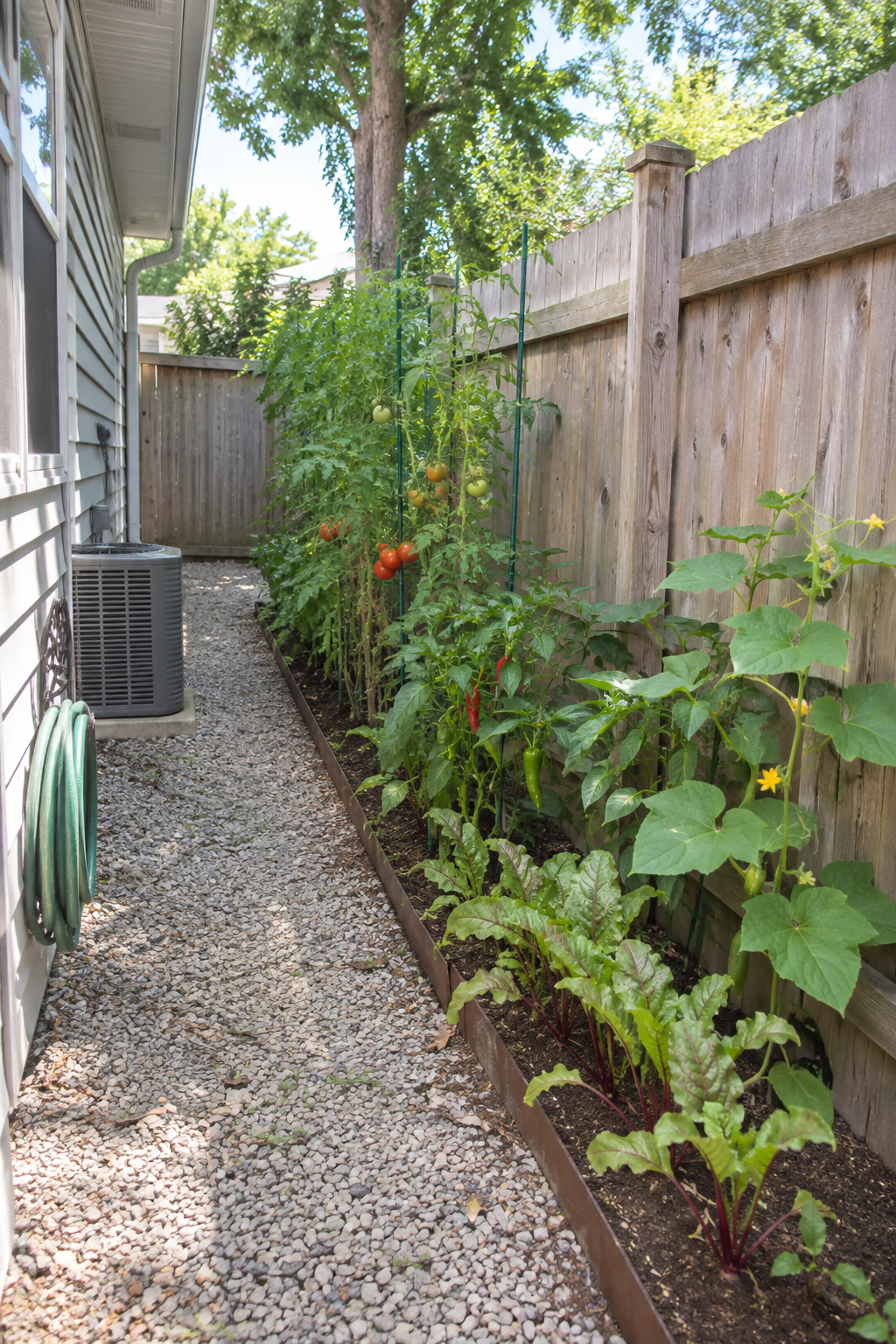
Put forgotten space to work
Many side yards are just a strip of grass or gravel between the house and the fence. If yours gets at least six hours of sun, run a bed 18 to 24 inches wide along the fence and plant it in a single line: tomatoes on stakes, peppers, bush cucumbers, and a row of carrots or beets at the front.
A narrow bed is easy to reach from the path, and the fence can hold up climbing crops. It’s a great way to add growing space without giving up the main backyard.
Side yards often hold meters, AC units, and hose bibs. Keep utility access clear, and remember that light can be blocked by the house for part of the day, so watch the sun before you build.
12. Edge the Beds With Everbearing Strawberries
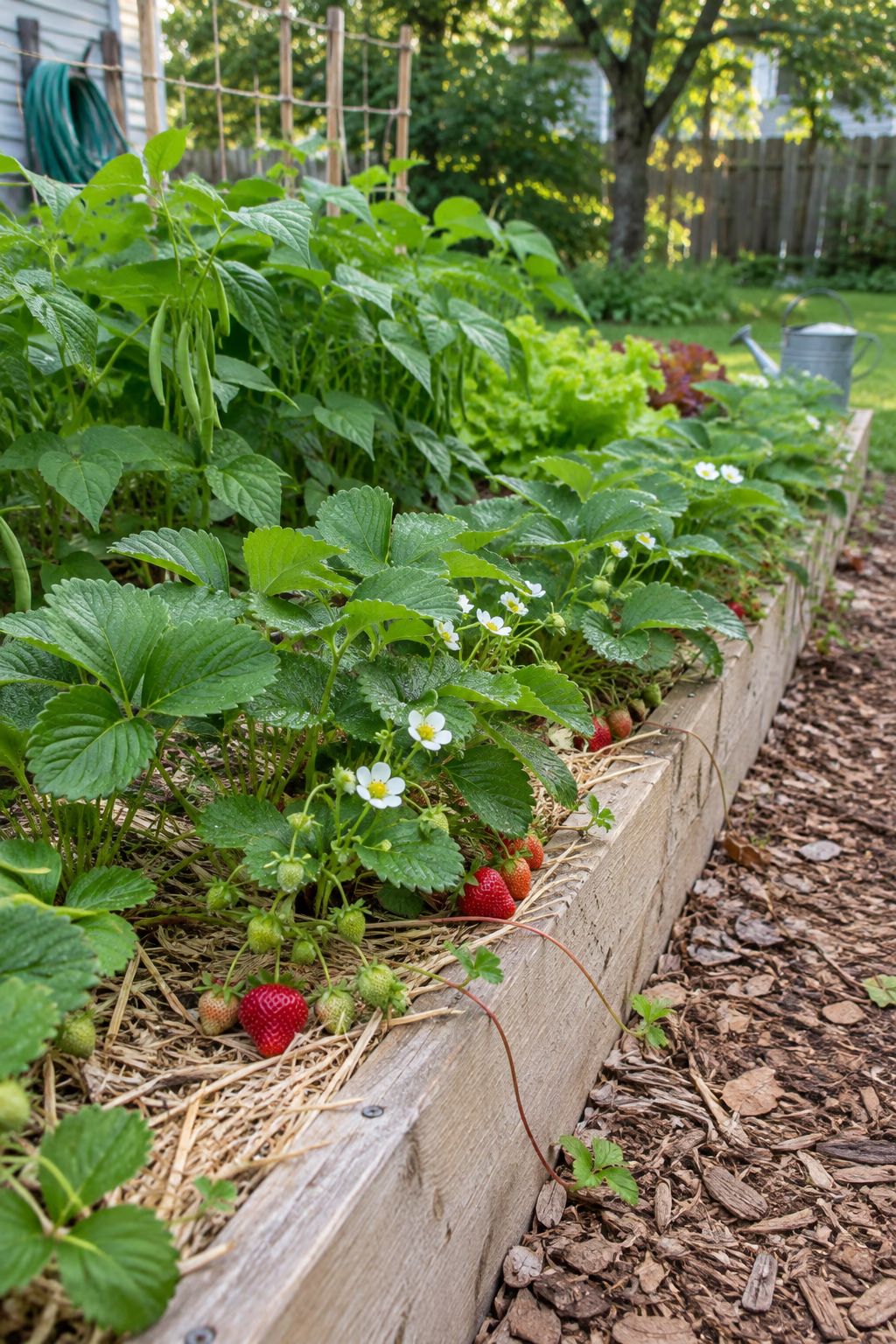
A living border you can eat
Plant everbearing or day-neutral strawberries about 10 to 12 inches apart along the front edge of a vegetable bed. They form a low, leafy border with white flowers and berries that ripen from late spring into fall, depending on your climate.
The edge of a bed is often wasted space. Strawberries fill it with something attractive and tasty, and they help hold the soil in place.
Strawberries send out runners that root wherever they land. Snip most of them off to keep the border neat, and replace the plants every three years or so as they lose vigor. Netting helps if birds find the berries first.
13. Choose Bush and Patio Varieties of Big Crops
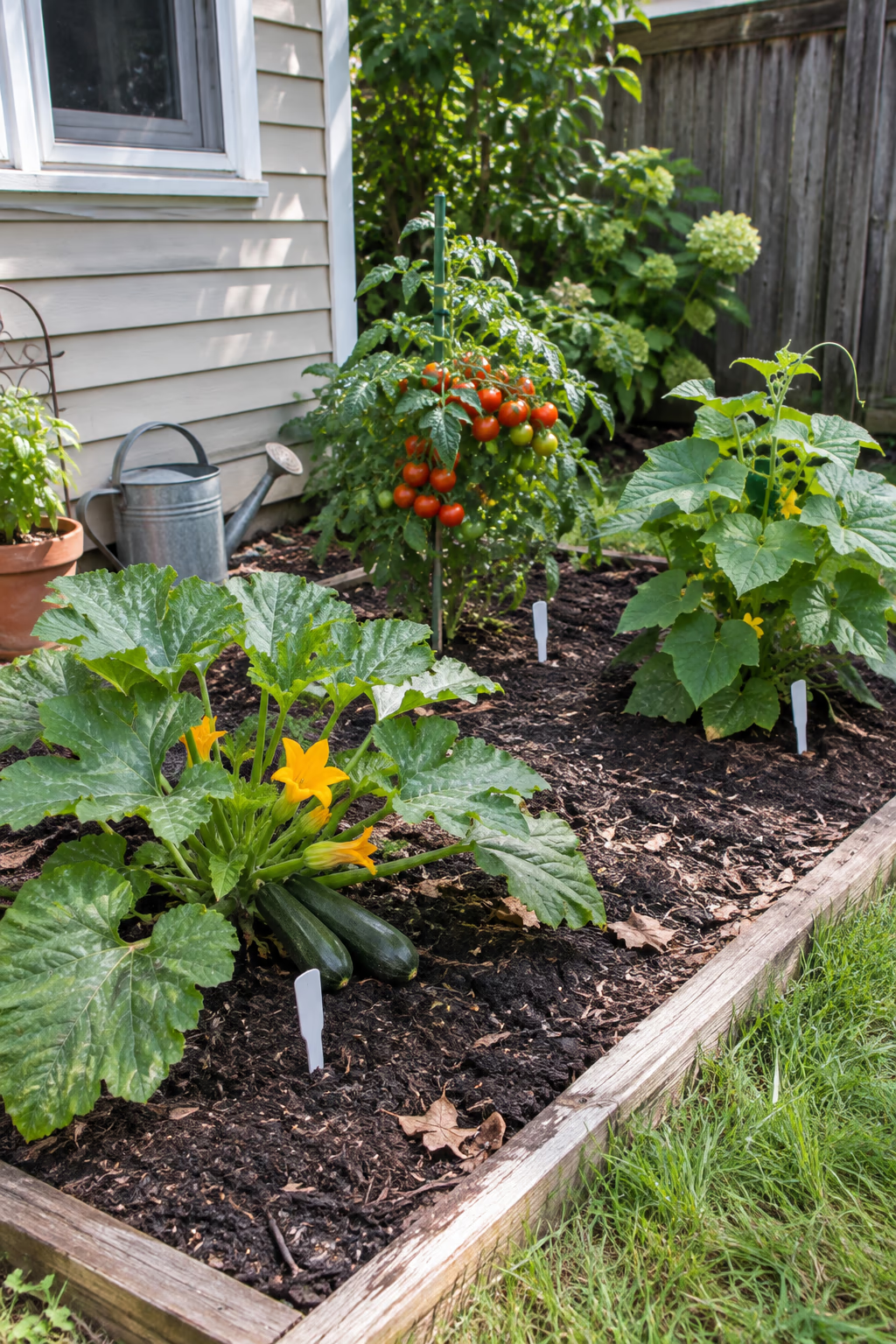
Full-size flavor on compact plants
Crops like zucchini, cucumbers, winter squash, and tomatoes can sprawl 6 feet or more in a regular garden. Look for seed packets and plant tags labeled “bush,” “dwarf,” “patio,” or “compact.” A bush zucchini fits in about a 3-foot circle, and dwarf tomatoes may top out around 2 to 3 feet.
Compact varieties let you grow favorite crops that would otherwise crowd out everything else. Many are bred for small spaces and still yield well.
Read the mature size on the tag, since “compact” can mean different things. Space hogs like corn, full-size pumpkins, and melons usually aren’t worth the room in a small plot.
14. Stretch the Season Under a Low Hoop Tunnel
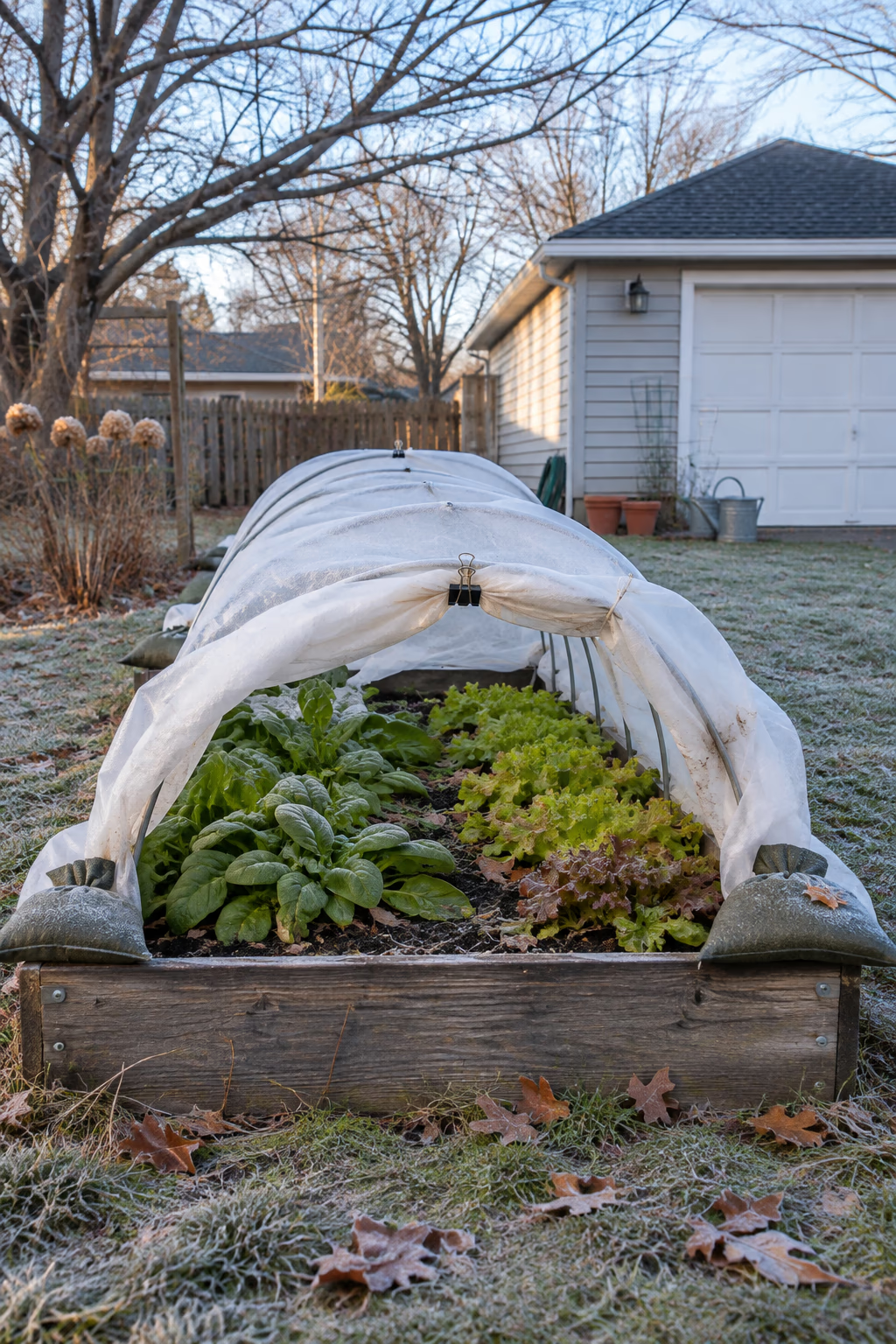
Earlier spring and later fall harvests
Bend 9-gauge wire or half-inch PVC into hoops every 3 to 4 feet over a bed and drape them with floating row cover. Hold the edges down with sandbags or clips. In colder weather, swap the fabric for clear greenhouse plastic.
A low tunnel warms the soil, protects plants from light frost, and keeps out many flying pests. That can add several weeks of growing time to each end of the season, so a small bed produces for longer.
On sunny days, plastic tunnels can overheat quickly, even in early spring. Open the ends when daytime temperatures climb above about 60°F, and remove covers from squash and cucumbers once they flower so pollinators can reach them.
15. Prop a Cold Frame Against a South-Facing Wall
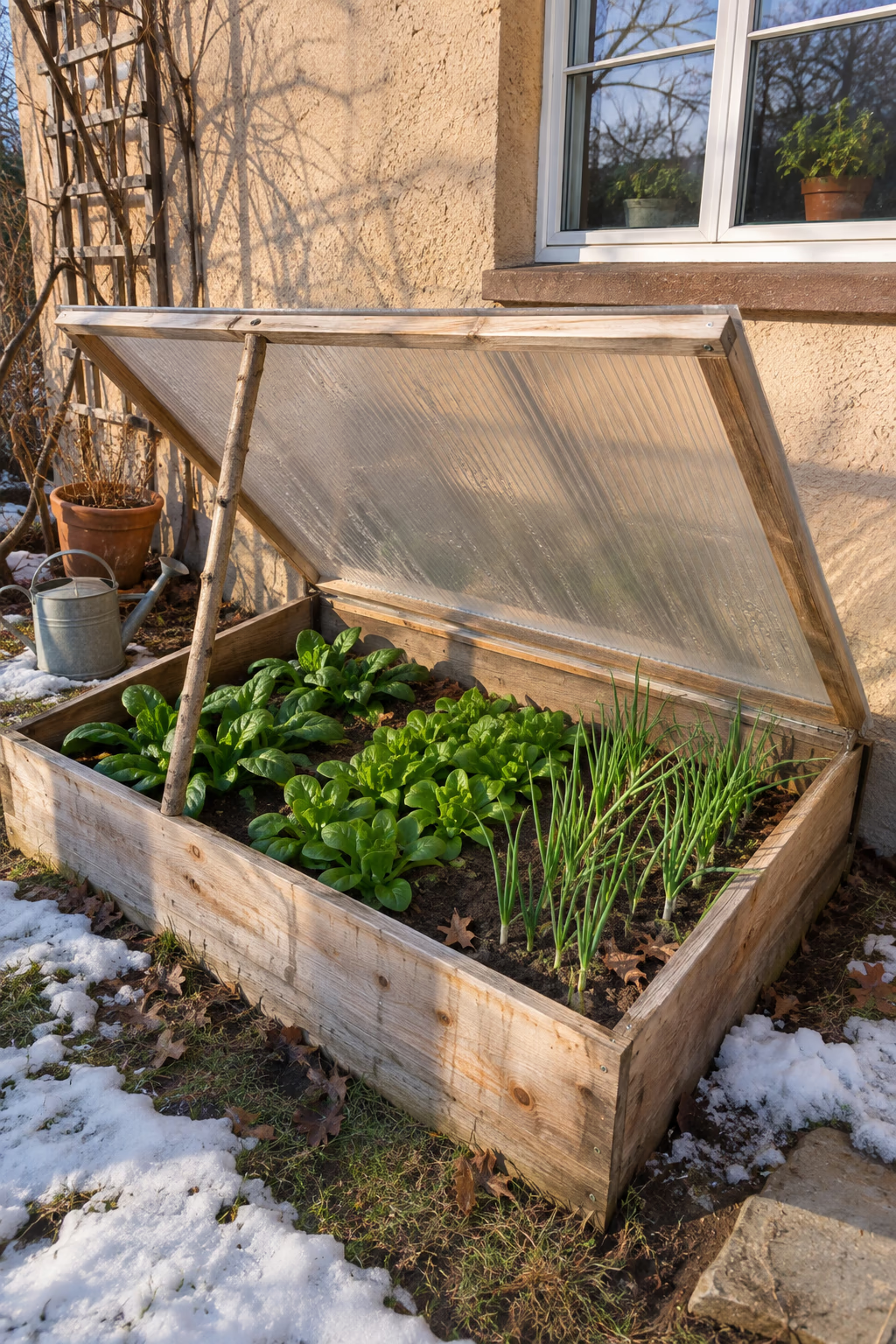
A mini greenhouse in a few square feet
A cold frame is a bottomless box with a clear, slanted lid. A simple version measures about 3 by 4 feet, with the back about 18 inches high and the front about 12 inches, topped with an old window or polycarbonate panel. Set it against a south-facing wall, where the house adds a little extra warmth.
It’s ideal for starting seedlings, hardening off transplants, and growing spinach, mâche, and scallions in late fall and early spring. In mild climates you may harvest greens all winter.
Prop the lid open on sunny days, because the inside can overheat quickly. If you reuse an old window, avoid ones with peeling paint, which may contain lead.
16. Hang Cherry Tomato Baskets From the Porch Eaves
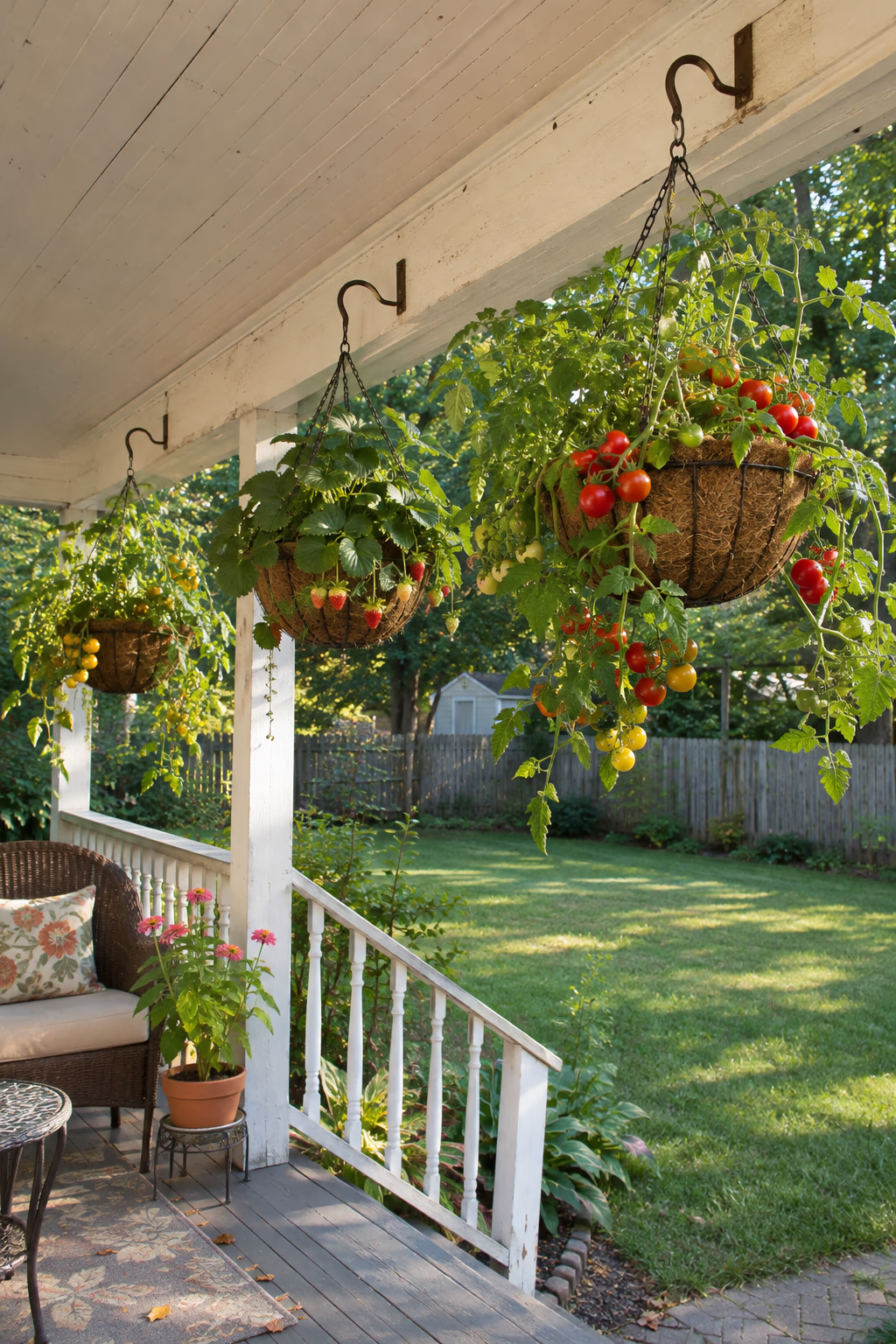
Free up the ground by growing overhead
Trailing cherry tomatoes and everbearing strawberries do well in hanging baskets at least 12 to 14 inches wide. Hang them from sturdy hooks along a sunny porch, pergola, or fence so the stems can spill over the sides.
Baskets keep fruit off the ground, away from slugs, and in easy reach. They also leave more bed space for crops that need room for their roots.
Baskets dry out fast, often needing water every day in summer, and a soaked basket is heavy. Use hooks screwed into solid framing, not just the trim, and choose varieties bred for baskets.
17. Plant Marigolds and Nasturtiums as Garden Helpers
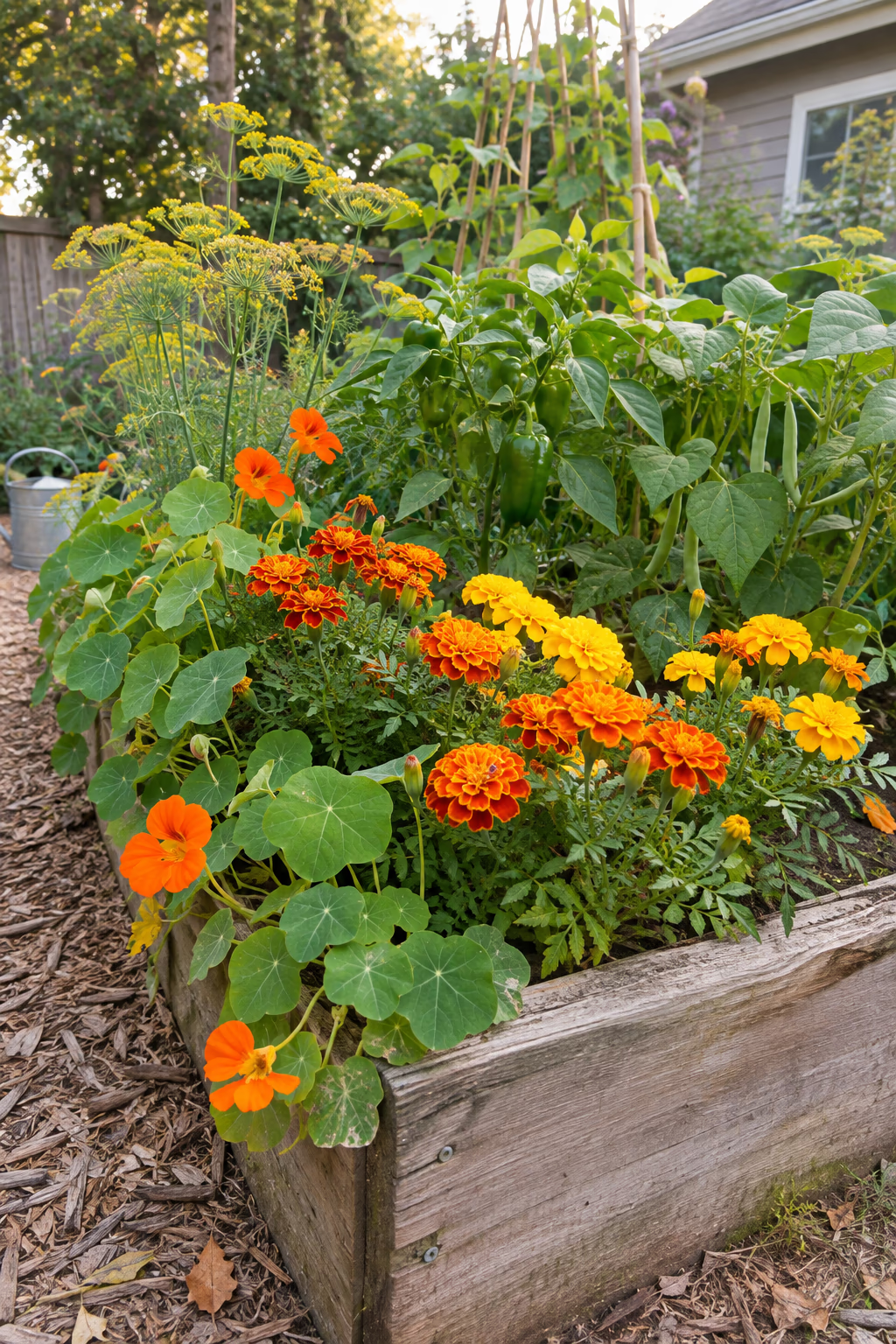
Color with a practical purpose
Tuck French marigolds and nasturtiums into the corners and edges of your vegetable beds. Add a few flowering herbs like dill and cilantro that you let bloom. The bright oranges and yellows look cheerful next to green leafy crops.
Flowers attract bees and beneficial insects such as hoverflies and lady beetles, which help pollinate crops and eat aphids. Nasturtiums often attract aphids away from nearby vegetables, and their leaves and flowers are edible too.
Companion flowers are helpful, not a cure-all. You’ll still need to check plants for pests. Keep marigolds and nasturtiums at the edges so they don’t shade or crowd your vegetables.
18. Stagger Sowings for Harvests From Spring to Fall
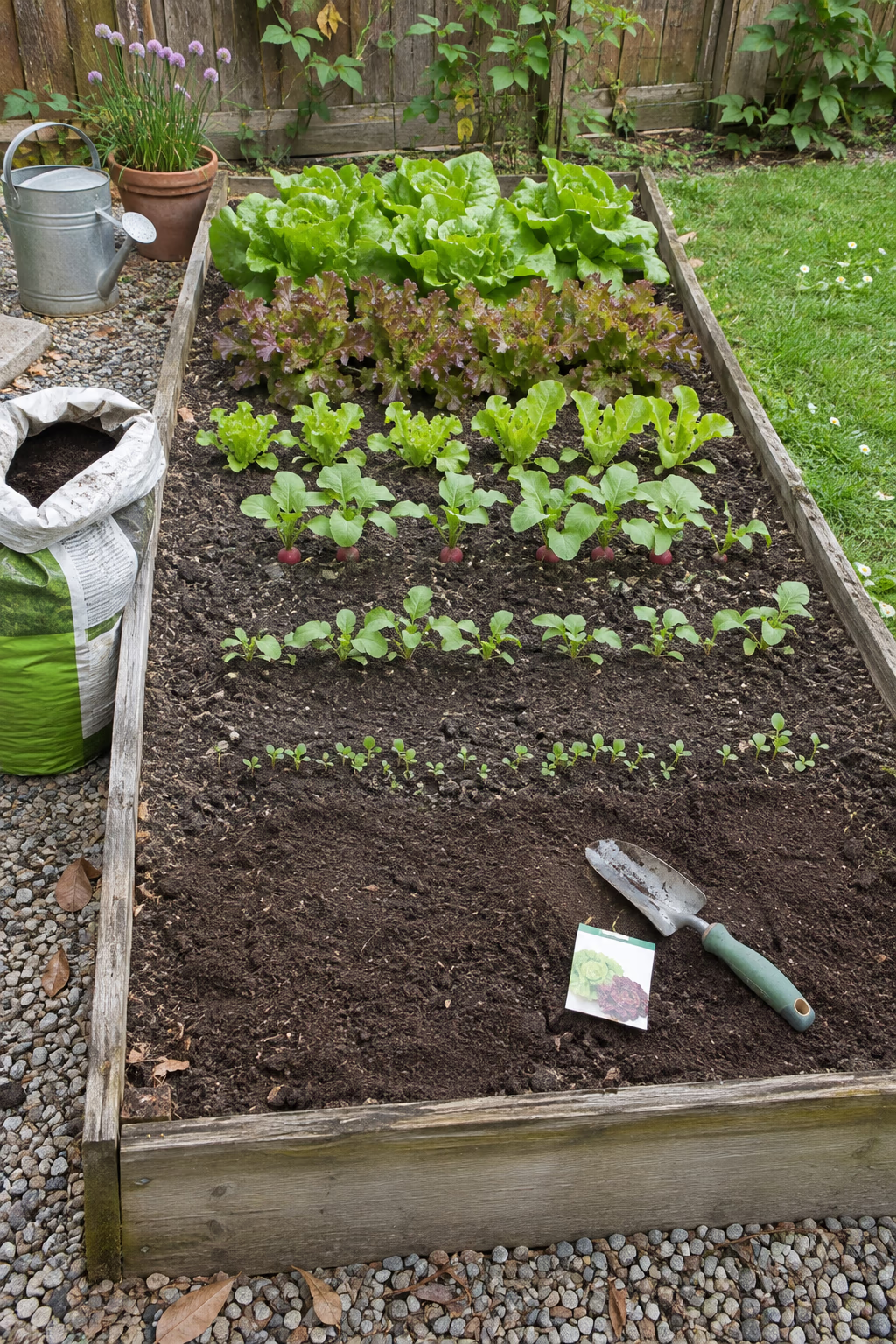
Keep every square foot busy
Succession planting means sowing small batches every two to three weeks, or following one crop right after another. A typical small-bed rotation might start with peas, radishes, and lettuce in early spring, switch to bush beans or zucchini in summer, then finish with spinach, kale, or garlic in fall.
Instead of one big harvest that overwhelms you, you get a steady supply all season. It also stops beds from sitting empty after a crop finishes.
Planting this intensively uses up soil nutrients. Mix in an inch of compost between crops, and keep a simple calendar based on your area’s average first and last frost dates.
19. Smother a Patch of Lawn for a No-Dig Plot
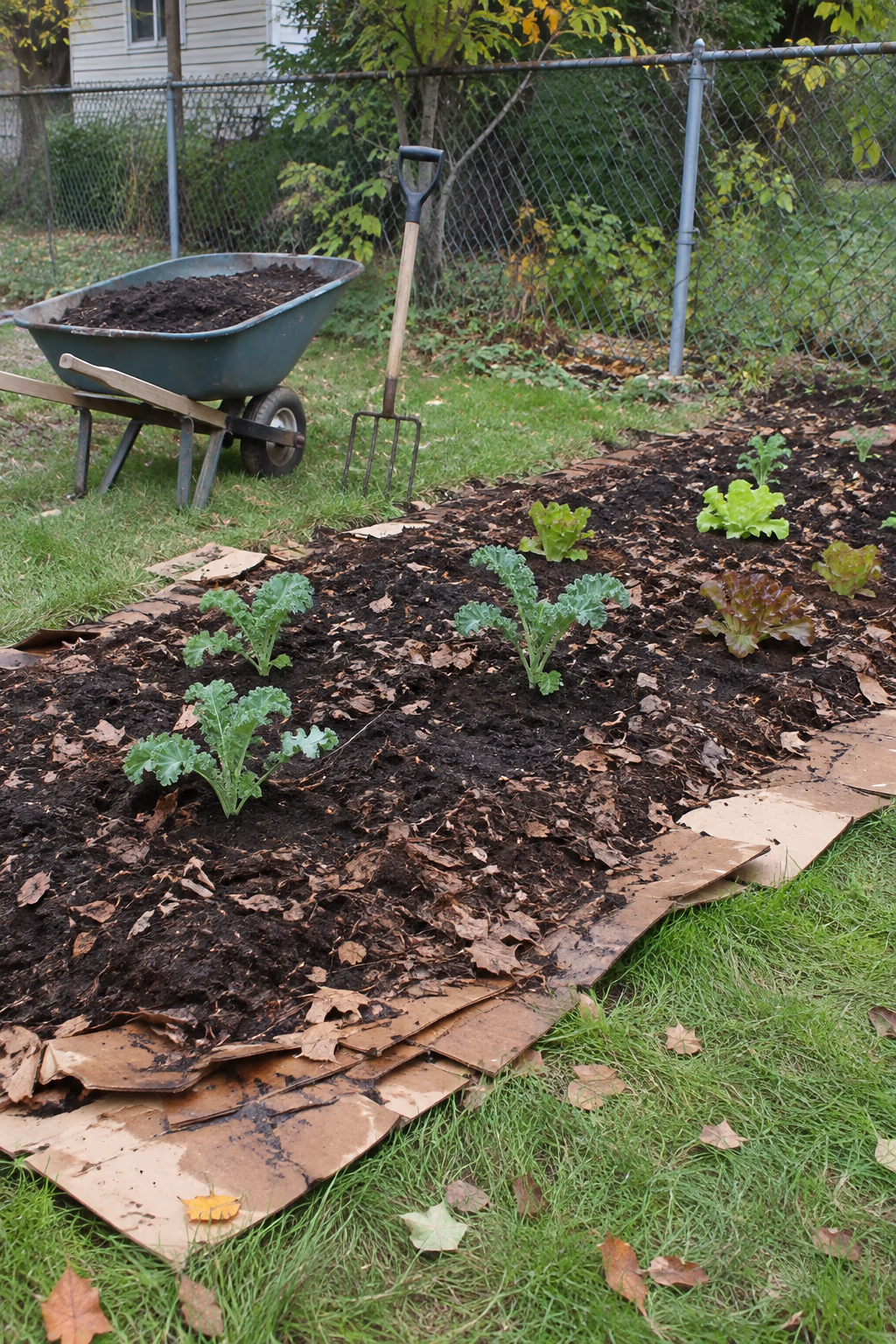
Skip the sod cutter and the sore back
Mark out a small plot, mow the grass short, and cover it with plain brown cardboard, overlapping the edges by several inches. Wet it well, then pile on 4 to 6 inches of compost and shredded leaves. Edge it with logs, bricks, or steel edging for a clean finish.
The cardboard smothers the grass while worms break it down, and the soil underneath improves over time. It’s a cheap, easy way to turn lawn into a garden without digging up sod.
The process works best if you start in fall so it’s ready by spring. If you plant right away, set transplants into the compost layer. Remove all tape and labels from the cardboard first, and call 811 before driving any stakes or edging deep into the ground.
20. Fill a Part-Shade Corner With Leafy Greens
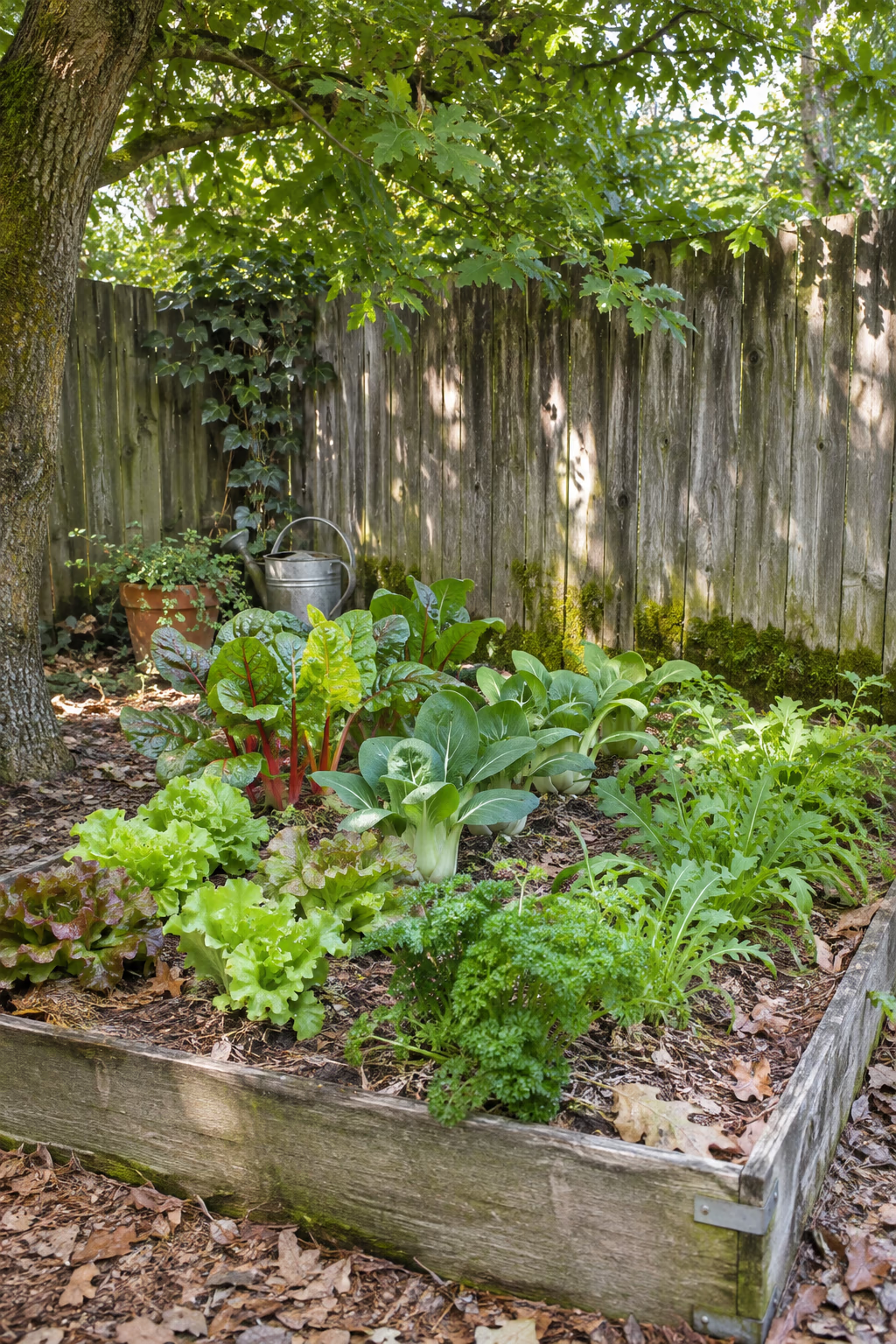
Grow food where tomatoes would sulk
Not every yard has full sun. A spot with three to four hours of direct sun, or bright dappled light, can still grow lettuce, spinach, arugula, kale, chard, Asian greens, parsley, and mint. Plant them in a small bed under a tall tree’s high canopy or along a north-facing fence.
Leafy greens grow for their leaves, not fruit, so they need much less sun than tomatoes or peppers. In hot summers, a little shade even helps them stay tender and slows bolting.
Tree roots compete for water and nutrients, so build up a few inches of soil and water a bit more often. Plants grow more slowly in shade, so expect smaller but steady harvests.
21. Keep Beds 3 Feet Wide for Easy Reach
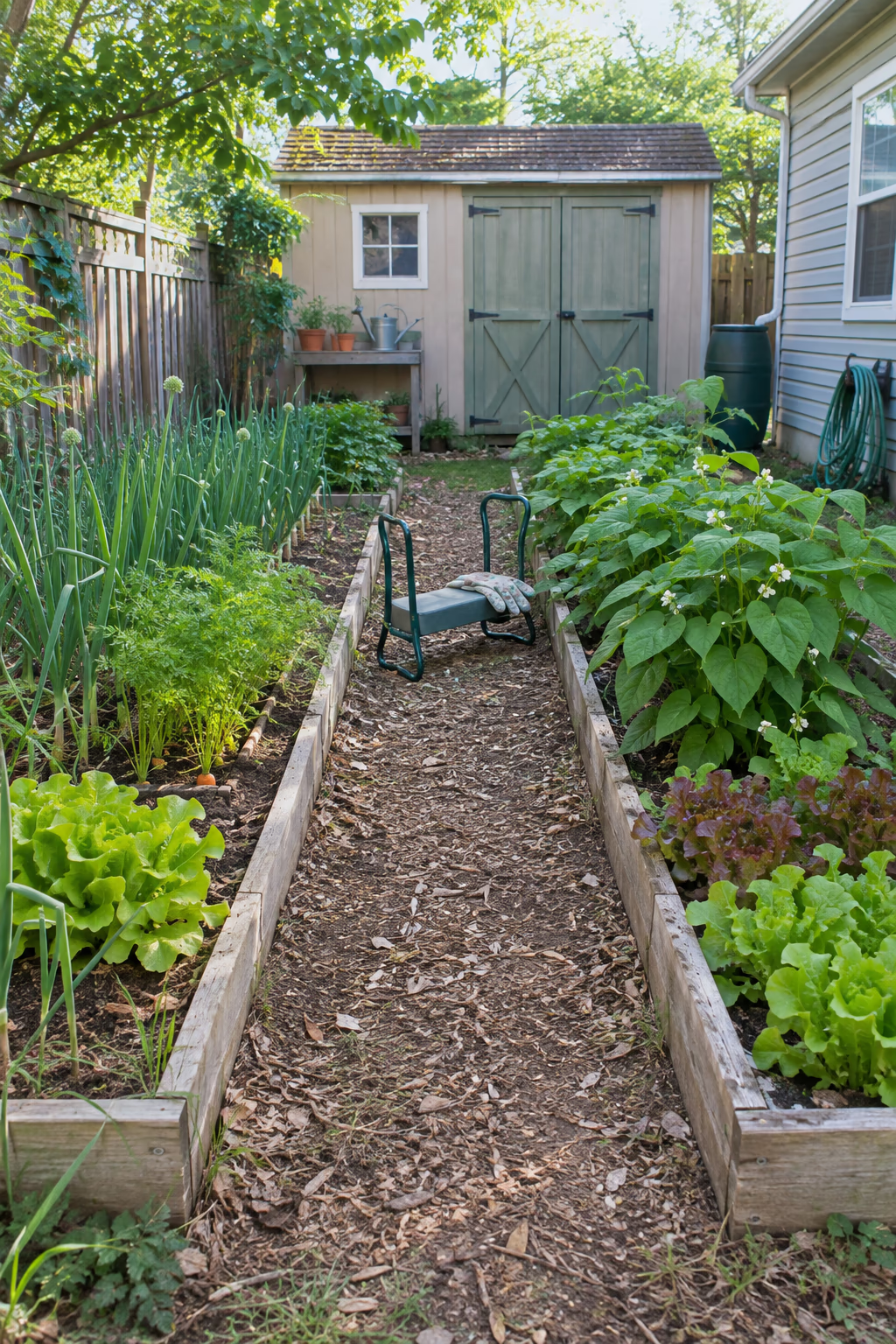
Never step on the soil again
Design your beds no more than 3 to 4 feet wide, depending on your reach, with paths about 18 to 24 inches wide between them. A bed you can reach from both sides lets you plant, weed, and harvest without walking on the growing area.
When soil isn’t compacted by footsteps, roots spread more easily and water soaks in better. That lets you plant more closely and get more food from the same small area.
Beds against a fence or wall should be closer to 2 feet wide, since you can only reach them from one side. Cover paths with wood chips, gravel, or pavers to keep weeds down.
22. Run Drip Line on a Simple Timer
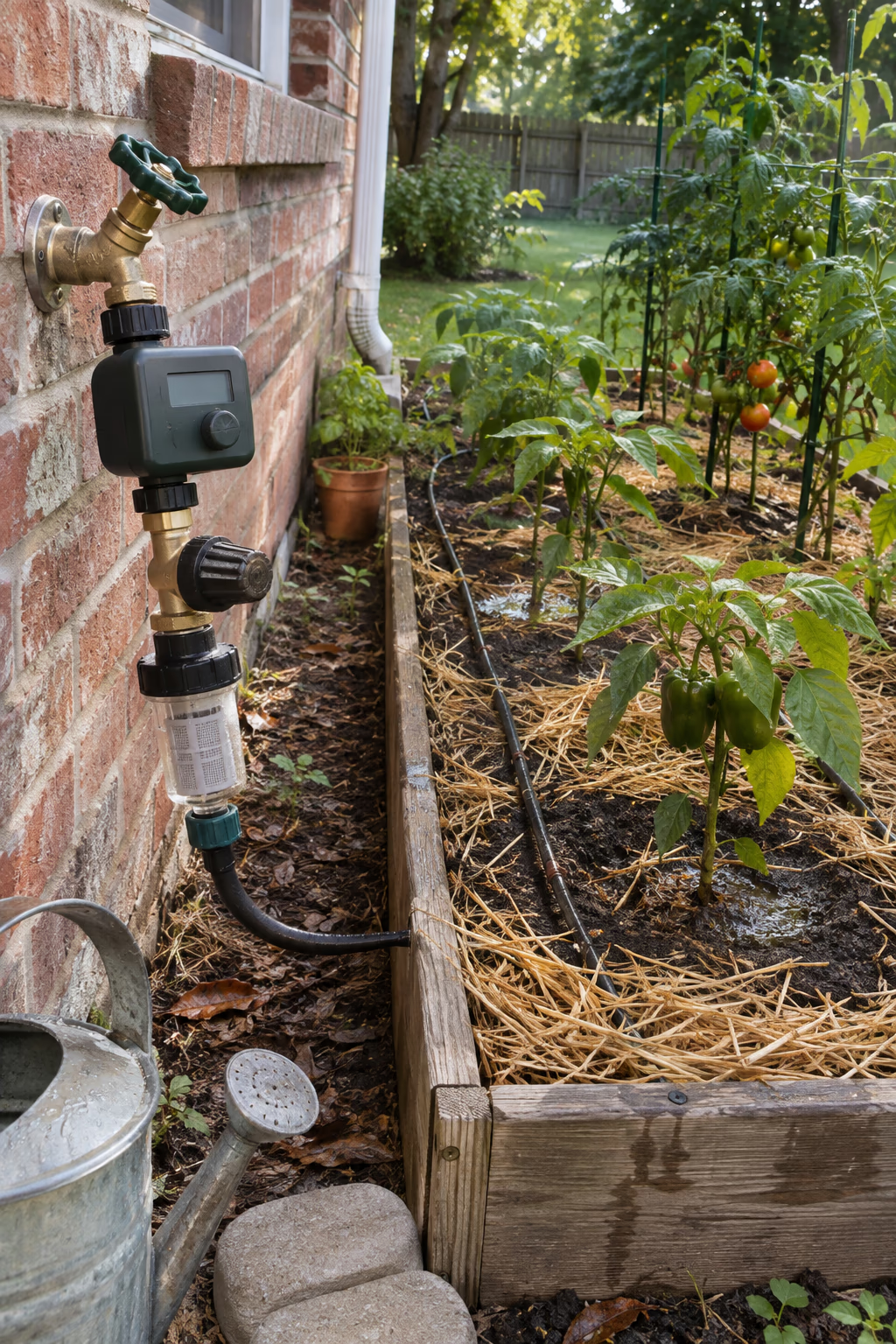
Steady watering without the daily chore
Lay drip tubing with built-in emitters or soaker hoses along each row, connected to a hose bib through a backflow preventer, a pressure regulator, and a filter. A simple battery-powered timer can turn the system on early each morning.
Drip irrigation puts water right at the roots, which keeps leaves dry, cuts disease, and uses less water than a sprinkler. Steady moisture also helps prevent problems like split tomatoes and bitter cucumbers.
Most vegetable gardens need about an inch of water a week, more in heat waves. Check under the mulch now and then to make sure the soil is moist a few inches down, and adjust the timer as weather changes.
23. Catch Rainwater in a Barrel Beside the Beds
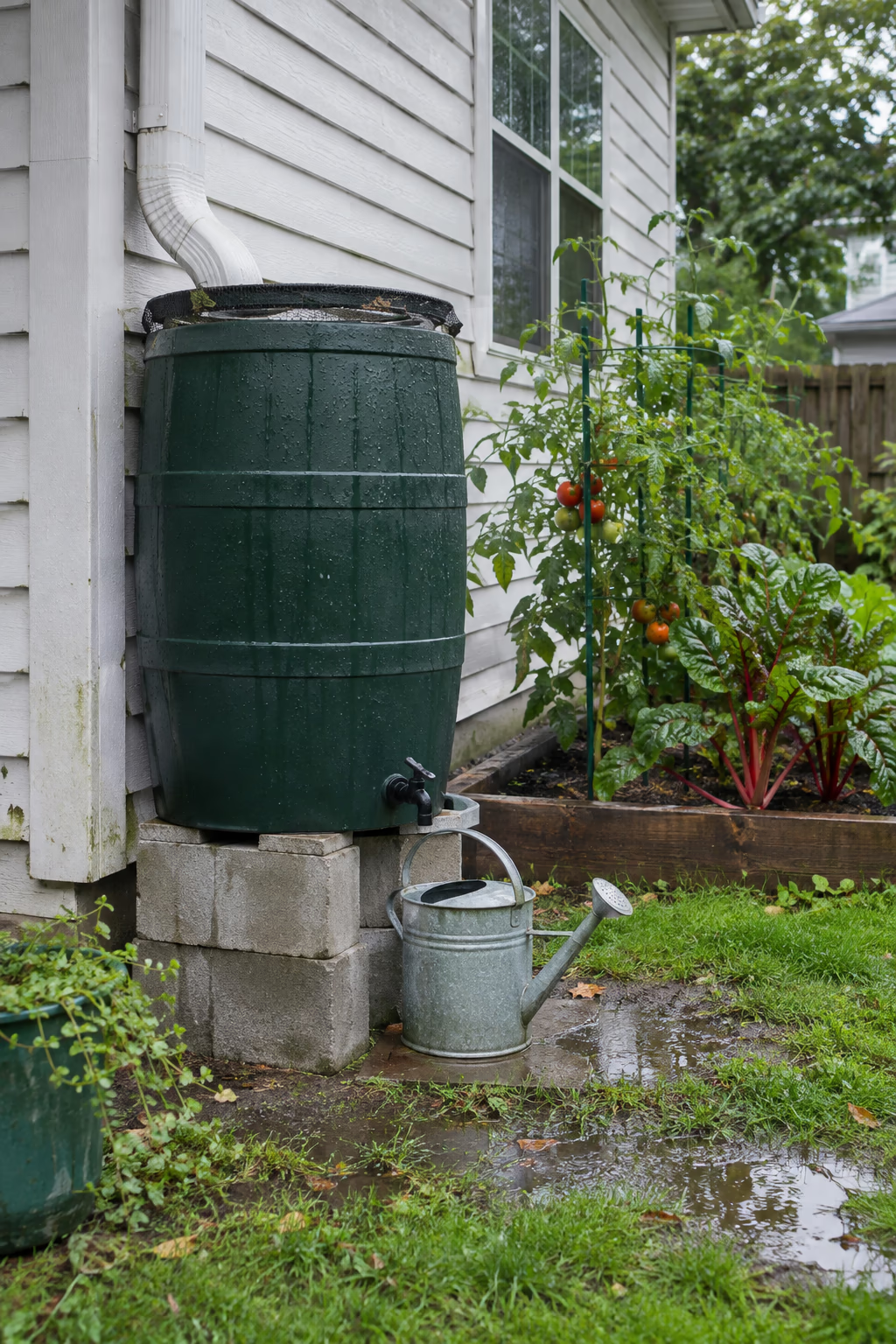
Free water within steps of your crops
Set a 50- to 60-gallon rain barrel under a downspout near your vegetable garden, raised on concrete blocks so a watering can fits under the spigot. Add a mesh screen on top to keep out mosquitoes and leaves, and an overflow hose pointed away from the foundation.
A barrel fills quickly in a good rain and gives you chlorine-free water for seedlings and containers. Keeping it close to the beds saves trips with a heavy watering can.
Roof runoff can pick up debris and residues from roofing materials, so water the soil rather than the leaves, and rinse produce well. Some states and towns regulate rain barrel use, so check local rules before installing one.
How to Plan Your Small Vegetable Garden
A small garden is most productive when every choice is deliberate. A little planning before you buy seeds or lumber makes the whole season easier.
- Follow the sun. Watch your yard for a full day. Fruiting crops like tomatoes, peppers, and squash need at least six to eight hours of direct sun, while greens can get by with less.
- Start smaller than you think. One or two well-tended beds will produce more than a large plot that gets away from you. You can always add more next year.
- Grow what you actually eat. Skip crops your household won’t use, and give the most space to the vegetables you buy most often.
- Build great soil first. Test your soil through your local cooperative extension office, and add plenty of compost. Rich soil lets you plant closer together.
- Know your frost dates and zone. Use your area’s average last spring frost and first fall frost to time planting, and choose varieties suited to your climate.
- Check the rules. Review HOA guidelines for fences and front-yard gardens, check local codes for rain barrels and fence heights, and call 811 before digging or setting posts.
Frequently Asked Questions
How big should a beginner’s vegetable garden be?
A single 4-by-8-foot bed or two 4-by-4-foot beds is a good start. It’s large enough to grow a nice mix of crops but small enough to keep up with watering, weeding, and harvesting in your first year.
What vegetables give the most food in a small space?
Cherry tomatoes, pole beans, snap peas, cucumbers grown on a support, zucchini, leaf lettuce, chard, kale, and peppers are all strong producers. Quick crops like radishes and baby greens can also be grown several times a season.
How much sun does a vegetable garden need?
Most fruiting vegetables need at least six hours of direct sun, and eight is better. Leafy greens, herbs, and some root crops can manage with three to four hours, though they’ll grow more slowly.
Can I grow vegetables close to my house?
Yes, as long as the spot gets enough sun. Leave about a foot of space from the wall for airflow, keep water draining away from the foundation, and test the soil for lead if your home was built before 1978.
When should I start planting a small vegetable garden?
Cool-season crops like peas, lettuce, and spinach can go in a few weeks before your last spring frost. Warm-season crops like tomatoes, peppers, beans, and squash should wait until the danger of frost has passed and the soil has warmed.
Final Thoughts
The best small vegetable garden ideas prove that you don’t need acres to grow your own food. A tidy square foot grid, a fenced kitchen plot, or a bed full of snack crops can keep your kitchen stocked with fresh produce through the season.
Pick a sunny spot, start with rich soil, and choose a few ideas that suit your space and schedule. Add more each year as your confidence grows, and you’ll soon have a small garden that feeds you well.


