
Some of the most charming gardens are hardly bigger than a parking space. A wheelbarrow full of petunias by the shed, a ring of blooms around the mailbox, or a narrow strip of zinnias along the patio can make a home look loved and lived in.
Small flower gardens are easier to water, cheaper to fill, and quicker to weed than big borders, so you get more time enjoying the blooms and less time maintaining them. Every plant counts, which makes it simple to create a look that feels deliberate instead of scattered.
These 25 small flower garden ideas cover clever upcycled planters, trending compartment layouts, vertical pockets, color-themed beds, shade and low-water options, and seasonal plantings that keep tiny spaces blooming from early spring into fall. Pick one for a weekend project or combine a few to make a compact yard feel full of flowers.
1. Spill Flowers From a Tipped Wheelbarrow
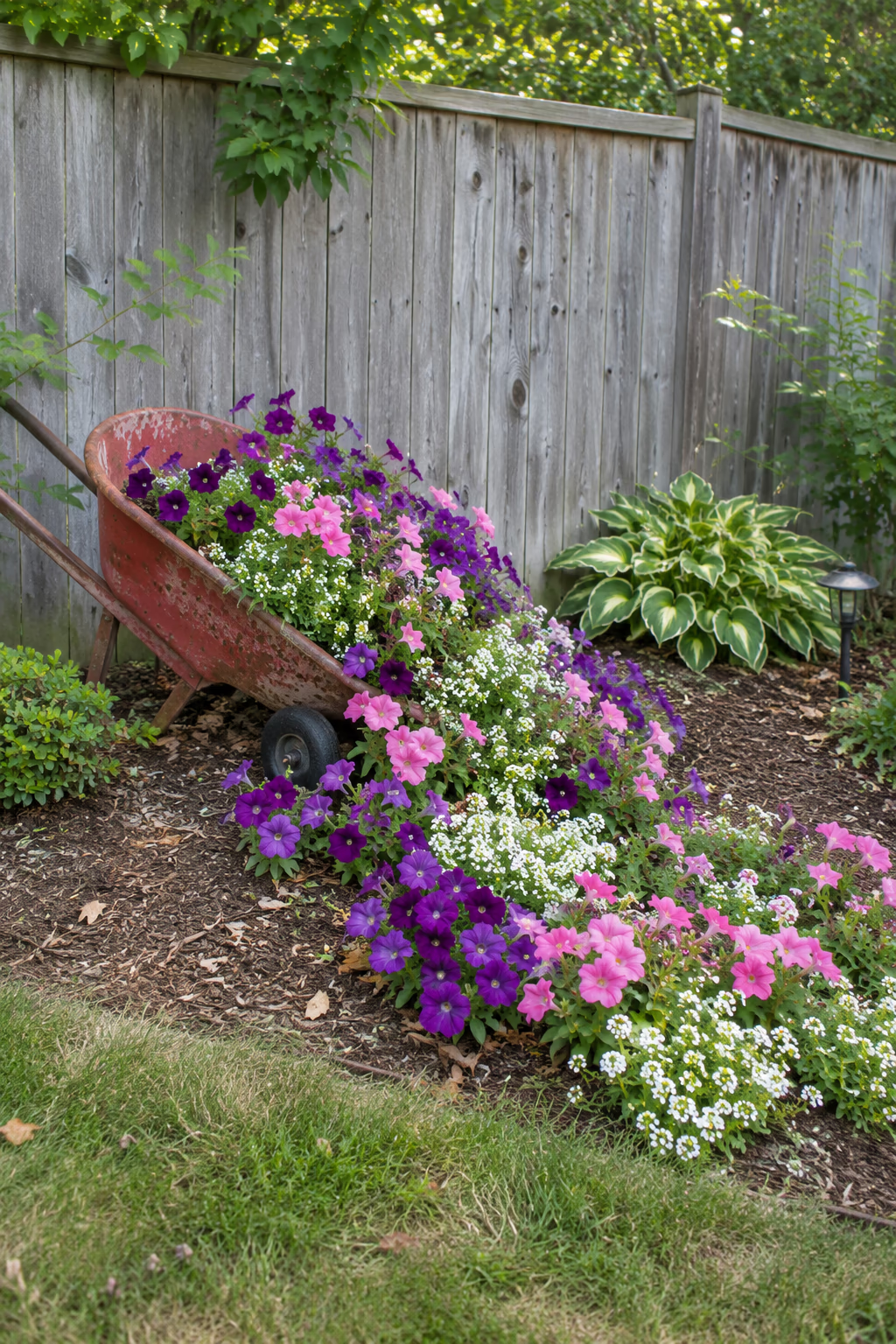
A cheap, cheerful focal point with instant charm
An old wheelbarrow tipped slightly on its side becomes a flower bed that looks like it is pouring blooms onto the ground. Drill several half-inch drainage holes in the tub, fill it with potting mix, and plant trailing petunias, calibrachoa, and sweet alyssum toward the low lip. Then continue the same flowers in the soil in front so the color seems to flow out.
The effect works because it tells a little story, and the raised tub puts flowers at a comfortable viewing height. A rusty metal or weathered wood barrow looks best against a fence or beside a shed.
Check the tub daily in summer, since the shallow soil dries quickly. Once it is planted and watered, it is very heavy, so set it in its final spot before you fill it.
2. Turn an Old Birdbath Into a Flower Planter
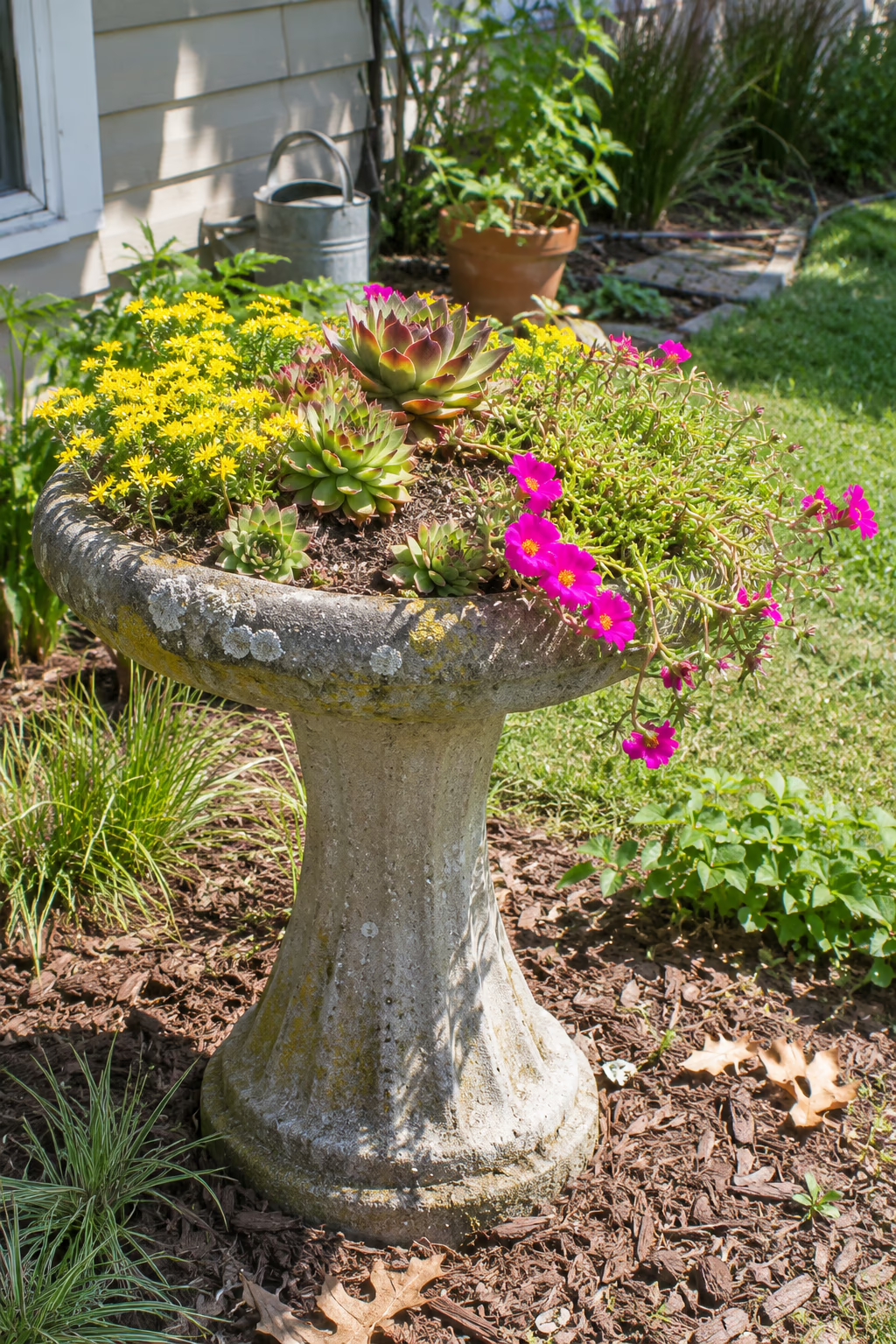
Raised color in a footprint of about 2 square feet
A cracked or leaky birdbath is perfect for a second life as a pedestal planter. The bowl is shallow, usually 3 to 4 inches deep, so choose plants with small root systems: hens and chicks, low sedums, ice plant, portulaca, or a single trailing verbena.
If the basin still holds water, drill a drainage hole with a masonry bit or add a thin layer of gravel and water sparingly. Mound a gritty cactus mix slightly above the rim so plants can spill over the edges.
Because it stands at waist height, a birdbath planter works well as the centerpiece of a tiny bed or at the end of a path. Make sure the bowl sits firmly on its base, since a heavy, wet basin can slide off if bumped.
3. Divide a Tiny Plot Into a Botanical Bento Grid
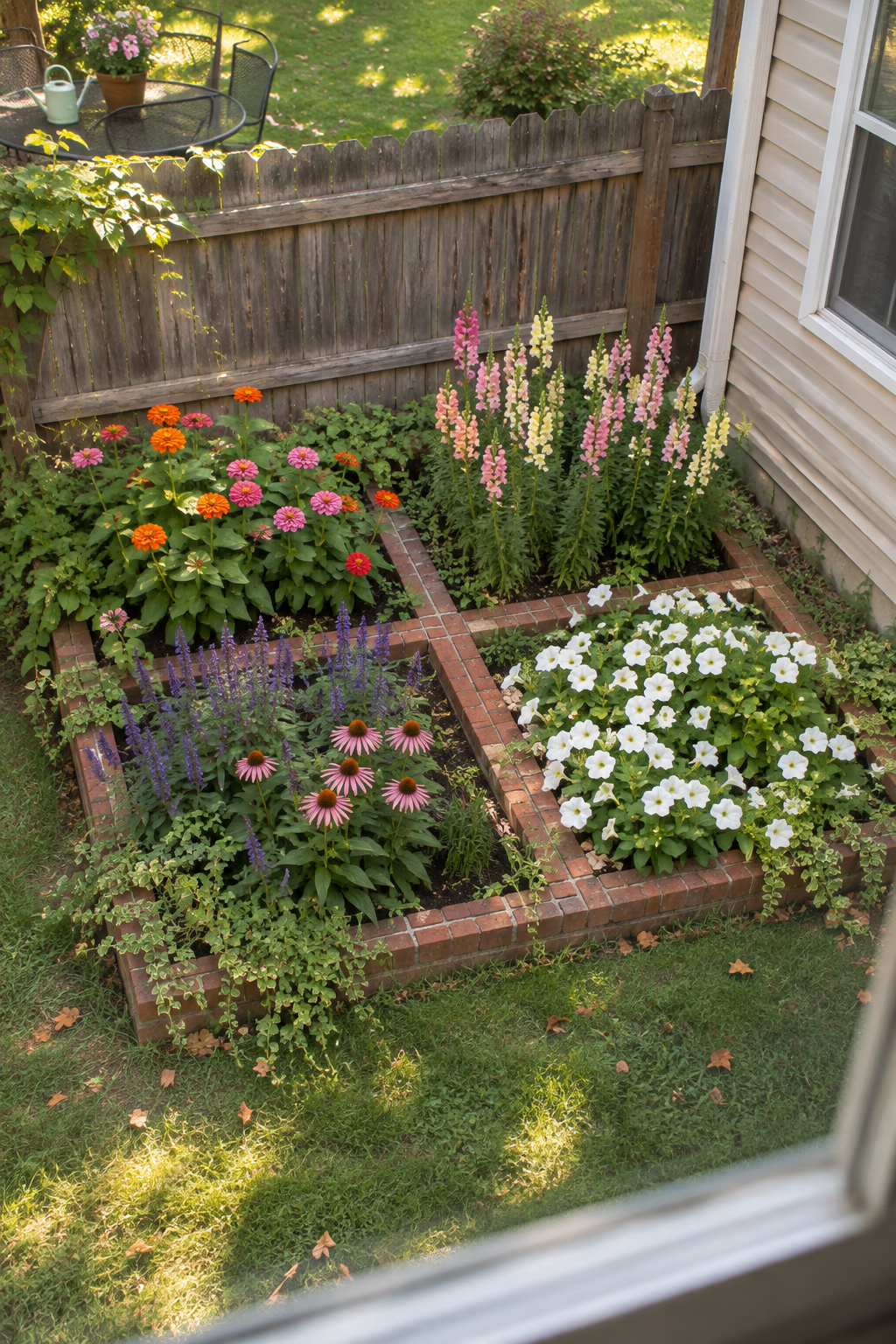
Give every square its own job
The bento approach splits a small bed into neat compartments, each planted for one purpose. An 8-by-8-foot plot divided by brick or cedar strips into four 4-foot squares might hold cut flowers, a pollinator square, a fragrance square, and a spring-bulb square that switches to annuals in summer.
The grid keeps a small space looking tidy even when plants sprawl, and it makes it easy to replant one square without disturbing the others. Within each square, try a tall thriller like snapdragons, mid-height fillers like zinnias, and a trailing spiller near the edge.
This style needs regular attention, so plan on deadheading and tidying once or twice a week in summer. Keep a pair of snips and a trowel close by so quick chores actually get done.
4. Hang a Pocket Planter Wall on a Sunny Fence
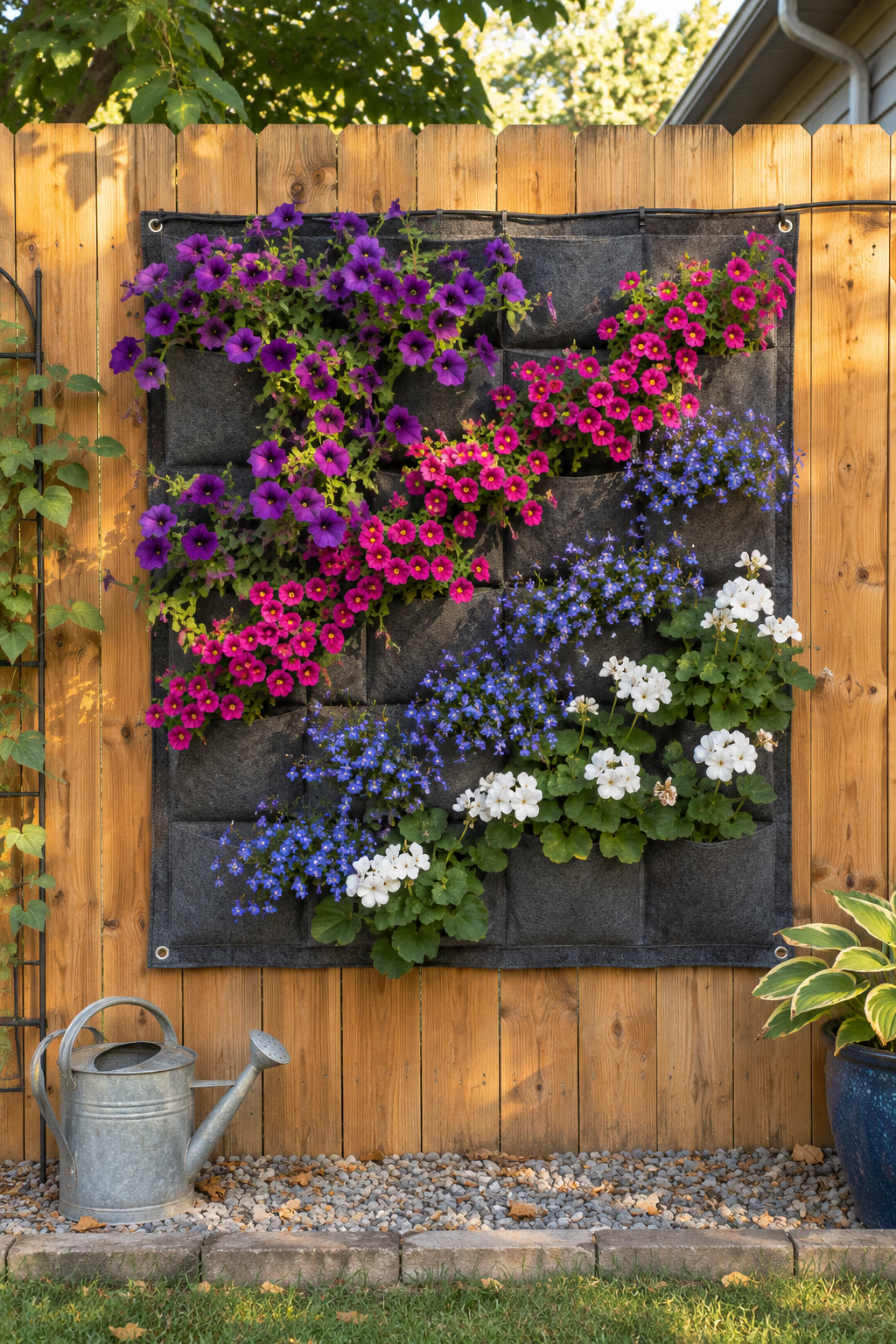
Bloom vertically when there’s no ground to spare
Felt or fabric pocket planters attach to a sturdy fence and turn a blank stretch into a sheet of flowers. A 3-by-4-foot panel holds a dozen or more small plants, such as trailing petunias, million bells, lobelia, and compact geraniums.
Vertical pockets make a tiny garden feel larger because they draw the eye upward. Group plants by color, such as a diagonal band of purple through white, for a polished look.
Fabric pockets dry out much faster than beds, sometimes twice a day in July heat. A simple drip line with a timer saves a lot of hand watering. Also confirm the fence posts are solid, since wet soil adds real weight.
5. Sow a Pocket Wildflower Patch in a Sunny Strip
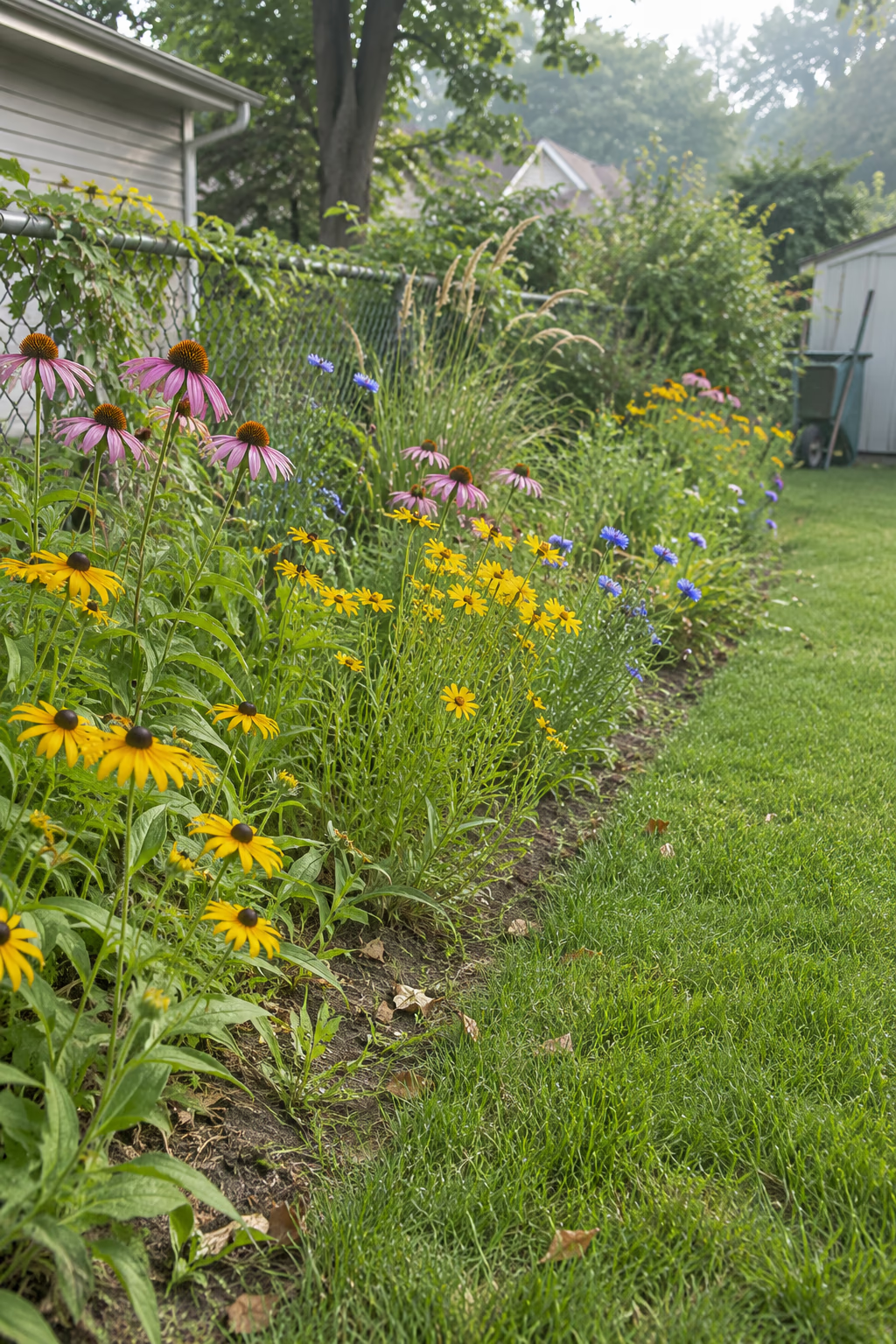
A mini meadow that buzzes with bees
Even a 4-by-10-foot strip of lawn can become a small wildflower patch. Strip off the turf, rake the soil smooth, and sow a regional seed mix with plants like black-eyed Susan, purple coneflower, lanceleaf coreopsis, and annual cornflowers.
A patch this size gives the loose, natural look many people love without turning the whole yard over. It also offers nectar and pollen for bees and butterflies through summer.
Read the seed label carefully and choose mixes suited to your region, since some generic blends include aggressive species. Expect the first year to be dominated by annuals, with perennials filling in during the second season. A crisp mowed edge keeps the patch looking intentional to neighbors.
6. Plant a Pink and White Flower Bed for a Soft, Classic Look
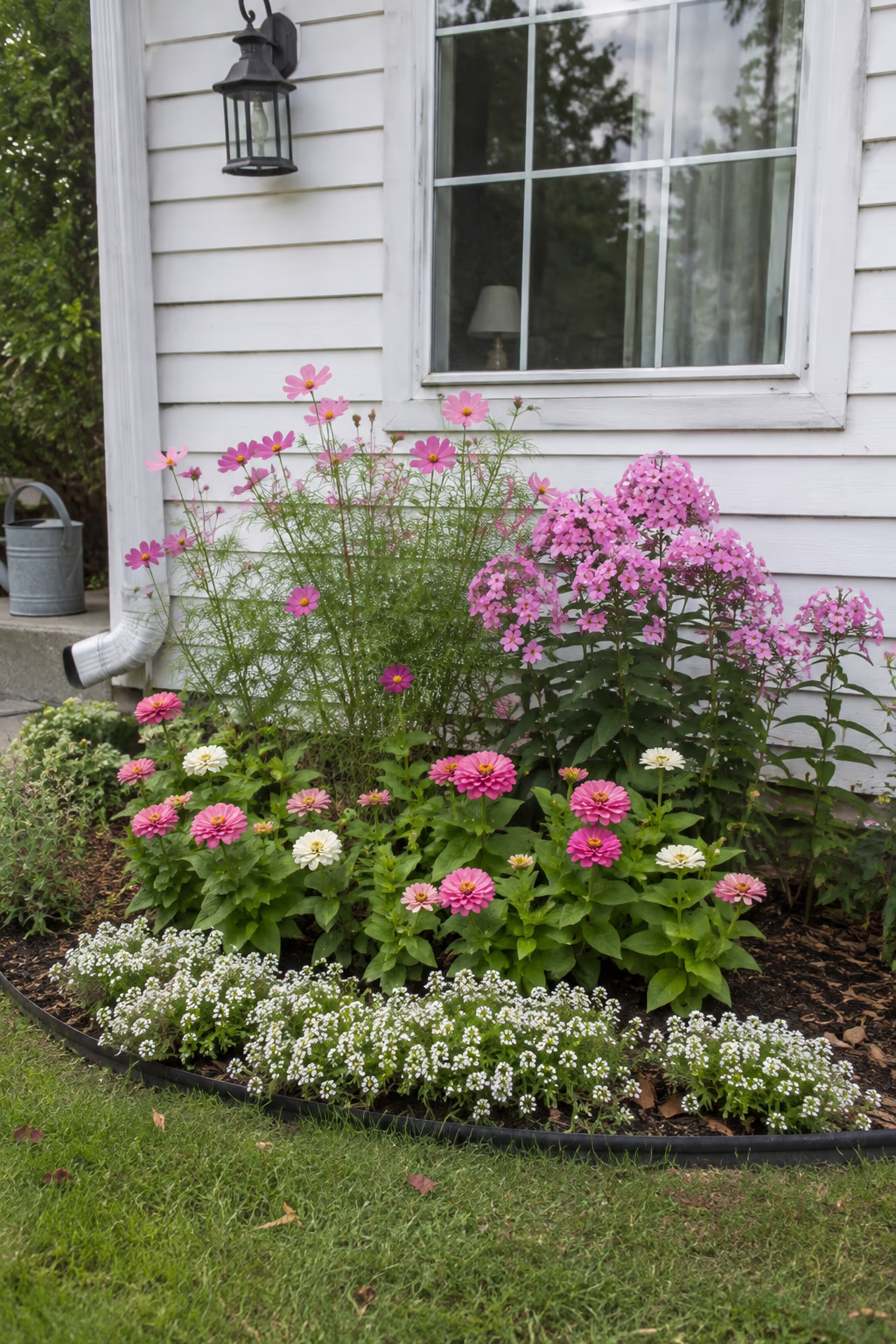
A timeless pairing that always looks fresh
Pink and white is one of the easiest color schemes for a small flower garden. Combine pink cosmos or tall garden phlox in the back, pink and white zinnias in the middle, and a ribbon of white sweet alyssum along the edge.
Limiting the palette to two colors keeps a compact bed from looking busy. White flowers also glow at dusk, so the bed stays pretty in the evening.
Repeat each color at least two or three times across the bed rather than planting one of everything. Garden phlox can get powdery mildew in humid areas, so look for mildew-resistant varieties and give plants a little breathing room.
7. Pair Lavender and Shrub Roses in a Compact Bed
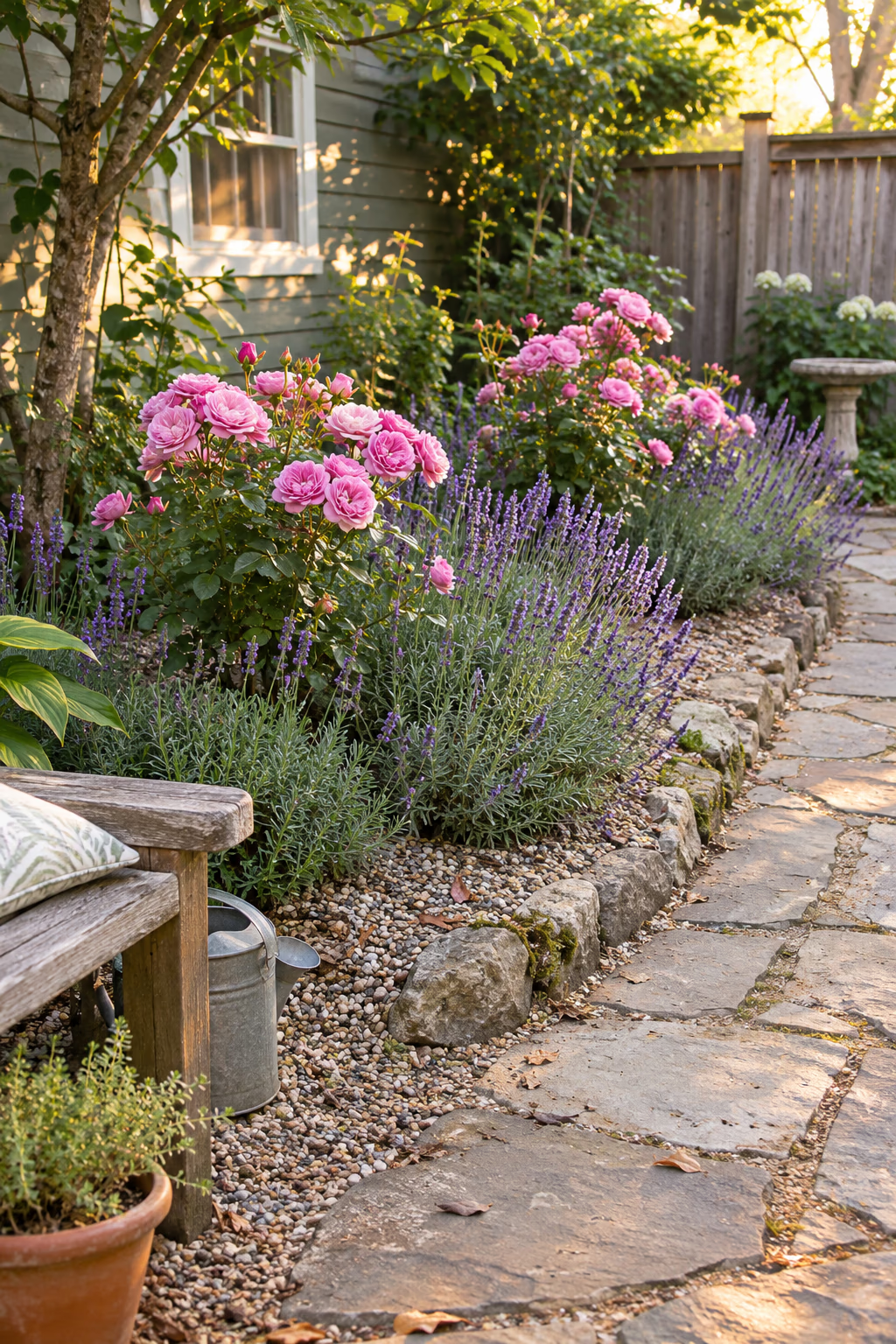
Fragrance and romance in a few square feet
Lavender and roses are a classic combination for a small sunny bed. Plant one or two compact shrub roses, which typically stay around 3 feet tall, and surround them with three to five lavender plants spaced about 18 inches apart.
The silver-gray lavender cools down strong rose colors, and the mix of fragrances makes the bed a pleasure to walk past. Disease-resistant shrub roses need much less fussing than old-fashioned hybrid teas.
The two plants like slightly different conditions. Roses enjoy rich, evenly moist soil, while lavender rots in wet ground. Plant the lavender on the outer edge on a slightly raised mound of gritty soil, and water the roses at their base.
8. Line the Patio Edge With a Narrow Flower Strip
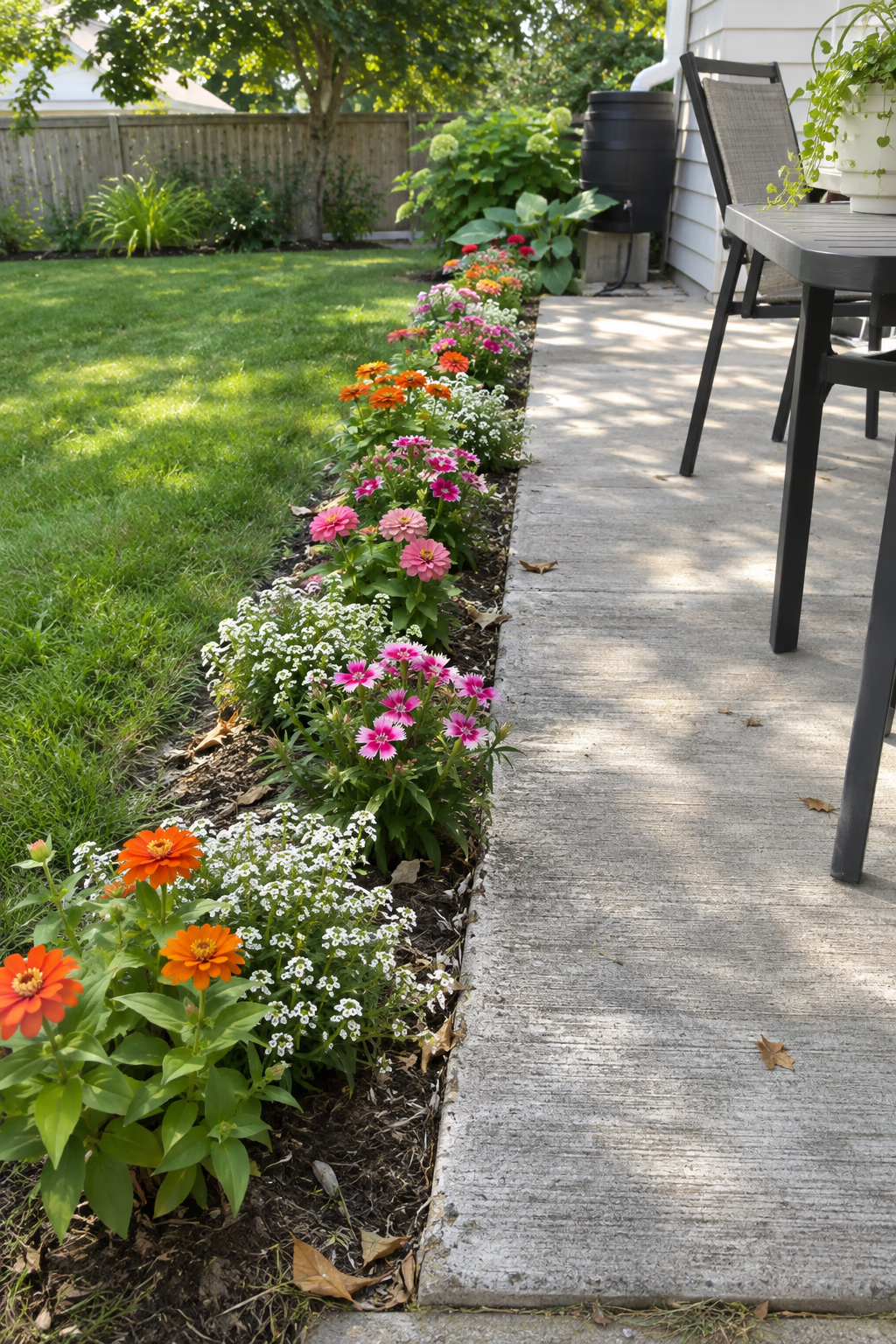
Soften hard paving with an 18-inch band of blooms
A strip only 12 to 18 inches wide along a patio or deck edge is enough for a long run of low flowers. Good choices include dwarf zinnias, sweet alyssum, dianthus, creeping thyme, and compact marigolds that stay under a foot tall.
A narrow strip frames your outdoor seating and makes the patio feel like it sits inside a garden. Because you can reach every plant from the paving, there’s no need to step into the soil.
Use one or two plants repeated along the full length for the cleanest look. If the strip sits against concrete, the soil may be compacted and full of gravel, so loosen it and mix in compost before planting.
9. Plant a Moody Corner With Dark Burgundy Blooms
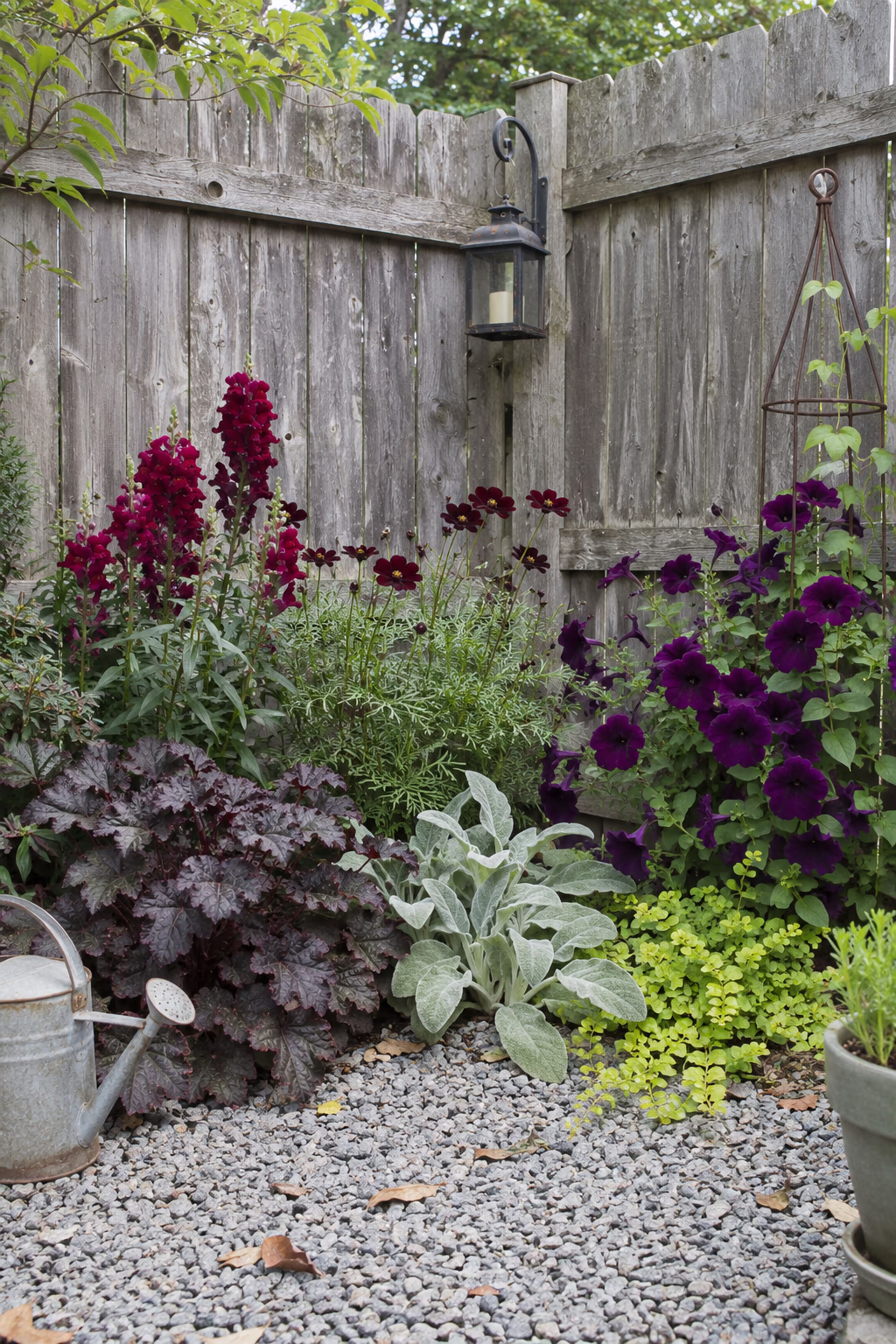
A dramatic palette that feels fresh and modern
Deep plum, burgundy, and near-black flowers are a growing favorite for small gardens that want something different. Mix chocolate cosmos, burgundy snapdragons, dark purple petunias, and ‘Queen of Night’ style tulips in spring, with dark-leaved coral bells as a backbone.
Dark colors look rich and intimate in a small corner, especially next to a weathered wood fence or pale gravel that makes them stand out.
Very dark blooms can disappear in deep shade or from across the yard, so add a few silver or chartreuse plants, like lamb’s ear or golden creeping Jenny, for contrast. Chocolate cosmos is tender, so treat it as an annual or dig and store the roots in cold zones.
10. Dress Up the Mailbox With a Small Flower Bed
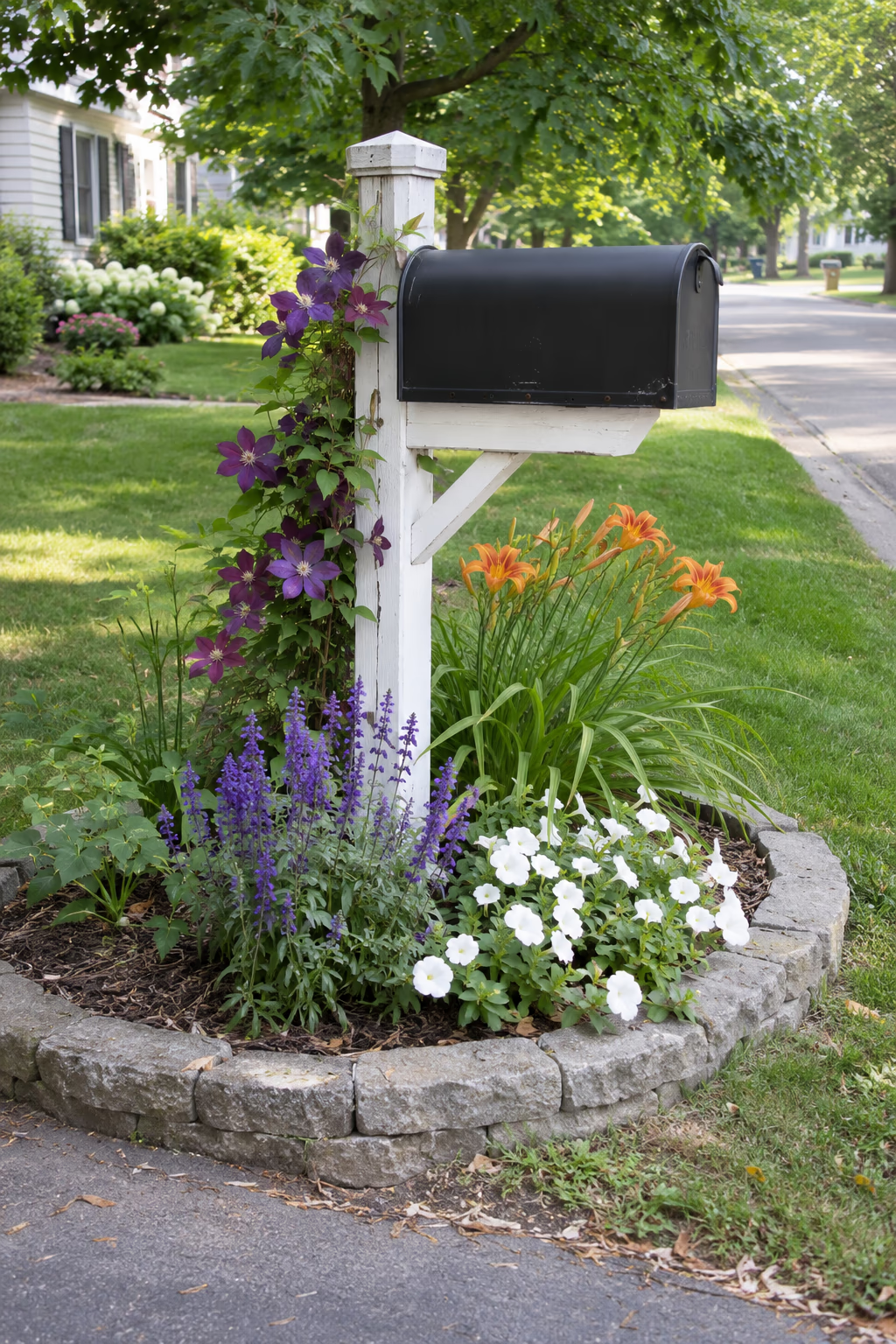
A tiny project with big curb appeal
A small bed around the mailbox post, about 3 to 4 feet across, is one of the quickest ways to add color to the front of a house. Edge it with stone, fill it with daylilies, low salvia, or petunias, and let a light clematis climb the post.
The bed is small enough to finish in an afternoon, and it greets visitors before they reach the door.
Keep plants low enough that the mail carrier can reach the box easily, and skip thorny roses or bee-magnet flowers right at the door of the box. Roadside spots take salt, heat, and snow from plows, so choose tough perennials and avoid fragile ones.
11. Build a Miniature Fairy Garden Under a Shrub
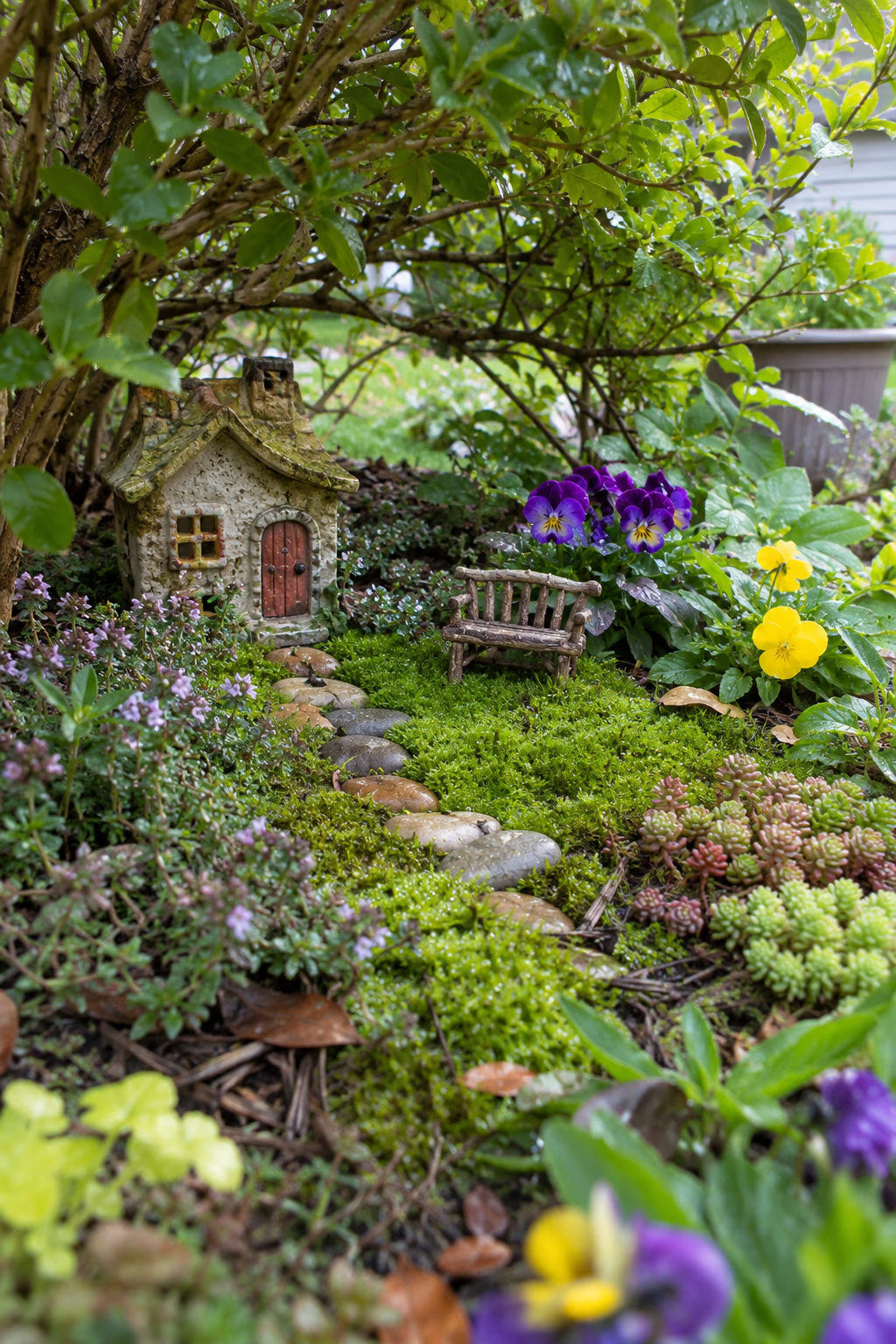
A whimsical scene that fits in a tiny nook
The space under the edge of a shrub or small tree is a natural spot for a fairy garden. Clear a patch about 2 feet wide, add a little moss or Irish moss, tuck in tiny flowering plants such as violas, creeping thyme, and miniature sedums, and set a small house or bench among them.
Fairy gardens are popular because they reward close looking. They also give children a fun reason to help in the garden.
Ceramic and resin accessories can crack in freezing weather, so bring them inside for winter. Keep the scene simple, since too many ornaments start to look like clutter rather than a garden.
12. Fill a Shady Side Yard With Shade-Loving Flowers
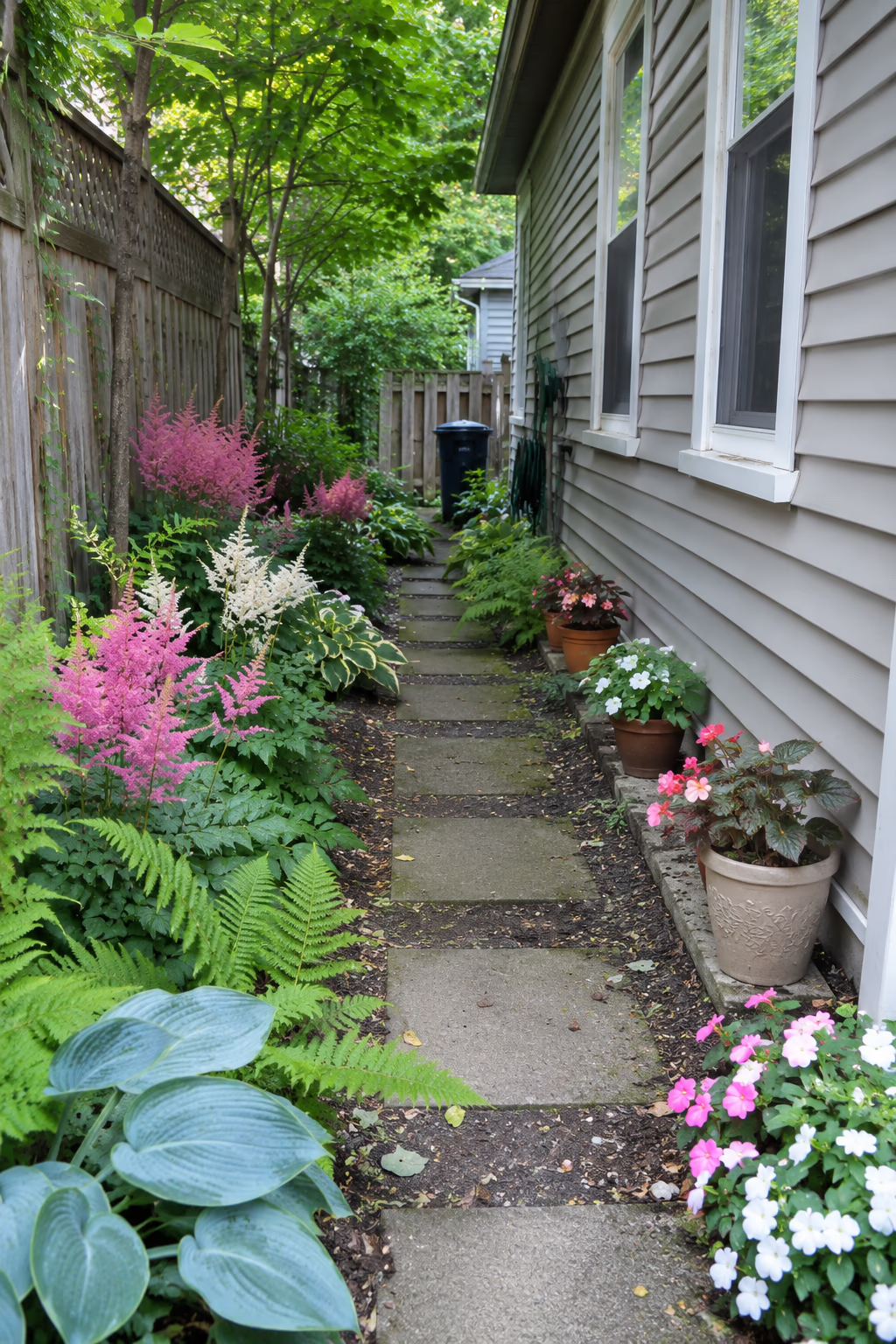
Real color where the sun barely reaches
A narrow side yard between houses often gets only a few hours of sun, but it can still bloom. Plant hellebores for late winter, bleeding heart for spring, astilbe and impatiens for summer, and begonias in a few pots along the walk.
Shade flowers often come in soft pinks, whites, and lavenders that glow in low light, which brightens a dim passage. Ferns and hostas between them add lush texture.
Side yards often hold utility meters, vents, and downspouts, so leave clear access to them. If the space stays soggy, choose moisture-tolerant plants like astilbe, and keep beds away from the foundation.
13. Grow a Fragrant Moon Garden for Evening Blooms
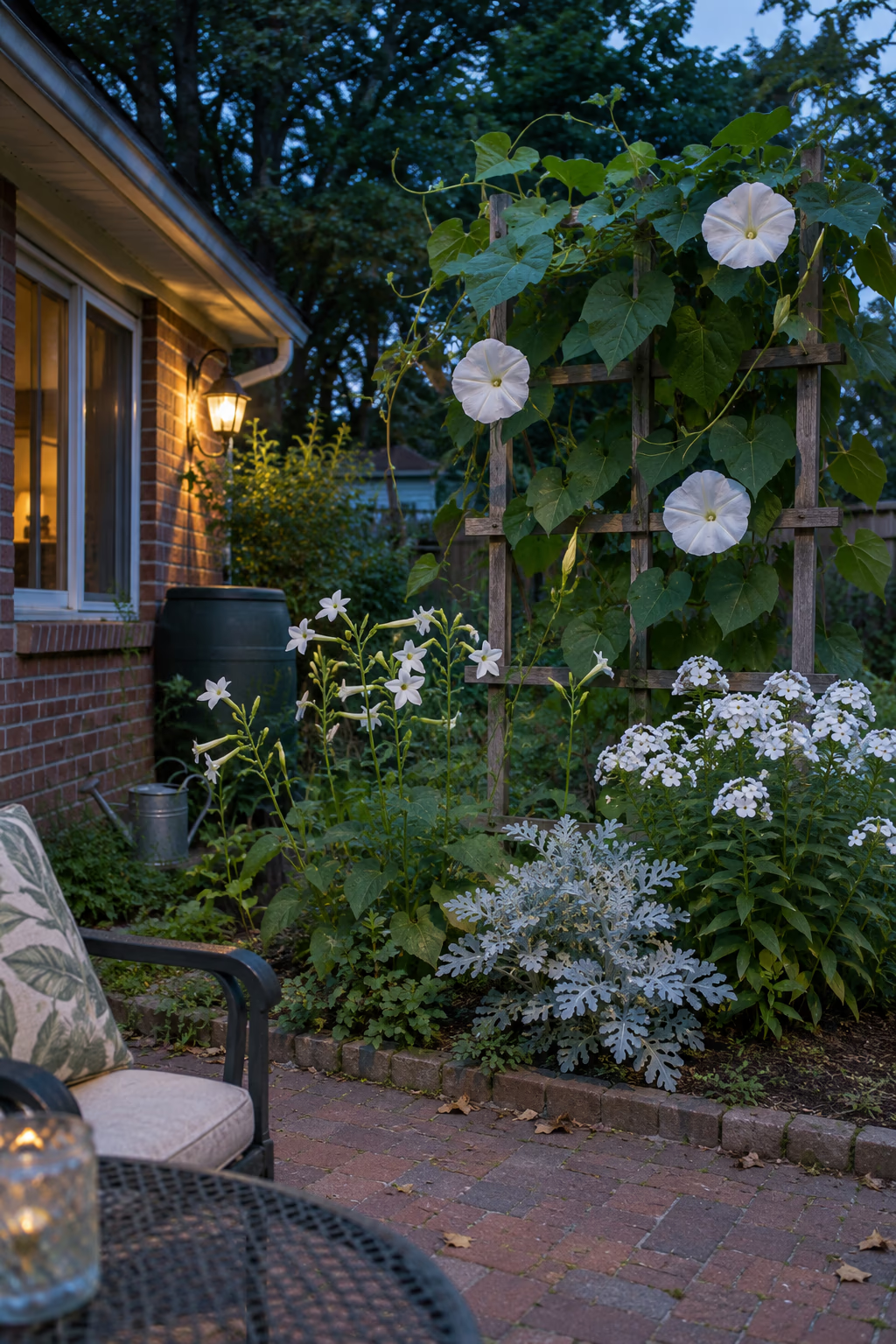
White flowers that shine after sunset
A moon garden uses white and pale flowers that seem to glow in the dusk. In a small bed near a patio or back door, grow flowering tobacco, moonflower vine on a trellis, white four o’clocks, white garden phlox, and silvery dusty miller.
Many of these flowers release their strongest scent in the evening, so the garden is at its best when you finally sit down after work.
Moonflower vines need warm weather and a sturdy support. Some evening plants, including datura and four o’clocks, are toxic if eaten, so place them carefully if children or pets use the yard.
14. Mix Edible Flowers Into a Kitchen Doorstep Bed
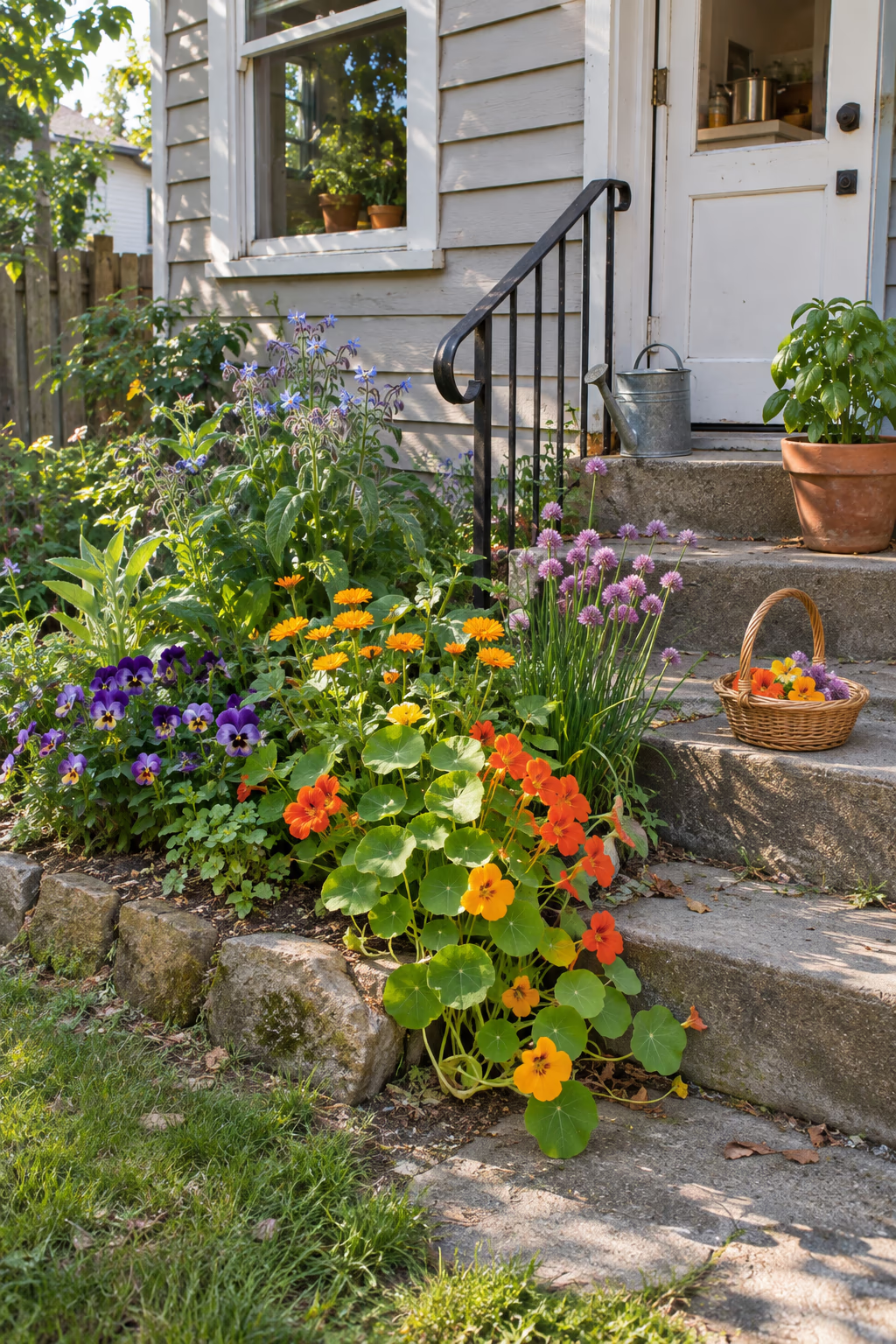
Pretty enough for the yard, useful for the table
A small bed near the kitchen door is ideal for flowers you can eat. Nasturtiums, calendula, violas, borage, and chive blossoms all grow well in a sunny 3-by-6-foot space and add color to salads and cakes.
Keeping them close to the door means you’ll actually use them, and the bright oranges, yellows, and blues look cheerful all summer.
Only eat flowers you have identified with certainty and grown without pesticides. Flowers from garden centers may have been treated, so start from seed or buy plants labeled for edible use.
15. Layer Spring Bulbs in a Lasagna Bed
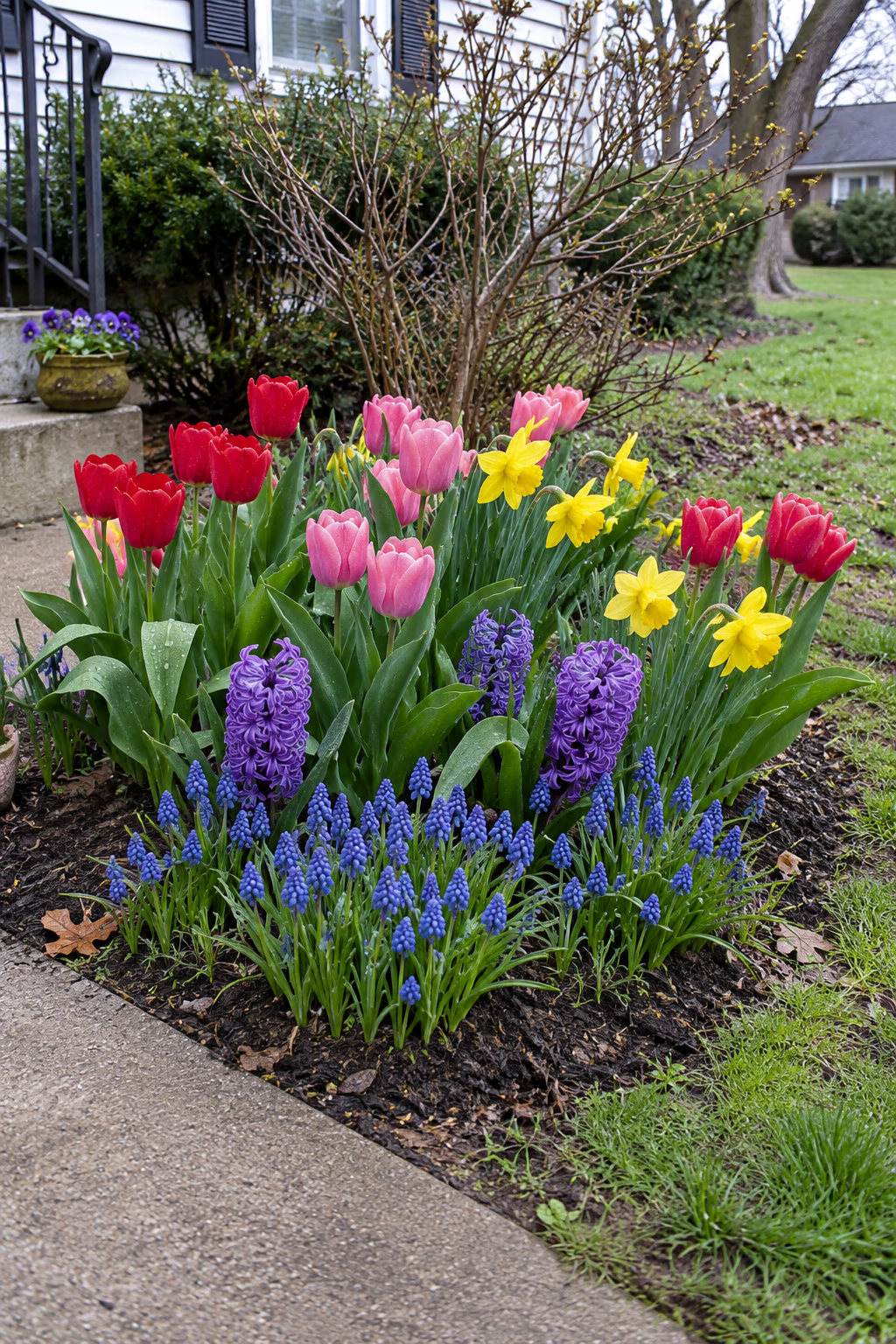
Weeks of color from one small patch
Lasagna planting stacks bulbs at different depths in the same spot. In fall, set tulips about 6 to 8 inches deep, cover with soil, add daffodils or hyacinths above them, then finish with crocus or grape hyacinths about 3 to 4 inches deep.
The layers bloom one after another, so a 3-by-3-foot bed can flower from early spring into May. It’s a great trick for small gardens that need every inch to work.
Plant bulbs from September to November, before the ground freezes. Squirrels and voles love tulips and crocus, so a piece of hardware cloth over the planting or a switch to daffodils can help.
16. Fill a Sunny Corner With Dwarf Dahlias
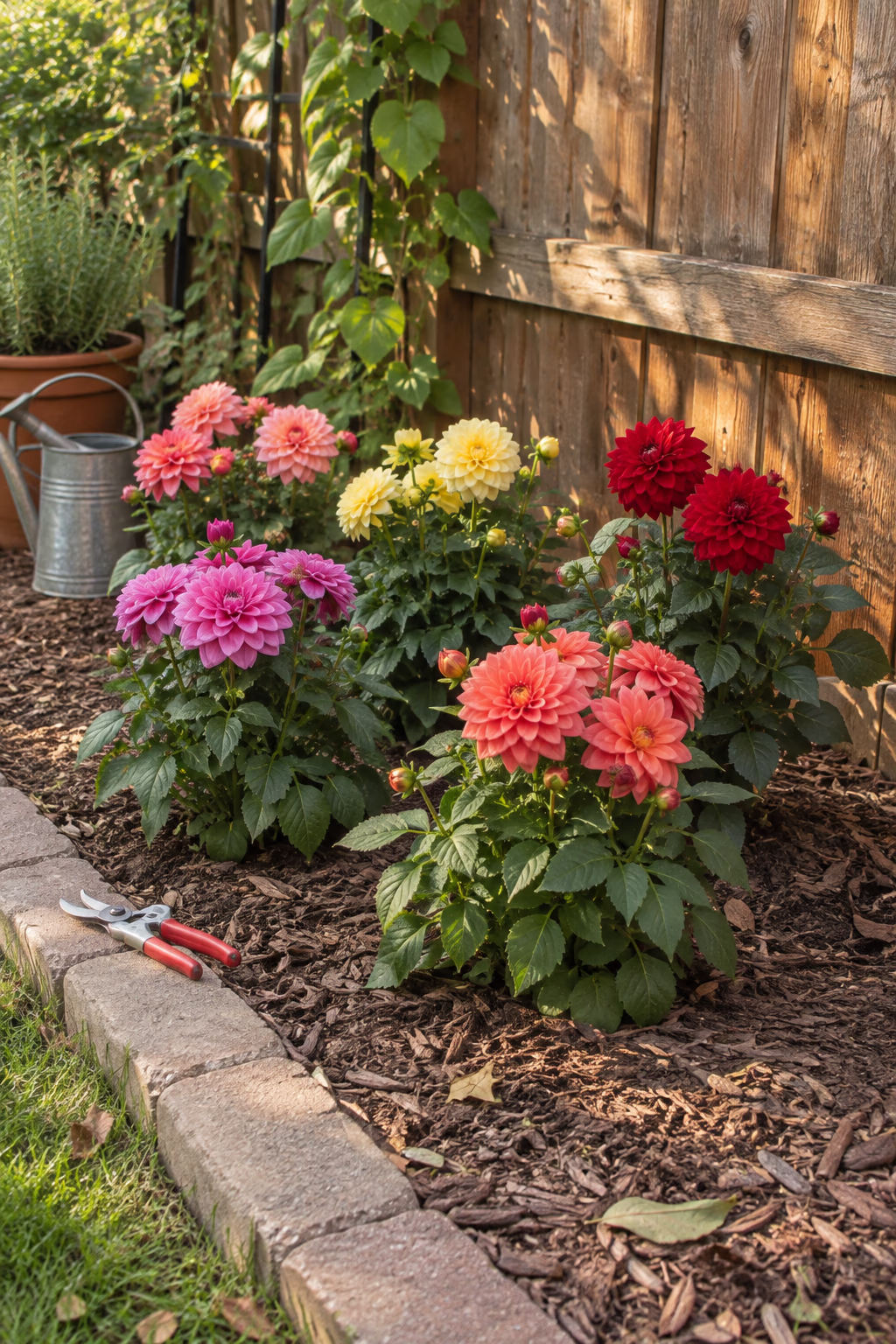
Big, bold blooms on compact plants
Dwarf dahlias usually stay 12 to 24 inches tall, so they fit small beds without staking. A cluster of five or six plants in a corner gives months of rich color from midsummer until frost.
They bloom best in full sun with rich, well-drained soil, and frequent cutting encourages more flowers.
Dahlias grow from tubers that are not winter hardy in most of the country. In zones colder than about 8, dig them after the first frost and store them in a cool, dry place for winter.
17. Turn an Old Chair Into a Flower Planter
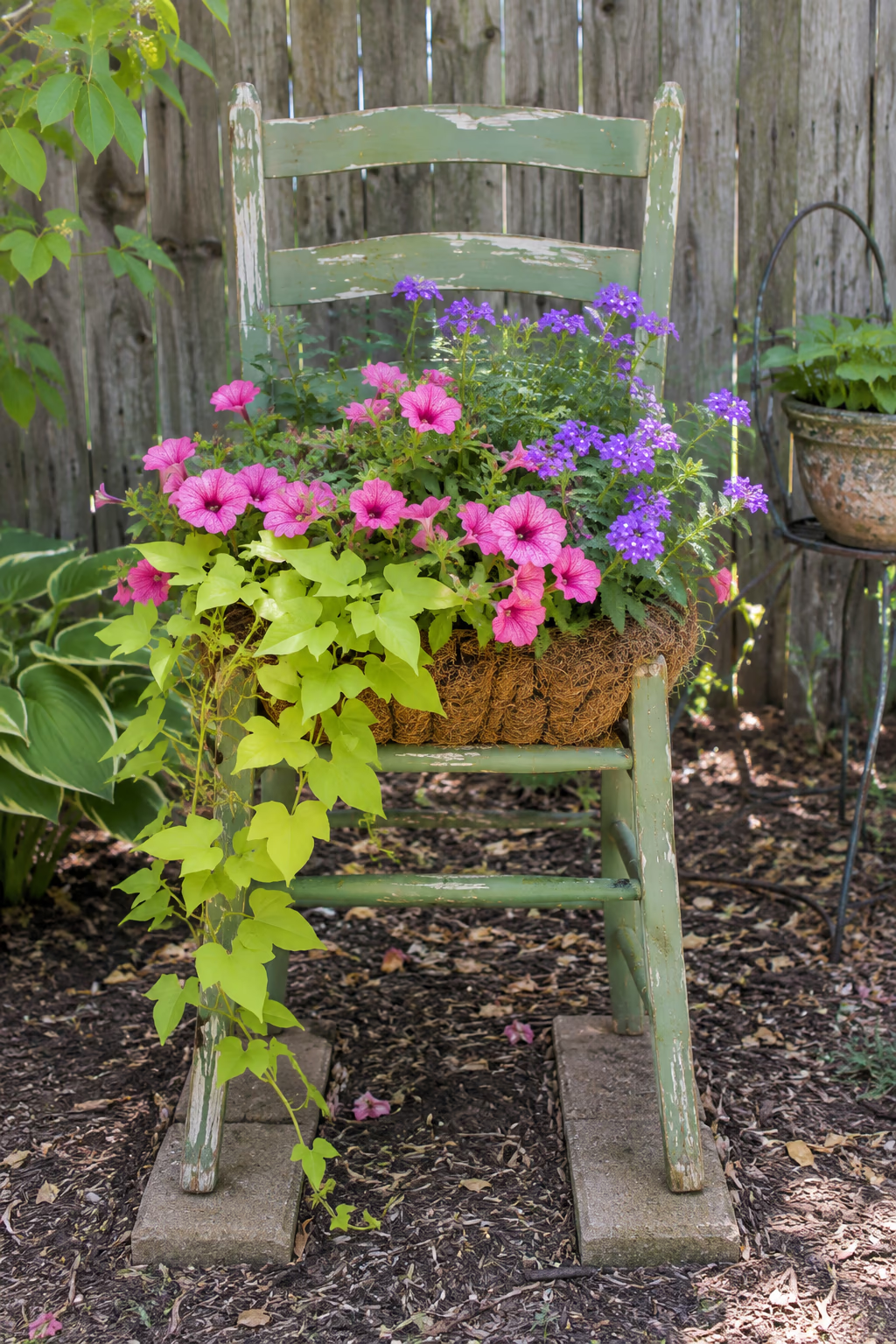
A quirky, upcycled piece with personality
A worn wooden or metal chair with a broken seat makes a great planter. Remove the seat, set a coco-fiber hanging basket liner into the frame, and fill it with potting mix and trailing flowers like petunias, verbena, or sweet potato vine.
A painted chair in a soft blue or sage green looks charming tucked among other plants or against a fence. It adds height and character to a small garden for almost no cost.
Wood chairs will eventually rot where they touch damp soil, so seal the legs or set them on pavers. Coco liners dry out quickly and need watering often in hot weather.
18. Plant a Low-Water Bloom Bed With Salvia and Yarrow
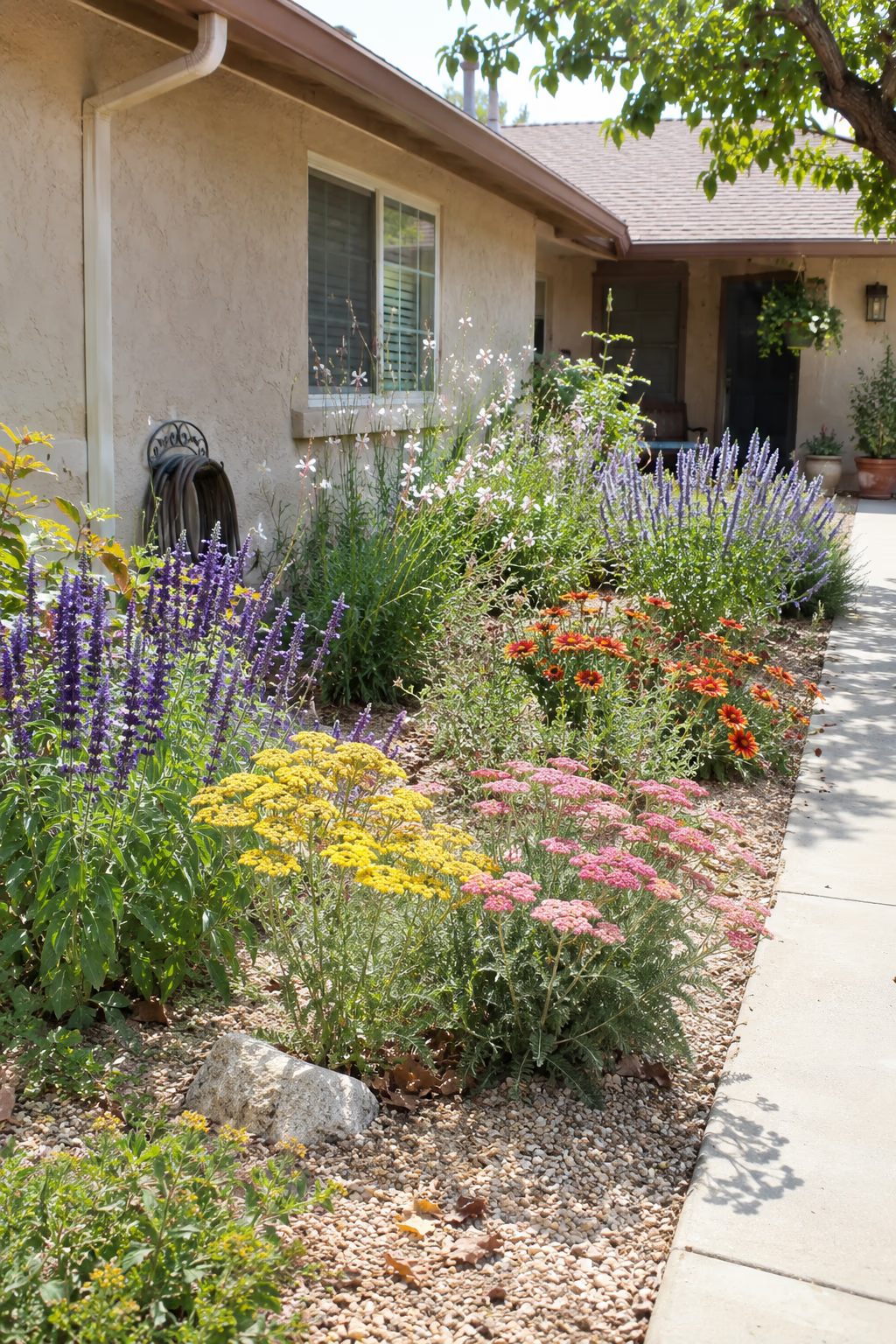
Lots of flowers with little watering
A sunny bed planted with drought-tolerant perennials needs far less water once it’s established. Try purple salvia, yellow or pink yarrow, agastache, gaura, and blanket flower, finished with a layer of gravel or shredded mulch.
These plants thrive in hot sun and lean soil and draw in bees, butterflies, and hummingbirds. In dry climates, they help cut down on summer watering.
Even drought-tolerant plants need regular watering for their first season while roots develop. Avoid rich, heavily amended soil, which can make these plants floppy.
19. Train Sweet Peas Up a Small Obelisk
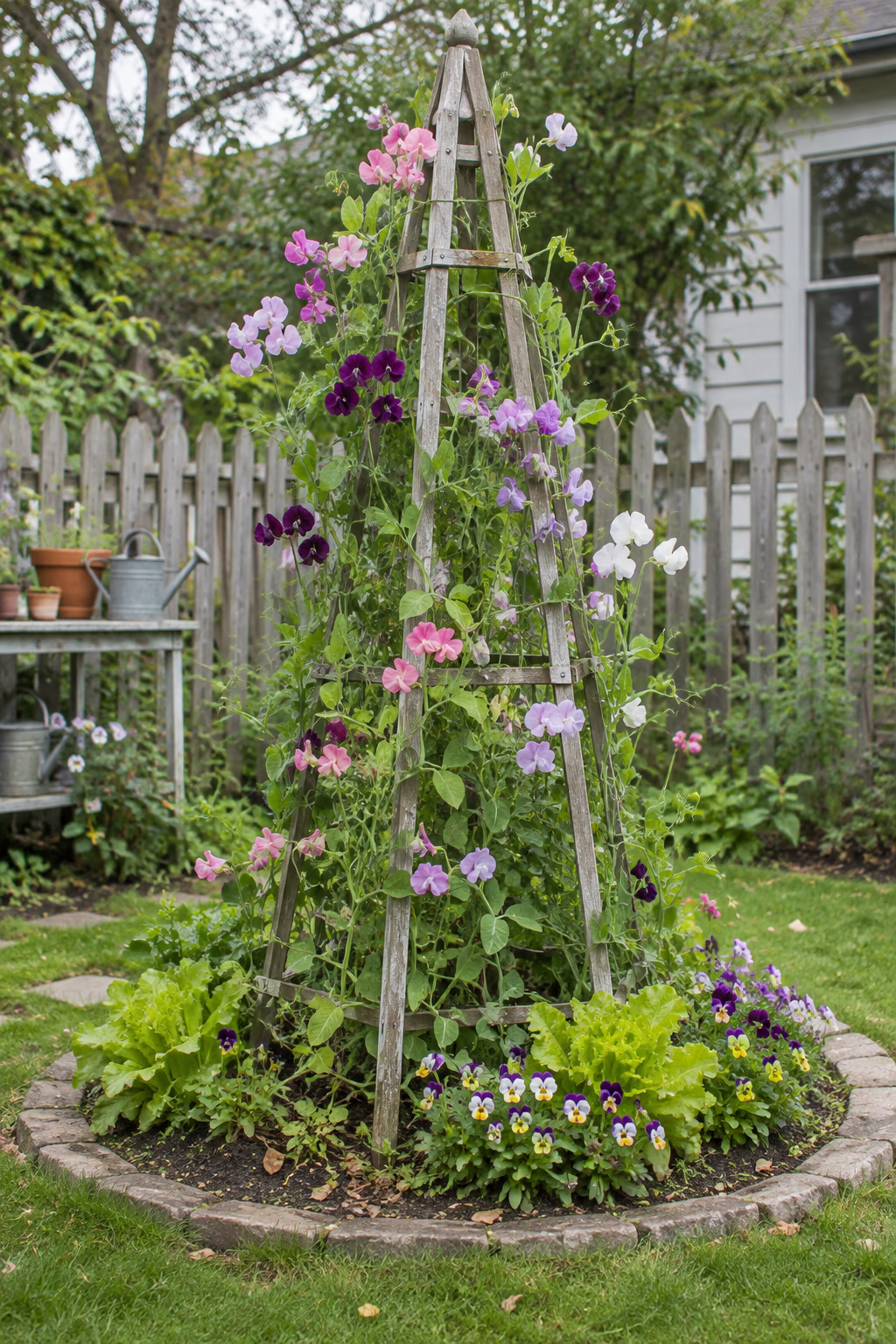
Height and scent in a 2-foot circle
A wooden or metal obelisk about 5 to 6 feet tall gives sweet peas a place to climb in a small flower garden. Sow seeds around its base and guide the young tendrils onto the frame.
The vertical shape adds height without taking up much ground, and sweet peas are known for their fragrance and soft colors.
Sweet peas prefer cool weather. Sow them in early spring in most areas or in fall in mild-winter regions, and expect them to fade in summer heat. Their seeds and pods are toxic, so they are not the same as edible garden peas.
20. Circle a Small Tree With Low Flowering Groundcovers
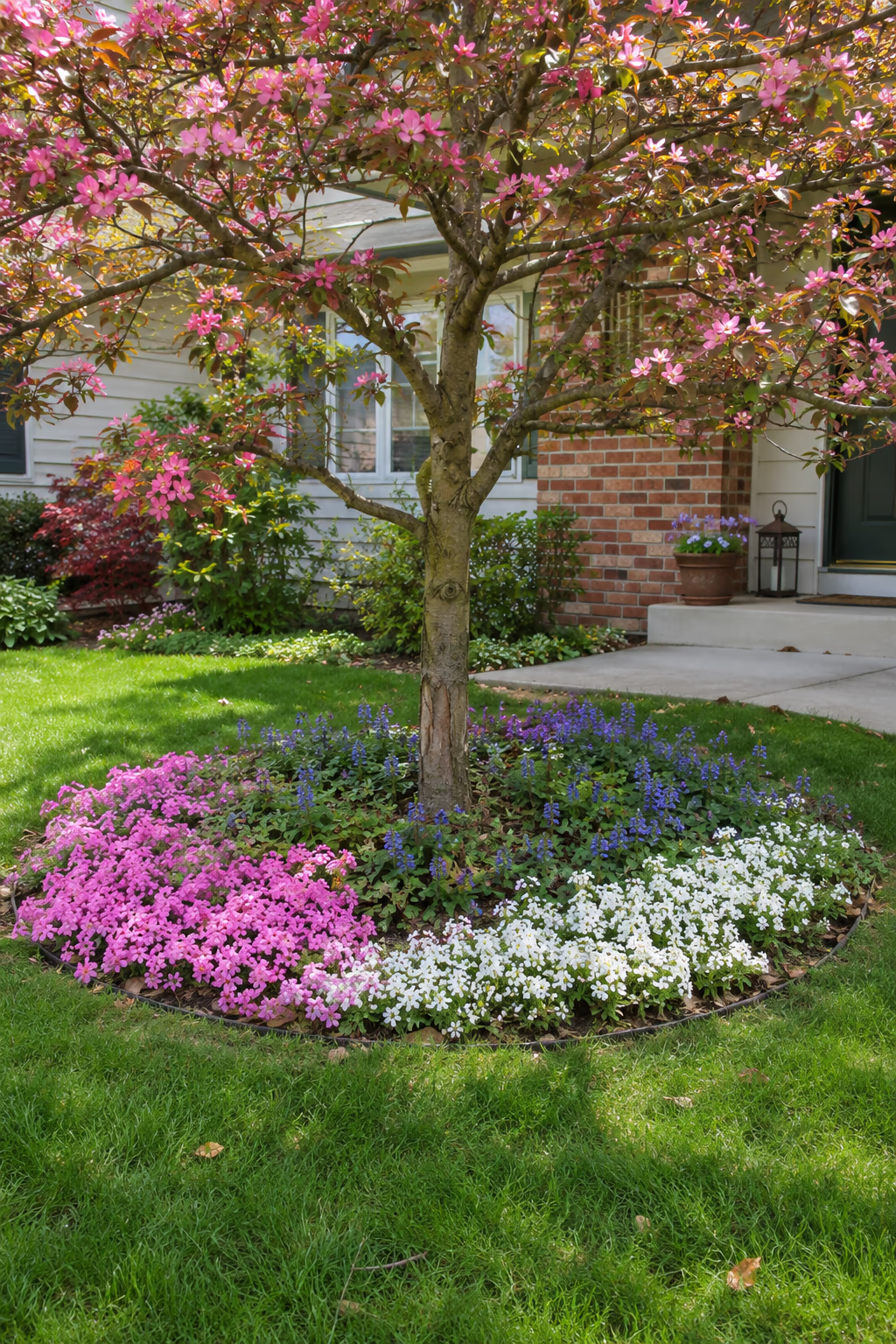
Turn bare soil under a tree into a living carpet
The ground under a small tree is often bare or patchy grass. Replace it with low flowering groundcovers, such as creeping phlox in sun, or ajuga and sweet woodruff in shade.
A blooming ring makes the tree look like part of the garden instead of a lone feature in the lawn, and it keeps the mower away from the trunk.
Don’t pile soil against the trunk or add more than an inch or two over the roots. Plant small plugs into pockets between roots instead of digging big holes, and water them well while the tree competes for moisture. Sweet woodruff can spread, so give it room or edge it.
21. Set Out a Shallow Puddling Dish for Butterflies
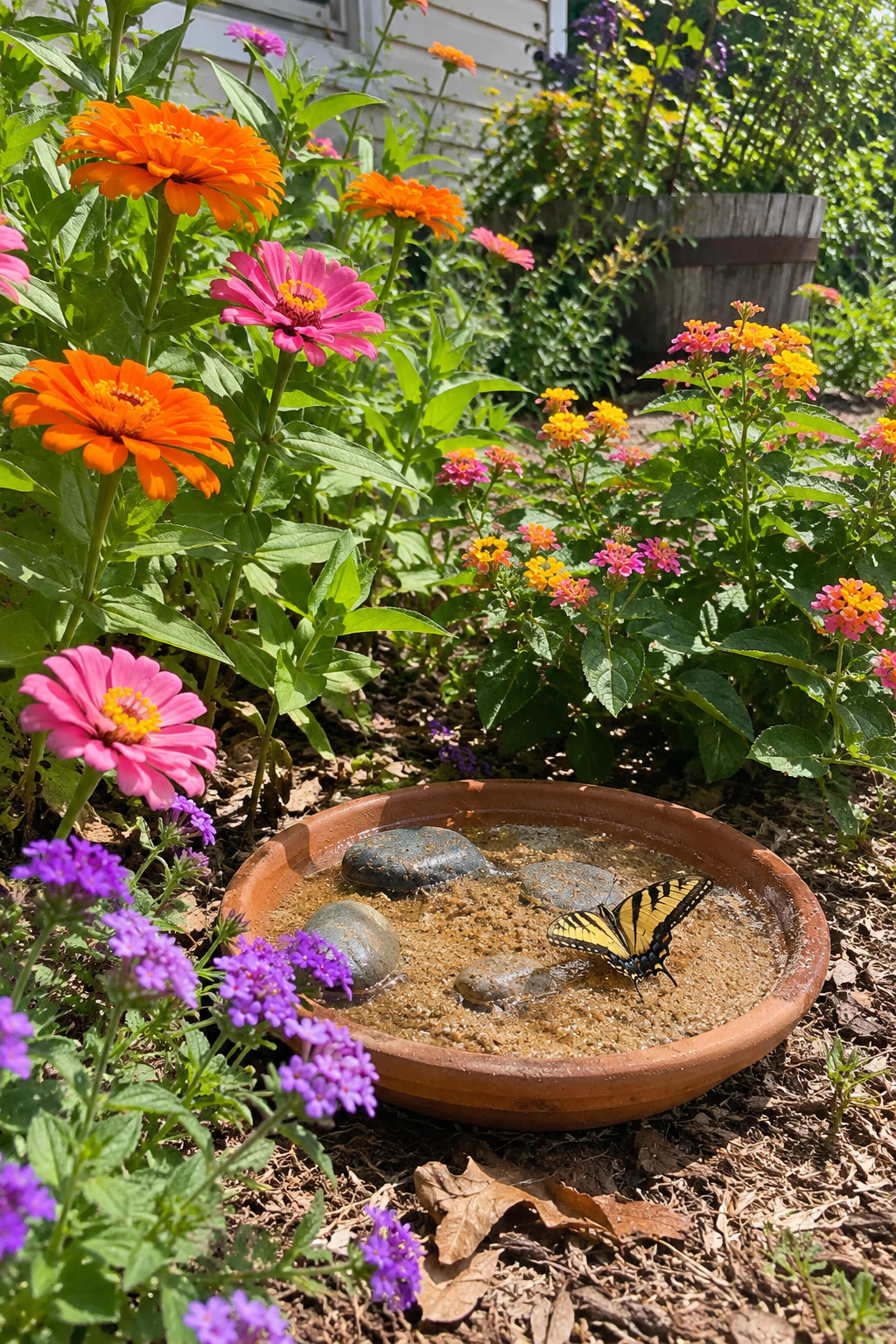
A small detail that brings your flowers to life
Butterflies gather moisture and minerals from damp sand and soil, a behavior called puddling. Fill a shallow terra-cotta saucer with coarse sand, add a few flat stones for perching, and keep the sand moist.
Set the dish in a sunny spot among nectar flowers like zinnias, lantana, or verbena to make your garden more inviting for butterflies.
Keep the sand damp rather than covered in standing water, which can breed mosquitoes. Refresh it every day or two in hot weather.
22. Plant the Hellstrip With Tough Low Flowers
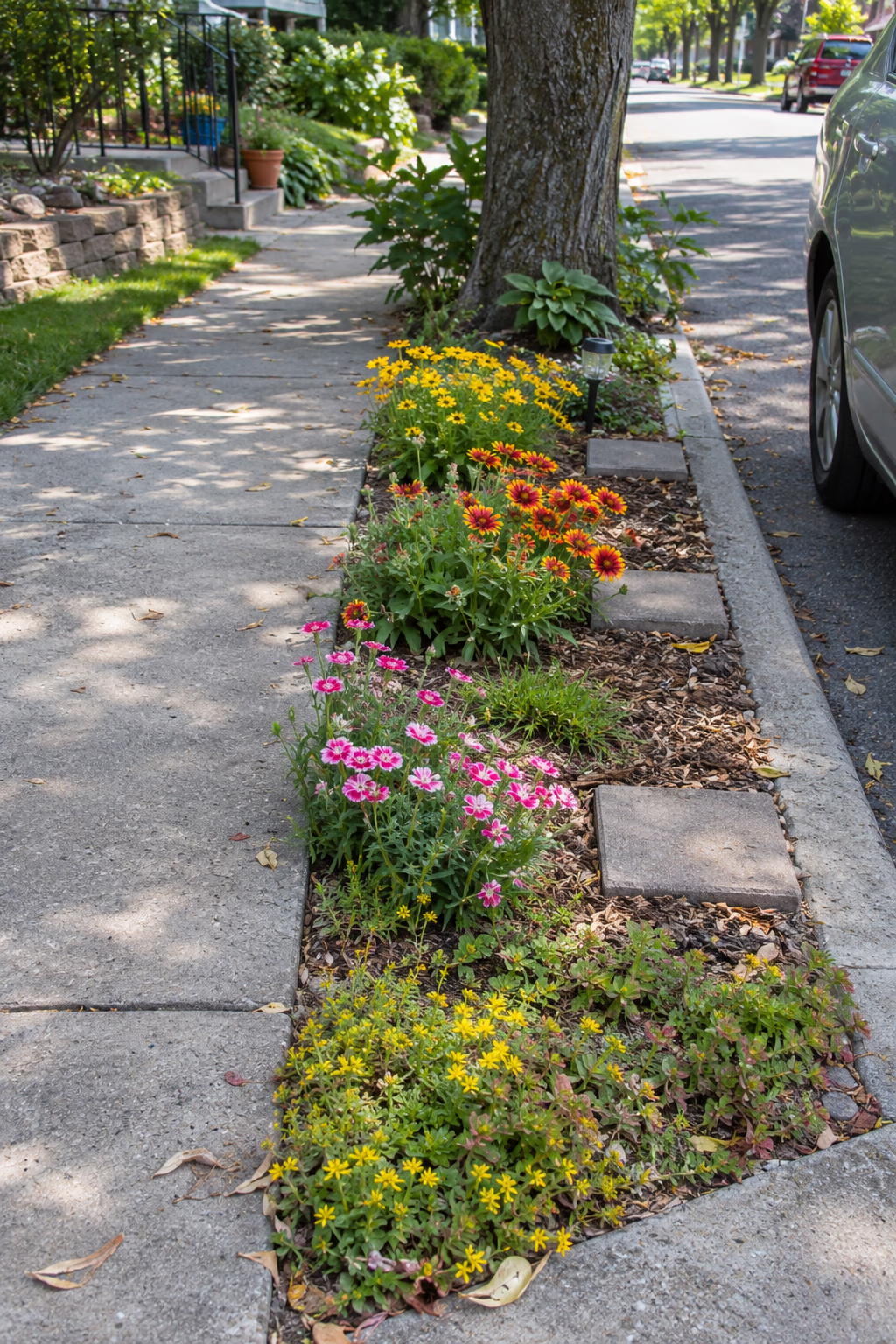
Bring color to the strip between sidewalk and street
The narrow strip between the sidewalk and curb, often called a hellstrip, is hot, dry, and overlooked. Tough low plants like creeping sedum, dianthus, coreopsis, and blanket flower turn it into a cheerful strip of blooms.
Planting the strip extends your garden to the street and saves you from mowing a hard-to-reach patch of grass.
Check local ordinances or HOA rules first, since many cities limit plant height and require clear sight lines near driveways. Keep plants under about 24 inches, leave room for car doors and walkers, and call 811 before digging.
23. Anchor the Garden With Dwarf Flowering Shrubs
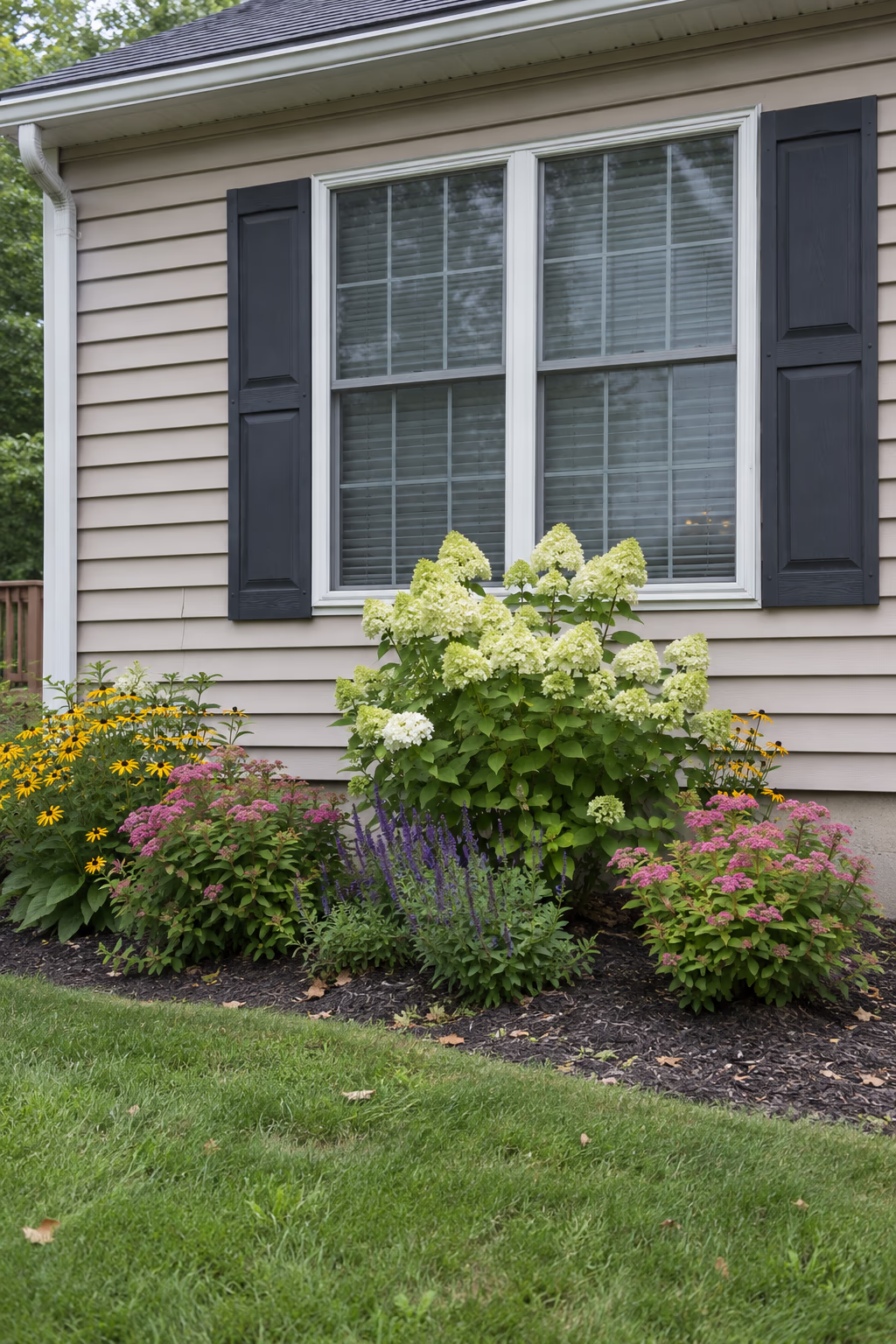
Year-round structure that stays small
A few dwarf shrubs give a small flower garden its backbone. Options include dwarf spirea, compact panicle hydrangeas, reblooming dwarf lilacs, and abelia, most staying 2 to 4 feet tall.
Shrubs keep the bed from looking bare in winter and early spring, while annuals and perennials fill the gaps around them.
Read the mature size on the tag carefully. Some plants sold as compact still reach 5 feet or more. Prune at the right time for each shrub so you don’t cut off next year’s blooms.
24. Edge a Tiny Bed With Reclaimed Brick
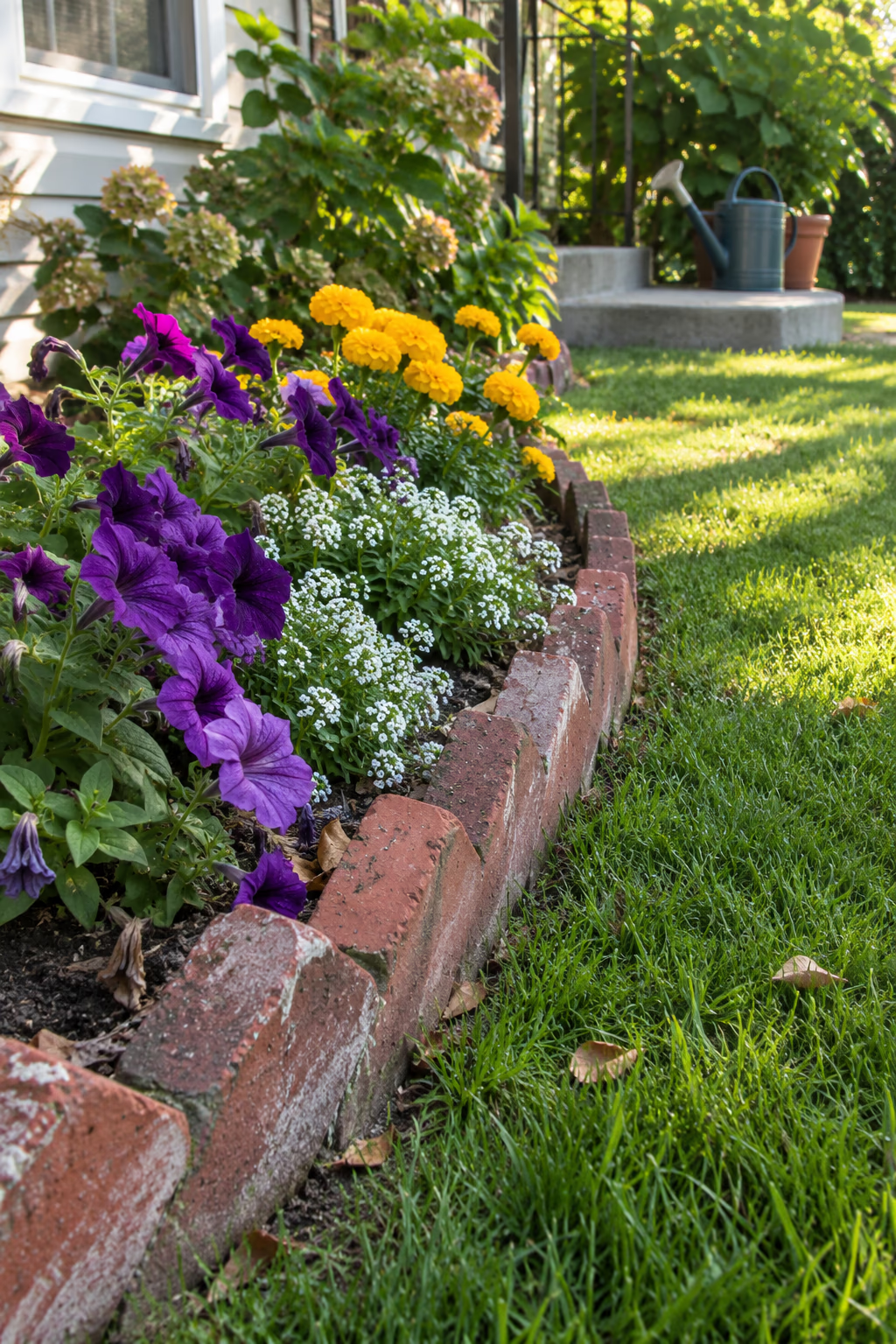
Crisp lines with old-fashioned character
Salvaged brick edging makes even a small flower bed look finished. Dig a narrow trench, add an inch of sand, and set bricks on end, flat, or tilted at an angle in a sawtooth pattern.
The worn color and texture of old brick look warm next to flowers and help keep mulch in and grass out.
Check reclaimed brick for cracks and crumbling faces, since soft bricks can break apart after a few freeze-thaw cycles. Set the edging just above soil level so a mower wheel can run along it.
25. Plant a Fall Flower Corner With Asters and Mums
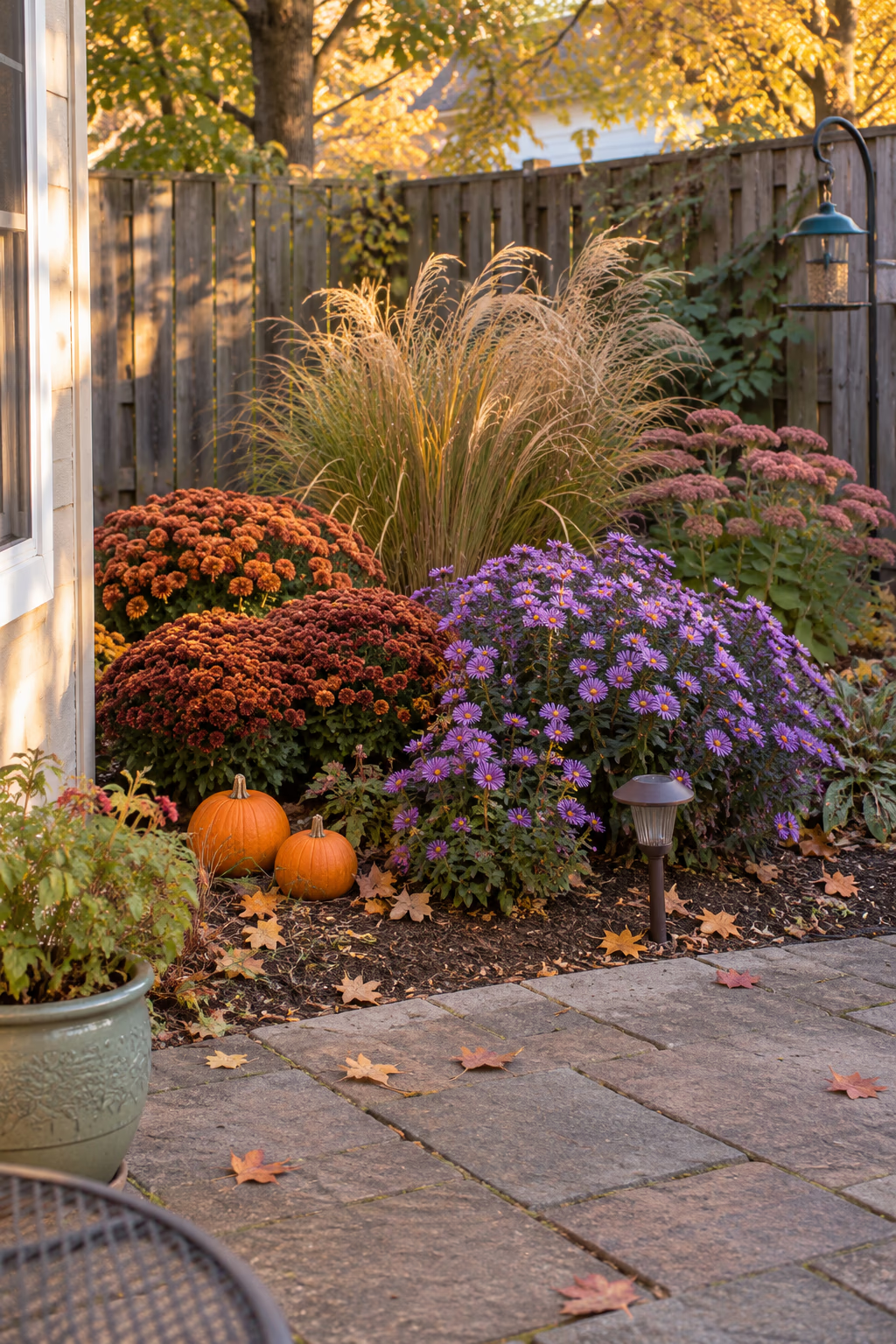
Keep a small garden blooming until frost
A corner planted for fall color carries a small flower garden well past summer. Combine purple asters, garden mums in rust or bronze, sedum, and ornamental grasses, with pumpkins or ornamental kale for contrast.
Fall blooms feed late butterflies and bees and give the garden a final burst of color before winter.
Pinch asters and mums back until early July for bushier plants with more blooms. Mums sold in full bloom in autumn may not survive winter in cold regions, so plant hardy garden mums in spring for better results.
How to Plan Your Small Flower Garden
A small flower garden looks best when it has a clear plan. A few decisions at the start make it easier to choose plants and keep the space looking full.
- Watch the light. Note how many hours of sun the space gets before buying plants. Most sun-loving flowers need at least six hours a day.
- Pick a simple color scheme. Two or three main colors repeated through the bed look more polished than one of every color.
- Use height wisely. Add vertical interest with obelisks, wall pockets, or raised planters so the garden doesn’t look flat.
- Plan for every season. Combine spring bulbs, summer bloomers, fall flowers, and a few evergreen or shrubby plants for year-round interest.
- Improve the soil first. Loosen compacted soil and mix in compost before planting, except for low-water plants that prefer leaner ground.
- Make watering easy. Keep a hose or watering can nearby, and consider drip lines for containers and pocket walls that dry out fast.
Frequently Asked Questions
What flowers bloom the longest in a small garden?
Zinnias, petunias, calibrachoa, salvia, coreopsis, and sweet alyssum bloom for months with regular deadheading. Mixing a few long bloomers with seasonal flowers keeps a small garden colorful from spring to fall.
How many plants do I need for a small flower bed?
It depends on the mature size of each plant. As a rough guide, small annuals are spaced about 8 to 12 inches apart, while perennials often need 12 to 24 inches. Check plant tags and allow room for growth.
Can I grow a flower garden in a spot with little sun?
Yes. Impatiens, begonias, astilbe, hellebores, bleeding heart, and many hostas bloom in partial or full shade. Shade gardens often rely on foliage texture as well as flowers.
When is the best time to start a small flower garden?
Spring is the most common time to plant annuals and perennials after the danger of frost passes. Fall is ideal for planting spring bulbs and many perennials while the soil is still warm.
How do I keep a small flower garden low maintenance?
Choose plants that suit your sun and soil, add 2 to 3 inches of mulch to reduce weeds and hold moisture, and group plants with similar water needs. Drip irrigation and long-blooming perennials also cut down on chores.
Final Thoughts
A small flower garden proves that you don’t need a big yard to enjoy plenty of blooms. A tipped wheelbarrow, a birdbath planter, or a neat bento grid can bring color and charm to even the tightest corner.
Start with one idea that fits your space and light, then add more as your confidence grows. With careful plant choices and a little regular care, your small garden can bloom beautifully through every season.


