
Imagine stepping out the back door with a cup of coffee and finding two chairs tucked between pots of lavender, a little tree casting dappled shade, and the sound of trickling water just loud enough to cover the neighbor’s lawn mower. The whole space might be no bigger than a parking spot, yet it feels like a getaway.
That’s the secret of a well-planned small garden. With less ground to cover, every plant, pot, and chair gets noticed, so a few smart choices go a long way. Small gardens also cost less to build, take less time to maintain, and are easier to change when you want a fresh look.
These 31 small garden ideas cover cozy seating corners, compact trees, vertical planting, space-stretching visual tricks, edibles, wildlife features, and clever furniture. Each one works in an ordinary backyard, townhouse patio, or narrow side yard, and most can be done over a weekend or two.
1. Tuck a Bistro Set Into a Gravel Corner
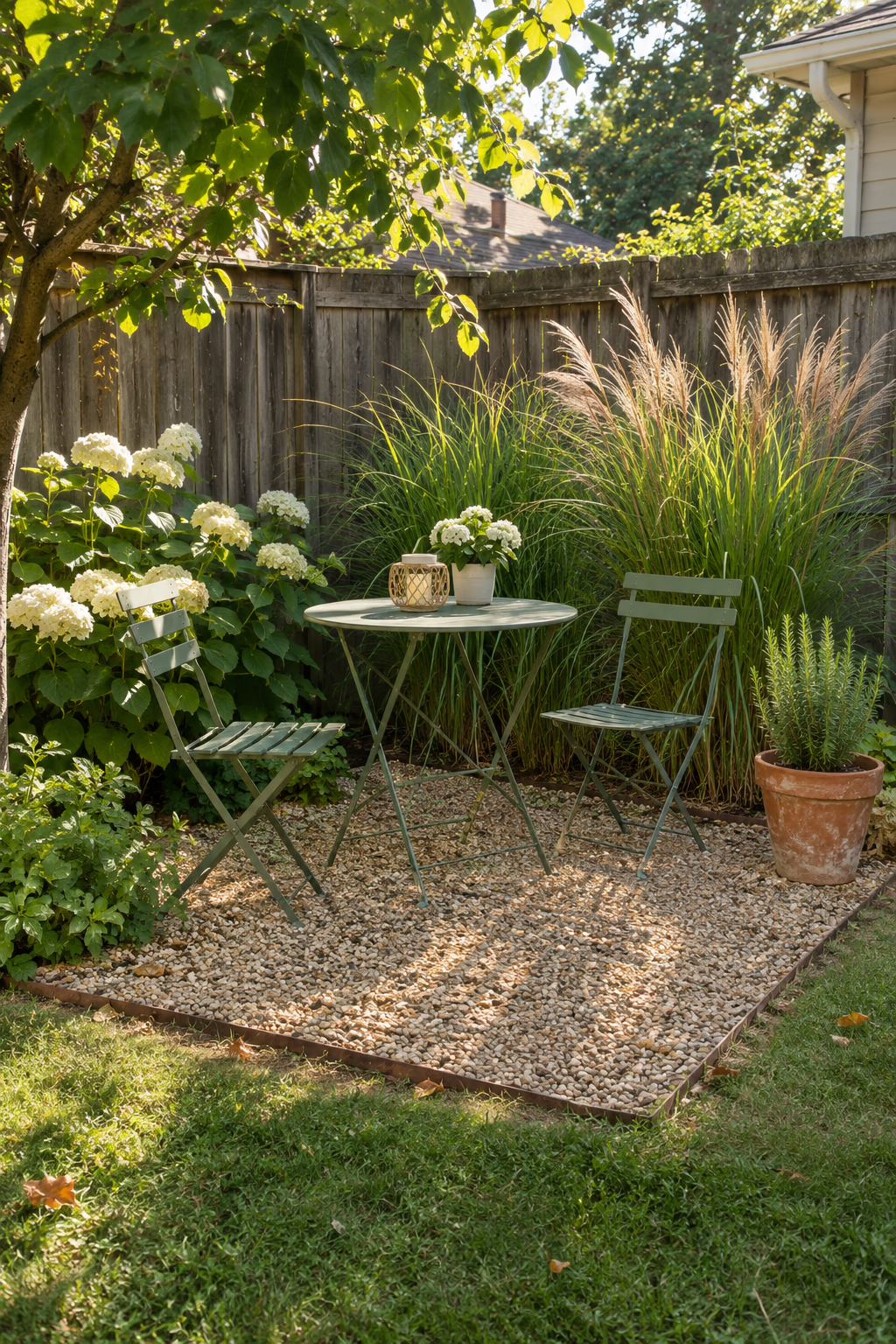
A dedicated seat makes a tiny garden feel like a destination
Pick the corner that gets morning or late-afternoon sun, mark out a square about 6 by 6 feet, and lay a layer of compacted base topped with 2 inches of pea gravel or crushed granite. Edge it with steel or brick so the gravel stays put, then add a small round table and two folding chairs.
Surround the gravel with planting on two sides, such as tall grasses, a hydrangea, or a pot of rosemary. Being wrapped in greenery is what makes the spot feel private and special rather than like leftover space.
Choose rounded pea gravel if you’ll be barefoot, and angular crushed stone if you want chair legs to sit firmly without sinking.
2. Plant a Multi-Stem Tree as a Focal Point
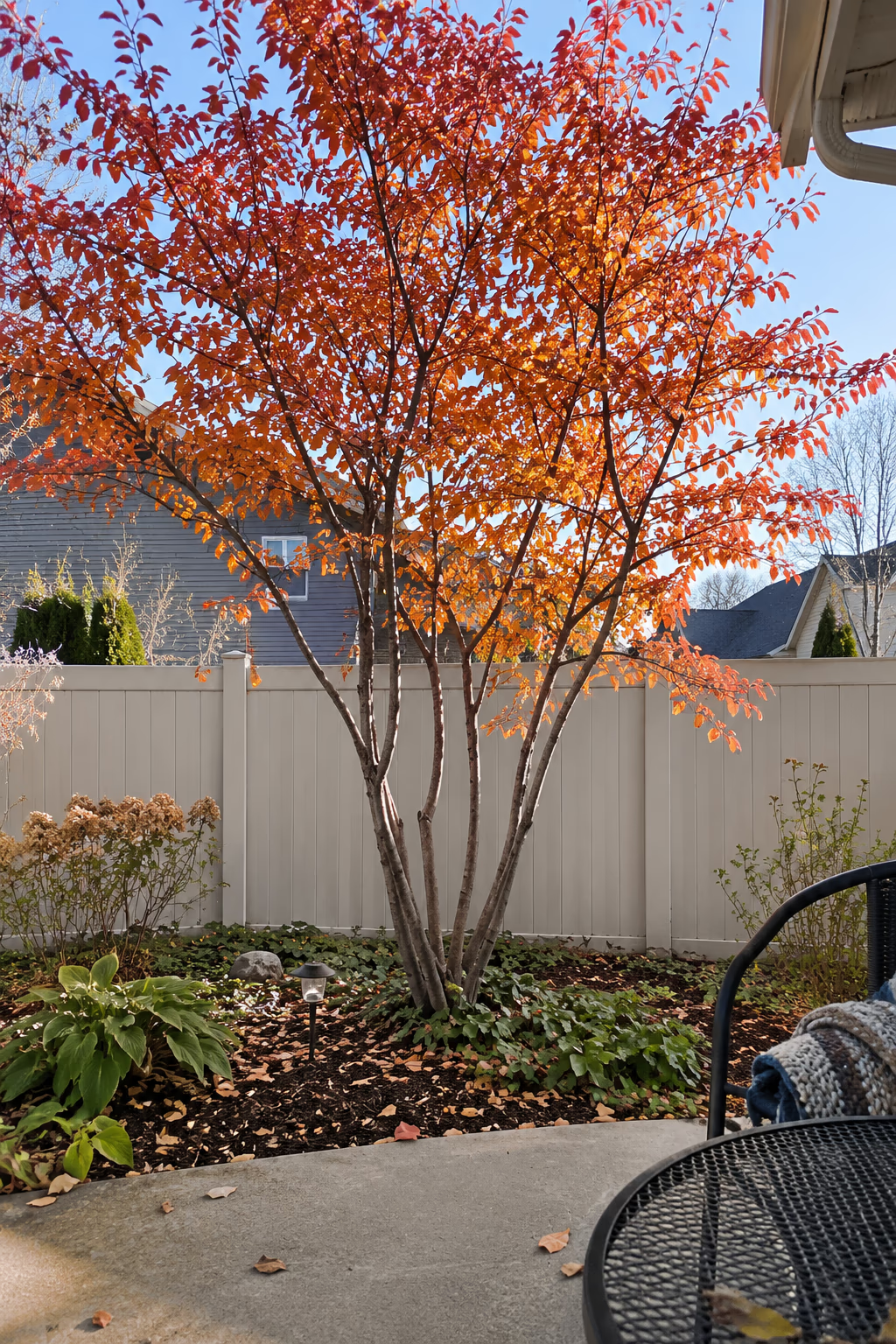
One small tree adds height, shade, and seasonal drama
A multi-stem tree has several slender trunks instead of one, which gives it a sculptural, airy shape that suits small spaces. Good choices include serviceberry, Japanese maple, river birch, redbud, and crape myrtle in warmer zones.
Place it where you’ll see it from the kitchen window or patio, at least 8 to 10 feet from the house foundation. Underplant with low groundcovers so the stems stay on display. Serviceberry is a standout because it offers spring flowers, summer berries for birds, and orange fall color.
Check the mature spread on the plant tag. A tree that tops out at 15 to 20 feet tall is usually the right scale for a small yard.
3. Frame a Seating Nook With a Pergola and String Lights
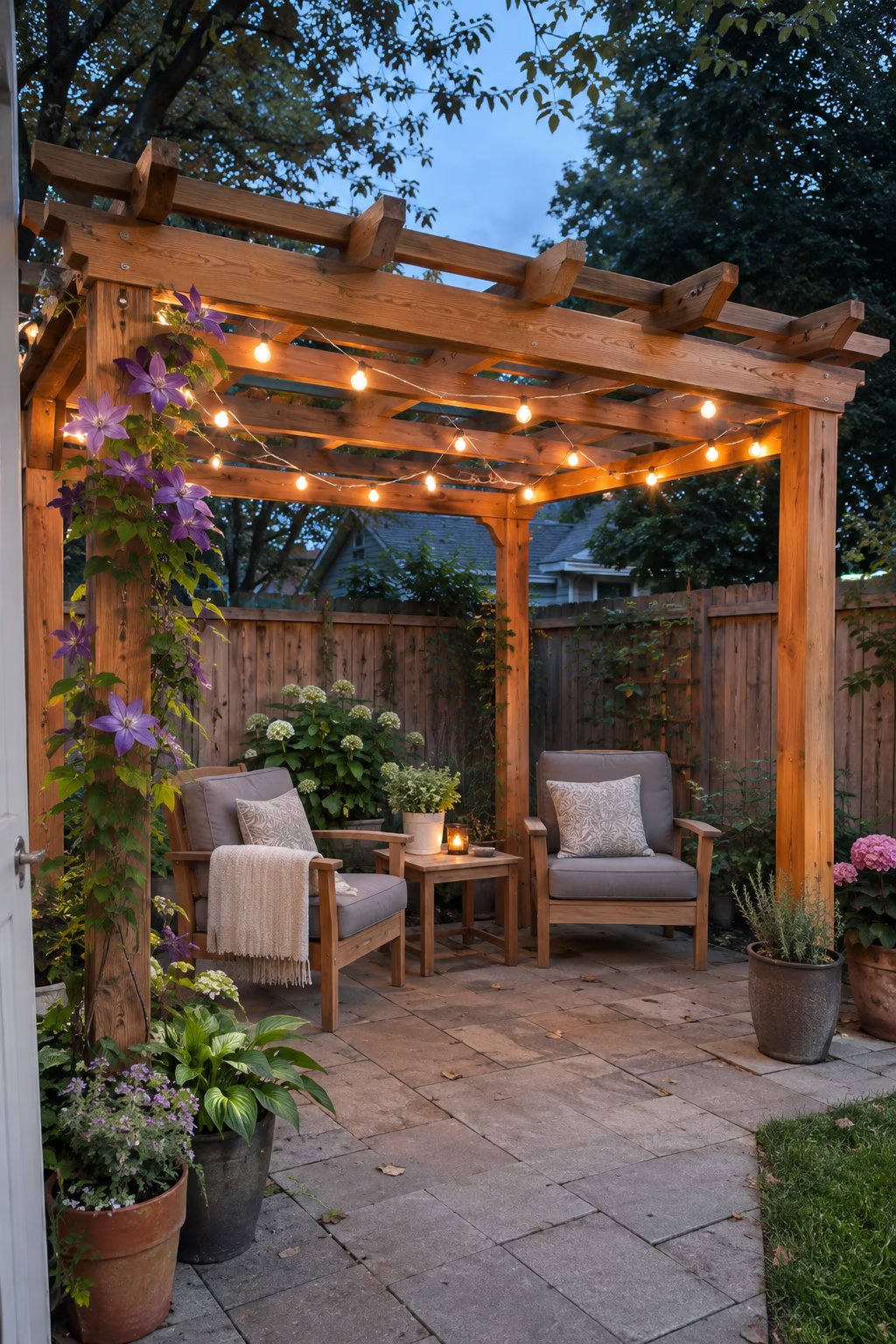
Overhead structure turns a patio into an outdoor room
A freestanding pergola about 8 by 10 feet creates a sense of enclosure without blocking light. Cedar and pressure-treated pine are common budget materials, and many home centers sell kits that two people can assemble in a weekend.
Zigzag outdoor-rated string lights across the top rafters and you have a space that works long after sunset. Training a vine such as clematis or a climbing hydrangea up one post softens the frame over time.
Larger or attached pergolas may need a permit, so check with your city or HOA first. Anchor posts securely into concrete footings or with heavy-duty post bases.
4. Divide the Space Into Two Garden Rooms
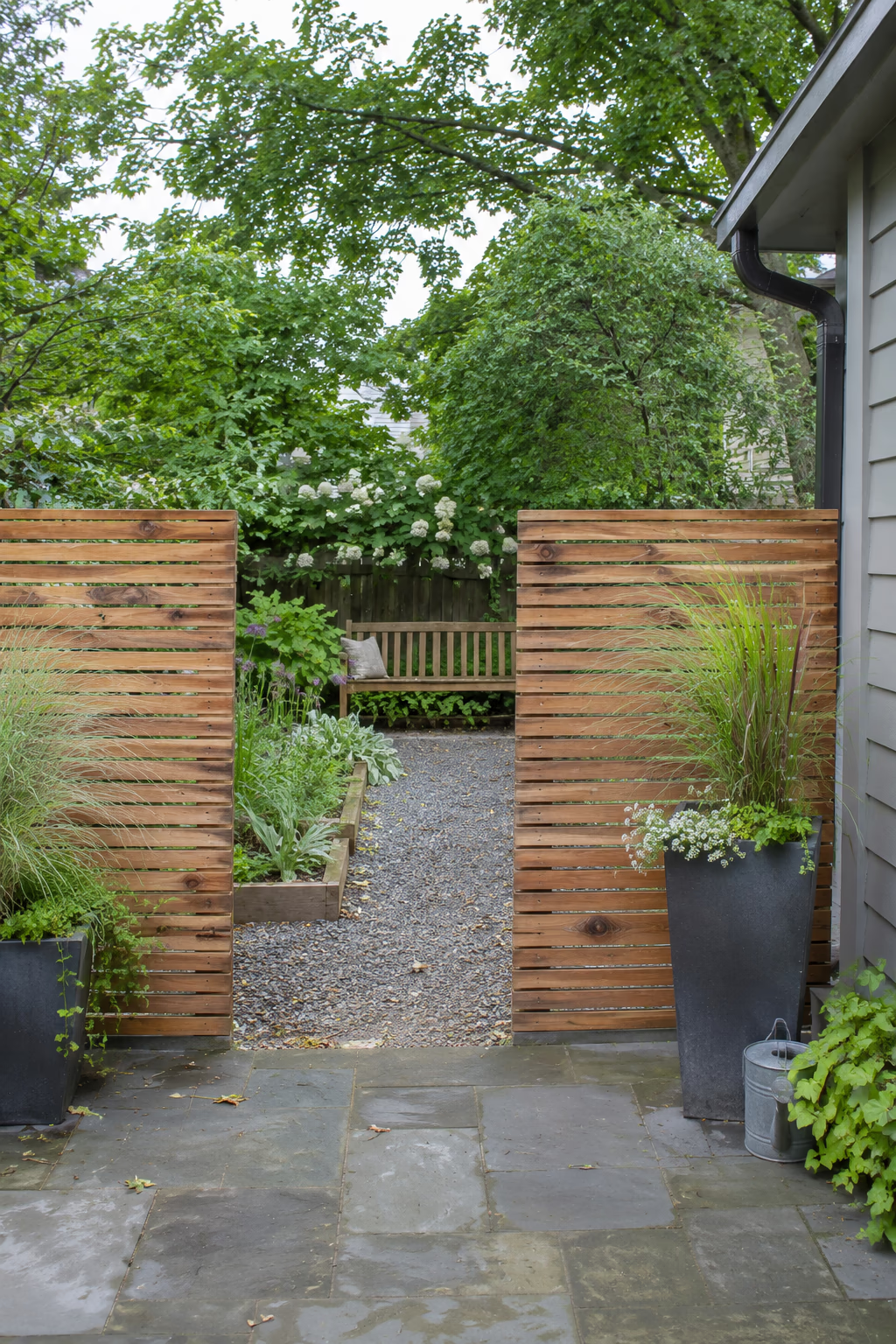
A partial screen makes a small yard feel bigger, not smaller
It sounds backward, but splitting a small garden into two areas makes it feel larger, because you can’t see everything at once. Use a slatted wood screen, a row of tall planters with ornamental grasses, or a short run of trellis to separate a seating area from a planting area.
Leave a clear opening at least 3 feet wide so the two zones connect. A glimpse of what’s beyond the screen invites people to explore.
Keep the divider under about 6 feet and partly see-through so it doesn’t cast heavy shade or feel boxy.
5. Add a Wall-Mounted Water Feature
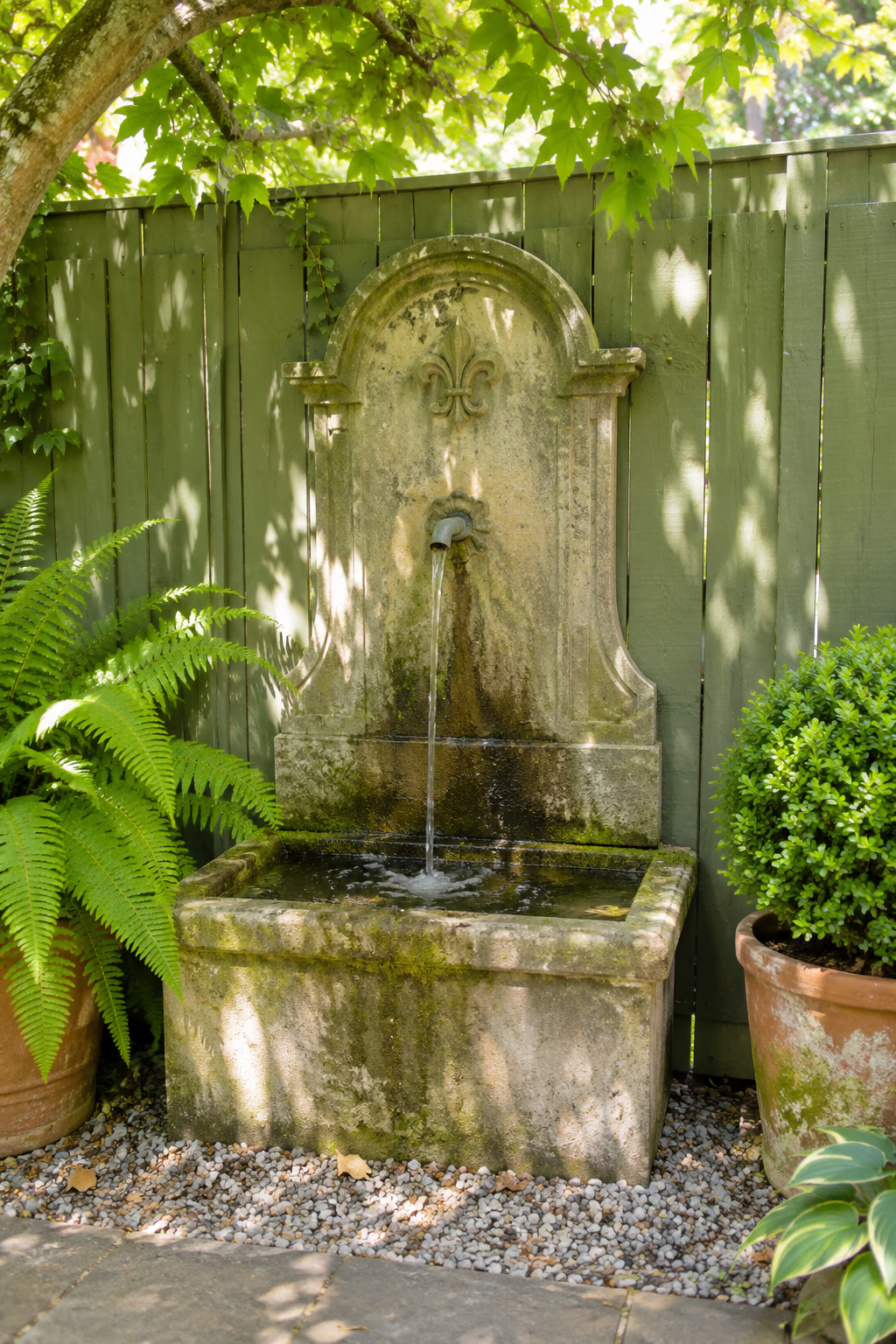
Soothing sound without giving up floor space
Wall fountains hang flat against a fence or house wall and recirculate water from a small basin below. Look for cast stone, resin, or metal designs with a basin of at least a few gallons so you aren’t refilling it daily in summer.
You’ll need a nearby outdoor GFCI outlet for the pump, or choose a solar-powered model for a sunny spot. Running the cord through conduit keeps the setup tidy.
Top up the water during hot weather, clean the pump every few weeks, and drain it before hard freezes if you live in a cold climate.
6. Hang Shelves on the Fence for Potted Plants
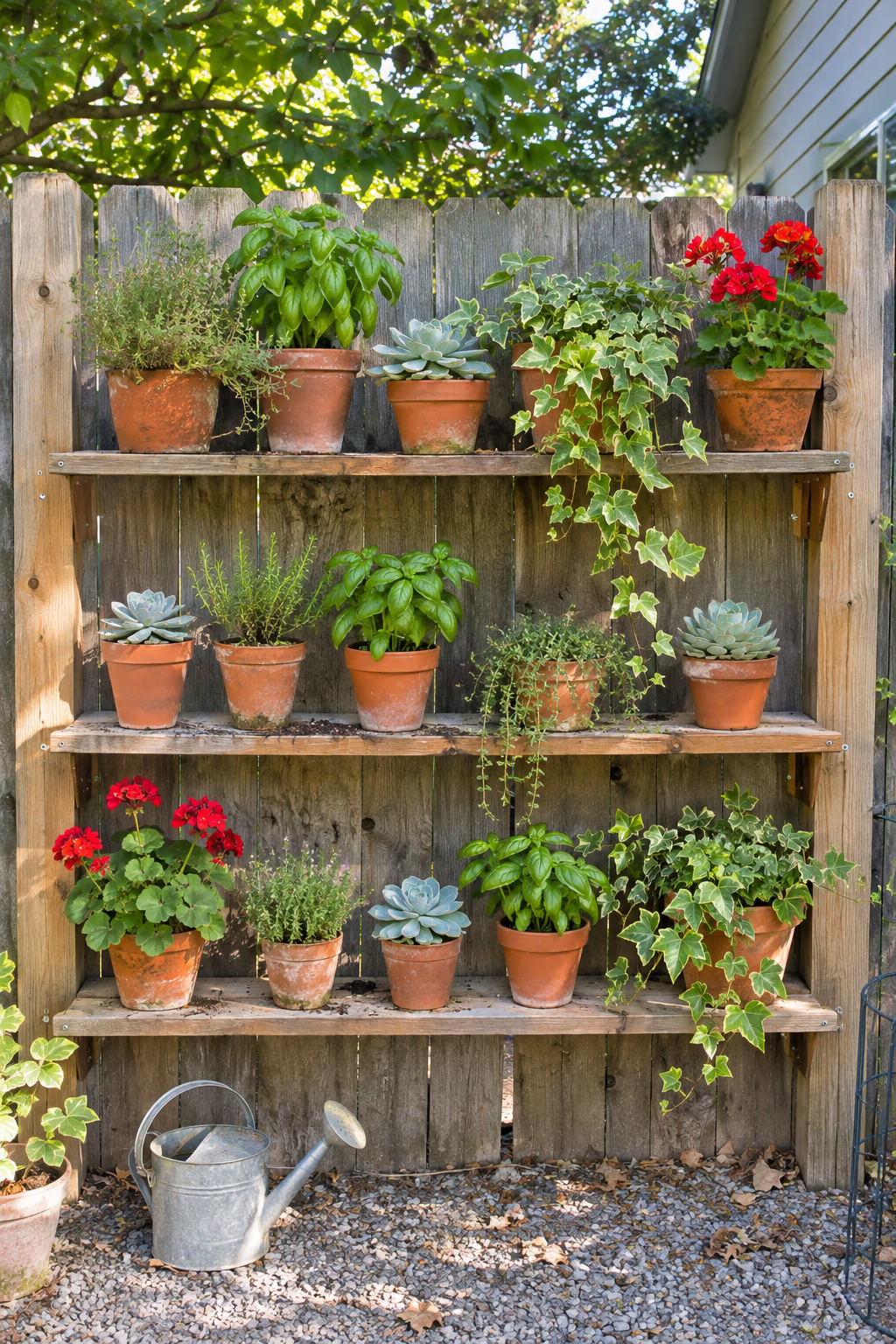
Create a second planting level above the ground
Mount two or three cedar shelves on fence posts, about 8 to 10 inches deep, and fill them with small terracotta pots of succulents, herbs, trailing ivy, or annuals. The shelves add color at eye level and leave the ground free for seating.
Attach brackets directly to the fence posts, not just the boards, since wet soil is heavier than it looks. Group pots in odd numbers and vary heights for a relaxed look.
Small pots dry out quickly. Plan on watering daily in midsummer, or choose drought-tolerant plants like sedum and hens and chicks.
7. Paint the Fence a Deep, Dark Color
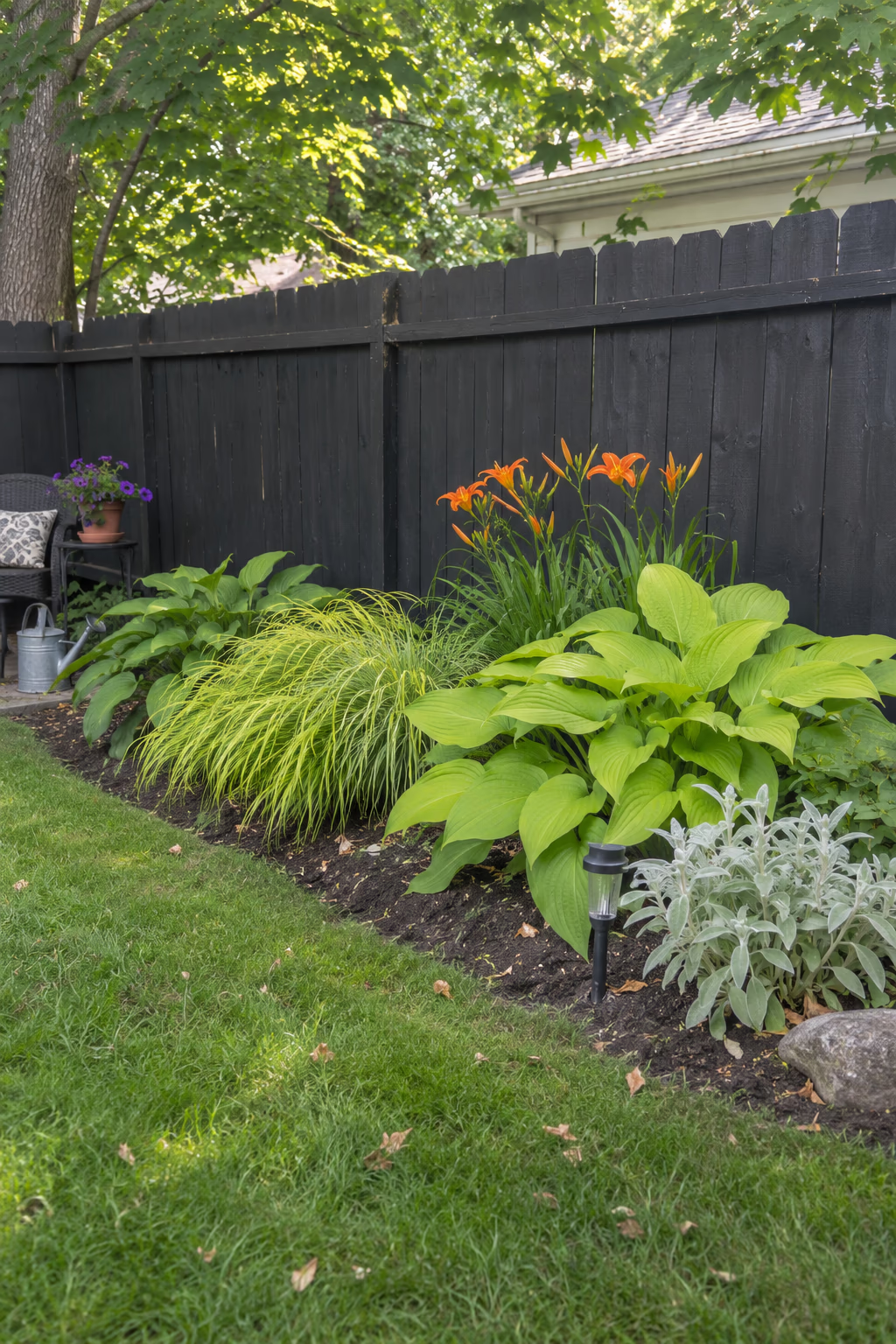
Dark boundaries recede and make plants glow
A fence painted charcoal, black-green, or deep navy seems to fade into the background, which blurs the edge of the garden and makes it feel larger. Green foliage and bright flowers pop against it, too.
Use an exterior stain or paint rated for wood fencing, and apply it on a dry, mild day. A sprayer is much faster than a brush on board fences.
Ask before painting a shared fence, and know that dark surfaces get hot in full sun. Leave a few inches between the fence and heat-sensitive plants in hot climates.
8. Grow Dwarf Fruit Trees in Large Pots
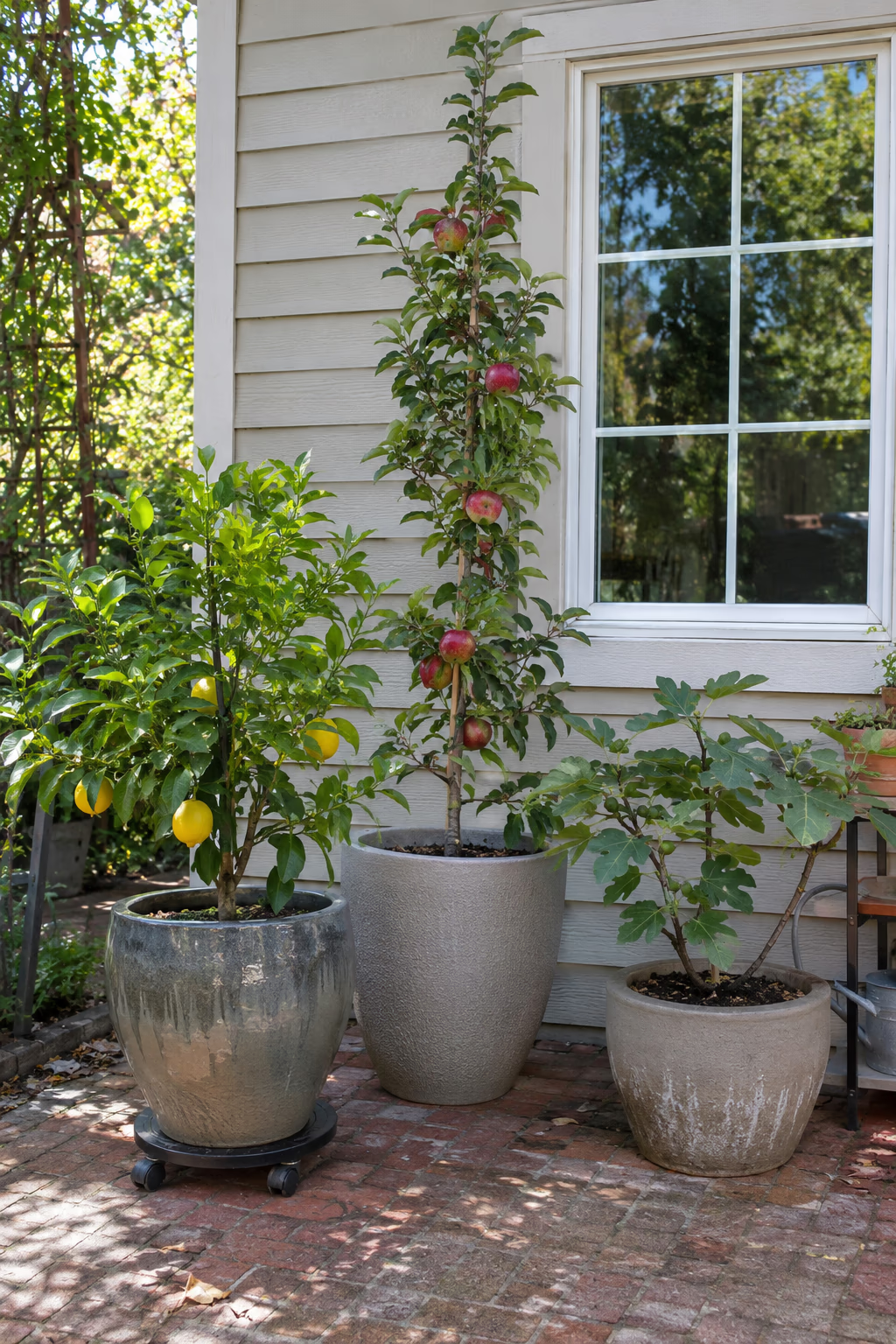
Homegrown fruit from a few square feet
Dwarf and columnar fruit trees stay compact enough for containers. Try a columnar apple, a dwarf fig, a patio peach, or a Meyer lemon in a pot at least 18 to 24 inches wide with drainage holes and quality potting mix.
Place pots in full sun, at least six hours a day. Many apples need a second compatible variety nearby for pollination, so read the label or buy a self-fertile type.
Citrus is only hardy outdoors year-round in warm zones. In colder areas, put the pot on a wheeled caddy so you can roll it into a bright garage or sunroom for winter.
9. Choose a Few Oversized Planters Over Many Small Pots
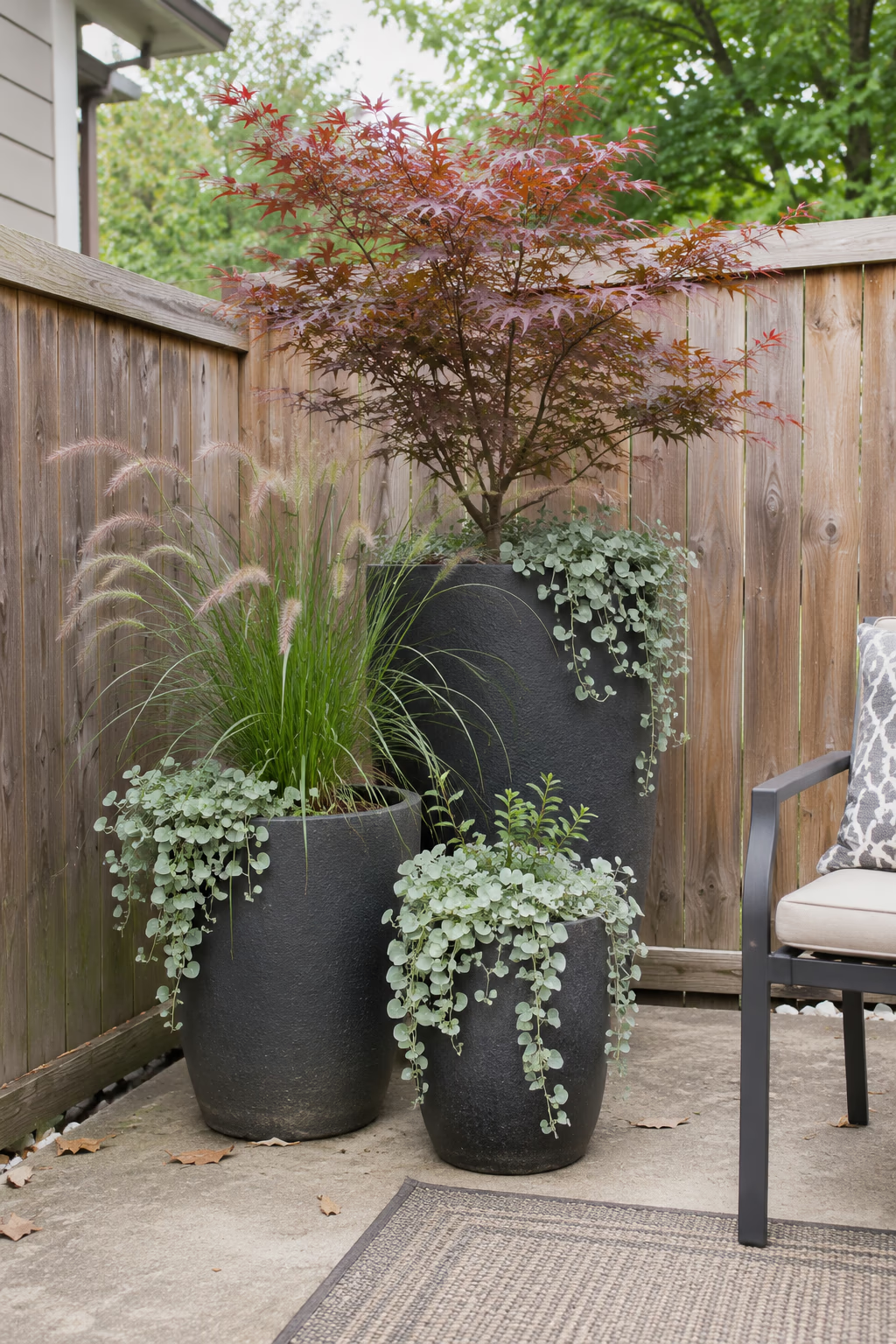
Fewer, bigger containers look calmer and need less watering
A cluster of tiny pots can make a small space feel cluttered. Instead, pick two or three generous planters, at least 20 inches across, in the same material or color, and plant each one boldly.
Large containers hold more soil, so they dry out more slowly and give roots room to grow. A tall pot with a small shrub, grass, and trailing plant combined can act like a mini garden bed.
Fill big planters before moving them, or use lightweight fiberglass or resin pots. A filled 24-inch pot can easily weigh well over 100 pounds.
10. Lay Paving on the Diagonal to Stretch the Space
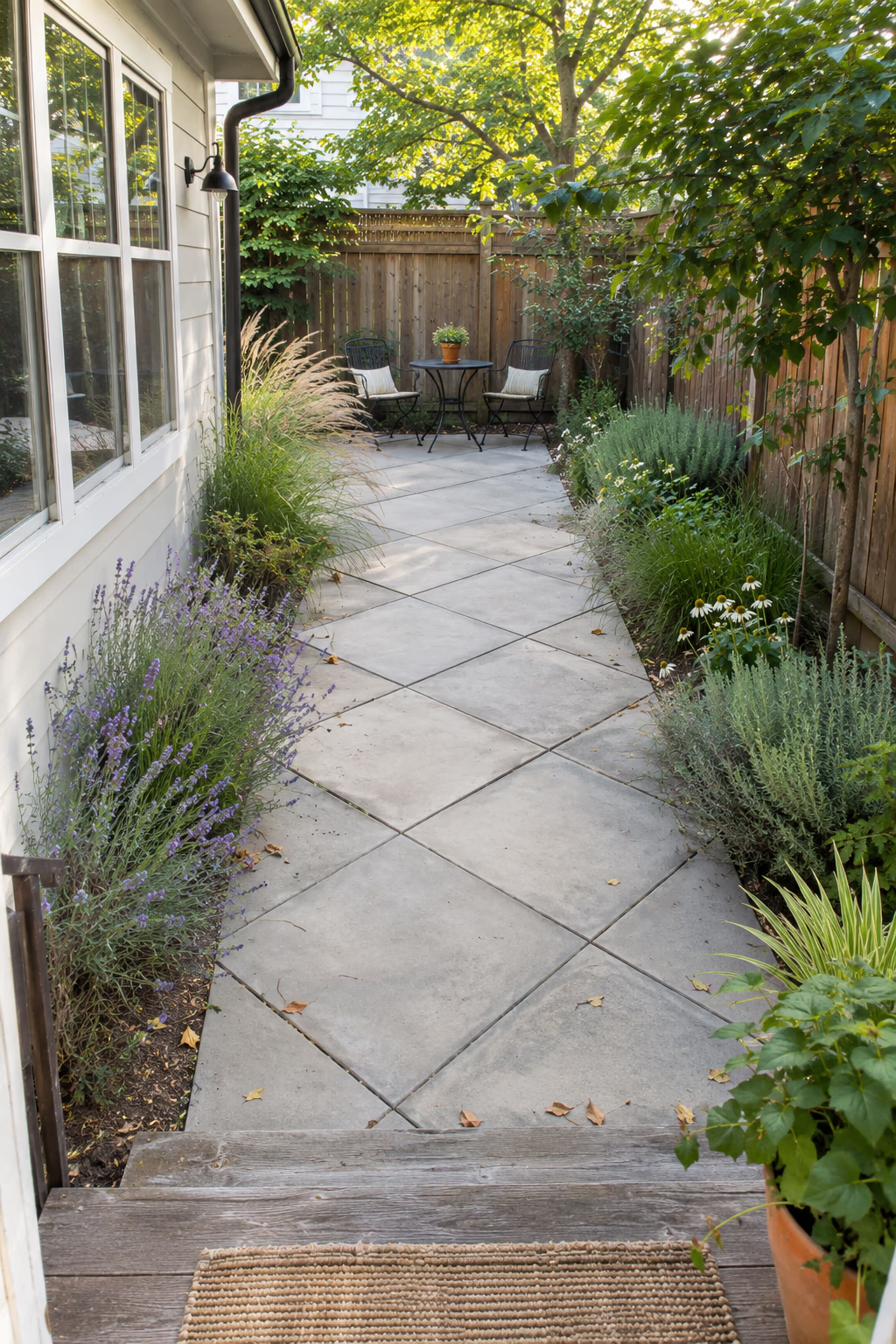
Angled lines pull the eye across the longest dimension
Square pavers set at 45 degrees to the house make the eye travel along the longest line in the yard, which is the diagonal. It’s a simple layout trick that makes a narrow patio feel wider.
Large-format pavers, around 24 inches square, also help, because fewer joints mean less visual busyness. Light gray or warm sandstone tones reflect light and keep the area bright.
Diagonal patterns require more cuts along the edges, so expect extra waste and plan for a wet saw rental or professional installation.
11. Hang an Outdoor Mirror to Fake More Depth
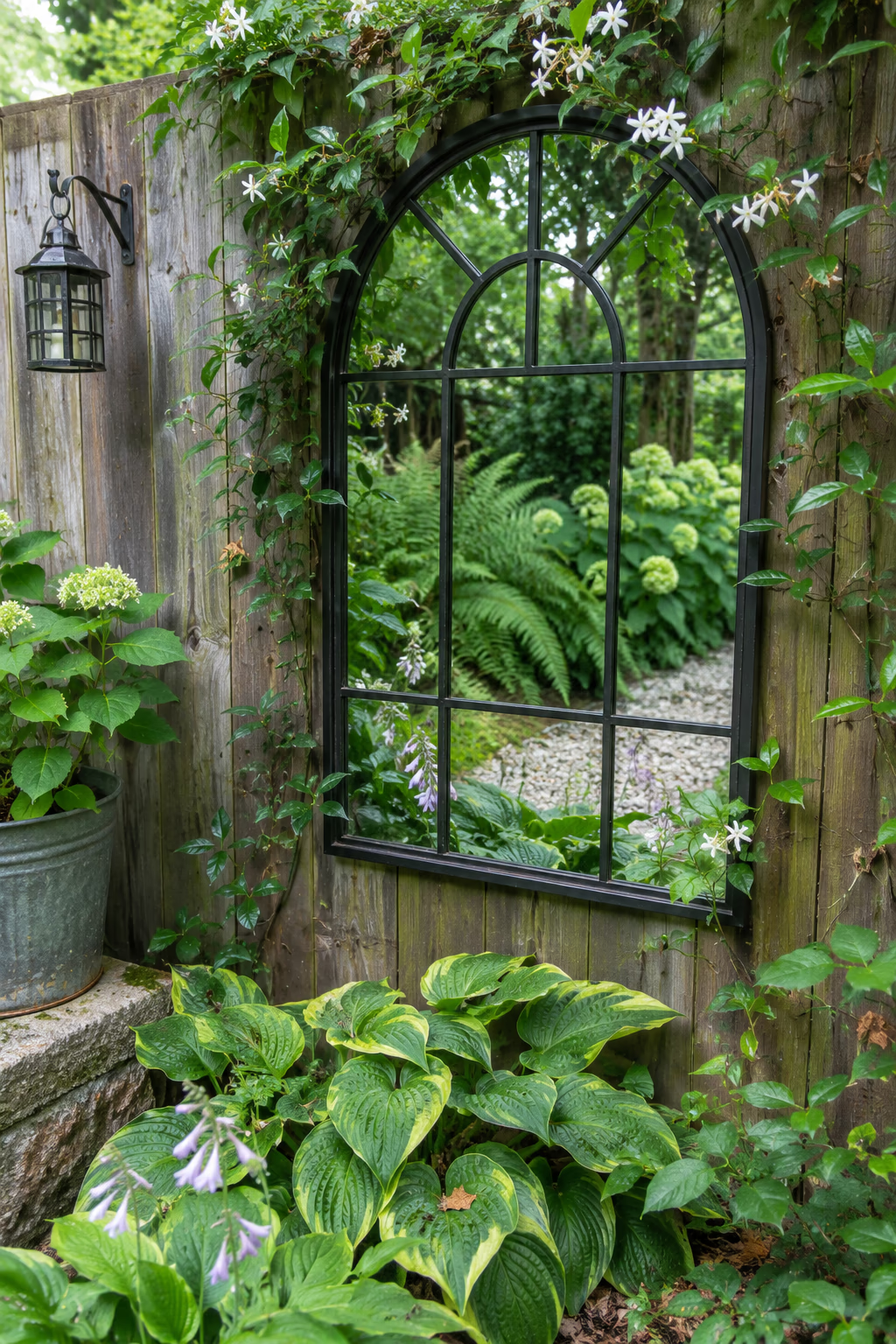
A well-placed reflection doubles the greenery
An outdoor mirror on a fence reflects plants and light, giving the impression of another garden beyond the boundary. Arched or window-style frames look especially convincing, as if they open onto another space.
Use an acrylic or weatherproof mirror designed for outdoor use, and angle it slightly so it reflects plants rather than the sky. Surround the edges with climbers or tall plants to hide the frame.
Birds can fly into mirrors that reflect open sky. Place it in a shady, partly planted spot, and avoid aiming it where it could focus sunlight onto plants or siding.
12. Fill Beds With Fragrant, Touchable Plants
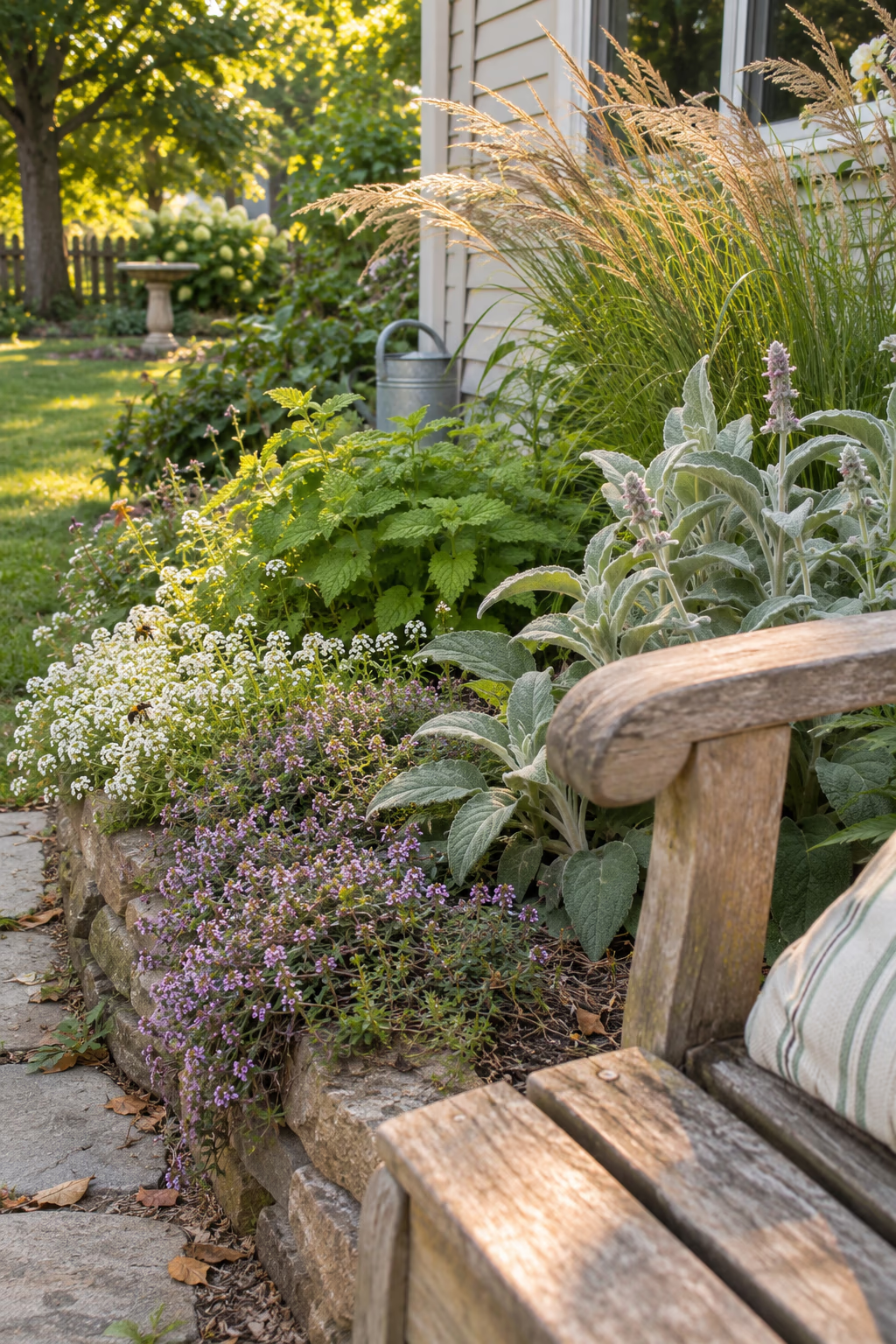
Engage every sense where you sit the most
In a small garden, everything is within arm’s reach, so plant for scent and texture right beside seating. Lamb’s ear is soft, lemon balm and mint release fragrance when brushed, and feather reed grass rustles in a breeze.
Add fragrant flowers like nicotiana, sweet alyssum, or a gardenia in mild climates for evening scent. Edging a path with thyme lets you smell it with every step.
Mint spreads aggressively, so keep it in a pot rather than in the ground.
13. Build a Corner Bench With Hidden Storage
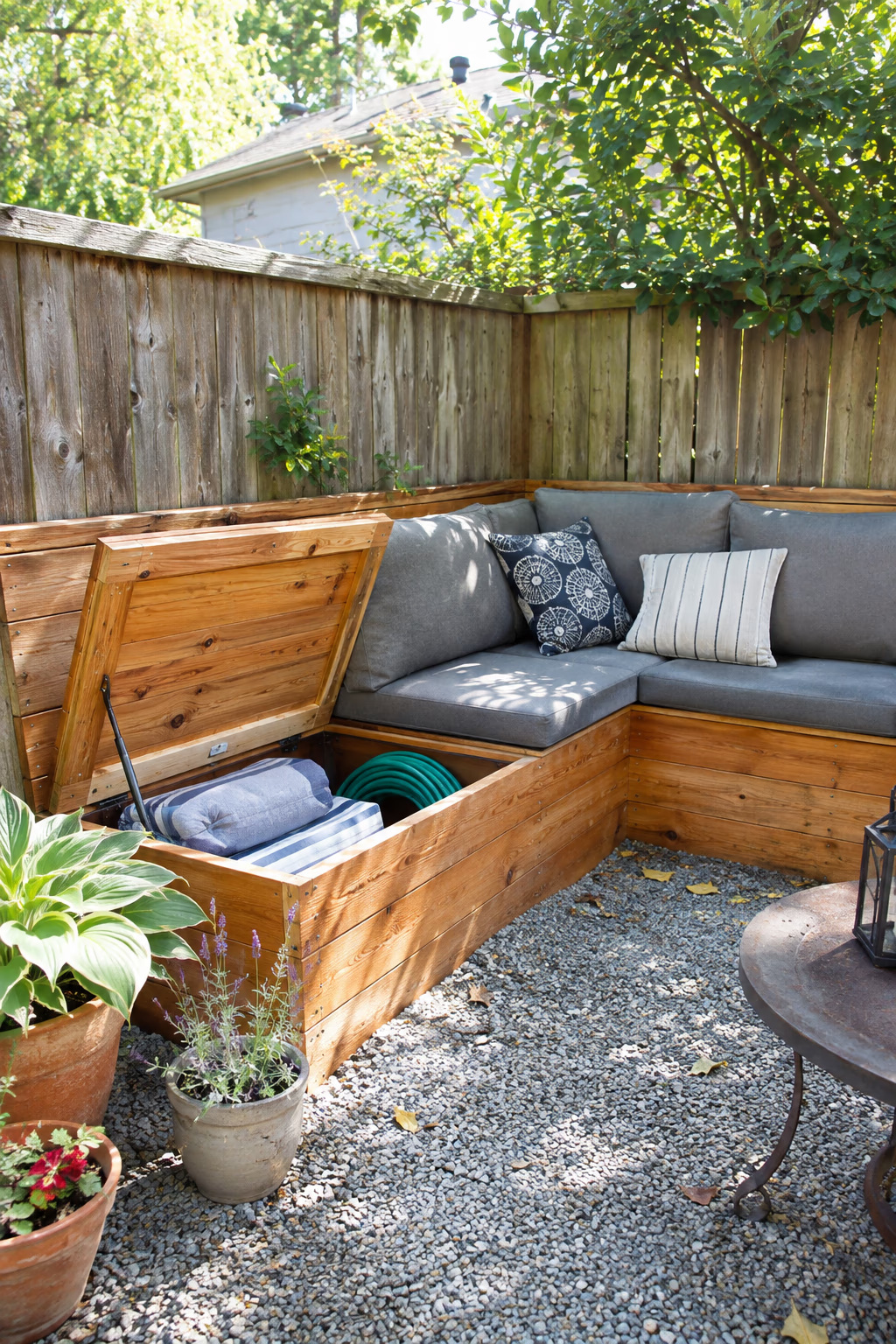
Seating and storage in one footprint
An L-shaped bench built into a corner seats several people without taking up the room that loose chairs would need. Give it hinged lids, and the space underneath can hold cushions, hoses, and hand tools.
Build the frame from pressure-treated lumber, face it with cedar boards, and keep the seat about 18 inches high and 18 to 20 inches deep. Add drainage gaps and lift the base off the soil on pavers.
Even with good ventilation, store cushions in waterproof bags inside, since damp can build up in enclosed boxes.
14. Plant a Mediterranean Bed of Lavender, Rosemary, and Grasses
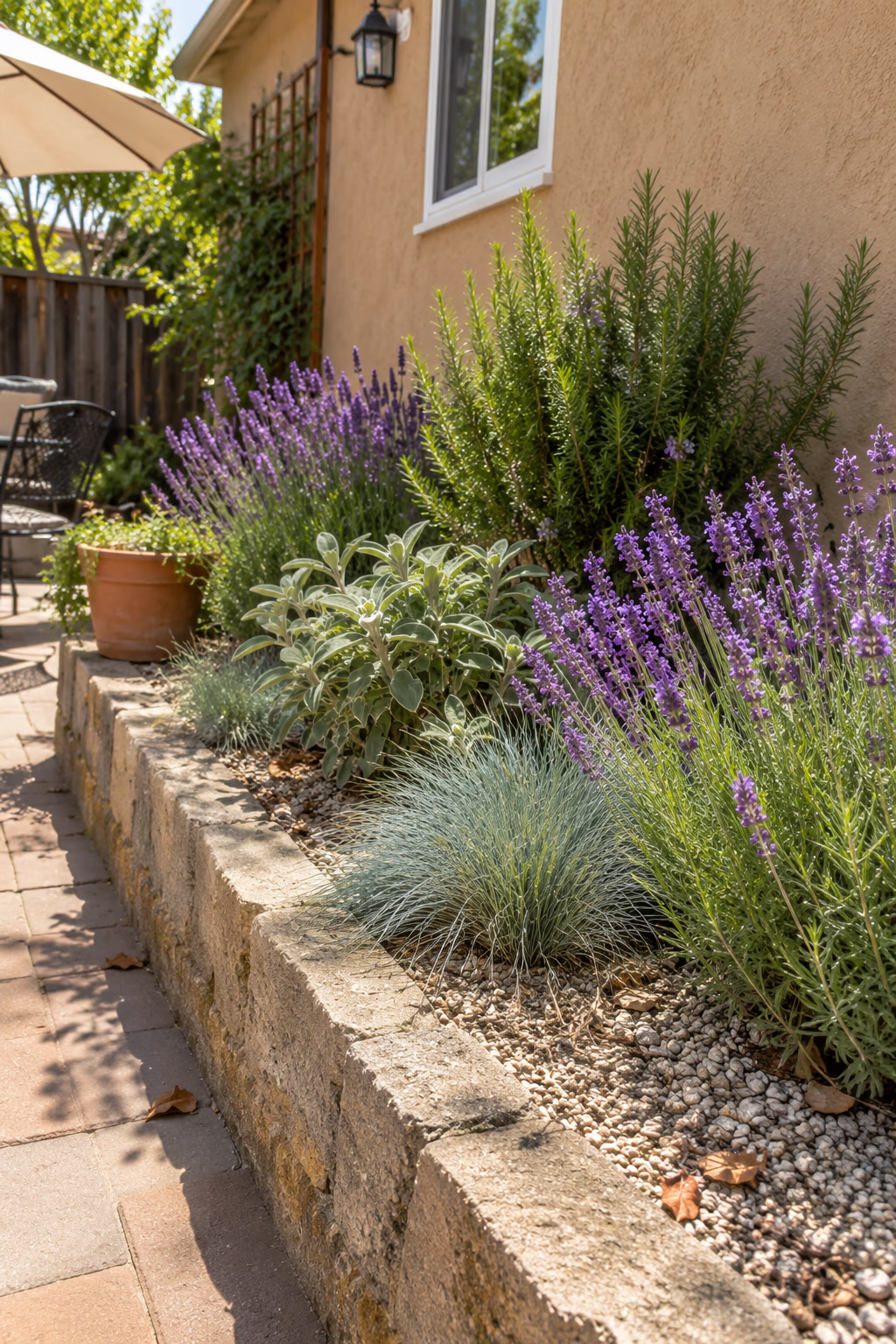
A sunny, low-water look that smells wonderful
Lavender, rosemary, sage, and fine grasses like blue fescue or Mexican feather grass create a relaxed, silvery bed that thrives on heat. Mulch with gravel rather than bark to reflect warmth and keep crowns dry.
These plants need full sun and sharp drainage. If your soil is heavy clay, build a slightly raised mound and mix in grit before planting.
Rosemary is reliably hardy only to about zone 7 or 8, so grow it in a pot in colder areas. Note that Mexican feather grass can self-seed and is considered invasive in parts of California, so choose a native grass there.
15. Mix Vegetables and Herbs Into Flower Borders
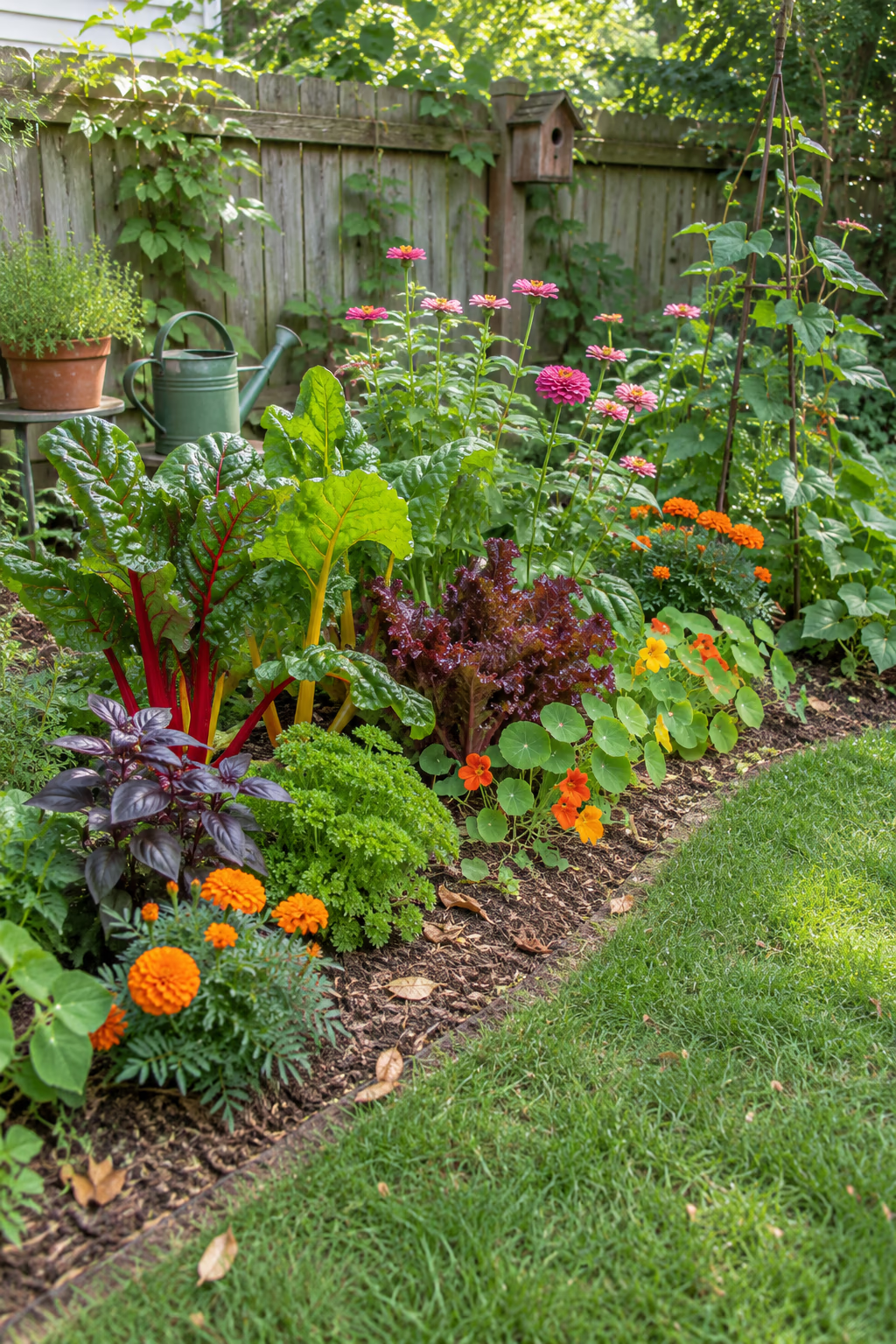
Edible and ornamental in the same bed
Small gardens rarely have room for a separate vegetable patch, so tuck edibles into flower beds. Rainbow chard, purple basil, curly parsley, and frilly lettuces look as good as many ornamentals.
Plant edibles near the front of the border where you can reach them easily, and pair them with marigolds or nasturtiums for extra color.
Avoid spraying pesticides on any part of a bed that holds food crops, and leave enough space between plants for air flow.
16. Give the Lawn a Crisp Circular Shape
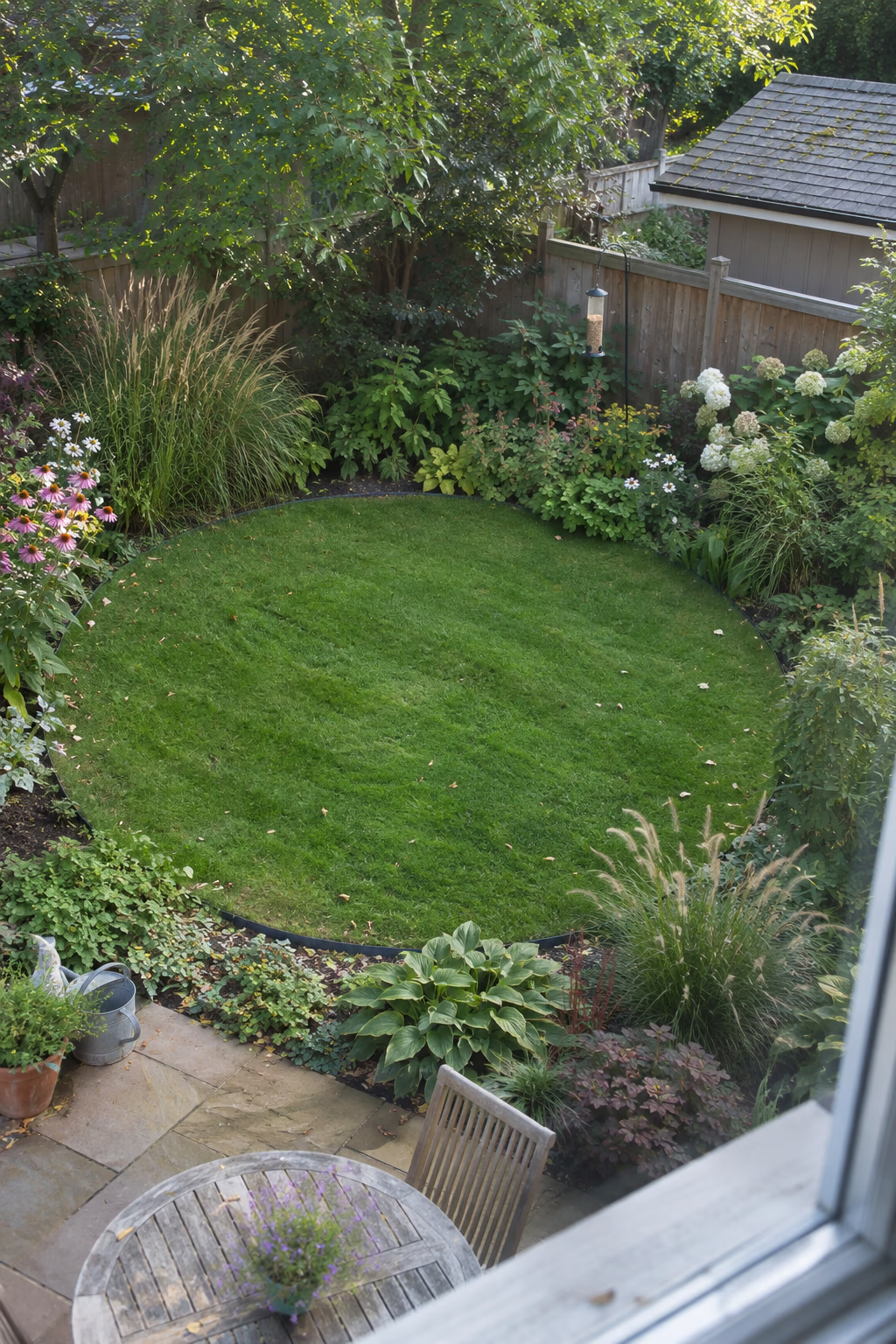
A defined shape looks deliberate and stretches the space
Instead of grass running edge to edge, cut a small lawn into a neat circle and fill the leftover corners with deep planting. The curved shape draws the eye away from the straight boundaries and makes the yard feel more generous.
Mark the circle with a stake and string, cut the edge with a half-moon edger, and install metal or brick edging to keep it sharp.
Make sure the circle is at least wide enough for your mower to turn, and consider a low-mow grass or clover blend to cut maintenance further.
17. Clip Evergreen Balls for Year-Round Structure
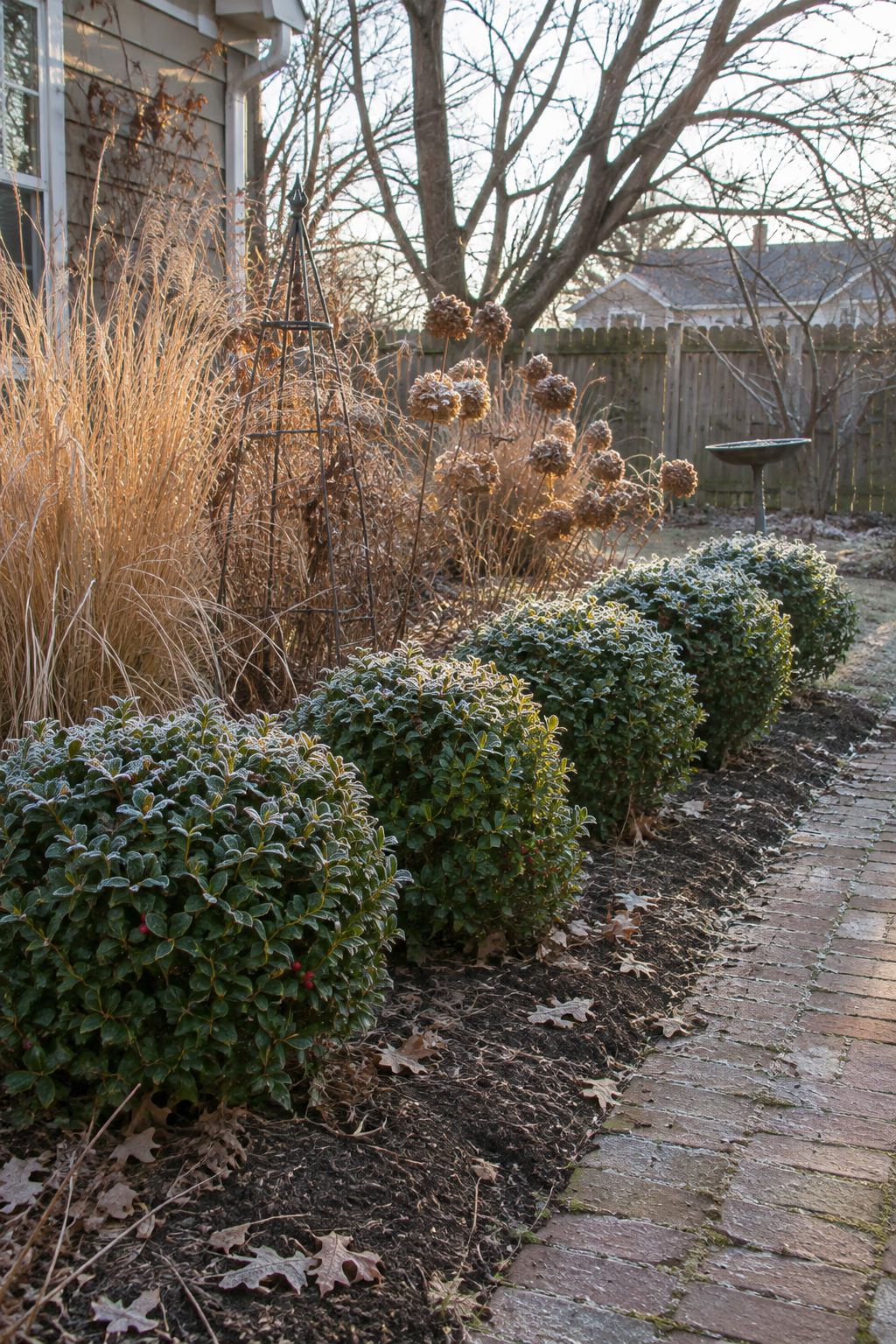
Tidy green shapes keep the garden looking good in winter
A few clipped evergreen spheres give a small garden form when perennials have died back. Space three or five along the front of a bed, or use a pair in pots to frame a seat.
Boxwood is the classic choice, but boxwood blight is a problem in many regions. Dwarf yaupon holly, compact inkberry, and small-leaf Japanese holly are good alternatives for clipping.
Trim lightly once or twice a year, in late spring and midsummer, and avoid shearing late in fall when new growth won’t harden before frost.
18. Set a Bubbling Urn Fountain in a Bed
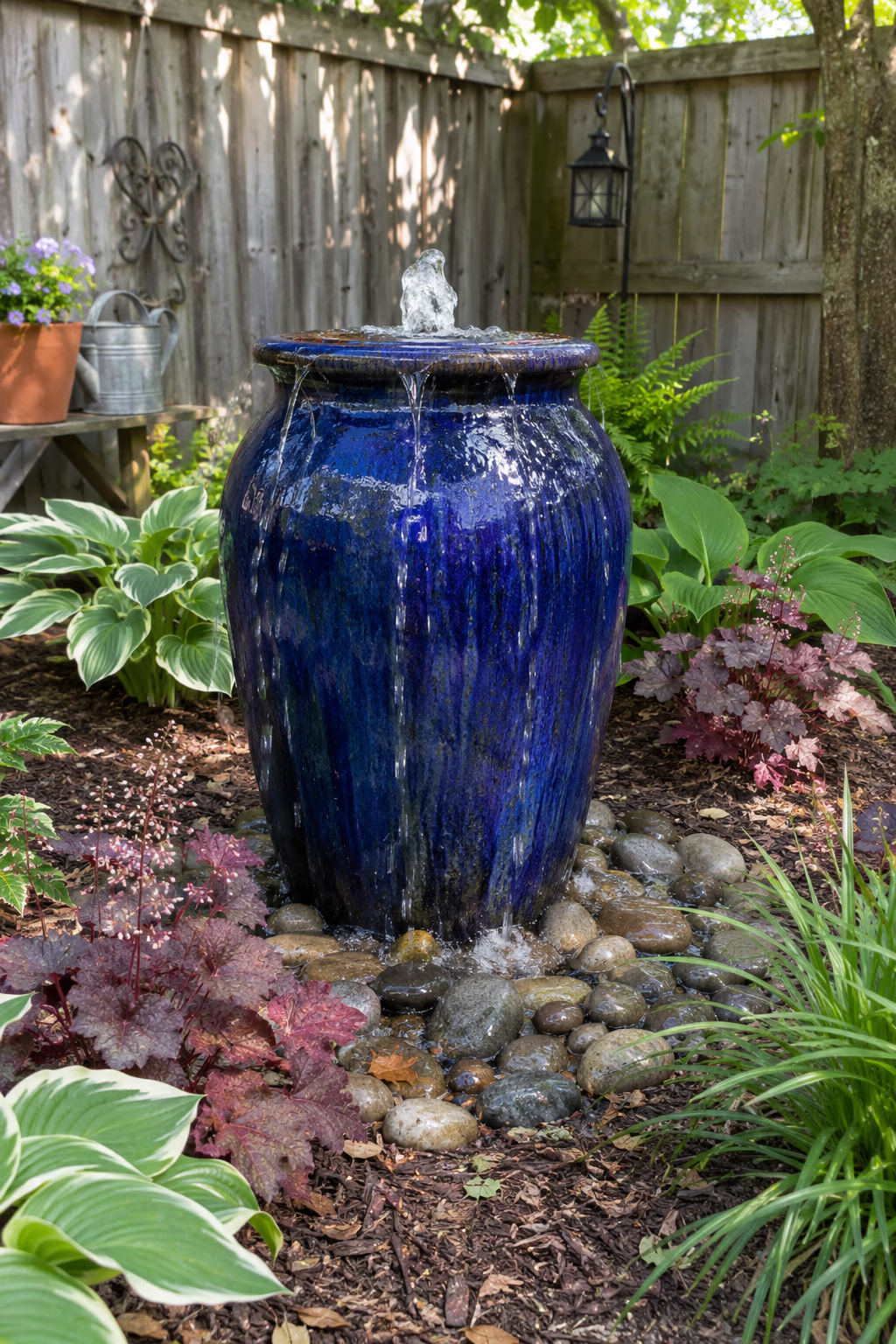
A small fountain that’s safe and easy to maintain
A glazed ceramic urn drilled for a bubbler sits on a hidden reservoir, with water spilling over its sides and draining back down through a bed of river stones. There’s no open standing water, which is helpful around small children.
Kits include the reservoir basin, grate, and pump. Dig a hole for the basin, level it carefully, and set the urn on top.
Check the reservoir level weekly in summer. Running a pump dry can burn it out quickly.
19. Sow a Mini Meadow in a Raised Planter
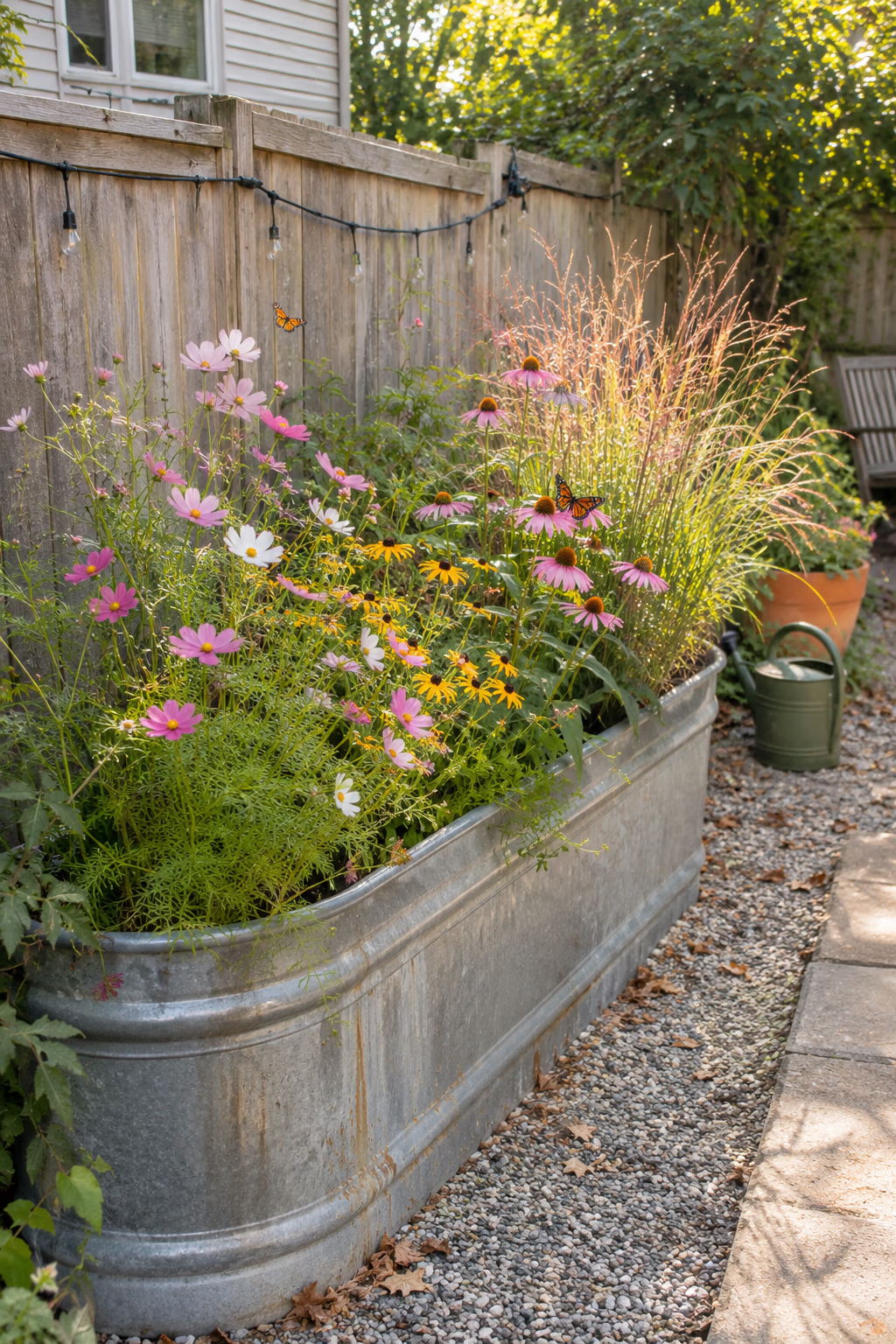
Wildflower charm without giving up the whole yard
A raised planter or galvanized trough about 2 by 6 feet can hold a miniature meadow of annual and perennial wildflowers, such as cosmos, coneflower, black-eyed Susan, and little bluestem.
Fill it with a lean mix of topsoil and grit rather than rich compost, since many meadow plants flower better in average soil. Sow seed in spring or fall depending on your region’s guidance.
Expect a sparse look in the first season. Perennial wildflowers often take a second year to fill in.
20. Mount a Bee Hotel on a Sunny Wall
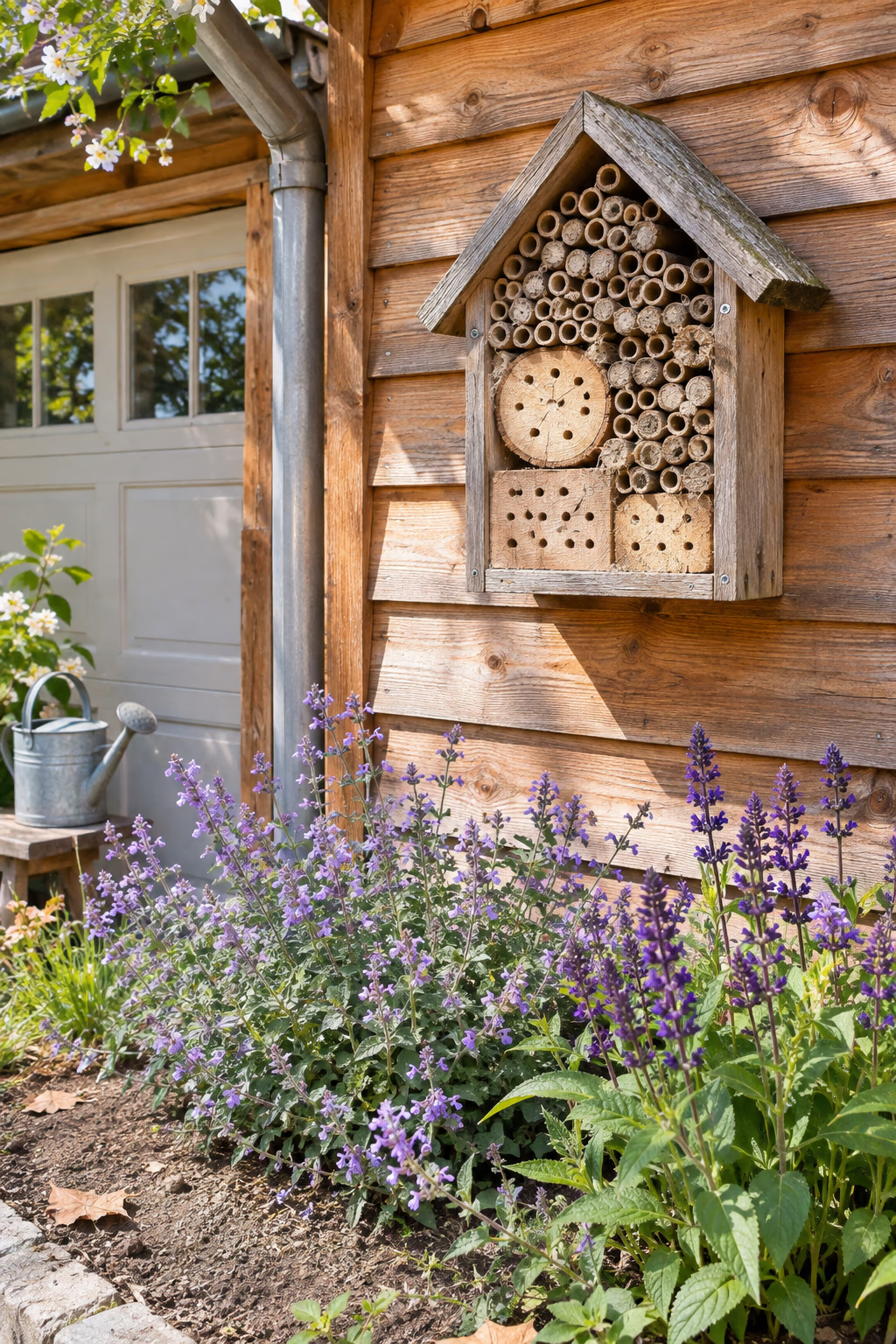
Give native solitary bees a place to nest
Bee hotels hold bundles of hollow stems or drilled wood blocks where solitary bees, like mason bees, lay eggs. These bees are gentle and excellent pollinators for fruit trees and flowers.
Mount the hotel 3 to 6 feet off the ground facing east or south, with a small roof to keep rain out. Place it near flowers and a patch of bare, damp soil, which mason bees use to seal their nests.
Replace or clean nesting tubes every year or two to prevent disease and pests. Removable paper liners make this easier.
21. Grow Climbers Up a Freestanding Obelisk
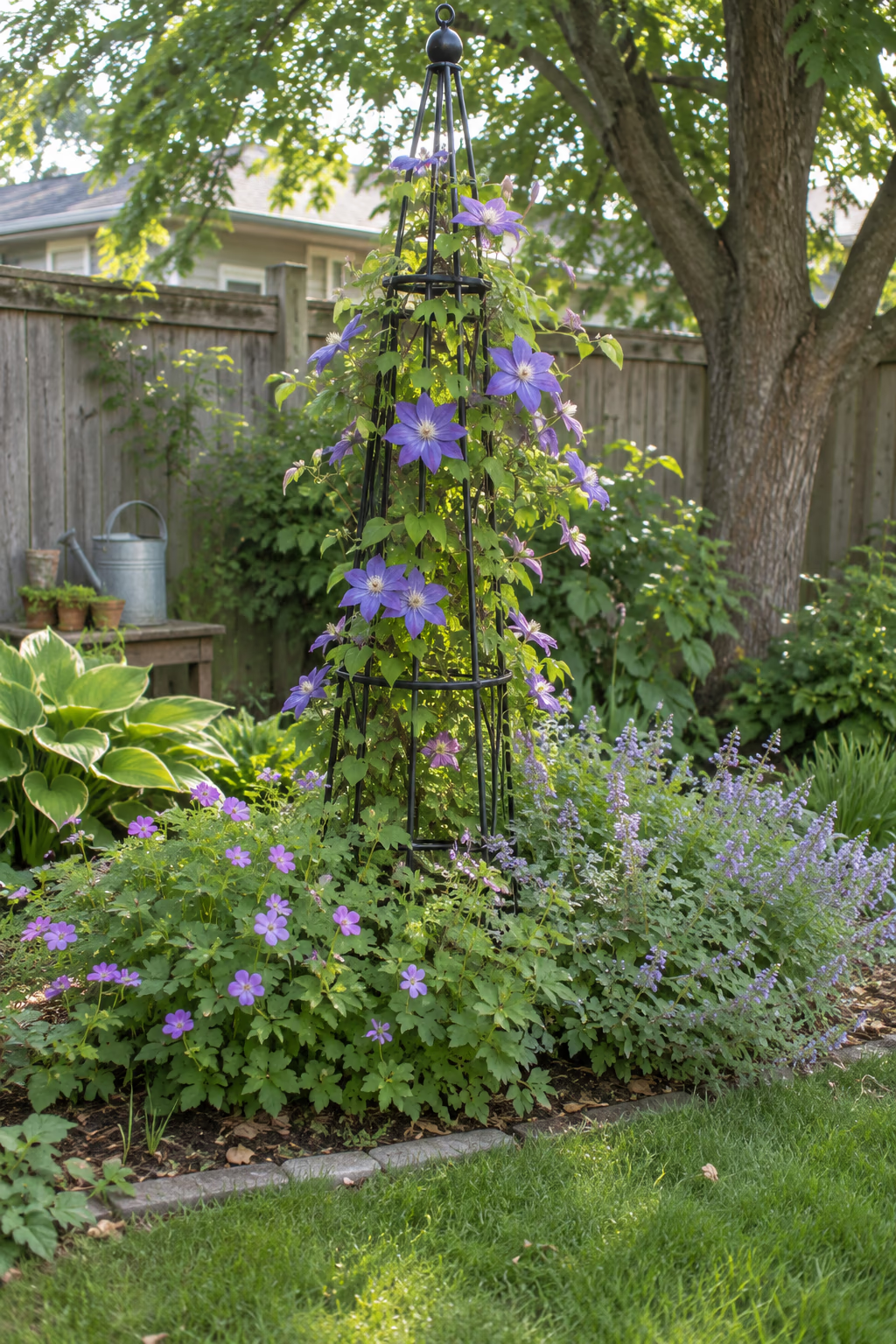
Vertical color anywhere, even in the middle of a bed
An obelisk is a tall, pyramid-shaped support that lets you grow climbers in a bed or a large pot, not just against a fence. A 5- to 6-foot metal or wood obelisk can hold clematis, sweet peas, black-eyed Susan vine, or pole beans.
Anchor it firmly into the ground or pot so wind can’t topple it once foliage fills in, and tie young shoots on as they grow.
Clematis likes its roots shaded, so plant low perennials around the base.
22. Create a Moody Bed With Dark Foliage
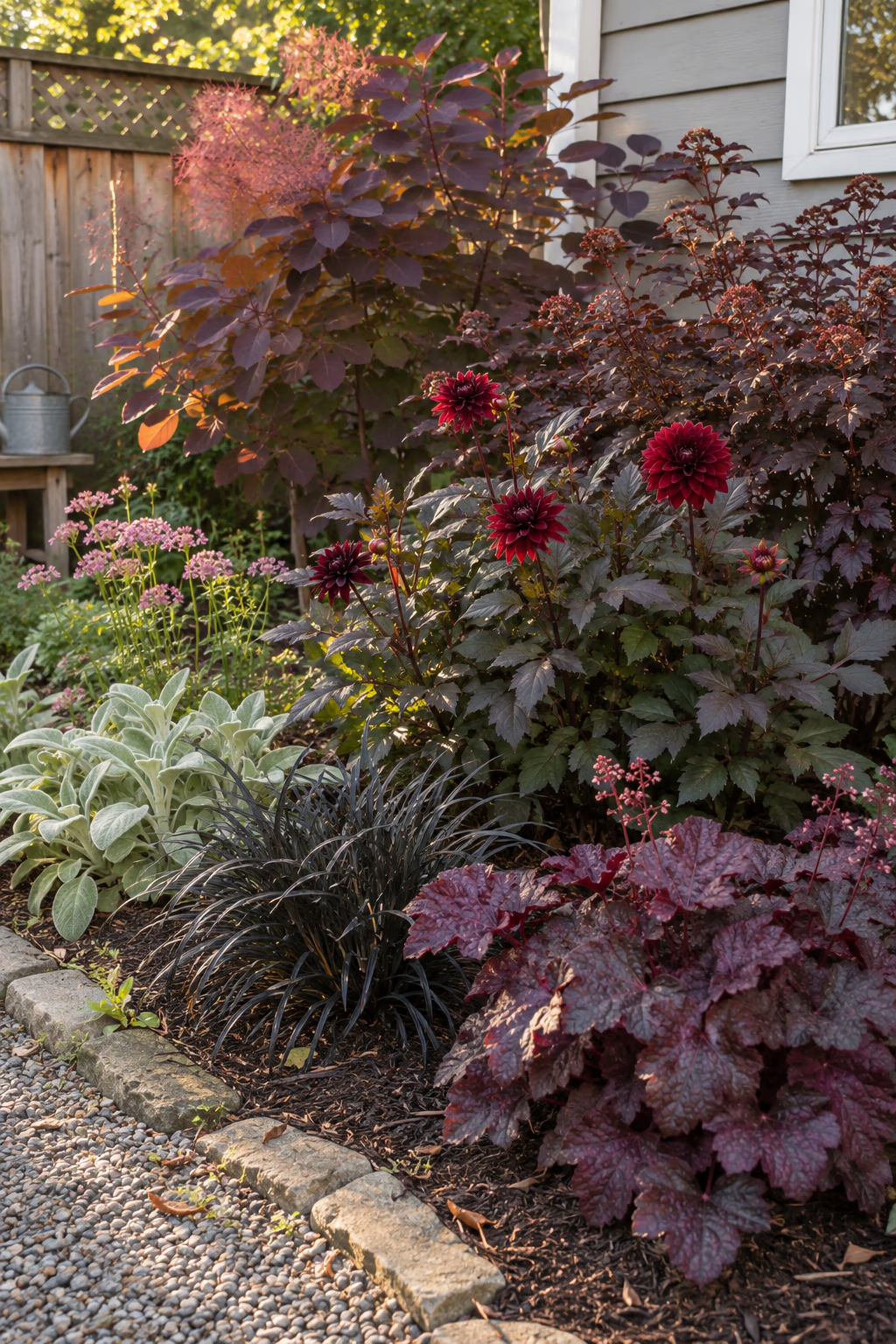
Deep colors add sophistication and drama
Plants with near-black and burgundy leaves feel rich in a small space. Try heuchera with dark foliage, purple smoke bush, black mondo grass, dark-leaved dahlias, and ninebark with maroon leaves.
Lift the palette with a few accents of silver, chartreuse, or soft pink, or the bed can read as a dark hole from a distance.
Dark plantings are best placed where they get sun and can be viewed up close. In deep shade, they tend to disappear.
23. Repeat a Short Plant List for a Calm Look
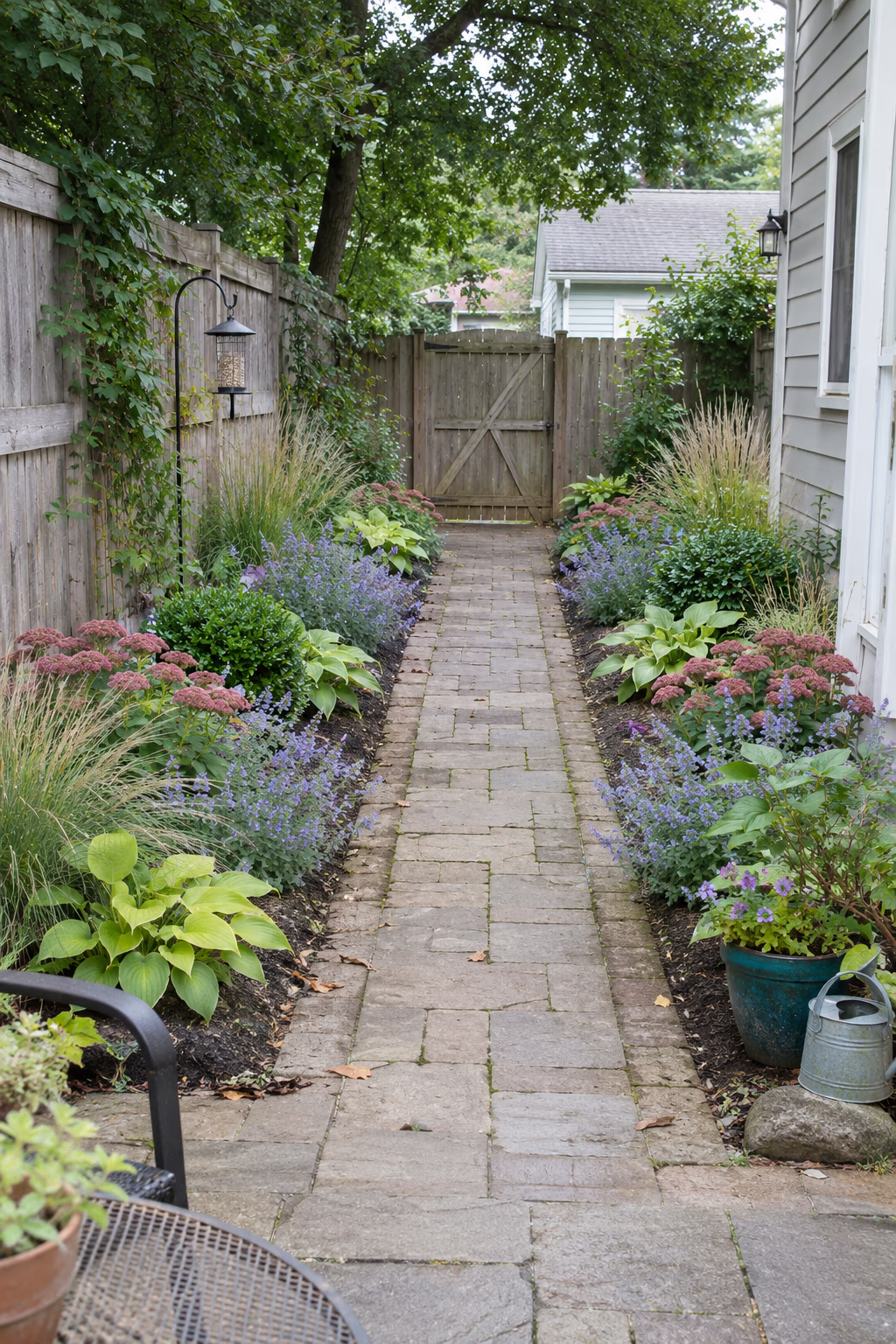
Repetition makes a small space feel cohesive
One of each plant can look busy in a small garden. Pick five to seven plants you love and repeat them in groups throughout the beds, such as hostas, catmint, sedum, a grass, and one shrub.
Repetition creates rhythm and ties the space together, and it makes shopping and maintenance simpler, too.
Include a mix of bloom times and at least one evergreen so the repeated plants carry interest through more than one season.
24. Install a Fold-Down Table on the Wall
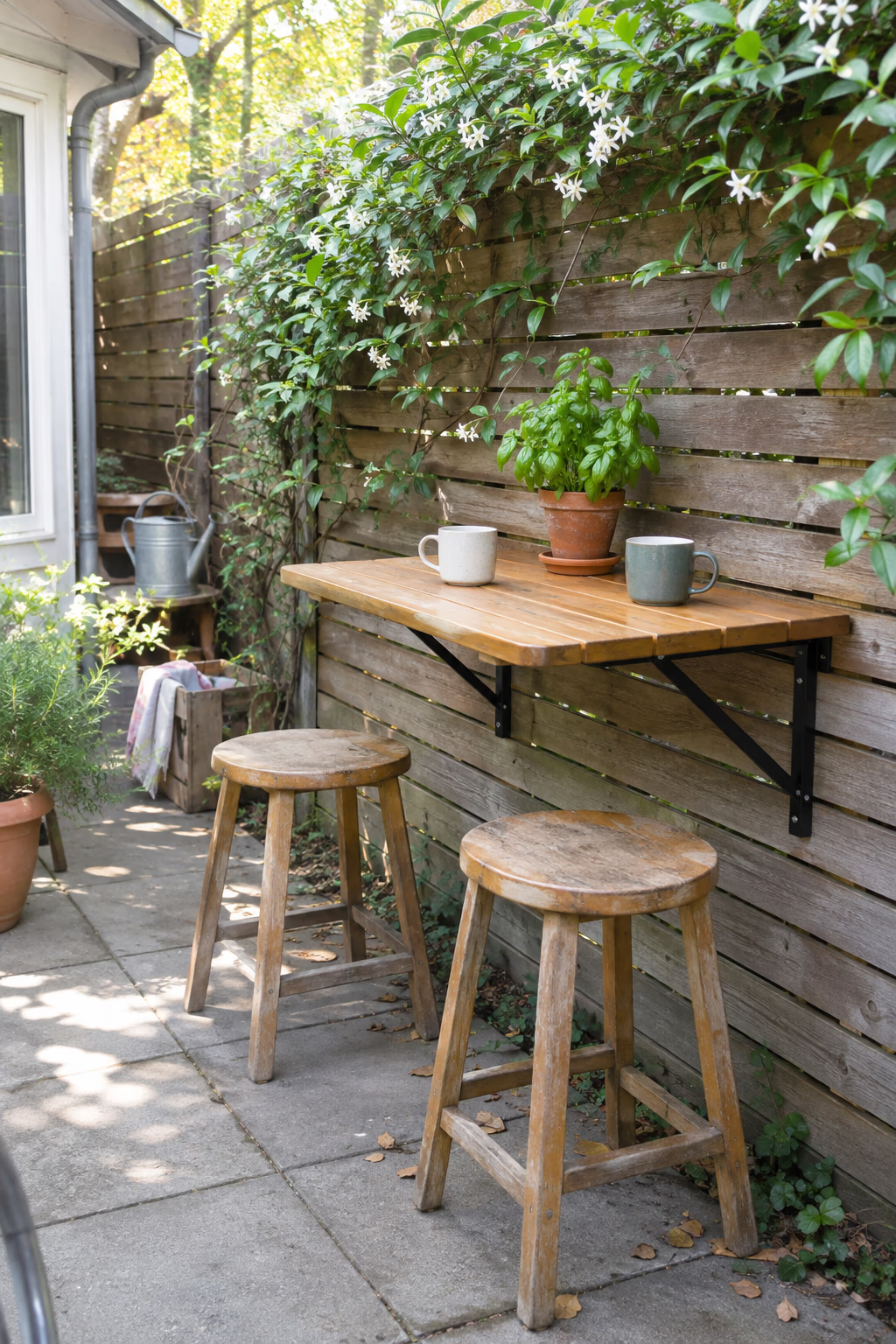
A table that disappears when you need the space
A wall-mounted drop-leaf table folds flat against a fence or exterior wall and flips up for meals, potting, or a laptop session outside. A top about 16 by 30 inches is enough for two place settings.
Use exterior-grade wood or powder-coated metal hardware, and screw supports into framing or fence posts, not just siding.
Seal wood with outdoor finish every year or two to prevent warping.
25. Turn a Side Strip Into a Narrow Planted Walk
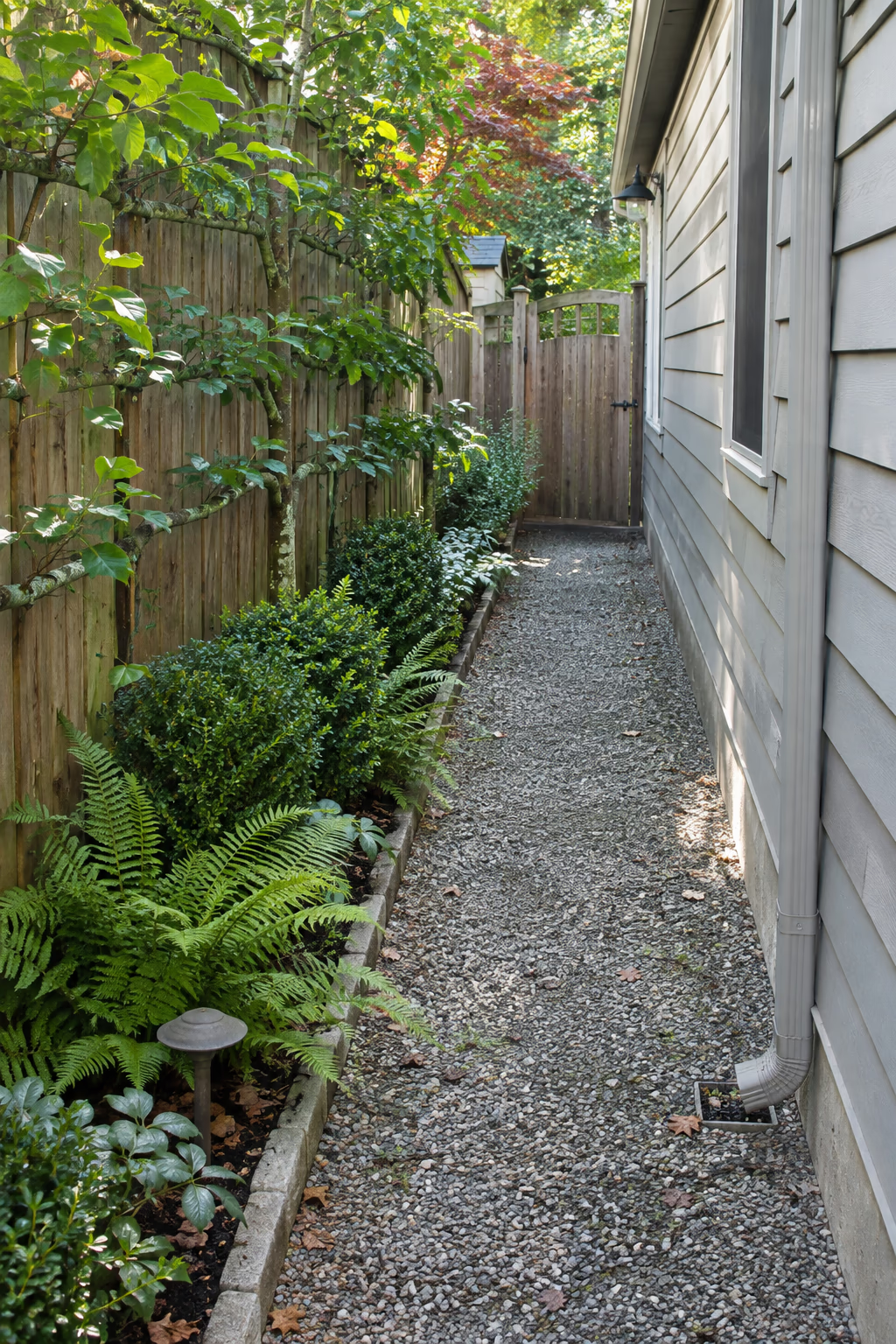
Make the forgotten side yard part of the garden
Many homes have a 4- to 6-foot strip along the side of the house that’s often just a dumping ground. Lay a straight gravel or paver walk along one edge and plant a narrow border of shade-tolerant shrubs, ferns, or espaliered plants along the fence.
Keep plants slim and upright so the walk stays clear. A plant hanging over a path in a narrow corridor gets annoying quickly.
Check for gas meters, utility lines, and drainage before planting, and keep shrubs a couple of feet from foundation walls.
26. Build a Waist-High Raised Bed for Easy Gardening
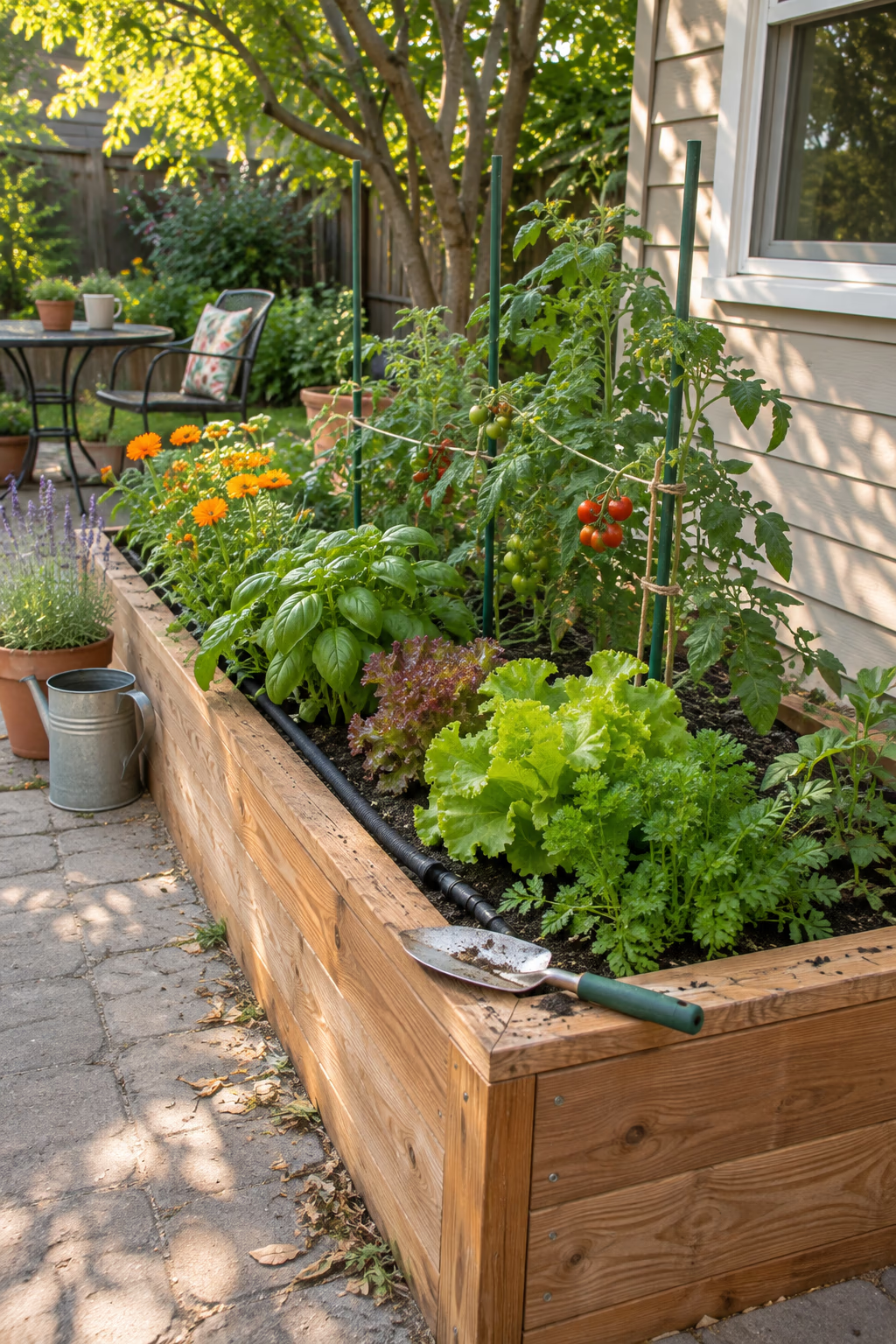
Garden without bending or kneeling
A raised bed about 30 inches tall puts plants at comfortable working height, which is a big plus for anyone with sore knees or a bad back. A 2-by-6-foot bed fits easily along a fence or patio edge.
Fill the bottom third with coarse organic material like branches and leaves, then top with a blend of topsoil and compost to save money on fill.
Tall beds dry out faster than ground beds, so drip irrigation or a soaker hose is worth adding.
27. Light the Garden With Solar Uplights
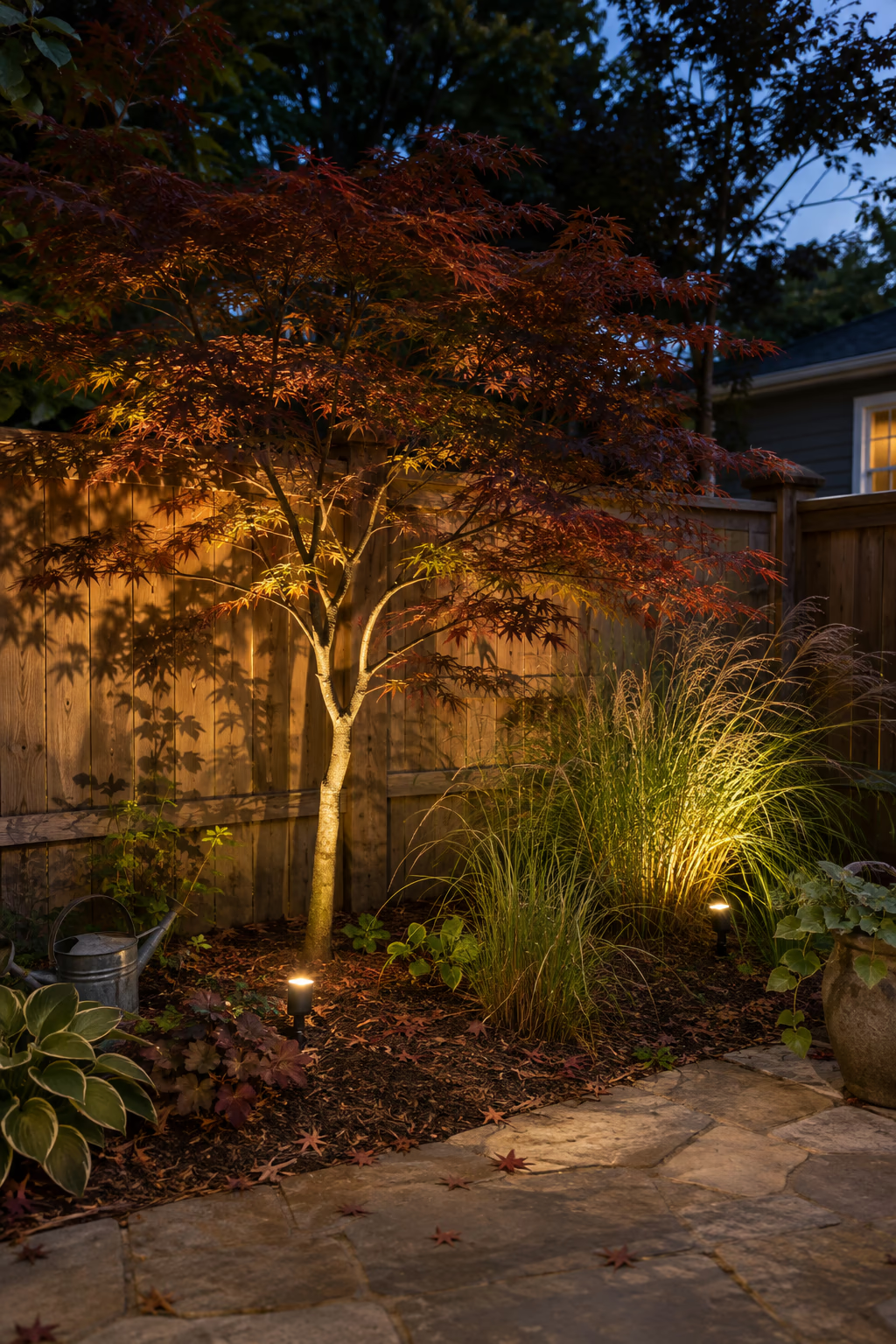
Evening drama without wiring
Small solar spotlights aimed up into a tree, grass, or textured wall create depth after dark. In a small garden, two or three well-placed lights make more impact than a row of path lights.
Choose models with a separate solar panel you can place in sun while the light sits in a shady bed. Warm white light, around 2700K, looks more natural than cool blue tones.
Solar lights are dimmer and less reliable in winter and in shady yards. Low-voltage wired lighting is a sturdier choice if you want consistent brightness.
28. Plant a Shady Corner With Ferns and Hostas
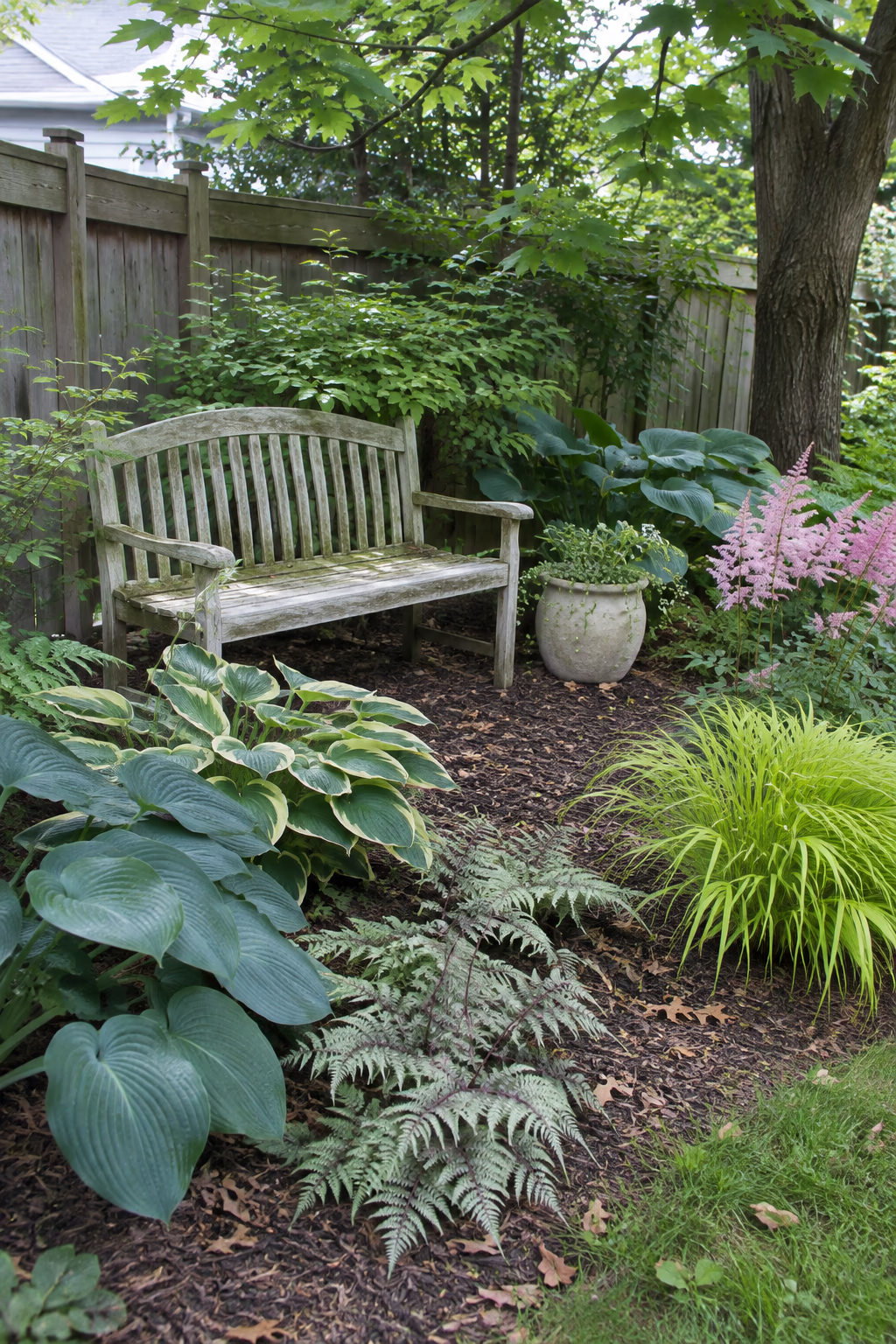
Turn the dark spot into the coolest part of the garden
Most small yards have a corner shaded by the house, fence, or a neighbor’s tree. Rather than fighting it, lean into lush foliage: hostas, Japanese painted fern, autumn fern, astilbe, and Japanese forest grass.
Mix leaf shapes and shades of green, and add variegated or chartreuse foliage to brighten the area. A pale bench or pot helps, too.
Deer and slugs love hostas. If either is a problem, lean more heavily on ferns, which both tend to leave alone.
29. Screen Trash Bins With a Planted Enclosure
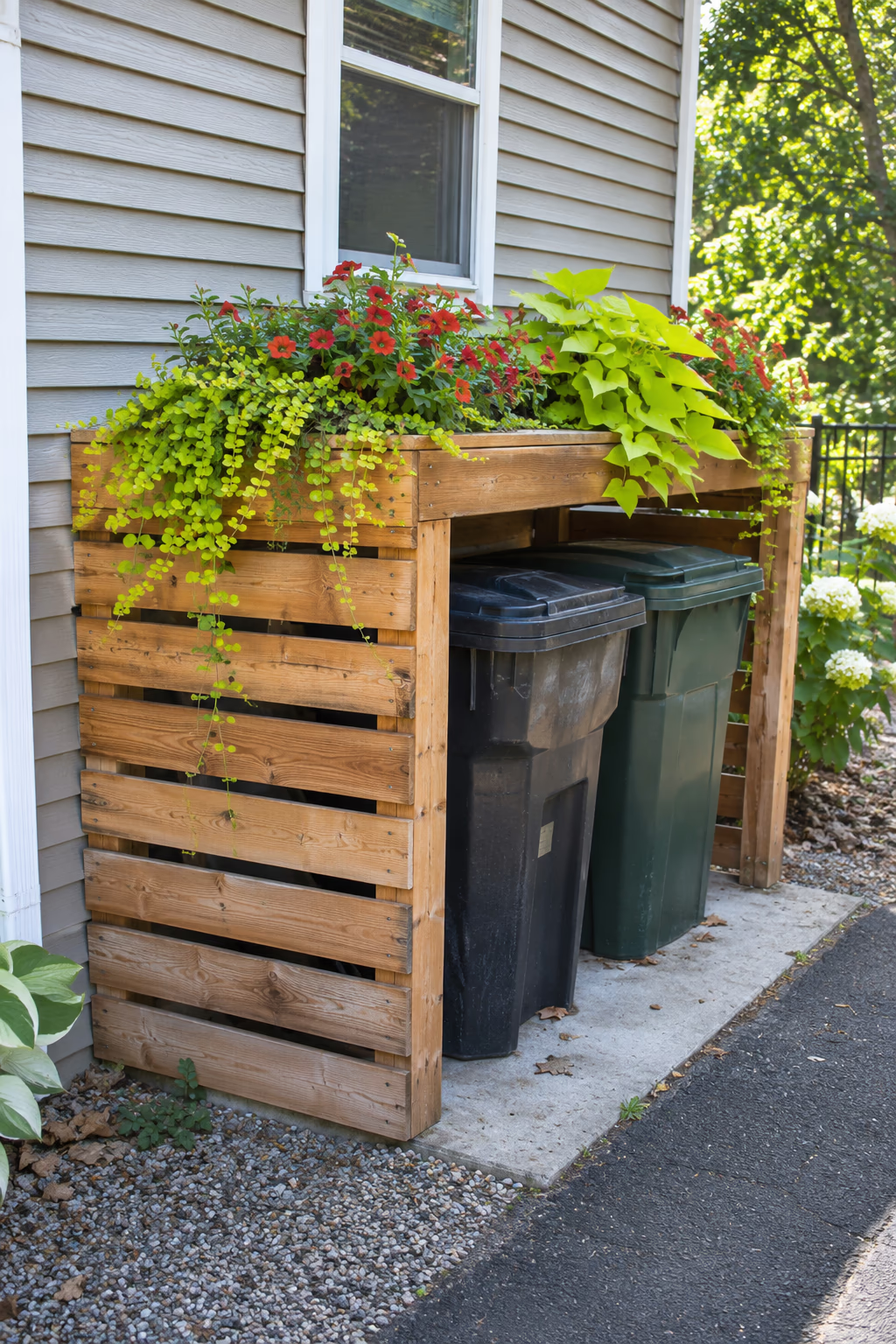
Hide the eyesores so the garden can shine
In a small yard, bins and the air conditioner unit are hard to ignore. Build a three-sided slatted enclosure with a planter box on top, and the clutter turns into another growing spot.
Plant the top box with trailing plants like creeping jenny or sweet potato vine to soften the structure.
Leave at least 2 feet of open space around an AC unit for airflow and service, and check your HOA rules for screening requirements.
30. Use Glossy Glazed Pots to Bounce Light
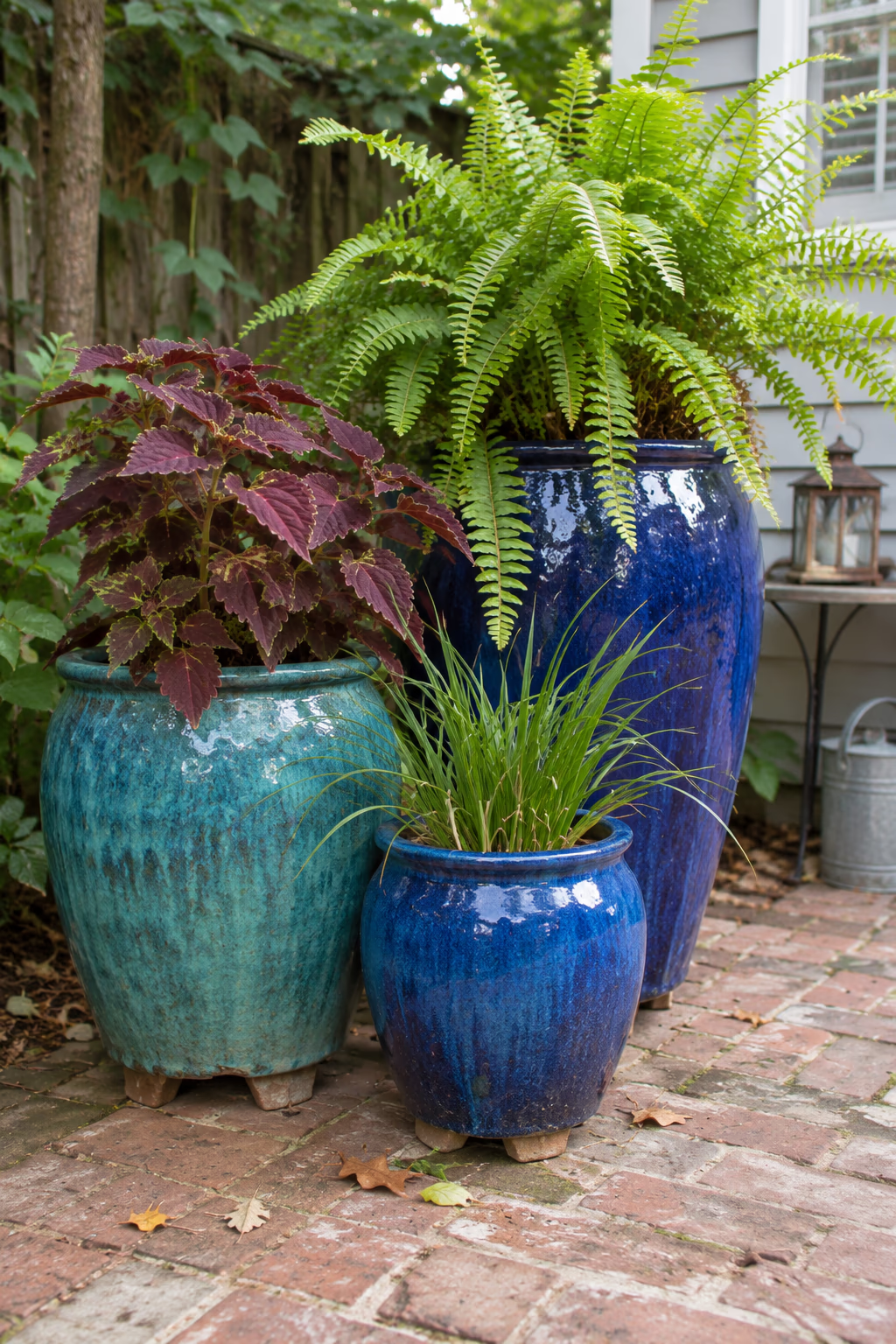
Reflective surfaces brighten shady spaces
Glazed ceramic pots in cobalt, turquoise, or white reflect light and add color even when nothing is blooming. They’re especially effective in a shady courtyard-style yard.
Group a few pots of the same glaze and different heights for a polished look.
Glazed ceramic can crack in freeze-thaw cycles. In cold zones, empty the pots or move them under cover for winter, and raise them on pot feet so they drain well.
31. Build a Low Platform Deck Over a Bumpy Corner
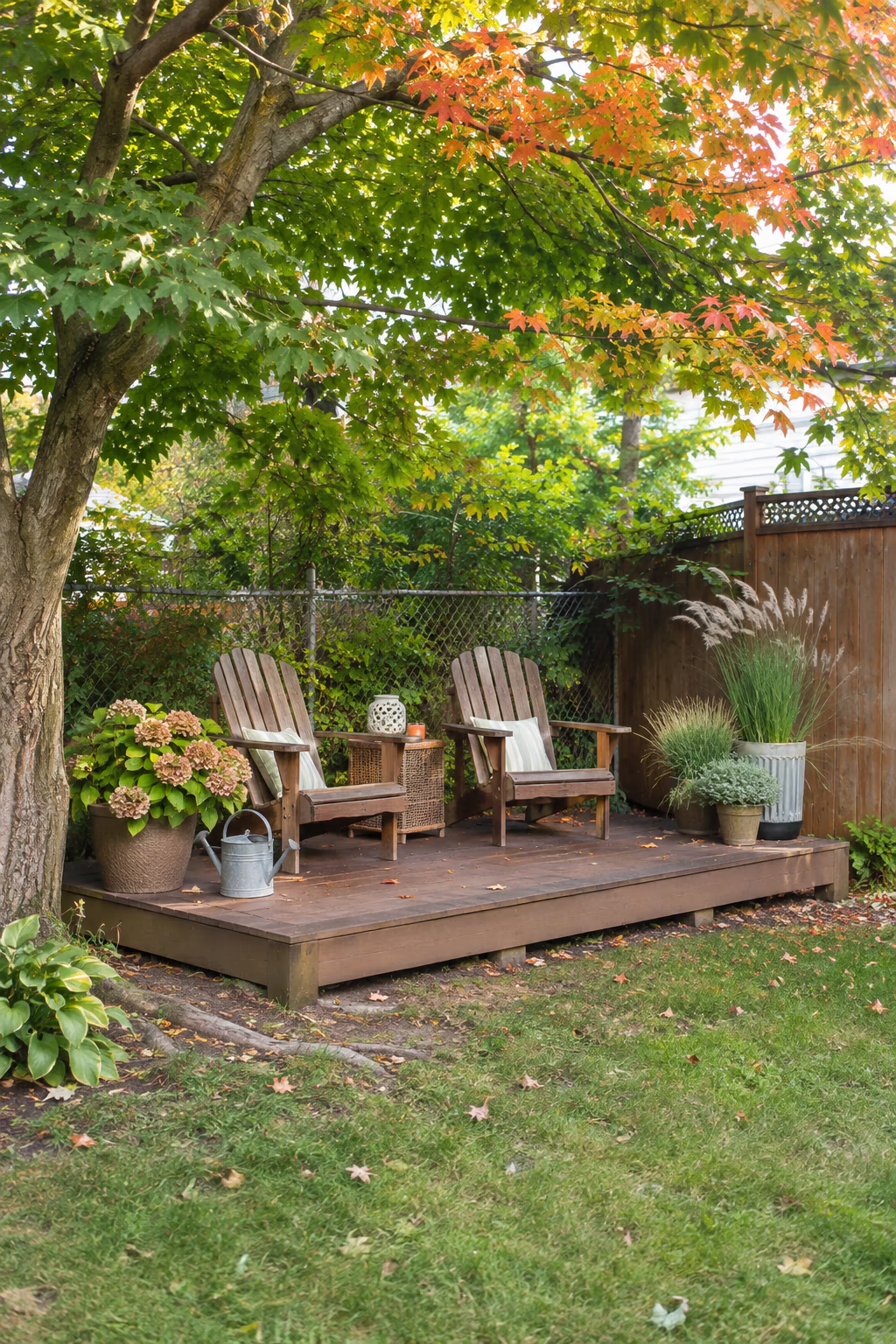
A level surface where the ground won’t cooperate
If a corner is uneven, rooty, or patchy, a low platform deck about 8 by 8 feet gives you a flat spot for chairs without heavy excavation. Deck blocks or adjustable pedestals make leveling simple.
Use pressure-treated lumber for the frame and composite or cedar boards for the surface. Put pots on the edges to blend the platform into the garden.
Low decks under 30 inches high often don’t need a permit, but rules vary, so check locally. Lay landscape fabric and gravel underneath to discourage weeds.
How to Plan Your Small Garden
A small garden comes together best when you decide how you’ll use it before buying plants or furniture. A little planning prevents clutter and wasted money.
- Decide on the main use. Dining, relaxing, growing food, or attracting wildlife each lead to different layouts, so choose one or two priorities.
- Track the sun. Note which areas get six or more hours of sun and which stay shady, and place seating and plants to match.
- Measure and sketch. Draw the space on graph paper, including doors, windows, spigots, and outlets, before deciding where things go.
- Think vertically. Fences, walls, and overhead structures offer planting space that doesn’t steal any floor area.
- Limit materials and colors. Two or three hardscape materials and a simple color scheme keep a small space from feeling busy.
- Check rules and utilities. Review HOA guidelines and local codes for structures, and call 811 before digging any holes.
Frequently Asked Questions
How can I make a small garden look bigger?
Use a limited color palette, paint fences a dark shade, lay paving on the diagonal, add a mirror, and partly screen areas so the whole garden isn’t visible at once. Fewer, larger pots and plants also look less cluttered than many small ones.
What are the best plants for a small garden?
Choose compact plants with a long season of interest, such as dwarf shrubs, small multi-stem trees, ornamental grasses, herbs, heuchera, and evergreen groundcovers. Always match plants to your USDA hardiness zone, soil, and sun exposure.
Can I grow food in a small garden?
Yes. Dwarf fruit trees in pots, raised beds, and vegetables tucked into flower borders all produce useful harvests. Focus on crops you eat often and that give a lot from little space, like herbs, salad greens, tomatoes, and beans.
What is the cheapest way to improve a small garden?
Painting a fence, adding gravel to a corner, dividing existing perennials, and growing from seed are all inexpensive. Solar lights and secondhand pots or furniture can also refresh a space without a big budget.
How do I add privacy to a small garden without making it feel cramped?
Use slatted screens, tall grasses in planters, a pergola with a climbing vine, or a small multi-stem tree. These filter views while still letting light and air through, unlike solid walls.
Final Thoughts
A small garden can hold more charm than you might expect. A bistro corner, a single graceful tree, or a few big pots of herbs and flowers can turn a modest patch of ground into the place you head to first thing in the morning.
Start with the idea that excites you most, then add more as time and budget allow. Choose plants that suit your climate, keep the layout simple, and let the space grow into itself over a few seasons.


