
Stand on your back step and look past the patio. Chances are you see a flat fence line, a bare wall, or a neighbor’s window. Then picture the same view with green leaves climbing a crisp grid, purple flowers spilling over a shed wall, and soft lights glowing through a vine-covered screen at dusk.
A trellis is one of the simplest ways to make that change. It adds height in a yard that feels flat, gives climbing plants somewhere to go, and creates privacy without the closed-in feeling of a solid wall. Most trellises take up less than a foot of ground, so they work in tiny yards as well as big ones, and many can be built in a weekend.
These 21 backyard trellis ideas cover patio privacy screens, modern metal grids, wall-mounted flowering climbers, lit screens, budget cattle panel tunnels, upcycled supports, and edible trellises for grapes and fruit trees. Each one includes practical sizes, plant suggestions, and tips so you can choose the right structure for your space.
1. Build a Trellis Planter Screen Around the Patio
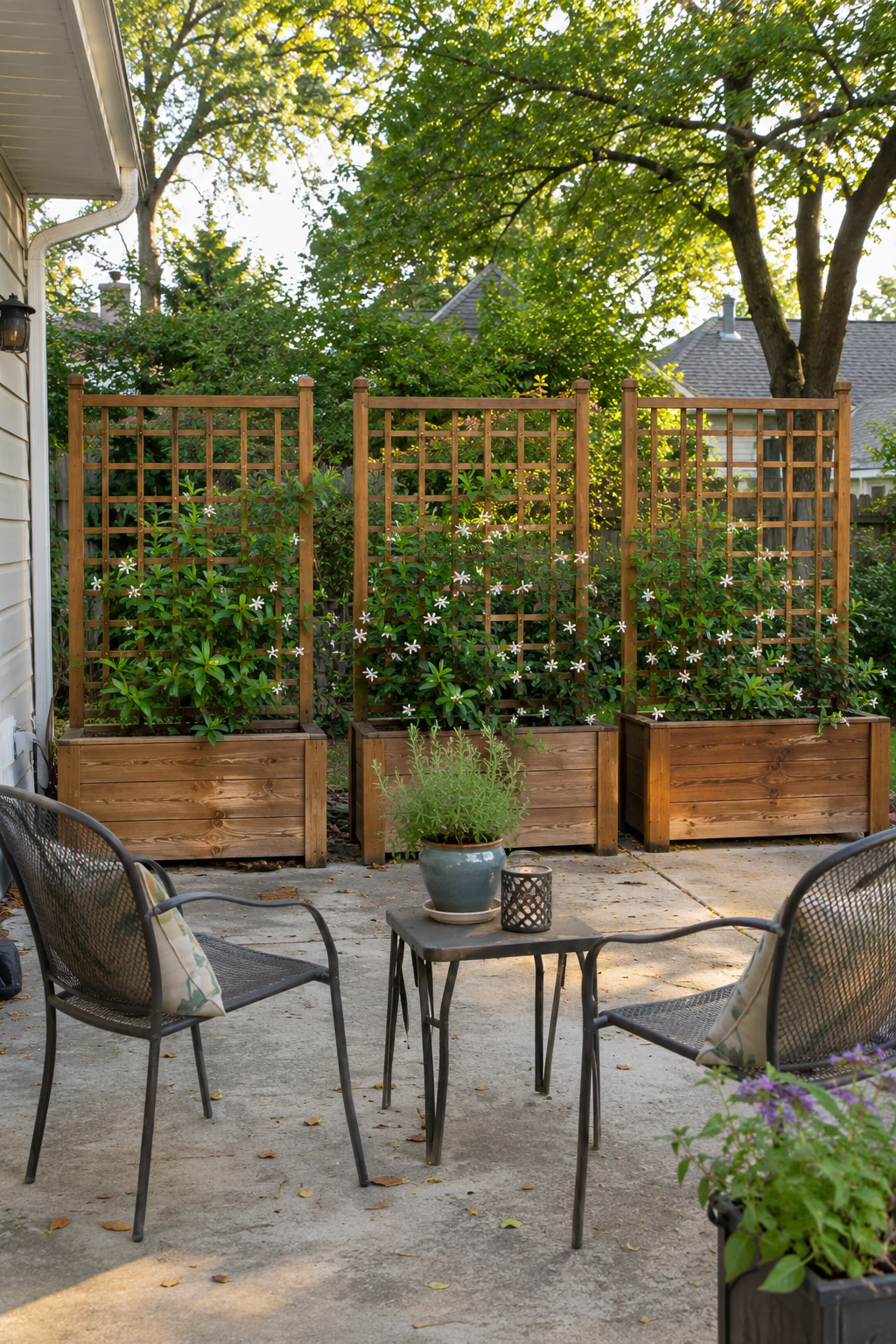
Instant privacy you can move later
A trellis planter combines a long planter box with a tall trellis panel rising from the back. Line two or three of them along the open side of a patio and you get a green screen that blocks sightlines without digging postholes. A common size is a box about 36 inches long, 14 inches deep, and 16 inches tall, with a trellis that brings the total height to 5 or 6 feet.
Fill the boxes with quality potting mix and plant vigorous climbers such as star jasmine in warm zones, or clematis, climbing hydrangea in shade, or annual mandevilla in colder areas. Because the planters sit on the patio surface, they work well for renters and for anyone who may rearrange the space later.
Tall planters can catch wind like a sail once vines fill in. Choose boxes with a wide base, add a few inches of gravel at the bottom for weight, or anchor the trellis to the house or a post with discreet brackets in exposed spots.
2. Mount a Black Metal Grid Trellis on the Fence
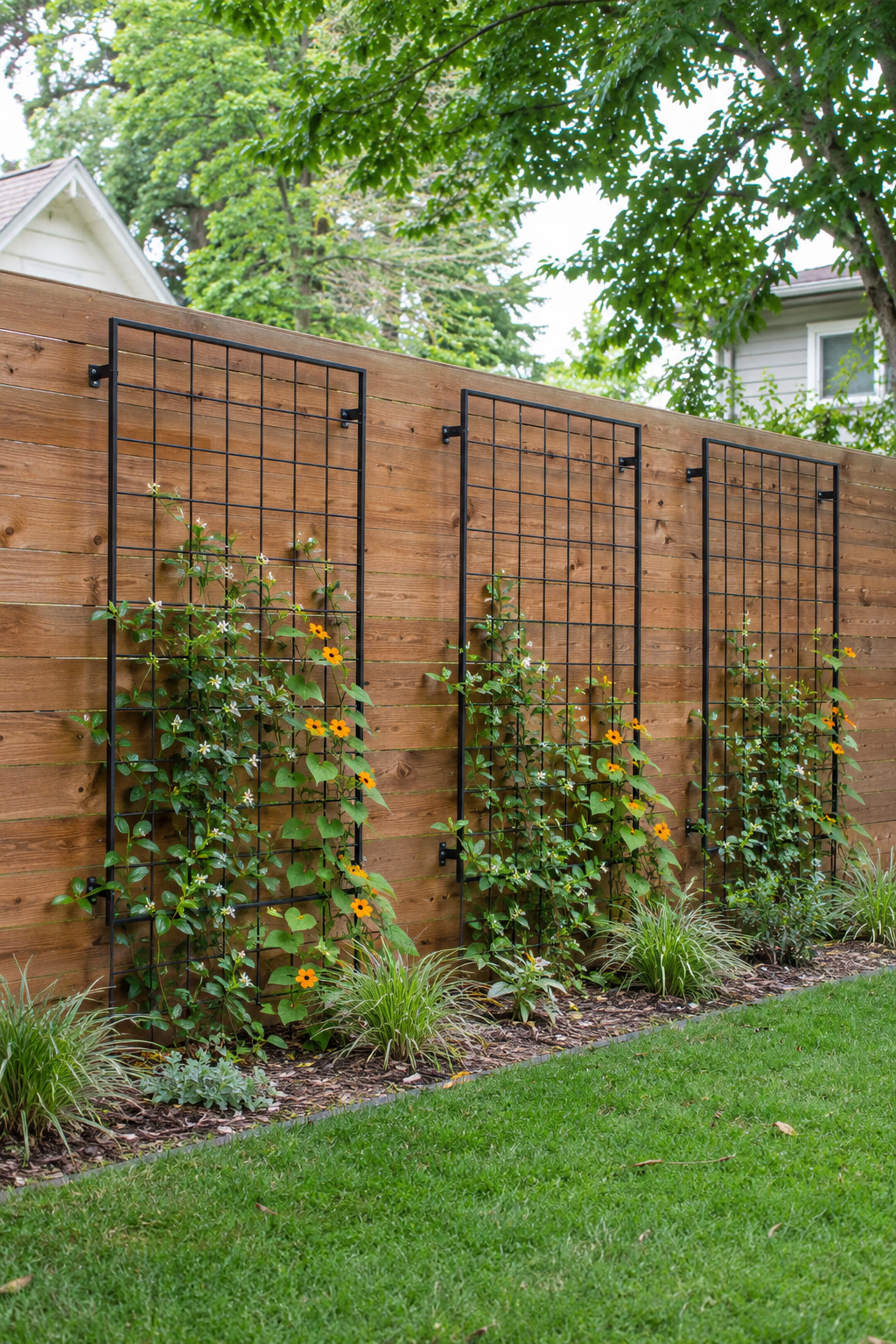
A clean modern look that lasts for years
Matte black steel grid panels have become the go-to style for modern yards. A simple square grid, often 4 to 6 inches between wires, looks sharp against a stained cedar or gray fence even before plants grow in. Mount the panels on short standoff spacers so there are 2 to 3 inches between the grid and the fence boards for air flow and for tendrils to wrap around.
Black recedes visually, so the leaves and flowers become the focus. It pairs well with bold greenery like trumpet vine on sturdy structures, evergreen jasmine, or a fast annual like black-eyed Susan vine for summer color.
Look for powder-coated or galvanized steel rather than bare iron, which rusts quickly. Check that your fence posts are solid before adding a heavy panel and a mature vine, since the combined weight and wind load can be significant.
3. Train Clematis on a Wall Trellis Beside the Shed
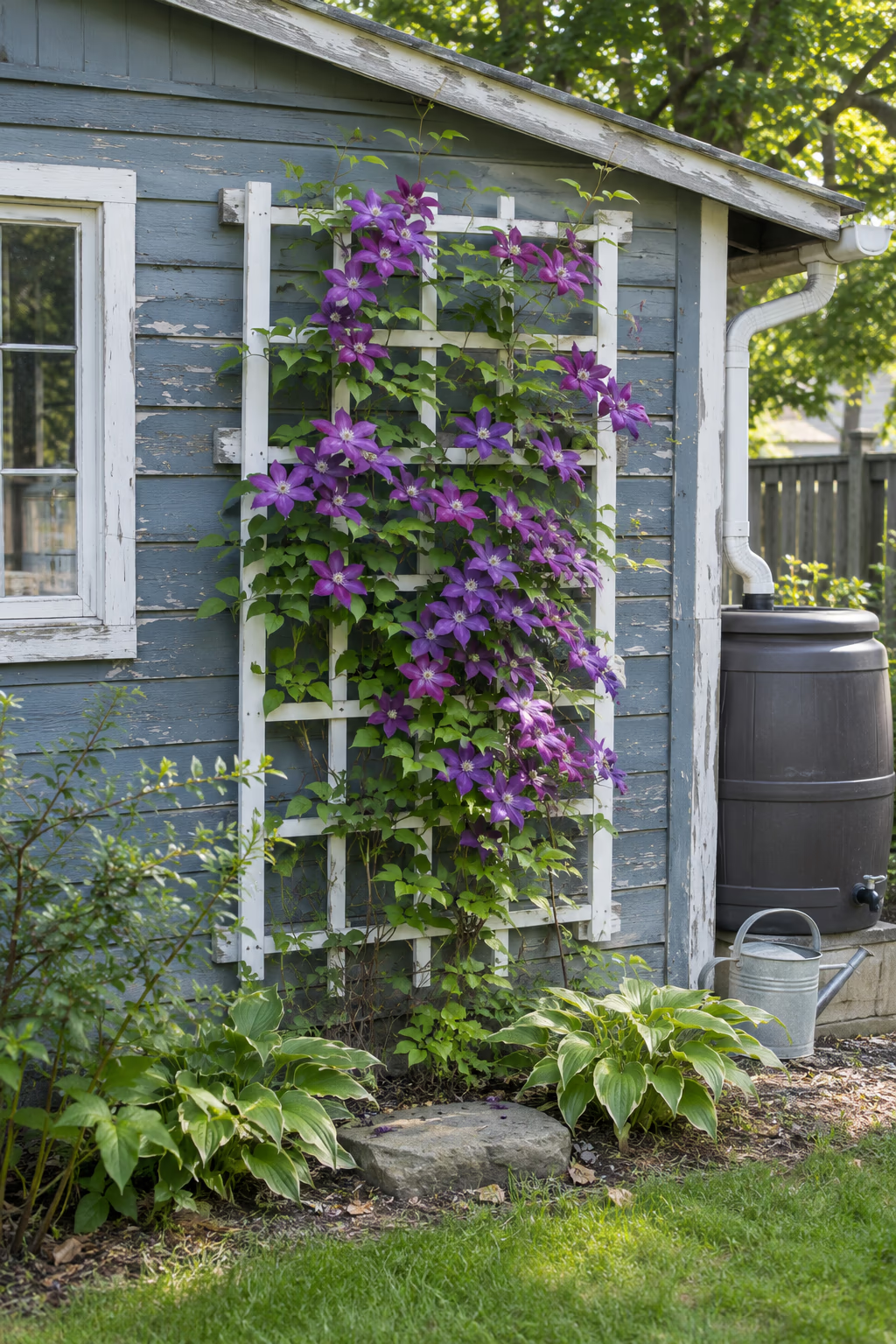
Turn a plain outbuilding into a feature
A garden shed or detached garage wall is a perfect backdrop for a flowering climber. Attach a wood or metal trellis panel about 6 feet tall to the wall using spacer blocks, then plant one or two clematis vines at the base. Purple, white, and deep red varieties all show up beautifully against painted siding.
Clematis likes its leaves and flowers in the sun but its roots cool and shaded. A few low perennials, a flat stone, or a layer of mulch at the base keeps the root zone comfortable. The vine climbs by wrapping leaf stalks around thin supports, so wires or slender slats work better than wide boards.
Learn which pruning group your clematis belongs to before cutting it back. Some bloom on old wood and should only be lightly trimmed after flowering, while others can be cut hard in late winter.
4. Weave String Lights Through a Trellis Screen
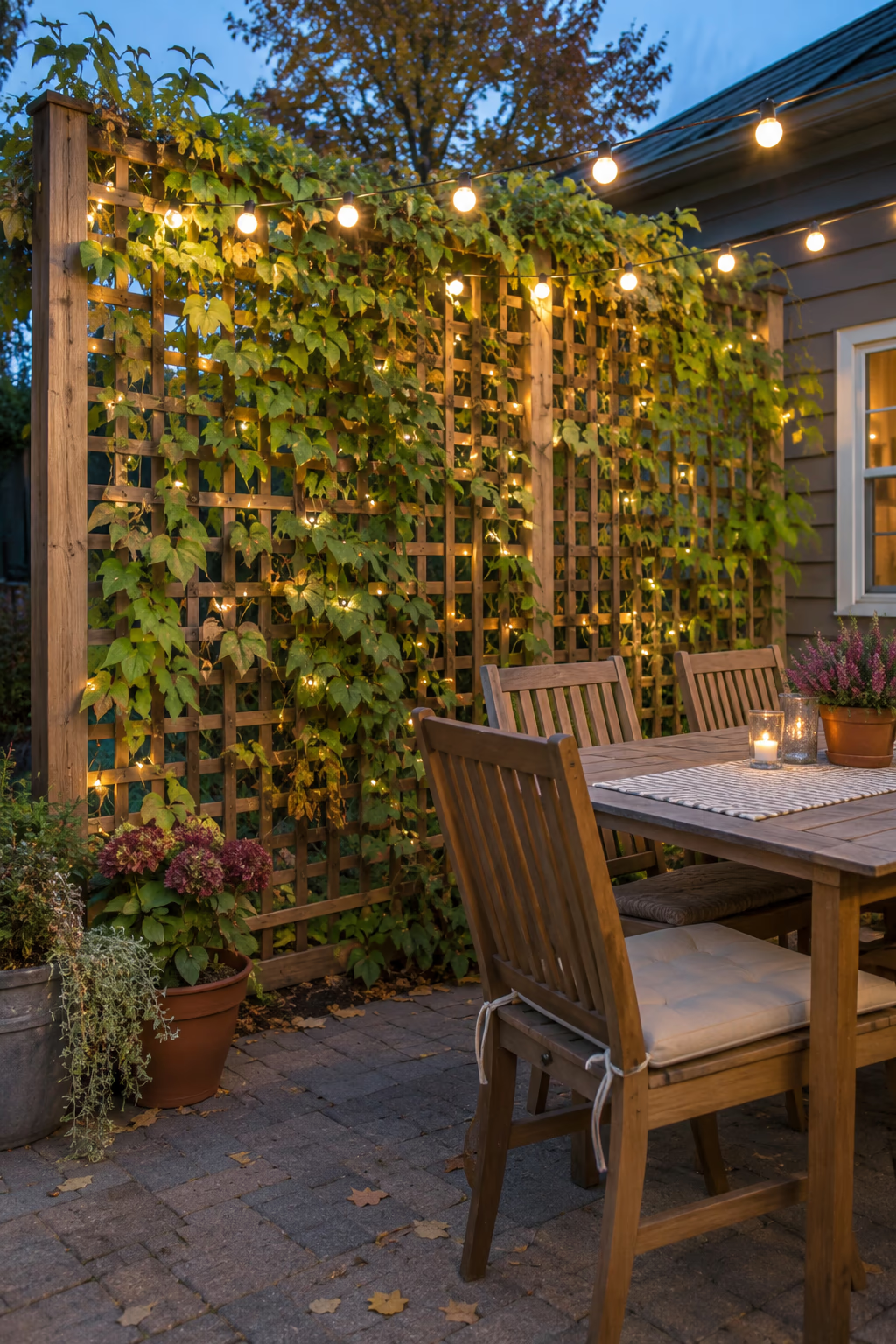
Privacy by day and a warm glow at night
A trellis screen beside the patio does double duty when you run outdoor string lights or fairy wire lights through it. Zigzag a strand of warm white bistro bulbs across the top, or wrap thin copper-wire lights loosely through the grid so the leaves glow from within after dark.
This works especially well on a lattice or grid screen that defines an outdoor dining or lounge area. The lights draw the eye to the greenery and make the space feel enclosed and cozy in the evening.
Use lights rated for outdoor use, plug them into a GFCI-protected outlet, and avoid wrapping cords tightly around stems that will thicken over time. Solar strands are an easy option if there’s no outlet nearby.
5. Bend a Cattle Panel Into a Walk-Through Tunnel
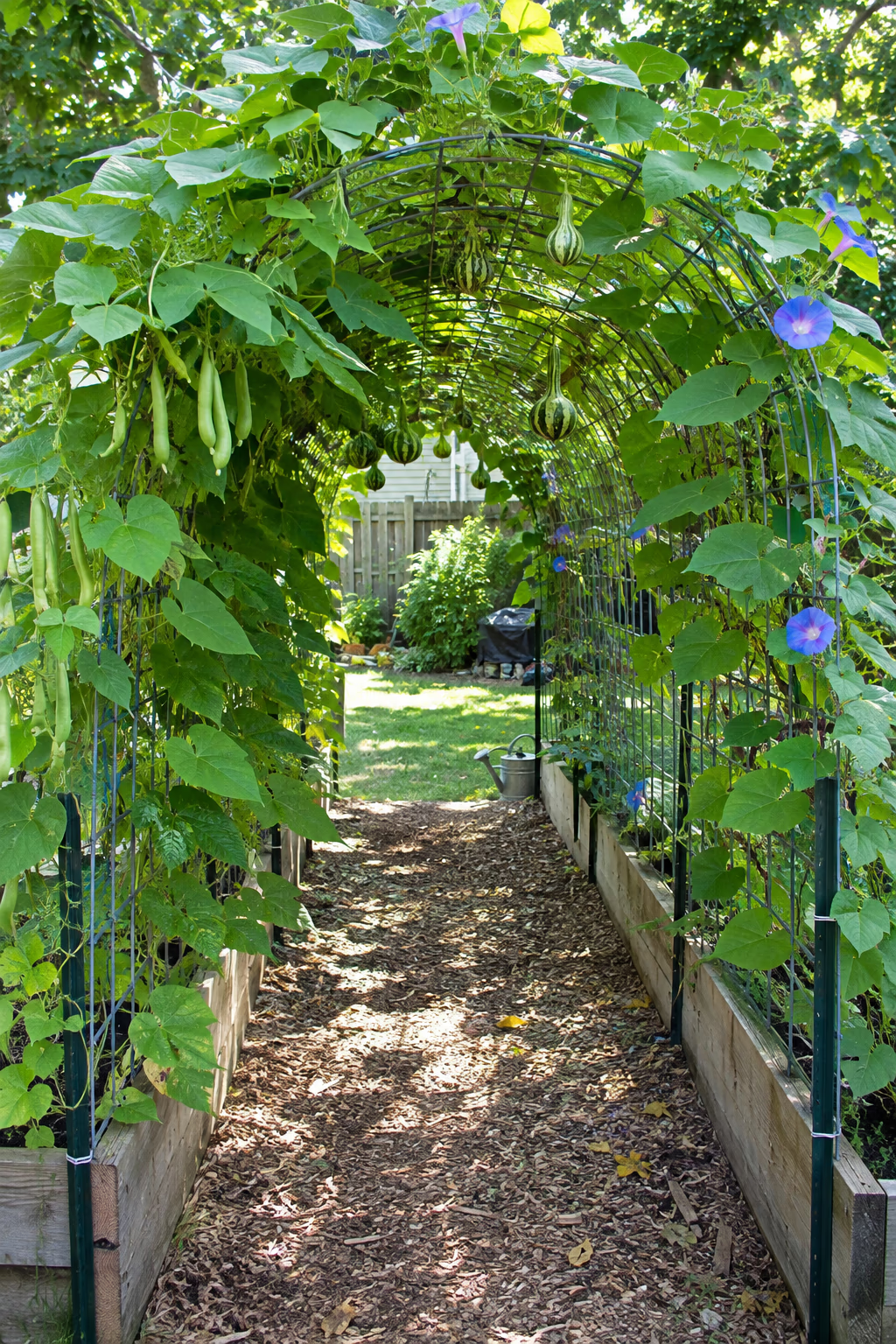
A budget favorite that feels magical once covered
A cattle panel is a sturdy welded wire livestock panel, typically 16 feet long and about 50 inches wide. Bend one into an arch between two raised beds or along a path, secure the ends to steel T-posts, and you have a tunnel tall enough to walk through. Two or three panels in a row make a longer passage.
Grow climbing beans, small gourds, cucumbers, or morning glories up the sides, and within a season the tunnel fills in with leaves and hanging produce or flowers. It’s one of the cheapest large trellis structures you can build, and the galvanized wire lasts for many years.
The panel ends are sharp and the panels are awkward to handle, so wear gloves and have a helper when bending them. Most farm supply stores sell them, but they are long, so plan for a truck or delivery.
6. Stretch a Stainless Wire Trellis Across a Blank Wall
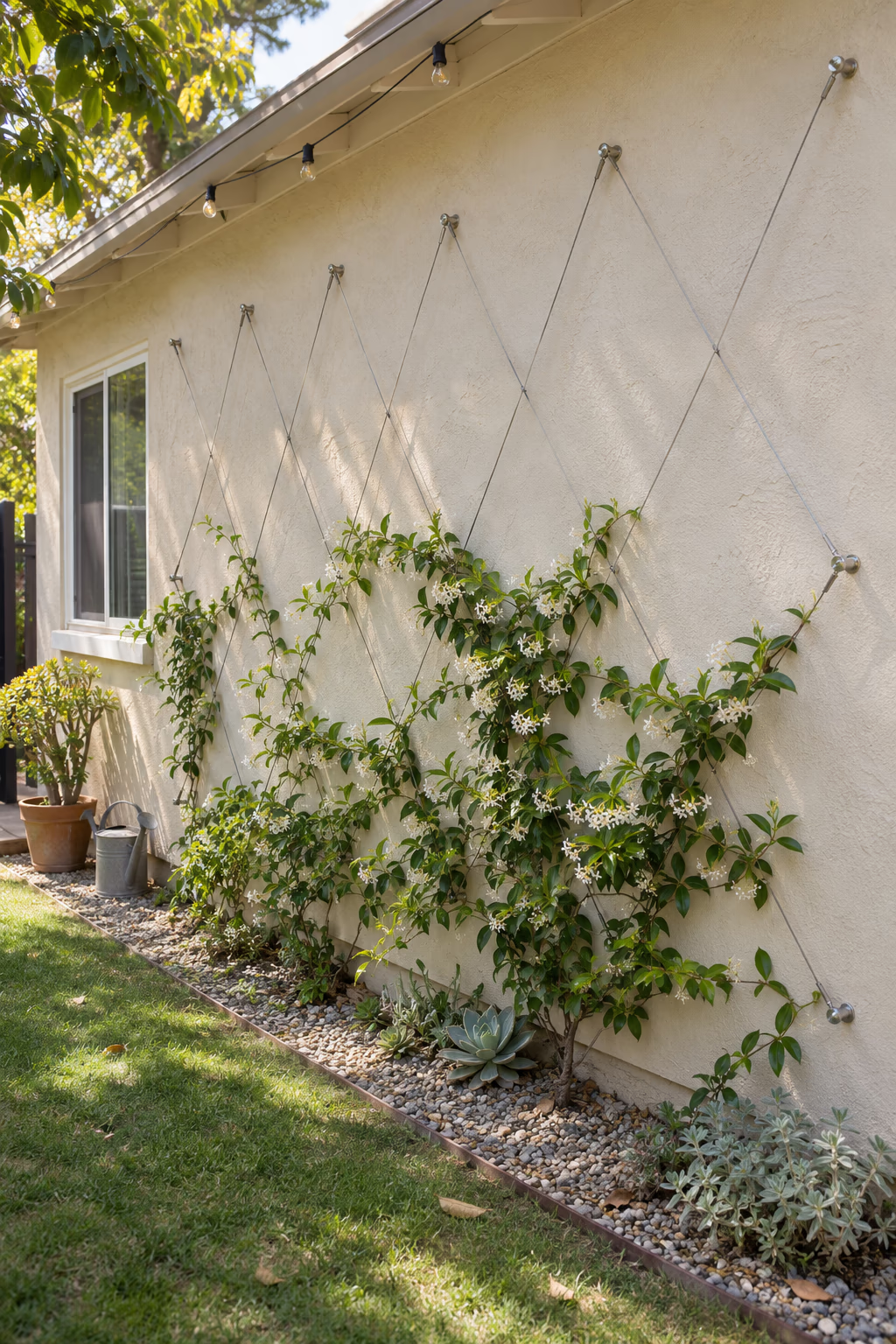
Nearly invisible support for a living wall
For a minimal look, skip panels altogether and run thin stainless steel cables horizontally or in a diamond pattern across a wall. Kits use small threaded eye bolts or standoff anchors that hold the wire 2 to 4 inches from the surface, with turnbuckles to keep everything tight.
When plants are young, the wall still looks tidy, and once climbers like star jasmine, climbing roses, or espaliered pyracantha fill in, the wires disappear. It suits stucco, brick, and painted siding and costs less than a large custom panel.
Drill into masonry with the right anchors and avoid placing hardware where it could trap water behind siding. Skip aggressive self-clinging vines on wood siding, since they can damage paint and hold moisture.
7. Divide the Yard With a Freestanding Lattice Panel
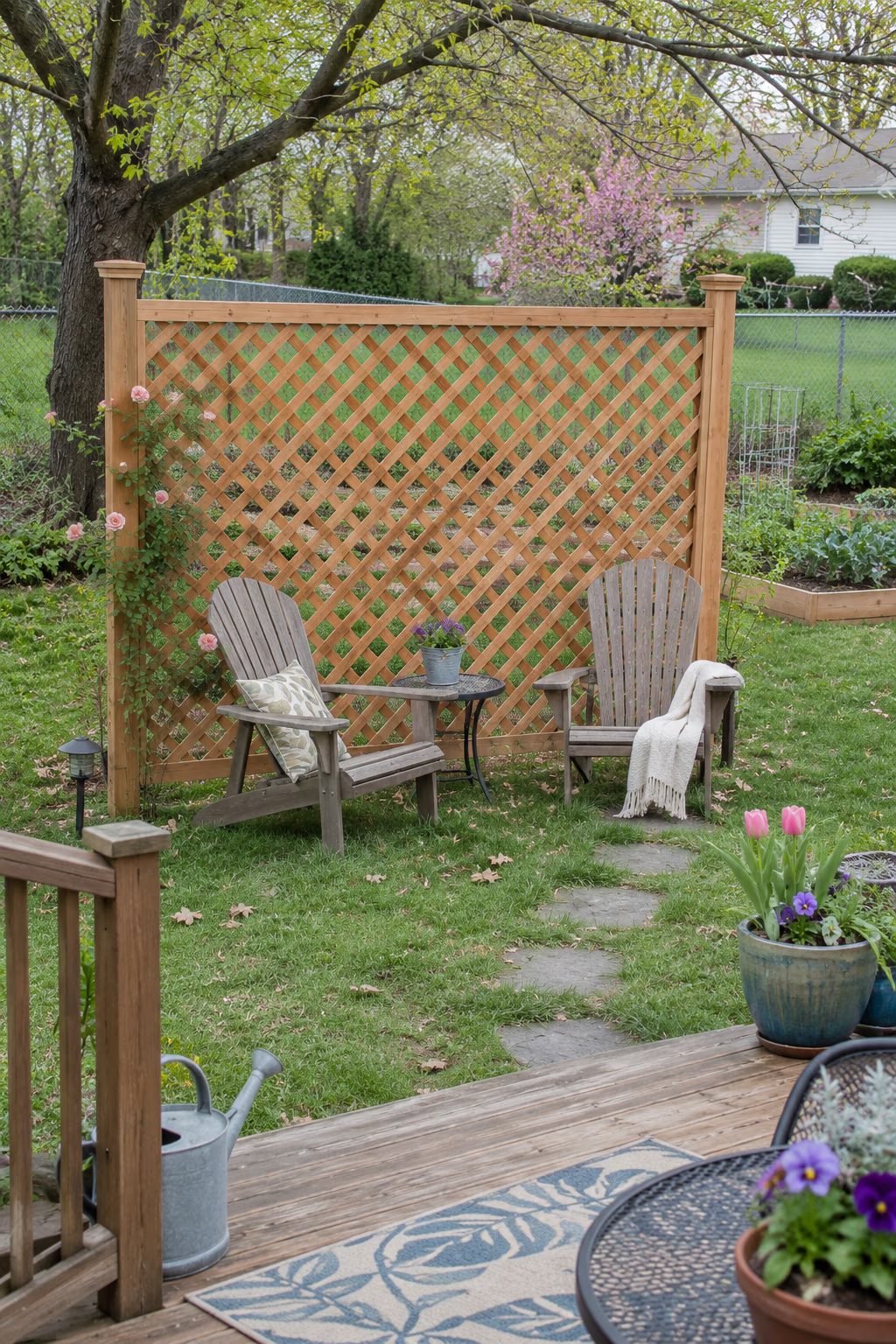
Create separate outdoor rooms
A freestanding trellis panel set between two posts can split one open lawn into distinct areas, such as a dining zone and a play area, or a seating spot and a vegetable patch. A panel about 6 to 8 feet wide and 6 feet tall feels substantial without blocking light.
Diagonal or square lattice in cedar gives a classic look, while horizontal slats feel more contemporary. Even without plants, the partial screen makes a small yard feel larger because you can’t see everything at once.
Set the posts in concrete or use metal post anchors so the panel won’t lean after a windy storm. In the United States, call 811 a few days before digging postholes.
8. Hide the Hot Tub Behind a Vine-Covered Trellis
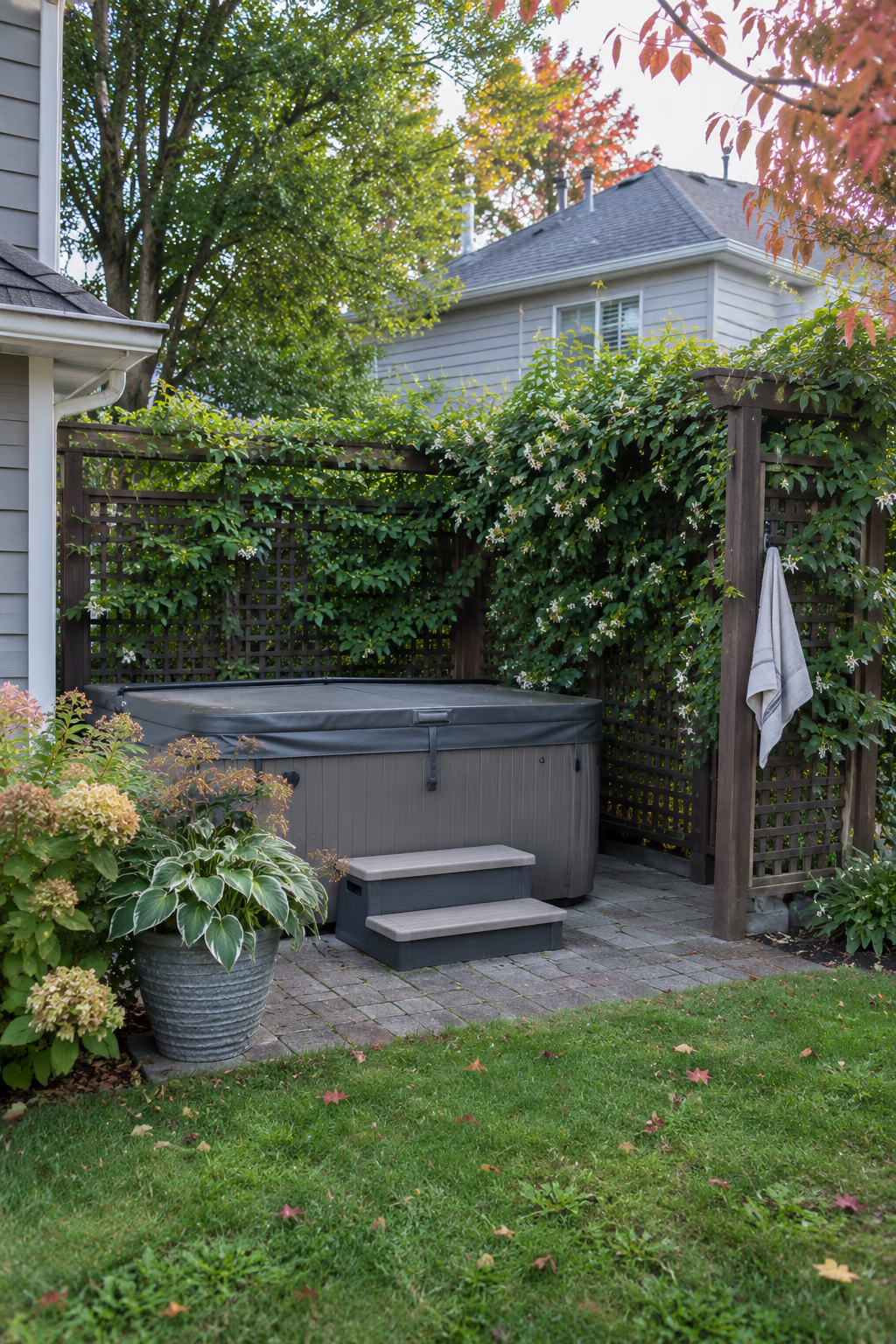
Soak in privacy with a green backdrop
Hot tubs often sit in exposed spots, in full view of neighbors’ windows. A pair of tall trellis panels on one or two sides blocks those sightlines and makes the tub feel like part of a garden instead of an appliance on a slab.
Choose dense, smooth-stemmed climbers like evergreen clematis, star jasmine in mild climates, or hardy honeysuckle that isn’t invasive in your region. Avoid thorny roses near bare skin and skip vines that drop lots of petals or berries into the water.
Leave enough space behind the tub to reach the service panel and keep vines away from electrical components. Wood near a hot tub sees a lot of moisture, so rot-resistant cedar or a metal frame lasts longer.
9. Tuck a Bench Into a Trellis Alcove
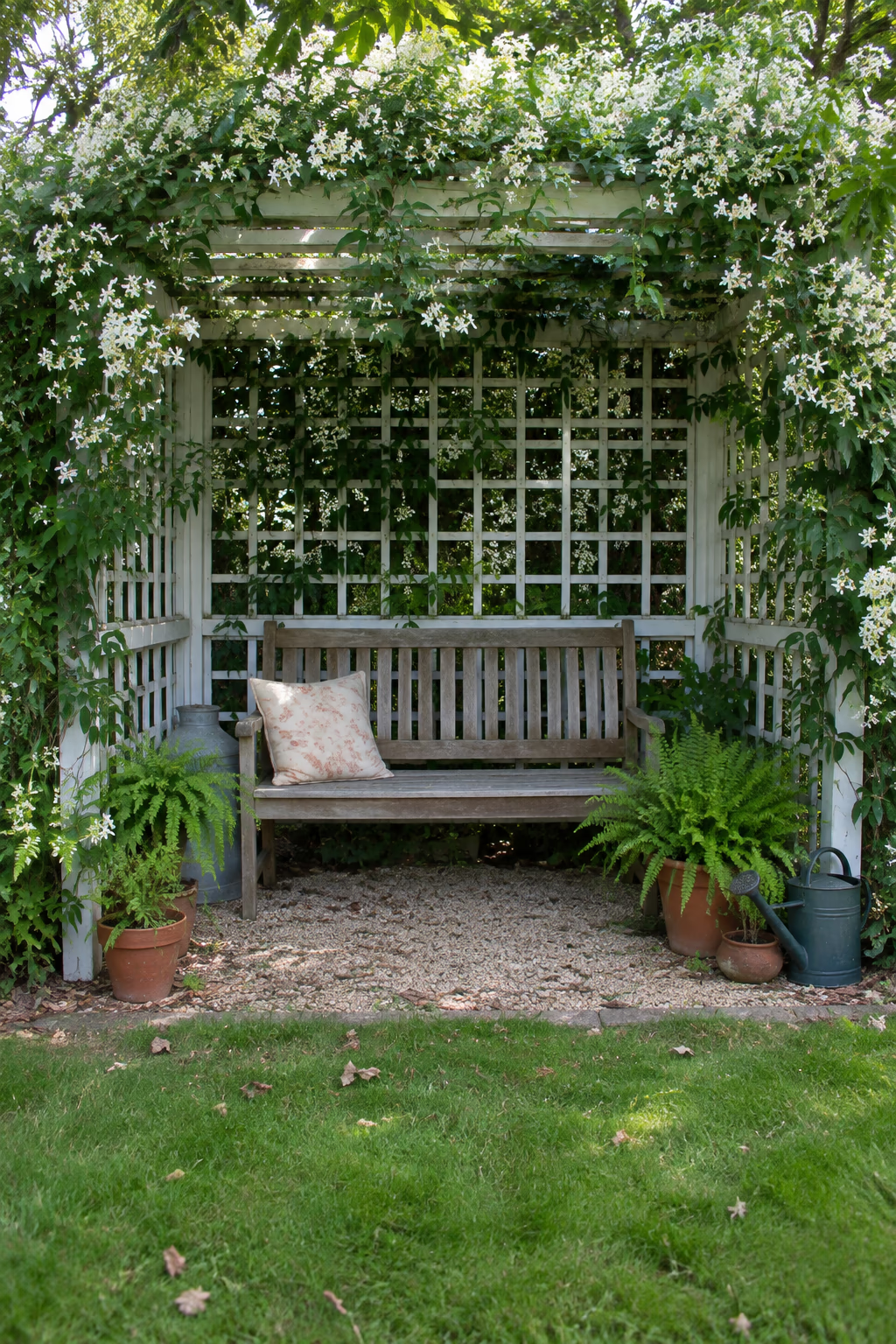
A leafy nook that feels hidden away
Three trellis panels arranged in a U shape around a simple wooden bench create a small sheltered alcove. Add a slatted roof panel on top and the space becomes a cozy reading spot or morning coffee nook at the edge of the yard.
Fragrant climbers make the alcove even better. Sweet autumn clematis, jasmine, or a climbing rose on the outer side offer scent, while a pot of herbs or ferns softens the floor around the bench.
Plant climbers on the outside of the panels so stems and thorns don’t crowd the seat. Position the alcove where it gets afternoon shade in hot climates, or morning sun if you want a warm spot in cooler regions.
10. Stand a Copper Pipe Trellis in a Flower Bed
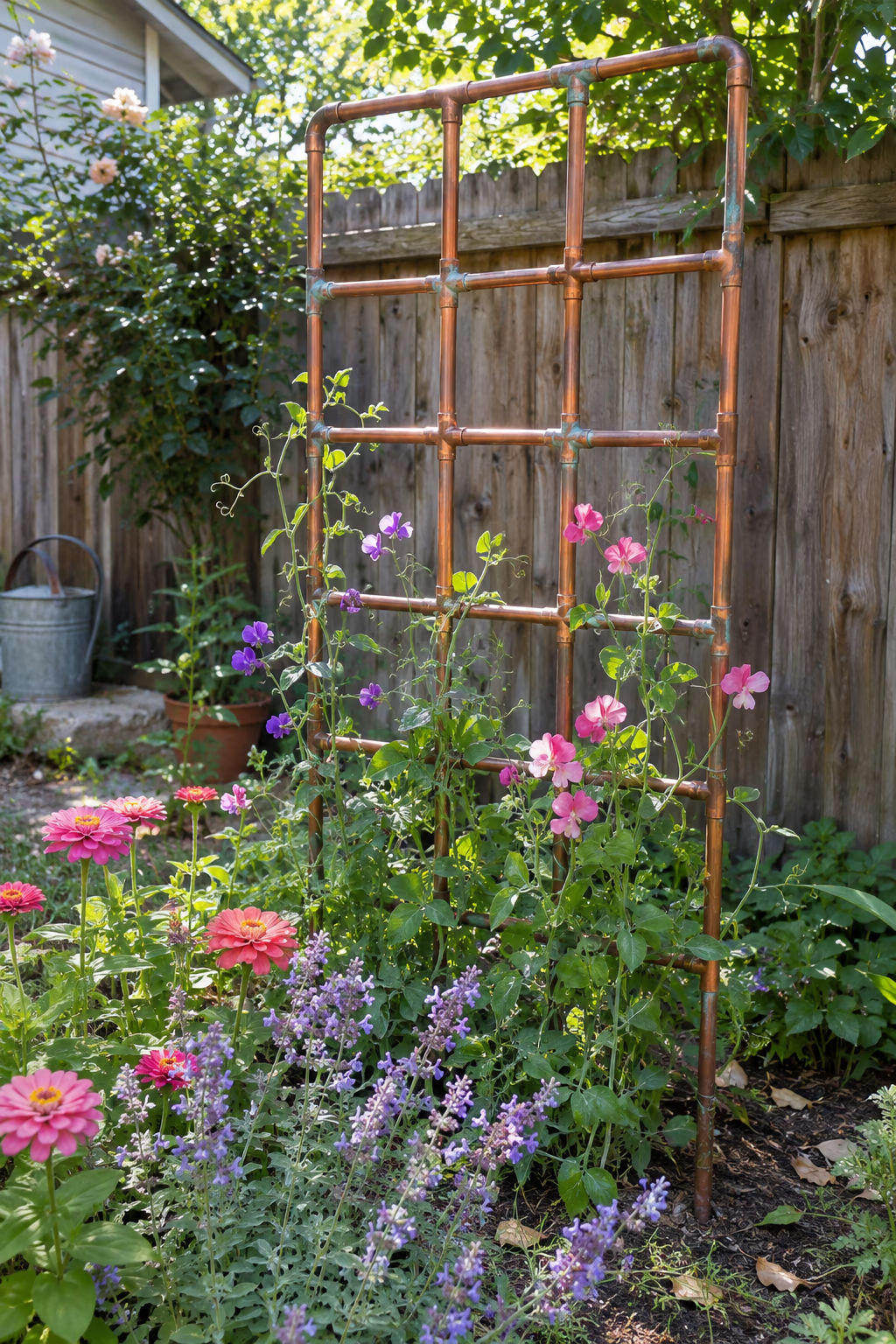
A handmade accent that ages beautifully
A copper pipe trellis is a satisfying DIY project. Cut 1/2-inch copper pipe into uprights and crosspieces, join them with tee and elbow fittings, and push the legs into the soil or slide them over rebar stakes. A simple ladder or grid shape about 5 feet tall works well in a flower bed.
Fresh copper shines bright, then mellows to a warm brown and eventually a soft green patina over time. It looks lovely with clematis, sweet peas, or morning glories and adds an artisan touch that store-bought trellises rarely match.
Copper is more expensive than wood or steel, so a smaller design keeps costs reasonable. Fittings can be soldered or glued with outdoor-rated adhesive; push-on fittings are easier but cost more per joint.
11. Lash Together a Bamboo Grid Trellis
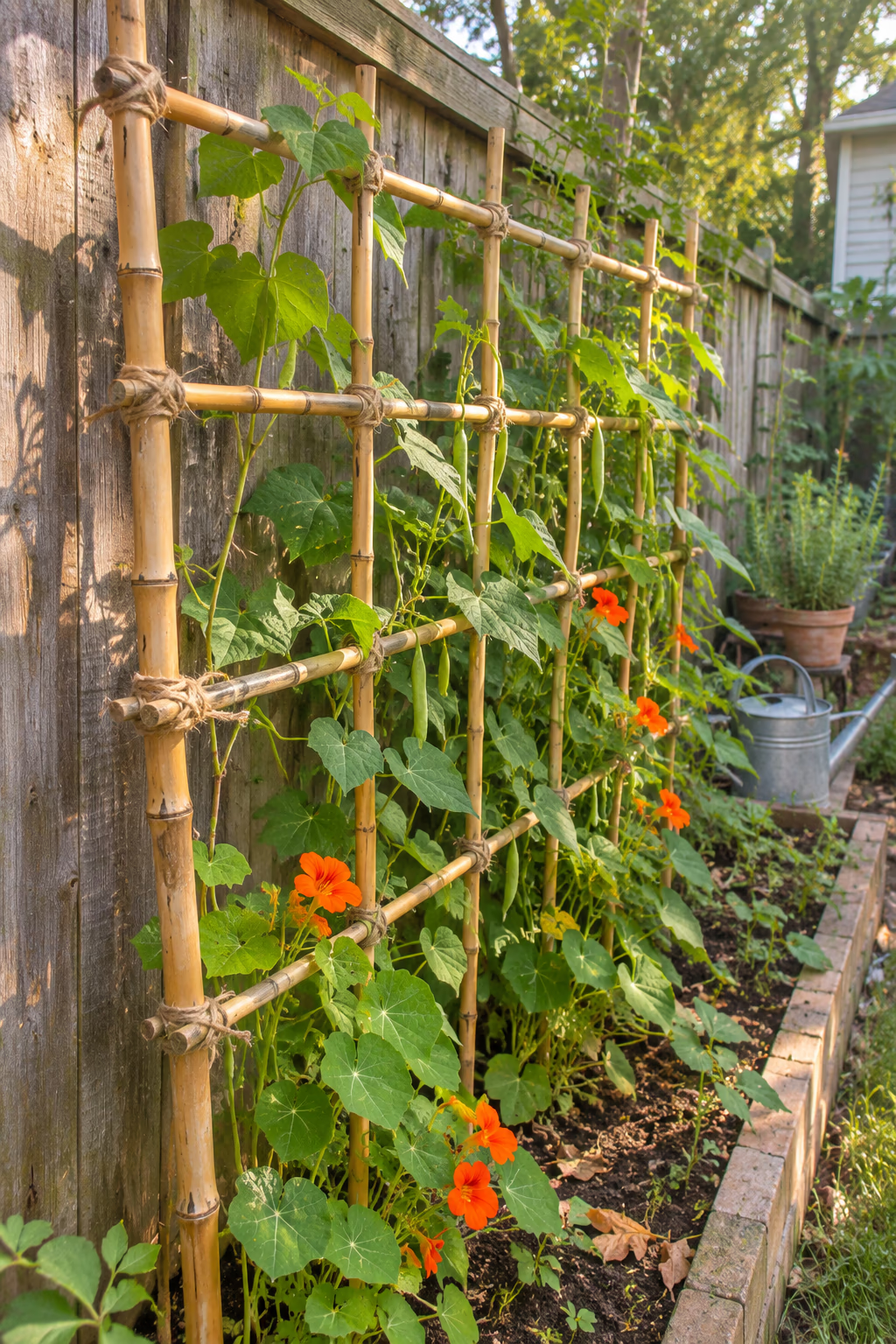
Natural texture on a small budget
Bamboo canes are lightweight, inexpensive, and easy to work with. Push a row of 6-foot canes about a foot into the ground, then lash horizontal canes across them every 8 to 12 inches using jute twine or black garden twine tied in simple cross knots.
The irregular nodes and natural tan color give the trellis an organic, handmade look that suits cottage, Asian-inspired, and casual gardens. It’s ideal for annual vines like sweet peas, nasturtiums, and climbing beans.
Bamboo canes last a few seasons outdoors before they split or rot at ground level. Store them in a dry spot over winter, and replace the bottom canes as they weaken.
12. Set an Obelisk Trellis as a Bed Focal Point
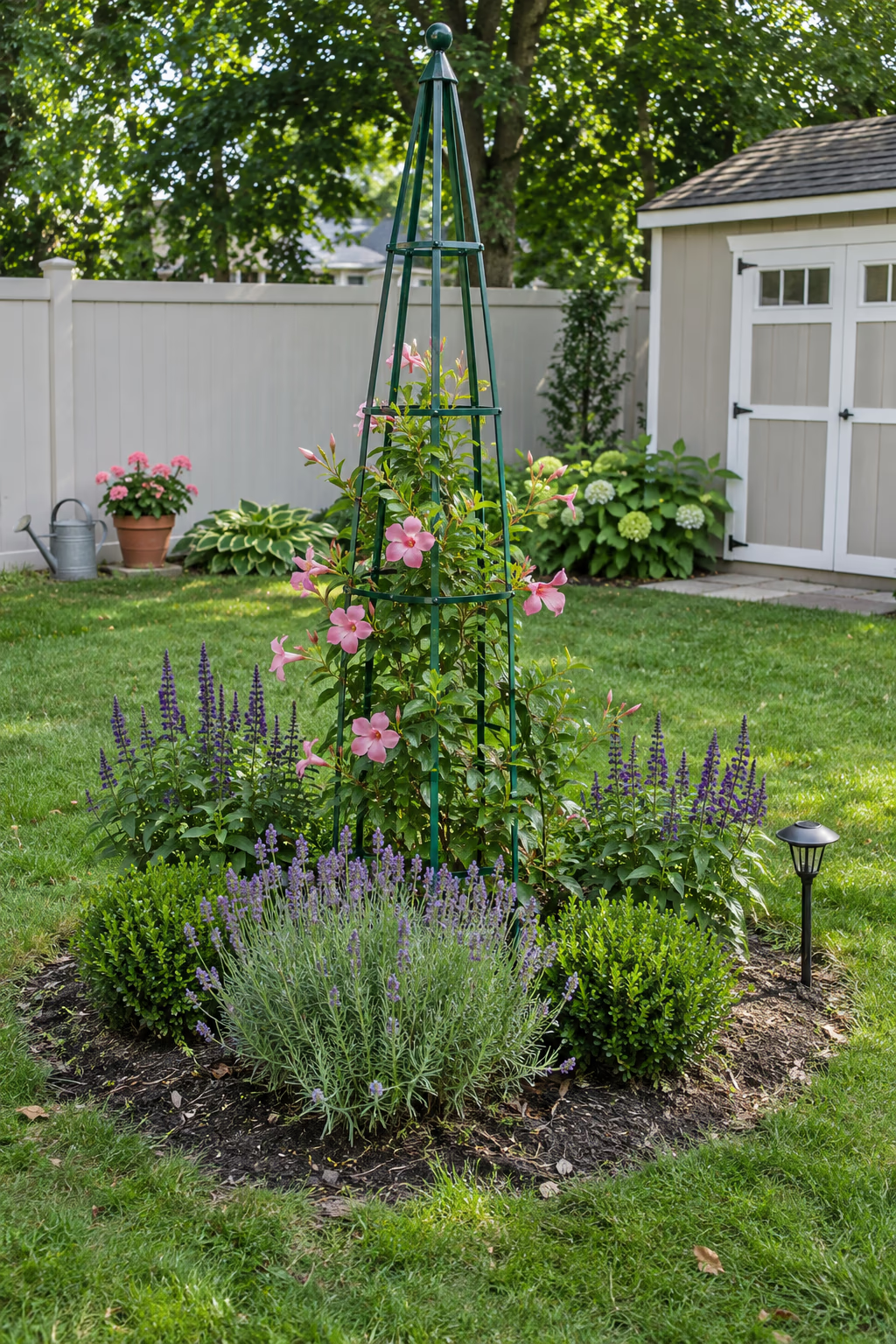
Vertical drama in the middle of a planting
An obelisk is a tall, narrow, four-sided trellis that tapers to a point. Placed in the center of a round flower bed or at the end of a border, it pulls the eye up and gives the planting a strong structure even in winter.
Obelisks between 5 and 7 feet tall suit most backyard beds. Cover them with compact climbers like small clematis, climbing nasturtiums, or mandevilla, or leave a metal or painted wood version bare as a garden sculpture.
Anchor the legs well, especially for metal obelisks in windy areas. Pick a size in proportion to the bed; a towering obelisk in a narrow strip can feel crowded.
13. Screen the AC Unit and Trash Cans With Trellis Panels
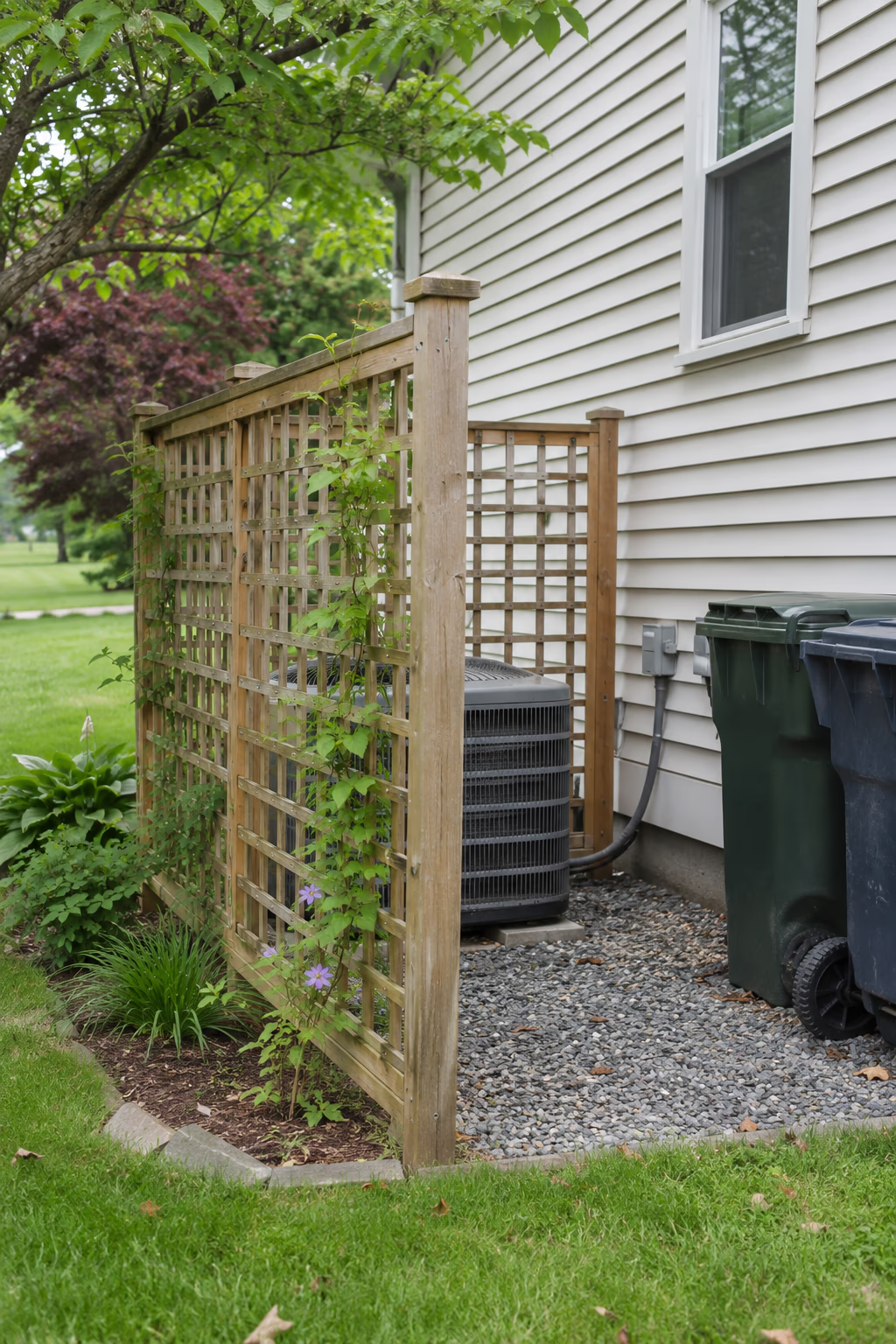
Hide the eyesores without blocking access
Every backyard has a few things that are hard to love, such as the air conditioner, trash bins, rain barrels, or a pool pump. A short run of trellis panels, about 4 to 5 feet tall, set in an L shape around them hides the clutter while still letting air move freely.
Plant a slow, well-behaved climber such as clematis or an annual vine so the screen doesn’t overwhelm the equipment. Leave one end open or add a simple hinged panel so you can roll bins out or reach the unit for service.
Air conditioner makers typically call for at least 2 feet of clear space around the condenser, so check your unit’s manual. Keep vines from growing into the fins, since they reduce efficiency.
14. Run a Grapevine Along a Post-and-Wire Trellis
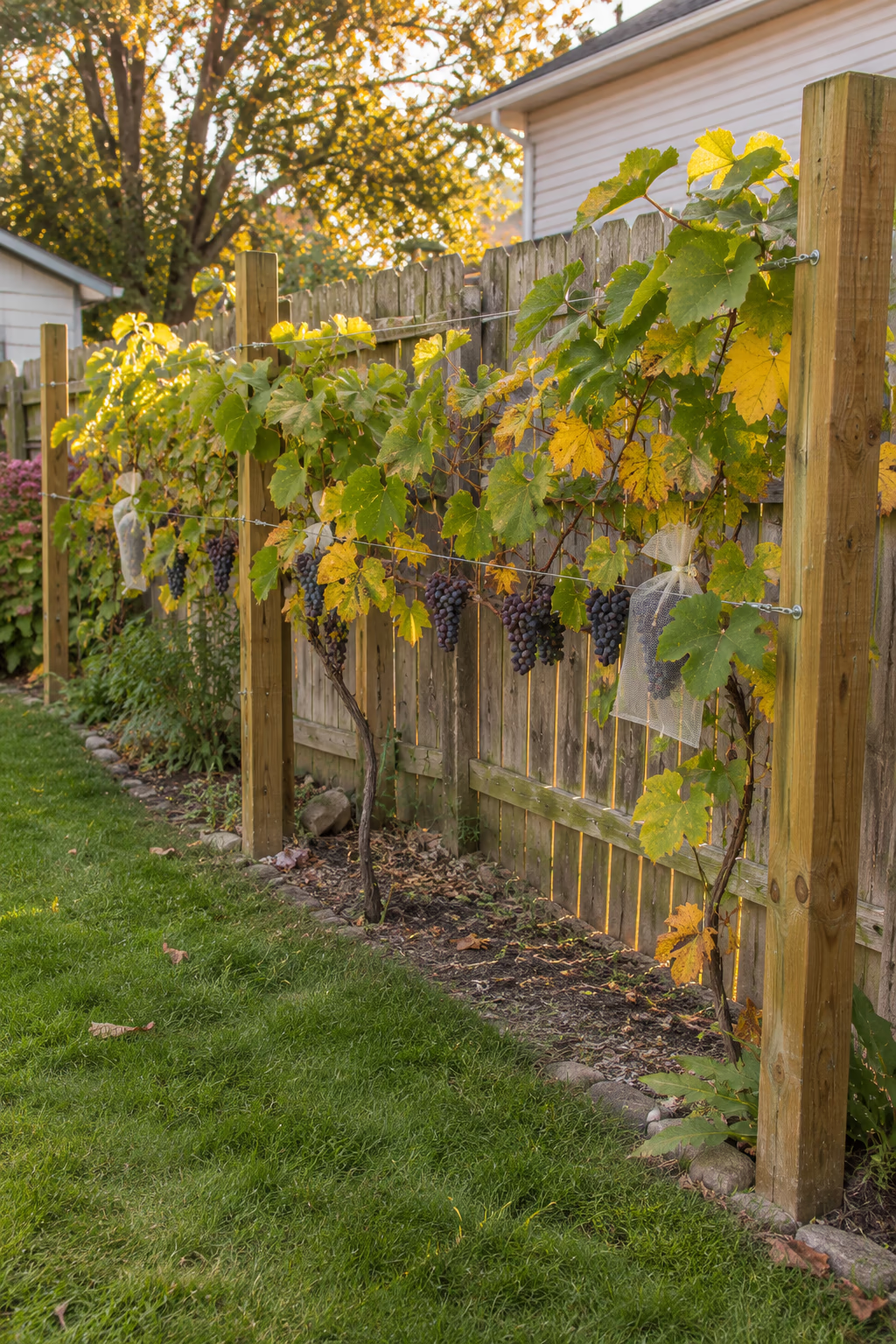
A vineyard feel in an ordinary backyard
A post-and-wire trellis is just two or three sturdy wooden posts with heavy-gauge wires stretched between them, usually at about 3 and 5 feet high. Set it along a sunny fence line or at the back of a lawn, plant grapevines at the posts, and train the main canes along the wires.
Within a couple of years, you’ll have a leafy green row that looks lovely through the summer, turns golden in fall, and produces fruit. Choose grape varieties suited to your climate, such as cold-hardy American hybrids in the North or muscadines in the Southeast.
Grapes need full sun, good air circulation, and annual winter pruning to fruit well. Expect to net clusters against birds as they ripen.
15. Stagger Trellis Panels Down a Narrow Side Yard
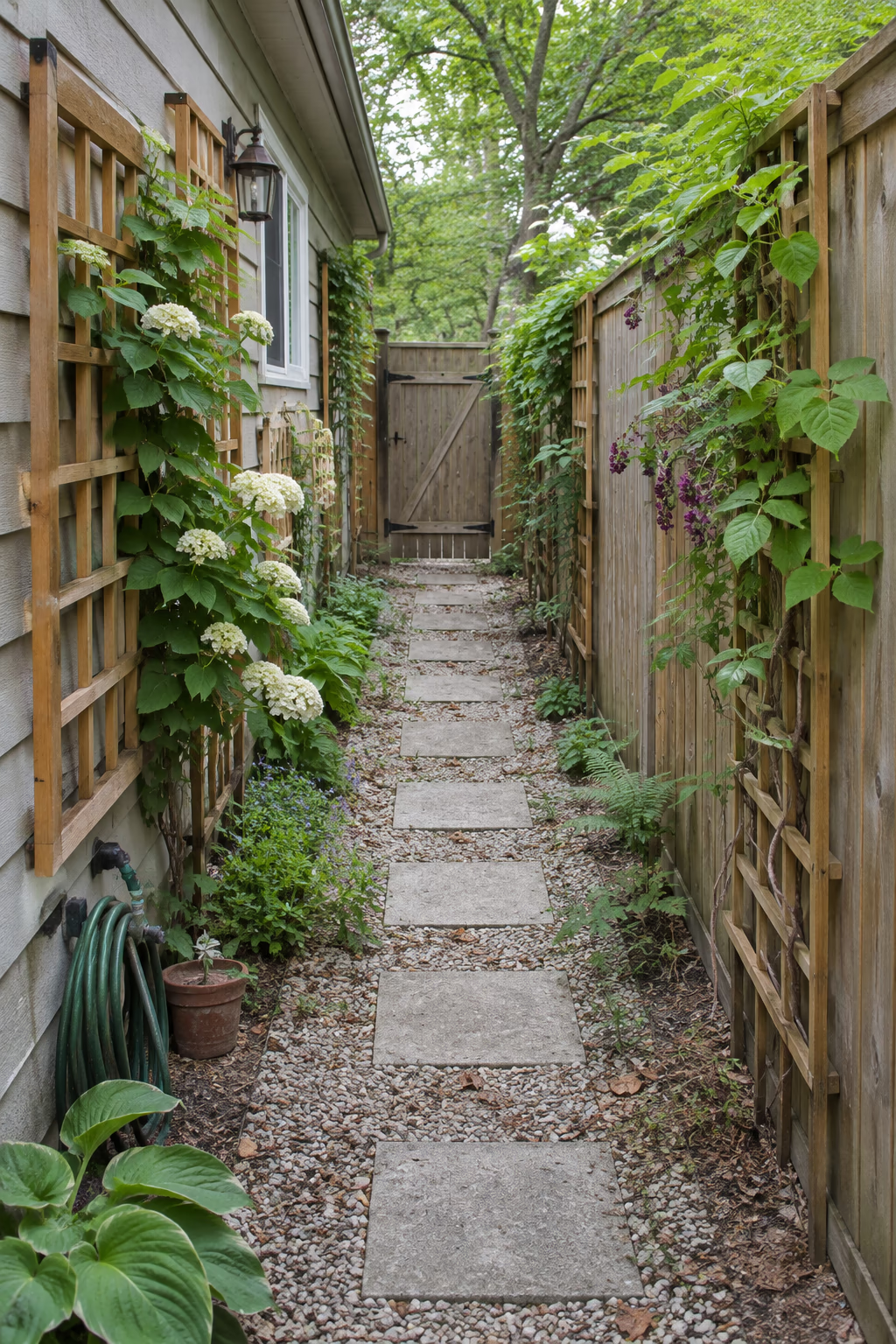
Make a skinny strip feel deeper and greener
Side yards often feel like long, empty corridors. Mount trellis panels along both fences or walls but stagger them so they alternate from side to side instead of lining up. This breaks the space into layers and makes the walk feel more interesting.
Climbers that tolerate partial shade, such as climbing hydrangea, akebia, or certain clematis varieties, are good choices since side yards are often shaded by the house. Pair them with a gravel or stepping stone path along the center.
Keep at least 36 inches of clear walking width for moving tools and bins. If the side yard is shared with a neighbor, talk with them first about fence attachments.
16. Paint the Trellis a Soft Garden Color
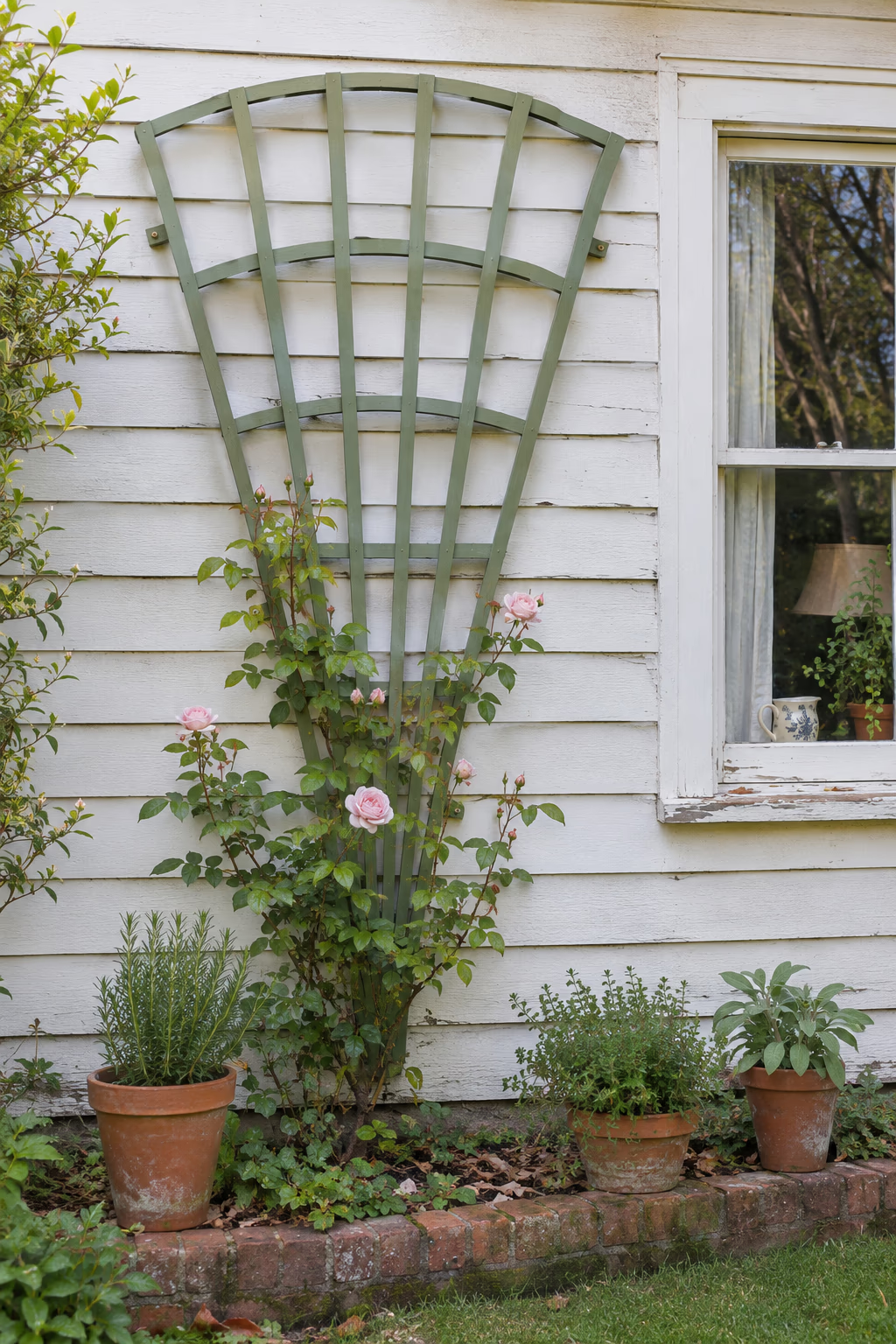
Add charm even before plants fill in
A plain wood trellis can look more intentional with a coat of exterior paint. Soft sage, muted blue, warm cream, or dusty pink look friendly against green foliage and make the trellis a design feature rather than just a support.
Painted trellises work well on house walls and fences where you want a touch of color during winter when plants are bare. Coordinate the shade with your doors, shutters, or outdoor cushions to tie the yard together.
Use exterior paint or solid stain, and paint before mounting the panel so you reach every surface. Expect to touch up every few years, which is easier before a vine has completely covered the trellis.
17. Top a Plain Fence With a Lattice Extension
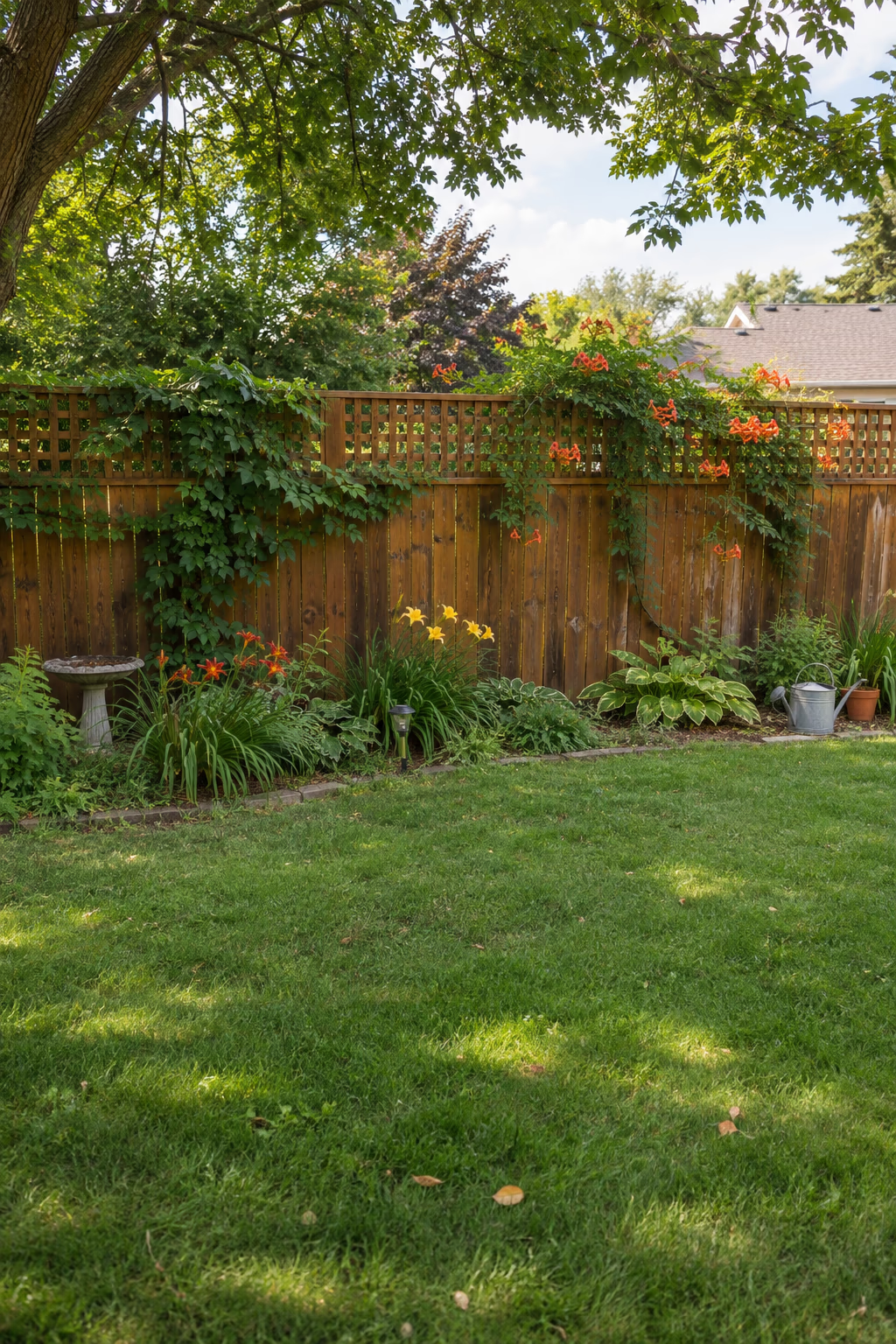
Add height and softness to an existing fence
A strip of lattice or slatted trellis, typically 12 to 24 inches tall, mounted along the top of a solid fence adds extra screening without the heavy feel of a taller wall. It also gives climbers on the fence somewhere to spill over and wander.
Square lattice looks crisp and modern, while diagonal lattice feels more traditional. Stain it to match the fence and attach it to post extensions or sturdy brackets rather than to thin boards.
Many towns and HOAs limit backyard fence height, often to 6 feet, and may count a trellis topper as part of the fence. Check local rules before adding height.
18. Repurpose an Old Ladder or Headboard as a Trellis
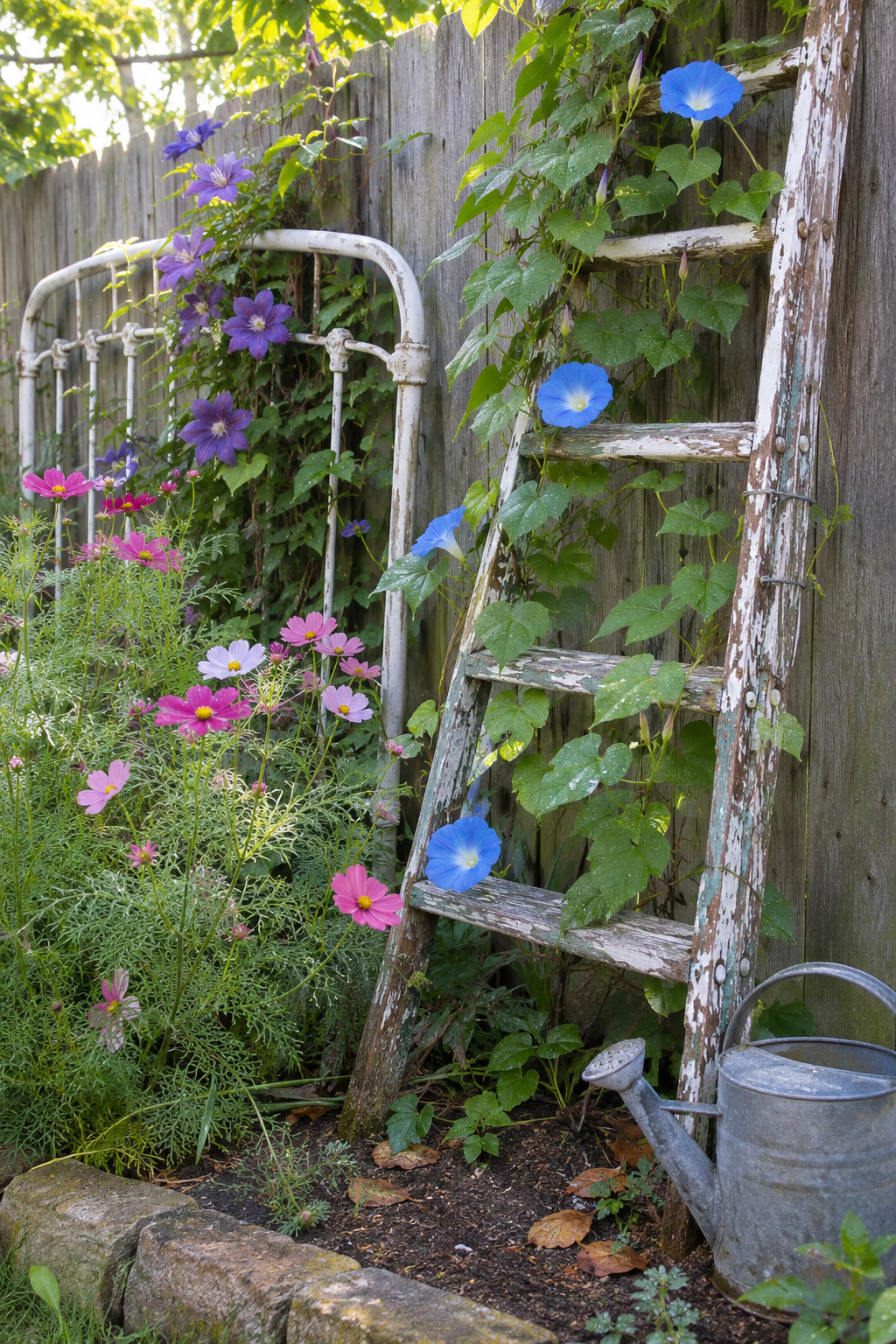
Give salvaged pieces a second life
An old wooden ladder, metal bed headboard, garden gate, or wrought iron panel can make a charming trellis with real character. Lean a ladder against a fence or wall and let a climbing nasturtium or morning glory wind through the rungs, or push a metal headboard into a bed as a support for clematis.
Upcycled trellises add a personal, collected look to cottage and farmhouse yards. Thrift stores, salvage yards, and online marketplaces are good places to find interesting pieces at low cost.
Secure leaning items to a wall or stake so they don’t topple. Old painted pieces may contain lead paint, so avoid using them in vegetable beds and don’t sand them without proper precautions.
19. Build a Rustic Trellis From Pruned Branches
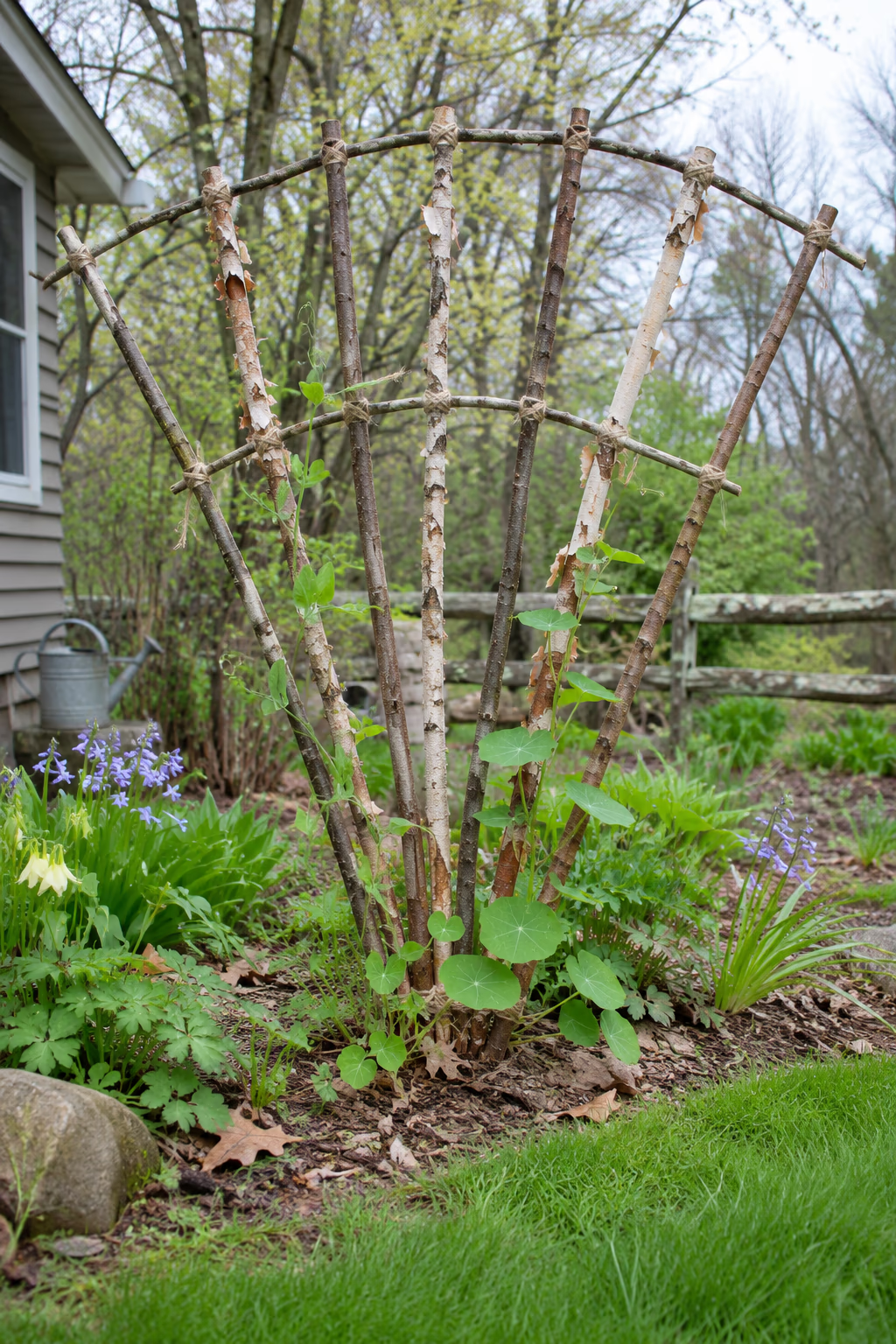
Turn yard waste into a free plant support
After pruning trees and shrubs, save straight branches about 1 to 2 inches thick. Push several upright into the soil, then tie thinner branches across them with twine or wire to form a fan, ladder, or teepee shape.
The result looks naturally rustic and works beautifully in informal or wildlife-friendly gardens. Branches from birch, willow, hazel, and maple are popular for their bark texture and flexibility.
Fresh willow may root and sprout if pushed into damp soil, so dry the cuttings first unless you want a living fence. Expect branch trellises to last one to three seasons before they need to be rebuilt.
20. Grow Annual Vines on a Jute String Trellis
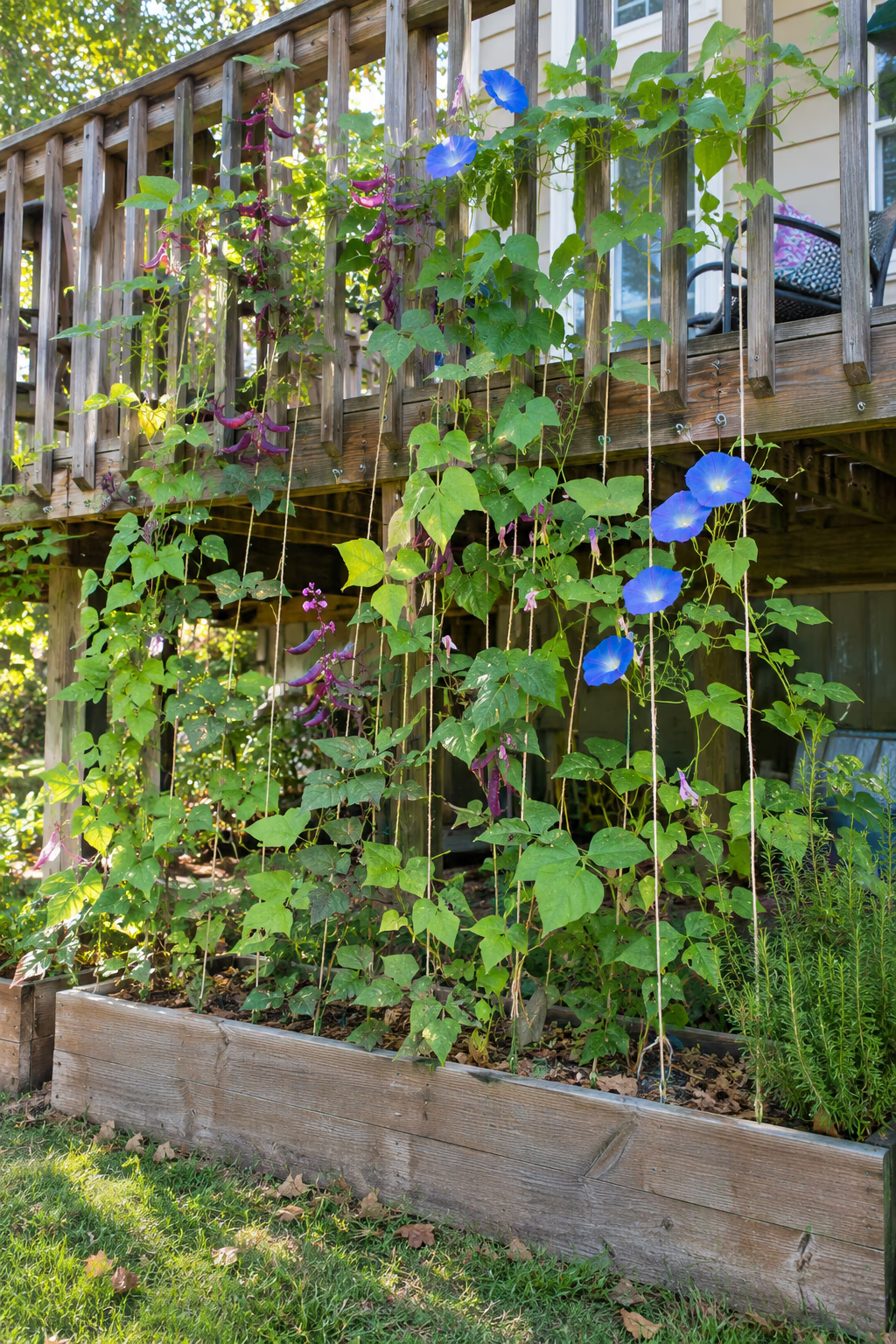
The cheapest trellis that still looks great
Sometimes all you need is string. Screw a row of hooks under a deck rail, porch beam, or pergola edge, then run jute twine down to stakes in a planter or bed below. Annual vines like morning glories, hyacinth bean, or scarlet runner beans climb quickly and form a soft, airy green curtain by midsummer.
This is a great way to test where you want shade or privacy before investing in a permanent structure. At the end of the season, cut everything down and compost the twine and vines together.
Jute stretches and weakens when wet, so use doubled strands for heavier vines. Some morning glories reseed heavily, so deadhead them if you don’t want volunteers next year.
21. Espalier a Fruit Tree Against a Wire Trellis
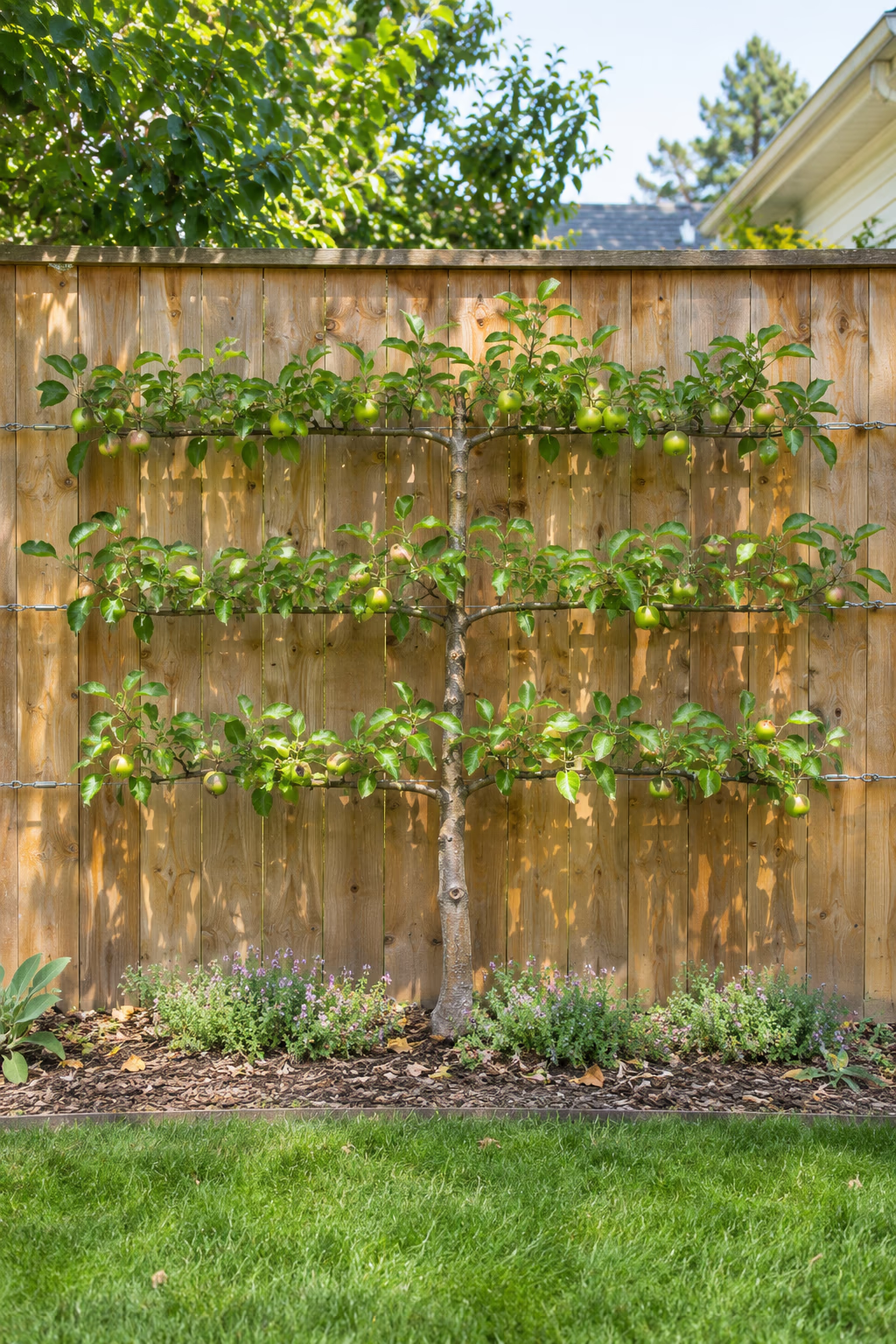
Fruit and structure in a narrow space
Espalier is the art of training a tree flat against a support in a decorative pattern. Stretch horizontal wires about 18 inches apart along a sunny fence or wall, plant a dwarf apple or pear in front of it, and train the branches along the wires as they grow.
The result is a living wall of fruit that takes up less than a foot of depth, perfect for small yards. Over time, the tree forms a striking pattern such as a horizontal cordon or fan that looks interesting in every season, even bare in winter.
Espalier takes patience and regular summer and winter pruning. Buying a pre-trained espaliered tree from a nursery gives you a head start.
How to Plan Your Backyard Trellis
The right trellis depends on what you want it to do, the plants you’ll grow, and how long you want it to last. A little planning keeps the structure strong and the vines healthy.
- Define the job first. Decide whether the trellis is for privacy, hiding an eyesore, growing food, or adding a decorative focal point, since that guides its size and location.
- Match the trellis to the plant. Twining vines need thin supports, while heavy climbers like grapes and wisteria need strong posts and metal or thick timber frames.
- Check sun and climate. Pick climbers suited to your USDA hardiness zone and the light the spot receives, and avoid vines listed as invasive in your state.
- Protect your house. Mount wall trellises on spacers a few inches from siding so air can circulate and you can still paint or repair the wall.
- Anchor it well. A covered trellis catches a lot of wind, so set posts in concrete, use ground anchors, or attach panels to solid fence posts. Call 811 before digging.
- Follow local rules. Check town and HOA limits on fence and screen height and setbacks, especially for privacy panels near property lines.
Frequently Asked Questions
What is the best material for a backyard trellis?
Powder-coated or galvanized metal lasts the longest and handles heavy vines, while cedar and other rot-resistant woods offer a natural look with occasional maintenance. Bamboo, string, and branches are cheap but usually last only a few seasons.
How tall should a backyard trellis be?
Most backyard trellises are between 5 and 8 feet tall. Privacy screens are usually around 6 feet, while obelisks and flower bed supports can be shorter. Match the height to the mature size of the vine you plan to grow.
What climbing plants grow fastest on a trellis?
Annual vines such as morning glories, hyacinth bean, and scarlet runner beans cover a trellis in one season. Among perennials, sweet autumn clematis, hops, and trumpet vine are vigorous, though some can spread aggressively, so check your local invasive plant list.
Can a trellis damage my house or fence?
It can if vines grow directly into siding, gutters, or roof edges. Mount trellises a few inches away from walls, avoid self-clinging vines on wood siding, and prune climbers regularly so they stay on the support.
How do I attach a trellis to a vinyl fence?
Use brackets or clamps that wrap around the vinyl posts rather than drilling into the panels, or set a freestanding trellis in the ground just in front of the fence. This keeps the fence intact and avoids voiding any warranty.
Final Thoughts
A well-placed trellis can transform a backyard faster than almost any other project. Whether you build a planter screen for patio privacy, mount a sleek black grid on the fence, or bend a cattle panel into a summer tunnel, you add height, color, and structure in a small footprint.
Start with one spot that bothers you most, pick a sturdy support and a climber suited to your climate, and give it a season or two to fill in. Over time, those vines will turn bare walls and fences into the greenest, most inviting parts of your yard.


