
Step out the back door on a warm evening and notice where your eye lands. Often it’s a blank fence, a bare patio edge, or a corner where the lawn simply gives up. A few well-placed planters can turn those forgotten spots into the parts of the yard you enjoy most.
Planters are one of the most flexible tools in a backyard. They add height and color where you can’t dig, keep herbs and vegetables within easy reach, and can be moved, replanted, or swapped as your taste and the seasons change. They also let you try a new look without tearing out lawn or committing to a full landscaping project.
These 23 backyard planter ideas range from weathered steel troughs and stock tank gardens to terracotta clusters, potted citrus, built-in benches, and clever budget builds. Each one includes practical sizing, plant suggestions, and honest tips so you can pick the ideas that fit your yard, climate, and budget.
1. Line the Fence With Corten Steel Trough Planters
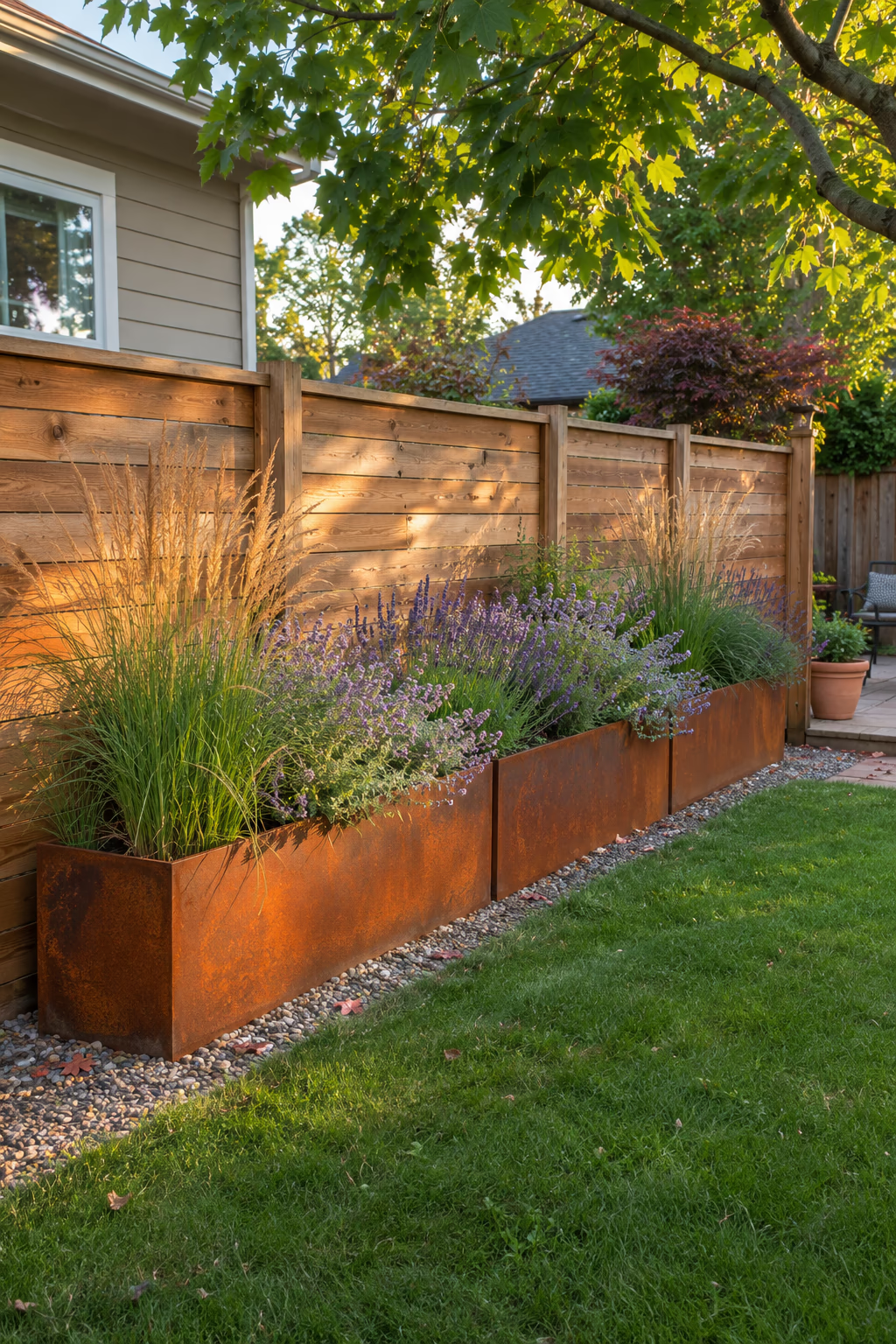
A modern, rust-toned border that softens any fence
Weathering steel, often called corten, develops a stable orange-brown patina that looks warm against cedar, gray, or black fencing. Long trough planters about 6 feet long, 16 to 18 inches wide, and 18 to 24 inches tall can run end to end along a fence line to create a raised border without digging a single bed.
Fill them with plants that offer structure and movement, such as feather reed grass, dwarf fountain grass, lavender, catmint, or compact boxwood. The rusty color makes green foliage and purple blooms look richer, and the crisp lines keep the yard feeling tidy.
New corten can shed rusty runoff for the first several months, which will stain concrete and light pavers. Set the troughs on gravel or mulch, and leave a small gap between steel and fence boards so moisture doesn’t sit against the wood.
2. Turn a Galvanized Stock Tank Into a Raised Planter
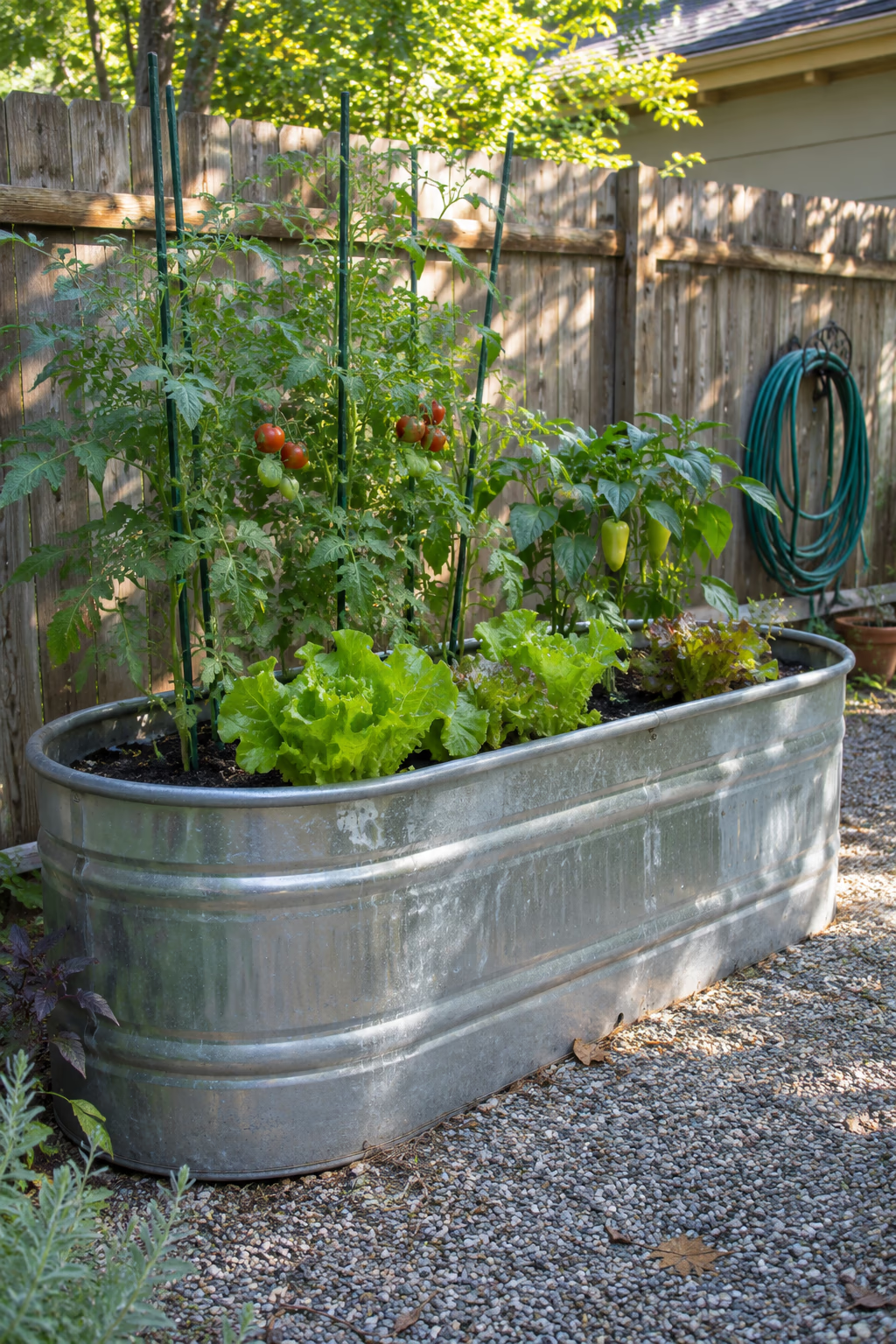
A farmhouse-style bed that’s ready in an afternoon
Round or oval galvanized stock tanks make sturdy, instantly finished raised beds. A 2-foot-tall tank puts plants at a comfortable working height, and sizes from 4 to 8 feet long suit everything from a single herb garden to a full vegetable bed. Drill several half-inch drainage holes in the base before filling.
To save on soil, fill the bottom third with upside-down plastic nursery pots or untreated logs, then top with a quality raised-bed mix. Tomatoes, peppers, zucchini, and salad greens all thrive, and the tall metal sides help deter rabbits.
Metal heats up in full sun, so soil along the sides dries faster than an in-ground bed. Mulch the surface, consider a simple drip line, and place tanks on level gravel so water drains freely and the base doesn’t rust prematurely.
3. Cluster Oversized Terracotta Pots in Threes
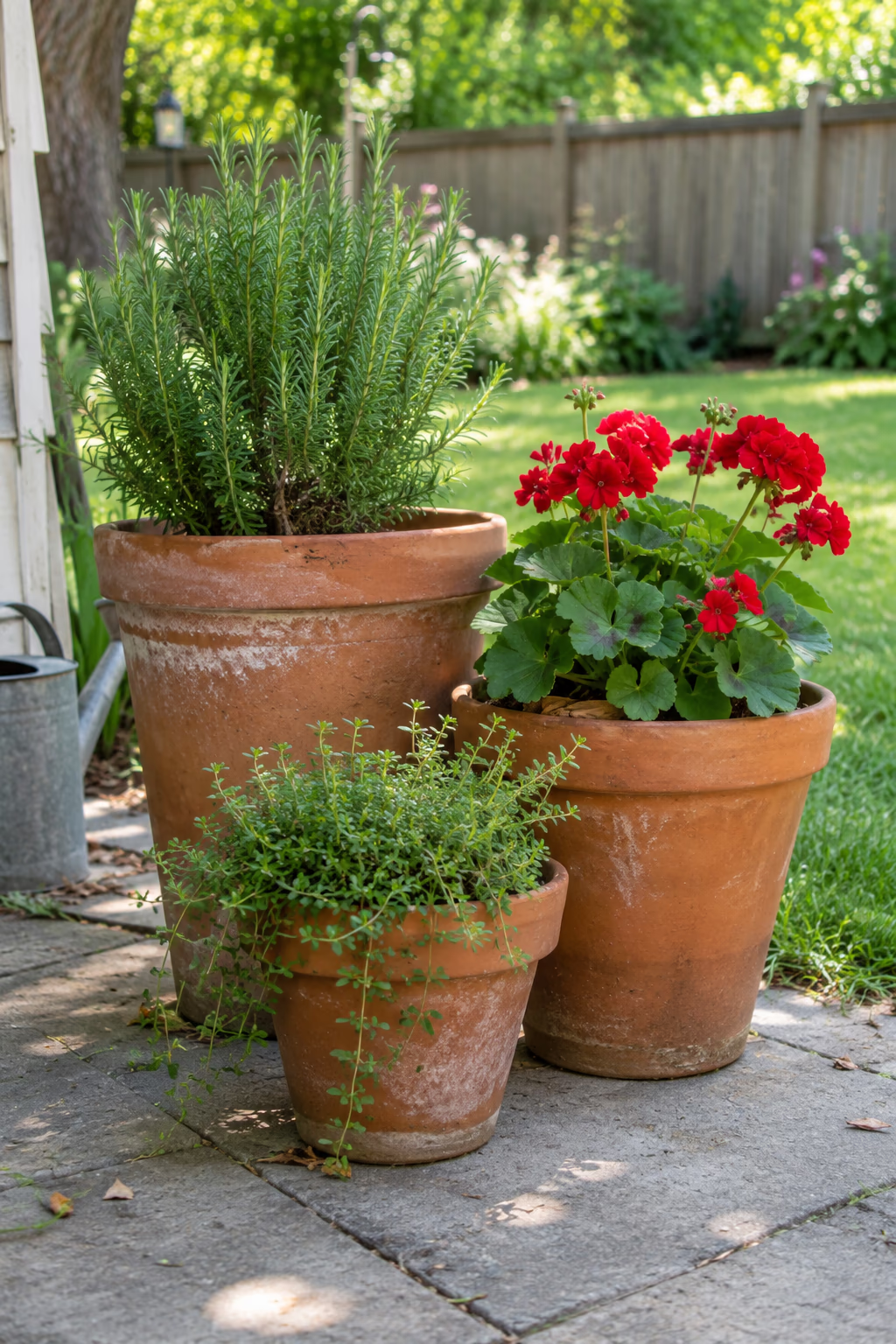
Classic warmth with more impact than a single pot
A grouping of three terracotta pots in graduated sizes, such as 24, 18, and 14 inches across, looks intentional and collected. Arrange them in a loose triangle on a patio corner or at the edge of a lawn, with the tallest pot at the back.
Give each pot a different job. Plant an upright rosemary or ornamental grass in the largest, geraniums or salvia in the middle, and trailing thyme or sweet potato vine in the smallest. Sticking to one material keeps the cluster cohesive even when the plants vary.
Terracotta is porous and dries out quickly in summer, so expect to water more often than with glazed or plastic pots. In cold climates, look for frost-resistant terracotta or empty and store standard clay pots before hard freezes to prevent cracking.
4. Grow a Dwarf Citrus Tree in a Big Pot With Trailing Underplanting
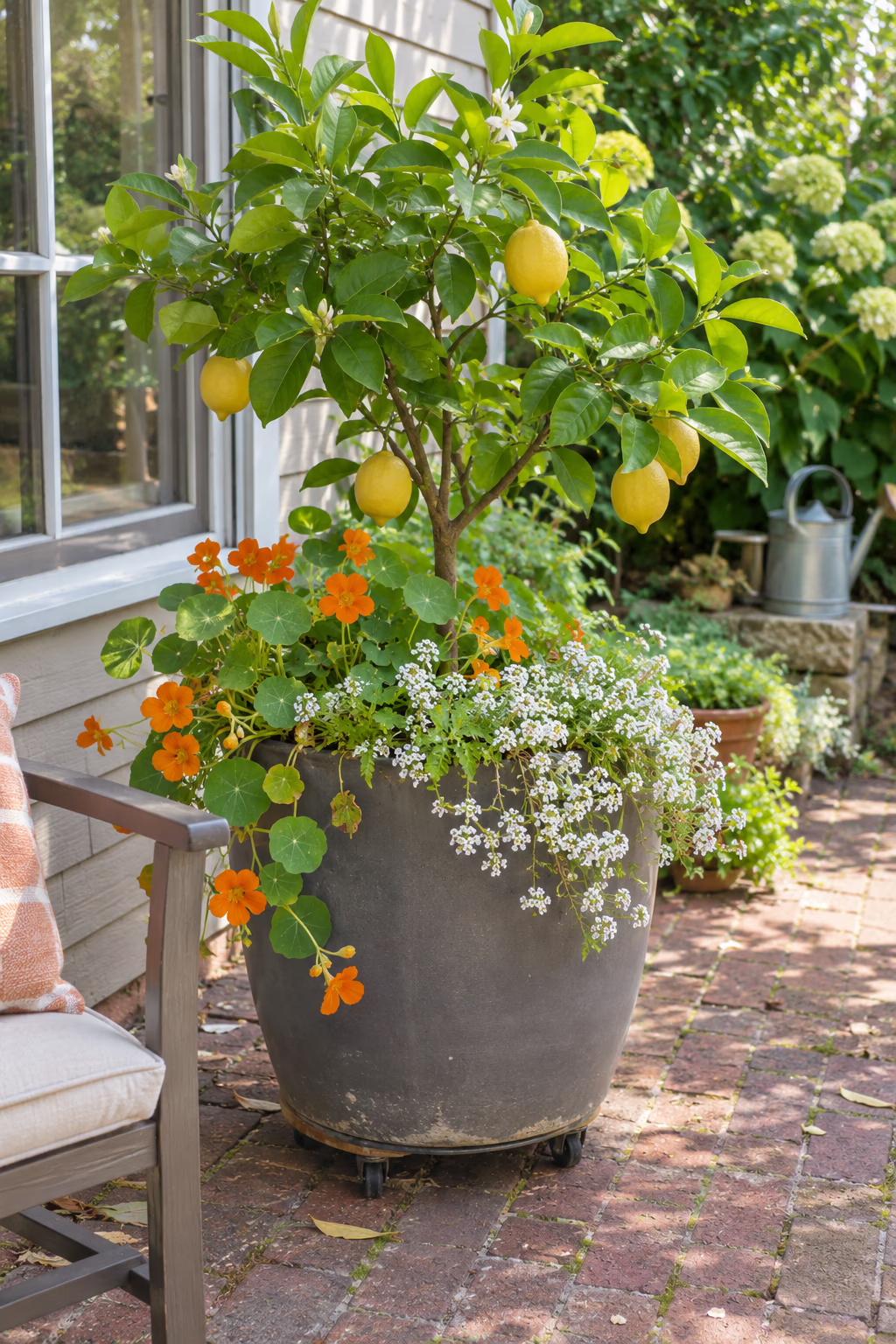
Fragrant blossoms and fruit right by the patio
A dwarf Meyer lemon, calamondin, or kumquat in a 20- to 24-inch pot becomes a living focal point with glossy leaves, scented spring flowers, and colorful fruit. Use a fast-draining potting mix made for citrus and place the pot where it gets at least six to eight hours of sun.
Soften the base with low, shallow-rooted trailers such as creeping thyme, sweet alyssum, or nasturtium. The underplanting covers bare soil and makes the tree look established rather than freshly potted.
Most citrus is frost-tender. Outside the warmest parts of the country, move the pot into a bright garage, sunroom, or sunny window when nights approach freezing. A plant caddy with locking wheels makes that seasonal move much easier.
5. Build a Cedar Planter Bench at the Patio Edge
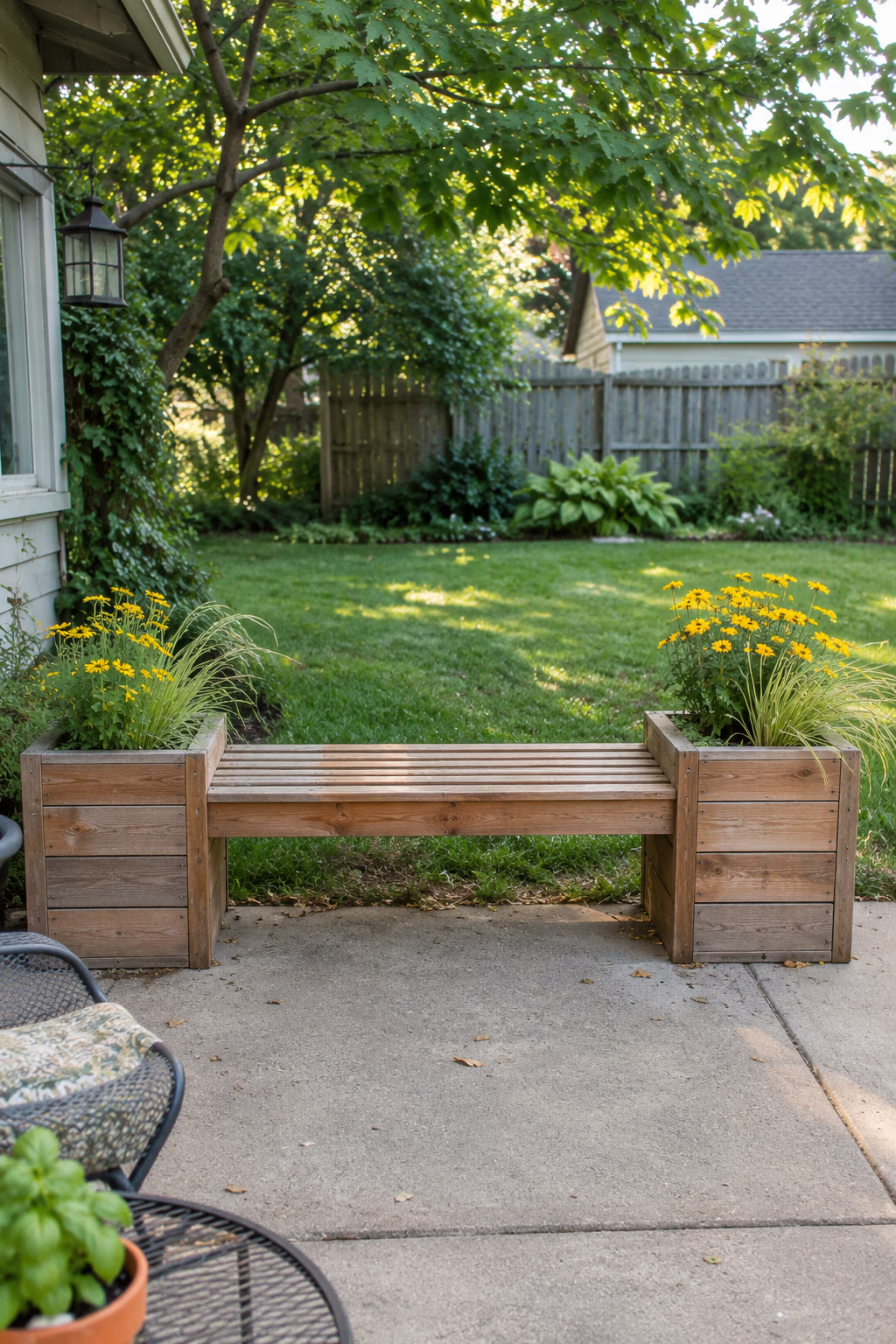
Seating and greenery in one tidy piece
A planter bench pairs two cedar boxes, each roughly 2 feet square and 18 inches tall, with a slatted seat spanning the gap between them. It defines the edge of a patio, adds extra seating for guests, and frames the space with plants at both ends.
Plant the boxes with compact shrubs or long-blooming perennials such as dwarf hydrangea, coreopsis, or ornamental grasses so they look good from spring through fall. Cedar weathers to a soft silver gray if left unstained, or you can seal it to keep the honey color.
Line the inside walls with heavy plastic to protect the wood, but leave the bottom open for drainage. Use exterior-grade screws, and keep plants low enough that they don’t brush against people sitting on the bench.
6. Divide the Lawn and Patio With a Row of Long Planters
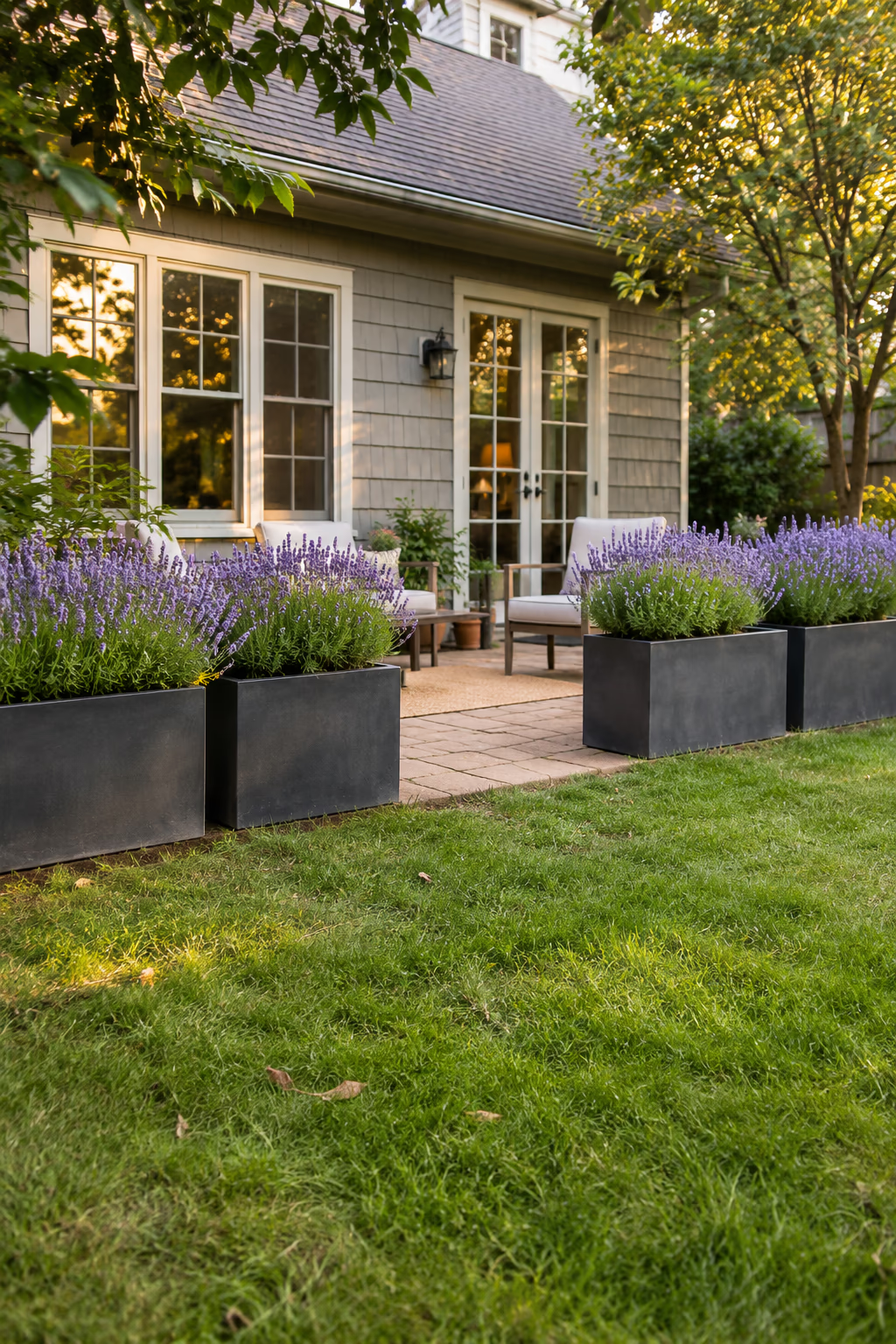
A living boundary that keeps sight lines open
A line of matching rectangular planters, each around 36 inches long and 16 inches tall, creates a soft wall between lawn and patio without blocking the view. It gives the seating area a cozy, room-like feel and keeps mower clippings off the pavers.
Repeat the same plant in every planter for a clean, calm look. Lavender, dwarf boxwood, Russian sage, or blue fescue all hold their shape well. Leave a 3- to 4-foot opening in the row so the lawn is still easy to reach.
Lightweight fiberglass or composite troughs are easier to reposition than concrete. Fill large ones in place, since a planted trough full of wet soil can weigh several hundred pounds.
7. Set an Aged Clay Urn Where Garden Paths Meet
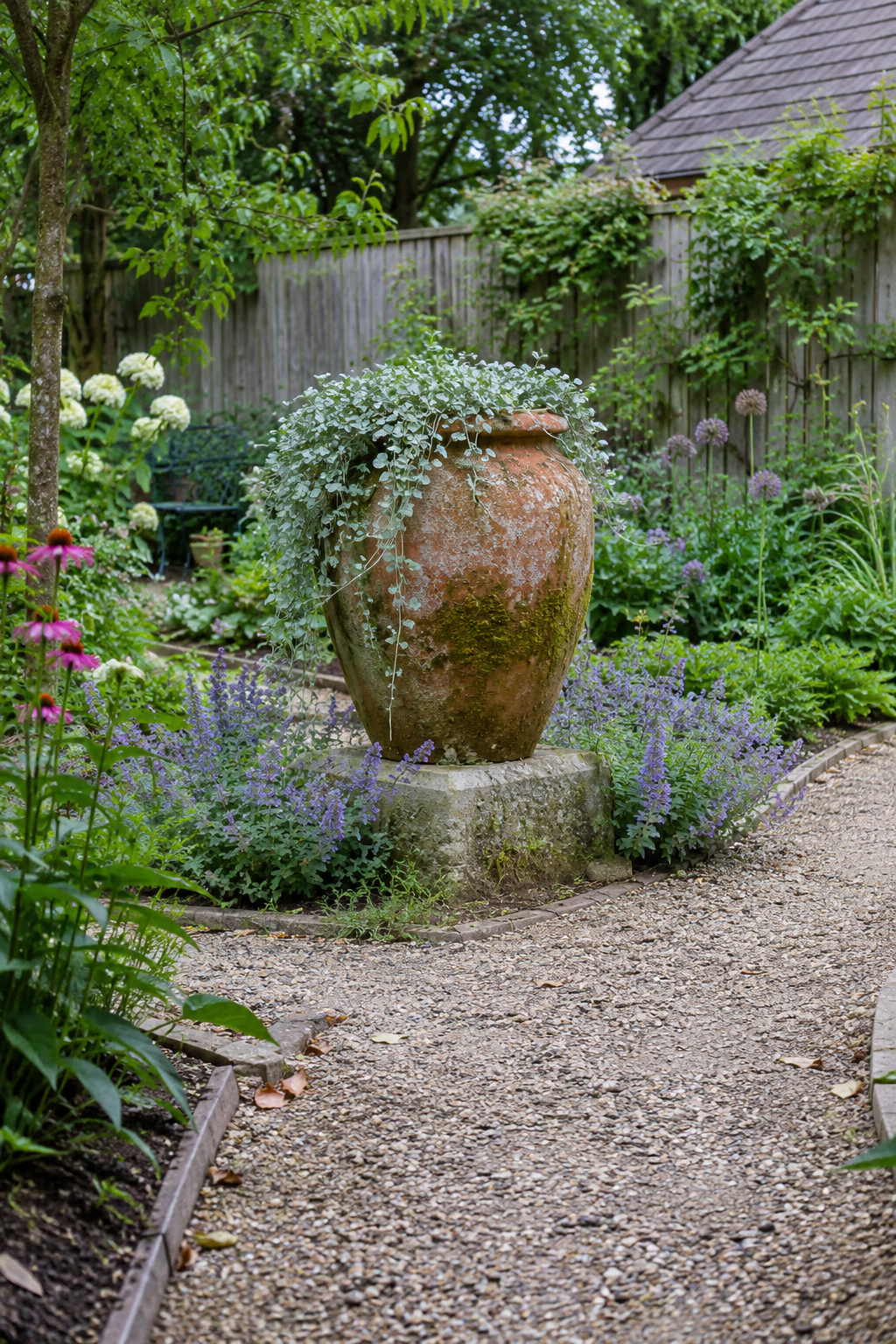
One bold focal point that ties the yard together
Where two paths cross or a walkway turns, a single large urn on a low stone or concrete plinth gives the eye a natural resting place. Choose an urn at least 24 inches tall so it reads clearly from the house and patio.
Plant it simply with one striking plant, such as a mound of trailing silver dichondra, a clipped boxwood ball, or bright seasonal annuals. Surrounding the base with low catmint or gravel makes the urn feel anchored rather than dropped in place.
A weathered finish, a little moss, or a soft patina looks more natural than a glossy new urn. Check that the plinth sits on a firm, level base so the urn can’t tip on soft soil.
8. Raise Herbs and Salad Greens in an Elevated Planter Box
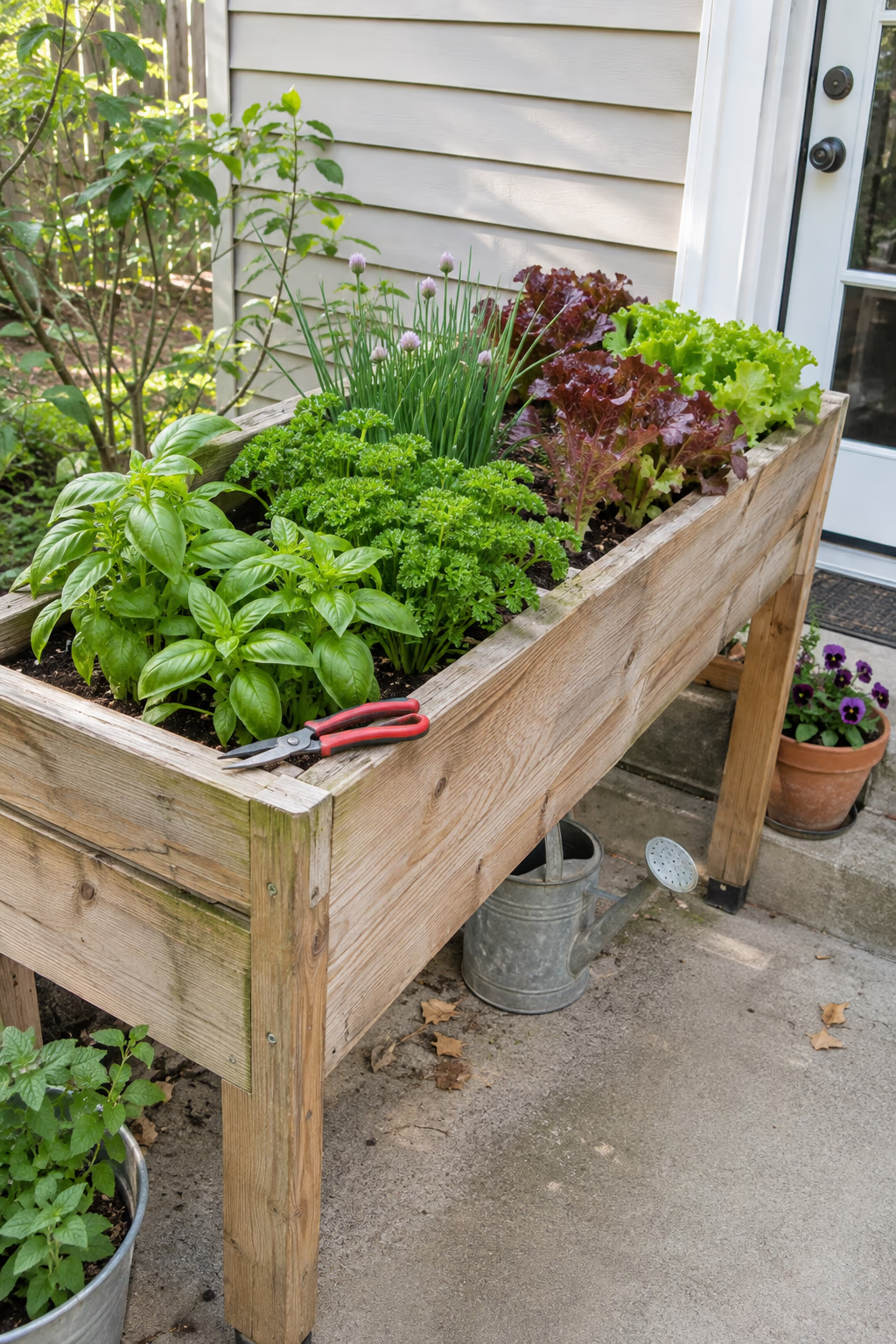
Easy harvesting with no bending or kneeling
An elevated planter is a wooden trough on legs that holds soil at about waist height. A box roughly 2 by 4 feet with 8 to 12 inches of soil depth is ideal for basil, parsley, chives, cilantro, lettuce, spinach, and arugula.
Set it close to the kitchen door so a quick snip for dinner takes seconds. The raised height also keeps leafy greens away from rabbits and is much kinder to knees and backs.
Shallow soil dries out quickly, so check moisture daily in hot weather. In regions with scorching summers, a spot with afternoon shade will keep lettuce from bolting.
9. Grow a Salsa Garden in Half Whiskey Barrels
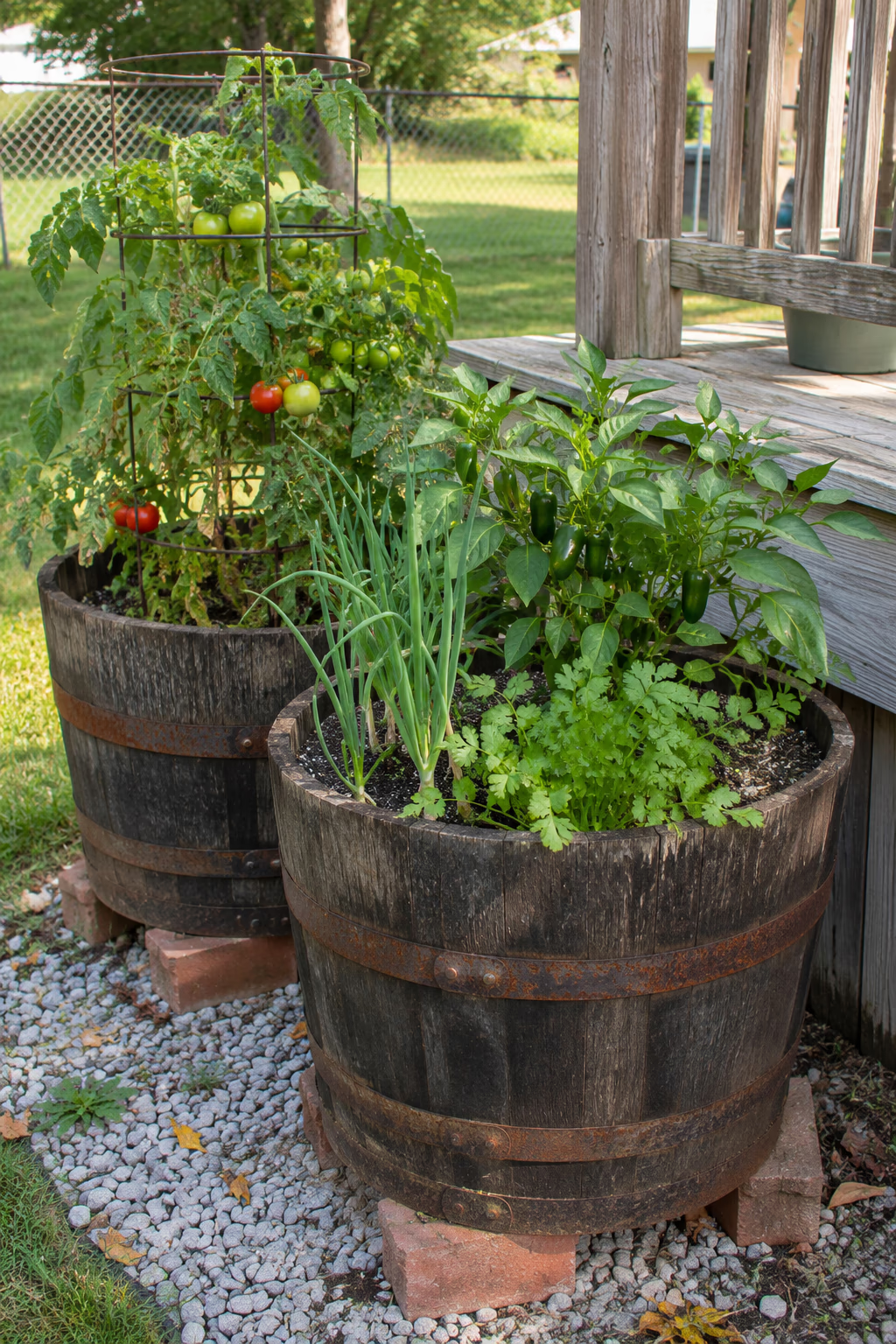
A rustic container that holds a full harvest
Half barrels hold plenty of soil, so they suit vigorous edibles. Plant one compact or determinate tomato per barrel, then tuck in a jalapeño or bell pepper, a few onions, and cilantro around the edges for an easy salsa garden.
The dark oak and metal bands look warm and casual next to a deck or gravel patio, and barrels age gracefully over several seasons. Group two or three together to give tomatoes the room they need.
Many barrels come without drainage, so drill several holes in the bottom. Raise them slightly on pot feet or bricks to slow rot, and add a sturdy cage or stake for each tomato at planting time.
10. Anchor a Bare Fence Corner With a Potted Evergreen
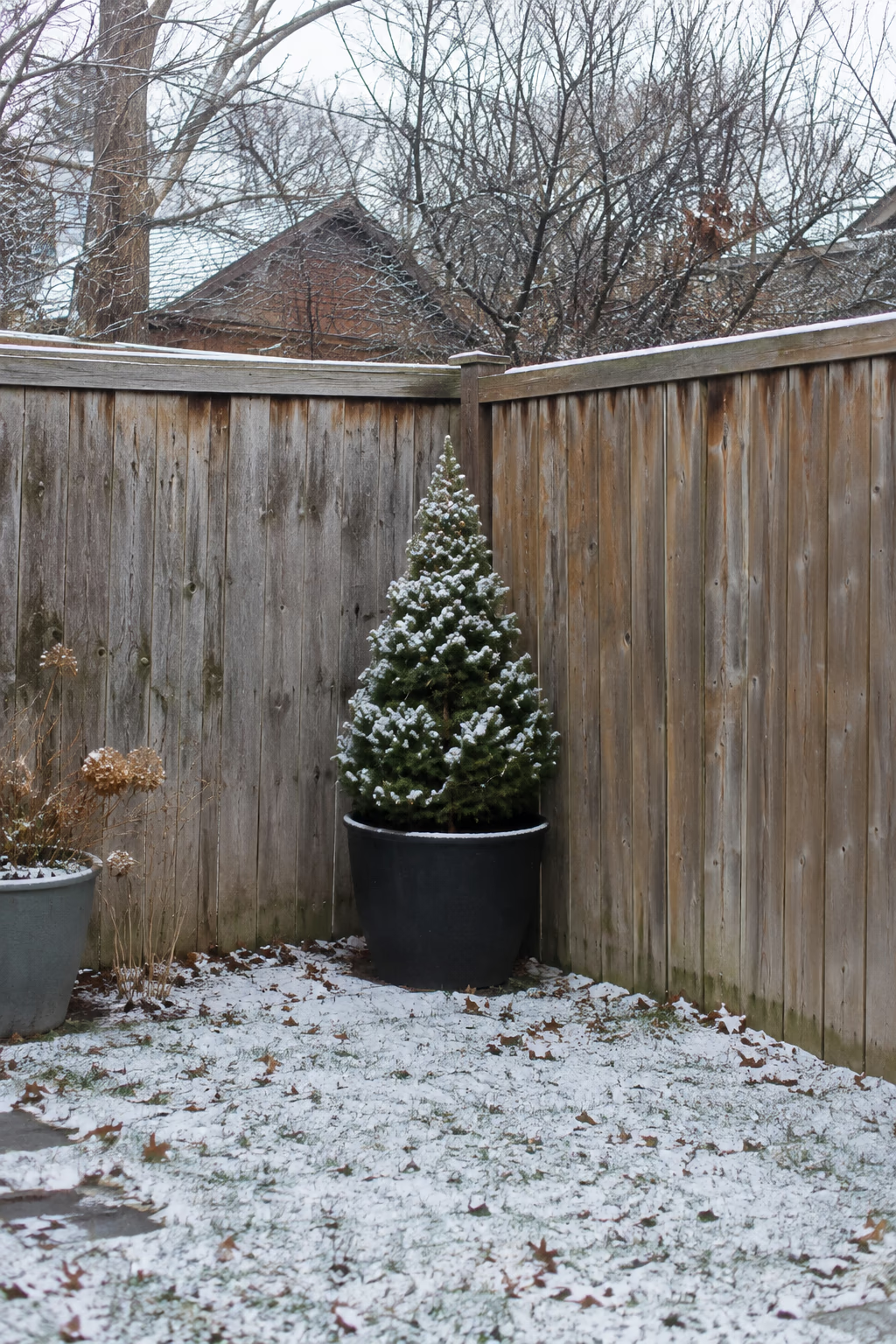
Year-round structure where two fences meet
Fence corners often look empty, especially in winter. A single evergreen in a large pot, such as a dwarf Alberta spruce, compact holly, slender arborvitae, or upright juniper, fills that corner with green all year.
Choose a container at least 20 inches across in a dark, simple finish so the plant stays the star. Add string lights in the branches for winter or a ring of seasonal annuals at the base in summer.
Roots in pots are more exposed to cold than roots in the ground. Pick shrubs rated at least one or two USDA zones colder than yours, and keep watering through dry winter spells when the soil isn’t frozen.
11. Fill a Shady Corner With Hosta and Fern Containers
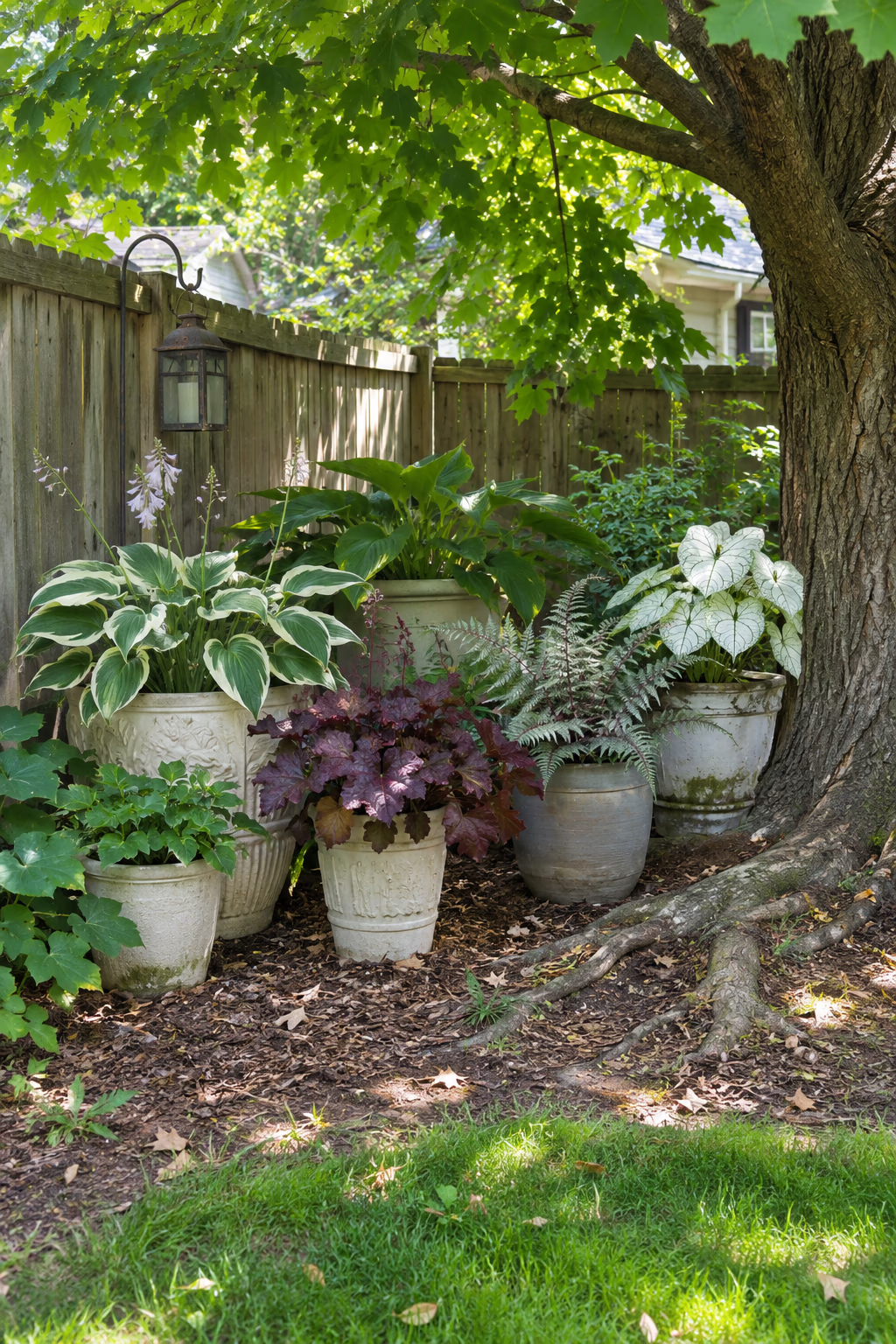
Lush texture where grass and flowers struggle
Under trees or along the north side of the house, a group of containers can bring life to ground that stays dark and root-filled. Mix pot sizes and use shade lovers such as hostas, Japanese painted ferns, heuchera, caladiums, begonias, and impatiens.
Lean on foliage color, including chartreuse, silver, burgundy, and white variegation, to brighten the gloom. Light-colored pots in cream, pale gray, or white also bounce more light into the corner.
Slugs love hostas in shady, damp spots, so check leaves regularly. Containers under tree canopies also miss much of the rain, so don’t assume they’re getting watered by storms.
12. Make a Mini Water Garden in a Glazed Pot
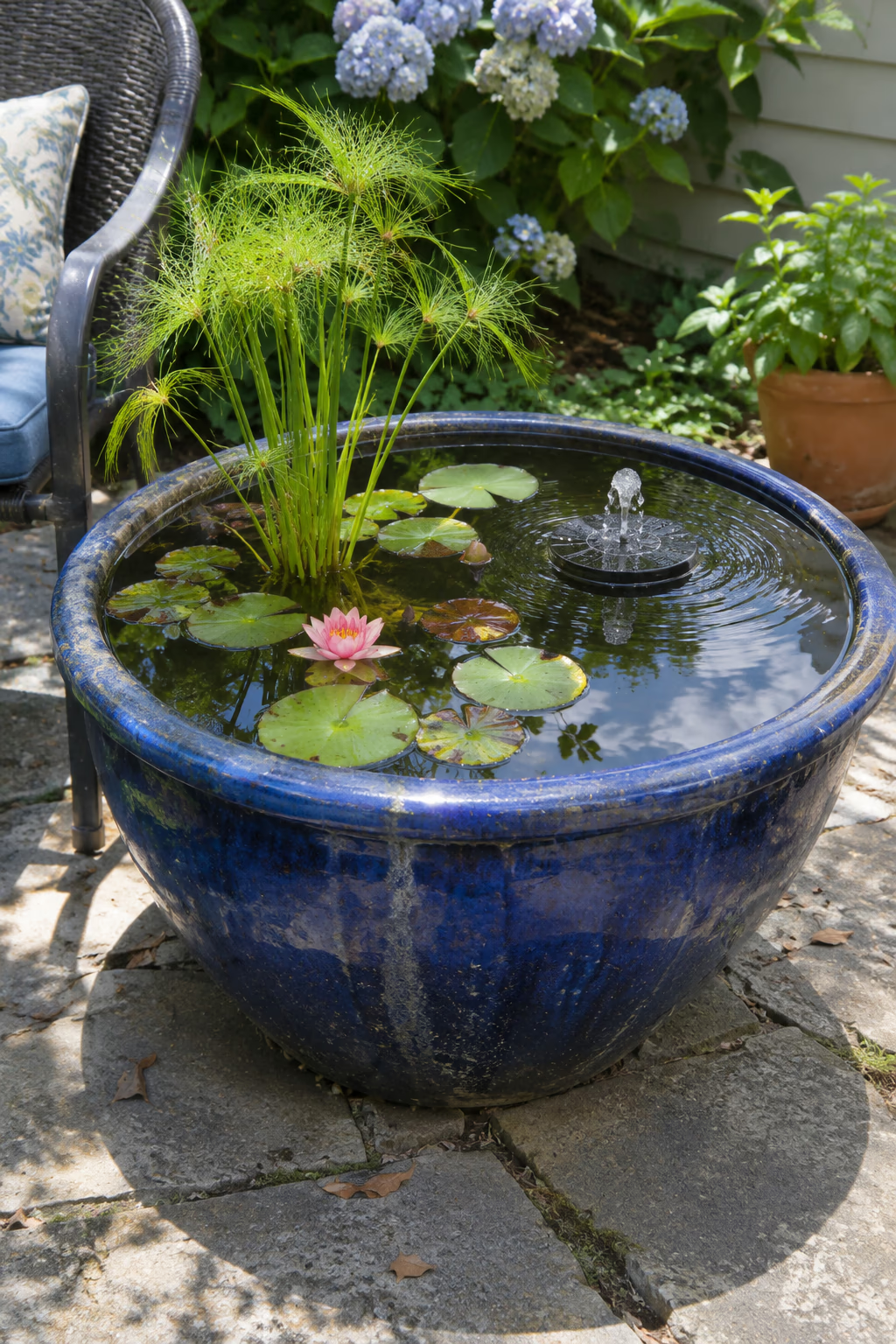
The sound and shimmer of water without a pond
A wide glazed pot with no drainage hole, around 20 to 30 inches across, can hold a small water garden. Add a miniature water lily, dwarf papyrus, or pickerelweed in aquatic baskets, propping each on bricks so it sits at the right depth.
A small solar fountain adds gentle movement and sound and keeps the water fresher. Placed beside a patio chair, it brings a calm, resort-like feel to even a tiny yard.
Standing water can breed mosquitoes. Moving water helps, and mosquito dunks made with Bti are safe for plants, birds, and pets. Avoid aquatic plants listed as invasive in your state, and empty and store the pot before hard freezes.
13. Plant a Pollinator Container Garden for Bees and Butterflies
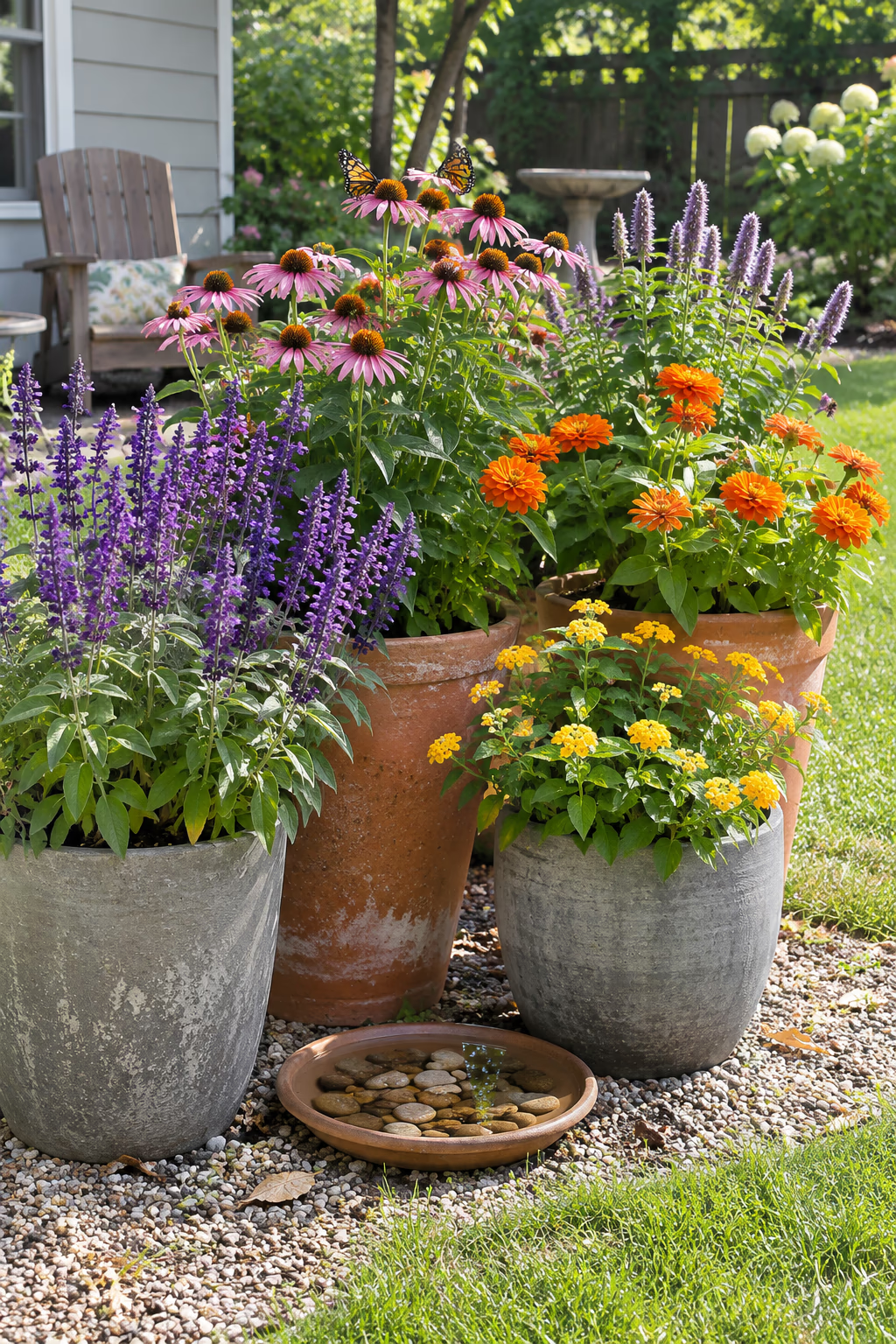
Buzzing color in pots, even where there’s no flower bed
Group several large pots in a sunny spot and fill them with nectar-rich flowers that bloom at different times. Try salvia, anise hyssop, lantana, zinnias, coneflowers, and blanket flower for a long season of color.
Including native perennials gives local pollinators the plants they evolved with, and a shallow dish of pebbles and water nearby gives bees a safe place to drink.
Skip pesticides on these plants entirely. Keep the pots a few steps away from dining tables and doorways so visitors and buzzing guests don’t cross paths too often.
14. Group Glazed Ceramic Pots in Ocean Blues
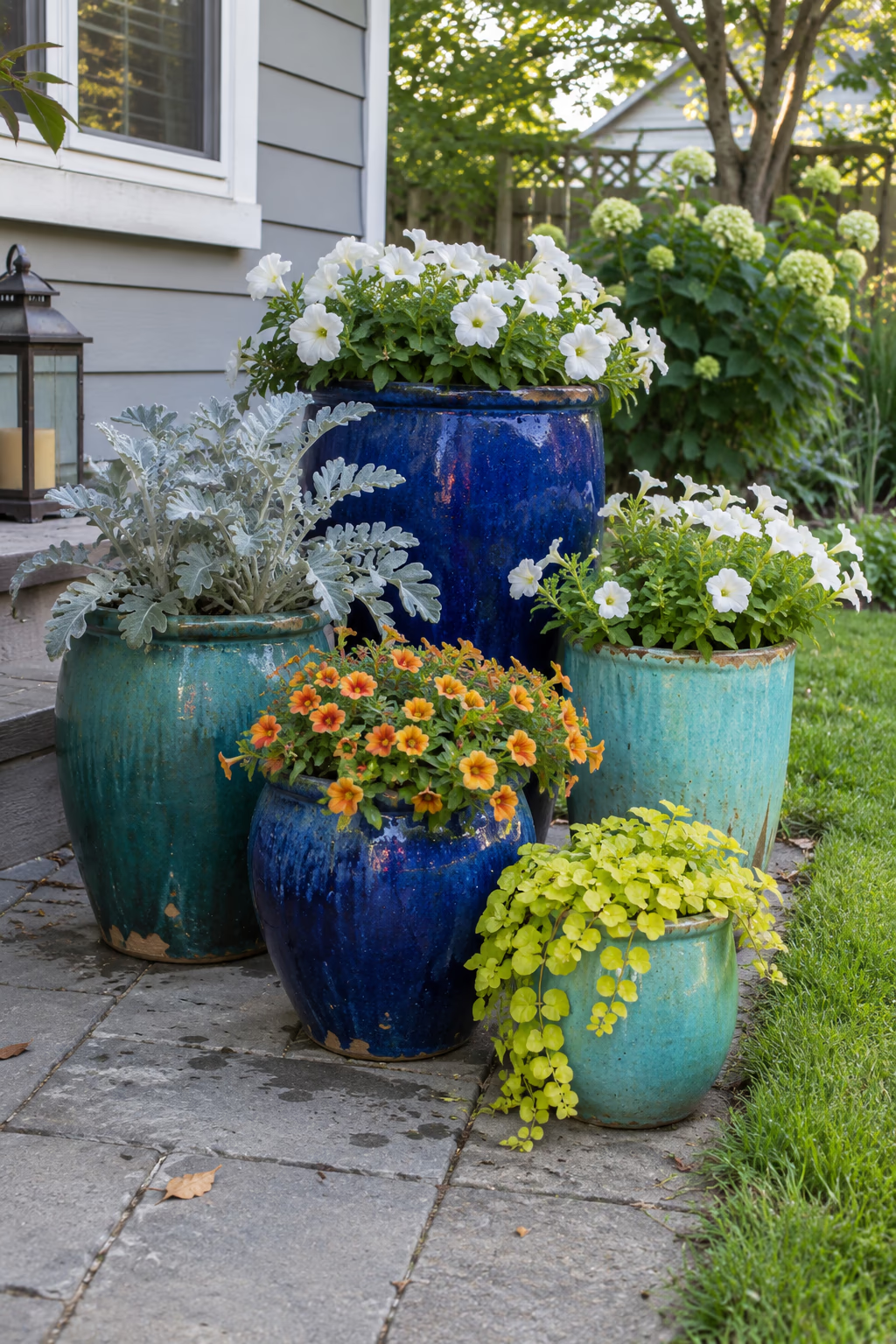
A cool color story that pops against green
Glazed ceramic pots in cobalt, teal, and aqua stand out beautifully against lawn, gravel, and gray pavers. Group three to five in mixed heights, sticking to one color family so the collection looks planned.
Blue glazes flatter silver and white plants such as dusty miller, white petunias, and helichrysum, as well as warm contrasts like orange calibrachoa or golden creeping Jenny.
Glazed pots hold moisture longer than unglazed clay, but they can still crack if wet soil freezes. In cold zones, move them into a garage or shed for winter, or treat them as summer-only pieces.
15. Build Budget Planters From Cinder Blocks
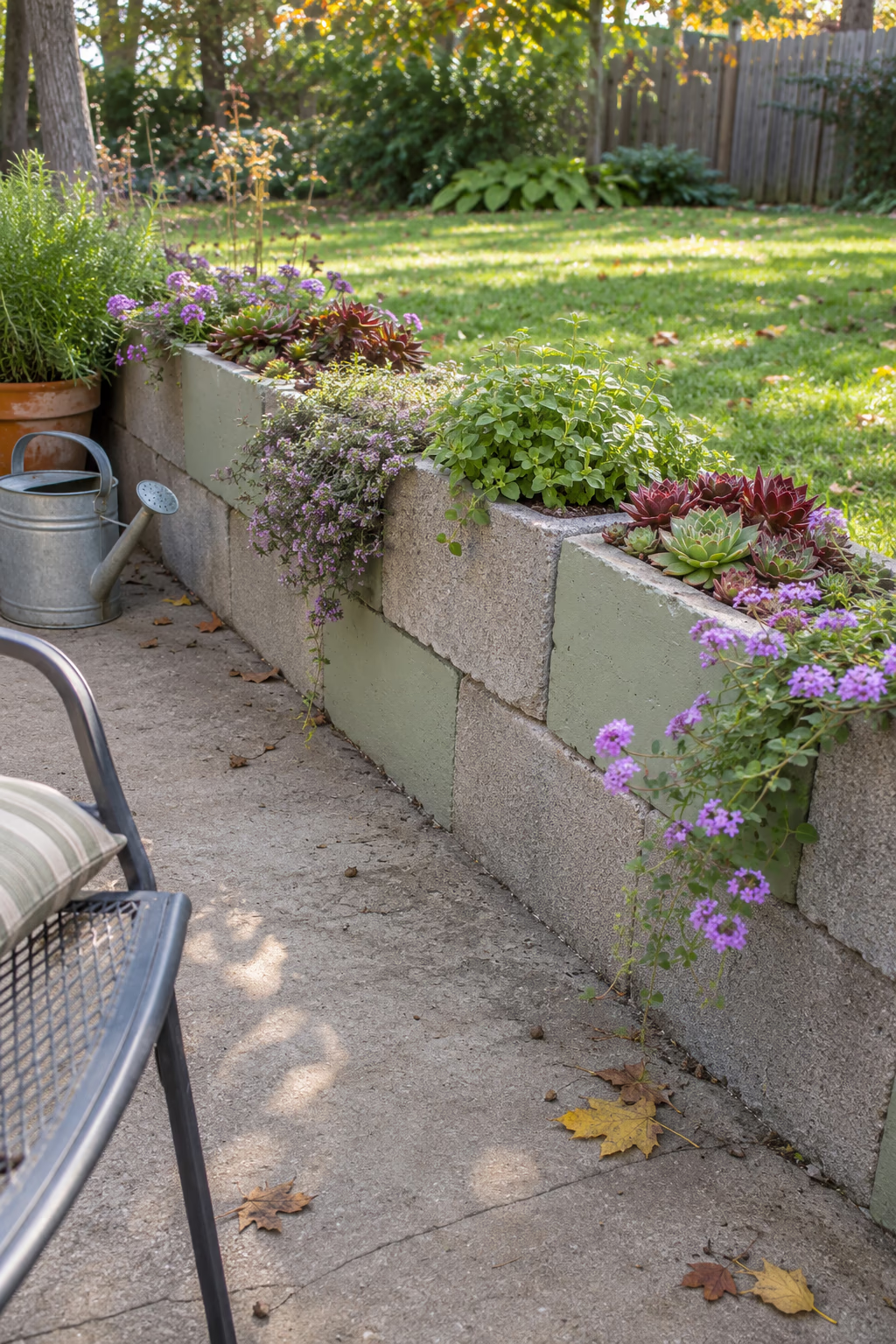
Sturdy, modular planting pockets for a few dollars each
Standard 8-by-8-by-16-inch concrete blocks stack into low walls, borders, or raised beds, and their hollow cores become small planting pockets. Stack them two high along a patio edge and fill each core with succulents, herbs, or trailing flowers.
The blocks can stay raw for an industrial look or be painted with masonry paint in charcoal, white, or sage. Because they’re heavy and stable, they work well on slopes and along driveways.
Keep stacks low and on level ground, or use construction adhesive between courses for added stability. Some gardeners prefer to grow edibles in lined pockets or reserve block planters for ornamental plants.
16. Turn an Old Wheelbarrow Into a Rolling Flower Planter
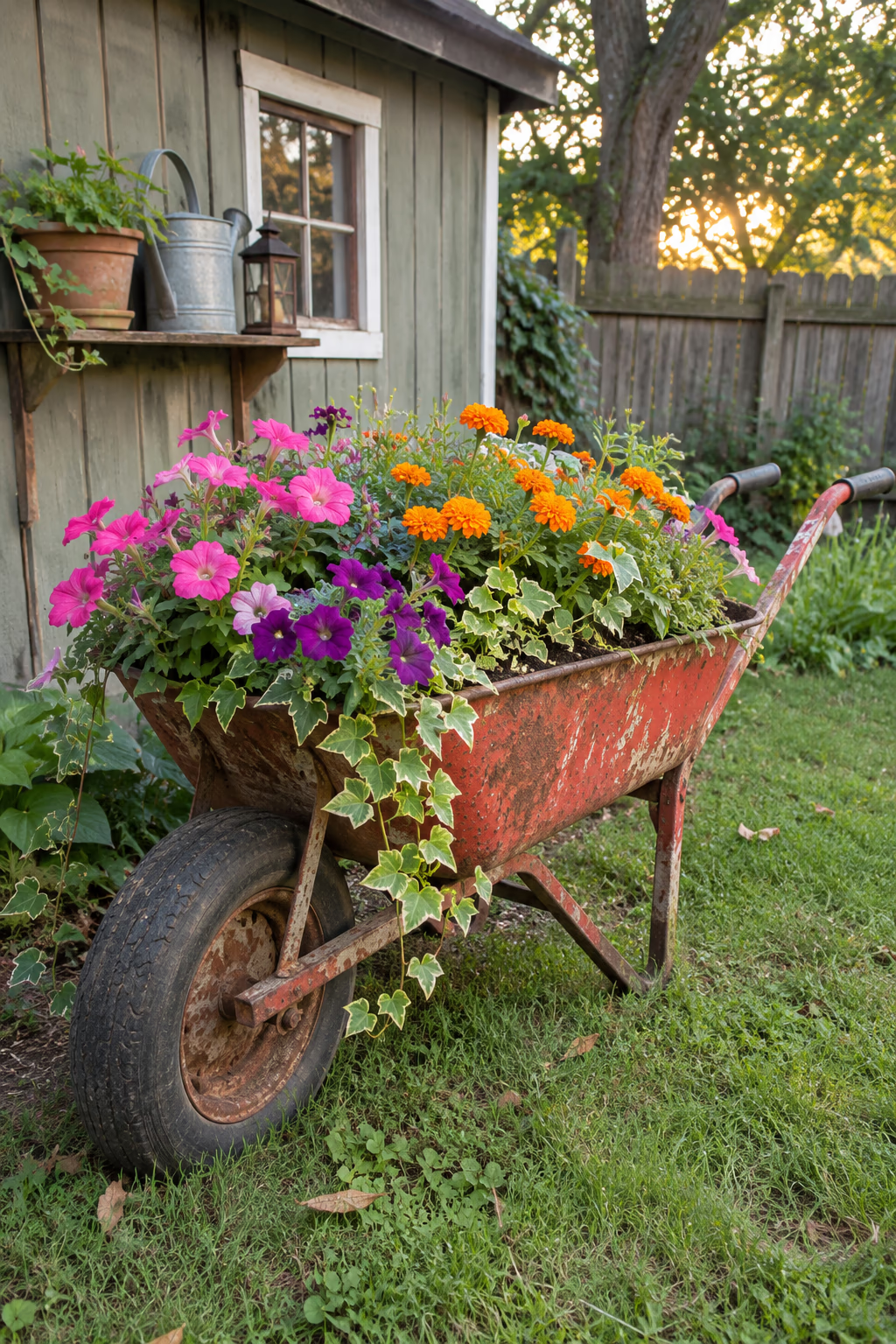
A charming upcycle you can move to follow the sun
A worn-out metal or wooden wheelbarrow makes a cheerful, portable planter. Drill a few drainage holes, add potting mix, and plant a mix of petunias, marigolds, and trailing ivy that spills over the rim.
Because it rolls, you can park it in the sun, tuck it beside a shed, or move it front and center for a summer gathering. Rust and chipped paint only add to the cottage character.
A filled wheelbarrow is heavy and tippy, so don’t overfill it, and check that the tire still holds air or swap in a flat-free one before moving it.
17. Stack a Tiered Strawberry Planter Near the Back Door
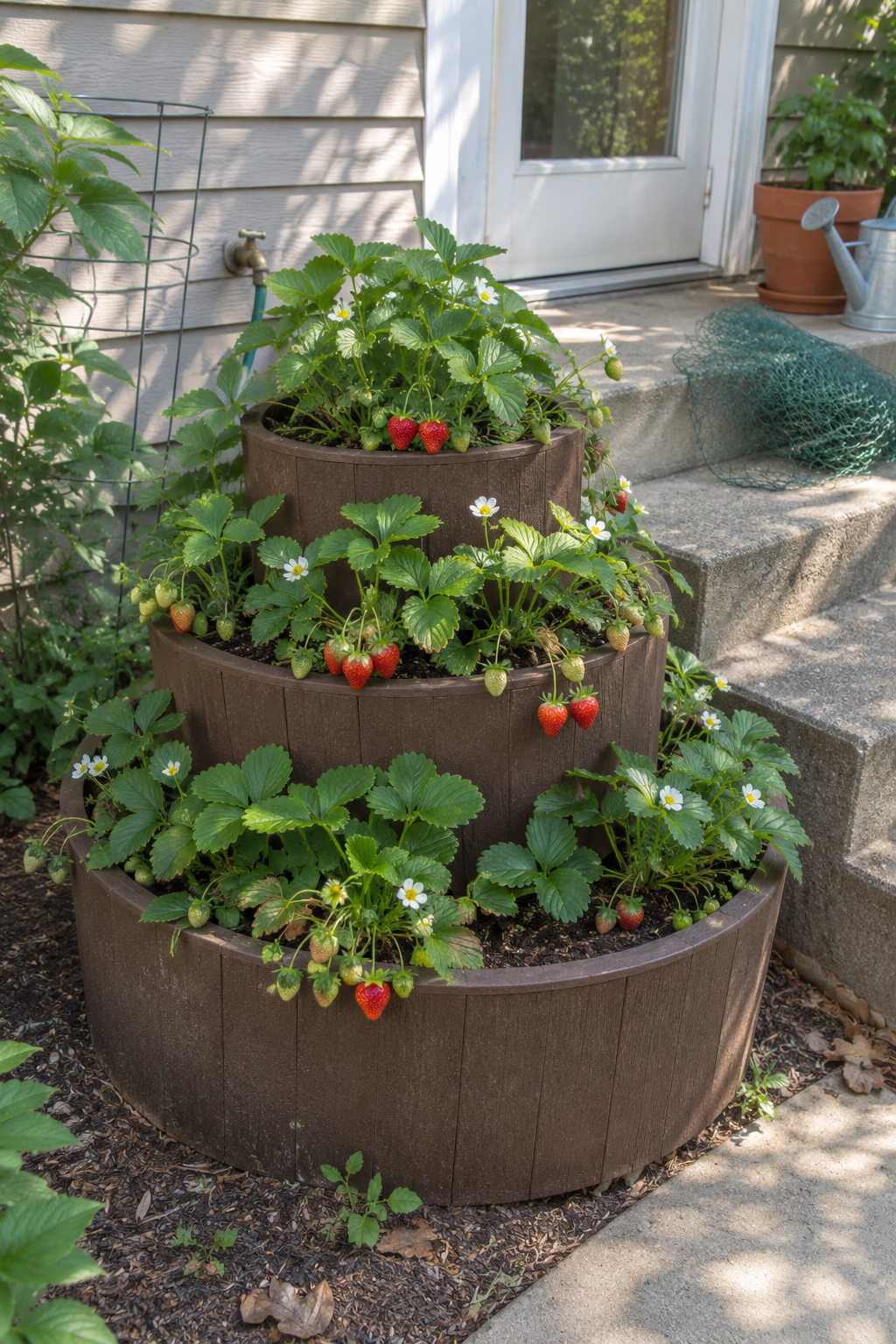
Sweet berries in a small footprint
Graduated round planters stacked like a wedding cake turn a 3-foot circle into a productive strawberry patch. Use three tiers about 24, 18, and 12 inches across, and plant everbearing or day-neutral strawberries around each ring.
The tiers keep fruit off the ground and away from slugs, and placing the tower by the back door means ripe berries get picked before birds find them.
The top tier dries out first, so water from the top and let it trickle down. Drape bird netting over the tower as fruit colors up, and replace plants every three years or so as yields drop.
18. Plant a Succulent Bowl on a Low Pedestal
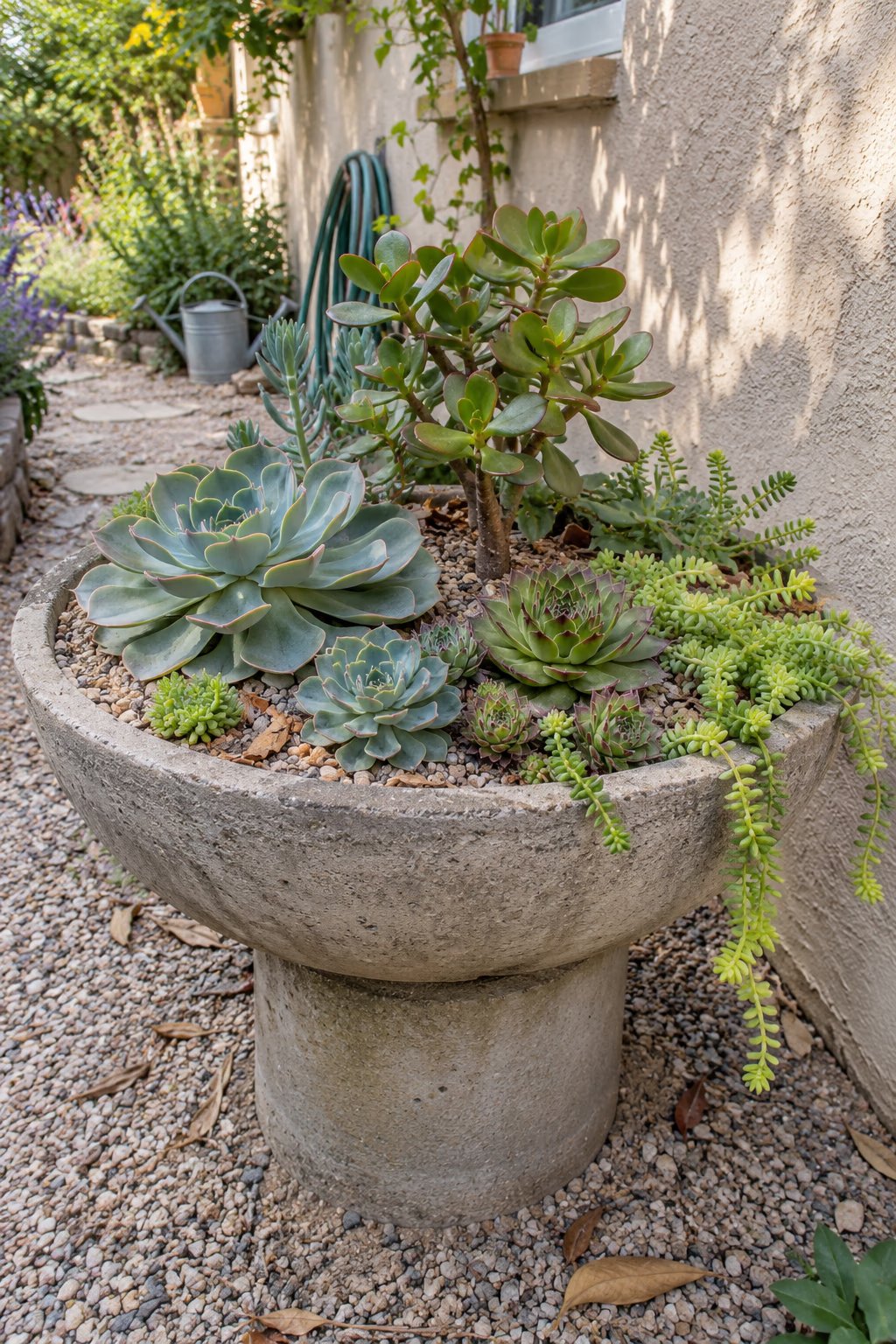
A sculptural, low-water centerpiece
A wide, shallow bowl about 4 to 6 inches deep is perfect for a miniature landscape of succulents. Combine rosettes like echeveria and hens-and-chicks with trailing sedum and an upright aloe or jade for height, then top-dress with small gravel.
Raising the bowl on a short pedestal or stump lifts the intricate shapes closer to eye level and keeps it clear of lawn sprinklers. It looks great on a patio table, by a gravel path, or near a hot, sunny wall.
Use a gritty cactus mix and a bowl with drainage. In cold climates, stick to hardy sempervivum and sedum, or bring tender succulents indoors before frost.
19. Hide the Air Conditioner Behind a Slatted Planter Screen
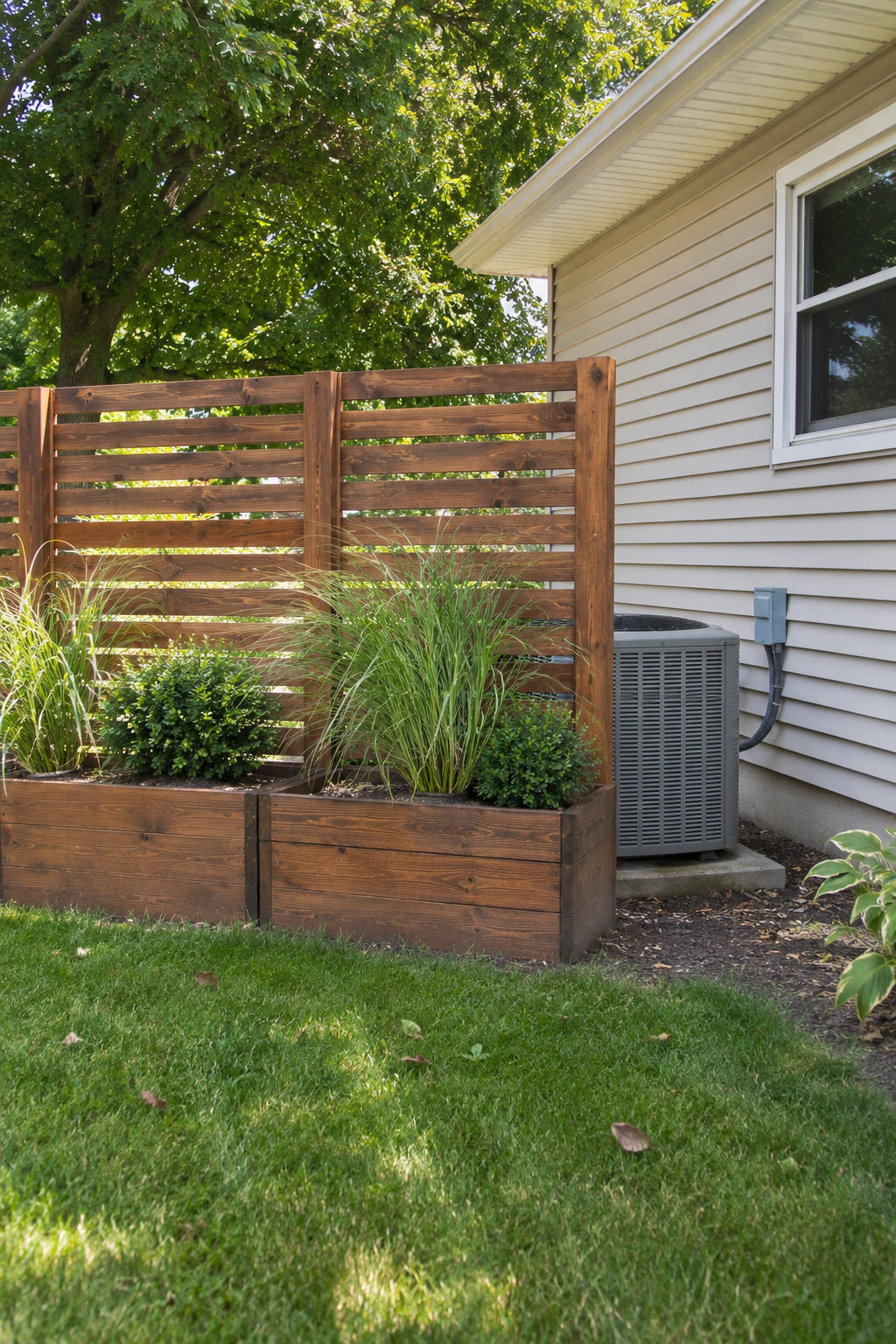
Disguise utilities and add greenery at the same time
Air conditioning units, trash bins, and propane tanks are easy to spot in many backyards. A row of rectangular planters with a horizontal wood slat screen rising from the back can hide them while adding a strip of greenery.
Plant the boxes with clumping grasses, compact evergreens, or annual vines on the slats for a soft, layered screen. Stain the slats to match your fence or deck so the screen blends in.
Leave the clearance your equipment manufacturer recommends, often about 2 feet, so the unit gets airflow and technicians can reach it. Avoid plants that drop lots of leaves or seeds into the unit.
20. Clip Railing Planters Onto the Deck
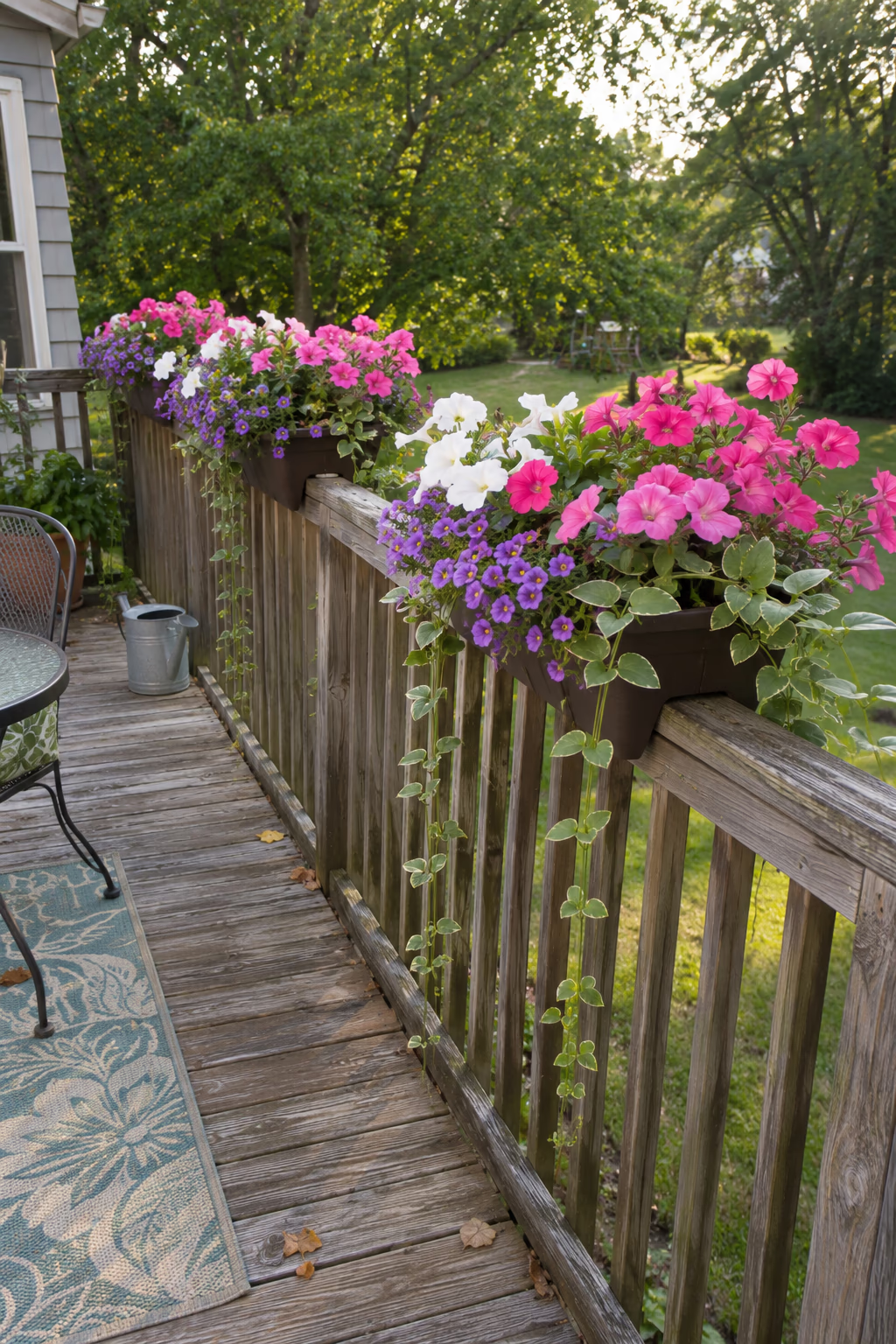
Color at eye level without using floor space
Planter boxes designed to straddle or hang on deck rails add a ribbon of color along the edge of the deck. Boxes about 24 to 30 inches long hold enough soil for petunias, calibrachoa, herbs, or trailing vinca.
They keep deck floors open for chairs and grills and frame the view of the yard. Strawberries and cherry tomato varieties bred for baskets also do well in rail boxes.
Make sure the bracket fits your rail width and that the railing is solid. Rail boxes catch a lot of wind, so they dry quickly and may need watering every day in summer.
21. Frame the Pool With Lightweight Fiberglass Planters
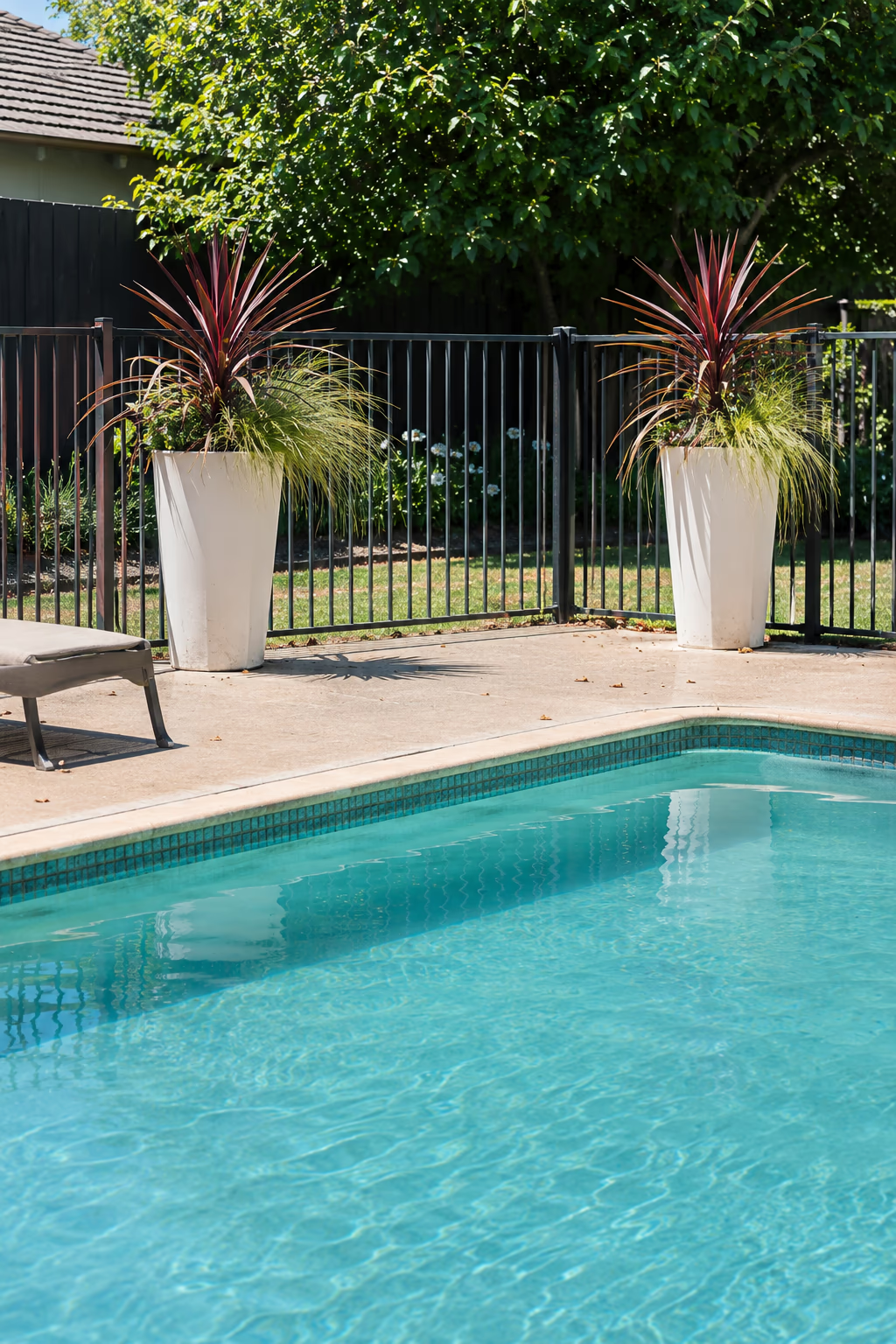
A resort look that’s easy to rearrange
Tall fiberglass planters in white, charcoal, or sand tones hold up well to sun and splashes and are light enough to shift around a pool deck. Use a few large ones at corners rather than many small pots that clutter walkways.
Choose tidy, low-litter plants such as cordyline, dwarf palms in warm zones, ornamental grasses, boxwood, or tropical hibiscus treated as a summer annual. They look lush without dropping petals into the water.
Keep pots out of the walking path and a safe distance from the water’s edge. Check local pool barrier rules and HOA guidelines so planters don’t create a climbing aid near the pool fence.
22. Drop Seasonal Inserts Into Permanent Planters
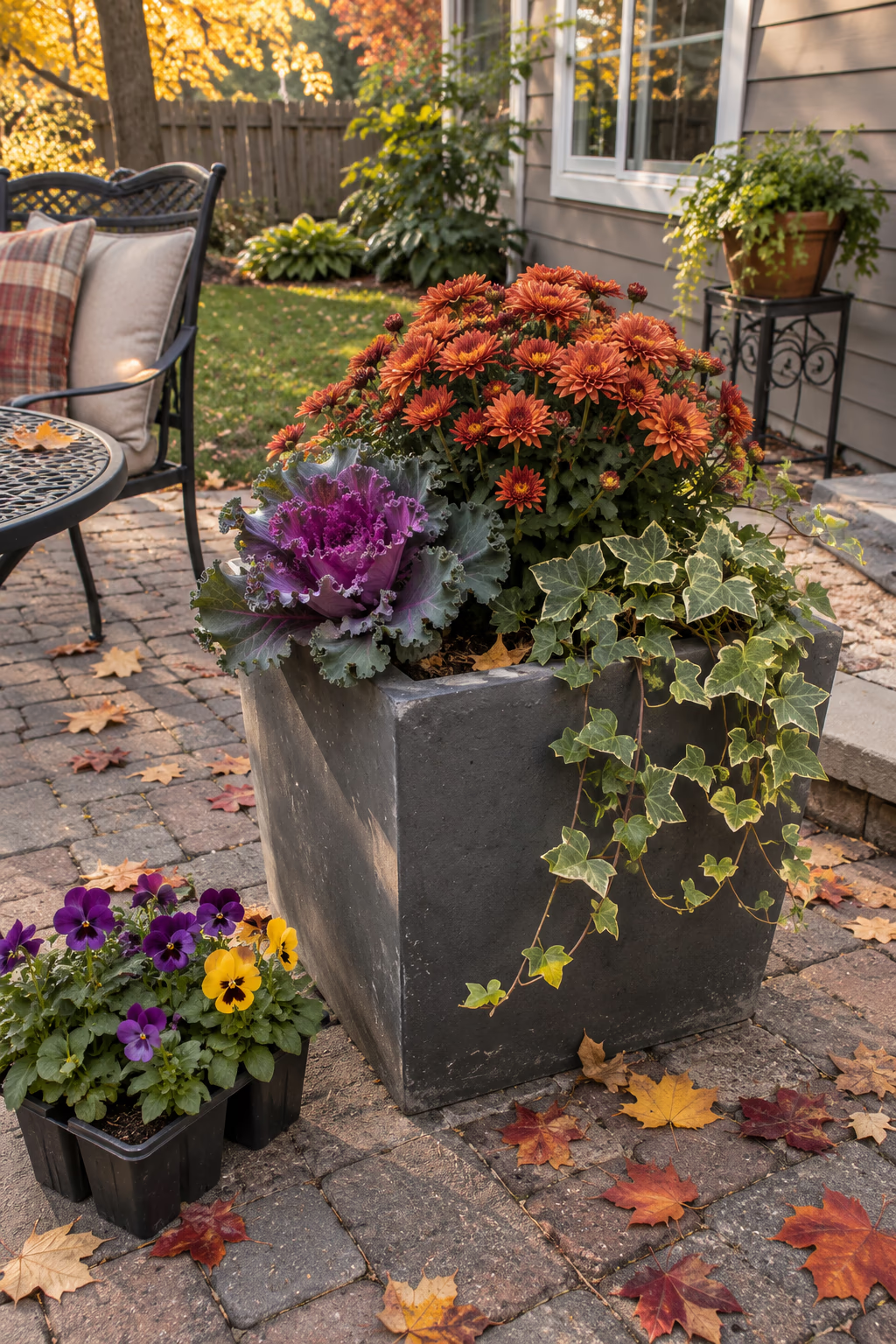
Fresh displays every season without replanting
Keep a few large, attractive planters in place year-round and refresh them with plastic grow pots that fit inside. Swap tulips in spring, coleus and petunias in summer, mums and ornamental kale in fall, and evergreen boughs and red twig dogwood stems in winter.
Inserts make changes quick and clean, and you can grow the next season’s display in a sunny spot while the current one is on show.
Measure the inner diameter and depth of your planters before buying inserts, and leave a little room so you can lift them out easily. Add a layer of mulch or moss on top to hide the plastic rims.
23. Turn an Old Tree Stump Into a Natural Planter
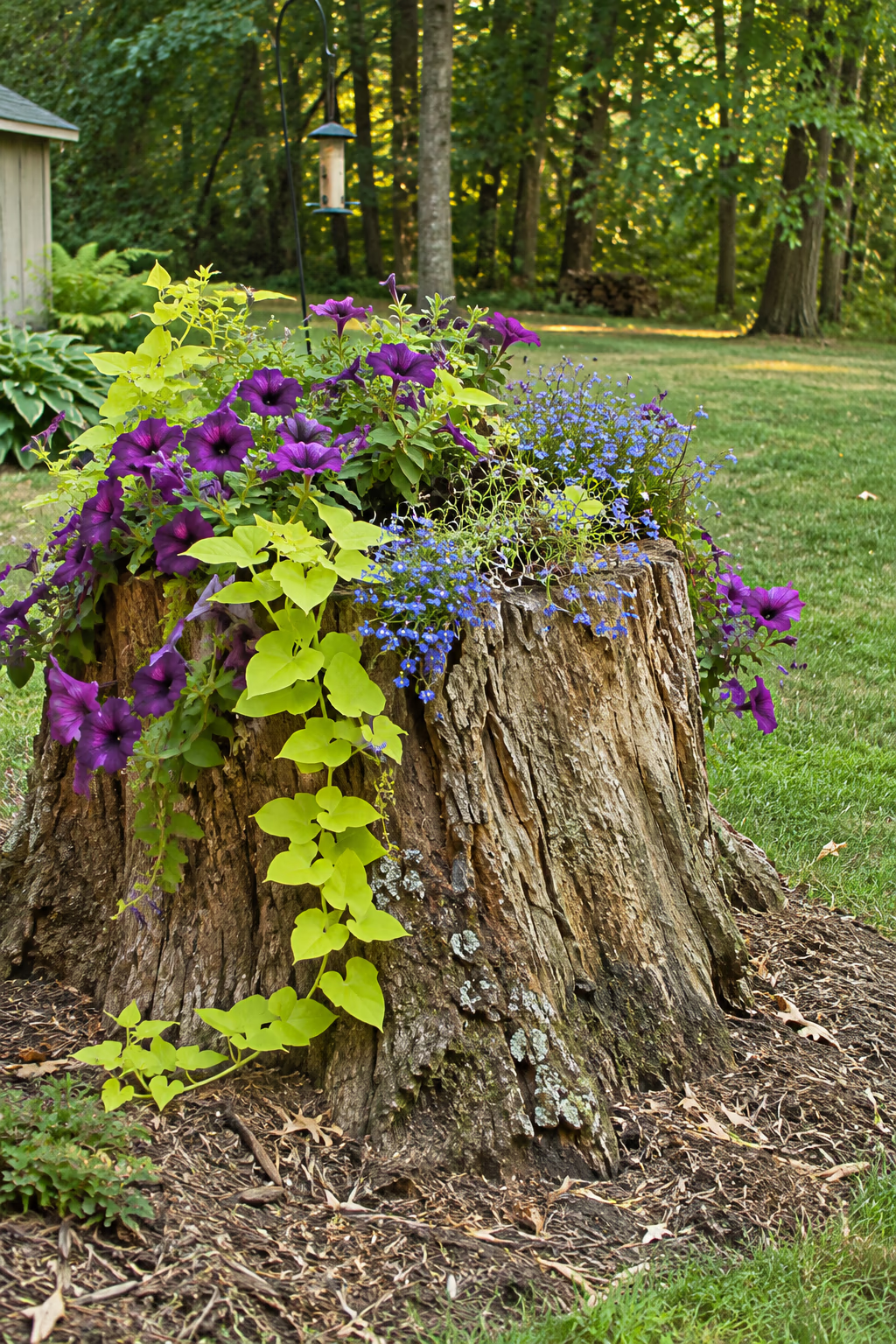
Give a leftover stump a second life
Rather than paying for stump grinding right away, hollow out the top of a stump to make a natural planter. Drill a series of holes and chisel out a basin a few inches deep, leaving thick walls around the edge, then fill it with potting mix.
Trailing annuals like petunias, lobelia, or sweet potato vine soften the bark, while hostas or ferns suit stumps in shade. It turns an eyesore into a quirky, woodland-style feature.
Moisture held in the planter will speed up decay, so the stump will break down over several years. If digging out the basin is too much work, simply set a wide pot on top for a similar look.
How to Plan Your Backyard Planters
Planters are easy to add one at a time, but a little planning helps them work together as a whole and keeps watering manageable through the hottest months.
- Start with the view from the house. Place your biggest planters where you see them from windows, the back door, and the patio, since those spots get the most attention.
- Size up, not down. Larger planters hold more soil, stay moist longer, and look more intentional than a scatter of small pots.
- Pick a material palette. Choose two or three materials or colors, such as corten, terracotta, and black, and repeat them around the yard for a cohesive look.
- Match plants to the light. Note how many hours of sun each spot gets and check USDA hardiness zones for perennials and shrubs meant to stay outdoors all year.
- Plan for water. Group thirsty containers near a hose bib, and consider a simple drip kit with a timer for planters you’d otherwise water daily.
- Check weight and drainage. Make sure every planter drains, raise pots slightly off decks to prevent stains and rot, and confirm that decks and balconies can handle heavy, wet containers.
Frequently Asked Questions
What size planter is best for a backyard?
For most backyard displays, planters at least 18 to 24 inches across work best. They hold enough soil to keep roots cool and moist, give plants room to fill out, and read clearly from a distance. Small pots are fine for herbs or accents but dry out quickly.
Do backyard planters need drainage holes?
Yes, except for containers meant to hold water, such as a mini water garden. Without drainage, rain collects at the bottom, roots rot, and soil can sour. If a planter has no holes, drill a few or use it as a decorative cover for a smaller draining pot.
What should I put in the bottom of a large planter?
Skip the gravel layer, which can actually keep water from draining well. To save on soil in very deep planters, fill the lower part with upside-down nursery pots, sealed plastic bottles, or untreated wood chunks, then add at least 12 to 18 inches of potting mix on top.
Which planter material lasts longest outdoors?
Corten and galvanized steel, concrete, fiberglass, and high-quality resin last many years outdoors. Cedar holds up well if kept off the ground, while standard terracotta and glazed ceramic can crack in freezing weather unless they’re rated frost-resistant.
How do I keep plants in backyard planters alive over winter?
Choose shrubs and perennials hardy to one or two zones colder than yours, water before the ground freezes, and group pots against the house for shelter. Move tender plants like citrus and succulents indoors, and empty fragile pots so they don’t crack.
Final Thoughts
The right planters can give your backyard structure, color, and even fresh food without a major renovation. A run of corten troughs along the fence, a stock tank full of tomatoes, or a trio of terracotta pots on the patio can change how the whole yard feels.
Start with one or two spots you see every day, pick materials and plants that suit your climate, and build from there. Over a few seasons, your containers will fill in and turn the backyard into a space that feels finished, personal, and easy to enjoy.


