
It’s three in the afternoon in July, the patio pavers are hot enough to feel through your sandals, and the chairs you bought for relaxing sit empty because nobody wants to bake in them. The yard is right there, but the sun has taken it over.
Shade changes that almost instantly. A few degrees of relief and a break from the glare turn a space you avoid into one you actually use for morning coffee, long lunches, and lazy evenings. Shade also protects cushions, decking, and skin, and it can even take some heat off the back of the house.
These 19 backyard shade ideas cover every budget and timeline, from shade sails and cantilever umbrellas to awnings, gazebos, curtains, trees, and quick weekend DIY fixes. Some go up in an afternoon, others are long-term investments, and many work well together.
1. Stretch Triangular Shade Sails Over the Patio
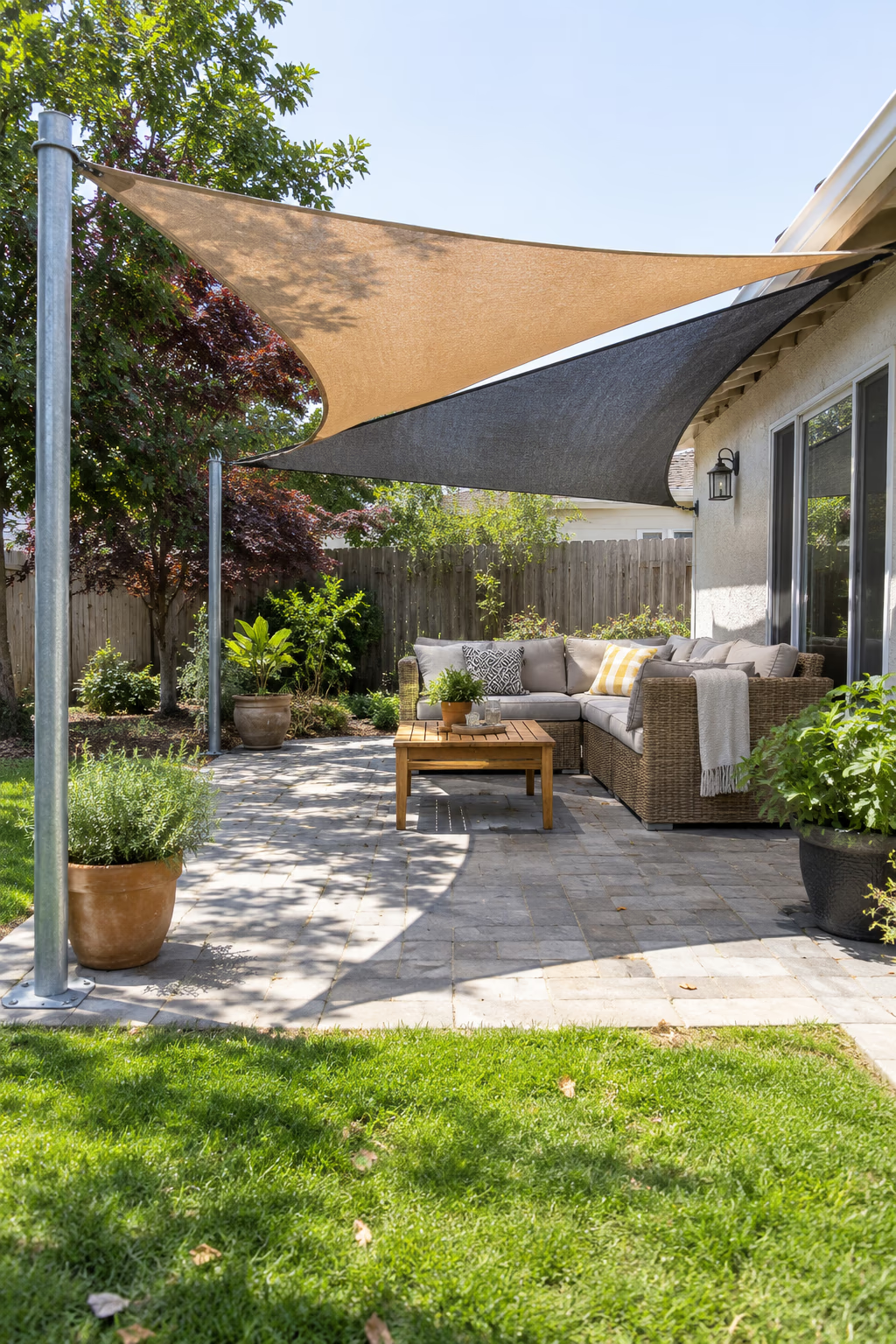
Modern, sculptural shade for a modest price
A shade sail is a piece of tensioned fabric, usually knitted high-density polyethylene, pulled tight between three or four anchor points. Two or three triangles of 12 to 16 feet per side, mounted at different heights and overlapping slightly, can cover a typical 14-by-16-foot patio and look far more interesting than a single flat rectangle.
The secret is a twist. Set one corner high, about 10 to 11 feet, and the opposite corner lower, around 7 to 8 feet, so the sail forms a gentle hyperbolic curve. That shape keeps it taut, sheds rain, and catches less wind. Neutral sand, gray, or charcoal fabric tends to look current and hides dust better than bright white.
Anchors matter more than the sail. Use galvanized steel or thick timber posts set in concrete footings, typically 3 to 4 feet deep, and only attach to the house at a structural point such as a solid wall stud or post, never to a gutter or thin fascia board. Take sails down before major storms and over snowy winters.
2. Set Up a Cantilever Umbrella That Follows the Sun
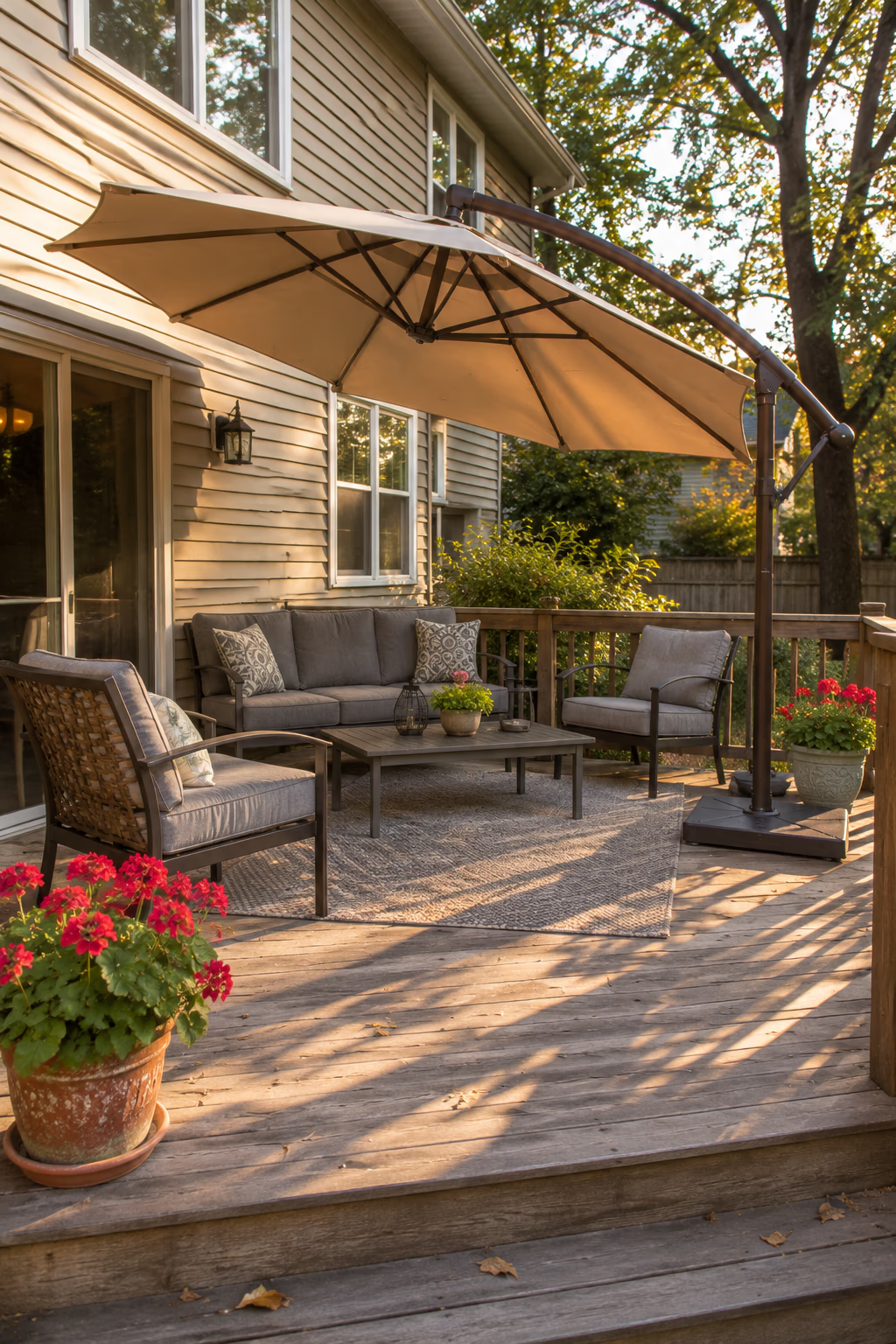
Flexible shade without a pole in the way
A cantilever, or offset, umbrella hangs its canopy from an arm off to one side, so the pole never sits in the middle of your seating. Most models rotate a full circle and tilt, letting you chase the shade from late morning through sunset. A 10- to 11-foot canopy comfortably covers a sofa and two lounge chairs.
That flexibility is why these umbrellas show up in nearly every patio photo you admire. They work on decks, pavers, and even beside a pool, and you can take them with you when you move.
The trade-off is weight. Cantilever umbrellas need a heavy base, often well over 150 pounds of fillable weights or stone plates, or a bolt-down mount. Close the canopy whenever you leave it, since a gust can turn it into a sail, and slip on the cover to keep the fabric from fading.
3. Install a Retractable Awning Off the Back Wall
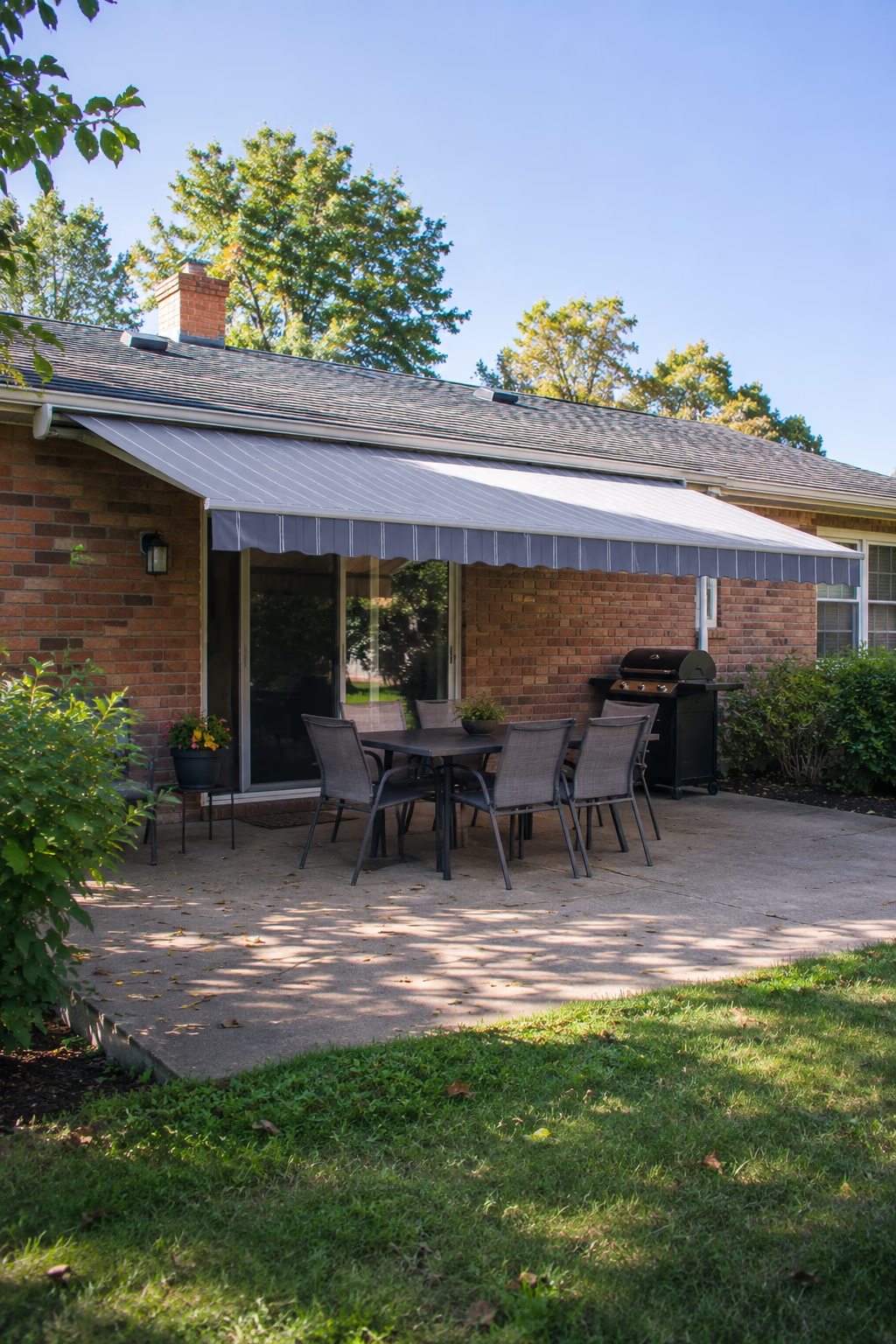
Shade on demand that disappears when you don’t need it
A retractable awning mounts to the wall above a door or window and extends over a patio or deck with a hand crank or motor. Common sizes project 8 to 10 feet and span 12 to 20 feet wide, enough to shade a dining table and the sliding door that leads to it.
Because nothing touches the ground, the patio stays completely open. Rolling it out on hot afternoons can also cut heat gain through the glass behind it, and retracting it on cool days lets winter sun back in.
Awnings must be bolted into solid framing, so mounting is often a job for the installer. Retract it in high wind or heavy rain, as the fabric is not meant to handle storms. Solution-dyed acrylic fabric holds its color longest; plan on a lower price for manual units and more for motorized versions with wind sensors.
4. Plant a Shade Tree on the West Side of the Yard
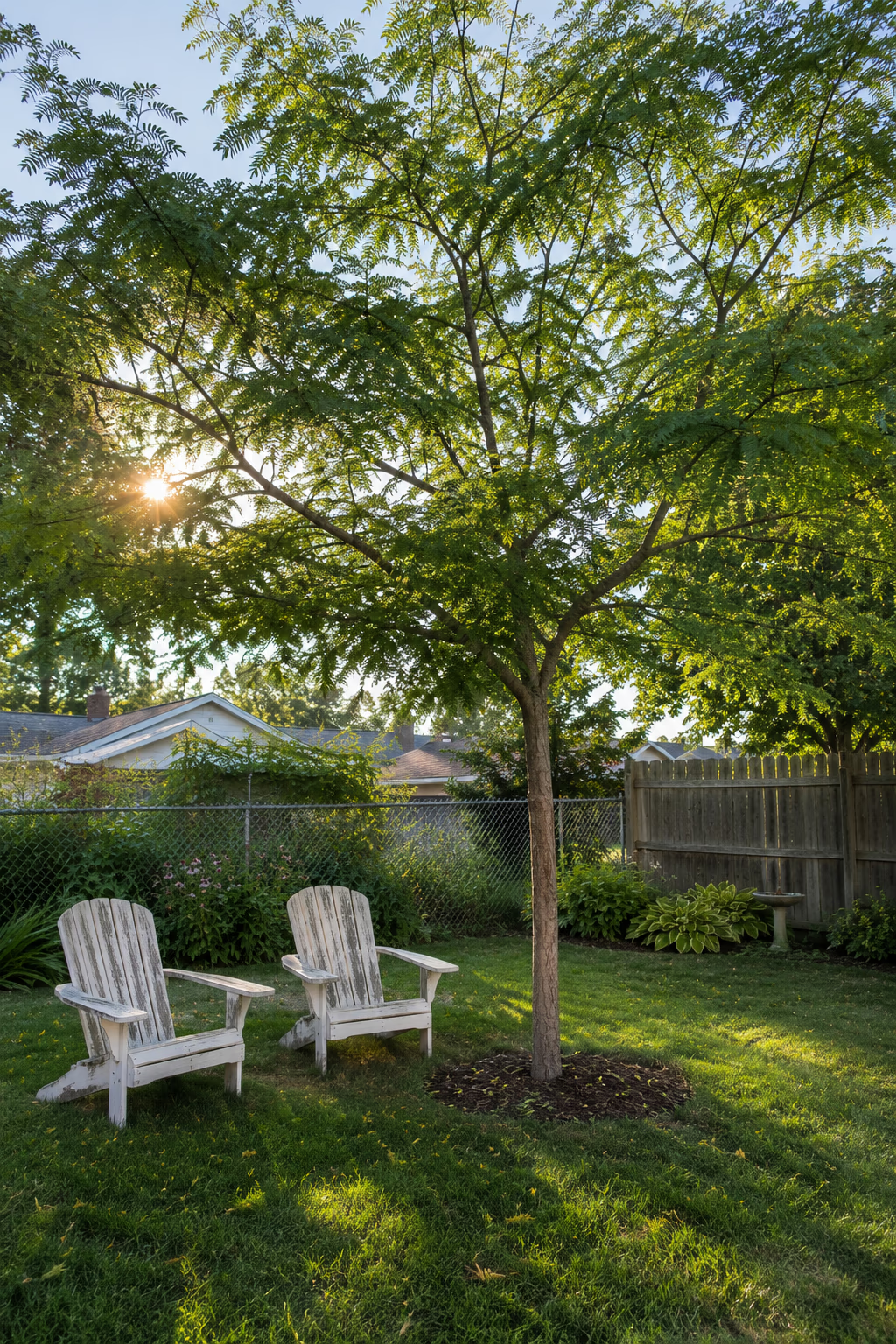
The slow, natural option that gets better every year
Nothing feels quite like dappled shade under a real tree. For a patio or a sunny stretch of lawn, the most useful spot is usually west or southwest of where you sit, since that’s where the hottest afternoon sun comes from. A deciduous tree also drops its leaves in fall, so winter light still reaches the house.
Good choices for many US yards include red maple, northern red oak, tulip tree, Kentucky coffeetree, and thornless honeylocust, which casts light, airy shade that lets grass grow beneath it. Check your USDA hardiness zone and local extension recommendations, and skip weak-wooded trees such as Bradford pear and silver maple.
Give large shade trees room: plant them at least 15 to 20 feet from the foundation and away from overhead lines, and call 811 before digging. Expect several years before a young tree throws meaningful shade, so pair it with a temporary option while it grows.
5. Build a Hardtop Gazebo for All-Weather Cover
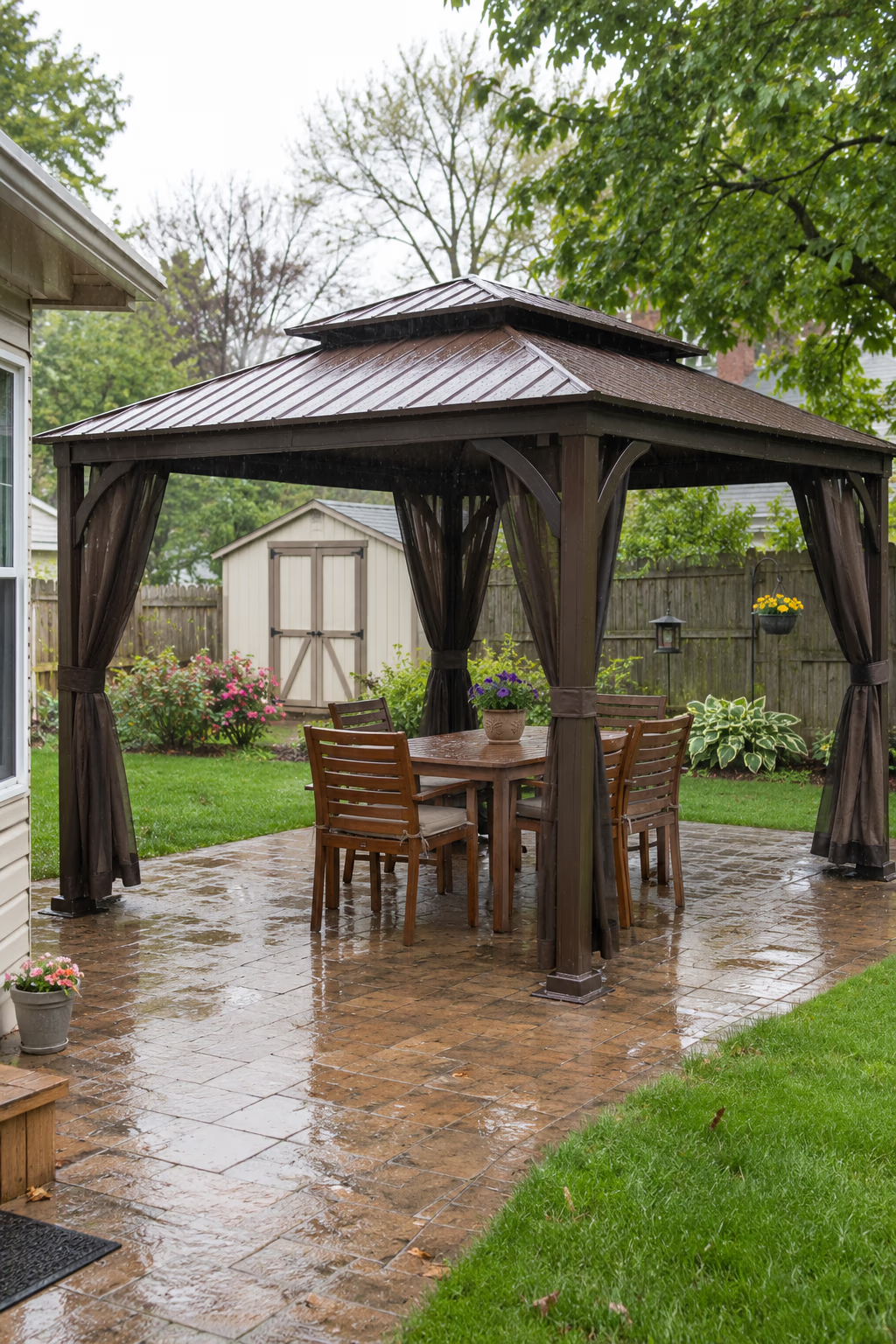
A true outdoor room that handles sun and rain
A hardtop gazebo has a metal or polycarbonate roof on an aluminum or steel frame, giving you solid shade plus shelter from summer downpours. A 10-by-12-foot model fits a dining set for six or a conversation group, while a 12-by-16 can hold both.
Many come as kits with a double-tier vented roof that lets hot air escape, built-in gutters, and tracks for mosquito netting and curtains. Unlike fabric canopies, the roof can stay up year-round.
Set the gazebo on a level patio or deck and anchor every leg with the hardware provided, or it can shift in strong wind. Assembly is a two- to three-person job that takes most of a day. Large freestanding structures may need a permit or HOA approval, so check before ordering.
6. Hang Outdoor Curtains to Block Low Afternoon Sun
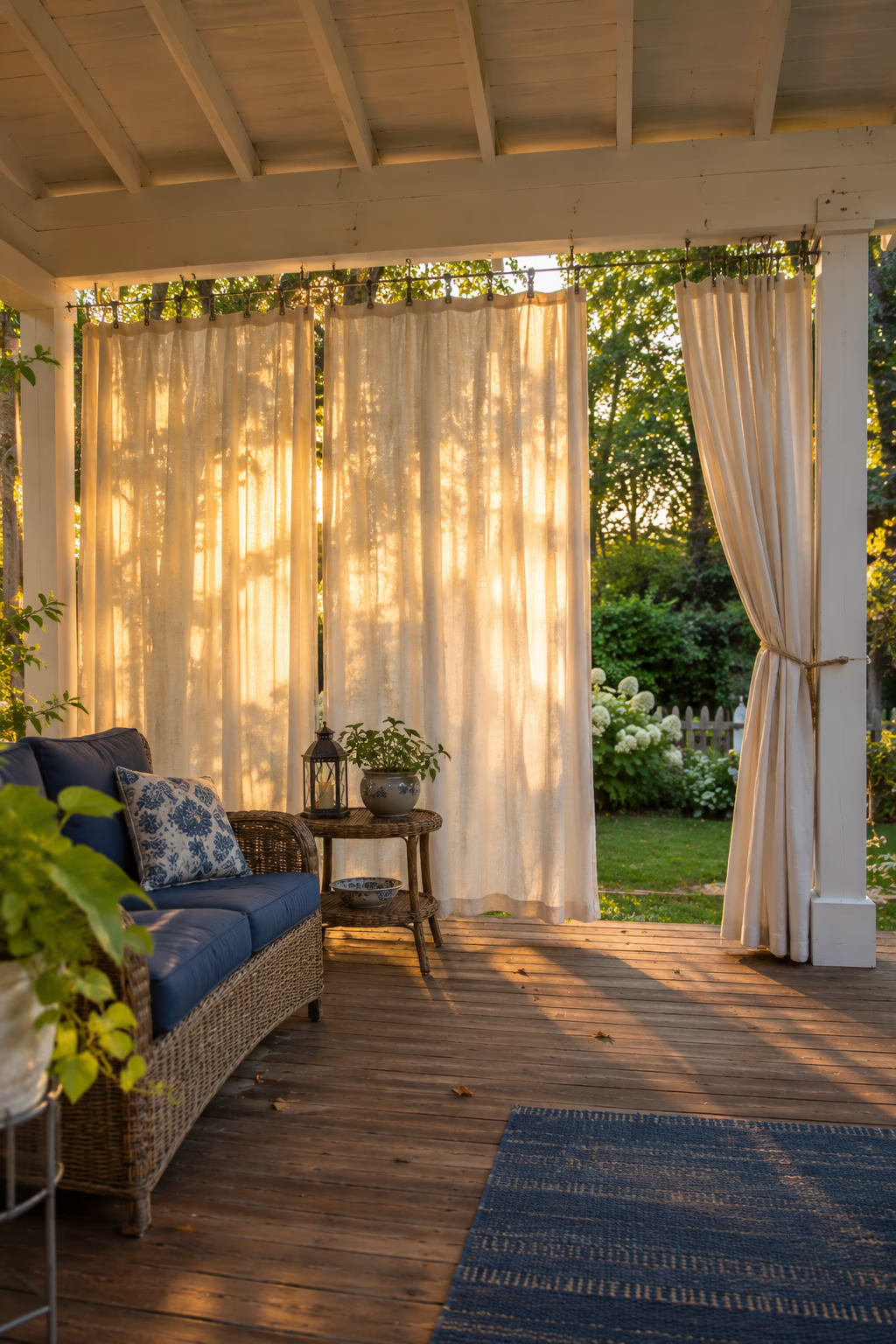
Soft side shade where overhead cover falls short
Overhead shade helps at noon, but late in the day the sun slips under roofs and canopies and shines straight into your eyes. Outdoor curtains on the west side of a porch, gazebo, or covered patio block that low, raking light while adding softness and a bit of privacy.
Look for panels made of solution-dyed acrylic or polyester rated for outdoor use, in lengths of 84 to 108 inches. Hang them from a sturdy rod or a stainless steel cable with turnbuckles, and add tiebacks so you can open them on cooler days. Light colors keep the space bright; darker colors block more glare.
Curtains act like small sails in wind, so tie them back or weigh the hems when a storm rolls in. Bring them indoors or store them dry over winter to prevent mildew.
7. Create a Striped Cabana Over a Daybed
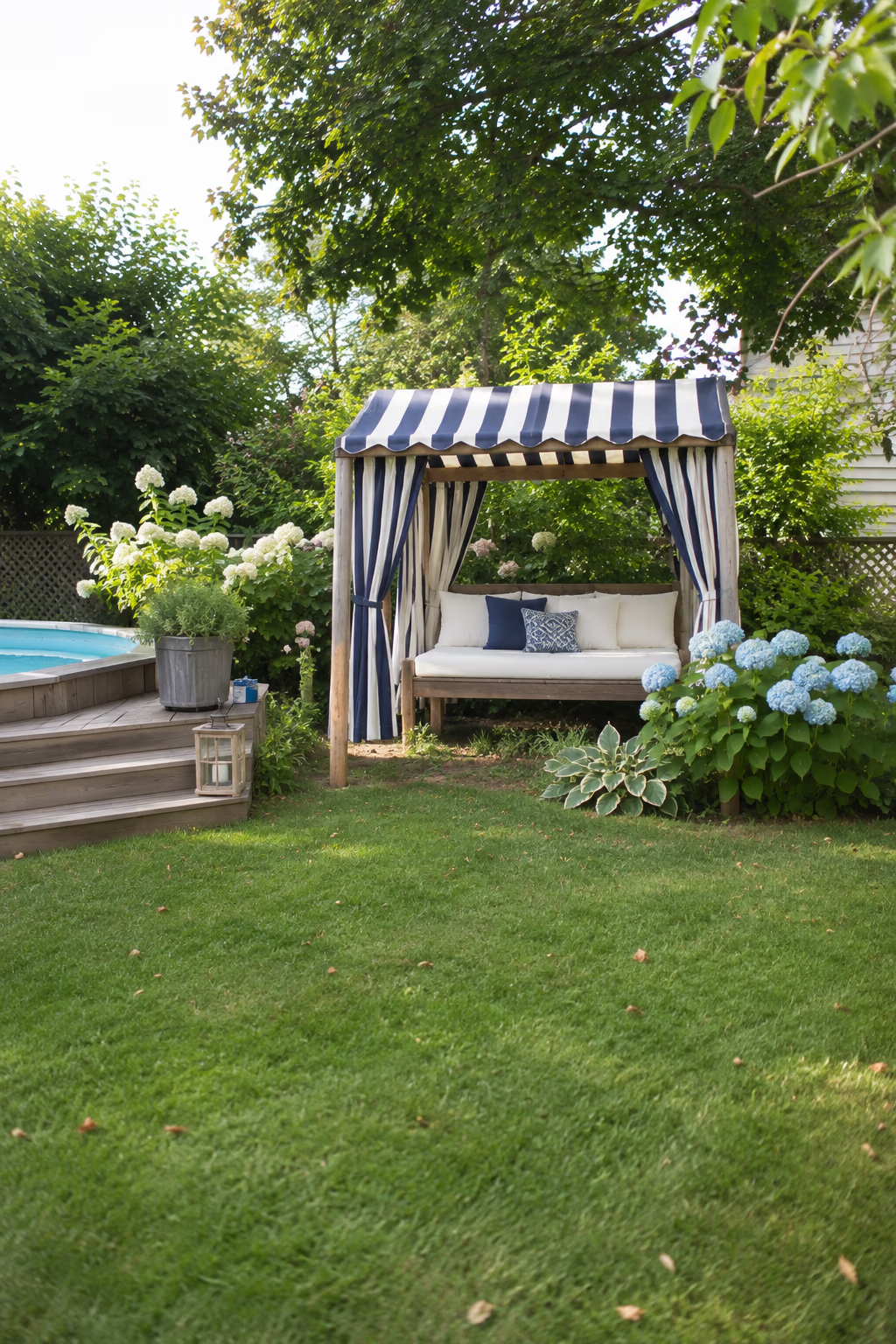
Resort-style lounging in your own yard
A cabana is a simple four-post frame topped and partially wrapped with fabric, set over a daybed, double chaise, or outdoor sofa. Wide cabana stripes in navy and white, sage and cream, or terracotta and natural instantly give it a beach-club feel.
You can buy a canopy daybed with a built-in frame or build one with 4×4 posts and a few crossbeams, then stretch outdoor fabric over the top and hang side panels with grommets. Placing it near a pool, at the end of the lawn, or in a quiet corner makes it a destination rather than just another chair.
Daybed cushions soak up rain, so choose quick-drying foam with removable covers or store cushions in a deck box. The fabric top provides shade but not full rain protection.
8. Add a Solid-Roof Patio Cover Off the House
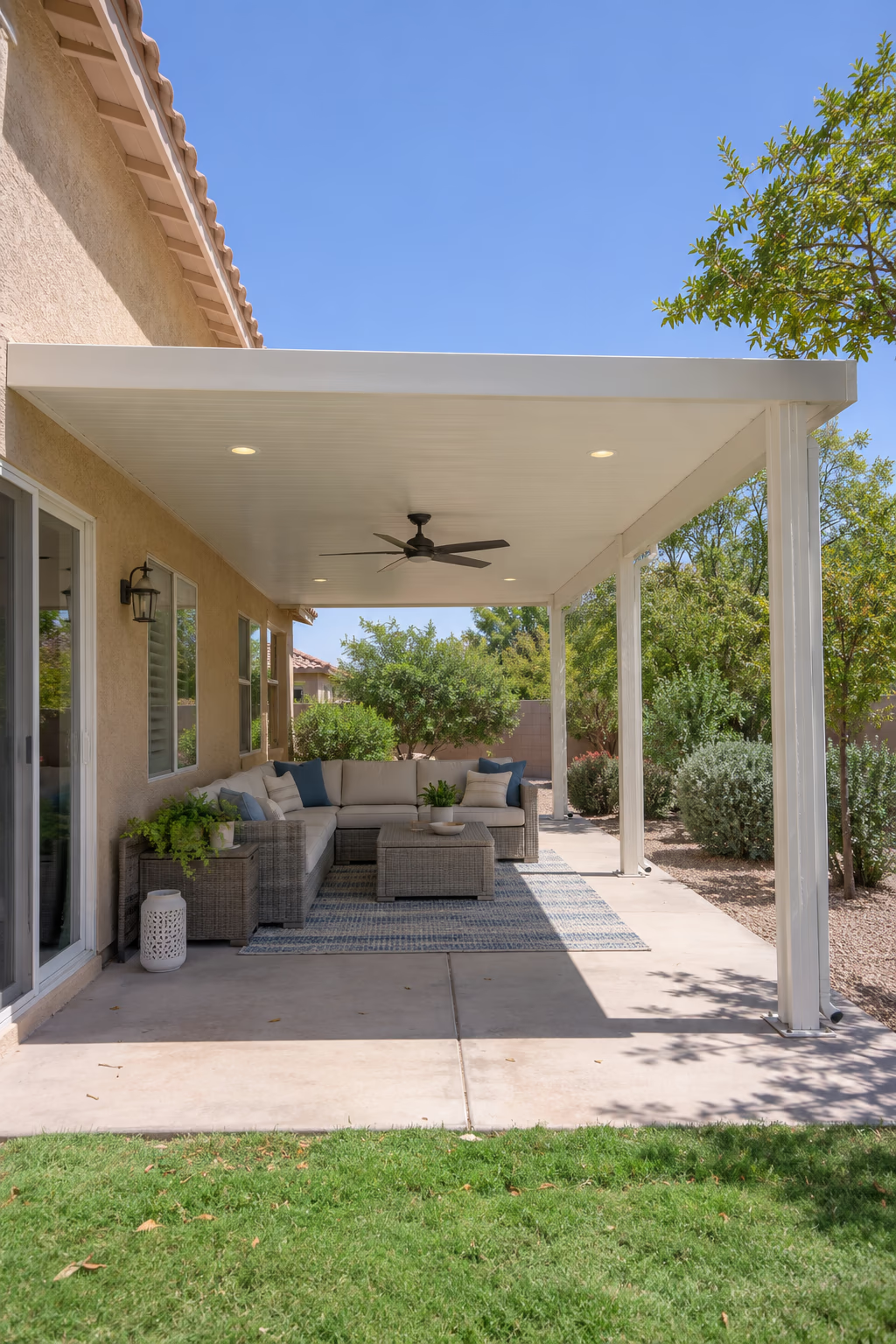
Permanent, dependable shade that extends your living space
An attached patio cover is a roof that ties into the house and rests on posts at the outer edge. It can be framed and shingled to match the home, or built from insulated aluminum panels that stay cooler underneath and need little upkeep.
A solid cover delivers the deepest, most reliable shade of any option, keeps furniture dry, and gives you a ceiling for lights and a fan. It makes the patio feel like an extra room, especially off a kitchen or family room.
This is a bigger project. Attached covers almost always need a building permit, proper footings, and flashing at the house wall to prevent leaks, so most homeowners hire a contractor. Keep in mind that a deep roof can darken the room inside, and a slight slope is essential for drainage.
9. Layer Overlapping Sails Across a Narrow Side Yard
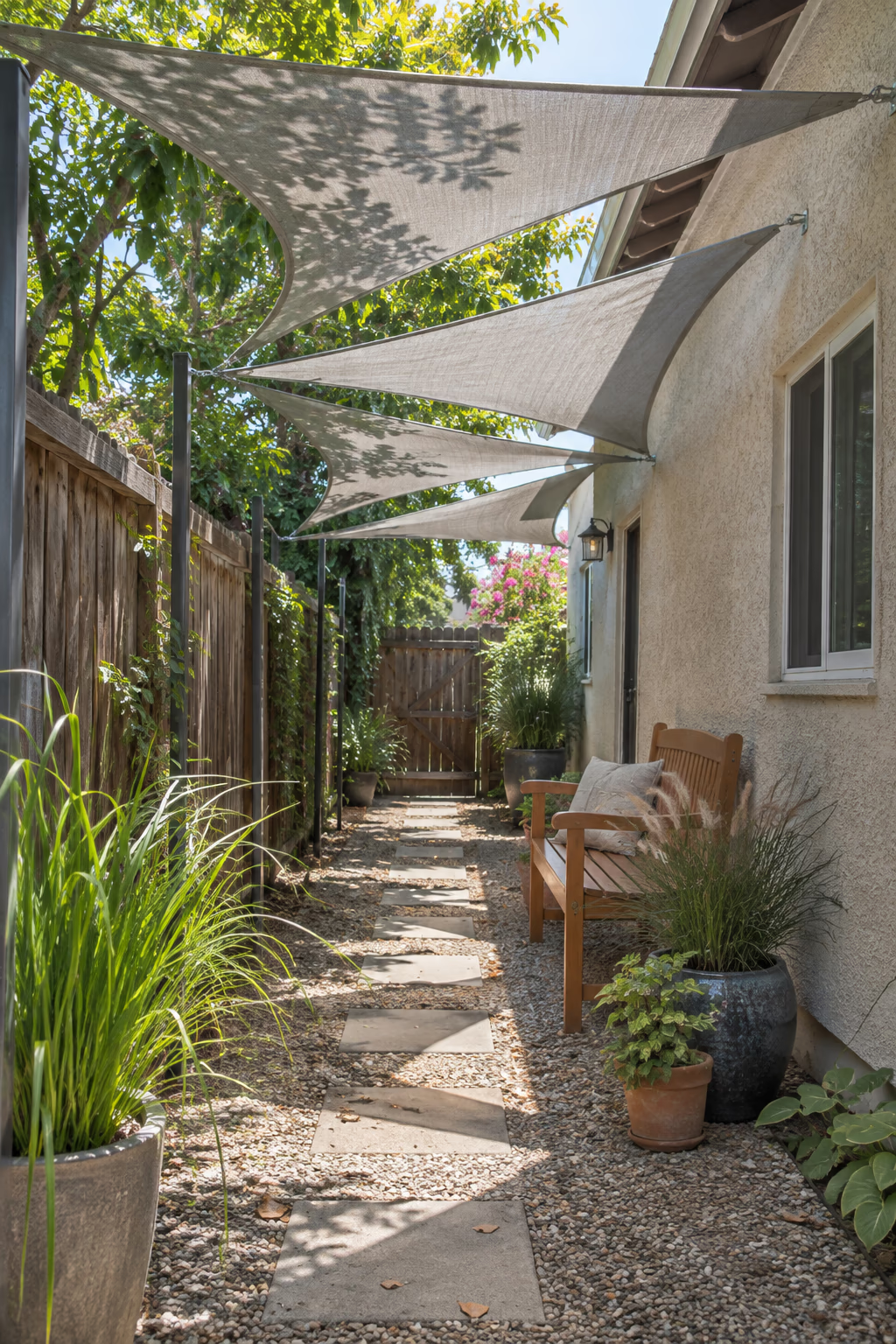
Turn a hot, forgotten strip into a usable passage
Long, narrow side yards often catch brutal sun off the fence and house wall. A row of smaller sails, each about 8 to 10 feet across, can run end to end between the house and fence posts, overlapping by a foot or so and alternating high and low corners.
The rhythm of repeated shapes makes a skinny space feel designed, and the shade keeps the passage comfortable for a bench, a potting area, or a path to the gate. It’s an approach borrowed from hot desert courtyards where full coverage is a must.
Fences are rarely strong enough to hold sail tension, so set dedicated steel posts along the fence line instead. Leave at least 7 feet of headroom, and check that sails don’t block a dryer vent, gas meter, or utility access.
10. Tension Mesh Shade Cloth Over a Gravel Lounge
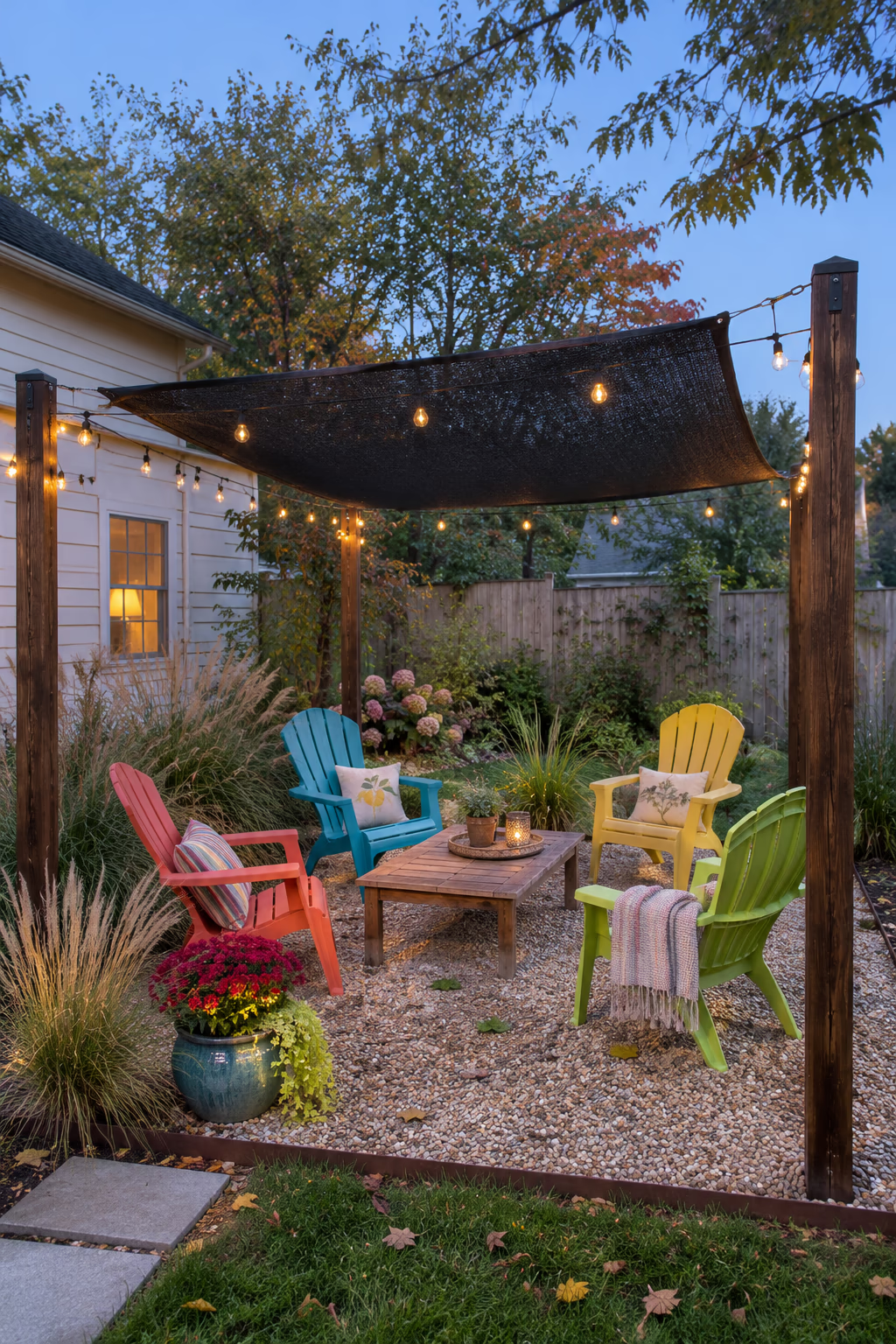
Budget-friendly cover for a casual seating spot
Knitted shade cloth sold by the roll is one of the cheapest ways to cover a larger area. Stretch a rectangle of 70 to 90 percent shade cloth over a simple frame of four to six posts connected by cables or 2×6 beams, above a pea gravel area with a few Adirondack chairs or a low table.
Because the mesh breathes, hot air rises through it instead of getting trapped underneath, so the space feels cooler than under solid fabric. Weave a strand of café lights along the cables and the spot works just as well after dark.
Buy cloth with finished, reinforced edges and grommets, or hem raw edges with binding tape, since cut mesh can fray. Shade cloth lets rain through, so stick to weatherproof furniture underneath.
11. Grow Grapevines Over a Sturdy Overhead Arbor
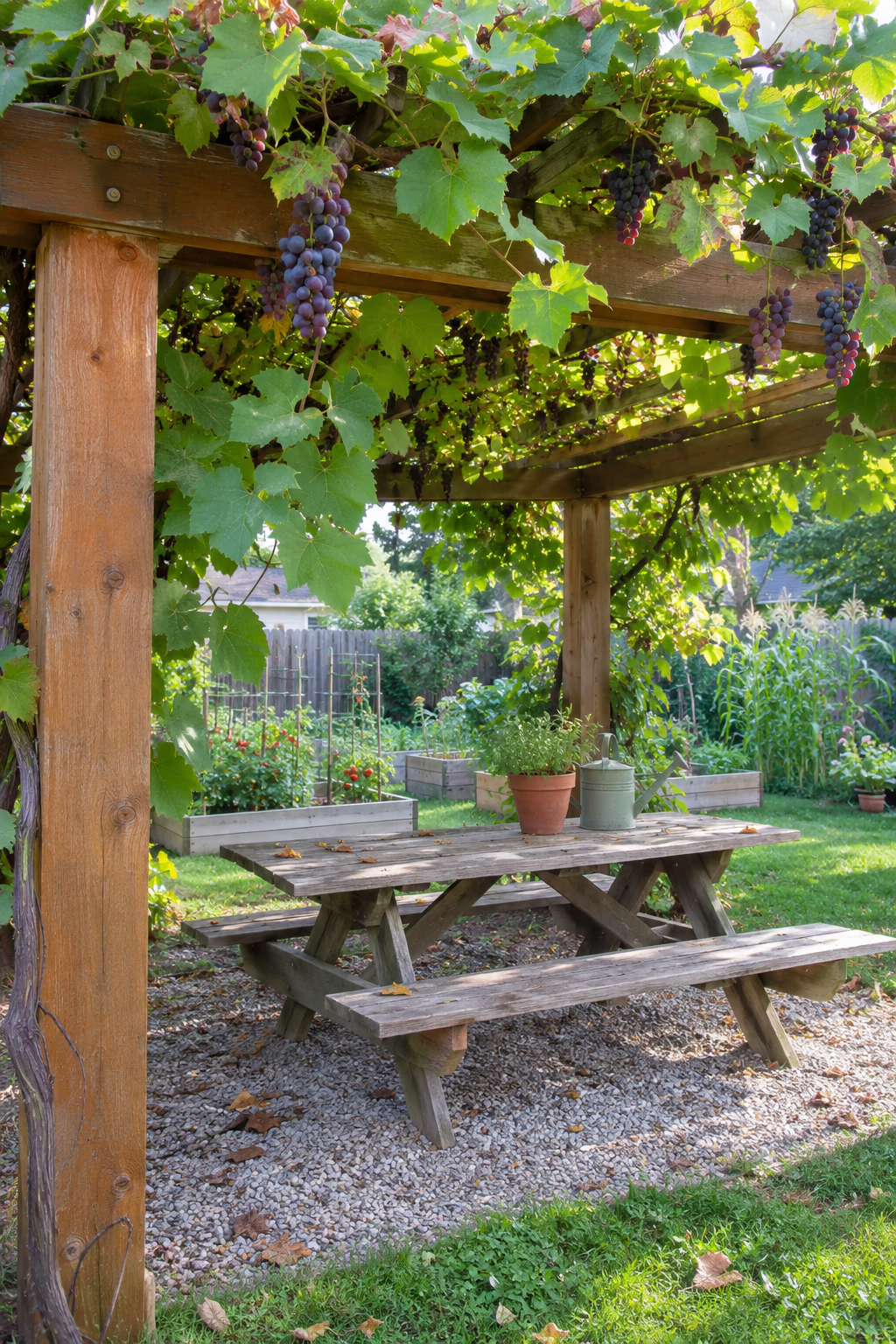
Leafy shade that also gives you a harvest
Grapes love full sun, which makes them a smart choice for exactly the hot spots that need shade. Build a flat-topped arbor from 6×6 posts and 2×8 beams with 2×2 crosspieces about a foot apart, plant one vine at the base of each post, and train the canes across the top over two or three seasons.
By midsummer, broad grape leaves form a cool green ceiling, and the vines drop their leaves in fall to let winter sun through. Choose a variety suited to your region, such as a cold-hardy type in the North or a muscadine in the Southeast.
The catch is fruit drop. Ripe grapes attract wasps and birds and can stain pavers, so site the arbor over a gravel or lawn seating area rather than your best patio, and plan on pruning hard every winter.
12. Hang Roll-Up Bamboo Shades From a Deck Beam
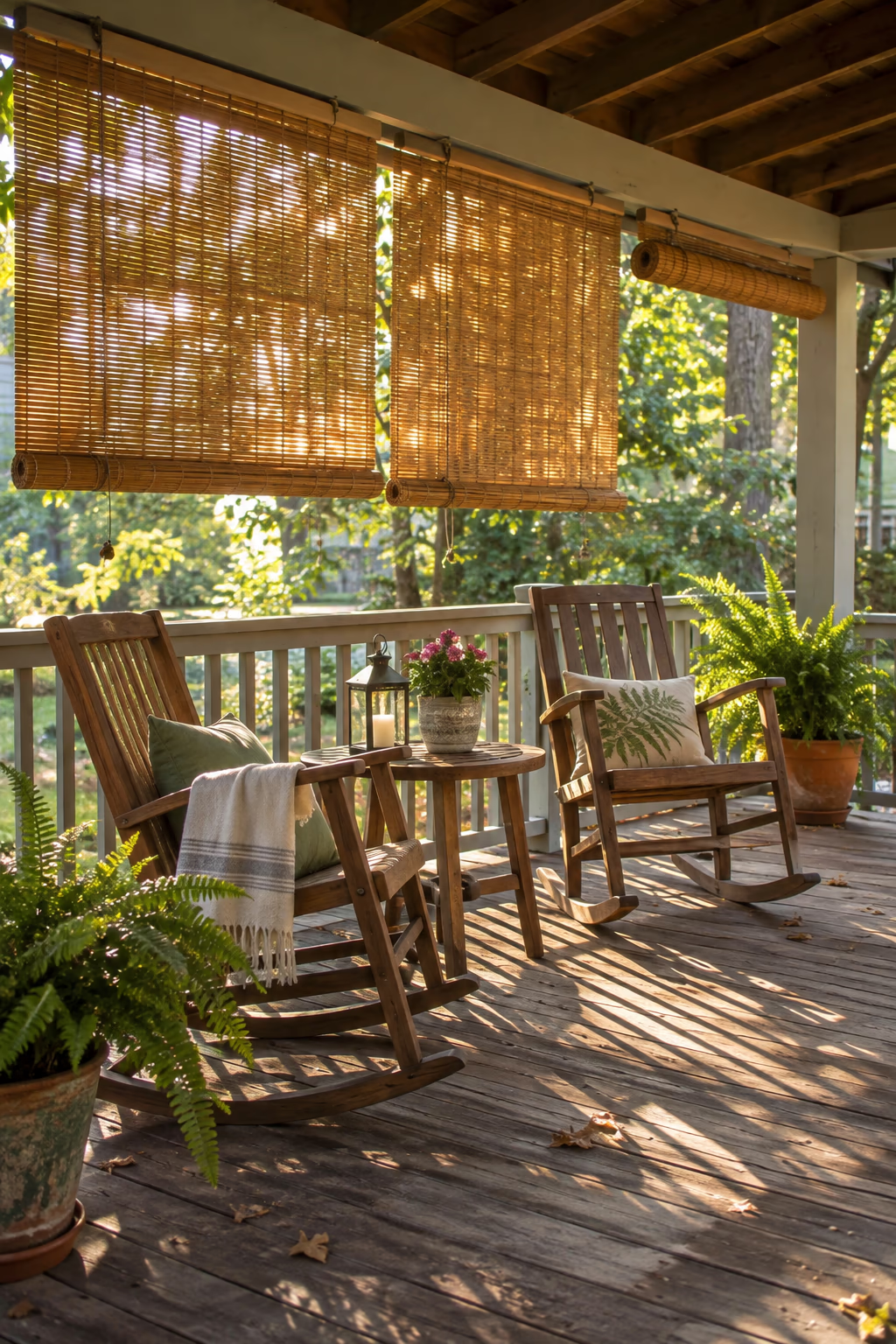
Natural texture and quick, adjustable cover
If you already have a covered porch, deck overhang, or open beam, roll-up bamboo or reed shades are an inexpensive way to block side sun. Standard sizes run 4 to 8 feet wide and 6 feet long, and they hang from simple cup hooks or screw eyes.
The warm, natural look suits cottage, coastal, and tropical-leaning yards, and the woven gaps let breezes and a little light pass through. Pull them down in the afternoon and roll them up with the cords when you want the view back.
Bamboo isn’t built for constant weather. Expect a few seasons of use, bring the shades indoors over winter, and let them dry fully before rolling them up to avoid mildew. Secure the bottoms in windy areas so they don’t slam against posts.
13. Shade the Play Area With a Square Sail
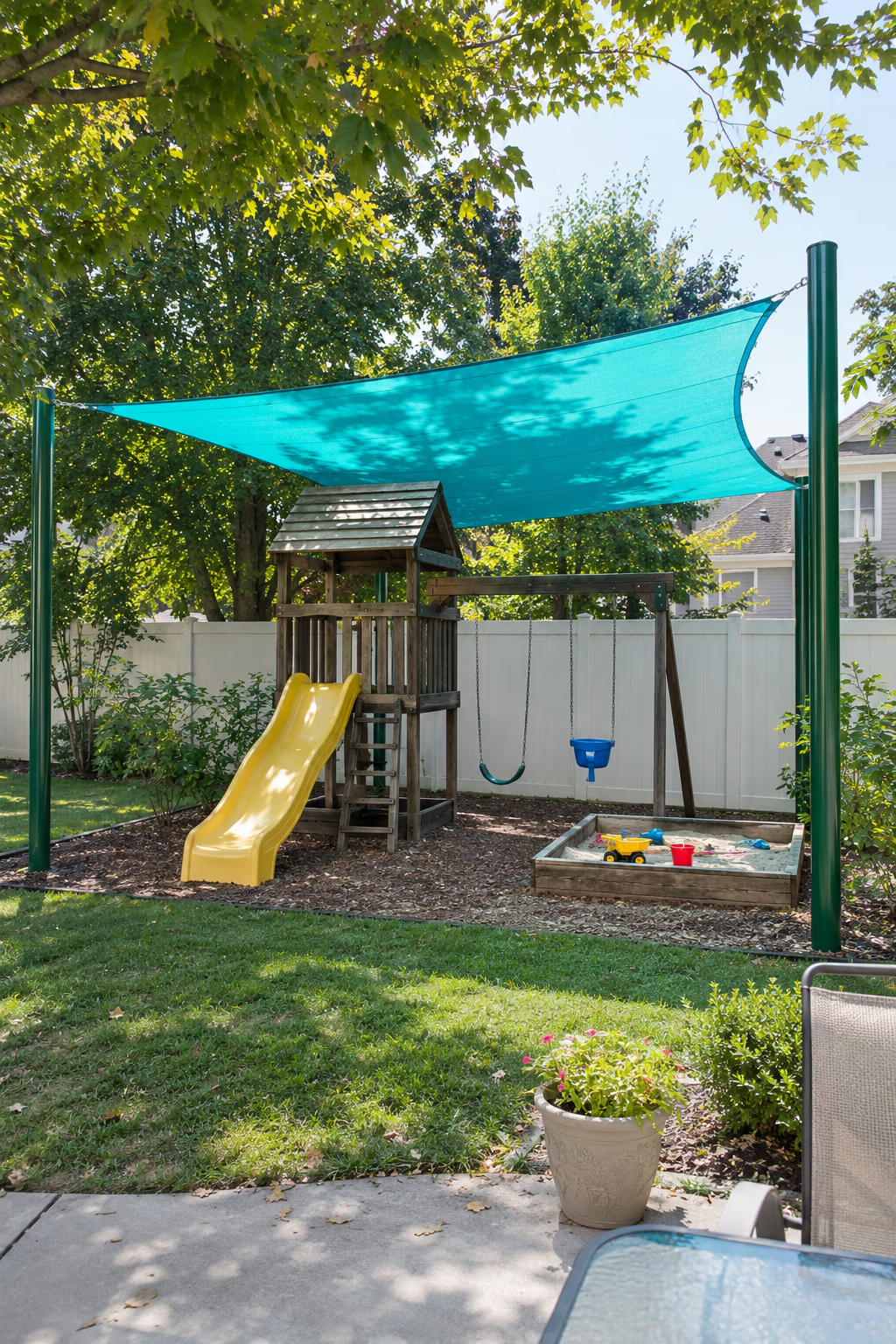
Keep slides, swings, and sandboxes cool enough to use
Plastic slides and metal swing seats can get dangerously hot in full summer sun. A square or rectangular sail stretched over a sandbox, play structure, or splash zone keeps surfaces cooler and gives kids a break from direct UV during peak hours.
Choose a sail rated for high UV blockage and mount it on four dedicated posts set in concrete, high enough that it clears the top of the play structure with room to spare. A bright fabric color can make the area feel playful without clashing with the rest of the yard.
Keep posts, cables, and turnbuckles out of reach so they don’t become climbing hardware, and inspect hardware each spring. Shade reduces sun exposure but doesn’t replace sunscreen and hats.
14. Center a Wide Market Umbrella Over the Dining Table
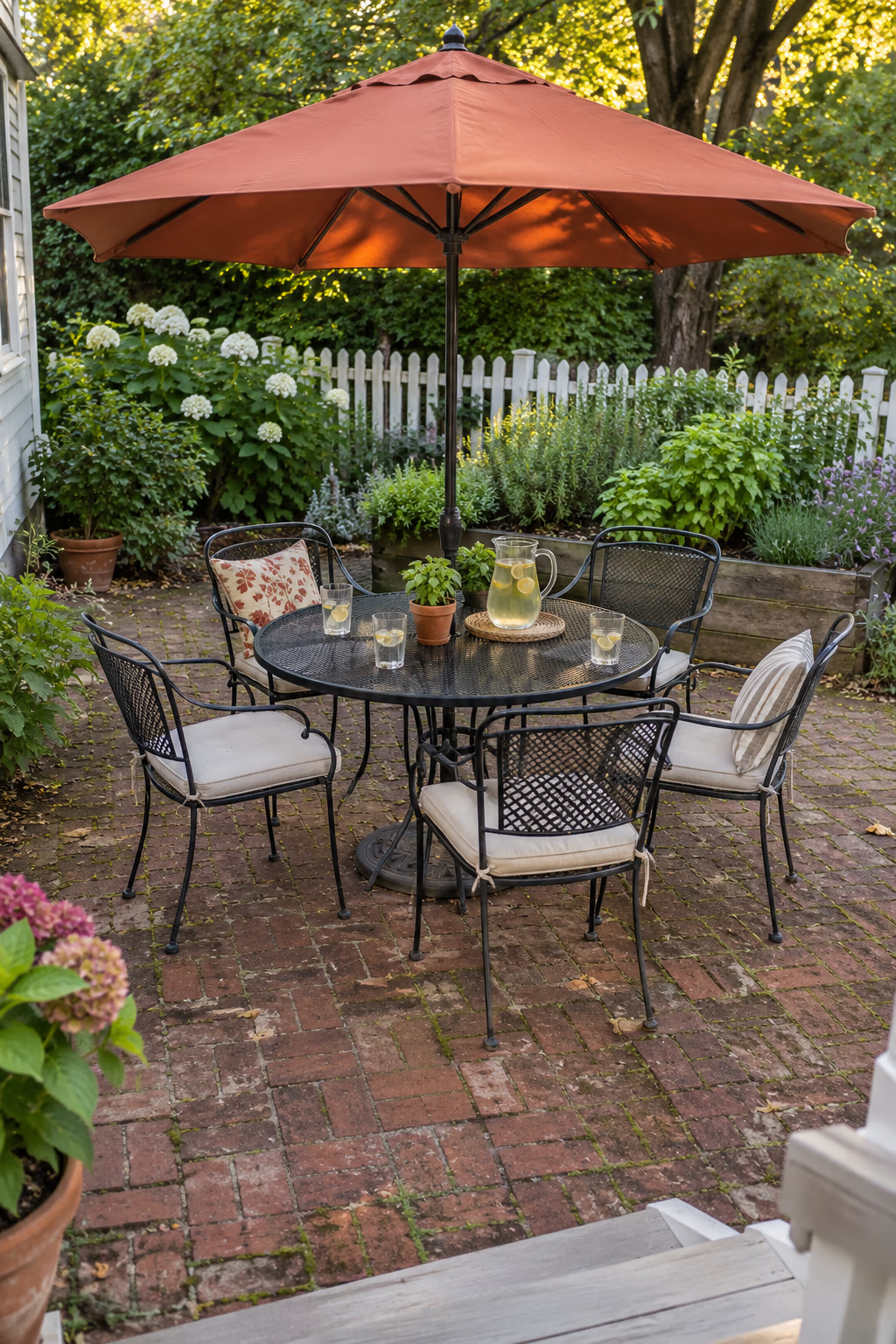
The classic, affordable answer for outdoor meals
A center-pole market umbrella slides through the hole in a patio table and shades everyone seated around it. As a rule of thumb, a 9-foot umbrella suits a 48-inch round table with four to six chairs, while an 11-foot model fits a longer rectangular table.
It’s one of the least expensive ways to make meals outside comfortable, and the table itself helps steady the pole. A crank lift and push-button tilt make it easy to angle the canopy as the sun moves through dinner.
Don’t skimp on the base. Even through a table, an umbrella needs a heavy stand, generally around 50 pounds or more for a 9-foot canopy. Fiberglass ribs flex in wind rather than snapping, and closing the umbrella after every use extends its life considerably.
15. Pitch a Pop-Up Canopy for Instant Party Shade
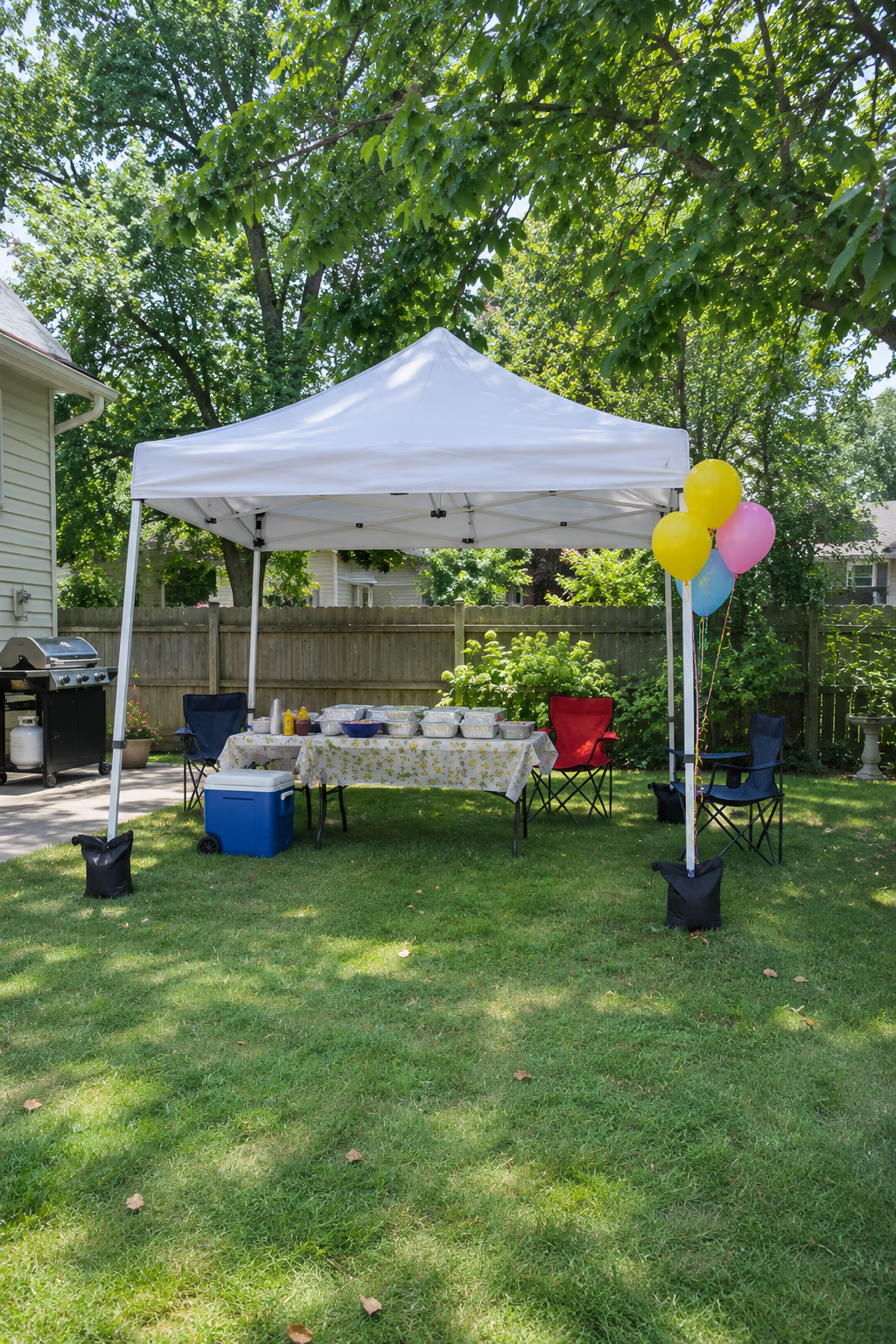
Temporary shade for gatherings and hot weekends
A 10-by-10-foot pop-up canopy opens in a few minutes and shades a buffet table, a group of folding chairs, or the grill station during a cookout. Straight-leg models give more usable space underneath than slant-leg versions, and add-on sidewalls can block low sun.
For renters or anyone who only needs shade a few times a summer, a pop-up is hard to beat. It folds into a rolling bag and stores in the garage between uses.
These canopies are light and catch wind easily. Weigh each leg with 25 to 40 pounds of sandbags or stake them into lawn, and take the canopy down at the end of the day rather than leaving it up overnight. Never use one over a grill or fire pit unless it’s specifically rated for that.
16. Grow Potted Shade Trees on a Small Patio
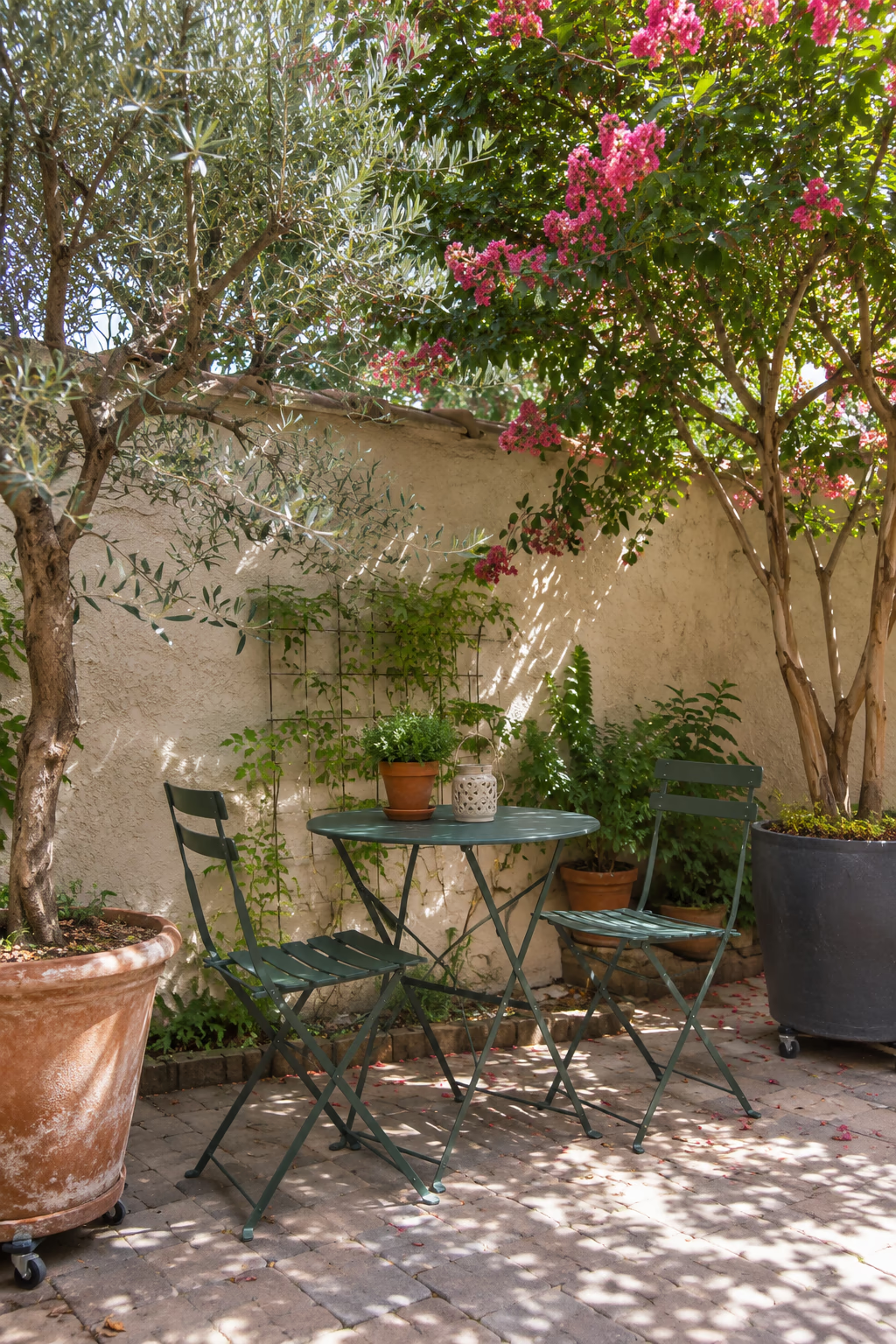
Living shade where you can’t plant in the ground
On a paved patio, rooftop, or small courtyard, a few trees in large containers can provide pockets of filtered shade. Olive, fig, crape myrtle, and small Japanese maples are all popular choices, depending on your climate and how much sun the space gets.
Use containers of at least 20 to 25 gallons with drainage holes, and group two or three trees beside a bench or bistro set to create a leafy nook. Pots also let you move trees to follow the sun or overwinter tender types such as olive and citrus in a garage in cold zones.
Container trees stay smaller than those in the ground, so they shade a chair rather than a whole patio. They dry out quickly in summer and may need daily watering in heat waves. Set heavy pots on wheeled caddies before filling them.
17. Choose a Canopy Swing for a Shady Seat Anywhere
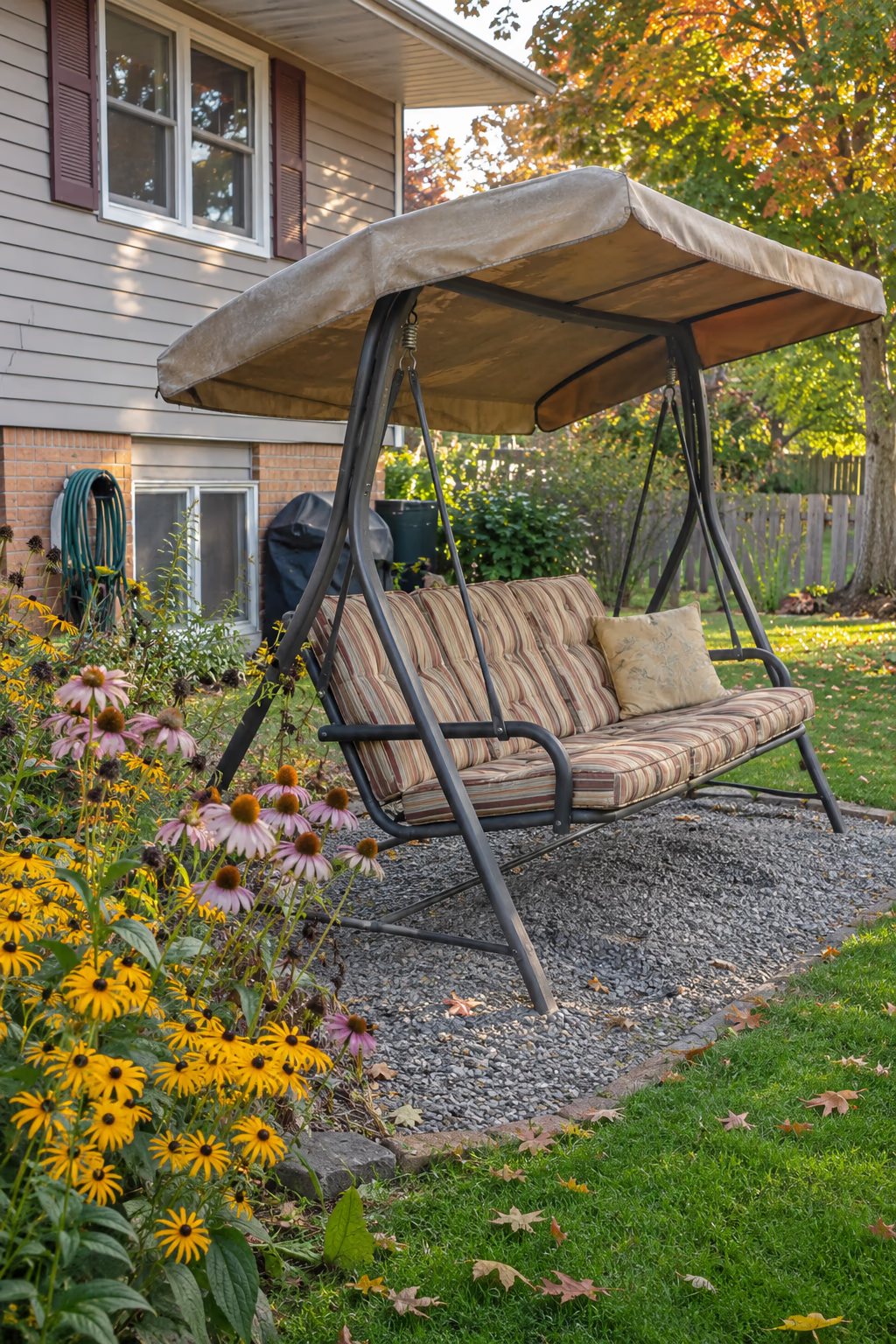
A portable perch with its own built-in shade
A freestanding canopy swing has a steel frame, a cushioned bench for two or three, and an adjustable fabric top that tilts against the sun. It needs no posts or digging, so you can set it on the lawn, a gravel pad, or the edge of the patio wherever the view is best.
It’s a simple way to add a relaxing spot to a yard with no existing shade, and gentle swinging makes it a favorite for reading or evening conversations.
Budget models often have thin canopy fabric that fades or tears within a few summers, so look for a frame sturdy enough to keep and a replacement canopy that’s sold separately. Place the swing on level ground so it rocks evenly.
18. Rig a DIY Canvas Canopy on Four Posts
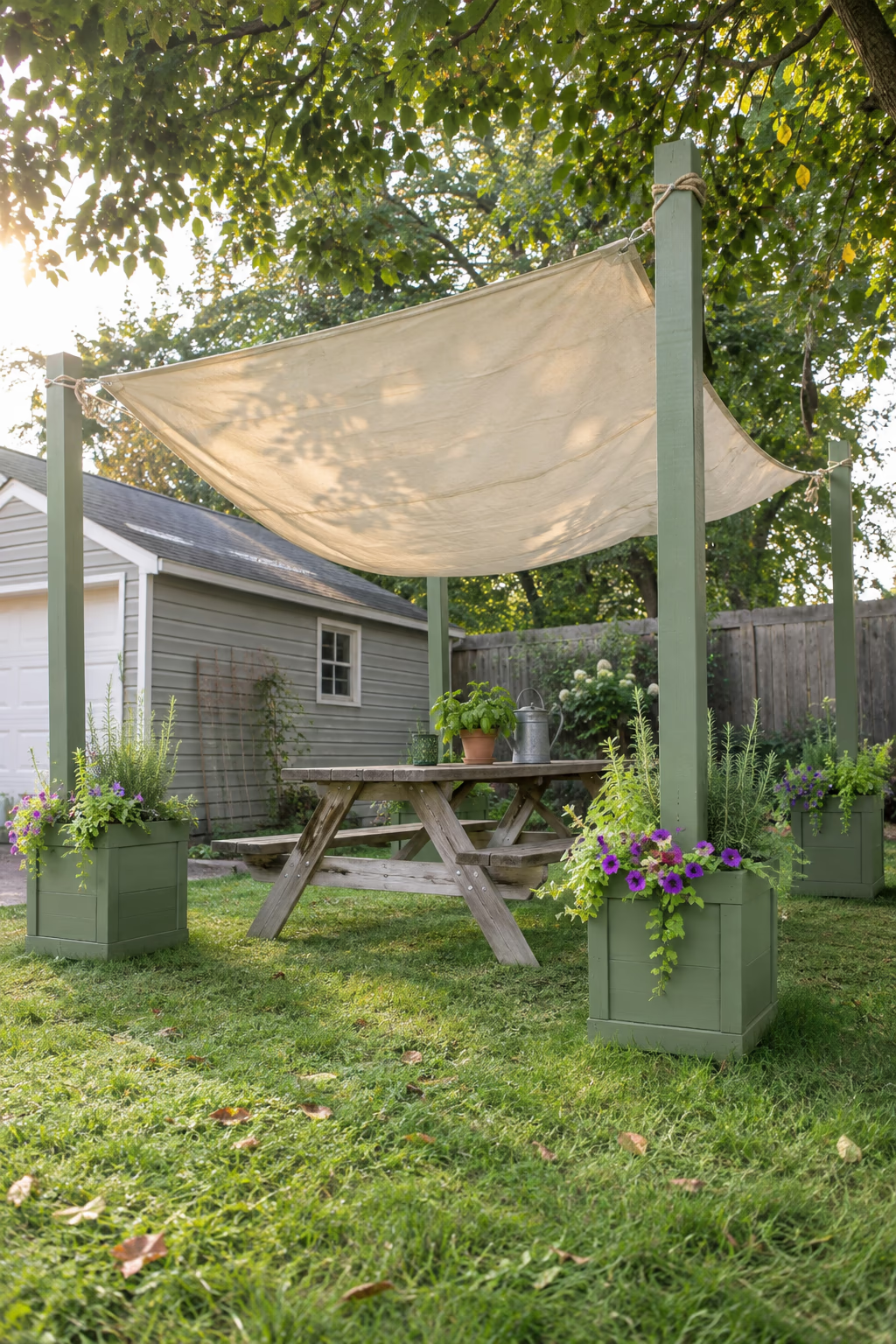
A weekend project that costs very little
For a quick, casual canopy, set four 4×4 posts about 8 feet tall into heavy planters filled with concrete, or sink them in the ground. Stretch a large outdoor fabric panel or a waterproofed canvas drop cloth across the top, tying the grommeted corners to eye bolts with rope or bungee cords.
Painted posts and planters overflowing with herbs or flowers at each corner make the setup look intentional. It’s a good fit for a picnic table, a reading corner, or a garden seating spot, and it’s easy to remove at the end of the season.
Plain cotton canvas mildews and fades quickly, so treat it with a fabric waterproofer or choose outdoor-rated fabric instead. Give the canopy a slight tilt so rain runs off rather than pooling in the center.
19. Cover the Vegetable Garden With a Shade Cloth Tunnel
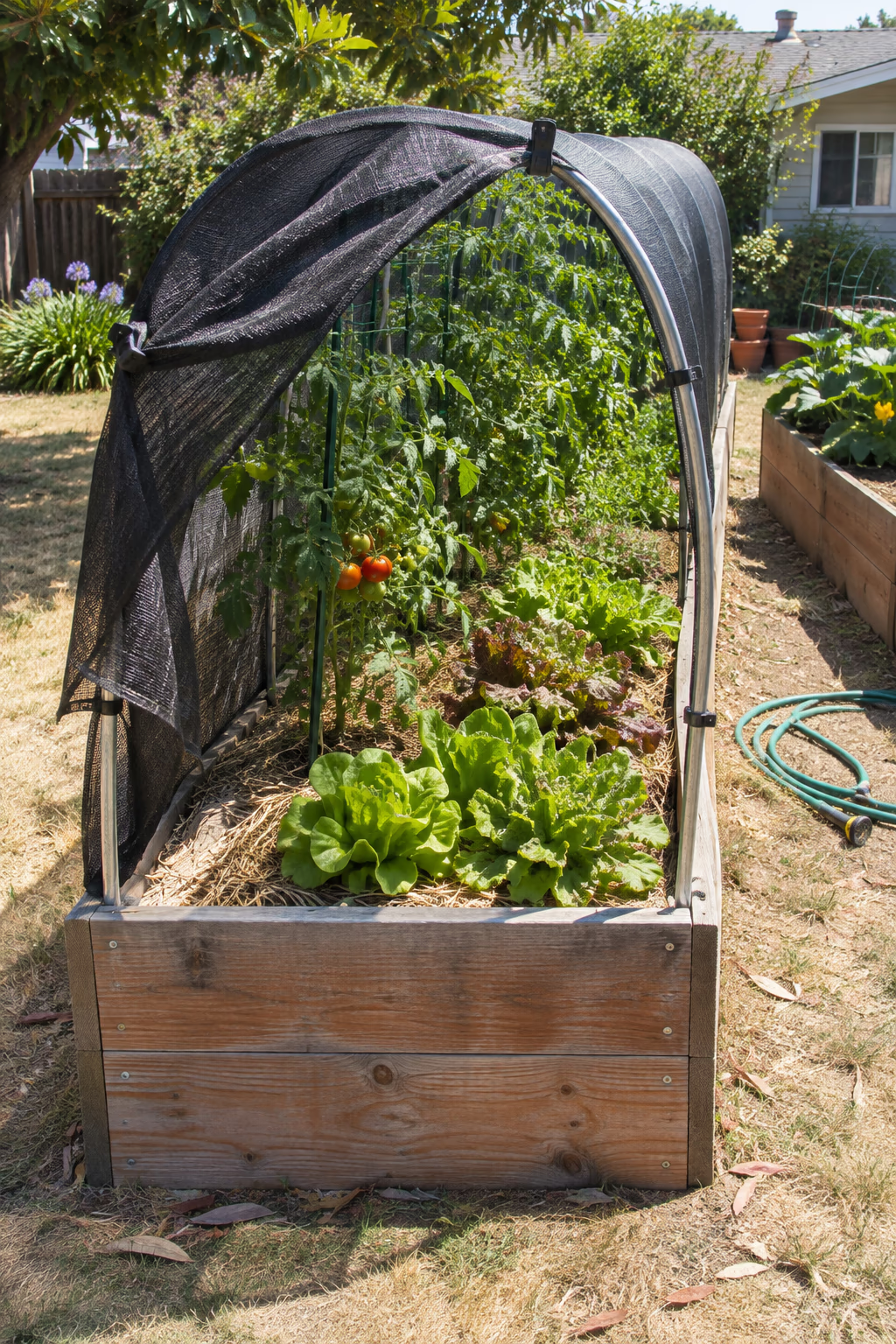
Help plants, not just people, survive the summer heat
In extreme heat, tomatoes and peppers can drop flowers, and lettuce and spinach bolt quickly. Bending PVC or metal hoops over a raised bed and draping them with 30 to 50 percent shade cloth can lower leaf temperatures and keep crops producing through the hottest weeks.
Lighter shade cloth suits fruiting crops that still need plenty of sun, while denser cloth helps leafy greens and seedlings. Clip the fabric to the hoops so you can raise the sides for watering, harvesting, and pollinators.
Shade cloth is a seasonal tool. Install it when daytime temperatures regularly reach the 90s and remove it once nights cool down, since too much shade will slow growth and ripening.
How to Plan Your Backyard Shade
The right shade solution depends on where the sun hits, how you use the space, and how much you want to spend. A little observation before you buy saves money and frustration.
- Track the sun first. Watch your yard at 10 a.m., 2 p.m., and 5 p.m. on a summer day and note where the harshest light falls. West-facing spaces usually need the most help.
- Match shade to the activity. Dining and lounging need overhead cover, while late-day glare calls for curtains, screens, or tilting canopies on the sides.
- Decide between permanent and portable. Umbrellas, pop-ups, and canopy swings move with you, while awnings, patio covers, and trees add long-term value to the home.
- Plan for wind and weather. Fabric shade should be anchored well and taken down before storms. In snowy regions, remove sails and canopies before winter.
- Check permits and HOA rules. Attached roofs, large gazebos, and tall posts may require approval, and setback rules can limit how close structures sit to property lines.
- Combine quick and slow options. Plant a shade tree for the future and use a sail or umbrella now. Before setting any post or tree, call 811 to have underground utilities marked.
Frequently Asked Questions
What is the cheapest way to get shade in a backyard?
Pop-up canopies, market umbrellas, and shade cloth stretched over simple posts are usually the least expensive options. A DIY fabric canopy on four posts can also be built for very little if you already own basic tools.
Do shade sails block rain?
Most shade sails are made from breathable knitted fabric that lets rain pass through. Waterproof sails exist, but they must be installed at a steeper slope so water runs off instead of pooling and stretching the fabric.
How much cooler is it under backyard shade?
The difference you feel depends on the material and the airflow. Solid roofs and dense tree canopies block the most sun, while breathable fabrics let heat escape. Surfaces like pavers and chairs stay noticeably cooler to the touch in shade than in direct sun.
What is the fastest-growing tree for backyard shade?
Trees such as tulip tree, red maple, and hybrid poplar grow relatively quickly, but very fast growers often have weaker wood and shorter lifespans. A moderately fast, sturdy tree suited to your zone is usually a better long-term choice.
Can I attach a shade sail or awning to my house?
Yes, but only to solid structural framing such as wall studs, a rim joist, or a beam, using hardware rated for the load. Gutters, fascia boards, and vinyl siding can’t handle the pull, and a professional installer can confirm the best mounting points.
Final Thoughts
The best backyard shade ideas are the ones that fit how you actually spend time outside. A sail over the patio, an umbrella that turns with the sun, or a young tree planted in the right spot can make your yard comfortable on even the hottest afternoons.
Start with the spot you most want to use, choose shade that suits your weather and budget, and add more layers over time. Once the sun is under control, you’ll find yourself heading outdoors far more often.


