
Late afternoon sun slants through a row of wooden rafters, painting stripes across a patio table. A breeze moves a pair of linen curtains, and the grill is already warming up a few steps away. Nobody is fighting with a tipsy umbrella, and the whole space feels like a room without walls.
That’s what a pergola does for a backyard. It gives an open patch of yard a ceiling, a purpose, and a reason to linger outside. It can soften harsh sun, frame a view, hold plants and lights, and make a plain slab of concrete feel like a finished outdoor living space.
These 21 backyard pergola ideas cover the styles homeowners are choosing right now, from adjustable louvered roofs and house-attached patio covers to dining pergolas, swings, hot tub shelters, and compact designs for small yards. Each one includes practical sizes, materials, and honest caveats so you can pick the right fit for your space and budget.
1. Install a Louvered Pergola Roof You Can Open and Close
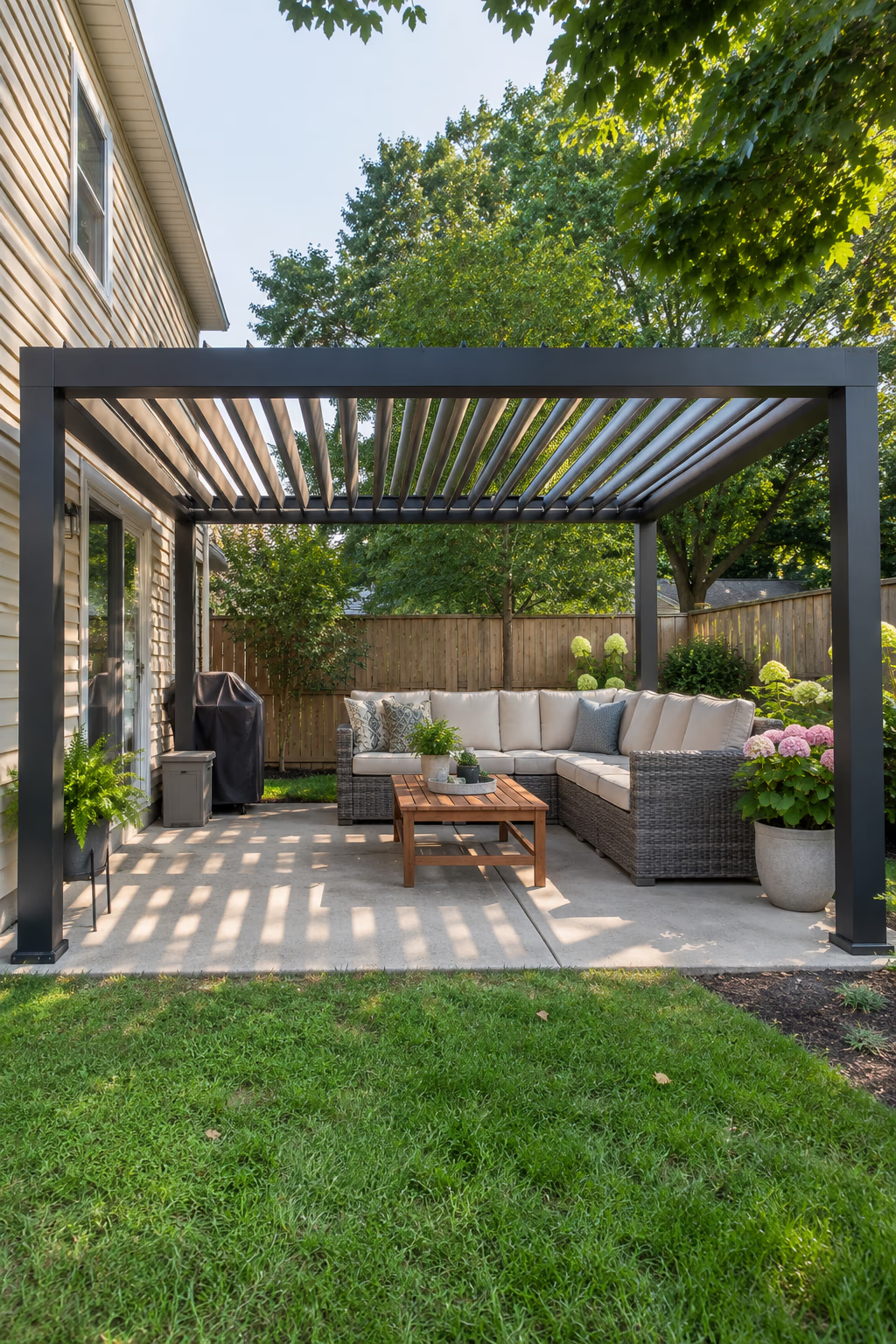
Sun, shade, or rain cover with the turn of a crank
A louvered pergola has a roof made of rotating aluminum slats. Tilt them open for filtered light, angle them against the afternoon sun, or close them tight to shed a summer shower through built-in gutters in the beams. Most systems come in powder-coated white, bronze, or charcoal, and common sizes run from about 10 by 10 feet up to 12 by 20 feet.
The appeal is flexibility. One structure handles a cool spring morning, a scorching July afternoon, and a drizzly evening, which means you actually use the space more days of the year. Manual crank versions cost less, while motorized versions add remote controls and sometimes rain sensors.
These are a bigger investment than a wood pergola, often several thousand dollars for a kit and more for professional installation. They also need solid footings because a closed roof catches wind and holds snow. Check your local snow load rating before you buy, and confirm whether your town requires a permit.
2. Extend an Attached Pergola Off the Back of the House
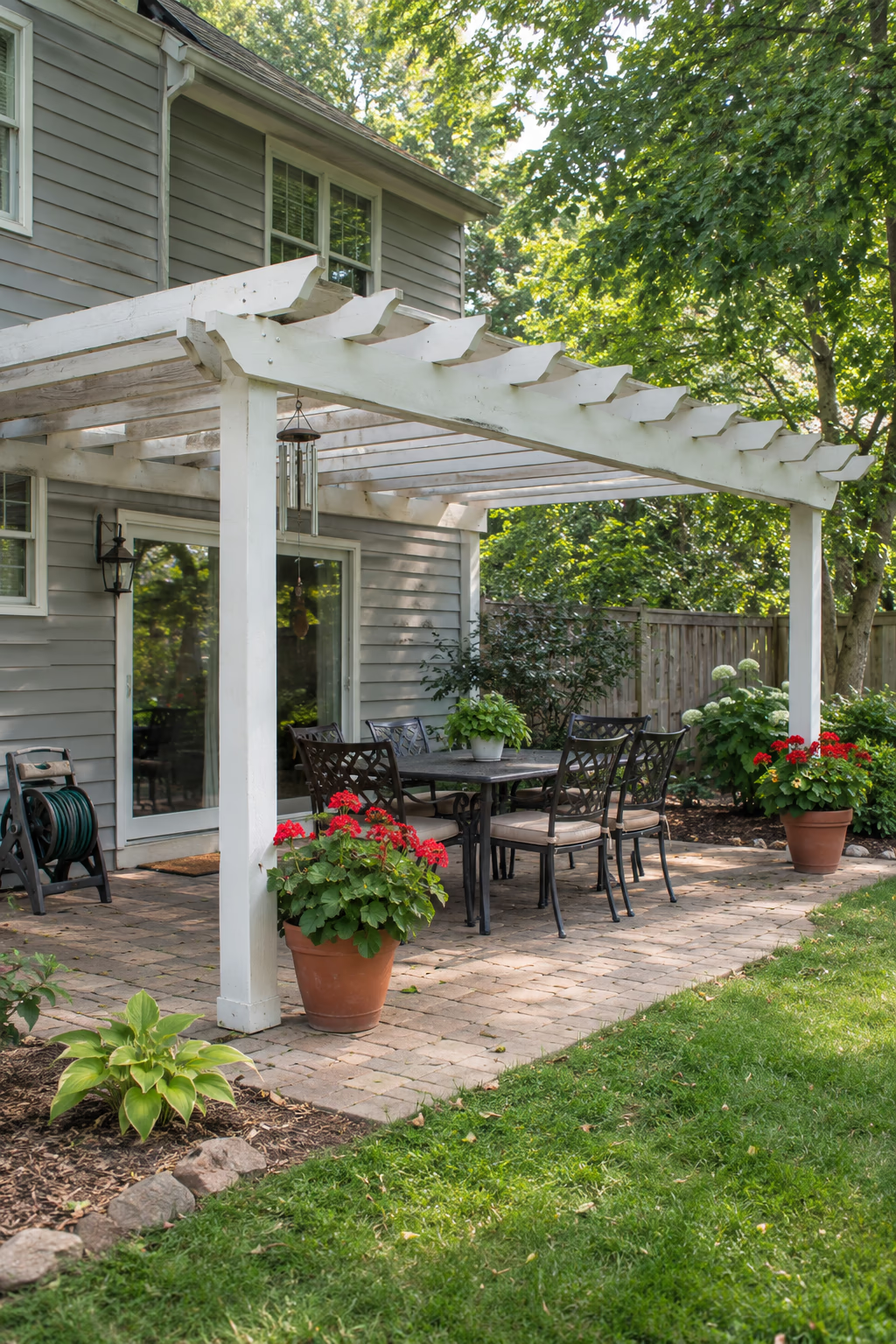
Make the patio feel like part of the home
An attached pergola connects to the house with a ledger board on one side and rests on posts on the other. It’s a natural fit over a patio or deck that sits right outside a back door, because it extends the roofline outward and turns the area into an outdoor room you walk straight into.
Match the paint or stain to your trim, or pick a wood tone that complements the siding, and the structure looks original to the house. Rafter tails cut at a simple angle or curve add a bit of character without much extra work. A depth of 10 to 14 feet usually covers a table or a sofa grouping comfortably.
The ledger connection is the critical part. It must be bolted into the house framing and properly flashed so water doesn’t get behind your siding. Because it ties into the home, an attached pergola almost always needs a building permit, and it’s worth hiring a pro if you’re not comfortable with structural framing.
3. Frame the Outdoor Dining Table Under a Cedar Pergola
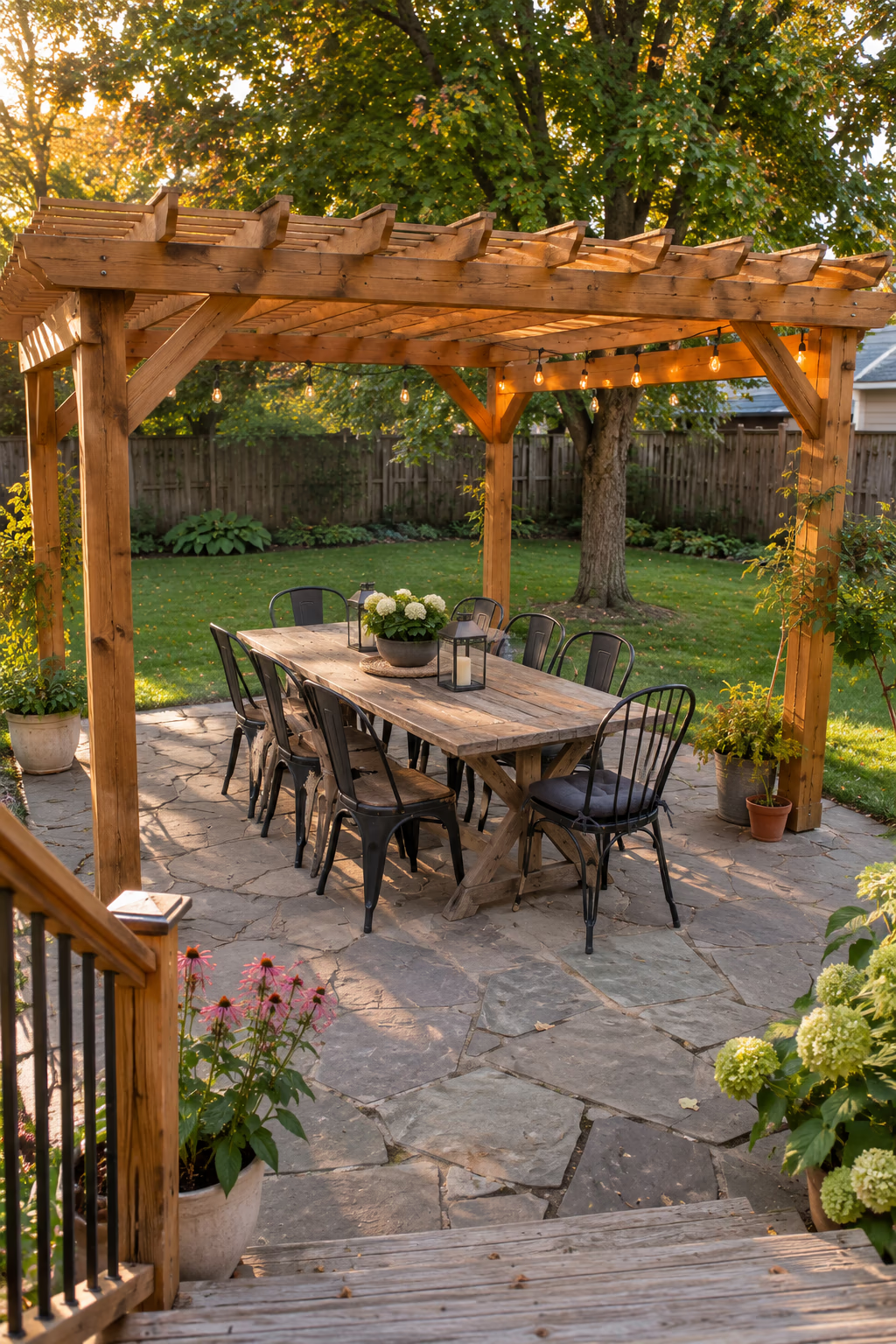
Give every meal outside a defined place
A freestanding cedar pergola centered over a dining table creates instant structure on a patio. For a table that seats six, plan on roughly 12 by 14 feet so chairs can slide back and people can walk around without bumping posts. Western red cedar resists rot and insects naturally and weathers to a soft silver gray if you leave it unstained.
Defining the dining zone overhead makes the table feel like a destination rather than furniture parked on concrete. The rafters also give you an easy place to hang a pendant light or a run of bistro lights directly above the table.
Plan the layout before you set posts. Measure your table with chairs pulled out, then add at least 3 feet of clearance on each side. If the patio is uneven, use adjustable post bases so the frame stays plumb.
4. Cover the Grill Station With a Pergola Kitchen
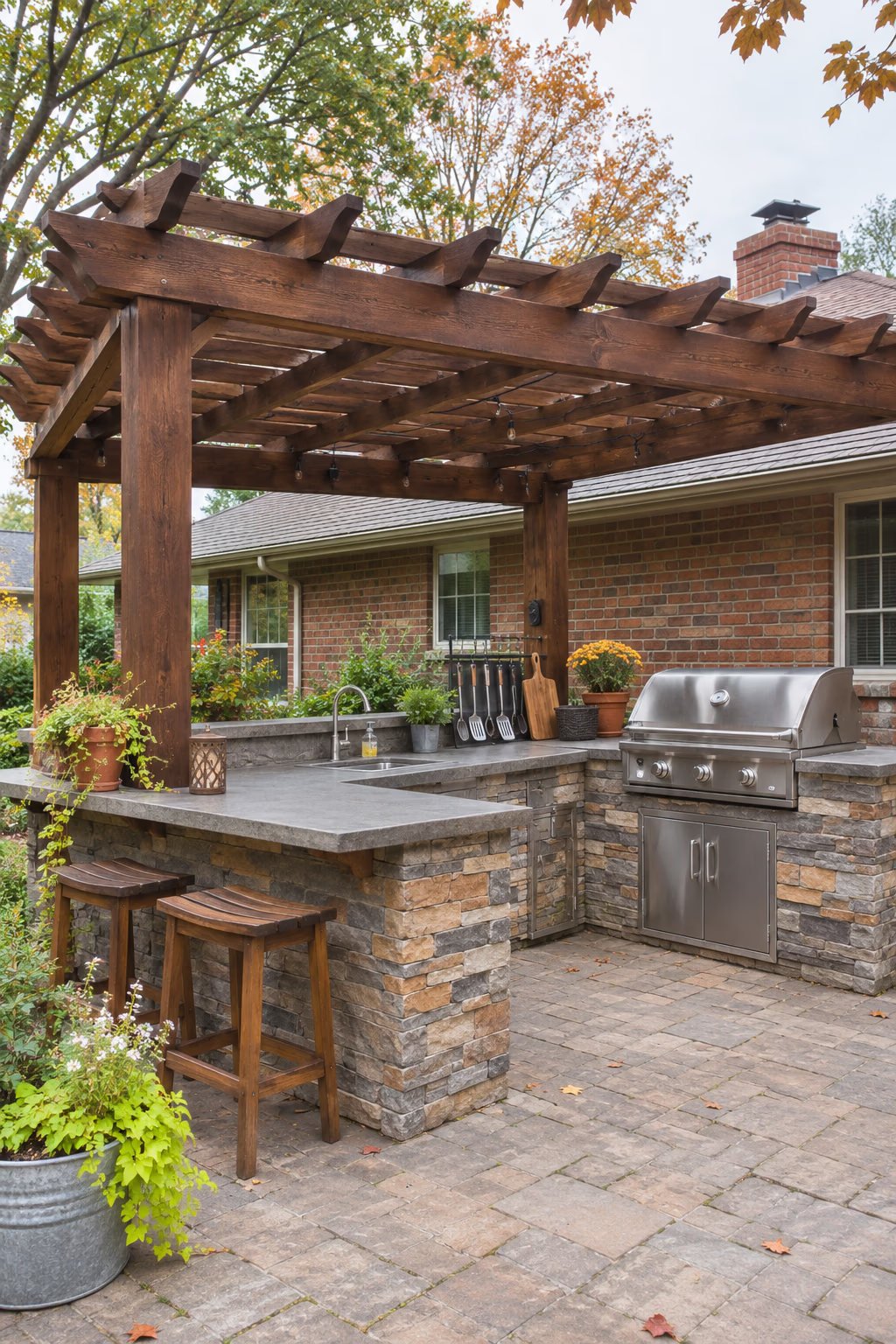
Cook in the shade instead of the glare
A pergola over a grill counter turns a hot, exposed cooking spot into a comfortable outdoor kitchen. A simple setup might be a masonry or block counter with a stone or concrete top, a built-in or freestanding grill, and a small prep sink, all under a frame about 8 by 12 feet.
The open rafters shade the cook while letting smoke rise and escape, which is a big advantage over a solid roof. You can also mount task lighting on the beams so you can see what’s on the grill after sunset.
Safety comes first here. Follow your grill maker’s clearance guidance from combustible materials, keep vines and fabric away from the cooking area, and never run a grill under a closed roof. If you plan gas lines or electrical outlets, hire licensed pros and pull the right permits.
5. Hang Outdoor Curtains Between the Posts
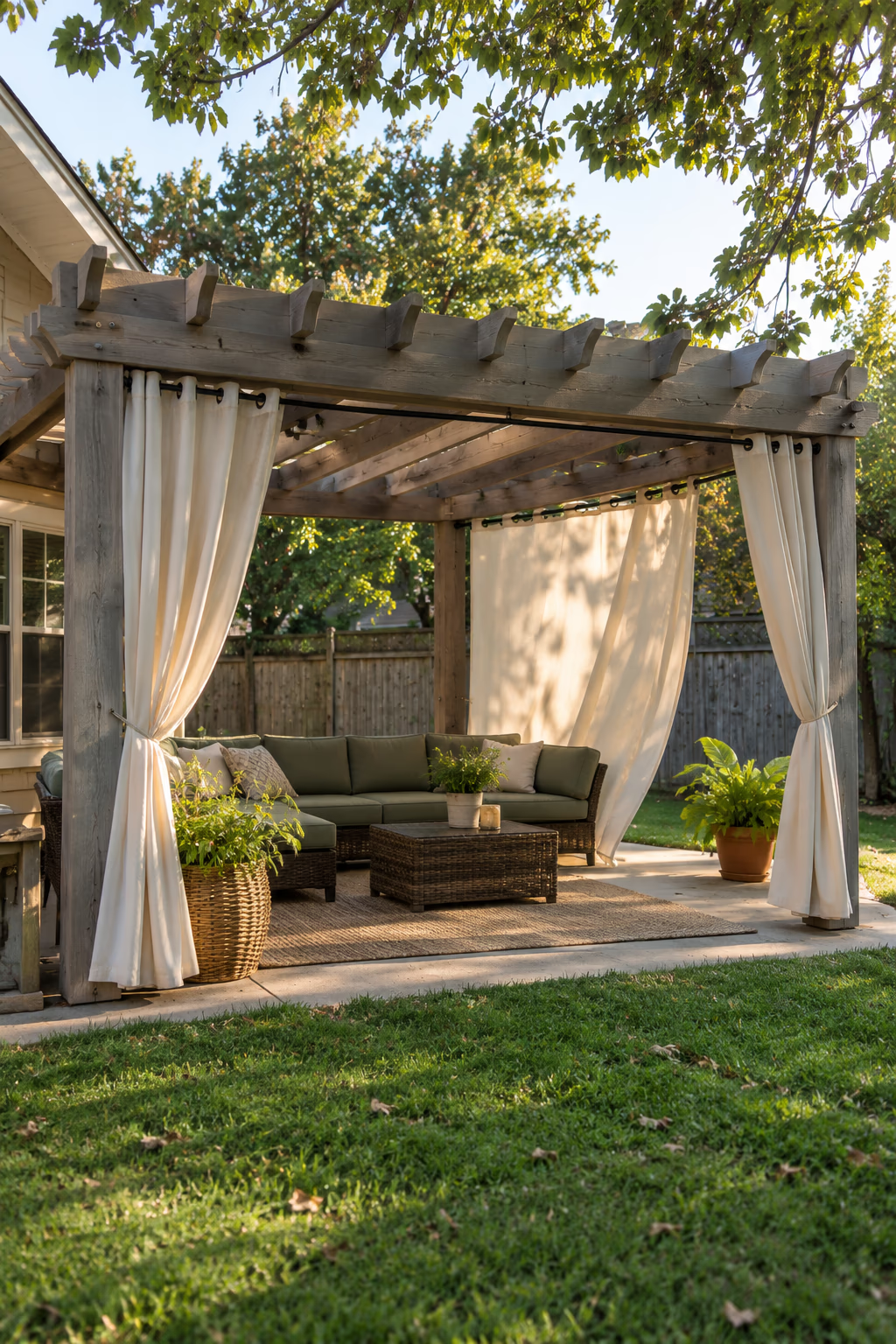
Soft walls that come and go
Outdoor curtains are one of the quickest ways to make a pergola feel cozy. Mount a galvanized pipe or heavy-duty curtain rod along the beams, then hang panels made from solution-dyed acrylic or polyester outdoor fabric. White, oatmeal, and pale gray look airy; deeper tones like navy or olive add more privacy and block more light.
Curtains let you close off one side against the low western sun or a neighbor’s view, then tie them back to open the space again. They also soften the look of a plain wood or metal frame.
Wind is the main challenge. Use tiebacks or add a weighted hem so panels don’t whip around in a storm, and bring them inside or store them dry over winter to prevent mildew.
6. Suspend a Porch Swing From the Beams
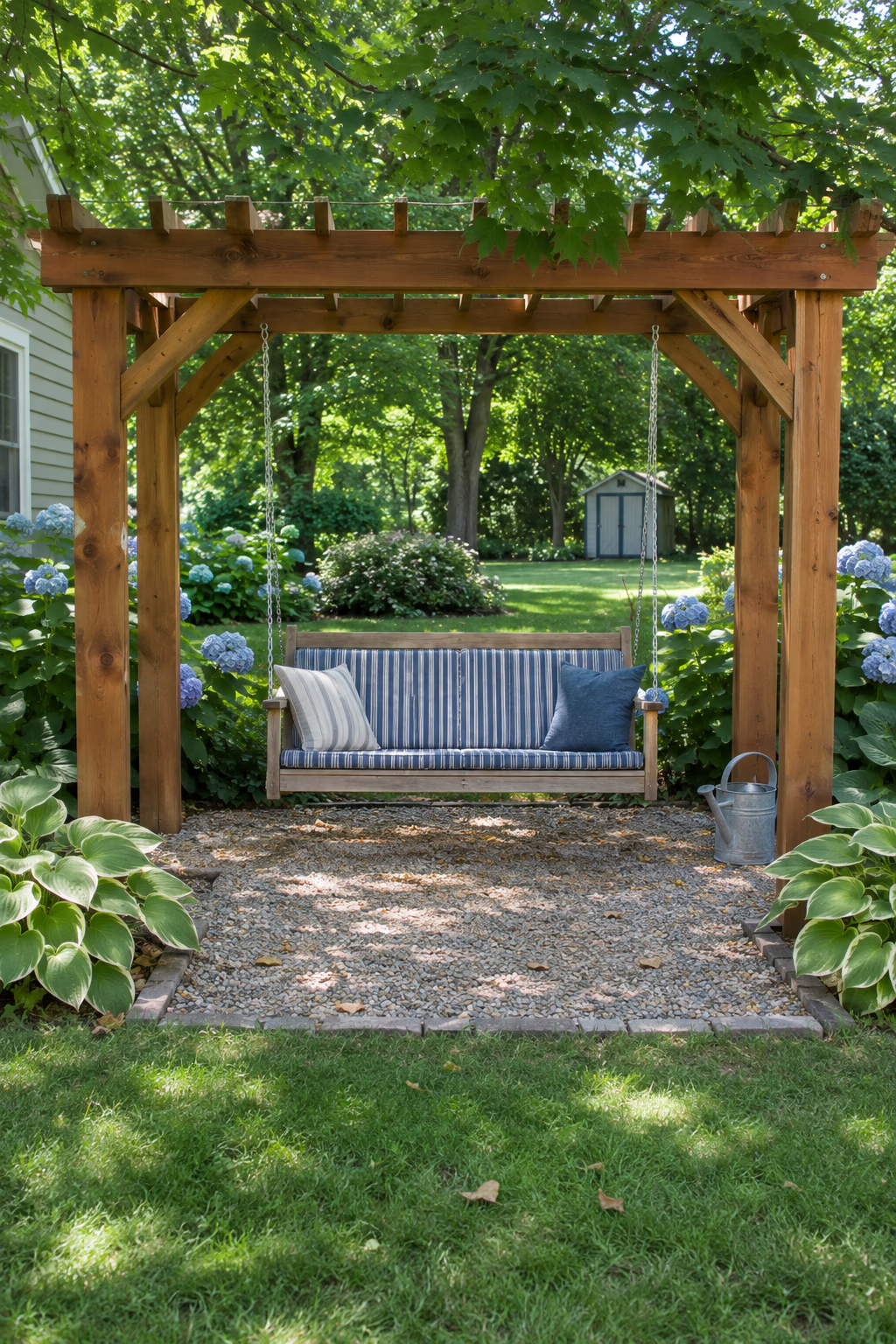
A gentle sway in the shade
A wooden porch swing or a hanging daybed under a pergola makes an inviting reading spot. A standard 4- or 5-foot swing hangs from chains or ropes attached to a header beam, ideally about 17 to 19 inches off the ground so feet touch easily.
Swings add motion and a relaxed, front-porch feel that’s hard to get with regular chairs. Add a weather-resistant cushion and a couple of pillows, and it quickly becomes the favorite seat in the yard.
The frame must be strong enough for a moving load. Most standard decorative pergolas aren’t designed for it, so plan for heavy posts like 6x6s, a doubled or solid header, knee braces at the corners, and swing hangers that bolt through the beam. Leave plenty of clearance behind and in front of the swing.
7. Shelter the Hot Tub Under a Slatted Pergola
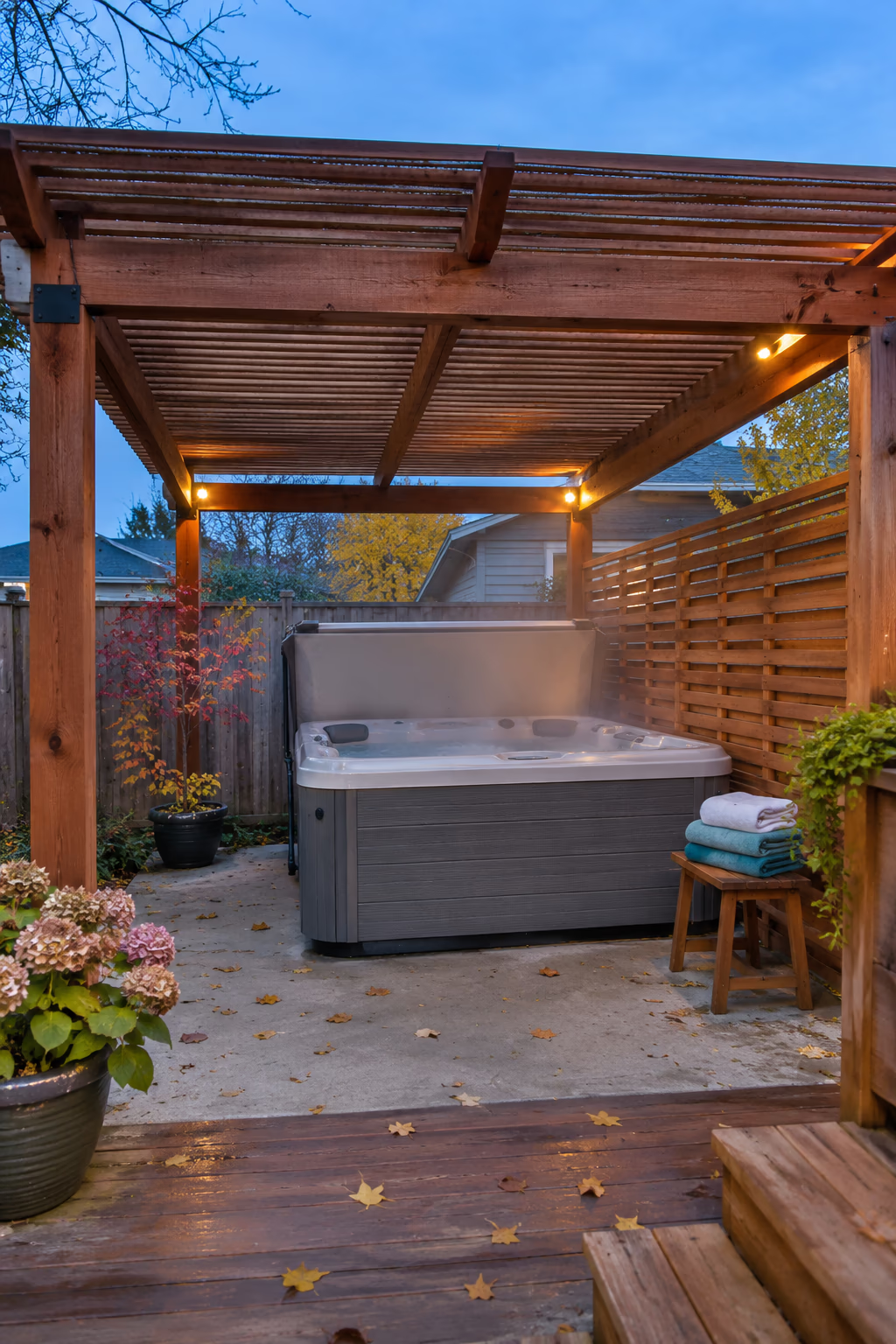
Privacy and shade for a nighttime soak
A pergola over a hot tub creates a spa-like corner and blocks views from upstairs windows next door. Closely spaced roof slats, say 2x2s set a couple of inches apart, cut more sun than standard rafters, and a slatted panel on one or two sides adds privacy without feeling closed in.
This combination works because the pergola gives the tub a sense of enclosure. Add a few low-voltage lights on the beams, a hook for towels, and a small side table, and the space feels finished.
Plan for moisture and weight. Use rot-resistant wood or aluminum, leave room to lift the hot tub cover fully open, and make sure the tub sits on its own reinforced pad or deck framing. Keep electrical work to licensed electricians, since hot tubs have strict wiring requirements.
8. Choose a Black Metal Pergola for a Modern Yard
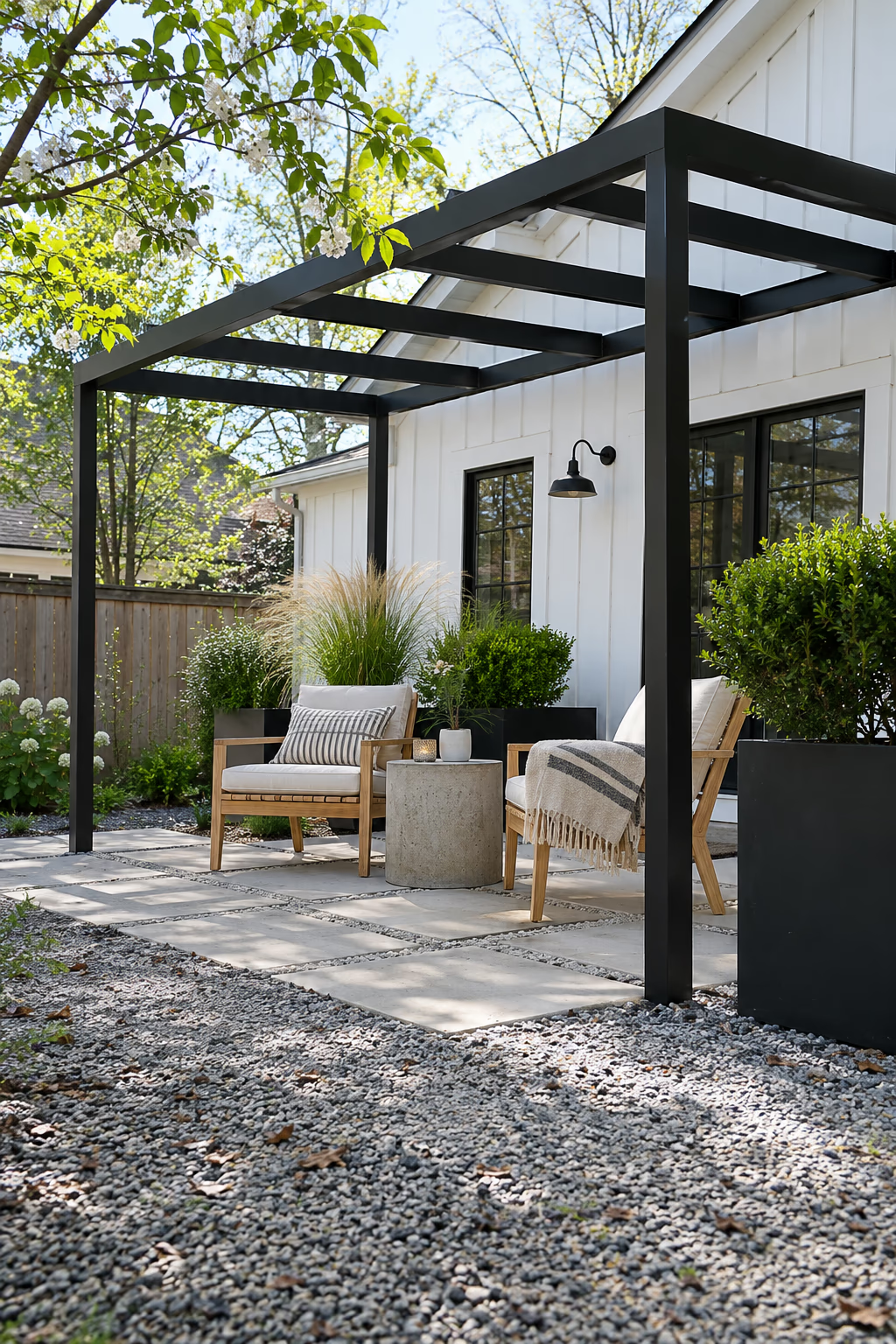
Clean lines with almost no upkeep
A powder-coated aluminum or steel pergola in black or charcoal suits modern, farmhouse, and transitional homes alike. Thin posts and flat beams look crisp against light siding, gravel, or concrete pavers, and they fade into the background so your plants and furniture take center stage.
Metal frames don’t need staining or sealing, won’t rot, and resist insects, which is why they’ve become a top choice for busy homeowners. Many come as kits that two people can assemble over a weekend.
Dark metal absorbs heat, so the posts can get hot to the touch in full sun. Look for kits with thick wall gauges and solid anchor plates, and anchor them into concrete footings rather than just the surface of a thin patio.
9. Slide a Retractable Fabric Canopy Over the Rafters
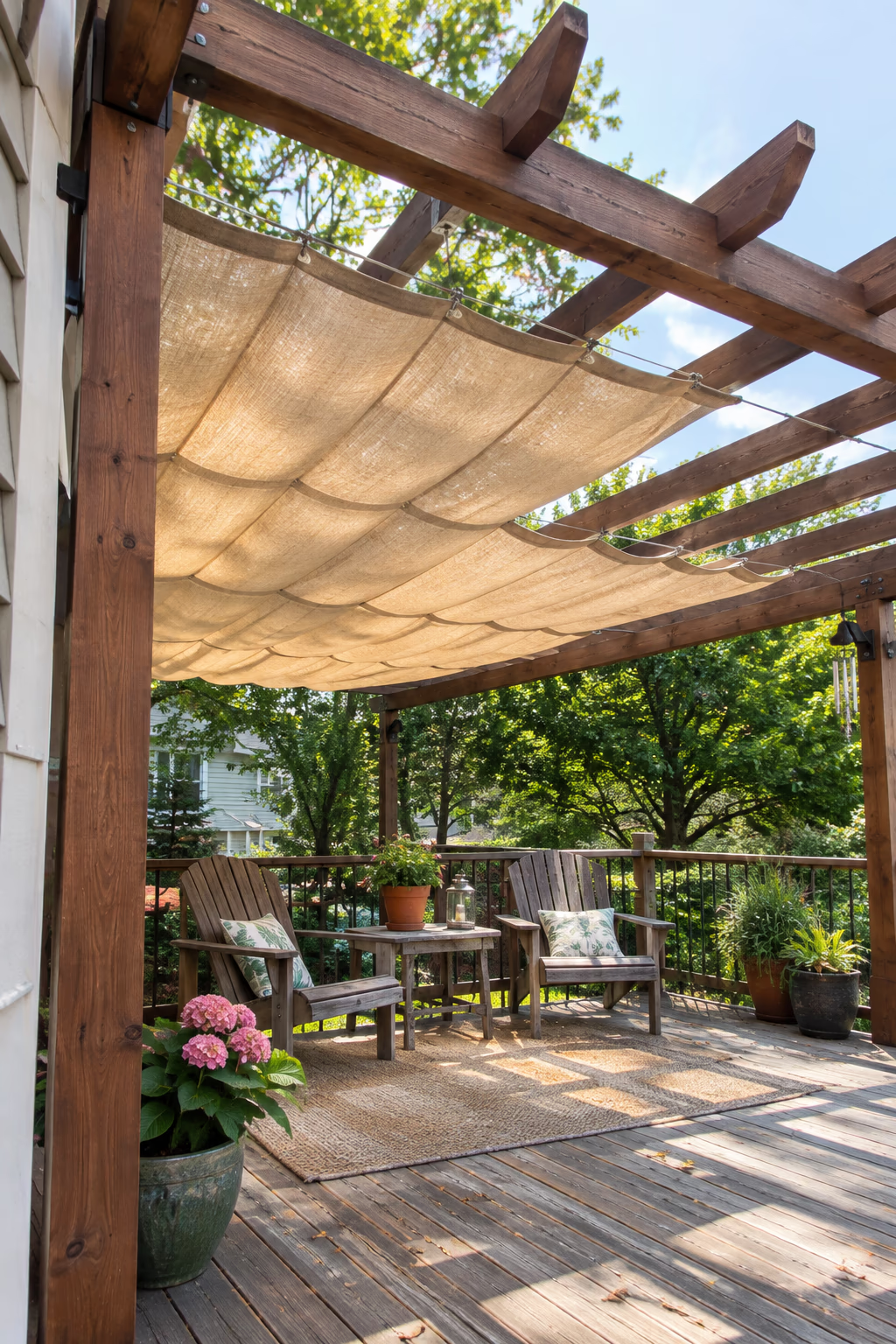
Adjustable shade on a budget
A retractable canopy is a fabric panel that slides along wires or tracks across the top of a pergola. Pull it closed for shade at noon, then bunch it back to the end to see the stars at night. Many pergola kits include one, and add-on systems are available for existing wood frames.
It gives you some of the flexibility of a louvered roof for a fraction of the price. Shade fabric in tan, gray, or white keeps the space bright while cutting much of the sun’s glare.
Fabric canopies are for shade, not storms. Retract them during high winds and heavy rain, clean them occasionally with mild soap, and expect to replace the fabric every several years as UV exposure takes its toll.
10. Top the Pergola With a Clear Polycarbonate Roof
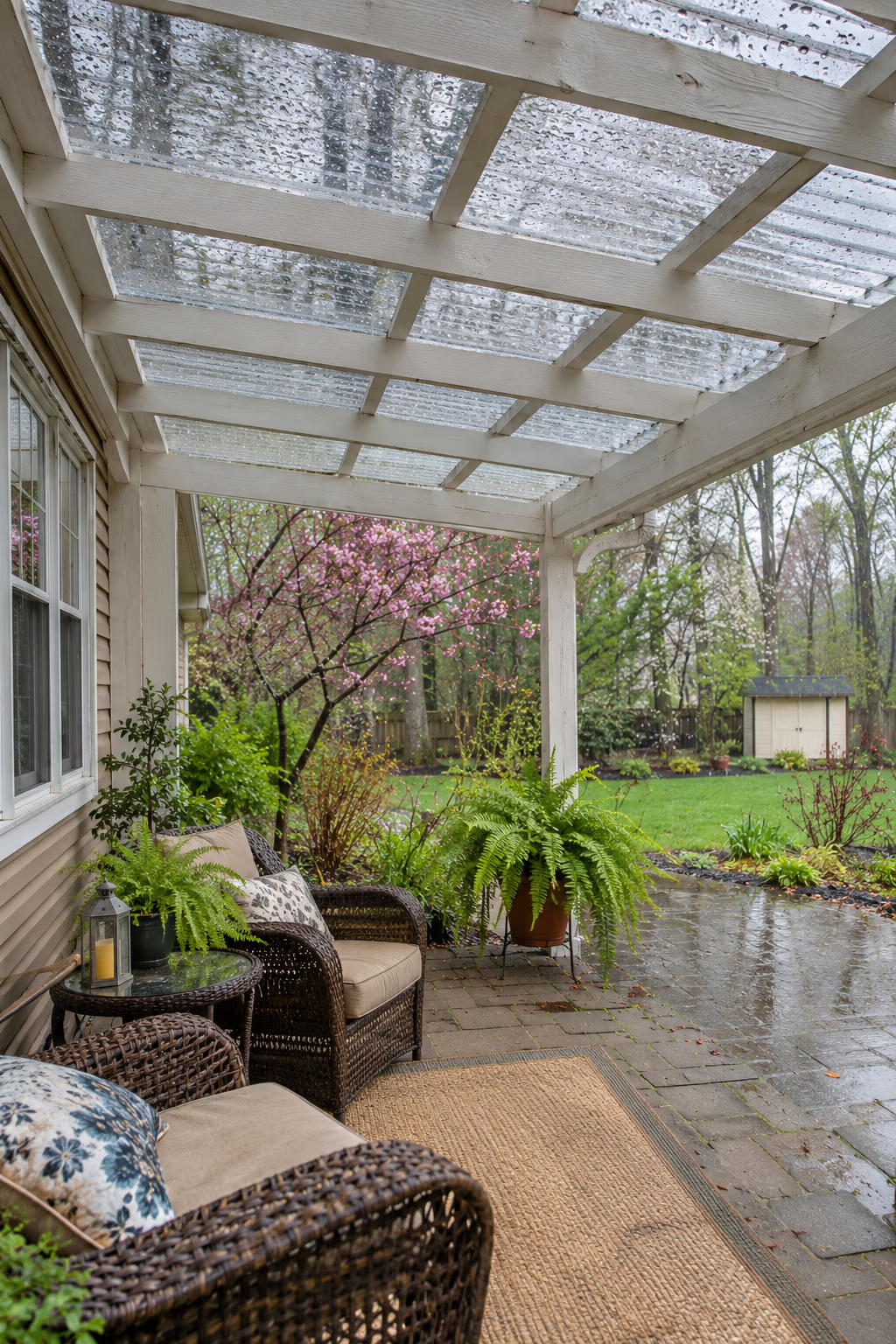
Stay dry while keeping the daylight
Clear or bronze-tinted polycarbonate panels screwed over the rafters turn an open pergola into a covered patio that still feels bright. Multiwall panels are lighter and add a little insulation, while solid panels look closer to glass. Install them with a slight slope so rain runs off one edge, ideally into a gutter.
A covered pergola keeps outdoor furniture and cushions drier and lets you sit outside during a spring shower. It’s a popular choice in rainy regions like the Pacific Northwest.
A clear roof can trap heat in full sun, so tinted or UV-blocking panels are better in hot climates. Use the fasteners and closure strips the manufacturer recommends, and remember that a solid roof may push the project into a different permit category.
11. Tuck a Corner Pergola Onto the Deck
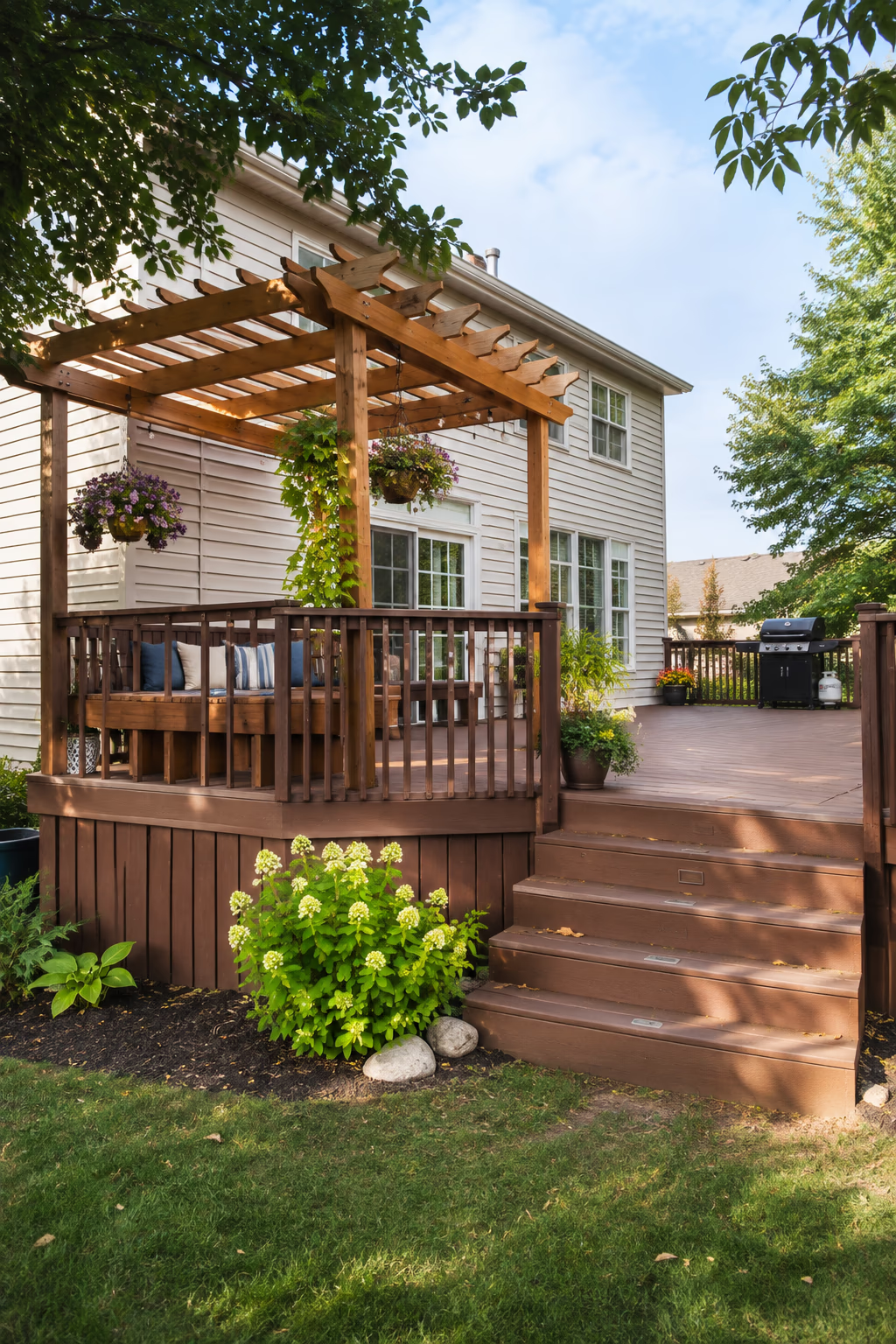
Shade one zone without covering the whole deck
You don’t need to roof an entire deck. A pergola built over one corner, often 8 by 10 feet, creates a shaded lounge while the rest of the deck stays open for sunbathing or grilling. The posts can be framed into the deck structure or set on their own footings through the deck boards.
This works well on larger decks that feel too exposed, and it gives you two different experiences in one space. A built-in bench along the railing under the pergola makes good use of the edge.
Don’t just screw posts onto deck boards. Pergola posts need solid structural support, so check that the deck framing can carry the load or add dedicated footings underneath. A building inspector can tell you what’s required.
12. Set a Freestanding Pergola Beside the Pool
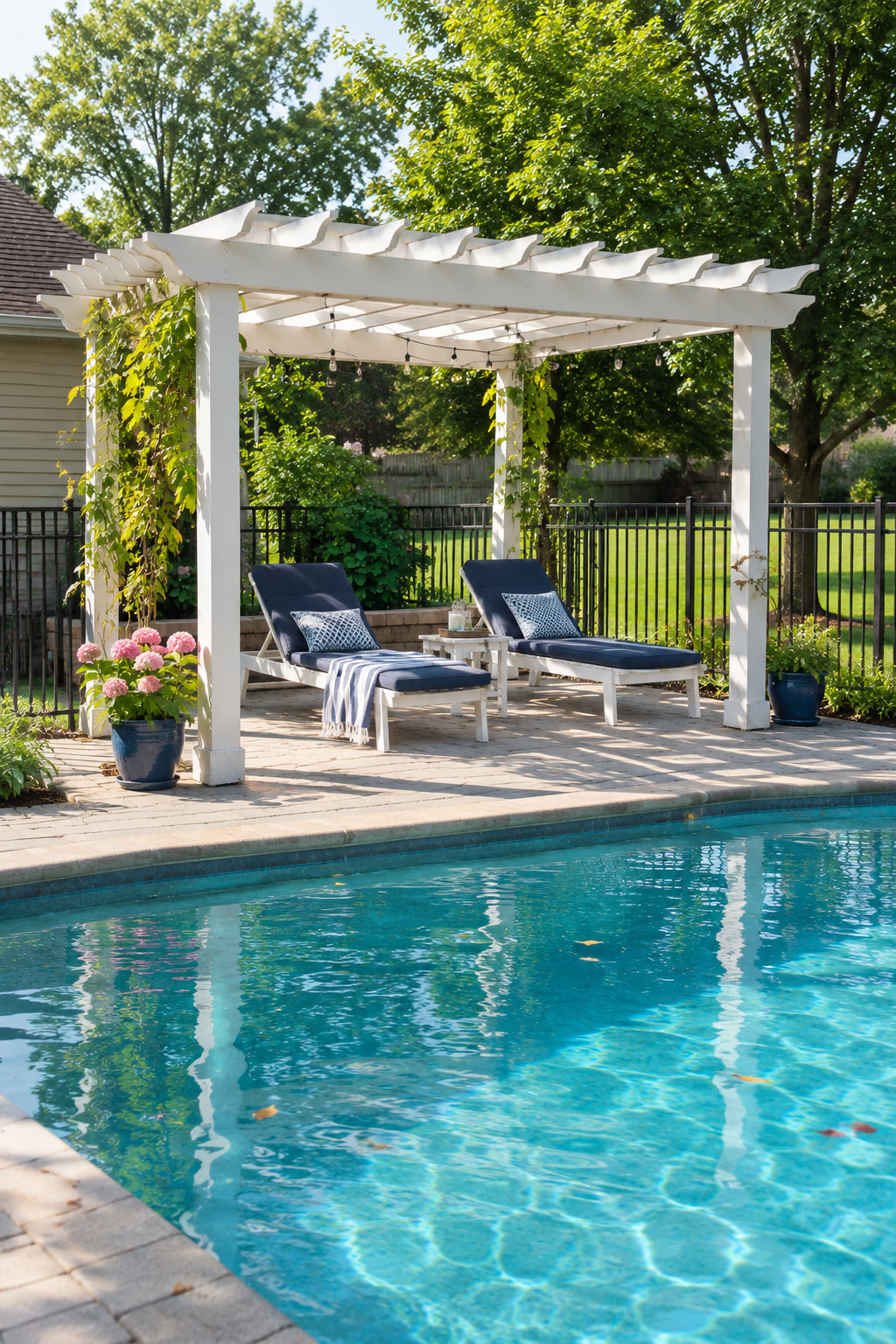
A shady retreat between swims
A pool deck is often the sunniest spot in the yard, so a pergola beside it gives swimmers a cool place to rest. Set two or three chaise lounges or a small outdoor sofa underneath, and add a towel hook on a post. White or light gray frames look fresh against blue water and pale pavers.
The pergola creates a defined lounge zone instead of a scatter of umbrellas. Add an outdoor rug and a cooler on a cart, and you have a poolside cabana feel without building a pool house.
Choose finishes that hold up to splashing and chlorine, like aluminum, vinyl, or sealed cedar. Keep the structure clear of the pool’s required walkways, and check local codes about pool fencing and setbacks before you build.
13. Warm the Pergola With an Outdoor Fireplace
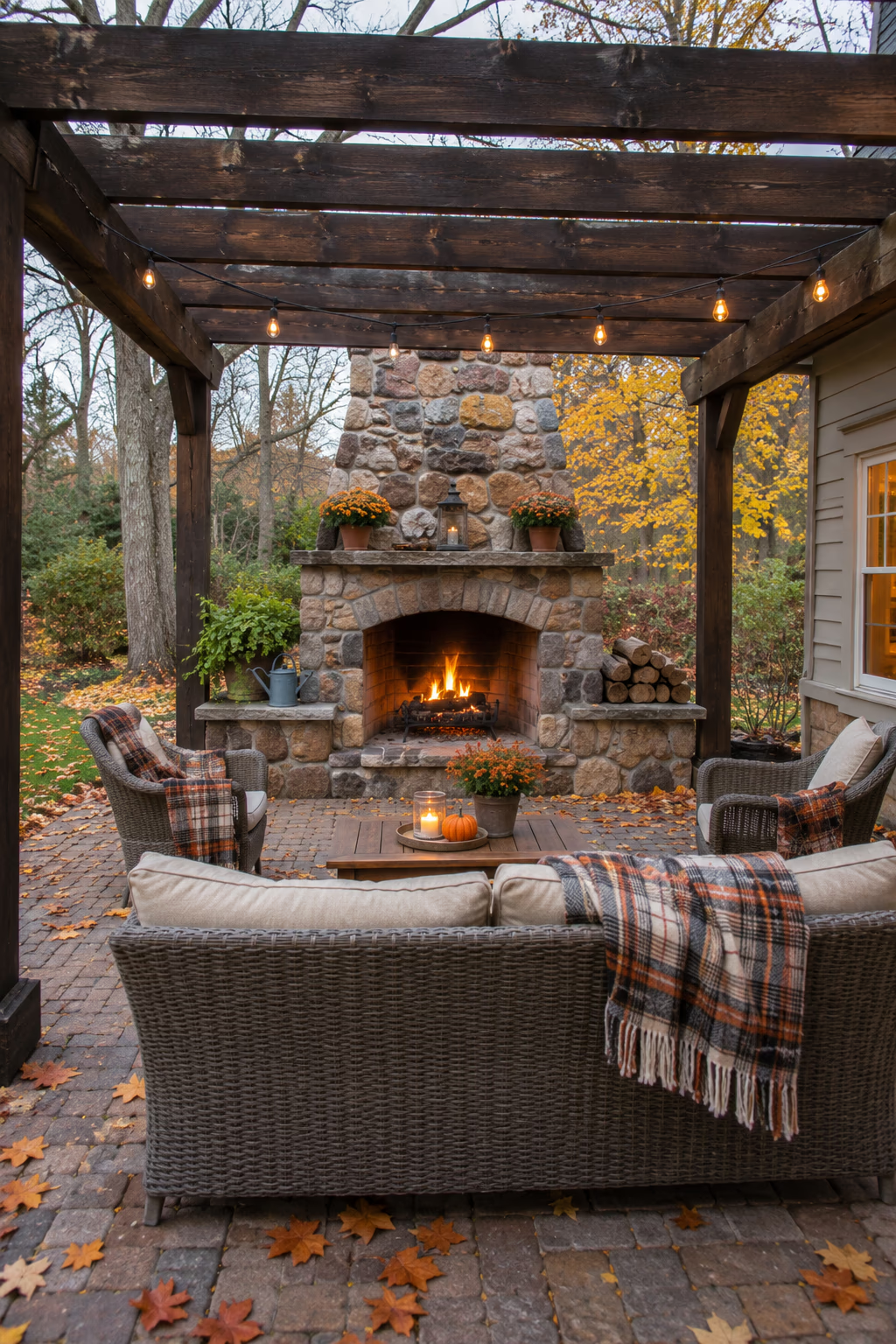
Stretch the season into fall
Pairing a pergola with an outdoor fireplace or a gas fire table creates a cozy room for chilly evenings. A masonry or prefabricated fireplace placed at one end of a pergola acts as a focal point, with a sofa and chairs facing it underneath the beams.
The fire adds warmth, while the pergola adds structure and a place to hang lights. Together they make the space feel like a true outdoor living room from September through November in many regions.
Follow the fireplace manufacturer’s clearance requirements to beams and rafters, and keep fabric canopies and curtains well away from flames. Many towns regulate wood-burning fireplaces and open fires, so check local burn rules and HOA guidelines first. Gas units with automatic shutoffs are often easier to approve.
14. Grow Grapes Across the Rafters for Edible Shade
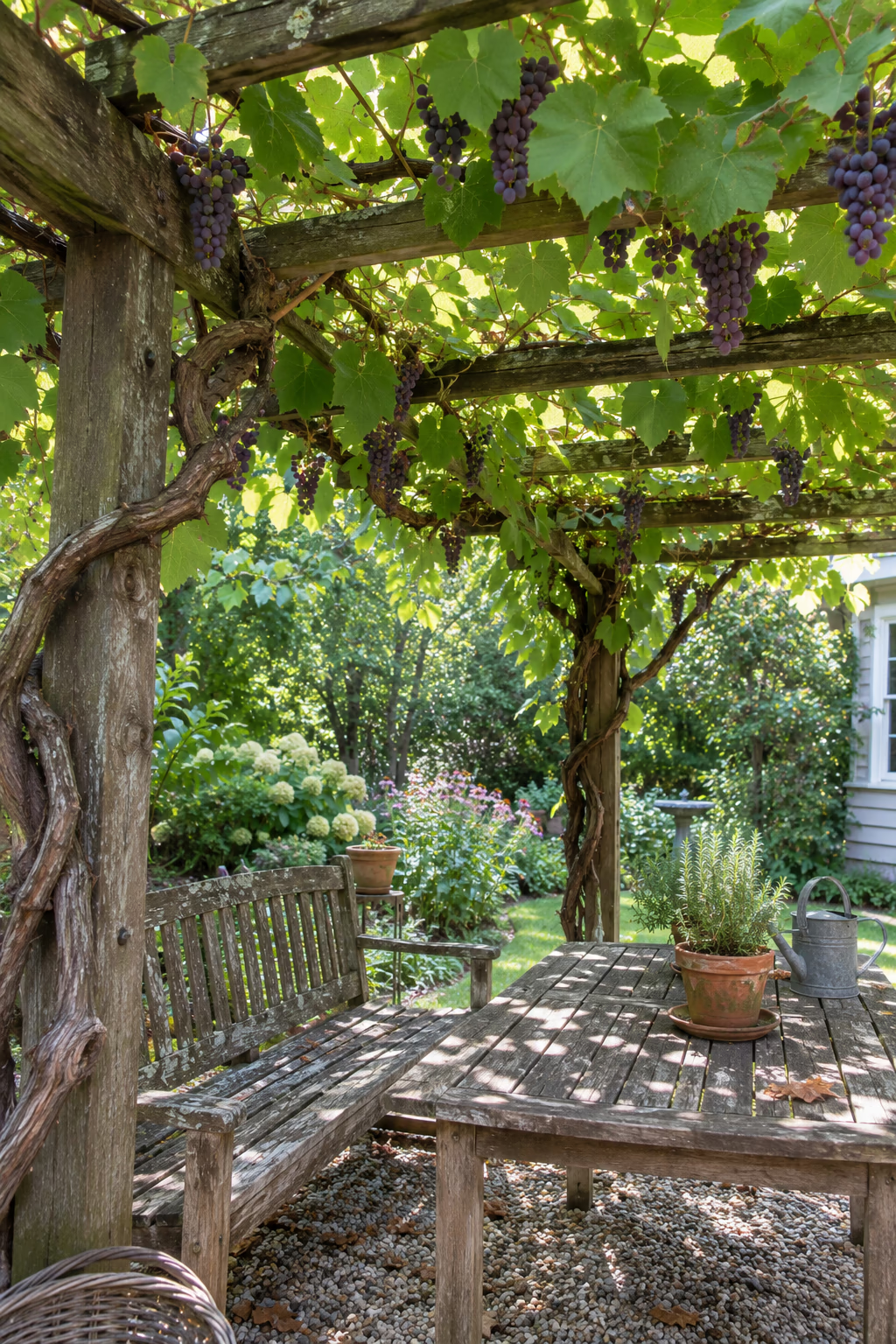
Leafy cover with a harvest in late summer
Training grapevines over a sturdy pergola gives you dappled summer shade and clusters of fruit hanging overhead. Plant one vine at the base of each post, tie the main stem straight up, then train the long canes across the rafters. Choose a variety suited to your zone, such as cold-hardy American or hybrid types in northern states and muscadines in the humid Southeast.
Because grapes drop their leaves in fall, you get shade in summer and sunshine in winter, a nice balance for a sitting area. Mature vines also give the pergola an established, Mediterranean look.
Grapes need full sun, yearly winter pruning, and a strong frame because mature vines are heavy. Fallen fruit can stain pavers and draw wasps, so this idea works best over a gravel or lawn area rather than a light-colored patio or dining table.
15. Hang Baskets of Shade-Loving Flowers From the Beams
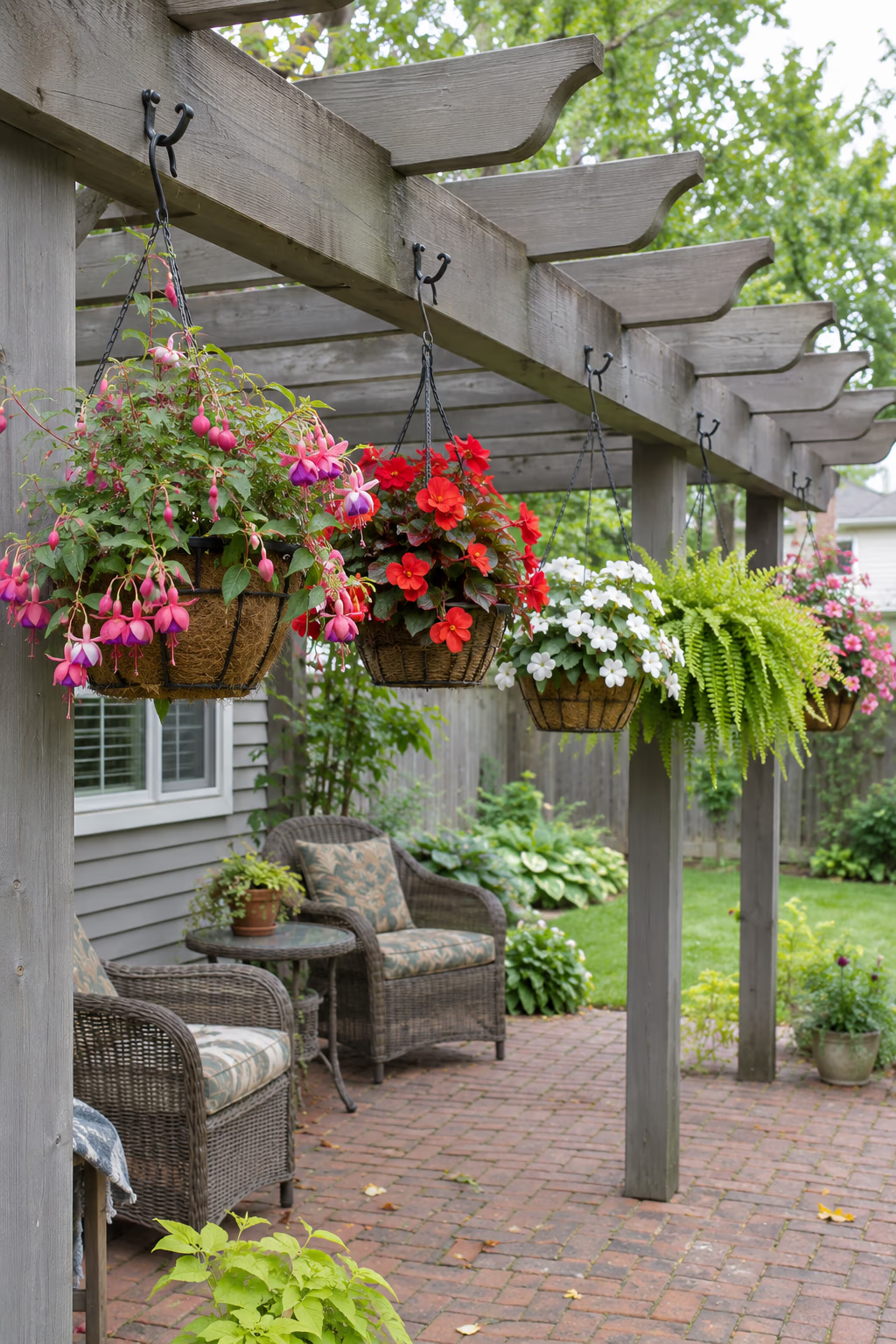
Color at eye level in a matter of hours
Screw sturdy plant hooks into the beams and hang a row of baskets planted with flowers that tolerate partial shade, like fuchsia, begonias, impatiens, or trailing lobelia. Boston ferns work well too, especially in humid areas. Hanging the baskets at slightly different heights looks natural and keeps them away from heads.
Baskets bring color right into the seating area without the wait or weight of mature vines. You can swap them out each season, with petunias for sunnier pergolas and ornamental grasses or kale in fall.
Hanging baskets dry out quickly. Expect to water daily in hot weather, or add drip emitters from a hose timer. Water drains from the bottom, so avoid hanging them directly over cushions or a table.
16. Light the Rafters With a Rustic Chandelier
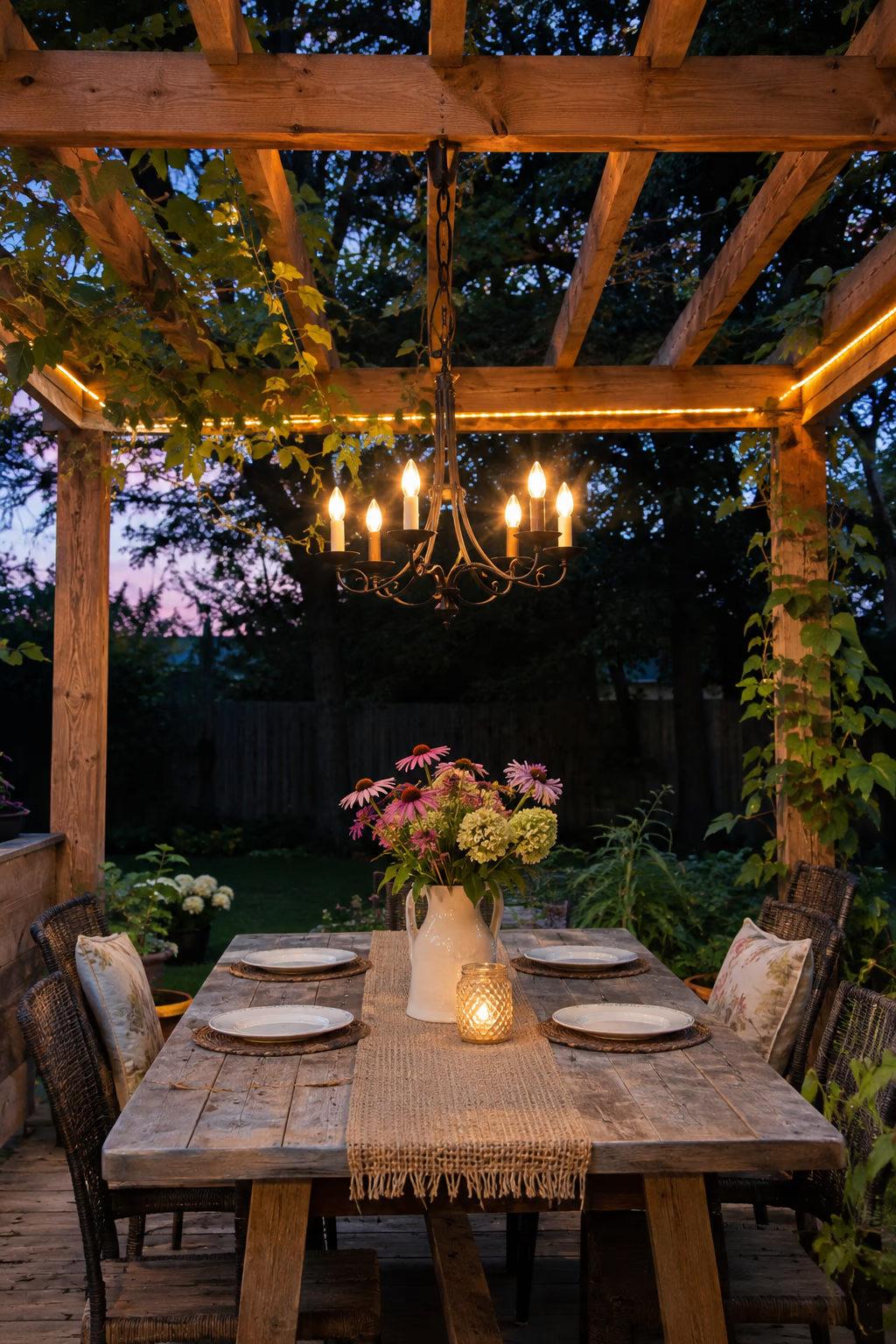
Turn evenings into an event
A wrought iron, wood, or candle-style chandelier hung from the center beam makes a pergola feel like an outdoor dining room. Choose one rated for wet or damp locations, or use a solar or battery-powered fixture if there’s no outlet nearby. Hang it about 30 to 36 inches above the tabletop.
A single statement light gives the space a focal point and warmer, more intimate light than overhead floodlights. Pair it with small dimmable LED strips tucked under the beams for even glow around the edges.
Hardwired fixtures need a weatherproof box, a GFCI-protected circuit, and an electrician. Secure heavy fixtures with a chain rated for the weight, and check the hardware after storms or windy days.
17. Add a Slatted Side Wall to Block Wind and Low Sun
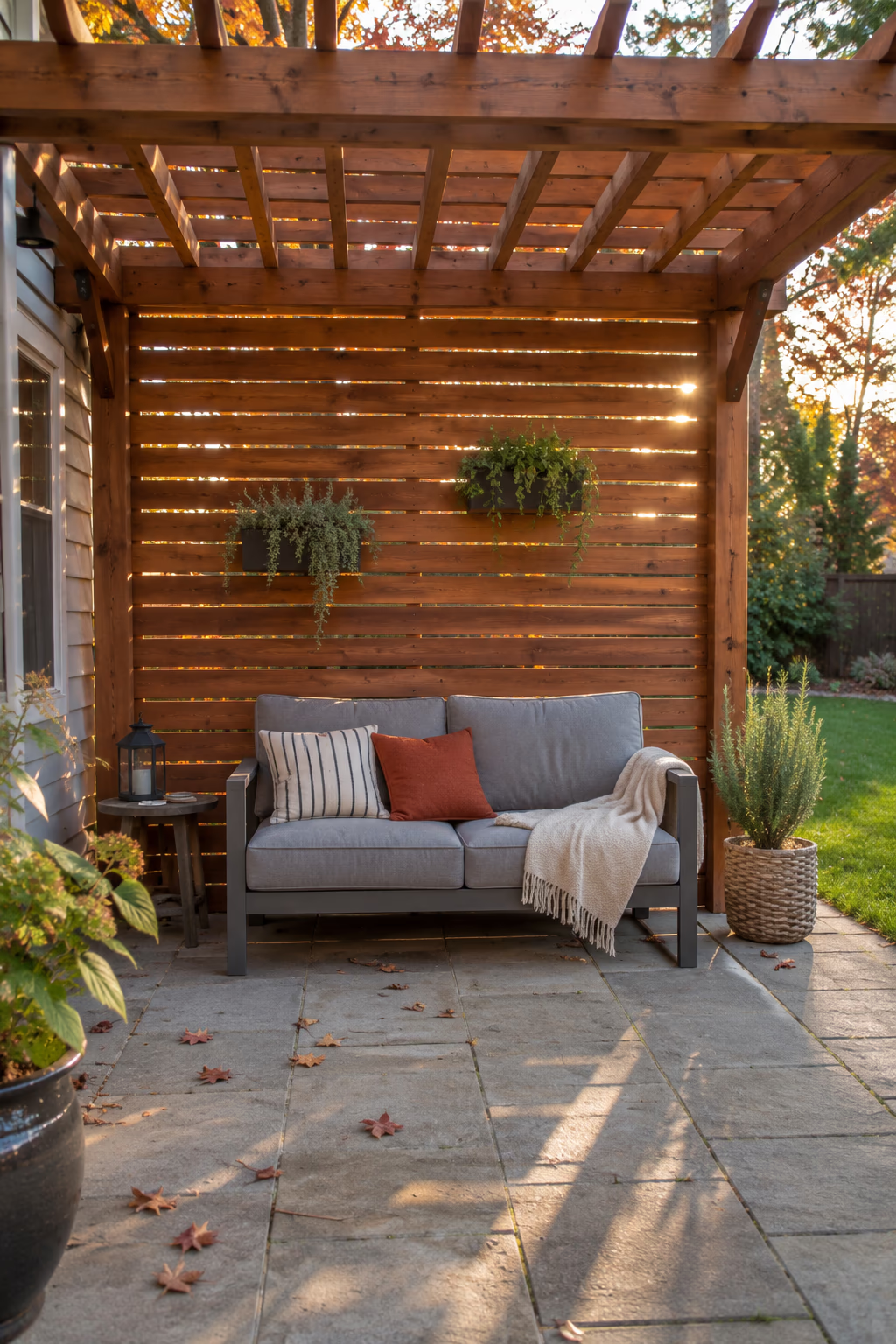
One wall changes how the whole space feels
Adding horizontal slats to one or two sides of a pergola creates a sheltered back wall. Use 1×4 or 1×6 cedar boards spaced about half an inch to an inch apart and screwed to the posts. Put the wall on the side that faces the prevailing wind or the late afternoon sun.
A solid-feeling side makes seating feel secure, gives you a place to hang planters or art, and blocks glare that a pergola roof can’t stop. The rest of the structure stays open to the yard.
A slatted wall catches more wind than open posts, so the frame needs good bracing and anchoring. Check fence height limits in your town, since some codes treat side walls like fencing.
18. Create a Hammock Nook Under a Small Pergola
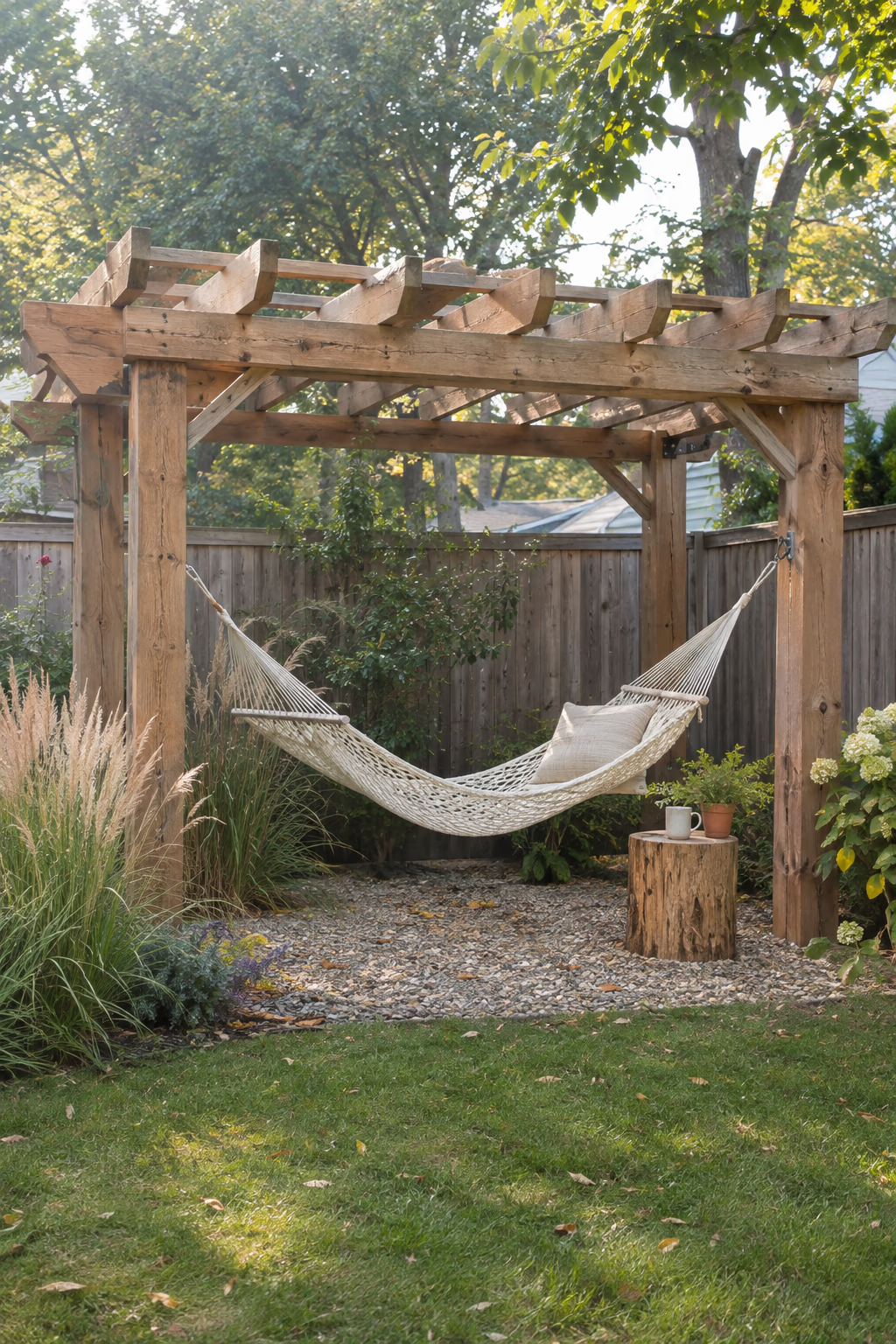
A dedicated spot for afternoon naps
A small pergola, maybe 8 by 12 feet, can hold a rope or fabric hammock stretched between two posts. A gravel or mulch floor keeps the area simple and soft underfoot. Add a side table for a drink, and plant tall grasses or shrubs around it to make it feel tucked away.
This idea suits a back corner or a spot far from the house, giving you a quiet retreat apart from the busy patio.
Hammocks pull hard on posts, so use a frame built for the load with 6×6 posts, deep footings, and proper hammock hardware. Many hammocks need 12 to 15 feet between anchors, so measure your hammock before building.
19. Turn the Pergola Into an Outdoor Movie Spot
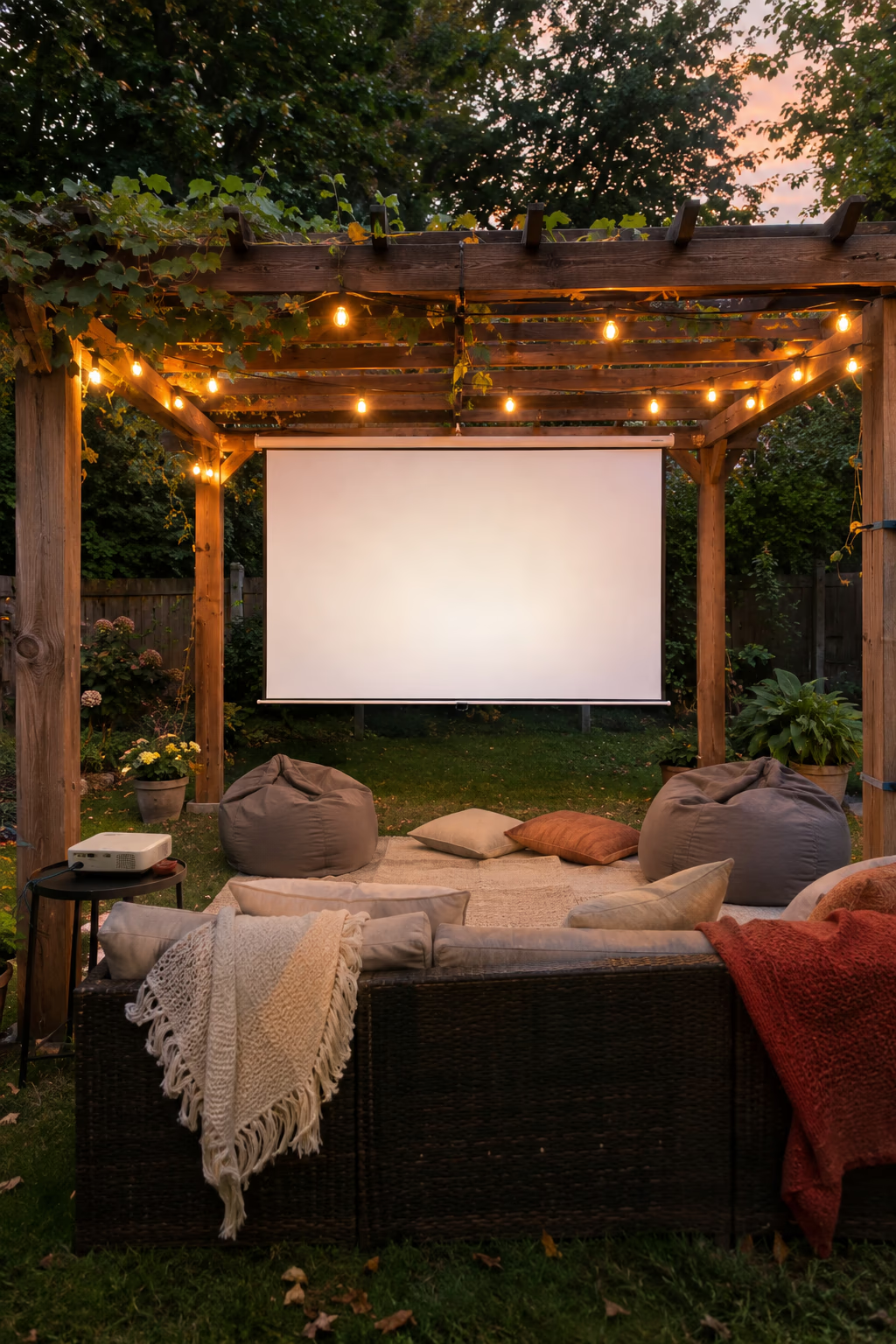
Backyard movie nights all summer
Hang a roll-down outdoor projection screen or a stretched white canvas from one end beam, then set floor cushions, beanbags, or a sectional facing it. A small projector on a side table and a portable speaker complete the setup. Close a retractable canopy or curtains to cut glare from neighbors’ lights.
The pergola gives you a frame to mount the screen and string lights, so the setup feels permanent and easy to repeat.
Keep electronics covered and inside when not in use, and run cords safely with outdoor-rated extension cords. Be mindful of neighbors and local noise ordinances on late nights.
20. Stretch a Pergola Over a Garden Walkway
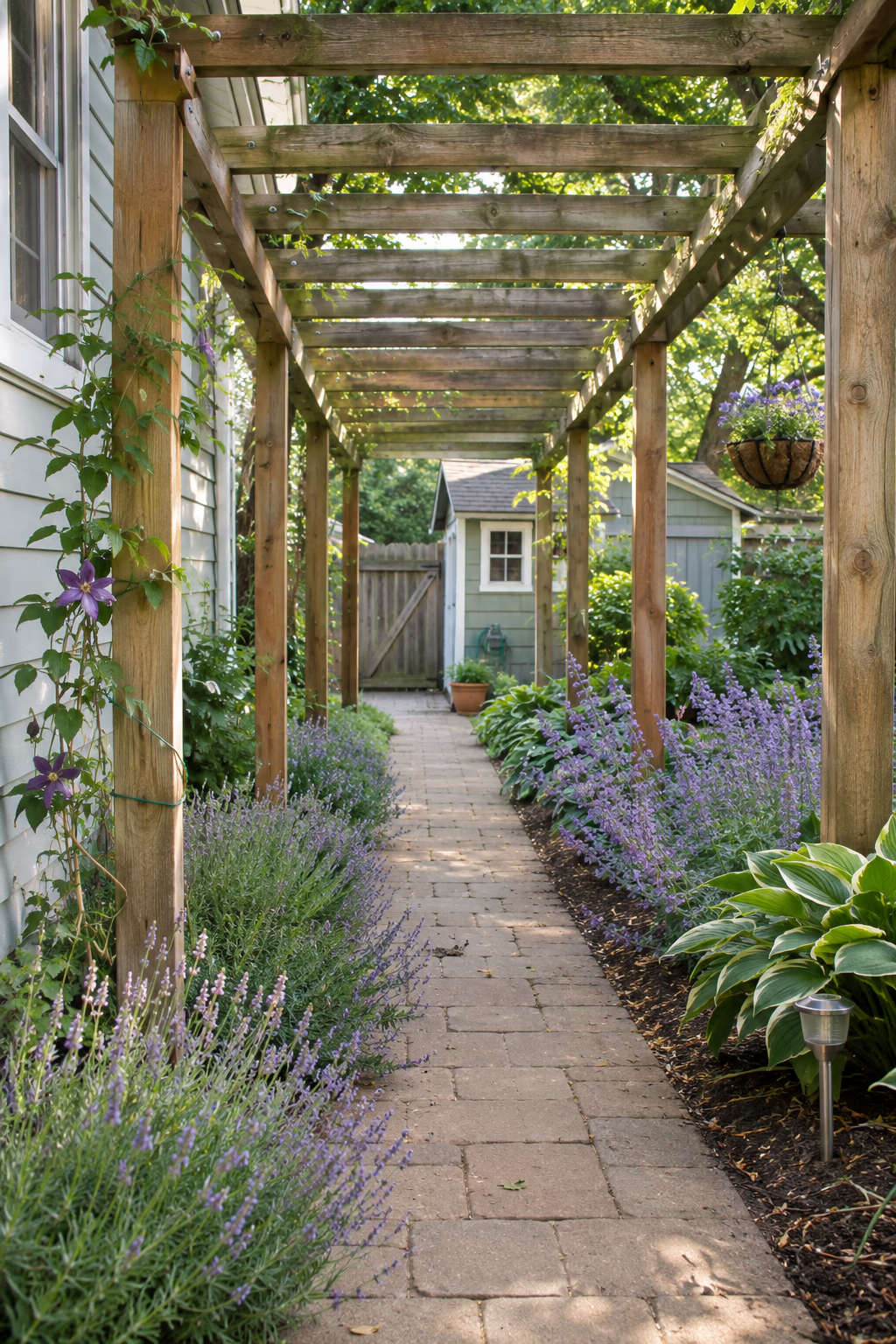
Turn a path into a destination
A long, narrow pergola over a garden path creates a covered walk from the patio to a vegetable garden, shed, or back gate. A 4- to 5-foot width works for most paths, with posts every 8 feet. Line both sides with perennials such as catmint, lavender, or hostas, depending on light.
A walkway pergola adds height and rhythm to a flat yard and draws people deeper into the garden. It can also support climbing roses or clematis if you want flowers overhead.
Make sure the path underneath has a solid surface, like pavers or compacted gravel, so it doesn’t turn muddy. Leave at least 7 feet of headroom under the beams so tall visitors don’t duck.
21. Build a Compact Pergola Bench for a Small Yard
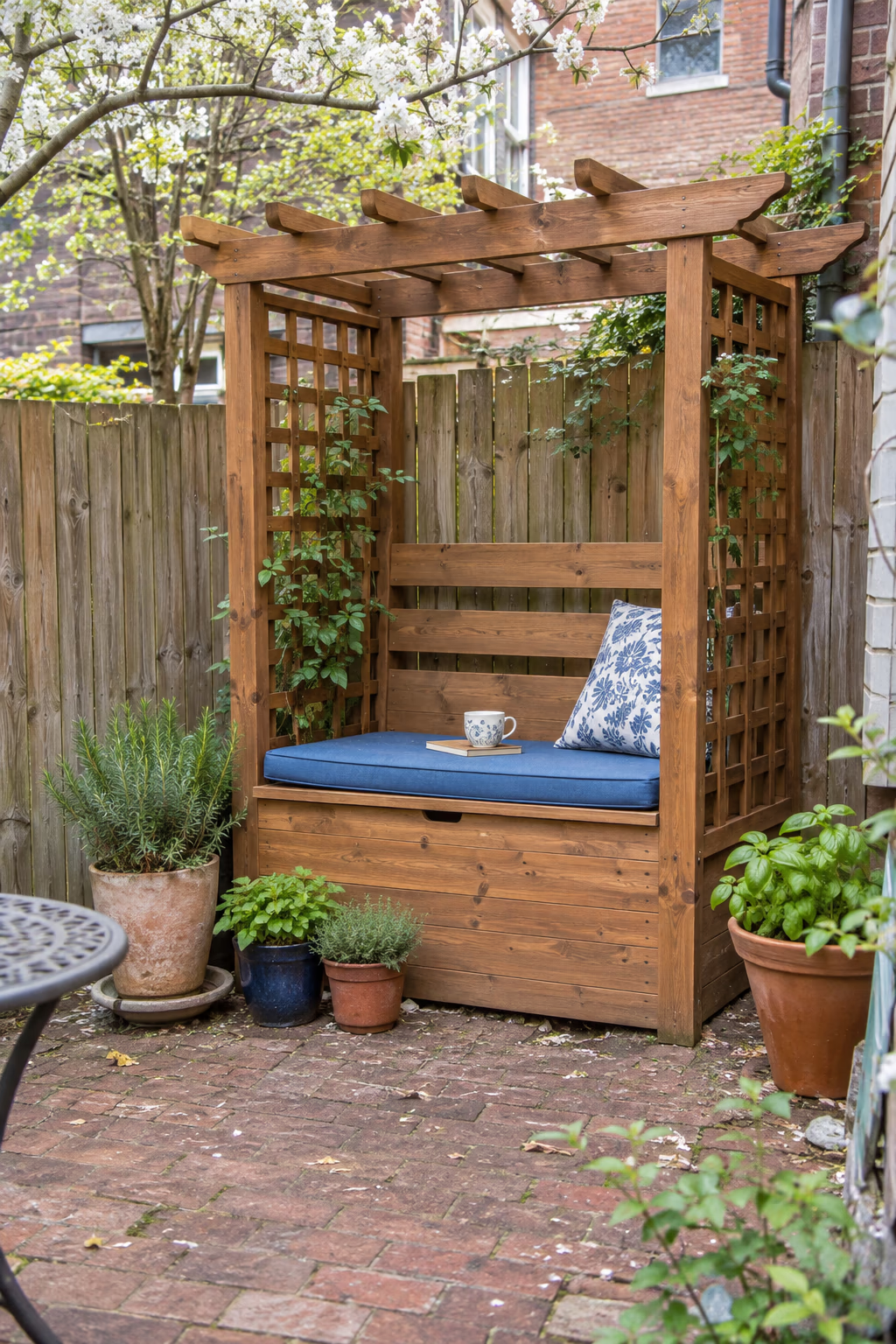
Big charm in a tiny footprint
A pergola bench combines a built-in seat with a small overhead frame, usually around 6 feet wide. Add a trellis on each side, and the bench becomes a cozy nook for morning coffee. Some designs include a lift-up seat for storing cushions or garden tools.
This option fits townhouse yards, side yards, and garden corners where a full pergola won’t fit, and it’s a manageable weekend project for a confident DIYer.
Even a small pergola bench can tip in strong wind, so anchor the posts to footings or ground spikes. Use exterior screws and rot-resistant lumber to make it last.
How to Plan Your Backyard Pergola
A pergola is a long-term structure, so a little planning upfront saves money and frustration. Use these tips before you buy a kit or start digging.
- Decide how you’ll use it. Dining, lounging, cooking, or soaking all need different sizes, so measure your furniture and add clearance before choosing dimensions.
- Track the sun. Watch where shade falls during the day. Rafters running north to south generally give more midday shade, and side curtains or slats can block low sun.
- Pick a material that fits your maintenance style. Cedar and redwood are classic but need sealing every few years, pressure-treated pine is affordable, and aluminum or vinyl need almost no upkeep.
- Match the house. Choose colors, rafter shapes, and post sizes that echo your home’s trim and roofline so the pergola looks like it belongs.
- Check codes and HOA rules. Many towns require permits for attached pergolas or covered roofs, and HOAs often have rules about height, color, and setbacks.
- Build strong footings. Set posts in concrete footings below your local frost line for stability. In the United States, call 811 before digging to locate buried utility lines.
Frequently Asked Questions
How much does a backyard pergola cost?
Costs vary with size, material, and labor. A small DIY wood pergola kit may cost several hundred dollars, while custom cedar builds and louvered aluminum systems with installation can run into the thousands or more. Getting a few local quotes is the best way to get accurate numbers for your area.
Do I need a permit to build a pergola?
It depends on your location and design. Freestanding open pergolas under a certain size are sometimes exempt, but attached pergolas, solid roofs, and electrical work usually require permits. Call your local building department before you start.
What is the best wood for a pergola?
Western red cedar and redwood are popular because they resist rot and insects naturally and look beautiful. Pressure-treated pine is cheaper and strong, but it can warp and should be stained or painted. Whatever you choose, use exterior-rated hardware.
Does a pergola provide enough shade?
A standard open pergola provides partial, filtered shade. For more coverage, add a shade cloth, retractable canopy, closely spaced slats, louvered roof, or vines. The direction of the rafters also affects how much shade you get.
How long does a pergola last?
A well-built cedar pergola can last many years with regular sealing and repairs, while aluminum and vinyl pergolas often last longer with less maintenance. Good drainage, solid footings, and quick repairs to loose hardware all help extend its life.
Final Thoughts
The best backyard pergola ideas fit the way you actually live outside. A louvered roof over the patio, a cedar frame over the dining table, or a simple bench pergola in a small corner can make your yard feel more comfortable, organized, and inviting.
Start with the size and purpose that matter most, choose materials that suit your climate and maintenance style, and add curtains, plants, and lights over time. Before long, your pergola will feel like the most natural room of the house, just one with a sky for a ceiling.


