
Imagine stepping out the back door with a cup of coffee and landing on a solid, level surface that feels like part of the house. There is a comfortable chair waiting, a table for breakfast, and a few pots of herbs catching the morning sun. That simple patch of paving can become the most used room you own.
A good patio earns its keep. It gives furniture a stable footing, keeps mud out of the kitchen, and turns a plain lawn into a place to eat, relax, and host friends. It also adds real value to the home when it is built well and sized for the way you actually live.
These 23 backyard patio ideas cover paving patterns, layouts, furniture arrangements, comfort upgrades, and budget-friendly surfaces. Whether you are pouring a new slab, replacing cracked concrete, or simply making an existing patio more inviting, you will find practical options for ordinary yards and budgets.
1. Lay a Herringbone Paver Patio
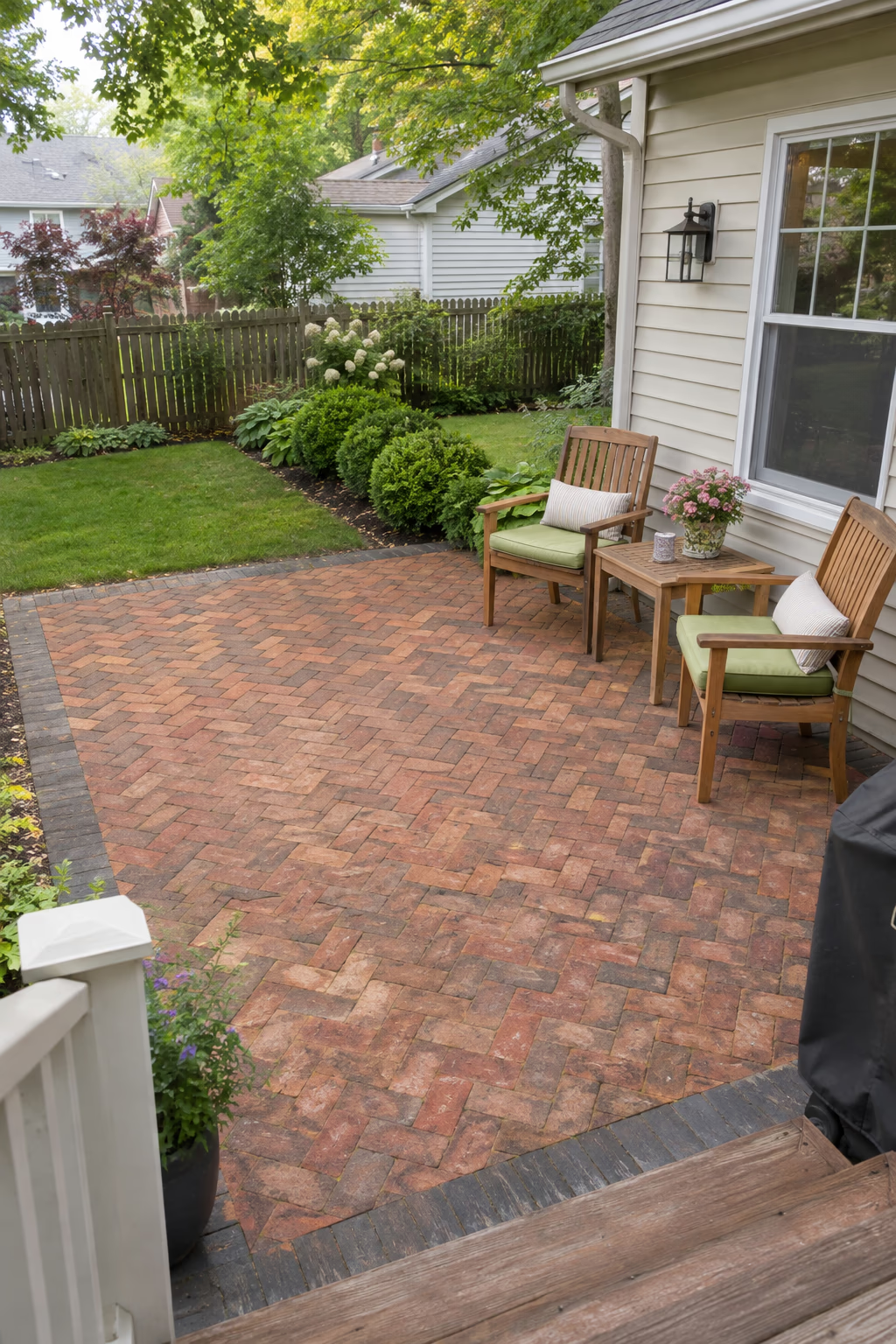
A classic pattern that never looks dated
Herringbone sets rectangular pavers in a zigzag of interlocking Vs, and it is one of the most attractive ways to pave a patio. Standard 4-by-8-inch clay or concrete pavers in warm red, tan, or charcoal blend work well. Lay the pattern at 45 degrees to the house for movement, or at 90 degrees for a calmer look.
The interlocking pattern also spreads loads well, which makes it a strong choice for heavy furniture and grills. A soldier course of pavers set end to end around the edge gives the field a crisp frame and hides the cut pieces.
Expect more cutting than with a simple running bond, so rent a wet saw and budget for extra material, usually about 10 percent more. A proper base of compacted gravel, typically 4 to 6 inches deep, plus an inch of bedding sand, is what keeps the pattern from shifting.
2. Furnish the Patio Like an Outdoor Living Room
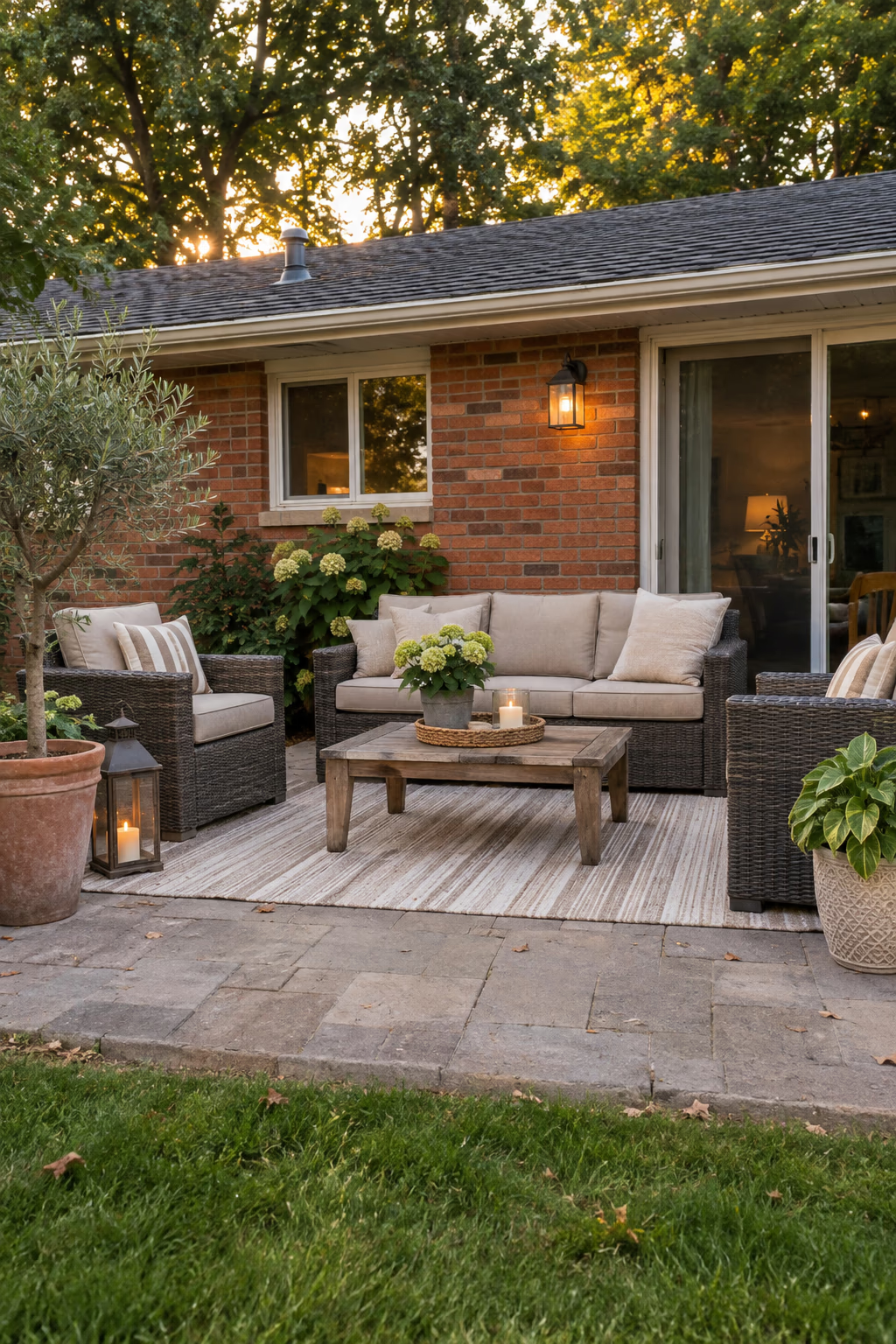
Comfort that pulls you outside every evening
Treat the patio as a family room without a roof. Start with a deep outdoor sofa or a pair of loveseats facing each other, add two lounge chairs, and anchor the group with a low coffee table. Plan at least 30 inches of walking space around the arrangement so nobody has to squeeze past knees.
This setup works because it matches how people actually spend time outside: talking, reading, and lingering after dinner. Choosing cushions in the same tones as your indoor furniture makes the patio feel like a natural extension of the house.
Look for solution-dyed acrylic or olefin cushion fabric, which resists fading and mildew far better than cotton blends. A storage deck box nearby makes it easy to stash cushions before storms and through winter.
3. Create a Dedicated Al Fresco Dining Area
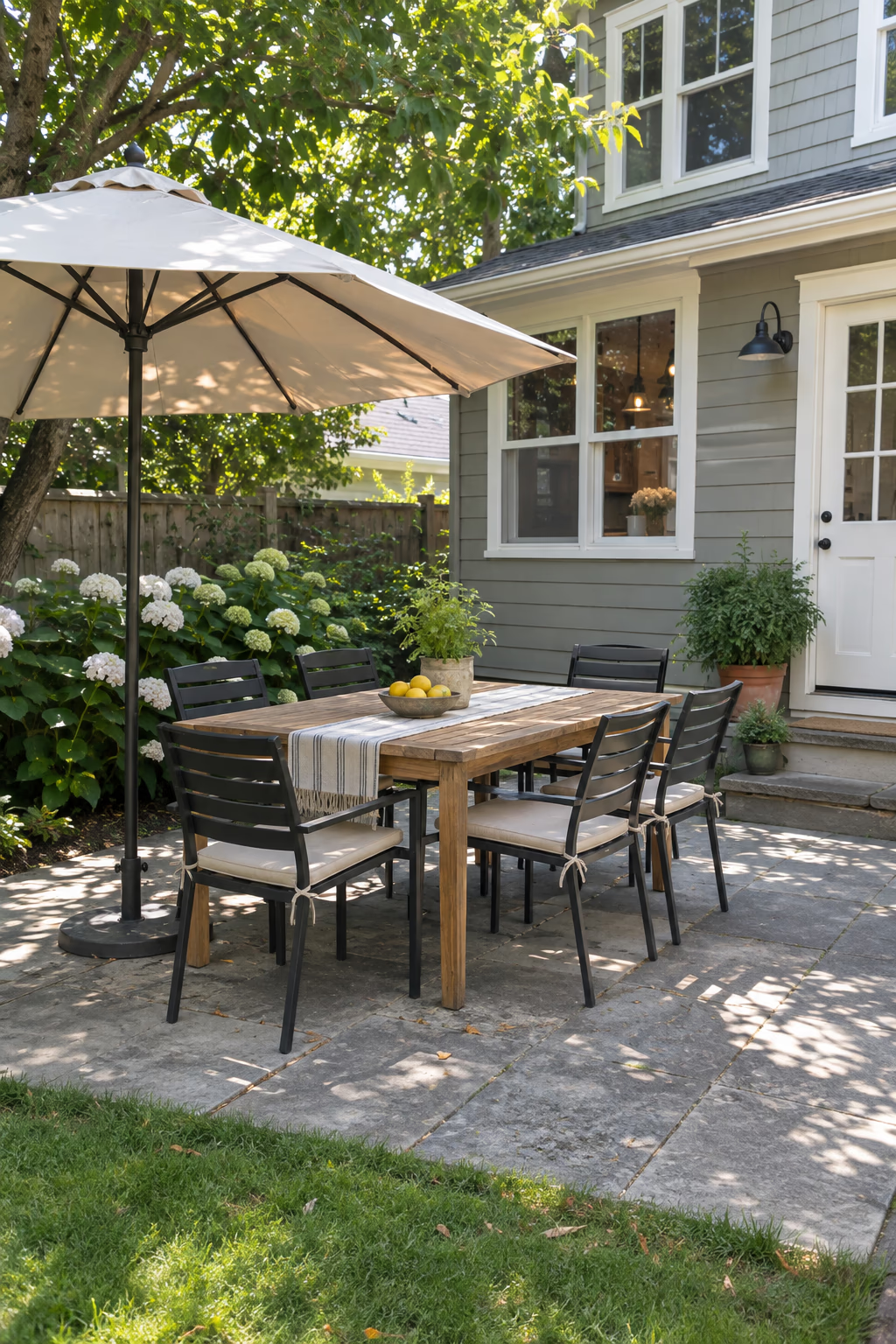
Give meals outdoors a permanent home
A patio dining zone needs more room than many people expect. A six-seat rectangular table needs roughly a 12-by-12-foot area so chairs can slide back comfortably. Place it close to the kitchen door so carrying plates in and out is quick and easy.
A permanent dining spot turns ordinary weeknight meals into something that feels a little special. Teak, powder-coated aluminum, or all-weather wicker chairs hold up well, and a center umbrella with a weighted base provides shade at lunchtime.
Keep the dining surface level. Small slopes for drainage are normal, but a patio should only fall about 1/8 to 1/4 inch per foot, or chairs will start to wobble and glasses will feel tippy.
4. Curve the Patio Into Soft, Organic Shapes
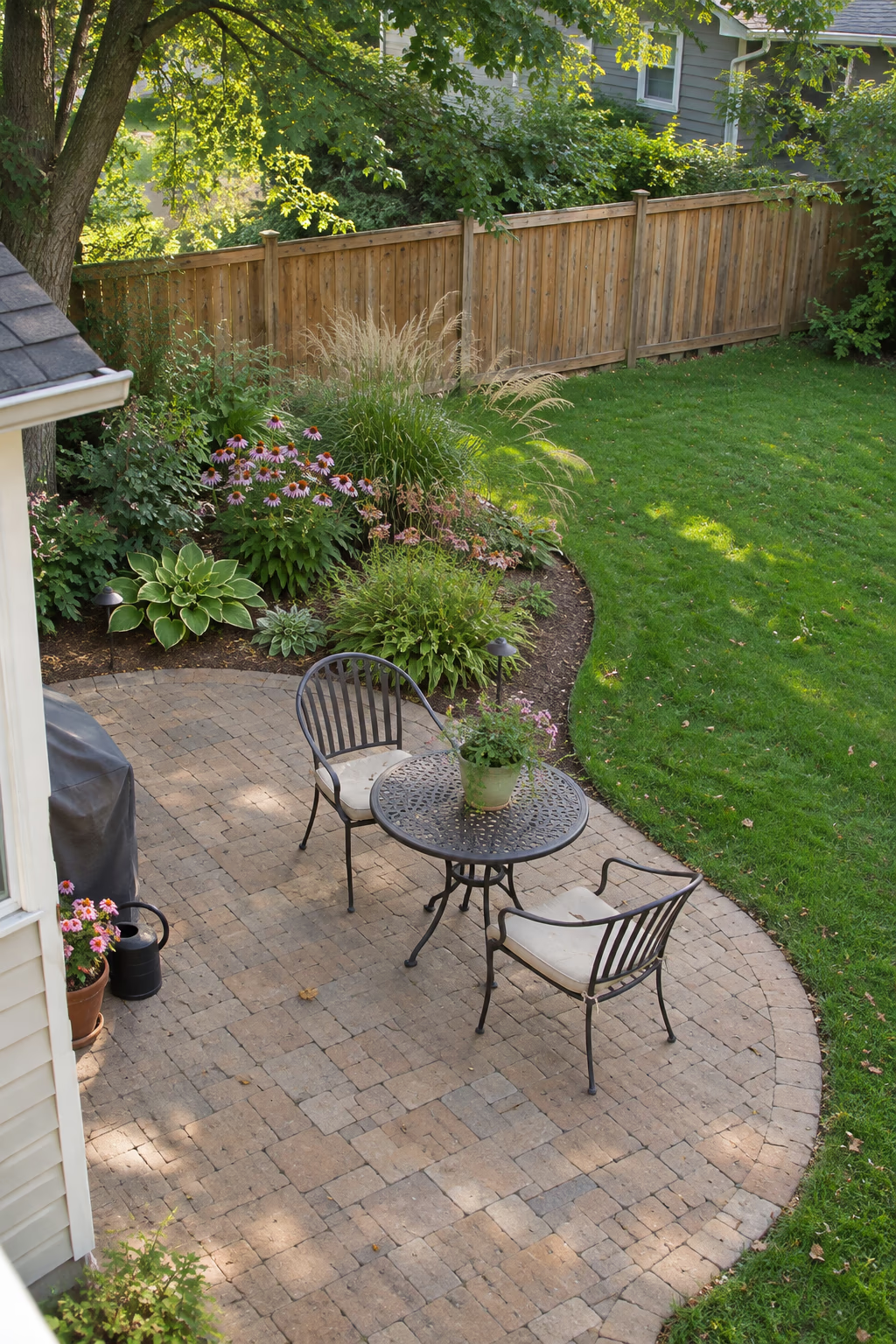
Rounded edges feel relaxed and natural
Swap the usual rectangle for a gently curved or kidney-shaped patio. Lay out the outline with a garden hose, live with it for a few days, and adjust until the curve feels right from inside the house. Concrete pavers, poured concrete, and flagstone can all follow curved lines.
Curves soften the boxy shape of a house and flow more easily into planting beds and lawn. They also guide people naturally toward a destination, such as a seating area tucked into a corner.
Keep curves broad and simple. Tight wiggles are hard to build, waste material, and can look fussy. Flexible plastic or steel edging is the easiest way to hold a curved paver edge in place.
5. Hang Outdoor Curtains for a Cabana Feel
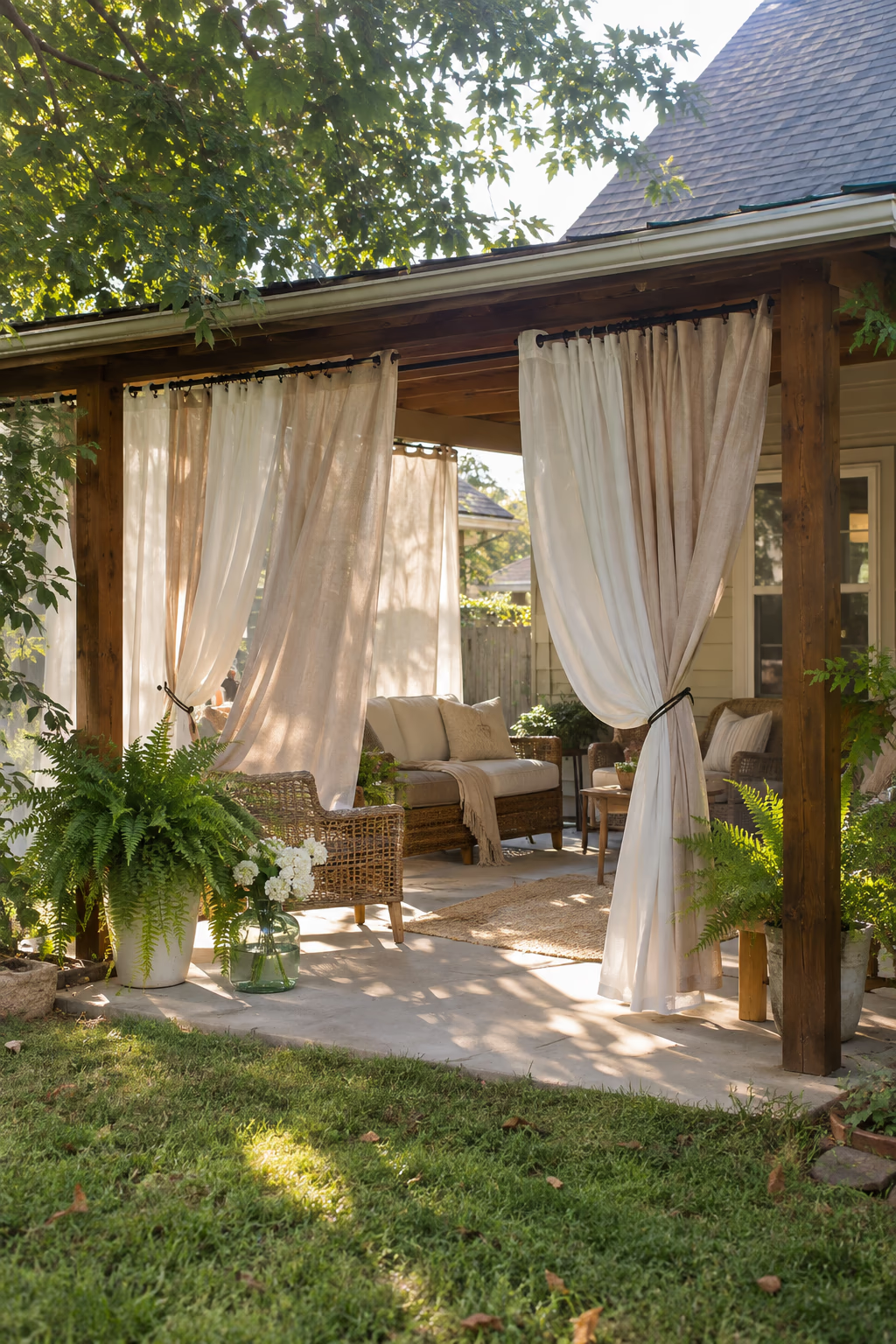
Instant shade, privacy, and softness
Outdoor curtains add a resort-like touch to a covered patio or any frame with a sturdy top beam. Hang solution-dyed polyester or acrylic panels in white, oatmeal, or soft gray from a rust-resistant rod, and tie them back to posts when you want the view open.
Fabric blocks low afternoon sun, screens neighbors, and makes a hard-edged space feel cozy. The gentle movement in a breeze adds a relaxed, vacation-like mood.
Choose panels labeled for outdoor use and add weights or tiebacks so they do not whip around in wind. Take them down and wash them a couple of times a season to prevent mildew and pollen stains.
6. Set Irregular Flagstone With Creeping Thyme Joints
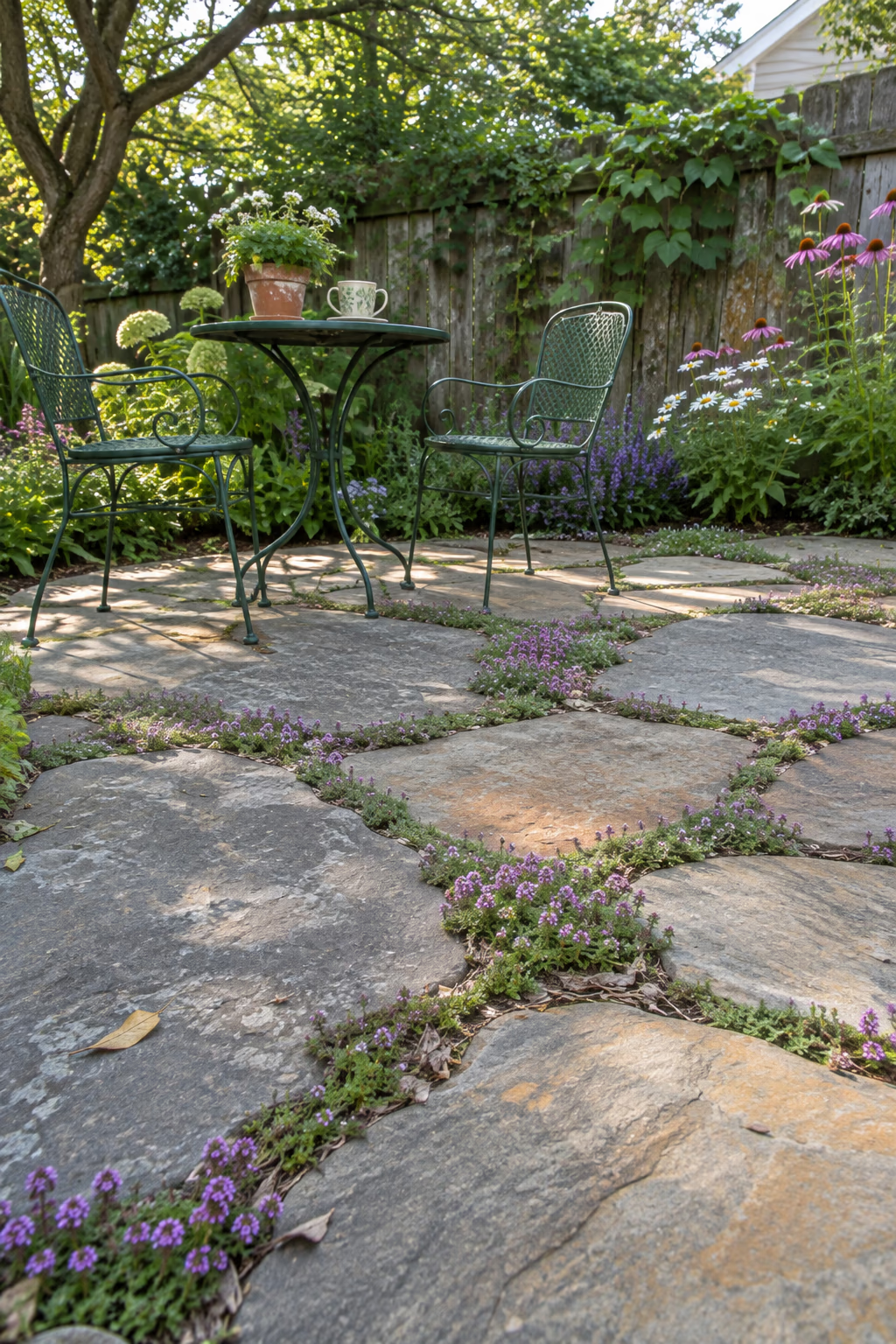
A cottage-style patio that softens over time
Lay irregular flagstone pieces 1.5 to 2 inches thick on a compacted gravel and sand base, leaving joints of 2 to 3 inches. Fill the gaps with topsoil and plant creeping thyme, which tolerates light foot traffic and releases a pleasant scent when stepped on.
The mix of stone and low greenery gives the patio a lived-in, natural character that fits older homes and informal gardens. It also allows rain to soak into the ground instead of running off.
Planted joints need full sun and a little weeding at first. In shady spots, use moss or simply fill the joints with fine gravel. Keep table and chair areas on the largest, flattest stones for stability.
7. Gather Around a Gas Fire Table
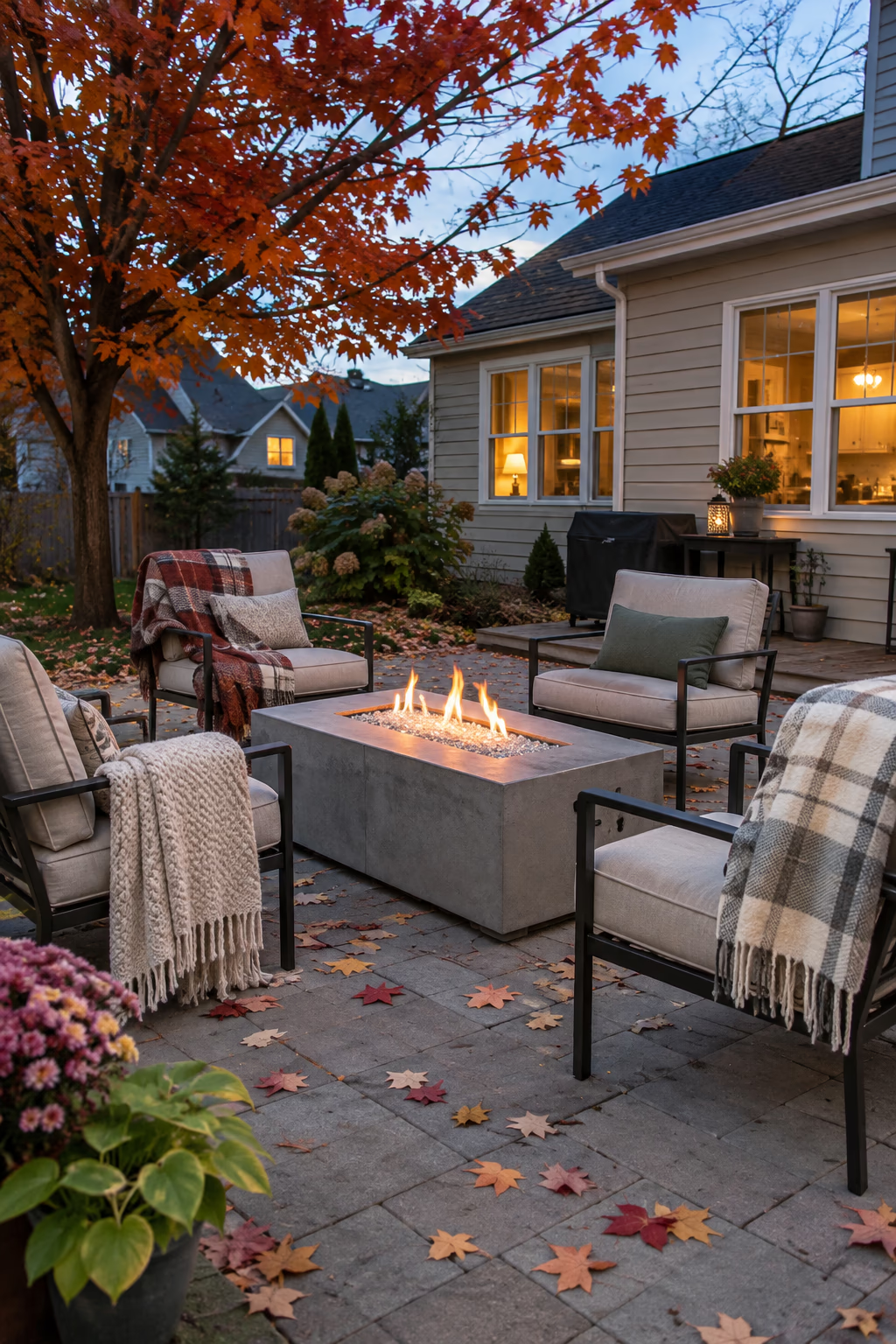
Warm glow without smoke or ash
A propane fire table combines a coffee table surface with a burner in the center, so it fits neatly into a patio seating group. Most hide a 20-pound tank in the base and offer a lid to turn it into a normal table when not in use.
Fire tables give the cozy appeal of flames without smoke blowing into the house or embers landing on cushions. They also work on paved patios and under some covered areas where wood fires would be unsafe.
Follow the manufacturer’s clearance guidance from walls, overhead structures, and furniture. Check local rules too, since some cities and HOAs restrict open flames during dry periods.
8. Step Down Into a Sunken Patio Lounge
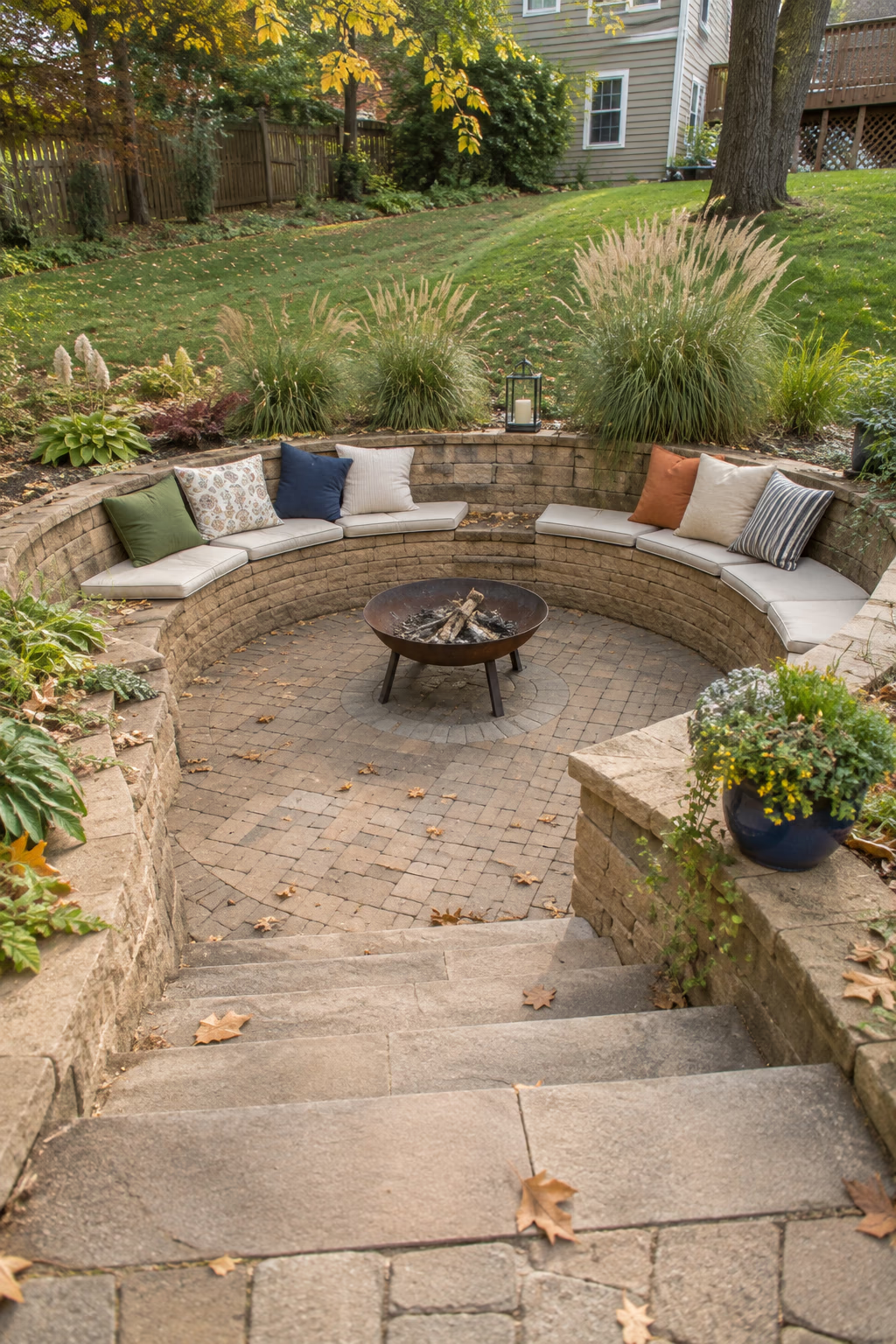
A sheltered nook that feels tucked away
A sunken patio sits 18 to 30 inches below the surrounding grade, with retaining walls that can double as built-in seating. A round or square shape about 12 to 14 feet across works well for a conversation area.
Being lower than the rest of the yard creates a sense of enclosure, blocks wind, and gives the space a dramatic, architectural look. It is especially effective on sloped lots, where a cut into the hillside is part of the grading anyway.
Drainage is the critical issue. A sunken patio must have a drain or a gravel sump connected to a daylight outlet, or it will fill with water. Walls taller than about 3 to 4 feet often need engineering and a permit.
9. Mix Gravel and Large Pavers on a Budget
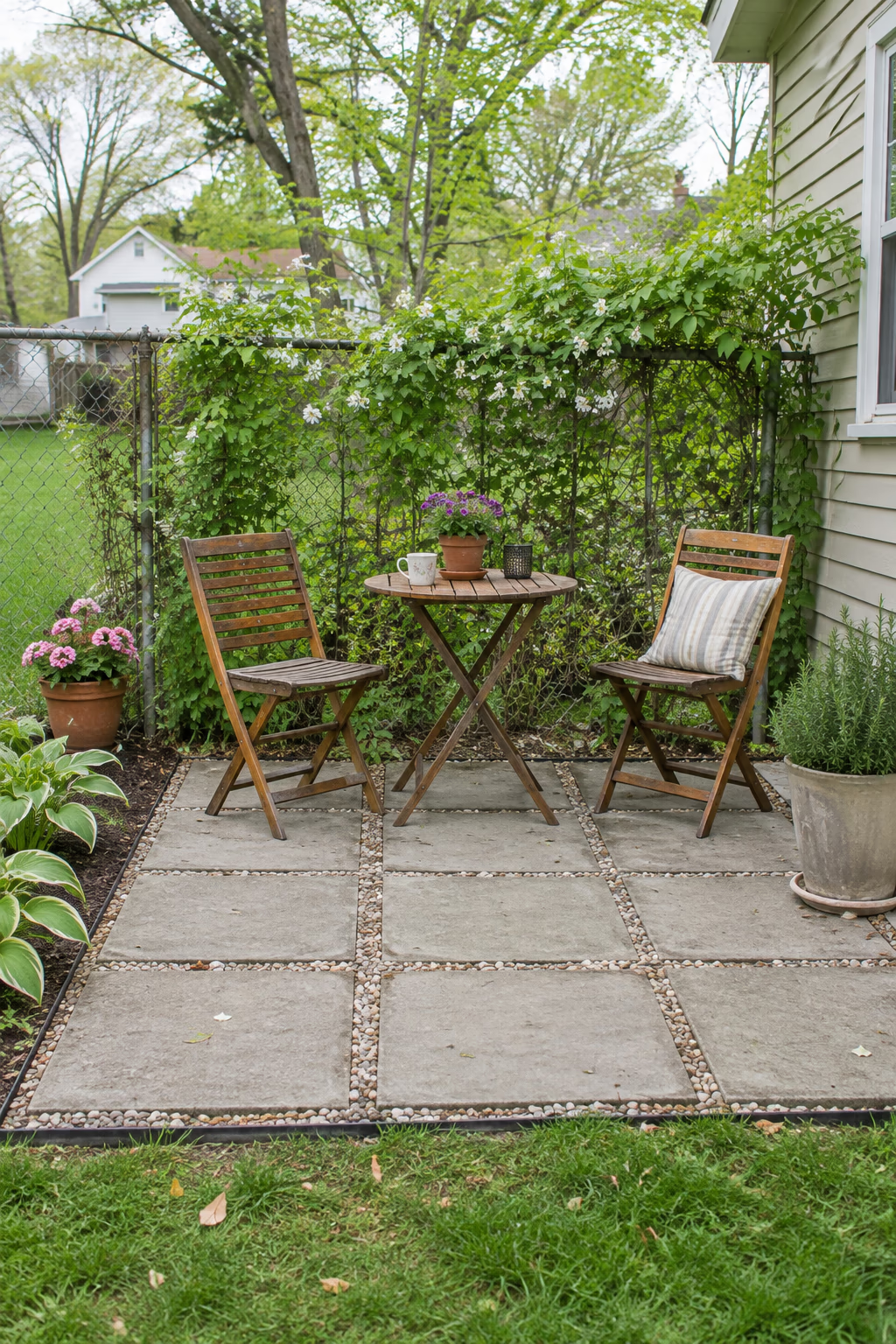
A stylish surface for far less money
Set large concrete pavers, such as 24-by-24-inch squares, in a grid with 4- to 6-inch gaps, then fill the spaces with pea gravel or decomposed granite. This approach uses fewer pavers and is easy for a confident DIYer to install over a weekend or two.
The contrast of smooth slabs and crunchy gravel looks modern and relaxed at the same time, and the gaps let water drain naturally. It works well for side patios and casual seating spots.
Gravel can scatter onto lawns and get tracked indoors, so use solid edging and choose angular crushed stone if you want it to stay put. Chair legs may sink in loose gravel, so place furniture on the pavers.
10. Build a Seat Wall With a Wood Bench Top
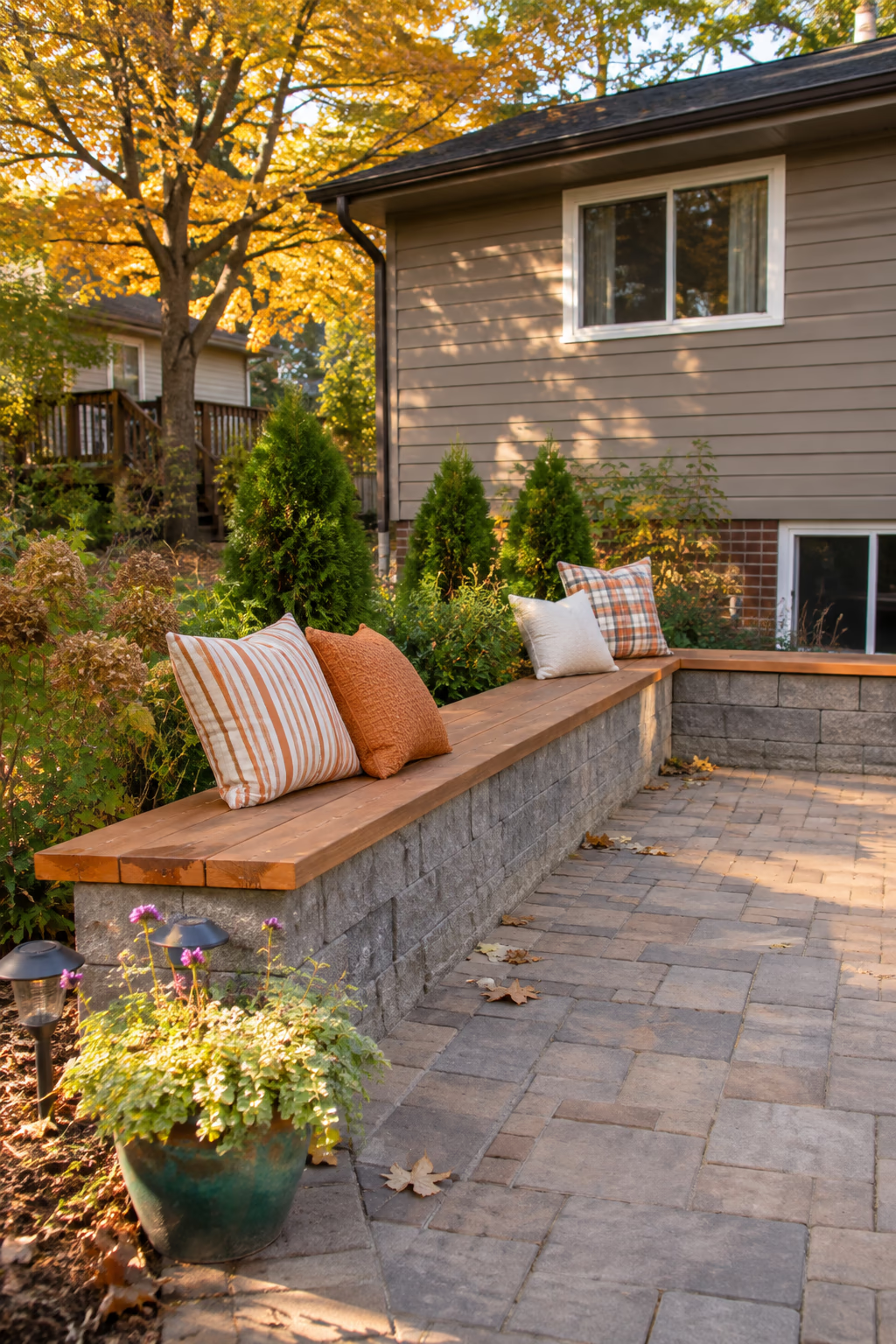
Extra seating that never needs to be stored
A low wall around one or two sides of the patio provides seating for a crowd without crowding the space with chairs. Build it 18 to 20 inches high and 12 to 16 inches deep from segmental wall block or stone, then cap it with sealed cedar or thermally modified wood boards.
The wood top is warmer and more comfortable than stone, and the wall itself defines the edge of the patio. Add a few outdoor pillows when guests arrive to make it feel more like a sofa.
Leave small gaps between boards so water can drain, and refinish the wood every year or two. Seat walls usually do not need permits, but a retaining wall holding back soil may.
11. Screen the Patio With Horizontal Slat Panels
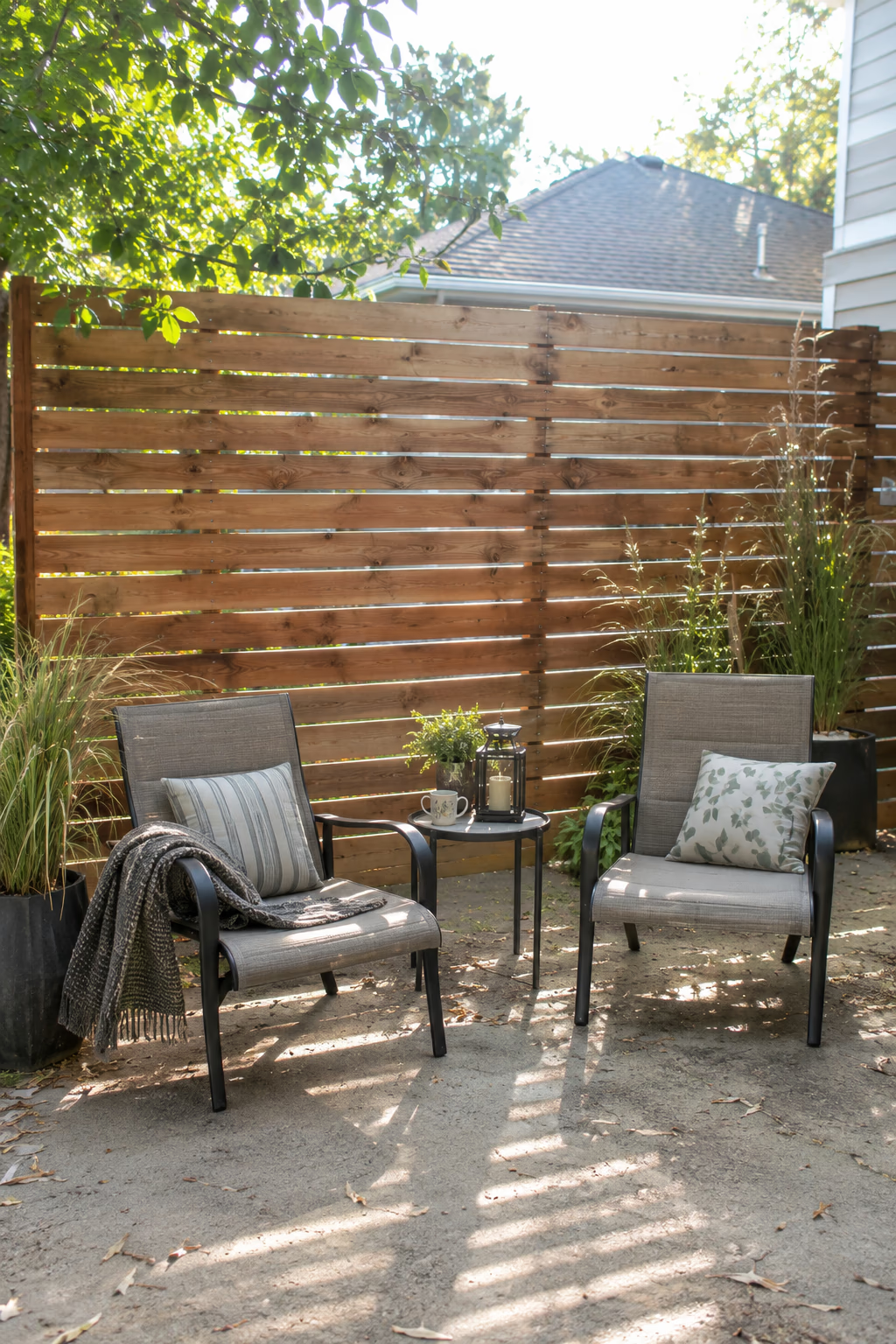
Privacy that looks like furniture, not fencing
Freestanding horizontal slat screens made of cedar or composite boards, spaced about 1/2 inch apart, block the view from neighbors while letting light and air through. Set posts in concrete footings and run panels 6 feet tall along just the sides that need covering.
Screens make a patio feel private and enclosed, which helps people relax and use the space more often. The clean lines suit modern, farmhouse, and craftsman homes alike.
Check fence height limits and setback rules with your city or HOA before building. Screens catch wind like a sail, so use sturdy 4-by-4 or 6-by-6 posts and adequate footings.
12. Carve Out a Simple Grilling Corner
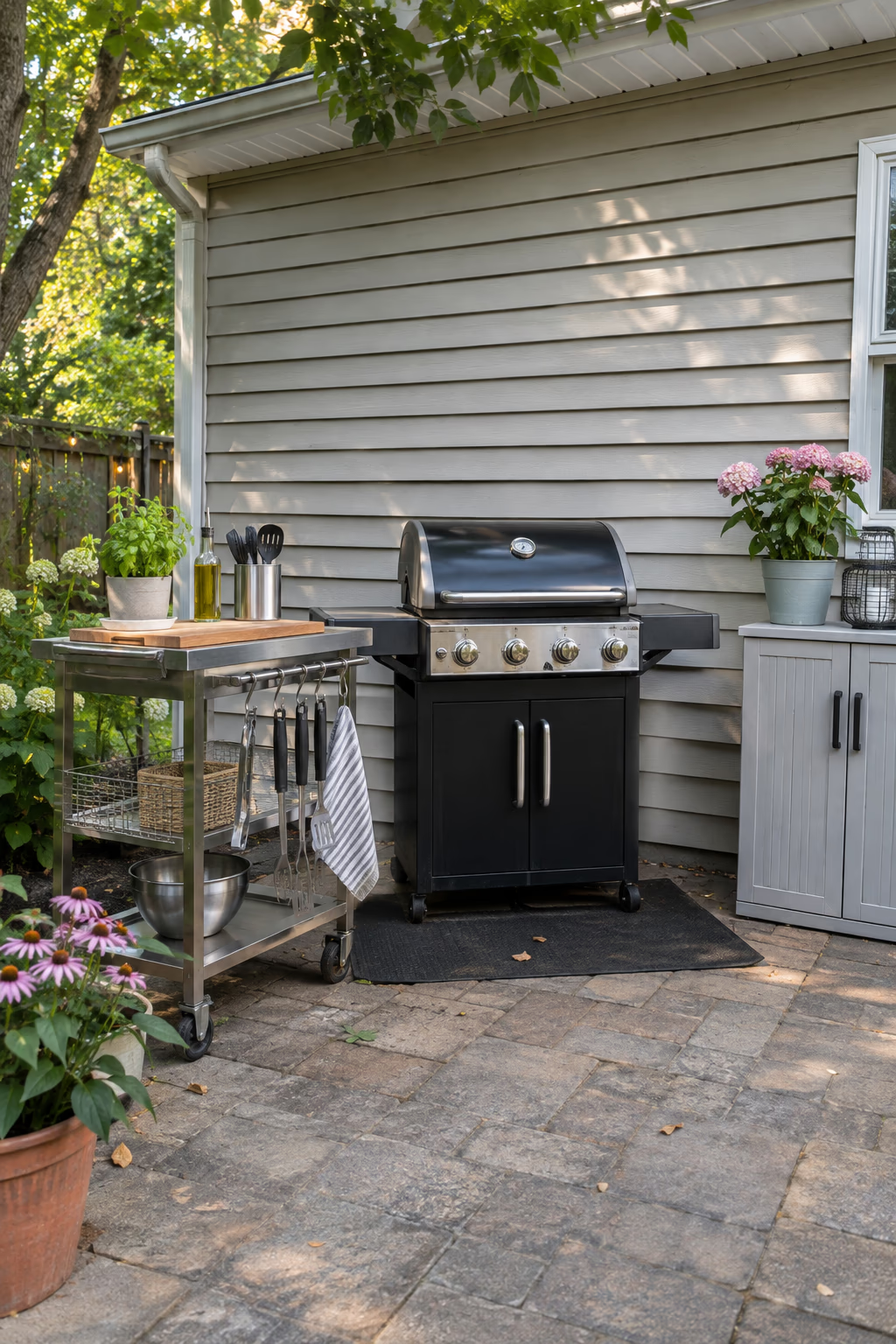
A practical cooking spot without a full kitchen
Instead of a built-in kitchen, dedicate one corner of the patio to a freestanding grill, a stainless steel prep cart, and a small storage cabinet for tools. Place it near the kitchen door but downwind of the seating area so smoke drifts away from guests.
This approach costs a fraction of a masonry outdoor kitchen and can move or change as your needs do. A hook rail for utensils and a weatherproof cover keep everything organized.
Keep grills at least 10 feet from siding, eaves, and overhanging branches, or follow the clearance in your grill manual and local fire code. A grill mat protects pavers from grease stains.
13. Pour Stamped Concrete That Looks Like Stone
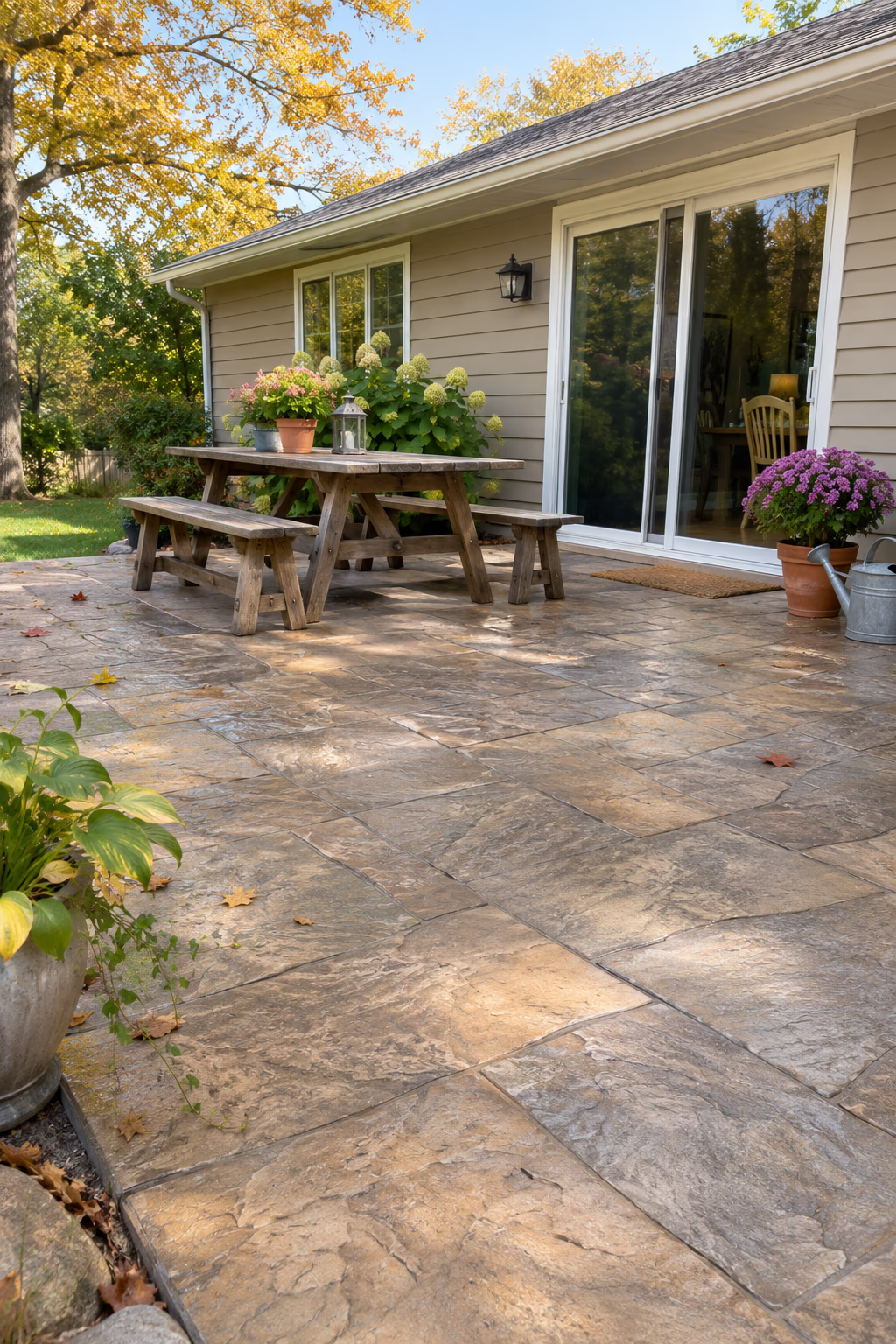
The look of slate or flagstone at a lower price
Stamped concrete is poured as a slab, then textured with mats and colored with integral pigment and release powder to mimic slate, flagstone, cobblestone, or wood plank. Earthy tones like warm gray, sandstone, and terracotta tend to look the most convincing.
It costs less than natural stone in most areas, creates a seamless surface with no joints for weeds, and holds up well to furniture and foot traffic.
Stamped concrete can crack like any slab, especially in freeze-thaw climates, and repairs are hard to match. It also needs resealing every two to three years. Hire an experienced installer, since timing the stamping correctly is a skill.
14. Add a Bubbling Fountain for Gentle Sound
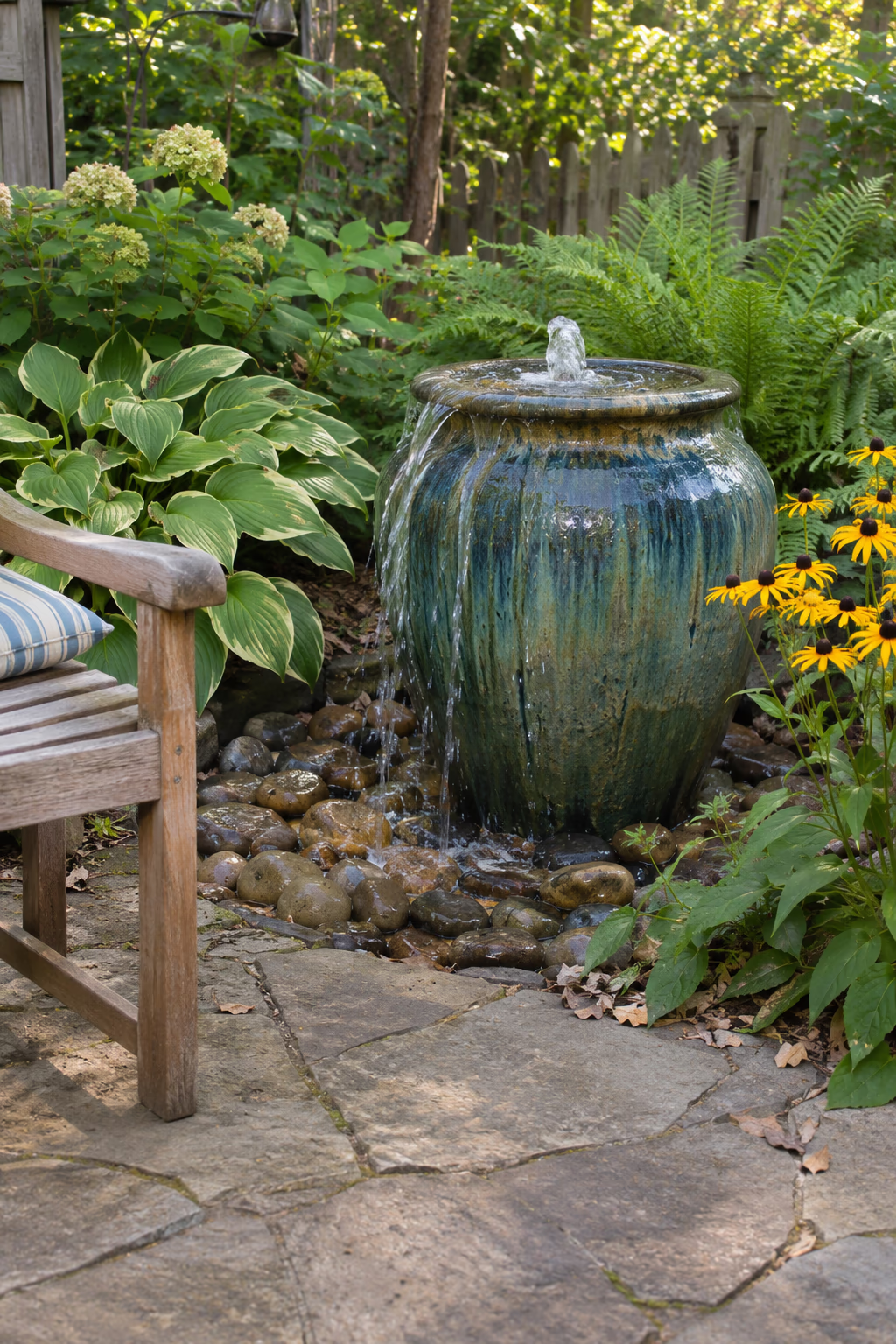
Soothing sound that masks street noise
A small bubbling urn or stacked-stone fountain sits on a hidden reservoir buried at the patio edge. A submersible pump pushes water up through the top, where it spills over and drains back down through gravel, so there is no open pool to maintain.
The trickle of water helps cover traffic and neighbor noise, and it draws birds and butterflies. These fountains are compact enough for even small patios.
The pump needs a GFCI-protected outdoor outlet, which may require an electrician. Top off the reservoir regularly in hot weather and drain or shut it down before freezing temperatures arrive.
15. Define Zones With Outdoor Rugs
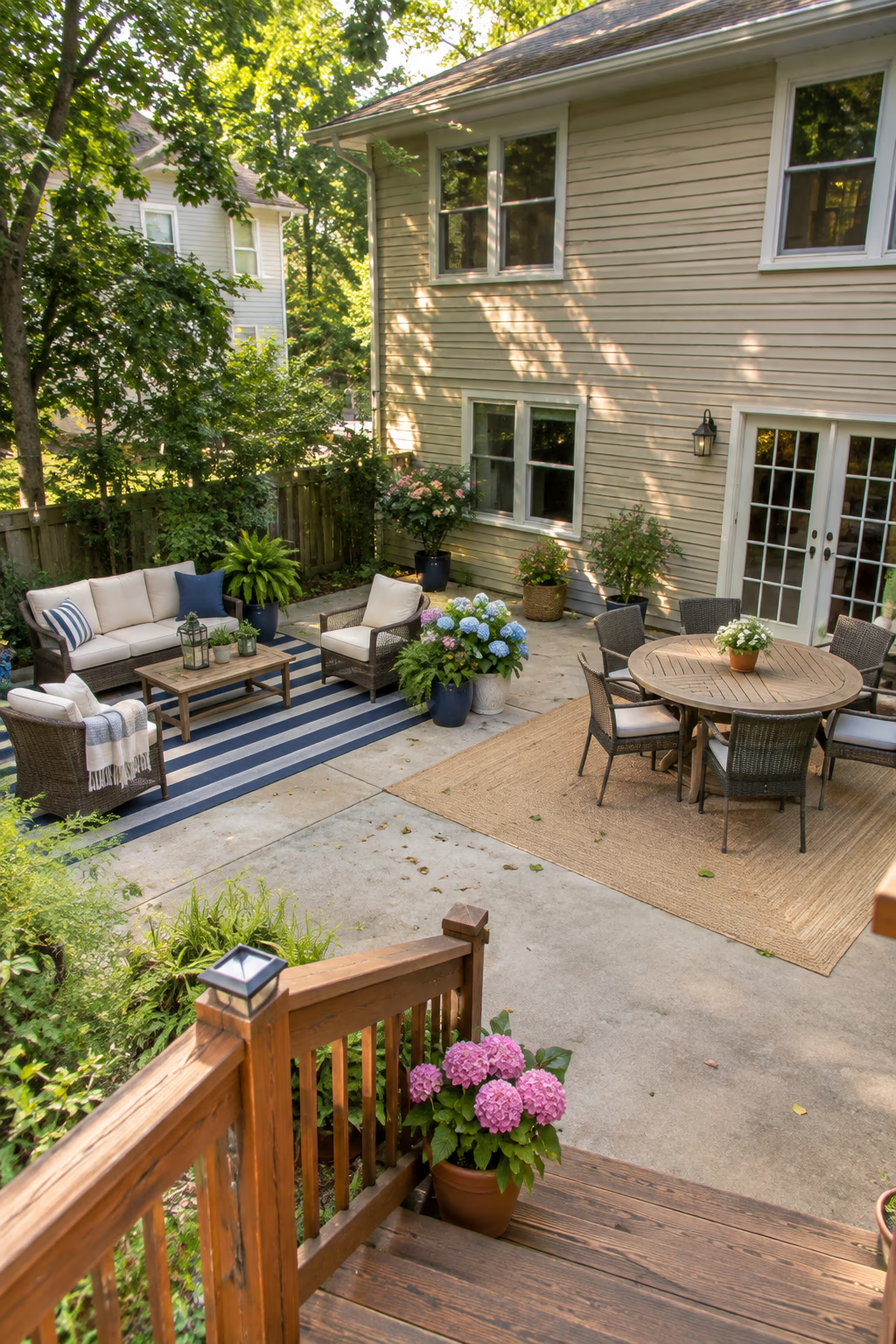
Visual rooms on one big slab
On a large patio, outdoor rugs can separate a lounge area from a dining space without any construction. Use an 8-by-10-foot rug under a seating group and a different but coordinating rug under the table. Polypropylene and recycled plastic rugs handle sun and rain well.
Rugs soften hard paving, add color and pattern, and make a big slab feel more intentional. They are also an easy way to refresh the look each season.
Lift rugs or let them dry fully after heavy rain to prevent mildew and stains on the patio below. On wood or composite surfaces, choose rugs designed to allow airflow.
16. Stretch the Season With a Patio Heater
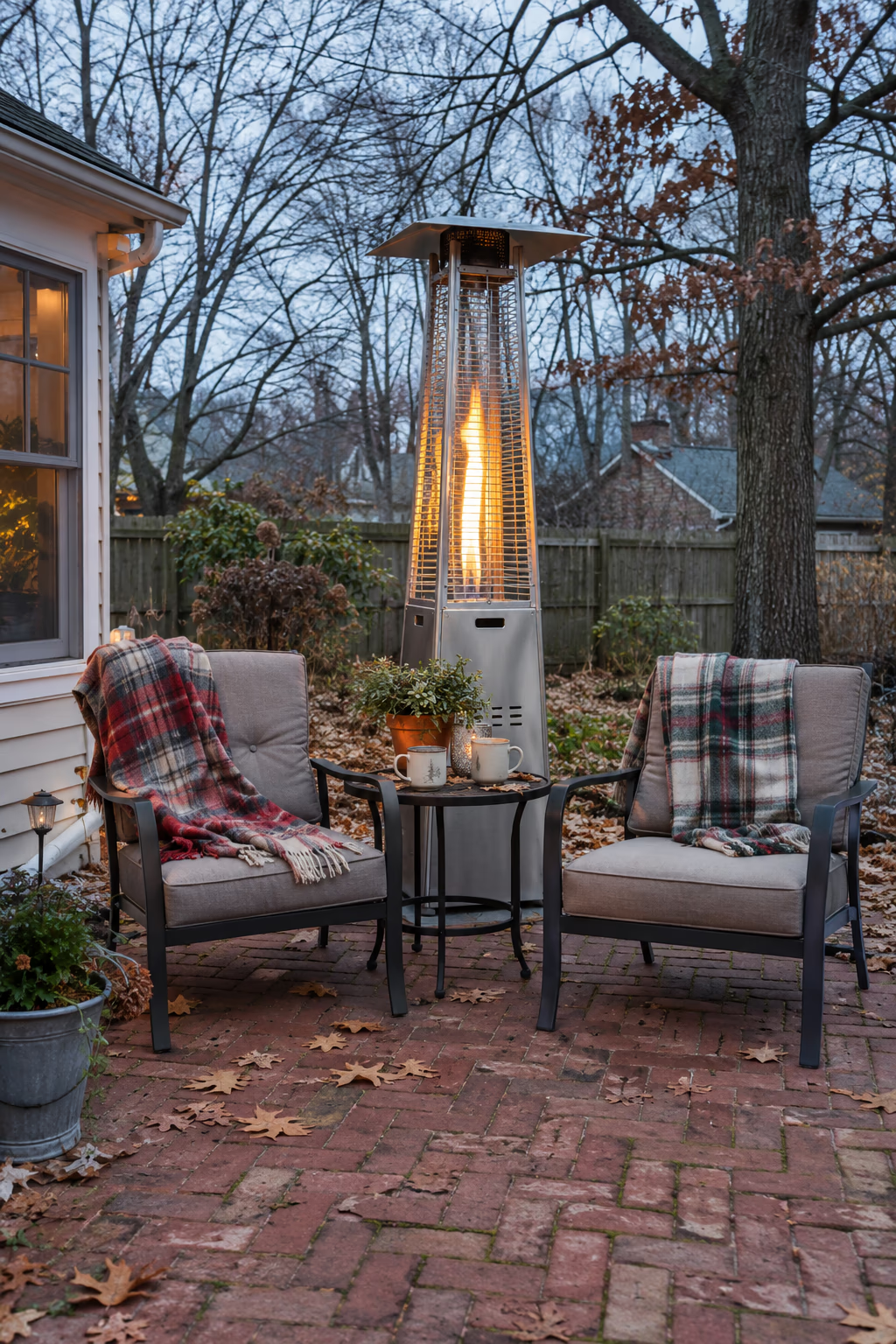
More evenings outside in spring and fall
Freestanding propane tower heaters, tabletop units, or wall-mounted electric infrared heaters can make a cool evening comfortable. Infrared heaters warm people and objects rather than the air, so they work well in breezy spots or under a covered patio.
A heater can add weeks of outdoor use on either side of summer, making the patio investment pay off for more of the year.
Never use propane heaters in enclosed spaces, and follow overhead clearance guidelines. Electric models usually need a dedicated circuit, so check the wattage with an electrician before installing.
17. Set Up a Hammock on a Freestanding Stand
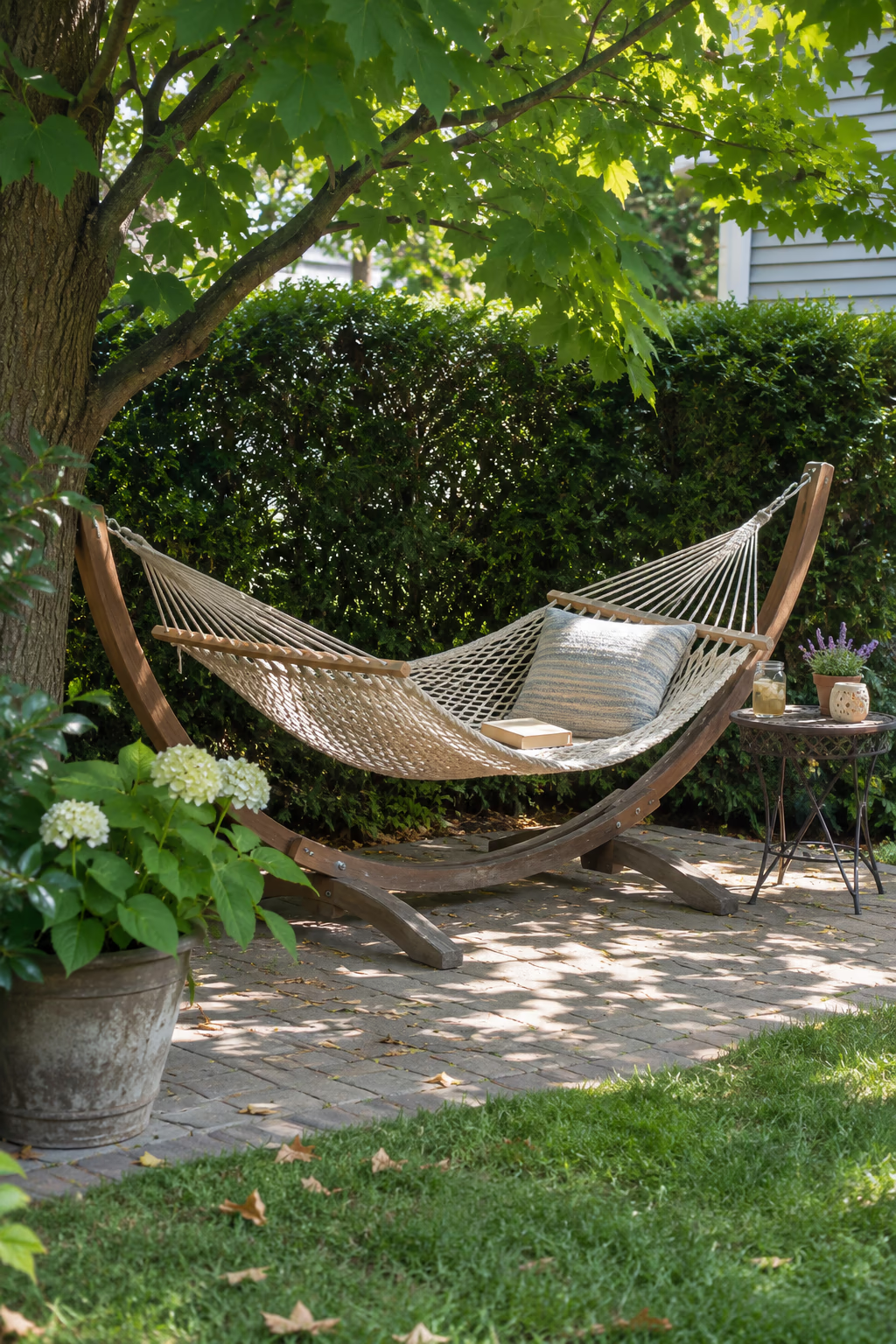
A lazy-afternoon spot with no trees required
A freestanding hammock stand, usually 12 to 15 feet long, lets you add a hammock to a patio corner even without trees or posts. Choose a cotton rope or quilted polyester hammock with spreader bars for easy lounging, and place it where it catches afternoon shade.
Hammocks are one of the most relaxing additions you can make, and they invite reading and naps in a way chairs do not. They also free up the main seating group for guests.
Make sure the stand sits on a level surface and leave clear space around it for swinging. Bring fabric hammocks inside during long stretches of rain to keep them fresh.
18. Build Twin Patios Linked by a Path
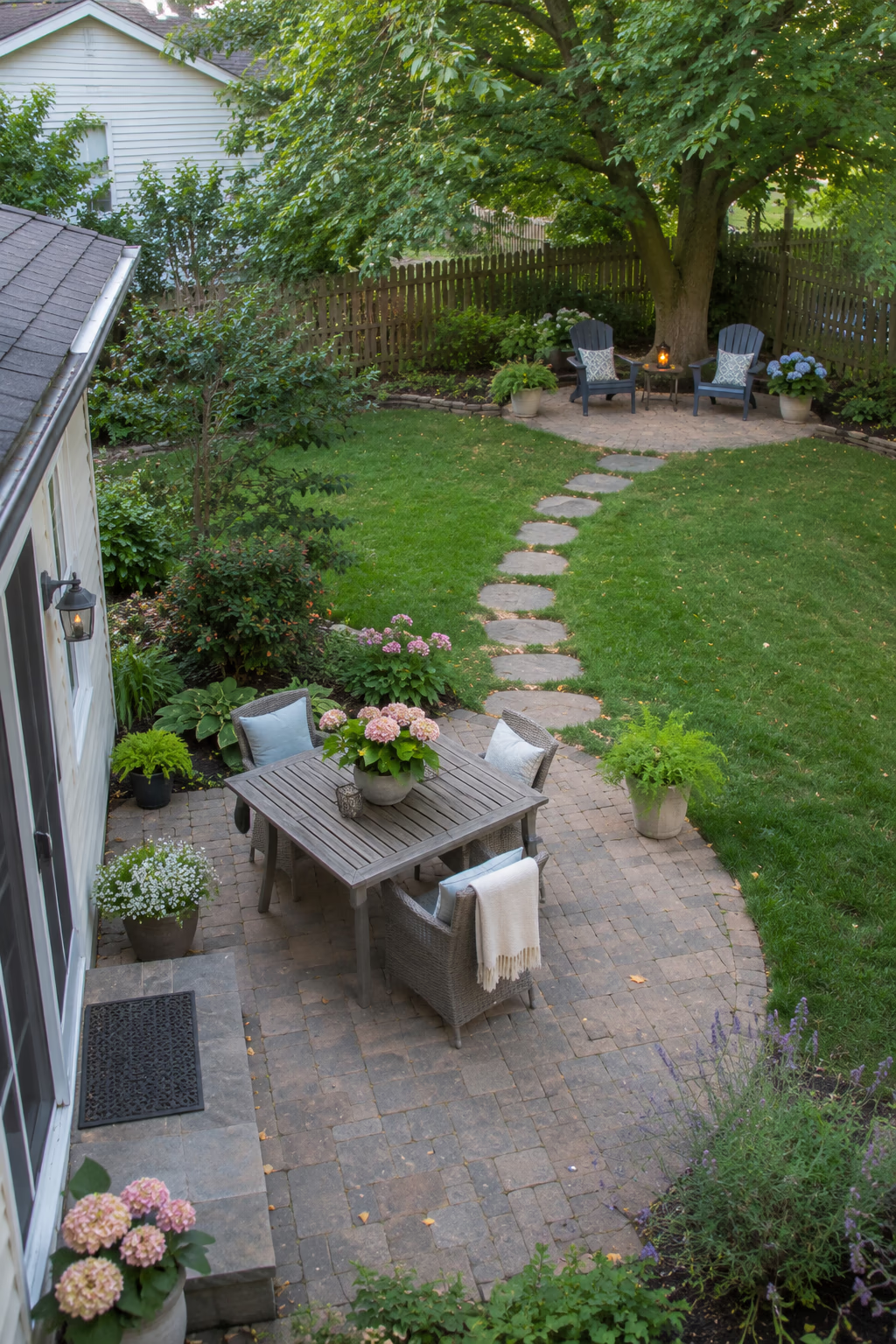
Two destinations instead of one big slab
Instead of one large patio, build two smaller ones: a dining patio near the house and a lounge patio farther out in the yard. Connect them with a stepping-stone or paver path, and use the same paving material for a cohesive look.
Two patios create a reason to walk through the garden and allow different moods, such as sunny breakfasts and shady late afternoons. It can also be easier to fit around trees, slopes, and utilities.
Plan lighting and access between both areas so the far patio is safe to reach after dark. Building in phases can spread out the cost over a couple of seasons.
19. Lay Large Porcelain Pavers for a Modern Look
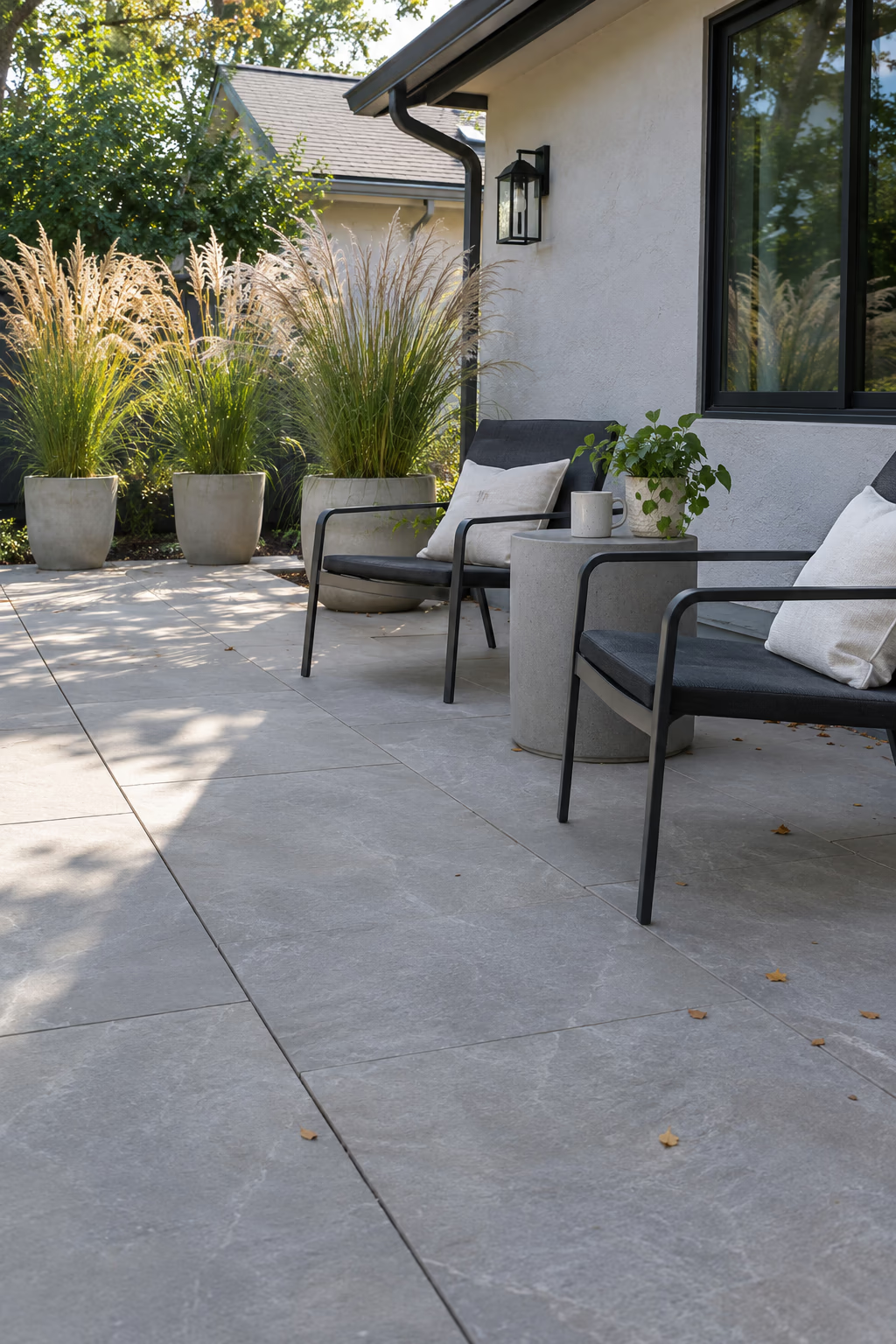
Sleek, stain-resistant, and easy to clean
Outdoor porcelain pavers, often 2 centimeters thick and 24 by 24 inches or larger, come in finishes that mimic limestone, concrete, travertine, or wood. They can be laid on a compacted gravel and sand base, on pedestals, or bonded to an existing concrete slab.
Porcelain resists stains, fading, and mildew, so spills from wine and grease wipe away easily. The large format and narrow joints give a clean, contemporary look.
Choose a textured, slip-resistant finish rated for outdoor use. The material costs more than concrete pavers and needs a wet saw with a porcelain blade for cutting.
20. Light the Edges With Low-Voltage Step and Wall Lights
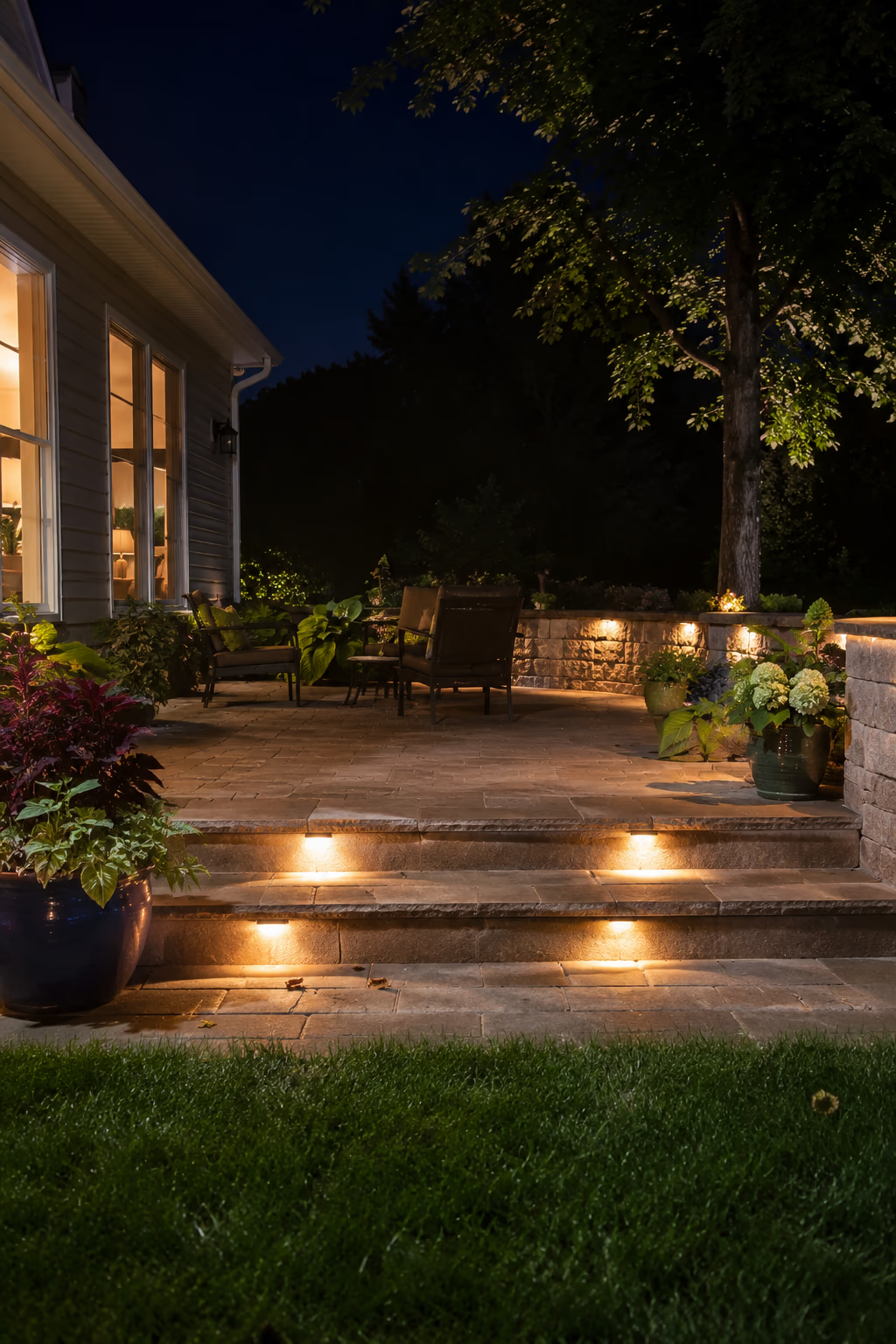
Safe footing and a warm evening glow
Low-voltage LED lights recessed into steps, seat walls, or patio edges make the space usable and safe after dark. Choose warm white bulbs around 2700K for a cozy look, and run them from a plug-in transformer with a timer or photocell.
Lighting the perimeter rather than flooding the patio from above creates depth and keeps the glow soft. It also highlights textures in stone and wood.
Low-voltage systems are DIY friendly, but plan wire runs before laying pavers or building walls. Avoid aiming lights toward neighbors’ windows.
21. Create a Quiet Wellness Corner for Yoga and Stretching
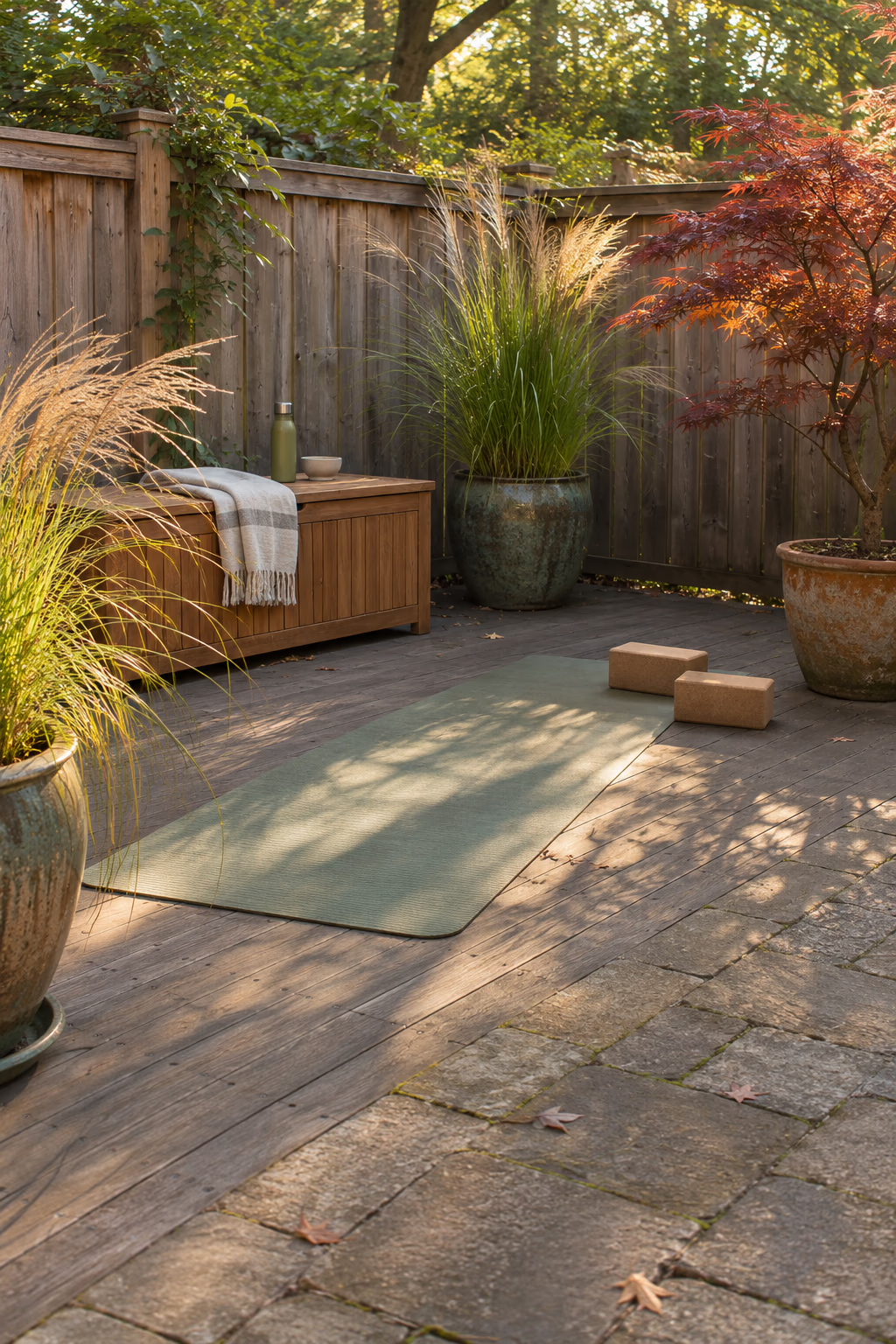
A calm spot for morning routines
Set aside a level, open area of about 6 by 8 feet at one end of the patio for yoga, stretching, or meditation. A smooth paver or composite surface, an outdoor mat, a few large potted grasses, and a small bench for storage are all you need.
Fresh air and natural light make movement more enjoyable, and having a dedicated spot makes the habit easier to keep.
Pick a corner shaded in the morning or late afternoon, since paving can get very hot in summer sun. A storage bin keeps mats and blocks dry and clean.
22. Use Permeable Pavers to Manage Runoff
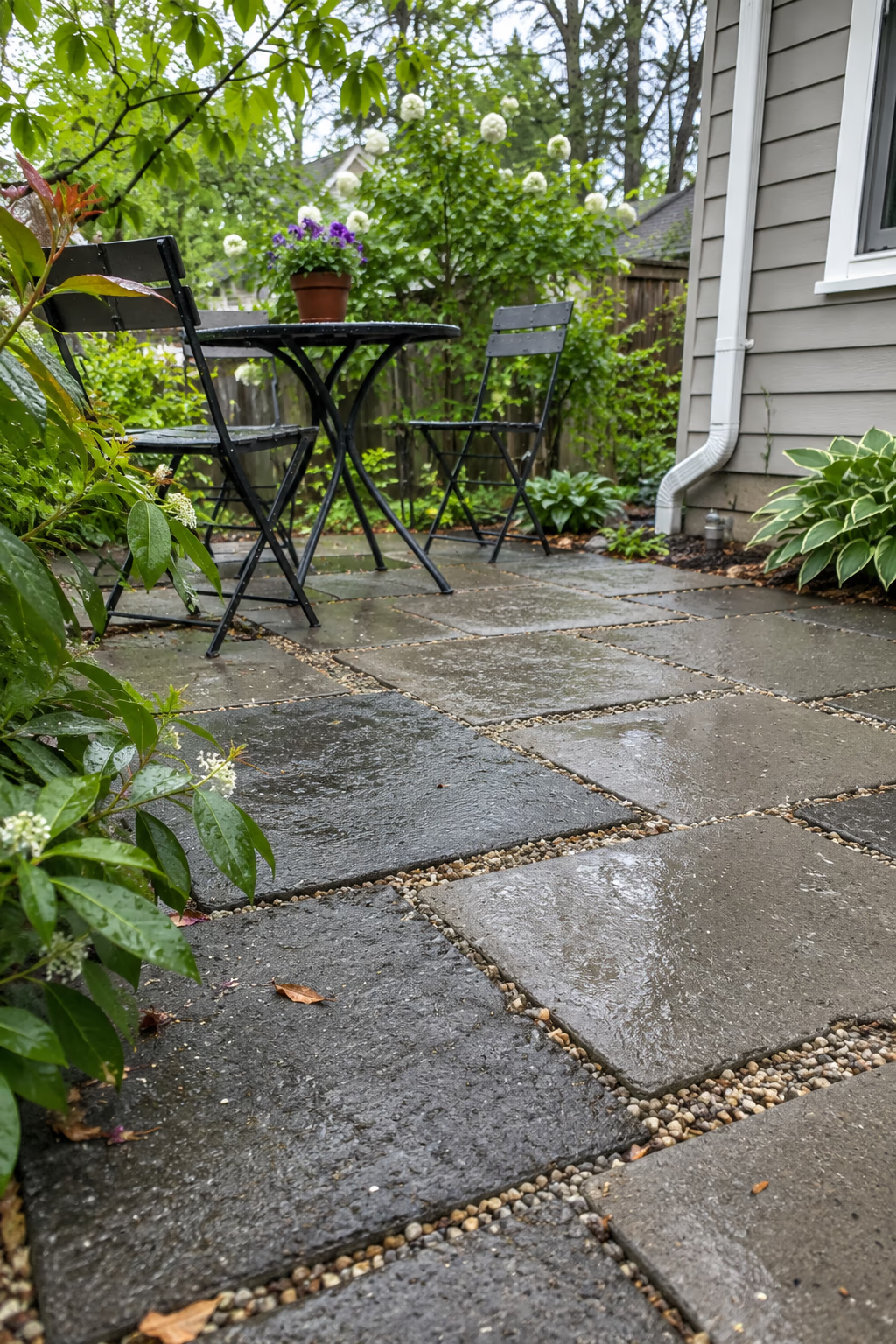
A patio that soaks up rain
Permeable pavers have wider joints filled with small open-graded stone, allowing water to soak into a deep gravel base below instead of running off. They come in many colors and shapes, so the patio still looks finished and tidy.
This option reduces puddles and runoff toward the house or neighbors’ yards, and some cities offer stormwater credits or allow more paved area when permeable materials are used.
Permeable systems need a deeper excavated base than standard pavers, often 8 to 12 inches or more, and work best in soils that drain reasonably well. Vacuum or sweep the joints occasionally to keep them open.
23. Frame a Concrete Patio With a Brick Border
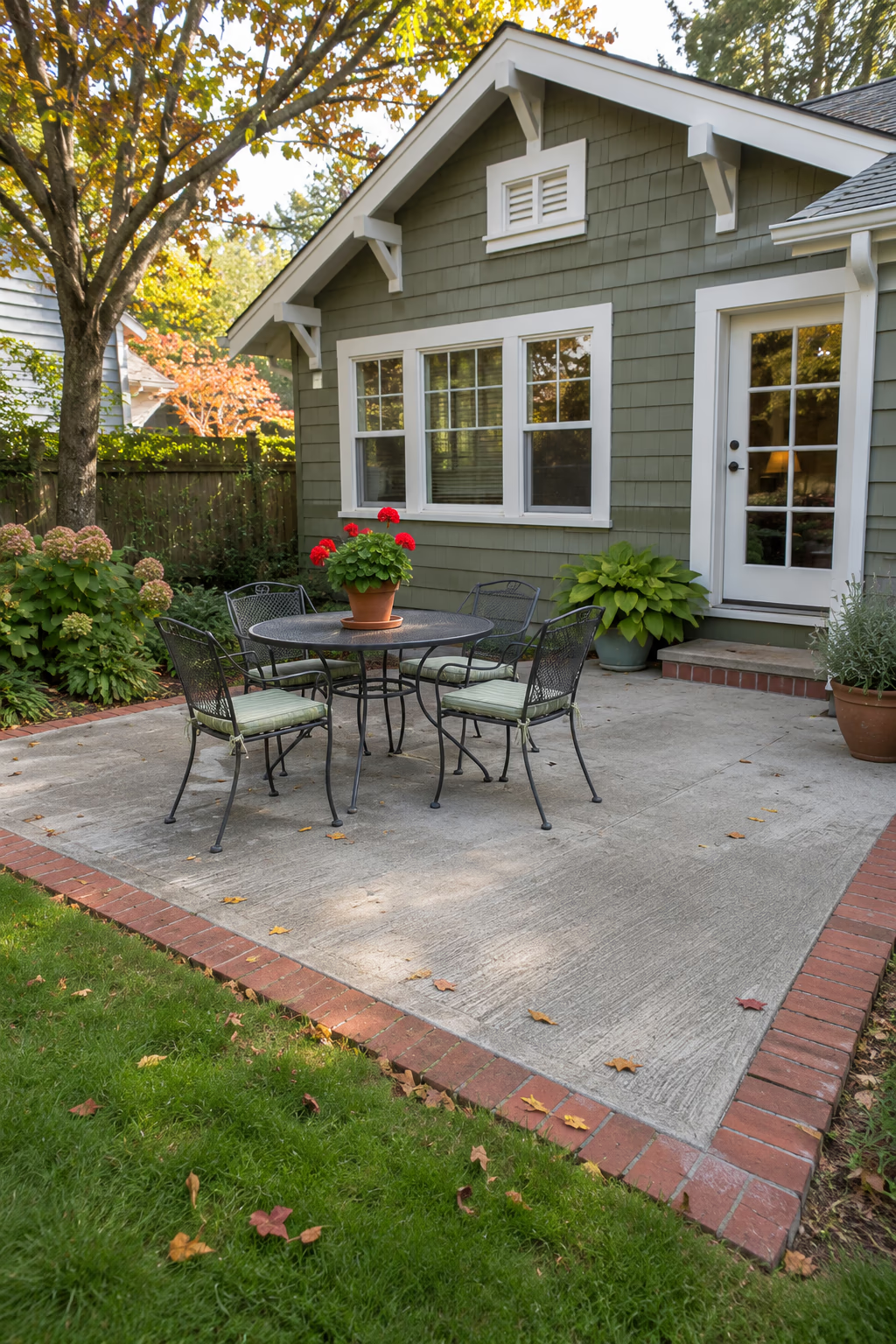
An easy upgrade for a plain slab
If your patio is a basic concrete slab, add a border of brick or clay pavers around the outside edge. Set the bricks on a compacted base in a soldier or sailor course, and choose a color that ties in with your house.
The border adds a finished, custom look and can slightly enlarge the patio without replacing the whole slab. It also pairs well with stained or painted concrete.
Set the border at the same height as the slab to avoid a tripping edge. Use pavers rated for patio use, since common building brick can spall in freeze-thaw climates.
How to Plan Your Backyard Patio
A patio is a long-term investment, so a little planning helps you get the size, location, and materials right the first time.
- Size it for furniture. Measure the tables and seating you want, then add at least 3 feet of walking space around each group before marking out the patio.
- Follow the sun. Watch where sun and shade fall at different times of day and pick the location that suits how you plan to use the space.
- Keep it close to the house. A patio near the kitchen or living room door gets used far more often than one at the back of the yard.
- Plan drainage first. Slope the surface away from the foundation at about 1/8 to 1/4 inch per foot and make sure water has somewhere to go.
- Check rules and utilities. Ask your city and HOA about permits, setbacks, and coverage limits, and call 811 before any digging.
- Budget for the base. Excavation and a compacted gravel base matter more than the surface material. Skimping here leads to sinking and cracking later.
Frequently Asked Questions
What is the cheapest way to build a backyard patio?
Gravel or decomposed granite is usually the least expensive option, followed by gravel combined with large concrete pavers. Plain poured concrete and standard concrete pavers are typically more affordable than natural stone or porcelain.
How big should a backyard patio be?
A small bistro set needs roughly 8 by 8 feet, a dining table for six needs about 12 by 12 feet, and a full seating group with a dining area often needs 16 by 20 feet or more. Plan the size around your furniture rather than a standard number.
Are pavers better than poured concrete for a patio?
Pavers cost more upfront but flex with freeze-thaw cycles and can be lifted and replaced individually if one cracks or settles. Concrete is often cheaper and faster to install but is harder to repair invisibly once it cracks.
Do I need a permit to build a patio?
Many areas do not require a permit for an at-grade patio, but rules vary. Permits are more likely for covered patios, retaining walls, gas lines, electrical work, or projects that change drainage. Check with your local building department and HOA.
How do I keep weeds from growing between patio pavers?
Install pavers over a well-compacted base and fill joints with polymeric sand, which hardens and resists weeds and ants. Sweep debris off regularly, and refill joints when the sand wears down.
Final Thoughts
The best backyard patio ideas start with a solid surface and a clear purpose, then build comfort over time. A herringbone paver floor, a cozy seating group, or a well-placed dining table can turn an unused corner into the spot everyone heads to first.
Plan the size and drainage carefully, choose materials that suit your climate and budget, and add upgrades like lighting, heat, or shade as you go. Before long, your patio will feel like one of the most comfortable rooms of the house.


