
Step out the back door on a July morning and there they are: zinnias opening in every shade of coral and pink, bees working through a patch of coneflowers, and a bucket waiting by the gate for whatever you decide to cut for the kitchen table. A backyard full of flowers makes even an ordinary weekday feel a little more special.
A flower garden behind the house is different from one out front. It isn’t there to impress the street. It’s there for you, so it can be looser, more personal, and built around how you actually use the yard, whether that means cutting bouquets, watching hummingbirds, or sitting outside after dark.
These 23 backyard flower garden ideas cover cut flower rows, pollinator meadows, single-color schemes, rose gardens, moon gardens, rain gardens, pet-safe planting, and more. Each one includes plant suggestions, practical sizing, and an honest note about upkeep, so you can choose the ideas that fit your yard, climate, and free time.
1. Grow a Cut Flower Garden in Tidy Raised Rows
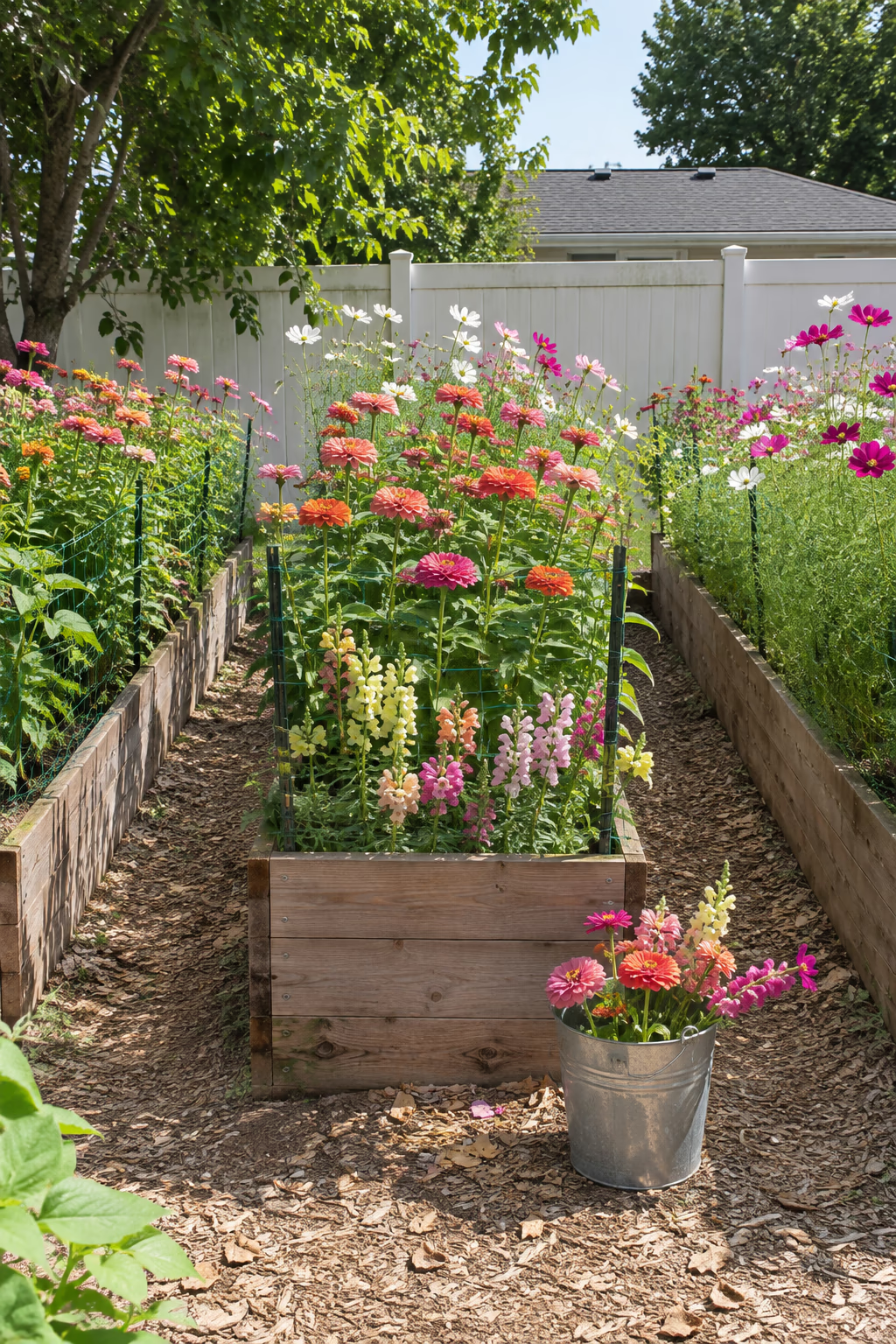
Fresh bouquets all summer without raiding your borders
A cut flower garden is planted for harvest, not for show, so you can treat it like a vegetable patch. Build two or three raised beds about 4 feet wide and 8 to 12 feet long, leaving 2-foot paths between them. Fill them with easy, productive annuals such as zinnias, cosmos, snapdragons, celosia, and strawflowers.
The secret is that most cut flowers bloom harder the more you pick them. Pinch young zinnias and cosmos once when they’re about a foot tall to encourage branching, then cut stems in the cool of the morning and drop them straight into a bucket of water.
Sow a second round of zinnias three or four weeks after the first so you still have fresh, healthy plants in late summer. Tall varieties will flop in wind, so run a layer of horizontal netting or twine across the bed about 18 inches above the soil early on.
2. Replace Lawn With a Native Pollinator Meadow
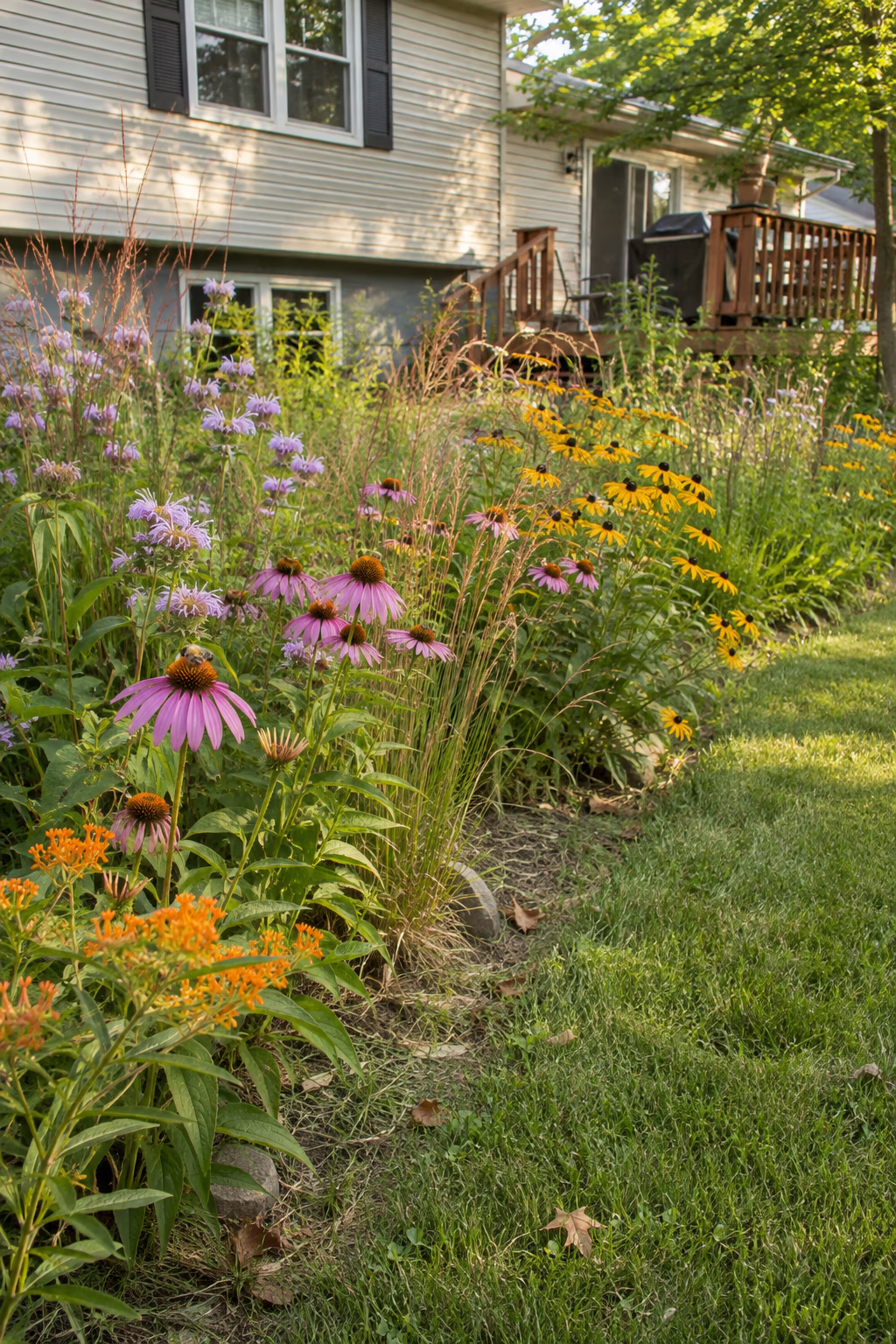
Trade weekly mowing for waves of bloom and buzzing life
A small meadow turns a dull patch of grass into one of the most active spots in the yard. Choose a sunny area, even just 10 by 15 feet, remove the turf, and plant native perennials such as purple coneflower, black-eyed Susan, bee balm, butterfly weed, blazing star, and asters, mixed with a clumping grass like little bluestem.
Plugs or small potted plants establish more reliably than seed alone. Space them about 12 to 18 inches apart and keep them watered through the first summer. By the second and third year, the plants knit together and need far less attention.
Meadows look scrappy in their first season, so be patient. A mowed edge or a simple border of low plants signals to neighbors that the planting is intentional. Check HOA rules and local weed ordinances before converting a large area.
3. Plant a Monochrome Flower Garden in One Color Family
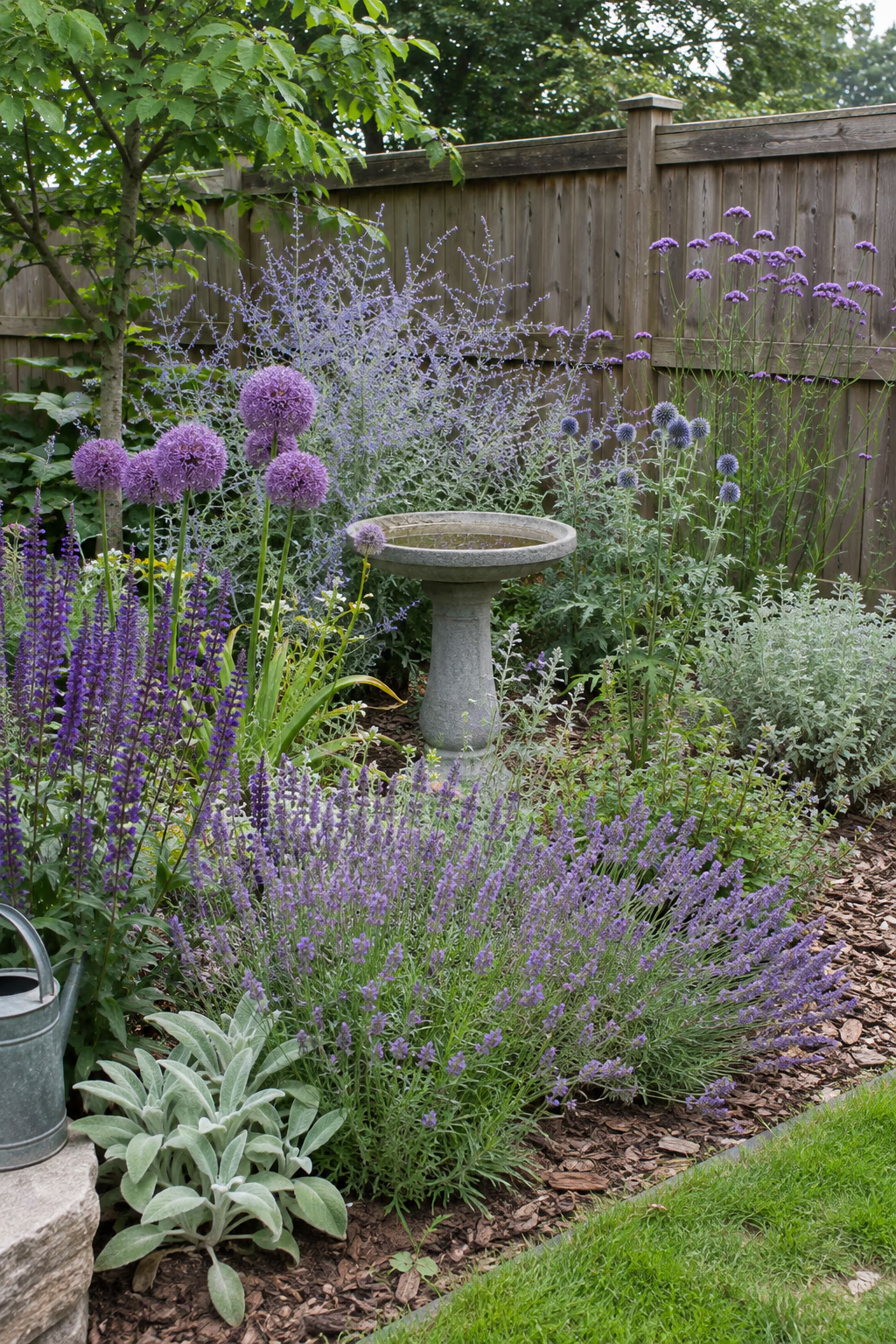
A calm, polished look that’s easy to plan
Sticking to a single color family takes the guesswork out of combining plants. A purple and blue garden, for example, might include salvia, lavender, alliums, Russian sage, globe thistle, and tall verbena, ranging from pale lilac to deep violet.
Because color is held steady, shape and texture do the work. Mix spiky salvias with round allium heads, airy verbena, and silvery foliage so the bed doesn’t look flat. Cool colors like blue and purple also tend to make a small yard feel more spacious and restful.
Plan for overlapping bloom times so the bed never runs out of its signature color. A neutral feature such as a gray stone birdbath or a weathered wood bench gives the eye a resting point.
4. Go Maximalist With a Jewel-Tone Island Bed
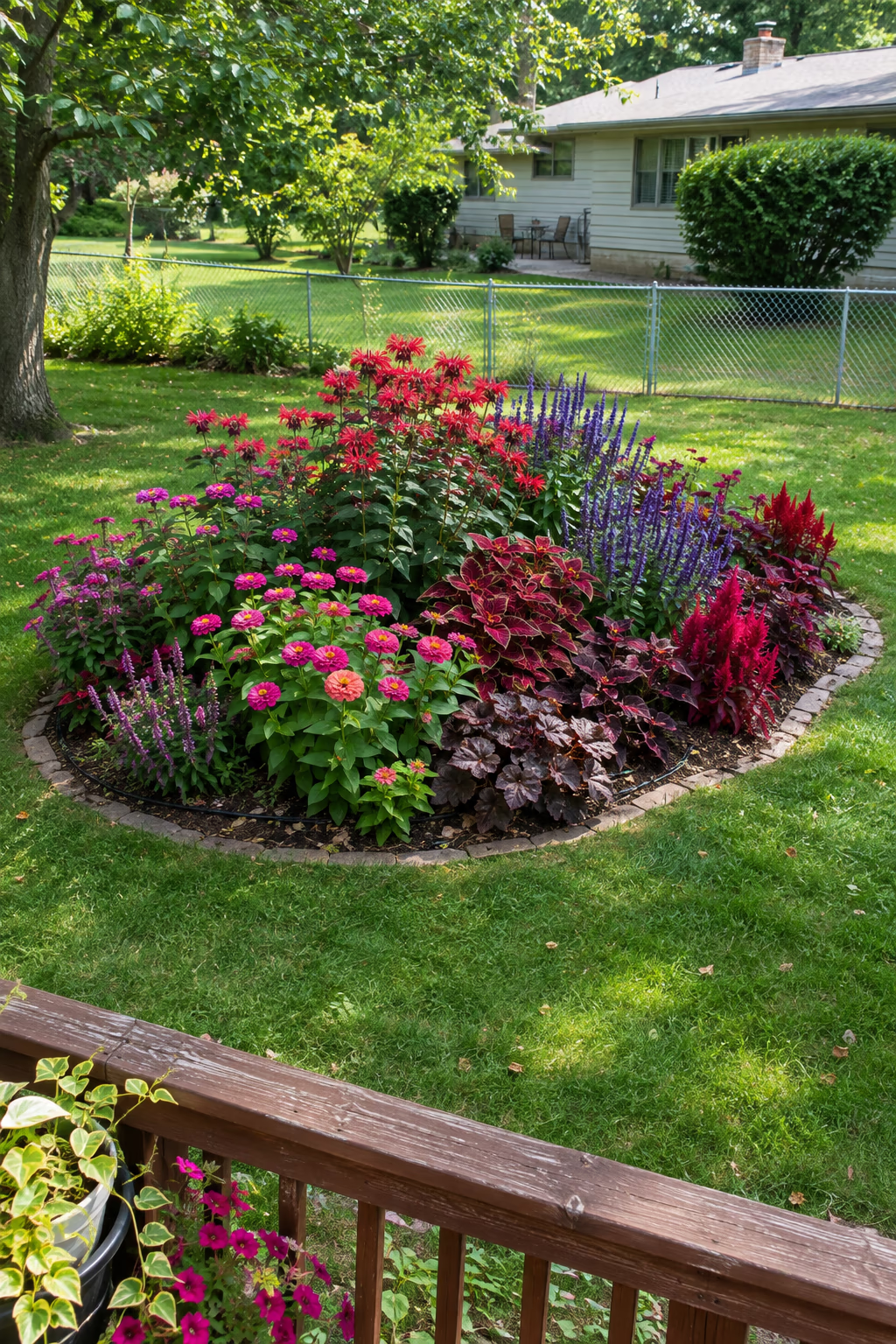
Dense, rich color you can walk all the way around
An island bed sits in the middle of the lawn rather than against a fence, so it can be viewed from every side. Cut a kidney or oval shape roughly 8 by 12 feet, place the tallest plants near the center, and step down to low edging plants around the rim.
For a jewel-tone palette, combine deep purple salvia, magenta zinnias, crimson bee balm, burgundy coleus, dark-leaved heuchera, and ruby celosia. Plant them closely so foliage touches by midsummer. That fullness is what makes the maximalist look feel lush instead of spotty.
Dense planting means more competition for water and nutrients. Work 2 to 3 inches of compost into the soil before planting and keep a soaker hose snaked through the bed so the center gets watered without trampling.
5. Build a Classic Rose Garden Around a Birdbath
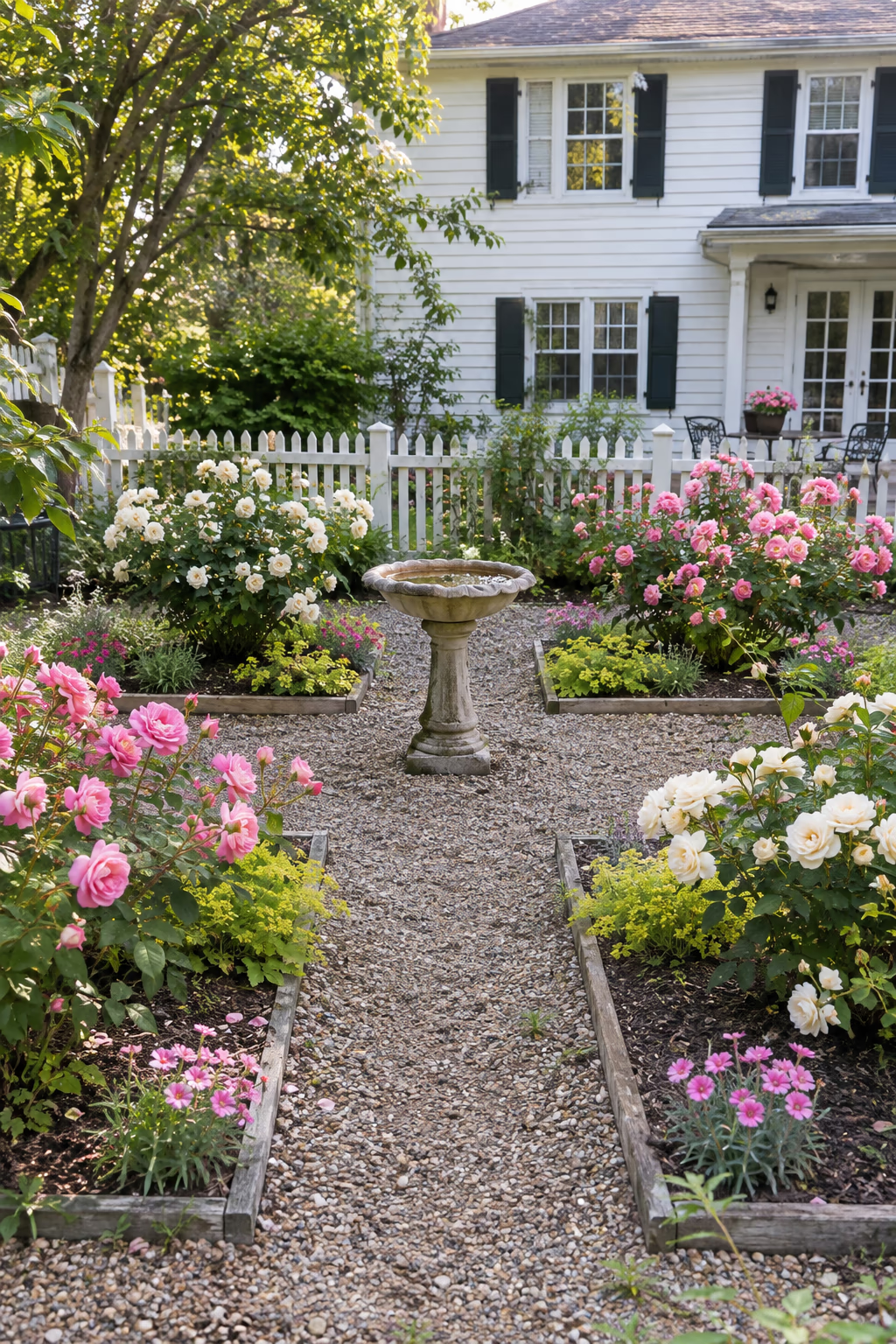
Timeless structure with a simple, symmetrical layout
A small rose garden can be laid out as four square or wedge-shaped beds around a central birdbath, with gravel or brick paths between them. A 16-by-16-foot area is enough for 8 to 12 shrub roses spaced about 3 feet apart.
Modern disease-resistant shrub roses make this far easier than it used to be. Choose them over fussy hybrid teas, pick a palette of two or three colors, and underplant with low companions like lady’s mantle, dianthus, or creeping thyme to soften the bare stems.
Roses need at least six hours of direct sun and good airflow. Water at the base rather than over the leaves, mulch well, and prune in late winter or early spring when the buds begin to swell.
6. Plant a Moon Garden That Glows After Dark
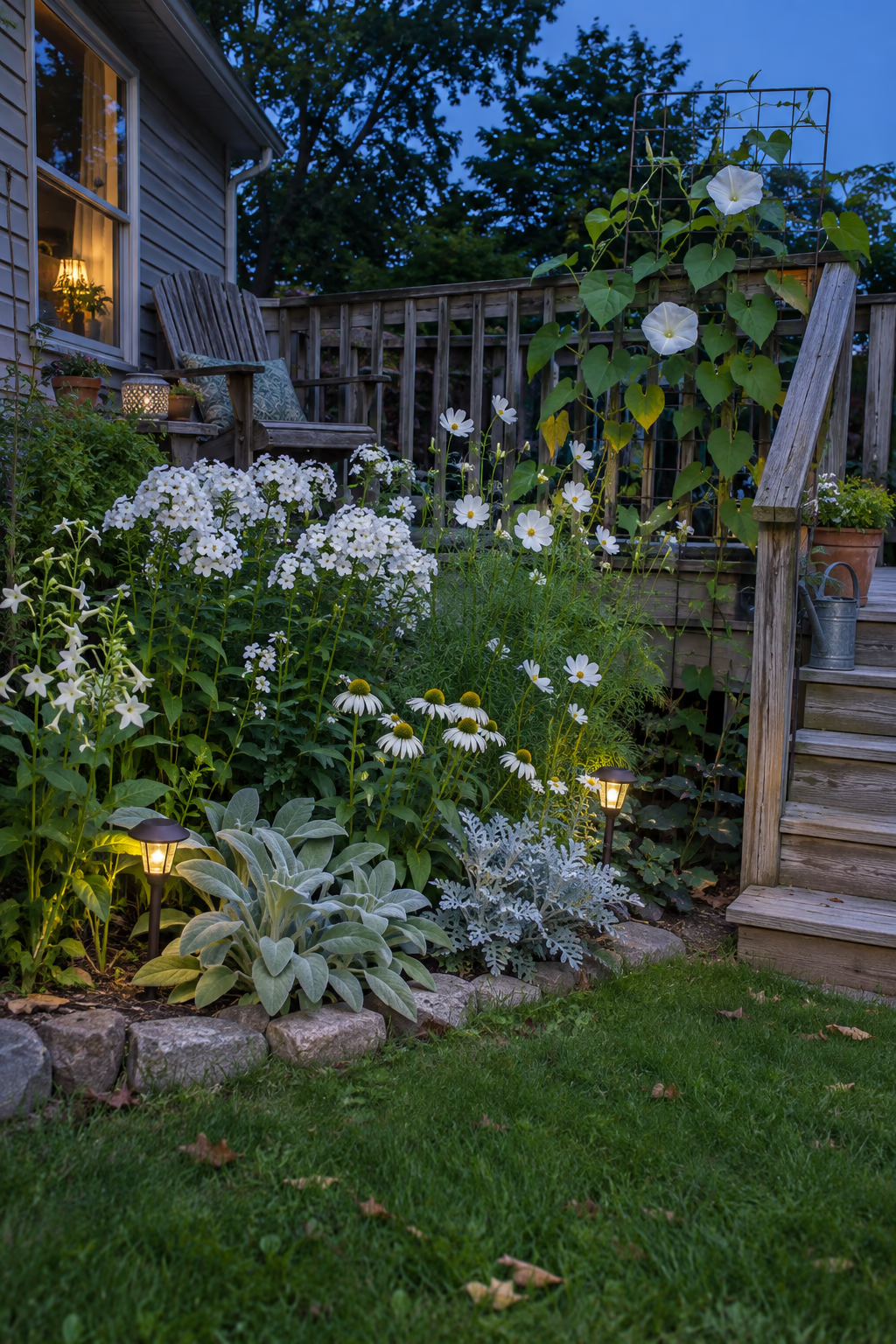
Pale flowers and scent for warm summer evenings
A moon garden is made of white flowers and silver foliage that seem to light up at dusk. Plant it near a patio or deck where you actually spend evenings, using white garden phlox, flowering tobacco, white cosmos, four o’clocks, and white coneflowers, edged with lamb’s ear and dusty miller.
Many evening bloomers are also fragrant. Flowering tobacco releases its scent at night, and moonflower vine opens its large white blooms in the evening when trained up a simple string or wire support.
Moonflower and four o’clock seeds are toxic if eaten, so site them away from areas where children or pets play. A few low solar path lights can add a soft glow without overpowering the flowers.
7. Grow a Dahlia Patch for Late-Summer Drama
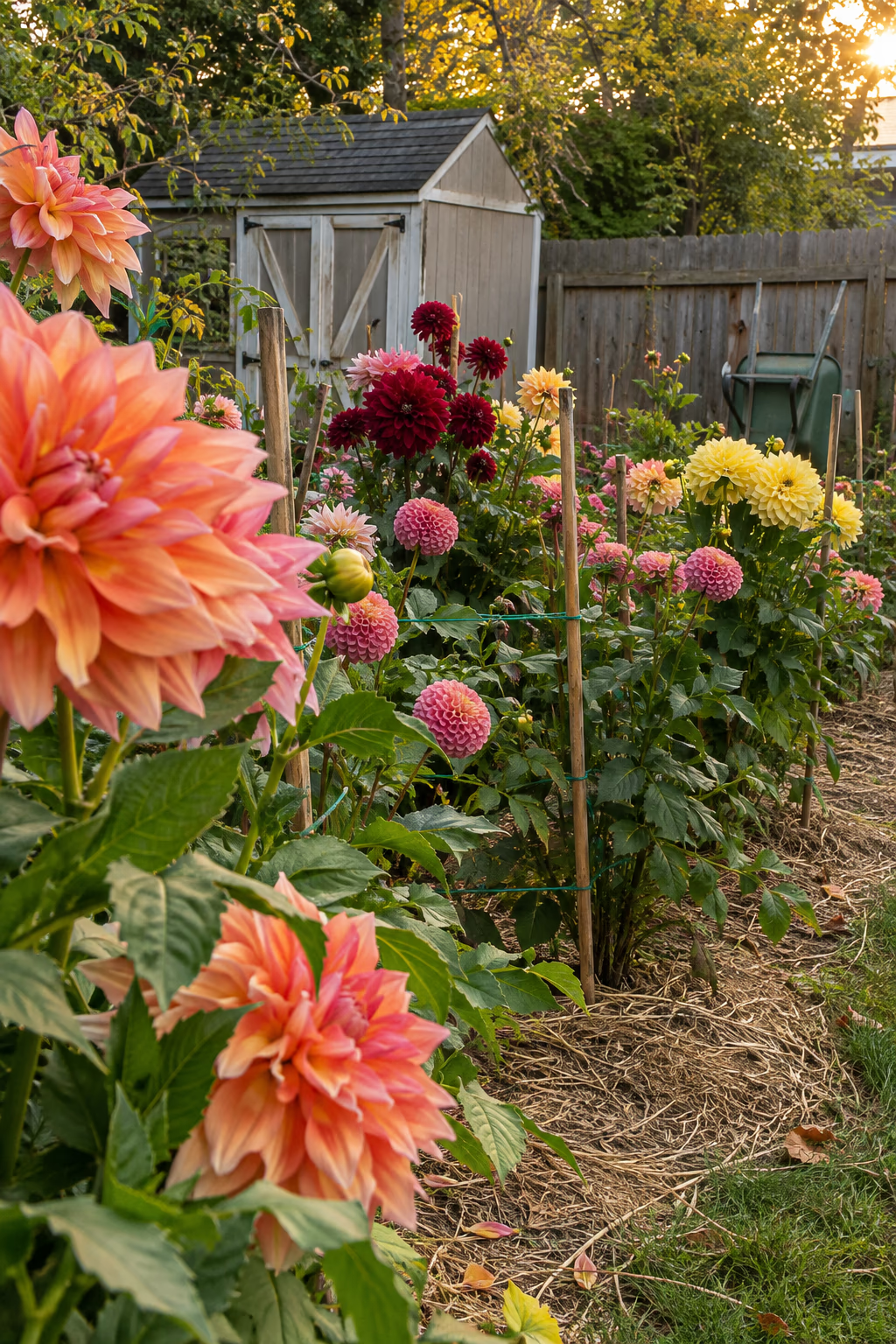
Big, bold blooms just when the garden starts to fade
Dahlias come in nearly every size and form, from small pompons to dinner-plate blooms 10 inches across. Give them a dedicated sunny bed and plant tubers about 4 to 6 inches deep after your last frost, once the soil has warmed.
Set a sturdy stake beside each tuber at planting time so you don’t spear it later, and tie the stems as they grow. Pinching the main stem once the plant has three or four sets of leaves produces a bushier plant with more flowers.
Dahlias are only reliably winter-hardy in the warmest parts of the country, roughly USDA zones 8 to 10. Elsewhere, dig the tubers after the first frost blackens the foliage and store them in a cool, frost-free spot in barely damp peat or wood shavings.
8. Tuck a Bench Into a Flower-Filled Garden Room
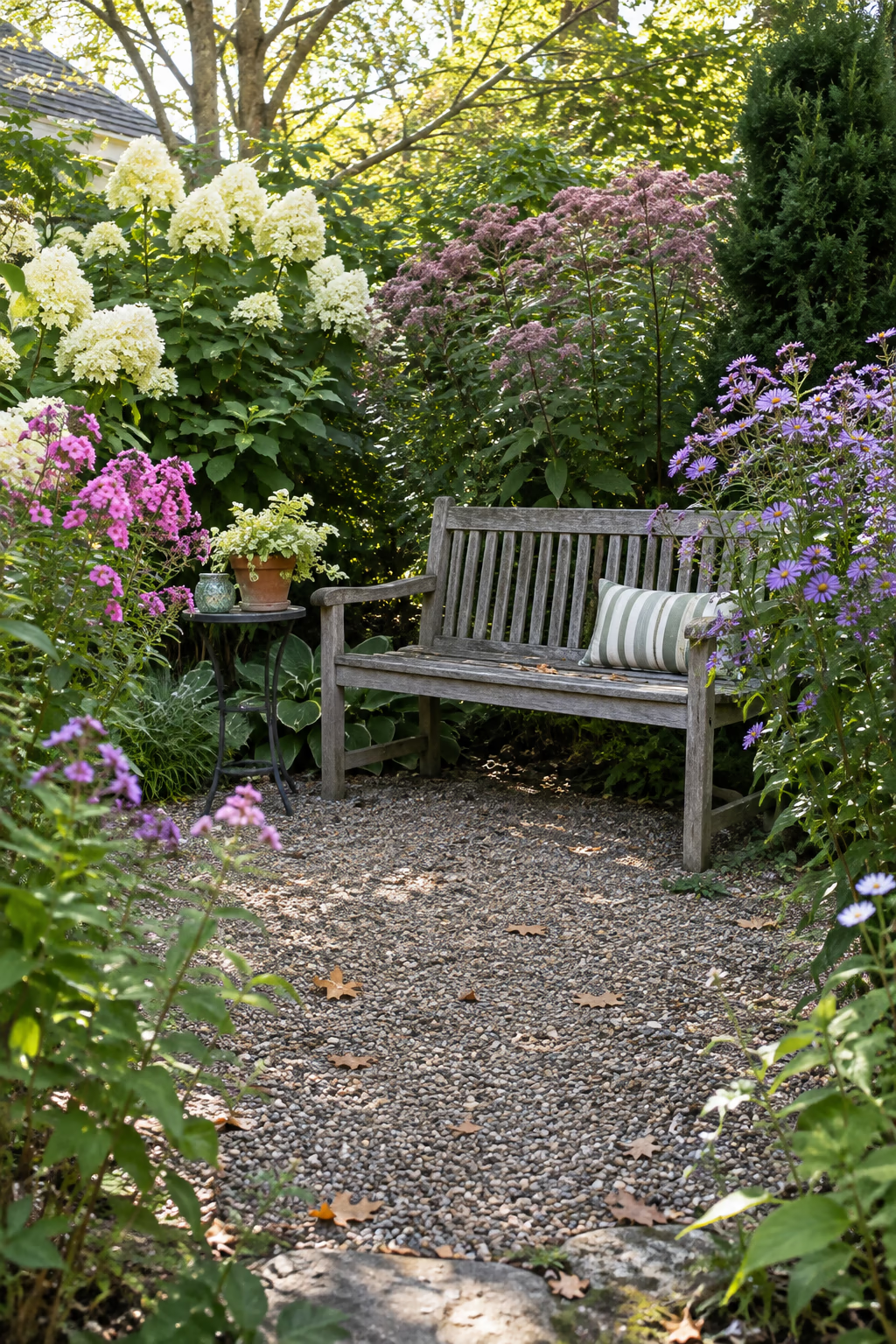
A private hideaway surrounded by blooms
A garden room is simply a small, enclosed space defined by plants. Mark out an area around 10 by 10 feet, lay a gravel or flagstone floor, and set a bench facing the best view. Surround it on two or three sides with tall perennials and flowering shrubs such as panicle hydrangea, phlox, Joe Pye weed, and tall asters.
The feeling of enclosure is what makes it special. Plants 4 to 6 feet tall around a seat at knee height create privacy without walls, and the room changes through the season as different plants peak.
Leave a clear opening wide enough to walk in comfortably, at least 3 feet. Tall perennials die back in winter, so add one or two evergreen shrubs if you want the room to keep its shape year-round.
9. Surround a Small Pond With Moisture-Loving Blooms
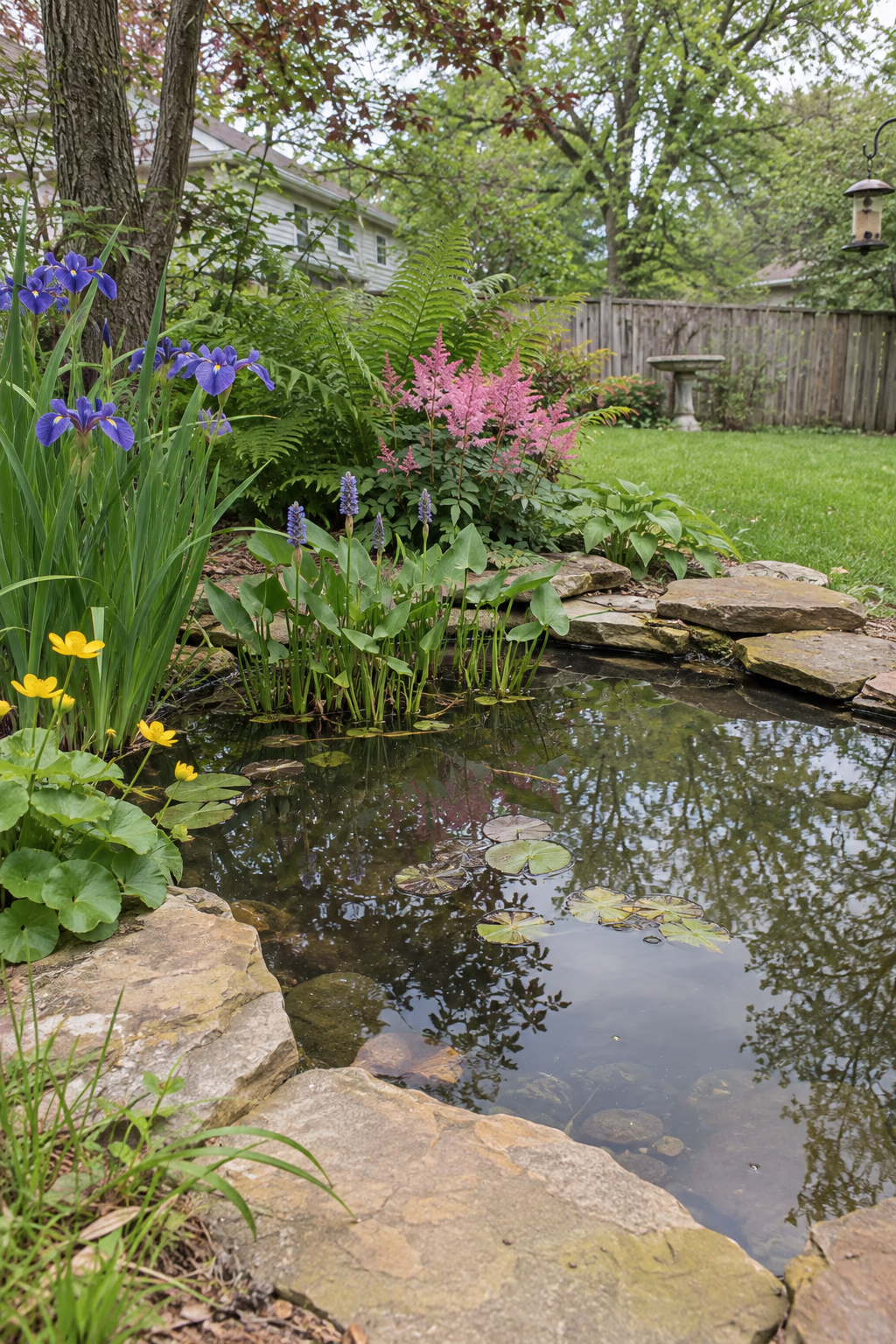
Water and flowers make the yard feel alive
Even a preformed pond liner 4 to 6 feet across can become a backyard focal point. Plant its margins with flowers that love wet feet, such as Louisiana iris, marsh marigold, and pickerelweed, then transition to astilbe, ferns, and daylilies on the drier ground beyond.
Edge the pond with flat stones that overlap the liner so plants can spill over them and hide the plastic rim. Birds, frogs, and dragonflies will find the water quickly, which brings extra life to the surrounding flowers.
Many towns have rules for water features over a certain depth, and some require a fence or cover. Check local codes before digging, keep the pond in partial sun to limit algae, and call 811 to locate buried utilities.
10. Plant a Fragrance Garden Near the Back Door
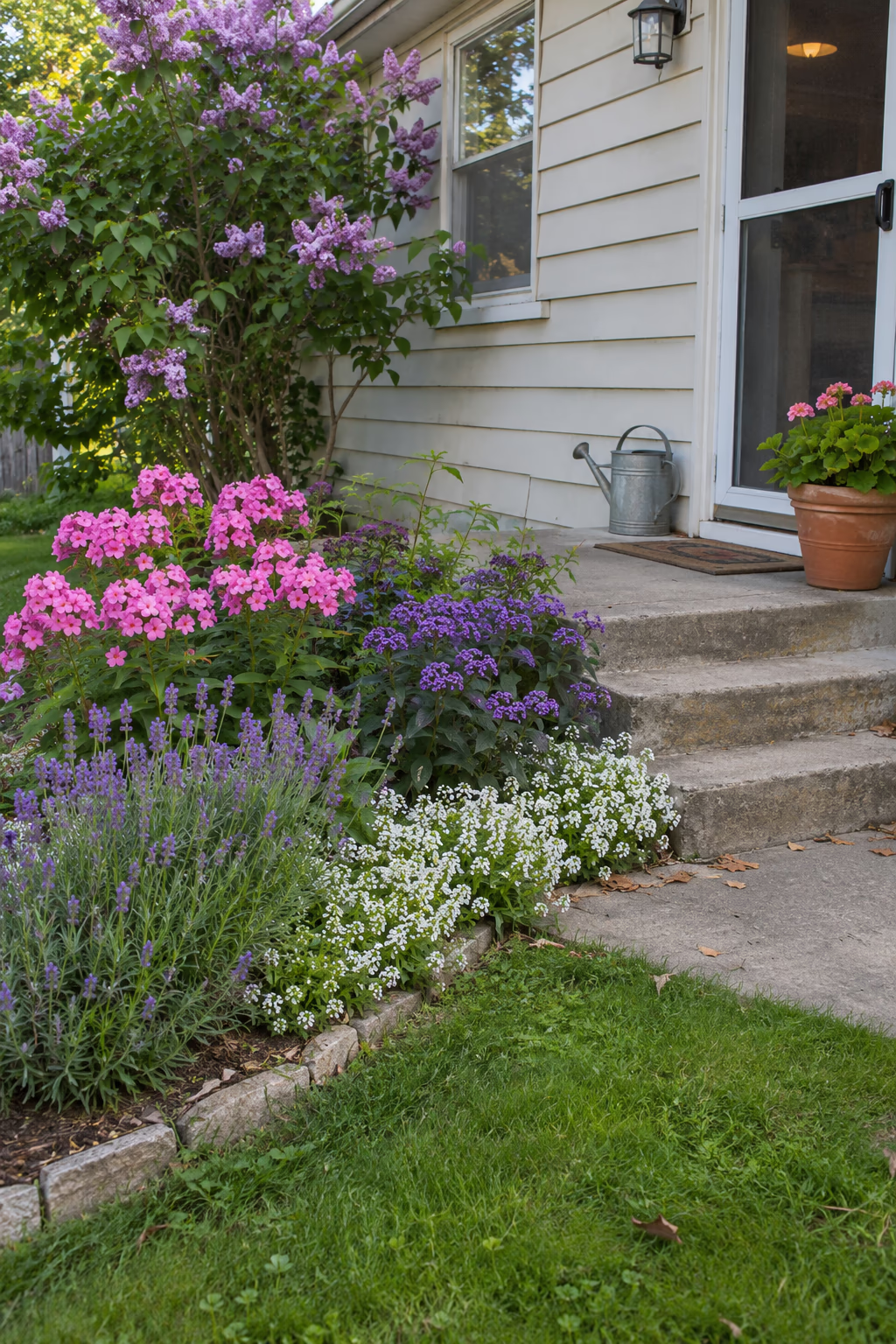
Scent you notice every time you step outside
Fragrance is easy to overlook when choosing flowers, but placing scented plants where you pass daily makes a big difference. Line the back steps or a strip beside the patio with lavender, garden phlox, heliotrope, stock, and sweet alyssum, and add a lilac or mock orange shrub nearby.
Layer scents through the season so something is always perfuming the air: lilacs in spring, peonies and pinks in early summer, phlox and lilies in midsummer, and sweet autumn clematis late in the year.
Keep strongly scented plants a short distance apart so their fragrances don’t compete. Sweet autumn clematis can spread aggressively in some regions, so check local guidance and prune it hard each spring.
11. Back the Fence Line With Sunflowers and Hollyhocks
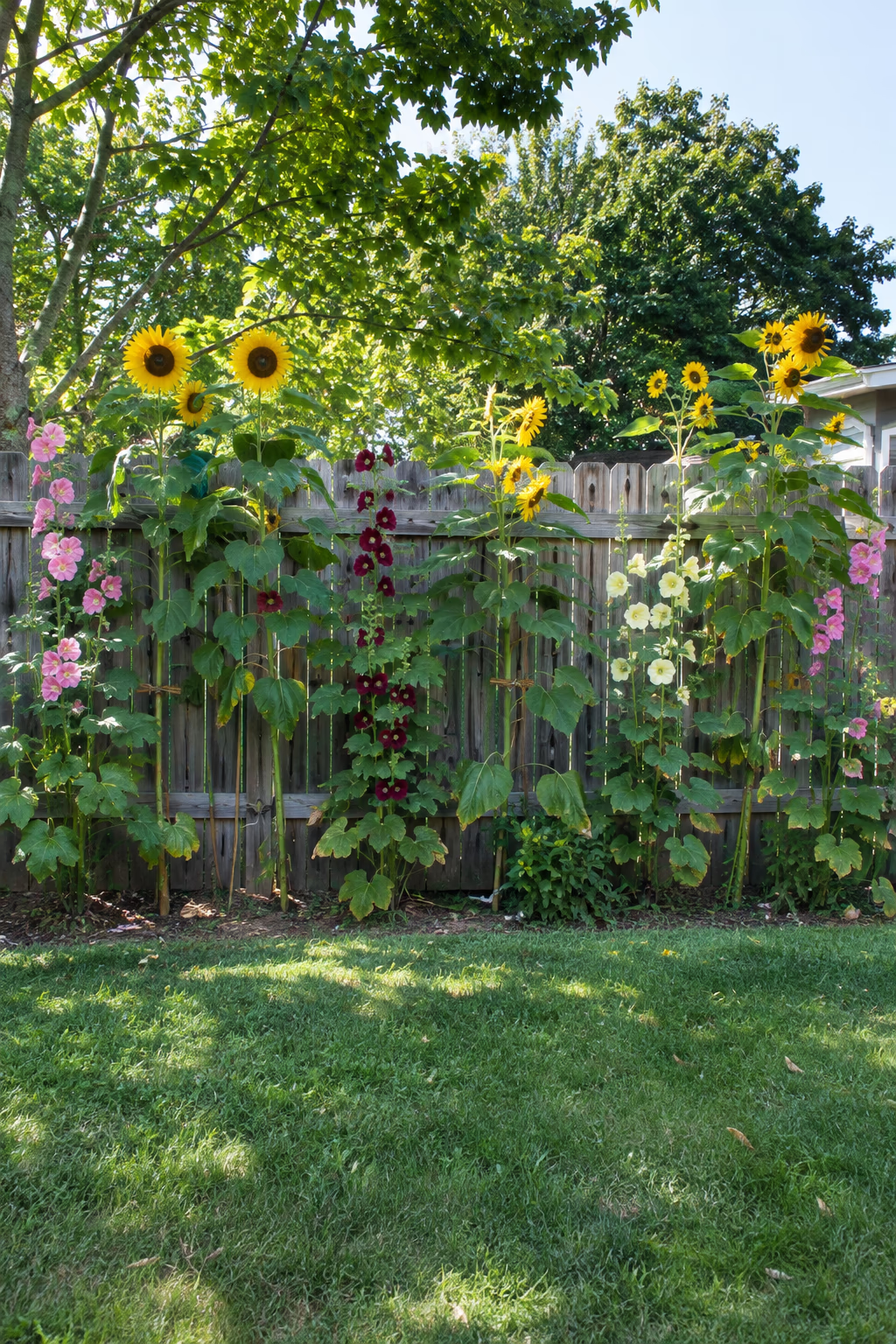
Tall, cheerful color that hides a plain fence
A bare wood or chain-link fence becomes a wall of flowers when you plant towering annuals and biennials along it. Sow tall sunflowers 6 to 10 feet high directly in the ground after frost, and alternate them with clumps of hollyhocks in pink, maroon, and pale yellow.
The fence gives tall stems shelter from wind and something to lean on. A strip just 2 feet deep is enough, and you can tie hollyhocks loosely to the fence to keep them upright during storms.
Hollyhocks are biennial or short-lived and prone to rust, a fungal disease that spots the lower leaves. Remove affected foliage, give plants good airflow, and let a few seed heads drop so new plants keep coming. Sunflowers do best along a fence that faces south or west.
12. Design a Butterfly Garden With Host Plants
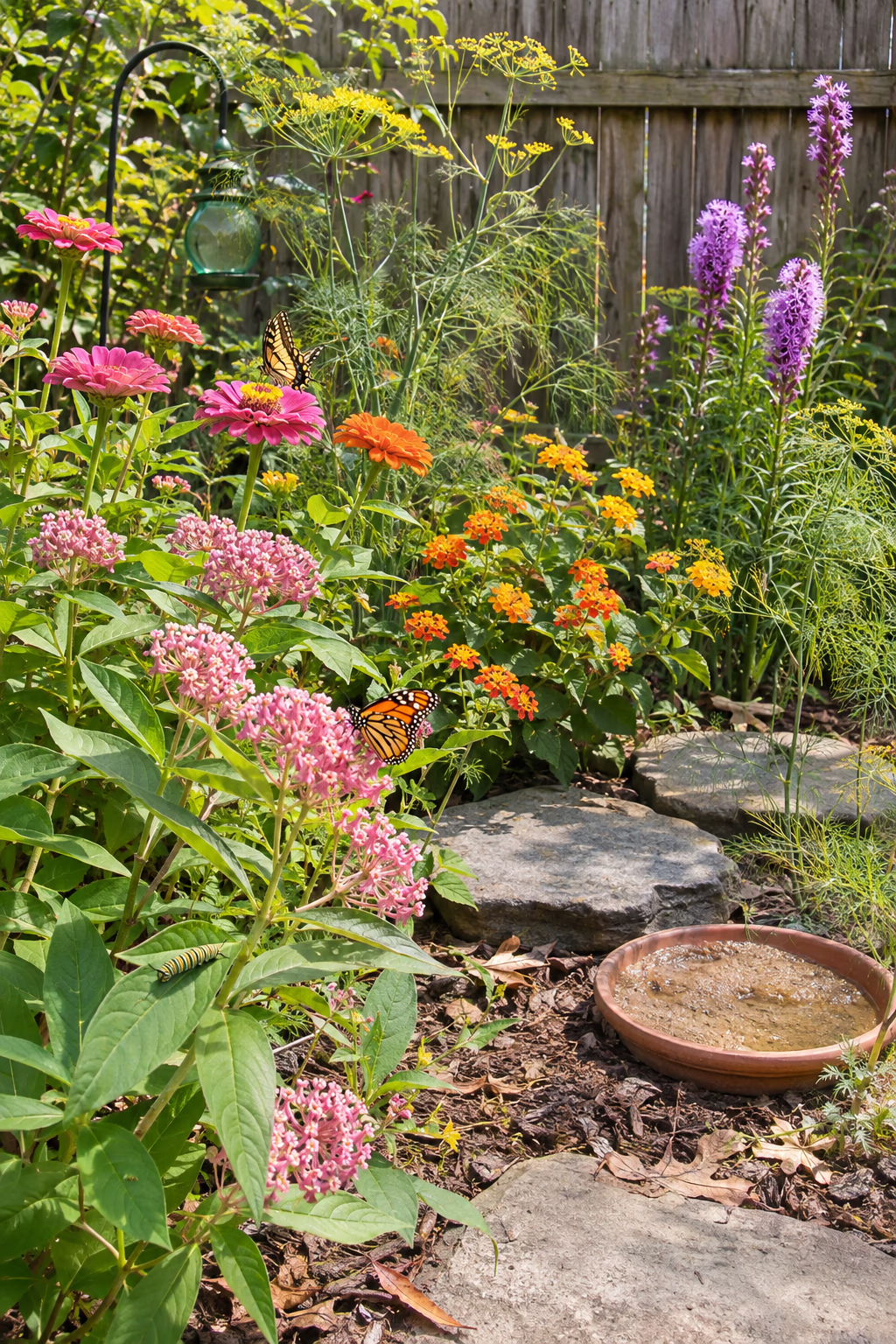
Feed caterpillars as well as adult butterflies
Nectar flowers attract butterflies, but host plants are what let them raise the next generation. Pair nectar favorites like zinnias, lantana, and blazing star with host plants such as native milkweed for monarchs and parsley, dill, or fennel for black swallowtails.
Add a few flat stones in full sun where butterflies can bask on cool mornings, and a shallow dish of damp sand for puddling. Plant in sweeps of at least three of the same flower so butterflies can spot them easily.
Expect chewed leaves on host plants; that’s a sign the garden is working. Avoid insecticides, including those labeled as safe for bees, since many will still harm caterpillars.
13. Attract Hummingbirds With Tubular Red Flowers
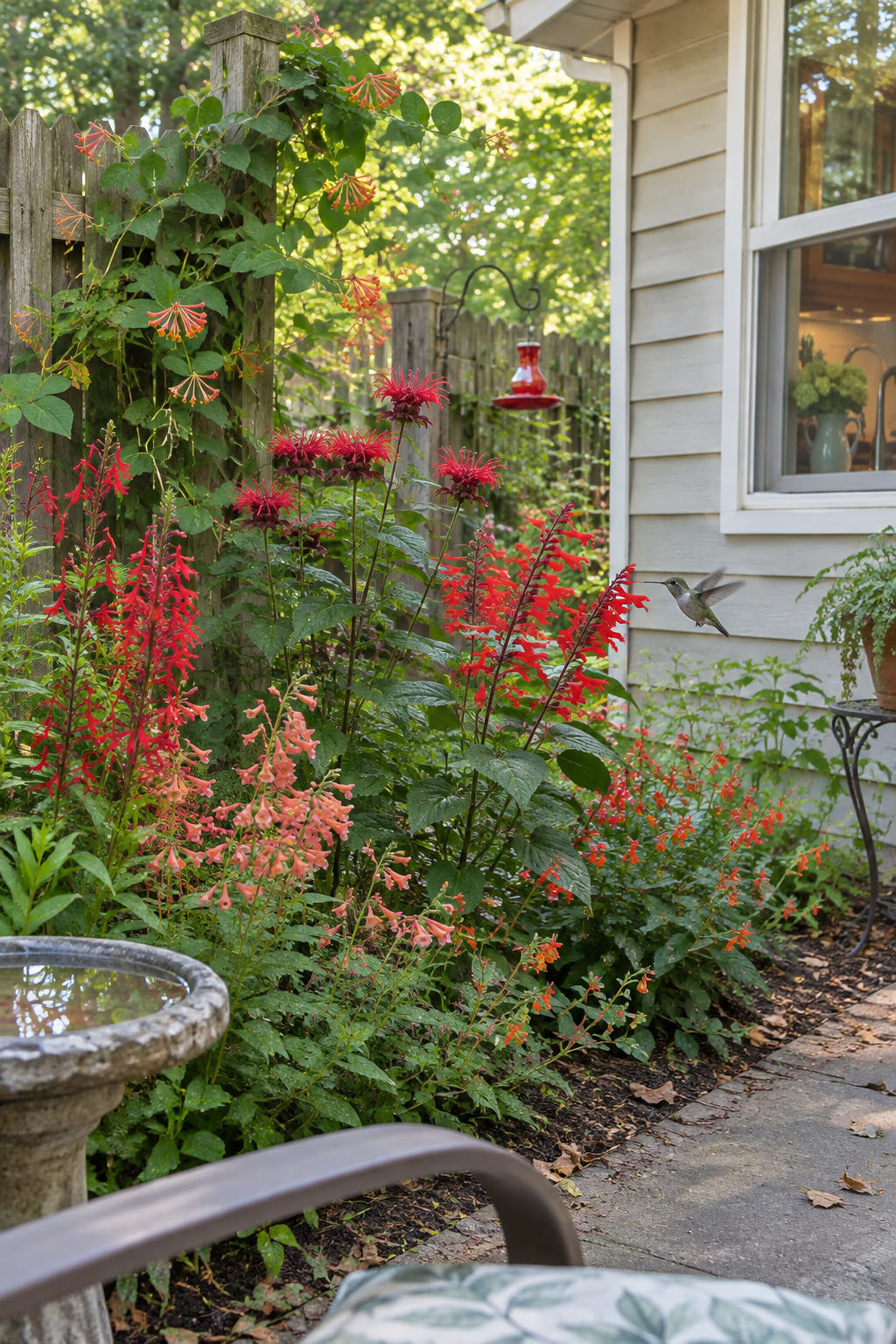
Bright blooms that bring tiny visitors up close
Hummingbirds favor tube-shaped flowers in red, orange, and hot pink. Plant a bed where you can watch from a window or chair, and include red salvia, bee balm, cardinal flower, penstemon, cuphea, and a native coral honeysuckle vine on a fence or post.
Group plants so something is in bloom from late spring through early fall, since hummingbirds return to reliable food sources. Leaving a few perches nearby, like a small shrub or a thin branch, gives them a place to rest between feedings.
Cardinal flower needs consistently moist soil, while salvia and penstemon prefer good drainage, so place each where it will be happiest. Skip the red dye if you also hang a feeder; plain sugar water works best.
14. Plan Nonstop Color From Spring Bulbs to Fall Asters
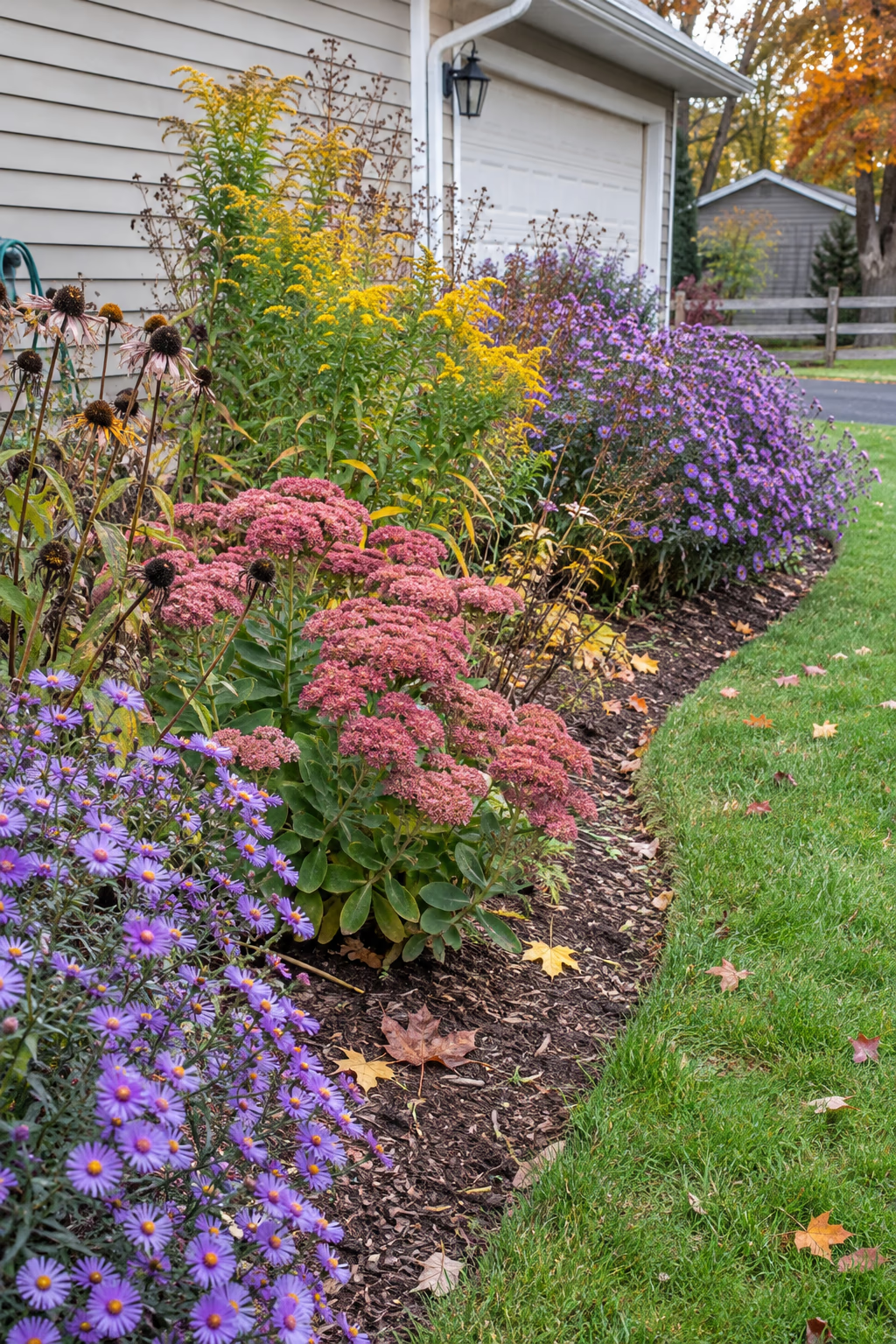
A garden that never has an off month
Many backyard flower gardens peak in June and then fizzle. To avoid that, plan in layers by season: crocus, daffodils, and tulips in early spring; alliums, iris, and peonies in late spring; coneflowers, daylilies, and phlox in summer; and asters, sedum, and goldenrod in fall.
Plant spring bulbs in fall among perennials that will emerge later and hide the fading bulb foliage. Keep a simple notebook or photo log of what blooms each month so you can spot the gaps and fill them.
Annuals such as zinnias and lantana are a quick fix for midsummer lulls while you wait for perennials to fill in. Remember that bulb foliage must be left until it yellows so the bulb can store energy for next year.
15. Mix Companion Flowers Into the Vegetable Garden
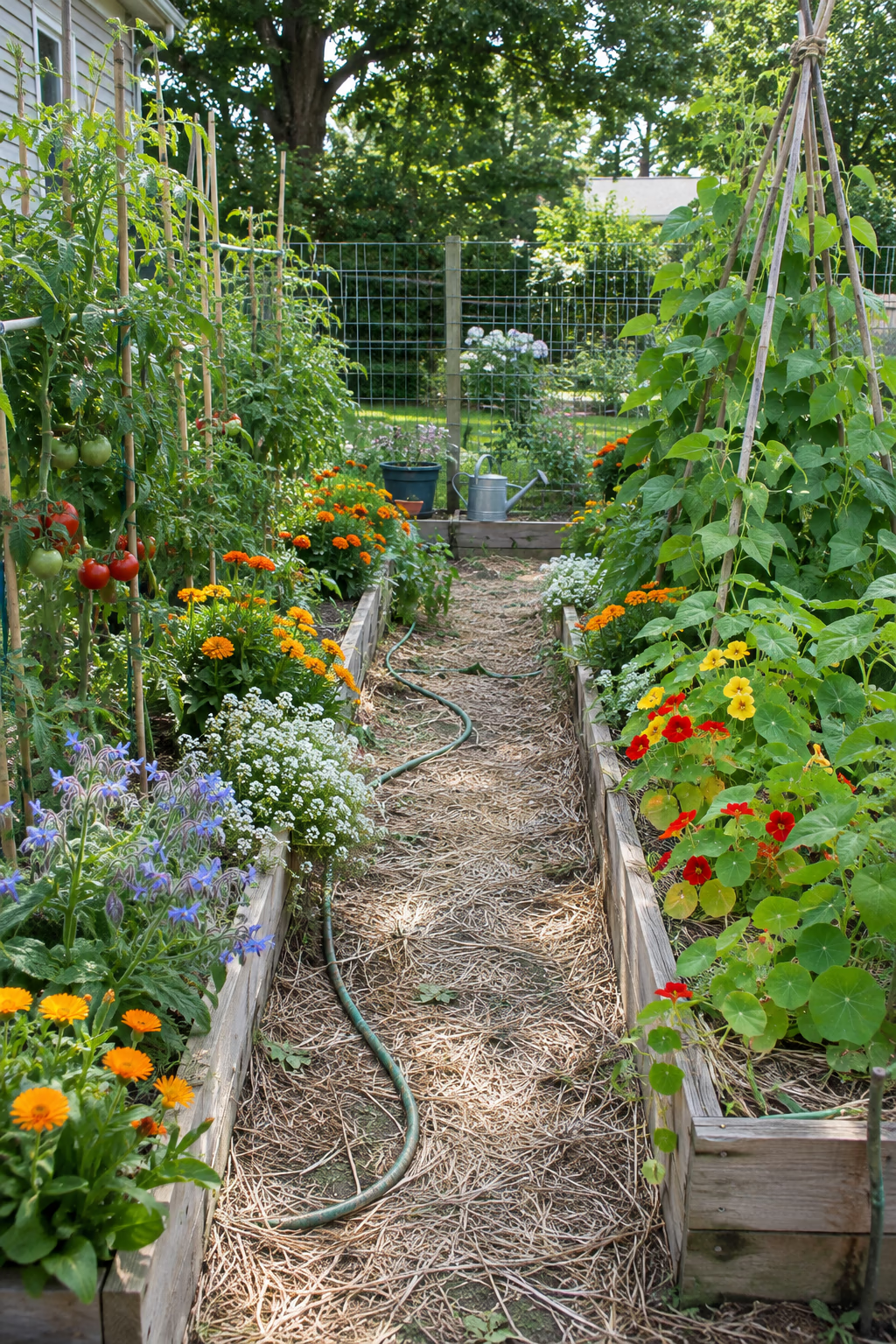
Pretty, useful blooms between the tomatoes and beans
Flowers and vegetables grow happily together. Edge raised vegetable beds with marigolds and sweet alyssum, tuck nasturtiums along the borders, and plant calendula, borage, and zinnias at the ends of rows.
These flowers attract pollinators that help squash and cucumbers set fruit, and sweet alyssum draws in hoverflies whose larvae eat aphids. Nasturtium flowers and leaves are edible too, adding a peppery bite to salads.
Keep companion flowers at the edges so they don’t shade or crowd your crops. Borage and calendula reseed readily, which is handy but means pulling a few volunteer seedlings each spring.
16. Lay Out a Formal Parterre With Boxwood and Annuals
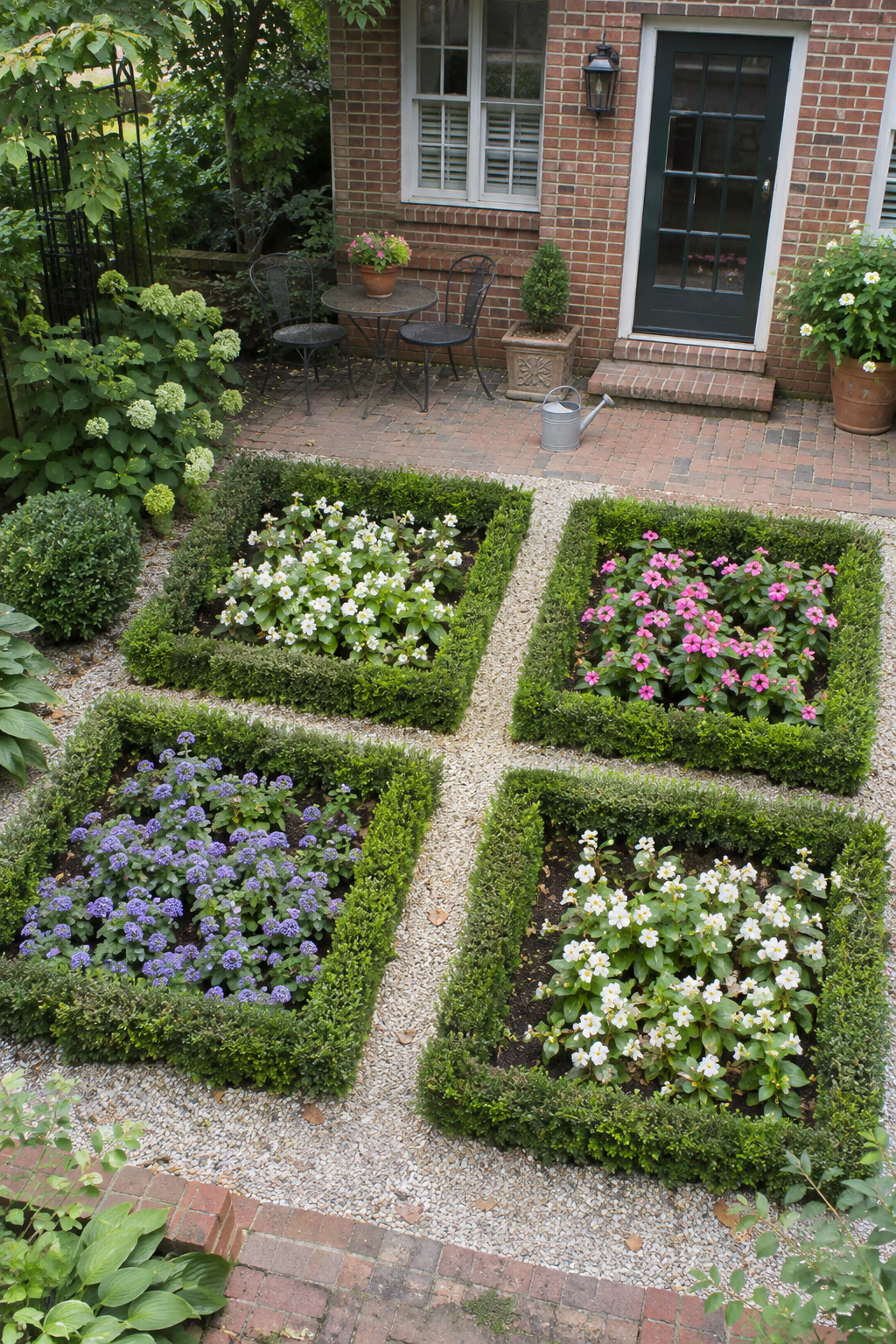
Crisp green geometry filled with seasonal color
A parterre uses low clipped hedges to outline geometric beds, which are then filled with flowers. On a backyard scale, a 12-by-12-foot square divided into four smaller beds by gravel paths works well, each outlined with dwarf boxwood kept about 12 to 18 inches tall.
Fill the compartments with one annual each, such as white begonias, pink vinca, or blue ageratum, and change them each season. The evergreen hedges keep the design clear even in winter when the beds are empty.
Boxwood is slow-growing and can be expensive to buy in quantity, and boxwood blight has become a problem in some areas. Look for blight-resistant varieties or alternatives like dwarf inkberry holly, and trim the hedges once or twice a year.
17. Terrace a Sloped Yard With Stone-Walled Flower Beds
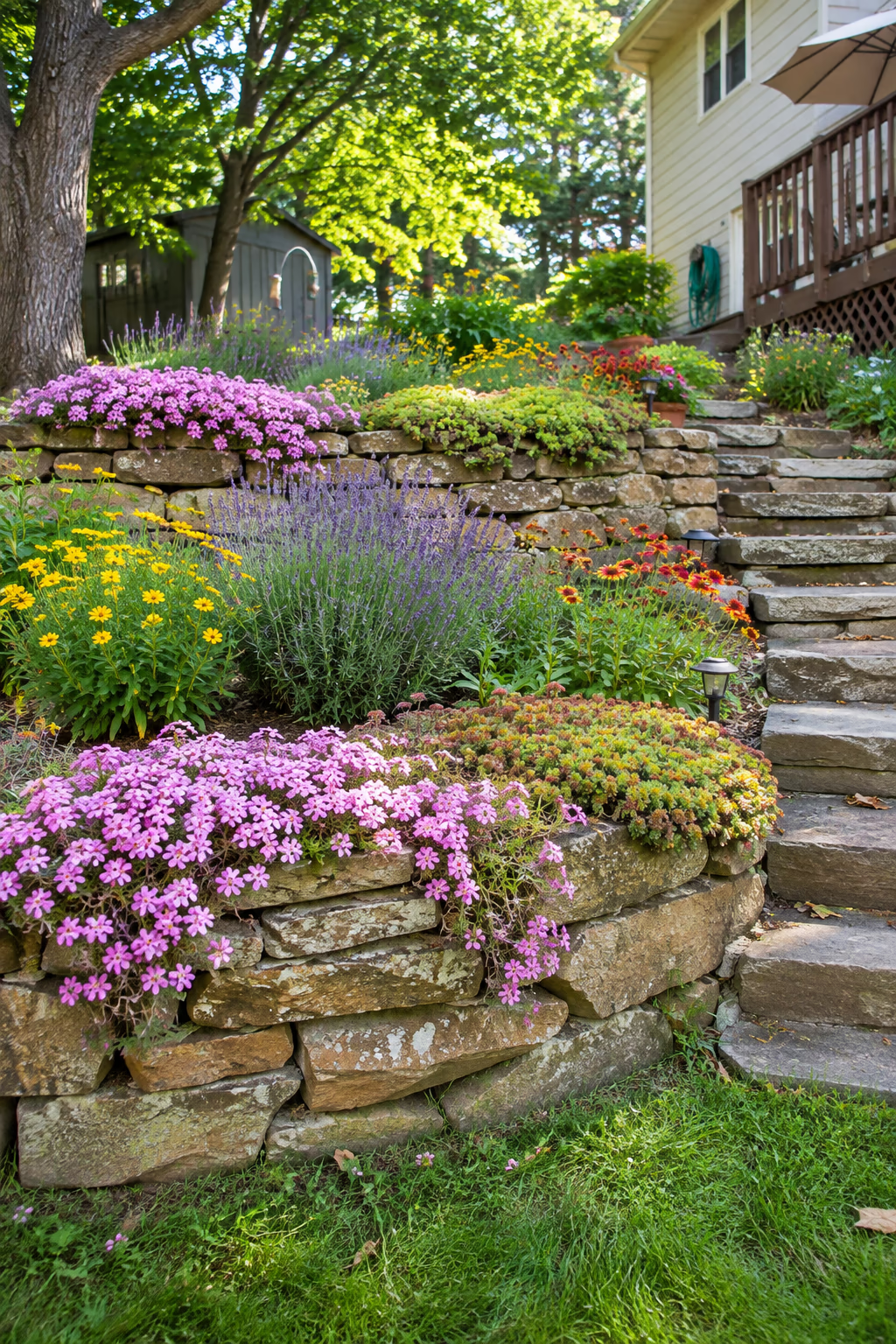
Turn a hard-to-mow hillside into tiers of bloom
A sloping backyard can be stepped into level beds with short retaining walls of stacked stone or concrete blocks. Each terrace holds soil and water better than the open slope, giving flowers a much easier start.
Plant the wall edges with trailing or mounding flowers like creeping phlox, sedum, and moss rose so they spill over the stone, and fill the level beds behind with coreopsis, lavender, and blanket flower.
Walls under about 3 feet are often manageable as a DIY project with a compacted gravel base and drainage behind the stones. Taller walls may need a permit or an engineer, so check local codes before starting.
18. Plant a Drought-Tolerant Flower Garden in Gravel
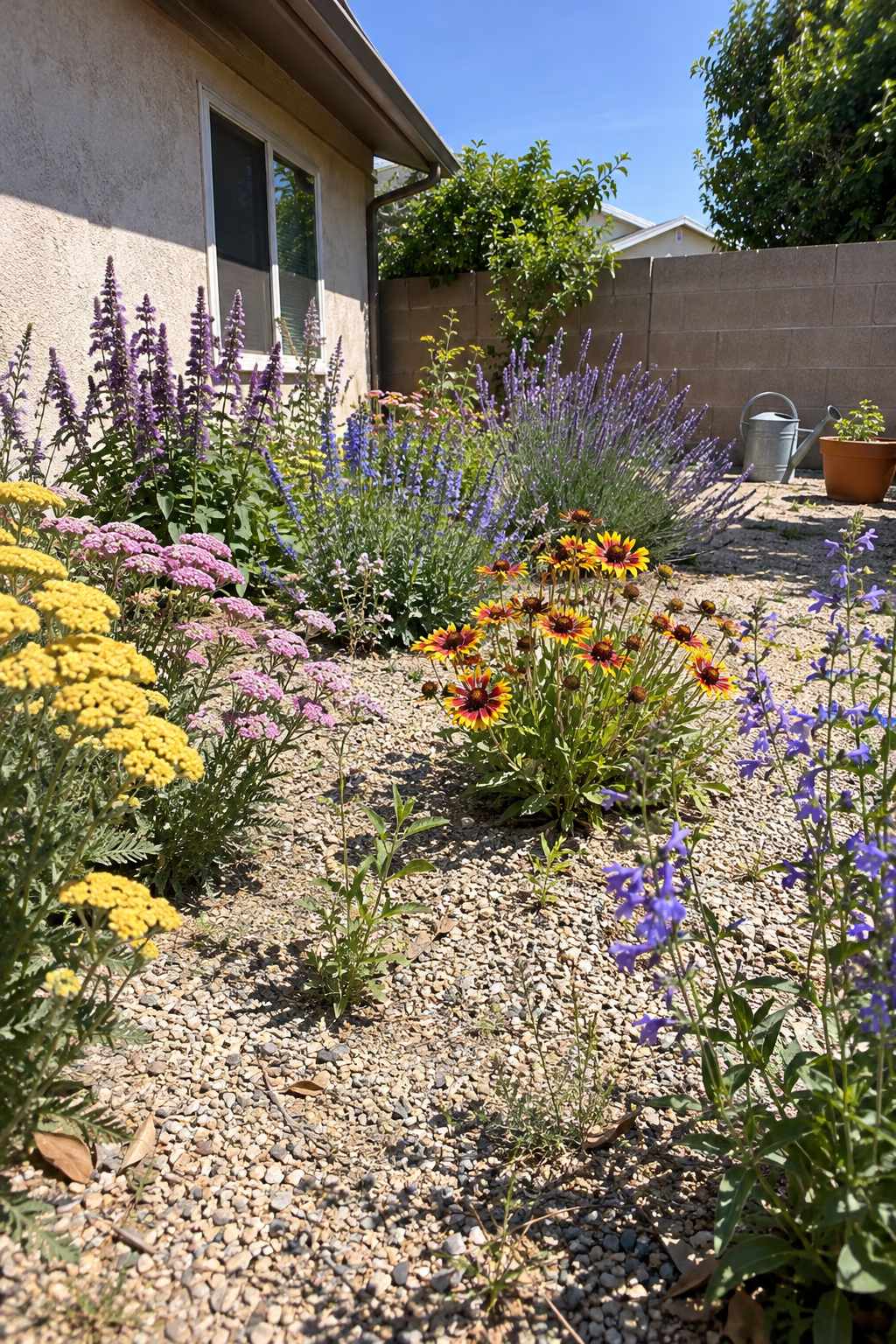
Color that shrugs off heat and dry spells
A gravel garden suits hot, sunny spots where traditional beds struggle. Loosen the soil, mix in some coarse grit if it’s heavy clay, plant drought-tolerant flowers, and finish with 2 to 3 inches of pea gravel or crushed stone as mulch.
Good choices include yarrow, lavender, agastache, salvia, penstemon, blanket flower, and sedum. The gravel keeps crowns dry, reflects heat, and discourages weeds, while the plants self-seed lightly into the gaps for a natural look.
Drought-tolerant doesn’t mean no water at first. Water new plants regularly through their first summer until roots are established, then cut back to deep soakings only during long dry spells.
19. Brighten Shade Under Trees With Woodland Flowers
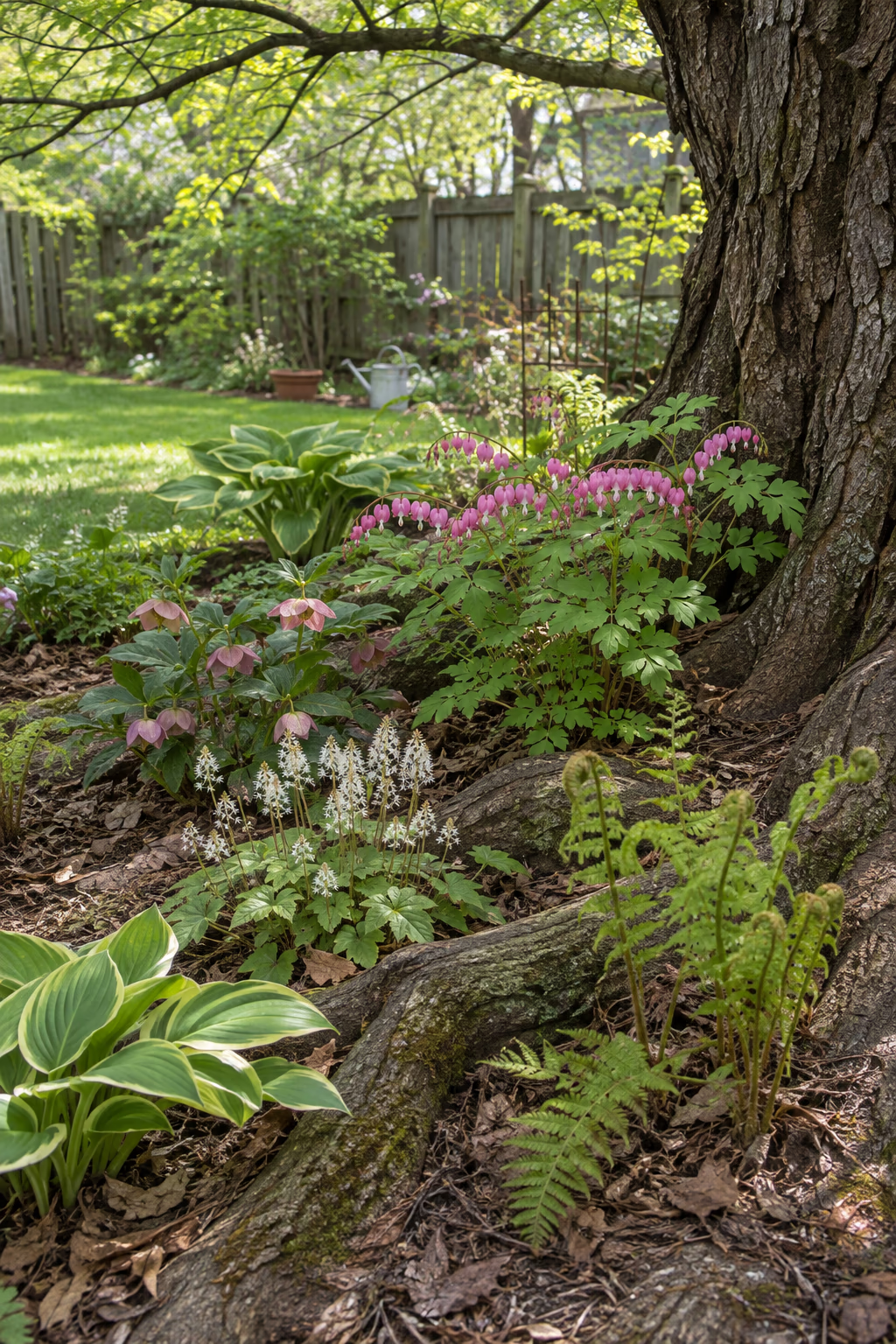
Soft blooms for the spots that never get full sun
The shady ground under a mature tree is often bare, but plenty of flowers thrive there. Plant hellebores for late-winter bloom, bleeding heart and foamflower for spring, and astilbe and impatiens for summer, with hostas and ferns to fill in.
Choose small plants or plugs and dig individual pockets between roots rather than tilling. Light-colored flowers in white, pale pink, and lavender stand out best in dim light.
Don’t pile soil more than an inch or two deep over tree roots, since it can stress the tree. Shade gardens under trees also dry out quickly because roots take most of the water, so plan on extra watering in summer.
20. Naturalize Spring Bulbs Into the Lawn
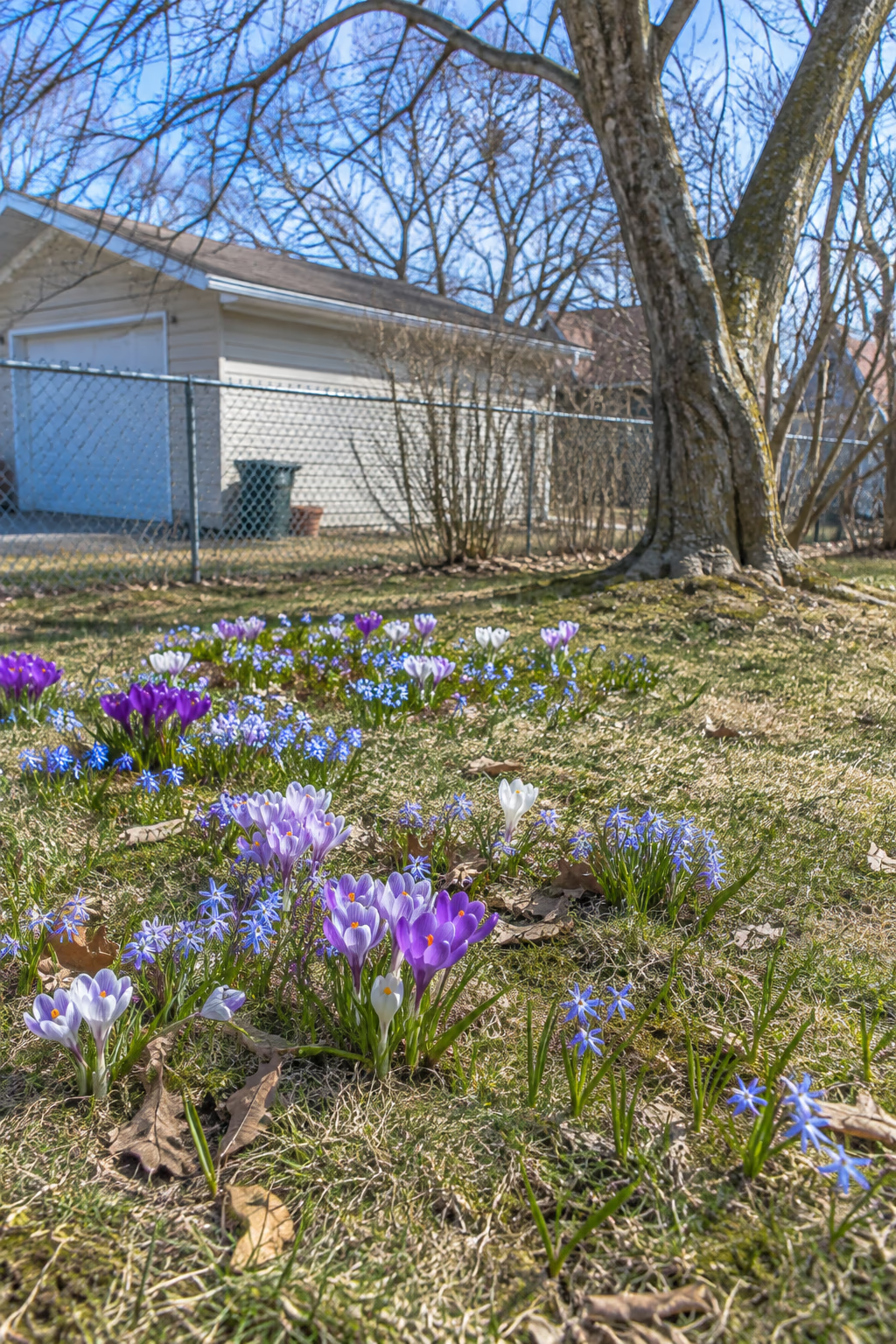
A surprise carpet of blooms before the first mowing
Small early bulbs can grow right through the grass. In fall, scatter handfuls of crocus or glory-of-the-snow over an area of lawn, plant them where they land, and replace the turf over each one. In late winter, the lawn lights up with purple, white, and blue.
This works best in areas of lawn that you can leave unmown for a few weeks in spring, such as under a deciduous tree or along the back fence. Over the years, the bulbs multiply into larger drifts.
Wait to mow until the bulb foliage begins to yellow, usually about six weeks after blooming. Avoid Siberian squill in parts of the Midwest and Northeast where it’s considered invasive.
21. Turn a Soggy Low Spot Into a Rain Garden
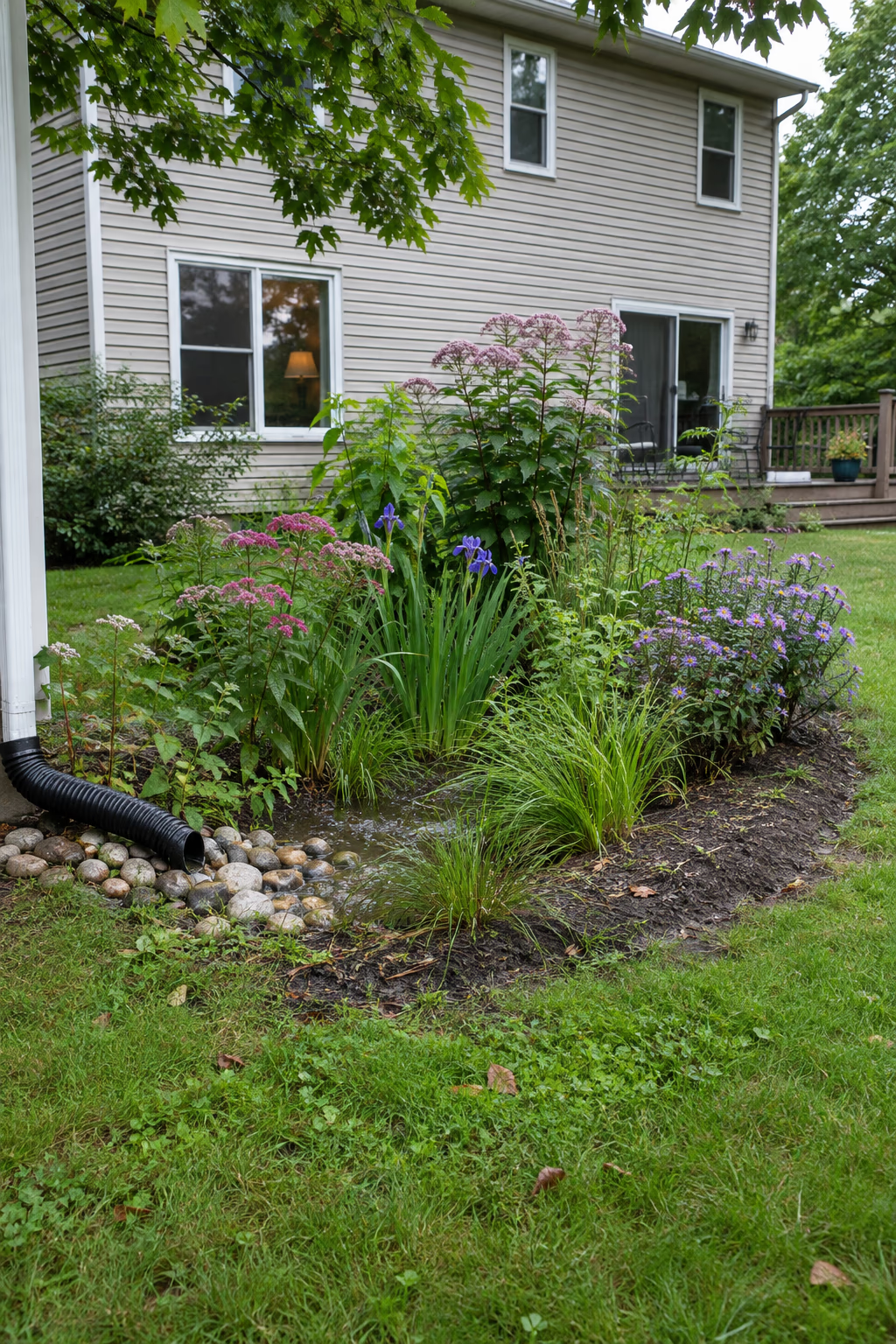
Solve a drainage problem with flowers
A rain garden is a shallow, planted basin that catches runoff from a downspout or slope and lets it soak in. Dig a depression about 4 to 8 inches deep in a spot at least 10 feet from your foundation, and shape a low berm on the downhill side.
Plant native flowers that tolerate both wet and dry periods, like swamp milkweed, blue flag iris, Joe Pye weed, New England aster, and sedges. Their deep roots help water drain and keep the soil open.
A rain garden should drain within a day or two after rain, so test how fast your soil absorbs water first. Call 811 before digging, and some municipalities even offer rebates or free plans for rain gardens.
22. Grow a Pet-Safe Flower Garden for Dogs and Cats
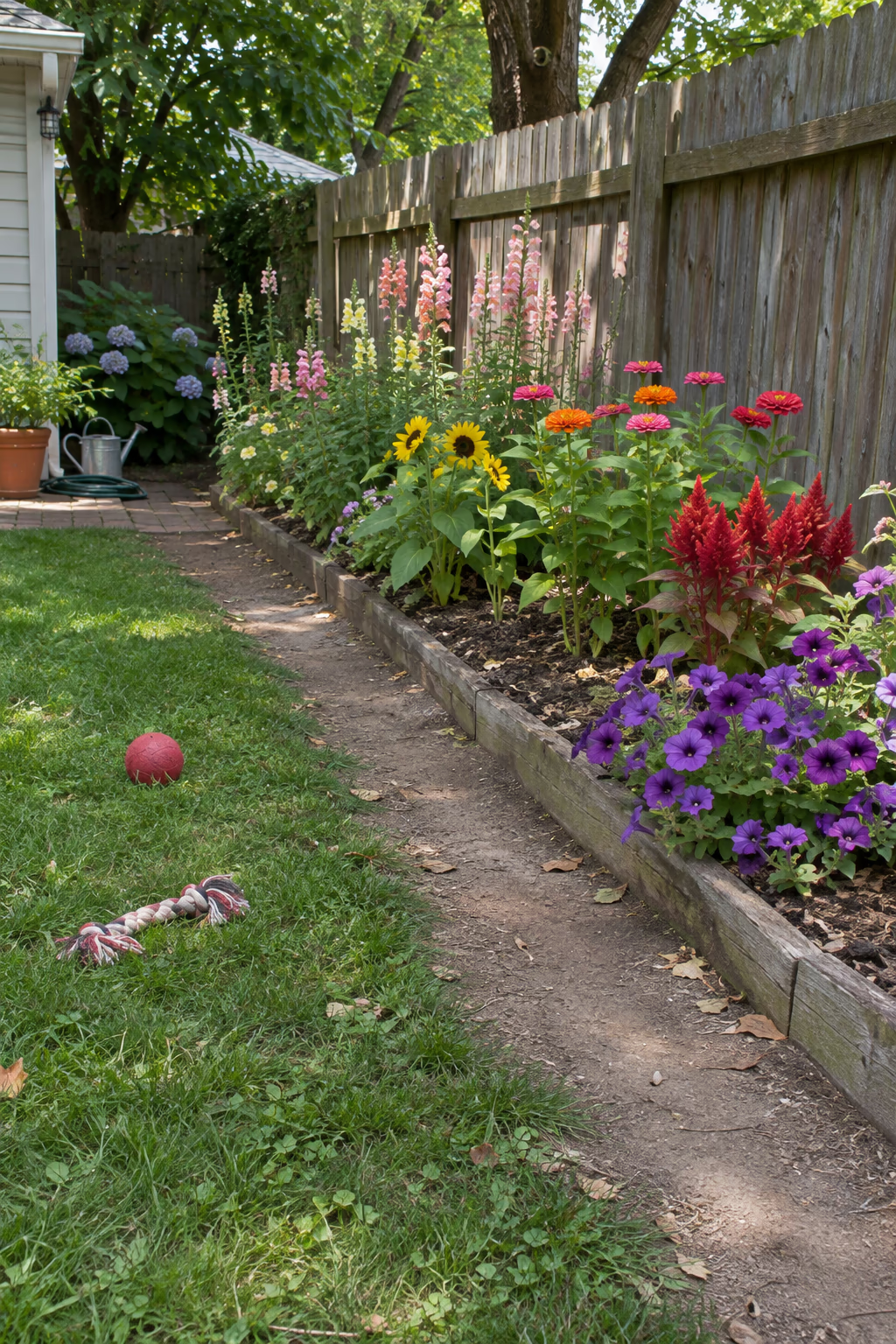
Beautiful flowers you don’t have to worry about
If pets share the backyard, choose flowers known to be nontoxic, such as snapdragons, zinnias, sunflowers, petunias, celosia, and asters. Pair them with sturdy plants that can handle the occasional brush of a wagging tail.
Leave a clear path along the fence line where dogs like to patrol, and use raised beds or low edging to protect tender plants. Avoid cocoa bean mulch, which can be harmful to dogs, and use shredded bark or pine straw instead.
Some popular garden flowers are dangerous to pets. True lilies and daylilies are highly toxic to cats, and foxglove, oleander, and lily of the valley are toxic to both dogs and cats. Check a reliable pet poison database before buying new plants.
23. Leave Seed Heads Standing for Winter Interest
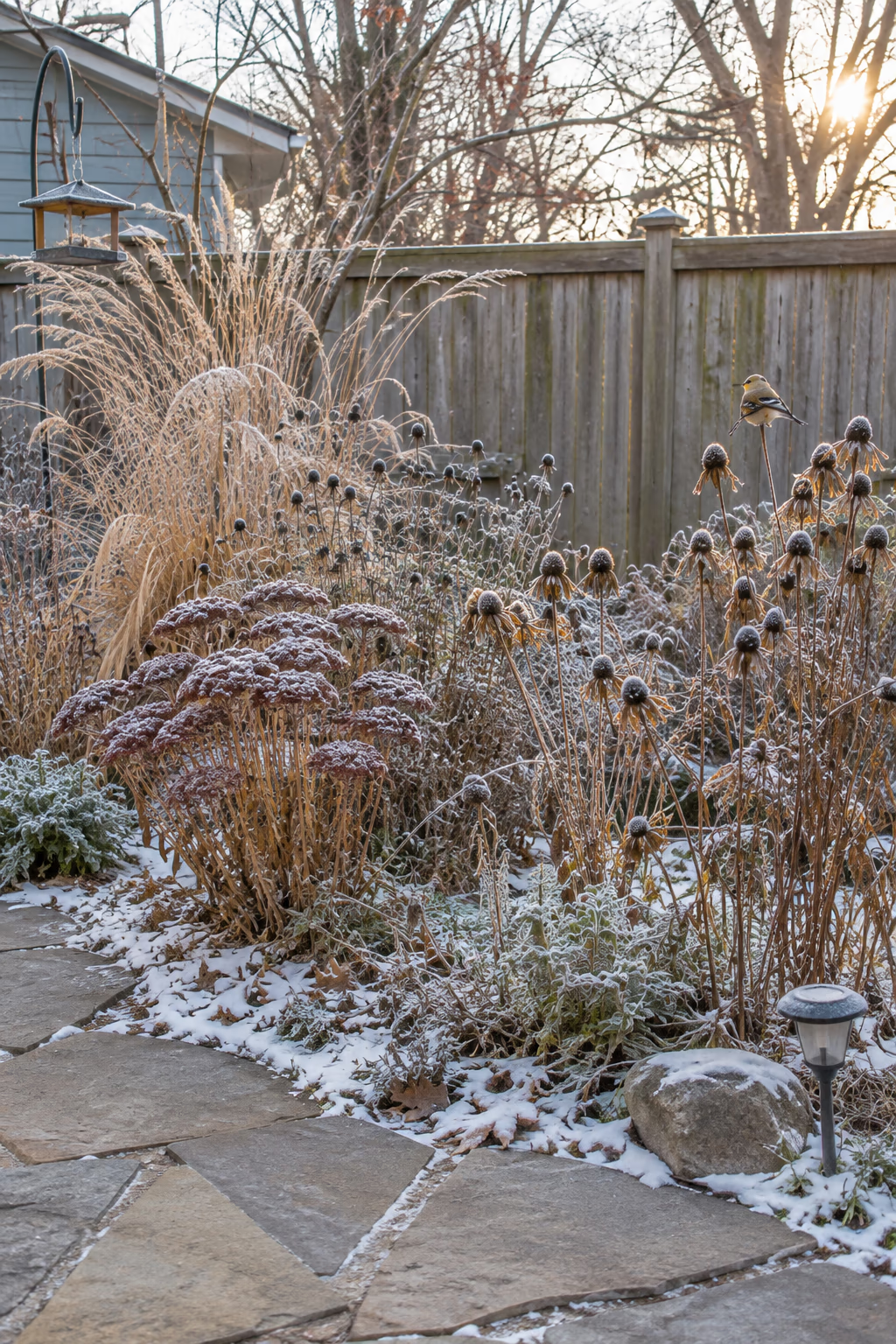
Let the garden feed birds after the flowers fade
Instead of cutting everything down in fall, leave sturdy perennials standing through winter. Coneflowers, black-eyed Susans, sedum, and ornamental grasses hold their seed heads and look striking dusted with frost or snow.
Goldfinches and other birds feed on the seeds, and hollow stems give native bees a place to shelter. Cut plants back in spring once temperatures warm, leaving 8 to 15 inches of stubble that bees can use for nesting.
A naturalistic garden can look untidy to some neighbors. Keep edges neat and paths clear so the planting looks intentional, and remove any diseased foliage in fall so problems don’t carry over to next year.
How to Plan Your Backyard Flower Garden
A little planning before you buy plants will save money and make your backyard flower garden easier to care for. Start with these basics.
- Watch the sun first. Track how many hours of direct sun each part of the yard gets. Most flowering plants need at least six hours, while shade gardens need plants chosen for low light.
- Know your hardiness zone. Check your USDA zone and your average last and first frost dates so you can choose perennials that survive winter and time annual planting correctly.
- Test and improve the soil. A simple soil test shows pH and nutrient levels. Most flowers do well with 2 to 3 inches of compost worked into the top layer before planting.
- Plan for water. Group thirsty plants together and keep drought-tolerant ones in drier areas. Soaker hoses or drip lines save water and keep foliage dry.
- Start smaller than you think. A well-kept bed of 50 to 100 square feet is easier to manage than a huge one that gets away from you. Expand as you learn what thrives.
- Check rules before you dig. Look into HOA guidelines for meadows, ponds, and tall plantings, avoid plants listed as invasive in your state, and call 811 before any digging.
Frequently Asked Questions
When is the best time to start a backyard flower garden?
Spring and fall are both good times. Plant perennials and shrubs in early fall or spring when temperatures are mild, sow annuals after your last frost date, and plant spring-blooming bulbs in fall.
What flowers bloom all summer in a backyard garden?
Zinnias, cosmos, salvia, lantana, black-eyed Susans, coneflowers, petunias, and blanket flower all bloom for long stretches, especially if you remove spent flowers regularly.
How much sun does a flower garden need?
Most popular flowers need six or more hours of direct sun a day. For spots with less light, choose shade-tolerant plants such as astilbe, hellebores, impatiens, begonias, and bleeding heart.
How do I keep weeds out of my flower garden?
Mulch with 2 to 3 inches of shredded bark, pine straw, or gravel, and plant closely so flowers shade the soil. Pull weeds while they’re small, ideally after rain when the soil is soft.
How much does it cost to plant a backyard flower garden?
A small bed grown from seed and a few perennials can cost under a hundred dollars. Larger projects with raised beds, stone walls, ponds, or many mature plants can run into the thousands, so building in stages helps spread the cost.
Final Thoughts
The most rewarding backyard flower garden ideas are the ones that match how you live outdoors. A row of cutting zinnias, a small pollinator meadow, or a white moon garden beside the patio can make the yard a place you want to spend time in every day.
Pick one or two ideas to start, choose plants suited to your sun, soil, and climate, and add more as your confidence grows. Each season, your garden will fill in a little more and bring back more birds, butterflies, and blooms.


