
Step out the back door and you can almost touch the fence. There’s a slab of concrete, a strip of tired grass, and maybe a grill pushed against the siding. It doesn’t feel like much, but it’s yours, and it holds more potential than you might think.
Small yards have real advantages. They cost less to furnish, take less time to maintain, and feel cozy and private once they’re set up well. The trick is to plan every square foot on purpose, using height, smart layouts, and furniture that earns its place.
These 27 small backyard ideas cover compact pools, vertical gardens, split levels, space-saving seating, low-water surfaces, and clever visual tricks that make tight spaces feel bigger. Pick one weekend project or combine several into a plan you can build over a few seasons.
1. Set a Stock Tank Plunge Pool on a Gravel Pad
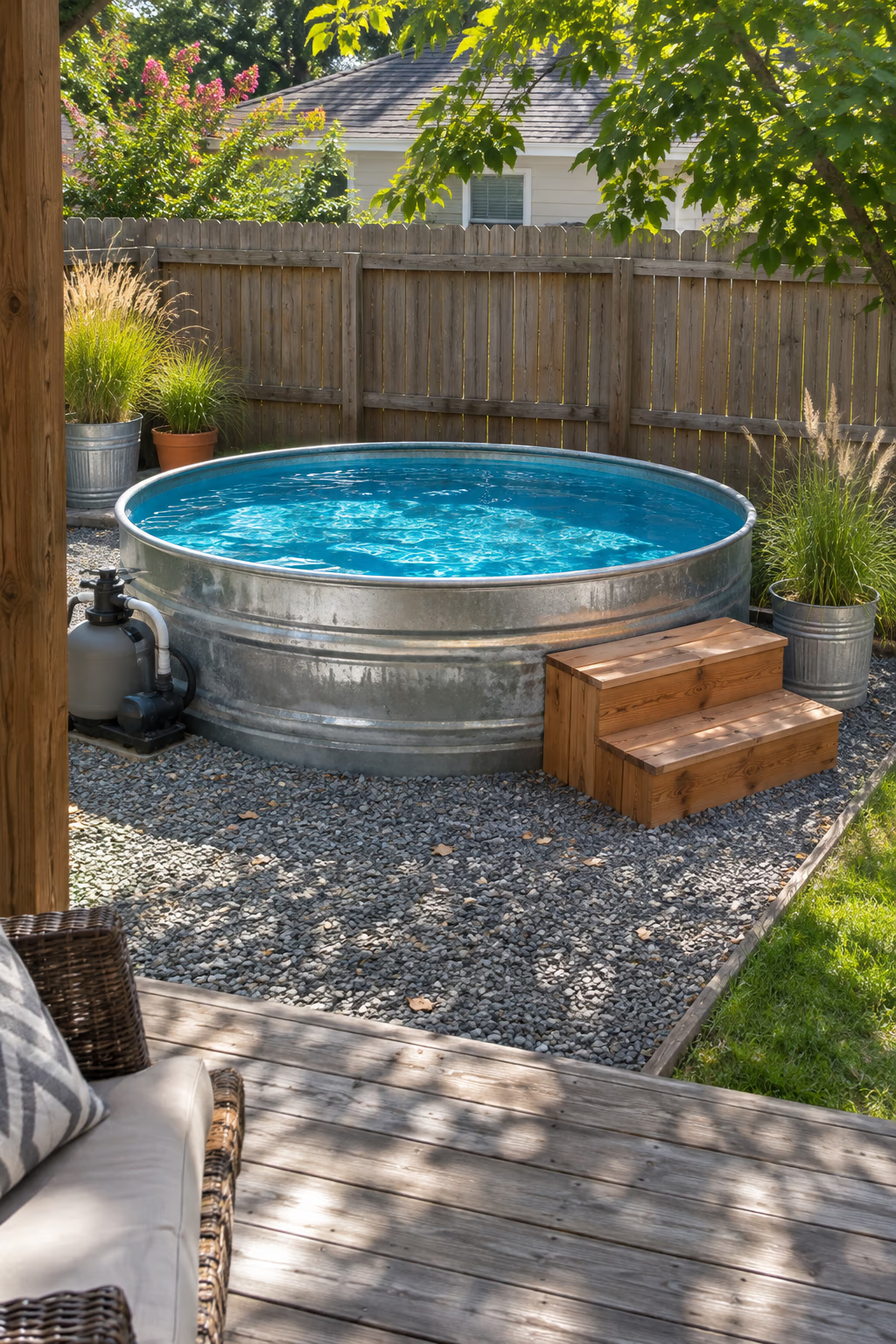
A real cool-off spot in a tiny footprint
A round metal or heavy plastic stock tank, usually 6 to 8 feet across and about 2 feet deep, makes a surprisingly comfortable plunge pool. Set it on a perfectly level pad of compacted crushed gravel or pavers, add a small above-ground filter pump, and surround one side with a simple cedar step or low deck so getting in and out is easy.
It works because it delivers the feeling of a pool for a fraction of the price and space of an in-ground one. Water weight is serious, though: an 8-foot tank holds roughly 700 gallons, so the base must be level and firm, never on a wooden deck that wasn’t engineered for it.
Chlorine can speed corrosion in galvanized tanks, so many owners use a liner or a poly tank. Check your local rules, too. Many towns treat anything holding 18 to 24 inches of water as a pool that needs a barrier or locking cover.
2. Plant a Living Wall Along the Fence
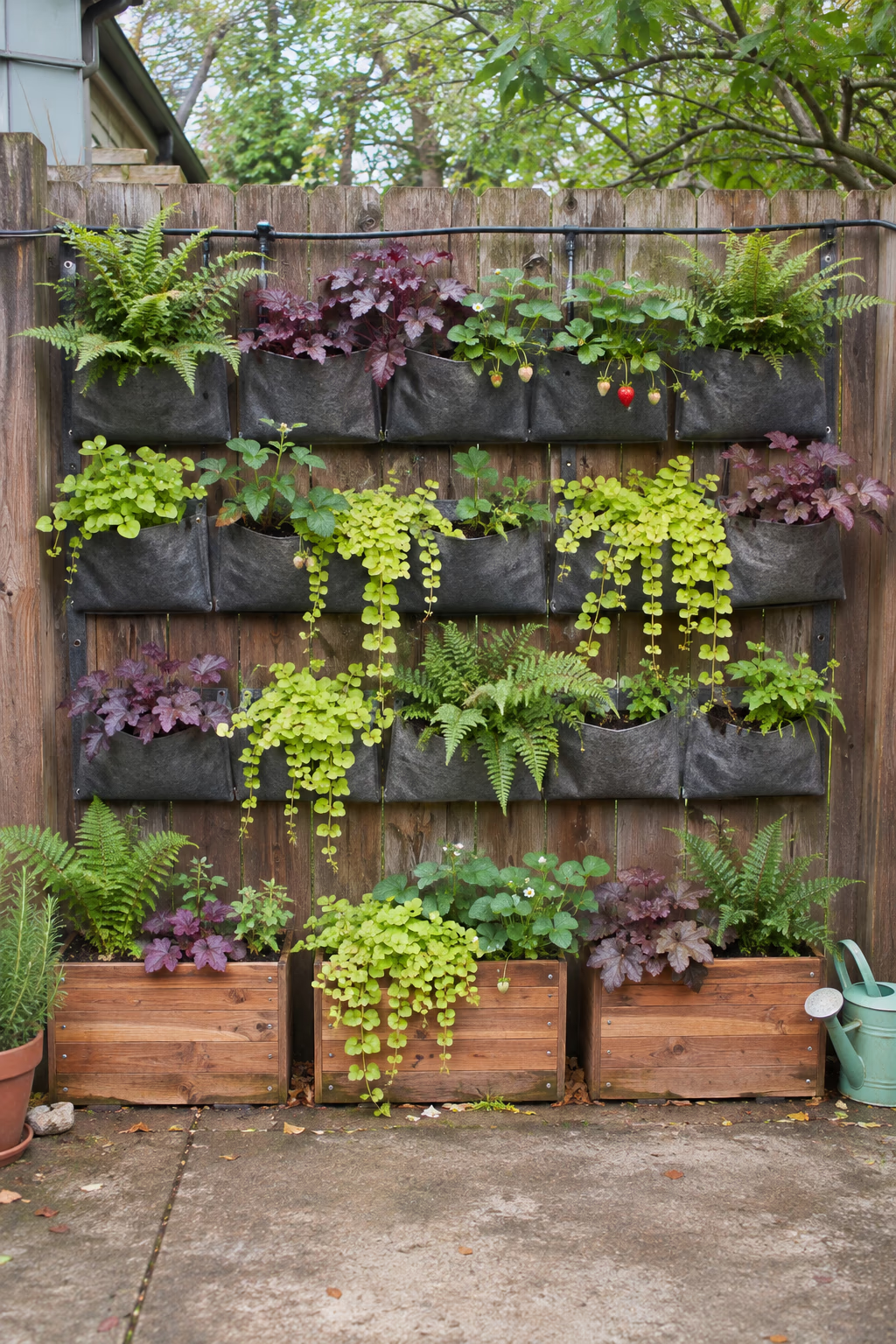
Grow upward when you can’t grow outward
A living wall turns a blank fence into a garden without using a single square foot of ground. Fabric pocket planters, stacked modular trays, or simple cedar boxes screwed to horizontal rails all work. Fill them with ferns, heuchera, and creeping Jenny in shade, or strawberries, trailing petunias, and herbs in sun.
Greenery at eye level draws attention away from the yard’s small floor and softens hard boundaries, which is why vertical planting shows up in almost every small-yard plan. It also gives you planting space on a patio that has no soil at all.
Vertical planters dry out fast. A drip line with a battery timer running along the top row saves a lot of hand watering in July. Line the fence side with a waterproof barrier so constant moisture doesn’t rot the boards.
3. Split the Yard Into Two Levels
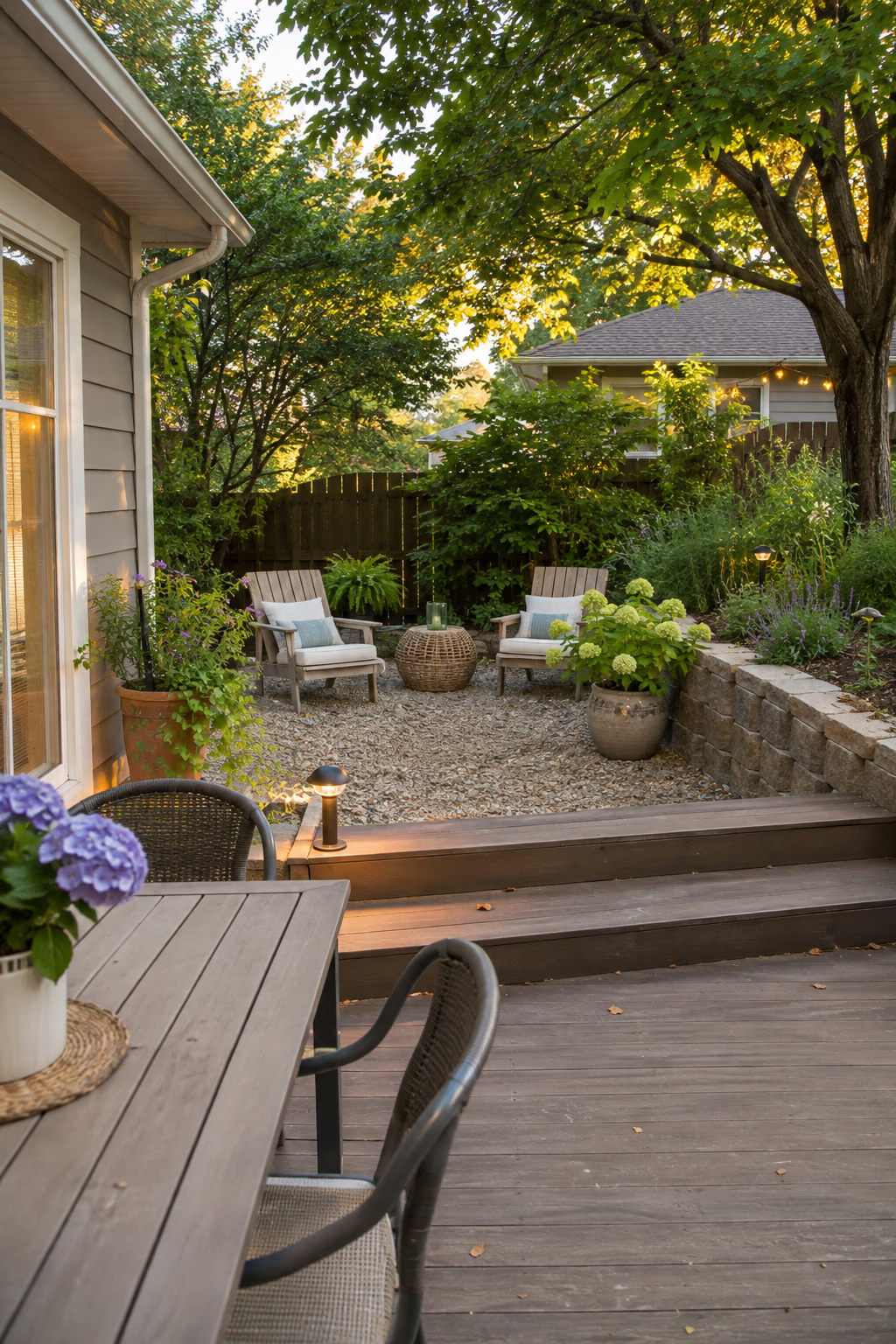
Add depth and zones without adding space
Raising part of the yard by just one or two steps creates two distinct areas, such as an upper dining deck by the house and a lower lounge or garden. A low platform deck 12 to 16 inches high, or a section of patio held up by a short block retaining wall, is enough to make the change.
A change in level tricks the eye into reading more space, because you see the yard in layers rather than all at once. It also gives you a natural spot for built-in seating along the step edge.
Keep steps wide and shallow, ideally 6 to 7 inches high with deep treads, and add a low path light if they’ll be used at night. Decks and retaining walls above certain heights often need permits, so check before you build.
4. Choose Oversized Seating Over Tiny Furniture
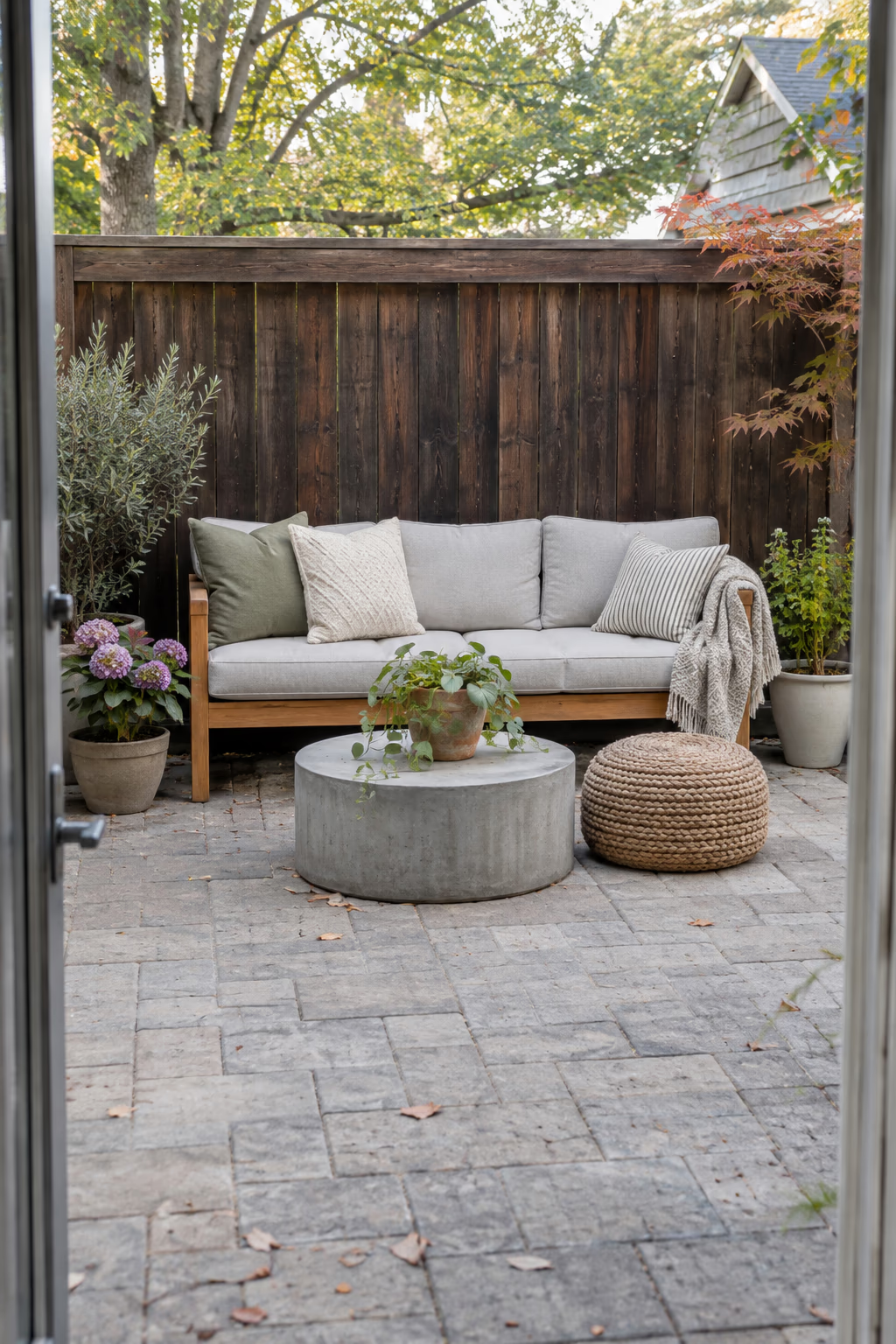
Fewer, bigger pieces feel calmer
It sounds backward, but a deep outdoor sofa or a generous sectional often looks better in a small yard than a scatter of bistro chairs. One large piece pushed against the fence or house wall, plus a coffee table and a pouf, can seat four people comfortably.
Lots of small pieces create visual clutter and narrow walkways. A single substantial piece anchors the space and makes it feel like a real outdoor room rather than overflow storage.
Measure carefully and leave at least 30 inches of clear walking space around furniture. Pick weather-resistant frames and quick-dry foam cushions, and plan somewhere to store cushions during long rainy stretches.
5. Hang a Slim Wall Fountain on the Fence
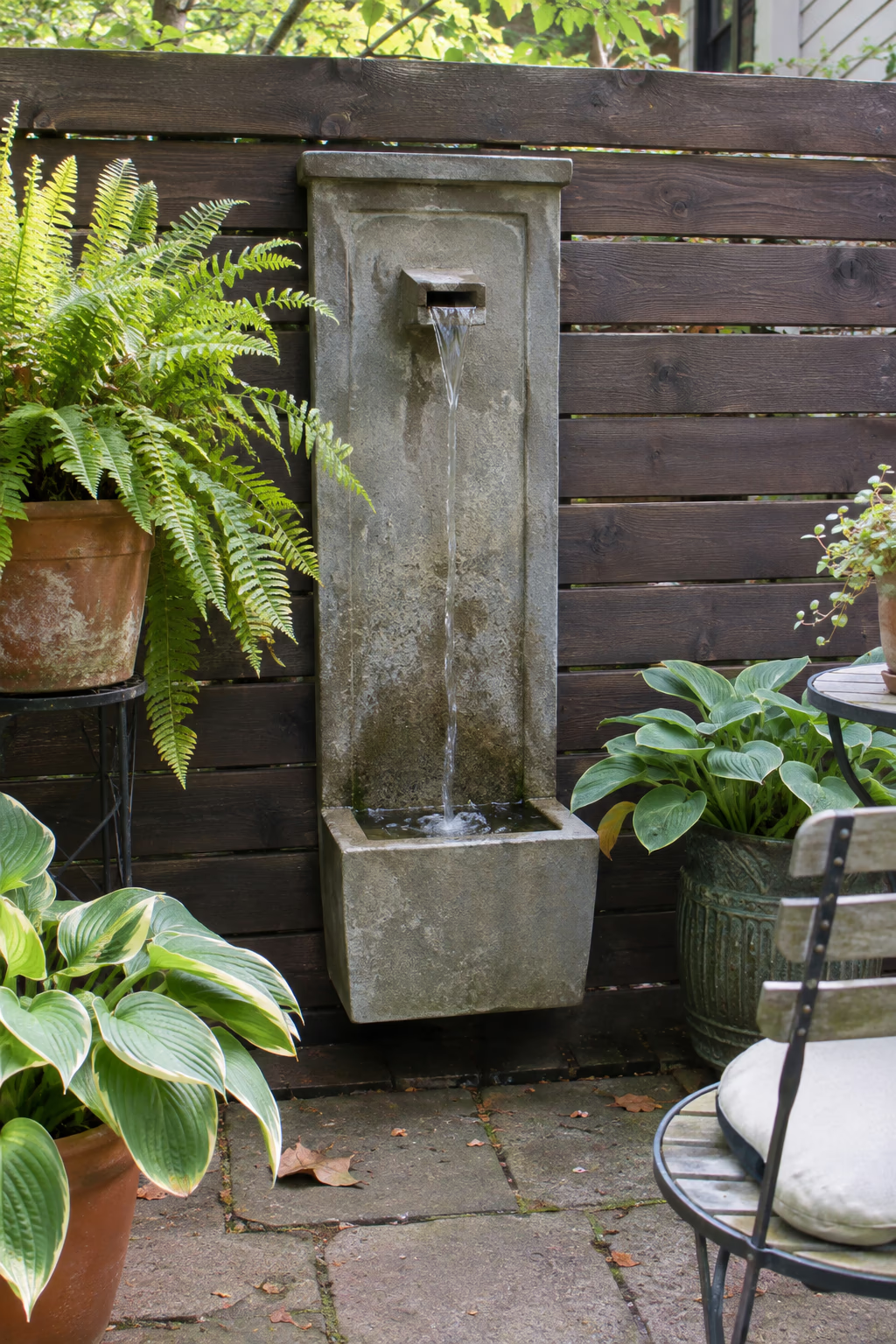
Water sound without a pond
A wall fountain mounts flat against a fence or house wall, with water spilling from a spout or ledge into a narrow basin below. Self-contained versions in cast stone, resin, or metal recirculate water with a small pump and need only an outdoor outlet nearby.
Gentle splashing masks traffic and neighbor noise, which matters a lot when the house next door is only a few yards away. Because it takes up almost no floor area, it gives a tiny patio a focal point without eating seating space.
Use a GFCI-protected outlet, top up water during hot weeks, and clean algae from the basin every few weeks. In freezing climates, drain the fountain and bring the pump indoors for winter.
6. Plant Creeping Thyme Between Stepping Pavers
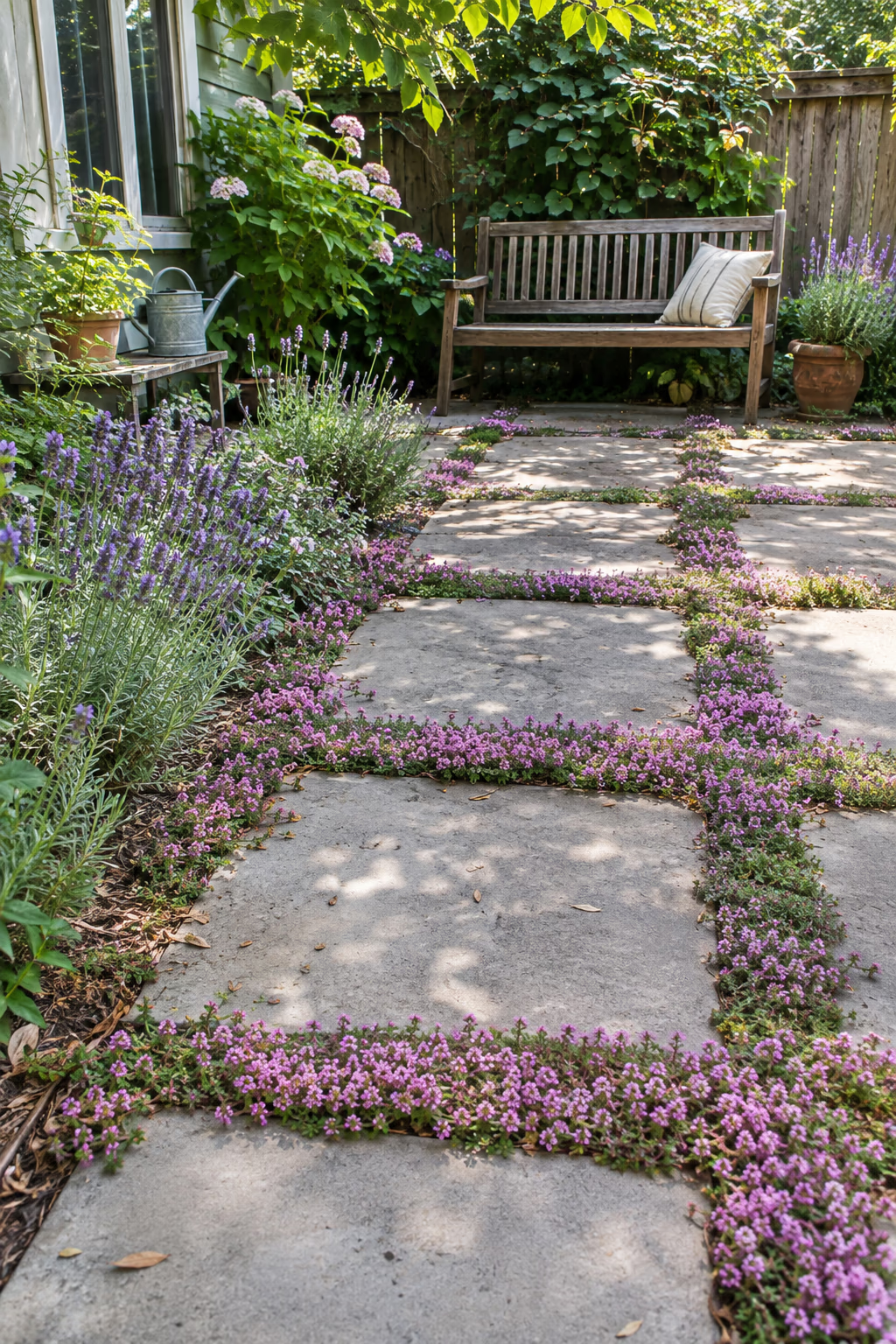
Soften hard surfaces with fragrant green seams
Instead of solid concrete, set square or rectangular pavers with 2- to 4-inch gaps and fill the joints with a sandy soil mix. Plug in creeping thyme for sunny spots, or Irish moss or dwarf mondo grass for part shade, and they’ll knit together in a season or two.
Green seams break up a small hard surface so it reads as garden rather than parking pad. Thyme releases a pleasant scent when brushed, and flowering varieties attract pollinators in early summer.
These plants handle light foot traffic, not furniture legs dragged daily. Keep groundcover joints in walking zones and use tighter joints or solid paving under the dining table and grill.
7. Lay Pavers on the Diagonal to Stretch the Space
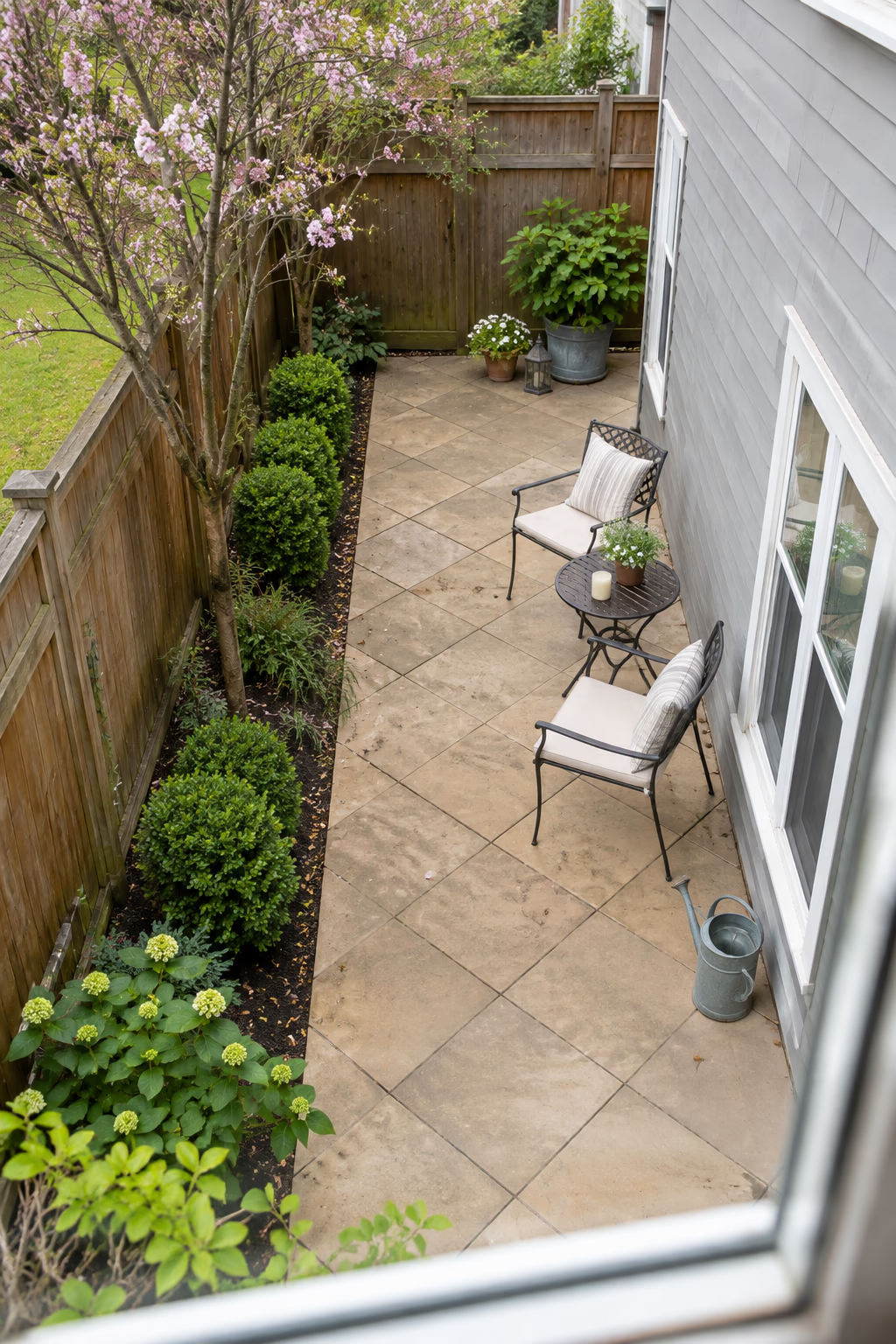
A simple layout trick that widens the view
Setting square pavers or large-format tiles at 45 degrees to the house pulls the eye toward the corners of the yard instead of straight to the back fence. Large 24-by-24-inch pavers in a light gray or warm sand color work especially well.
Diagonal lines make a narrow rectangle feel wider, and big units mean fewer joints and a cleaner look. It’s the same idea interior designers use when they run floor tile on the diagonal in a small bathroom.
Expect more cutting along the edges and roughly 10 to 15 percent extra material for waste. Renting a wet saw for the day keeps cuts clean, and a solid compacted gravel base matters more than the pattern itself.
8. Build a Fence-Line Bench With Lift-Up Storage
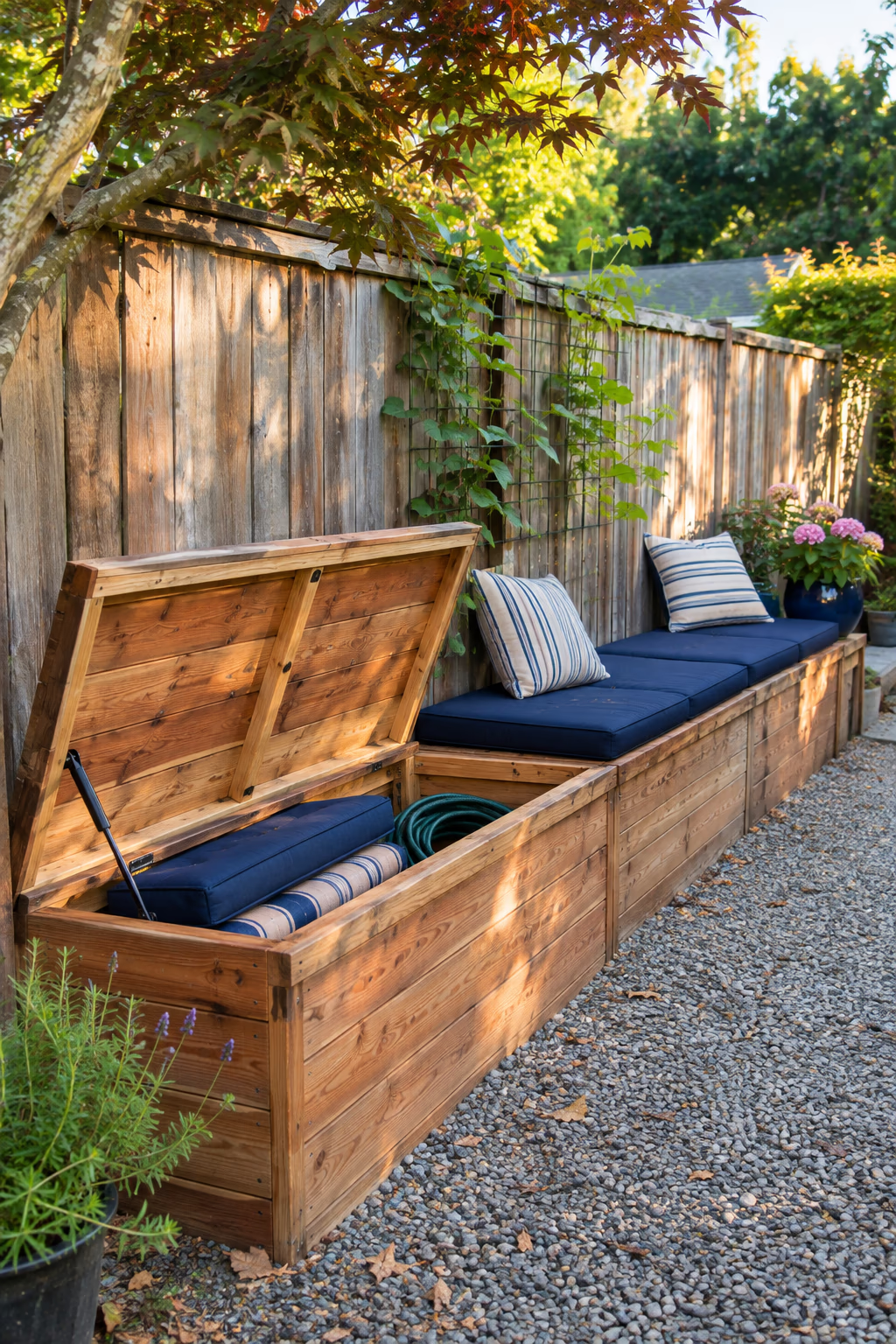
Seating and a hiding spot in one piece
A long, built-in bench running along the fence gives you seating for a crowd without any freestanding chairs. Build it as a series of cedar or pressure-treated boxes about 18 inches high and 18 to 20 inches deep, with hinged lids that open for storage.
Small yards rarely have room for a separate deck box or shed, so stashing cushions, hoses, and kids’ toys inside the seat keeps the space tidy. Add outdoor cushions and a few pillows and it doubles as a lounging spot.
Drill drainage holes in the bottom and leave small vent gaps so stored items don’t get musty. Use slow-close or gas-strut hinges so the heavy lids don’t slam on fingers.
9. Paint the Fence a Deep, Receding Color
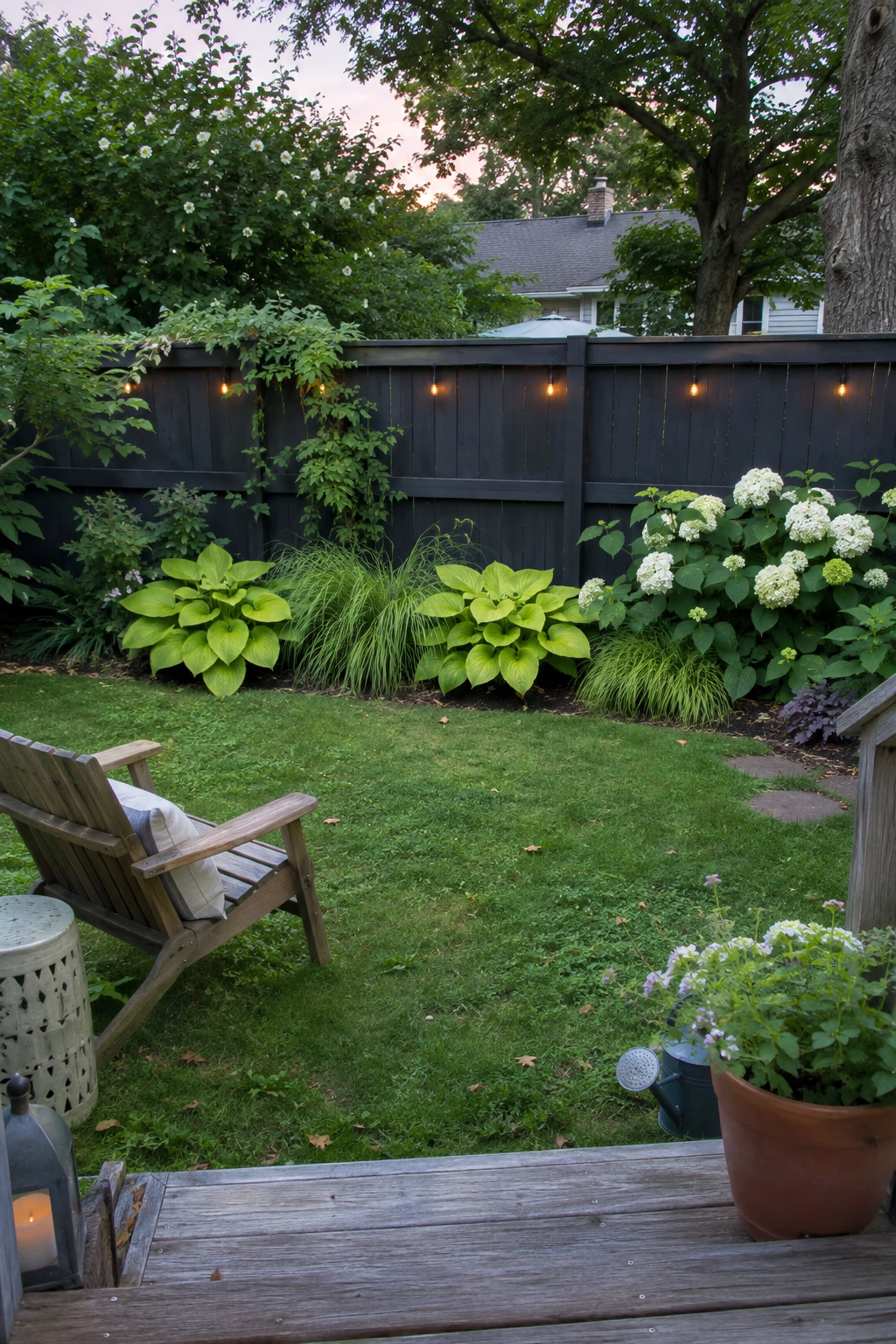
Make the boundary fade into the background
Dark charcoal, deep green, or near-black fence stain makes the boundary visually step back, while plants in front of it pop. Solid-color exterior stain or fence paint goes on easily with a pump sprayer or a wide brush.
Pale fences glow and announce exactly where the yard ends. Dark ones blur that edge, especially at dusk, so a small space feels deeper and the greenery becomes the main event.
Dark colors absorb heat, so plants pressed against a sunny south-facing fence may need a little extra water. Check with neighbors and any HOA first, since the other side of a shared fence is part of someone else’s view.
10. Zone the Yard With One Material Palette
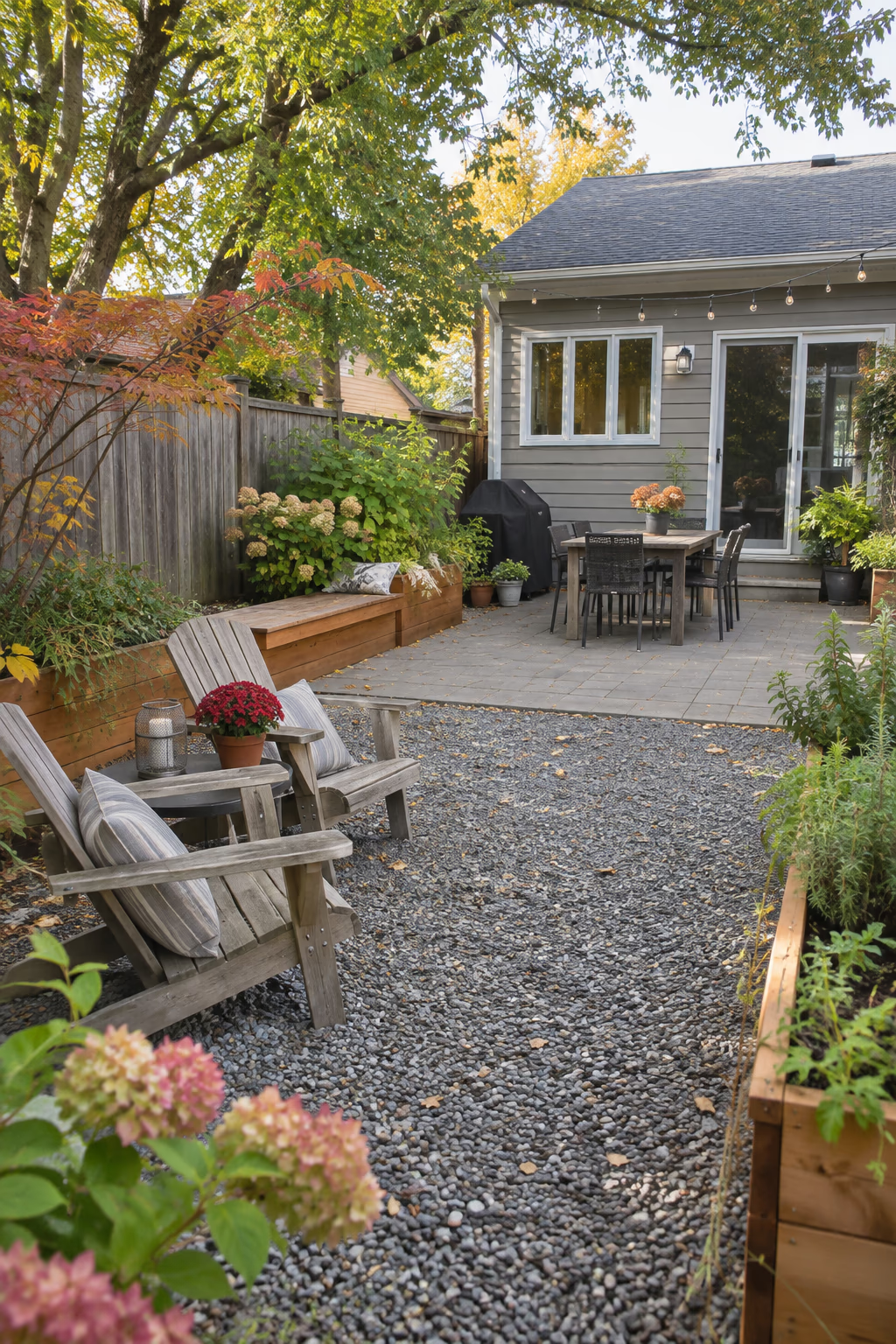
Separate areas without chopping up the space
Pick two or three materials and repeat them, such as gray pavers, matching gravel, and cedar. Use pavers for the dining spot, gravel for the lounge, and cedar for a bench or planter, so each zone feels different but connected.
Walls, hedges, and too many different surfaces make a small yard feel cramped and busy. Changing surface texture within one color family marks each area clearly while keeping the whole yard visually calm.
Use steel or aluminum edging between gravel and pavers to keep stones from migrating. Gather samples together in daylight before buying, because colors shift a lot from the store to your yard.
11. Swap Thirsty Grass for a Clover Lawn
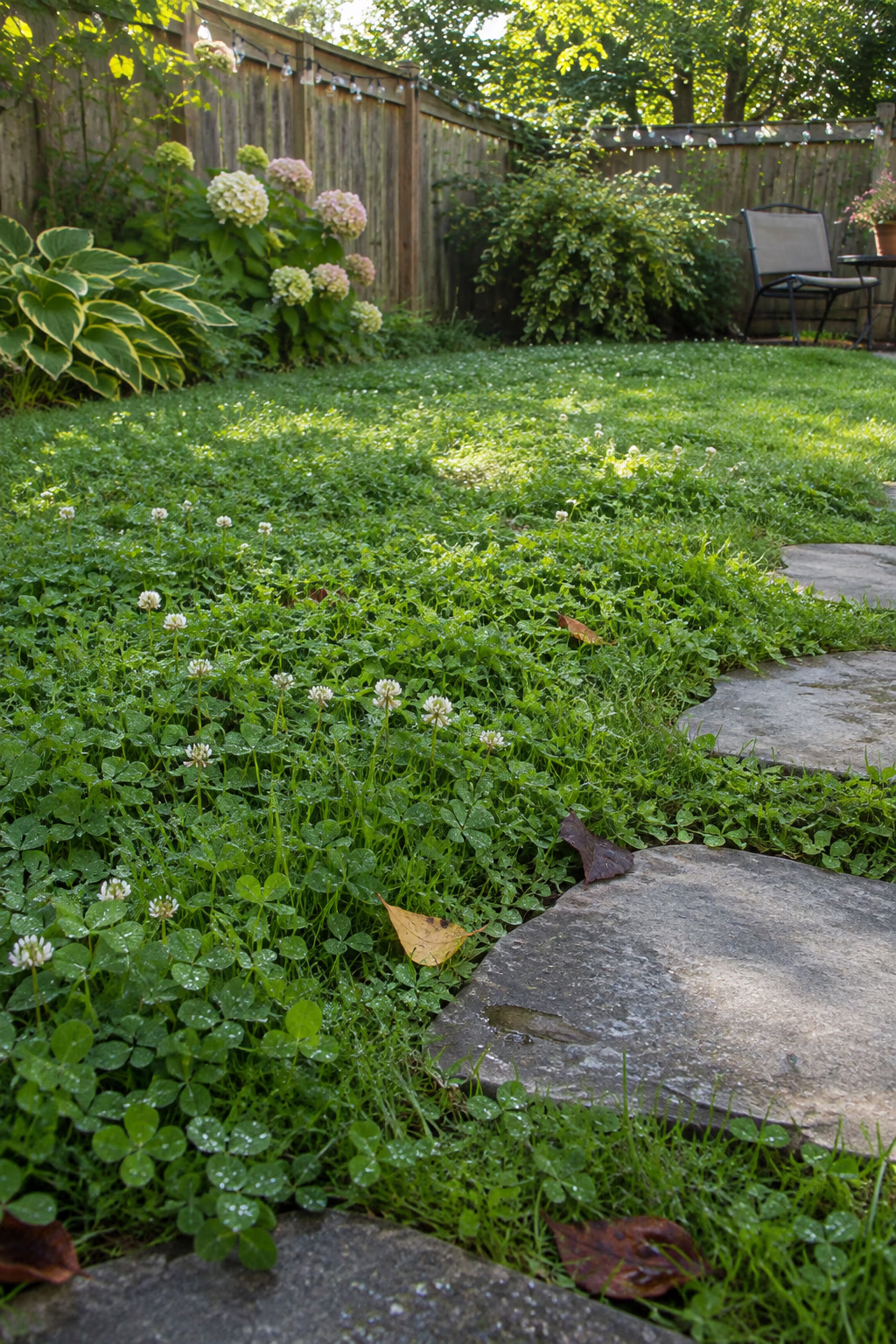
Soft underfoot with far less fuss
Microclover, a small-leaved white clover, can be overseeded into thin existing turf or sown on its own for a soft, green lawn that needs much less mowing, watering, and fertilizing. Sow it in spring or early fall on raked, moist soil.
In a small yard, a patch of lawn is still lovely for bare feet and play, but a traditional grass lawn can demand a lot of work for its size. Clover stays green through dry spells, fixes its own nitrogen, and handles moderate foot traffic.
Clover flowers attract bees, so mow before blooms open if kids play barefoot. It may also go dormant in harsh winters, and some HOAs have lawn rules, so read yours first.
12. Mount a Fold-Down Bar Ledge on the Fence
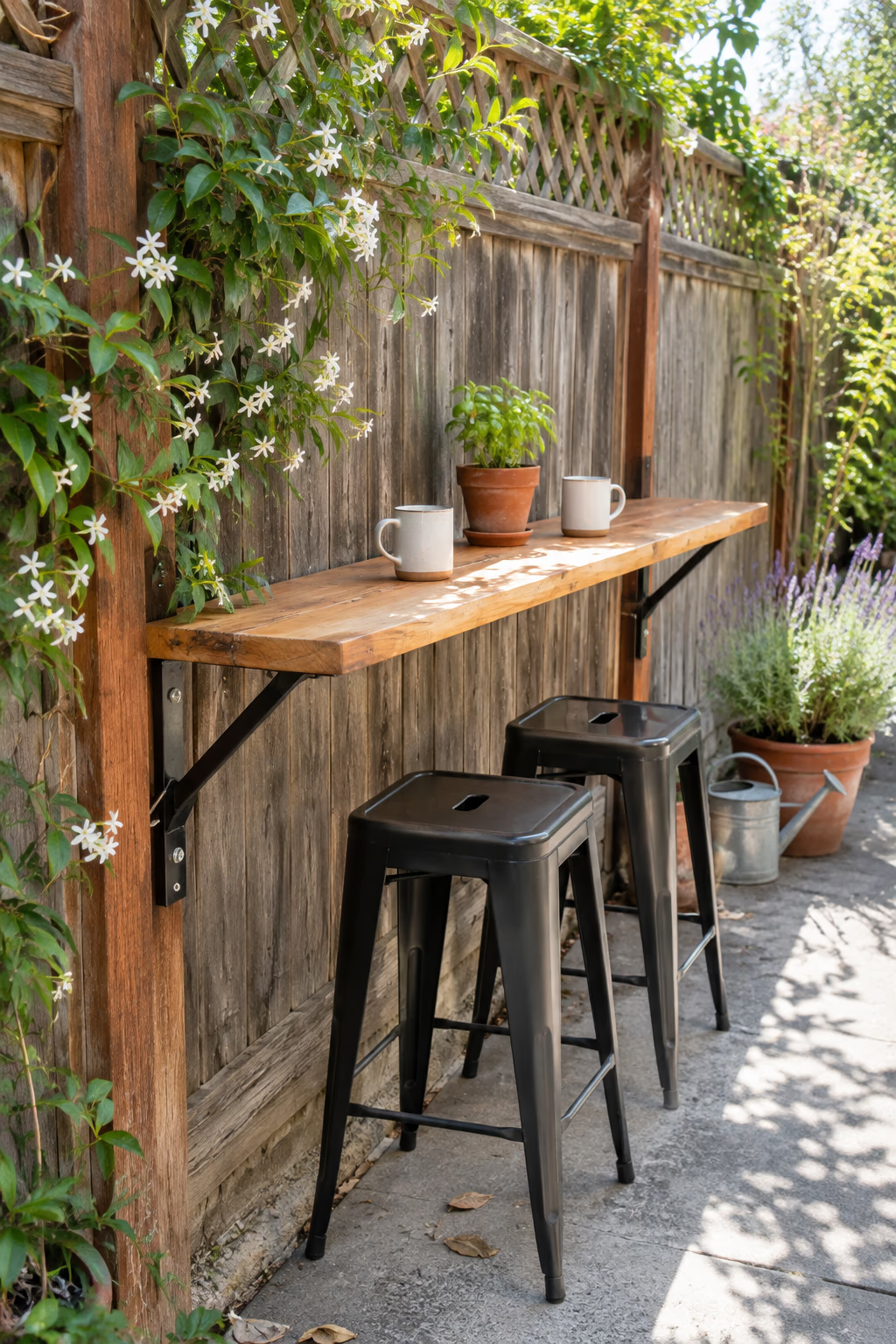
A dining spot that disappears when you need room
A hinged wooden shelf, about 12 to 16 inches deep and 4 to 6 feet long, mounts to sturdy fence posts or the house wall and folds down flat when not in use. Pair it with two or three stools that tuck underneath.
It gives you a place for morning coffee, a laptop, or drinks at a party without committing floor space to a full table. On a narrow patio, it can be the difference between eating outside and not.
Anchor the ledge into posts or framing, not just fence pickets, and use heavy-duty folding shelf brackets rated for the load. Seal the wood with exterior finish so it doesn’t warp.
13. Plant One Multi-Stem Tree for Canopy
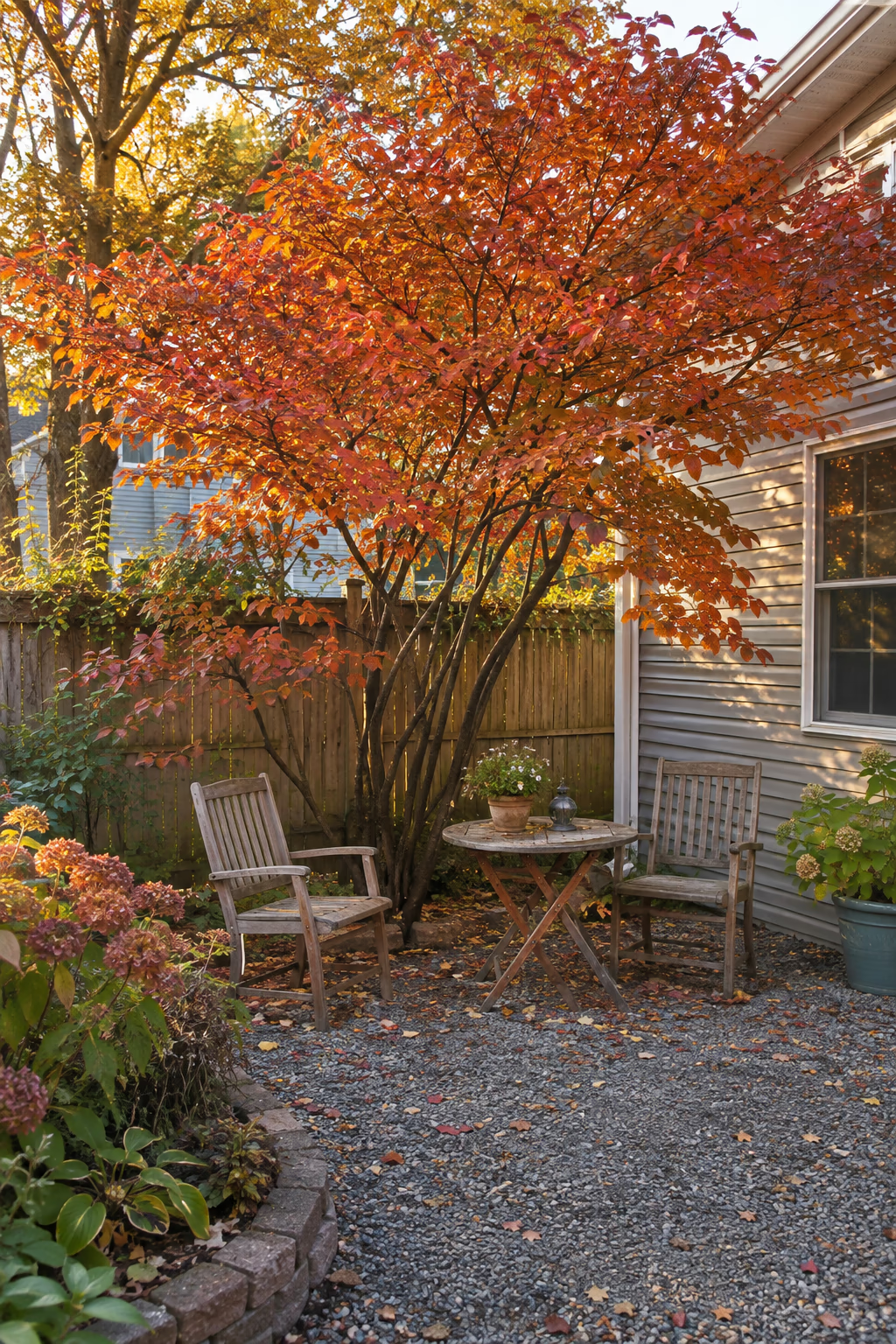
Shade and structure without a giant tree
A single multi-trunk tree gives a small yard height, filtered shade, and a ceiling to sit under. Good choices include serviceberry, crape myrtle in warm zones, Japanese maple, and redbud, most staying in the 15- to 25-foot range.
A tree makes a yard feel established and private, and multi-stem forms have a light, sculptural look that doesn’t overwhelm a tiny space. Many also offer flowers, berries, or fall color.
Check the mature height and width on the tag, plant at least 10 to 15 feet from the foundation, and keep it clear of overhead lines. Call 811 before digging the hole.
14. Hang an Outdoor Mirror to Fake Extra Depth
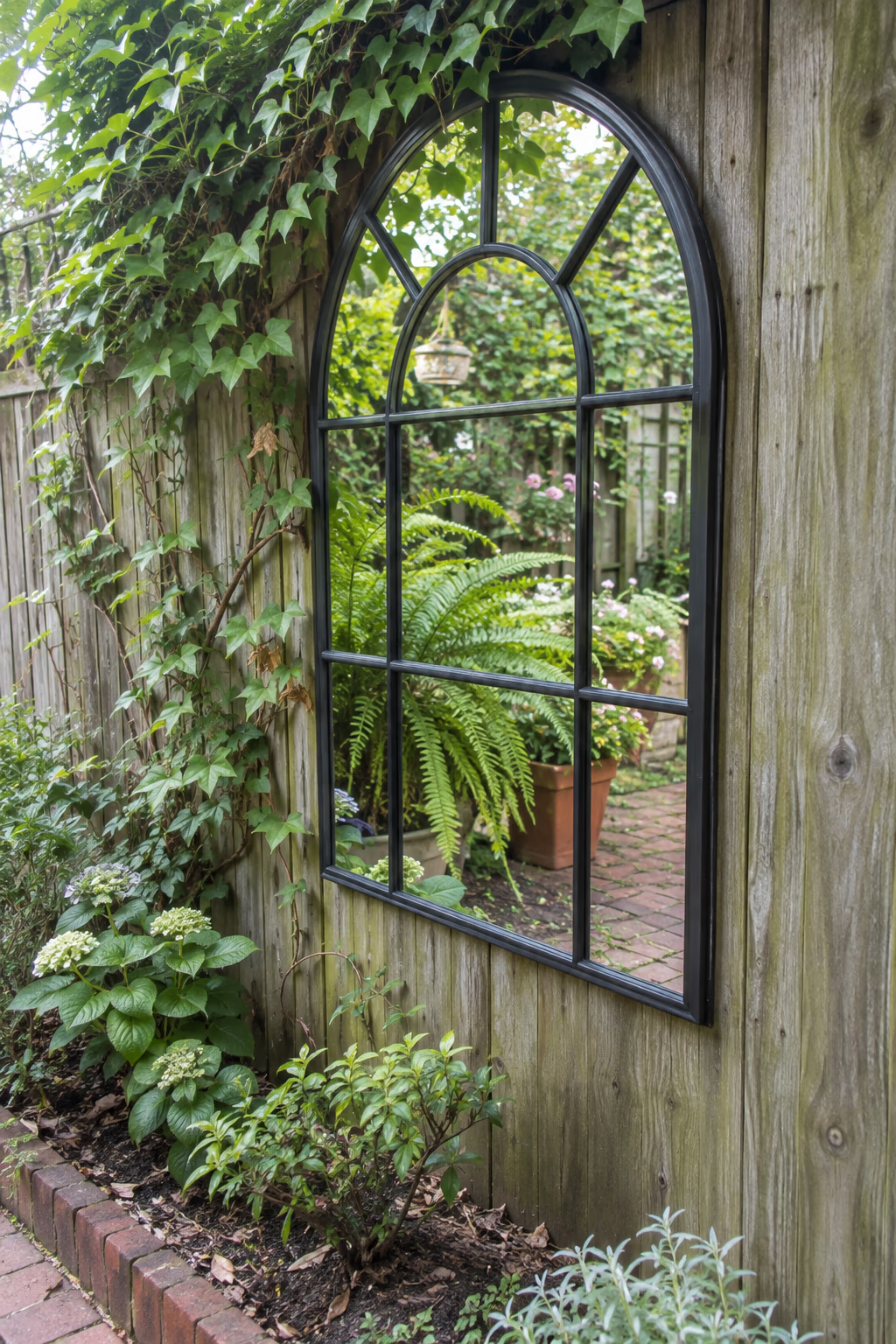
Double the greenery with a reflection
A weatherproof acrylic or outdoor-rated glass mirror hung on a fence reflects plants and light, giving the illusion of a window or doorway into more garden. Arched or framed-window shapes look especially convincing when partly surrounded by climbing plants.
Reflections add depth and brighten shady corners, which is why mirrors are a classic trick for tiny city yards. They work best facing a planted area rather than the house or trash cans.
Birds can fly into mirrors, so angle the mirror slightly downward and place it where it reflects plants, not open sky. Also avoid spots where it could bounce afternoon sun into windows or onto plants.
15. Group Containers in a Single Color Scheme
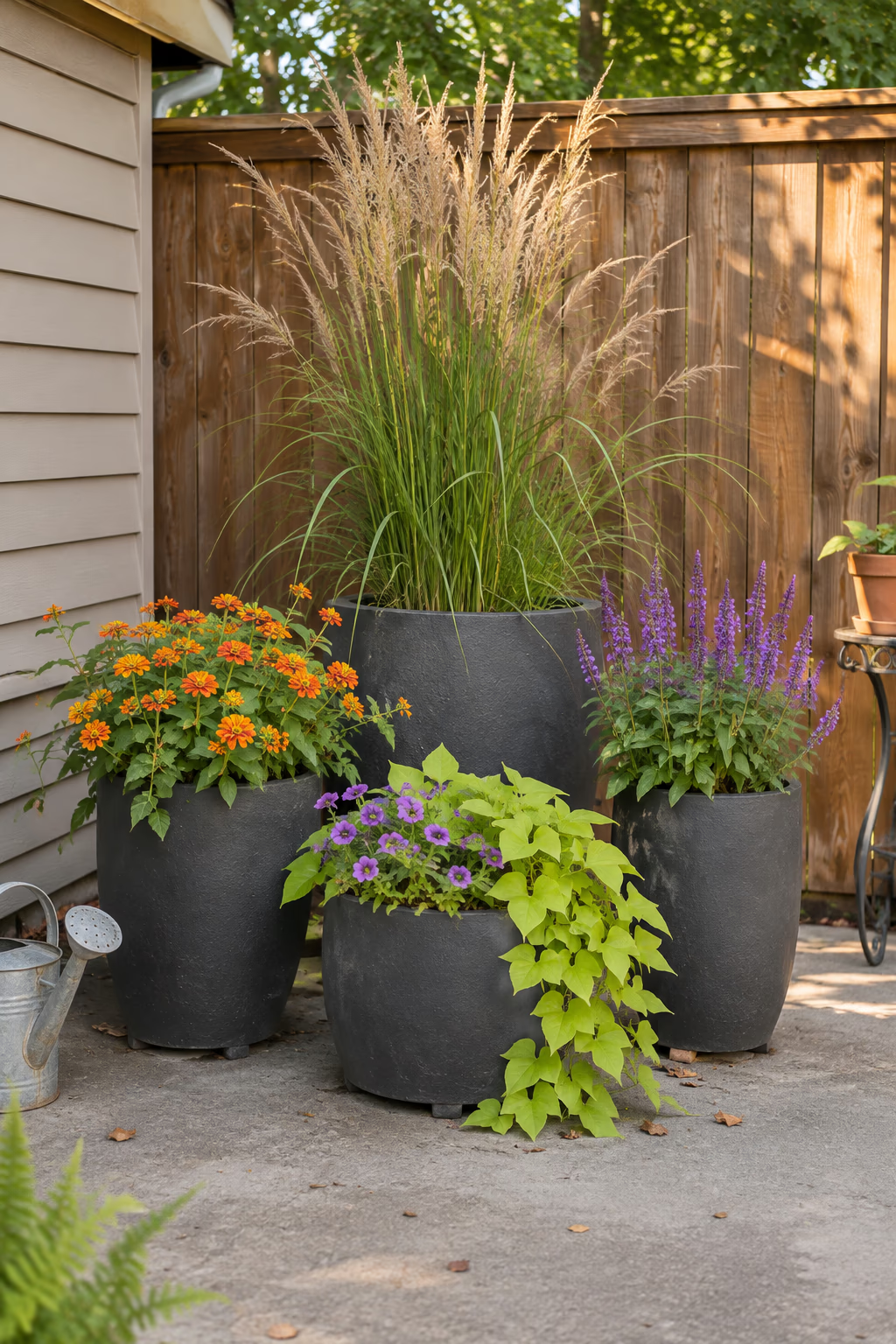
Make a pot collection look intentional
Rather than scattering mismatched pots around, cluster three to five containers of different heights in one finish, such as charcoal fiberglass or matte terracotta. Plant them with a tall grass or small shrub, a mid-height flower, and something trailing.
Grouping containers creates one strong focal point instead of a dozen distractions. Plants in pots can also be moved around to follow the sun or refresh the look each season.
Larger pots dry out more slowly and protect roots better than small ones. Make sure every pot has a drainage hole, and use pot feet on wood decks to prevent water stains.
16. Swap a Fire Pit for a Tabletop Fire Bowl
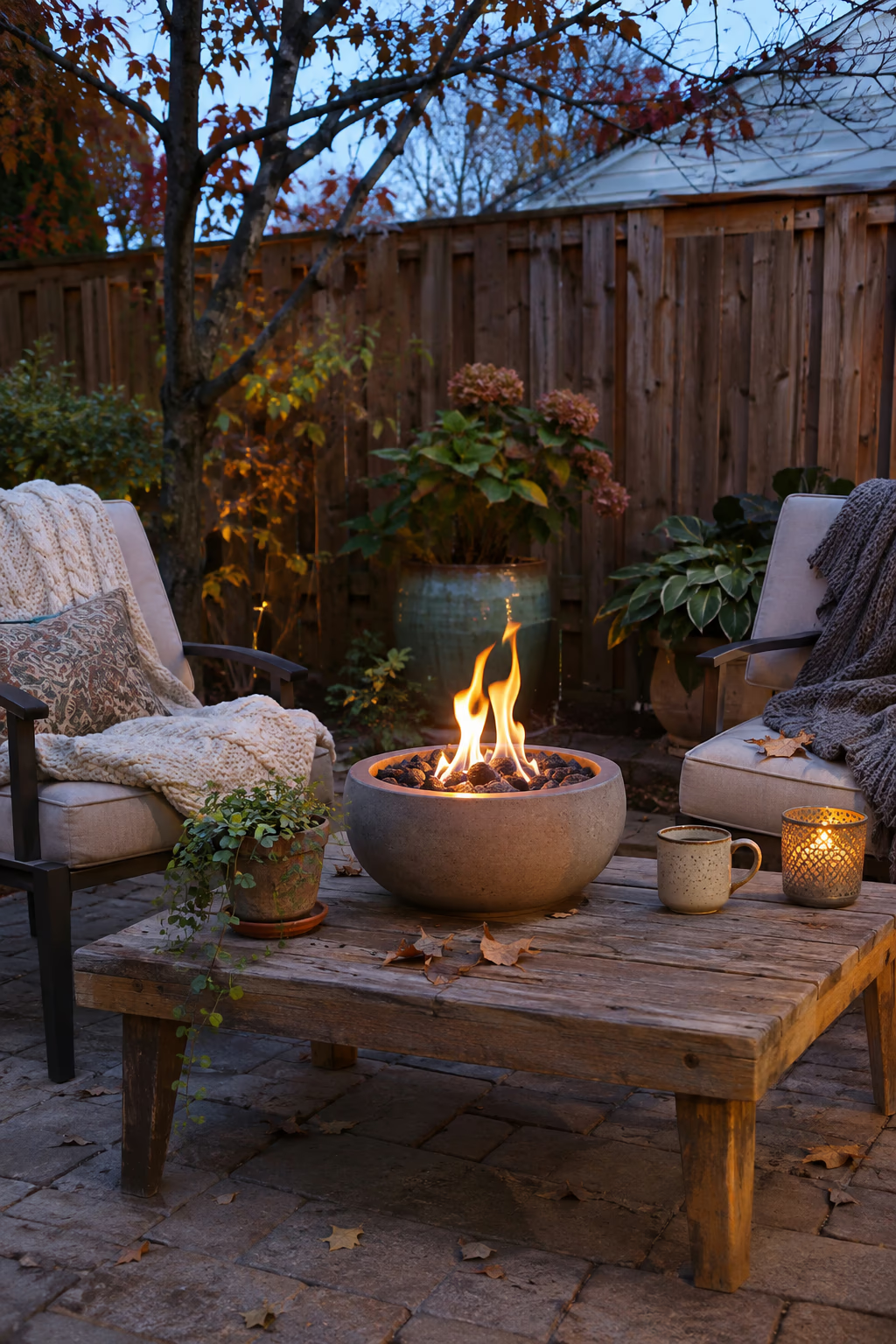
Flickering firelight sized for a tiny patio
A tabletop fire bowl fueled by a small propane canister or bioethanol sits right in the middle of a coffee table. Concrete, steel, and ceramic versions are common, many with tempered glass wind guards and a lid for when it’s off.
A full wood-burning pit needs a lot of clearance and sends smoke straight into neighbors’ windows in a tight lot. A tabletop flame gives the same cozy glow with no ash and a fraction of the footprint.
These give off atmosphere more than heat, so add throws for chilly nights. Follow the manufacturer’s clearance rules, never use one under a low roof, and check local burn bans or rental restrictions.
17. Lay an Outdoor Rug to Define the Lounge
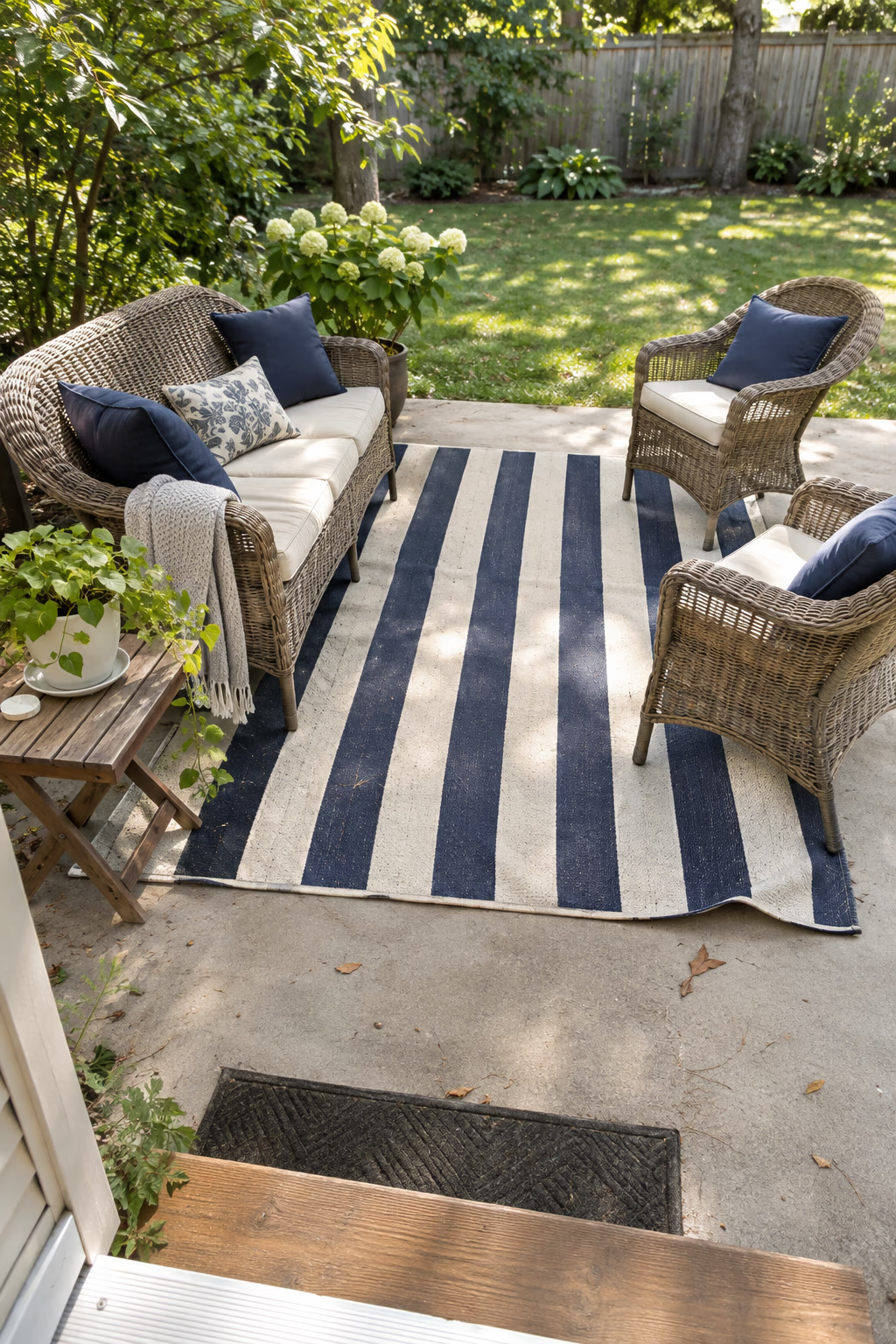
Instant warmth on a hard surface
An outdoor rug made from polypropylene or recycled plastic fiber anchors a seating group and makes a concrete slab or deck feel like a living room. For a small yard, a 5-by-8 or 6-by-9 rug usually fits under the front legs of the seating.
A rug clearly marks the lounge zone, adds color and pattern, and feels nicer underfoot than bare pavers. Stripes running away from the house can even make a short patio look longer.
Roll it up or lift it after heavy rain so moisture doesn’t stay trapped against the deck boards. Hose it off a few times a season, and store it during winter in snowy areas.
18. Curve the Planting Beds to Blur the Edges
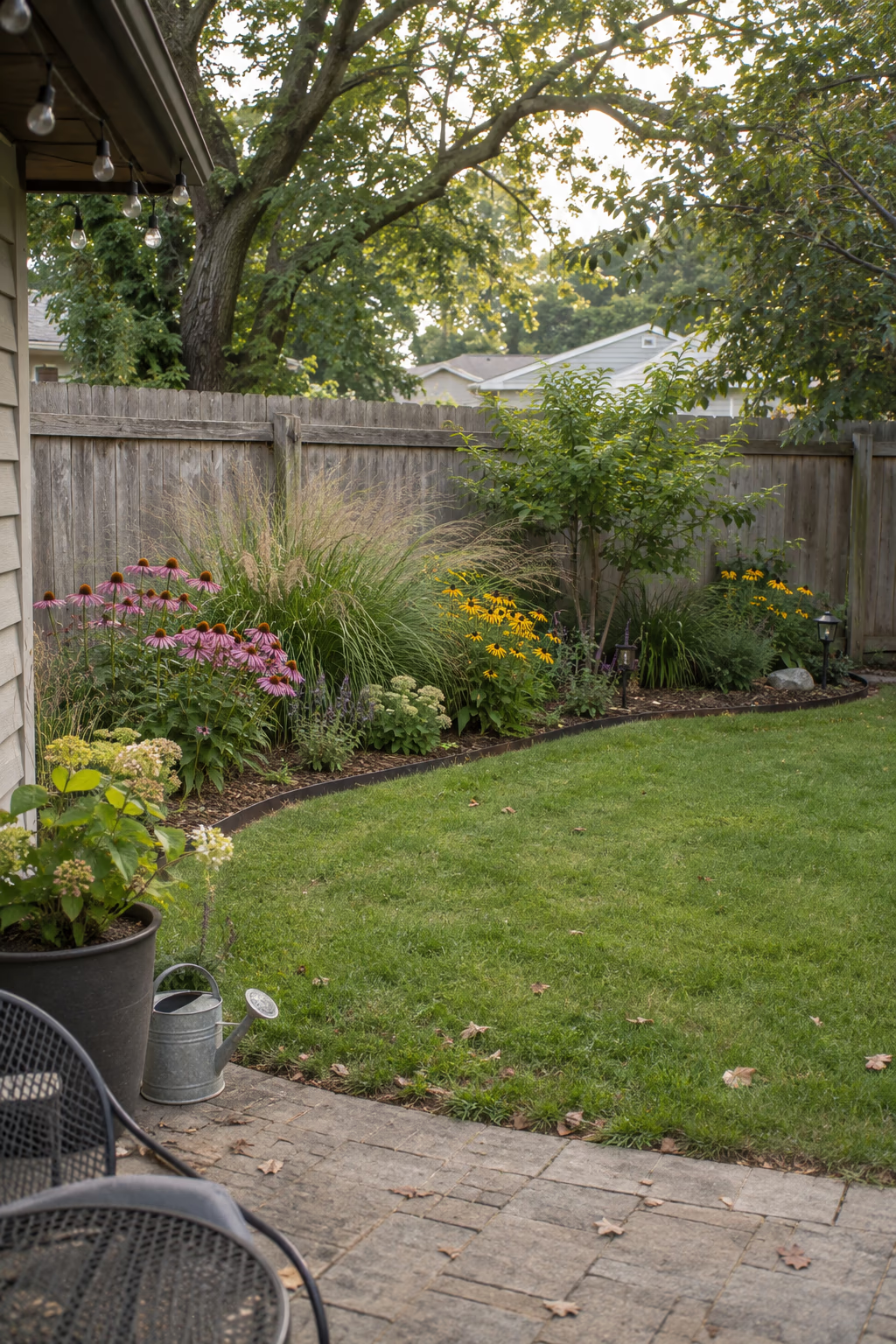
Soft lines hide the yard’s true shape
Instead of straight beds hugging the fence, swing the bed line out in a gentle curve so it widens in one corner and narrows in another. Lay a garden hose on the lawn or gravel to test shapes before cutting the edge.
Curves hide where the yard ends and create pockets of planting that make the space seem larger and more natural. They also give you deeper spots for layered plants like ornamental grasses, coneflowers, and small shrubs.
Keep curves broad and simple so mowing and edging stay easy. Very wiggly lines look busy in a small space and make maintenance harder.
19. Turn a Narrow Side Strip Into a Gravel Garden
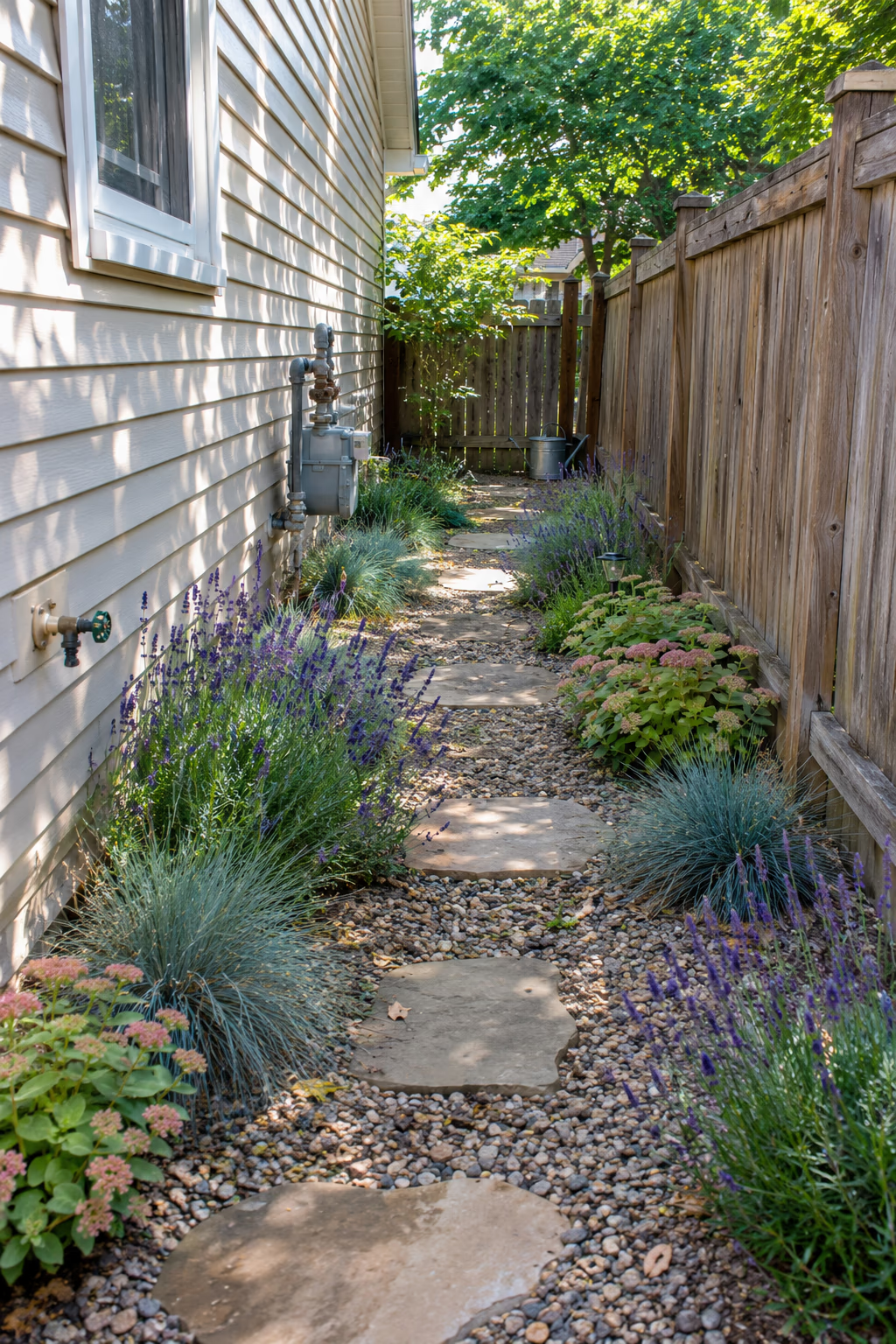
Put the forgotten side yard to work
That skinny strip between the house and the property line can become a low-water gravel garden. Lay landscape fabric or a thick gravel base, spread 2 to 3 inches of pea gravel or crushed stone, and plant clumps of blue fescue, lavender, sedum, or yarrow along the edges.
In a small lot, every bit of usable ground counts. A tidy side garden adds a pleasant walkway, improves drainage near the foundation, and gives you room for tough plants that hate wet soil.
Slope the base slightly away from the house so water drains outward. Keep gravel a few inches below siding and leave access to meters, spigots, and utility boxes.
20. Tuck a Tiered Edible Bed Against a Sunny Wall
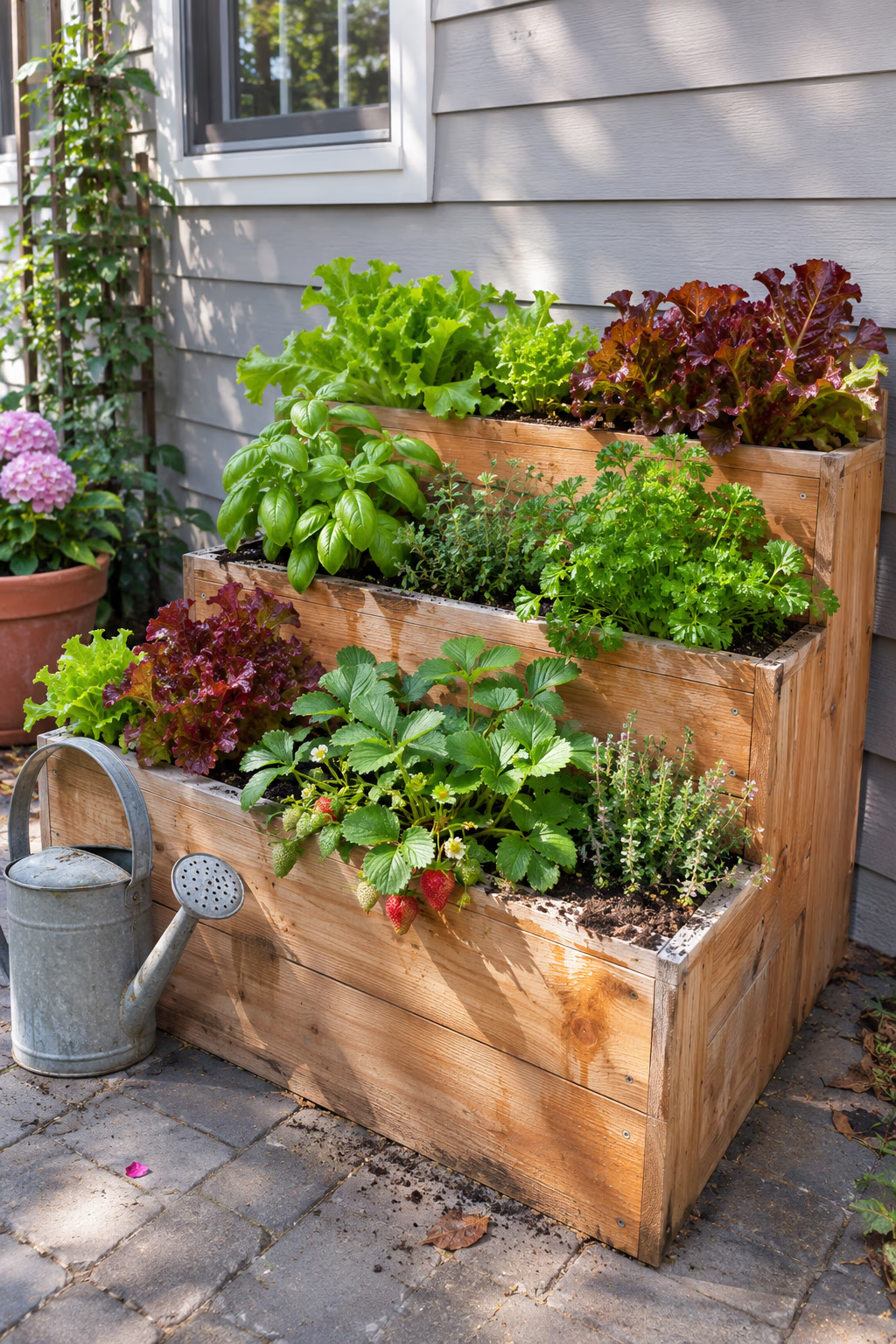
Fresh harvests in about 4 square feet
A stepped planter with three levels, typically made from cedar, puts lettuce, herbs, and strawberries within easy reach against the sunniest wall or fence. Most models take up about 2 by 4 feet of floor space yet hold several times that in planting area.
Edibles grown close to the back door actually get picked and used. The tiered shape gives every plant good light and keeps soil warmer in spring than a ground bed.
Edibles need at least 6 hours of direct sun. Use a quality potting mix rather than garden soil, and check moisture daily in midsummer, since the top tier dries out first.
21. Hang a Hammock Chair Instead of a Full Hammock
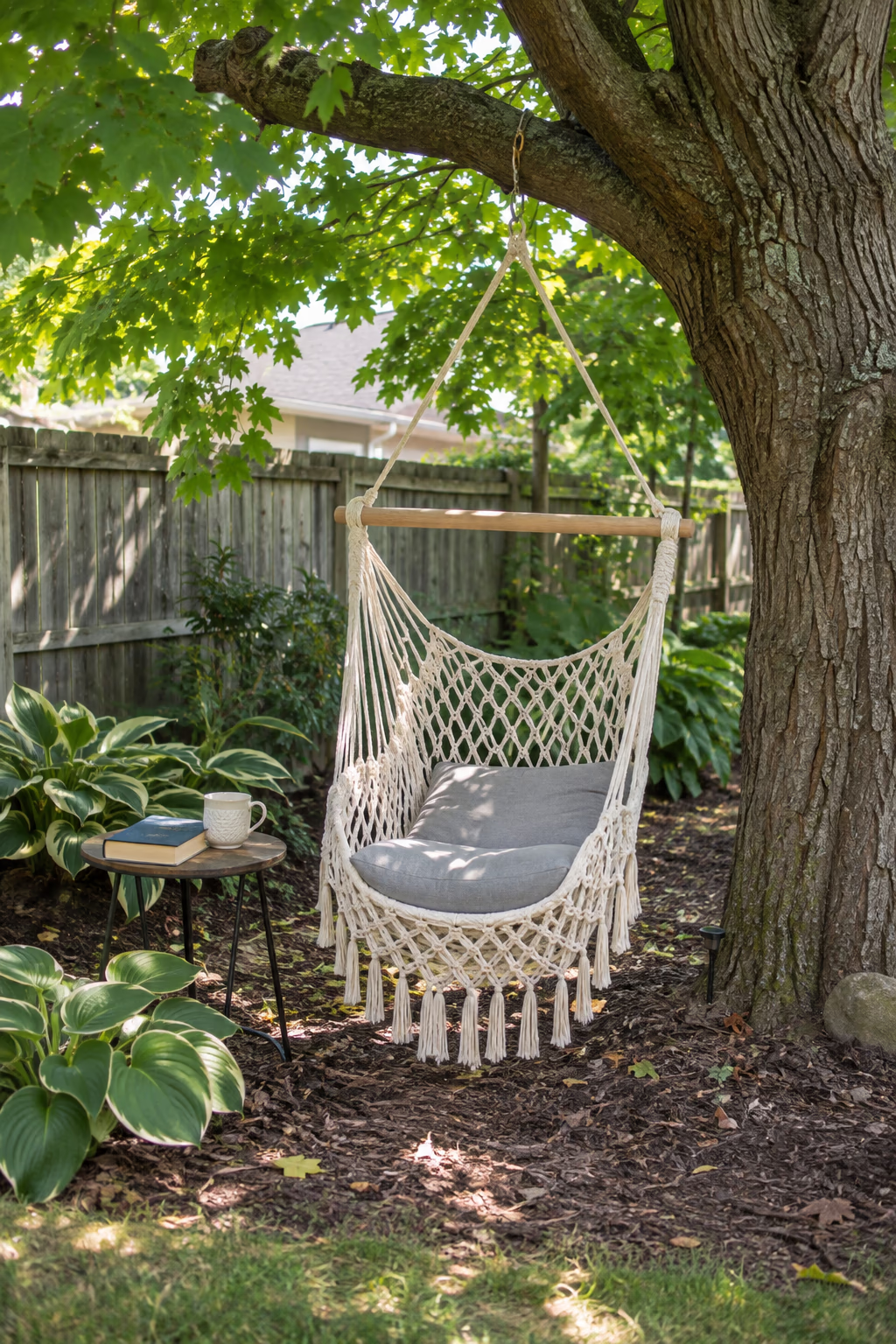
Swinging comfort without a 12-foot span
A traditional hammock needs two anchor points and a long run of open space. A hammock chair hangs from a single point, either a sturdy pergola beam, a strong tree limb, or a freestanding C-shaped stand, and takes up roughly the space of an armchair.
It gives you a relaxing reading spot that feels special, and it fits into corners or under a tree where a full hammock never could.
Use hardware rated well above the person’s weight, such as a heavy-duty eye bolt or tree strap. Never hang one from gutters, fence rails, or a light-duty pergola, and bring fabric chairs indoors when not in use.
22. Wash the Fence With Low-Voltage Uplights
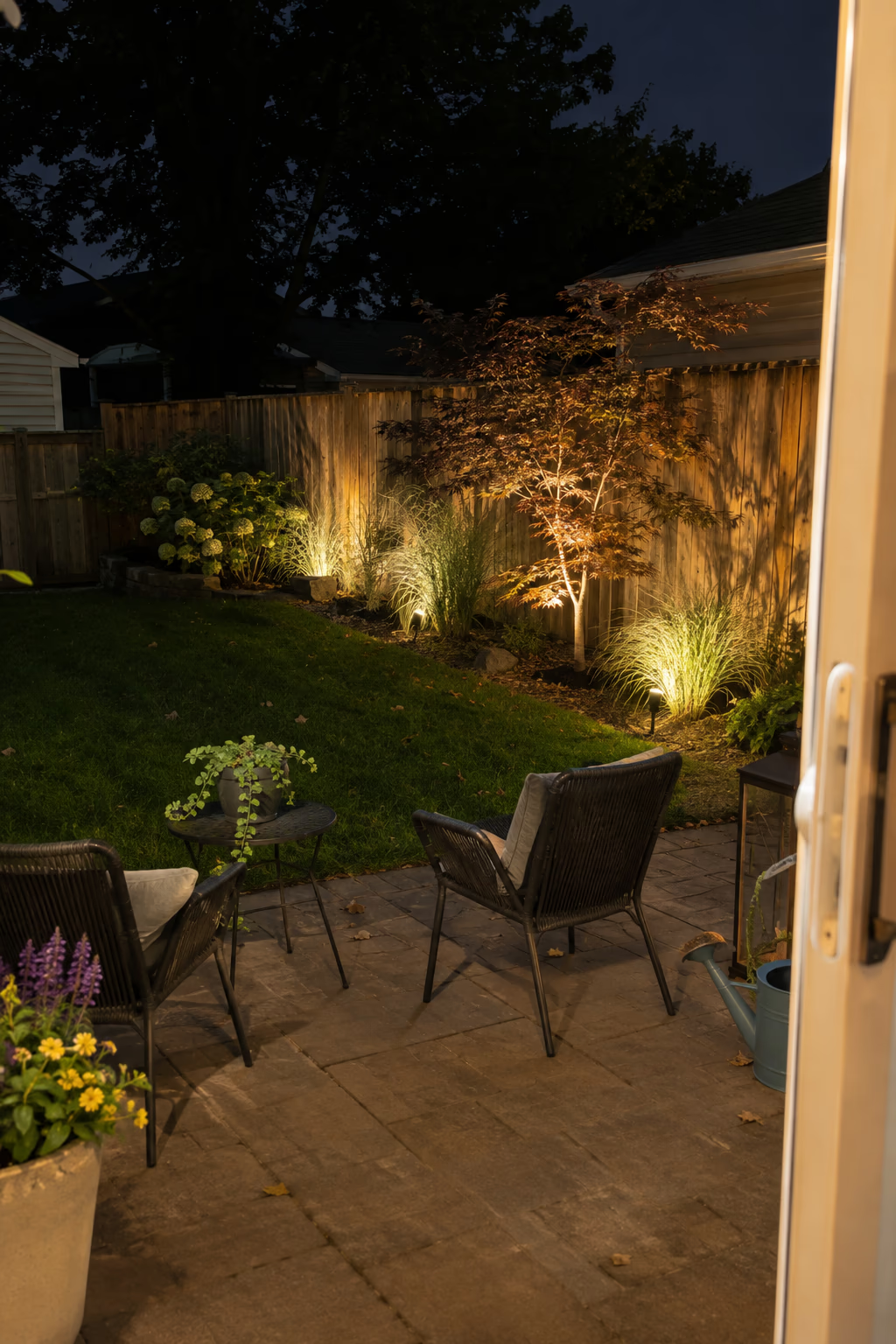
Push the boundaries back after dark
Small spike-mounted LED uplights placed at the base of fence plantings throw light up the boards and leaves. A low-voltage system runs from a plug-in transformer, and cables can be buried a few inches deep under mulch.
When only the patio is lit, the rest of the yard disappears into black and the space feels like a box. Lighting the perimeter shows off the plants and makes the whole yard feel larger at night.
Choose warm white, around 2700K, and aim fixtures away from neighbors’ windows. Plug the transformer into a GFCI-protected outdoor outlet with an in-use cover.
23. Mount a Retractable Awning Instead of a Pergola
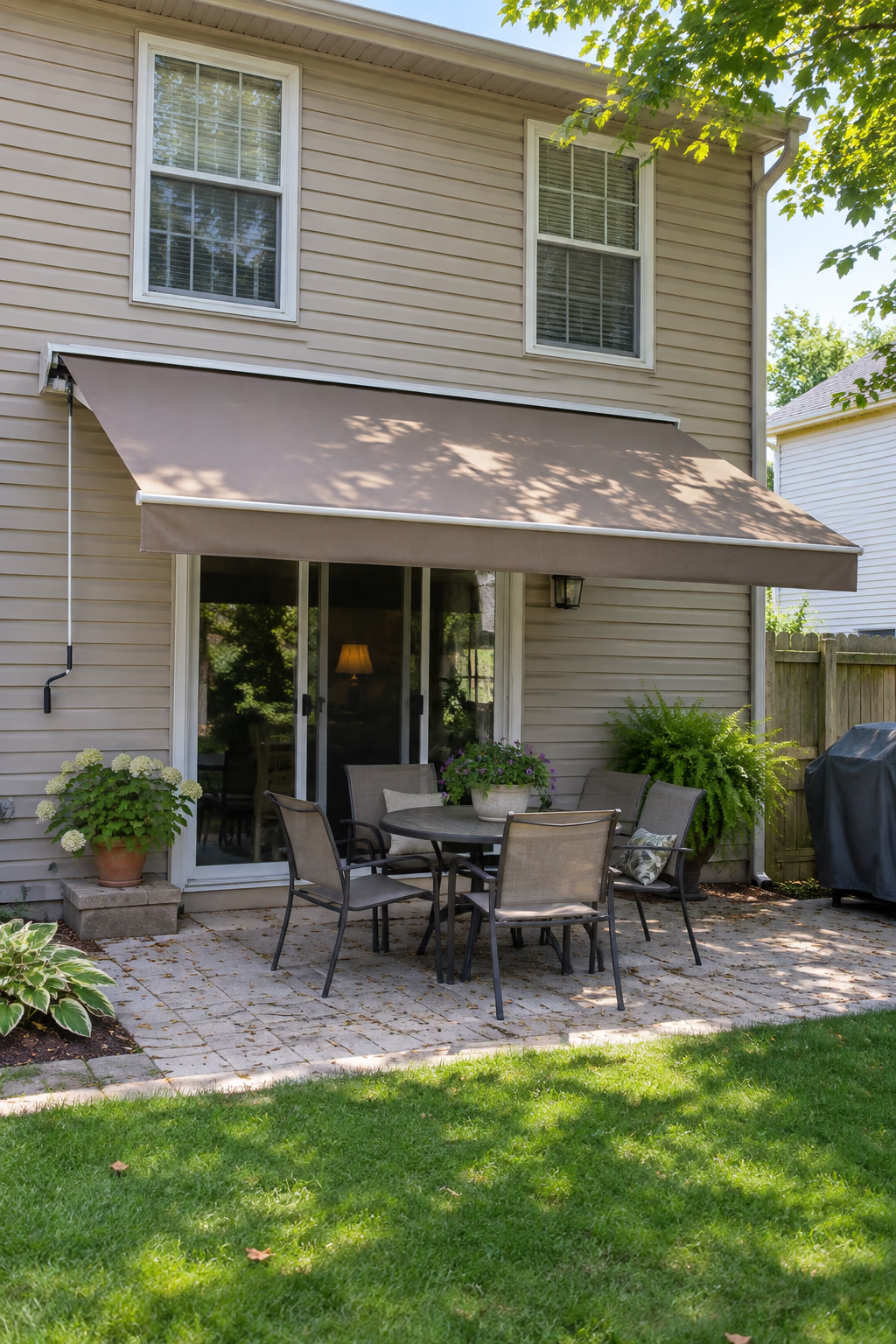
Shade on demand that disappears when you don’t need it
A retractable awning bolts to the house wall above the back door and rolls out to shade the patio, then rolls back to let in winter sun. Manual crank models are affordable, and motorized versions add convenience.
Unlike a pergola, it leaves no posts in the way when it’s retracted. That matters in small yards where every post competes with furniture and walking space.
Awnings must be mounted into solid wall framing, not just siding. Retract them in strong wind or heavy rain, and confirm any HOA rules on color and fabric.
24. Install an Outdoor Shower Against the House
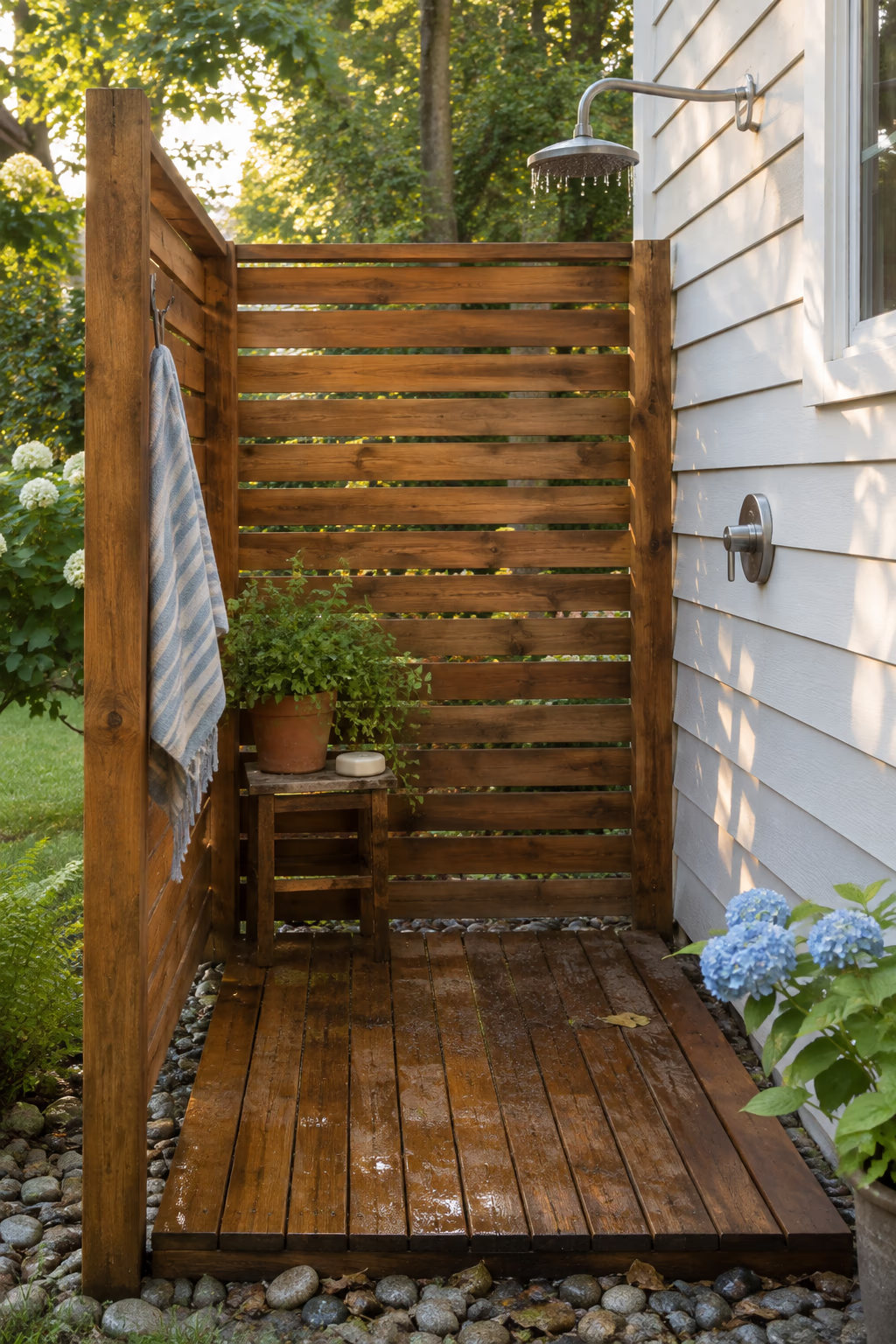
A spa-like extra that rinses off the garden
An outdoor shower mounted to an exterior wall can be as simple as a cold-water fixture fed by a hose bib, or a plumbed hot and cold setup. Surround it with a three-sided cedar screen and stand it on a slatted wood floor over a gravel drainage bed.
It’s handy after gardening, swimming, or a day at the beach, and it feels like a vacation every time you use it. It also keeps dirt and sand out of the house.
Hot water lines usually call for a plumber and a permit. Make sure runoff drains into gravel or a dry well, not toward the foundation, and use biodegradable soap if the water reaches garden beds.
25. Top a Slim Storage Shed With a Planted Roof
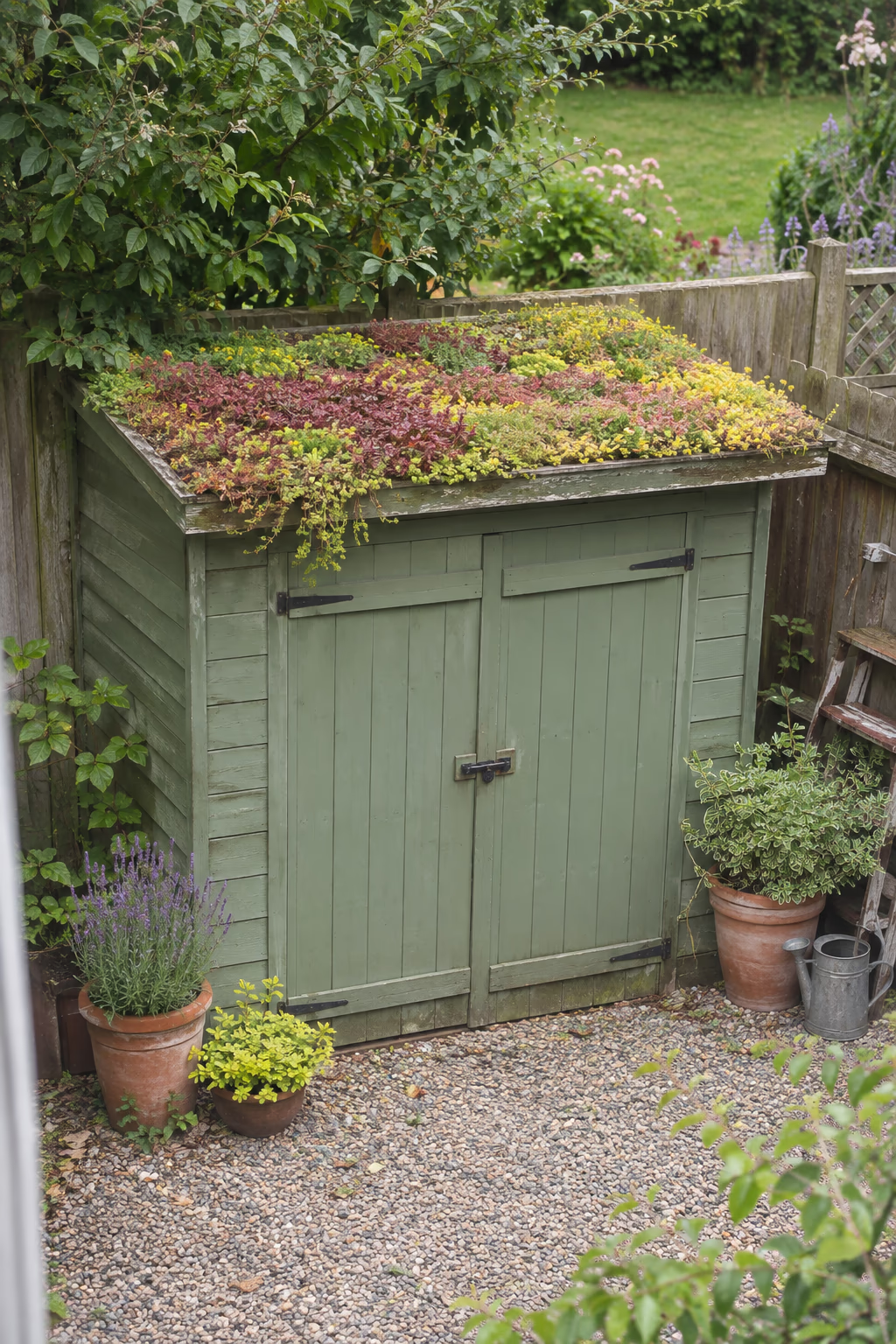
Turn a utility box into a garden feature
A narrow lean-to shed against the fence stores tools and bikes in a small footprint. Add a low-sloped roof tray with a waterproof membrane and a few inches of lightweight growing medium planted with sedum, and it becomes a living roof.
The planted top turns an eyesore into something attractive to look at from the patio or an upstairs window. Sedum survives drought and needs almost no care once established.
A wet green roof is heavy, so the shed must be built or reinforced to carry the load. Check permit and setback rules for sheds near property lines.
26. Create a Mini Wildlife Habitat With a Birdbath
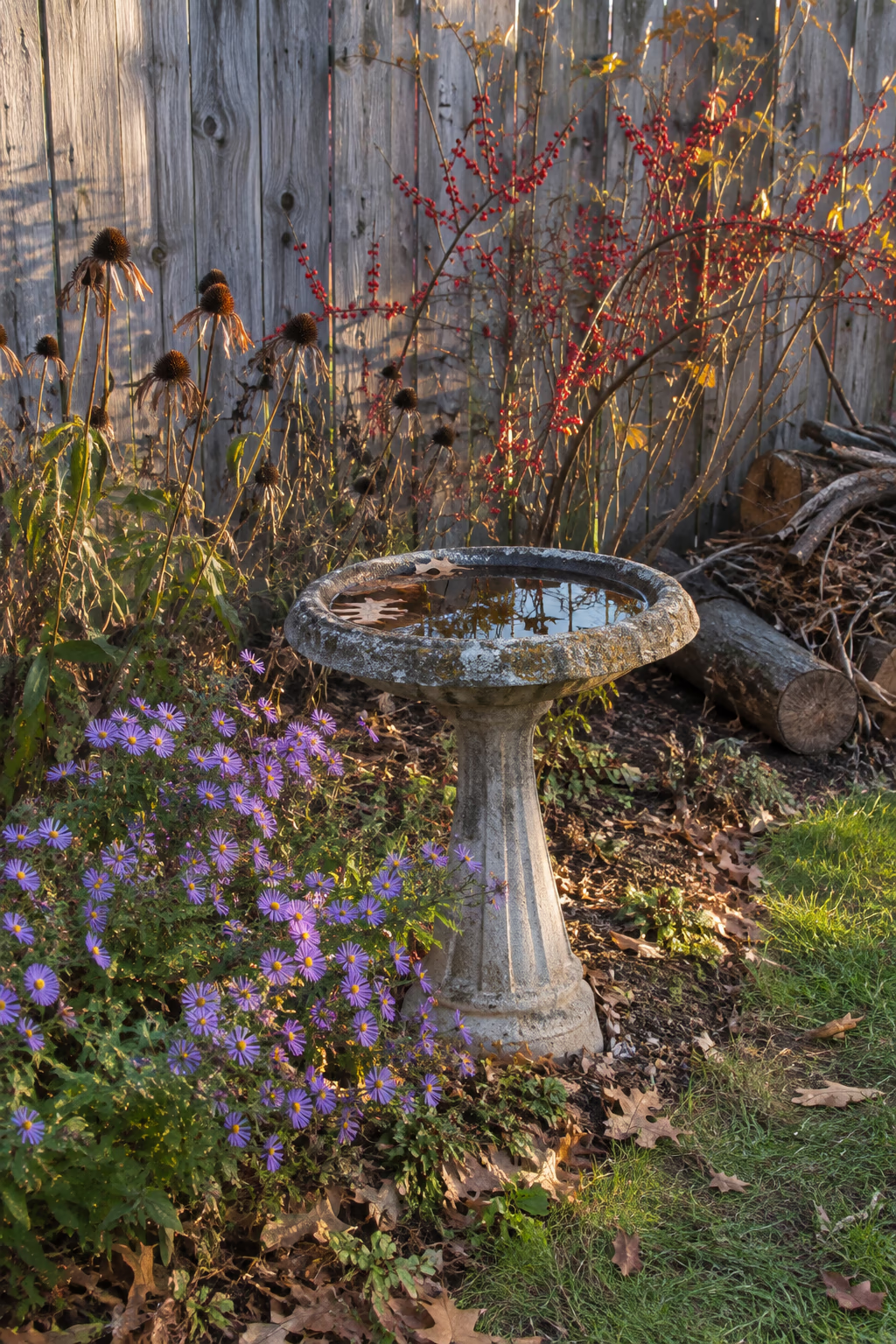
Bring life to a small yard
Pair a shallow birdbath with a few native shrubs and perennials, such as winterberry, coneflower, and asters. Add a small brush pile or log in a corner to give insects and birds cover.
Even a small yard can be a stopping point for birds, butterflies, and bees. Watching wildlife visit makes the yard more interesting through every season.
Keep birdbath water only 1 to 2 inches deep and refresh it every few days to prevent mosquito breeding. Place it near shrubs for cover, but not so close that cats can ambush birds.
27. Lay a Turf Strip for Lawn Games and Pets
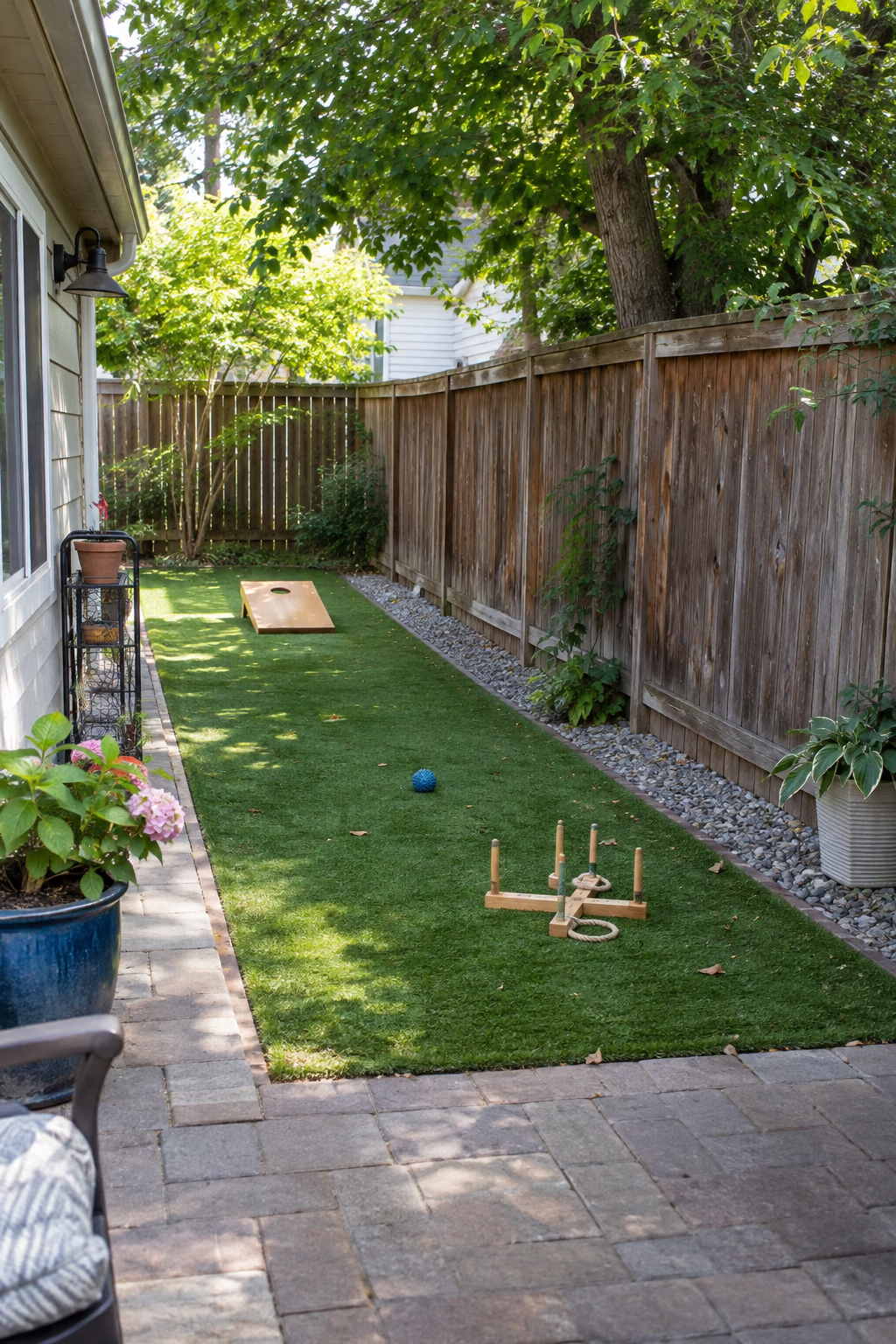
A durable play zone that stays green
A strip of artificial turf, even just 6 by 20 feet, gives kids room for games and dogs a clean place to play. Lay it over a compacted crushed stone base with good drainage, and secure the edges with landscape staples or edging.
Turf stays green year-round, never needs mowing, and holds up to heavy use in shady spots where grass struggles.
Turf can get very hot in direct summer sun, so use it in partly shaded areas or hose it down before play. Choose a pet-friendly product with good drainage and rinse it regularly if dogs use it.
How to Plan Your Small Backyard
A small backyard works best when every element has a job. Before you buy anything, spend some time watching how sun, shade, and foot traffic move through the space.
- Choose a main purpose. Decide whether the yard is mainly for dining, relaxing, gardening, or play, and give that use the best spot.
- Measure and draw it out. Sketch the yard on graph paper and mark doors, windows, utilities, and sun patterns before planning furniture or beds.
- Think vertical. Fences, walls, and trees offer space for planters, lighting, storage, and shade without taking up floor area.
- Limit your materials. Two or three repeated materials and colors make the yard feel calm and connected.
- Check rules first. Pools, decks, sheds, and plumbing can require permits, and HOAs may have rules on fences, colors, and lawns.
- Build in phases. Start with hardscape and drainage, then add furniture, plants, and lighting over time. Call 811 before digging.
Frequently Asked Questions
How can I make a small backyard look bigger?
Use dark fence colors, diagonal paving, mirrors, curving beds, and perimeter lighting. Keep furniture to a few larger pieces and repeat a small set of materials so the eye moves smoothly across the yard.
What is the cheapest way to improve a small backyard?
Paint or stain the fence, add an outdoor rug, group a few large containers, and lay gravel in neglected areas. These projects can make a big difference for a modest budget, especially when done yourself.
Can you fit a pool in a small backyard?
Often, yes. Stock tank pools and plunge pools fit in small footprints and cost far less than full-size in-ground pools. Check local fencing and safety rules before installing any pool.
What plants work best in small backyards?
Choose plants with a compact mature size, such as serviceberry, dwarf conifers, ornamental grasses, sedum, creeping thyme, and ferns. Match them to your USDA zone, sunlight, and soil conditions.
Should a small backyard have grass?
Not necessarily. Many small yards look and work better with patios, gravel, clover, or groundcovers instead of turf. Keep a small patch of lawn only if you will use it for play or pets.
Final Thoughts
A small backyard can still be one of the best rooms in your home. A compact pool, a living wall, a split-level layout, or a well-placed bench can turn a cramped patch into a space you want to use every day.
Start with the idea that solves your biggest frustration, then add layers as time and budget allow. With a clear plan and a few smart choices, even the smallest yard can feel generous, green, and welcoming.


