
Step out the back door on a June evening and picture this: foxgloves and roses spilling over the edge of a bed, water trickling into a small pond, and a soft curve of green lawn leading your eye toward a tree glowing under a single uplight. Nothing about it feels forced. It simply feels like a place you want to stay.
Good landscaping is what turns a plain rectangle of grass into that kind of yard. Plants, stone, water, and light give the space shape, privacy, and seasonal interest, and they add value to your home in a way patio furniture alone never will. Better still, most of the work can be done in stages over a few weekends or seasons.
These 29 backyard landscaping ideas focus on the living, growing side of the yard: planting borders, shaping lawns, solving slopes and soggy spots, lighting, water, and smart plant choices for every season. Pick the ideas that fit your climate, budget, and how you actually use your yard, and build from there.
1. Plant an English Cottage Border Along the Back Fence
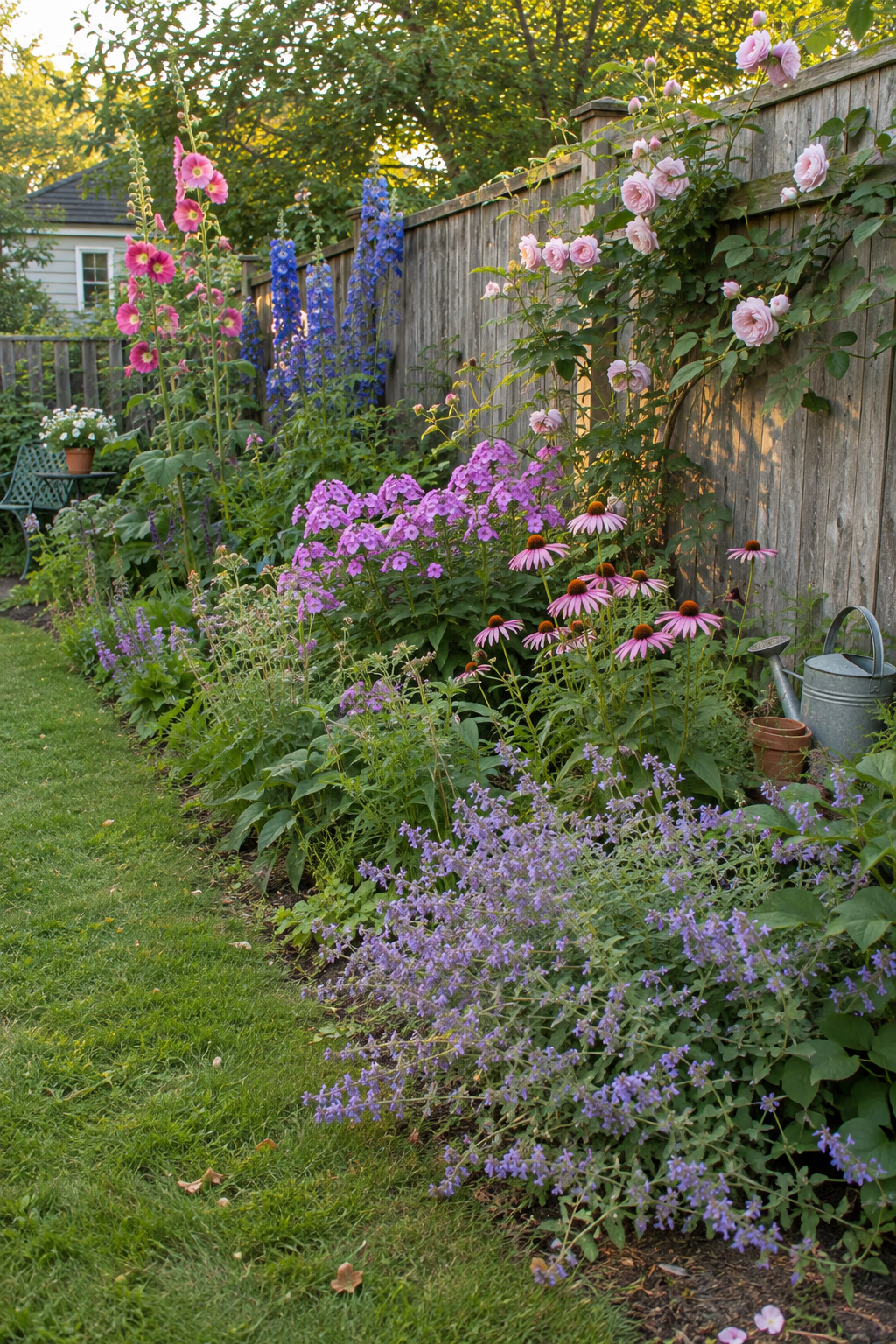
Romantic color that hides a plain fence
A cottage border is a deep, loosely planted bed packed with flowers of different heights. Aim for a bed at least 4 to 6 feet deep along a sunny fence, then layer tall plants like hollyhocks, delphinium, and climbing roses at the back, mid-height plants like phlox, salvia, and coneflower in the middle, and low catmint, lady’s mantle, or pinks along the front edge.
The look works because it feels generous and a little wild, softening the hard line of a fence and giving you blooms from late spring into fall. Repeating two or three plants every few feet keeps the mix from looking chaotic.
Cottage borders need full sun, rich soil, and regular deadheading. Plant closely so the flowers crowd out weeds, and add a 2-inch layer of shredded mulch until the plants fill in.
2. Install a Small Pond With a Recirculating Waterfall
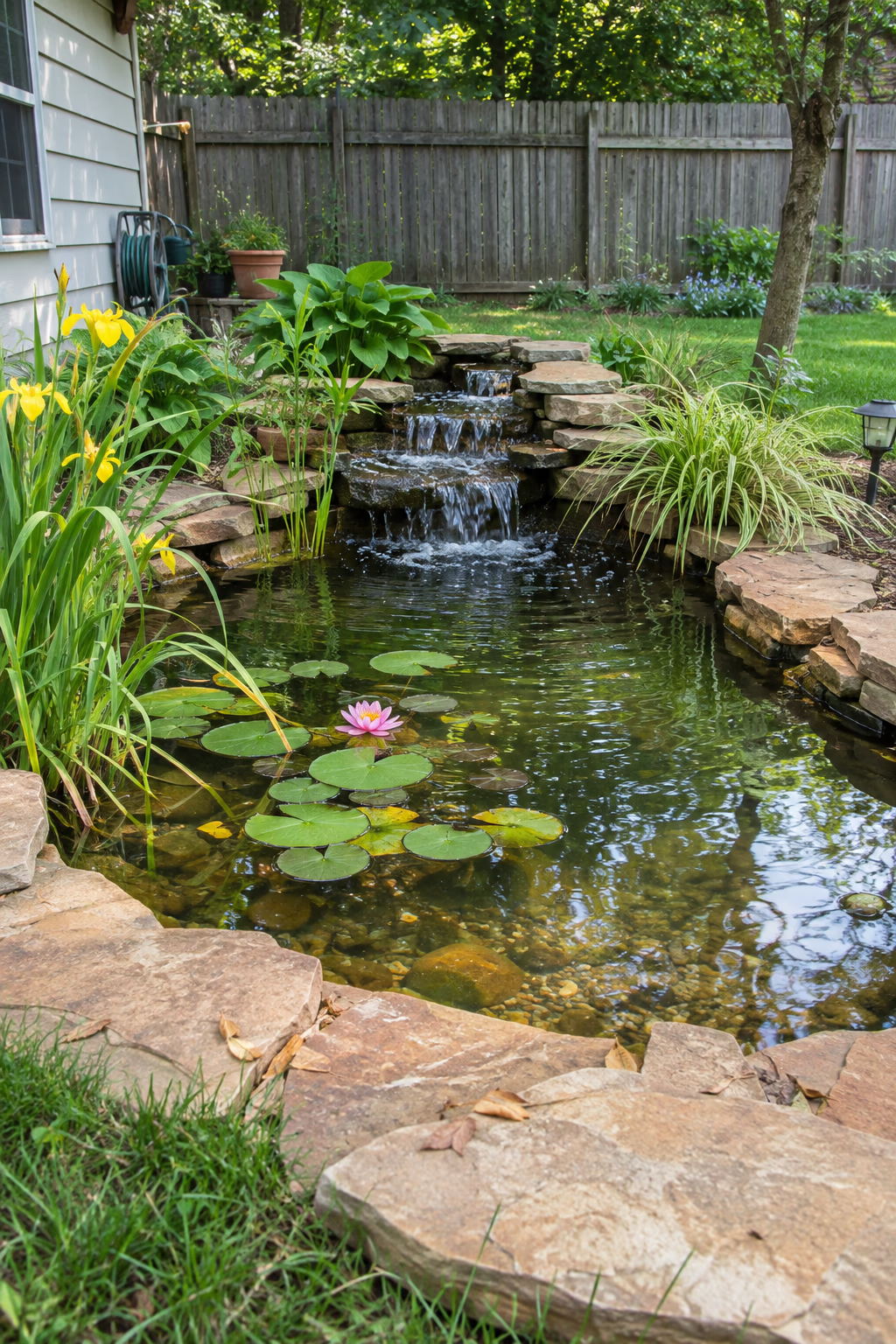
Moving water adds sound and wildlife
A backyard pond does not need to be large to make an impact. A kidney-shaped pond about 6 by 8 feet and 18 to 24 inches deep, lined with flexible EPDM rubber liner over an underlayment, is a manageable DIY size. A submersible pump sends water to a short stack of flat stones at one end, creating a gentle waterfall.
The sound of falling water masks traffic noise, and the movement keeps mosquitoes from breeding. Edge the pond with overlapping flat stones and plant irises, sedges, and water lilies to help shade the water and limit algae.
Ponds need a GFCI-protected outdoor outlet, and some towns treat deeper ponds like pools with fencing rules, so check local codes first. Place the pond away from overhanging trees to cut down on leaf cleanup.
3. Reshape the Lawn Into a Soft, Curved Panel
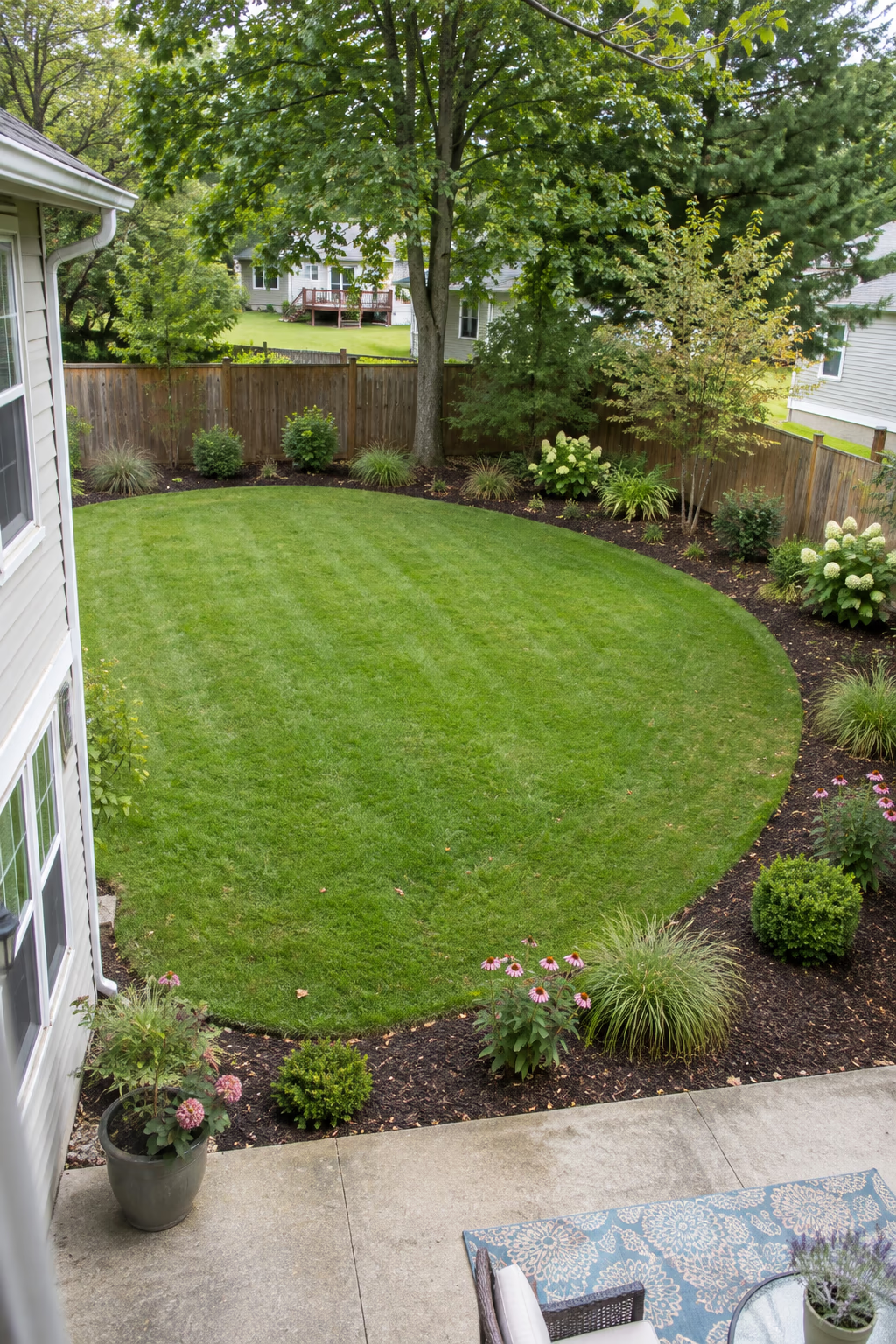
Less mowing and instant structure
Instead of letting grass run edge to edge, carve the lawn into a deliberate shape, such as a gentle oval or a wide S-curve, and turn the leftover margins into planting beds. Lay out the curve with a garden hose, view it from the house and the patio, then cut the edge with a flat spade.
A defined lawn reads as an intentional design element, like a green rug, and the deeper beds around it give you room for shrubs and perennials. The smaller lawn also means less water, fertilizer, and mowing time.
Keep curves broad and smooth so a mower can follow them easily. Tight wiggles look fussy and are frustrating to trim.
4. Terrace a Sloped Yard With Stone Retaining Walls
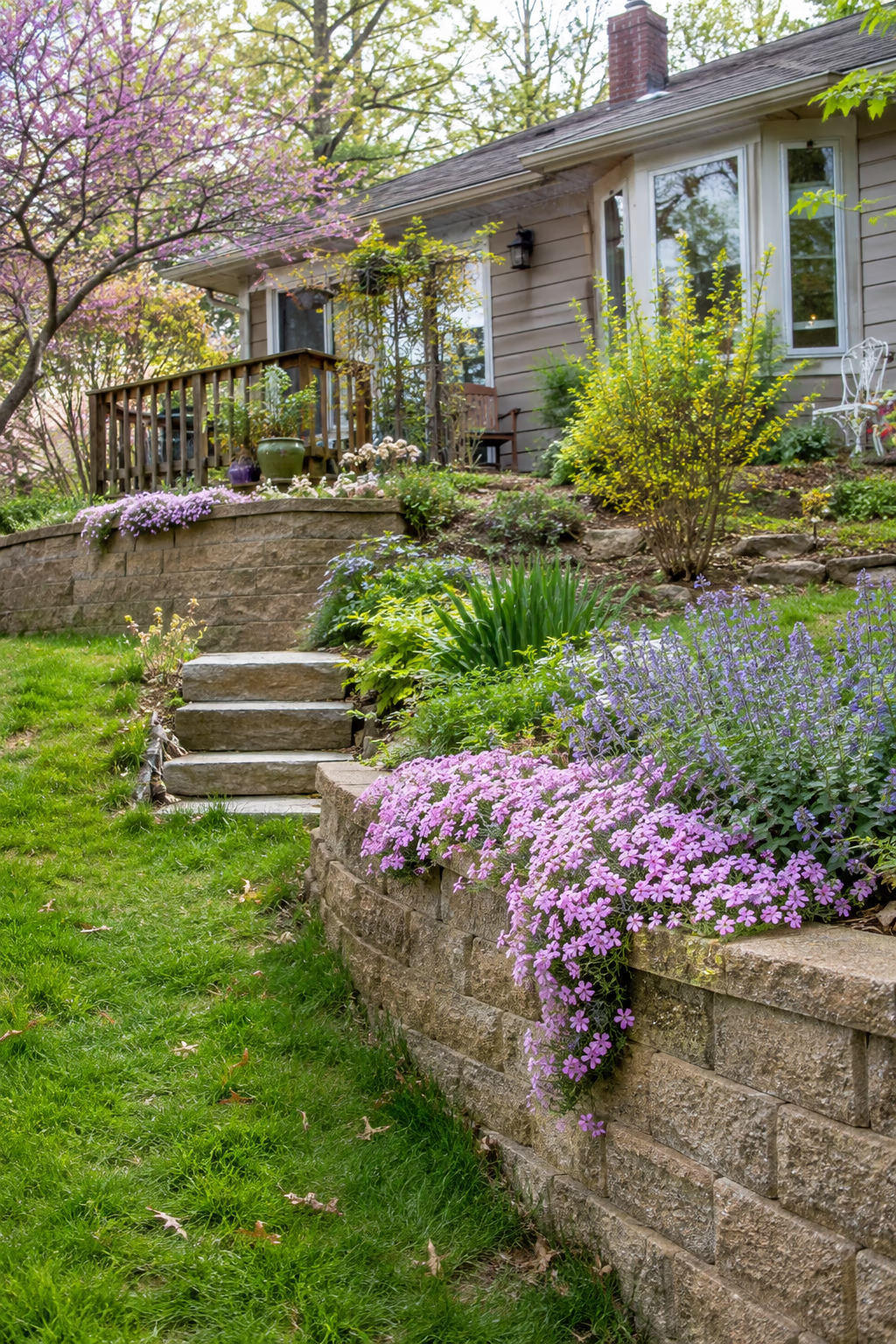
Turn a hill into usable level space
A slope that is hard to mow or walk on can become a series of flat, planted terraces. Low retaining walls of segmental concrete block or natural stacked stone, each about 18 to 30 inches tall, step down the hill and hold level beds or small lawn areas between them.
Terraces control erosion, slow runoff, and give you planting spaces that are easy to reach. Spill cascading plants like creeping phlox, catmint, or creeping juniper over the wall tops to soften the stone.
Every wall needs a compacted gravel base and drainage behind it. Walls over about 3 to 4 feet often require a permit and engineering, so plan several short walls instead of one tall one when you can.
5. Light Trees and Beds With Low-Voltage Fixtures
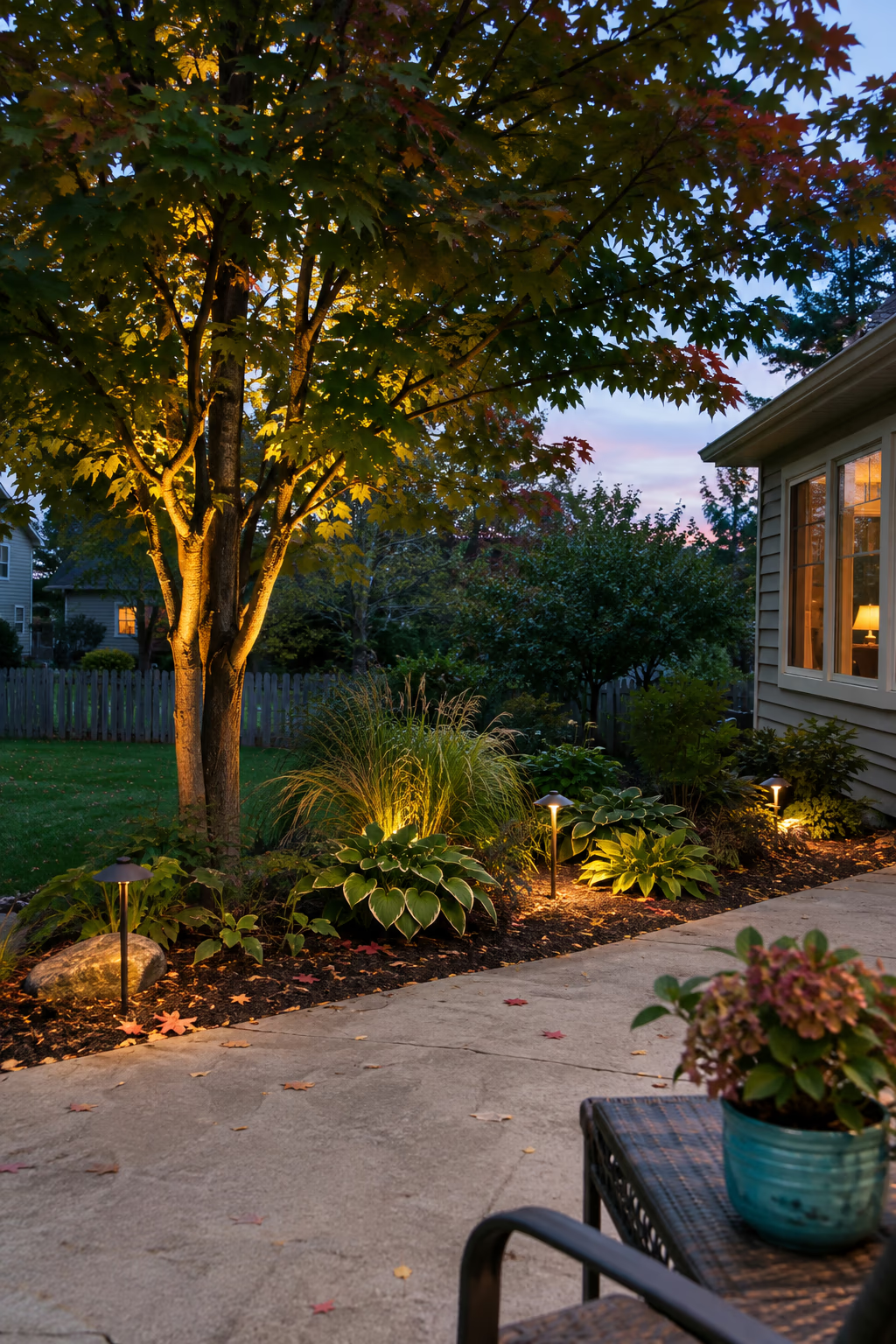
Your landscaping keeps working after dark
A 12-volt landscape lighting system lets you place warm LED fixtures exactly where they make the most impact. Aim one or two uplights into the canopy of a favorite tree, use small path or wash lights to graze the front of a planting bed, and add a soft downlight from a branch to mimic moonlight.
Layered light adds depth, extends the hours you can enjoy the yard, and improves safety on steps and edges. Choose a warm color temperature around 2700K for a natural glow rather than a harsh blue-white.
A plug-in transformer with a timer or photocell makes the system almost hands-off. Bury cable a few inches deep and leave slack so you can move fixtures as plants grow.
6. Plant a Multi-Stem Tree Beside the Patio
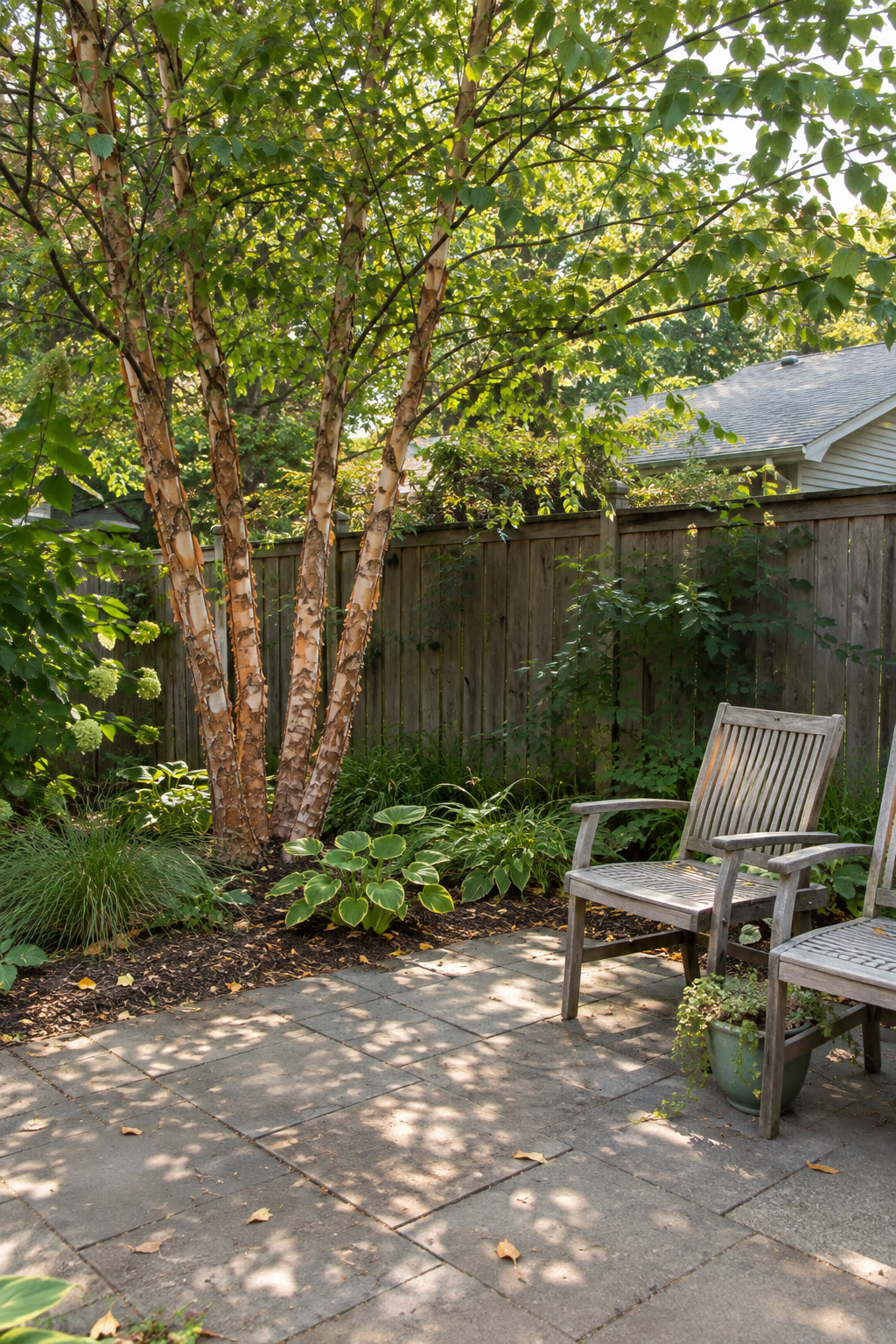
Sculptural shade at human scale
A multi-stem tree has several trunks rising from the base, which gives it a graceful, sculptural shape. River birch, serviceberry, redbud, crape myrtle, and Japanese maple are popular choices, depending on your zone and sun exposure.
These trees stay smaller than large shade trees, so they fit beside a patio without overwhelming it, and their light canopy gives dappled shade instead of deep gloom. Many also offer spring flowers, fall color, or interesting bark in winter.
Plant at least 8 to 10 feet from the house and patio edge so roots and branches have room. Avoid trees with messy fruit right next to sitting areas.
7. Design a Desert-Modern Bed With Agave and Grasses
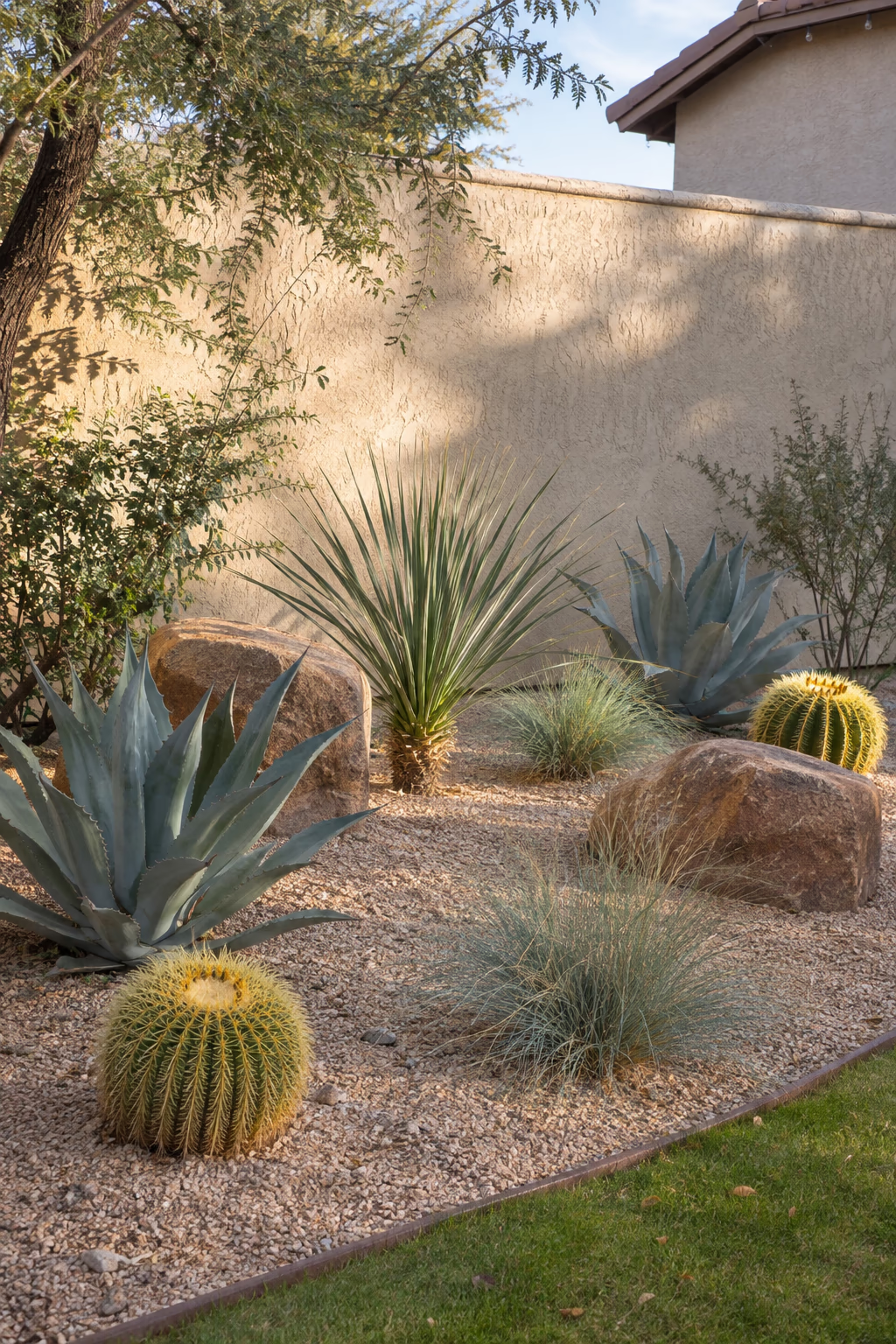
Bold shapes with very little water
Desert modern landscaping pairs strong architectural plants with clean gravel and a few large stones. In the Southwest, combine agave, golden barrel cactus, desert spoon, and blue grama grass in a bed of decomposed granite, spacing plants so each shape stands out.
The style suits hot, dry climates, uses very little irrigation once established, and looks crisp year-round. Warm tan or rust gravel ties it to the surrounding landscape.
In colder or wetter regions, swap in hardy look-alikes such as yucca, prickly pear, and blue fescue, and build the bed up with gritty soil for sharp drainage. Keep spiny plants away from paths and play areas.
8. Dig a Rain Garden in a Soggy Low Spot
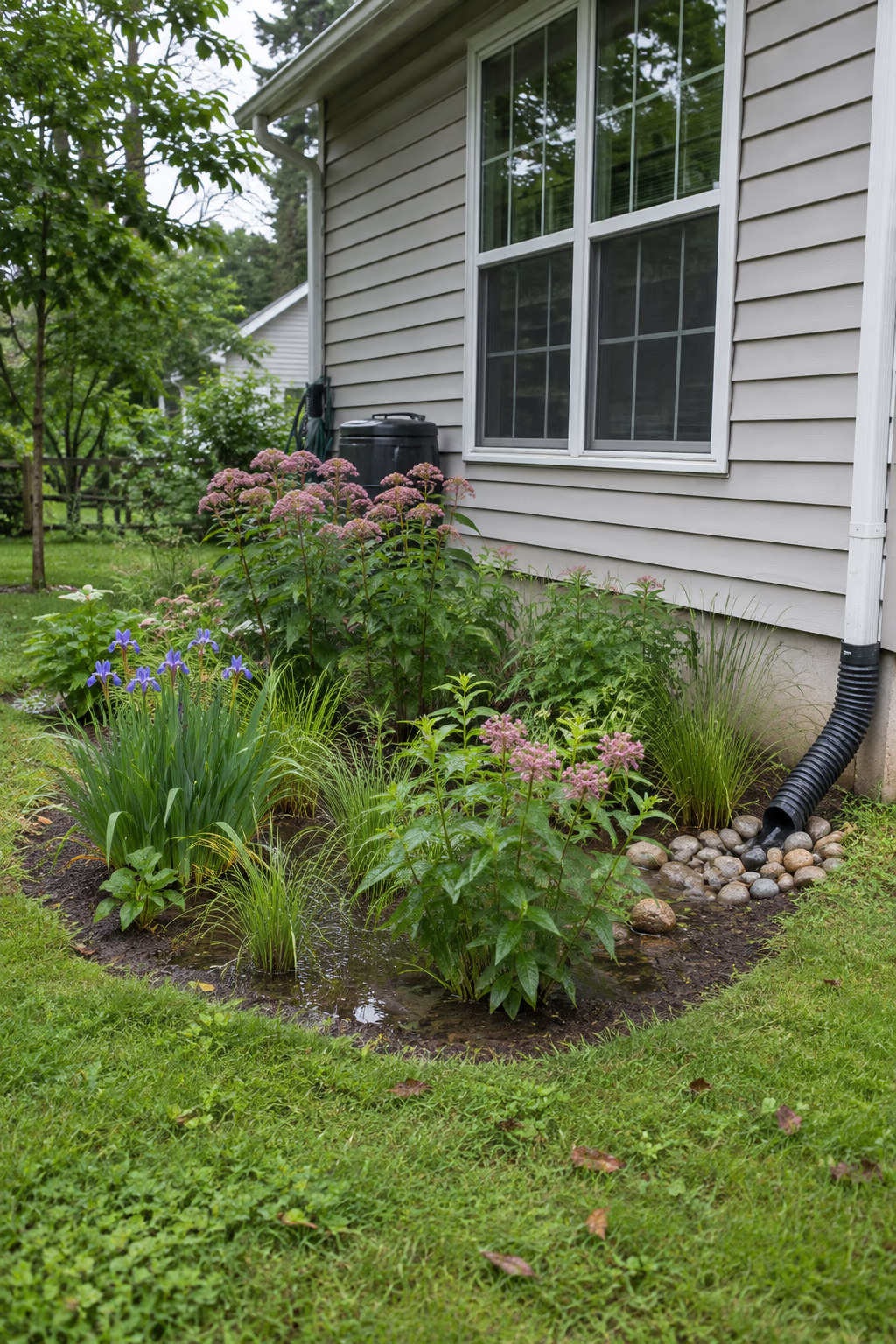
A pretty fix for a drainage problem
A rain garden is a shallow, planted basin that collects runoff from a downspout or a low area and lets it soak in slowly. Dig a dish about 4 to 8 inches deep, mix compost into the soil, and plant water-tolerant natives like swamp milkweed, blue flag iris, sedges, and joe-pye weed in the center, with tougher plants on the drier rim.
It reduces puddles and erosion, filters runoff before it reaches storm drains, and attracts butterflies and birds. Most rain gardens drain within a day or two after a storm.
Place it at least 10 feet from your foundation and away from septic systems. Do a simple percolation test first; if water sits for days, the soil may need amending or a different spot.
9. Overseed Part of the Lawn With Microclover
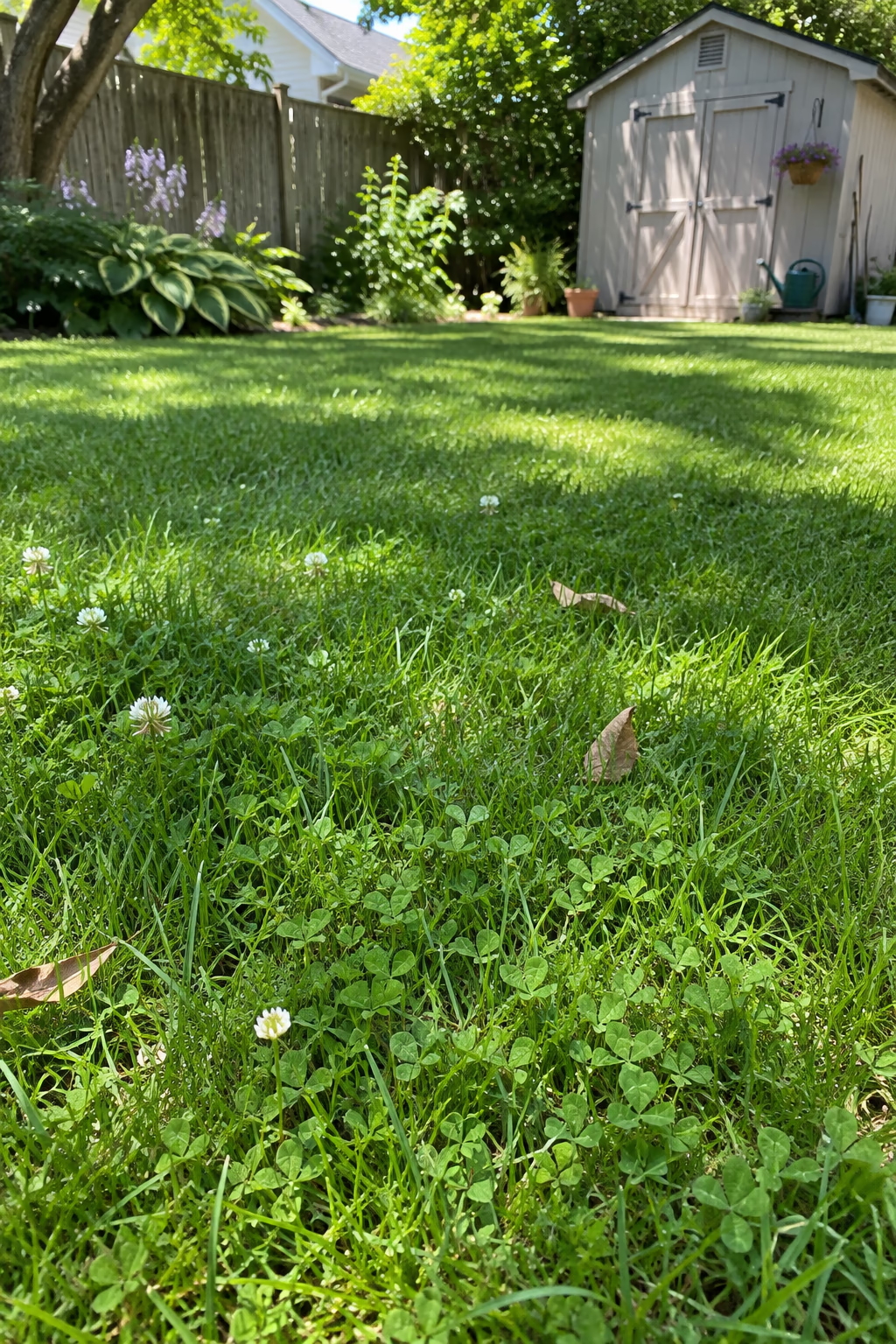
A greener lawn with less fertilizer
Microclover is a small-leaved white clover that blends into turf grass. Overseed a thin or patchy lawn with a mix of grass seed and microclover in early fall or spring, raking it lightly into the soil and keeping it moist until it sprouts.
Clover pulls nitrogen from the air and feeds the surrounding grass, stays green in summer heat, and resists dog urine spots better than many turf types. The result is a softer, low-input lawn.
Clover flowers attract bees, so mow regularly near play areas if stings are a concern. It is also less durable than grass under heavy sports traffic, so keep a grass-heavy mix where kids play ball.
10. Weave Edibles Into Ornamental Beds
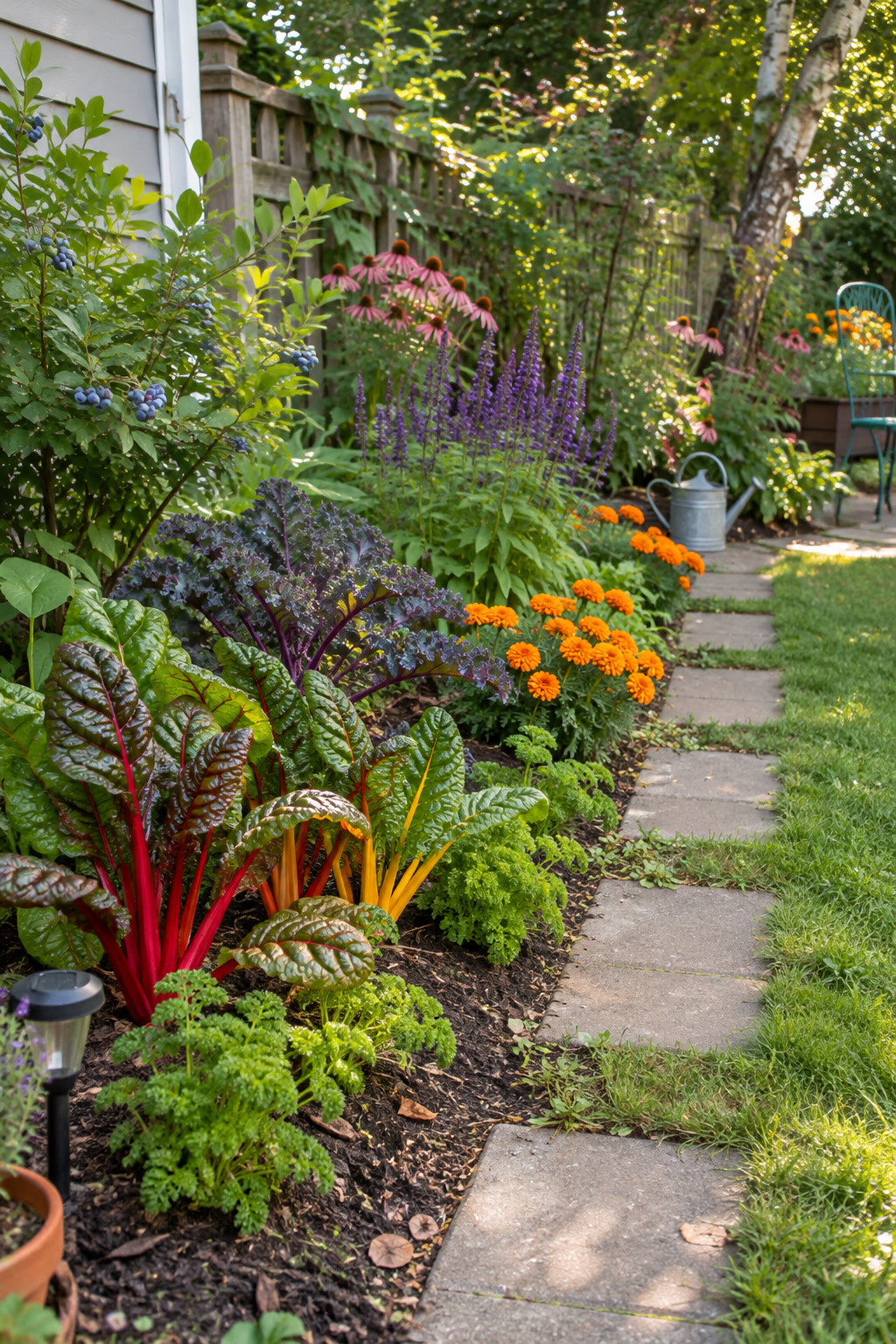
Beauty and a harvest in the same space
Edible landscaping tucks food plants into regular flower beds. Use blueberry bushes as foundation shrubs, edge beds with curly parsley or thyme, add rainbow chard and purple kale for color, and let ornamental-looking crops like artichoke or fennel act as tall accents.
Many edibles are genuinely attractive, and mixing them with flowers draws pollinators that improve your harvest. You get fresh food without dedicating a separate vegetable plot.
Most edibles need at least six hours of sun. If you use pesticides or herbicides on nearby ornamentals, read labels carefully, since many are not approved for food crops.
11. Mass Ornamental Grasses for Movement and Fall Color
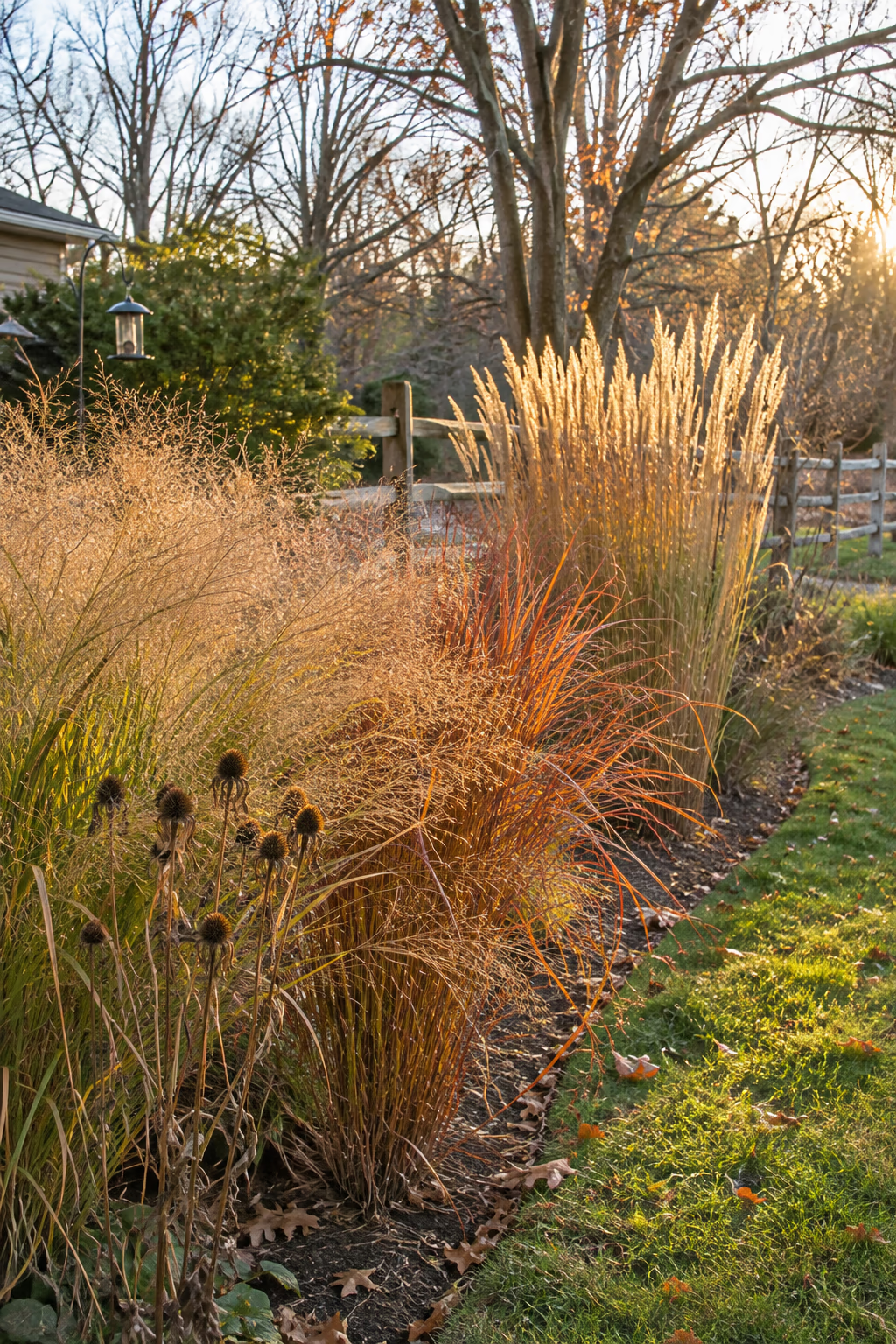
Year-round texture that sways in the breeze
Plant ornamental grasses in drifts of five, seven, or more instead of dotting single clumps around. Switchgrass, little bluestem, feather reed grass, and fountain grass create soft waves of foliage, with seed heads catching low sun in late summer and fall.
Grasses are drought tolerant once established, rarely bothered by pests, and look good well into winter. Their movement adds life to a yard even when nothing is in bloom.
Cut most warm-season grasses back to a few inches in late winter before new growth starts. Avoid grasses listed as invasive in your region, including some types of pampas grass and miscanthus.
12. Build a Four-Season Backbone With Evergreens
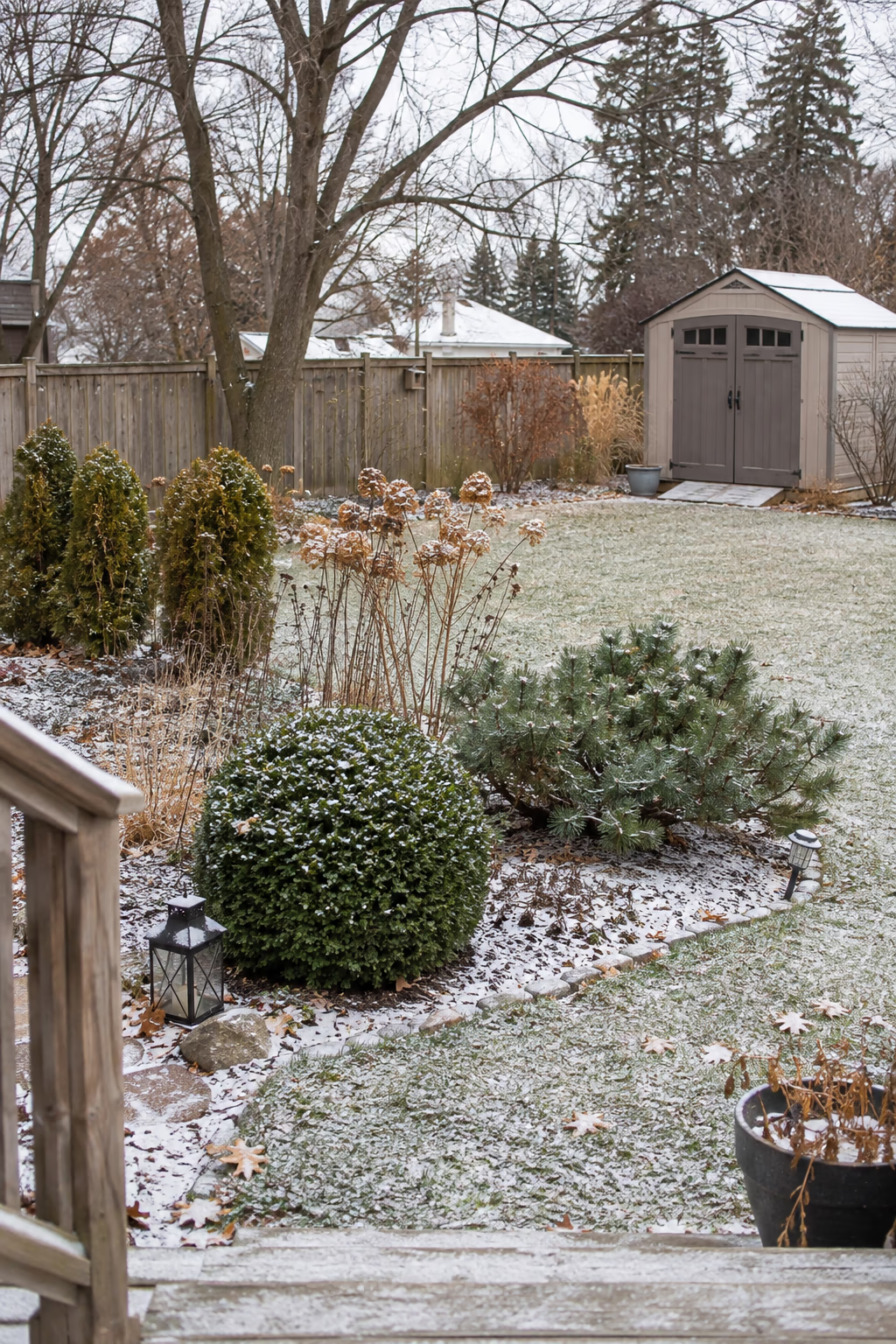
Structure that holds the yard together in winter
Evergreen shrubs and small conifers form the bones of a well-planned backyard. Space boxwood, inkberry holly, dwarf arborvitae, or mugo pine through your beds so roughly a third of the planting stays green all year.
When perennials die back, these evergreens keep the beds from looking empty, and they give flowers a solid backdrop in summer. Snow on their branches can be one of the prettiest winter sights in the yard.
Check the mature width on the plant tag before planting; many evergreens are sold small and grow much wider than expected. Choose varieties suited to your zone and watch for deer browse in rural areas.
13. Turn the Ground Under a Big Tree Into a Woodland Garden
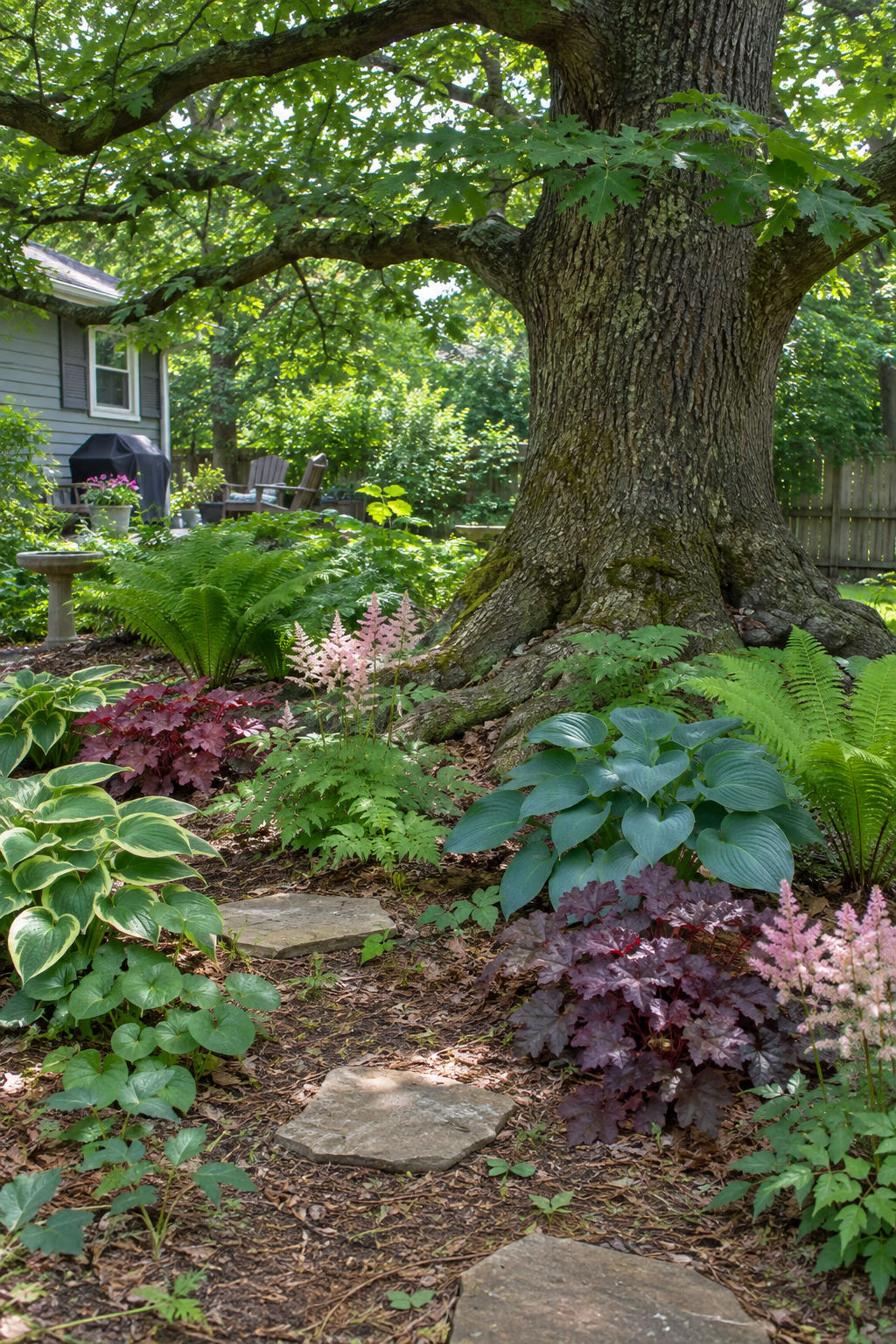
Where grass struggles, shade plants thrive
Grass rarely grows well in deep shade and root-filled soil under mature trees. Replace it with a woodland bed of hostas, ferns, heuchera, astilbe, hellebores, and wild ginger, set into a layer of shredded leaf mulch.
The result feels cool and calm, and these plants thrive with less water and fertilizer than a struggling lawn. Spring bulbs and native woodland flowers can add early color before the tree leafs out.
Do not pile soil over tree roots or raise the grade more than an inch or two, which can harm the tree. Plant small perennials in pockets between roots instead of cutting large ones.
14. Nestle a Hot Tub Into a Planted Nook
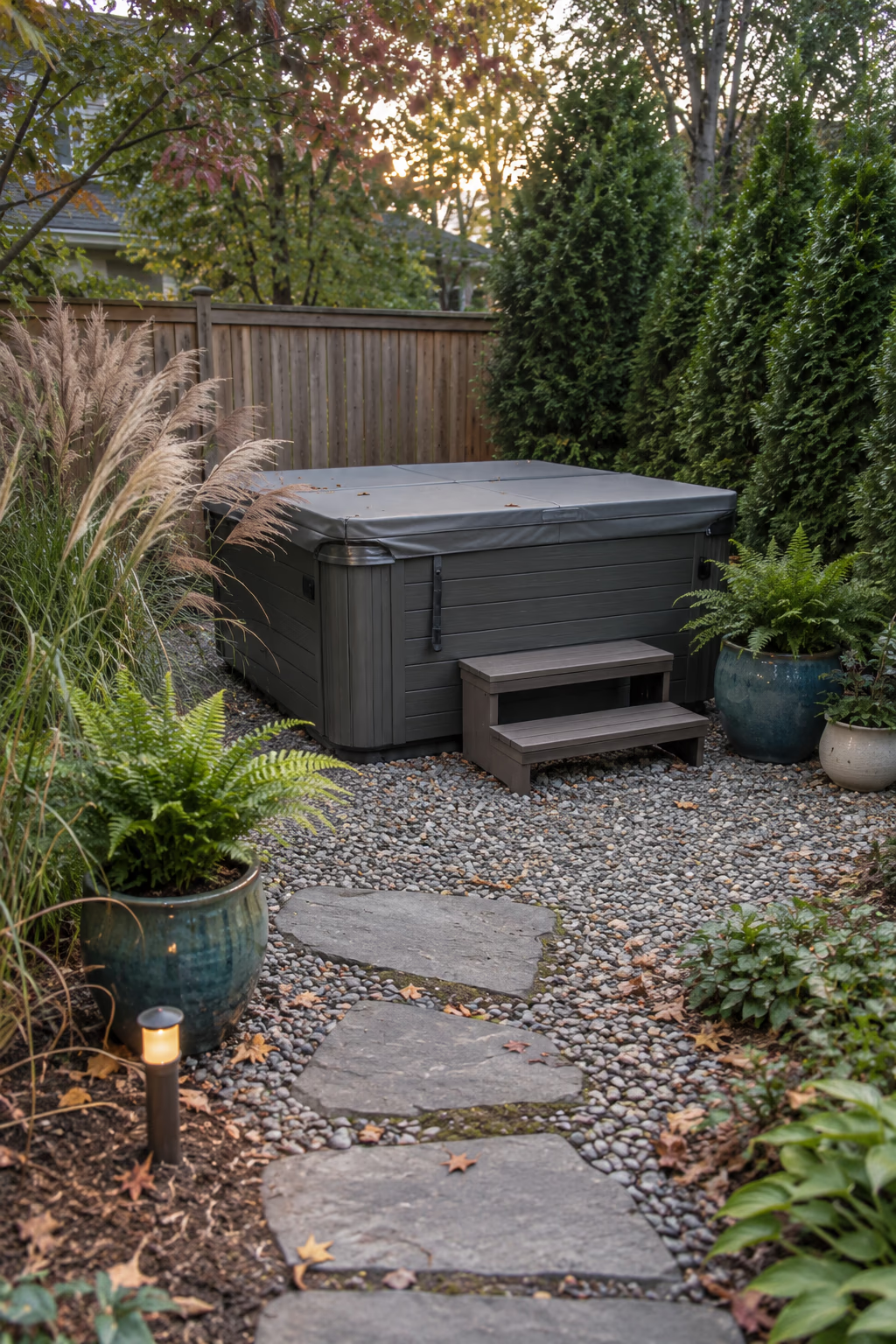
A private wellness spot surrounded by green
A hot tub feels far more relaxing tucked into the landscape than parked in the open. Set it on a level concrete pad or compacted gravel base, then frame it with tall grasses, evergreen shrubs, and a few potted plants to create a sense of enclosure.
Plants soften the boxy shape of the tub, add privacy from neighbors, and make the soak feel like a retreat. A low path light or two keeps the approach safe at night.
Choose plants that drop few leaves or petals to keep the water clean. Hot tubs need a dedicated electrical circuit installed by a licensed electrician, and many areas require a locking cover.
15. Edge Every Bed With Steel for Crisp Lines
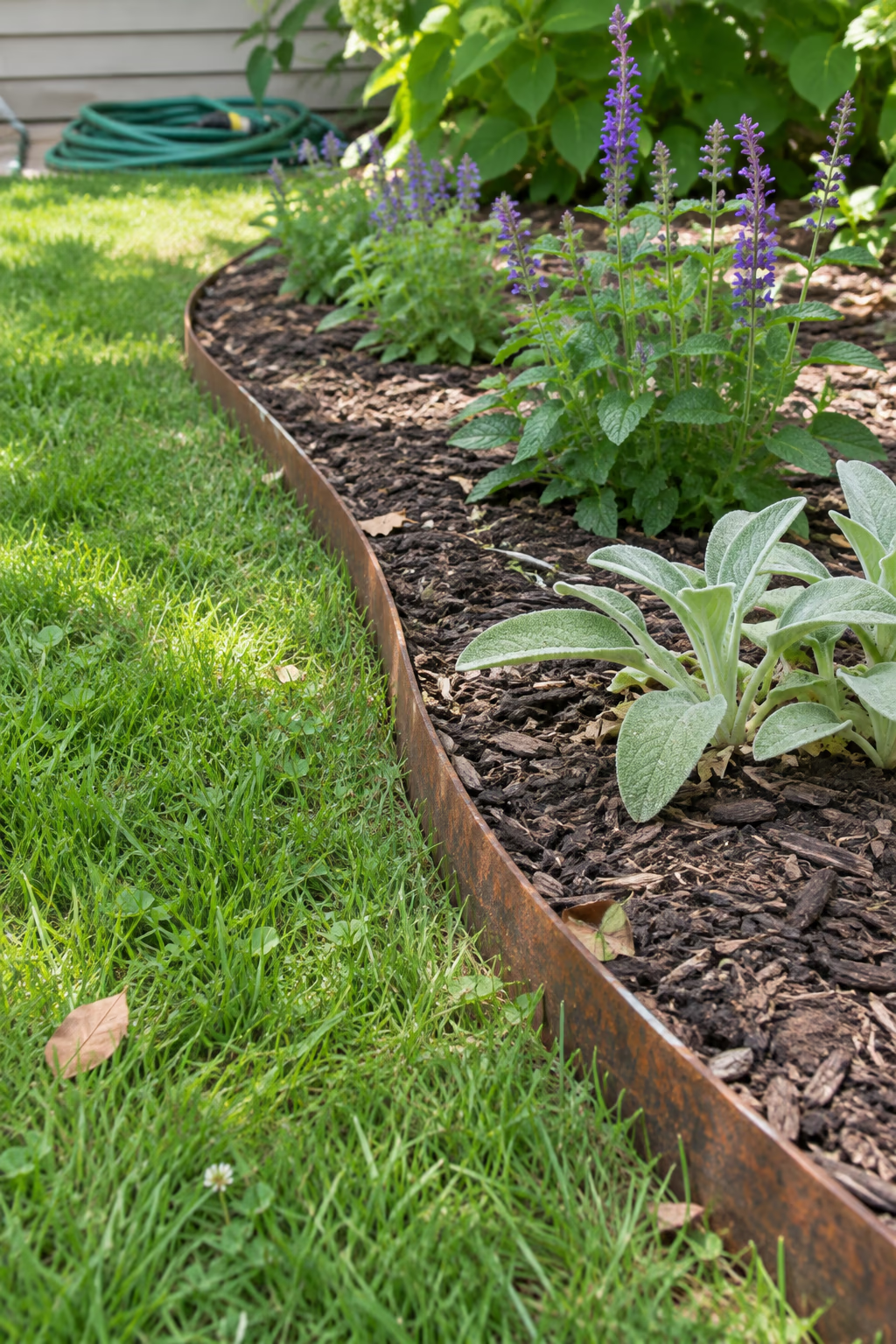
A small detail that looks professional
Steel or aluminum landscape edging creates a thin, clean line between lawn and beds or between gravel and mulch. Strips about 4 to 6 inches tall are pushed into a trench and staked, leaving just a slim edge above ground.
It keeps grass from creeping into beds, holds mulch and gravel in place, and bends smoothly around curves. Steel that rusts naturally to a warm brown looks great with stone and plantings.
Metal edging costs more than plastic but lasts far longer. Set the top slightly below mower height and round over any sharp ends so they don’t catch bare feet.
16. Mulch a Dedicated Play Zone for Kids
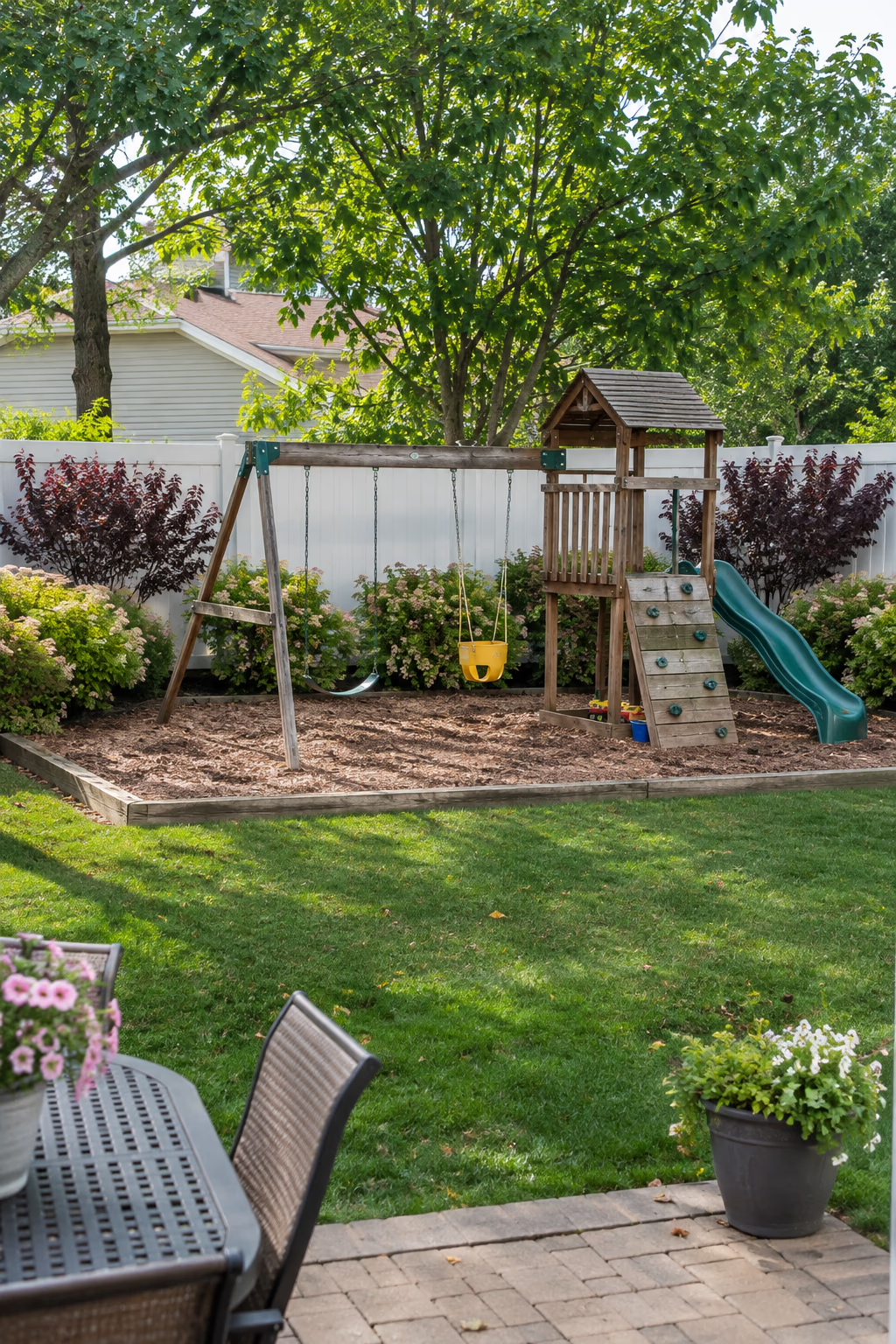
Keep the play area tidy and protect the lawn
Swing sets and climbing structures quickly wear lawns to bare dirt. Instead, mark out a play zone edged with timber or flexible edging and fill it with engineered wood fiber or playground-grade mulch to a depth of about 9 to 12 inches.
This surface cushions falls far better than packed soil or grass and keeps mud out of the house. Surround it with tough shrubs such as spirea or ninebark to blend it into the yard.
Extend the mulch at least 6 feet beyond the edges of the play equipment and top it up each year, since it compacts and scatters over time.
17. Build a Planted Berm to Add Height to a Flat Yard
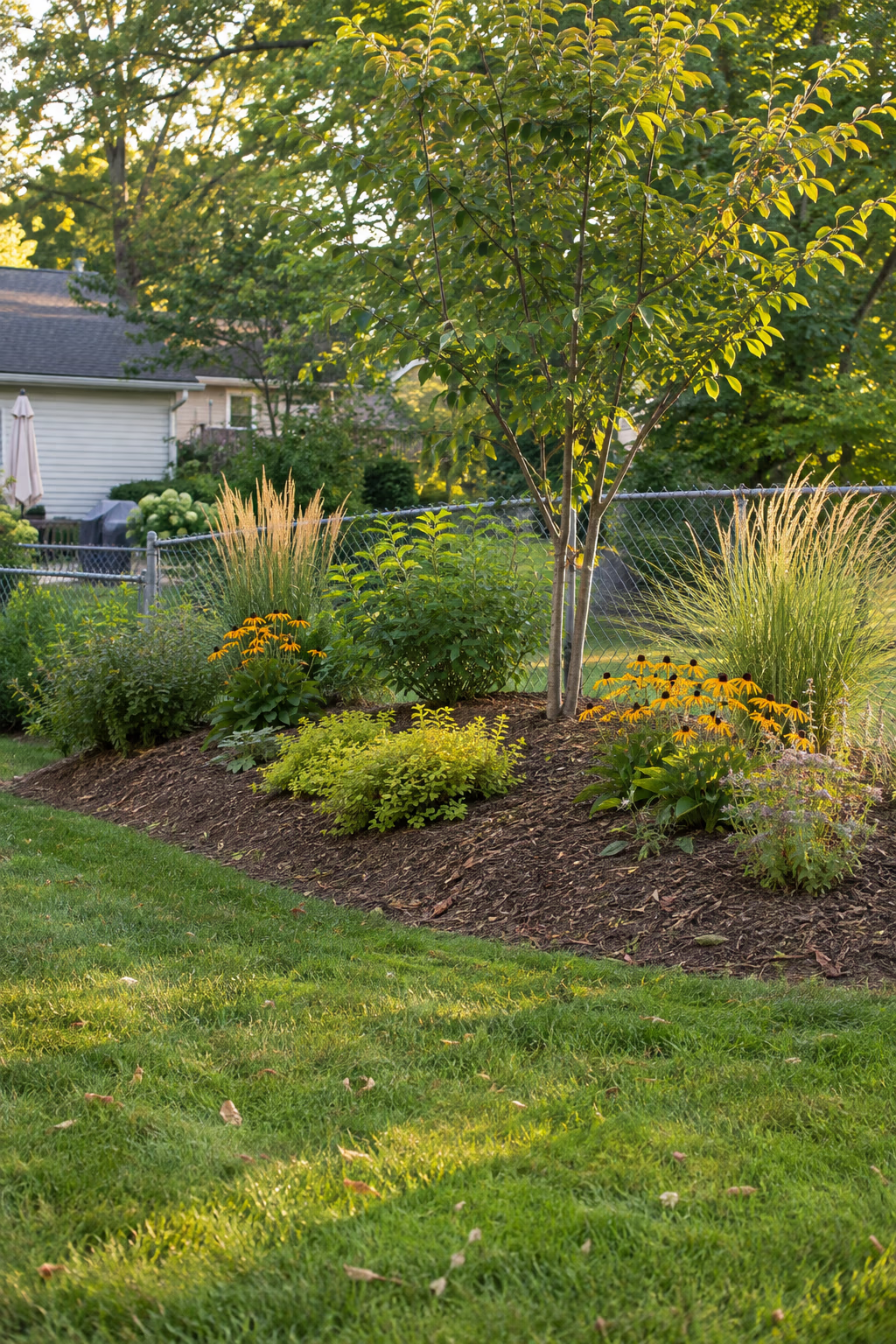
Gentle hills make a flat lot more interesting
A berm is a raised mound of soil shaped into a long, gentle hill. Build one about 18 to 24 inches high and four to six times as wide as it is tall, using a mix of fill and topsoil, then plant it with shrubs, perennials, and a small tree.
Berms add height and privacy, direct views, and help block wind or street noise. They also improve drainage for plants that dislike wet feet.
Shape the slopes gently and mulch well right after planting to prevent erosion. Keep berms from directing water toward your house or a neighbor’s yard.
18. Plant a Native Shrub Hedgerow for Birds
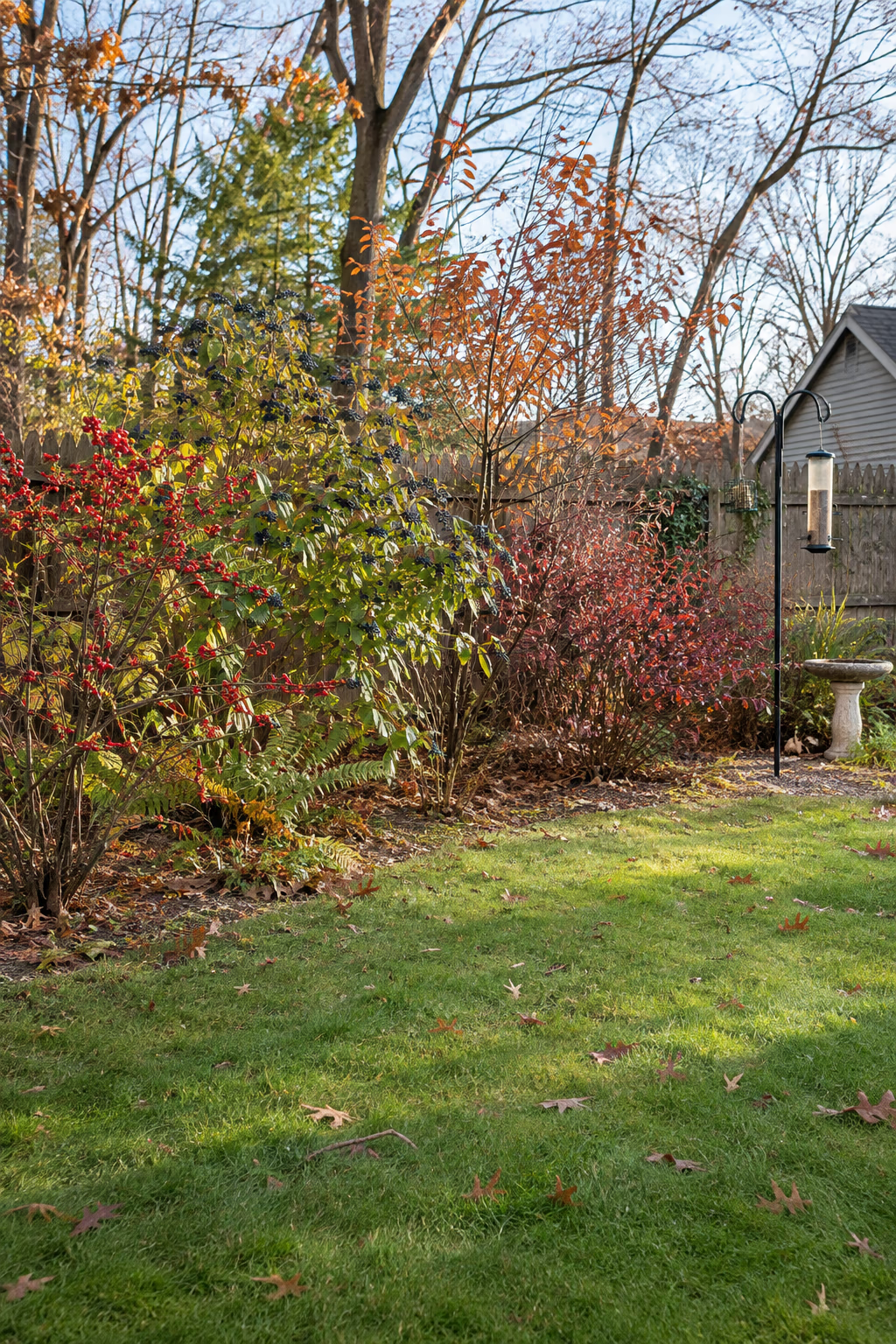
Shelter, berries, and a natural screen
A hedgerow is an informal mix of shrubs planted in a staggered row along a property line. Choose native species that fit your region, such as elderberry, serviceberry, winterberry, viburnum, and chokeberry, spacing them about 4 to 6 feet apart.
The berries, flowers, and dense branches feed and shelter birds and pollinators throughout the year, while the hedgerow softly screens views. It needs far less pruning than a formal hedge.
Give the planting room to spread, often 8 feet deep or more. Some berries ripen messily, so keep fruiting shrubs away from patios and walkways.
19. Hide Drip Irrigation Under the Mulch
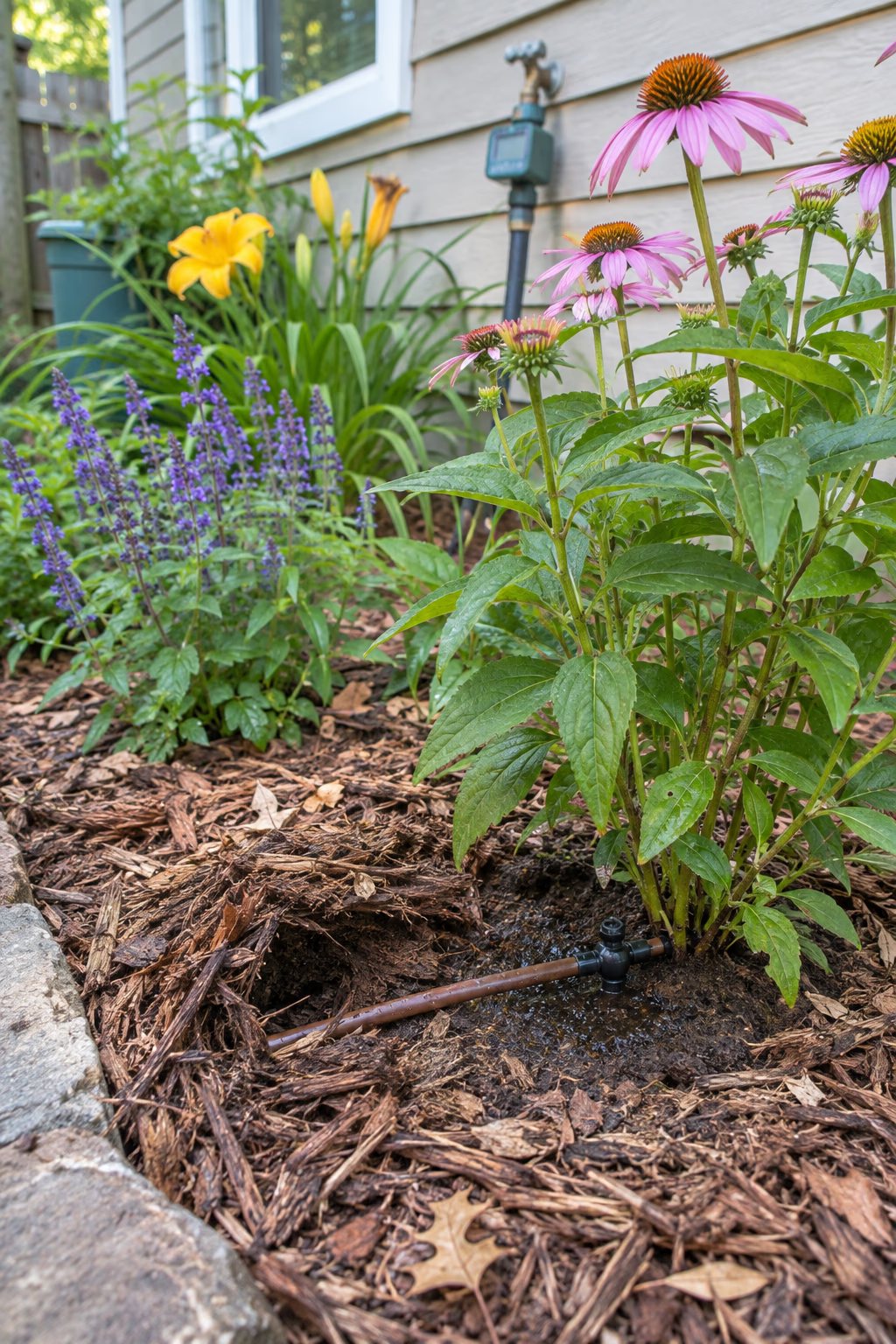
Water plants efficiently without daily chores
Drip irrigation delivers water slowly to plant roots through flexible tubing and small emitters. Lay drip line or soaker tubing through beds, then cover it with 2 to 3 inches of mulch so it disappears from view.
Because water goes straight to the soil, less is lost to evaporation and runoff, and leaves stay dry, which reduces disease. A simple battery or smart timer keeps a consistent schedule.
Use a backflow preventer and pressure regulator at the spigot. Flush lines each spring, check for clogged emitters, and drain the system before freezing weather in cold climates.
20. Design a Dog-Friendly Yard With Tough Surfaces
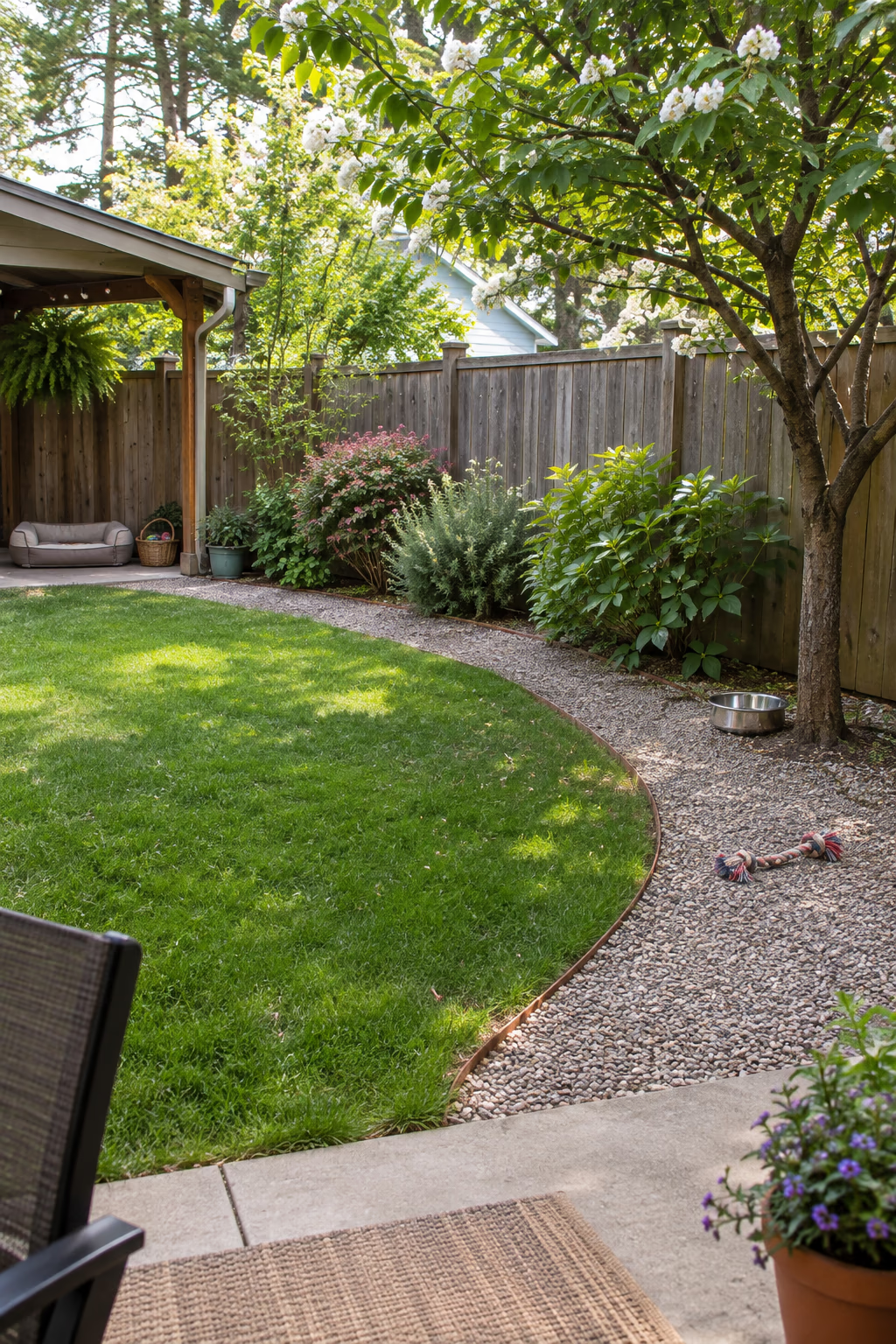
A yard that works for pets and people
Dogs tend to wear paths along fences and dig in soft beds. Instead of fighting it, lay a pea gravel or flagstone run along their favorite route, use sturdy shrubs as bed borders, and give them a shady spot with a cool surface.
Planning for pets keeps the lawn healthier, reduces muddy paws, and lets plantings thrive away from the busiest traffic. Raised beds keep edibles out of reach.
Avoid plants and products that are toxic to pets, such as sago palm, foxglove, oleander, and cocoa bean mulch. Check any new plant against a pet poison list before buying.
21. Plant a Fragrance Garden Beside the Seating Area
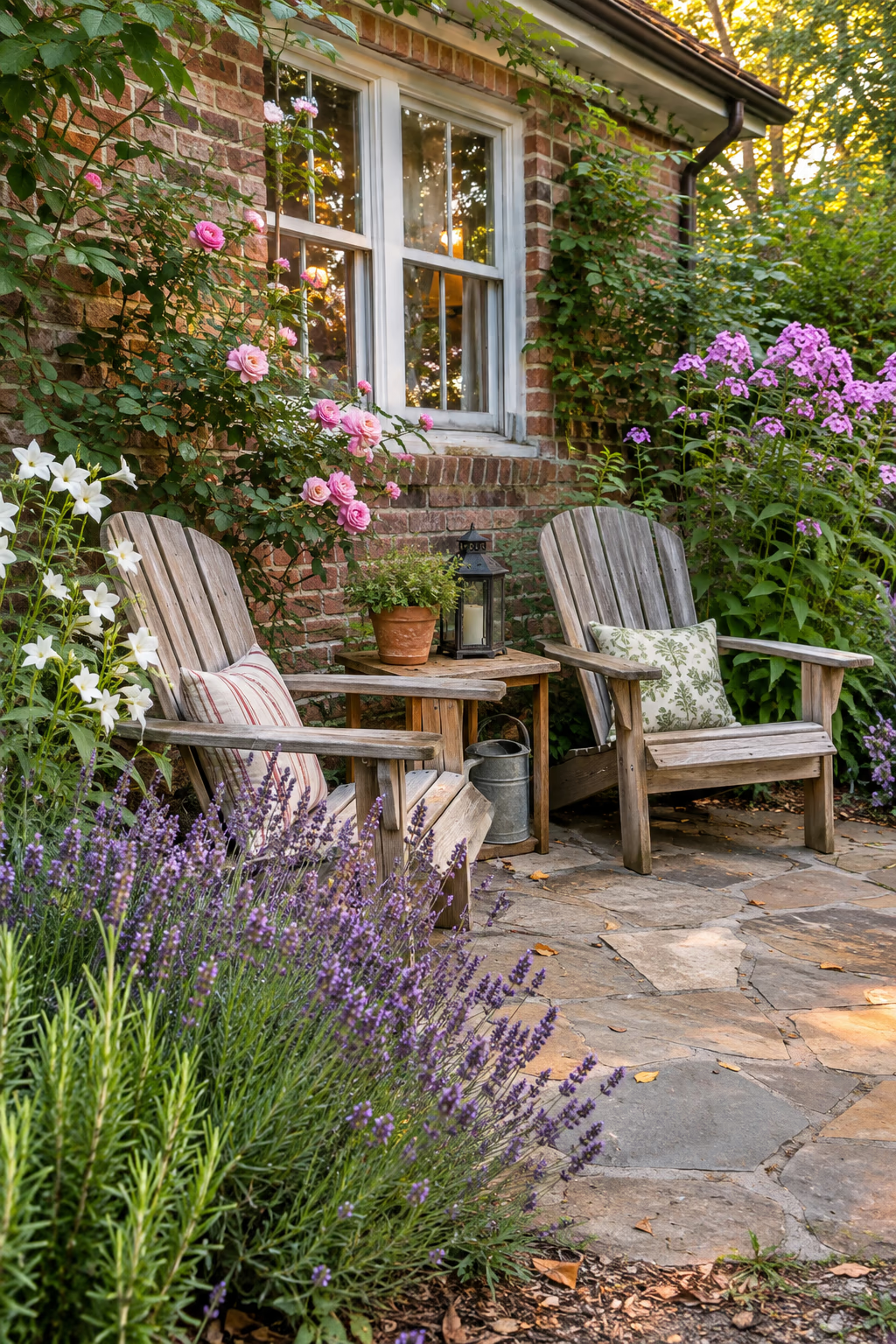
Scent makes the yard feel restful
Place fragrant plants where you sit and walk, so you notice them often. Lavender, rosemary, and lemon thyme release scent when brushed; roses, garden phlox, and peonies perfume the air in bloom; and evening-scented flowers like nicotiana and four o’clocks shine after sunset.
Scent is one of the easiest ways to make a garden feel calming and personal. Planting in sequence keeps fragrance going from spring lilacs to late-summer phlox.
People with allergies or sensitivity to strong scents may prefer milder herbs over heavily perfumed flowers. Lavender and rosemary need sun and sharp drainage to do well.
22. Create a Moon Garden With White Blooms
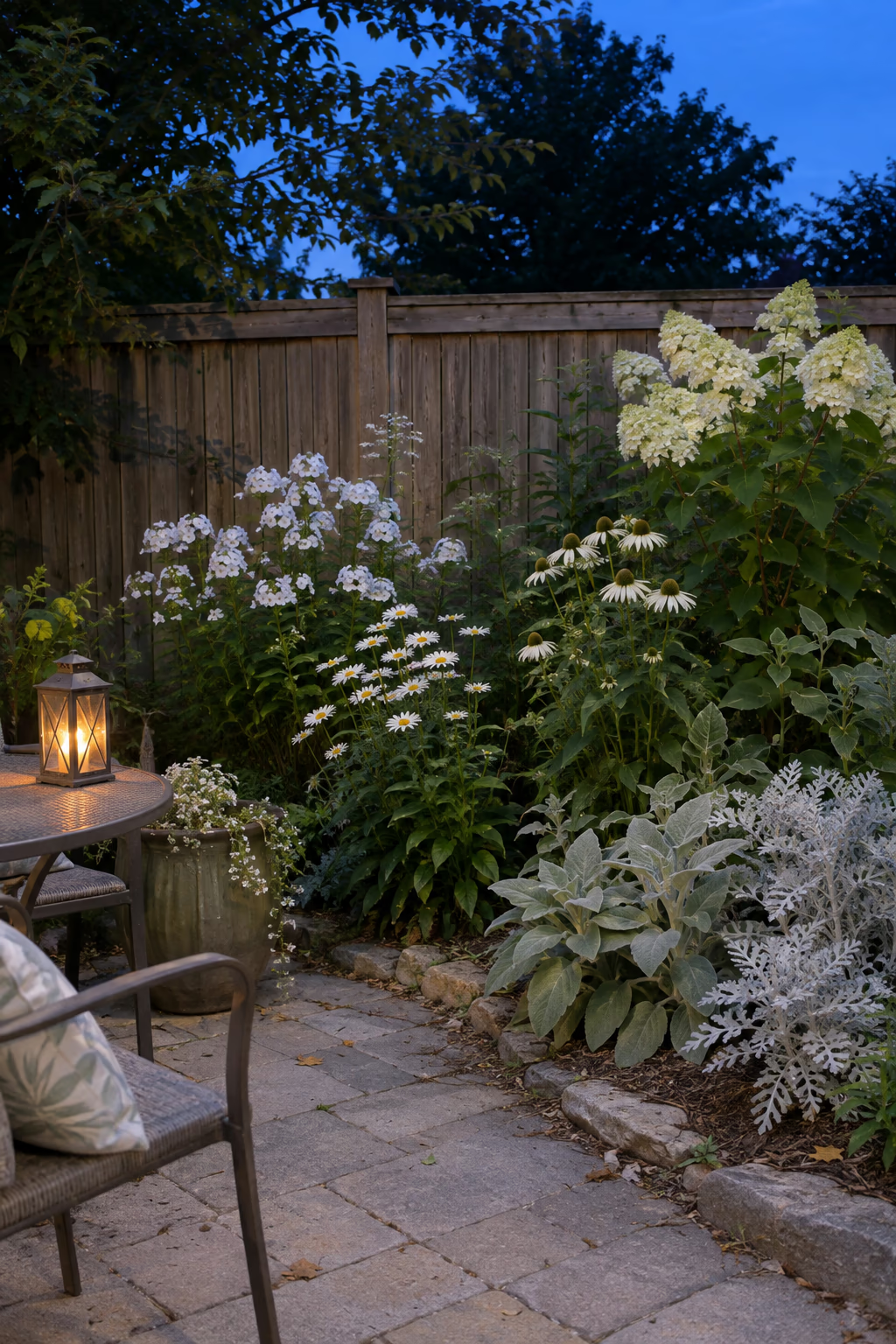
Flowers that glow at dusk
A moon garden uses white flowers and silver foliage that reflect low light and seem to glow in the evening. Combine white phlox, shasta daisies, white coneflower, and white hydrangea with silvery lamb’s ear, artemisia, or dusty miller.
It is perfect for people who use the yard mostly after work. Near a patio, it turns twilight into the best time to be outside.
White flowers show browning quickly, so deadhead often. Moonflower vine and some silver plants can be toxic or spread aggressively, so check their status in your area.
23. Espalier Fruit Trees Against a Sunny Fence
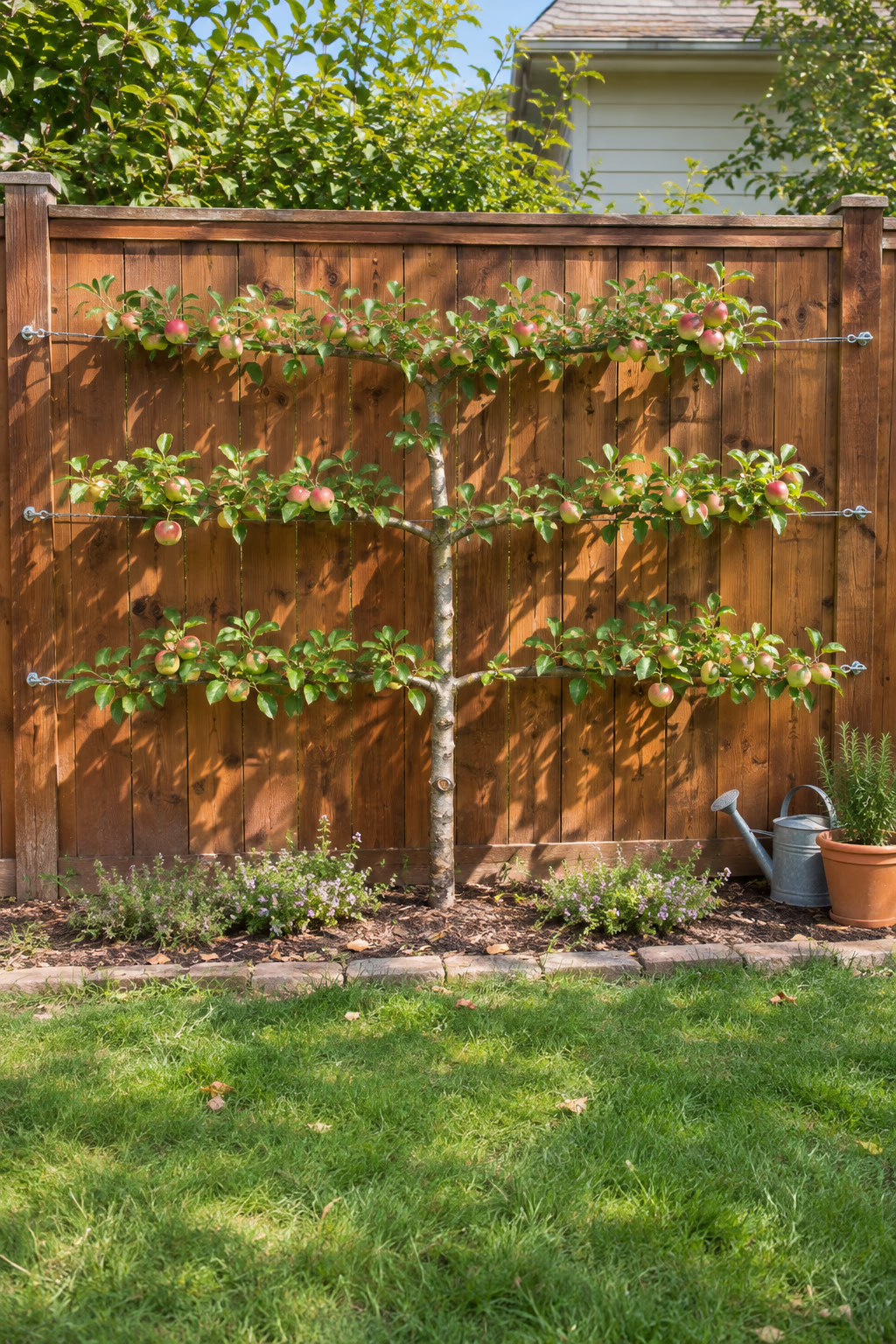
A living wall that also gives fruit
Espalier is the technique of training a tree flat against a wall or fence. Apples and pears are the easiest to train, using dwarf or semi-dwarf trees tied to horizontal wires spaced about 18 inches apart in a tidy pattern.
The flat shape fits fruit into narrow spaces, covers a bare fence with leaves and blossoms, and makes harvest easy. It also looks striking in winter, when the branch pattern is fully visible.
Espalier takes patience and pruning several times a year. Buying a pre-trained tree from a nursery gives you a head start.
24. Place a Focal Point at the End of a Sightline
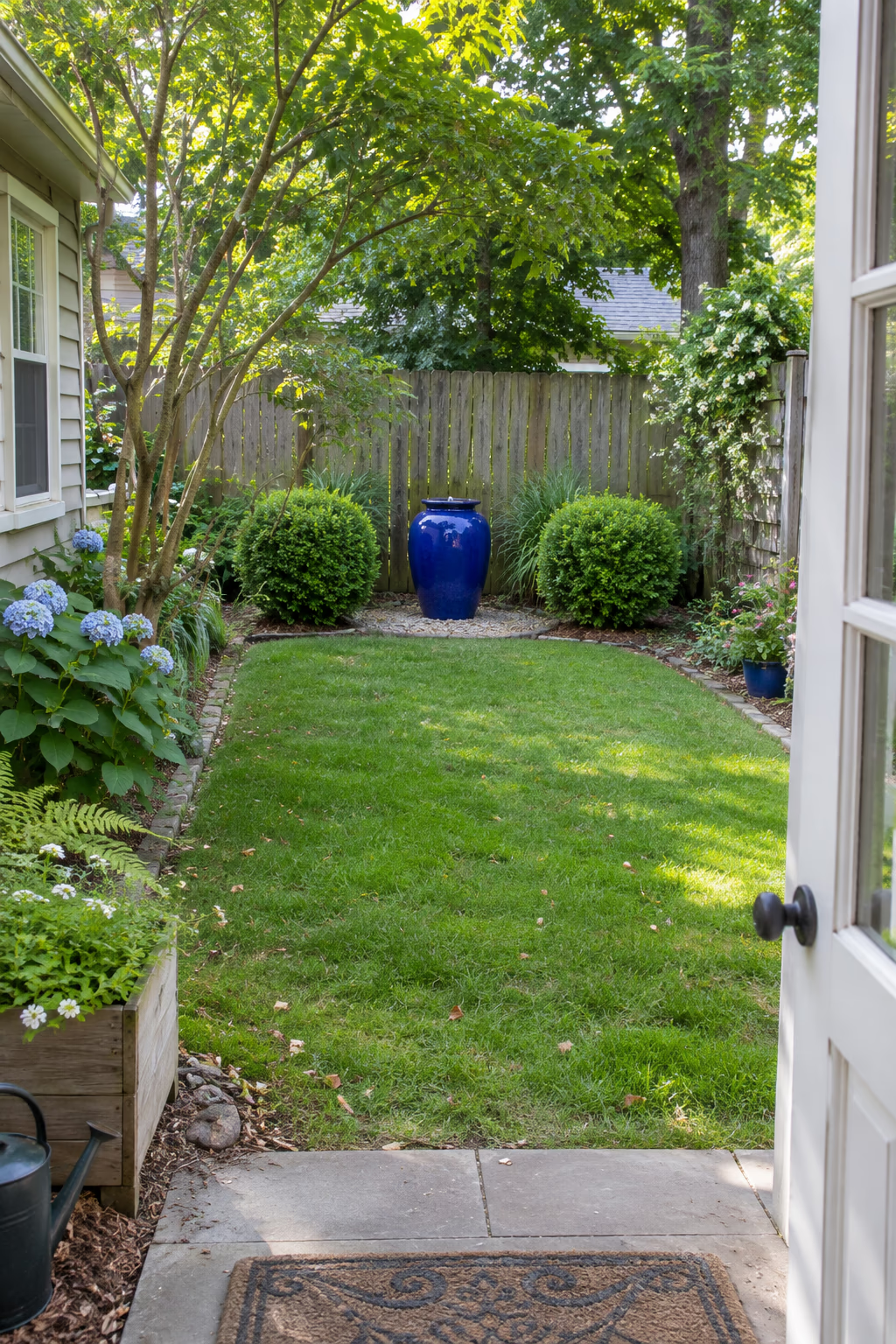
Give the eye somewhere to land
Stand at your back door or main window and look straight out. Wherever your eye naturally travels, place a focal point such as a large glazed urn, a birdbath, a sculpture, or a single striking shrub.
A focal point pulls the view through the yard, makes the space feel more designed, and gives purpose to an otherwise empty far corner. Framing it with plants on both sides strengthens the effect.
Choose one strong focal point per view. Several competing features can make a yard feel cluttered.
25. Screen the AC Unit and Trash Bins With Shrubs
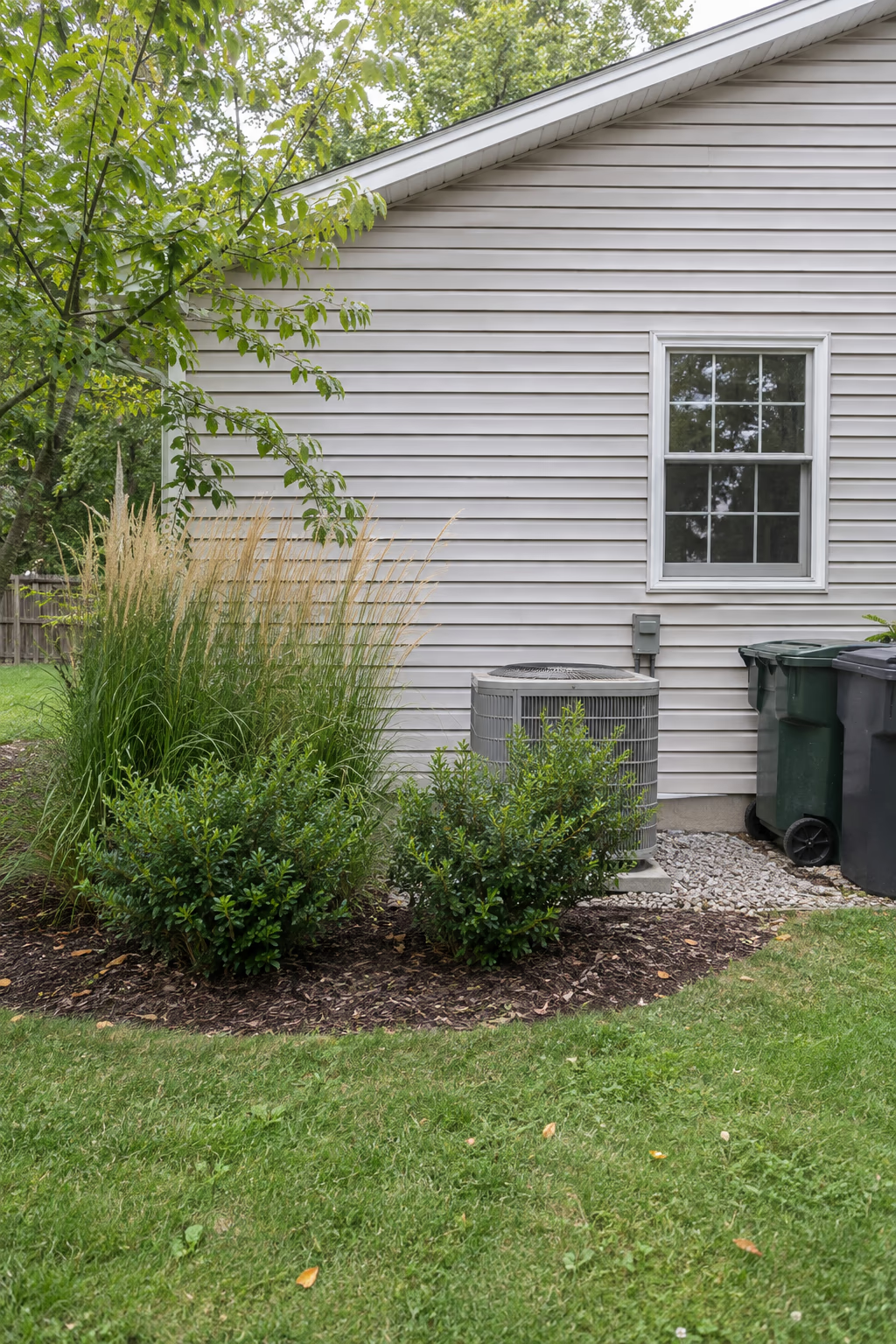
Hide the practical stuff gracefully
Every yard has things you don’t want to stare at. Plant a short row of evergreen shrubs like inkberry holly, dwarf yew, or arborvitae, or a mix of shrubs and tall grasses, to hide the air conditioner, trash bins, or a utility box.
This simple step cleans up views from your patio and windows, and makes the whole backyard look more cared for.
Leave at least 2 to 3 feet of clearance around AC units for airflow and service, and never block access to meters. Call 811 before digging near any utility line.
26. Plant a Row of Old-Fashioned Flowering Shrubs
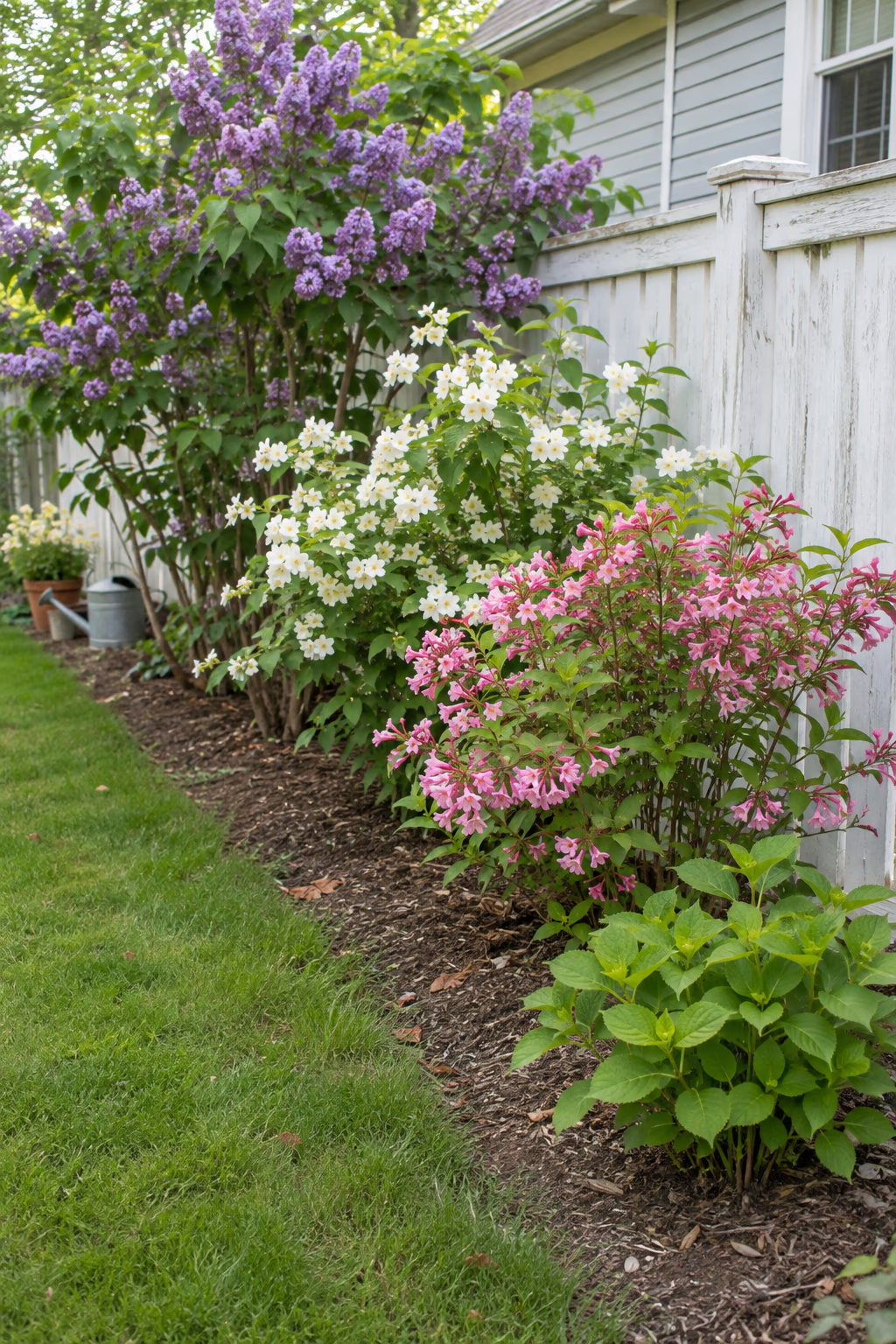
Nostalgic blooms with little fuss
Lilac, mophead and panicle hydrangea, weigela, mock orange, and viburnum are the classic flowering shrubs found in many older American gardens. Planted in a row along a side or rear fence, they create a seasonal show from spring through fall.
Shrubs give big flower impact with less maintenance than perennials, and many are long-lived and easy to grow. Cut branches make fine bouquets for the house.
Learn each shrub’s pruning timing, since cutting at the wrong time can remove next year’s flowers. Most need at least half a day of sun.
27. Build a Low Stone Seat Wall at the Lawn’s Edge
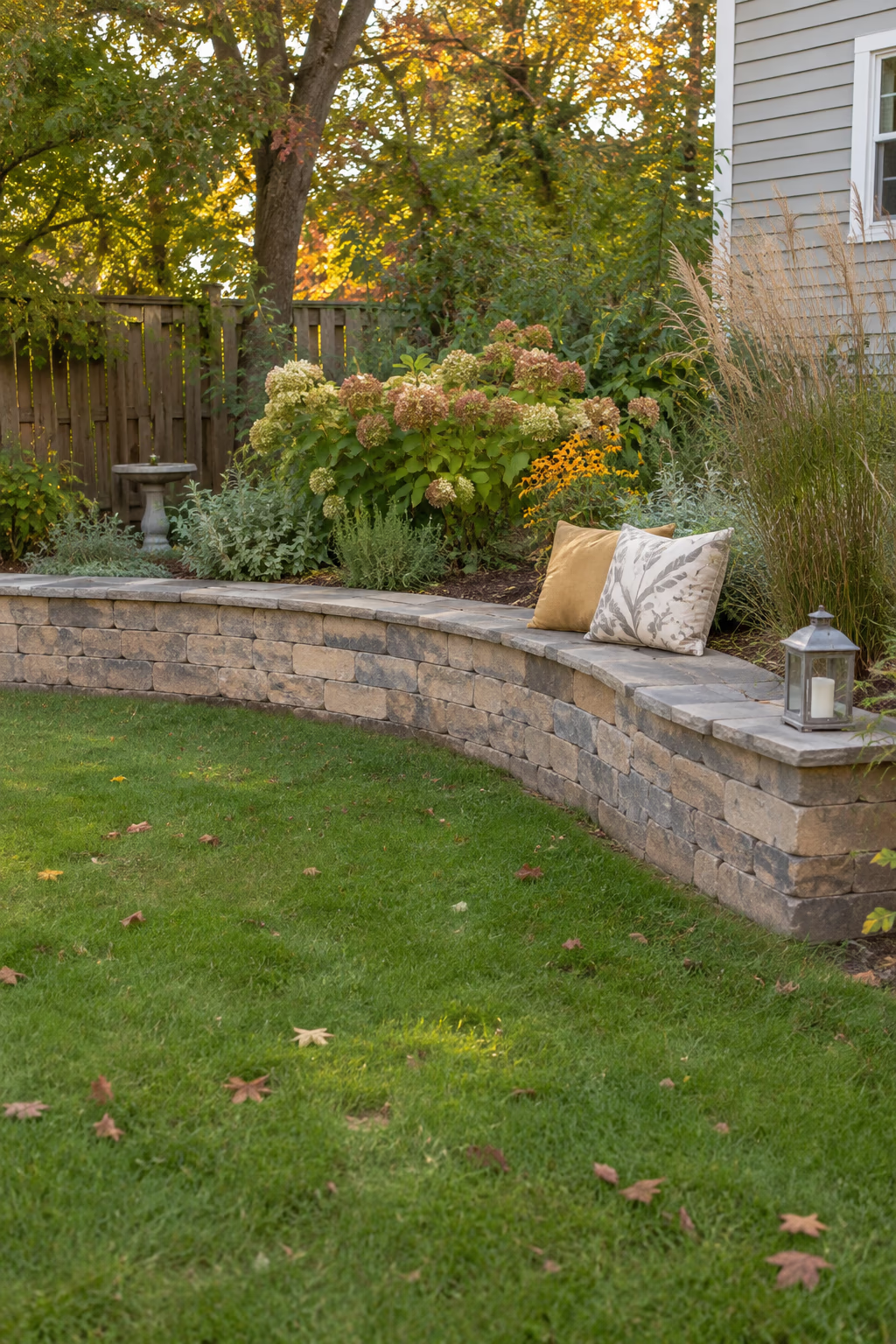
Extra seating and a defined edge in one
A seat wall is a freestanding wall about 18 to 20 inches tall and 12 to 16 inches deep, capped with flat stone. Built along the curve of a lawn or the back of a planting bed, it marks the edge and gives guests a casual place to sit.
It adds structure to a flat yard and creates seating without crowding the patio with furniture. Plants behind the wall act as a soft backrest.
Use a compacted gravel base so frost won’t heave the wall. Wall block systems with matching caps make this a manageable DIY project.
28. Naturalize Spring Bulbs in the Lawn
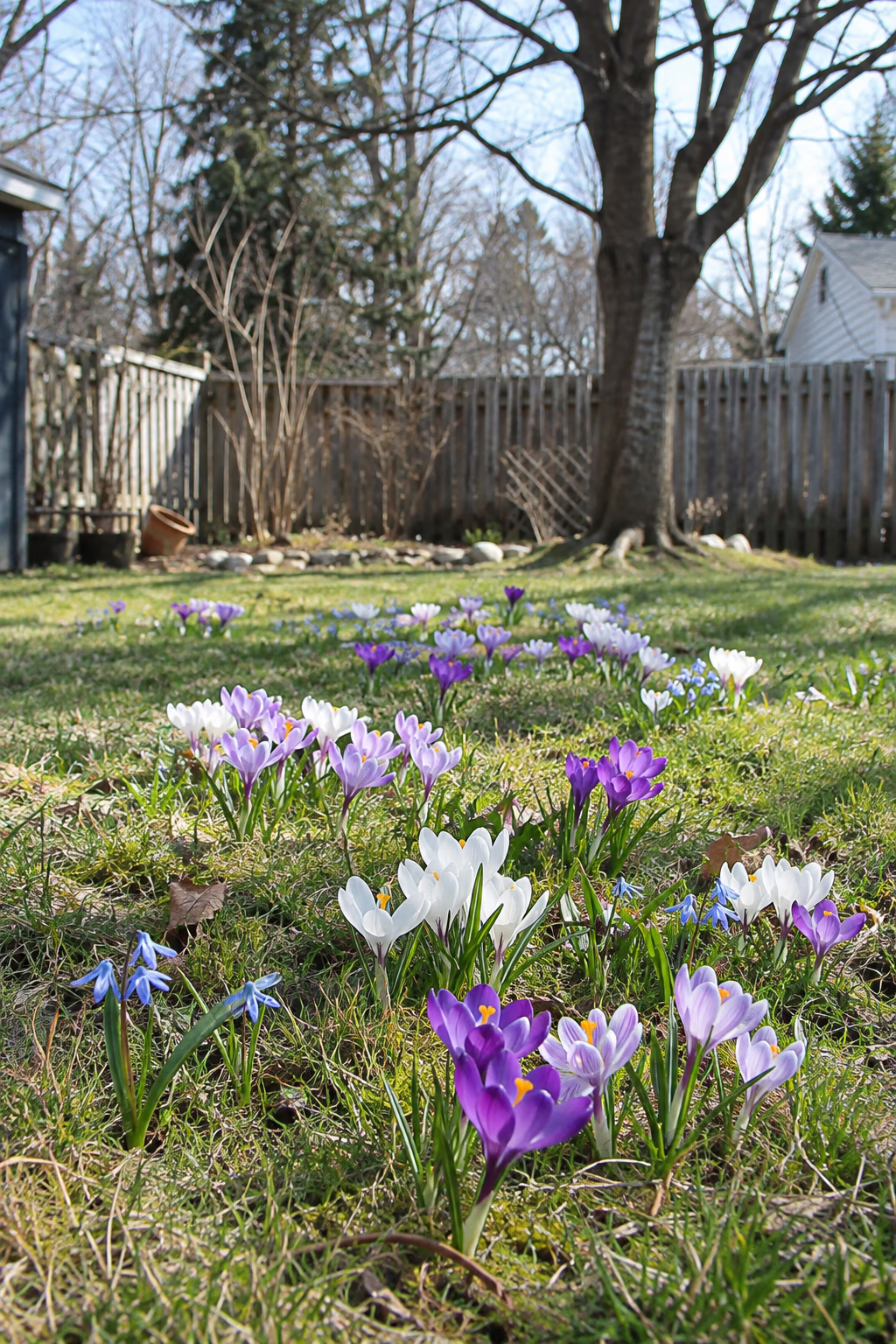
Surprise color before the grass needs mowing
Plant small bulbs such as crocus, scilla, snowdrops, and species tulips directly into the lawn in fall. Scatter them in loose drifts and plant each one where it lands for a natural look.
They bloom in early spring, before the lawn really grows, giving the backyard a carpet of color when little else is flowering. Over time, many will spread and multiply.
Wait about six weeks after blooming before the first mow so the bulb foliage can recharge. Keep bulbs to one section of the lawn if you prefer to mow early elsewhere.
29. Carpet Bare Ground With Living Groundcovers
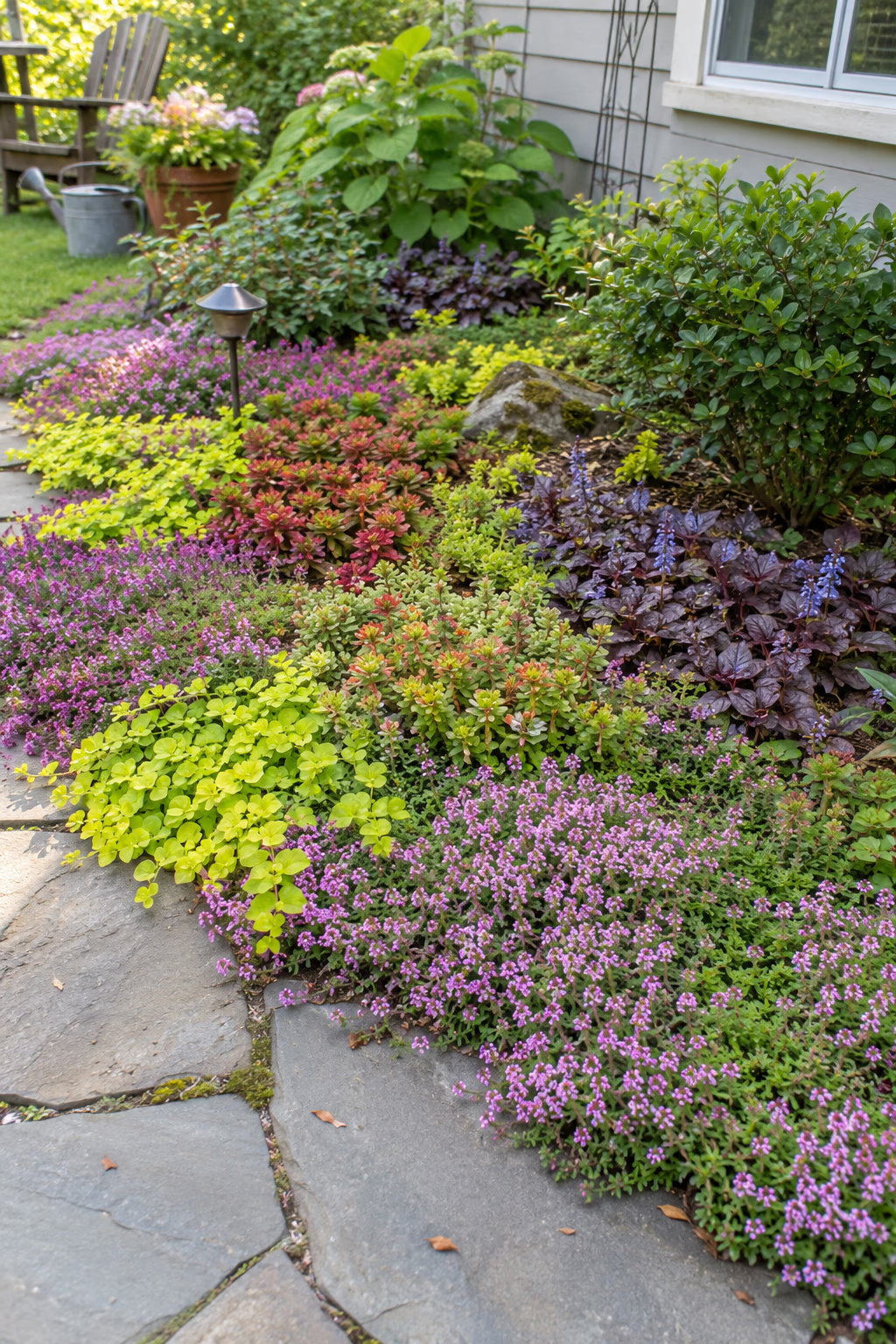
Plants that act like living mulch
Groundcovers are low, spreading plants that fill bare soil between shrubs or along edges. Creeping thyme, sedum, ajuga, and creeping Jenny work in sun, while epimedium, pachysandra, and native wild ginger work in shade.
Once established, they suppress weeds, hold soil on slopes, and need less frequent mulching. They also give beds a lush, finished look.
Plant them close together for fast coverage and keep weeds pulled until they fill in. Some, like English ivy and certain vincas, can become invasive, so choose well-behaved or native options.
How to Plan Your Backyard Landscaping
A beautiful backyard starts with a clear plan that fits your site, climate, and lifestyle. These tips will help you make the most of your space and budget.
- Map your sun and shade. Watch how sunlight moves across the yard over a full day and note wet spots, slopes, and windy areas before choosing plants.
- Know your hardiness zone. Pick trees, shrubs, and perennials rated for your USDA zone and soil type so they survive winter and summer stress.
- Sketch zones first. Decide where you want lawn, beds, seating, play, and utility areas, then connect them with paths and sightlines.
- Start with structure. Plant trees, evergreens, and hardscape first, then fill in perennials, annuals, and decorative accents over time.
- Plan for water. Group plants with similar water needs, add drip irrigation where possible, and make sure all runoff flows away from the house.
- Check rules before digging. Look into HOA guidelines and local permits for walls, ponds, and fences, and call 811 to locate buried utilities.
Frequently Asked Questions
What is the cheapest way to landscape a backyard?
Start by reshaping beds, adding mulch, and planting perennials and shrubs that can be divided or propagated later. Buying smaller plants, using free wood-chip mulch from local tree services, and doing the work yourself in stages all help keep costs down.
What should I plant first in a new backyard?
Trees and large shrubs come first, since they take the longest to mature and define the overall layout. Next, add evergreens and long-lived perennials, then finish with annuals and groundcovers.
How do I make my backyard landscaping low maintenance?
Choose native or well-adapted plants, reduce lawn area, mulch beds, and use drip irrigation. Steel edging, groundcovers, and grouping plants by water needs also cut down on weekly chores.
When is the best time of year to landscape?
Early fall is ideal for planting trees, shrubs, and perennials in most of the US, because warm soil and cooler air help roots establish. Spring is the next best option, and hardscaping can be done whenever the ground isn’t frozen or saturated.
Do I need a professional landscape designer?
Not always. Many ideas, like reshaping a lawn or planting a border, are easy DIY projects. Consider a professional for tall retaining walls, drainage problems, large ponds, or a full yard redesign.
Final Thoughts
The best backyard landscaping ideas work with your yard instead of against it. A cottage border along the fence, a curved lawn, or a small pond can change how the whole space feels, while smart fixes like rain gardens and drip irrigation make it easier to care for.
Begin with one or two projects that excite you most, choose plants that suit your climate, and let the yard fill in season by season. With a little patience, your backyard will become the green, welcoming retreat you look forward to every day.


