
Picture a front yard where a crisp white fence runs along the sidewalk, roses spill over a gate, and the walk to the porch feels like a small welcome. A fence does more than mark where your property ends. It frames the whole house.
That is why front yard fence ideas are so popular. The right fence adds curb appeal, keeps kids and pets safely in, softens street noise, and gives a plain lawn some structure. The good news is that you don’t need a high wall or a huge budget to get these benefits.
These 23 front yard fence ideas cover classic pickets, modern horizontal slats, black metal, stone, hedges, rustic rails, and creative budget options. They are ordered from the most-loved styles to more unusual ones, so start at the top or jump to what suits your home.
1. Frame the Yard With a Classic White Picket Fence
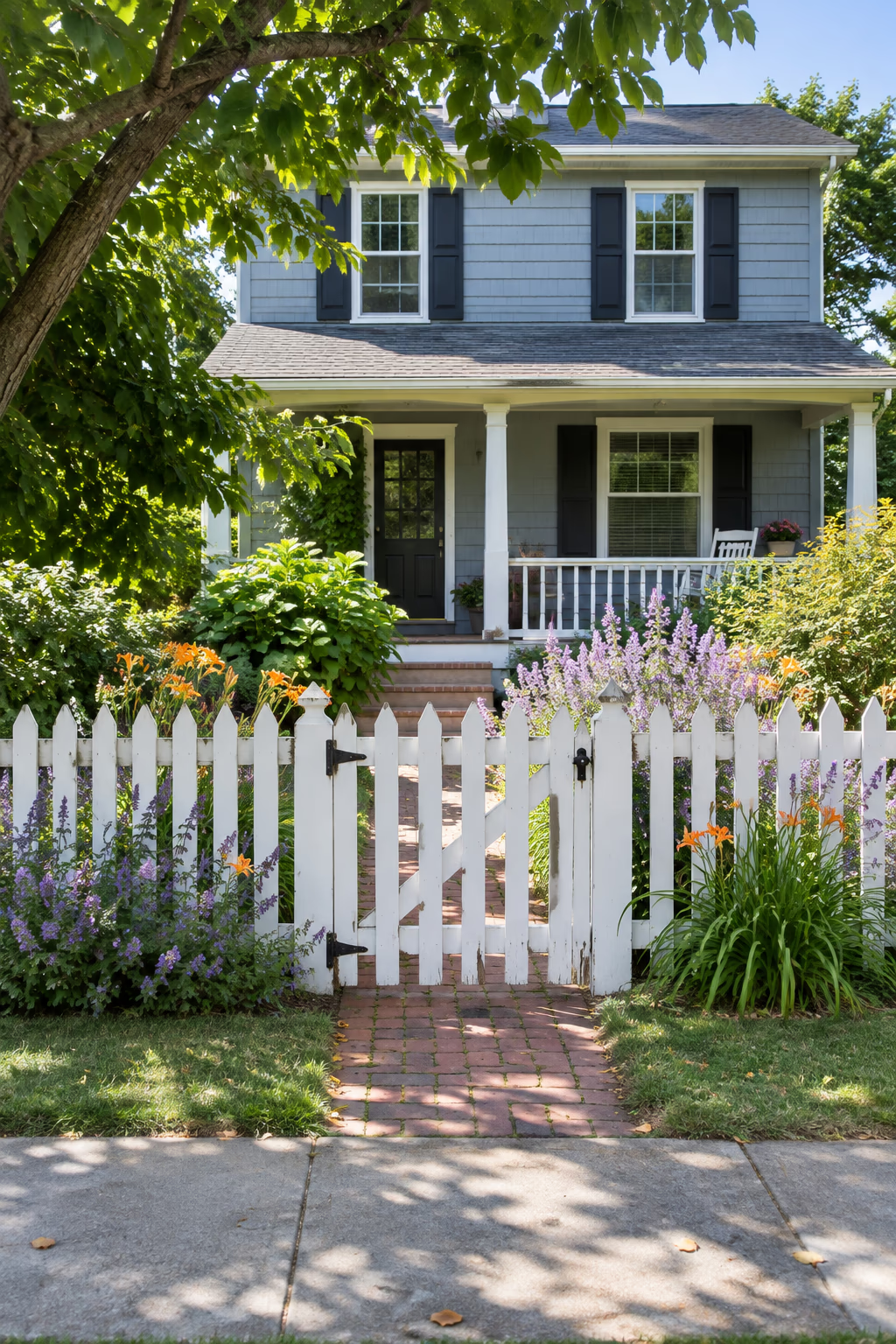
The timeless look that suits almost any house
A white picket fence is the style most people picture first, and for good reason. A fence about 3 to 4 feet tall with pickets spaced 2 to 3 inches apart frames the lawn without blocking views, and it makes both brick and sided houses look neat.
Pressure-treated pine, cedar, or vinyl all work. Wood needs fresh paint every few years, while vinyl only needs an occasional wash. Set posts in concrete below the frost line in cold climates so the gate keeps swinging freely.
Add a simple walk gate and plant catmint, daylilies, or hydrangeas just behind the pickets. Check your local rules, because many towns cap front yard fences at about 3 to 4 feet.
2. Build a Horizontal Slat Fence for a Modern Look
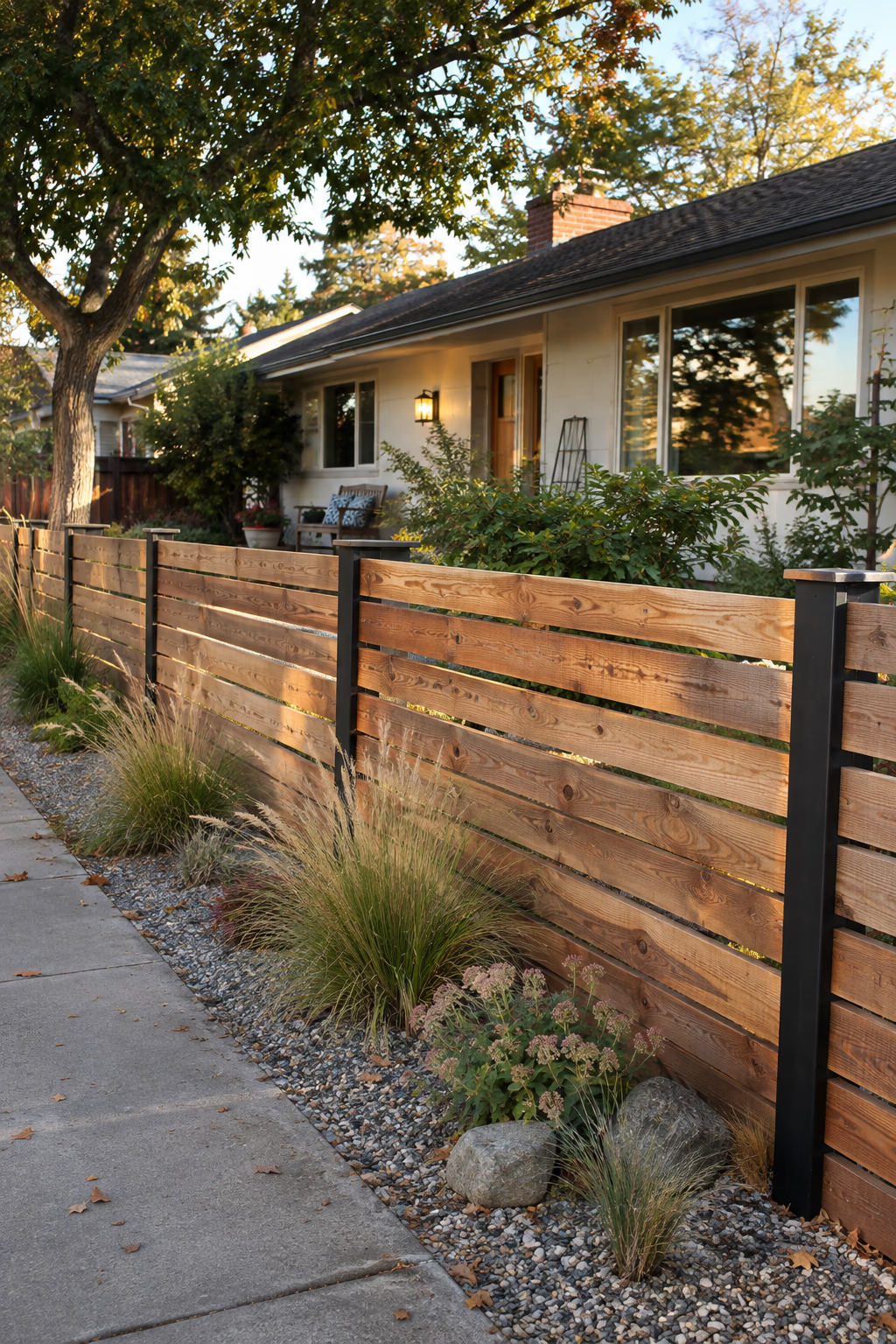
Clean lines with just enough privacy
Horizontal slat fences use long boards laid sideways, usually with narrow gaps of about half an inch. The strong lines make a ranch or contemporary home look sleek, and the gaps let air and light through.
Cedar and redwood weather to a lovely gray, or you can seal them to keep the warm color. Composite boards cost more upfront but need almost no upkeep. Keep the height around 3 to 4 feet in the front yard unless local rules allow taller.
Black or steel posts make the look feel crisp. Pair the fence with ornamental grasses and a gravel path so the whole front yard reads as one design.
3. Pair a Black Metal Fence With Brick Pillars
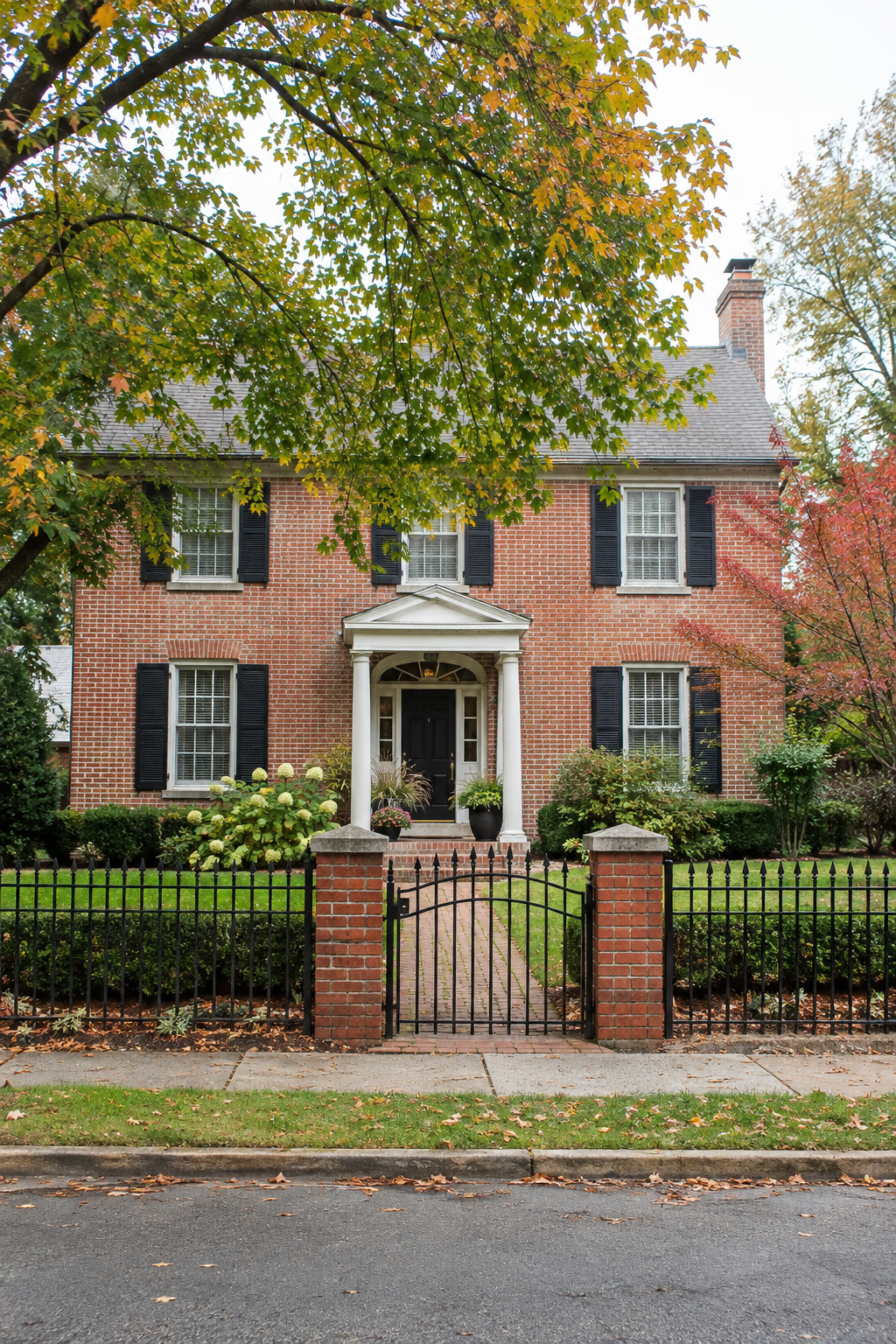
Elegant definition that lasts for decades
A black aluminum or steel fence with square brick or stone pillars every 6 to 8 feet looks formal and tidy. The open bars keep the house visible, which is why this style is often allowed even in strict neighborhoods.
Powder-coated aluminum does not rust and rarely needs more than a rinse. Steel is stronger but needs touch-up paint if the coating chips. The pillars add cost, so some homeowners use brick only at the gate and corners.
Plant boxwood or a low row of hydrangeas inside the line, and you get a polished front yard that suits colonial, Tudor, and traditional homes.
4. Train Climbing Roses Over a Trellis-Topped Fence
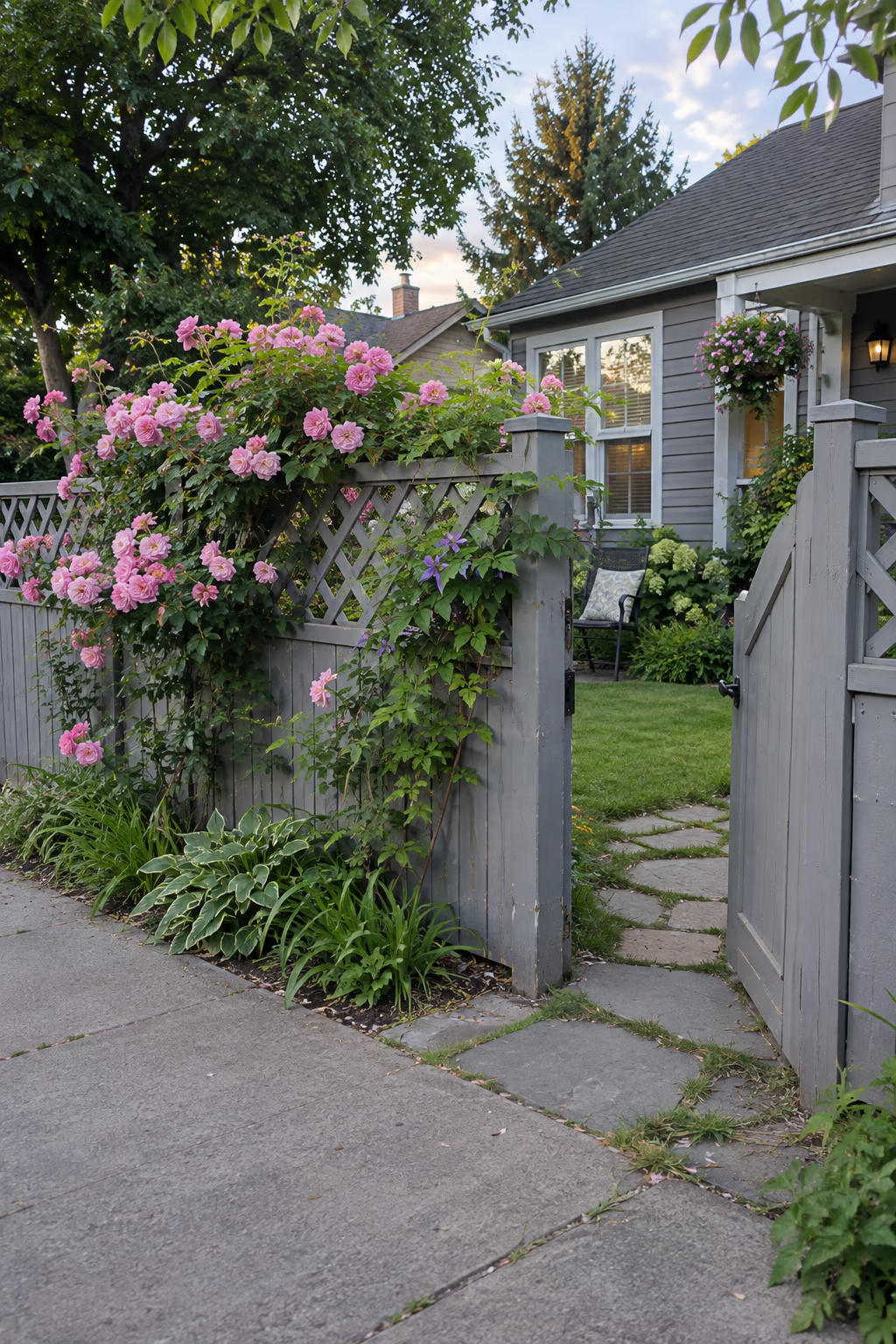
Add height and fragrance without bulk
A solid fence about 3 to 4 feet tall topped with a diamond lattice panel gives climbers something to hold. Roses, clematis, and honeysuckle can turn a plain barrier into a flowering screen within a couple of seasons.
Choose climbing roses rated for your USDA zone and give them at least six hours of sun. Tie the canes loosely to the lattice with soft garden twine and prune in late winter or after the first bloom, depending on the variety.
Check that the structure is sturdy, because a mature rose can be heavy after rain. Avoid invasive vines such as English ivy or Japanese honeysuckle in many regions.
5. Stack a Low Stone Wall Along the Sidewalk
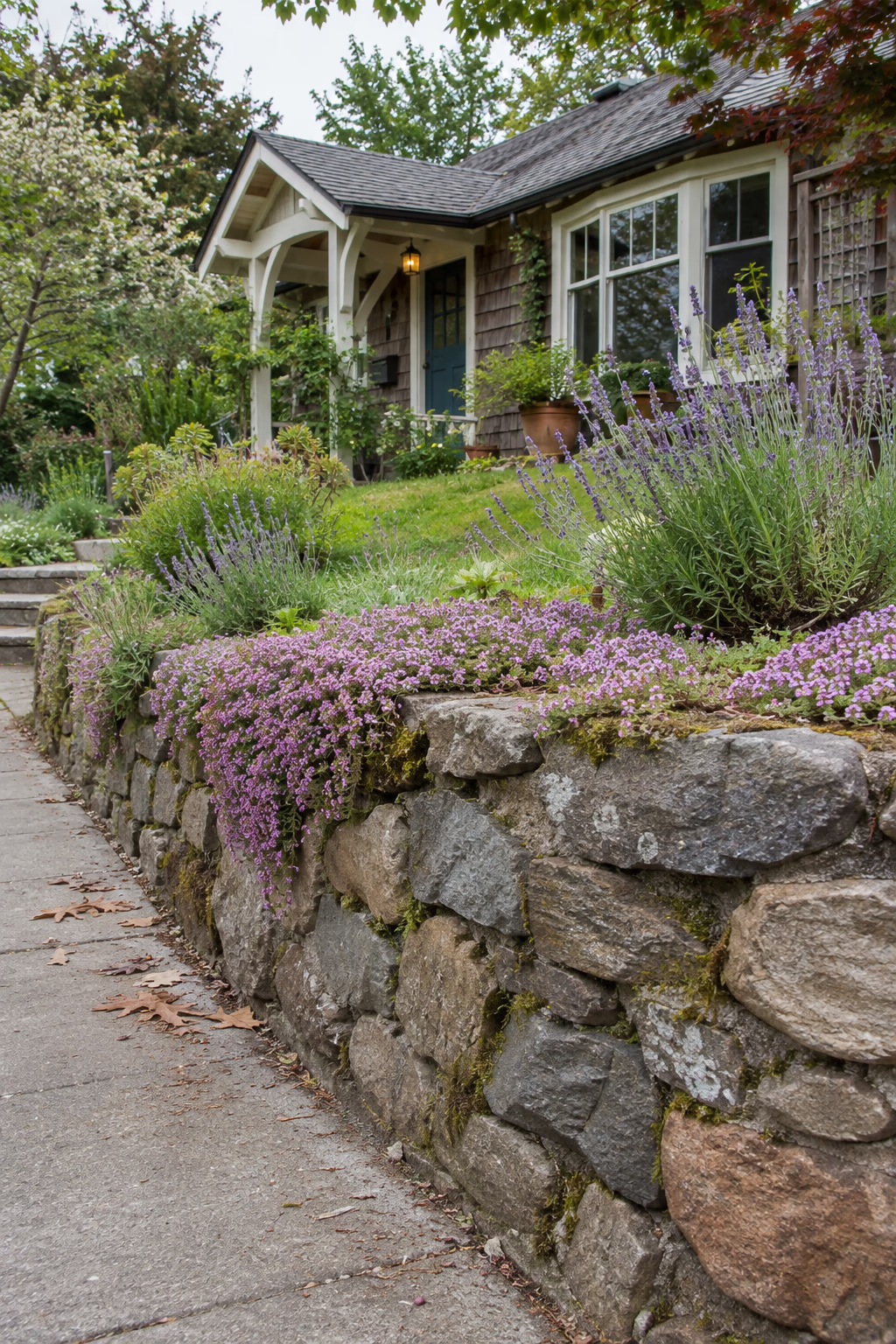
A durable border that looks like it was always there
A knee-high wall of fieldstone or ledgestone gives a front yard a settled, established look. Dry-stacked walls up to about 2 feet can be a weekend project for a capable DIYer, while mortared walls need a proper concrete footing.
Plant creeping thyme, sedum, or lavender along the top so it softens the stone. Gaps between stones also give small plants room to root.
Stone is heavy and expensive to deliver, so buy local stone when you can. Walls over about 3 feet often need engineering or permits, so confirm with your building department.
6. Grow a Layered Hedge as a Living Fence
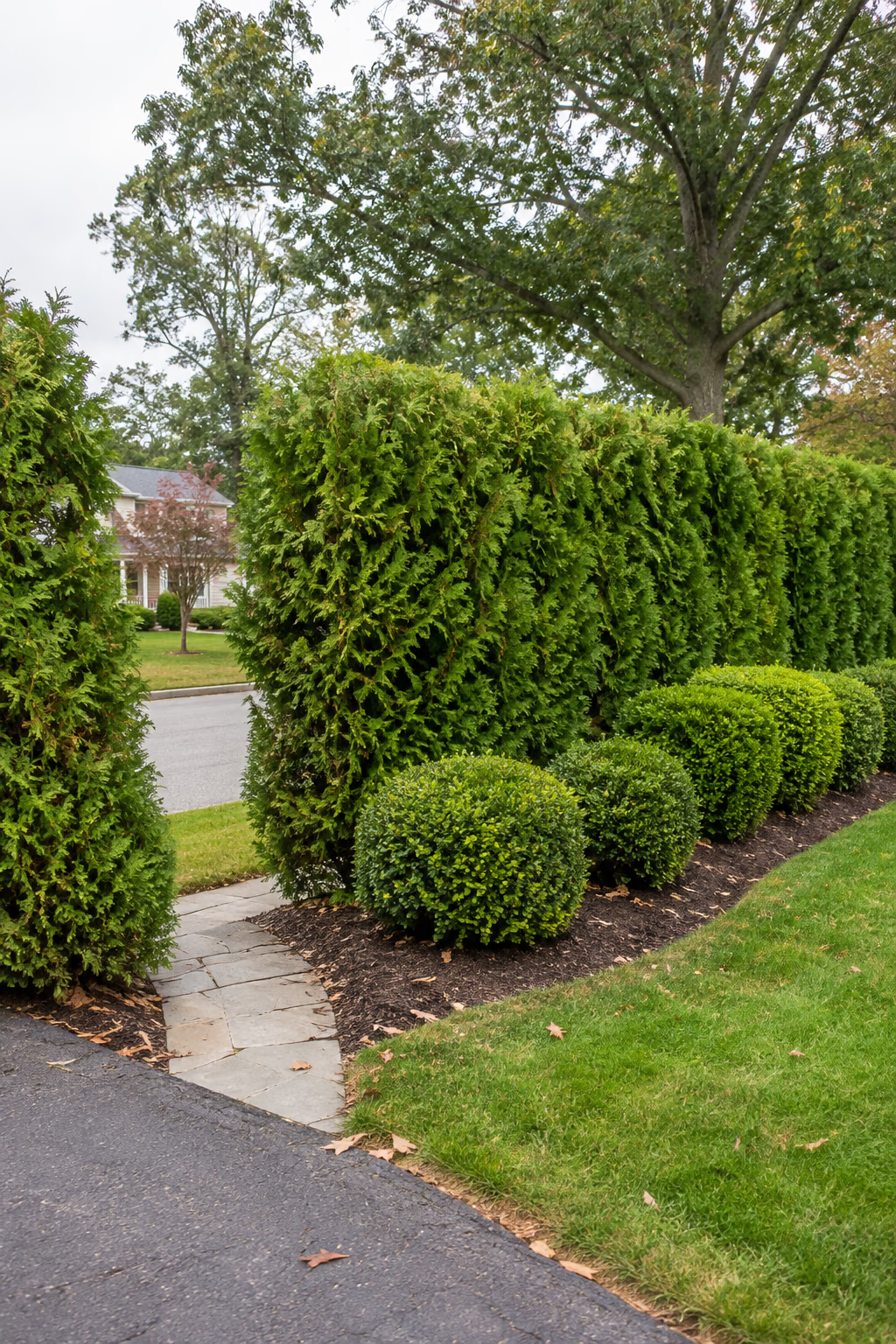
Privacy that looks natural and softens noise
A hedge in two layers has a taller evergreen such as arborvitae or holly behind and a shorter shrub such as boxwood or dwarf yaupon in front. The depth looks richer than one flat row and hides gaps near the base.
Space plants according to their mature width, usually 3 to 5 feet apart for tall evergreens. Water deeply the first two summers and add 2 to 3 inches of mulch.
Hedges take several years to fill in and need regular trimming. Keep them back from the sidewalk and leave visibility at driveways so drivers can see pedestrians.
7. Frame the Entry With an Arched Gate and Arbor
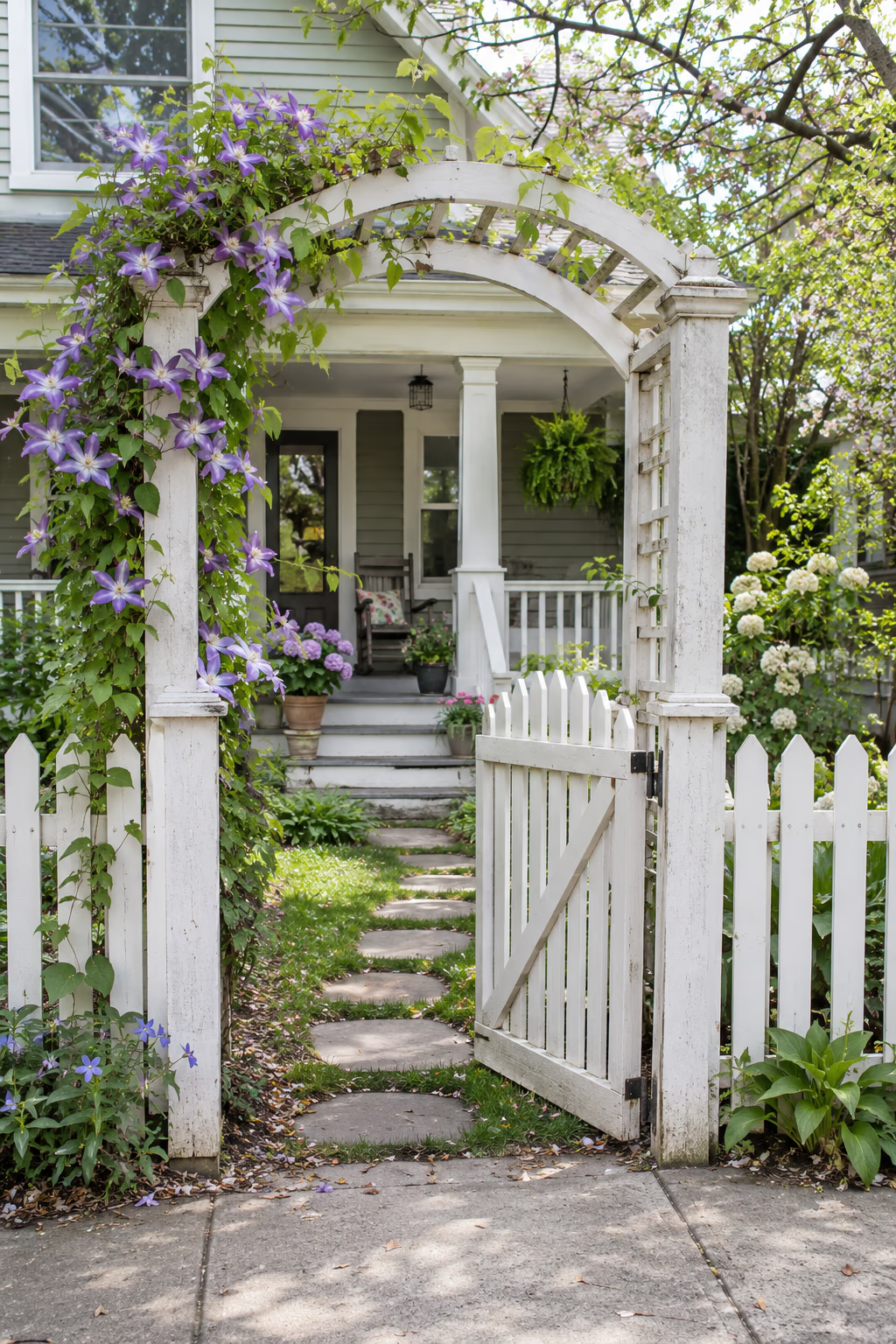
Make the entrance feel like an occasion
An arched arbor over a gate draws attention to the front walk and gives vines a place to climb. It works with picket fences, hedges, or even low stone walls.
Choose rot-resistant cedar, or use pressure-treated posts set in concrete. Leave at least 36 inches of clear width for the gate and about 7 feet of height so visitors and strollers pass easily.
Clematis, jasmine suited to your zone, and climbing roses all do well. Prune the vines once a year so the gate latch stays clear.
8. Stain a Cedar Fence Around a Front Seating Area
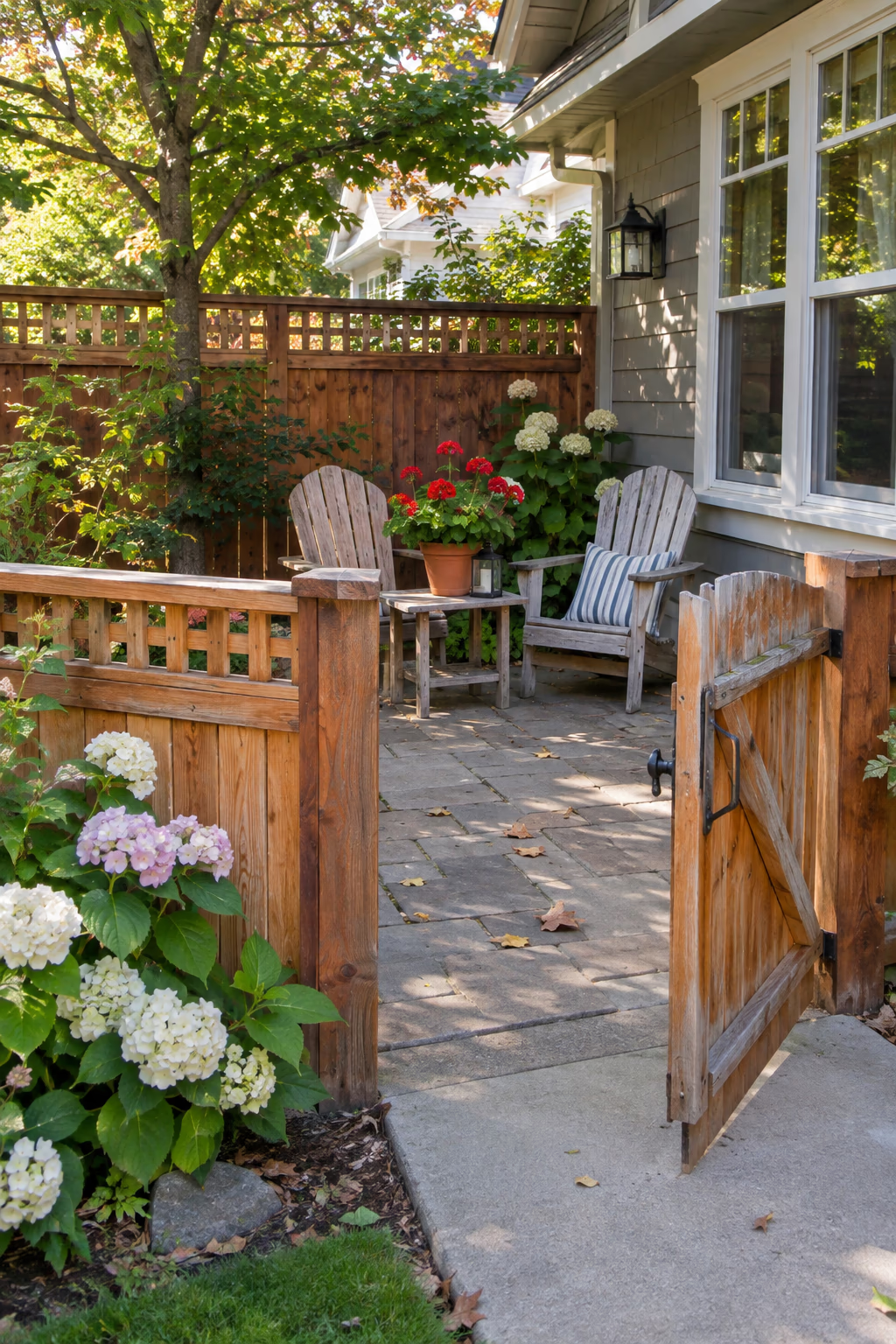
A semi-private nook facing the street
Front porches and small front patios feel more relaxed with a partial fence around them. A cedar board fence about 4 to 5 feet tall gives a sense of enclosure while still letting you wave at neighbors.
Use a semi-transparent stain in honey or gray tones to show off the wood grain, and reapply every two to three years. Add a short run of lattice or spaced boards on top to lighten the look.
Many towns limit solid fences in the front setback, so check whether your area allows a fence this tall and whether a partial run around a patio is acceptable.
9. Line the Property With a Rustic Split-Rail Fence
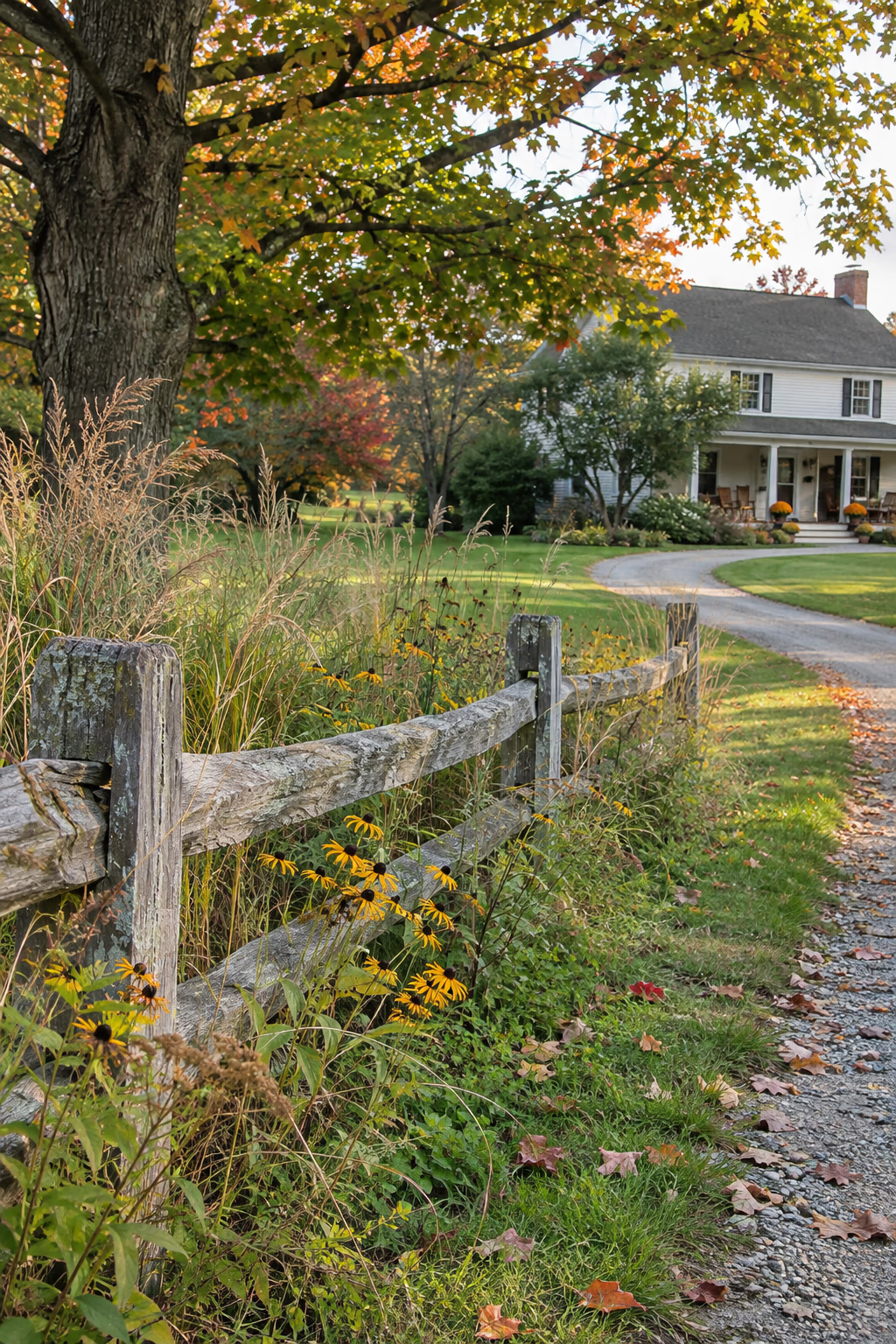
Country charm for larger lots
Split-rail fences use two or three horizontal rails slotted into rough posts. They define a boundary without hiding anything, so they suit big lawns, rural roads, and homes with a natural, wooded look.
Cedar and locust last longest. Expect to pay less than for solid fencing, since posts are spaced about 8 to 10 feet apart and installation is quick.
The fence will not hold in small pets, but you can add welded wire fencing on the inside. Plant native grasses and wildflowers at the base for an informal edge.
10. Paint a Picket Fence in a Bold Color
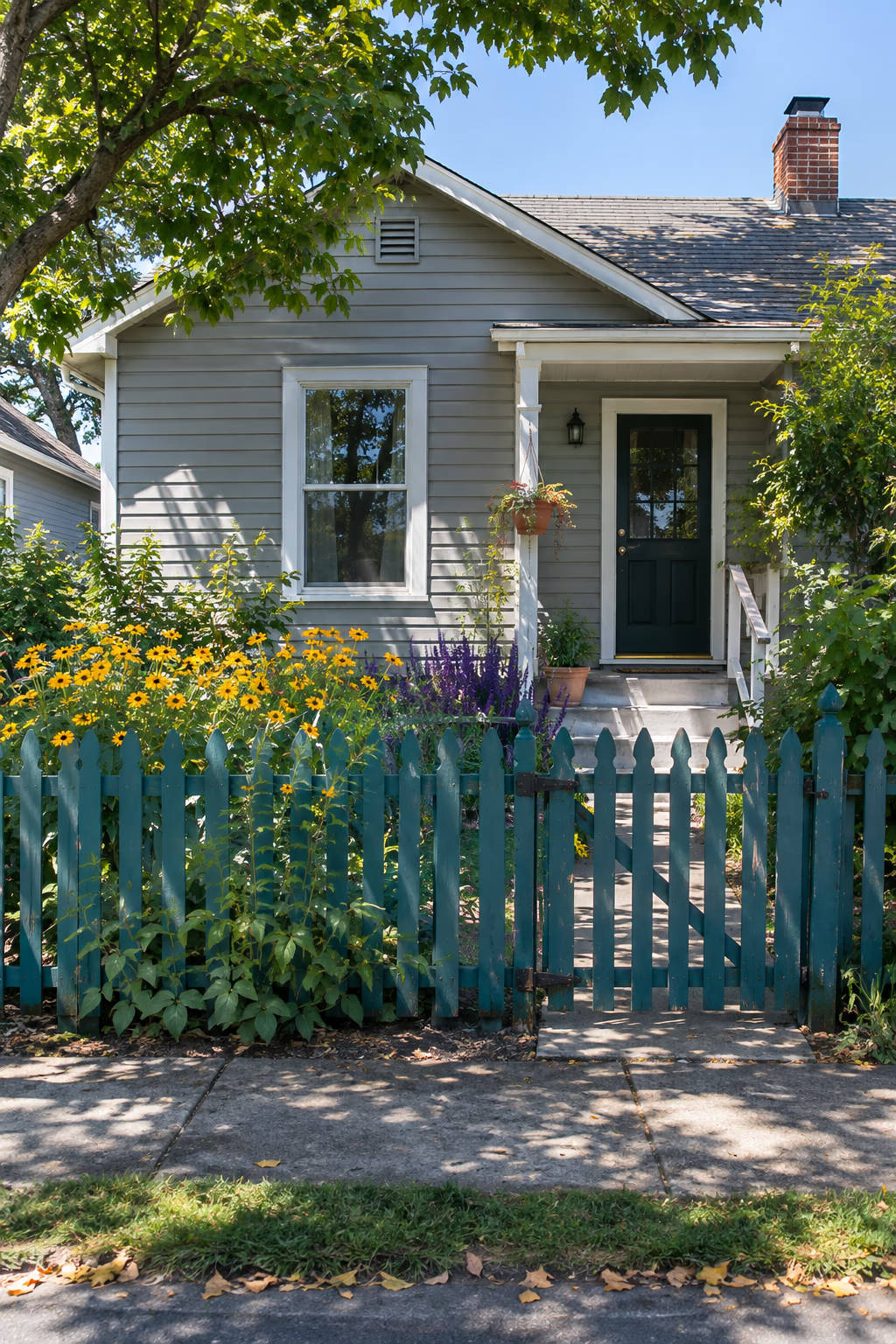
Personality for a plain house
If a white fence feels expected, try deep teal, sage green, navy, or even soft yellow. A colored picket fence turns into a feature and ties in with a front door or shutters.
Use exterior paint made for wood and prime new boards first. Two coats last longer than one. Darker colors fade faster in strong sun, so choose a high-quality finish.
Pick a color that works with your siding and roof, and test a sample on a few pickets first. Some HOAs require approval for colors, so ask before you paint.
11. Mix Wood and Metal Panels for Contrast
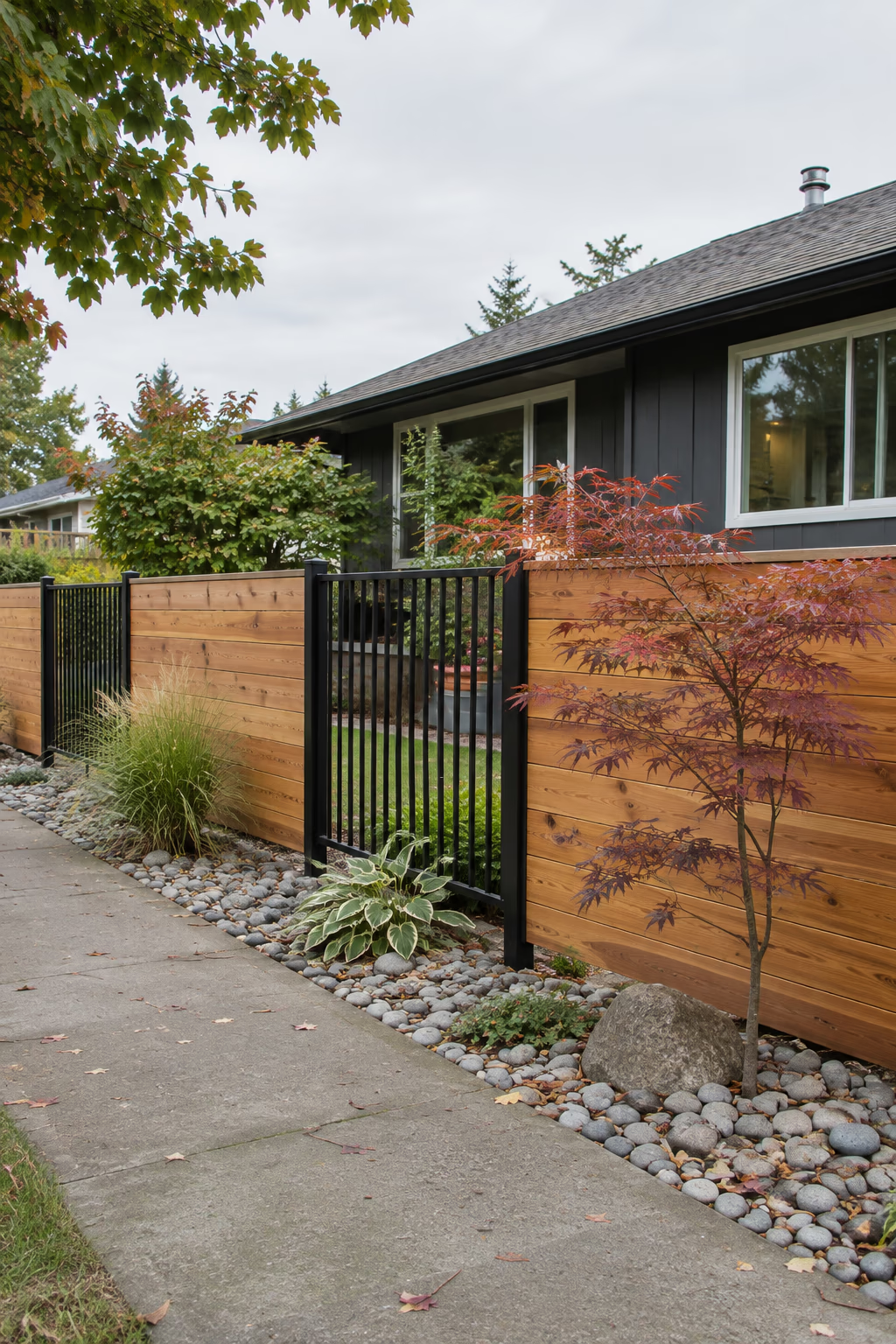
Warm texture meets sleek openness
Alternating solid cedar panels with open black metal sections adds rhythm to a long fence line. The wood gives some privacy where you want it, and the metal keeps the space open.
Use galvanized or powder-coated steel posts so wood and metal share one structure. Keep the metal sections near windows or the entry, and the solid sections near seating areas.
This is a good option for modern and mid-century houses. Because the pieces are custom, price quotes can vary, so ask a few local fence builders to compare.
12. Hang Planter Boxes Along the Fence
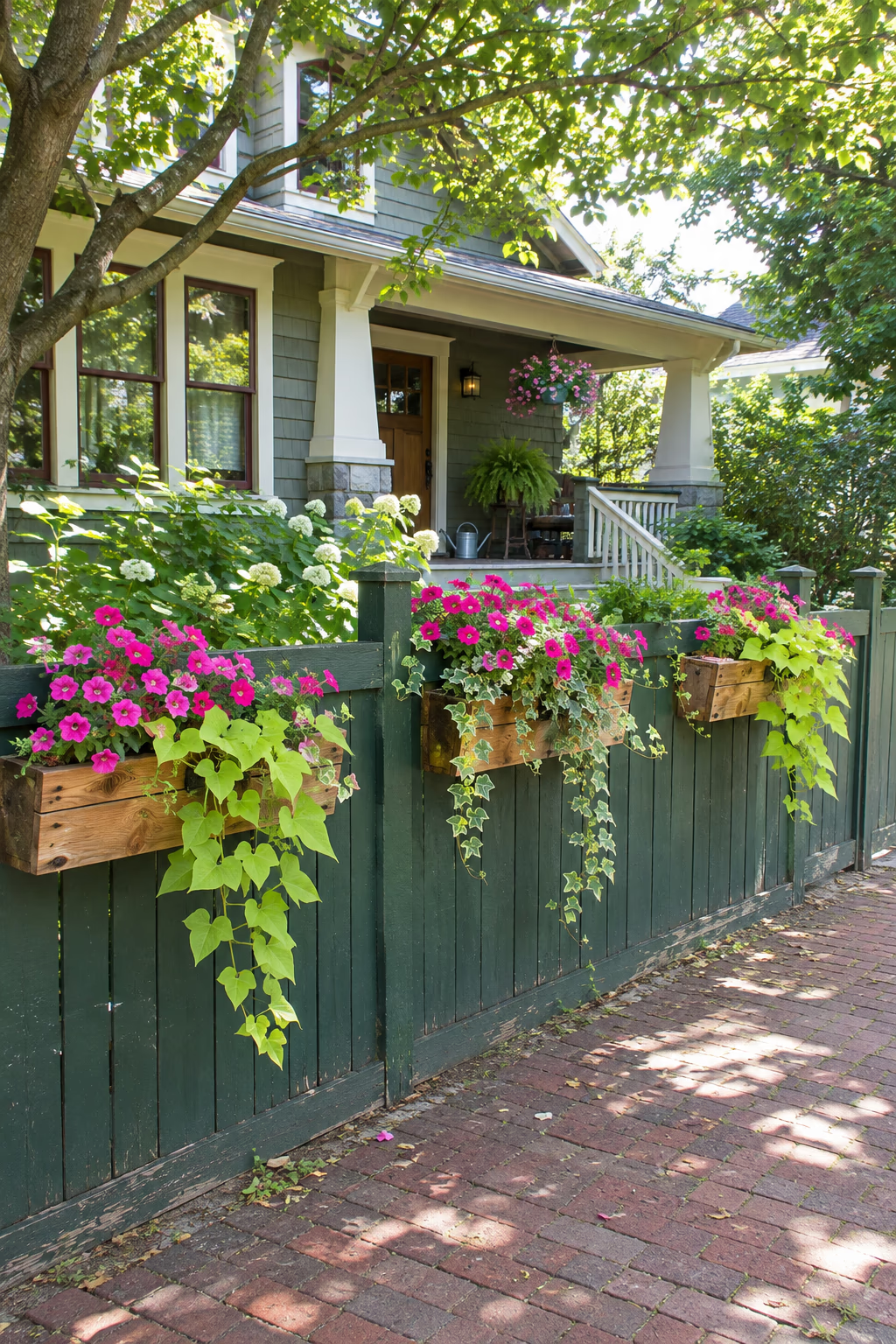
Color at eye level without digging a bed
Planter boxes bolted to the street side of a fence add flowers where there is little ground space. Fill them with petunias, geraniums, trailing ivy, and sweet potato vine for a full look from spring through fall.
Use boxes at least 8 inches deep, with drainage holes and a lightweight potting mix. Mount them to posts or rails with galvanized brackets, because wet soil is surprisingly heavy.
Containers dry out quickly in summer, so water daily in hot weather or add a simple drip line. A neat set of three evenly spaced boxes looks better than many mismatched ones.
13. Dress Up Chain-Link With Black Coating and Shrubs
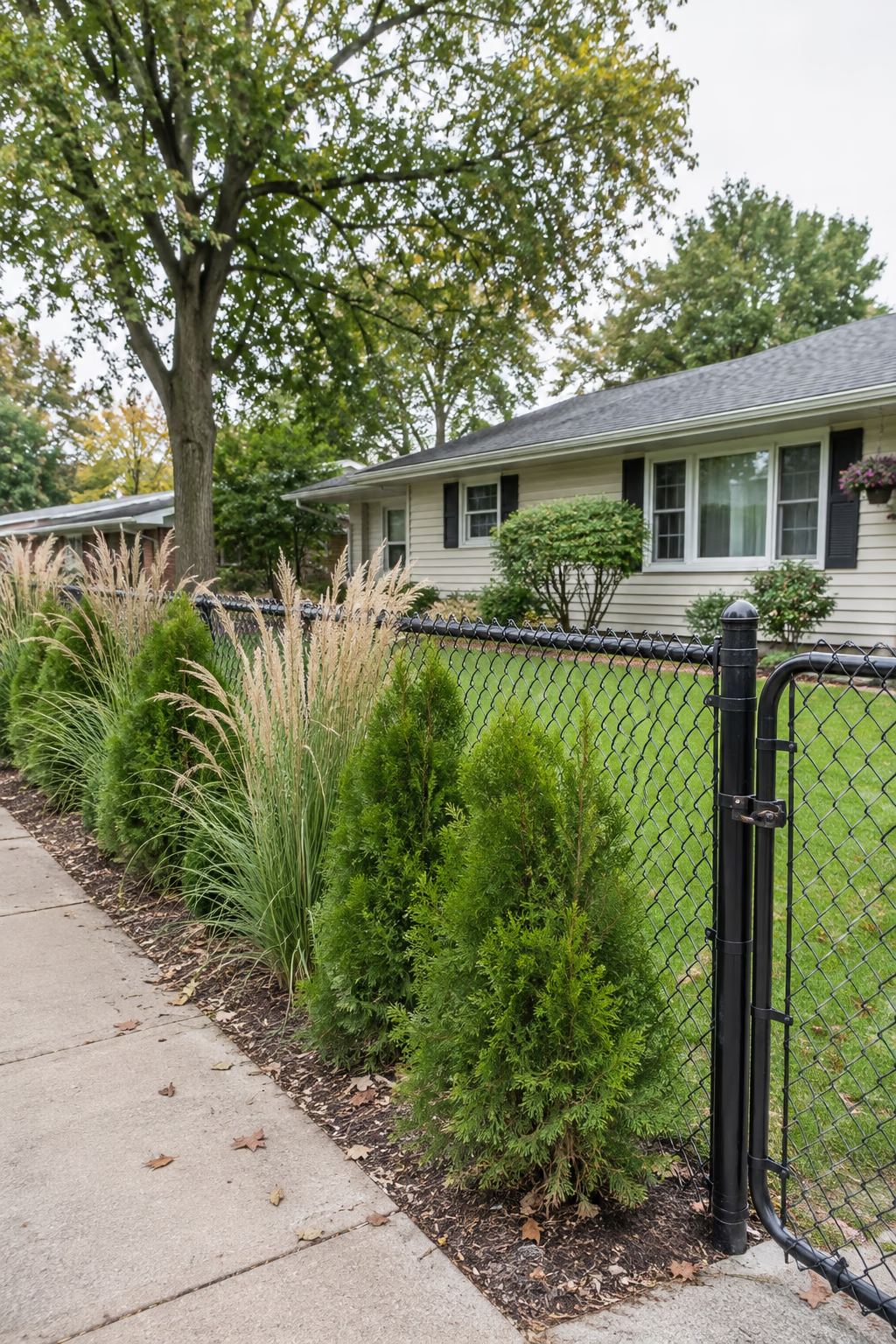
An affordable fence that doesn’t look cheap
Standard galvanized chain-link is plain, but black or green vinyl-coated mesh nearly disappears behind plants. It is one of the least expensive ways to enclose a yard and keep pets in.
Plant evergreen shrubs and ornamental grasses a foot or two in front of the fence so the mesh fades from view. Choose a black top rail and matching gate for a cleaner finish.
Chain-link is not allowed in some front yards, particularly in HOA neighborhoods, so confirm the rules before buying materials.
14. Step a Fence Down a Sloped Yard
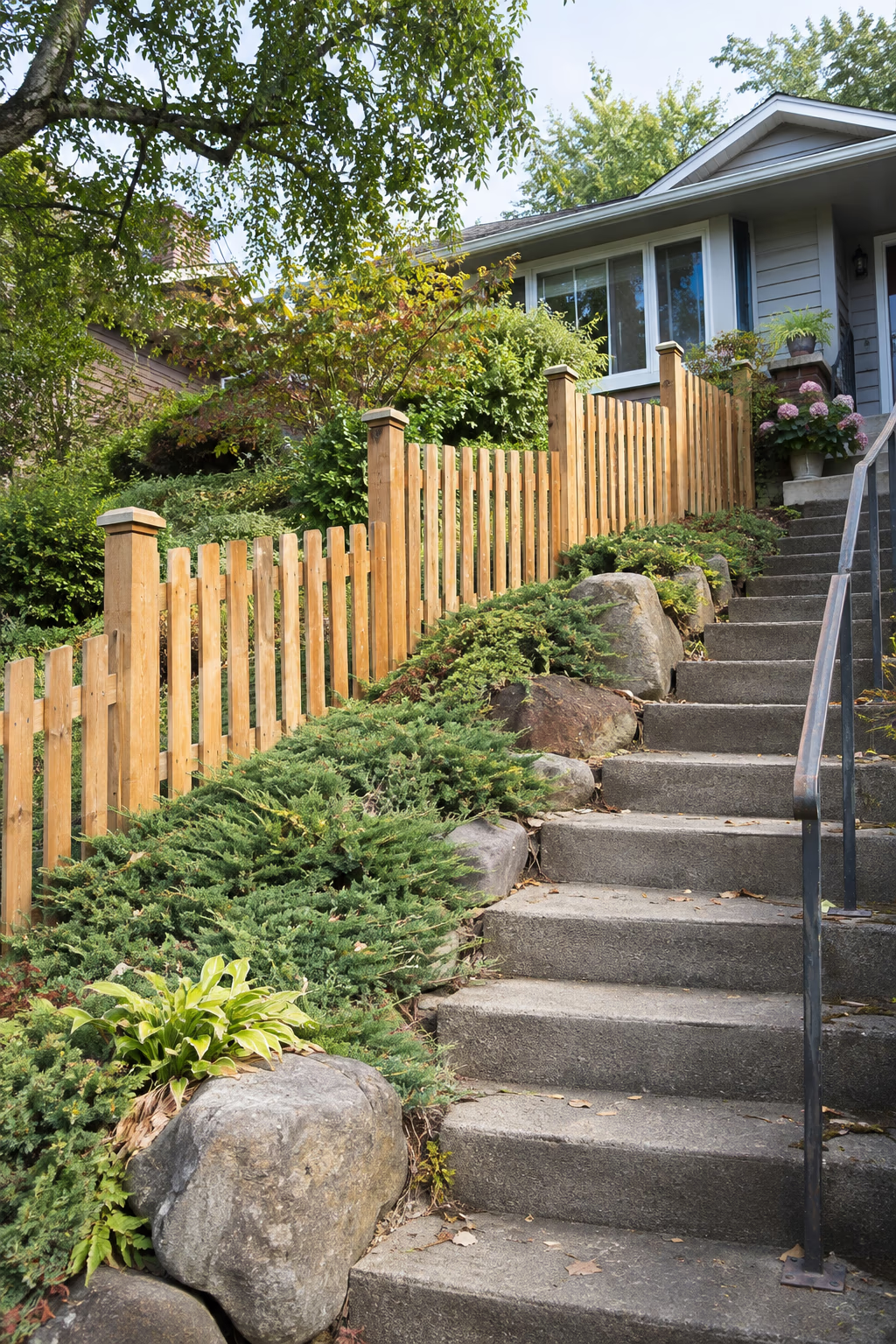
Stay level and neat on a hill
On a sloped lot, a fence can be built in stepped sections, with each panel level and posts set at each step. This looks more deliberate than a fence that follows the slope line and leaves triangular gaps.
Plan your post spacing before you dig, and keep the step heights even, often 4 to 8 inches. Pair the fence with steps or a handrail where the walk descends.
Plant groundcover such as creeping juniper or sedum on the slope to hold the soil. Steep grades may call for a retaining wall first, so get a local pro to assess the soil.
15. Weave a Natural Bamboo Screen Fence
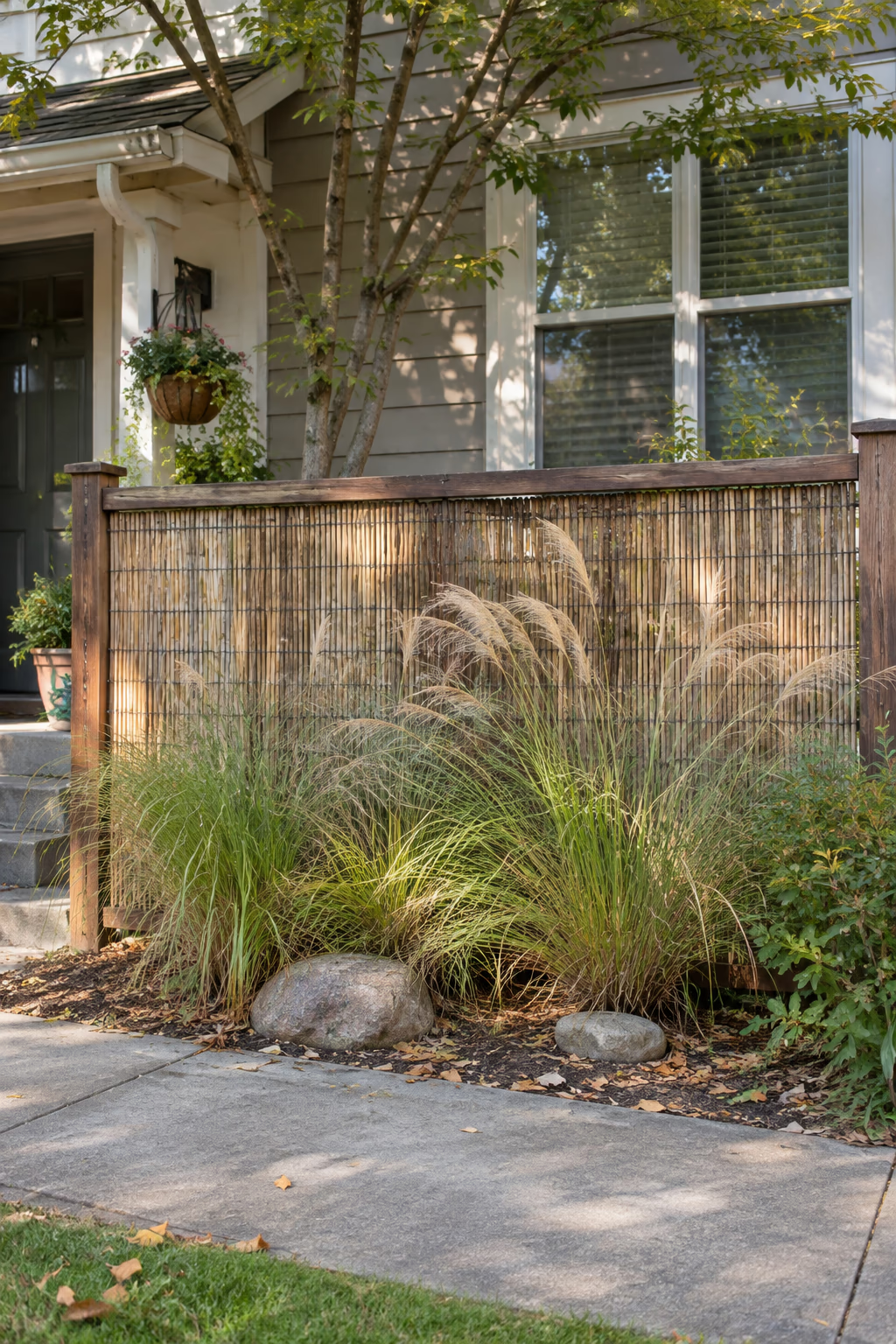
Texture and warmth on a small budget
Bamboo or reed screening in wood frames gives a soft, natural look and some privacy. Panels are lightweight and easy to install between sturdy posts.
Real bamboo fades from golden to silver over a couple of years. Sealing helps, but expect to replace panels every 5 to 8 years in wet or very sunny climates.
Grow ornamental grasses at the base so it looks like part of the garden. Keep the screen at a height allowed by local codes, because some areas treat it like any solid fence.
16. Light the Fence With Low-Voltage Fixtures
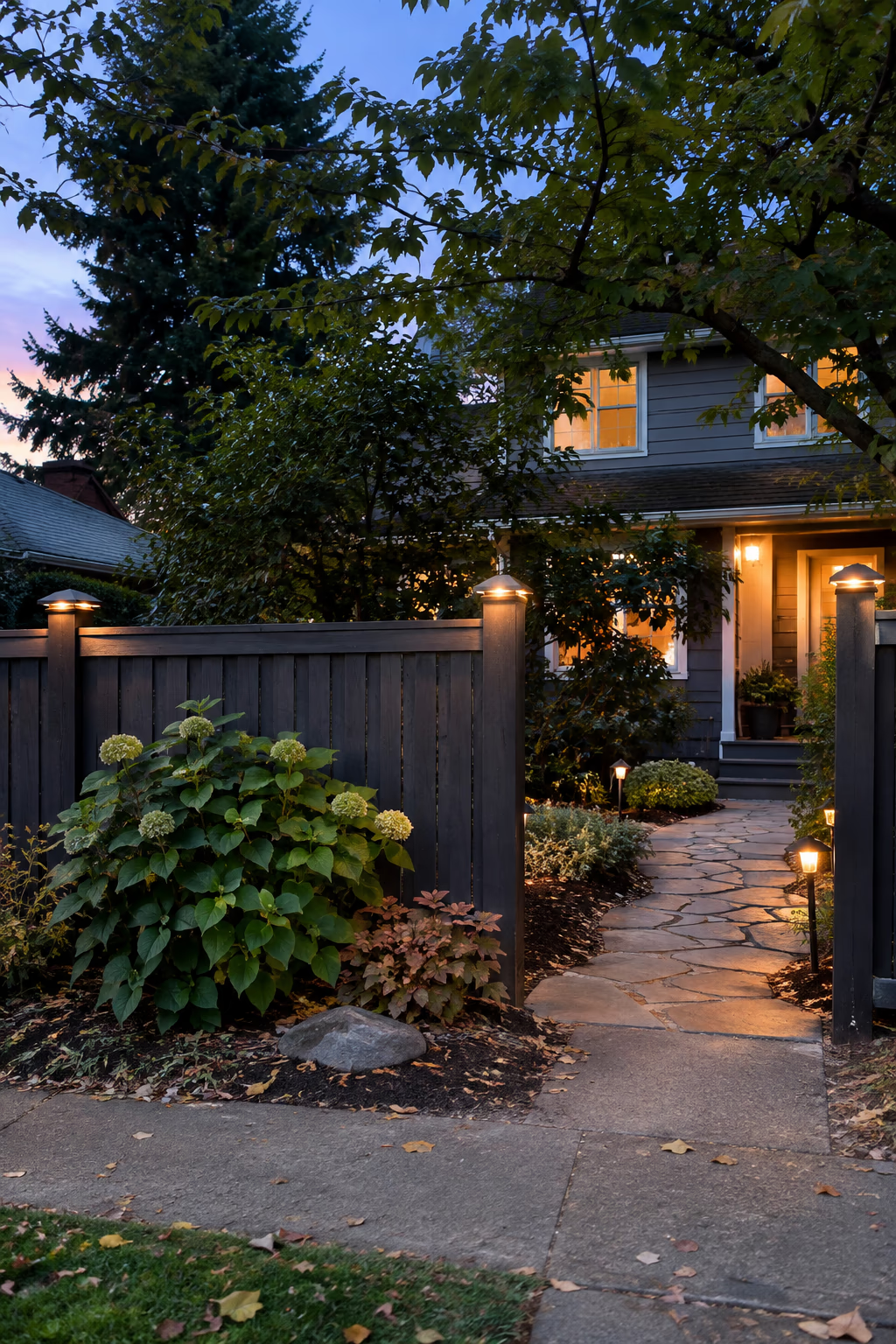
Safer walks and a warm evening glow
Small post cap lights or rail lights bring a fence to life after dark. Warm white LED fixtures around 2700K feel welcoming and use little power.
Low-voltage systems run from a transformer plugged into an outdoor outlet, and the thin cable can be buried a few inches deep. Solar caps are easier to install but dimmer, especially in shady yards.
Place lights evenly, such as on every other post, and aim them downward to avoid glare for neighbors. In the United States, call 811 before digging a trench.
17. Use Decorative Concrete Block Panels
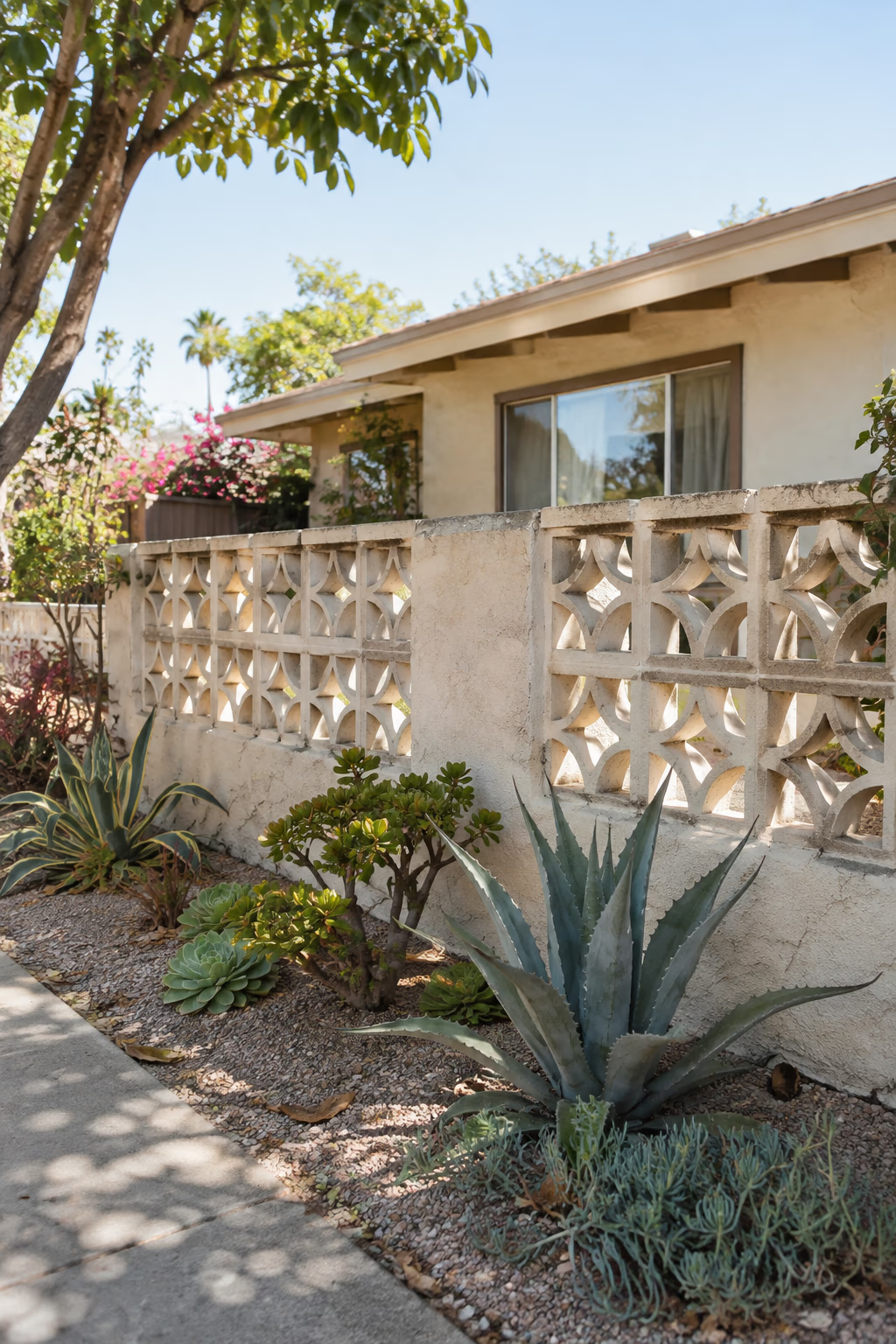
Pattern, shade, and a strong mid-century feel
Screen blocks with open geometric patterns create a low wall that lets in light but breaks up views. They are common on ranch homes in dry climates and look great with succulents.
Build the wall on a reinforced concrete footing and stack with mortar. For safety, keep walls without added reinforcement modest in height, usually under 3 to 4 feet, and ask a mason for specifics.
Blocks are durable, but painted ones may need touch-ups. Plant agave, yucca, or ornamental grasses along the base to soften the hard lines.
18. Stretch Wire Panels Between Cedar Posts
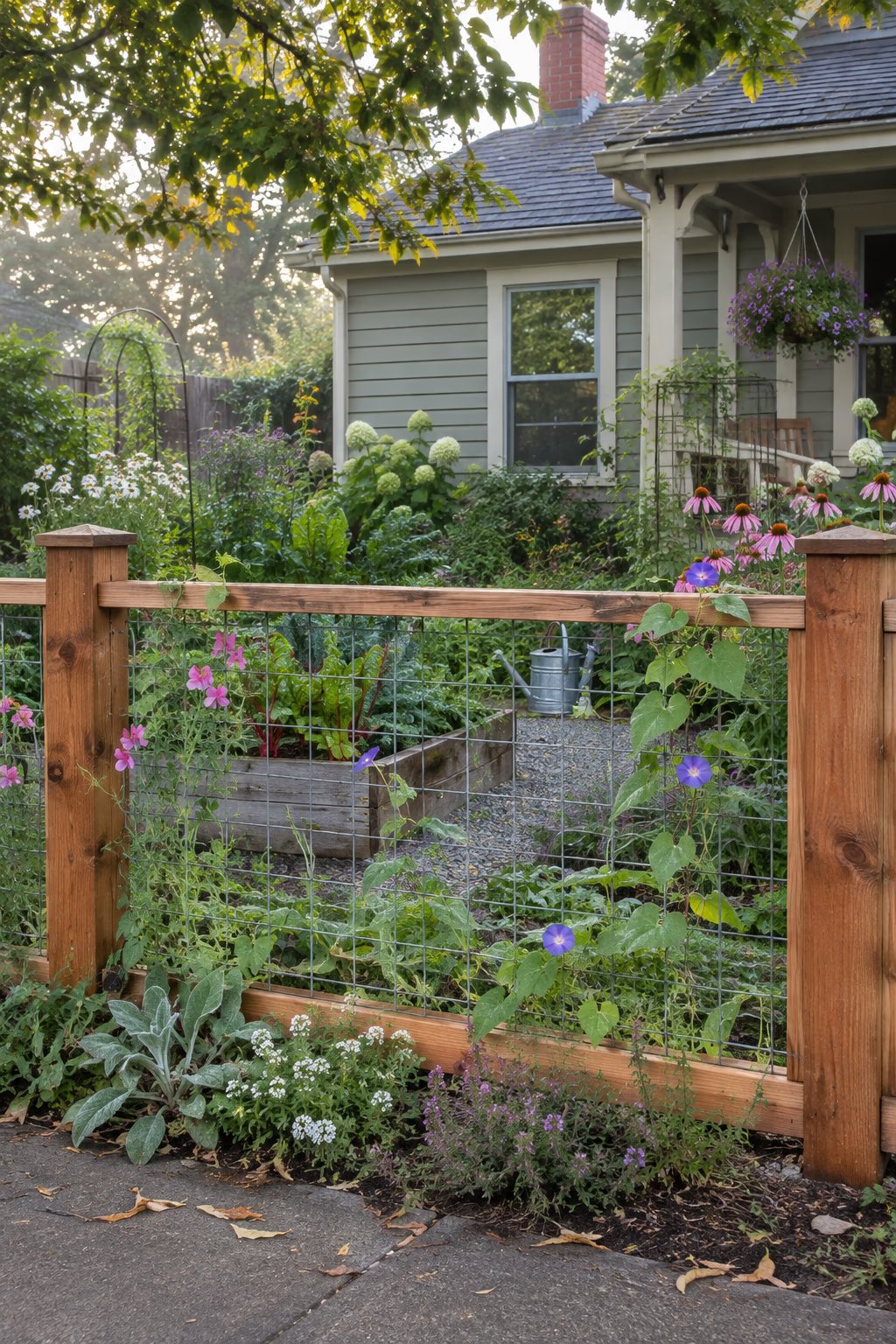
A practical frame for climbing plants and pets
Welded wire panels in cedar frames are sturdy, inexpensive, and nearly see-through. They contain dogs and work as a trellis for beans, sweet peas, and morning glories.
Choose galvanized or coated wire with openings of 2 by 4 inches or smaller for small pets. Attach the panels to posts with exterior screws and fence staples.
The look is casual, so it suits cottage and farmhouse yards best. If you grow edibles on it, wash produce and avoid treated wood in direct contact with food beds.
19. Build a Shadowbox Fence for Two-Sided Beauty
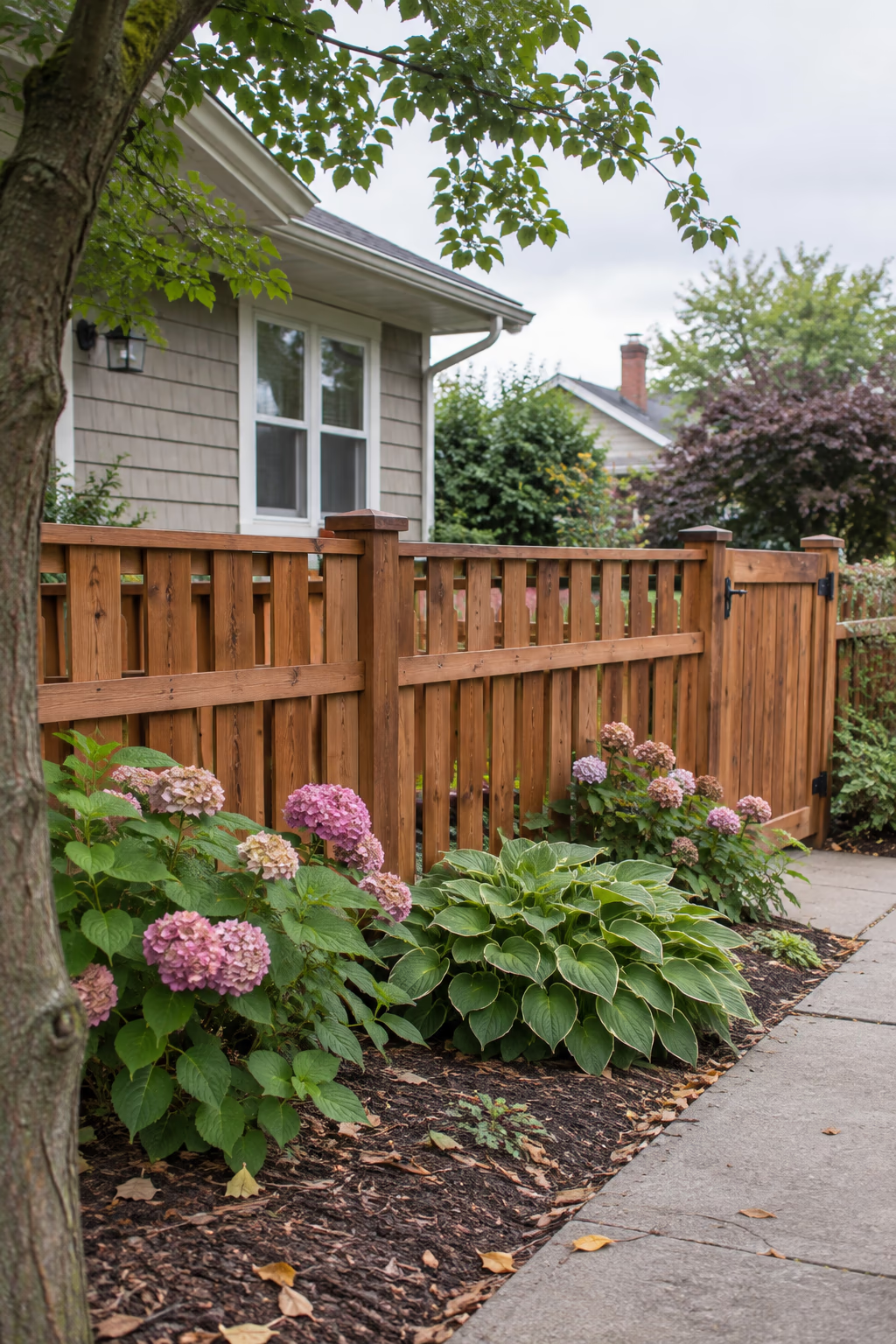
Looks good from the street and from the yard
A shadowbox fence alternates boards on opposite sides of the rails, so both faces look finished. Airflow passes through, which helps in windy areas.
Use cedar or treated pine boards about 5.5 inches wide and leave small overlaps. A neutral stain keeps the pattern visible, and the fence stays friendly because you see through at an angle.
It uses more lumber than a basic picket fence, so budget for the extra boards. Keep the height within your local front yard limit.
20. Edge the Yard With Weathered Steel Panels
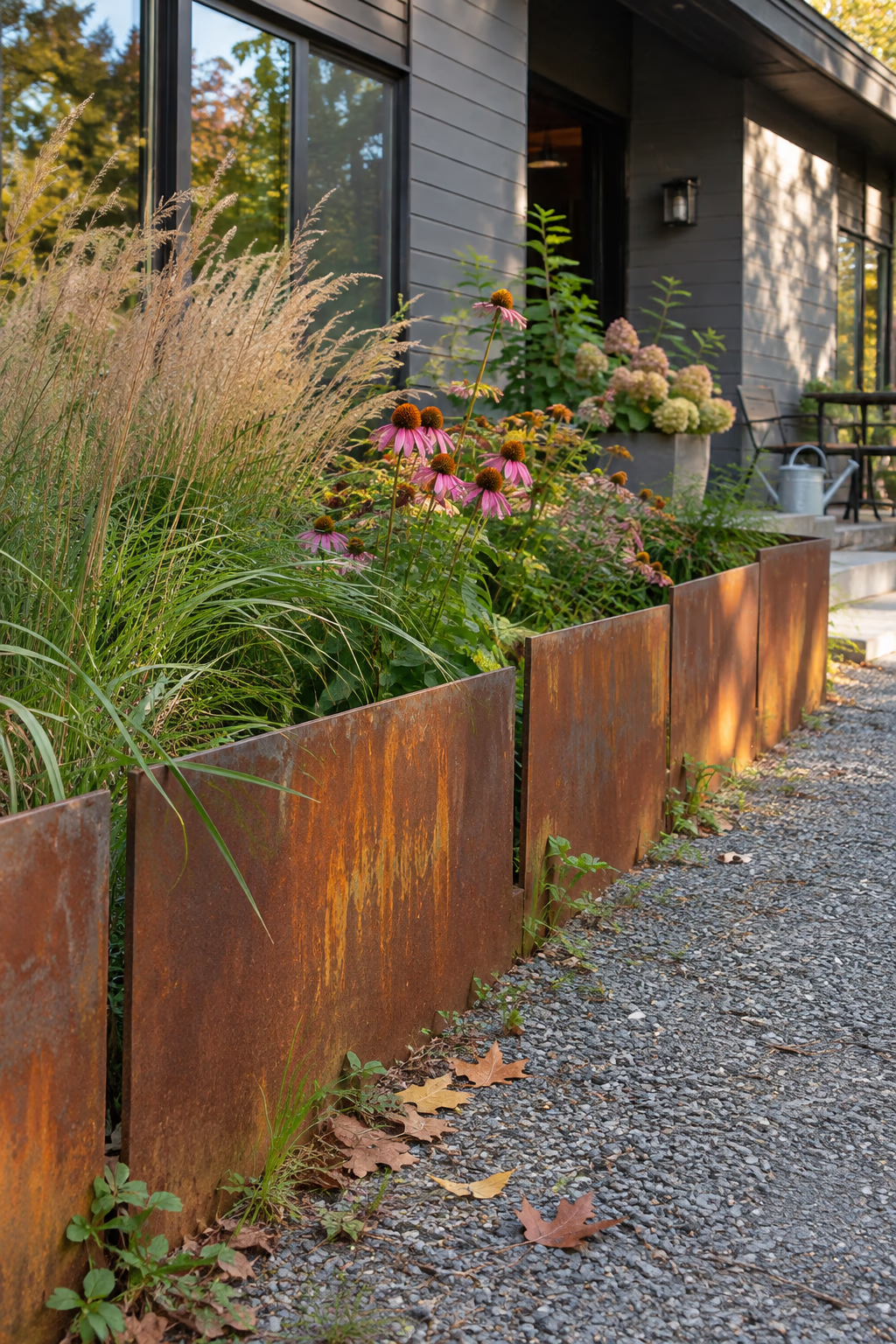
Rich rust tones that pair with grasses
Low panels of weathered steel, often sold as corten, rust to a deep orange-brown that suits modern and prairie-style gardens. They look best next to feather reed grass, coneflower, and gravel.
Panels 1/8 to 3/16 inch thick hold their shape. Rust runoff can stain concrete and light stone in the first year or two, so keep them off pavers and sidewalks you care about.
Leave sharp edges folded or capped for safety, and set the panels in the ground a few inches for stability.
21. Fill Gabion Cages With Stone for a Solid Border
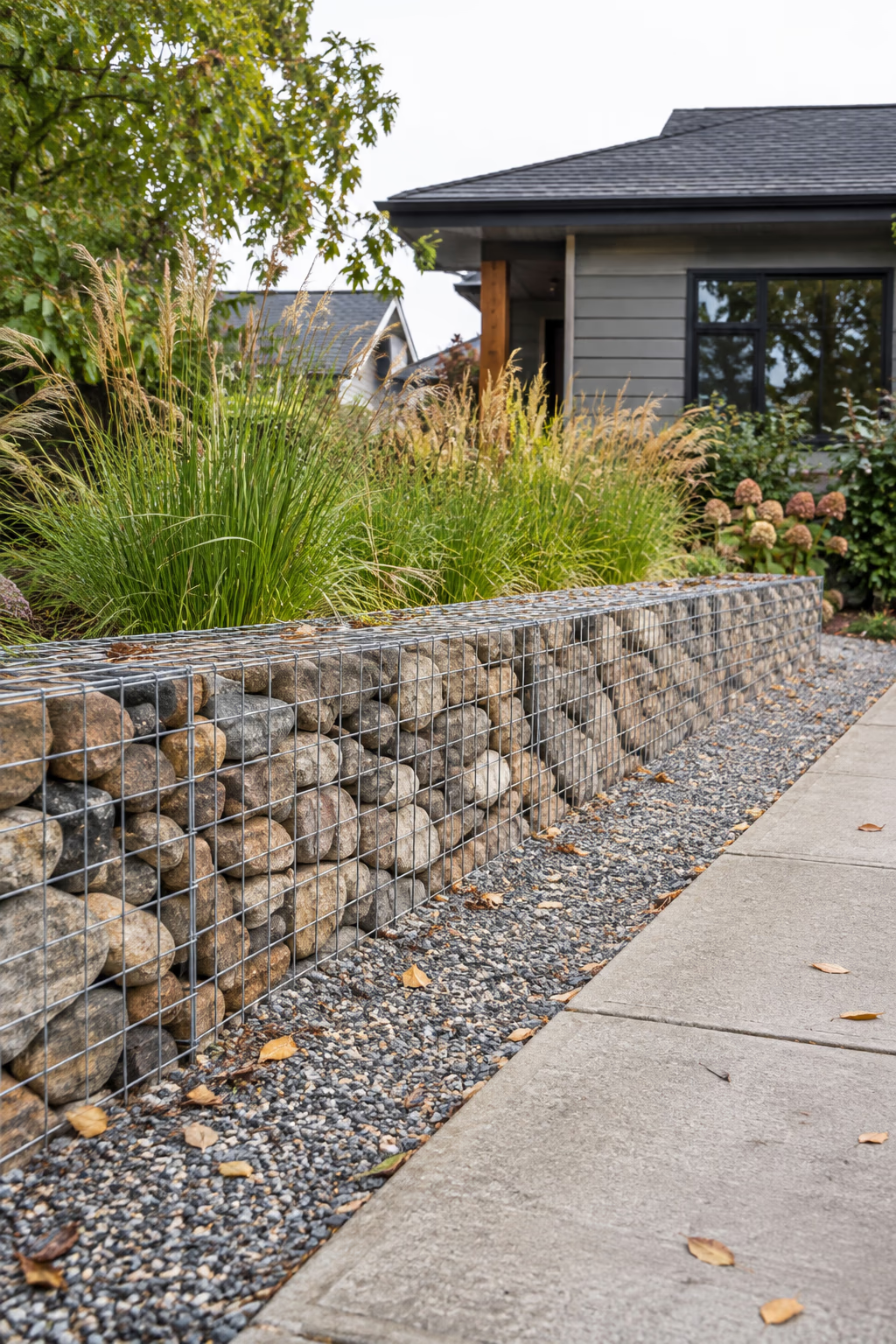
A modern wall you can fill yourself
Gabions are welded wire cages filled with rock. They stack into low walls or borders with a rugged, contemporary look, and they drain well.
Use clean 3 to 6 inch stone that is larger than the wire openings. Level the base with compacted gravel, and tie the cages together as you stack them.
The stone is heavy, so plan delivery and a wheelbarrow route. Keep gabion walls low, around 2 to 3 feet, unless an engineer approves taller ones.
22. Build a Fence From Reclaimed Barn Boards
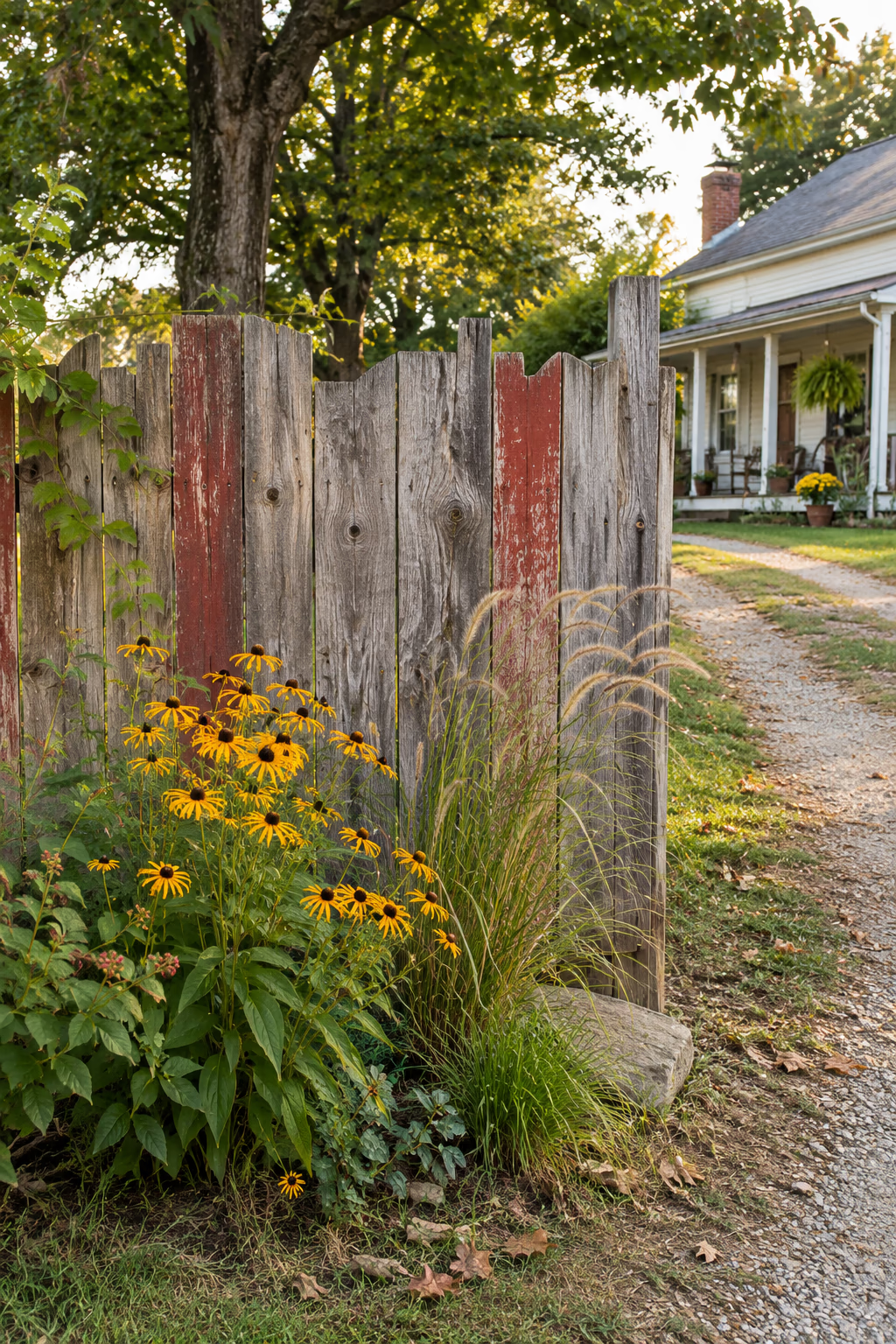
Character, history, and a lower cost
Weathered boards from old barns or fences bring instant age and uneven color. Mixing gray with a few faded red boards gives a farmhouse feel.
Inspect each board for rot and remove any protruding nails. Reclaimed lumber is not always treated, so use rot-resistant boards, or keep them off the ground with a gravel base.
Because boards vary, the top line will look uneven. Embrace this for a rustic yard, and add a sturdy rail structure behind so the fence stays straight.
23. Create a Low Lattice Fence for Vines and Flowers
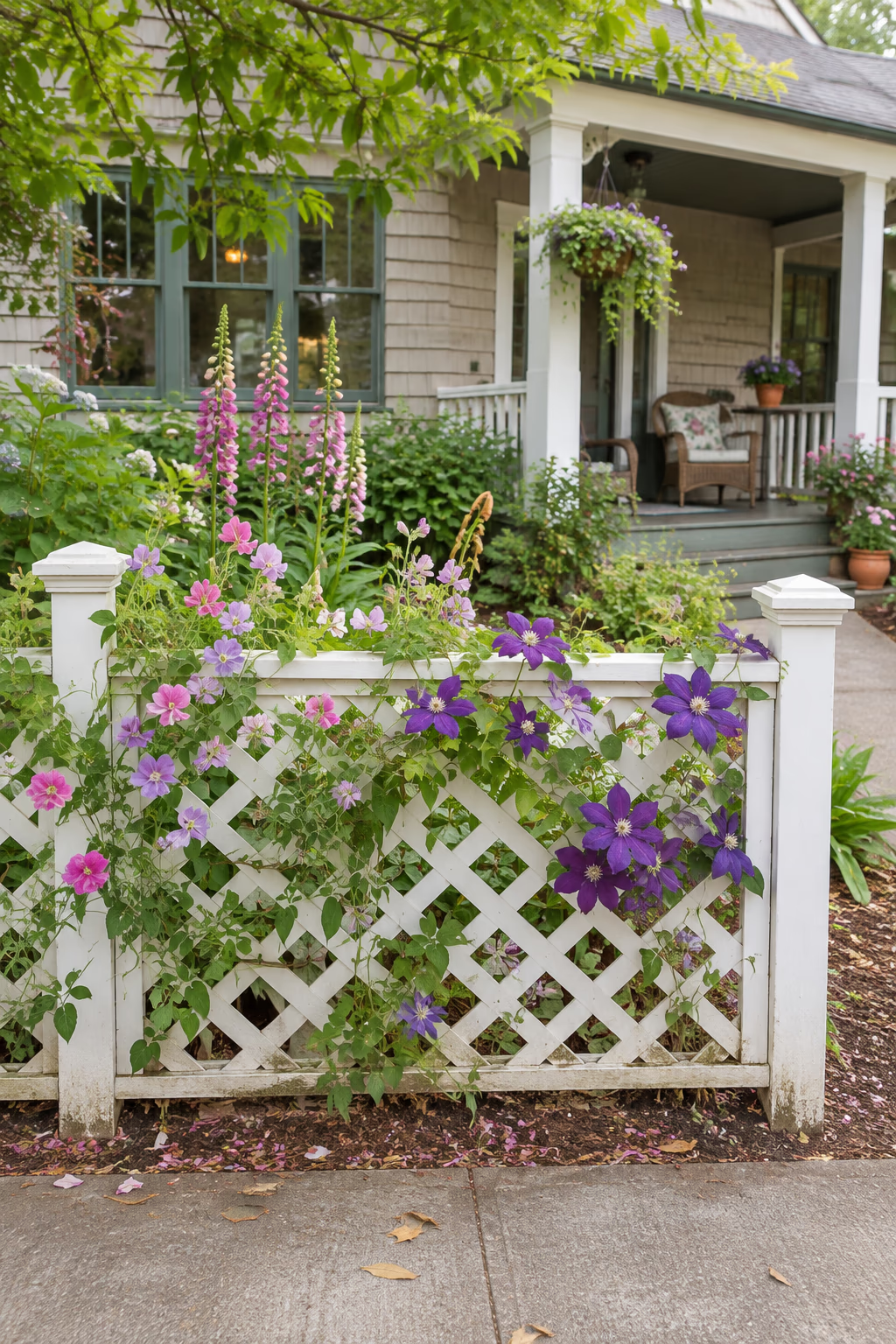
Soft, airy, and made for climbers
Lattice panels about 3 feet tall between painted posts create a light garden fence. They work well for sweet peas, clematis, and other lightweight vines.
Choose cedar or vinyl lattice, because thin pine slats can warp quickly. Paint or stain wood on both sides before installation for longer life.
Lattice is not strong against dogs or heavy winds, so pair it with sturdy posts. It is best as a decorative boundary for cottage and traditional homes.
How to Plan Your Front Yard Fence
A little planning prevents costly mistakes. Before you pick a style, check your property, your neighborhood rules, and how the fence will be used day to day.
- Check local rules first. Many cities and HOAs limit front yard fence height, materials, and colors, and some require a permit.
- Confirm your property line. Review your survey before building so the fence sits on your side of the boundary.
- Match the house style. Pickets suit cottages and colonials, slats suit modern homes, and metal fits formal brick houses.
- Think about maintenance. Wood needs staining or painting, while aluminum and vinyl need less upkeep.
- Plan the gate and sight lines. Leave enough width for strollers and deliveries, and keep views clear at the driveway.
- Call 811 before digging. Marking underground utilities is free in the United States and protects you from dangerous mistakes.
Frequently Asked Questions
How tall can a front yard fence be?
It depends on where you live. Many towns limit front yard fences to about 3 to 4 feet, though some allow taller if the fence is open. Check your local code and any HOA rules.
What is the cheapest front yard fence?
Chain-link and split-rail are usually the least expensive, followed by basic wood pickets. Hedges can also be inexpensive if you buy small plants, though they take time to fill in.
Do I need a permit for a front yard fence?
Often yes, especially for new fences or ones over a certain height. Contact your local building or zoning office before you buy materials.
Which front yard fence needs the least maintenance?
Powder-coated aluminum, vinyl, and composite typically need little more than washing. Wood looks great but needs repainting or restaining every few years.
Can a fence increase curb appeal?
Yes. A fence that suits the style of your home and is paired with plants frames the property and makes it look cared for. Poorly maintained fences can have the opposite effect.
Final Thoughts
The best front yard fence ideas are the ones that suit your house, your budget, and your neighborhood rules. Whether you choose a white picket, sleek horizontal slats, or a living hedge, the fence should feel like part of the landscape rather than something added on.
Start with the basics, such as height limits, property lines, and maintenance, then pick a style you will enjoy seeing every day. Add a few plants and a welcoming gate, and your front yard will look finished.


