
Picture pulling into your driveway on an early spring evening. A tree in the middle of the front yard is covered in blossoms, its shadow stretches across fresh green grass, and the whole house suddenly looks settled and welcoming.
That is the power of a well-placed tree. It adds shade, color, height, and a sense of age that no shrub or flower bed can match, and it frames your home the way a good picture frame frames a photo. The trick is choosing the right tree for the right spot and giving it companions that make it look intentional.
These 21 front yard tree landscaping ideas cover showpiece shade trees, flowering favorites, Japanese maples, planting beds, lighting, screening, and small-space options. Each one works on an ordinary suburban lot, so pick one or combine a few to match your climate, budget, and style.
1. Anchor the Yard With a Single Showpiece Shade Tree
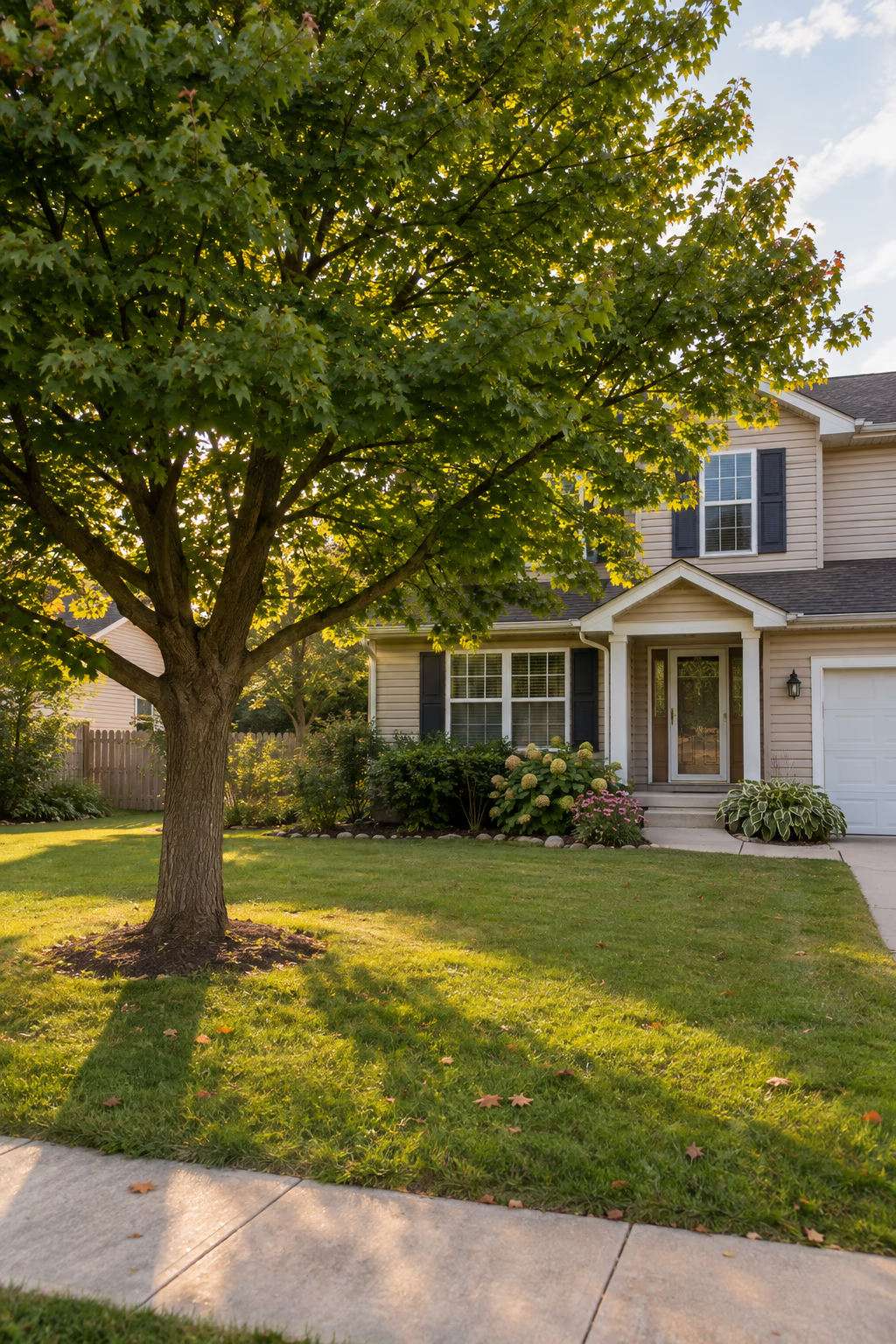
One strong tree gives the whole yard a focal point
The simplest and most popular layout is a single large tree set off-center in the lawn, with open grass around it. Good choices include red maple, red oak, or a tulip tree, depending on your region. The tree frames the house from the street and shades the yard in summer.
Plant it at least 15 to 20 feet from the house, and check the mature height and width on the plant tag first. A sapling that looks tiny today can reach 50 feet or more. Placing it on the southwest side of the house can cool the walls in summer while letting winter sun through once the leaves drop.
Call 811 before digging, and check property lines and any HOA rules. Skip weak, brittle species near the house, because limbs that break in storms can cause real damage.
2. Plant a Flowering Tree for Spring Color
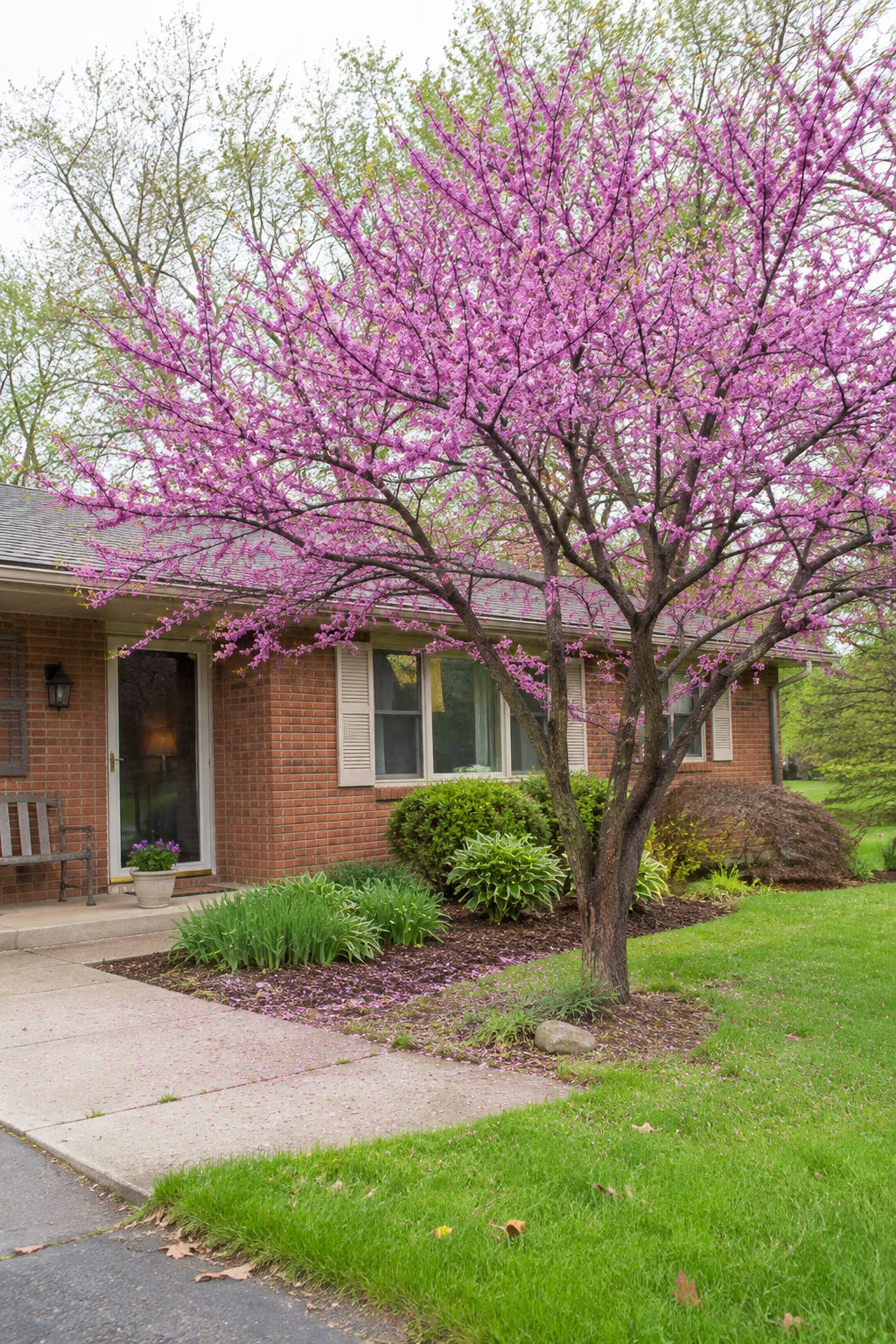
Blossoms that make the whole street slow down
Small flowering trees are the crowd-pleasers of the front yard. Flowering dogwood, eastern redbud, crabapple, and serviceberry all bloom in spring, and many add fall color or berries later. Most stay between 15 and 30 feet tall, so they suit modest lots.
Pick a spot where you will see it from the front window and the street. Dogwoods prefer part shade and slightly acidic, well-drained soil, while redbuds and crabapples handle more sun. Choose disease-resistant crabapple varieties so the leaves look good all summer.
Bloom time is short, usually two to three weeks, so choose a tree that also offers good leaf shape, fall color, or interesting bark for the rest of the year.
3. Frame the Entry With a Japanese Maple
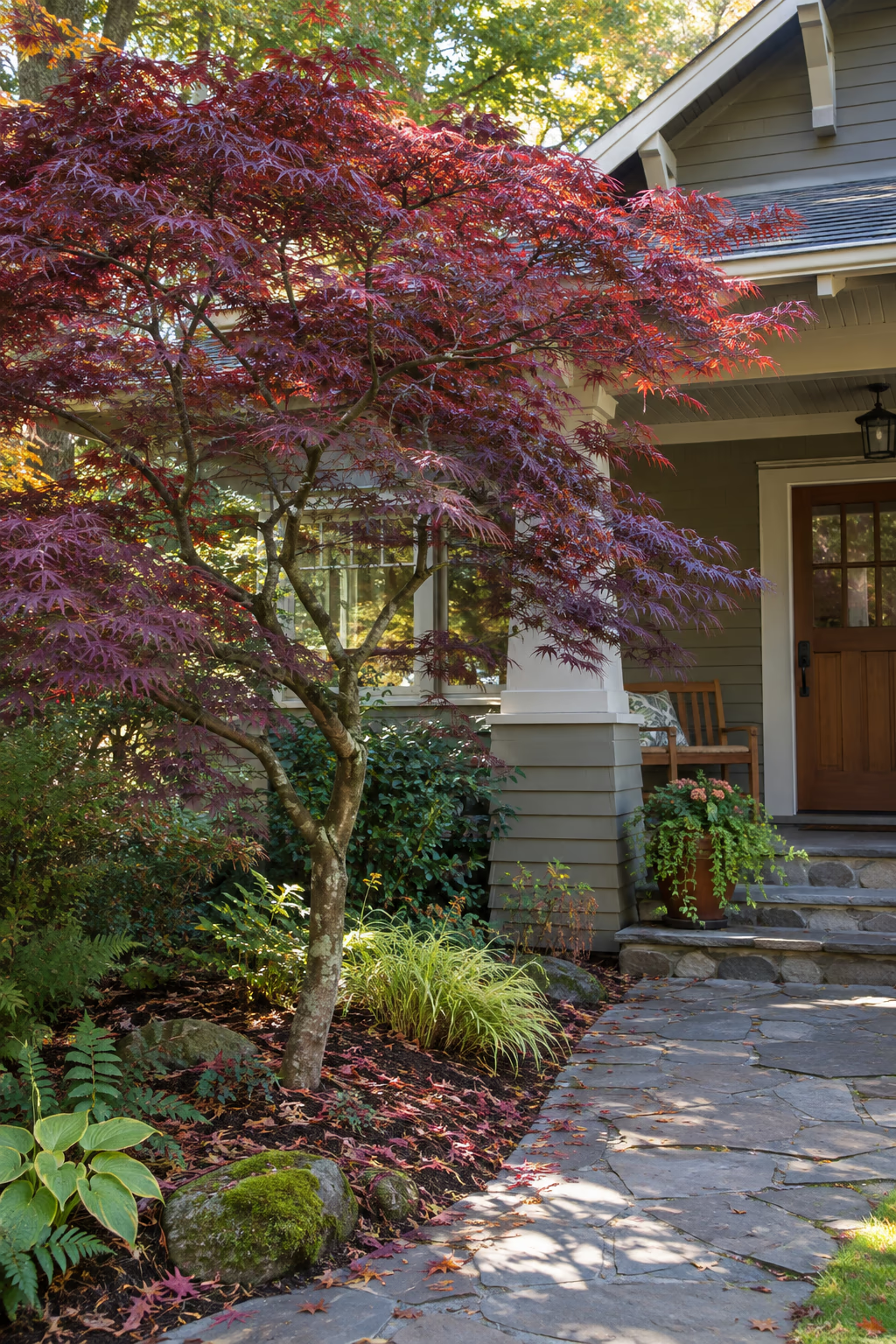
Graceful color right beside the front walk
A Japanese maple is a favorite entry tree because it stays small, often 8 to 15 feet for many varieties, and its layered branches and burgundy, red, or lacy green leaves look like living art. Set it a few feet off the corner of the porch or beside the front walk.
Most prefer morning sun with afternoon shade and consistently moist, well-drained soil. In hot, windy, or very sunny spots the leaf edges can scorch. Add 2 to 3 inches of mulch, keeping it a few inches from the trunk.
Check that your variety is hardy in your USDA zone. Some cut-leaf types are more tender and do best in a pot or a sheltered corner in colder regions.
4. Build a Mulch Bed With Flowers Around the Trunk
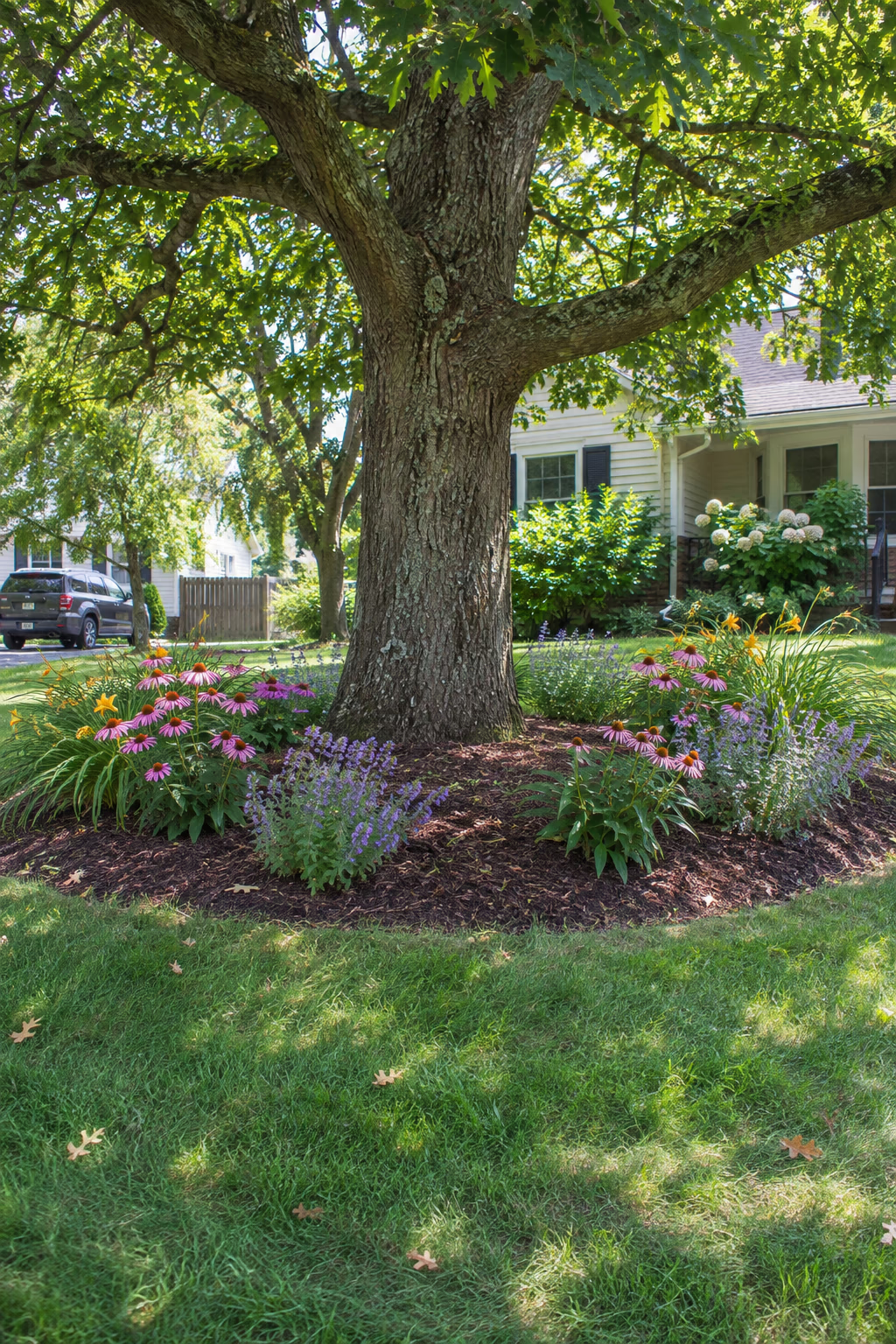
Replace struggling grass with a tidy planted circle
Grass rarely grows well under a tree, and mowing close to the trunk can injure the bark. A round or oval bed around the base solves both problems. Make the bed at least 4 to 6 feet across, and larger as the tree grows.
Spread 2 to 3 inches of shredded bark or wood chip mulch, then add a ring of shade-tolerant or sun-tolerant perennials near the outer edge, such as coneflower, catmint, or daylilies, depending on light.
Never pile mulch against the trunk. A mulch volcano holds moisture against the bark and invites rot and pests. Keep a few inches of bare space around the trunk and spread mulch flat.
5. Layer Shrubs and Groundcover Beneath the Tree
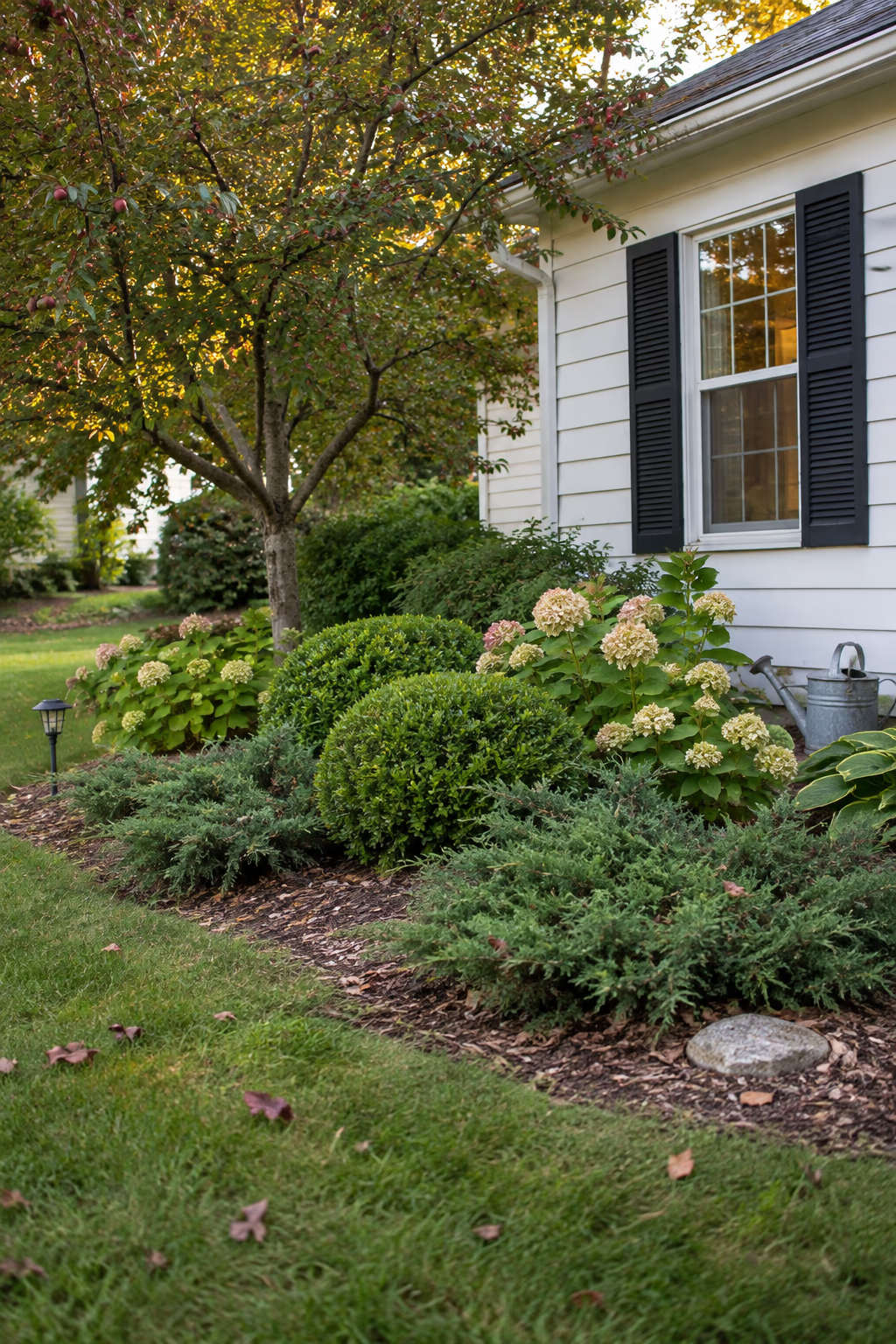
Three levels of plants make the tree look rooted
Designers often layer planting from low to tall: groundcover at the front, mid-height shrubs or grasses in the middle, and the tree as the tallest element. This makes the bed look full and gives it depth from the street.
For example, try creeping juniper or pachysandra along the edge, boxwood or dwarf hydrangea in the middle, and a redbud or crabapple behind them. Stagger the plants rather than lining them up in rows, and repeat a couple of plants for a calm, cohesive look.
Leave enough room for each plant to reach its mature size. Crowded beds look great for a year and then need heavy pruning or rearranging.
6. Line the Walkway With Matching Small Trees
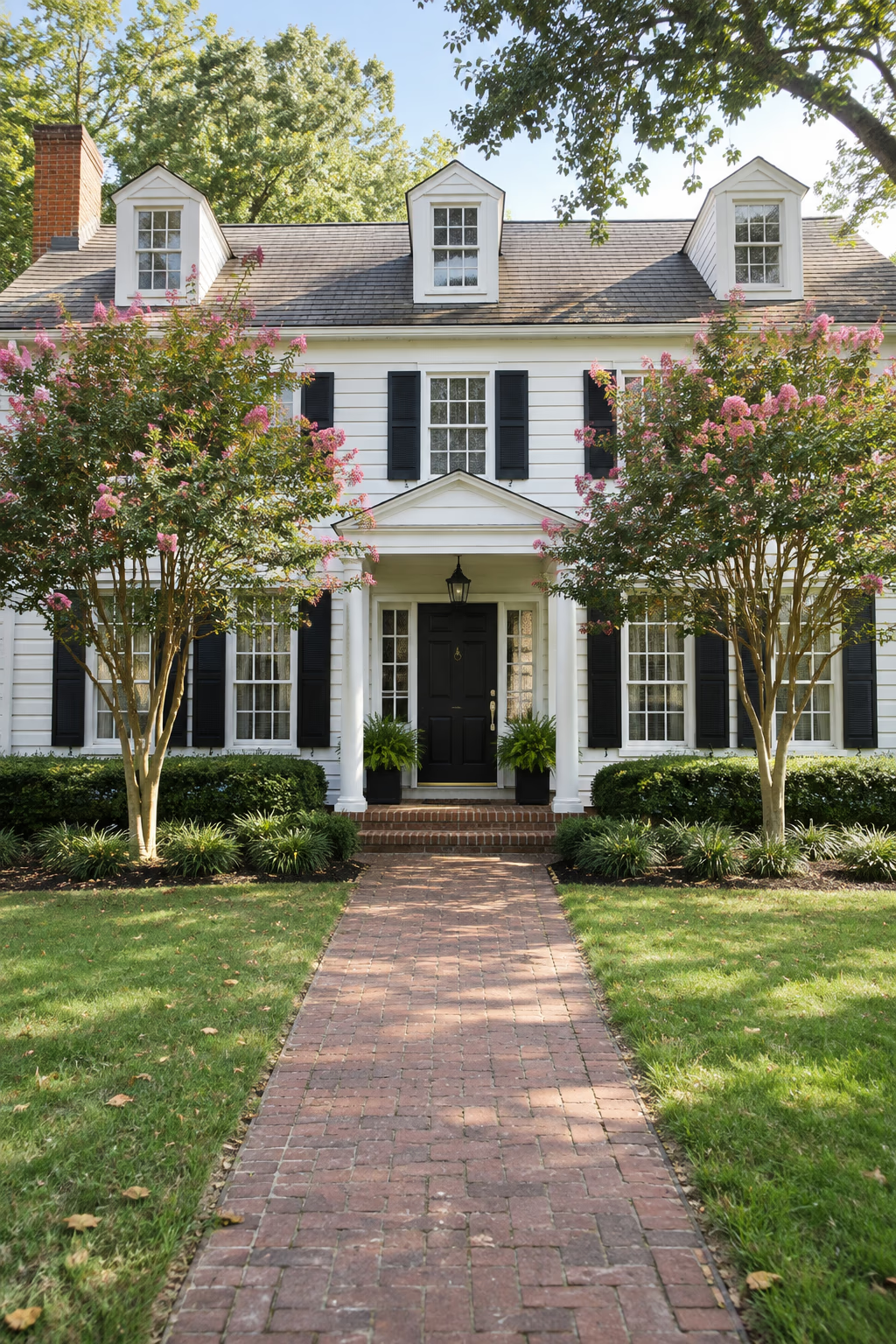
A formal, symmetrical welcome to the front door
Two or four matching small trees on either side of a straight path create a tidy, traditional entry. Good candidates include columnar hornbeam, ornamental pear alternatives, dwarf crabapples, and standard-form (tree-shaped) hollies or lilacs.
Space them evenly, at least 3 to 4 feet from the path edge so branches do not brush visitors. Underplant with low boxwood, lavender, or liriope to finish the look.
Symmetry shows off every mistake. Buy trees of the same size and shape from the same nursery, and measure carefully before digging. If one dies, replacing it with a younger match will look uneven for a few years.
7. Add Crape Myrtle for Summer Blooms
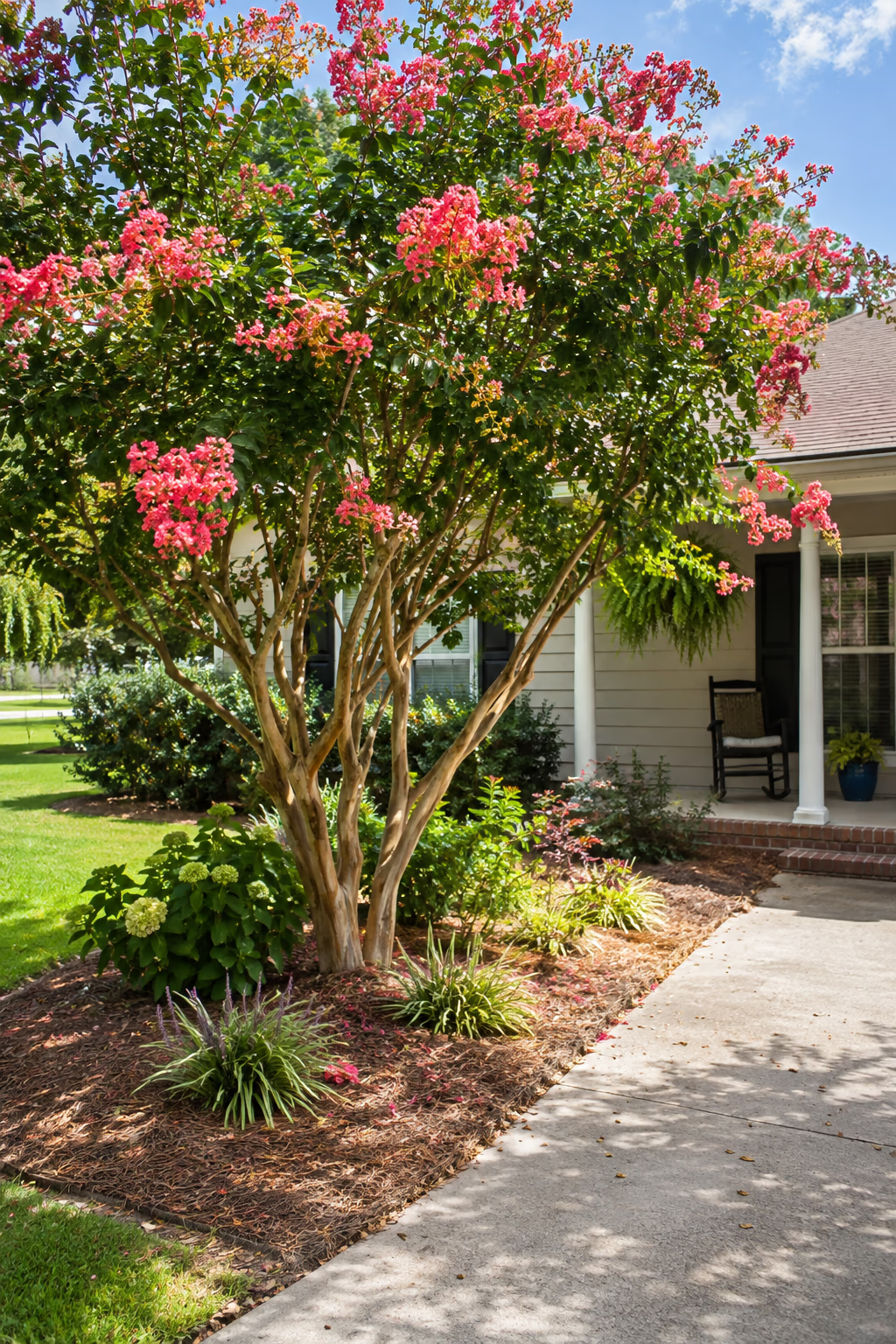
Long-lasting color when other trees are just green
Crape myrtle blooms for weeks in mid to late summer in shades of pink, red, lavender, or white, and its smooth, mottled bark looks good through winter. It thrives in hot, sunny spots across much of the South and mid-Atlantic.
Choose a variety sized for your space. Dwarf types stay under 6 feet, while standard types can reach 25 feet or more. Planting a big variety in a small spot leads to over-pruning, so match the label to the site.
Crape myrtle needs full sun and decent air circulation. It is not reliably hardy in the coldest zones, so check your zone before buying.
8. Light the Tree With Soft Uplighting
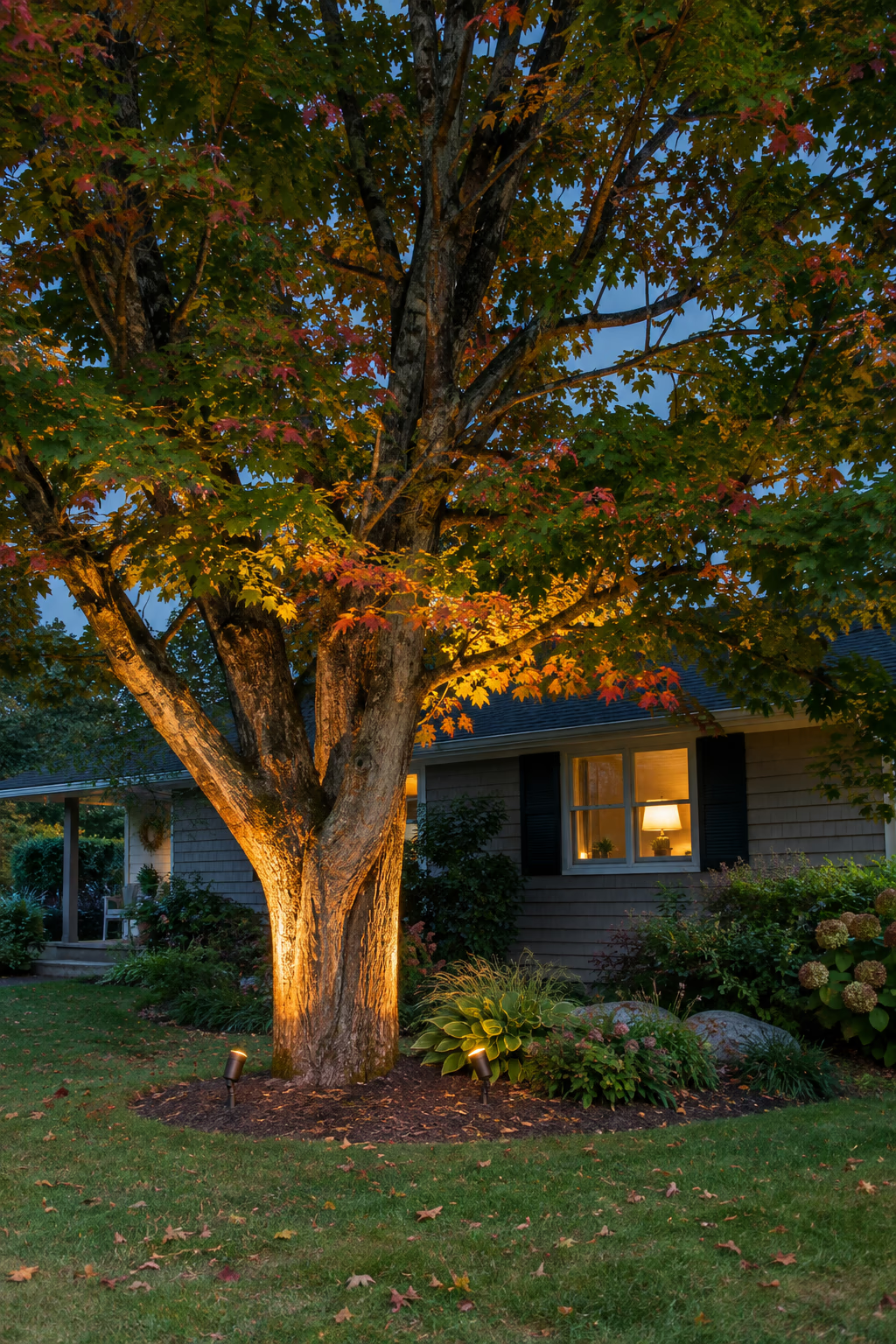
Make your tree a night-time feature
One or two low-voltage landscape lights aimed up into the canopy can turn a tree into a glowing silhouette. Place fixtures a few feet from the trunk and angle them to graze the bark and lower branches.
Use warm white bulbs, around 2700K, and shielded fixtures that point light only where you want it. Keep brightness modest. A subtle glow looks more elegant than a spotlight and is friendlier to neighbors and wildlife.
Low-voltage kits are DIY-friendly, but bury cables according to the instructions and move fixtures as the tree grows. Timers or dusk sensors keep it automatic.
9. Plant a Native Tree Cluster Instead of Lawn
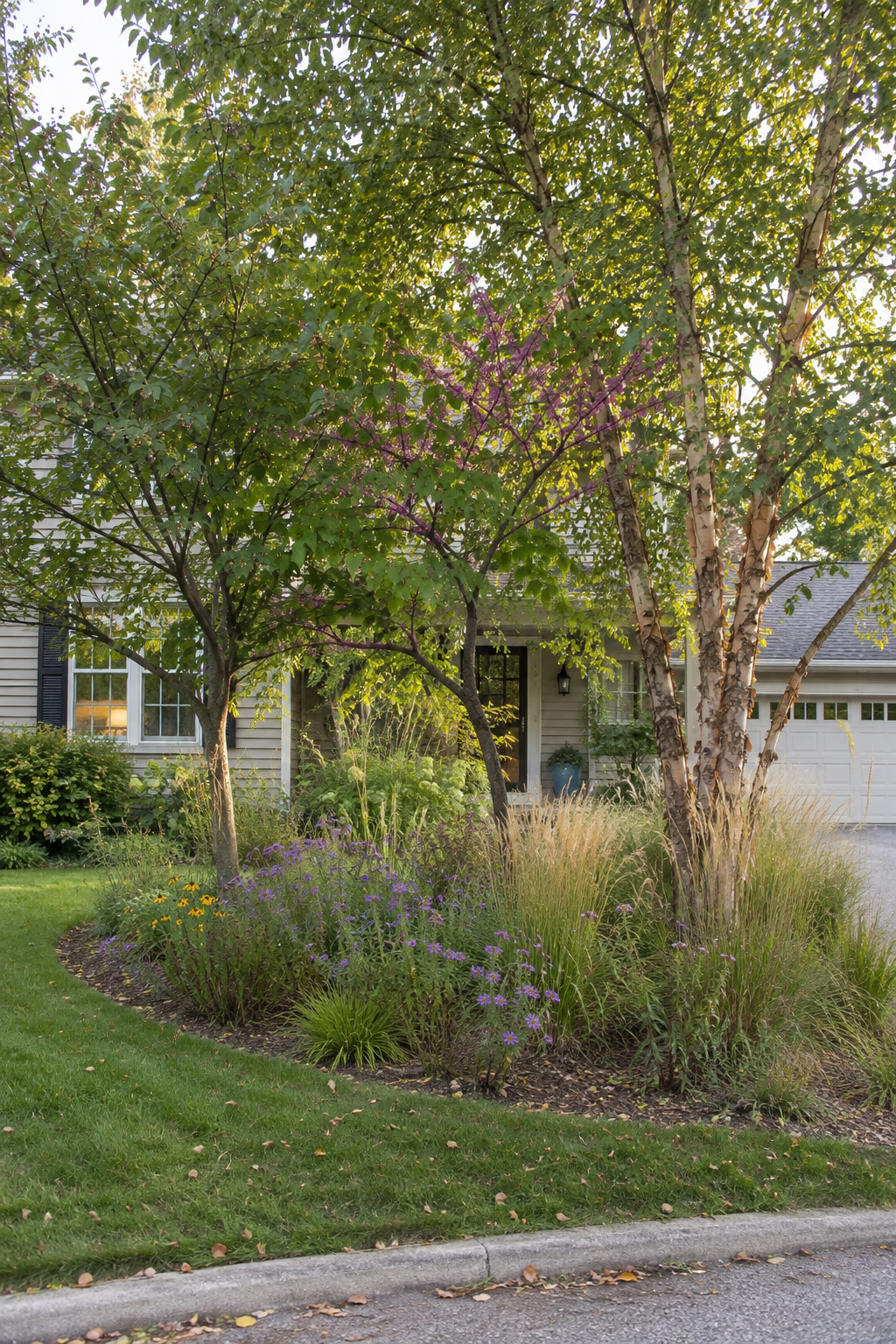
Less mowing, more wildlife, a naturalized look
Replacing part of the lawn with a small group of three or five native trees creates a mini woodland edge. Use a mix such as serviceberry, redbud, and river birch, or whatever is native to your region, planted in an irregular pattern rather than a straight line.
Underplant with native grasses, sedges, and wildflowers, and mulch the bed well in the first year. Native species usually need less water and fertilizer once established, and they support birds and pollinators.
Check HOA rules and local ordinances first, since some neighborhoods require a tidy, lawn-dominant front yard. Edging the bed crisply makes a naturalized planting look intentional.
10. Choose a Weeping Tree for a Sculptural Accent
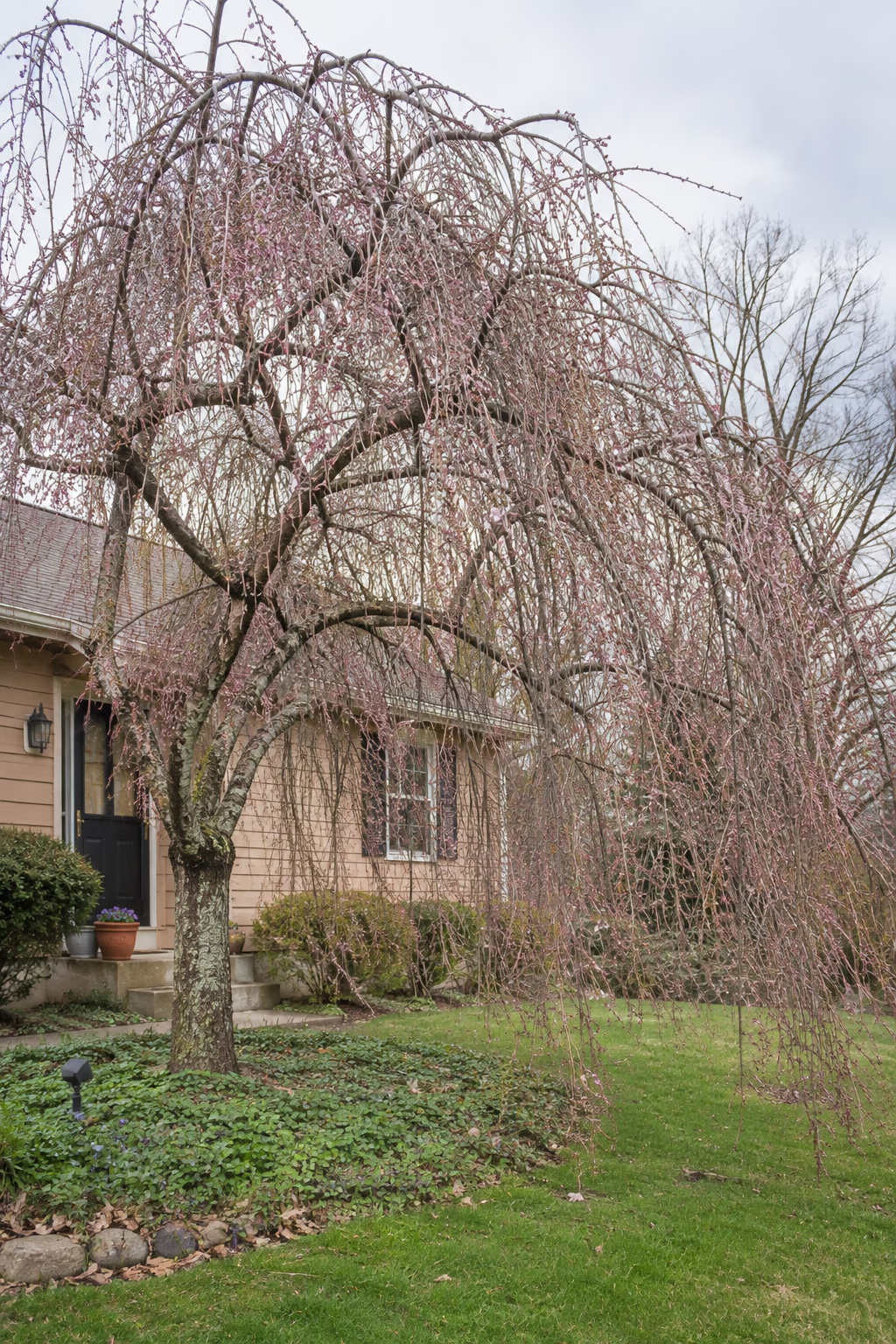
Cascading branches add shape and movement
Weeping cherry, weeping redbud, and weeping crabapple have branches that drape toward the ground, giving the yard a soft, storybook look. Many stay under 15 feet, which suits small front yards.
Because the shape is the star, give the tree breathing room, with open lawn or low groundcover around it. Plant it where the silhouette stands out against the house or sky, rather than against a busy backdrop.
Weeping trees are often grafted, so remove any shoots that grow straight up from the trunk below the graft. Water young trees deeply during dry spells.
11. Create a Curved Island Bed Around a Small Tree
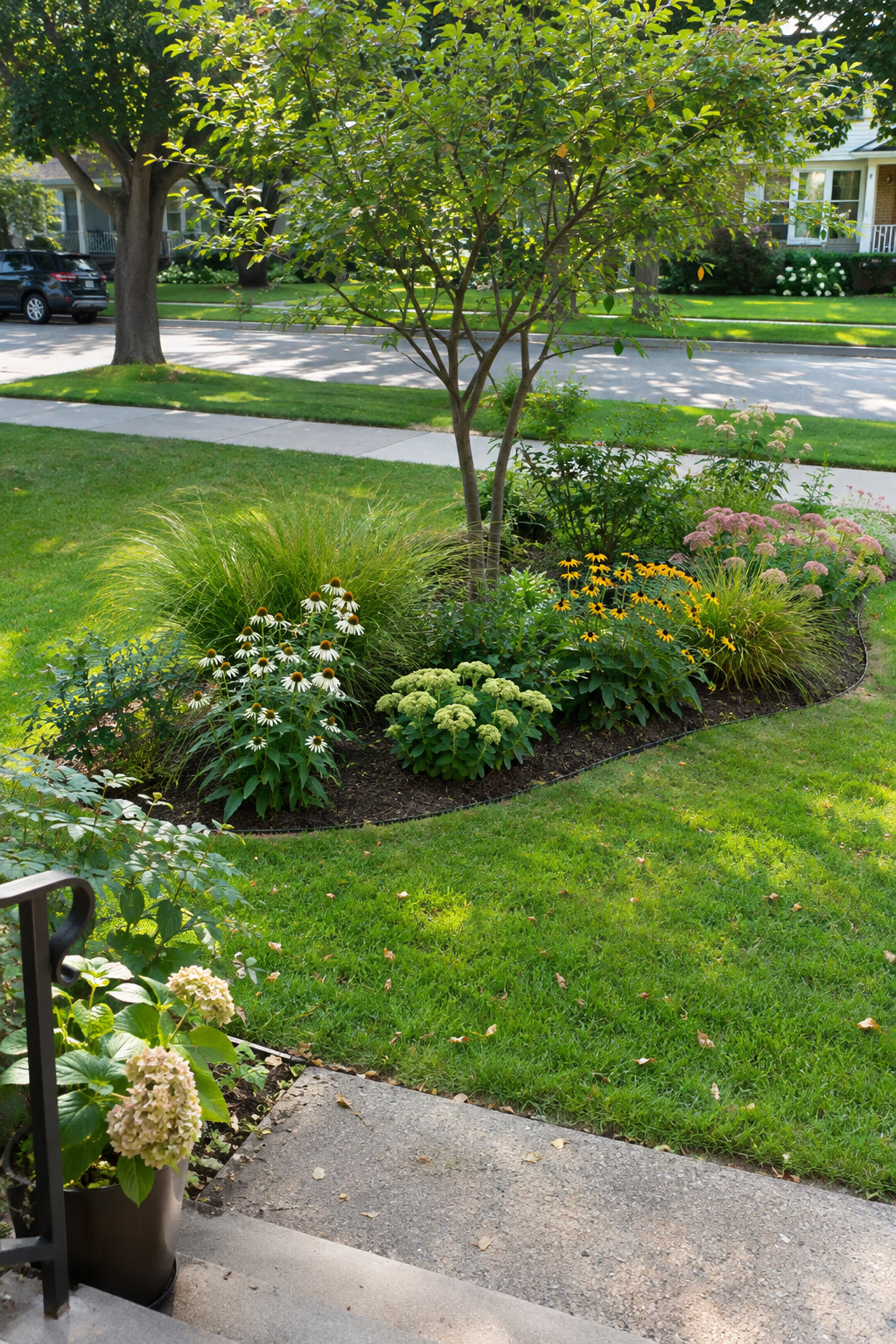
Soft curves make the lawn feel designed
An island bed sits in the lawn like a planted peninsula, with a small tree at the back or center and shrubs, grasses, and perennials spilling around it. A gentle curve, rather than a perfect circle, usually looks more natural.
Lay out the shape with a garden hose, step back to the street to check the view, then cut the edge with a flat spade. A bed about 8 to 10 feet wide gives room for layers of plants.
Make the bed big enough to be bold. Several small, scattered beds look busy and are harder to mow around than one generous island.
12. Underplant a Shady Tree With Hostas and Ferns
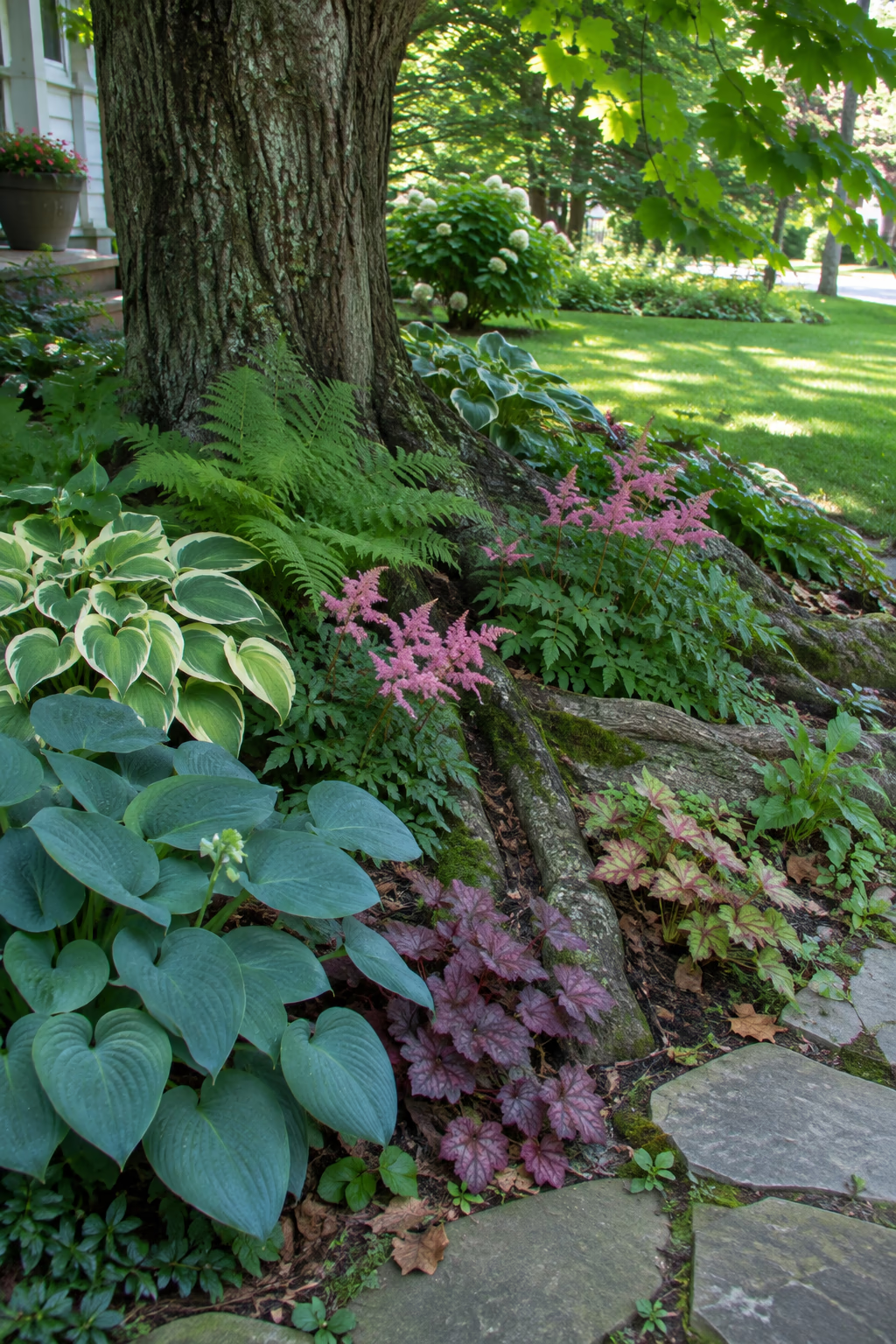
Turn dim, grassless shade into a lush garden
Under a large maple or oak, grass often struggles. Shade-lovers like hostas, ferns, astilbe, heuchera, and brunnera thrive instead and create a cool, leafy carpet of different textures.
Plant in the gaps between large surface roots rather than cutting through them, and avoid adding more than an inch or two of soil over the root zone. Dig small holes by hand and amend only the planting hole.
Deer and slugs love hostas in many areas. Where that is a problem, choose ferns, sedges, or Solomon’s seal, which are less appealing to them.
13. Pair a Tree With Boulders and Ornamental Grasses
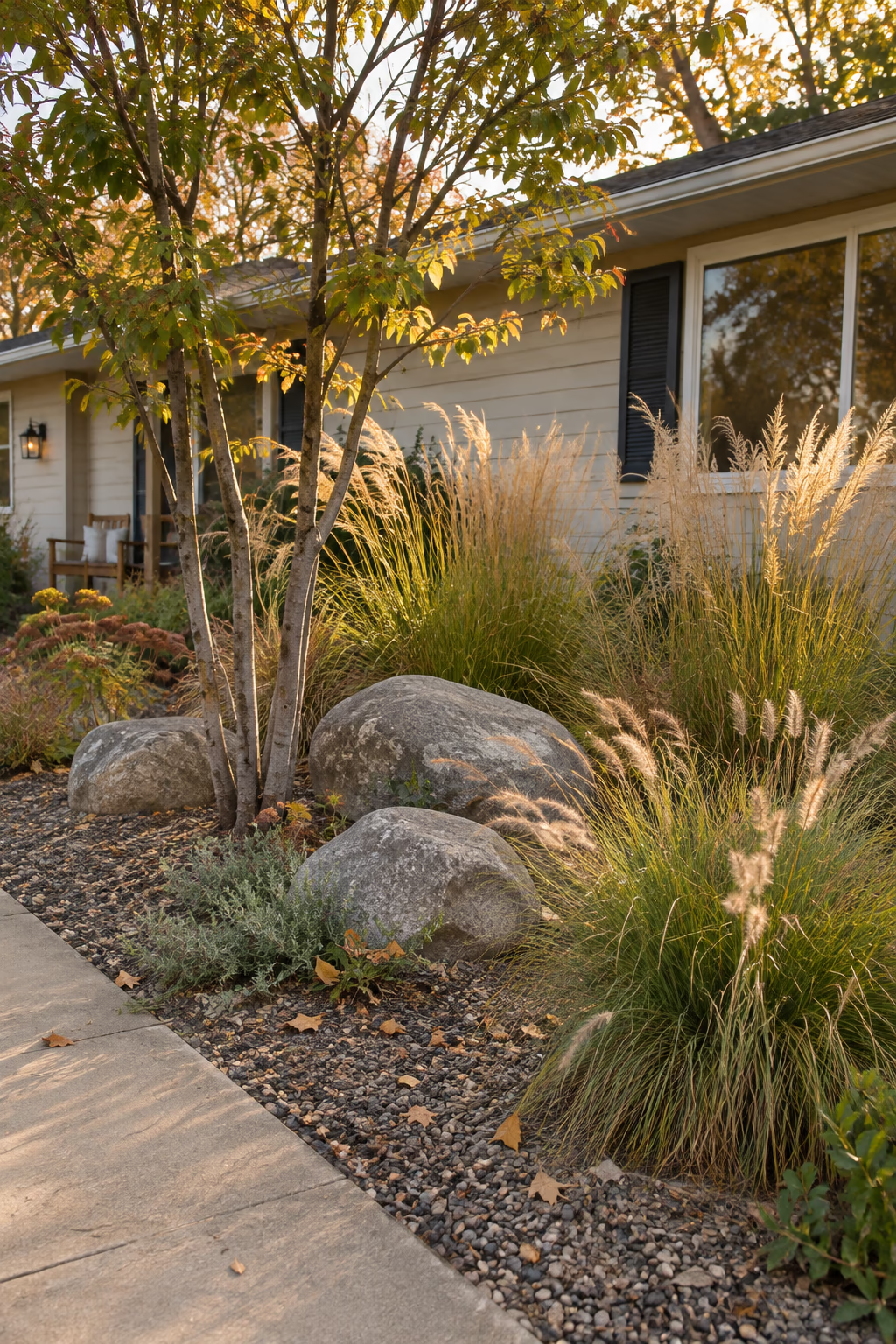
A low-water, modern look with texture
A tree, a few partly buried boulders, and clumps of ornamental grass create a relaxed, naturalistic scene. Feather reed grass, little bluestem, and fountain grass add movement and look good all winter.
Group boulders in odd numbers and bury about a third of each so they look settled. Set the grasses in drifts around them, and use gravel or shredded bark as mulch.
Boulders are heavy, so ask your stone supplier about delivery and placement. Cut grasses back to a few inches in late winter before new growth begins.
14. Screen the Property Line With Evergreen Arborvitae
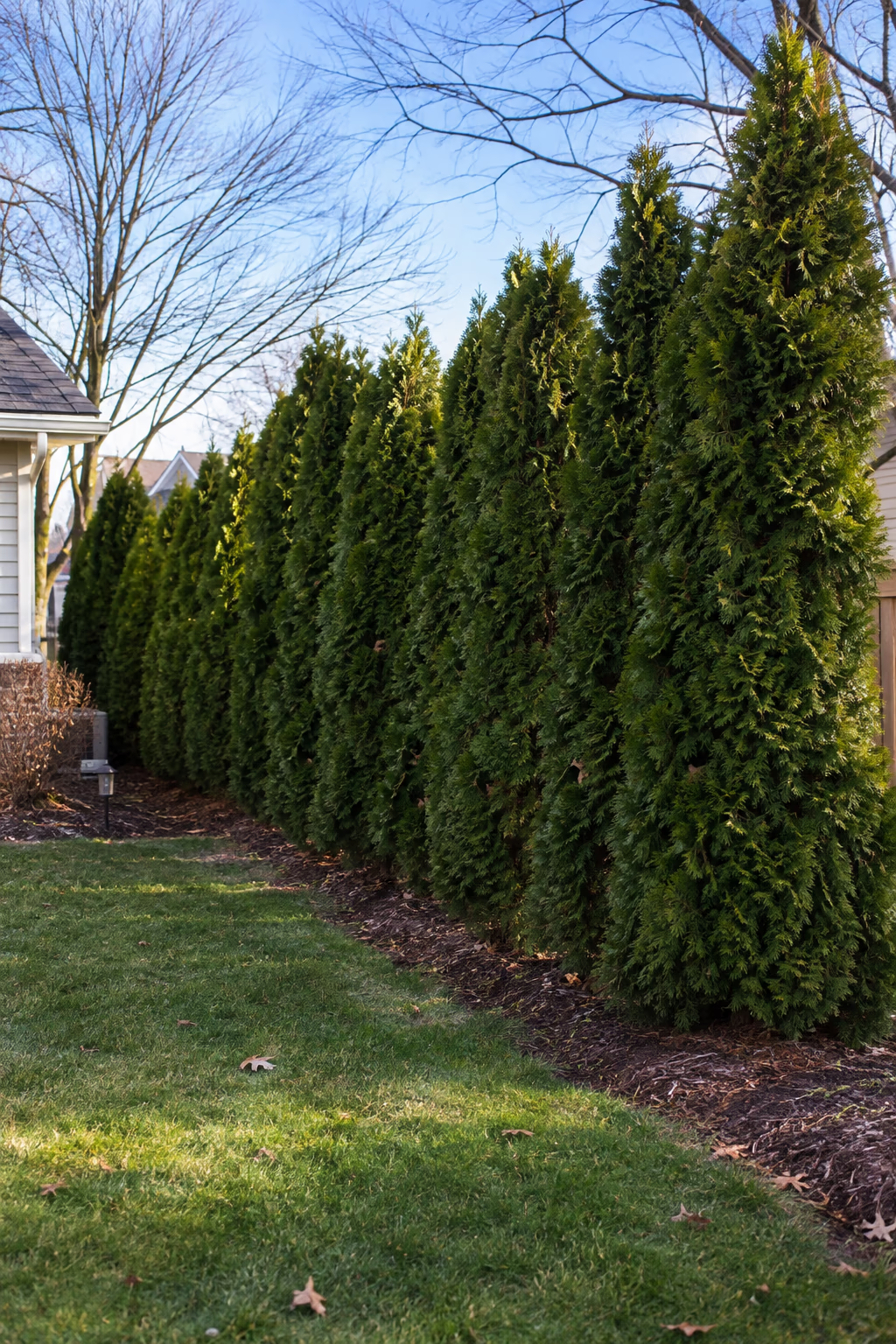
Privacy and a green backdrop all year
Columnar evergreens such as emerald green arborvitae grow into a dense living wall, often 10 to 15 feet tall and only 3 to 4 feet wide. They hide a side-yard view or busy street while making a deep green backdrop for flowering plants.
Space them about 3 feet apart for a continuous screen, and water deeply for the first two years. Plant a few feet inside the property line so branches do not spread onto neighbors.
Deer browse arborvitae heavily in some regions, so you may need protection or a different evergreen. Check local fence and hedge height rules before planting a tall screen near the street.
15. Choose a Tree With Peeling Bark for Winter Interest
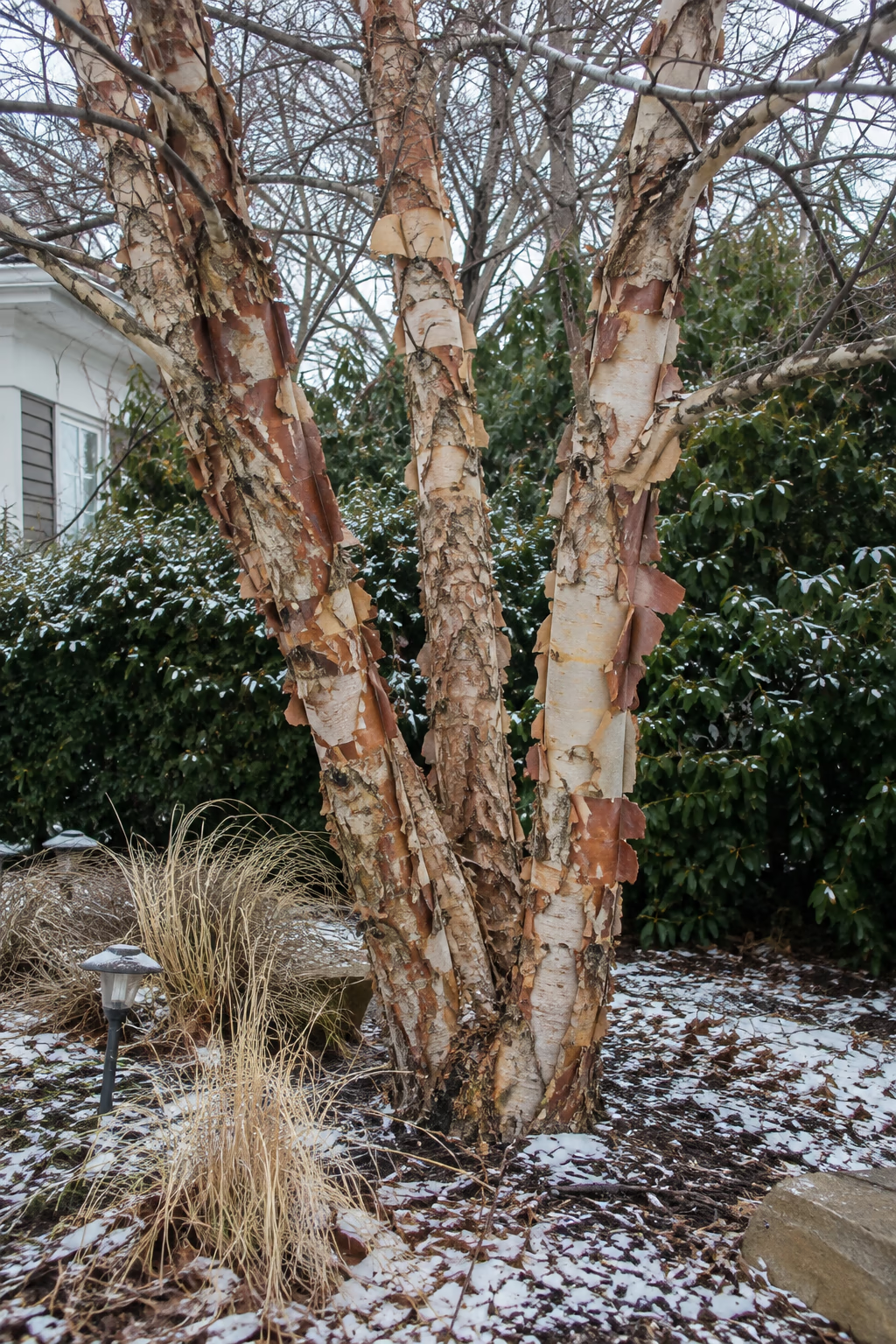
Texture and color after the leaves fall
River birch, paperbark maple, and crape myrtle all have bark that curls, peels, or mottles, creating real interest during bare months. A multi-stem river birch, with cinnamon and cream bark, looks particularly striking against a snowy or green backdrop.
Place it where you see it from windows and the front path. Dark evergreens or a plain fence behind it help the bark stand out.
River birch likes moist soil and can struggle in hot, dry spots. Heritage-type cultivars tolerate heat better, so ask your nursery for a variety suited to your area.
16. Set a Dwarf Evergreen in a Pot by the Door
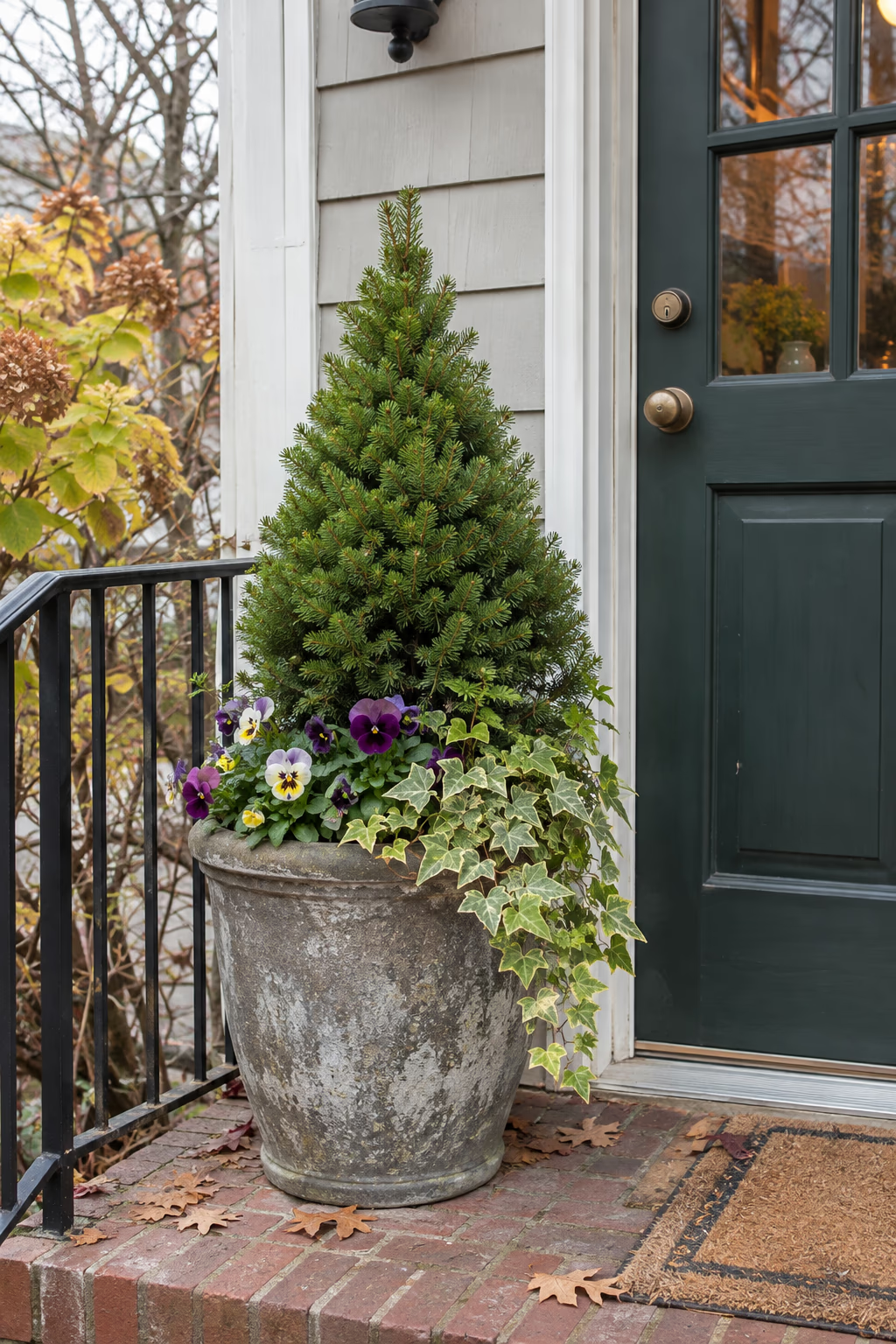
Tree style for tiny porches and entries
If you lack room for an in-ground tree, a large container with a dwarf evergreen, such as dwarf Alberta spruce or a small cypress, adds structure at the front door. A pot 18 to 24 inches wide gives roots enough space.
Use a quality potting mix and a pot with drainage holes. Water when the top couple of inches feel dry, and add seasonal color with pansies or trailing ivy at the base.
Containers dry out faster and freeze harder than ground soil. In cold climates, move the pot to a sheltered spot or wrap it in winter, and pick a pot rated for freezing weather.
17. Edge the Tree Bed With Stone or Steel
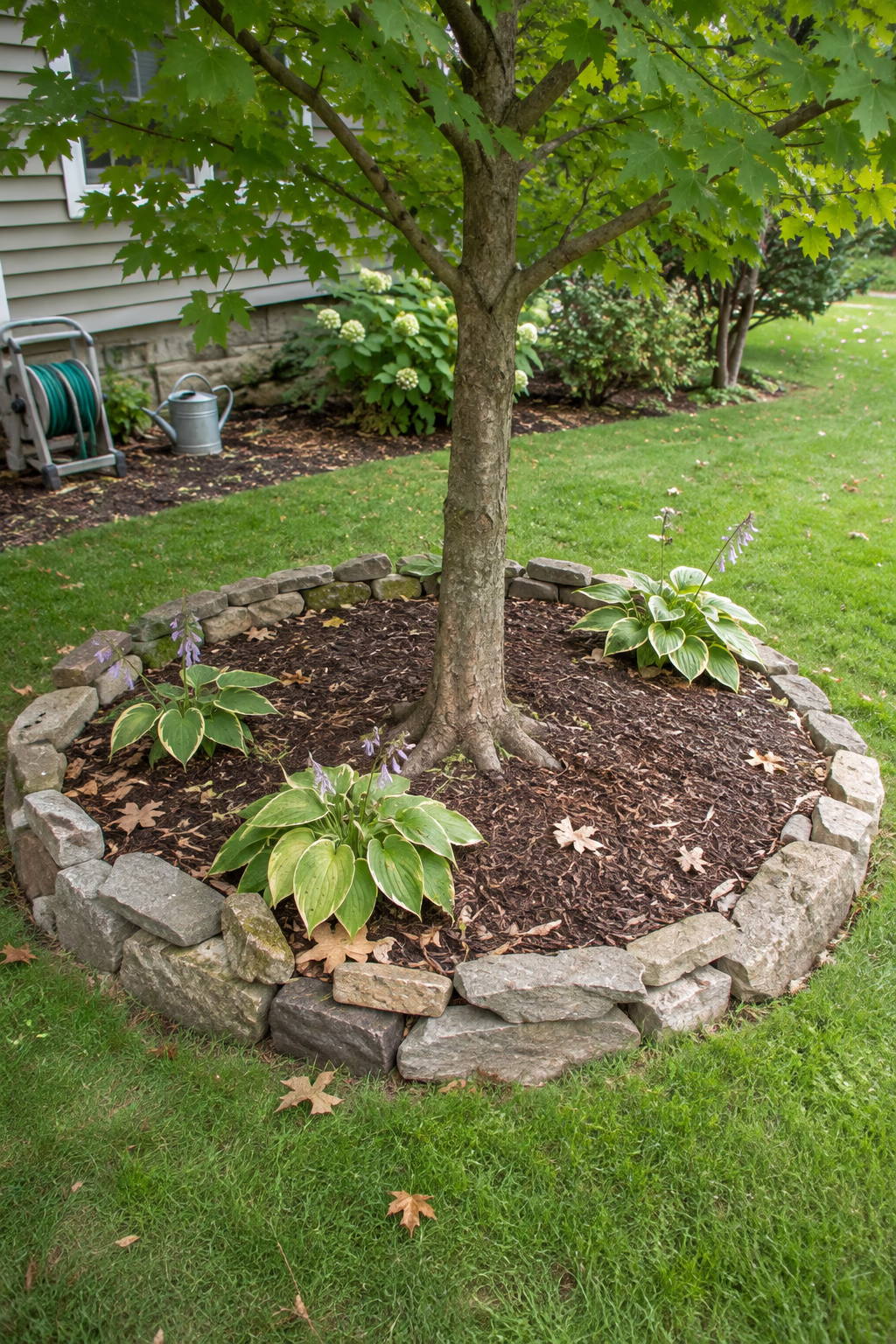
A crisp border keeps grass out and looks polished
A clean edge makes any tree bed look finished. Options include stacked fieldstone, natural stone pavers set on end, brick, or thin steel edging that nearly disappears while holding a sharp curve.
Dig a trench about 4 to 6 inches deep along your marked line, set the edging, and backfill. Keep the edge several inches above the soil so mulch stays put but the border does not overpower the planting.
Avoid building a tall, solid wall around the trunk. Raising soil level over tree roots can suffocate them, so keep any raised edging low and leave the root flare uncovered.
18. Mix Fast and Slow Growing Trees
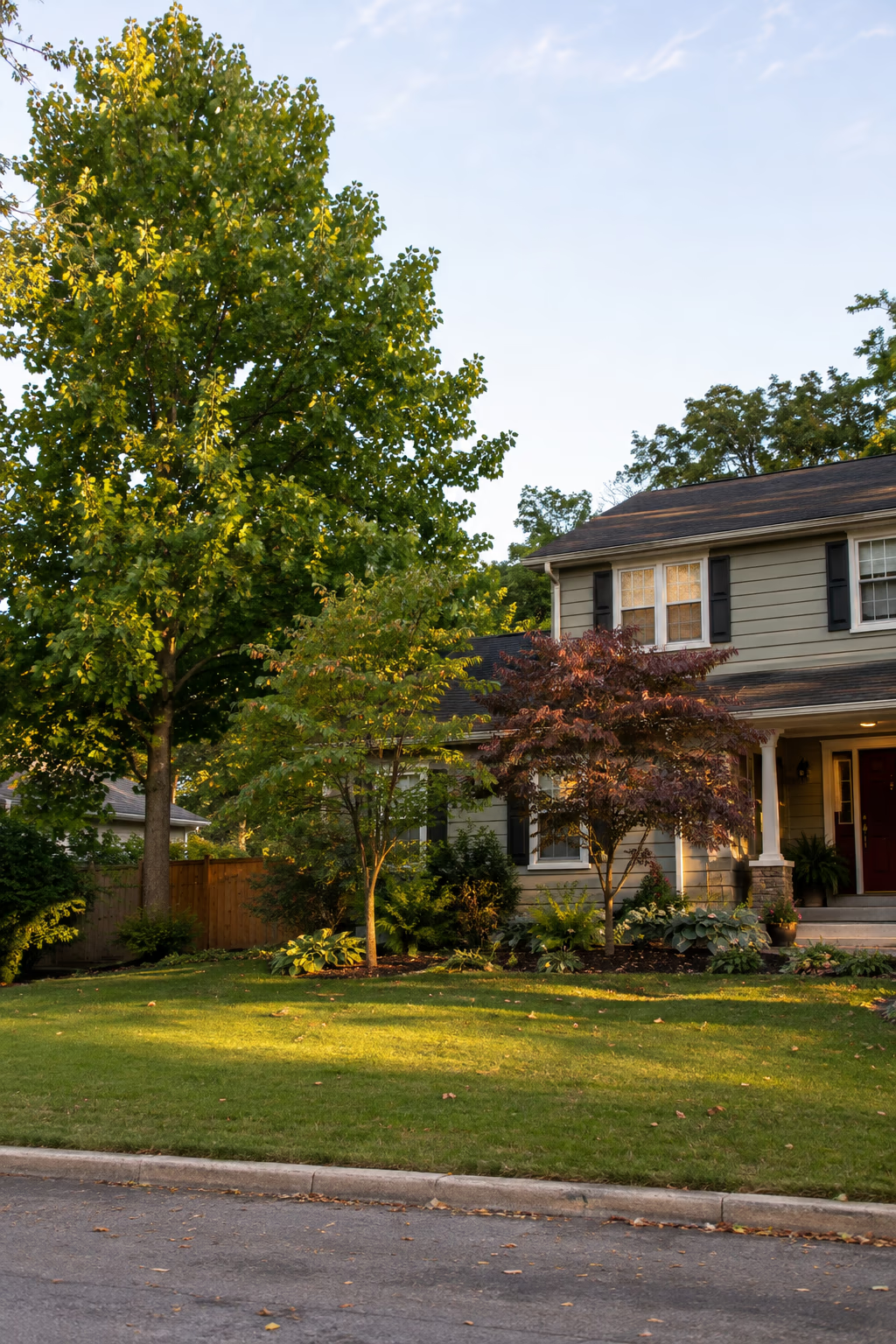
Quick shade now and lasting beauty later
A fast grower gives shade in a few years, while a slow grower such as Japanese maple or black tupelo takes longer but usually lives much longer. Planting both gives you an attractive yard now and an established one for decades.
Fast growers like tulip tree or pin oak can have weaker wood, so keep them well away from the house and driveways. Slow growers can be planted closer and pruned lightly for shape.
Staggering ages also prevents the whole yard from declining at once. When the fast tree eventually fades, the slower trees will already be handsome.
19. Plant a Tree in a Gravel and Stepping Stone Bed
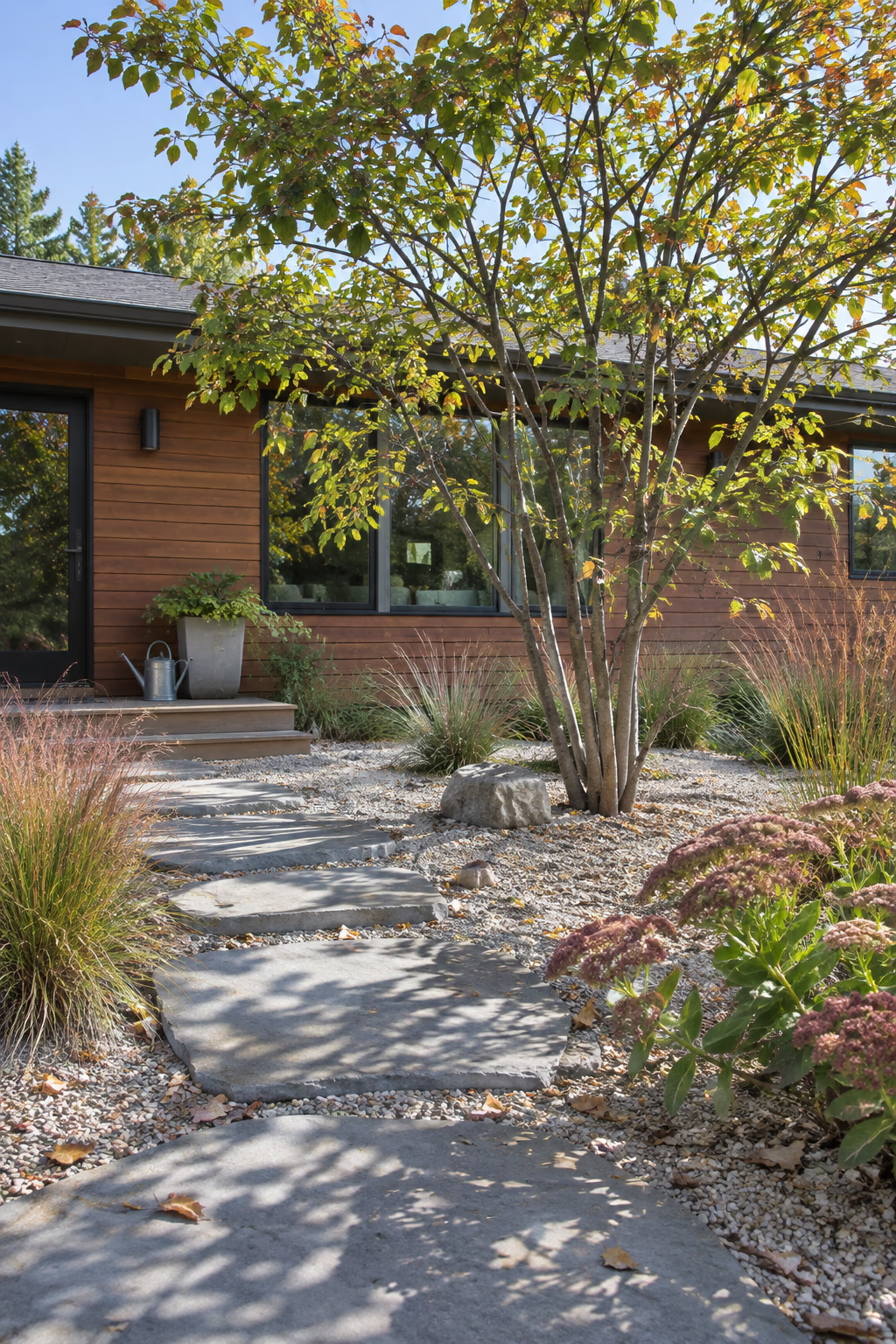
A clean, low-maintenance modern option
For a contemporary look, set a single small tree in a bed of fine gravel with large flat stepping stones leading past it. Add a few clumps of grass or low sedum for softness.
Lay landscape fabric or a permeable base, then spread 2 to 3 inches of gravel. Choose a tree that suits the style, such as a multi-stem serviceberry, a ginkgo, or a Japanese maple.
Gravel absorbs and reflects heat, so avoid it directly against thin-barked trees in very hot climates. Leaves and seeds can settle in it, so a leaf blower or rake will be needed in fall.
20. Add a Palm as a Warm-Climate Focal Point
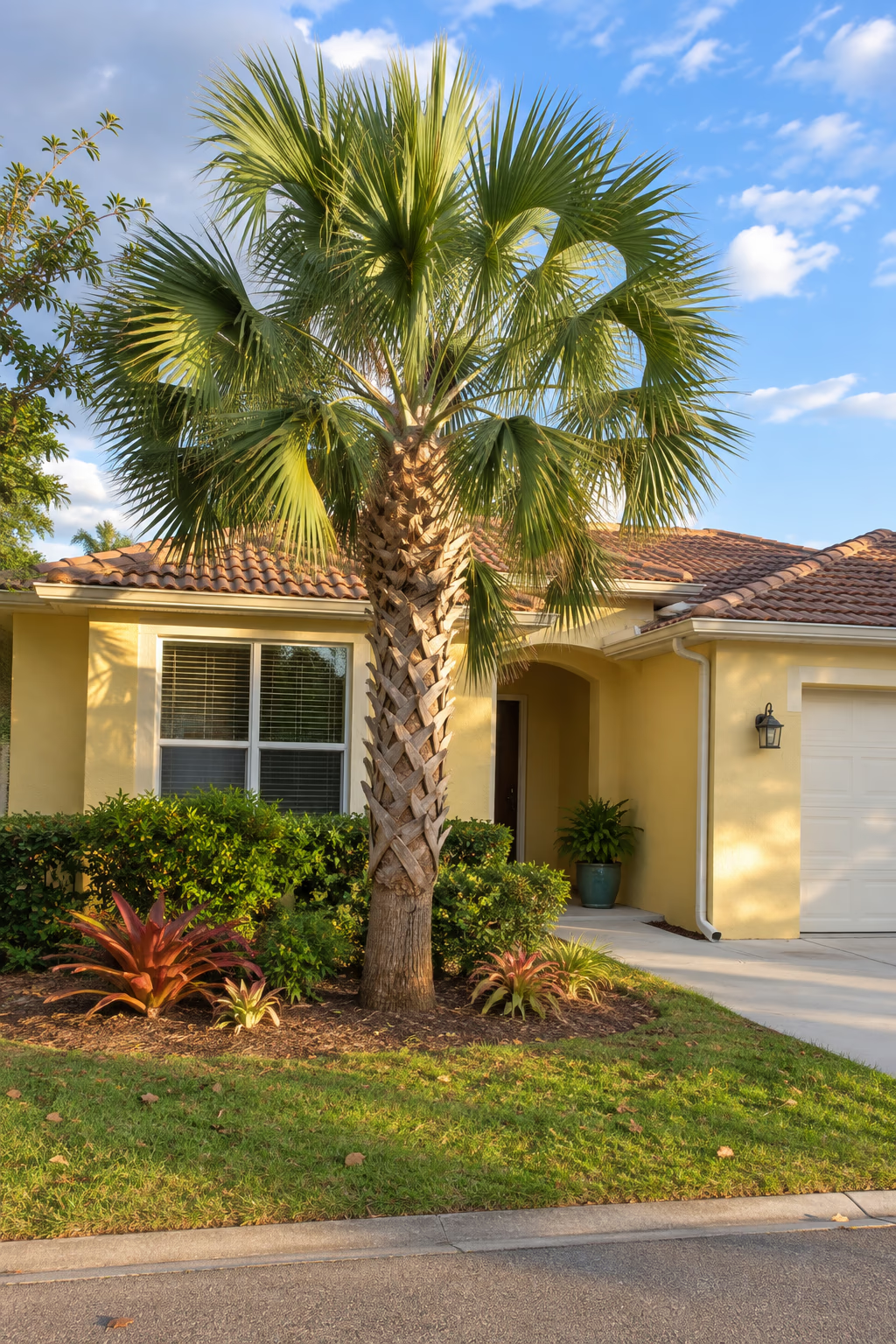
Instant tropical style where winters are mild
In Florida, the Gulf Coast, Southern California, and other mild regions, a single palm such as a sabal palm, windmill palm, or pindo palm becomes a strong vertical accent. Underplant with low shrubs or mulch and keep the surroundings simple.
Match the species to your zone and space. Some palms stay compact, while others grow tall and drop heavy fronds. Choose varieties hardy to your lowest winter temperatures.
Do not plant palms where fronds could hit a power line or window. Trim only dead fronds, because heavy pruning weakens the tree.
21. Protect and Showcase an Existing Mature Tree
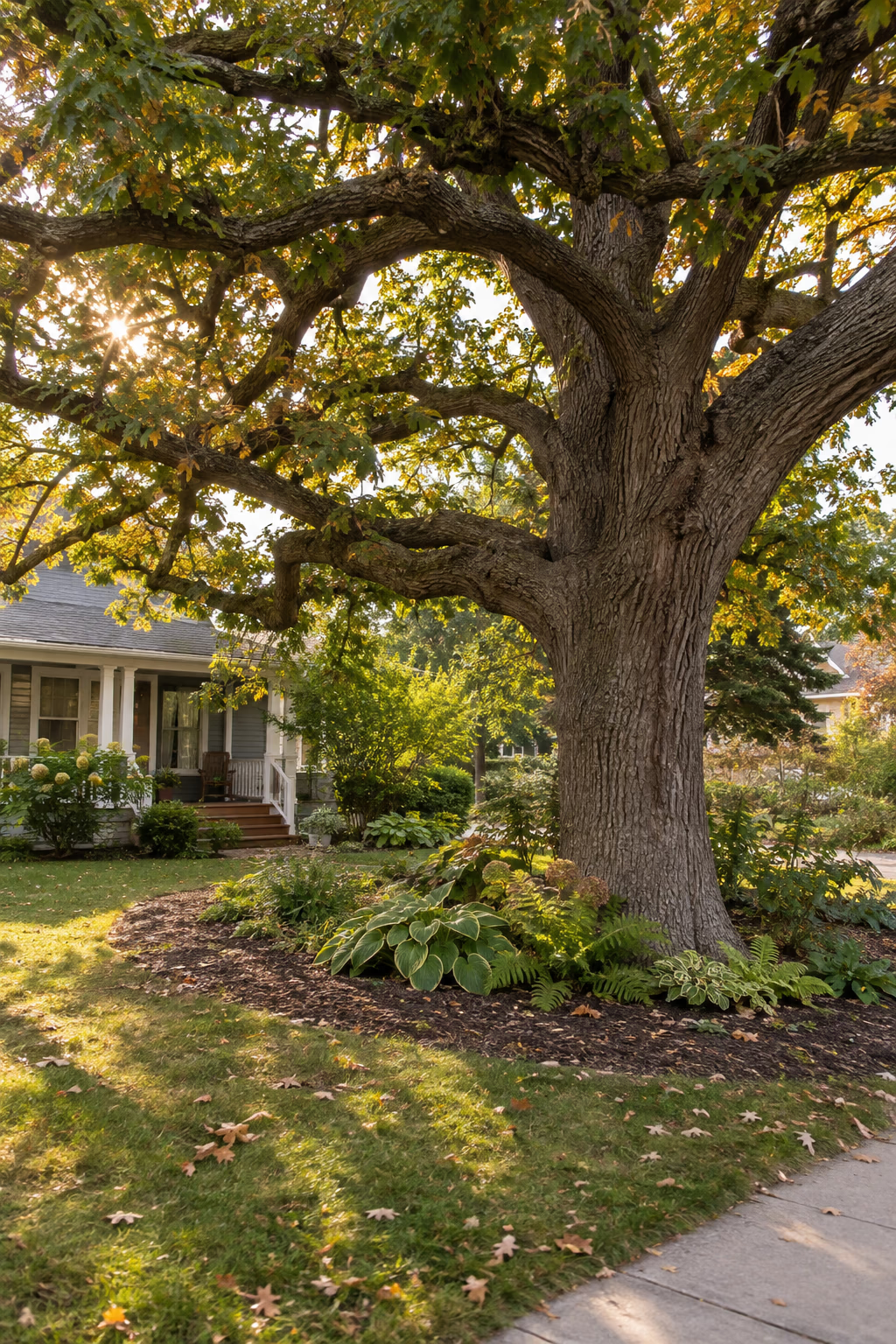
Decades of growth you cannot buy at a nursery
If your yard already has a big, healthy tree, build the landscaping around it. Keep the lawn or bed edge outside the drip line when possible, and add a simple mulch ring or shade perennials beneath it.
Avoid grade changes, heavy traffic, and parking over the roots, which can damage the tree slowly over years. If you need construction nearby, ask a certified arborist how to protect the roots.
Have the tree checked for dead limbs and structural problems every few years. Removing a hazardous branch early is much cheaper than dealing with storm damage.
How to Plan Your Front Yard Tree Landscaping
A little planning before you buy keeps a small tree from becoming a big problem. These steps help you choose well and plant with confidence.
- Check the mature size. Read the tag for final height and width, then compare it with your house, power lines, and driveway.
- Match the tree to your zone and light. Confirm USDA hardiness and the amount of sun the spot gets before falling for a pretty photo.
- Call 811 first. Have underground utilities marked before any digging, and keep trees clear of overhead lines and septic systems.
- Know the rules. Check local ordinances, street tree programs, and HOA guidelines, especially for planting near sidewalks or the road.
- Plant at the right depth. Set the root flare at or slightly above ground level, dig a wide shallow hole, and stake only if the tree needs support.
- Water and mulch. Water deeply once or twice a week in the first season, and keep 2 to 3 inches of mulch off the trunk.
Frequently Asked Questions
How far from the house should I plant a front yard tree?
Large shade trees generally need 15 to 20 feet or more from the house, while small ornamental trees can often go 8 to 10 feet away. Always check the mature spread of the variety you choose.
What is the best small tree for a front yard?
Popular choices include Japanese maple, dogwood, redbud, crabapple, serviceberry, and crape myrtle. The best one depends on your climate, sun, and soil, so ask a local nursery which varieties do well nearby.
When is the best time to plant a tree?
Fall and early spring are usually best, because cooler weather and regular rain help roots establish. In mild climates, winter can also work. Avoid planting in the heat of midsummer.
How much does it cost to landscape around a front yard tree?
A basic mulch bed can cost under a hundred dollars if you do it yourself. A nursery tree, plants, edging, and lighting can add up to several hundred or more, and large trees installed by professionals cost considerably more.
Can I plant a tree close to the sidewalk or driveway?
You can, but choose a small, non-aggressive-rooted tree and leave several feet of space. Some cities have rules or recommend specific street trees, so check with your local government before planting.
Final Thoughts
The best front yard tree landscaping ideas start with one smart choice: the right tree in the right place. Whether you go for a graceful Japanese maple, a blooming redbud, or a mature shade tree you already own, a thoughtful bed and a little lighting can make it the star of your curb appeal.
Start with the tree, then add layers over time as budget and energy allow. In a few seasons, you will have a front yard that looks established, feels welcoming, and gets better every year.


