
Picture pulling into your driveway on a Saturday and realizing there is nothing on the to-do list. The beds look tidy, the plants are thriving without constant fussing, and the mower stays in the garage for another week.
That is the appeal of a front yard designed for ease. The front yard is the first thing everyone sees, so it tends to collect the most pressure, but it doesn’t have to demand the most time. Smart plant choices, good materials, and a little planning cut weekend chores down to almost nothing.
These 21 low maintenance front yard ideas cover native perennials, rock and mulch beds, evergreens, pavers, clover lawns, drip irrigation, and more. All of them work on ordinary lots and budgets, so pick one or two to start and build from there.
1. Replace Part of the Lawn With Native Perennials
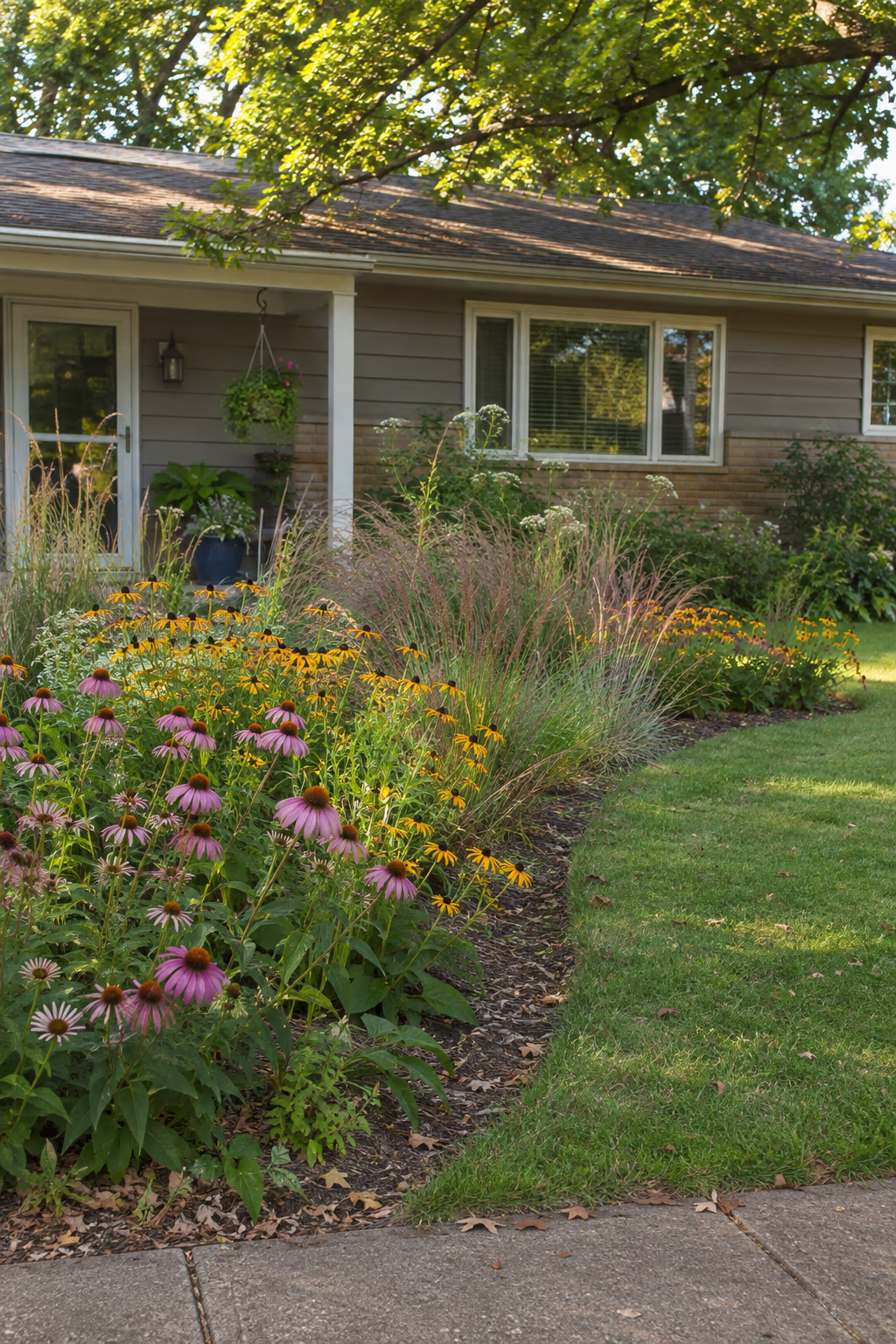
Less mowing and more life in the yard
Turf is the most demanding thing in most front yards, because it needs mowing, watering, and feeding. Replacing even a third of it with a wide bed of native perennials, such as purple coneflower, black-eyed Susan, bee balm, and little bluestem, saves hours every month.
Natives are adapted to local rainfall and soil, so once established they usually need far less water and fertilizer than a lawn. They also feed bees and butterflies, which makes the yard livelier.
Check with your local extension office for plants native to your region. Expect to water and weed regularly during the first season, and cut the beds back once a year in late winter.
2. Build Rock and Mulch Beds With Crisp Edging
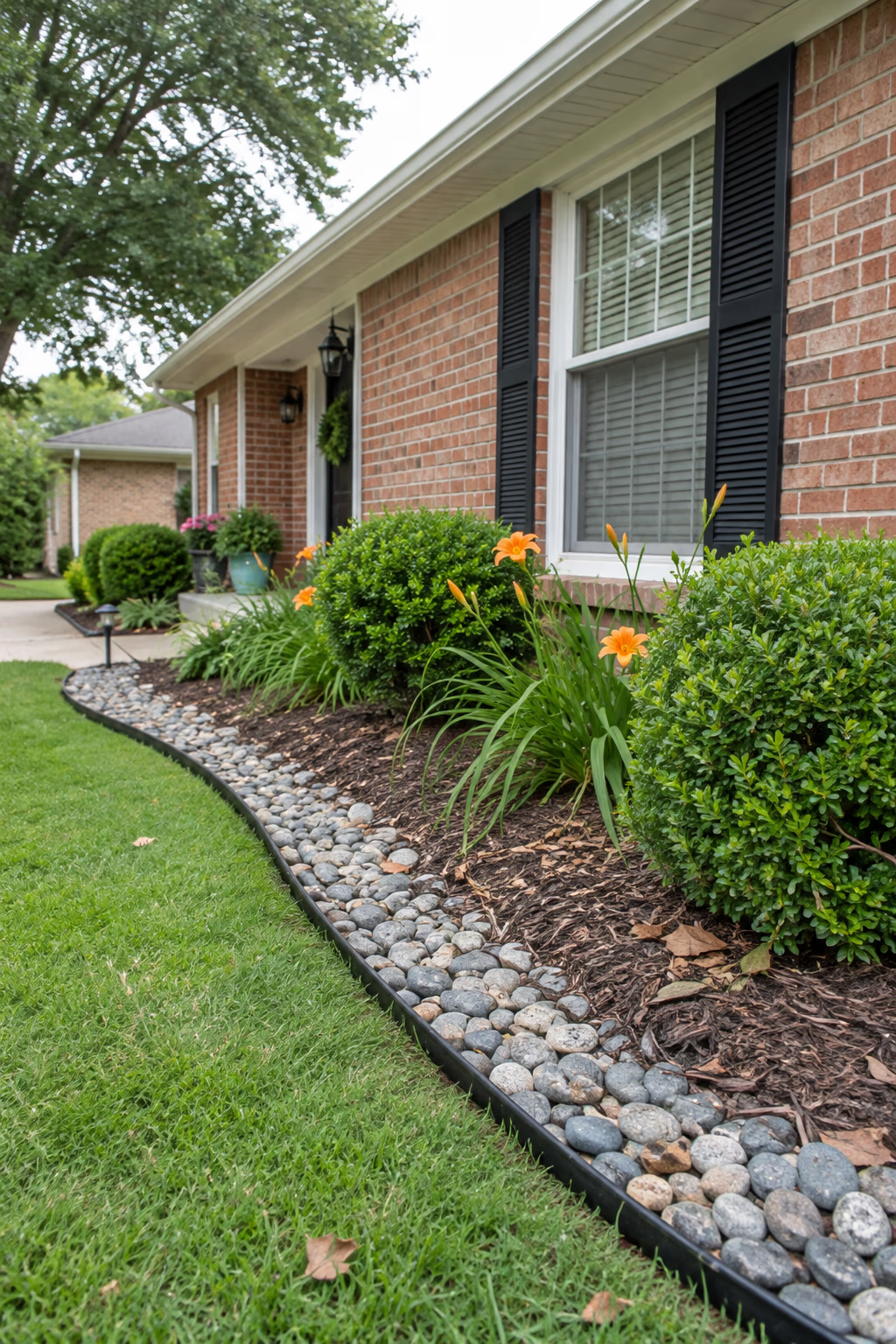
A tidy look that stays tidy
Defined beds filled with shredded bark mulch or a band of river rock look clean and block most weeds. Install steel or heavy-duty plastic edging between the bed and the lawn so grass can’t creep in, and spread mulch 2 to 3 inches deep.
Put landscape fabric under rock if you like, but skip it under organic mulch, where it can tangle and block water over time. Use a mix of rock and mulch rather than covering everything in stone.
Keep in mind that a yard of nothing but gravel isn’t truly maintenance free. Leaves and weed seeds settle in the stones, and dark rock can bake nearby plants in hot climates.
3. Plant Evergreen Shrubs for Year-Round Structure
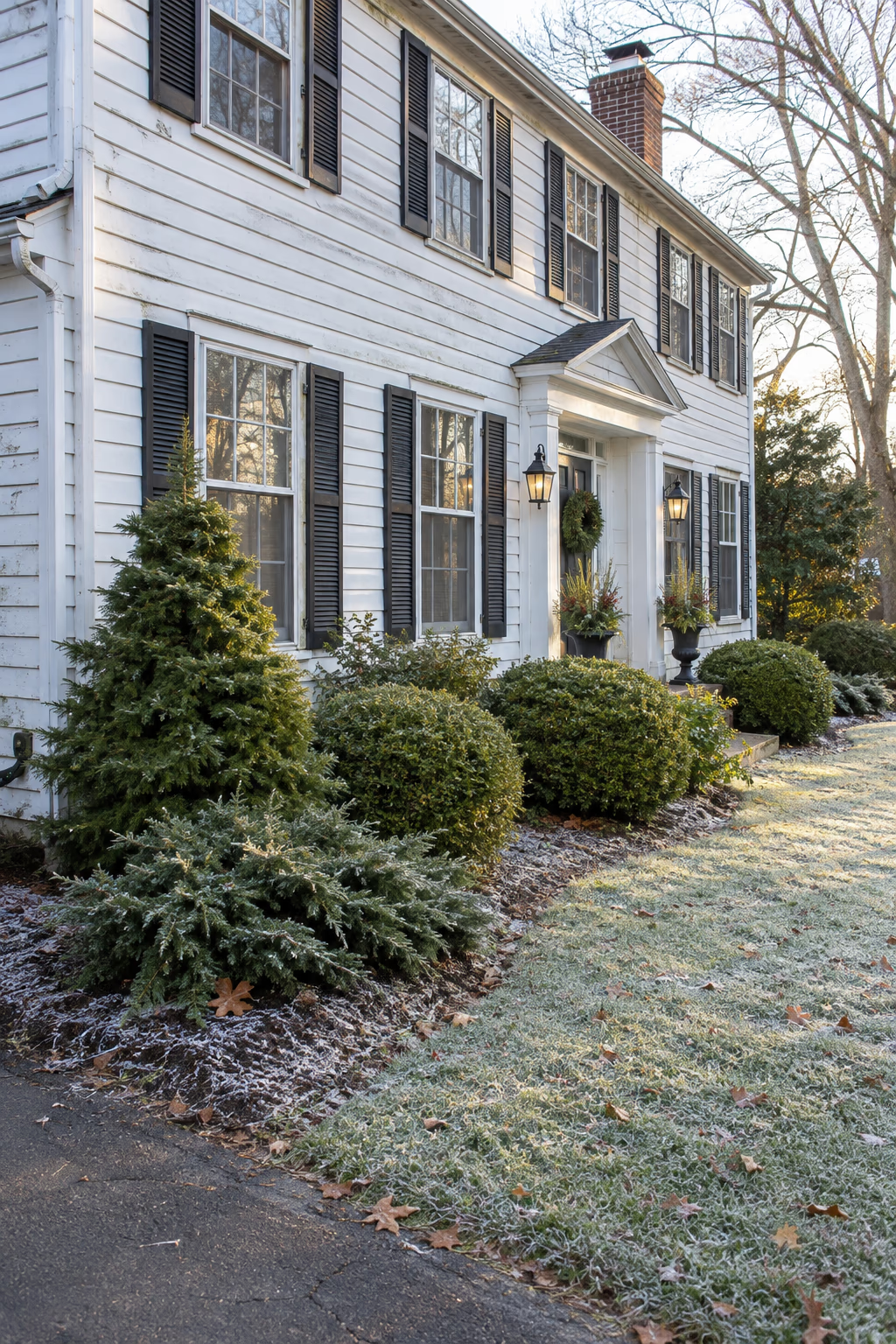
Green you can count on in every season
Evergreen shrubs keep a front yard looking finished even in winter. Boxwood, dwarf holly, juniper, arborvitae, and dwarf spruce are classic choices that hold their shape with one light trim a year.
The key is choosing plants whose mature size fits the spot. A shrub that grows to 8 feet wide will need constant pruning beneath a window, while a compact variety that tops out at 3 feet will not.
Read the plant tag for mature height and width, then leave that much room. Check your USDA hardiness zone too, since some boxwoods and hollies struggle in the coldest areas.
4. Lay a Paver Walkway to the Front Door
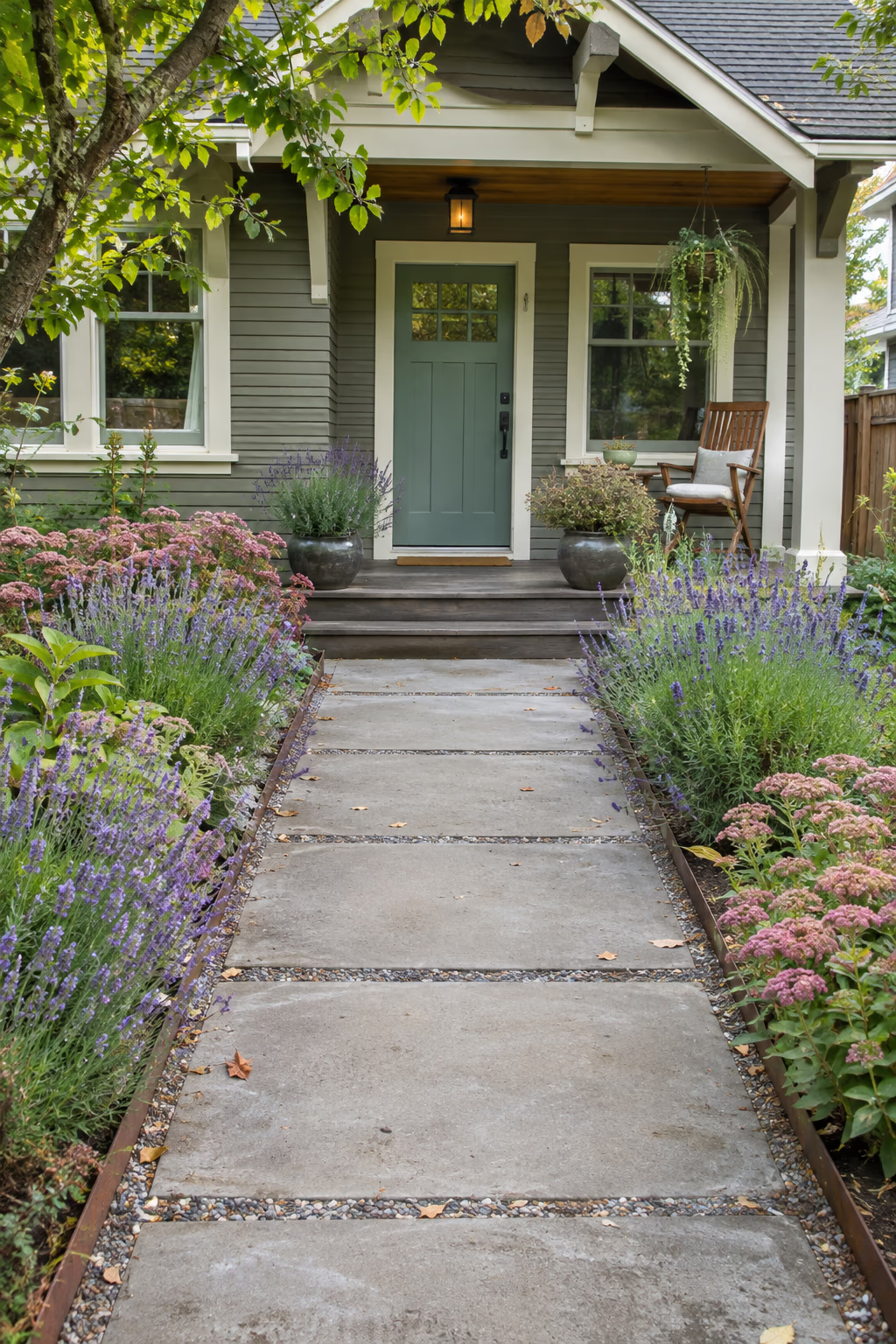
A clean path with nothing to mow
A path of concrete or stone pavers gives guests a clear route and replaces worn grass strips. Rectangular pavers about 4 feet wide look neat with fine gravel or polymeric sand in the joints.
The secret to a path that lasts is the base. Dig about 6 inches, add compacted gravel, then a one-inch layer of leveling sand before setting pavers. Skip this and the path will heave and settle.
Weeds can sprout in joints over time, so sweep debris off now and then and refill the joints once every few years.
5. Swap Turf for a Clover Lawn
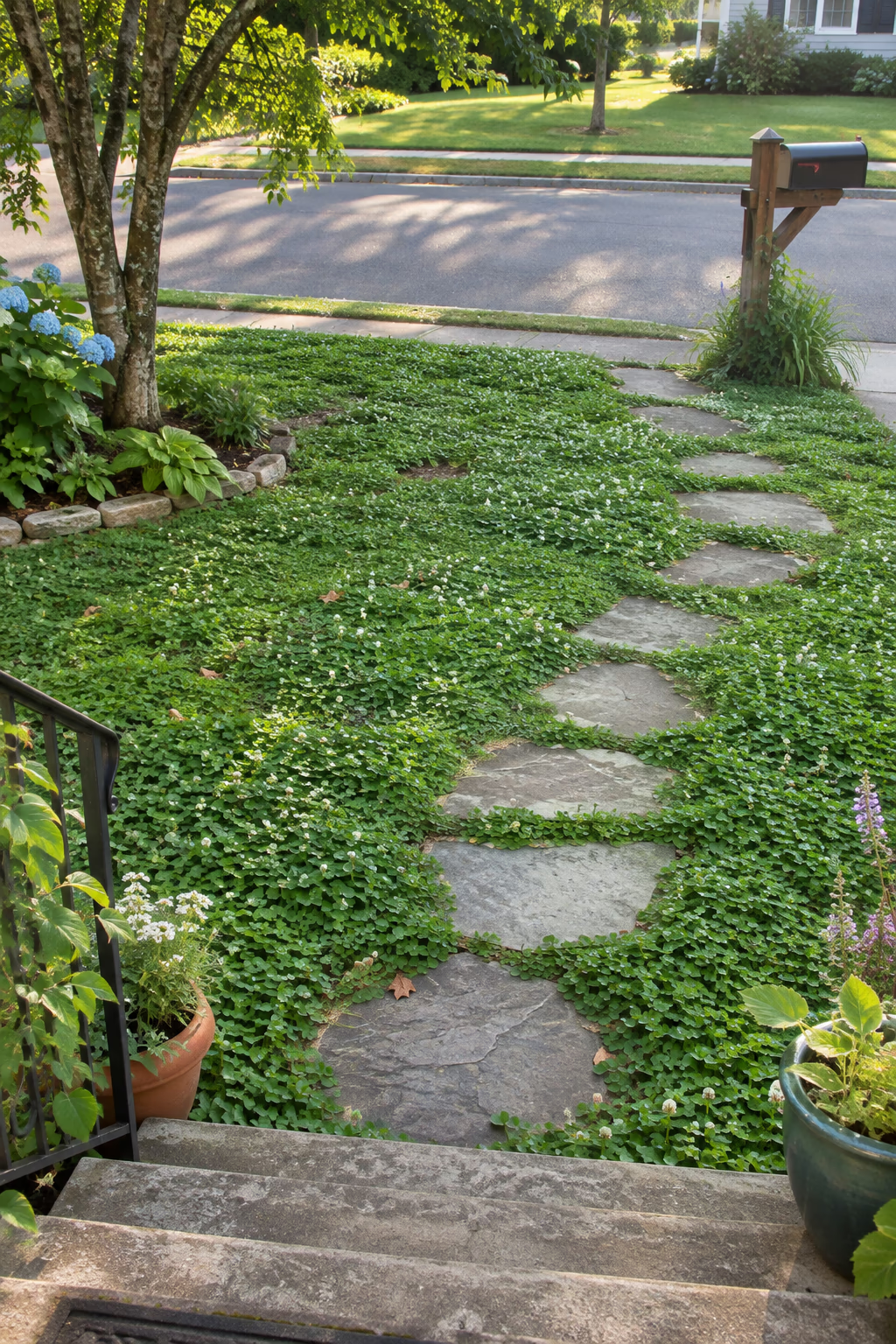
Stays green with little help
Microclover and white clover form a soft, green carpet that needs less mowing, little to no fertilizer, and less water than most grass. Clover fixes its own nitrogen from the air, which keeps it lush.
You can overseed it into an existing lawn or plant a fresh patch. Mowing a few times in summer keeps it tidy, and it handles dry spells better than many turf grasses.
Clover flowers attract bees, which may be a concern if kids and bare feet are common. Mow before it blooms if you prefer a flower-free surface. It also tolerates heavy foot traffic less well than tough turf.
6. Grow a Drought-Tolerant Succulent Bed
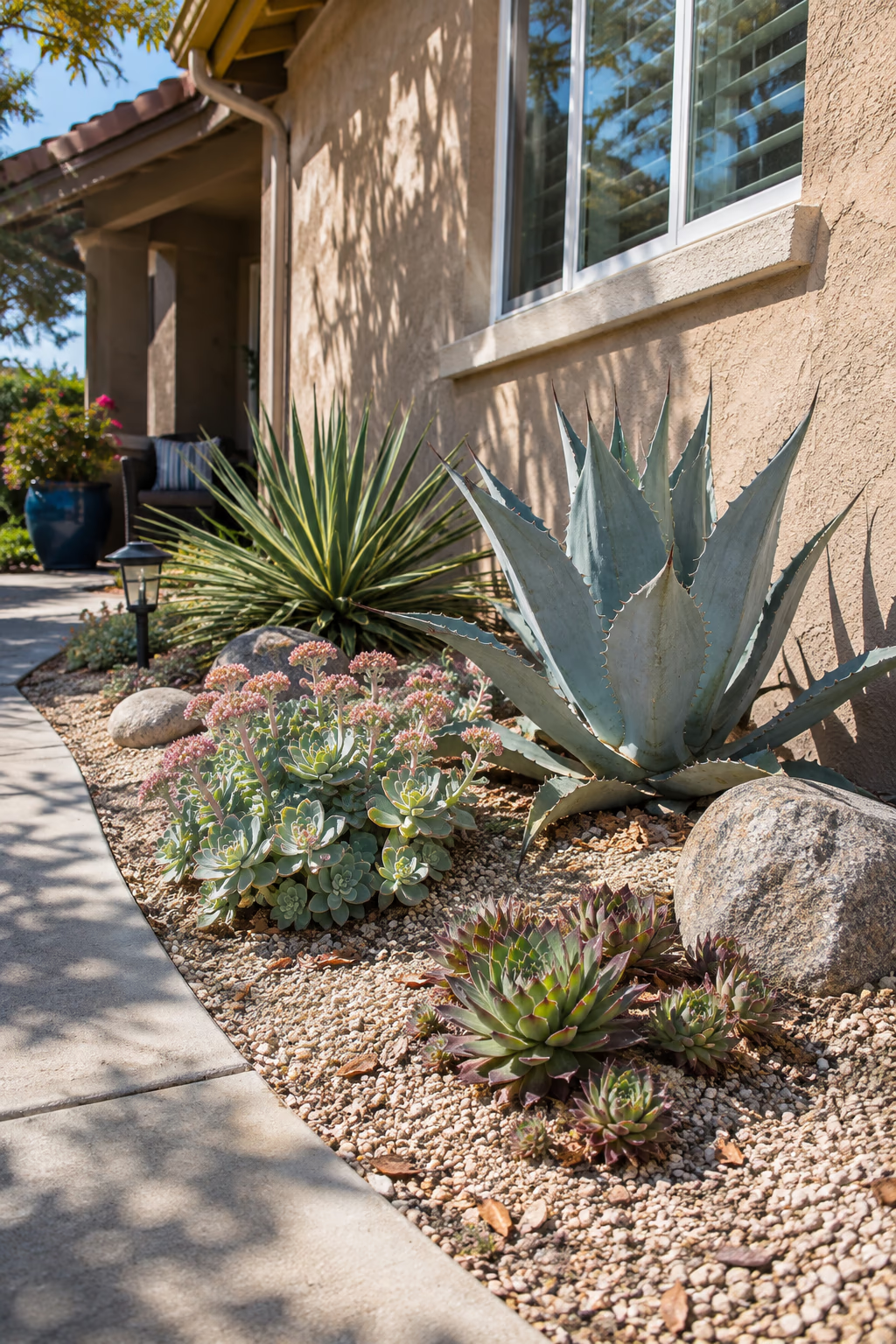
Sculptural plants that thrive on neglect
In dry or mild climates, a bed of agave, sedum, hens-and-chicks, and yucca asks for almost nothing once rooted. Mix textures and leaf colors, then top the soil with decomposed granite or pea gravel.
Sharp drainage is essential. Plant in sandy, gritty soil, or mound the bed 6 to 8 inches so water drains away from the roots.
In colder regions, choose hardy types such as stonecrop and certain hens-and-chicks, which survive freezing winters when kept dry. Tender agaves belong in pots you can move indoors. Be careful with spiky plants near walkways and children.
7. Add Ornamental Grasses for Movement
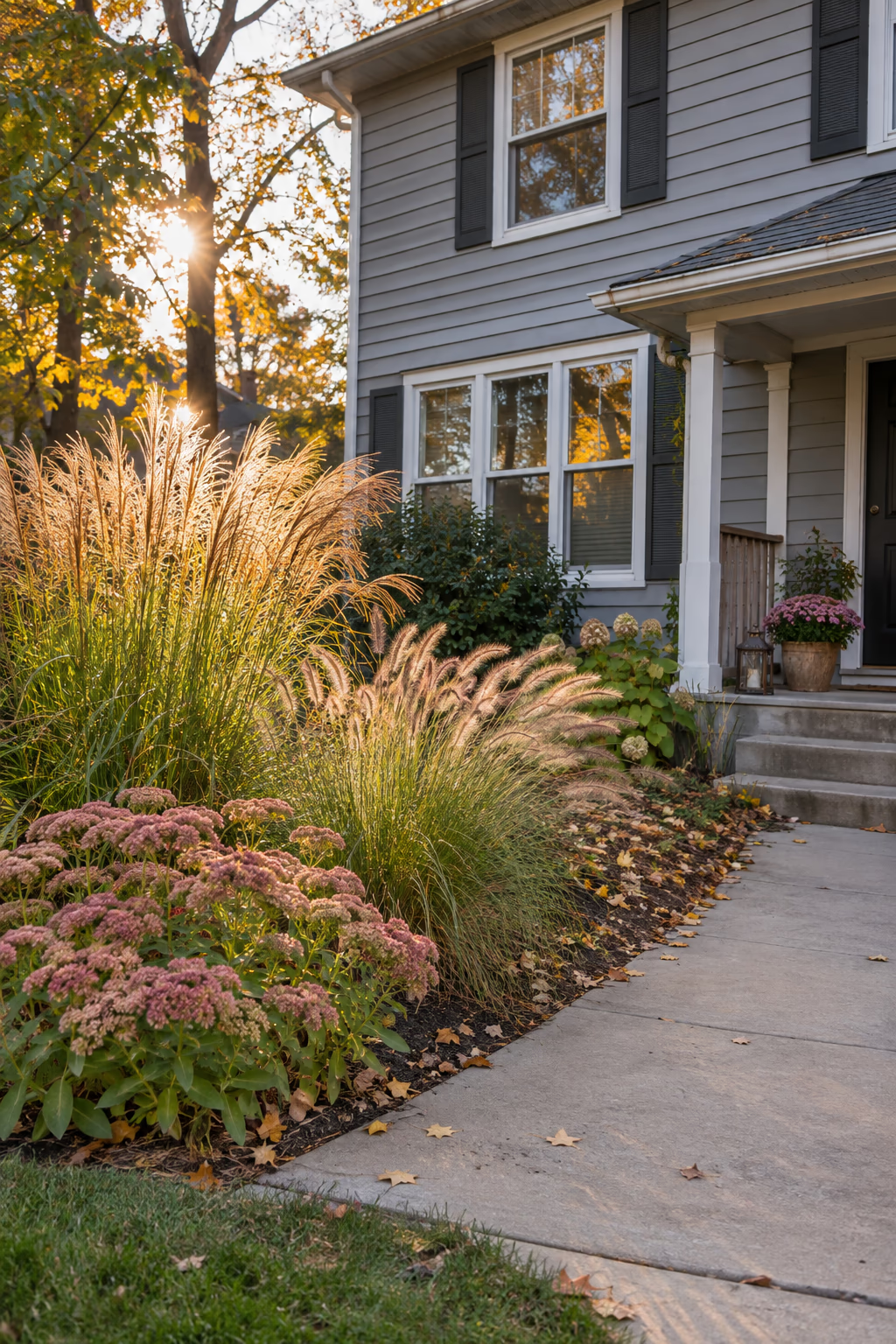
Texture that looks good from spring to snow
Feather reed grass, fountain grass, switchgrass, and little bluestem add height, motion, and fall color with only an annual haircut. Their seed heads catch low light beautifully in autumn.
Cut them to a few inches above the ground in late winter before new growth emerges. A set of hedge shears or an electric trimmer makes the job quick.
Give each clump room to reach mature size, and check local guidance on invasive species, because some fountain grasses and miscanthus can self-seed in certain regions.
8. Install Drip Irrigation in Every Bed
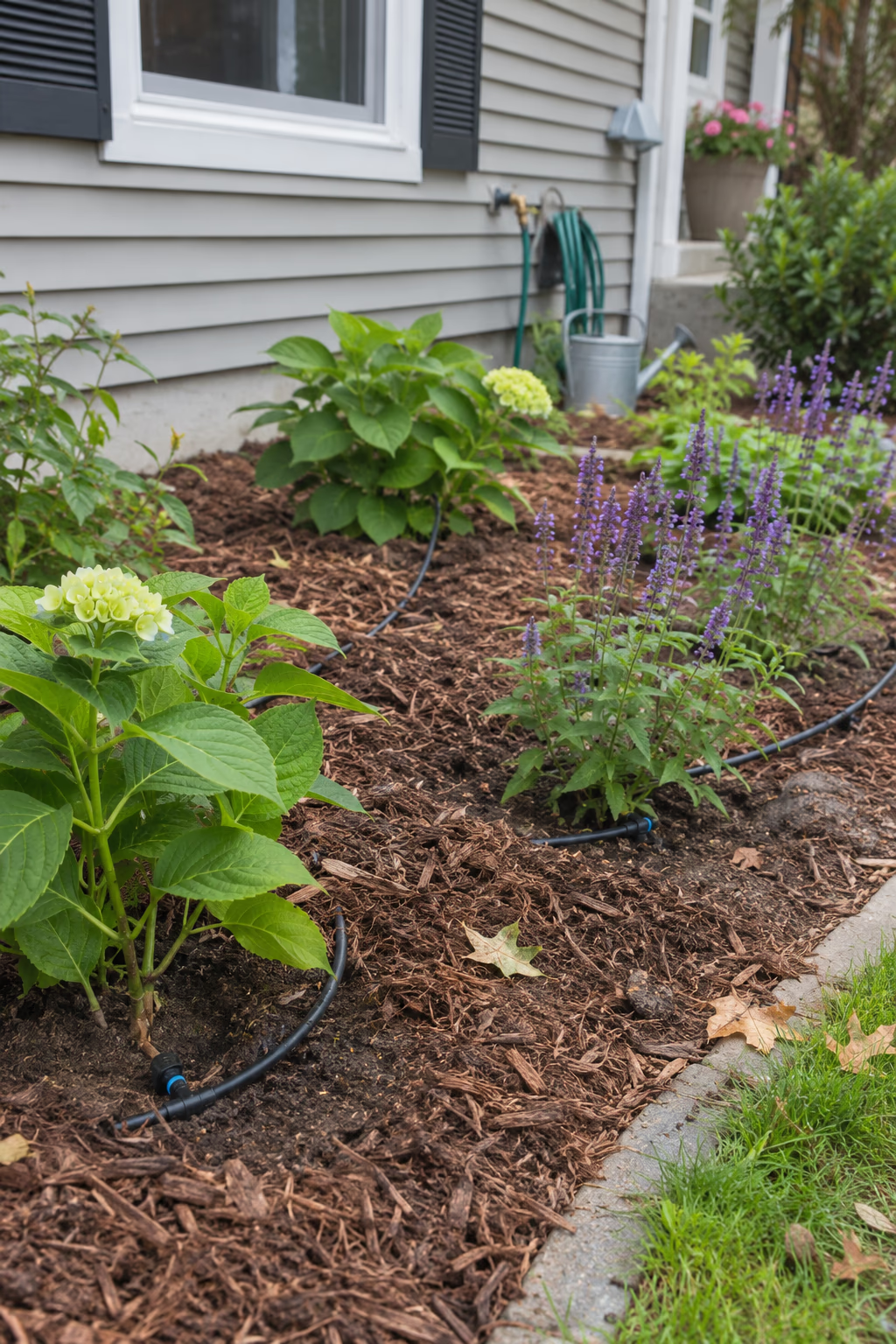
Water the roots, not the weeds
Drip tubing delivers water slowly right at plant roots, using less water than overhead sprinklers and leaving the surrounding soil dry so fewer weeds sprout. Half-inch main tubing with small emitters is a manageable DIY project.
Connect it to a simple battery timer on the spigot so beds are watered on a schedule, then cover the lines with mulch to keep them out of sight and protected from sun.
Check emitters a couple of times each season for clogs, and drain the system before freezing weather in cold areas.
9. Light the Path With Low-Voltage Fixtures
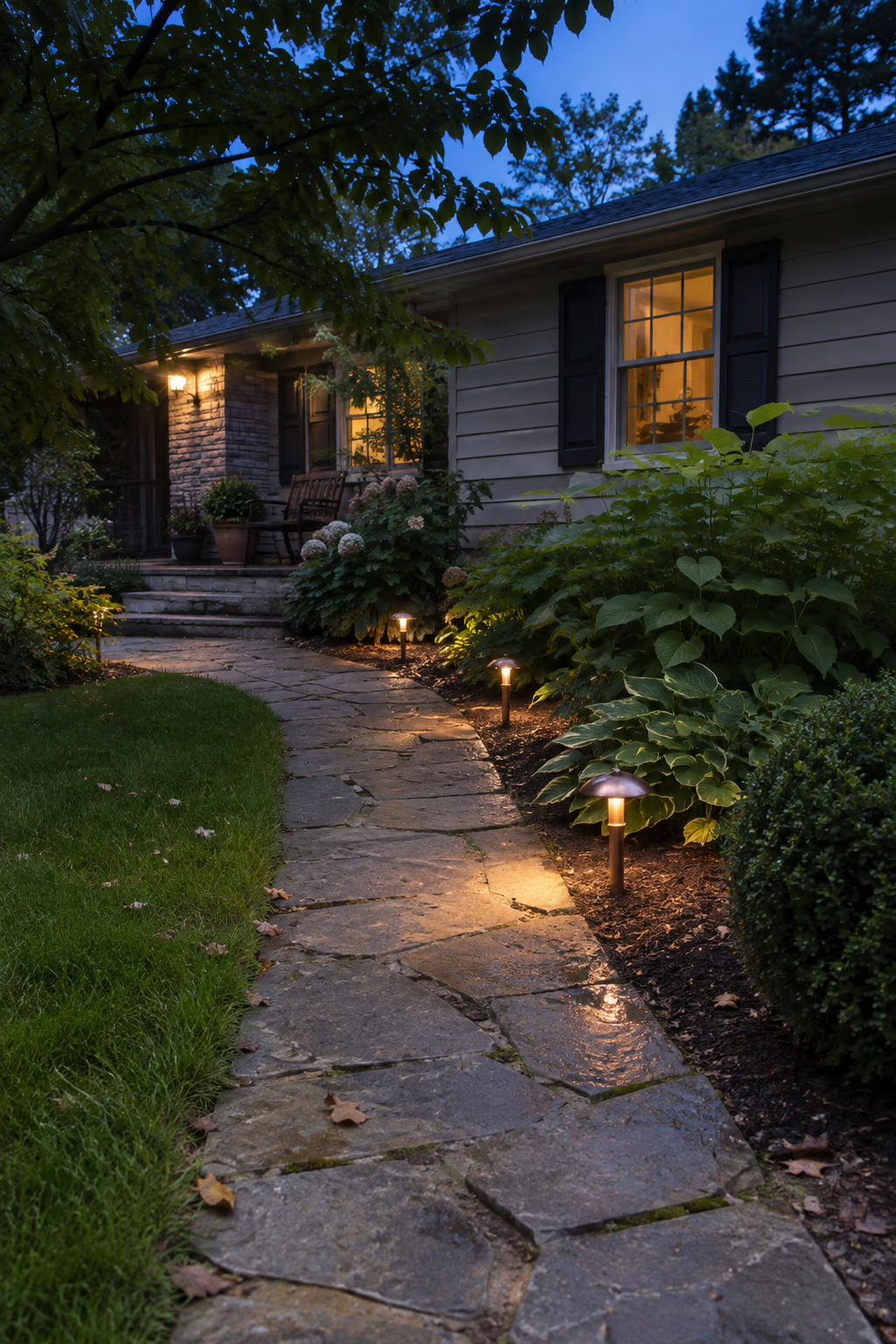
Safe, welcoming evenings with no extra upkeep
A handful of low-voltage path lights along the walk and a spotlight on a favorite tree make the yard feel finished after dark. LED fixtures use little power and last for years.
Space path lights roughly 6 to 8 feet apart so pools of light overlap gently. A plug-in transformer with a timer or photocell turns everything on and off automatically.
Solar lights are easier to install but are often dimmer, especially in shady or cloudy locations. Bury the cables a few inches deep, and call 811 before digging.
10. Group Large Containers Near the Entry
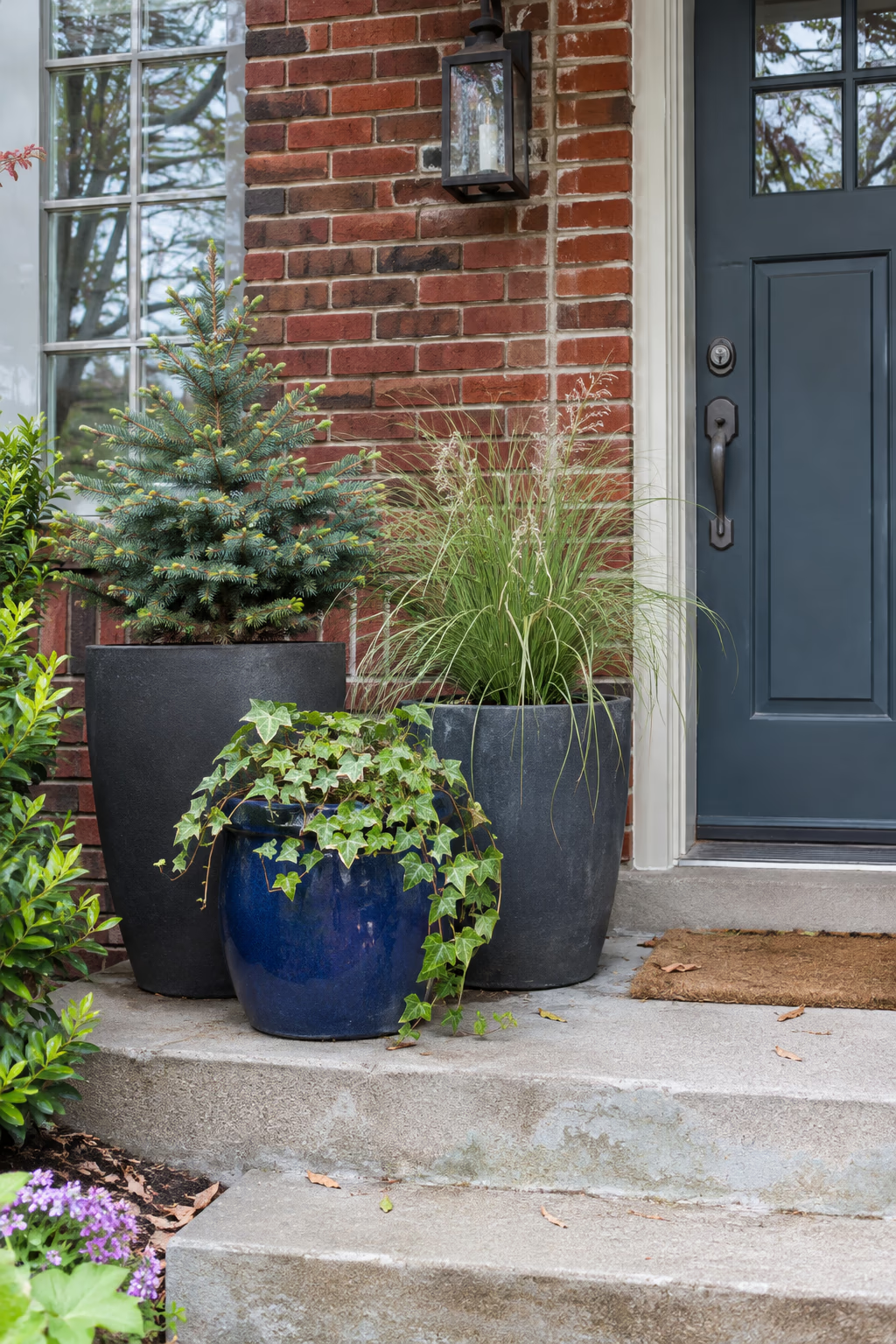
Color at the door without a new bed
Three large pots of different heights grouped near the door look far better than a row of small ones. Fill them with dwarf evergreens, ornamental grass, and a trailing plant such as ivy or sweet potato vine.
Bigger pots hold more soil and dry out more slowly, so they need watering less often. Pick containers at least 16 to 20 inches across, with drainage holes.
In freezing climates, choose frost-proof materials such as fiberglass, resin, or thick glazed ceramic, and use hardy plants that can stay out all winter.
11. Carpet the Ground With Creeping Thyme
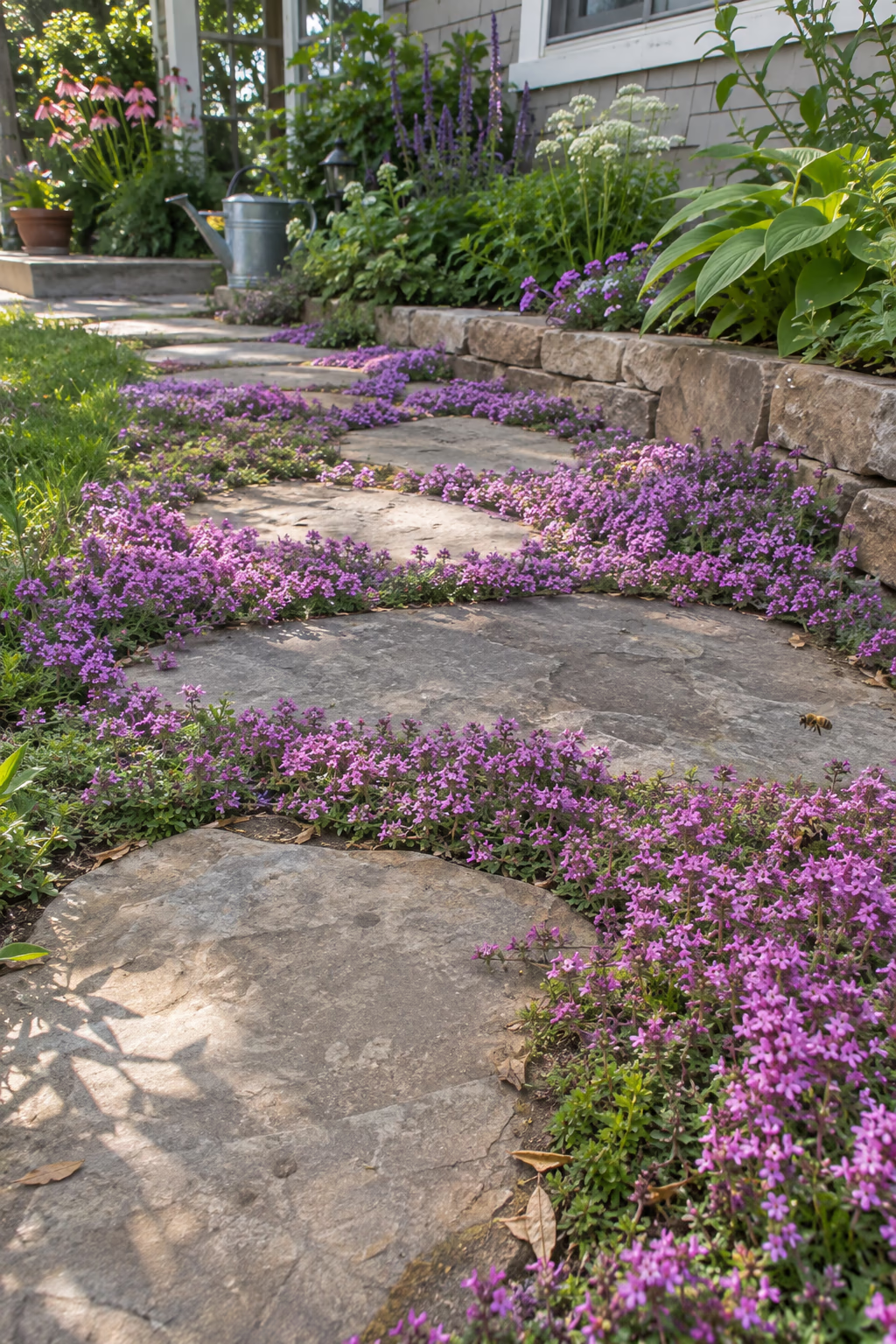
A fragrant living mat between stones
Creeping thyme spreads into a dense mat that crowds out weeds, tolerates light foot traffic, and fills with tiny pink or purple flowers in early summer. It is perfect between stepping stones.
Plant small starts about 6 to 8 inches apart in full sun and well-drained soil, and water regularly until they take hold. After that, rainfall is usually enough in many regions.
It dislikes soggy ground and deep shade. Expect to patch in a few bare spots after hard winters.
12. Build a Dry Creek Bed for Drainage
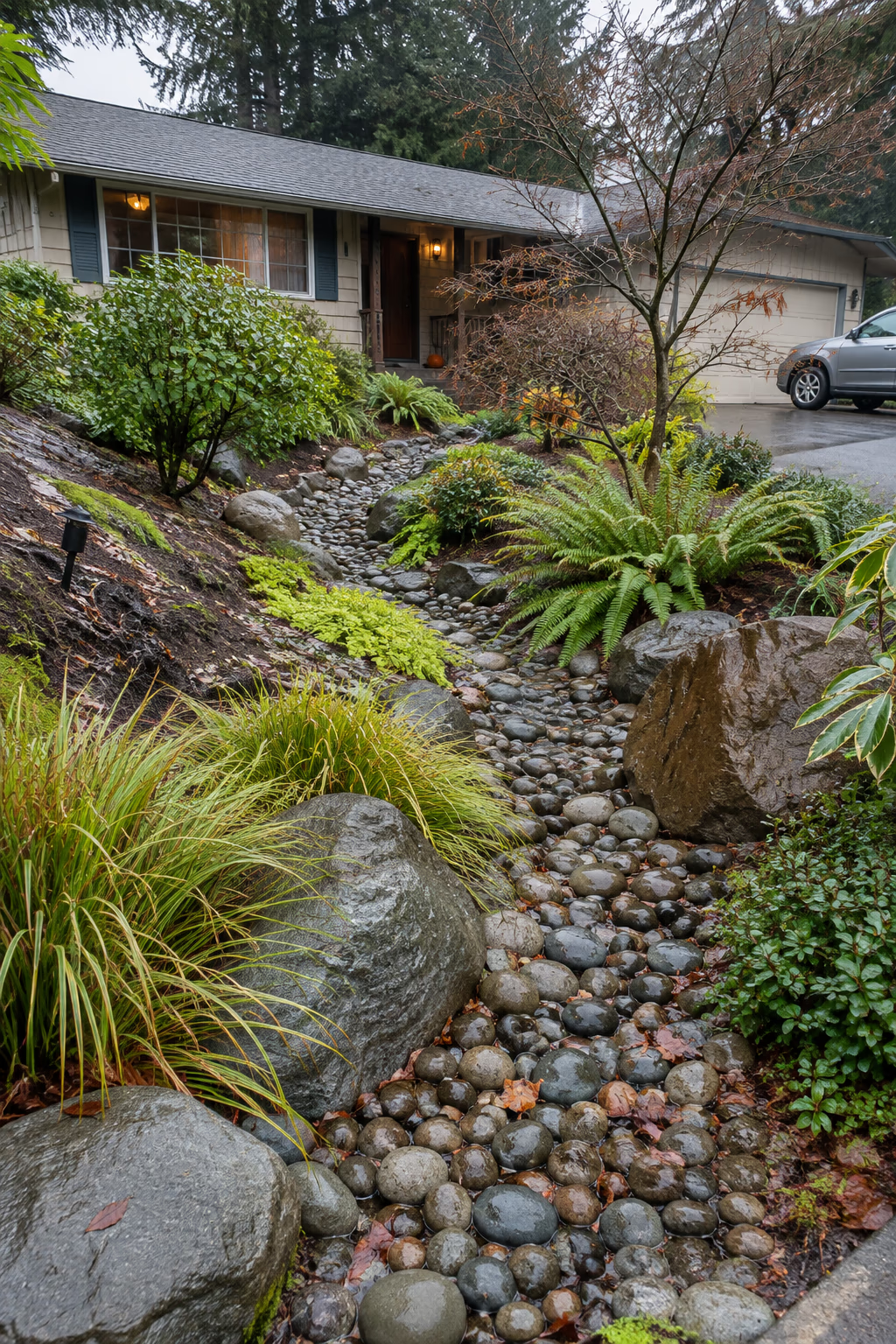
Handle runoff and add a focal point
A dry creek bed is a shallow channel lined with rounded river stones that guides rainwater away from the house or across a sloped yard. It looks natural, and it solves soggy spots without pumps or plumbing.
Dig a gently curving channel about 12 to 18 inches deep, line it with landscape fabric, and fill with a mix of stone sizes, setting larger boulders along the bends. Plant sedges and ferns along the banks.
Make sure the channel slopes away from the foundation and ends somewhere water can safely soak in. Larger projects may be worth a conversation with a landscape pro.
13. Choose Deer-Resistant Plants
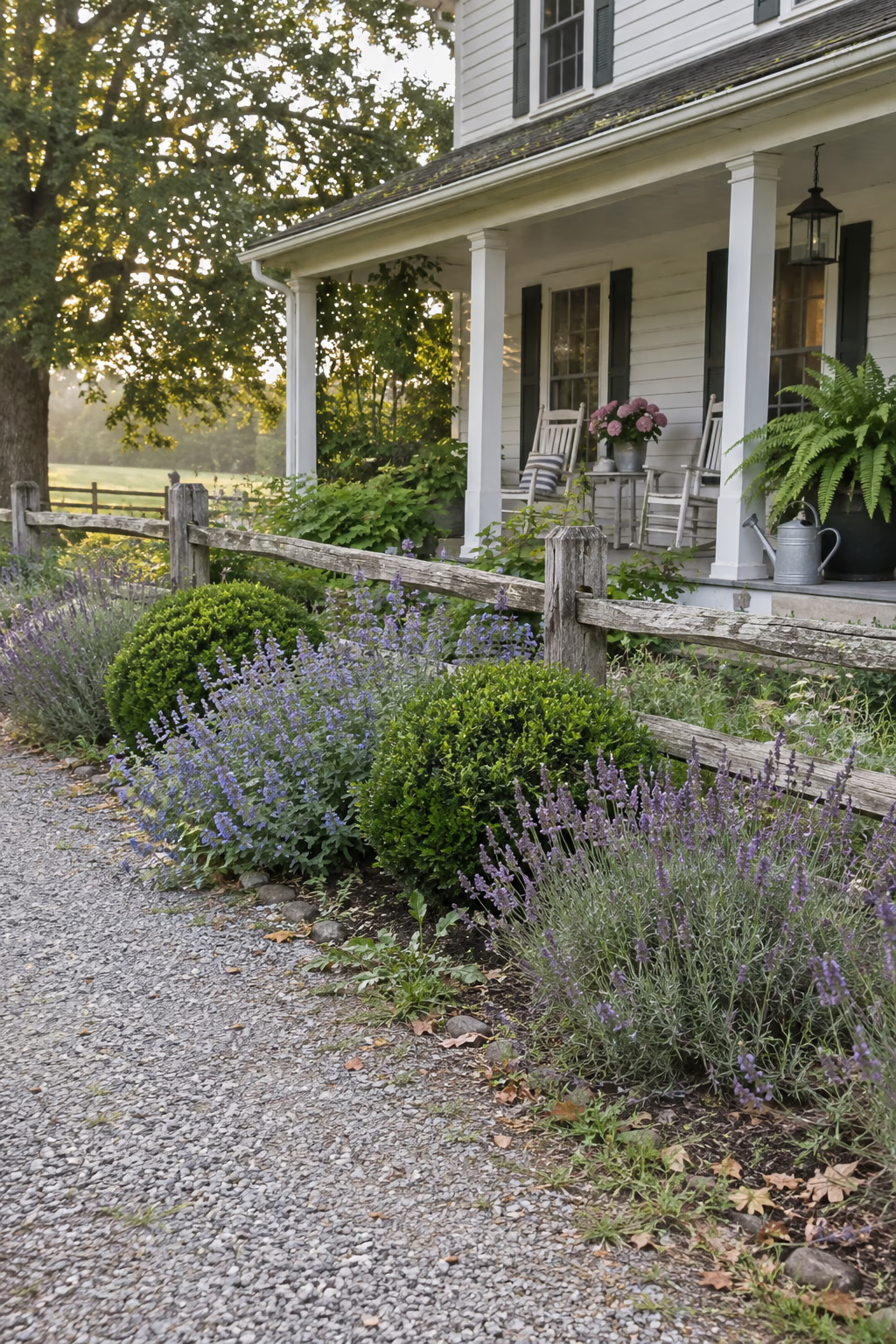
Skip the heartbreak of eaten blooms
If deer treat your yard as a buffet, building with plants they usually avoid saves replanting. Lavender, catmint, boxwood, daffodils, Russian sage, and many ornamental grasses have strong scents or textures that deer tend to dislike.
No plant is truly deer-proof. When food is scarce, hungry deer will try nearly anything, especially young plants.
Protect new plantings with temporary fencing or netting for the first year, and place the tastiest plants closer to the house.
14. Plant a Small Flowering Tree as a Focal Point
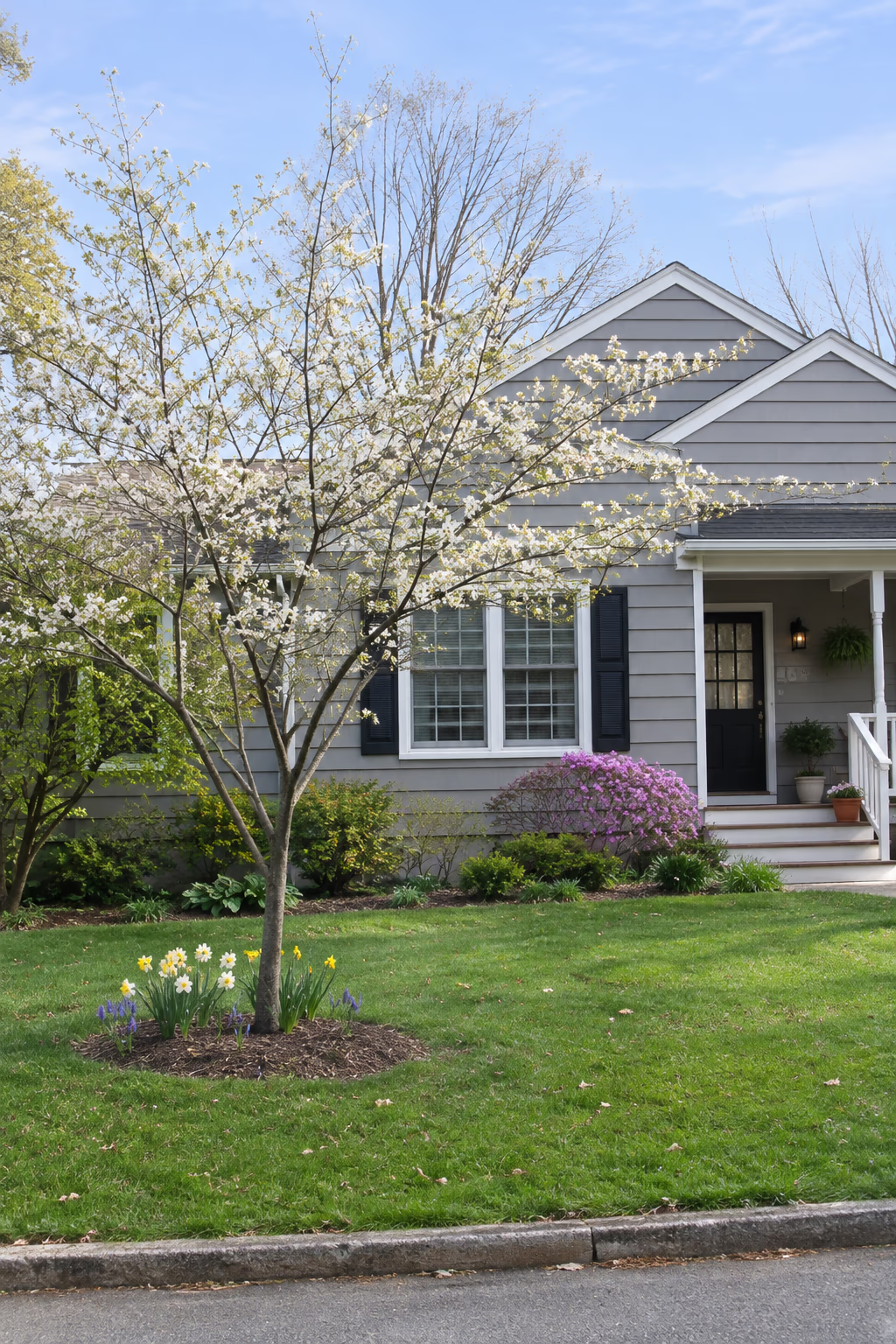
One strong feature instead of many fussy ones
A single small tree such as serviceberry, redbud, dogwood, or crabapple brings spring blooms, fall color, and height to a flat yard. One well-placed tree can do the work of a dozen small plants.
Choose a variety that stays under about 25 feet, and plant it well away from power lines, septic fields, and the foundation. Dig a hole twice as wide as the root ball but no deeper.
Water deeply every week or so during the first two years. After that, most trees need only occasional deep watering in dry spells.
15. Set Boulders in a Natural Cluster
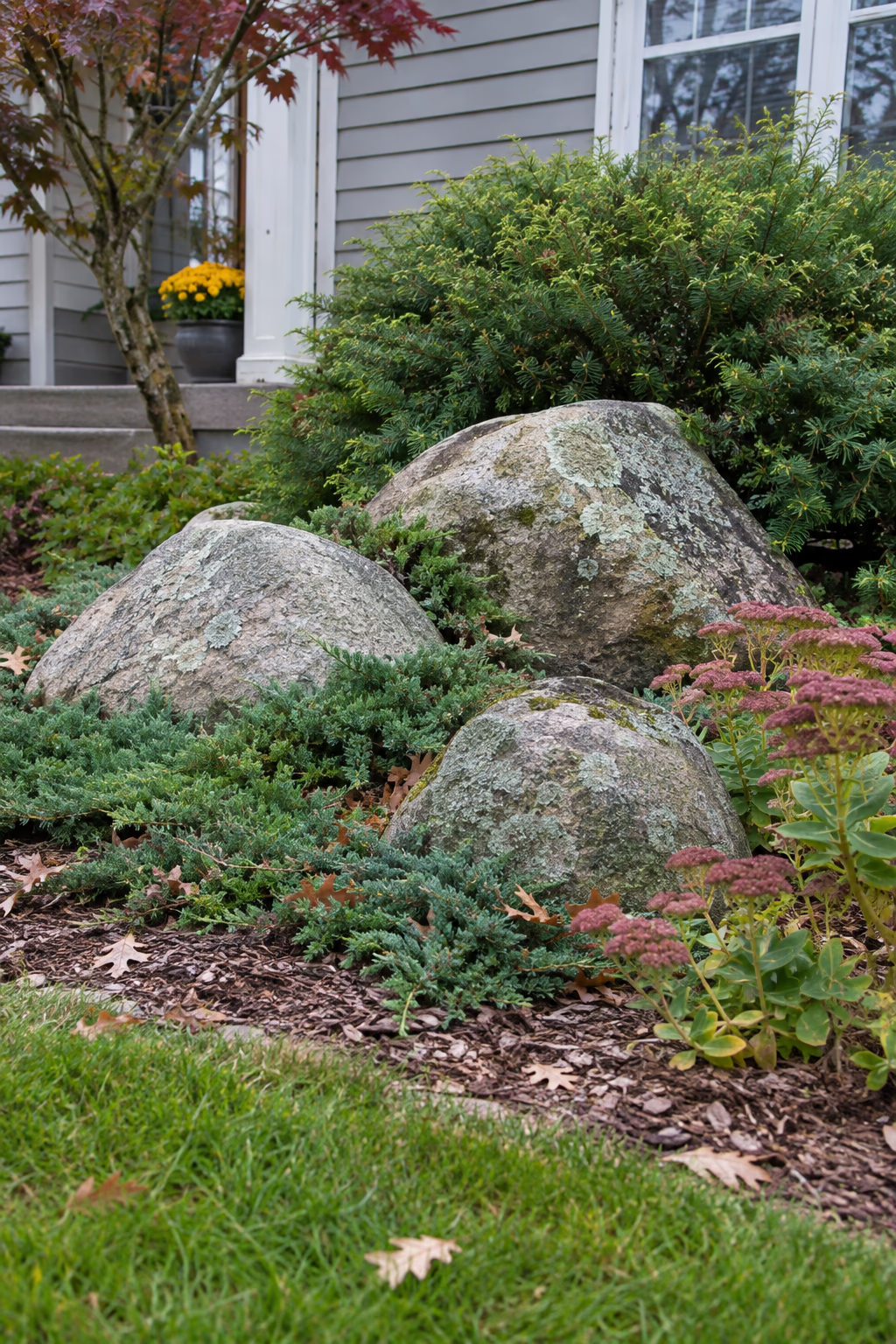
Stone that never needs replacing
Weathered boulders add permanent structure to a bed. Group three in different sizes, bury each about one third, and surround them with low plants such as juniper, sedum, or thyme.
Natural, lichen-covered rock looks better than perfectly round, freshly cut stones, and a cluster looks more believable than stones spaced evenly in a row.
Boulders are very heavy, so many stone yards can deliver and position them with equipment. Skip trying to move big ones by hand.
16. Hang Window Boxes With Hardy Plants
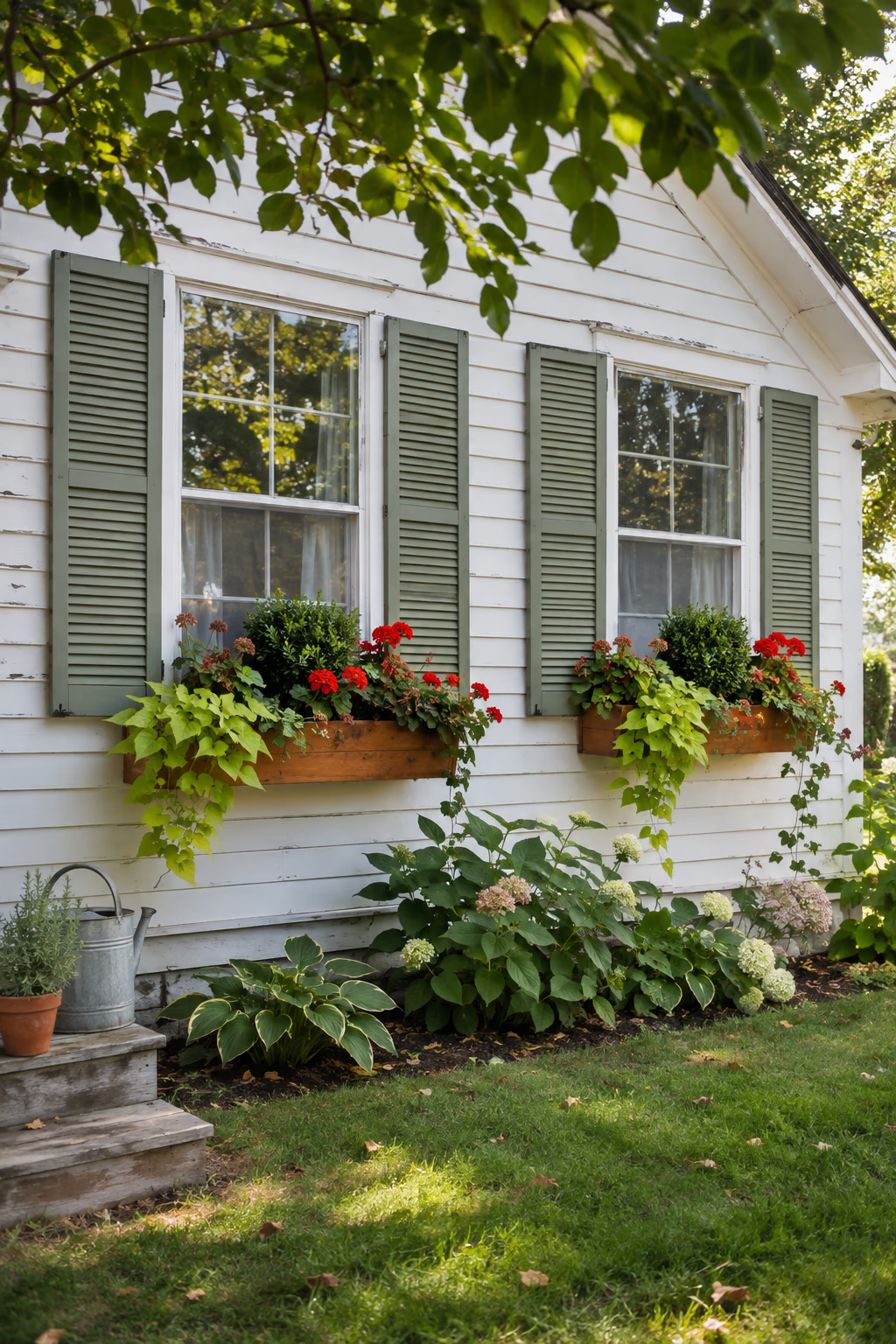
Charm on the facade with very little ground work
Window boxes bring flowers up to eye level without a new bed. Fill them with a mix of upright geraniums, trailing sweet potato vine, and small evergreens that look fresh most of the year.
Choose boxes at least 8 inches deep and securely mounted with brackets into studs. Use a good potting mix rather than garden soil, and add slow-release fertilizer at planting time.
Boxes dry out quickly in summer sun. A self-watering insert or drip line can cut the daily watering routine down significantly.
17. Widen the Driveway Edge With Permeable Pavers
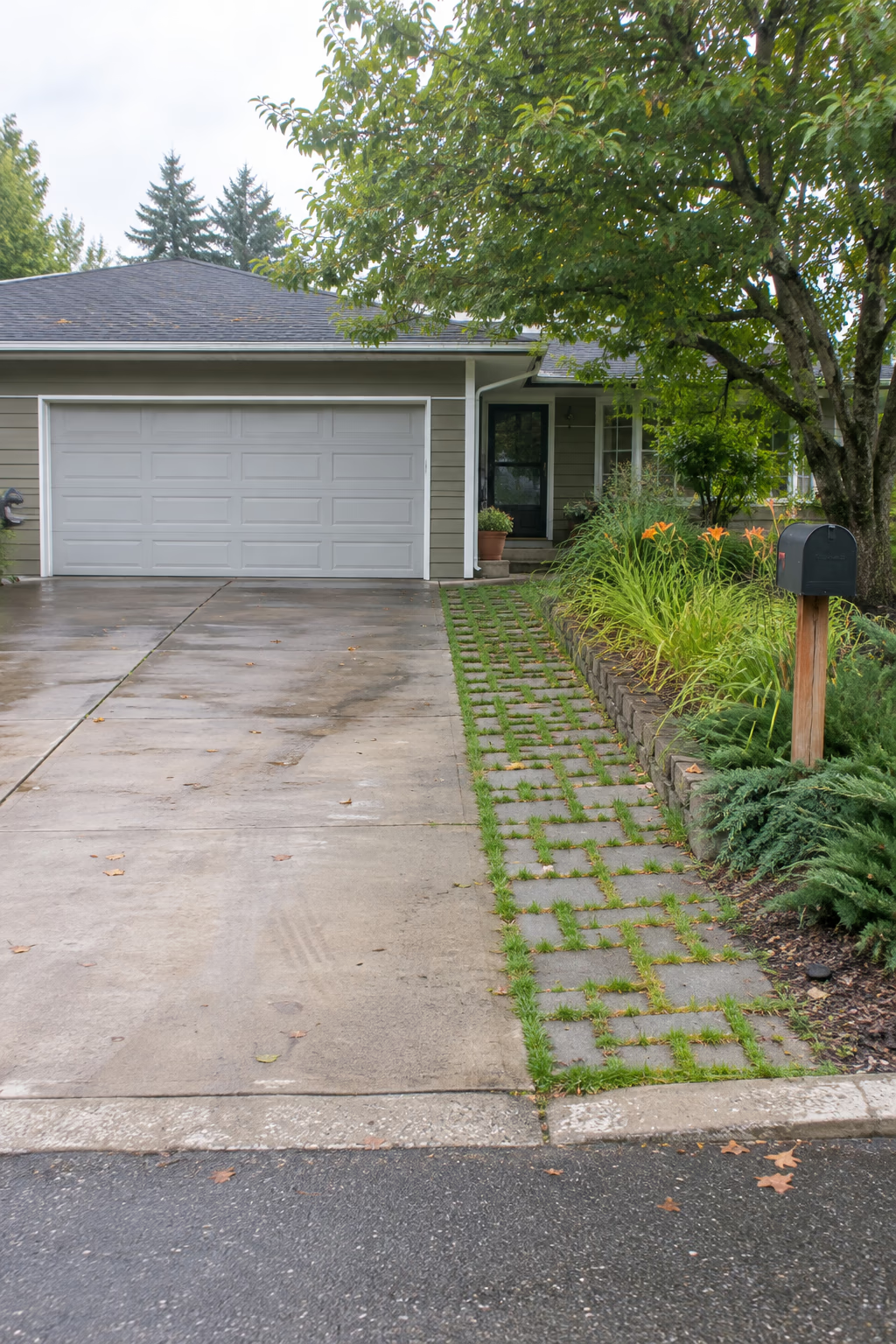
Extra parking space that handles rain
Permeable pavers with gravel or grass in the joints let rain soak into the ground instead of racing toward the street. They work well for a widened edge, a parking pad, or a path beside the drive.
They require a deeper base of open-graded stone than standard pavers, so follow the manufacturer’s guidance carefully or hire a pro. Keep joints topped up with the right size of crushed stone.
Some towns and HOAs regulate driveway width and materials, so confirm the rules before you dig.
18. Fill a Shady Side With Hostas and Ferns
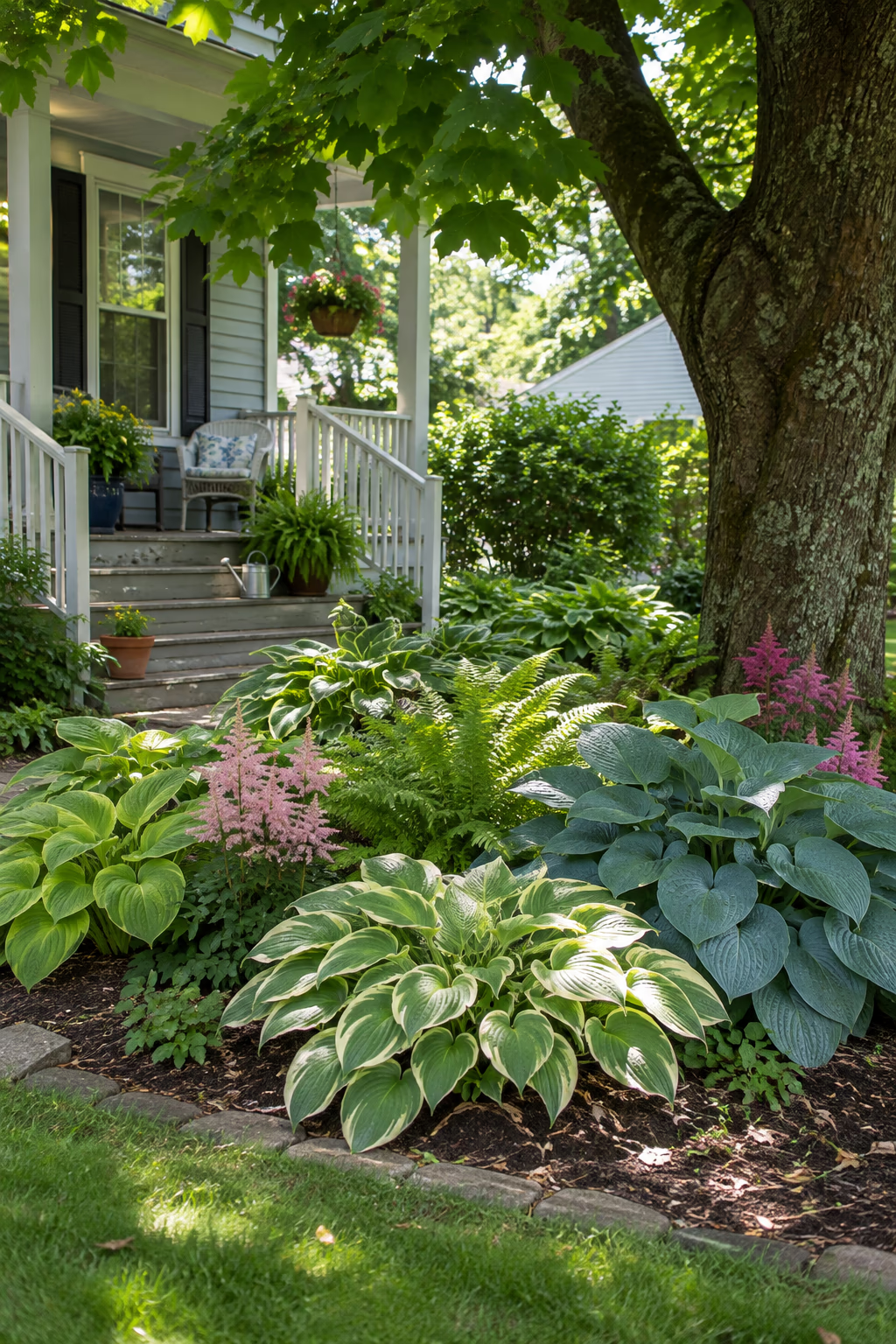
Lush color where grass refuses to grow
Shade under mature trees or along the north side of the house is hard on lawns, yet perfect for hostas, ferns, astilbe, and heuchera. They form dense clumps that return every year.
Spread 2 to 3 inches of shredded leaf mulch to hold moisture and feed the soil. Divide crowded hostas every few years to get free plants.
Slugs and deer love hostas. Choose thick-leaved varieties, which slugs tend to bother less, and use deer-resistant ferns where deer visit.
19. Install a Rain Garden Below the Downspout
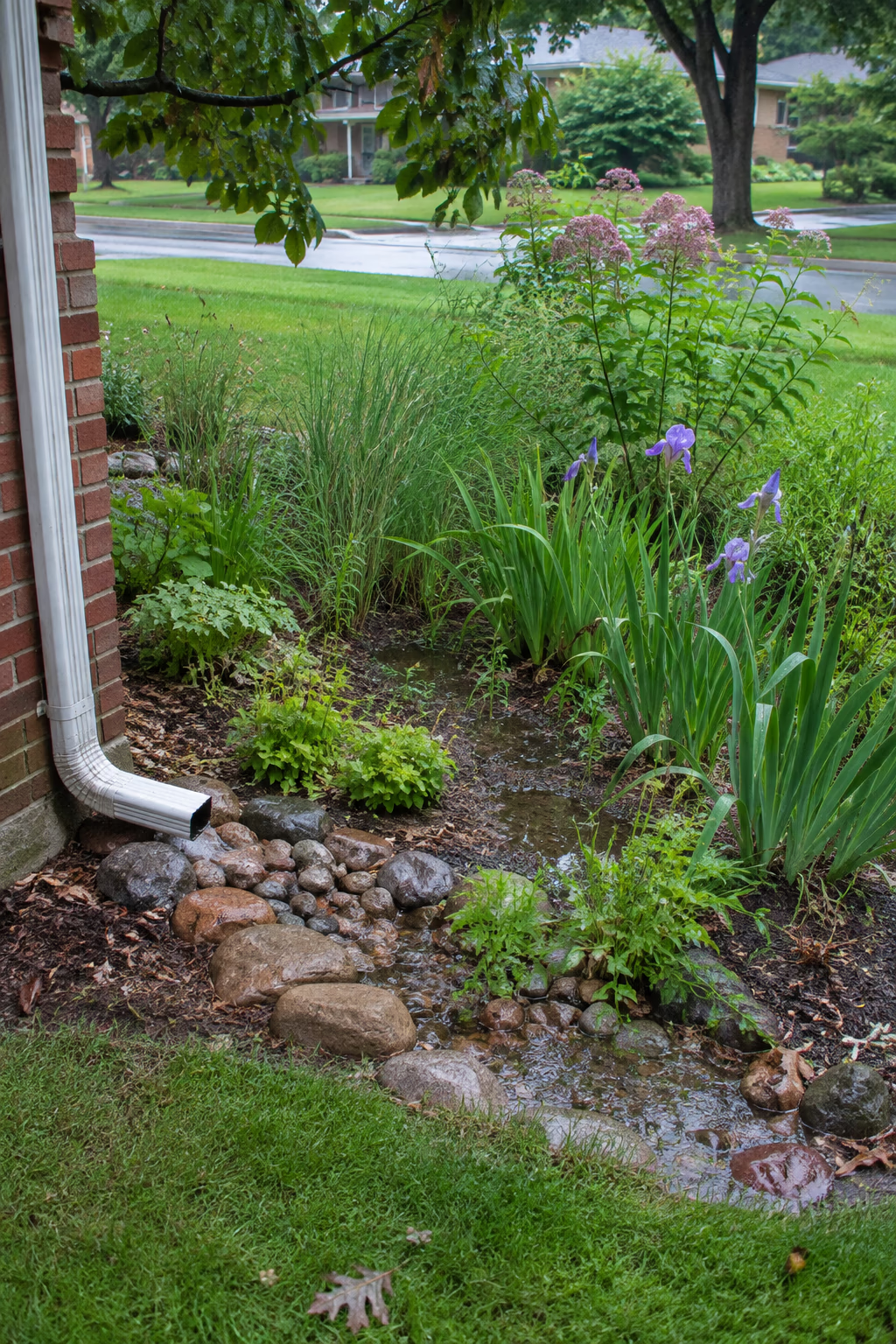
Turn a soggy spot into a flowering feature
A rain garden is a shallow planted dip that soaks up runoff from a roof or driveway. Plants such as blue flag iris, switchgrass, joe-pye weed, and sedges tolerate both wet feet and dry spells.
Place it at least 10 feet from the foundation and shape it so water spreads out rather than pooling against the house. Line the entry with river stones to slow the flow.
Avoid areas over septic fields or underground utilities, and call 811 before digging. Water new plants during dry spells for the first season.
20. Mulch Tree Rings With Wood Chips
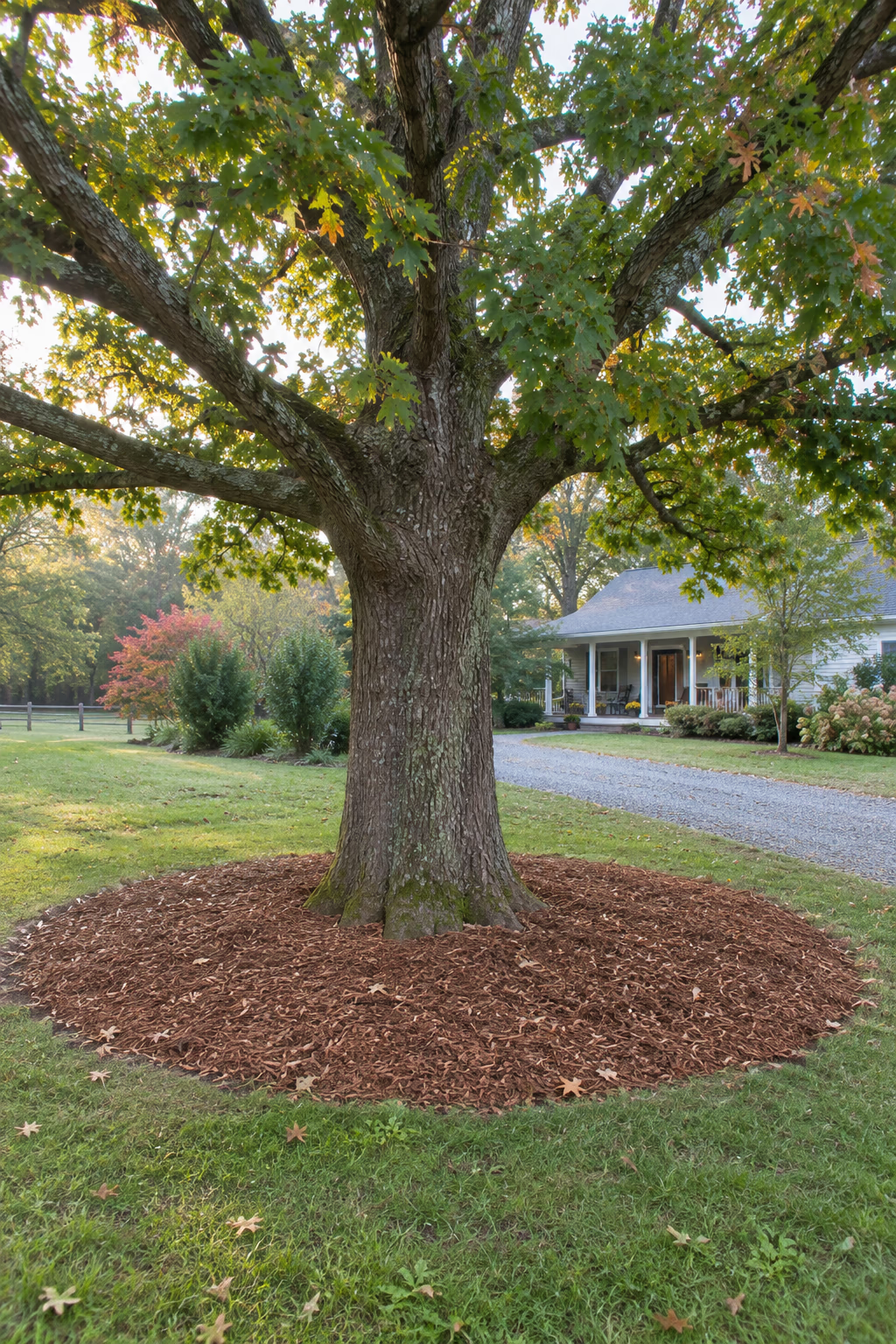
Healthier trees and no trimming around trunks
A wide ring of wood chip mulch under a lawn tree removes the need for string-trimming around the trunk, which often damages bark. It also keeps soil moist and suppresses weeds.
Spread chips 2 to 3 inches deep, and extend the ring as wide as is practical. Pull the mulch a few inches back from the trunk, because piling it against the bark invites rot and pests.
Arborist wood chips are often available cheaply or free from local tree services. Top up the ring once a year.
21. Frame the Yard With a Low Flowering Hedge
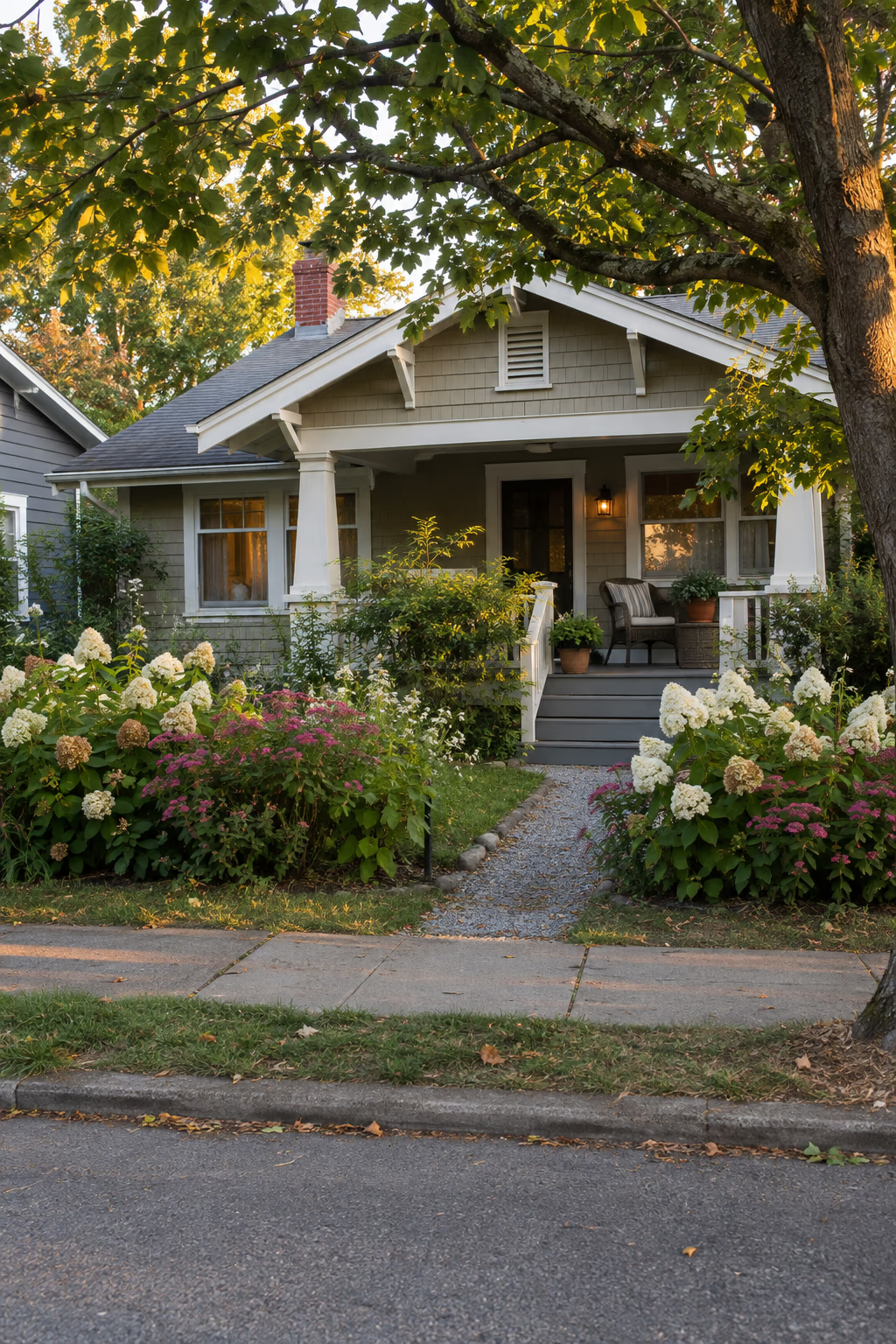
Soft boundaries with seasonal color
An informal hedge of hydrangea, spirea, or abelia along the front edge defines your space and softens the view from the street. It feels more welcoming than a solid fence.
Pick shrubs whose mature size matches the height you want, so you are not shearing them every few weeks. Prune right after flowering or in late winter, depending on the species.
Leave a clear opening for the walk, and keep plantings low near driveways and corners so drivers can see. Check local height rules and HOA guidelines for front yard plantings.
How to Plan Your Low Maintenance Front Yard
The easiest yard is the one planned around how much time you actually have. A few decisions up front prevent years of extra work.
- Start with sun and soil. Note how many hours of direct light each area gets and whether the soil is sandy, clay, or loamy, then choose plants to match.
- Reduce lawn gradually. Convert one section at a time, and keep a simple, easy-to-mow shape rather than dozens of small islands.
- Mulch every bed. A 2 to 3 inch layer reduces weeding and watering more than almost any other step.
- Group plants by water needs. Putting thirsty plants together and drought-tolerant ones together makes irrigation far simpler.
- Plan for mature size. Space shrubs and trees for their full-grown width so they never need heavy pruning.
- Check the rules. Review HOA guidelines, local codes, and utility lines before building, and call 811 before any digging.
Frequently Asked Questions
What is the lowest maintenance front yard landscaping?
A mix of mulched beds, evergreen shrubs, native perennials, and a small mowed area or clover patch is usually the easiest. Drip irrigation on a timer cuts watering chores even further.
Is gravel better than mulch for a low maintenance yard?
Each has strengths. Gravel lasts longer and suits dry climates, but it holds heat and collects debris. Organic mulch feeds the soil and cools roots, though it needs topping up every year or two.
How much does it cost to make a front yard low maintenance?
Costs vary widely. A weekend of mulch, edging, and a few shrubs may run a few hundred dollars, while pavers, large trees, and irrigation can add thousands. Doing it in phases keeps the budget manageable.
What are the best low maintenance plants for a front yard?
Good options include boxwood, juniper, coneflower, sedum, daylily, catmint, ornamental grasses, and hostas in shade. The best choices are native or well-adapted to your climate and light conditions.
Can a front yard be completely maintenance free?
No yard is entirely maintenance free, because plants grow and weeds appear. Still, good design can shrink the work to a few seasonal tasks such as mulching, pruning, and a spring cleanup.
Final Thoughts
The best low maintenance front yard ideas share a simple formula: fewer high-demand surfaces, tougher plants, and materials that hold up on their own. Even small changes like edging a bed or swapping a patch of turf can give hours back every month.
Start with the section that annoys you most, choose plants that suit your climate, and add more over time. Before long, you’ll have a front yard that looks great and leaves your weekends free.


