
Picture pulling into your driveway and seeing a curving border of purple catmint, pink coneflowers, and white daisies spilling gently over the edge of the walkway. The house looks welcoming before you even reach the door.
That’s the power of a well-planned flower bed. The front yard is the first thing visitors and neighbors see, and a few thoughtful beds can make an ordinary house look cared for and full of personality, even on a modest budget.
These 25 front yard flower bed ideas cover cottage borders, hydrangea curves, container groupings, stone edging, gravel beds, pollinator plantings, and more. Pick the ones that suit your sun, soil, and style, and mix them as you like.
1. Plant a Soft Cottage Border Along the Walkway
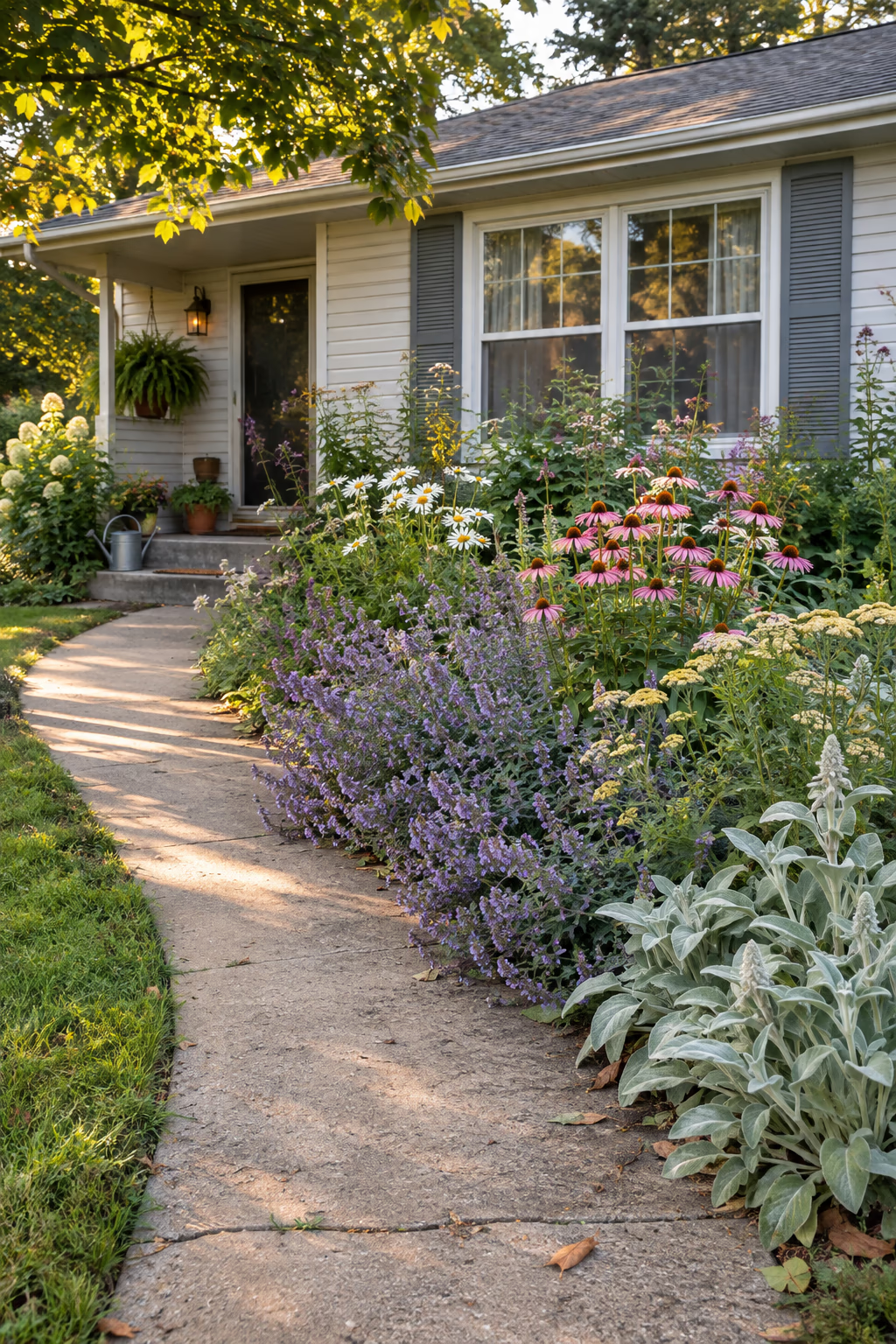
Relaxed, overflowing color that welcomes guests
A cottage border blends perennials in layers, with taller plants such as delphinium and foxglove at the back, mid-height coneflower and salvia in the middle, and catmint, lamb’s ear, or dianthus along the front edge. Aim for a bed about 3 to 4 feet deep so the plants have room to billow.
Repeat the same few plants in drifts of three or five so the look feels intentional rather than random. A limited palette of purple, pink, white, and silver-green keeps it calm even when it is full.
Expect some pruning and dividing every few years, and cut back spent growth in late winter so the bed stays tidy.
2. Curve a Hydrangea Bed Toward the Front Door
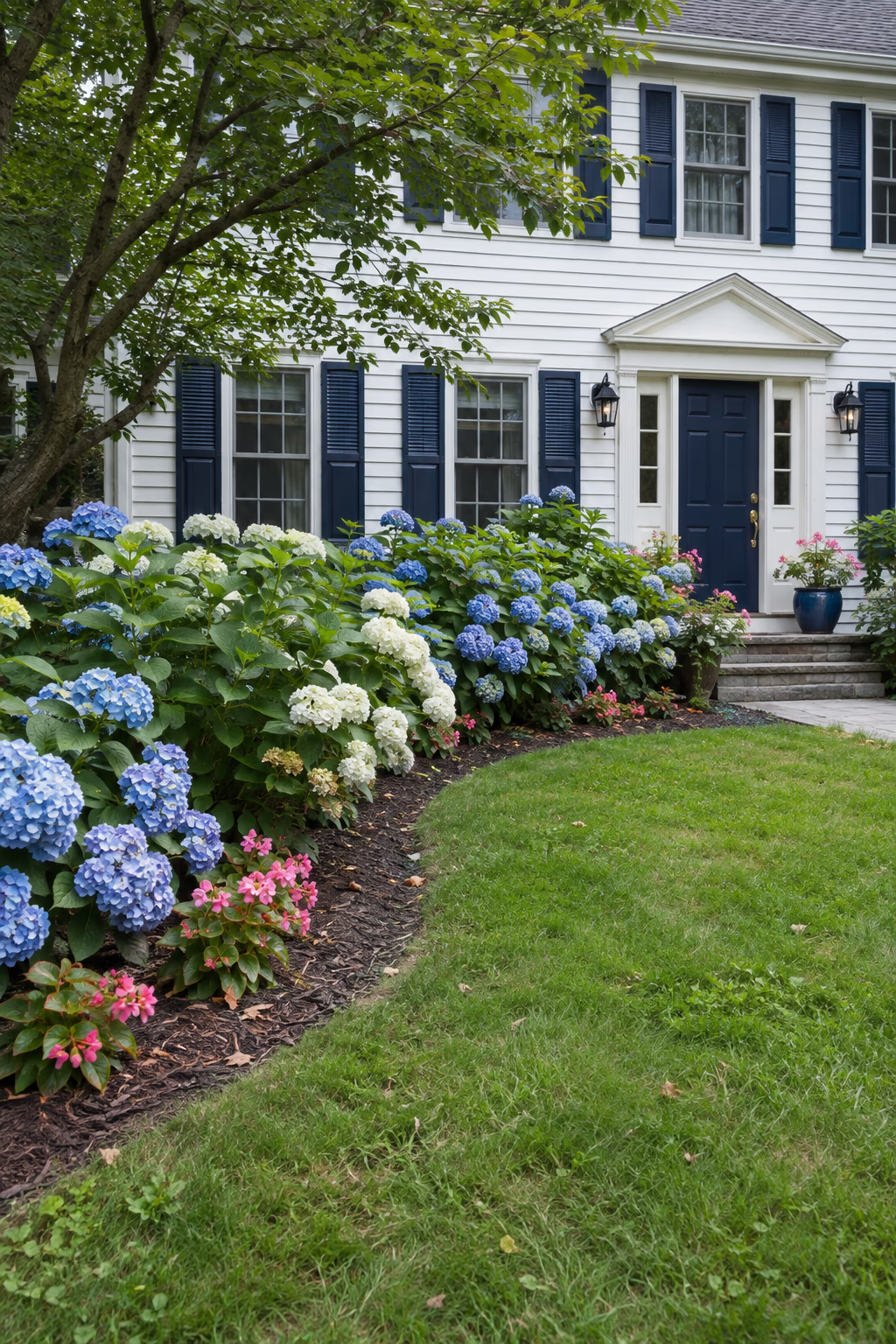
A sweeping shape that pulls the eye to the entry
A gently curved bed leads the eye toward your front door more naturally than a straight strip along the house. Plant hydrangeas in the back, then add annuals such as begonias or impatiens, or low hostas, along the front.
Mark the curve first with a garden hose, step back to the street to check it, and then cut the edge with a flat spade. Fresh mulch about 2 to 3 inches deep keeps moisture in.
Choose the variety to match your climate and light. Bigleaf types prefer morning sun and afternoon shade, while panicle and smooth hydrangeas tolerate more sun and cold. Remember that bloom color on bigleaf types depends partly on soil pH.
3. Layer Containers and Pots by the Porch
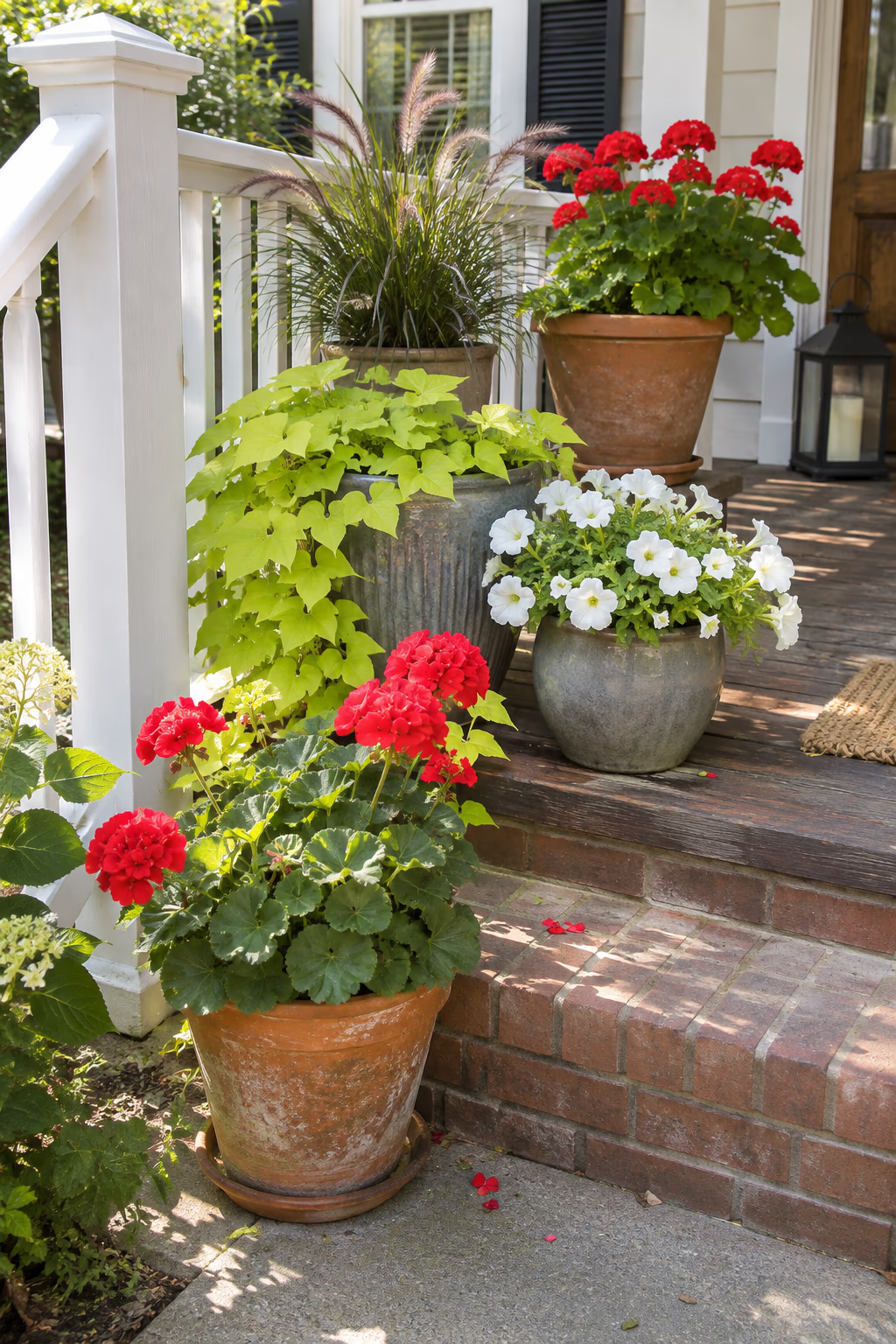
Instant flower power without digging
If your front yard has no beds or the soil is poor, containers are the fastest solution. Group three to five pots in different heights near the steps, using the classic mix of an upright plant, a mounding flower, and a trailing vine in each.
Geraniums, petunias, ornamental grasses, sweet potato vine, and ivy are dependable choices. Using pots in a limited palette of terracotta, gray, or black helps a mixed group look pulled together.
Containers dry out quickly in summer, so use pots at least 14 inches wide with drainage holes and plan on daily watering during hot spells.
4. Edge a Classic Border With Natural Stone
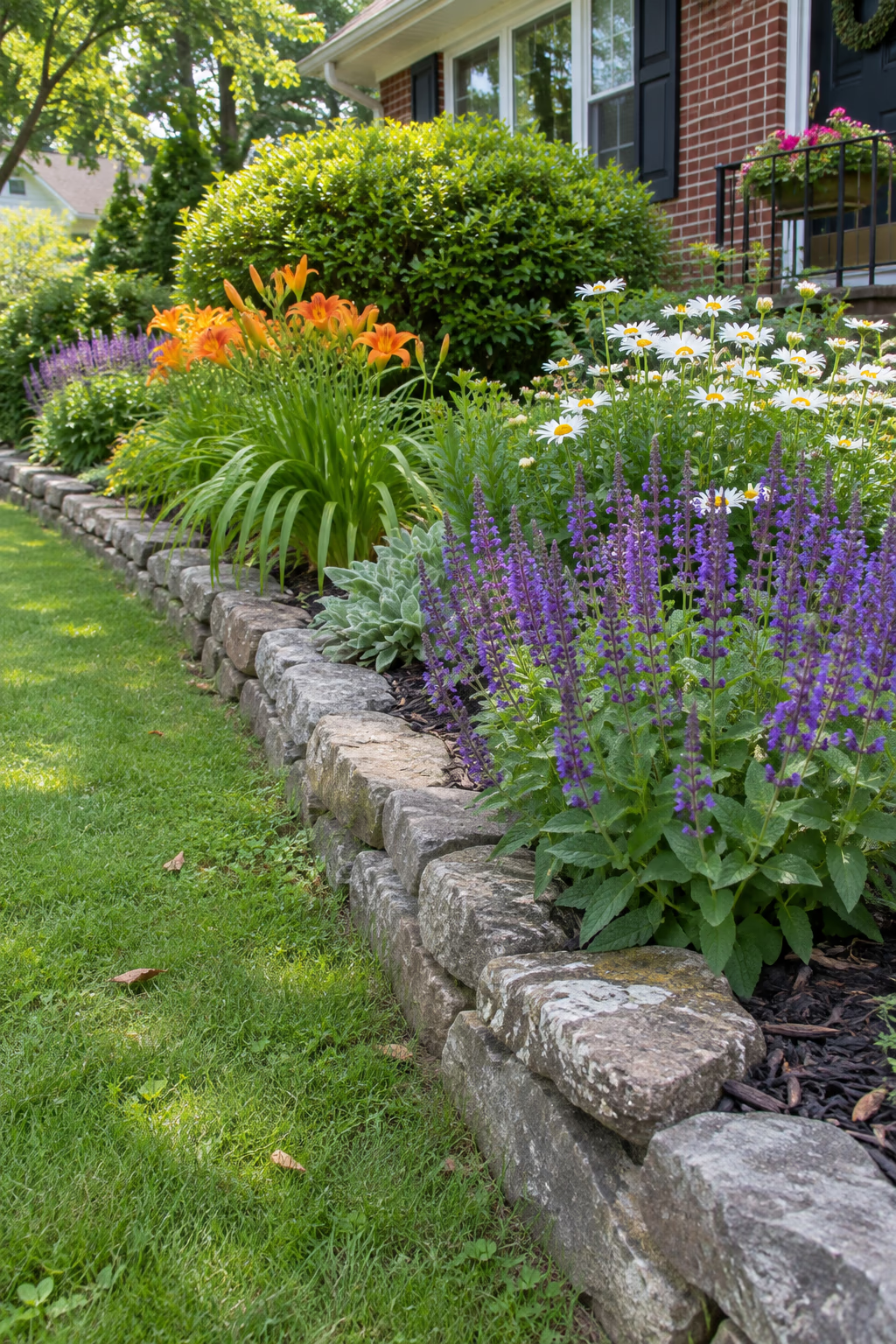
A durable frame that keeps the lawn out of the bed
Stacked fieldstone or flat stones about 6 to 8 inches high create a permanent edge that also keeps mulch from washing onto the grass. It gives the bed a timeless, established look.
Dig a shallow trench, set the first course slightly below grade, and tilt the stones back a little for stability. Fill the bed with long-blooming perennials such as daylily, salvia, and shasta daisy plus one or two shrubs for structure.
Leave a mowing strip of a few inches beside the stone, or the mower will chip it and you’ll be trimming by hand.
5. Build a Tiered Raised Bed With Stone Walls
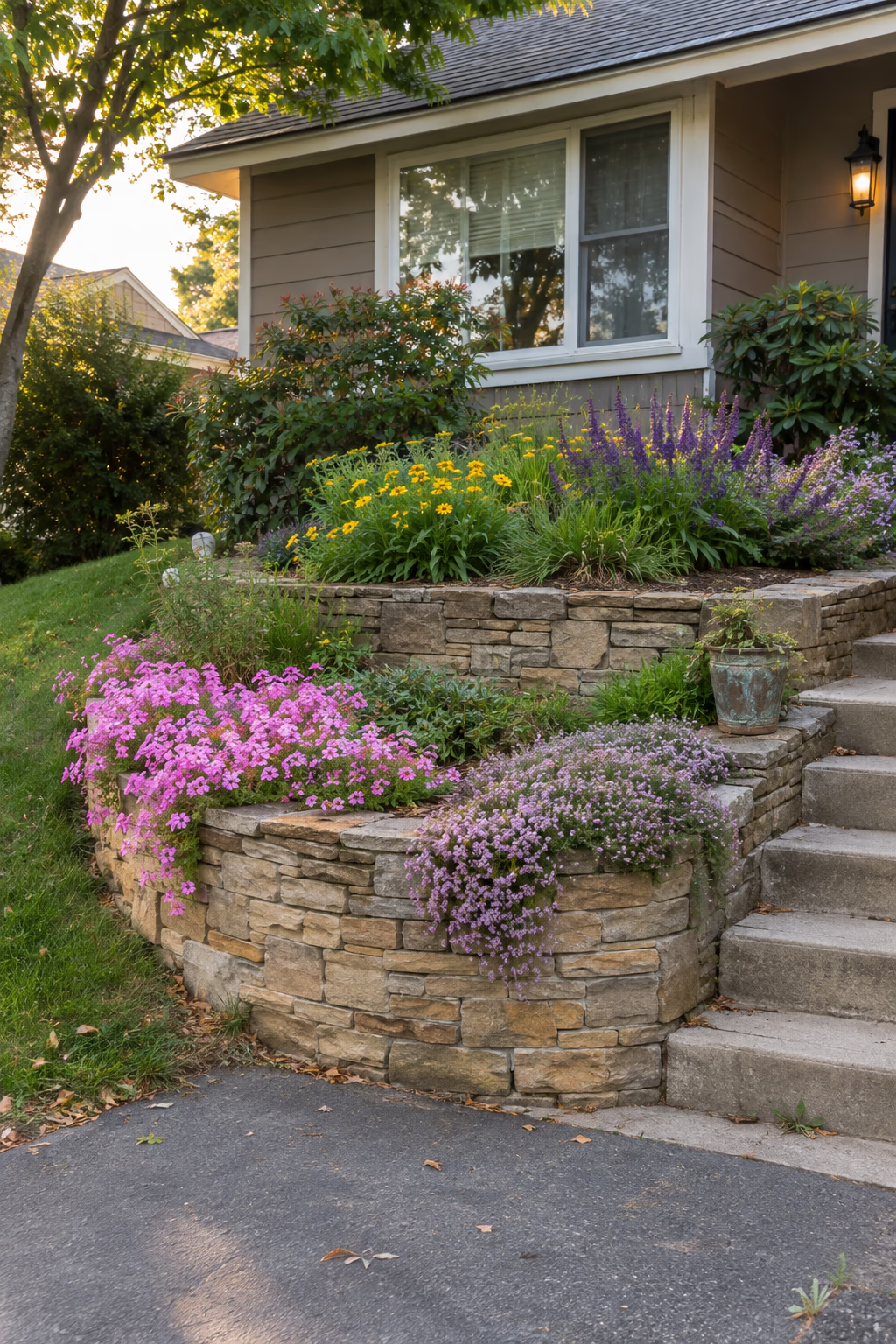
Make a slope or flat yard into a feature
Two low walls with a planting level on each can turn a boring slope into a cascade of color. Creeping phlox and thyme spill over the lower wall, while coreopsis and salvia grow on the upper level.
Keep each wall under about 2 to 3 feet, build on a compacted gravel base, and include drainage behind the stone so water does not build up.
Walls taller than that, or any near a driveway or sidewalk, may need engineering or a permit, so check local codes first. Raised soil also drains fast, so choose plants that tolerate dry spells.
6. Grow a Native Pollinator Bed
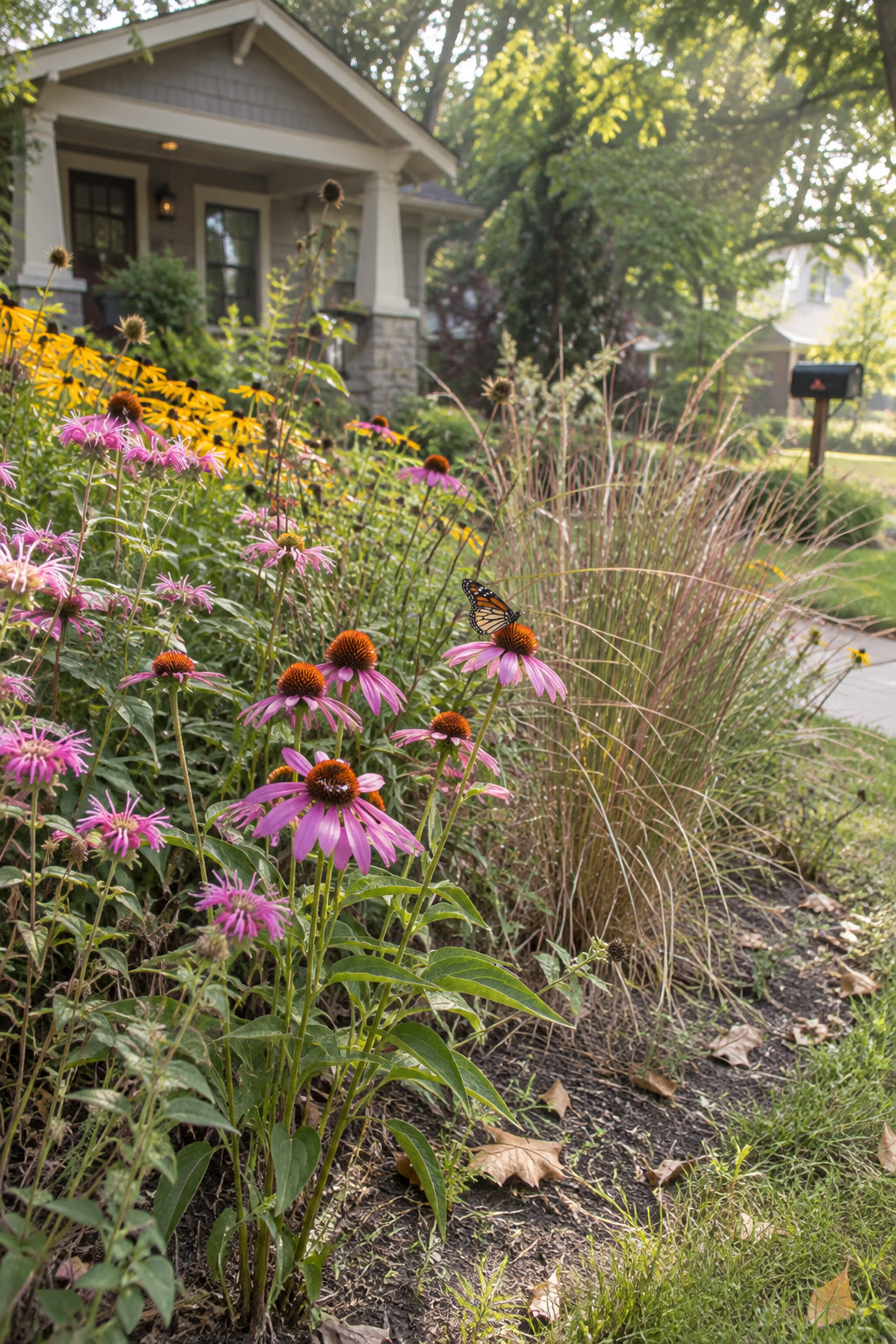
Beauty that supports bees and butterflies
Native plants are adapted to local conditions, so once established they usually need less water and fertilizer. In much of the eastern and central US, purple coneflower, black-eyed Susan, bee balm, and little bluestem make a strong, long-blooming combination.
Check your state extension service for natives suited to your region. Planting in blocks of one species looks neater from the street than a scattered mix.
Native beds can look scruffy in winter. Leaving the stems standing until spring helps wildlife, but a clean edge and a tidy border keep it looking intentional, which also helps with HOA expectations.
7. Design a Drought-Tolerant Gravel Bed
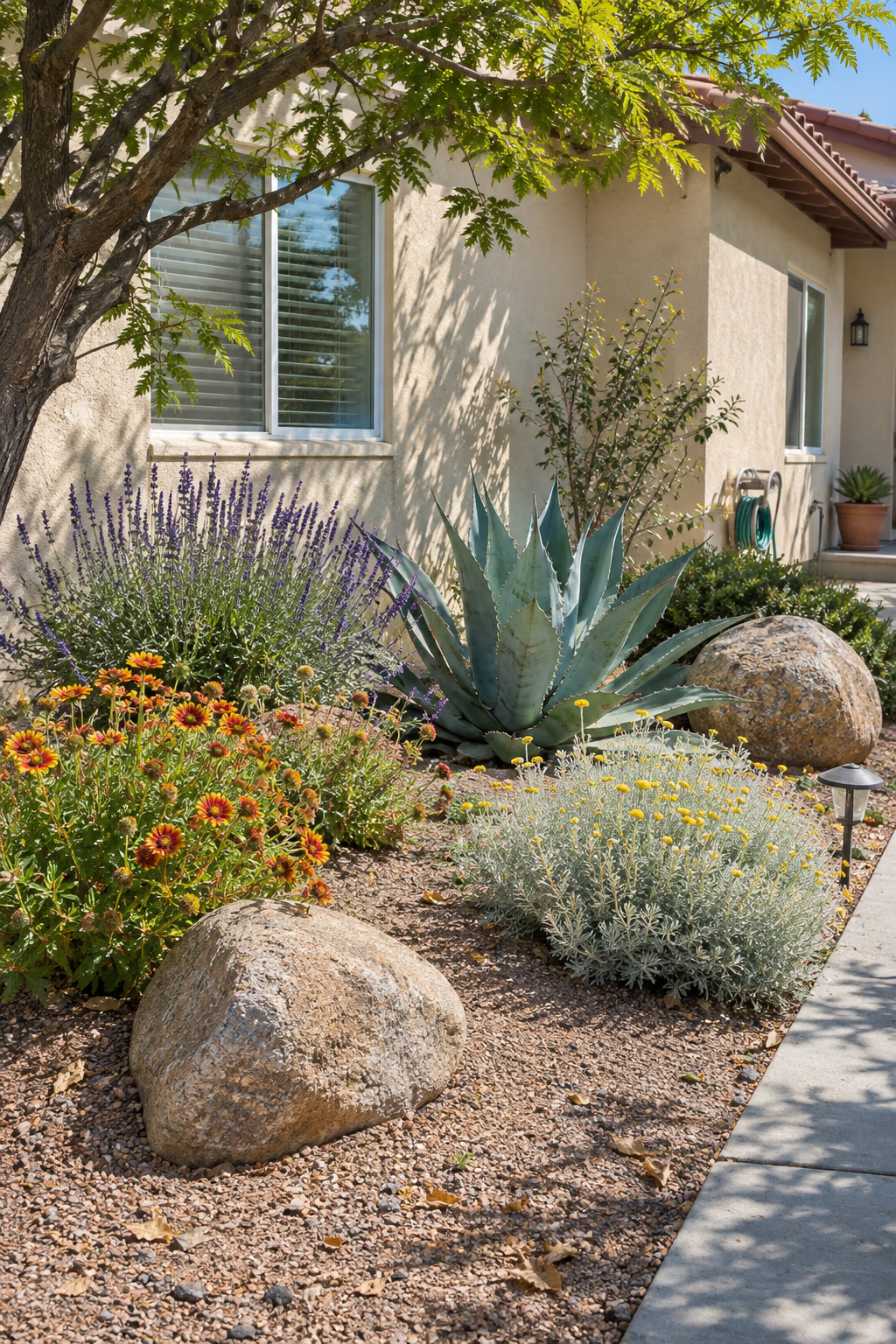
Low-water color for hot, sunny yards
In dry or hot climates, a bed topped with gravel or decomposed granite and planted with agave, lavender, blanket flower, and santolina needs far less water than lawn. A couple of large boulders add weight and a sense of place.
Spread a 2 to 3 inch layer of gravel over landscape fabric or directly on well-prepared soil. Group plants with similar water needs together, and water deeply but infrequently the first season to establish roots.
Gravel next to a house can radiate heat, and some succulents are not hardy in cold winters, so choose plants rated for your USDA zone.
8. Frame Flower Beds With Low Boxwood Hedges
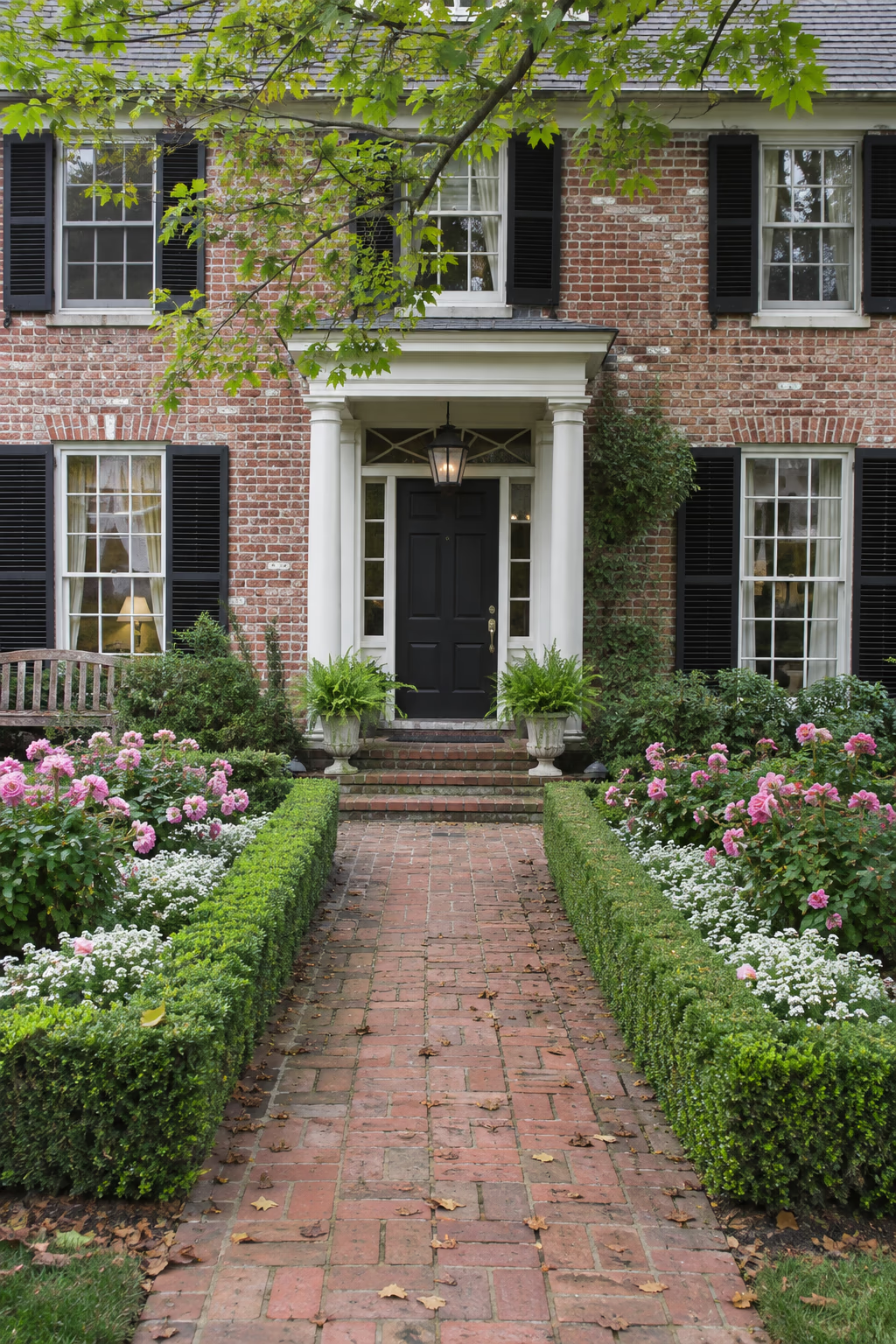
Formal structure that keeps looking tidy
A low clipped hedge around a bed gives even simple flowers a polished frame. Place two matching beds on either side of the front path, edge each with boxwood about 18 inches tall, and fill them with roses, alyssum, or other compact plants.
Symmetry suits traditional brick or colonial homes especially well. Evergreen hedges also keep the bed looking good in winter when flowers are gone.
Boxwood can suffer from blight and boxwood moth in some areas. Ask a local nursery about alternatives such as inkberry or dwarf yaupon holly if those are a problem near you.
9. Wrap a Shade Bed Around a Front Yard Tree
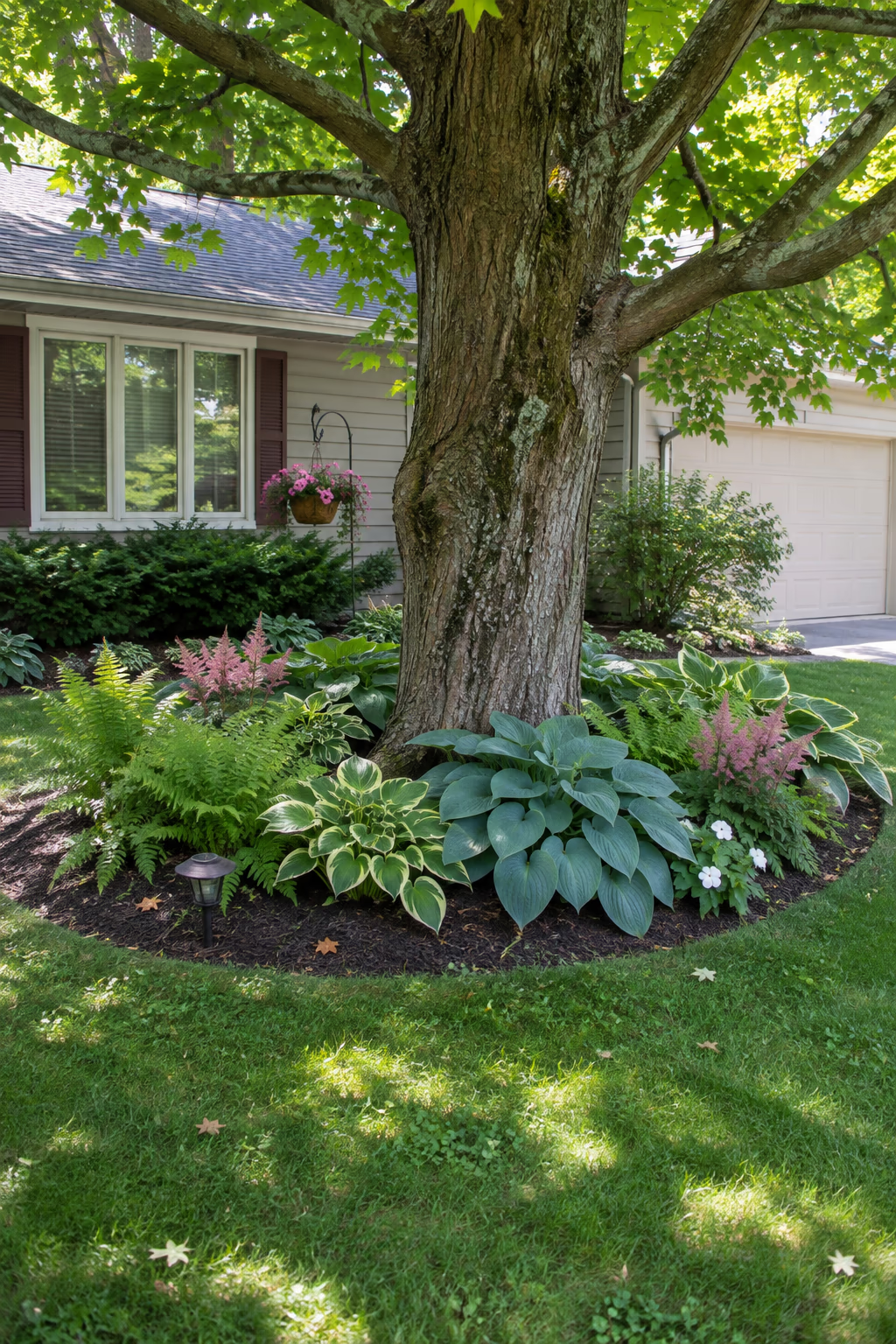
Turn bare roots and thin grass into a garden
Grass struggles under a mature tree, so replace it with a wide, curved bed of hostas, ferns, astilbe, and impatiens. Dark mulch makes the foliage stand out.
Make the bed as wide as the canopy if you can, and cut the edge in a smooth curve. Plant by hand to avoid damaging roots.
Never pile mulch up against the trunk and keep it to about 2 to 3 inches deep. Deep soil over roots can harm trees, so avoid raised beds or adding more than an inch of soil on top.
10. Train Climbing Roses Over an Entry Gate
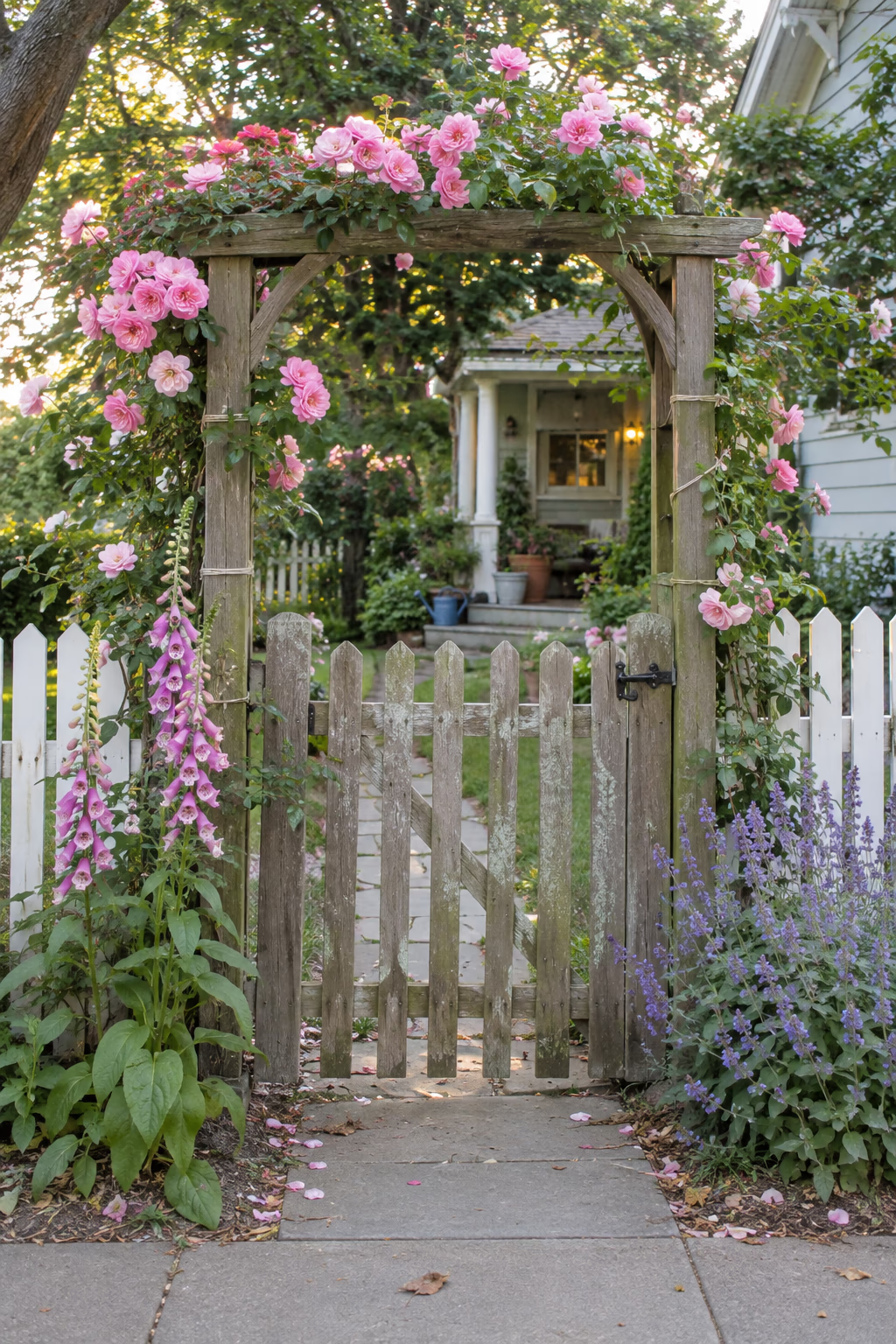
Romance at the front gate
A small arbor or gate with climbing roses gives the entry real charm. Choose a repeat-blooming, disease-resistant climber and tie the canes loosely to the structure as they grow.
Add foxglove, catmint, or lavender at the base to hide the bare lower stems of the roses. A white or natural-wood gate shows off pink or cream blooms nicely.
Roses need at least six hours of sun and good air circulation. Prune in late winter or early spring, and wear sturdy gloves.
11. Mix Shrubs and Perennials for Year-Round Color
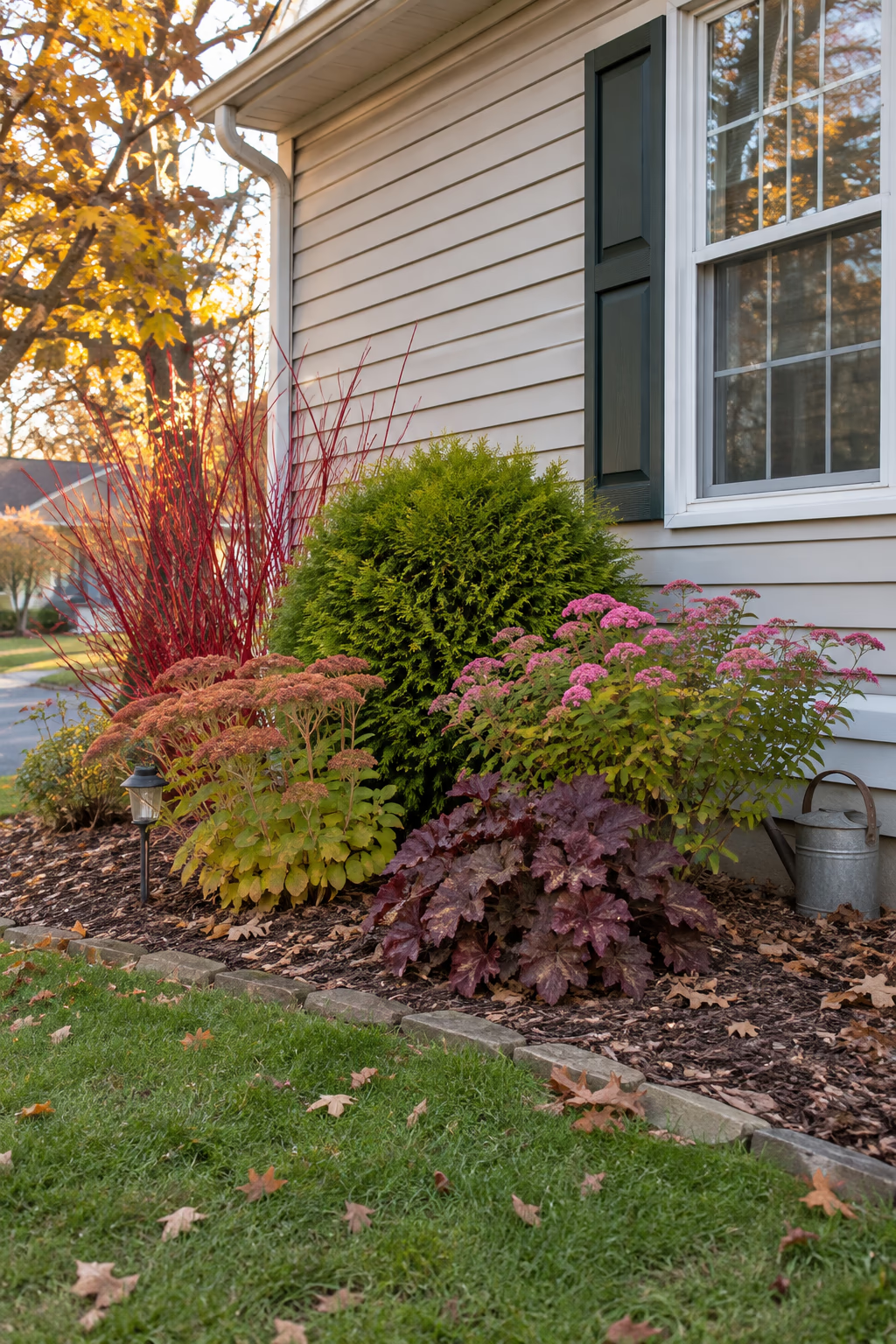
Structure in winter, flowers in summer
A bed built on shrubs looks good in every season. Combine evergreens with a flowering shrub such as spirea, plus perennials, coral bells, and sedum, and perhaps red-twig dogwood for winter stem color.
Plant in odd numbers, with the biggest plants at the back or corners, and leave room for mature sizes. Many shrubs outgrow their space, which is a leading reason beds look overgrown and dated.
Check the mature width on the plant tag and space accordingly, even if the bed looks sparse at first.
12. Line the Path With Spring Bulbs
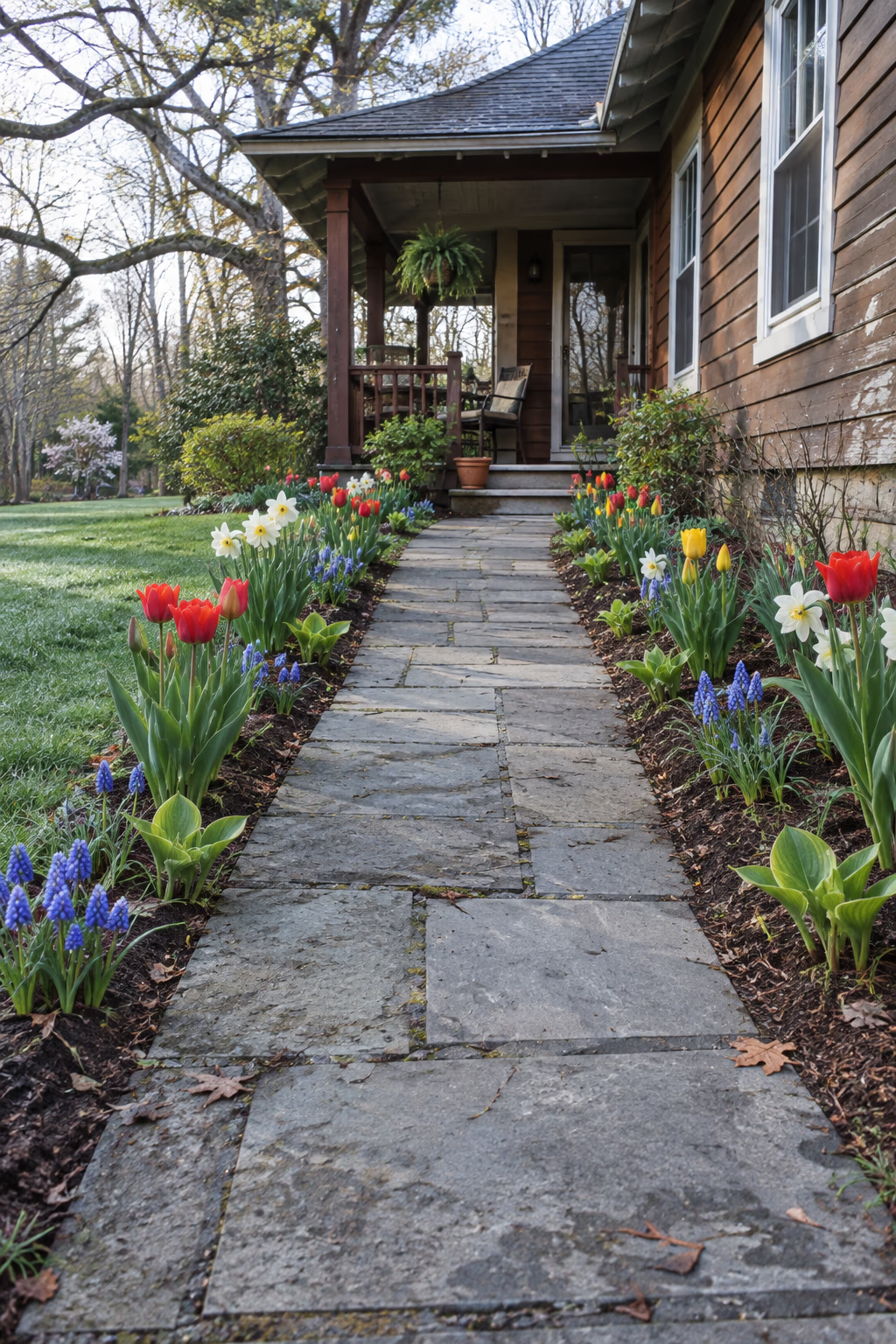
A burst of early color after winter
Tulips, daffodils, and grape hyacinths planted along the walk bring the first big wave of color. Plant bulbs in groups rather than in single rows for a more natural look.
Plant in fall once the soil is cool, setting bulbs about three times as deep as they are tall. Follow with hostas or daylilies that will cover the fading bulb foliage.
Squirrels and deer love tulips. Daffodils are generally left alone and are a safer choice if wildlife is a problem. Let leaves yellow before removing them so bulbs recharge.
13. Create a Monochrome Color Story
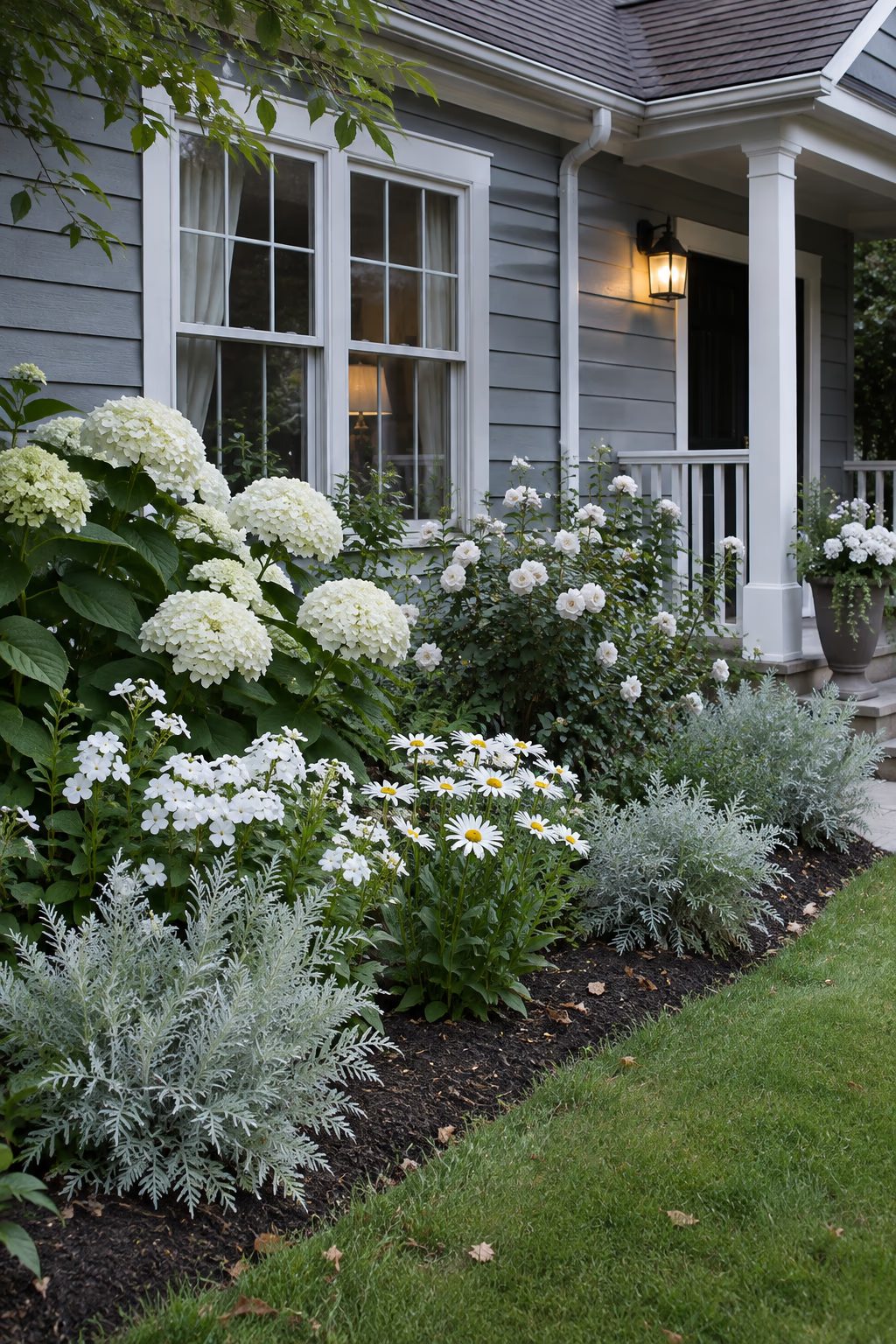
One color family for a calm, upscale look
A bed in a single color family, such as all white, or shades of pink and purple, feels cohesive and modern. White with silver foliage glows at dusk and complements almost any house color.
Create interest through different leaf shapes and textures, such as spiky, round, and feathery, so the bed doesn’t look flat. Try white hydrangea, shasta daisy, phlox, and artemisia.
Bloom times are the challenge. Include plants that flower in different months, or the bed may look plain for part of the season.
14. Border the Walk With Lavender and Catmint
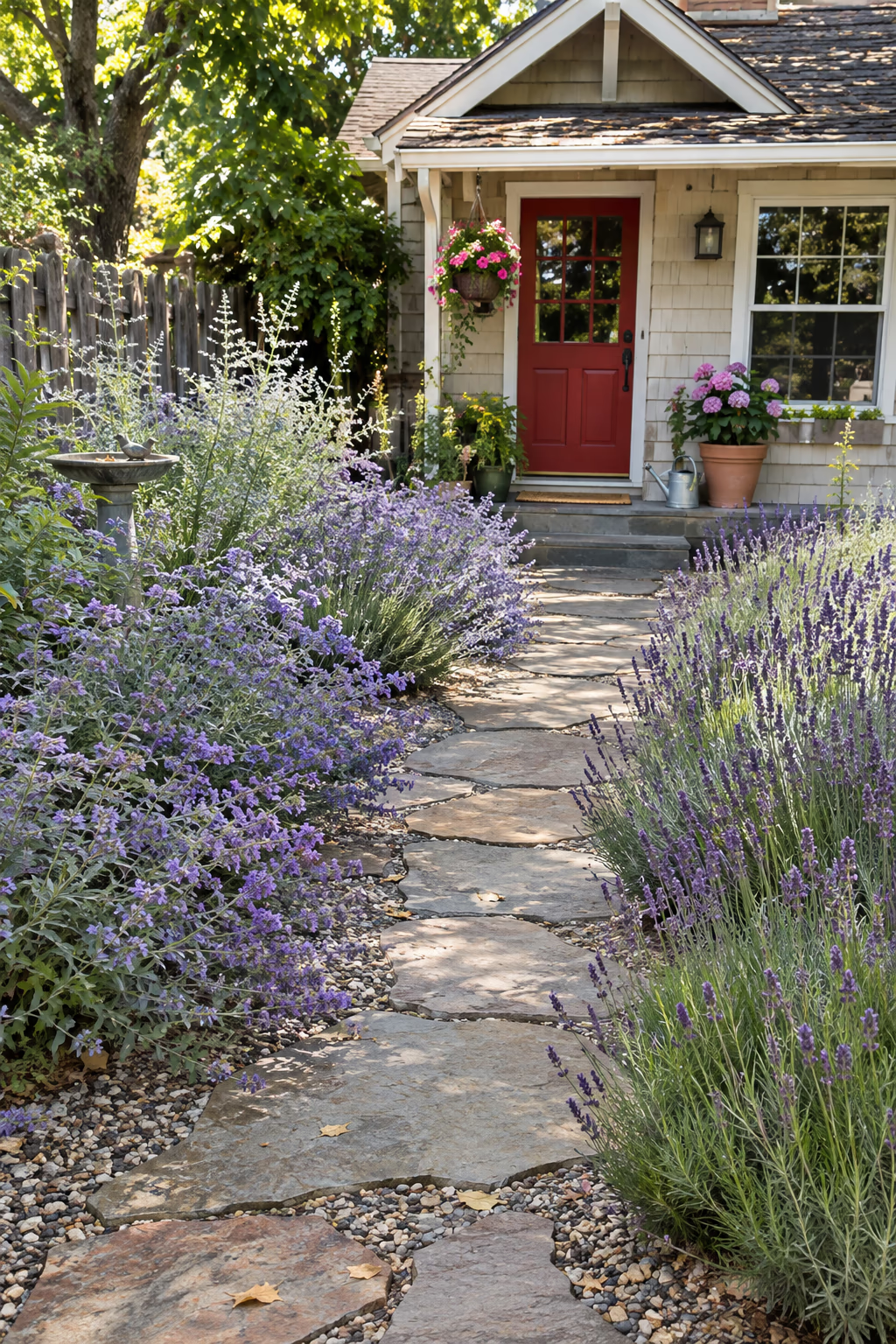
Fragrance and bees along the path
Lavender and catmint both love sun and tolerate dry soil, and together they make a soft purple-blue ribbon that brushes against your legs as you walk. Space plants about 18 to 24 inches apart.
Both bloom for weeks and attract bees, and deer tend to avoid them. Shear catmint after its first flush to encourage a second round.
Lavender needs excellent drainage and does poorly in wet clay or humid regions. Amend heavy soil with gravel or plant on a slight mound.
15. Soften the Foundation With Ornamental Grasses
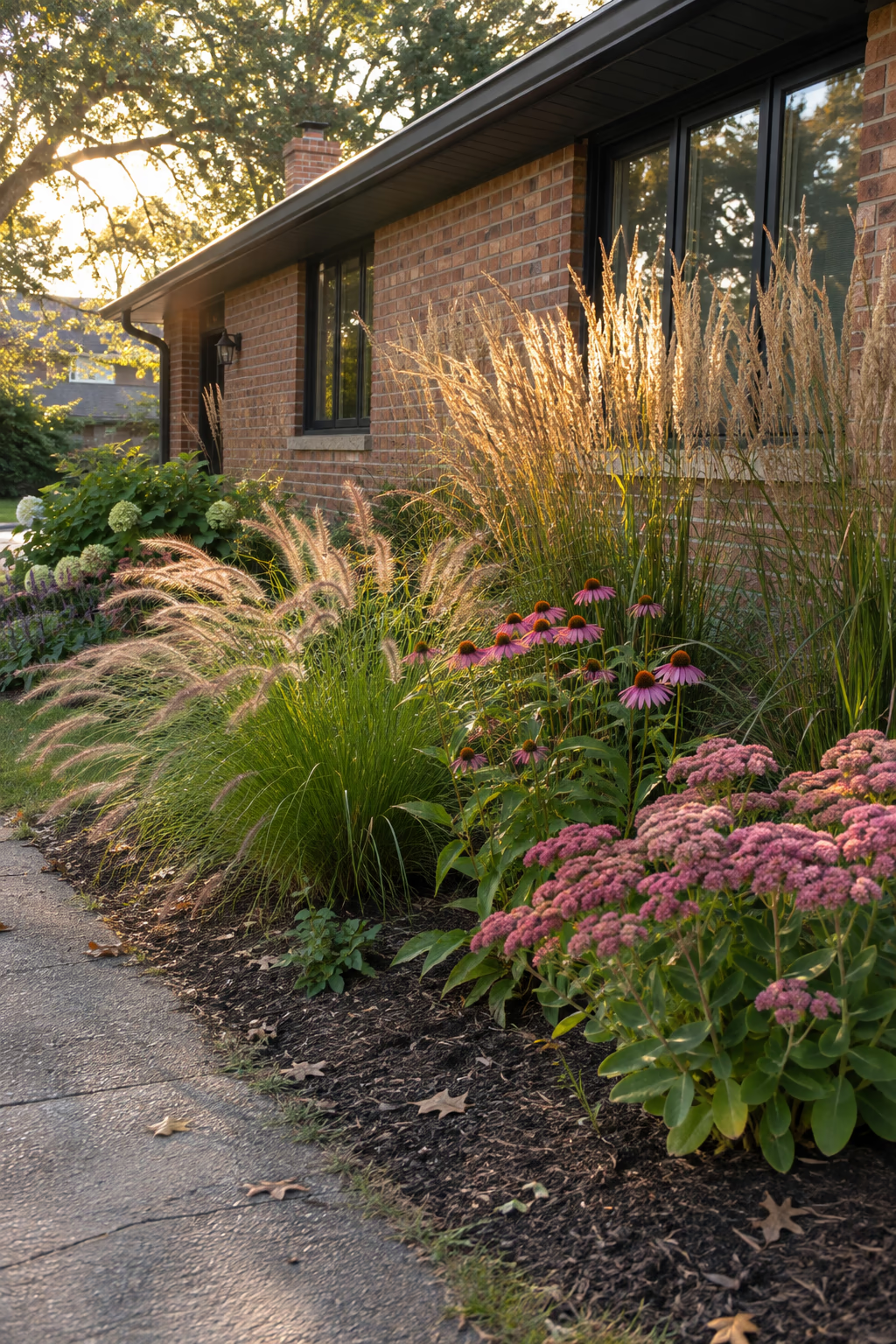
Movement and texture against hard walls
Tall feather reed grass, fountain grass, and little bluestem add motion to a bed along the house, especially when paired with coneflower and sedum. The seed heads catch low light beautifully in late summer and fall.
Grasses suit modern and ranch homes with strong horizontal lines. Leave a foot or two between plants and the house for airflow and maintenance.
Cut them back to a few inches in late winter before new growth starts. Pick clumping types, as some grasses spread aggressively.
16. Wind Stepping Stones Through a Wild Garden Path
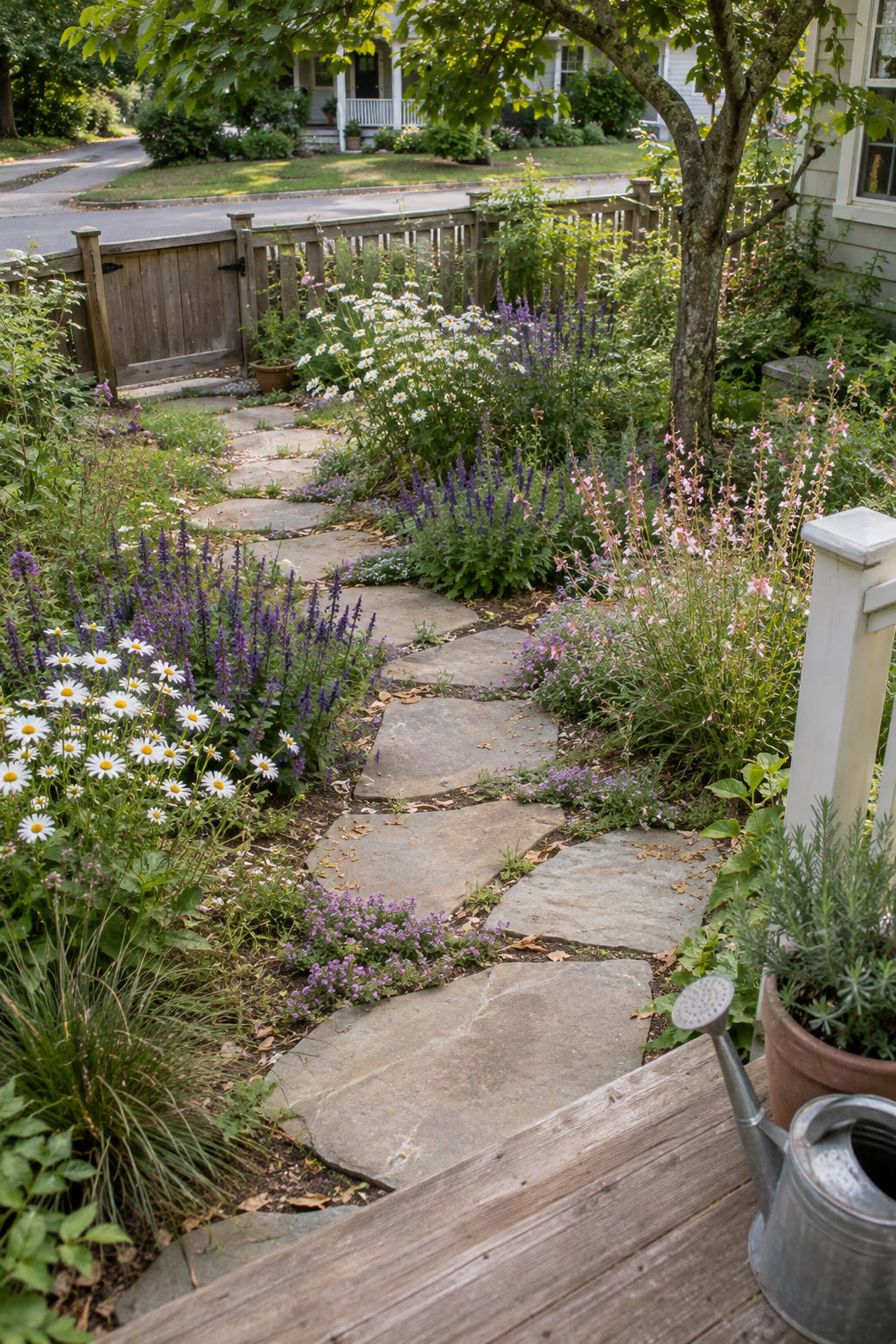
Replace lawn with a path that invites strolling
Instead of a straight sidewalk, set irregular flagstones in a meandering line through daisies, salvia, gaura, and creeping thyme. Plants are allowed to touch the stones.
Space stones about a comfortable stride apart, roughly 18 to 24 inches center to center, and bed them in sand or gravel so they don’t rock.
This works best as a secondary route. Keep the main walk to the door wide and even for safety, especially in wet or icy weather.
17. Hang Baskets From the Porch Eaves
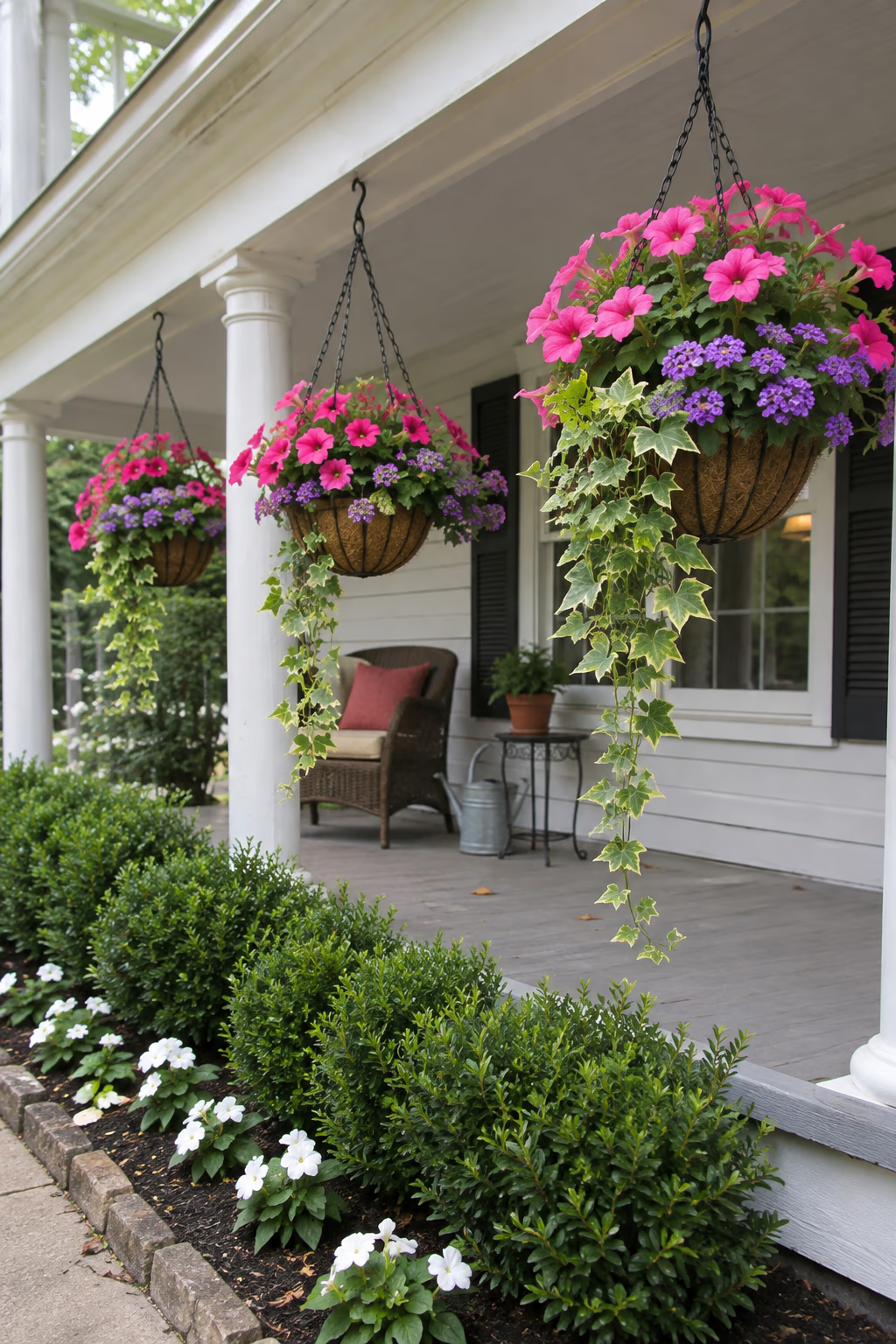
Add height without taking up ground space
Hanging baskets of petunias, verbena, fuchsia, or ivy fill the air space along a covered porch and look great above a modest bed of boxwood and impatiens.
Use sturdy hooks screwed into a beam or joist, and pick baskets with a built-in water reservoir or liner to help them last in summer.
They need frequent watering and feeding. Hang them where you can reach them easily, and avoid bright, hot western exposures for shade-loving plants.
18. Surround the Mailbox With a Small Island Bed
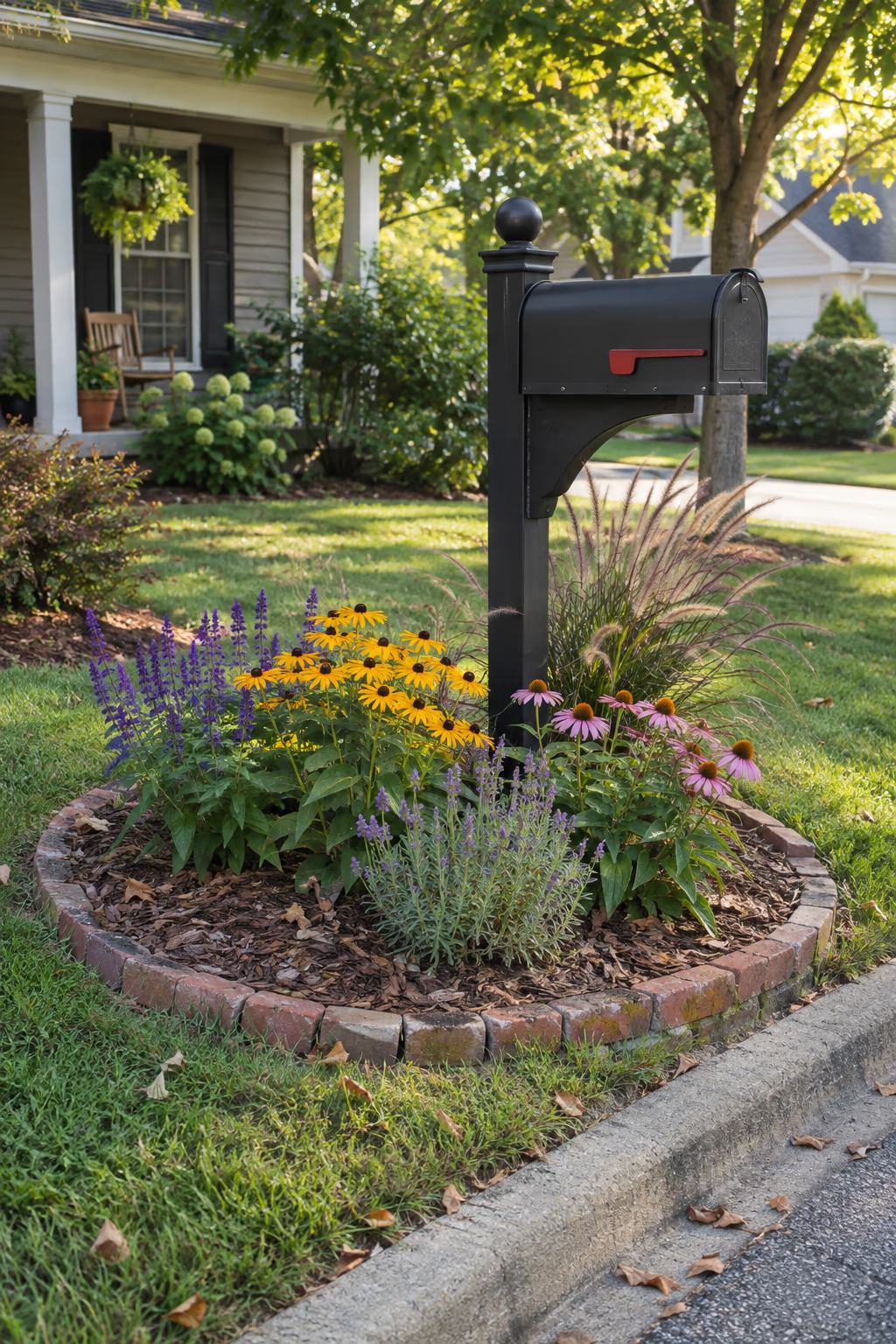
A small project with big curb impact
A round bed about 4 to 6 feet across around the mailbox post gets noticed by everyone passing. Plant black-eyed Susan, salvia, and dwarf grasses that stay low and tough.
Choose plants tolerant of heat and road salt in snowy regions, and keep them short enough to leave the mailbox accessible.
Check local rules first, because many towns restrict plantings in the right-of-way, and mail carriers need clear access. Stay clear of overhead and buried lines.
19. Build a Hosta and Fern Woodland Edge
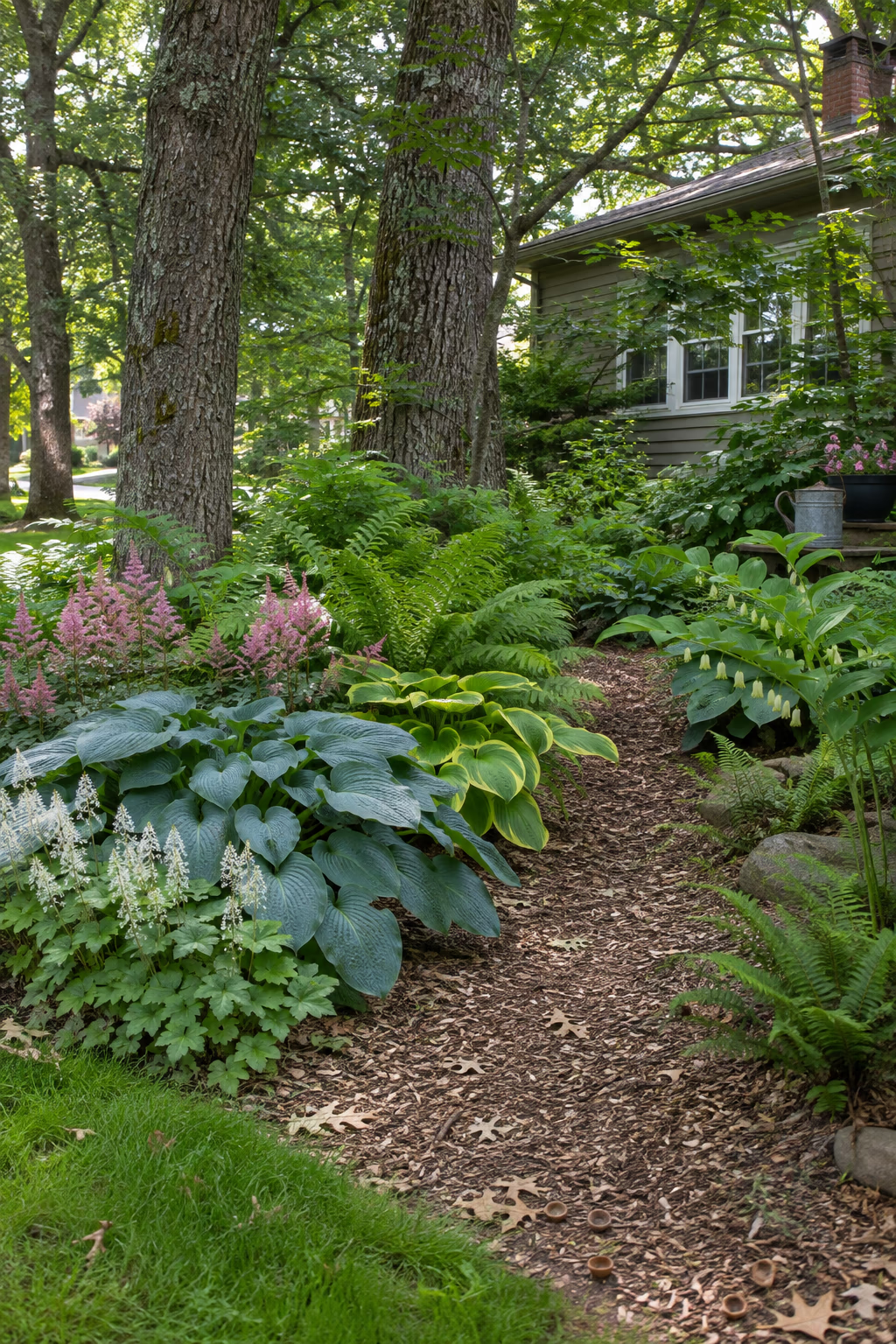
Lush texture for a shady front yard
Where trees cast deep shade, forget flowers and think foliage. Hostas, ferns, foamflower, and Solomon’s seal create layers of green, with astilbe for a splash of pink.
Add a narrow wood-chip path through the planting for a woodland feel, and enrich the soil with leaf mold or compost.
Deer and slugs love hostas, so use deer-resistant ferns and consider a repellent or slug control if damage appears.
20. Cover a Fence With a Flower Wall
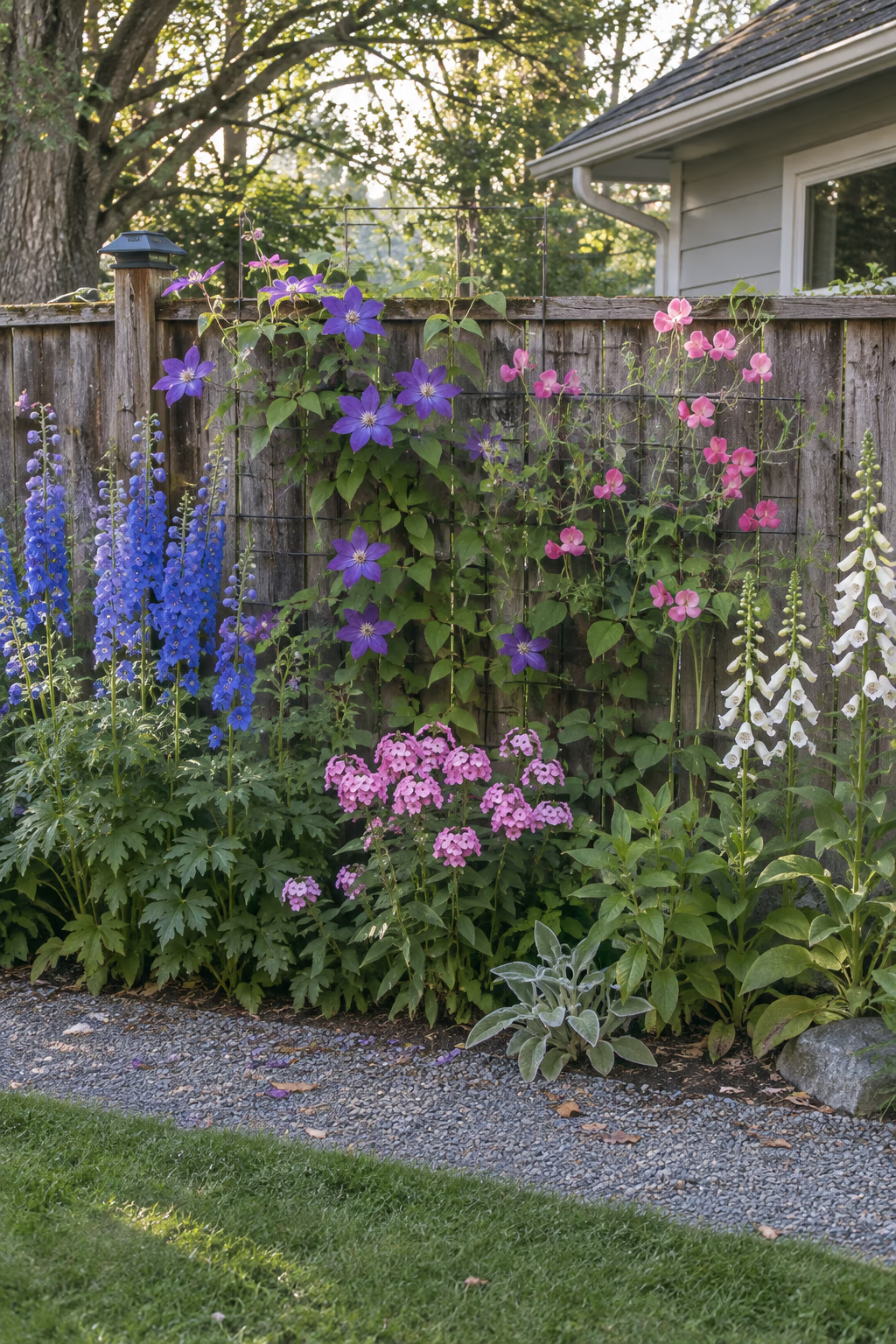
Go vertical when space is tight
A trellis or wire on a fence supports clematis, sweet peas, or climbing roses, while delphinium, phlox, and foxglove grow in a narrow bed in front. The result is a wall of blooms.
Attach wire or a trellis a couple of inches from the fence to leave airflow and allow vines to wrap. Clematis likes its roots cool, so shade the base with other plants.
Make sure the fence is sturdy, as a mature vine can be heavy, and confirm fence height and plantings against local rules.
21. Light the Bed With Low Path Lights
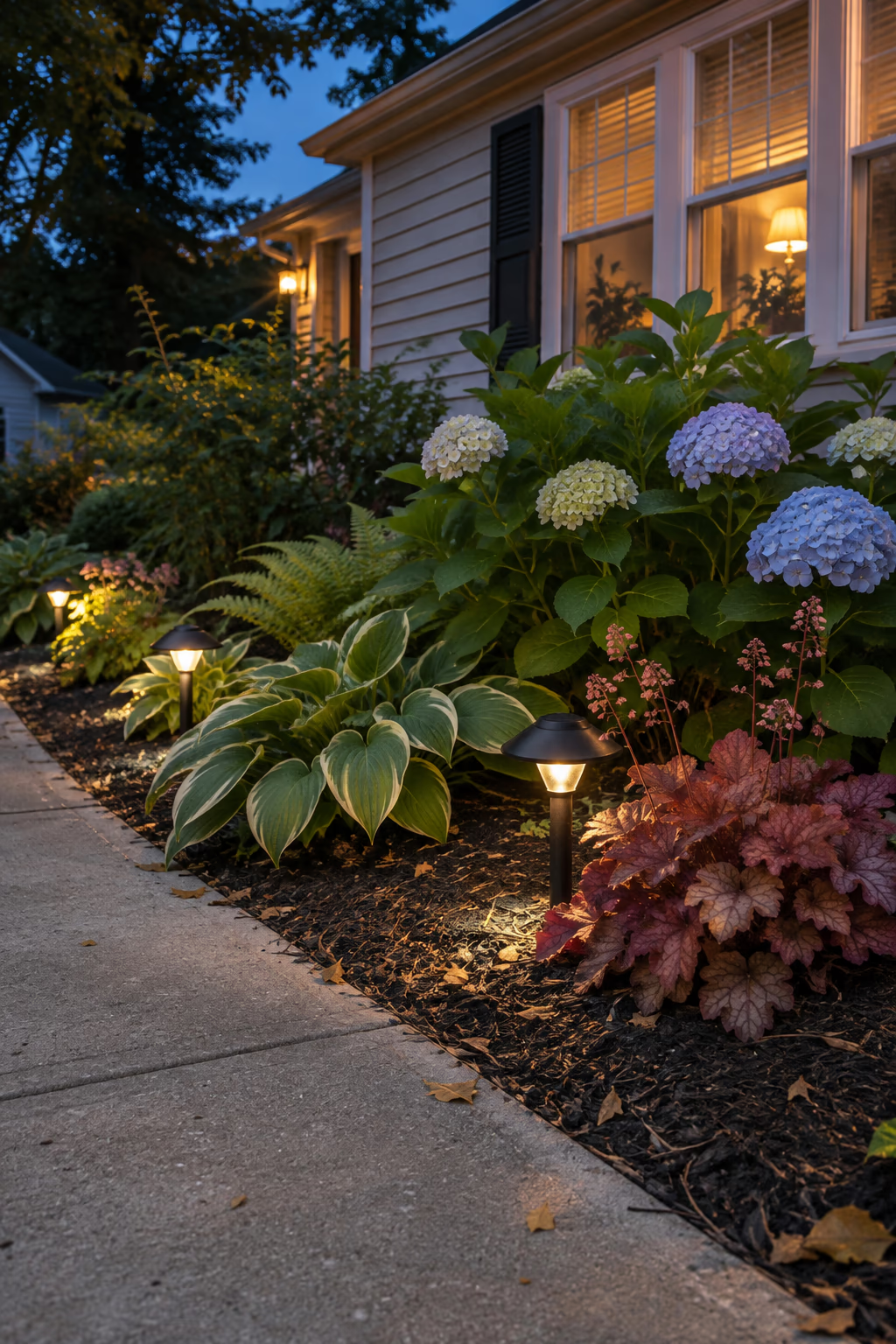
Enjoy your flowers after dark
Small low-voltage or solar path lights placed around the bed edge make the plants glow at dusk and make the walk safer. Space lights several feet apart so you get pools of light rather than a runway.
Warm white bulbs flatter foliage and flowers best. Light-colored blooms and variegated hostas show up especially well at night.
Solar lights vary in quality and need decent sun, so low-voltage systems are more reliable for shady fronts.
22. Fill a Corner With Tropical Foliage
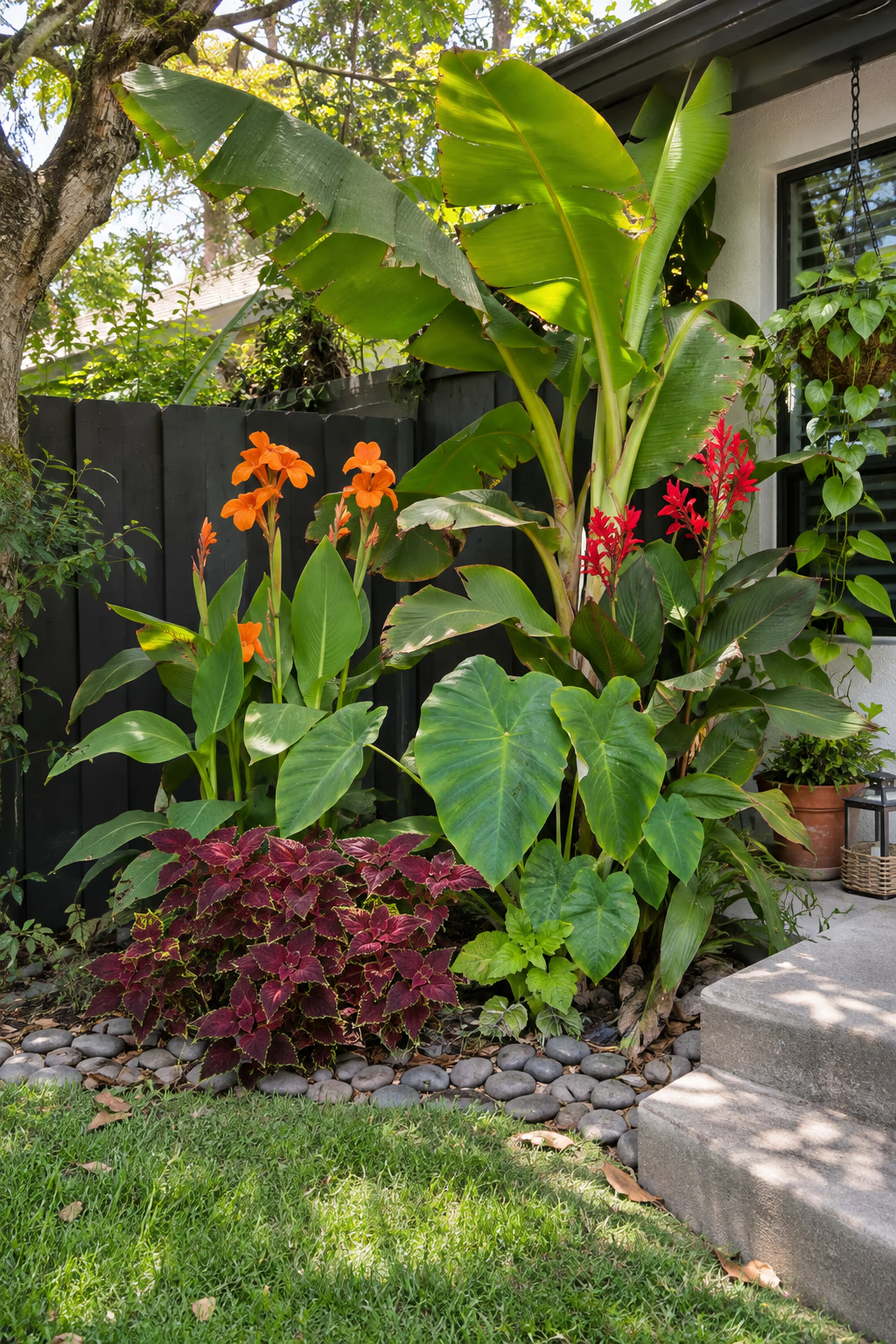
Big leaves and bold color in warm climates
Canna lilies, elephant ears, bananas, and coleus make a dramatic corner, especially against a dark fence that makes the colors pop. River rock mulch helps tie it together.
These plants thrive in heat and humidity with regular watering. In colder zones, treat them as summer annuals or lift tubers in fall and store them indoors.
Keep the palette tight, say two foliage colors and one flower color, so the bed looks designed rather than chaotic.
23. Anchor the Bed With a Birdbath Focal Point
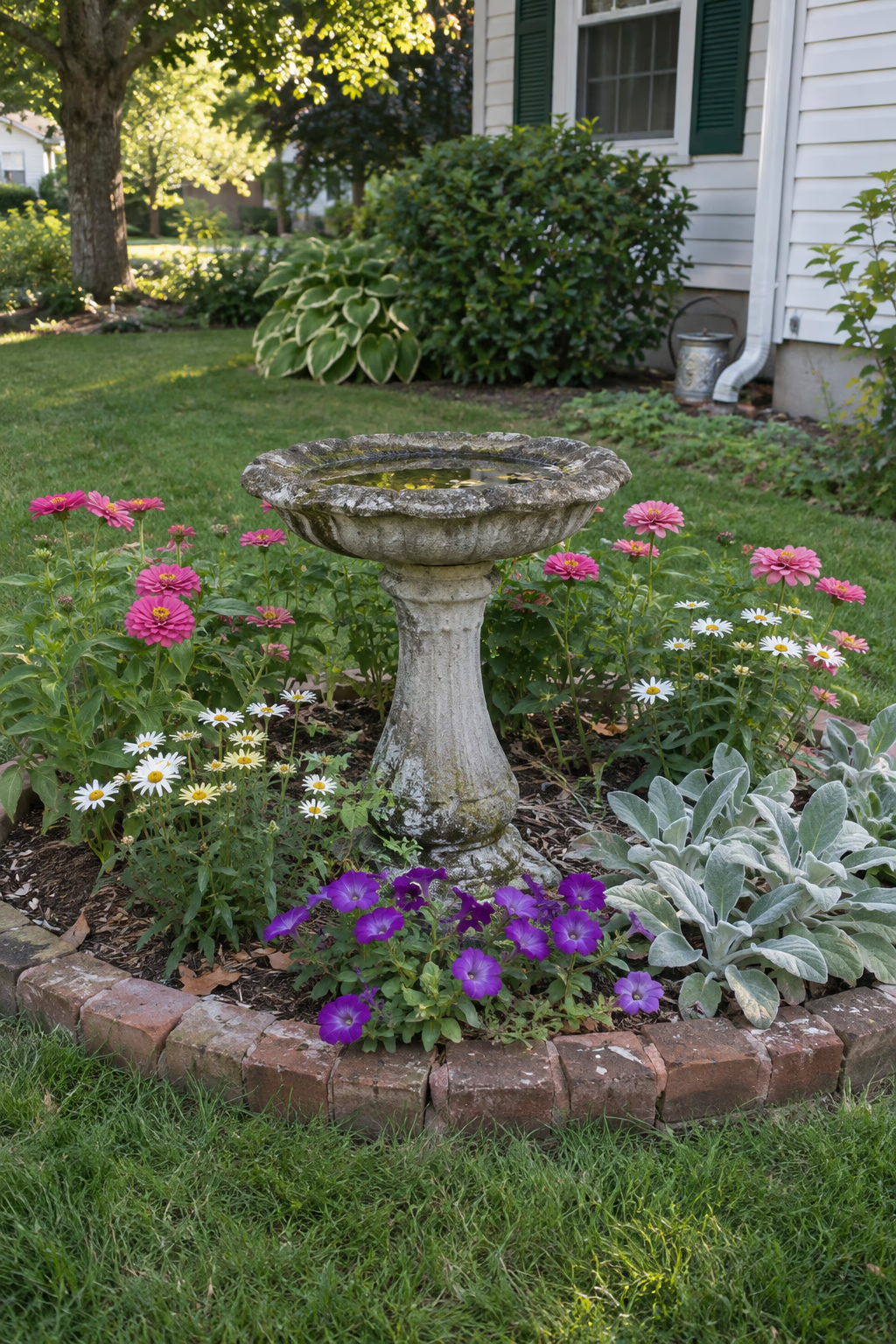
A centerpiece that draws the eye and wildlife
A birdbath at the center of a round bed gives the planting a purpose. Surround it with zinnias, daisies, lamb’s ear, and petunias in a low mound so the basin stays visible.
Make sure the bath sits level on a firm base. A shallow basin of 1 to 2 inches is best for small birds.
Change the water every few days to avoid mosquitoes and algae, and clean the basin regularly.
24. Fill Gaps With Cutting Garden Annuals
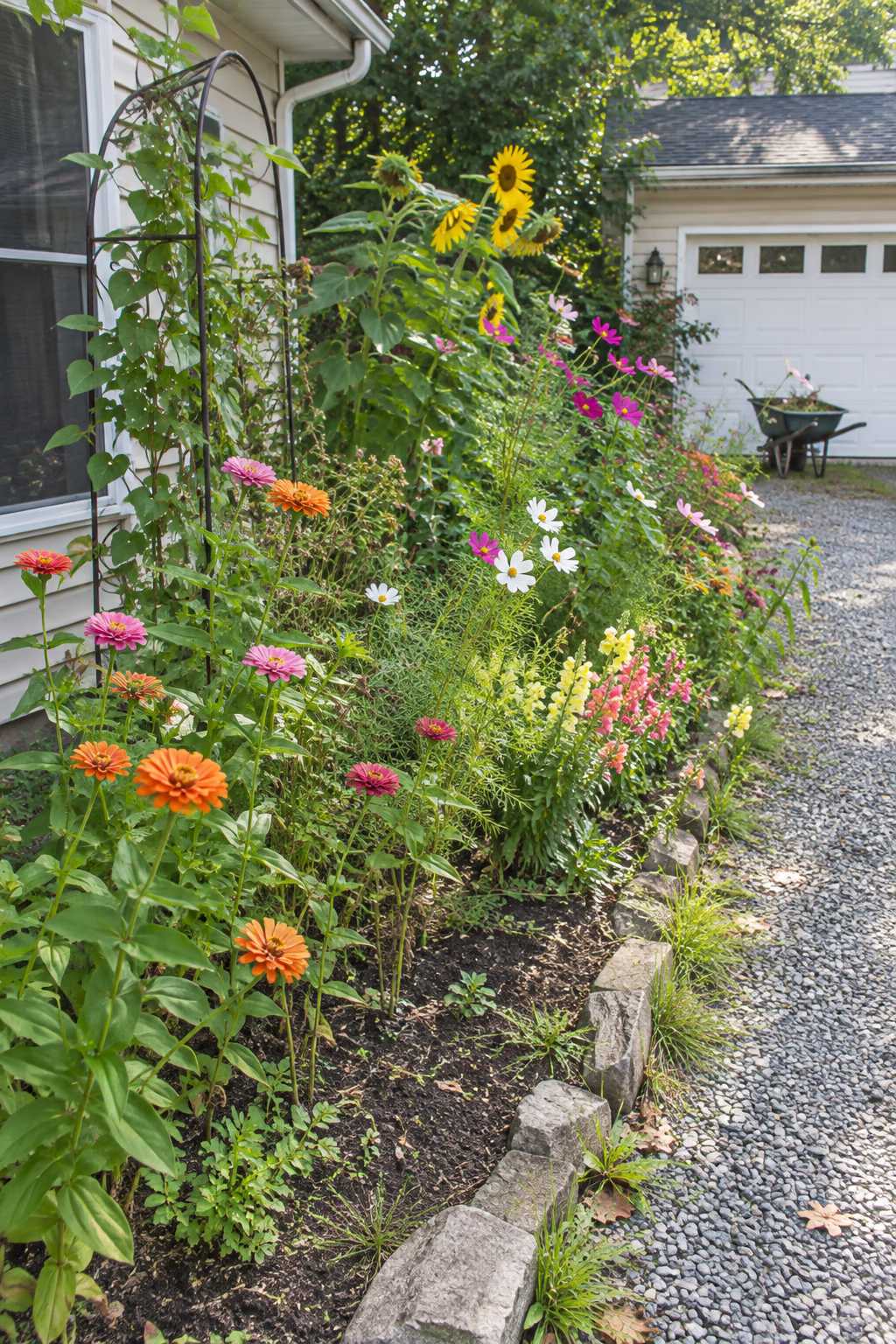
Cheap color you can bring indoors
Zinnias, cosmos, snapdragons, and sunflowers grown from seed fill a sunny bed for just a few dollars and produce flowers all summer. The more you cut, the more they bloom.
Sow after the last frost directly in the soil, thin seedlings, and water regularly. Mix tall varieties at the back and short ones in front.
Annuals need replanting each year, and a bed of them can look bare early on, so mix in perennials or use them just to fill gaps.
25. Refresh the Bed With Crisp Edging and Dark Mulch
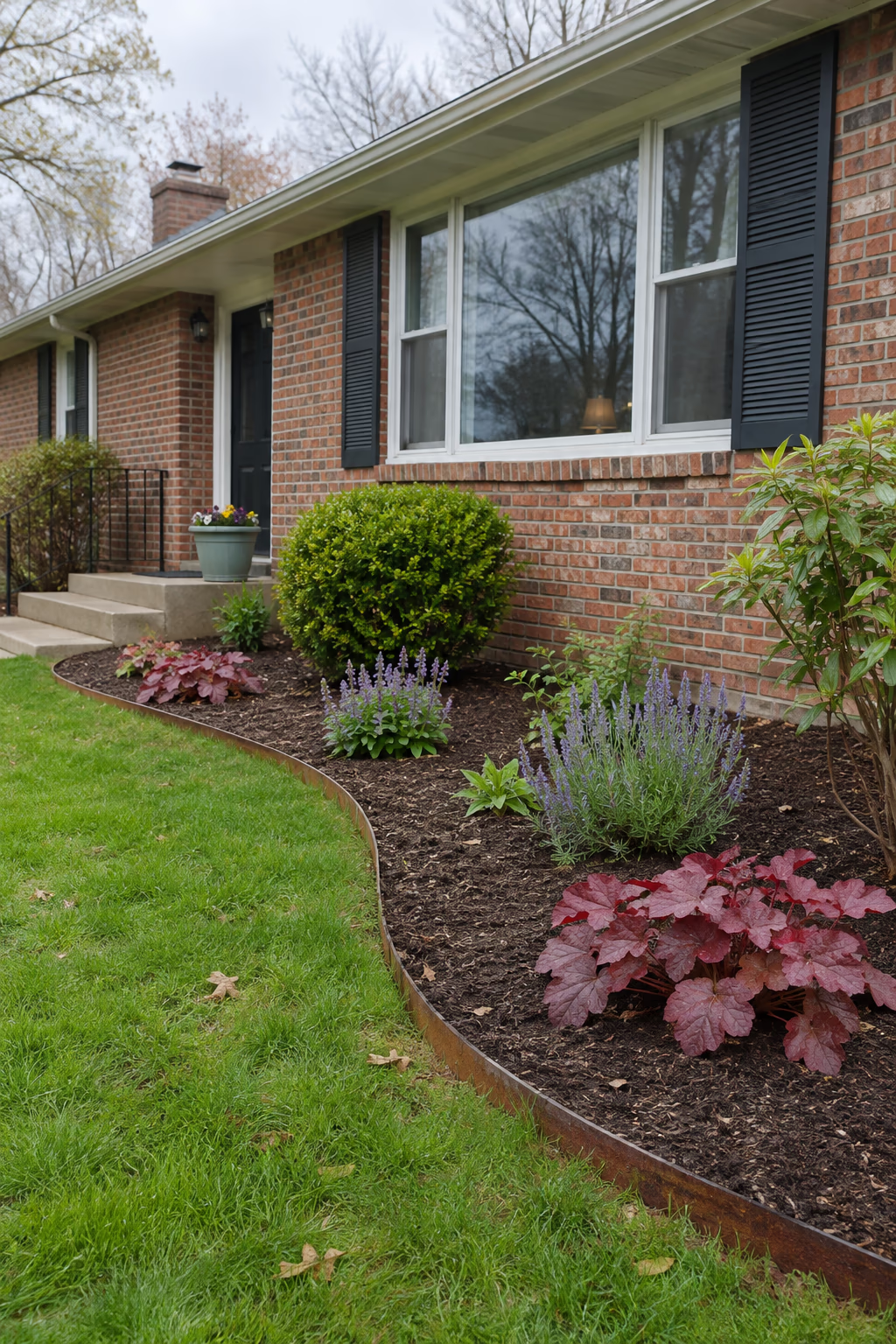
The simplest update of all
Sometimes the cheapest way to make flower beds look better is to clean them up. A crisp edge, whether cut with a spade or installed with steel edging, and a fresh 2 to 3 inch layer of dark brown mulch make existing plants look sharper.
Pick natural brown or black-brown mulch, since bright red dyed mulch can look dated. Spread it evenly, and add a few young perennials to fill any gaps.
Keep mulch a couple of inches away from stems and house siding, and refresh it yearly as it breaks down.
How to Plan Your Front Yard Flower Beds
A little planning helps new beds look good for years and prevents costly replanting. Start by watching the yard for a day to see where sun and shade fall.
- Check your sun and soil. Count hours of direct sun and test the soil, then choose plants that fit rather than fighting the site.
- Know your zone. Look up your USDA hardiness zone and buy plants rated for it.
- Size the bed generously. Beds at least 3 to 4 feet deep look more natural, and curves are easier to mow around than sharp corners.
- Layer by height. Put tall plants at the back, medium in the middle, and low ones at the front, and repeat plants for rhythm.
- Plan for upkeep. Be honest about the time you will spend weeding, watering, and deadheading, and choose low-maintenance plants if that is limited.
- Check rules and utilities. Review HOA guidelines and local codes, and call 811 before any digging in the United States.
Frequently Asked Questions
What are the best flowers for a front yard bed?
It depends on sun and climate, but dependable choices include coneflower, black-eyed Susan, salvia, daylily, catmint, hydrangea, and roses. Mixing perennials with a few shrubs gives the longest season of interest.
How do I make a flower bed look good all year?
Include evergreen or winter-interest shrubs, ornamental grasses, and plants that bloom in different seasons. Fresh mulch and a clean edge keep the bed looking neat even when little is in flower.
How much does a front yard flower bed cost?
Costs vary widely. A small DIY bed with perennials, mulch, and edging may run a few hundred dollars, while stone walls, hardscaping, and professional design can reach into the thousands.
How deep should a front flower bed be?
Aim for at least 3 to 4 feet deep for layered plantings. Narrow strips look crowded, and a wider bed lets you stagger heights and give plants room to grow.
What is the lowest-maintenance flower bed?
Beds built on native plants, drought-tolerant perennials, and shrubs with mulch usually need the least care. Choosing plants suited to your site matters more than any design.
Final Thoughts
The best front yard flower bed ideas work with your house, your sun, and the time you actually have. A curved hydrangea bed, a cottage border, or even a few well-planted pots can change how the whole home looks from the street.
Start with one bed, plant for your conditions, and add more over time. With good mulch, clean edges, and a little patience, your front yard will keep getting better every season.


