
Pull up to any house and the first thing you notice is the front yard. A tidy path, a few well-placed plants, and a soft glow by the door can make an ordinary home feel cared for and inviting before anyone steps inside.
That’s why front yard landscaping is one of the most rewarding projects a homeowner can take on. It lifts curb appeal, makes coming home more pleasant, and often costs far less than people expect, especially when you build it in stages.
These 31 front yard landscaping ideas range from curved walkways and layered flower beds to native plantings, low walls, lighting, and shady nooks. They suit ordinary lots and budgets, so pick one or two to start and add more over time.
1. Build a Curved Stone Walkway to the Door
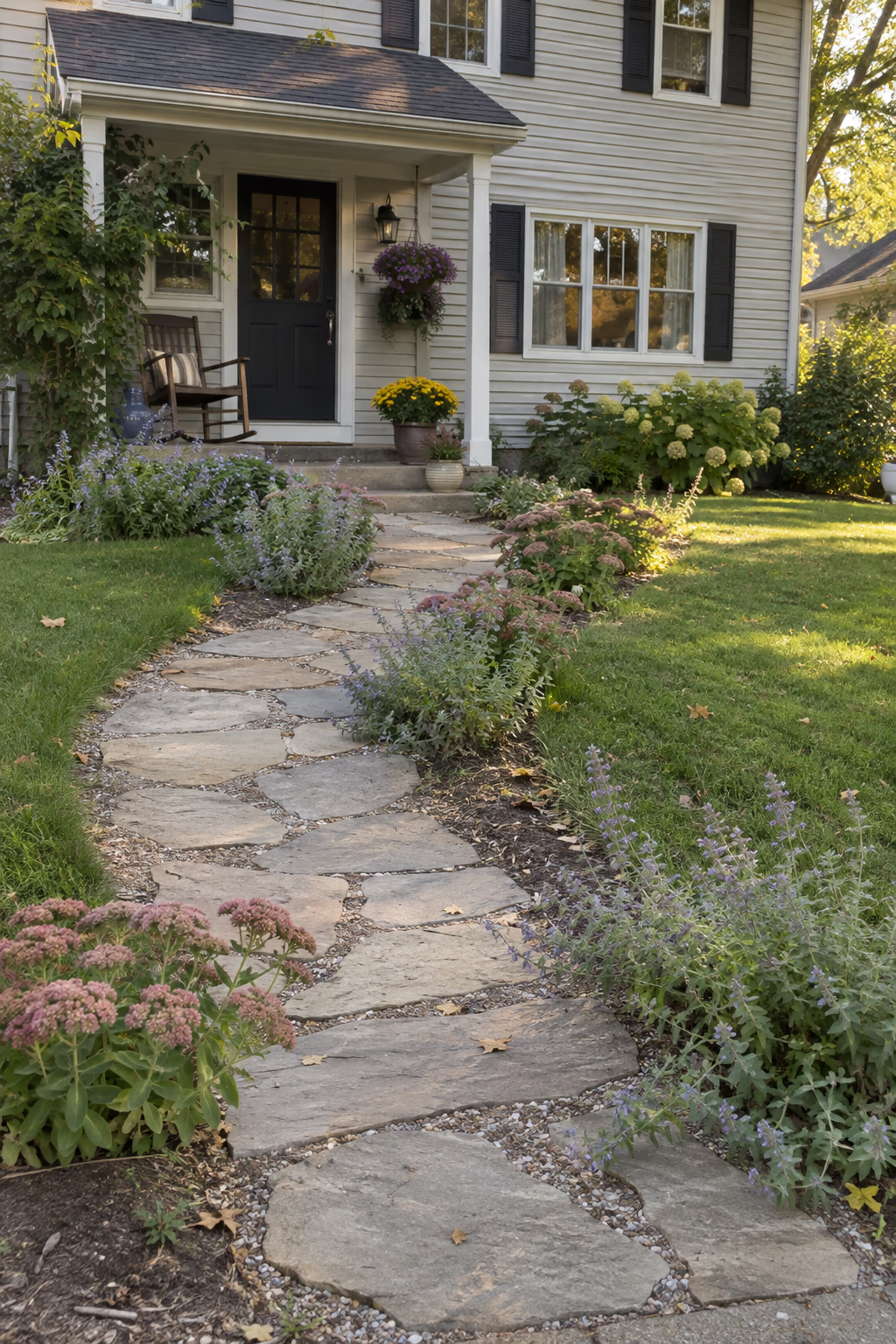
A path that guides guests and adds instant structure
A gently curving walkway of flagstone, concrete pavers, or brick makes the approach to your door feel intentional. Aim for a width of at least 36 inches so two people can walk side by side, and 42 to 48 inches if your budget allows.
Set the stone on a compacted base of 4 inches of crushed gravel topped with 1 inch of sand, and leave a slight slope away from the house so water drains. Soft curves look natural, but avoid sharp wiggles that tempt people to cut across the lawn.
Check local rules before changing a path that meets the sidewalk, and call 811 before you dig.
2. Layer Foundation Beds With Shrubs and Perennials
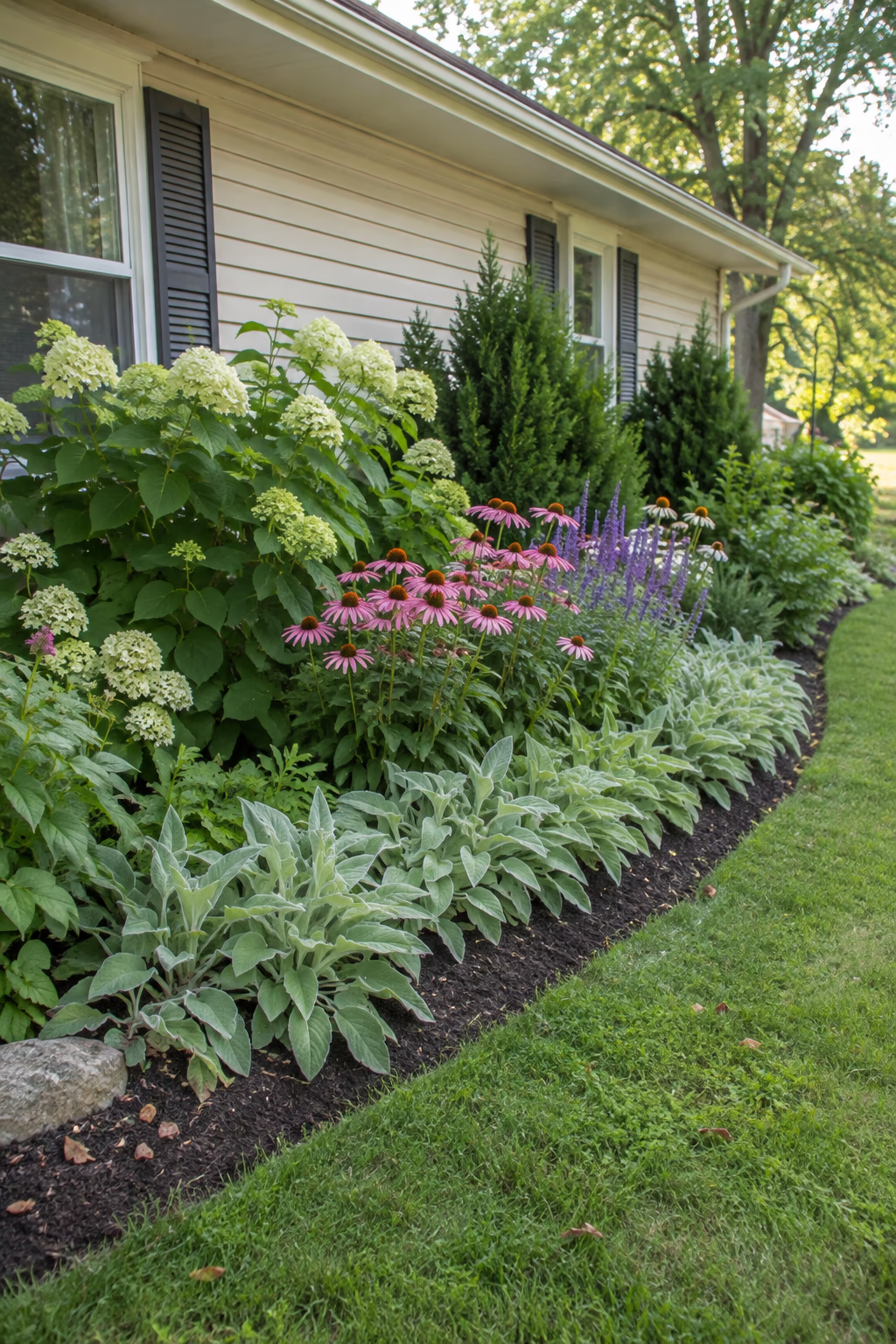
Planting in tiers makes the house look grounded
Instead of a single row of shrubs against the wall, plant in three layers. Put taller evergreens or shrubs closest to the house, mid-height perennials in front of them, and low edging plants along the border.
Use odd-numbered groups of the same plant so the bed reads as a design rather than a collection. Stagger plants slightly, and keep tall shrubs at least 2 to 3 feet from the siding so air can circulate.
Always check the mature size on the plant tag. Many foundation shrubs outgrow their spot within a few years and end up blocking windows.
3. Replace Lawn Patches With a Native Pollinator Garden
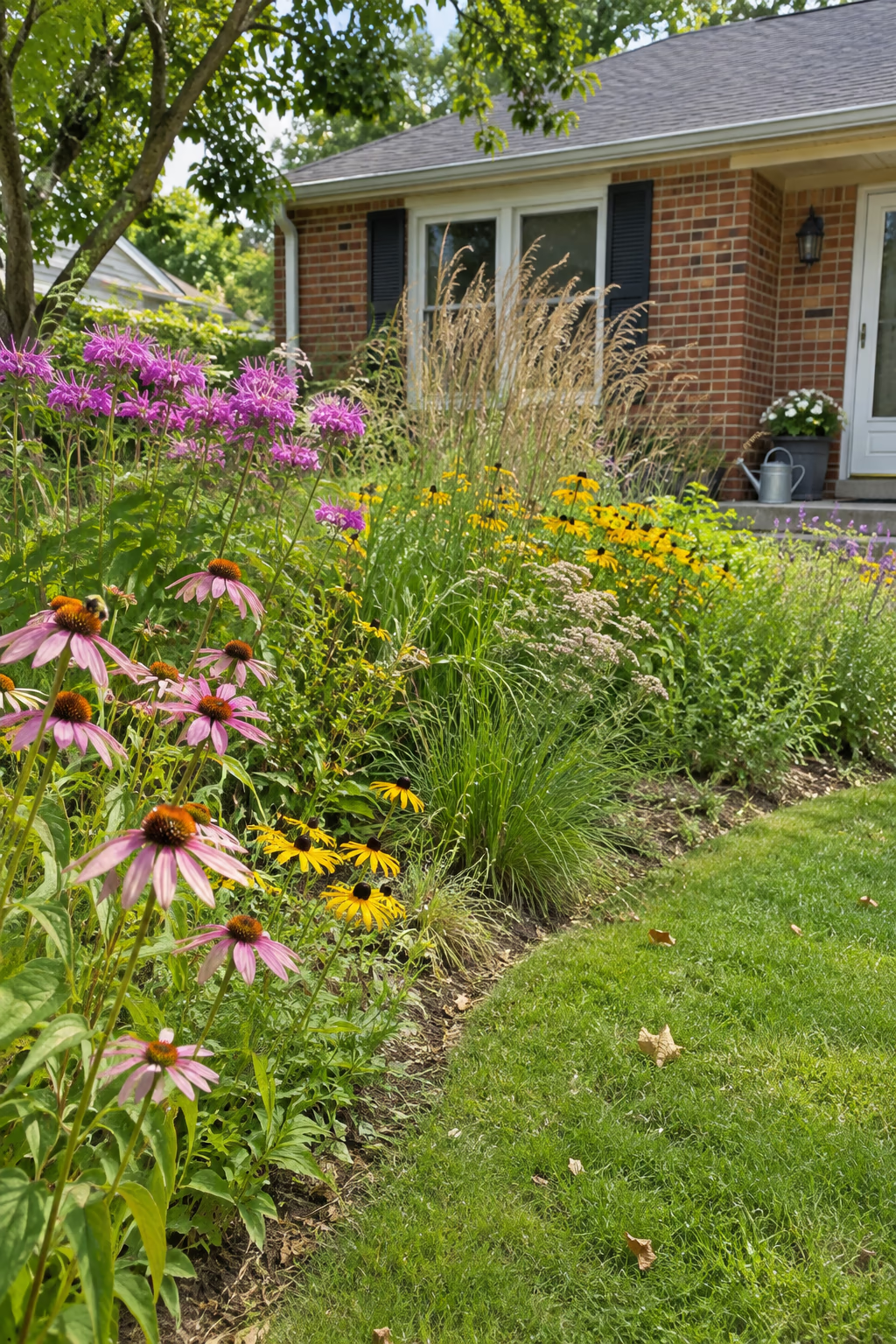
Less mowing and more butterflies
Swapping part of the lawn for native perennials such as coneflower, black-eyed Susan, bee balm, milkweed, and native grasses creates color from early summer to fall. Natives are adapted to local weather, so they usually need less water and fertilizer once established.
Mark the bed with a clean edge and a mown border so the planting looks deliberate. Neighbors tend to accept a wilder garden more readily when it has tidy edges and a few signs of care.
Ask your state extension service for plants native to your region, and check HOA rules about plant height before you start.
4. Frame the Entry With Matching Planters
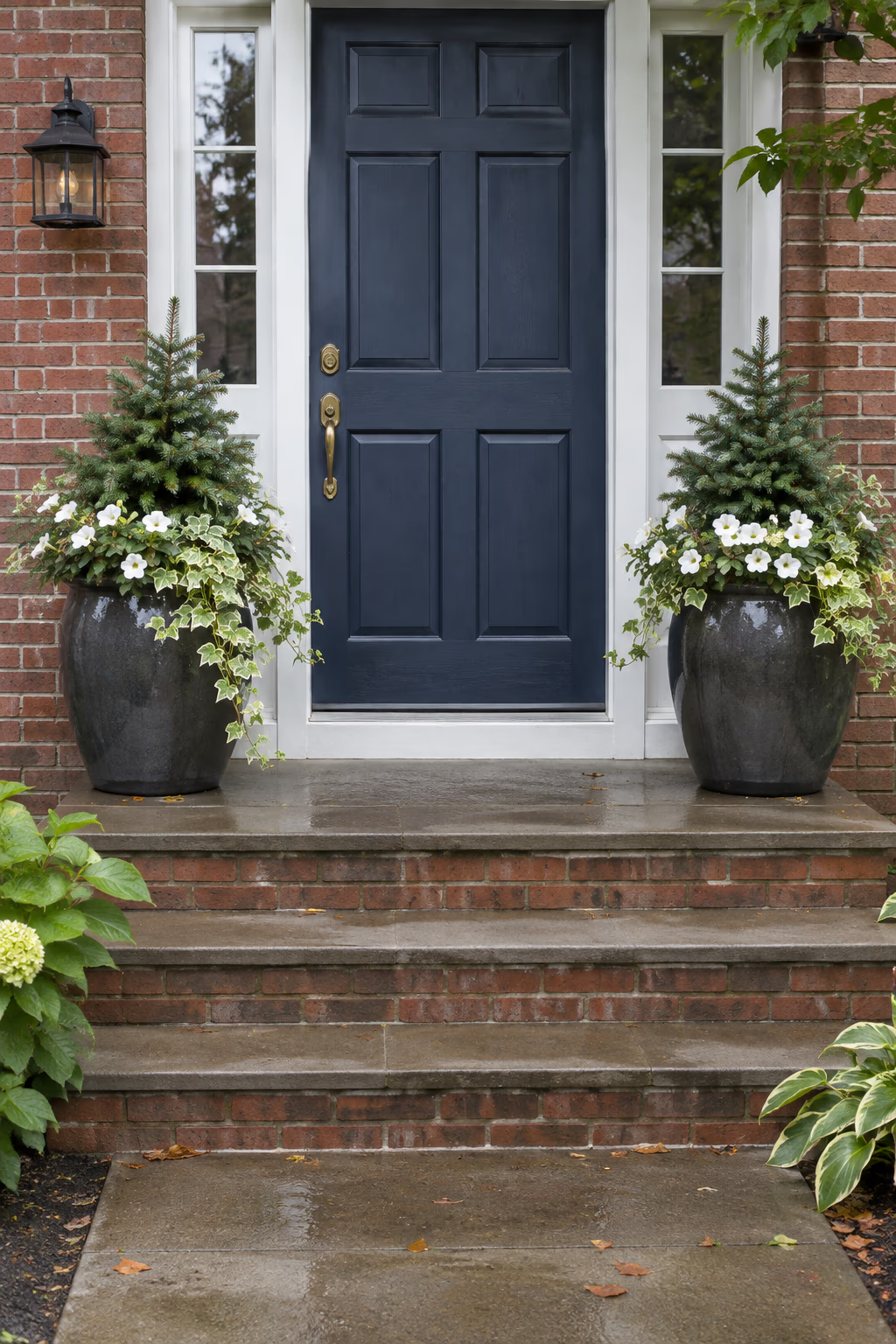
Easy symmetry that highlights the front door
A pair of large pots on either side of the steps draws the eye right to the entrance. Choose containers at least 18 to 24 inches wide so the soil doesn’t dry out in a day, and fill each with a tall center plant, mounding flowers, and a trailing edge.
Evergreen dwarf conifers or boxwood give year-round shape, and you can tuck seasonal annuals around them. Make sure each pot has drainage holes.
Leave enough clear space on the steps for safe walking, and be ready to water often in summer heat.
5. Plant a Small Ornamental Tree as a Centerpiece
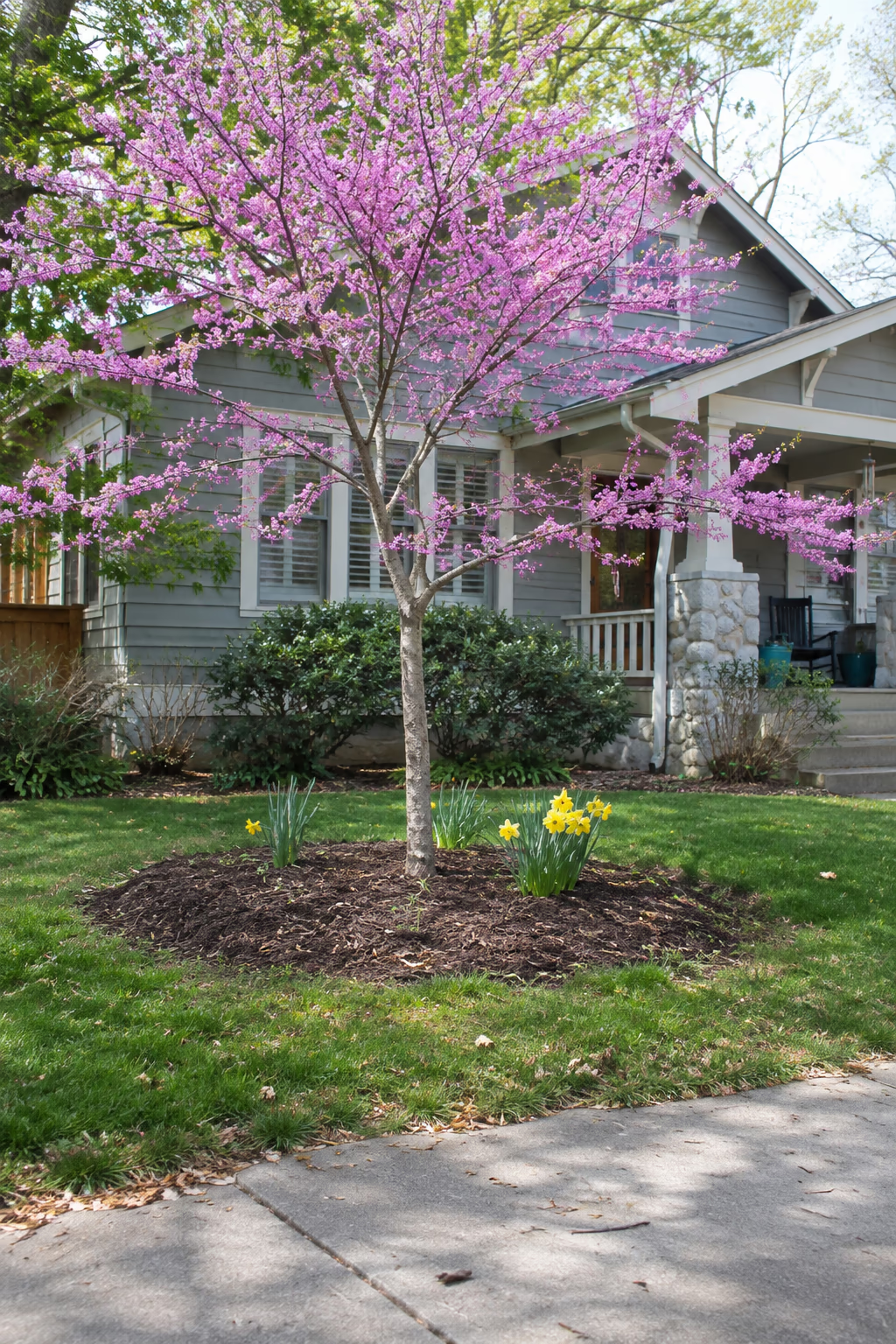
A living focal point with seasonal interest
Trees such as serviceberry, redbud, crabapple, dogwood, or a Japanese maple add height, shade, and flowers or fall color. Pick one that tops out around 15 to 25 feet so it won’t crowd the house.
Plant it well off the foundation, often at least 10 to 15 feet depending on its spread, and keep it away from overhead power lines and septic or utility lines. Dig the hole wide but no deeper than the root ball, and mulch in a ring without piling it against the trunk.
Water deeply once a week during the first couple of summers while roots establish.
6. Light the Path With Low-Voltage Landscape Lighting
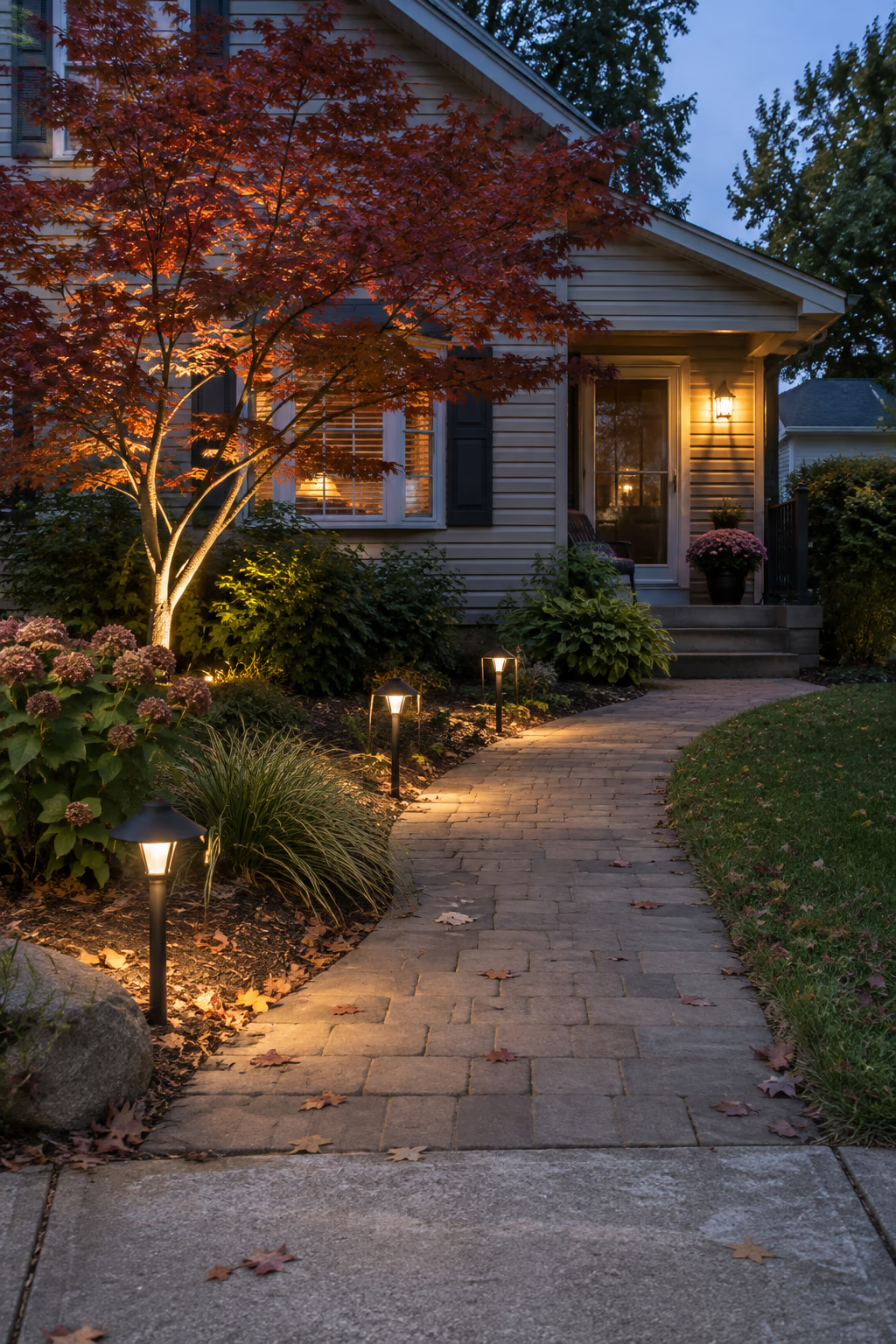
Safer steps and a warm evening welcome
Low-voltage LED path lights spaced 6 to 8 feet apart keep walkways visible without glare. Add one or two small uplights aimed at a tree or textured wall to give the yard depth after dark.
Choose warm white bulbs, roughly 2700K, because cooler light looks harsh against greenery. A transformer with a timer or photocell keeps things automatic and the energy cost low.
Bury cables a few inches deep along bed edges, and choose fixtures with finishes that handle weather in your climate.
7. Shape Boxwoods Into Neat Evergreen Borders
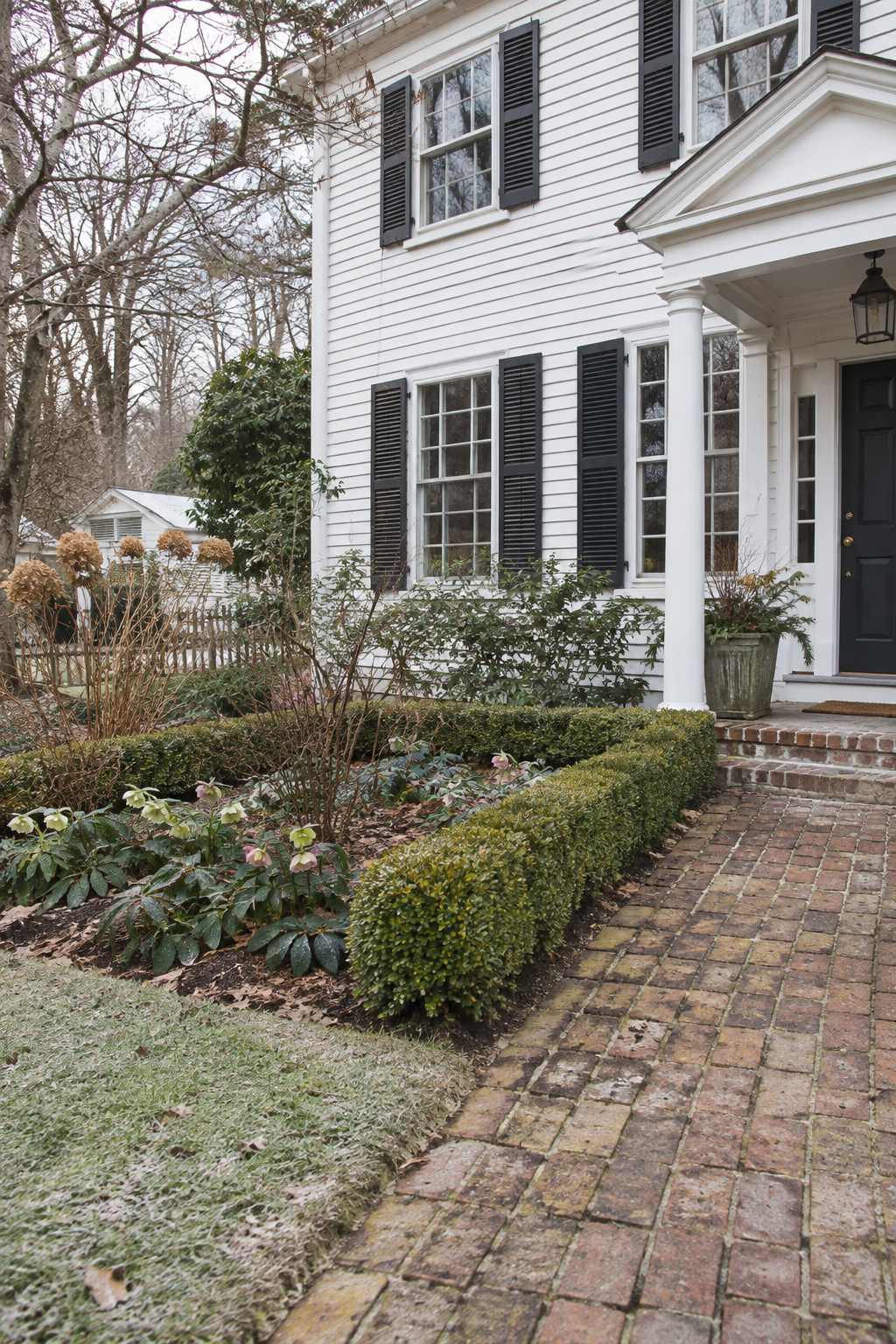
Year-round structure with a classic look
Low clipped hedges of boxwood or a similar evergreen outline beds and paths with crisp green lines that look tidy even in winter. Space plants about 2 to 3 feet apart for a continuous hedge.
Boxwood has pest problems in some regions, including blight and boxwood moth. In those areas, consider Japanese holly, inkberry, or dwarf yew, which give a similar look.
Trim once or twice a year with sharp hand shears, and make the top slightly narrower than the base so sunlight reaches the lower branches.
8. Add a Flowering Arbor Over the Walkway
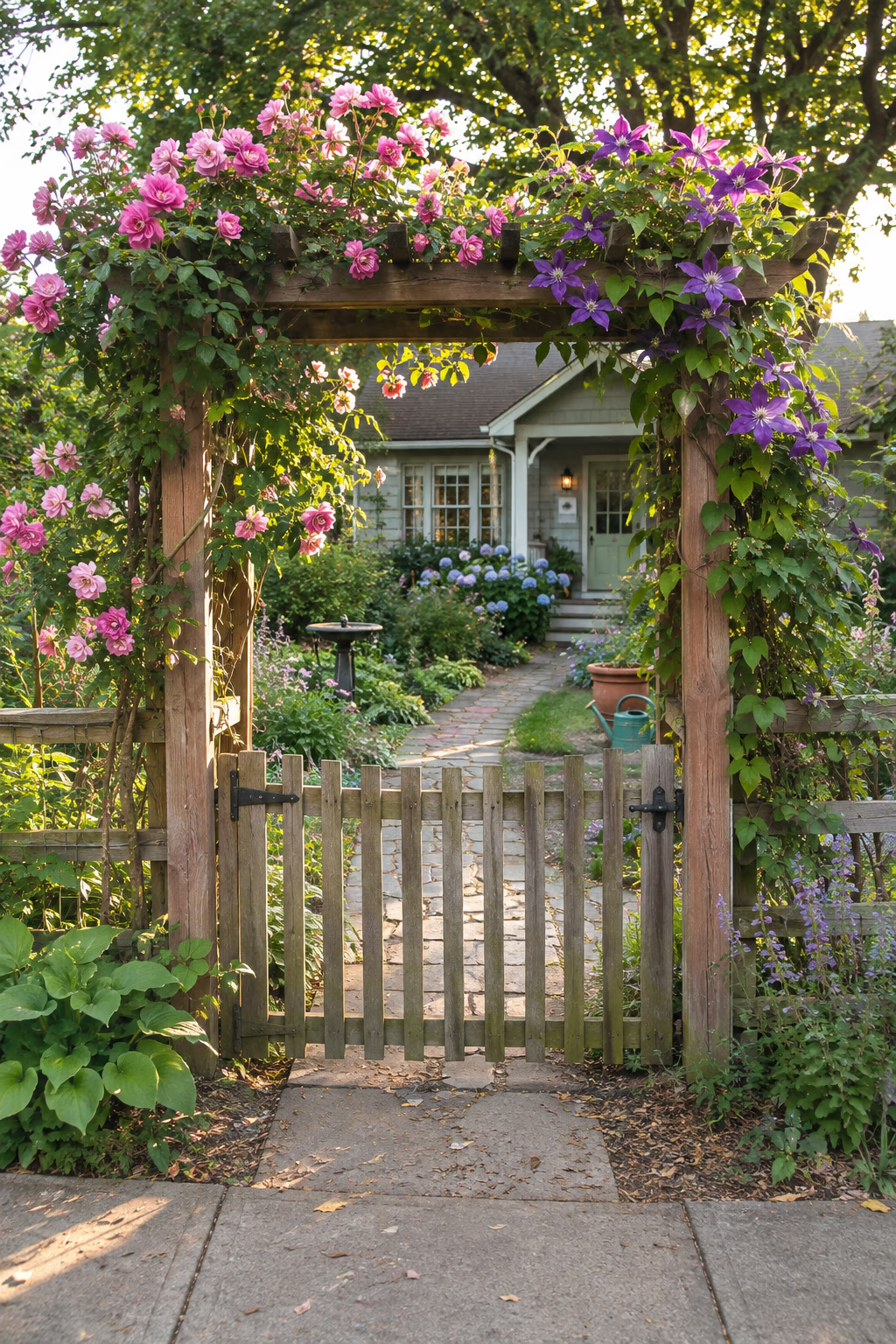
A gateway that makes the yard feel like a garden
A simple wood or metal arbor over the path where it meets the sidewalk or gate turns a plain approach into an entrance. Leave at least 7 feet of clearance and about 4 feet of width inside so people can pass comfortably.
Train clematis, climbing roses, or honeysuckle up the sides, and tie new shoots loosely as they grow. Cedar and powder-coated steel hold up well outdoors.
Set the posts in concrete or anchor them firmly, because a vine-covered arbor catches wind like a sail.
9. Edge Beds With Crisp Steel or Stone Borders
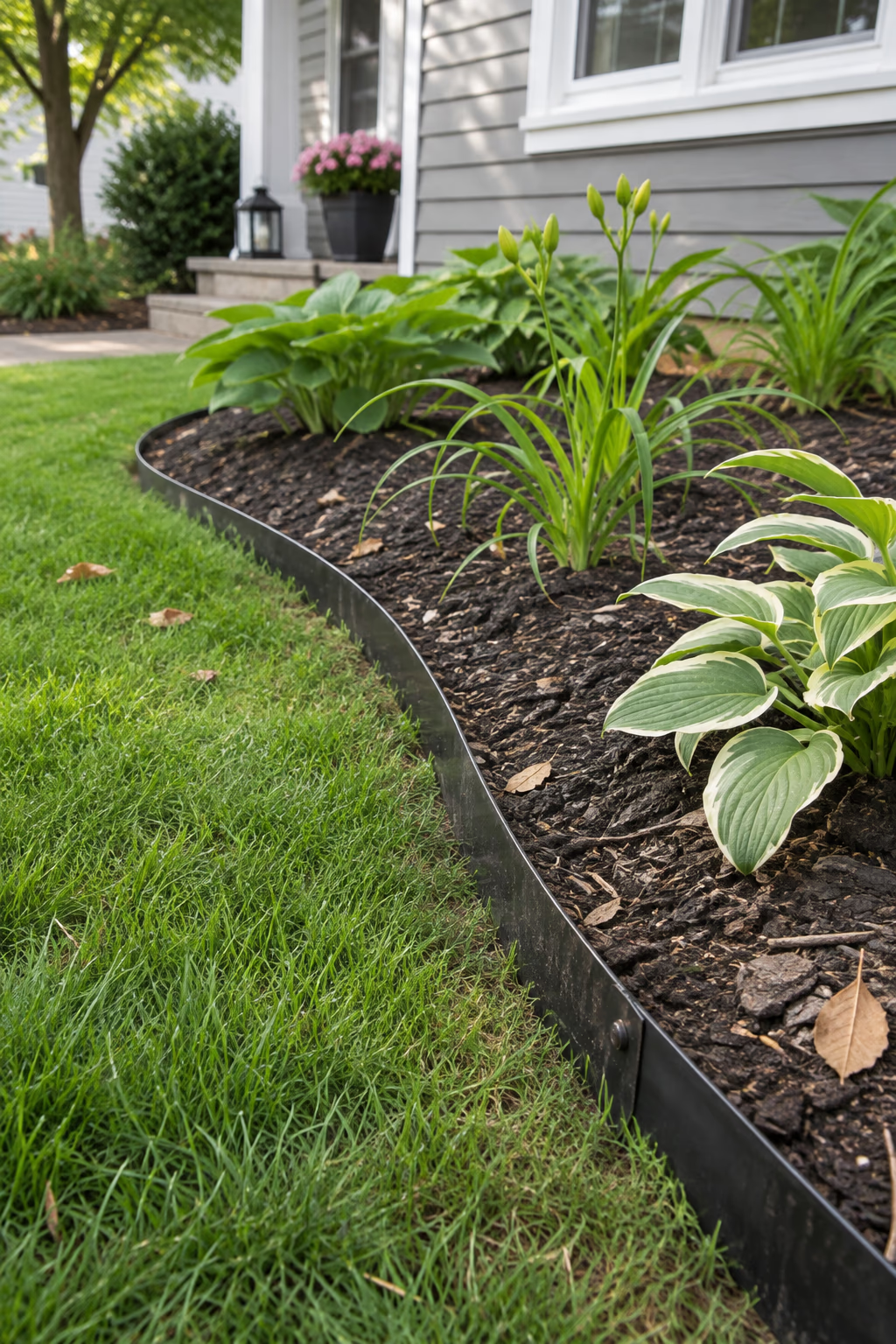
Clean lines that make everything look maintained
A sharp border between lawn and bed is one of the cheapest ways to make a yard look professionally cared for. Steel edging disappears visually, while stone or brick adds a classic, visible line.
Install edging so about an inch shows above the soil and the lawn side sits level, which lets the mower roll along it. Curved lines look softer and are easier to mow than tight corners.
Plastic edging is cheapest but can heave in freezing climates, so secure it with extra stakes.
10. Spread Fresh Mulch for a Polished Finish
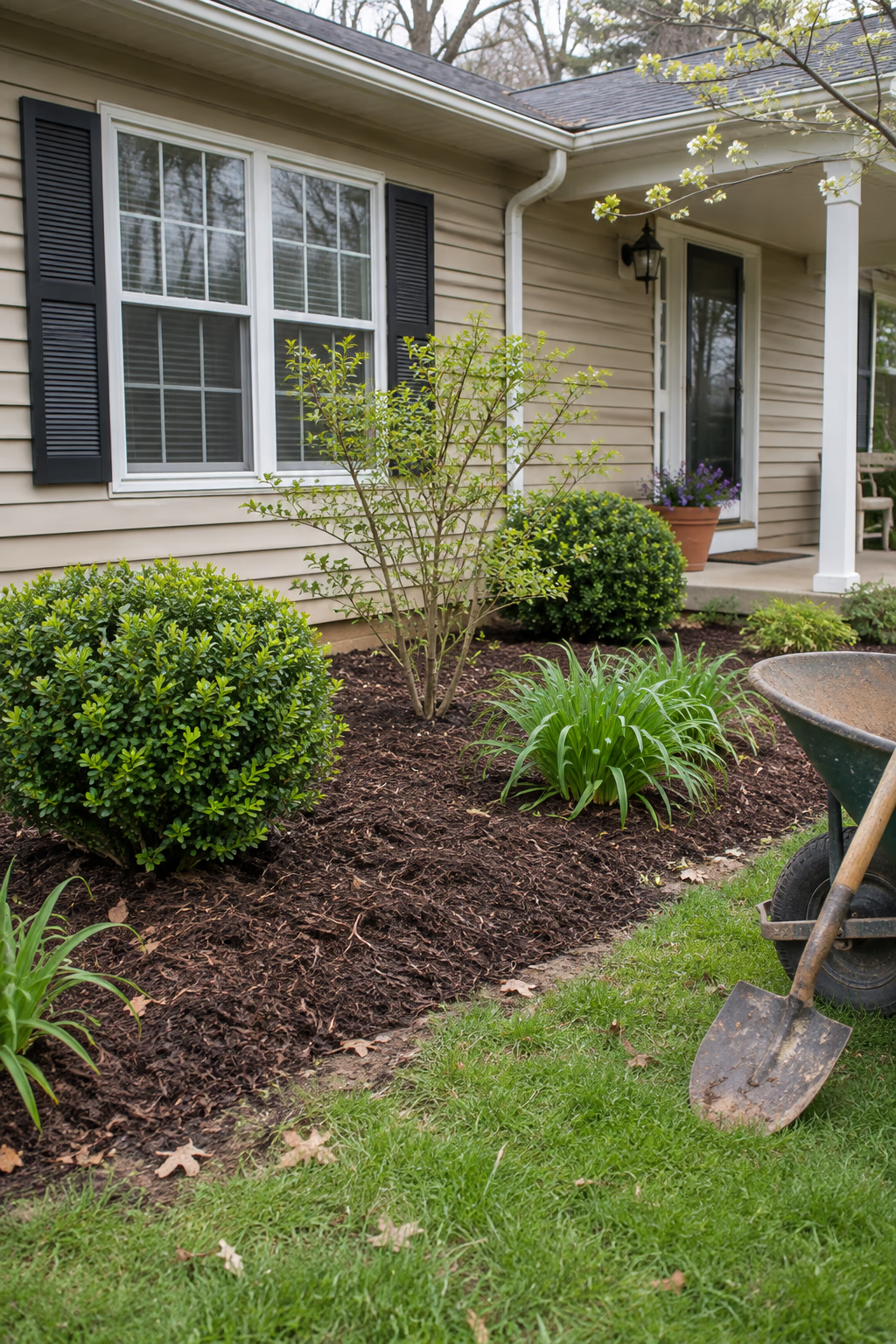
Cut weeds and save water in one step
A 2 to 3 inch layer of shredded bark or wood chips makes beds look uniform and keeps soil moisture steadier. Dark brown or natural tones look more current than bright dyed colors.
Pull mulch back a few inches from tree trunks and shrub stems, since piling it up against the bark invites rot and pests. Top up each spring rather than adding a thick new layer on top of old.
Buying in bulk by the cubic yard from a landscape supplier is usually cheaper than bags for larger beds.
11. Terrace a Slope With Low Retaining Walls
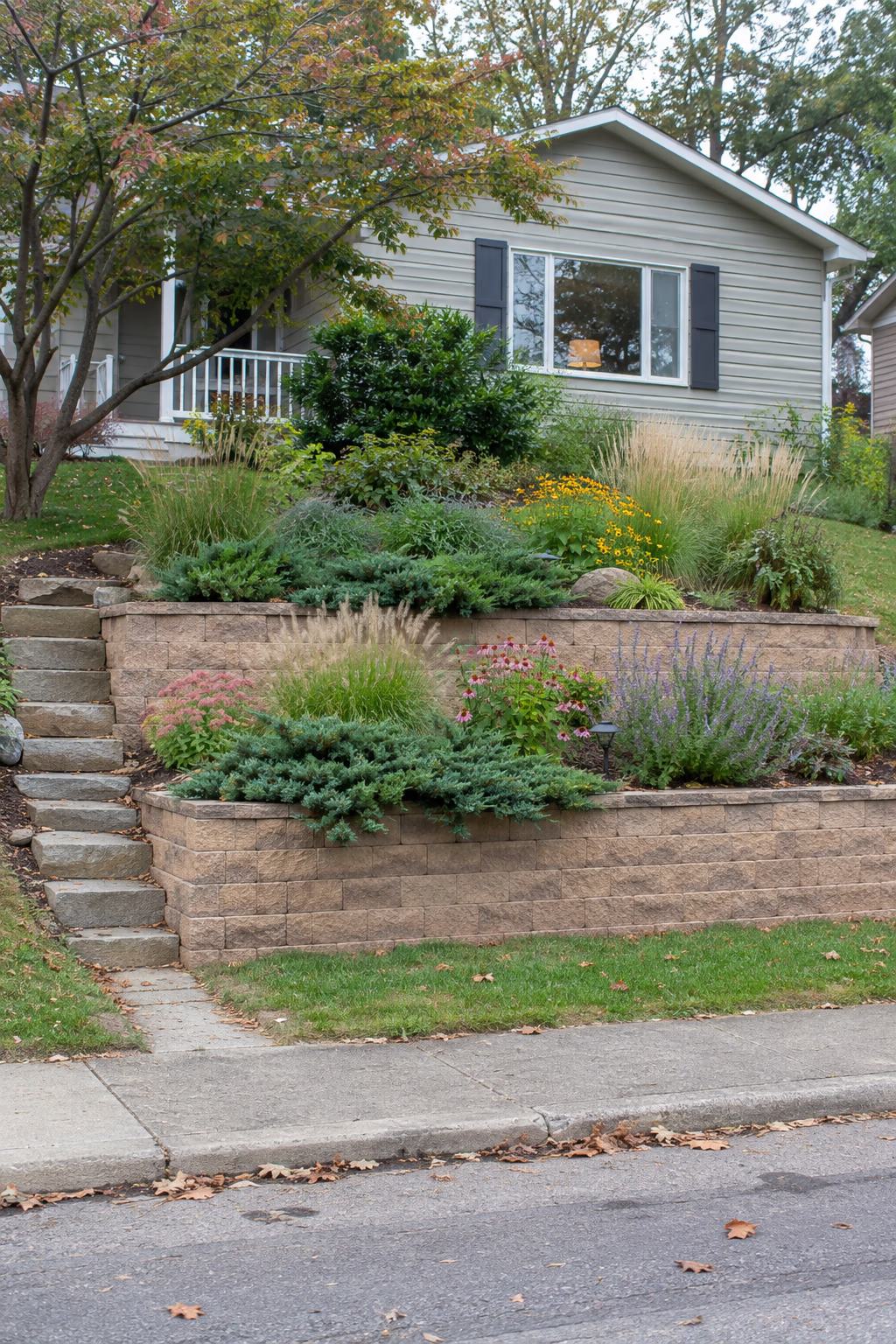
Turn a hard-to-mow hill into planting space
A sloping front yard can become a series of level planting shelves using interlocking concrete blocks or natural stone. Keep each wall under about 3 feet tall, since taller walls often need engineered plans and permits.
Build on a compacted gravel base, lean the wall slightly back into the slope, and add gravel and a drain pipe behind it so water doesn’t build up pressure. Fill the terraces with shrubs, perennials, and spreading ground covers.
Check local codes first, and hire a pro for anything near a driveway, street, or neighboring property line.
12. Soften the Porch With Window Boxes
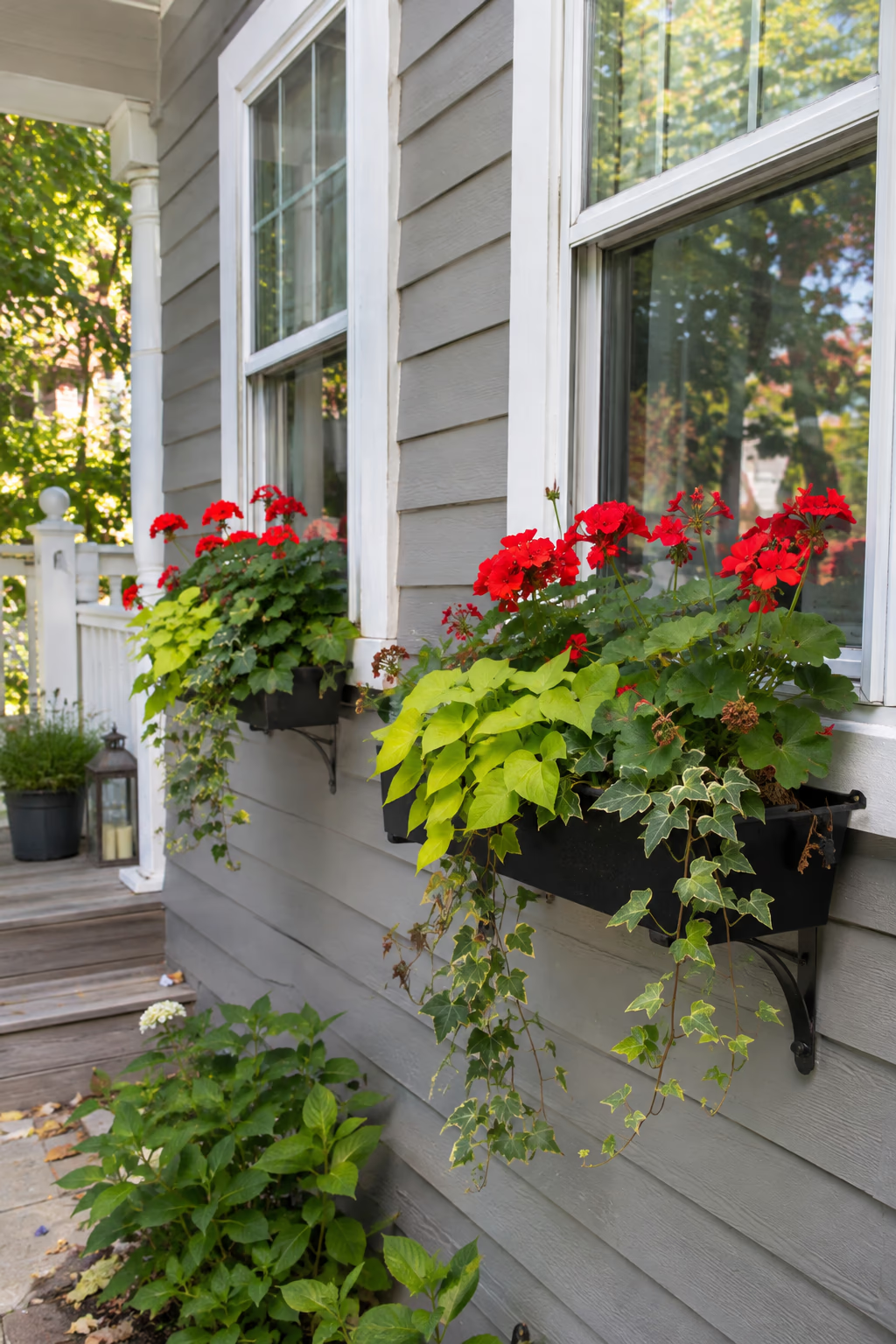
Color at eye level without digging
Window boxes bring flowers up to the house and make plain siding look layered. Fill them with a thriller, filler, and spiller combination, such as geraniums, trailing sweet potato vine, and ivy.
Choose boxes at least 8 inches deep, with drainage holes, and mount them securely into studs or sturdy brackets since wet soil is heavy. Lightweight liners help reduce the load.
They dry out quickly in sun and wind, so check them daily in hot weather or add a drip line.
13. Plant Ornamental Grasses for Movement
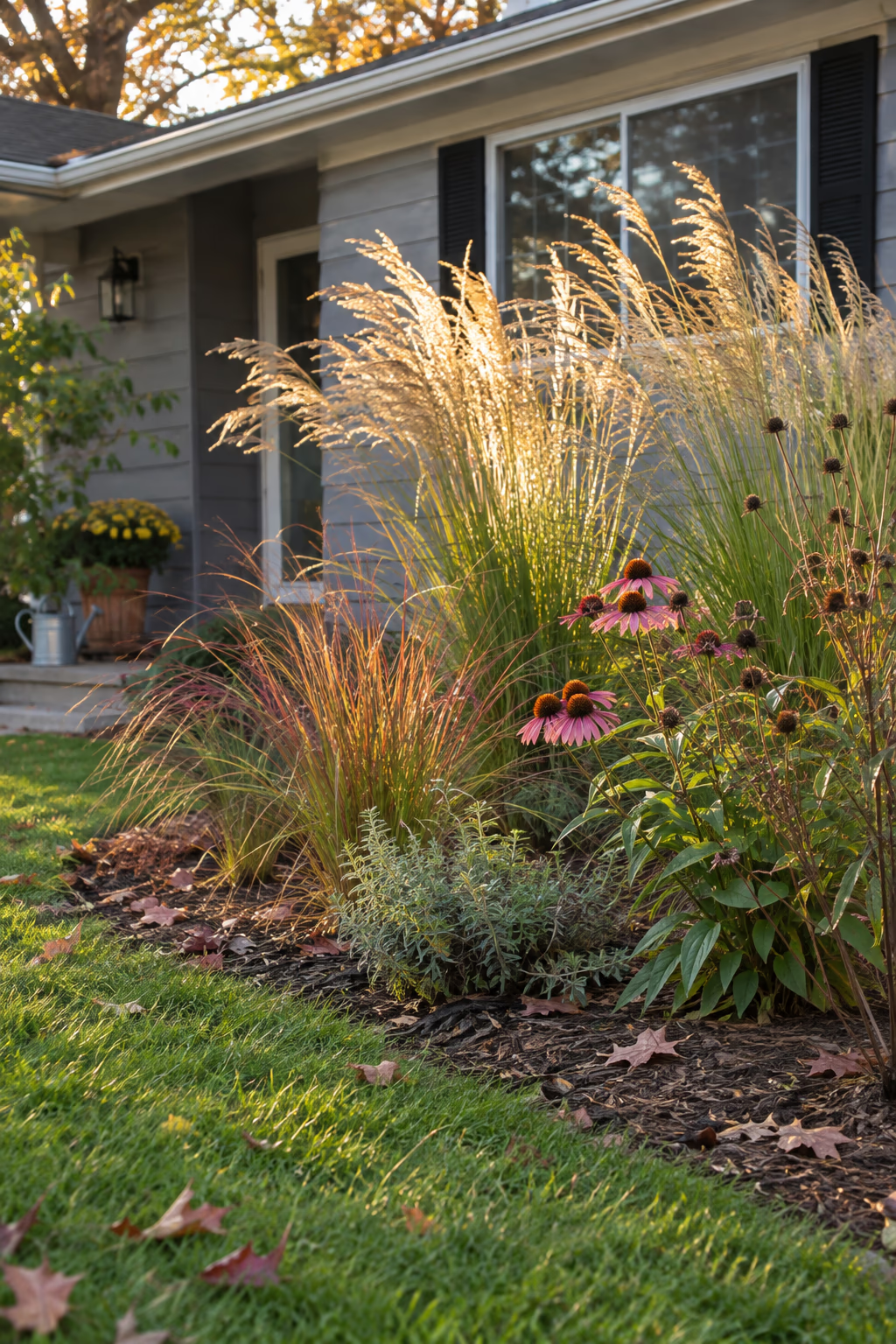
Soft texture that catches the light
Feather reed grass, little bluestem, switchgrass, and fountain grass add height and gentle motion to a front bed. Their seed heads glow in late-day sun and often stay attractive into winter.
Group three to five of the same variety rather than scattering singles, and pair them with sturdy flowers like sedum or coneflower. Most prefer full sun and well-drained soil.
Cut them back to a few inches in late winter before new growth starts, and avoid aggressive self-seeders in your region.
14. Create a Gravel Garden With Drought-Tolerant Plants
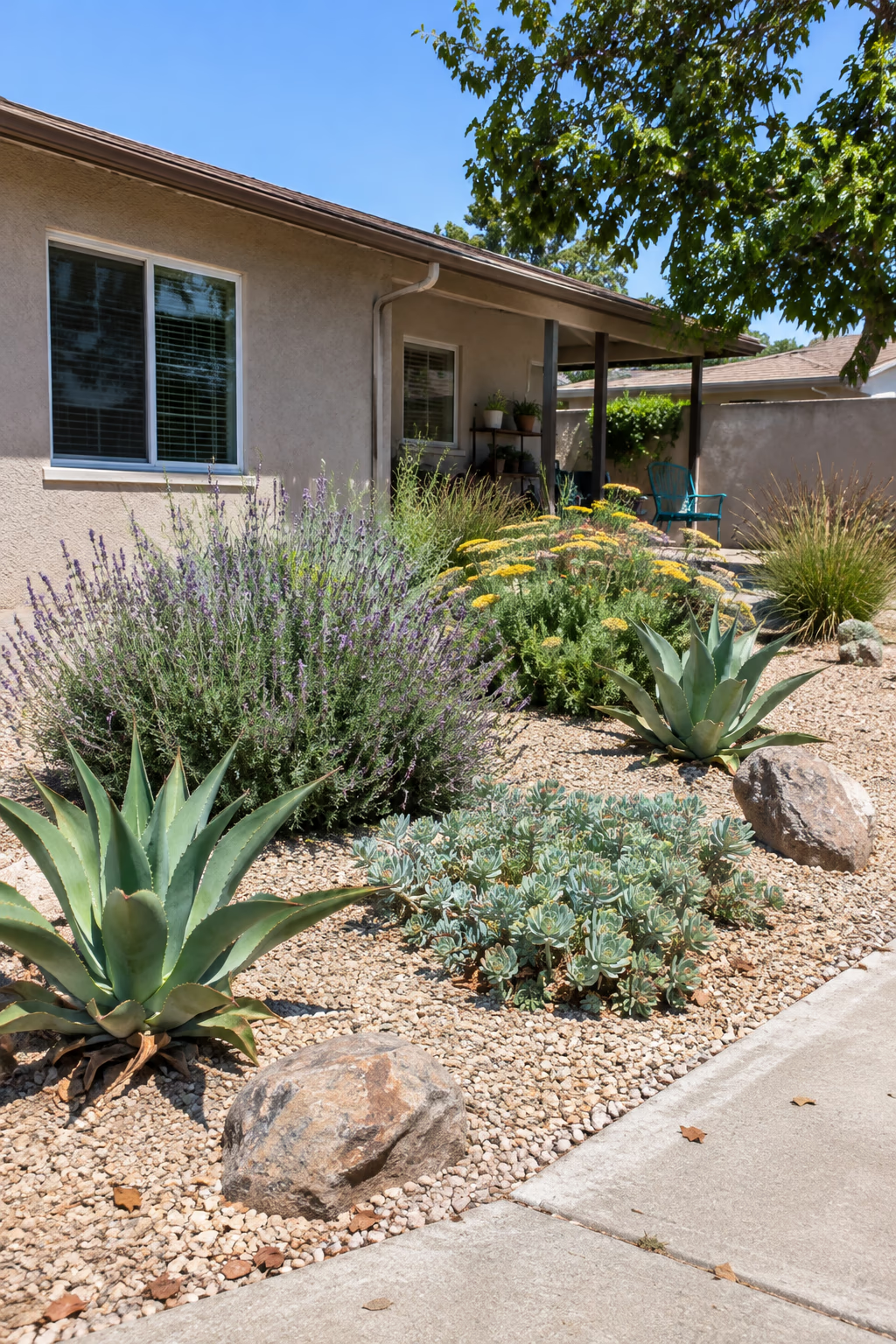
Low water and low fuss for hot, sunny yards
Replace a thirsty strip of lawn with a 2-inch layer of gravel over landscape fabric, then plant lavender, sage, yarrow, ornamental sedums, and agave or yucca where the climate allows. Plants in gravel tend to stay compact and sturdy.
Use angular crushed stone or rounded river rock depending on the style of the house, and set a few larger stones among the plants for a natural look.
Gravel can heat up in full sun, so keep it away from plants that dislike reflected heat, and rake out fallen leaves regularly.
15. Build a Low Fieldstone Front Wall
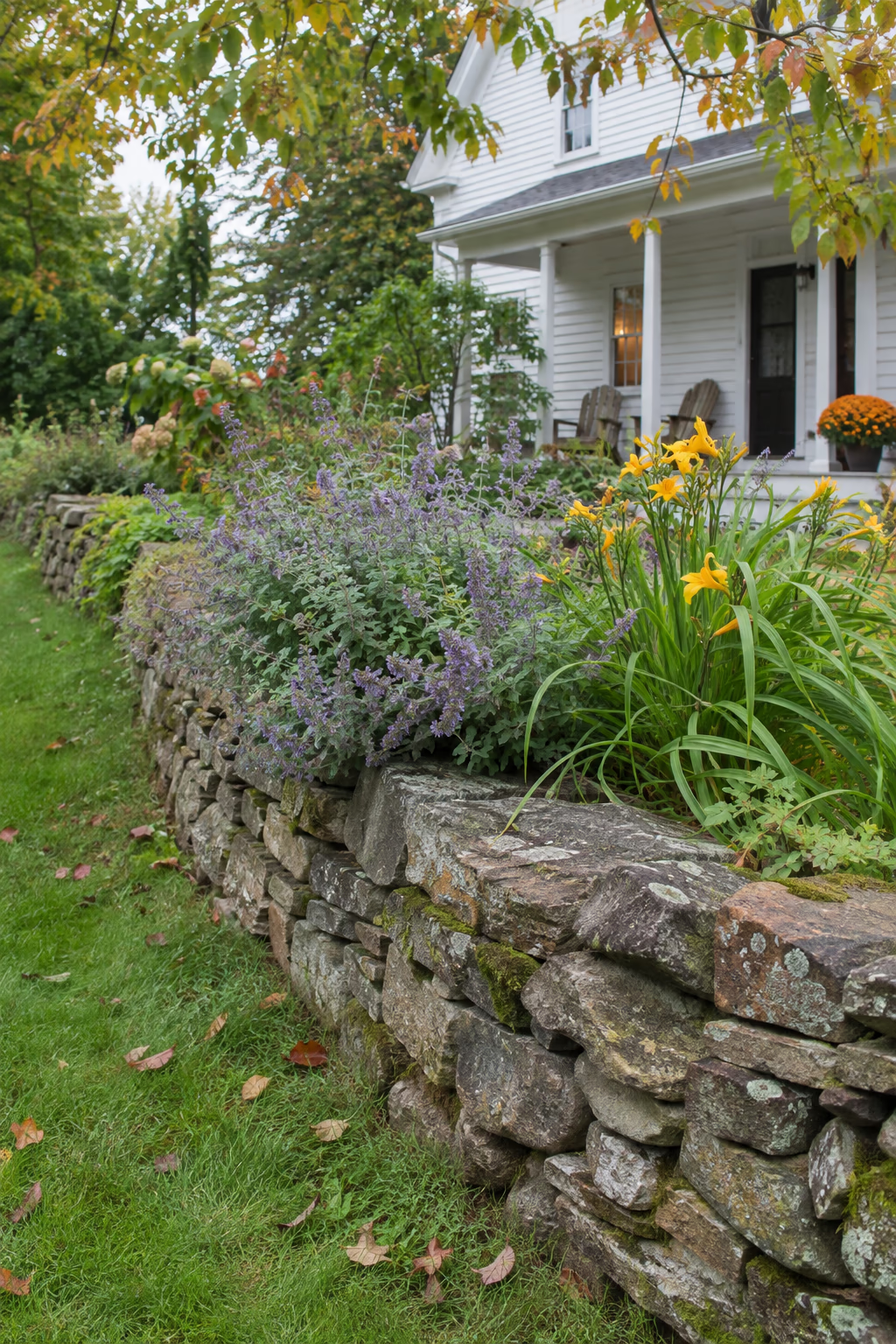
Gentle boundaries that add character
A stacked stone wall about 18 to 30 inches tall defines the yard edge without blocking views. It also gives you a ledge to plant against or lean pots on.
A dry-stacked wall needs a trench filled with compacted gravel and stones that lean slightly inward. Mortared walls are sturdier but need a proper footing below the frost line in cold areas.
Stone is heavy and costly, so check with local officials about height limits and setbacks before you begin.
16. Line the Path With a Pea Gravel Border
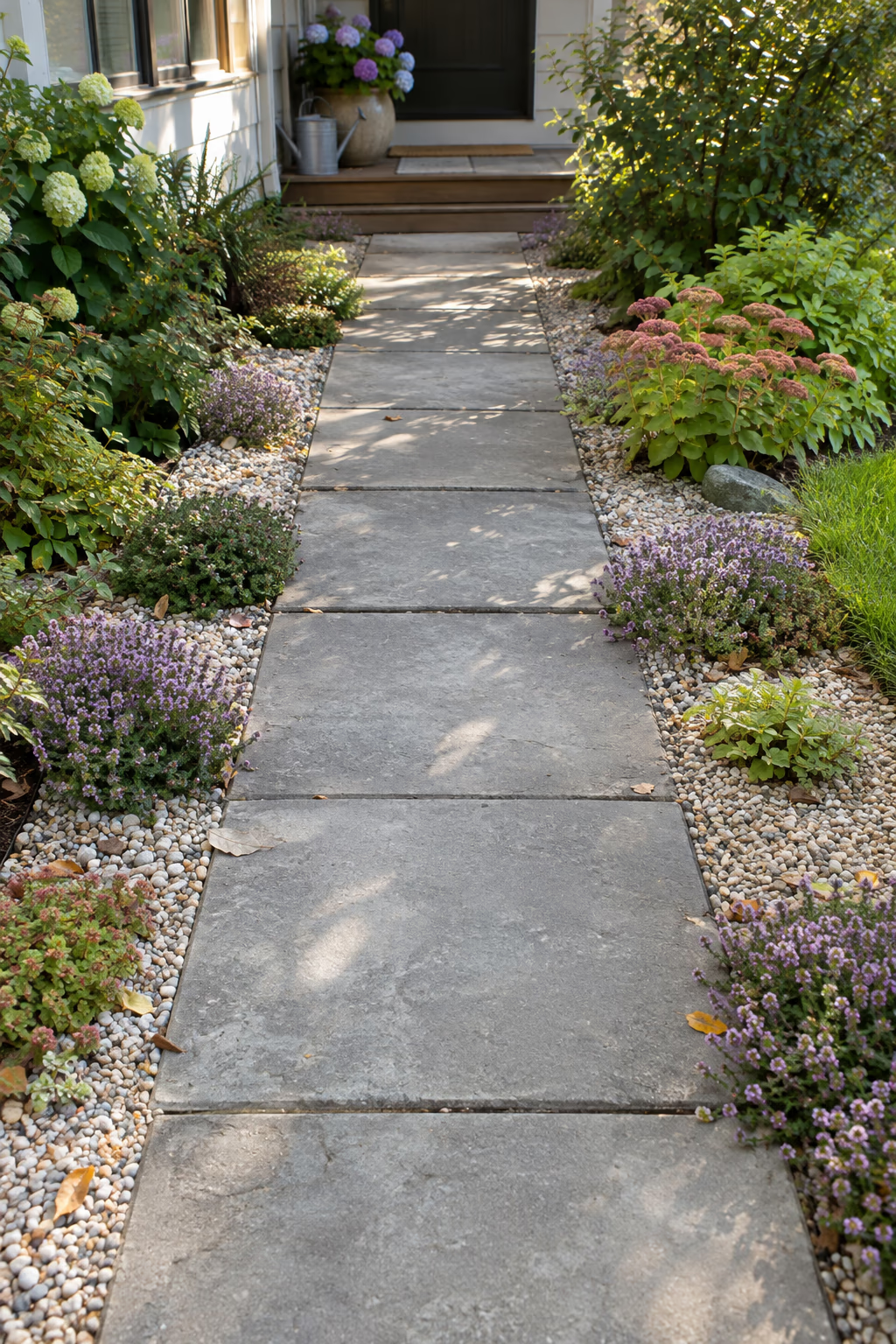
An inexpensive way to finish the edges
A strip of pea gravel about 12 to 18 inches wide on either side of a paved path separates plants from pavement and keeps soil from washing onto walkways. The light color also makes the path stand out in the evening.
Excavate 3 inches, lay fabric, and add gravel over a firm edge so stones stay put. Plant clumps of thyme or sedum into the border for softness.
Gravel can drift onto the path, so keep a stiff broom handy and avoid it on steep slopes.
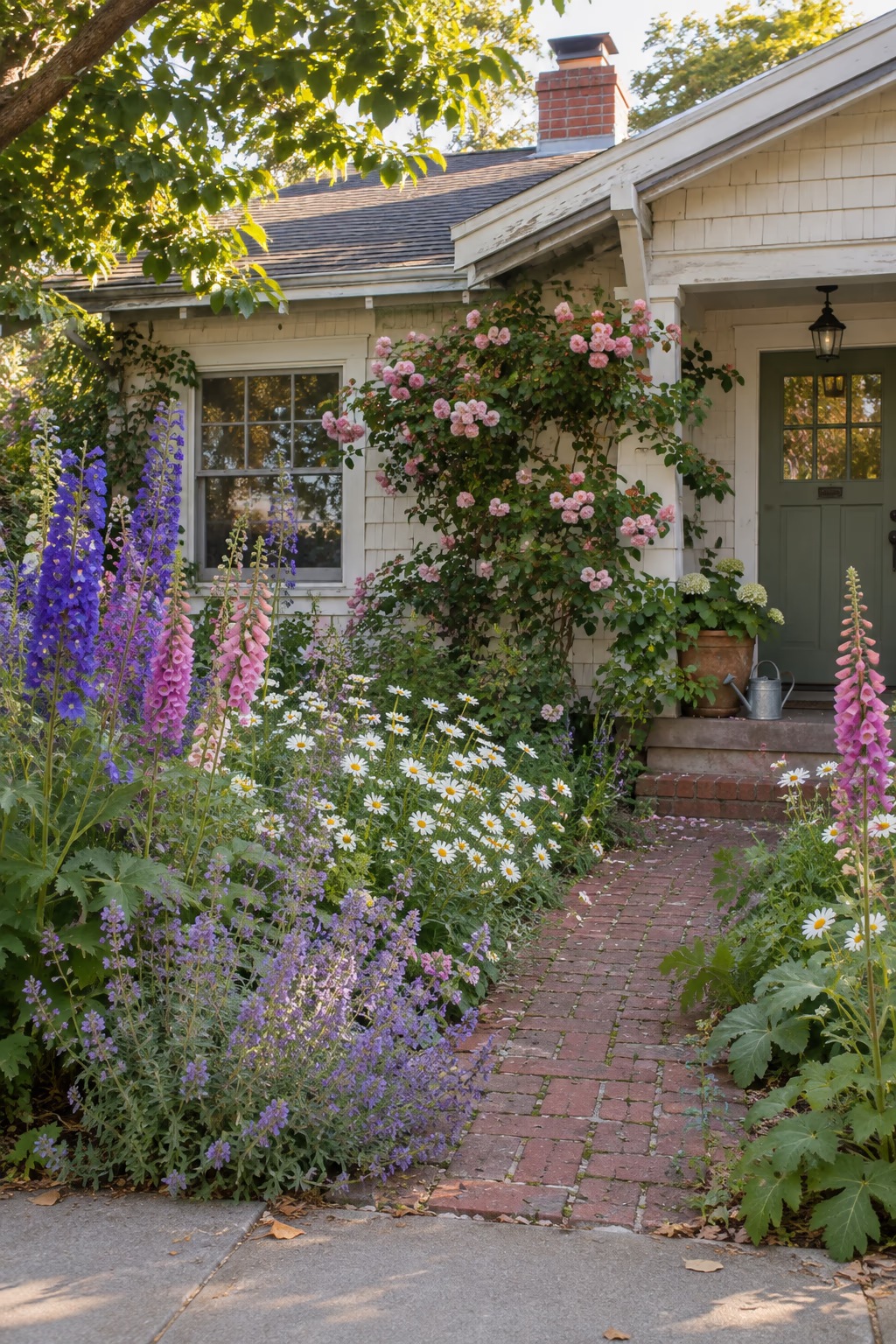
17. Grow a Cottage-Style Mix of Perennials
Relaxed, colorful, and full of charm
Cottage fronts layer foxglove, delphinium, daisies, salvia, catmint, and roses in a loose, overflowing way. Repeat a few colors, such as purple, white, and soft pink, so the mix feels cohesive rather than chaotic.
Plant in drifts and let shorter plants spill over a path edge. Include a few evergreen shrubs so the bed doesn’t look empty in winter.
This style needs more deadheading, staking, and dividing than a simple shrub border, so plan for weekly attention in season.
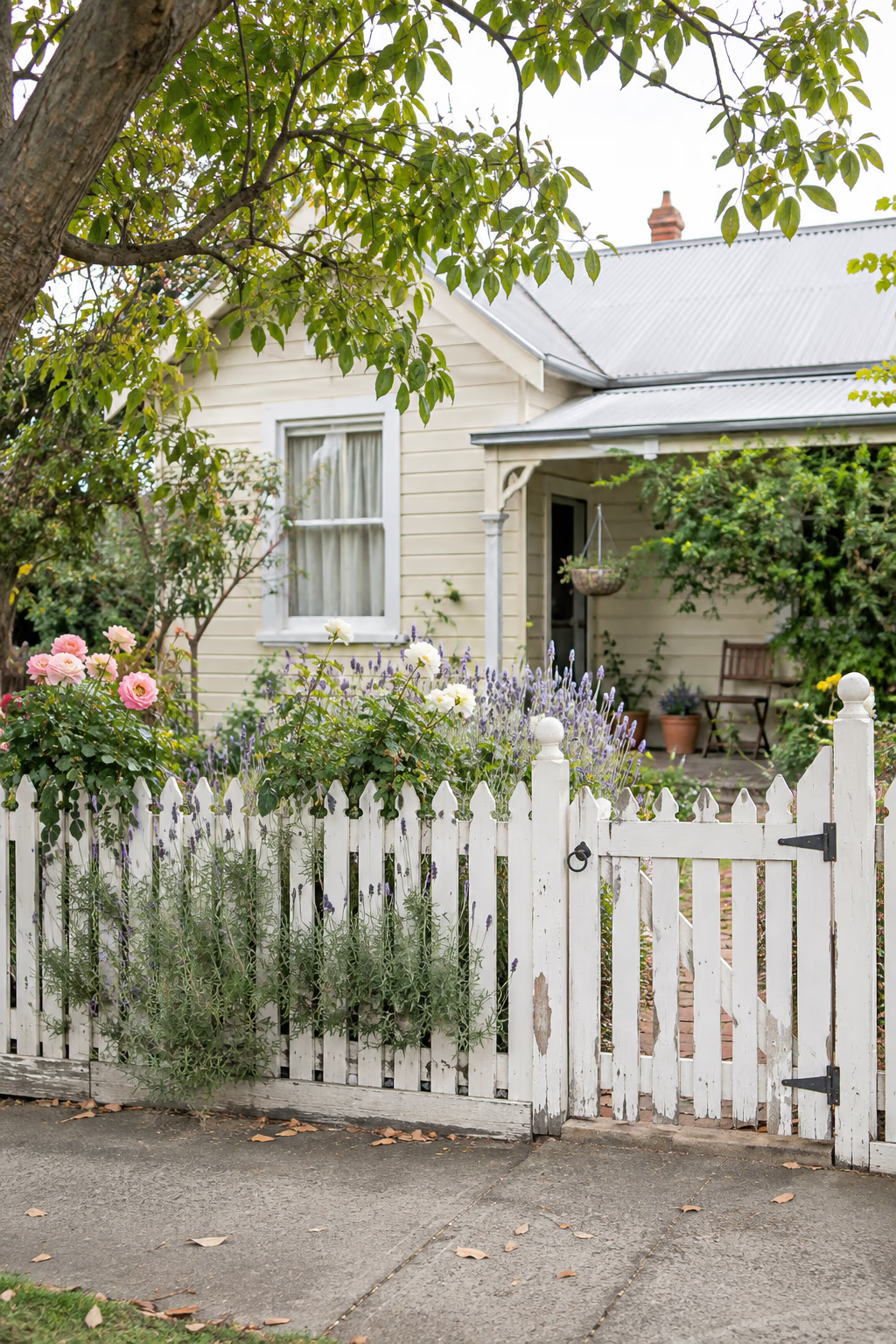
18. Set Up a Low Picket Fence
A friendly boundary with a classic feel
A picket fence around 36 inches tall marks the front yard without feeling closed off. White is traditional, but soft gray, sage green, or natural cedar can suit modern homes too.
Use rot-resistant cedar or composite pickets, and keep boards a couple of inches above the soil. Lay a mulch or gravel strip along the base to avoid trimming grass against the wood.
Many towns and HOAs limit front fence height, so check requirements and get a permit if one is needed.
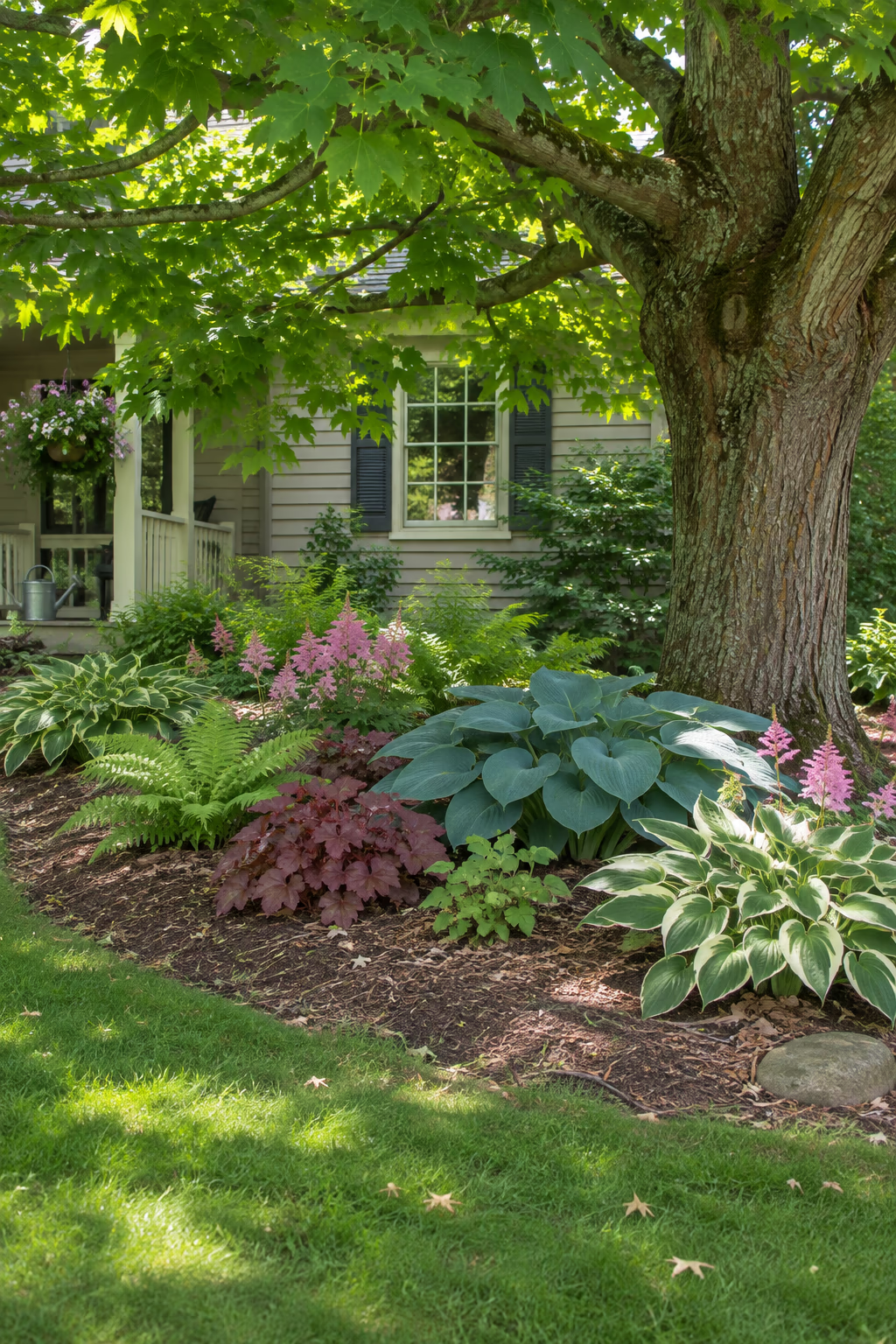
19. Design a Shade Garden Under a Mature Tree
Turn a bare, grassy patch into a green retreat
Grass struggles under big trees, but hostas, ferns, astilbe, heuchera, and hellebores thrive there. Combining leaf shapes and shades, from blue-green to chartreuse, keeps the bed interesting even without many flowers.
Spread a thin layer of compost and mulch rather than deep new soil, and avoid cutting major roots. Make the bed wide enough to look generous, about 6 to 10 feet across.
Water regularly the first year because tree roots compete for moisture, and watch for slugs on hostas.
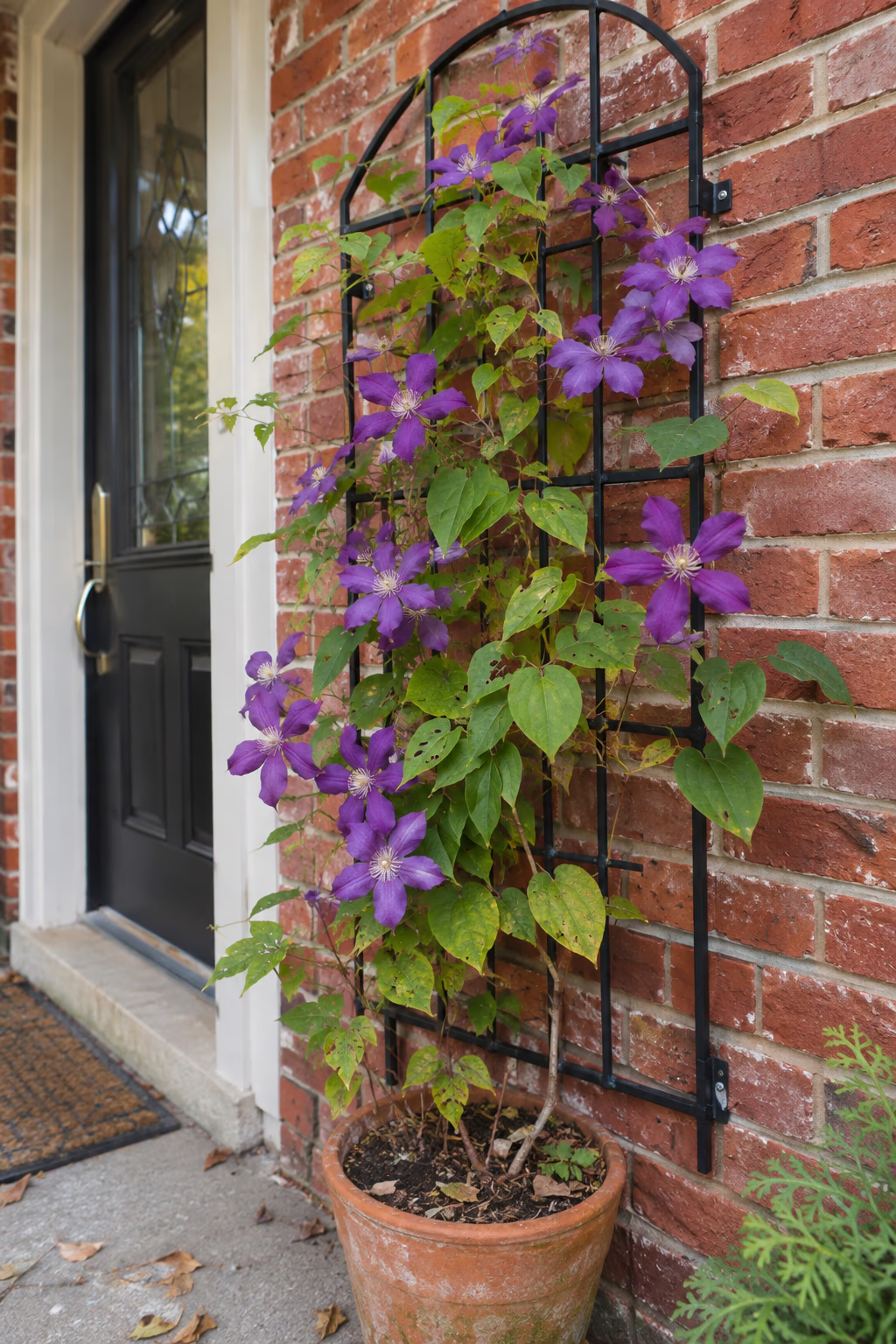
20. Train Climbing Vines Up a Trellis
Vertical color where space is tight
A trellis against a wall or beside the door adds height without taking up yard space. Clematis, jasmine where hardy, sweet peas, and climbing hydrangea all suit different light and climates.
Mount the trellis a couple of inches off the wall so air can move behind the vine and paint stays easy to maintain. Metal or rot-resistant wood lasts longest.
Avoid letting heavy or clinging vines like English ivy grab onto siding or mortar, as they can cause damage.
21. Make a Pet-Friendly Planting Strip
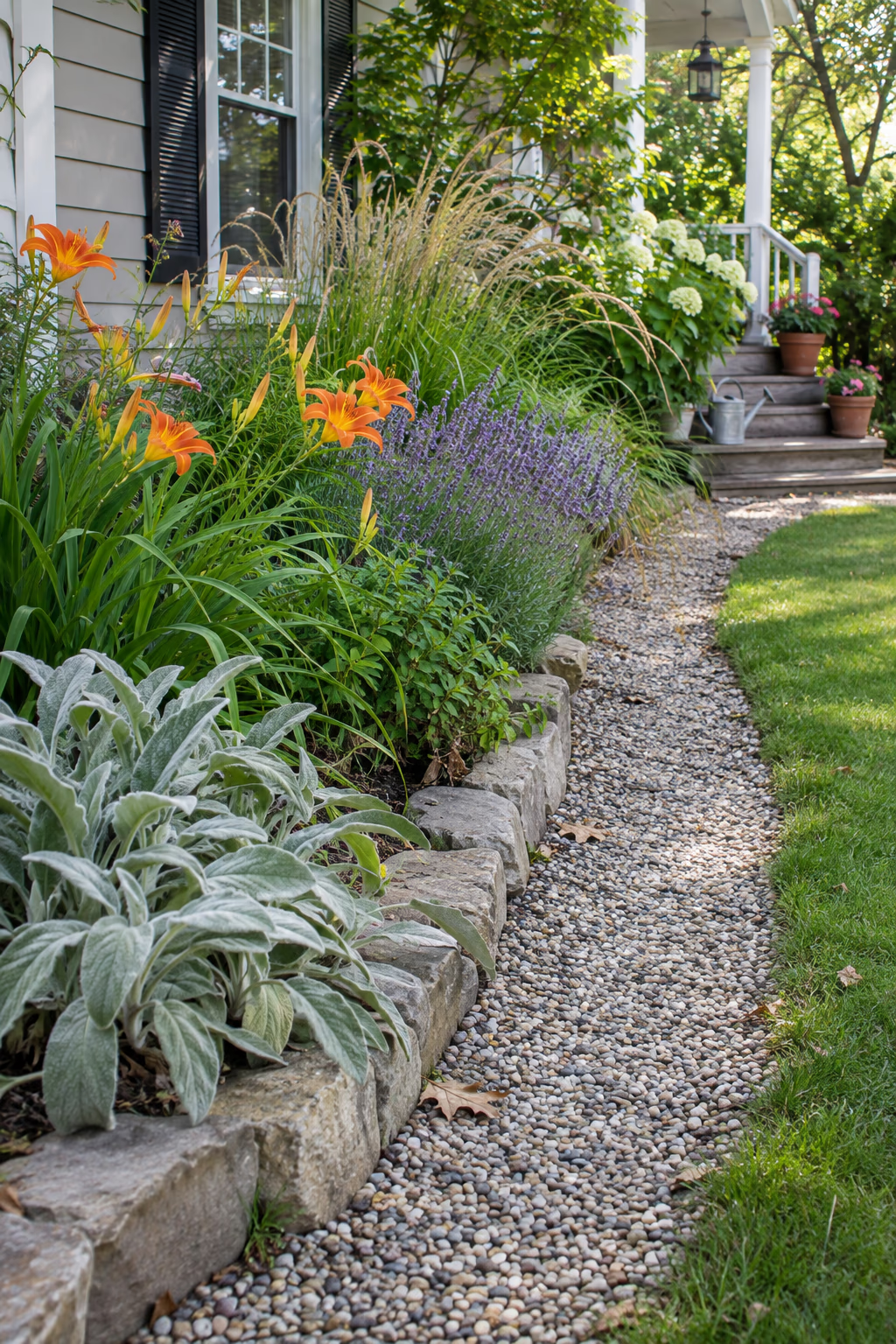
Beauty that holds up to four-legged visitors
If dogs trot along the front edge, create a sturdy, safe planting strip using tough plants like lamb’s ear, daylily, ornamental grasses, and lavender. Add a mulch or gravel path so pets have a clear route.
Use smooth stone or pea gravel that won’t scratch paws, and raise plantings slightly or use low borders to redirect traffic.
Some common plants, including sago palm, lilies, and oleander, are toxic to pets, so check the ASPCA plant list before buying.
22. Add Plantings Along the Driveway Edge
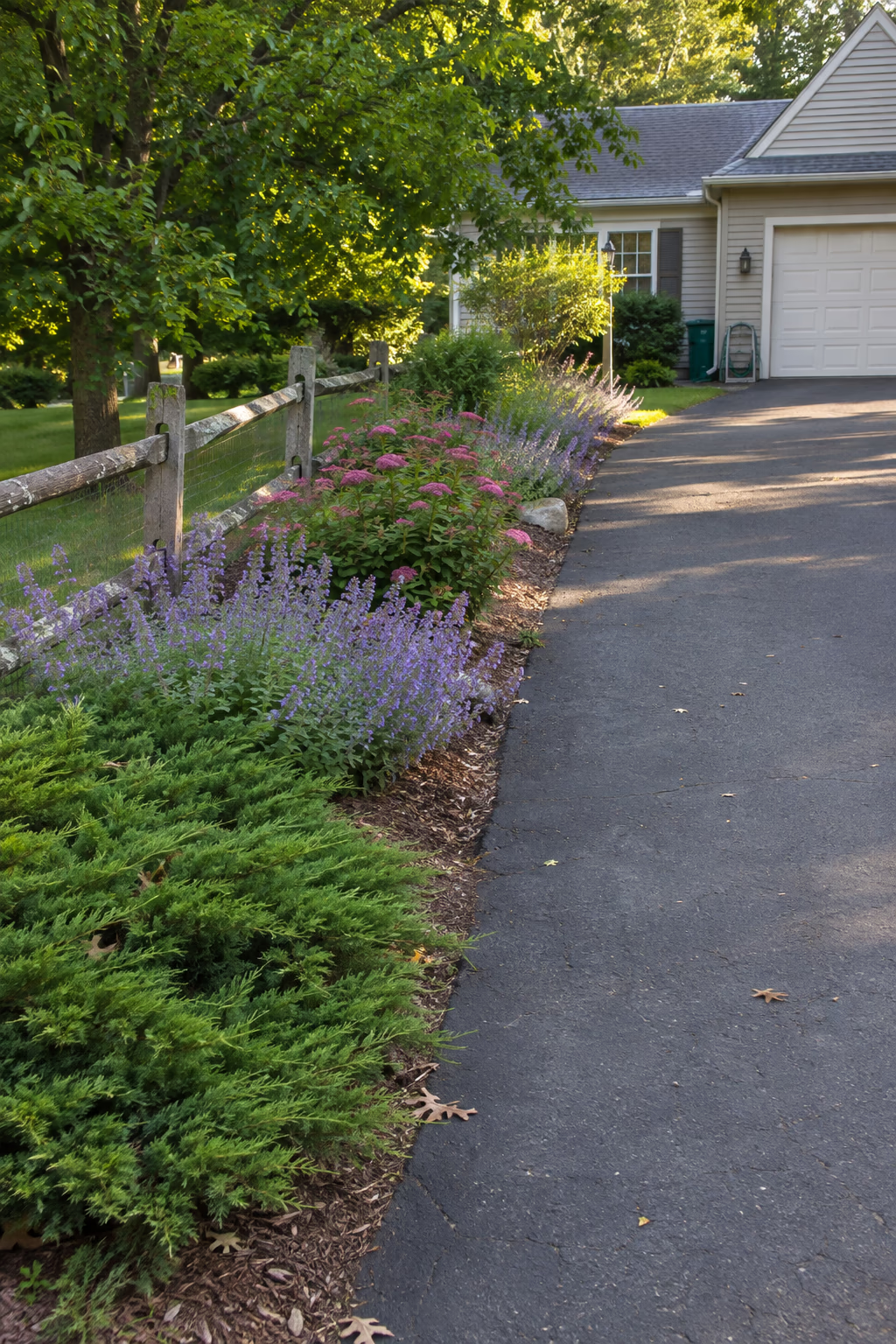
Soften the hardest surface in the yard
A long driveway can dominate the front view. A narrow bed of low shrubs, groundcovers, and perennials along one side breaks up the pavement and makes the whole property feel softer.
Leave at least 2 feet of clearance for car doors, and choose tough plants like juniper, catmint, and dwarf spirea that handle heat reflected off asphalt and winter salt spray.
Keep plants low near the street so drivers can see around the corner safely.
23. Install a Small Bubbling Water Feature
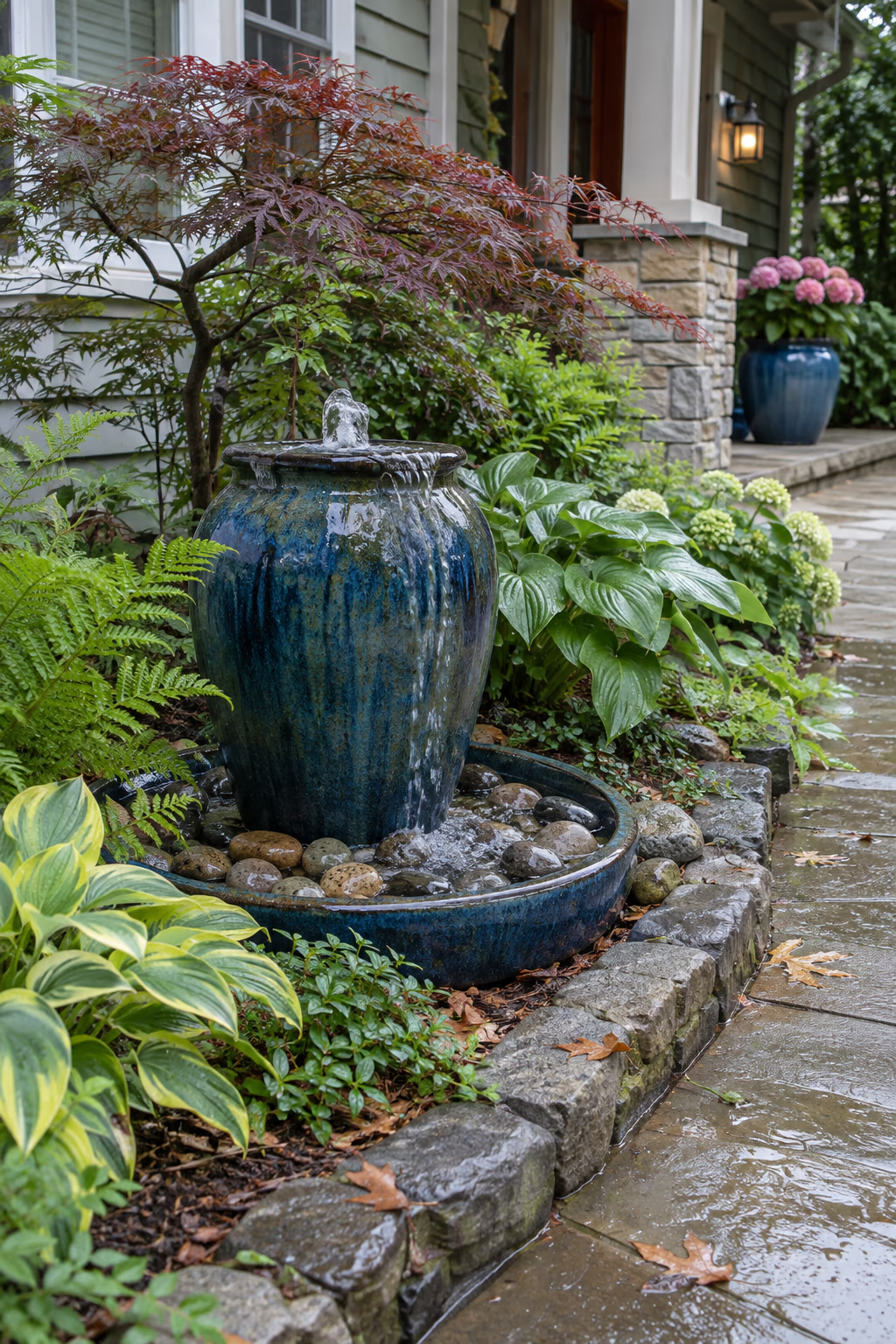
Gentle sound that masks street noise
A self-contained bubbling urn or small basin fountain needs only a hidden reservoir and a pump, so it avoids digging a pond. The trickling sound helps cover traffic noise while attracting birds.
Place it near the entry on a level base and plug the pump into a weatherproof outlet with GFCI protection. Surround it with ferns or hostas to make it look natural.
Top off water often in summer, and drain it before the first hard freeze in cold regions.
24. Build Raised Beds Beside the Front Walk
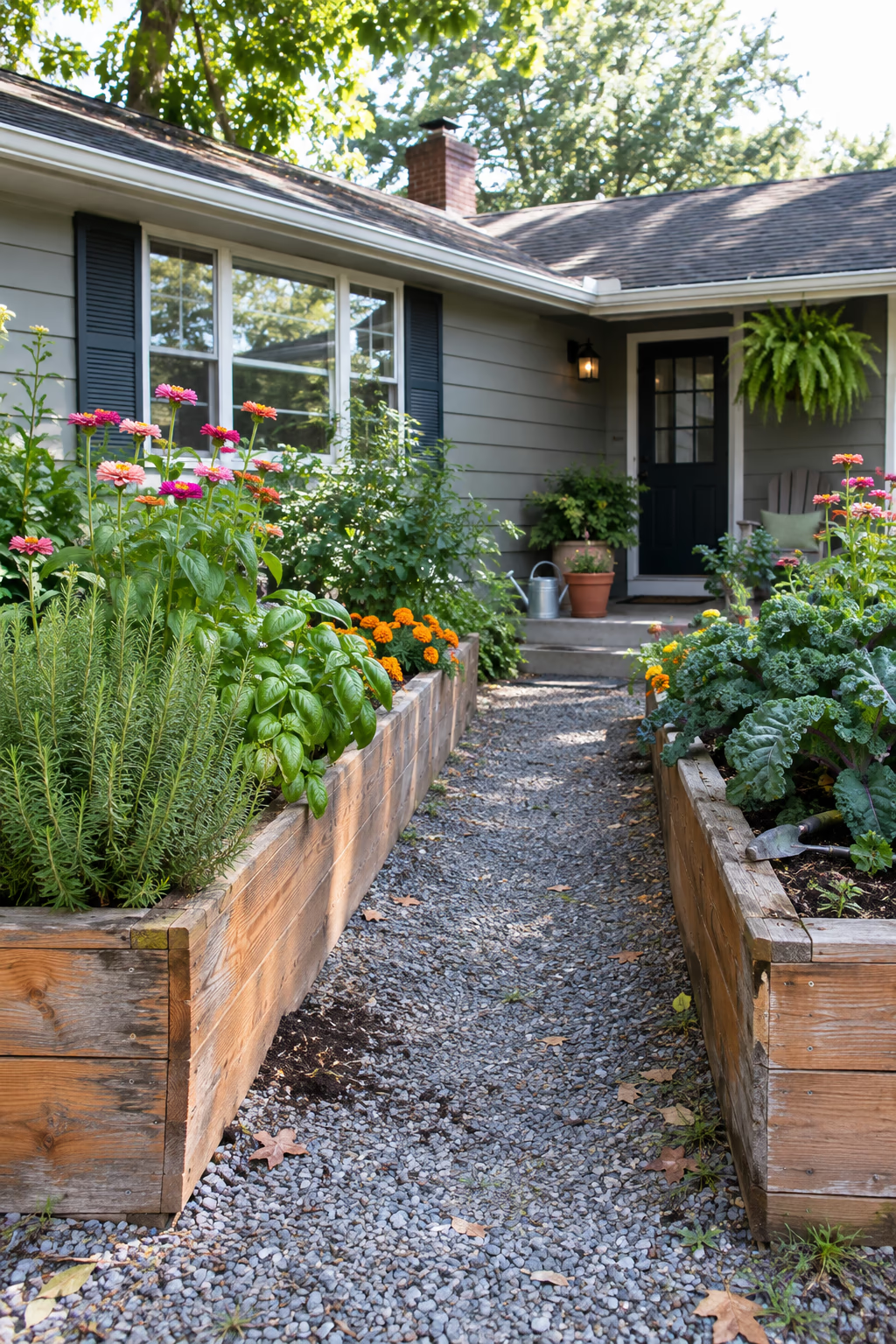
Tidy planting where soil is poor
Raised beds made from cedar, stone, or steel create clean-edged planting areas that lift flowers, herbs, or even edible plants up to eye level. A height of 12 to 18 inches works well and gives a comfortable seat edge.
Fill with a quality mix of topsoil and compost, and line the bottom with hardware cloth if gophers are a problem. Keep beds narrow enough to reach across.
Front yard vegetable gardens are fine in most places, but check local rules and avoid growing edibles near busy roadsides.
25. Plant a Privacy Hedge Along the Sidewalk
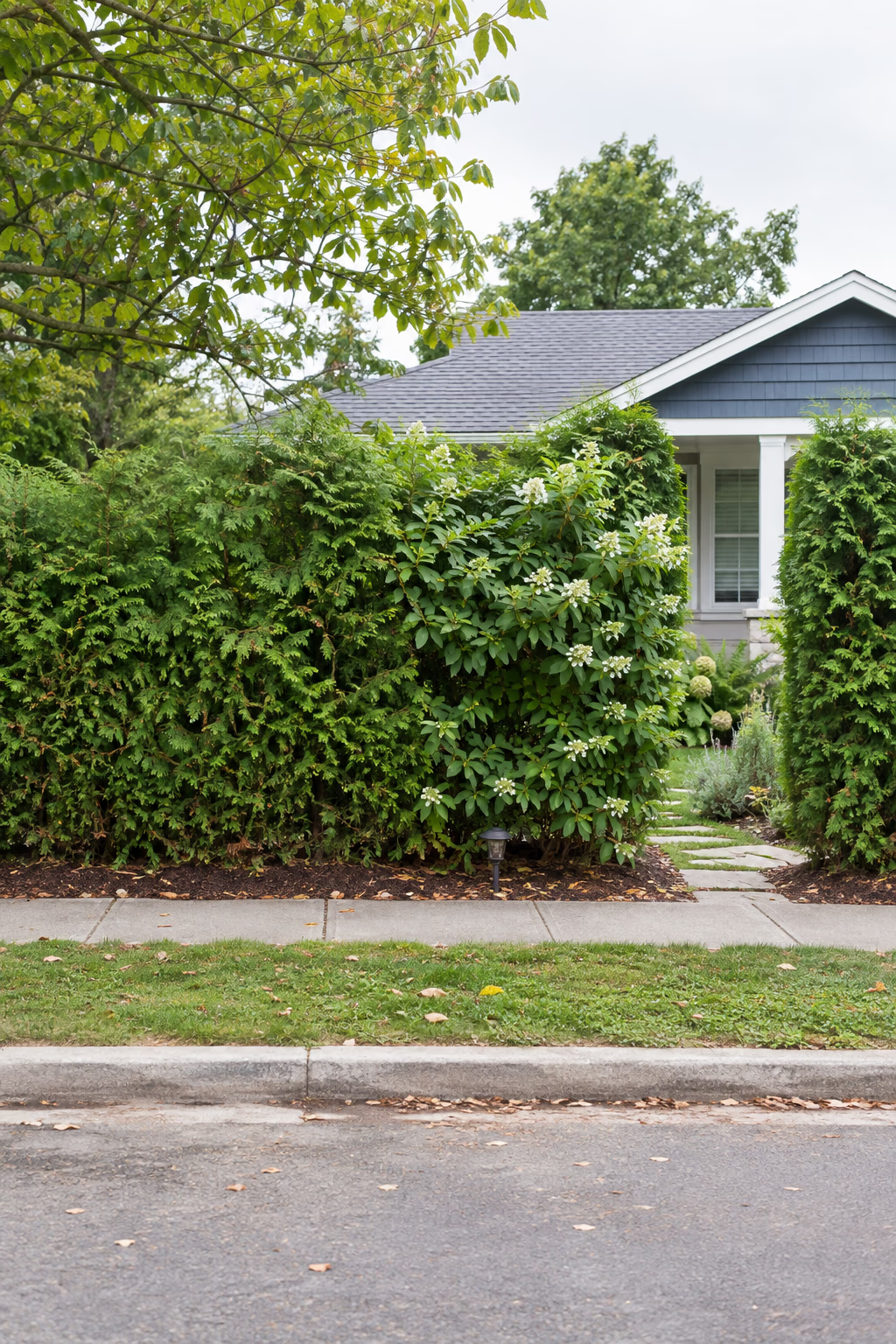
A green screen that keeps the yard calm
Arborvitae, holly, viburnum, or privet planted in a staggered line grows into a living wall that muffles noise and blocks views. Choose a variety that fits the available width, because many hedge plants spread 4 to 8 feet.
Space them according to the tag, usually 3 to 5 feet apart, and water deeply for the first two years. A mix of species is more resilient to disease than a single type.
Check local height limits for front hedges and stay clear of sight lines at driveways and corners.
26. Create a Cozy Front Sitting Nook
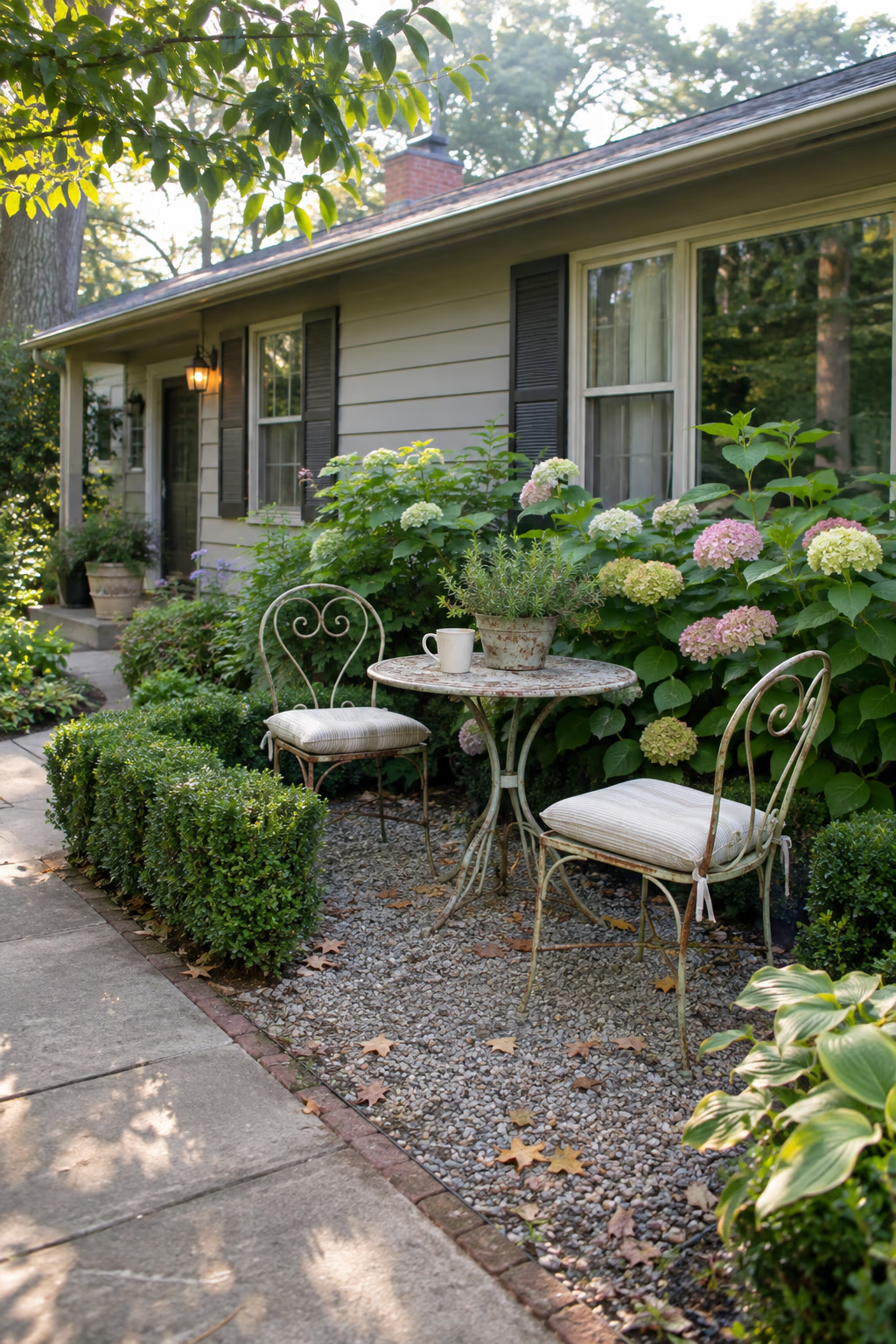
Make the front yard a place to actually use
A small paved or gravel patio near the walk with two chairs and a little table invites you to enjoy morning coffee and say hello to neighbors. About 8 by 10 feet is plenty for a bistro setup.
Frame it with shrubs or a low planter wall to give it a sense of enclosure, and choose weatherproof furniture in a color that coordinates with the house.
Keep the nook out of utility easements, and make sure it doesn’t narrow the main path to the door.
27. Swap Turf for a Low-Grow Clover Lawn
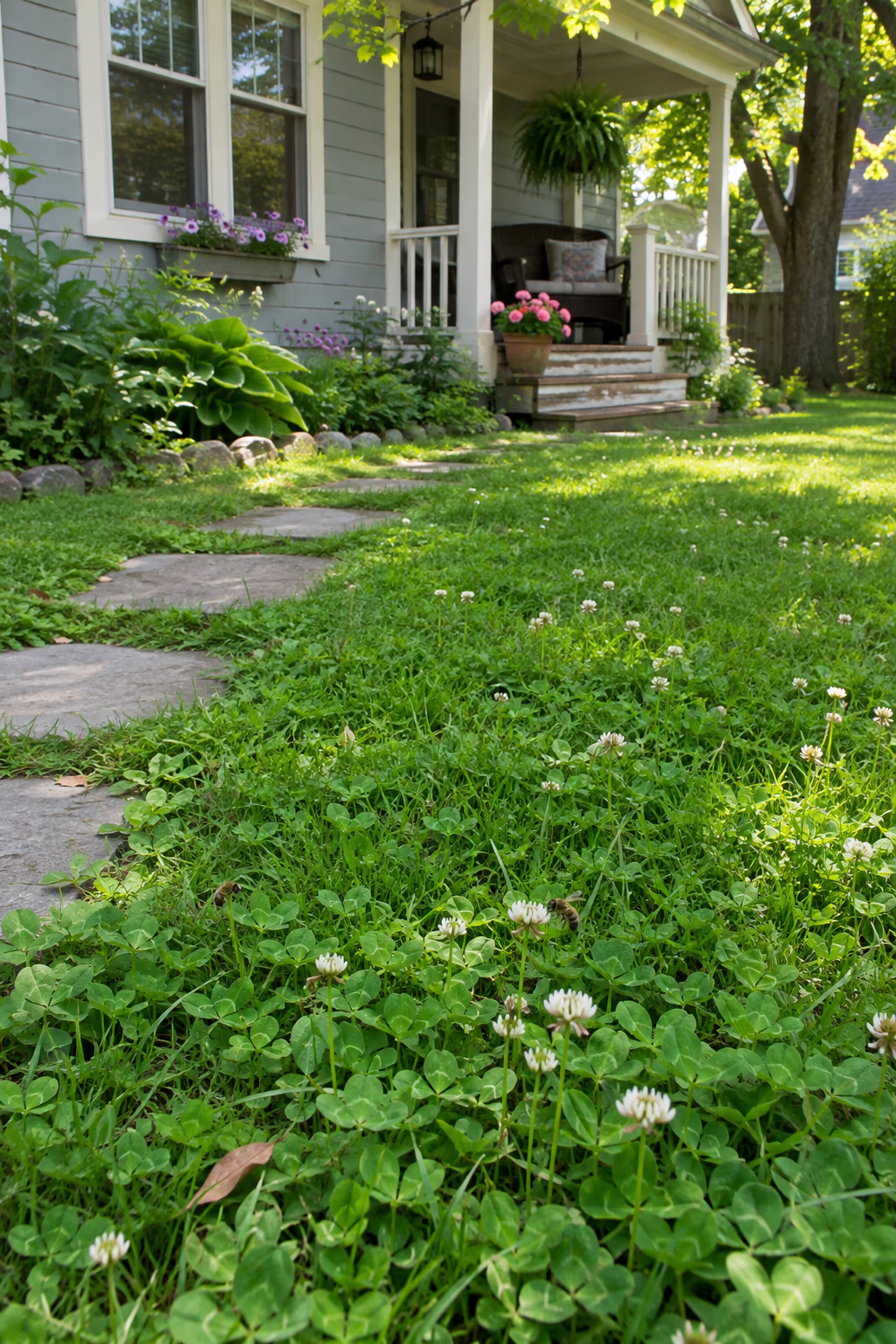
A greener lawn with less work
Microclover or a fescue blend with clover stays green with less water and fertilizer than a standard turf lawn. Clover also feeds the soil with nitrogen and attracts bees when it flowers.
Overseed in spring or early fall into thinned turf, or remove the old lawn and sow fresh. Keep the soil moist until seedlings establish.
Clover tolerates light foot traffic but can stain clothing and may be less suited to heavily used play areas. Mowing a few times a season is usually enough.
28. Anchor a Corner With Boulders and Evergreens
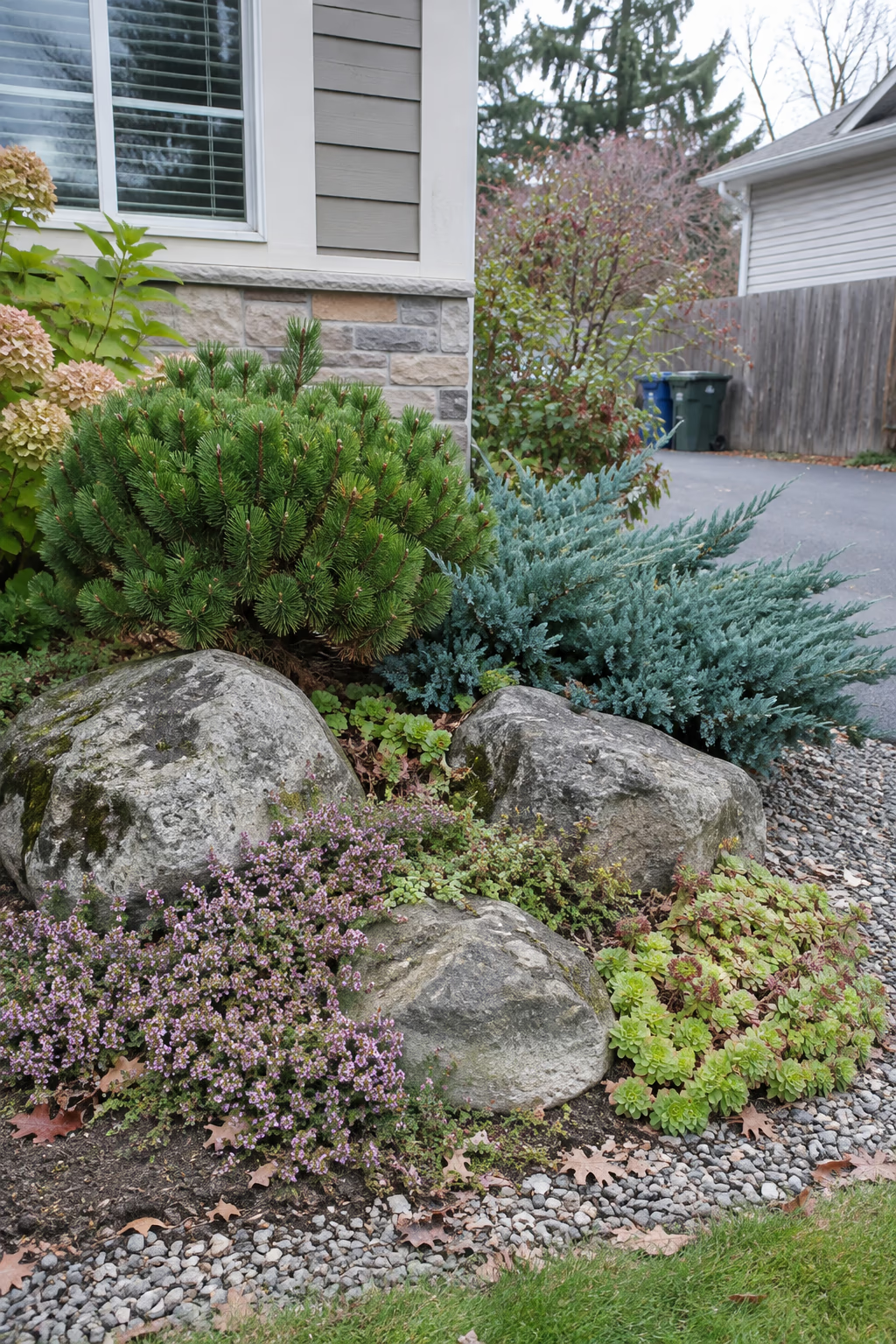
Natural weight for an empty spot
A group of three weathered boulders with a dwarf pine, juniper, or spruce makes an eye-catching low-maintenance corner. Bury each stone at least one-third of the way into the soil so it looks like it was always there.
Plant sedum, creeping thyme, or heather between the rocks. Vary the stone sizes and keep to a single rock type for a unified look.
Boulders are very heavy, so have the supplier place them with equipment rather than moving them by hand.
29. Plant Ground Covers Between Stepping Stones
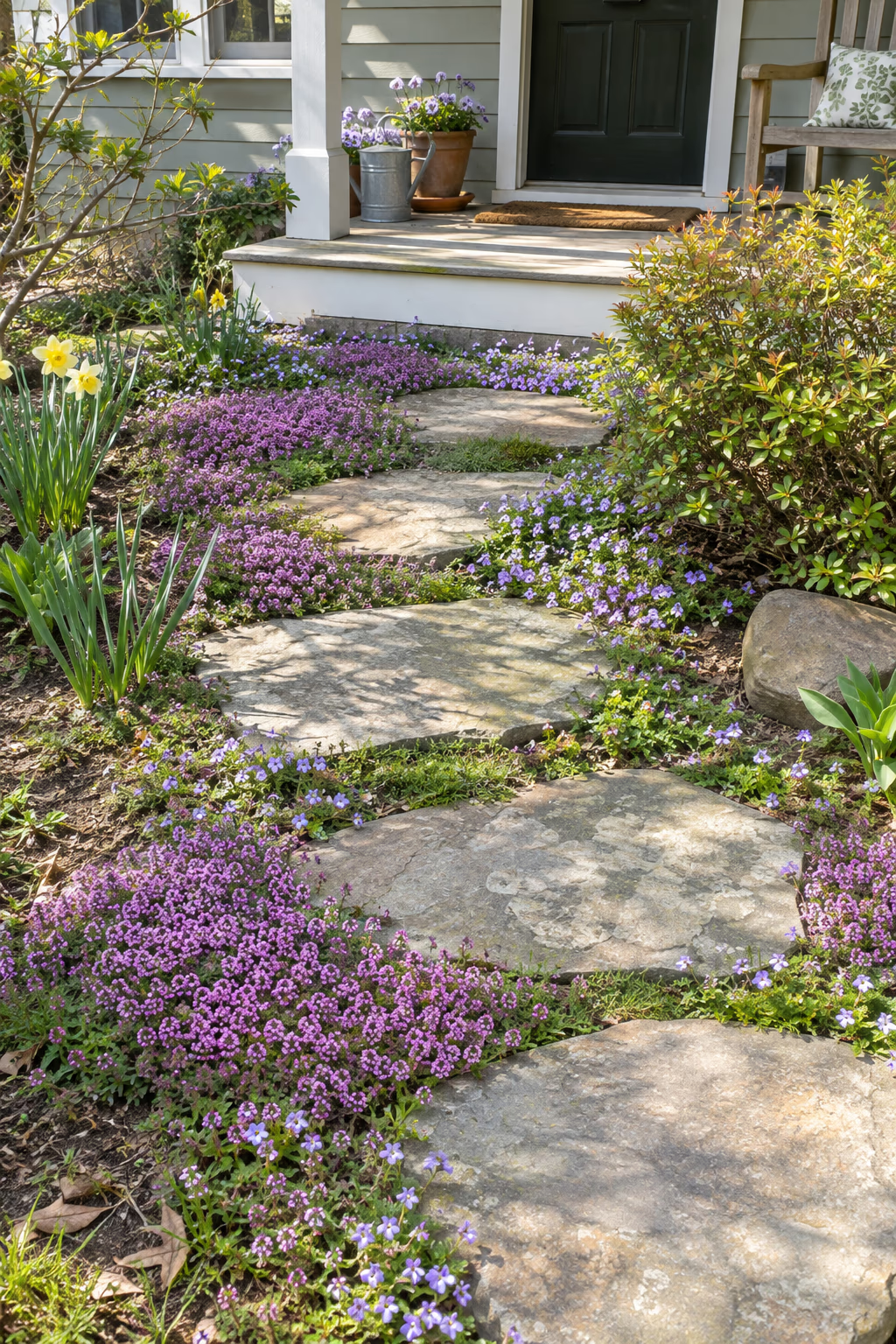
A soft, walkable path in lawn-free areas
Large flat stones set 2 to 3 inches apart with creeping thyme, mazus, Irish moss, or sedum between them make a path that feels like part of the garden. Space stones so a normal stride lands on each one.
Set them in firm soil or a sand bed so they don’t rock. Choose a ground cover suited to your light, because thyme likes sun while moss prefers shade and moisture.
Not all ground covers handle heavy foot traffic, so use sturdy pavers for the main route to the front door.
30. Choose Flowering Shrubs for Four-Season Interest
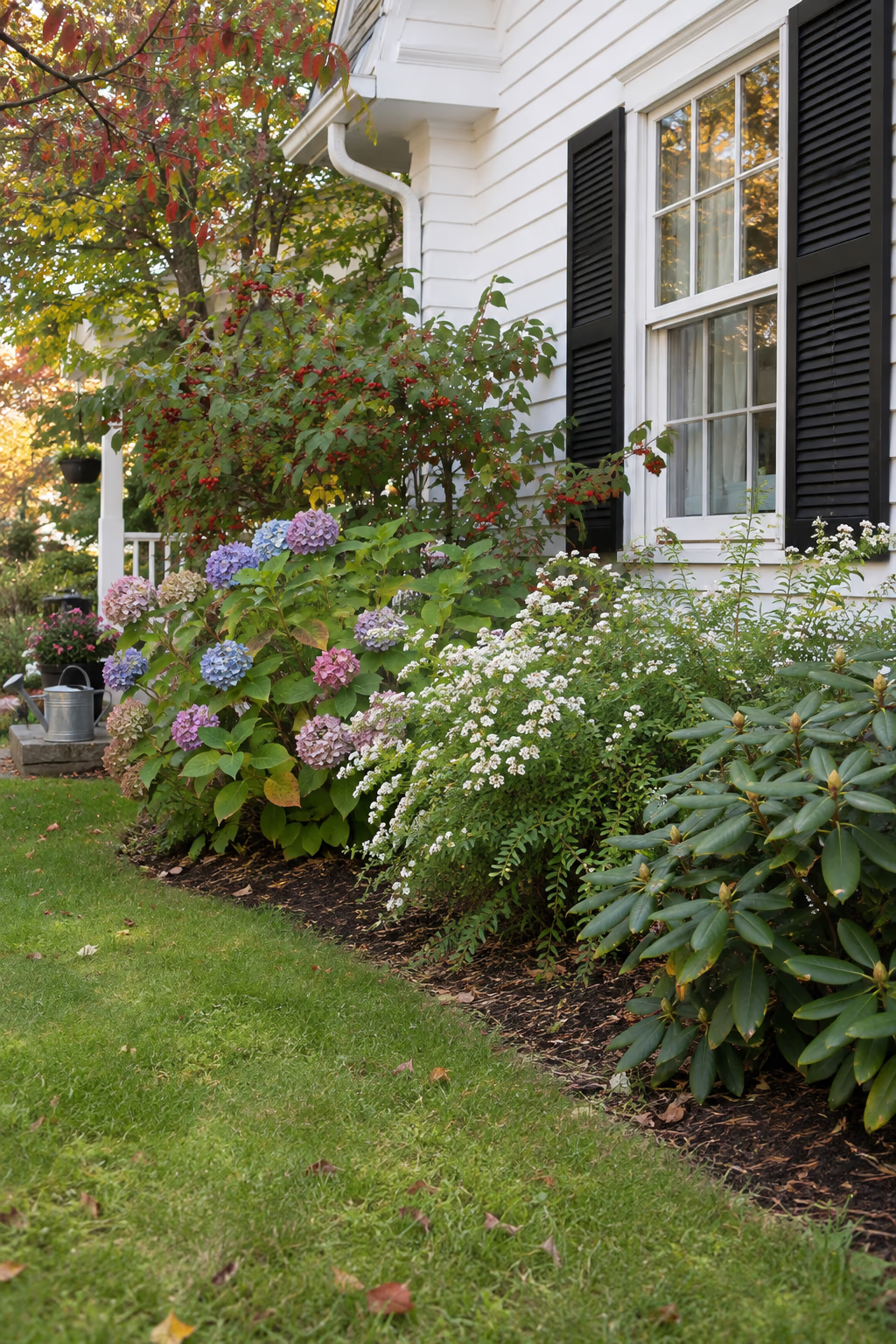
Reliable color without replanting
Mix shrubs that peak at different times, such as forsythia or spirea in spring, hydrangea in summer, and viburnum or winterberry for fall and winter fruit. Evergreen choices such as rhododendron or camellia fill the gaps.
Check zone hardiness and sun needs, then group plants with similar water needs. Place the biggest shrubs at corners and the smaller ones near paths.
Prune right after flowering for spring bloomers, and learn whether your hydrangea blooms on old or new wood before you cut.
31. Add Garden Steps With Planted Risers
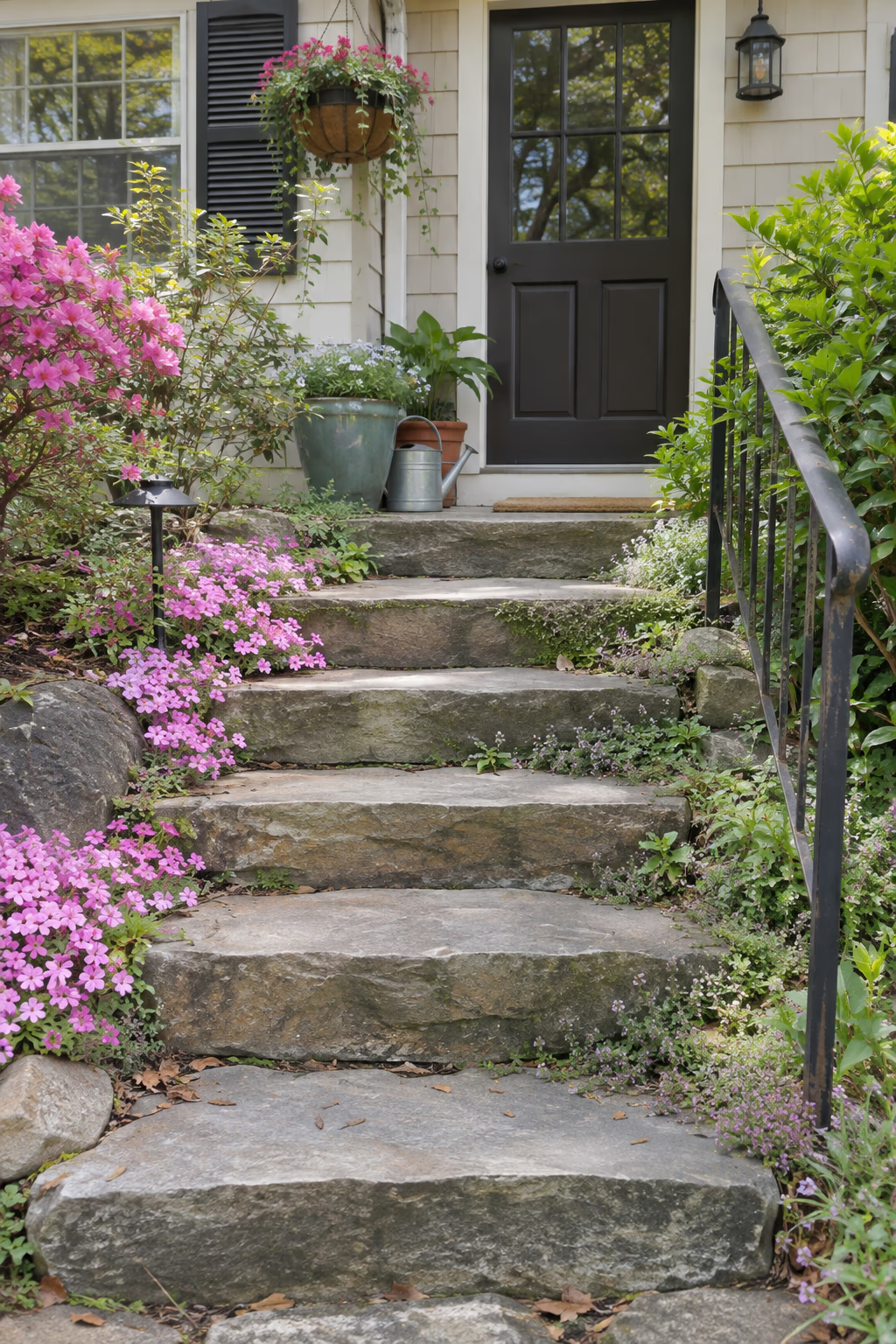
Safe access for a sloping front yard
If your walk climbs a slope, steps built from stone, timber, or concrete make it safer and more attractive. Aim for consistent risers of 6 to 7 inches and treads at least 12 inches deep.
Tuck low plants such as creeping phlox, thyme, or alyssum into the edges and soften the sides with shrubs. Add a handrail if the climb has more than a few steps.
Uneven steps are a trip hazard, so measure carefully and check local building codes for stair requirements.
How to Plan Your Front Yard Landscape
A good front yard design starts with a bit of observation and a simple plan. A weekend of thinking before you buy anything can save a lot of money and rework later.
- Sketch your layout first. Measure the yard, mark the house, walks, utilities, and sun and shade patterns, then draw where beds and paths will go.
- Set a realistic budget. Spend on the structure, such as paths and grading, first, and add plants and decor over time.
- Match plants to your zone and light. Check your USDA hardiness zone, soil type, and hours of sun so plants thrive instead of struggle.
- Think about mature size. Allow room for trees and shrubs to reach full width and height without crowding walls or windows.
- Plan for maintenance. Be honest about how much time you will spend watering, pruning, and weeding, and choose accordingly.
- Check rules and call 811. Review HOA guidelines, fence and wall limits, and permits, and call 811 before any digging.
Frequently Asked Questions
How can I improve my front yard on a small budget?
Start with edging, fresh mulch, and a few shrubs or perennials, then add containers and lighting. Dividing plants you already own and buying small plants rather than mature ones also keeps costs down.
What is the lowest maintenance front yard landscaping?
A mix of native perennials, ornamental grasses, evergreen shrubs, and mulch or gravel generally needs the least work. Drip irrigation and good edging cut upkeep even further.
How far from the house should I plant shrubs and trees?
Plant shrubs about half their mature width away from the wall, plus a little extra for airflow. Small trees usually need 10 feet or more depending on their spread.
What time of year is best to landscape a front yard?
Spring and early fall are ideal in most of the country, because mild weather and moist soil help roots settle. Hardscape work can happen in any dry season.
Do I need a permit for front yard changes?
You may for fences, retaining walls above a certain height, driveways, or drainage changes. Contact your local building department and HOA before starting bigger projects.
Final Thoughts
The best front yard landscaping ideas make a home feel welcoming while fitting your climate, budget, and free time. A clear path, layered planting, and a bit of light often do more than an expensive overhaul.
Start with one project this season, learn how your yard responds, and build from there. Over time, those small upgrades add up to a front yard you’ll enjoy every time you pull into the driveway.


