
Think about the last time a front porch made you slow down on the sidewalk. Chances are a pair of full, healthy planters was doing most of the work, spilling color down the steps and making the whole entry look cared for.
That’s the appeal of container planting at the front door. Pots are movable, forgiving, and easy to change with the seasons, so you can refresh a tired porch in an afternoon without digging a single bed. They also work on porches of every size, from a tiny stoop to a wide wraparound.
These 25 front porch planter ideas cover classic urns, tall door-framing pairs, hanging baskets, herb corners, fall and winter displays, and budget-friendly DIY tricks. Pick one that suits your light and style, or combine a few for a layered look.
1. Flank the Door With Matching Tall Planters
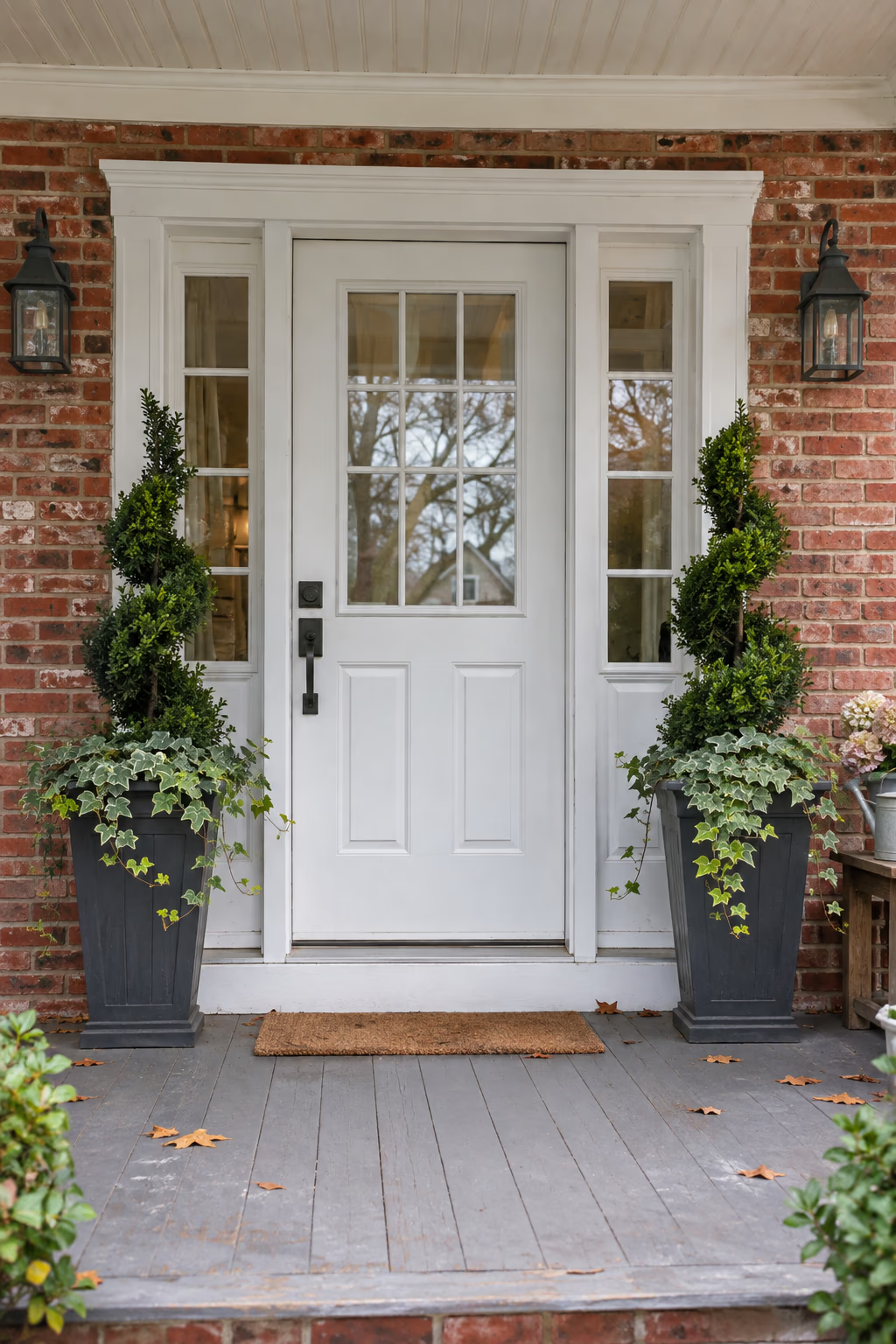
A balanced, welcoming frame for any entry
A matching pair on either side of the door is the most dependable way to make a porch look finished. Choose pots at least 18 to 24 inches tall and about 16 inches wide so they look in proportion to a standard 36-inch door.
Plant each with a vertical centerpiece such as a dwarf Alberta spruce, boxwood spiral, or upright juniper, then add trailing ivy or sweet potato vine around the edge. Repeating the same plants on both sides keeps the look calm and symmetrical.
Leave at least 36 inches of clear walking space between the pots and check that the door can still swing fully open. Large pots get heavy once filled, so set them in place before adding soil.
2. Fill Classic Urns With Spilling Flowers
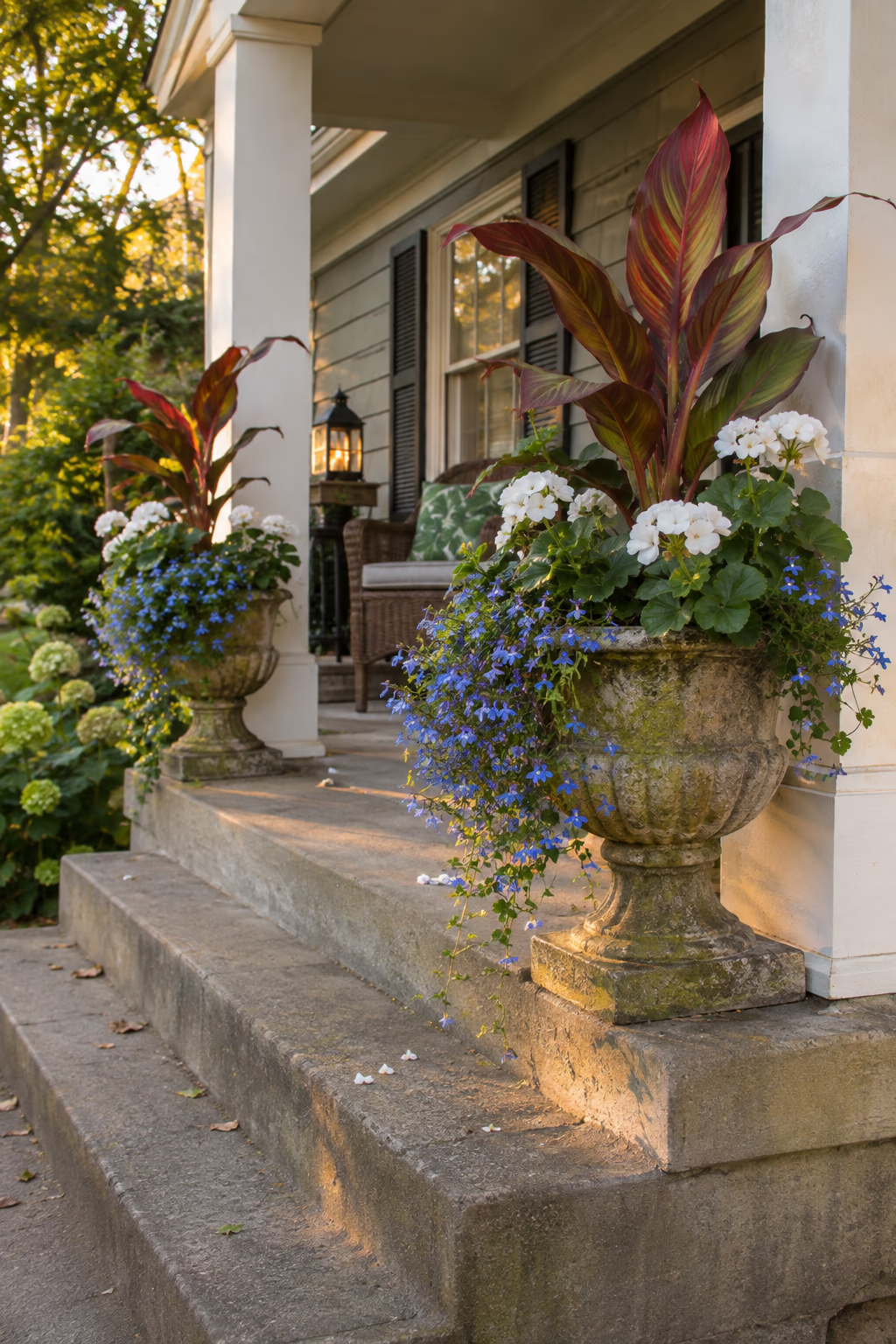
Timeless shape with plenty of drama
An urn’s wide, flared rim is made for plants that cascade. Try a tall grass or canna in the middle, white geraniums or begonias around it, and trailing lobelia or calibrachoa tumbling over the edge.
Urns look best in pairs near columns or at the top of steps, in stone, cast concrete, or resin. Keep the color palette tight, such as white and green or pink and burgundy, so the shape stays the star.
Many urns have a narrow base and can tip in strong wind. Add a few pounds of gravel in the bottom and make sure there is a drainage hole so roots don’t sit in water.
3. Plant a Thriller-Filler-Spiller Showpiece
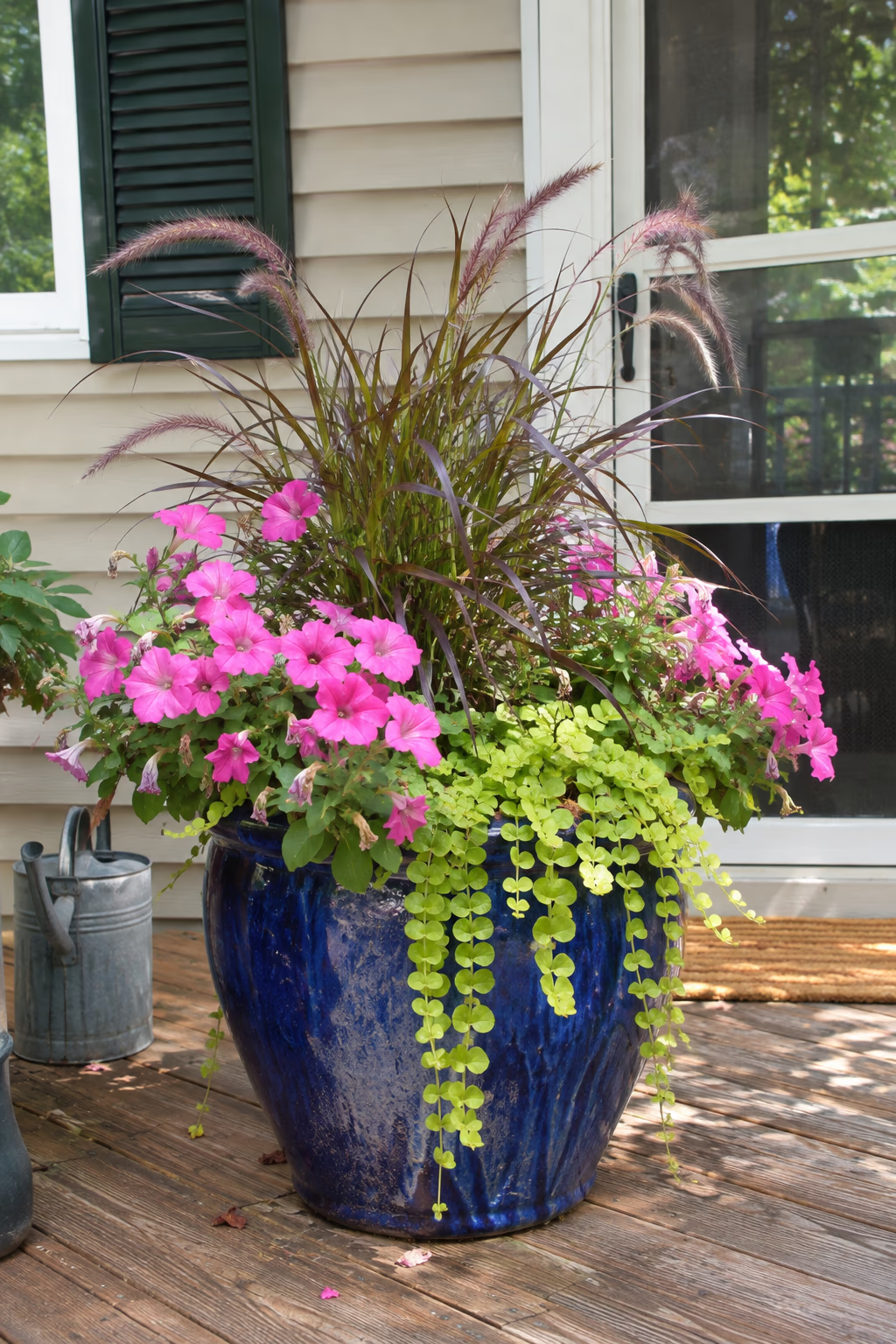
A simple formula for a full, professional pot
The classic recipe combines three plant roles in one container: a tall thriller, mounding fillers, and trailing spillers. In a 16 to 20 inch pot you might pair a purple fountain grass with petunias and creeping Jenny.
Plant a little more densely than the plant tags suggest, because container displays are meant to look full from the first week. Use fresh potting mix, not garden soil, and mix in slow-release fertilizer at planting time.
Full pots are thirsty. In midsummer heat they may need water every day, so check the soil with a finger before deciding.
4. Line the Front Steps With Repeating Pots
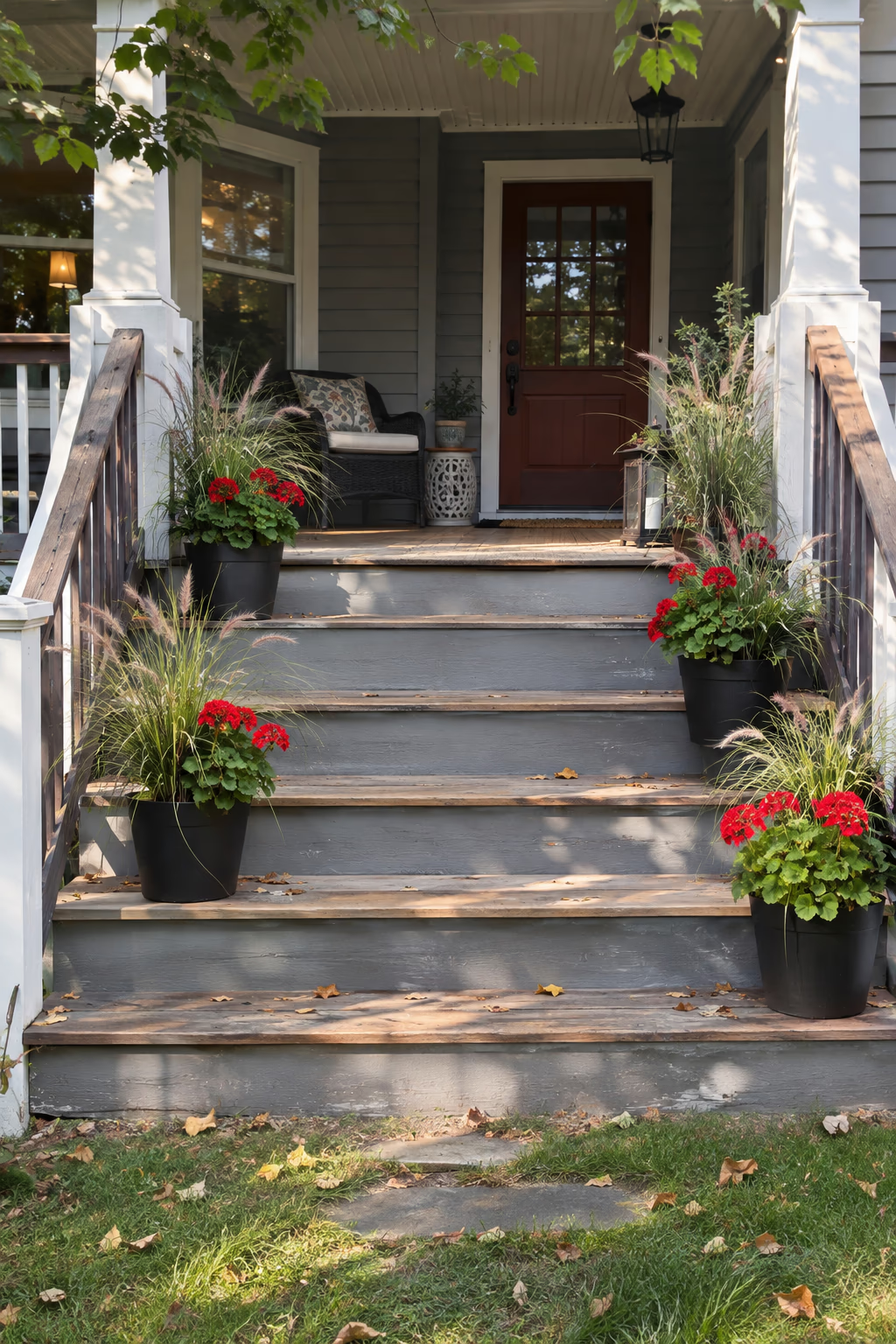
Rhythm that guides guests to the door
Placing matching pots on alternating sides of each step, or at the top and bottom of the staircase, creates a pleasing rhythm. Three to five pots of similar size and finish usually look best.
Keep the plants simple and repeat them, perhaps ornamental grass with one bold flower such as red geraniums. This repetition ties the whole entry together even if the porch is plain.
Safety comes first. Never narrow the steps so much that the path feels tight, and keep pots away from the edge of the tread. Local codes and HOA rules sometimes limit what can sit on steps, so check before placing items.
5. Grow Lush Foliage in Dark Pots
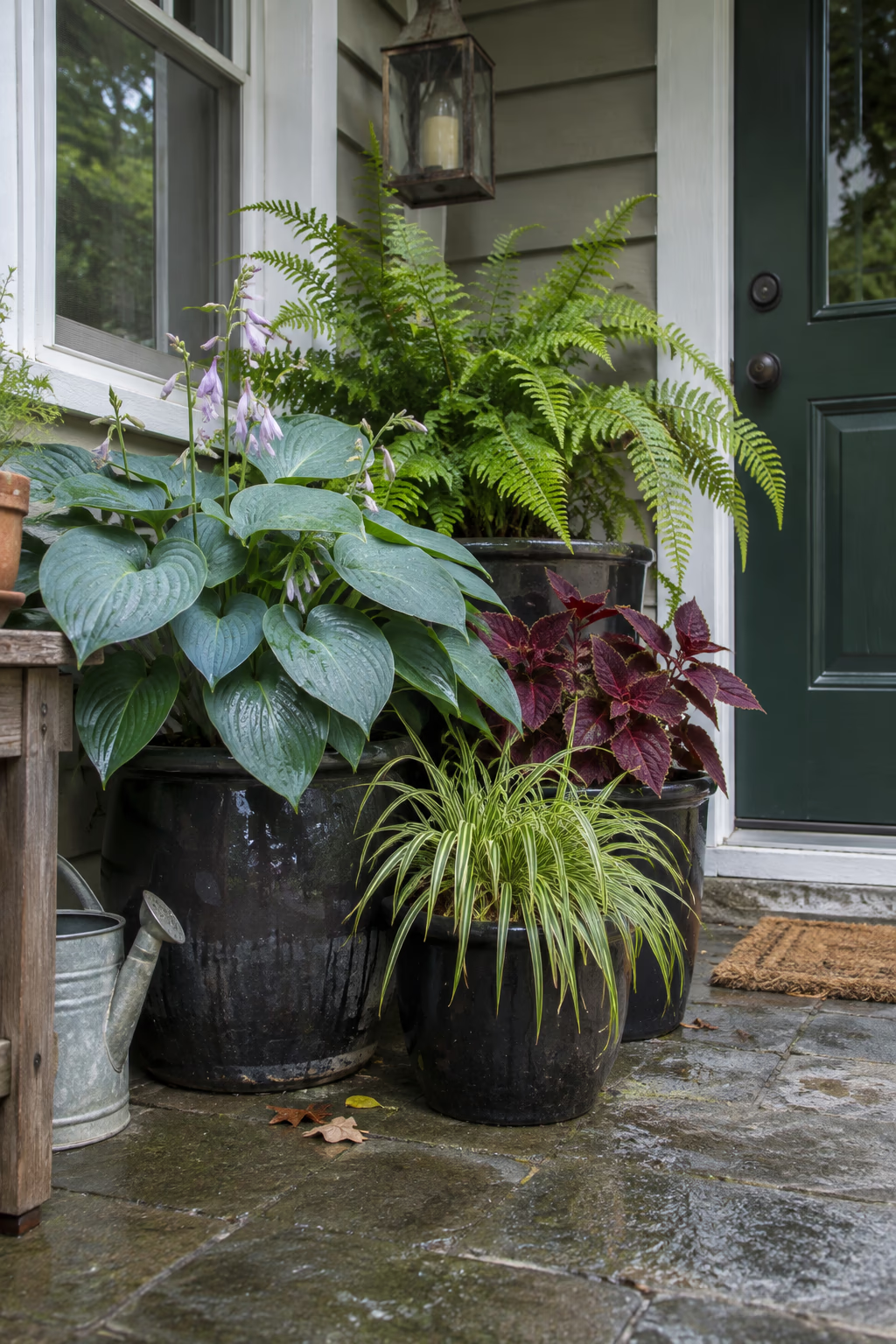
Moody greenery for shady porches
A north-facing porch doesn’t have to go without. Charcoal or black pots make green leaves look richer, and shade-loving plants like hostas, ferns, caladiums, and coleus thrive in them.
Mix leaf shapes and textures, such as bold hosta leaves against feathery fern fronds, with a variegated plant like Japanese forest grass to catch the light. Foliage looks good for months, so you won’t need to replant when blooms fade.
Dark pots absorb heat, so on a porch that gets afternoon sun, choose thicker ceramic or fiberglass and check moisture often.
6. Style a Fall Planter With Mums and Grasses
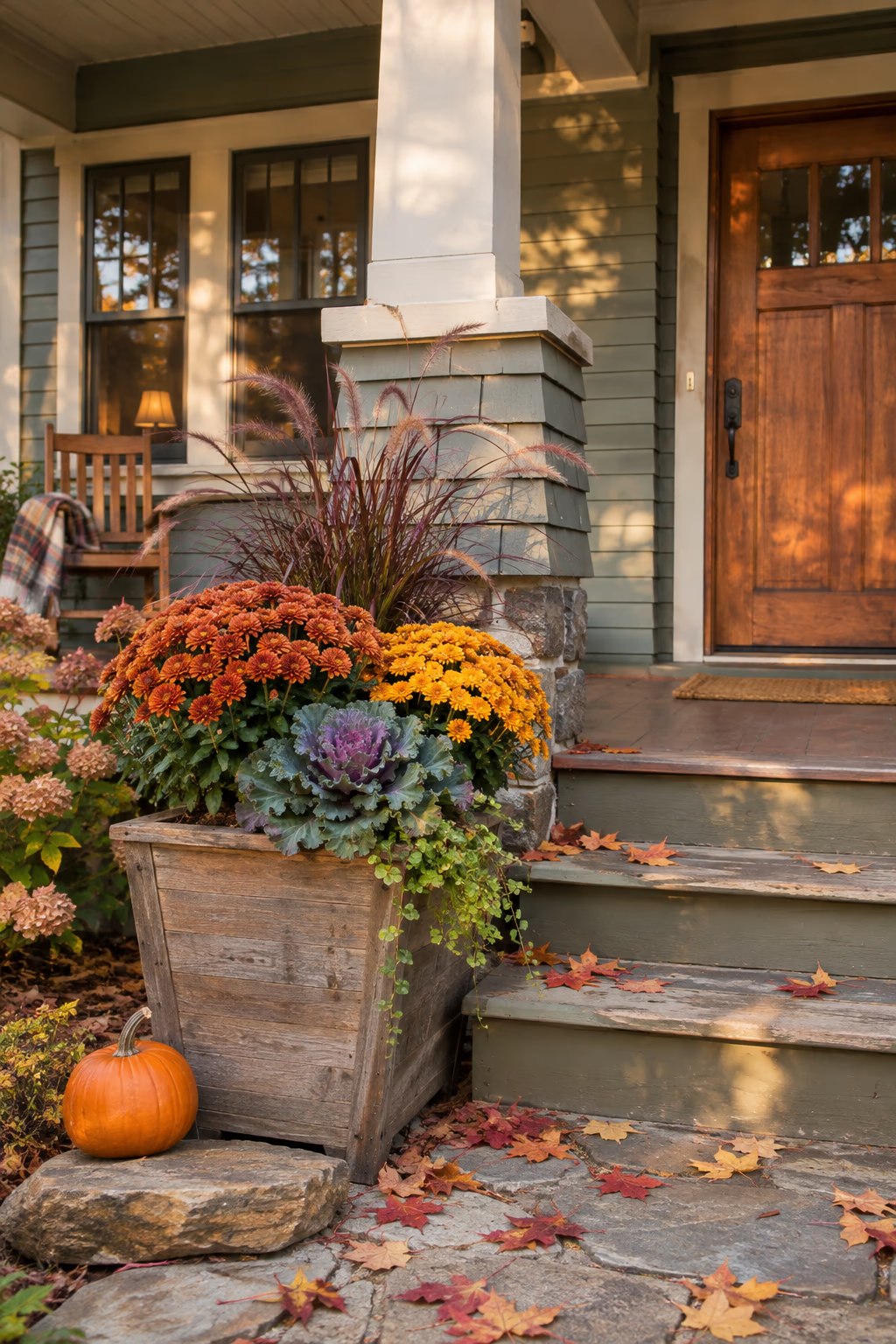
Warm autumn color that lasts until frost
Garden mums in rust, gold, and burgundy are easy to find in autumn and look great tucked into a larger container. Add ornamental kale, purple fountain grass, or a few stems of dried seed heads for height.
Plant the mums in their nursery pots inside the larger container and fill the gaps with mulch or moss. This makes it simple to swap in new plants when the first ones fade.
Pumpkins and gourds at the base add color, but they can rot if they sit in wet soil, so set them on a saucer or flat stone instead.
7. Hang Baskets From the Porch Ceiling
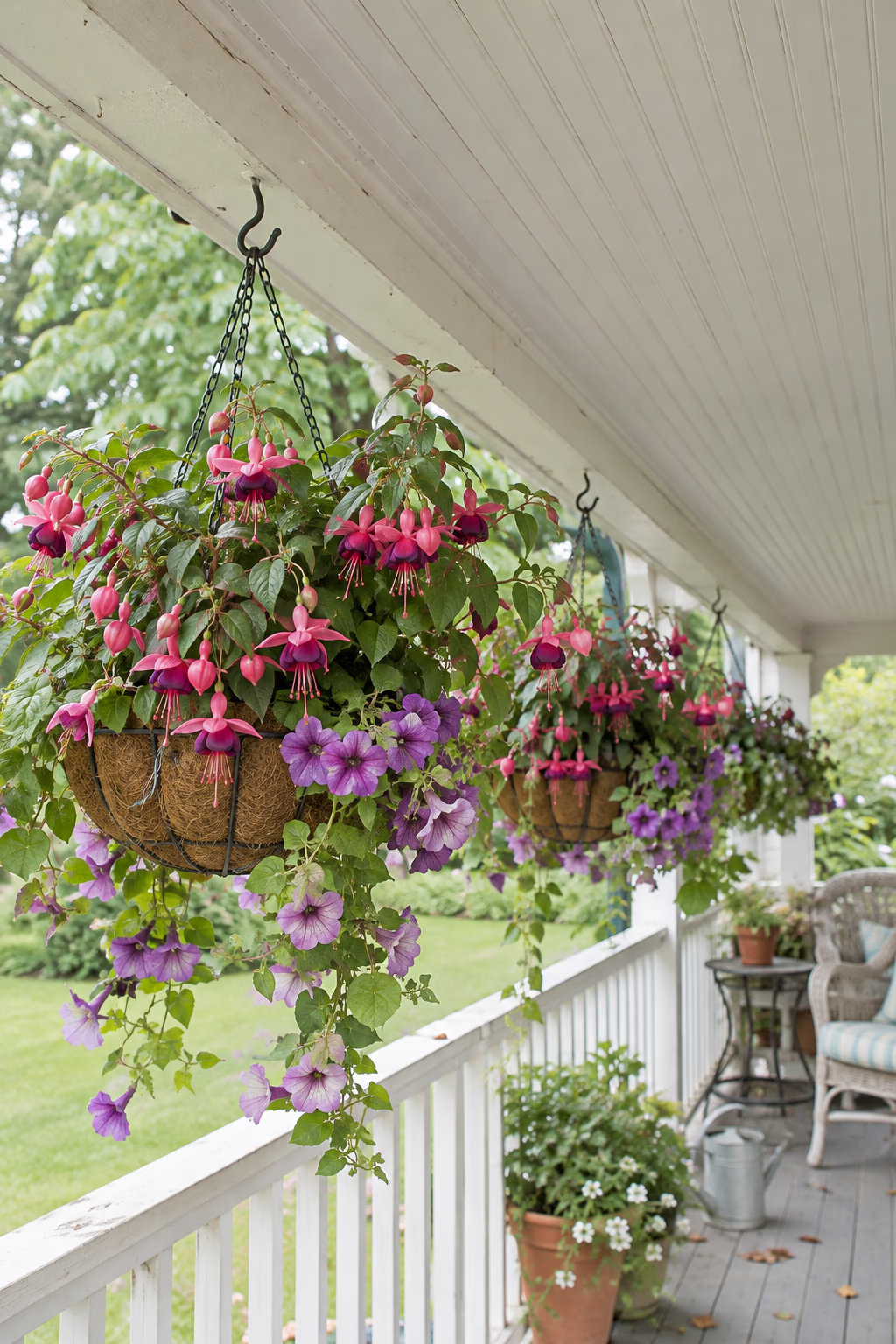
Color at eye level without using floor space
Hanging baskets are perfect for porches with limited floor room. A 12 to 14 inch basket lined with coir and filled with fuchsia, begonias, or trailing petunias adds instant softness.
Hang them from sturdy hooks screwed into a ceiling joist or beam, not just the drywall or beadboard. A wet basket can weigh 20 pounds or more, so use rated hardware and swivel hooks.
Baskets dry out quickly because air moves around them. Water them daily in summer, and consider a pulley hanger so you can lower them for watering without a ladder.
8. Mount Window Boxes Beneath Porch Windows
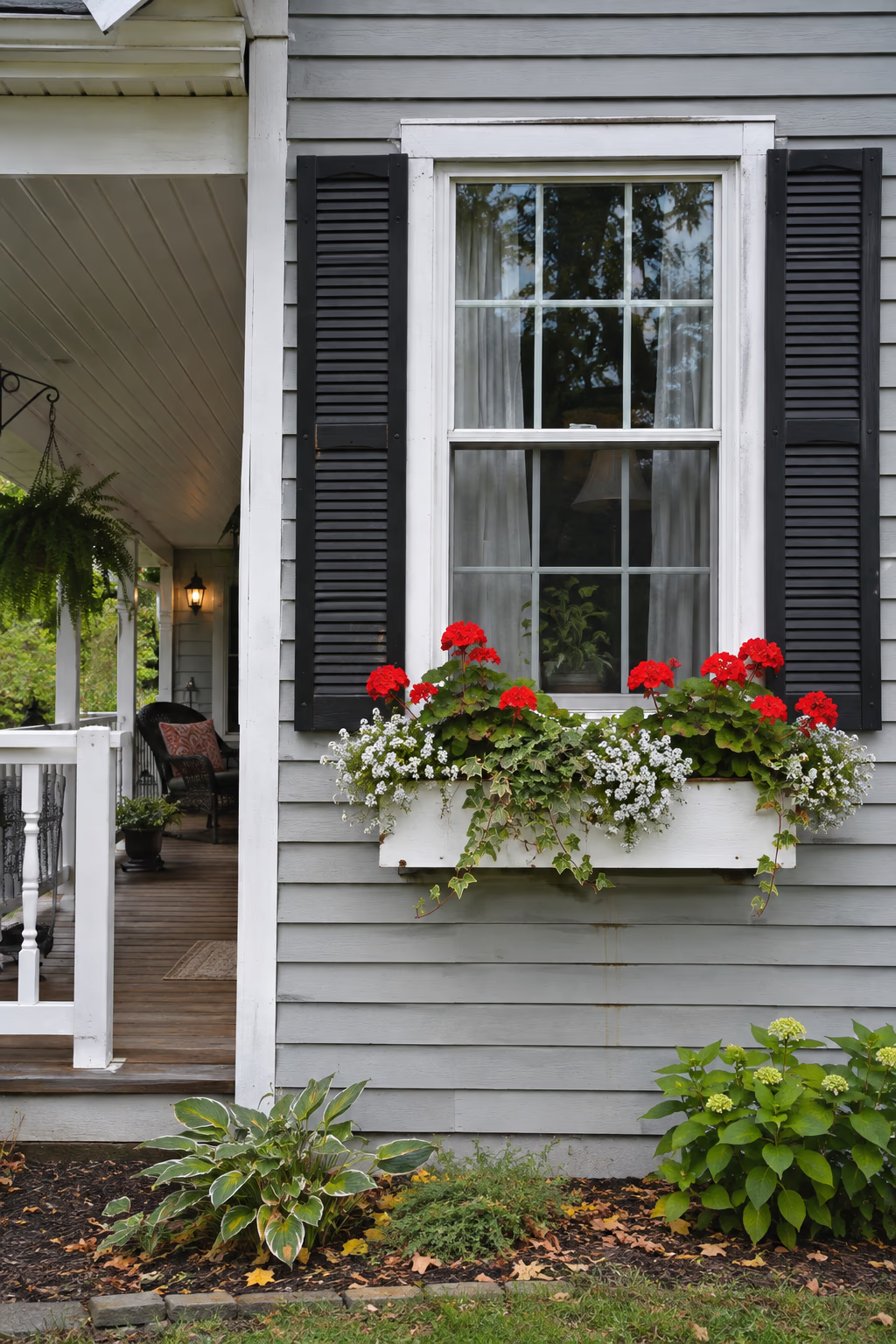
Extra planting room that frames the house
A window box repeats the planting theme above the porch rail and makes the facade feel layered. Choose a box about as wide as the window, at least 8 inches deep, with drainage holes.
Fill it with geraniums, trailing ivy, and sweet alyssum, or herbs like thyme and parsley if you want something edible. Matching the box color to the trim keeps it tidy.
Fasten the box with brackets rated for wet soil weight, which can be 30 pounds or more. A liner or tray protects siding from water stains.
9. Group Galvanized Tubs for Farmhouse Charm
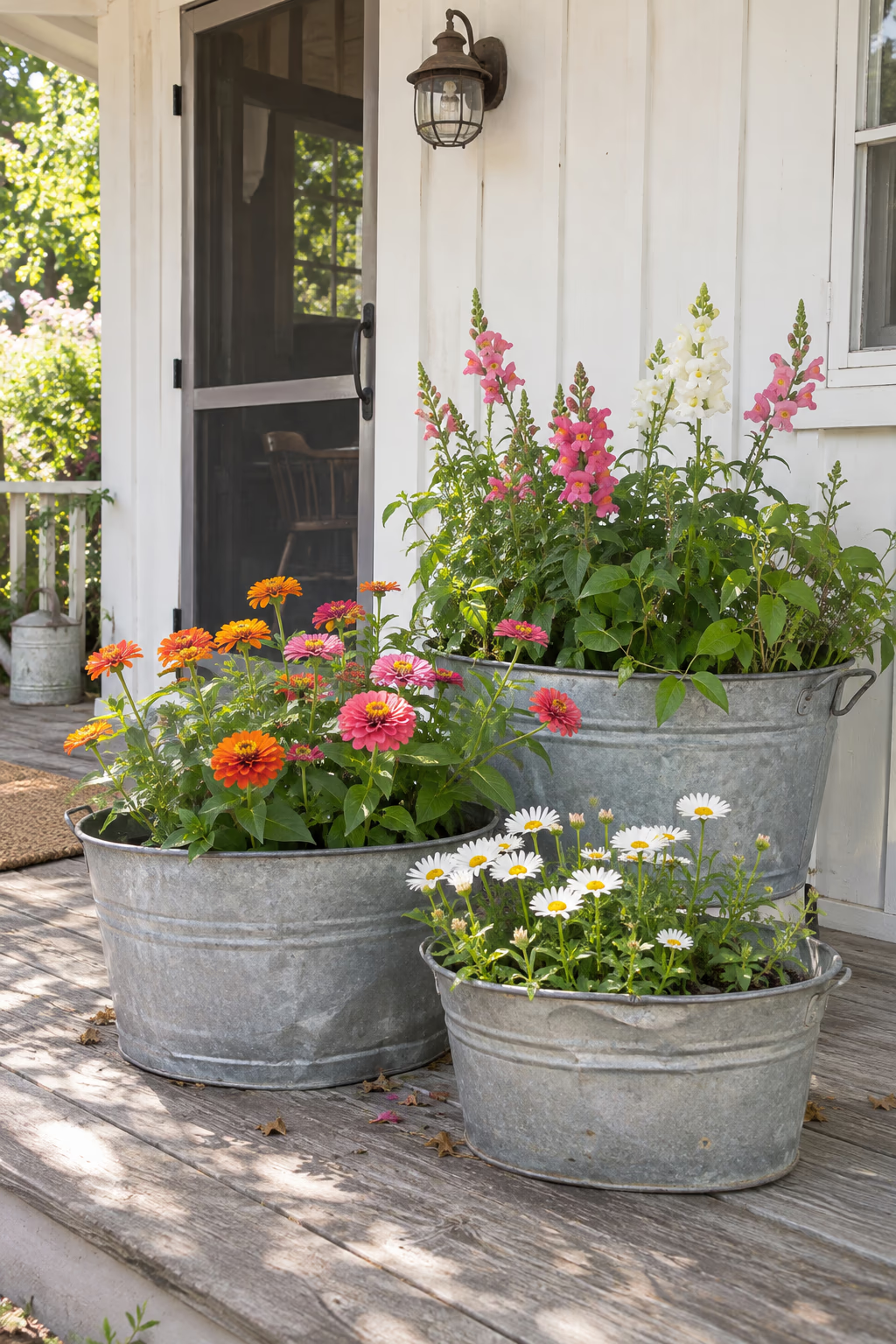
Rustic metal that suits casual flowers
Galvanized stock tanks and washtubs have an easy, relaxed look. Use a mix of sizes beside the door and plant them with zinnias, daisies, and tall snapdragons for a loose cottage feel.
Drill several holes in the bottom, since these tubs don’t come with drainage. A layer of gravel underneath keeps the soil from sitting in standing water.
Metal heats up in full sun, which can stress roots. Choose heat-tolerant plants or line the inside with a thin layer of foam insulation.
10. Cluster Terracotta Pots With Mediterranean Herbs
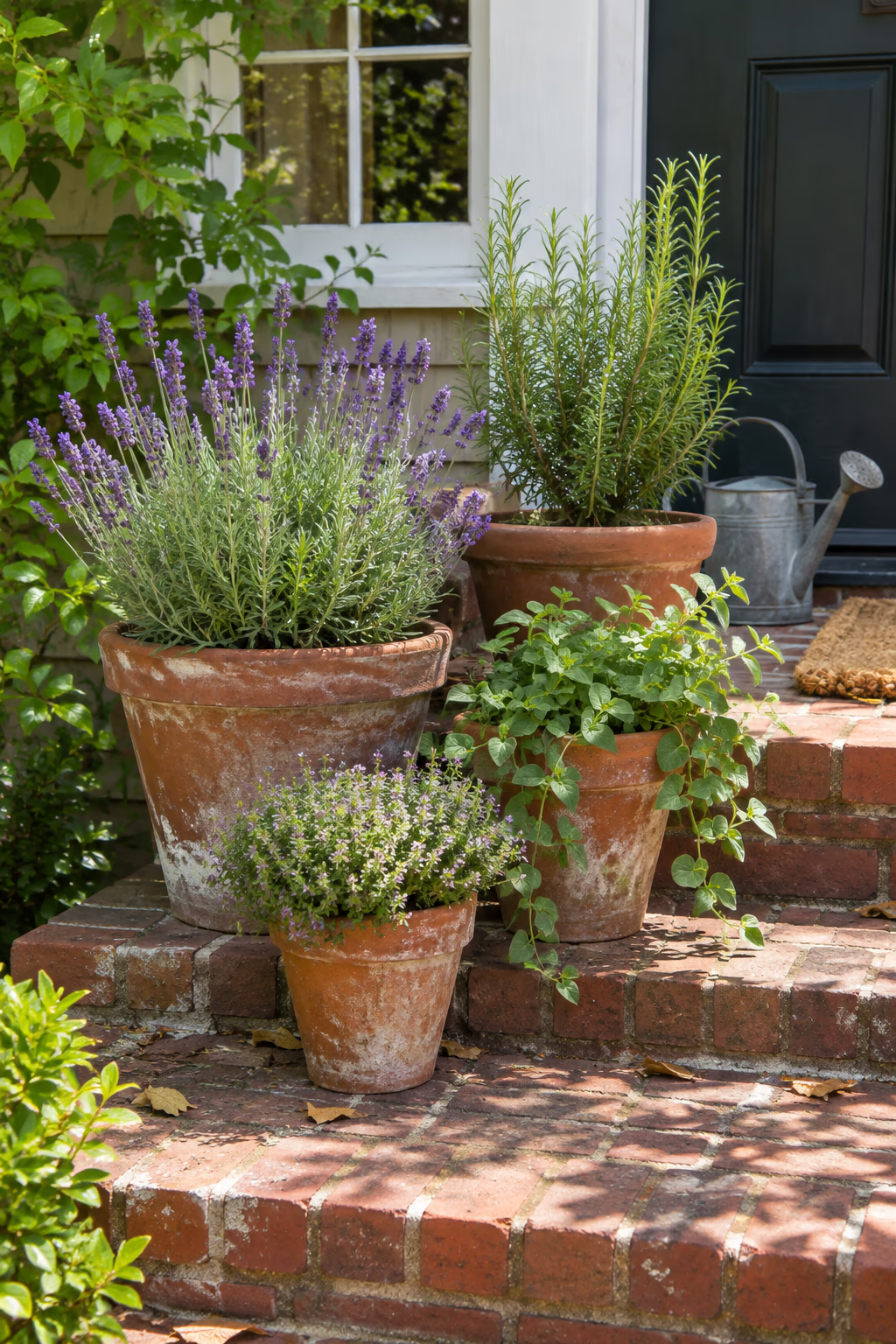
Warm clay and drought-tolerant plants
Aged terracotta pairs well with brick and stone. Group three or four pots in different sizes and plant them with lavender, rosemary, thyme, and trailing oregano, which all prefer dry soil and full sun.
These plants need much less water than flowering annuals, so they suit busy owners. The silvery foliage and soft scent make the entry feel inviting.
Unglazed clay can crack in freezing weather when it holds moisture. In cold climates, empty and store the pots for winter or choose frost-rated versions.
11. Create a White Moon Garden Planter
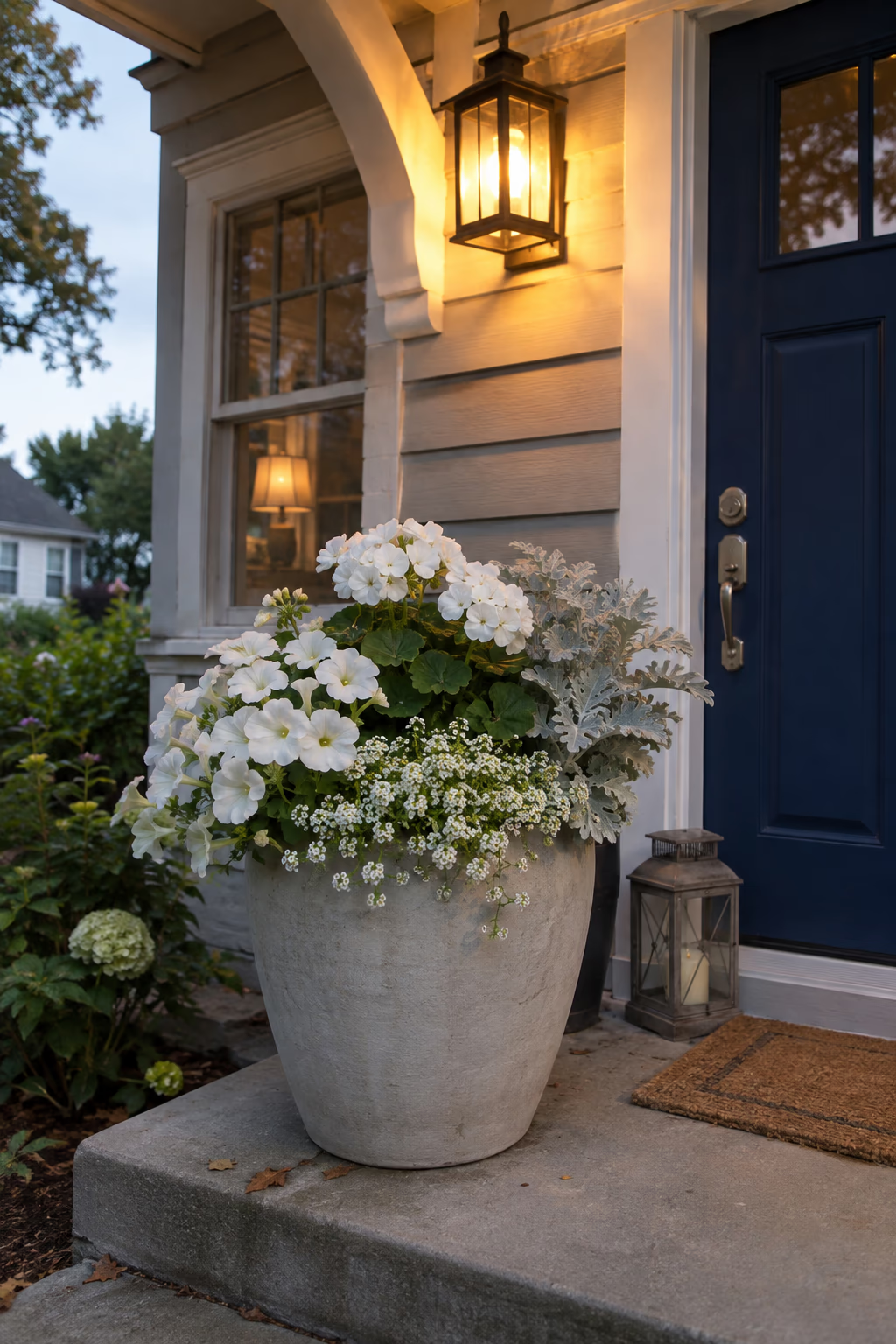
Pale blooms that glow at dusk
White flowers show up beautifully in evening light, which is when many people come home. Combine white petunias, alyssum, white geraniums, and silvery dusty miller in a single large container.
A strict white-and-silver palette looks sophisticated, especially against a dark door or siding. Add a night-scented plant like nicotiana for fragrance on warm evenings.
White blooms show faded petals quickly, so snip spent flowers every few days to keep the planter looking crisp.
12. Plant Ornamental Grasses in Modern Concrete Pots
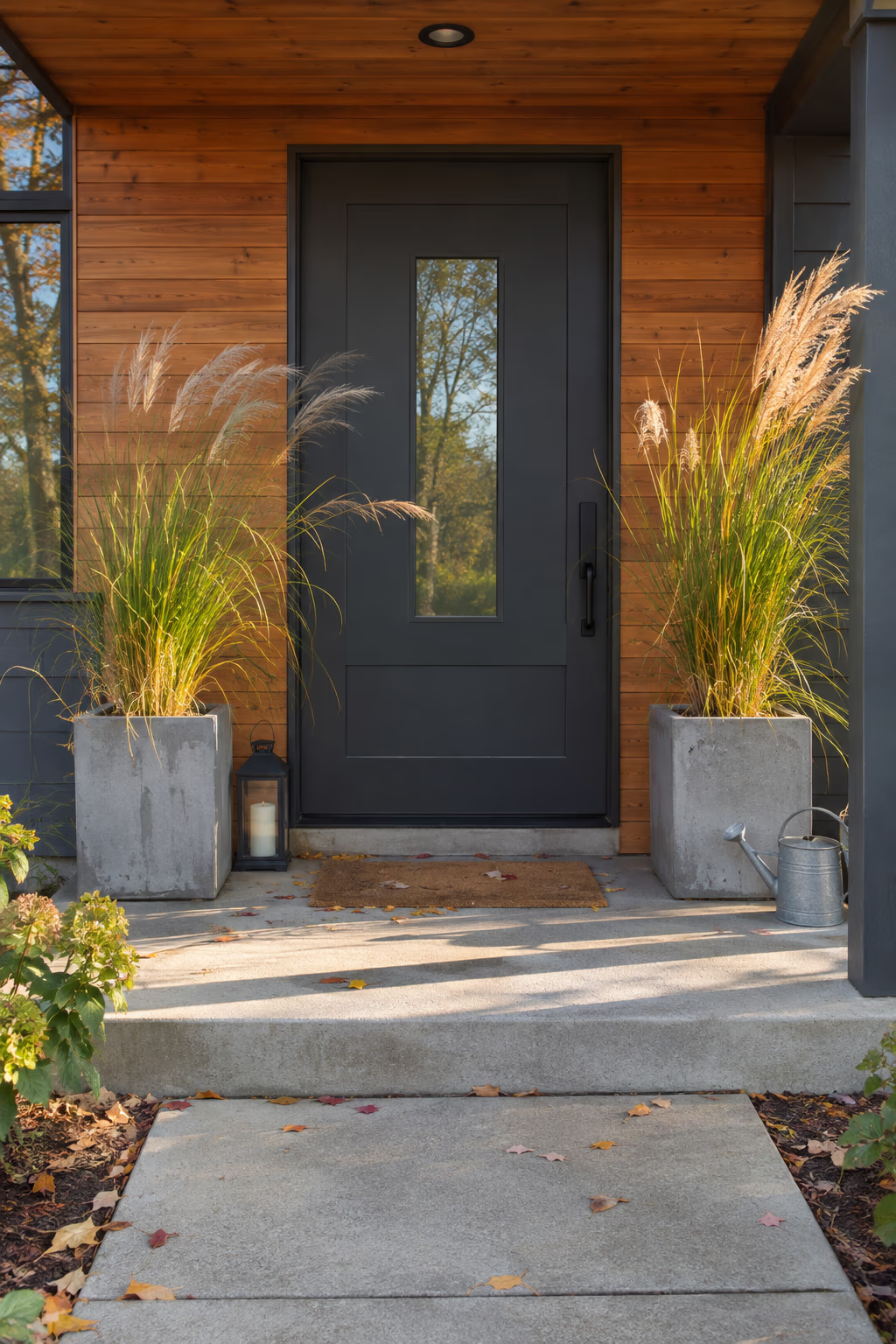
Clean lines and movement with little fuss
Square or cylindrical concrete planters give a modern look, and a single type of grass inside keeps it simple. Feather reed grass, little bluestem, or dwarf fountain grass add soft motion in the breeze.
Grasses are tough, handle heat well, and look good from summer through winter once they turn tan. A pair of large pots by the door needs little more than occasional watering.
Cut the grass back to a few inches in late winter before new growth begins. In cold zones, check that the variety is hardy enough to survive above ground in a pot.
13. Stack Pots at Varied Heights in a Collected Group
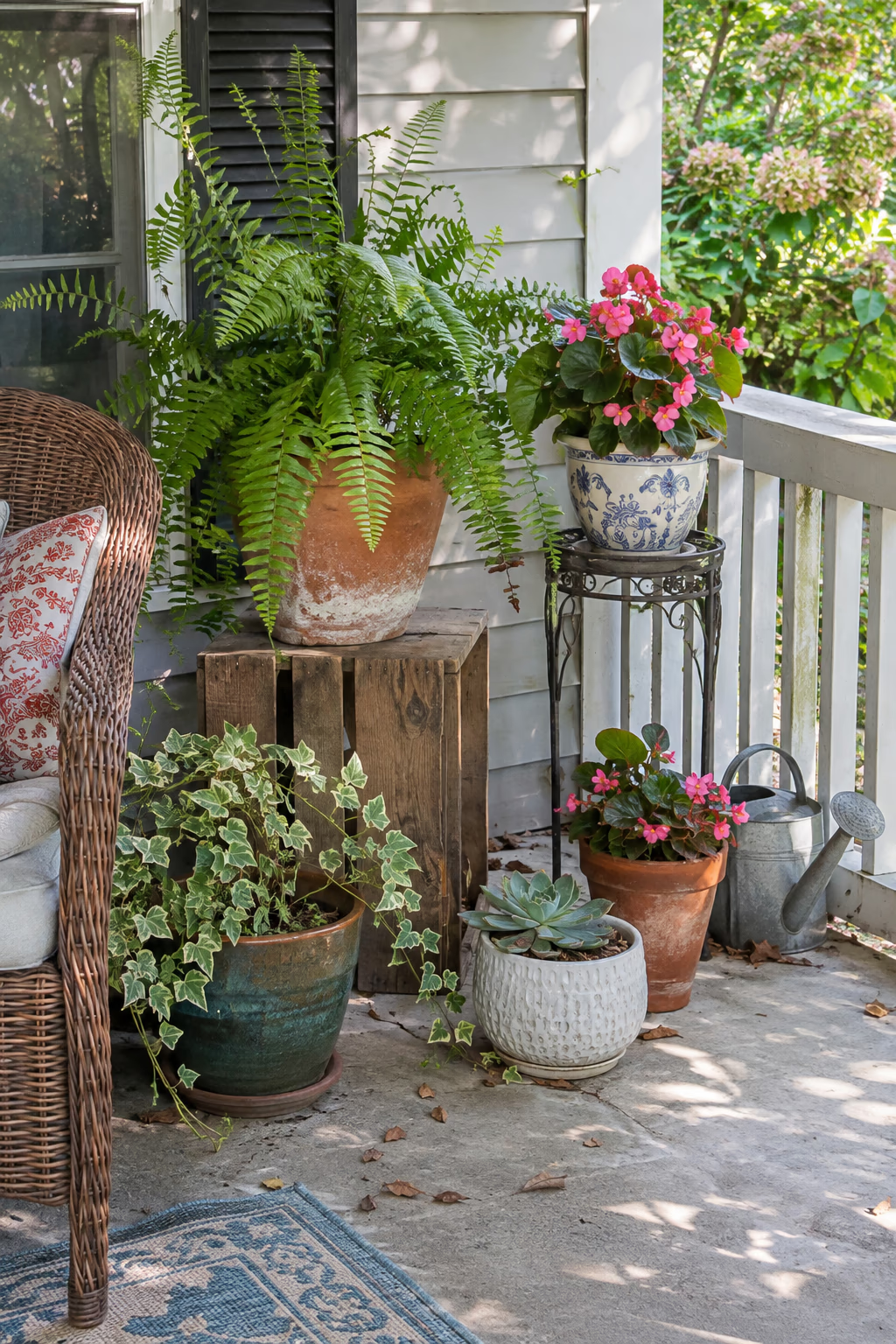
A layered look that feels gathered over time
Instead of a lone pot, build a small cluster using an odd number of containers in different sizes. Set a tall one at the back, medium ones in front, and a short bowl at the edge.
Tie the group together with one shared element, such as the same pot color or a repeated plant like trailing ivy. Plant stands or upturned crates can lift smaller pots for extra height.
Leave a clear path to the door and keep the group to one corner so the porch doesn’t look cluttered. Edit as you go and remove a pot if it feels crowded.
14. Plant a Scented Herb Corner
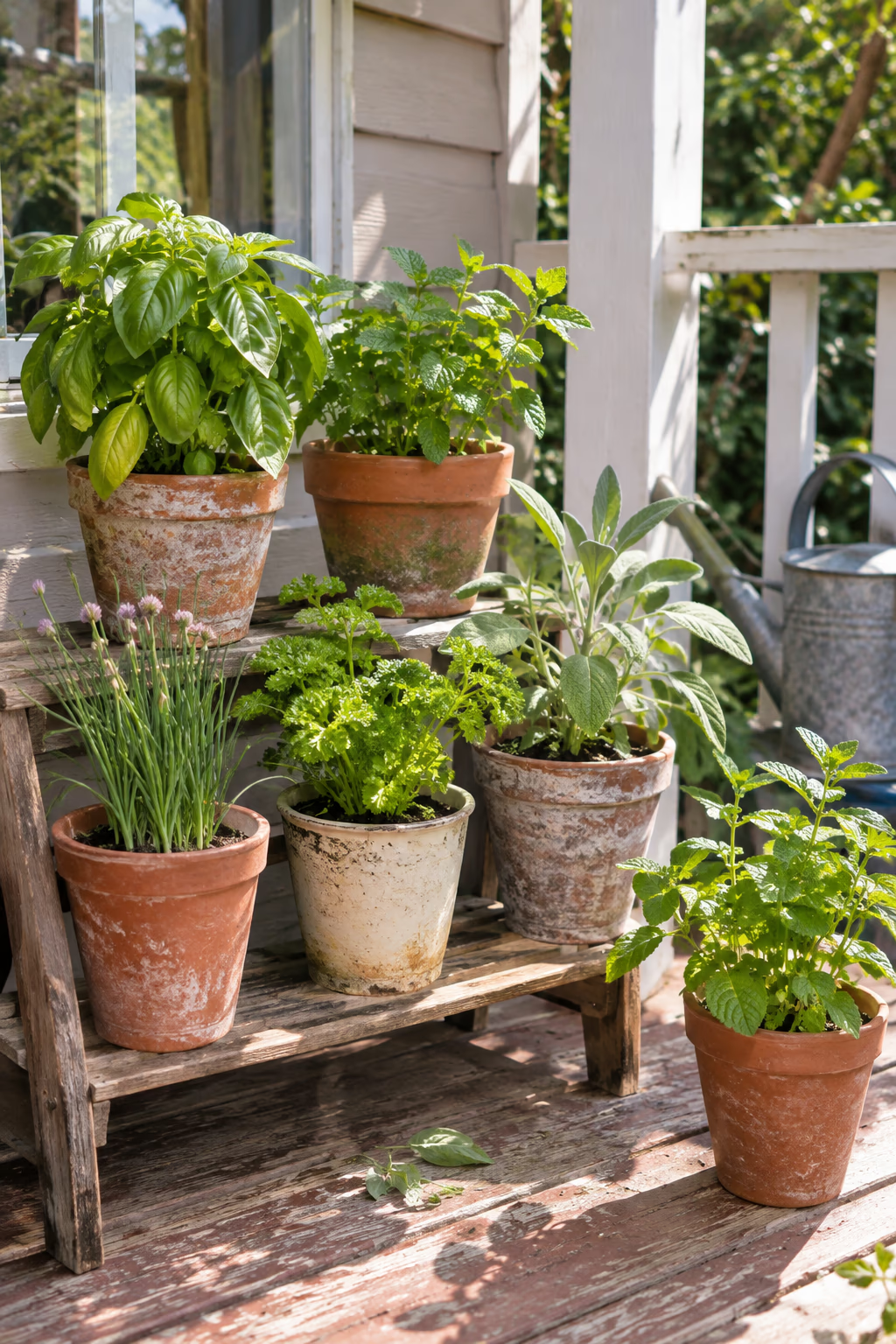
Fragrance and fresh flavor by the door
A few pots of basil, mint, chives, parsley, and sage turn a corner into a handy kitchen garden. Rub the leaves as you pass and the scent fills the entry.
Plant mint alone in its own pot because it spreads aggressively. Basil needs warmth and is best planted after frost has passed, while chives and sage return each year in many climates.
Herbs need at least six hours of sun, so this works best on a south or west facing porch. Skip any chemical sprays so the leaves stay safe to eat.
15. Dress Winter Planters With Evergreen Boughs
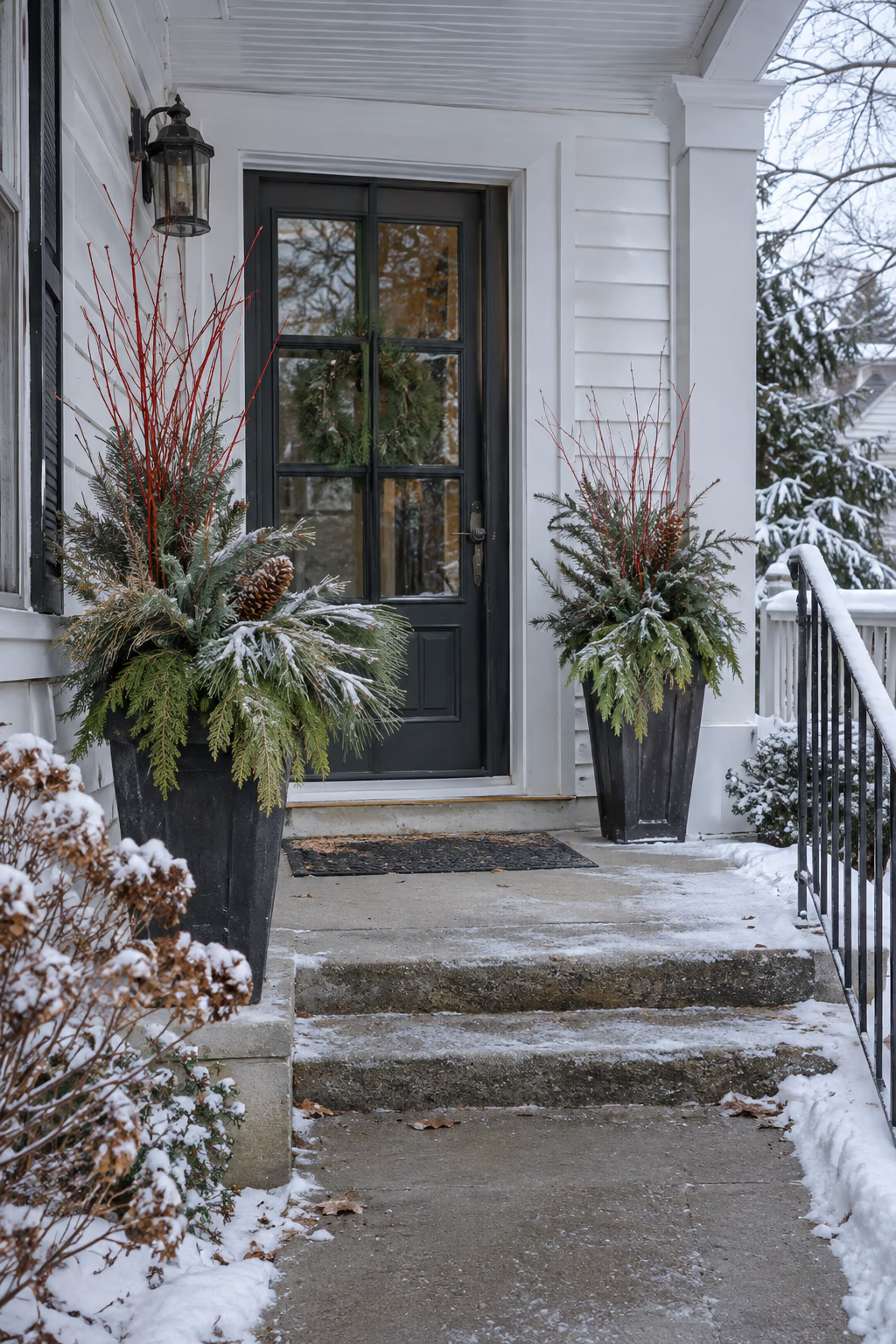
Keep the porch looking alive in the cold months
Once summer annuals are gone, refill the pots with cut spruce, cedar, pine, and fir branches pushed into the frozen or damp soil. Add red dogwood stems, holly, or birch branches for height and contrast.
The soil in the pot will freeze solid, so the stems stay upright through most of the season. A few pinecones or a weatherproof ribbon complete the look.
Fresh boughs stay green for several weeks in cold weather, though they dry out in mild climates. Use a hardy evergreen shrub in the pot if you want something that lasts all year.
16. Fill a Low Bowl With Succulents
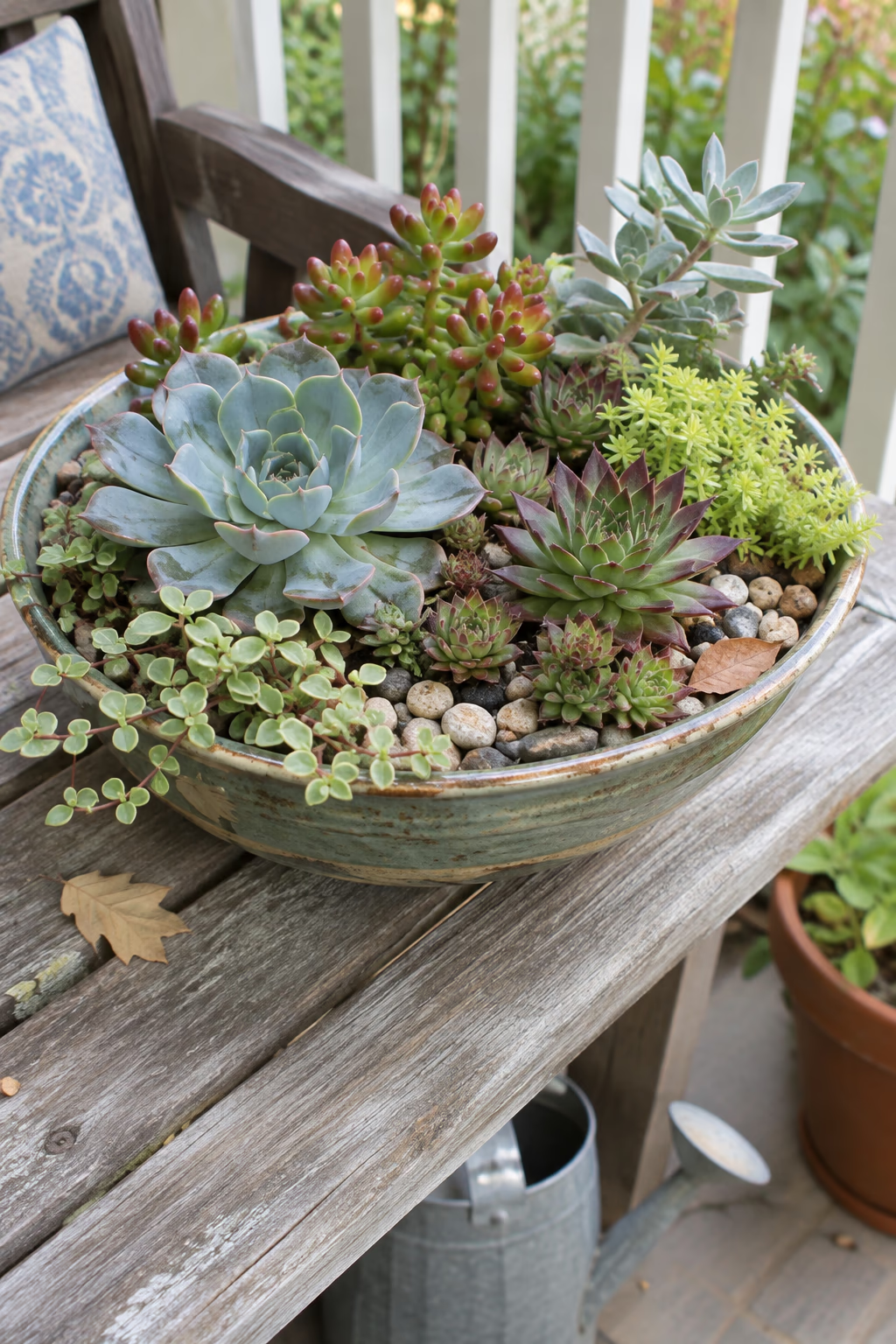
Sculptural plants that tolerate neglect
A wide, shallow bowl holds a tidy arrangement of echeveria, sedum, and hens and chicks. Use a gritty cactus mix so water drains quickly.
Set the bowl on a bench, a stool, or a porch table where it can be admired up close. Odd numbers of rosettes in different colors look best, with small stones in between.
Most succulents aren’t frost-hardy, so bring them indoors before freezing nights. Hardy sedums and hens and chicks, however, can stay outside in many northern zones.
17. Match Planter Colors to a Bold Front Door
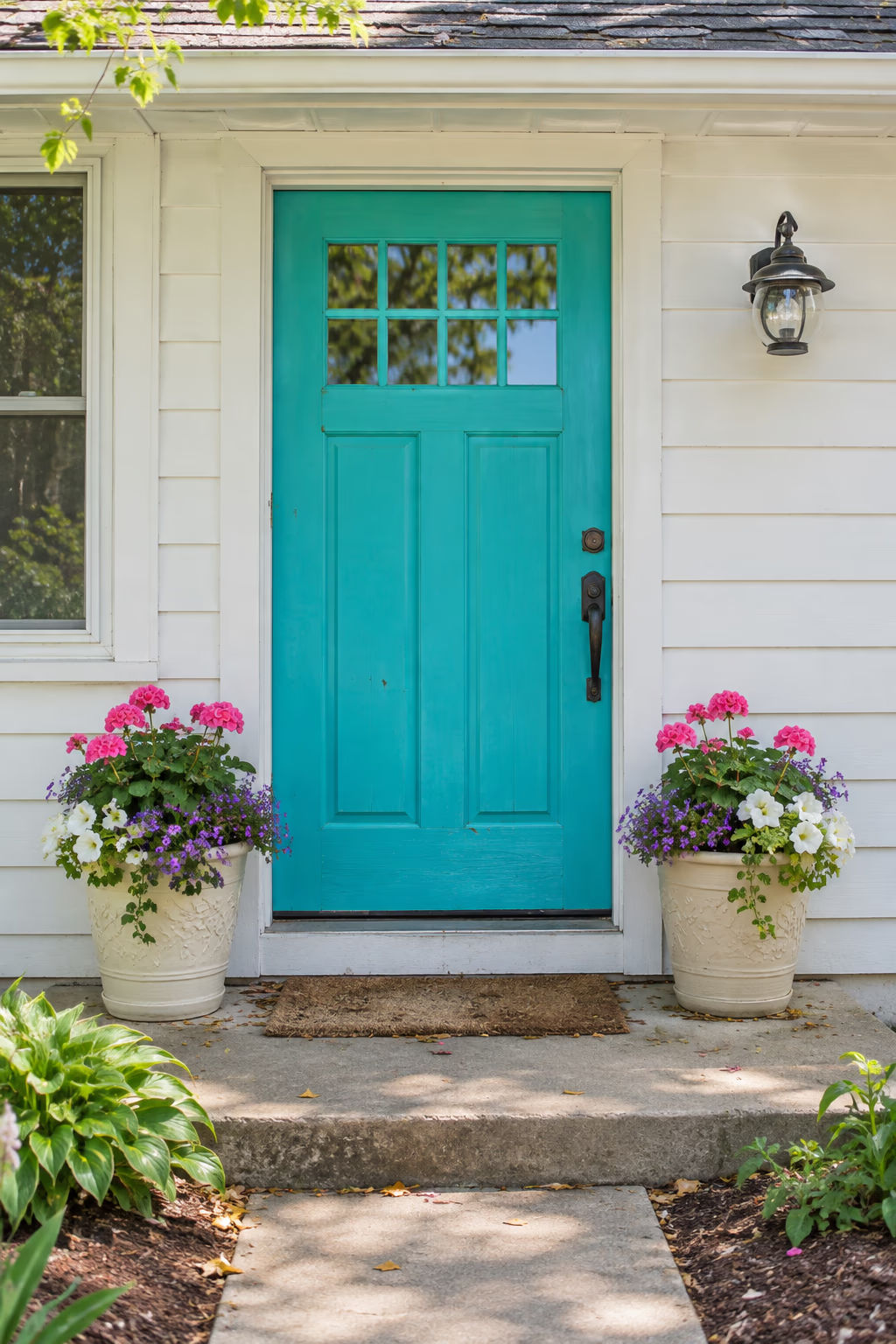
Make the door and plants work together
A colorful door gives you a ready-made palette. Pink and purple flowers glow against a turquoise door, while yellow and white blooms pop against navy.
Choose pots in a neutral shade like cream, gray, or black so they don’t compete. Then pick two or three flower colors and repeat them across both sides of the porch.
Look at the colors from the street, not just up close. Large masses of one color read better from a distance than many small mixed ones.
18. Repurpose Vintage Buckets and Crates
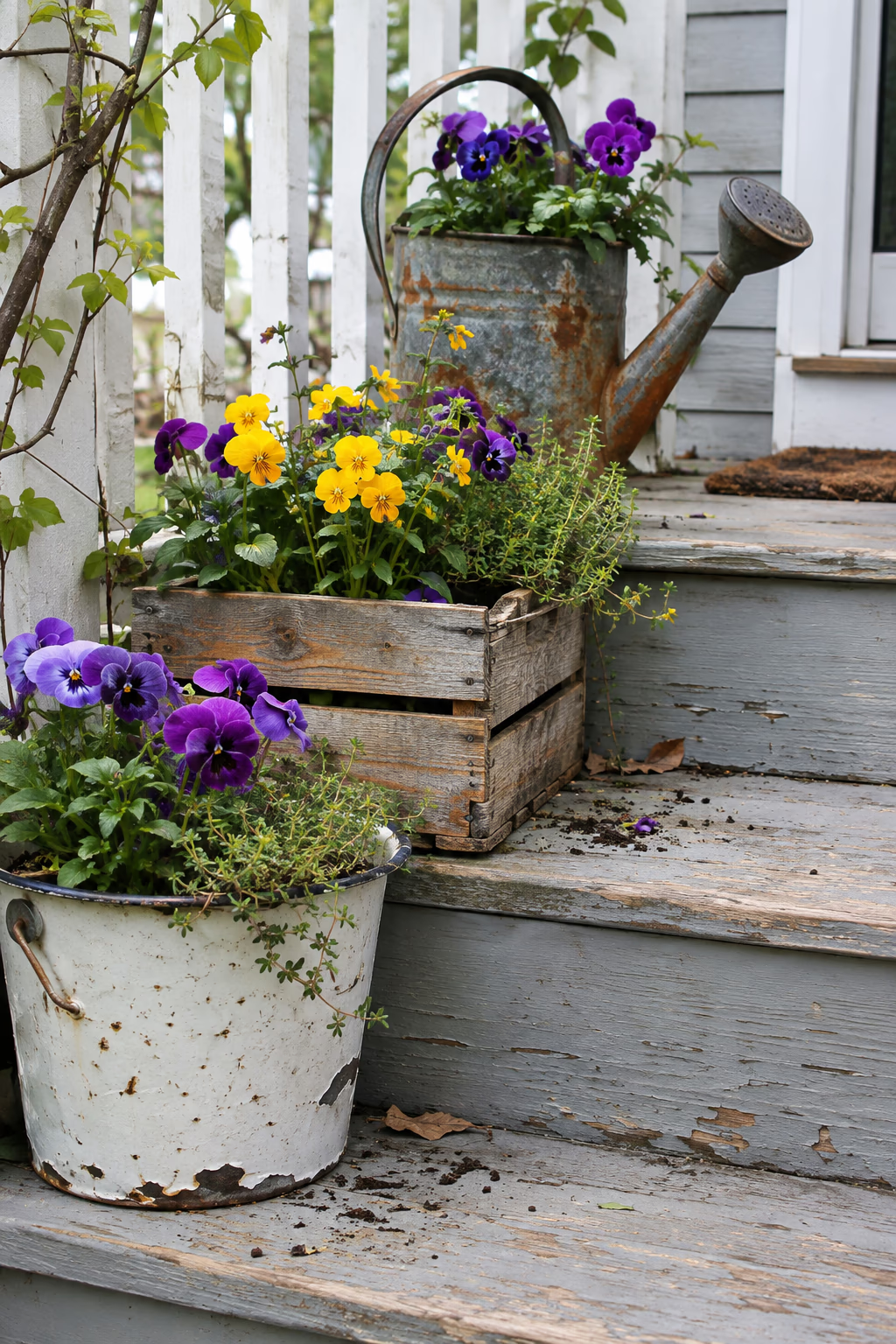
Charm on a shoestring budget
Old enamel pails, wooden crates, and metal watering cans all make appealing planters. Flea markets and yard sales are good places to look.
Drill drainage holes in the bottom, or place a smaller nursery pot inside and lift it out for watering. Plant them with pansies, violas, or small herbs for a cozy cottage effect.
Wood and thin metal won’t last forever outdoors, so expect to replace them every few seasons. Keep any painted items away from edible plants if you’re unsure of the old finish.
19. Mount Wall Planters on a Narrow Porch
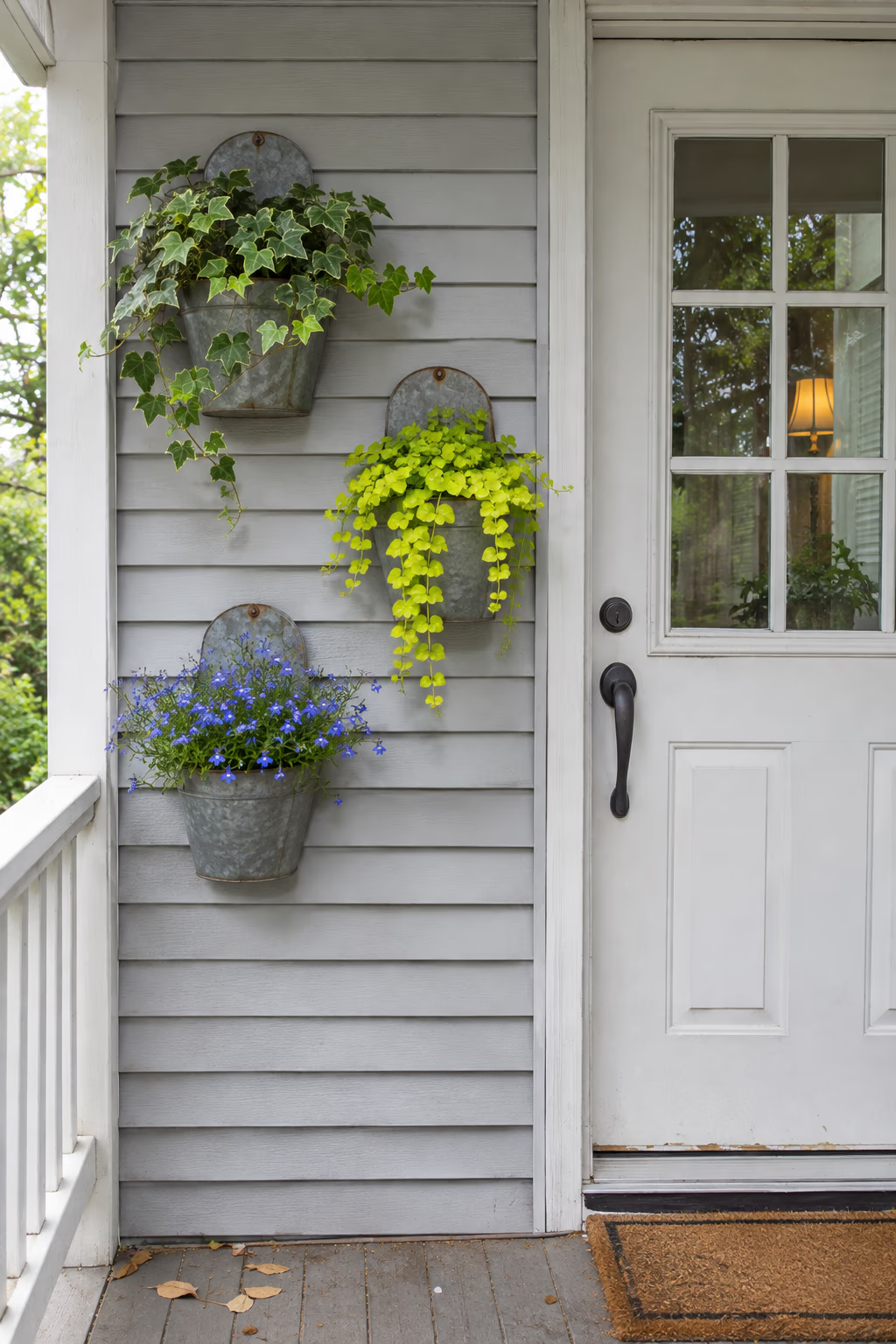
Greenery that doesn’t take up floor space
If the porch is only a few feet wide, go vertical. Metal or wooden wall pockets, hung on a rail or the side of the house, hold small trailing plants like ivy, creeping Jenny, or lobelia.
Arrange two or three at staggered heights to create a living wall. Lightweight coir liners make them easy to hang, and a mix of foliage and flowers keeps them interesting.
Anchor into studs or masonry with the right hardware. Small containers dry fast, so water often and consider a slow-release fertilizer.
20. Layer Spring Bulbs in Soft Pastels
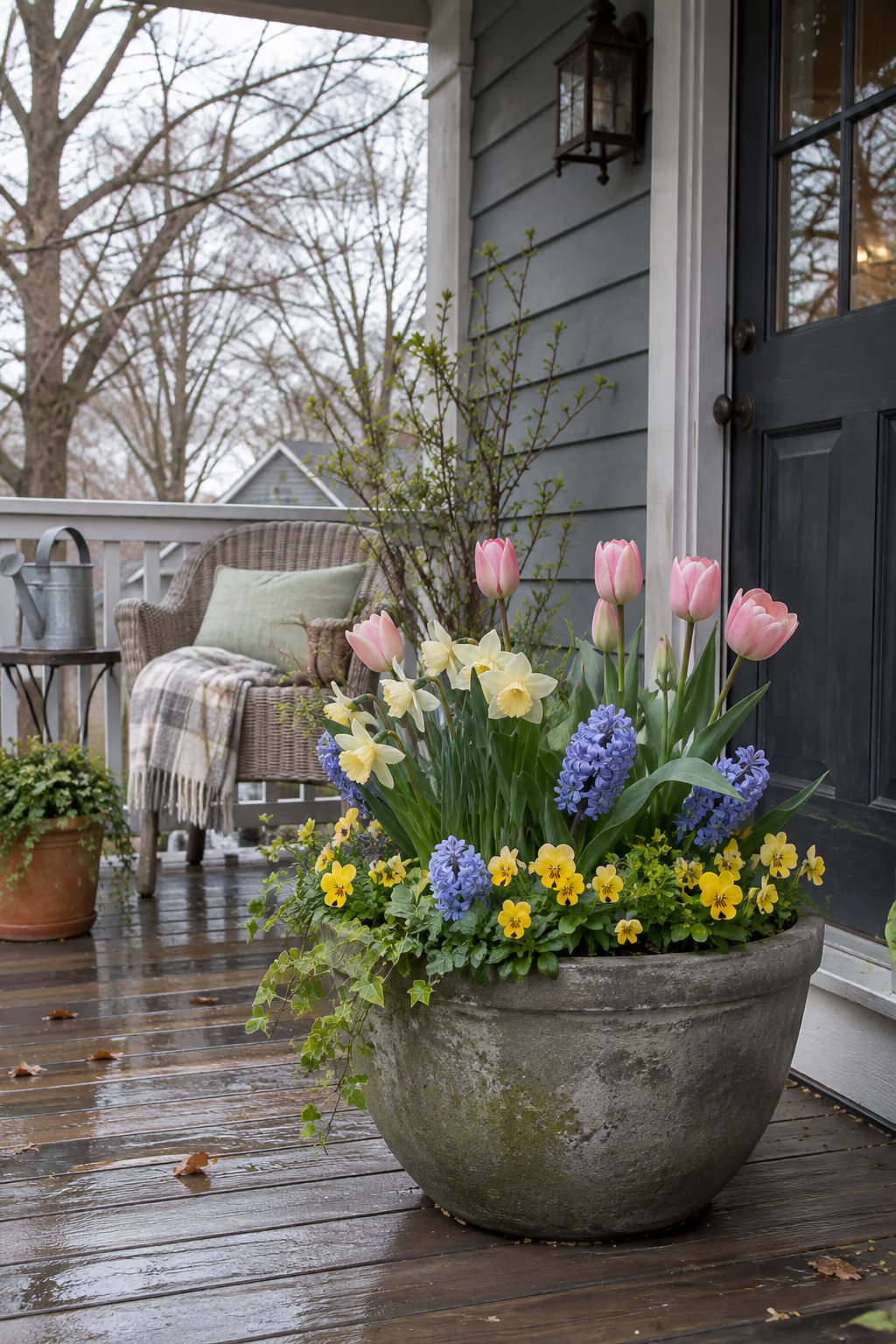
The first color of the year, ready to display
Plant tulips, daffodils, and hyacinths in layers in fall, with larger bulbs deeper and smaller ones on top. In spring the pot will bloom in pale pink, cream, and soft yellow.
Cover the pot with mulch in cold areas and keep it where it won’t be soaked all winter. Add pansies on top for color while the bulbs come up.
Bulbs bloom only once in a pot for the best show, so many gardeners replace them yearly. After flowers fade, cut the stems and move the pot out of sight.
21. Switch to Self-Watering Containers
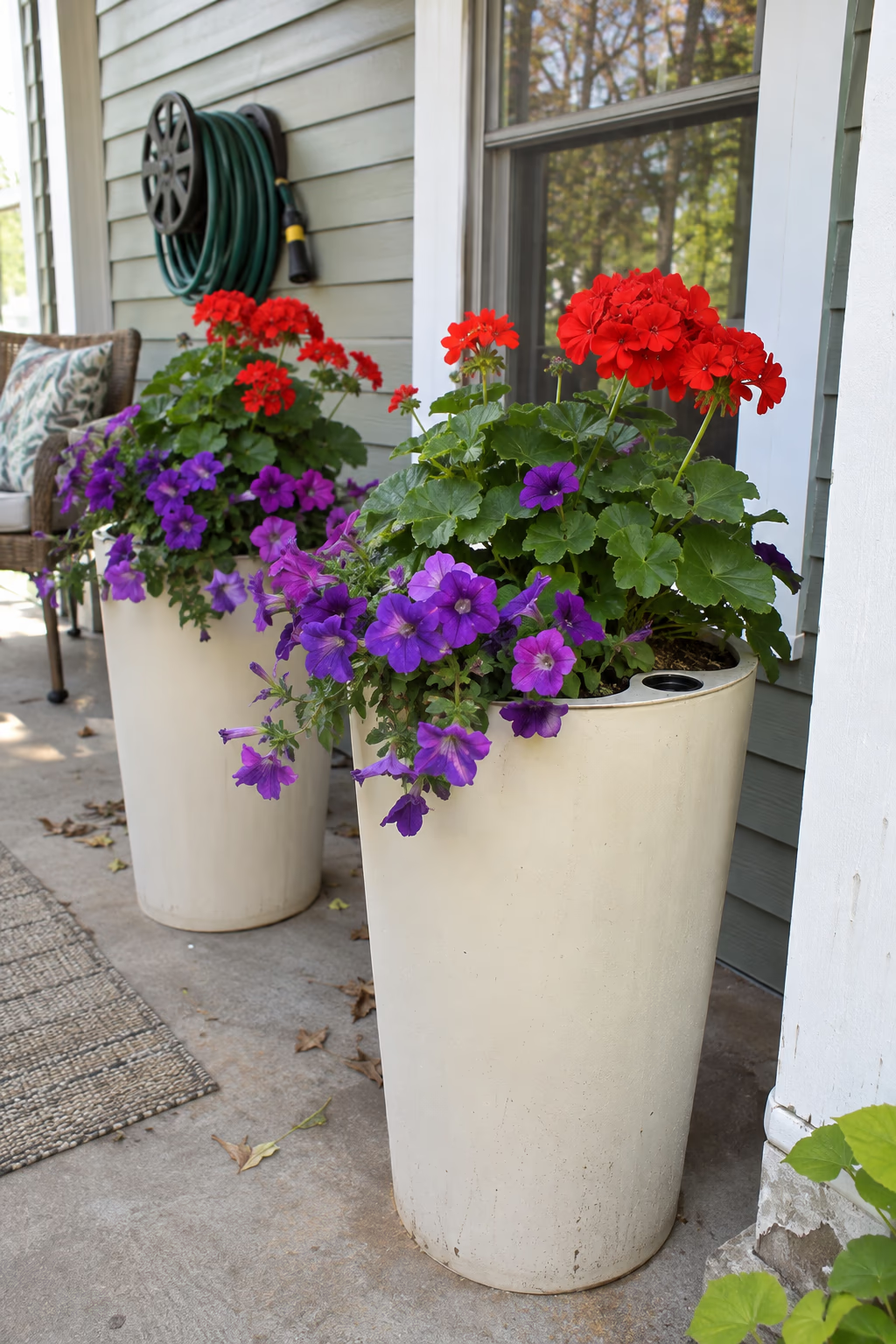
Less daily watering, healthier plants
Self-watering planters hold a reservoir below the soil that wicks moisture upward. They’re a smart choice for people who travel or forget a daily watering routine.
Modern versions come in cylinder, square, and urn shapes that look like regular pots. Fill them with a quality potting mix and plant thirsty annuals like petunias, geraniums, or tomatoes.
Check the reservoir every few days, especially in heat. In rainy areas, make sure the overflow hole isn’t blocked so plants don’t become waterlogged.
22. Train Climbers Up an Obelisk Trellis
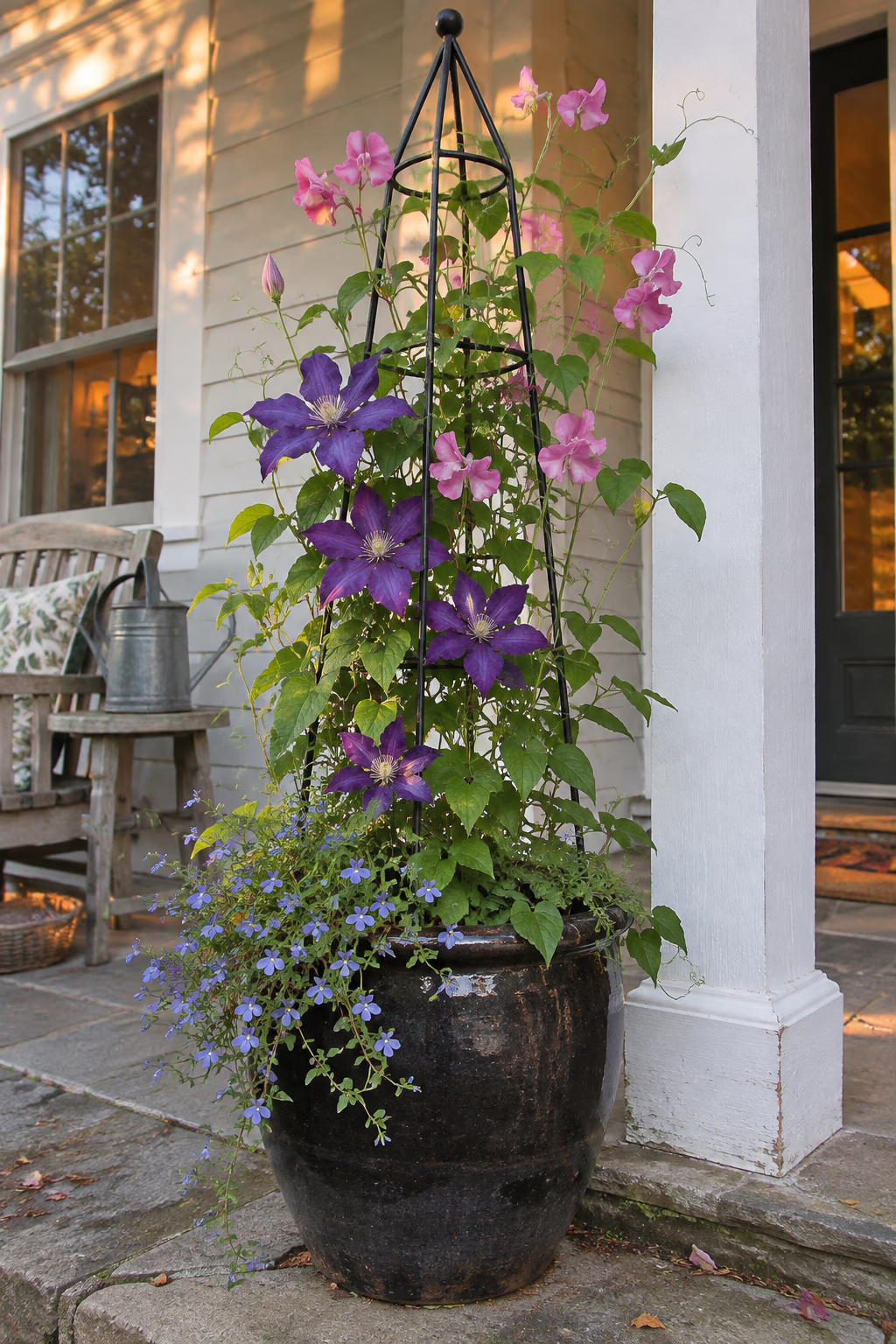
Height and flowers in a small footprint
A metal or wooden obelisk placed in a large pot gives vines something to climb. Clematis, sweet peas, black-eyed Susan vine, and morning glory are good choices.
Push the support deep into the soil so it stands firm in wind. Plant the vines at the base and tie new shoots loosely until they hold on by themselves.
Some vines, like morning glory, can self-seed widely. Check what’s recommended for your area, and avoid any plants listed as invasive.
23. Plant a Pollinator-Friendly Native Mix
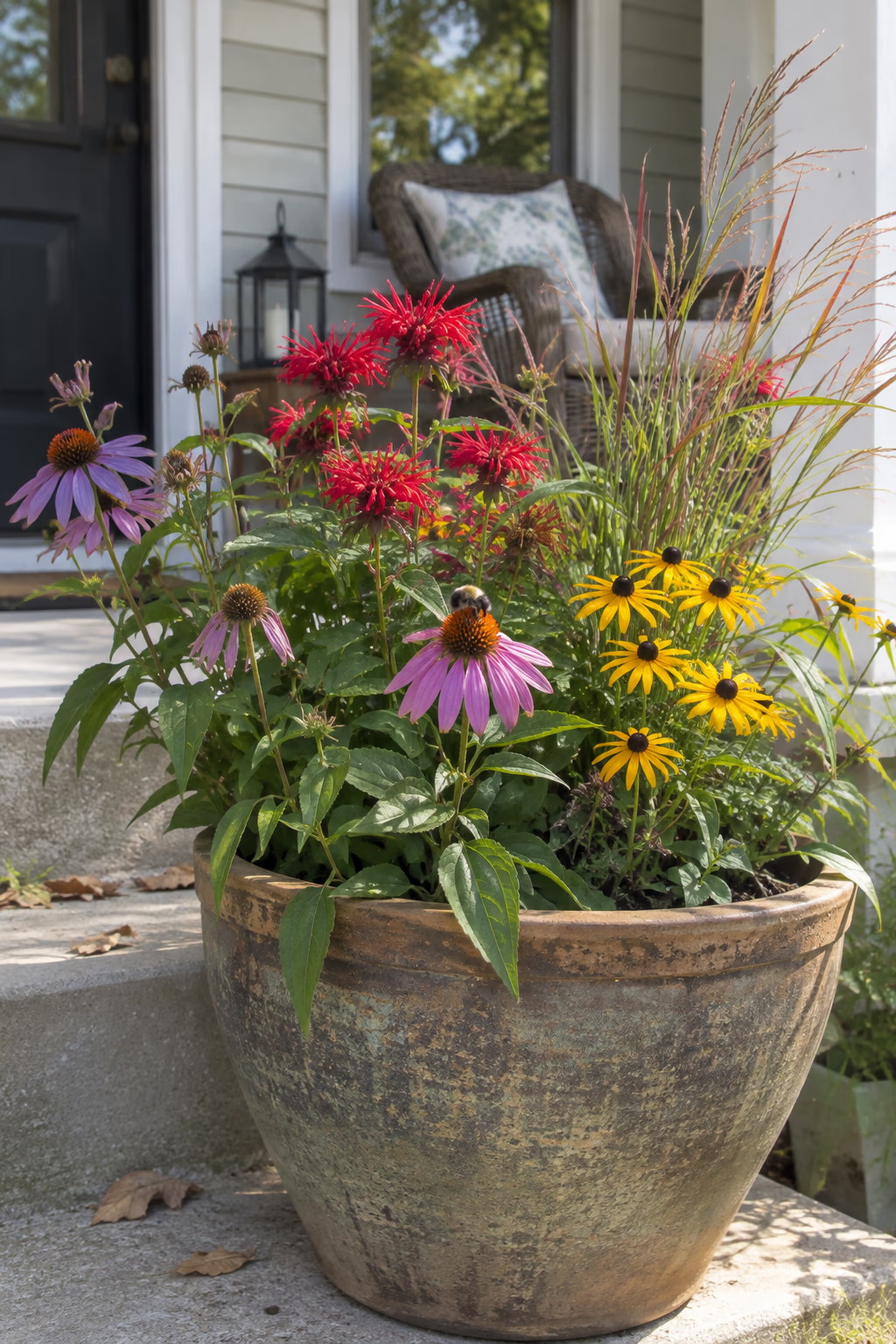
Blooms that support bees and butterflies
Native perennials like purple coneflower, bee balm, black-eyed Susan, and little bluestem do well in large containers and attract pollinators. A 20-inch pot suits a mix of two or three.
Local garden centers can point you to species native to your region. These plants usually handle local weather well and need fewer inputs once established.
Perennials in pots face harsher winter cold than those in the ground. In cold zones, pick plants hardy two zones colder than yours, or move pots to a sheltered spot.
24. Paint Plastic Pots to Look Like Terracotta
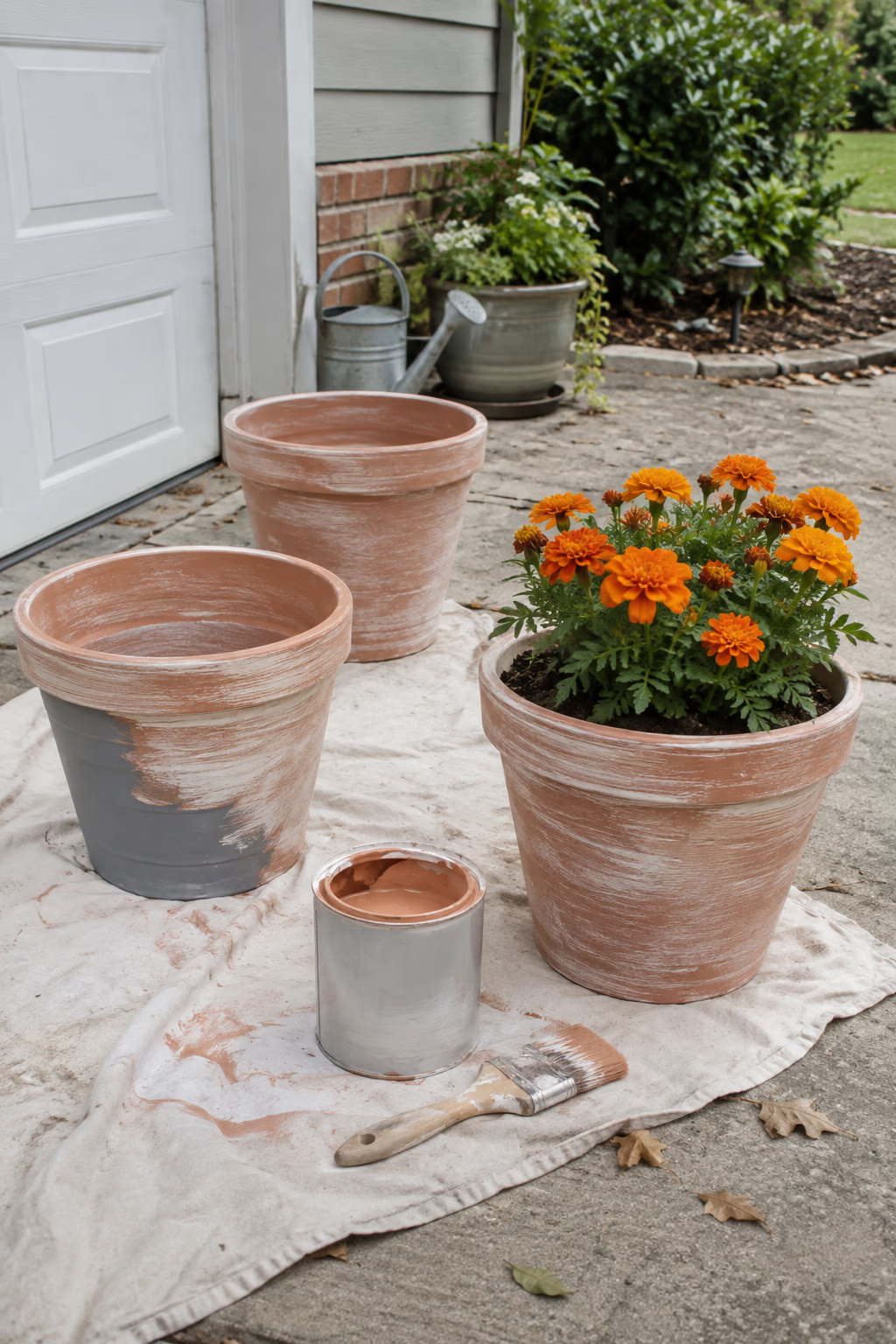
The clay look for a fraction of the price
Inexpensive plastic pots can be transformed with a primer made for plastic and an earthy orange-brown paint. Dab on a thin wash of white or gray for an aged finish.
Finish with an outdoor clear sealer to protect the paint from sun and rain. The result is lightweight and won’t crack in frost, which makes it handy for larger sizes.
Paint the outside only, and let it cure fully before planting. Touch-ups may be needed every year or two, depending on weather.
25. Anchor a Corner With an Oversized Tropical Pot
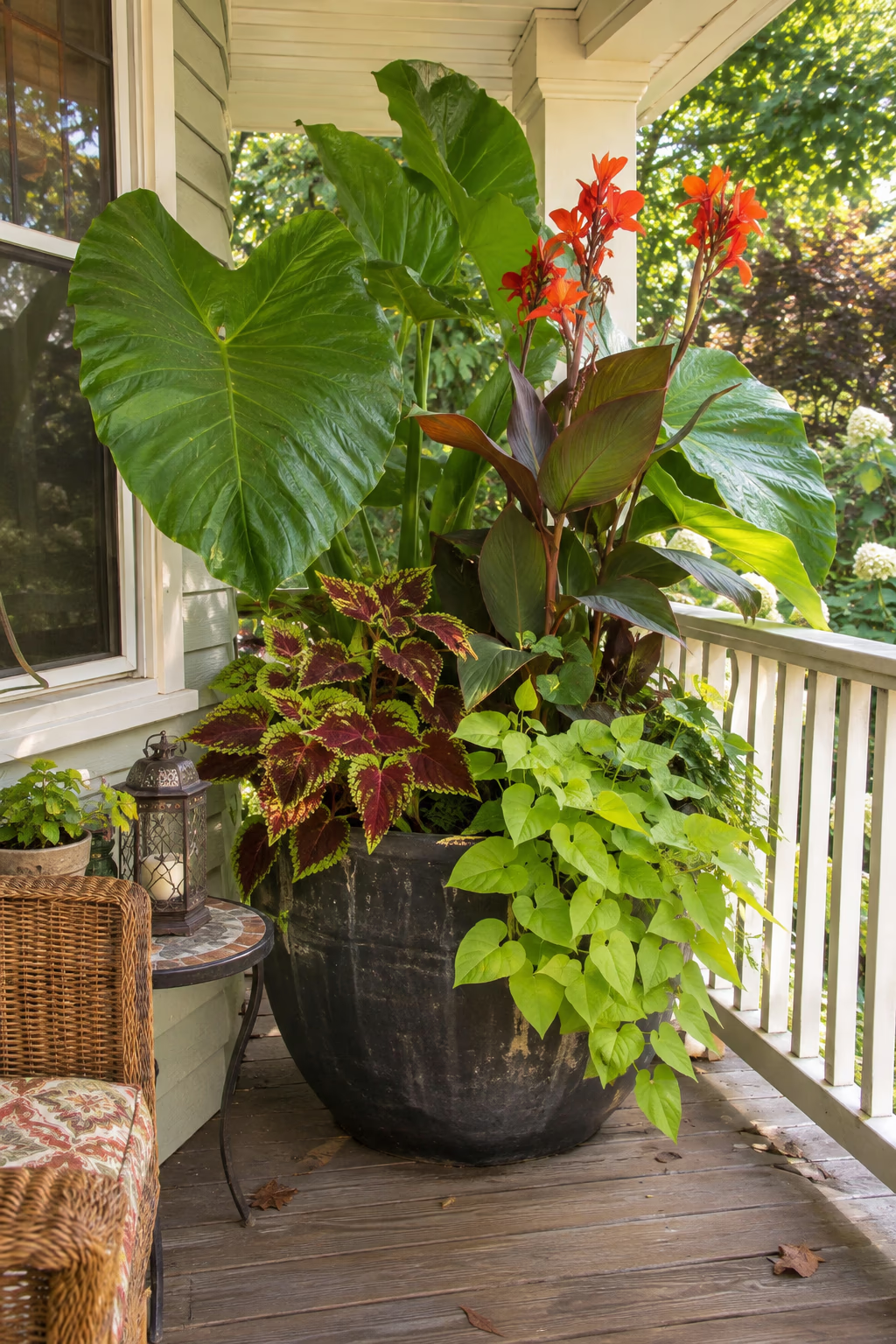
Big leaves for instant summer impact
One very large pot, 24 inches or wider, filled with elephant ear, canna, banana, or a tall palm makes a bold statement. Underplant with sweet potato vine or coleus for color.
These plants love heat and humidity and grow fast in summer. Place them in a protected corner where wind won’t shred their leaves.
Most tropicals can’t survive frost. Bring them indoors in fall, or dig up the bulbs of elephant ear and canna and store them in a cool, dry place.
How to Plan Your Front Porch Planters
A little planning helps your containers look good and stay healthy. Start with the light your porch receives and the style of your house, and then work outward.
- Check the light first. Watch how many hours of direct sun the porch gets, then choose sun or shade plants to match.
- Size pots generously. Larger containers hold more soil, dry out more slowly, and look better in proportion to a door and porch.
- Always use drainage. Every pot needs holes, and a saucer or pot feet protect decking from moisture.
- Pick a simple palette. Limit yourself to two or three colors that work with your door, siding, and brick.
- Plan for water. Place pots near a hose or consider drip irrigation, since containers can need water daily in summer.
- Keep paths clear. Leave room to walk, open the door, and meet fire and accessibility rules. Check HOA guidelines if you have them.
Frequently Asked Questions
What size planters work best for a front porch?
For most doors, pots 16 to 24 inches wide and 18 to 30 inches tall look balanced. Smaller porches can use a slightly smaller pair, while wide porches can handle larger ones.
What are the easiest plants for porch planters?
Geraniums, petunias, ornamental grasses, boxwood, ferns, and sedum are all forgiving. Match them to the light, and they’ll need little more than water and occasional feeding.
How often should I water porch planters?
Check daily in summer by pushing a finger into the soil. If the top inch is dry, water until it runs out the bottom. Cooler weather and larger pots need water less often.
Can I leave planters outside in winter?
It depends on the pot and your climate. Frost-proof materials like fiberglass, resin, and thick concrete usually stay out, while thin ceramic and unglazed terracotta may crack. Empty and store those if freezing is common.
How do I keep planters from looking messy?
Remove faded flowers, trim straggly stems, and refresh with seasonal plants. Sticking to a simple color palette and a few repeated plants keeps a porch tidy even when growth gets wild.
Final Thoughts
The best front porch planter ideas are the ones that suit your light, your house, and the time you actually have to care for them. A pair of tall pots, a few hanging baskets, or a single bold container can change how the whole entry feels.
Start with one or two containers, learn what thrives, and add more as you go. Before long, your porch will greet every visitor with color, texture, and a bit of personality.


