
Think about the last time you walked up to a front door and felt instantly welcome. Chances are there was a pair of full, healthy pots near the steps, spilling over with color and softening the hard edges of the porch.
That is the quiet power of containers. They can be moved, swapped, and refreshed with the seasons, and they work on porches of every size, from a narrow stoop to a wide wraparound. You don’t need a big budget or a green thumb to make them look great.
These 23 front porch container ideas cover matched pairs, hanging baskets, window boxes, shade plantings, seasonal displays, edibles, and budget-friendly finds. Pick one that suits your light and style, or mix a few for a porch that looks collected and intentional.
1. Flank the Front Door With Matching Tall Planters
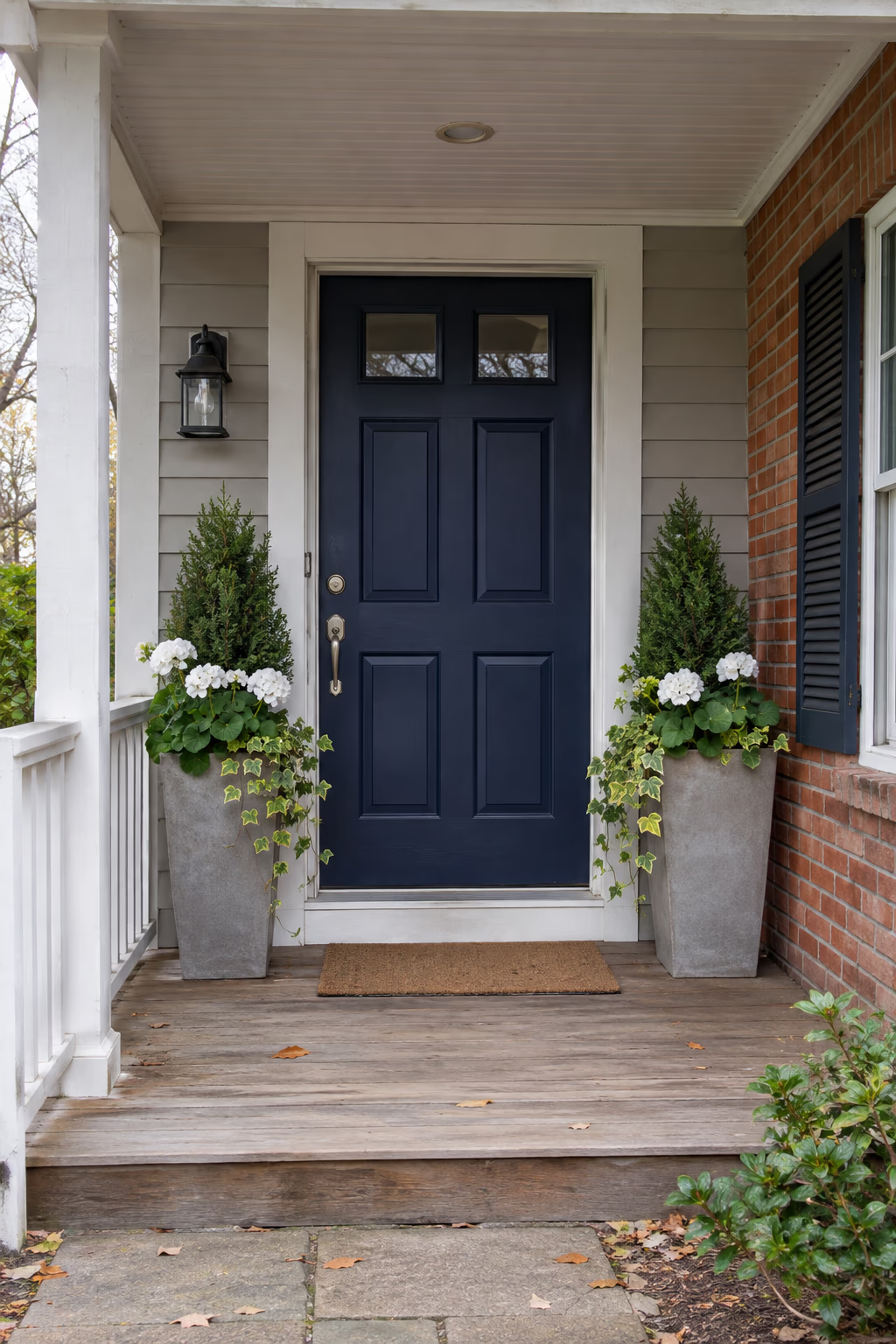
The easiest way to make an entry look polished
A matched pair on either side of the door gives the porch instant balance. Choose containers at least 18 to 24 inches tall and wide so they feel in proportion to a standard 36-inch door, and fill each with the same plants.
A reliable recipe is a tall upright plant such as a dwarf evergreen or ornamental grass in the center, surrounded by flowers or foliage in a repeating color. Keep the two pots identical for a formal look.
Leave at least 36 inches of clear walking space so the door can swing and guests can pass comfortably. Larger pots also hold moisture longer, which means less daily watering.
2. Layer Tall, Mid-Height, and Trailing Plants in One Pot
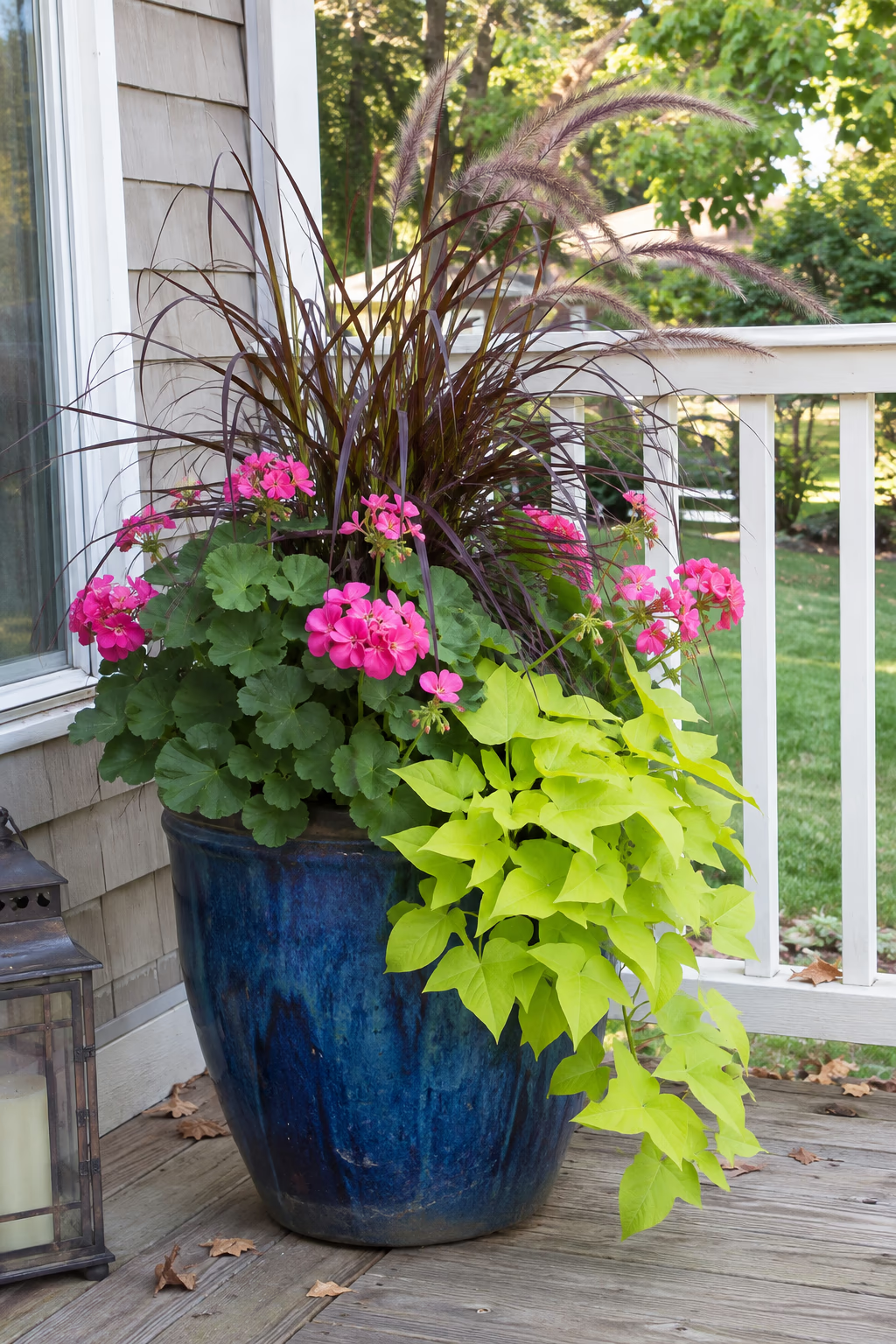
A full, overflowing look from a single container
Designers often build a pot in three levels. Put a tall plant like canna, fountain grass, or spike in the center, mound-shaped flowers such as geraniums or begonias around it, and trailing plants such as sweet potato vine or bacopa along the rim.
Plant a little more densely than you would in a garden bed. Containers are temporary displays, so crowding the plants a bit gives a lush effect within a few weeks.
Use fresh potting mix, not garden soil, and mix in slow-release fertilizer at planting. Packed pots are hungry and thirsty, so plan to water often in summer heat.
3. Hang Overflowing Baskets From the Porch Ceiling
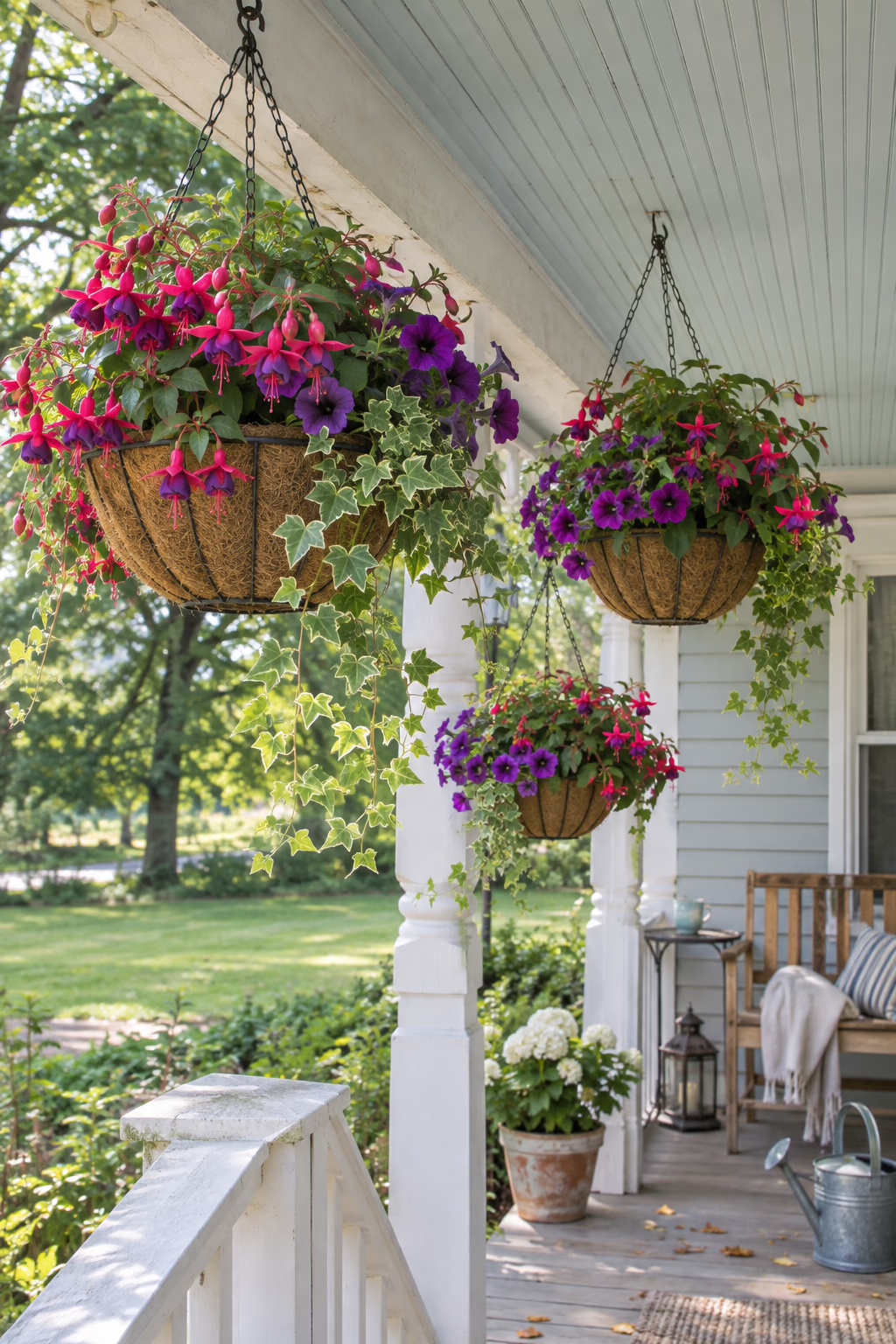
Color at eye level without using floor space
Hanging baskets are ideal for small porches because they add color without taking up any floor area. Fuchsias, trailing petunias, and ivy geraniums all drape nicely, and ferns suit shady spots.
Screw a heavy-duty hook into a ceiling joist or beam rather than just the ceiling board, since a watered 14-inch basket can weigh 20 pounds or more. Hang baskets at different heights so they don’t line up like laundry.
Baskets dry out quickly, especially in wind. A larger basket with a coir or moss liner and a layer of moisture-holding mix will save you from twice-daily watering.
4. Mount Window Boxes on Porch Railings
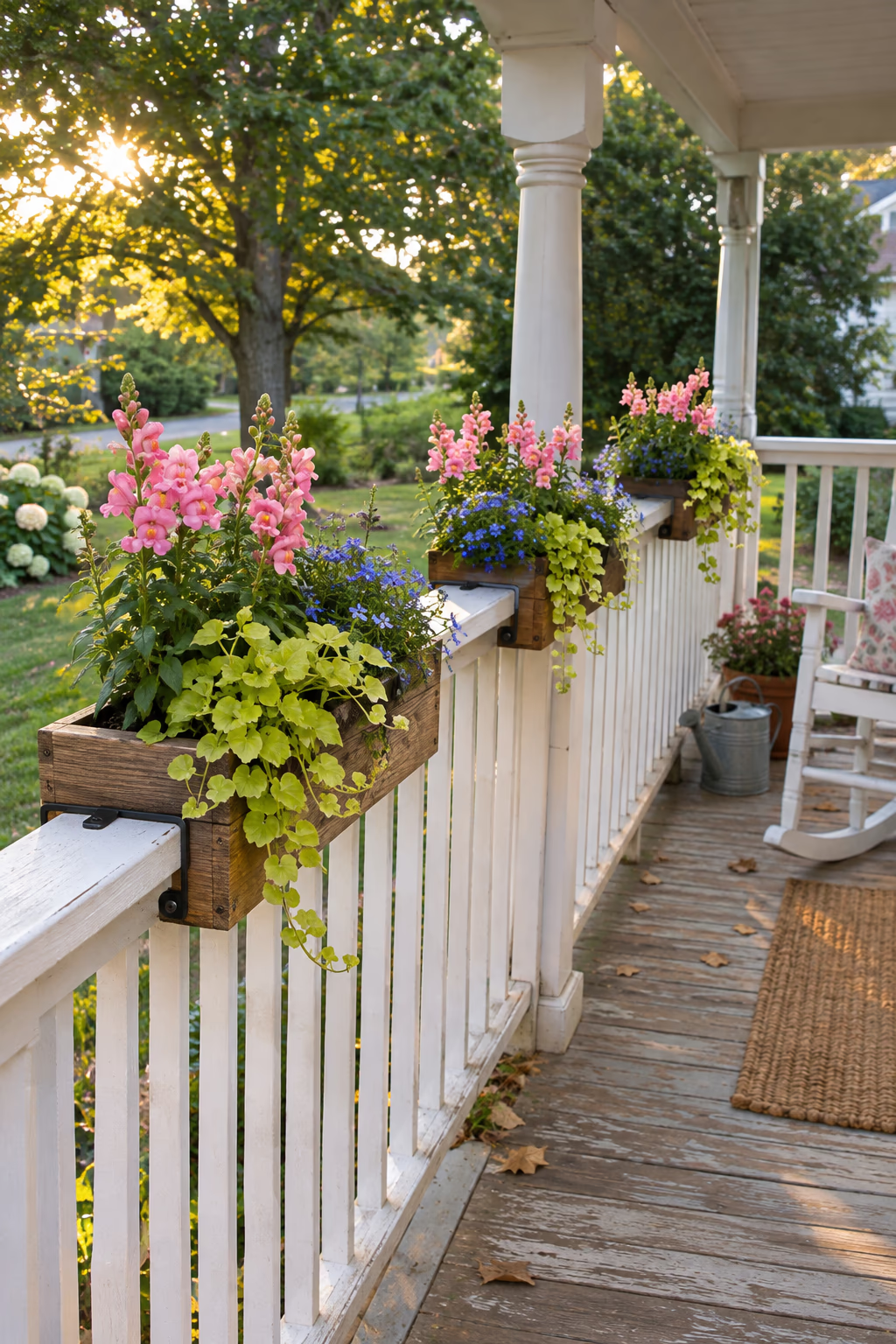
Use the railing as a garden bed
Railing planters turn an empty rail into a ribbon of color. Look for boxes designed with brackets that fit your railing width, and line them up evenly for a tidy, repeating look.
Trailing lobelia, million bells, and creeping Jenny soften the front edge, while compact snapdragons or marigolds give height behind them. In shade, try coleus and impatiens.
Make sure the boxes have drainage holes and are securely fastened, since wet soil is heavy. If your railing is painted, place a tray underneath so water doesn’t stain or rot the wood.
5. Repeat Pots Along the Porch Steps
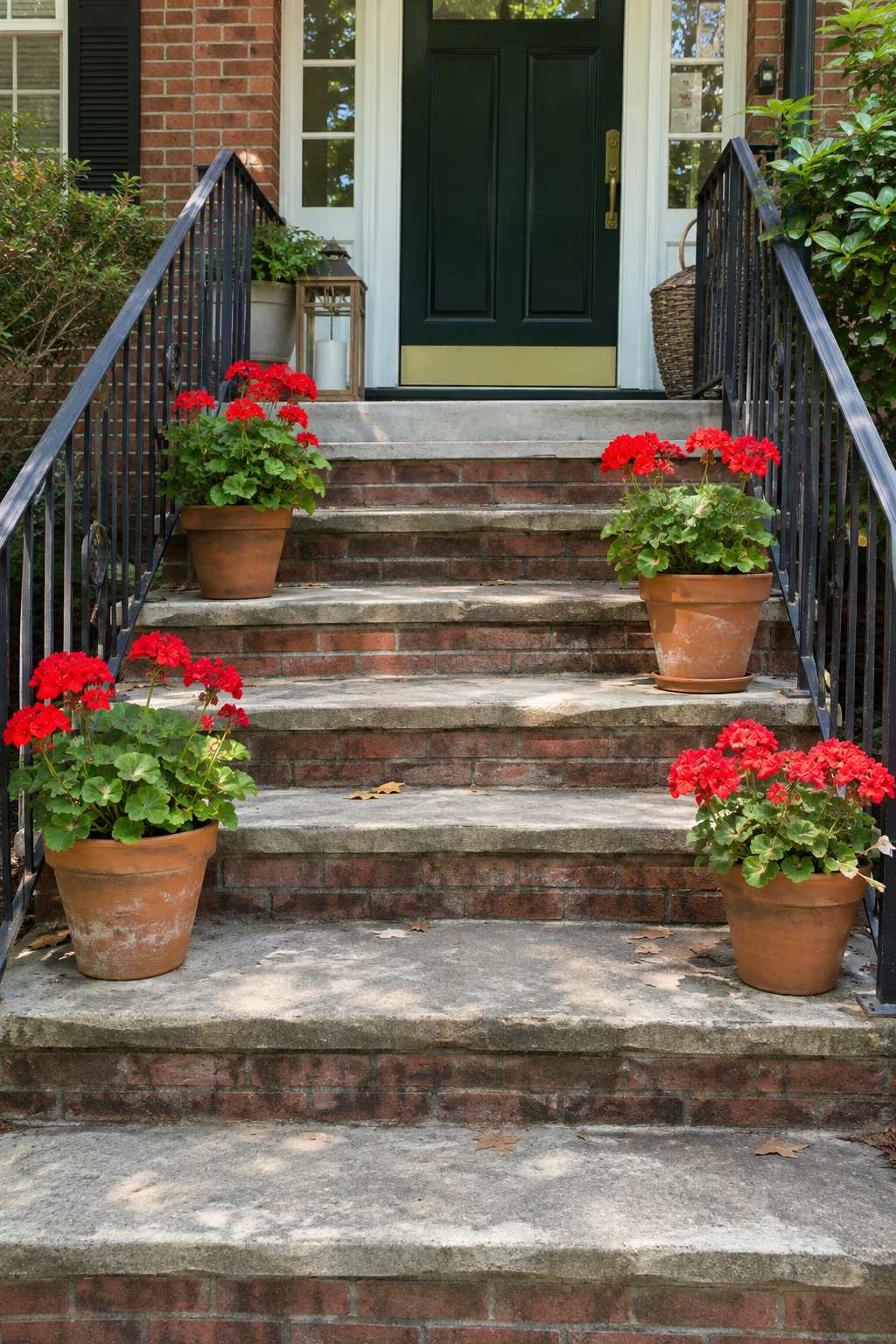
Guide the eye up toward the door
Placing pots on alternate sides of each step, or at the bottom and top of the staircase, creates a visual rhythm that leads visitors to the entry. Using the same pot style and one or two plant types makes it feel designed rather than cluttered.
Choose medium pots about 12 to 16 inches wide and keep them to the outer edges so there is still room to walk. Repeating a single color such as red geraniums or lime sweet potato vine works well.
Safety matters here. Never block the path of travel, and consider heavier pots or a non-slip pad underneath so nothing tips on a narrow stair.
6. Plant a Cottage Mix in Weathered Containers
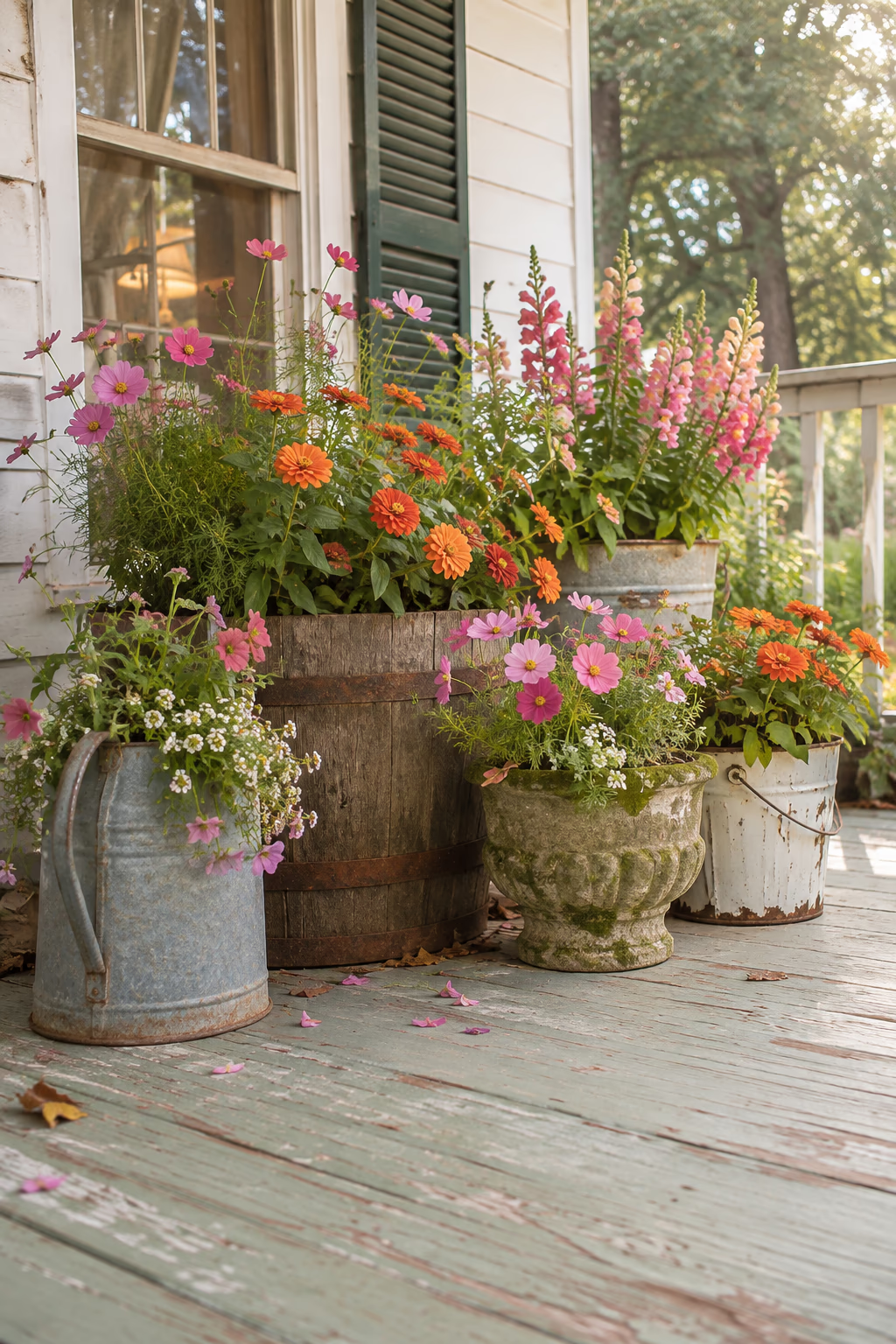
Relaxed, romantic, and forgiving
The cottage look is about abundance. Combine old-fashioned flowers like zinnias, cosmos, snapdragons, and dianthus in a mix of pots, and let some of them spill onto the porch floor.
Containers with a bit of age, such as chipped enamel, aged wood, or mossy stone-look pots, add to the charm. Group three to five in different sizes with the tallest at the back.
Deadhead regularly to keep flowers coming. This style looks best when it’s slightly untidy, but dropped petals do need sweeping from painted porch floors.
7. Fill Urns With Ferns for a Shady Porch
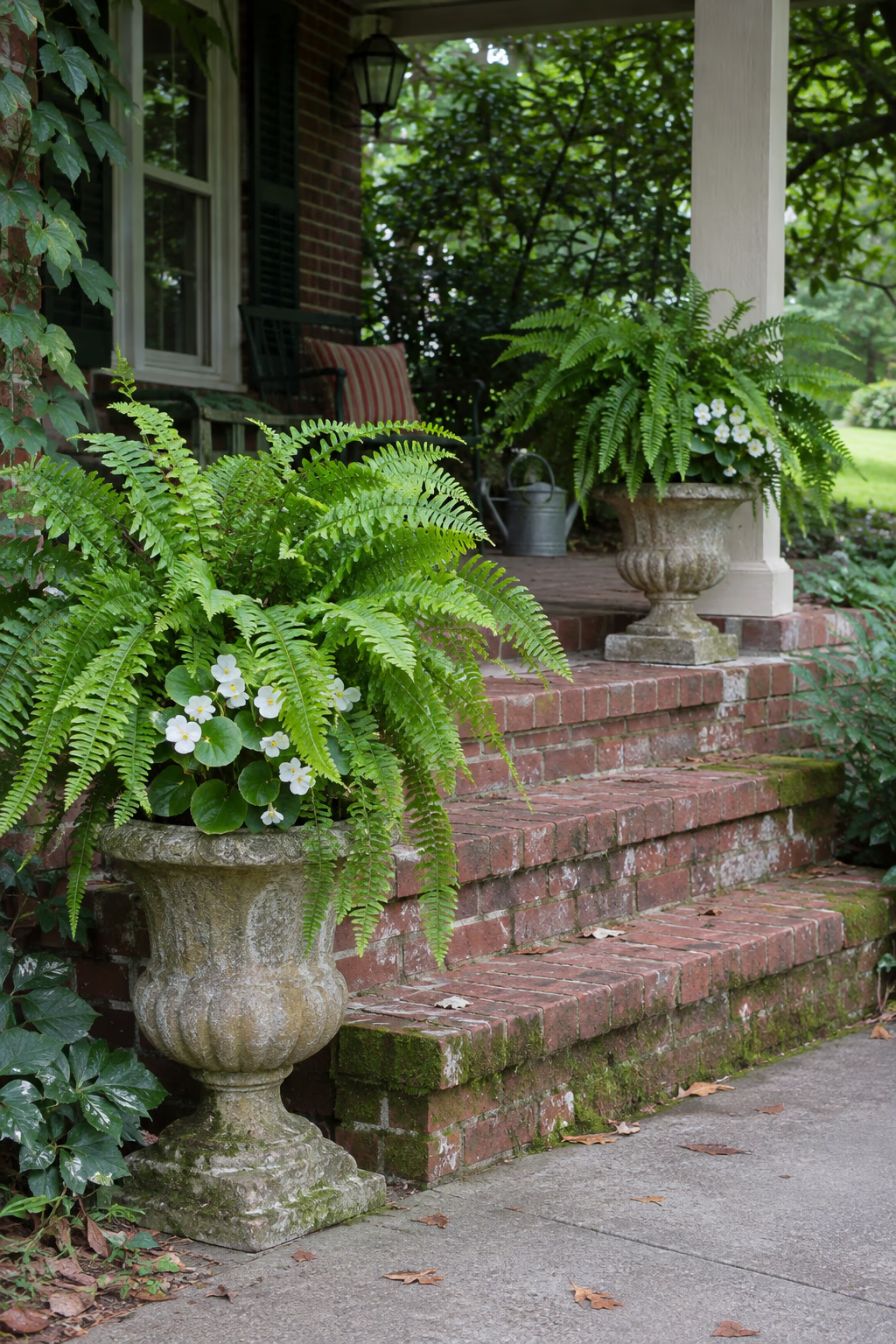
Lush green texture where flowers struggle
North-facing and deeply covered porches get little direct sun, but ferns, hostas, and caladiums thrive there. Boston fern in a classic urn is a timeless pairing, especially against brick.
Mix in variegated foliage like coleus or Japanese painted fern to keep a green-on-green scheme from feeling flat. A few white or pink begonias can add a spark of color.
Boston ferns are not frost hardy, so move them indoors before the first freeze or treat them as summer plants. Keep soil evenly moist but never soggy.
8. Pair Sleek Black Planters With Ornamental Grasses
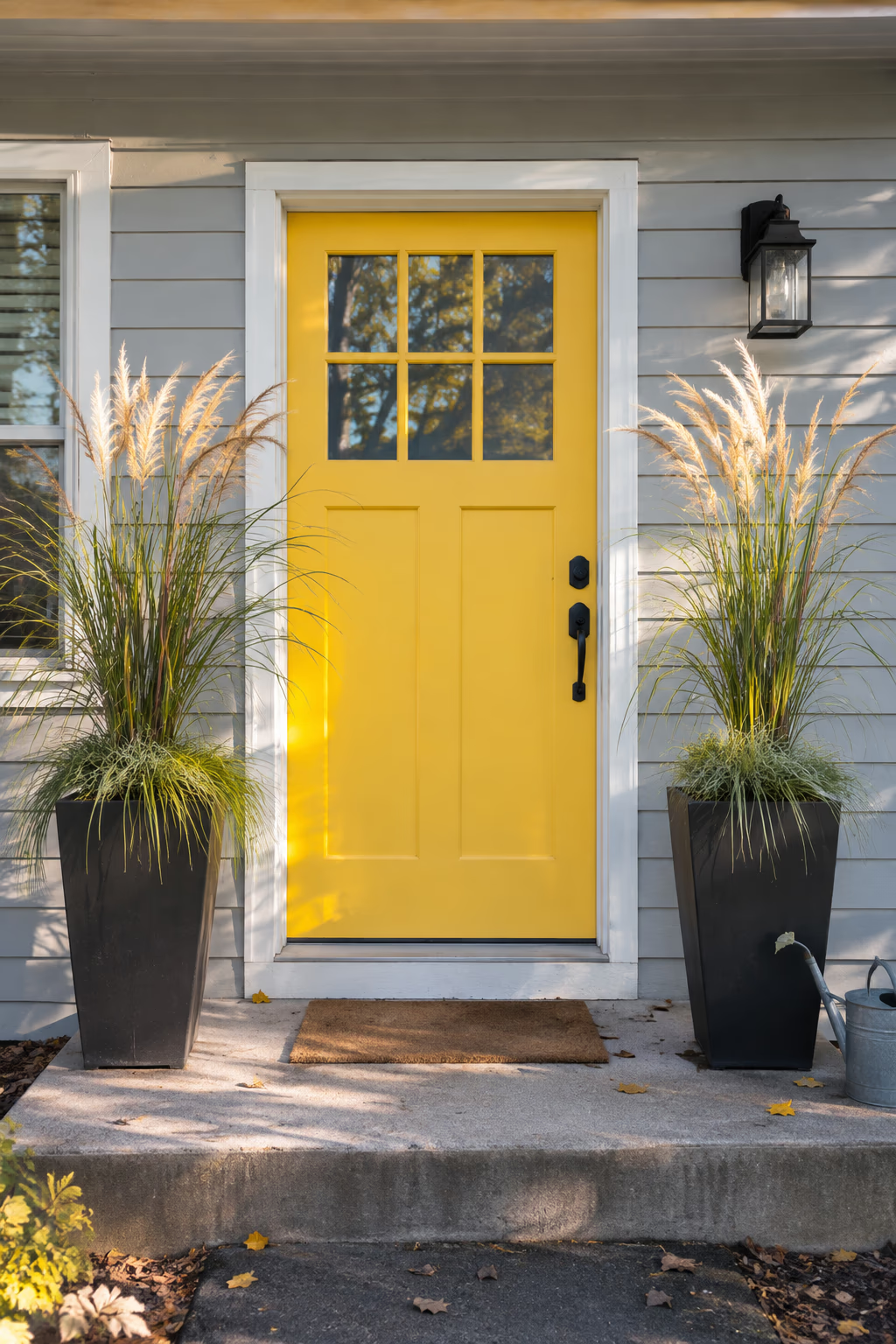
A modern, low-fuss look
Tapered black or charcoal planters give a crisp, contemporary feel, particularly against light siding or a colorful door. Plant each with a tall grass such as feather reed grass or dwarf fountain grass for movement.
Grasses tolerate wind and sun well and need less water than annuals once established. Add a low underplanting of sedge or sweet potato vine if you want something softer at the base.
Dark plastic or metal pots can get very hot in full afternoon sun, which may stress roots. Choose thicker-walled containers or line the inside with foam for protection.
9. Pack Terracotta Pots With Warm Annuals
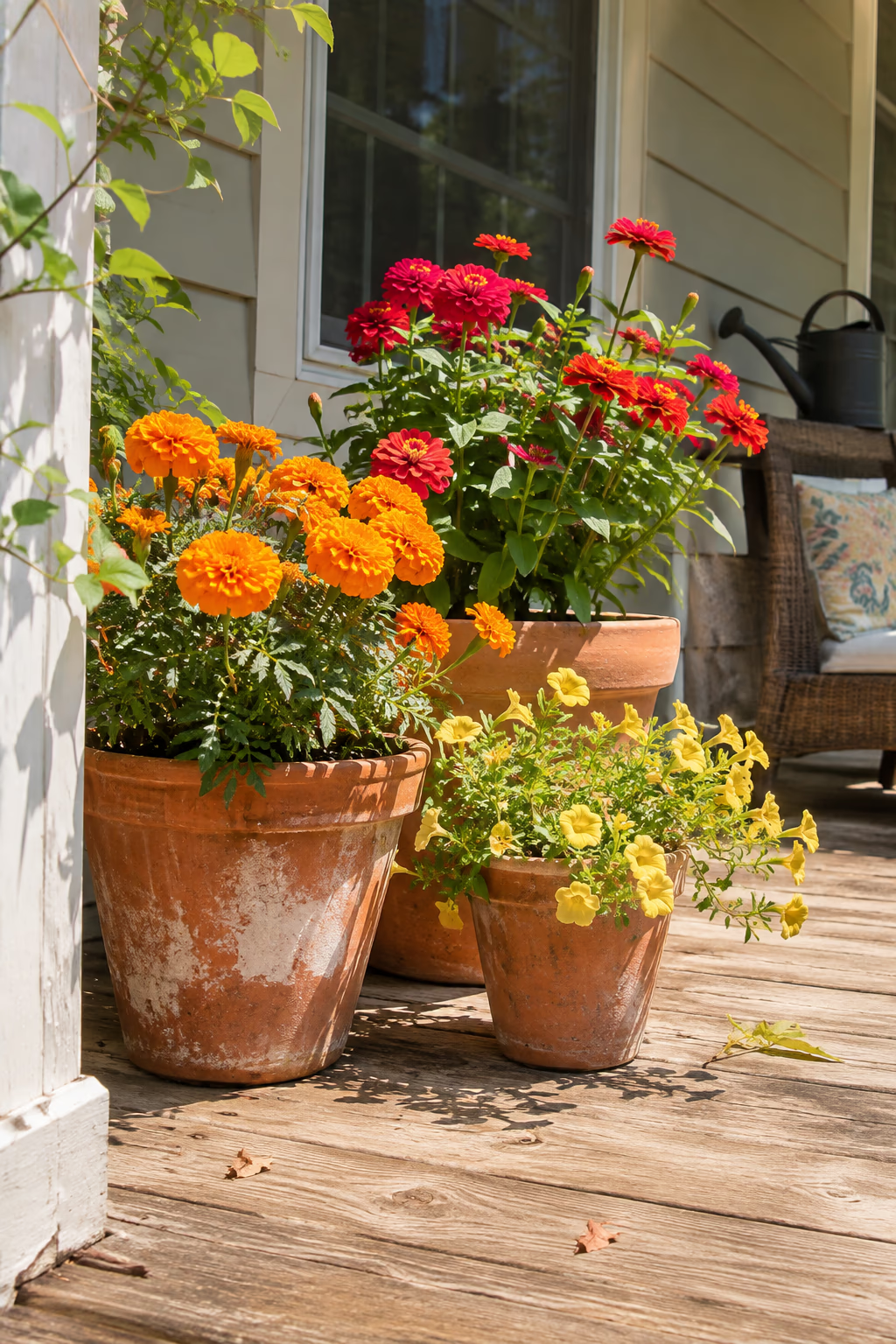
Classic clay and bold summer color
Terracotta looks good with nearly everything, and orange, red, and yellow blooms such as zinnias, marigolds, and calibrachoa look especially vibrant against it. Group three to five pots in odd numbers for an informal cluster.
Clay is porous, so soil dries faster than in plastic or glazed pots. Soak new pots in water before planting, and expect to water daily in hot weather.
In cold climates, unglazed terracotta can crack when wet soil freezes. Empty and store pots in a garage or shed over winter, or choose frost-rated versions.
10. Try an All-White Flower Container Scheme
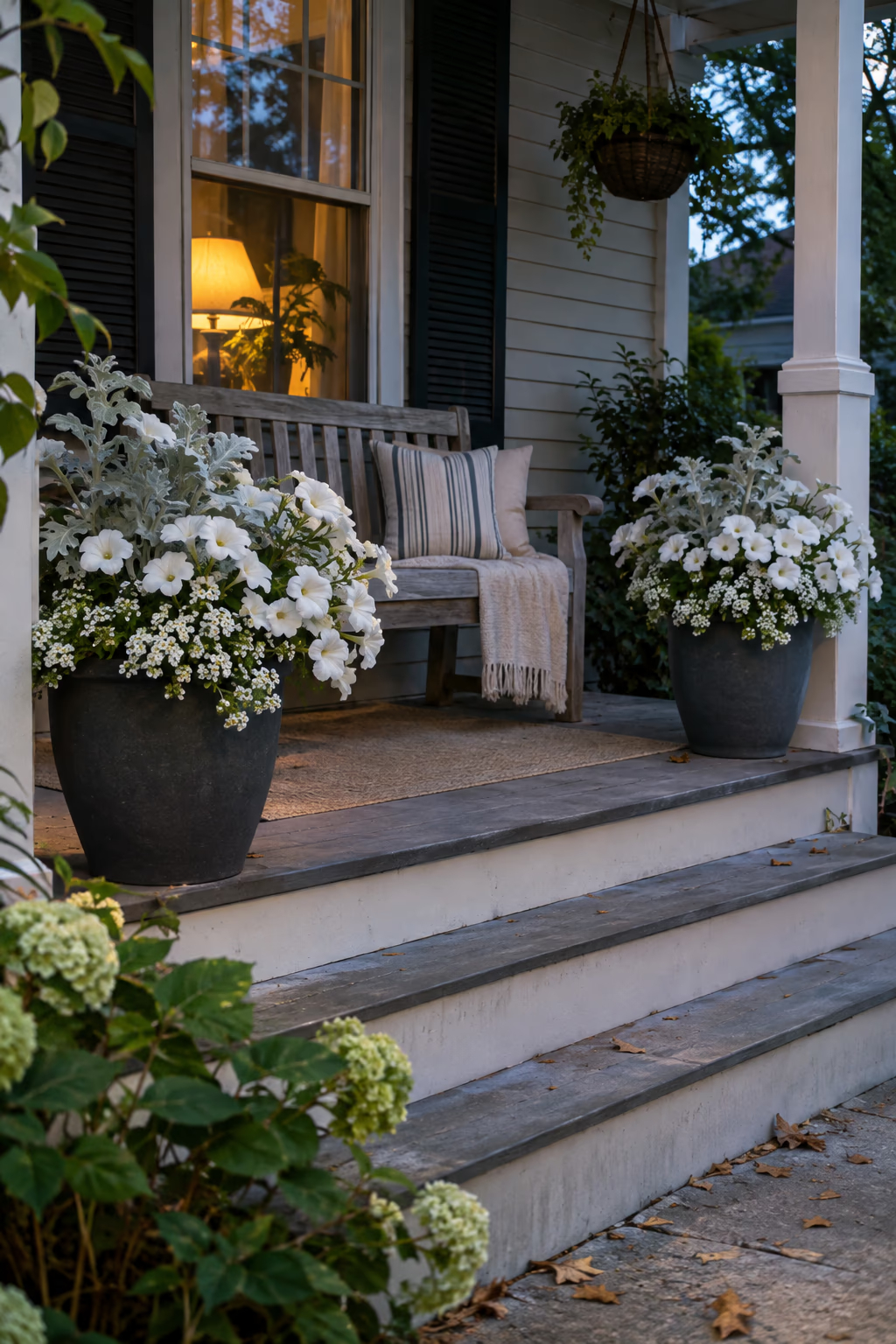
A calm, elegant look that glows at dusk
A single-color planting looks surprisingly high-end. White petunias, geraniums, alyssum, and dusty miller in matching pots create a clean look that works with almost any house color.
White flowers also show up well in evening light, so they’re a nice choice if you tend to sit on the porch after dinner. Add silvery or chartreuse foliage to prevent the display from looking flat.
Fading white blooms can look brown, so deadhead often. Choose varieties labeled as self-cleaning if you want less upkeep.
11. Match Planters to a Painted Front Door
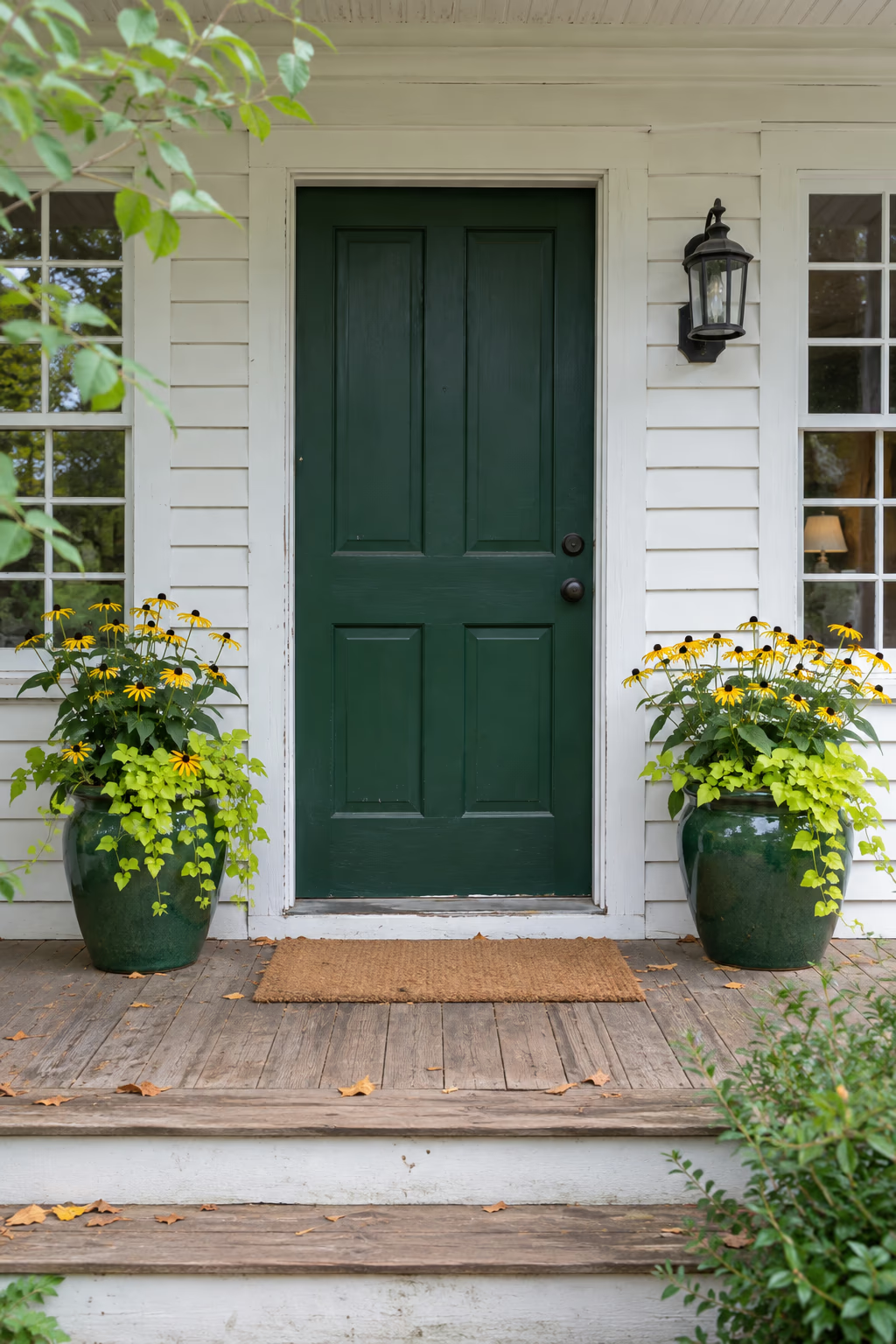
Tie the whole entry together
If your door is navy, red, or deep green, pick containers or flowers that echo it. A glazed pot in the same shade, or flowers in a complementary color such as yellow against navy, make the door feel intentional.
You can also bring the door color into the pots by painting plain plastic or wood containers with exterior paint. Use a primer made for the material so it doesn’t peel.
Check HOA rules before repainting doors or adding bright colors. Many communities have approved palettes, though planters are usually less regulated.
12. Anchor the Doorstep With One Oversized Statement Pot
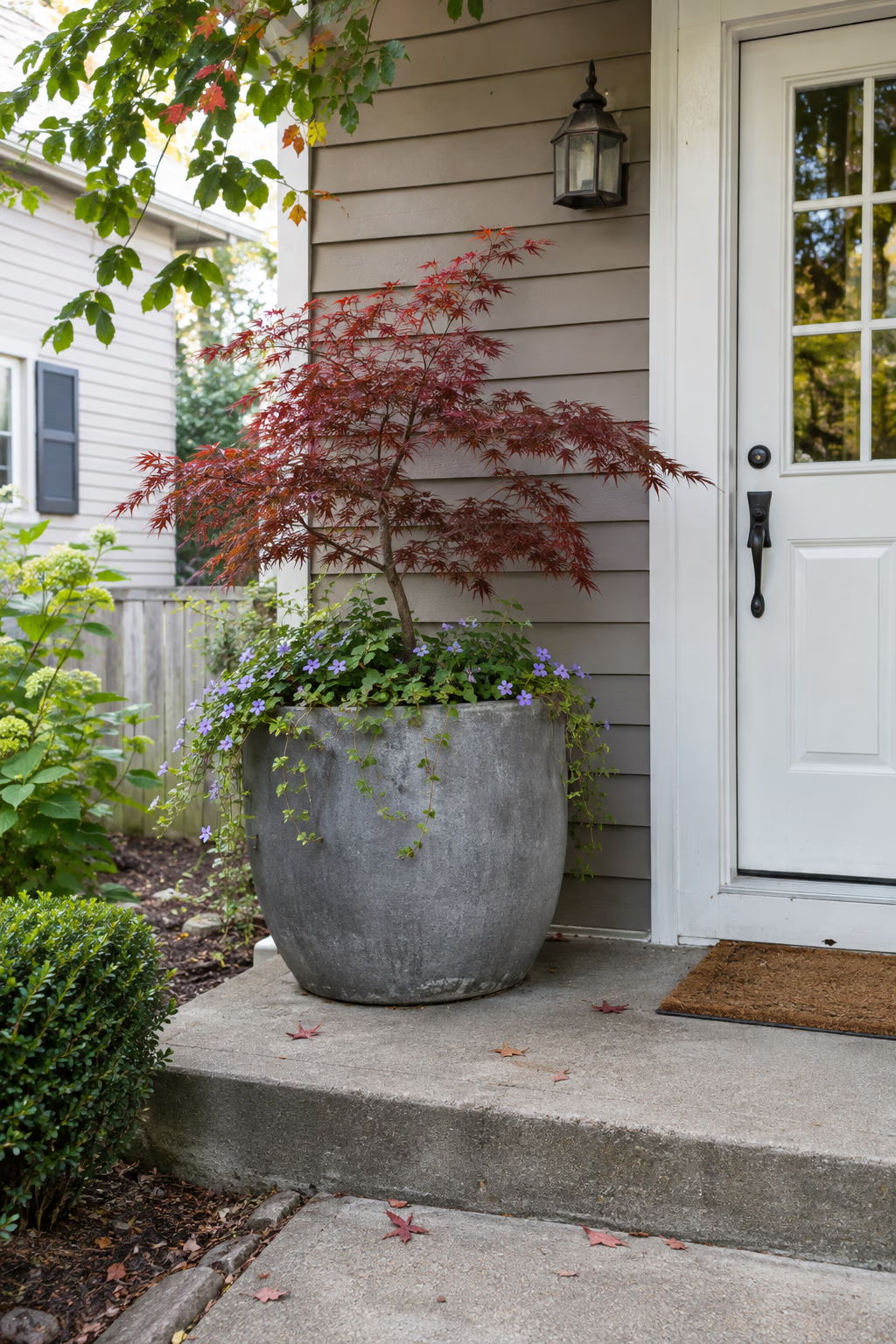
Big impact for a tiny porch
If your porch is narrow, one large container, around 24 to 30 inches across, can look better than several small ones. Place it on the side where the door opens against the wall so it doesn’t interfere.
Fill it with a bold centerpiece like a Japanese maple, dwarf hydrangea, or tall grass, with a few trailers around the edge. The scale makes it look purposeful.
Large pots get heavy. Use a lightweight fiberglass or resin pot, and set it on wheeled plant caddy if you’ll need to move it for storms or winter.
13. Pot Evergreen Topiary for Year-Round Structure
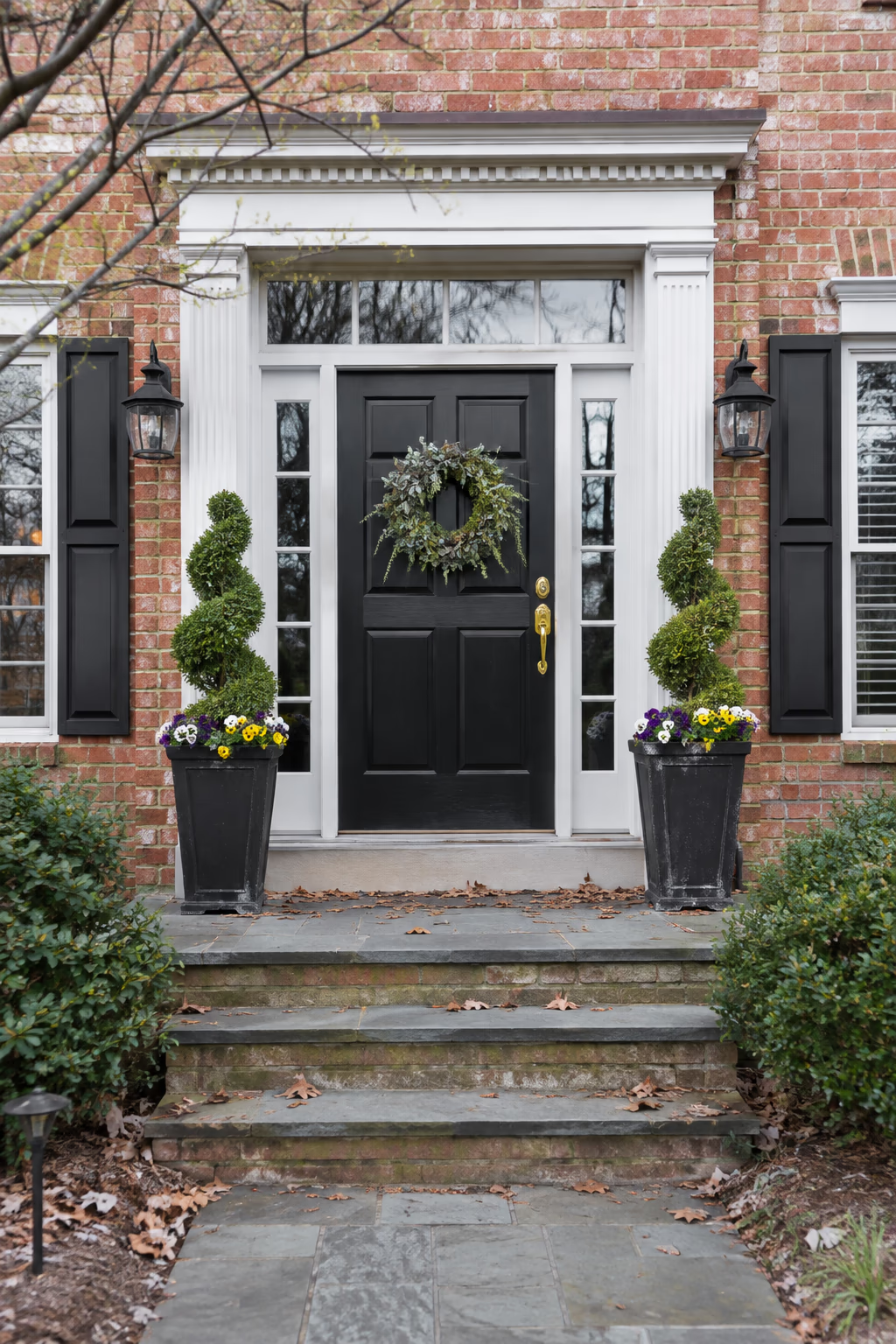
Green that stays when the flowers fade
Boxwood spirals, dwarf Alberta spruce, and arborvitae in tall planters keep the porch looking tidy even in January. Pair them symmetrically beside the door for a classic, traditional style.
Plants in pots are more exposed to cold than those in the ground, so choose varieties rated for at least one zone colder than yours. Water the soil before a hard freeze, since dry roots suffer more.
Shear lightly in early summer to hold the shape. You can tuck seasonal flowers or pansies around the base for a quick change without replacing the main plant.
14. Fill Galvanized Tubs for a Farmhouse Look
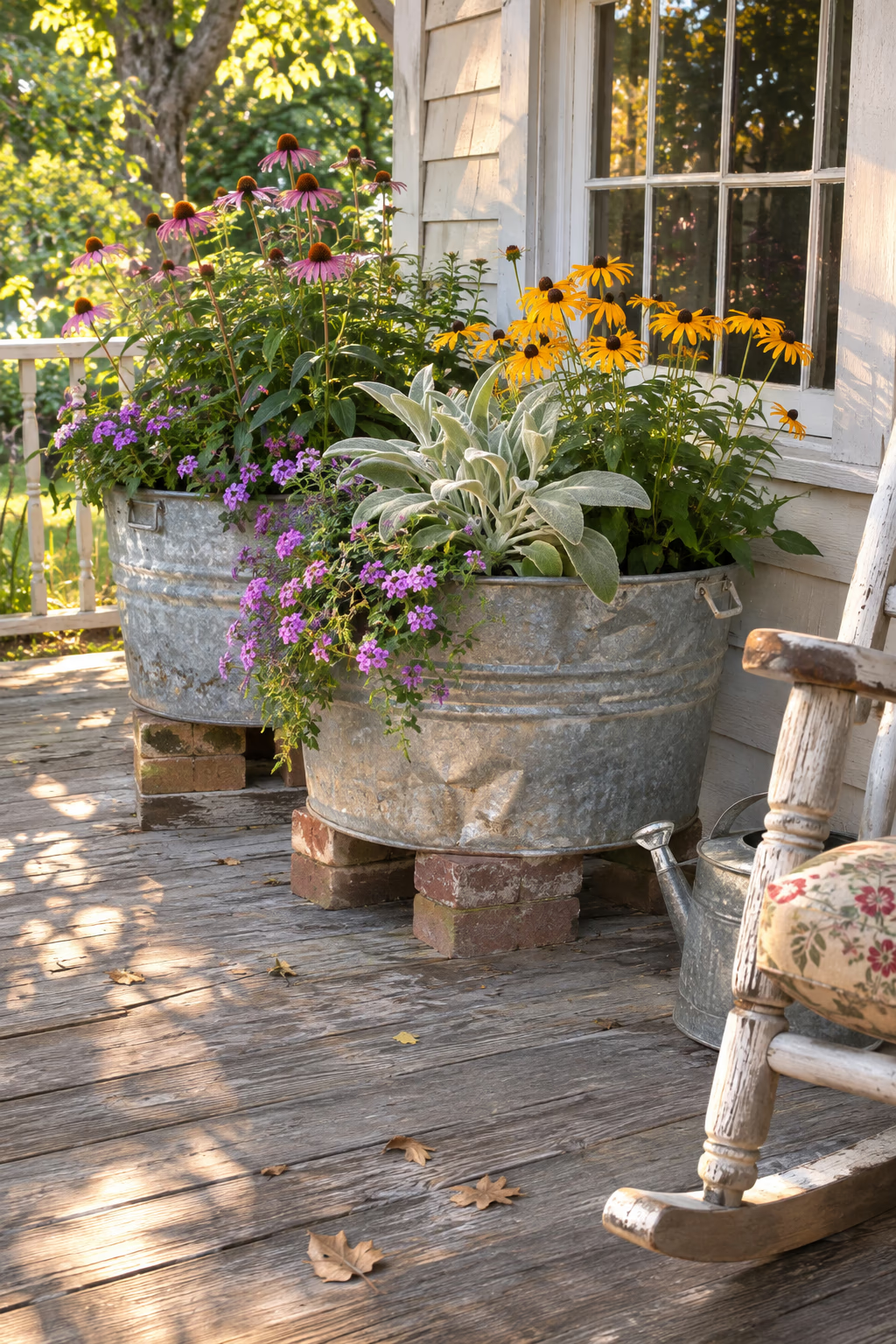
Rustic metal with plenty of room for roots
Galvanized stock tanks and wash tubs give a relaxed farmhouse feel and hold lots of soil. They look great with black-eyed Susans, coneflowers, lamb’s ear, and trailing verbena.
Drill several half-inch holes in the bottom, since these containers rarely come with drainage. Add a couple of inches of gravel at the base and fill the rest with potting mix.
Metal warms in direct sun, so use a larger tub for more soil insulation. A few small risers or bricks under the base help air circulate and protect porch boards.
15. Stack Spring Bulbs in Pots of Different Heights
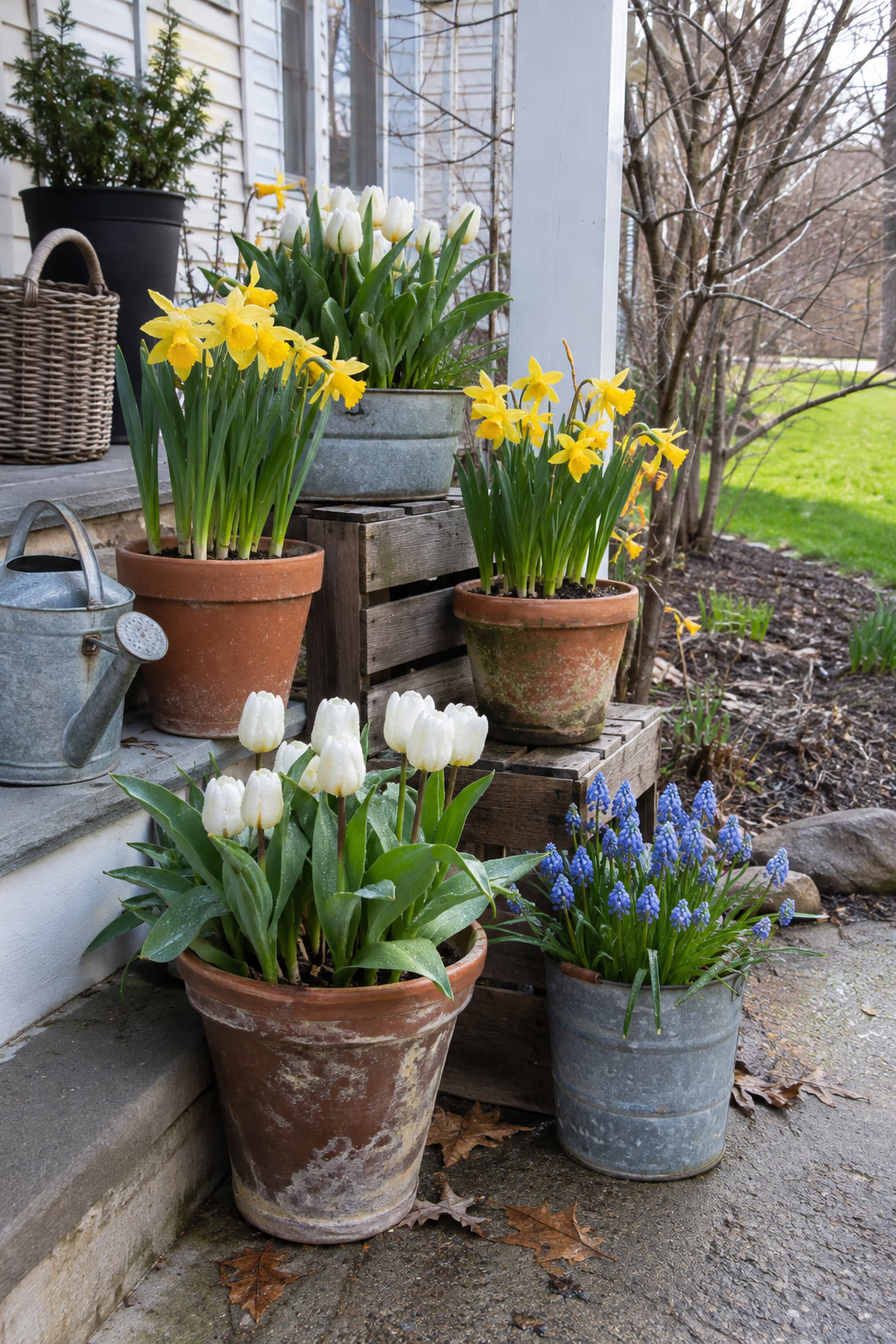
A fresh start after a gray winter
Tulips, daffodils, hyacinths, and grape hyacinths can be layered in the same pot in fall, with the largest bulbs deepest. They bloom in sequence and fill the container with color for weeks.
Group the finished containers on steps or stacked on crates at different heights so each pot is visible. A pale yellow and white palette reads as fresh and cheerful.
Plant bulbs in fall once soil temperatures drop, and keep pots somewhere cold but protected, like an unheated garage, in very cold zones. Once blooms fade, replace them with summer annuals.
16. Switch to Fall Planters With Mums and Grasses
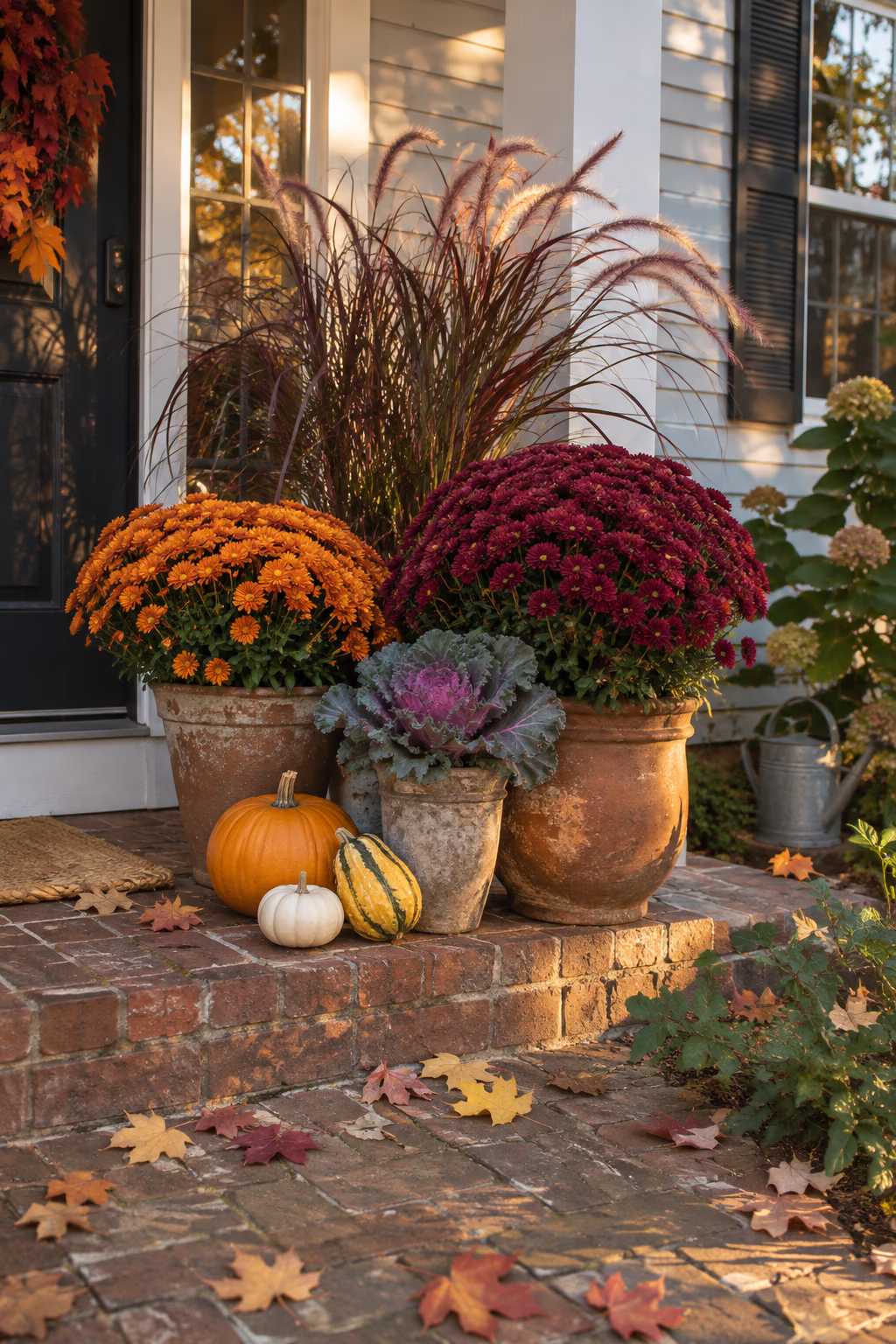
Cozy autumn color that lasts to frost
When summer annuals fade, swap in chrysanthemums, ornamental kale, pansies, and purple fountain grass. Deep burgundy, orange, and gold are classics that look good with brick and wood.
Add a few pumpkins or gourds around the base for easy texture. Choose garden mums, which can be planted in the ground afterward in many regions, rather than disposable florist mums.
Pull out tired plants completely rather than just adding to them, and refresh the top few inches of soil. Cooler weather means you will water far less often.
17. Build Winter Urns With Evergreen Boughs
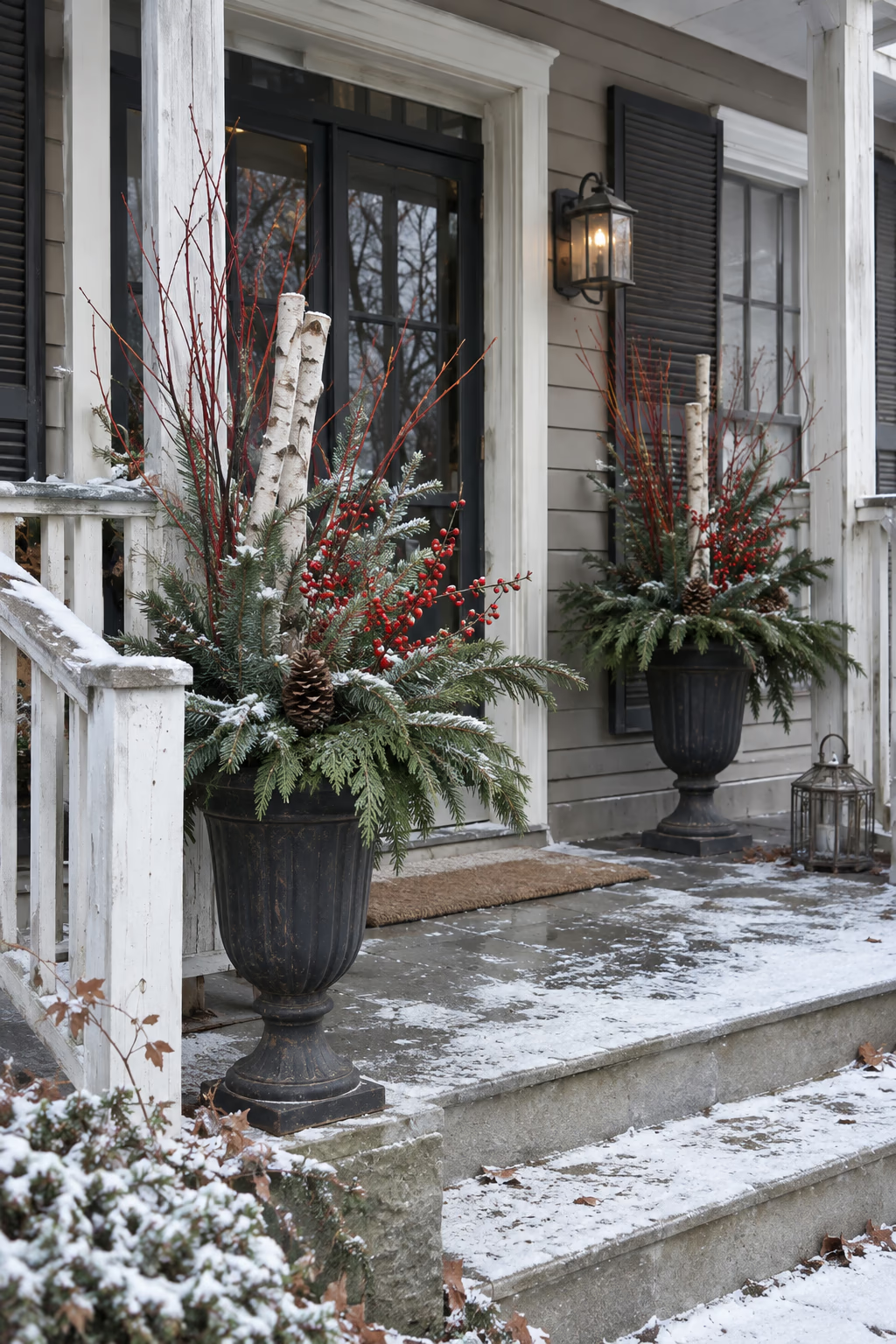
Keep the porch festive after the garden sleeps
Once frost has killed summer annuals, you can fill the soil with cut evergreen boughs, red dogwood twigs, birch branches, and pinecones. The frozen soil holds the stems upright.
Use a mix of textures, such as fir, cedar, pine, and magnolia leaves, with a tall branch in the middle. A few red berries from winterberry holly provide color.
Fresh cuttings can last six weeks or more in cold weather, but they dry out in warm spells. This works best in climates where soil stays frozen; in mild areas, use hardy plants such as pansies and kale instead.
18. Create a Mediterranean Corner With Succulents
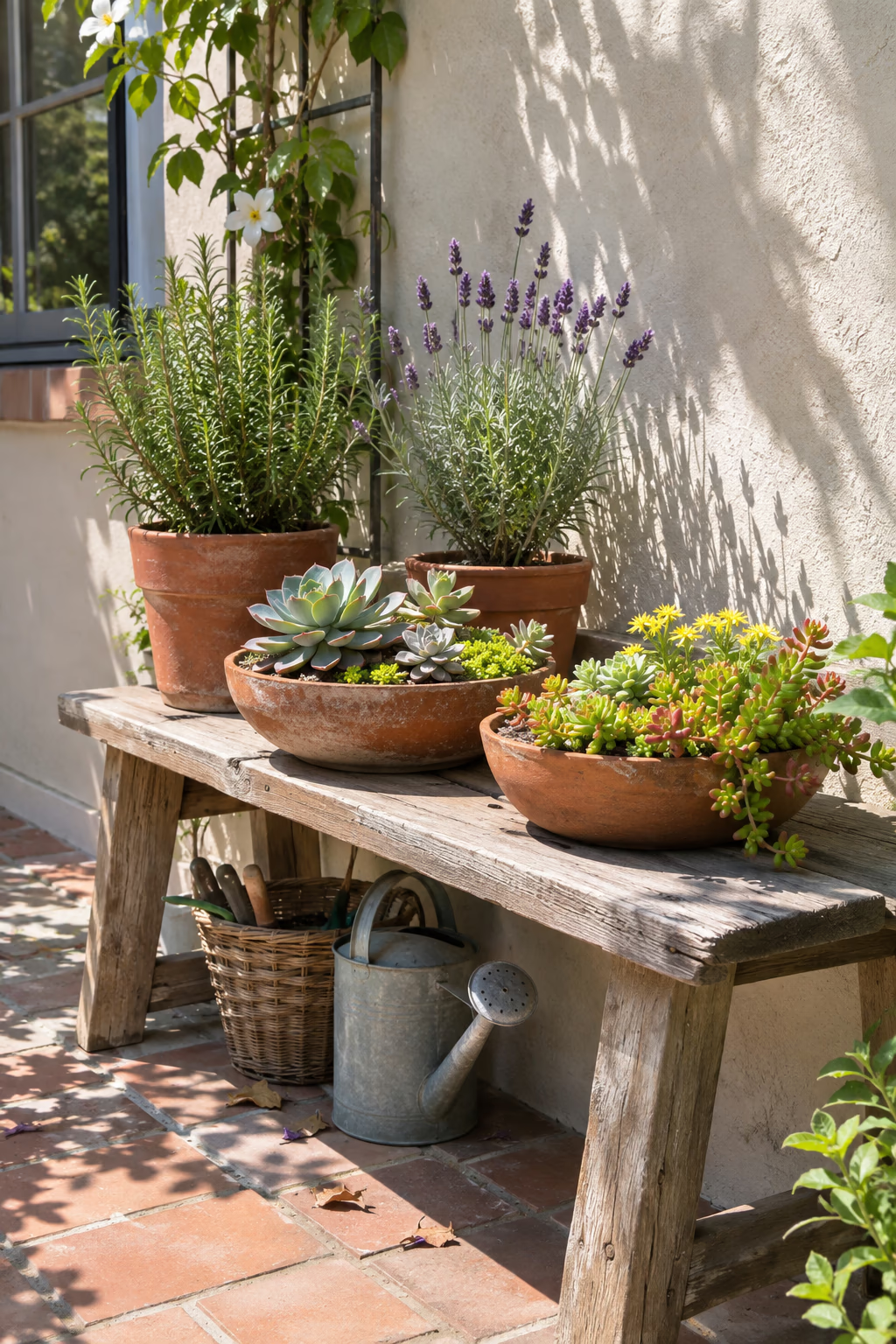
Drought-tolerant plants for sunny porches
Echeveria, sedum, and agave in shallow bowls or terracotta pots suit a hot, south-facing porch. Add a trailing rosemary or lavender for scent and texture.
Use a gritty cactus mix and containers with big drainage holes, since succulents rot in wet soil. Cluster pots of varying sizes on a bench or low table for a collected look.
Most popular succulents are tender and can’t survive freezing temperatures. In cold climates, bring them inside for the winter or choose hardy sedums and hens-and-chicks.
19. Grow Herbs and Edibles Near the Door
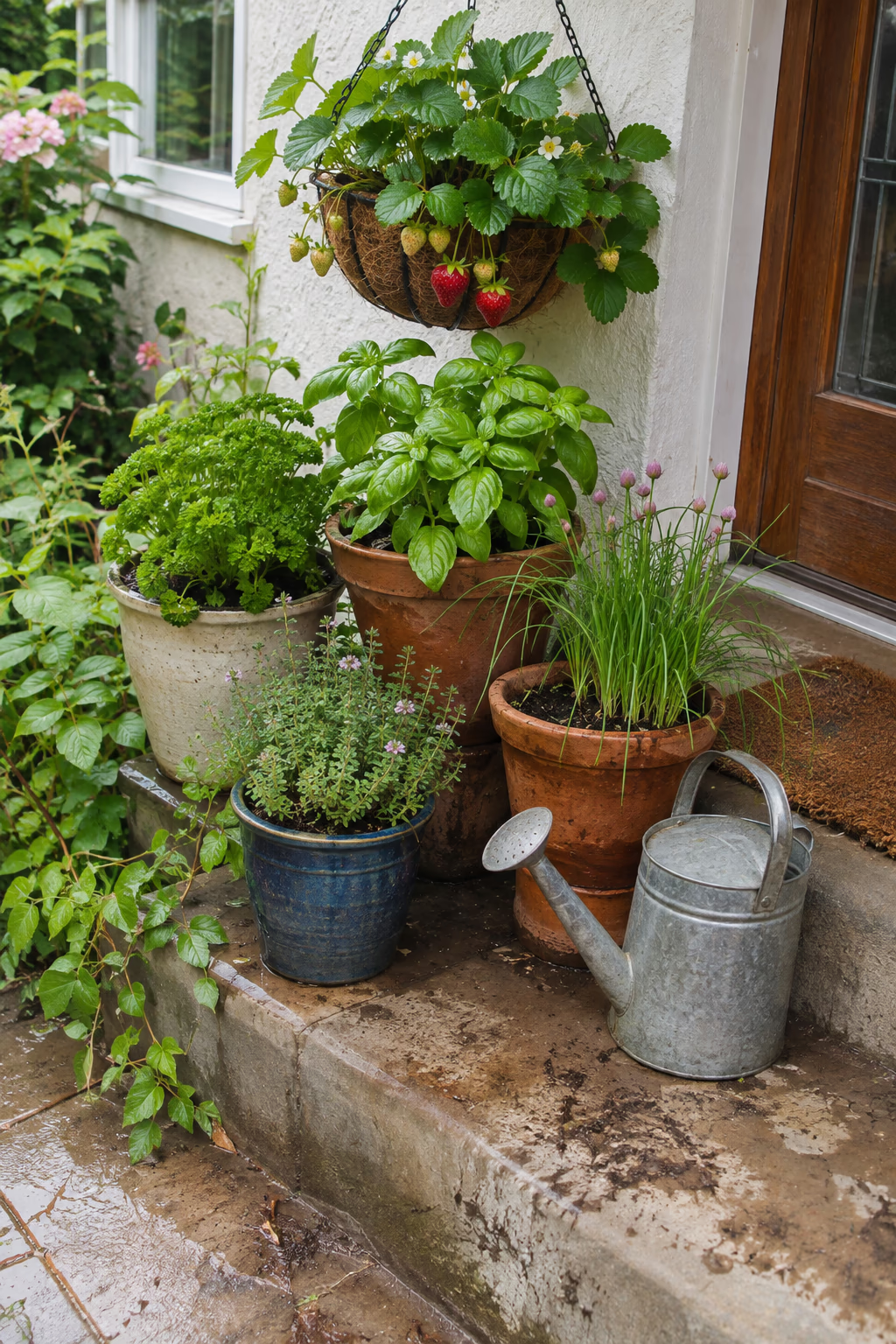
Beauty you can also cook with
Basil, parsley, thyme, chives, and mint are attractive, tidy, and handy when you’re cooking. Compact tomatoes, peppers, and strawberries also do well in large pots on a sunny porch.
Plant mint alone in its own container, since it spreads aggressively. Combine sun-loving herbs with similar water needs, such as thyme, oregano, and rosemary, in a single wide pot.
Edibles need six or more hours of sun. If you use any pesticides on nearby plants, keep them away from the food containers.
20. Set Out a Pollinator Pot Group by the Seating
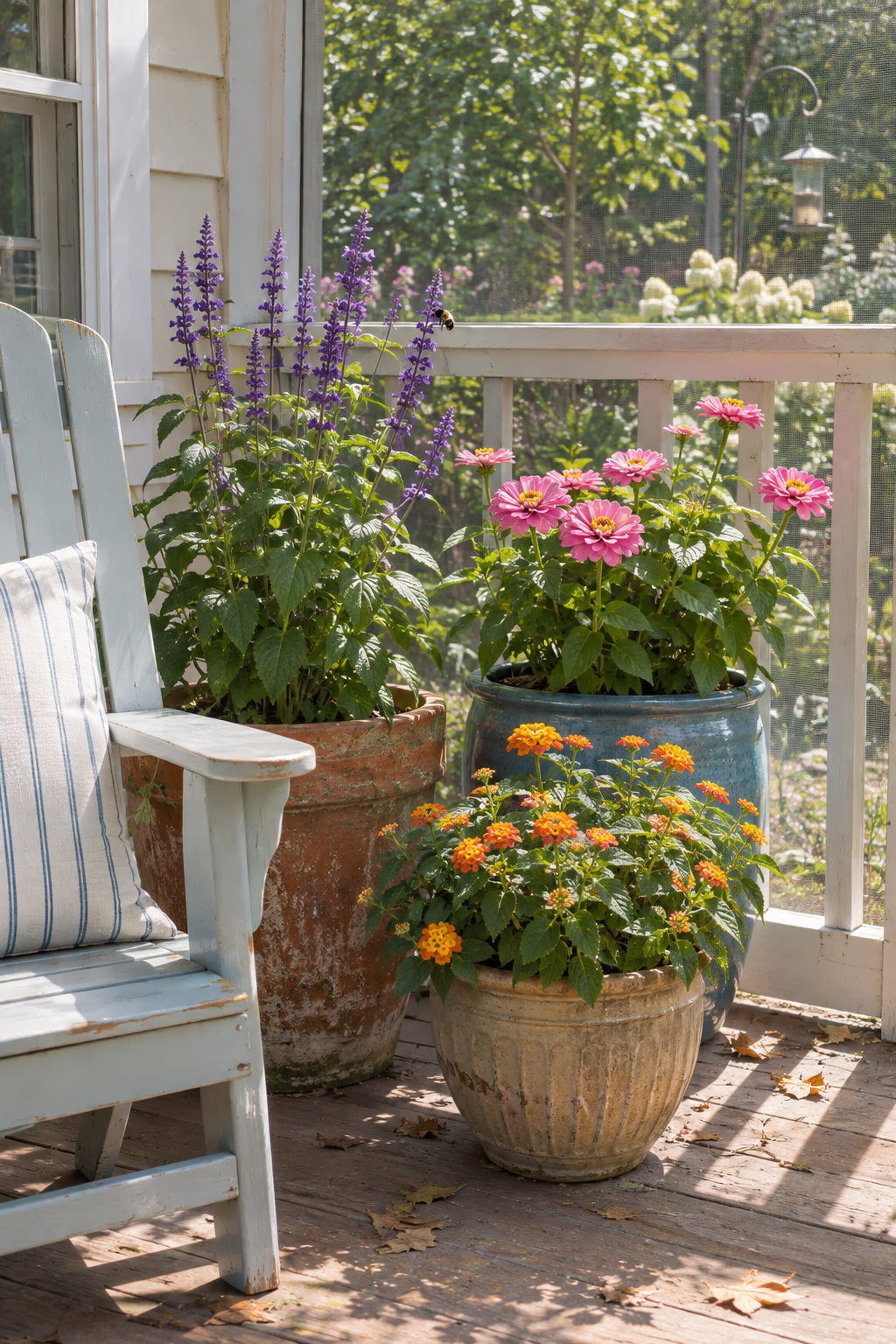
Bees, butterflies, and a front-row view
Salvia, zinnias, lantana, coneflower, and verbena attract pollinators and bloom for months. A cluster of three pots beside a chair or bench lets you enjoy the activity up close.
Choose single-flowered varieties when possible, since double-petaled blooms often have less nectar and pollen. Group plants with similar sun needs together.
If anyone in your household has a bee allergy, place these pots away from the door and seating. Avoid spraying insecticides near them.
21. Use Crates and Buckets as Budget Planters
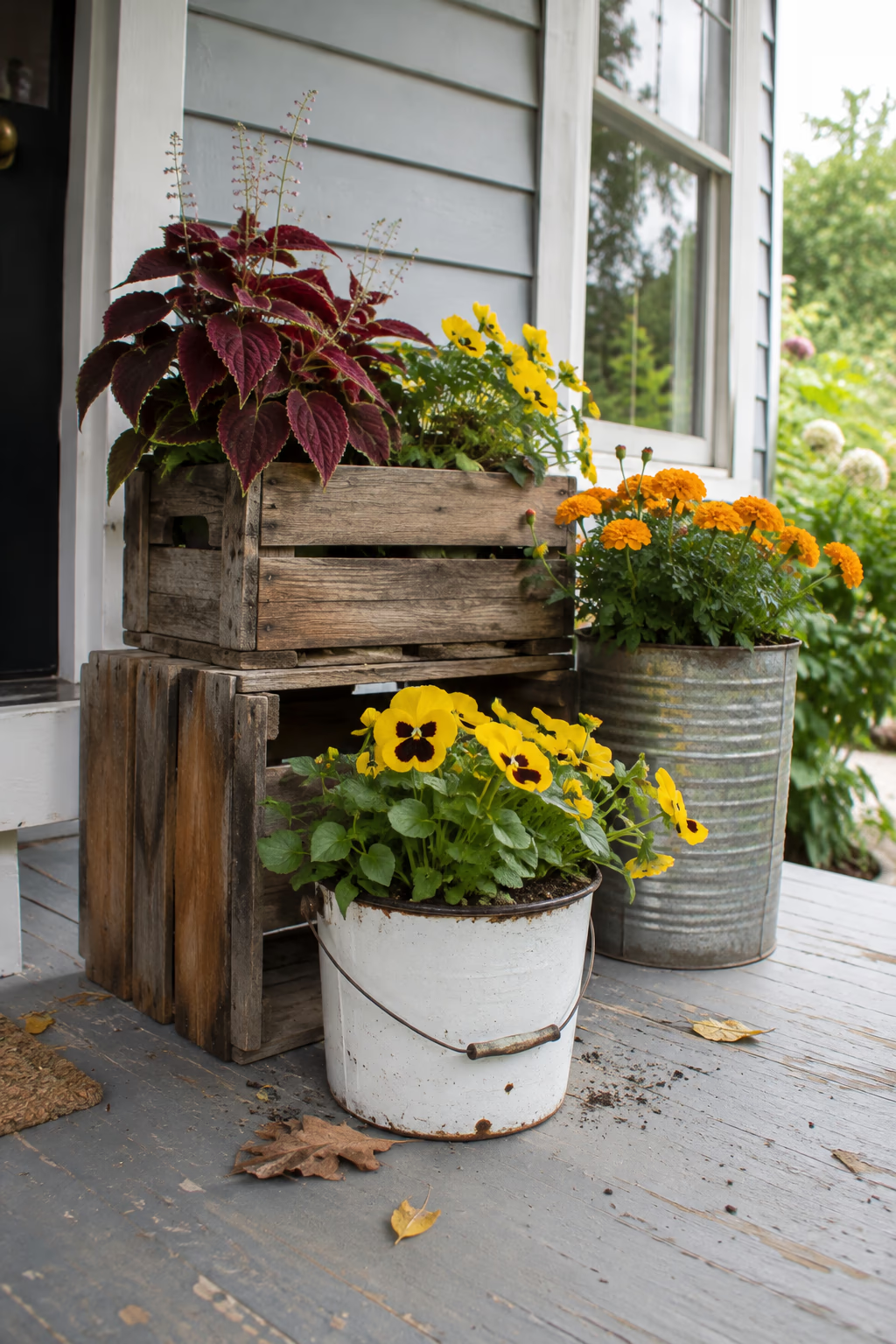
Charming containers from things you may already own
Old wooden crates, enamel buckets, large tin cans, and even sturdy baskets can become planters. Line wood with plastic and poke drainage holes, or set a nursery pot inside.
Group mismatched items by color, such as all white or all weathered wood, so the look feels deliberate. Fill them with inexpensive plants like pansies, marigolds, and coleus.
Untreated wood will rot in a season or two, so expect to replace it. Avoid anything that previously held chemicals or paint if you plan to grow herbs or vegetables.
22. Stage Plant Stands for Vertical Interest
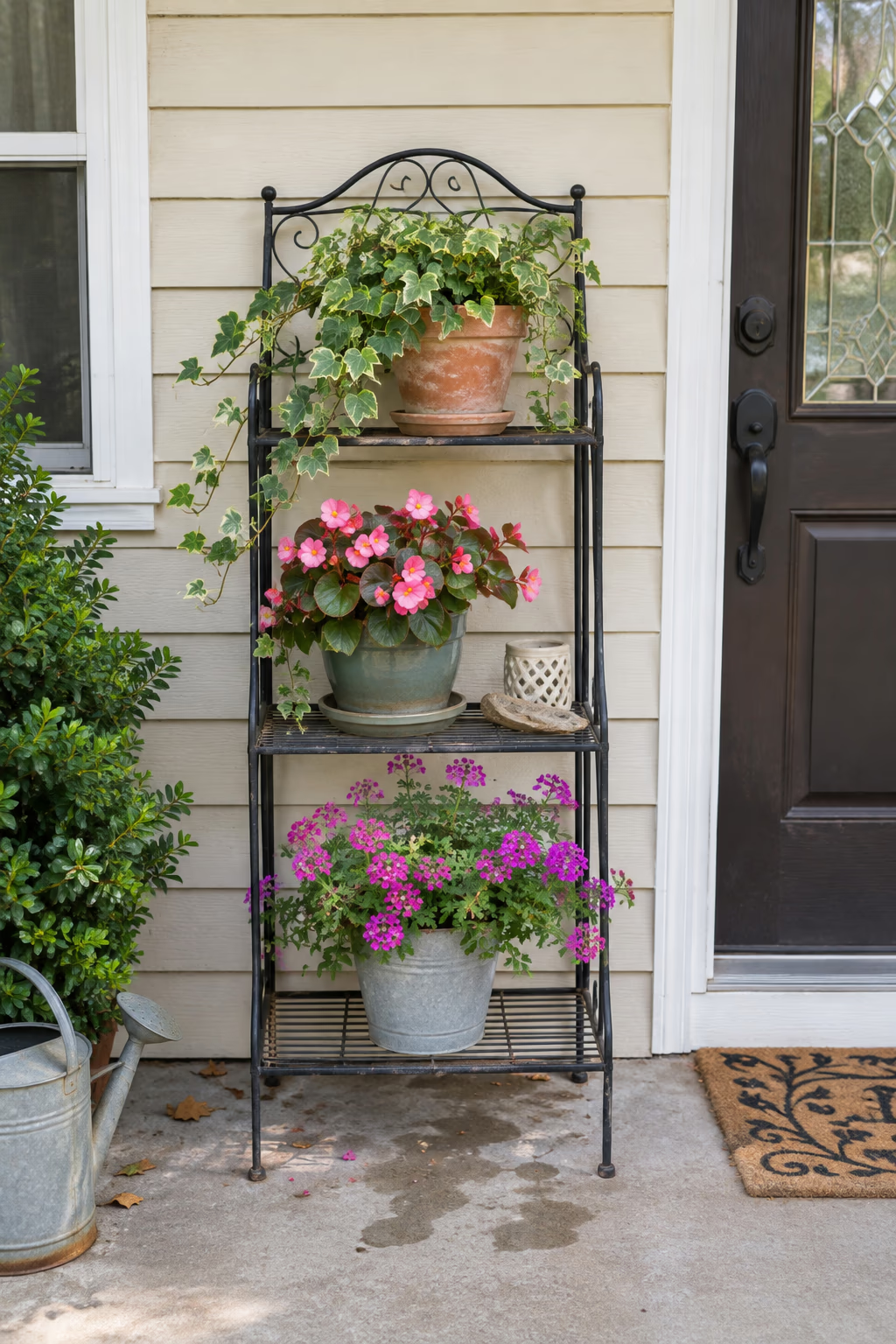
Add height without losing floor space
Tiered plant stands, ladder shelves, and benches let you display many small pots in a compact footprint. They work well against a wall or beside the door on a small stoop.
Put sun-loving plants on the top and shade-tolerant ones lower. Trailing plants look great spilling over the shelf edge.
Choose rust-resistant metal or sealed wood, and secure tall stands to the wall if your area gets strong wind. Don’t forget that water drips from upper shelves onto lower ones.
23. Pot a Citrus Tree for a Sunny Porch
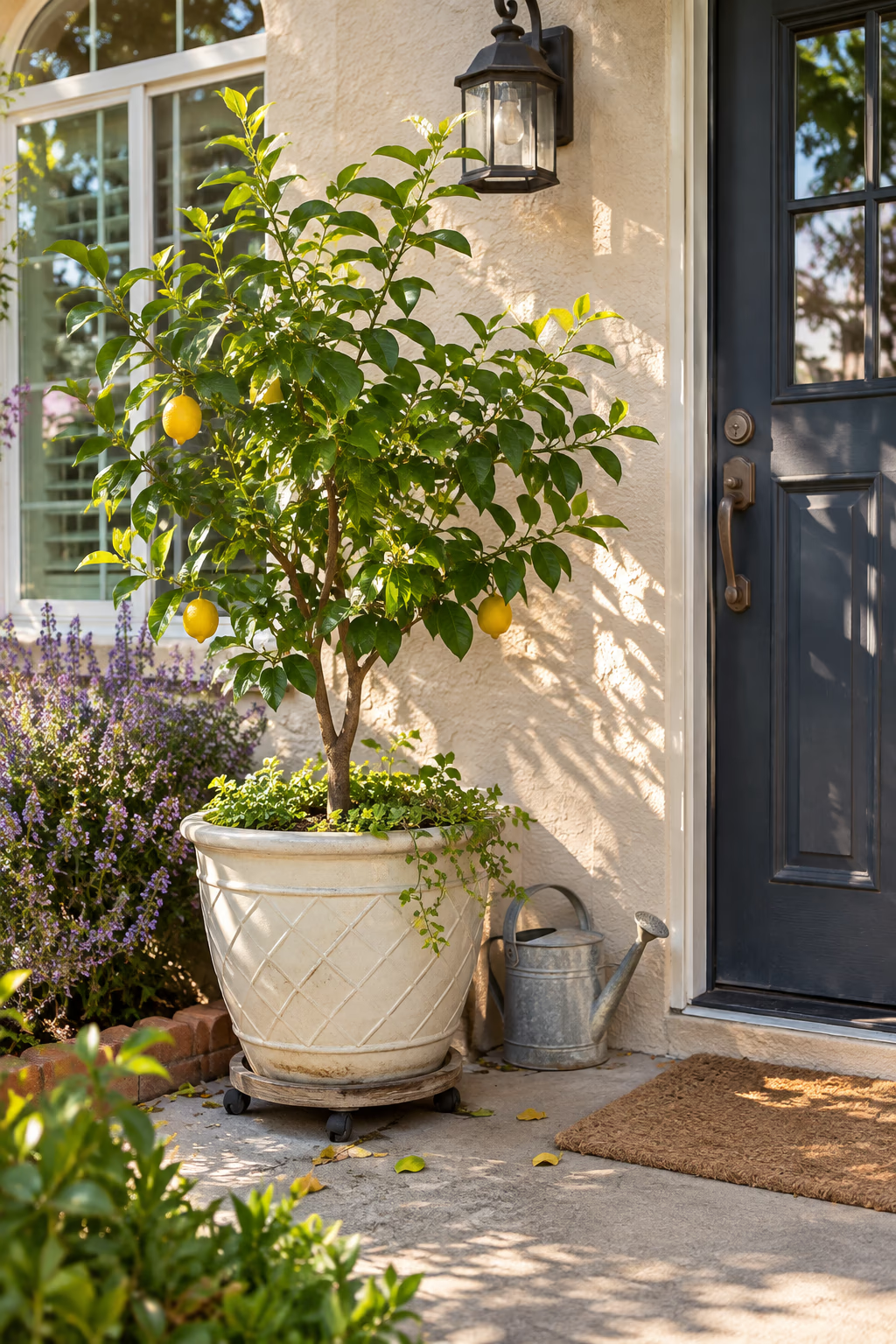
Glossy leaves, fragrance, and the occasional fruit
Dwarf Meyer lemon and calamondin trees do well in large containers of 18 inches or more. Their glossy evergreen leaves and fragrant white blossoms make a striking statement near a sunny door.
Use a well-draining potting mix and feed with a citrus fertilizer during the growing season. Choose a spot with at least six hours of sun.
Citrus is not frost hardy. In most of the country, it must come indoors to a bright window or greenhouse before temperatures dip near freezing, so put the pot on a rolling base.
How to Plan Your Front Porch Containers
A little planning keeps your porch looking good all season and saves money on plants that struggle. Start with the conditions your porch actually has.
- Check the light first. Watch how many hours of direct sun your porch gets, then buy plants rated for full sun, part shade, or shade accordingly.
- Size pots generously. Larger containers hold more moisture and look better in proportion to a door, so avoid pots smaller than about 12 inches for main displays.
- Always provide drainage. Every container needs holes, and pots on wood porches benefit from feet or saucers to protect the floor.
- Use quality potting mix. Fresh, lightweight mix drains better than garden soil and helps roots breathe; add slow-release fertilizer at planting.
- Plan your watering. Containers dry out quickly, so group pots near a spout, consider drip irrigation or self-watering pots, and check soil with your finger daily in summer.
- Swap with the seasons. Refresh with bulbs in spring, annuals in summer, mums in fall, and evergreens in winter, and check your USDA zone and any HOA rules before you buy.
Frequently Asked Questions
What are the best plants for front porch containers?
It depends on light. For sun, try geraniums, petunias, zinnias, and ornamental grasses. For shade, ferns, begonias, coleus, and hostas are reliable choices.
How often should I water porch containers?
In summer, most pots need water every day or every other day, while large pots or cool weather may stretch that to a few days. Push a finger two inches into the soil and water when it feels dry.
How many pots should I put by the front door?
Two matching pots is the classic choice, but a group of three in varying heights also looks good. Always leave enough clear space for the door to swing and for people to walk comfortably.
Can I leave containers outside in winter?
Hardy evergreens and shrubs can stay out if the pot is large and frost-proof and the plant is rated for a colder zone than yours. Tender plants and unglazed clay pots should be moved to a protected spot.
How do I keep container plants looking full all season?
Feed regularly with a balanced fertilizer, deadhead spent flowers, and trim leggy stems back by about a third in midsummer. Replace anything that has stopped blooming rather than waiting.
Final Thoughts
The best front porch container ideas work because they match your light, your style, and the time you want to spend caring for them. A single pair of well-chosen pots can do more for curb appeal than a whole row of mismatched ones.
Start with one idea from this list, learn how it grows in your space, and add more as you gain confidence. Containers are forgiving and easy to change, so enjoy experimenting until your porch feels like yours.


