
Think about the last house you walked up to and instantly liked. Chances are a pair of full, healthy pots stood beside the door, spilling a little greenery onto the step and telling you someone cares about this place.
That’s the quiet power of front door planter ideas. A few containers can add color, height, and fragrance, hide an awkward threshold, and make even a plain builder-grade entry feel finished. Best of all, they cost far less than new siding or a new door and can change with the seasons.
These 23 front door planter ideas run from classic urns and tall grasses to hydrangeas, spring bulbs, herbs, citrus, and self-watering pots. They are ordered from the most popular looks to more specialized twists, and each one works at an ordinary home with an ordinary budget.
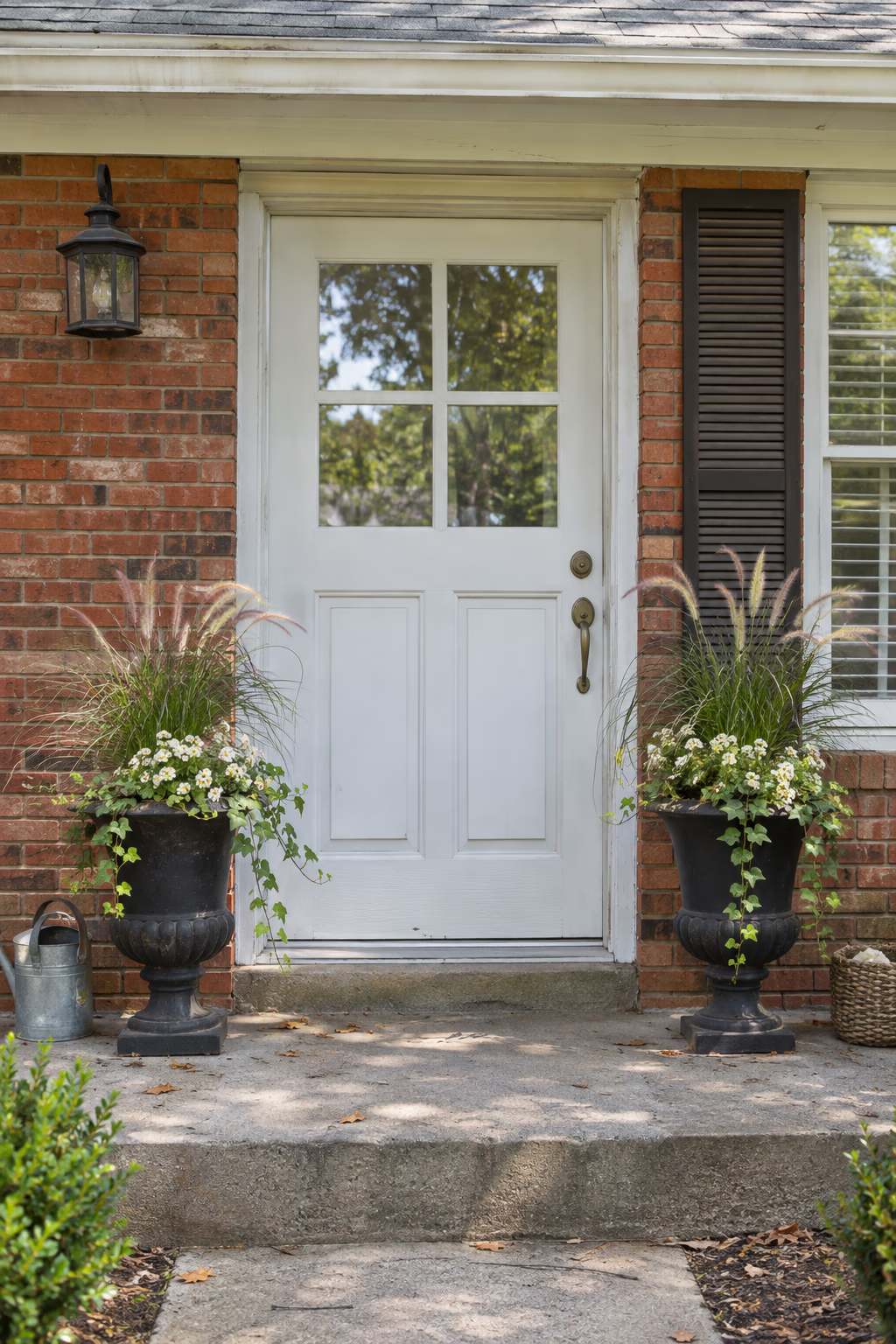
1. Flank the Door With Matching Black Urns
The timeless pair that always looks right
Two identical urns, one on each side of the door, create instant balance. Choose pots about 18 to 24 inches tall and at least 16 inches wide so they feel proportionate to a standard 80-inch door. Black, charcoal, or dark bronze finishes look sharp against white, brick, or colorful doors.
Fill each urn the same way: a tall spiky plant such as dwarf fountain grass or boxwood in the center, trailing ivy or creeping Jenny around the rim, and a few flowers in between. Repeating the exact recipe is what makes the pair look intentional.
Lightweight resin and fiberglass urns look surprisingly convincing and won’t crack in a freeze the way thin ceramic can. Just add a few inches of gravel or a weighted base so they don’t tip in wind.
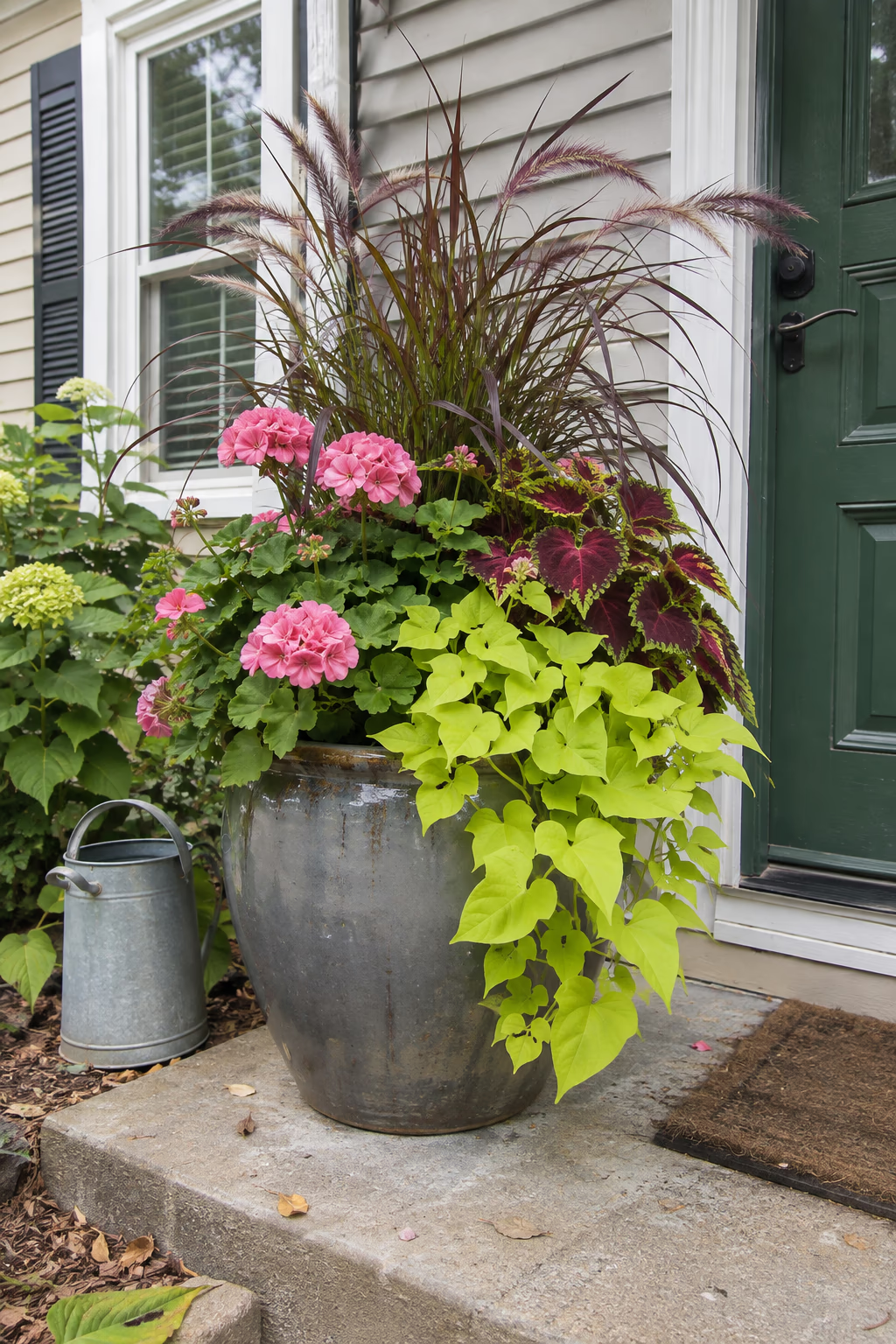
2. Build a Layered Thriller-Filler-Spiller Container
A miniature garden in a single pot
This classic design formula uses three plant roles: a tall “thriller” in the middle, mounded “fillers” around it, and trailing “spillers” over the edge. Try a purple fountain grass, a few geraniums or coleus, and sweet potato vine in a 20-inch pot.
Pick plants with the same sun and water needs, and keep to two or three colors so the pot looks designed rather than crowded. A repeated color from the door or house trim ties everything together.
Crowded container plantings need rich potting mix and regular feeding. Use a slow-release fertilizer at planting time and water whenever the top inch feels dry.
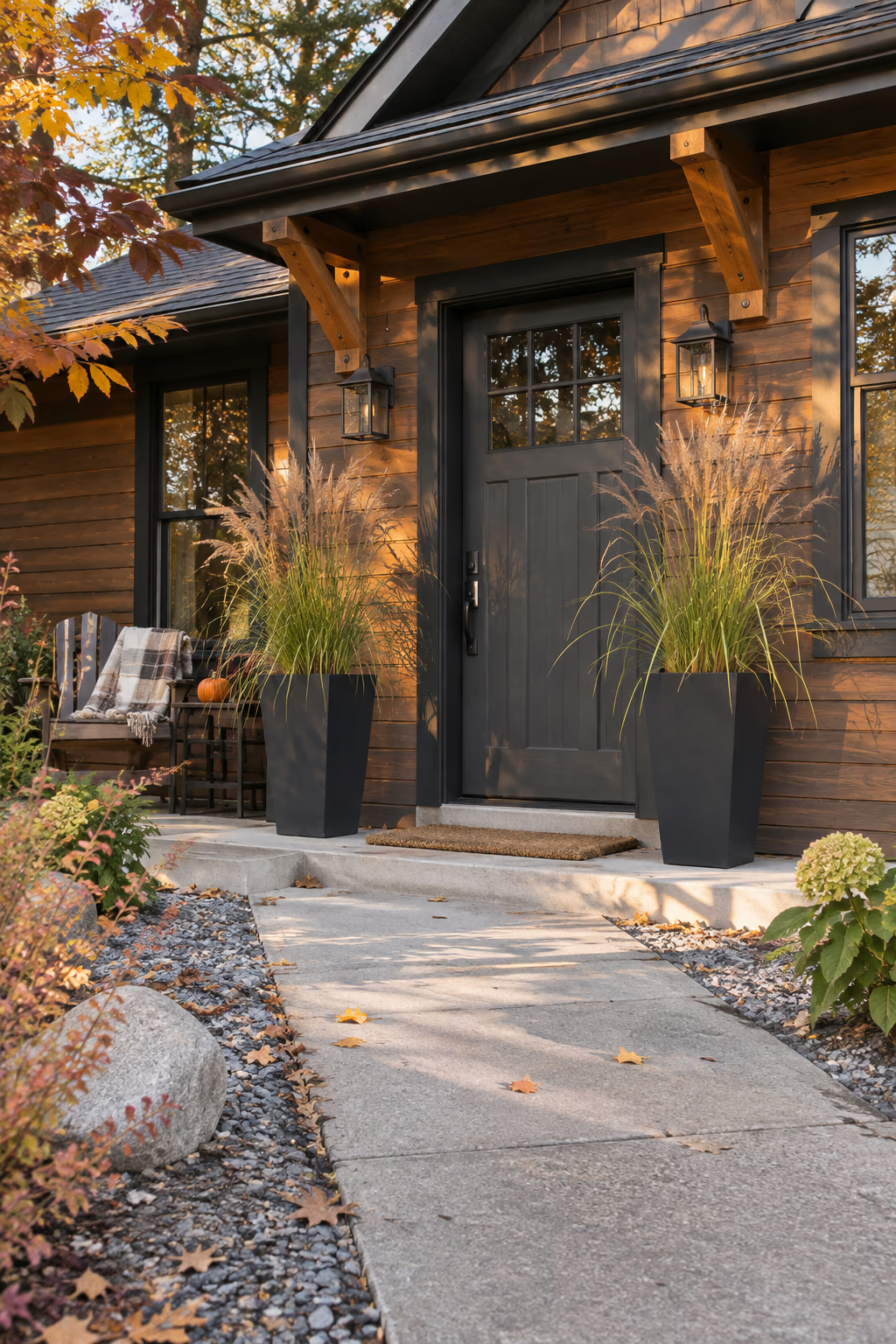
3. Frame the Entry With Tall Grasses in Tapered Black Planters
Modern, graceful, and forgiving
Tall, tapered planters about 24 to 30 inches high echo the vertical lines of a door. Fill each with a single ornamental grass such as feather reed grass, switchgrass, or a dwarf miscanthus for a soft, moving texture that looks good from summer through winter.
Grasses are tough, drought tolerant once established, and need no deadheading. Their plumes catch low sun beautifully in fall.
Cut them back to a few inches in late winter before new growth starts. In cold zones, choose a variety rated at least one zone hardier than yours, since roots in pots get colder than roots in the ground.
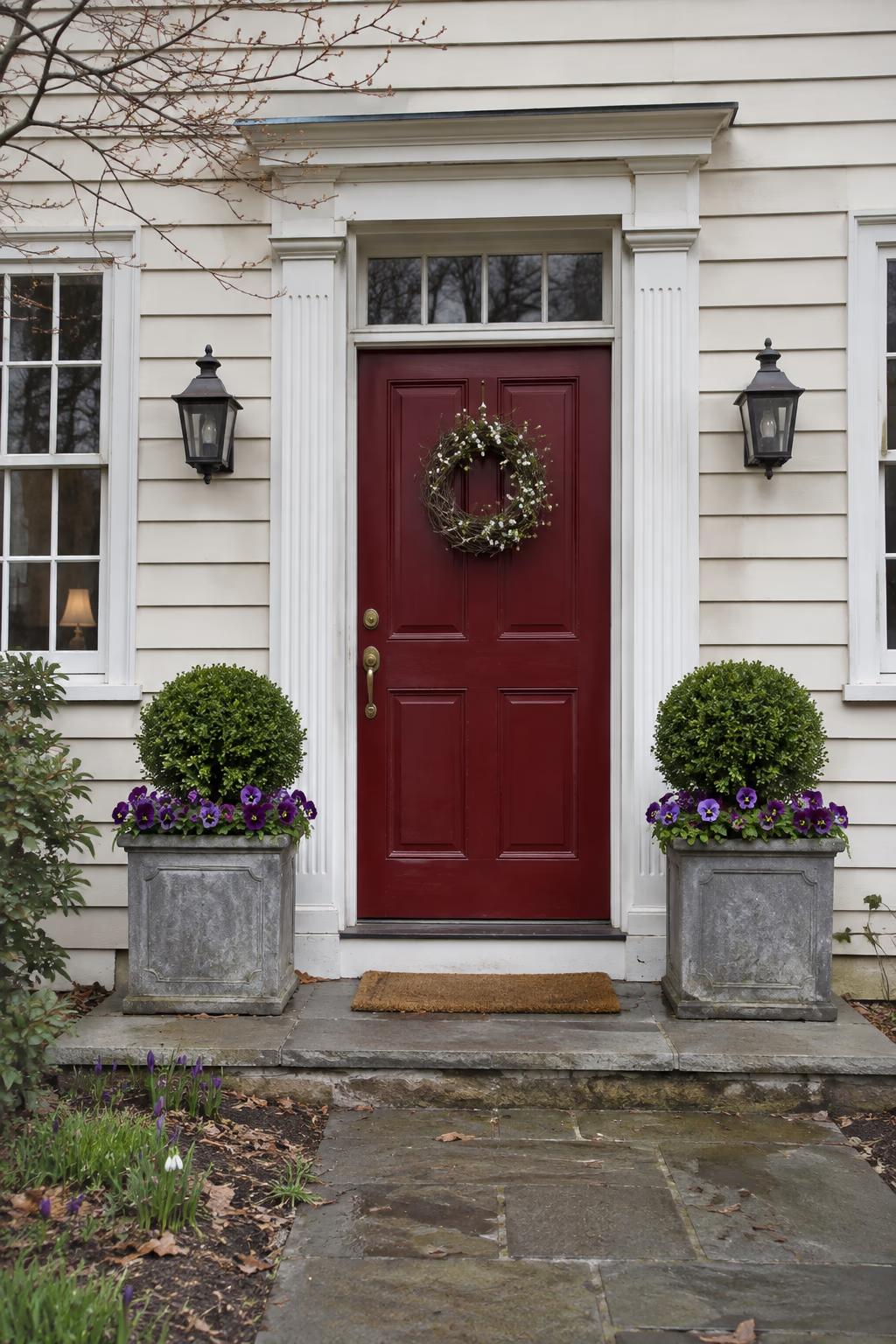
4. Plant Sculptural Topiaries in Square Planters
Tidy green structure all year
Clipped boxwood balls, spiral junipers, or dwarf Alberta spruce in matching square planters give a formal, polished entry. Square boxes about 16 inches across suit narrow porches because they sit flush to the wall.
Evergreen topiaries stay green through winter, which keeps the entry looking good even when flowers are gone. You can tuck pansies or seasonal color at their base.
Boxwood can struggle with blight and boxwood leafminer in some regions, so ask a local nursery about alternatives like inkberry holly or Japanese holly. Trim lightly once or twice in the growing season.
5. Make One Oversized Planter the Star
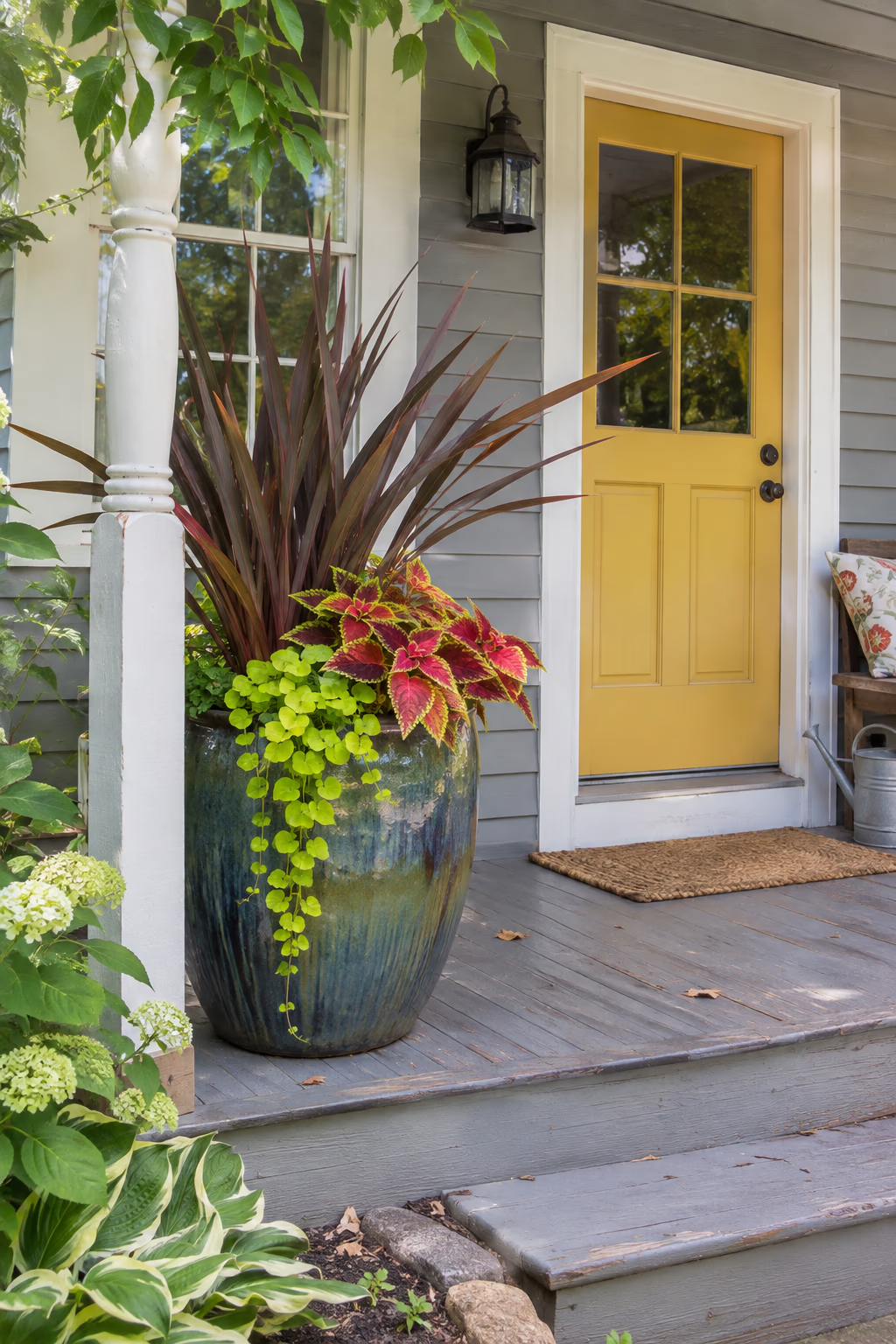
A bold, uncluttered focal point
If your porch is small or asymmetrical, one very large pot can do more than several small ones. Aim for a container 24 to 30 inches wide, placed on the hinge side or the side where you naturally walk past.
Fill it generously with a bold combination, such as a tall New Zealand flax, bright coleus, and trailing lysimachia. A single big pot also simplifies watering, since there’s only one container to check.
Make sure it doesn’t block the door swing or crowd the walkway. Leave at least 36 inches of clear path for safe, comfortable access.
6. Soften a Bold Door With Hydrangeas
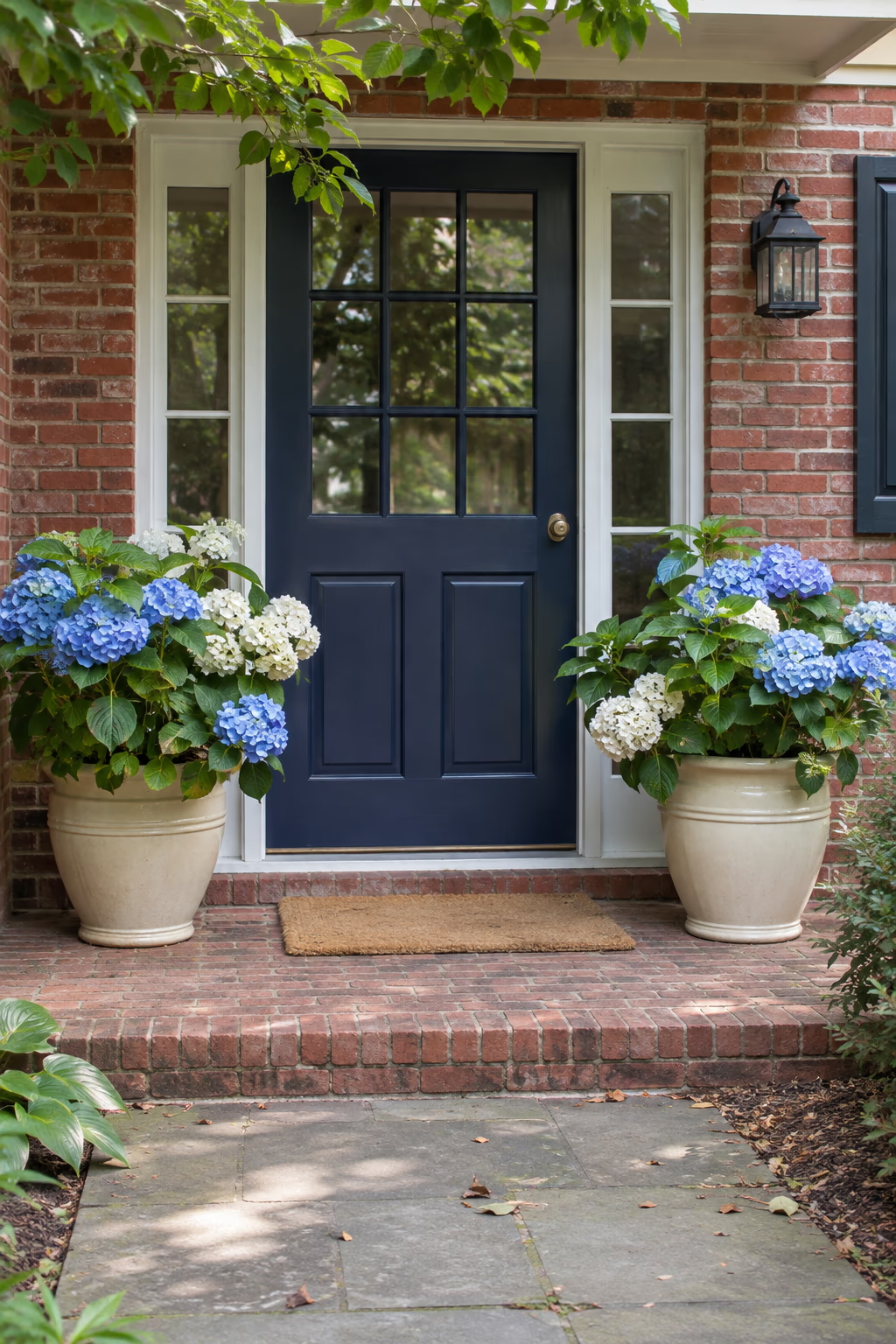
Big blooms against a dark or colorful door
Potted hydrangeas look lush against a navy, black, or deep green door. Choose compact bigleaf or panicle types in 18-inch pots, or buy ones sold as patio varieties.
They thrive in morning sun with afternoon shade and love steady moisture. Pots dry out quickly in summer heat, so check daily during hot spells.
In cold climates, move the pot to an unheated garage or against the house in winter, since roots in containers are more exposed to freezing than those in the ground.
7. Fill Terracotta Pots With Lavender and Herbs
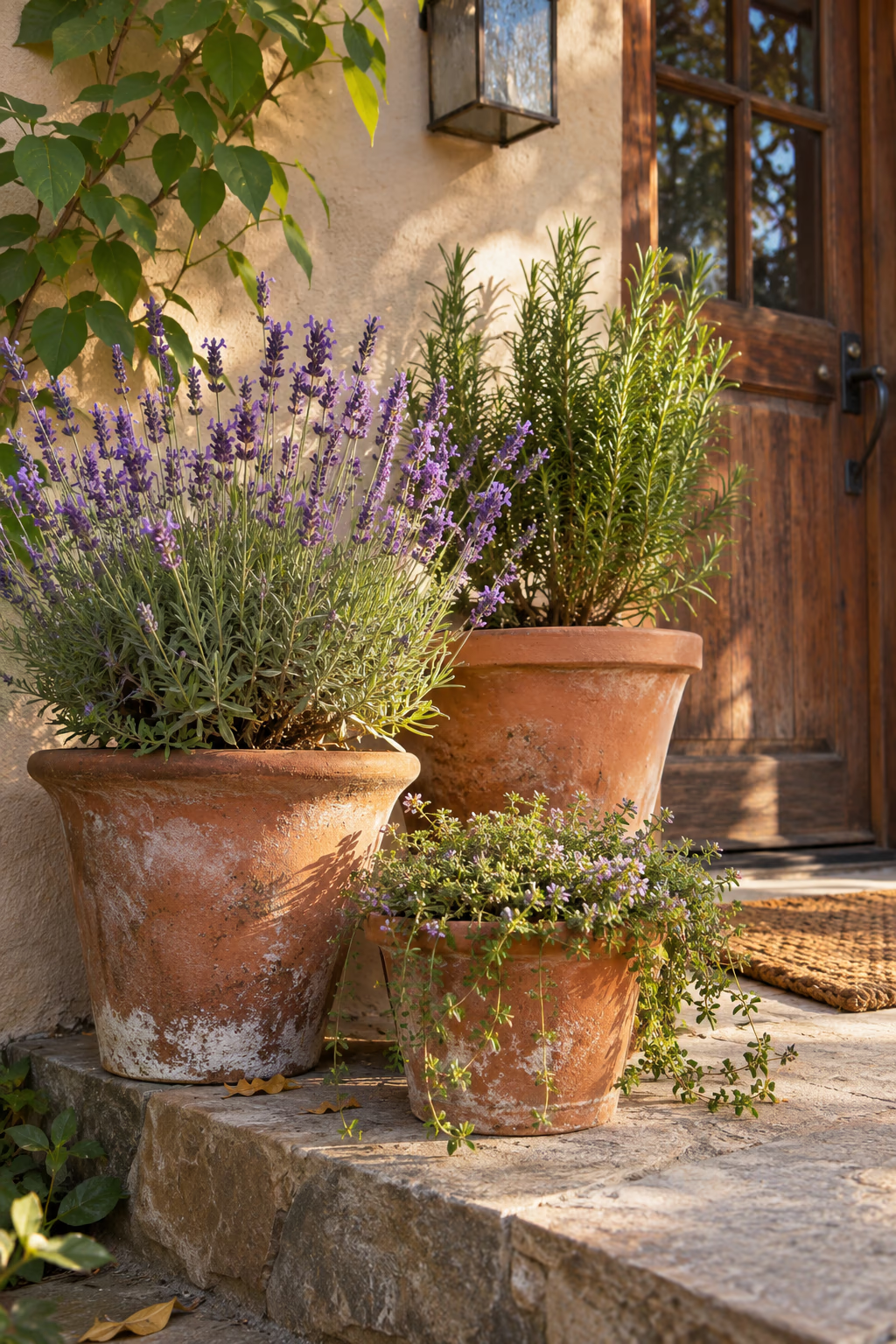
Fragrance every time you open the door
Aged terracotta pots filled with lavender, rosemary, and thyme bring a Mediterranean mood and a scent you’ll notice with each brush of the leaves. Use a gritty, fast-draining potting mix with a bit of added sand or perlite.
These herbs want full sun and prefer to dry out between waterings. A south or west-facing step is ideal.
Terracotta can crack in freezing weather when it holds moisture, so empty or relocate pots in cold winters. Lavender also dislikes humid heat, so try a lavender variety suited to your region.
8. Create a Cottage Porch With Mixed Pots and Baskets
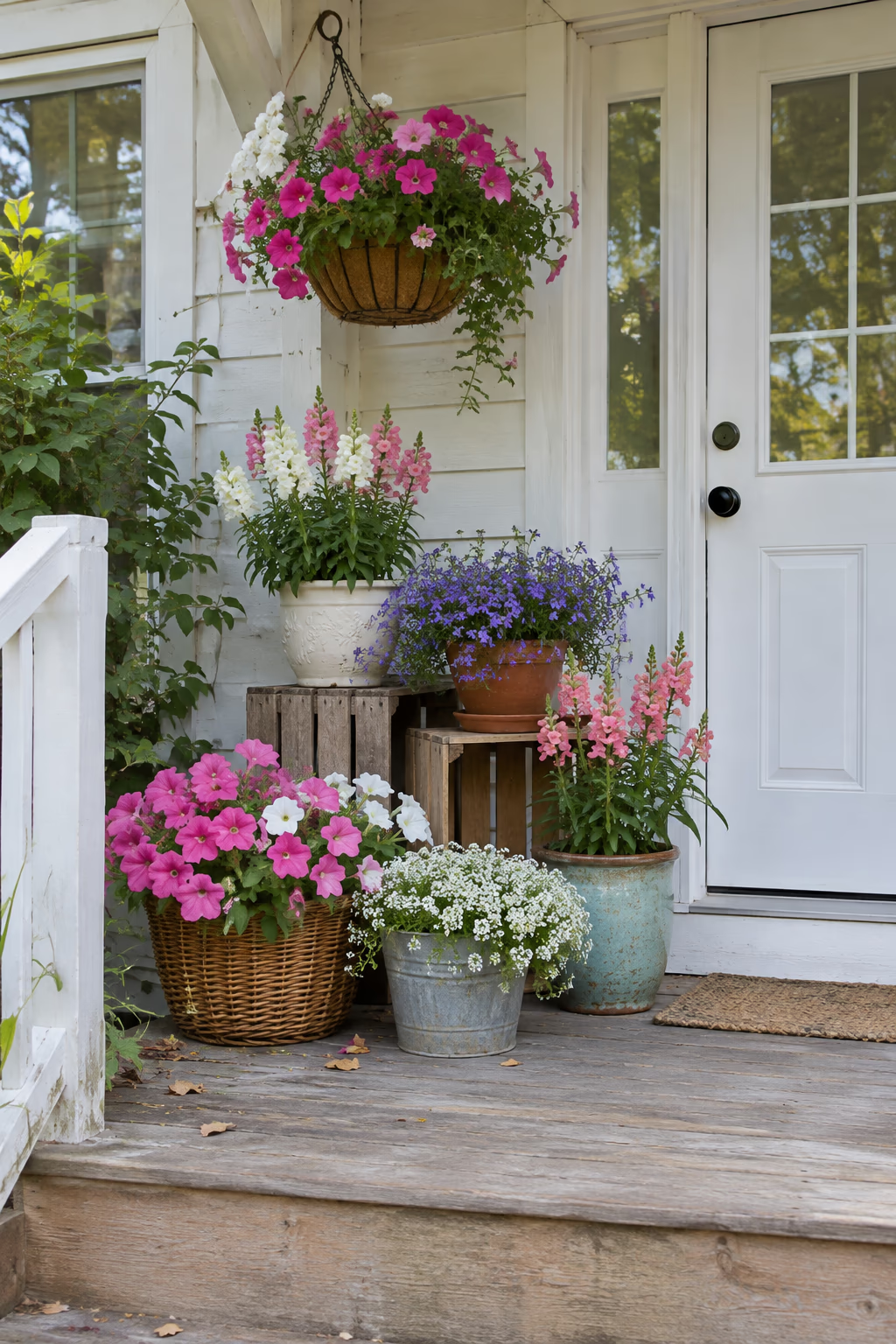
Relaxed, overflowing, and full of personality
Group five to seven containers of different heights and shapes in a loose cluster at one side of the door. Mix a wicker basket, a ceramic pot, and a hanging basket, and keep a shared color palette of soft pinks, whites, and purples.
Plants like petunias, snapdragons, lobelia, and sweet alyssum thrive in this setting. Elevate a few pots on overturned crates or stools so the grouping has layers.
The cottage look needs more watering and deadheading than a minimalist pair, so use it where you pass by daily and enjoy the routine.
9. Hang Ferns From the Porch Ceiling
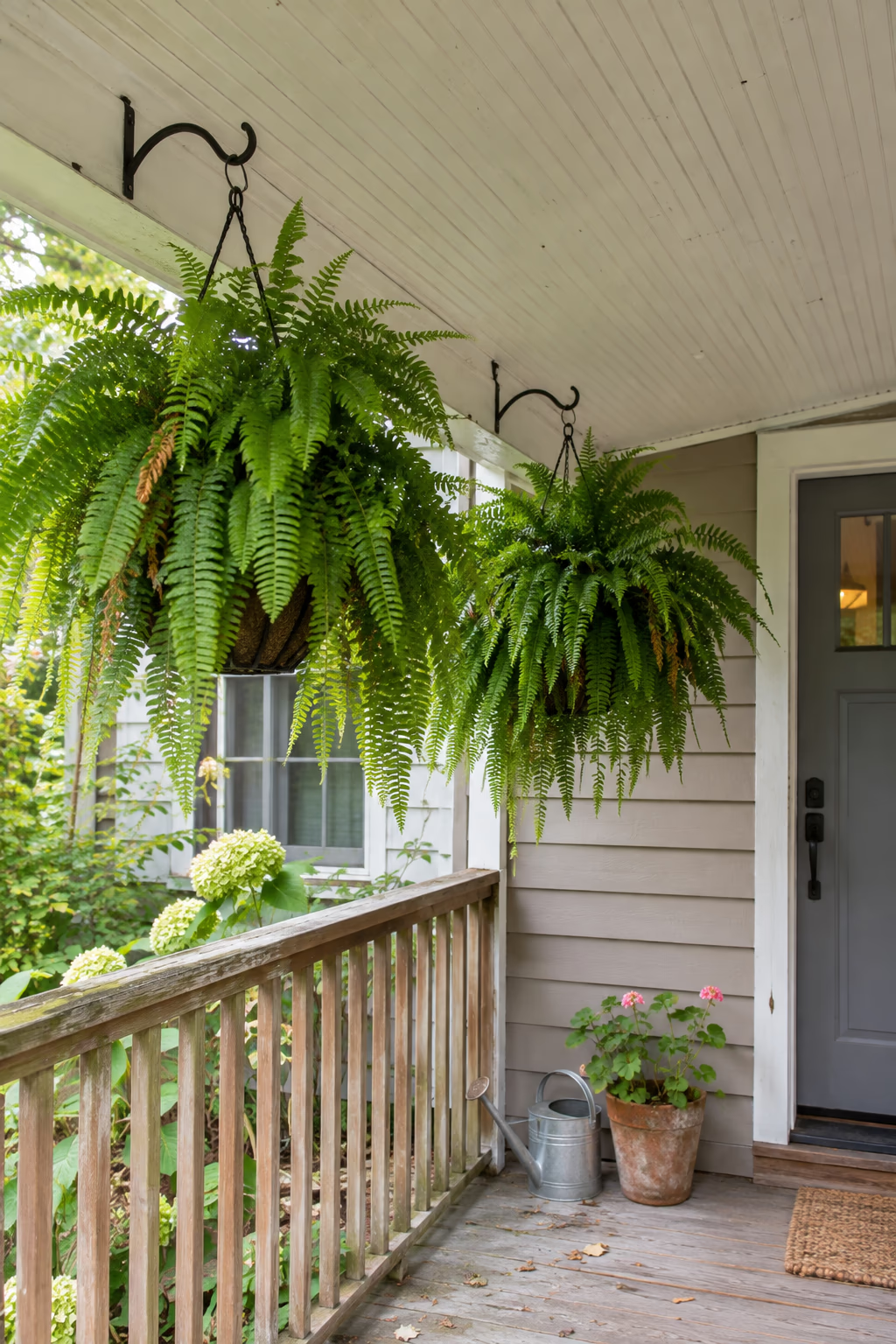
Green drama without using floor space
Boston ferns in hanging baskets bring lush, feathery texture to a covered porch. Hang them from sturdy ceiling hooks rated for at least 50 pounds, since a wet basket is surprisingly heavy.
Ferns like bright indirect light and consistent moisture. Mist or water as soon as the surface looks dry, and feed monthly through summer.
They are not frost hardy, so bring them indoors before the first freeze or treat them as a seasonal display.
10. Grow Dwarf Citrus in Large Clay Pots
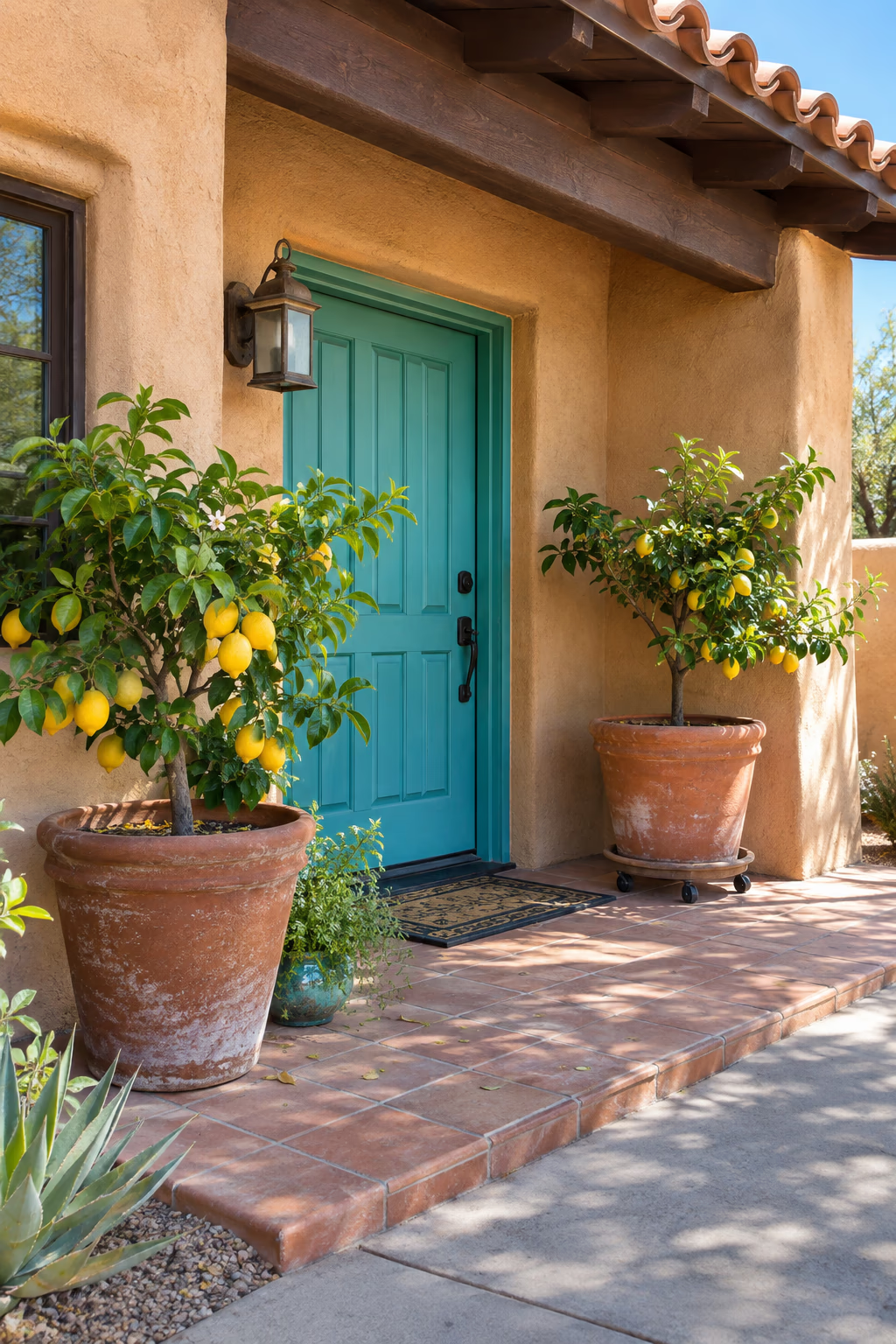
Glossy leaves and fragrant blossoms
A Meyer lemon or calamondin orange in a 20-inch clay pot brings shiny evergreen foliage, fragrant flowers, and real fruit. Pair two for a sunny entry that feels almost Mediterranean.
Citrus needs six or more hours of sun, well-draining soil, and regular feeding with a citrus fertilizer. In warm zones they can stay outside year-round.
In colder areas, wheel the pots into a bright indoor spot before frost. Put the pots on plant caddies so moving them is easier.
11. Refresh the Entry With a Winter Evergreen Planter
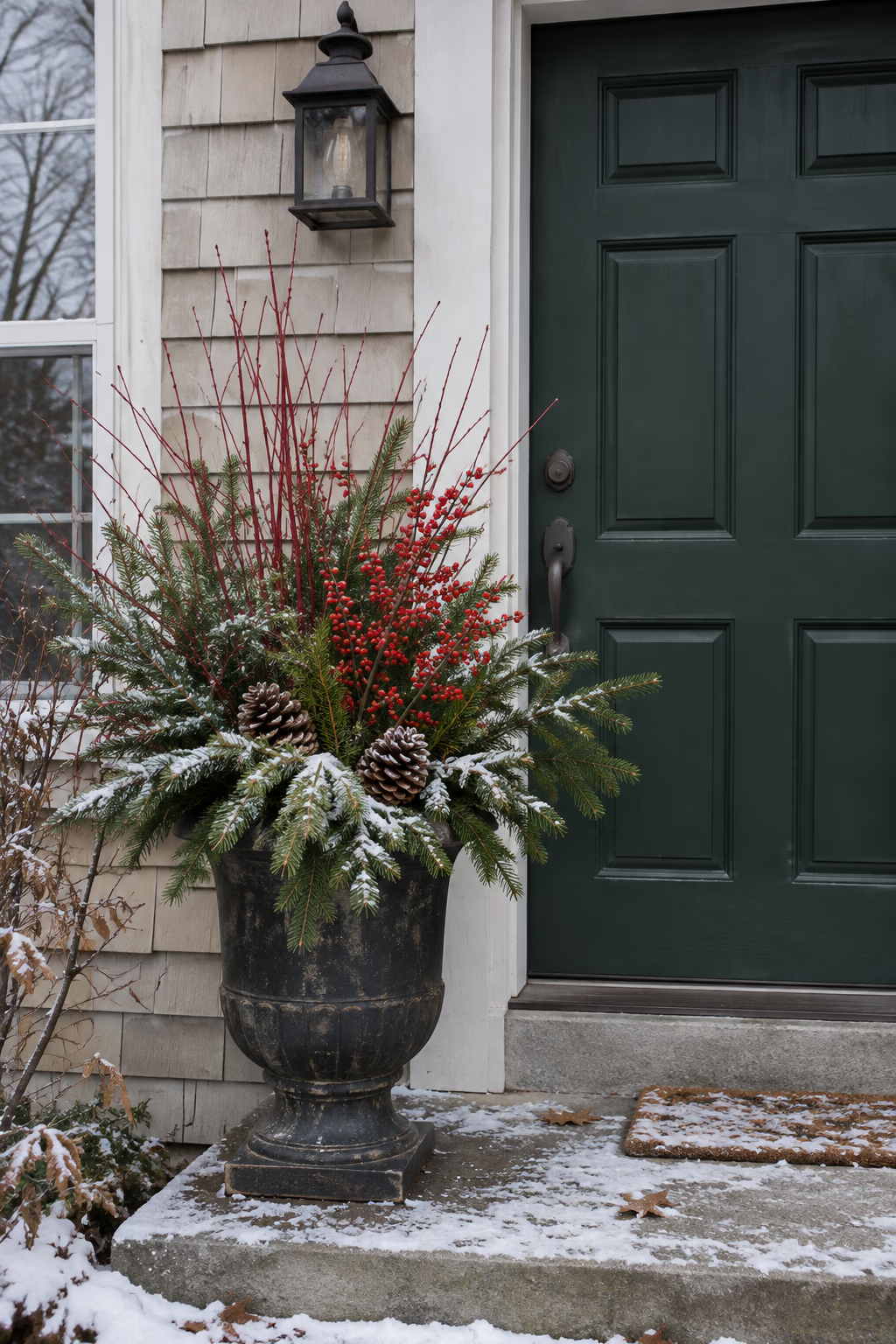
Keep the doorway lively in the coldest months
When summer annuals fade, replace them with cut evergreen boughs, red-twig dogwood stems, pinecones, and a few winterberry branches pushed into the frozen soil. Add a small dwarf spruce in the center if you want a living anchor.
Use fresh potting mix that is still moist when you arrange; it will freeze in place and hold the stems upright all season.
Cut greens dry out over time, especially in mild climates. Refresh them in January if they begin to brown.
12. Stack Heights With Spring Bulb Planters
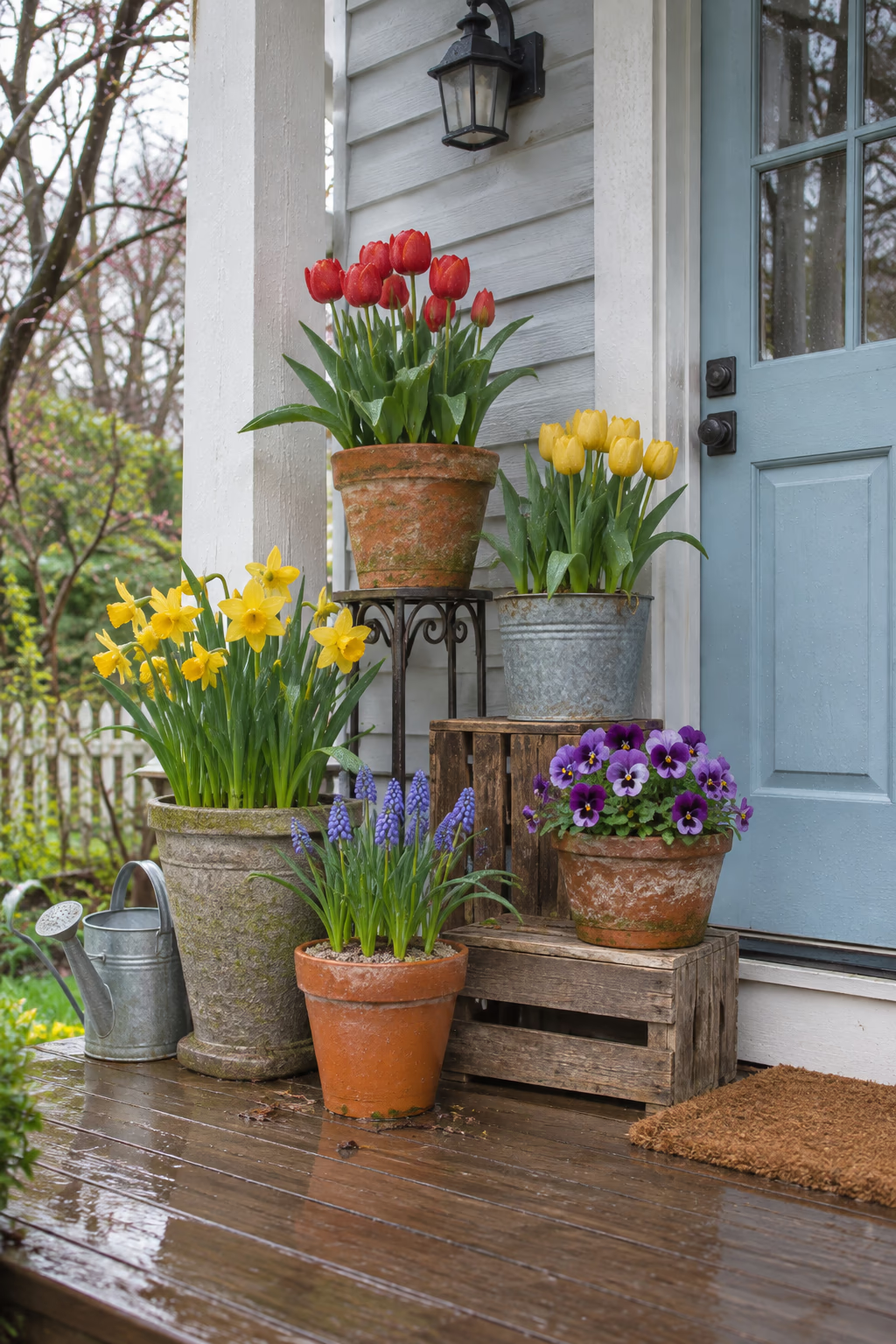
The easiest early-spring welcome
Plant tulips, daffodils, and grape hyacinths in lasagna-style layers in a deep pot during October or November. Put larger bulbs deeper and smaller ones higher so blooms appear in succession.
Place pots at varied heights using stands or sturdy overturned crates. Cover the surface with pansies for color before the bulbs emerge.
Bulbs need a cold period, so leave pots outdoors in winter and keep them from sitting in standing water. After blooming, bulbs are often weaker in pots, so treat them as a one-season display.
13. Go Tone-on-Tone With Neutral Round Planters
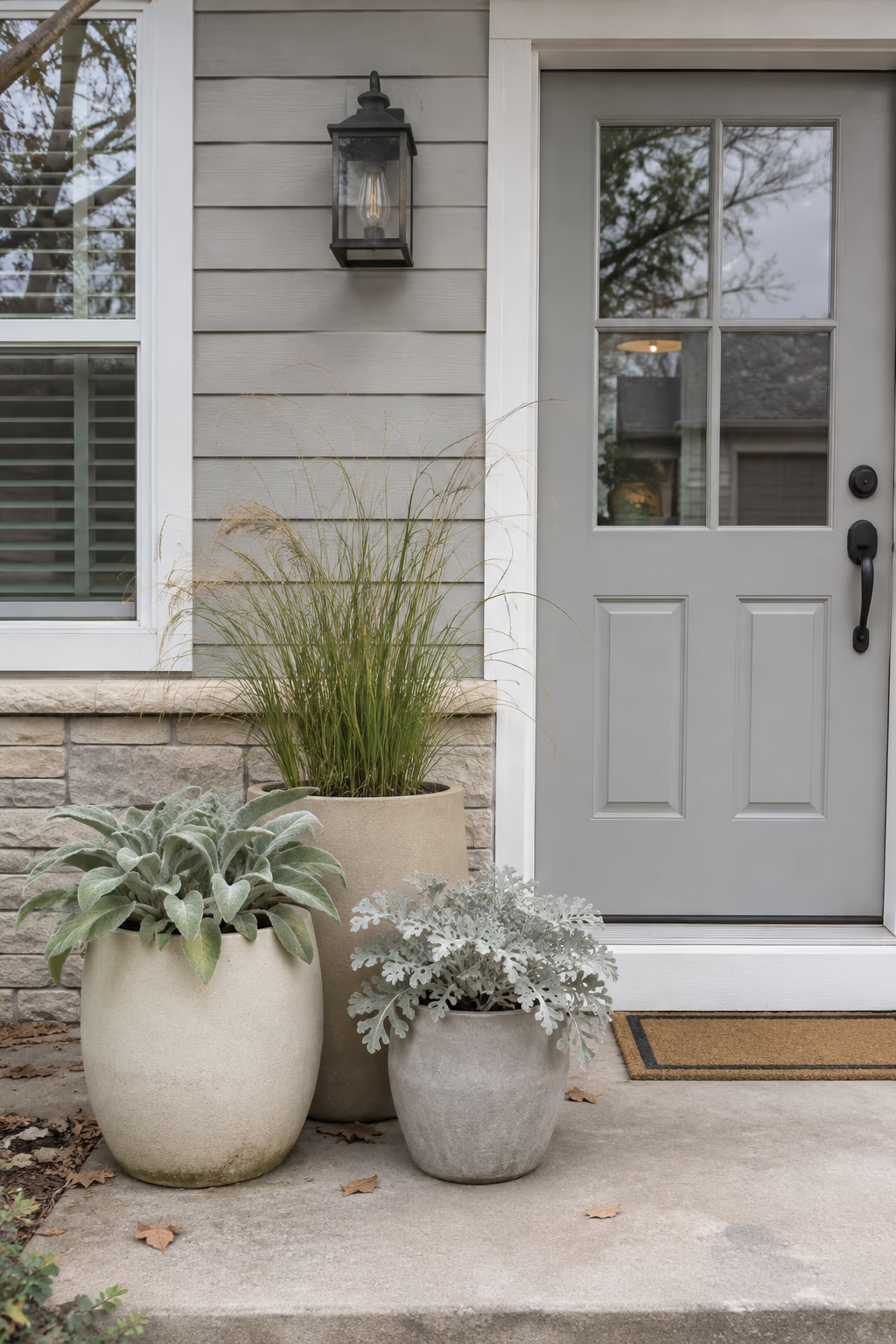
A calm, designer-looking palette
Cream, sand, and pale gray round planters in graduated sizes look good beside nearly any house color. Group three of different heights on one side and fill them with soft textures: lamb’s ear, dusty miller, and fine grasses.
The silvery-green palette stays pleasant across seasons and hides minor wilting better than bright flowers. It also works well in a sunny spot.
Light-colored concrete or stoneware shows stains and moss, so a quick scrub each spring keeps it crisp.
14. Climb the Steps With Pots in Repeating Pairs
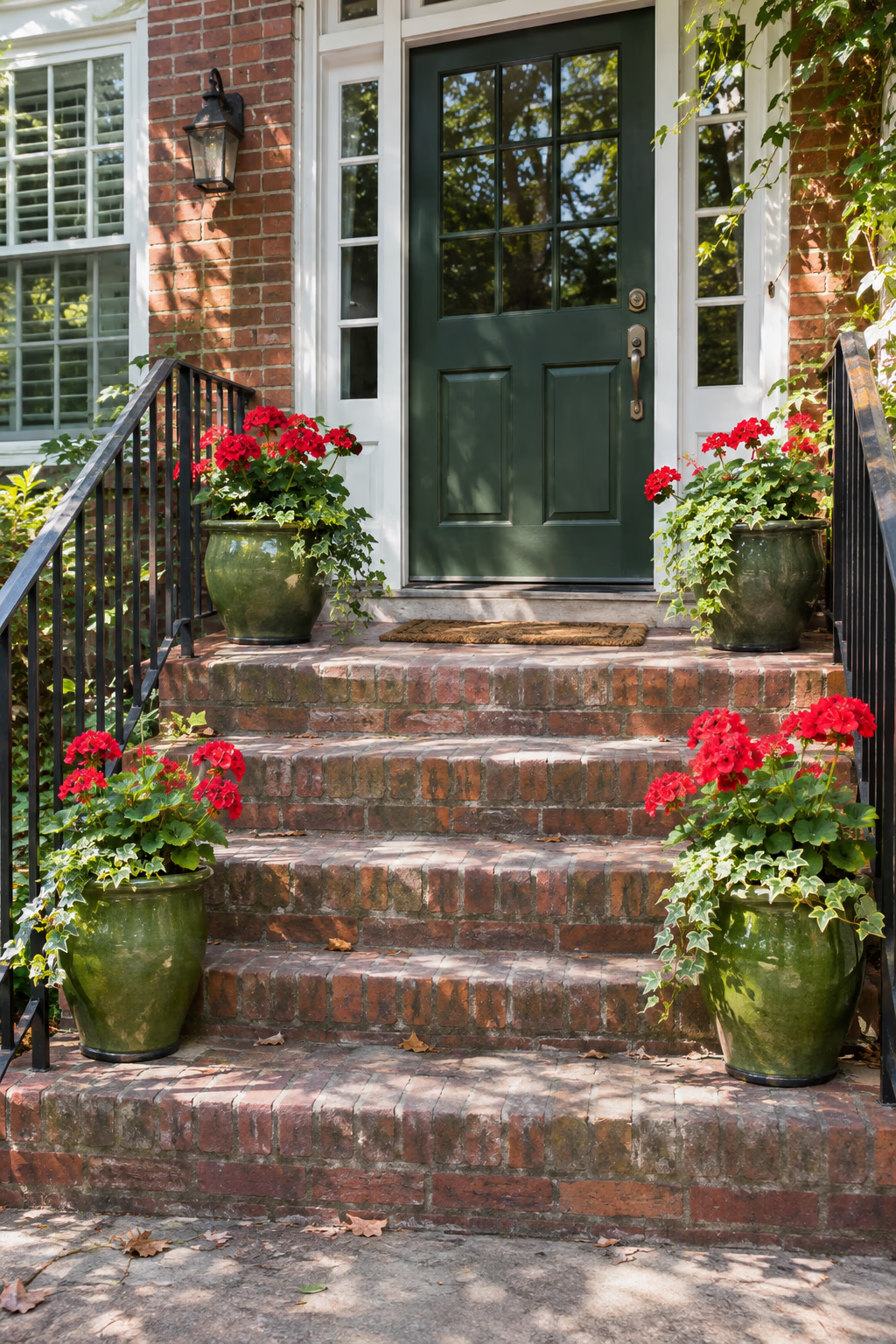
Make a long staircase feel welcoming
If you have three or more front steps, place matching pots on alternating sides or in pairs on each landing. Repeating the same container and plant creates a rhythm that leads the eye up to the door.
Keep pots on the outer edges so they never narrow the tread. Building codes generally require minimum stair widths, and pots must not block handrails or create trip hazards.
Use small to medium containers on the steps themselves, since heavy pots near an edge can be unsafe.
15. Style a Fall Porch With Mums and Ornamental Cabbage
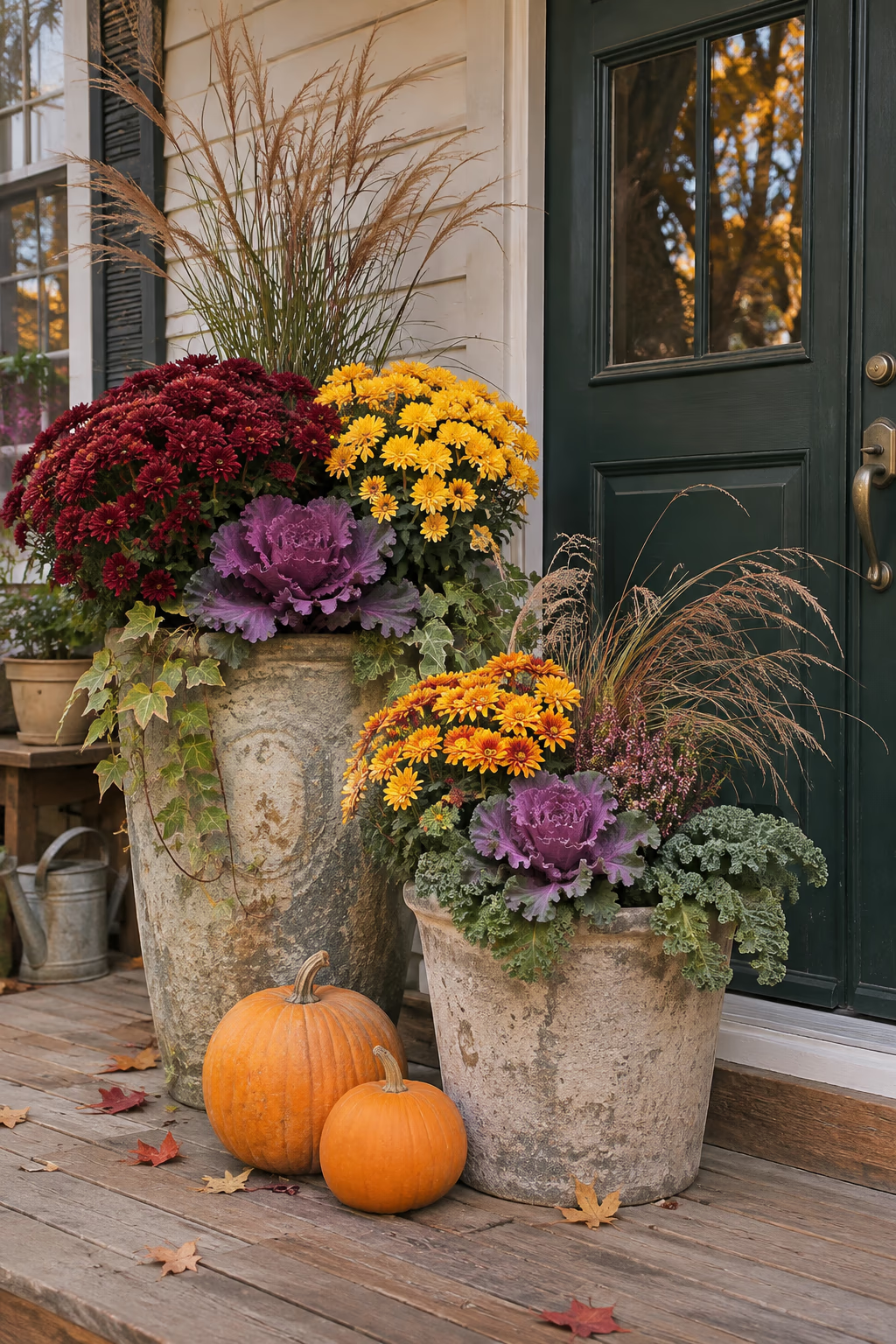
Rich autumn color on a budget
Garden mums, ornamental kale, and ornamental cabbage tolerate cool nights and look great in burgundy, gold, and cream. Tuck them into the containers where summer annuals have finished.
Add a small pumpkin or a few dried grass plumes for variety. Plant in a deep container so roots stay cool.
Mums bloom heavily for several weeks, then fade. Remove spent plants promptly and replace them with pansies or evergreens as the weather cools.
16. Plant a Green-on-Green Shade Container
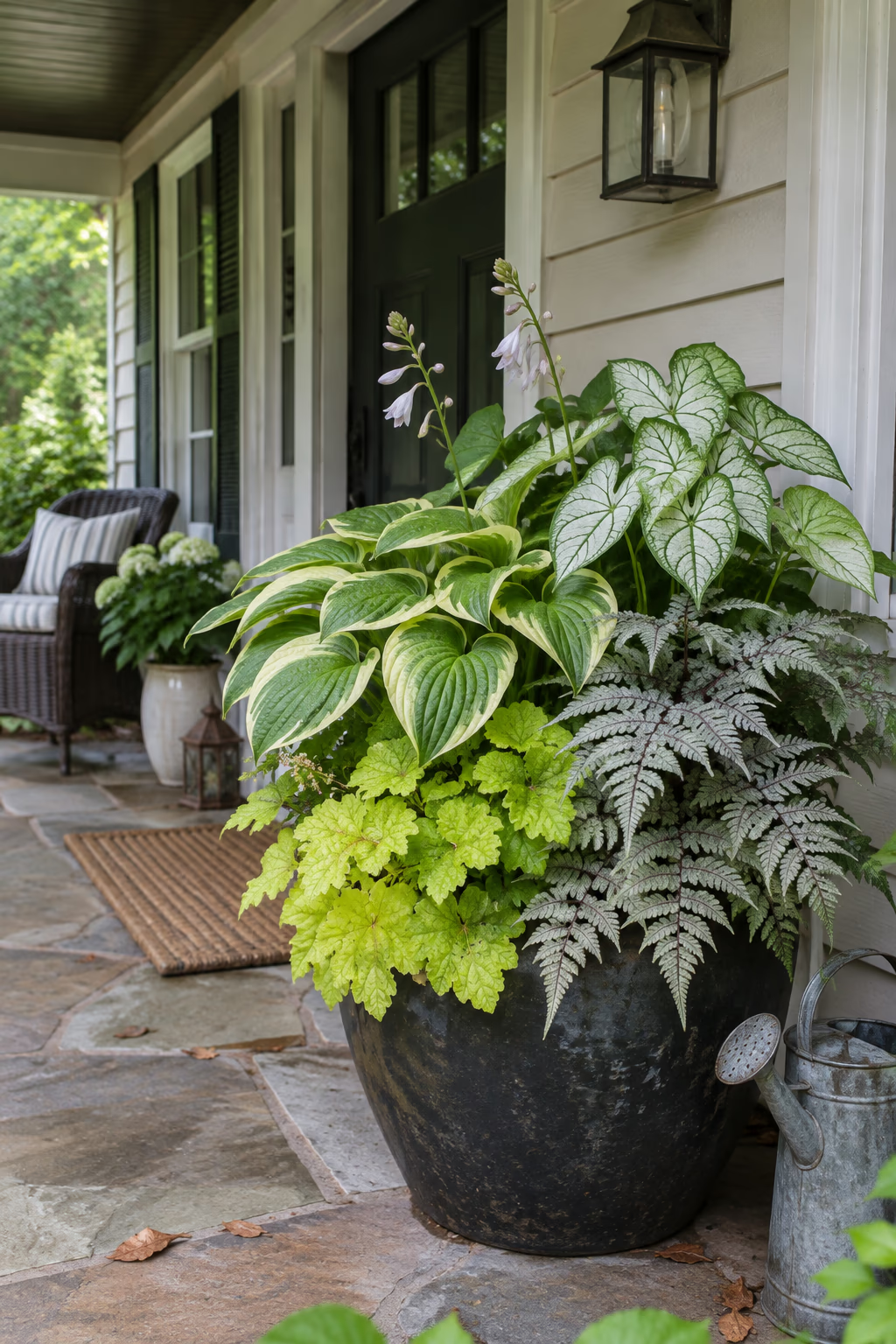
Lush foliage for a north-facing entry
Entries that get little sun still look rich with hostas, Japanese painted ferns, heuchera, and caladium. Mix leaf shapes and shades from chartreuse to deep green for contrast.
Shade containers hold moisture longer, so avoid overwatering. Check the soil with a finger before you water.
Slugs love hostas. A light application of iron phosphate bait or copper tape around the pot rim helps keep leaves clean.
17. Create a White Moon Garden Planter
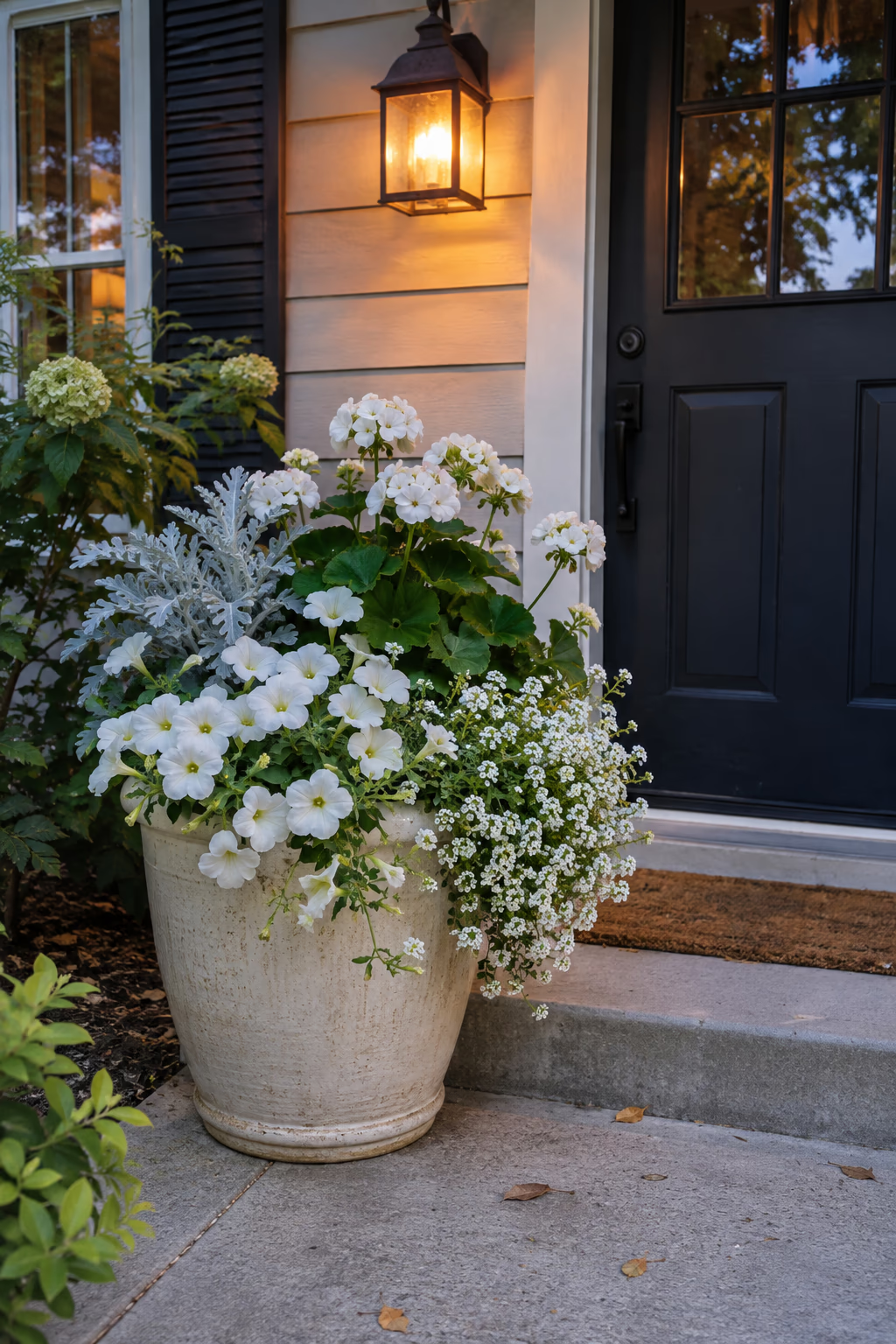
Pale blooms that glow at dusk
White petunias, sweet alyssum, white geraniums, and silvery dusty miller look luminous in the evening, when you arrive home. A large cream or gray pot lets them stand out.
Add a white-flowering plant with a night fragrance, such as nicotiana, near the door to scent the air.
White flowers show spent blooms quickly, so deadhead often. This look rewards a bit of grooming but stays clean and calm.
18. Brighten Summer With Bold Annuals in Colorful Pots
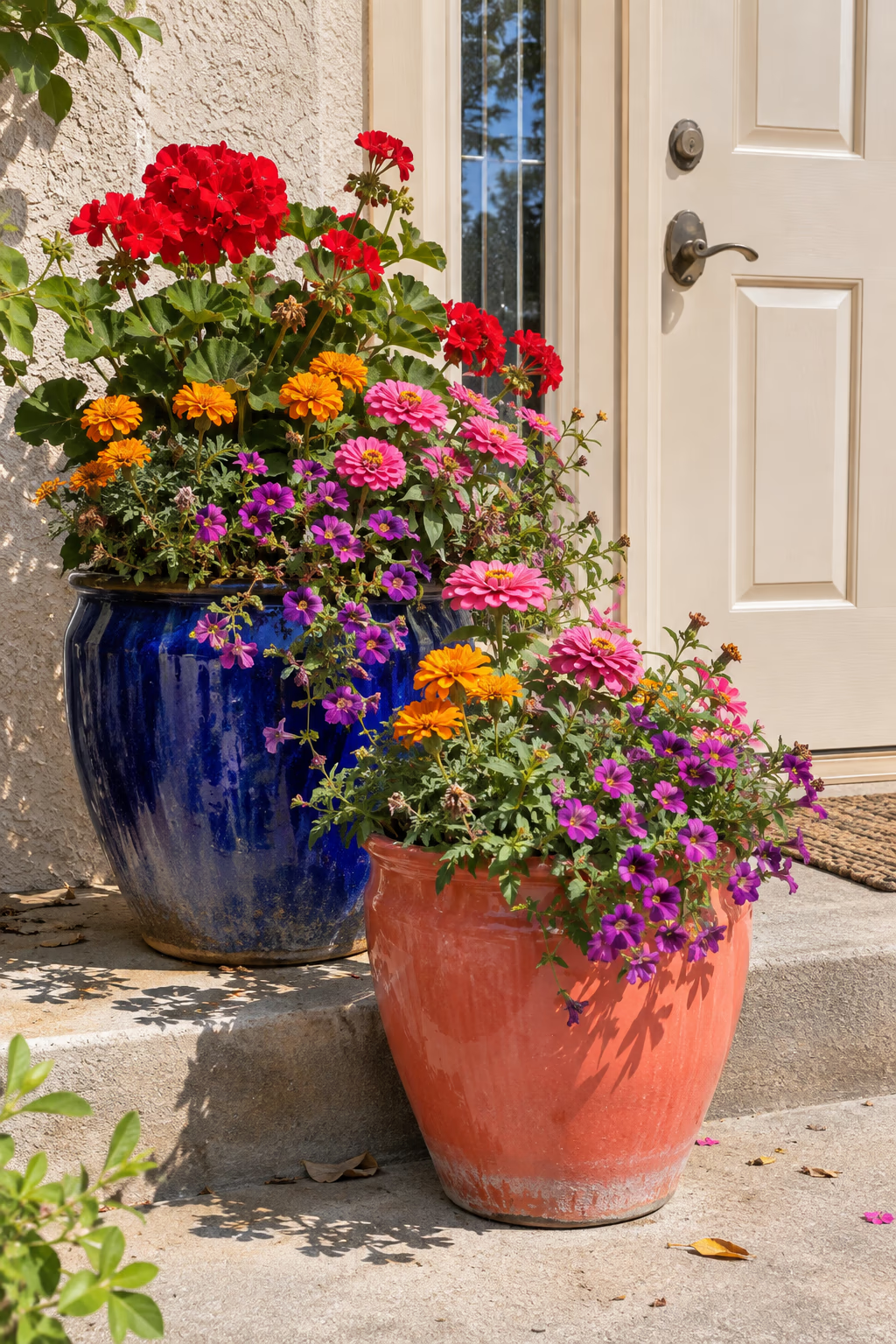
High-impact color in a sunny spot
A cobalt, teal, or coral glazed pot filled with red geraniums, orange marigolds, or zinnias instantly changes the mood of a plain entry. Pick a pot color that either matches or contrasts with your door.
Full sun annuals such as calibrachoa, lantana, and verbena bloom all summer with regular feeding and deadheading.
Dark pots absorb heat, so in very hot climates, light-colored or double-walled containers protect roots better.
19. Repurpose Galvanized Buckets and Vintage Containers
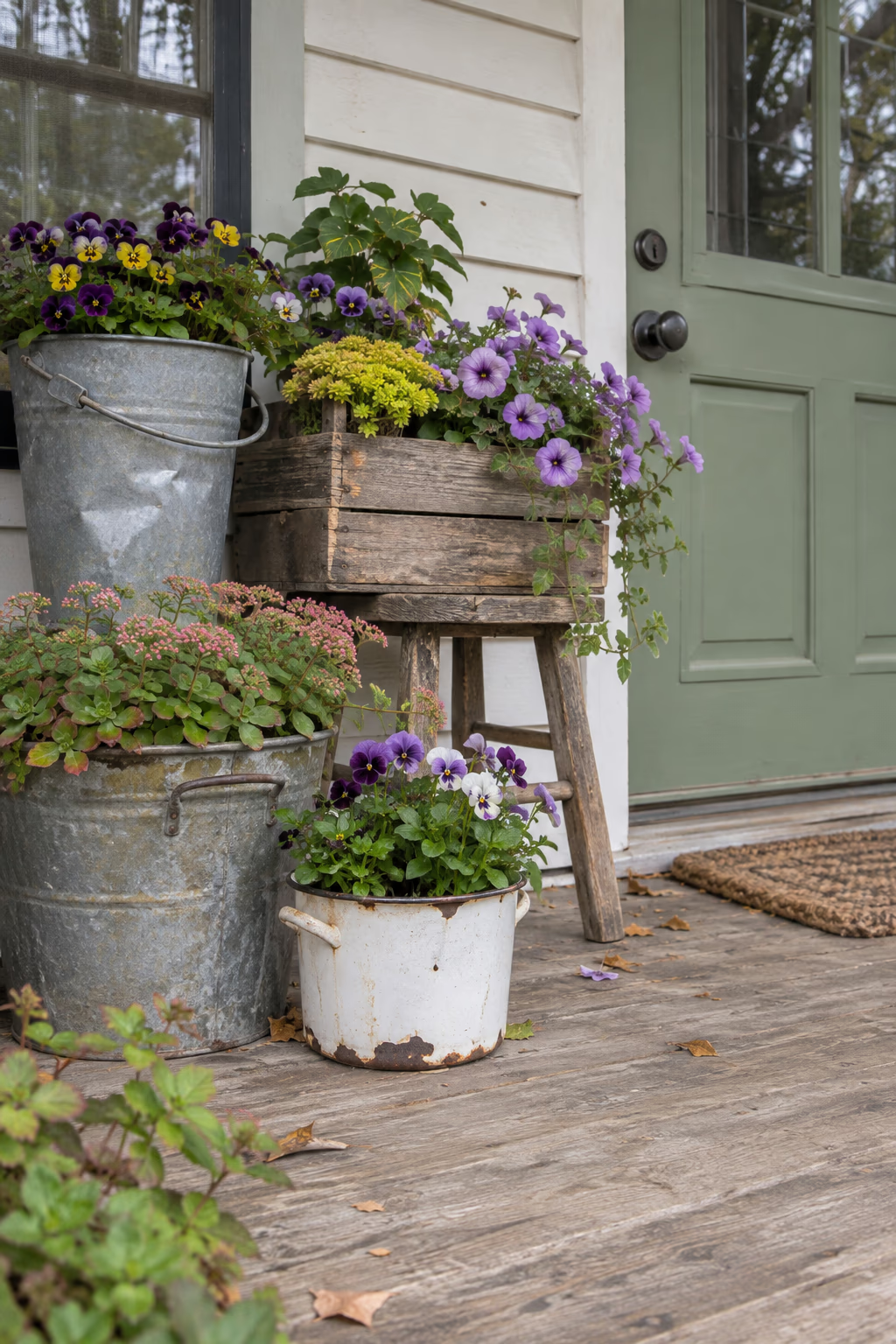
Budget-friendly charm with a story
Old galvanized buckets, enamel pots, wooden crates, and even worn work boots can hold plants if you drill several drainage holes in the bottom. Line wooden boxes with landscape fabric to keep soil in.
Group them with a rustic bench or small stool, and fill with sedum, pansies, or trailing petunias.
Check that old containers never held chemicals or paint residue. Metal can heat up in sun, so choose heat-tolerant plants.
20. Mount Window Boxes Beside the Door
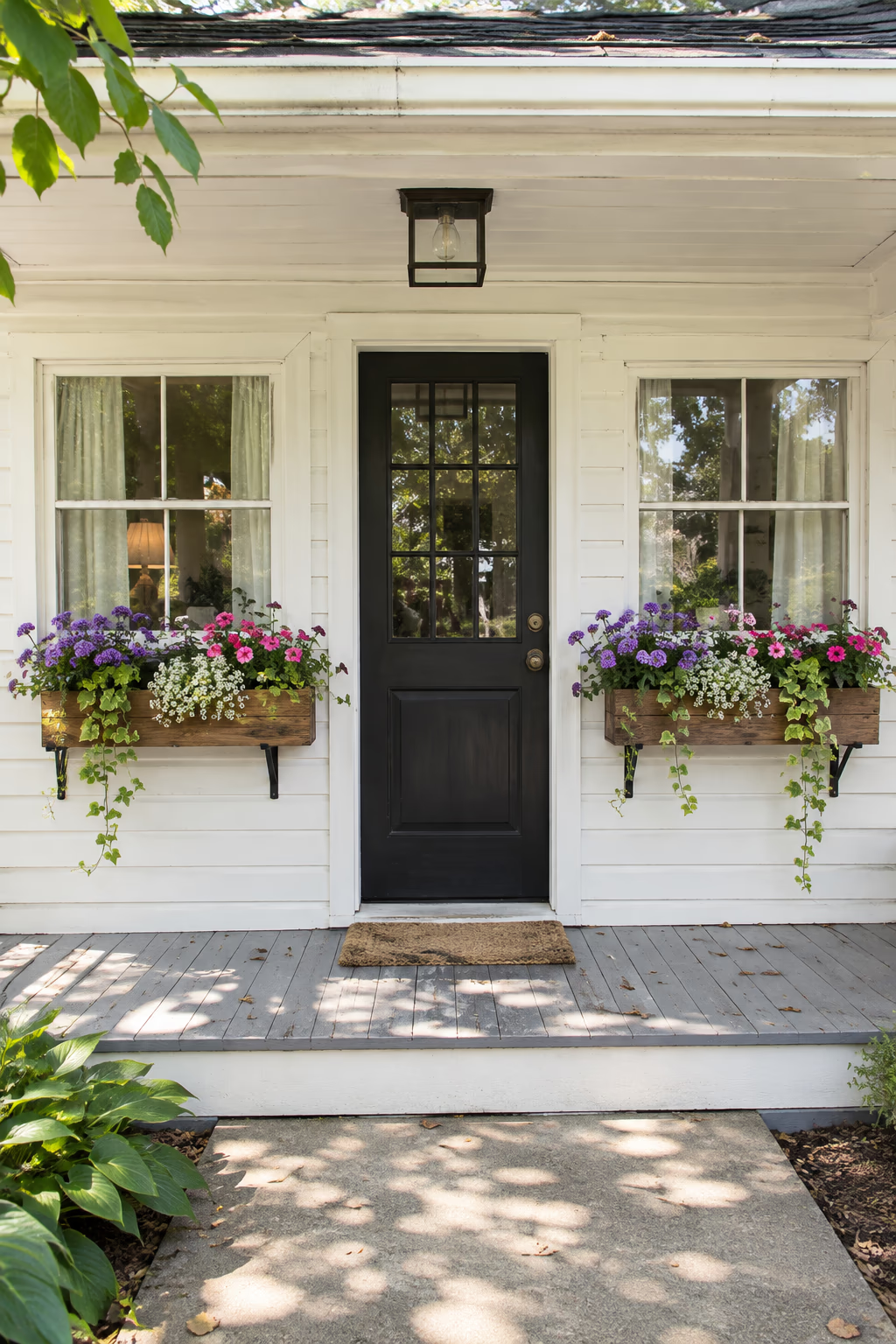
Color at eye level without taking up floor space
If your porch is narrow, window boxes on the siding next to the door provide the same effect as floor pots. Use boxes at least 8 inches deep and as wide as the window or door sidelight.
Fasten them into studs with strong brackets, since wet soil is heavy. Plant trailing ivy, verbena, and small flowers.
Use a liner with built-in drainage and a tray, so water doesn’t stain siding. Check local HOA rules if you rent or live in a managed community.
21. Plant an Edible Pepper and Basil Container
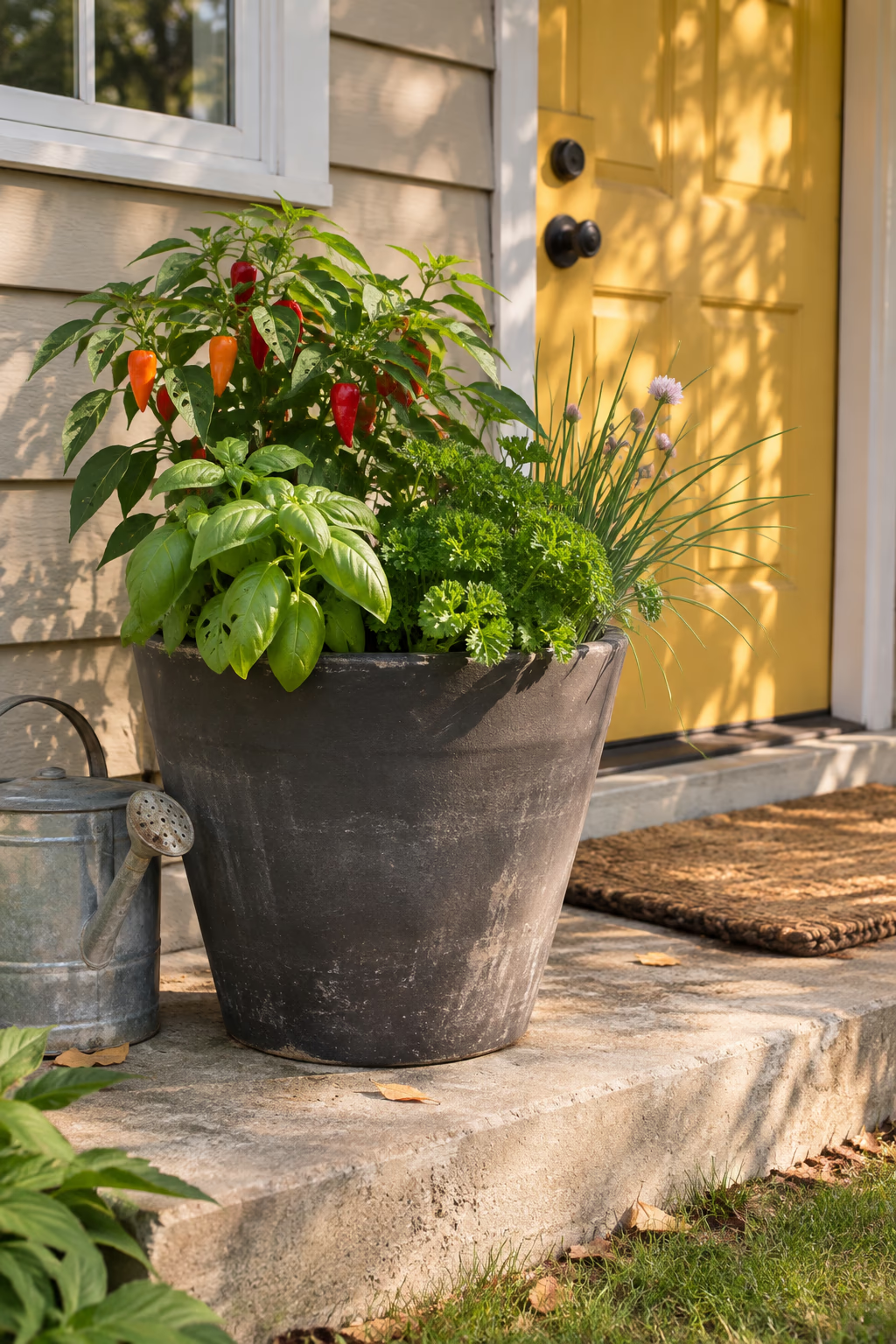
Pretty plants you can actually cook with
Compact pepper plants with colorful fruit look ornamental and pair well with basil, parsley, and chives. A 16 to 20-inch pot works well in a sunny entry.
Peppers and basil need at least six hours of sun and warm nights. Plant after frost danger has passed.
Harvest regularly, which keeps plants bushy. Avoid spraying pesticides on edible plants unless the label allows it.
22. Choose Self-Watering Planters for Easy Care
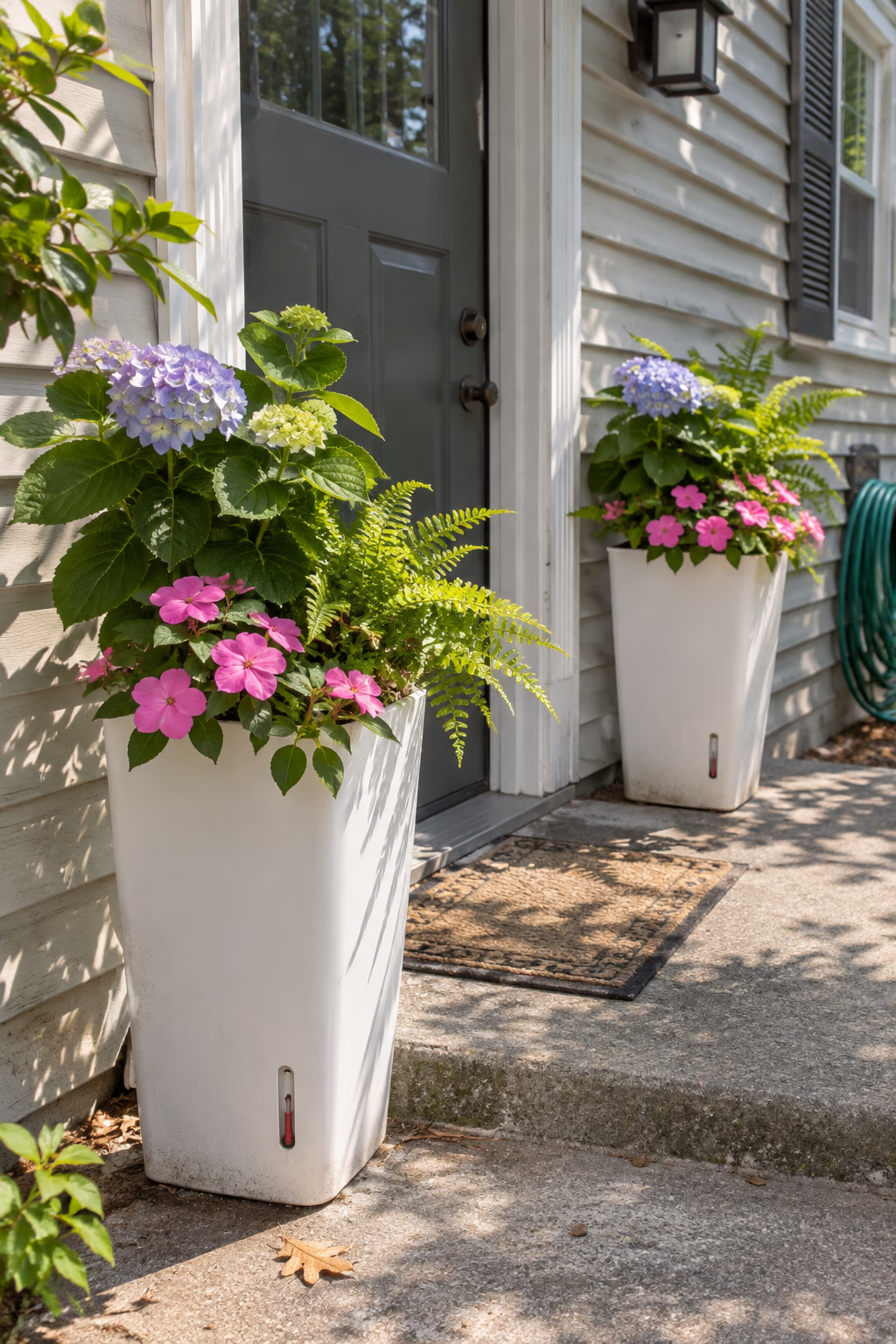
Great for busy households and travelers
Self-watering planters have a reservoir at the bottom that wicks moisture up to the roots. They can keep plants happier through hot weeks, and refilling every few days may be all you need.
Choose them for thirsty plants like hydrangeas, ferns, and annuals. Succulents and lavender do better in regular pots.
Make sure the pot has an overflow hole so heavy rain doesn’t drown the roots. Reservoirs can breed mosquitoes if water stands, so keep them covered.
23. Train a Climbing Vine on a Trellis Planter
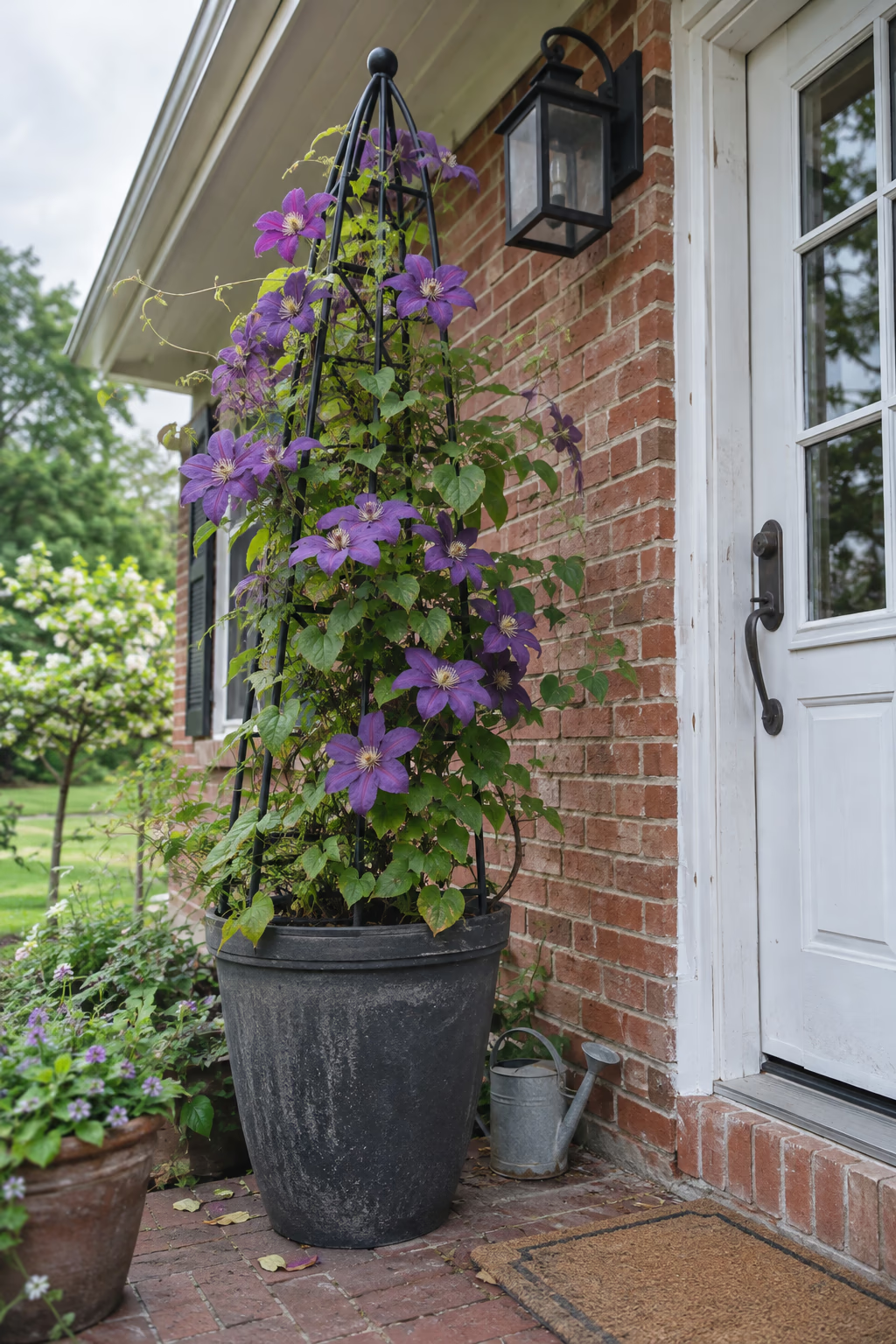
Add height to a narrow entry
A planter with an attached obelisk or trellis lets clematis, sweet peas, or a mandevilla vine climb upward. This gives height without taking floor space and frames a door beautifully.
Choose a pot at least 18 inches wide and set the trellis firmly into the soil. Guide the stems gently as they grow.
Check vine hardiness for your climate. Mandevilla is tender and best treated as an annual in cold areas.
How to Plan Your Front Door Planters
A little planning helps your containers look intentional and thrive through the whole season. Start with your light and your door, then work outward.
- Size to the door. Pots should be roughly one-third to one-half the height of the door, so tiny containers can look lost.
- Check your sunlight. Watch the entry at morning, noon, and late afternoon, then match plants to the actual light, not the tag you hope for.
- Use real drainage. Every pot needs holes, and a saucer or pot feet protect porch surfaces from stains.
- Pick quality potting mix. Use fresh container mix, not garden soil, and refresh it each year.
- Plan your watering. Containers dry fast, so keep a hose or watering can close, or consider drip lines or self-watering pots.
- Keep the path clear. Leave room for the door swing, handrails, and delivery access, and check HOA rules about porch displays.
Frequently Asked Questions
What size planters should I put by my front door?
A good rule is to choose pots that reach about one-third to one-half the height of your door once planted. For a standard 80-inch door, containers 18 to 30 inches tall, including plants, usually look balanced.
What are the best plants for front door planters?
It depends on light. For sun, try geraniums, lantana, grasses, and herbs. For shade, use hostas, ferns, and heuchera. Evergreens such as boxwood or dwarf spruce give year-round structure.
Should front door planters match?
Matching pairs create a formal, balanced look, but they aren’t required. Mismatched pots work well if you keep a shared color, material, or plant theme to tie them together.
How do I keep front door plants alive in summer heat?
Use larger pots, which hold moisture longer, and water deeply in the morning. Mulch the soil surface, choose heat-tolerant plants, and consider self-watering planters during hot weeks.
Can I leave planters out in winter?
Many frost-proof materials like fiberglass, resin, and thick concrete can stay out, but terracotta and thin ceramic may crack. Choose plants hardy to at least one zone colder than yours, or move pots to a sheltered spot.
Final Thoughts
The best front door planter ideas are the ones that suit your light, your door, and how much time you want to spend. A single well-chosen pot can be just as welcoming as a full cluster, as long as the plants are healthy and the scale feels right.
Start with one idea from this list, try it for a season, and adjust as you learn what thrives. Before long, your entry will greet you and your guests with color, texture, and a bit of life every time you come home.


