
Picture pulling into the driveway at dusk. A glowing lantern sits by a deep green door, a swing sways a little in the breeze, and a pot of ferns spills over the top step. Before you even reach for the keys, the house feels like it’s expecting you.
That’s the quiet power of a well-styled porch. It’s the first thing guests see and the last thing you pass on the way out, yet it’s often the most neglected spot at home. The good news is that a few thoughtful choices, often costing less than a weekend dinner out, can turn a bare slab into a place you actually want to sit.
These 27 front porch decorating ideas cover paint, seating, plants, lighting, textiles, and seasonal touches that suit small stoops and wide wraparound porches alike. Start with the ideas at the top, which readers love most, then mix in whatever fits your house and budget.
1. Paint the Front Door a Welcoming Color
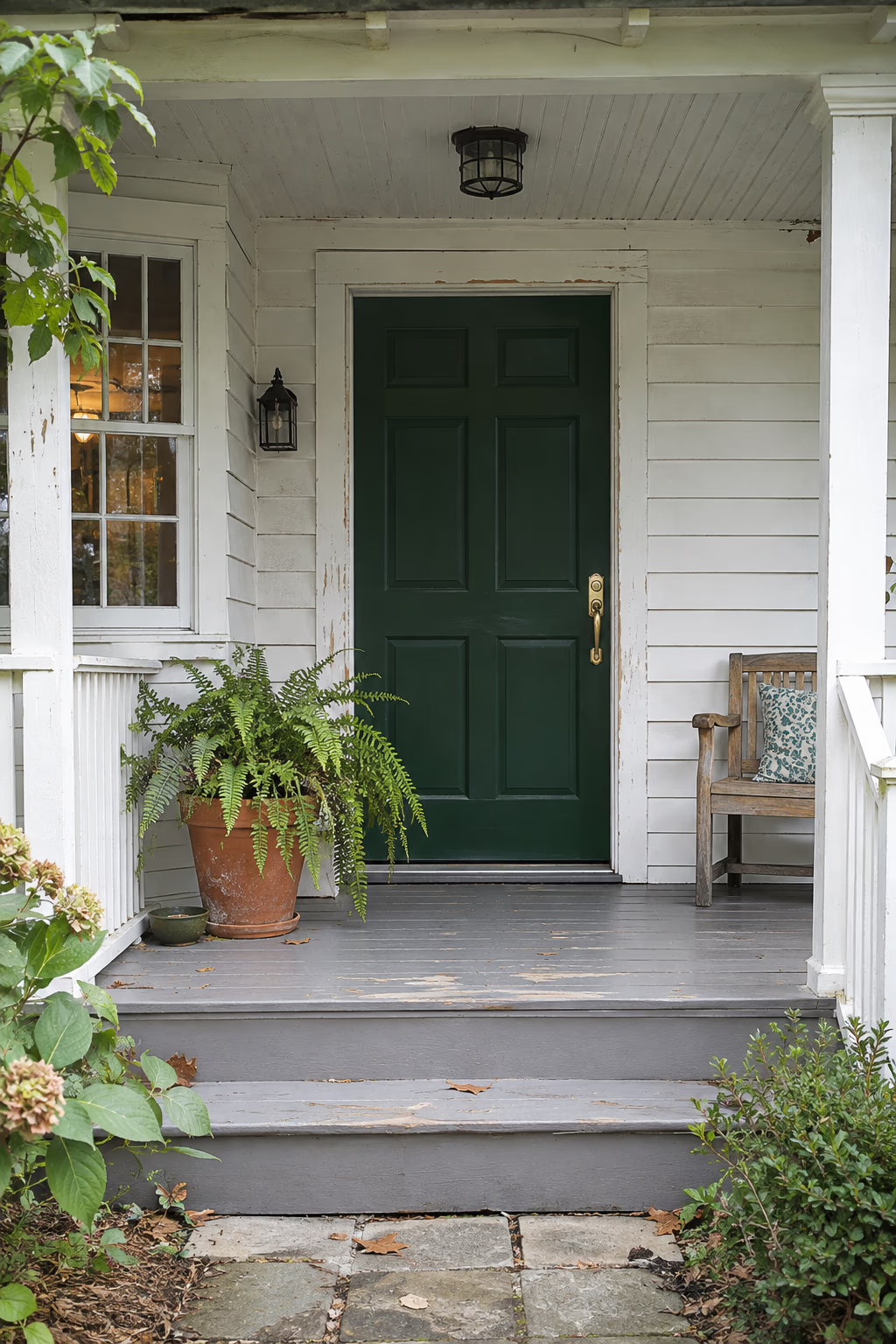
The fastest change with the biggest payoff
A fresh door color can transform the whole entry in an afternoon. Deep green, navy, soft sage, warm terracotta, and dusty blue all look inviting against white, gray, brick, or natural wood siding. Black is a timeless choice for a more formal look.
Clean and lightly sand the door, prime if you’re changing colors dramatically, and use an exterior paint in satin or semi-gloss so it wipes clean. Two thin coats look better than one heavy coat.
Hold a paint sample against the brick, roof, and trim in daylight before committing. Colors look very different outdoors than they do in the store.
2. Hang a Porch Swing With Layered Cushions
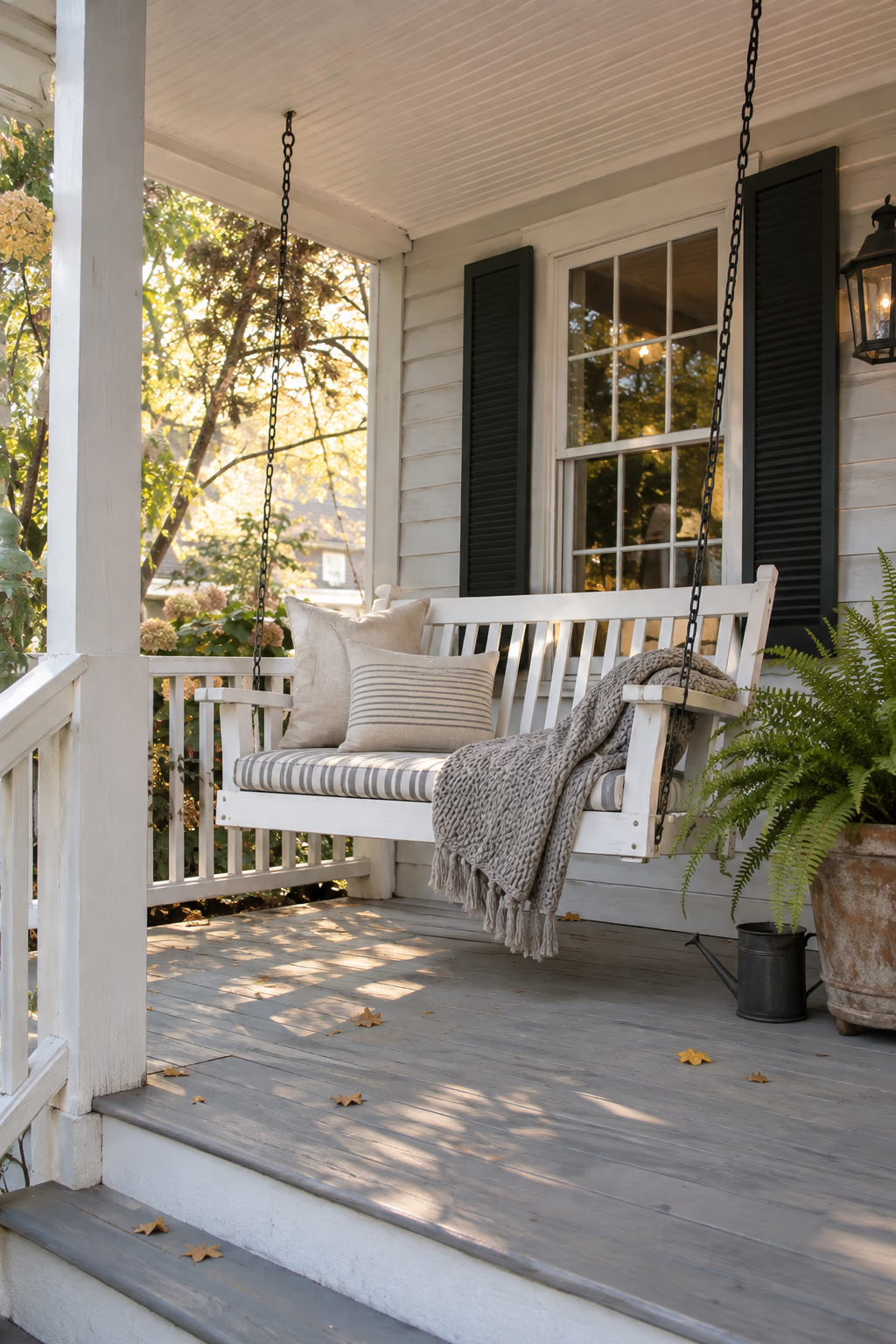
A gentle spot to slow down
A swing is one of the most beloved porch features because it makes the space feel relaxed right away. Slatted wood swings, painted white or left natural, suit most home styles. Add a weather-resistant cushion, two or three throw pillows, and a light blanket for cooler evenings.
Hang the swing from a solid structural beam, not just the ceiling boards, using rated chains and hooks. Leave about 3 feet of clearance in front and 2 feet behind so it can move freely.
Choose outdoor fabrics that resist fading and mildew, and bring the cushions inside during long rainy spells to make them last.
3. Flank the Entry With Oversized Planters
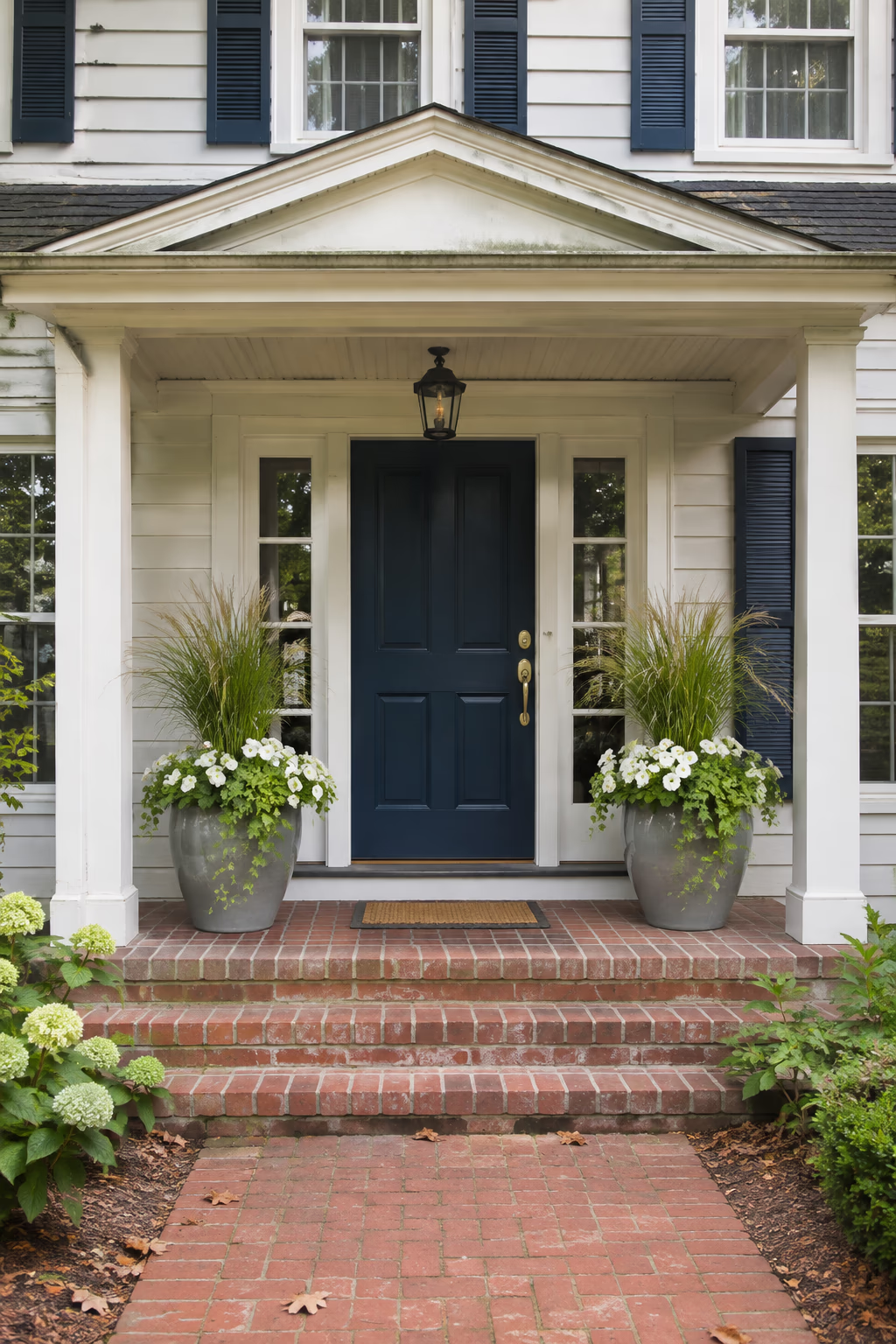
Greenery that gives the door presence
Two large planters on either side of the door create a balanced, finished look. Aim for pots at least 18 to 24 inches wide, since tiny containers tend to look lost on a porch. Matching pots feel formal, while two different pots in the same color feel more relaxed.
Use the thriller, filler, spiller approach: a tall plant like a dwarf evergreen or grass in the center, mounding flowers around it, and trailing vines over the edge. Pick plants that match your light, such as ferns and begonias for shade or geraniums and petunias for sun.
Make sure every pot has drainage holes, and lift heavy containers on pot feet so water doesn’t stain the porch floor.
4. Set Out a Pair of Rocking Chairs
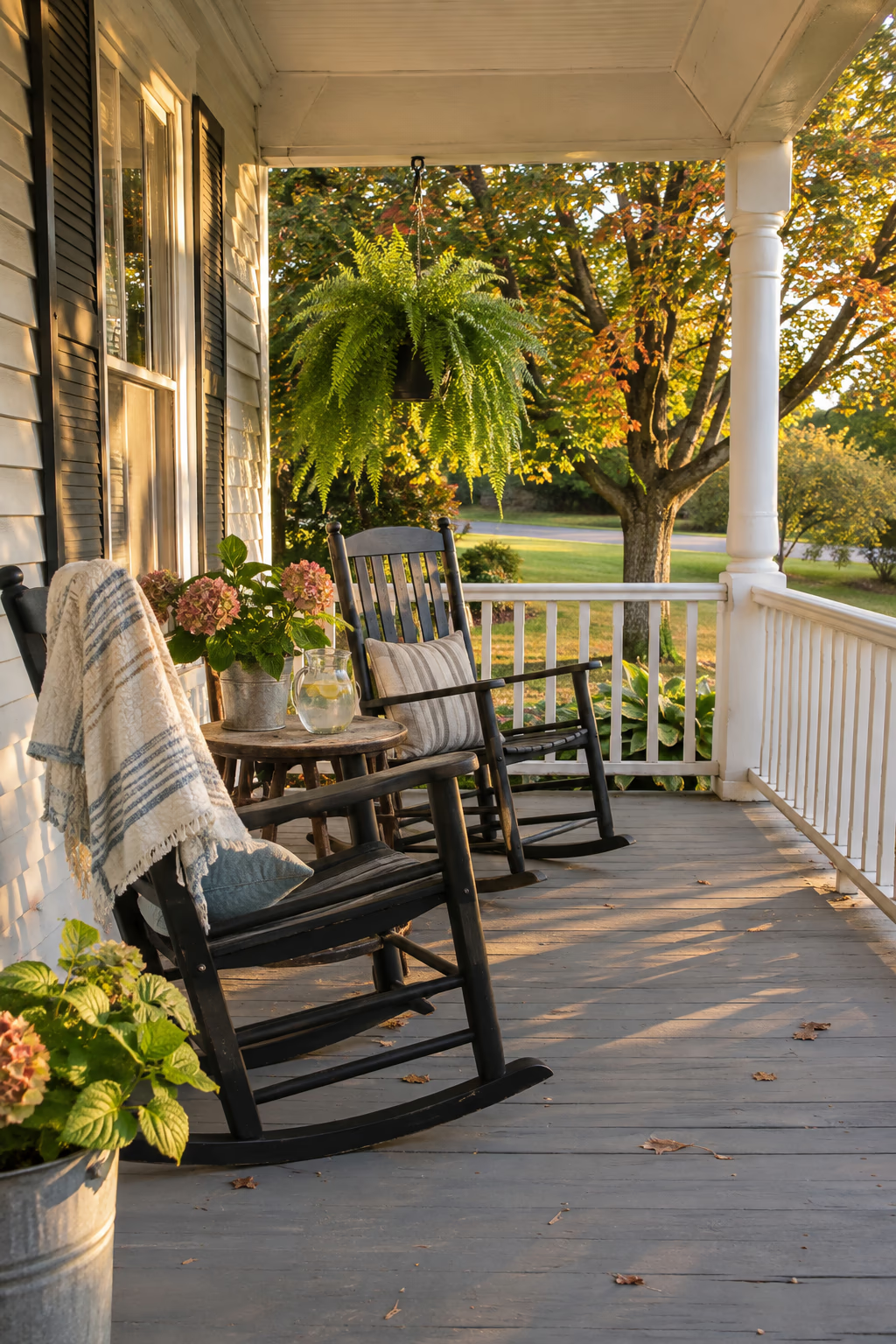
Classic comfort that suits any style
Rocking chairs say “sit a while” better than almost any other furniture. Painted black, white, or a deep green, they stand out against most siding colors. A small side table between them gives you a spot for a drink.
Measure first. Rockers need roughly 3 feet of depth to move comfortably, so on a narrow porch, check that they won’t block the door swing or walkway.
Look for sturdy wood, resin, or powder-coated metal frames. Wood needs a fresh coat of exterior paint or sealant every couple of years to stay looking good.
5. Layer Warm Lighting With Lanterns and String Lights
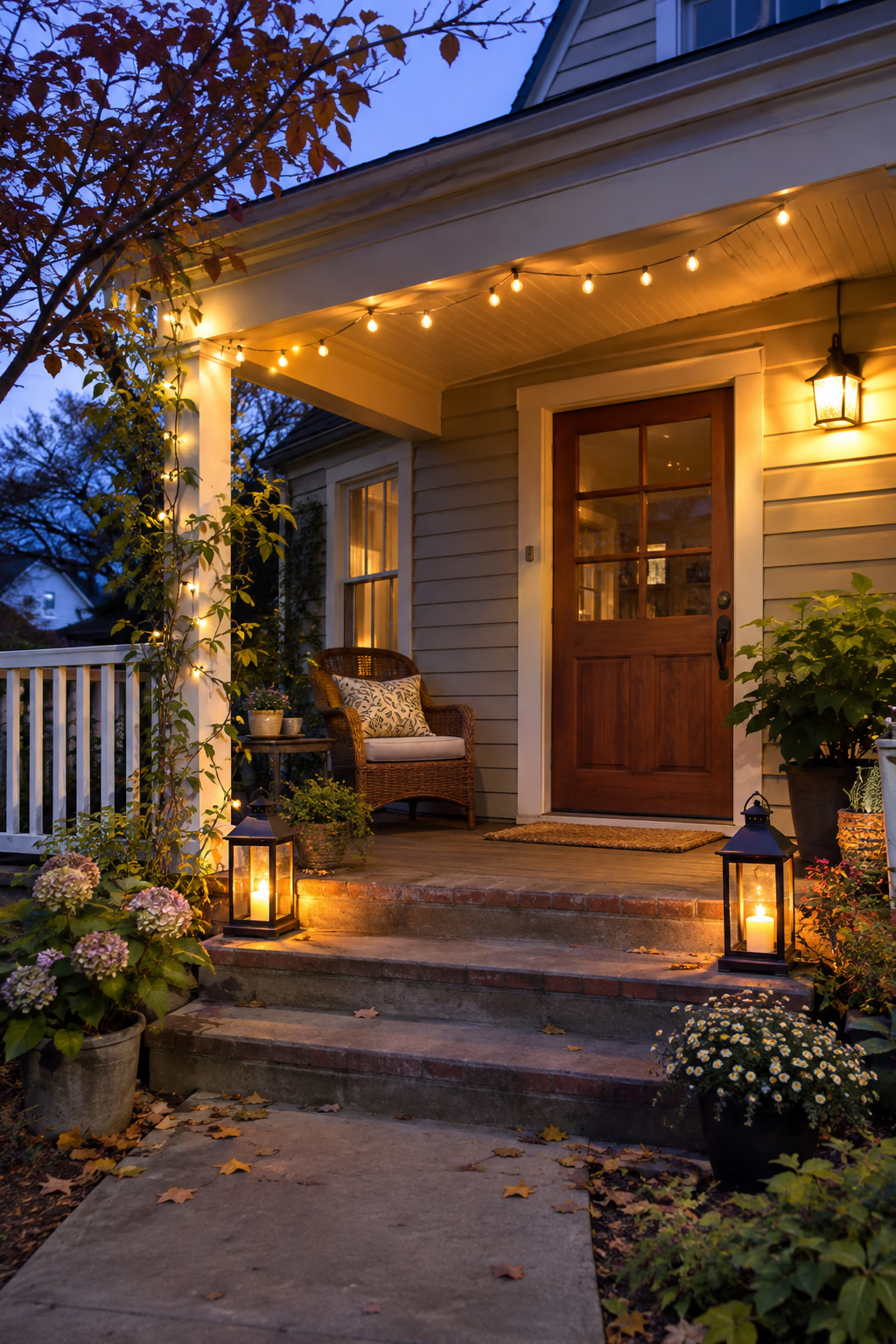
Make the porch glow after dark
Good lighting makes a porch feel safe and cozy at once. Combine a main fixture by the door with lanterns on the floor or steps, and add a strand of string lights along the beam or railing.
Choose warm white bulbs, around 2700K, rather than cool white, which can feel harsh. Battery or solar LED candles inside lanterns are simple and avoid the fire risk of real flames on a wooden porch.
Use outdoor-rated string lights and fasten them with clips or hooks instead of staples, which can damage the cords.
6. Hang a Seasonal Wreath on the Door
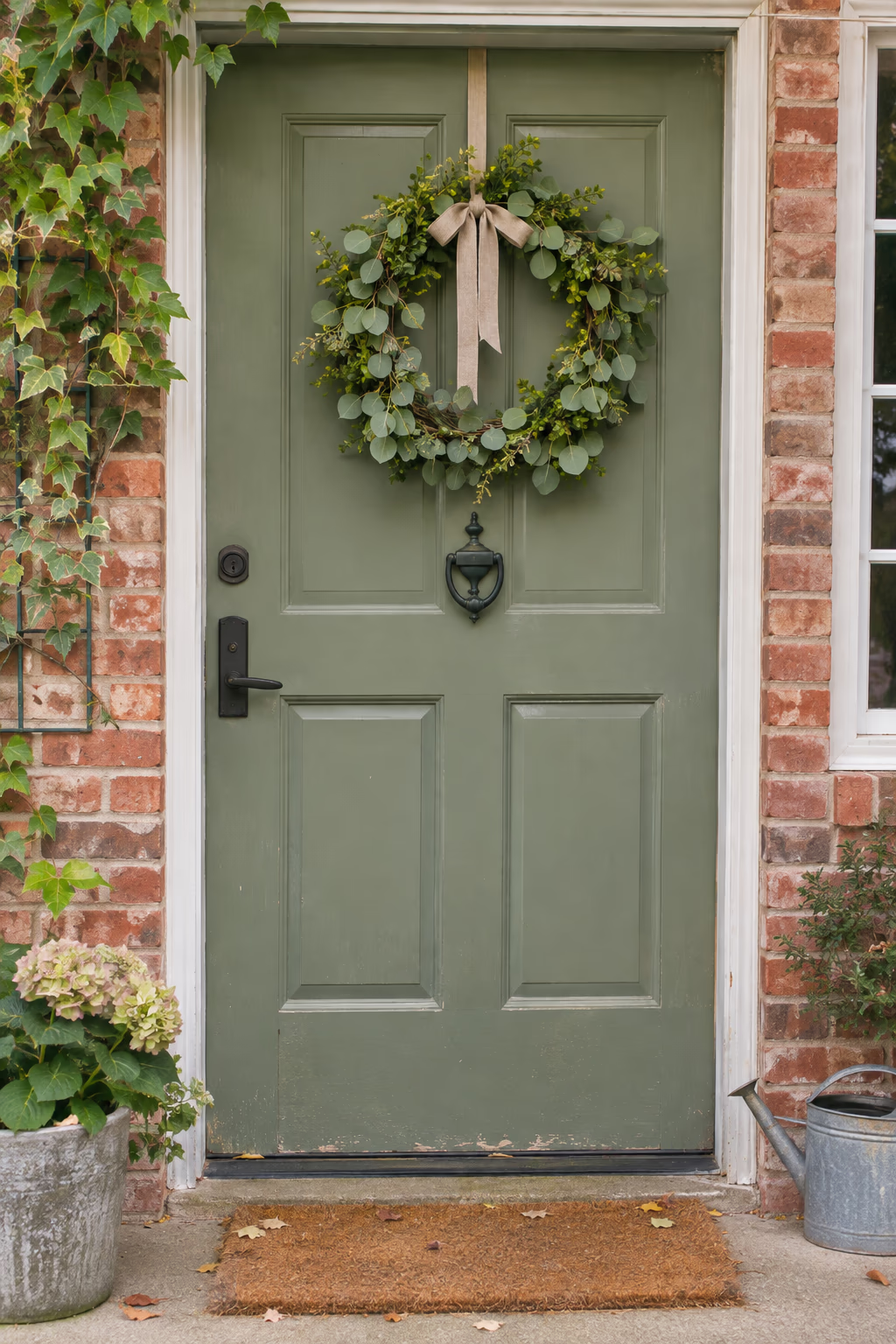
Easy rotating color at eye level
A wreath is the simplest decoration to change with the seasons. Try eucalyptus or boxwood in spring, a leafy or lemon wreath in summer, wheat and dried hydrangea in fall, and evergreen in winter.
Scale matters. A wreath that fills about two thirds of the door width looks balanced, and an oversized one can be a statement on a plain door. Hang it with an over-the-door hook or a removable adhesive hook to protect the paint.
Faux wreaths hold up to sun and rain better than fresh ones, so choose sturdy, UV-resistant versions if your door gets direct light.
7. Roll Out a Weather-Resistant Outdoor Rug
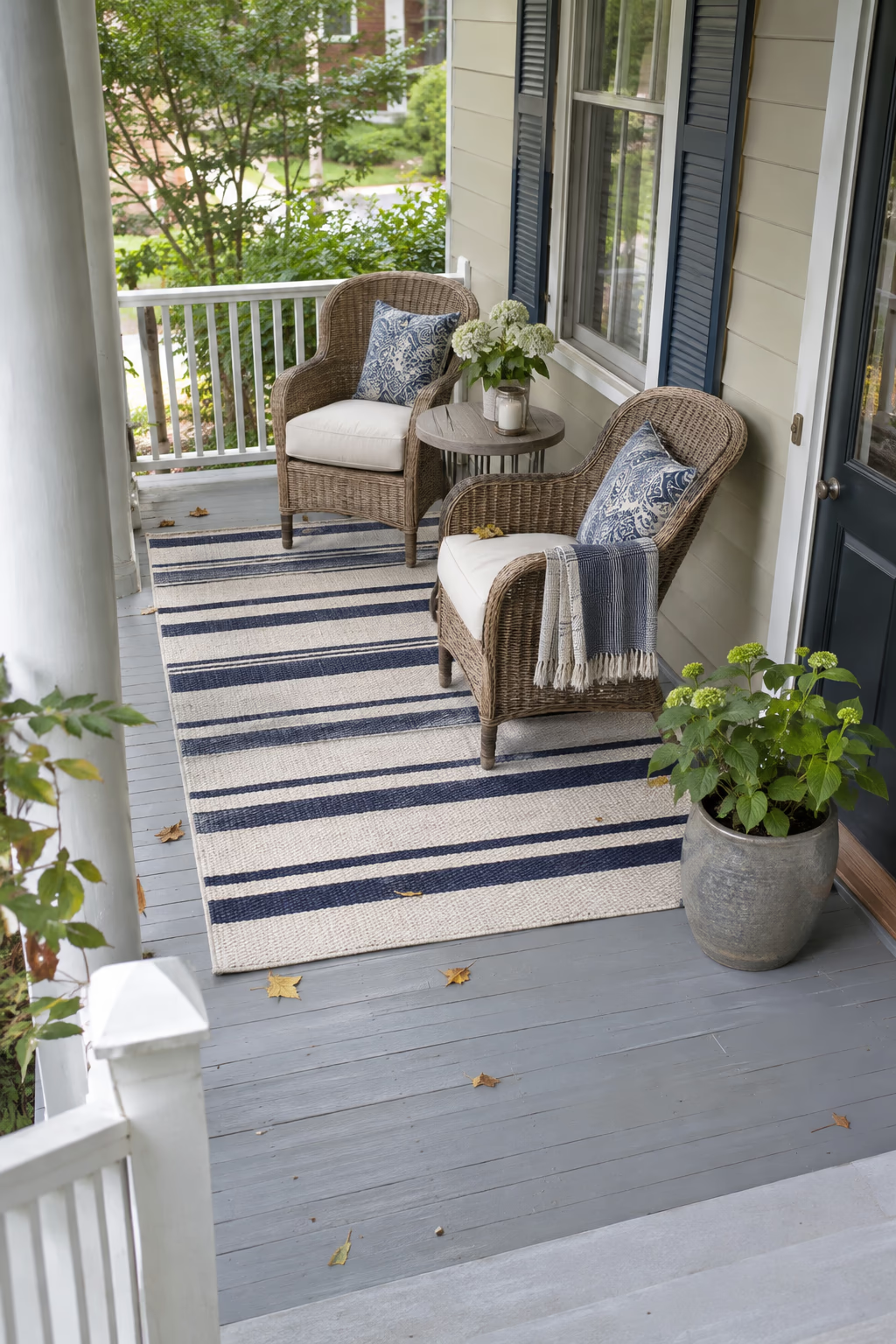
Pattern and softness underfoot
A rug defines the seating area and hides worn flooring. Polypropylene and similar synthetic rugs are made for outdoor use, dry quickly, and resist mildew. Stripes, geometric prints, and natural jute-look weaves are all popular.
Size it so at least the front legs of your furniture sit on it. For a small porch, a 5 by 8 foot rug often works well, with a few inches of floor showing around the edges.
Always use a thin non-slip pad, and lift the rug occasionally to let the floor beneath dry so moisture doesn’t get trapped.
8. Hang Baskets of Trailing Flowers From the Porch Edge
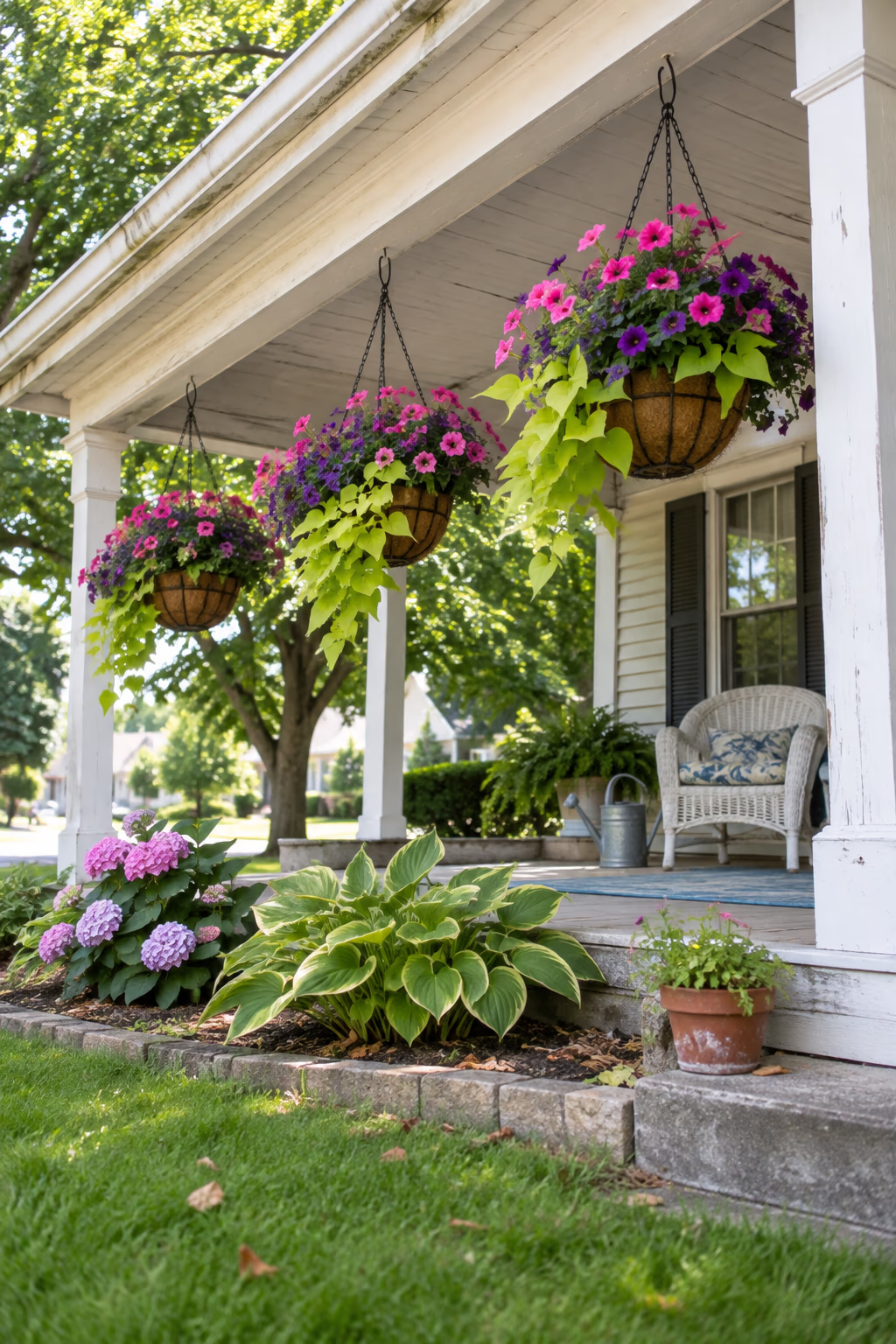
Color at eye level without using floor space
Hanging baskets add flowers to even the tiniest porch. Evenly spaced baskets along the beam look neat, while a pair on either side of the steps frame the entry.
Fuchsia, begonias, and impatiens suit shade, and calibrachoa, petunias, and sweet potato vine like sun. A coir-lined 12 to 14 inch basket holds more soil and dries out more slowly than a small one.
Plan on daily watering in hot weather, and feed every couple of weeks. Hang them high enough to avoid bumping heads.
9. Build a Cozy Conversation Nook
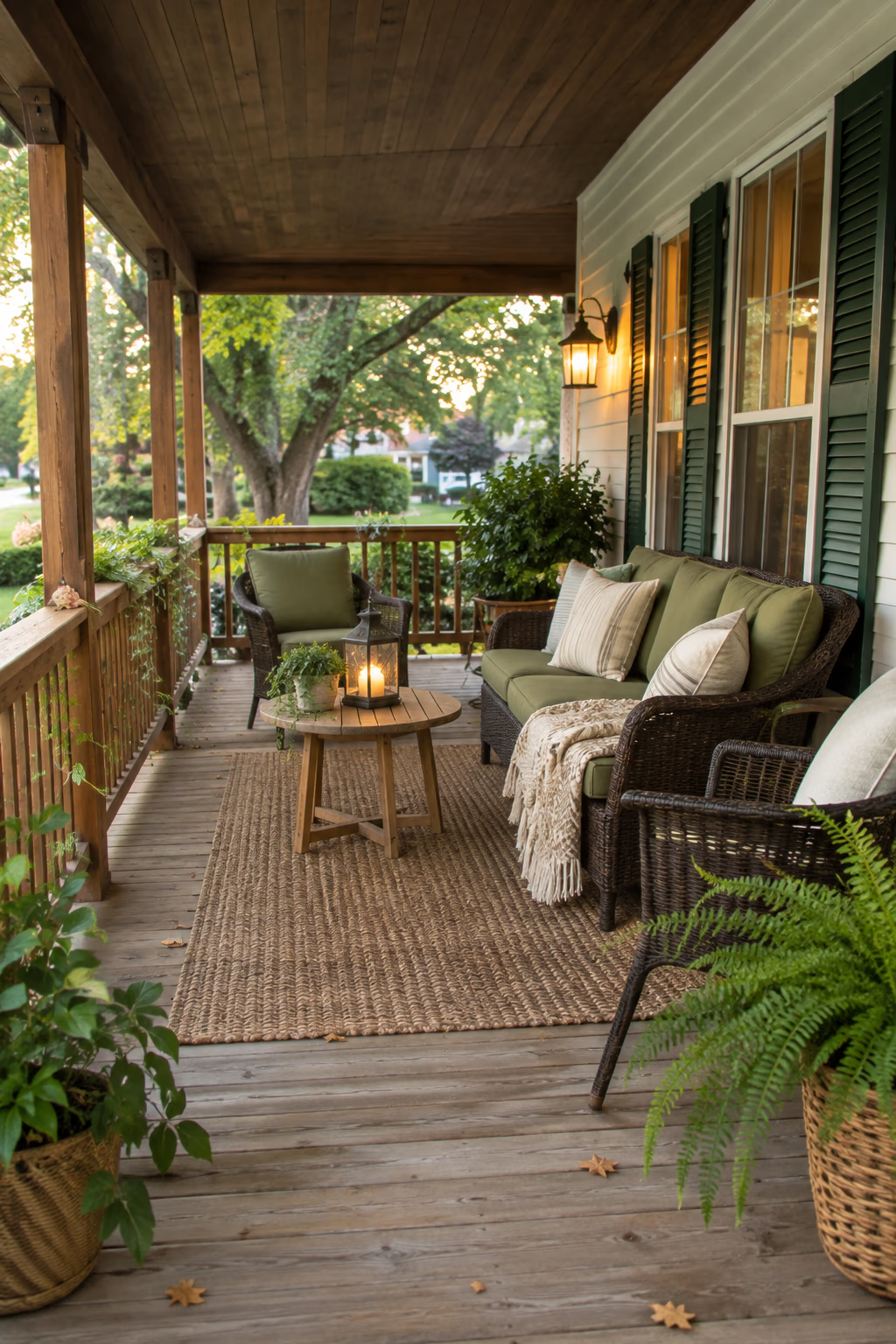
Seating that invites people to chat
If your porch is wide enough, arrange a loveseat or two chairs around a small table so people face each other. A round table, about 20 inches across, is friendlier in tight spaces than a square one.
Keep a clear walkway of at least 3 feet from the steps to the door. Furniture that’s too big is a common mistake, so mark the footprint with painter’s tape before buying.
Wicker-look resin, teak, and powder-coated aluminum all handle weather well. Add pillows in two or three colors from your door and planters to tie it together.
10. Stack Pumpkins and Gourds for a Fall Display
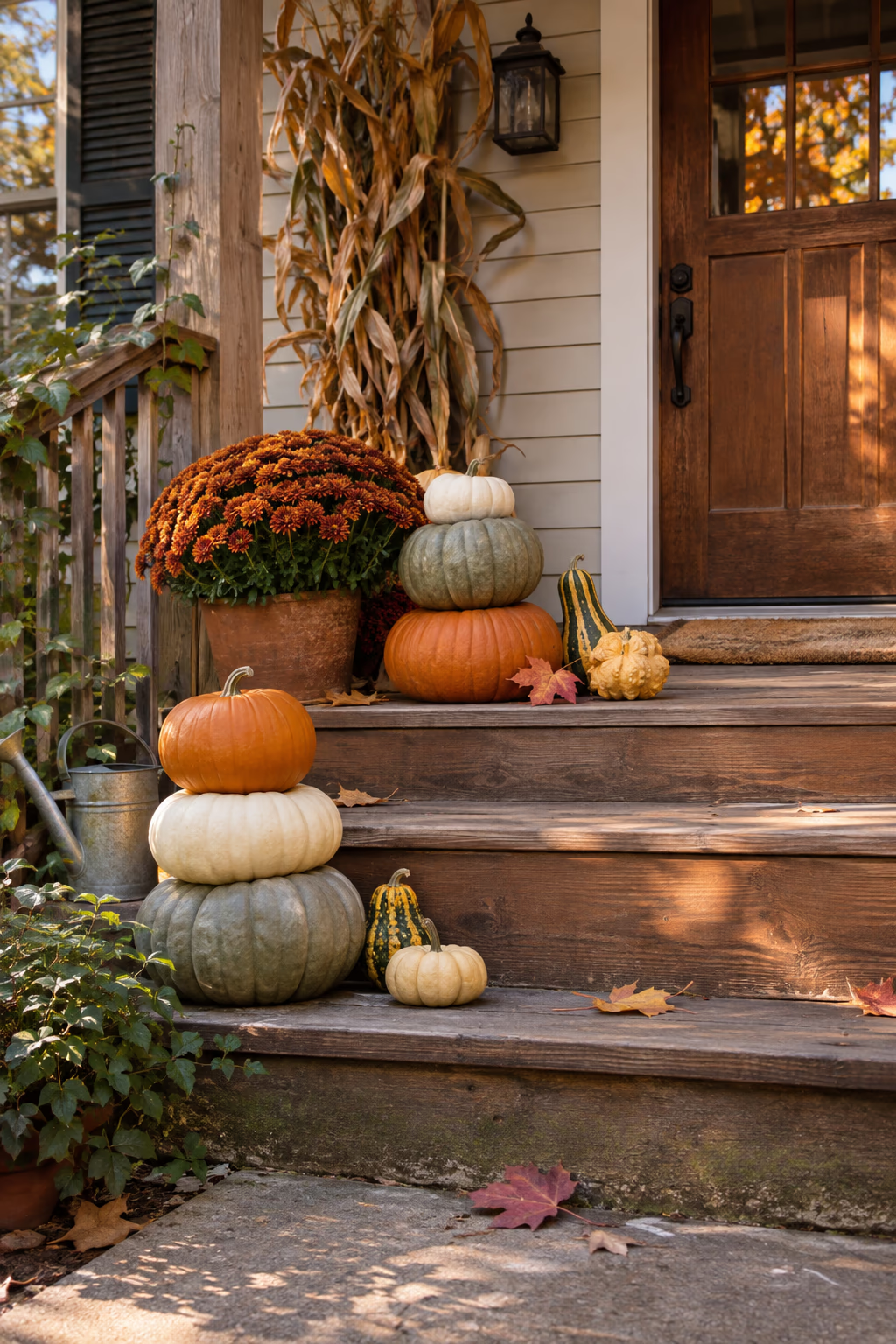
Instant autumn without much effort
Group pumpkins in different sizes and colors, such as orange, white, and soft gray-green, on the steps or beside the door. Add a bundle of cornstalks, a hay bale, or a pot of chrysanthemums for height and texture.
Odd numbers look more natural, so try clusters of three or five. Mixing in pale heirloom varieties keeps the display from feeling too matchy.
Uncarved pumpkins can last a month or more in cool weather. Keep them off bare wood where moisture can stain, and watch for squirrels, which often nibble them.
11. Add a Storage Bench by the Door
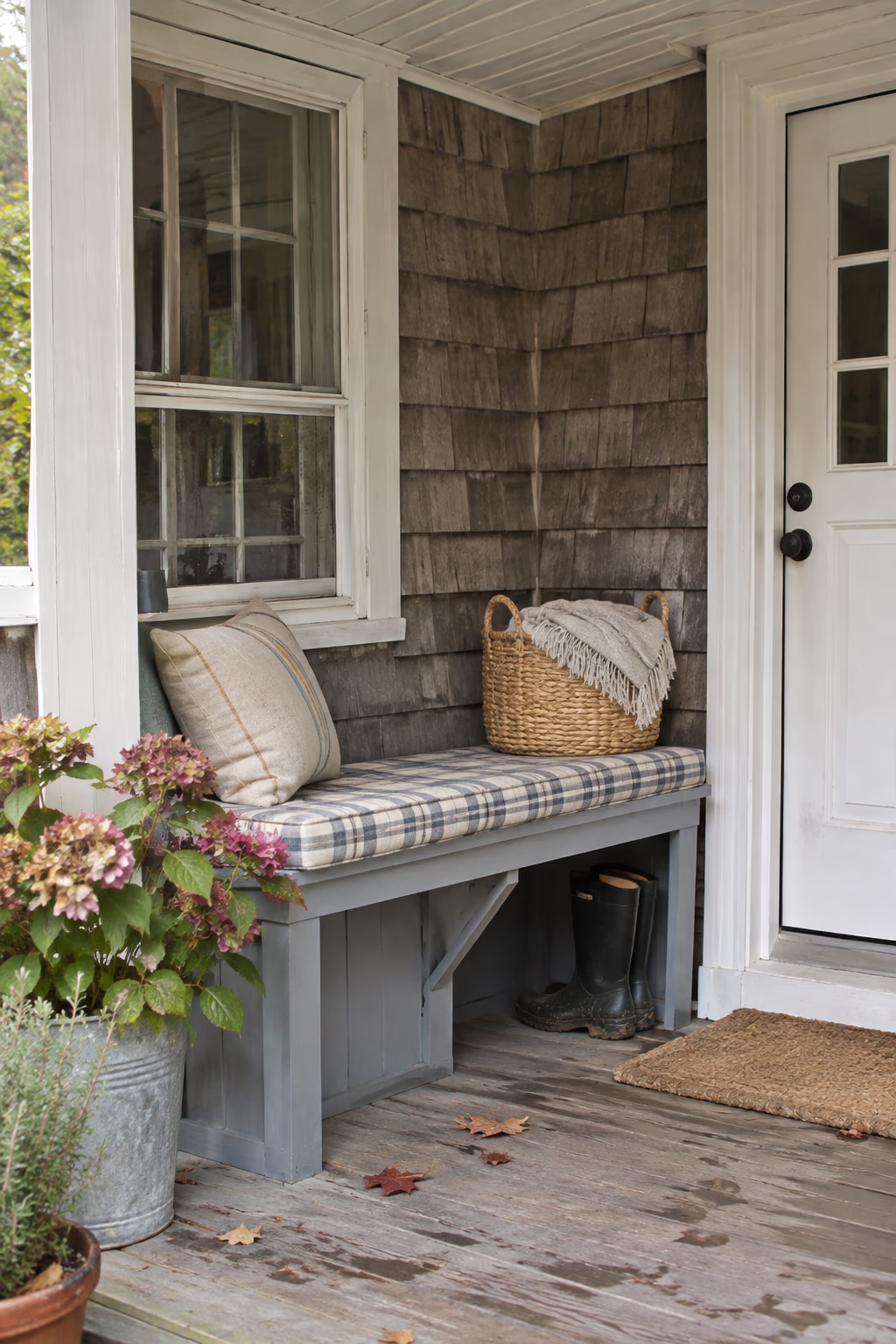
A perch that hides the clutter
A bench with a lift-up lid gives guests a place to sit while pulling on boots and gives you a place to hide gardening gloves, pet leashes, or extra cushions. Pick one that’s about 16 to 18 inches deep so it doesn’t crowd the walkway.
Weather-resistant materials such as resin, treated wood, or cedar will last longest. Add a cushion and a pillow or two to make it feel less like a utility item.
Check that the lid has drainage or a slight gap so water can’t pool inside, and avoid storing anything that would be damaged by humidity.
12. Frame the Entry With Cottage Garden Beds
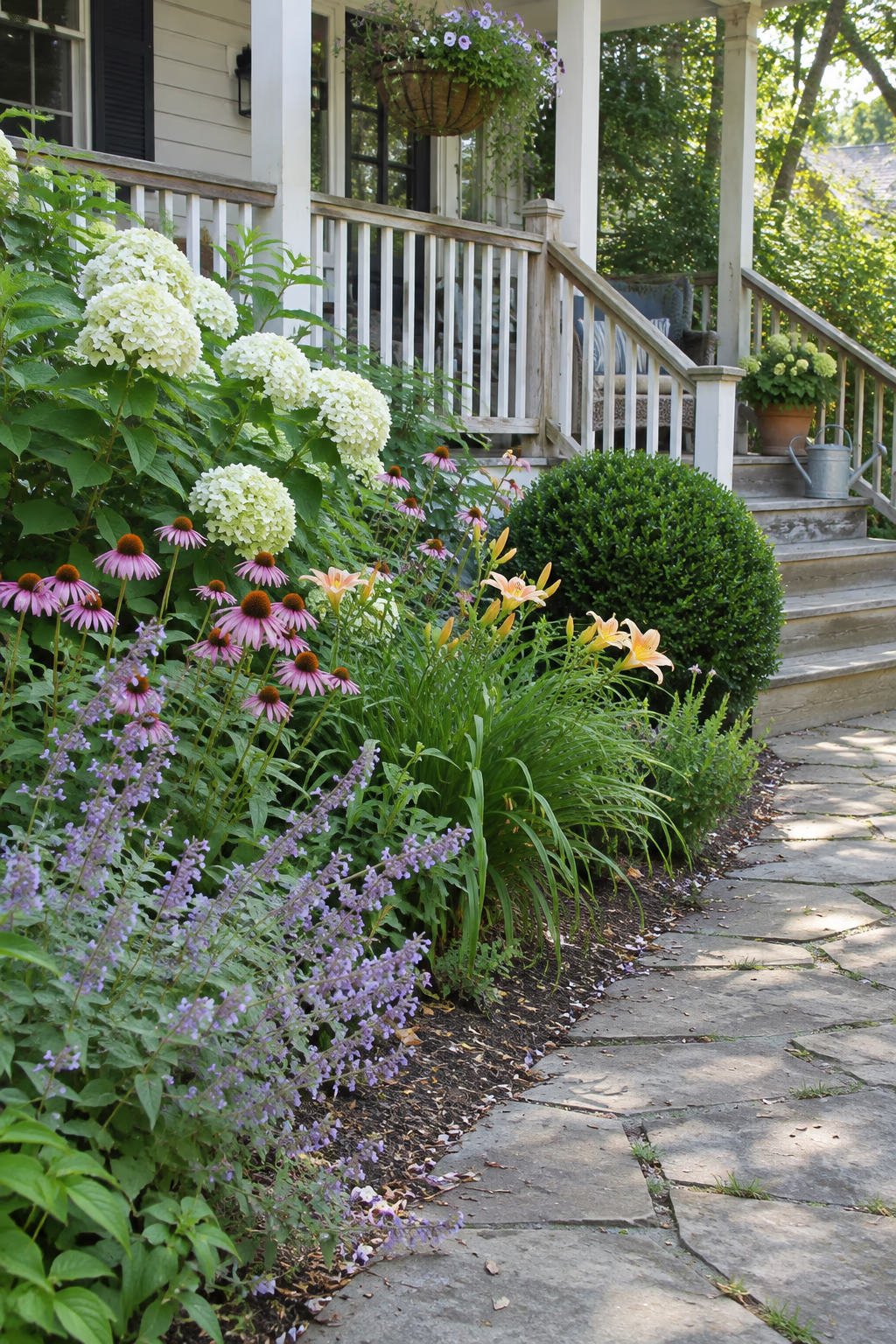
Soft, abundant planting around the steps
If you have a bed along the porch, fill it with layered perennials. Hydrangeas, coneflowers, catmint, salvia, and daylilies give months of color, and a few evergreen shrubs keep the bed looking tidy in winter.
Plant taller varieties near the porch and shorter ones toward the walkway so everything is visible. Leave about a foot between plants and the foundation for airflow.
Check your USDA zone and sun exposure before buying. A bed under a porch roof may get less rain than you’d expect, so plan on watering new plants regularly.
13. Paint the Porch Ceiling Haint Blue
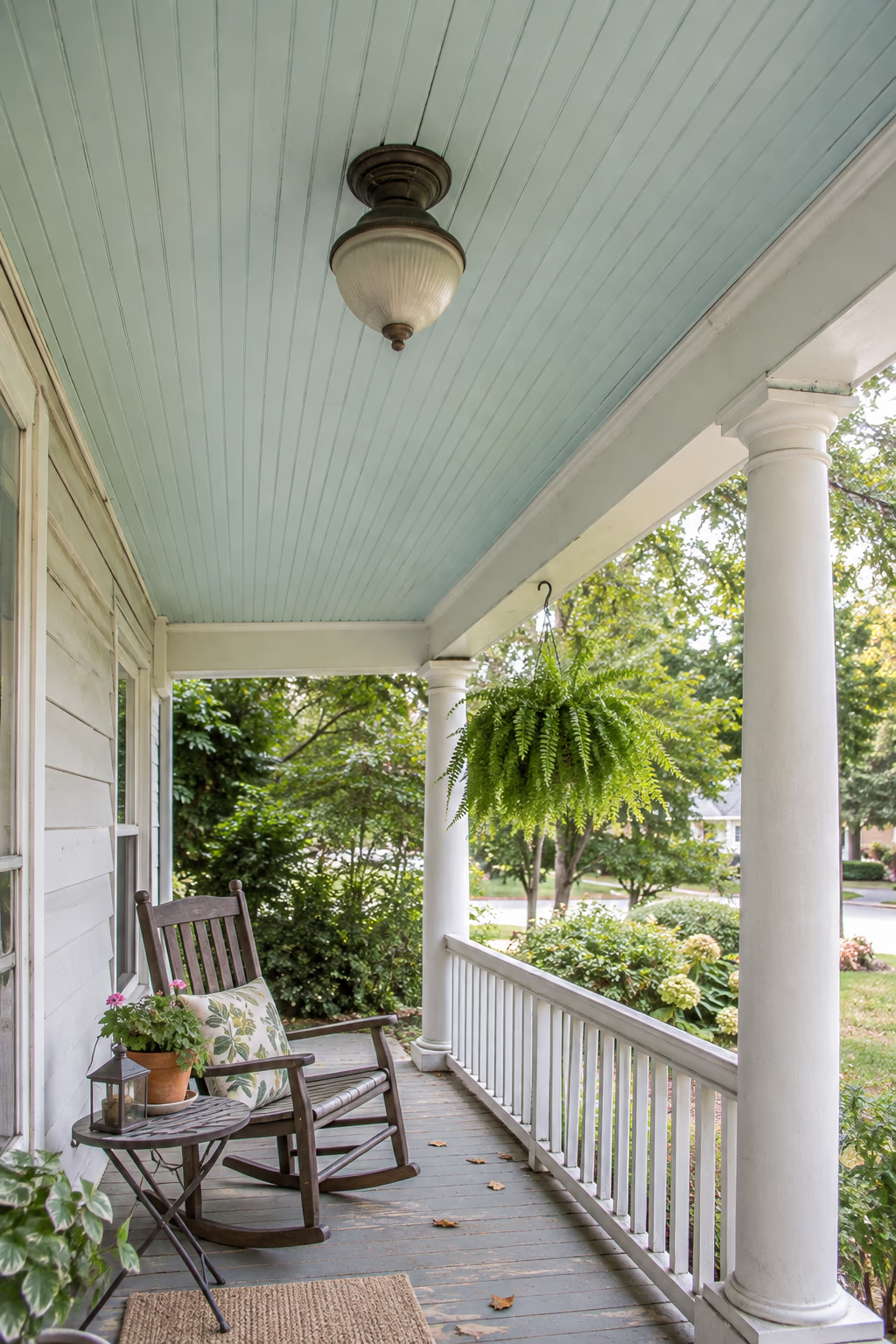
A pale blue sky overhead
A soft blue ceiling is a Southern tradition with a lovely practical side. The color mimics the sky and gives a calm, airy feel, and many people say it discourages wasps from nesting.
Choose a pale blue or blue-green exterior paint, and lightly sand and prime any peeling areas first. Paint beadboard boards along the grain for a smooth finish.
The nesting claim is folklore rather than science, so enjoy the look and remove any real nests promptly with proper safety gear.
14. Dress Up the Steps With Painted Risers
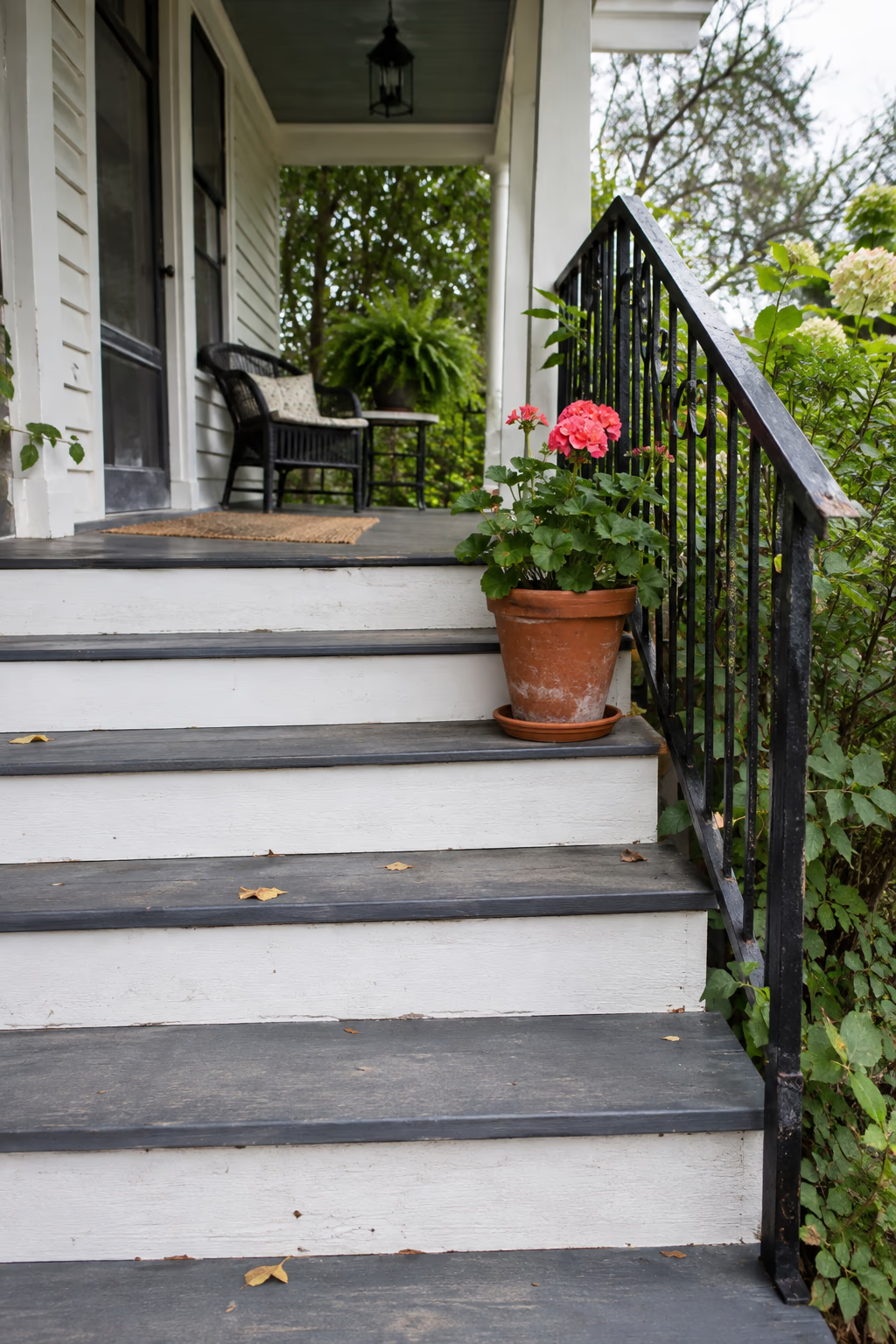
Small detail with a big impression
Painting the vertical riser of each step a crisp white or soft contrast color makes the stairs look polished. Pair it with a deep gray or natural wood tread.
Use porch and floor paint, and mix a bit of grit additive into the treads for traction. Clean the surfaces thoroughly and let each coat cure fully before use.
Keep the treads slip resistant, especially in rainy or icy climates. Safe steps matter more than any decorative touch.
15. Hang Outdoor Curtains for Shade and Privacy
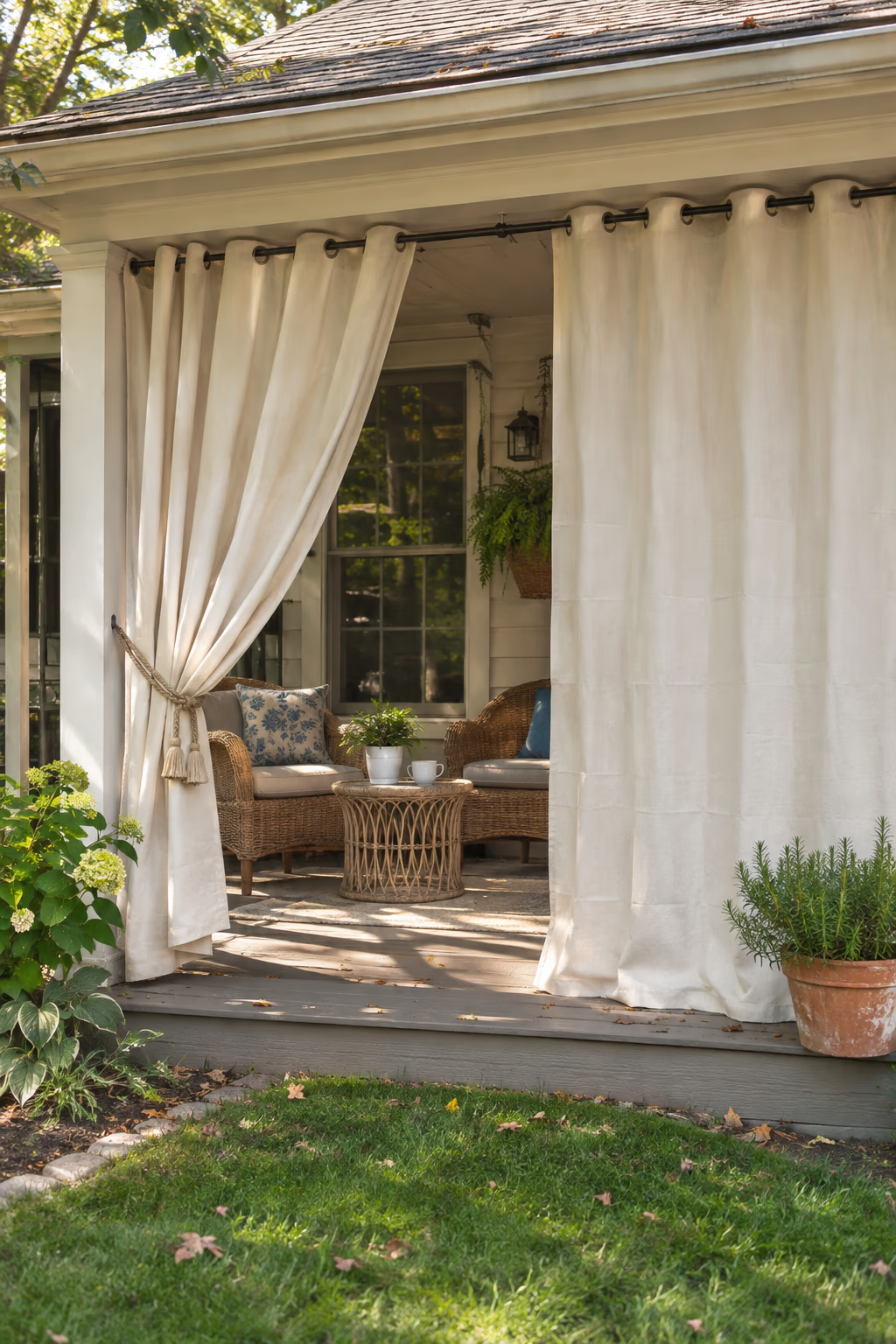
Soft walls for sunny or exposed porches
Outdoor curtains turn a porch into a comfortable room. Choose solution-dyed acrylic or polyester panels, which resist fading and mildew, in white, cream, or stripes.
Mount a rod or cable across the porch opening and hang the panels about 6 to 8 inches above the floor. Add tiebacks so you can open them in the evening.
Be mindful of wind. Weighted hems or simple tieback loops keep panels from whipping around, and check local rules if you live in an HOA community.
16. Install a Ceiling Fan for Summer Comfort
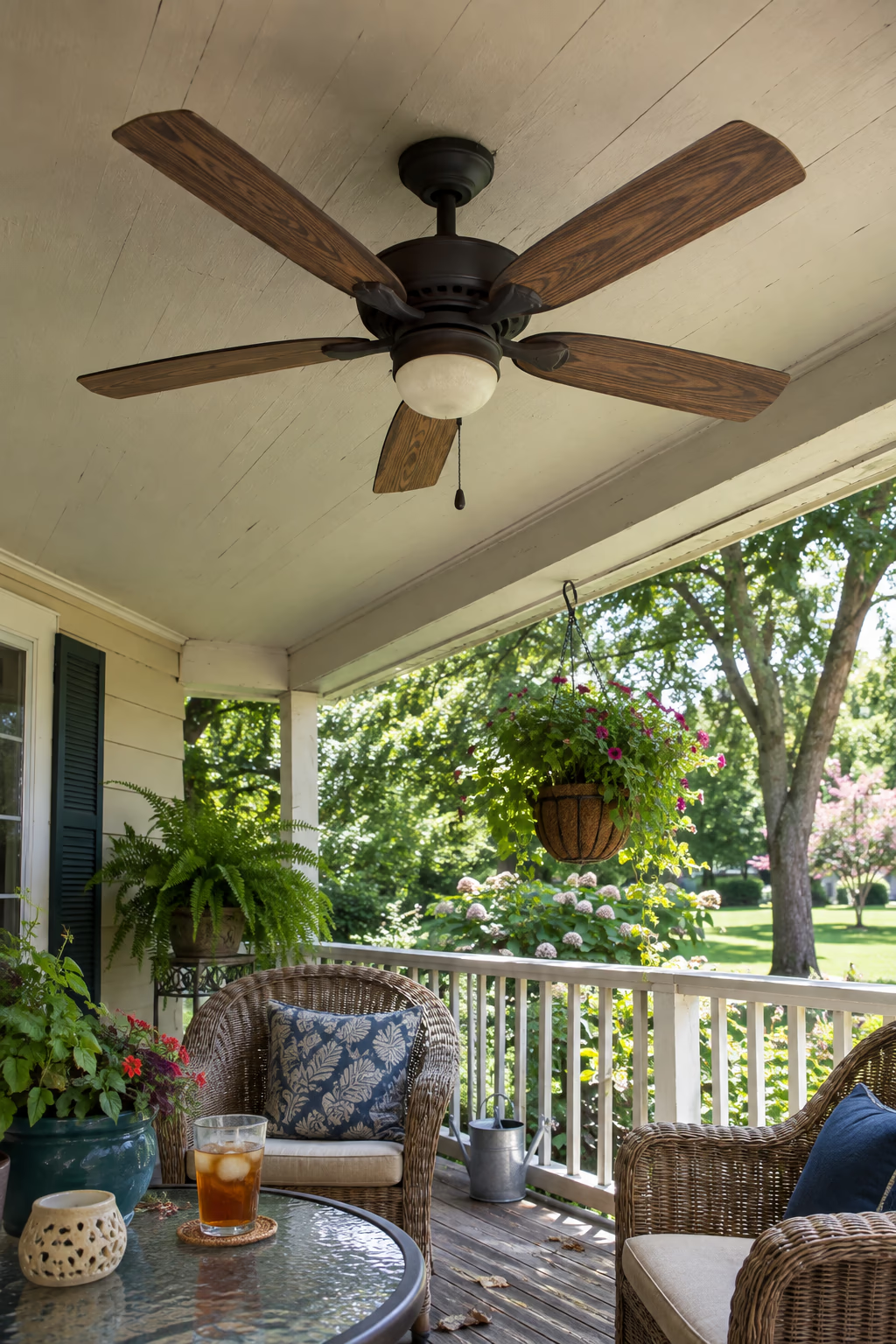
Moving air makes hot evenings pleasant
A fan keeps a covered porch comfortable and helps keep mosquitoes away. Pick a fan rated for damp or wet locations, usually 44 to 52 inches across, for a typical porch.
Wood-look or white blades both suit most homes. Mount the fan at least 7 feet above the floor and use a fixture box rated for fan weight.
Ceiling fan wiring is a job for a licensed electrician if there’s no existing fan-rated box, and many areas require a permit.
17. Add Boxwood Topiaries Beside the Door
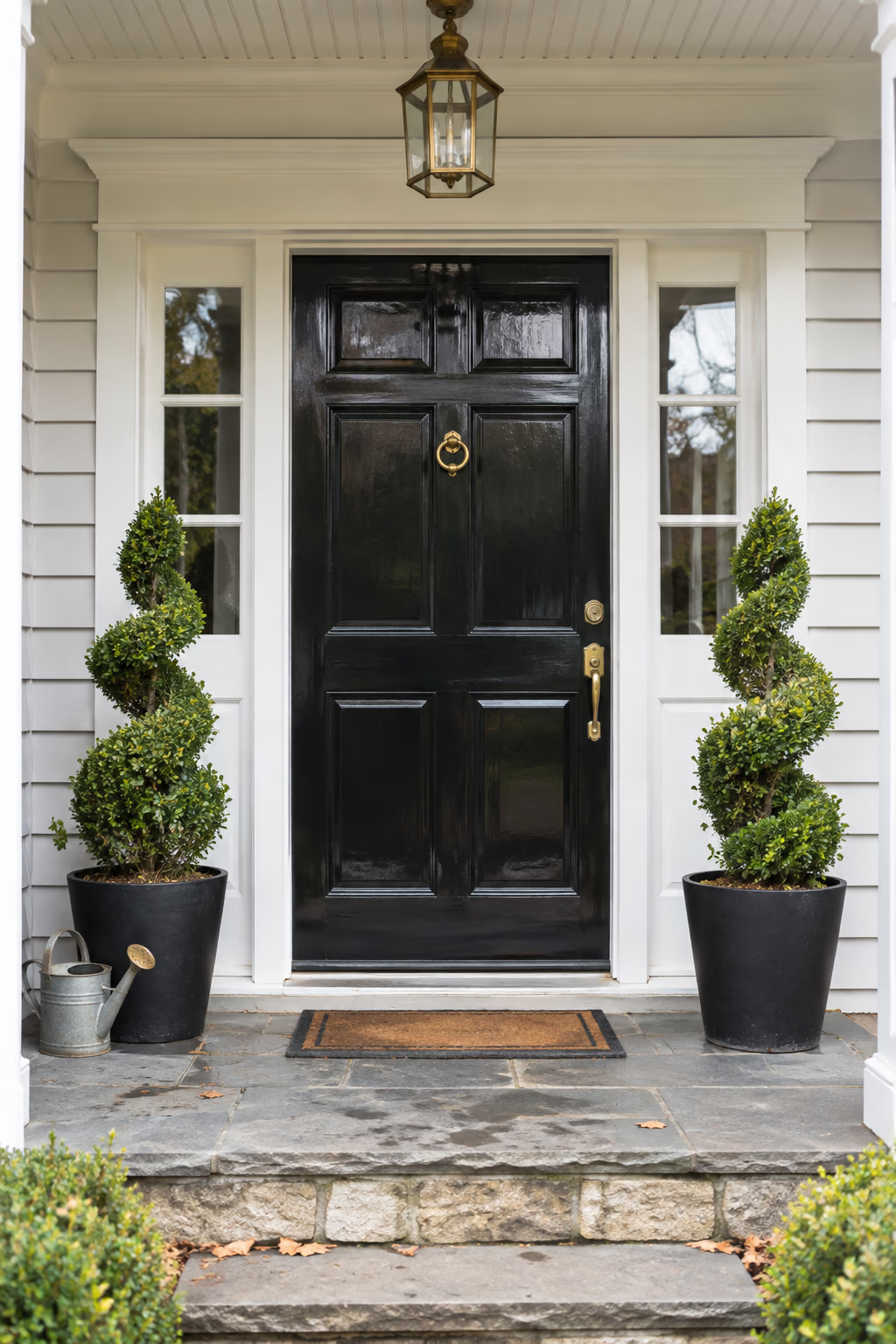
Tidy shapes for a formal look
Clipped boxwood spirals or balls in matching pots give a porch a neat, traditional air. They stay green all year in mild climates and look lovely with a wreath.
Real topiaries need regular trimming and watering, so a good faux version in a UV-resistant finish is a practical alternative. Choose planters in black, stone, or terracotta that suit your trim.
In cold regions, move potted real boxwood to a sheltered spot for winter, since roots in pots are more exposed to freezing.
18. Hang a Cozy Chair in a Corner
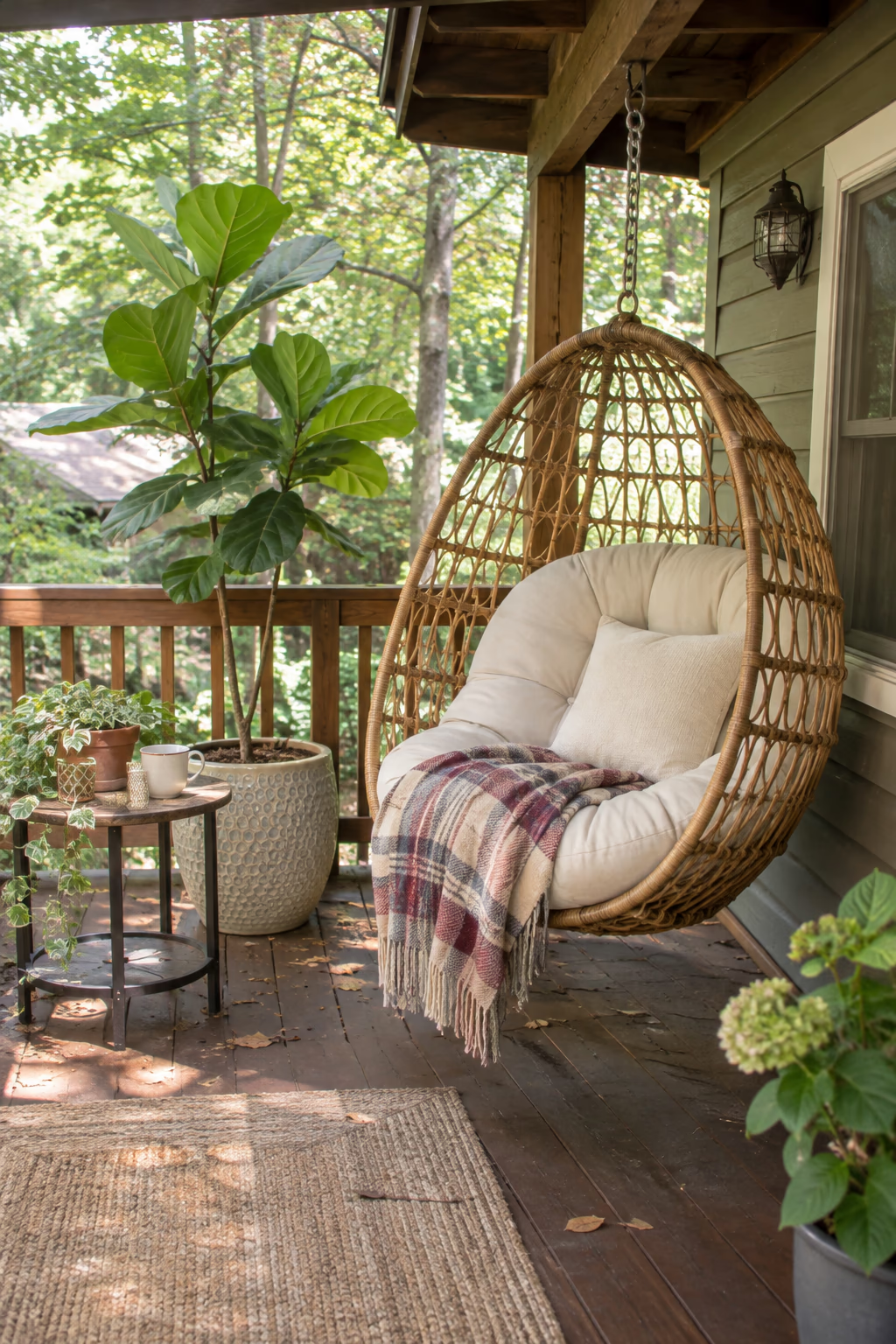
A floating seat for a little hideaway
A hanging egg or basket chair uses a corner without taking up floor space. Woven wicker-look resin with a thick cushion feels especially inviting.
It must be hung from a beam rated to hold the chair plus a person, typically several hundred pounds, with proper hardware. If you’re unsure, ask a contractor to check.
Allow about 3 feet of clear space around it for swinging, and keep it away from steps or railings.
19. Style a Vintage Cabinet as a Garden Station
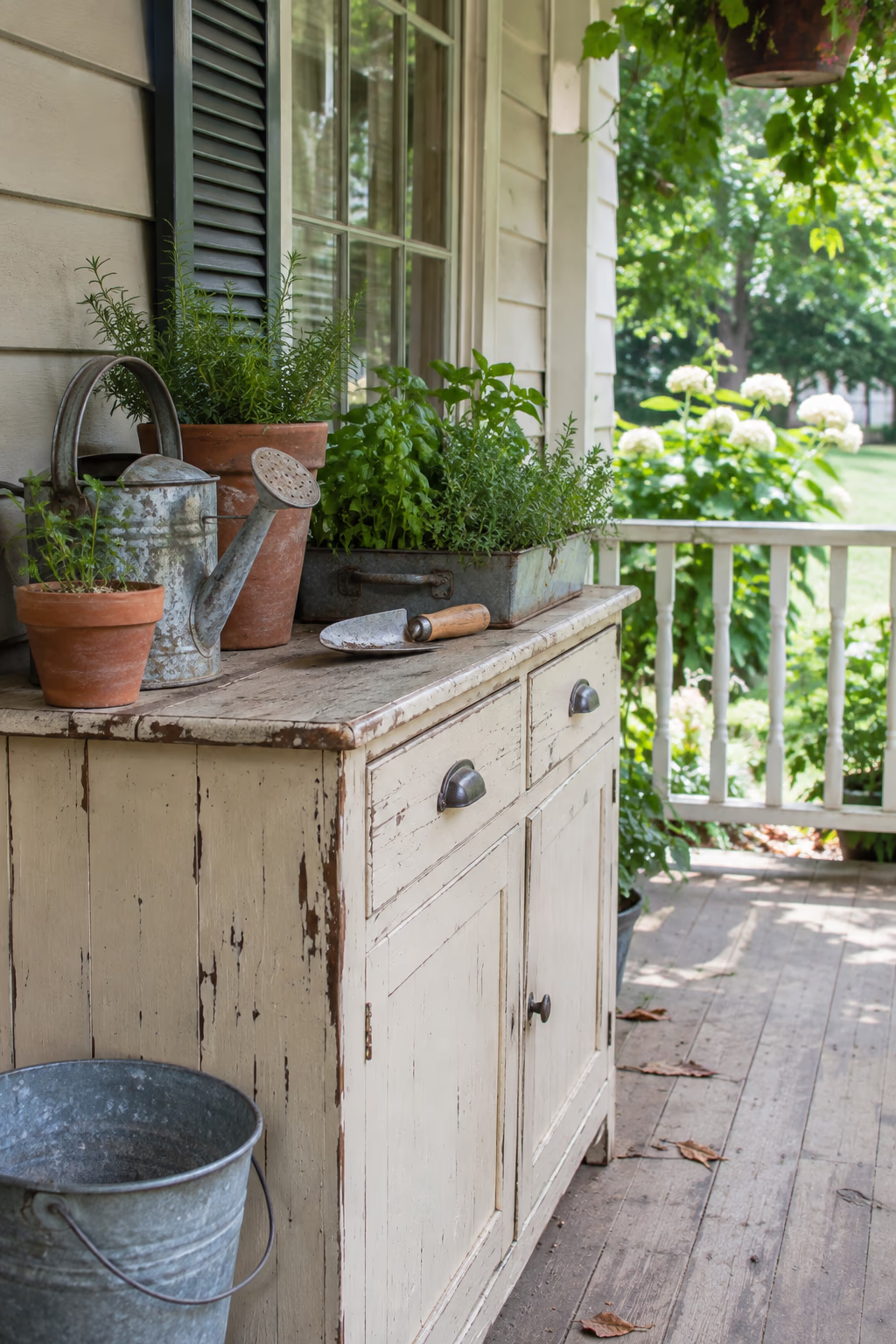
Charm and storage in one piece
An old hutch, washstand, or cabinet can hold pots, watering cans, and trays of herbs against the wall. It adds character and gives you a shelf-style display.
Seal wood with exterior paint or a clear outdoor finish, and add small feet to keep the legs off damp floors. Distressed finishes in cream, sage, or soft blue suit a cottage look.
Keep it under a roof if possible. Even sealed furniture ages quickly when soaked regularly.
20. Mount Window Boxes on the Railing
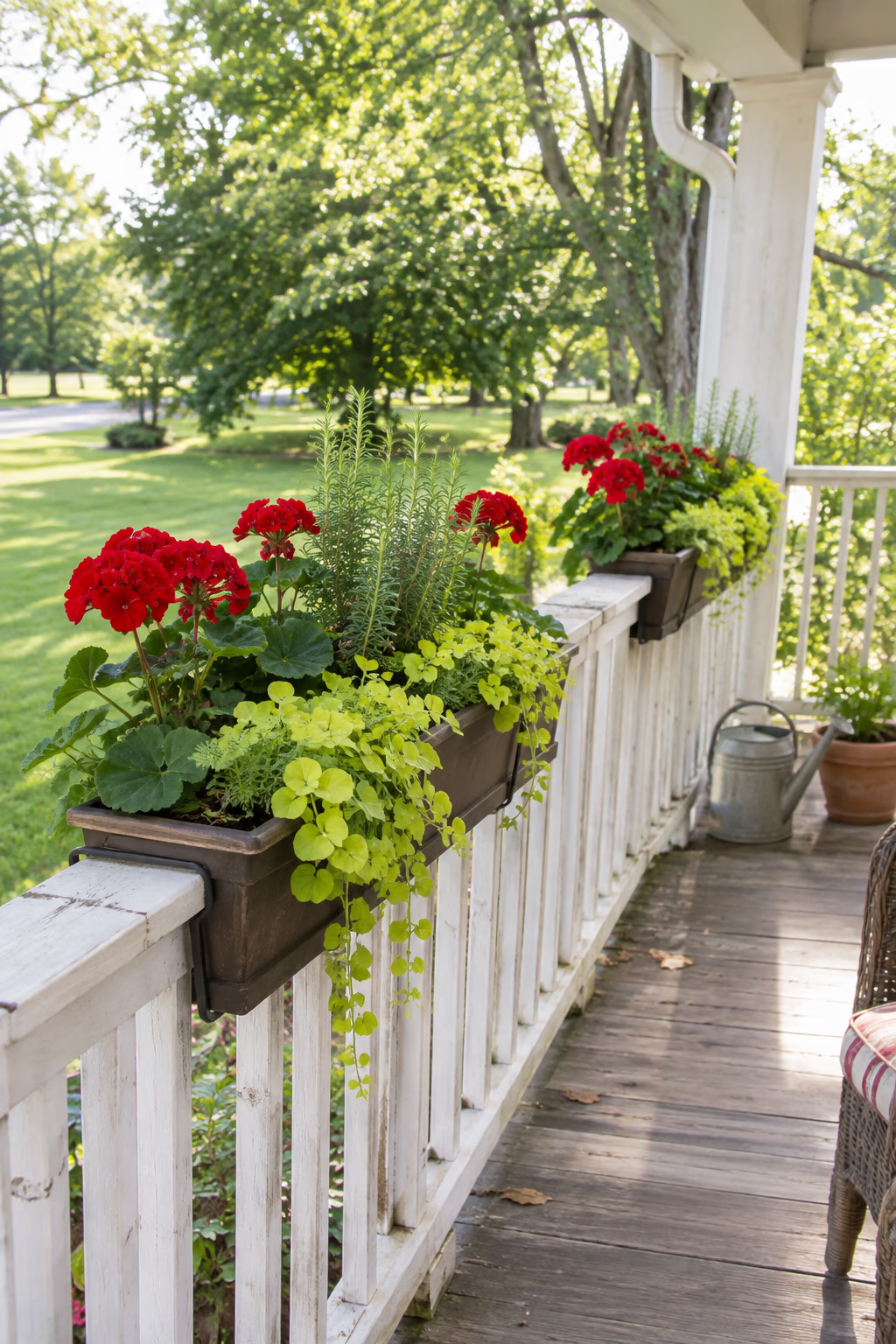
A ribbon of blooms along the edge
Railing planters make use of space that would otherwise be empty. Choose boxes that fit your railing width and attach them with brackets so they can’t tip.
Pair a spiller like creeping Jenny with a bloom like geraniums, and add a taller herb such as rosemary. Mixing edible and ornamental plants keeps things interesting.
Line boxes with a drainage tray if the railing is above a seating area, so water doesn’t drip onto people or furniture below.
21. Wrap Posts and Railings in Garland
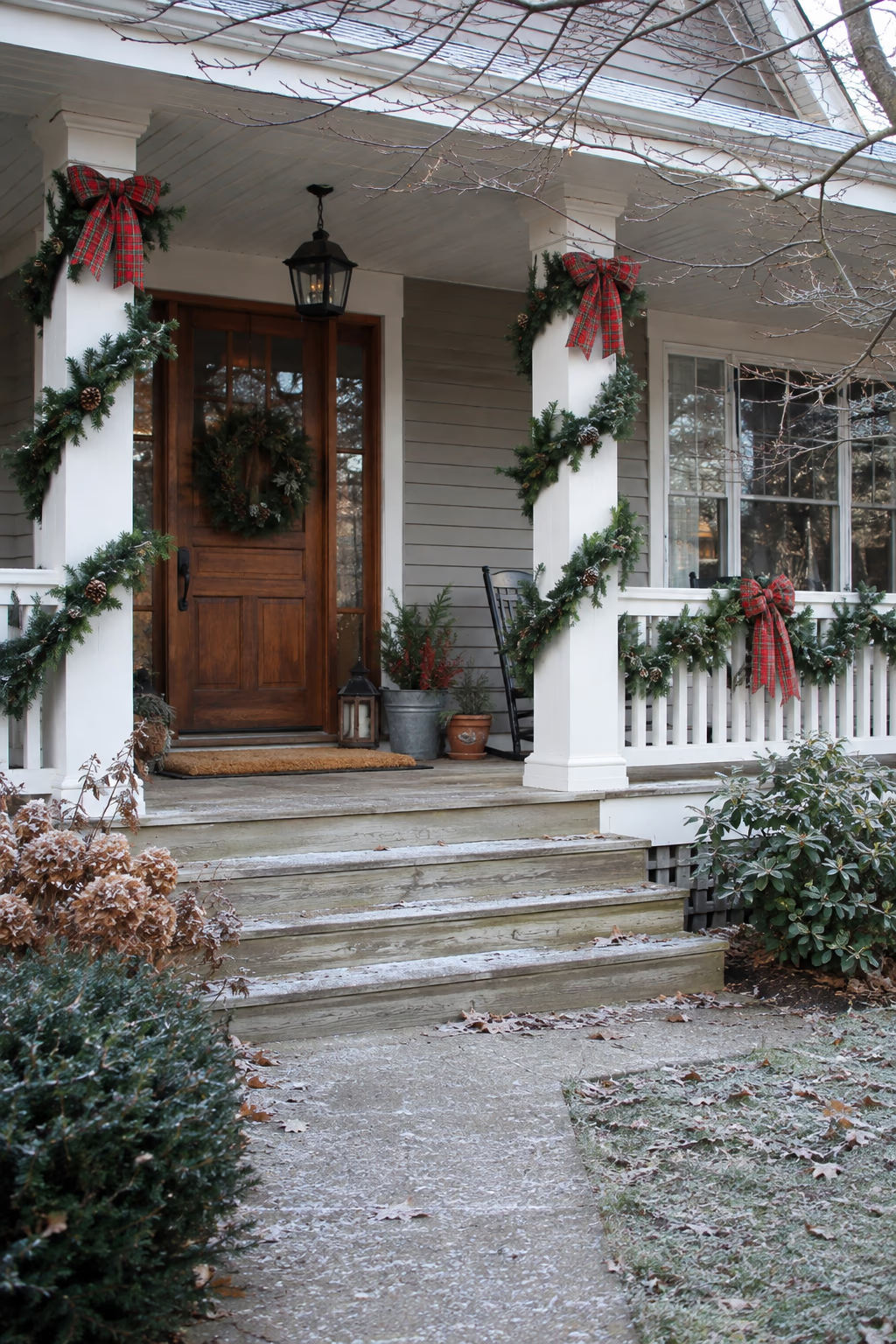
A simple way to dress the structure
Garland adds fullness and color around columns and railings. Faux evergreen, magnolia leaves, or eucalyptus all hold up well, and a simple ribbon bow adds polish.
Secure the garland with floral wire or zip ties in a matching color, and use removable hooks where you can to avoid damaging paint.
Avoid wrapping lights tightly around old extension cords or placing them where they can trip anyone.
22. Stage a Spring Porch With Pastel Flowers
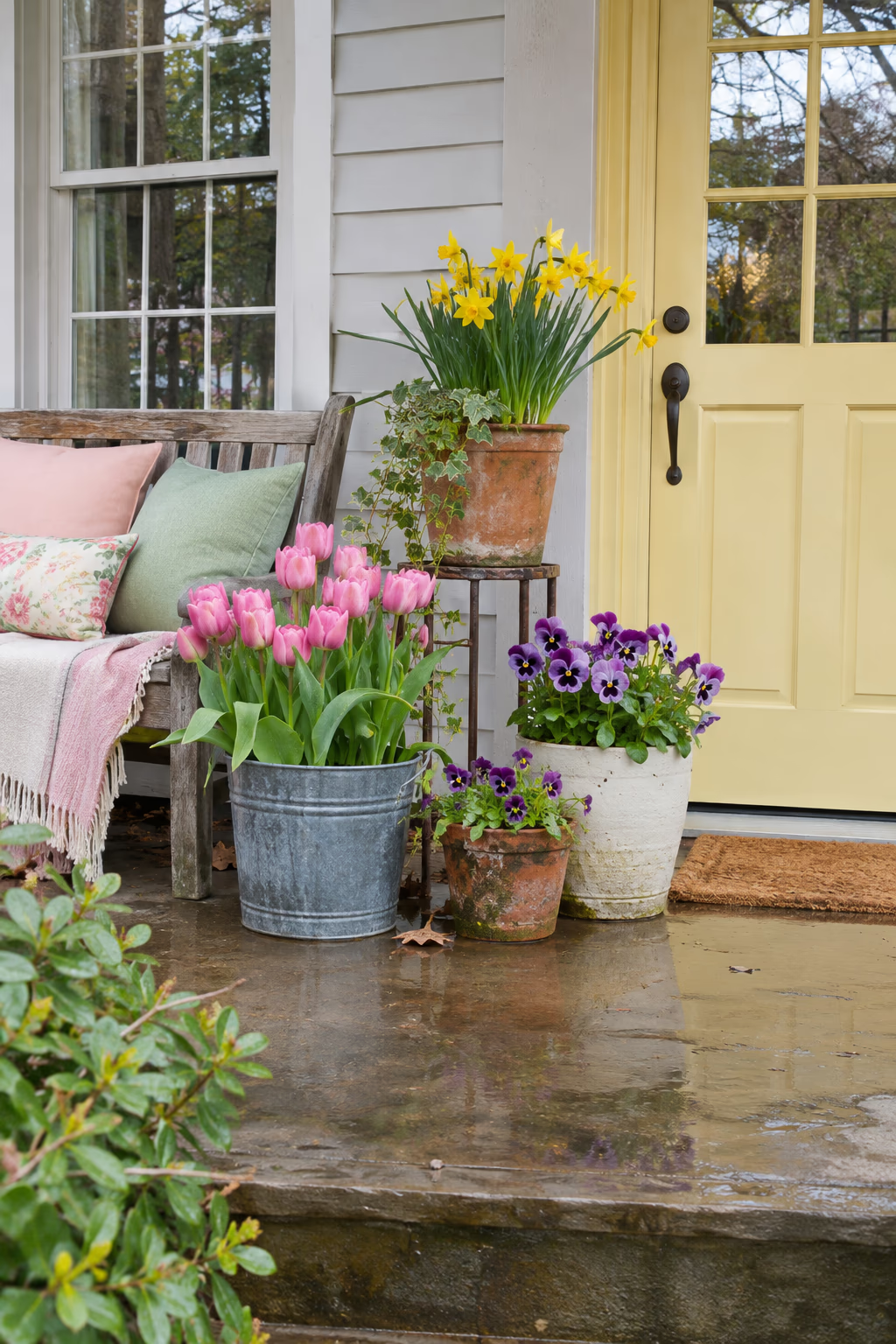
Fresh color after a long winter
Tulips, daffodils, pansies, and primroses are budget friendly and tolerate cool nights. Group pots of different heights near the door and steps for a cheerful look.
Tuck a pastel throw pillow and a lightweight blanket into the chairs to tie the colors together. Light green, soft yellow, and blush are a classic palette.
Watch the forecast. Frost can damage tender plants, so be ready to move pots under cover on cold nights.
23. Match Metal Finishes on Hardware and Fixtures
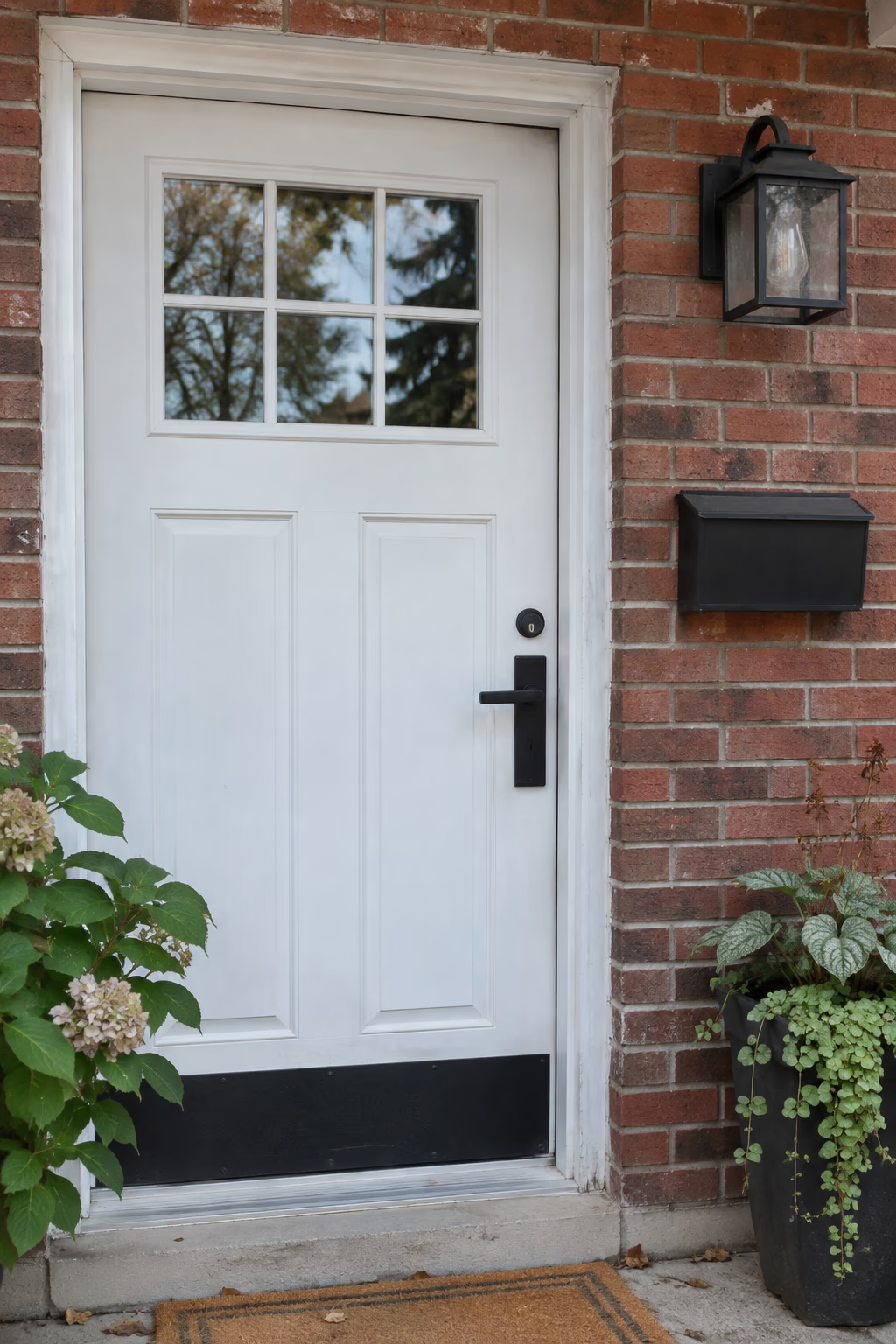
Cohesive details look more expensive
Matching the door handle, light fixture, mailbox, and kickplate in one finish, such as matte black, oil-rubbed bronze, or brushed brass, makes the entry feel designed.
You can often spray-paint older fixtures with a rust-resistant metal paint instead of replacing them. Clean and scuff them first for the best adhesion.
Turn off the power before touching any light fixture, and hire an electrician if you need new wiring.
24. Create a Small Porch Reading Corner
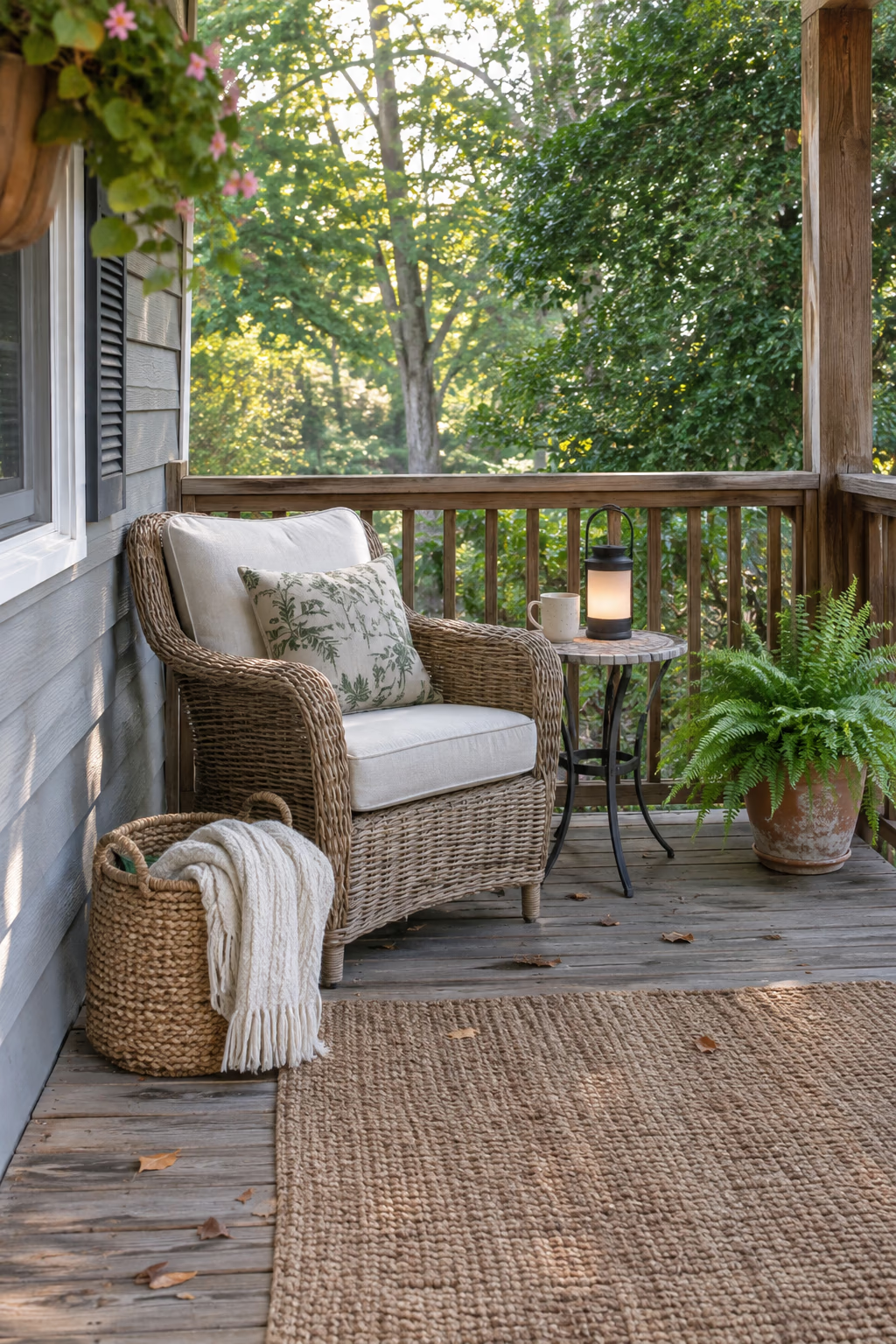
One chair, one table, one quiet corner
You don’t need a large porch for a reading spot. A comfortable chair, a small side table, and a lantern or small lamp in a corner are enough.
Add a basket for a throw blanket and a plant on the table. Position the chair so it gets morning light or evening shade, depending on when you’d use it.
Use an outdoor-rated lamp or a rechargeable LED model, and keep books inside when not in use.
25. Use Crates and Ladders as Plant Stands
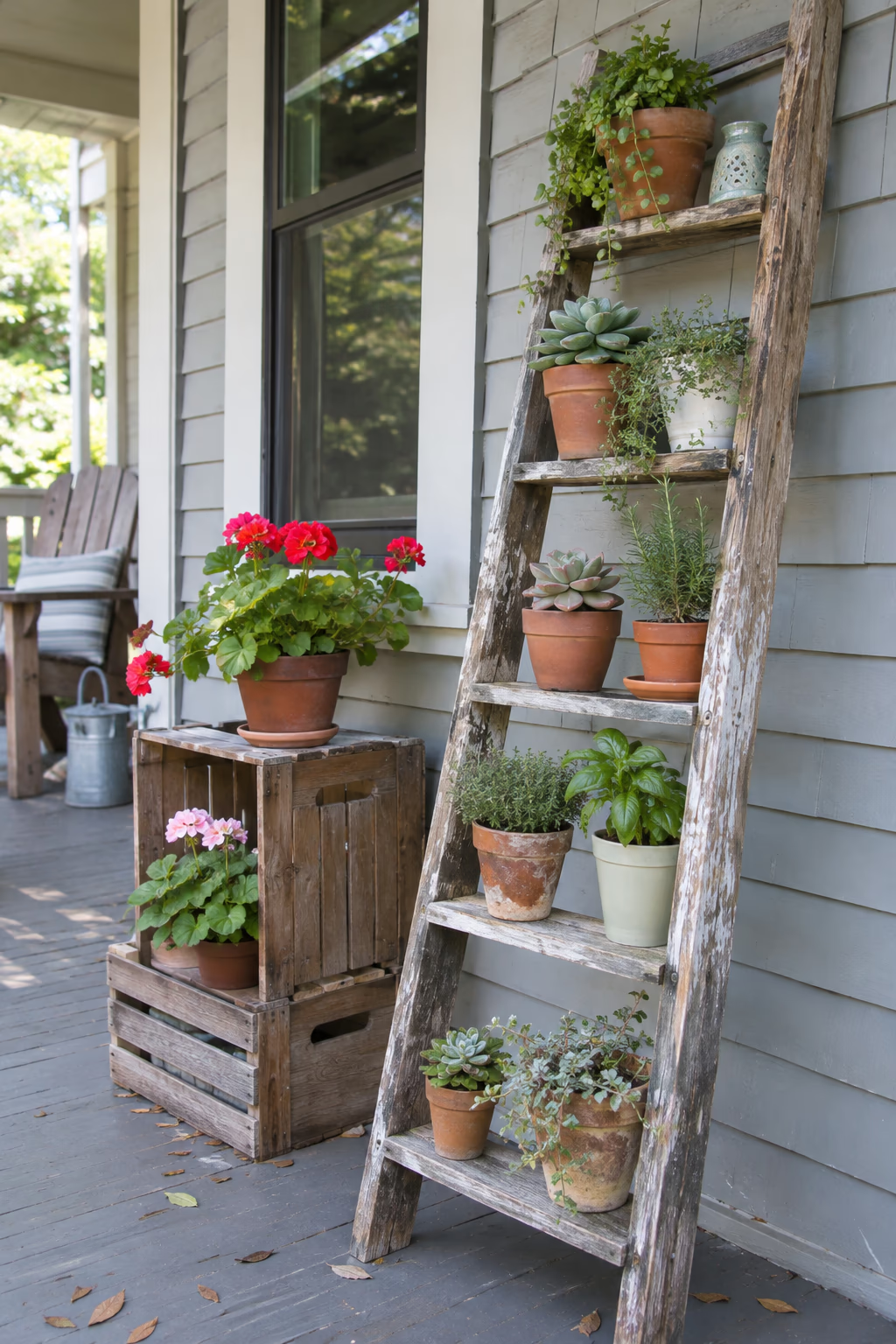
Height and rustic charm on a budget
A wooden ladder leaned against the wall or stacked crates can hold pots at varying heights. This adds depth to a flat corner and makes small plants more visible.
Seal wood with exterior stain or paint, and choose lighter pots so shelves aren’t overloaded. Secure the ladder to the wall to prevent tipping.
Avoid placing stands where they block the path to the door or railings.
26. Hide Clutter With Baskets and a Boot Tray
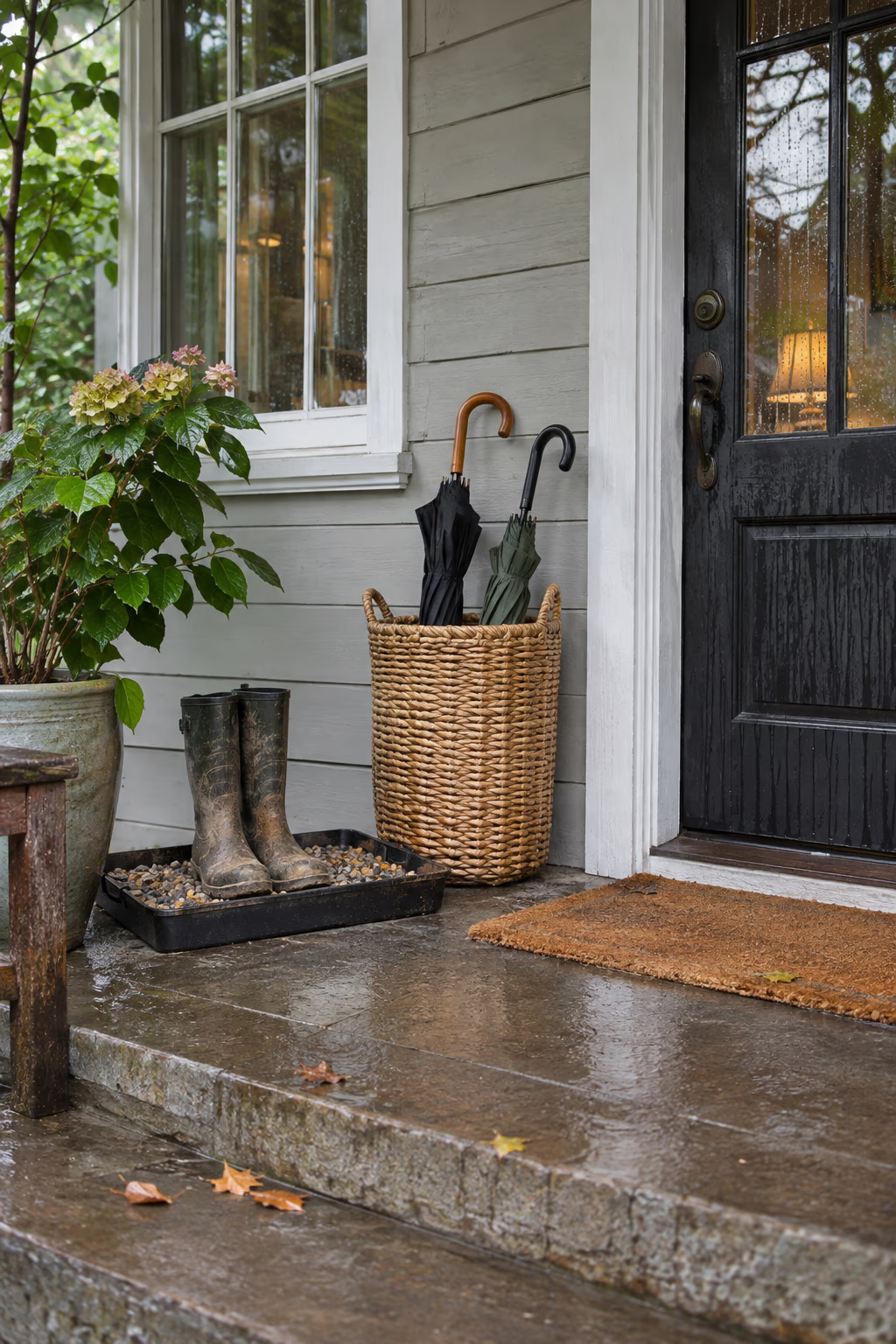
Keep the porch tidy and practical
A big basket for umbrellas or throws and a boot tray filled with gravel keep daily mess under control. Woven or galvanized options look attractive and handle outdoor conditions.
Place the tray near the door so mud stays outside. Choose a rubber or metal tray with a lip to hold water and dirt.
Empty and rinse trays regularly. Standing water can breed mosquitoes in warm weather.
27. Decorate for Christmas With Greenery and Ribbon
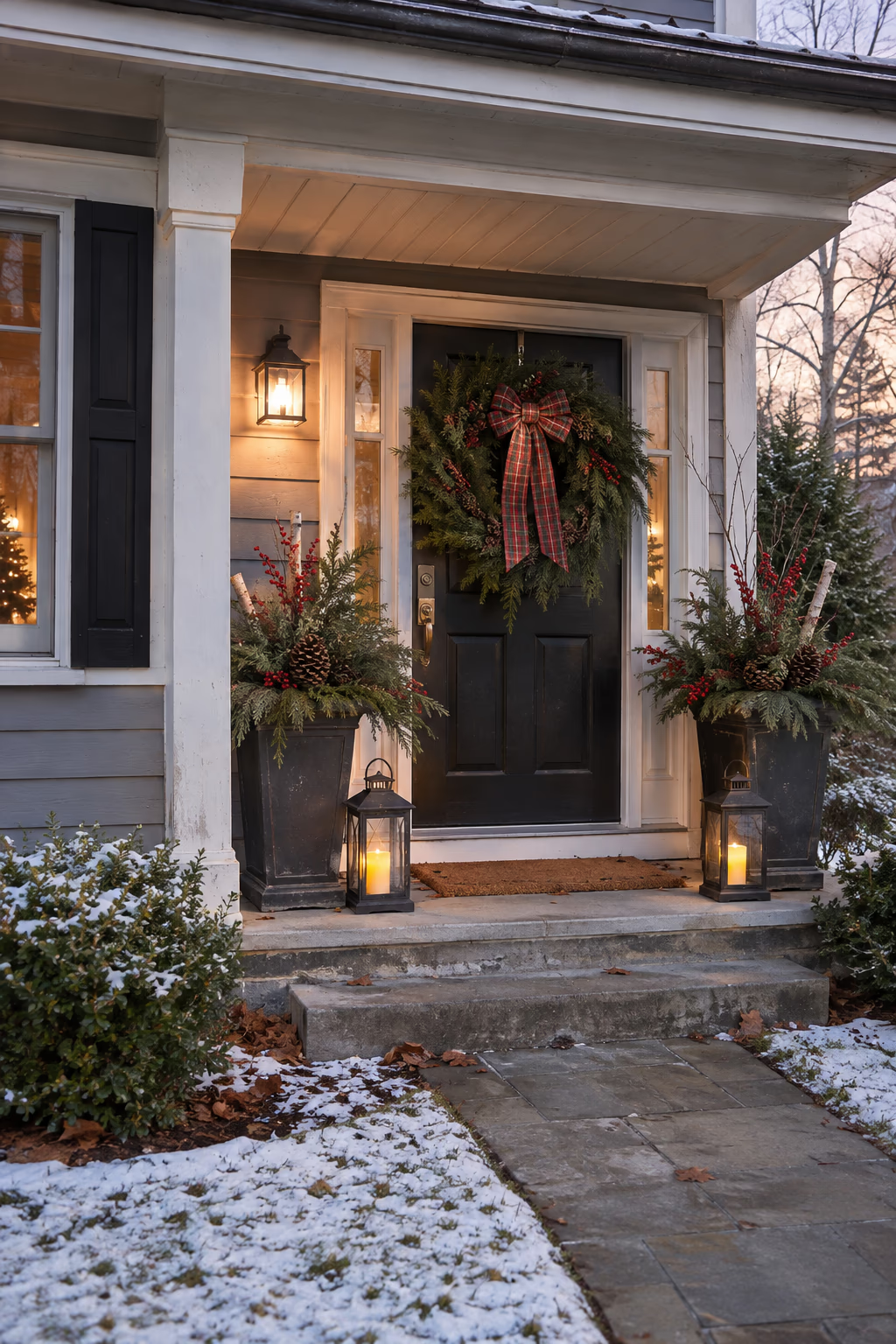
Festive warmth for the winter season
Fill planters with cut evergreen branches, pinecones, and red berries, and hang a big wreath with a plaid or velvet bow. Add lanterns with LED candles for a warm glow.
Real greens look lovely and smell wonderful, but they dry out. Faux options last for years and don’t drop needles.
Use outdoor-rated lights and cords, and plug them into a GFCI outlet. Take decorations down before they become a fire hazard or weather damaged.
How to Plan Your Front Porch Makeover
A little planning helps you get a polished look without overspending or crowding the space. Use these tips before you shop.
- Measure the space. Sketch the porch with door swings and walkways, and leave at least 3 feet of clear path from steps to door.
- Pick a simple palette. Choose two or three colors that complement your siding, roof, and door, and repeat them in cushions, pots, and accents.
- Choose outdoor-rated materials. Look for weather-resistant fabrics, finishes, and fixtures so your decor lasts through sun, rain, and humidity.
- Match plants to light. Note how many hours of sun your porch gets and choose plants accordingly, including your USDA zone.
- Layer your lighting. Combine a main fixture with lanterns or string lights for warmth and safety at night.
- Check rules and budget in phases. Review HOA guidelines and local codes before major changes, then build the look gradually, starting with paint, seating, and plants.
Frequently Asked Questions
How can I decorate a small front porch?
Focus on a few well-scaled pieces: a door color, one or two planters, a doormat, and a single chair or bench. Hanging baskets, wall hooks, and railing planters add decor without taking up floor space.
What colors look best on a front porch?
Choose colors that complement your siding and roof. Deep greens, navy, soft blues, and warm neutrals are popular, and white or cream trim keeps things bright. Repeat two or three colors in your accessories for a cohesive look.
How do I decorate a front porch on a budget?
Start with paint, a few plants, and a good doormat. Thrift stores, yard sales, and DIY projects can supply planters, baskets, and furniture. Build gradually instead of buying everything at once.
What plants are best for a front porch?
Ferns, begonias, and impatiens suit shade, while geraniums, petunias, and ornamental grasses like sun. Evergreen shrubs and boxwood provide structure all year. Choose plants suited to your climate and light.
How often should I change my porch decor?
Many people refresh their porch with each season, swapping wreaths, flowers, and accents. You don’t have to redo everything. Changing a few items, like pillows, plants, and the wreath, is enough to keep it feeling fresh.
Final Thoughts
The best front porch decorating ideas make the entry feel welcoming and usable. A painted door, a comfortable seat, a few full planters, and warm lighting go a long way, no matter the size of your home.
Choose the ideas that fit your style, climate, and budget, and add to them over time. Soon your porch will be the place where you and your guests want to linger.


