
Picture a wide wooden porch at the end of a long day: a swing creaking softly on its chains, a lantern glowing beside the door, and a pot of flowers spilling over the steps. Nothing about it is fussy or new, and that is exactly why it feels so welcoming.
That relaxed, lived-in warmth is the heart of rustic style. It leans on natural wood, stone, metal with a bit of patina, and plants that look like they grew there on their own. It also happens to be one of the most affordable looks to achieve, because imperfect and weathered pieces are part of the charm.
These 23 rustic front porch ideas start with the most-loved classics, like swings, rocking chairs, and reclaimed wood, then move on to lighting, plants, seasonal touches, and practical upgrades. Pick one or two to refresh a small stoop, or combine several to transform a full-width porch.
1. Hang a Porch Swing From Timber Beams
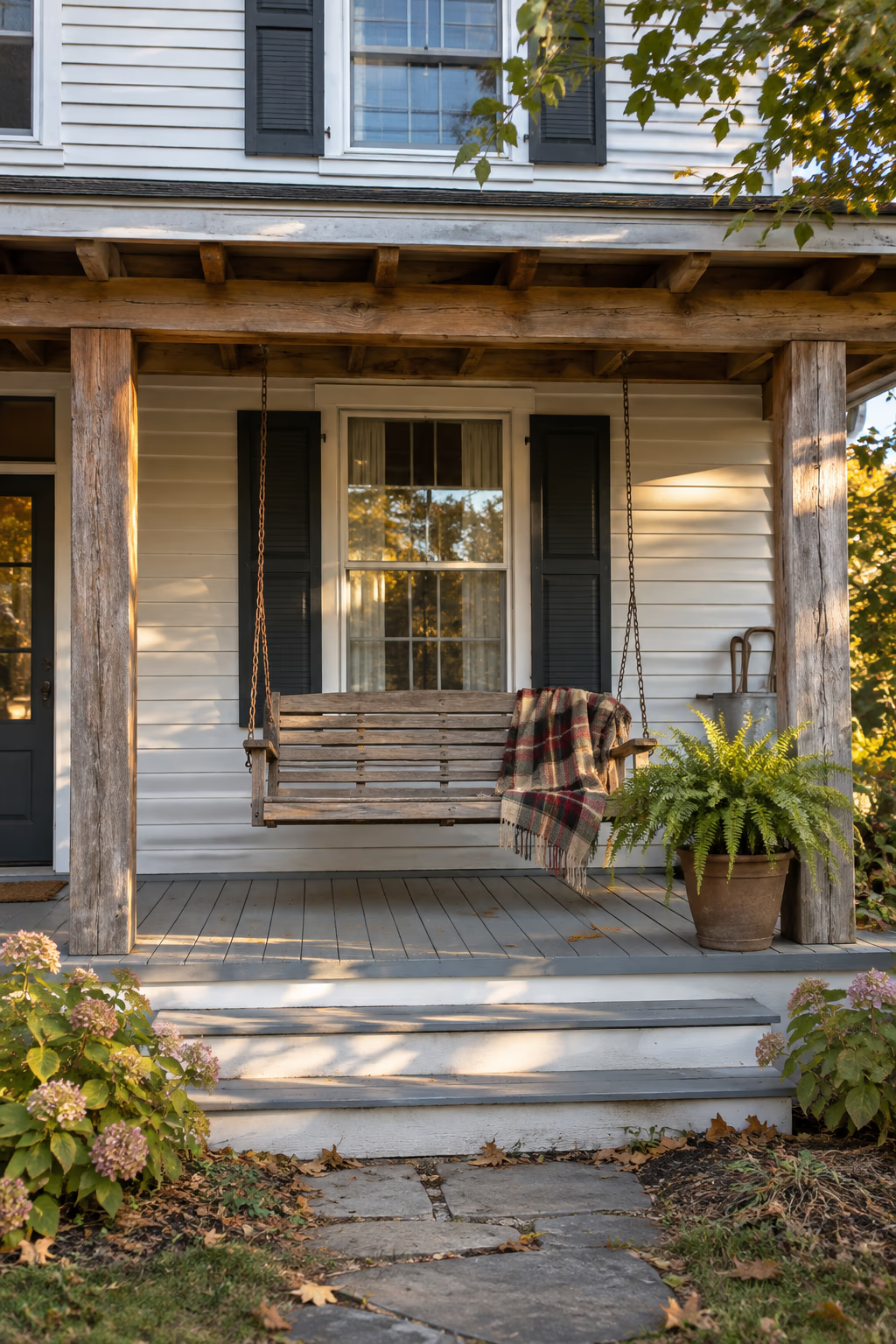
The classic rustic seat for slow evenings
A porch swing is the image most people picture when they think of a rustic porch. A standard swing is about 4 to 5 feet wide, and you’ll want roughly 3 feet of clear space in front and 3 feet behind for it to move freely.
Hang it from solid overhead framing, not just the porch ceiling boards. Use rated eye bolts or hooks screwed into a beam or rafter, and choose chains or rope rated well above the weight of the people who will sit on it.
Cedar and cypress resist weather well, while painted pine looks charming but needs fresh paint every few years. Add a weatherproof cushion and bring fabric inside during long rainy stretches.
2. Line Up Painted Rocking Chairs
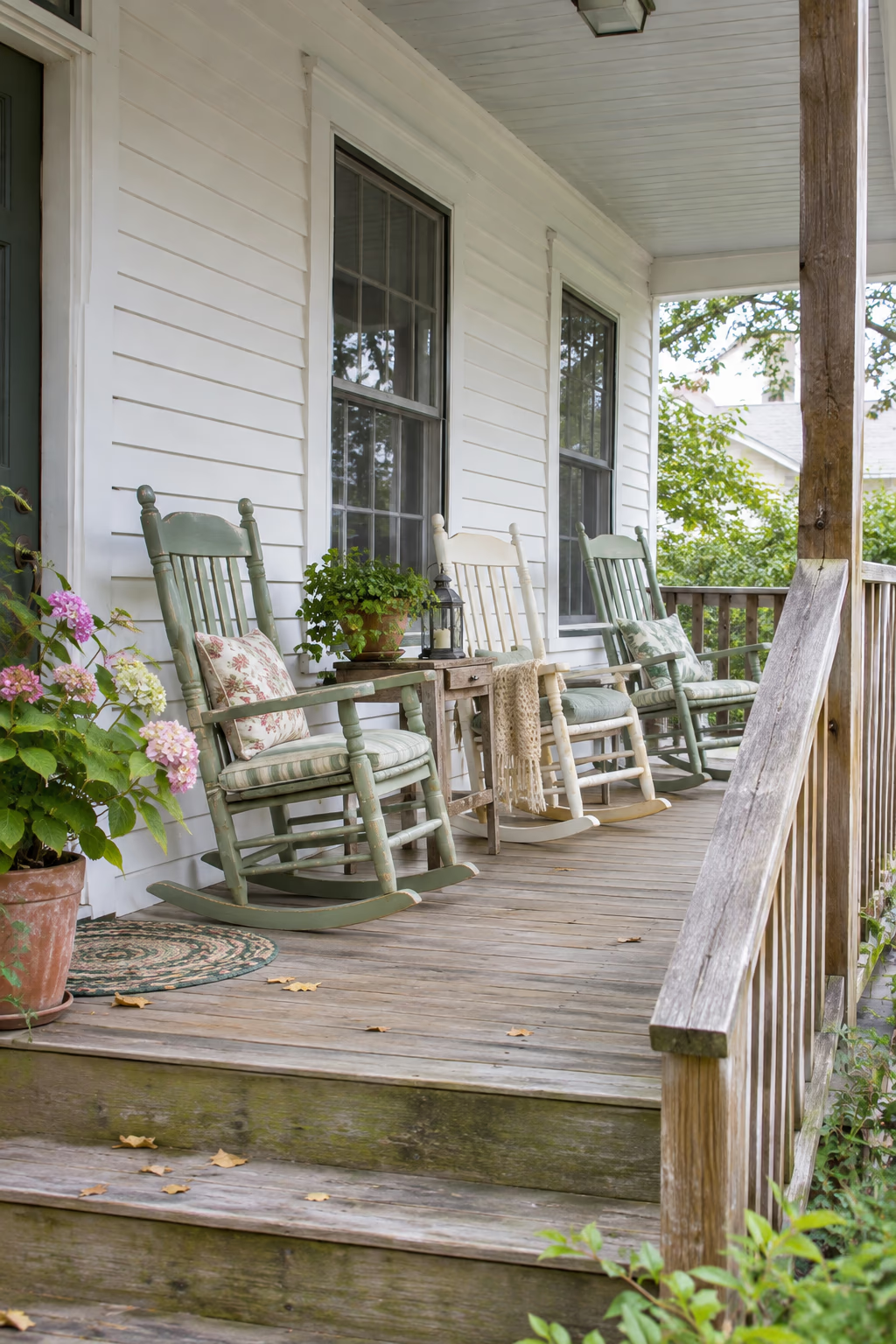
Easy comfort that never goes out of style
Two or three rocking chairs lined along the wall or railing instantly say welcome. Slat-back wood chairs are a budget-friendly choice and are often found secondhand, where a little sanding is all they need.
Painting them in a muted color such as sage green, faded blue, or cream keeps the look soft and weathered. Use exterior paint over a primer, and finish with a clear sealer on the seat and arms, where wear is heaviest.
Leave about 2 feet between chairs so they can rock without bumping, and make sure the rocker arcs don’t extend over steps. Tip a chair back gently to test it before sitting.
3. Wrap the Posts and Beams in Reclaimed Wood
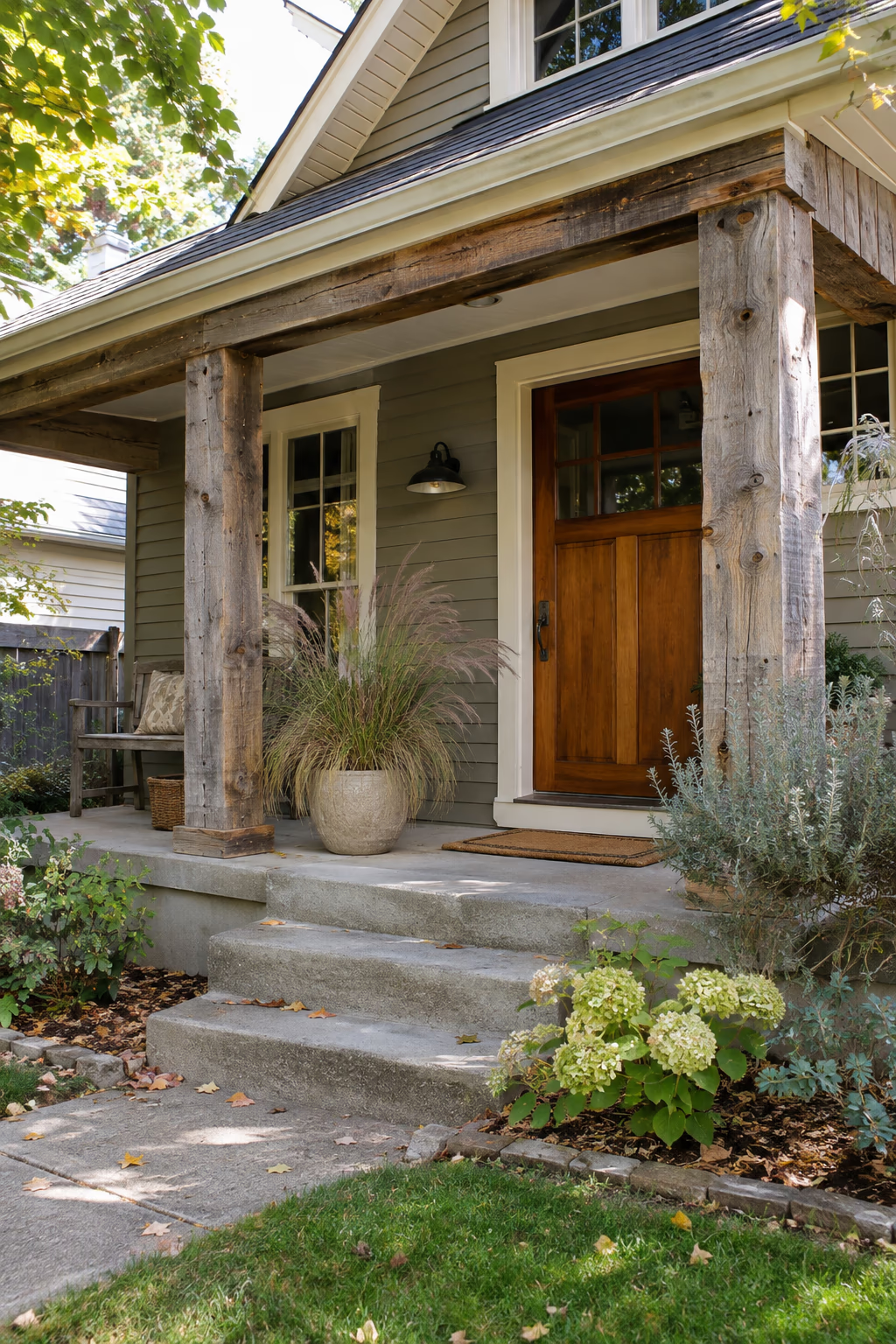
Instant character from weathered boards
Plain square posts and a flat header can be given rustic depth by cladding them in reclaimed barnwood or rough-sawn boards. The mix of gray, brown, and golden tones feels aged in a way new lumber rarely matches.
Reclaimed boards are often sold by the square foot from salvage yards, and some are sold already treated and dried. Fasten them with exterior screws, and seal cut ends to slow moisture getting in.
Check older boards for lead paint before cutting or sanding, and avoid wood that is already soft or rotted. If real reclaimed lumber is out of budget, rough-sawn cedar stained gray gets close.
4. String Warm Lights Across the Ceiling
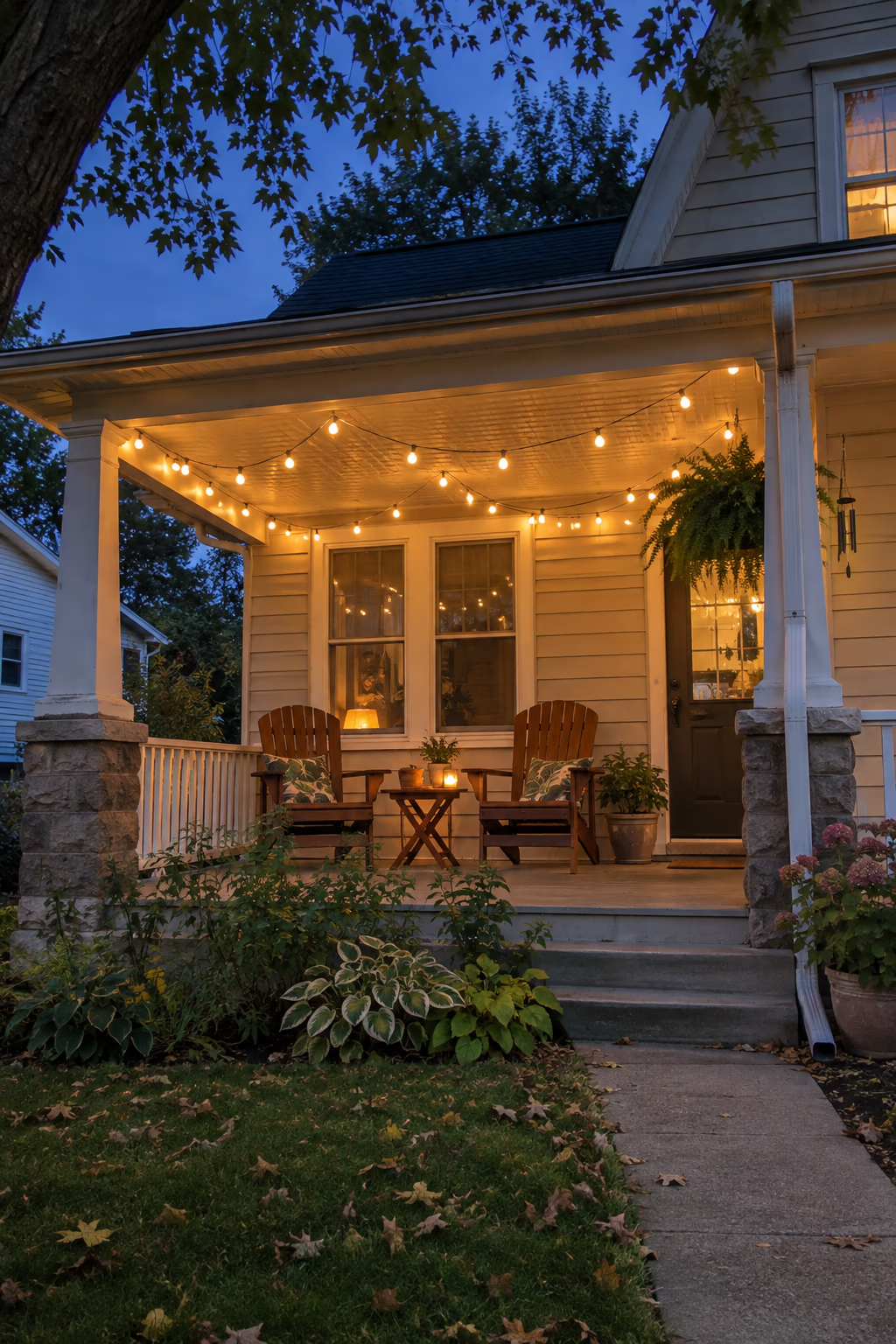
A soft glow that makes the porch feel like a room
Looped strings of warm white bulbs overhead give a covered porch a cozy, café-like feel. Look for outdoor-rated strands with a warm color around 2700K, since cooler white looks harsh against wood.
Attach small cup hooks or clips every 18 to 24 inches so the strand hangs in gentle curves. Plan your outlet position first, and use an outdoor-rated extension cord or a weatherproof timer so the lights switch on at dusk.
Solar strands avoid wiring, though they tend to be dimmer. Either way, use shatterproof bulbs if your porch gets wind or children playing nearby.
5. Fill Oversized Planters With Seasonal Color
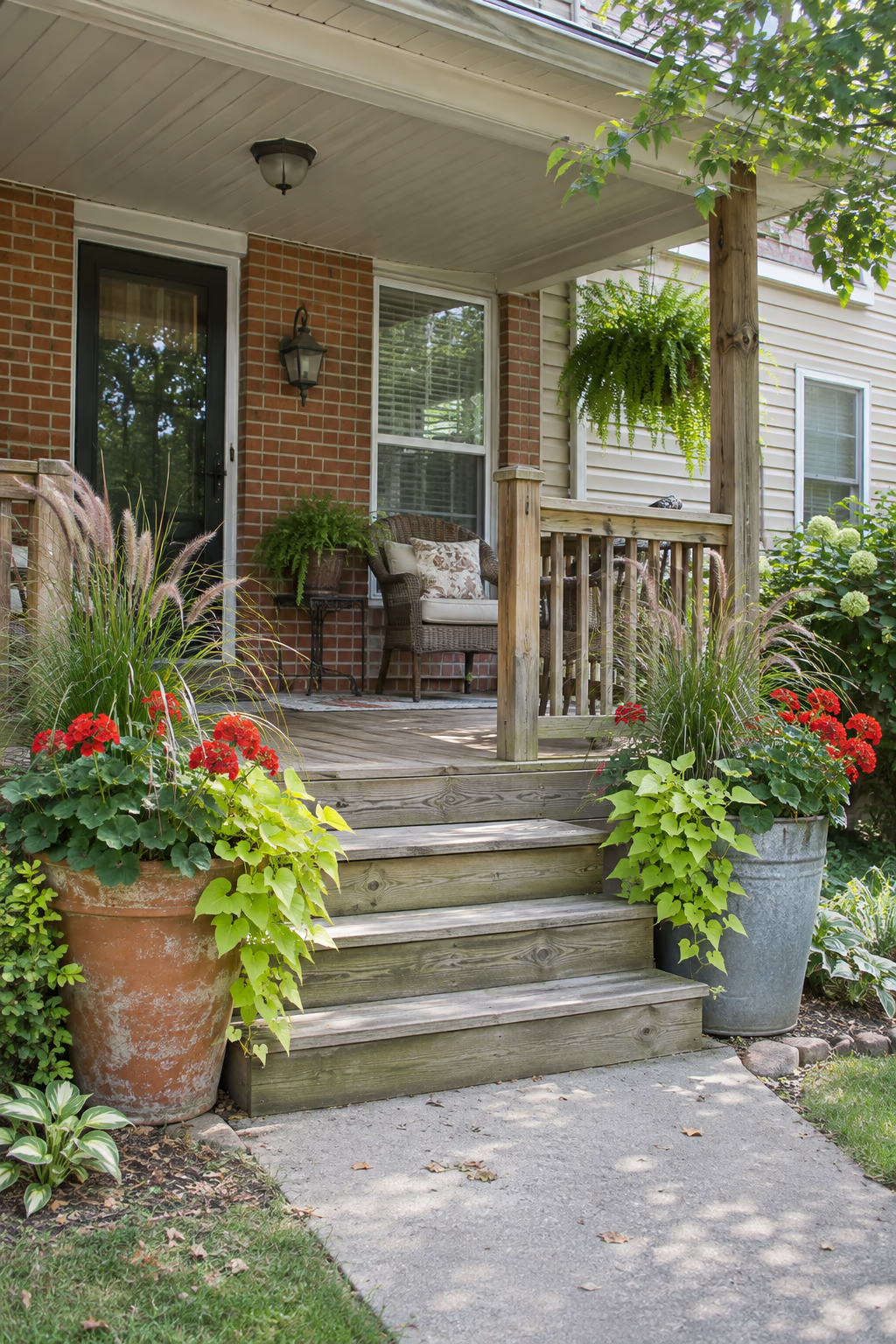
Big pots make a bigger impression
Several small pots can look scattered, while a pair of large planters gives the porch a confident frame. Aim for pots at least 16 to 24 inches wide so the soil stays moist and roots have room.
Use the thriller, filler, spiller method: something tall like ornamental grass in the center, flowers such as geraniums around it, and a trailing plant like sweet potato vine at the edge. Swap in mums and kale in fall, or pansies in cool weather.
Make sure every pot has drainage holes, and raise heavy containers on small feet so water doesn’t stain or rot the porch floor.
6. Layer an Outdoor Rug Over Plank Floors
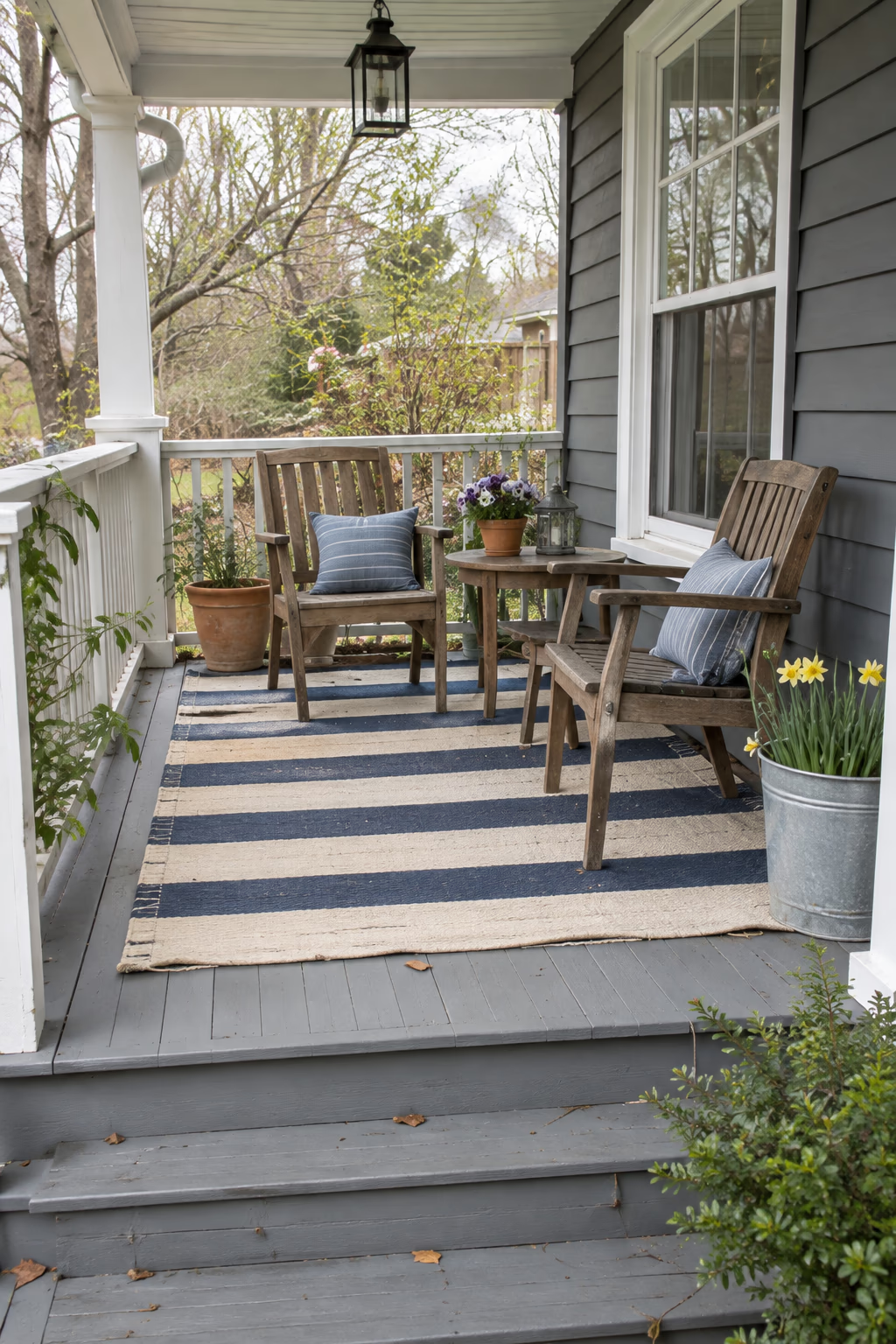
Warmth underfoot and a defined seating zone
An outdoor rug defines the sitting area and adds color to bare boards. Stripes, plaids, and faded vintage patterns suit rustic style, and polypropylene rugs handle rain and sun better than natural fibers.
Size it so at least the front legs of your chairs sit on the rug. On many porches that means a 5 by 8 or 8 by 10 foot rug, depending on the space.
Lift the rug now and then to let the floor dry, since trapped moisture can darken wood or encourage mildew. A non-slip pad made for outdoor use will also keep it from shifting.
7. Hang Galvanized Lanterns Beside the Door
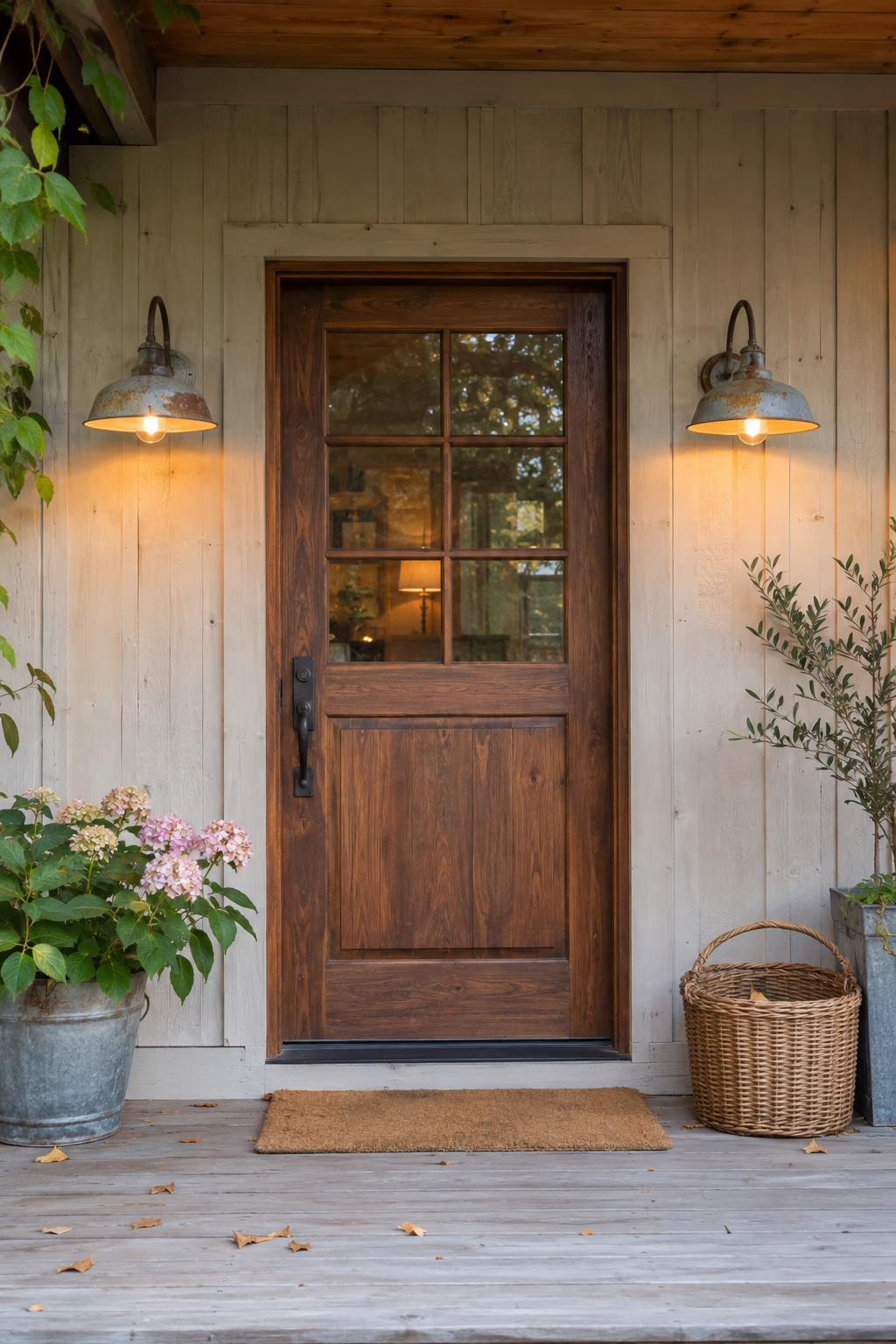
Barn-style lighting with honest, aged metal
Galvanized metal lanterns suit rustic porches because their gray finish ages gracefully and a few spots of rust only add personality. Mount one on each side of the door for a balanced look.
Hang fixtures so the center sits roughly 66 inches above the porch floor, and size them in proportion to the door. If the lights are too small, they will look lost against the wall.
Always use fixtures rated for damp or wet locations, and turn off the power at the breaker before replacing any existing fixture. If you aren’t comfortable with wiring, hire a licensed electrician.
8. Paint the Front Door Barn Red
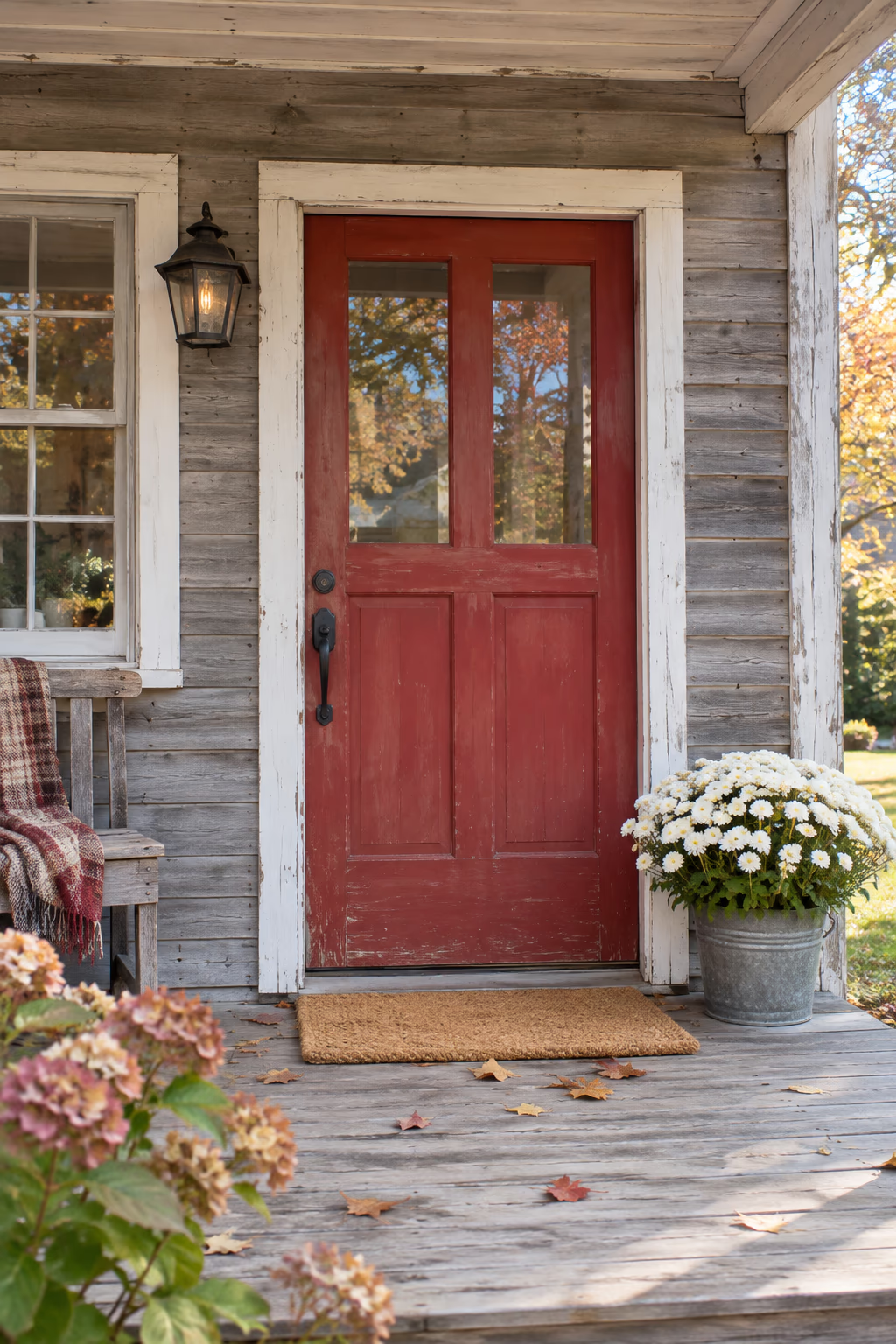
A bold accent that pops against weathered wood
A barn red door is a timeless rustic move because it contrasts beautifully with gray, brown, and cream. Deep red looks especially good against natural wood and stone.
Sand lightly, prime, and apply two coats of exterior enamel with a small foam roller for a smooth finish. A satin or semi-gloss sheen is easier to wipe clean than flat paint.
Test a sample patch first and look at it in morning and evening light, because reds can shift toward orange or pink. If you live in an HOA community, check whether door colors need approval.
9. Build a Wood Pergola Over the Entry
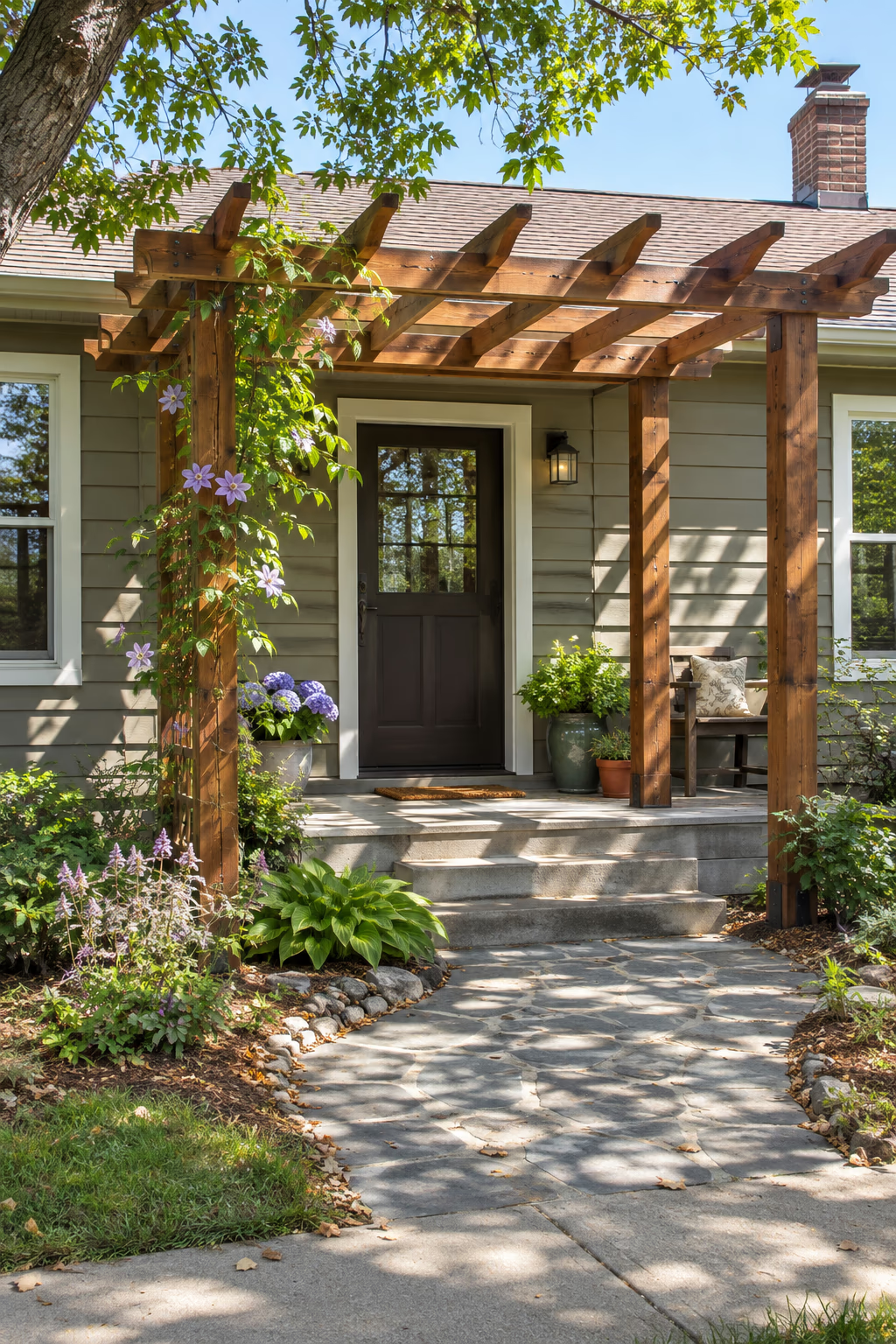
Structure and shade for a plain entrance
If your home has a small stoop without a deep roof, a pergola adds the covered, timber-framed look without a full porch addition. Cedar and pressure-treated pine are common materials.
Open rafters create dappled shade and a perfect place for climbing plants such as clematis, climbing roses, or wisteria. Choose vines suited to your hardiness zone, and keep wisteria well pruned since it is vigorous.
Many towns require a permit for permanent structures attached to a house, and setback rules can apply. Call your local building department before you start, and call 811 before digging footings.
10. Stack Firewood in a Built-In Niche
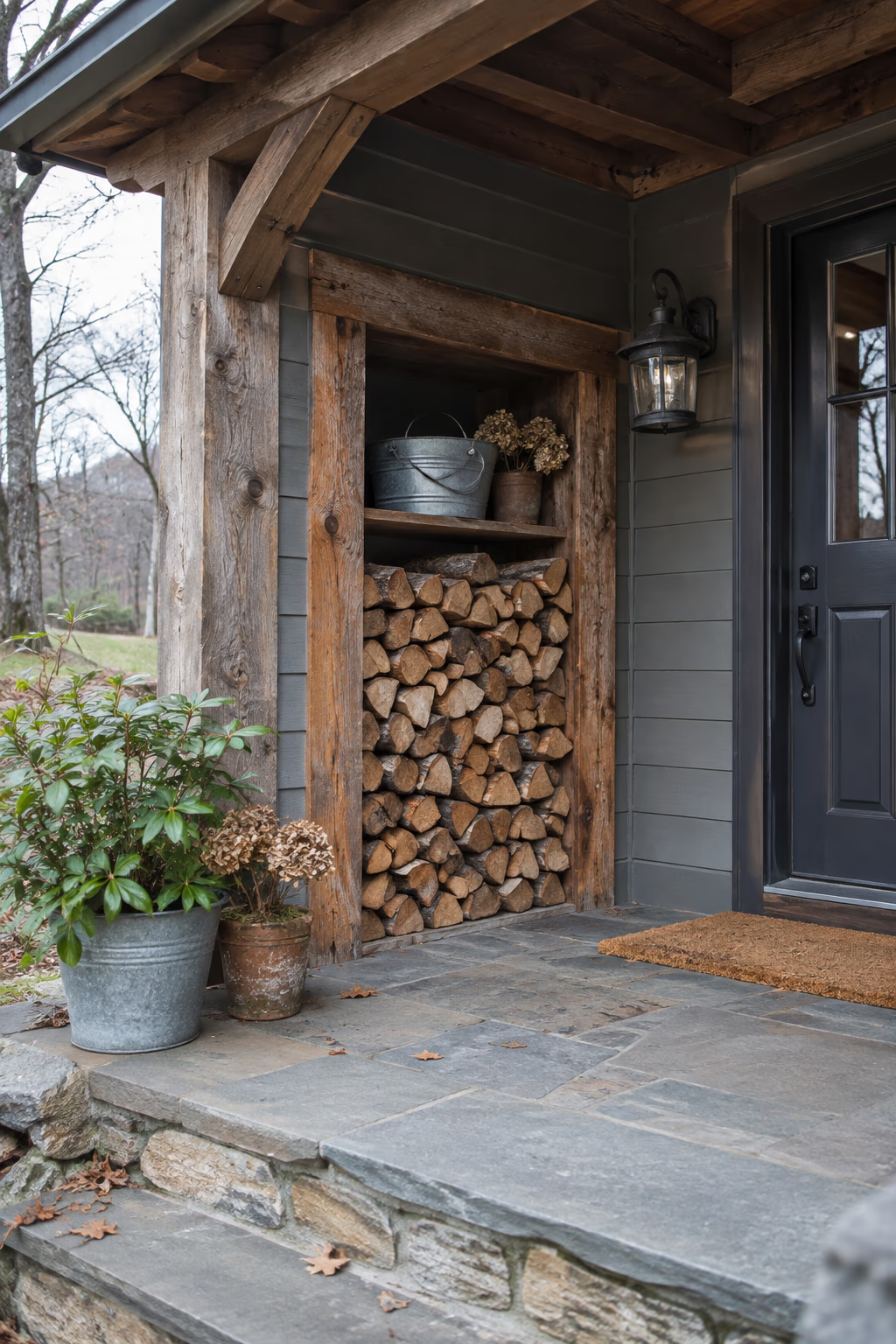
Storage that doubles as rustic decoration
Neatly stacked split logs are among the most natural rustic accents there is. A recessed niche beside the door, or a simple wooden rack against the wall, keeps wood handy and looks intentional.
Stack with the bark side up and leave space for air to circulate, which helps wood dry. Raise the bottom layer off the floor on a couple of boards to keep it from soaking up moisture.
Keep firewood a few feet away from the house wall when possible, since stacked wood can attract termites and other insects. Using it as decoration only works best with a small, tidy stack.
11. Mix Wicker Seating With Plaid Cushions
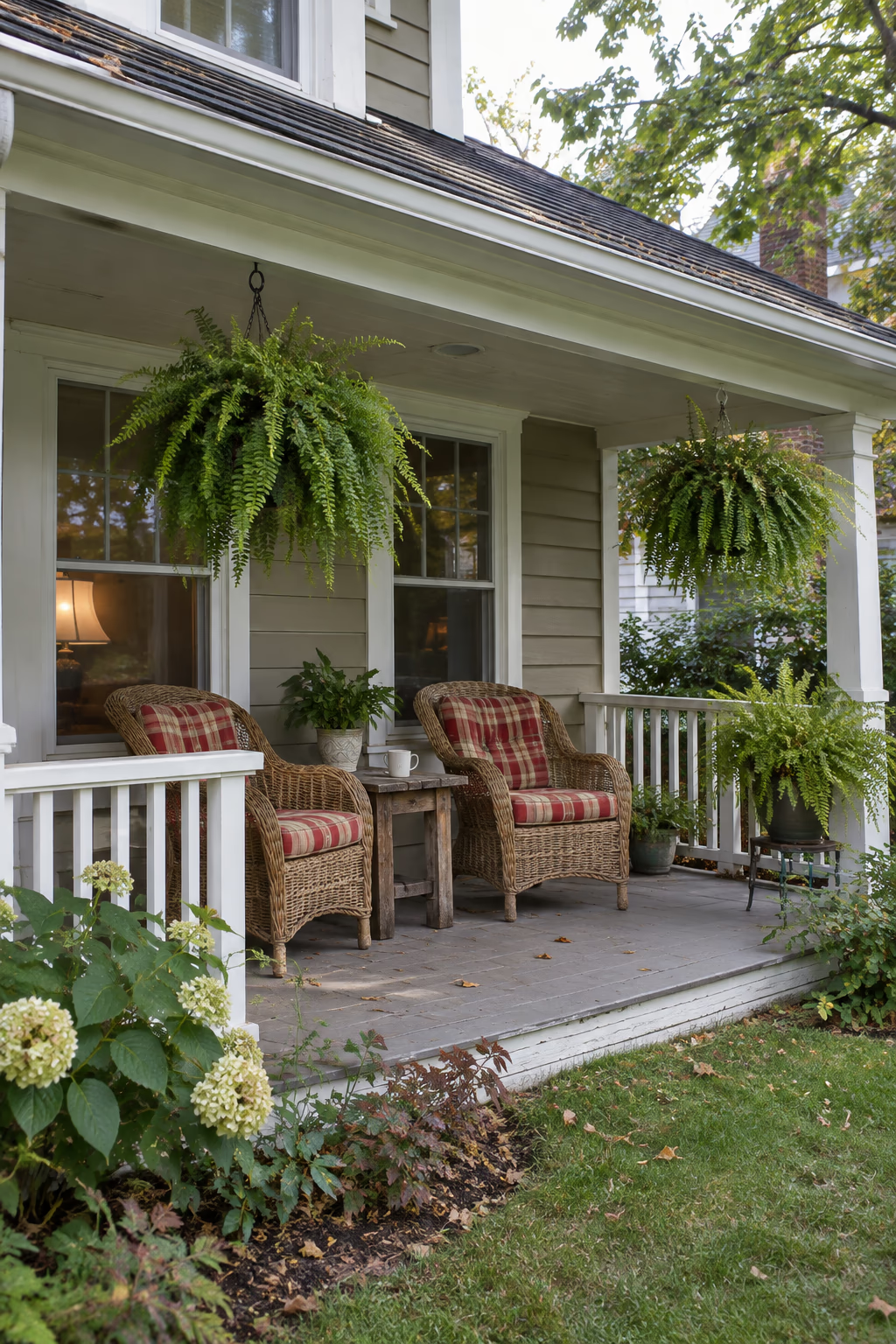
Cottage comfort with a cabin feel
Wicker chairs feel relaxed and natural, and pairing them with plaid cushions brings an immediate cabin vibe. Red, green, navy, and cream checks all work well on a wood-toned porch.
Look for resin wicker if your porch is exposed to rain and sun, since real rattan can fade, crack, and mold outdoors. Cushions with removable covers make cleaning simple.
Keep the furniture in scale with your porch. A pair of chairs and a small table is plenty on a narrow stoop, and a crowded space feels less welcoming than a roomy one.
12. Face the Porch Base With Natural Stone
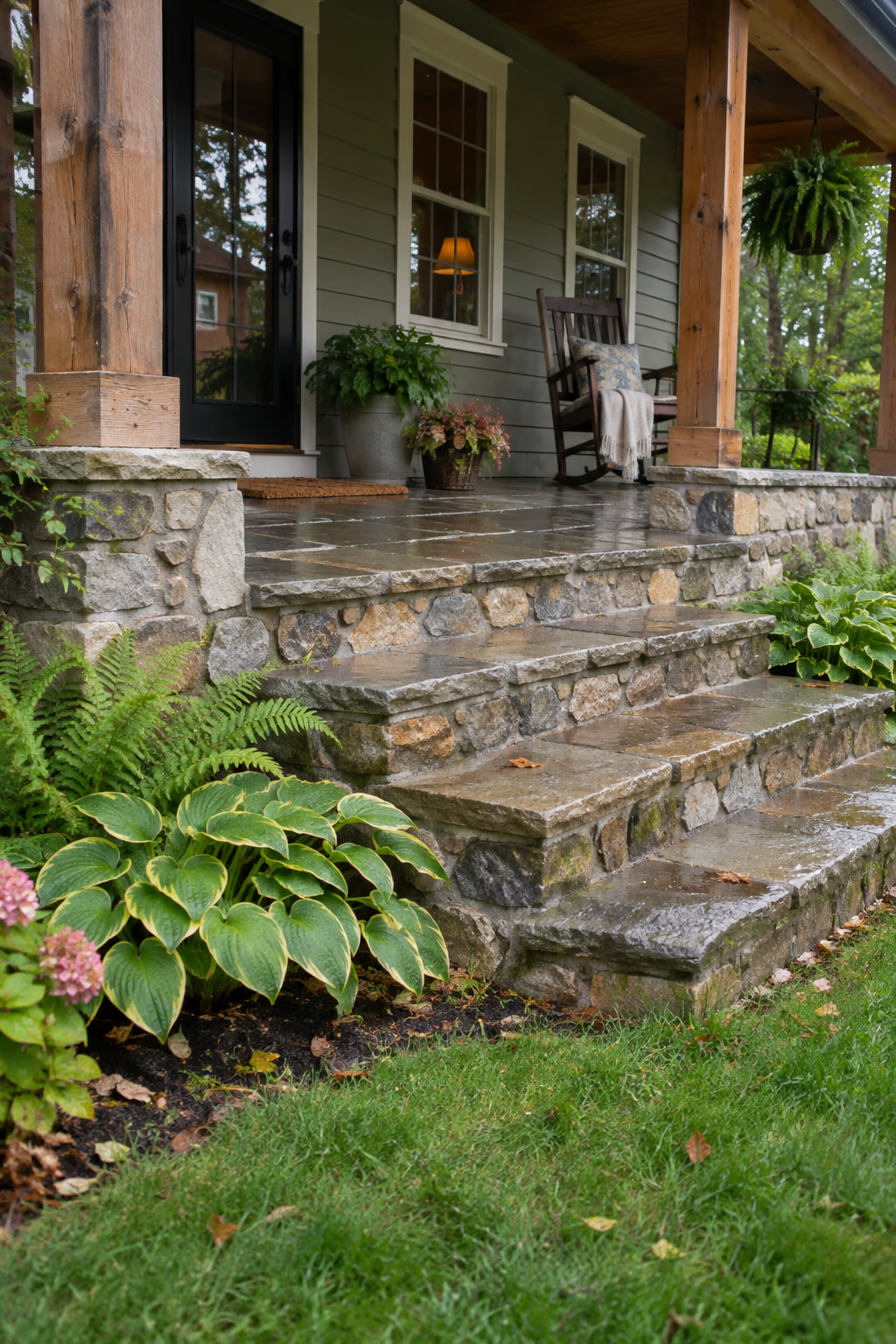
A solid foundation that looks like it grew there
Stone gives a rustic porch visual weight. Fieldstone or stone veneer around the base and steps replaces plain concrete or lattice and ties the porch to the landscape.
Thin veneer is lighter and cheaper than full-thickness stone and can be installed over a properly prepared masonry surface. Local stone usually looks the most natural and costs less to ship.
Plant hostas, ferns, or ornamental grasses along the bottom to soften the edge. Make sure soil grades away from the house so water doesn’t pool at the foundation.
13. Frame the Steps With Cottage Flowers
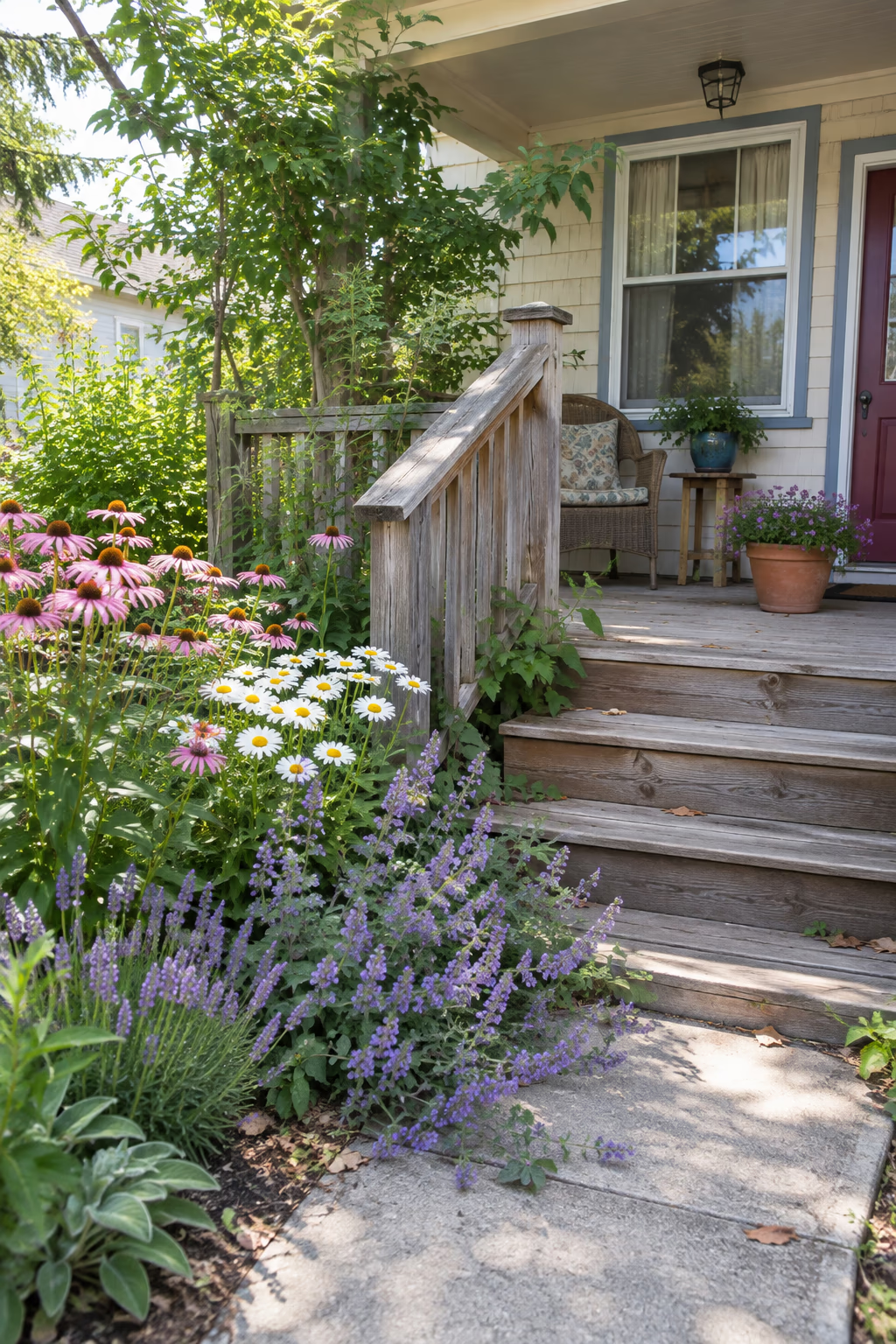
Loose, colorful beds that soften the entrance
Informal plantings work better than rigid, clipped hedges on a rustic porch. Purple coneflower, shasta daisies, black-eyed Susans, catmint, and lavender all give a relaxed look and attract pollinators.
Choose perennials that suit your sun exposure and zone. Most of these prefer six or more hours of sun, while hostas and ferns fit shadier porches.
Keep plants trimmed back from the steps so people can walk safely, and leave a path at least 36 inches wide to the door.
14. Hang a Grapevine Wreath on the Door
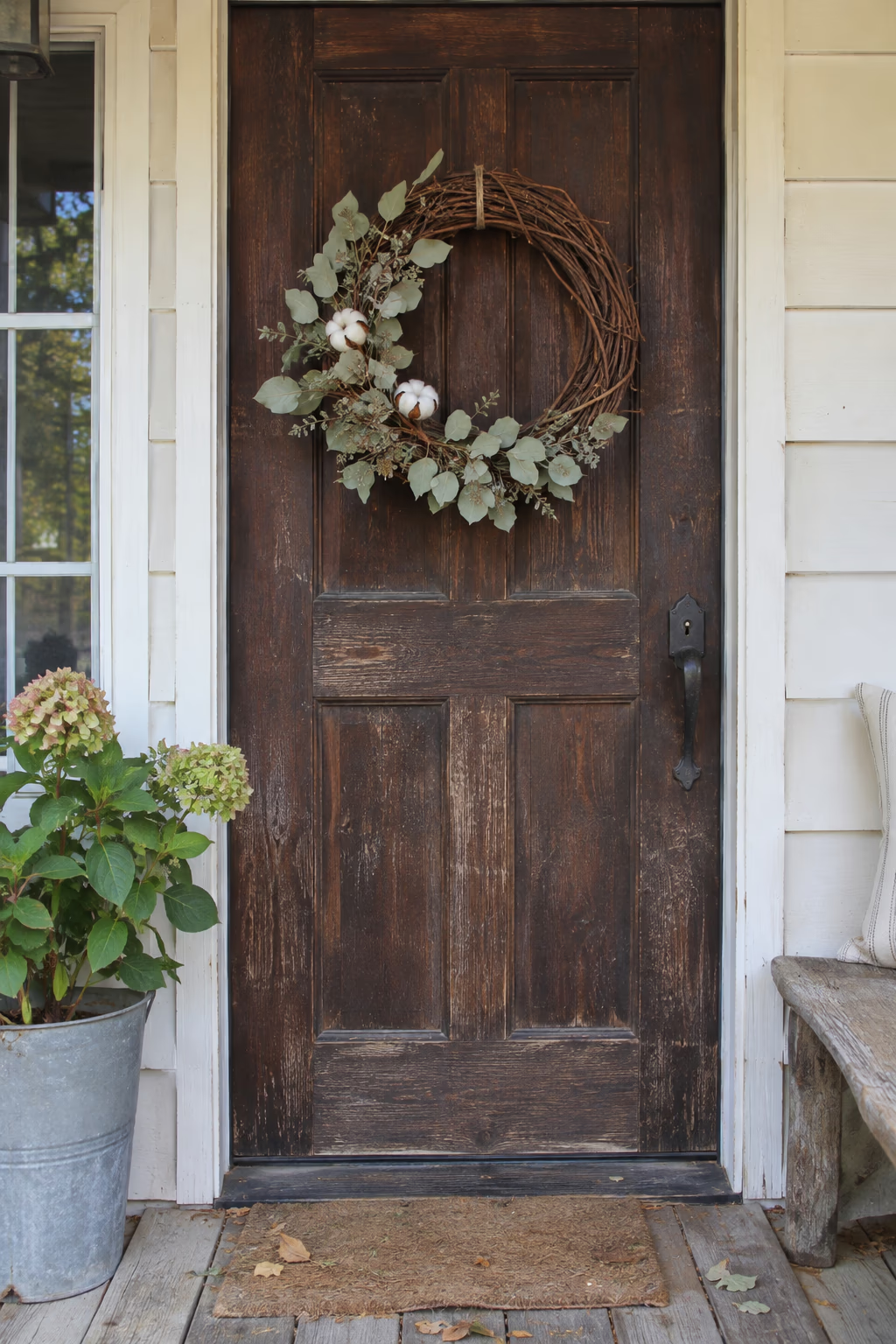
A natural, low-cost welcome
A plain grapevine wreath is inexpensive and fits every season. Dress it with dried eucalyptus in spring, cotton stems in winter, or small branches of berries in fall.
Hang it at about eye level using a simple over-the-door hook or a wreath hanger. This protects the paint and wood from nails.
If your door faces strong sun or rain, wreaths made with real vines and dried material will fade sooner. Bring it inside during harsh weather to extend its life.
15. Add a Storage Bench for Boots
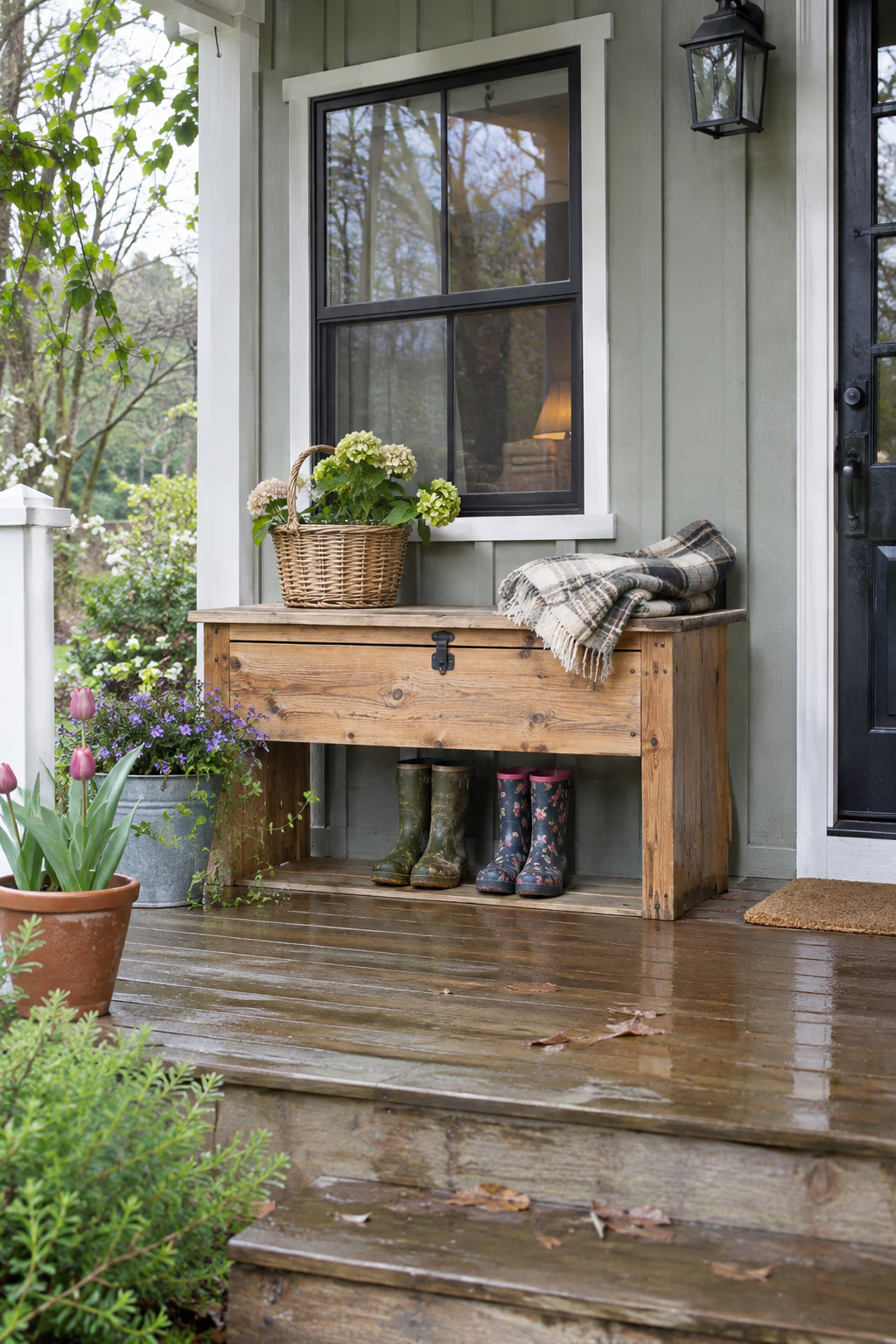
Seating and tidy storage in one piece
A wooden bench with a hinged lid or open lower shelf gives guests somewhere to sit and keeps muddy boots from cluttering the entry. A bench about 16 to 18 inches high and 36 to 48 inches wide suits most porches.
Pine is affordable, while cedar and teak resist rot better. Seal the wood with an exterior finish, and add a few drainage gaps in the base so water doesn’t collect inside.
Keep the bench against a wall under cover when possible. Even weather-resistant wood lasts longer when it avoids constant soaking.
16. Stain the Floorboards a Natural Tone
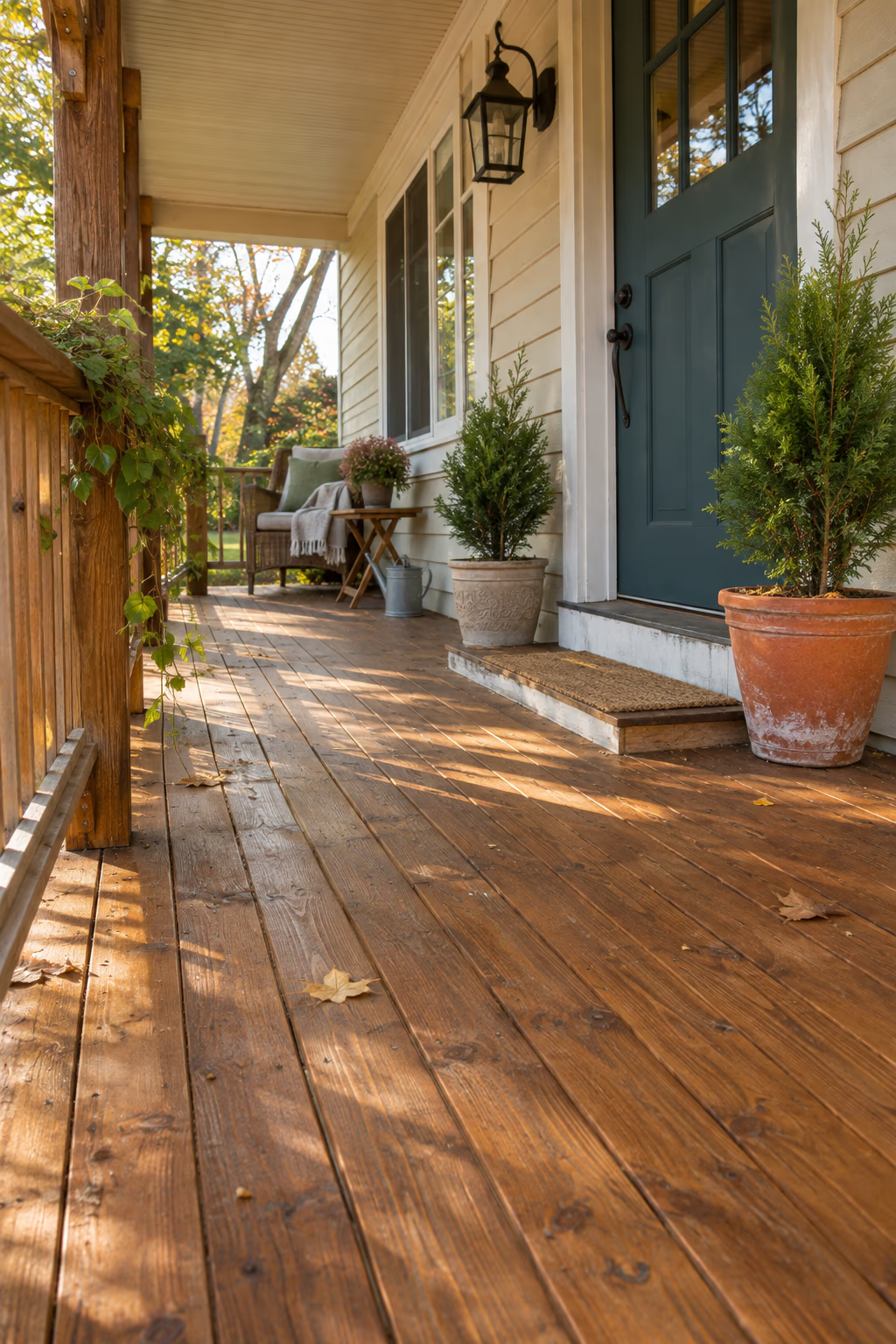
Warm wood grain in place of plain paint
Many porches have floors painted gray or white, but a natural semi-transparent stain highlights the grain and feels much more rustic. Medium browns, cedar tones, and weathered gray all work well.
Clean the floor with a deck cleaner, let it dry fully, and apply stain in thin coats following the label. Let the product cure before putting furniture back.
Porch floors are exposed to foot traffic and water, so plan on recoating every two to three years. Sand any splintered boards and replace any that are soft before you stain.
17. Pile On Pumpkins and Hay Bales for Fall
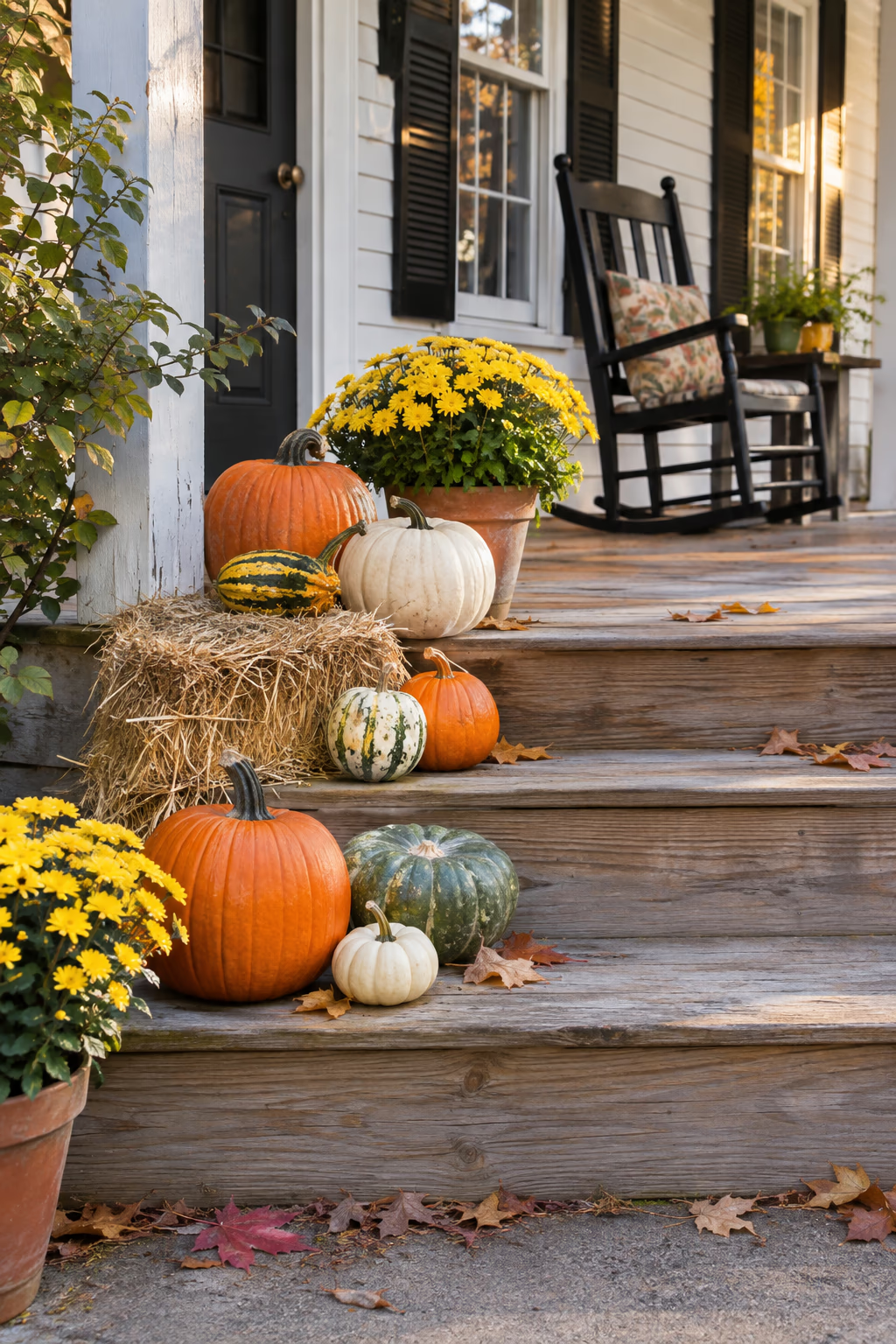
Seasonal charm that fits rustic style effortlessly
Autumn is the season when a rustic porch shines. Stack pumpkins in varied sizes and colors, tuck gourds on the steps, and add a small straw bale as a base for mums.
Odd numbers and varied heights look more natural than perfectly even rows. Natural colors such as white, orange, and green keep things grounded.
Real pumpkins last longer in a cool, shaded spot and soften quickly in direct sun. Avoid cutting them until near Halloween, and clear damp leaves from steps to prevent slips.
18. Flank the Windows With Wooden Shutters
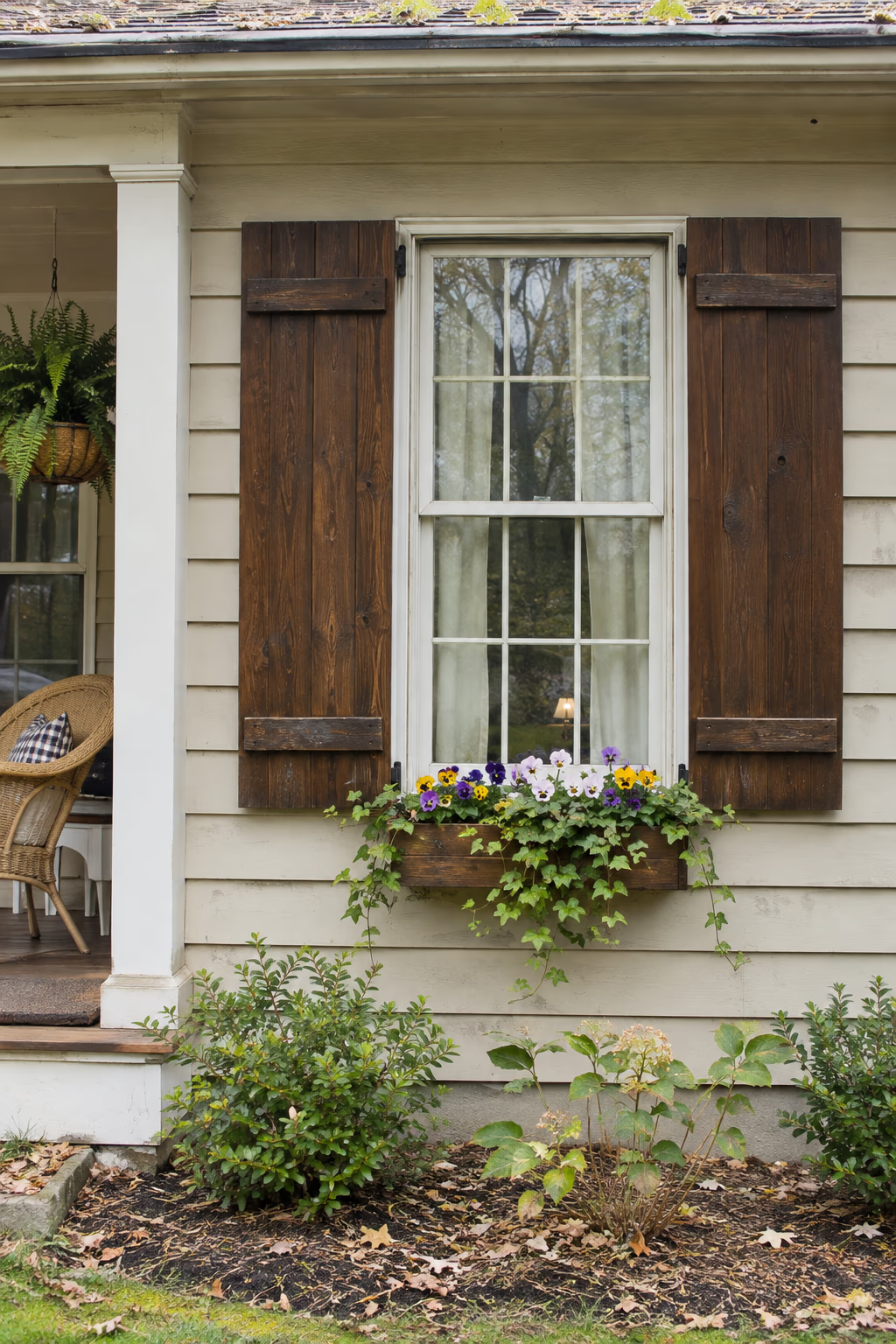
A simple detail that adds old-world charm
Board-and-batten shutters on the windows beside the porch lend a cottage or lodge character. Stain them dark brown or paint them black or deep green for contrast with lighter siding.
For the best look, each shutter should be half the width of the window so they appear able to close. Hang them with simple decorative hinges rather than gluing them flat to the wall.
Wood shutters need repainting or restaining every few years. Composite or vinyl options last longer if low maintenance matters more than authenticity.
19. Turn a Vintage Wheelbarrow Into a Planter
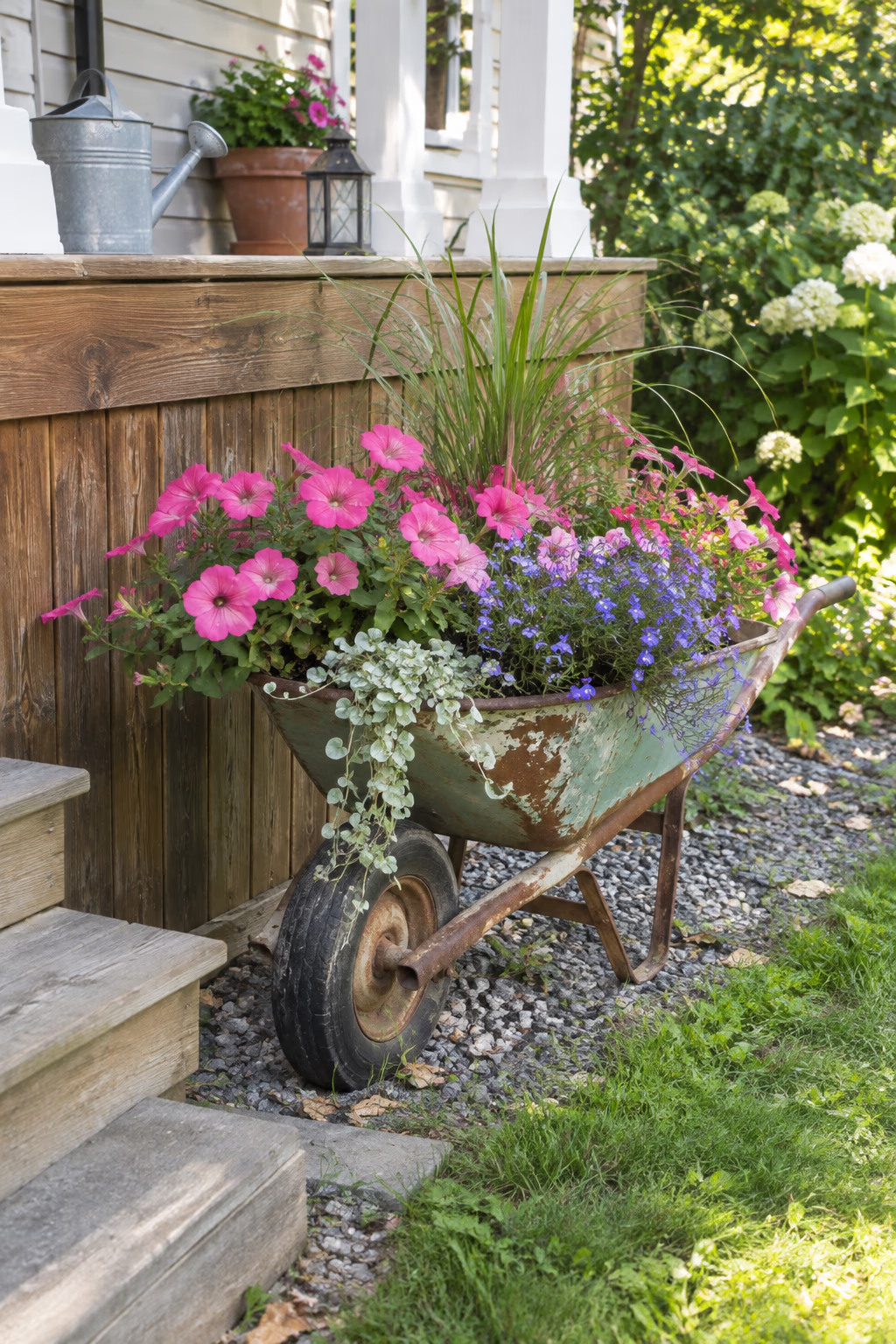
Farm-style charm for almost no money
An old wheelbarrow works like a rolling flower bed. Metal ones with rust and chipped paint look best, and they are often found at yard sales and flea markets.
Drill several drainage holes in the bottom, add a layer of gravel, and fill with potting mix. Petunias, million bells, and trailing ivy are good choices for sun, while impatiens suit shade.
Because the pan is shallow, plants can dry out fast in hot weather. Check the soil daily in summer and water when the top inch feels dry.
20. Top the Porch With a Metal Roof
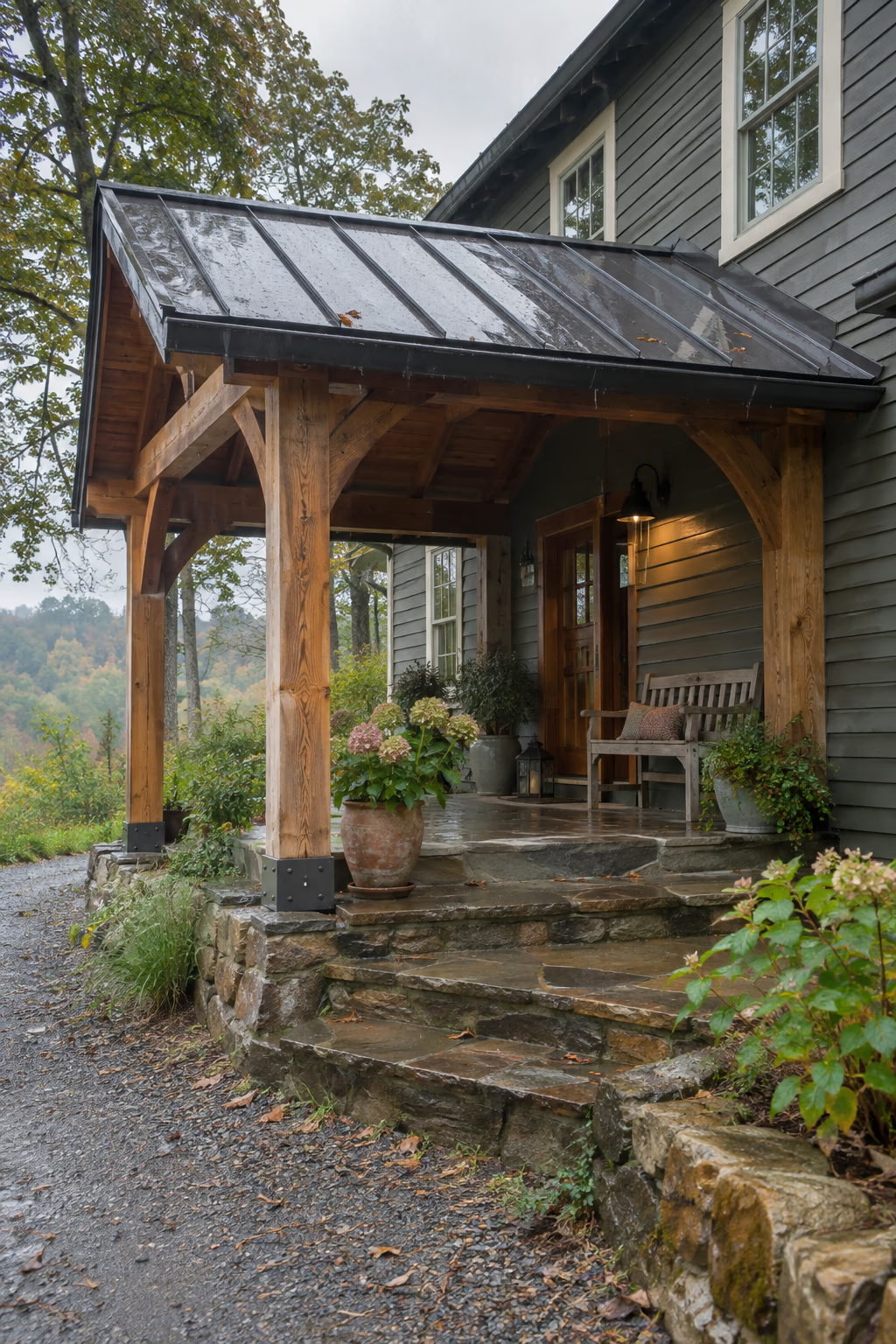
Durable, farmhouse-style cover
A standing-seam or corrugated metal roof is a classic rustic look and sheds rain and snow efficiently. Dark gray, black, or aged bronze tones blend nicely with timber posts.
Metal can be noisy during heavy rain, which some people love and others don’t. Solid decking and proper underlayment under the panels help reduce the sound.
This is a larger project than most ideas on the list. Roofing, flashing, and structural support are best handled by a licensed contractor, and your local code may require a permit.
21. Light Mason Jar Lanterns Along the Rail
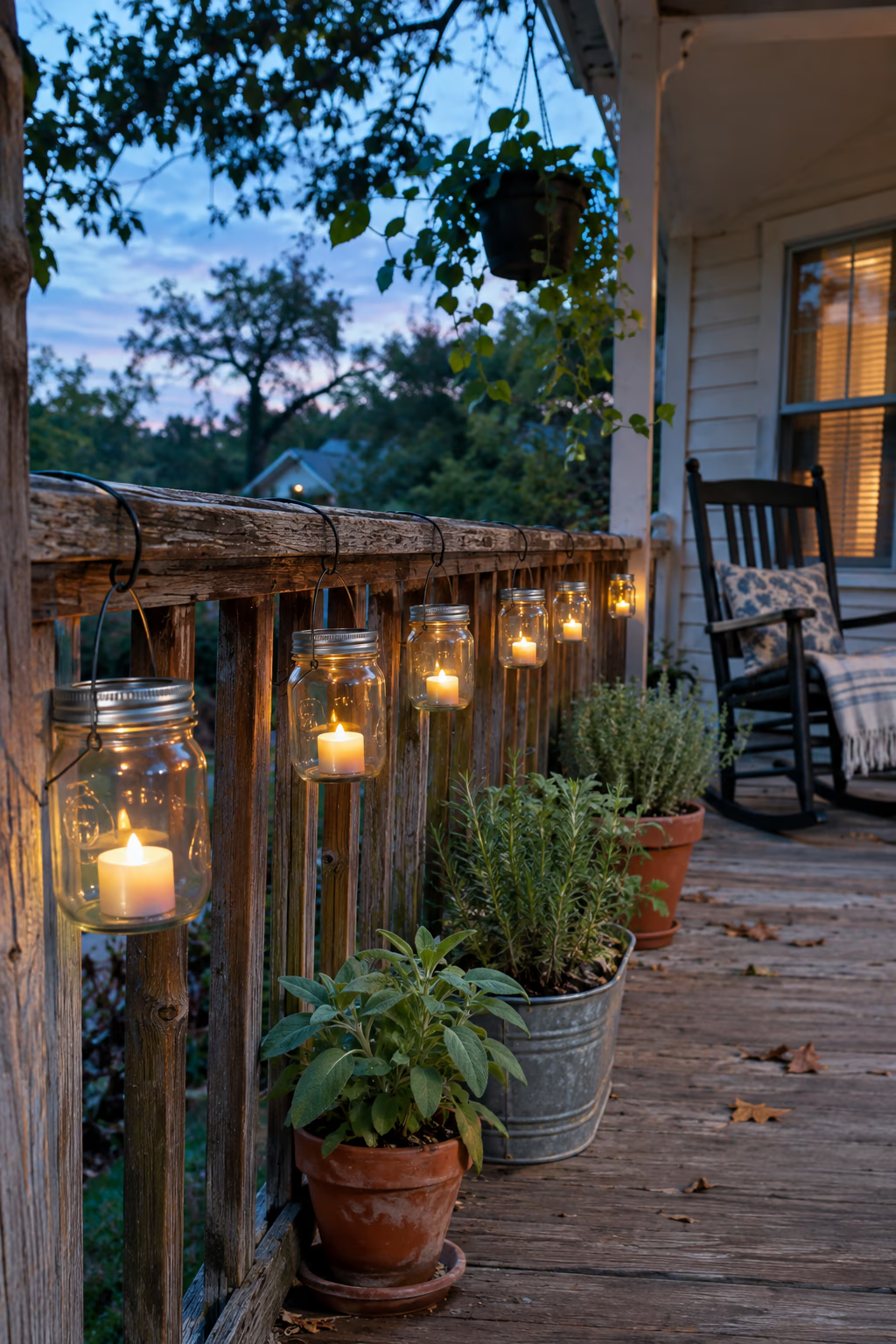
A simple DIY glow for pennies
Mason jars with wire handles turn into hanging lanterns in minutes. Place a flameless candle or small battery light inside and hang them from hooks along the railing or from the ceiling.
Flameless candles are safer on a wooden porch than real flames and don’t blow out in a breeze. Look for ones with a warm flicker and a built-in timer.
Clear glass looks classic, while old blue or green jars add color. Bring jars inside during freezing weather, as cold can crack thin glass.
22. Add a Small Fire Table for Cool Evenings
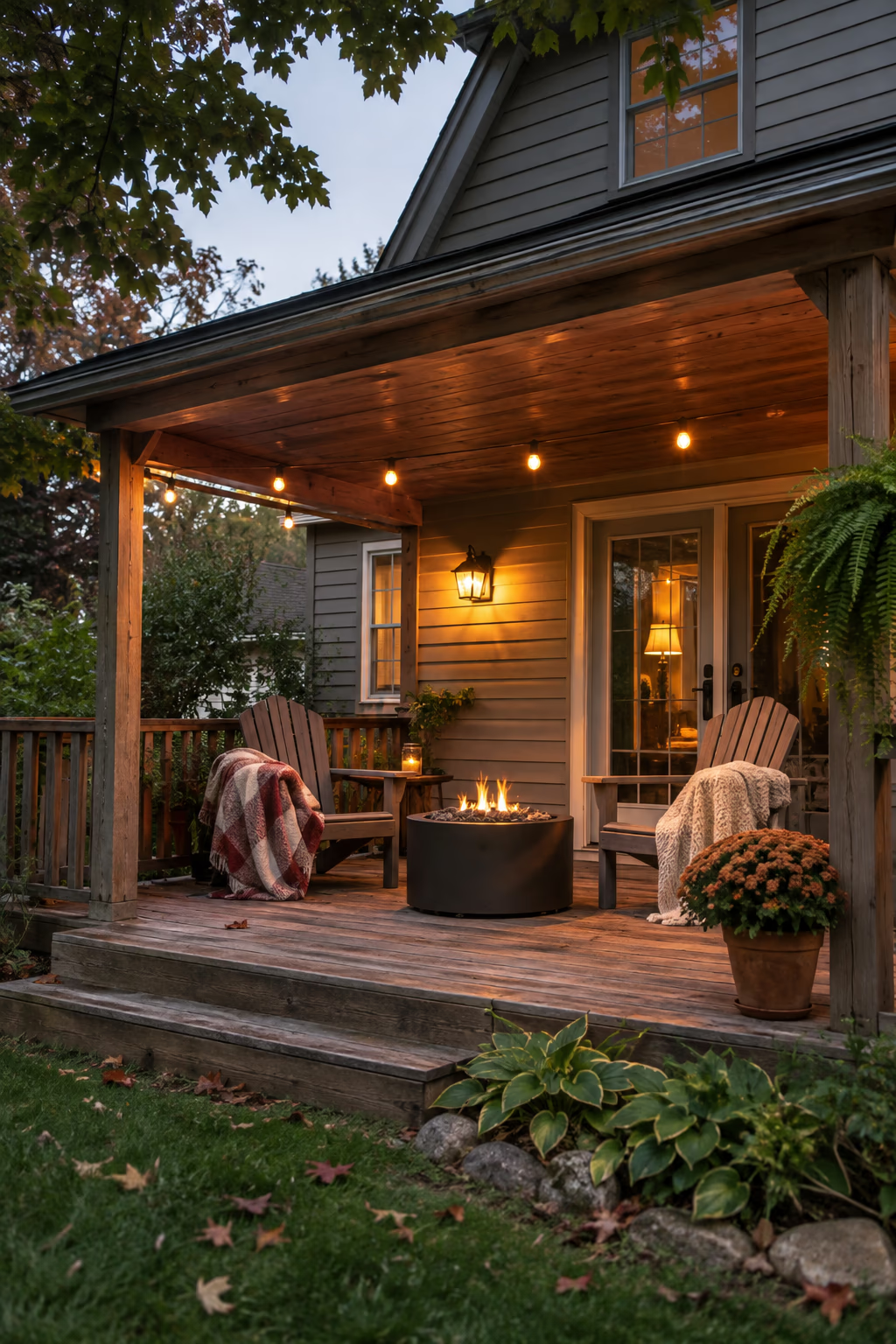
Extend porch season into fall and winter
A compact tabletop or propane fire table gives off gentle warmth and a flickering flame, perfect for chilly nights. Pair it with Adirondack chairs and a basket of wool throws.
Open flames need clearance, so check the manufacturer’s rules and your local fire code. Many require a certain distance from walls and ceilings, and some do not allow open fires on covered porches at all.
A fire table is often safer than a wood-burning fire pit under a roof. Never leave it burning unattended, and keep a fire extinguisher nearby.
23. Display Antique Crates and Milk Cans
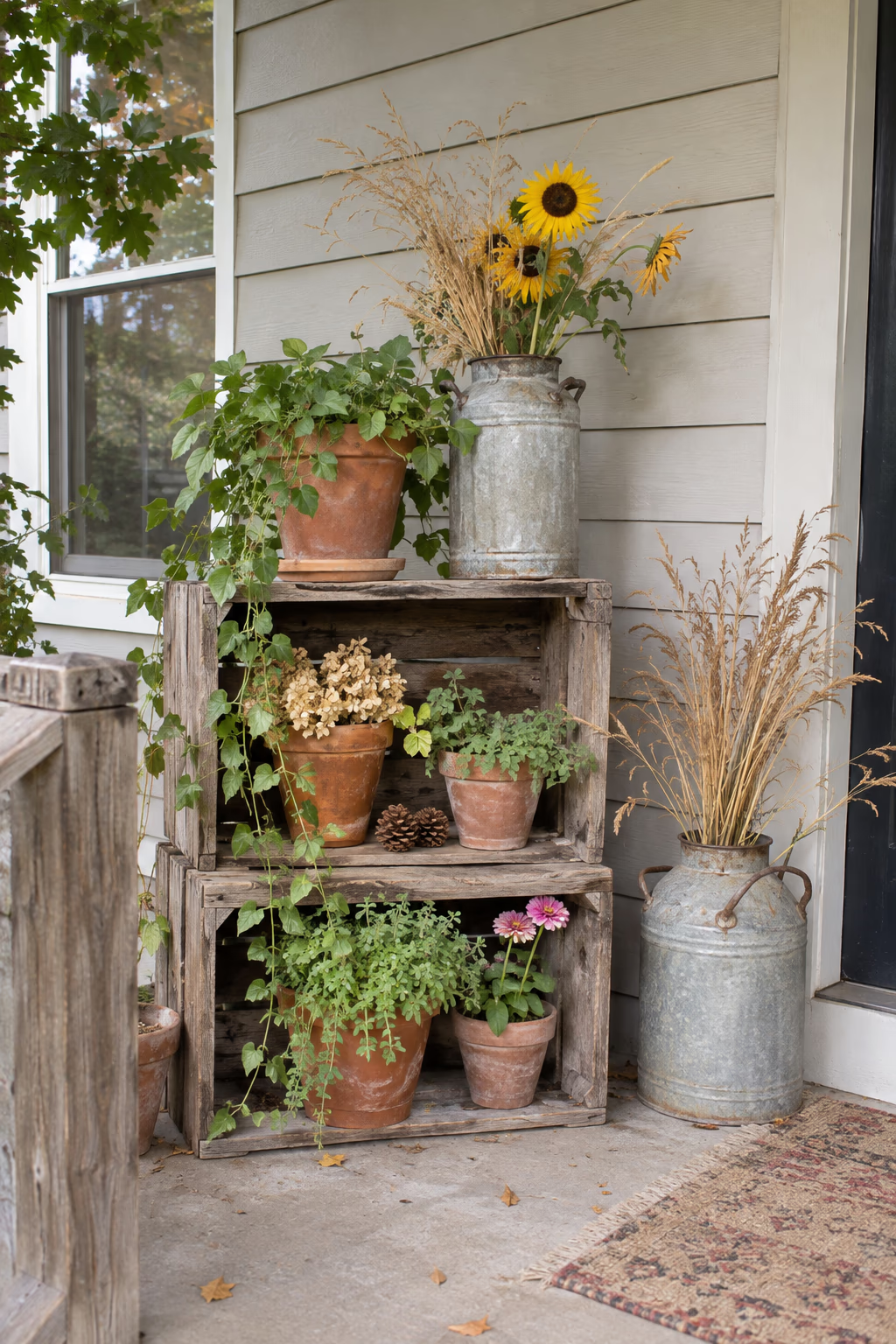
Found objects that tell a story
Weathered wooden crates and dented milk cans give a porch a collected, farm-lived-in feel. Stack crates as shelves for pots, or fill a can with dried grasses or sunflowers.
Look for pieces at estate sales, flea markets, and farm auctions. Keep the display small and purposeful so it reads as decor rather than clutter.
Seal the wood on old crates so it holds up outdoors, and avoid heavy loads on aged wood. Rinse metal cans and check for sharp edges before using them.
How to Plan Your Rustic Front Porch
A rustic porch works best when the pieces feel collected over time rather than bought as a set. A little planning helps you keep that casual look without ending up cluttered.
- Start with the structure. Fix rotten boards, wobbly railings, and peeling paint before decorating, since style can’t hide safety problems.
- Choose a limited palette. Stick to three or four tones such as weathered brown, gray, cream, and one accent like barn red or deep green.
- Pick weather-tough materials. Cedar, resin wicker, galvanized metal, and outdoor fabrics last longer than indoor-only furniture.
- Keep walkways clear. Leave at least 36 inches for the path to the door and make sure steps and railings are unobstructed.
- Layer the lighting. Combine a main fixture with string lights or lanterns, using warm bulbs for a welcoming glow.
- Check rules and budget in phases. Ask your HOA or building department about structural changes, then spread bigger projects over several seasons.
Frequently Asked Questions
What makes a porch look rustic?
Natural, weathered materials do most of the work: raw or reclaimed wood, stone, galvanized or wrought metal, and woven textures. Earthy colors and slightly imperfect furniture reinforce the look.
How can I decorate a rustic porch on a budget?
Shop yard sales and secondhand stores for rocking chairs, crates, and metal containers, then refresh them with paint or sealer. Mason jar lanterns, a grapevine wreath, and a few big planters add impact for little money.
What wood is best for a rustic porch?
Cedar and cypress resist rot and insects naturally, while pressure-treated pine is affordable and sturdy. Reclaimed wood suits accents such as posts and shelves but should be sealed for outdoor use.
Can a rustic style work on a small porch?
Yes. A single chair, a bench, a pair of planters, and a wreath can create a rustic mood in a small space. Choose a few well-sized items rather than many tiny ones.
How do I keep rustic porch furniture from weathering too fast?
Apply exterior sealer or paint, keep furniture under cover when possible, and store cushions during heavy rain. Some weathering is part of the charm, but regular upkeep prevents rot and rust.
Final Thoughts
The best rustic front porch ideas feel honest and comfortable. A swing, a pair of rocking chairs, and warm lighting can do more than an expensive makeover, because they invite people to sit down and stay awhile.
Start with the pieces you will use most, choose materials that stand up to your local weather, and add details like planters and seasonal touches over time. Before long, your porch will be the spot everyone wants to be.


