
Picture a summer evening when the rain starts to fall, and instead of rushing indoors you stay put. You’re on the porch with a cold drink, the roof overhead drumming softly, and the yard turning green and glossy in front of you. That’s the quiet magic of a covered porch.
A roof changes everything. It gives you shade at noon, shelter in a shower, and a comfortable in-between spot that’s part house and part garden. It also adds curb appeal, and it often becomes the most-used space at home from spring through fall.
These 25 covered porch ideas start with the most-loved favorites, like swings, painted ceilings, and fireplaces, then move through lighting, screens, flooring, furniture, and clever layouts. Pick one upgrade or mix several to make your porch work harder and look better.
1. Hang a Porch Swing for Lazy Afternoons
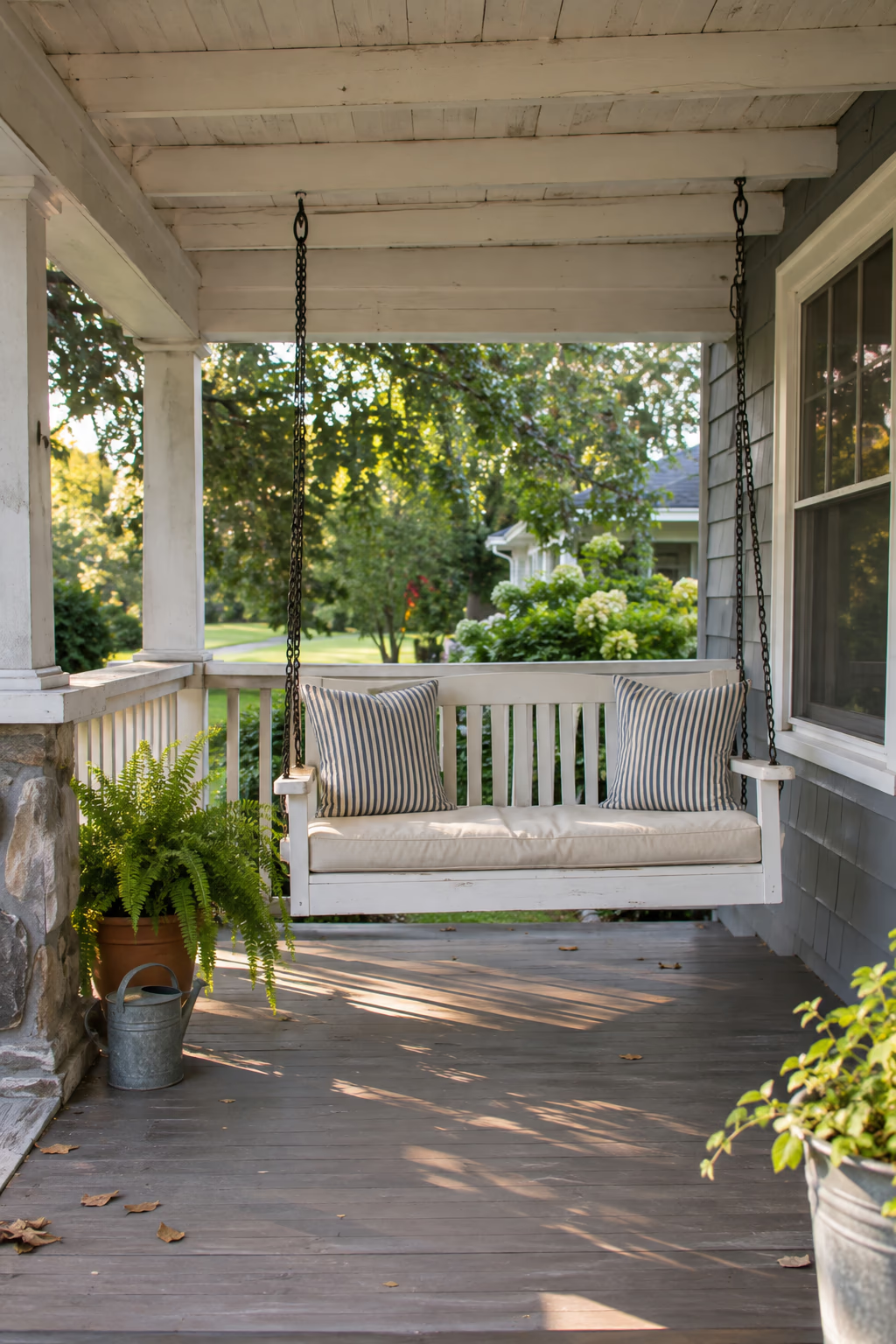
The classic porch seat that slows everything down
A swing is the image most people have in mind when they dream of a porch. A 4- to 5-foot bench swing in painted or stained wood fits most porches, and a deeper daybed-style swing suits wider ones. Add a thick outdoor cushion and a couple of weatherproof pillows.
Hang it from solid framing, not just the ceiling boards. Use rated chains or rope and heavy-duty hooks anchored into a beam or joist. Leave about 3 feet of clear space in front and behind for the swing arc, and hang the seat roughly 17 to 19 inches off the floor.
2. Paint the Ceiling Haint Blue or Add Beadboard
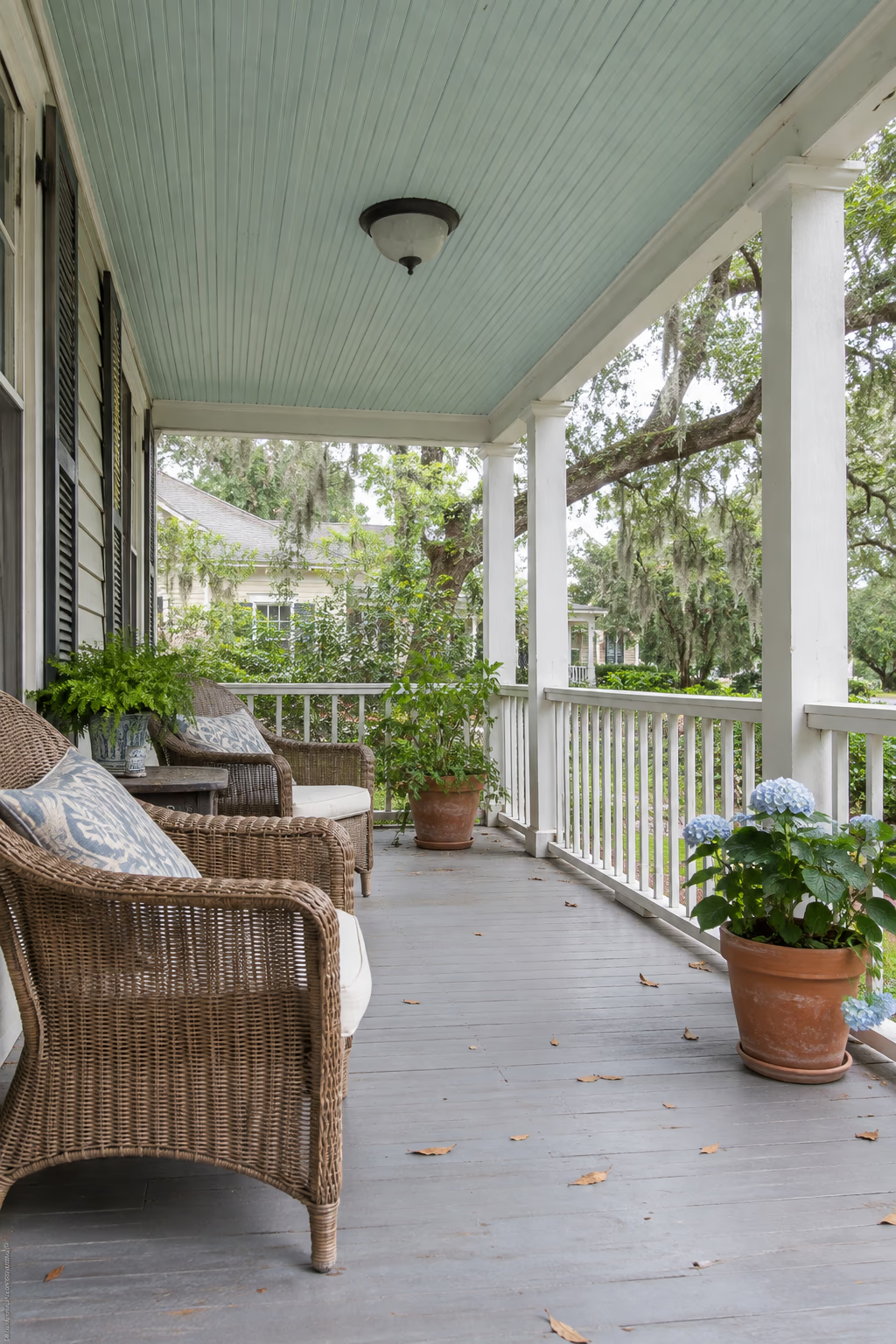
A pale ceiling that looks like sky
Porch ceilings are an easy place to add personality. Beadboard planks give a cottage look, and a soft blue-green paint, a Southern tradition often called haint blue, makes the roof feel lighter and airy. White, pale gray, and soft butter yellow also work well.
Use exterior-rated beadboard panels or PVC planks in damp climates, since real wood can swell and peel. Prime and use a durable exterior paint with a satin finish. Light colors also bounce daylight into shadowy corners.
3. Build a Cozy Fireplace Lounge
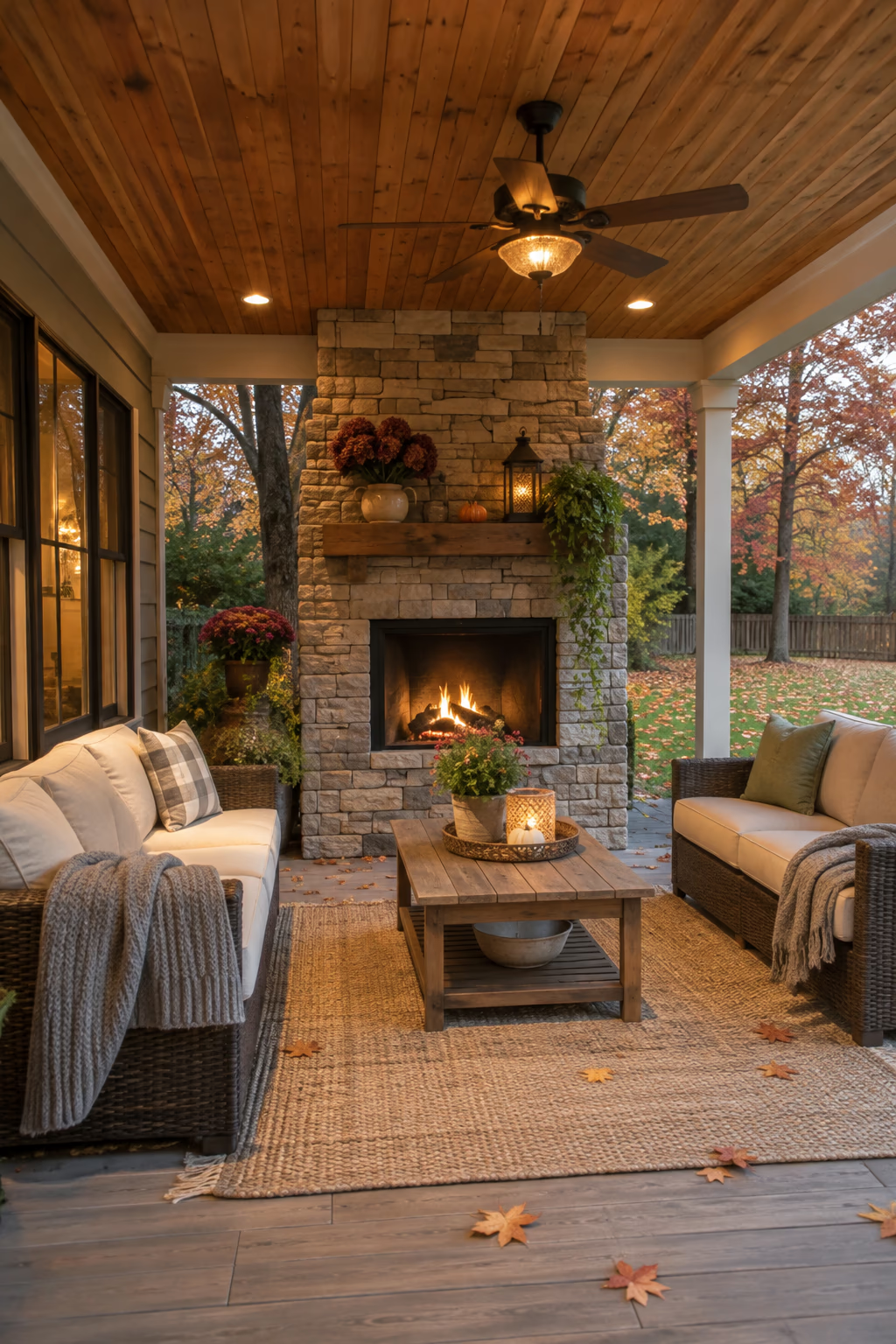
Stretch the porch season into fall and winter
A fireplace turns a seasonal porch into a place you’ll want to use on a chilly night. A masonry fireplace is the showpiece, but a prefabricated insert, a gas unit, or an electric model costs far less and installs more easily. Add a stone or brick surround and a wood mantel for an inviting focal point.
Wood-burning fireplaces need proper flue, clearances, and a building permit, so hire a licensed pro and check local codes. Gas and electric units are simpler for covered porches. Arrange two sofas or chairs facing the hearth, and keep a basket of throws nearby.
4. Line Up Classic Rocking Chairs
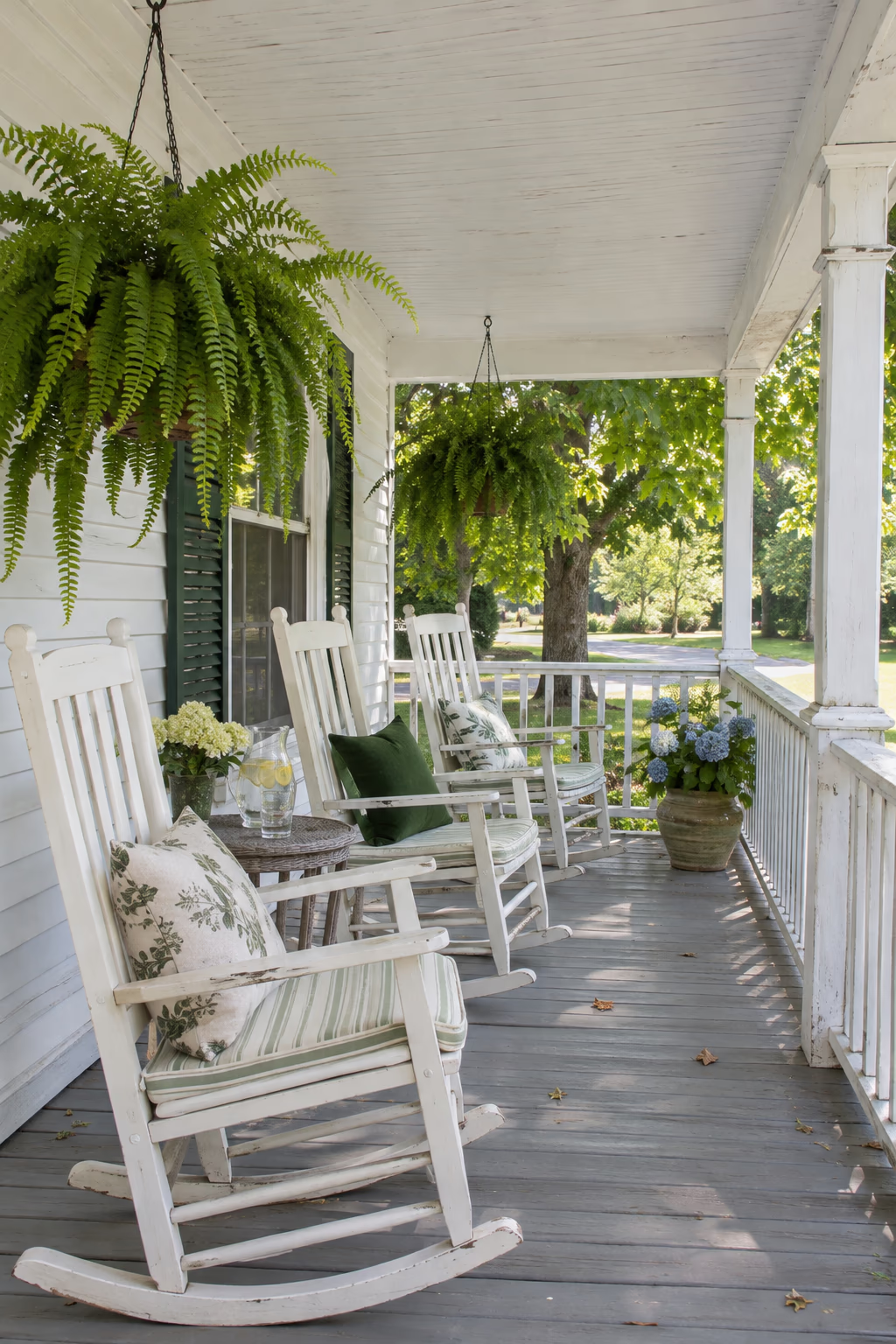
Simple seating that never goes out of style
Two or three rocking chairs lined up along the railing are a timeless, budget-friendly look. Wood, painted metal, or weather-resistant resin all work. White, black, and natural wood feel traditional, while a bright red or navy adds a playful touch.
Leave about 2 feet between the chairs so they can rock without bumping, and keep the front legs a safe distance from the porch edge or steps. Finish the group with a small side table between chairs for drinks and a potted plant.
5. Screen In the Porch for Bug-Free Evenings
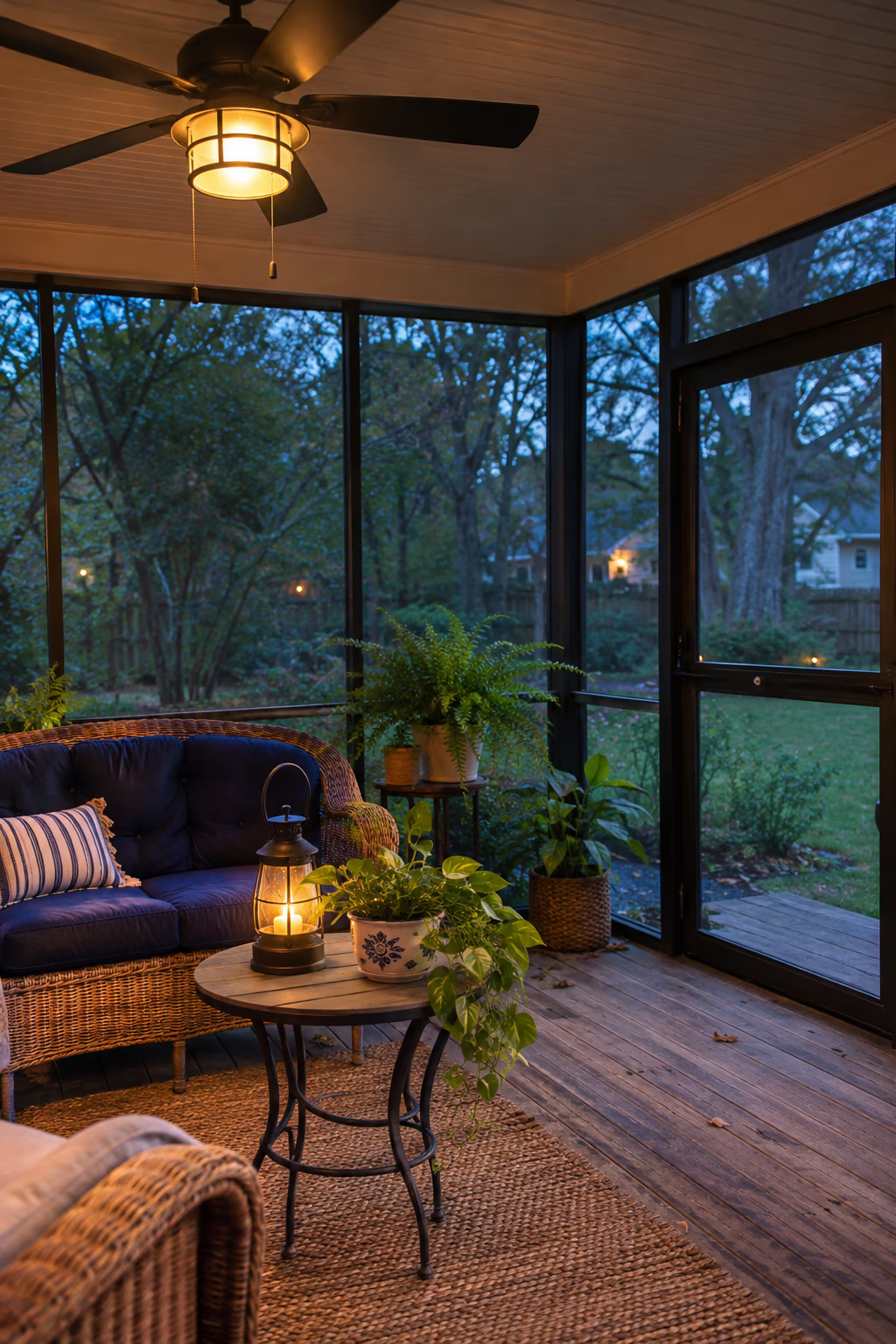
Enjoy the breeze without the mosquitoes
A screened porch lets you sit outside on a summer night without swatting at insects. Fiberglass screening is affordable and common, while aluminum lasts longer, and pet-resistant mesh stands up to claws. Black framing and screen look sleek and make the view beyond appear clearer.
Plan for a screen door that swings out and latches securely. Use rot-resistant lumber such as cedar or pressure-treated wood for the framing, and add removable panels or vinyl windows later if you want a three-season room. Check local codes, since enclosing a porch may need a permit.
6. Expose Wood Beams Overhead
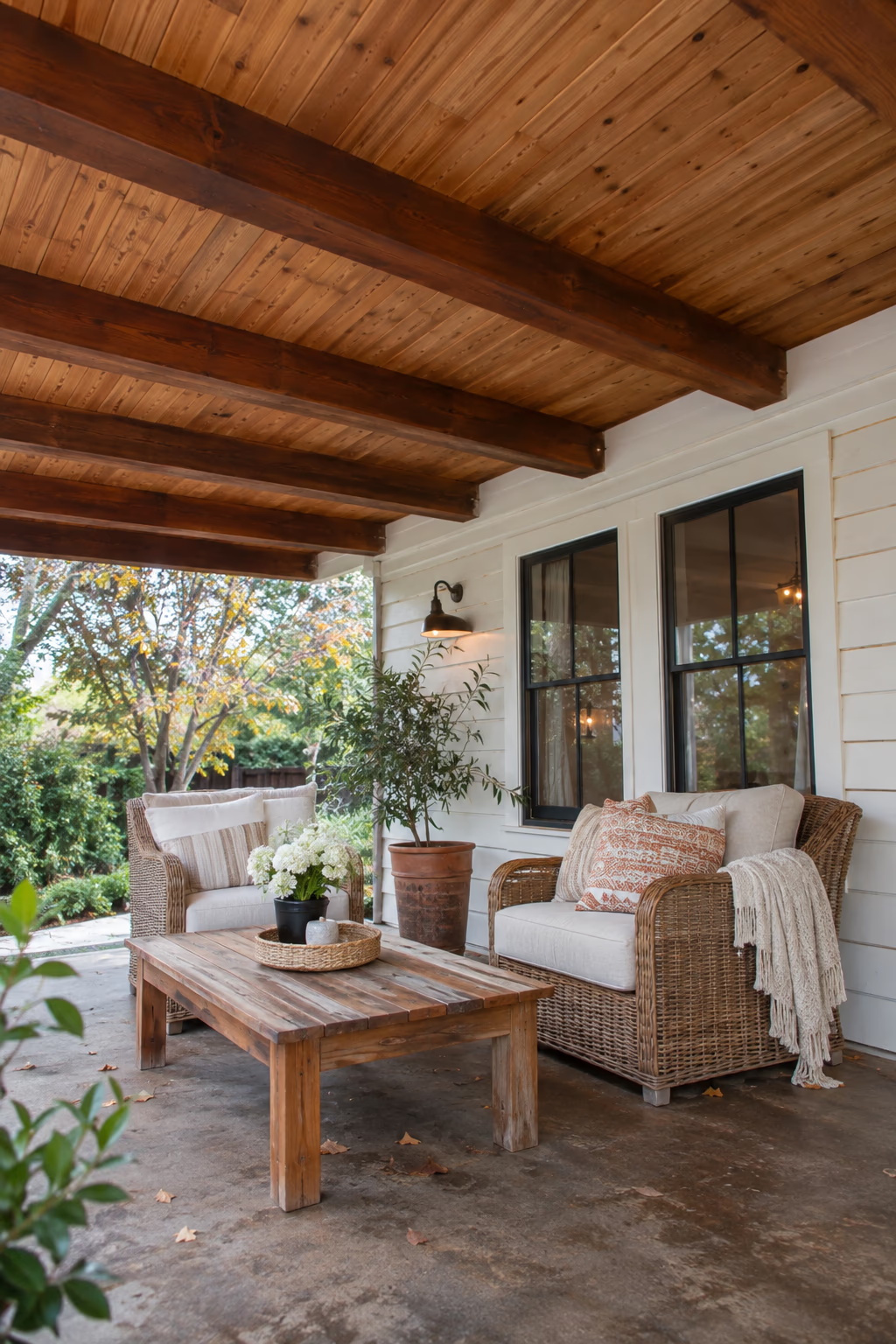
Add warmth and depth to the ceiling
Exposed rafters or decorative beams give a porch the feel of a mountain lodge or farmhouse. Stained cedar or fir looks rich against white siding, while painted beams in black or deep green feel more modern. A tongue-and-groove wood ceiling between beams finishes the look.
Real timbers are heavy and costly, so many builders use box beams made from lightweight lumber. If you have a flat drywall-style ceiling, a carpenter can add faux beams. Seal all cut ends with exterior-grade stain to prevent moisture damage.
7. Set Up an Outdoor Dining Table
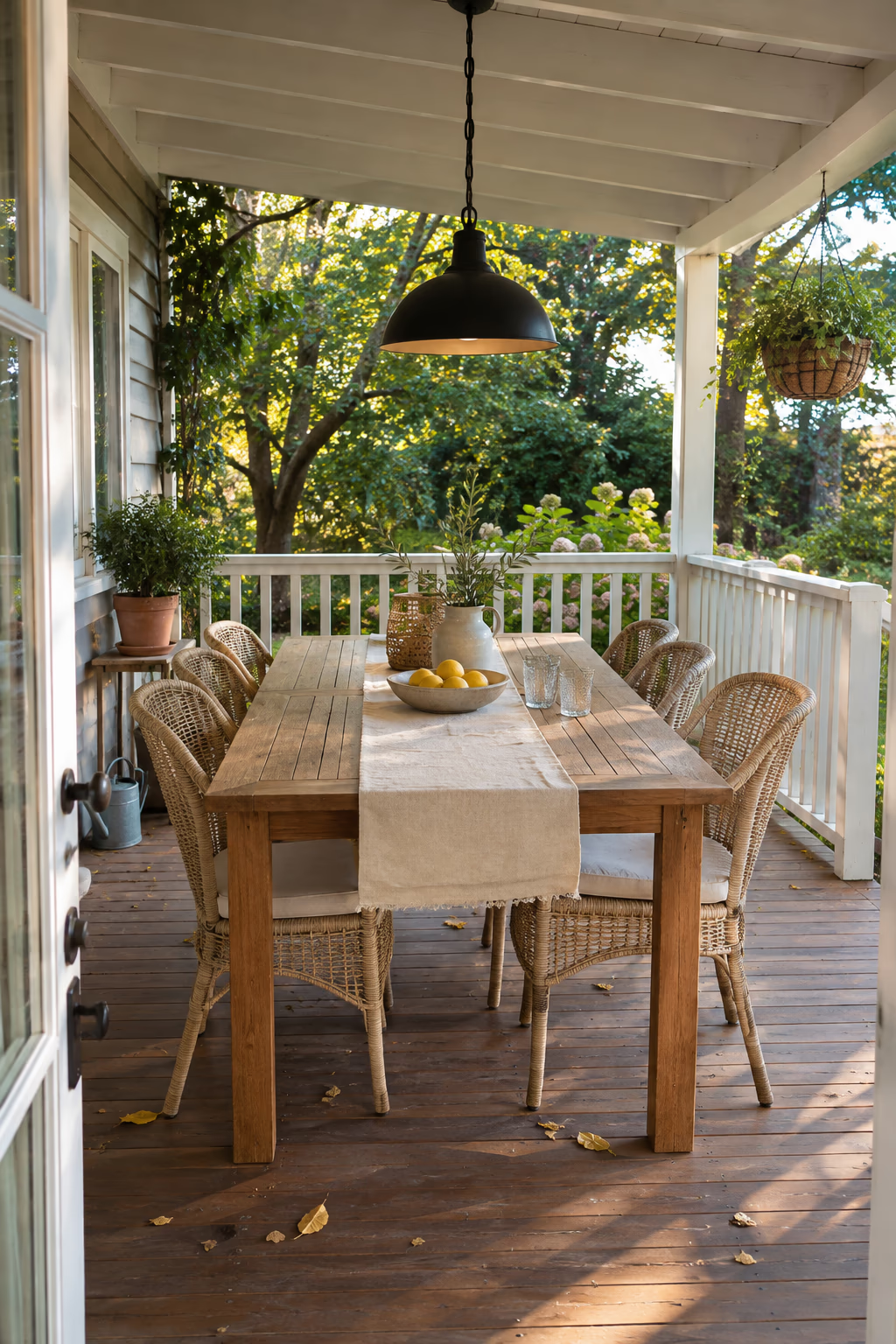
Make the porch the place for family meals
A table for four to six turns a covered porch into an extra dining room. A teak, acacia, or powder-coated aluminum table stands up to humidity and the occasional splash. Benches tuck in neatly, and padded chairs make long dinners more comfortable.
Allow at least 36 inches between the table edge and the wall or railing so people can pull out chairs. On a narrow porch, a counter-height bar along the railing saves space. Wipe up spills promptly, and store cushions when rain blows sideways under the roof.
8. Layer Lighting With Lanterns and Sconces
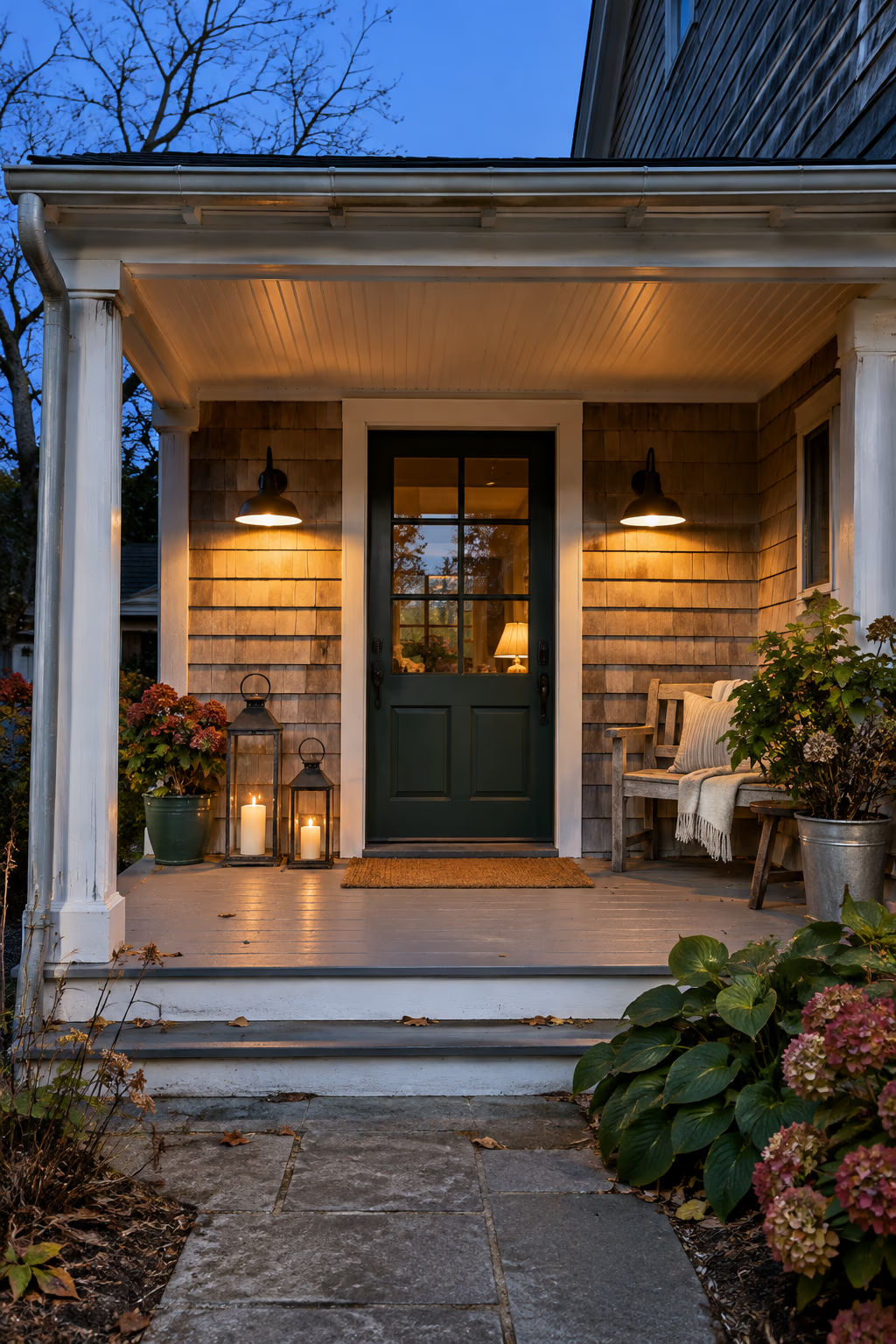
Warm light that makes evenings feel special
Good porch lighting combines a few sources at different heights. Wall sconces beside the door, a pendant or flush light overhead, and a few lanterns on the floor or a table create a soft glow. Look for fixtures rated for damp or wet locations.
Choose warm white bulbs of about 2700K so the light feels cozy rather than harsh. Put lighting on a dimmer if possible. Solar lanterns are a quick, no-wiring option, though they may be dimmer on cloudy days.
9. Gather Around a Fire Table
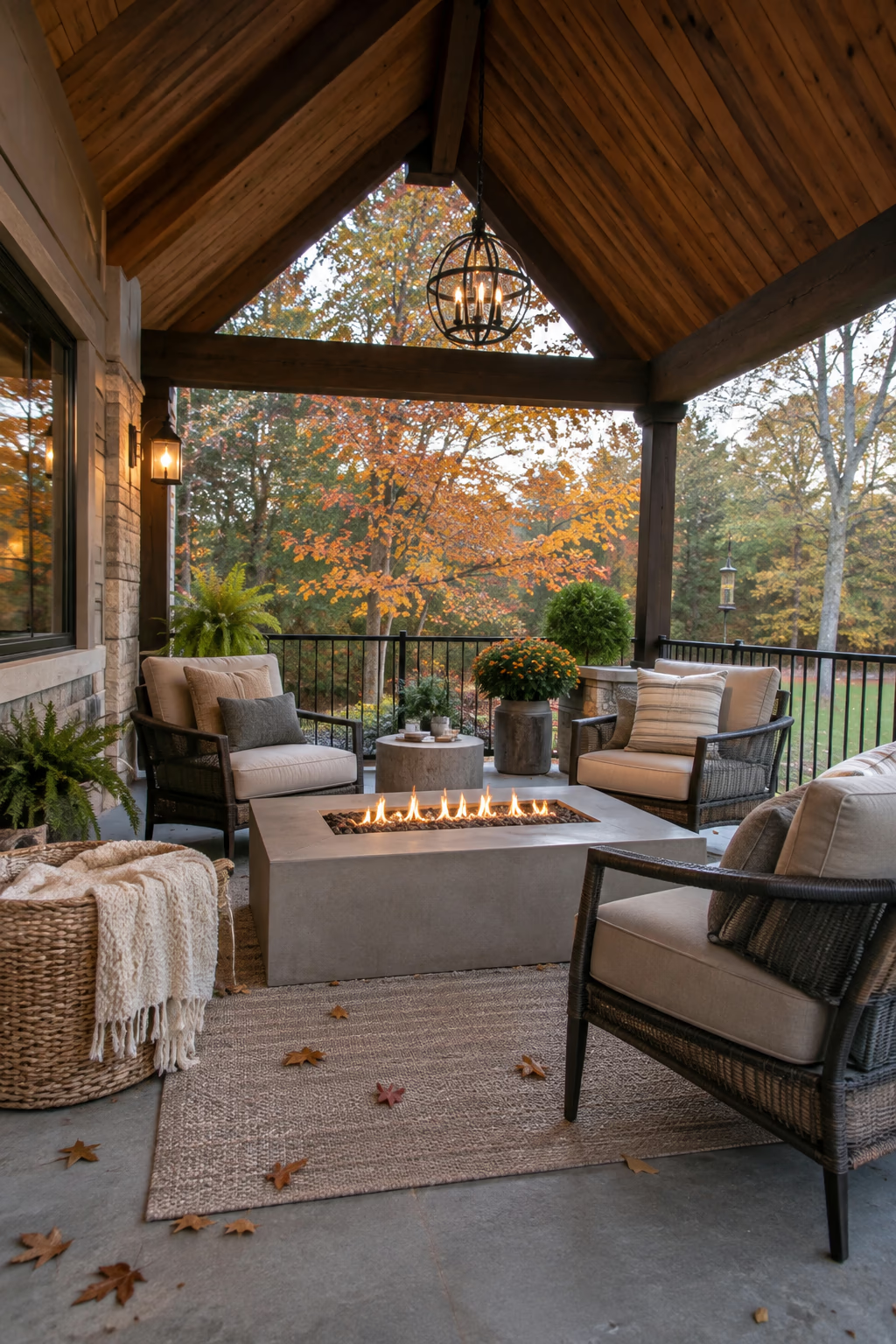
A glowing centerpiece without a full fireplace
A propane fire table gives you flames and a place to set drinks. Models with a concrete or aluminum top come in square, round, and long rectangular shapes. Surround it with four chairs or a sectional for a friendly conversation spot.
Fire features under a roof need care. Check the manufacturer’s required clearance to the ceiling, usually several feet, and never use a wood-burning fire pit on a covered porch. Make sure ventilation is good and follow local fire rules and HOA guidelines.
10. Frame the Entry With Stone and Timber Columns
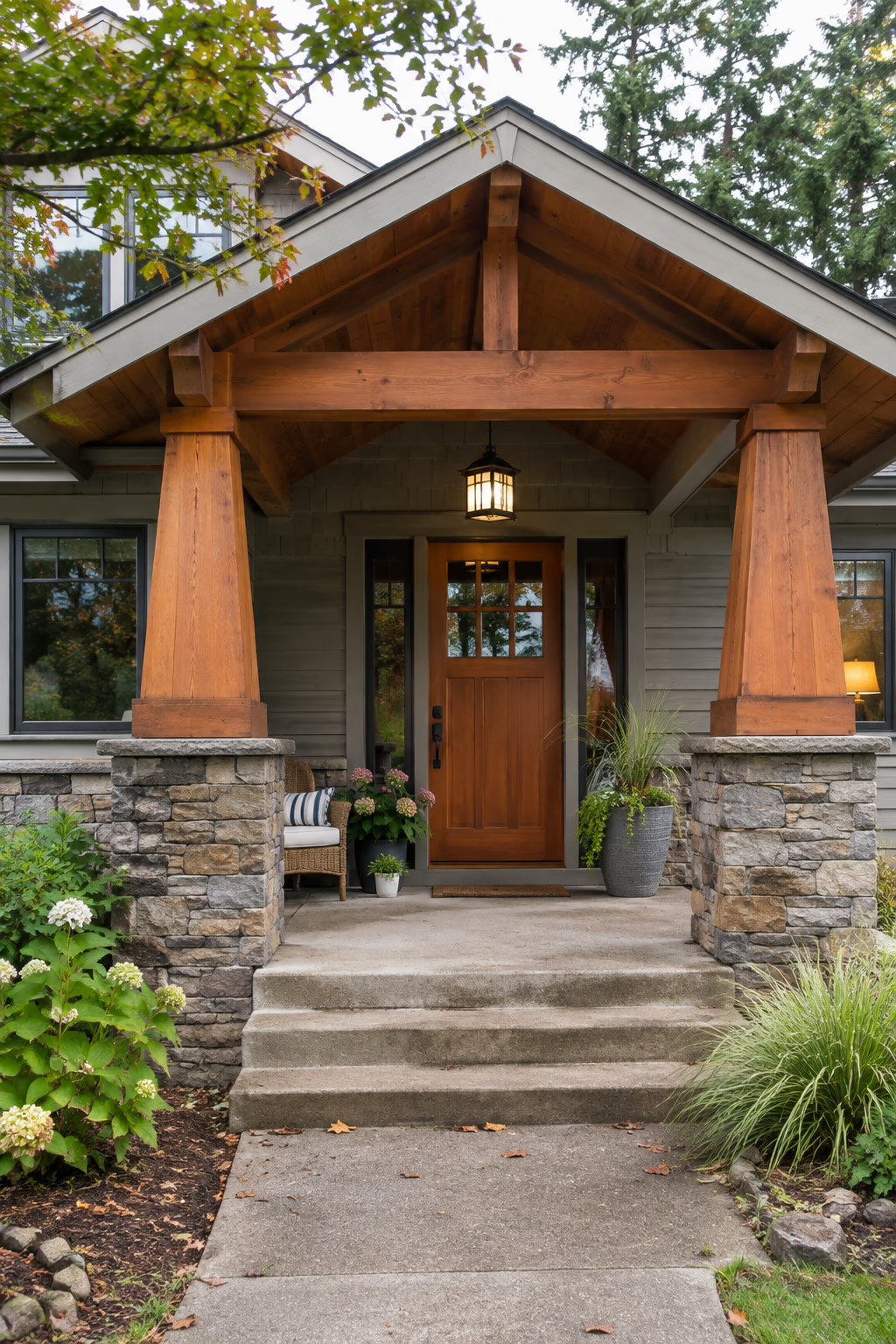
Give the front porch a sturdy, welcoming look
Chunky tapered columns on stone piers give a porch a craftsman character. Stone veneer, brick, or painted wood bases with square cedar posts above look substantial and weather well. The bigger the porch roof, the thicker the columns should look.
Real stone is expensive, so manufactured stone veneer is a common budget-friendly alternative. Keep wood posts off the ground with a base or standoff to prevent rot, and keep proportions in check so columns support the roof visually.
11. Hang Outdoor Curtains for Shade and Privacy
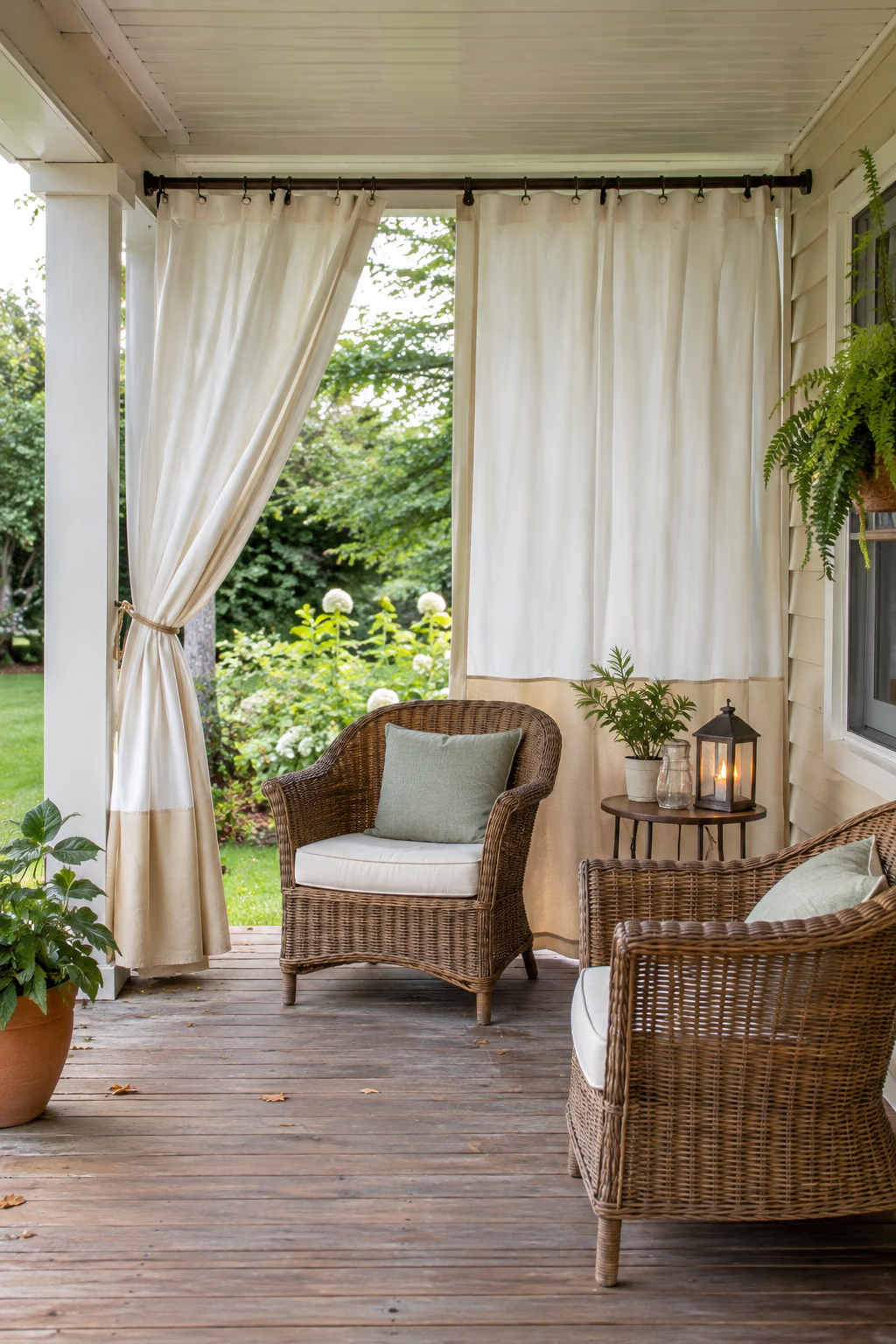
Soft panels that block sun and neighbors
Outdoor curtains add softness to a hard, boxy space. Choose solution-dyed acrylic or polyester made for exterior use, since it resists fading and mildew. White or natural linen tones look breezy, and a stripe adds a casual feel.
Hang them from a sturdy rod or a wire track along the beam so they glide. Use tie-backs or weights so they don’t whip around in wind. Let them dry fully after storms to keep mildew away.
12. Fill the Porch With Planters and Hanging Ferns
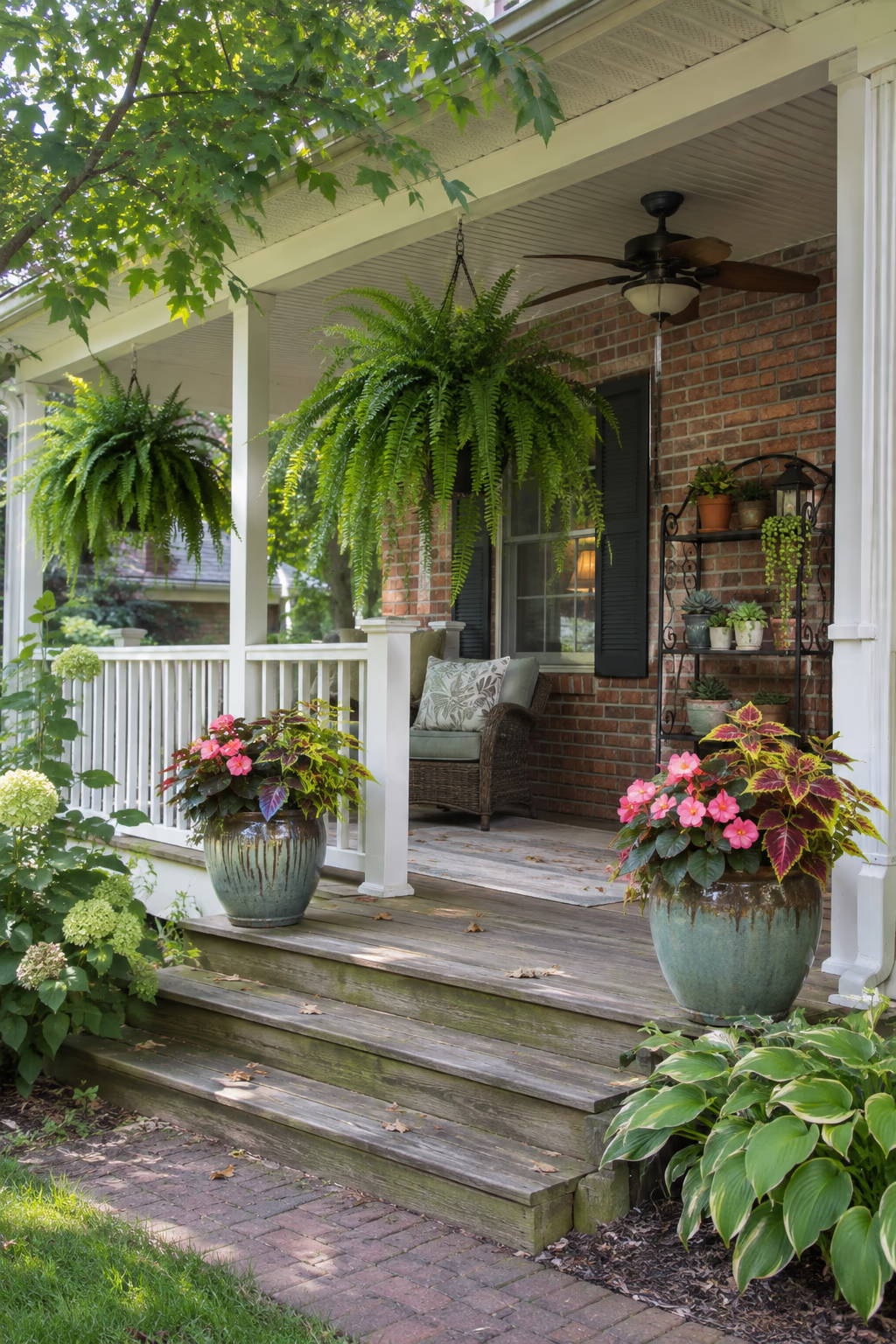
Bring in green without taking up floor space
Ferns, begonias, impatiens, and coleus thrive in the shade of a covered porch. A Boston fern in a hanging basket is a classic, and a pair of large pots by the steps makes a welcoming entrance. Use varied heights, with hangers overhead, pots on the floor, and a plant stand in a corner.
A covered porch can be drier than you’d expect, because the roof blocks rain. Water containers regularly and use pots with drainage holes. In cold regions, bring tender ferns indoors before the first frost.
13. Build in a Storage Bench
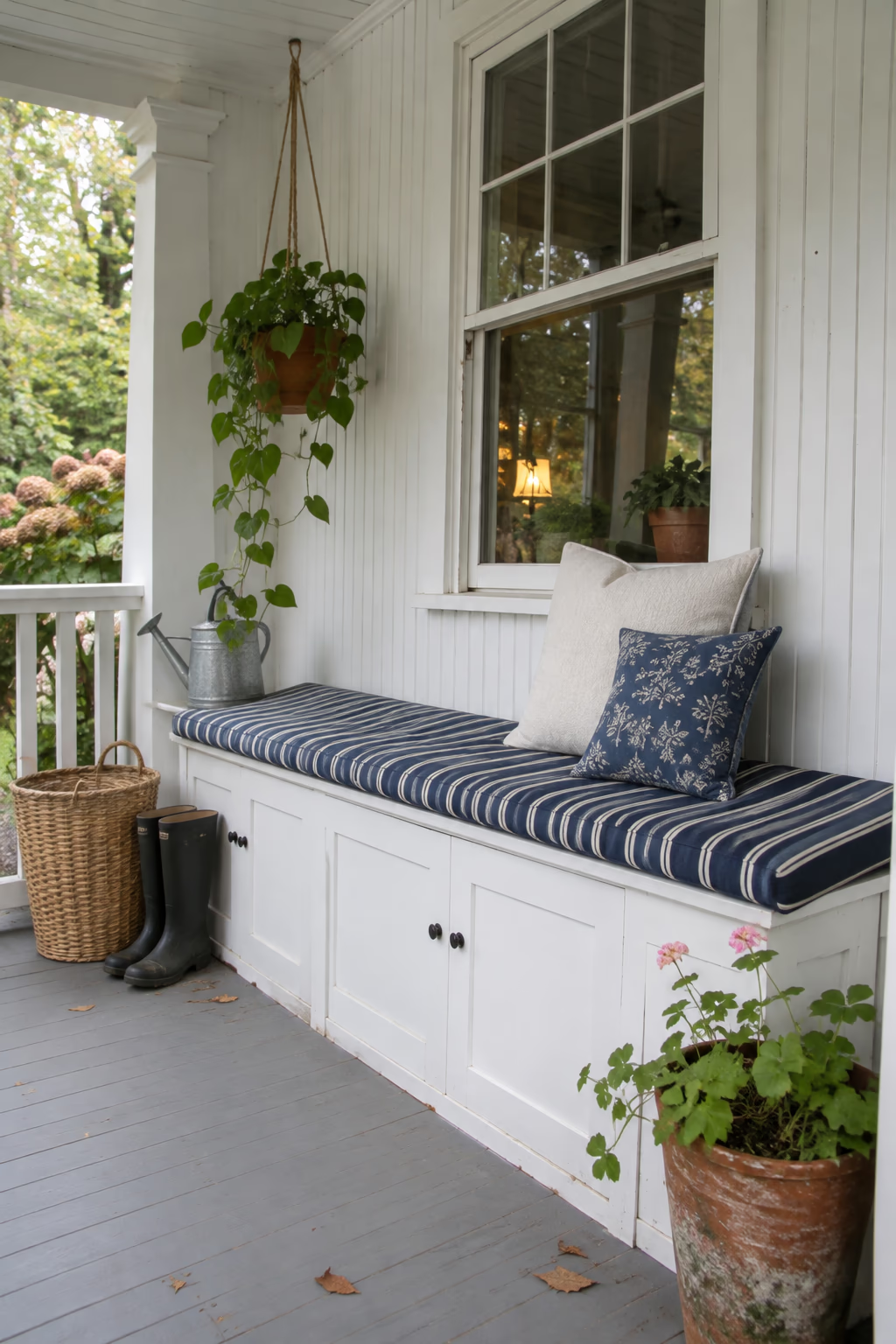
Hidden space for cushions, shoes, and toys
A built-in bench along a wall or under a window adds seating and stashes clutter. A hinged lid, about 18 inches high and 16 to 20 inches deep, hides cushions, blankets, and gardening tools. Paint it to match the trim for a custom look.
Build it from exterior plywood or cedar and add a few small drain gaps so moisture doesn’t collect inside. A top cushion in outdoor fabric makes it comfortable, and a few drainage holes keep stored items from getting musty.
14. Add a Ceiling Fan for Airflow
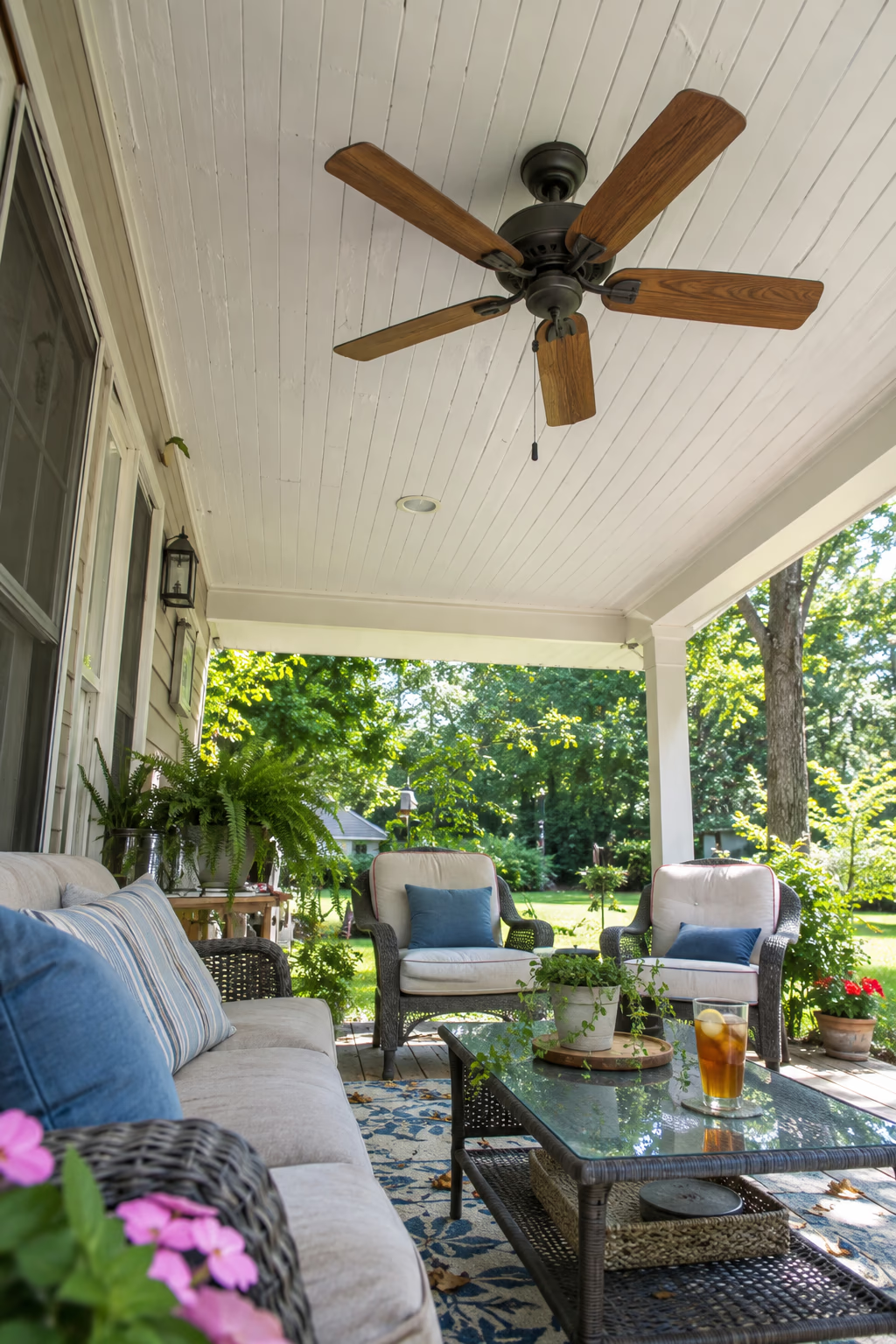
Keep the porch comfortable on muggy days
A moving breeze can make a hot porch feel several degrees cooler and also helps keep mosquitoes away. Use a fan rated for damp or wet locations, with a 52-inch blade span for most porches. Wood-look or sealed plastic blades resist warping.
A ceiling fan needs a fan-rated electrical box and proper support, so a licensed electrician should install it. Allow at least 7 feet from the floor to the blades, and ideally 8 to 9 feet. Add a remote control so you don’t need a wall switch.
15. Go Coastal With Rattan and Light Decking
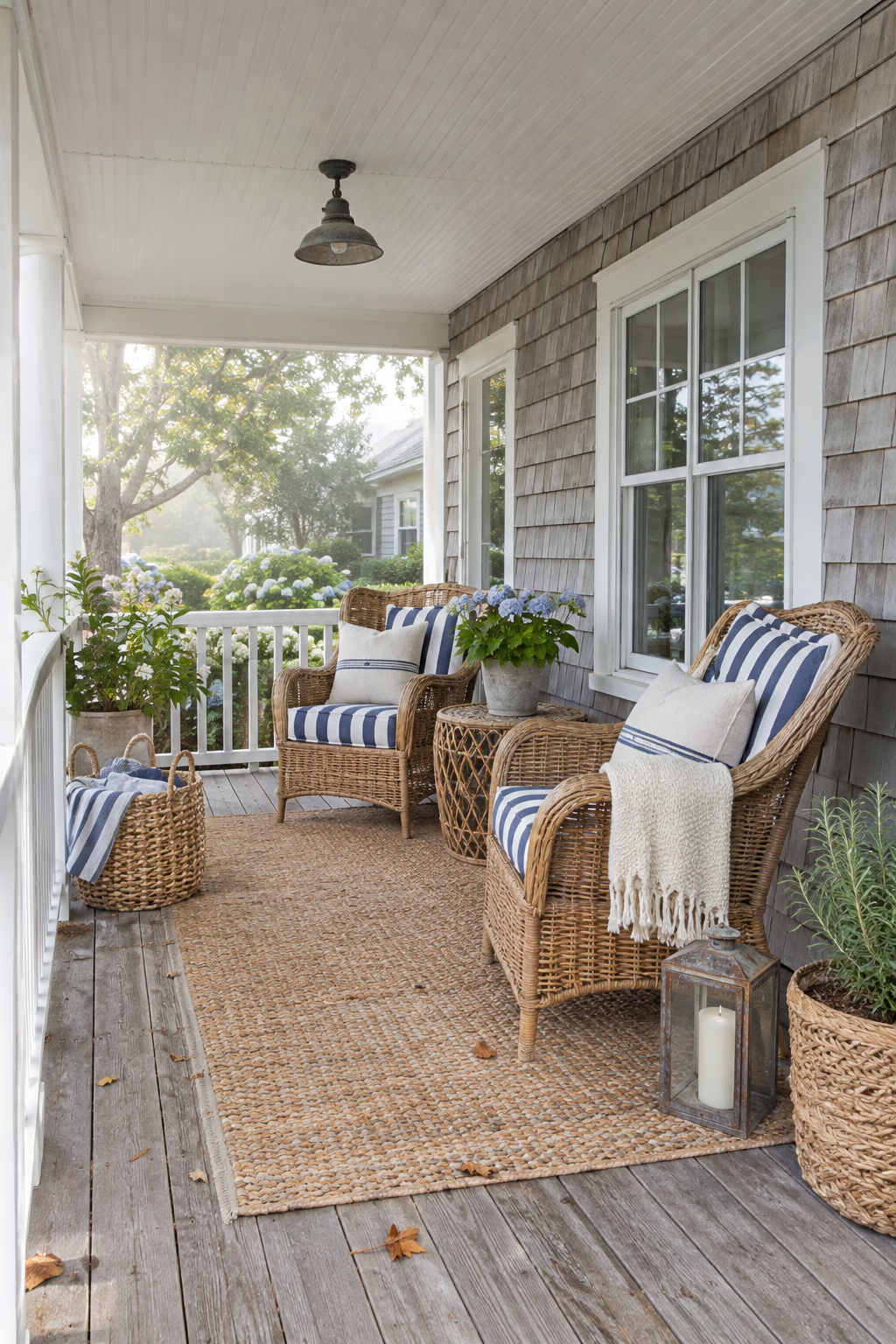
A light, airy look inspired by the beach
Coastal porches use white and soft blues, natural rattan or wicker, and light gray or weathered wood floors. A white beadboard ceiling and navy or sand-colored cushions pull the look together. Woven baskets and a jute-style outdoor rug add texture.
Real rattan doesn’t like constant moisture, so choose synthetic all-weather wicker for exposed porches. Stainless steel or coated hardware lasts longer near salt air, and a rinse with the hose now and then keeps salt from building up.
16. Style a Rustic Porch With Natural Wood
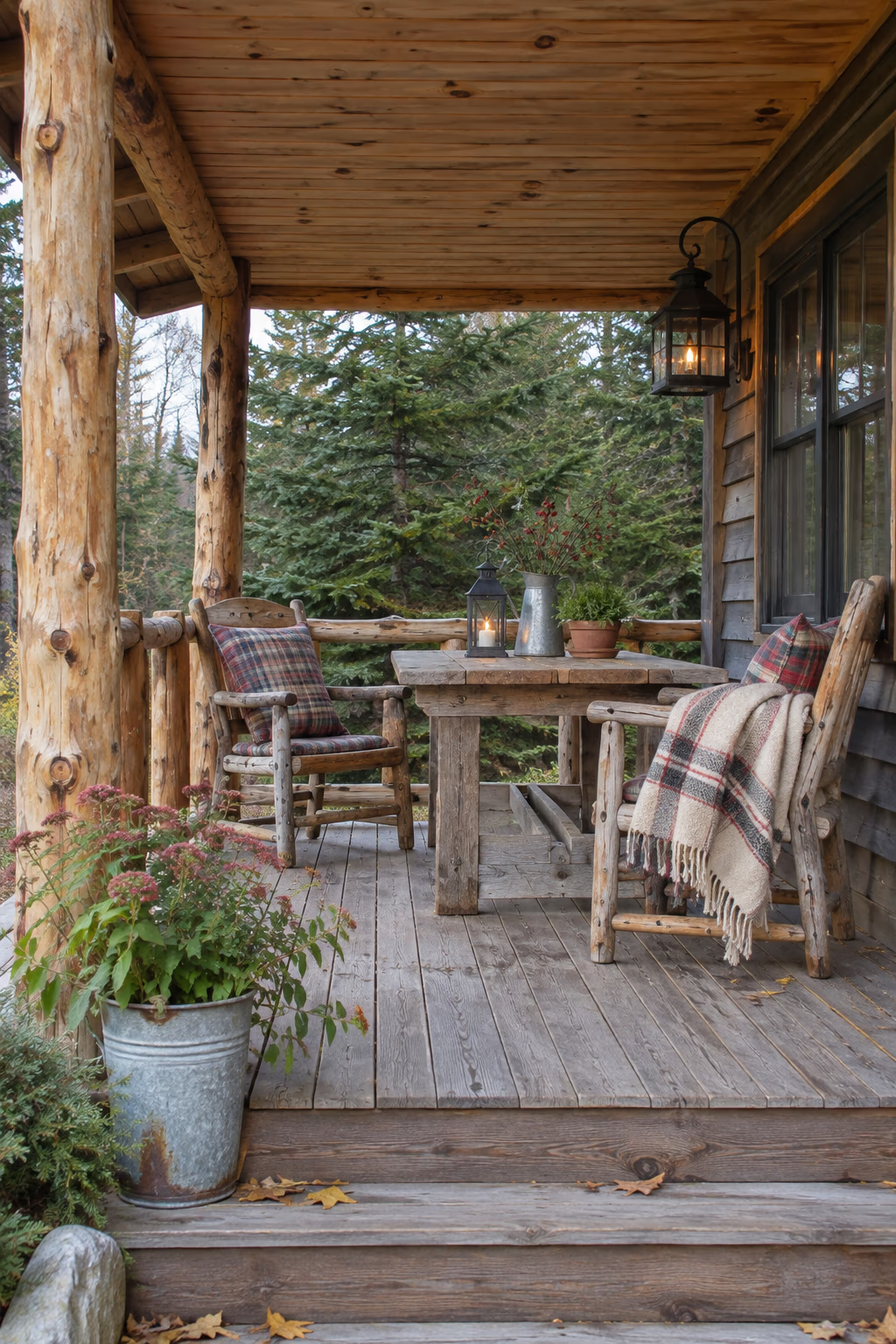
Cabin-like comfort with earthy materials
For a rustic porch, lean on honey-toned wood, black iron hardware, and plaid or leather accents. Log-style chairs, a reclaimed wood table, and a woven blanket in earth tones create a relaxed cabin mood. Add a wood-slat ceiling or log posts to complete it.
Use a penetrating exterior stain or oil on wood furniture each year or two, since unfinished wood fades and grays. Avoid using too many dark finishes in a shady porch, and mix in a few lighter pieces so the room doesn’t feel heavy.
17. Top the Porch With a Standing Seam Metal Roof
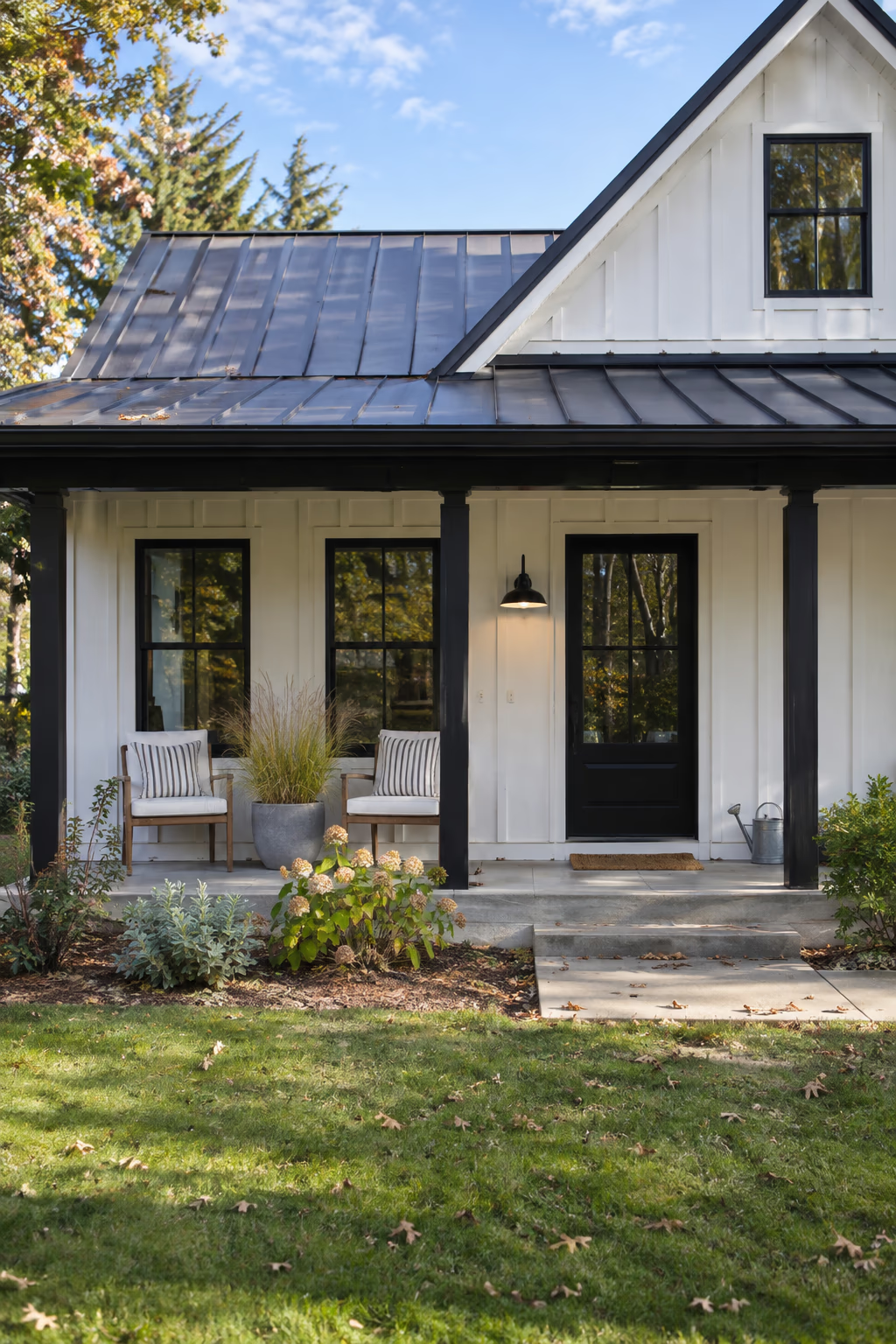
A modern roofline that sheds weather quickly
A metal porch roof gives crisp lines and a clean modern look, especially in black, charcoal, or dark bronze against white siding. It sheds rain and snow quickly and can last for decades with minimal care. A shallow pitch of 3:12 or more suits standing seam panels.
Rain on metal can sound loud, which some people love and others don’t. Adding insulation or a solid deck under the metal reduces the noise. Make sure gutters and downspouts carry water away from the steps and the foundation.
18. Divide a Large Porch Into Outdoor Rooms
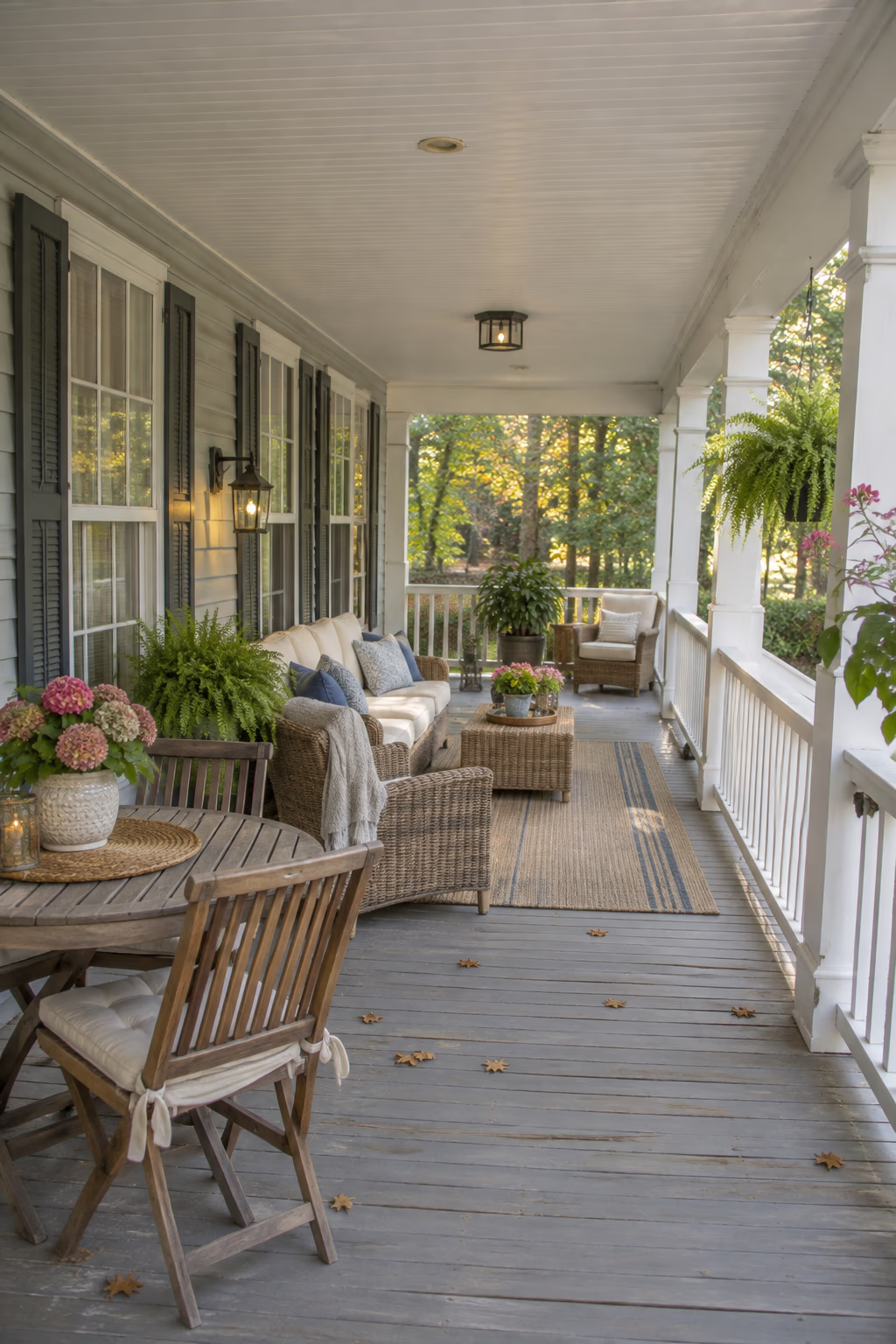
Give each corner its own job
A wide or wraparound porch feels more useful when you split it into zones, such as a dining area at one end, a lounge in the middle, and a reading chair at the other. Use rugs, furniture groupings, and plants to mark each space.
Float sofas away from the wall to create a natural boundary, and leave a clear 3-foot path for walking. Repeat a few colors across zones so the whole porch feels cohesive rather than like a furniture showroom.
19. Paint the Front Door a Bold Color
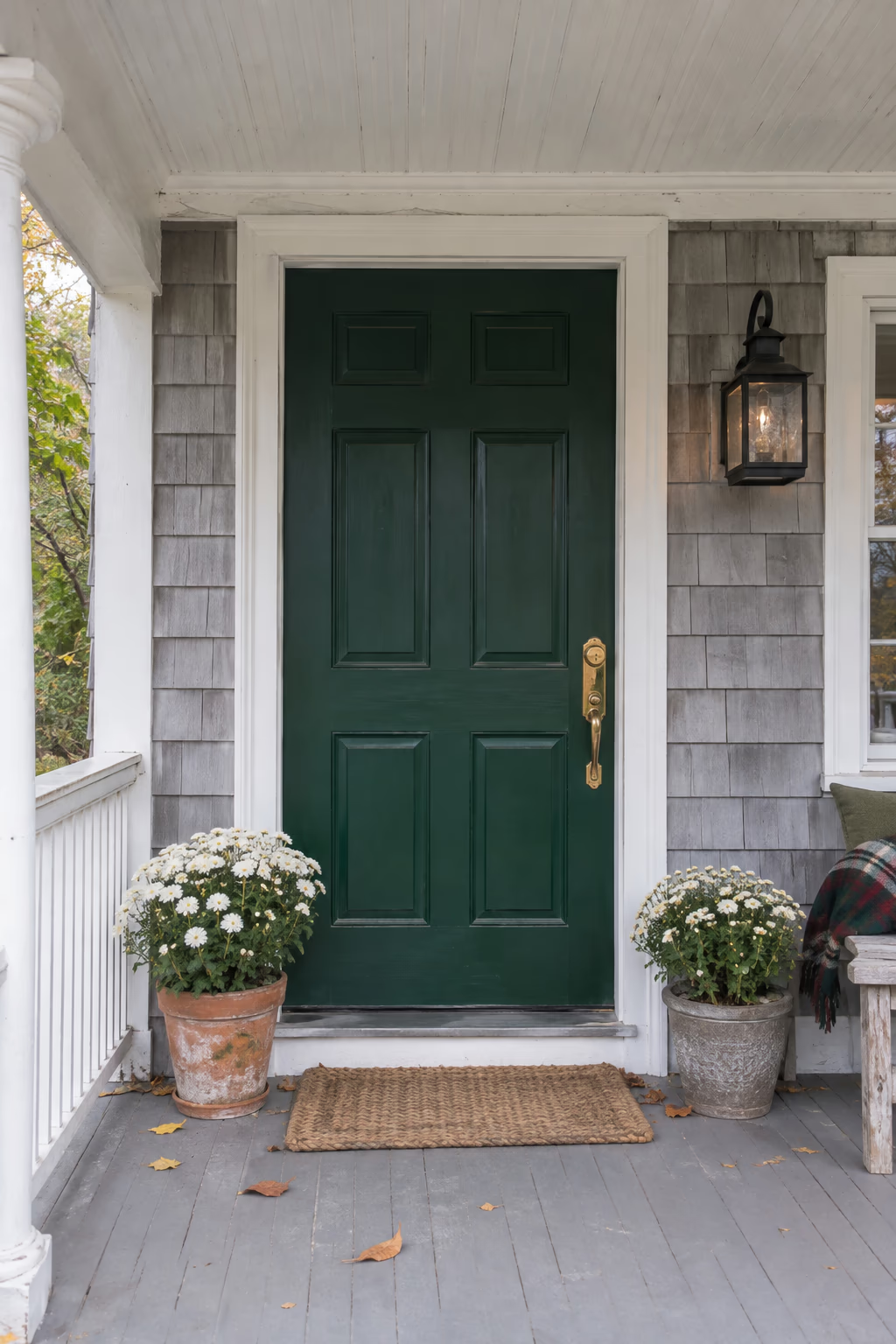
A small project with a big impact
The porch shelters the front door, so it makes sense to showcase it. Deep green, navy, cranberry red, or sunny yellow stand out against neutral siding. A glossy finish looks polished, and a satin finish hides small flaws.
Use exterior enamel paint formulated for doors, and sand lightly first. Test the color in the porch’s shade, since colors can look much darker under a roof than in the paint store. Update the hardware and lantern to match.
20. Tuck an Outdoor Kitchen Into a Corner
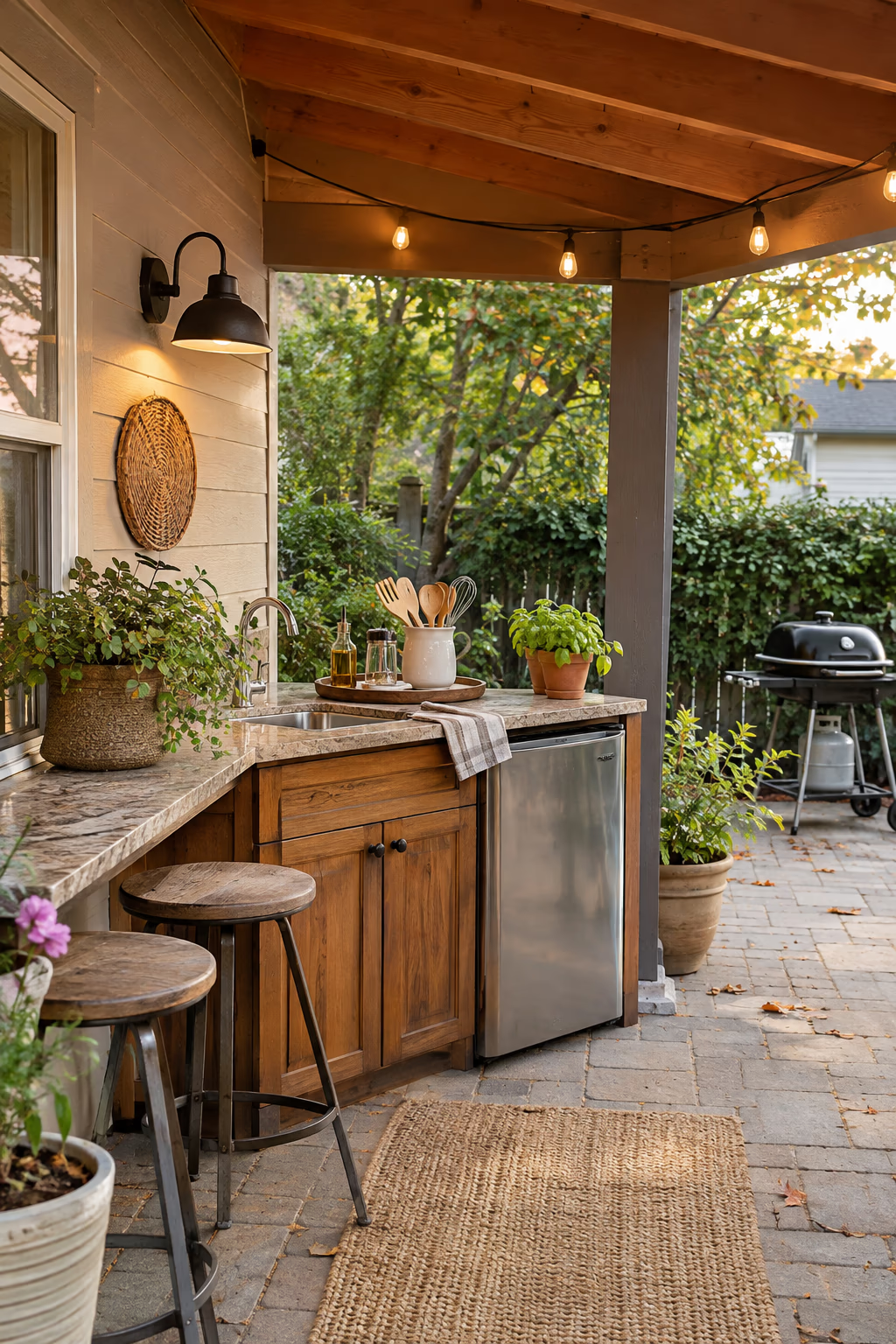
Cook and serve without leaving the porch
A compact outdoor kitchen can be as simple as a counter with a small sink, an under-counter fridge, and space for a portable grill. Stainless steel, stone, or tile countertops hold up well. A bar-height counter on the edge adds casual seating.
Gas grills should not be used under a low combustible roof, and many manufacturers and local codes require clearances. Keep the grill outside the porch or on a vented section, and consult a pro about gas, water, and electric lines.
21. Lay a Low-Maintenance Composite Floor
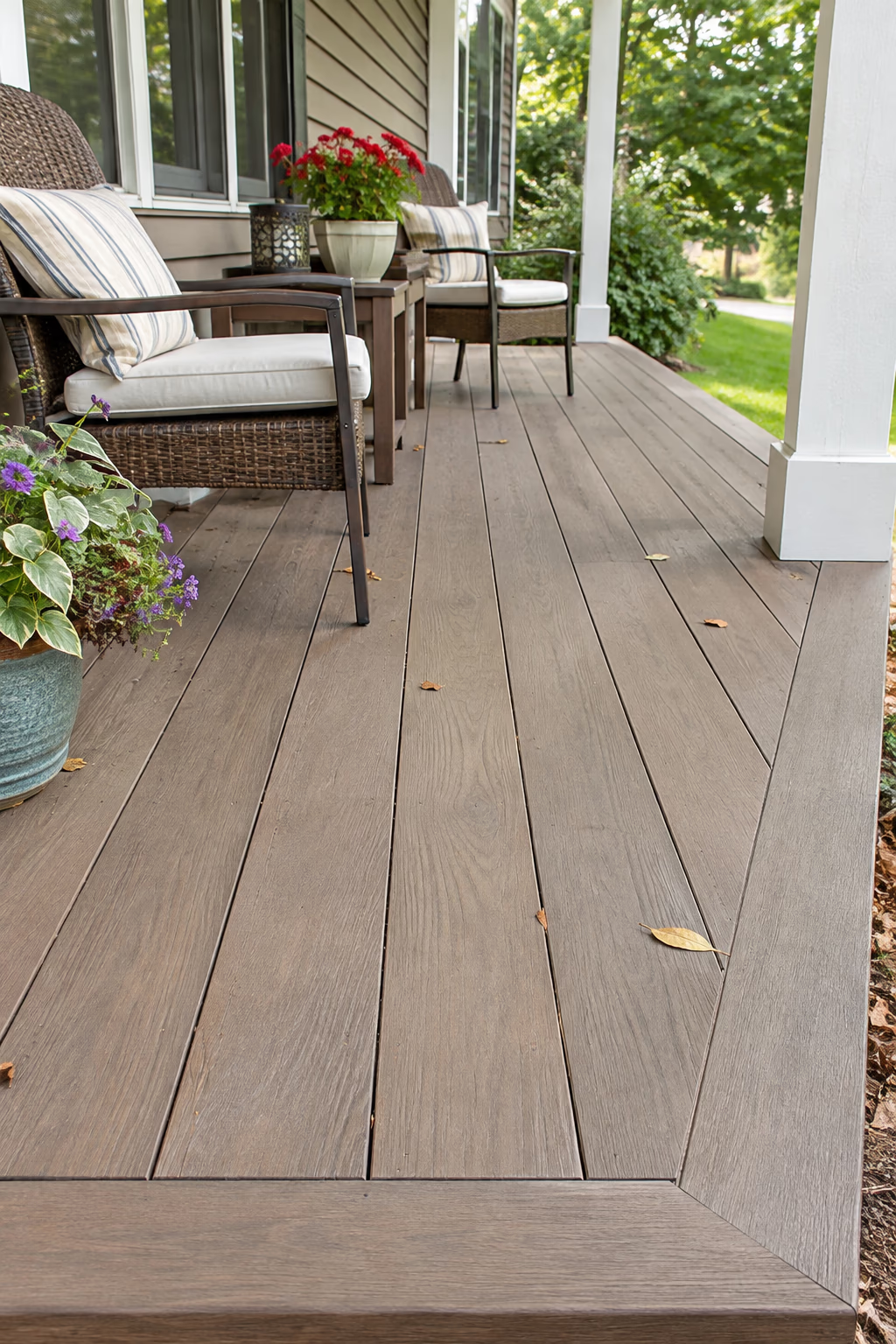
Decking that resists rot and needs no sealing
Composite and PVC decking boards in gray, brown, or tan come in many wood-like finishes and don’t need staining. They resist splintering and many have a scratch-resistant surface. A solid floor color helps furniture stand out.
Composite costs more than treated lumber up front, but it saves yearly maintenance. Leave expansion gaps as the manufacturer directs, and use the right fasteners. Some darker boards get hot in direct sun, which matters less on a shaded covered porch.
22. Layer Outdoor Rugs Underfoot
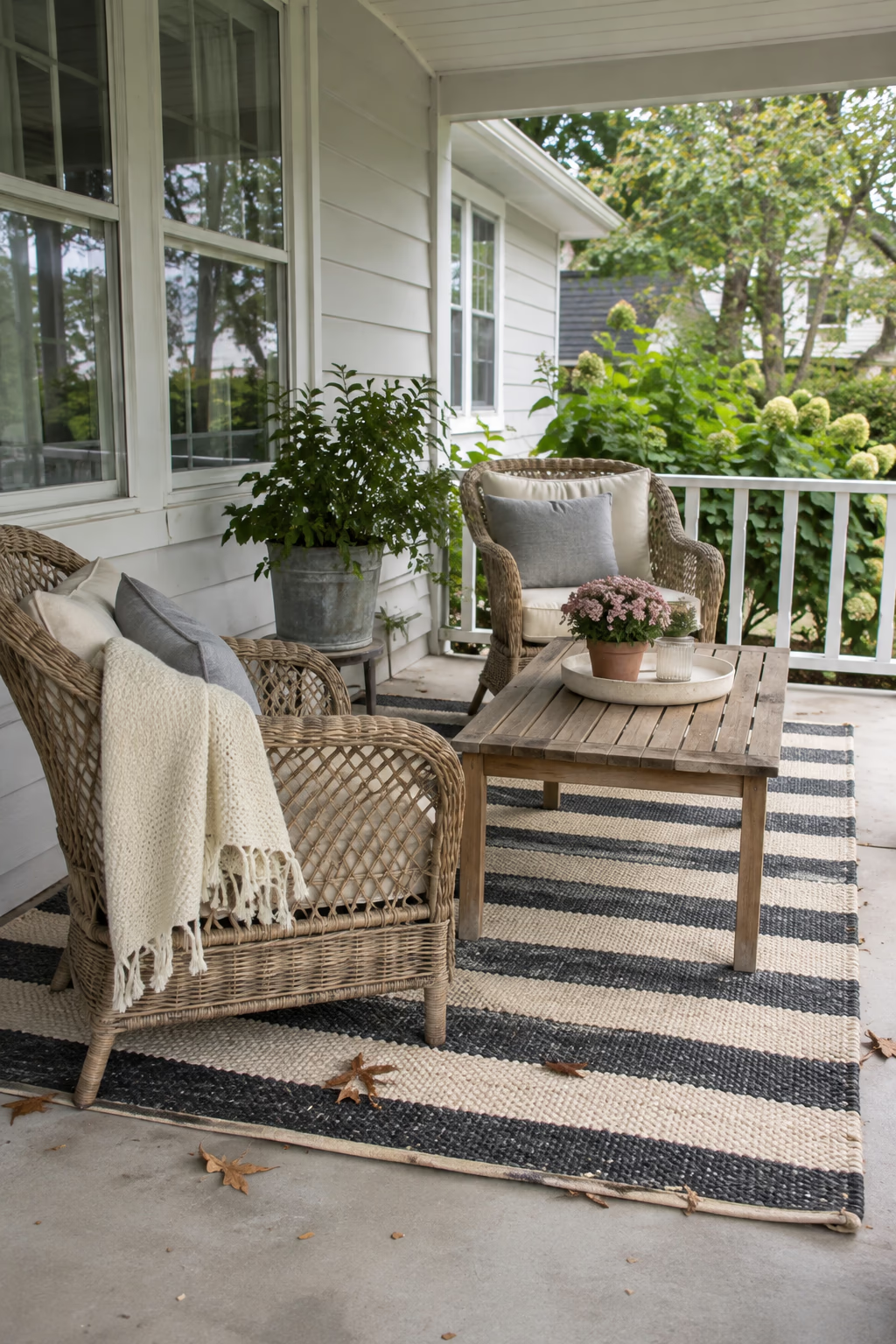
Add color and comfort to bare floors
A polypropylene outdoor rug defines a seating area, warms up cold concrete, and adds pattern. A 5 by 8 or 8 by 10 foot size fits most porches. Stripes, geometric patterns, and woven textures hide dirt well.
Choose a rug that is mildew-resistant and quick to dry. Place a non-slip pad underneath, and lift the rug occasionally to let the floor dry. Make sure the front legs of your chairs sit on the rug for a pulled-together look.
23. Create a Reading Nook With a Daybed
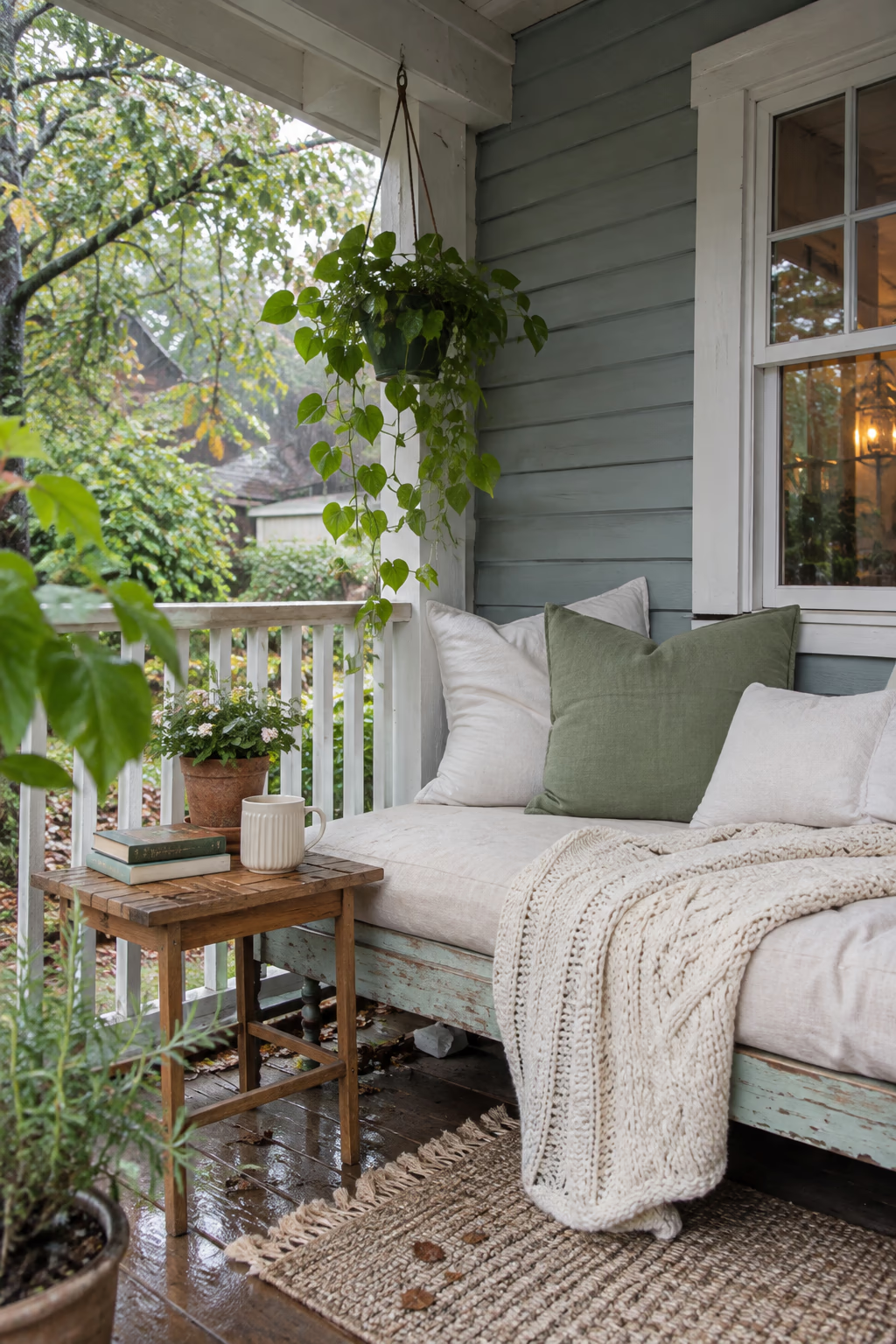
A cozy corner for naps and books
A daybed or deep lounge chair in a quiet corner is an invitation to settle in. Add a pile of pillows, a throw blanket, and a small side table for a mug. A nearby plant and a lamp complete the nook.
Choose cushions with quick-drying foam and removable covers, and store them inside during storms or long wet spells. Position it to catch morning light or a good view of the garden.
24. Add Slatted Wood Privacy Screens
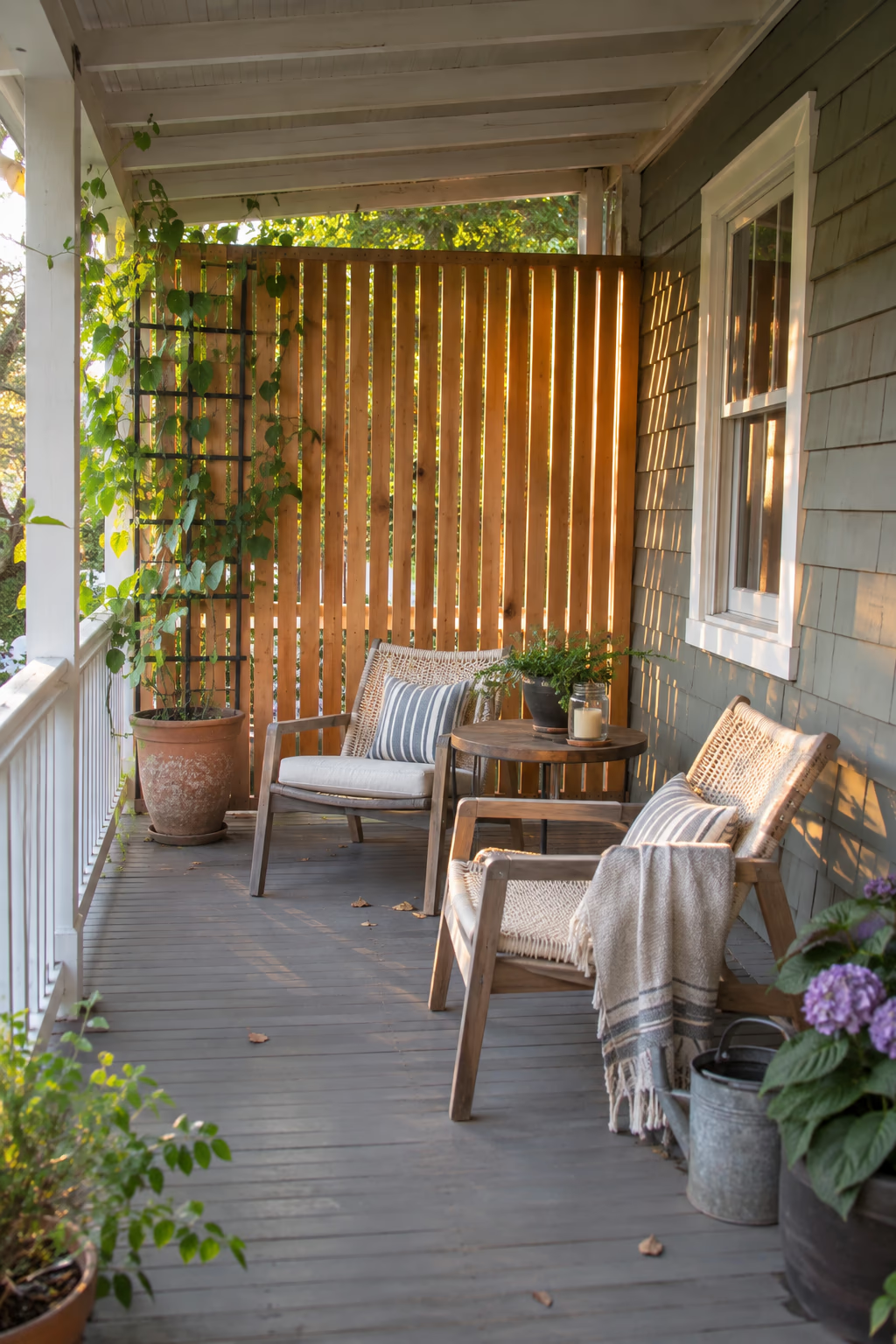
Block the view while letting air through
Vertical slat panels of cedar or composite provide privacy from neighbors and the street without making the porch feel closed in. Spaces of about 1/2 inch between slats let breezes through while screening views. Use them along one side or at a corner.
Build the frame from rot-resistant lumber and keep the bottoms a bit above the floor. A clear sealant or a natural stain keeps the wood from graying quickly, and a few plants climbing up the screen add softness.
25. Extend the Porch With a Partial Pergola
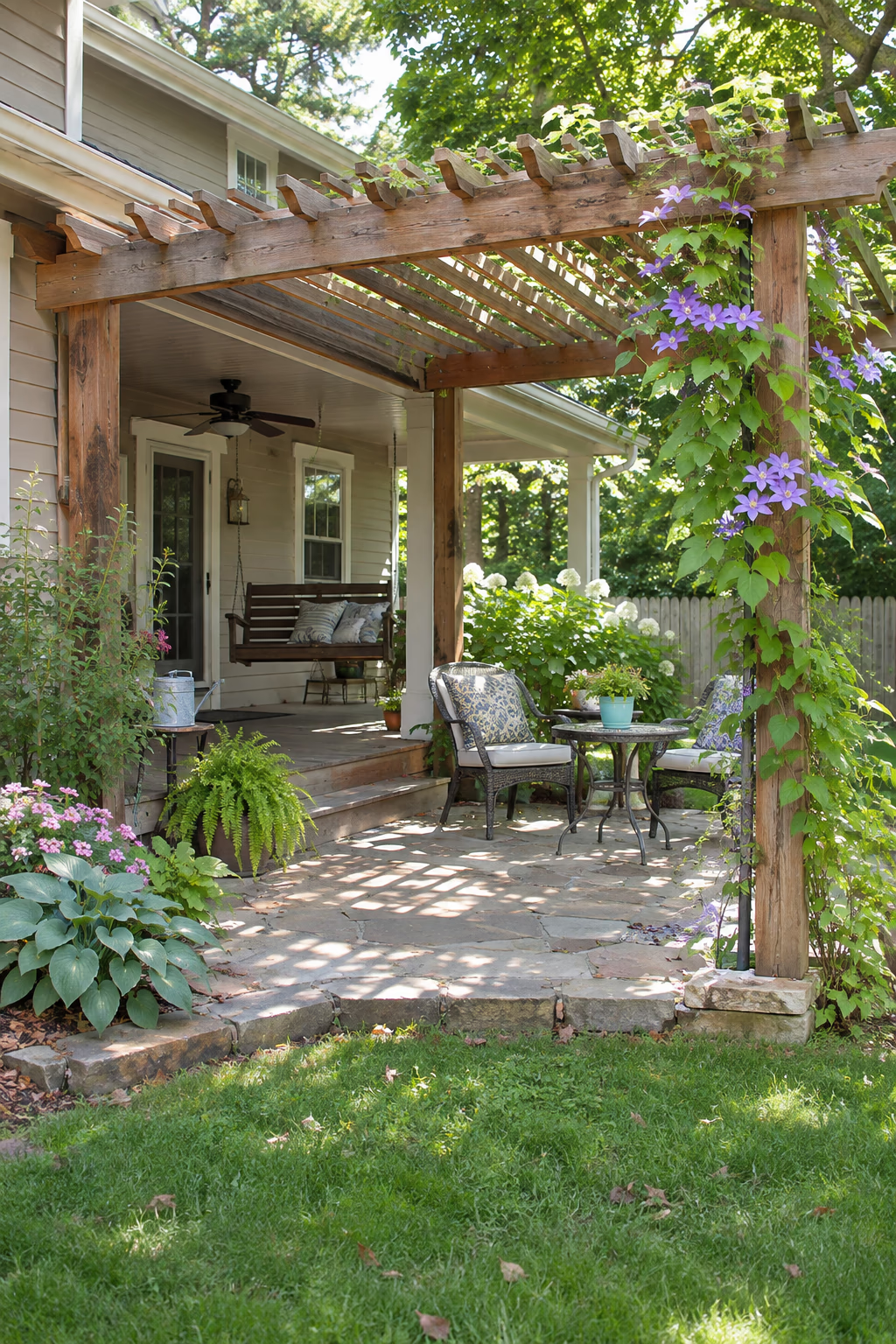
Add sun and shade where you want them
A pergola attached to the end of a covered porch creates a sunny sitting area while keeping the rest roofed. The slatted top filters light, and a vine such as clematis or climbing hydrangea can grow over it for added shade over time.
Attach the pergola to the house with a ledger board and proper flashing, or make it freestanding on footings. Check local setback rules and HOA requirements, and keep in mind the roof edge may need extra support where the two structures meet.
How to Plan Your Covered Porch
A little planning helps your porch look good and last. Start with how you want to use it, then work out the budget, structure, and details.
- Define the main use. Decide whether the porch is mostly for lounging, dining, or entering the house, then size furniture to match.
- Measure before you buy. Sketch the floor plan, mark door swings and walkways, and leave about 3 feet for traffic paths.
- Choose weather-ready materials. Pick rot-resistant wood, composite, powder-coated metal, and outdoor fabrics rated for moisture and UV.
- Plan the lighting and power. Think about outlets, switches, and fixtures early so wiring is done before ceilings and walls are finished.
- Check codes and HOA rules. Permits are often required for enclosing a porch, adding a fireplace, or changing the roof structure.
- Build in stages. Start with seating and lighting, then add curtains, plants, and larger upgrades as your budget allows.
Frequently Asked Questions
What is the difference between a covered porch and a screened porch?
A covered porch has a roof but open sides, while a screened porch has screening between the posts to keep insects out. Many homeowners start with a covered porch and add screens later.
How much does it cost to add a covered porch?
Costs vary widely by size, region, and materials. A small simple porch can cost several thousand dollars, while large porches with fireplaces and finished ceilings can cost tens of thousands. Get several local quotes.
What flooring is best for a covered porch?
Composite decking, pressure-treated lumber, stained concrete, brick, and porcelain pavers all work. Choose based on your budget, climate, and how much maintenance you’re willing to do.
What plants grow well on a covered porch?
Ferns, begonias, impatiens, coleus, hostas in pots, and peace-lily-style tropical plants handle low light. Check each plant’s light needs and your hardiness zone, and water often since rain doesn’t reach them.
Can I use a grill or fire pit on a covered porch?
Usually not a wood fire pit or a standard grill. Propane fire tables may be allowed with enough clearance, but always read the manufacturer’s instructions and follow local fire codes.
Final Thoughts
The best covered porch ideas make a space you actually want to sit in. A swing, a painted ceiling, or a few good chairs and some warm lighting can be enough to turn a plain porch into the favorite spot at home.
Start with what you’ll use most, choose materials that stand up to your local weather, and add layers over time. Soon your porch will be the first place you head when the day winds down.


