
Picture a front porch where a deep charcoal door sits behind a row of clean-lined planters, a single black sconce glows beside it at dusk, and the floor is a smooth, pale surface that stays tidy with a quick sweep. Nothing is fussy, and everything looks intentional.
That is the appeal of modern design at the front of the house. It relies on simple shapes, a tight color palette, honest materials like wood, steel, concrete, and glass, and plenty of open space. The result feels calm, looks sharp from the street, and is often easier to maintain than a porch crowded with decor.
These 25 modern front porch ideas cover doors, lighting, flooring, railings, furniture, plants, and finishing touches that work on ordinary homes and realistic budgets. Pick one upgrade for a weekend project or combine several to rework the whole entry.
1. Paint the Front Door a Bold Matte Color
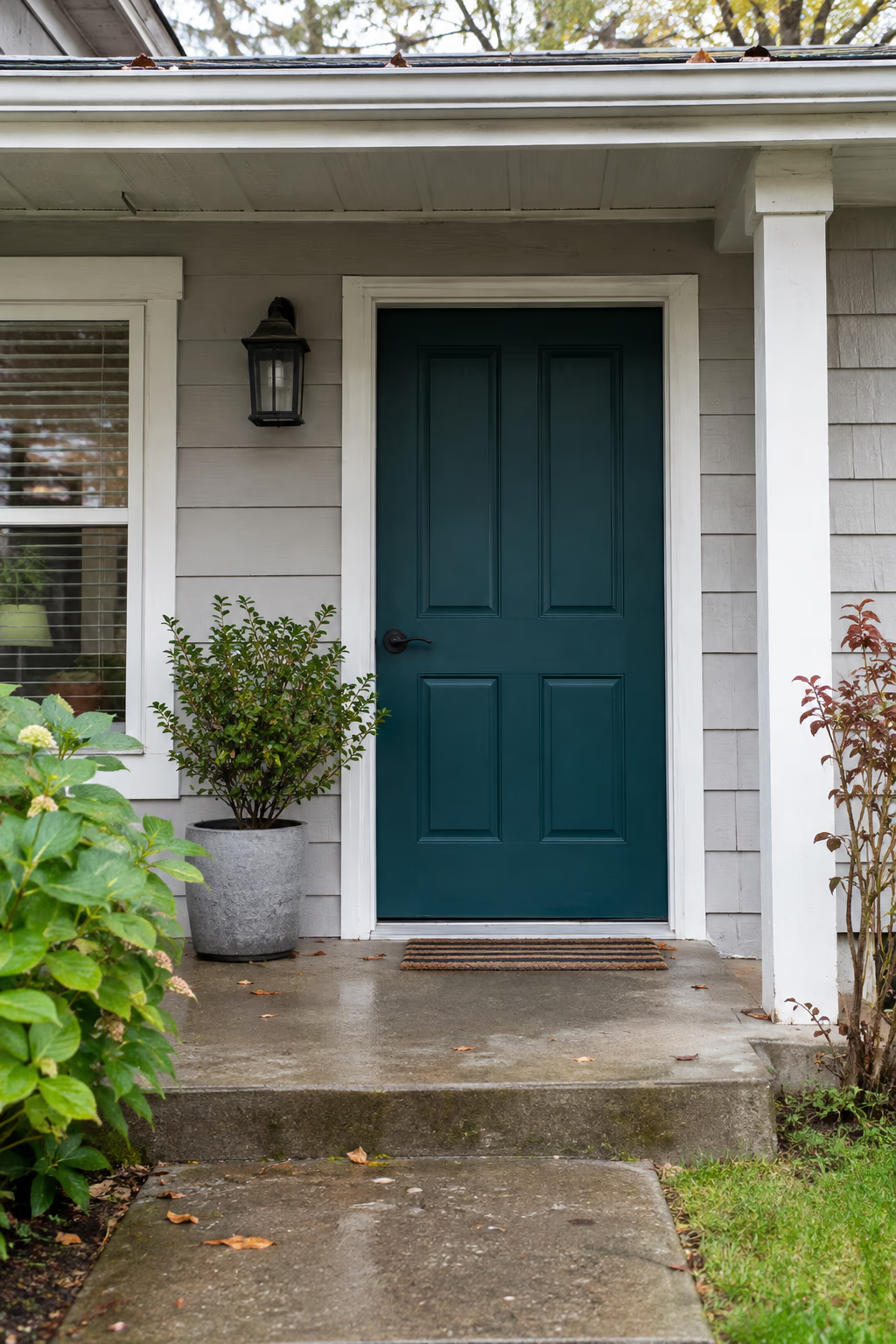
The fastest way to give the entry a modern focal point
A single saturated door color can change the whole face of a house. Deep teal, charcoal, forest green, or a muted mustard all read as modern, especially in a matte or low-sheen finish rather than high gloss.
Sand the door lightly, clean it, prime if you are changing color dramatically, and apply two coats of exterior-grade paint. Remove the hardware first for crisp edges instead of taping around it.
Look at your siding and roof before choosing. Cool gray and white houses handle almost any bold color, while brick or warm-toned siding usually looks better with deeper, earthier shades. If you have an HOA, check the approved color list first.
2. Build a Horizontal Cedar Slat Screen
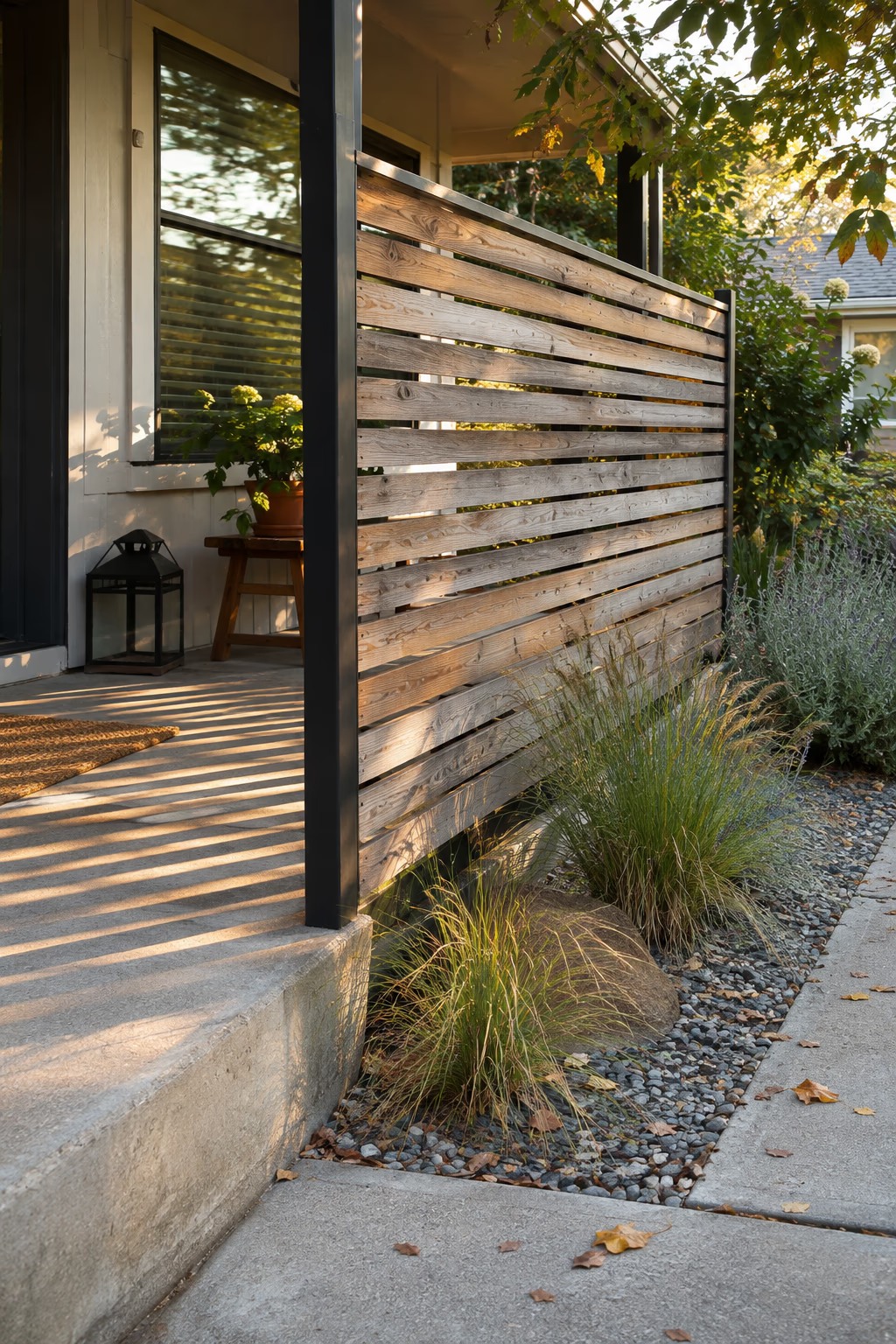
Privacy and warmth without blocking light
Narrow horizontal boards spaced about half an inch apart create a screen that feels architectural. Use 1 by 3 inch cedar or similar rot-resistant boards fastened to a simple frame of pressure-treated posts and rails.
The gaps let air and light through, so the porch does not feel boxed in, while still blocking direct views from the street or a neighbor’s driveway. A screen about 5 to 6 feet tall is usually enough to shield a seating area.
Cedar weathers to silver-gray if left untreated, which suits many modern homes. If you prefer the original warm color, plan on re-applying a UV-protective exterior stain every couple of years. Check local rules on fence height near the street.
3. Light the Entry With Black Wall Sconces
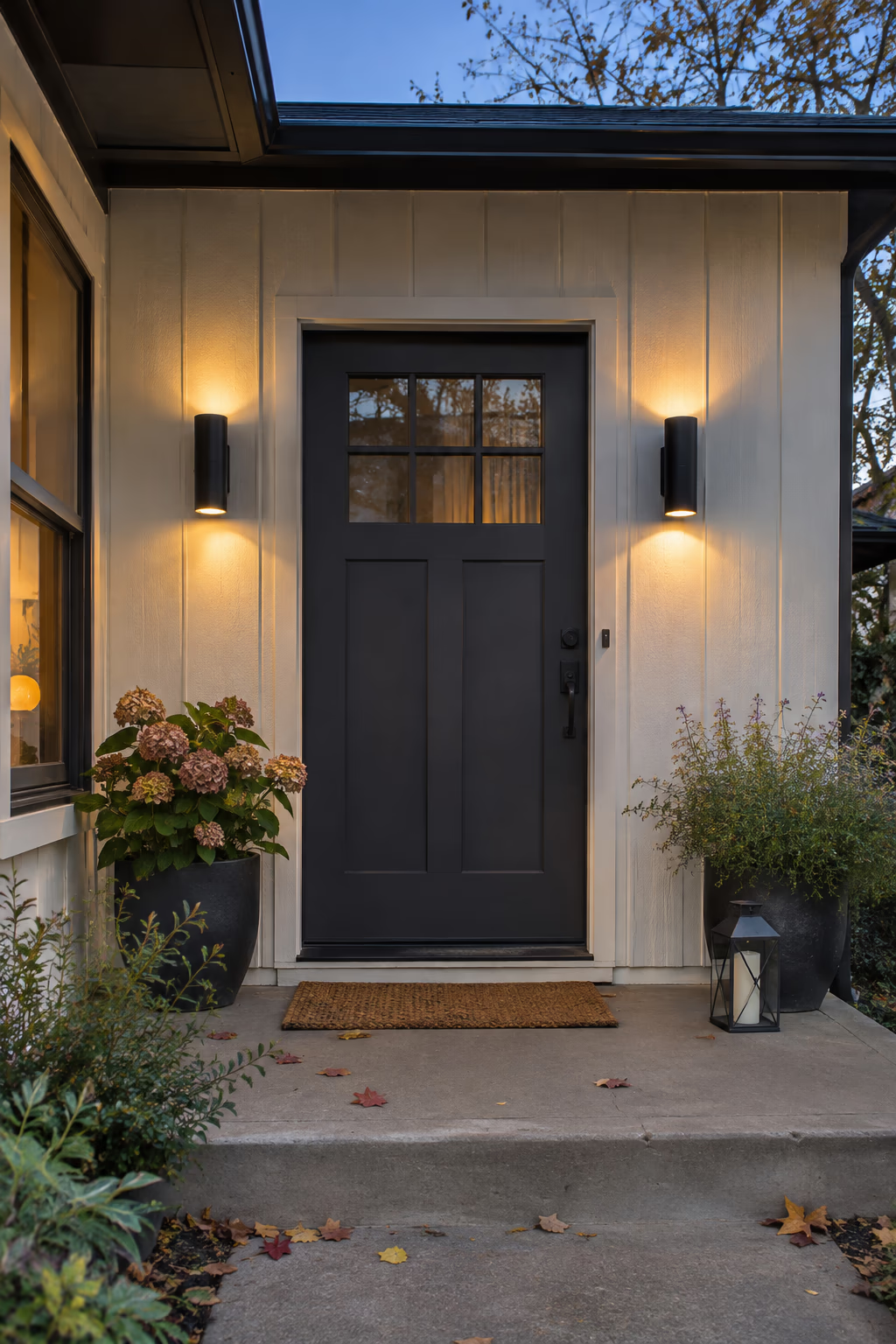
Clean silhouettes that work day and night
A pair of matte black cylinder or rectangular sconces flanking the door is one of the most recognized modern touches. Mount them at roughly 66 to 72 inches above the porch floor, or about at eye level for most adults.
Choose fixtures that direct light up and down, or ones with a frosted lens, to avoid harsh glare in your eyes at the door. Warm white bulbs in the 2700K to 3000K range feel welcoming and make dark doors look richer.
Make sure fixtures are rated for wet or damp locations. If you are swapping fixtures yourself, turn off the breaker first, or hire an electrician when the wiring needs to move.
4. Lay Large-Format Porcelain Tile
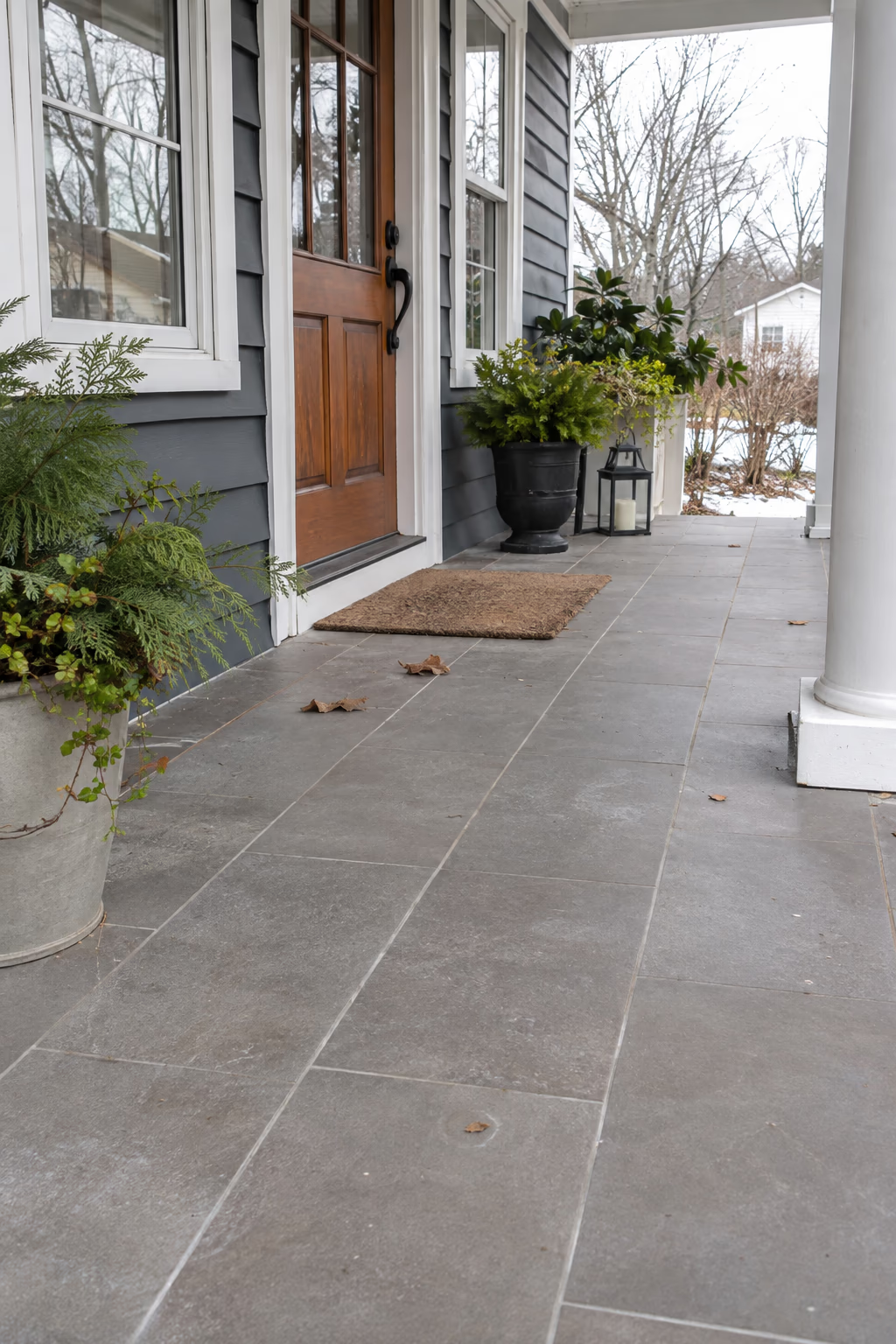
A seamless floor that looks like stone but needs little care
Large rectangular tiles, such as 12 by 24 or 24 by 24 inches, with narrow grout lines give the porch a streamlined look. Porcelain is dense, frost-resistant, and stain-resistant, making it a good fit for covered entries.
Choose a tile with an outdoor slip rating and a textured or matte finish, since glossy tile becomes slippery when wet. Gray, warm concrete, and soft charcoal tones all read as modern.
Tile needs a stable, properly sloped substrate to avoid cracking and standing water, and in freezing climates the installation method matters. Many homeowners leave this job to a tile setter, especially over an existing slab.
5. Plant Ornamental Grasses in Matte Black Planters
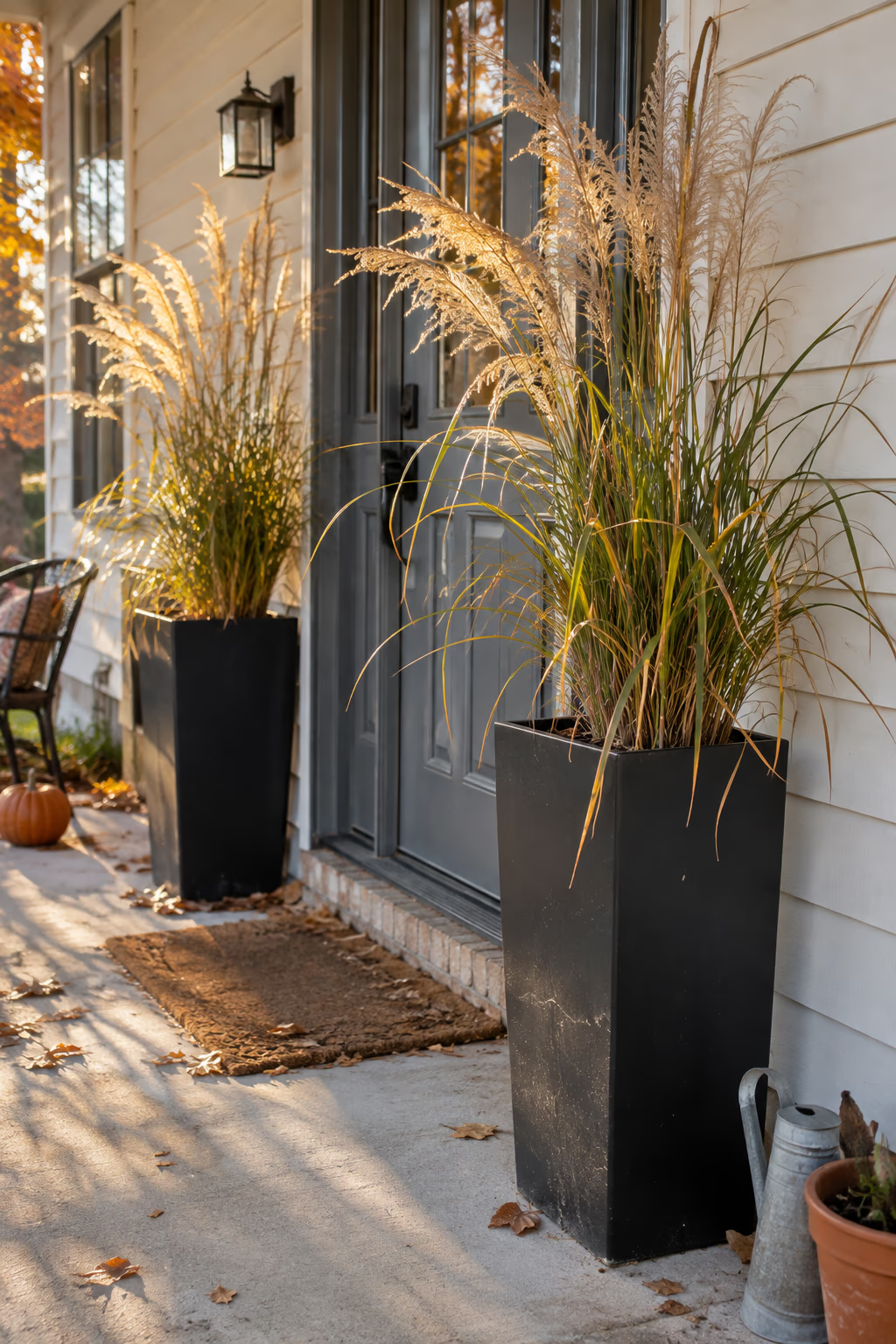
Soft movement against hard lines
Tall rectangular planters in black, charcoal, or concrete gray look sharp beside a door. Fill them with ornamental grasses such as feather reed grass, fountain grass, or little bluestem, depending on your climate zone.
The vertical blades add texture and sway with the breeze, softening all the straight lines of a modern facade. Grasses also tolerate heat and occasional dry spells better than many flowering annuals.
Use a container at least 16 to 20 inches deep with drainage holes, and elevate it slightly on feet so water does not stain the floor. Dark containers heat up in full sun, so water more often in summer.
6. Mount a Floating Wood Bench
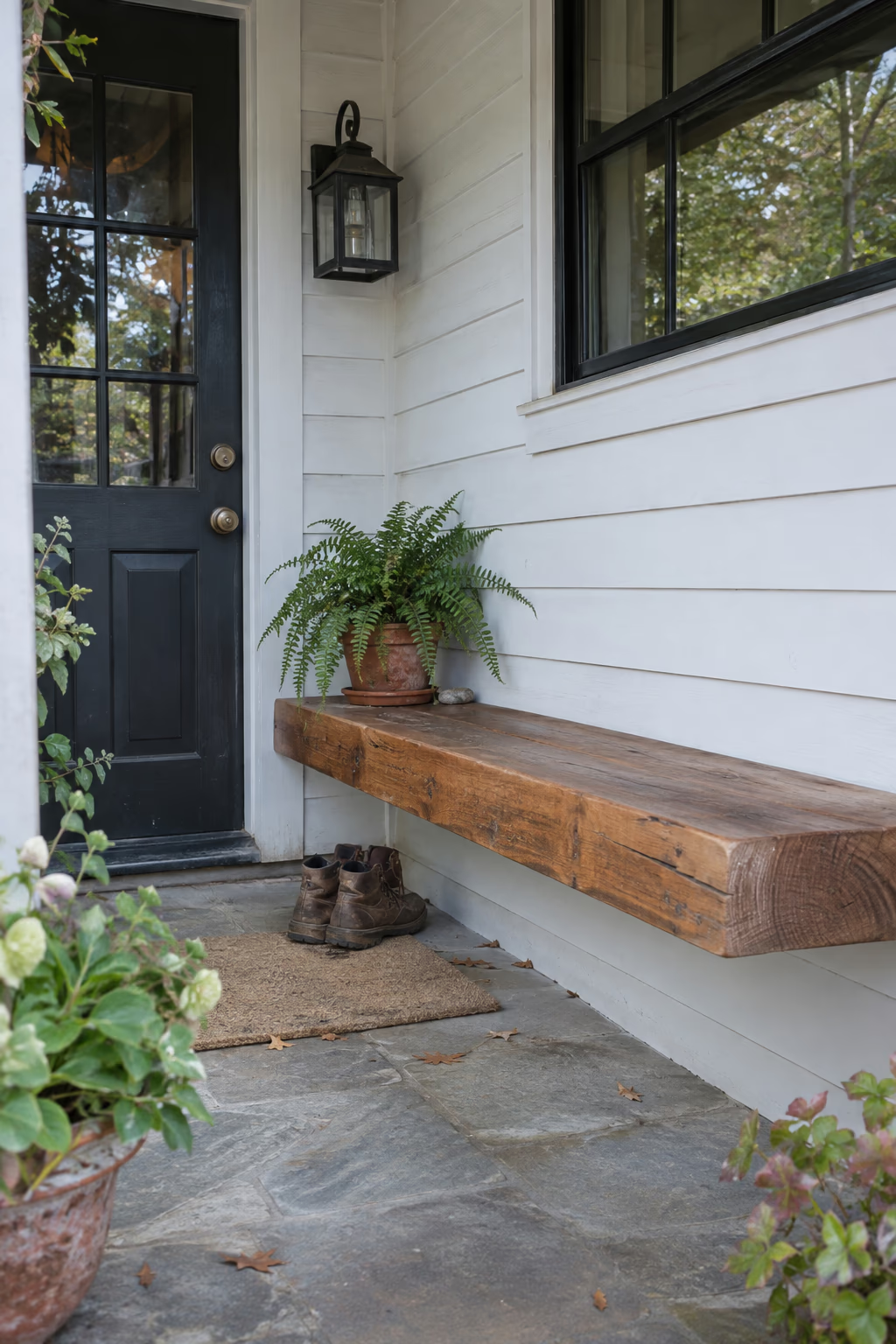
A seat that saves floor space
A slim bench fastened to the wall or siding appears to float, which keeps the floor visible and the porch feeling open. A 1.5 to 2 inch thick slab of cedar, white oak, or thermally modified wood works well.
Use heavy-duty steel brackets screwed into wall studs or blocking, not just siding. A bench about 16 to 18 inches high and 15 inches deep is comfortable for putting on shoes or setting down groceries.
Ask a carpenter to check attachment on stucco, brick, or masonry walls, since fasteners and anchors differ. Add a seal or outdoor oil to the wood to slow graying and cracking.
7. Switch to a Black Steel Cable Railing
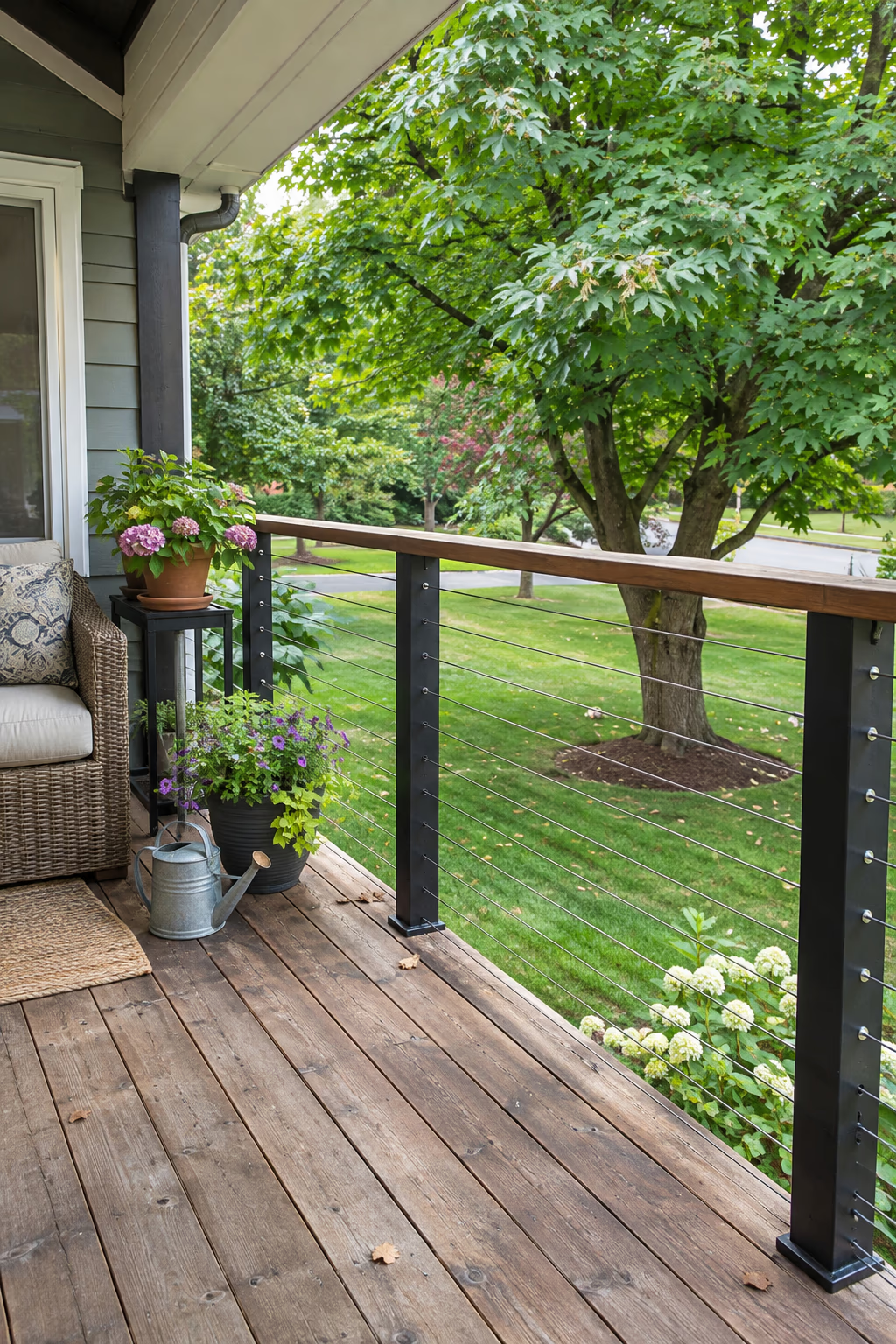
An open railing that keeps the view clear
Thin horizontal stainless steel cables strung between black metal posts give a railing almost no visual weight. They protect the edge while letting you see through to the yard and garden.
Building codes often limit openings to under 4 inches, and cable railings must be tensioned properly to meet that rule. Many codes also set a minimum guard height of 36 inches for residential porches, higher in some areas.
Cable systems cost more than basic wood balusters. Check your local code and permit requirements before starting, especially if the porch is more than 30 inches above grade.
8. Add Tall Glass Sidelights Beside the Door
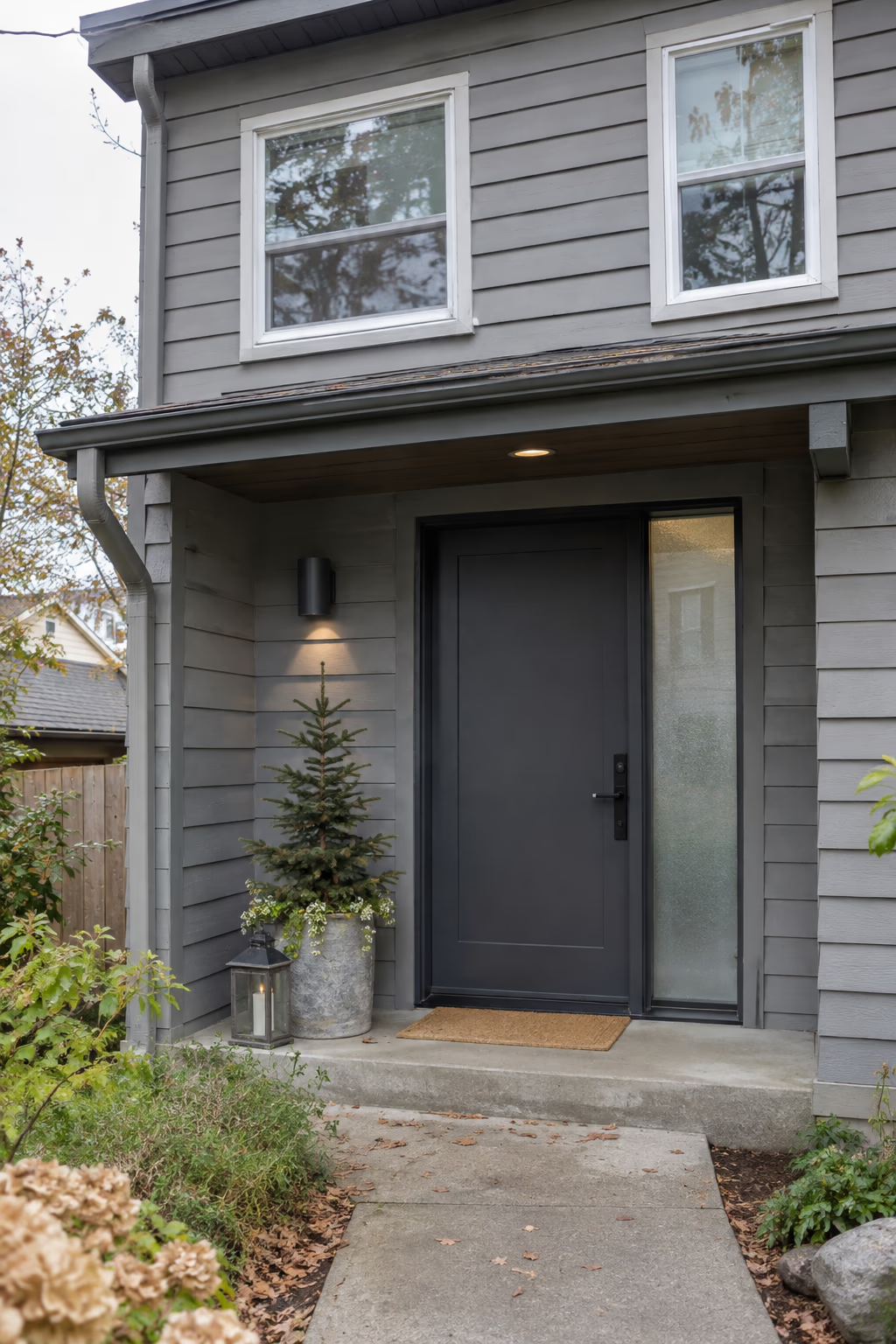
More daylight in the hall and a cleaner facade
Narrow vertical glass panels on one or both sides of the door make the entrance look taller and brighter inside. Frosted or textured glass keeps privacy, while clear glass gives a more open feel.
Adding sidelights is a carpentry project, since the wall framing and header often need changing. Some door companies sell complete pre-hung units with sidelights that make installation simpler than building from scratch.
Look for insulated, low-E glass to limit heat loss and fading of indoor floors. This is a larger investment than paint or lighting, so it works best when you were already planning a door replacement.
9. Seat Guests in Low-Profile Lounge Chairs
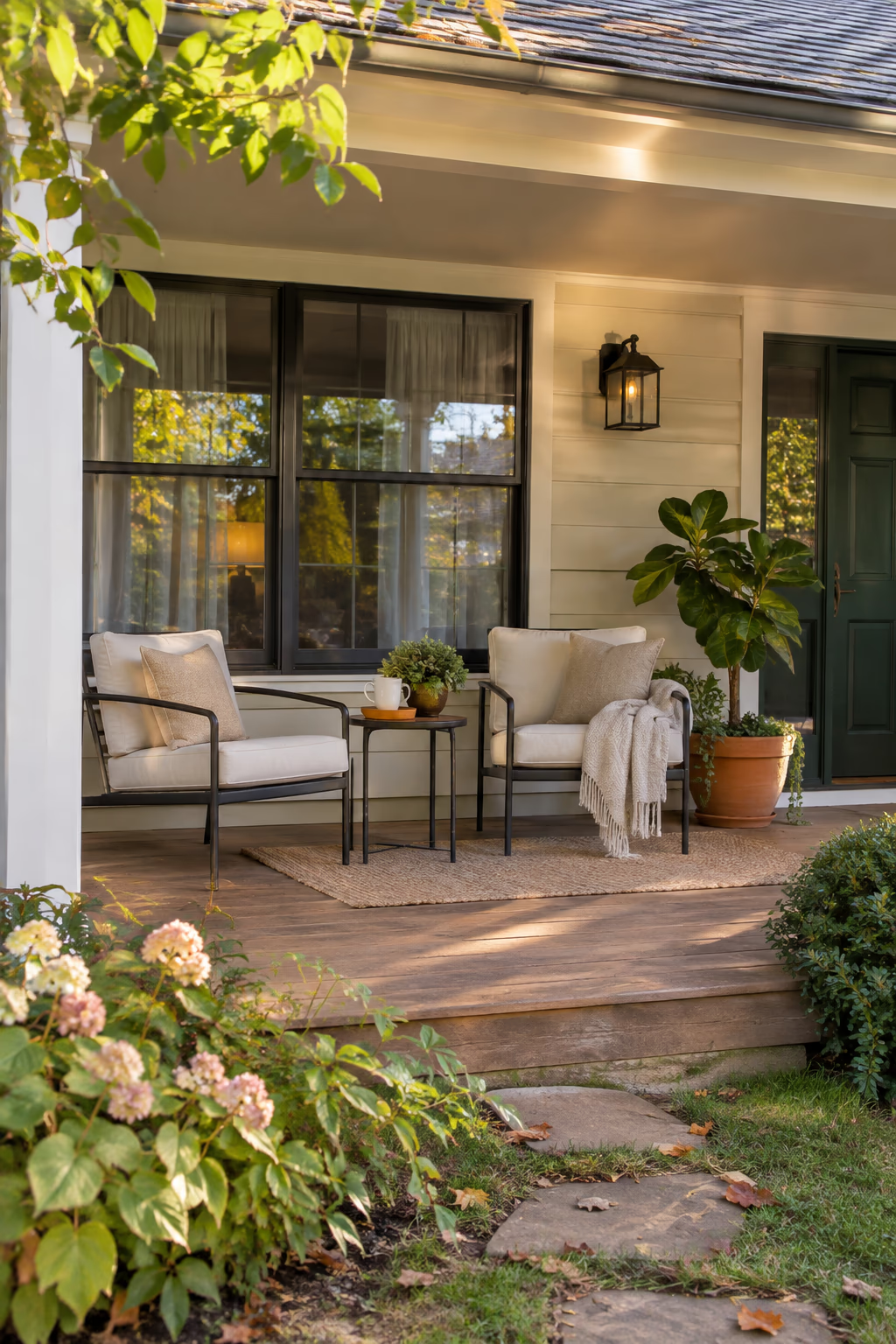
Comfortable seating with simple lines
A pair of low chairs with slim metal or wood frames and neutral cushions turns a pass-through space into a spot to sit. Look for square arms, slim legs, and quick-dry foam covered in solution-dyed acrylic or similar outdoor fabric.
Leave a clear path of about 36 inches to the door, and angle the chairs slightly toward each other for conversation. Two chairs and a small side table are often enough on a modest porch.
Stick with one or two colors in the cushions, such as cream, gray, or charcoal. Store cushions indoors during storms and winter to extend their life.
10. Resurface the Floor With Stained Concrete
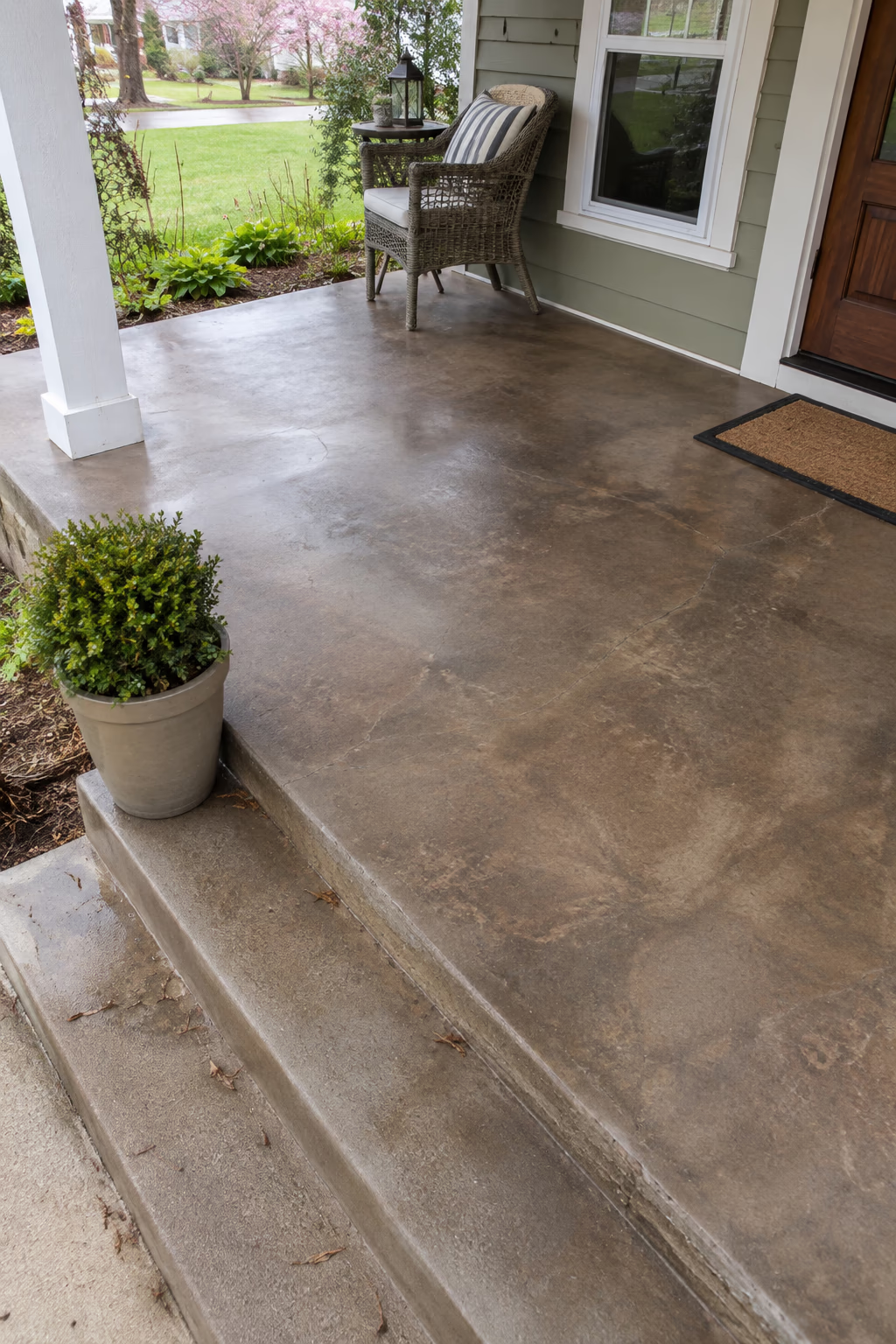
Update an old slab without replacing it
If your porch is a plain or cracked concrete slab, acid-based or water-based stain can create a mottled, stone-like color in warm gray, brown, or charcoal. A penetrating sealer on top protects the color.
Clean the slab thoroughly, repair cracks with a concrete patch, test the stain in a hidden corner, and apply sealer in thin coats. Choose a non-slip additive for sealers on surfaces that get wet.
Stain cannot hide big cracks or heavy patches, and results vary with the concrete itself. Expect to reseal every few years, depending on traffic and weather.
11. Install Recessed Soffit Downlights
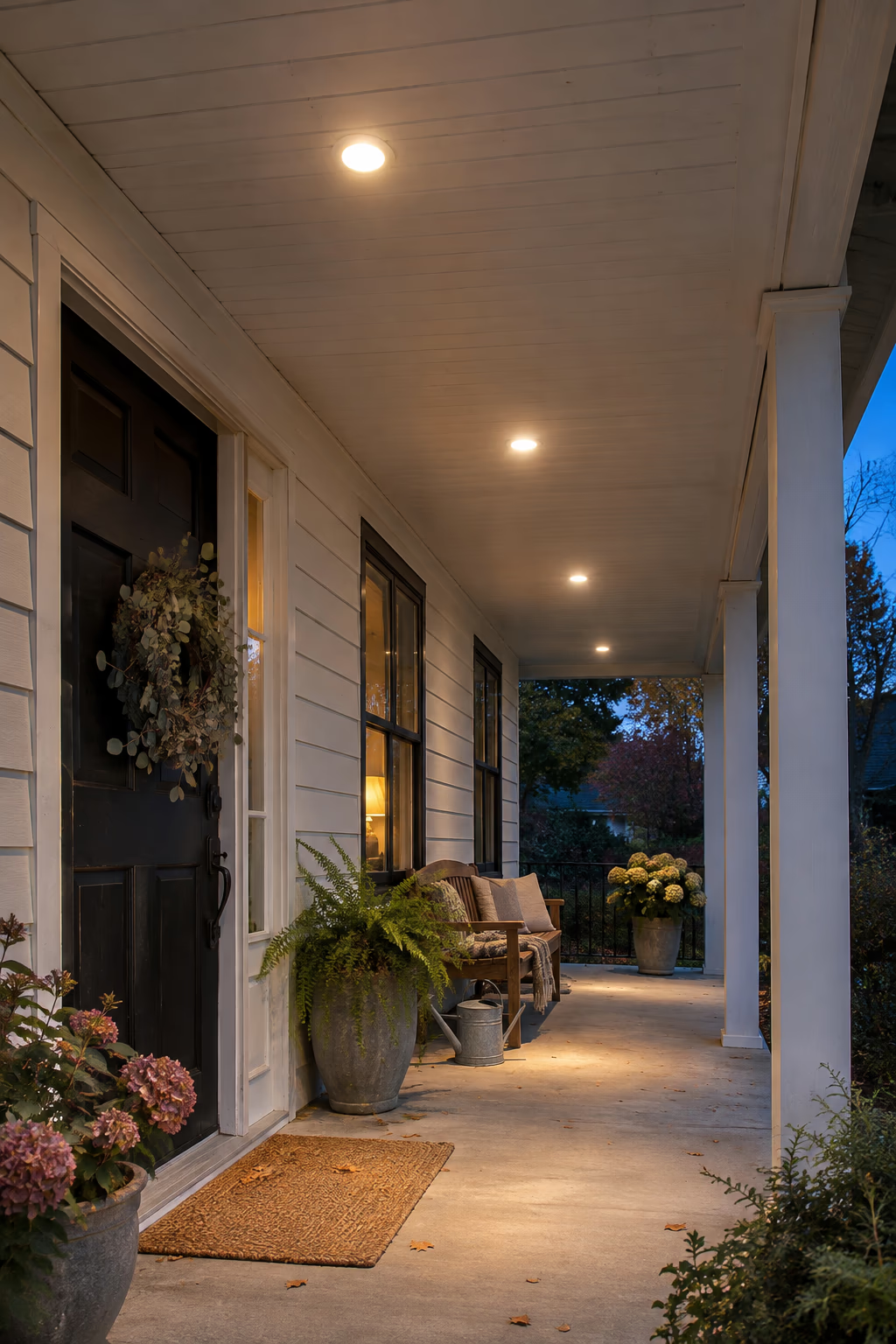
Invisible fixtures with a soft wash of light
Small round or square downlights set into the porch ceiling light the floor and door without adding visible hardware. Space them roughly 3 to 4 feet apart for even coverage.
Choose fixtures labeled for wet locations and use warm white LEDs. Dimmable models let you turn the light down for evening dinners and up for arrivals.
Because this involves cutting into the ceiling and running wire, it is a good project for an electrician. Fixtures that need insulation clearance or ventilation behind the soffit are worth discussing in advance.
12. Clad the Ceiling in Natural Cedar
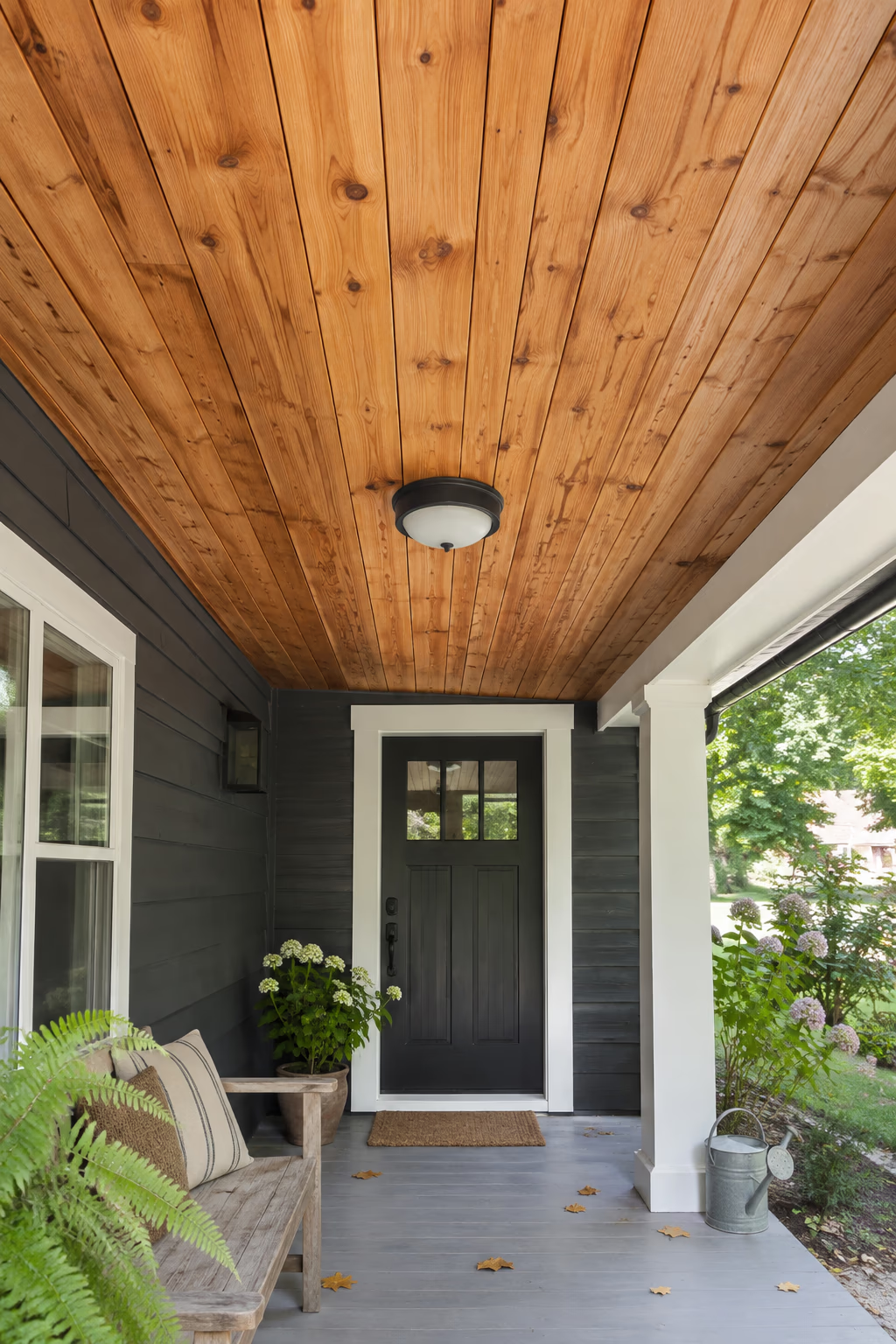
Warm wood overhead for contrast
Tongue-and-groove cedar or pine boards on a porch ceiling add warmth and a contemporary Scandinavian feel, especially against dark siding. Run the boards in one direction toward the door for a sense of movement.
Use outdoor-rated boards, stainless or coated fasteners, and finish with a clear exterior sealer or a light stain. Seal all faces and ends before installing for longer life.
Light wood can darken over time, and wood in damp climates needs periodic re-coating. Leave small ventilation gaps so the ceiling can breathe and moisture does not collect.
13. Layer a Graphic Outdoor Rug
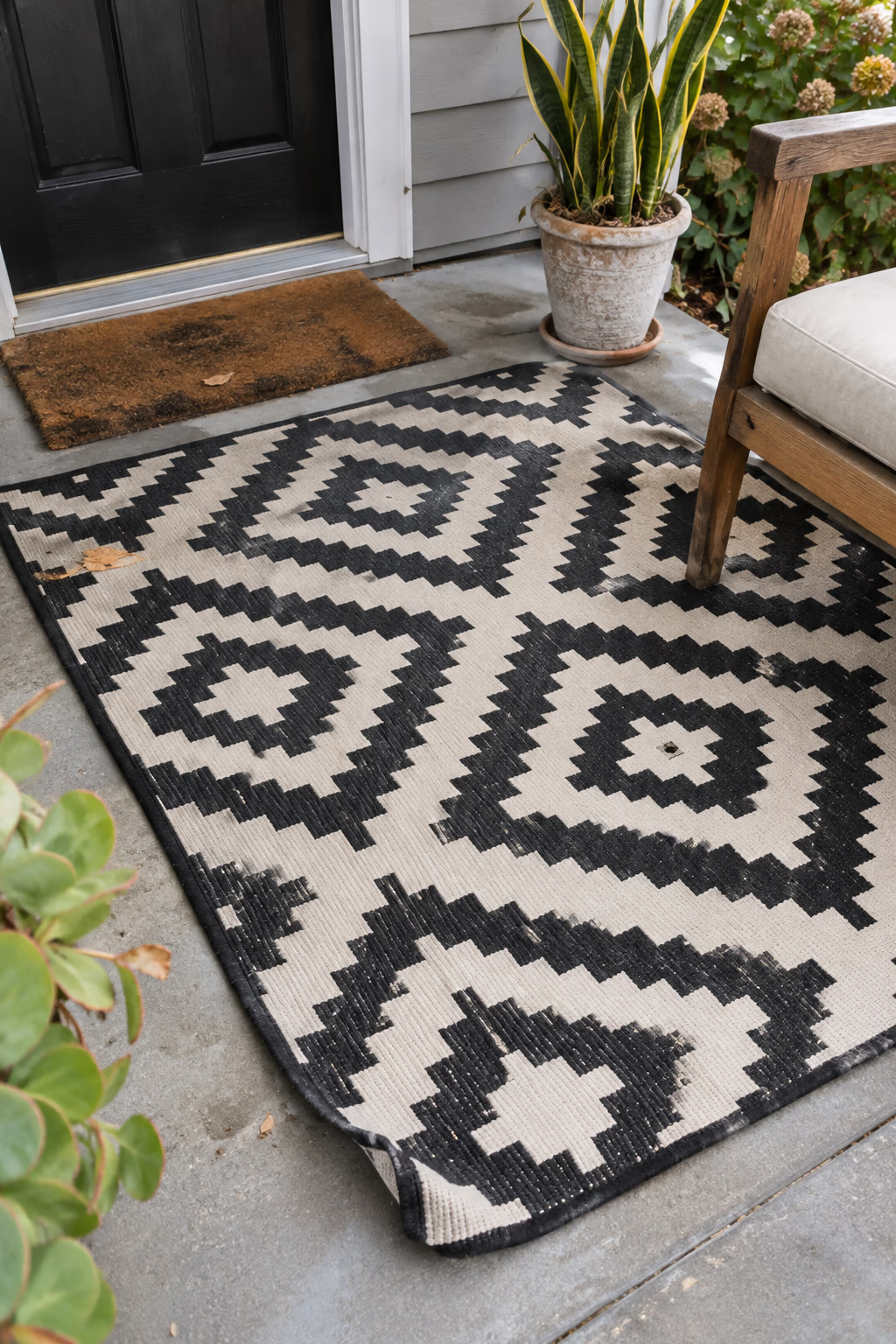
Define the space with pattern
A flat-weave rug made from polypropylene or recycled plastic fibers brings color and pattern to a hard floor. Black and white stripes, bold geometric shapes, or a plain two-tone design suit a modern look.
Choose a size that fits within the porch edges, leaving 6 to 12 inches of floor visible around it. A rug that sits under the front legs of the seating area looks intentional.
Pick a style that dries quickly and lifts easily for cleaning. Use a non-slip underlay and shake out debris often, since moisture trapped underneath can discolor tile or concrete.
14. Mount a Sleek Metal Mailbox and Package Box
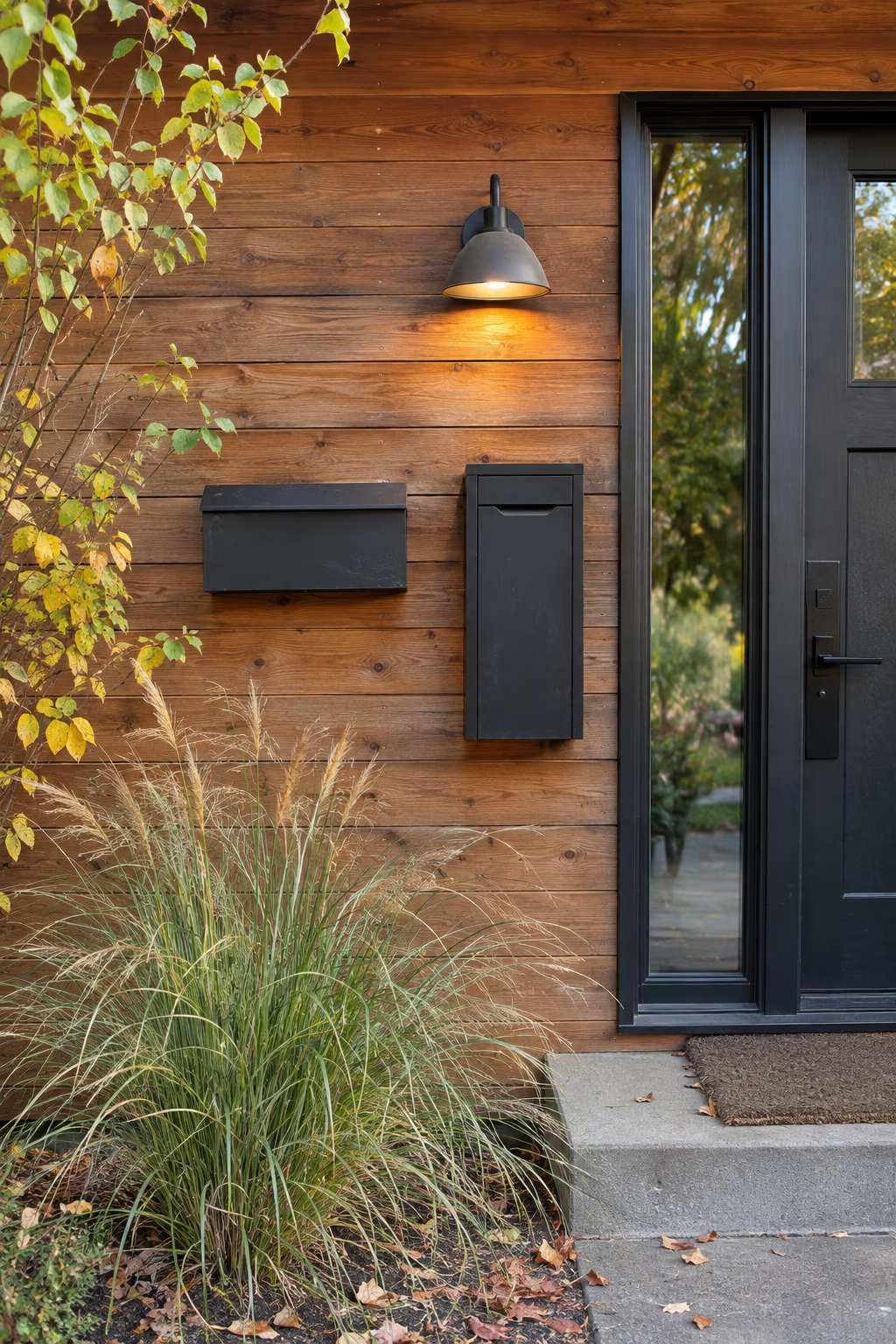
Practical details that match the architecture
A wall-mounted mailbox in powder-coated steel or aluminum looks far cleaner than a bulky traditional box. A matching lockable parcel box beside it keeps deliveries out of sight.
Choose colors that echo your door hardware, light fixtures, and trim, such as black or bronze. Horizontal or vertical slots both work, as long as the opening meets postal service requirements.
Check with your local post office and HOA about where a mailbox is allowed and what styles are approved, since rules for wall-mounted and curbside boxes differ.
15. Frame the Entry With Black Trim
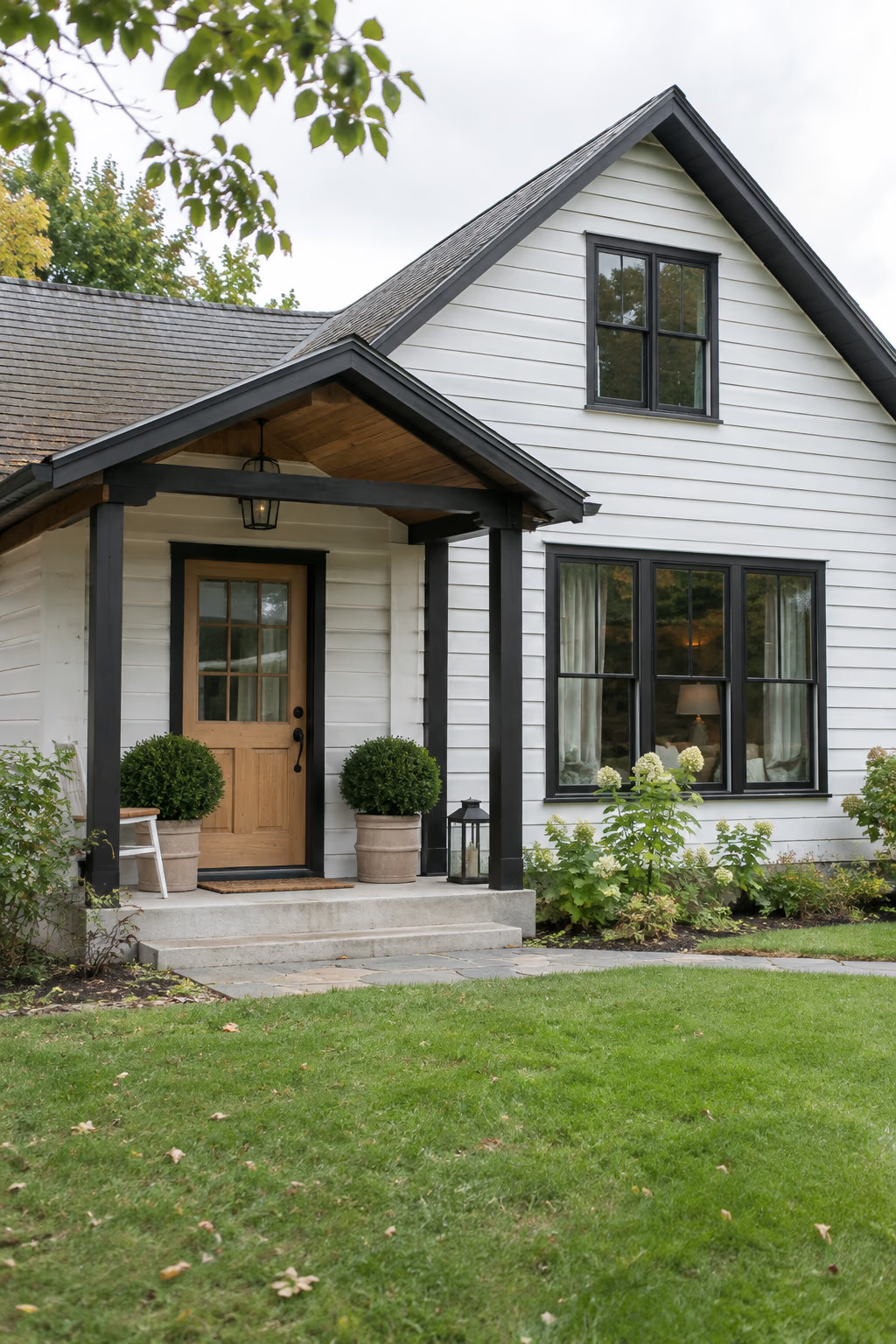
Crisp outlines that sharpen the facade
Painting window frames, the door casing, and fascia in black or deep charcoal makes light siding look more graphic. The contrast outlines the entry and suggests modern architecture without major construction.
Use a high-quality exterior acrylic paint, and wash, scrape, and prime bare wood first. Aluminum and vinyl trim may need a specialty primer, so check the paint label for compatibility.
Dark colors absorb heat, and some vinyl products can warp if painted darker than the manufacturer allows. Test with the product guidelines before committing.
16. Set Concrete Pavers in Gravel for the Walk
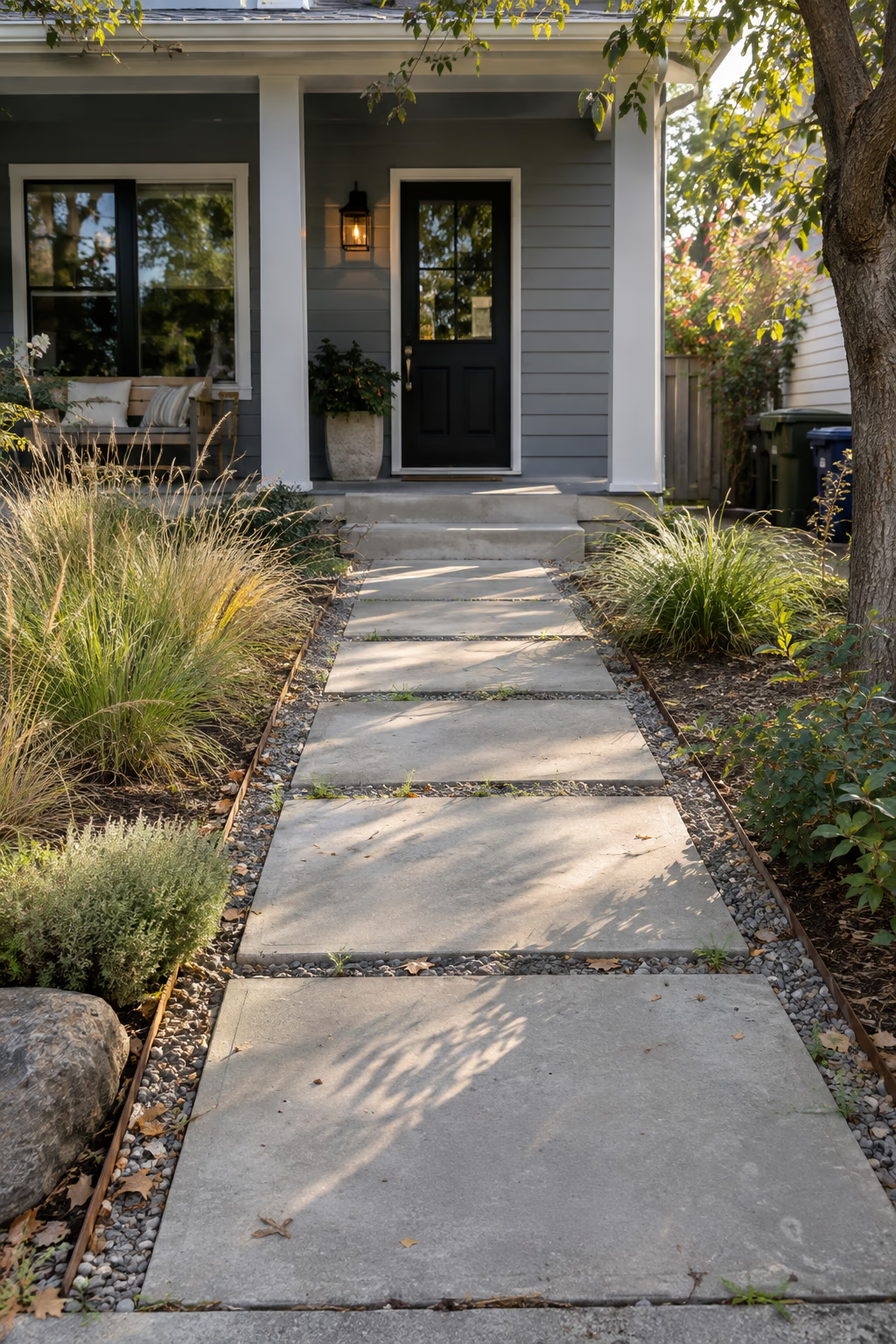
A simple path that leads to the porch
Large rectangular concrete pavers, such as 24 by 24 inches, set with narrow bands of fine gravel or low groundcover between them create a clean geometric approach. Spacing them with 2 to 4 inch gaps gives the path rhythm.
Excavate about 6 inches, lay compacted gravel as a base, add a layer of leveling sand, and set the pavers. Keep the surface slightly sloped away from the house so water drains well.
Gravel between pavers can drift or sprout weeds, so use landscape fabric and edging. Call 811 before digging to mark underground utilities.
17. Hang a Vertical Planter Wall
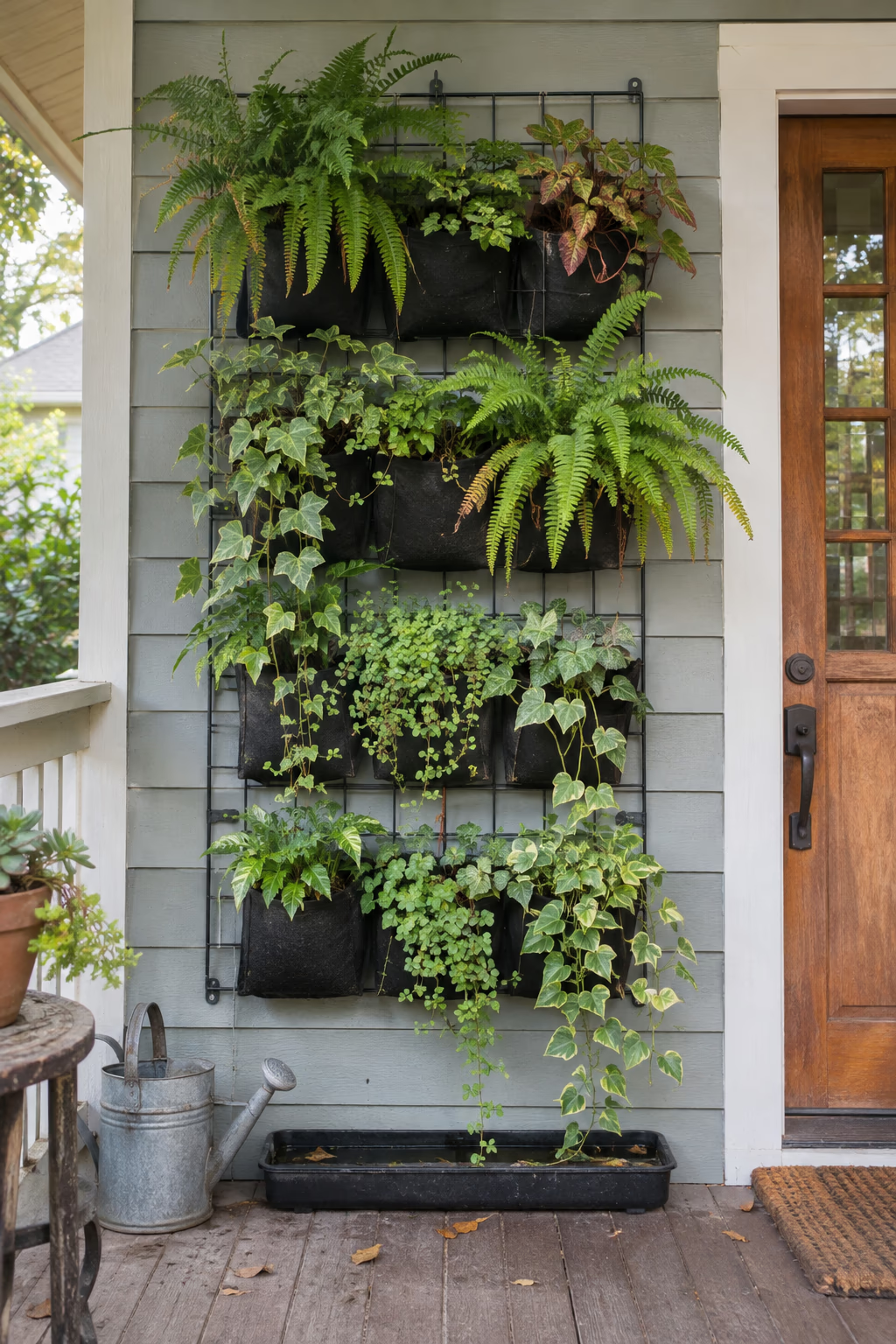
Greenery that uses wall space, not floor space
Modular wall planters or a metal grid with hanging pockets let you add plants when the floor is small. Succulents, ferns, trailing ivy, and herbs are all possible, depending on light and climate.
Choose plants that match the exposure. Shady porches suit ferns and pothos in mild climates, while sunny walls suit sedum and hens-and-chicks. Group a few of the same plant types for a cleaner look.
Wall systems can be heavy when wet, so fasten into studs and consider a drip tray to protect siding. Drip irrigation or a regular watering routine keeps plants healthy.
18. Tuck In a Compact Bistro Set
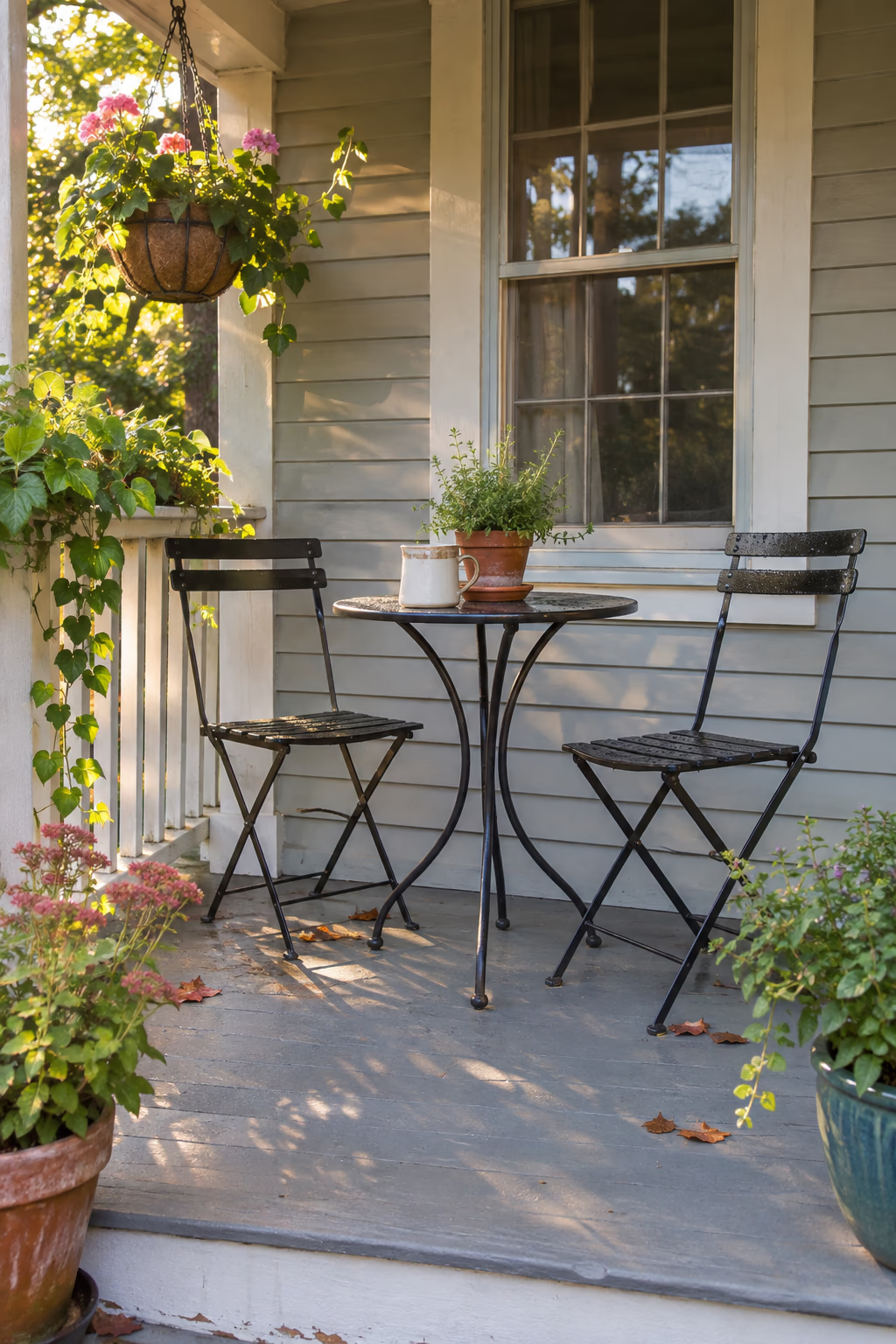
Coffee-ready seating for small porches
A round table about 24 to 30 inches across and two slim metal chairs fit on porches as narrow as 5 feet. Powder-coated steel or aluminum in black, white, or sage green looks crisp.
Folding styles can be tucked away when not in use. A table with a solid top is better than a mesh top for setting down cups or a laptop.
Make sure you leave enough clearance for the door to swing and for people to pass. Check the weight rating if you plan to sit for long periods, and keep a cloth on hand for dew in the morning.
19. Line the Walk With Low-Voltage Path Lights
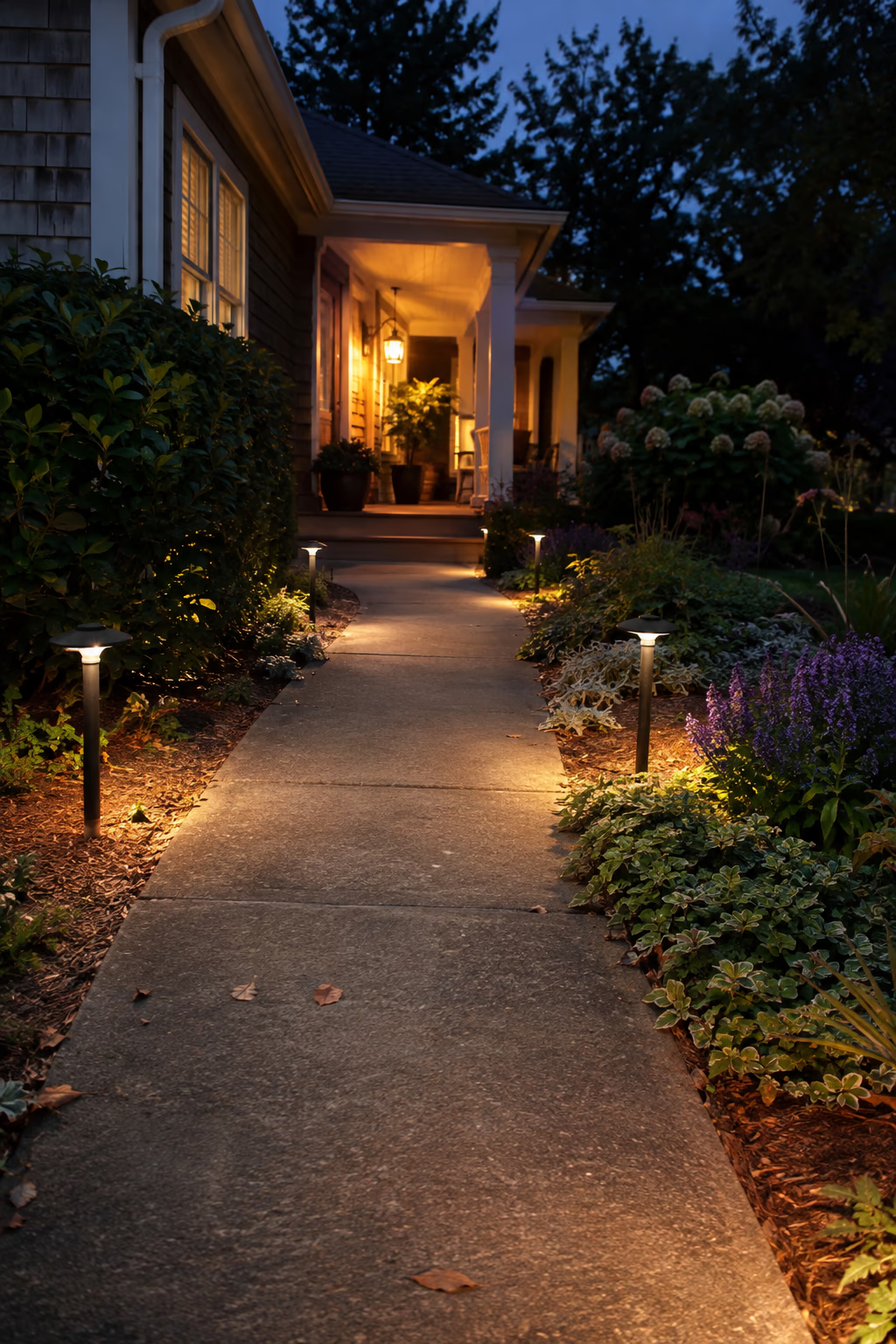
Safe steps and a soft welcome after dark
Low, minimalist path lights spaced 6 to 8 feet apart along the walkway guide visitors to the porch. Choose slim fixtures in black or bronze with downward-facing shades to avoid glare.
A low-voltage system uses a transformer plugged into an outdoor outlet and a cable you can bury just a few inches deep. Many kits are straightforward for a DIYer, and LED fixtures use little electricity.
Avoid overlighting. A few well-placed lights look more elegant than a long line of bright ones. Consider a timer or photocell so the lights switch on automatically.
20. Build the Deck With Wood-Look Composite
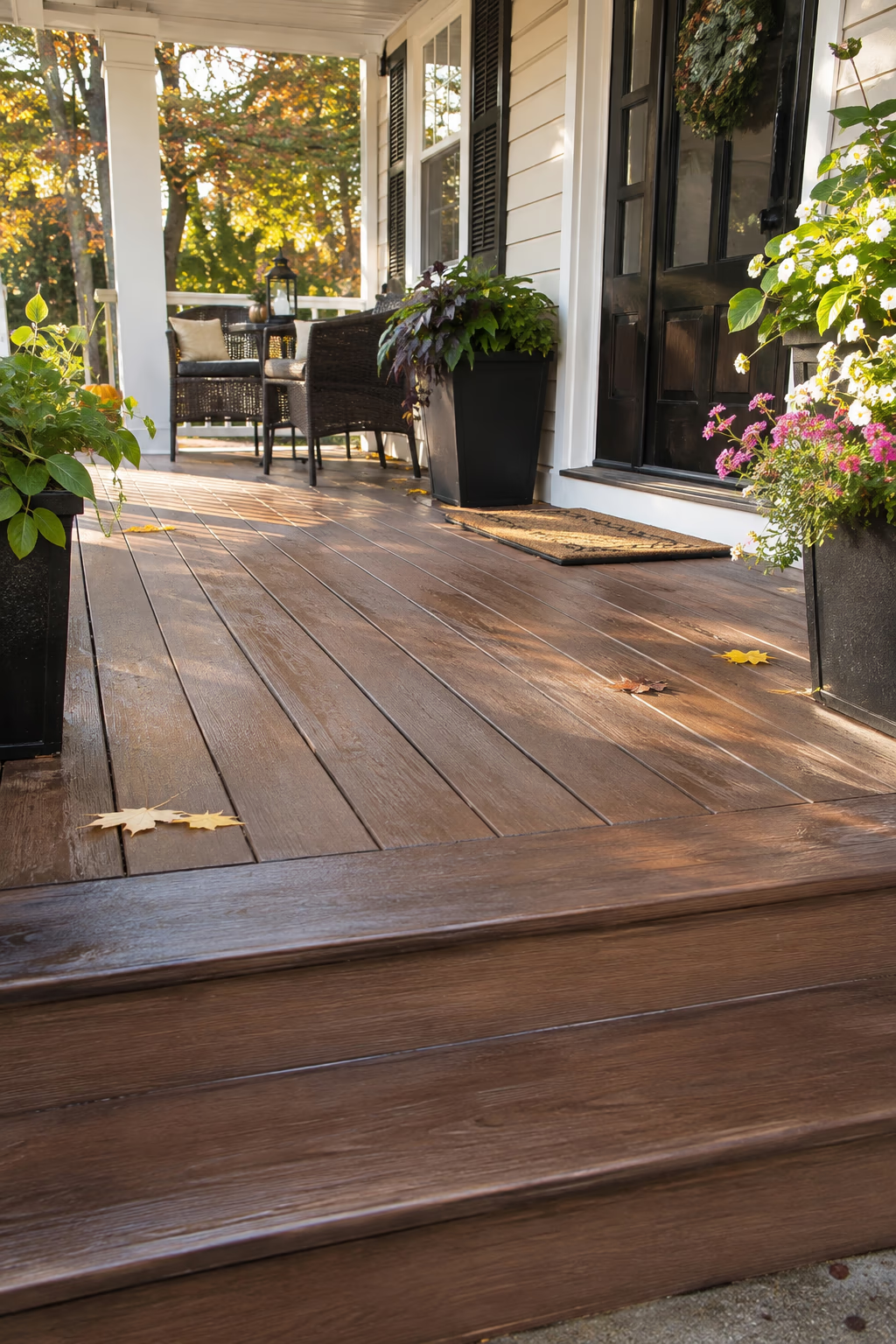
A warm surface with less upkeep
If your porch has a raised wood floor, composite decking with a brushed gray or brown finish gives a clean look that does not need regular staining. Run the boards straight, and consider a picture-frame border for a tidy edge.
Composite costs more up front than pressure-treated lumber but saves on sealing and refinishing over time. Look for capped products that resist fading and staining.
Follow the manufacturer’s spacing and framing guidelines, since boards expand and contract with temperature. Dark colors can get hot underfoot in strong summer sun.
21. Suspend a Streamlined Porch Swing
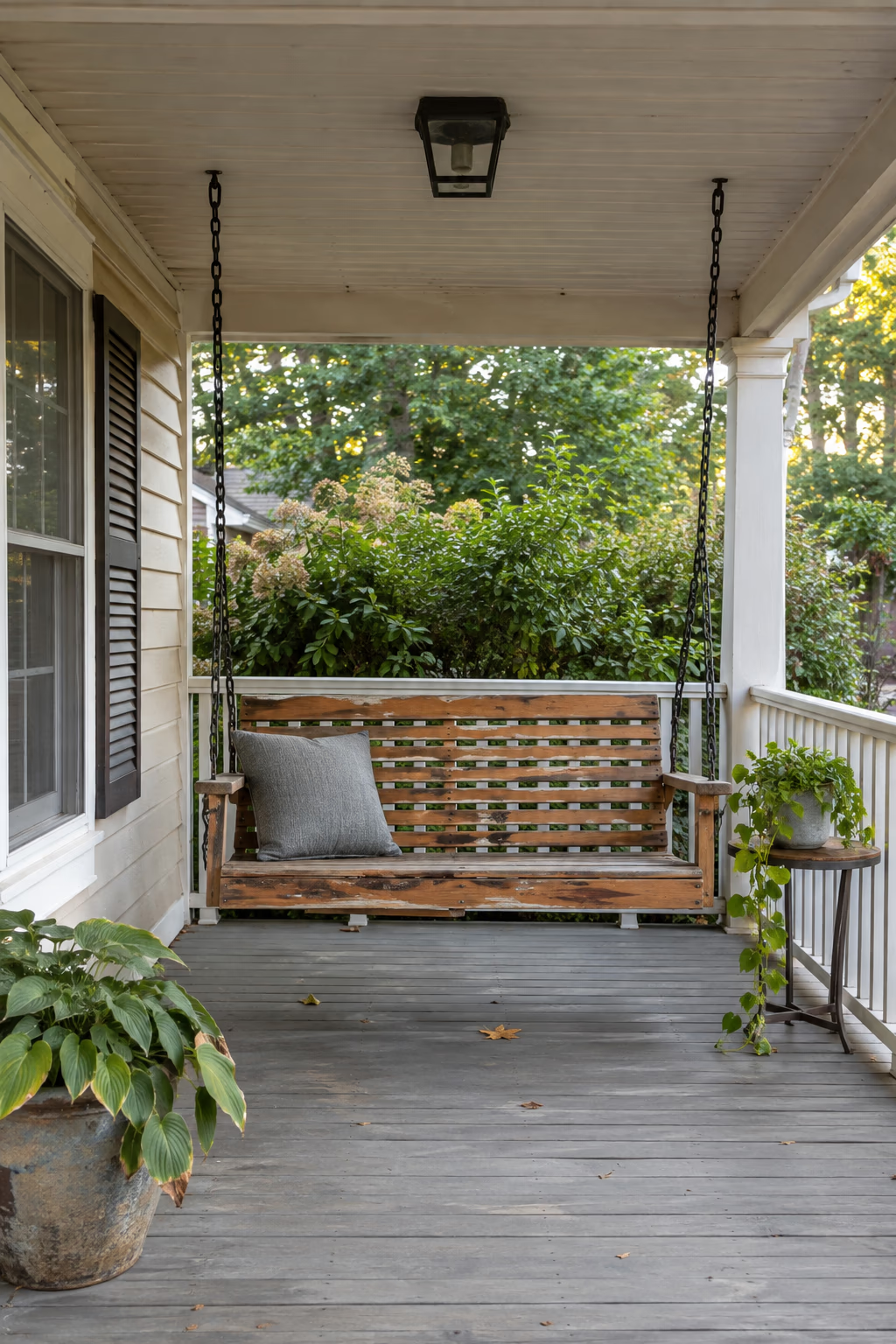
Relaxed seating with a modern shape
A slatted swing with a simple rectangular profile in natural wood or black metal feels more contemporary than a traditional painted bench swing. Hang it with stainless steel chain or rope from ceiling joists.
The ceiling structure must support the weight of the swing and people, so attach to framing with rated hardware, not just the ceiling boards. Leave 18 inches of clearance at the front and back for the swing arc.
Add one or two plain cushions in a neutral color. If your porch is small, a single-seat hanging chair may fit better than a full swing.
22. Hang One Oversized Geometric Pendant
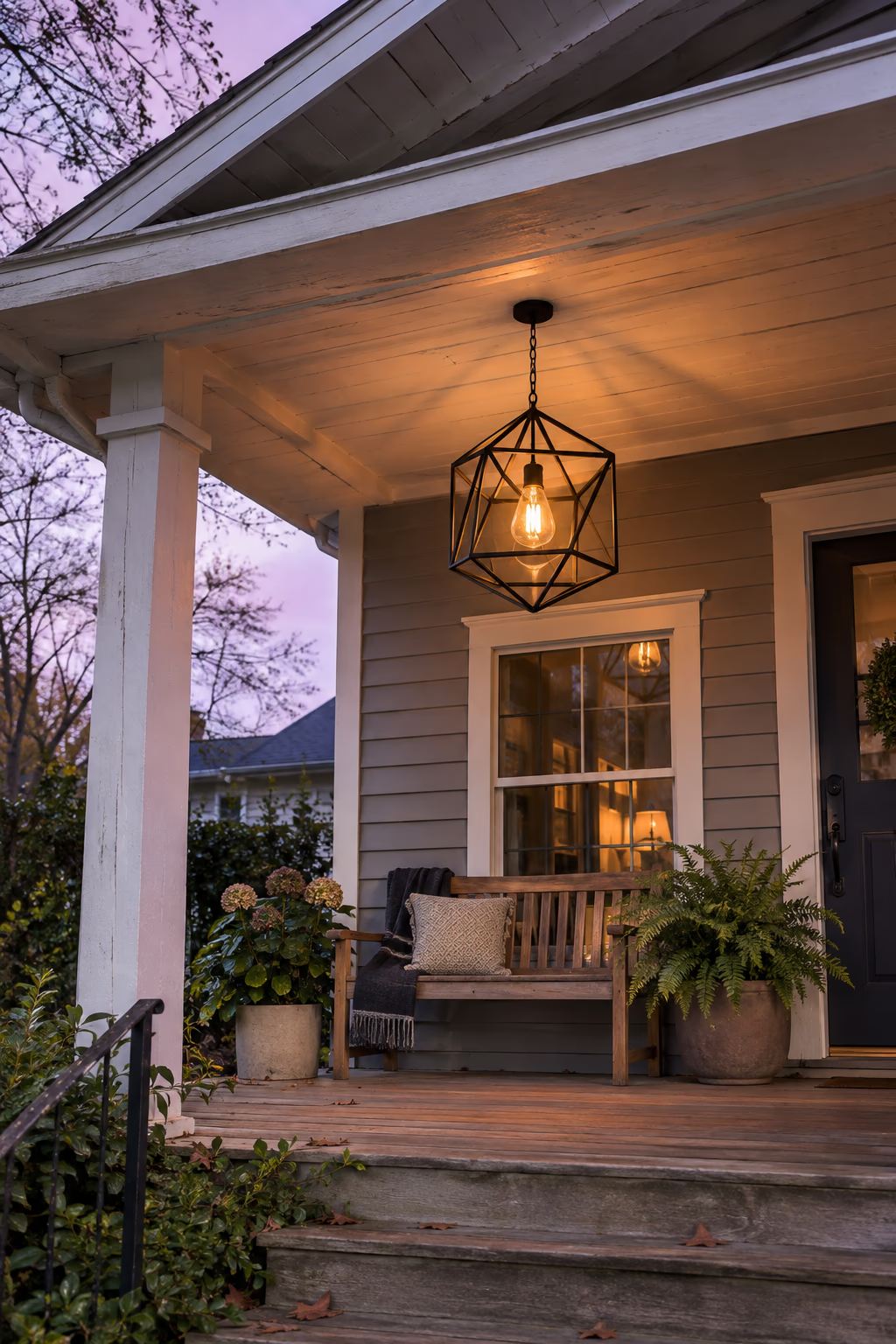
A single statement light overhead
On a deeper porch with a ceiling at least 8 feet high, one large pendant in matte black or woven metal creates an inviting focal point. Cylinder, dome, or open cage shapes suit the modern look.
Select a fixture rated for damp or wet locations. Hang it high enough that nobody bumps it, usually with the bottom edge at least 7 feet above the floor.
A pendant works best when other lighting stays simple. Pair it with small sconces or let it serve as the only light source in a compact space.
23. Replace Bulky Columns With Slim Steel Posts
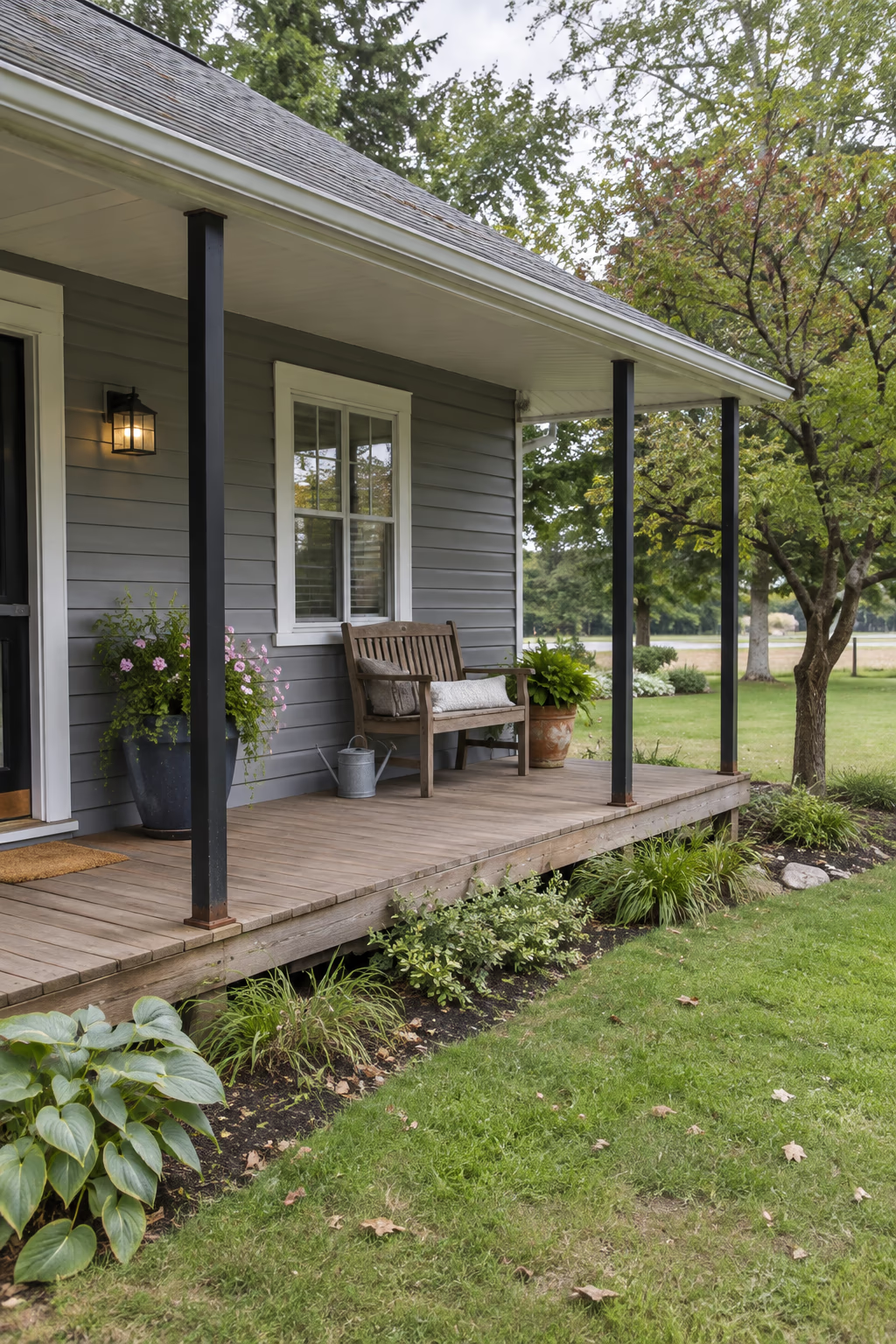
Lighter support that opens the view
Old tapered or boxy columns can make a porch feel heavy. Slender square steel posts, about 4 by 4 inches, painted black or charcoal, give a lighter, more contemporary look.
Because posts hold up the roof, this is not a casual swap. A structural engineer or experienced contractor should confirm that the new posts and footings carry the load and meet code.
If replacement is too much, consider wrapping existing columns in simple square trim and painting them a dark color. This changes the look without changing the structure.
24. Add a Flat Metal Canopy Over the Door
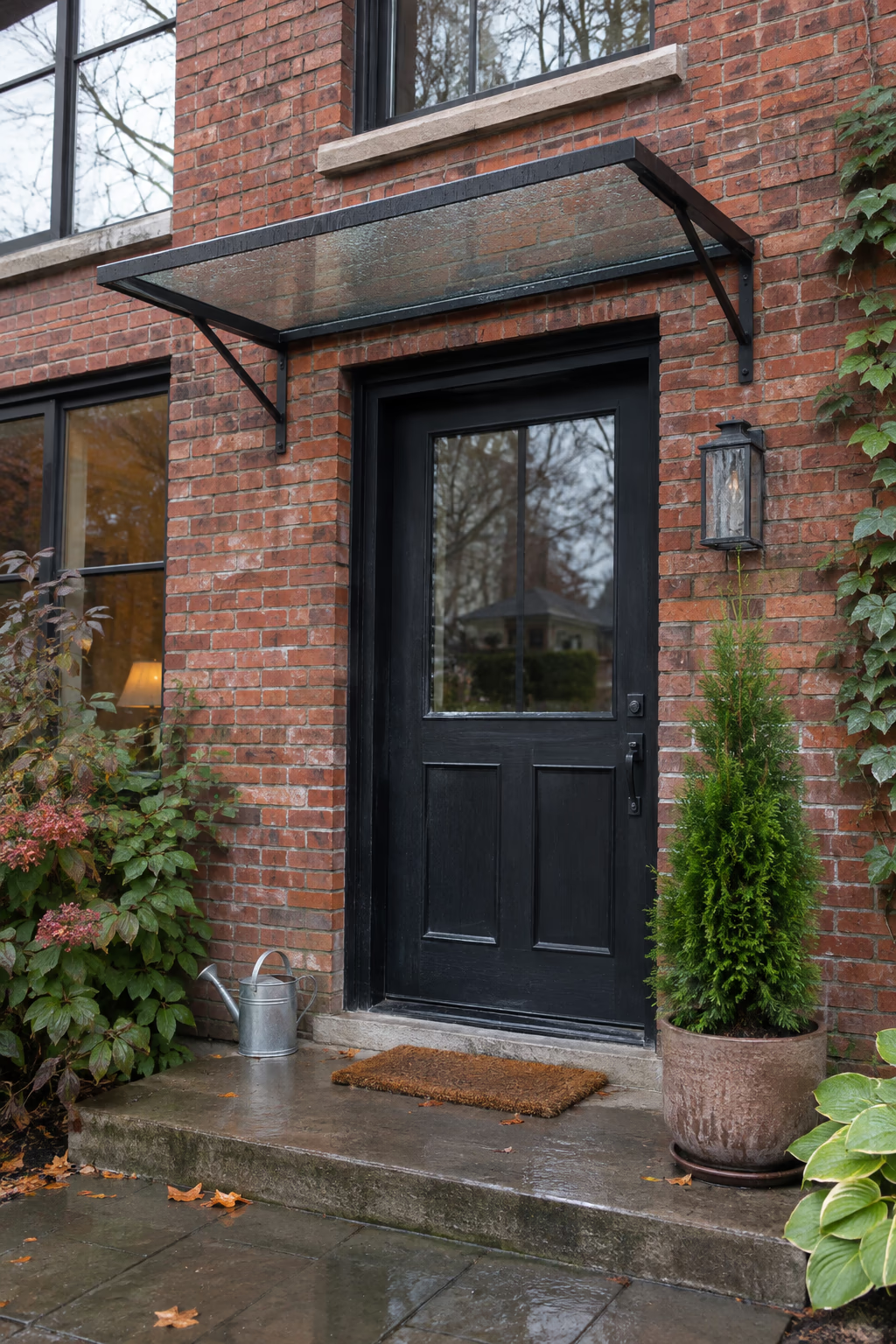
Weather protection with a thin profile
A slim canopy of powder-coated steel or aluminum, often with tempered glass or standing-seam panels, shelters visitors in the rain. It suits houses that have no covered porch.
Choose a canopy that sits slightly sloped so water drains away from the door. Support rods or brackets must be anchored into framing, and larger canopies may need a permit.
Match the finish to your window frames or door hardware. Check how snow load in your area affects the canopy size and support requirements.
25. Style Seasonal Accents in a Restrained Palette
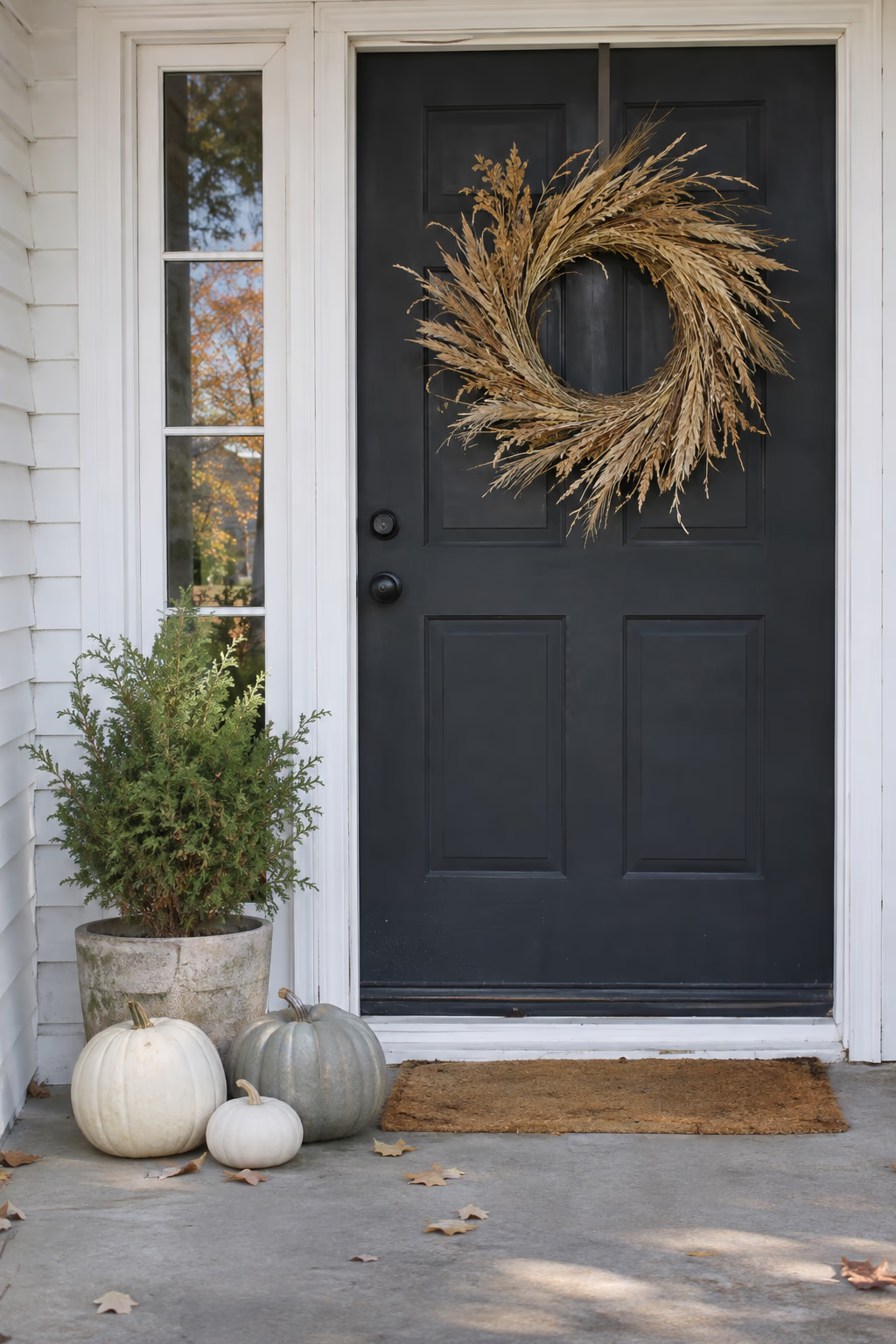
Keep decor simple and intentional
Modern style does not mean bare. A single wreath of dried grasses, a bowl of pinecones, a few pumpkins in white or gray, or a pot of evergreen can mark each season without clutter.
Stick to two or three materials, such as wood, ceramic, and metal, and repeat colors already on the porch. Group items in odd numbers and keep surfaces mostly clear.
Swap decor four times a year and store off-season items in a bin. Fewer, larger pieces look better than many small ones, and they are easier to clean around.
How to Plan Your Modern Front Porch
A modern porch works best when every choice supports a simple, consistent look. A short plan keeps the project affordable and cohesive.
- Start with a palette. Choose two or three main colors and one accent, such as black, warm gray, and natural wood, then repeat them in the door, lights, furniture, and planters.
- Fix the basics first. Repair rot, cracks, loose railings, and drainage problems before adding style, since decor cannot hide structural issues.
- Consider scale. Measure the porch and leave at least 36 inches for walking and door swing, then size furniture and planters to match.
- Match materials to weather. Choose finishes suited to your climate, such as rust-resistant metals and frost-rated tile in cold regions, and UV-stable fabrics in sunny ones.
- Check codes and HOA rules. Railings, canopies, structural changes, and electrical work may need permits or approval, so confirm before you buy materials.
- Work in phases. Begin with paint, lighting, and hardware, then add flooring, furniture, and plants as the budget allows. Call 811 before any digging.
Frequently Asked Questions
What makes a front porch look modern?
Clean lines, a limited color palette, simple geometric furniture, and materials like metal, glass, wood, and concrete define the look. Minimal decor and good lighting also help.
What colors work best for a modern front porch?
Black, white, charcoal, and warm gray form the base for many modern porches. Add natural wood tones and one accent such as teal, green, or mustard on the door or cushions.
How can I update my porch on a small budget?
Paint the door, replace the light fixtures and house hardware, add a few planters, and lay an outdoor rug. These changes can transform the look for a few hundred dollars.
Do I need a permit to change my porch?
Cosmetic updates like paint, lighting swaps, and furniture rarely need permits. Structural work, new railings, roof changes, and new electrical wiring often do, so check with your local building department.
What plants suit a modern porch?
Ornamental grasses, boxwood, evergreen shrubs, succulents, and ferns work well in simple containers. Choose plants that fit your light and USDA hardiness zone for the easiest care.
Final Thoughts
The best modern front porch ideas rely on restraint. A bold door, good lighting, a clear floor, and a few well-chosen plants can look more striking than a porch filled with decorations.
Start with the changes that give the biggest return, then build up over time as budget and weather allow. With a consistent palette and quality materials, your entry will look fresh and welcoming for years.


